Author Contributions
Conceptualization, S.S., J.Y.; methodology, S.S., X.Y.; software, S.S.; validation, S.S., J.Y.; investigation, S.S., J.Y.; resources, X.Y.; writing—original draft preparation, S.S., J.Y.; writing—review and editing, X.Y.; supervision X.Y. All authors have read and agreed to the published version of the manuscript.
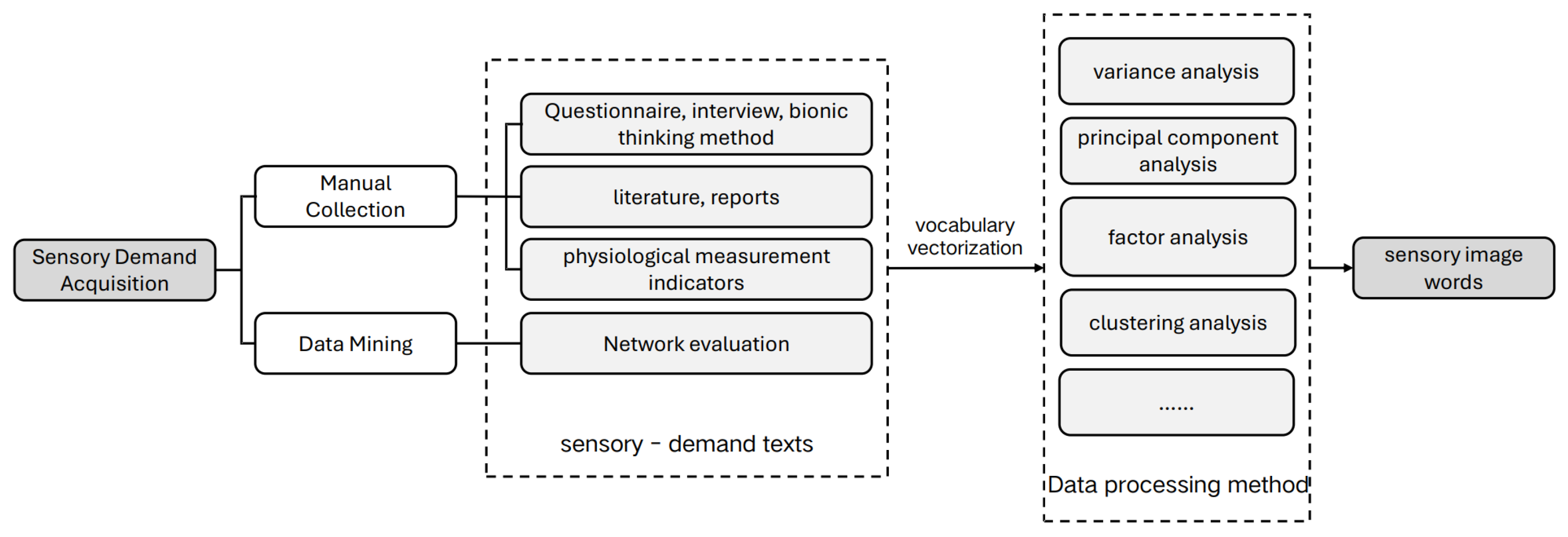
Figure 1.
Flow chart of perceptual demand acquisition and processing formatting.
Figure 1.
Flow chart of perceptual demand acquisition and processing formatting.
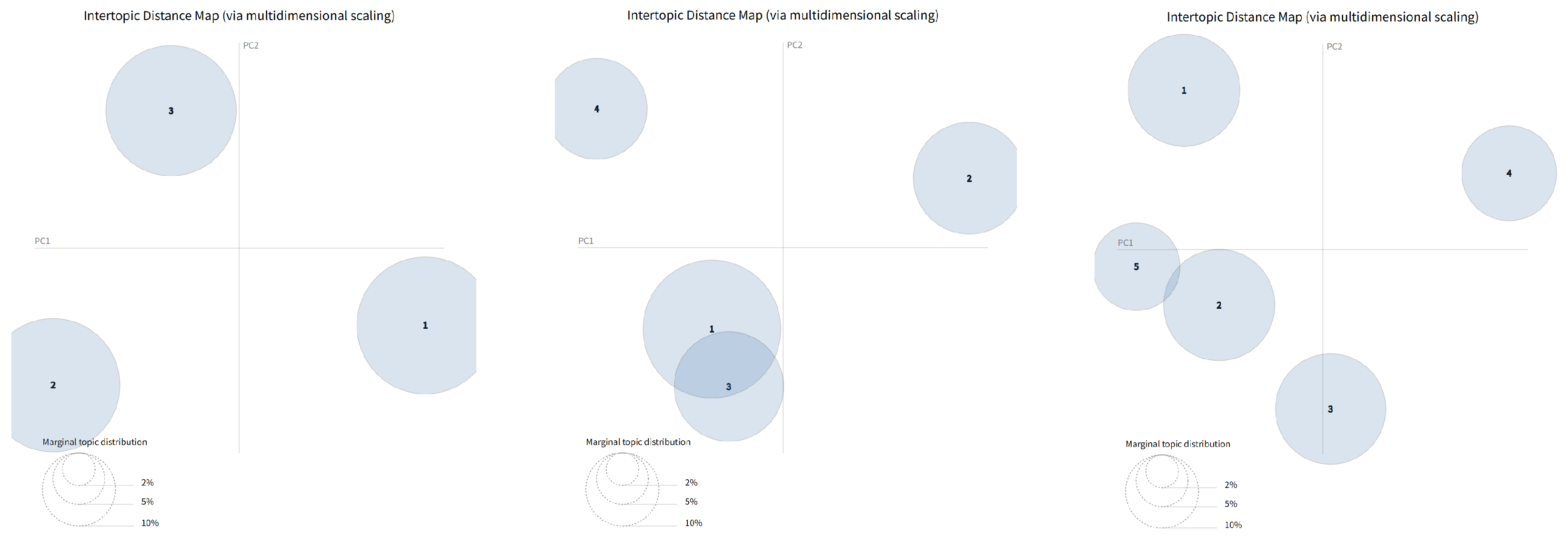
Figure 2.
Theme spacing distribution diagram.
Figure 2.
Theme spacing distribution diagram.
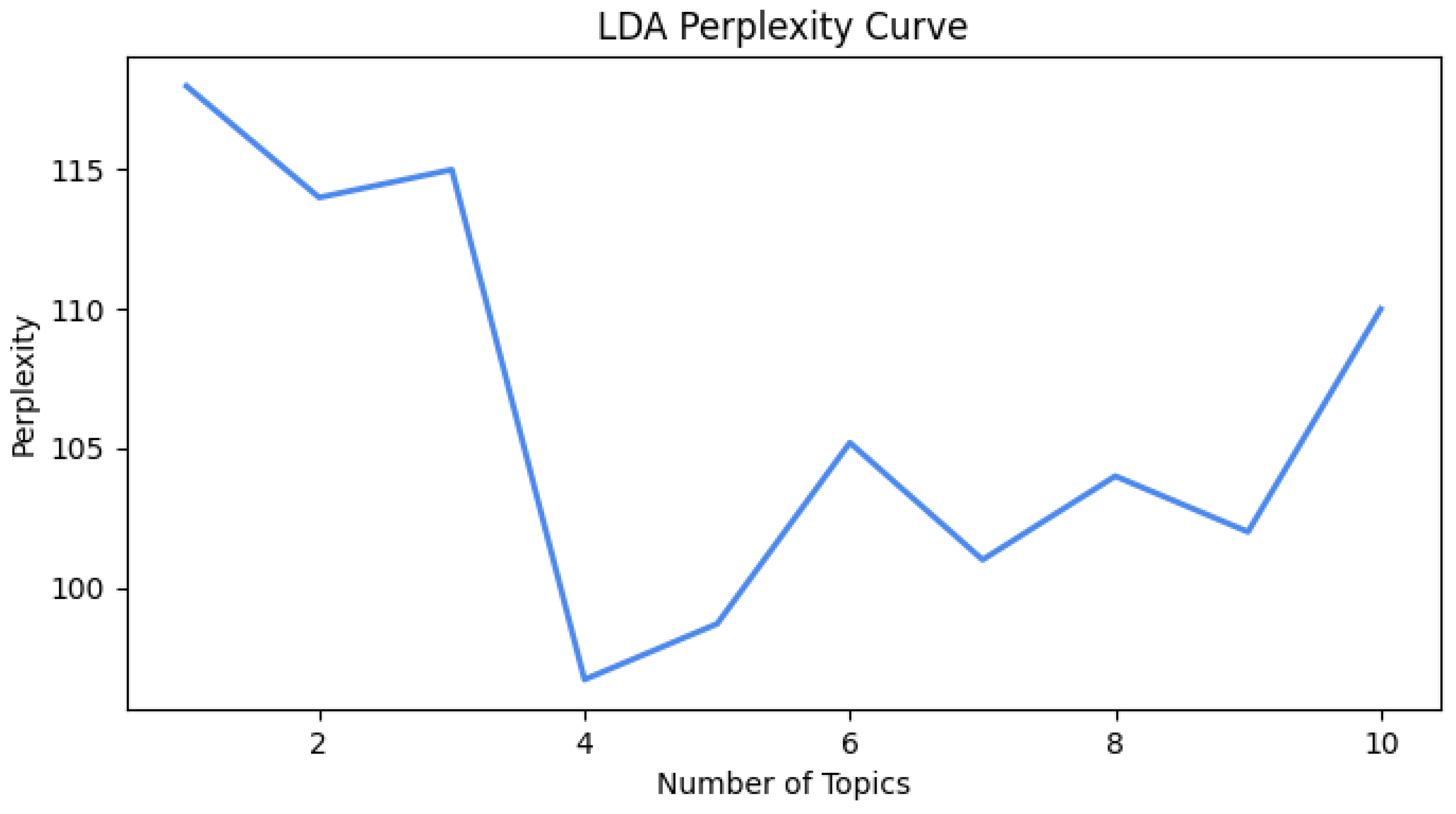
Figure 3.
Perplexity curve graph.
Figure 3.
Perplexity curve graph.
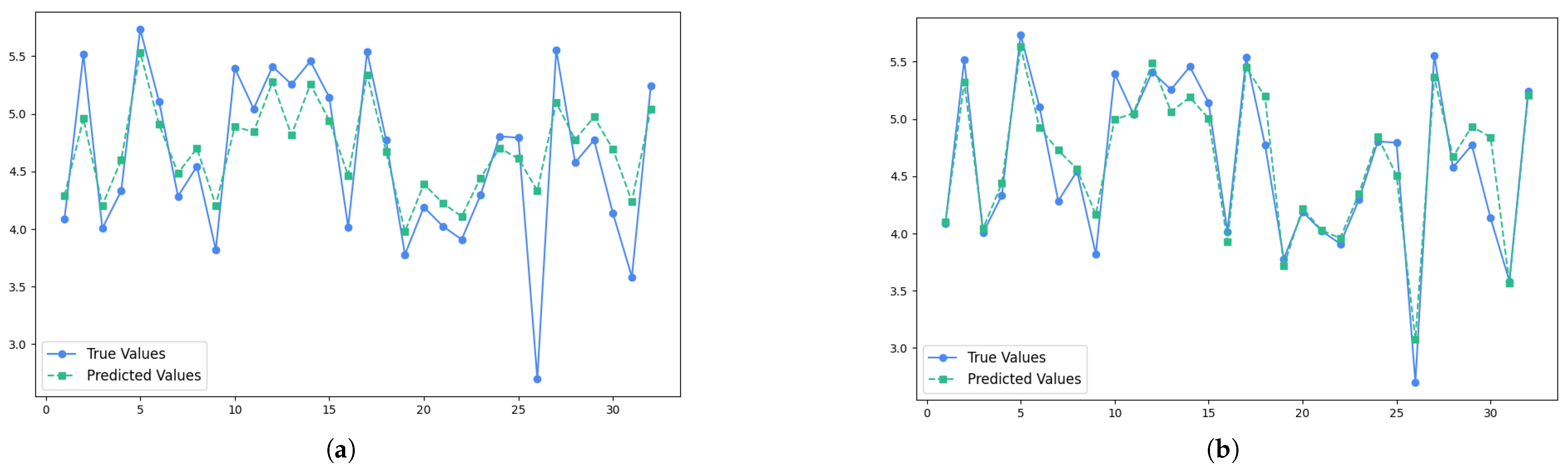
Figure 4.
Test data prediction graph. (a) is the SVR model test data prediction graph. (b) is the XGboost model test data prediction graph.
Figure 4.
Test data prediction graph. (a) is the SVR model test data prediction graph. (b) is the XGboost model test data prediction graph.
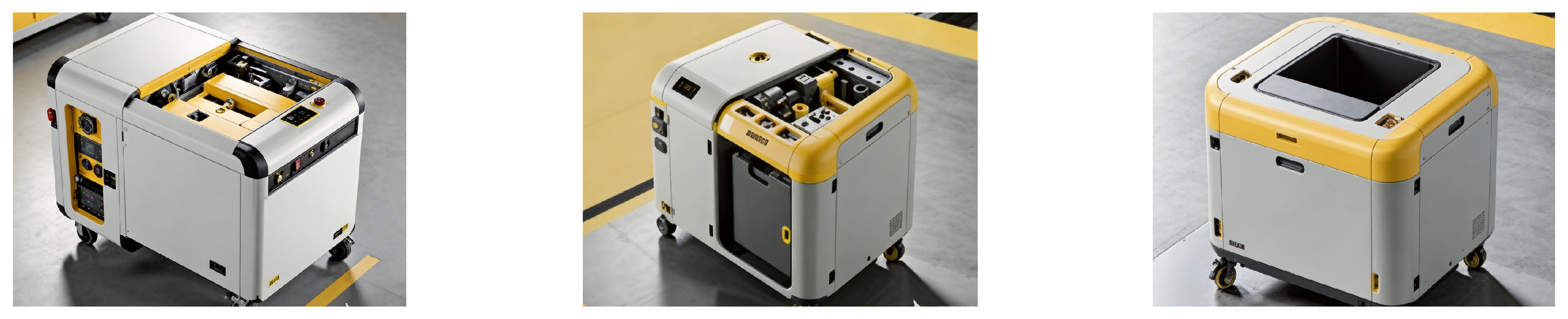
Figure 5.
Design scheme conforming to the image of “concise”.
Figure 5.
Design scheme conforming to the image of “concise”.
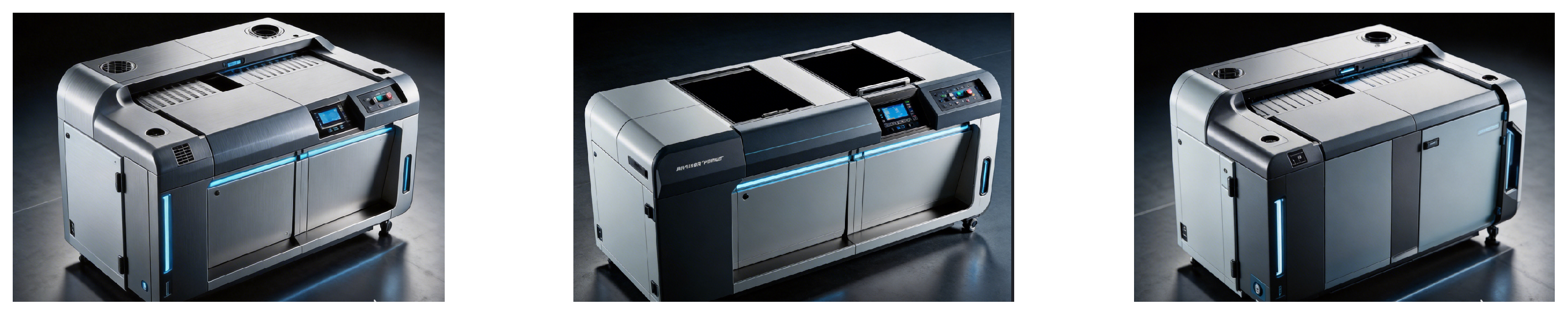
Figure 6.
Design scheme conforming to the image of “technological sense”.
Figure 6.
Design scheme conforming to the image of “technological sense”.
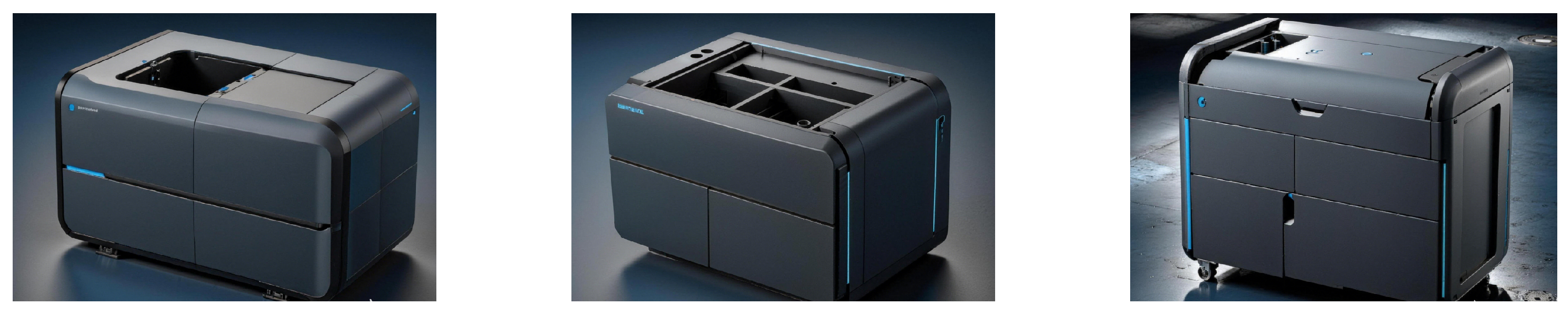
Figure 7.
Design scheme conforming to the image of “professional”.
Figure 7.
Design scheme conforming to the image of “professional”.
Figure 8.
Design scheme conforming to the image of “reliable”.
Figure 8.
Design scheme conforming to the image of “reliable”.
Figure 9.
Design scheme conforming to the image of “characteristic”.
Figure 9.
Design scheme conforming to the image of “characteristic”.
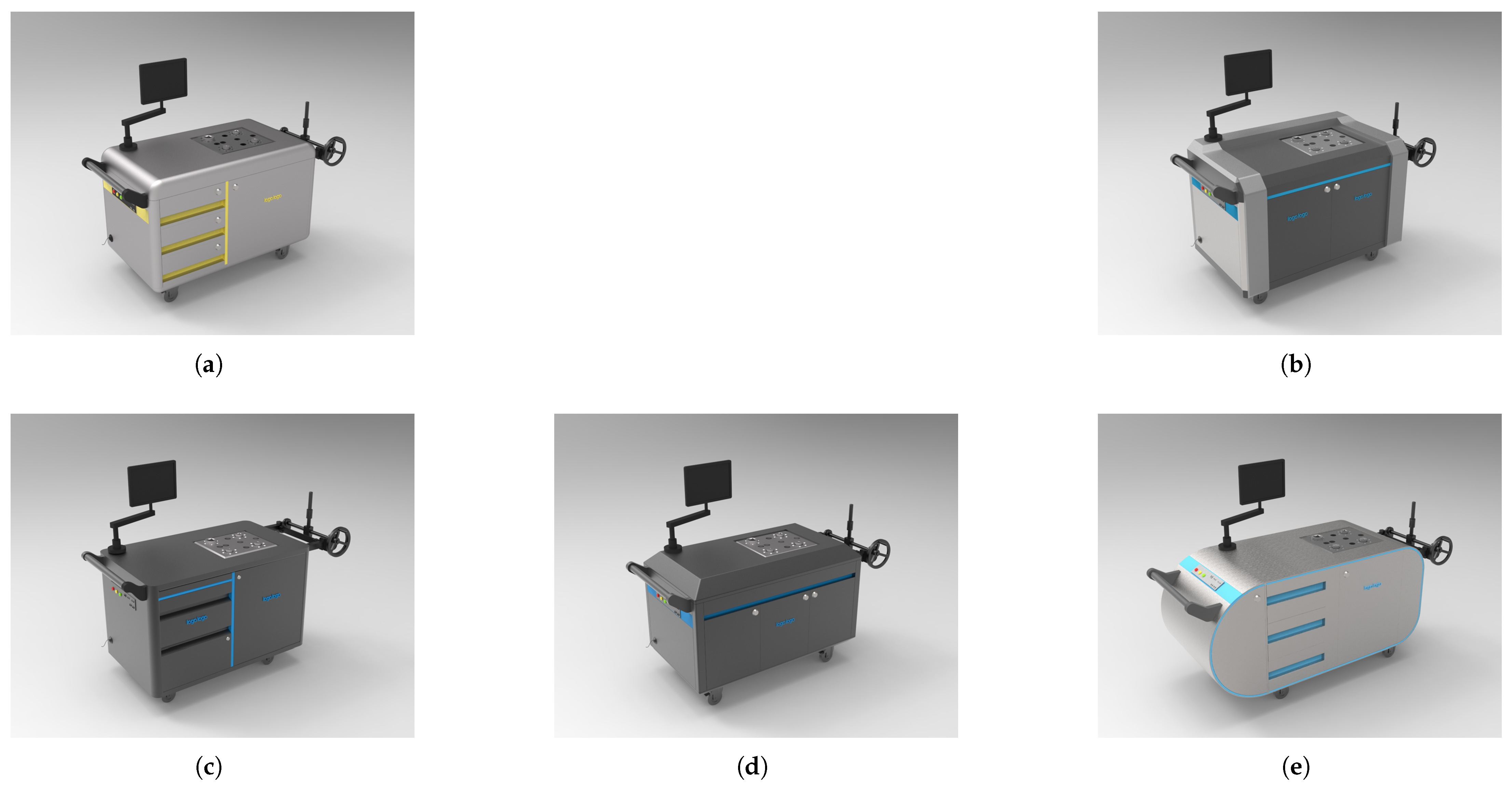
Figure 10.
Design scheme renderings. (a) Design rendering of “concise”. (b) Design rendering of “technological sense”. (c) Design rendering of “professional”. (d) Design rendering of “reliable”. (e) Design rendering of “characteristic”.
Figure 10.
Design scheme renderings. (a) Design rendering of “concise”. (b) Design rendering of “technological sense”. (c) Design rendering of “professional”. (d) Design rendering of “reliable”. (e) Design rendering of “characteristic”.
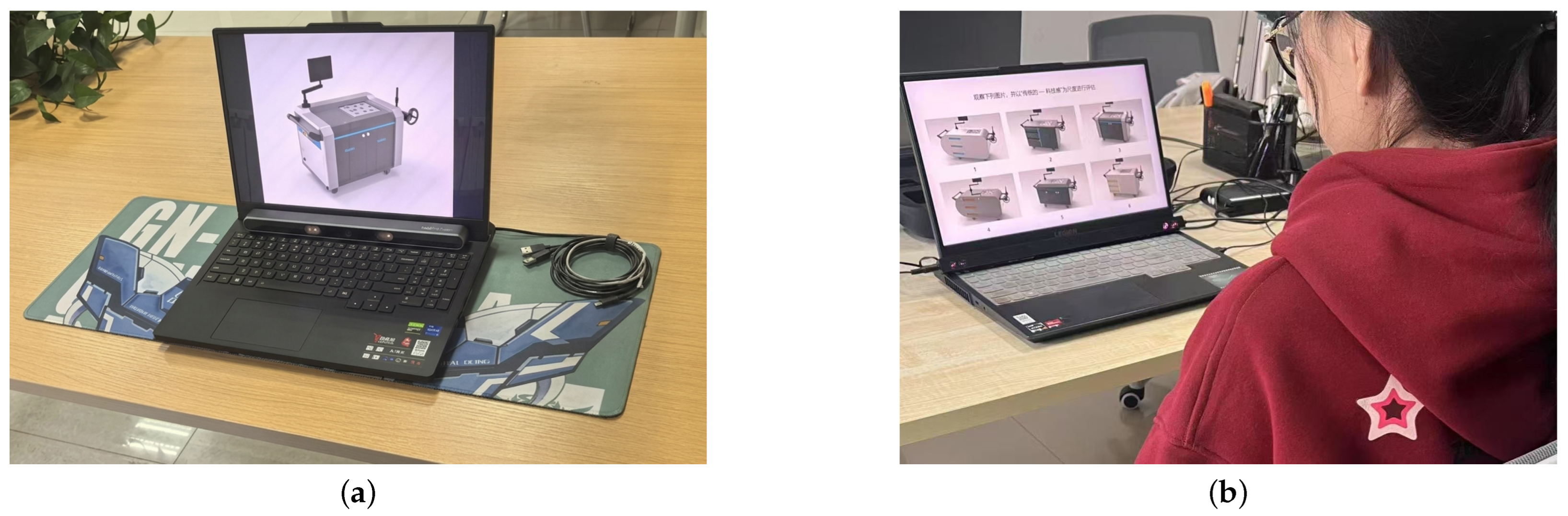
Figure 11.
Experimental environment and setup: (a) Overview of the quiet classroom setting; (b) configuration of the eye-tracking system (Tobii Pro Fusion).
Figure 11.
Experimental environment and setup: (a) Overview of the quiet classroom setting; (b) configuration of the eye-tracking system (Tobii Pro Fusion).
Figure 12.
Experimental flow chart of the observation task of pictures with different perceptual images.
Figure 12.
Experimental flow chart of the observation task of pictures with different perceptual images.
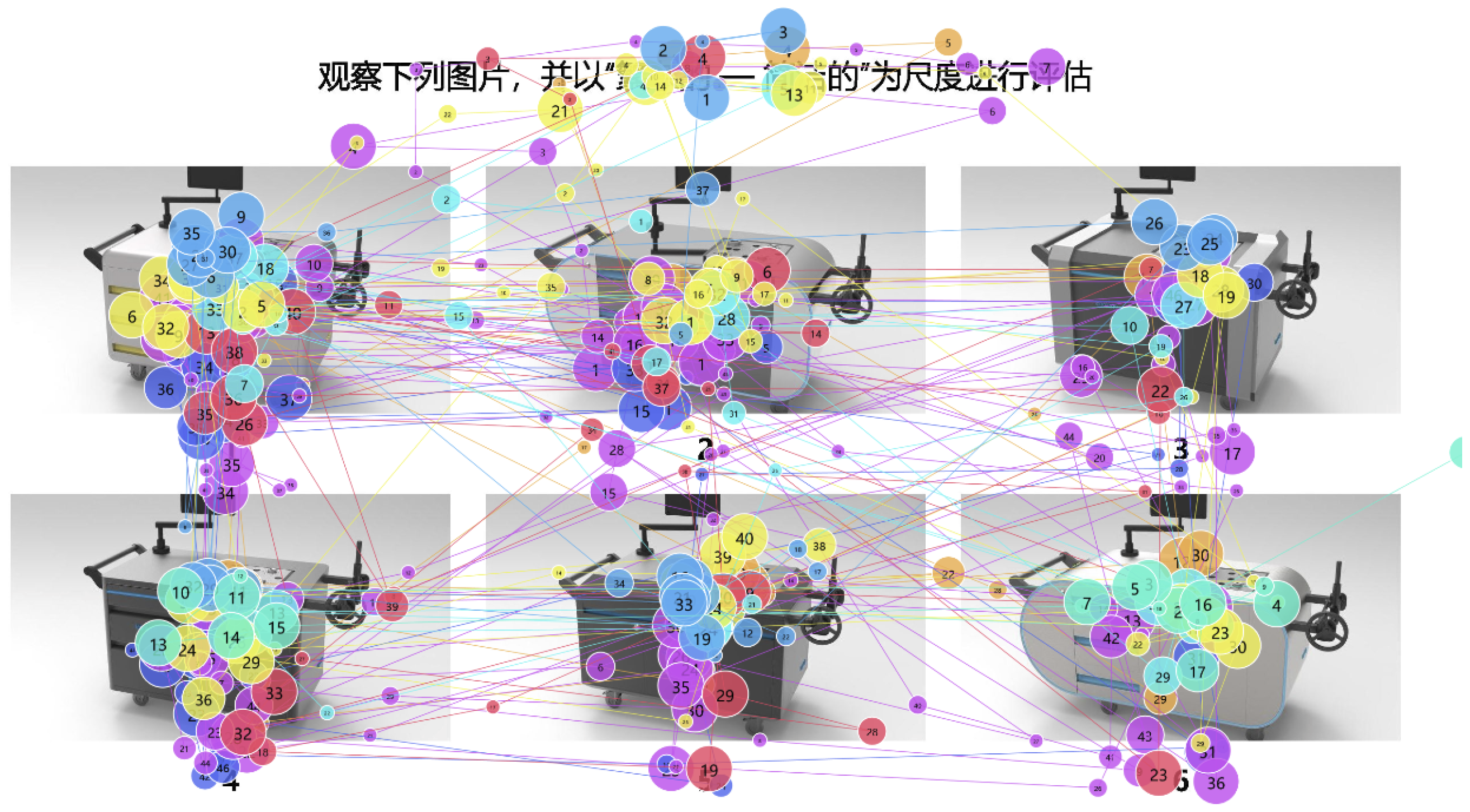
Figure 13.
Eye-movement trajectory map of the observation task for the perceptual image of “concise”. Participants were asked to observe the following images and evaluate them on a “complex–simple” scale. The figure shows the eye movement scanpaths recorded during the observation task, where fixation points and saccades reflect the participants’ visual attention patterns.
Figure 13.
Eye-movement trajectory map of the observation task for the perceptual image of “concise”. Participants were asked to observe the following images and evaluate them on a “complex–simple” scale. The figure shows the eye movement scanpaths recorded during the observation task, where fixation points and saccades reflect the participants’ visual attention patterns.
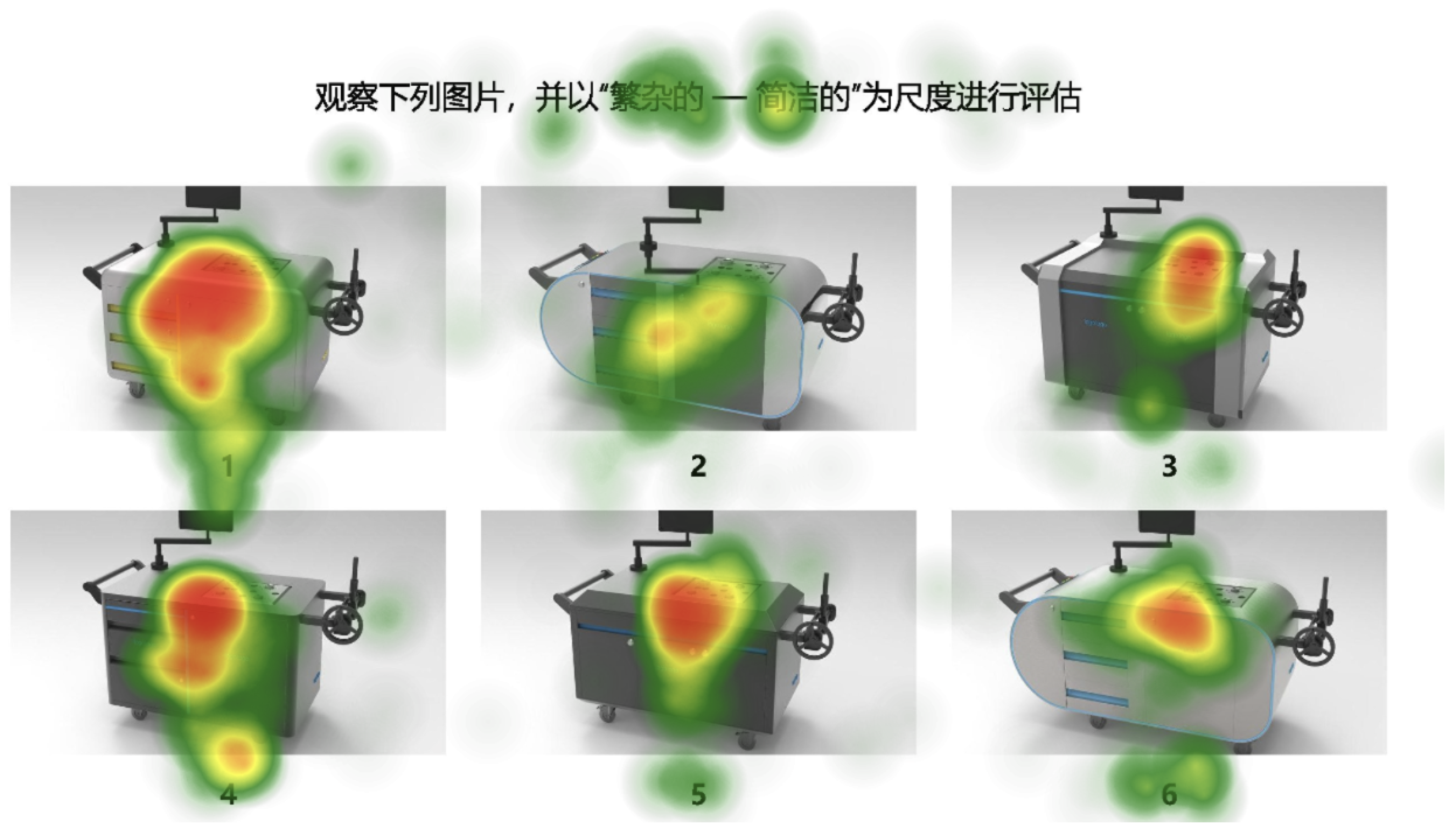
Figure 14.
Eye-movement heat map of the observation task for the perceptual image of “concise”. Participants were asked to observe the following images and evaluate them on a “complex–simple” scale. The figure presents the eye-tracking heatmaps, where warmer colors (e.g., red) indicate higher visual attention and longer fixation durations, while cooler colors (e.g., green) represent lower attention levels.
Figure 14.
Eye-movement heat map of the observation task for the perceptual image of “concise”. Participants were asked to observe the following images and evaluate them on a “complex–simple” scale. The figure presents the eye-tracking heatmaps, where warmer colors (e.g., red) indicate higher visual attention and longer fixation durations, while cooler colors (e.g., green) represent lower attention levels.
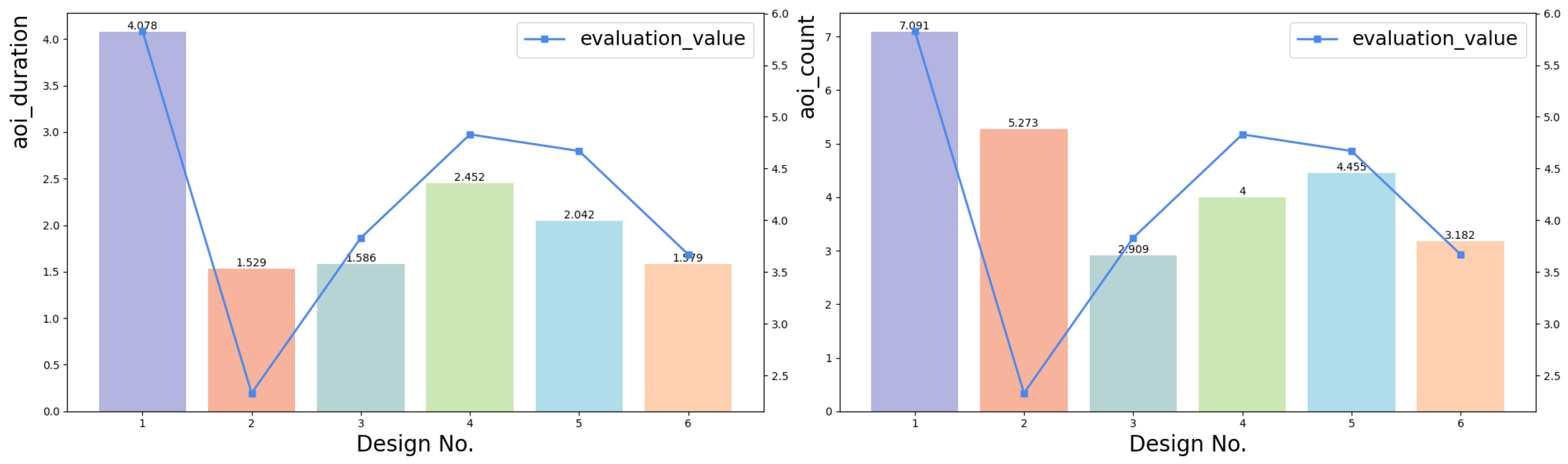
Figure 15.
Comparison between eye-movement data and predicted values of the “concise” design scheme.
Figure 15.
Comparison between eye-movement data and predicted values of the “concise” design scheme.
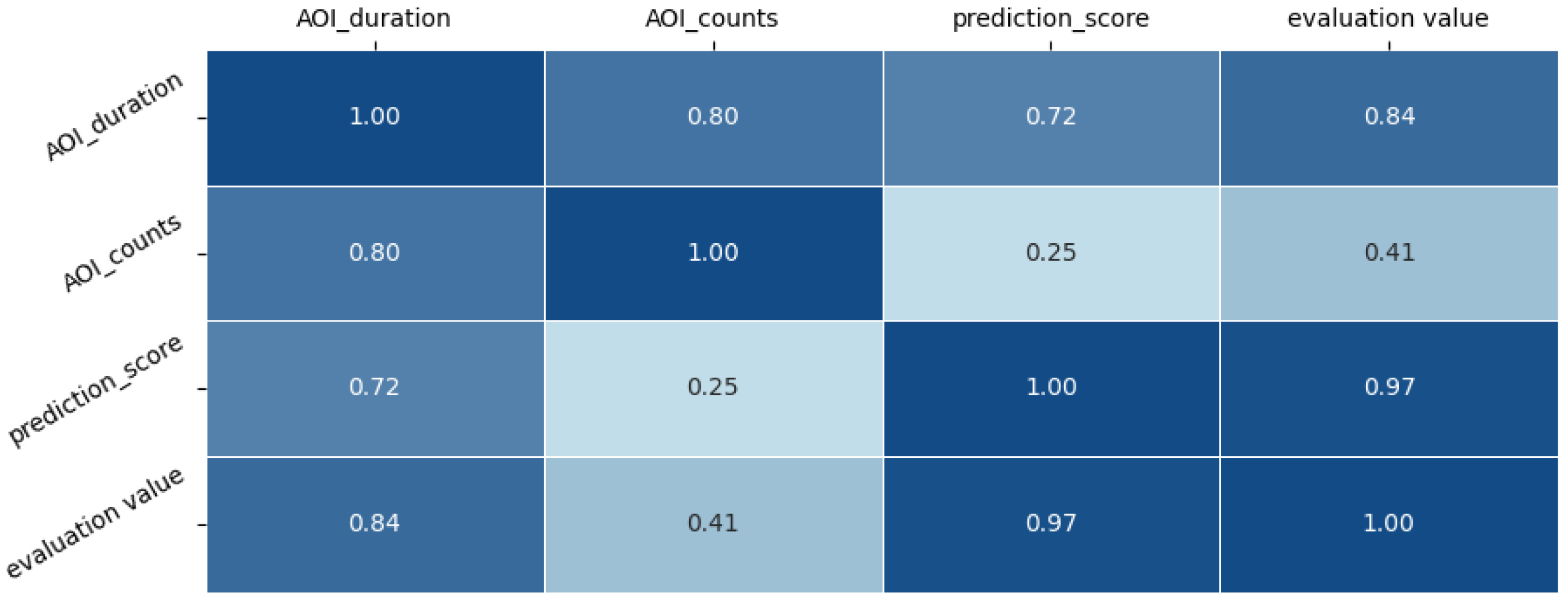
Figure 16.
Heat map of the consistency between subjective and objective data for the “concise” image.
Figure 16.
Heat map of the consistency between subjective and objective data for the “concise” image.
Table 1.
Statistical table of text clustering analysis methods.
Table 1.
Statistical table of text clustering analysis methods.
| Clustering Method | Application Scenarios | Advantages | Disadvantages |
|---|
| K-Means Clustering | Structured text, large-scale data | Fast speed | Susceptible to initial points |
| Hierarchical Clustering | Small-scale data, hierarchical analysis | Strong interpretability | High computational complexity |
| DBSCAN | Data with much noise, unknown number of categories | Can discover outliers | Depends on hyperparameters |
| LDA | Topic modeling, text classification | Suitable for semantic analysis | Requires parameter optimization |
Table 2.
Word segmentation example table.
Table 2.
Word segmentation example table.
| Raw Data | Word Segmentation Results |
|---|
| It is hoped that the appearance of the equipment is simple and elegant, with harmonious color matching, creating a professional and reliable impression. Meanwhile, the tactile sensation of the product should convey a sense of warmth or high-tech, enhancing the user experience, lowering the operational threshold for users, and adapting to multiple application scenarios through modular design. | Equipment, appearance, simple, elegant, color, matching, harmonious, professional, reliable, impression, product, tactile sensation, convey, warmth, high-tech, enhance, experience, modular design, scenario, equipment, robust, structure, industrial styling, tough, reliable, quality, detail optimization, increase, technology, precision, good, compressive resistance, durability, extended periods, high-load conditions, stable operation, affect, performance |
| The equipment should express its tough and reliable quality through a robust structure and industrial styling, while increasing the sense of technology and precision through detail optimization. Additionally, it should possess good compressive resistance and durability, enabling stable operation over extended periods under high-load conditions without affecting performance. | Equipment, appearance, simple, elegant, color, matching, harmonious, professional, reliable, impression, product, tactile sensation, convey, warmth, high-tech, enhance, experience, modular design, scenario, equipment, robust, structure, industrial styling, tough, reliable, quality, detail optimization, increase, technology, precision, good, compressive resistance, durability, extended periods, high-load conditions, stable operation, affect, performance |
Table 3.
Perceptual demand classification table.
Table 3.
Perceptual demand classification table.
| Category | Sensory Image Vocabulary |
|---|
| First-type | Grand, Modern, Concise, Comfortable |
| Second-type | Detailed, Technological, Textured, Futuristic, Delicate |
| Third-type | High-end, Industrial Style, Professional, Exquisite |
| Fourth-type | Durable, Steady, Long-lasting, Reliable |
| Fifth-type | Smooth, Characteristic, Affable |
Table 4.
KMO and Bartlett’s test.
Table 4.
KMO and Bartlett’s test.
| Theme | KMO | Approx. | df | p-Value |
|---|
| First-type Theme | 0.877 | 603.650 | 6 | <0.001 |
| Second-type Theme | 0.912 | 885.913 | 10 | <0.001 |
| Third-type Theme | 0.853 | 663.249 | 6 | <0.001 |
| Fourth-type Theme | 0.870 | 644.098 | 6 | <0.001 |
| Fifth-type Theme | 0.787 | 425.132 | 3 | <0.001 |
Table 5.
Function-form comparison table.
Table 5.
Function-form comparison table.
| Clustering Method | Application Scenarios | Advantages | Disadvantages |
|---|
| K-Means Clustering | Structured text, large-scale data | Fast speed | Susceptible to initial points |
| Hierarchical Clustering | Small-scale data, hierarchical analysis | Strong interpretability | High computational complexity |
| DBSCAN | Data with much noise, unknown number of categories | Can discover outliers | Depends on hyperparameters |
| LDA | Topic modeling, text classification | Suitable for semantic analysis | Requires parameter optimization |
Table 6.
Deconstruction matrix of form comparison method.
Table 6.
Deconstruction matrix of form comparison method.
| Deconstruction Scheme | Design Features | Color Configuration | Material Texture |
|---|
| Morphological Features | Layout Features | Structural Features | Connection Features | Primary Color | Secondary Color | Material | Surface Treatment |
|---|
| Deconstruction 1 | Linear | Symmetrical | Large Rounded | Corners | Welding High-Lightness Gray + Low-Lightness Gray | Yellow | Cast Iron | Polishing |
| Deconstruction 2 | Curvilinear | Asymmetrical | Small Rounded | Corners Screw Fixing | Low-Lightness Gray + High-Lightness Gray | Orange-Yellow | Aluminum Alloy Chrome | Chrome Plating |
| Deconstruction 3 | Combined Right | Angle | Gluing | High-Lightness Gray | Orange | Aviation Aluminum | Wire Drawing | |
| Deconstruction 4 | | | | | Low-Lightness Gray | Aviation Blue | | |
| Deconstruction 5 | | | | | Sky Blue | | | |
Table 7.
Random consistency index table.
Table 7.
Random consistency index table.
| Order | 2 | 3 | 4 | 5 | 6 | 7 |
|---|
| R.I. | 0 | 0.58 | 0.90 | 1.12 | 1.24 | 1.32 |
Table 8.
Pair-wise judgment matrix of fuzzy hierarchy criterion for layer.
Table 8.
Pair-wise judgment matrix of fuzzy hierarchy criterion for layer.
| Criterion Layer | Design Feature | Color Configuration | Material Texture |
|---|
| Design Feature | 1 | 6.9 | 5.7 |
| Color Configuration | 0.15 | 1 | 1.2 |
| Material Texture | 0.2 | 0.83 | 1 |
Table 9.
Fuzzy hierarchy judgment matrix of scheme layer (design features).
Table 9.
Fuzzy hierarchy judgment matrix of scheme layer (design features).
| Alternative Layer | Morphological Feature | Layout Feature | Structural Feature | Connection Feature |
|---|
| Morphological Feature | 1 | 4.75 | 3.5 | 2.6 |
| Layout Feature | 0.21 | 1 | 2.24 | 1.5 |
| Structural Feature | 0.29 | 0.45 | 1 | 1.75 |
| Connection Feature | 0.39 | 0.67 | 0.57 | 1 |
Table 10.
Fuzzy hierarchy judgment matrix of scheme layer (color configuration).
Table 10.
Fuzzy hierarchy judgment matrix of scheme layer (color configuration).
| Alternative Layer | Main Color | Auxiliary Color |
|---|
| Main Color | 1 | 6.33 |
| Auxiliary Color | 0.16 | 1 |
Table 11.
Fuzzy hierarchy judgment matrix of scheme layer (material texture).
Table 11.
Fuzzy hierarchy judgment matrix of scheme layer (material texture).
| Alternative Layer | Material Surface | Treatment Process |
|---|
| Material | 1 | 3.95 |
| Surface Treatment Process | 0.26 | 1 |
Table 12.
Consistency test.
Table 12.
Consistency test.
| Hierarchy | Maximum Eigenvalue () | C.I.Value | R.I.Value | C.R.Value | Consistency Check Result |
|---|
| Criterion Layer | 3.076 | 0.038 | 0.580 | 0.066 | Passed |
| Alternative Layer (Design Features) | 4.250 | 0.083 | 0.900 | 0.0926 | Passed |
| Alternative Layer (Color Configuration) | 2.006 | 0.006 | 0.000 | 0.000 | Passed |
| Alternative Layer (Material Texture) | 2.013 | 0.013 | 0.000 | 0.000 | Passed |
Table 13.
Evaluation weights of design elements for equipment-type products.
Table 13.
Evaluation weights of design elements for equipment-type products.
| Evaluation Level | Scheme Category | Scheme Name | Hierarchical Weight (%) | Total Weight (%) |
|---|
| Criterion layer | | Design features | 75.2 | |
| | Color configuration | 12.5 | |
| | Material texture | 12.3 | |
| Scheme layer | Design features | Morphological features | 53.7 | |
| Layout features | 19.2 | |
| Structural features | 14.3 | |
| Connection features | 12.8 | |
| | Color configuration | Main color | 86.3 | |
| | Auxiliary color | 13.7 | |
| | Material texture | Material | 79.6 | |
| | Surface treatment process | 20.4 | |
Table 14.
SVR model parameters.
Table 14.
SVR model parameters.
| Parameter Name | Parameter Value |
|---|
| Training Time | 2.69 s |
| Data Shuffling | Yes |
| Cross-Validation | 5 |
| C | 1 |
| Epsilon | 0.5 |
| Kernel | rfb |
| Gamma | scale |
Table 15.
SVR model evaluation results.
Table 15.
SVR model evaluation results.
| | MSE | RMSE | MAE | MAPE | R2 |
|---|
| Training Set | 0.057 | 0.408 | 0.384 | 5.976% | 0.772 |
| Cross-Validation Set | 0.070 | 0.446 | 0.506 | 6.849% | 0.744 |
| Test Set | 0.062 | 0.593 | 0.490 | 6.250% | 0.761 |
Table 16.
XGboost model parameters.
Table 16.
XGboost model parameters.
| Parameter Name | Parameter Value |
|---|
| Training time | 3.25 m |
| Data shuffling | Yes |
| Cross-validation | 5 |
| Number of base learners | 50 |
| Maximum depth of the tree | 3 |
| Learning rate | 0.05 |
| Minimum sample weight of leaf nodes | 2 |
| L1 regularization | 0.1 |
| L2 regularization | 1 |
| Sample sampling ratio | 0.9 |
| Feature sampling ratio used for each tree | 0.8 |
Table 17.
XGboost model evaluation results.
Table 17.
XGboost model evaluation results.
| | MSE | RMSE | MAE | MAPE | R2 |
|---|
| Training Set | 0.0263 | 0.1622 | 0.1184 | 2.3753% | 0.949 |
| Cross-Validation Set | 0.0385 | 0.2879 | 0.1740 | 2.7920% | 0.885 |
| Test Set | 0.0449 | 0.1869 | 0.2231 | 2.8729% | 0.870 |
Table 18.
Prediction situations under various perceptual images.
Table 18.
Prediction situations under various perceptual images.
| Perceptual Image | Sequence with the Highest Predicted Score | Score | Sequence with the Lowest Predicted Score | Score |
|---|
| Concise Sense | [1-2-2-3-3-1-3-4] | 5.72 | [2-1-2-4-1-5-1-1] | 2.48 |
| Technological | [3-1-3-4-2-4-3-5] | 5.85 | [2-2-1-2-4-3-1-1] | 2.88 |
| Professional | [1-1-2-2-4-4-1-4] | 5.87 | [2-2-1-3-1-5-2-2] | 2.52 |
| Reliable | [1-1-3-1-4-4-1-5] | 5.66 | [2-2-1-3-3-3-2-2] | 2.41 |
| Characteristic | [2-2-1-4-3-5-3-3] | 5.72 | [1-1-2-2-4-2-2-1] | 2.25 |
Table 19.
Experimental flow table of the observation task of pictures with different perceptual images.
Table 19.
Experimental flow table of the observation task of pictures with different perceptual images.
| Experimental Stage | Experimental Content | Duration |
|---|
| Experimental preparation | Experiment introduction | 2 min |
| Eye tracker calibration | 3 min |
| Pre-training | Random observation task | 1 min |
| Formal experiment | 5 groups of observation tasks | 3 min |
| 5 groups of scoring tasks | 3 min |