Article

Long-Term Interactive Response and Mechanisms Between Deep-Buried Shield Tunnels and the Surrounding Strata

1
Beijing Key Laboratory for Urban Safety and Collective Intelligence, University of Science and Technology Beijing, Beijing 100083, China
2
Hebei Key Laboratory of Collapse Prevention, University of Science and Technology Beijing, Beijing 100083, China
3
State Key Laboratory of Hydroscience and Engineering, Tsinghua University, Beijing 100084, China
4
Key Laboratory of Urban Underground Engineering of Ministry of Education, School of Civil Engineering, Beijing Jiaotong University, Beijing 100044, China
*
Author to whom correspondence should be addressed.
Appl. Sci. 2026, 16(8), 3711; https://doi.org/10.3390/app16083711
Submission received: 9 February 2026 / Revised: 27 March 2026 / Accepted: 7 April 2026 / Published: 10 April 2026

Featured Application

(1) Long-term settlement risk evaluation of deep-buried shield tunnels; (2) Waterproofing design and leakage threshold control; (3) Design and management of deep urban underground infrastructure.

Abstract

Deep-buried tunnels in urban environments require careful evaluation of their long-term interactions with the surrounding ground to ensure structural safety and sustainability. Taking the Beijing Eastern Sixth Ring Road renovation project as a case study, this research employs a fully coupled fluid–solid numerical approach to elucidate the long-term disturbance mechanisms associated with deep-buried shield tunneling. Specifically, the research quantifies spatio-temporal ground responses and characterizes the consolidation settlement mechanisms exacerbated by potential tunnel leakage. The results indicate that ground deformation is primarily governed by the intensity of tunnel leakage. When the waterproofing grade of the tunnel meets Grade I or II, leakage and surface settlement remain negligible. However, when a tunnel’s waterproofing grade deteriorates to Grade IV or lower, consolidation settlement increases significantly, becoming the dominant deformation mode. In addition, both the extent and severity of ground movement are highly sensitive to the geometrical boundaries of the strata and the relative depth of the tunnel. Larger permeable domains and deeper tunnels lead to wider pore pressure and stress disturbance zones, ultimately leading to more pronounced long-term settlement. Furthermore, soil permeability dictates the temporal evolution of the ground response, with poorly permeable layers exhibiting delayed fluid–solid re-equilibration. A critical threshold is observed when leakage rates align with or exceed the soil’s permeability, leading to a significant escalation in both the amplitude of subsidence and the time required to reach equilibrium. These findings offer valuable insights for the design, waterproofing, and long-term management of deep urban tunnels.

1. Introduction

Exploiting deep underground space has emerged as an essential strategy for sustainable urban development. Despite the lack of a unified global standard, major metropolises have established depth-based classifications tailored to their specific geological contexts. For instance, Beijing delineates four distinct strata: shallow (0–10 m), intermediate (10–30 m), deep (30–50 m), and ultra-deep (below 50 m). In contrast, Shanghai’s conceptual planning adopts a tripartite division: shallow (0–15 m), intermediate (15–40 m), and deep (exceeding 40 m). Currently, urban underground space development primarily focuses on shallow and intermediate levels. In recent years, some underground projects have extended into deep or ultra-deep underground spaces, such as the Beijing East Sixth Ring Road renovation project discussed in this paper, which reaches a maximum depth of 75 m. With shallow-level spaces gradually reaching saturation, constructing deep underground structures—particularly deep-buried shield tunnels—has become an inevitable choice for further developing urban underground space. However, the long-term interactions between deep-buried tunnels and the surrounding ground pose significant challenges in terms of structural stability, settlement, and deformation [1,2]. Numerous factors influence these interactions, such as tunnel leakage, which induces fluid–solid coupled effects, leading to changes in pore water pressure, stress distribution, and soil consolidation. Additionally, the soil properties and tunnel burial depth significantly impact the ground’s response. inducing both immediate and time-dependent settlement that compromises the stability of the surrounding geological environment [3,4,5,6,7,8,9,10,11].
Although research on ground deformation caused by tunnel construction is increasing, few studies have comprehensively explored the long-term disturbance mechanisms of deep-buried shield tunnels on geological formations. Numerous studies have investigated the short-term and long-term disturbances caused by shield tunnel construction, such as the influence of excavation face support pressure, shield posture, and synchronous grouting on ground deformation [12,13,14,15,16,17,18,19,20], as well as the long-term settlement behavior in soft soil layers such as those in Shanghai [21,22,23]. However, most existing studies focus primarily on the response of shallow to medium-depth geological formations. Even the limited research on deeply buried tunnels has primarily focused on construction-phase impacts of deep shield tunnels, such as arch effects [14,15,16,17,18,19,20,21,22,23,24,25,26,27,28,29,30]. While recent advancements have introduced quantitative, risk-based methodologies to optimize geotechnical investigations and enhance decision-making frameworks [31,32], there remains a lack of deep understanding regarding the long-term disturbance mechanisms caused by deep-buried tunnels, especially under different geological scales, properties, and tunnel leakage conditions. To ensure the safety and sustainability of deep-buried tunnel projects, a comprehensive study of the long-term response of geological formations is urgently needed.
This study aims to fill this research gap by establishing a fluid–solid coupling numerical model to investigate the long-term response of geotechnical bodies induced by leakage from deep-buried shield tunnels. By examining factors such as tunnel waterproofing grade, geotechnical permeability, and scale, this research provides valuable insights into the long-term settlement mechanisms of geotechnical bodies in deep-buried tunnel projects. The findings contribute to a better understanding of the impact of tunnel leakage on the stability of tunnel structures and the surrounding soil conditions, ultimately offering guidance for the design and maintenance of urban deep-buried shield tunnels.

2. Project Overview

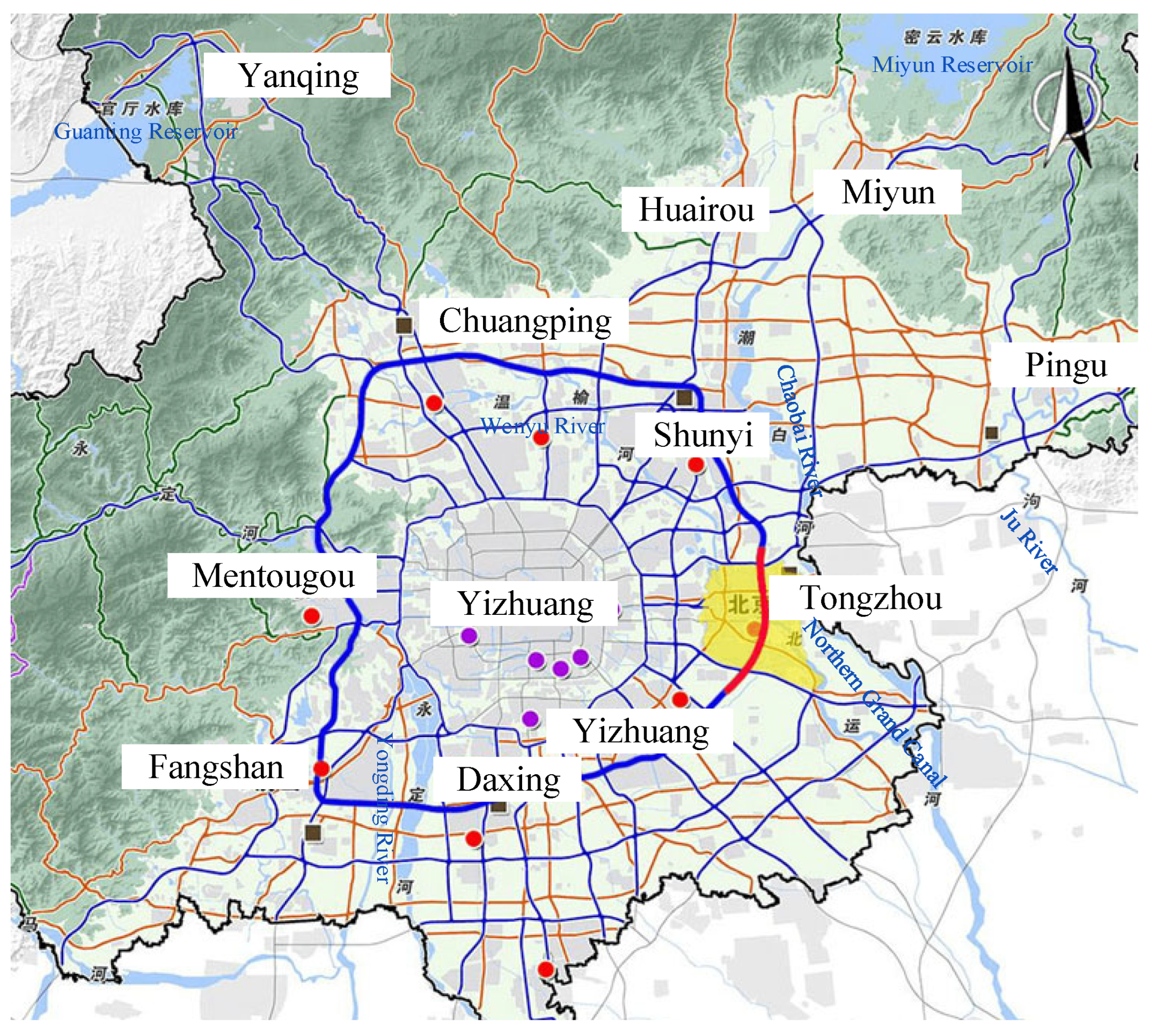
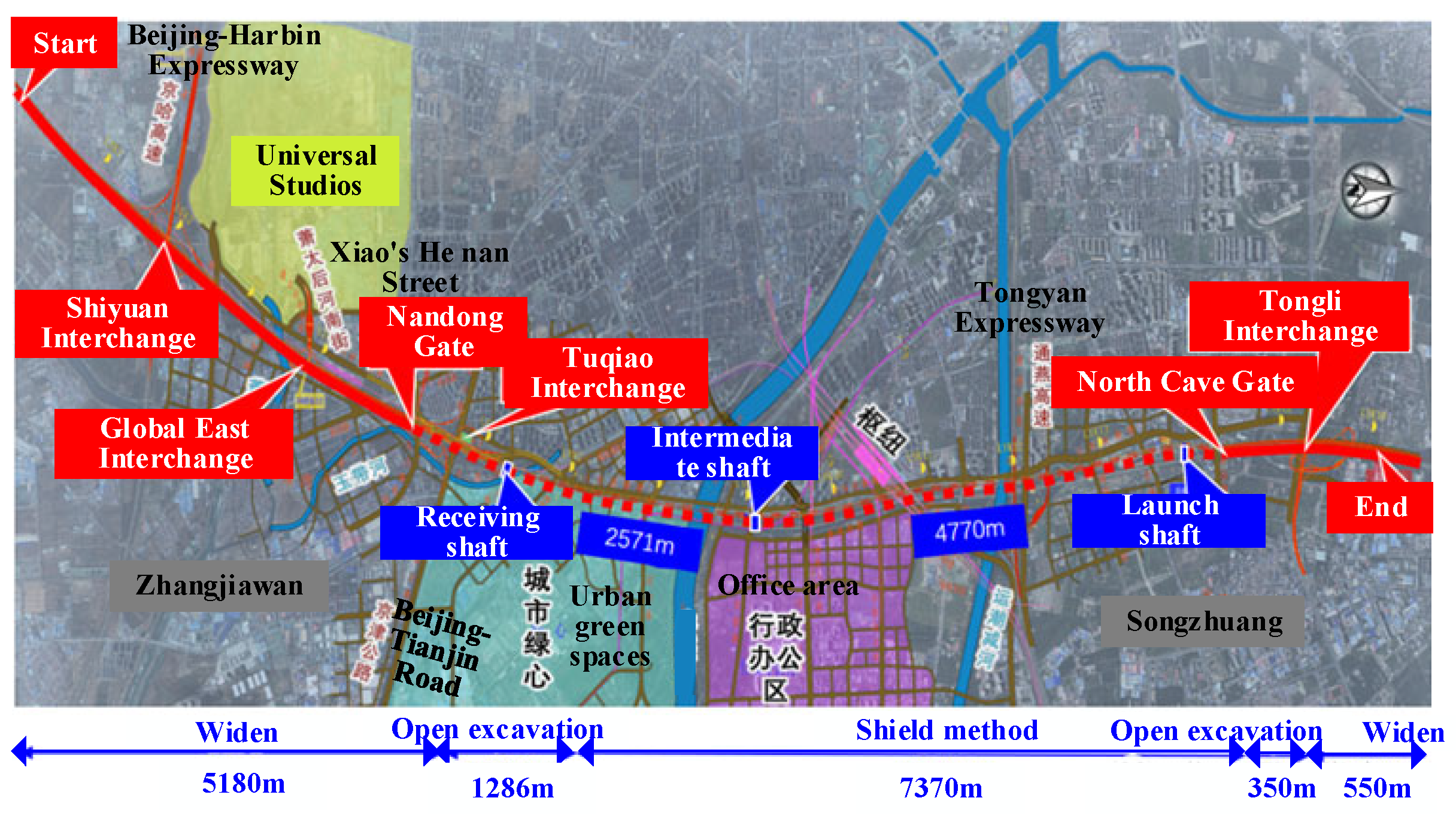
The Beijing Eastern Sixth Ring Road (Jingha Expressway–Luyuan North Street) renovation project is a key initiative in the city’s transportation infrastructure development, as shown in Figure 1, holding significant importance for optimizing urban traffic layout and promoting regional development. The project starts approximately 2 km south of the Jingha Expressway and extends north to Luyuan North Street, with a total length of 16 km. The design speed is 80 km/h, and the project follows highway standards. The entire route is divided into two sections: the directly widened section and the underground reconstruction section. As shown in Figure 2, the section from the starting point to the southern part of the Jingjin Expressway (about 4.9 km long) and the section from Luyuan Second Street North to the northern endpoint at Luyuan North Street (about 1.5 km long) are designated as directly widened sections. The standard cross-section of these areas has been upgraded from the existing four-lane bidirectional road to a six-lane bidirectional road, effectively increasing traffic capacity and alleviating congestion. The section from the south of Jingjin Expressway to the north of Luyuan Second Street (approximately 9.6 km long) is designated for underground reconstruction. This section is designed as a separate tunnel system situated within the current green belt on the west side of the Sixth Ring Road, reducing the occupation of surface space and minimizing environmental impact, thus achieving efficient urban space utilization.
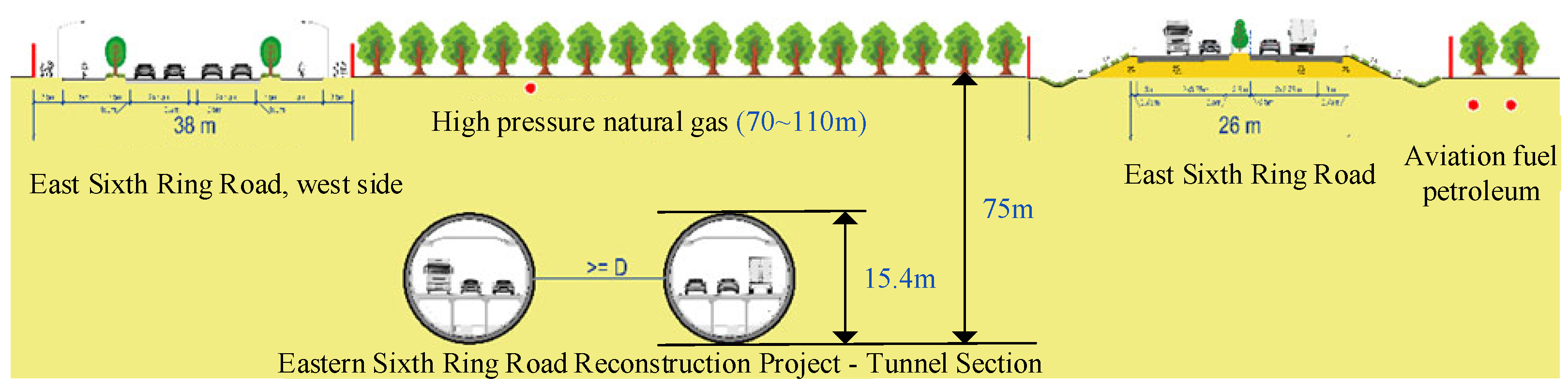
The Eastern Sixth Ring Tunnel spans a total length of 9160 m, employing a two-tunnel configuration with separate lanes. The shield tunnel section measures 7341 m in length, with a maximum burial depth of 75 m, as shown in Figure 3, making it the deepest underground tunnel in Beijing and the longest shield-driven expressway tunnel in China. The external diameter of the shield tunnel is 15.4 m, the internal diameter is 14.1 m, and the tunnel lining thickness is 650 mm.
The tunnel construction uses the “Jinghua” shield machine, with an excavation diameter of up to 16.07 m, making it one of the largest-diameter shield machines. Throughout the construction process, the shield machine will sequentially pass beneath major infrastructure such as the Tongyan Expressway, Yunchao River, Tonghu Road, Jingqin Railway, Metro Line 6, Guangqu Road, Beiyunhe, Binhe Road, Tongsan Railway, and the Jingjin Expressway, all of which are high-risk areas.
The geological conditions in the Eastern Sixth Ring renovation area are complex, primarily consisting of fine silty sands, with small amounts of silty clay in the central section. Fine silty sands are highly permeable and have poor stability, making them prone to issues like water and sand inflows during shield tunnel construction, which increases construction difficulty and risk. The presence of silty clay layers causes uneven mechanical properties in the strata, posing challenges to tunnel support and long-term stability control. The groundwater level in the project area is relatively high, with annual fluctuations of 1 to 2 m and the phreatic water level ranging from 5 to 8 m below the surface. The confined aquifer head is approximately 32 m, posing a potential threat to tunnel structure integrity and construction safety.
The Beijing Eastern Sixth Ring Road renovation project faces dual challenges during both the construction and operational phases. The highly permeable strata pose risks of water and sand inflows during shield tunnel construction, adding to the complexity and risk of the project. Additionally, during the operational phase, if the tunnel’s waterproofing performance deteriorates and leakage occurs, there is a risk of long-term regional subsidence. Water leakage can alter the mechanical properties of the soil surrounding the tunnel, leading to surface settlement and tunnel deformation, which could severely impact the tunnel’s normal operation and the safety of the surrounding environment.

3. Methods

3.1. Numerical Modeling

3.1.1. Basic Assumptions

  • It is assumed that each soil layer is uniformly distributed in the horizontal direction, and the effects of soil voids and anisotropy are not considered.
  • It is assumed that the soil is fully saturated and follows an elastic constitutive model, considering the interaction between flow and solid mechanics, with the water level assumed to be at the surface.
  • The tunnel segments are modeled using a linear elastic constitutive model, with no consideration of plasticity effects on strata deformation.
  • Only the response of the ground caused by tunnel leakage after the tunnel is constructed is considered.

3.1.2. Model Size and Grid Division

The numerical simulations were carried out using the finite element software ABAQUS 2016 within the framework of the finite element method (FEM). To capture the coupled hydro-mechanical behavior of saturated soils during shield tunneling, a coupled u–p formulation based on Biot’s consolidation theory was adopted, in which the soil skeleton displacement, pore water pressure and stress are treated as primary variables.
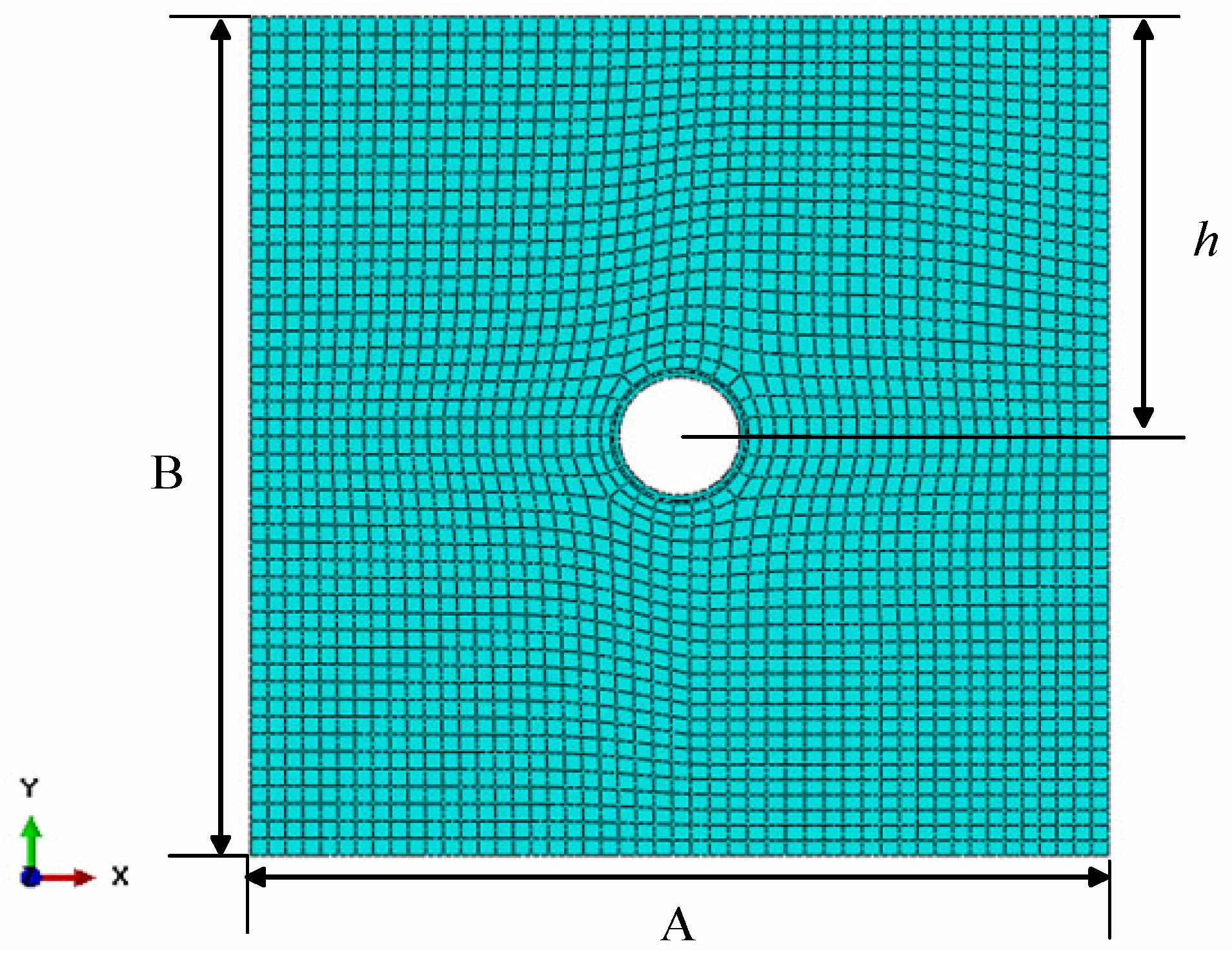
In the model, the tunnel burial depths are taken as h = 50 m and 100 m, corresponding to deep-buried tunnels. The soil model sizes (length A × width B) are chosen as 100 m × 100 m, 200 m × 200 m, and 400 m × 400 m, representing three different scales. The tunnel cross-section for the shield tunneling section has an internal diameter of 14.1 m, an external diameter of 15.4 m, and a lining thickness of 0.65 m. The excavation diameter for the shield is 16.07 m, and the grouting layer thickness is the actual excavation gap, which is 0.335 m.
To isolate the fundamental fluid–solid coupling mechanisms under varying soil properties, this study adopts a representative homogenized single-layer model to investigate the ground response in large-scale deep tunnel engineering. This simplification facilitates a direct comparative analysis of ground response across different soil types (e.g., clayey and sandy strata) by eliminating the interference of complex interfacial hydraulic gradients present in interbedded formations. The soil domain is discretized using two-dimensional eight-node pore pressure elements (CPE8P), as shown in Figure 4. The soil, tunnel, and grouting layers are all modeled using eight-node plane strain quadrilateral elements with quadratic displacement interpolation and bilinear pore pressure interpolation (CPE8P), which are suitable for coupled consolidation analysis.

3.1.3. Material Parameters

The shield lining is represented using the homogenized ring method. To account for the reduction in structural rigidity caused by segmental joints, a circumferential equivalent elastic modulus is adopted. Following the Chinese National Standard GB/T 51438-2021 [33] and design benchmarks for the Beijing Eastern Sixth Ring Tunnel, a stiffness reduction factor of 0.67 to 0.78 is applied to the standard C60 concrete modulus (36 GPa). This results in an operational modulus of 24 to 28 GPa. This value is consistent with established stiffness efficiency theories for large-diameter tunnels [34] and has been validated by project-specific structural tests [35]. The synchronous grouting in this model is characterized as inert grout (without cementitious binders). The elastic modulus is set to 50 MPa to represent its equivalent effective stiffness in the long-term hardened state. The mechanical parameters for the soil, tunnel, and grouting layers are shown in Table 1.

3.1.4. Boundary Conditions

The boundary conditions of the model are divided into geometric boundary conditions and hydraulic boundary conditions. Geometric boundary conditions: These conditions constrain the displacement boundaries of the strata, aiming to achieve normal settlement of the strata without causing external collapse, which could lead to non-convergence. Based on previous research experience and the specific nature of this model, the following constraints are selected: no constraints are applied to the upper surface, while normal constraints are applied to the lower and side surfaces.
Hydraulic boundary conditions: These conditions establish reasonable flow boundaries to ensure the soil’s drainage consolidation more closely follows real-world behavior. The upper surface of the soil, i.e., the ground surface, is set as a free-drainage boundary. The sides and the bottom of the model can be approximated as having no change in water head, and thus they are considered as constant head boundaries. Additionally, an initial pore pressure field is assigned to the model. To account for the most unfavorable hydraulic conditions, the initial water head is assumed to be at the ground surface. Under this assumption, the water pressure at the surface is 0, and the water pressure at a depth of z is γwz (γw is the specific weight of water). This conservative setup creates a higher hydraulic gradient than the actual 32 m confined aquifer head, effectively serving as an upper-bound estimation for the artesian pressure effects in deep-buried sections.

3.1.5. Tunnel Leakage Conditions

Due to deformation and degradation, tunnel structures are prone to leakage during the operational period, which can impact the geological environment and the response of the surrounding strata. Tunnel leakage is modeled by directly defining the flow rate on the surface, i.e., using the “Surface pore fluid” load to simulate the full circumferential leakage of the tunnel. The values are referenced from the Code for Waterproofing of Underground Engineering (GB50108-2008) [36]. The average leakage rate at the boundary when leakage damage occurs, for various waterproofing levels, is shown in Table 2.
It should be noted that, within this framework, the hydraulic conductivity of structural components (lining and grouting layers) plays a secondary role relative to the given flux. Consequently, simplifying these components as equivalently impermeable (1.77 × 10⁻¹¹ m/s) not only ensures numerical stability and convergence but also strictly maintains mass conservation under the predefined leakage rates.

3.2. Working Condition Design

After establishing the model, the first step is to perform a stress equilibrium calculation, requiring the displacement to reach a magnitude of 10 × 10−6 m. Then, the fluid–solid interaction calculation is conducted. The calculation conditions are shown in Table 3.

4. Results

4.1. Influence of Ground Scale and Tunnel Burial Depth

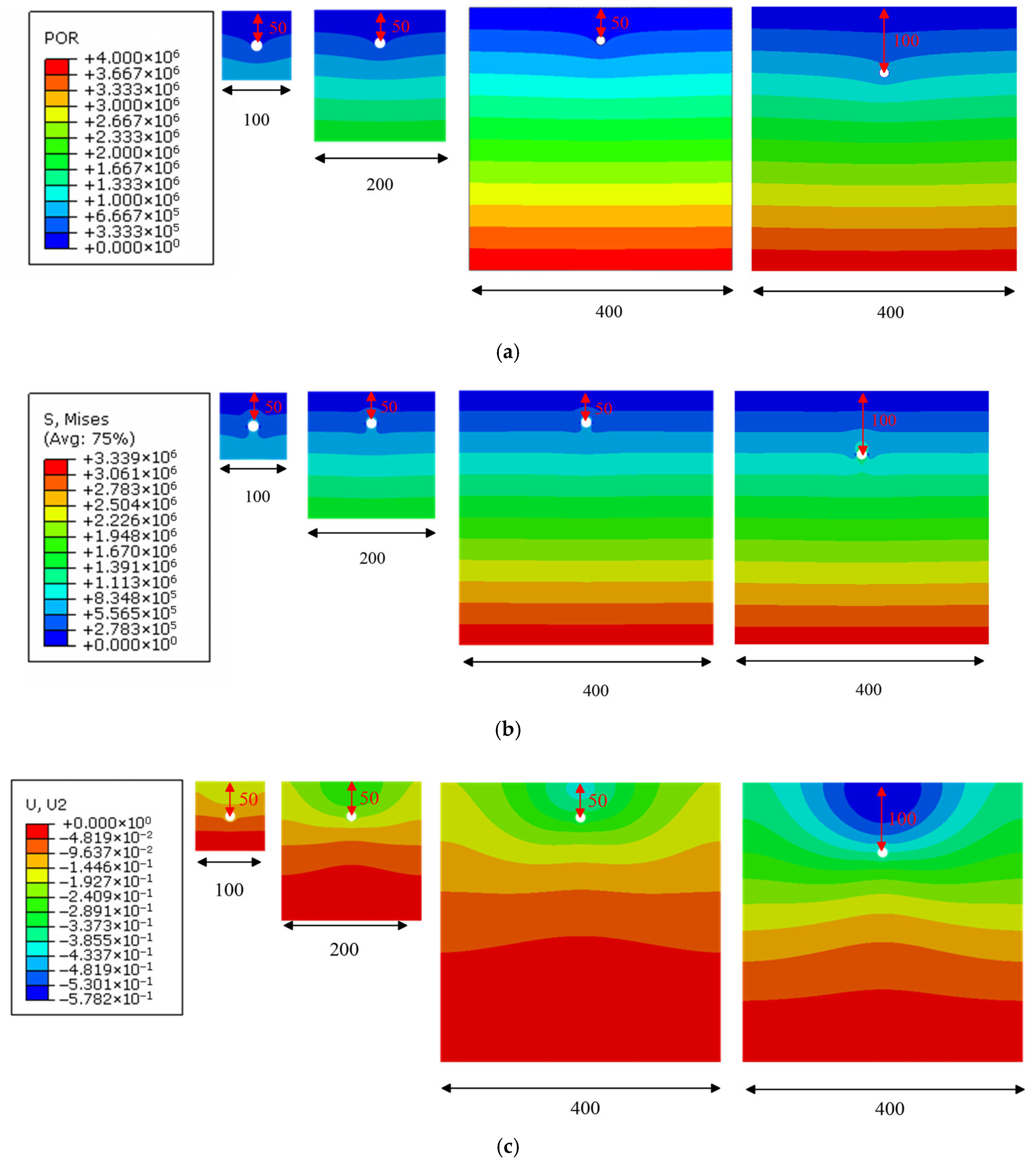
The pore water pressure field, stress field, and displacement field under tunnel leakage load at different ground scales and tunnel depths are shown in Figure 5. As observed in Figure 5a,b, the pore pressure field and stress field differ for various ground scales and tunnel burial depths. This is primarily due to the boundary settings of the leakage field. For different ground sizes, a fixed hydraulic head is applied at both sides and the bottom, resulting in varying regions involved in the fluid–solid interaction under the same tunnel leakage volume, thereby affecting the results. Regarding tunnel depth, the location of the leakage boundary changes, which in turn alters the entire seepage field. It is evident that the hydraulic boundary of the ground and the leakage boundary significantly influence the seepage and stress fields of the underground space system. Furthermore, changes in the ground’s seepage and stress fields can trigger ground settlement and deformation. Studies show that as the ground scale and tunnel depth increase, the extent of long-term settlement areas and the amount of ground settlement significantly increase, as shown in Figure 5c.
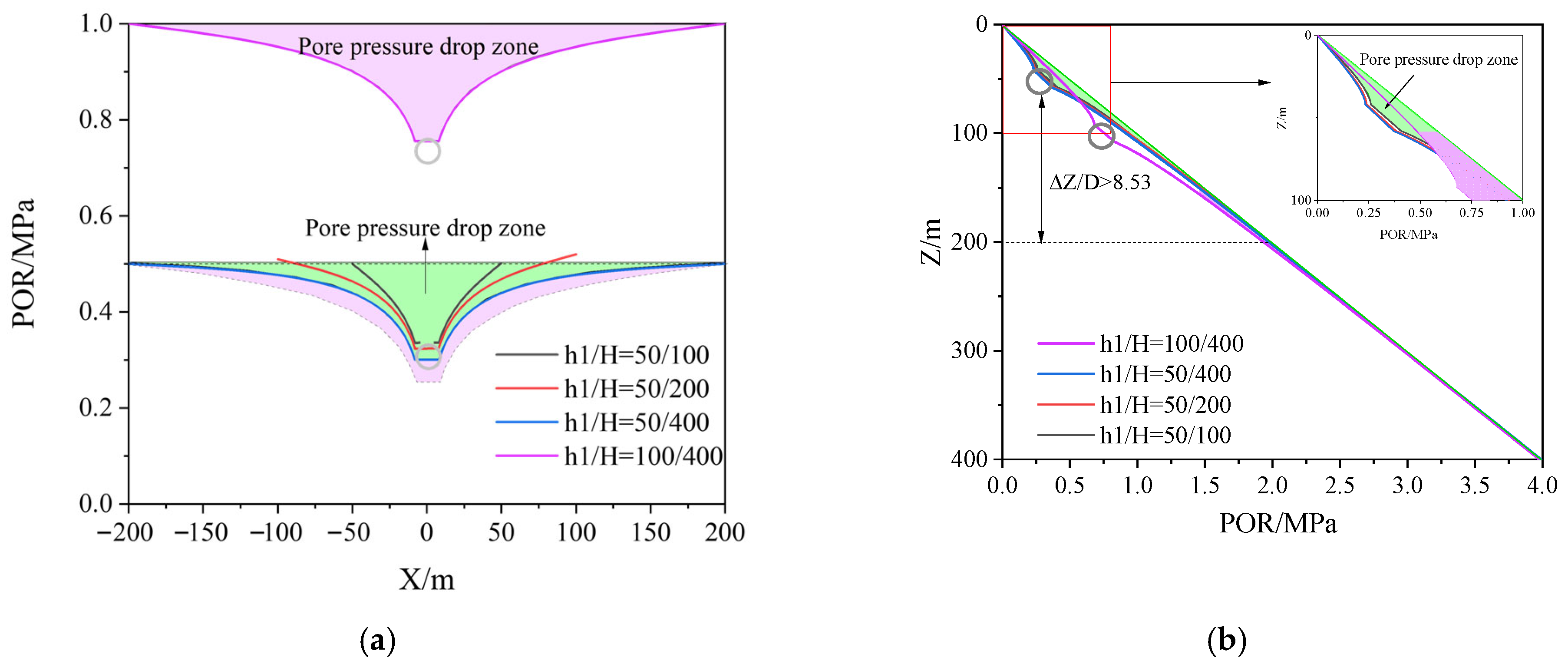
Further, the lateral and vertical pore water pressure and vertical stress across the tunnel center are extracted, as shown in Figure 6 and Figure 7. As observed in Figure 6a,b, the distribution of pore pressure exhibits a pressure funnel pattern around the tunnel, with a reduction in stress both laterally and vertically, where the tunnel serves as the outlet. By using the width of the pressure funnel and the maximum pressure drop as evaluation indicators, it is evident that as the size of the strata increases, the width and the magnitude of the pressure drop area also increase, with lateral pore water pressure changes being more pronounced. This indicates that the ground scale and the corresponding position of the hydraulic boundary have a significant impact on the seepage field. Moreover, with an increase in tunnel depth, the width and magnitude of the pore water pressure reduction area also increase significantly, as shown in Figure 6. This is primarily due to the more significant influence of tunnel leakage on the seepage field above the tunnel, where increasing the tunnel depth enlarges the disturbed area above.
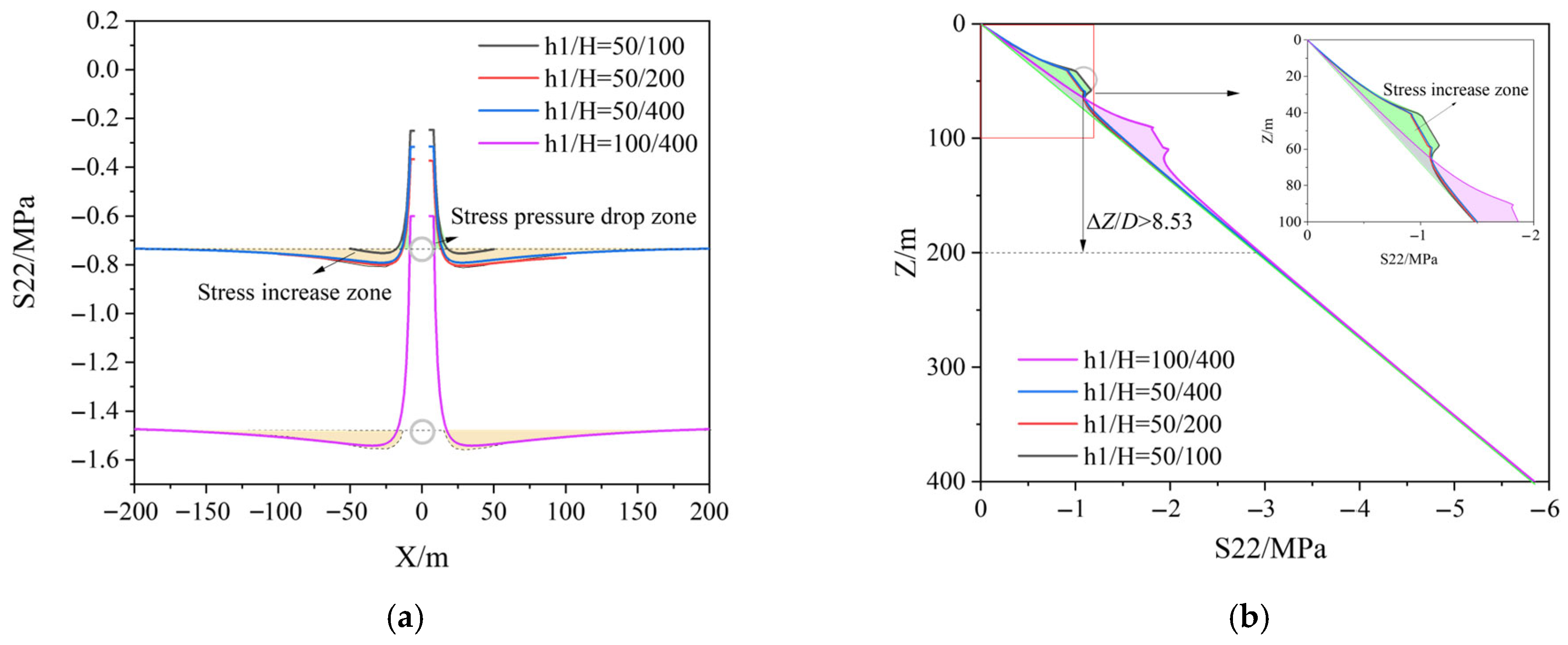
The stress distribution characteristics are shown in Figure 7. It can be observed that the vertical stress in the strata at the tunnel center, in both the lateral and vertical directions, exhibits a bimodal increase pattern when compared to the initial stress state after equilibrium of the in situ stress, as shown in Figure 7a,b. A peak of increased stress occurs near the tunnel periphery, consistent with the pore water pressure distribution. As the ground size and tunnel depth increase, both the width and magnitude of the stress also show an upward trend. Unlike the pore water pressure, where the fixed hydraulic head prevents changes due to fluid–solid coupling effects, stress continues to increase at the boundary, demonstrating a different behavior compared to pore water pressure.
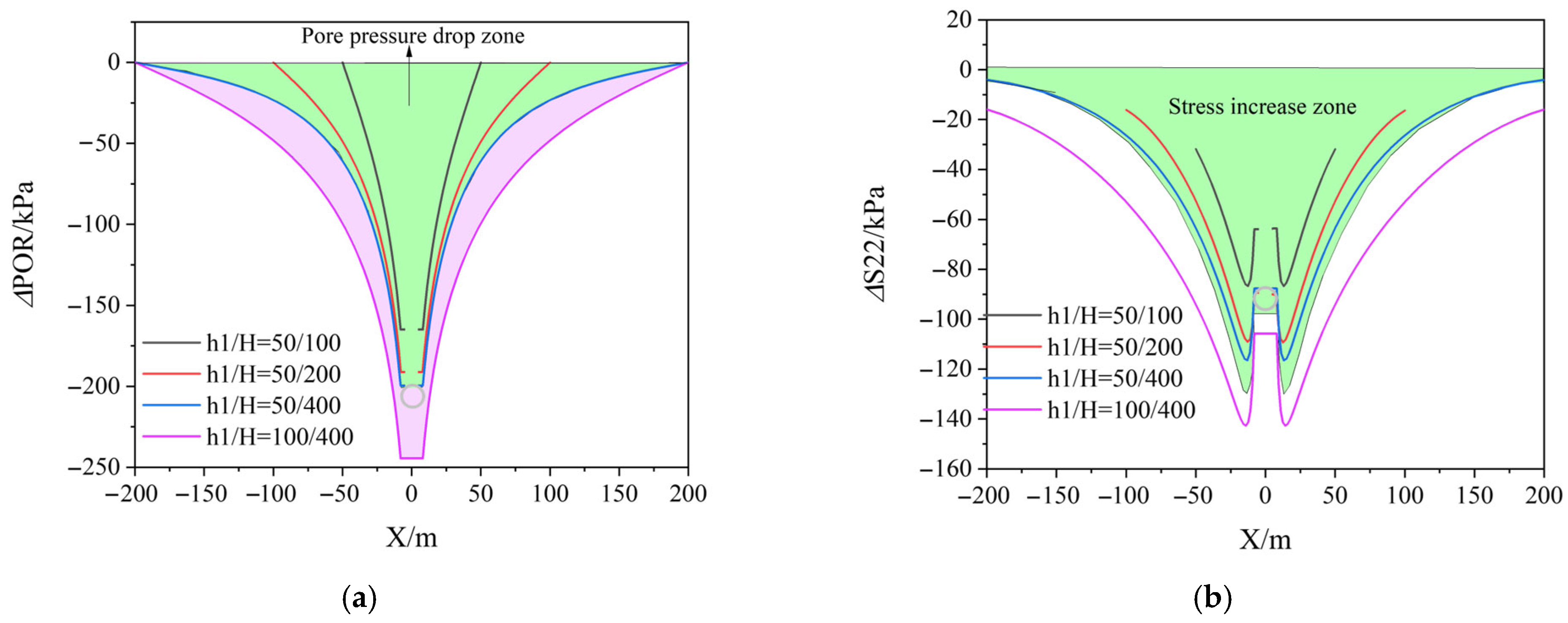
Further analysis of the impact of different ground scales and tunnel depths on the variations in pore pressure and stress in Figure 8 reveals that as the ground scale and tunnel depth increase, both the width and magnitude of the variation curves also increase.
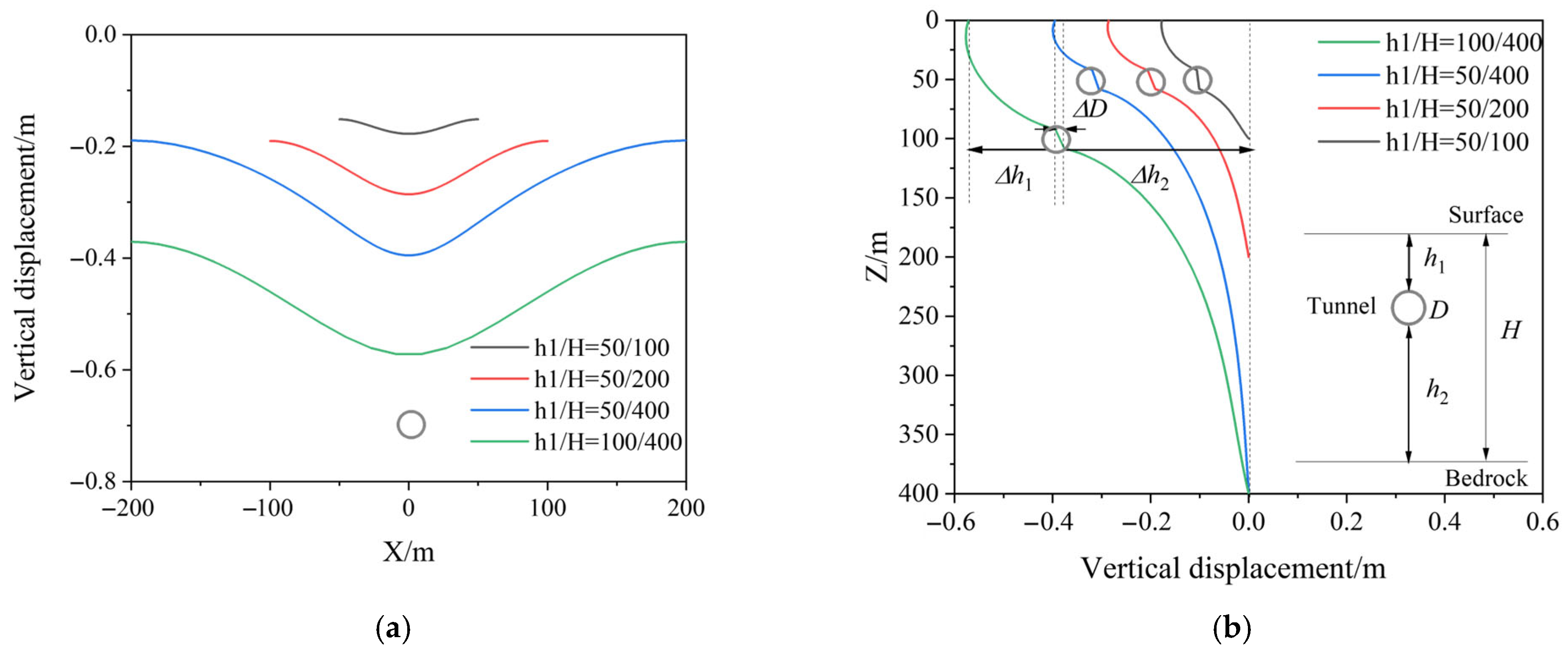
Further analysis of lateral surface displacement and vertical strata displacement is shown in Figure 9. The study reveals that as the ground scale and tunnel depth increase, surface settlement also increases significantly. This is consistent with the distribution patterns of pore water pressure and vertical stress. The primary cause is tunnel leakage, which leads to a decrease in pore water pressure around the tunnel, an increase in the effective stress of the soil, and subsequently induces a reduction in the pore ratio, resulting in strata settlement issues.
For vertical settlement, it is primarily caused by the settlement of the strata above the tunnel, the settlement of the strata below the tunnel, and the deformation of the tunnel structure itself. For tunnels at the same depth, the ground scale is the main factor influencing the occurrence of different settlements, especially the settlement of the strata beneath the tunnel. The thicker the strata beneath the tunnel, the larger the corresponding settlement. For the same ground scale but different tunnel depths, both the strata settlement above and below the tunnel undergo significant changes.
The settlement of the strata above the tunnel is mainly due to the increase in the overburden thickness; although the thickness of the strata below the tunnel decreases, larger settlement still occurs. This is primarily because, as the tunnel depth increases, the consolidation pressure of the surrounding soil also increases, leading to greater effective stress within the disturbed zone, and thus more significant strata settlement. Therefore, it can be observed that under the same geological conditions, deeper tunnels with leakage will induce more significant strata settlement issues.
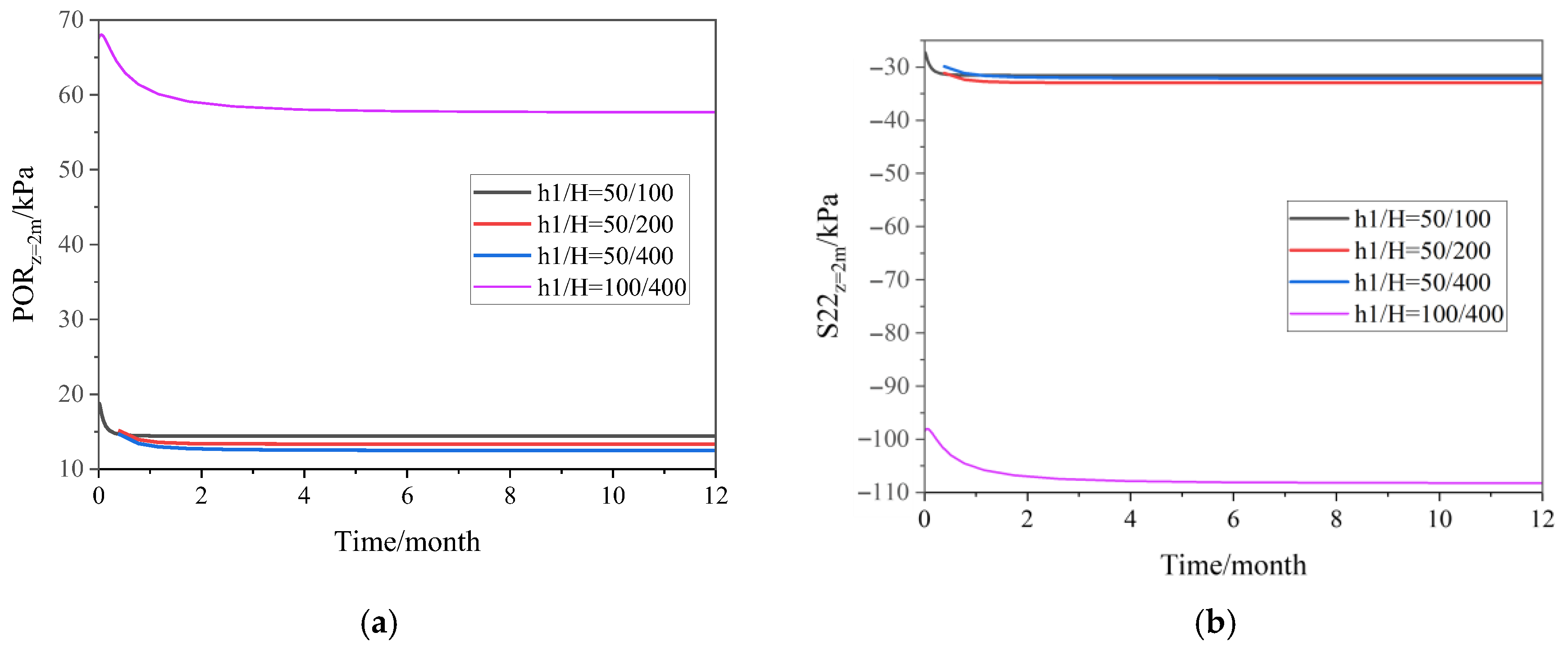
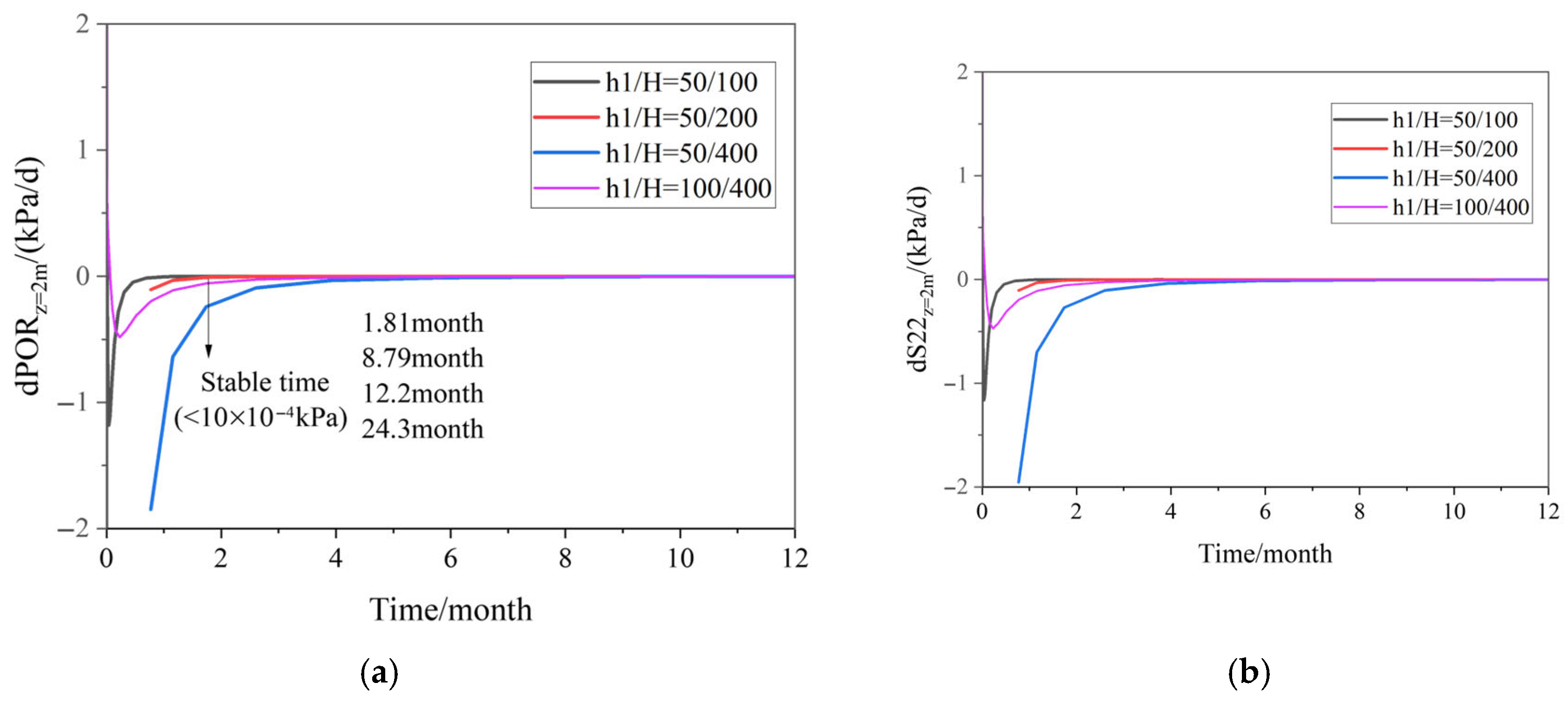
After the fluid–solid interaction in the ground, it will reach a balanced state again after a period of adjustment. The time–history curves of pore water pressure and vertical stress at a depth of 2 m below the surface are shown in Figure 10. As consolidation occurs, pore pressure decreases, stress increases, and the system gradually reaches equilibrium. To further analyze the time required for pore pressure to reach equilibrium, the daily variations in pore pressure and vertical stress are extracted in Figure 11. It is found that under leakage conditions, the ground’s seepage field and stress field evolve together, exhibiting similar time–history evolution characteristics. Regarding the ground scale, as the scale increases, the daily variation rate of pore pressure and stress increases, and the stabilization time also shows an increasing trend. For tunnel depth, as the tunnel depth increases, the daily variation rate of pore pressure and stress near the surface slightly decreases, primarily due to the disturbance source moving downward.
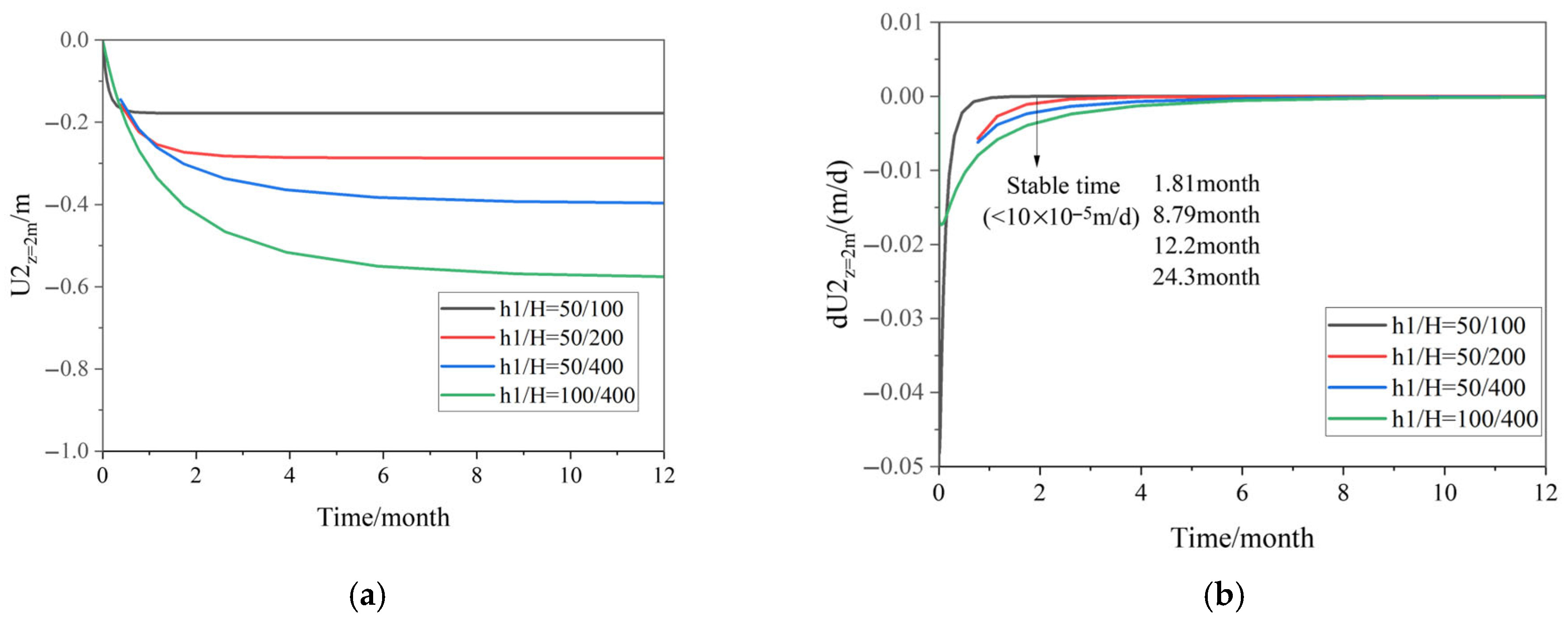
The surface displacement and daily variation at a depth of 2 m below the surface are extracted, as shown in Figure 12. Consistent with the seepage and stress fields, as the ground scale and tunnel depth increase, the stabilization time of the strata displacement also increases. Using a displacement stability threshold of less than 10−5 m/d, the stabilization times corresponding to the three ground scales are 1.81 months, 8.79 months, and 12.2 months, respectively. For a tunnel depth of 100 m, the displacement stabilization time is 24.3 months, which is approximately twice the stabilization time for a 50 m tunnel under the same geological conditions.

4.2. Effects of Tunnel Leakage

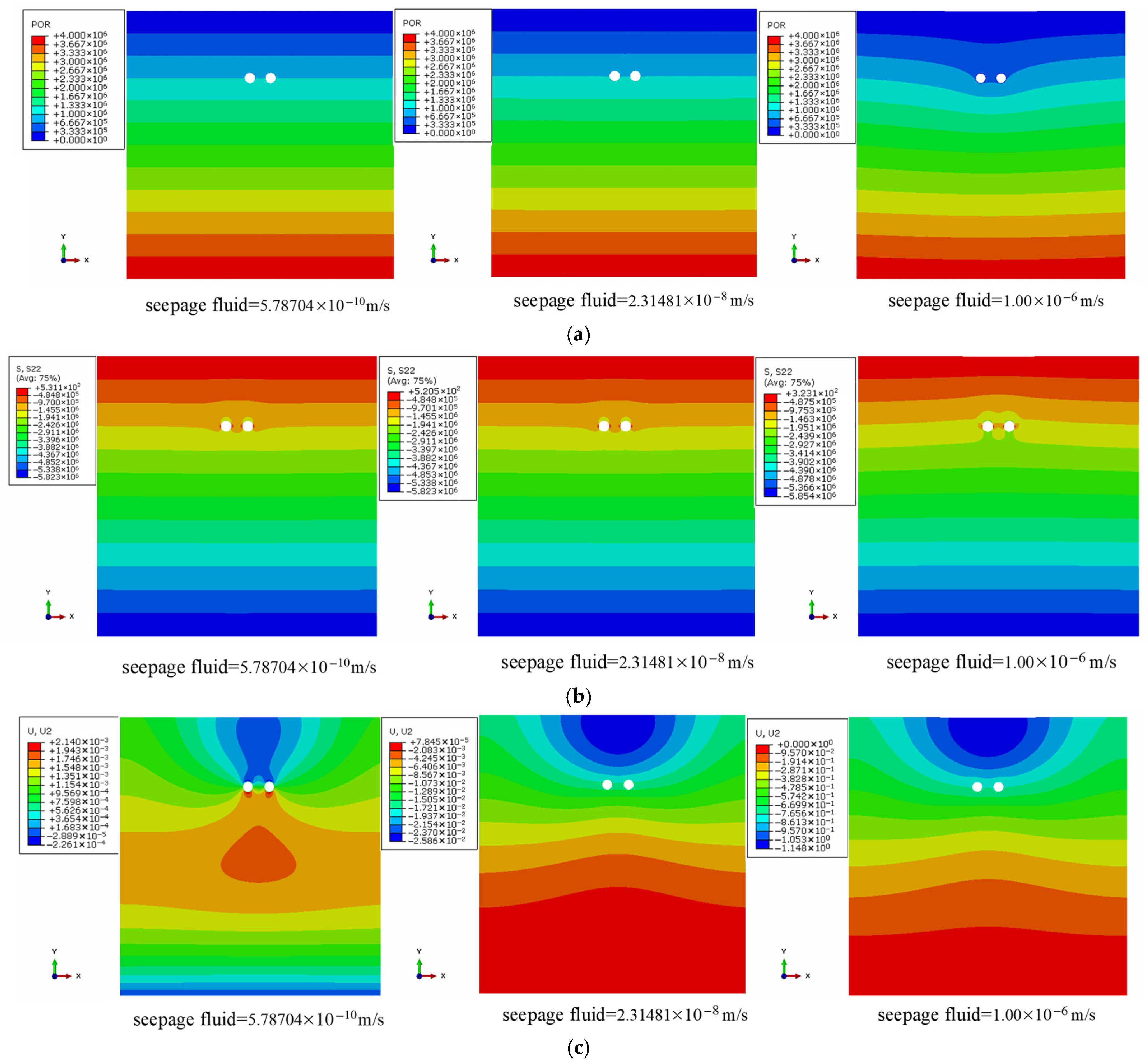
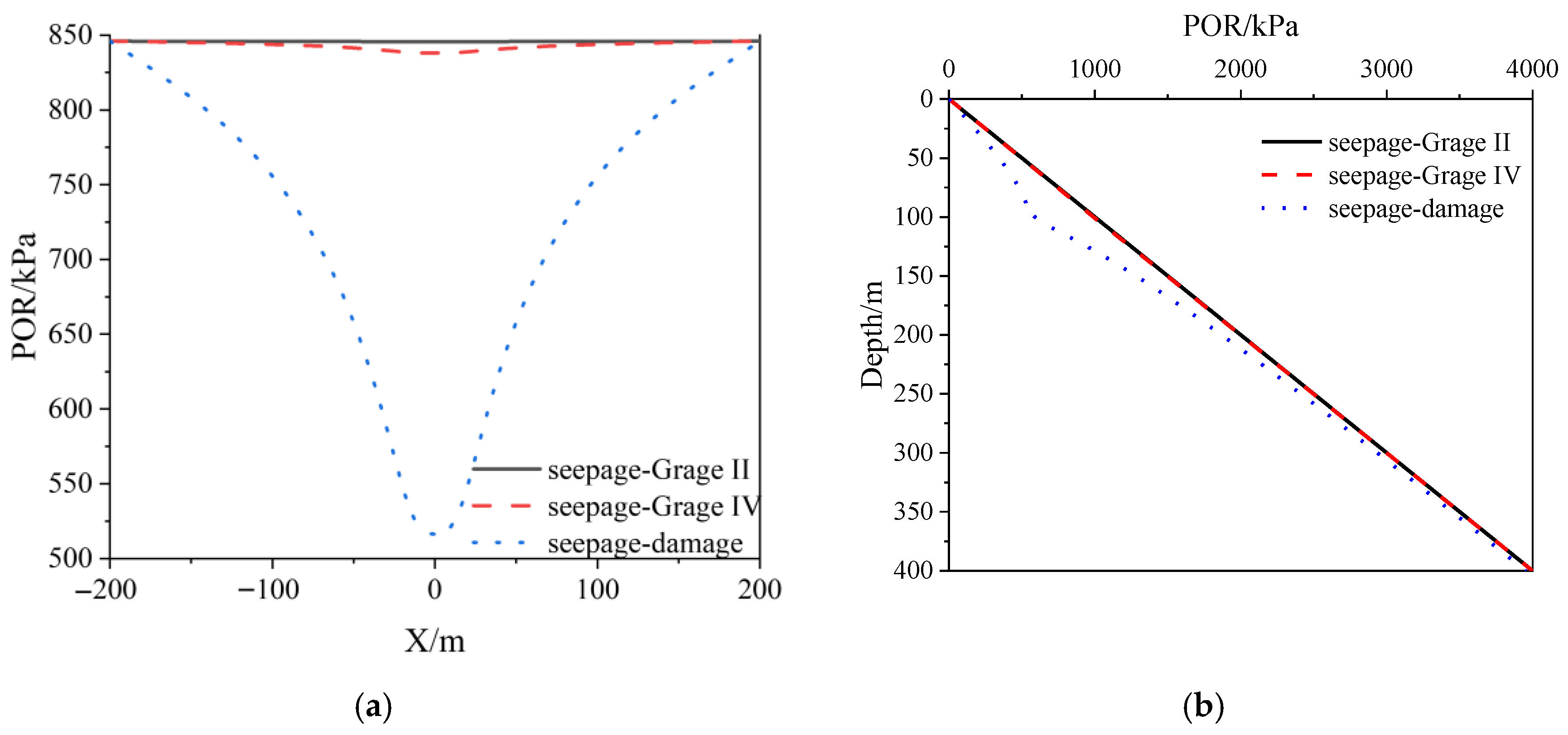
After the construction of the shield tunnel, it must meet certain waterproofing standards. For underground structures, a typical requirement is to meet the secondary waterproofing standard. The average seepage velocities for secondary and fourth-level waterproofing are selected, with the secondary level having an average seepage velocity of 5.787 × 10⁻⁴ m/s, the fourth-level being 2.315 × 10⁻⁸ m/s, and a larger seepage velocity of 1.00 × 10⁻⁶ m/s, which are used as analysis conditions for leakage-induced damage. Figure 13 shows the pore water pressure, vertical stress, and displacement contour maps under different tunnel leakage velocities. The model size is 200 m × 200 m, and a twin-tunnel configuration is selected for analysis. From the pore pressure and stress contour maps, it can be observed that when the tunnel experiences secondary and fourth-level leakage velocities, the changes in the seepage field and stress field are minimal. As the leakage velocity increases further, more significant changes begin to occur in both the seepage and stress fields. This indicates that only when the tunnel leakage velocity reaches a certain value will it cause substantial changes in the strata’s seepage field and stress field. Similarly, under secondary waterproofing conditions, the strata displacement changes are very small, with slight subsidence above the tunnel and slight uplift below the tunnel. When the waterproofing level reaches the fourth-level standard, vertical displacement in the ground begins to occur, primarily in the form of settlement. When severe leakage occurs, significant strata settlement issues arise.
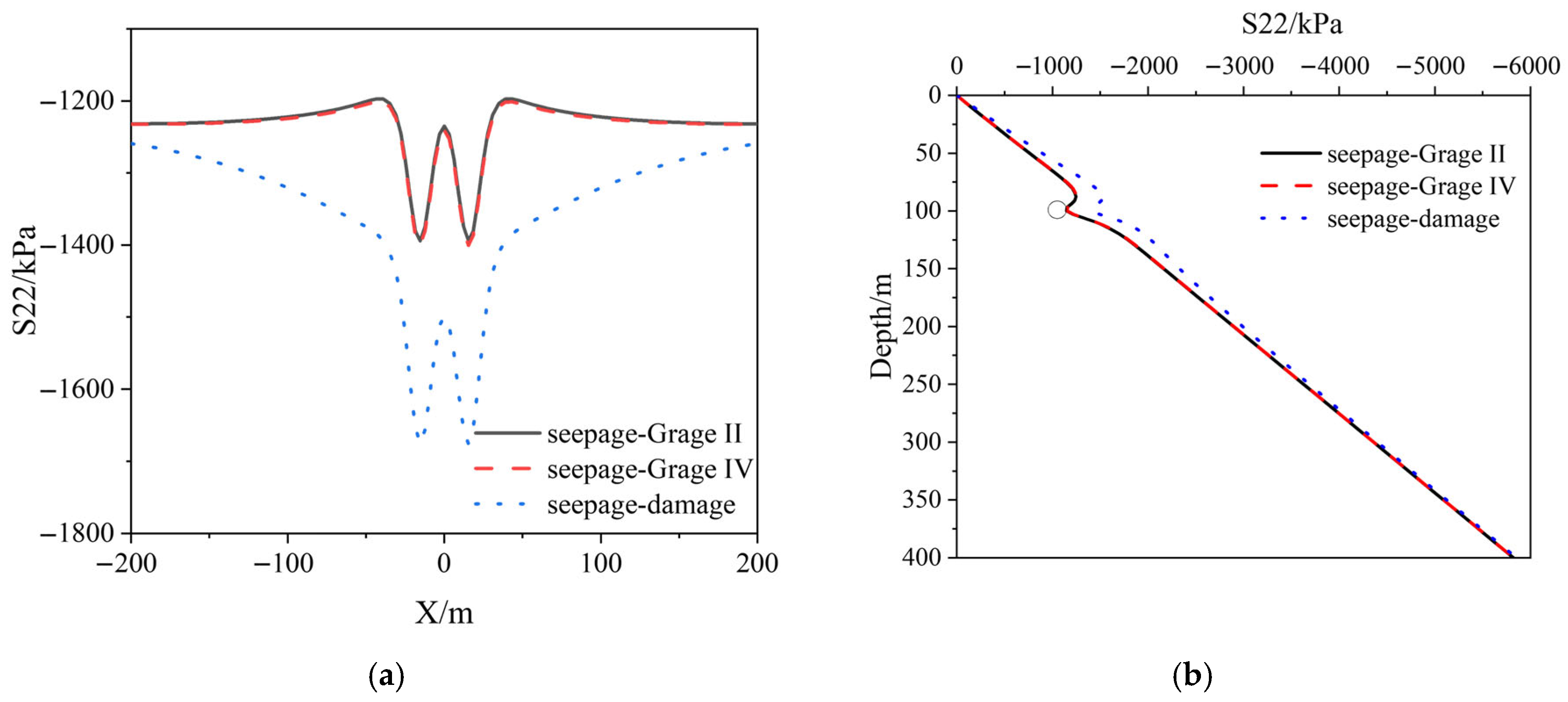
The lateral and vertical pore water pressure and vertical stress above the tunnel are extracted, and the distribution of pore pressure and vertical stress is plotted in Figure 14 and Figure 15. It can be observed that under secondary waterproofing conditions, the pore pressure and stress show little to no change. However, under fourth-level waterproofing conditions, compared to secondary waterproofing, the pore water pressure near the tunnel decreases, and the stress field slightly increases. Overall, the changes are minor. When the average seepage rate exceeds the fourth-level leakage rate, the pore water pressure significantly decreases, forming a pressure funnel centered around the tunnel. The width of this pressure funnel reaches 400 m, consistent with the model scale. Similarly, in the vertical direction, the pore water pressure forms a vertical funnel, and the affected width extends to the bottom boundary. Correspondingly, the vertical stress surrounding the tunnel also significantly increases, with the lateral and vertical stress disturbance affecting the entire flow field.
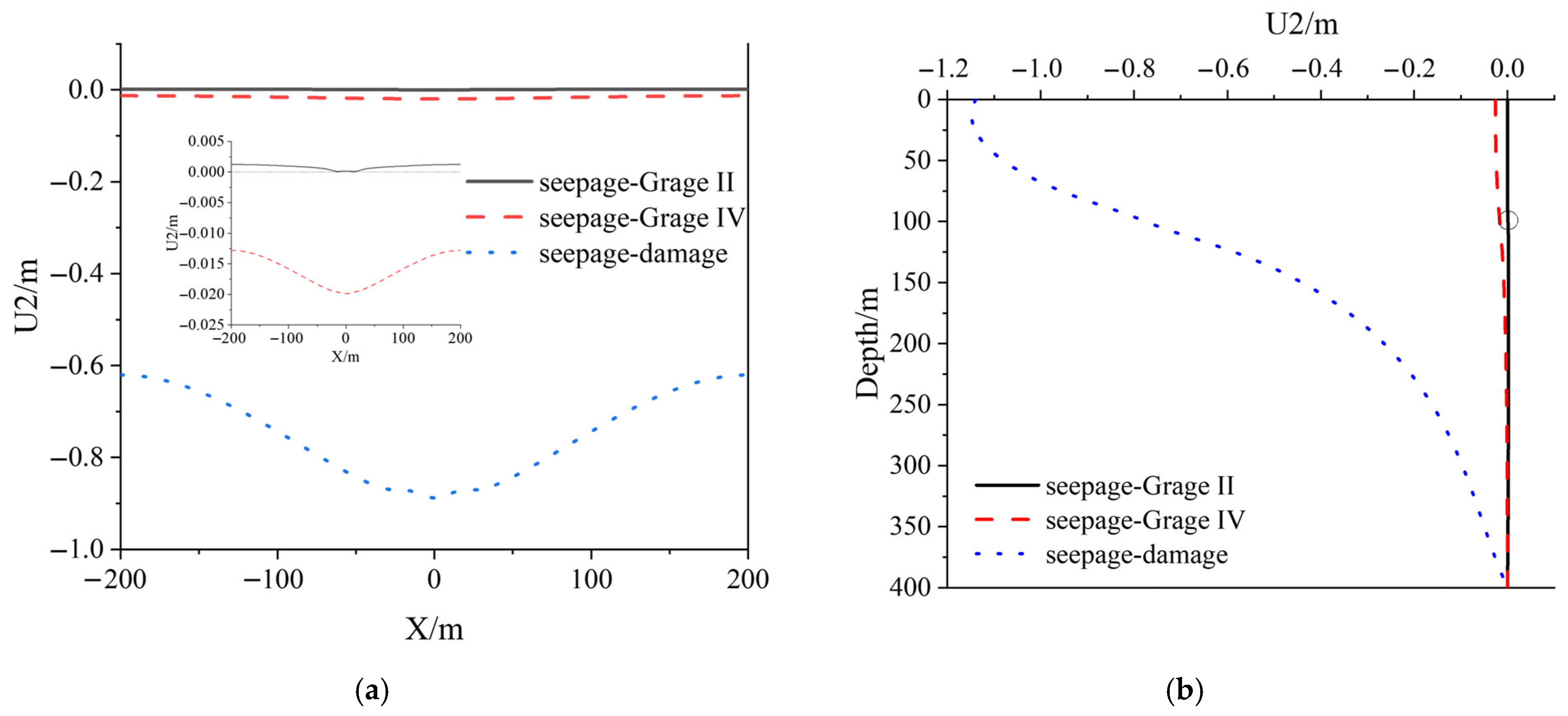
Further analysis of the lateral displacement above the tunnel and the vertical displacement between the two tunnels is shown in Figure 16. Under secondary seepage conditions, the overall soil layer exhibits an uplift state, particularly on both sides of the tunnel axis, where lateral uplift is pronounced. In this case, the ground deformation is primarily determined by both the soil excavation unloading and tunnel deformation. Under fourth-level seepage conditions, the ground settlement increases significantly, and the ground deformation is predominantly governed by consolidation settlement. As the tunnel’s seepage volume continues to increase, the settlement further intensifies. The extent of the settlement spans across the entire flow field.
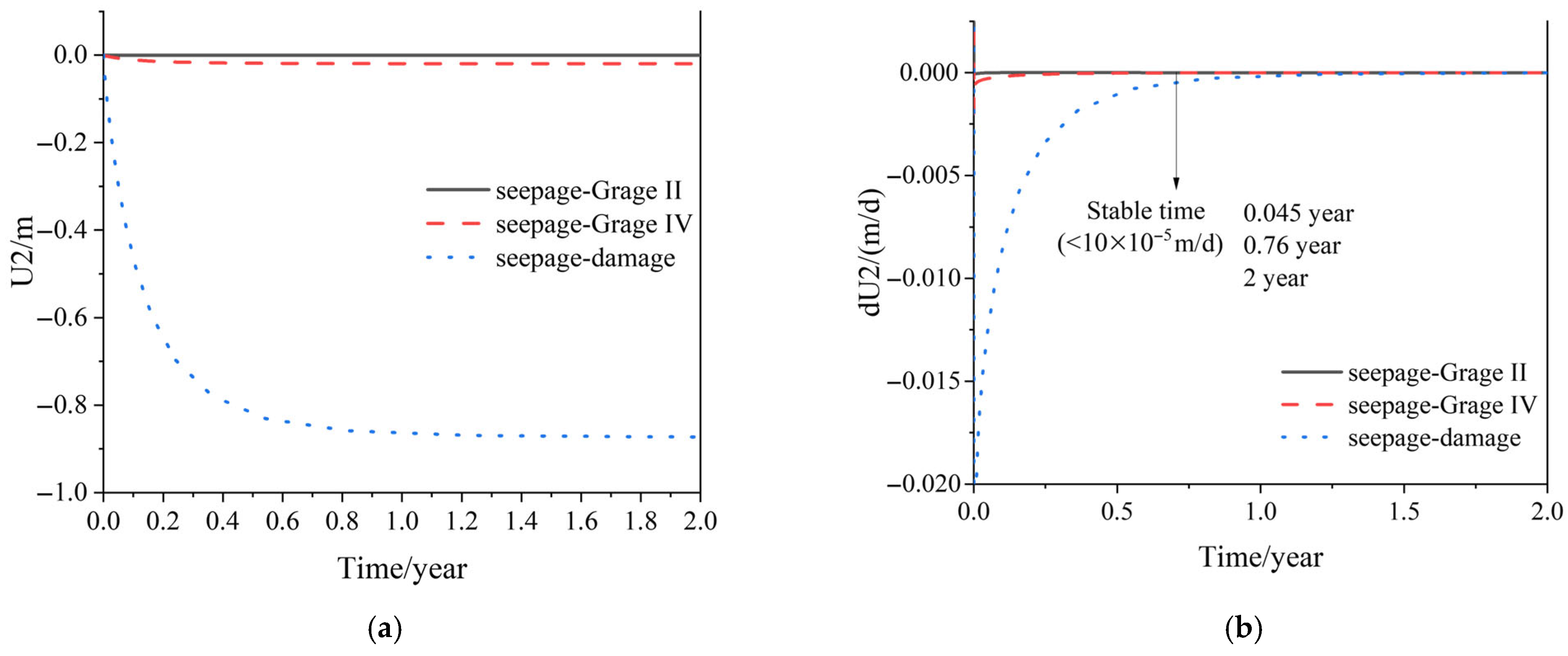
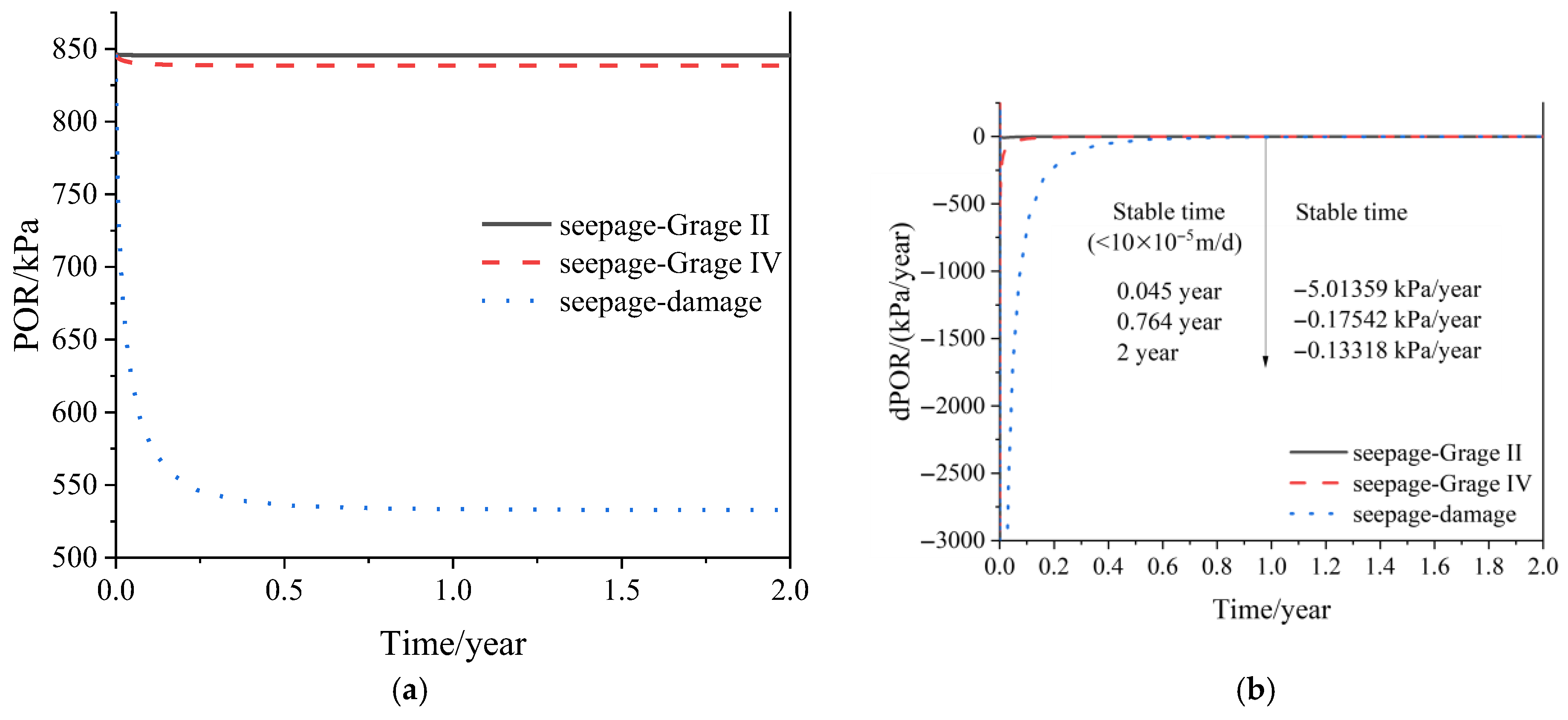
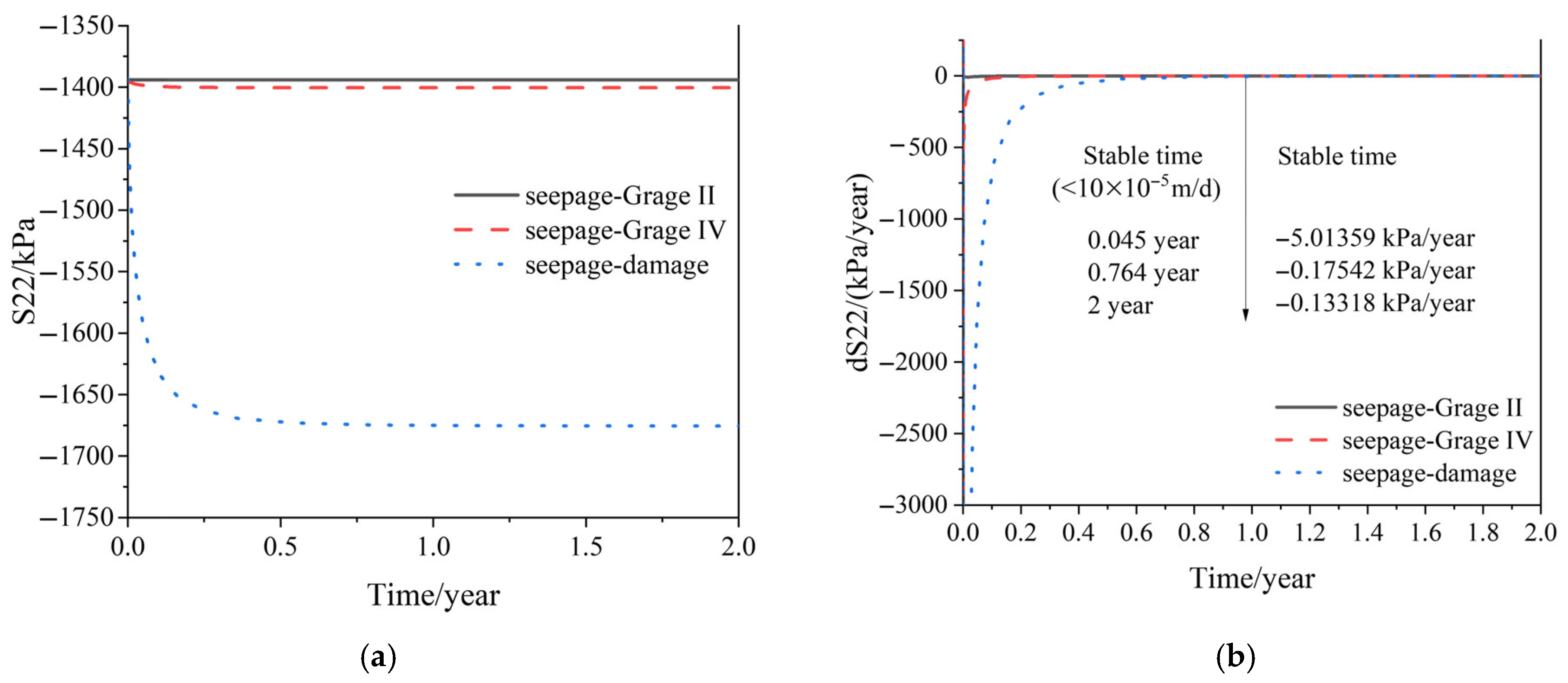
The time–history curves of pore pressure, vertical stress, and ground displacement are extracted, and the annual variations in them are plotted in Figure 17, Figure 18 and Figure 19. When the tunnel leakage velocity corresponds to the secondary waterproofing level, the rebalancing time for the ground’s pore pressure, vertical stress, and displacement is the shortest. As the tunnel leakage increases, the rebalancing time for the pore pressure, vertical stress, and displacement fields also increases. It is evident that the tunnel leakage rate has a significant effect on the response time of the ground, showing a positive correlation. For a highly permeable soil layer with a permeability coefficient of 1 × 10⁻⁶ m/s, when the tunnel leakage rate is at the secondary waterproofing level, taking the displacement stabilization time as a reference (vertical displacement < 10 × 10−5 m), the rebalancing time is approximately 0.046 years (0.55 months). Under fourth-level waterproofing conditions, the rebalancing time is 0.76 years, and for a leakage velocity of 1 × 10⁻⁶ m/s, the rebalancing time is about 2 years.

4.3. Effect of Soil Permeability Coefficient

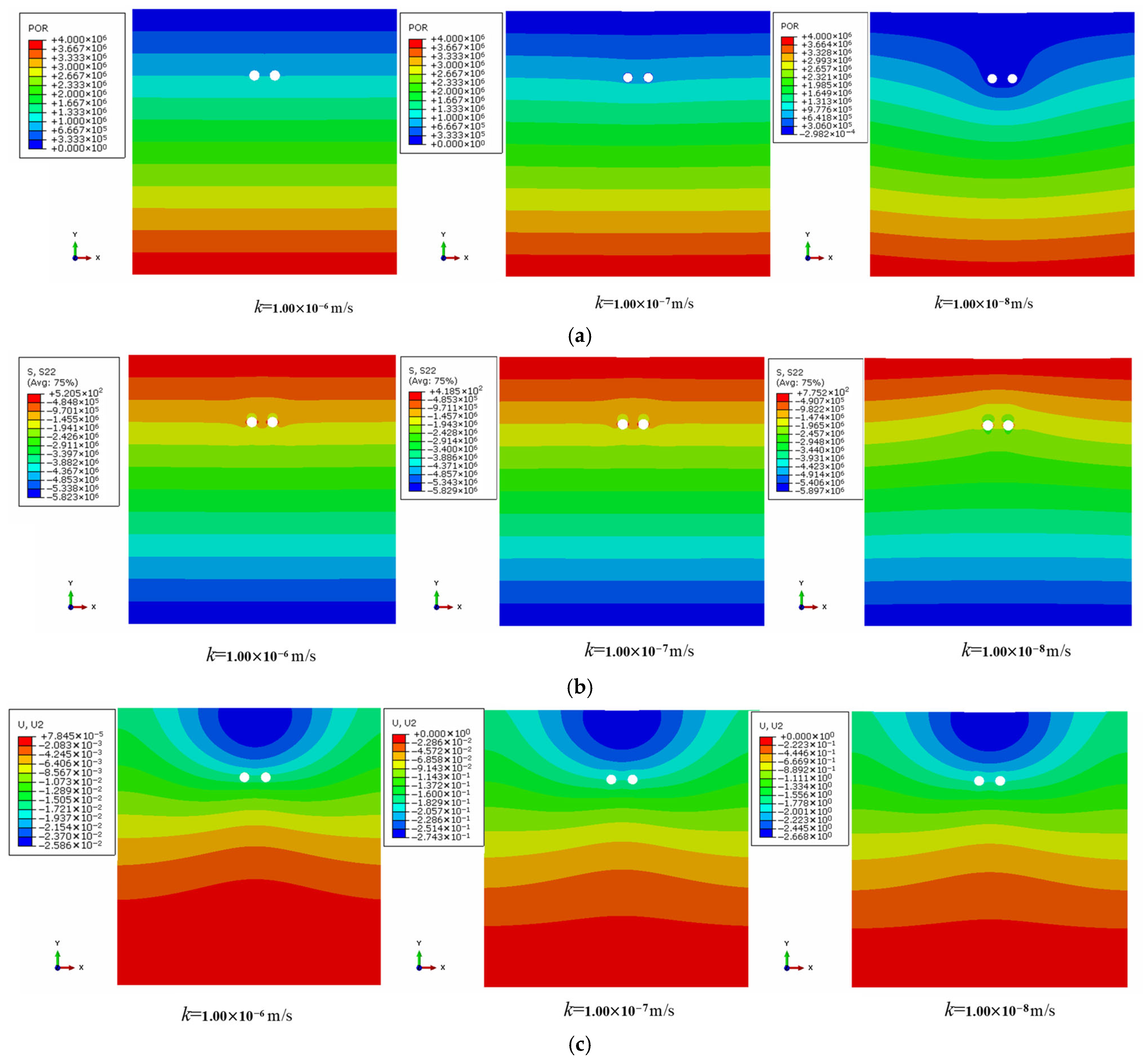
The permeability of the soil significantly affects the long-term response of the ground. Therefore, using three soil layers—fine silty sand, silty clay, and clay—as the basis, different orders of magnitude for the permeability coefficient are set to study the long-term response of the ground under varying permeability coefficients. The model parameters are detailed in Table 4. The leakage velocity at the tunnel boundary is set to the average seepage rate corresponding to the fourth-level waterproofing standard.
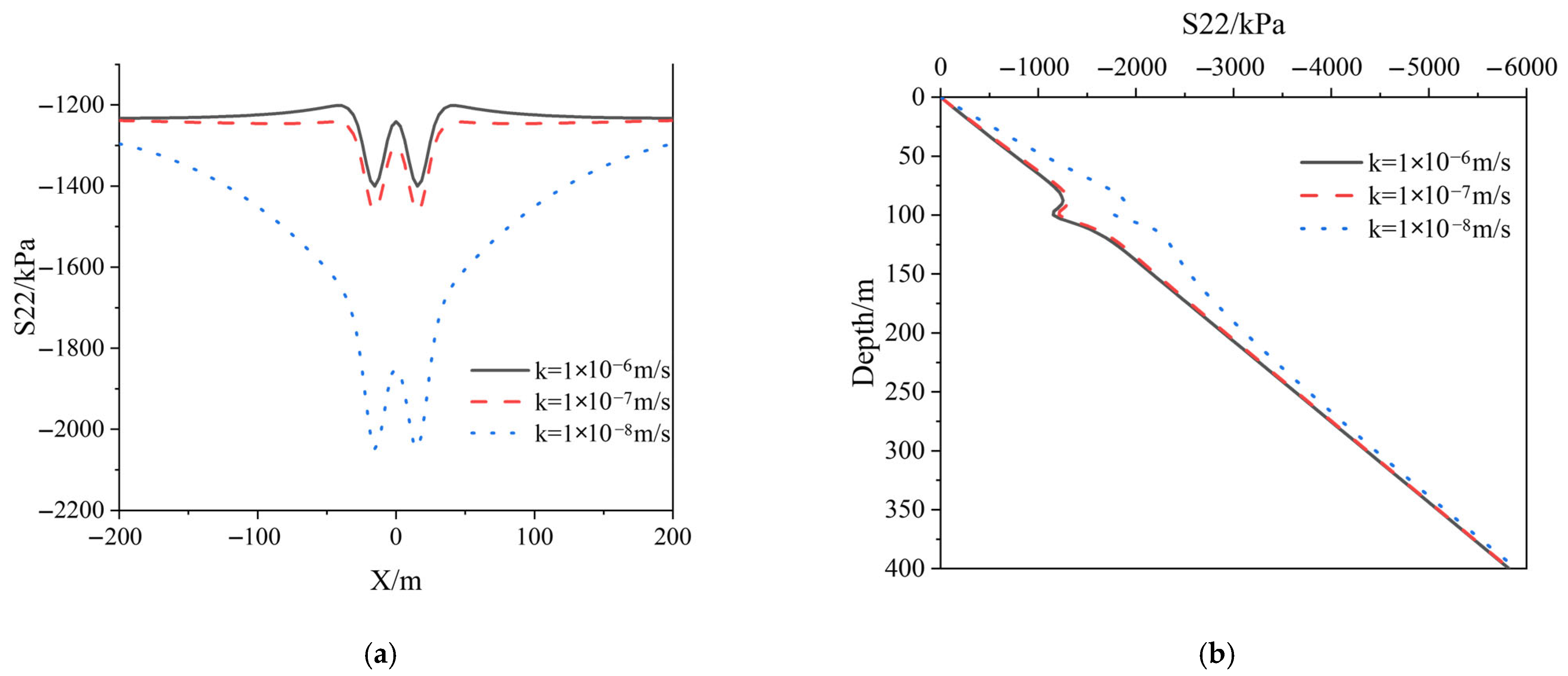
The contour maps of pore water pressure, vertical stress, and ground displacement at equilibrium under different permeability coefficients are shown in Figure 20. It can be observed that for soils with different permeability coefficients, the strata exhibit distinct distributions of pore pressure, stress, and displacement fields. When the tunnel leakage velocity is close to the soil’s permeability coefficient, i.e., when k = 1.00 × 10⁻⁸ m/s, the changes in pore water pressure, vertical stress, and displacement in the strata are most significant. The pore water pressure around the tunnel decreases significantly and extends outward, affecting the entire computational domain. Similarly, the vertical stress around the tunnel increases significantly, with the impact again covering the entire computational domain. When the tunnel’s average leakage rate is much smaller than the soil’s permeability coefficient, the changes in pore pressure and stress are minimal. As for ground displacement, except for the soil layer with the highest permeability, where upward displacement occurs beneath the tunnel, other soil layers primarily experience settlement. The smaller the permeability coefficient of the strata, the larger the displacement that occurs after rebalancing. This helps explain why significant ground settlement is more likely in silty soft soil layers, such as those found in Shanghai.
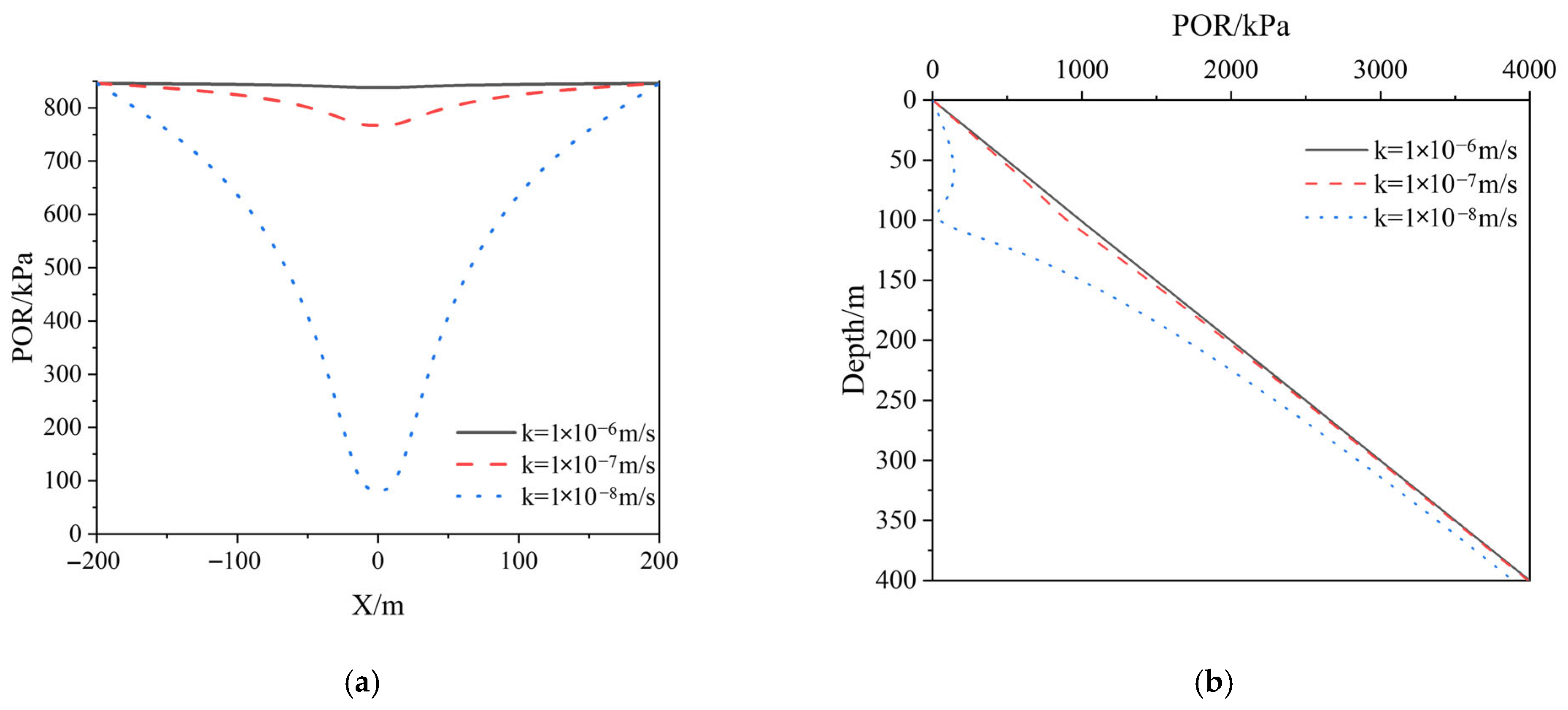
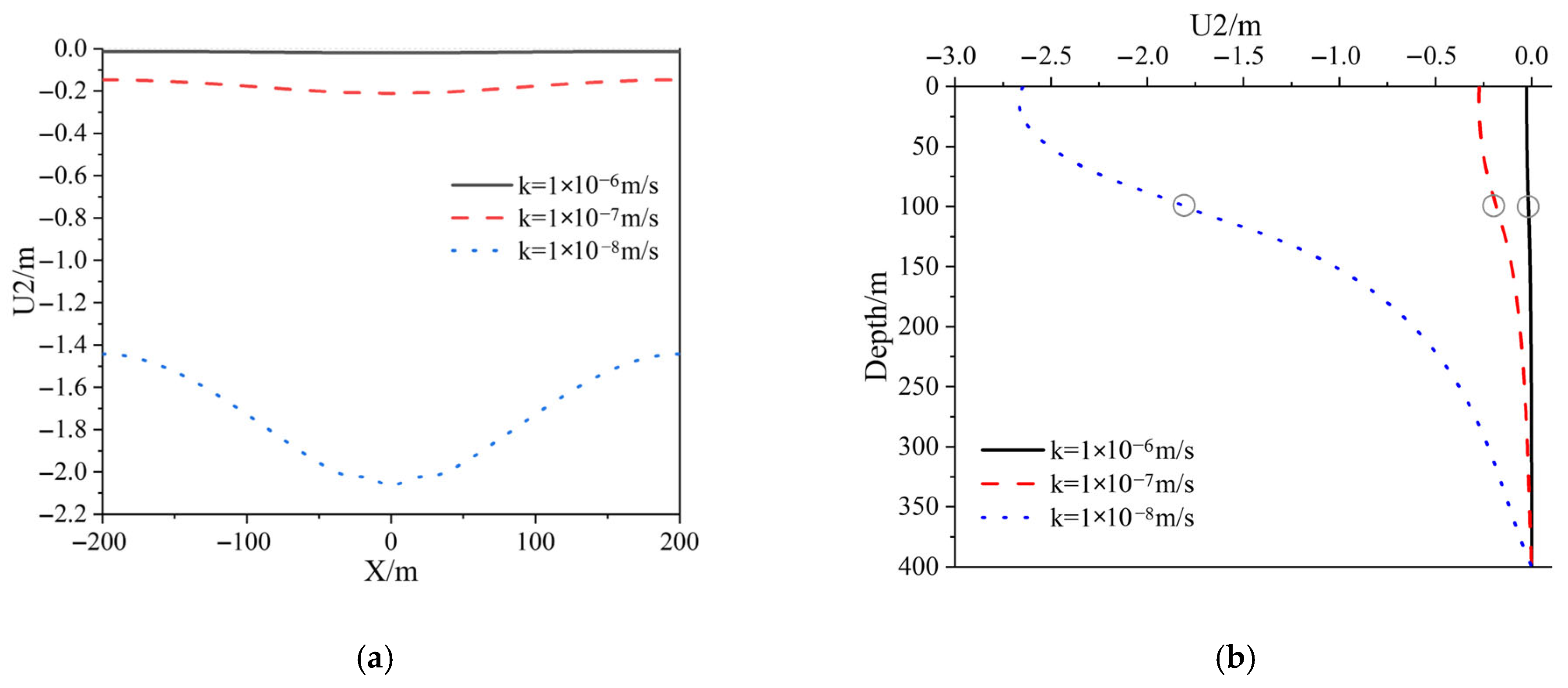
Further analysis of the pore water pressure, stress, and displacement above the tunnel and at the centers of the two tunnels is shown in Figure 21, Figure 22 and Figure 23. For soils with the smallest permeability coefficient, such as clay layers, the pore pressure decreases the most upon reaching equilibrium, and correspondingly, the stress field increases the most. When the tunnel leakage rate corresponds to the Grade IV waterproofing standard, for soil with a permeability coefficient of 1 × 10⁻⁸ m/s (clay), the maximum pore pressure drop at the measurement point is about 800 kPa. For soil with a permeability coefficient of 1 × 10⁻⁷ m/s (silty clay), the maximum pore pressure drop is about 100 kPa. For soil with a permeability coefficient of 1 × 10⁻⁶ m/s (fine silty sand), the change in pore pressure is minimal. The stress increase is consistent with the decrease in pore water pressure. Both vertical and lateral pore pressures exhibit the same characteristics, i.e., the smaller the permeability coefficient, the greater the decrease in pore water pressure. The stress increase also follows the same trend as the pore water pressure. Notably, the pore water pressure above the tunnel shows a non-monotonic variation, with pore pressure being zero at both the surface and tunnel boundary, while the pore pressure between the surface and tunnel remains non-zero.
For the strata, the soil layer with the smallest permeability coefficient undergoes the greatest ground displacement, and the displacement and settlement extend across the entire computational domain. From the vertical displacement curve, it can be seen that the vertical displacement of the soil near the tunnel depth is the largest. For low-permeability strata, the thickness of the soil beneath the tunnel is significant and contributes to about 2/3 of the total displacement. Therefore, the thickness of weak underlying layers should be considered when evaluating the impact on weak permeability strata.
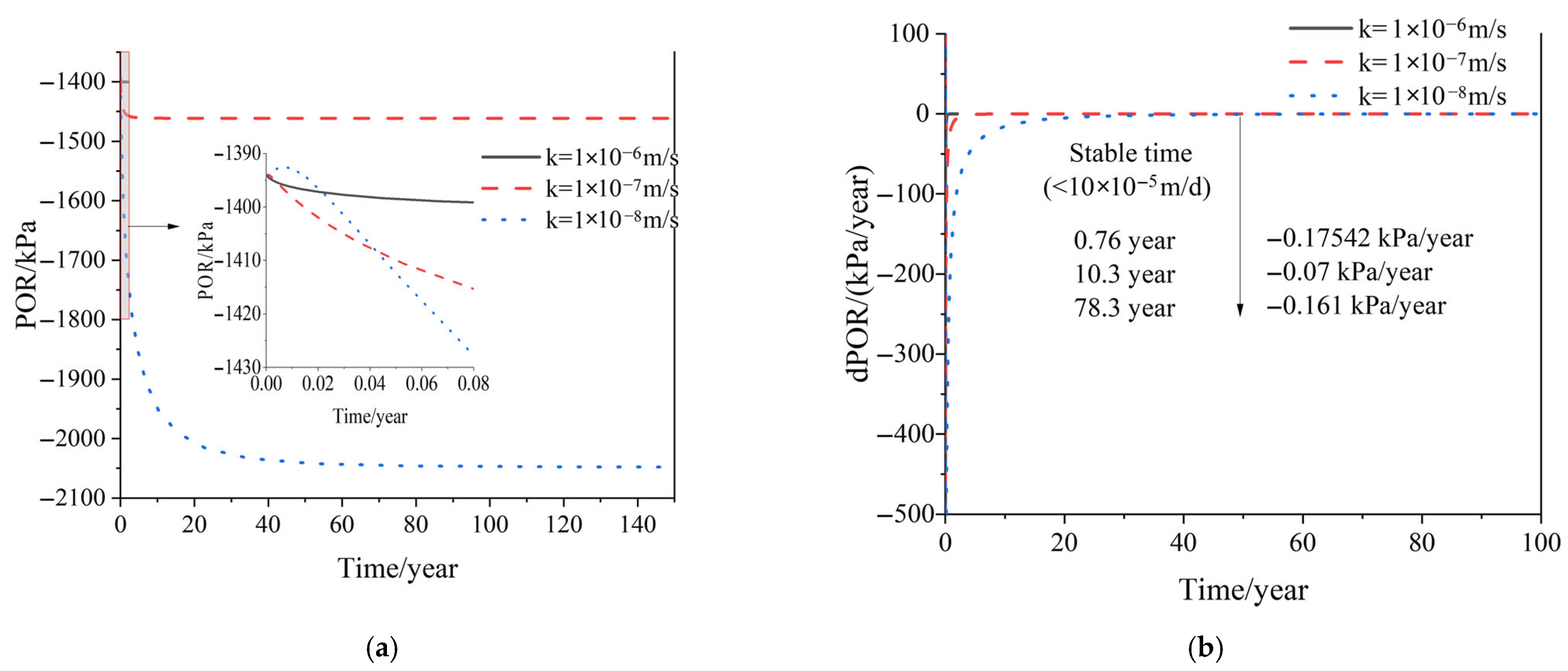
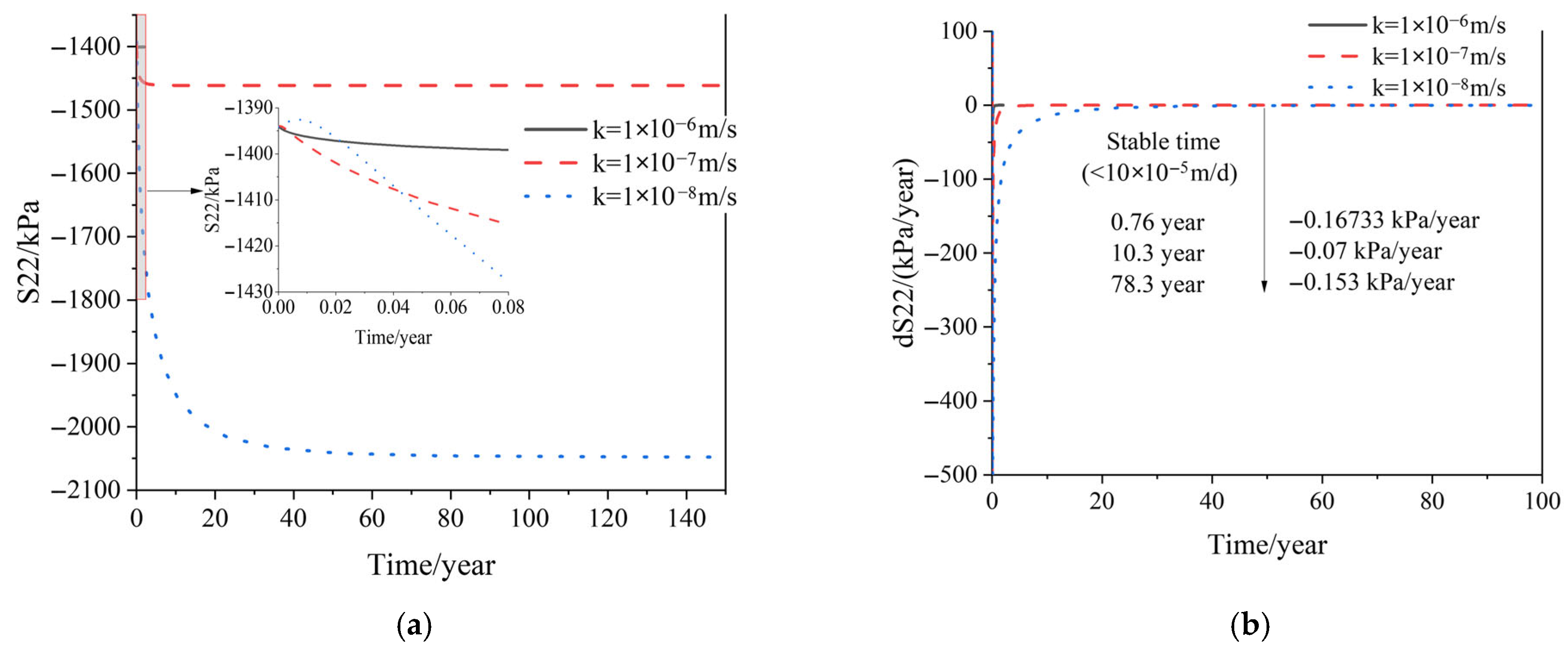
To study the rebalancing time of different soil layers, the time–history curves of pore pressure, stress, and displacement are extracted, as shown in Figure 24, Figure 25 and Figure 26. The study finds significant differences in the rebalancing time of the seepage field and stress field under different permeability coefficients. During the initial leakage phase (0.02 years), highly permeable soils respond quickly, with pore pressure decreasing first, while for low permeability soils, the pore pressure decreases more slowly, and there may even be an increase in pore pressure. However, over time, the decrease in pore pressure for weakly permeable soils gradually exceeds that of highly permeable soils, as shown in Figure 24a. This phenomenon also occurs in the time–history curve of vertical stress. As shown in Figure 25a, in highly permeable soils, the response is rapid, with the stress increase occurring first, while in weakly permeable soils, the response is slow, starting with a stress decrease, followed by a gradual increase in stress, with the magnitude of the stress increase eventually exceeding that of highly permeable soils. The final equilibrium values reveal that the maximum drop in pore pressure and the maximum increase in stress during rebalancing are significantly greater in weakly permeable soils than in highly permeable soils. This indicates a slower response and larger variations in weakly permeable soils.
The annual variation in pore pressure and stress is extracted to analyze the rebalancing time, as shown in Figure 24b and Figure 25b. The study reveals that the rebalancing time for pore water pressure and stress in weakly permeable soils is significantly longer than in highly permeable soils, which is the opposite of the soil’s response speed. Taking the stabilized displacement as a reference, for a soil with a permeability coefficient of 1 × 10⁻⁶ m/s (silty clay waterproof layer), the rebalancing time is 0.76 years; for a permeability coefficient of 1 × 10⁻⁷ m/s (silty clay waterproof layer), the rebalancing time is 10.3 years; and for a permeability coefficient of 1 × 10⁻⁸ m/s (clay waterproof layer), the rebalancing time reaches 78.3 years. It is clear that the soil’s permeability coefficient plays a key role in the long-term stability time of the ground. The lower the permeability coefficient, the longer it takes to reach rebalancing. In summary, for highly permeable soils, pore pressure and stress respond quickly initially, with a short rebalancing time and small stability variation. For weakly permeable soils, pore pressure and stress have a slow initial response, a long rebalancing time, and a large stability variation.
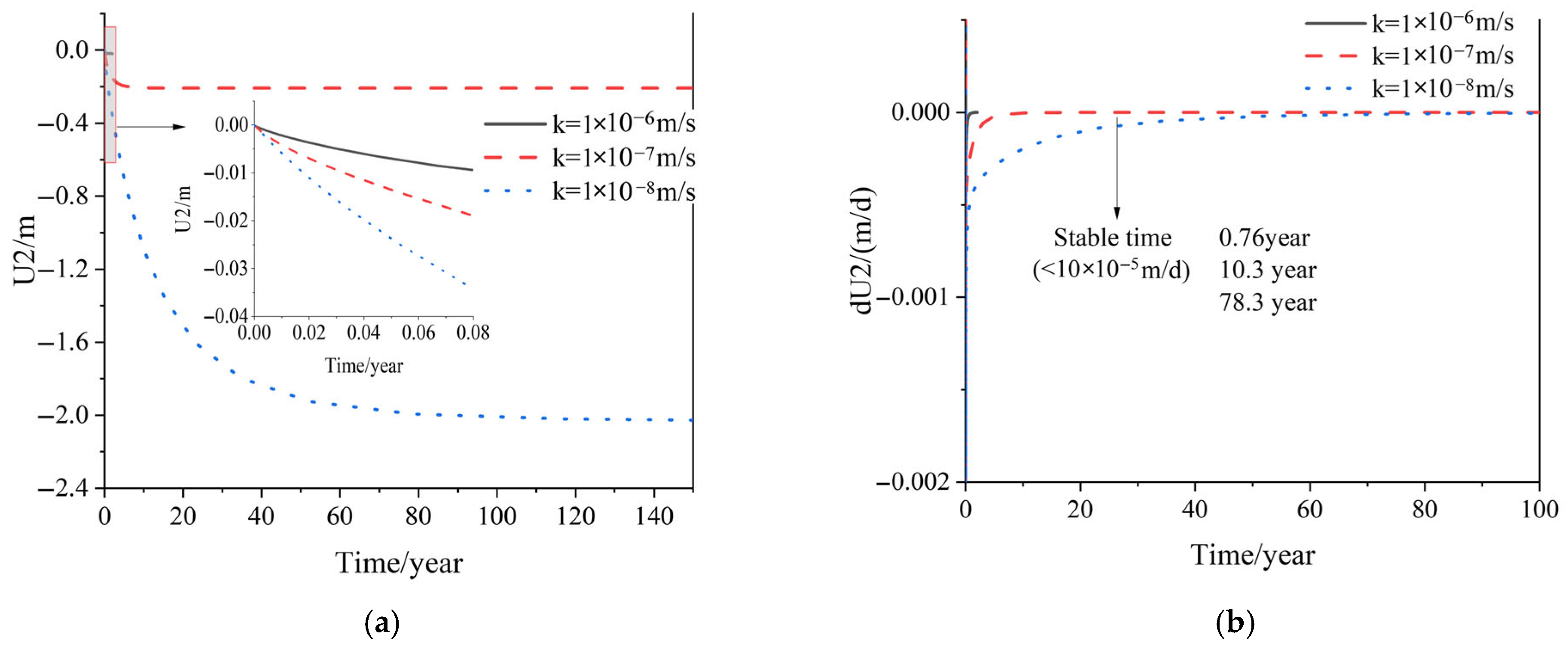
The time–history and annual variation curves of ground displacement shown in Figure 26 indicate that there is no significant difference in the response speed of settlement displacement among different soil layers. All soil layers undergo simultaneous settlement displacement, which contrasts with the response curves of pore pressure and stress. This may be related to the monitoring location, as extracting the time–history curve of displacement closer to the tunnel’s upper section could yield different results. From the displacement values, soils with lower permeability coefficients exhibit larger settlement displacements. In terms of rebalancing time, with a standard of displacement less than 10 × 10−5 m/d, for a soil with a permeability coefficient of 1 × 10⁻⁶ m/s, the rebalancing time is about 0.76 years; for a soil with a permeability coefficient of 1 × 10⁻⁷ m/s, the rebalancing time is about 10.3 years; and for a soil with a permeability coefficient of 1 × 10⁻⁸ m/s, the rebalancing time is about 78.3 years. As with the seepage and stress fields, the lower the permeability coefficient, the longer the required rebalancing time. This conclusion explains the long-term surface settlement disasters in soft soil areas such as Shanghai.

5. Discussion

5.1. Long-Term Feedback Mechanism and Waterproofing Performance

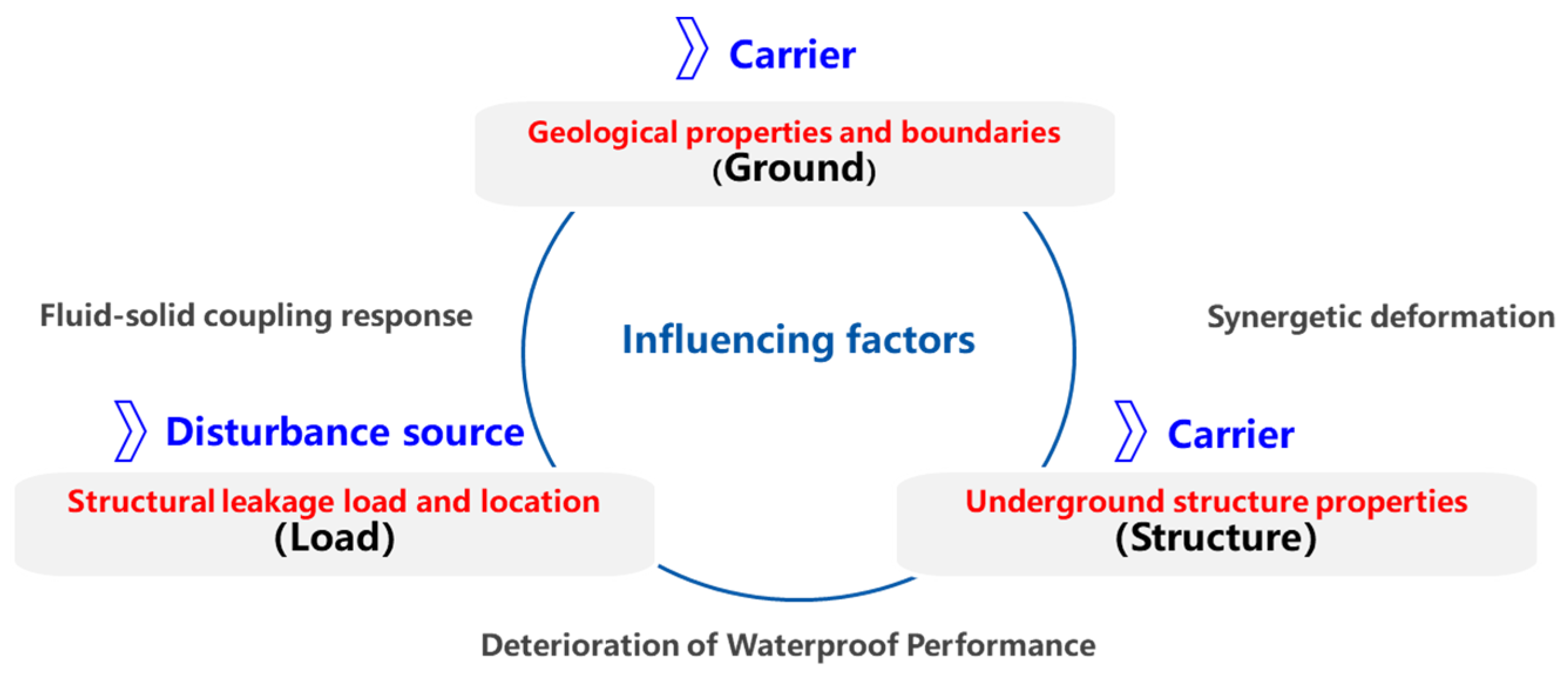
The interaction between underground structures and the surrounding ground is fundamentally a process of coordinated deformation. In an undisturbed state, the ground undergoes settlement driven by its intrinsic properties. However, the introduction of a tunnel creates a composite load-bearing system where the structure and the ground share the overburden. Over the service life of the infrastructure, structural deterioration often leads to a decline in waterproofing performance. This leakage acts as a persistent disturbance source, imposing a new hydraulic load on the coupled system. Through fluid–solid interaction, this disturbance redistributes the seepage and stress fields, inducing further settlement until a revised equilibrium is established. This long-term feedback mechanism is conceptually illustrated in Figure 27.
Numerical findings indicate that the nature of this equilibrium—specifically the transition from construction-dominated to seepage-induced settlement—is primarily governed by the leakage intensity. For tunnels meeting Grade I or II standards, the negligible leakage ensures that surface settlement remains driven by initial excavation-induced unloading rather than drainage consolidation. Under these conditions, the pore water pressure and effective stress fields remain essentially stable, resulting in minimal long-term displacement and a rapid re-equilibration of ground stress once construction disturbances subside. In contrast, if the waterproofing level deteriorates to Grade IV, or if the leakage rate exceeds a critical threshold, seepage–stress coupled consolidation settlement becomes the dominant factor, leading to a substantial increase in long-term deformation. Taking the ultra-large diameter shield tunnel of the Beijing Eastern Sixth Ring Road as a primary case study, quantitative analysis reveals a critical threshold for long-term stability in silty sand strata (k ≈ 1 × 10⁻⁶ m/s). While the project is designed to meet Grade I waterproofing standards (characterized by zero damp patches), our findings suggest that a leakage rate exceeding 5.79 × 10⁻¹⁰ m/s—the upper limit of Grade II standards—serves as a pivotal “Warning Trigger.” At this intensity, the seepage-induced consolidation settlement begins to surpass the initial displacement caused by shield excavation, marking a shift from construction-dominated to environment-dominated risk. Accordingly, a three-tier risk management strategy is recommended:
Normal (Grade I): Leakage is strictly controlled within design limits (<5.79 × 10⁻¹⁰ m/s). Monitoring focuses on baseline hydrostatic pressure and seasonal groundwater table fluctuations.
Alert (Grade II–III): Leakage reaches (2.31481 × 10⁻⁸–5.78704 × 10⁻¹⁰) m/s. Minor pore pressure drawdown is observed. The frequency of surface settlement and deep soil displacement monitoring should be increased to at least weekly to capture early-stage consolidation.
Action (Grade IV or Breach): Leakage exceeds 2.31481 × 10⁻⁸ m/s, or a rapid pore pressure drawdown funnel is detected. Immediate intervention, such as localized secondary grouting or sealing gasket reinforcement, is required to prevent progressive ground loss and potential damage to overlying infrastructure.

5.2. Spatial and Temporal Characteristics of Consolidation

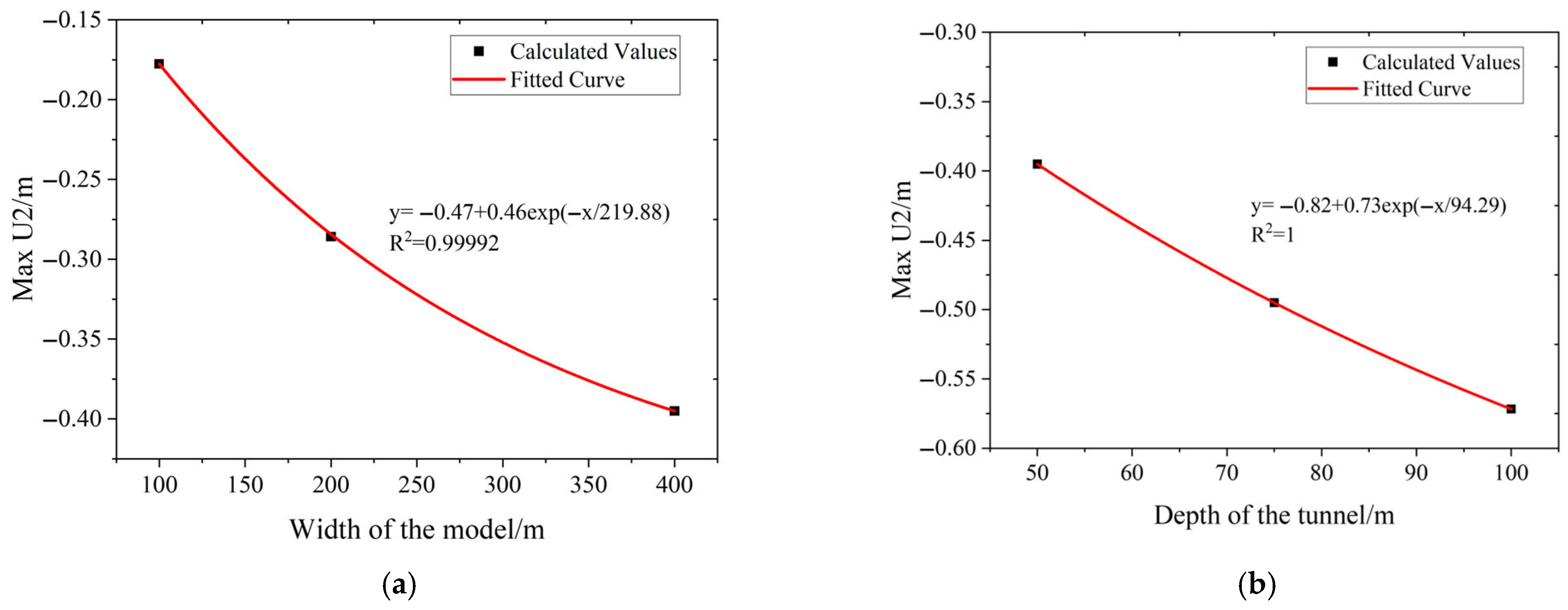
When the consolidation settlement is significant, its spatial extent becomes a primary concern. Results confirm that both the geological scale and tunnel burial depth significantly dictate deformation distribution. Drainage consolidation is highly sensitive to hydraulic boundary conditions, including far-field constant-head boundaries and the localized leakage boundary at the tunnel periphery. A larger seepage-affected region inherently results in a broader settlement influence zone. As burial depth increases, tunnels are more likely to intersect confined sandy aquifers with extensive lateral continuity, necessitating the consideration of the entire permeable domain to accurately capture the flow and stress fields. Moreover, deeper tunnels experience higher consolidation pressures and larger drainage volumes, leading to more pronounced strata deformation and extensive disturbance zones. Figure 28 illustrates the impact of both the computational domain width and the tunnel burial depth on maximum ground settlement; notably, within the selected numerical range, the ground displacement values exhibit no signs of convergence, thereby demonstrating the profound significance of these factors. Consequently, the development of large-scale regional computational methodologies is essential for enhancing the accuracy of numerical simulation results.
Temporally, the evolution of strata deformation is controlled by soil permeability. Low-permeability strata exhibit significantly longer re-equilibration times; for instance, under Grade IV leakage, fine sand typically stabilizes within 9 months, whereas silty clay may require up to 10.3 years. This prolonged consolidation is due to the slow dissipation of pore pressure in low-permeability mass. Furthermore, when the leakage rate approaches or exceeds the permeability coefficient (k), substantial settlement occurs with longer stabilization times and larger ultimate displacements.

5.3. Limitations and Future Research

While providing key insights for urban deep-buried tunnel projects, certain simplifications in this study should be acknowledged. The 2D plane strain framework assumes an infinite-length tunnel, which precludes capturing 3D spatial variations near shaft locations. The absence of out-of-plane stiffness and longitudinal seepage paths implies that the predicted disturbance zones represent a theoretical upper bound.
Additionally, a linear elastic constitutive model was adopted for both clay and sandy strata to isolate the influence of hydraulic parameters. Under the principle of linear superposition, the incremental ground response induced by leakage is theoretically independent of initial stress magnitudes and K0. While this identifies seepage-settlement sensitivity clearly, soil non-linearity could further influence long-term magnitudes in complex stress scenarios.
Finally, the hydraulic boundaries significantly dictate the long-term fluid–solid coupling response. Although constant-head boundaries offer computational efficiency, they may not fully capture the dynamic evolution of far-field pore pressure. Future research should implement multi-scale coupled analysis to integrate regional groundwater dynamics into localized soil-structure models, further enhancing predictive reliability throughout the tunnel’s service life.

6. Conclusions

This study investigates the long-term disturbance mechanism of urban deep shield tunnel projects on geological bodies. A fluid–solid coupled numerical model for deep-buried tunnels based on the Beijing Eastern Sixth Ring Road renovation project is established, and the long-term response of geological bodies induced by leakage from deep-buried shield tunnels is studied. The study also proposes the long-term settlement mechanism of geological bodies induced by leakage from deep-buried shield tunnels. The main conclusions are as follows:
(1)
Tunnel leakage intensity plays a crucial role in determining the ground deformation mode. When the tunnel’s waterproofing meets or exceeds a second-grade standard, leakage is minimal, and surface settlement is mainly due to excavation unloading and tunnel deformation. However, when the waterproofing level deteriorates to Level 4, consolidation settlement becomes the dominant deformation mechanism.
(2)
The spatial characteristics of ground deformation are significantly influenced by the tunnel burial depth and the ground’s scale. Deeper tunnels and larger permeable layers increase pore pressure, stress disturbance, and drainage intensity, leading to more extensive and severe settlement in the ground.
(3)
The permeability of the ground has the greatest impact on long-term deformation. Low-permeability layers experience longer re-equilibration times. When the tunnel leakage rate approaches or exceeds the permeability of the surrounding strata, settlement and displacement increase significantly, requiring careful consideration of waterproofing measures.

Author Contributions

Conceptualization, E.W. and H.J.; methodology, H.J. and D.J.; software, H.J.; validation, D.J.; formal analysis, H.J.; investigation, E.W.; resources, Z.X.; data curation, H.J.; writing—original draft preparation, H.J.; writing—review and editing, Z.X.; visualization, H.J.; supervision, E.W.; project administration, E.W.; funding acquisition, H.J. All authors have read and agreed to the published version of the manuscript.

Funding

This research was funded by the National Natural Science Foundation of China, grant number 52308404, the China Postdoctoral Science Foundation, grant number 2023M731995 and the Fundamental Research Funds for the Central Universities, grant number FRF-TP-26-029.

Institutional Review Board Statement

Not applicable.

Informed Consent Statement

Not applicable.

Data Availability Statement

The original contributions presented in this study are included in the article. Further inquiries can be directed to the corresponding author.

Acknowledgments

We acknowledge the support of University of Science and Technology Beijing, Tsinghua University, and Shenzhen University for this project.

Conflicts of Interest

The authors declare no conflicts of interest.

References

  1. Lin, L.B.; Chen, F.Q.; Lu, Y.P.; Li, D.Y. Complex variable solutions for tunnel excavation at great depth in visco-elastic geomaterial considering the three-dimensional effects of tunnel advance. Appl. Math. Model. 2020, 82, 700–730. [Google Scholar] [CrossRef]
  2. Song, X.; Wu, H.N.; Meng, F.Y.; Chen, R.P.; Cheng, H.Z. Soil arching evolution caused by shield tunneling in deep saturated ground. Transp. Geotech. 2023, 40, 100966. [Google Scholar] [CrossRef]
  3. Lee, K.M.; Rowe, R.K. An analysis of three-dimensional ground movements: The Thunder Bay Tunnel. Can. Geotech. J. 1991, 28, 25–41. [Google Scholar] [CrossRef]
  4. Shen, S.L.; Horpibulsuk, S.; Liao, S.M.; Peng, F.L. Analysis of the behavior of DOT tunnel lining caused by rolling correction operation. Tunn. Undergr. Space Technol. 2009, 24, 84–95. [Google Scholar] [CrossRef]
  5. Shen, S.L.; Du, Y.J.; Luo, C.Y. Evaluation of the effect of double-o-tunnel rolling-correction via apply one-side block loading. Can. Geotech. J. 2010, 47, 1060–1070. [Google Scholar]
  6. Di, H.; Zhou, S.; Xiao, J.; Gong, Q.; Luo, Z. Investigation of the long-term settlement of a cut-and-cover metro tunnel in a soft deposit. Eng. Geol. 2016, 204, 33–40. [Google Scholar] [CrossRef]
  7. Meng, F.Y.; Chen, R.P.; Kang, X. Effects of tunneling-induced soil disturbance on the post-construction settlement in structured soft soils. Tunn. Undergr. Space Technol. 2018, 80, 53–63. [Google Scholar] [CrossRef]
  8. Jallow, A.; Ou, C.Y.; Lim, A. Three-dimensional numerical study of long-term settlement induced in shield tunneling. Tunn. Undergr. Space Technol. 2019, 88, 221–236. [Google Scholar] [CrossRef]
  9. Afshani, A.; Li, W.; Oka, S.; Itoh, Y.; Akagi, H. Study of the long-term behavior of segmented tunnels in cohesive soil based on the circumferential joint opening. Tunn. Undergr. Space Technol. 2021, 120, 104210. [Google Scholar] [CrossRef]
  10. Cao, L.Q.; Chen, X.S.; Lin, X.T.; Su, D.; Fang, H.C.; Lu, D.C. Analytical solutions for the restraint effect of isolation piles against tunneling-induced vertical ground displacements. J. Rock Mech. Geotech. Eng. 2023, 15, 2582–2596. [Google Scholar] [CrossRef]
  11. Cao, L.Q.; Chen, X.S.; Lu, D.C.; Zhang, D.L.; Su, D. Theoretical prediction of ground settlements due to shield tunneling in multi-layered soils considering process parameters. Undergr. Space 2024, 16, 29–43. [Google Scholar] [CrossRef]
  12. Broere, W.; Festa, D. Correlation between the kinematics of a tunnel boring machine and the observed soil displacements. Tunn. Undergr. Space Technol. 2017, 70, 125–147. [Google Scholar] [CrossRef]
  13. Broere, W.; Faassen, T.F.; Arends, G.; Van Tol, A.F. Modelling the boring of curves in (very) soft soils during microtunnelling. Tunn. Undergr. Space Technol. 2007, 22, 600–609. [Google Scholar] [CrossRef]
  14. Jin, H.; Yuan, D.; Zhou, S.; Zhao, D. Short-term and long-term displacement of surface and shield tunnel in soft soil: Field observations and numerical modeling. Appl. Sci. 2022, 12, 3564. [Google Scholar] [CrossRef]
  15. Jin, D.; Zhang, Z.; Yuan, D. Effect of dynamic cutterhead on face stability in EPB shield tunneling. Tunn. Undergr. Space Technol. 2021, 110, 103827. [Google Scholar] [CrossRef]
  16. Dang, B.; Weng, X.; Zhang, X.; Ye, F.; Li, X. Failure mechanism and support pressure of tunnel face in Saturated sandy shield tunnel under variable seepage. Tunn. Undergr. Space Technol. 2026, 168, 107212. [Google Scholar] [CrossRef]
  17. He, S.H.; Zhang, S.C.; Li, C.H.; Zhu, Z.P.; Liu, X.B.; Wang, D.H.; Liu, Y.P. Blowout control during EPB shield tunnelling in sandy pebble stratum with high groundwater pressure. Chin. J. Geotech. Eng. 2017, 39, 1583–1590. [Google Scholar]
  18. Liu, X.Y.; Yuan, D.J. Mechanical analysis of anti-buoyancy safety for a shield tunnel under water in sands. Tunn. Undergr. Space Technol. 2015, 47, 153–161. [Google Scholar] [CrossRef]
  19. Mao, J.H.; Yuan, D.J.; Jin, D.L.; Zeng, J.F. Optimization and application of backfill grouting material for submarine tunnel. Constr. Build. Mater. 2020, 265, 120281. [Google Scholar] [CrossRef]
  20. Qin, S.; Cheng, Y.; Zhou, W.H. State-of-the-art review on pressure infiltration behavior of bentonite slurry into saturated sand for TBM tunneling. Smart Constr. Sustain. Cities 2023, 1, 14. [Google Scholar] [CrossRef]
  21. Bian, X.C.; Zeng, E.X.; Chen, Y.M. Long-term settlements of soft soil ground induced by train traffic loadings. Rock Soil Mech. 2008, 29, 2990–2996. [Google Scholar]
  22. Shen, S.L.; Wu, H.N.; Cui, Y.J.; Yin, Z.Y. Long-term settlement behaviour of metro tunnels in the soft deposits of Shanghai. Tunn. Undergr. Space Technol. 2014, 40, 309–323. [Google Scholar] [CrossRef]
  23. Jin, H.; Yuan, D.; Jin, D.; Wu, J.; Wang, X.; Han, B.; Mao, J. Shield kinematics and its influence on ground settlement in ultra-soft soil: A case study in Suzhou. Can. Geotech. J. 2022, 59, 1887–1900. [Google Scholar] [CrossRef]
  24. Wang, J.; Tian, N.; Lin, G.; Feng, K.; Xie, H. Face failure of deep EPB shield tunnels in dry graded cobble-rich soil: A DEM study. Tunn. Undergr. Space Technol. 2024, 147, 105622. [Google Scholar] [CrossRef]
  25. Zhu, T.; Huang, F.; Li, S.; Ouyang, T.; Ying, J.; Zhao, H. Optimization of pre-grouting construction and evaluation of grouting effect in a deeply buried silt-filled shield tunnel. Tunn. Undergr. Space Technol. 2024, 152, 105902. [Google Scholar] [CrossRef]
  26. Chen, R.P.; Song, X.; Meng, F.Y.; Wang, H.L.; Liu, Y.; Wen, L. Experimental investigation on the soil arching effect induced by deep-buried shield tunneling. Tunn. Undergr. Space Technol. 2025, 155, 106161. [Google Scholar] [CrossRef]
  27. Chen, X.; Liu, L.; Ren, S.; Cheng, P.; Liu, M.; Liu, Y.; Chen, E.J. Physical modelling of face stability and ground settlement in EPB shield tunnelling incorporating dynamic cutterhead–soil interaction. Tunn. Undergr. Space Technol. 2026, 170, 107332. [Google Scholar] [CrossRef]
  28. Lin, J.; Tu, S.; Wang, S.; Li, W.; Zhang, C. Face stability analysis of horseshoe-shaped shield tunnels considering dynamic effects of composite cutterhead and screw conveyor. Tunn. Undergr. Space Technol. 2026, 167, 107065. [Google Scholar] [CrossRef]
  29. Bai, Q.; Xu, J.; Zhao, W.; Li, J.; Yang, Q.; Liu, H. Rheological experiment and transport simulation of conditioned soil in EPB shield tunneling through fully weathered granite strata. Tunn. Undergr. Space Technol. 2026, 172, 107548. [Google Scholar] [CrossRef]
  30. Xu, J.; Wu, X.; Huang, H.; Mao, Y. Experimental study of the pore pressure variation during EPB shield tunnelling in the saturated sand. Tunn. Undergr. Space Technol. 2025, 161, 106576. [Google Scholar] [CrossRef]
  31. Gangrade, R.; Grasmick, J.; Trainor-Guitton, W.; Mooney, M. Risk-based methodology to optimize geotechnical site investigations in tunnel projects. Tunn. Undergr. Space Technol. 2022, 127, 104589. [Google Scholar] [CrossRef]
  32. Gangrade, R. Quantifying Spatial Geotechnical Uncertainty to Advance the Practice of Risk Assessment and Decision-Making for Tunnel Projects. Ph.D. Thesis, Colorado School of Mines, Golden, CO, USA, 2021. [Google Scholar]
  33. GB/T 51438-2021; Standard for Design of Shield Tunnels. China Architecture & Building Press: Beijing, China, 2021.
  34. Huang, H.W.; Xu, L.; Yan, J.L. Effective transverse stiffness of shield tunnel linings. Chin. J. Geotech. Eng. 2006, 28, 11–18. [Google Scholar]
  35. He, L.; Jiang, Y. Influence factors on bending performance of large-diameter shield tunnel segments. Highw. Traffic Sci. Technol. 2022, 39, 102–109. [Google Scholar]
  36. GB 50108-2008; Code for Waterproofing of Underground Engineering. China Planning Press: Beijing, China, 2008.
Figure 1. Beijing East Sixth Ring Road renovation project within the Beijing rail transit network.
Applsci 16 03711 g001
Figure 2. Layout plan of the East Sixth Ring Road renovation project.
Applsci 16 03711 g002
Figure 3. Schematic diagram of the cross-sectional layout of the underground section of the route.
Applsci 16 03711 g003
Figure 4. Model size and meshing.
Applsci 16 03711 g004
Figure 5. Long-term response of strata at different ground scales and tunnel burial depths: (a) pore pressure field distribution; (b) stress field contour map; (c) displacement contour map.
Applsci 16 03711 g005
Figure 6. Characteristics of pore pressure distribution: (a) horizontal, (b) vertical.
Applsci 16 03711 g006
Figure 7. Stress distribution characteristics: (a) horizontal, (b) vertical.
Applsci 16 03711 g007
Figure 8. Variations in pore pressure and stress: (a) pore pressure, (b) stress.
Applsci 16 03711 g008
Figure 9. Displacement distribution curve (z = 2 m, x = 0 m): (a) horizontal, (b) vertical.
Applsci 16 03711 g009
Figure 10. Time–history patterns of pore pressure and vertical stress: (a) pore pressure; (b) vertical stress.
Applsci 16 03711 g010
Figure 11. Daily variation in pore water pressure and vertical stress: (a) pore pressure; (b) vertical stress.
Applsci 16 03711 g011
Figure 12. Displacement time–history curve (z = 2 m): (a) displacement; (b) daily variation.
Applsci 16 03711 g012
Figure 13. Long-term response of strata at different seepage fluid: (a) pore pressure field distribution; (b) stress field contour map; (c) displacement contour map.
Applsci 16 03711 g013
Figure 14. Pore water pressure distribution at different seepage fluid: (a) horizontal, (b) vertical.
Applsci 16 03711 g014
Figure 15. Vertical stress distribution at different seepage fluid: (a) horizontal, (b) vertical.
Applsci 16 03711 g015
Figure 16. Vertical displacement distribution curve (z ≈ 90 m, x = 0 m) at different seepage fluid: (a) horizontal, (b) vertical.
Applsci 16 03711 g016
Figure 17. Time–history patterns of pore pressure at different seepage fluid: (a) pore pressure; (b) daily variation.
Applsci 16 03711 g017
Figure 18. Time–history behavior of vertical stress at different seepage fluid: (a) vertical stress; (b) daily variation.
Applsci 16 03711 g018
Figure 19. Displacement time–history curve at different seepage fluid (z ≈ 90 m, x = 0 m): (a) displacement; (b) daily variation.
Applsci 16 03711 g019
Figure 20. Long-term response of strata with varying soil permeability coefficient: (a) pore pressure field distribution; (b) stress field contour map; (c) displacement contour map.
Applsci 16 03711 g020
Figure 21. Pore water pressure distribution with varying soil permeability coefficient: (a) horizontal; (b) vertical.
Applsci 16 03711 g021
Figure 22. Vertical stress distribution with varying soil permeability coefficient: (a) horizontal; (b) vertical.
Applsci 16 03711 g022
Figure 23. Displacement distribution curve (z ≈ 90 m, x = 0 m) with varying soil permeability coefficient: (a) horizontal; (b) vertical.
Applsci 16 03711 g023
Figure 24. Time–history curves of pore pressure with varying soil permeability coefficient: (a) pore pressure; (b) daily variation.
Applsci 16 03711 g024
Figure 25. Time–history curves of vertical stress with varying soil permeability coefficient: (a) vertical stress; (b) daily variation.
Applsci 16 03711 g025
Figure 26. Displacement time–history curve (z ≈ 90 m, x = 0 m) with varying soil permeability coefficient: (a) displacement; (b) daily variation.
Applsci 16 03711 g026
Figure 27. Long-term mutual feedback mechanism between the underground structure and the ground.
Applsci 16 03711 g027
Figure 28. The influence of model width and tunnel burial depth on maximum ground vertical settlement: (a) width of model; (b) depth of the tunnel.
Applsci 16 03711 g028
Table 1. Model material parameters.
MaterialsDensity (kg/m3)Elastic Modulus (MPa)Poisson’s RatioPermeability Coefficient (m/s)
Shield tunnel240034.5 × 1030.21.77 × 10−11
Grout layer2400500.21.77 × 10−11
Soil2000200.31 × 10−6 (1 × 10⁻⁷; 1 × 10⁻⁸)
Table 2. Setting of tunnel leakage conditions.
Seepage Control RequirementsAverage Seepage
Velocity (m/s)
Leakage Mode
Grade I0No leakage
Grade II5.78704 × 10−10Dampness/Moisture
Grade III-Minor leaks: 100 m2 waterproof area, no more than 7 leakage or damp spots, with each spot not exceeding 2.89 × 10⁻⁸ m3/s in leakage and 0.3 m2 in area.
Grade IV2.31481 × 10−8Numerous leakage points
Damage1.00 × 10−6Full circumference leakage, average seepage volume.
Table 3. Working conditions.
ConditionsModel Dimensions
(m × m)
Tunnel Depth
(m)
Tunnel Leakage Rate (m3/m2/s)Soil Permeability Coefficient
(m/s)
Simulation Time
(Year)
1100 × 100501 × 10−61.00 × 10−62
2200 × 200501 × 10−61.00 × 10−62
3400 × 400501 × 10−61.00 × 10−62
4400 × 4001001 × 10−61.00 × 10−62
5400 × 4001002.31481 × 10−81.00 × 10−62
6400 × 4001005.78704 × 10−101.00 × 10−62
7400 × 4001002.31481 × 10−81.00 × 10−7150
8400 × 4001002.31481 × 10−81.00 × 10−8150
Table 4. Simulation parameters.
MaterialsDensity
(kg/m3)
Elastic Modulus (MPa)Poisson’s
Ratio
Permeability Coefficient (m/s)Average Tunnel Seepage Velocity (m/s)Simulation Time (Year)
High-permeability soil2000200.31.00 × 10−62.31481 × 10−82
Low-permeability soil2000200.31.00 × 10−72.31481 × 10−8150
Impermeable soil2000200.31.00 × 10−82.31481 × 10−8150
Disclaimer/Publisher’s Note: The statements, opinions and data contained in all publications are solely those of the individual author(s) and contributor(s) and not of MDPI and/or the editor(s). MDPI and/or the editor(s) disclaim responsibility for any injury to people or property resulting from any ideas, methods, instructions or products referred to in the content.