Article

Collaborative Support Optimization for Constrained Foundation Pit Excavation Adjacent to Urban Rail Transit: A Case Study of Shangdi Station on Beijing Subway, China


1
School of Transportation Engineering, Dalian Jiaotong University, Dalian 116028, China
2
China Railway Third Bureau Group Fourth Engineering Co., Ltd., Beijing 102300, China
3
Department of Civil Engineering, Dalian University of Technology, Dalian 116023, China
*
Author to whom correspondence should be addressed.
Appl. Sci. 2026, 16(8), 3631; https://doi.org/10.3390/app16083631
Submission received: 19 March 2026 / Revised: 3 April 2026 / Accepted: 4 April 2026 / Published: 8 April 2026

Abstract

Excavation adjacent to operating urban rail transit faces formidable deformation control challenges. To address this, a parametric collaborative optimization framework integrating micro steel pipe pile isolation and temporary intermediate partition wall reinforcement is proposed. Taking a foundation pit project at Shangdi Station of Beijing Metro Line 13 as a case study, a three-dimensional finite element model was established using the Hardening Soil constitutive model and calibrated with field monitoring data. Optimization analysis reveals that micro-pile spacing is the dominant factor controlling local rail settlement, while intermediate partition wall thickness primarily dictates global surface settlement. By balancing stringent safety limits with construction economy through a multi-objective evaluation, the preferred support configuration was calculated to be 273 mm diameter micro-piles at 500 mm spacing, combined with a 300 mm-thick partition wall. This collaborative configuration successfully truncates lateral soil displacement, reducing maximum rail settlement by over 55% and surface settlement by 53.6% compared to the baseline. Field monitoring results show high consistency with the numerical predictions (RMSE = 0.1438 mm), confirming the reliability of the proposed parametric collaborative optimization framework. Ultimately, this framework provides a validated, quantitative design methodology and a practical reference for support design in constrained excavations adjacent to existing sensitive infrastructure.

1. Introduction

With the rapid development of urbanization and the continuous expansion of rail transit networks, underground space development has become increasingly saturated. Consequently, the execution of deep foundation pit excavations adjacent to operating urban rail transit systems has emerged as a typical, yet exceptionally challenging, scenario for transit hub expansions, underground commercial developments, and railway underpass projects [1,2]. In these highly constrained environments, conventional retaining structures—such as large-diameter bored piles or continuous diaphragm walls—are often rendered unfeasible due to strict spatial limitations and the stringent operational safety thresholds of the adjacent railways [3,4]. Consequently, combined support methods—such as the inverted well wall method, micro steel pipe piles, and temporary intermediate partition walls—have gained widespread application [5,6].
Specifically, the inverted well wall method provides immediate rigid support through a simultaneous “excavating and supporting” sequence, significantly reducing track disturbances. Furthermore, at close proximities—such as the 8.6 m distance to the operating subway centerline in this study—continuous train operations induce dynamic loads and vibrations that accelerate soil deformation. Under these conditions, micro steel pipe piles are highly advantageous [7]. They not only offer flexible construction and static isolation against lateral soil movement but also act as a critical physical barrier, effectively cutting off the propagation path of the fatigue plastic zone induced by the train’s cyclic dynamic loading. Additionally, properly configured intermediate partition walls enhance the overall structural rigidity of the pit, providing a global inhibitory effect on surface settlement [8,9].
Despite these practical advances, a critical research gap remains. While recent state-of-the-art reviews have systematically evaluated the macroscopic impacts of excavations on existing transit structures [10], current studies often overlook the complex mechanical coupling in asymmetrical geometries. As noted by Zhang [11], the non-uniform stress relief in L-shaped or irregular pits fundamentally alters the displacement field of adjacent rails compared to symmetric configurations. Furthermore, while the inverted well wall method and micro-piles offer significant localized protection, the theoretical distinction between local isolation and global reinforcement remains insufficiently quantified. Conventional design methodologies frequently optimize support parameters in isolation, neglecting the nonlinear interactions between stiff partition walls and discrete pile curtains [12].
Moreover, the industry lacks a robust, multi-objective optimization framework capable of mathematically balancing stringent deformation limits with construction economy. Recent advancements in metaheuristic algorithms have demonstrated the potential of multi-objective Pareto optimization in geotechnical engineering [13], yet its application to constrained foundation pits with asymmetric risk boundaries—where safety failure costs far outweigh material expenditures—is still in its infancy. For projects in unique strata such as the Beijing sandy gravel layer, the accuracy of such optimizations further depends on the rigorous calibration of constitutive parameters, particularly the small-strain stiffness behavior, which dominates the near-field response to excavation unloading [14,15].
To address these theoretical and practical shortcomings, this paper proposes a parametric collaborative optimization framework for constrained foundation pit excavations, utilizing the Shangdi Station expansion project on Beijing Subway Line 13 as a comprehensive case study. This study aims to break through the limitations of conventional isolated support designs, such as the lack of theoretical distinction between local and global reinforcement and the absence of economic-safety balancing. This study distinguishes itself from previous research by shifting the focus from isolated parameter optimization to a mechanism-based collaborative framework. The specific increments are:
(1)
Mechanism Quantification: We explicitly define the local isolation effect of micro-piles versus the global reinforcement effect of partition walls using a dimensionless sensitivity hierarchy. This quantifies the “diminishing return” effect of structural stiffness, allowing for more precise material allocation.
(2)
Asymmetric Risk-Weighted Multi-Objective Optimization: We propose a multi-objective optimization approach that incorporates an asymmetric penalty function for sensitive deformation limits. This ensures that infrastructure integrity is prioritized over economic efficiency in a mathematically rigorous manner, leading to a Pareto-optimal configuration that reduces rail settlement by over 55% compared to the baseline.

2. Materials and Methods

2.1. Project Background and Deformation Control Requirements

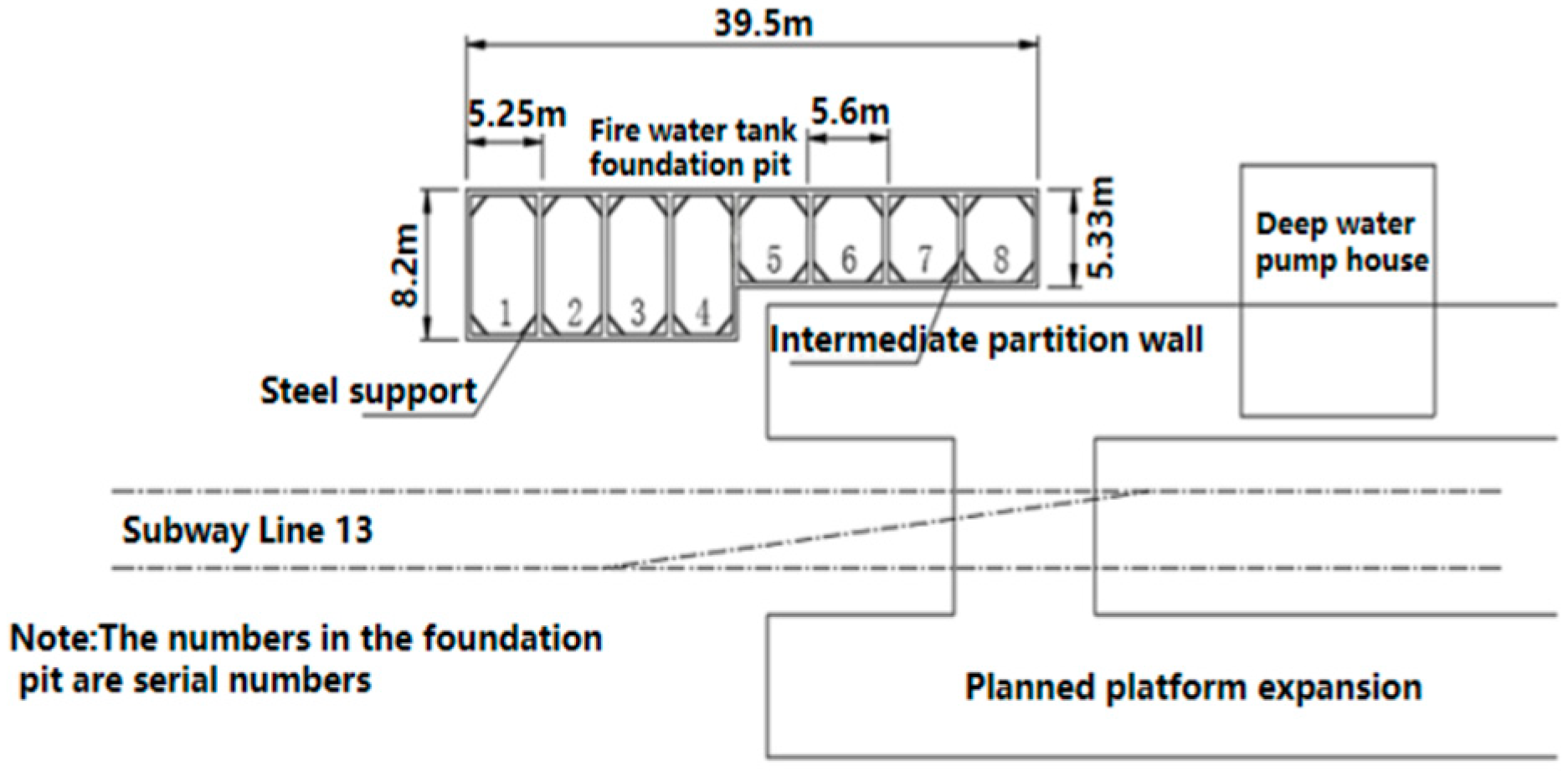
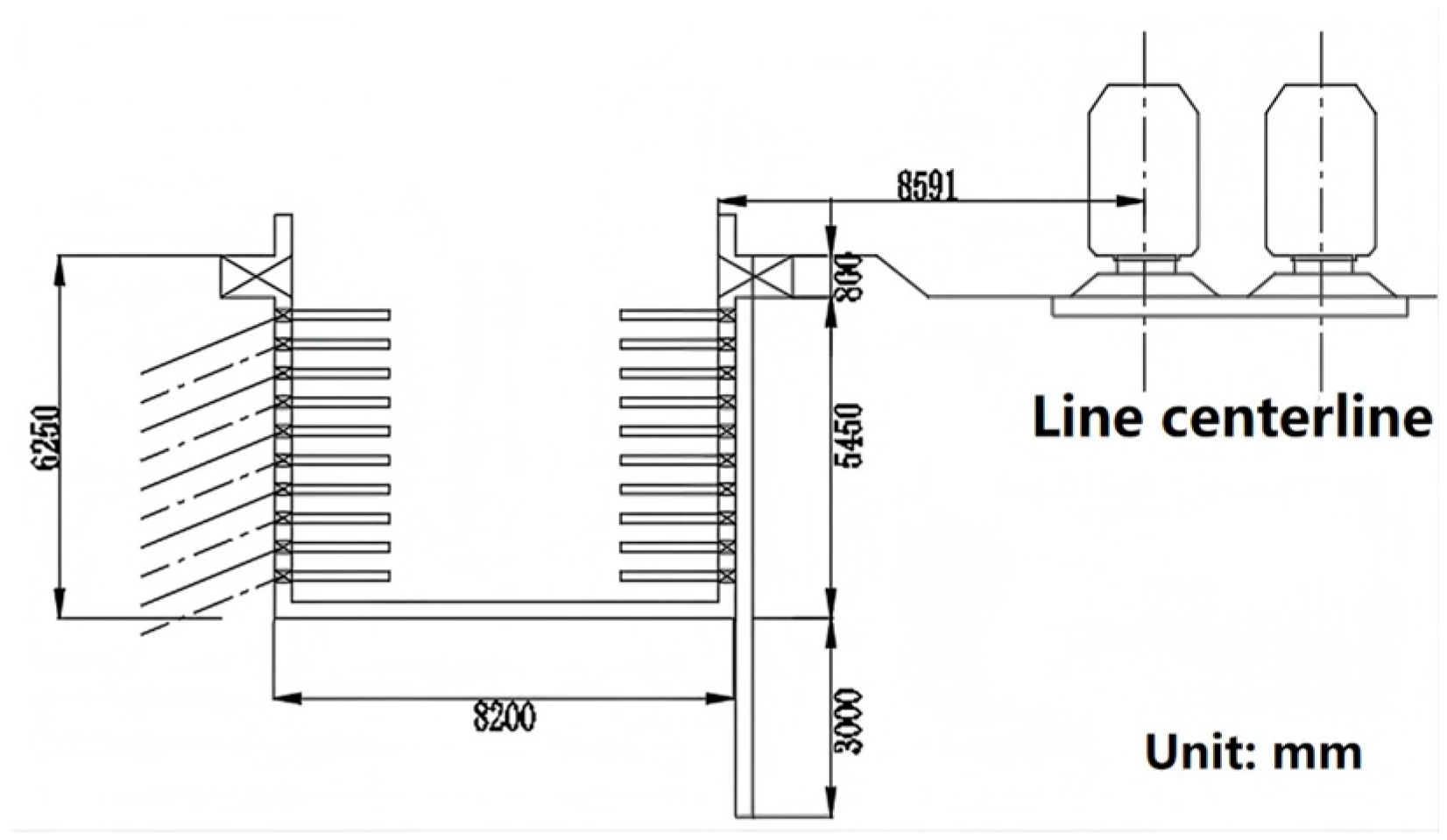
The study focuses on the expansion of Shangdi Station on Beijing Subway Line 13. The existing Shangdi–Xi’erqi section features a gravel roadbed with a center distance of 4.2 m, a design width of 10.7 m, and a side slope ratio of 1:1.5. The foundation pit is located to the west of the station, adjacent to the south side of the existing Line 13 track. It reaches a maximum excavation depth of approximately 6.2 m, with the pit width ranging from 4.73 m to 7.6 m.
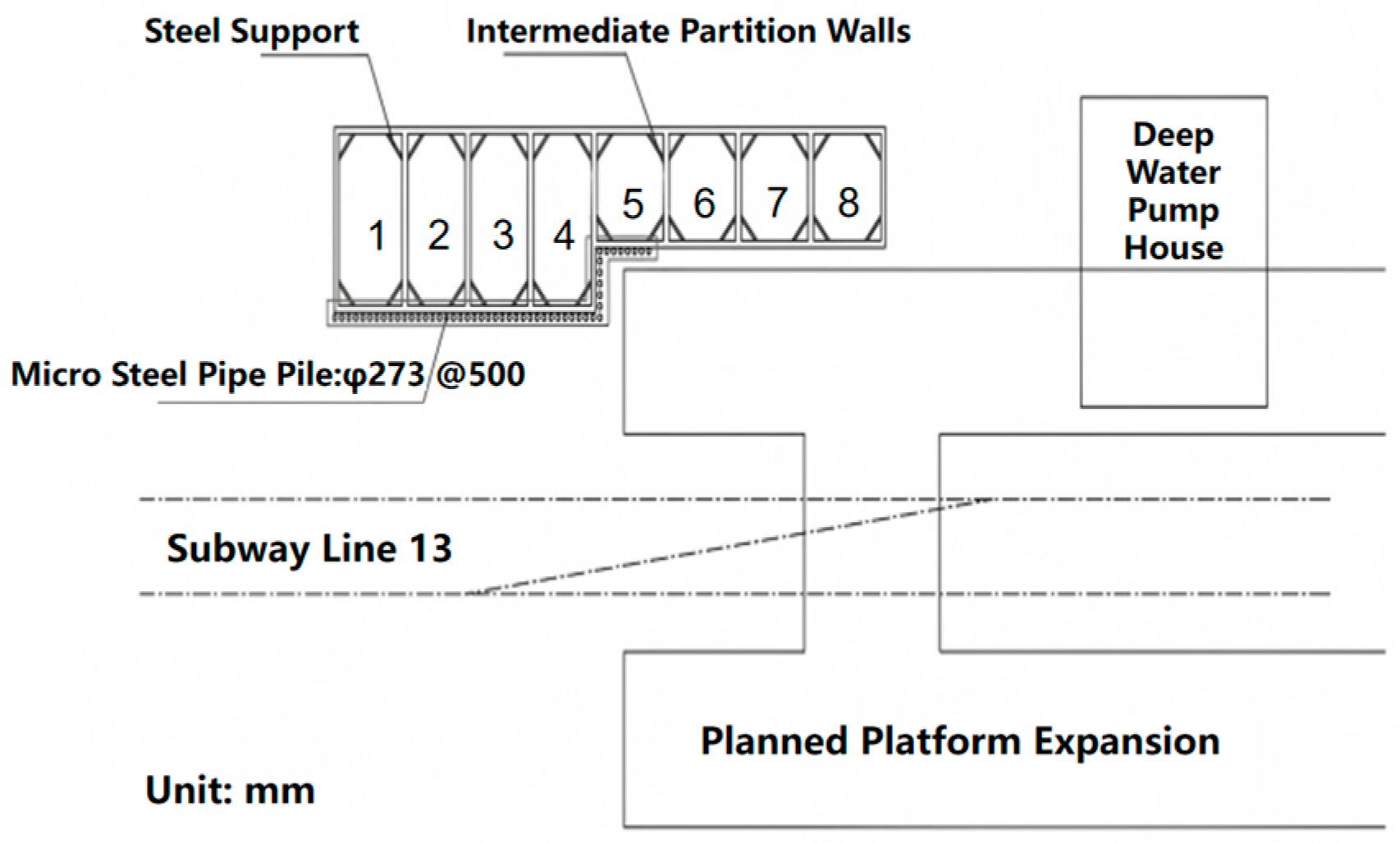
As clearly illustrated in Figure 1 and Figure 2, the foundation pit follows a distinct L-shaped geometric layout. It is crucial to emphasize that this specific asymmetric geometric boundary within such a severely constrained space is not merely a spatial descriptor; it fundamentally alters the spatial stress distribution during construction. The asymmetric excavation volume and irregular corner effects induce unbalanced spatial stress relief in the surrounding soil mass, which inherently acts as the primary mechanical trigger for the pronounced local fluctuations observed in the subsequent track settlement.
To establish a rigorous legal and engineering basis for deformation control, the safety thresholds in this study are strictly determined according to national and municipal standards. Specifically, the ultimate control limits for the adjacent operating urban rail transit—vertical deformation ≤ 3.0 mm and horizontal deformation ≤ 2.0 mm—are explicitly mandated by the Regulations on Supervision of Construction Operations in Safety Protection Zones of Urban Rail Transit [16]. Furthermore, the allowable horizontal displacement of the retaining structure is governed by the National Technical Code for Monitoring of Building Foundation Pit Engineering (GB 50497) [17], which specifies a limit of 0.007 H, where H is the excavation depth, yielding a control value of 43.4 mm for this 6.2 m deep pit.

2.2. Geotechnical Conditions and Finite Element Model Setup

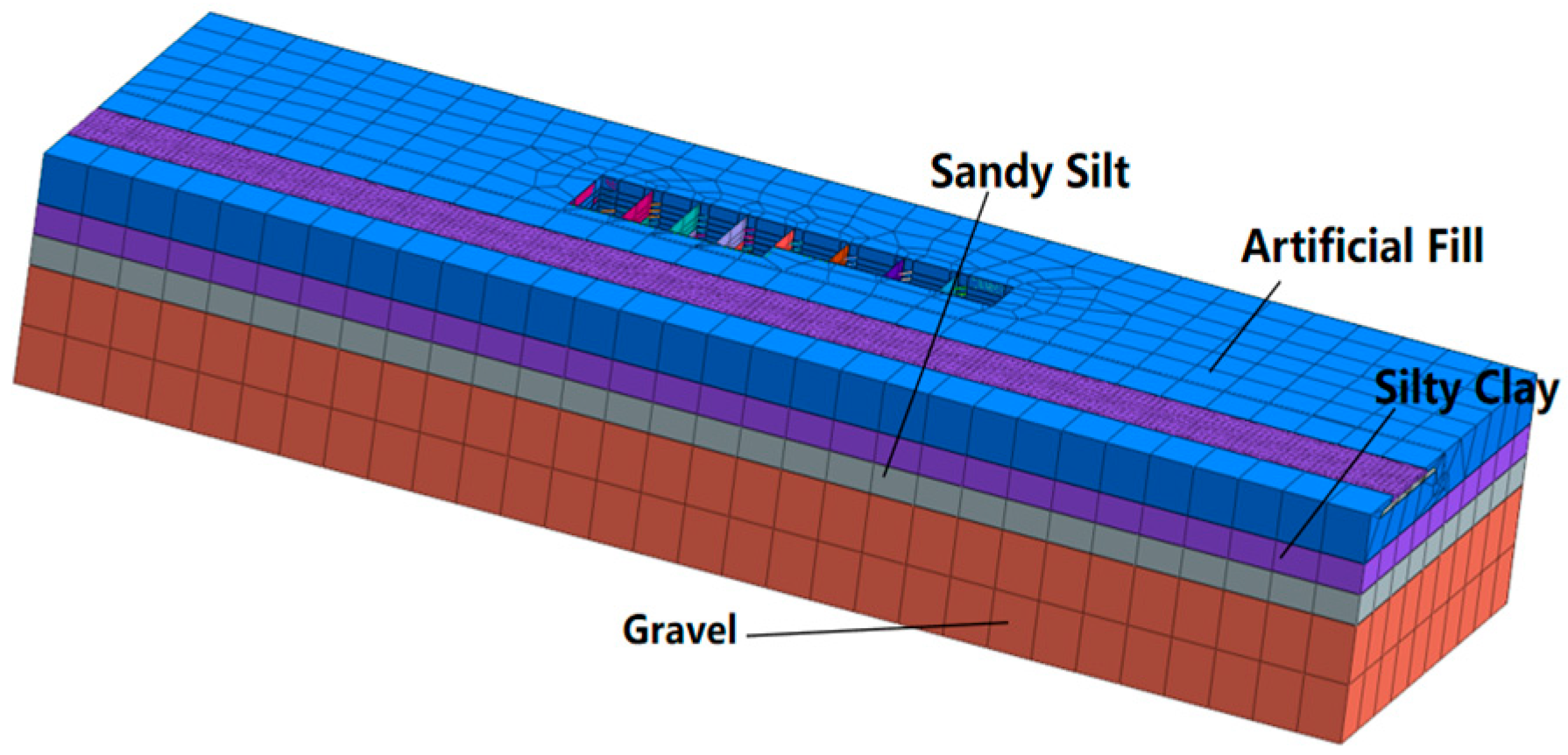
In geomechanical modeling, accurately determining soil parameters is universally recognized as a challenging task, particularly for deep excavations in complex urban strata. To establish a reliable physical foundation for the numerical analysis, the detailed geological soil profile at the Shangdi Station site—predominantly comprising artificial fill, silty clay, sandy silt, and an underlying gravel layer—is explicitly illustrated in Figure 3. To effectively capture the highly nonlinear stress–strain response and stress-dependent stiffness of these distinct soil layers during the staged excavation, the Hardening Soil (HS) constitutive model was adopted in the three-dimensional finite element analysis [18].
To address the inherent challenges of parameter selection and ensure computational reliability, the origin of the HS model parameters was strictly constrained. The strength parameters ( c , φ ) were directly derived from the comprehensive in situ geotechnical investigation report. For the stiffness parameters, the initial reference values were selected utilizing well-documented empirical data for similar Quaternary metro-adjacent excavations. Subsequently, these preliminary values were rigorously refined and validated through a combination of back-analysis using field monitoring data and site-specific large-scale triaxial tests, leading to the calibrated parameters summarized in Table 1.
In the HS formulation, three reference stiffness parameters—the secant stiffness in standard drained triaxial tests ( E 50 r e f ), the tangent stiffness for primary oedometer loading ( E o e d r e f ), and the unloading/reloading stiffness ( E u r r e f )—were defined at a reference stress of p r e f = 100 kPa. The calibration of these parameters was rigorously supported by large-scale drained triaxial shear and consolidation tests specific to the deep strata of the Beijing area. While the stiffness ratio of E 50 r e f : E o e d r e f : E u r r e f is conventionally assumed to be 1 : 1 : 3 for the overlying fine-grained soils (artificial fill, silty clay, and sandy silt), this standard assumption is inadequate for the underlying gravel/pebble layer. Based on the experimental data, the gravel/pebble layer exhibits a significantly stronger particle interlocking effect and rebound resistance under excavation-induced stress release. Consequently, a specific stiffness proportional relationship of 1 : 1 : 4.3 was mathematically derived and applied for the Beijing sandy gravel layer to accurately capture its highly nonlinear elastic rebound characteristics during the staged excavation [19].
A comprehensive 3D finite element model was established using Midas GTS NX (v2023), which employs the finite element method (FEM), to evaluate the excavation-induced spatial deformation. To eliminate boundary effects, the computational domain was set to 120 × 40 × 19 m (length × width × depth)—approximately 3–5 times the excavation depth—and discretized into 13,351 nodes and 16,870 elements. Mechanical boundary conditions included normally constrained lateral faces, a fully fixed bottom, and a free top surface.
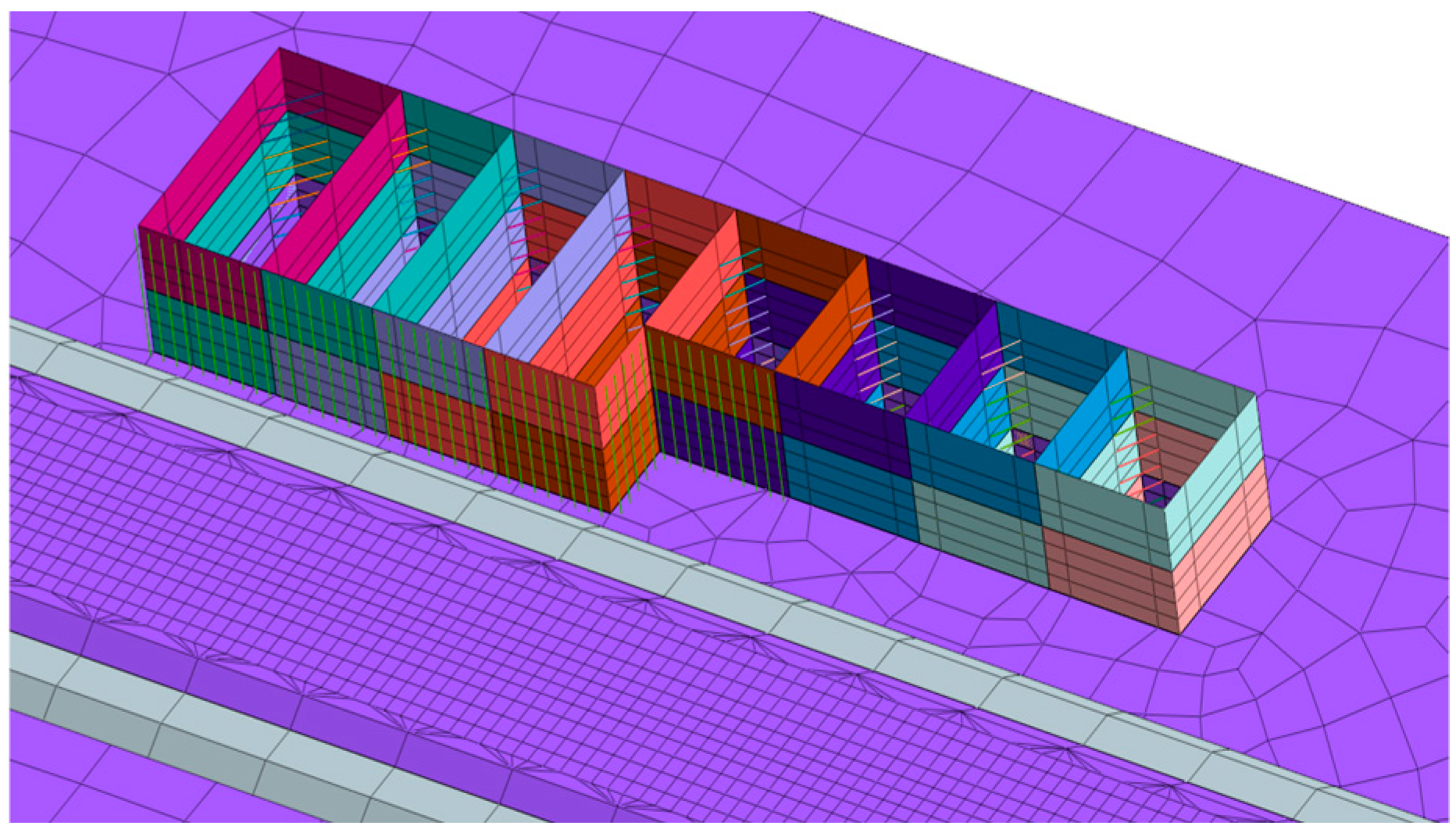
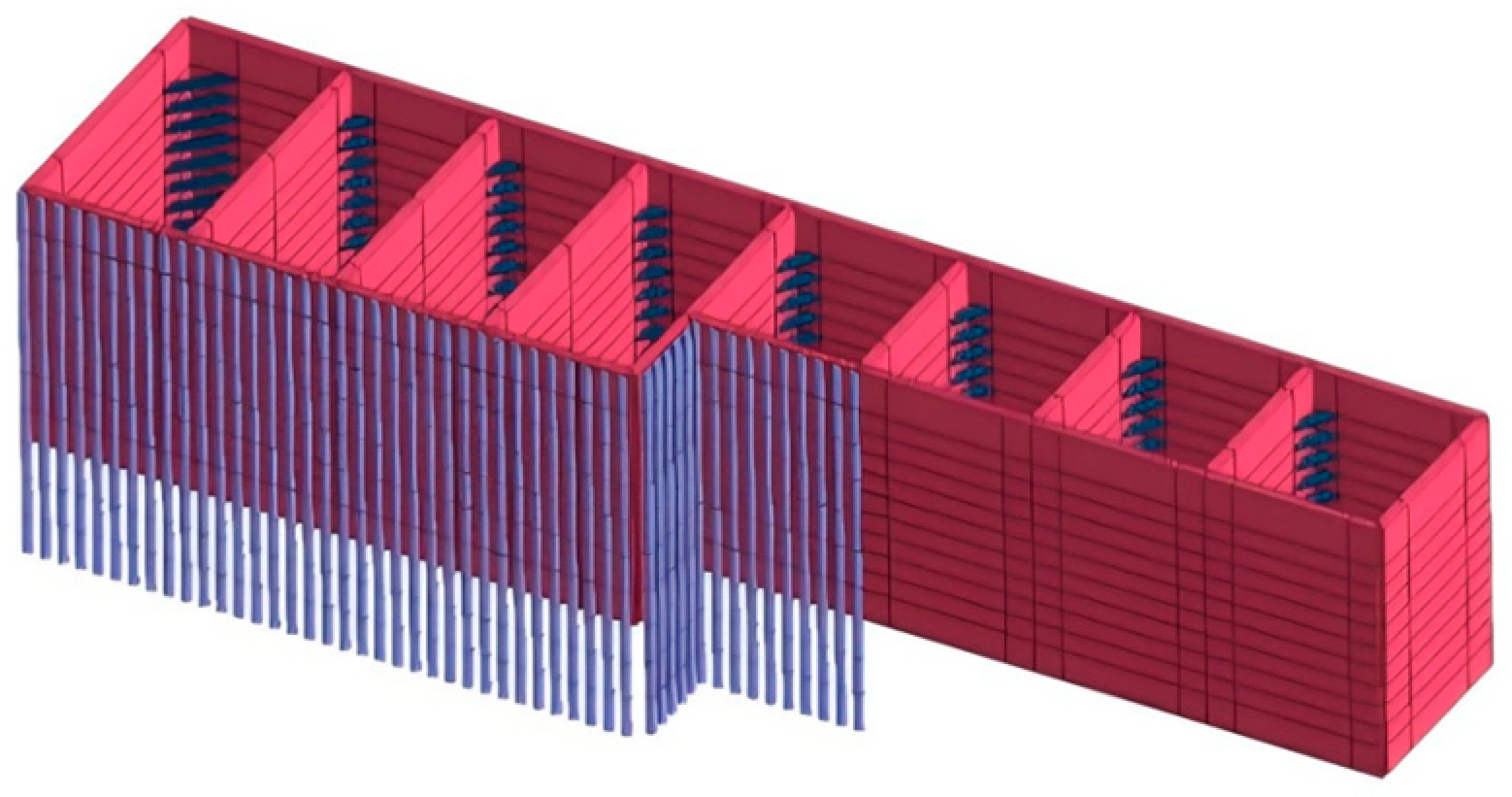
Structurally, the retaining walls and the 300 mm-thick temporary partition wall were simulated using plate elements, while the micro steel pipe piles were represented by embedded beam elements. To accurately capture the soil–structure shear dissipation, interface elements were incorporated with a strength reduction factor of 0.67. As illustrated in Figure 4, deliberately hiding the soil mass explicitly demonstrates the detailed spatial layout and mechanical integration of the partition wall with the retaining structures, which is crucial for enhancing the global rigidity of the excavation system.

3. Results

3.1. Baseline Assessment of the Original Scheme

To evaluate the baseline performance of the original design in a highly constrained environment—with the nearest retaining structure located a mere 8.6 m from the operating subway centerline—a 3D numerical simulation was conducted using Midas GTS NX (v2023). The original excavation utilized the inverted well wall method, characterized by a staged “excavate and support” sequence in 2 m vertical increments. The primary support system comprised 300 mm-thick C25 shotcrete side walls reinforced with corner I-beams, a 1200 × 800 mm reinforced concrete crown beam, a 200 mm-thick temporary intermediate partition wall, and a shotcrete base sealing.
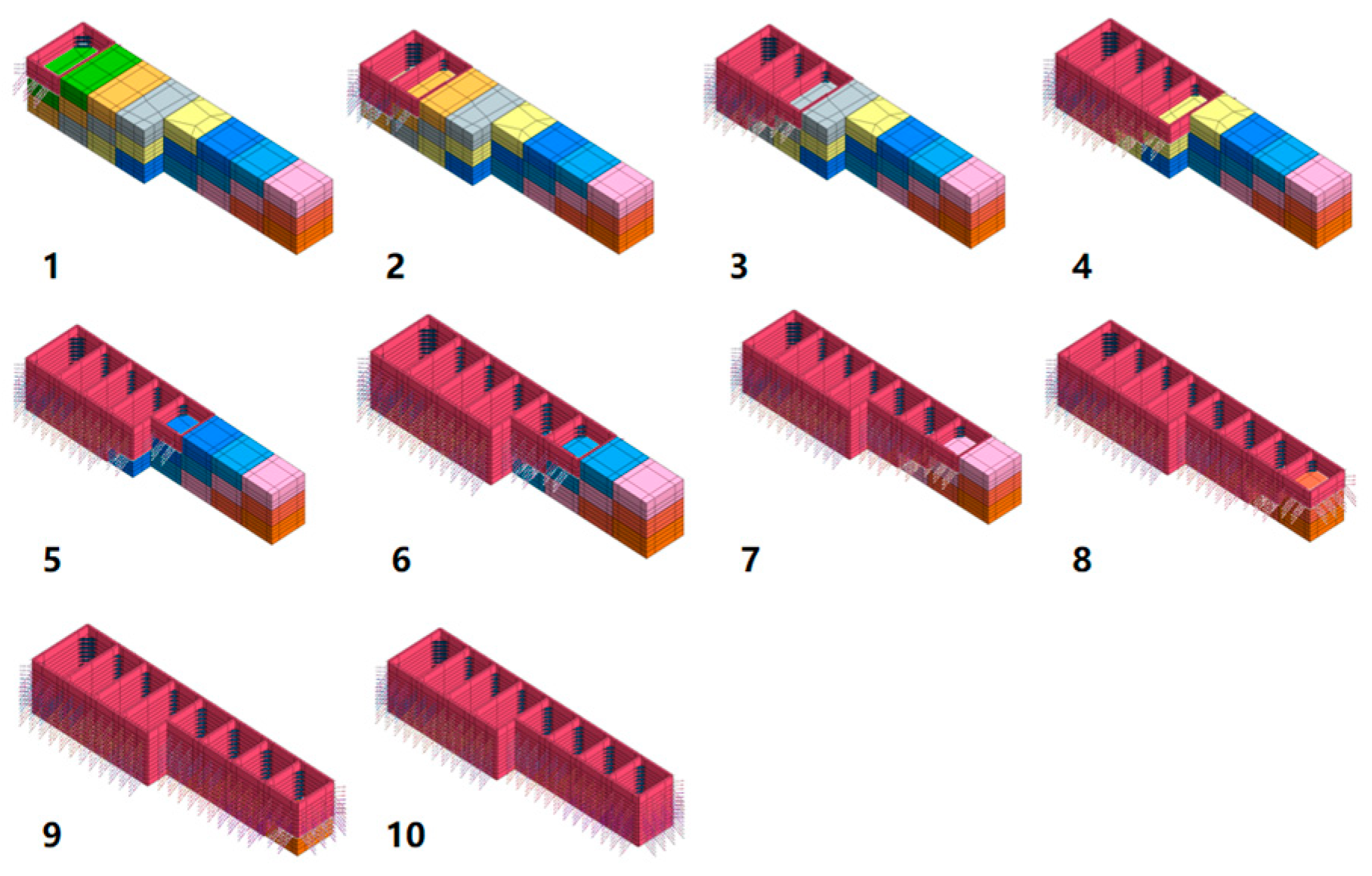
Figure 5 illustrates the dynamic construction process by discretizing it into 10 simulation phases from Excavation-1 to 10. The numbers 1–10 denote the sequential simulation phases, corresponding to Excavation-1 through Excavation-10, respectively. In this 3D visualization of the excavate and support sequence, the outermost red elements represent the retaining structures, namely the newly activated shotcrete side walls and temporary intermediate partition walls. Colored interior mesh blocks denote unexcavated soil masses assigned to specific construction stages, while void spaces indicate excavated soil volumes. To replicate the real-time structural closure inherent to the inverted well wall method, the model sequentially excavates 2 m vertical soil layers and immediately activates the corresponding supports. This 10-step iterative sequence concludes with the excavation of the No. 8 vertical shaft to the pit bottom, enabling the model to accurately capture the complex stress-release and rapid-response mechanical behaviors underlying soil-structure interactions.
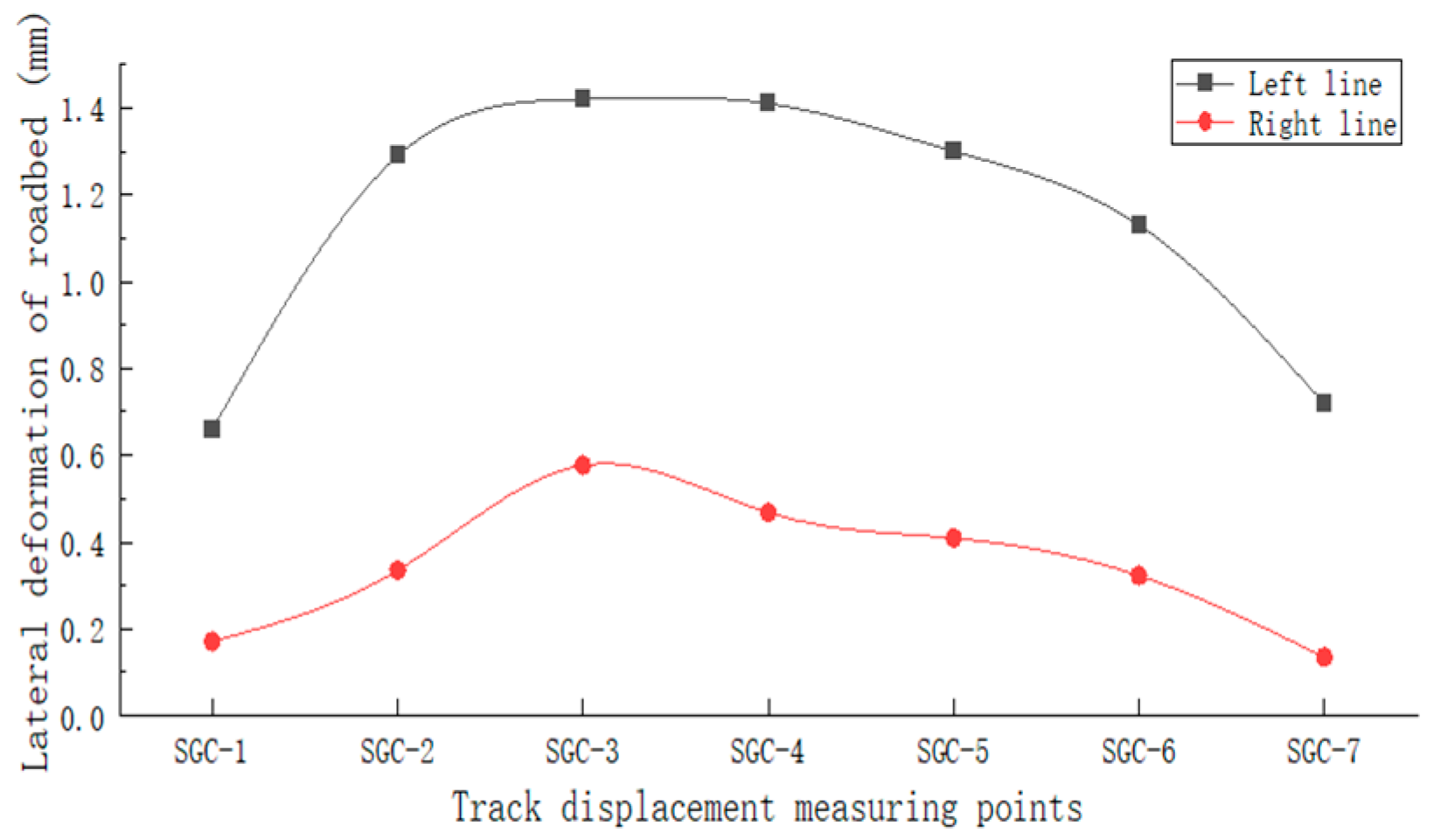
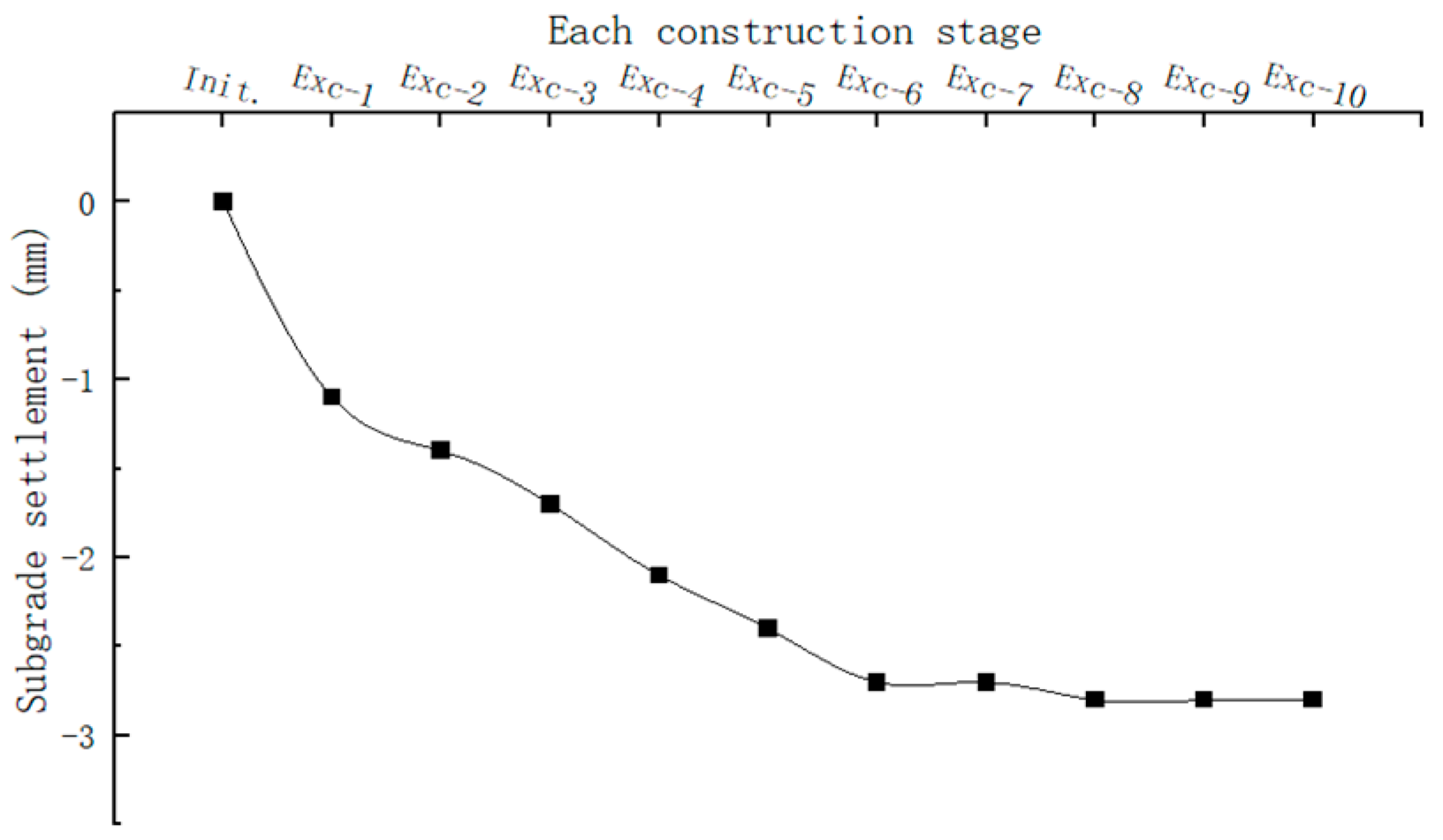
The simulation results of roadbed deformation are shown in Figure 6 and Figure 7. Under the original plan, the maximum settlement of the roadbed after construction was 2.8 mm, which did not exceed the control value of 3.0 mm, but exceeded the alarm value of 2.4 mm, requiring control measures. The maximum lateral deformation occurred on the side of shafts 1 to 4, which was 1.45 mm. It did not exceed the control value of 2.0 mm, but reached the warning value of 1.4 mm. It is necessary to strengthen monitoring during construction and control it in subsequent studies.
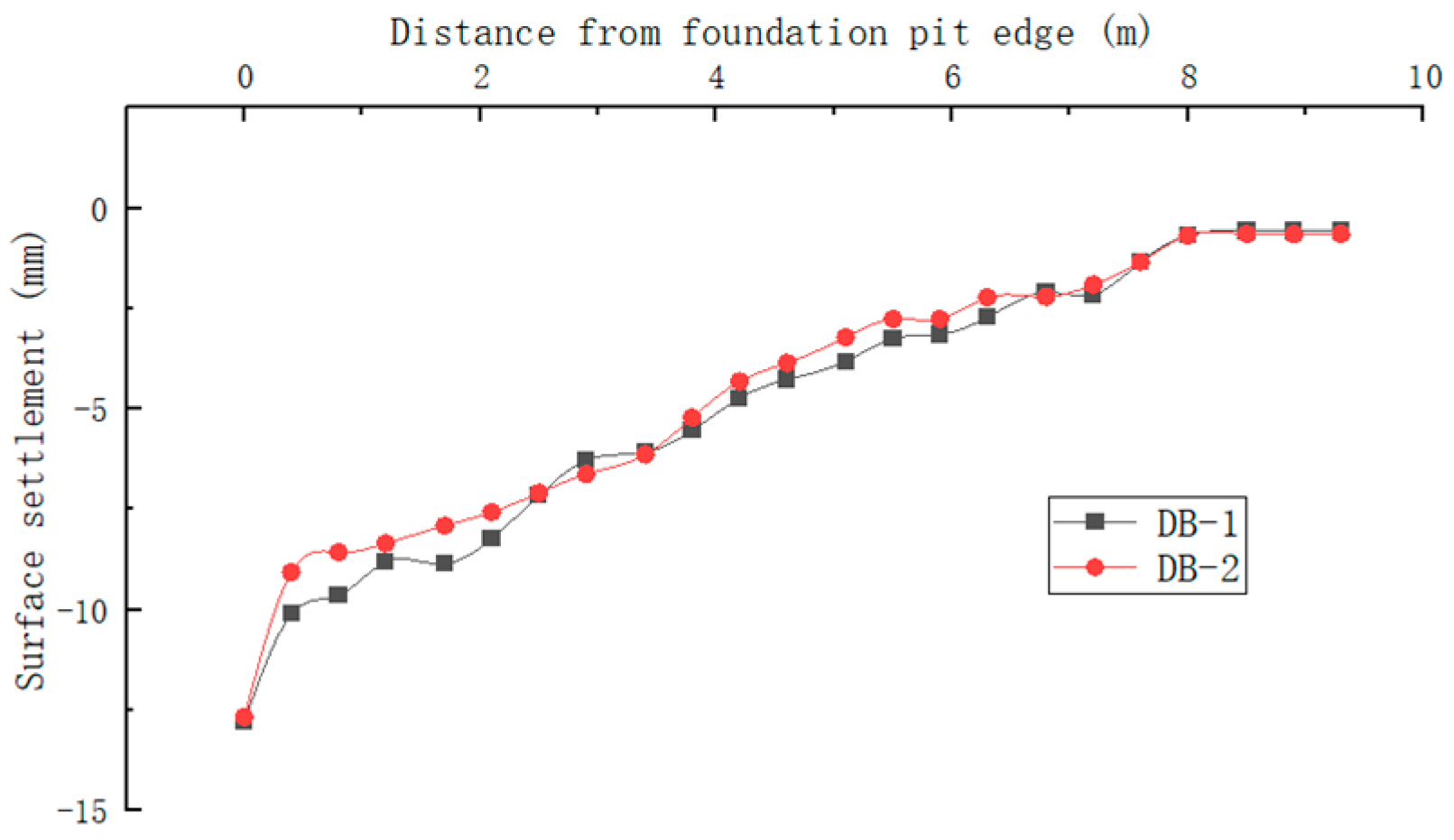
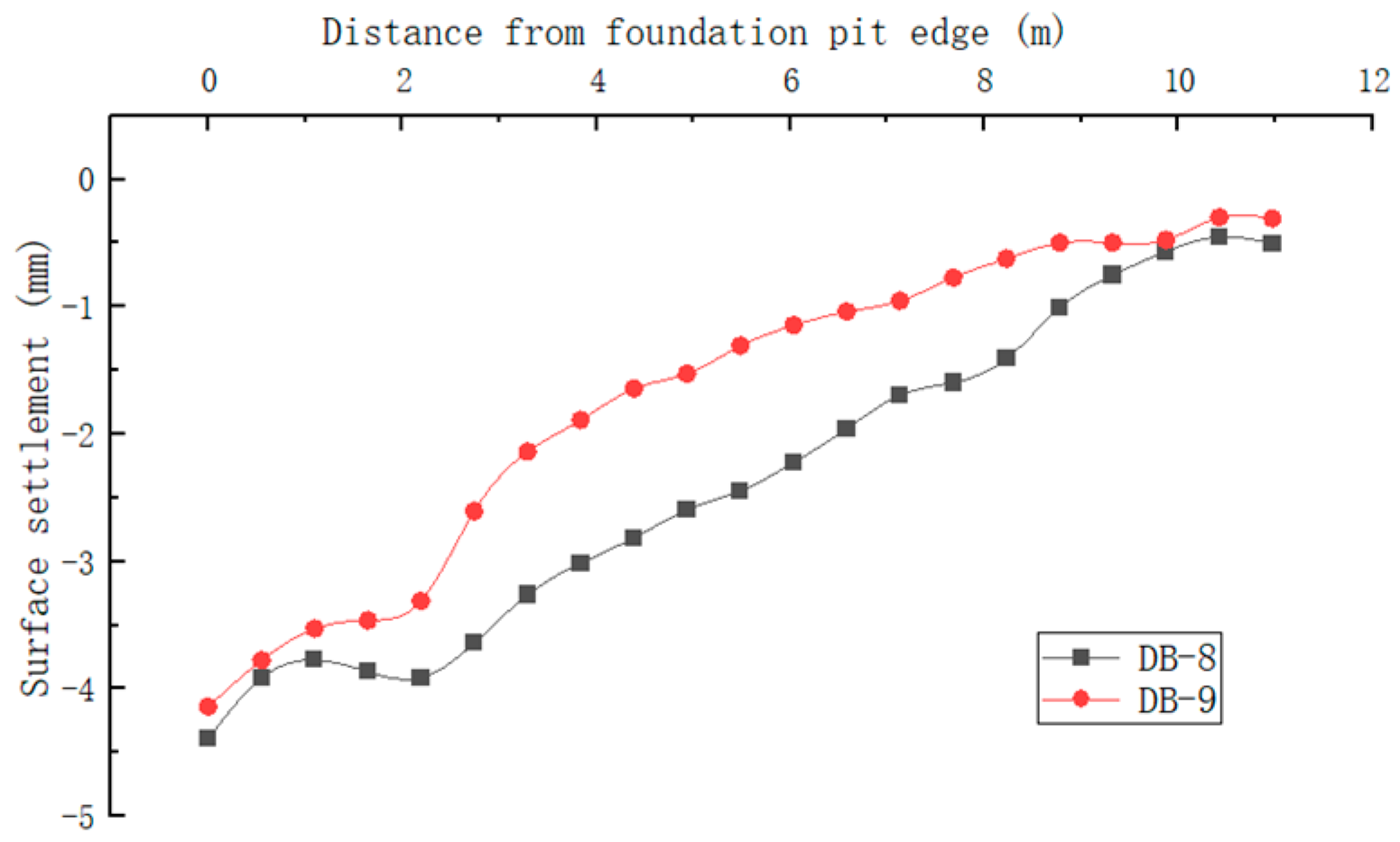
Regarding ground surface deformation, relevant specifications dictate that maximum surface settlement must remain below 0.15% of the excavation depth. However, as illustrated in Figure 8 and Figure 9, while the maximum surface settlement on the right side of the excavation is approximately 4.4 mm, the left side experiences a significant settlement of 13.5 mm.
Figure 6, Figure 7, Figure 8 and Figure 9 illustrate the rapid development of spatial deformation during initial excavation under the original scheme. While rail deformations remain within ultimate limits, vertical and lateral displacements exceed warning thresholds. More critically, left-side surface settlement reaches an unacceptable 13.5 mm, causing severe asymmetric subsidence. These findings demonstrate that the baseline structure lacks sufficient inherent stiffness to withstand unbalanced spatial stress relief. Therefore, the original design cannot provide an adequate safety margin for the adjacent operating railway, highlighting the critical need for a systematically optimized composite support system to mitigate localized strain.

3.2. Local Isolation Effect of Micro Steel Pipe Piles

To reduce the influence of excavation-induced deformation on the adjacent rail line, a micro steel pipe pile curtain was arranged along the rail-side subgrade near Shafts 1–5 in Figure 10 and Figure 11. Since the micro-pile system mainly acts as a local isolation barrier against lateral soil deformation, its effectiveness depends primarily on the stiffness formed by pile spacing and pile diameter. Therefore, the effects of these two parameters were investigated sequentially.

3.2.1. Influence of Pile Spacing on Deformation Behavior

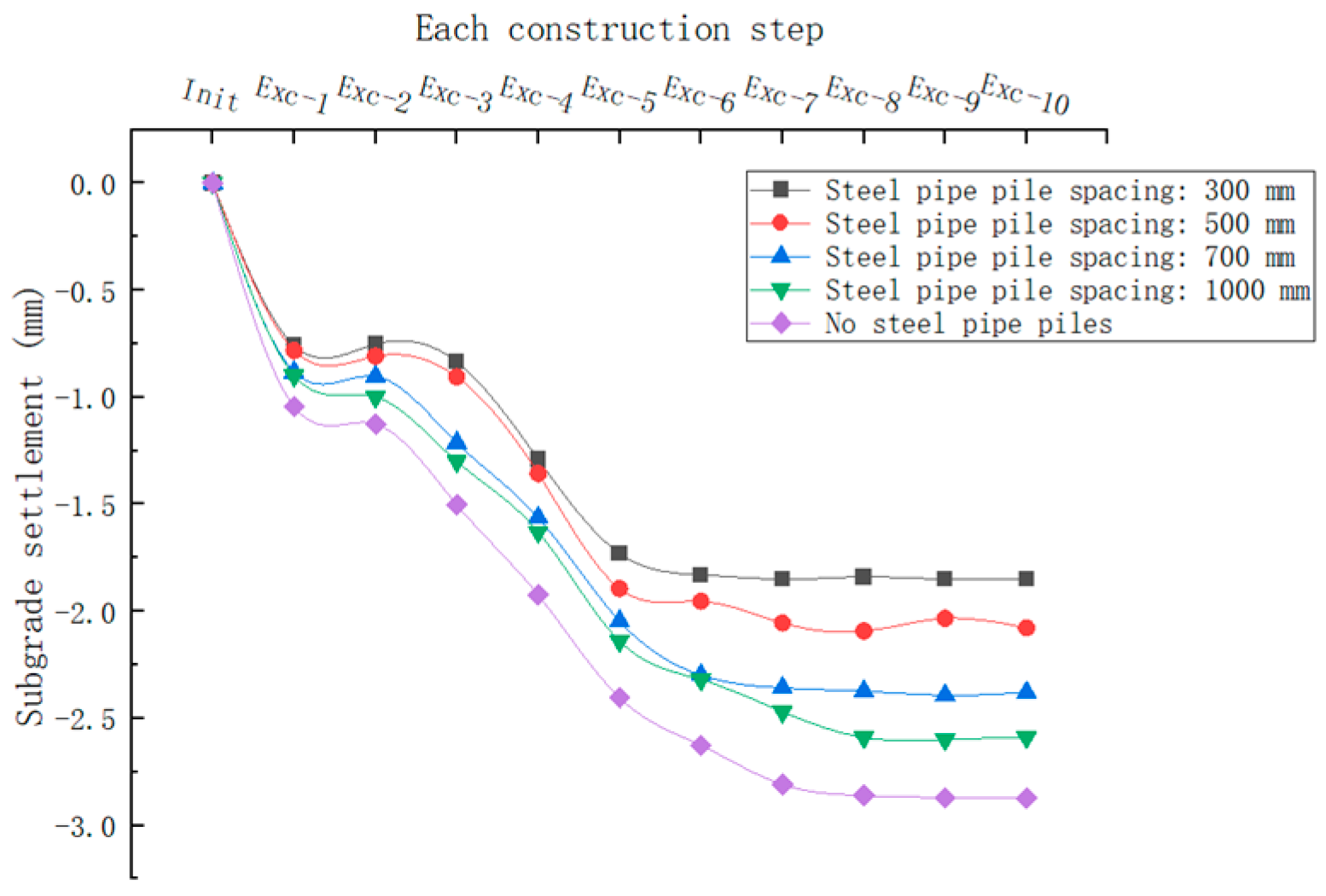
Pile spacing is a critical parameter dictating the overall equivalent stiffness of the micro-pile curtain. To quantify its influence, five spacing configurations were modeled: no piles, 1000 mm, 700 mm, 500 mm, and 300 mm. The continuous node exhibiting maximum settlement was selected as the reference point.
As illustrated in Figure 12, the isolation effect progressively intensifies as pile spacing decreases. Compared to the 2.9 mm maximum settlement without piles, introducing piles at 1000 mm and 700 mm spacing reduces settlement to 2.7 mm and 2.30 mm, respectively. At 700 mm spacing, the settlement is successfully suppressed below the 2.4 mm warning threshold. Compared with the unsupported baseline case, reducing the pile spacing to 500 mm decreases the maximum rail settlement by more than 55%, while the deformation-control efficiency becomes less pronounced when the spacing is further reduced to 300 mm. This is primarily attributed to the soil arching effect developed between adjacent micro-piles. As the pile spacing decreases, the overlapping zone of the stress redistribution creates a dense physical barrier, which effectively truncates the lateral propagation of excavation-induced soil movement [20].
Crucially, this local truncation mechanism establishes micro-pile spacing as the primary governing variable governing near-field rail deformation. It dictates that design adjustments for rail settlement must prioritize pile spacing over global stiffness parameters. Consequently, this finding directly guides the hierarchical parameter sensitivity analysis (Section 4.1) and provides the physical justification for assigning stringent constraints to the micro-pile configuration in the multi-objective optimization (Section 4.3), ensuring strict adherence to the 3.0 mm safety limit.
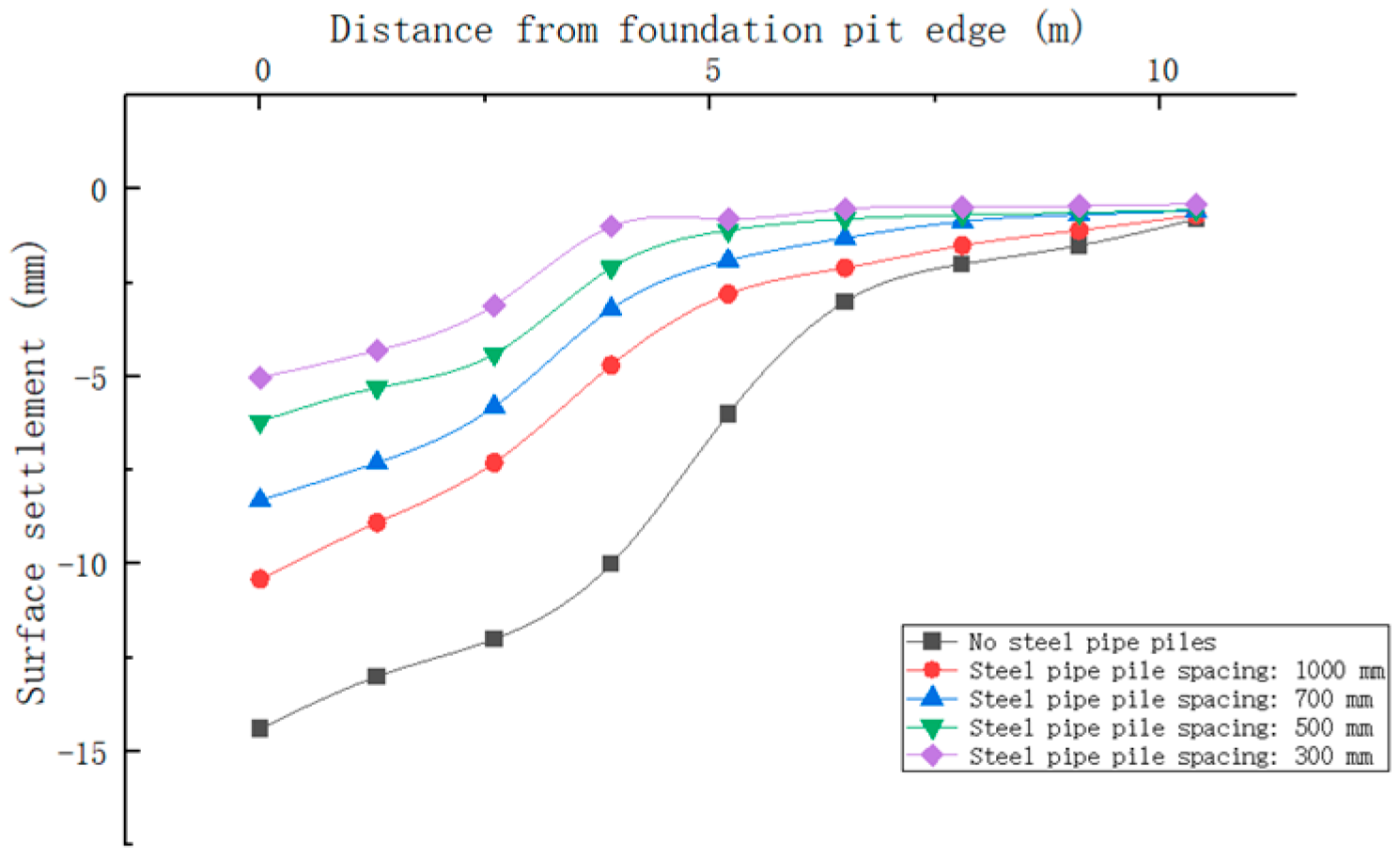
Furthermore, in Figure 13, the ground surface settlement profile demonstrates a characteristic triangular distribution. The implementation of the micro-pile scheme significantly truncates this distribution; the local isolation and protective performance of the system is progressively enhanced as the spacing decreases, effectively truncating the lateral propagation of excavation-induced soil movement toward the rail. Considering structural safety margins, 500 mm is identified as a highly balanced spacing configuration [21].

3.2.2. Influence of Pile Diameter on Deformation Behavior

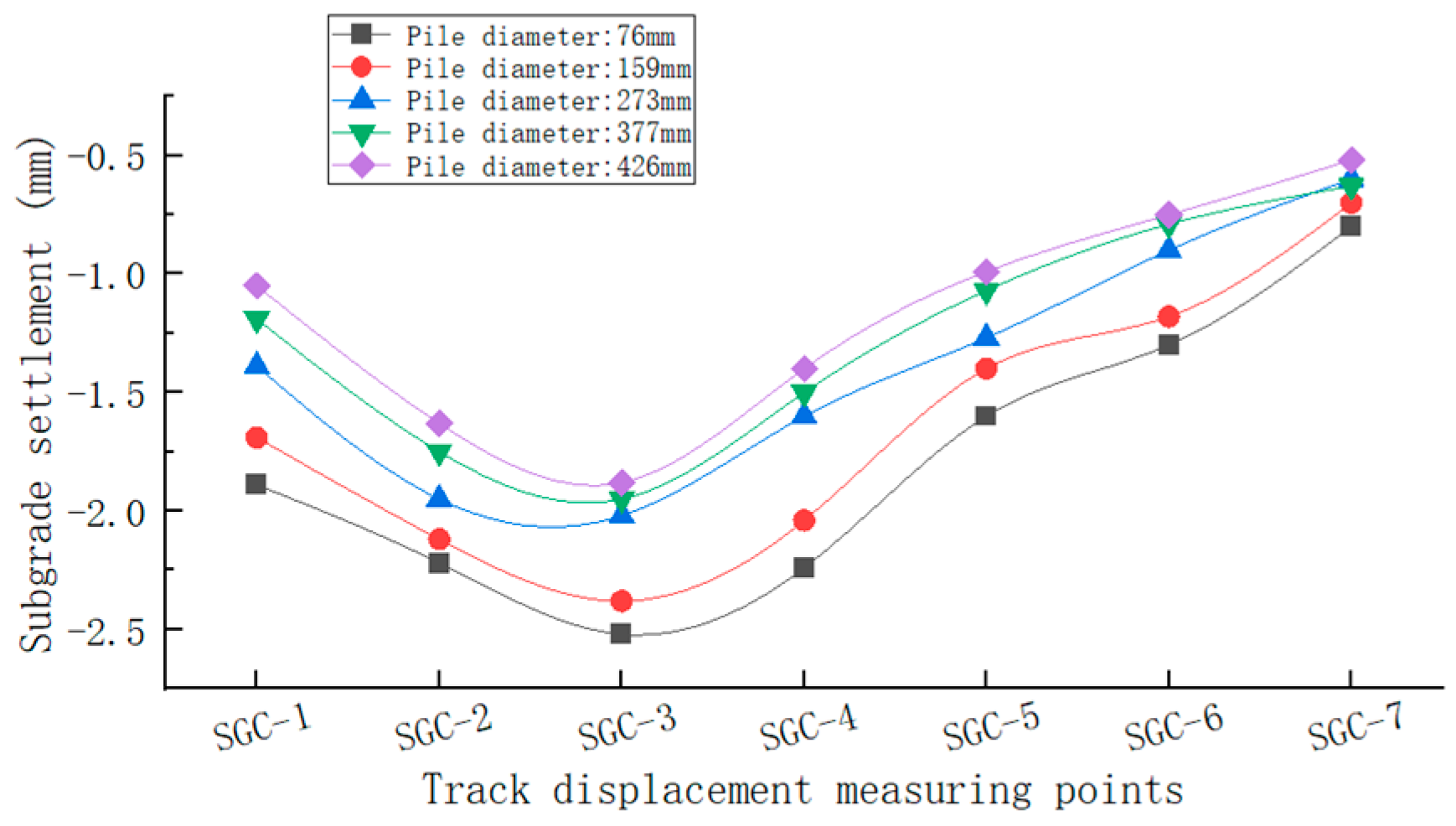
Following the spacing optimization, the geometric dimensions of the piles were evaluated. Five standard commercial pile diameters were simulated: 75 mm, 159 mm, 273 mm, 377 mm, and 426 mm. Data was extracted from nodes adjacent to the rail embankment settlement monitoring points to generate the relationship curves presented in Figure 14.
The parametric responses depicted in Figure 12, Figure 13 and Figure 14 collectively elucidate the spatial truncation mechanism of the micro-pile curtain. Specifically, Figure 12 and Figure 13 confirm that denser pile spacing intensifies the overlapping soil arching effect, establishing a robust physical barrier against lateral soil movement. Furthermore, Figure 14 highlights a non-linear stiffness response with respect to pile diameter. Although enlarging the diameter initially improves the equivalent stiffness of the local isolation system, the settlement reduction becomes marginal beyond 273 mm. This clear diminishing-return effect signifies a critical mechanical transition from structural dominated to soil-dominated deformation control. Consequently, to optimally balance deformation safety with construction economy, a pile diameter of 273 mm is recommended [22,23].

3.3. Global Reinforcement Effect of the Intermediate Partition Wall

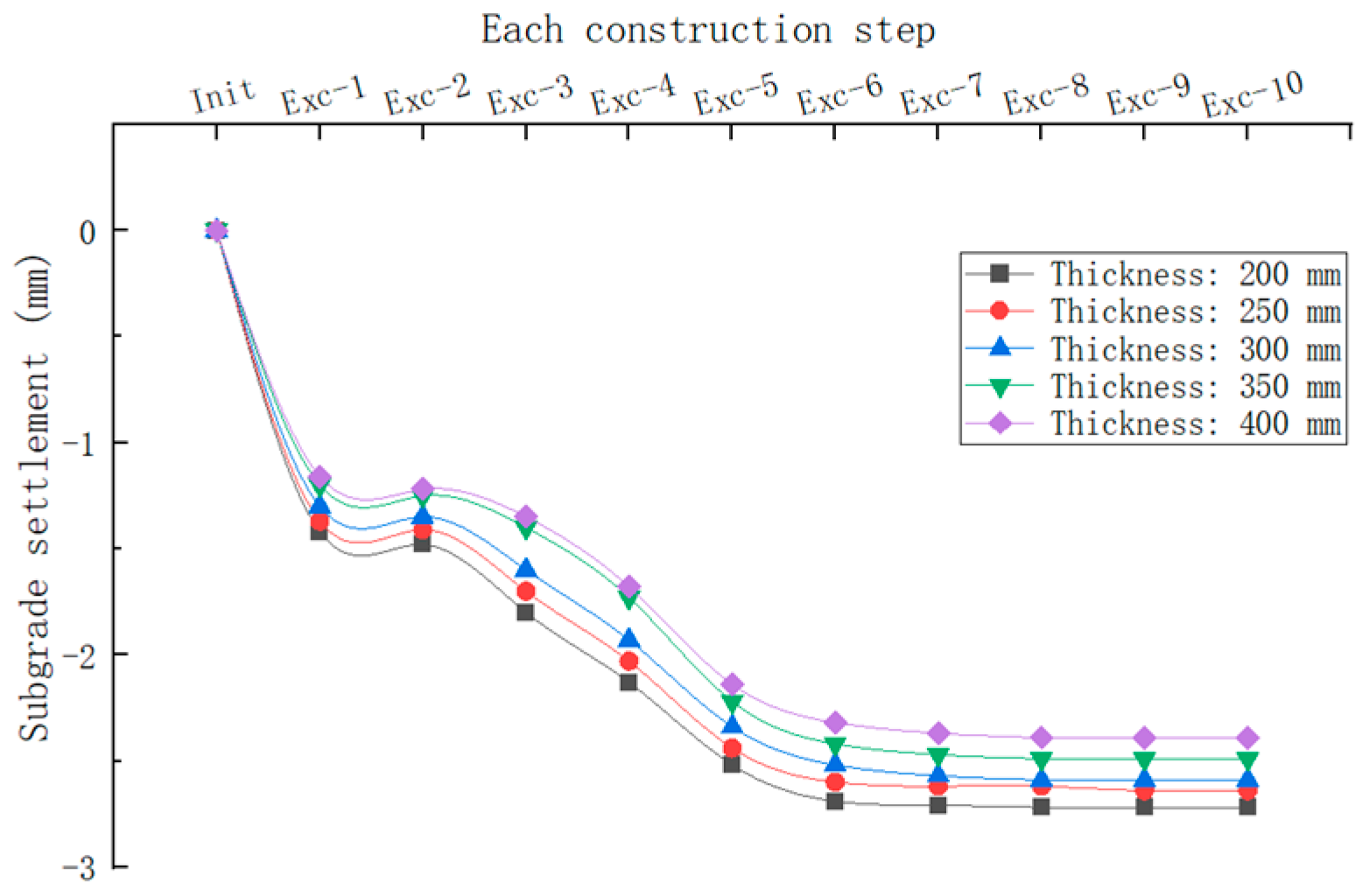
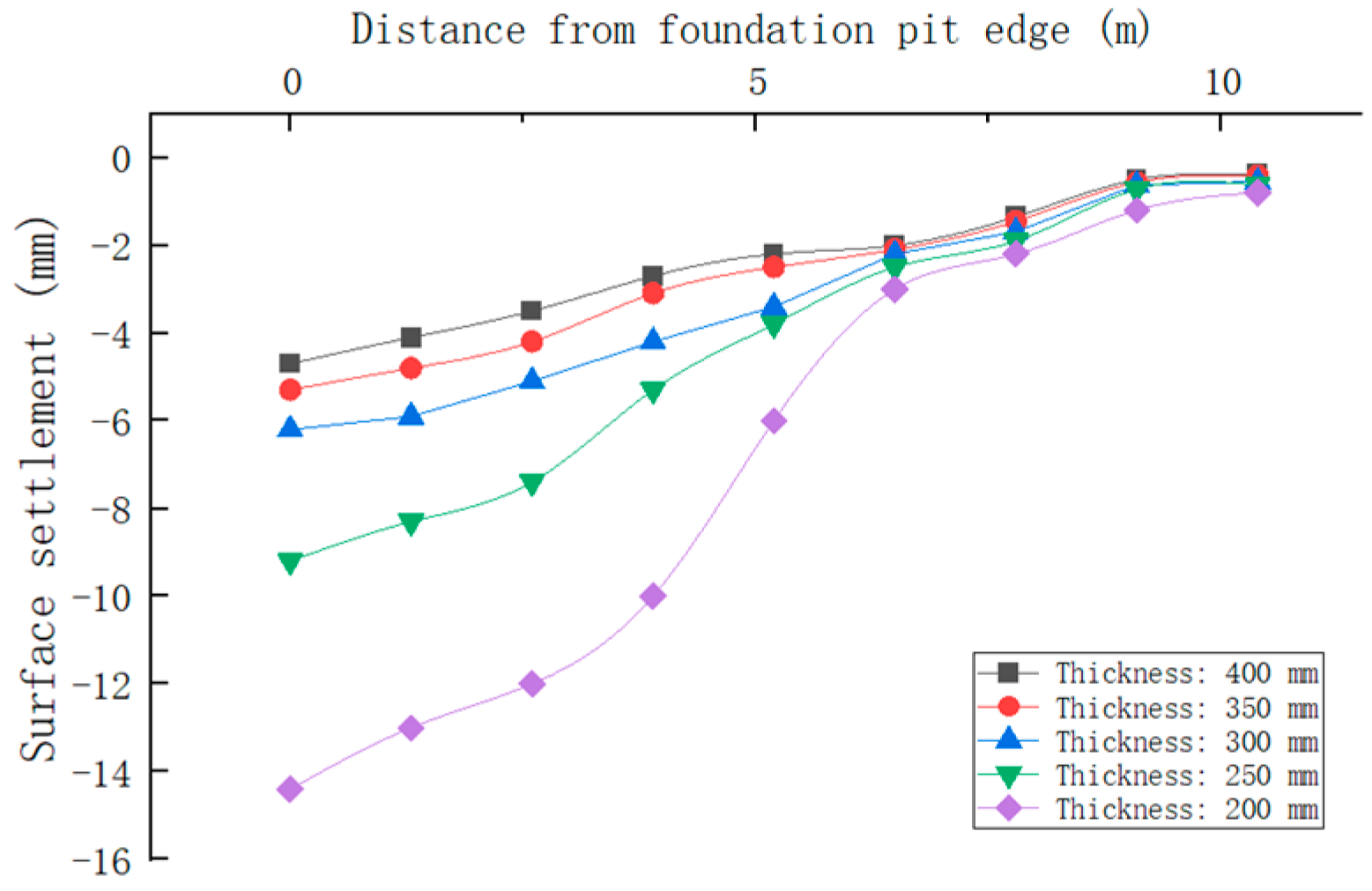
Unlike the micro steel pipe piles, which mainly provide local isolation near the rail-side subgrade, the temporary intermediate partition wall primarily improves the overall stiffness and stability of the foundation pit support system. Therefore, its influence is expected to be more significant on global ground deformation than on local rail settlement. To clarify this mechanism, the effects of wall thickness on both rail and surface settlement were investigated. In this section, five representative wall thicknesses—200 mm, 250 mm, 300 mm, 350 mm, and 400 mm—were selected to investigate their influence on the settlement of the adjacent urban rail line and the surrounding ground surface.

3.3.1. Ground Settlement Mechanism

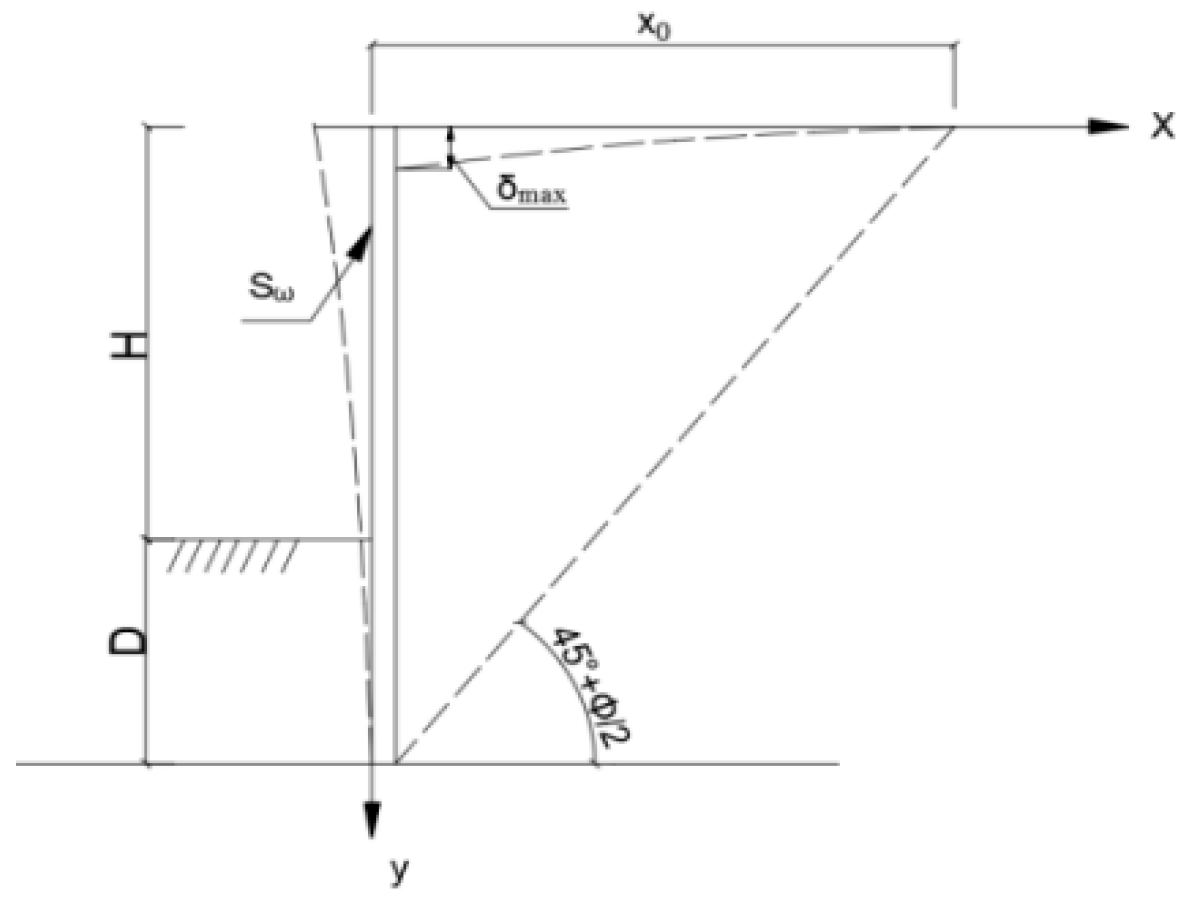
To determine the appropriate thickness of the temporary intermediate partition wall and to clarify its relationship with surface settlement around the excavation, the ground settlement mechanism induced by foundation pit excavation must first be analyzed. For the present shallow and spatially constrained excavation, the surface settlement trough is simplified as a triangular distribution to facilitate engineering interpretation of the deformation influence range. This simplification is appropriate because the affected zone is relatively limited and the settlement profile does not exhibit a wide Gaussian-type distribution typically observed in tunneling problems [24].
Surface settlement caused by excavation is commonly interpreted using the ground loss theory, originally proposed by Peck for tunneling-induced ground deformation. According to this theory, the settlement profile above an underground excavation can be approximated by simplified empirical distributions when the volume of ground loss is known [25,26,27]. The conceptual triangular deformation pattern adopted in this study is illustrated in Figure 15.
For narrow excavation conditions such as foundation pits, the surface settlement profile can often be simplified as a triangular distribution, which reflects the attenuation of soil displacement away from the excavation boundary. The triangular settlement profile represents the lateral propagation of excavation-induced soil displacement and is particularly suitable for shallow foundation pit excavations where the deformation influence zone is relatively limited. The influence range x 0 of the lateral soil deformation associated with triangular settlement distribution can be expressed as:
x 0 = ( H + D ) tan ( π 4 φ 2 )
where H is the height of the retaining wall above the excavation surface; D is the embedded depth of the retaining wall below the excavation bottom; φ is the internal friction angle of the soil.
The settlement area of the lateral soil mass S w can be approximately estimated based on the area of the triangular settlement profile:
S w = 1 2 x 0 δ m a x
where δ m a x represents the maximum surface settlement.
From this, the maximum lateral soil settlement can δ m a x be derived as:
δ m a x = 2 S w x 0

3.3.2. Stiffness Effect of Wall Thickness

In addition to the ground loss interpretation, the influence of the intermediate partition wall thickness can also be understood from the perspective of structural stiffness enhancement. Since the partition wall serves as an internal supporting member during staged excavation, its thickness directly affects the overall stiffness of the pit support system and consequently influences the deformation response of the surrounding ground.
To quantify the structural contribution of the wall, the partition wall stiffness influence coefficient, K w , is introduced. The deformation resistance is governed by its equivalent bending stiffness:
K w E I = E b t 3 12
where E is the elastic modulus of the wall material; I is the moment of inertia of the wall cross-section; b is the unit calculated width of the wall; t is the thickness of the intermediate partition wall [26,27].
Equation (4) highlights a cubic relationship between the wall thickness t and structural stiffness K w . This theoretical framework explains the non-linear improvement in settlement control observed in the simulation results. When the wall thickness increases from 200 mm to 300 mm, the theoretical bending stiffness increases by a factor of 1.5 3 ( 3.375 ), which explains why the settlement control performance improves significantly. However, once the structural stiffness reaches a sufficiently high level, the dominant deformation mechanism gradually shifts from structural stiffness deficiency to soil deformation control, and further thickening yields limited additional benefit.

3.3.3. Differential Response of Surface and Rail Settlement

The surface settlement profiles depicted in Figure 16 elucidate a distinct marginal law of diminishing returns regarding the partition wall thickness. A critical stiffness threshold is observed at 300 mm, separating two contrasting behavioral zones. In the suboptimal zone below 300 mm, incremental increases in wall thickness yield substantial reductions in maximum ground settlement, identifying this as a highly effective control strategy in this range. Conversely, beyond the 300 mm threshold, the slope of the maximum settlement reduction curve flattens significantly. This indicates that further augmenting structural stiffness provides negligible localized deformation control benefits, suggesting that the primary limiting factor for settlement has evolved from a structural stiffness deficiency into a broader geomechanical condition. This nonlinear transition represents a dynamic stress redistribution. Below 300 mm, the retaining structure is too compliant to restrict massive soil strain transmission. Once the stiffness saturates at 300 mm, it forces a larger volume of soil around the excavation boundary to engage in shear mobilization. Consequently, choosing a wall thickness between 300 mm and 400 mm aligns best with Pareto efficiency, balancing deformation safety with material expenditure. In Figure 17, when the wall thickness increases from 200 mm to 400 mm, the variation in rail embankment settlement is only about 0.4 mm.
Figure 16 and Figure 17 elucidate the differential spatial effects of the intermediate partition wall through the deformation transmission mechanism. Functioning primarily as a global stabilizer, the partition wall enhances the overall structural stiffness of the foundation pit to mitigate global ground deformation. This is visually corroborated by Figure 16, where surface settlement curves distinctly flatten beyond a thickness of 300 mm, signifying stiffness saturation and a clear marginal diminishing return. Conversely, rail subgrade deformation is governed by near-field local stiffness, which is dictated by the micro-pile arrangement rather than the partition wall. The highly compressed settlement variation depicted in Figure 17 physically validates this lack of local isolation efficacy. Consequently, a wall thickness of 300 mm represents the optimal balance, effectively truncating ground loss volume without incurring redundant material costs [28].

3.4. Field Validation and Numerical-Measured Consistency Analysis

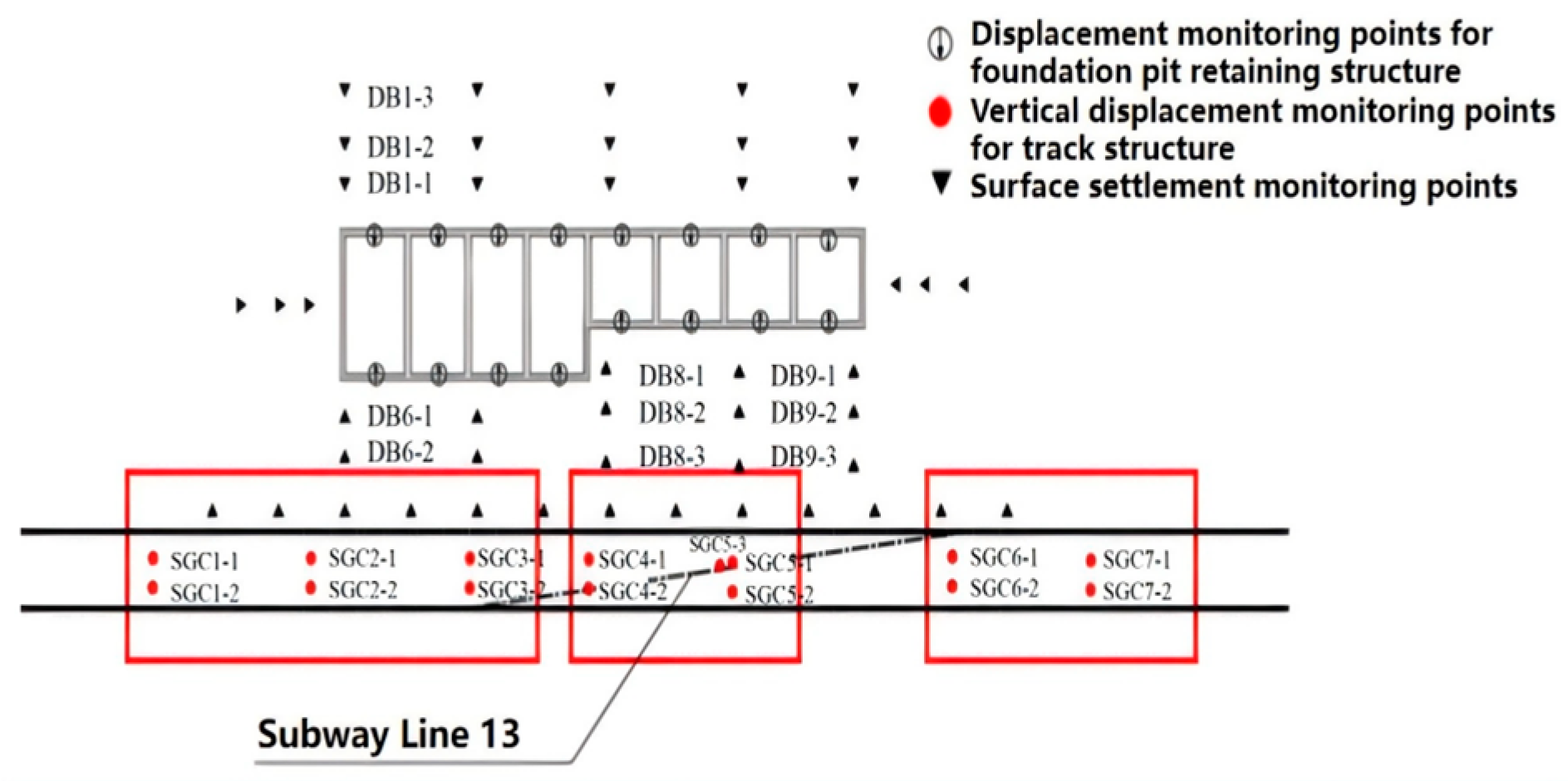
Based on the collaborative optimization results established in Section 3.2 and Section 3.3, the recommended composite support scheme—comprising micro steel pipe piles with a spacing of 500 mm and a diameter of 273 mm, integrated with a 300 mm temporary intermediate partition wall—was implemented in the actual construction process. To rigorously verify the reliability of the numerical simulation framework and the effectiveness of the optimized design, this section compares the simulated predictions with the measured track settlement data obtained during the foundation pit excavation. The specific spatial layout of this automated monitoring network is explicitly illustrated in Figure 18.

3.4.1. Spatial Distribution of Measured Track Settlement

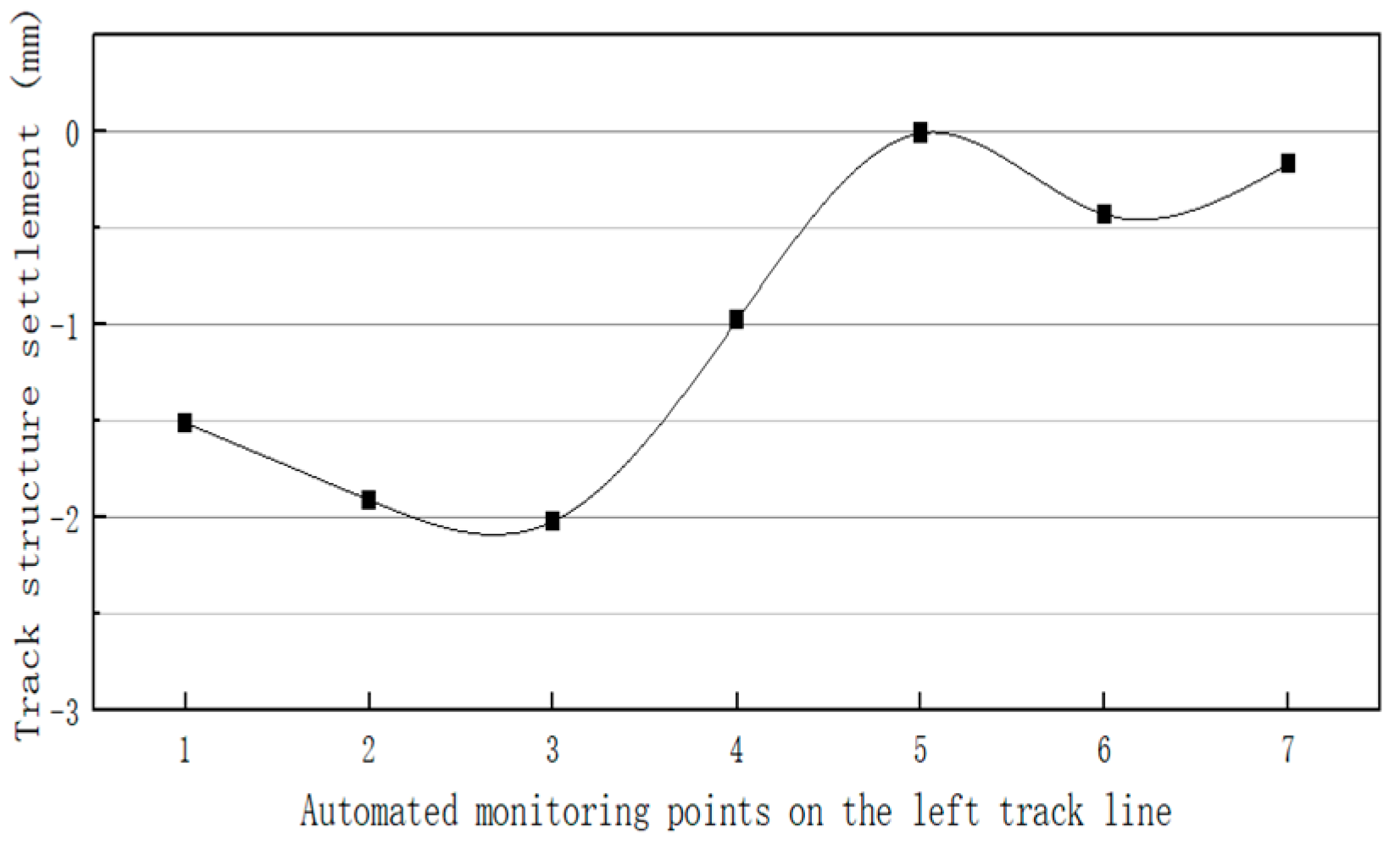
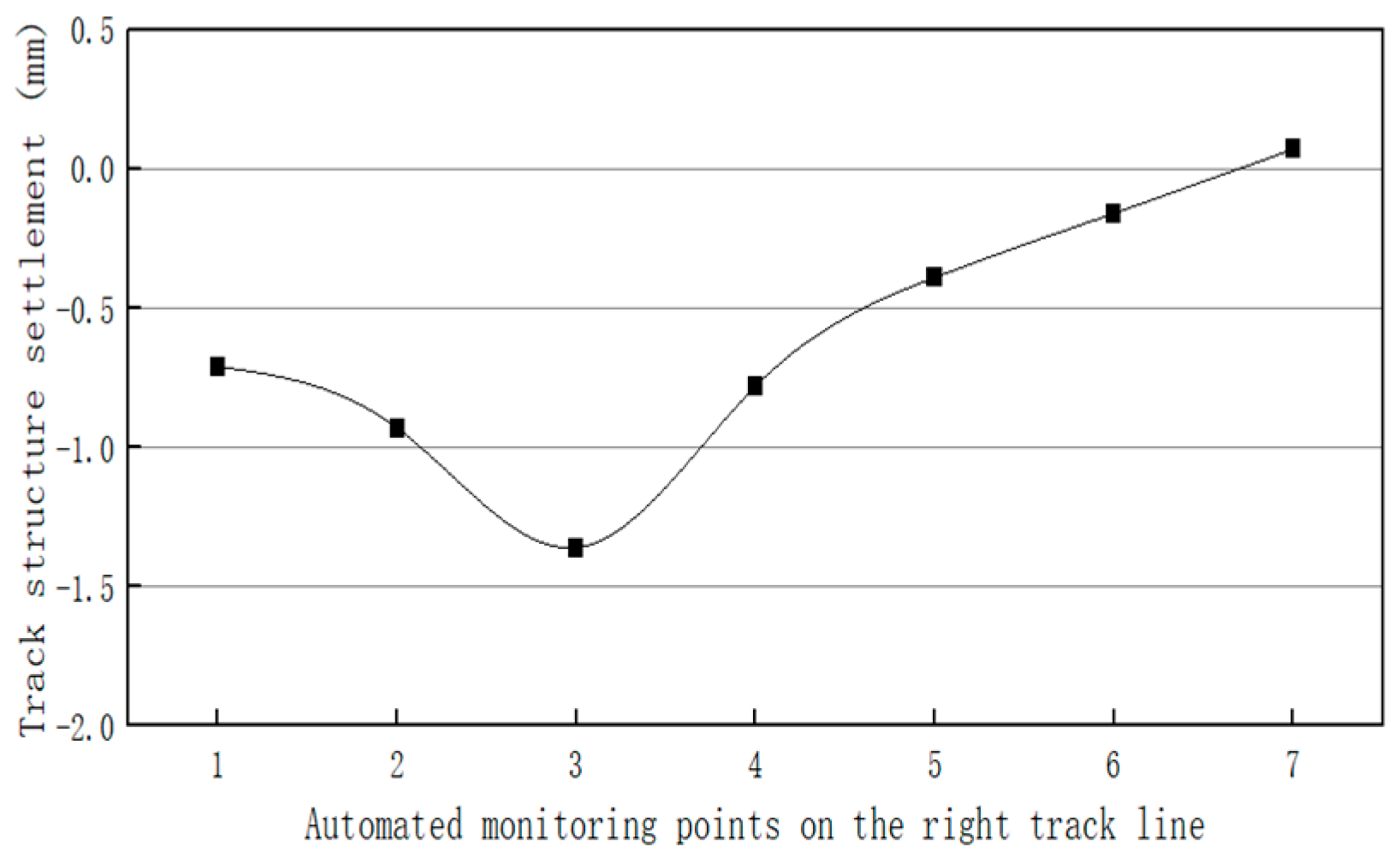
The final settlement profiles of the left and right track structures after the completion of the foundation pit are presented in Figure 19 and Figure 20. An analysis of the measured data reveals a distinct spatial distribution pattern along the monitoring lines. Both track monitoring lines exhibit their maximum vertical settlement at Monitoring Point No. 3. Furthermore, the settlement values at Points No. 1–3 are systematically greater than those recorded at Points No. 4–7. This asymmetric deformation profile is closely related to the geometric configuration of the excavation; the larger spatial extent and excavation volume of Shafts No. 1–4 induce a more pronounced stress relief in the adjacent soil mass compared to the subsequent shafts.
Crucially, despite the complex spatial effects, the global settlement at all monitoring points is strictly controlled below the 3.0 mm safety limit, with the majority of values fluctuating between 0 and 2.0 mm. This confirms that the optimized support scheme successfully satisfies the rigorous deformation requirements specified by the relevant urban rail transit design codes.

3.4.2. Consistency Validation of the Hardening Soil Model

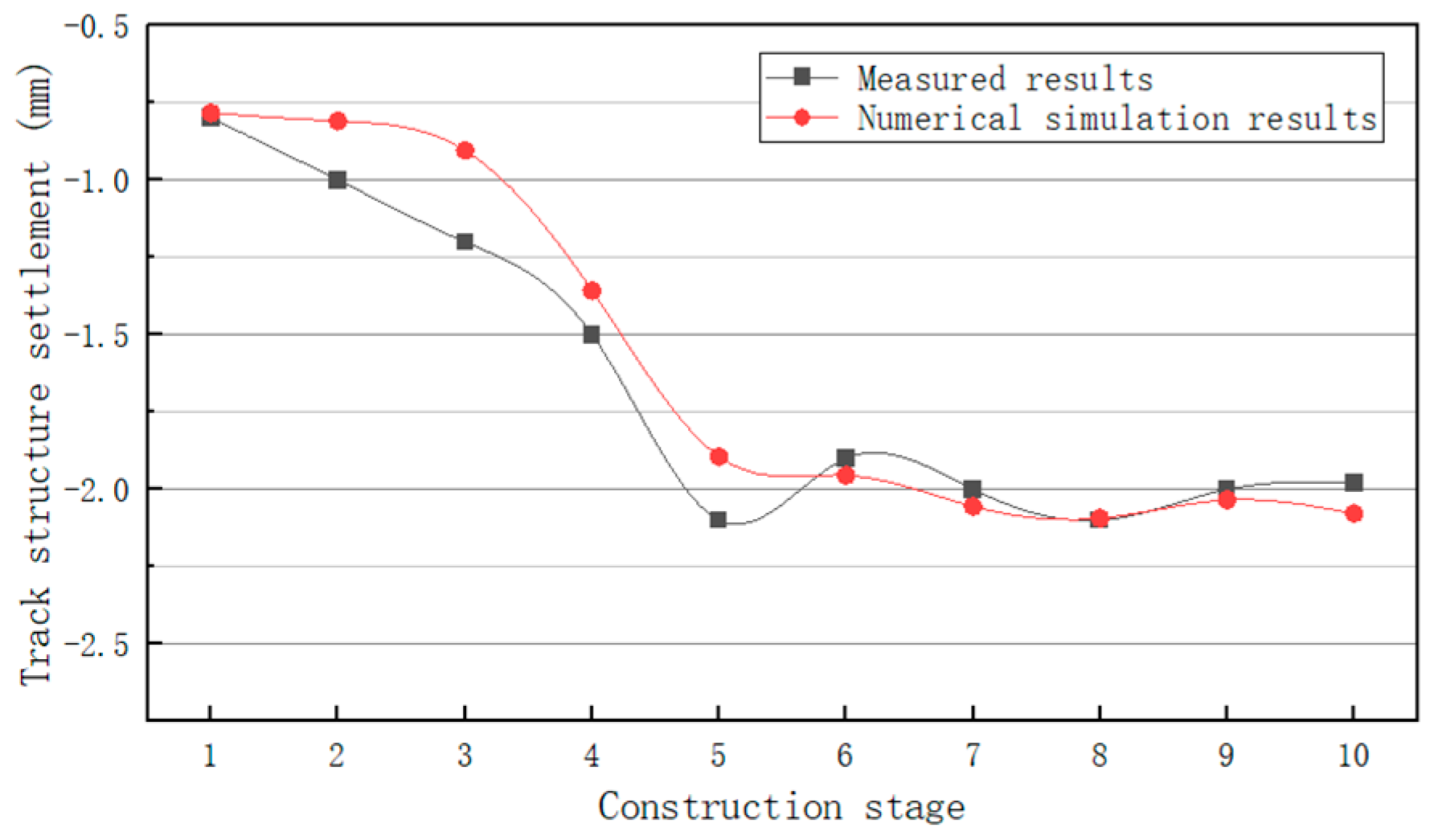
To accurately evaluate the dynamic response of the track structure induced by the stepwise “excavating and supporting” sequence of the inverted well wall method, the critical monitoring point (SGC-3-1)—where the maximum deformation occurred—was selected for detailed spatiotemporal comparison. The comparative evolution of the track settlement between the numerical simulation predictions and the in situ measured data across the 10 construction stages is illustrated in Figure 21.
The results indicate a high degree of correlation between the predicted and actual deformation trajectories. Throughout the staged excavation process, the simulated values fluctuate slightly around the measured values, successfully capturing the non-linear settlement acceleration and stabilization phases. Statistical analysis yields a Root Mean Square Error (RMSE) of only 0.1438 mm.
The close agreement between the simulated and measured settlement histories indicates that the adopted numerical framework can reliably reproduce the staged deformation response of the soil–structure system during excavation. This agreement not only supports the validity of the Hardening Soil model calibration, but also confirms the applicability of the proposed collaborative support design for similar constrained excavation projects adjacent to operating urban rail transit lines.

4. Discussion

4.1. Parameter Sensitivity Ranking

To establish a quantitative hierarchy of the design parameters governing subgrade deformation —including micro-pile spacing ( S ), pile diameter ( D ), and intermediate partition wall thickness ( t )—a dimensionless sensitivity coefficient ( S i ) was introduced. This coefficient reflects the responsiveness of the rail settlement to variations in support parameters and is defined as:
S i = Δ δ / δ Δ P i / P i
where S i represents the sensitivity coefficient of parameter P i ; P i denotes the baseline value of the design parameter; δ represents the baseline settlement of the rail subgrade corresponding to P i ; Δ P i is the quantitative variation introduced to the parameter P i ; and Δ δ is the corresponding change in rail settlement.
Taking the critical design transitions as the calculation basis, the specific sensitivity coefficients were derived. The calculated quantitative hierarchy is summarized in Table 2. The quantitative results robustly demonstrate that the spacing of micro steel pipe piles is the primary sensitive factor among the evaluated parameters. This mathematical disparity confirms that the local micro-pile curtain directly truncates lateral soil displacement, whereas the intermediate partition wall acts primarily as a global structural stabilizer with limited marginal benefit for local rail isolation [29].
Table 2 demonstrates a clear hierarchy in deformation control. Micro-pile spacing is the dominant factor governing local rail subgrade settlement, followed by pile diameter, while partition wall thickness exerts minimal local influence. This confirms that the micro-pile curtain directly truncates lateral soil displacement at the boundary, whereas the partition wall serves as a global structural stabilizer. Therefore, optimizing pile spacing is a highly cost-effective approach for local deformation control.
Furthermore, the observed spatial deformation aligns with recent geotechnical studies but exhibits distinct localized control due to the composite support system. Conventional models generally predict a wide concave settlement profile peaking at 0.5–1.5 times the excavation depth [30]. However, the proposed system significantly alters this strain path. Consistent with recent findings [31,32], the rigid partition wall enhances global spatial stiffness, while the micro-piles physically truncate lateral soil displacement. Consequently, the maximum rail settlement is strictly localized and restricted to 1.85 mm. This verifies that the collaborative scheme effectively suppresses the extensive settlement trough predicted by conventional models, fulfilling the stringent safety requirements for adjacent transit infrastructure.

4.2. Parameter Interaction of Spacing and Thickness

The deformation-control mechanism of the proposed support system can be interpreted as a combination of local isolation and global reinforcement. The micro steel pipe piles act mainly on the rail-side subgrade by increasing the local stiffness and interrupting the transmission path of excavation-induced soil displacement. In contrast, the temporary intermediate partition wall mainly enhances the overall stiffness of the excavation support system and reduces the global development of ground settlement. Therefore, the former plays a dominant role in controlling rail settlement, whereas the latter is more effective in reducing surface settlement. This functional distinction explains the observed sensitivity hierarchy and provides the mechanical basis for the collaborative support scheme.

4.3. Multi-Objective Optimization Framework

To systematically identify the optimal balance between stringent safety requirements and construction economy, a comprehensive objective function F S , t is established. By integrating the structural cost components directly into the safety-weighted evaluation, the multi-objective optimization problem is formulated as follows:
m i n F S , t = ω 1 δ r a i l S , t δ a l l o w + ω 2 c p L p n p + c w A w t + C f i x e d C b u d g e t
Subject to the following constraints: 1. δ r a i l S , t 3.0   mm , Safety limit for rail settlement; 2. δ w a l l S , t 43.4   mm , Stability limit for partition wall; 3. S 300 ,   1000   mm and t 200 ,   400   mm ,   p r a c t i c a l construction range.
To explicitly clarify the economic evaluation within Equation (6), the total construction expenditure is systematically decomposed into distinct linear-meter and volumetric cost parameters. Specifically, the variable cost of the micro-pile system is determined by the unit linear-meter price c p , the designed length of a single pile L p , and the total number of piles ( n p ) , which is intrinsically linked to the pile spacing S . Similarly, the material cost of the intermediate partition wall is quantified by the unit volumetric price of the concrete c w , the cross-sectional area of the pit A w , and the designated wall thickness t . Furthermore, a constant C f i x e d is incorporated to account for fixed expenses such as equipment mobilization and baseline operations. To ensure mathematical compatibility with the safety evaluation index, this aggregated direct cost is normalized against the predefined maximum project budget C b u d g e t , thereby yielding a dimensionless economic penalty ratio that accurately reflects the cost-effectiveness of each configuration.
To address the extreme sensitivity of the adjacent operating Subway Line 13, the weighting coefficients are strategically set at ω 1 = 0.7 and ω 2 = 0.3 . This is theoretically grounded in the Analytic Hierarchy Process and asymmetric risk evaluation [33,34]. In severely constrained excavations adjacent to operating railways, the catastrophic consequences of exceeding the 3.0 mm settlement redline significantly exceed construction cost overruns, establishing an extreme asymmetric risk boundary. By allocating a dominant weight to the safety index, the Pareto optimization algorithm is mathematically forced to heavily penalize structural vulnerability. This strictly confines the optimal search within a high-stiffness solution space, ensuring that infrastructure integrity is strictly prioritized prior to pursuing economic efficiency.
To determine the “Pareto optimal” point, five representative configuration schemes were evaluated using the established finite element model and cost function. The evaluation matrix is presented in Table 3.
As demonstrated in the multi-objective evaluation matrix in Table 3, Scheme 1 and Scheme 2 yield unacceptably high objective scores ( F 0.77 ) due to inadequate deformation control, pushing the rail settlement precariously close to the 3.0 mm limit. Conversely, Scheme 5 provides a highly rigorous settlement control (1.85 mm) but incurs excessive material redundancy, causing the cost ratio to exceed the budget limit and sharply inflating the objective score to 0.806.
By effectively balancing stringent safety thresholds with practical construction economy, Scheme 4, which integrates a 500 mm pile spacing with a 300 mm wall thickness, achieves the minimum evaluated F S , t value. This configuration is identified as the Pareto-optimal collaborative support scheme for the studied case. It not only strictly satisfies the deformation-control mandates of the adjacent operating Subway Line 13, but also establishes a validated, quantitative design reference for similar severely constrained excavations.

5. Conclusions

Based on the numerical simulation, parametric sensitivity analysis, and field validation of the proposed collaborative optimization framework, the following conclusions are drawn:
(1)
Quantitative Sensitivity Hierarchy: The dimensionless sensitivity evaluation mathematically establishes that micro-pile spacing is the absolute dominant factor ( S i = 0.470) in controlling local rail settlement by physically truncating lateral soil displacement. Conversely, the intermediate partition wall thickness yields a minimal local effect with a coefficient of merely 0.102, as it primarily dictates the global stability and surface settlement of the foundation pit box.
(2)
Data-Driven Optimal Configuration: Driven by a multi-objective evaluation framework mathematically balancing stringent safety limits and construction economy, the Pareto-optimal collaborative support configuration was calculated to be micro-piles (φ 273 mm at 500 mm spacing) combined with a 300 mm-thick temporary partition wall.
(3)
Strict Deformation Control Evidence: The implementation of this optimal configuration successfully restricted the maximum rail settlement to a mere 1.85 mm, ensuring absolute compliance with the rigid 3.0 mm safety threshold. Compared to the baseline, this scheme achieved a reduction of over 55% in maximum rail settlement and 53.6% in maximum surface settlement. Field monitoring results (with an RMSE of only 0.1438 mm) strongly support the predictive accuracy and practical reliability of this framework.
Although this collaborative optimization framework offers a robust practical reference, the current numerical analysis fundamentally relies on a static stress-relief assumption. This approach is rigorously justified for the short-term construction phase because railway authorities strictly mandate severe speed restrictions on trains passing adjacent to active excavations, effectively reducing train loads to quasi-static actions. Under these controlled low-speed conditions, the massive static unloading of the pit acts as the primary driving mechanism governing short-term deformation. Consequently, future research will pivot from short-term construction mechanics to evaluating long-term post-construction settlement behavior, specifically focusing on the coupled effects of resumed high-speed train cyclic vibrations and long-term groundwater fluctuations over the facility’s design life.

Author Contributions

H.W. (Haitao Wang): Conceptualization, Methodology, Writing—original draft, Writing—review and editing. A.Z.: Conceptualization, Methodology, Writing—original draft. H.W. (Haoyu Wang): Data curation, Investigation. W.W.: Data curation, Investigation. J.Y.: Resources, Validation. J.J.: Funding acquisition, Supervision, Visualization, Validation. All authors have read and agreed to the published version of the manuscript.

Funding

This research was funded by the National Natural Science Foundation of China, grant number 51678112 and the Science and Technology Project of China Railway No.3 Engineering Group Co., Ltd., grant number ZTSJ-2025-4-001.

Institutional Review Board Statement

Not applicable.

Informed Consent Statement

Not applicable.

Data Availability Statement

The original contributions presented in this study are included in the article. Further inquiries can be directed to the corresponding author.

Acknowledgments

The authors gratefully acknowledge the financial support provided by the National Natural Science Foundation of China (grant number 51678112) and the Science and Technology Project of China Railway No.3 Engineering Group Co., Ltd. (grant number ZTSJ-2025-4-001).

Conflicts of Interest

Authors Wenming Wang and Junhu Yue were employed by China Railway Third Bureau Group Fourth Engineering Co., Ltd. The remaining authors declare that the research was conducted in the absence of any commercial or financial relationships that could be construed as a potential conflict of interest.

References

  1. Wang, P.; Zhou, S.; Di, G.; Li, X. Impacts of foundation pit excavation on adjacent railway subgrade and control. Rock Soil Mech. 2016, 37, 469–476. [Google Scholar] [CrossRef]
  2. Huang, J.; Liu, J.; Guo, K.; Wu, C.; Yang, S.; Luo, M.; Lu, Y. Numerical simulation study on the impact of deep foundation pit excavation on adjacent rail transit structures—A case study. Buildings 2024, 14, 1853. [Google Scholar] [CrossRef]
  3. Wei, G.; Mu, Z.; Feng, W.; Qi, Y.; Guo, B. Effects of foundation pit excavation on adjacent metro stations and shield tunnel structures: A study on horizontal displacement. Eng. Comput. 2024, 41, 2356–2380. [Google Scholar] [CrossRef]
  4. Yang, Y.; Zhou, J. Effect analysis on foundation pit excavation adjacent to existing railway. Adv. Mater. Res. 2013, 671–674, 209–213. [Google Scholar] [CrossRef]
  5. Cai, Z.; Tang, J.; Tang, J.; Bian, Y.; Qiao, S.; Li, Y. Optimization design and evaluation of diaphragm wall support in deep soft soil foundation pit. J. Railw. Sci. Eng. 2021, 18, 2299–2306. [Google Scholar] [CrossRef]
  6. Guan, Y.; Zhao, W.; Li, S.; Zhang, G. Key techniques and risk management for the application of the Pile-Beam-Arch (PBA) excavation method: A case study of the Zhongjie Subway Station. Sci. World J. 2014, 2014, 275362. [Google Scholar] [CrossRef]
  7. Di, H.; Wang, B.; Zhou, S.; Wang, B.; Song, F. Protective measures for railway subgrade adjacent to excavation of a parallel pit. Proc. Inst. Civ. Eng. Geotech. Eng. 2025, 178, 146–163. [Google Scholar] [CrossRef]
  8. Zheng, G.; Cheng, X.; Zhou, H.; Zhang, T.; Yu, X.; Diao, Y.; Wang, R.; Yi, F.; Zhang, W.; Guo, W. Resilient evaluation and control in geotechnical and underground engineering. China Civ. Eng. J. 2022, 55, 1–38. [Google Scholar] [CrossRef]
  9. Tu, Q. Research on factors affecting deformation of railway bridges near soft soil foundation pits. J. Railw. Eng. Soc. 2025, 42, 41–46. [Google Scholar] [CrossRef]
  10. Liu, B.; Wu, W.; Lu, H.; Chen, S.; Zhang, D. Effect and control of foundation pit excavation on existing tunnels: A state-of-the-art review. Tunn. Undergr. Space Technol. 2024, 147, 105704. [Google Scholar] [CrossRef]
  11. Zhao, J.; Wang, X.; Tan, Z.; Zhang, X.; Xiao, X. Excavation optimization for asymmetrical deep foundation pits adjacent to subway stations: Deformation control and safety enhancement. Int. J. Geomech. 2025, 25, 05025010. [Google Scholar] [CrossRef]
  12. Zeng, S.; Sun, H.; Tao, Y.; Pan, S.; Cai, Y. Multi-stage and multi-objective optimization framework for servo-controlled wall deflection during deep excavation. Can. Geotech. J. 2026, 63, 1–24. [Google Scholar]
  13. Shi, X.; Sun, J.; Qi, Y.; Zhu, X.; Zhang, X.; Liang, R.; Chen, H. Study on stiffness parameters of the hardening soil model in sandy gravel stratum. Appl. Sci. 2023, 13, 2710. [Google Scholar] [CrossRef]
  14. Yan, J.; Wang, L.; Zheng, D. Spatial Effect Analysis of a Long Strip Pit Partition Wall and Its Influence on Adjacent Pile Foundations. Sustainability 2023, 15, 10409. [Google Scholar] [CrossRef]
  15. Jiang, S.; Chen, W.; Ma, R.; Lv, X.; Sun, F.; Ren, Z. Dynamic response of adjacent tunnels to deep foundation pit excavation: A numerical and monitoring data-driven case study. Appl. Sci. 2025, 15, 10570. [Google Scholar] [CrossRef]
  16. Beijing Municipal Commission of Transport. Regulations on Supervision of Construction Operations in Safety Protection Zones of Urban Rail Transit; Beijing Municipal Commission of Transport: Beijing, China, 2017. [Google Scholar]
  17. GB 50497; Technical Code for Monitoring of Building Foundation Pit Engineering. China Architecture & Building Press: Beijing, China, 2019.
  18. Xue, Q. Analysis of the deep excavations deformation close to the existing operating railway based on hardening-soil model. J. Railw. Eng. Soc. 2015, 32, 39–42. [Google Scholar] [CrossRef]
  19. Kong, M.; Qin, Y.; Zhang, C. Parameters determination methods and project validation of hardening soil model with small strain stiffness based on finite element method. Sci. Rep. 2025, 15, 13717. [Google Scholar] [CrossRef]
  20. Zhang, R.; Luo, H.; Liu, Z.; Nie, R. Study on anti-uplift effect of micro-steel-pipe pile on red-bedded soft rock subgrade. Sustainability 2022, 14, 11923. [Google Scholar] [CrossRef]
  21. Niu, J.; Li, Z.; Feng, C.; Wang, B.; Chen, K. Combined support system and calculation model for deep foundation pits in fill soil areas. Arab. J. Geosci. 2020, 13, 347. [Google Scholar] [CrossRef]
  22. Dong, J.H.; Zhuang, C. Mechanical properties analysis on frame prestressed anchor micro steel tube pile combined retaining structure of deep foundation pit. Chin. J. Rock Mech. Eng. 2018, 38, 619–633. (In Chinese) [Google Scholar]
  23. Li, T.; Jiang, Y.H.; Zhu, L.H.; Guan, C.L. A novel method for calculating stress and deformation of supporting pile considering pile-soil interaction. J. Southwest Jiaotong Univ. 2016, 51, 14–21. (In Chinese) [Google Scholar]
  24. Almasi, M. Numerical evaluation of soil arching effects on lateral earth pressure in soldier pile retaining wall systems. Sci. Rep. 2025, 15, 45251. [Google Scholar] [CrossRef]
  25. Peck, R.B. Deep Excavations and Tunneling in Soft Ground. In Proceedings of the 7th International Conference on Soil Mechanics and Foundation Engineering, Mexico City; State-of-the-Art Report; 1969; pp. 225–290. Available online: https://www.issmge.org/publications/publication/deep-excavations-and-tunneling-in-soft-ground (accessed on 3 April 2026).
  26. Bryson, L.S.; Zapata-Medina, D.G. Method for Estimating System Stiffness for Excavation Support Walls. J. Geotech. Geoenviron. Eng. 2012, 138, 1104–1115. [Google Scholar] [CrossRef]
  27. Hsieh, P.-G.; Ou, C.-Y. Shape of ground surface settlement profiles caused by excavation. Can. Geotech. J. 1998, 35, 1004–1017. [Google Scholar] [CrossRef]
  28. Wang, J.H.; Xu, Z.H.; Wang, W.D. Wall and Ground Movements due to Deep Excavations in Shanghai Soft Soils. J. Geotech. Geoenviron. Eng. 2010, 136, 985–994. [Google Scholar] [CrossRef]
  29. Yılmaz, M.F.; Hashemi, M. Finite Element Modeling with Sensitivity and Parameter Variation Analysis of a Deep Excavation: From a Case Study. Buildings 2025, 15, 658. [Google Scholar] [CrossRef]
  30. Zhu, Q.; Qin, H.; Zhai, L.; Wang, R.; Guo, P.; Lü, X. Deformation Characteristics of a Deep Excavation Supported by a Dual-Purpose Diaphragm Wall in the Yangtze River Floodplain Areas. Int. J. Geomech. 2025, 25, 05025003. [Google Scholar] [CrossRef]
  31. Wu, Q.; Wang, J.; Long, Y.; Liu, X.; Long, G.; Ding, S.; Zhou, L.; Li, H.; Bin Hishammudin, M.A.H. The Field Monitoring and Numerical Simulation of Spatiotemporal Effects During Deep Excavation in Mucky Soft Soil: A Case Study. Appl. Sci. 2025, 15, 1992. [Google Scholar] [CrossRef]
  32. Yan, N.; Li, G.; Qin, F.; Qiao, X.; Lu, B.; Liang, N.; Zhao, S. Study on the deformation characteristics of diaphragm walls in deep excavations within the Ningbo soft soil region. Sci. Rep. 2025, 15, 15036. [Google Scholar] [CrossRef]
  33. Aminbakhsh, S.; Gunduz, M.; Sonmez, R. Safety risk assessment using analytic hierarchy process (AHP) during planning and budgeting of construction projects. J. Saf. Res. 2013, 46, 99–105. [Google Scholar] [CrossRef]
  34. Liu, S.; Song, Z.; Zhang, Y.; Guo, D.; Sun, Y.; Zeng, T.; Xie, J. Risk assessment of deep excavation construction based on combined weighting and nonlinear FAHP. Front. Earth Sci. 2023, 11, 1204721. [Google Scholar] [CrossRef]
Figure 1. Foundation pit plan view.
Applsci 16 03631 g001
Figure 2. Foundation pit section.
Applsci 16 03631 g002
Figure 3. Soil profile.
Applsci 16 03631 g003
Figure 4. Localized 3D structural model view.
Applsci 16 03631 g004
Figure 5. Step by step excavation sequence.
Applsci 16 03631 g005
Figure 6. The maximum settlement point deformation of subgrade in each construction stage.
Applsci 16 03631 g006
Figure 7. Lateral deformation of subgrade at monitoring point position.
Applsci 16 03631 g007
Figure 8. The maximum surface subsidence correlation curve on the left side.
Applsci 16 03631 g008
Figure 9. The relationship curve of the maximum ground surface settlement of the right shaft.
Applsci 16 03631 g009
Figure 10. Plane layout of micro steel pipe pile.
Applsci 16 03631 g010
Figure 11. Numerical simulation diagram of micro steel pipe pile.
Applsci 16 03631 g011
Figure 12. Subgrade settlement distribution map under different steel pipe pile spacing.
Applsci 16 03631 g012
Figure 13. Surface settlement distribution under different steel pipe pile spacings.
Applsci 16 03631 g013
Figure 14. Subgrade settlement under different steel pipe pile diameters.
Applsci 16 03631 g014
Figure 15. Triangular surface subsidence curve.
Applsci 16 03631 g015
Figure 16. Surface settlement distribution under different partition wall thicknesses.
Applsci 16 03631 g016
Figure 17. Subgrade settlement distribution under different partition wall thicknesses.
Applsci 16 03631 g017
Figure 18. Schematic Plan of Monitoring Points for Line 13.
Applsci 16 03631 g018
Figure 19. Final settlement curve of SGC-01 track structure.
Applsci 16 03631 g019
Figure 20. Final settlement curve of SGC-02 track structure.
Applsci 16 03631 g020
Figure 21. The comparison curve of track numerical simulation and measured results.
Applsci 16 03631 g021
Table 1. Adopted Hardening Soil model parameters calibrated from large-scale triaxial and consolidation tests.
Soil Layer γ (kN/m3) c (kPa) φ (°) ψ (°) E 50 r e f (MPa) E o e d r e f (MPa) E u r r e f (MPa)
Artificial Fill18.510150121236
Silty Clay19.225180181854
Sandy Silt19.815280262678
Gravel21.024055050215
Table 2. Quantitative Parameter Sensitivity Ranking for Rail Subgrade Settlement.
Evaluated   Parameter   ( P i ) Baseline Variation
( Δ P i / P i )
Settlement   Variation   ( Δ δ / δ ) Sensitivity   Coefficient   ( S i ) Influence Level
Pile   spacing   ( S ) −50.0%
(1000 to 500 mm)
−23.5%0.470Dominant
Pile   diameter   ( D ) +71.6%
(159 to 273 mm)
−18.0%0.251Secondary
Intermediate   partition   wall   thickness   ( t ) +50.0%
(200 to 300 mm)
−5.1%0.102Minor
Table 3. Multi-Objective Evaluation Matrix for Support Configuration Schemes.
Scheme Configuration   S , t Predicted   Settlement   δ r a i l (mm) Safety   Index   ( δ r a i l / 3.0 )
1No piles, 200 mm wall2.800.933
2 S = 1000   m m , t = 200   m m 2.550.850
3 S = 700   m m , t = 250   m m 2.300.766
4 S = 500   m m , t = 300   m m 1.950.650
5 S = 300   m m , t = 400   m m 1.850.616
Disclaimer/Publisher’s Note: The statements, opinions and data contained in all publications are solely those of the individual author(s) and contributor(s) and not of MDPI and/or the editor(s). MDPI and/or the editor(s) disclaim responsibility for any injury to people or property resulting from any ideas, methods, instructions or products referred to in the content.