Article

Pavement Rut Detection and Accuracy Validation Using Lightweight Equipment and Machine Learning Algorithms


by
Jinxi Zhang
1,*,
Wanting Li
1,
Lei Nie
1 and
Wangda Guo
2
1
Beijing Key Laboratory of Traffic Engineering, Beijing University of Technology, Beijing 100124, China
2
School of Traffic and Transportation, Shijiazhuang Tiedao University, Shijiazhuang 050043, China
*
Author to whom correspondence should be addressed.
Appl. Sci. 2026, 16(7), 3534; https://doi.org/10.3390/app16073534
Submission received: 7 March 2026 / Revised: 27 March 2026 / Accepted: 1 April 2026 / Published: 4 April 2026
(This article belongs to the Section Transportation and Future Mobility)

Abstract

Pavement rutting is caused by grooves formed by vehicle traffic, affecting driving comfort, safety, and service life. Rutting detection methods have evolved from manual and automated approaches to intelligent detection for smart cities and maintenance. However, lightweight intelligent detection still faces challenges such as insufficient accuracy and technical complexity, and a mature system has yet to be established. This study aims to develop a portable intelligent terminal for pavement rut detection, which can address the challenges associated with traditional pavement rut detection while providing accuracy and reliability. In this study, rutting detection experiments were performed on a full-scale accelerated loading track to collect data on vibration acceleration, angular velocity, and attitude angles. Comparative experiments were carried out between traditional and lightweight detection methods. Subsequently, GRU-CNN, LSTM–Transformer, GRU, and LSTM models were developed to analyze and compare their performance in predicting rutting depth. The results show that the terminal operates stably, offering convenient usability and reliable data acquisition. Furthermore, vehicle angular velocity and roll angle emerge as critical indicators reflecting rutting impacts on driving states and prove suitable for pavement rut depth detection. The proposed GRU-CNN model achieves superior accuracy and overall performance relative to widely used models. Under synchronous detection conditions, the lightweight method yields a mean absolute error (MAE) of 1.22 mm, achieving performance improvements of 17.32%, 8.74%, and 10.08% over the LSTM–Transformer, GRU, and LSTM models, respectively. Additionally, the method yields a mean absolute percentage error of approximately 10.6%, representing error reductions of 15.87%, 19.08%, and 23.74% compared to the aforementioned baseline models, which meets application requirements. Innovation lies in the development of a lightweight intelligent terminal and GRU-CNN hybrid model that integrates vehicle dynamic parameters for large-scale pavement rutting detection. This study presents a lightweight, real-time pavement rutting detection method based on vehicle operation data for the construction and maintenance of smart cities and intelligent transportation infrastructure, combining the features of high cost effectiveness, high accuracy, and ease of large-scale application.

1. Introduction

Pavement rutting is caused by grooves formed on road surfaces due to vehicular traffic. Based on causative mechanisms, rutting is classified into abrasive, compaction, structural, and instability types, with instability rutting occurring in asphalt pavements under high-temperature conditions. Consequently, as an important inspection and evaluation item specified in China’s Highway Technical Condition Assessment Standard (JTG 5210-2018) [1], rutting is measured through various methods to determine rut depth, resulting in the calculation of the Pavement Rutting Index (RDI) using relevant models as one of the evaluation indicators for pavement technical conditions. Severe pavement rutting directly affects traffic safety, ride quality, and the surrounding environment [2,3,4]. From a critical safety perspective, rutted pavements alter tire–road contact dynamics and compromise vehicle handling. This threatens the driving safety of not only standard automobiles but also two-wheeled vehicles, as navigating such deformed surfaces makes them highly susceptible to the loss of control [5]. Regarding ride quality, pavement-induced vibrations caused by ruts significantly affect vehicle dynamics, thereby deteriorating passenger ride comfort within the cabin [6,7]. Environmentally, severe rutting not only exacerbates urban noise pollution through irregular tire–road interactions but also leads to higher fuel consumption and greenhouse gas emissions [8,9,10]. Consequently, the monitoring of pavement rutting is of paramount importance for the safe and sustainable operation of transportation infrastructures.
Despite continuous refinement and improvement in rut depth detection methods, manual inspection remains the most classic and accurate approach, encompassing the straightedge and wire-line methods and longitudinal profile elevation measurement. However, manual methods suffer from slow detection speeds and significantly disrupt traffic flow, since road closures are required to ensure operator safety, rendering them unsuitable for periodic large-scale surveys or routine inspections. To address these issues, automated rutting detection methods have emerged, which utilize various types of equipment to perform measurements, including walking profilers, transverse profilometers, cross-sectional scanning systems, and image-based photographic detection systems [11,12,13,14,15,16,17,18,19,20]. While automated detection relies on specialized large-scale equipment that provides high measurement accuracy, it is hindered by high costs and cumbersome data processing. Furthermore, these devices are typically utilized for annual rut inspections on high-grade highways, whereas low-grade highways completely lack a regular inspection mechanism. Thus, the existing inspection frequency and network coverage density remain insufficient for the real-time monitoring and assessment of pavement rutting conditions across the entire road network. With the development of smart cities, intelligent road construction, and digital transportation infrastructure management, monitoring and evaluating pavement technical conditions using intelligent equipment and technologies have become a research hotspot [21].
Driven by the demand for high-frequency, network-level monitoring, research focusing on lightweight and crowd-sourced devices has increased. Some researchers have employed vehicle-mounted image recognition systems for pavement rutting detection [22,23,24]. However, these methods are technically complex and highly susceptible to environmental factors, such as lighting conditions. Consequently, pavement condition monitoring based on vehicle dynamics has emerged, utilizing vibration response-based equipment to detect pavement distresses. Some researchers have utilized smartphones or developed compact devices as lightweight equipment for detecting pavement roughness and distress [25,26,27,28], and additional studies have further explored using smartphones as lightweight devices for this purpose [29]. However, research on lightweight detection methods based on vibration responses predominantly focuses on pavement roughness, whereas studies specifically targeting rut depth remain scarce and have yet to yield systematic results. Smartphones lack rigid fixation to the vehicle chassis and often suffer from variable placement, making it extremely difficult to reliably and continuously capture the vehicle’s three-dimensional attitude (particularly the roll angle and angular velocity). Consequently, research specifically targeting rut depth using crowdsourced devices (such as smartphones) remains scarce and lacks systematic accuracy. This underscores the indispensable need to develop a dedicated intelligent terminal. Furthermore, current studies generally lack synchronous detection validation. They typically rely on actual road rutting data as comparative references; due to mismatched detection times and conditions, their detection accuracy requires further verification.
Machine learning frameworks have been widely utilized in pavement distress detection. For instance, Guo et al. [28] established a CatBoost model using smartphone sensor data to estimate pavement roughness. Chatterjee et al. [30] trained a recurrent neural network (RNN) equipped with Long Short-Term Memory (LSTM) units using low-cost, vehicle-mounted smartphone sensor data to assess various damage conditions. Similarly, Zhang et al. [31] utilized a self-developed driving data collection application to acquire vibration acceleration data during driving, subsequently establishing a convolutional neural network (CNN)-based rutting evaluation model. However, most current models primarily focus on visual data or single-dimensional vibration signals. Existing studies on dynamic responses primarily rely on single-network architectures like standalone CNNs or RNNs. Nevertheless, pavement rutting is a complex distress characterized by both highly localized abrupt changes and longitudinal continuous deformation. CNNs excel at extracting local high-frequency spatial features but struggle with long-term sequential dependencies, whereas standalone RNNs/LSTMs handle temporal continuity well but may miss localized sudden impacts. Therefore, when processing the complex, multi-dimensional vehicle dynamic responses collected in real-world environments, single-network structures inherently fall short. A hybrid architecture that synergizes the strengths of both local feature extraction and temporal sequence modeling is strictly required.
Against this background, there is a pressing need for a lightweight, intelligent, and high-precision method for large-scale rut detection. This study utilizes a self-developed intelligent vehicle data acquisition terminal as a lightweight detection device. The terminal was specifically optimized for rutting detection tasks in terms of sampling frequency, synchronization, and ease of installation, thus demonstrating promising application prospects. Considering the extreme difficulty of obtaining continuous and high-precision ground truth for rutting in real-world open traffic, this study first conducts a Proof of Concept study relying on the pavement accelerated loading test track at the Tongzhou Highway Transportation Test Field of the Ministry of Transport. Based on the absolute rutting depth ground truth and synchronous driving data obtained from this track, this study develops a GRU-CNN hybrid model to extract and fuse the spatiotemporal characteristics of vehicle vibration responses induced by rutting. A comparative experimental study is conducted under consistent conditions with the CNN, GRU, and LSTM models. Notably, existing research on lightweight intelligent detection has mostly focused on pavement roughness and crack identification, while systematic studies on rutting depth remain relatively scarce, as it is a metric characterized by complex features such as transverse deformation, longitudinal continuity, and localized abrupt changes. Focusing on this specific area, this study establishes a complete technical chain encompassing specialized terminal development, model design, and comparative validation, aiming to verify the technical feasibility of rutting assessment based on lightweight equipment. This provides a novel, low-cost approach for the network-level preliminary screening of rutting distresses in the construction and maintenance of smart cities and intelligent transportation infrastructure and establishes a theoretical and algorithmic foundation for future large-scale deployment in real-world road networks.

2. Experimental Equipment, Test Site, and Experimental Protocol

2.1. Experimental Equipment

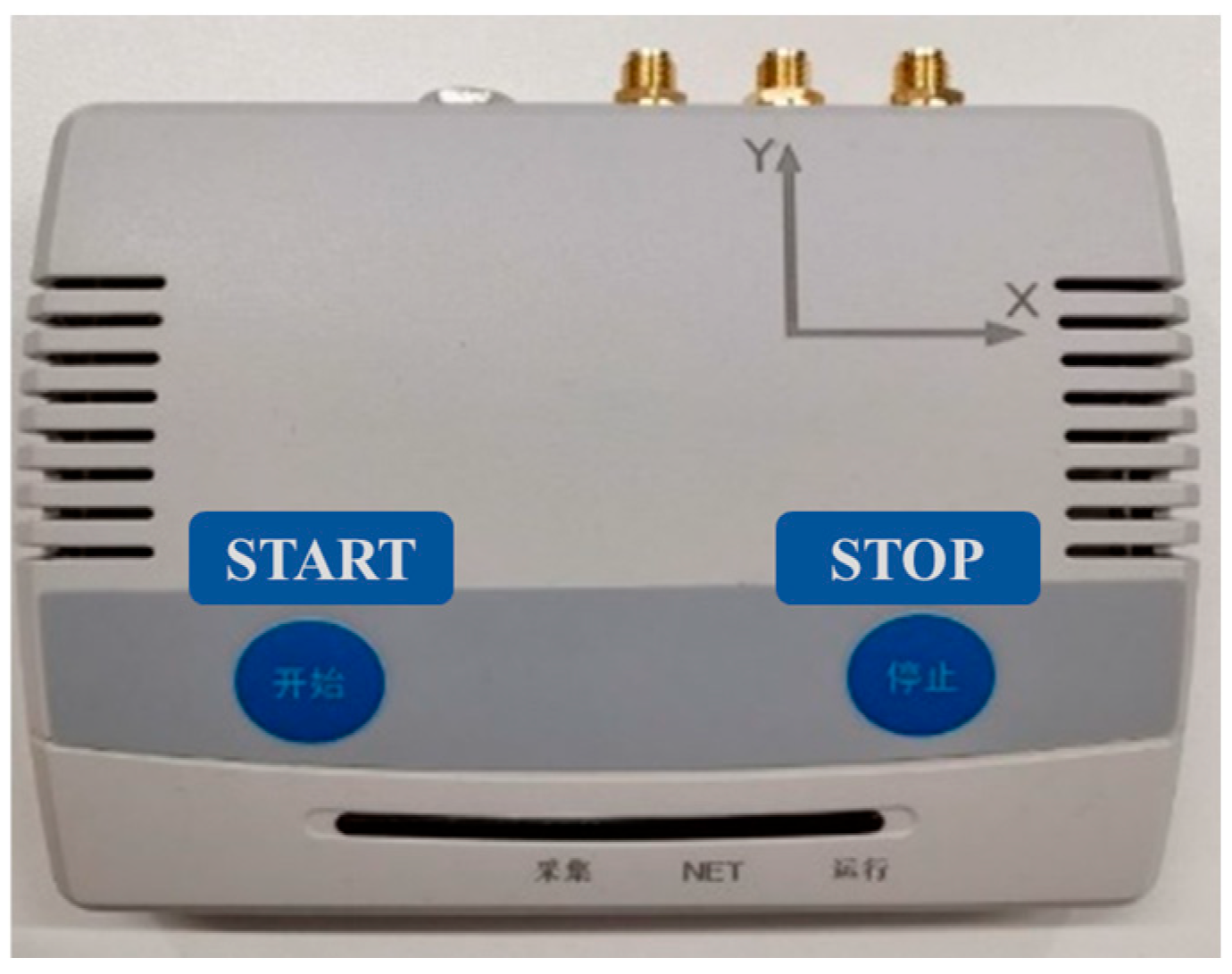
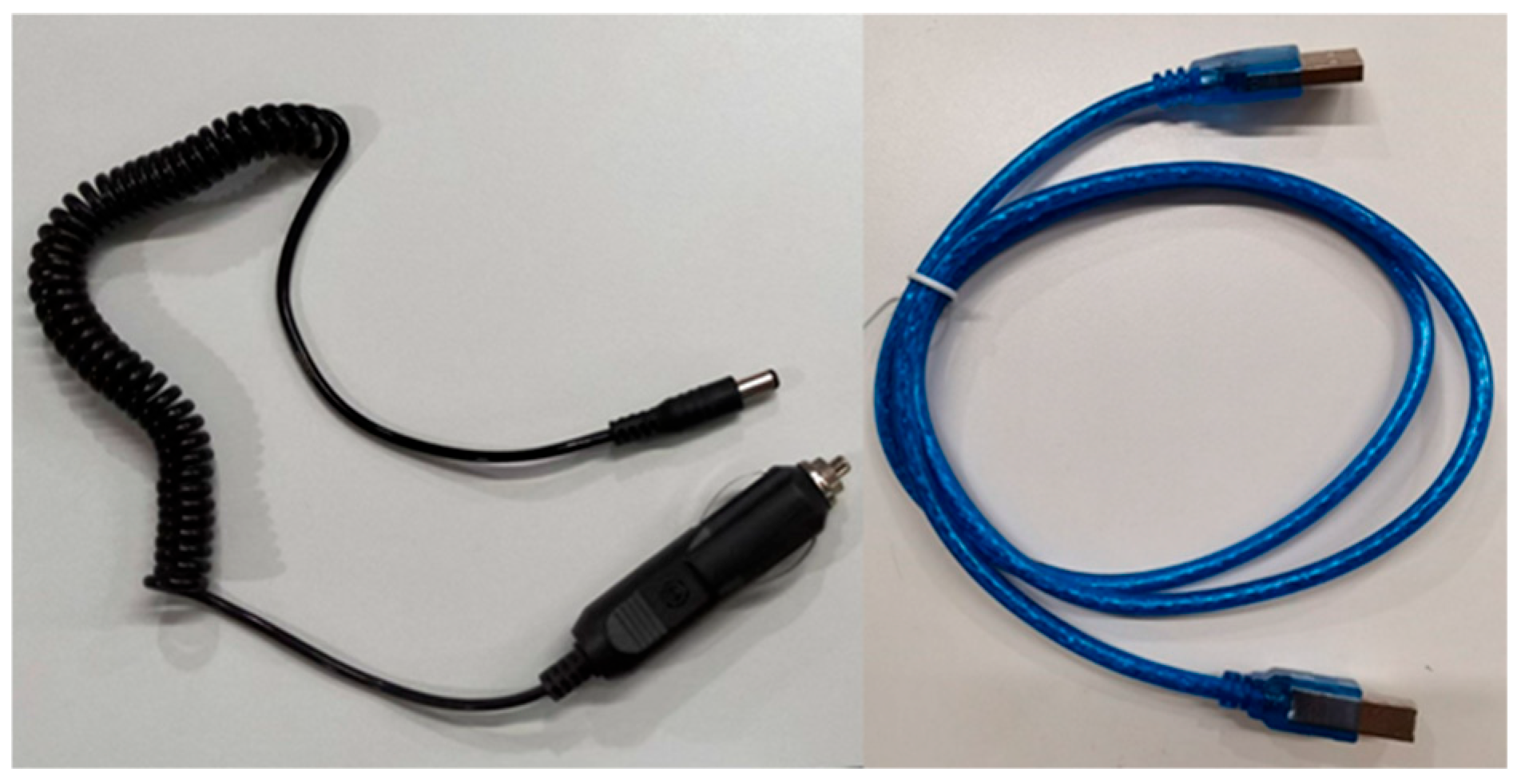
Figure 1 and Figure 2 illustrate the dedicated intelligent terminal developed by the authors based on the Android system. The device integrates high-precision acceleration sensors; GPS, 4G remote data transmission, and data storage modules; and a data management and control microcontroller. Capable of acquiring data on triaxial vibration acceleration and angular velocity; roll, pitch, and heading angles; latitude; longitude; time; and vehicle speed, the system allows the acquisition frequency to be set in the range of 1~100 Hz.
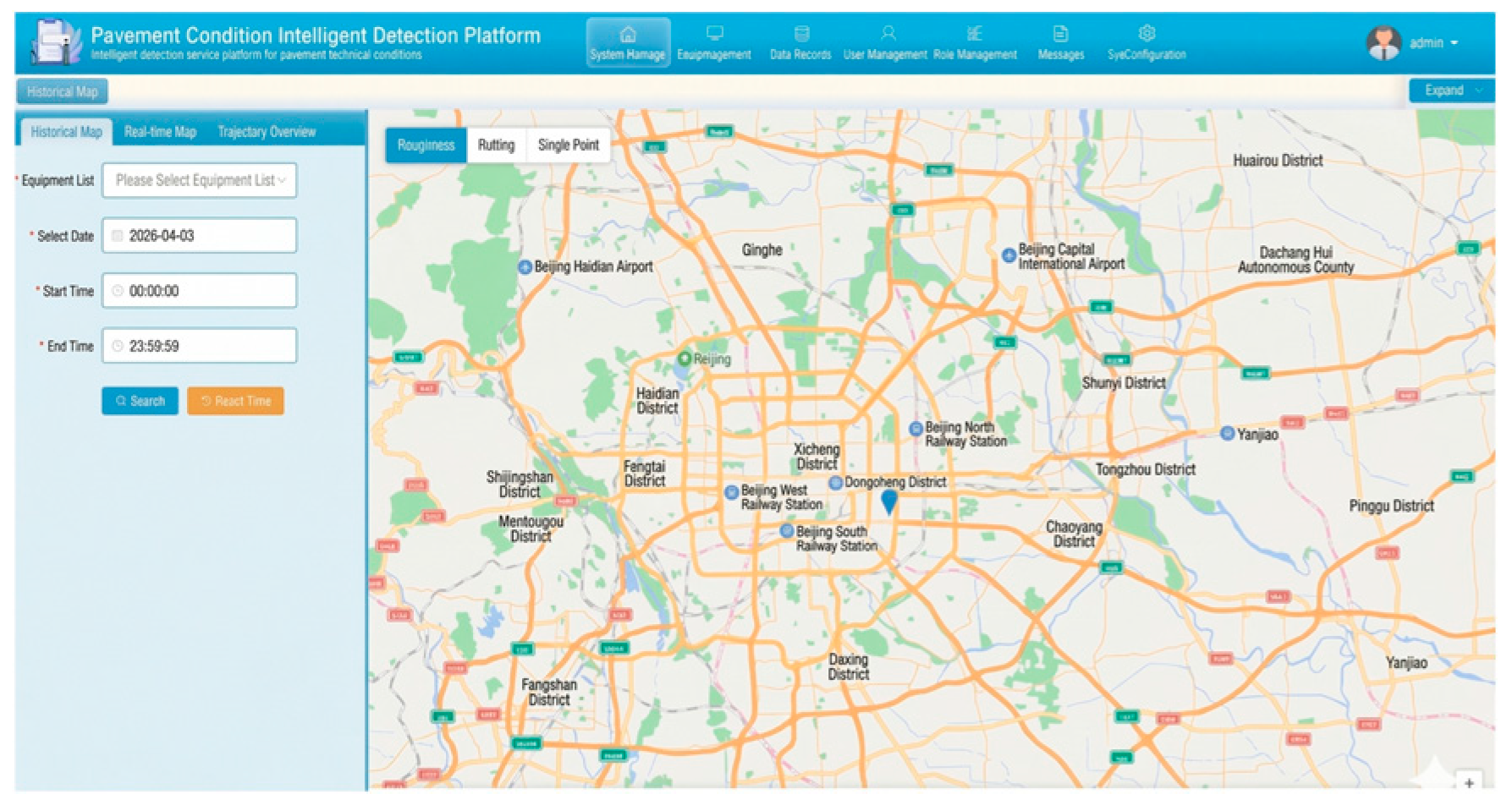
During data acquisition, the unit stores collected data internally or transmitted real-time data, including vehicle trajectories, speeds, and rut depth detection results, to the intelligent pavement condition detection service platform via the 4G remote transmission module, as shown in Figure 3. All acquired data can be downloaded from both the terminal and service platform for subsequent use. Regarding the calibration, data acquisition accuracy, and potential measurement uncertainty of the developed device, detailed testing and analysis were conducted in the early stage of equipment development. For relevant results, see references [32,33,34].
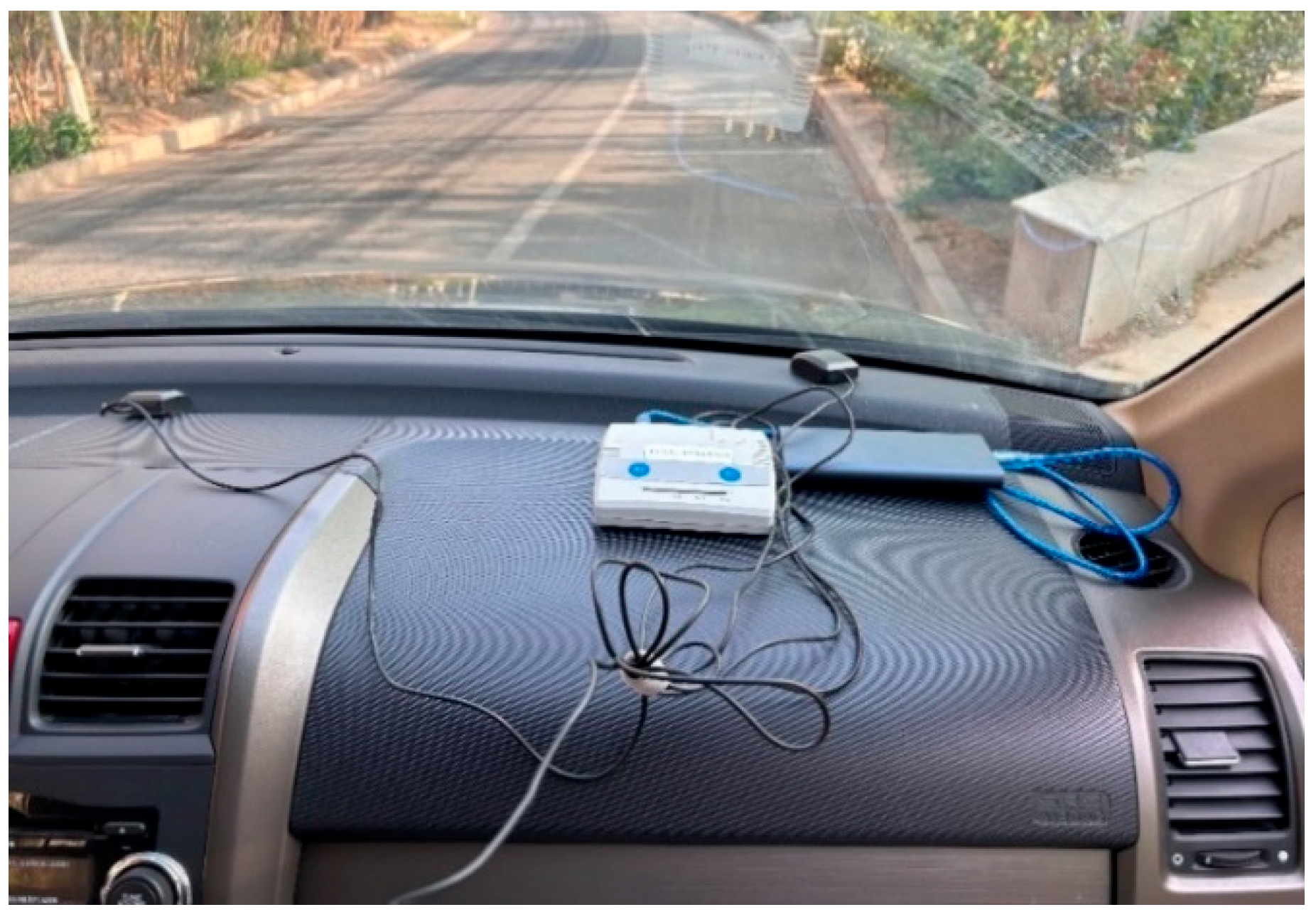
Although different vehicle types exert certain influences on acquisition results and accuracy, the primary objective of this research is to explore the feasibility and accuracy of rut depth detection using lightweight equipment, so driving experiments were conducted using a single vehicle type. The test vehicle was a Dongfeng Honda CRV (Dongfeng Honda Automobile Company Limited, Hubei, China), which is an SUV typically used for daily commuting and maintained in normal operating condition. The intelligent terminal was fixed to the dashboard of the vehicle cabin using non-marking nano adhesive tape, with the vehicle and equipment installation shown in Figure 4 and Figure 5.

2.2. Test Site

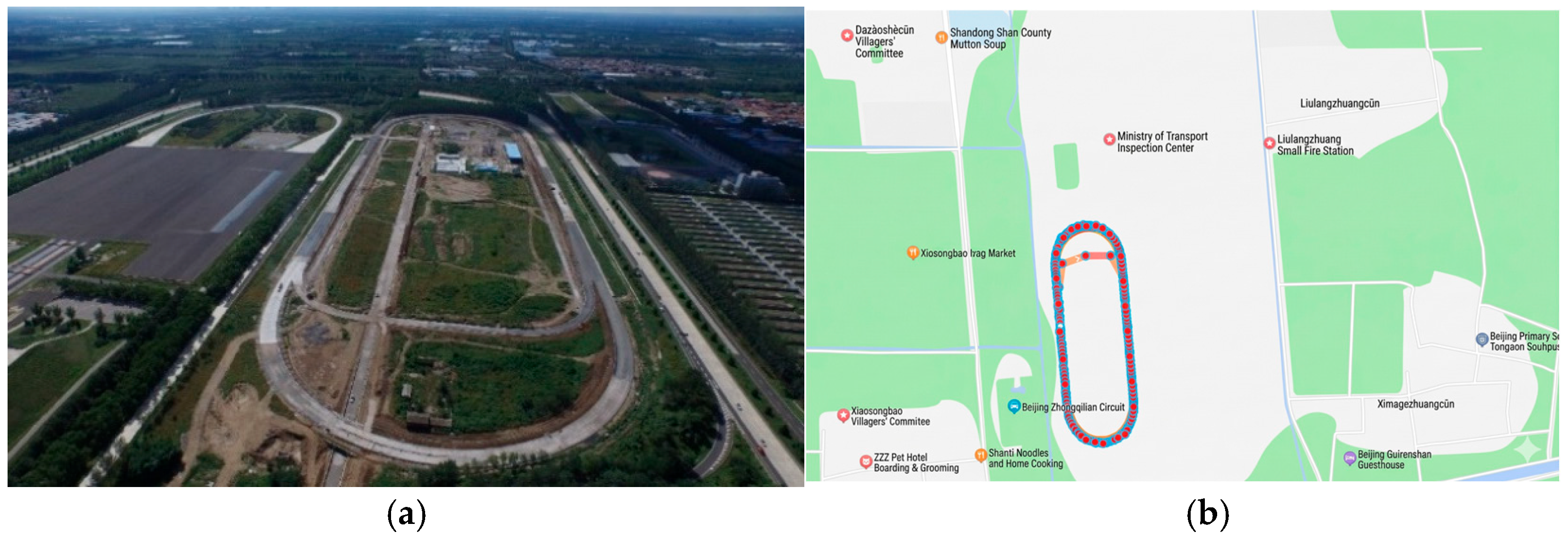
The experimental site for this study was the full-scale circular test track at the Highway Traffic Comprehensive Test Field of the Research Institute of Highway (RIOH), Ministry of Transport, located in Majuqiao Town, Tongzhou District, Beijing, which has renowned status both domestically and internationally (Figure 6). Spanning a total length of approximately 2039 m, the track comprises 38 pavement structures, including new-generation semi-rigid base asphalt pavements that dominate China’s expressways, 6 anti-rutting pavement types, and 13 cement concrete pavement structures.
It is crucial to emphasize that this full-scale track is not an idealized, interference-free laboratory environment, but rather a highly concentrated slice of a real-world road network. The track is fully exposed to natural environments, experiencing real weathering, temperature fluctuations, and humidity variations. Following more than 100 million actual heavy-load accelerated loading cycles, the pavements exhibited varying degrees of rutting, encompassing diverse authentic physical deterioration mechanisms across different materials.
More importantly, conducting experiments on this closed track provided an irreplaceable advantage for the initial Proof of Concept (PoC) stage: it allowed researchers to perform millimeter-level, high-precision manual baseline measurements without facing the severe safety hazards and traffic flow interference inherent in open public highways. This ensured that the deep learning model could be rigorously aligned with the absolute rutting ground truth, which is practically unachievable in complex real-world open traffic.
From April to May 2025, the test field conducted highly accurate baseline rutting detections for the full-scale track using standardized manual methods. Meanwhile, this study simultaneously performed measurements using lightweight equipment to ensure strict synchronous comparison.

2.3. Experimental Protocol

Prior to the experiments, test field technicians measured the actual pavement rut depth of the full-scale circular track according to standardized methods, thus establishing a baseline for comparative analysis and accuracy verification.
For detection experiments using lightweight equipment, we strictly adhered to prescribed operational procedures. Initially, the test vehicle underwent inspection to ensure normal operating condition, while the intelligent terminal was installed inside the cabin, as shown in Figure 5, and activated to confirm normal working status. Subsequently, the test vehicle began accelerating approximately 50 m prior to stake K0+000, which is designated as the starting point, with passage time recorded upon crossing. The vehicle then circulated the track at a constant speed, recording passage time each time stake K0+000 was passed. Throughout operation, the terminal acquired driving data in real time for internal storage. Upon completion, data were downloaded and segmented using passage times at stake K0+000 as reference points, then matched with actual pavement rut depth data using stake numbers as control nodes and ultimately used to conduct a comparative analysis of accuracy across different methods.
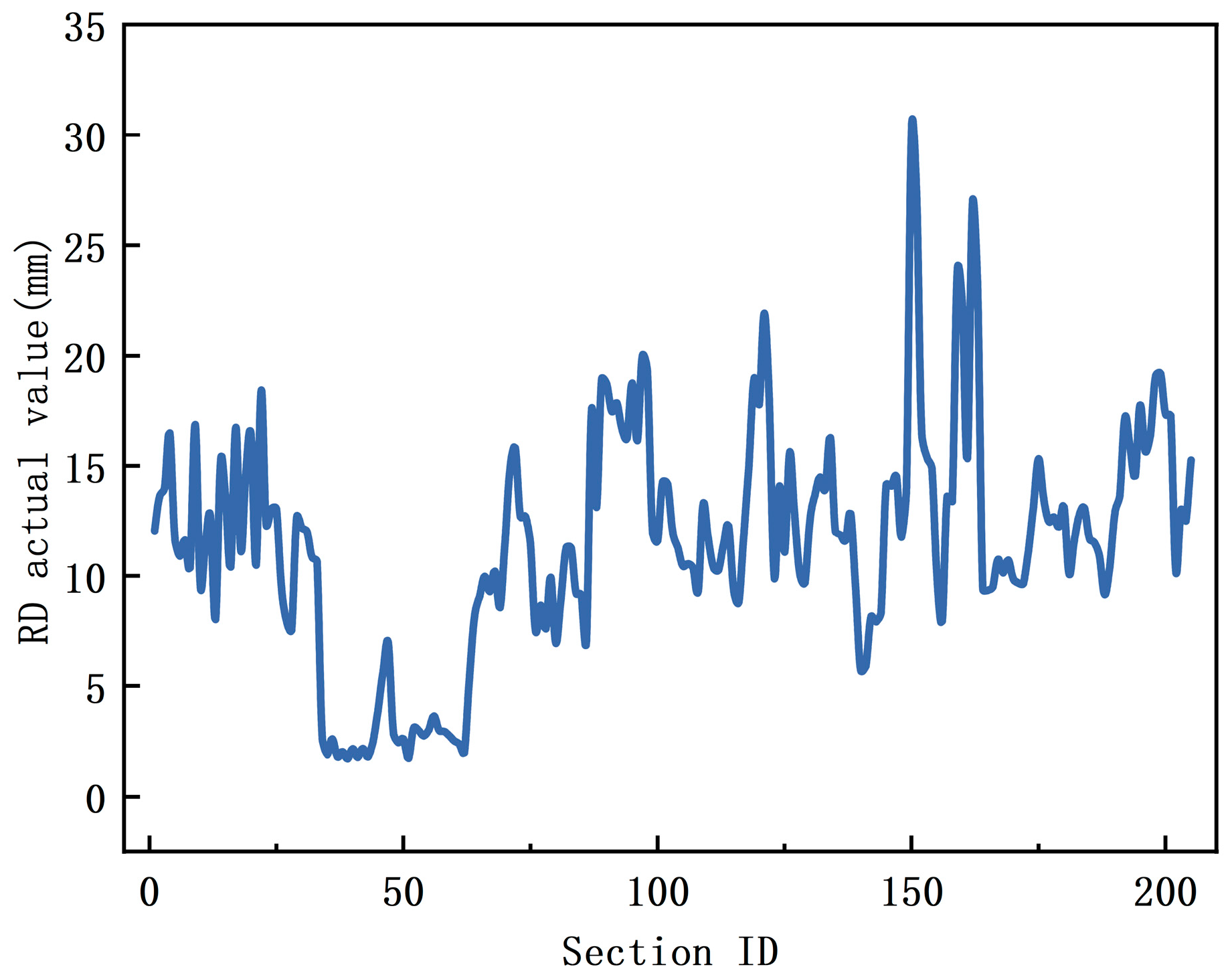
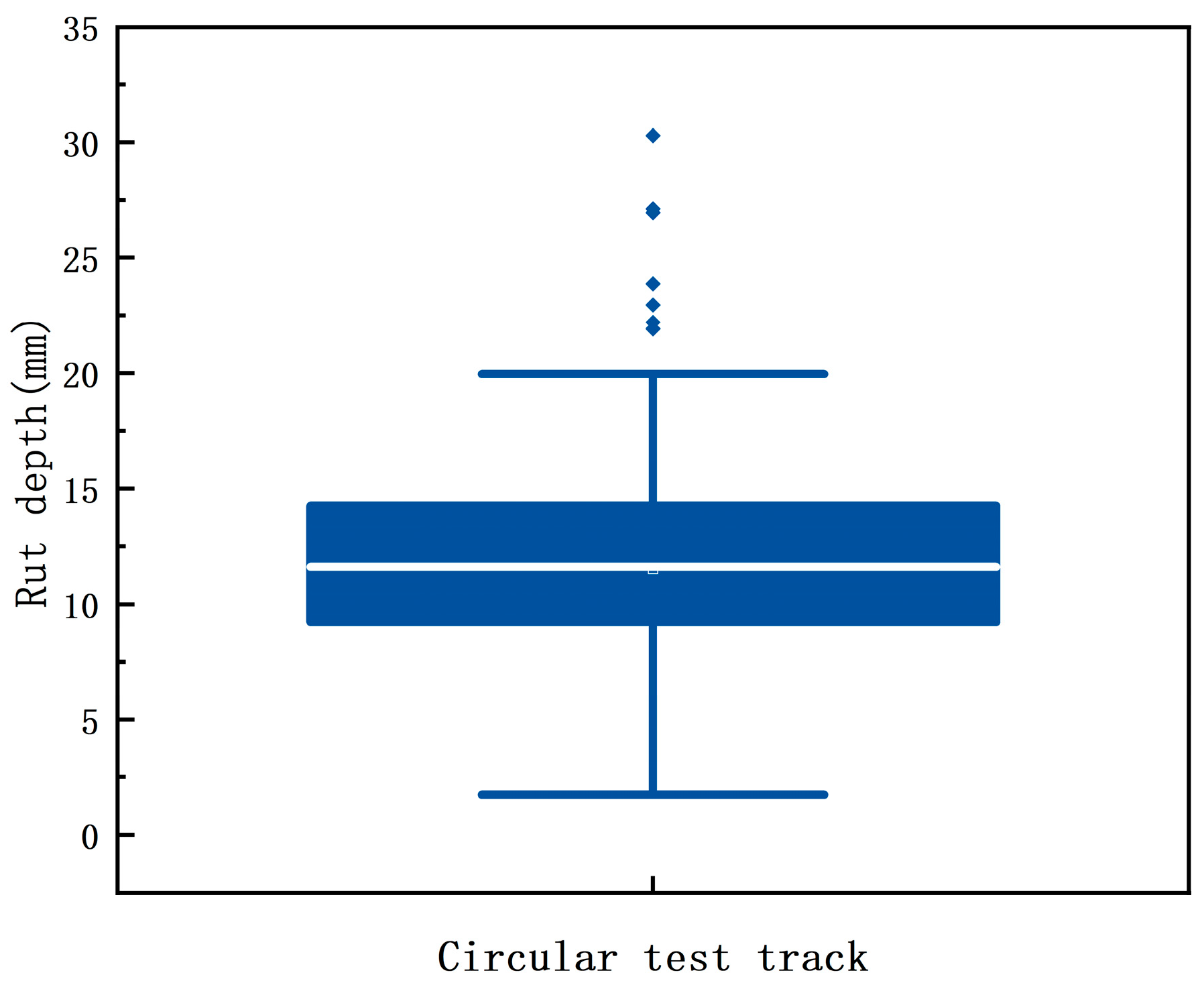
We partitioned the full-scale circular track into 205 sections at 10 m intervals. Figure 7 and Figure 8 illustrate the actual pavement rut depth detection results obtained through conventional methods. Considerable fluctuation is seen across the track, with most values exceeding 10 mm and the maximum depths surpassing 30 mm. Notably, rut depths remained relatively small between Sections ID 33 and 63, primarily because this segment consists of cement concrete pavement, in which rutting occurs mainly through abrasion, thereby resulting in reduced depths.
During the experiments, the vehicle traversed the circular track at speeds ranging from 30 to 60 km/h and maintained a constant speed for each run wherever possible. In total, eight circular driving experiments were conducted, producing 1640 sets of valid experimental data.

3. Data Preprocessing and Feature Extraction

The driving experiments yielded data on vehicle speed, vibration acceleration, angular velocity, and roll angle, yet all remained susceptible to external environmental influences and exhibited varying sensitivities to pavement rut depth, thereby necessitating data preprocessing and the extraction of key characteristic features.

3.1. Trend Removal

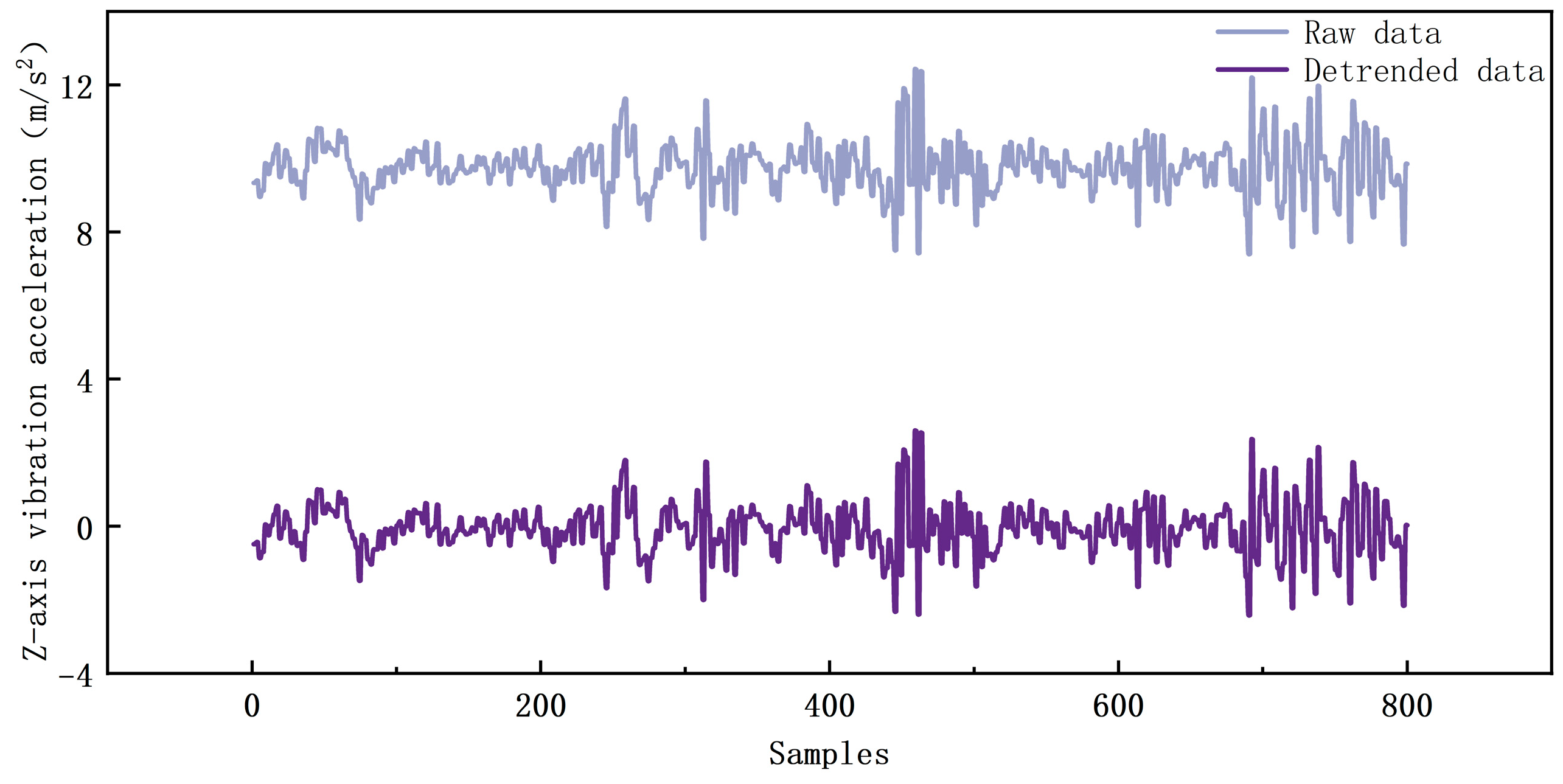
During vehicle operation, drift is introduced into collected data, stemming from engine self-vibration, sensor zero drift, and gravitational acceleration. As baseline deviation over time, termed the trend component, compromises model establishment, removal becomes necessary. Consequently, least squares fitting was employed to process triaxial vibration acceleration and angular velocity data. The collected test data were fitted to a mathematical model minimizing the sum of squared residuals. Let α i denote the data sequence collected at equal time intervals (i = 1, 2, …, N), where the trend component was fitted using a k-th order polynomial α ^ i , as shown in Equation (1).
α ^ i = β 0 + β 1 t i + β 2 t i 2 + β 3 t i 3 + + β k t i k , i = 1 , 2 , 3 , , N .   a n d   k < N
Here, β 0 , β 1 , β 2 , β 3 , , β k represent the undetermined polynomial coefficients, and t i denotes the data acquisition time points.
The error function is defined as f β 0 , β 1 , β 2 , , β k in Equation (2).
f β 0 , β 1 , β 2 , , β k = i = 1 N α i α ^ i 2 = i = 1 N α i β 0 β 1 t i β 2 t i 2 β k t i k 2
To minimize f β 0 , β 1 , β 2 , , β k , partial derivatives with respect to β k were calculated and set to zero. Coefficients β k were then solved to obtain the estimated polynomial of the trend component to remove the trend.

3.2. Kalman Filtering

Variations in driving data induced by pavement rut depth predominantly manifest as low-frequency vibrations. However, following trend removal, high-frequency vibrations stemming from engine operation, tire–ground friction, and suspension resonance persist within the signal. As these noises obscure effective rutting information, hierarchical signal processing based on frequency domain differences becomes necessary.
In the data preprocessing stage, Kalman filtering is employed to denoise the raw signals. Compared with conventional bandpass filters, Kalman filtering offers several advantages. First, as a recursive state estimation algorithm, it can estimate the optimal state in real time based on the system’s dynamic model and observations, thus making it suitable for handling non-stationary signals. Second, Kalman filtering effectively fuses prior information with observational data, thereby achieving superior denoising performance compared to fixed-parameter filters when the statistical characteristics of the noise are known or can be estimated. Moreover, Kalman filtering provides uncertainty information associated with the state estimates, thus facilitating subsequent analysis. In this study, Kalman filtering targets two types of noise: first, high-frequency measurement noise introduced by the sensors themselves, such as random noise from accelerometers and gyroscopes; second, non-stationary interference signals caused by pavement irregularities and vehicle vibrations. The goal of the filtering process is to extract the effective low-to-medium frequency signal components associated with rutting depth.
Regarding the filter parameters, the process and measurement noise covariance matrices Q and R , respectively, are determined as follows. R is calibrated based on the variance of static sensor measurements, reflecting the sensor’s measurement noise level. Q is determined through a combination of empirical tuning and a data-driven approach, with an initial setting as a diagonal matrix on the order of 10 4 to 10 3 . Fine-tuning is then performed based on a comprehensive evaluation of signal smoothness and feature retention, ensuring that the filtered signal effectively suppresses noise while preserving the characteristics relevant to rutting. The final parameter values are optimized with the goal of ensuring filter stability while maximizing the effectiveness of the subsequent feature extraction and model training.
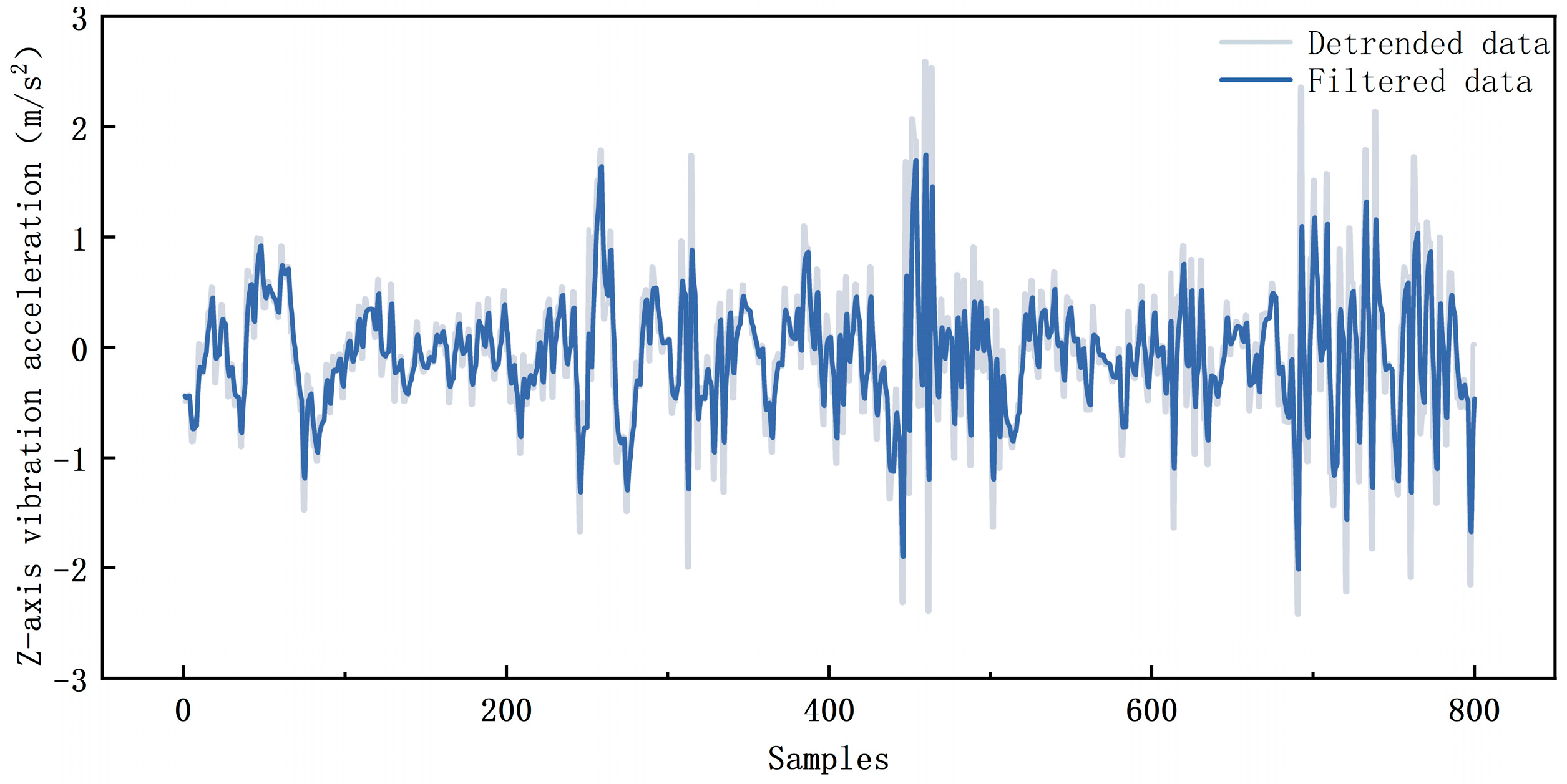
Figure 9 and Figure 10 present the vibration acceleration signals following trend removal and Kalman filtering, respectively.

3.3. Feature Data Extraction

Pavement rutting is a common form of surface distress, in which variations in depth exert diverse influences on driving conditions governed by wheel–pavement interactions, thereby affecting driving states across multiple dimensions. To identify vehicle state indicators exhibiting significant relationships with rut depth, characteristic driving data were extracted.
In this study, the selection of feature indicators is guided by physics-informed principles. Rutting is a pavement distress characterized by continuous longitudinal depressions and lateral deformation. When wheels on one side of a vehicle drop into a rut, the vehicle’s lateral force balance is disrupted, inducing significant roll and yaw motions. Therefore, relying solely on traditional vertical acceleration (Z-axis) is insufficient to fully characterize the morphology of this distress; thus, three-dimensional vehicle attitude features (such as roll angle and angular velocity) must be introduced. Furthermore, driving speed also influences the vibration characteristics generated as the vehicle traverses the rut. While time-domain features primarily reflect the absolute amplitude of vibrations, frequency-domain features such as Power Spectral Density (PSD) can acutely capture the excitation energy distribution hidden within specific frequency bands, which is crucial for distinguishing continuous rutting. Based on these vehicle dynamics mapping relationships, this study comprehensively extracts features from three dimensions: the time domain, frequency domain, and spatial attitude.
The data acquired by the intelligent terminal encompass vibration acceleration, angular velocity, and vehicle speed. Table 1 details the 43 characteristic indicators constructed by considering three coordinate directions alongside time and frequency domain metrics. Specifically, the x-direction represents the left–right orientation of the vehicle, the y-direction denotes the front–rear orientation, and the z-direction indicates the vertical direction perpendicular to the x-y plane.
During the feature extraction process, this study constructed an initial feature set consisting of 43 statistical and spectral features based on the principles of vehicle dynamics and signal analysis theory. Specifically, feature selection was guided by the following three considerations:
(1) Vehicle attitude features: Rutting can cause lateral sway and pitch variations during vehicle operation. Therefore, the mean values of the sine, cosine, and tangent of the roll angle (Roll_sin, Roll_cos, Roll_tan), as well as the direction vectors derived from Euler angles (x_prime, y_prime, z_prime), were extracted to characterize the dynamic influence of rutting on vehicle attitude.
(2) Statistical features of vibration responses: Drawing on commonly used statistical indicators in traditional pavement roughness detection, the mean, maximum, amplitude, standard deviation, and root mean square (RMS) values of the three-axis vibration accelerations (x, y, z) and angular velocities (xGyro, yGyro, zGyro) were extracted. These features comprehensively reflect the amplitude level, dispersion, and energy distribution of the vibration signals.
(3) Frequency domain features: To capture the energy distribution characteristics of vibration signals across different frequency bands, the mean power spectral density (PSD) for each channel was further calculated, thus enhancing the sensitivity and robustness of the features to changes in pavement conditions.
This feature system integrates both vehicle dynamic mechanisms and general signal processing methods, thereby providing a sufficient information foundation for the subsequent feature selection and model construction.

3.3.1. Spearman Correlation Analysis

The Spearman correlation coefficient serves as a nonparametric measure that is applicable when samples deviate from normal distributions or exhibit non-linear relationships. By converting original observations into ranks, this method calculates the correlation between two variables according to Equation (3).
R s = 1 6 i = 1 n d i 2 n n 2 1
Here, R s represents the Spearman correlation coefficient, and d i denotes the rank difference in the i-th data point between variables X and Y, where d i = R X i R Y i , and R X i and R Y i are the ranks of X and Y at the i-th data point, respectively, with n indicating the total sample size.
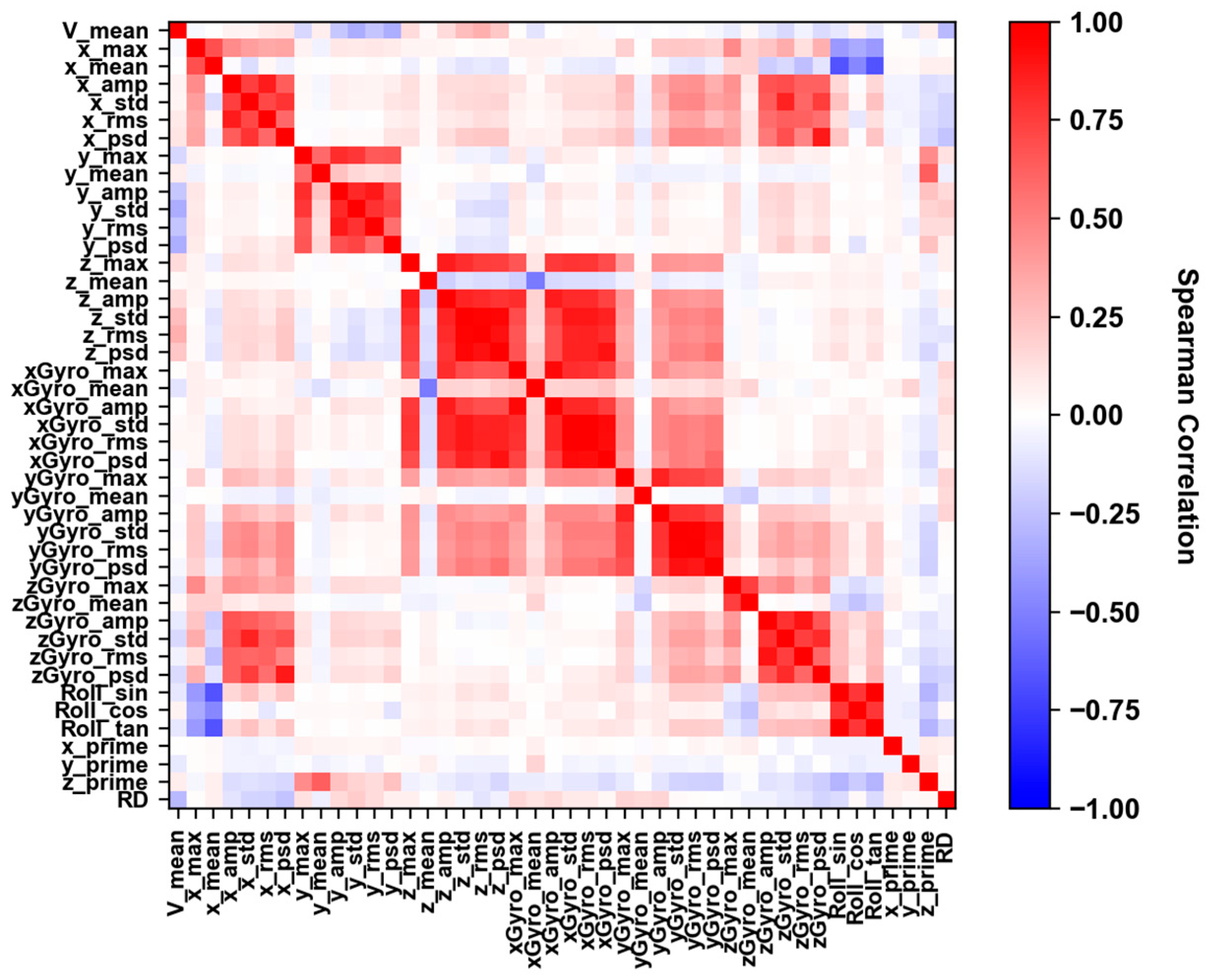
In this study, the coefficient was calculated between each characteristic indicator and rut depth (RD), in which average ranks were assigned to handle tied values with corresponding adjustments. Figure 11 displays the resulting Spearman correlation coefficients between RD and the 43 characteristic indicators, from which we can determine the correlation direction and strength based on the sign and absolute value.

3.3.2. Random Forest Importance Ranking

As an ensemble learning method based on the Bagging concept comprising numerous decision trees, random forest was employed to evaluate feature importance. By training multiple trees through the random sampling of different subsets of samples and features, the algorithm obtains final outputs via voting or averaging the prediction results. To facilitate this evaluation, two metrics are commonly utilized: Gini importance based on node purity reduction and permutation importance. Specifically, the former calculates the purity improvement contributed by a feature during node splitting in each tree and performs weighted summation, whereas the latter assesses a feature’s contribution by permuting its values after training completion and observing the magnitude of model performance degradation.
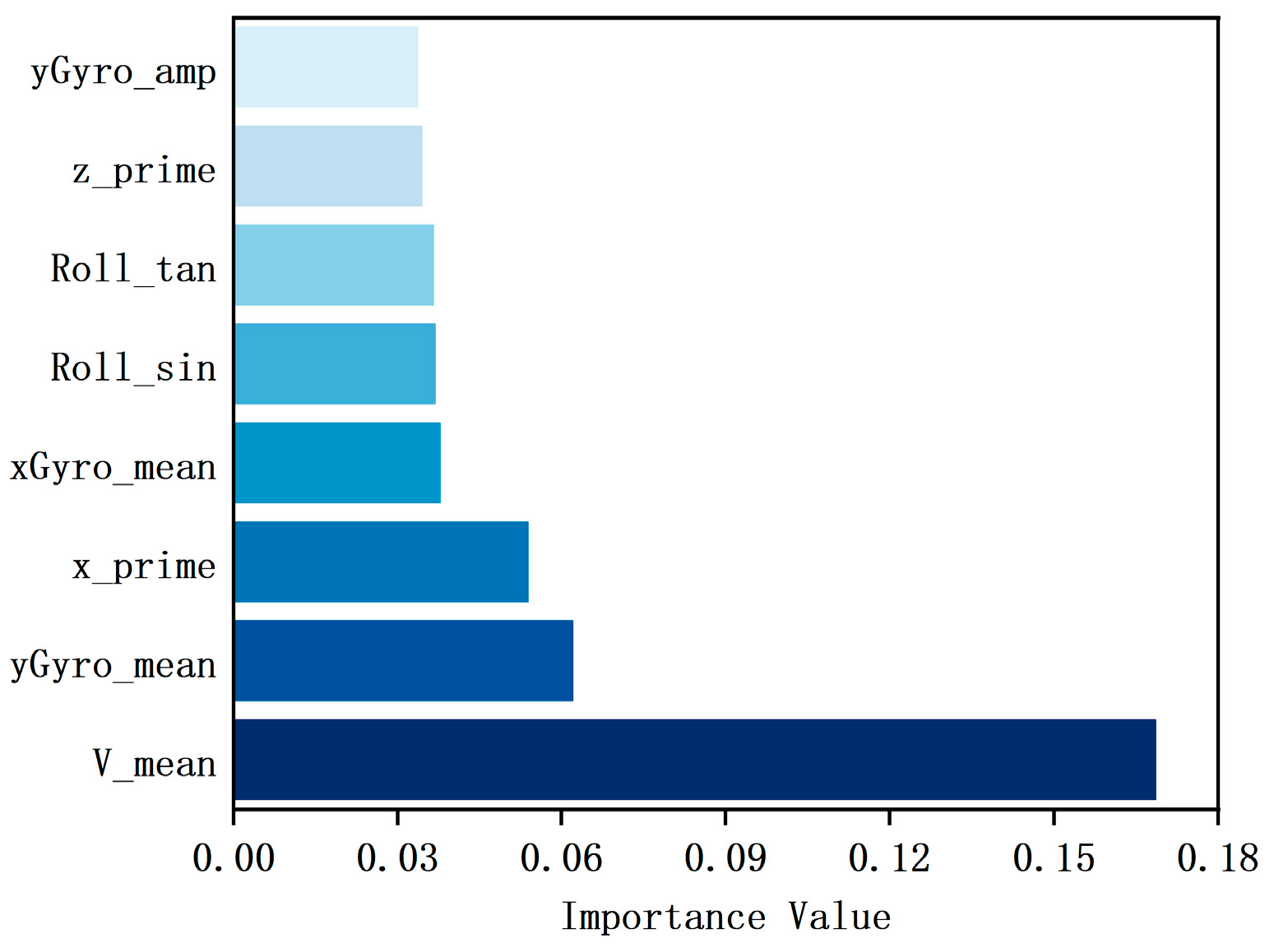
We conducted unified preprocessing for all features initially, followed by optimizing the hyperparameters of the random forest model via grid search and K-fold cross-validation to guarantee the reliability of the evaluation results. To mitigate sampling fluctuations, the model was trained across multiple iterations, with the mean and standard deviation of importance values from each iteration serving as stability criteria. Figure 12 shows the ranking of random forest importance values, which reveals that vehicle speed, angular velocity, and roll angle are the features most closely correlated with rut depth. In Reference [29], the acquisition device relied on a smartphone lacking vehicle attitude collection capabilities and thus necessitates triaxial vibration acceleration as the core analysis indicator. Consequently, we infer that rutting exerts a more pronounced influence on vehicle attitude during operation, thus highlighting the superior applicability of the intelligent terminal employed herein for data acquisition.
By integrating random forest outcomes with Spearman correlation coefficients, it was revealed that Roll_sin and Roll_tan exhibit essentially identical importance values and comparable correlation coefficients. Further verification confirmed high correlation between the two variables, potentially leading to redundant computation, increased costs without additional information, and overfitting risks, thus necessitating the retention of only one feature, i.e., eliminating Roll_tan. Although z_prime ranked relatively high in random forest importance, it placed last in Spearman correlation coefficients with the lowest correlation, thus warranting removal. Ultimately, six indicators were selected as characteristic features for the subsequent model establishment, encompassing V_mean (mean of vehicle speed), x_prime (mean of X-axis direction vector), yGyro_mean (mean angular velocity in Y-axis direction), xGyro_mean (mean angular velocity in X-axis direction), Roll_sin (mean of roll angle sine), and yGyro_amp (amplitude of angular velocity in Y-axis direction).
These six selected feature indices align perfectly with the physical mechanisms underlying vehicle–pavement interaction. Pavement ruts typically present as longitudinal strip-like depressions. From the perspective of vehicle dynamics, when the wheels on one side of a vehicle drop into a rut, the tires on either side experience differential excitations, thus inducing lateral roll and the swaying of the vehicle body. Consequently, xGyro_mean and Roll_sin exhibit high importance in the model. Furthermore, the bottom of a rut is frequently associated with poor smoothness, cracking, and potholes; traversing these defects generates vibrations and pitching motions, which are distinctly reflected in the variations in the yGyro_mean, yGyro_amp, and x_prime indicators. Finally, the driving speed directly dictates the overall intensity of these dynamic responses.
Based on the aforementioned screening results, this study selects six feature indicators as the input features for the subsequent deep learning model to construct a GRU-CNN hybrid model: Firstly, a one-dimensional convolutional neural network (1D CNN) is utilized to extract local temporal features and capture short-term fluctuation patterns between adjacent road segments; subsequently, a gated recurrent unit (GRU) is employed to further learn long-range dependencies and model the continuous changes in rut depth in space. Ultimately, the model outputs the predicted rut depth for the corresponding road segment. This forms a complete technical process from raw data collection and feature extraction and screening to model construction.

4. Machine Learning Model Construction

4.1. Model Architecture

Following extensive investigation, this study proposes a hybrid GRU-CNN neural network model utilizing a parallel dual-branch architecture. Specifically, the network extracts local features from high-frequency vibrations through the CNN branch and captures long-term sequential dependencies via the GRU branch, concatenating features at the fusion layer to achieve accurate rut depth assessment. To enable rut depth prediction using the proposed architecture, data from the test field dataset underwent trend removal, Kalman filtering, and segmentation before being matched with reference data from manual measurements.
To ensure uniform scaling, a Robust Scaler was employed to standardize characteristic indicators. Furthermore, sliding windows with fixed lengths were applied, dividing the six feature vectors and target value RD into multiple segments comprising 30 time steps for model training. The determination of the sliding window size is based on a sensitivity analysis of spatial resolution and vehicle dynamic response cycles. At a sampling frequency of 100 Hz, 30 time steps correspond to a time window of 0.3 s. Considering the test vehicle’s traveling speed of 30–60 km/h, this window physically covers a pavement length of approximately 2.5 to 5.0 m. This spatial scale perfectly captures the complete dynamic response waveform of a vehicle dropping into and driving out of a localized rutting distress. It not only prevents the loss of waveform contextual information caused by overly short windows, but also effectively limits the dilution of localized abrupt features by redundant background noise from flat pavements.
In this study, 1640 sample sets were collected for rutting depth detection and evaluation (from 8 driving runs, with 205 segments per run). To avoid data leakage, the dataset was divided according to driving runs rather than by randomly splitting individual segment samples. Specifically, 80% (i.e., six runs) of the eight driving runs were randomly selected as the training set, and the remaining two runs were used as the validation and test sets, respectively. After standardizing the feature indicators and creating sliding windows, the training, validation, and test sets were finally formed with an approximate sample ratio of 6:1:1, thus ensuring a robust validation strategy. To ensure the reproducibility of the results, the random seed was fixed at 42.
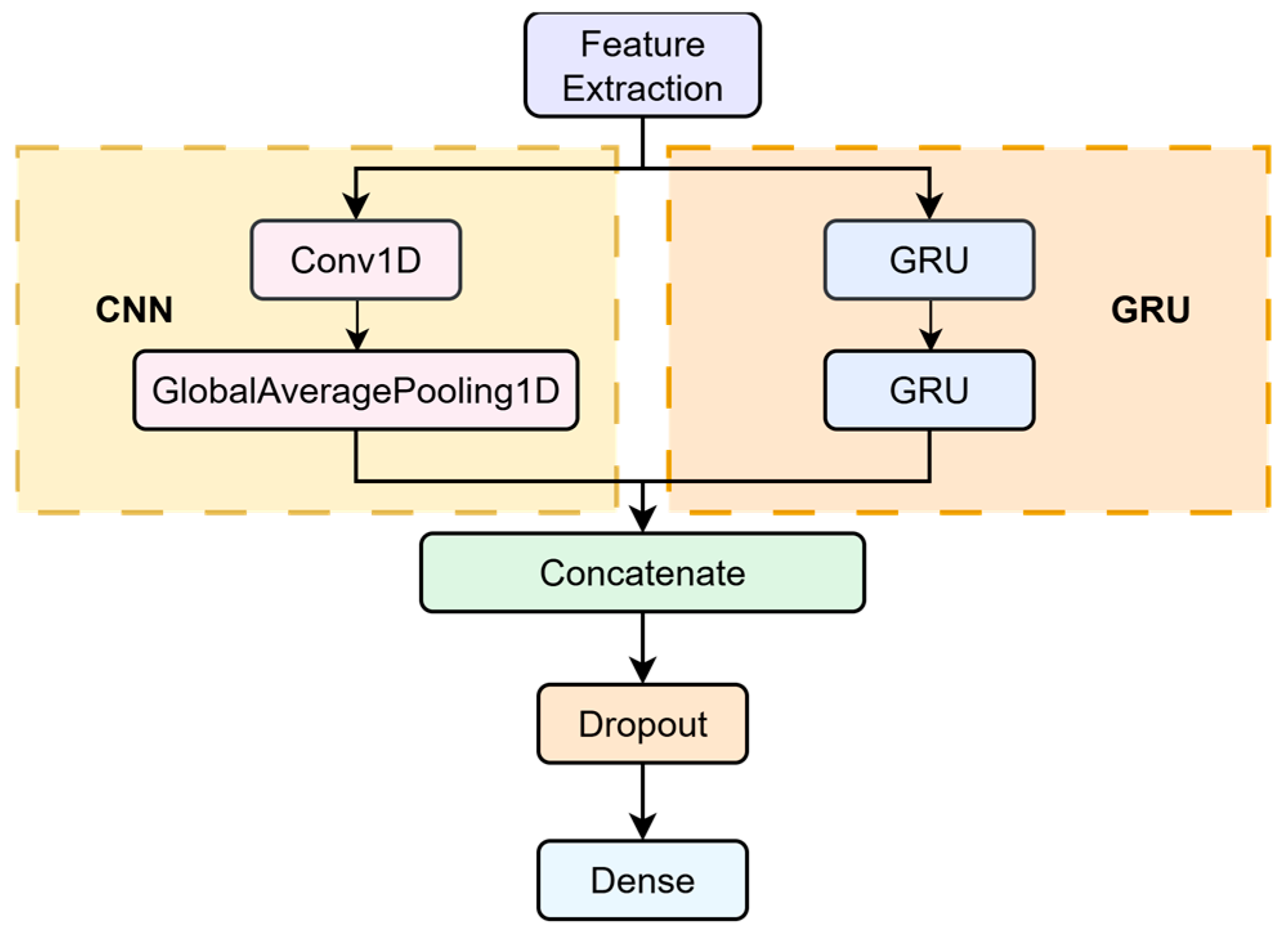
Figure 13 illustrates the structure of the GRU-CNN model, which clearly shows that the model is divided into two distinct branches: the CNN and GRU.
The CNN feature extraction branch is explicitly designed to decode the localized spatial distress features within the complex high-dimensional spatiotemporal coupling of the sliding window matrices. It begins with a one-dimensional convolutional layer (Conv1D) comprising 64 kernels with a kernel size of 3. This small kernel size enables the network to sensitively capture the instantaneous, high-frequency energy spikes generated in the vibration acceleration and roll angular velocity signals when a single tire impacts the abrupt boundaries of a rut. Additionally, ReLU is employed as the activation function. To mitigate overfitting, L2 regularization ( λ = 0.001 ) adds penalty weights to the loss function for reducing model complexity. A global average pooling layer (GlobalAveragePooling1D) follows, compressing the time series output from the convolutional layer by averaging across the time dimension rather than using common max pooling, which directly outputs a 64-dimensional feature vector. Consequently, the parameter count is reduced while extracting the average feature intensity across the entire window. Utilizing a global average pooling layer in place of a traditional flattening layer significantly reduced the number of trainable parameters, thereby effectively mitigating the risk of overfitting on the relatively small dataset (1640 samples).
The GRU feature extraction branch is explicitly designed to capture the underlying long-term dependencies within the high-dimensional spatiotemporal coupling of the sliding window matrices while maintaining a shallow two-layer structure to control model complexity. Specifically, the first layer is a GRU layer comprising 128 units, followed by a second consisting of 64 units. Both layers employ ReLU as the activation function and incorporate L2 regularization ( λ = 0.001 ). Within the context of vehicle dynamics, this branch focuses on tracking low-frequency, continuous changes in vehicle attitude and the evolution of dynamic responses.
In the feature fusion and output section, the 64-dimensional local and global feature vectors from the CNN and GRU branches, respectively, are concatenated along the feature dimension to form a 128-dimensional hybrid feature vector, followed by a Dropout layer (rate 0.2). A Dense layer with a single neuron finally outputs the predicted rut depth value. To address the risk of overfitting associated with the limited sample size, a rigorous hyperparameter tuning procedure and multiple regularization strategies were implemented. During model optimization, the AdamW optimizer was selected to enhance regularization effects through weight decay, with the learning rate set to 0.001 and weight decay coefficient to 1 × 10⁻⁴. The loss function employs Huber Loss ( δ = 1.0 ), which is commonly used in regression tasks. The entire training process runs for 200 epochs with a batch size of 64. To prevent overfitting, an early stopping strategy and model checkpointing were adopted. Training terminates when no improvement in validation loss occurs within 20 epochs, while the model achieving the lowest validation loss is saved to ensure optimal performance.

4.2. Model Accuracy Evaluation Methods

To quantify model performance, Root Mean Square Error (RMSE), mean absolute error (MAE), and the coefficient of determination ( R 2 ) served as evaluation metrics. Generally, lower RMSE and MAE values denote superior model performance and higher prediction accuracy, whereas R 2 values approaching 1 signify improved fitting effects. The computational formulations for the metrics are detailed in Equations (4)–(6). The RMSE serves as a key indicator of detection stability; its value increases significantly in the presence of isolated points with large prediction deviations along the road section. The MAE quantifies the average absolute physical deviation between the estimated rut depths and the actual ground truth measurements. R 2 measures the proportion of variance in the actual rut depth that can be explained by the algorithm.
R M S E = 1 n i = 1 n y i y ^ i 2
M A E = 1 n i = 1 n y i y ^ i
R 2 = 1 i = 1 n y i y ^ i 2 i = 1 n y i y ¯ i 2
Here, y i represents the true value, y ^ i indicates the predicted value, y ¯ i denotes the mean of true values, and n is the sample size.

5. Results

5.1. Model Performance Comparison

To evaluate detection accuracy and effectiveness across different architectures, we also established three machine learning models as benchmarks against the GRU-CNN model: Long Short-Term Memory (LSTM), a gated recurrent unit (GRU), and a hybrid deep learning model combining LSTM networks with Transformer mechanisms (LSTM–Transformer).
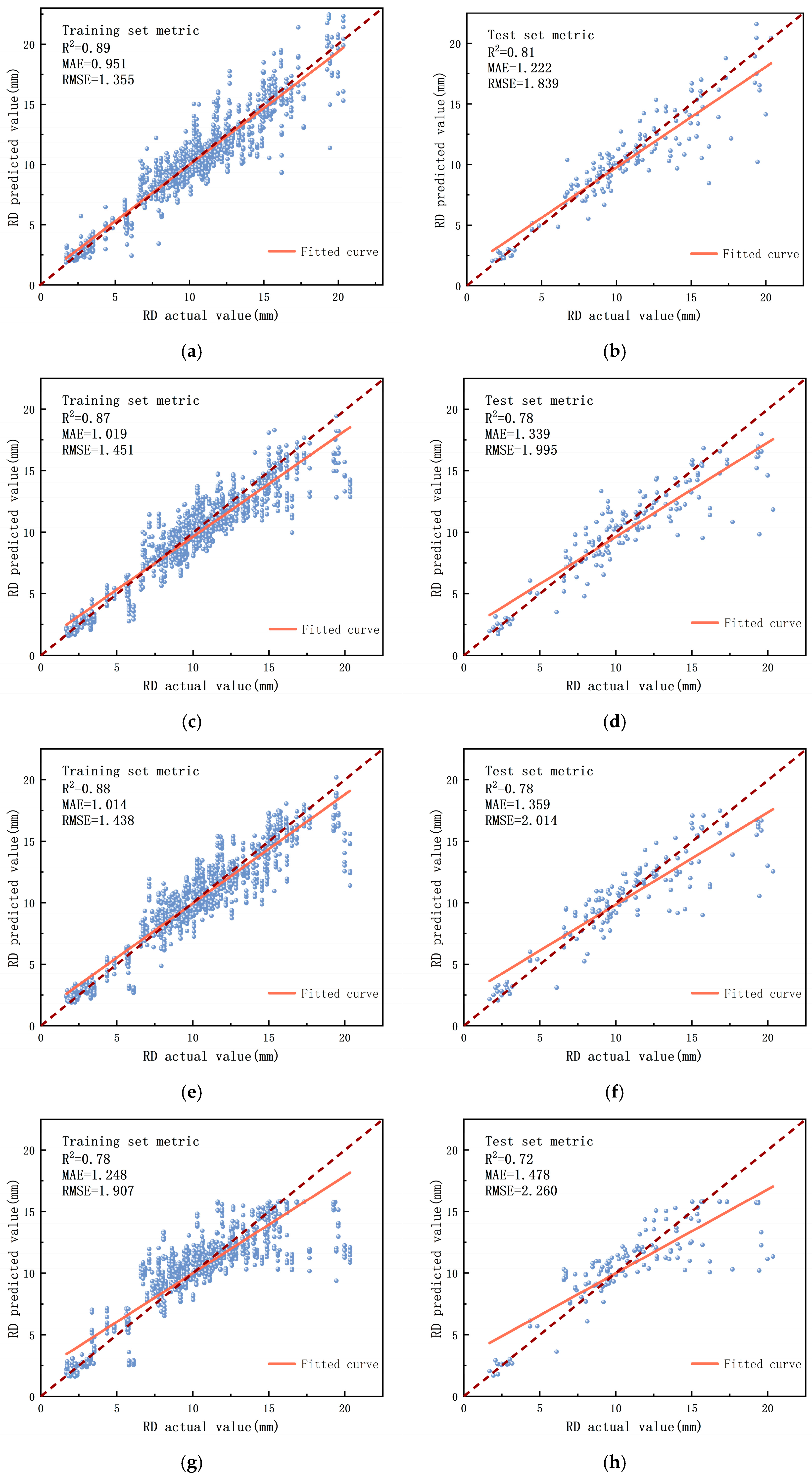
All models underwent training using the identical dataset, yielding performance metrics derived from the test field dataset, as illustrated in Figure 14, while Table 2 summarizes the specific evaluation metric values for the four algorithms.
As can be observed from Figure 14, the LSTM–Transformer, GRU, and LSTM models all exhibit significant performance degradation when moving from the training set to the test set. In contrast, the GRU-CNN model achieves optimal performance with the smallest discrepancy between training and testing. Furthermore, its scattered points are generally distributed along the y = x line, thus indicating its superior generalization capability.
From the statistical results in Table 2, the GRU-CNN model presents optimal performance across all evaluation dimensions, achieving an R2 of 0.81, thereby signifying that the model explains approximately 81% of the variation in rut depth. Compared to the LSTM–Transformer, GRU, and LSTM models, the R2 of the GRU-CNN model improved by 12.50%, 3.85%, and 3.85%, respectively.
The proposed GRU-CNN model achieved an MAE of 1.222 mm, representing significant performance improvements of 17.32%, 8.74%, and 10.08% compared to the LSTM–Transformer, GRU, and LSTM models, respectively. Regarding the RMSE, the model yielded a value of 1.839 mm, with corresponding enhancements of 18.63%, 7.82%, and 8.69% over the three baseline models. Furthermore, the MAPE of the GRU-CNN model was 10.6%, demonstrating substantial error reductions of 15.87%, 19.08%, and 23.74% relative to the LSTM–Transformer, GRU, and LSTM architectures, respectively.
The results indicate that single recurrent neural networks (e.g., GRU and LSTM) tend to converge to local optima when processing onboard vibration signals containing complex environmental noise, consequently limiting their capability to capture high-frequency abrupt signals. Relative to the LSTM–Transformer model incorporating attention mechanisms, the GRU-CNN model still achieves superior performance. Although the Transformer architecture possesses advantages in global feature extraction, parameter redundancy renders it prone to overfitting given the sample scale employed herein. Conversely, the GRU-CNN model effectively controls model complexity while ensuring feature extraction depth through the weight-sharing characteristics of convolutional layers, and it ultimately achieves the optimal balance between accuracy and generalization capability.

5.2. Prediction Accuracy of GRU-CNN Model

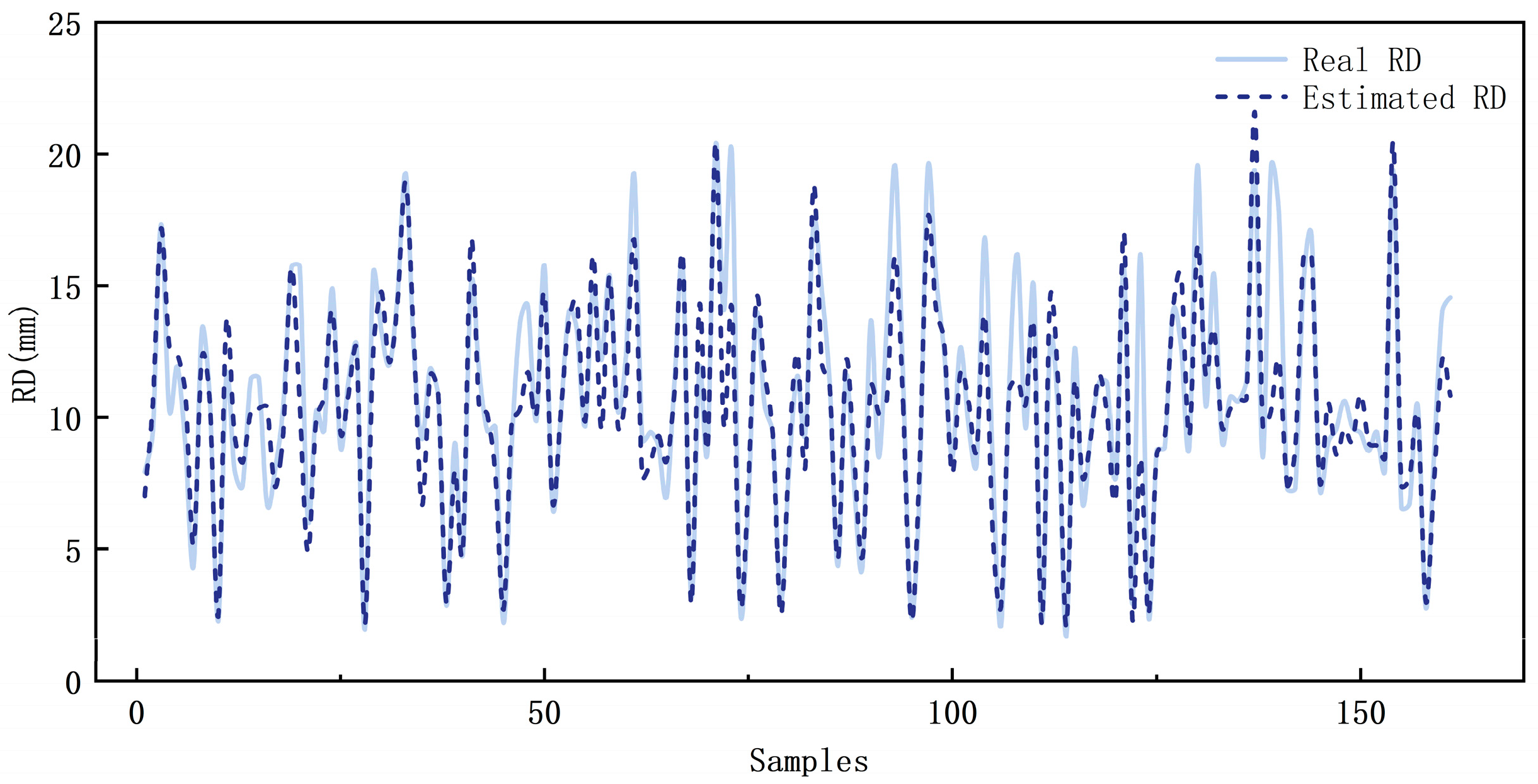
The GRU-CNN model achieved an R2 of 0.81, MAE of 1.222 mm, and RMSE of 1.839 mm on the test set. Figure 14 illustrates a comparison between the predicted and actual values generated by the GRU-CNN model on the test field dataset. The model exhibits favorable fitting performance, as the predicted curve aligns with the overall trend in true values while maintaining synchronization at local abrupt positions including wave crests and troughs. Furthermore, the model can accurately capture and precisely predict even the local micro-fluctuations. Quantitatively, the algorithm achieves an MAE of 1.22 mm and mean relative error of approximately 10.6%, reflecting relatively high detection accuracy.

5.3. Error Analysis and Limitations

As illustrated in Figure 15, certain discrepancies between the predicted and actual values persist at peak positions characterized by larger rut depth values, at which prediction performance for extreme values remains moderate. Although the proposed model mitigates the tendency of other models to yield conservative predictions at these extremes, the predicted values still slightly underestimate the true values. From a vehicle dynamic perspective, the vehicle’s suspension system and tires inherently provide a damping effect. When the vehicle traverses road sections with severe rutting, the suspension system and tires absorb a portion of the impact energy, which subsequently attenuates the acceleration and angular velocity signals captured by the intelligent terminal. Consequently, this leads to the underestimation of predicted values at the peak rut depths. From the perspective of data distribution, normal rut depths constitute most of the test track dataset, whereas extreme rutting samples are relatively scarce. During the training process, the model’s predictions tend to converge towards the mean to minimize the global loss function, consequently leading to conservative predictions.

6. Conclusions

Considering the development needs of smart city construction and intelligent transportation infrastructure management and maintenance, this study focuses on the relatively under-researched subfield of lightweight rut depth detection. Utilizing a self-developed intelligent vehicle data collection terminal, combined with machine learning methods and relying on high-quality measured data from the full-scale accelerated loading loop of the Ministry of Transport, systematic comparative experiments were conducted. The core innovations and contributions of this study are mainly reflected in the following three aspects: (1) By focusing lightweight intelligent detection on the sub-indicator of “rut depth” and considering the complex characteristics of rutting in spatial distribution, such as lateral deformation, longitudinal continuity, and local mutations, a complete research chain from dedicated terminals and feature analysis to model comparison and error evaluation was constructed. (2) Through systematic feature importance analysis, the core role of angular velocity and roll angle in rut detection was revealed. Compared to the commonly used three-directional vibration acceleration in existing research, this discovery is more in line with the mechanical mechanism of tire–rut road surface interactions, thus providing a more interpretable and robust basis for feature selection in lightweight detection. (3) By relying on the full-scale accelerated loading loop to conduct systematic comparative experiments, under controllable, repeatable, and high-precision true value conditions, the performance of multiple models (CNN, GRU, LSTM) was rigorously compared, thereby clarifying the accuracy and detection error of the proposed method and providing a reliable basis for engineering applications. The specific research conclusions are as follows:
(1) Under the conditions of this full-scale circular track experiment, the developed intelligent data collection terminal displays stable operation, convenient usability, and reliable data collection. Capable of acquiring multiple types of data on various vehicle operating states including vibration acceleration, angular velocity, and roll angle, the device shows stronger adaptability in data collection compared to the smartphones commonly explored in the existing literature. This initially verifies its potential as a lightweight device for pavement rutting detection and evaluation.
(2) Based on the analysis results of the specific test vehicle used in this study, vehicle angular velocity and roll angle are identified as critical feature indicators reflecting rutting influences on vehicle driving states, which more closely aligns with the principles of mechanical interaction between tires and pavement surfaces. Utilizing these feature indicators for rut detection demonstrates good innovation.
(3) On the established specific sample dataset, the proposed GRU-CNN model demonstrated a certain degree of improvement in prediction accuracy relative to the baseline models. Although the extent of improvement is limited, compared to models such as LSTM, GRU and LSTM-Transformer, the GRU-CNN model better integrates spatiotemporal features while controlling complexity, initially proving its effectiveness as an algorithmic architecture for rut assessment.
(4) Under strict synchronous detection and real-time comparison conditions, conventional standardized methods were compared with the proposed lightweight device method. The comparison yielded mean absolute detection and relative errors of 1.22 mm and 10.6%, respectively. Although this method still exhibits a certain conservative bias when predicting extreme rut depths, this detection accuracy satisfies the practical application requirements for emerging lightweight detection technologies and methods.
Although the rut depth detection method using the lightweight intelligent terminal and the GRU-CNN model proposed in this study inevitably incurs a certain degree of error, its practical significance must be evaluated within the context of actual pavement monitoring engineering. Traditional automated detection methods rely on large, specialized laser inspection vehicles that are prohibitively expensive and involve cumbersome data processing, thus making it difficult to achieve large-scale, high-frequency, network-level monitoring. In practical highway maintenance management, interventions and repairs are typically initiated when the rut depth exceeds 10 mm to 15 mm. Consequently, a prediction error of 1.22 mm is entirely acceptable for practical network-level rut detection. This study provides a low-cost monitoring paradigm: First, patrol vehicles equipped with the intelligent terminal are utilized to conduct the high-frequency preliminary screening of rutting distresses across large-scale road networks during routine driving, thereby identifying road sections with suspected severe rutting. Subsequently, large, specialized laser inspection vehicles are precisely dispatched to conduct secondary verifications exclusively on these flagged, high-risk sections. This paradigm can significantly reduce economic costs and improve detection coverage, thus holding profound significance for the maintenance and management of large-scale road networks.
This study still has certain limitations that require further exploration. Firstly, as a Proof of Concept (PoC) work, the experimental data primarily came from full-scale test tracks. Although the effectiveness of the proposed method was verified under controlled conditions containing multiple authentic pavement structures, its applicability in real-world environments still needs further validation, considering more complex and variable traffic environments in open road networks (such as dynamic driving behaviors like frequent acceleration, deceleration, and lane changing caused by real traffic flow interference). Secondly, only a single vehicle model was used in this experiment, without fully considering the influence of factors such as vehicle type, mass, suspension characteristics, and tire parameters on vibration response characteristics. This limits the generalization ability of the model under different operating conditions to some extent. Furthermore, the results indicate that lightweight detection equipment is relatively inadequate in detecting local sudden rutting, thus highlighting the necessity of using more diverse rutting detection data for accuracy verification and functional improvement. Future work will be dedicated to conducting large-scale field validation on real roads, and consider introducing multiple typical vehicle models, systematically analyzing the impact of key vehicle parameters on vibration signals, thereby combining real-world road scenarios with more diverse rutting samples to further enhance the robustness and engineering generalization ability of the method.

Author Contributions

Conceptualization, formal analysis, methodology, resources, supervision, and writing—review and editing, J.Z.; investigation, methodology, conceptualization, data curation, formal analysis, and writing—original draft, W.L.; investigation, methodology, and data curation, L.N.; investigation, methodology, and data curation, W.G. All authors have read and agreed to the published version of the manuscript.

Funding

This research was funded by the National Natural Science Foundation of China, grant number 52278423.

Institutional Review Board Statement

Not applicable.

Informed Consent Statement

Not applicable.

Data Availability Statement

The data presented in this study are available on request from the corresponding author. The data are not publicly available due to privacy restrictions.

Acknowledgments

The authors express sincere gratitude to those at the full-scale circular track test field of the Research Institute of Highway (RIOH), Ministry of Transport, and related experts and technical personnel for their substantial support during the research process.

Conflicts of Interest

The authors declare no conflicts of interest. The funders had no role in the design of this study; in the collection, analysis, or interpretation of the data; in the writing of the manuscript; or in the decision to publish the results.

References

  1. JTG 5210-2018; Standards for Highway Technical Condition Assessment. Ministry of Transport of the People’s Republic of China: Beijing, China, 2018. Available online: https://www.doc88.com/p-8029158333606.html (accessed on 9 February 2026).
  2. Fares, A.; Wong, M.-N.; Zayed, T.; Faris, N. Impact of Rutting on Traffic Safety: A Synthesis of Research Findings. Appl. Sci. 2025, 15, 253. [Google Scholar] [CrossRef]
  3. Li, J.; Zhao, Y.; Zheng, H.; Guo, R. Vehicle Vibration Modelling via Road Profile Reconstruction and Simulation: Coupled Analysis of IRI, Speed, and Ride Comfort for Driving Assistance. Road Mater. Pavement Des. 2025, 2574300, 1–26. [Google Scholar] [CrossRef]
  4. Chen, L.; Cong, L.; Dong, Y.; Yang, G.; Tang, B.; Wang, X.; Gong, H. Investigation of Influential Factors of Tire/Pavement Noise: A Multilevel Bayesian Analysis of Full-Scale Track Testing Data. Constr. Build. Mater. 2021, 270, 121484. [Google Scholar] [CrossRef]
  5. Lyu, H.; Wang, Z.; Lin, P.-S.; Lu, Q.; Duran, E.; Hsu, P.P. How Does Pavement Friction Affect Motorcycle Crashes? A Florida Analysis. Transp. Res. Rec. 2025, 2679, 647–661. [Google Scholar] [CrossRef]
  6. Besselink, I.J.M.; Achrifi, S.; Nijmeijer, H. Lateral Vehicle Dynamics on Rutted Roads. In Proceedings of the Advances in Dynamics of Vehicles on Roads and Tracks, Iavsd 2019, Gothenburg, Sweden, 12–16 August 2019; Klomp, M., Bruzelius, F., Nielsen, J., Hillemyr, A., Eds.; Springer International Publishing AG: Cham, Switzerland, 2020; pp. 1242–1251. [Google Scholar]
  7. Zheng, B.; Huang, X.; Zhao, R.; Hong, Z.; Chen, J.; Zhu, S. Study on the Rut Control Threshold of Asphalt Pavement Considering Steering Stability of Autonomous Vehicles Based on Fuzzy Control Theory. Adv. Civ. Eng. 2021, 2021, 8879900. [Google Scholar] [CrossRef]
  8. Bryce, J.; Santos, J.; Flintsch, G.; Katicha, S.; McGhee, K.; Ferreira, A. Analysis of Rolling Resistance Models to Analyse Vehicle Fuel Consumption as a Function of Pavement Properties. In Asphalt Pavements; CRC Press: Boca Raton, FL, USA, 2014; Volume 1. [Google Scholar]
  9. Makendran, C. Relationship of Noise Level with Pavement Distresses; Recent Advances in Mechanical Engineering: Singapore, 2023. [Google Scholar]
  10. Steyn, W.J.M.; Lombard, D.; Mashabela, G.; Rudolph, J.S.; Francois, W. Vehicle Rolling Resistance as Affected by Tire and Road Conditions; Innovative and Sustainable Solutions in Asphalt Pavements. In Proceedings of the 4th Geo-China International Conference, Shandong, China, 25–27 July 2016; ASCE: New York, NY, USA, 2016. [Google Scholar]
  11. Han, J.; Cui, L.; Shi, S. Road Rut Detection System with Embedded Multi-Channel Laser Sensor. Int. J. Adv. Manuf. Technol. 2022, 122, 41–50. [Google Scholar] [CrossRef]
  12. Luo, W.; Liu, L.; Li, L. Measuring Rutting Dimension and Lateral Position Using 3D Line Scanning Laser and Inertial Measuring Unit. Autom. Constr. 2020, 111, 103056. [Google Scholar] [CrossRef]
  13. Liu, R.; Ren, H.; Chai, Y.; Yang, J. 3D Rutting Features Extraction Through Continuous Pavement Laser Point Cloud. Int. J. Pavement Res. Technol. 2023, 16, 1241–1254. [Google Scholar] [CrossRef]
  14. Wang, J.; Ma, J.; Ma, R.; Han, Y. Research and Development of Detection System for Road Rut. Microelectron. Comput. 2011, 28, 175–177. [Google Scholar] [CrossRef]
  15. Wu, F.; Li, J.; Yang, H.; Liu, J.; He, S.; Zhou, H. Research on rutting detection system based on linear structure light pavement. Electron. Meas. Technol. 2019, 42, 132–136. [Google Scholar] [CrossRef]
  16. Wang, X.; Tang, Z. New method for automatic road rut detection. Comput. Eng. Appl. 2008, 44, 246–248. [Google Scholar]
  17. Ding, S.; Xing, Y.; Lang, H.; Wen, T.; Lu, J.J. Line-Structured Light Rut Detection of Asphalt Pavement with Pavement Markings Interference under Strong Light. J. Transp. Eng. Part B Pavements 2022, 148, 04022007. [Google Scholar] [CrossRef]
  18. Li, Q.; Lei, B.; Mao, Q.; Fu, Z. A Fast Method for Pavement Ruts Measuring with Laser Triangulation. Geomat. Inf. Sci. Wuhan Univ. 2010, 35, 302–307. [Google Scholar] [CrossRef]
  19. Chen, X.; Lei, B. Fast and Robust Measurement of Pavement Ruts. J. Appl. Sci. Electron. Inf. Eng. 2013, 31, 512–518. [Google Scholar]
  20. Famili, A.; Sarasua, W.A.; Shams, A.; Davis, W.J.; Ogle, J.H. Application of Mobile Terrestrial LiDAR Scanning Systems for Identification of Potential Pavement Rutting Locations. Transp. Res. Rec. J. Transp. Res. Board 2021, 2675, 1063–1075. [Google Scholar] [CrossRef]
  21. Editorial Department of China Journal of Highway and Transport. Review on China’s Pavement Engineering Research: 2024. China J. Highw. Transp. 2024, 37, 1–81. [Google Scholar] [CrossRef]
  22. Hong, Z.; Ai, Q.; Chen, K. Line-Laser-Based Visual Measurement for Pavement 3D Rut Depth in Driving State. Electron. Lett. 2018, 54, 1172–1174. [Google Scholar] [CrossRef]
  23. Kage, T.; Matsushima, K. Method of Rut Detection Using Lasers and In-Vehicle Stereo Camera. In Proceedings of the 2015 International Conference on Intelligent Informatics and Biomedical Sciences (ICIIBMS), Okinawa, Japan, 28–30 November 2015; pp. 48–53. [Google Scholar]
  24. Arezoumand, S.; Mahmoudzadeh, A.; Golroo, A.; Mojaradi, B. Automatic Pavement Rutting Measurement by Fusing a High Speed-Shot Camera and a Linear Laser. Constr. Build. Mater. 2021, 283, 122668. [Google Scholar] [CrossRef]
  25. Saraf, A.; Moon, S.; Madotto, A. A Survey of Datasets, Applications, and Models for IMU Sensor Signals. In Proceedings of the 2023 IEEE International Conference on Acoustics, Speech, and Signal Processing Workshops (ICASSPW), Rhodes Island, Greece, 4–10 June 2023. [Google Scholar]
  26. Descornet, G.; Berlemont, B.; Martin, J.M. Study of Precision of Transverse Evenness Measurements in FILTER Experiment—Forum of European National Highway Research Laboratories Investigation on Longitudinal and Transverse Evenness of Roads Experiment. In Assessing and Evaluating Pavements: Pavement Design, Management, and Performace; Transportation Research Record; Transportation Research Board National Research Council: Washington, DC, USA, 2001; pp. 210–220. ISBN 978-0-309-07225-0. [Google Scholar]
  27. Zeng, J.; Zhang, J.; Cao, D.; Wu, Y.; Chen, G. Intelligent Detection of Asphalt Pavement Roughness with kNN Method. J. S. China Univ. Technol. (Nat. Sci. Ed.) 2022, 50, 50–56. [Google Scholar]
  28. Guo, W.; Zhang, J.; Murtaza, M.; Wang, C.; Cao, D. An Ensemble Learning with Sequential Model-Based Optimization Approach for Pavement Roughness Estimation Using Smartphone Sensor Data. Constr. Build. Mater. 2023, 406, 133293. [Google Scholar] [CrossRef]
  29. Zhang, J.; Wang, P.; Cao, D.; Zeng, J. Feasibility study of pavement rutting evaluation method based on driving vibration. J. China Foreign Highw. 2023, 43, 45–51. [Google Scholar] [CrossRef]
  30. Chatterjee, A.; Tsai, Y.-C. Training and Testing of Smartphone-Based Pavement Condition Estimation Models Using 3D Pavement Data. J. Comput. Civ. Eng. 2020, 34, 04020043. [Google Scholar] [CrossRef]
  31. Zhang, J.; Wang, P.; Cao, D.; Zeng, J. Feasibility Study on Pavement Rutting Evaluation Method Based on Smartphone; Road and Airfield Pavement Technology: Cham, Switzerland, 2022. [Google Scholar]
  32. Zhang, J.; Ping, X.; Guo, W.; Zhang, Y. Prediction Accuracy and Its Comparison of Road Surface Roughness Based on Different Intelligent Devices. J. South China Univ. Technol. (Nat. Sci. Ed.) 2025, 53, 140–150. [Google Scholar]
  33. Ping, X.Y. Research on the Prediction Method of Flatness Based on Different Intelligent Detection Devices. Master’s Thesis, Beijing University of Technology, Beijing, China, 2025. [Google Scholar]
  34. Cao, Q.Q. Research on the Prediction Research on Estimating Method of Asphalt Pavement Roughness Based on Intelligent Equipment. Master’s Thesis, Beijing University of Technology, Beijing, China, 2023. [Google Scholar]
Figure 1. The main unit of the lightweight intelligent terminal.
Applsci 16 03534 g001
Figure 2. The intelligent terminal’s power supply and data connection cables.
Applsci 16 03534 g002
Figure 3. Intelligent pavement condition detection service platform.
Applsci 16 03534 g003
Figure 4. Test vehicle.
Applsci 16 03534 g004
Figure 5. The installation of the intelligent terminal.
Applsci 16 03534 g005
Figure 6. (a) Actual view of full-scale circular test track. (b) Full-scale circular test track map.
Applsci 16 03534 g006
Figure 7. The actual rut depth detection results of the full-scale circular track pavement.
Applsci 16 03534 g007
Figure 8. The actual rut depth distribution of the full-scale circular test track.
Applsci 16 03534 g008
Figure 9. Comparison of vibration acceleration signals before and after trend removal.
Applsci 16 03534 g009
Figure 10. Comparison of vibration acceleration signals before and after Kalman filtering.
Applsci 16 03534 g010
Figure 11. Heat map of Spearman correlation coefficients.
Applsci 16 03534 g011
Figure 12. Ranking of random forest importance values.
Applsci 16 03534 g012
Figure 13. GRU-CNN architecture diagram.
Applsci 16 03534 g013
Figure 14. Performance metric comparison of four models based on test field dataset: (a) GRU-CNN on training set; (b) GRU-CNN on test set; (c) GRU on training set; (d) GRU on test set; (e) LSTM on training set; (f) LSTM on test set; (g) LSTM–Transformer on training set; (h) LSTM–Transformer on test set.
Applsci 16 03534 g014
Figure 15. Comparison between actual and predicted values of GRU-CNN model on test set.
Applsci 16 03534 g015
Table 1. Summary of feature indices for rut assessment.
Item Description Feature Representation
Roll_sinMean of Roll Angle Sine R o l l _ s i n = 1 n i = 1 n sin R o l l
Roll_cosMean of Roll Angle Cosine R o l l _ c o s = 1 n i = 1 n cos R o l l
Roll_tanMean of Roll Angle Tangent R o l l _ t a n = 1 n i = 1 n tan R o l l
x_primeMean of X-axis Direction Vector x _ p r i m e = 1 n i = 1 n cos P i t c h · cos Y a w
y_primeMean of Y-axis Direction Vector y _ p r i m e = 1 n i = 1 n cos P i t c h · sin Y a w
z_primeMean of Z-axis Direction Vector z _ p r i m e = 1 n i = 1 n sin P i t c h
V_meanMean of Vehicle Speed V _ m e a n = 1 n i = 1 n v
The triaxial vibration accelerations (x, y, z) and angular velocities (xGyro, yGyro, zGyro) each have the following six indicators. Taking the x-axis as an example, the calculation methods for the other axes are the same, with a total of 36 indicators.
x_maxMaximum of X-axis Vibration Acceleration x _ m a x = m a x x 1 , x 2 , , x n
x_meanMean of X-axis Vibration Acceleration x _ m e a n = 1 n i = 1 n x i
x_ampAmplitude of X-axis Vibration Acceleration x _ a m p = m a x x 1 , x 2 , , x n m i n x 1 , x 2 , , x n
x_stdStandard Deviation of X-axis Vibration Acceleration x _ s t d = 1 n i = 1 n x i μ 2
x_rmsRoot Mean Square of X-axis Vibration Acceleration x _ r m s = 1 n i = 1 n x i 2
x_psdPower Spectral Density of X-axis Vibration Acceleration x _ p s d = 1 N k = 1 N P ^ x x f k
Note: n represents the total number of samples; Roll, Yaw, and Pitch denote the roll, yaw, and pitch angles, respectively; v indicates vehicle traveling speed; x i represents the vibration acceleration value in the x-axis direction for the i-th sample, and μ denotes the mean value; N represents the number of frequency points; and P ^ x x f k represents the power spectral density estimate of the signal at frequency f k , calculated using the Welch method.
Table 2. Performance of different algorithms on training and test sets.
Data SourceAlgorithmRMSE (mm)MAE (mm)R2
Training setLSTM1.4381.0140.88
LSTM–Transformer1.9071.2480.78
GRU1.4511.0190.87
GRU-CNN1.3550.9510.89
Test setLSTM2.0141.3590.78
LSTM–Transformer2.2601.4780.72
GRU1.9951.3390.78
GRU-CNN1.8391.2220.81
The optimal metrics on the test set are highlighted in bold.
Disclaimer/Publisher’s Note: The statements, opinions and data contained in all publications are solely those of the individual author(s) and contributor(s) and not of MDPI and/or the editor(s). MDPI and/or the editor(s) disclaim responsibility for any injury to people or property resulting from any ideas, methods, instructions or products referred to in the content.