


Abstract
Vygotsky’s theory emphasizes the importance of the sociocultural environment for cognitive development, highlighting the importance of social interaction, cultural tools, and the Zone of Proximal Development. This paper explores these concepts concerning learning design, learning analytics, and risk assessment in technology-enhanced learning environments. Vygotskian methods and theory are synthesized with the knowledge from existing literature to propose ways of managing the risk of failure within a design approach that incorporates Learning Analytics language in a Backward Design process. The findings suggest dialectical associations that can provide a powerful semantic context for a design system based on the Human–Machine Pair Inspection technique. Addressing the risk of failure can become a design opportunity to support student cognitive development and to improve teacher design decisions. The main findings of this paper offer an interpretation of a dynamic approach to managing the risk of failure as well as the role of the teacher in the process of designing technology-enhanced learning scenarios. Future directions include research to empirically validate the proposed design approach in different educational settings, investigate its potential for predictive modeling, and explore technological tools to support adaptive systems for the teacher’s needs based on the proposed design approach. Above all, this manuscript must be considered as a prospective study aimed at establishing a coherent framework for future research, identifying key research questions, and proposing directions that will make a substantial scientific contribution.
1. Introduction
Students’ failure to learn, i.e., to acquire higher cognitive skills, largely reflects the failure of education to facilitate learning. According to Lev Vygotsky, cognitive development is carried out by the individual through guided interaction in a socio-cultural environment. Restating this position in educational terms, a student learns when acting on the object of learning by using the mediating tools, means, and resources of the learning environment and by interacting with the teacher and peers. Nowadays, increasing technological advancements highlight the socio-constructive value of learning environments [1]. Modern, technology-enhanced learning environments, such as Learning Management Systems (LMSs), provide a multitude of digital tools, services, and resources to support the student’s action and interaction with the teacher and peers, as well as with the learning content.
Managing the risk of student failure is given a new dimension in these environments, as they provide a wealth of data derived from the mediated actions of students in them. This has resulted in a close connection, as observed in the literature, between the management of the risk of failure in contemporary learning environments and the techniques and methods from the area of Learning Analytics (LA), especially from the sub-area of Predictive Learning Analytics [2]. These techniques are based on the use of several algorithms to create predictive models of at-risk students and to generate early warning systems allowing for early intervention and support [3]. A first dialectical relationship is thus formed between the field of risk management and the research field of LA, with a link to the technology-enhanced learning environments from which data is collected and analyzed to identify risk factors. In this case, the concept of risk is identified as the result of a prediction process [4] with variables in the data collected during or after the implementation of a technology-enhanced learning scenario. Variables studied for predicting the risk of failure are related to the student’s engagement [5], learning behavior [6], and performance [7].
Decisions related to managing the risk of failure are mainly based on the analysis of data from the learning environment. Large volumes of data are captured from the learning environment and can be analyzed to derive indicators of abstract variables, such as student engagement or risk of failure. However, what is the pedagogical meaning hidden within the generated data that may signal risk? The importance of the social-constructive element in the cognitive development of the student, the focus on the Zone of Proximal Development (ZPD), and the presence of digital tools with increased possibilities for active engagement and interaction within contemporary learning environments empower the role of the teacher as a designer of learning [8]. The teacher designs the conditions related to the pedagogy, content, and technology to be used within the learning environment. He/she designs the sequence of the learning activities to be completed by the role in question (student, group of students, etc.) to achieve specific learning objectives and selects the mediating tools available in the learning environment to support and contextualize these activities. In addition, opportunities and constraints must be considered. In other words, the teacher shapes the conditions for student interaction and engagement in a technology-enhanced learning scenario. At the same time, he/she determines how to assess that students are in the ZPD according to the desired learning outcomes, to provide timely support and feedback when and if necessary.
The second dialectical relationship identified in the literature is between the fields of Learning Design (LD) and LA, with a link to technology-enhanced learning environments. The field of LD studies the process of designing learning activities that are pedagogically grounded and supported by technology. This process can provide the context for more meaningful analysis and interpretation of data captured by the field of LA. At the same time, LA can provide useful information about the effectiveness of LD as well as valuable feedback on teachers’ technological, pedagogical, and content knowledge [9]. It has been shown that LD has a strong impact on student engagement, performance, and learning outcomes. Several studies have linked LD activity type data to data from student learning behavior [10]. As an example, time spent on communication activities in blended and online environments is a major predictor of academic retention. Moreover, LD activities have contributed to predicting a significant proportion of LMS behavior. This means that a large proportion of student behavior in a technology-enhanced learning environment can be determined by how teachers design their courses. In addition, LDs that promote socio-collaborative and independent learning skills are found to have large positive effects on student outcomes [11]. Formative assessment can facilitate student learning, and collaborative activities can substantially determine student engagement and achievement. This observation suggests the need for more extensive integration of these elements in LD [12]. Such findings suggest a close connection between LD activities and LA. Through Lev Vygotsky’s socio-cultural theory, we explore a third dialectical relationship, between managing the risk of student failure in technology-enhanced learning scenarios and the learning design process. The Backward Design (BWD) principles are mediating in this exploration. The idea of the proposed design approach is developed dynamically through a process of transitions, such as the one that Vygotsky himself captures in his “meteorological metaphor”, which updates the use of existing concepts and regenerates the idea itself [13]. We have adopted this metaphor and adapted it to show how the “rain” of concepts and knowledge from the relevant fields is informed by the Vygotskian theory to reshape our cloud of thought (Figure 1). This process allows us to trace a systemic evolution of risk-oriented design thinking while grounding it in established pedagogical and philosophical foundations. In line with this perspective, our research incorporates theoretical analysis and conceptual synthesis, along with the existing literature from the relevant fields. Although risk management processes emphasize data-driven technologies to support evidence-based decisions, research to demonstrate their connection with pedagogy is needed. This paper focuses on exploring design decisions that can benefit the learning process and help teachers manage the potential risk of student learning in technology-enhanced learning environments. The risk of student failure is determined by the level of acquisition of desired learning outcomes. The likelihood of such risk may be influenced by several factors, some of which may be psychological or demographic and related to the individual’s broader socio-cultural environment. The purpose of this research is to suggest ways in which teachers might ensure the conditions for students to learn within the educational (socio-cultural) environment.
Figure 1.
A meteorological metaphor of development.
This manuscript does not aim to present comprehensive scientific results or empirical findings, but rather to formulate a coherent framework for future research. It therefore falls within the framework of a “prospective study,” which focuses on the design, delineation, and documentation of research directions, rather than on the analysis of data already collected. In this context, the paper seeks to highlight critical research questions, propose methodological approaches, and map out potential fields of inquiry, thereby contributing to the systematic development of relevant scientific knowledge. Through this approach, emphasis is placed not only on the theoretical foundation of the subject under examination but also on the formulation of a functional research design that can be utilized in future studies. As such, this paper serves as a starting point for further scientific exploration, while acknowledging the limitations inherent in the absence of empirical evidence and highlighting the need for subsequent research validation.
In addition to this introduction, the paper is divided into the following six parts, which describe the development points of the analysis. In Section 2, we present an overview of Vygotsky’s life and work. In the same section, we provide insights from the related fields to identify the problem of managing the risk of failure through learning design. In Section 3, we explore the importance of the socio-cultural environment in learning, as reflected in Vygotsky’s theory. We examine the impact of learning design in shaping the conditions of participants’ actions and how LA is used as a tool to mediate signs of risk in technology-enhanced environments. In addition, we describe the importance of assessment in the context of the ZPD and document points of its integration in LD to support both students and teachers. In Section 4, we introduce BWD stages and LA language integration in the design process. In Section 5, we propose a design approach and analyze the contributions of Vygotsky’s theory and methods. Section 6 examines different plans of thought to address the risk of failure within our proposed design approach. It exposes the dialectical associations and mediating concepts and suggests technology opportunities to enrich the discussion on risk-oriented design thinking. In Section 7, we record the conclusions and outline future research directions. In this section, we provide the answers to each scientific question we pose.
2. Theoretical Framework: Socio-Cultural Origins of a Risk-Oriented Design Approach
Lev Vygotsky’s work was deeply influenced by his time’s cultural, political, and social conditions. Educational reforms in the Soviet Union were based on the systematic study of child development, with “pedology” emerging as the leading science for modernizing the educational system. The formation of the new Soviet child required the search for a new framework of organization, skills, and knowledge. As a prominent psychologist, Vygotsky developed a pioneering theory of the development of the human mind, influenced by the work of both his predecessors and his contemporaries [14]. Vygotsky lived and worked in a dynamic socio-cultural environment, which played a crucial role in shaping his ideas. He argued that if existing social and cultural practices provided inadequate opportunities for individual development, psychologists should use their knowledge to improve them. Modifying these practices meant creating a new social reality, which would directly affect people’s psychological lives. According to Vygotsky, the success or failure of such efforts was the ultimate criterion of the validity of scientific knowledge.
An example can be found in the study of children who face challenges in their development. According to Vygotsky, these children should not be compared to the dominant norms, as the rules and criteria applied in one (sub)culture may lead to unfair and misleading judgments when applied to others. Comparing children and adults from different social and cultural groups was already a contentious issue among pediatricians in the Soviet Union in the 1920s and 1930s. Vygotsky focused on the potential of the subject and introduced one of the most fundamental concepts of his theory, the ZPD. According to his theory, no child should be evaluated solely based on his/her present state, but on his/her potential for further development. Vygotsky stresses that cultural changes bring changes in the human mind. This external cultural mediation or mediated action allows human beings to transcend the “here and now” and develop higher cognitive functions. This is achieved through mediating tools, such as language, which act as “signs” for the creation of meaning through a dialectical process. Vygotsky examined the transitions between different levels of mental functioning, such as external speech, internal speech, and thought.
Vygotsky argued that the development of human cognition is directly linked to social interaction and collaboration, which occurs within specific material and socio-cultural contexts. Social interaction is conducted through mediating tools or “signs”. Every higher cognitive function, in its development, necessarily transits through an external stage, since it is initially a social function. Vygotsky describes this development as a “leap” from mere adaptation to environmental pressures to active transformation of sociocultural reality. According to his theory, the mental nature of humans represents the totality of social relations internalized and transformed into individual functions and forms of their structure. As human cognition and its capacity for transformative, collaborative activity arise from social interactions in any environment, mediating tools, and especially language, have a central place in Vygotsky’s theory of individual development. How does Vygotsky approach the concept of “environment” to enrich the discussion of “educational environments”? Humans incorporate the environment into their activities, making it an organic part of their nature. In this process, cognitive functions undergo reconstruction and become cyclical, mediated action. The tools and cultural practices themselves are also transformed. According to Vygotsky, within this process, cultural tools and practices “cease to be external as they are reorganized into the more complex internal psychological systems.” Everything that belongs to the socio-cultural environment of the individual, whether material or immaterial, is incorporated into the cognitive functions of the individual. The teacher’s responsibility, in this context, is to ensure the quality of pedagogical interactions within the educational environment, enhancing the process of learning and development [15].
Nowadays, the prevalence of technology-enhanced learning environments, such as LMS, enables a plethora of social interactions. Students interact with the system’s activities and resources, as well as with their peers and teachers. These interactions are automatically captured by the system and can be further analyzed to investigate students’ learning behavior. Each type of interaction, i.e., student–content, student–peer, student–teacher, leaves digital data traces that are interpreted by the system as behavior. Learning behavior is an indicator of student engagement in the learning process [16], but also of the overall quality of the learning scenario. Various analytical techniques and methods from the fields of LA and Educational Data Mining have been used to investigate factors affecting the risk of student failure in contemporary learning environments. The emphasis is on the creation of prediction models and/or the generation of early warning systems based on the analysis of LMS tracking data during or after the implementation of a course [17].
At the same time, commitment to socio-constructivist pedagogy with the mediation of technology [18] has led to a shift in education and the role of teachers as “designers of learning” [19]. The teacher strategically designs the learning conditions, considering both opportunities and constraints within the environment to support student learning. Designing a technology-enhanced learning scenario requires a series of pedagogical, content-related, and technological decisions. Teachers must select appropriate activities aligned with students’ ZPD, determine the learning resources and digital tools to be used, and design assessment strategies that provide meaningful feedback. These elements, along with their interrelationships, are central in the field of LD. Teachers’ design decisions in this process shape student engagement and determine the effectiveness and quality of the LD and, by extension, the product of the design, i.e., the learning scenario. However, ineffective learning design can significantly affect student failure rates and hurt student learning outcomes [20]. Furthermore, the teacher’s pedagogical choices and intentions determine the significance of the data collected from the learning environment to be used in a risk analysis process. In this context, the integration of LA elements in the design process can serve as a mediator between LD and risk analysis and as a language that extends teachers’ design thinking within their ZPD. The integration of LA language (semantic elements) in designing technology-enhanced learning scenarios is examined through the BWD principles, forming the proposed approach.
3. Literature Review
3.1. Learning Design Activity at the Core of Socio-Cultural Mediation in Technology-Enhanced Learning Environments
The role of the socio-cultural environment is crucial to Vygotsky’s theory. The development of cognitive functions is due to both biological and environmental factors within a specific historical–cultural context in which the individual lives. Higher mental functions are formed through a process of social mediation and internalization. This concept of mediation (social-cultural) or “mediated act”, although external, is internalized by the individuals in their existing cognitive structure and reconstructed. This view leads to the transcendence of inherited experiences through the dynamics of the social environment. “Mediated acts” involve the use of cultural tools, such as language, to facilitate learning [21].
The rapid evolution of Technology-Enhancing Learning (TEL) environments is a fact, especially after the pandemic period. These modern environments, such as LMSs or Virtual Learning Environments, aim to promote engagement, performance, and the overall learning experience. Three main types of interactions are the basis of these settings, as illustrated in Figure 2. These three types of interactions, i.e., learner–learner, educator–learner, and content-related interactions [22], constitute the concept of activity or “mediated act”, which is intentional (linked to a learning objective). Activities are framed and mediated through the tools and services available in the digital environment and shape the learning behavior within it. Learner–learner interaction refers to bidirectional communication among learners, such as discussing with each other and providing or receiving feedback from peers. Educator–learner interaction relates to bidirectional communication between learners and educators, such as asking questions, submitting assignments or responses, and providing feedback and guidance to learners. Learner-content interaction involves the flow of information from the course content to learners, such as instructional materials that students can view or read. The teachers must construct a high-level interactive mode to promote engagement and facilitate learning in modern learning settings. The study of the effectiveness of technological mediation in learning and the shift to educational interventions based on socio-constructivist approaches is the subject of the field of Learning Design. LD can be defined as the pedagogical methodology that is mediated by technology and is used for the creation and sequencing of learning activities to be performed by different roles to achieve specific learning objectives, leading to the desired learning outcomes, and the shaping of the environment in which the teaching and learning process takes place.
Figure 2.
The triangle of socio-cultural interactions in TEL environments.
From this definition, four key relationships emerge that the teacher should consider in the process of designing a technology-enhanced learning scenario (Figure 3):
Figure 3.
Relationships between key components of LD.
- Activity–Actor: This relationship relates to whether an activity is appropriate for the role to be performed.
- Activity–Objectives: This relationship concerns whether an activity leads to the fulfillment of learning objectives. This involves the desired learning outcomes within the ZPD.
- Activity–Resources: This relationship relates to whether the resources surrounding the activity contribute to the completion of the activity. Resources refer to teaching materials, digital tools, and services.
- Activity–Activity: This relationship refers to the effectiveness of the sequencing of activities, i.e., the linking of one activity to another or other activities. Inherent here is the notion of orchestration, being the productive coordination of multiple learning activities implemented at different social levels, in different contexts and media, considering opportunities and constraints of the environment [23].
All four relationships intersect in the notion of activity (“mediated act”), a key concept in Vygotsky’s socio-cultural theory and, by extension, in learning design. These relationships shape the conditions of action in the learning environment and can create opportunities or constraints on students’ engagement and interactions in it. Their disruption can lead to the risk of failure of the LD and, by extension, the failure of its product, i.e., the learning scenario. The effectiveness of these relationships in the design process of a technology-enhanced learning scenario is based on a combination of teachers’ decisions regarding technology, pedagogy, and content. This point is emphasized by the Technological Pedagogical Content Knowledge and Pedagogical Knowledge (TPACK) framework [24]. It is a theoretical framework that has been widely adopted in teacher education programs. The framework proposes three interacting bodies of knowledge that teachers need to create effective learning experiences with technology. Content knowledge includes the teacher’s understanding of the subject matter. Pedagogical knowledge includes teaching methods and practices. Technological knowledge is about understanding how to use technological tools and resources. However, the need to develop teachers’ skills in these areas is still present [25].
3.2. Learning Analytics as a Tool to Mediate “Signs” of Risk
The constantly developing technological achievements in the field of education give an additional dimension to modern learning environments. Large volumes of data are generated by the learning process. The actions taking place in the learning environment, such as an e-learning environment, through the interactions of the learner with the learning content, as well as with peers and teachers through the mediation of digital tools and services, leave digital traces of data, which are automatically captured by the system and interpreted as behaviors. These data can be analyzed to investigate patterns of learning behavior and engagement, as well as the learning progress. LA is a field concerned with collecting, reporting, and analyzing data about learners and their contexts to understand and improve learning and the environments in which it takes place [26]. LA techniques and methods have been used to analyze learning behavioral data generated from these interactions (such as time spent, number of views, posts, activities completed, grades/scores) to investigate factors that influence the risk of student failure in technology-enhanced courses and to predict performance and at-risk students. Several algorithms have been used to develop predictive models. Predictive modeling is the most used practice in assessing student performance and detecting students at risk for early intervention and support. The results of a literature review on the use of LA in predicting at-risk students indicate that student behavioral and academic data are the main predictors of student performance and at-risk students [27]. These findings are consistent with a study on student engagement and educational technology, which showed that the most studied indicators of student engagement were participation/interaction and achievement [28]. Investigate factors that influence the risk of student failure in technology-enhanced courses and predict performance and at-risk students. However, as data are generated during or after the implementation of the “mediated actions” that comprise a learning scenario, an issue that is observed is how these data are evaluated, prioritized, and meaningfully interpreted to predict abstract variables such as learning engagement and achievement and provide actionable insights. At this point, LD is an important factor to consider when applying LA to improve instructional interventions and student experiences [29]. As noted, LD can provide the pedagogical context for LA, as well as the conceptual framework for a meaningful interpretation of LA data [30].
What constitutes the concept of activity in the field of LA is a set of tasks that the actor performs within the technology-enhanced learning environment, such as in an LMS. From these tasks or user actions, digital data traces are produced. Examples of such activities include posting, reading, writing, or uploading assignments. The actions are framed by learning support aimed at the achievement of specific learning outcomes. Learning support consists of the provision of learning resources, i.e., learning materials, and tools and services for feedback and interaction. According to [31], LA applications categorize data into corresponding units of measurement called “metrics” (e.g., number of views, number of posts). The analysis of one or more metrics leads to the creation of indicators that represent an abstract variable, such as the risk of failure. An indicator covers a specific aspect of the abstract variable, such as student participation or student achievement, using measurable data. It is worth noting that such indicators, apart from indicating student status and progress, provide information on the outcomes of the LD activities. Activity is a key concept in the LA field, as the actions and interactions of users within the system, which is the technology-enhanced learning environment, result in the data being analyzed. A clear connection emerges between activity as described from the LA perspective and learning activity from the LD perspective presented earlier.
LA can serve as a mediating tool, supporting both teachers and students in improving their practice and ZPD. Vygotsky’s concepts of psychological tools, more informed others, and mediated learning experiences provide a framework for developing meaningful LA approaches [32]. The relationship between “tools” and “signs” is central to Vygotsky’s theory [33]. If we try to interpret this relationship in the present context, teachers’ LD decisions can determine which “signs” meaningfully represent student effort and can shape the conditions of the learning environment to make it productive for LA applications. Respectively, LA provides the language and the tools to analyze these “signs” and feed LD with actionable information. A dialectical relationship between the two fields is thus formed. LD, which is pedagogically grounded, should guide the selection and implementation of LA approaches to avoid “technological determinism” and ensure that LA supports pedagogical design [34]. However, more detailed and practical research that illustrates which LD decisions can best guide LA techniques is needed [35]. Most studies tend to investigate LA during or after the implementation of the design, and without the teacher’s proactive participation at the design time. One finding at this point is that LA practices are successful when they are integrated within the LD process, rather than when they are implemented a posteriori [36].
3.3. Assessment in the Zone of Proximal Development
Vygotsky’s socio-historical theory of learning and development places great emphasis on the student’s socio-cultural environment. From an educational point of view, this environment is the learning environment. Nowadays, modern, technology-enhanced learning environments enable the teacher to design the conditions that will help students to learn, largely determining whether the student will be able to exploit his or her potential for the acquisition of higher cognitive functions. A key element of Vygotsky’s theory is the ZPD, which is integral to the sociocultural mediation that takes place within a technology-enhanced learning environment. Vygotsky hypothesized that there are skills that students have mastered, others that they can master, and others that are above their level of ability. Educational intervention should focus on the area that contains all that students are capable of learning. This area or “zone” is the highest level of development, “in-potential” and is achieved through teacher guidance and collaboration with more knowledgeable peers. In this view, the coexistence of two domains is discernible: the intra-personal and the inter-personal, which represent the actual level of development and the “in-potential” that the student can reach as he or she acts within the (socio-cultural) learning environment. This coexistence is dialectical within the learning process and subject to internalization. These are two key features of Vygotsky’s methodological approach. Any socially mediated activity within the ZPD that is guided and purposeful towards the acquisition of higher cognitive functions transitions from the interpersonal level to the intrapersonal level and undergoes internalization by the individual [37]. The continuous actions and interactions between the two levels lead to a reduction in guidance and, ultimately, to the self-regulation of desired learning outcomes. The construction of knowledge takes place through continuous transitions, where the actual level of development is renewed by the “potential” elements available to it.
In the context of designing quality and effective learning experiences, the concept of ZPD can be applied to ground higher-order, student-centered learning goals and highlight the role of assessment in supporting students to attain these goals. Managing the risk of student failure in technology-enhanced learning scenarios is tightly linked to creating conditions that can facilitate learning and engagement. The risk of student failure is closely related to low achievement. Education aims at learning and is therefore an intentional practice oriented towards achieving desired learning outcomes. If we consider, according to Vygotsky’s view, that educational interventions should focus on students’ ZPD, then desired learning outcomes represent intentions of proximal development. ZPD is a process of transitions, mediations within the learning environment, and internalization. Assessment has an important “mediating” role in students’ ZPD. It influences what students perceive as important, affects students’ understanding of learning tasks, the quality of their participation in those tasks, and the transfer of that knowledge to future learning.
How assessment can be operationalized within a design process that focuses on students’ ZPD in technology-enhanced learning environments is as follows:
- As a tool for “signaling” desired learning outcomes and competencies. Assessment should measure desired learning outcomes, and desired learning outcomes should be expressed in measurable terms [38]. This is an important indication of the quality and effectiveness of a learning scenario. Also, assessment gives pedagogical weight to the meaning of the data produced in a learning environment, such as an LMS, as it is directly linked to learning objectives.
- As a tool for feedback and guidance. Defining various forms of formative assessment can reinforce student learning and engagement [39]. Teachers can understand students’ needs and provide constructive feedback and guidance towards desired learning outcomes.
- As a tool for monitoring the learning process and progress. Assessment must be continuous within the learning process to timely detect deficiencies that may lead to the risk of student failure. The teacher must take such checkpoints into account when designing a technology-enhanced learning scenario. Engagement and feedback assessment activities also have the potential to identify students at risk of failure, predict academic performance, and support early interventions to enhance students’ learning [40].
- As a tool for collaboration and social interaction. Assessment in contemporary learning environments not only incorporates the triangle of interaction (i.e., student–student, student–content, student–teacher) but also actively involves students in both self and peer assessment strategies.
- As a metacognitive tool. Assessment serves as learning for students, as they identify their strengths and weaknesses, assess their level of understanding, monitor their progress, and adjust their actions toward a goal.
Assessment can be an integral part of the ZPD (Figure 4) and can be formative and “mediating” both for the student involved in a learning scenario and for the teacher who designs the scenario. Assessment in this context represents an ongoing process of learning, integrated into the learning and teaching experience of students, teachers, and peers. It involves seeking, analyzing, and responding to information gained through dialog, demonstrations, and observations. At the same time, it can determine the status of achievement of desired learning outcomes. Formative assessment, by focusing on the process, can enhance learning for all students to the best of their abilities, i.e., within their ZPD. Assessment practices aim to improve student performance and the quality of their work and ultimately improve the quality of instruction [41]. Therefore, the teacher needs to formulate a supportive learning environment, in which all stakeholders are actively involved in assessment activities and from which the teacher can derive meaningful “signs” both of student effort and the effectiveness of the learning design.
Figure 4.
Assessment in the Zone of Proximal Development.
4. Methods
At the core of the learning design is the (student) activity. The concept of activity is captured in Vygotsky’s ideas through the Activity Theory. Activity Theory describes human actions as parts of purposeful activities of a collective nature that involve learning. Activity is an object-oriented action mediated by cultural tools and signs. In Vygotsky’s basic model of mediation, three nodes are observed: the subject (human) uses tools to achieve an object. The object is the motivation for the activity. The activity is mediated by tools, and the process of the subject working towards an object using tools brings about an outcome [42]. This model was extended to consider the socially mediated nature of the activity and the roles of other individuals in the division of labor. In the context of the learning process, students act on the learning objective using services and tools (learning resources) of the environment (e.g., LMS) through which they interact with the learning content, with the teacher, and with their peers. Learning resources frame learning activities and are crucial for learner interaction and engagement. The process of a student working towards a learning goal brings about a learning outcome. The risk of student failure lies at this point. According to Vygotsky, the desired learning outcomes must be in the student’s ZPD. To promote student activity (and thus learning) in the ZPD, it is appropriate to design with a focus on the learning objectives. BWD is a goal-directed design methodology that has pedagogical roots in constructivism [43]. It aims to improve the quality and effectiveness of design towards the achievement of desired learning outcomes. The three principles-stages of BWD are:
- Identifying desired learning results: the teacher identifies the essential understandings, knowledge, and skills to be mastered by the students. The learning object reflects “big ideas” that are “transferable”, and the focus is on higher-order desired learning outcomes.
- Determining acceptable evidence: the teacher identifies student evidence of achievement towards the desired learning outcomes and the methods by which this evidence will be collected and assessed. Emphasis is placed on authentic performance tasks and the use of a variety of assessment techniques.
- Planning learning experiences and instruction: The teacher makes decisions on the teaching methods, learning events, and strategies that will meaningfully inform the design and sequence of the learning activities. Activities are aligned with specific learning objectives and are supported by learning resources.
The integration of LA elements in the design process could serve as a language for the teacher to analyze possible signs of student risk in object-oriented learning activities. A proposal for this, as follows, is illustrated in Figure 5. LA language, i.e., metrics and indicators, can be integrated into the design process and extend teachers’ design decisions. This requires the teacher designing a learning scenario to be aware of the interaction possibilities of the resources that he/she selects to support each planned activity, due to the impact on the resulting data. The resources available in a learning environment, such as an LMS, vary in their ability to track digital footprints and facilitate engagement and interaction. An example is provided by the Moodle platform. Moodle documentation provides a mapping of the platform resources based on the Community of Inquiry model of student engagement and captures potential indicators that estimate the potential cognitive depth and social breadth of the course [44]. When designing a learning scenario, the choice of digital resources to accompany the activities or be part of the activities is made, depending on the context (fully online or blended) and the availability of the learning environment. For instance, choosing a page link for a video-watching activity can give basic metrics, such as the number of views, while a quiz for a self-assessment activity can offer more metrics, such as the number of views, scores, number of attempts, number of submissions, and number of feedback received. If the teacher has planned a forum activity, one concrete metric is the number of posts. The low number of posts may indicate low participation or engagement. By reflecting on the interaction possibilities of the selected resources, the teacher can identify during the design process the most meaningful metrics based on the planned learning activities and address potential risk indicators (e.g., low interaction or participation, low performance).
Figure 5.
LA elements as a language in the design process.
5. Results: Building upon Vygotsky’s Legacy for a Risk-Oriented Design Approach
Cognitive development results from the dialectical interactions that take place within a socio-cultural environment. The development of a balanced design environment is based on the dialectical relationship between essential elements of LD and LA and is closely linked to the enhancement of the learning experience. The proposed approach to achieving this balance is both procedural and dialectical at the same time. BWD principles have been adopted to guide the process, to support the conceptual alignment between LD and LA, and to mediate the coexistence between critical elements of the two domains, as shown in Figure 6.
Figure 6.
Vygotskian implications on a design approach for managing the risk of student failure in Technology-Enhanced Learning scenarios.
The link between learning objectives, LA, activities, and assessment is highlighted. At the heart of this framework is the socio-cultural learning design environment, which integrates the various elements to create meaningful learning experiences. The process starts with the identification of desired learning outcomes, which guide the development of specific learning objectives. These objectives link both the LA objectives (i.e., to manage the risk of student failure), which focus on measurable outcomes, and the learning activities, through learning events designed to achieve these objectives. Learning resources support these activities by enhancing their alignment with the learning objectives and assessment. Evidence and assessment are directly linked to the desired outcomes and are used to validate the achievement of the specific learning objectives. These assessments outline the meaning behind LA indicators and feed into meaningful metrics that capture the learning progress.
The proposed design approach consists of three key stages based on the principles of the BWD approach, along with an additional stage that integrates LA semantic elements in the design process. Its development follows these four stages, carried out through six distinct steps, which are grounded in Vygotsky’s theory. The developmental steps per stage (Figure 7) are as follows:
Figure 7.
Developmental Steps of a Risk-Oriented Design Approach grounded in Vygotsky’s theory.
- Step 1 stands for identifying ZPD-aligned desired outcomes to define SMART learning objectives. Desired outcomes are aligned with ZPD towards higher-order cognitive skills that students can master with guidance and mediation from the environment. This mastery is related to student self-regulation and the transferability of learning to new contexts and situations. The desired learning outcomes involve essential understandings, knowledge, and skills that can constitute specific learning objectives. Learning objectives are defined in this step. These should be student-centered and expressed in measurable terms so that learning can be assessed. The SMART (Specific, Measurable, Attainable, Realistic, Timely) model criteria can be used to develop effective objectives [45]. Clearly defined goals communicate teacher expectations, improve student performance, and guide the design [46]. In addition, learning objectives must be connected to assessment to enable meaningful student learning [47]. The purpose of education is to facilitate cognitive development from the student’s current state to a higher desired state. The emphasis on ZPD ensures that learning objectives can induce this development with the guidance and support of the learning environment.
- Step 2 is about determining evidence and assessment in the ZPD. Evidence refers to various student outputs or products in the ZPD, such as written assignments, projects, presentations, examinations, or other demonstrations of knowledge or skills. Through these, students’ mastery of each learning objective is demonstrated. The assessments to be designed will address the techniques and methods for collecting and analyzing this evidence. Assessments highlight student performance against specific learning objectives and are a valuable source of feedback [48]. According to Vygotsky’s theory, assessment should aim to develop higher psychological functions through mediation [49] and contribute to exploration, creation, collaboration, connection, sharing, and reflection [50]. At the core of BWD are authentic performance tasks. Authentic assessments can extend beyond real-world applications, are of social value, and are distinguished for their transformative potential. Authentic assessment should position the learner as a member of society and not just as an individual [51]. Especially in the context of managing the risk of student failure, varied formative assessments can serve both as checkpoints of learning progress and timely feedback points for students.
- Steps 3 and 4 coordinate the design of the learning experience within the ZPD. Learning experience refers to the interaction between students and their environment and involves active participation and personal engagement [52]. Instruction should be supportive and guiding. Learning design is about creating and organizing the conditions of the learning environment to facilitate and enhance the learning experience within the ZPD. Vygotsky’s theory emphasizes the importance of social interaction and cultural mediation in constructing learning and development [53]. ZPD is a key concept, representing the difference between what a student can do independently and with appropriate guidance [54]. At this point, two key steps in the design of the learning experience can be distinguished.
- In Step 3 lies the core of the LD, which is the design of the learning activities. In this step, the teacher plans the sequence of activities to be completed by each role (e.g., student, groups) to achieve the desired learning outcomes. A necessary element of a learning activity is its link to one or more intended learning outcomes. This link is made explicit through the identification of learning events, which can be combined to form learning strategies. These are common descriptions of learner actions that are either complementary or interdependent in a learning situation and can produce meaningful learning activities. In the context of ZPD, learning activities promote active learning and collaboration between students and their peers and teachers and aim to facilitate the interaction between spontaneous and scientific concepts [55] and promote the development of abstract thinking and self-regulation [56]. The assessments planned in the previous step are also activities that are incorporated as an integral part of the learning experience.
- Step 4 involves the selection of mediating learning resources. The term “resources” refers to both the instructional materials and the tools and services of the learning environment (e.g., LMS) that frame and support the planned learning activities. The teacher’s choices of learning resources play a critical role for two main reasons. First, resources are socio-cultural tools necessary to mediate action within the learning environment. These tools have an impact on student engagement [57], self-directed learning, and learning performance [58]. In this sense, teacher choices can shape student engagement [59], as well as the conditions of students’ interaction with the learning content, their peers, and their teacher. The second reason is that the selection of appropriate learning resources is a critical factor in the quality of the data generated from the interactions within the learning environment. This can influence the successful implementation of LA [60], and more specifically, the successful detection of the potential risk of failure.
- Steps 5 and 6 guide the LA semantic mediation in the design process. The teacher should be actively involved as a designer in the process of constructing LA solutions to support teaching and learning. Integrating LA into the design process can effectively support teachers’ decision-making [61]. The integration of LA semantic elements aims to identify possible risk factors in the design process and before the implementation of a learning scenario. In the proposed framework, integration involves essential semantic components of the LA field that can feed a risk management process, but more importantly, contribute to teacher reflection and design improvement [62]. From a Vygotskian perspective, LA can be seen as a language for mediating valuable information and “signs” for the teacher in advance. Therefore, the teacher can be prepared to monitor the learning process and plan preventive actions to support students. In addition, LA language can provide feedback on the overall quality of the design as well as the teachers’ pedagogical and technological choices. At this point, two key steps in the LA integration can be distinguished.
- Step 5 is about identifying metrics. Metrics are units of measurement in which the various digital traces that are produced by user actions within a technology-enhanced learning environment, such as an LMS, are categorized. In the proposed framework, metrics are derived from performance data (e.g., grades or scores) derived from the assessment, combined with learning behavior data (e.g., number of posts), which are derived from students’ interactions using the learning environment resources and are directly linked to the planned learning activities. Furthermore, they are adaptive as they depend on the learning resources selected and are available in the learning environment. Metrics are “signs” that convey information about the learning process.
- In Step 6, potential risk indicators are addressed. Metrics derived from performance and behavioral data are used to establish possible risk indicators in the ZPD. For example, if one metric is the number of posts in a discussion forum, a low number of posts may indicate low participation or engagement in the learning scenario. These indicators are closely related to the desired learning outcomes and the pedagogical intentions inherent in each learning activity. The assessment step acts as a pedagogical filter that guides essential performance milestones in the ZPD. In this way, the teacher establishes the basis of indicators from the assessment stage and updates them through metrics identified from the data of the learning environment. The teacher can also set risk thresholds on these indicators.
A practical example of how the proposed design approach can be operationalized is shown in Figure 8, in which the design of a learning scenario, part of the undergraduate course “Management Information Systems”, is depicted. This course is delivered at the University of West Attica in Greece, and for the e-learning part, the Moodle platform is used. The SMART learning objective for this learning scenario was for students to be able to design, in groups, a new information system they will propose for an organization or business by analyzing at least five functional and non-functional requirements by the end of the second month of the semester. A set of formative assessment activities was designed to provide guidance and targeted feedback on the desired outcome before final exams and final project deliverables. To promote authentic and active learning, we leveraged problem-based learning principles in a collaborative context. Thus, the sequence of the planned learning activities was based on exploration, discussion, creation, and self-reflection/co-reflection. The vertical lines show the connection of each learning activity to the corresponding Moodle resources, as well as the metrics and indicators that we considered of potential value for risk identification. The metrics presented in this figure emerged after reflecting on the interaction possibilities of the Moodle resources we selected to identify important signs about students’ performance and learning behavior. Student behavioral and achievement metrics have emerged in the literature as the main variables for risk identification. Based on these metrics, we concluded on two main risk indicators: low participation and low performance.
Figure 8.
A practical illustration of the proposed approach for the design of a technology-enhanced learning scenario.
6. Discussion: Vygotskian Planes of Thought to Address the Risk of Failure
Vygotsky’s methodological approach operates in planes. In developing his socio-cultural theory, he relied on the dialectical method to understand the internal links that are developed between elements of complex systems during their (evolutionary) change. This change towards evolution takes place on different planes, which are in dialogue with each other to reach the highest level of coexistence. In his theory, there is a constant interchange between the inner and the outer, between society and the individual. This dual approach appears in the planes of mental functions (intra-individual and inter-individual), and in the planes of tools (technical and psychological/intra-mental and inter-mental) as mediators between the individual and environment (environmental stimuli and the subject’s reaction to them). Vygotsky’s double-stimulation method is based on two sets of stimuli appearing to the subject: one as the object of the subject’s activity and the other as “signs” that can be used to organize this activity by the subject [63].
In the context of the learning process, the students act on the learning object (activities linked to the learning objectives) using resources and tools of the environment through which they interact with the learning content, with the teacher, and with their peers. In the context of designing a technology-enhanced learning scenario, the teacher acts on the design object, making decisions related to the pedagogy, content, and technology to be used. More specifically, the teacher plans the activities to be completed by the different roles to achieve specific learning objectives and selects the learning resources (learning materials, digital tools, and services) that will accompany these activities. The resources to be used are crucial for shaping the conditions for students’ interaction and engagement, as well as for generating valuable data on the learning process. At the same time, the field of LA is another technological tool for the teacher during the design process, which can be pedagogically exploited to monitor the learning process and the design itself.
Integrating LA semantic elements (language) into the design process is essential to proactively manage the risk of failure in a technology-enhanced learning scenario. When planning activities, the teacher chooses the resources that will appropriately frame these activities. This choice is crucial, as, depending on the interaction possibilities of the resources, the conditions of student engagement are shaped. The teacher can identify metrics and possible risk indicators of student failure, recognizing the data arising from these resources. From a broader perspective, this process can contribute to the overall monitoring of the quality and effectiveness of the design. Considering Vygotsky’s theory of the role and importance of ZPD, mediated activity, and cultural tools in cognitive development, managing the risk of failure in the design process of a technology-enhanced learning scenario operates in two planes, i.e., the plane of the learning design and the plane of LA integration into the design process.
In one plane, it is important to ensure the quality and effectiveness of the design. Using Vygotskian terms, quality relates to the learning experience, which is student-centered. All the elements of the learner’s ZPD are inherent: collaborative activities, active learning, guidance, support and feedback, formative assessment, and an environment rich in interactions and stimuli. Effectiveness is related to the achievement of the desired outcomes of ZPD, i.e., the mastery of higher-order cognitive functions. For the coexistence of quality and effectiveness, the concept of alignment between critical design elements has been proposed. Several methods use alignment as a principle. As an example, the design approach of Constructive Alignment proposes the alignment between intended learning outcomes, learning activities, and assessment tasks [64]. In addition, the Quality Matters rubric recommends alignment between learning objectives, assessment and measurement, instructional materials, learning activities, student interaction, and course technology [65]. The BWD approach, which is studied in this paper, has as its core principle the alignment between desired results, acceptable evidence, and the planned learning experience [66].
In the other plane, it is important to ensure the quality and effectiveness of the integration of LA into the design process. This integration can be of quality when the “signs” deriving from the data and metrics are meaningful to the teacher’s design and pedagogical intentions and can be indicative of student action and effort in the ZPD. Effectiveness is related to the achievement of the goal behind the use of LA, which is to detect potential risk of failure and construct risk thresholds. The effectiveness of LA integration depends on pedagogical grounding and alignment [67]. BWD principles can provide the semantic mediation between LD and LA, as shown in Figure 9, and support the intentional use of LA language around desired learning outcomes. The dialectical relationship between LD and LA through the semantic mediation of BWD principles leads to the following interacting pairs:
Figure 9.
Planes of managing the risk of failure in the process of designing a technology-enhanced learning scenario.
- Identifying desired learning results—LA (risk) objective: BWD is a goal-directed approach. This means that the teacher identifies the “big idea” of the learning object and deconstructs it into the essential understandings, knowledge, and skills to be mastered by the students. The “big ideas” are “transferable”, and the focus is given on higher-order intended learning outcomes. The purpose of integrating LA is to manage the risk of failure, which in this context is closely related to the desired learning outcomes.
- Determining acceptable evidence—LA risk indicators: particularly important in this approach is the assessment stage, as it precedes the design stage of the learning experience and instruction. Once the learning objectives have been established, the teacher is asked to think as an “accessor” by identifying the evidence that students have achieved the desired learning outcomes and the methods by which this evidence will be collected and assessed. Emphasis is placed on authentic performance tasks and the use of a variety of supporting assessment techniques to monitor and support learning progress toward achieving the desired outcomes and providing feedback. LA risk indicators are related to the performance towards desired learning outcomes, and risk thresholds can be constructed based on evaluative criteria.
- Planning learning experiences—LA metrics: This is the stage of the learning process, and where the “heart of the LD beats”. Decisions are made on the teaching methods, learning events, and strategies that will meaningfully inform the design and sequence of the learning activities. Activities are in line with specific learning objectives and are framed by learning resources available in the learning environment. The LA metrics are derived from these activities and are closely related to the learning process. The activities can be adapted to the needs of the students and are supportive, guiding, and mediating for the acquisition of higher-order cognitive skills. Similarly, the metrics are adaptive and reinforce risk indicators. Assessment activities are included at this stage as part of the learning experience.
Risk assessment in the context of designing technology-enhanced learning scenarios operates in two planes with the semantic mediation of integrated LA playing an important role, as shown in Figure 10. In one plane, the data related to the learning experience can be designed to provide useful information about the student’s progress in their ZPD. In a broader plane, the teacher using the LA language can gain an overall understanding of the performance of the design process and can get valuable feedback on their own ZPD. The risk of student failure is directly related to the design process and vice versa: effective design is directly linked to effective learning experiences. The teacher’s ZPD as a designer, and particularly the technological, pedagogical, and content knowledge, can be significantly enhanced with the help of modern technology, such as tools powered by Artificial Intelligence (AI). This could drive a dialectical relationship between the teacher (human) and LA (machine) to support a collaborative design environment.
Figure 10.
Planes of risk assessment within the proposed design approach that integrates LA semantic elements.
A related technique in this direction is the Human–Machine Pair Inspection (HMPI). It is an emerging approach aimed at software quality assurance and product inspection. It combines human expertise with machine intelligence to identify defects in software development and support the programmer building the program [68]. Based on what has been analyzed in this paper, HMPI could be applied to improve design inspections that utilize teacher knowledge and pedagogical intentions, and automated tools with the proposed language mediation. Such a system could enhance the synergy between systems thinking and technology-enhanced learning [69], aiming at a design process that promotes risk of failure management strategies and quality assurance of educational interventions. An HMPI technique can guide developers in code review, improving code quality and review efficiency [70]. Adapted in educational terms, it could guide teachers in design inspection, enhancing the quality of the design product, the efficiency of the design process, and the design thinking of the teacher. As illustrated in Figure 11, an HMPI system proposal for risk-oriented design could be supported by AI tools (assistants) or an AI-powered design platform that would collaborate with the teacher through the proposed semantic context (language) of BWD and LA. As has been identified, AI should be considered a key stakeholder in the course design process. One reason for this is the potential to personalize learning experiences and to tailor the educational content to the learners’ individual needs. Another reason is the possibility of advanced analytics (LA tools), which can provide deep insight into student performance, enabling data-driven decisions. In addition, AI-powered tools can create interactive instructional materials [71]. AI tools can assist learners in identifying and operating within their ZPD, create and facilitate a collaborative learning environment, and provide the necessary scaffolding for effective learning [72]. This means that, despite the ZPD of the students, AI can support the ZPD of the teacher and the design product, which is the learning scenario. In our proposal, the AI could provide the teacher with checklists and inspection suggestions in the steps of the proposed design process based on the semantic context (language) of BWD and LA.
Figure 11.
A Human–Machine Pair Inspection system proposal to be designed in the Zone of Proximal Development.
Lev Vygotsky’s theory focuses on the sociocultural nature of learning, arguing that cognitive development arises through the individual’s interaction with their social and cultural environment. A central concept of this manuscript is that the ZPD, that is, the gap between what an individual can achieve on their own and what they can accomplish with the support of a more experienced mentor. The concept of mediation, through tools such as language, also plays a decisive role in learning. Applying this theory to instructional design is particularly important, as it encourages the creation of learning environments based on collaboration, interactivity, and guided discovery. Teachers can design activities that fall within students’ ZPD, providing scaffolding that is gradually reduced as their autonomy increases. In this way, learning becomes more effective and tailored to everyone’s needs. At the same time, Vygotsky’s theory can also be applied to risk assessment, particularly in environments where decision-making and understanding complex situations require social interaction and guidance. Risk assessment is not merely an individual process but is influenced by communication, collaboration, and the exchange of knowledge among stakeholders. Through the guidance of more experienced individuals, those with less experience can develop risk identification and management skills. Furthermore, ZPD can be utilized to determine the level of support required during training on safety and risk prevention. The gradual withdrawal of guidance leads to the development of autonomous and responsible behaviors. Consequently, Vygotsky’s theory provides a strong theoretical foundation for both instructional design and the development of effective risk assessment and management strategies, enhancing learning through social engagement and guided experience.
Limitations
This paper presents a theoretical analysis and conceptual synthesis of Vygotsky’s work and existing knowledge from the fields of LD and LA with a focus on managing the risk of student failure in TEL environments. The research is limited to exploring elements of the design process that may contribute to managing the risk of student failure and improving the effectiveness of technology-enhanced learning scenarios; it does not consider other factors, such as demographic or psychological, that may influence the risk of student failure, nor does it consider broader socio-cultural/economic factors that may influence risk management processes in different educational systems. On the other hand, the role of the teachers and the educators in designing technology-enhanced learning scenarios cannot be limited to an external, regulatory function, but constitutes an active and dialectical element of the learning process itself. According to the Marxist perspective of the “Theses on Feuerbach,” practice and knowledge are constituted through the interaction of subject and reality, a fact that makes the teacher a participant in shaping the conditions of learning. In the context of dynamically managing the risks of failure, the teacher does not merely anticipate potential errors but collaborates with students to develop strategies for addressing them. Technology, as a mediating tool, strengthens this relationship, making the teacher part of a constantly evolving system of interactions. Consequently, the teacher is an integral part of the “equation” of learning, where success or failure are not externally controllable variables, but the product of collective and active practice.
Finally, this manuscript does not aim to present a specific course design or management method, such as backward design. Instead, it focuses on shaping a broader perspective that is still evolving. The integration of the language of learning analytics is viewed as part of this dynamic process rather than as a static planning tool. The approach is significantly influenced by the constant changes and possibilities of technology. Consequently, the focus shifts from “how we design” to “how design itself is transformed” within a constantly evolving technological context.
7. Conclusions
Based on our previous work [73], we propose a design approach that guides the teacher’s design decisions on key LD elements under the principles of BWD to promote the conditions for quality and creativity [74] for effective learning experiences. In this approach, LA semantic elements are incorporated to support teachers’ monitoring of potential risks when implementing technology-enhanced learning scenarios. Most risk management processes emphasize data-driven technologies to support evidence-based decisions. The risk of student failure in a learning scenario is a result of predictive models. In our analysis, LD focuses on planning and structuring effective learning experiences to achieve specific educational goals. On the other hand, BWD is used as a method within LD that starts with identifying desired learning outcomes before planning instructional activities and assessments. LA involves collecting and analyzing data on learners’ behaviors and performance to improve learning and teaching. These three connect as BWD provides the framework for defining clear goals, LD structures the path to achieve them, and LA offers feedback on whether the goals are being met. Together, they form a cycle of informed planning, execution, and continuous improvement in managing the risk of student failure in technology-enhanced LD and education generally. However, the effectiveness of learning depends on decisions made by the teacher during the learning design process. This paper focuses on investigating design decisions that can benefit the learning experience and help teachers manage the potential risk of student learning in technology-enhanced learning environments. The risk of student failure refers to the failure of students to learn and is determined by the level of acquisition of desired learning outcomes. The following research questions of this paper have been answered accordingly:
- RQ1: In what ways can Vygotsky’s concepts be combined with the methods of backward design and learning analytics to (re)form a design approach for managing the risk of student failure in technology-enhanced learning scenarios?
Vygotsky’s legacy offers important theoretical foundations for establishing a design approach that incorporates semantic elements of LA into a BWD process and aims to manage the risk of student failure in technology-enhanced learning scenarios. BWD principles have pedagogical roots in constructivism and can support the design within student ZPD. In this context, ZPD focuses on the development of an individual’s higher-order skills through guidance and collaboration. It ensures that learning objectives are tailored to what students can achieve through support, guidance, and feedback, and that they promote the development of abstract thinking and self-regulation. Assessment is used to promote active learning, collaboration, and self-reflection. The variety of assessment methods helps the teacher to gather meaningful data for understanding the learning process within the ZPD. Integrated LA semantic elements can work as a language, enhancing the teacher’s ability to construct risk indicators, promote the conditions for a productive learning environment, reflect on decisions, and improve the effectiveness and quality of the design. Vygotsky’s theory stresses the importance of the socio-cultural environment and mediation in cognitive development. Learning activities promote active learning through social participation and collaboration between students and their peers and teachers. The use of tools is essential to mediate learning. In the context of technology-enhanced environments, these tools are the learning resources with which students interact with their peers, teachers, and the learning content. The appropriate selection of such tools ensures the conditions for meaningful engagement in the learning environment and influences the learning experience. BWD and LA can be used as language for the teacher in the design environment.
- RQ2: What are the Vygotskian implications in addressing the relationship between the risk of failure and the design of technology-enhanced learning scenarios?
Addressing the relationship between the risk of failure and the design of technology-enhanced learning scenarios is dialectical and dynamic. Vygotsky’s theory emphasizes the role and importance of ZPD, interaction, and mediating tools of the environment in cognitive development. The risk of failure in the process of designing a technology-enhanced learning scenario is determined by ensuring the effectiveness and quality of LD as well as by effectively integrating LA language into the design process. The dialectical relationship between the two can be mediated by the principles of BWD to facilitate the alignment between critical elements of LD and LA. In empirical terms, BWD semantic mediation guides the identification of potential risk indicators that are pedagogically meaningful and closely tied to student performance toward the desired learning outcomes. These indicators are further reinforced by complementary data derived from student engagement and interaction with learning resources that are directly linked to the designed learning activities. LA language (semantic elements) integration in the process of designing technology-enhanced learning scenarios can significantly contribute to the assessment of the risk of failure. The metrics and risk indicators that the teacher identifies while designing the learning experience can serve as checkpoints and are important for providing valuable feedback on the student’s progress within their ZPD. In a broader context, the teacher gains an overall oversight of the design process, as well as feedback on their own ZPD. Addressing the risk of failure can become a design opportunity that focuses on cognitive development as well as on the management and improvement of the design itself. The HMPI methodology can be used to create a collaborative teacher–technology design environment based on BWD and LA semantic context, in which AI tools can assist teachers in operating within their zone of proximal professional development.
The subject of future work is to conduct empirical analysis in diverse learning environments and educational contexts to further investigate and validate the impact of the proposed design approach. An additional topic for future research is to explore how the proposed design approach can support the construction of a prediction model. Furthermore, the findings of this paper can be exploited for the development of an interactive learning design environment or LD tool based on HMPI methodology to support teachers in assessing the risk of failure in the design process and to enhance the effectiveness and quality of the design product. Another suggestion in this direction is the exploration of AI-powered tools for adaptive (learning) design systems to fit different educational and cultural needs and to support the teacher’s involvement in LA practices.
In summary, this manuscript must be considered as a “prospective study,” which is not limited to recording existing data but seeks to provide substantial added value through the systematic organization and identification of future research directions. Its contribution lies primarily in the formulation of a clear and well-documented framework, which can serve as a guide for subsequent studies, facilitating a focused and methodical exploration of the subject. At the same time, the study enhances scientific discourse by highlighting critical questions and proposing approaches that may be utilized or redefined in the future. In this way, it is not merely a theoretical account, but a tool for guiding research, contributing to the gradual construction of knowledge and the improvement of understanding of the field under examination. Its added value lies precisely in this dynamic perspective: in its ability to serve as a starting point for further scientific progress and empirical documentation.
Author Contributions
Conceptualization, A.T. and D.K.; methodology, A.T. and D.K.; validation, D.K. and Y.P.; formal analysis, D.K.; investigation, A.T.; resources, A.T. and D.K.; data curation, A.T.; writing—original draft preparation, A.T.; writing—review and editing, A.T. and D.K.; visualization, A.T.; supervision, Y.P.; project administration, D.K. and Y.P.; funding acquisition, D.K. All authors have read and agreed to the published version of the manuscript.
Funding
This research received no external funding.
Institutional Review Board Statement
Not applicable.
Informed Consent Statement
Not applicable.
Data Availability Statement
No new data were created or analyzed in this study. Data sharing does not apply to this article.
Conflicts of Interest
The authors declare no conflicts of interest.
Abbreviations
The following abbreviations are used in this manuscript:
| AI | Artificial Intelligence |
| BWD | Backward Design |
| HMPI | Human–Machine Pair Inspection |
| LA | Learning Analytics |
| LD | Learning Design |
| LMS | Learning Management System |
| TEL | Technology-Enhanced Learning |
| ZPD | Zone of Proximal Development |
References
- White, C.; Zheng, Y.; Skyrme, G. Developing a Model for Investigating One-to-One Synchronous Chinese Online Language Teaching via Videoconferencing. Comput. Assist. Lang. Learn. 2021, 34, 92–113. [Google Scholar] [CrossRef] [Scilit]
- Herodotou, C.; Naydenova, G.; Boroowa, A.; Gilmour, A.; Rienties, B. How Can Predictive Learning Analytics and Motivational Interventions Increase Student Retention and Enhance Administrative Support in Distance Education? J. Learn. Anal. 2020, 7, 72–83. [Google Scholar] [CrossRef] [Scilit]
- Bañeres, D.; Rodríguez, M.E.; Guerrero-Roldán, A.E.; Karadeniz, A. An Early Warning System to Detect At-Risk Students in Online Higher Education. Appl. Sci. 2020, 10, 4427. [Google Scholar] [CrossRef] [Scilit]
- Bayazit, A.; Apaydin, N.; Gonullu, I. Predicting At-Risk Students in an Online Flipped Anatomy Course Using Learning Analytics. Educ. Sci. 2022, 12, 581. [Google Scholar] [CrossRef] [Scilit]
- Waheed, H.; Hassan, S.-U.; Aljohani, N.R.; Hardman, J.; Alelyani, S.; Nawaz, R. Predicting Academic Performance of Students from VLE Big Data Using Deep Learning Models. Comput. Hum. Behav. 2020, 104, 106189. [Google Scholar] [CrossRef] [Scilit]
- Liu, T.; Wang, C.; Chang, L.; Gu, T. Predicting High-Risk Students Using Learning Behavior. Mathematics 2022, 10, 2483. [Google Scholar] [CrossRef] [Scilit]
- Gallego, M.G.; Perez De Los Cobos, A.P.; Gallego, J.C.G. Identifying Students at Risk of Academic Dropout in Higher Education. Educ. Sci. 2021, 11, 427. [Google Scholar] [CrossRef] [Scilit]
- Wasson, B.; Kirschner, P.A. Learning Design: European Approaches. TechTrends 2020, 64, 815–827. [Google Scholar] [CrossRef] [Scilit]
- Knight, S.; Gibson, A.; Shibani, A. Implementing Learning Analytics for Learning Impact: Taking Tools to Task. Internet High. Educ. 2020, 45, 100729. [Google Scholar] [CrossRef] [Scilit]
- Toetenel, L.; Rienties, B. The Virtuous Circle of Learning Design and Learning Analytics to Develop Student-Centered Online Education. In The Routledge International Handbook of Student-Centered Learning and Teaching in Higher Education; Routledge: Oxfordshire, UK, 2020; ISBN 978-0-429-25937-1. [Google Scholar]
- Blumenstein, M. Synergies of Learning Analytics and Learning Design: A Systematic Review of Student Outcomes. J. Learn. Anal. 2020, 7, 13–32. [Google Scholar] [CrossRef] [Scilit]
- Albuquerque, J.; Rienties, B.; Divjak, B. Decoding Learning Design Decisions: A Cluster Analysis of 12,749 Teaching and Learning Activities. In 15th International Learning Analytics and Knowledge Conference; Association for Computing Machinery: New York, NY, USA, 2025; pp. 407–417. [Google Scholar]
- Zittoun, T. Thinking with the Rain. The Trajectory of a Metaphor in Vygotsky’s Theoretical Development. Integr. Psychol. Behav. Sci. 2021, 55, 749–768. [Google Scholar] [CrossRef] [Scilit]
- Van Der Veer, R. Vygotsky’s Legacy: Understanding and Beyond. Integr. Psychol. Behav. Sci. 2021, 55, 789–796. [Google Scholar] [CrossRef] [Scilit]
- Nardo, A. Exploring a Vygotskian Theory of Education and Its Evolutionary Foundations. Educ. Theory 2021, 71, 331–352. [Google Scholar] [CrossRef] [Scilit]
- Georgakopoulos, I.; Chalikias, M.; Zakopoulos, V.; Kossieri, E. Identifying Factors of Students’ Failure in Blended Courses by Analyzing Students’ Engagement Data. Educ. Sci. 2020, 10, 242. [Google Scholar] [CrossRef] [Scilit]
- Anagnostopoulos, T.; Kytagias, C.; Xanthopoulos, T.; Georgakopoulos, I.; Salmon, I.; Psaromiligkos, Y. Intelligent Predictive Analytics for Identifying Students at Risk of Failure in Moodle Courses. In Intelligent Tutoring Systems; Kumar, V., Troussas, C., Eds.; Lecture Notes in Computer Science; Springer International Publishing: Cham, Switzerland, 2020; Volume 12149, pp. 152–162. ISBN 978-3-030-49662-3. [Google Scholar]
- Law, N. Design for Learning in an Age of Rapidly Evolving Technology. In Learning Under the Lens; Carroll, A., Cunnington, R., Nugent, A., Eds.; Routledge: Oxfordshire, UK, 2020; pp. 141–153. ISBN 978-0-429-02783-3. [Google Scholar]
- Brown, B.; Friesen, S.; Beck, J.; Roberts, V. Supporting New Teachers as Designers of Learning. Educ. Sci. 2020, 10, 207. [Google Scholar] [CrossRef] [Scilit]
- Tsang, J.; So, M.; Chong, A.; Lam, B.; Chu, A. Higher Education during the Pandemic: The Predictive Factors of Learning Effectiveness in COVID-19 Online Learning. Educ. Sci. 2021, 11, 446. [Google Scholar] [CrossRef] [Scilit]
- Taber, K.S. Mediated Learning Leading Development—The Social Development Theory of Lev Vygotsky. In Science Education in Theory and Practice; Akpan, B., Kennedy, T.J., Eds.; Springer Texts in Education; Springer International Publishing: Cham, Switzerland, 2020; pp. 277–291. ISBN 978-3-030-43619-3. [Google Scholar]
- Wang, Y.; Cao, Y.; Gong, S.; Wang, Z.; Li, N.; Ai, L. Interaction and Learning Engagement in Online Learning: The Mediating Roles of Online Learning Self-Efficacy and Academic Emotions. Learn. Individ. Differ. 2022, 94, 102128. [Google Scholar] [CrossRef] [Scilit]
- Rodríguez-Triana, M.J.; Prieto, L.P.; Dimitriadis, Y.; De Jong, T.; Gillet, D. ADA for IBL: Lessons Learned in Aligning Learning Design and Analytics for Inquiry-Based Learning Orchestration. J. Learn. Anal. 2021, 8, 22–50. [Google Scholar] [CrossRef] [Scilit]
- Mishra, P.; Melissa, W.; Islam, R. TPACK in the Age of ChatGPT and Generative AI. J. Digit. Learn. Teach. Educ. 2023, 39, 235–251. [Google Scholar] [CrossRef] [Scilit]
- Rienties, B.; Lewis, T.; O’Dowd, R.; Rets, I.; Rogaten, J. The Impact of Virtual Exchange on TPACK and Foreign Language Competence: Reviewing a Large-Scale Implementation across 23 Virtual Exchanges. Comput. Assist. Lang. Learn. 2022, 35, 577–603. [Google Scholar] [CrossRef] [Scilit]
- Hernández-de-Menéndez, M.; Morales-Menendez, R.; Escobar, C.A.; Ramírez Mendoza, R.A. Learning Analytics: State of the Art. Int. J. Interact. Des. Manuf. IJIDeM 2022, 16, 1209–1230. [Google Scholar] [CrossRef] [Scilit]
- Sghir, N.; Adadi, A.; Lahmer, M. Recent Advances in Predictive Learning Analytics: A Decade Systematic Review (2012–2022). Educ. Inf. Technol. 2023, 28, 8299–8333. [Google Scholar] [CrossRef] [Scilit]
- Bond, M.; Buntins, K.; Bedenlier, S.; Zawacki-Richter, O.; Kerres, M. Mapping Research in Student Engagement and Educational Technology in Higher Education: A Systematic Evidence Map. Int. J. Educ. Technol. High. Educ. 2020, 17, 2. [Google Scholar] [CrossRef] [Scilit]
- Rajabalee, Y.B.; Santally, M.I.; Rennie, F. Modeling Students’ Performances in Activity-Based E-Learning From a Learning Analytics Perspective: Implications and Relevance for Learning Design. Int. J. Distance Educ. Technol. 2020, 18, 71–93. [Google Scholar] [CrossRef] [Scilit]
- Stoyanov, S.; Kirschner, P.A. Text Analytics for Uncovering Untapped Ideas at the Intersection of Learning Design and Learning Analytics: Critical Interpretative Synthesis. J. Comput. Assist. Learn. 2023, 39, 899–920. [Google Scholar] [CrossRef] [Scilit]
- Ahmad, A.; Schneider, J.; Griffiths, D.; Biedermann, D.; Schiffner, D.; Greller, W.; Drachsler, H. Connecting the Dots—A Literature Review on Learning Analytics Indicators from a Learning Design Perspective. J. Comput. Assist. Learn. 2022, 40, 2432–2470. [Google Scholar] [CrossRef] [Scilit]
- Farrell, T.; Alani, H.; Mikroyannidis, A. Mediating Learning with Learning Analytics Technology: Guidelines for Practice. Teach. High. Educ. 2024, 29, 1500–1520. [Google Scholar] [CrossRef] [Scilit]
- Davydov, V.V. The Concept of Activity as the Basis of Research of L. S. Vygotsky’s School of Psychology. Russ. Stud. Philos. 2021, 59, 290–302. [Google Scholar] [CrossRef] [Scilit]
- Banihashem, S.K.; Farrokhnia, M.; Badali, M.; Noroozi, O. The Impacts of Constructivist Learning Design and Learning Analytics on Students’ Engagement and Self-Regulation. Innov. Educ. Teach. Int. 2022, 59, 442–452. [Google Scholar] [CrossRef] [Scilit]
- Macfadyen, L.P.; Lockyer, L.; Rienties, B. Learning Design and Learning Analytics: Snapshot 2020. J. Learn. Anal. 2020, 7, 6–12. [Google Scholar] [CrossRef] [Scilit]
- Law, N.; Liang, L. A Multilevel Framework and Method for Learning Analytics Integrated Learning Design. J. Learn. Anal. 2020, 7, 98–117. [Google Scholar] [CrossRef] [Scilit]
- Bodrova, E.; Leong, D. Tools of the Mind: The Vygotskian Approach to Early Childhood Education, 3rd ed.; Routledge: New York, NY, USA, 2024; ISBN 978-1-00-316492-0. [Google Scholar]
- Sheets, L.A.; Barry, M.; Bosch, E.K. Quality Matters Review of LIB 2210: Applying the QM Rubric for Higher Education to an Information Literacy Course. J. Libr. Inf. Serv. Distance Learn. 2023, 18, 1–17. [Google Scholar] [CrossRef] [Scilit]
- Wafubwa, R. Role of Formative Assessment in Improving Students’ Motivation, Engagement, and Achievement: A Systematic Review of Literature. Int. J. Assess. Eval. 2020, 28, 17–31. [Google Scholar] [CrossRef] [Scilit]
- Kemp, P.R.; Bradshaw, J.M.; Pandya, B.; Davies, D.; Morrell, M.J.; Sam, A.H. The Validity of Engagement and Feedback Assessments (EFAs): Identifying Students at Risk of Failing. BMC Med. Educ. 2023, 23, 866. [Google Scholar] [CrossRef] [Scilit]
- Schellekens, L.H.; Bok, H.G.J.; De Jong, L.H.; Van Der Schaaf, M.F.; Kremer, W.D.J.; Van Der Vleuten, C.P.M. A Scoping Review on the Notions of Assessment as Learning (AaL), Assessment for Learning (AfL), and Assessment of Learning (AoL). Stud. Educ. Eval. 2021, 71, 101094. [Google Scholar] [CrossRef] [Scilit]
- Karanasios, S.; Bonnie, N.; Clay, S.; Malaurent, J. Moving Forward with Activity Theory in a Digital World. Mind Cult. Act. 2021, 28, 234–253. [Google Scholar] [CrossRef] [Scilit]
- González, J.; Martínez, L.; Aguas, R.; De La Hoz, J.; Sánchez, H. Redesign and Implementation of the Electromagnetism Course for Engineering Students Using the Backward Design Methodology. Sustainability 2023, 15, 12152. [Google Scholar] [CrossRef] [Scilit]
- Moodle. Learning Analytics Indicators—MoodleDocs. Available online: https://docs.moodle.org/405/en/Learning_analytics_indicators (accessed on 10 February 2025).
- Hui, M.; Mansoor, M.; Sibbald, M. Are Simulation Learning Objectives Educationally Sound? A Single-Center Cross-Sectional Study. Simul. Healthc. J. Soc. Simul. Healthc. 2021, 16, 105–113. [Google Scholar] [CrossRef] [Scilit] [PubMed]
- Orr, R.B.; Csikari, M.M.; Freeman, S.; Rodriguez, M.C. Writing and Using Learning Objectives. CBE Life Sci. Educ. 2022, 21, fe3. [Google Scholar] [CrossRef] [Scilit] [PubMed]
- Sewagegn, A.A. Learning Objective and Assessment Linkage: Its Contribution to Meaningful Student Learning. Univers. J. Educ. Res. 2020, 8, 5044–5052. [Google Scholar] [CrossRef] [Scilit]
- Sedrakyan, G.; Malmberg, J.; Verbert, K.; Järvelä, S.; Kirschner, P.A. Linking Learning Behavior Analytics and Learning Science Concepts: Designing a Learning Analytics Dashboard for Feedback to Support Learning Regulation. Comput. Hum. Behav. 2020, 107, 105512. [Google Scholar] [CrossRef] [Scilit]
- Eun, B.; Knotek, S.E. Moving from Association to Mediation: A Sociocultural Approach to Assessment. Res. Educ. 2022, 112, 3–19. [Google Scholar] [CrossRef] [Scilit]
- Lasmawan, I.W.; Budiarta, I.W. Vygotsky’s Zone Of Proximal Development and The Students’ Progress in Learning (A Heutagogical Bibliographical Review). JPI J. Pendidik. Indones. 2020, 9, 545–552. [Google Scholar] [CrossRef] [Scilit]
- McArthur, J. Rethinking Authentic Assessment: Work, Well-Being, and Society. High. Educ. 2023, 85, 85–101. [Google Scholar] [CrossRef] [Scilit] [PubMed]
- Moye, J.N. Learning Experience. In The Psychophysics of Learning; Emerald Publishing Limited: Leeds, UK, 2021; pp. 87–106. ISBN 978-1-80117-114-4. [Google Scholar]
- Alkhudiry, R. The Contribution of Vygotsky’s Sociocultural Theory in Mediating L2 Knowledge Co-Construction. Theory Pract. Lang. Stud. 2022, 12, 2117–2123. [Google Scholar] [CrossRef] [Scilit]
- Rubtsov, V.V.; Isaev, E.I.; Konokotin, A.V. Learning Activity as The Zone of Proximal Development of Reflexive and Communicative Abilities of Children Aged 6—10 Years. Cult. Hist. Psychol. 2022, 18, 28–40. [Google Scholar] [CrossRef] [Scilit]
- Margolis, A.A. Zone of Proximal Development, Scaffolding and Teaching Practice. Cult. Hist. Psychol. 2020, 16, 15–26. [Google Scholar] [CrossRef] [Scilit]
- Smolucha, L.; Smolucha, F. Vygotsky’s Theory in-Play: Early Childhood Education. Early Child Dev. Care 2021, 191, 1041–1055. [Google Scholar] [CrossRef] [Scilit]
- Rahmalan, H.; Mohamad, S.N.M.; Ahmad, N.; Abdul Rahman, A.F.N.; Mohamat Nasir, M.N.I.; Sidek, S. How Engaged Is Your Student? A Review of Online Learning Tools. In Proceedings of the 2022 Applied Informatics International Conference (AiIC), Serdang, Malaysia, 18–19 May 2022; IEEE: Piscataway, NJ, USA, 2022; pp. 137–142. [Google Scholar]
- Venkatarayalu, N. E-Learning Resources for Improving Student Achievement in a Course on RF Engineering. In Proceedings of the 2020 IEEE International Conference on Teaching, Assessment, and Learning for Engineering (TALE), Takamatsu, Japan, 8–10 December 2020; IEEE: Piscataway, NJ, USA, 2020; pp. 688–691. [Google Scholar]
- Mercer, S.; Dörnyei, Z. Engaging Language Learners in Contemporary Classrooms, 1st ed.; Cambridge University Press: Cambridge, UK, 2020; ISBN 978-1-00-902456-3. [Google Scholar]
- Clark, J.-A.; Liu, Y.; Isaias, P. Critical Success Factors for Implementing Learning Analytics in Higher Education: A Mixed-Method Inquiry. Australas. J. Educ. Technol. 2020, 36, 89–106. [Google Scholar] [CrossRef] [Scilit]
- Dimitriadis, Y.; Martínez-Maldonado, R.; Wiley, K. Human-Centered Design Principles for Actionable Learning Analytics. In Research on E-Learning and ICT in Education; Tsiatsos, T., Demetriadis, S., Mikropoulos, A., Dagdilelis, V., Eds.; Springer International Publishing: Cham, Switzerland, 2021; pp. 277–296. ISBN 978-3-030-64362-1. [Google Scholar]
- Nguyen, A.; Gardner, L.; Sheridan, D. A Design Methodology for Learning Analytics Information Systems: Informing Learning Analytics Development with Learning Design. In Proceedings of the 53rd Hawaii International Conference on System Sciences, Maui, HI, USA, 7–10 January 2020; ISBN 978-0-9981331-3-3. [Google Scholar]
- Kaup, C.; Brooks, E. A Cultural-Historical Perspective on How Double Stimulation Triggers Expansive Learning. Des. Learn. 2022, 14, 151–164. [Google Scholar] [CrossRef] [Scilit]
- Alalawi, K.; Athauda, R.; Chiong, R. An Innovative Framework to Improve Course and Student Outcomes. In Proceedings of the 2021 6th International Conference on Innovative Technology in Intelligent Systems and Industrial Applications (CITISIA), Sydney, Australia, 24–26 November 2021; IEEE: Piscataway, NJ, USA, 2021; pp. 1–6. [Google Scholar]
- Conklin, S.; Barreto, D. Student Perceptions of Quality Matters Standards on Engagement and Learning. Am. J. Distance Educ. 2023, 39, 195–209. [Google Scholar] [CrossRef] [Scilit]
- Mohammed, J.; Schmidt, K.; Williams, J. Designing a New Course Using Backward Design. In Proceedings of the 2022 ASEE Annual Conference & Exposition, Minneapolis, MN, USA, 26–29 June 2022. [Google Scholar]
- Wiley, K.J.; Dimitriadis, Y.; Bradford, A.; Linn, M.C. From Theory to Action: Developing and Evaluating Learning Analytics for Learning Design. In Proceedings of the Tenth International Conference on Learning Analytics & Knowledge, Frankfurt, Germany, 23–27 March 2020; ACM: New York, NY, USA, 2020; pp. 569–578. [Google Scholar]
- Dai, Y.; Liu, S.; Xu, G. Enhancing Human-Machine Pair Inspection with Risk Number and Code Inspection Diagram. Softw. Qual. J. 2024, 32, 939–959. [Google Scholar] [CrossRef] [Scilit]
- Kurent, B.; Avsec, S. Synergizing Systems Thinking and Technology-Enhanced Learning for Sustainable Education Using the Flow Theory Framework. Sustainability 2024, 16, 9319. [Google Scholar] [CrossRef] [Scilit]
- Dai, Y.; Liu, S.; Liu, H. Mutation-Based Approach to Supporting Human–Machine Pair Inspection. Electronics 2025, 14, 382. [Google Scholar] [CrossRef] [Scilit]
- Shchaveleva, E.; Tolstykh, O.M.; Saulembekova, G.S.; Kuznetsov, A.N. AI as a Key Stakeholder for Course Design. In Advances in Educational Technologies and Instructional Design; Arinushkina, A.A., Ed.; IGI Global: Hershey, PA, USA, 2024; pp. 185–212. ISBN 9798369355183. [Google Scholar]
- Cai, L.; Msafiri, M.M.; Kangwa, D. Exploring the Impact of Integrating AI Tools in Higher Education Using the Zone of Proximal Development. Educ. Inf. Technol. 2024, 30, 7191–7264. [Google Scholar] [CrossRef] [Scilit]
- Themeli, A.; Kotsifakos, D.; Psaromiligkos, Y. Framework for Designing Learning Activities to Manage the Risk of Failure in E-Learning Courses. In Proceedings of the 2024 19th International Workshop on Semantic and Social Media Adaptation & Personalization (SMAP), Athens, Greece, 21–22 November 2024; pp. 172–177. [Google Scholar]
- Rigopouli, K.; Kotsifakos, D.; Psaromiligkos, Y. Vygotsky’s Creativity Options and Ideas in 21st-Century Technology-Enhanced Learning Design. Educ. Sci. 2025, 15, 257. [Google Scholar] [CrossRef] [Scilit]
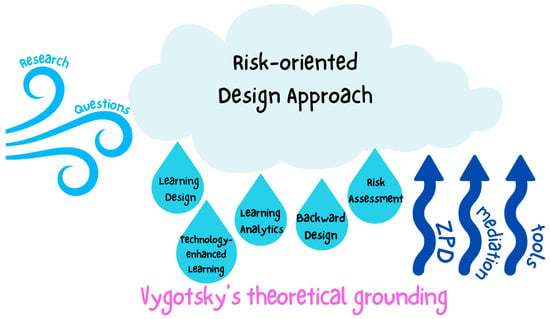
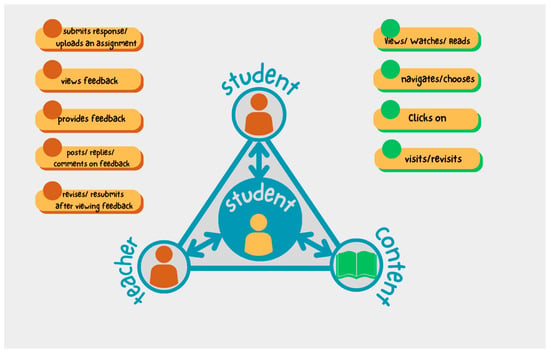
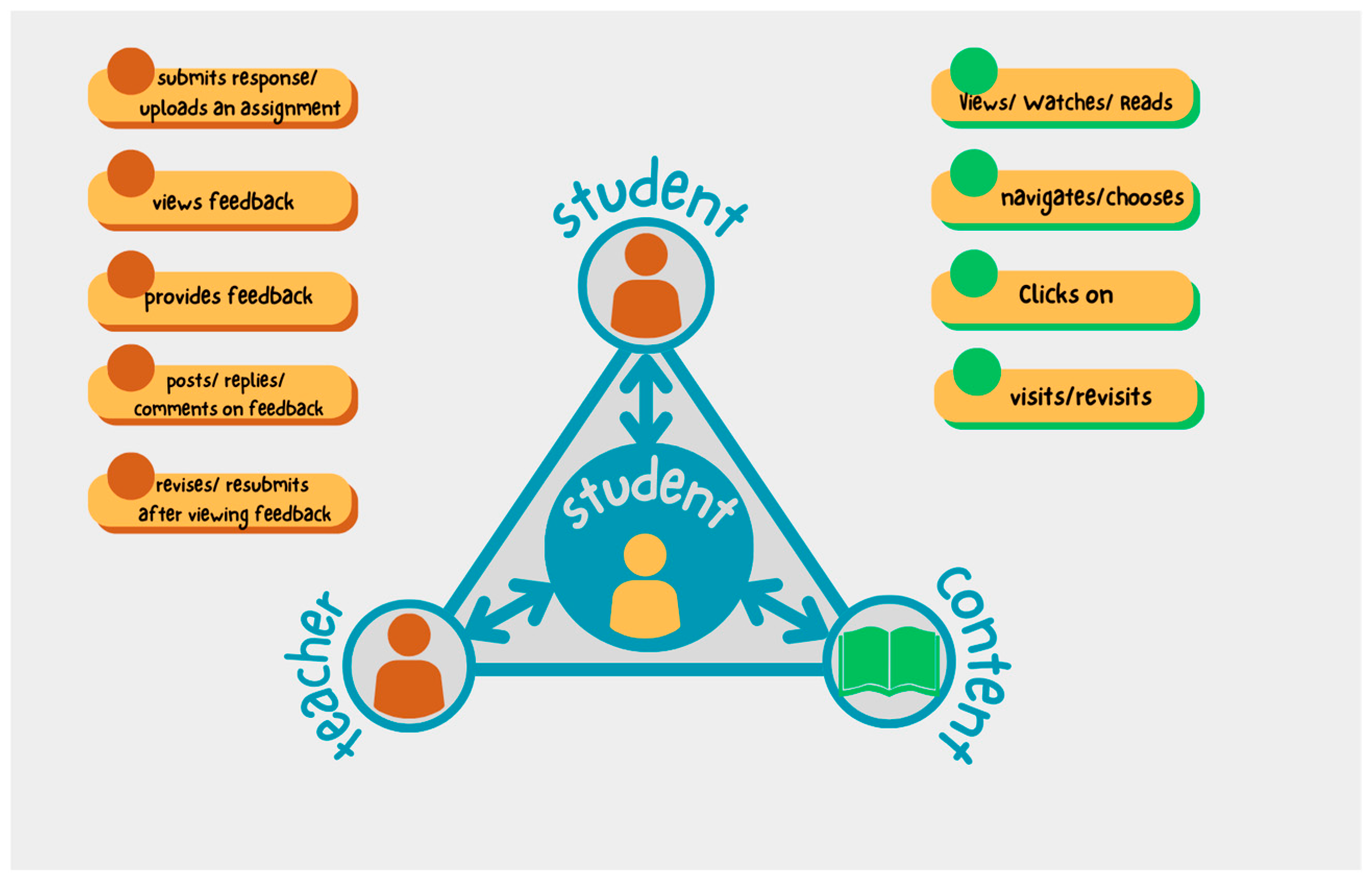
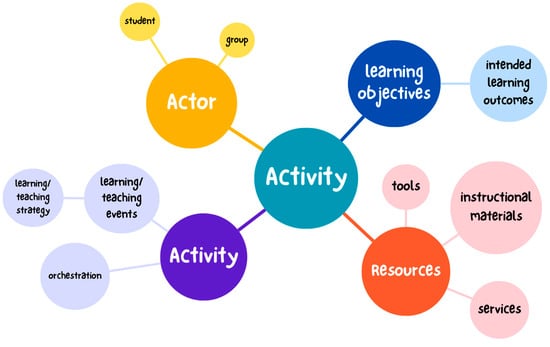
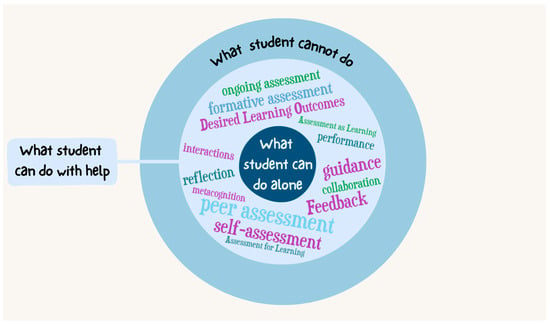
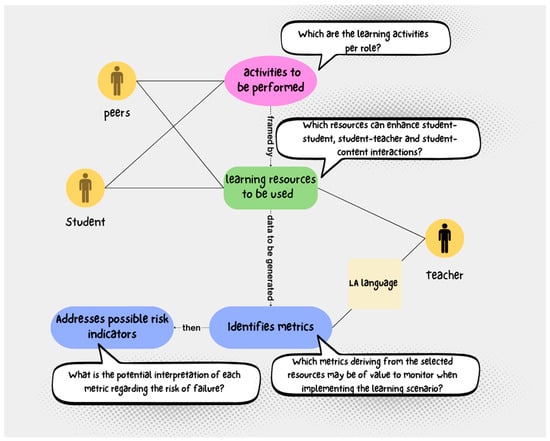
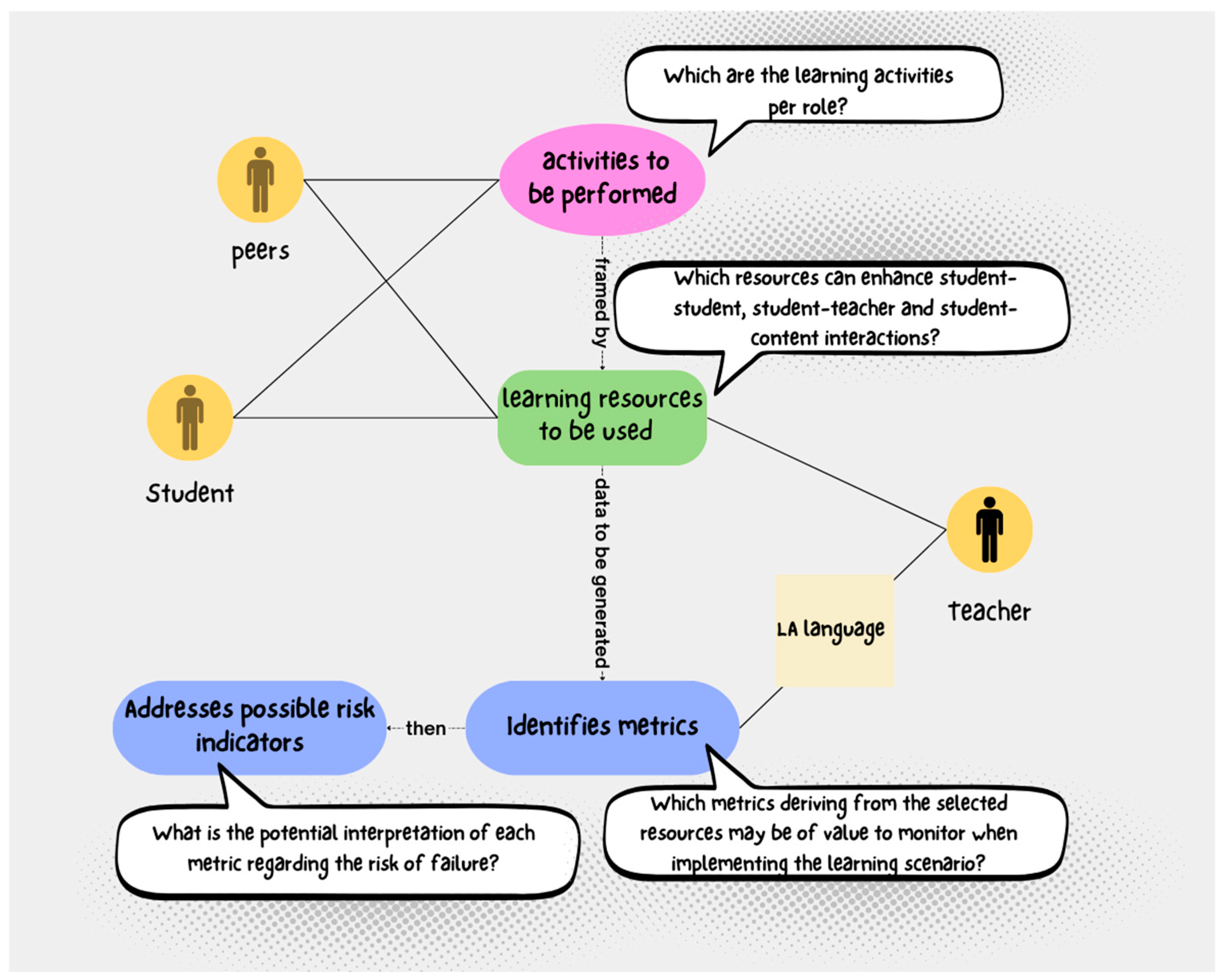
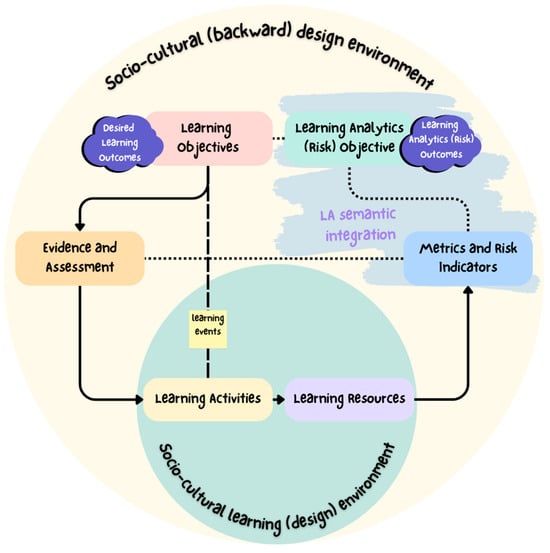
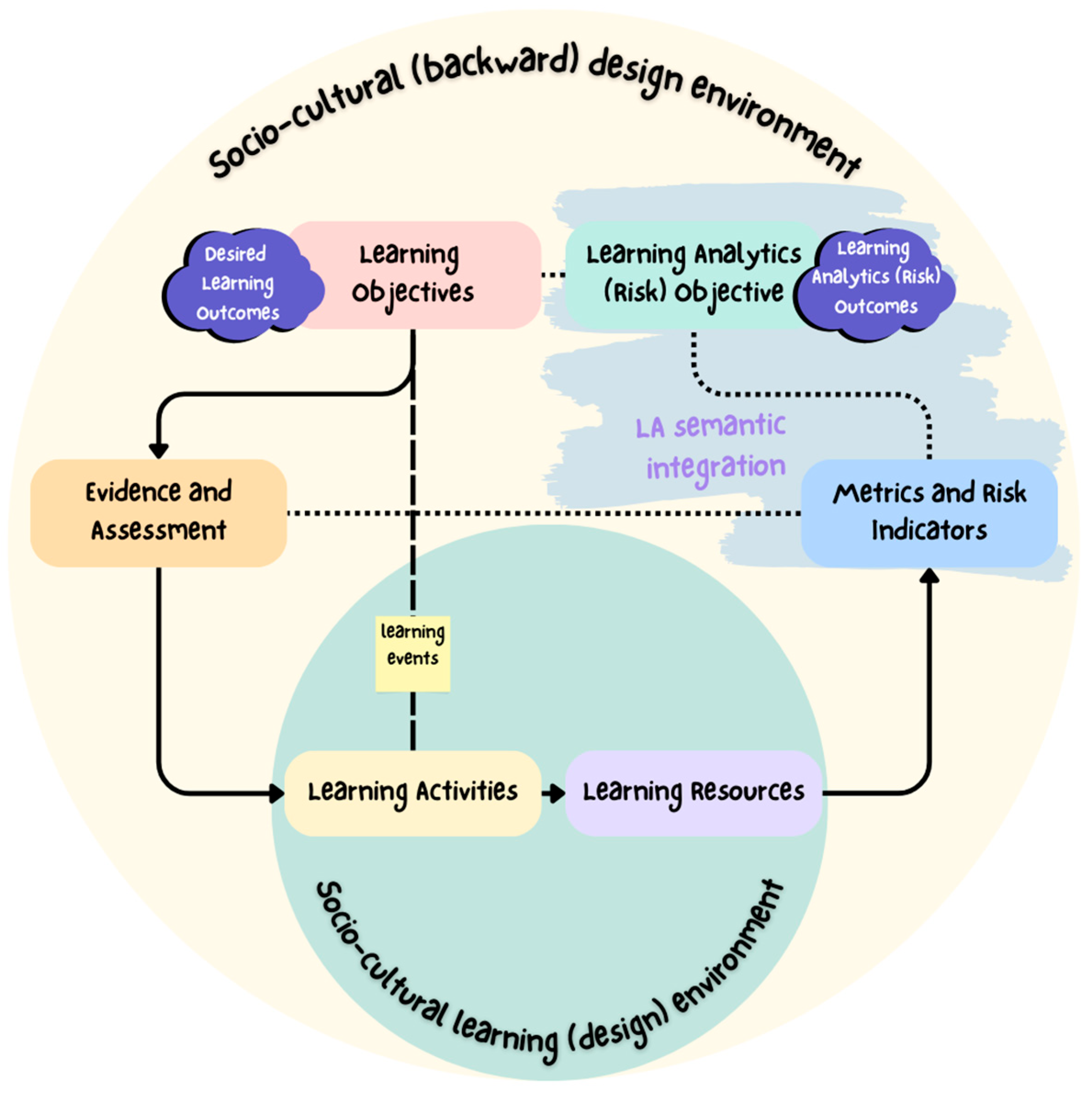
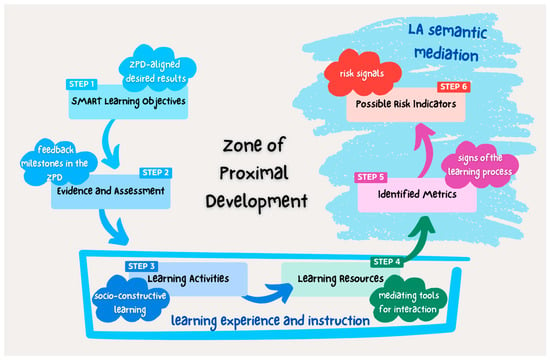
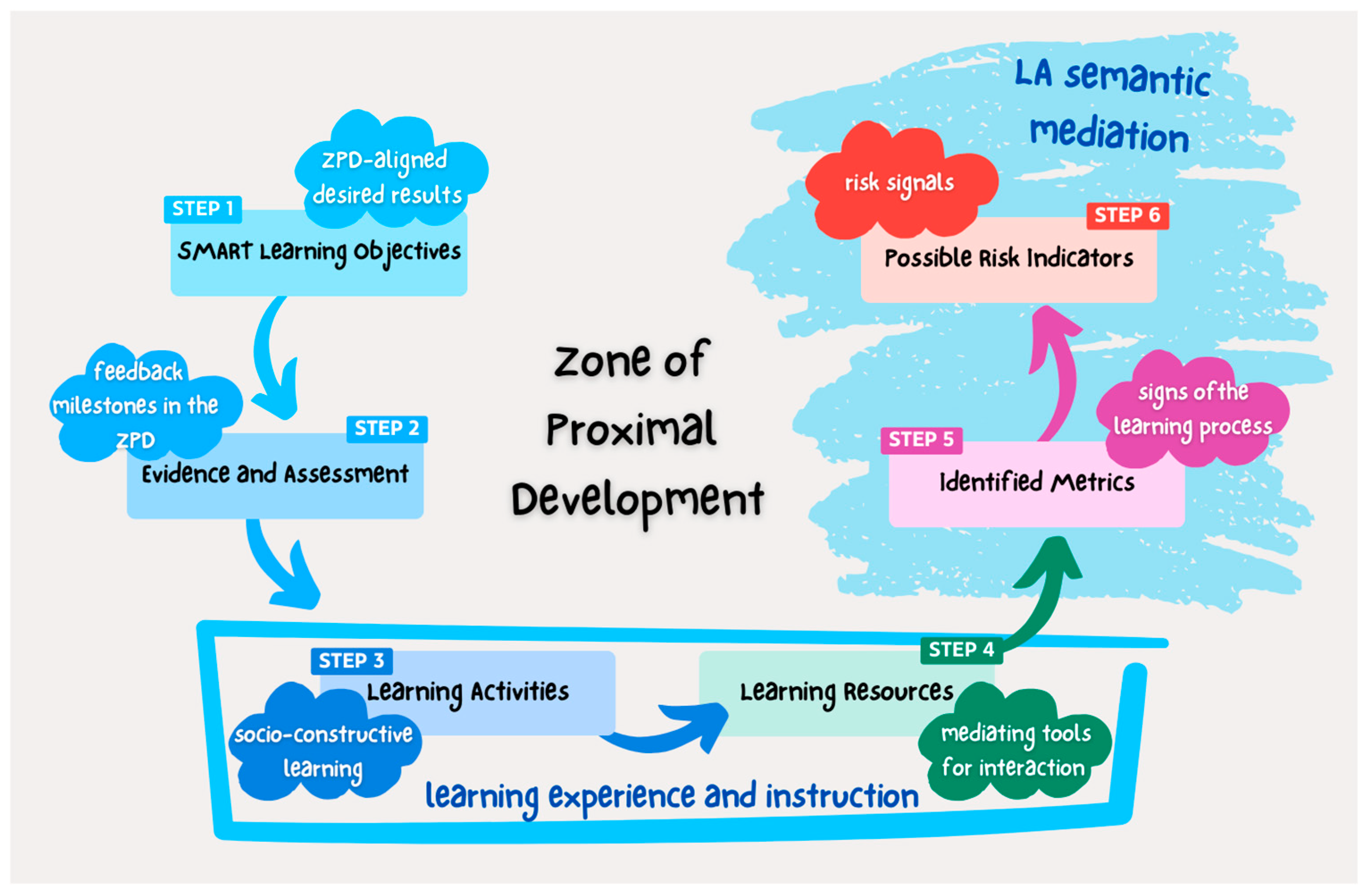
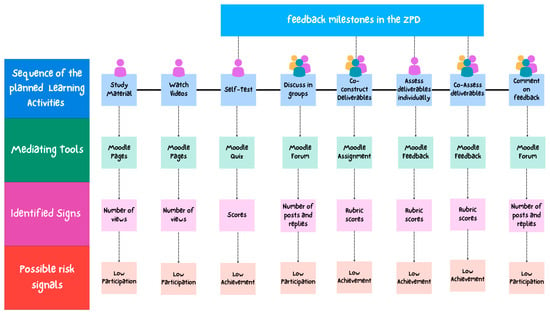
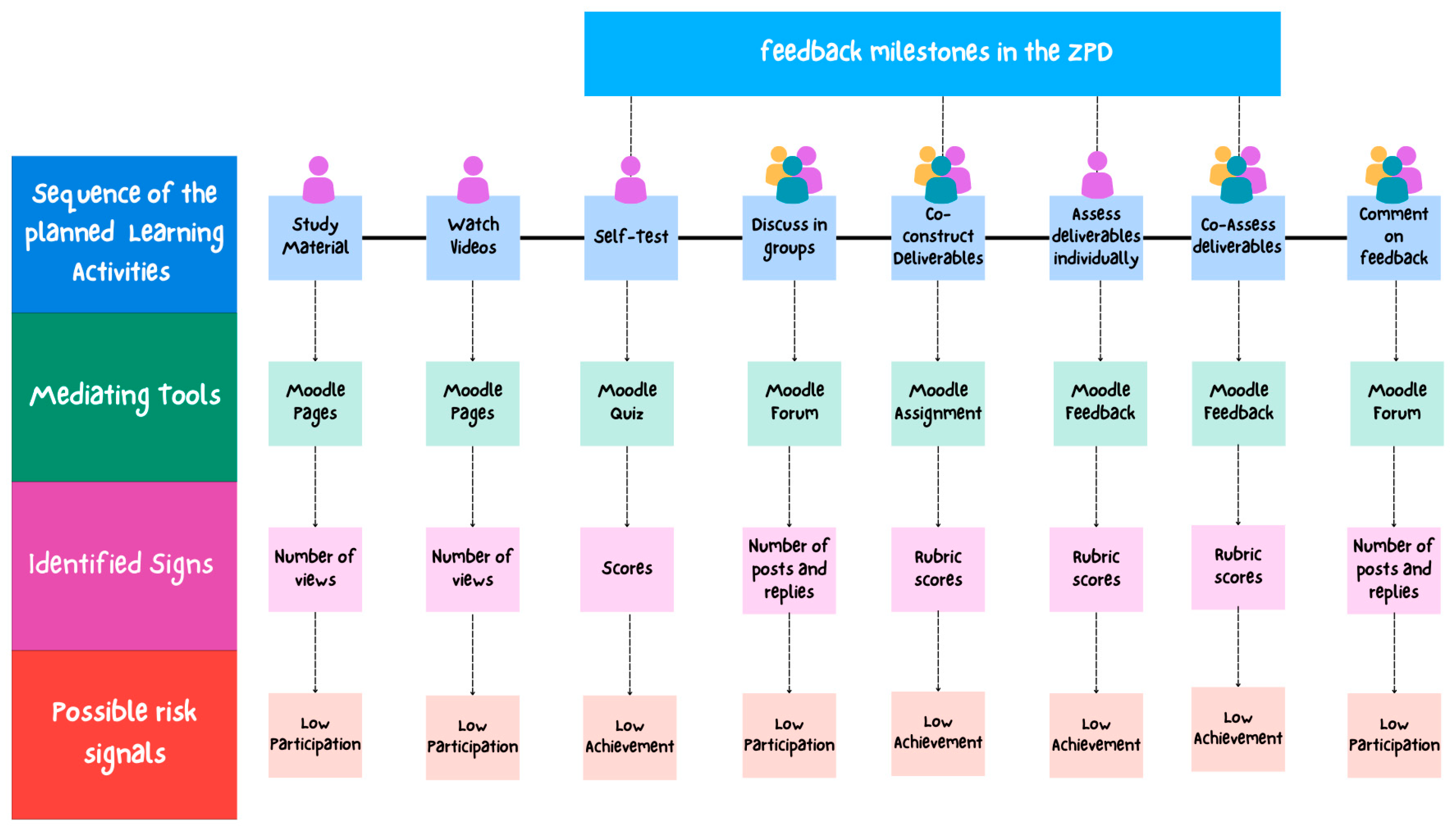
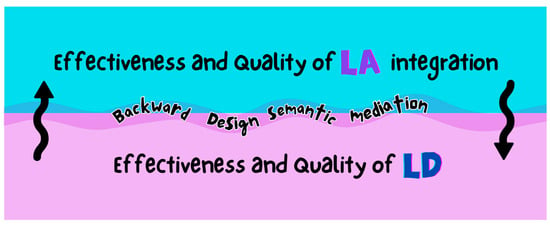
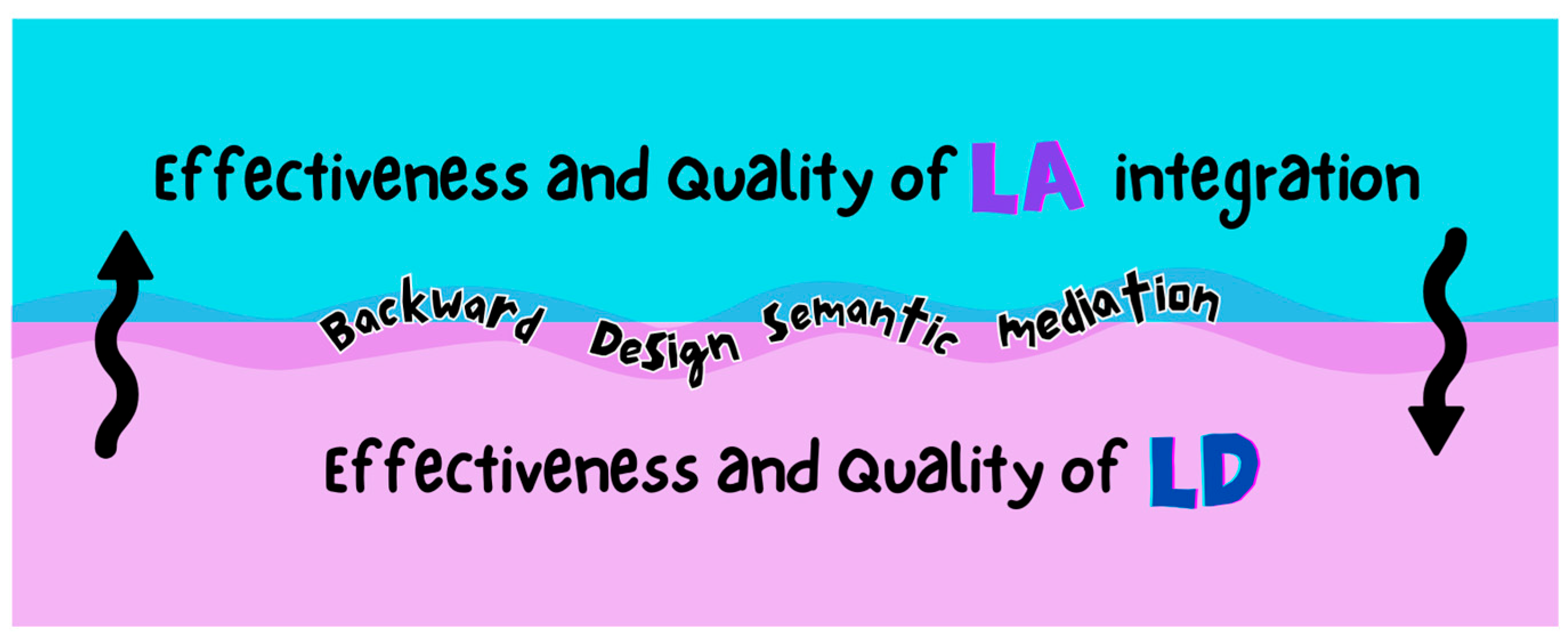
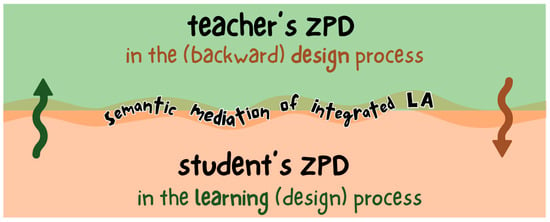
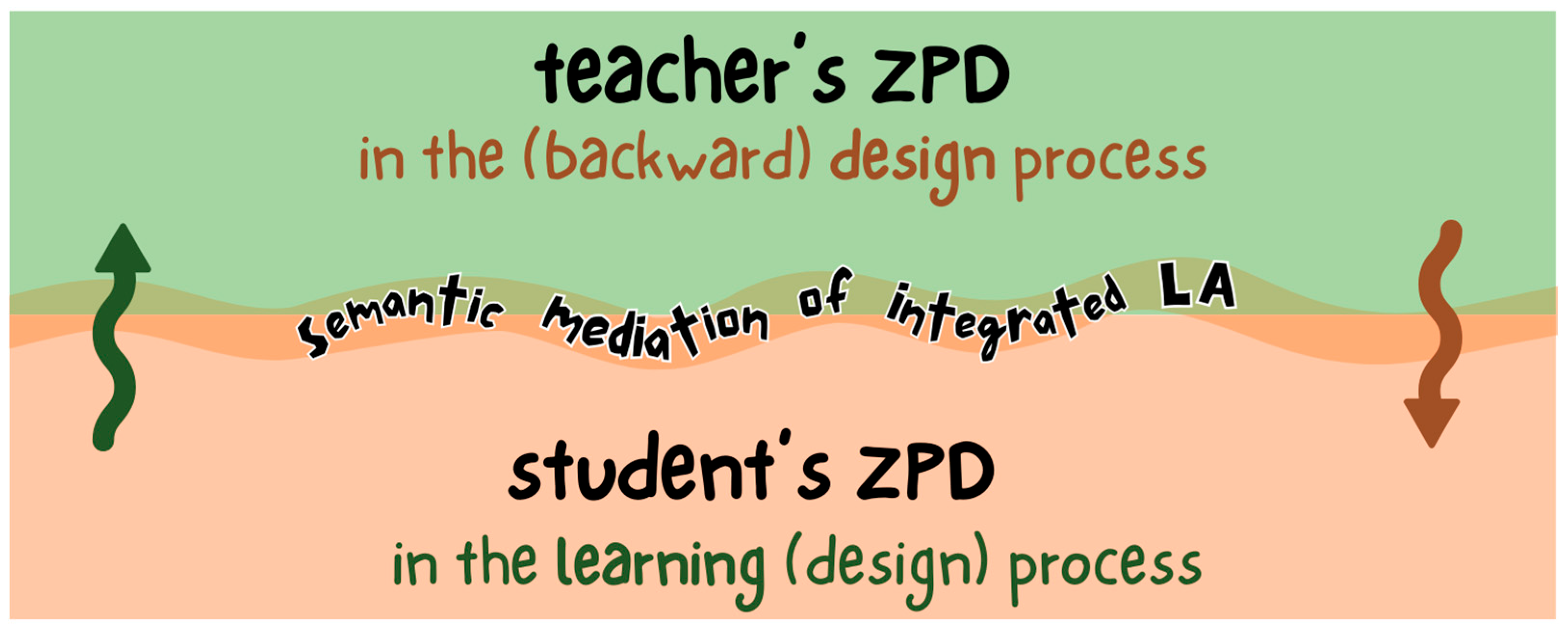
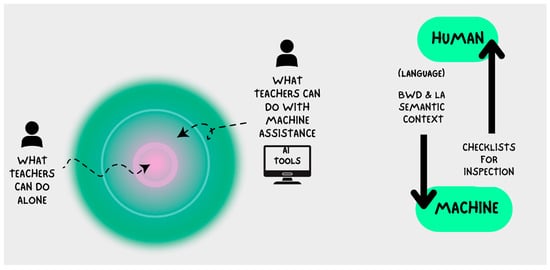
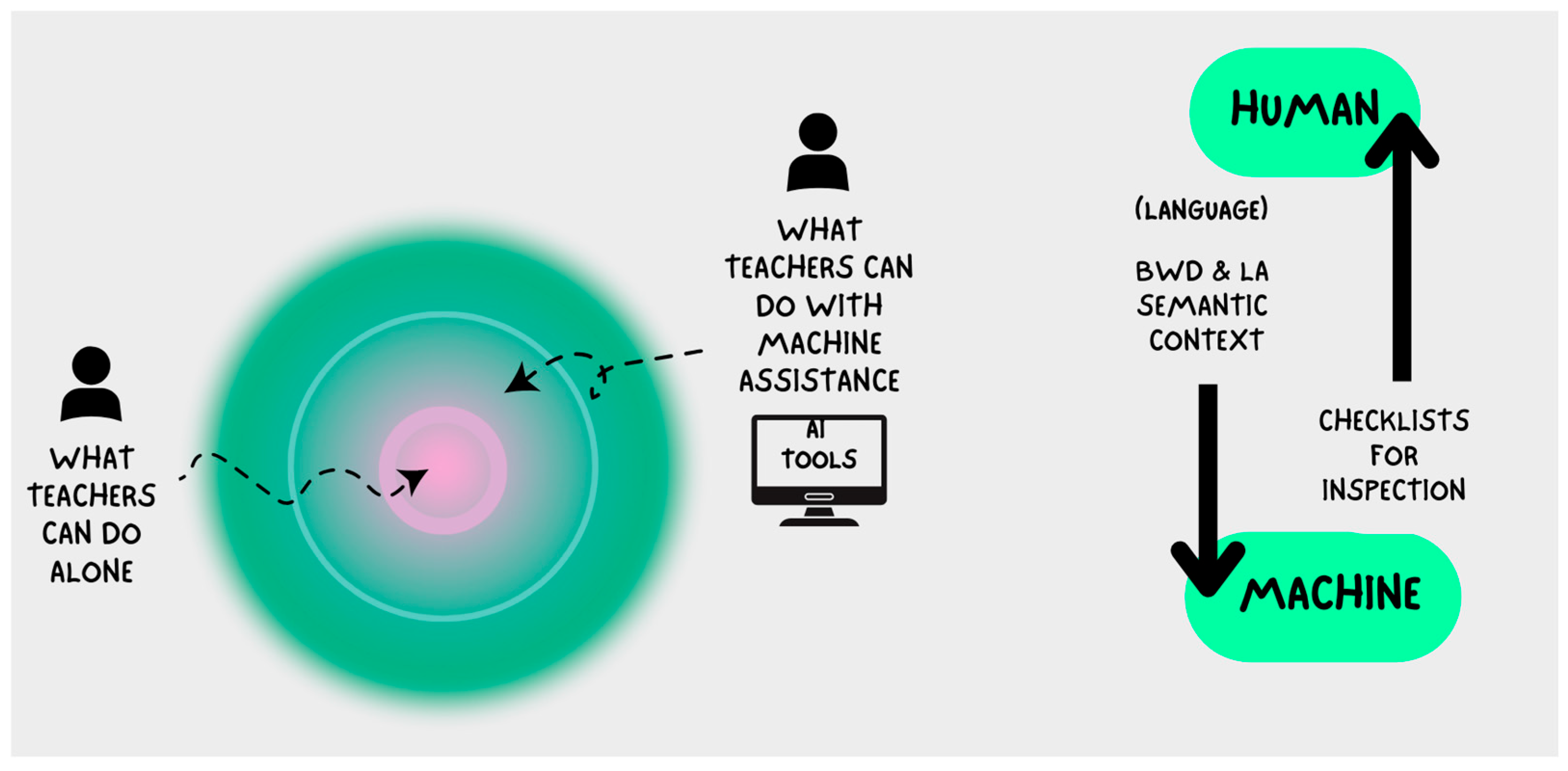
Disclaimer/Publisher’s Note: The statements, opinions and data contained in all publications are solely those of the individual author(s) and contributor(s) and not of MDPI and/or the editor(s). MDPI and/or the editor(s) disclaim responsibility for any injury to people or property resulting from any ideas, methods, instructions or products referred to in the content. |
© 2026 by the authors. Licensee MDPI, Basel, Switzerland. This article is an open access article distributed under the terms and conditions of the Creative Commons Attribution (CC BY) license.