Biomaterial-Based Strategies for Infection Control in Chronic Wounds


Abstract
1. Introduction
1.1. Chronic Wounds: Definitions and Challenges
1.2. Infection as a Barrier to Wound Healing
1.3. Role of Biomaterials in Wound Management
1.3.1. Structural and Protective Functions
1.3.2. Drug and Growth Factor Delivery
1.3.3. Immunomodulation and Microenvironment Regulation
1.3.4. Antimicrobial and Anti-Biofilm Capabilities
1.3.5. Clinical Potential and Limitations
2. Pathophysiology of Chronic Wound Infections
3. Biomaterial Origins
4. Antimicrobial Strategies Using Biomaterials
4.1. Drug- and Antibiotic-Loaded Biomaterials
4.2. Antimicrobial Peptide-Loaded Systems
4.3. Metal-Based Nanomaterials
4.4. Bacteriophages-Loaded Biomaterials
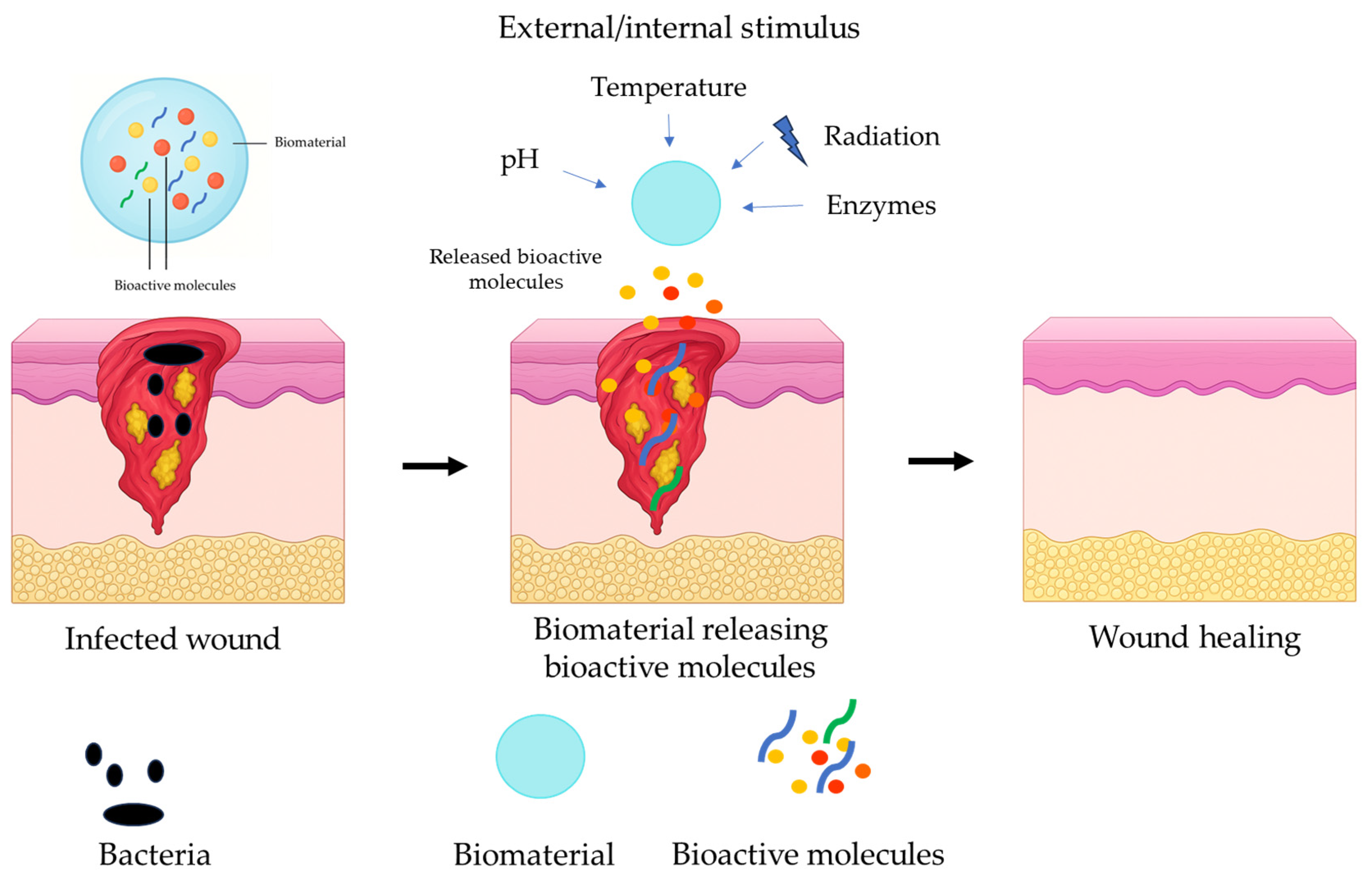
5. Smart and Responsive Biomaterials
5.1. MXene-Based Materials for Antimicrobial Wound Applications
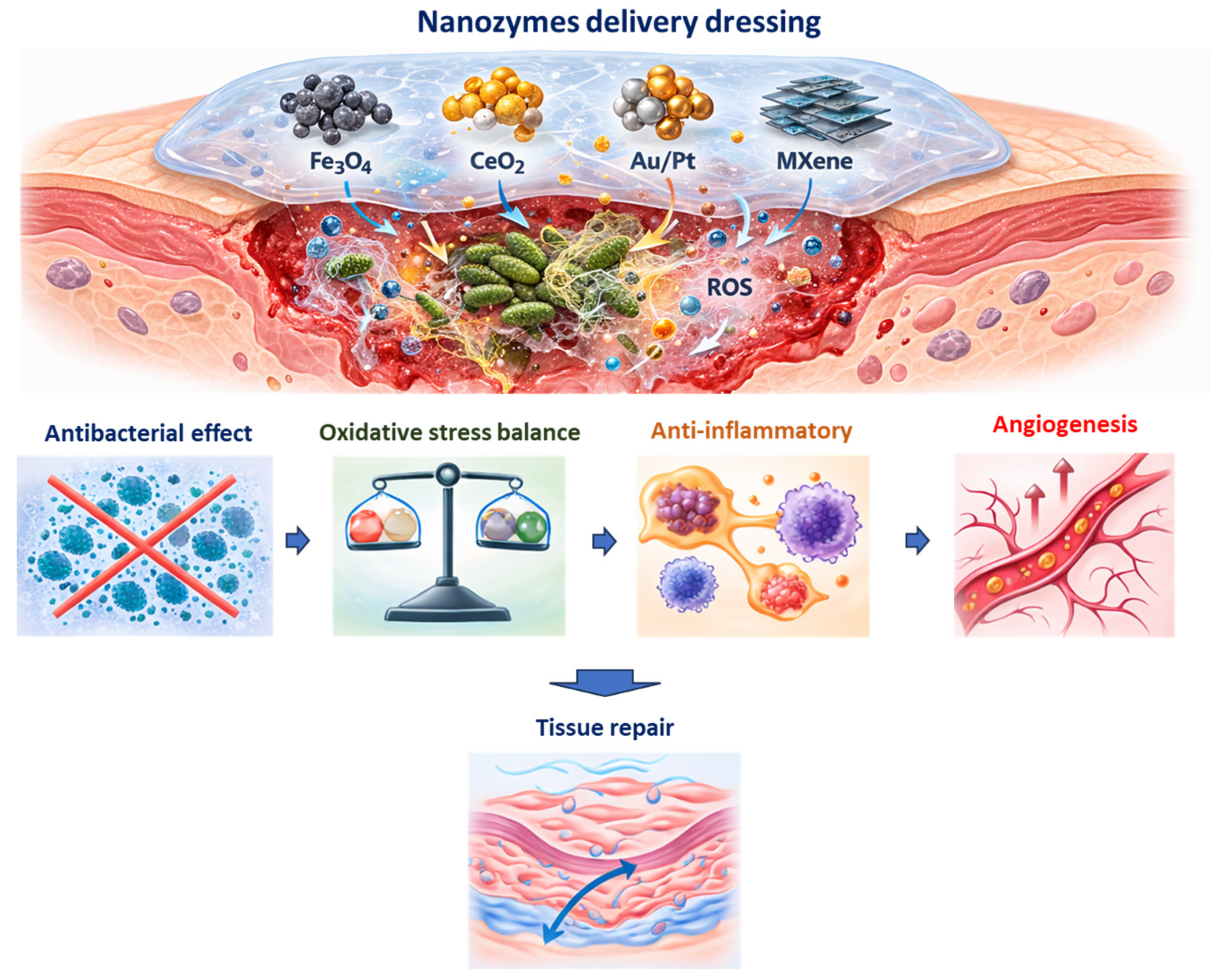
5.2. Nanozymes
5.3. Sonodynamic Therapy for Non-Invasive Infection Control
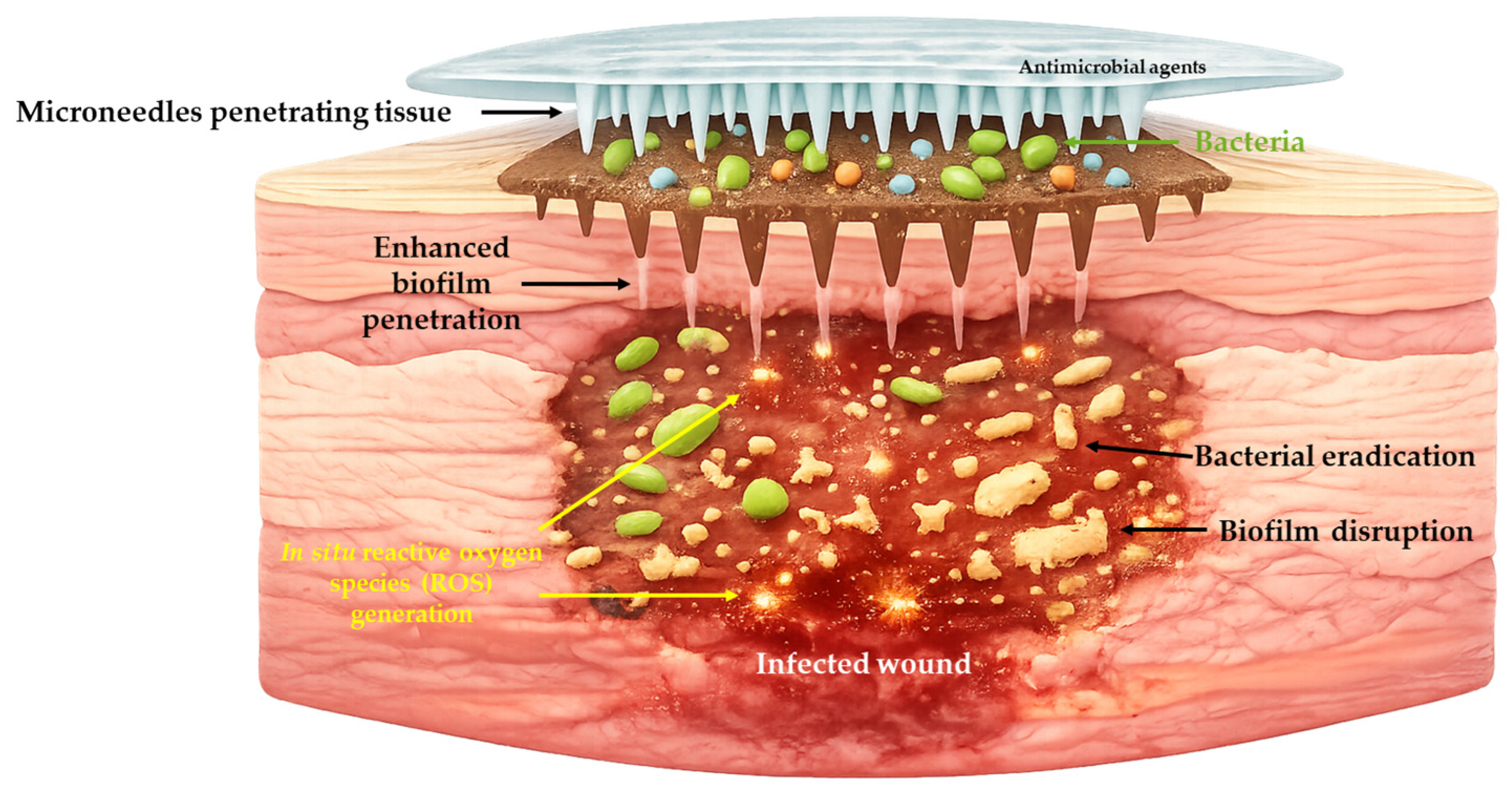
5.4. Microneedle Delivery Systems for Localized Antimicrobial Therapy
6. Role of Biomaterials in Modulating the Wound Microenvironment
7. Surfactants and Antioxidant-Based Biomaterials for Infection Control in Chronic Wound Healing
7.1. Poloxamers as Functional Surfactants in Wound Biomaterials
7.2. Melatonin as an Antioxidant and Immunomodulatory Agent
7.3. Curcumin and Other Antioxidants
8. Translational Challenges and Clinical Applications
9. Future Perspectives
10. Conclusions
Funding
Institutional Review Board Statement
Informed Consent Statement
Data Availability Statement
Conflicts of Interest
References
- Falanga, V.; Isseroff, R.R.; Soulika, A.M.; Romanelli, M.; Margolis, D.; Kapp, S.; Granick, M.; Harding, K. Chronic wounds. Nat. Rev. Dis. Primers 2022, 8, 50. [Google Scholar] [CrossRef] [Scilit]
- Frykberg, R.G.; Banks, J. Challenges in the Treatment of Chronic Wounds. Adv. Wound Care 2015, 4, 560–582. [Google Scholar] [CrossRef] [Scilit]
- Hunt, M.; Torres, M.; Bachar-Wikstrom, E.; Wikstrom, J.D. Multifaceted roles of mitochondria in wound healing and chronic wound pathogenesis. Front. Cell Dev. Biol. 2023, 11, 1252318. [Google Scholar] [CrossRef] [Scilit] [PubMed]
- Monika, P.; Chandraprabha, M.N.; Rangarajan, A.; Waiker, P.V.; Chidambara Murthy, K.N. Challenges in Healing Wound: Role of Complementary and Alternative Medicine. Front. Nutr. 2021, 8, 791899. [Google Scholar] [CrossRef] [Scilit] [PubMed]
- Papadopoulou, V.; Sidders, A.E.; Lu, K.Y.; Velez, A.Z.; Durham, P.G.; Bui, D.T.; Angeles-Solano, M.; Dayton, P.A.; Rowe, S.E. Overcoming biological barriers to improve treatment of a Staphylococcus aureus wound infection. Cell Chem. Biol. 2023, 30, 513–526.e515. [Google Scholar] [CrossRef] [Scilit]
- Zhang, S.J.; Xu, R.; He, S.B.; Sun, R.; Wang, G.N.; Wei, S.Y.; Yan, X.Y.; Fan, K.L. Nanozyme-driven multifunctional dressings: Moving beyond enzyme-like catalysis in chronic wound treatment. Mil. Med. Res. 2025, 12, 27. [Google Scholar] [CrossRef] [Scilit]
- Nguyen, H.M.; Ngoc Le, T.T.; Nguyen, A.T.; Thien Le, H.N.; Pham, T.T. Biomedical materials for wound dressing: Recent advances and applications. RSC Adv. 2023, 13, 5509–5528. [Google Scholar] [CrossRef] [Scilit] [PubMed]
- Chabria, Y.; Duffy, G.P.; Lowery, A.J.; Dwyer, R.M. Hydrogels: 3D Drug Delivery Systems for Nanoparticles and Extracellular Vesicles. Biomedicines 2021, 9, 1694. [Google Scholar] [CrossRef] [Scilit]
- Zegre, M.; Barros, J.; Ribeiro, I.A.C.; Santos, C.; Caetano, L.A.; Goncalves, L.; Monteiro, F.J.; Ferraz, M.P.; Bettencourt, A. Poly(DL-lactic acid) scaffolds as a bone targeting platform for the co-delivery of antimicrobial agents against mixed biofilms. Int. J. Pharm. 2022, 622, 121832. [Google Scholar] [CrossRef] [Scilit]
- Beheshtizadeh, N.; Gharibshahian, M.; Bayati, M.; Maleki, R.; Strachan, H.; Doughty, S.; Tayebi, L. Vascular endothelial growth factor (VEGF) delivery approaches in regenerative medicine. Biomed. Pharmacother. 2023, 166, 115301. [Google Scholar] [CrossRef] [Scilit] [PubMed]
- Ferraz, M.P. Advanced Nanotechnological Approaches for Biofilm Prevention and Control. Appl. Sci. 2024, 14, 8137. [Google Scholar] [CrossRef] [Scilit]
- Saberian, M.; Abak, N. Hydrogel-mediated delivery of platelet-derived exosomes: Innovations in tissue engineering. Heliyon 2024, 10, e24584. [Google Scholar] [CrossRef] [Scilit] [PubMed]
- Ferraz, M.P. Wound Dressing Materials: Bridging Material Science and Clinical Practice. Appl. Sci. 2025, 15, 1725. [Google Scholar] [CrossRef] [Scilit]
- Sousa, A.B.; Aguas, A.P.; Barbosa, M.A.; Barbosa, J.N. Immunomodulatory biomaterial-based wound dressings advance the healing of chronic wounds via regulating macrophage behavior. Regen. Biomater. 2022, 9, rbac065. [Google Scholar] [CrossRef] [Scilit]
- Pereira, A.B.V.; Terroso, M.S.; Gonçalves, H.; Catita, J.; Santos, D.; Baptista, R.M.F.; Monteiro, F.J.; Lopes, C.M.; Lúcio, M.; Ferraz, M.P. Hybrid nano-scaffolds loaded with resveratrol and Omega-3 fatty Acids: An innovative antimicrobial strategy against biofilm. Int. J. Pharm. 2025, 680, 125784. [Google Scholar] [CrossRef] [Scilit] [PubMed]
- Pereira, A.B.V.; Terroso, M.S.; Gonçalves, H.; Catita, J.; Santos, D.; Baptista, R.M.F.; Monteiro, F.J.; Lúcio, M.; Lopes, C.M.; Ferraz, M.P. Quercetin and omega-3 fatty acids-loaded lipid hybrid nanoassemblies as promising antimicrobial biofilm strategies. Mater. Today Nano 2025, 32, 100677. [Google Scholar] [CrossRef] [Scilit]
- Ribeiro, M.; Ferraz, M.P.; Monteiro, F.J.; Fernandes, M.H.; Beppu, M.M.; Mantione, D.; Sardon, H. Antibacterial silk fibroin/nanohydroxyapatite hydrogels with silver and gold nanoparticles for bone regeneration. Nanomed. Nanotechnol. 2017, 13, 231–239. [Google Scholar] [CrossRef] [Scilit] [PubMed]
- Grenho, L.; Monteiro, F.J.; Ferraz, M.P. In vitro analysis of the antibacterial effect of nanohydroxyapatite-ZnO composites. J. Biomed. Mater. Res. A 2014, 102, 3726–3733. [Google Scholar] [CrossRef] [Scilit]
- Barros, J.; Monteiro, F.J.; Ferraz, M.P. Bioengineering Approaches to Fight against Orthopedic Biomaterials Related-Infections. Int. J. Mol. Sci. 2022, 23, 11658. [Google Scholar] [CrossRef] [Scilit]
- Kasapgil, E.; Garay-Sarmiento, M.; Rodriguez-Emmenegger, C. Advanced Antibacterial Strategies for Combatting Biomaterial-Associated Infections: A Comprehensive Review. Wiley Interdiscip. Rev. Nanomed. Nanobiotechnol. 2024, 16, e2018. [Google Scholar] [CrossRef] [Scilit]
- Landa, G.; Mendoza, G.; Irusta, S.; Arruebo, M. Bacteria-Responsive Nanostructured Drug Delivery Systems for Targeted Antimicrobial Therapy. Adv. Mater. 2025, e10355. [Google Scholar] [CrossRef] [Scilit]
- Fadilah, N.I.M.; Maarof, M.; Motta, A.; Tabata, Y.; Fauzi, M.B. The Discovery and Development of Natural-Based Biomaterials with Demonstrated Wound Healing Properties: A Reliable Approach in Clinical Trials. Biomedicines 2022, 10, 2226. [Google Scholar] [CrossRef] [Scilit] [PubMed]
- Alberts, A.; Tudorache, D.I.; Niculescu, A.G.; Grumezescu, A.M. Advancements in Wound Dressing Materials: Highlighting Recent Progress in Hydrogels, Foams, and Antimicrobial Dressings. Gels 2025, 11, 123. [Google Scholar] [CrossRef] [Scilit]
- Tian, S.; Bian, W. Advanced biomaterials in pressure ulcer prevention and care: From basic research to clinical practice. Front. Bioeng. Biotechnol. 2025, 13, 1535588. [Google Scholar] [CrossRef] [Scilit]
- Diban, F.; Di Lodovico, S.; Di Fermo, P.; D’Ercole, S.; D’Arcangelo, S.; Di Giulio, M.; Cellini, L. Biofilms in Chronic Wound Infections: Innovative Antimicrobial Approaches Using the In Vitro Lubbock Chronic Wound Biofilm Model. Int. J. Mol. Sci. 2023, 24, 1004. [Google Scholar] [CrossRef] [Scilit] [PubMed]
- Wilkinson, H.N.; Hardman, M.J. Wound healing: Cellular mechanisms and pathological outcomes. Open Biol. 2020, 10, 200223. [Google Scholar] [CrossRef] [Scilit] [PubMed]
- Pastar, I.; Balukoff, N.C.; Marjanovic, J.; Chen, V.Y.; Stone, R.C.; Tomic-Canic, M. Molecular Pathophysiology of Chronic Wounds: Current State and Future Directions. Cold Spring Harb. Perspect. Biol. 2023, 15, a041237. [Google Scholar] [CrossRef] [Scilit]
- Oliveira, C.; Sousa, D.; Teixeira, J.A.; Ferreira-Santos, P.; Botelho, C.M. Polymeric biomaterials for wound healing. Front. Bioeng. Biotechnol. 2023, 11, 1136077. [Google Scholar] [CrossRef] [Scilit] [PubMed]
- Ansari, M.; Darvishi, A. A review of the current state of natural biomaterials in wound healing applications. Front. Bioeng. Biotechnol. 2024, 12, 1309541. [Google Scholar] [CrossRef] [Scilit]
- Zhang, H.; Lin, X.; Cao, X.; Wang, Y.; Wang, J.; Zhao, Y. Developing natural polymers for skin wound healing. Bioact. Mater. 2024, 33, 355–376. [Google Scholar] [CrossRef] [Scilit] [PubMed]
- Chattopadhyay, S.; Raines, R.T. Review collagen-based biomaterials for wound healing. Biopolymers 2014, 101, 821–833. [Google Scholar] [CrossRef] [Scilit] [PubMed]
- Rajinikanth, B.S.; Rajkumar, D.S.R.; Keerthika, K.; Vijayaragavan, V. Chitosan-Based Biomaterial in Wound Healing: A Review. Cureus 2024, 16, e55193. [Google Scholar] [CrossRef] [Scilit] [PubMed]
- Aderibigbe, B.A.; Buyana, B. Alginate in Wound Dressings. Pharmaceutics 2018, 10, 42. [Google Scholar] [CrossRef] [Scilit] [PubMed]
- Wu, G.; Zhong, C.; Tian, X.; Zha, L.; Hou, L.; Feng, X. Emerging roles of hyaluronic acid hydrogels in cancer treatment and wound healing: A review. Int. J. Biol. Macromol. 2025, 303, 140442. [Google Scholar] [CrossRef] [Scilit] [PubMed]
- Liang, W.; Ni, N.; Huang, Y.; Lin, C. An Advanced Review: Polyurethane-Related Dressings for Skin Wound Repair. Polymers 2023, 15, 4301. [Google Scholar] [CrossRef] [Scilit]
- Robles, K.N.; Zahra, F.T.; Mu, R.; Giorgio, T. Advances in Electrospun Poly(ε-caprolactone)-Based Nanofibrous Scaffolds for Tissue Engineering. Polymers 2024, 16, 2853. [Google Scholar] [CrossRef] [Scilit]
- Mo, Y.; Zhou, T.; Li, W.; Niu, Y.; Sheu, C. Advances in Nanohybrid Hydrogels for Wound Healing: From Functional Mechanisms to Translational Prospects. Gels 2025, 11, 483. [Google Scholar] [CrossRef] [Scilit]
- Gill, A.S.; Sood, M.; Deol, P.K.; Kaur, I.P. Synthetic polymer based electrospun scaffolds for wound healing applications. J. Drug Deliv. Sci. Tec. 2023, 89, 105054. [Google Scholar] [CrossRef] [Scilit]
- Prete, S.; Dattilo, M.; Patitucci, F.; Pezzi, G.; Parisi, O.I.; Puoci, F. Natural and Synthetic Polymeric Biomaterials for Application in Wound Management. J. Funct. Biomater. 2023, 14, 455. [Google Scholar] [CrossRef] [Scilit]
- Phadtare, P.; Viswapriya, V.; Shinde, V.; Mathure, D.; Salunke, M.R. Hybrid bionanocomposites as the advancements in biomedical utility. Hybrid. Adv. 2025, 8, 100365. [Google Scholar] [CrossRef] [Scilit]
- Miron, A.; Giurcaneanu, C.; Mihai, M.M.; Beiu, C.; Voiculescu, V.M.; Popescu, M.N.; Soare, E.; Popa, L.G. Antimicrobial Biomaterials for Chronic Wound Care. Pharmaceutics 2023, 15, 1606. [Google Scholar] [CrossRef] [Scilit]
- Liang, Y.; Liang, Y.; Zhang, H.; Guo, B. Antibacterial biomaterials for skin wound dressing. Asian J. Pharm. Sci. 2022, 17, 353–384. [Google Scholar] [CrossRef] [Scilit]
- Fadilah, N.I.M.; Nizam, N.A.A.K.; Fauzi, M.B. Antibacterial compounds-incorporated functional biomaterials for chronic wound healing application via 3D bioprinting: The mechanism of action. Int. J. Bioprinting 2024, 10, 3372. [Google Scholar] [CrossRef] [Scilit]
- Kalelkar, P.P.; Riddick, M.; García, A.J. Biomaterial-based delivery of antimicrobial therapies for the treatment of bacterial infections. Nat. Rev. Mater. 2022, 7, 39–54. [Google Scholar] [CrossRef] [Scilit] [PubMed]
- Fenton, O.S.; Olafson, K.N.; Pillai, P.S.; Mitchell, M.J.; Langer, R. Advances in Biomaterials for Drug Delivery. Adv. Mater. 2018, 30, e1705328. [Google Scholar] [CrossRef] [Scilit] [PubMed]
- Trucillo, P. Biomaterials for Drug Delivery and Human Applications. Materials 2024, 17, 456. [Google Scholar] [CrossRef] [Scilit]
- Kanaujia, K.A.; Mishra, N.; Rajinikanth, P.S.; Saraf, S.A. Antimicrobial peptides as antimicrobials for wound care management: A comprehensive review. J. Drug Deliv. Sci. Tec. 2024, 95, 105570. [Google Scholar] [CrossRef] [Scilit]
- Adnan, S.B.; Maarof, M.; Fauzi, M.B.; Md Fadilah, N.I. Antimicrobial Peptides in Wound Healing and Skin Regeneration: Dual Roles in Immunity and Microbial Defense. Int. J. Mol. Sci. 2025, 26, 5920. [Google Scholar] [CrossRef] [Scilit] [PubMed]
- Rai, A.; Ferrao, R.; Marta, D.; Vilaca, A.; Lino, M.; Rondao, T.; Ji, J.; Paiva, A.; Ferreira, L. Antimicrobial Peptide-Tether Dressing Able to Enhance Wound Healing by Tissue Contact. ACS Appl. Mater. Interfaces 2022, 14, 24213–24228. [Google Scholar] [CrossRef] [Scilit]
- Liang, C.; Wang, H.; Lin, Z.; Zhang, C.; Liu, G.; Hu, Y. Augmented wound healing potential of photosensitive GelMA hydrogel incorporating antimicrobial peptides and MXene nanoparticles. Front. Bioeng. Biotechnol. 2023, 11, 1310349. [Google Scholar] [CrossRef] [Scilit] [PubMed]
- Zhang, C.; Meng, L.; Sethi, G.; Wang, J.; Li, B. Peptide-driven approaches in advanced wound healing materials. Drug Discov. Today 2025, 30, 104440. [Google Scholar] [CrossRef] [Scilit]
- Alzain, M.; Daghistani, H.; Shamrani, T.; Almoghrabi, Y.; Daghistani, Y.; Alharbi, O.S.; Sait, A.M.; Mufrrih, M.; Alhazmi, W.; Alqarni, M.A.; et al. Antimicrobial Peptides: Mechanisms, Applications, and Therapeutic Potential. Infect. Drug Resist. 2025, 18, 4385–4426. [Google Scholar] [CrossRef] [Scilit]
- Zheng, Q.; Chen, C.; Liu, Y.; Gao, J.; Li, L.; Yin, C.; Yuan, X. Metal Nanoparticles: Advanced and Promising Technology in Diabetic Wound Therapy. Int. J. Nanomed. 2024, 19, 965–992. [Google Scholar] [CrossRef] [Scilit]
- Mendes, C.; Thirupathi, A.; Correa, M.; Gu, Y.; Silveira, P.C.L. The Use of Metallic Nanoparticles in Wound Healing: New Perspectives. Int. J. Mol. Sci. 2022, 23, 15376. [Google Scholar] [CrossRef] [Scilit] [PubMed]
- Faghani, G.; Azarniya, A. Emerging nanomaterials for novel wound dressings: From metallic nanoparticles and MXene nanosheets to metal-organic frameworks. Heliyon 2024, 10, e39611. [Google Scholar] [CrossRef] [Scilit] [PubMed]
- Wang, Y.; Yu, Y. Phage therapy as a revitalized weapon for treating clinical diseases. Microbiome Res. Rep. 2025, 4, 35. [Google Scholar] [CrossRef] [Scilit] [PubMed]
- Pinto, A.M.; Cerqueira, M.A.; Banobre-Lopes, M.; Pastrana, L.M.; Sillankorva, S. Bacteriophages for Chronic Wound Treatment: From Traditional to Novel Delivery Systems. Viruses 2020, 12, 235. [Google Scholar] [CrossRef] [Scilit] [PubMed]
- Jault, P.; Leclerc, T.; Jennes, S.; Pirnay, J.P.; Que, Y.A.; Resch, G.; Rousseau, A.F.; Ravat, F.; Carsin, H.; Le Floch, R.; et al. Efficacy and tolerability of a cocktail of bacteriophages to treat burn wounds infected by Pseudomonas aeruginosa (PhagoBurn): A randomised, controlled, double-blind phase 1/2 trial. Lancet Infect. Dis. 2019, 19, 35–45. [Google Scholar] [CrossRef] [Scilit] [PubMed]
- Fukaya-Shiba, A.; Ogata, A.; Kuribayashi, R.; Sakurai, A.; Suzuki, K.; Takadama, S.; Nishimura, J.; Uchiyama, J.; Ohge, H.; Takeuchi, T.; et al. Regulatory considerations for developing phage therapy medicinal products for the treatment of antimicrobial resistant bacterial infections. Front. Pharmacol. 2025, 16, 1713471. [Google Scholar] [CrossRef] [Scilit]
- Ferraz, M.P. Phage Therapy for Bone and Joint Infections: Challenges, Biological Dynamics, and Therapeutic Prospects in the Era of Antimicrobial Resistance. Appl. Sci. 2026, 16, 2002. [Google Scholar] [CrossRef] [Scilit]
- Saghazadeh, S.; Rinoldi, C.; Schot, M.; Kashaf, S.S.; Sharifi, F.; Jalilian, E.; Nuutila, K.; Giatsidis, G.; Mostafalu, P.; Derakhshandeh, H.; et al. Drug delivery systems and materials for wound healing applications. Adv. Drug Deliv. Rev. 2018, 127, 138–166. [Google Scholar] [CrossRef] [Scilit]
- Li, H.; Li, B.; Lv, D.; Li, W.; Lu, Y.; Luo, G. Biomaterials releasing drug responsively to promote wound healing via regulation of pathological microenvironment. Adv. Drug Deliv. Rev. 2023, 196, 114778. [Google Scholar] [CrossRef] [Scilit] [PubMed]
- Shi, Y.; Guo, S.; Tian, J.; Xie, X.; Shi, J.; Zhang, X.; Wang, C. Biomaterials-mediated sequential drug delivery: Emerging trends for wound healing. Asian J. Pharm. Sci. 2025, 20, 101088. [Google Scholar] [CrossRef] [Scilit] [PubMed]
- Kusnadi, K.; Herdiana, Y.; Rochima, E.; Putra, O.N.; Mohd Gazzali, A.; Muchtaridi, M. Collagen-Based Nanoparticles as Drug Delivery System in Wound Healing Applications. Int. J. Nanomed. 2024, 19, 11321–11341. [Google Scholar] [CrossRef] [Scilit] [PubMed]
- He, X.; Han, Z.; Ruan, Y.; Wang, Z.; Liao, B.; Li, X.; Tan, J.; Han, X.; Shen, J.; Bai, D. Smart responsive biomaterials for spatiotemporal modulation of functional tissue repair. Mater. Today Bio 2025, 33, 102063. [Google Scholar] [CrossRef] [Scilit] [PubMed]
- Xu, Z.; Fan, J.L.; Tian, W.G.; Ji, X.; Cui, Y.Q.; Nan, Q.Y.; Sun, F.F.; Zhang, J. Cellulose-Based pH-Responsive Janus Dressing with Unidirectional Moisture Drainage for Exudate Management and Diabetic Wounds Healing. Adv. Funct. Mater. 2024, 34, 2307449. [Google Scholar] [CrossRef] [Scilit]
- Pogorielov, M.; Smyrnova, K.; Kyrylenko, S.; Gogotsi, O.; Zahorodna, V.; Pogrebnjak, A. MXenes—A New Class of Two-Dimensional Materials: Structure, Properties and Potential Applications. Nanomaterials 2021, 11, 3412. [Google Scholar] [CrossRef] [Scilit]
- Zarepour, A.; Rafati, N.; Khosravi, A.; Rabiee, N.; Iravani, S.; Zarrabi, A. MXene-based composites in smart wound healing and dressings. Nanoscale Adv. 2024, 6, 3513–3532. [Google Scholar] [CrossRef] [Scilit]
- Hu, Y.L.; Wang, F.F.; Ye, H.; Jiang, J.A.; Li, S.K.; Dai, B.Y.; Li, J.H.; Yang, J.; Song, X.J.; Zhang, J.J.; et al. MXene-based flexible electronic materials for wound infection detection and treatment. npj Flex. Electron. 2024, 8, 30. [Google Scholar] [CrossRef] [Scilit]
- Luo, D.; Zhang, H.Q.; Xuanyuan, X.Y.; Deng, D.; Lu, Z.M.; Liu, W.S.; Li, M. MXene-Derived Multifunctional Biomaterials: New Opportunities for Wound Healing. Biomater. Res. 2025, 29, 0143. [Google Scholar] [CrossRef] [Scilit]
- Santos, X.; Álvarez, M.; Videira-Quintela, D.; Mediero, A.; Rodríguez, J.; Guillén, F.; Pozuelo, J.; Martín, O. Antibacterial Capability of MXene (Ti3C2Tx) to Produce PLA Active Contact Surfaces for Food Packaging Applications. Membranes 2022, 12, 1146. [Google Scholar] [CrossRef] [Scilit]
- Ferrara, V.; Perfili, C.; Artemi, G.; Iacolino, B.; Sciandra, F.; Perini, G.; Fusco, L.; Pogorielov, M.; Delogu, L.G.; Papi, M.; et al. Advanced approaches in skin wound healing—A review on the multifunctional properties of MXenes in therapy and sensing. Nanoscale 2024, 16, 18684–18714. [Google Scholar] [CrossRef] [Scilit]
- Ye, S.; Zhang, H.; Lai, H.; Xu, J.; Yu, L.; Ye, Z.; Yang, L. MXene: A wonderful nanomaterial in antibacterial. Front. Bioeng. Biotechnol. 2024, 12, 1338539. [Google Scholar] [CrossRef] [Scilit] [PubMed]
- Cao, W.; Nie, J.; Cao, Y.; Gao, C.; Wang, M.; Wang, W.; Lu, X.; Ma, X.; Zhong, P. A review of how to improve Ti3C2Tx MXene stability. Chem. Eng. J. 2024, 496, 154097. [Google Scholar] [CrossRef] [Scilit]
- Niu, X.; Liu, B.; Hu, P.; Zhu, H.; Wang, M. Nanozymes with Multiple Activities: Prospects in Analytical Sensing. Biosensors 2022, 12, 251. [Google Scholar] [CrossRef] [Scilit] [PubMed]
- Mo, F.; Zhang, M.; Duan, X.; Lin, C.; Sun, D.; You, T. Recent Advances in Nanozymes for Bacteria-Infected Wound Therapy. Int. J. Nanomed. 2022, 17, 5947–5990. [Google Scholar] [CrossRef] [Scilit]
- Wei, Y.; You, W.; Li, H.; Chen, J.; Tang, Z.; Luo, Y.; Xiao, W.; Yang, Q.; Feng, M.; Li, L.; et al. Stimuli-responsive nanozymes for wound healing: From design strategies to therapeutic advances. Mater. Today Bio 2025, 33, 102046. [Google Scholar] [CrossRef] [Scilit] [PubMed]
- Liu, Q.; Zhang, A.; Wang, R.; Zhang, Q.; Cui, D. A Review on Metal- and Metal Oxide-Based Nanozymes: Properties, Mechanisms, and Applications. Nanomicro Lett. 2021, 13, 154. [Google Scholar] [CrossRef] [Scilit]
- Feng, S.; Wang, Z.; Zhang, Y.; Mei, L.; Wang, Z. Harnessing nanozymes as next-generation antimicrobial agents: From mechanisms to therapeutic strategies. Mater. Today Bio 2025, 35, 102499. [Google Scholar] [CrossRef] [Scilit]
- Zhuang, Z.-M.; Guo, K.; Wu, Z.-R.; Wang, Y.; Zhong, X.-C.; Chen, C.-Y.; Feng, Z.-X.; Yu, Y.-Z.; Zhang, H.-Q.; Tan, M.-H.; et al. Skin regeneration axis under metal-based nanozymes: From chronic wound healing to structural and functional restoration. J. Adv. Res. 2026. [Google Scholar] [CrossRef] [Scilit]
- Yi, S.; Gao, Y.; Yu, L.; Chen, Y. Antibacterial sonodynamic nanomedicine: Mechanism, category, and applications. Biomater. Transl. 2025, 6, 24–39. [Google Scholar] [CrossRef] [Scilit] [PubMed]
- Pourhajibagher, M.; Bahrami, R.; Bahador, A. Application of antimicrobial sonodynamic therapy as a potential treatment modality in dentistry: A literature review. J. Dent. Sci. 2024, 19, 787–794. [Google Scholar] [CrossRef] [Scilit]
- Xu, P.-Y.; Kumar Kankala, R.; Wang, S.-B.; Chen, A.-Z. Sonodynamic therapy-based nanoplatforms for combating bacterial infections. Ultrason. Sonochemistry 2023, 100, 106617. [Google Scholar] [CrossRef] [Scilit] [PubMed]
- Zhang, G.; Zhang, G.; Zhang, H.; Lu, Y.; Shi, Q.; Li, R.; Song, J. Enhanced reactive oxygen species production for antibacterial treatment with ultrasound-activated 2D MXene-porphyrin MOF composite. Appl. Surf. Sci. 2025, 688, 162327. [Google Scholar] [CrossRef] [Scilit]
- Yang, N.; Li, J.; Yu, S.; Xia, G.; Li, D.; Yuan, L.; Wang, Q.; Ding, L.; Fan, Z.; Li, J. Application of Nanomaterial-Based Sonodynamic Therapy in Tumor Therapy. Pharmaceutics 2024, 16, 603. [Google Scholar] [CrossRef] [Scilit] [PubMed]
- Jung, J.H.; Jin, S.G. Microneedle for transdermal drug delivery: Current trends and fabrication. J. Pharm. Investig. 2021, 51, 503–517. [Google Scholar] [CrossRef] [Scilit]
- Haidari, H.; Bright, R.; Yu, Y.; Vasilev, K.; Kopecki, Z. Development of Microneedles for Antimicrobial Drug Delivery: A Comprehensive Review on Applications in Wound Infection Management. Small Sci. 2024, 4, 2400158. [Google Scholar] [CrossRef] [Scilit]
- Hu, Z.; Shan, J.; Cui, Y.; Cheng, L.; Chen, X.L.; Wang, X. Nanozyme-Incorporated Microneedles for the Treatment of Chronic Wounds. Adv. Healthc. Mater. 2024, 13, e2400101. [Google Scholar] [CrossRef] [Scilit]
- Zhong, Y.J.; Lai, Y.C.; Feng, Z.R.; Huang, S.; Fu, Y.; Huang, L.R.; Lan, K.F.; Mo, A.C. Multifunctional MXene-doped photothermal microneedles for drug-resistant bacteria-infected wound healing. Biomater. Sci. 2024, 12, 660–673. [Google Scholar] [CrossRef] [Scilit] [PubMed]
- Qian, W.; Li, R.; Zheng, X.; Li, Y.; Xiong, H.; Zhang, Y.; Lei, D.; Shi, Q.; Xie, Y.; Zhou, Y.; et al. Multifunctional NIR-Triggered Nanozyme-Based Microneedles for Synergistic Eradication of MRSA and Enhanced Wound Healing. Adv. Sci. 2025, 12, e10774. [Google Scholar] [CrossRef] [Scilit] [PubMed]
- Loh, J.M.; Lim, Y.J.L.; Tay, J.T.; Cheng, H.M.; Tey, H.L.; Liang, K. Design and fabrication of customizable microneedles enabled by 3D printing for biomedical applications. Bioact. Mater. 2024, 32, 222–241. [Google Scholar] [CrossRef] [Scilit]
- Blackburn, J.; Ousey, K.; Rippon, M.; Rogers, A.; Pastar, I.; Lev-Tov, H. Applying Antimicrobial Strategies in Wound Care Practice: A Review of the Evidence. Int. Wound J. 2025, 22, e70684. [Google Scholar] [CrossRef] [Scilit]
- Franco, D.; Calabrese, G.; Guglielmino, S.P.P.; Conoci, S. Metal-Based Nanoparticles: Antibacterial Mechanisms and Biomedical Application. Microorganisms 2022, 10, 1778. [Google Scholar] [CrossRef] [Scilit]
- Barros, J.; Melo, L.D.R.; Poeta, P.; Igrejas, G.; Ferraz, M.P.; Azeredo, J.; Monteiro, F.J. Lytic bacteriophages against multidrug-resistant, and isolates from orthopaedic implant-associated infections. Int. J. Antimicrob. Agents 2019, 54, 329–337. [Google Scholar] [CrossRef] [Scilit] [PubMed]
- He, Y.; Chang, Q.; Lu, F. Oxygen-releasing biomaterials for chronic wounds breathing: From theoretical mechanism to application prospect. Mater. Today Bio 2023, 20, 100687. [Google Scholar] [CrossRef] [Scilit] [PubMed]
- Bayraktar, S.; Ustun, C.; Kehr, N.S. Oxygen Delivery Biomaterials in Wound Healing Applications. Macromol. Biosci. 2024, 24, e2300363. [Google Scholar] [CrossRef] [Scilit] [PubMed]
- Wang, Y.; Vizely, K.; Li, C.Y.; Shen, K.; Shakeri, A.; Khosravi, R.; Smith, J.R.; Alteza, E.; Zhao, Y.; Radisic, M. Biomaterials for immunomodulation in wound healing. Regen. Biomater. 2024, 11, rbae032. [Google Scholar] [CrossRef] [Scilit]
- Percival, S.L.; Mayer, D.; Kirsner, R.S.; Schultz, G.; Weir, D.; Roy, S.; Alavi, A.; Romanelli, M. Surfactants: Role in biofilm management and cellular behaviour. Int. Wound J. 2019, 16, 753–760. [Google Scholar] [CrossRef] [Scilit] [PubMed]
- Di Spirito, N.A.; Grizzuti, N.; Lutz-Bueno, V.; Urciuoli, G.; Auriemma, F.; Pasquino, R. Pluronic F68 Micelles as Carriers for an Anti-Inflammatory Drug: A Rheological and Scattering Investigation. Langmuir 2024, 40, 1544–1554. [Google Scholar] [CrossRef] [Scilit] [PubMed]
- Makabenta, J.M.V.; Nabawy, A.; Chattopadhyay, A.N.; Jeon, T.; Park, J.; Lo, P.C.; Nosovitski, S.; Huang, R.; Li, C.H.; Jiang, M.; et al. Antimicrobial polymer-loaded hydrogels for the topical treatment of multidrug-resistant wound biofilm infections. J. Control. Release 2023, 362, 513–523. [Google Scholar] [CrossRef] [Scilit] [PubMed]
- Visvalingam, J.; Yakandawala, N.; Regmi, S.; Adeniji, A.; Sharma, P.; Sailer, M. Wound Gel Formulations Containing Poloxamer 407 and Polyhexanide Have In Vitro Antimicrobial and Antibiofilm Activity Against Wound-Associated Microbial Pathogens. Microorganisms 2024, 12, 2362. [Google Scholar] [CrossRef] [Scilit]
- Sohn, E.H.; Kim, S.N.; Lee, S.R. Melatonin’s Impact on Wound Healing. Antioxidants 2024, 13, 1197. [Google Scholar] [CrossRef] [Scilit] [PubMed]
- Kaczmarek-Szczepańska, B.; Grabska-Zielińska, S. Biopolymeric Scaffolds with Melatonin for Tissue Engineering-A Review. Int. J. Mol. Sci. 2025, 26, 2520. [Google Scholar] [CrossRef] [Scilit] [PubMed]
- Bulut, O.; Sorucu, A.; Akkoç, A.N.; Tinas, I.S. Comparison of the efficacy of royal jelly and melatonin combinations in experimentally induced wounds in geriatric and young mice. Ulus. Travma Acil Cer. 2024, 30, 397–405. [Google Scholar] [CrossRef] [Scilit] [PubMed]
- Chen, K.; Tong, C.C.; Yang, J.G.; Cong, P.F.; Liu, Y.; Shi, X.Y.; Liu, X.; Zhang, J.; Zou, R.F.; Xiao, K.S.; et al. Injectable melatonin-loaded carboxymethyl chitosan (CMCS)-based hydrogel accelerates wound healing by reducing inflammation and promoting angiogenesis and collagen deposition. J. Mater. Sci. Technol. 2021, 63, 236–245. [Google Scholar] [CrossRef] [Scilit]
- Romic, M.D.; Klaric, M.S.; Lovric, J.; Pepic, I.; Cetina-Cizmek, B.; Filipovic-Grcic, J.; Hafner, A. Melatonin-loaded chitosan/Pluronic® F127 microspheres as in situ forming hydrogel: An innovative antimicrobial wound dressing. Eur. J. Pharm. Biopharm. 2016, 107, 67–79. [Google Scholar] [CrossRef] [Scilit]
- Mohanty, C.; Sahoo, S.K. Curcumin and its topical formulations for wound healing applications. Drug Discov. Today 2017, 22, 1582–1592. [Google Scholar] [CrossRef] [Scilit] [PubMed]
- Sideek, S.A.; El-Nassan, H.B.; Fares, A.R.; ElMeshad, A.N.; Elkasabgy, N.A. Different Curcumin-Loaded Delivery Systems for Wound Healing Applications: A Comprehensive Review. Pharmaceutics 2023, 15, 38. [Google Scholar] [CrossRef] [Scilit]
- Hecker, A.; Schellnegger, M.; Hofmann, E.; Luze, H.; Nischwitz, S.P.; Kamolz, L.P.; Kotzbeck, P. The impact of resveratrol on skin wound healing, scarring, and aging. Int. Wound J. 2022, 19, 9–28. [Google Scholar] [CrossRef] [Scilit]
- Hiruthyaswamy, S.P.; Deepankumar, K. Suckerin based biomaterials for wound healing: A comparative review with natural protein-based biomaterials. Mater. Adv. 2025, 6, 1262–1277. [Google Scholar] [CrossRef] [Scilit]
- Sawaragi, E.; Sakamoto, M.; Katayama, Y.; Kawabata, S.; Somamoto, S.; Noda, K.; Morimoto, N. A prospective multicenter phase III clinical trial evaluating the efficacy and safety of silk elastin sponge in patients with skin defects. Sci. Rep. 2025, 15, 11279. [Google Scholar] [CrossRef] [Scilit] [PubMed]
- Niculescu, A.G.; Grumezescu, A.M. An Up-to-Date Review of Biomaterials Application in Wound Management. Polymers 2022, 14, 421. [Google Scholar] [CrossRef] [Scilit] [PubMed]
- Kolimi, P.; Narala, S.; Nyavanandi, D.; Youssef, A.A.A.; Dudhipala, N. Innovative Treatment Strategies to Accelerate Wound Healing: Trajectory and Recent Advancements. Cells 2022, 11, 2439. [Google Scholar] [CrossRef] [Scilit] [PubMed]
- Bhardwaj, D.; Kumar, S.; Agrawal, G. Multifunctional bilayer dressings: A next generation biomaterial for enhanced wound healing. Biomater. Sci. 2025, 13, 4639–4662. [Google Scholar] [CrossRef] [Scilit] [PubMed]
- Liu, W.; Zu, L.; Wang, S.; Li, J.; Fei, X.; Geng, M.; Zhu, C.; Shi, H. Tailored biomedical materials for wound healing. Burn. Trauma 2023, 11, tkad040. [Google Scholar] [CrossRef] [Scilit] [PubMed]


| Advantages | Disadvantages | Preferred Clinical Context | References | |
|---|---|---|---|---|
| Drug- and antibiotic-loaded biomaterials | Enable localized, sustained, and controlled delivery of antibiotics or drugs directly to the wound site, reducing the risk of systemic side effects and improving local concentrations. Protect fragile therapeutic agents from degradation and extend their activity within the wound environment. Enhance patient compliance by reducing the frequency of dressing changes and systemic medication. | Risk of developing local antibiotic resistance, especially with long-term or repeated use. Potential cytotoxicity or irritation depending on drug type, release rate, or carrier composition. Challenges with production scalability, maintaining reproducibility, and ensuring consistent drug loading and release profiles. Regulatory hurdles due to the combination nature of the device and drug. | Acute or heavily infected wounds, or when the pathogen is identified and antibiotic sensitivity is known; suitable for clinically established, standardized treatments | [29,61,62,63] |
| Antimicrobial peptide-loaded systems | Broad-spectrum antimicrobial activity, often effective against drug-resistant bacteria and biofilms at the wound site. Peptides often possess immunomodulatory functions, promoting wound healing by stimulating cell migration and reducing inflammatory responses. Usually demonstrate low propensity to induce resistance compared to traditional antibiotics. | Peptides may be susceptible to enzymatic degradation within the wound, limiting their practical effectiveness unless protected by the delivery vehicle. Potential for cytotoxic effects at higher concentrations or with prolonged exposure. Higher manufacturing costs and stability issues compared to small molecule drugs. Limited large-scale clinical validation to date. | Chronic, non-healing wounds with multidrug-resistant infections, especially when immune modulation is beneficial; suitable for advanced or experimental therapies | [29,64] |
| Metal-based nanomaterials | Exhibit potent and broad-spectrum antimicrobial activity, including efficacy against multidrug-resistant organisms and biofilm-associated bacteria. Can synergize with other wound healing mechanisms, such as anti-inflammatory effects and promotion of tissue regeneration. Typically stable and can be incorporated into a variety of biomaterial matrices (hydrogels, nanofibers, sponges). | Cytotoxicity and potential local or systemic toxicity, especially with metals like silver, copper, or high concentrations of nanoparticles. Long-term safety concerns regarding accumulation or leaching of metal ions. Manufacturing complexity and cost considerations for consistent size, dispersion, and controlled release. Risk of impaired healing or foreign body reactions in case of improper dosing or formulation. | Biofilm-dominated or highly contaminated wounds, particularly when rapid antimicrobial action is required; appropriate for moderately advanced clinical use (e.g., silver dressings) | [11,13,17,18] |
| Bacteriophages-loaded biomaterials | Provide targeted antibacterial activity against specific pathogens, reducing damage to commensal microbiota and helping maintain a balanced wound microenvironment. Enable localized, sustained release of active phages from dressings, hydrogels, or scaffolds, improving biofilm penetration and bacterial clearance while limiting systemic exposure and side effects. Can be engineered as multifunctional systems combining phages with other antimicrobial or pro-regenerative agents (e.g., antiseptics, growth factors), thereby simultaneously controlling infection and supporting tissue repair. | Phages may be unstable within some biomaterial matrices and are sensitive to temperature, pH, and storage conditions, which can lead to titer loss and reduced therapeutic efficacy over time. Bacterial populations can evolve phage resistance, especially if formulations use narrow phage spectra or are not periodically updated to match circulating clinical isolates. Clinical translation is hindered by limited standardization in manufacturing, challenges in quality control, and unclear or complex regulatory pathways for products that combine biologics with medical devices | Refractory or antibiotic-resistant infections, especially when pathogens are well-characterized; suitable for personalized or last-resort therapies | [56,57,58] |
Disclaimer/Publisher’s Note: The statements, opinions and data contained in all publications are solely those of the individual author(s) and contributor(s) and not of MDPI and/or the editor(s). MDPI and/or the editor(s) disclaim responsibility for any injury to people or property resulting from any ideas, methods, instructions or products referred to in the content. |
© 2026 by the author. Licensee MDPI, Basel, Switzerland. This article is an open access article distributed under the terms and conditions of the Creative Commons Attribution (CC BY) license.
Share and Cite
Ferraz, M.P. Biomaterial-Based Strategies for Infection Control in Chronic Wounds. Appl. Sci. 2026, 16, 3390. https://doi.org/10.3390/app16073390
Ferraz MP. Biomaterial-Based Strategies for Infection Control in Chronic Wounds. Applied Sciences. 2026; 16(7):3390. https://doi.org/10.3390/app16073390
Chicago/Turabian StyleFerraz, Maria Pia. 2026. "Biomaterial-Based Strategies for Infection Control in Chronic Wounds" Applied Sciences 16, no. 7: 3390. https://doi.org/10.3390/app16073390
APA StyleFerraz, M. P. (2026). Biomaterial-Based Strategies for Infection Control in Chronic Wounds. Applied Sciences, 16(7), 3390. https://doi.org/10.3390/app16073390