Article

Effect of Water Saturation on Failure Modes of Differently-Shaped Tunnels Under Uniaxial Compression


1
College of Water Conservancy & Architectural Engineering, Shihezi University, Shihezi 832000, China
2
Key Laboratory of Cold and Arid Regions Eco-Hydraulic Engineering of Xinjiang Production & Construction Corps, Shihezi 832000, China
*
Author to whom correspondence should be addressed.
Appl. Sci. 2026, 16(7), 3316; https://doi.org/10.3390/app16073316
Submission received: 23 January 2026 / Revised: 27 February 2026 / Accepted: 13 March 2026 / Published: 29 March 2026
(This article belongs to the Section Civil Engineering)

Abstract

Water saturation is a key factor influencing the mechanical behavior and stability of tunnel rock masses in water-bearing strata. However, current research based on physical model tests has yet to systematically reveal its intrinsic relationship with rock failure modes. To address this gap, this study systematically investigated the effects of water saturation levels (0%, 33%, 58%, and 100%) on the failure mechanisms of four typical tunnel cross-section models: wall-arch, horseshoe, circular, and square. The results indicate the following: (1) Water saturation exerts a significant deteriorating effect on the mechanical properties of tunnel models. As saturation increases, peak stresses generally decrease across all models, but the extent of deterioration varies markedly by tunnel shape: at low saturation (≤58%), peak stress follows the order Wall-Arch > Horseshoe > Circular > Square; at high saturation (>58%), this relationship reverses to Circular > Square > Wall-Arch > Horseshoe. (2) The failure mechanism is significantly controlled by saturation, exhibiting distinct transition characteristics: At low saturation, capillary effects dominate, with matrix suction enhancing material strength, resulting in brittle failure with crack concentration. At high saturation, pore water pressure effects prevail, reducing effective stress and leading to plastic failure dominated by distributed shear slip. Notably, square tunnels consistently exhibit pronounced flexural failure characteristics across all saturation levels. (3) Energy evolution analysis indicates the following: as saturation increases, the total energy U of specimens decreases, the dissipation rate of dissipated energy U_d accelerates, the energy inflection point advances, and failure precursors manifest earlier. The energy dissipation factor n of high-saturation specimens decreases more significantly with increasing strain, confirming that moisture accelerates energy dissipation and promotes premature material instability. (4) Significant differences exist in the response characteristics to moisture effects among tunnel types: Square tunnels consistently exhibit pronounced flexural failure; Circular tunnels demonstrate optimal stress distribution properties under high water content conditions; Wall-arch and horseshoe-shaped tunnels are most sensitive to saturation changes, with their failure modes transitioning from tensile-dominated to shear failure as water content increases. This study reveals the coupled mechanism between water saturation and tunnel cross-sectional shape in influencing rock mass stability.

1. Introduction

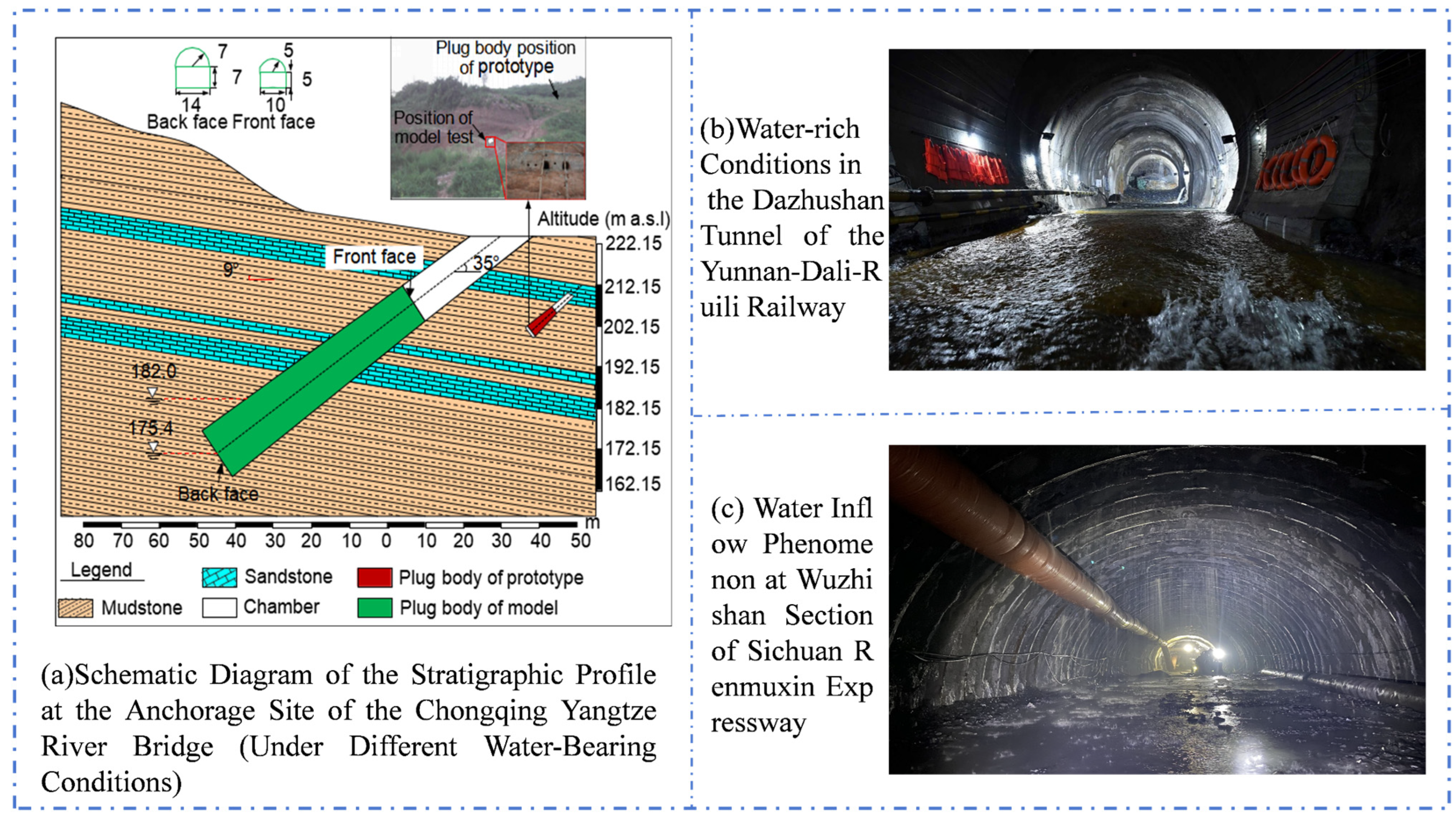
In fields such as water conservancy and hydropower engineering, transportation, mining, and underground energy storage, the water saturation of surrounding rock often undergoes significant changes due to multiple factors including rainfall, groundwater level fluctuations, and seepage conditions [1,2,3,4,5]. The water saturation of rock mass substantially weakens its mechanical properties, an effect that is critical in such engineering projects. This phenomenon has been prominently demonstrated in major domestic projects like the Chongqing Yangtze River Bridge (Figure 1) [6]. As water saturation increases, the complex physical, chemical, and mechanical interactions between water and rock significantly influence the deformation strength and failure characteristics of the rock, leading to a marked deterioration in its mechanical properties [7,8,9,10]. Given that the tensile strength of rock is typically far lower than its compressive strength, failure in most engineering conditions is often dominated by tensile stresses [11,12,13,14,15]. Furthermore, the influence of water content on tensile strength is more pronounced than on compressive strength [16]. Therefore, investigating the effect of water content on the tensile fracture behavior of rock is crucial for elucidating the failure mechanisms of water-saturated rock masses and ensuring the safety and stability of related engineering projects.
In recent years, numerous scholars have systematically investigated the influence of water on rock mechanical properties through uniaxial compression tests, triaxial compression tests, direct shear tests, and tensile tests. Research findings indicate that as water content increases, various mechanical parameters of rock—such as uniaxial compressive strength, triaxial compressive strength, shear strength, elastic modulus, and tensile strength—exhibit a significant deterioration trend [17,18,19,20,21,22,23,24]. Furthermore, increased water content causes a marked degradation in rock stiffness and profoundly influences the failure mode and severity. During hydraulic fracturing, the fracture initiation pressure of reservoir rocks is directly influenced by their tensile strength [25,26,27,28]. Previous studies have experimentally established empirical relationships between water saturation and mechanical parameters of sandstone, such as uniaxial compressive strength, Young’s modulus, and tensile strength [29]. Results indicate that all these mechanical indicators decrease significantly with increasing water saturation [30]. Concurrently, elevated water saturation reduces rock fracture toughness and slows crack propagation rates. The decline in fracture toughness of sandstone under high saturation conditions is primarily attributed to the hydration swelling of clay minerals, which weakens rock strength and its resistance to crack propagation [31,32,33]. The failure process of rock is intrinsically linked to energy evolution. To investigate the influence of water on rock failure characteristics, some researchers conducted laboratory compression tests on rock under varying moisture conditions [34,35]. By analyzing the patterns of energy storage and dissipation during rock deformation, they revealed the mechanism by which moisture content affects its failure behavior.
Additionally, Qian et al. [36] investigated crack propagation behavior in water-containing coal specimens under uniaxial compression. They found that while moisture content had limited influence on crack type, it significantly enhanced crack propagation extent. Ding et al. [37] examined the effect of pressurized water immersion duration on the tensile properties of coal samples. Results indicated that prolonged exposure to pressurized water immersion accelerated stress concentration in coal samples, accompanied by the expansion of localized deformation zones. To systematically analyze the mechanism by which moisture content influences rock fracture behavior. Groundwater seepage degrades surrounding rock engineering properties through coupled mechanical-physical-chemical interactions, with its impact significantly intensifying as seepage volume increases and rock mass fragmentation worsens. This degradation mechanism is particularly pronounced in deeply buried tunnel engineering, posing severe threats to surrounding rock stability and long-term operational safety [38,39]. Li et al. [40] analyzed stress and deformation distribution patterns during excavation of the Xinpijia Mountain Tunnel on the Chongqing-Kunming High-Speed Railway through laboratory testing and numerical simulation. They found that the unconfined compressive strength of shale specimens decreased with increasing water content, accompanied by more complex failure patterns. After tunnel excavation, vertical displacements exhibited axisymmetric distribution, while horizontal displacements showed antisymmetric distribution. Stress concentration zones formed “X”-shaped patterns at the crown and corner points. Cui et al. [41] analyzed the influence of moisture content on rock mass mechanical behavior through uniaxial compression and creep tests on sandstone with varying moisture contents. They found that as moisture content increased, the peak strength, elastic modulus, and long-term strength of sandstone all decreased significantly, while the Poisson’s ratio increased. The failure mode shifted from brittle to ductile, and under the same load, both instantaneous strain and creep rate increased. Furthermore, beyond water saturation effects, tunnel geometry also influences overall stability. Li et al. [42] employed FLAC3D software (5.0) to numerically simulate excavation processes for four tunnel cross-sections—circular, rectangular, straight-wall, and curved-wall—in Class III rock mass. Comprehensive evaluation of rock mass displacement, stress concentration, and plastic zone extent revealed that circular cross-sections exhibited optimal stability, followed by curved-wall sections. Straight-wall and rectangular cross-sections demonstrated significantly unfavorable mechanical responses, with rectangular sections performing the worst. From the perspective of macroscopic mechanical response and deformation characteristics, the influence of water content on rock fracture behavior was revealed. Rock failure often originates from the accumulation of damage at the mesoscale, gradually evolving into macroscopic failure [43,44]. In rock crack propagation observations, Nolen-Hoeksema [45] discovered through optical microscopy that marble cracks exhibit asymmetric propagation, and surface cracks can reflect internal conditions; Liu Dongmei [46] employed holographic interferometry and digital imaging systems to achieve continuous dynamic observation of crack propagation and damage evolution in sandstone, granite, and other rocks. Digital image correlation (DIC) was utilized to elucidate the evolution characteristics of macroscopic cracks during rock failure. Wang et al. [47] employed digital image correlation (DIC) to capture full-field strain distributions during fracturing in rocks with varying saturation levels. Experimental results indicate that the range of non-elastic deformation zones at crack tips significantly expands under high water saturation. Although previous studies have extensively investigated rock fracture propagation, they have only qualitatively described the development patterns of rock cracks without conducting quantitative, in-depth research. Consequently, a comprehensive understanding of rock damage evolution remains elusive.
Structural cascading collapse represents a critical issue requiring significant consideration in engineering design, with extensive research conducted by scholars worldwide in recent years. Abdelwahed et al. [48] provided a systematic review of the mechanisms of cascading collapse in building structures and associated collapse mitigation strategies, establishing a comprehensive theoretical framework and classification system for understanding structural failure modes. Building upon this framework, researchers have further explored specific materials and complex operational conditions. Addressing the influence of material anisotropy on structural failure mechanisms, Zona and Minutolo [49] proposed a direct finite element limit analysis method applicable to masonry structures, revealing the intrinsic relationship between material anisotropic behavior and structural failure modes. Regarding complex real-world loading conditions, Parthasarathi et al. [50] investigated failure mechanisms in reinforced concrete frame structures under thermo-mechanical coupling through finite element analysis, clarifying the influence patterns of combined temperature and mechanical load interactions on failure modes. Similarly, Wang et al. [51] conducted a systematic investigation into the collapse behavior of large-span multi-story steel frames under fire conditions, identifying typical collapse patterns and key governing mechanisms of structures in high-temperature environments.
The extant research has been chiefly concentrated on the failure modes of single tunnel models under varying water saturation levels. The failure mechanisms associated with different tunnel cross-sectional geometries and water saturation conditions have not yet been explored, creating challenges in understanding failure mechanisms for tunnels traversing rock masses with differing water saturations and tunnel profiles. Consequently, the investigation of failure patterns under varying water saturation levels and tunnel cross-sectional geometries is imperative for enhancing our comprehension of the mechanisms by which rock damage evolves under the interaction of water saturation and tunnel cross-section. In light of the aforementioned findings, the present study saw the preparation of four tunnel cross-section specimens (wall-arch, square, hoof-shaped, and circular) with differing water saturation levels. The present study utilized digital image correlation (DIC) technology to conduct systematic uniaxial compression tests. The study revealed the macroscopic mechanical response characteristics of rock compression failure influenced by moisture content, focusing on strength degradation patterns and strain localization evolution.

2. Test Methods

2.1. Preparing Physical Models for Different Tunnel Types

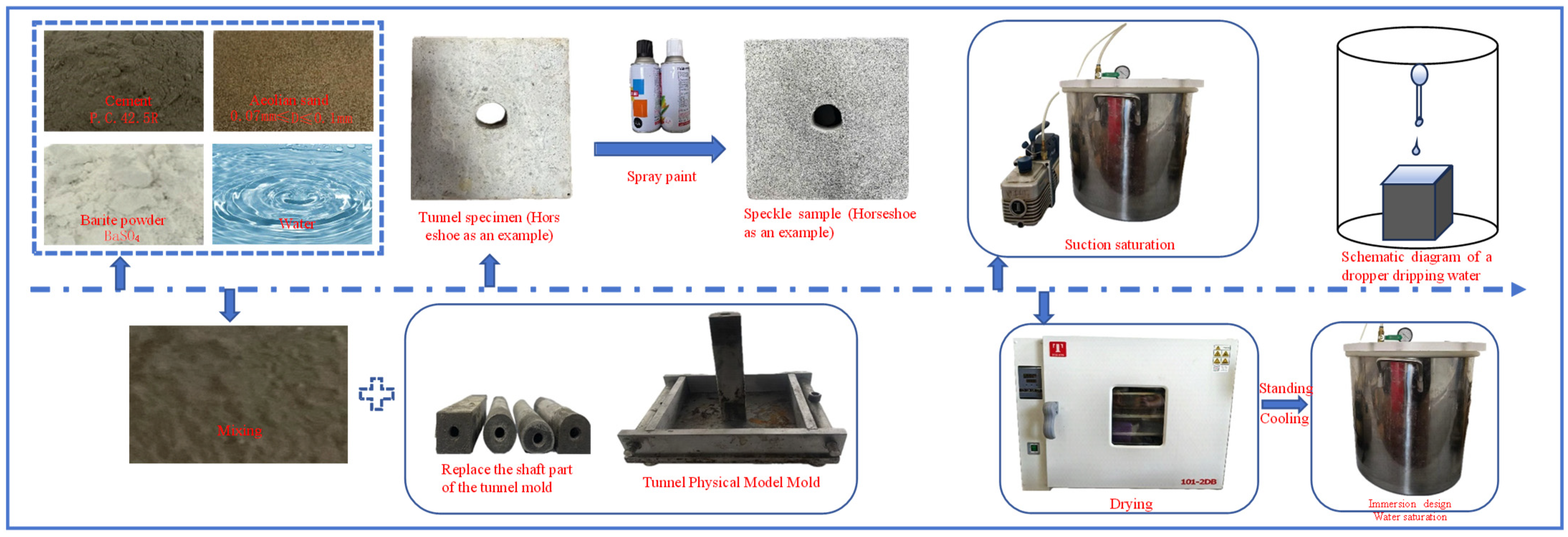
The test utilized dry Xinjiang aeolian sand with a particle size of 0.07 mm~0.1 mm, water, 42.5 Portland cement, and barite powder. The mass ratio of the four materials was 0.5:5:3:1.5. After thorough mixing, the mixture was prepared for use. This experiment prepared molds for various tunnel specimens. Following the Highway Tunnel Design Specifications [52], the dimensions were 150 mm × 150 mm × 30 mm. Tunnel shapes included wall arch, horseshoe, circle, and square, with a tunnel diameter to specimen length ratio of 1:5 (the conclusions of this study are based on specimens of specific sizes, and size effects should be considered when extrapolating to engineering scales). The molds employ a modular design, enabling rapid interchangeability and precise positioning of different tunnel-shape molds via a screw system, Figure 2.
Under laboratory standard conditions, tunnel physical model specimens were produced using a strictly controlled preparation process system. First, mixed aggregates were poured into custom molds in three layers according to the preset mix ratio. After each layer was poured, it was vibrated at a frequency of 50 Hz for 60 s to ensure full compaction and effective removal of air bubbles, precisely controlling the specimen density within the range of 2.29 ± 0.02 g/cm3. After demolding at room temperature (20 ± 2 °C) following a 4 h rest period, the specimens were left to stand for an additional 6 h before transfer to a standard curing chamber. They were cured for 28 days at a constant temperature of 25 ± 1 °C and relative humidity of 95 ± 3% to ensure complete cement hydration.
To investigate the effects of different moisture contents, specimens were systematically prepared at four saturation levels. After curing, the specimens were dried in a 105 °C forced-air oven for 48 h until constant weight (mass change < 0.1%). Following cooling, vacuum degassing (−100 kPa, 8 h) was immediately performed to remove pore gases. Subsequently, a mass control method was employed to prepare a series of specimens with water saturations of 0% (completely dry), 33% (low saturation), 55% (medium saturation), and 100% (fully saturated) by precisely controlling the injection volume of distilled water. Preliminary tests established 12% mass water content as the fully saturated reference. All prepared specimens were sealed with plastic wrap and subjected to mechanical testing within 12 h to prevent moisture evaporation effects. Physical and mechanical parameters of specimens are determined using a rock triaxial testing apparatus, as shown in Table 1.
W s a t = m s a t m s m s × 100 %
W a = m a m s m s × 100 %
S r = W a W s a t × 100 %
In the formula, W s a t is the saturated moisture content of the sample, %; m s a t is the mass of the saturated sample, g; m a is the mass of the dried sample, g; m s is the mass of the water-soaked sample, g; W a is the moisture content of the water-soaked sample, %;   S r is the moisture saturation of the sample, % [53].

2.2. Mechanical Test Program

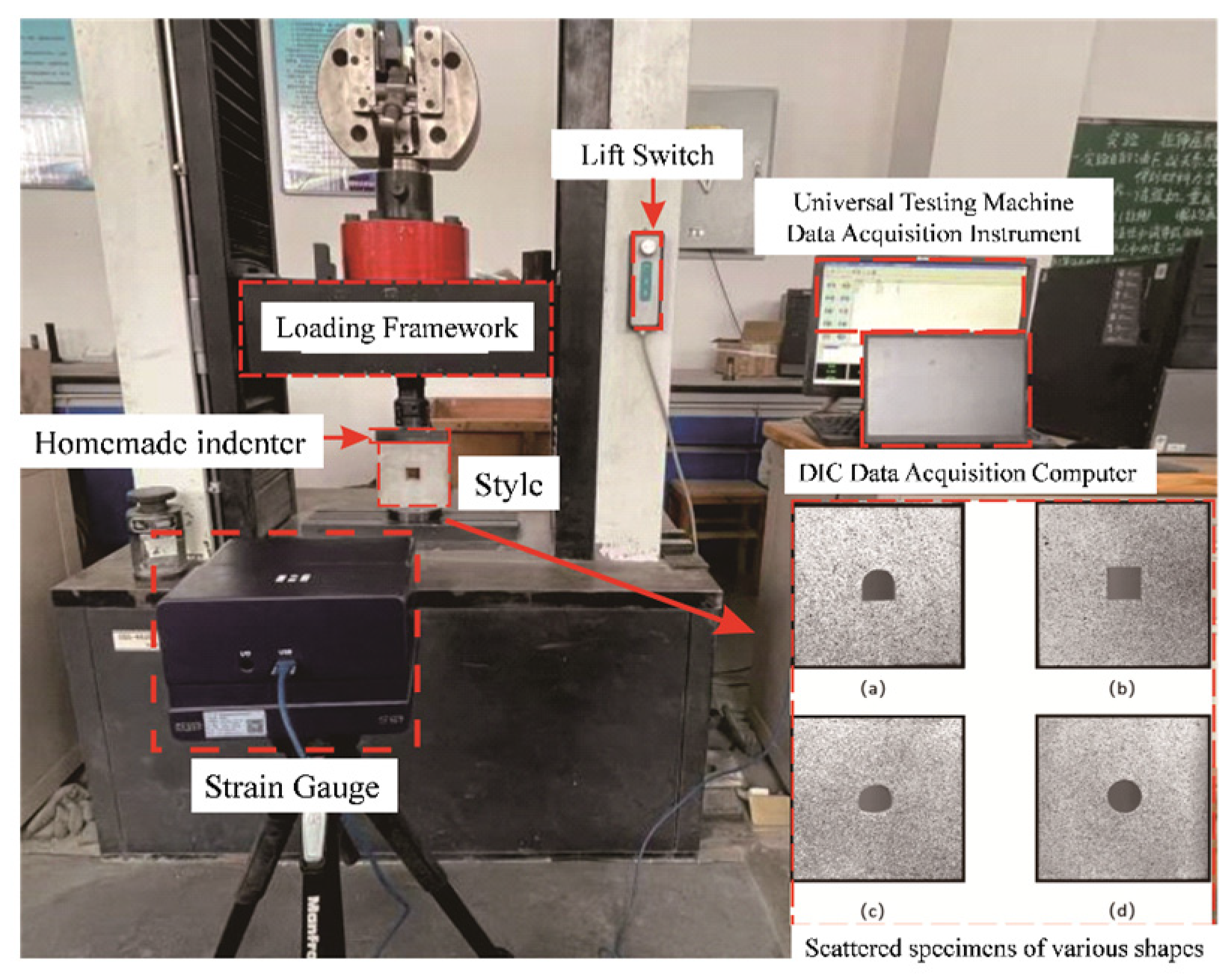
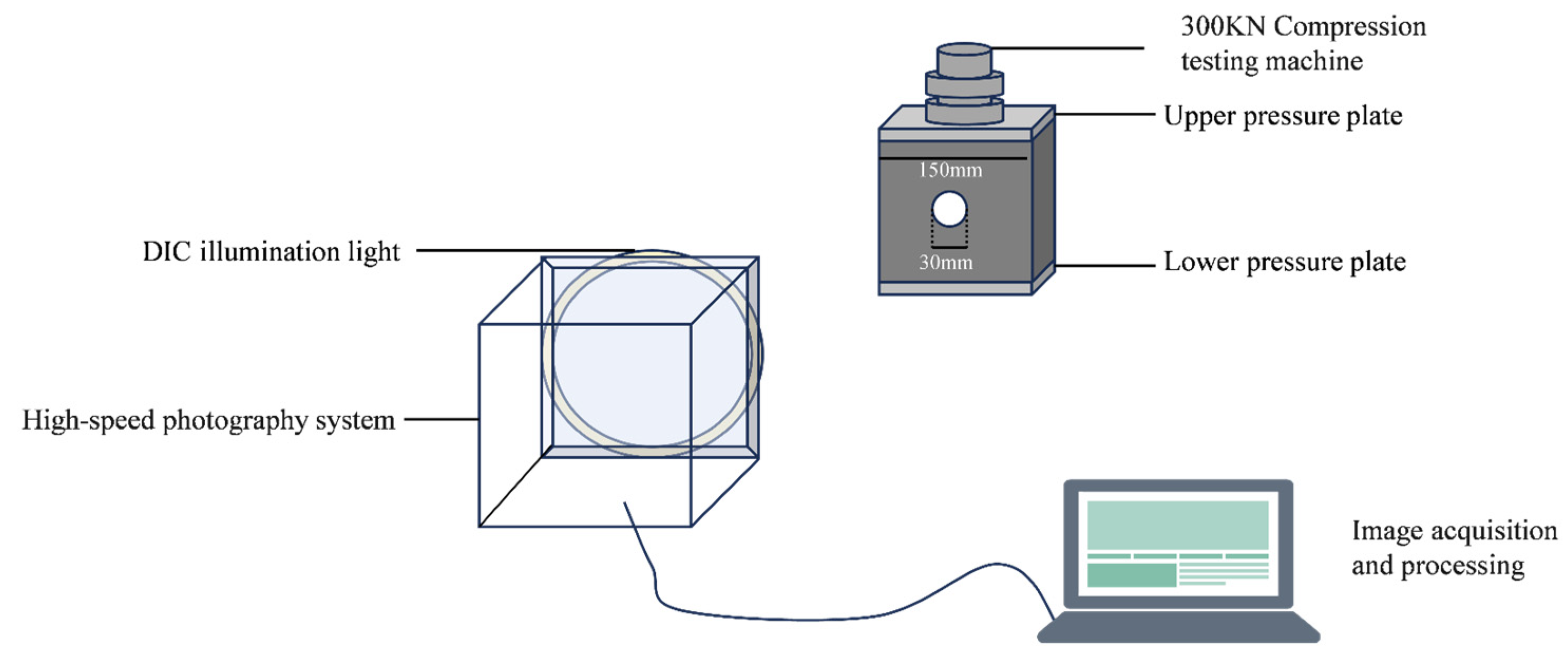
This test employed a CSS-44300 electronic universal testing machine (Shenzhen, China) to conduct uniaxial compression tests, utilizing digital image correlation (DIC) technology for full-field deformation monitoring. The test operated in displacement control mode with a loading rate of 0.6 mm/min and a maximum load of 300 KN, terminating upon macroscopic failure of the specimen. To minimize end friction and eccentric compression effects, a custom-made rigid indenter was used to assist loading, Figure 3.
DIC testing utilizes the full-field strain measurement system from Shenzhen Haiseim Optoelectronic Technology Co., Ltd. (Shenzhen, China). Surface pretreatment of specimens involves spraying a white primer as the background. After drying, an artificial speckle field is created using black pigment. During testing, the system continuously captures images of the specimen surface at a set frame rate. By analyzing displacement changes in the speckle region under loading, it obtains the full-field displacement and strain distribution. During compression, distinct deformation responses emerge across different regions of the specimen, forming localized displacement bands and strain concentration zones. The system visually represents the strain evolution process through color gradients. During data processing, the computational region is selected on the computer, and the system automatically outputs mechanical parameters such as the deformation field and acceleration field. The system layout and working principle are shown in Figure 4.

3. Analysis of Test Results

3.1. Effect of Water Saturation on Peak Strength and Modulus of Elasticity of Tunnel Specimens

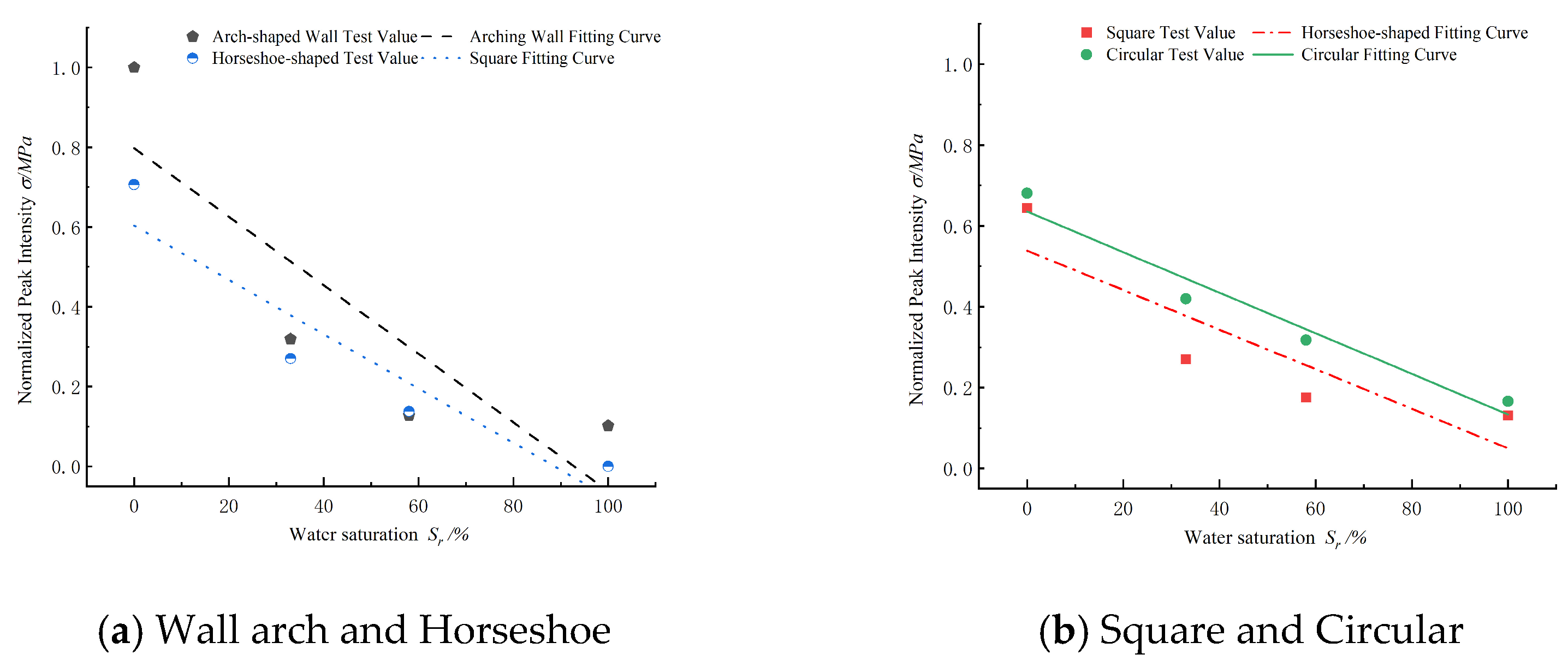
The peak strength values obtained from the collation test are shown in Table 2 and the curve graph in Figure 5. The peak strength of the tunnel specimens decreases gradually with increasing water saturation; for the wall arch, for example, the peak strength decreases from 34.71 MPa to 19.47 MPa as the water saturation increases from 0% to 100%, representing a decrease of 43.91%. In order to explore the pattern, the dimensionless normalization was carried out [54], that is
σ * = σ σ m i n σ m a x σ m i n
Formula: σ * is the normalized peak intensity; σ is the peak intensity of rock samples; σ m i n , σ m a x are the minimum and maximum values of peak intensity in all rock samples. According to Equation (1) is plotted in Figure 5. The fitted curve data are presented in Table 3.
The strength degradation behavior of tunnel specimens from different tunnel types under varying water saturation levels exhibits significant differences. Test results indicate that the uniaxial compressive strength of specimens from all tunnel types decreases with increasing water saturation, but their degradation pathways and sensitive intervals show distinct variations.
Wall-arch specimens exhibited high sensitivity to moisture content in the low-to-medium saturation range (0–58%), where strength loss was most pronounced. Beyond 33% saturation, the rate of strength decay markedly slowed, transitioning into a relatively stable progressive deterioration phase. This indicates that the weakening effect of moisture on mechanical properties tends toward saturation at high saturation levels.
Circular specimens exhibited a unique two-stage response during saturation changes: strength remained stable between 0% and 58% saturation, with strength peaks occurring at 33% and 58% saturation. However, upon reaching full saturation (100%), strength experienced a precipitous decline, indicating the circular cavity shape possesses particular sensitivity to fully saturated conditions.
Square and horseshoe specimens exhibited significant strength loss even at low saturation levels (≤58%). The degradation behavior of horseshoe specimens was particularly distinctive, showing near-linear decay across the entire saturation range (0–100%) without a clear critical saturation threshold, indicating sustained sensitivity to moisture content changes.
This phenomenon reveals distinct failure mechanisms for different arch types under moisture conditions: wall-arch shapes are sensitive to capillary effects, circular arches are dominated by pore pressure effects, while horseshoe arches exhibit a combined response to multiple moisture-induced weakening mechanisms.
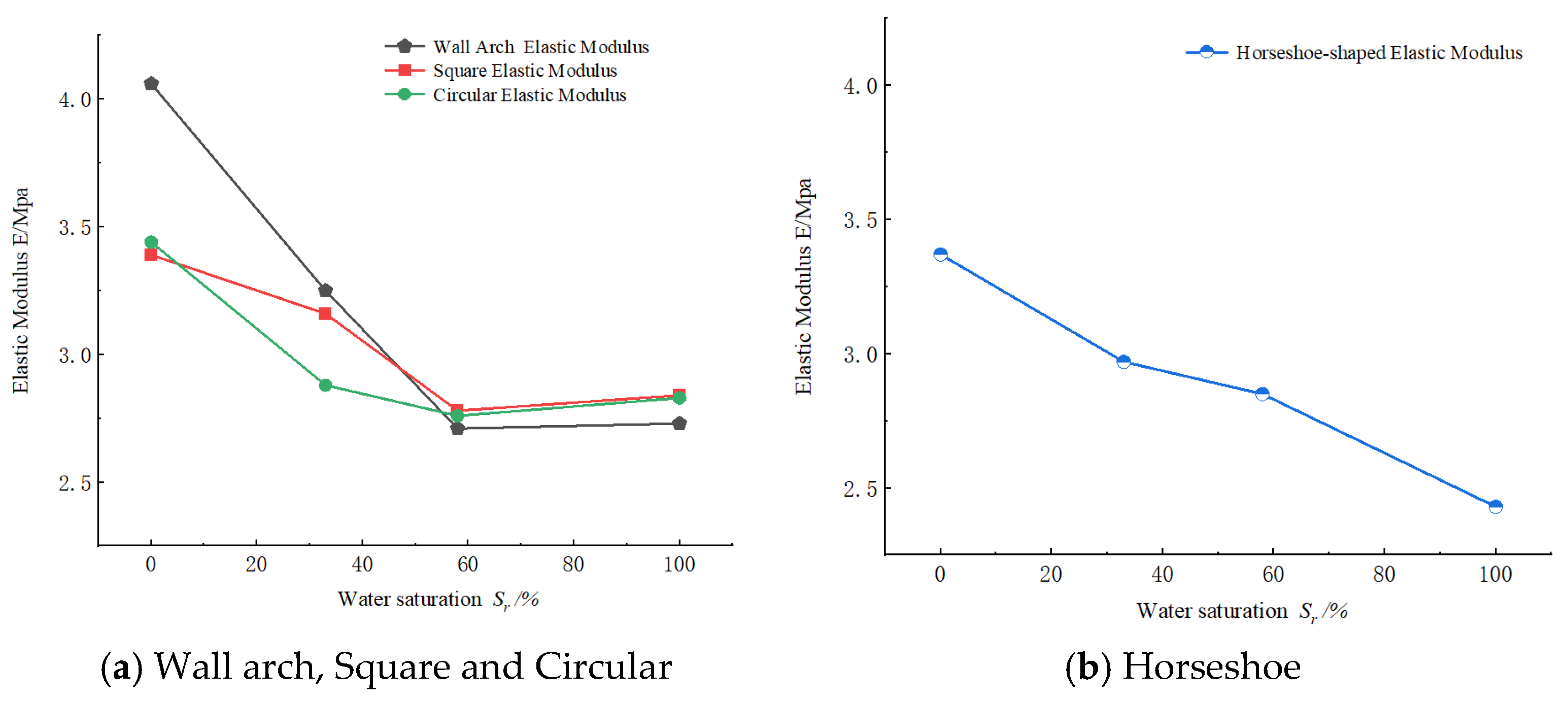
Test data indicate (Table 2, Figure 6) that the elastic modulus of tunnel specimens exhibits a significant deterioration trend with increasing water saturation. Taking wall arch specimens as an example, when water saturation increases from 0% to 100%, the elastic modulus decreases from 4.06 GPa to 2.73 GPa, representing a reduction of 32.8%. The decay process of the elastic modulus exhibits distinct nonlinear characteristics: the decay rate is relatively rapid in the low saturation stage (0–33%), gradually slowing thereafter.
The evolution paths of modulus vary significantly among different cavity-shaped specimens. Wall-arch and horseshoe specimens exhibit the highest sensitivity to changes in water saturation, showing the most pronounced modulus variations. Notably, horseshoe specimens demonstrate a rebound in modulus at 100% saturation, revealing unique mechanical response characteristics. This phenomenon may be attributed to stress distribution patterns and moisture migration mechanisms influenced by their structural morphology.

3.2. Effect of Water Saturation on Stress–Strain in Physical Modeling

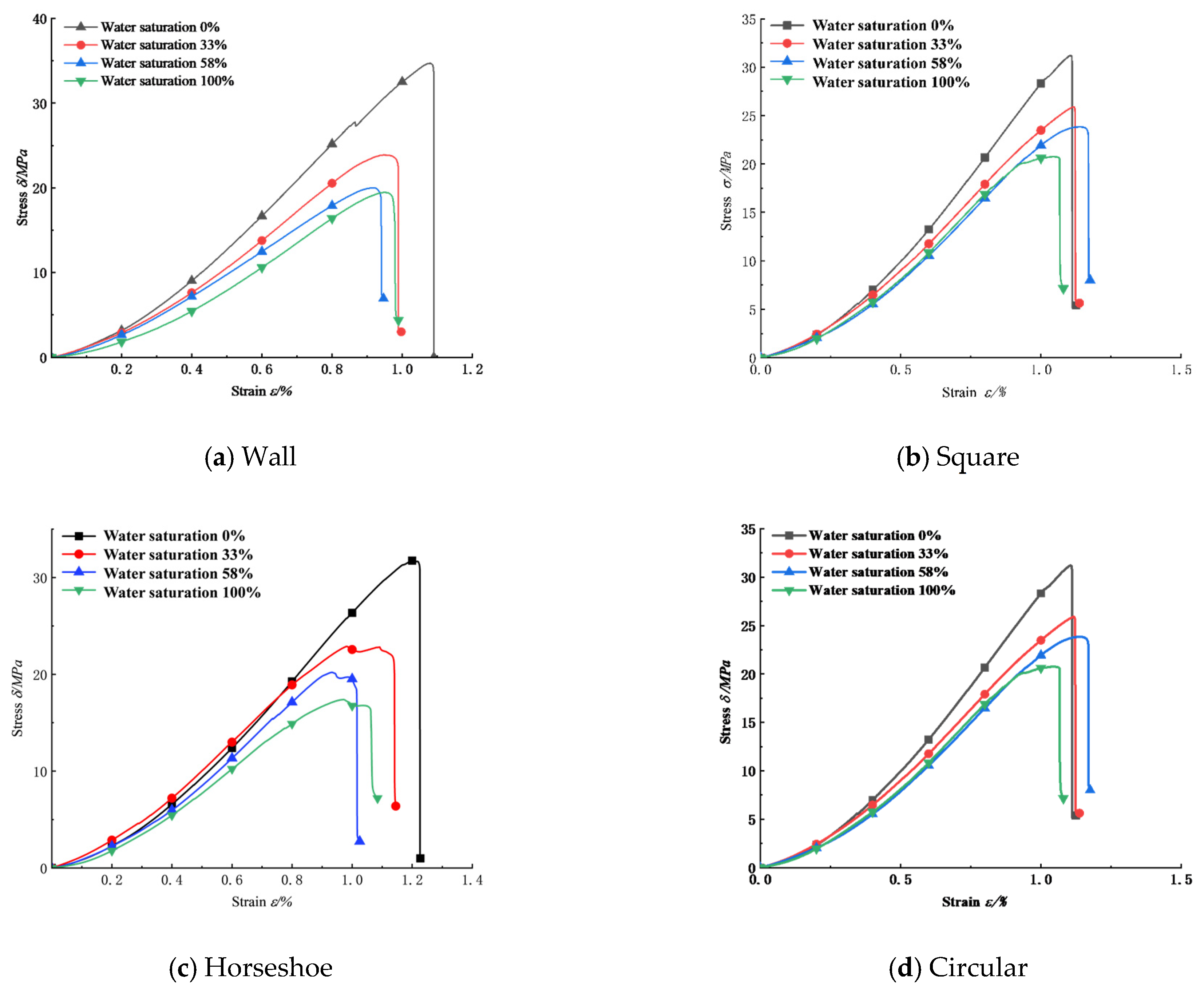
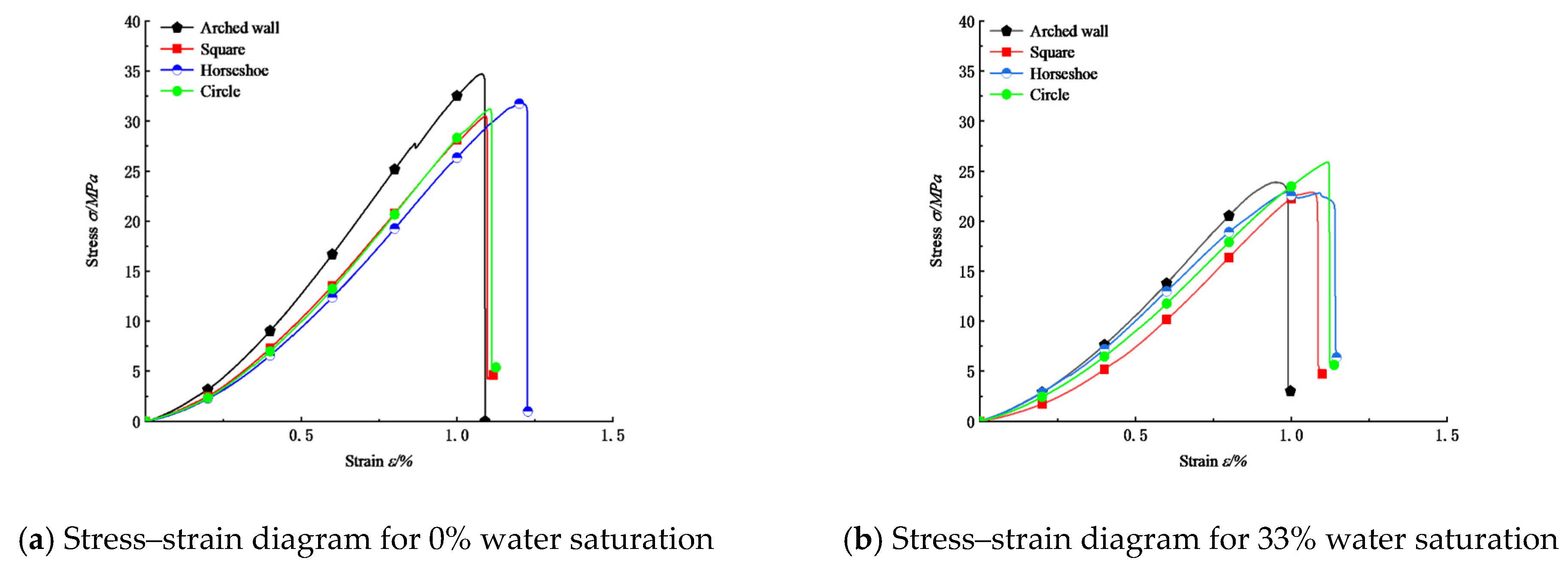
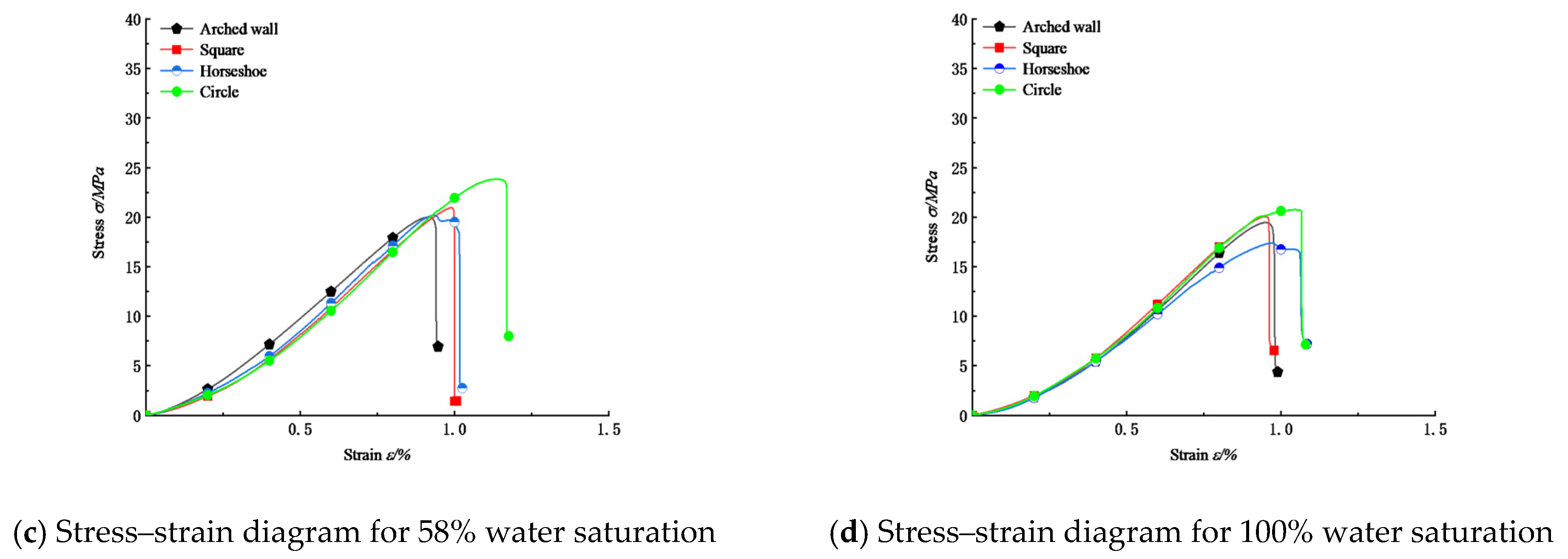
Figure 7 and Figure 8 illustrate the stress–strain response characteristics under the coupled effects of water saturation and tunnel geometry. Given the similar morphological features of each curve, a representative analysis is conducted using the wall-arch specimen. Test results indicate that stress–strain curves under varying water saturation and tunnel conditions all exhibit four distinct stages: consolidation stage, elastic stage, plastic stage, and failure stage.
① Consolidation stage: The curve exhibits a concave-up shape. As water saturation increases, the stress value corresponding to the same strain decreases significantly. ② Elastic stage: Stress–strain exhibits an approximately linear relationship. With increasing water saturation, the elastic modulus decreases systematically, but the specimen still maintains brittle failure characteristics. ③ Plastic Stage: Following the elastic stage, microcracks within the specimen enter a period of stable expansion, with new cracks continuously forming and interconnecting. Deformation rate accelerates during this stage, and some specimens exhibit pronounced stress relaxation. ④ Failure Stage: Continued macrocrack propagation ultimately leads to specimen instability, with post-peak strength curves exhibiting brittle fracture characteristics.
Horseshoe specimens demonstrate pronounced stress drop during the plastic stage. This phenomenon indicates that dynamic disturbance energy is primarily dissipated through micro-slip and friction mechanisms rather than converted into macroscopic plastic deformation. The mechanism behind “stress drop” can be attributed to two factors: First, brittle materials exhibit lower tensile strength under unconfined conditions, making them prone to localized tensile failure. Second, increased water saturation weakens material stiffness, promoting premature formation of localized macroscopic cracks during loading. Although these non-through cracks do not cause immediate failure, they result in a temporary loss of specimen stiffness, manifested as a sudden drop in the stress–strain curve.
Based on an analysis of stress–strain curves under identical water saturation conditions, the strength of all tunnel specimens decreases systematically with increasing saturation. However, significant variations in strength performance are observed among specimens of different tunnel cross sections at the same saturation level.
Specifically, within the low saturation range (saturation ≤ 58%), the peak stress relationship among the tunnel-shaped specimens was as follows: wall-arch shape > horseshoe shape > circular shape > square shape. Conversely, in the high saturation range (saturation > 58%), the order reversed to circular shape > square shape > wall-arch shape > horseshoe shape. These results reveal a distinct coupling effect between water saturation and cavity morphology. Under dry conditions, tunnel strength is governed by geometry-induced stress concentration—square tunnels show higher strength due to corner stress concentration, while circular tunnels exhibit moderate strength from uniform stress distribution. Under high saturation, pore pressure distribution becomes shape-dependent: symmetric tunnels maintain uniform pore pressure decay, whereas square tunnels develop significant pore pressure buildup at corners. Wall-arch cavities exhibit optimal load-bearing capacity under low moisture conditions, while circular cavities demonstrate superior strength retention in high-moisture environments. This reversal in ranking reflects the fundamental differences in the resistance mechanisms of various cavity structures against moisture-induced weakening.
Based on the stress–strain curve, the post-peak characteristics of the specimens are pronounced. Under dry and low saturation conditions, the specimens exhibit sudden failure behavior, with a sharp drop in stress after the peak and distinct bursting phenomena, indicating typical brittle failure. As saturation increases, the failure mode gradually shifts—at medium saturation, circular specimens begin to show progressive failure characteristics, while square tunnel specimens retain strong brittleness. Under fully saturated conditions, specimens of all shapes exhibited progressive failure, with a gradual decline in post-peak load-bearing capacity and a controllable failure process. This phenomenon indicates that increased saturation promotes a transition from brittle to ductile behavior in rock, though the shape effect significantly influences the rate of this transition. The square tunnel maintained strong brittleness at medium saturation, closely related to its localized sudden failure mechanism caused by stress concentration at corners.

3.3. Effect of Water Saturation on Macro-Fracture Characteristics of Tunnel Specimens

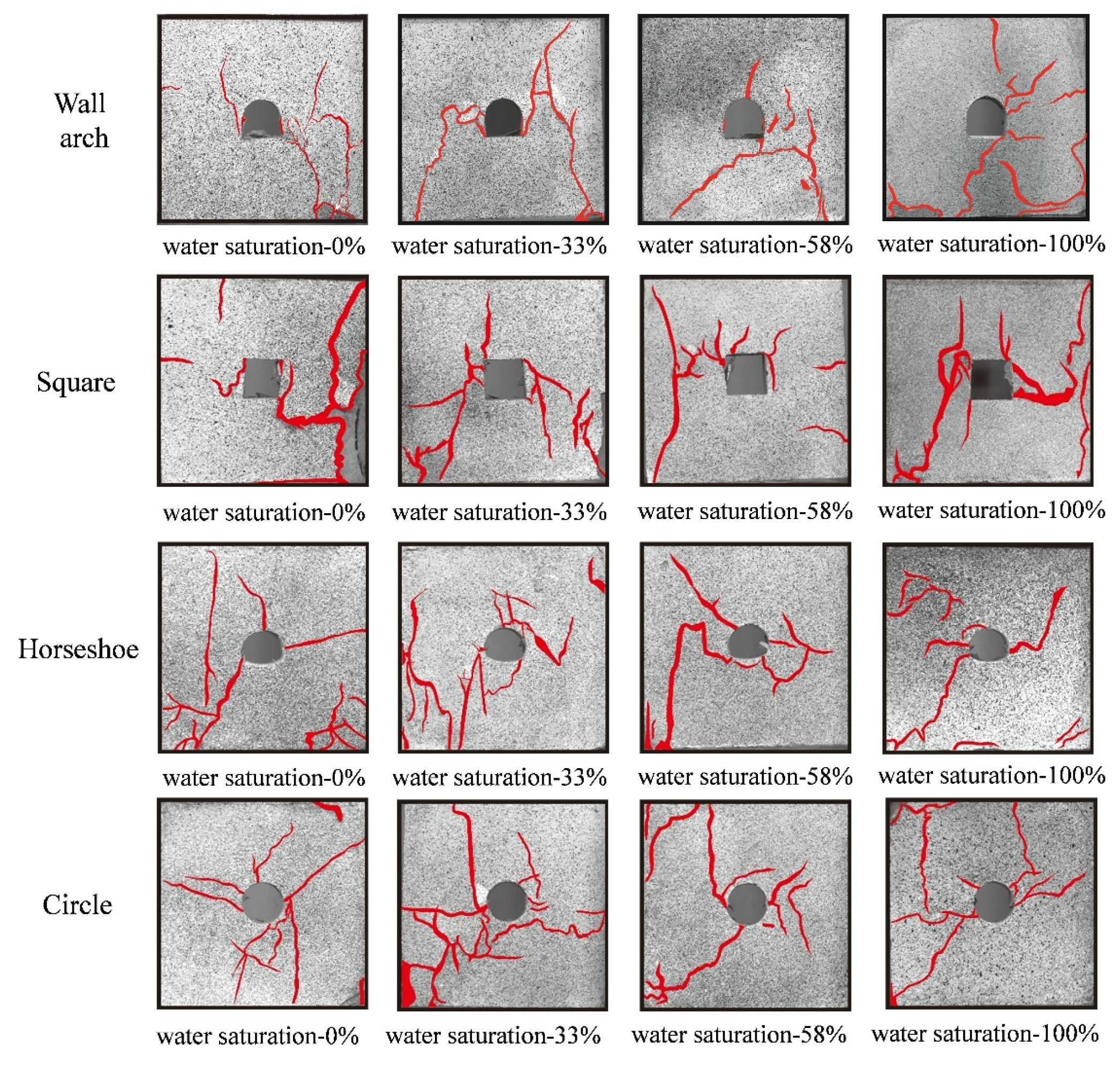
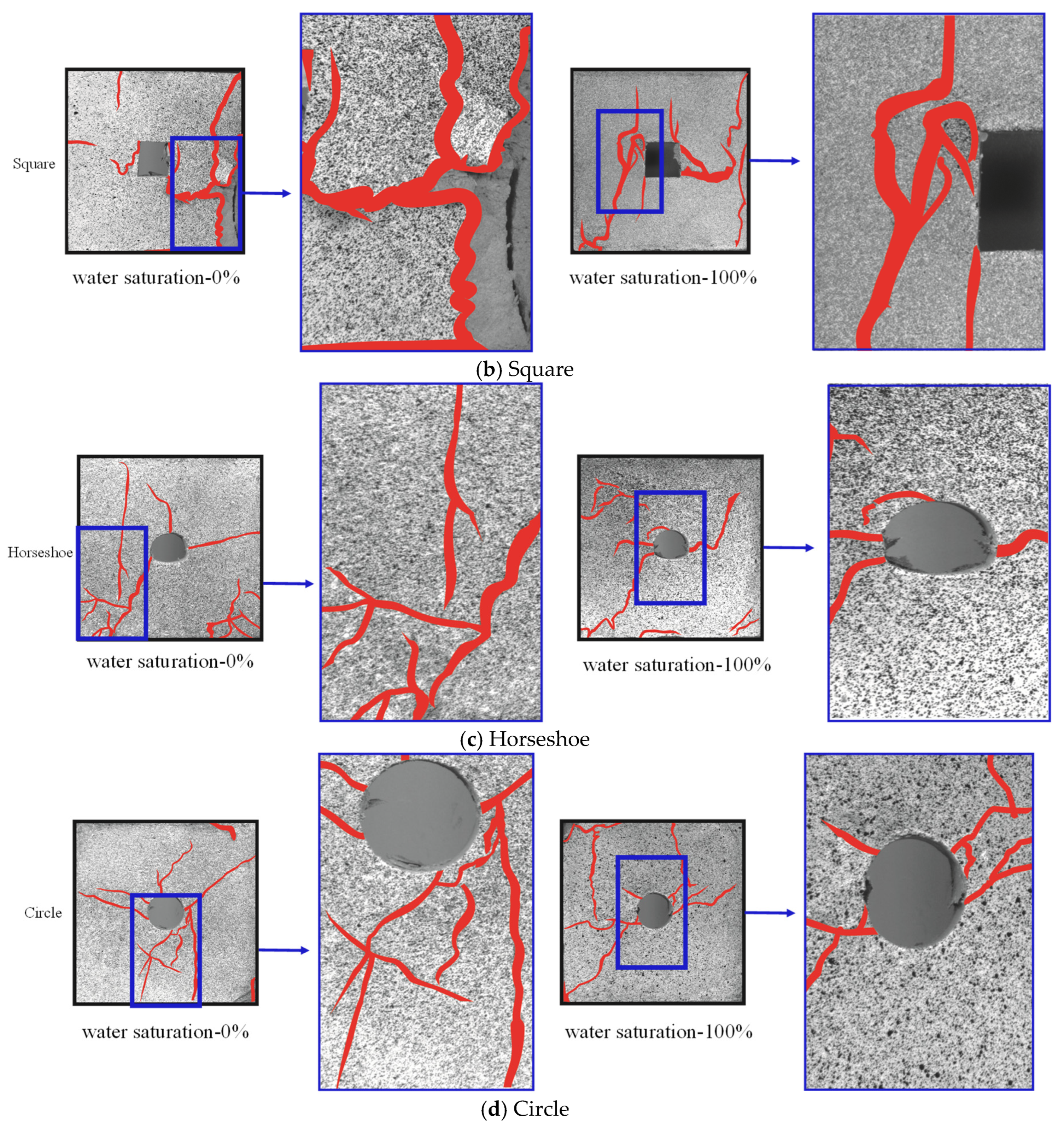
As shown in Figure 9, tunnel specimen failure phenomena primarily manifest as tensile failure under the influence of water saturation. In tensile failure, material cracks open and propagates due to tensile stress exceeding its tensile strength. Shear failure occurs when material undergoes relative displacement along a potential slip plane under shear stress. These are two fundamental failure modes. Additionally, square specimens exhibit flexural failure due to geometric constraints. Under compressive bending moments, specimens undergo buckling-induced bending deformation, which is often accompanied by section rotation.
Water saturation significantly influences specimen buckling processes and ultimate failure modes (Figure 10). At low water saturations, specimen buckling is dominated by the steady propagation of a single primary crack. The stress concentration at the primary crack tip creates a plastic zone that induces a limited network of secondary cracks around it. Ultimately, this leads to a fragmented failure mode in the specimen. This process exhibits rapid energy dissipation and localized plastic deformation zones, demonstrating significant brittle failure characteristics.
At high water saturation levels, the lubricating and softening effects of water promote unstable propagation of multiple primary cracks. These primary cracks often exist independently or simply intersect, and their surrounding stress fields struggle to effectively induce continuous secondary cracks. Consequently, secondary cracks are sparsely distributed in localized areas. The specimen undergoes structural instability along several primary cracks and exhibits a global failure mode. This failure pattern is more complete, with significantly reduced fragmentation.

3.4. Influence of Water Saturation on the Deformation Characteristics of Tunnels

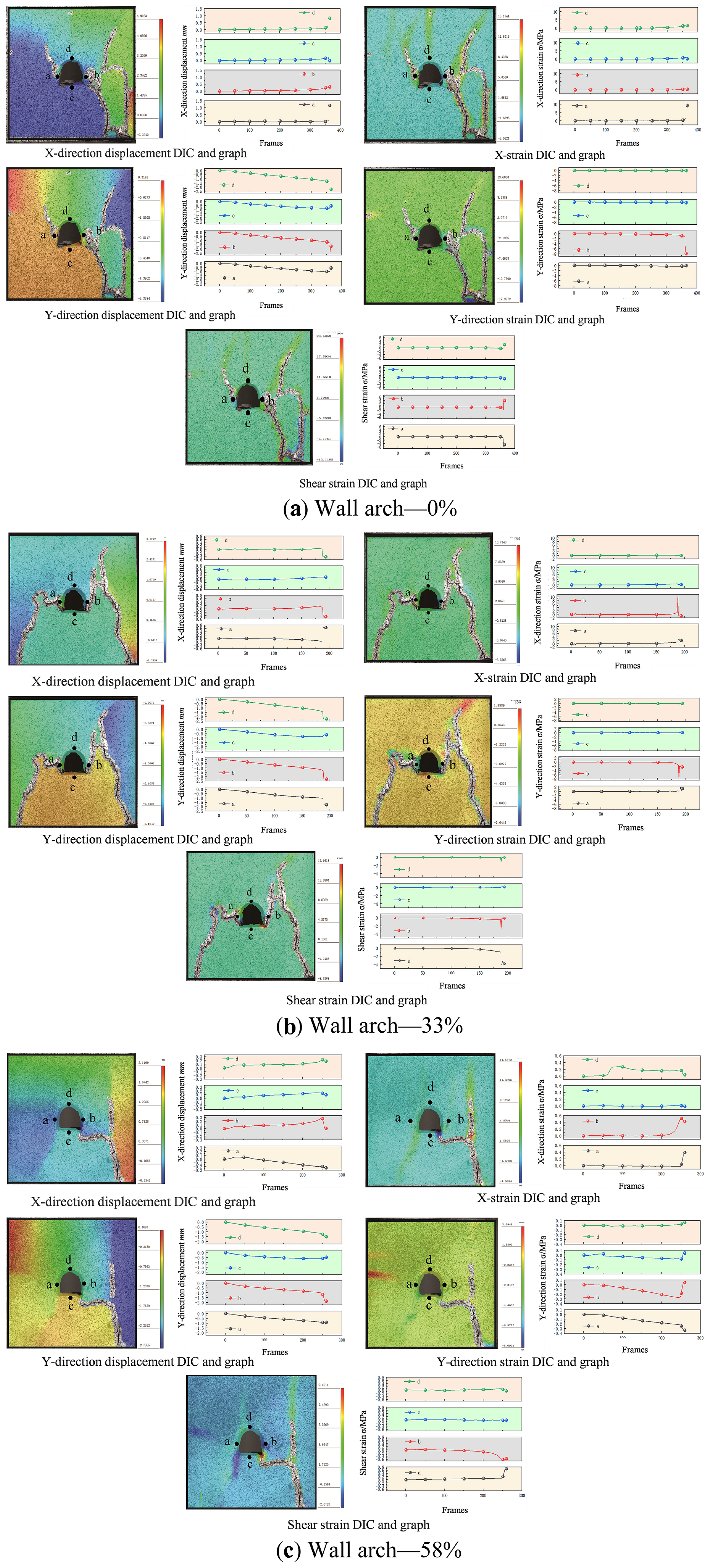
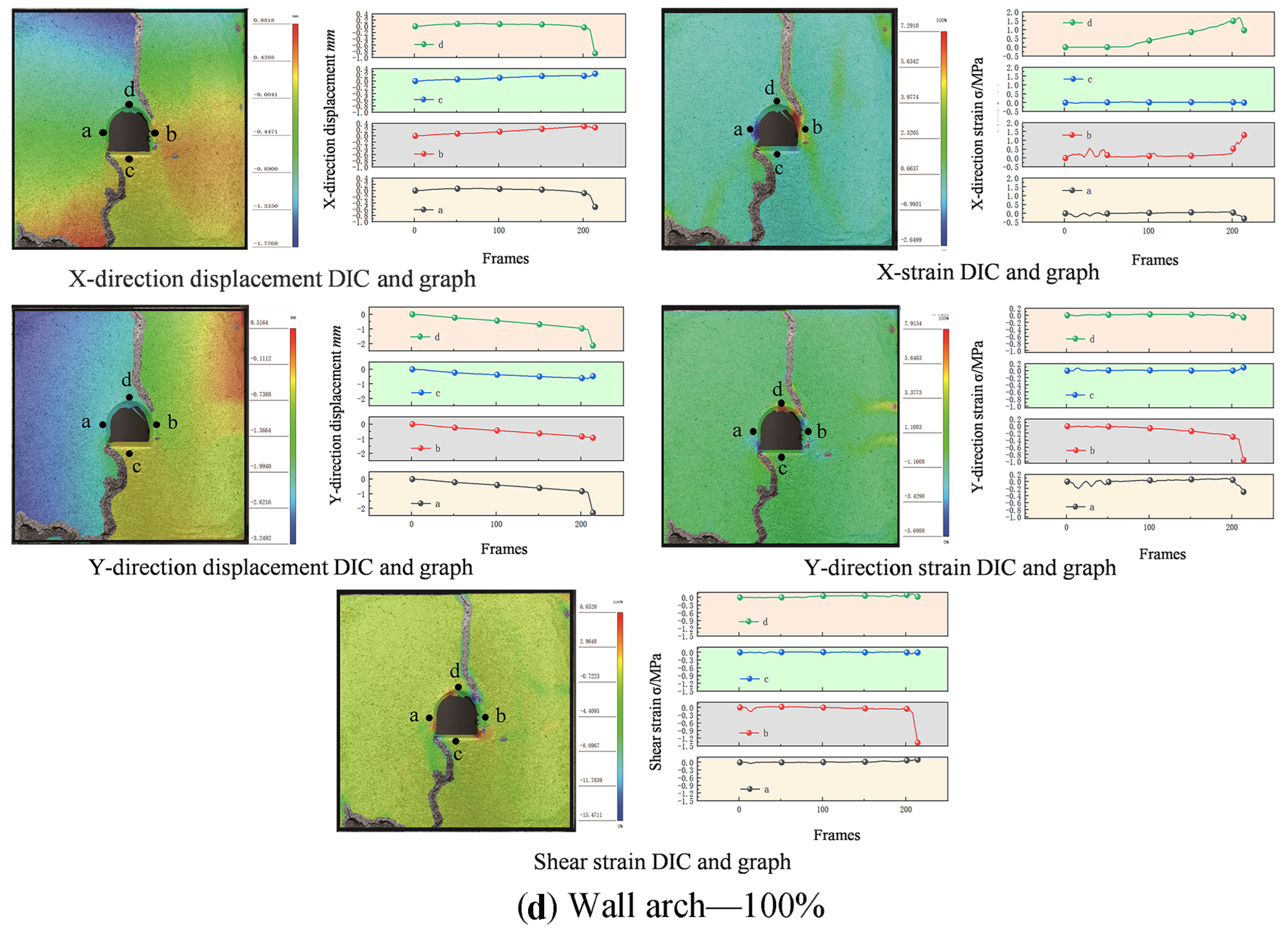
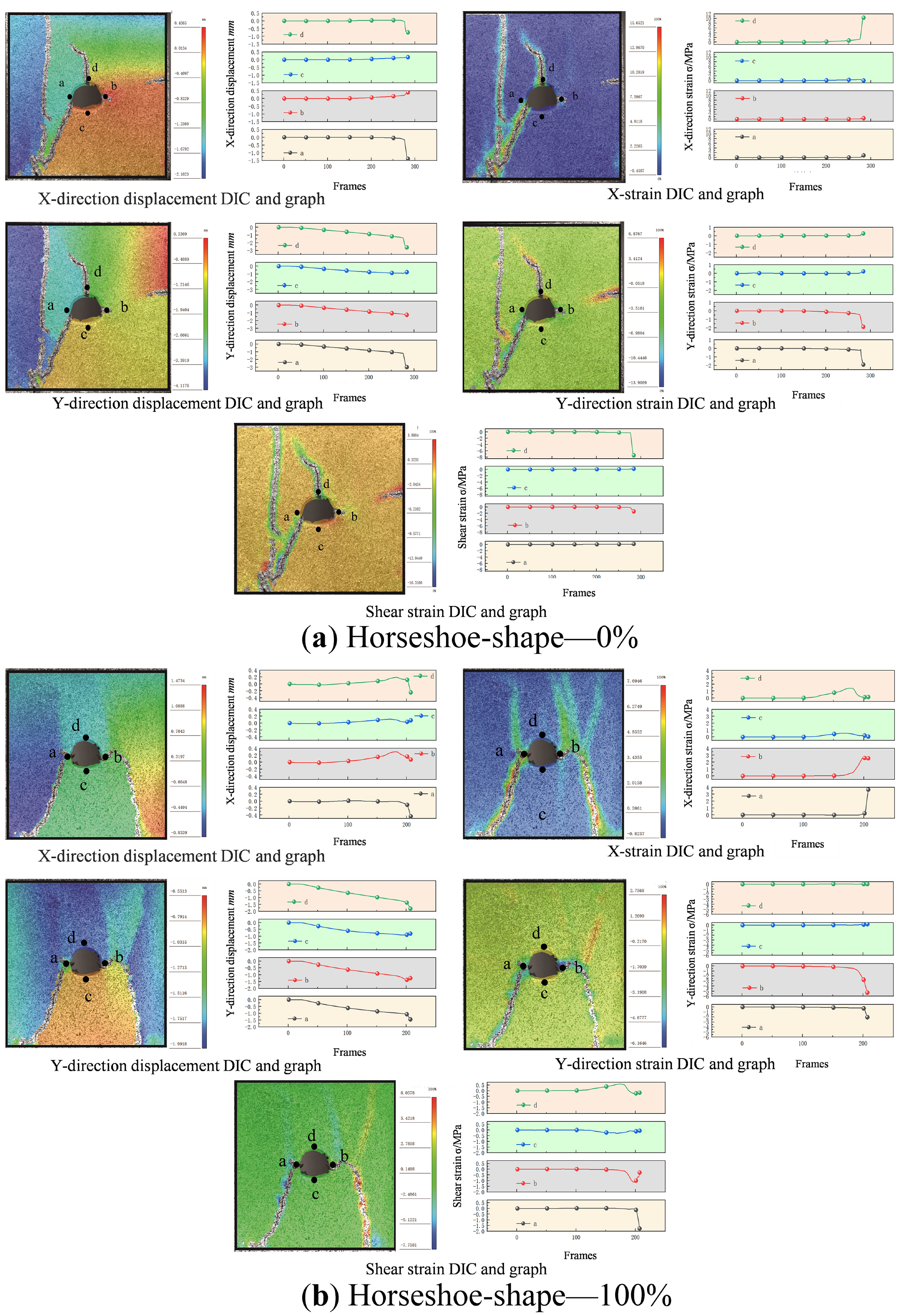
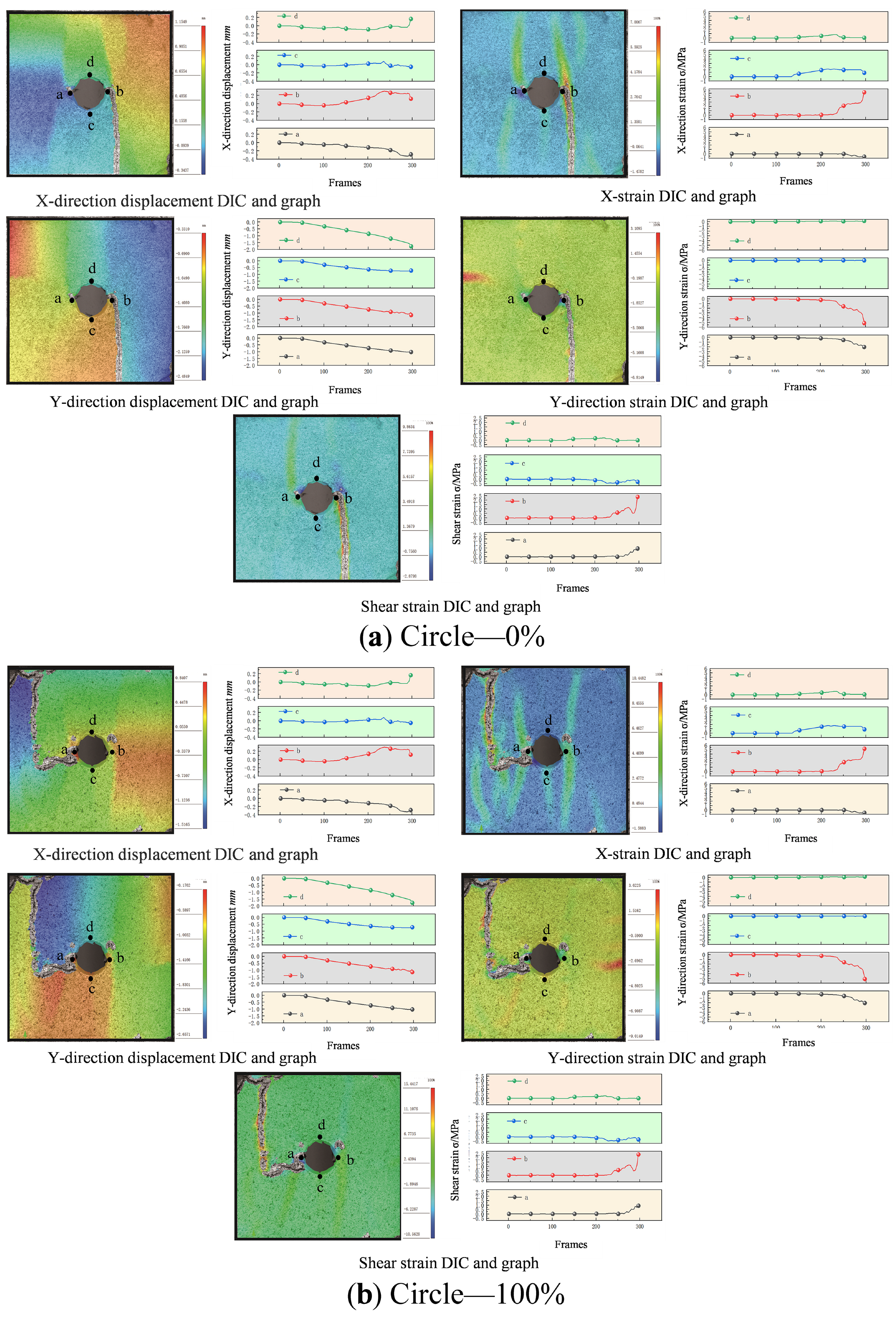
To analyze the deformation characteristics of the tunnel quantitatively, four points were selected symmetrically around the tunnel and labeled a, b, c and d. By monitoring the displacement and strain evolution at each measurement point, it was revealed that water saturation influences the behavior of tunnel deformation. Based on the DIC test results in Figure 11, Figure 12, Figure 13 and Figure 14, the following conclusions can be drawn:
① Displacement field evolution characteristics indicate: During the initial stage of uniaxial compression, displacement curves in both the X and Y directions at all monitoring points exhibit uniform trends and overlap. As loading increases, water saturation causes significant differentiation in displacement responses, with particularly intense fluctuations in Y-direction displacement. This indicates that tensile failure dominates the tunnel’s failure mode.
② Strain field analysis reveals: As water saturation increases, strain concentration occurs earlier and exhibits significantly amplified fluctuations. Distributions of strains in the X-, Y- and shear (XY) directions indicate distinct differences in crack development and failure processes under varying saturation conditions.
③ Strain mechanism analysis shows that: The Y-direction strain amplitude far exceeds that in the other directions, confirming that tensile failure is the primary mechanism. This is due to the sustained accumulation of lateral tensile stress during uniaxial compression, which triggers failure when it exceeds the material’s tensile strength. Increased water saturation significantly accelerates Y-direction strain development, indicating that water intensifies deformation localization. X-direction strain shows gradual changes at low saturation levels, but pronounced fluctuations at higher levels, reflecting the gradual emergence of flexural deformation characteristics around the cavity. Concurrently, the development of shear strain confirms that the specimens undergo slight shear slip phenomena under the influence of moisture.

3.5. Effect of Water Saturation on the Failure Mechanism of Physical Models

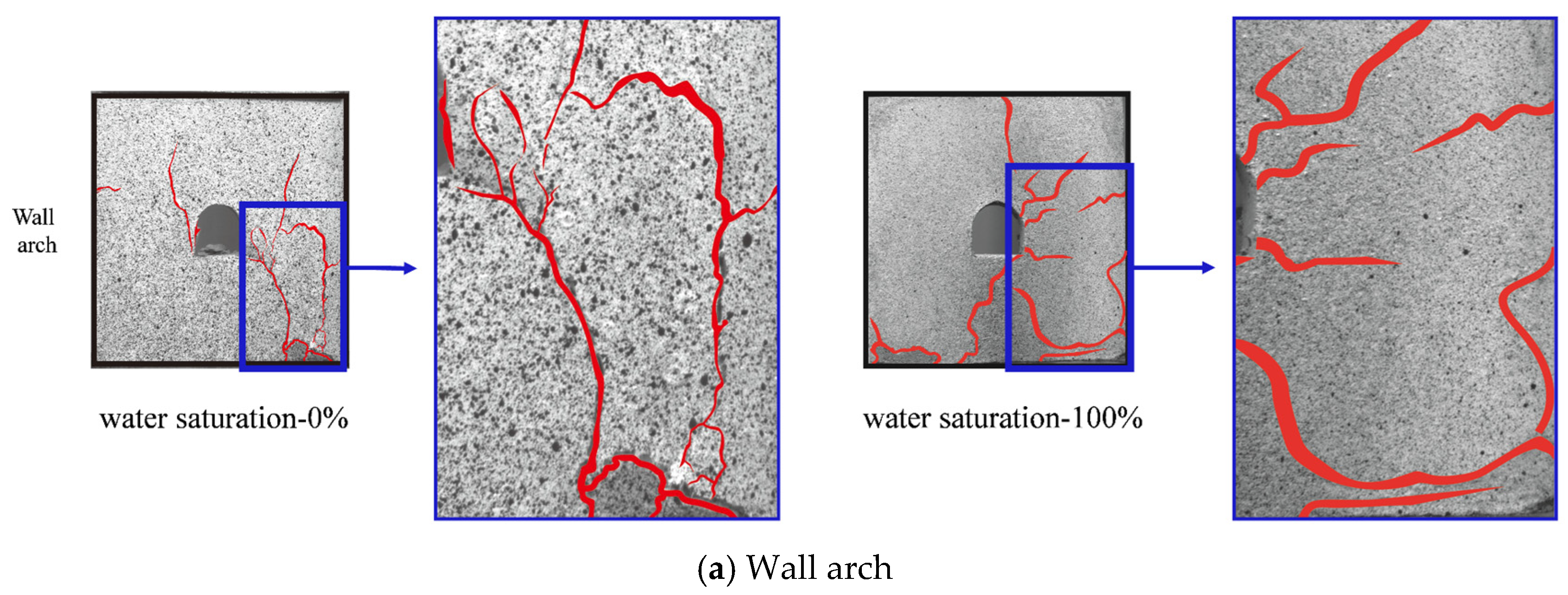
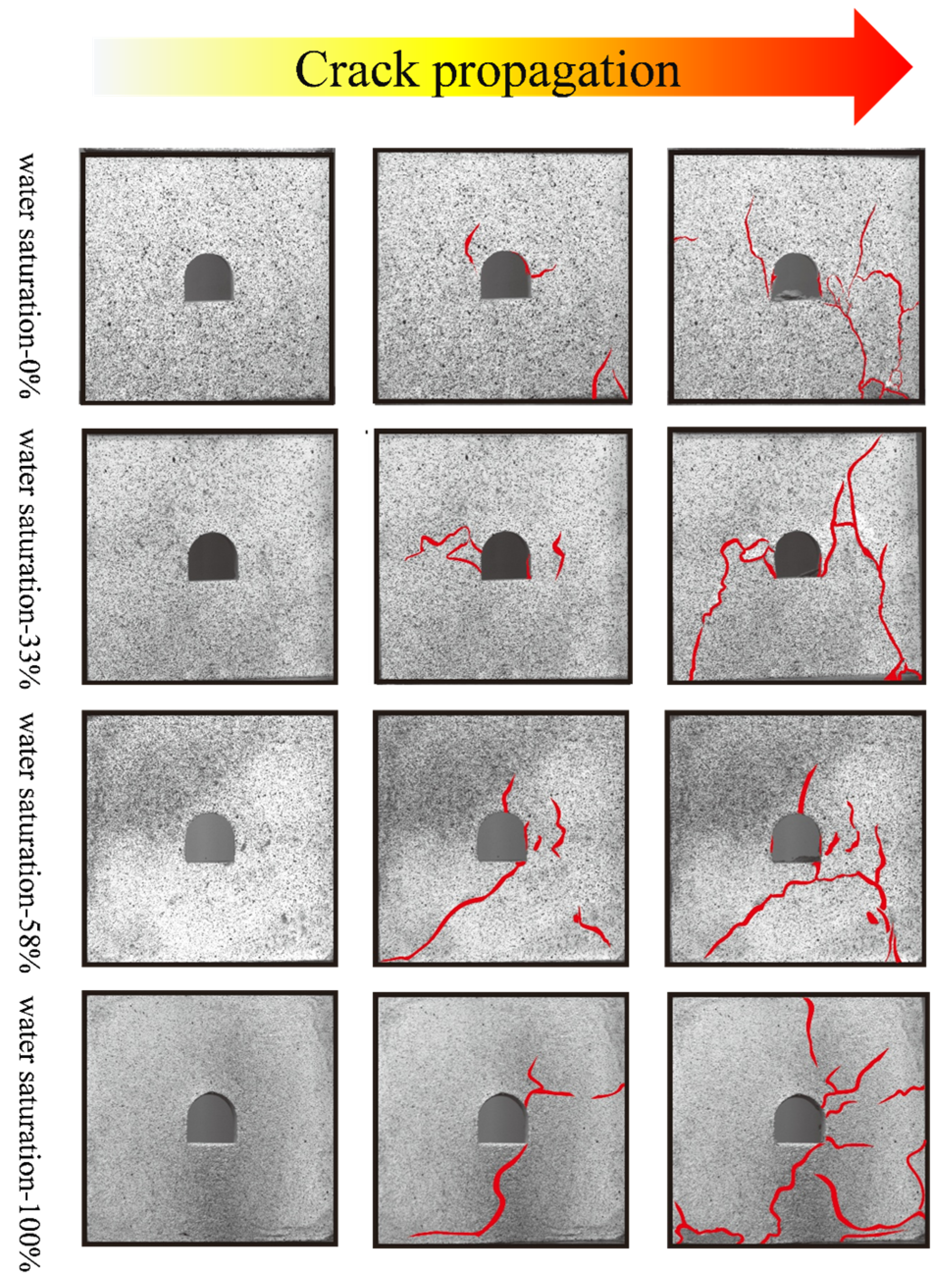
To investigate the effect of water saturation on the patterns of crack propagation in specimens, uniaxial compression tests were conducted on wall arch tunnel specimens (Figure 15). The results indicate that crack evolution initiates near the tunnel periphery. Under compressive stress, these initial cracks gradually propagate towards the specimen boundary and interconnect, while shear cracks simultaneously develop on the sidewalls of the specimen. As the compressive load increased, the cracks converged further, ultimately forming a macroscopically interconnected primary fracture surface.
Specifically, under low water saturation conditions, specimen failure was dominated by primary crack propagation, though the initial length of its extension was limited. As the load increased, numerous secondary cracks formed around the primary crack. The crack network expanded rapidly and interconnected, resulting in fragmentation failure characteristics when the specimen lost stability. In contrast, specimens with high water saturation develop multiple primary cracks of significant length during compression. These primary cracks directly interconnect under load, while secondary crack development remains limited. Ultimately, this leads to global failure along a few primary fissures, resulting in a more complete fracture morphology.
In uniaxial compression tests, initial defects within the rock—such as pre-existing fractures, pores, and mineral grain boundaries—are activated under external stress. Stress significantly concentrates at fracture tips, particularly those oriented at an angle to the maximum principal stress direction. Once this stress exceeds the material’s strength limit, fracture propagation begins. As cracks continue to propagate and interconnect, they ultimately form dominant macroscopic fracture surfaces, known as primary cracks.
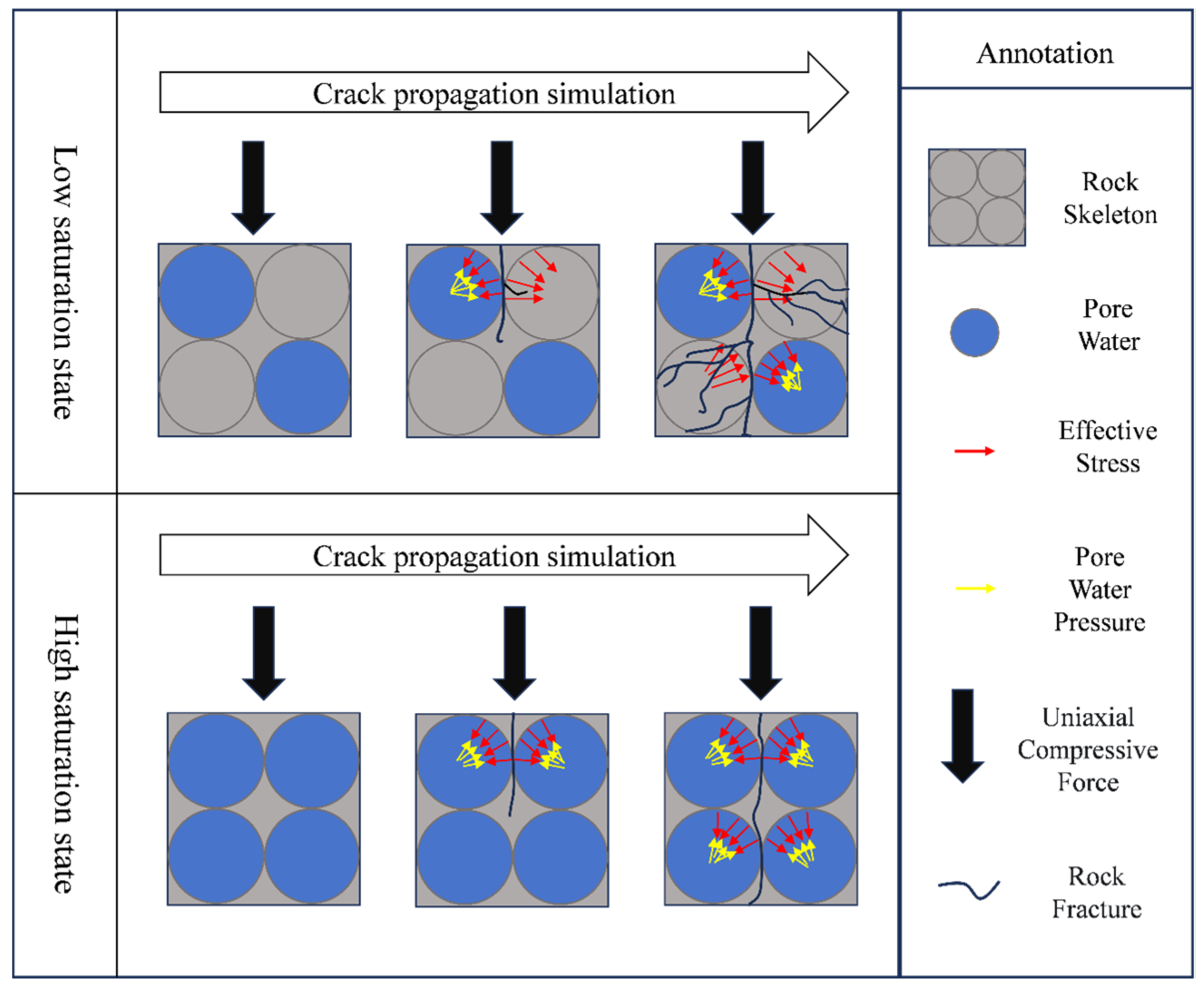
According to the idealized crack propagation model (Figure 16), based on the pore water theory and the ideal expansion model, under the influence of water saturation, water in low-saturation (unsaturated) rock does not exist as a continuous phase. Instead, it adheres to particle surfaces and micro-pores as isolated droplets or films, forming a curved liquid surface structure. At this point, the dominant mechanisms shift to “capillary effects” and “chemical corrosion effects.”
In capillary action, surface tension causes the curved surface of a liquid to contract, creating a pulling force on solid particles and generating matrix suction. This suction creates additional compressive stress at the points where particles come into contact, significantly enhancing the apparent strength and stiffness of rock and soil bodies and causing them to exhibit ‘hardening’ characteristics. However, this increase in strength is temporary and unstable. At existing microcrack tips, the curved liquid surface induces wedge pressure, generating tensile stress perpendicular to the crack wall and significantly increasing stress concentration at the crack tip. Conversely, chemical corrosion occurs when water molecules adsorb onto mineral surfaces at crack tips, forming a lubricating film that reduces intergranular friction and lowers the energy threshold required for crack propagation. At the same time, water acts as a solvent, inducing mineral hydrolysis or dissolving cementation materials and directly weakening the atomic bonding forces at crack tips, thereby diminishing the material’s fracture toughness.
In addition to these two mechanisms, low-saturation rocks are also affected by drying shrinkage stresses. During the transition from saturated to dry conditions, water evaporation causes a sharp increase in matrix suction, inducing rock contraction. When this contraction is constrained by internal particles, tensile shrinkage stresses are generated. If these stresses exceed the material’s tensile strength, new drying shrinkage cracks are formed, representing a form of derived cracking.
Therefore, the formation of cracks under low saturation conditions is not a singular process, but rather follows a complex evolutionary path involving ‘initial strengthening, subsequent weakening and eventual instability’. Capillary forces enhance apparent strength and maintain rock stability in the initial stage, but simultaneously create stress concentration hazards at the tips of cracks. Water continuously exerts chemical softening and physical lubrication effects. Once environmental humidity or moisture conditions change, the matrix’s attractive force diminishes, disrupting the original equilibrium. Previously suppressed cracks then rapidly propagate, forming new secondary cracks.
Under high saturation conditions, rock pores become saturated with water, forming a continuous fluid phase capable of transmitting pressure. At this stage, the ‘pore pressure effect’ becomes the dominant mechanism. According to the effective stress principle in rock mechanics, the total externally applied stress (σ) is balanced by the effective stress (σ’) borne by the rock matrix and pore water pressure (u). Pore water pressure partially offsets the effective stress acting on the rock matrix, creating a ‘supporting’ effect on crack walls that inhibits crack closure. This significantly reduces the effective stress concentration at the crack tip.
Under high saturation conditions, water acts as the continuous phase, eliminating gas–liquid interfaces and curved liquid surface structures. Consequently, capillary effects and the resulting wedge crack pressures disappear, eliminating a significant factor that promotes crack propagation. At the same time, since the pores remain permanently saturated, the drying process is prevented, thereby avoiding the tensile stresses induced by moisture evaporation.
Pore water pressure is transmitted uniformly throughout the rock mass, promoting stress homogenization and reducing localized stress anomalies. Under these conditions, material strength depends primarily on the relatively stable properties of the rock matrix, such as its mineral composition, structure and degree of cementation. In contrast to the ‘apparent strength’ of low-saturation rocks, which relies heavily on unstable matrix cohesion, high-saturation rocks do not experience drastic strength loss upon wetting, such as collapsing or softening.
The presence of pore water pressure has been shown to reduce the macroscopic strength of rock due to the principle of effective stress. However, it has also been demonstrated that this reduction in strength is accompanied by a more “moderate” and “concentrated” crack propagation process. It has been demonstrated that energy is typically released along the optimal path, i.e., the primary crack. This results in a reduction in the number of secondary cracks and a clearer, smoother morphology of the primary crack.
From a short-term mechanical response perspective, as seen from the standpoint of engineering, high saturation suppresses the initiation and propagation of cracks through pore pressure effects. This, in turn, increases the critical failure load of rock and soil masses. However, from the perspective of a long-term geological process analysis (weathering perspective), water is the primary medium for chemical weathering. In conditions of high saturation, water achieves maximum contact area with minerals, thereby enabling sustained and gradual chemical corrosion (including hydrolysis, dissolution, and hydration reactions). This process progressively weakens the rock’s overall strength and long-term load-bearing capacity. In the final analysis, when the rock is significantly weakened, it may undergo global plastic deformation or shear failure under external loading, rather than primarily failing through the propagation of a single secondary crack.
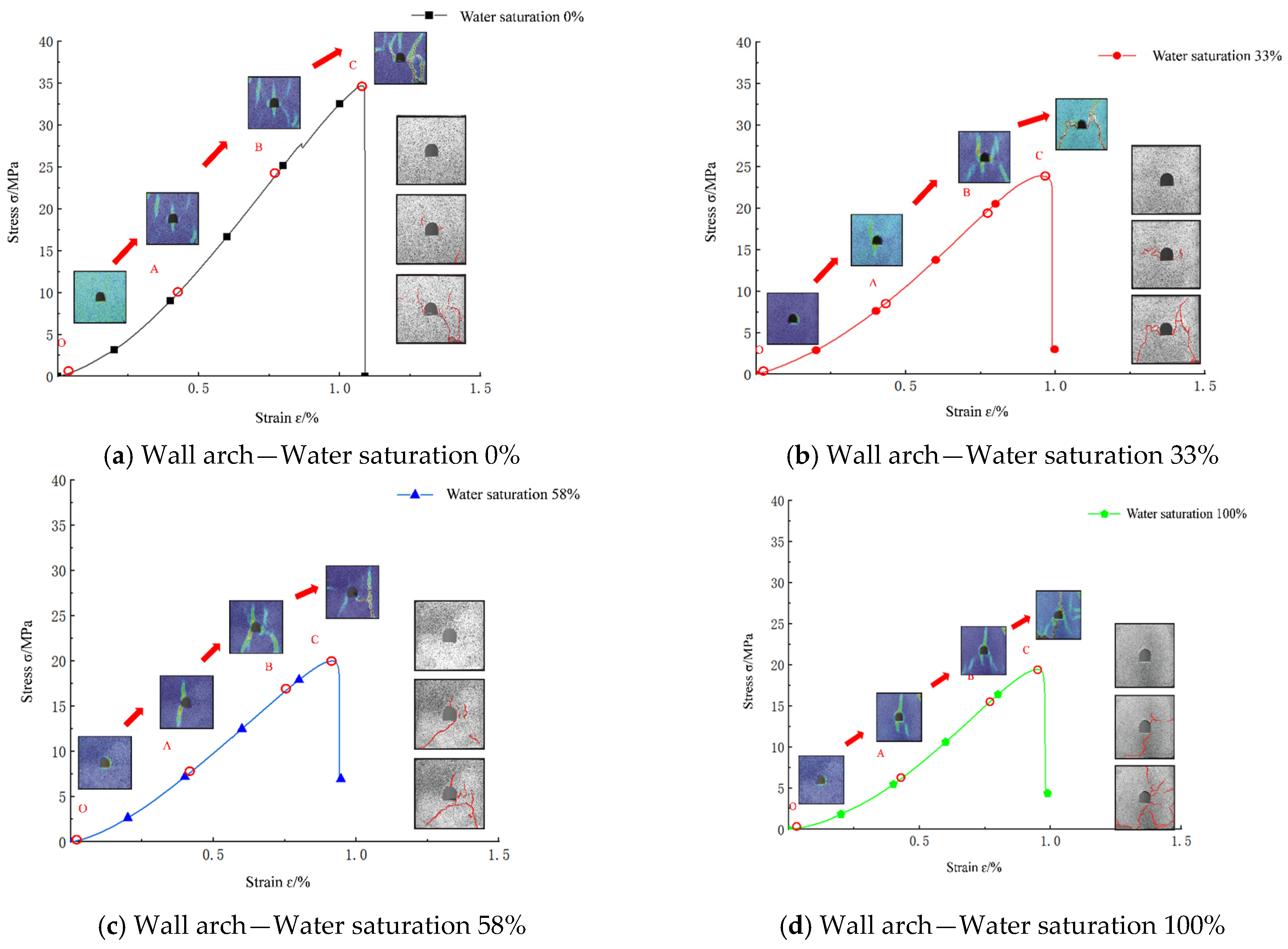
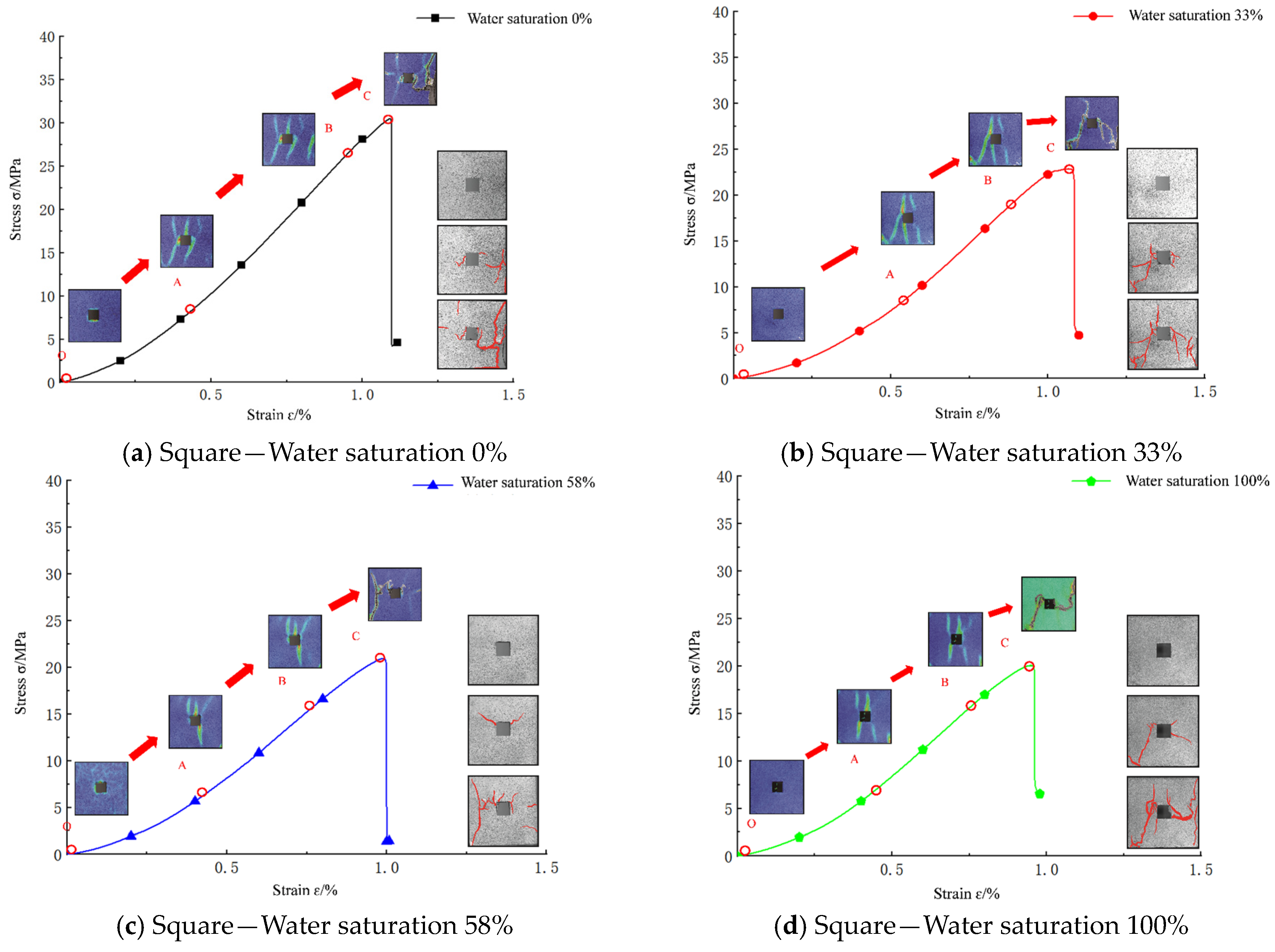
Utilizing uniaxial compression tests and digital image correlation technology, Figure 17 and Figure 18 illustrate the crack evolution process and stress–strain response of tunnel specimens under varying water saturation conditions. In order to characterize the failure process, three characteristic points (A, B, C) are defined on the stress–strain curve. These points demarcate the stages of crack development.
The OA stage is defined by the consolidation phase, which is characterized by a concave stress–strain curve. It is notable that the specimen volume undergoes continuous compression without any discernible crack development. The AB stage encompasses elastic deformation and stable crack propagation, exhibiting near-linear behavior. This phase constitutes approximately 50% of the total compression process and is characterized by the initiation and stable expansion of new cracks. As demonstrated in Figure 1, microcracks begin to appear in the specimens after point B. The BC stage is characterized by the plastic deformation phase, during which cracks accelerate their propagation and interconnect. The specimen reaches its maximum tensile stress at point C. Beyond point C, the stress softening stage commences. The curve demonstrates multiple peaks or sudden stress drops, which are indicative of residual stress release. This, in turn, can result in specimen instability and failure.
The wall arch specimen (see Figure 17) was selected for analysis. At 0% saturation, fewer cracks were observed, and the failure process was accompanied by significant acoustic emission phenomena, exhibiting typical brittle fracture characteristics. The results of the DIC monitoring indicated a pronounced stress concentration around the cavity during Stages A and B, with microcracks gradually forming as the load increased. The formation of these cracks occurred primarily along shear paths, ultimately resulting in a macroscopic failure plane at Point C. With the increase in water saturation, there was a substantial rise in the number of cracks present in the AB stage, concurrently accompanied by a decline in peak stress. This phenomenon served to moderate the failure process. Nevertheless, the brittle failure characteristics persist. The crack pattern displays a combined tensile-shear failure mode: the annular region undergoes shear slip under compressive stress, while tensile stress exceeding the material’s tensile strength forms tensile fracture surfaces.
The study indicates that water saturation primarily influences the timing of crack initiation and the scale of crack propagation without altering the fundamental failure pattern. It has been demonstrated that specimens with high saturation exhibit a significant increase in microcrack numbers and a marked reduction in peak stress. This has been shown to accelerate the evolution of the crack network.
As demonstrated in Figure 18, the failure mode of square tunnel specimens under uniaxial compression displays distinctly divergent characteristics compared to other tunnel shapes (e.g., wall-arch, horseshoe, circular). In addition to the conventional shear failure, the periphery of square tunnels exhibits a distinct flexural failure pattern. This phenomenon is attributed to the bending deformation of the surrounding rock mass during uniaxial compression, resulting in the induction of tensile stress concentration. This results in the formation and progressive propagation of tensile cracks, which ultimately leads to the gradual failure of the tunnel’s inner structure.
The instability process of square tunnel specimens exhibits distinct brittle failure characteristics. The fracture system primarily develops along the tunnel periphery, with its propagation path and stress distribution being significantly governed by the geometric features of the tunnel shape. In comparison to curved tunnels, the corners of square structures manifest significant stress concentration effects, thereby promoting fracture initiation and propagation in these regions. This results in a typical brittle fracture pattern.
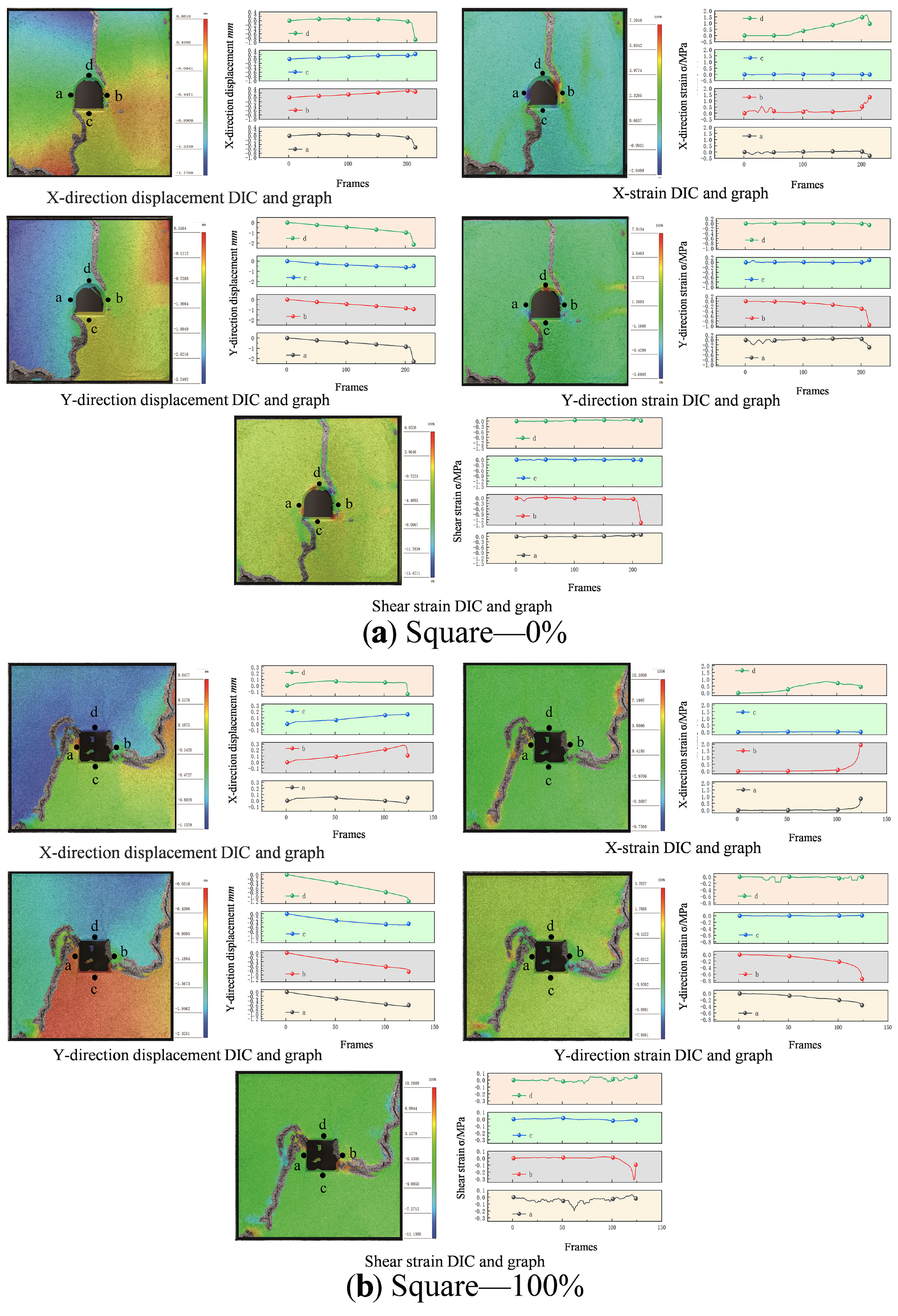
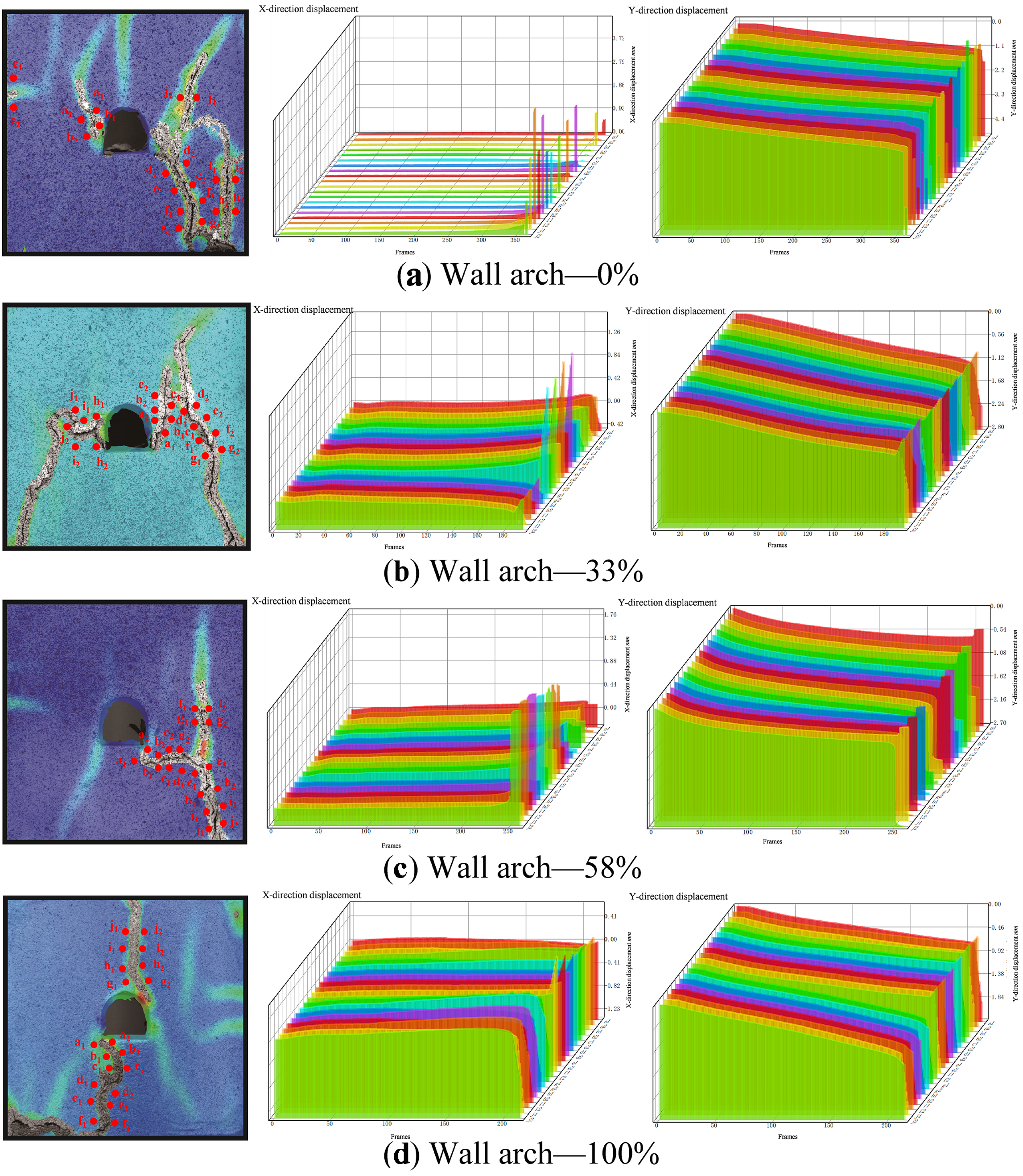
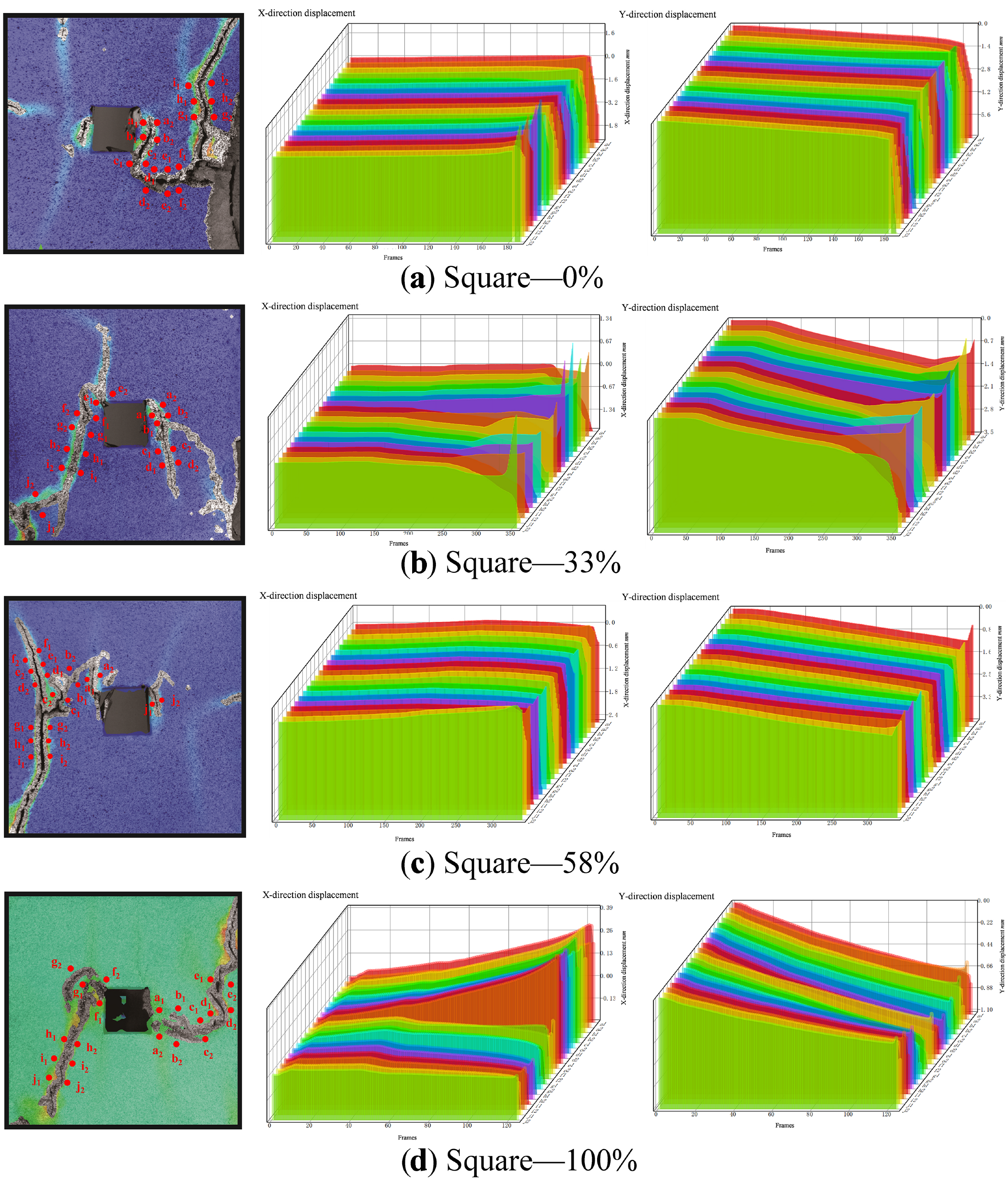
In order to facilitate an analysis of crack propagation patterns under peak stress conditions, symmetrical reference points were selected and marked within the crack zone at Point C. The results of the Digital Image Correlation (DIC) test conducted under different loading conditions (see Figure 19 and Figure 20) were then analyzed in order to draw the following conclusions from the displacement curves of these reference points:
It is evident from the displacement evolution characteristics that: During uniaxial compression, the X- and Y-direction displacement curves exhibit significant overlap during the consolidation stage, thereby reflecting the consistency of overall specimen deformation. As the magnitude of load increases, displacement continues to grow; however, water saturation exerts a substantial influence on its evolution pattern. In conditions of low saturation, the displacement curve displays sudden fluctuations, indicative of a brittle failure mode. Conversely, displacement growth in high-saturation specimens occurs more gradually, suggesting that microcracks initiate stable propagation at an early stage in the loading process.
Failure mechanism analysis reveals that fluctuations in X-direction displacement alongside strain growth indicate continuous accumulation of tensile stress, leading to tensile failure when the tensile strength of the material is exceeded. The displacement in the Y-direction is indicative of flexural deformation under bending forces, with square specimens demonstrating the most significant response in this regard. This observation is consistent with the flexural failure characteristics previously described. A combined analysis of displacement and strain fields reveals that specimen failure predominantly follows a tensile failure mechanism, accompanied by a composite mechanism involving shear slip and flexural failure. Furthermore, water saturation has been demonstrated to reveal discrepancies in crack development under varying humidity conditions by influencing the fluctuation characteristics of displacement curves.

3.6. The Stress at Which the Material Exhibits Cracking Initiation

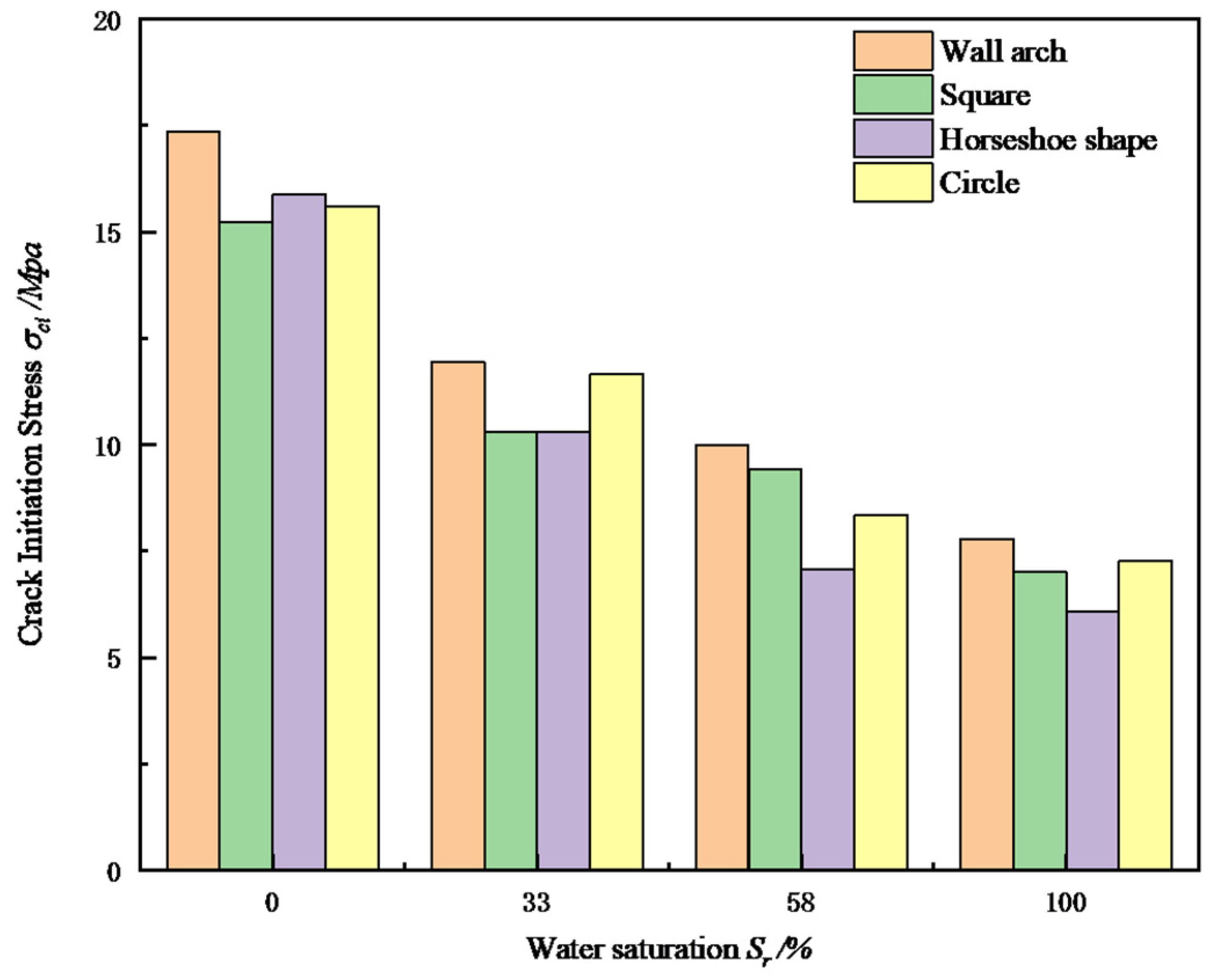
In this study, crack initiation was identified using a digital image correlation (DIC) system, enabling relatively clear monitoring of crack emergence. Specifically, by detecting the instant of crack initiation and correlating it with the synchronized compression system, the corresponding stress at that point in time could be accurately determined [53,54,55], The cracking stress is shown in Figure 21.
The cracking stress of rock is regulated by water saturation, exhibiting a characteristic dual-mechanism control pattern. As the level of saturation changes, the variations in cracking stress are primarily influenced by different physical-chemical mechanisms.
Under low saturation conditions, rock exhibits the characteristics of ‘apparent strengthening and intrinsic weakening’. Capillary-induced matrix suction generates additional compressive stresses at particle contact points and microcrack tips. This significantly enhances the rock’s apparent strength and stiffness, thereby increasing the crack initiation stress. At the same time, the lubricating effect of water films at fracture tips, coupled with hydrolysis and dissolution reactions at the water-rock interface, continuously reduces the material’s fracture toughness, forming a potential weakening mechanism. The competition between these strengthening and weakening mechanisms causes the fracture initiation stress of low-saturation rocks to appear high in the short term, but this is a metastable equilibrium that is prone to an abrupt decline in the presence of environmental humidity changes or accumulated chemical weakening.
At high saturation levels, the initiation stress exhibits ‘effective stress control with weakening dominance’. Pore water forms a continuous phase that generates pore water pressure, which effectively counteracts the effective stress borne by the rock matrix. This significantly reduces the energy barrier for crack propagation. Concurrently, the water-mineral contact area is maximized, enabling full chemical weathering that continuously weakens the rock matrix’s strength and the integrity of the cementation. The capillary enhancement effect disappears due to the vanishing curved liquid surface, leaving pore pressure and chemical corrosion as the dominant factors. This enables cracks to initiate or activate at lower external stresses, significantly reducing the cracking stress.
Water saturation systematically influences the evolution path and critical conditions of rock fracture stress by regulating the transition between ‘capillary effects and pore pressure’ and the equilibrium between ‘physical strengthening and chemical weakening’. This concept is of significant theoretical value for accurately assessing damage evolution and the long-term stability of rock masses under varying hydrogeological conditions.

4. Discussion

The failure mode of a specimen is essentially the result of energy competition: when the external input energy exceeds the critical value of a dominant dissipation mechanism, the material releases energy through specific paths (crack propagation, plastic flow, etc.). Therefore, when discussing the failure mode of a specimen, it is also necessary to investigate the changes in energy.

4.1. Effect of Water Saturation on Energy Conversion

This section analyzes the impact of varying degrees of water saturation on the conversion of energy during the deformation and failure processes of tunnel specimens. It is assumed that no energy is lost through processes such as heat exchange or emission during uniaxial compression of the specimens and that external forces act on the rock mass during changes in stress. Some of these forces are stored within the rock mass as elastic strain energy, while others are dissipated through internal failure within the rock mass. The total rock energy ( U ) is primarily related to the elastic strain energy ( U e ) and the dissipated energy ( U d ) required to create irreversible deformation within the rock. Therefore, the total energy U can be expressed as follows:
U = U d + U e
Within the principal stress space, the energy of each constituent of the rock unit is expressed as:
U = 0 ε 1 δ 1 d ε 1 + 0 ε 2 δ 2 d ε 2 + 0 ε 3 δ 3 d ε 3
U e = 1 2 δ 1 ε e 1 + 1 2 δ 2 ε e 2 + 1 2 δ 3 ε e 3
ε e i = 1 E u δ i v u δ j + δ k
U e = 1 2 E 0 [ δ 1 2 + δ 2 2 + δ 3 2 2 v δ 1 δ 2 + δ 2 δ 3 + δ 1 δ 3 ]
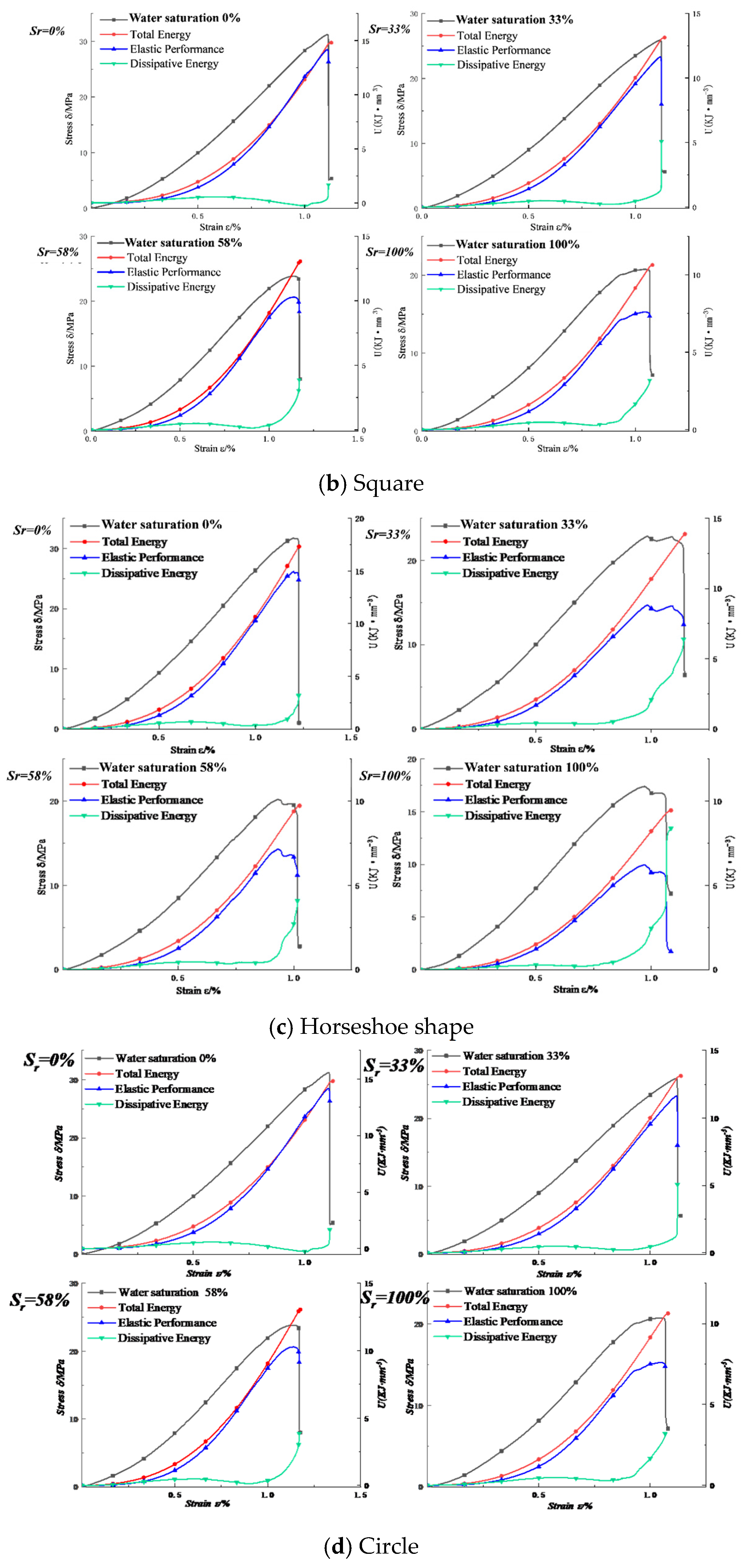
In this study, the principal stress is denoted by δ i i = 1,2 , 3 , and the principal strain is represented by ε i i = 1,2 , 3 . It is observed that the contraction strain, denoted by ε 1 , is positive, while the transverse strain and lateral strains, denoted by ε 2 and ε 3 are negative. The corresponding elastic strain is defined as ε e i ( i = 1,2 , 3 ) , and E u and v u are the unloaded elastic modulus and Poisson’s ratio, respectively. In order to facilitate the processing of the calculation results, it is necessary to use the initial elastic modulus E 0 as opposed to E u , and the Poisson’s ratio v as opposed to v u . The relationship curves of U , U e , U d with the change in stress–strain are calculated and plotted, based on the uniaxial test data and stress–strain curves.
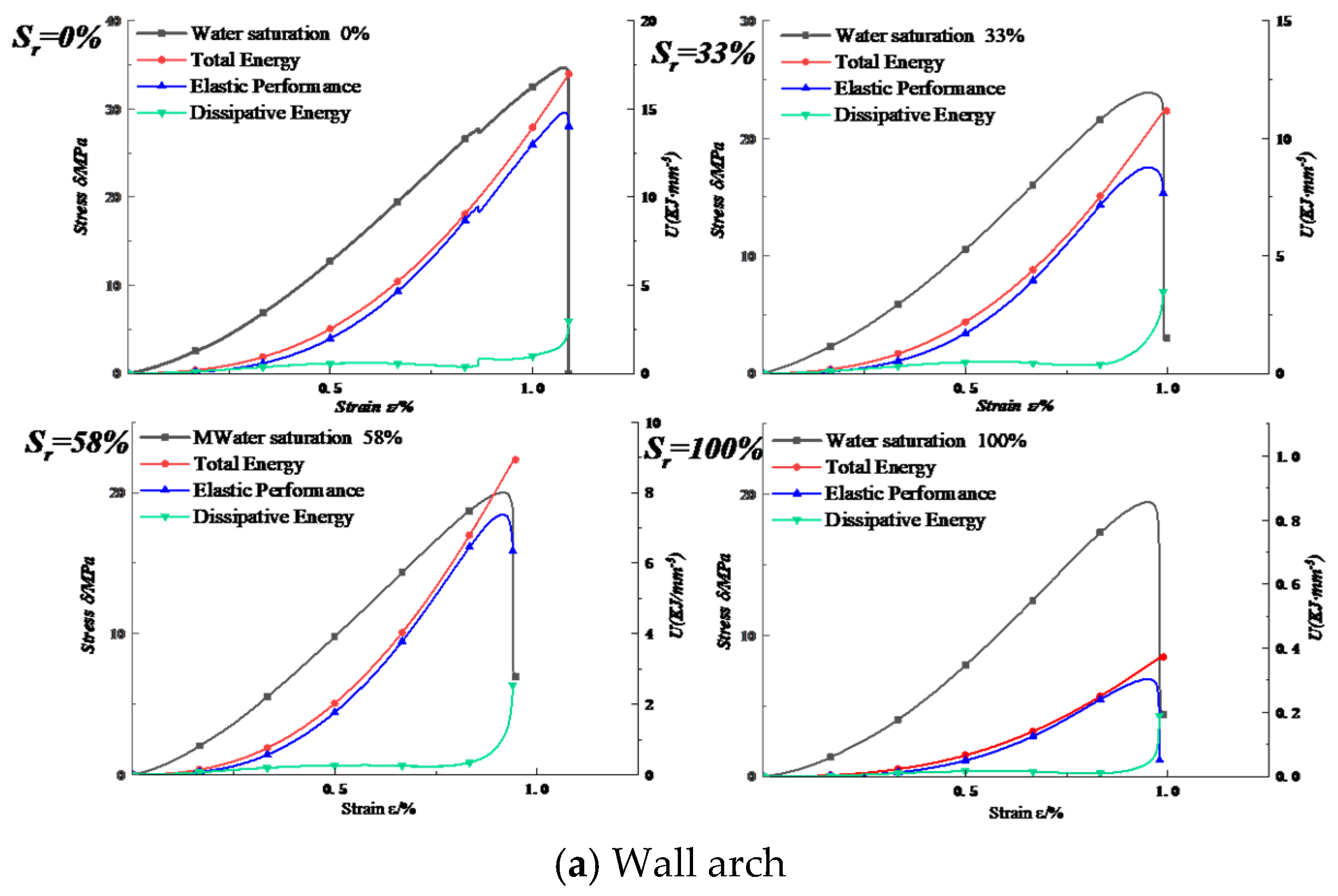
Pursuant to a thorough investigation into the correlation between stress–strain curves and energy evolution (cf. Figure 22), the ensuing conclusions can be extrapolated:
① Tunnel specimens exhibit a complete sequence of mechanical responses during uniaxial compression, including elastic deformation, plastic flow, hardening effects and ultimate fracture. During the elastic stage, applied work is primarily converted into elastic potential energy, resulting in a linear stress–strain relationship. Upon entering the plastic stage, external work is partially stored as elastic potential energy, while progressively converting into plastic deformation energy and the surface energy required for crack propagation. After exceeding the yield point, plastic energy dissipation increases significantly. This is accompanied by internal structural rearrangement and accumulated damage, intensifying energy release until macroscopic cracks form. At this stage, external work is primarily converted into irreversible dissipated energy.
② The elastic energy density curve and the stress–strain curve exhibit consistent evolutionary patterns. During the elastic stage, both curves show approximately linear growth, consistent with the elastic constitutive relationship described by Hooke’s law.
③ Energy conversion is closely related to the stress state. As the stress–strain curve enters the softening stage, the specimen’s energy storage capacity decreases significantly and there is a positive correlation between total released energy and peak strength. Elastic energy density accumulates slowly during the initial loading phase and increases at an accelerated rate after yielding. Its trend of evolution closely matches that of the stress–strain curve, reflecting the complete process of energy accumulation and subsequent release in the material.

4.2. Effect of Water Saturation on Dissipated Energy

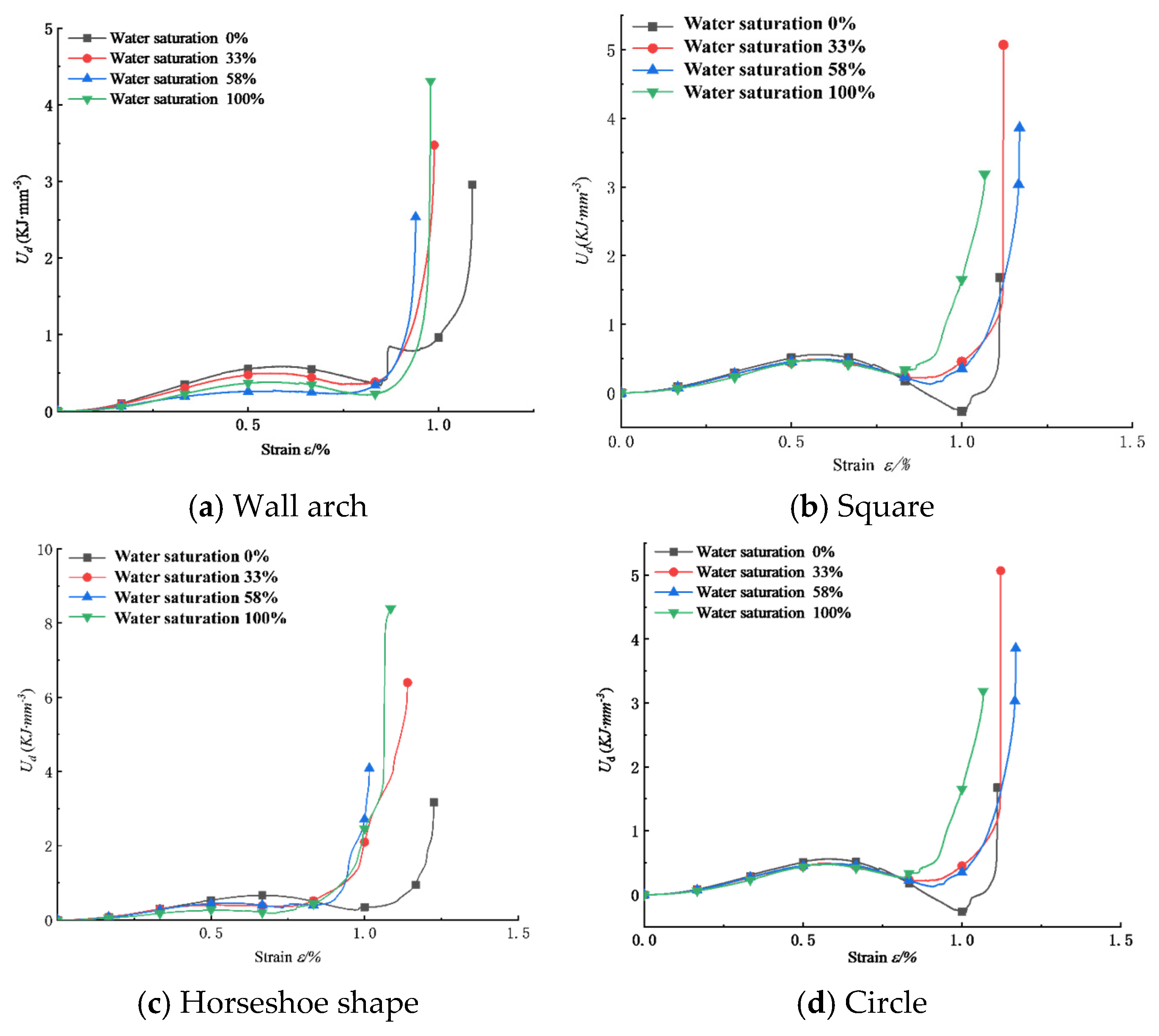
The dissipated energy–strain curve (see Figure 23) shows the energy dissipation characteristics of specimens under different water saturation conditions and exhibits the following patterns:
① Dissipated energy displays a typical two-stage evolution with axial strain. During the elastic deformation stage, energy is primarily consumed by the closure of primary cracks and internal cohesive bonding, resulting in slow growth of dissipation. Upon entering the plastic stage, dissipated energy accelerates with the initiation and propagation of new fractures, causing the curve to become convex. When strain reaches the peak stress point, the dissipated energy curve shows a distinct inflection point, marking the specimen’s entry into the damage accumulation stage. Energy conversion is then dominated by dissipation, leading to rapid damage progression.
② Water saturation significantly influences dissipated energy evolution. As saturation increases, the growth rate of dissipated energy markedly accelerates, indicating that moisture promotes the development and expansion of microcracks, thereby weakening the load-bearing capacity of the specimen. Concurrently, the characteristic inflection point of the dissipated energy curve occurs at an earlier stage of saturation, confirming that moisture accelerates the damage accumulation process and causes the specimen to enter the failure stage sooner.

4.3. Effect of Water Saturation on Total Energy

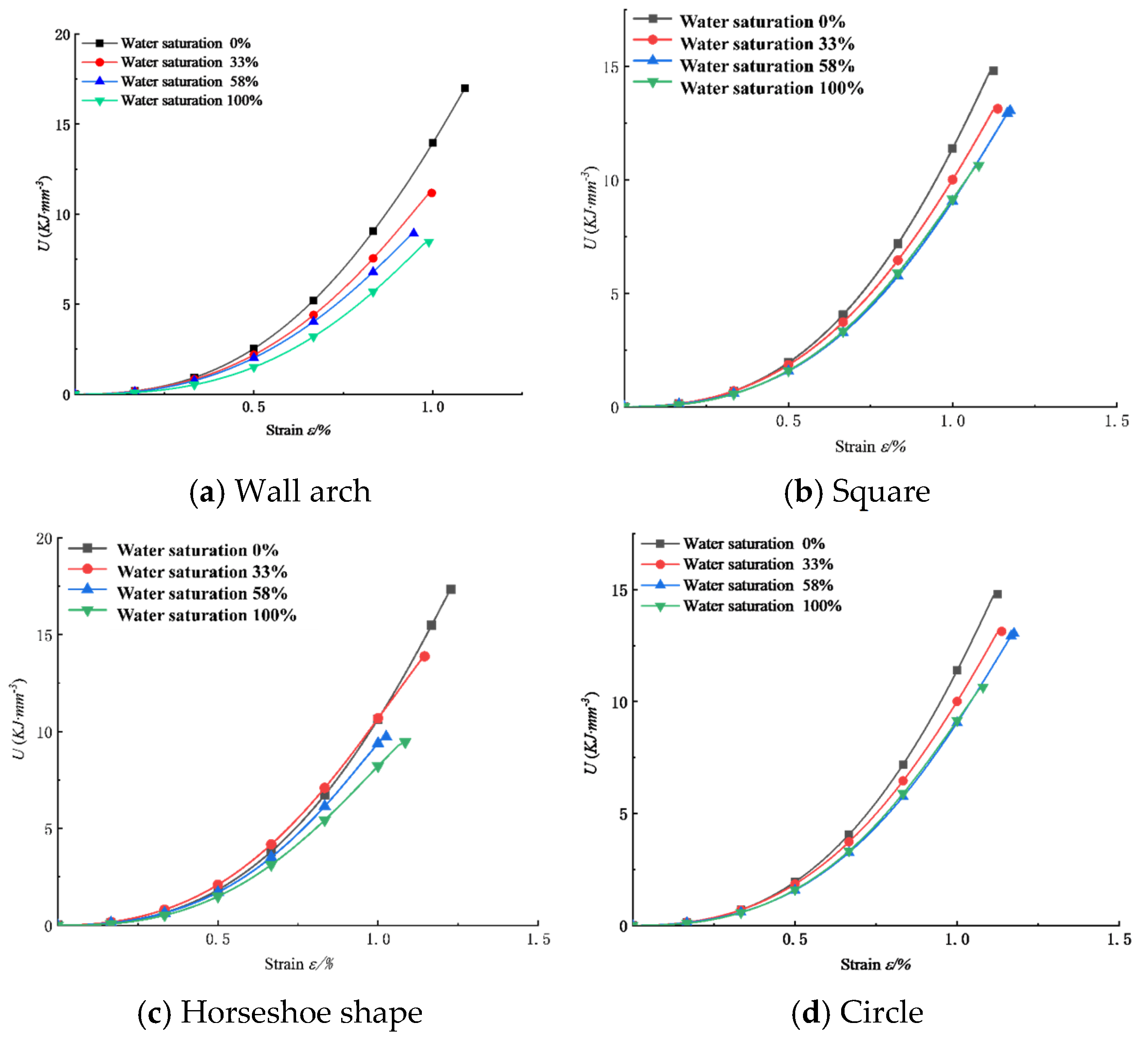
The influence of water saturation on the energy evolution characteristics of the specimens can be understood by looking at the total energy–strain curve shown in Figure 24 and following the pattern below:
① Total energy increases monotonically with strain, but its peak value decreases significantly as water saturation increases. At low saturation levels, the specimen’s internal structure is dense and has low porosity, demonstrating a high energy storage capacity. As saturation rises; however, water promotes microcrack development and weakens the particle structure, thereby reducing the specimen’s energy absorption capacity.
② Increasing water saturation significantly alters the stages of the specimen’s mechanical response: the elastic stage shortens and the plastic stage occurs earlier. This results in reduced elastic strain energy storage. Simultaneously, water-promoted plastic deformation and fracture propagation intensify energy dissipation, causing the total energy curve to shift downwards overall. This indicates a significant decrease in energy conversion efficiency for the material in a water-saturated state.

4.4. Effect of Water Saturation on Energy Indicators

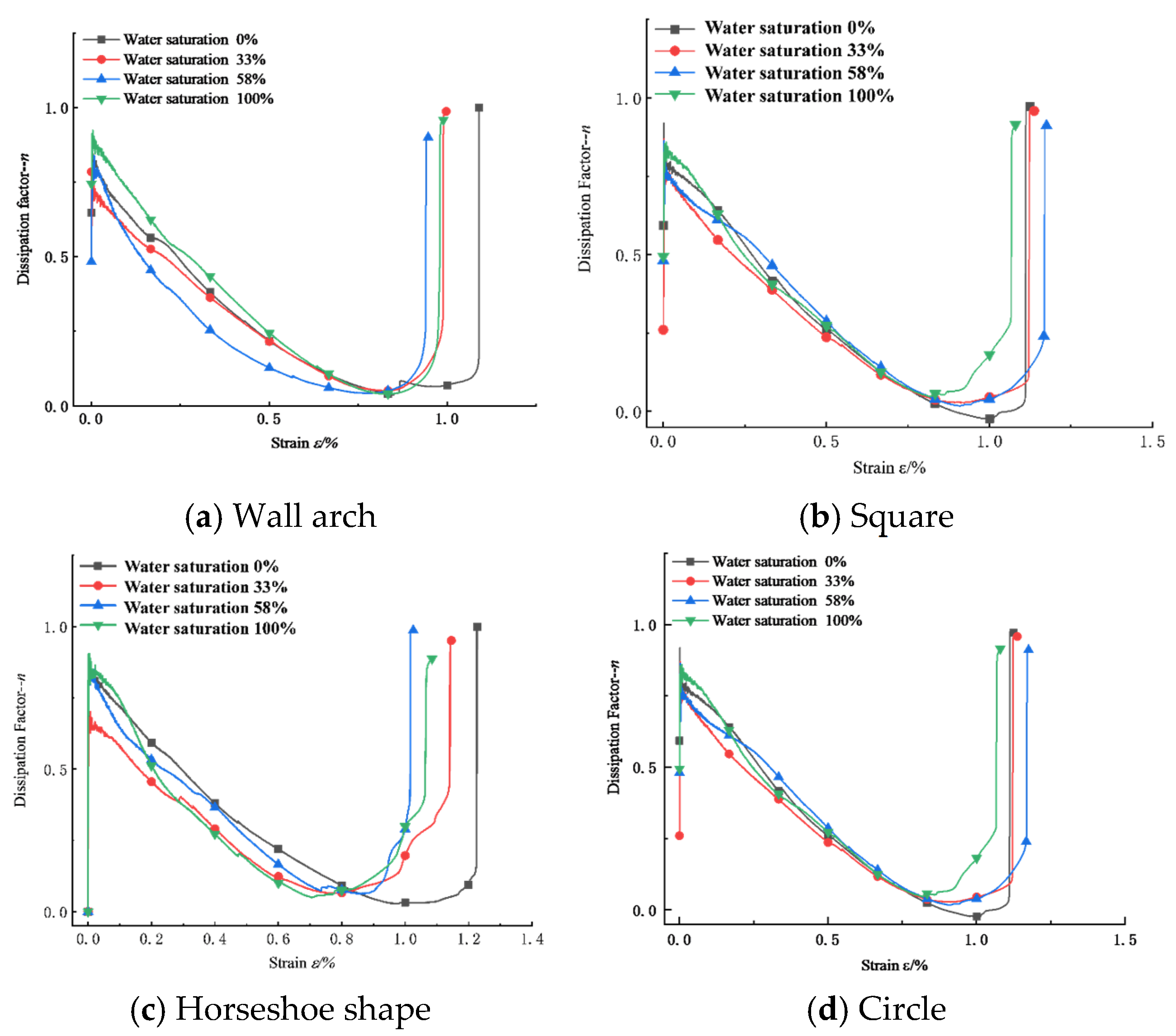
The influence of water saturation on the energy dissipation factor of tunnel rock specimens is a consequence of the dynamic changes in energy distribution that occur during rock loading. The energy dissipation factor is generally defined as the proportion of energy dissipated by a rock during deformation and failure relative to the total input energy. The variation directly reflects the brittle-ductile transition characteristics and resistance to failure of the rock, The dissipation factor of the specimen is shown in Figure 25. Consequently, the energy dissipation factor primarily represents:
n = U d U
The curve variation pattern presented in the dissipation factor curve diagram reveals the following:
The evolution characteristics of the dissipation factor ( n ) indicate that as strain increases, the n value exhibits a unimodal pattern of first increasing and then decreasing. During the plastic stage, the curve shows a concave trend. Water saturation exerts a significant regulatory effect on the dissipation factor, specifically manifested as:
The dissipation factor value demonstrates a nonlinear variation with increasing saturation. The dissipation factor exhibits a nadir at 0% saturation and a zenith at 4% saturation, indicative of a pronounced saturation critical effect as opposed to a monotonically increasing relationship. The dissipation factor is closely related to the material’s deformation characteristics. A higher dissipation factor has been shown to correspond to stronger ductile behavior, reflecting enhanced energy dissipation capacity in the specimen. Conversely, it has been demonstrated to manifest as brittle characteristics, where energy storage capacity dominates. This pattern corroborates the trend observed in the total energy curve, where an increase in saturation is associated with a decrease in total energy. Collectively, these observations reveal the profound influence of moisture on the material’s energy distribution mechanism.

5. Conclusions

(1)
As the degree of water saturation increases, a clear downward trend is observed in both the peak stress and the elastic modulus of the tunnel specimens. At low saturation levels (0–33%), water primarily adsorbs along mineral surfaces to form a water film, weakening intergranular cohesion and causing an initial decline in mechanical parameters. When the level of saturation exceeds 55%, the effects of pore water pressure become increasingly pronounced, resulting in the partial dissolution of cementation materials. However, it is important to note that, at this point, moisture distribution approaches equilibrium, thereby slowing the rate of stress decline. With the exception of horseshoe specimens, the elastic modulus of other specimens exhibits a slight rebound at 55% saturation, a phenomenon that may be attributable to water filling of microcracks and stress redistribution under saturated conditions.
(2)
It is evident that water exerts a considerable dynamic disturbance effect on rock masses. At low saturation levels, the lubricating effect of water films facilitates micro-slip, causing localized stress release. As saturation levels rise, the increase in the availability of free water leads to an elevated pore water pressure. This, in turn, results in the dissolution of cementation materials and the generation of a dynamic water wedge effect under loading conditions. This process, in turn, triggers a reduction in stress. In the context of dynamic disturbance, it has been observed that if there is an absence of a substantial increase in specimen strain, the dissipation of energy occurs predominantly through micro-slip and interfacial friction. Macro-scale behavior manifests as enhanced brittle characteristics rather than plastic deformation.
(3)
It can be demonstrated that the failure mode in the vicinity of the tunnel is considerably influenced by saturation. At low saturation levels, rock tensile strength undergoes a rapid decline, with failure being predominantly characterized by tensile failure. As saturation levels rise, pore water pressure increases concomitantly with a decrease in effective confining pressure, resulting in a decline in rock shear strength. The failure mode gradually transitions to a combined tensile-shear failure. Square tunnel specimens, exhibiting pronounced stress concentration, undergo flexural failure under high water content, indicating heightened structural sensitivity to water-induced softening effects.
(4)
Energy analysis demonstrates that the total input energy decreases as water saturation increases, with dissipated energy reaching its peak at approximately 33% saturation. This finding is indicative of peak activity in internal friction and microfracture development at this particular saturation level. At low saturation levels, the energy accumulation primarily occurs during the elastic stage. At elevated saturation levels, hydrostatic pressure has been observed to promote fracture propagation, thereby advancing the energy dissipation phase and inducing early indications of failure. This finding suggests that saturation disrupts the fundamental equilibrium between energy accumulation and dissipation, thereby impacting rock mass stability and failure processes.

Author Contributions

All authors contributed to the study conception and design. W.W.: methodology, experiment, data analysis, writing—original draft, writing—review and editing. X.L.: resources, funding acquisition, writing—review, supervision. Y.D.: conceptualization, methodology, writing—review and editing. N.W., Z.L. and G.C.: visualization, validation. All authors have read and agreed to the published version of the manuscript.

Funding

This study was supported by the Science and Technology Innovation Talent Project of Bingtuan (2023CB008-28), the Tianshan Talents Project (Youth Talent Lift-up Program) (2024TSYCQNTJ0060), the Research and Demonstration of Prefabricated Frost-Resistant Structures and Intelligent Monitoring Systems for lrrigation District Hydraulic Structures (2024AB079).

Institutional Review Board Statement

Not applicable.

Informed Consent Statement

Not applicable.

Data Availability Statement

The authors confirm that the data supporting the findings of this study are available within the article.

Conflicts of Interest

All authors certify that they have no affiliations with or involvement in any organization or entity with any financial interest or non-financial interest the subject matter or materials dis-cussed in this manuscript.

References

  1. Tang, S.B.; Yu, C.Y.; Heap, M.J.; Chen, P.Z.; Ren, Y.G. The Influence of Water Saturation on the Short- and Long-Term Mechanical Behavior of Red Sandstone. Rock Mech. Rock Eng. 2018, 9, 2669–2687. [Google Scholar] [CrossRef]
  2. Di, Y.L.; Wen, J.W. Quantitative analysis of the influence of saturation on rock strength reduction considering the distribution of water. Geomech. Geophys. Geo-Energy Geo-Resour. 2019, 5, 197–207. [Google Scholar] [CrossRef]
  3. Chen, L.G.; Wang, D.; Jiang, Y.J.; Liu, J.K.; Luan, H.J.; Wu, C.Y. Study on the failure modes of water-bearing soft rock under different low-frequency disturbance. Eng. Fail. Anal. 2024, 164, 17. [Google Scholar] [CrossRef]
  4. Zhou, C.Y.; Deng, Y.M.; Tan, X.S.; Liu, Z.Q.; Shang, W.; Zhan, S. Experimental Study and Application of Mechanical Property Softening in Saturated Soft Rock. Chin. J. Rock Mech. Eng. 2005, 24, 33–38. [Google Scholar] [CrossRef]
  5. Guo, F.L.; Zhang, D.L.; Su, J.; Xiao, C.M. Experimental Study on the Influence of Groundwater and Confining Pressure on the Mechanical Properties of Soft Rock. Chin. J. Rock Mech. Eng. 2007, 26, 2324–2332. [Google Scholar] [CrossRef]
  6. Han, Y.F.; Liu, X.R.; Wu, X.C.; Liang, N.H.; Xu, B. Large-scale field model testing of the effects of soft rock water content on the bearing performance of tunnel-type anchorages. Bull. Eng. Geol. Environ. 2024, 83, 509. [Google Scholar] [CrossRef]
  7. Xiong, D.G.; Zhao, Z.M.; Su, C.D.; Wang, G.Y. Experimental Study on the Effect of Saturation on the Rock Mechanical Properties of Coal-Bearing Formations. Chin. J. Rock Mech. Eng. 2011, 30, 998–1006. [Google Scholar]
  8. Liu, T.T.; Cheng, L.P.; Wang, Z.X.; Wang, Z.; Yang, R.C.; Ding, L.Y.; Li, X.P. The mechanical properties and microscopic failure mechanism of fractured granite under fissure water pressure. Eng. Fail. Anal. 2025, 171, 109393. [Google Scholar] [CrossRef]
  9. Chen, G.Q.; Li, T.B.; Wang, W.; Zhu, Z.F.; Tang, O.L. Weakening effects of the presence of water on the brittleness of hard sandstone. Bull. Eng. Geol. Environ. 2017, 78, 1471–1483. [Google Scholar] [CrossRef]
  10. Du, Y.T.; Duan, X.Y.; Jiang, T.Q.; Xing, X.Y.; Ren, X.; Chen, H.B. Experimental investigation of failure mechanism of fissure-filled sandstone under hydro-mechanical conditions. Phys. Fluids 2024, 36, 13. [Google Scholar] [CrossRef]
  11. Peng, K.; Liu, X.; Huang, W.S.; He, H.Y.; Ren, J.; Luo, S. The role of minimum principal stress in tunnel strainburst considering spatial structure effect. Theor. Appl. Fract. Mech. 2025, 139, 105085. [Google Scholar] [CrossRef]
  12. Singh, P.K.; Pradhan, S.P.; Vishal, V. Analysis of tensile failure mechanism in intact, foliated, and cracked rocks using distinct element method: Influence of anisotropy. Eng. Fail. Anal. 2024, 166, 108859. [Google Scholar] [CrossRef]
  13. Zhang, C.; Gao, J.Y.; Wu, R.Z.; Shi, X.T.; Wang, F.T.; Wang, X.J.; Han, P.H. Fracturing Characteristics of Sandstone Under Uniaxial Compression and Weakening Mechanism Influenced by Water Saturation. Int. J. Min. Sci. Technol. 2024, 53, 1117–1131. [Google Scholar] [CrossRef]
  14. Zhu, K.Y.; Sun, G.H.; Shi, L.; Lin, S.; Yu, X.Y. Analysis of multi-level force chain network in granite tensile fracture based on 3D-GBM. Eng. Fail. Anal. 2024, 166, 25. [Google Scholar] [CrossRef]
  15. Sun, W.; Wu, S.C. A study of crack initiation and source mechanism in the Brazilian test based on moment tensor (vol 246, 107622, 2021). Eng. Fract. Mech. 2021, 250, 107769. [Google Scholar] [CrossRef]
  16. Li, X.B.; Feng, G.; Wang, X.; Yang, J.X.; Zhao, Y.; Wang, G.F.; Xiao, M.L.; Gao, C.Y.; Liu, H.Z. Effects of loading rates and mine water immersion on the mechanical characteristics of coal under Brazilian test conditions. Rock Mech. Bull. 2026, 5, 100223. [Google Scholar] [CrossRef]
  17. Yu, L.Q.; Yao, Q.L.; Liu, J.F.; Li, X.H.; Chong, Z.H.; Wang, F.R.; Xie, H.X.; Li, Y.H. Effect of spatial distribution of water on rock mechanical properties and characterization of water diffusion. Constr. Build. Mater. 2025, 470, 140551. [Google Scholar] [CrossRef]
  18. Zhao, Z.H.; Liu, H.; Gao, X.J.; Feng, Y.H. Meso-macro damage deterioration of weakly cemented red sandstone under the coupling effect of high-humidity and uniaxial loading. Eng. Fail. Anal. 2023, 143, 106911. [Google Scholar] [CrossRef]
  19. Liu, X.B.; Zhang, Z.Y.; Ge, Z.L.; Zhong, C.L.; Liu, L. Brittleness Evaluation of Saturated Coal Based on Energy Method from Stress–Strain Curves of Uniaxial Compression. Rock Mech. Rock Eng. 2021, 54, 3193–3207. [Google Scholar] [CrossRef]
  20. Li, D.Y.; Wong, L.N.Y.; Liu, G.; Zhang, X.P. Influence of water content and anisotropy on the strength and deformability of low porosity meta-sedimentary rocks under triaxial compression. Eng. Geol. 2012, 126, 46–66. [Google Scholar] [CrossRef]
  21. Liang, X.; Tang, S.B.; Tang, C.A.; Hu, L.H.; Chen, F. Influence of Water on the Mechanical Properties and Failure Behaviors of Sandstone Under Triaxial Compression. Rock Mech. Rock Eng. 2022, 56, 1131–1162. [Google Scholar] [CrossRef]
  22. Pellet, F.L.; Keshavarz, M.; Boulon, M. Influence of humidity conditions on shear strength of clay rock discontinuities. Eng. Geol. 2013, 157, 33–38. [Google Scholar] [CrossRef]
  23. Han, B.; Shen, W.Q.; Xie, S.Y.; Shao, J.F. Influence of pore pressure on plastic deformation and strength of limestone under compressive stress. Acta Geotech. Int. J. Geoengin. 2019, 14, 535–545. [Google Scholar] [CrossRef]
  24. Wong, L.N.Y.; Chuan, J.M. Water Saturation Effects on the Brazilian Tensile Strength of Gypsum and Assessment of Cracking Processes Using High-Speed Video. Rock Mech. Rock Eng. 2014, 47, 1103–1115. [Google Scholar] [CrossRef]
  25. Clark, J.B. A Hydraulic Process for Increasing the Productivity of Wells. J. Pet. Technol. 1949, 1, 1–8. [Google Scholar] [CrossRef]
  26. Hubbert, M.K.; Willis, D.G.W. Mechanics of hydraulic fracturing. Trans. AIME 1972, 18, 369–390. [Google Scholar] [CrossRef]
  27. Bezalel, H.; Charles, F. Initiation and Extension of Hydraulic Fractures in Rocks. Soc. Pet. Eng. J. 1967, 7, 310–318. [Google Scholar] [CrossRef]
  28. Ito, T.; Hayashi, K. Physical background to the breakdown pressure in hydraulic fracturing tectonic stress measurements. Int. J. Rock Mech. Min. Sci. Geomech. Abstr. 1991, 28, 285–293. [Google Scholar] [CrossRef]
  29. Hossein, M.; James, H.; Wendy, T. Establishing Empirical Relationships for the Effects of Water Content on the Mechanical Behavior of Gosford Sandstone. Rock Mech. Rock Eng. 2017, 50, 2235–2242. [Google Scholar] [CrossRef]
  30. Vásárhelyi, B. Statistical Analysis of the Influence of Water Content on the Strength of the Miocene Limestone. Rock Mech. Rock Eng. 2005, 38, 69–76. [Google Scholar] [CrossRef]
  31. Zhou, Z.L.; Cai, X.; Ma, D.; Du, X.M.; Chen, L.; Wang, H.Q.; Zang, H.Z. Water saturation effects on dynamic fracture behavior of sandstone. Int. J. Rock Mech. Min. Sci. 2018, 114, 46–61. [Google Scholar] [CrossRef]
  32. Zhou, Z.L.; Cai, X.; Cao, W.Z.; Li, X.B.; Xiong, C. Influence of Water Content on Mechanical Properties of Rock in Both Saturation and Drying Processes. Rock Mech. Rock Eng. 2016, 49, 3009–3025. [Google Scholar] [CrossRef]
  33. Nara, Y.; Morimoto, K.; Hiroyoshi, N.; Yoneda, T.; Kaneko, K.; Benson, P.M. Influence of relative humidity on fracture toughness of rock: Implications for subcritical crack growth. Int. J. Solids Struct. 2012, 49, 2471–2481. [Google Scholar] [CrossRef]
  34. Peng, K.; Liu, X.; Jing, M.; Wu, T.; Luo, K.; Luo, S. Impact-water interaction effects on mechanical and energy characteristics of granite during uniaxial compression. Geoenergy Sci. Eng. 2025, 254, 214033. [Google Scholar] [CrossRef]
  35. Luo, Y.; Huang, J.C.; Wu, W.X.; Si, X.F.; Zhu, C.Q. Saturation effect on storage-dissipation properties and failure characteristics of red sandstone: Energy mechanism of water in preventing rockburst. Int. J. Coal Sci. Technol. 2025, 12, 32. [Google Scholar] [CrossRef]
  36. Qian, R.P.; Feng, G.R.; Guo, J.; Wang, P.F.; Wen, X.Z.; Song, C. Experimental investigation of mechanical characteristics and cracking behaviors of coal specimens with various fissure angles and water-bearing states. Theor. Appl. Fract. Mech. 2022, 120, 103406. [Google Scholar] [CrossRef]
  37. Ding, Y.S.; Yin, D.W.; Hu, H.; Tan, Y.; Liu, H.M.; Li, X.L.; Jiang, N. Influence characteristics and macro-meso mechanism of pressure immersion time on tensile properties for coal materials. J. Mater. Res. Technol. 2023, 26, 2358–2370. [Google Scholar] [CrossRef]
  38. Sun, M.; Liu, W.N. Analysis of the Impact of Tunnel Water Inflow on Surrounding Rock Properties. Tunn. Constr. 2008, 28, 143–147. [Google Scholar]
  39. Hu, T.T.; Ge, J.K.; Liu, K.M. Study on the Influence of Moisture Content on the Stability of Tunnel Surrounding Rock in High-Stress Carbonaceous Slate Formations. J. Water Resour. Water Eng. 2022, 33, 169–175. [Google Scholar] [CrossRef]
  40. Li, L. Study on the Mechanical Properties of Tunnel Construction in Weak Surrounding Rock Rich in Groundwater. Smart Cities 2025, 11, 149–151. [Google Scholar] [CrossRef]
  41. Cui, X. Analysis of the Influence of Moisture Content on the Physical and Mechanical Properties of Surrounding Rock in Highway Tunnels. Resour. Inf. Eng. 2020, 35, 84–87+91. [Google Scholar] [CrossRef]
  42. Li, H.; Zhu, X.Y.; Xu, Y.F.; Zhang, Z.Q.; Chen, Y.Y. Analysis of the Influence of Cross-Section Shape on Displacement and Stress in Tunnel Surrounding Rock. Tunn. Constr. 2009, 29, 7. [Google Scholar]
  43. Liu, Z.X.; Wu, Y.; Li, X.Z.; Huang, Z.; Lin, J.; Pan, X.H. Effects of thermal treatment on the macroscopic physical properties and microstructure of Beishan fine-grained granite. Bull. Eng. Geol. Environ. 2022, 81, 190. [Google Scholar] [CrossRef]
  44. Ma, C.D.; Yang, W.Y.; Liu, Z.L.; Tan, G.S.; Zhang, J.J. Multiple stress memory characteristic of rocks under uniaxial deflection loading: Insights from acoustic emission signals. Int. J. Coal Sci. Technol. 2025, 12, 73. [Google Scholar] [CrossRef]
  45. Nolen-Hoeksema, R.C.; Gordon, R.B. Optical detection of crack patterns in the opening-mode fracture of marble. Int. J. Rock Mech. Min. Sci. Geomech. Abstr. 1987, 24, 135–144. [Google Scholar] [CrossRef]
  46. Liu, D.M.; Cai, M.F.; Zhou, Y.B.; Chen, Z.Y. Dynamic Monitoring Study of Rock Crack Propagation Processes. Chin. J. Rock Mech. Eng. 2006, 25, 467–472. [Google Scholar] [CrossRef]
  47. Wang, J.S.; Deng, Y.C.; Zhang, S.T.; Wang, L.L. Investigating the Effect of Water Saturation on Rock Fracture Characteristics: Some Insights from Digital Image Correlation Technology. Energy Fuels 2024, 38, 5690–5699. [Google Scholar] [CrossRef]
  48. Abdelwahed, B.; El-Kasaby, E.; El-Ghazaly, H. A review on building progressive collapse: Survey and recent trends. Eng. Struct. 2019, 185, 285–302. [Google Scholar]
  49. Zona, R.; Minutolo, V. A Direct Finite Element Limit Analysis for Assessing the Structural Safety of Masonry Under Anisotropic Behavior. Int. J. Numer. Methods Eng. 2025, 126, e70221. [Google Scholar] [CrossRef]
  50. Parthasarathi, N.; Prakash, M.; Kontoni, D.P.N. Assessing failure mechanisms in reinforced concrete frame structures under thermo-mechanical loading using finite element analysis. Asian J. Civ. Eng. 2025, 26, 3289–3315. [Google Scholar] [CrossRef]
  51. Wang, Y.; Li, G.Q.; Zhu, S. Collapse modes and mechanisms of planar multi-story large-span steel frames under fire. J. Build. Eng. 2024, 94, 109924. [Google Scholar] [CrossRef]
  52. Zheng, Q.; Liu, E.; Sun, P.; Liu, M.; Yu, D. Dynamic and damage properties of artificial jointed rock samples subjected to cyclic triaxial loading at various frequencies. Int. J. Rock Mech. Min. Sci. 2020, 128, 104243. [Google Scholar] [CrossRef]
  53. Pan, P.Z.; Miao, S.T.; Jiang, Q.; Wu, Z.H.; Shao, C.Y. The Influence of Infilling Conditions on Flaw Surface Relative Displacement Induced Cracking Behavior in Hard Rock. Rock Mech. Rock Eng. 2020, 53, 4449–4470. [Google Scholar] [CrossRef]
  54. Wu, H.; Zhao, G.Y.; Liang, W.Z. Mechanical properties and fracture characteristics of pre-holed rocks subjected to uniaxial loading: A comparative analysis of five hole shapes. Theor. Appl. Fract. Mech. 2019, 105, 102433. [Google Scholar] [CrossRef]
  55. Liu, L.W.; Li, H.B.; Li, X.F.; Wu, R.J. Full-field strain evolution and characteristic stress levels of rocks containing a single pre-existing flaw under uniaxial compression. Bull. Eng. Geol. Environ. 2020, 79, 3145–3161. [Google Scholar] [CrossRef]
Figure 1. Water Saturation Engineering and Water-Rich Tunnels.
Applsci 16 03316 g001
Figure 2. Specimen preparation process.
Applsci 16 03316 g002
Figure 3. Mechanical testing system.
Applsci 16 03316 g003
Figure 4. Simple schematic diagram of DIC.
Applsci 16 03316 g004
Figure 5. Normalized peak intensity fitting plot.
Applsci 16 03316 g005
Figure 6. Elastic Modulus.
Applsci 16 03316 g006
Figure 7. Stress–strain diagram of different tunnel styles under the influence of different water saturation.
Applsci 16 03316 g007
Figure 8. Stress–strain diagram of different tunnel specimens with the same water saturation.
Applsci 16 03316 g008aApplsci 16 03316 g008b
Figure 9. Integrated Diagram of Instability for Each Specimen.
Applsci 16 03316 g009
Figure 10. Local Crack Display Diagram.
Applsci 16 03316 g010aApplsci 16 03316 g010b
Figure 11. Displacement–strain variation diagram of wall arch tunnel.
Applsci 16 03316 g011aApplsci 16 03316 g011b
Figure 12. Displacement–strain variation diagram of square tunnel.
Applsci 16 03316 g012
Figure 13. Displacement–strain variation diagram of horseshoe-shaped tunnel.
Applsci 16 03316 g013
Figure 14. Displacement–strain variation diagram of circle tunnel.
Applsci 16 03316 g014
Figure 15. Wall Arch Crack Development Diagram.
Applsci 16 03316 g015
Figure 16. Ideal Crack Propagation Model.
Applsci 16 03316 g016
Figure 17. Image of wall arch.
Applsci 16 03316 g017
Figure 18. Square image.
Applsci 16 03316 g018
Figure 19. Wall arch crack DIC image and displacement curves in x and y directions.
Applsci 16 03316 g019
Figure 20. Square fissure DIC image and displacement curves in x and y directions.
Applsci 16 03316 g020
Figure 21. Crack Initiation Stress Variation Diagram.
Applsci 16 03316 g021
Figure 22. Stress–strain and energy conversion curves of tunnel specimens of different shapes under different water saturations.
Applsci 16 03316 g022aApplsci 16 03316 g022b
Figure 23. Dissipated energy–strain curves with different water saturation of the same shape.
Applsci 16 03316 g023
Figure 24. Total energy–strain curve.
Applsci 16 03316 g024
Figure 25. Dissipation factor curve.
Applsci 16 03316 g025
Table 1. Physical and mechanical parameters of the specimen.
Water Saturation % Internal   Friction   Angle   φ /(°) Cohesion C/MPaElastic Modulus E/GPaPoisson’s Ratio v Densities   ρ / g ( cm 3 )
058.424.514.860.251.95
3355.263.473.370.322.13
5852.64.2.232.840.392.22
10050.421.172.730.462.32
Table 2. Test results of strength parameters.
ShapeWater Saturation ω/%Elastic Modulus E/GPaPeak Intensity σ/MPaPeak Strain ɛ/%
Wall arch04.0637.711.08
333.2523.880.95
582.7119.990.91
1002.7319.470.95
Square03.3930.481.19
333.1622.880.98
582.7820.960.93
1002.8420.060.97
Horseshoe shaped03.3731.741.09
332.9722.881.06
582.8520.200.99
1002.4317.390.95
Circle03.4431.211.11
332.8825.911.12
582.7623.841.14
1002.8320.761.04
Table 3. Fitting function parameters for different shapes.
ShapeFit Function Correlation   Coefficient   R 2
Wall archy = 0.798 − 0.0086x R 2   = 0.744
Squarey = 0.539 − 0.0049x R 2   = 0.782
Horseshoe shapedy = 0.604 − 0.0068x R 2   = 0.881
Circley = 0.635 − 0.0051x R 2   = 0.955
Disclaimer/Publisher’s Note: The statements, opinions and data contained in all publications are solely those of the individual author(s) and contributor(s) and not of MDPI and/or the editor(s). MDPI and/or the editor(s) disclaim responsibility for any injury to people or property resulting from any ideas, methods, instructions or products referred to in the content.