1. Introduction
Type 2 diabetes mellitus is a global health problem characterized primarily by chronic hyperglycemia. According to the International Diabetes Federation, approximately 589 million adults aged 20–79 years were living with diabetes in 2024, and this number is projected to increase dramatically to 853 million by 2050 [
1]. One of the most severe complications of diabetes is the development of diabetic foot ulcers, which affect approximately 15–25% of patients at some point during their lifetime. Diabetic foot disease is among the most common and debilitating complications associated with diabetes, impacting an estimated 40–60 million individuals worldwide. Alarmingly, every 30 s, a limb or part of a limb is amputated due to diabetes-related complications. Chronic ulcers and amputations significantly reduce quality of life and markedly increase the risk of premature mortality [
1]. The pathophysiology of impaired wound healing in diabetes is complex and multifactorial, involving a prolonged inflammatory phase, excessive production of pro-inflammatory cytokines, impaired neutrophil and macrophage function, and an imbalance between proteases and growth factors [
2]. In diabetic foot disease, the combined effects of peripheral neuropathy and peripheral arterial disease (PAD) are particularly detrimental. Neuropathy leads to loss of protective sensation, structural deformities, and abnormal pressure distribution, facilitating repeated microtrauma. PAD further compromises blood flow, reducing oxygen and nutrient delivery essential for tissue repair [
3]. In addition, chronic hyperglycemia promotes the formation of advanced glycation end products (AGEs) and oxidative stress, which damage extracellular matrix components, induce endothelial dysfunction, and impair cell migration [
4].
Microbial infection is a critical factor contributing to tissue deterioration and delayed re-epithelialization in diabetic wounds [
5]. Chronic non-healing diabetic foot ulcers (DFUs) are particularly susceptible to bacterial colonization. In a study analyzing 70 ulcers from patients with non-healing wounds, 75.9% of the isolates were Gram-negative bacilli and 24.1% were Gram-positive cocci [
6]. The most frequently identified species included
Escherichia coli (19.5%), followed by
Staphylococcus aureus (18.4%),
Pseudomonas aeruginosa (17.2%),
Klebsiella spp. (14.9%),
Citrobacter spp. (12.6%),
Proteus spp. (11.5%), and
Enterococcus faecalis (5.7%). Although antibiotic therapy remains the primary strategy for managing infected DFUs, the increasing prevalence of antimicrobial resistance has significantly reduced treatment efficacy, frequently resulting in therapeutic failure and limb amputation.
Murine models of diabetic wound infection have demonstrated that exposure to
Pseudomonas aeruginosa biofilms leads to markedly delayed wound healing [
7,
8]. These models are characterized by persistent bacterial burden, impaired vascularization, tissue hypoxia, and sustained elevation of inflammatory cytokines. While non-biofilm control wounds typically heal within approximately four weeks, biofilm-challenged wounds may require six to eight weeks to close, underscoring the profound impact of biofilm persistence on wound chronicity. Consequently, this diabetic biofilm model has become a valuable tool for investigating host–pathogen interactions and evaluating novel antibiofilm therapeutic strategies.
In recent years, the biotechnological potential of predatory microorganisms such as
Bdellovibrio bacteriovorus and
Micavibrio aeruginosavorus has gained increasing attention due to their ability to selectively target and eliminate pathogenic Gram-negative bacteria [
9]. The life cycle of
B. bacteriovorus consists of a motile attack phase, during which the predator locates, attaches to, and penetrates a susceptible host, followed by intracellular replication within the prey cell [
10]. In contrast,
Micavibrio species replicate extracellularly on the surface of the host after attachment [
10]. Previous studies have demonstrated that
B. bacteriovorus encapsulated in sorbitol-plasticized collagen and sodium alginate films retains effective predatory activity against
Escherichia coli DH5
[
11]. Advances in formulation technologies have further shown that
B. bacteriovorus can be successfully incorporated into diverse biomaterial matrices, maintaining viability and enabling localized antimicrobial activity. For example, spray-dried powder formulations preserve predator viability during storage [
12], while collagen–alginate biopolymeric films immobilize live predators without compromising predatory function [
11].
Table 1 summarizes representative material-based strategies developed to stabilize and deliver
B. bacteriovorus for antimicrobial applications.
Previous studies have also demonstrated the safety and therapeutic efficacy of
B. bacteriovorus in multiple infection models [
13]. In a rabbit keratitis model, corneal infection with
P. aeruginosa PA14 resulted in corneal perforation in 54% of cases; however, co-infection with
B. bacteriovorus reduced perforation incidence to only 4% [
14]. Additionally, bacterial loads of wild-type
P. aeruginosa were reduced sevenfold in the presence of the predator. More recently, inhalable porous PLGA microspheres loaded with
B. bacteriovorus were shown to eradicate antimicrobial-resistant
P. aeruginosa in a murine lung infection model, resulting in reduced pulmonary inflammation, improved tissue integrity, and recovery of respiratory function [
15].
Table 1.
Material-based strategies for the immobilization of B. bacteriovorus.
Table 1.
Material-based strategies for the immobilization of B. bacteriovorus.
| Encapsulation/Formulation | Target Application | Experimental Model 1 |
|---|
| Spray-drying/powder formulation [12] | Aquaculture/Control bacterial pathogens in whiteleg shrimp. | The B. bacteriovorus powder showed good storage stability, maintaining
PFU g−1 after 120 days at room temperature. |
| Composite films (collagen/alginate) with live
B. bacteriovorus [11] | Active coating film/Predatory activity against E. coli | The sorbitol-plasticized film showed B. bacteriovorus viability of 93.36% ( PFU g−1) |
| Dual-network hydrogels (alginate/PVA) loaded with live
B. bacteriovorus [13] | Active dressing/Predatory bacterial hydrogels | Hydrogels supported high loading of live predators, reduced bacterial burden and improved wound outcomes in animal models |
| Porous polymeric microspheres/inhalable large porous particles loaded
with live B. bacteriovorus [15] | Respiratory delivery (inhalation)—demonstrates feasibility of
sustained/targeted delivery | In vitro characterization + murine respiratory model |
| Polyhydroxyalkanoate (PHA) microcapsules [16]/microencapsulation | General microbial encapsulation (biocontrol/protection) | Viable B. bacteriovorus cells were successfully incorporated into the PHA microparticles. The predator showed good tolerance to ethyl acetate (EtOAc) at 0.5–1.0% (v/v) and dichloromethane (DCM) at 0.5% (v/v), with only a 0.5–1 log reduction in viability. |
Building on these advances, the present study developed a biopolymeric skin patch incorporating Bdellovibrio bacteriovorus HD100 for the topical treatment of diabetic wounds infected with drug-resistant Pseudomonas aeruginosa ATCC 27853 in a murine model. The patch matrix was engineered to preserve predator viability and enable sustained local release at the wound site. The objectives of this study were to evaluate the therapeutic efficacy of the patch in accelerating wound healing and reducing bacterial burden, while simultaneously assessing systemic biosafety through molecular detection of potential bacterial dissemination to internal organs. The findings support the potential of B. bacteriovorus as a localized biological strategy for controlling multidrug-resistant infections without evidence of systemic spread.
2. Materials and Methods
2.1. Chemicals and Bacterial Strains
Sodium alginate and bovine hydrolyzed collagen were purchased from D’ xilou (Mexico, CDMX, Mexico). Sorbitol and glycerol were purchased from Farmacia Paris (Mexico, CDMX, Mexico), while all other chemical reagents were purchased from Sigma-Aldrich® (St. Louis, MO, USA). Distilled water was used in all preparations. Bdellovibrio bacteriovorus HD100 was kindly provided by Professor Daniel E. Kadouri (Rutgers University, New Brunswick, NJ, USA). The Drug-resistant Pseudomonas aeruginosa ATCC 27853 was provided for General Hospital of Reynosa (Microbiology Laboratory, Reynosa, Tamaulipas, Mexico). All bacterial strains were stored at −80 °C in 20% glycerol stocks and these were reactivated before each experiment.
2.2. Evaluation of the Predatory Activity of Bdellovibrio bacteriovorus HD100
The predatory activity of Bdellovibrio bacteriovorus HD100 was evaluated against three Gram-negative host strains: Pseudomonas aeruginosa ATCC 27853, Klebsiella pneumoniae, and Escherichia coli DH5. Each host strain was initially inoculated into 10 mL of Luria–Bertani (LB) broth and incubated overnight at 37 °C. Subsequently, cultures were transferred to 100 mL of fresh LB medium and grown until reaching the early exponential phase, as monitored by optical density at 600 nm ().
Cells were harvested by centrifugation at 3000 rpm and 4 °C for 20 min. The supernatant was discarded, and the cell pellet was washed once with HEPES buffer under identical centrifugation conditions. The washed cells were resuspended in 30 mL of HEPES buffer and inoculated with 10 mL of a filtered B. bacteriovorus suspension (0.45 μm pore size).
Predatory activity was monitored by measuring at the initial time point and after 24 and 48 h of incubation to assess lysis kinetics. To determine bacterial viability, 100 μL aliquots were collected at the initial and final time points. Ten-fold serial dilutions were prepared up to , and 100 μL of each dilution was plated onto LB agar plates. Plates were incubated at 37 °C for 24 h, and colony-forming units (CFU/mL) were quantified.
2.3. Experimental Animals
Male BALB/c mice (18–20 g) were obtained from the Biological Resource Center of the Faculty of Biological Sciences, Autonomous University of Nuevo León (Monterrey, Nuevo León, Mexico). Animals were housed under controlled conditions of temperature (25 ± 1 °C) and relative humidity (50 ± 5%), with a 12 h light/dark cycle. Food and water were provided ad libitum.
All experimental procedures were approved by the Institutional Animal Care and Use Committee (IACUC) of the Autonomous University of Nuevo León and conducted in accordance with the Mexican Official Norm NOM-062-ZOO-1999 for the care and use of laboratory animals [
17].
2.4. Growth and Culture Conditions
Bdellovibrio bacteriovorus HD100 was cultivated using prey-dependent methods with Escherichia coli DH5 as the host organism. Briefly, E. coli was grown in 40 mL of LB broth at 37 °C for 24 h, harvested by centrifugation, washed, and resuspended in 25 mmol/L HEPES buffer containing 3 mmol/L CaCl2·2H2O and 2 mmol/L MgCl2·6H2O (pH 7.4).
The prey and predator were inoculated into HM buffer supplemented with CaCl2 and MgCl2 in a 125 mL Erlenmeyer flask, using a predator-to-prey ratio of 1:4. Cultures were incubated at 30 °C with shaking at 200 rpm for 24–48 h, reaching a final predator concentration of approximately CFU/mL, as determined by plaque assays on HM agar plates.
Predatory bacteria were purified by centrifugation at 1500 for 5 min to remove prey debris, followed by filtration through a 0.45 μm membrane filter Millex-HP (MilliporeSigma, Burlington, MA, USA),yielding a purified B. bacteriovorus suspension.
2.5. Preparation of Skin Patches
Biopolymeric skin patches were prepared using a composite matrix of bovine hydrolyzed collagen and sodium alginate plasticized with sorbitol. Briefly, 25 g of hydrolyzed collagen, 2.5 g of sodium alginate, and 17.5 mL of sorbitol were dissolved in 230 mL of distilled water. The mixture was homogenized using an Ultra-Turrax system until a uniform film-forming solution was obtained.
The solution was sterilized by autoclaving at 121 °C for 15 min and subsequently allowed to cool to approximately 40 °C. Aliquots of 10 mL of the sterile solution were then poured into pre-sterilized Teflon molds (5 mm diameter). Once the temperature reached 40 °C, a suspension containing live Bdellovibrio bacteriovorus HD100 was aseptically added to each mold to obtain a final concentration of PFU per patch. Control patches were prepared following the same procedure but without the addition of predatory bacteria.
The patches were dried overnight in a forced-air convection oven at 36 °C. After drying, the films were carefully removed from the molds and stored in sterile Petri dishes under aseptic conditions until further use.
The survival of
B. bacteriovorus HD100 within the biopolymeric patches was evaluated by plaque-forming unit (PFU) quantification as previously described [
11]. Briefly, dried patches were rehydrated in 5 mL of sterile distilled water for 10 min and serially diluted. Aliquots of the diluted suspensions were mixed with exponential-phase cultures of
Escherichia coli DH5
(approximately
–
CFU/mL) in sterile Dilute Nutrient Broth (DNB). The mixtures were added to molten soft DNB agar (0.6% agar, maintained at 45 °C) and poured onto solid DNB agar plates (1.5% agar) using the double-layer agar technique. Plates were incubated at 30 °C for 3–5 days, and the concentration of viable predatory bacteria was determined by counting clear lysis plaques and expressed as PFU/mL. The final concentration of
B. bacteriovorus in the patches was confirmed to be
PFU per patch.
2.6. Experimental Design and Postoperative Care
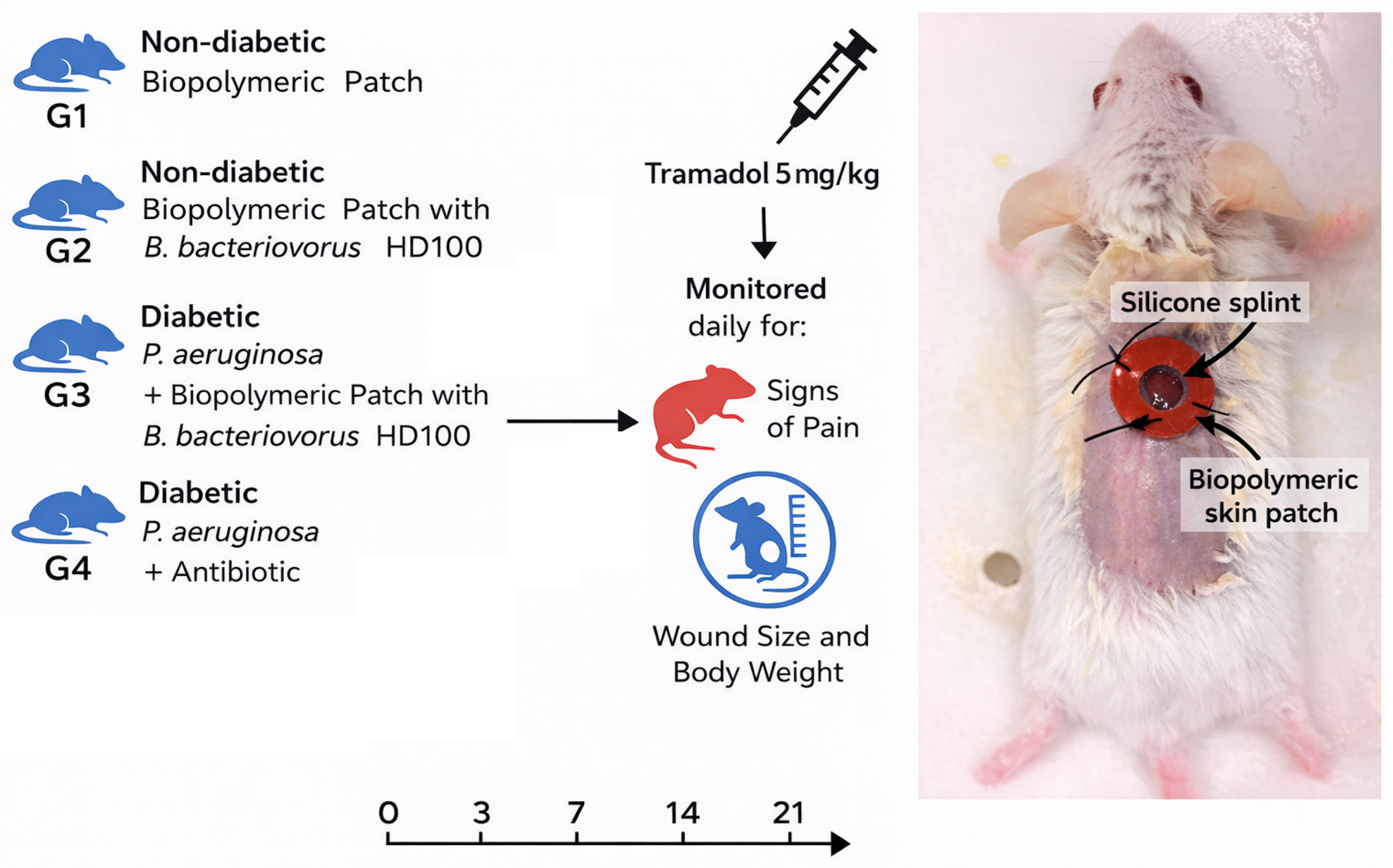
A total of 20 mice were randomly assigned to four experimental groups ( per group) to evaluate the therapeutic efficacy of the Bdellovibrio bacteriovorus-loaded skin patch in a murine model of diabetic wound infection. Group 1 (G1) consisted of non-diabetic mice treated with a biopolymeric skin patch without bacteria. Group 2 (G2) included non-diabetic mice treated with a biopolymeric patch containing Bdellovibrio bacteriovorus HD100 at a concentration of PFU per patch. Group 3 (G3) comprised diabetic mice infected with drug-resistant Pseudomonas aeruginosa ( CFU) and treated with a biopolymeric patch containing B. bacteriovorus HD100 ( PFU per patch). Group 4 (G4) consisted of diabetic mice infected with P. aeruginosa ( CFU) and treated with a single dose of conventional antibiotic therapy using piperacillin/tazobactam at a concentration of 16 mg/L.
All surgical procedures were performed under general anesthesia, and postoperative analgesia was administered to minimize animal discomfort. Analgesic treatment consisted of intraperitoneal administration of tramadol at a dose of 5 mg/kg body weight. Animals were monitored daily throughout the experimental period for signs of pain, infection, inflammation, or distress.
Wound healing progression was evaluated for 21 days following injury by measuring wound diameter at defined time points and monitoring changes in body weight. Body weight measurements were used as an additional indicator of systemic health status and treatment tolerability. Humane endpoints were established prior to the study, and animals showing signs of severe distress, infection, or complications were to be euthanized immediately in accordance with institutional ethical guidelines.
The inclusion of untreated diabetic and untreated infected diabetic control groups was precluded by ethical considerations, as prolonged infection without therapeutic intervention would have resulted in unnecessary animal suffering. Previous studies have already documented the natural course of untreated diabetic and infected wounds in murine models [
7,
8], and those reports were therefore used solely to contextualize expected healing outcomes. Consequently, the present study focused exclusively on ethically permissible treatment groups while maintaining strict adherence to animal welfare regulations.
2.6.1. Wound Model in Diabetic Mice
To evaluate the therapeutic efficacy of the
Bdellovibrio bacteriovorus-loaded skin patches, a diabetic excisional wound model was established in streptozotocin (STZ)-induced diabetic BALB/c mice. Diabetes was induced by a single intraperitoneal injection of STZ at a dose of 130 mg/kg body weight, freshly dissolved in citrate buffer. Prior to STZ administration, mice were fasted for 6 h [
18]. Seven days after induction, blood glucose levels were measured using a glucometer (OneTouch Select Simple, LifeScan, Milpitas, CA, USA). Animals exhibiting fasting blood glucose concentrations exceeding 190 mg/dL were classified as diabetic [
19].
Anesthesia was induced by intraperitoneal injection of ketamine (130 mg/kg), xylazine (10 mg/kg), and tramadol (5 mg/kg). After confirmation of adequate anesthesia, the dorsal region of each mouse, approximately 3 cm below the base of the neck between the scapulae, was shaved using an electric clipper. Residual hair was removed by applying a depilatory cream for no longer than 2 min, followed by gentle cleaning with sterile gauze. The skin was subsequently disinfected with 70% ethanol and povidone–iodine solution (
Figure 1).
A full-thickness excisional wound was created using a sterile biopsy punch with a diameter of 6 mm. Forceps were used to gently lift the skin, and iris scissors were employed to excise the tissue, including the panniculus carnosus, to ensure uniform wound depth. This standardized procedure allowed for reproducible wound geometry and facilitated comparative analysis of wound healing dynamics across experimental groups.
Wound closure was monitored by measuring wound diameter at defined time points throughout the experimental period. The percentage of wound closure was calculated using the following equation:
where
represents the initial wound diameter on the day of surgery and
corresponds to the wound diameter on the day of observation.
2.6.2. Infection and Treatment of Diabetic Mice
To induce wound infection in diabetic mice assigned to Groups G3 and G4, a drug-resistant strain of Pseudomonas aeruginosa ATCC 27853 was used. The bacterial isolate was cultured overnight in 10 mL of Luria–Bertani (LB) broth at 37 °C with shaking. When the culture reached an optical density of 0.9 at 600 nm (), cells were harvested by centrifugation at 15,000 rpm for 5 min, washed once with phosphate-buffered saline (PBS), and resuspended in sterile PBS to obtain a final concentration of CFU in a volume of 25 μL.
Immediately after wound creation, 25 μL of the bacterial suspension was topically applied to the wound bed using a sterile micropipette. Infected wounds were left undisturbed for 30 min to allow bacterial establishment prior to treatment application.
For Group G3, biopolymeric skin patches containing Bdellovibrio bacteriovorus HD100 were aseptically cut to size and placed directly onto the infected wound surface. For Group G4, infected mice were treated with a single dose of piperacillin/tazobactam (16 mg/kg) as a conventional antibiotic therapy. Antibiotic treatment was administered according to established protocols for murine infection models.
To ensure proper positioning and sustained contact between the patch and the wound bed, a sterile silicone ring was centered over the wound and secured using cyanoacrylate adhesive and silk sutures. The biopolymeric patch was placed within the silicone ring, allowing direct and localized contact with the wound area.
Following treatment, mice were monitored daily for up to 21 days for signs of infection, inflammation, abnormal behavior, or distress. Wound healing progression was documented through regular measurement of wound diameter, and any adverse events were recorded in accordance with institutional animal welfare guidelines.
2.7. Predadory Bacterial Dissemination
To evaluate the potential systemic dissemination of Bdellovibrio bacteriovorus following topical application of the biopolymeric skin patch, molecular analyses were performed on internal organs collected from treated mice. After complete wound closure, animals were euthanized by cervical dislocation under deep anesthesia using sodium pentobarbital (150–200 mg/kg, intraperitoneal administration), in accordance with institutional ethical guidelines.
2.7.1. Sample Collection
Brain, liver, spleen, and kidney tissues were aseptically harvested immediately after euthanasia. Approximately 50 mg of each tissue sample was placed in sterile 1.5 mL microcentrifuge tubes and mechanically homogenized. Genomic DNA was extracted using the phenol–chloroform method with proteinase K digestion. Briefly, samples were incubated with proteinase K at 56 °C until complete tissue digestion was achieved. After cooling to room temperature, an equal volume of phenol:chloroform:isoamyl alcohol (25:24:1, v/v/v) was added, and the samples were vortexed for 30 s and centrifuged at 12,000 for 10 min.
The aqueous phase was carefully transferred to a new tube, and the extraction step was repeated once to improve DNA purity. Genomic DNA was precipitated by adding 0.7 volumes of cold isopropanol, followed by centrifugation at 12,000 for 10 min at 4 °C. The resulting DNA pellet was washed with 1 mL of cold 70% ethanol, centrifuged again for 5 min, air-dried, and resuspended in 10–15 μL of nuclease-free water or TE buffer (10 mM Tris-HCl, 1 mM EDTA, pH 8.0). DNA samples were stored at −20 °C until further analysis.
2.7.2. Molecular Analyses
To verify the quality and integrity of the extracted genomic DNA, polymerase chain reaction (PCR) amplification of the murine vitamin D receptor (VDR) gene was performed as an endogenous control. The primers targeted a 455 bp fragment with the following sequences: forward 5′-ATGGAGGCAATGGCAGCCAGCACCTC-3′ and reverse 5′-GAAACCCTTGCAGCCTTCACAGGTCA-3′. Each PCR reaction was carried out in a final volume of 25 μL containing 15 μL of nuclease-free water, 5 μL of 5× reaction buffer (including MgCl2 and dNTPs), 1 μL of each primer, and 1 μL of MyTaq DNA polymerase (500 U). PCR amplification was performed under the following cycling conditions: initial denaturation at 94 °C for 3 min, followed by 35 cycles of denaturation at 94 °C for 30 s, annealing at 55 °C for 30 s, and extension at 72 °C for 30 s, with a final extension step at 72 °C for 10 min. PCR products were analyzed by agarose gel electrophoresis to confirm amplification of the expected 455 bp fragment.
2.7.3. Bacterial Dissemination
To assess potential dissemination of B. bacteriovorus, PCR was performed using species-specific primers targeting the hit locus of B. bacteriovorus. The primers used were Bdhit-F (5′-GACAGATGGGATTACTGTCTTCC-3′) and Bdhit-R (5′-GTGTGATGACGACTGTGAACGG-3′), which amplify a 910 bp fragment.
PCR reactions were prepared using the same reaction volumes and reagent concentrations described above to ensure methodological consistency. Genomic DNA extracted from B. bacteriovorus HD100 cultures was used as a positive control, while reactions containing no template DNA served as negative controls. Amplification conditions consisted of an initial denaturation at 94 °C for 3 min, followed by 35 cycles of denaturation at 94 °C for 30 s, primer annealing at the appropriate temperature, and extension at 72 °C for 30 s, with a final extension step at 72 °C for 10 min.
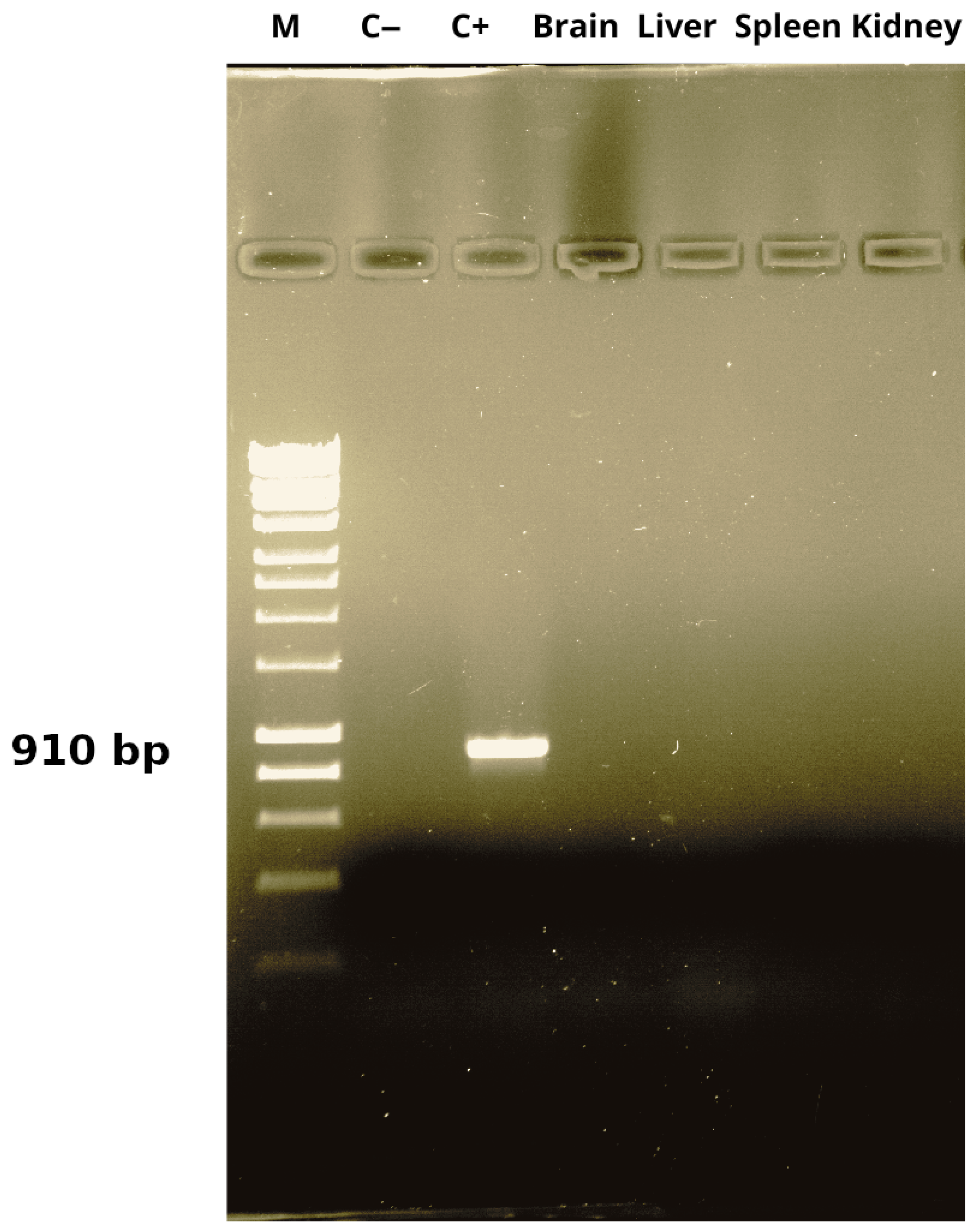
PCR products were resolved by agarose gel electrophoresis and visualized under UV illumination. The absence of the expected 910 bp amplicon in tissue samples was interpreted as a lack of detectable systemic dissemination of B. bacteriovorus following topical application of the skin patch.
2.8. Statistical Analysis
Statistical analyses were performed using Python version 3.11. Wound healing data were expressed as mean ± standard deviation (SD). Differences in wound closure progression among experimental groups (G1–G4) were evaluated using one-way analysis of variance (ANOVA). When statistically significant differences were detected, post hoc comparisons were conducted using Tukey’s honestly significant difference (HSD) test to identify pairwise differences between groups.
A p-value of less than 0.05 was considered statistically significant. All statistical analyses were conducted using standard scientific Python libraries for data analysis and visualization.
3. Results
3.1. Evaluation of the Predatory Activity of Bdellovibrio bacteriovorus HD100
The inhibitory activity of
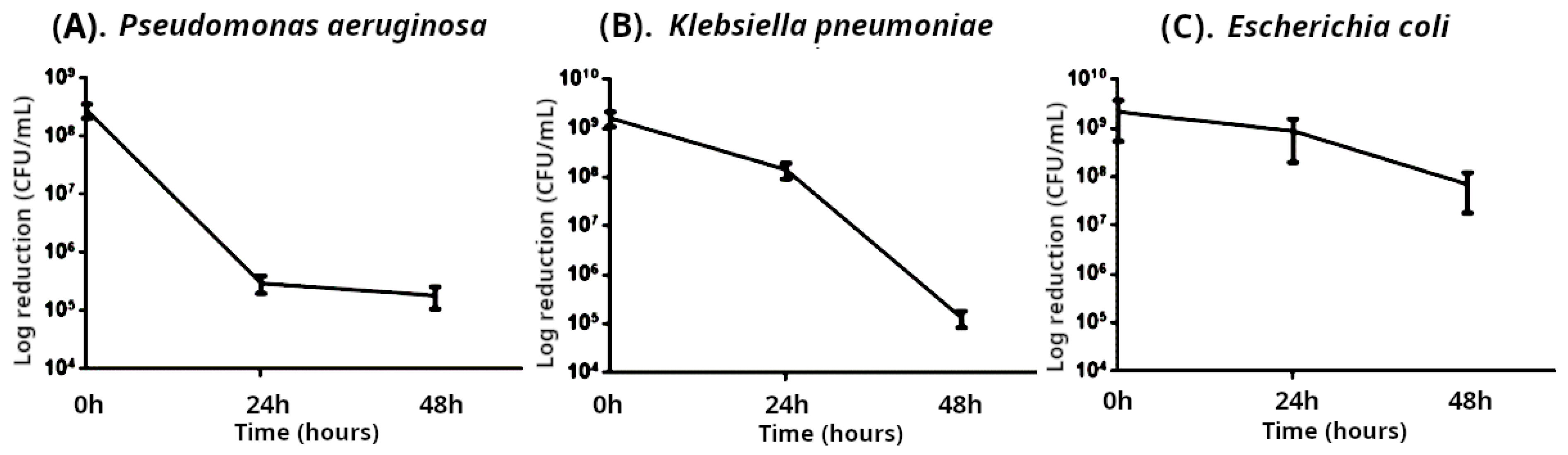
Bdellovibrio bacteriovorus HD100 was assessed based on reductions in optical density, the appearance and extent of bacterial lysis, and the logarithmic reduction between initial and final colony-forming unit (CFU) counts. As shown in
Figure 2, the predatory strain reduced the
Pseudomonas aeruginosa population by up to 3 log units (
). Against
Klebsiella pneumoniae,
B. bacteriovorus achieved a more pronounced reduction of up to 5 log units (
) within 48 h. In the case of
Escherichia coli, a reduction of 1–2 log units (
) was observed over the same incubation period.
Given that
P. aeruginosa is widely recognized as one of the most persistent and highly resistant Gram-negative pathogens associated with diabetic foot ulcers [
20], these results provide a strong experimental basis for further investigation. The findings support the evaluation of
B. bacteriovorus as a promising biological alternative capable of selectively targeting resistant bacterial pathogens in diabetic wound infections, while maintaining safety in a preclinical context.
3.2. Systemic Dissemination Analysis of B. bacteriovorus
Systemic dissemination of B. bacteriovorus following topical application was evaluated by PCR analysis. Genomic DNA was extracted from brain, liver, spleen, and kidney tissues collected from mice in all experimental groups treated with predatory bacteria. DNA integrity and extraction efficiency were first confirmed by amplification of the vitamin D receptor (VDR) gene, followed by PCR targeting the hit locus specific to B. bacteriovorus. DNA extracted from concentrated cultures of B. bacteriovorus served as a positive control.
As shown in
Figure 3, no amplification of the hit locus was detected in any of the analyzed tissue samples, indicating the absence of detectable systemic dissemination under the experimental conditions employed. These results contrast with those reported by Shatzkes et al. [
21], who observed bacterial dissemination to the liver, spleen, and kidneys following intravenous administration of predatory bacteria. The absence of dissemination observed in the present study is likely attributable to the topical route of administration, as well as physiological clearance mechanisms such as blood filtration and excretion.
Overall, these findings support the biosafety of topical B. bacteriovorus application and reinforce its potential as a living antimicrobial therapy for wound infections without evidence of systemic spread. This study therefore contributes new insight into the safe biotechnological use of predatory bacteria as alternative treatments for infected wounds.
3.3. Wound Closure Progression in Mice
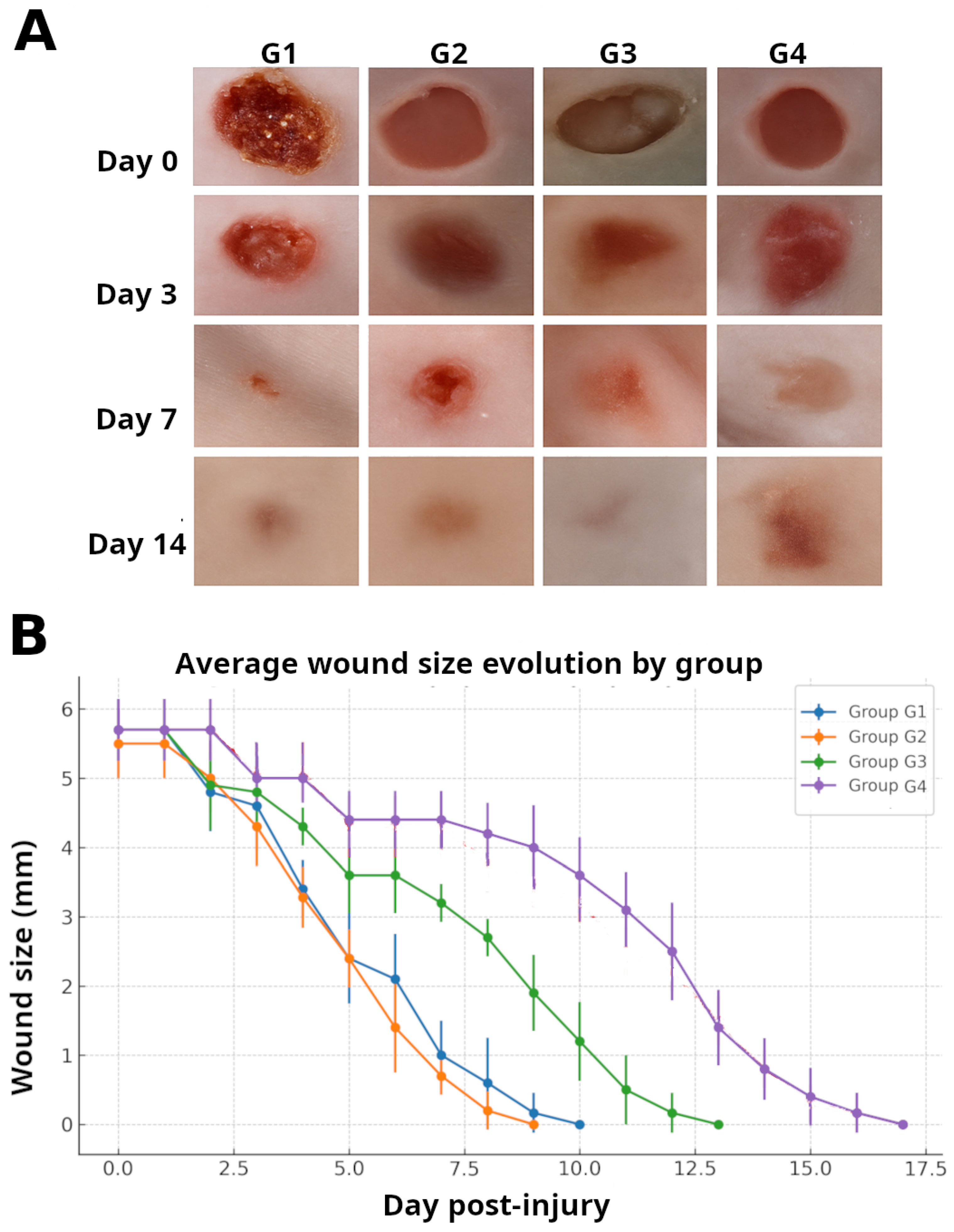
Wound healing progression in the murine model is presented in
Figure 4, which illustrates clear differences in wound closure rates among the experimental groups. Daily wound closure percentages for groups G1–G4 are summarized in
Table 2. Statistical analysis revealed significant differences in healing kinetics among the groups (
).
Groups G1 and G2 exhibited the most rapid healing, achieving complete wound closure by days 10 and 9, respectively. Group G3 showed an intermediate healing profile, reaching full closure by day 13. In contrast, Group G4 displayed a markedly delayed regenerative response, with no measurable wound closure on day 2 and requiring 17 days to achieve complete wound resolution. Throughout the observation period, particularly during the inflammatory and proliferative phases (days 2–9), Group G4 remained significantly behind Groups G1 and G2.
The time required for complete wound closure varied significantly depending on both physiological condition and treatment modality. As summarized in
Table 3, wound healing time was significantly influenced by infection status and therapeutic intervention. In non-diabetic mice, treatment with a skin patch containing B. bacteriovorus HD100 (G2) slightly accelerated healing, achieving closure in 9 days compared with 10 days in the patch-only control group (G1).
The time required for complete wound closure varied significantly depending on physiological condition and infection. As summarized in
Table 3, wound healing time was significantly influenced by both the physiological condition of the subjects and the treatment administered. In non-diabetic mice, the application of a skin patch containing
Bdellovibrio bacteriovorus HD100 (G2) slightly accelerated healing to 9 days, compared to the 10 days observed in the control group (G1).
3.4. Body Weight
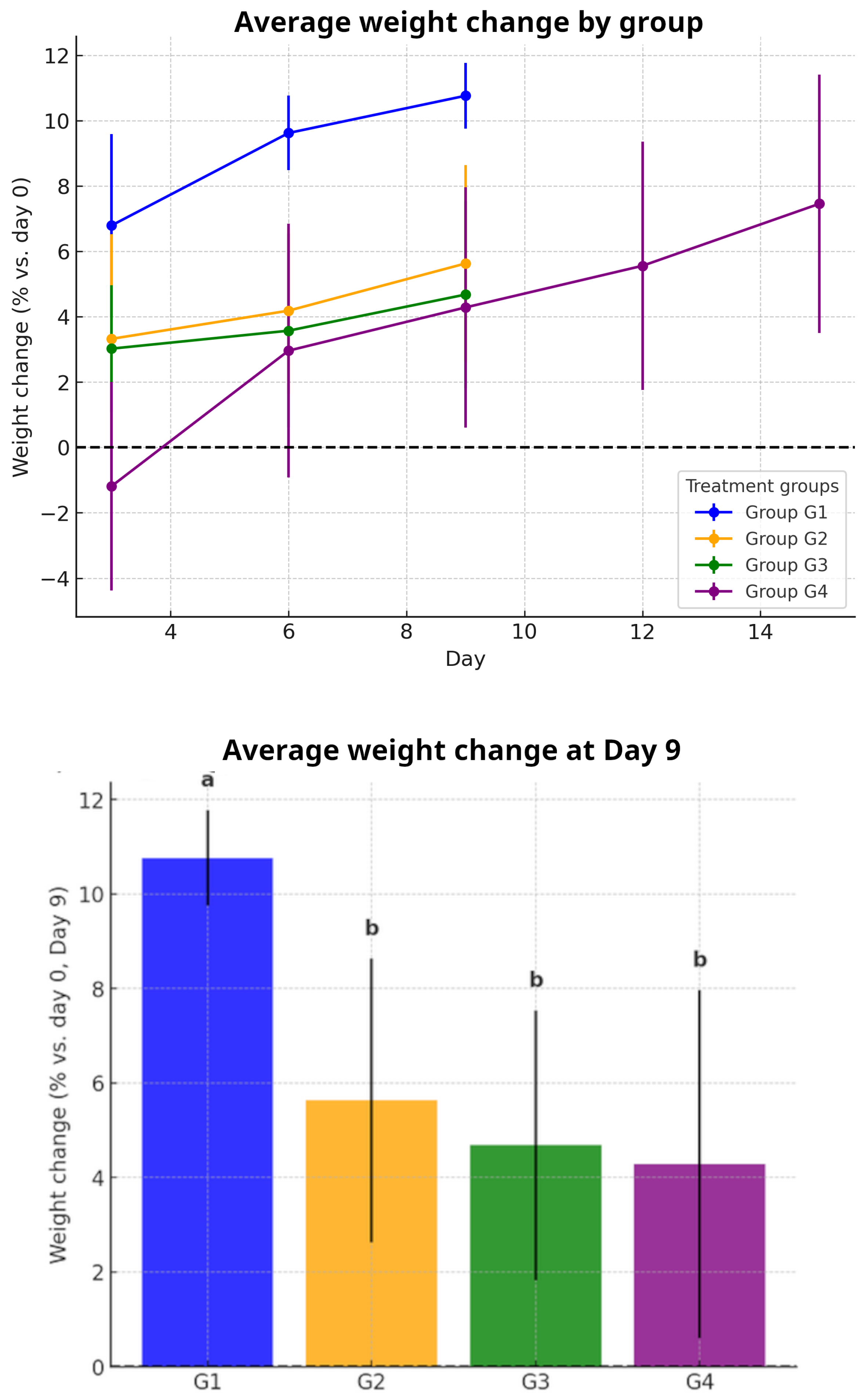
Changes in body weight were monitored as an indicator of overall health status, metabolic balance, and treatment tolerability in the murine model. Consistent with previous reports, body weight was recorded throughout the experimental period, and relative changes from baseline (day 0) were calculated [
22]. As shown in
Figure 5, all experimental groups exhibited a progressive increase in body weight over time; however, the magnitude of weight gain differed among groups.
Statistical analysis demonstrated that Group G1 exhibited a significantly greater increase in body weight compared with Groups G2, G3, and G4. By day 9, mice in Group G1 showed an average weight increase of approximately 11% relative to baseline, whereas the remaining groups exhibited more modest gains ranging from 4–6%. No statistically significant differences were observed among Groups G2, G3, and G4.
Notably, diabetic mice infected with P. aeruginosa showed similarly limited weight gain regardless of whether they were treated with the B. bacteriovorus-loaded patch or conventional antibiotic therapy (piperacillin/tazobactam, 16 mg/kg). This finding suggests that infection and diabetic status exert a dominant influence on body weight dynamics, potentially outweighing the effects of the antimicrobial treatment strategy on systemic metabolic outcomes.
4. Discussion
Chronic and infected wounds remain a major clinical challenge, particularly in the context of diabetes mellitus, where prolonged inflammation and high susceptibility to bacterial colonization significantly delay tissue repair [
23]. In this study, we evaluated the effect of a biopolymeric skin patch loaded with
Bdellovibrio bacteriovorus on wound healing dynamics in diabetic and non-diabetic murine models, with a specific focus on infected wounds caused by
Pseudomonas aeruginosa. The results demonstrate that the incorporation of the predatory bacterium does not interfere with physiological wound repair under non-infected conditions, while providing a clear therapeutic advantage in infected diabetic wounds when compared with conventional antibiotic therapy. In non-diabetic mice, complete wound closure was achieved within a comparable timeframe in both the patch-only group (G1) and the
B. bacteriovorus-loaded patch group (G2). This observation indicates that the presence of
B. bacteriovorus within the biopolymeric matrix does not adversely affect normal tissue regeneration.
Importantly, the data summarized in
Table 4 represent historical controls from independent studies in which wounds were left untreated, and therefore are discussed here exclusively for qualitative comparison. In non-diabetic, non-infected mice, untreated wounds reported in the literature typically achieve partial closure within 10 days, reaching approximately 70–80% [
13] re-epithelialization without complete wound resolution. In contrast, in the present study, as shown in
Table 3, non-diabetic mice treated with the biopolymeric skin patch, either alone (G1) or loaded with
Bdellovibrio bacteriovorus (G2), achieved complete wound closure within 9–10 days. This comparison suggests that the biopolymeric patch provides a favorable microenvironment for wound repair and, importantly, that the incorporation of
B. bacteriovorus does not impair physiological healing under non-infected conditions.
The therapeutic relevance of
B. bacteriovorus becomes more evident under infected conditions. A significant disparity in healing efficacy has been reported between infected and non-infected wounds treated with
B. bacteriovorus-loaded hydrogels. Specifically, infected wounds treated with hydrogels loaded with
B. bacteriovorus achieved closure rates of 48%, 85% and 94% on days 3, 7, and 10, respectively, while non-infected wounds exhibited lower closure rates of 18%, 52% and 81% at the same time points [
13]. These findings support the concept that the therapeutic efficacy of
B. bacteriovorus-based systems is strongly dependent on the presence of susceptible bacterial prey, functioning as a targeted and infection-responsive biological treatment.
Our findings align with previous studies highlightig the therapeutic potential of
B. bacteriovorus in wound infection models. In a murine burn wound model infected with
P. aeruginosa [
24], topical treatment with
B. bacteriovorus HD100 significantly reduced the bacterial burden and accelerated wound healing, as evidenced by complete scab detachment by day 22, indicating faster granulation tissue formation compared with untreated and antibiotic-treated groups. Notably, while those previous models reported complete healing by day 22, our biopolymeric formulation achieved full wound closure within 9–10 days. This comparison suggests that the synergy between the patch’s microenvironment and
B. bacteriovorus significantly accelerates the regenerative timeline.
The impact of infection on wound healing is even more pronounced when comparing diabetic models. As summarized in
Table 4, untreated diabetic wounds require up to 28 days to heal, while diabetic wounds infected with
P. aeruginosa may persist for as long as 56 days without resolution [
7,
8]. These prolonged healing times illustrate the severe impairment caused by the combination of metabolic dysfunction and bacterial infection. Against this backdrop, the outcomes observed in the present study demonstrate a substantial reduction in healing duration. Diabetic mice infected with
P. aeruginosa and treated with the
B. bacteriovorus-loaded patch (G3) achieved complete wound closure in
days, while those receiving conventional antibiotic therapy (G4) required
days (
Table 2). These findings corroborate previous studies in which
B. bacteriovorus-based therapy accelerated tissue repair and decreased bacterial load more efficiently than standard antibiotics in chronic wound or keratitis models [
9]. Similar trends were observed in reports where biological therapies outperformed conventional antibiotics in chronic wound models [
10]. Together, these results demonstrate the enhanced therapeutic performance of the
B. bacteriovorus-based skin patch in infected diabetic wounds and highlight its potential as an alternative strategy to conventional antibiotic therapy.
Several limitations of the present study should be acknowledged. Ethical constraints precluded the inclusion of untreated infected diabetic control groups, as sustained infection without therapeutic intervention would have caused unnecessary animal suffering. Consequently, historical data from the literature were used solely for contextual comparison and were clearly separated from experimental results. Additionally, although wound closure time provides a robust functional endpoint, future studies incorporating histological analysis, bacterial load quantification, and inflammatory marker profiling would further elucidate the mechanisms underlying the observed effects.
5. Conclusions
The topical application of a biopolymeric skin patch encapsulating Bdellovibrio bacteriovorus HD100 significantly accelerated wound healing in diabetic mice infected with drug-resistant Pseudomonas aeruginosa. Complete wound closure was achieved within days in mice treated with the B. bacteriovorus-loaded patch, compared with days in mice receiving conventional antibiotic therapy (piperacillin/tazobactam, 16 mg/kg, single dose).
In vitro predation assays confirmed a reduction of approximately 3 log units in P. aeruginosa populations within 48 h, supporting the antimicrobial efficacy of the predatory bacterium. Importantly, PCR-based molecular analysis showed no detectable dissemination of B. bacteriovorus to vital organs, including the liver, spleen, kidney, and brain, demonstrating the systemic biosafety of the topical treatment.
Together, these findings support the potential of B. bacteriovorus-based biopolymeric patches as a localized biological strategy for the treatment of infected diabetic wounds. Future studies should focus on elucidating the underlying mechanisms of action, evaluating release kinetics from the patch, and assessing long-term safety and efficacy in expanded preclinical models.





 ,
,