1. Introduction
Composite laminates are widely used in aerospace, automotive, marine, and renewable-energy applications [
1], where they frequently experience multiple low-velocity impacts such as tool drops, hail, debris strikes, and maintenance-related contact events. Repeated impact can progressively degrade stiffness, accumulate interlaminar damage, and ultimately trigger delamination and structural failure [
2], as has also been widely observed in experimental studies on composite laminates subjected to multiple low-velocity impacts. To systematically investigate this degradation process and to explore the influence of laminate design (e.g., ply stacking sequence) and loading parameters, numerical simulation provides a time-efficient, flexible, and cost-effective alternative to experimental testing. A variety of numerical strategies have been developed to model delamination in composite laminates. Conventional approaches include linear elastic fracture mechanics (LEFM) for crack-growth prediction [
3], the virtual crack closure technique (VCCT) for computing strain-energy release rates [
4,
5], and continuum damage mechanics (CDM) formulations for representing distributed intra- and interlaminar degradation [
6,
7]. In recent years, cohesive zone model (CZM) has emerged as one of the most widely adopted techniques for simulating interlaminar failure in composite structures [
8,
9]. By relating interface traction to separation through a predefined traction–separation law (TSL), CZM can naturally capture damage initiation, stable crack propagation [
10,
11], and complete interface separation within a unified numerical framework [
12,
13,
14].
From the experimental viewpoint, composite laminates subjected to repeated low-velocity impacts and impact-fatigue loading exhibit strongly nonlinear and nonmonotonic responses, including progressive stiffness degradation, cumulative delamination growth, evolution of the impact response, and changes in residual load-carrying capacity. In contrast to single-impact events, repeated impacts may induce gradual interlaminar damage accumulation and evolving failure patterns even when each individual impact is of relatively low energy. These experimentally observed features have been documented in both review studies and representative experiments on composite laminates under repeated impact and fatigue-related loading [
15,
16]. Therefore, physically meaningful numerical models for such problems should be motivated not only by general fracture-mechanics considerations, but also by the experimentally observed progressive damage characteristics under repeated impact and fatigue-related loading.
The TSL is the fundamental component of CZM, as it dictates the onset and evolution of interface cracks. Foundational developments in this field have established the basis for delamination simulations. Hillerborg et al. introduced the finite-element CZM implementation using a bilinear softening law to describe brittle fracture [
17]. This seminal work was later extended by Needleman [
18,
19], who proposed polynomial and exponential TSLs to model more complex softening behaviors. Subsequently, Tvergaard and Hutchinson developed the widely used trapezoidal CZM [
20], which provides a plateau region suitable for mixed-mode or stable crack propagation. These TSLs have been extensively applied to quasi-static delamination analysis and formed the foundation upon which more advanced fatigue and rate-dependent cohesive models were later developed [
21,
22].
Recognizing that many composite failures involve progressive interface degradation rather than instantaneous fracture, researchers extended CZM to incorporate fatigue damage accumulation [
23,
24]. These formulations—often referred to as fatigue CZMs—introduce degradation functions, cyclic damage evolution laws, or independent damage variables to capture gradual stiffness and strength reduction under repeated loading [
25,
26]. For example, Bing Zhang et al. proposed a twin-cohesive-model approach that integrates static and fatigue cohesive behaviors to predict delamination growth under different load envelopes without requiring global load-ratio information [
27]. Similarly, de Oliveira et al. combined a fatigue damage evolution law and a virtual integration-point scheme with CZM to compute energy release rates during high-cycle fatigue [
28], achieving excellent agreement with Mode-I, Mode-II, and mixed-mode experiments. More recently, the sequential-static fatigue (SSF) algorithm has been integrated into the CZM framework and successfully applied to simulate high-cycle delamination in composite laminates in the presence of large process zones or complex mixed-mode conditions [
29]. These developments firmly establish fatigue-based CZM as a robust framework for modeling progressive fatigue delamination.
For impact loading, the strain-rate effect has a significant influence on the delamination behavior of certain composite materials [
30]. To obtain more reliable simulation outcomes, researchers utilized rate-dependent CZMs to capture the dynamic delamination processes in composite laminates. For example, May simulated the impact delamination of composite laminates using CZMs incorporating four distinct rate-dependent parameters [
31], showing that the rate dependence of both critical tractions and fracture toughness is essential. Zhang et al. evaluated the applicability of three types of rate-dependent CZMs (logarithmic, exponential and power) in numerical delamination simulation [
32]. Ekhtiyari and Shokrieh introduced a novel rate-dependent CZM to simulate dynamic delamination in laminated composites and to model mixed-mode fracture under impact loading [
33], providing more accurate results than rate-independent CZMs. A broader survey of rate-dependent CZMs confirms their growing acceptance for predicting impact-induced delamination.
Under repeated impact, delamination in composite laminates arises from the coupled action of fatigue damage accumulation and rate-dependent interface behavior [
31,
34]. Consequently, accurate numerical modeling requires the CZM to account for both fatigue degradation and rate-dependent effects. Several researchers have contributed to rate-dependent fatigue CZM. For example, Salih et al. introduced a frequency-dependent fatigue CZM in which the critical traction varies with loading frequency [
35], allowing accurate simulation of fatigue crack growth under constant-frequency cyclic loading. Zhang et al. further considered the direct influence of separation rate on the critical parameters of the fatigue CZM and successfully modeled fatigue crack propagation under variable-frequency loading [
36]. Building on these developments, Zhang et al. integrated the rate-dependent fatigue CZM into the Augmented Finite Element Method (AFEM) framework [
37], enabling simulation of fatigue crack propagation along arbitrary paths under repeated impact and achieving good agreement with experimental observations. These studies demonstrate that rate-dependent fatigue CZMs provide a suitable framework for capturing the coupled influences of strain-rate effects and cumulative damage evolution on interface behavior during repeated impact, which are also consistent with the experimentally observed progressive damage characteristics of composite laminates under repeated impact and fatigue-related loading [
38].
Several rate-dependent CZMs and fatigue cohesive formulations have been reported in the literature. However, most existing studies have focused either on monotonic or cyclic loading or on relatively simple crack configurations under prescribed frequencies. For composite laminates subjected to repeated impact, the interlaminar response is governed by the coupled effects of cumulative fatigue damage, loading-rate-dependent interface behavior, and structural configuration, which makes numerical modeling significantly more challenging. Accordingly, the central research problem of the present work is how to establish a computationally feasible framework capable of representing repeated-impact-induced delamination in composite laminates while accounting for both fatigue accumulation and rate dependence within a three-dimensional setting. In our previous works, rate-dependent fatigue CZMs were developed and successfully applied to crack-growth problems under variable-frequency cyclic loading and arbitrary crack paths. In the present study, the rate-dependent cohesive constitutive form is adopted from these previous developments and extended to a three-dimensional interlaminar framework for repeated impact analysis. The resulting model is implemented in ABAQUS 2020/Explicit via VUEL and coupled with the Hashin failure criterion to simultaneously capture interlaminar delamination and intralaminar damage.
The originality of the present work lies primarily in the three-dimensional extension of the adopted rate-dependent fatigue cohesive formulation, its implementation within an explicit dynamic finite element framework, and its application to repeated-impact simulations of composite laminates with different structural configurations. The main contributions of this work are: (i) the extension of the adopted rate-dependent fatigue CZM to 3D interlaminar interfaces under repeated impact loading; (ii) the development of a time-incremental algorithm suitable for explicit dynamic analysis; and (iii) a systematic numerical investigation of the rate-dependent fatigue delamination behavior of composite laminates with different structural configurations, showing that the proposed framework can capture rate-dependent delamination trends under repeated impacts and can serve as a feasible computational approach for the simulation and assessment of such problems. The remainder of this paper is organized as follows.
Section 2 presents the formulation of the rate-dependent CZM for fatigue delamination and its numerical implementation.
Section 3 describes the finite element simulation model, including laminate layups, boundary conditions, the repeated-impact loading procedure, and the overall computational workflow.
Section 4 summarizes the key findings and provides concluding remarks regarding the repeated-impact delamination behavior of composite laminates.
2. 3D Rate-Dependent CZM for Interlaminar Fatigue Delamination
In this section, the three-dimensional rate-dependent CZM for fatigue delamination adopted in the present study and its algorithmic implementation are presented. The constitutive ingredients governing the rate dependence of the critical cohesive parameters and the fatigue damage accumulation during unloading follow the formulation established in Ref. [
36], whose effectiveness in modeling rate dependence and cumulative damage in crack growth under repeated loading has already been demonstrated. In the present work, this formulation is extended to a three-dimensional interlaminar setting for repeated-impact analysis and implemented in ABAQUS/Explicit via a user-defined element subroutine (VUEL). The following part describes the basic finite element algorithm and its explicit time-incremental implementation.
2.1. Rate-Dependent 3D Cohesive Element for Fatigue
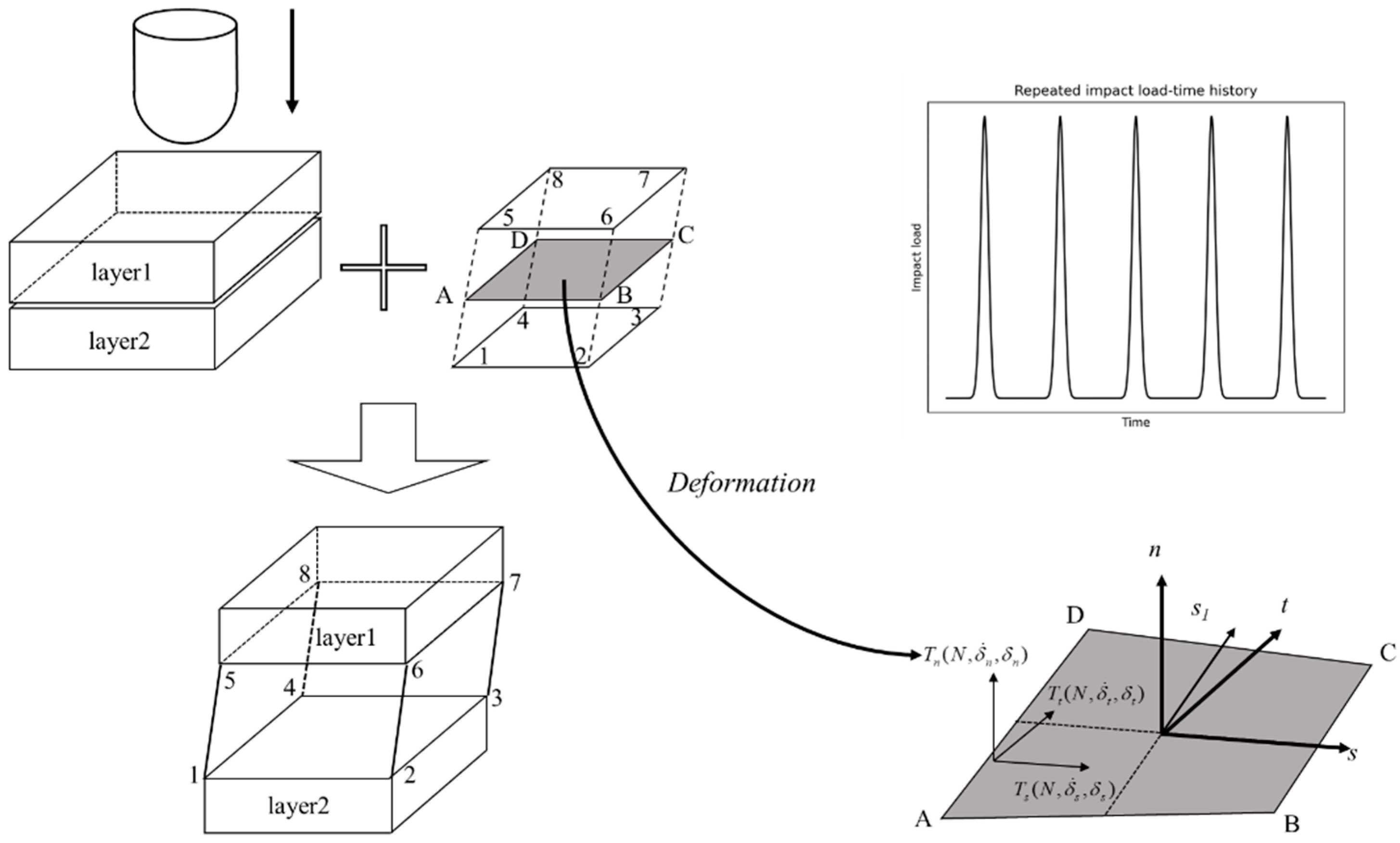
As shown in
Figure 1, rate-dependent fatigue cohesive elements are inserted between the two adjacent layers to simulate the interlaminar interaction under repeated impact. Nodes 1–8 denote the 8-node cohesive element, and ABCD represents the mid-surface of the element. The local coordinate system (
n,
s,
t) is established following the procedure described in Ref. [
39]. In the local coordinate system, the cohesive separation across the interlaminar crack is defined by tracking the displacement vectors in the local
n,
s, and
t directions of the element:
where
, which correspond to the separation components of Mode-II, Mode-III, and Mode-I, respectively.
is the standard bilinear shape function,
(
) and
are the displacement of the corner nodes on the bottom (1234) and upper (5678) surfaces (in the deformed configuration).
The cohesive tractions are evaluated according to the rate-dependent fatigue TSL in Equation (2) [
36]:
where
and
correspond to the traction and separation, whereas
N and
denote the number of repeated loading cycles and the separation rate, respectively. The nodal force vectors for each pair of the corner nodes are obtained by integrating the cohesive tractions over the cohesive crack surface within the element. The forces
and
acting on the upper and lower surfaces of the element are equal in magnitude and opposite in direction:
transformed into the global coordinate system as:
where the rotation matrix
is evaluated according to the procedure presented in Ref. [
39].
2.2. 3D Rate-Dependent Traction and Separation Law for Fatigue
The most commonly adopted TSLs are bilinear [
17], polynomial [
18], exponential [
19], and trapezoidal [
20] forms. Among these, the trapezoidal TSL is especially attractive due to its capability to represent plastic deformation in the vicinity of the crack tip and its versatility, allowing it to transition into a bilinear response when specific parameter limits are applied. Zhang et al. employed a trapezoidal rate-dependent cohesive law to investigate rapid crack propagation at various loading rates, achieving results that showed good agreement with expected behavior [
40,
41].
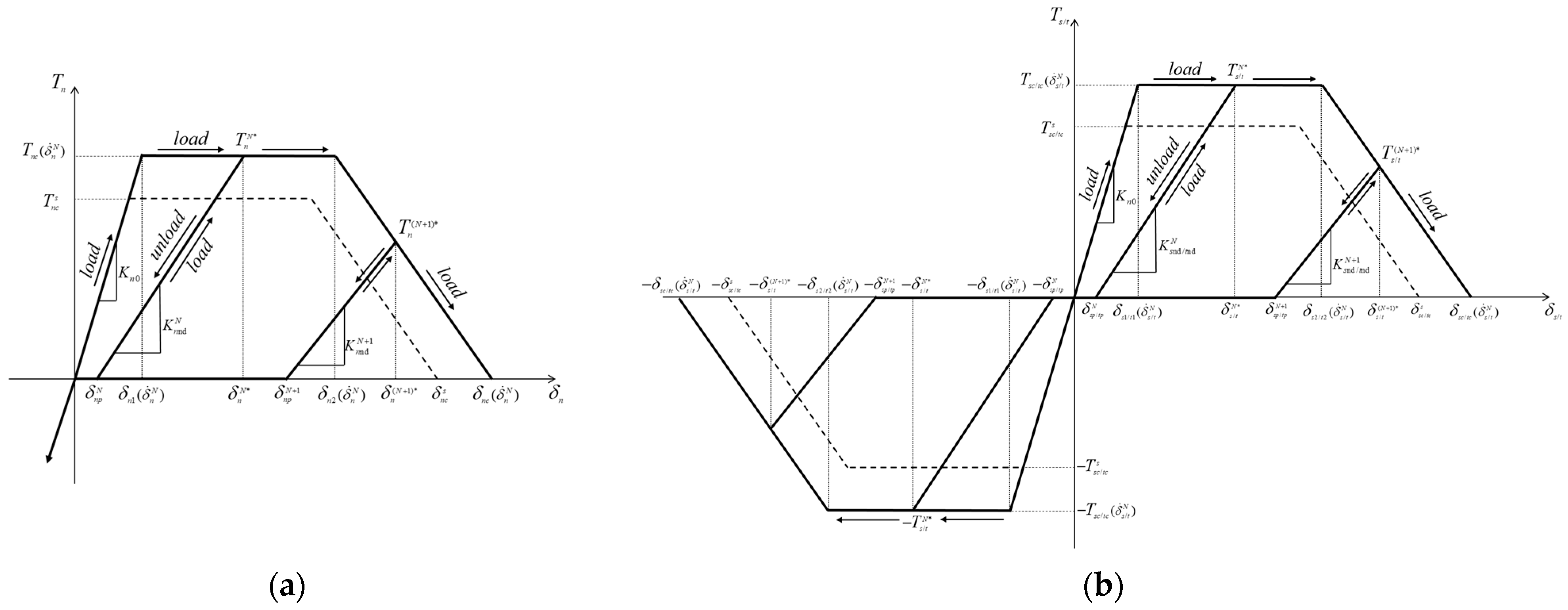
Taking the Mode-I crack as an example, the Mode-II and Mode-III laws are provided in
Appendix A. As shown in
Figure 2a, the rate fatigue TSL is defined by key parameters: critical traction
, initial cohesive stiffness
, critical fracture toughness
, and critical separation
. The parameter
represents the stiffness degraded after N cycles.
is equal to the trapezoidal area under the curve. For rate-dependent materials, the critical traction
and fracture energy
depend on the separation rate
. The parameters
and
represent the maximum separation and corresponding traction after the
Nth cycle, respectively. The term
represents the accumulated plastic separation after
N cycles. To transition
from
, a constant parameter
(
) is introduced as Ref. [
35].
The initial cohesive stiffness
is assumed to be rate-independent. At the (
N + 1)-th cycle,
i-th incremental step, the cohesive separation rate is denoted by
. The rate-dependent critical traction
and fracture toughness
are calculated as:
where
and
are defined as the influence functions of the separation rate.
and
are the critical traction and fracture toughness for quasi-static conditions. There are various expressions for the influence functions of separation rates [
35], and the appropriate function should be selected to match the intrinsic rate-dependent properties of materials. In this paper, we employ a logarithmic function proposed by May [
42] to model the Mode-I crack:
where
represents the reference separation rate for quasi-static conditions. The parameter
is defined such that the fracture energy
remains below its prescribed upper bound
.
It should be noted that the logarithmic rate dependence adopted in the present study is introduced through the critical cohesive strengths and fracture energies, rather than through an independent rate-driven energy source term. In the implemented formulation, these rate-dependent parameters are constrained to remain positive and bounded over the separation-rate range considered in this work. Specifically, denotes the reference separation rate below which no rate dependence is activated. In the present implementation, the upper-bound behavior is enforced explicitly by limiting the fracture energy . Under these constraints, the formulation avoids non-physical unbounded strengthening and excessive energy growth at high separation rates. Therefore, within the scope of the present study, the model can be regarded as a physically admissible engineering-oriented rate-dependent cohesive framework for repeated-impact delamination analysis. A fully general thermodynamic treatment for arbitrary rate histories is beyond the scope of the present paper and will be considered in future work.
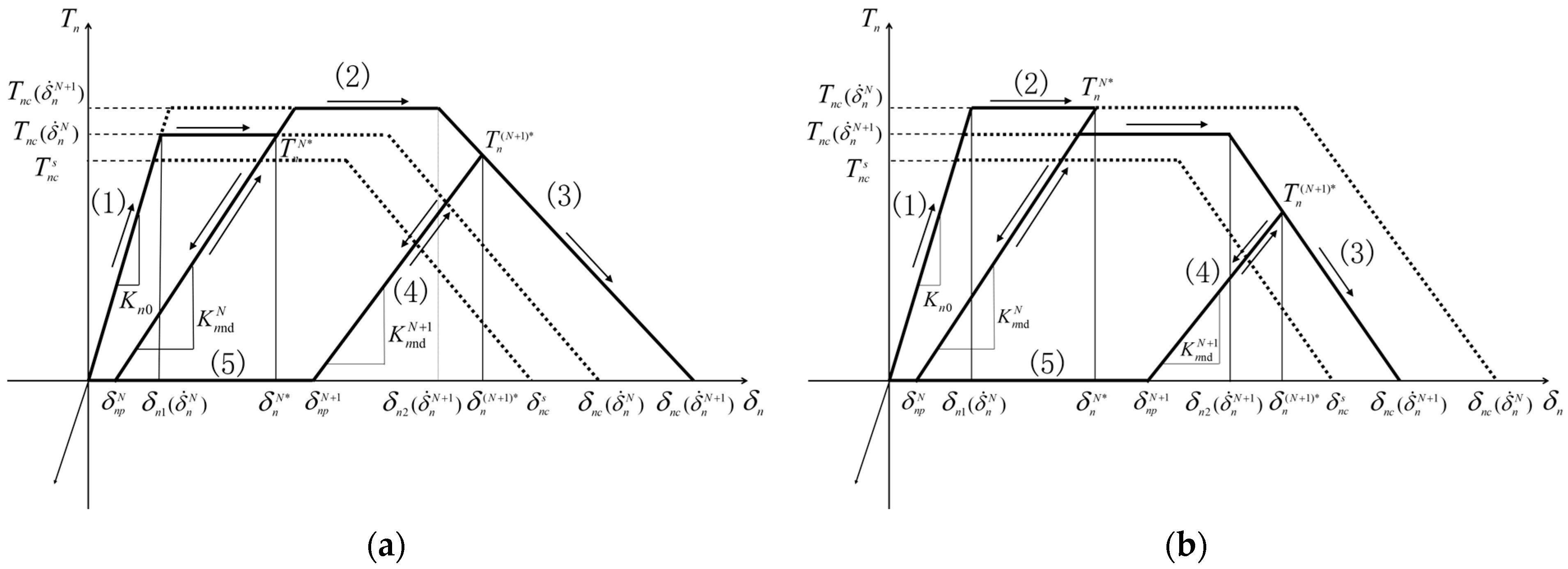
Figure 3 illustrates the evolution of the cohesive traction and separation relationships across varying separation rates, with the dashed line depicting the relationship at a constant separation rate and the solid line showing the actual relationship when the separation rate fluctuates. Incorporating the influence function of the separation rate, and determine
,
, and
as follows:
In conjunction with
Appendix A, the traction–separation relationships for Mode-I, Mode-II, and Mode-III cracks in different segments are represented as follows:
The subscripts (
i), (
j), and (
k), each ranging from (1) to (5), correspond to the five stages of the cohesive traction–separation relationship. The parameters in different stages for Mode-I and Mode-II cracks are shown in
Table 1; the parameters for Mode-III are the same as for Mode-II crack.
The accumulated plastic separation
and degraded stiffness
are updated according to Equations (9) and (10).
where
and
denote the historical maximum separation and corresponding traction, respectively.
is a material parameter that characterizes the extent of plastic separation [
35],
, and
.
2.3. Implementation of the 3D Rate-Dependent CZM for Fatigue Delamination
For the RFCZM, which adapts according to variations in the separation rate , , , the parameters , , , and , , , necessitate updates at every incremental step.
Before presenting the implementation steps, it should be noted that Equation (11) adopts a simple energy-based mixed-mode interaction criterion. Such a formulation is used here as an engineering-oriented approximation to facilitate the present three-dimensional explicit implementation. Other mixed-mode laws, such as the B-K criterion and power-law formulations [
43,
44], are also commonly used in delamination analysis, but they generally require additional mixed-mode fracture calibration parameters that are beyond the scope of the present work. The adopted criterion is therefore considered suitable for the comparative repeated-impact simulations conducted in this study.
Once the calculation of the first N loading cycles is completed and all relevant results are known, the procedure for establishing the traction–separation relationship at each incremental step within the N + 1 loading cycle unfolds as follows:
Determination of the element state: The mixed-mode failure criterion given in Equation (11) is used to determine whether the element has failed [
45]. If the element fails, the nodal force vector is set to zero; otherwise, the procedure proceeds to the next step.
Calculation of separation rate: Employ the backward difference method to explicitly calculate the separation rate , , . Initially, the , , assumes value , , at the first step of the initial loading cycle.
Cohesive parameter computation: Determine the values of , , , , , and for the current step i, incorporating the separation rate’s influence function as outlined in Equations (5) and (A1). Calculate the parameters , , , , , , , , and according to Equations (7) and (A3).
Traction–separation relationship: Ascertain the traction–separation relationship for the current increment i as delineated in Equation (8).
Calculate node force vector: The cohesive separation computed from Equation (1) is substituted into the current TSL to evaluate the cohesive tractions. These tractions are then introduced into Equations (3) and (4) to obtain the nodal force vector of the cohesive element.
Reiterate Steps 1 through 5 until the completion of a loading cycle, then update the plastic separation according to Equation (9) and initiate a new cycle. At each explicit time increment, the rate-dependent cohesive parameters and the corresponding nodal force vector are updated sequentially according to the current separation and separation-rate state.
Once the cohesive separation reaches stage (3), it is recommended to maintain the values of
(
,
),
(
,
), and the stiffness constant
(
,
) in subsequent steps until the element fails [
40].
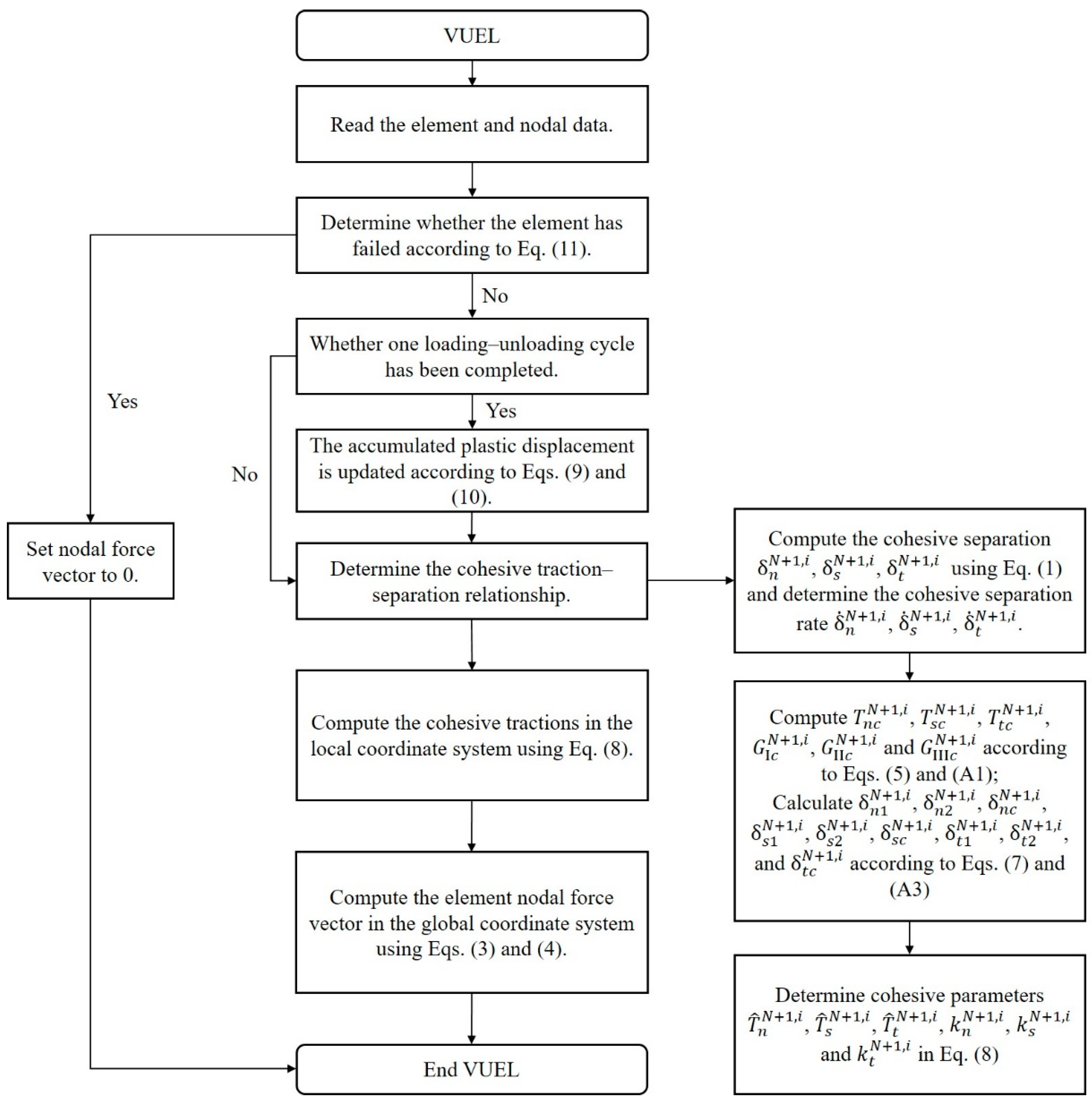
Figure 4 presents the evolution process of the 3D rate-dependent fatigue cohesive element and the flowchart of the VUEL. The cohesive parameters and the traction–separation relationship necessitate updating at every incremental step according to variations in the separation rate.
Utilizing the algorithm detailed in Ref. [
46] and the capabilities of the current rate-dependent FCZM, an eight-node cohesive element is developed and integrated into ABAQUS using a VUEL.
3. Numerical Examples
This section applies the 3D rate-dependent fatigue CZM presented previously to model the interlaminar adhesive layers of composite laminates and utilizes the Hashin criterion to identify intralaminar damage and failure. The Hashin criterion is adopted because it is a widely used and well-established failure model for composite laminates, and it allows the major ply-level failure modes, including fiber and matrix failure under tensile and compressive loading, to be distinguished explicitly. This makes it suitable for coupling with the present interlaminar cohesive framework. The damage evolution and failure mechanisms of three laminate layup configurations subjected to repeated impacts are simulated, and the effect of rate dependence on their impact responses is examined.
The three laminate configurations considered in this study are selected to represent structurally meaningful cases encountered in practical composite design. The conventional laminate serves as a baseline configuration without a thickness-transition discontinuity. The drop-off laminate represents a typical tapered laminate with ply termination, which is widely used in practice for thickness tailoring and weight reduction in regions with varying load demand, but is also prone to local stress concentration and delamination initiation around the ply drop-off region. The wrapped drop-off laminate represents a modified thickness-transition design in which the drop-off region is covered by outer plies. Such protection of ply drop-offs is consistent with common laminate design recommendations and is intended to improve structural continuity and damage tolerance. Accordingly, these three cases were chosen to compare the repeated-impact response of a reference laminate, a practically relevant tapered laminate with ply termination, and a protected drop-off configuration.
3.1. Conventional Laminates
In this section, conventional layup laminates are analyzed, whose geometry and boundary conditions are shown in
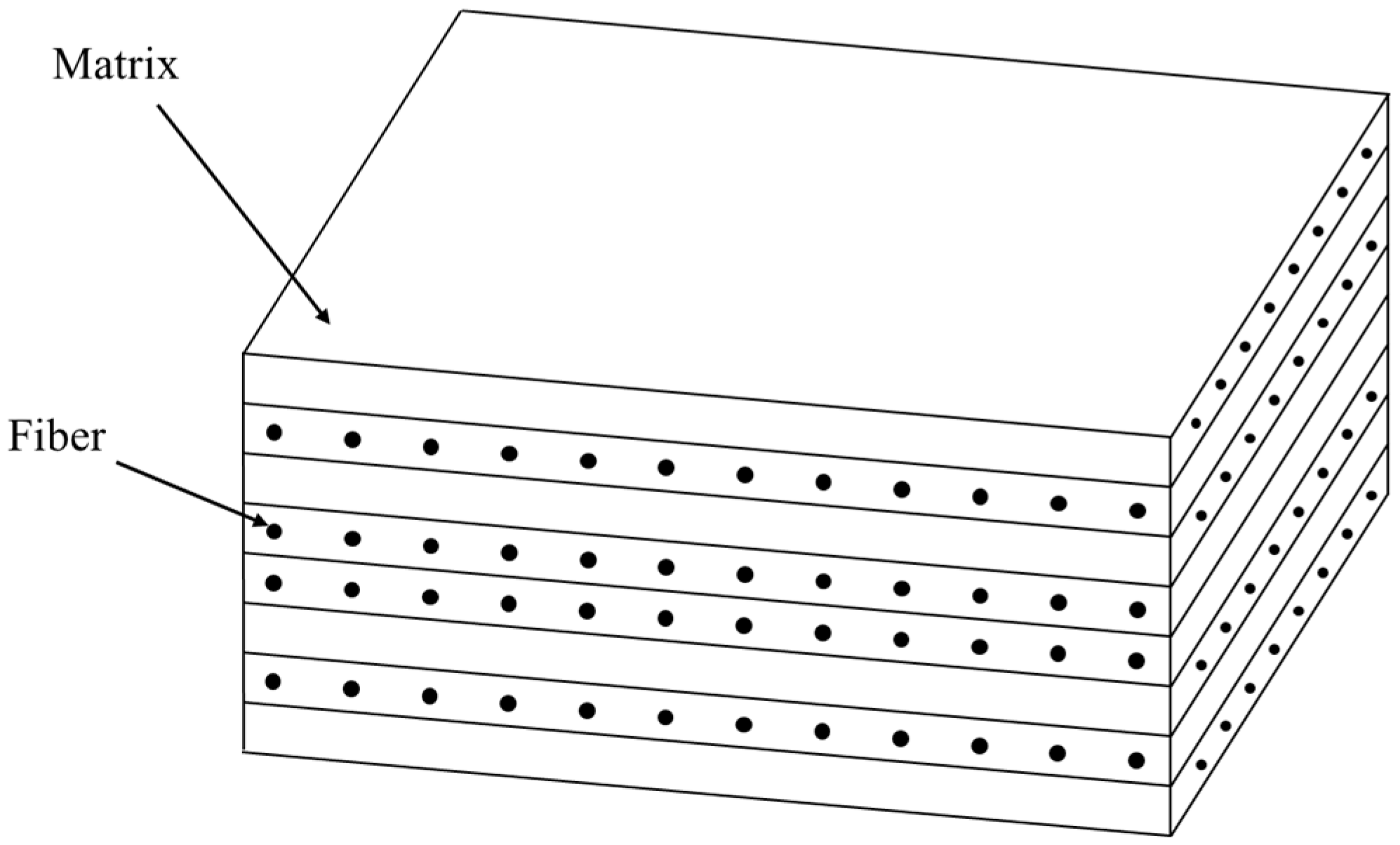
Figure 5. The laminate consists of eight plies with a thickness of 0.25 mm each that are bonded by resin interlayers with a thickness of 0.0075 mm. As shown in
Figure 6, the plies are stacked in the sequence of
, and the plate dimensions are 75 mm × 75 mm × 0.25 mm for each ply. The impactor has a diameter of 15 mm and is modeled as a rigid body. Both ends of the plate are fully constrained, and a displacement load is applied to the impactor. The plate is first subjected to a single impact at velocities of
v = 5, 10, 50, and 100 m/s, respectively, followed by three additional impacts at the same velocity of 2 m/s. These initial impact velocities are selected as representative cases with different impact severities, so that the laminate response can be examined under distinct damage regimes. In particular, the lower velocity cases are used to highlight conditions in which interlaminar delamination plays a more dominant role, whereas the higher-velocity cases are introduced to investigate more severe damage states in which intralaminar fiber and matrix damage become increasingly important. The imposed displacement is 4.5 mm for the first impact and 5 mm for each of the subsequent three impacts.
The composite laminate is discretized using SC8R elements. Three-dimensional rate-dependent fatigue cohesive elements with a thickness of 0.0075 mm are inserted between adjacent plies to model the resin interlayers. The Hashin failure criterion [
47] is adopted to predict the initiation of damage in individual plies of the composite laminate. Once damage initiates, an energy-based damage evolution law is employed to compute the energy dissipation within the elements [
48]. The simulations are carried out in ABAQUS/Explicit, where the stable time increment is determined automatically by the explicit solver and is on the order of
s. No mass scaling is used in the present simulations. The adopted interface element size is 1 mm, while the estimated cohesive-zone length is approximately 11.7 mm. Therefore, the cohesive zone is resolved by about 11.7 interface elements. Since the interface element size is much smaller than the estimated cohesive-zone length, the present discretization can be regarded as sufficiently fine from the viewpoint of standard cohesive-zone modeling. A formal mesh-convergence study is beyond the scope of the present work and will be pursued in future research. For the present comparative simulations, the adopted mesh is selected based on the cohesive-zone resolution and was considered reasonable for the current analysis. General explicit contact is defined between the impactor and the laminate, as well as between adjacent plates. Tangential behavior is described using a penalty formulation with a friction coefficient of 0.3, while normal behavior is defined as hard contact. The rate-dependent relationship follows the logarithmic form given in Equations (6) and (A2). The material properties and cohesive parameters of the interlayers are listed in
Table 2 and
Table 3 [
49,
50], respectively. The parameters
and
are taken as 0.75 and 40 [
35], respectively, with
adopted with reference to the previously reported rate-dependent cohesive formulation and
selected as a representative value for the present repeated-impact simulations, so that the cumulative fatigue effect can be examined within a reasonable numerical range.
The rate-dependent parameters
are taken as 0.04, 0.16, 0.28, and 0.40, respectively. The rate-dependent parameters
are investigated parametrically. In the present study,
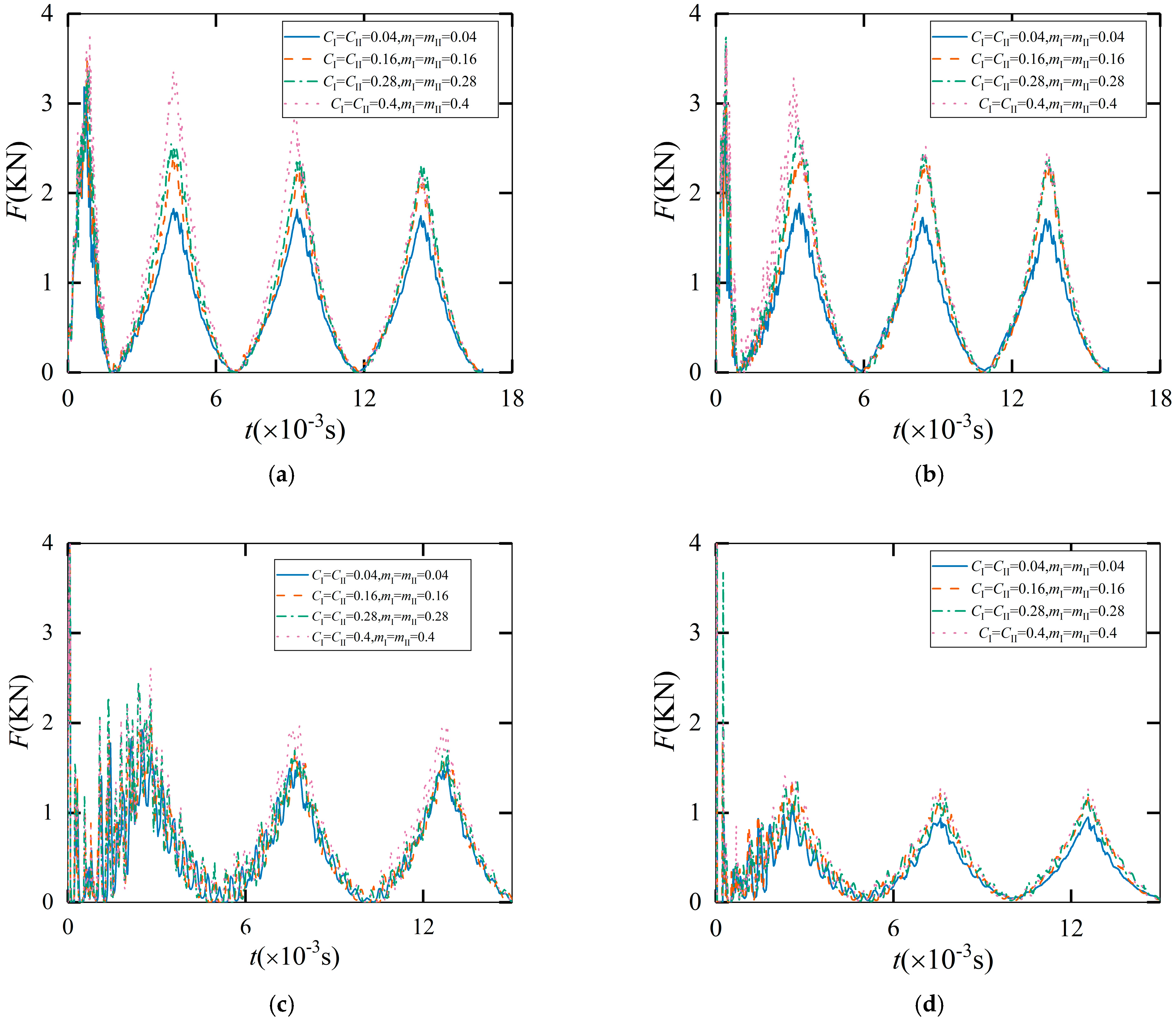
are successively assigned the representative values 0.04, 0.16, 0.28, and 0.40 in order to examine their influence on the predicted repeated-impact response. The variations in the impact force under different initial impact velocities during the first impact are shown in
Figure 7. It can be observed that, when the initial impact velocity is relatively low (5 m/s and 10 m/s), the peak impact force gradually decreases with successive impacts; moreover, the impact force increases as the strain-rate parameter increases. In contrast, at higher impact velocities (50 m/s and 100 m/s), the peak impact force exhibits only minor variation during repeated impacts and is weakly influenced by the rate-dependent parameters.
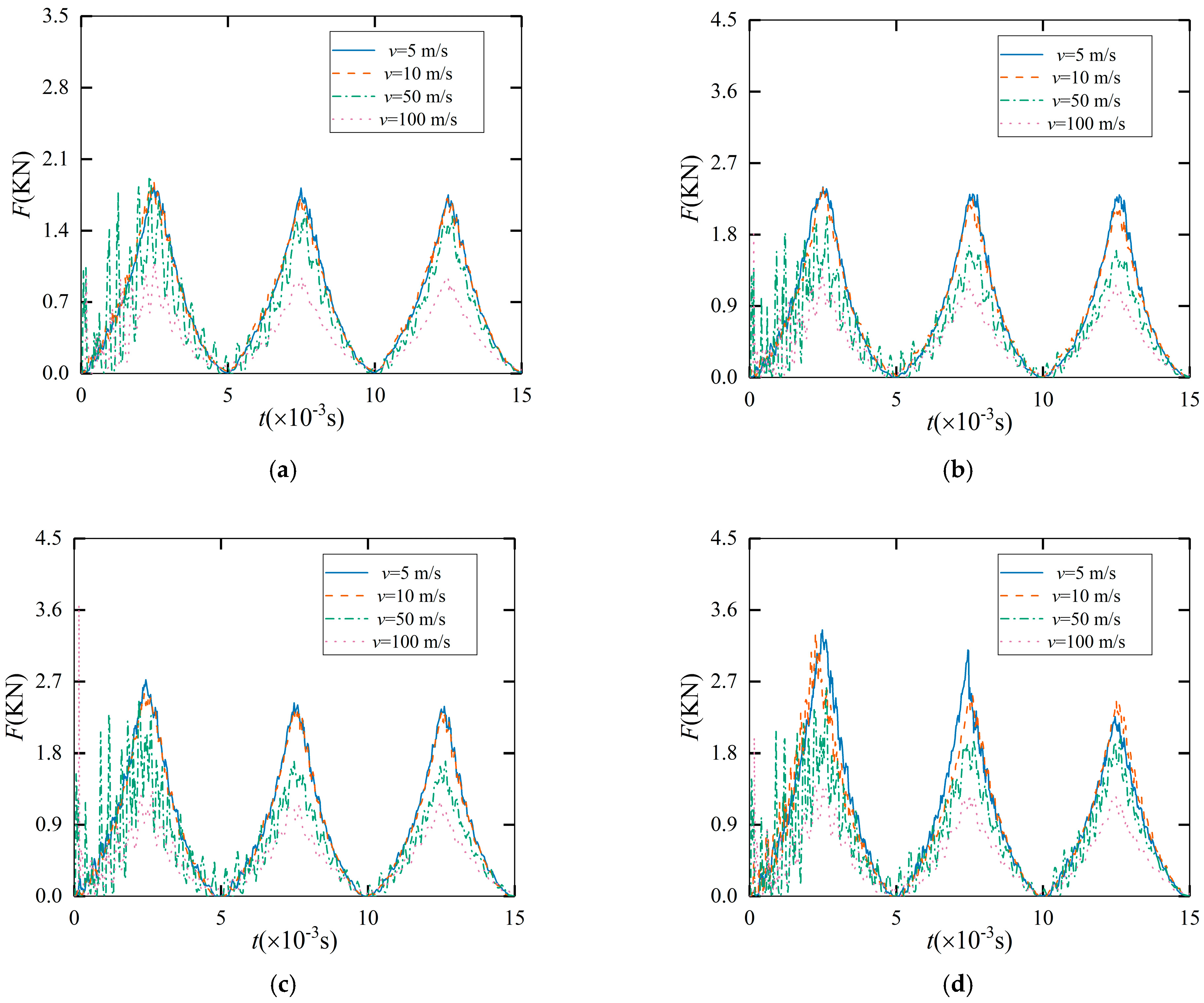
For given rate-dependent parameters, the impact force responses under different initial impact velocities are compared, as shown in
Figure 8. When the initial impact velocities are 5 m/s and 10 m/s with the same strain-rate parameter, the impact forces at the fourth impact are nearly identical. However, when the initial impact velocities are 50 m/s and 100 m/s, the impact force at the fourth impact decreases markedly. This is because a much higher velocity in the first impact induces more severe damage in the laminate, leading to pronounced stiffness degradation and, consequently, a more significant reduction in the peak impact force.
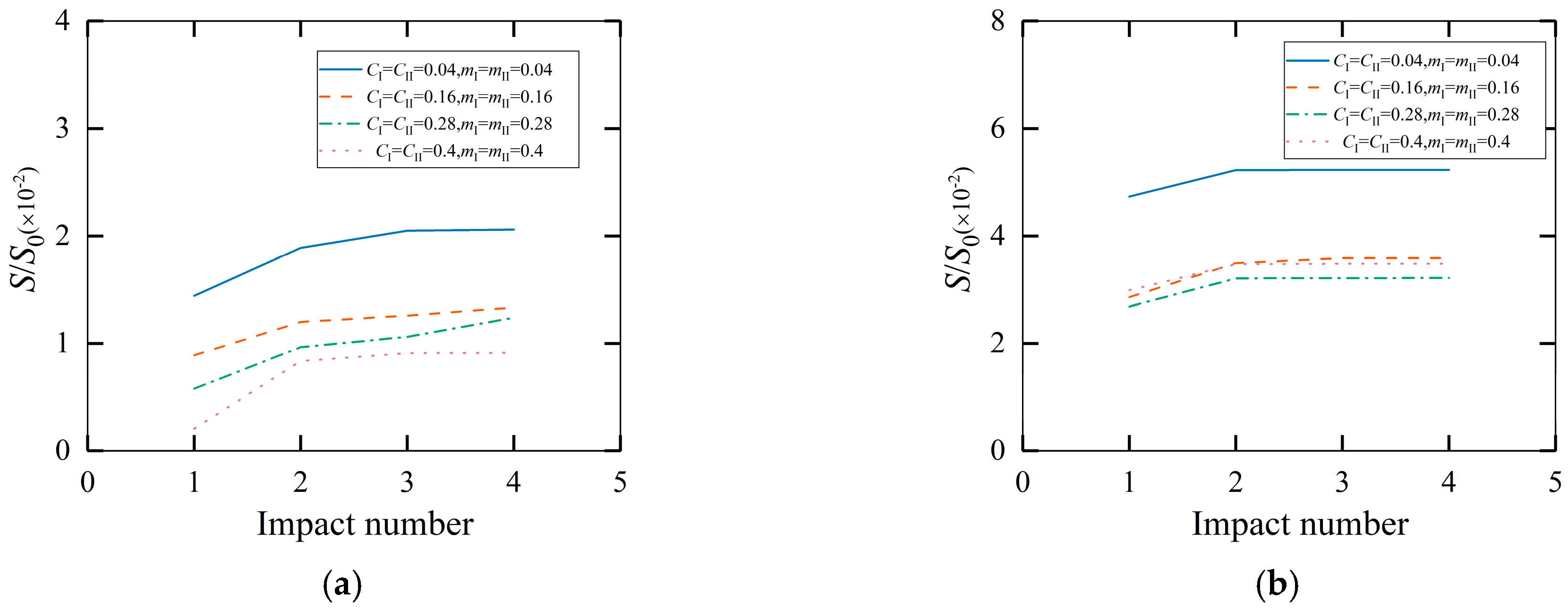
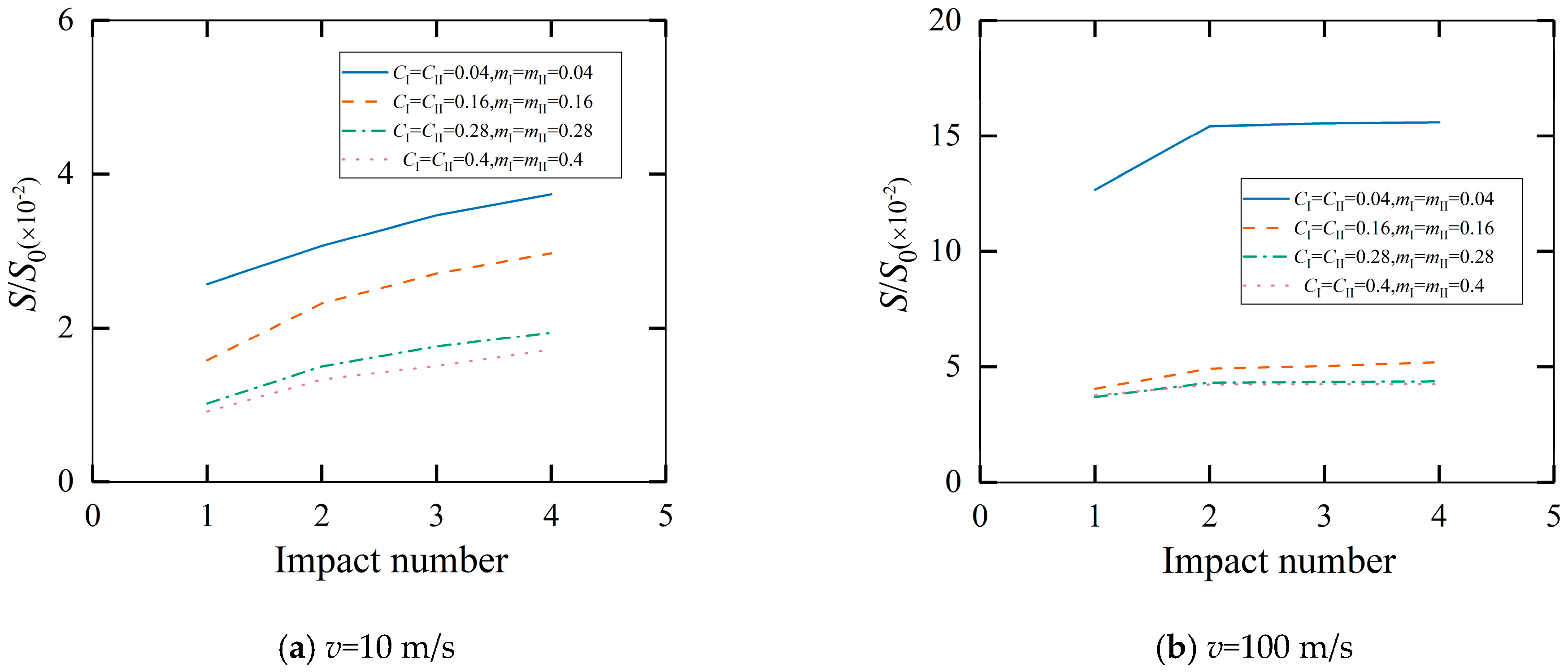
From the comparative results, it is found that the structural responses for initial impact velocities of 5 and 10 m/s exhibit similar trends, while those for 50 and 100 m/s are also essentially identical under repeated impact. Therefore, 10 m/s and 100 m/s are selected as representative lower- and higher-velocity impacts, respectively, and the corresponding delamination behaviors are analyzed in
Figure 9. Here,
S denotes the delamination area and
S0 the total area of the resin interlayer.
At a lower impact velocity, the delamination area increases progressively with successive impacts, indicating that ply damage is relatively mild and interlaminar fatigue delamination is dominant. With increasing strain-rate parameter, the strength and fracture toughness of the resin interlayer increase, leading to a reduction in delamination area and a smaller stiffness degradation, and hence a higher peak impact force.
At a higher impact velocity, the delamination area grows more slowly, while severe fiber and matrix damage dominate and interlaminar fatigue delamination becomes less significant. As the strain-rate parameter increases, the interlayer strength and toughness rapidly reach their upper bounds, causing the delamination area to decrease sharply and then remain nearly constant; consequently, the impact force shows only minor variation.
3.2. Drop-Off Laminate
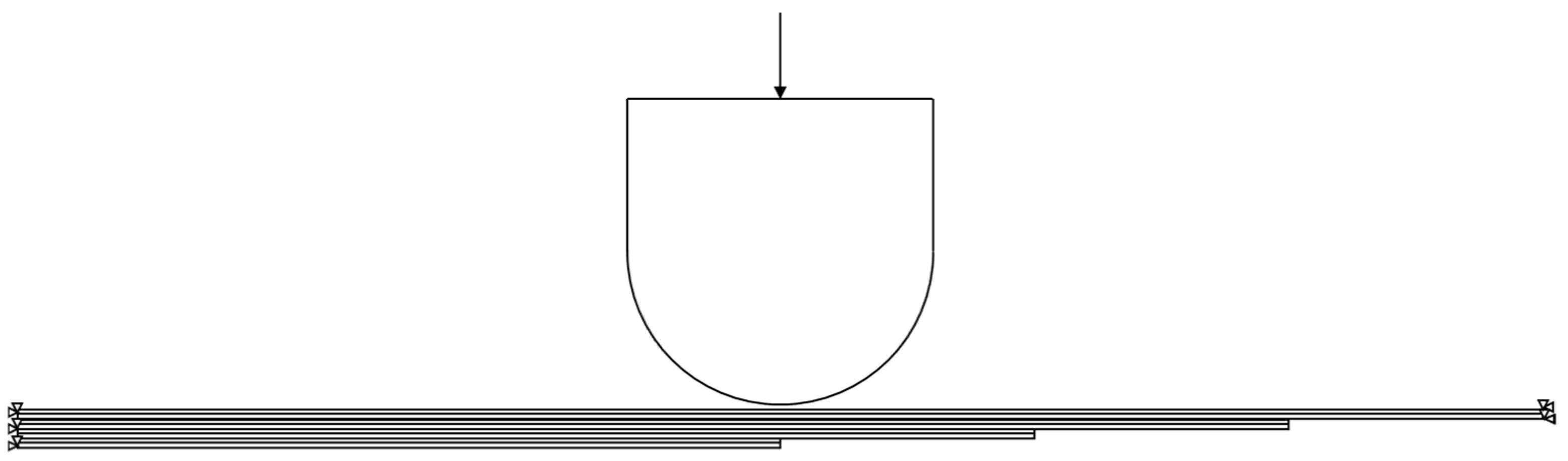
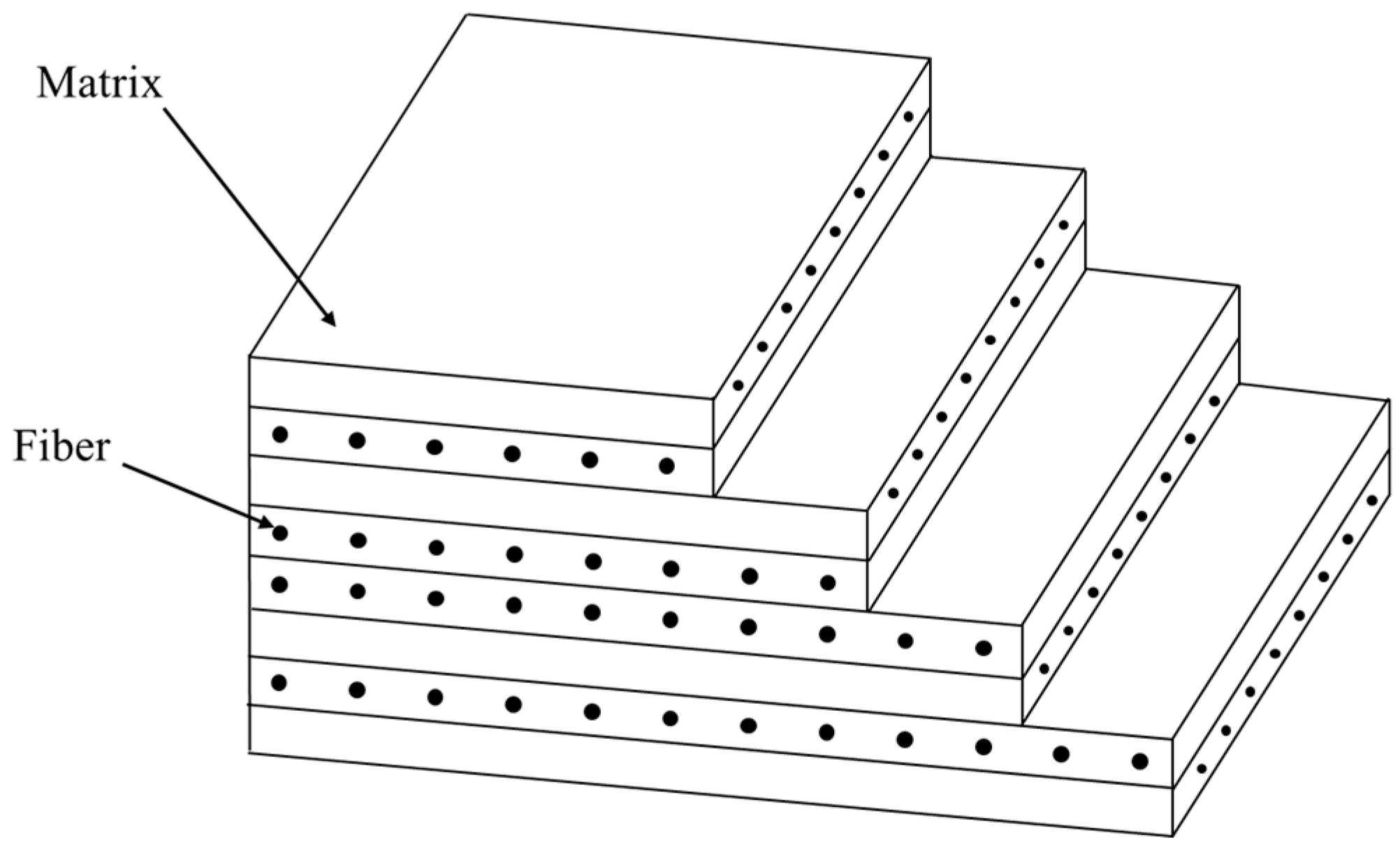
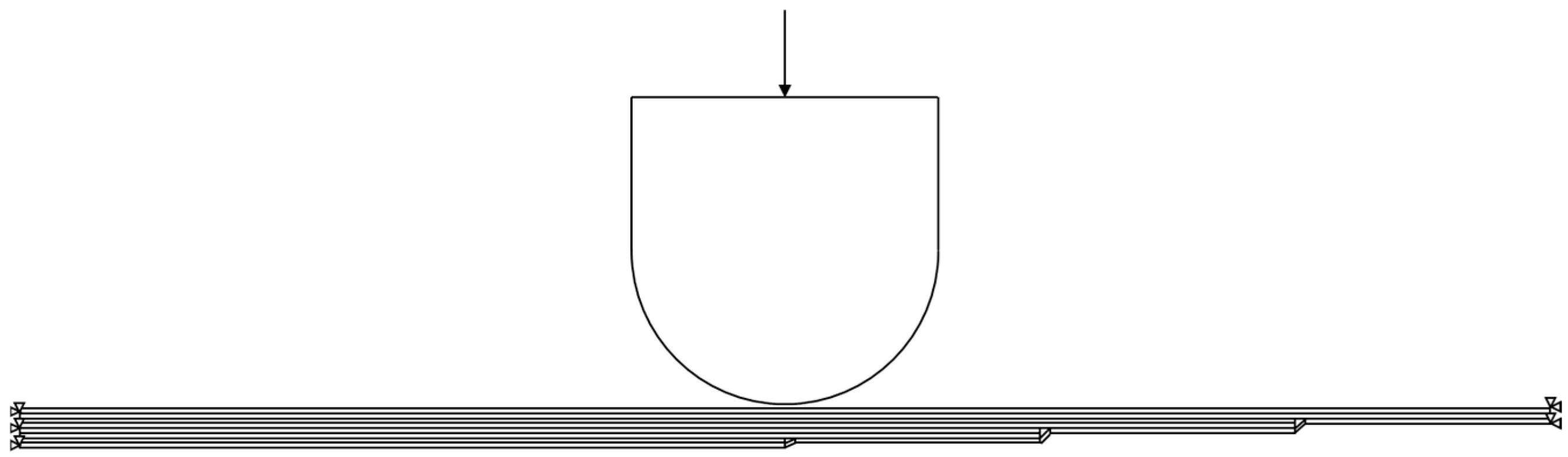
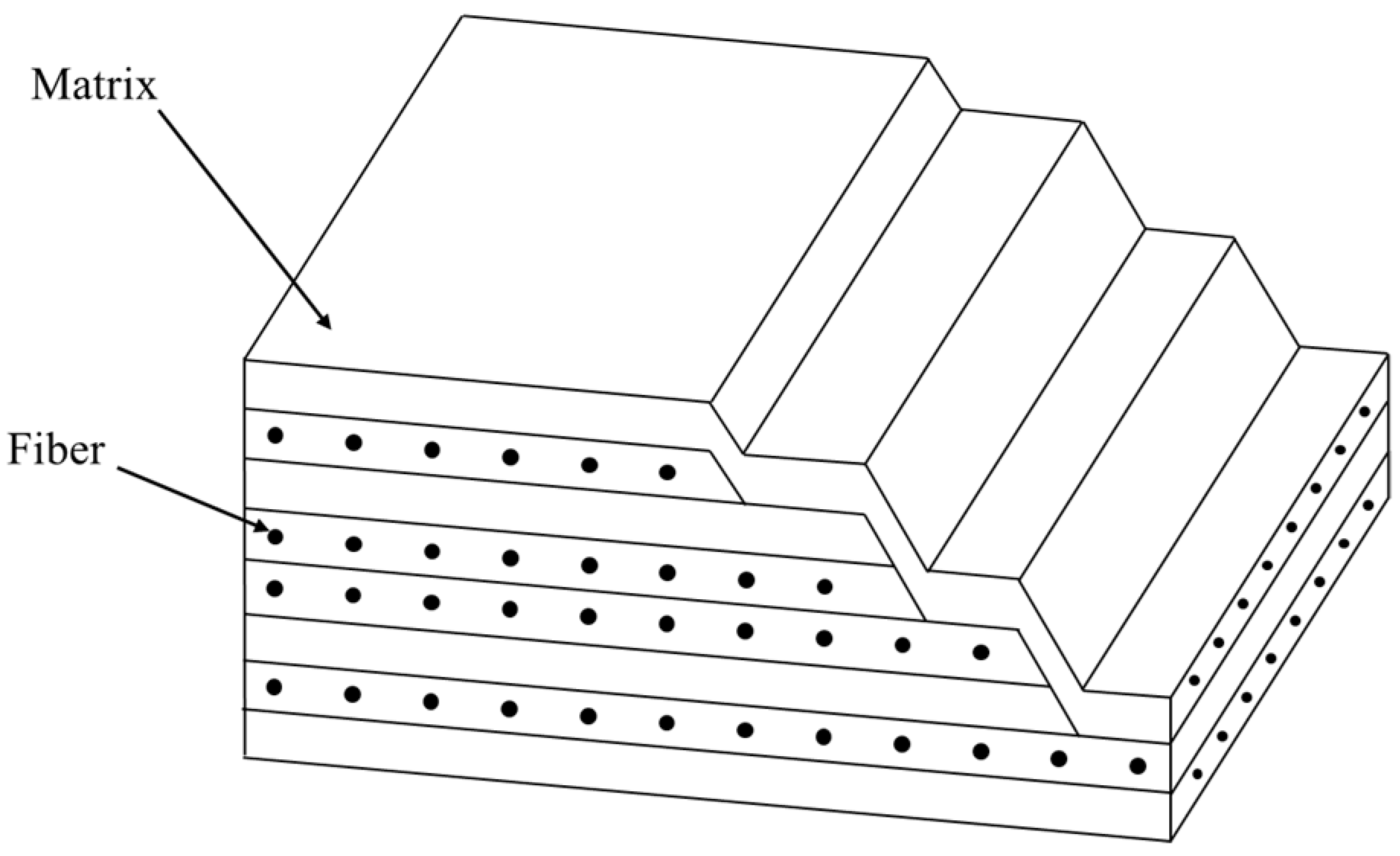
Next, the drop-off laminate is analyzed, whose geometry and boundary conditions are shown in
Figure 10. The schematic of its laminate configuration is shown in
Figure 11. This type of structure is commonly used in engineering practice to enhance the bending strength and torsional stiffness of laminates. The dimensions of plies 1–2, 3–4, 5–6, and 7–8 are
,
,
, and
, respectively, arranged in a successively decreasing manner. The stacking angles and material properties are the same as those in
Section 3.1.
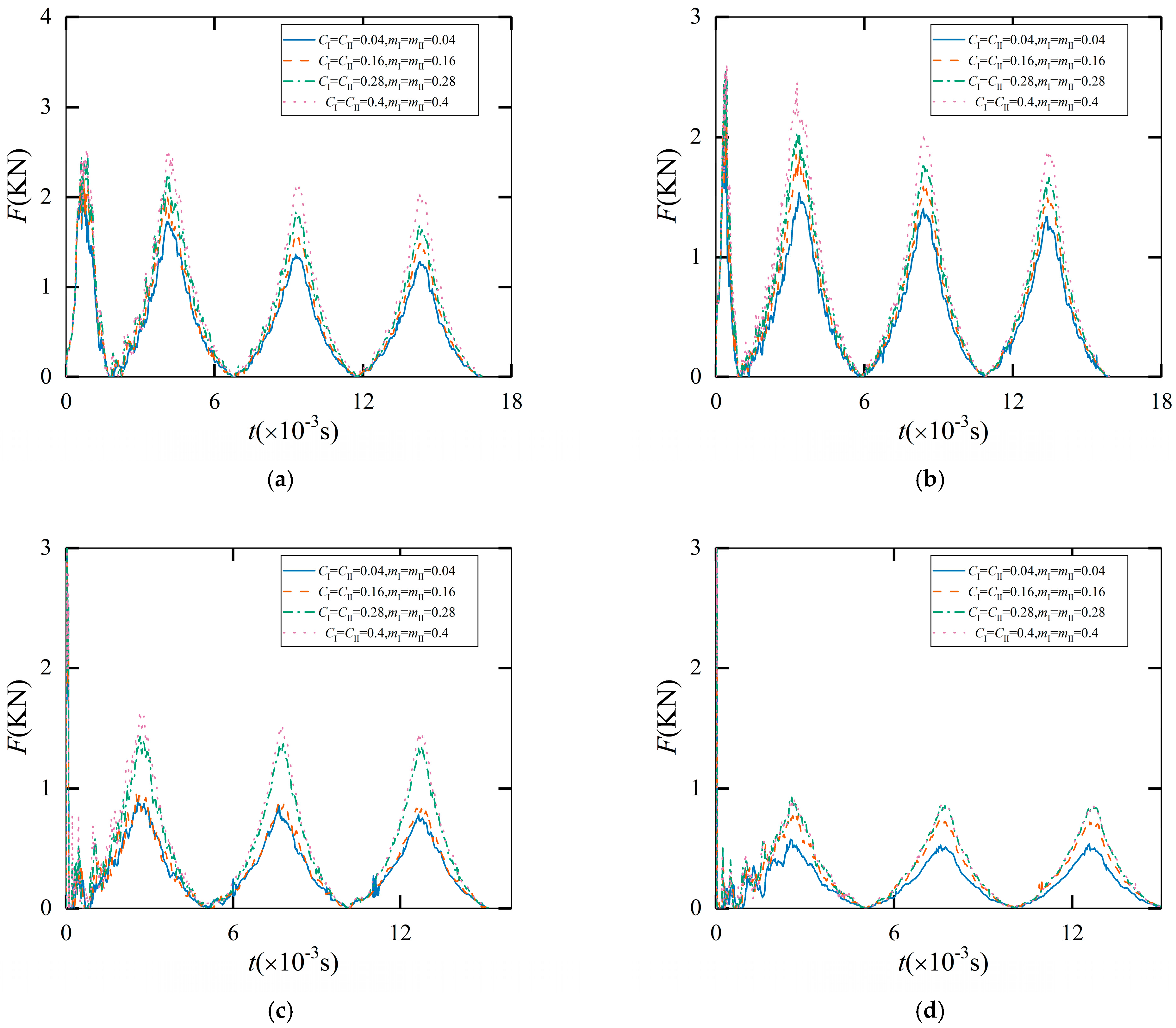
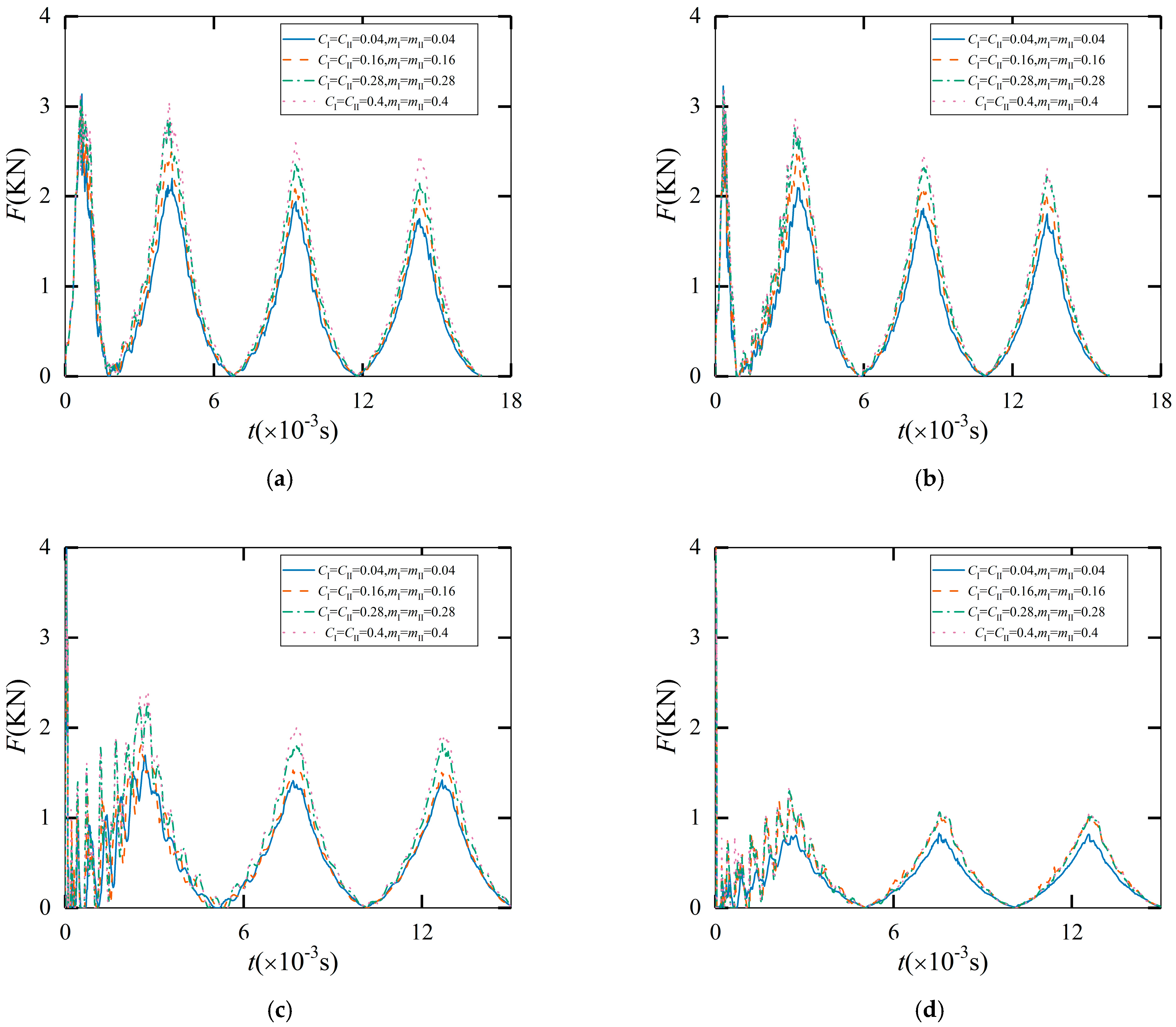
The rate-dependent parameters are taken as 0.04, 0.16, 0.28, and 0.40, respectively, and the variations in the impact force under different initial impact velocities are shown in
Figure 12. It can be seen that the influence trend of the rate-dependent parameter on the impact force for this structure is consistent with that of the conventional laminate, i.e., the impact force increases with increasing rate-dependent parameters. Compared with the conventional laminate, however, at a relatively higher impact velocity (50 m/s and 100 m/s), the effect of the rate-dependent parameters on the impact force becomes more pronounced in the drop-off laminate.
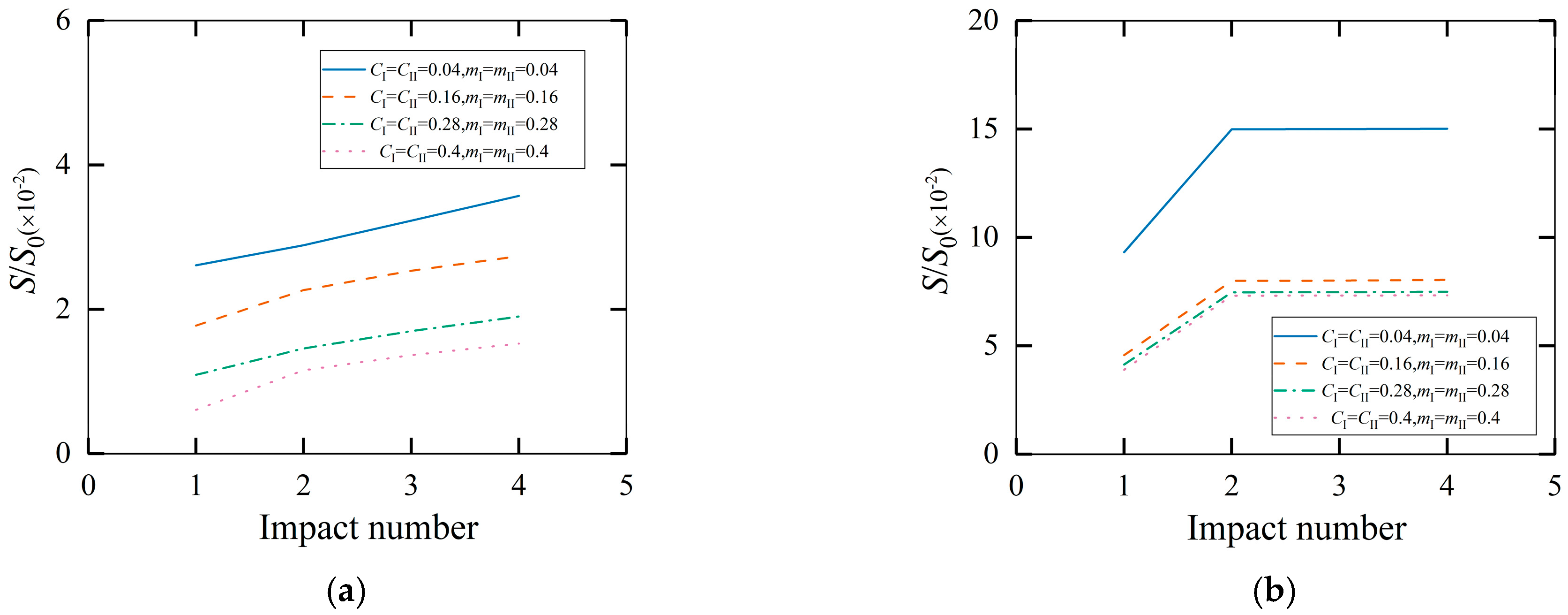
An examination of the delamination area in
Figure 13 indicates that interlaminar shear sliding is more likely to occur in this structure, leading to a wider delaminated region and thus a stronger sensitivity to the strain-rate parameter. Meanwhile, fiber and matrix damage is alleviated. When the rate-dependent parameter is the same, the trends of the impact force response under different initial impact velocities are essentially the same as those observed for the conventional laminate.
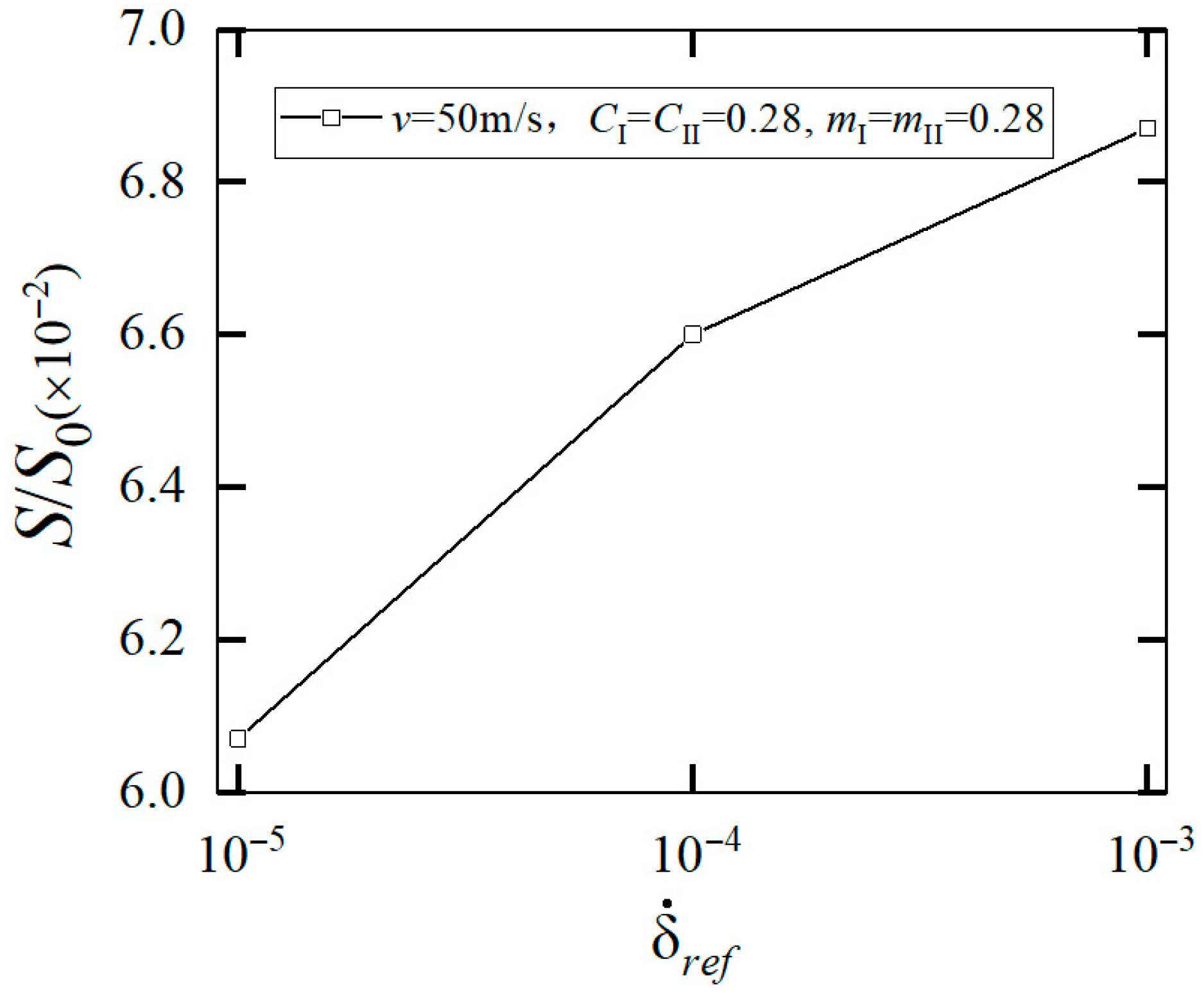
To further clarify the rate sensitivity observed in the drop-off laminate, a calculation with respect to is carried out for this configuration. Under an impact velocity of 50 m/s, the parameter is assigned three values, , , and , while the remaining parameters are kept unchanged. These values are selected to span one order of magnitude below and above the baseline value so that the role of in controlling the onset of rate dependence can be assessed systematically. In the present implementation, the role of is to limit the fracture-energy enhancement, with the imposed upper bound . Therefore, the present parametric study focuses on the onset parameter , while the role of the upper-bound treatment is clarified directly in the formulation section.
The results, shown in
Figure 14, demonstrate that as
increases from
to
, the normalized delamination area increases from 0.0607 to 0.0687, indicating a clear sensitivity of the delamination response to
. This shows that a smaller
activates the rate-dependent effect earlier, resulting in a reduced delamination area, while a larger
delays the activation of the rate dependence, leading to a larger delamination area.
3.3. Wrapped Drop-Off Laminates
Since the drop-off laminate is prone to delamination due to interlaminar shear sliding between adjacent plies, the shortest bottom ply is replaced by an outer wrapping ply that covers the entire laminate, so as to inhibit interlaminar sliding to some extent. The stacking angles and material properties are kept unchanged; the geometry and boundary conditions are shown in
Figure 15, and the schematic of its laminate configuration is shown in
Figure 16.
The numerical results for the wrapped drop-off laminate are presented in
Figure 17 and
Figure 18. It can be seen that, after adding the outer wrapping ply to the drop-off laminate, the influence of the rate-dependent parameter on the impact force becomes similar to that observed in the conventional laminate. However, this structure still exhibits relatively larger interlaminar shear sliding under impact loading, leading to a wider delaminated area; therefore, the effect of rate dependence remains more pronounced.
3.4. Results and Discussion
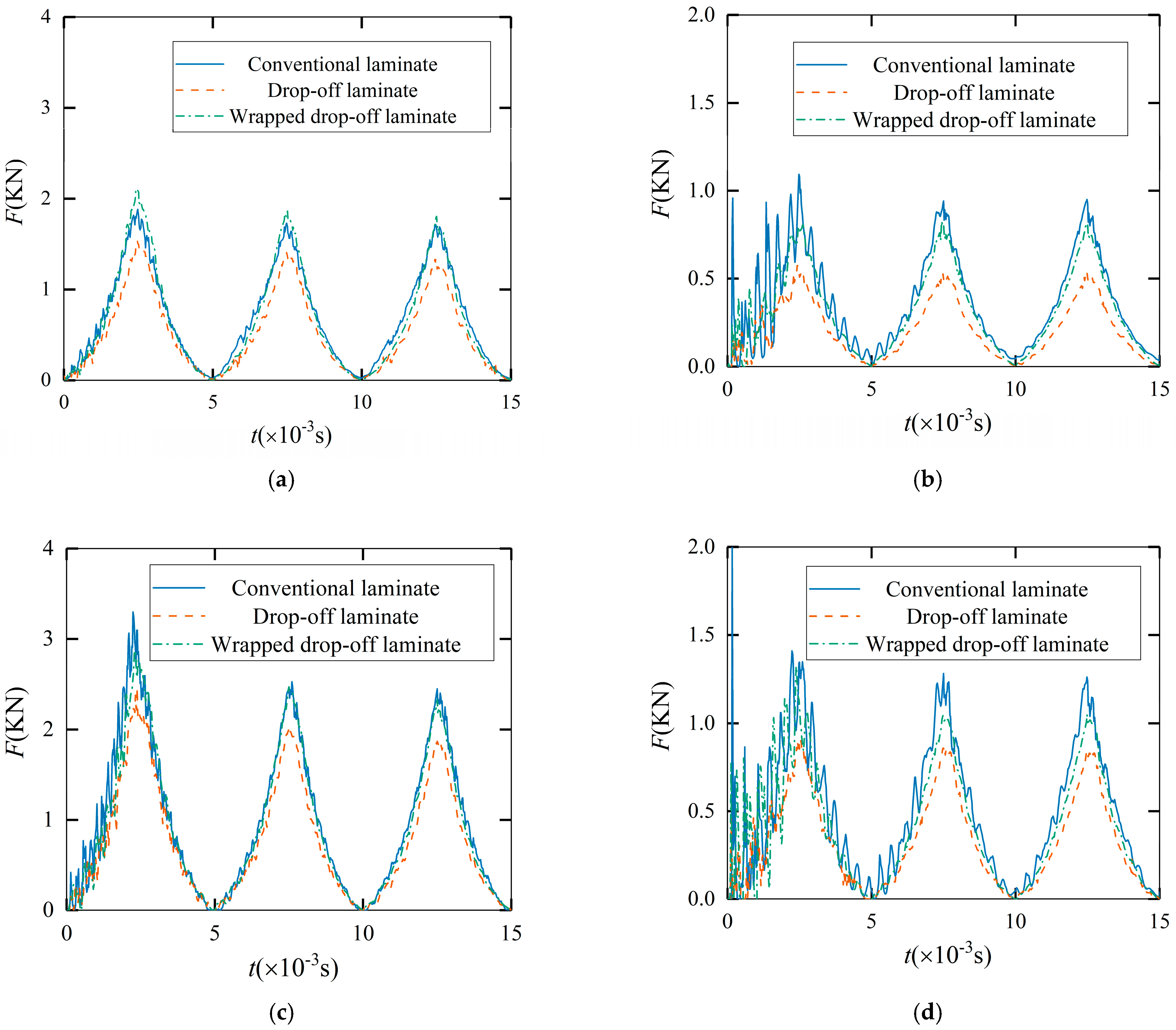
Finally, at impact velocities of 10 m/s and 100 m/s, the rate-dependent parameters are taken as 0.04 and 0.40, respectively, to compare the impact responses of composite laminates with different structural configurations. The results are shown in
Figure 19. It can be seen that among the three configurations, the drop-off laminate exhibits the lowest stiffness and, consequently, the smallest impact force. At the lower impact velocity (10 m/s), the impact forces of the conventional laminate and the wrapped drop-off laminate are nearly identical. At the higher impact velocity (100 m/s), the impact force of the conventional laminate is slightly higher than that of the wrapped drop-off laminate.
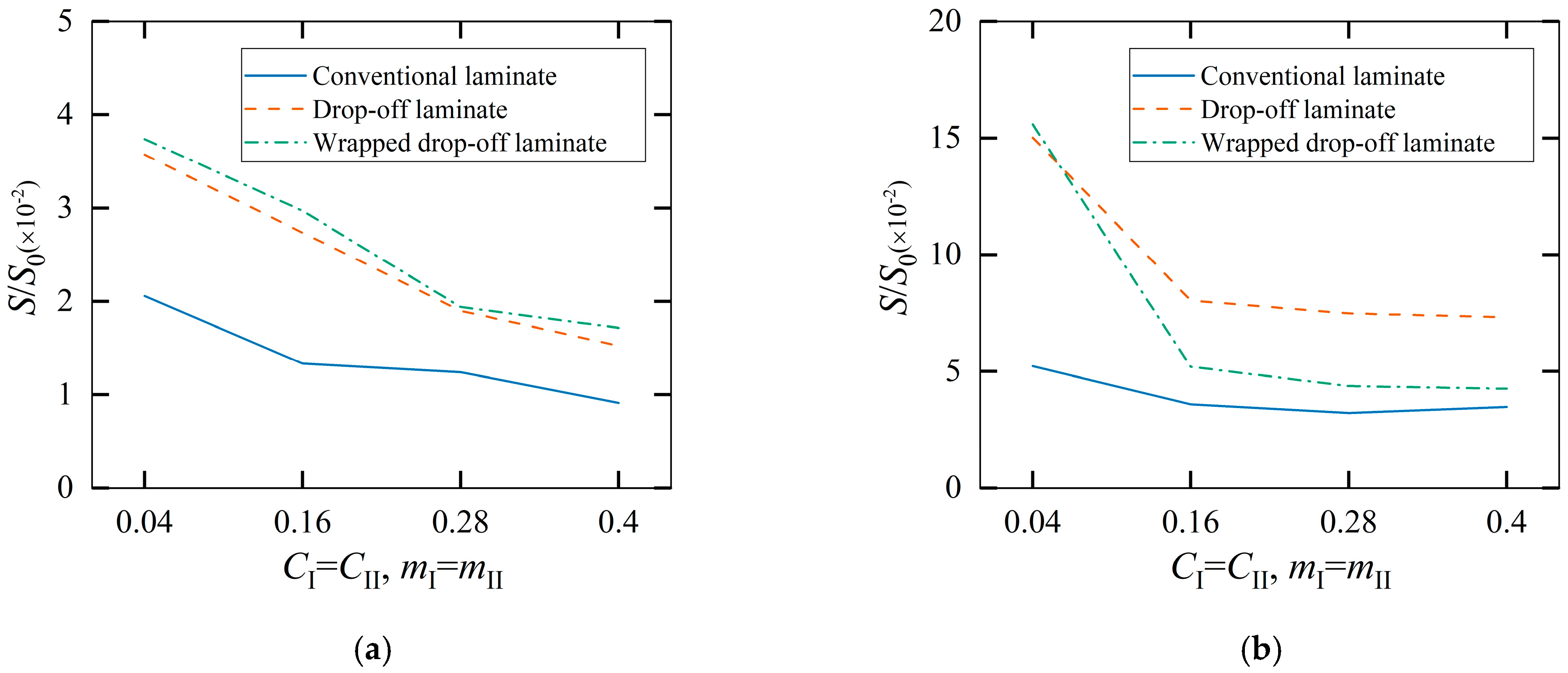
The variation in the delamination area with the rate-dependent parameter for different laminate configurations after repeated impact is shown in
Figure 20. It can be seen that, at the lower impact velocity (10 m/s), the fatigue delamination area decreases with increasing rate-dependent parameter for all configurations. This is because fiber and matrix damage are not severe under this condition, and structural degradation is dominated by interlaminar sliding-induced delamination. The drop-off laminate is more prone to interlaminar shear sliding, resulting in a larger delamination area and a lower impact force. In contrast, the outer wrapping ply in the wrapped drop-off laminate enhances the overall stiffness and strength, so that its impact force is essentially the same as that of the conventional laminate.
At the higher impact velocity (100 m/s), as the rate-dependent parameter increases, the strength and fracture toughness of the resin interlayer rapidly reach their upper limits; consequently, the delamination area decreases sharply at first and then remains nearly unchanged. Under this condition, fiber and matrix damage become severe, and the impact resistance of the three laminate configurations is only weakly affected by the rate dependence of the resin layer. The conventional laminate exhibits the smallest delamination area and thus sustains the largest impact force. For the wrapped drop-off laminate, the outer wrapping ply restrains interlaminar shear sliding to some extent, leading to a delamination area comparable to that of the conventional laminate; therefore, its impact force is slightly lower than that of the conventional laminate.
Overall, this section shows that the proposed rate-dependent CZM framework is capable of representing the progressive delamination behavior of composite laminates under repeated impact loading and can serve as a feasible computational tool for the comparative assessment of laminate configurations under such loading conditions. The predicted trends, including cumulative damage development, stiffness degradation, and configuration-dependent delamination evolution, are qualitatively consistent with experimentally reported repeated-impact damage characteristics of composite laminates. The present results are intended mainly as a comparative numerical investigation of the repeated-impact behavior of the considered laminate configurations, while dedicated experimental comparison for these specific cases will be pursued in future work.
4. Conclusions
In this study, a three-dimensional rate-dependent CZM is established for simulating interlaminar delamination of composite laminates subjected to repeated impact loading. The adopted constitutive formulation incorporates the combined effects of fatigue damage accumulation and separation-rate-dependent critical cohesive parameters and is implemented through a time-incremental algorithm within an explicit finite element framework. By integrating the cohesive model with the Hashin intralaminar failure criterion, the progressive interaction between interlaminar delamination and intralaminar damage can be represented. Numerical simulations are conducted for three laminate configurations—conventional, drop-off, and wrapped drop-off laminates—to investigate the influence of rate dependence and structural architecture on impact-induced fatigue delamination.
Based on the numerical results, the following conclusions can be drawn:
Among the three laminate configurations considered, the drop-off laminate exhibits the strongest sensitivity to rate-dependent effects. This behavior is primarily attributed to pronounced interlaminar shear sliding near the ply drop-off region, which accelerates delamination growth under repeated impact and increases the influence of separation-rate-dependent cohesive properties.
The wrapped drop-off laminate shows improved resistance to fatigue delamination compared with the conventional drop-off laminate. The outer wrapping ply effectively restrains interlaminar shear sliding and reduces the delamination area, leading to improved structural stiffness and impact resistance, particularly at relatively low impact velocities.
At relatively low impact velocities, interlaminar fatigue delamination plays a dominant role in damage evolution, and increasing the rate-dependent parameter leads to a noticeable reduction in delamination area and stiffness degradation. In contrast, at relatively high impact velocities, intralaminar fiber and matrix damage become more dominant, and the influence of rate dependence on the global impact response becomes less pronounced as the interfacial strength and fracture toughness approach their upper bounds.
Within the investigated cases, the wrapped drop-off laminate offers a favorable balance between structural performance and material efficiency. When the intrinsic rate sensitivity of the composites is moderate and the impact velocity is not excessively high, this configuration can provide impact resistance comparable to that of a conventional laminate while reducing material usage and structural weight.
Overall, the results indicate that the present three-dimensional explicit framework is capable of capturing the coupled influences of strain-rate sensitivity and fatigue damage accumulation on delamination behavior under repeated impact. The study provides numerical insight into the role of laminate architecture and rate-dependent interlaminar behavior, and offers a feasible computational approach for the comparative simulation and assessment of repeated-impact damage in composite laminates. Future work will focus on experimental validation and on extending the framework to incorporate additional degradation mechanisms, including environmental aging, moisture diffusion, and creep–fatigue interaction.