Improvements to the FLOAM Algorithm: GICP Registration and SOR Filtering in Mobile Robots with Pure Laser Configuration and Enhanced SLAM Performance


Abstract
1. Introduction
- (1)
- An improved FLOAM algorithm framework tailored for pure laser configurations is proposed. The joint optimization of SOR filtering and GICP positioning enhances positioning accuracy without dependent sensors like IMUs and odometers and fills the gap in accuracy optimization for light pure laser setups.
- (2)
- A formal investigation is undertaken aimed at validating the suitability of GICP registration and SOR filtering for lightweight laser SLAM to identify the most optimal combinations of filtering and registration parameters for an implementable technical solution for pure laser SLAM engineering applications.
- (3)
- A performance evaluation system is created in multiple scenarios, which include Gazebo, indoor corridor and outdoor plaza. By using quantitative error analysis and qualitative mapping quality verification, this framework is provided as an experimental reference for optimizing such algorithms.
2. Algorithm Principles and Analysis
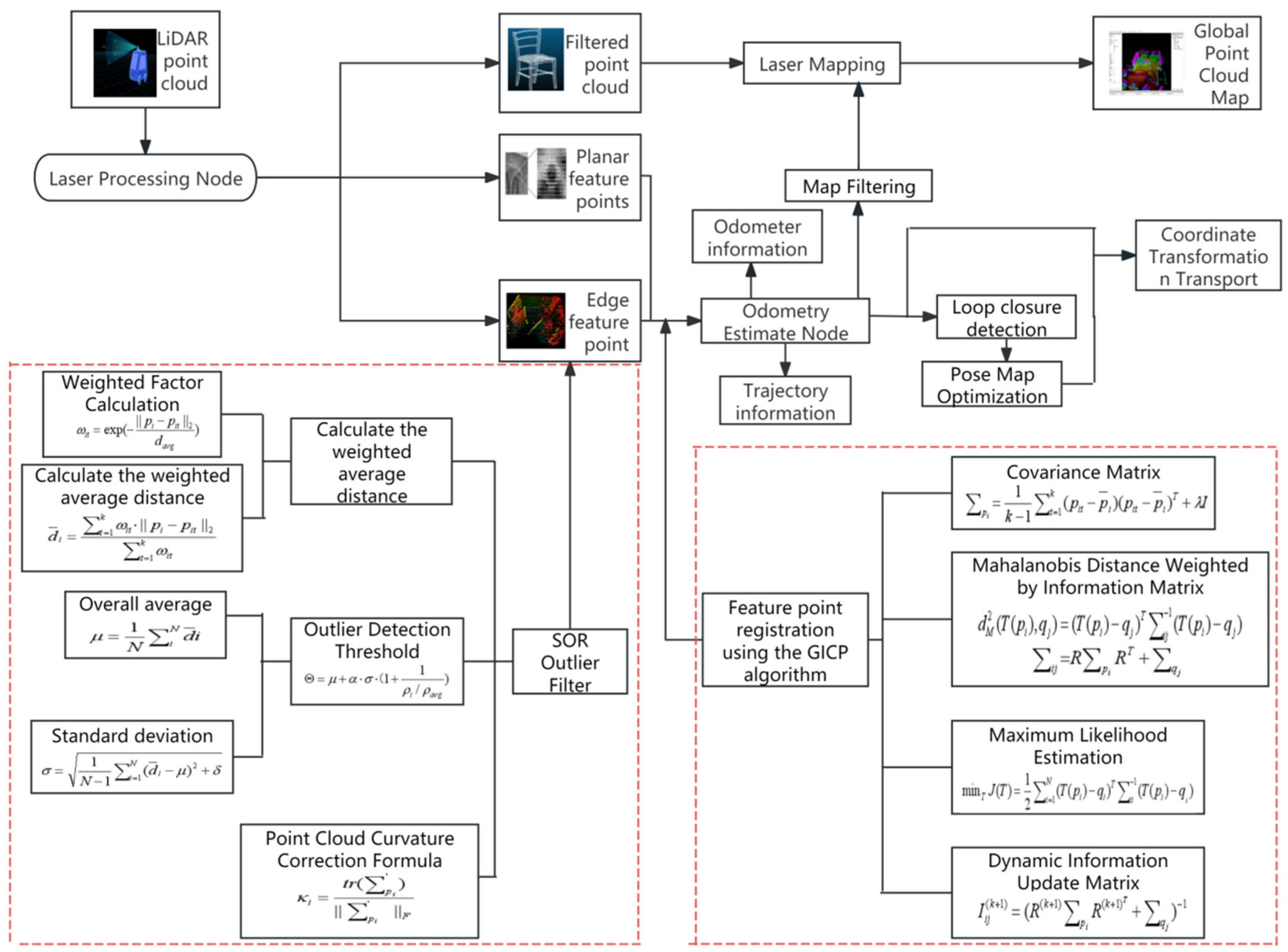
2.1. System Flow of the Improved FLOAM Algorithm
2.2. Introduction of the GICP Algorithm and Robust Registration Improvement
2.3. Principles and Implementation of SOR Filtering Algorithm
3. Offline Experimental Validation and Performance Analysis of the Improved FLOAM Algorithm
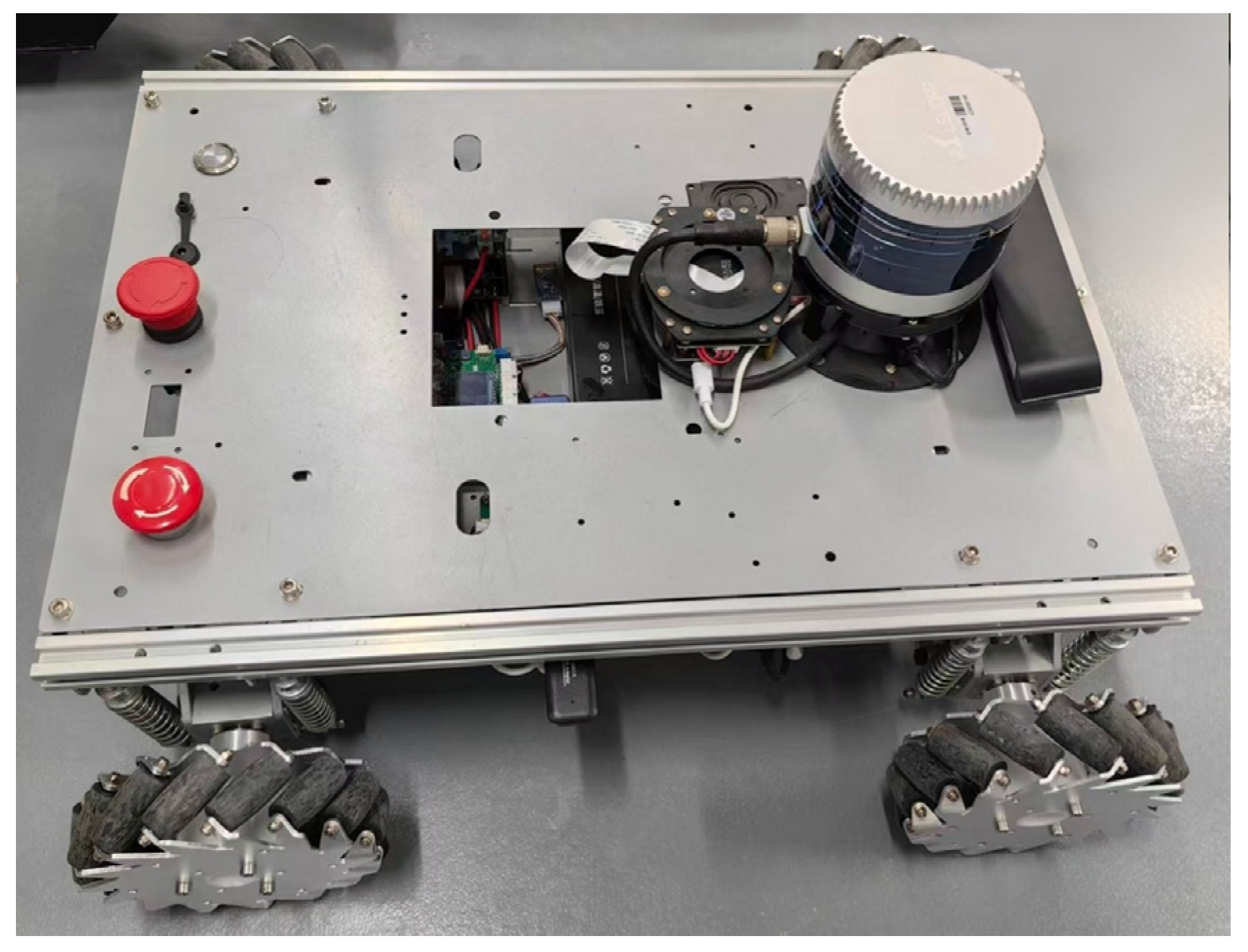
3.1. Experimental Platform Setup
3.2. Indoor Scenario Experimental Validation
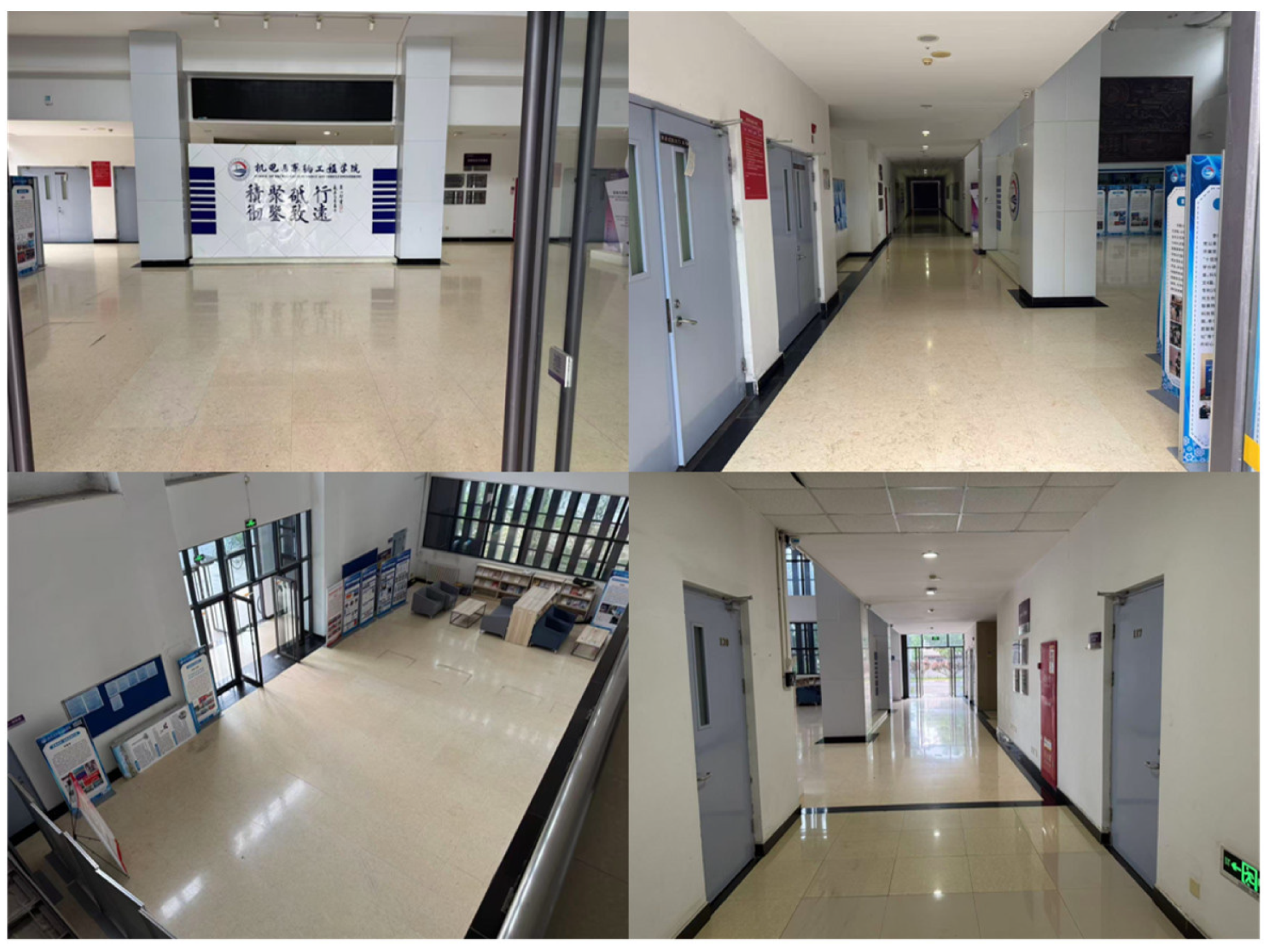
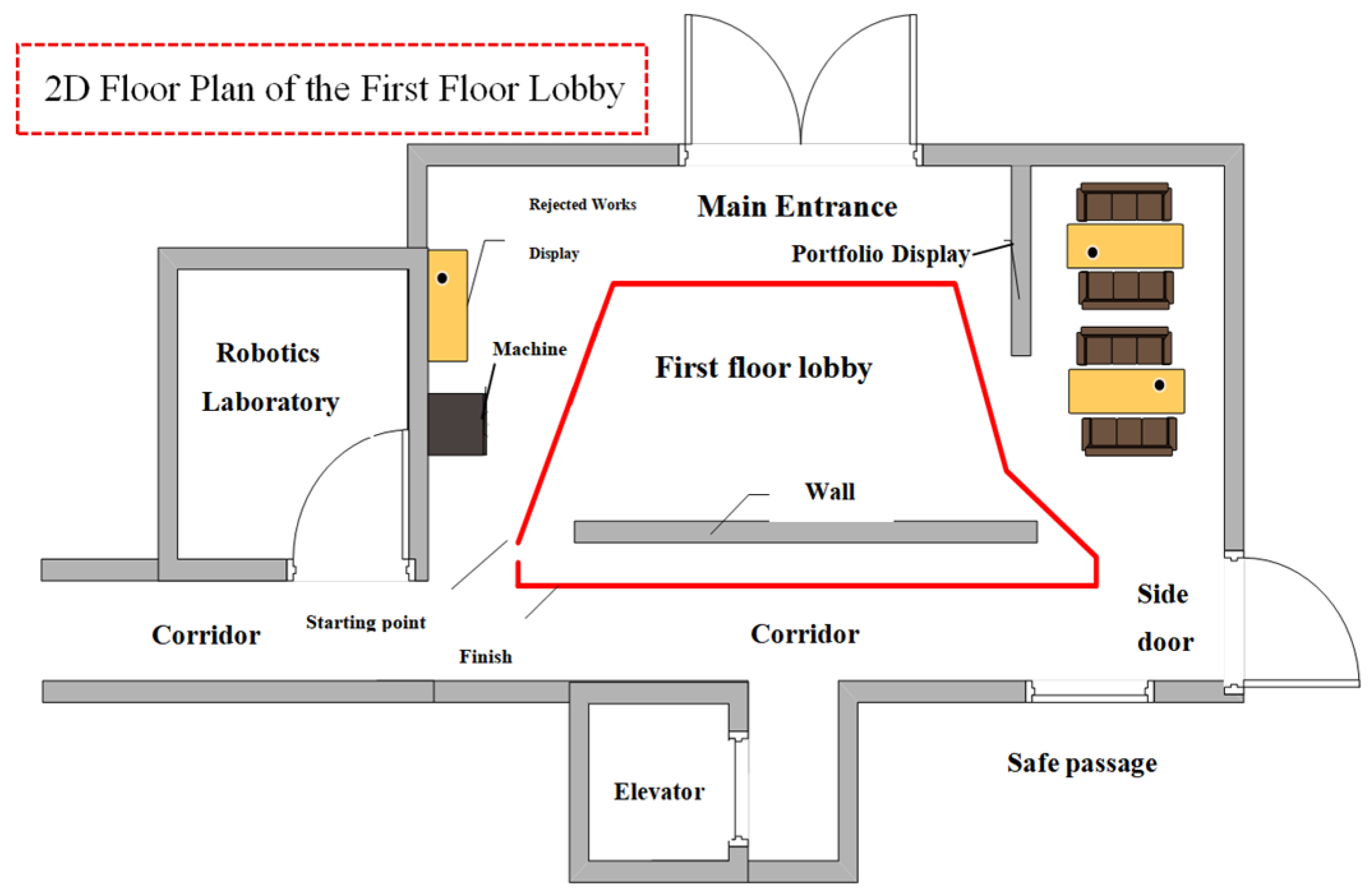
3.2.1. Indoor Laboratory Environment Design
3.2.2. Indoor Scene Point Cloud Mapping Performance
3.2.3. Indoor Scene Trajectory Estimation and Positioning Error Analysis
- (1)
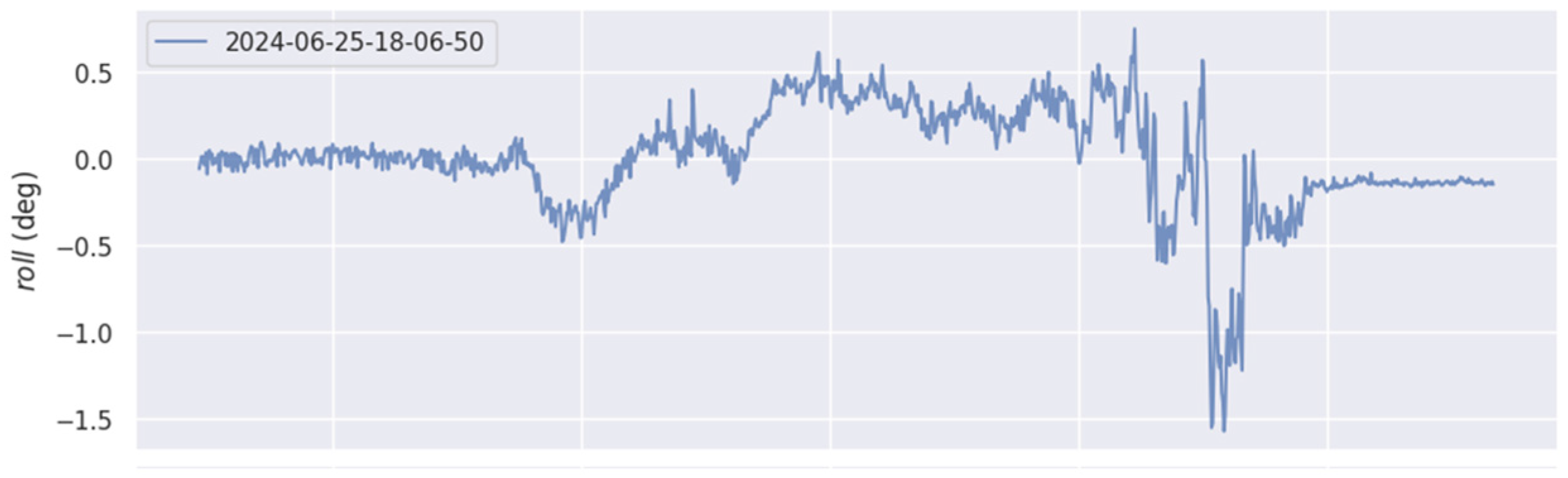
- Attitude Angle Tracking Performance
- (2)
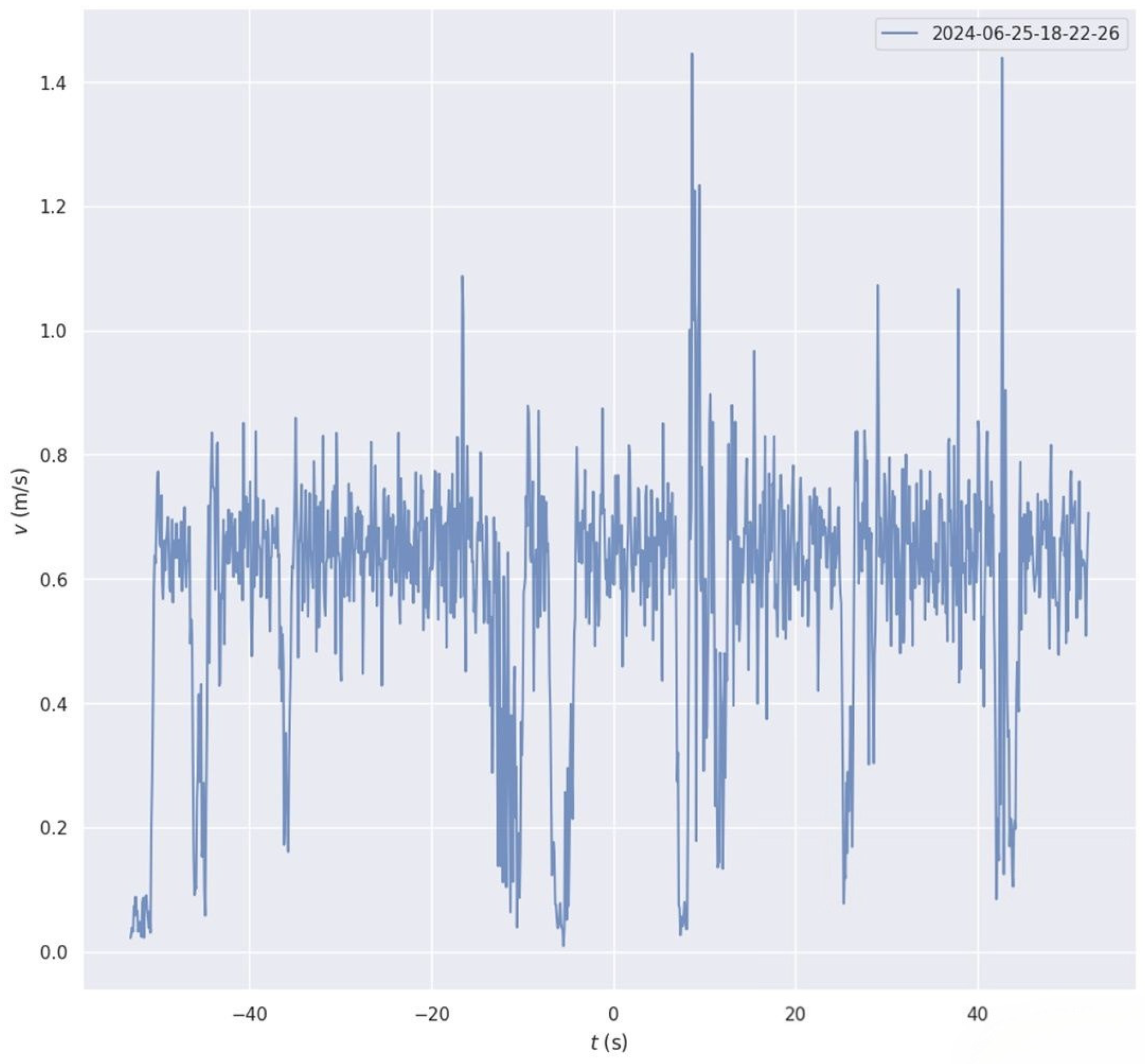
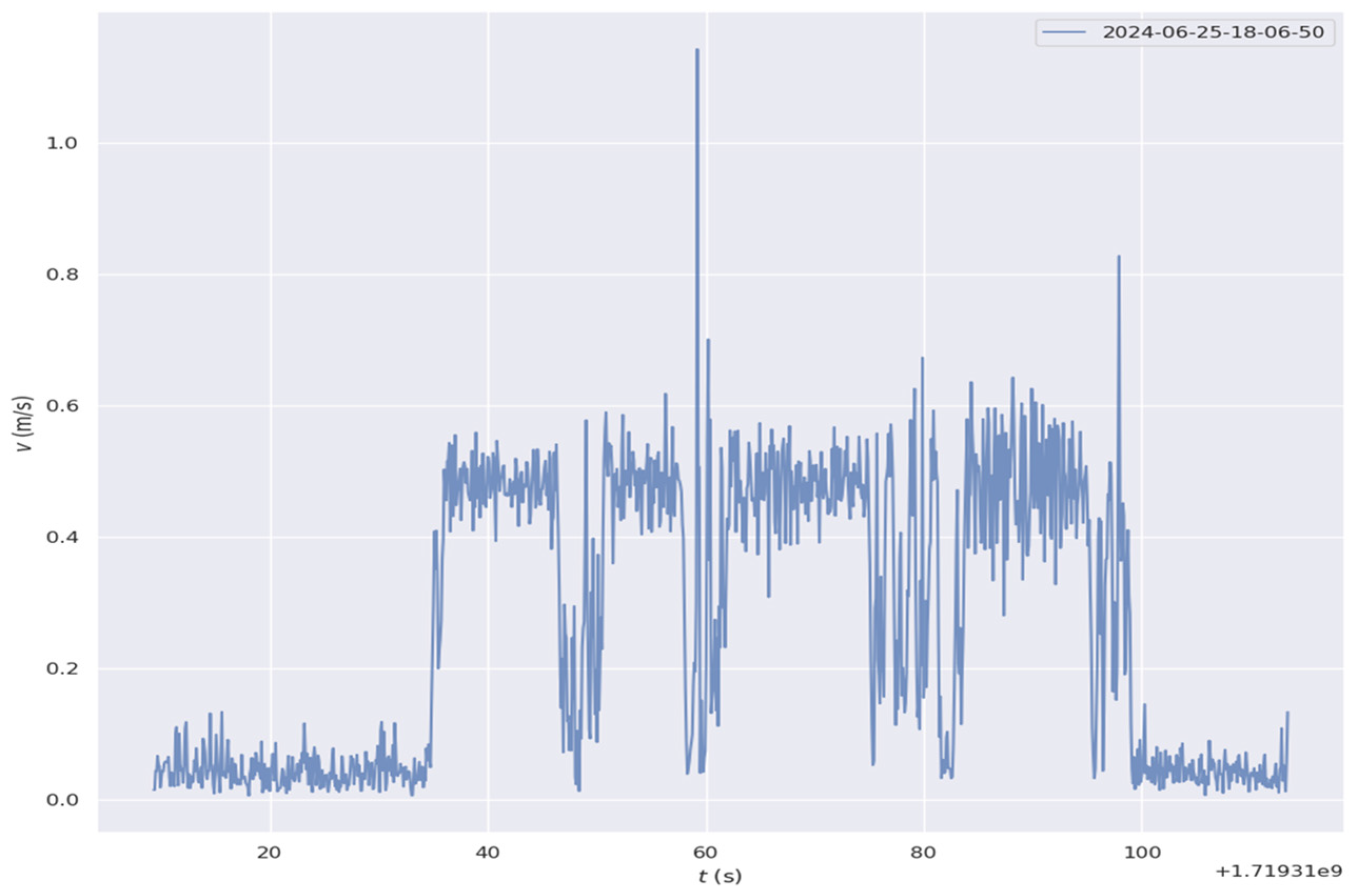
- Speed Evolution Characteristics
- (3)
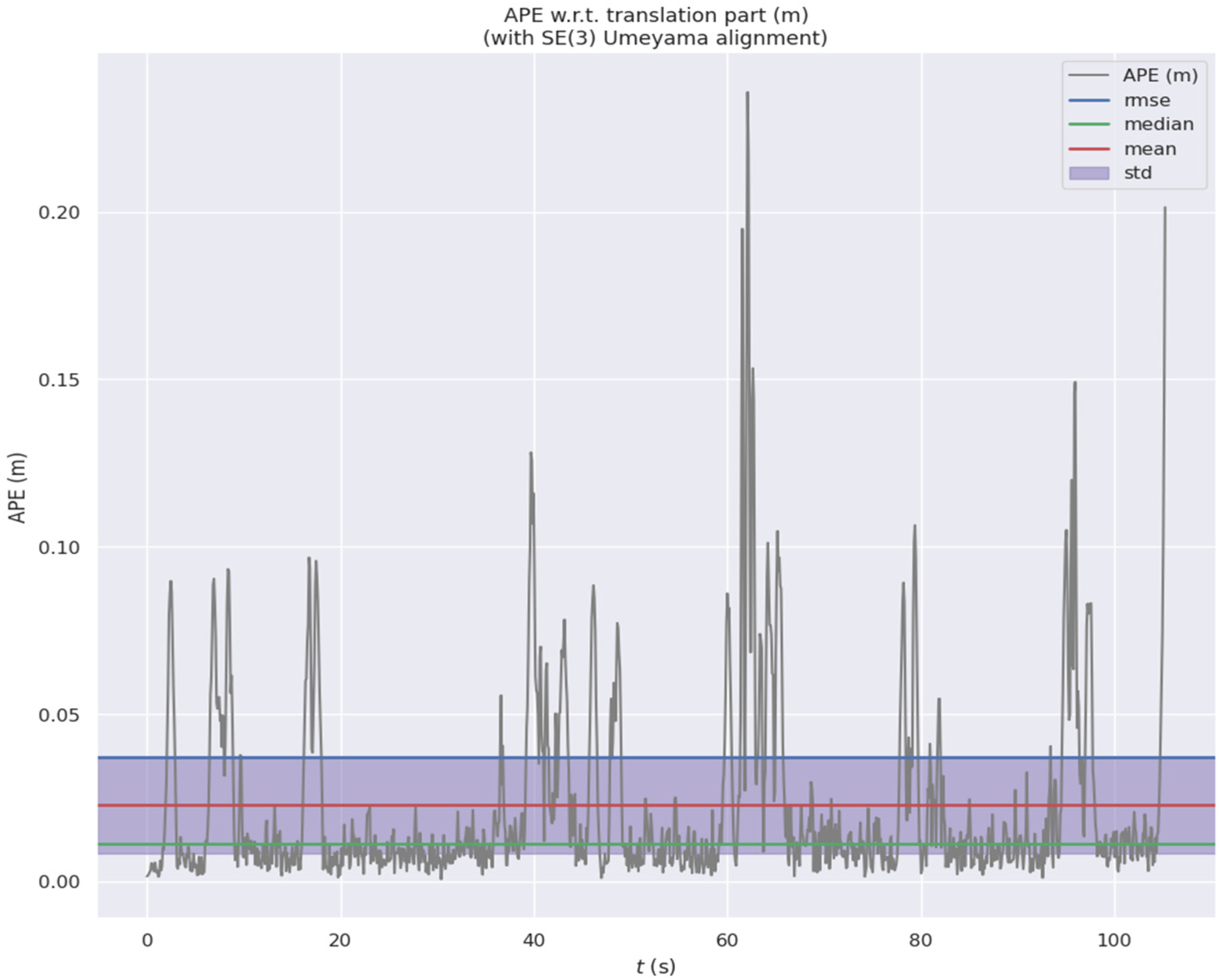
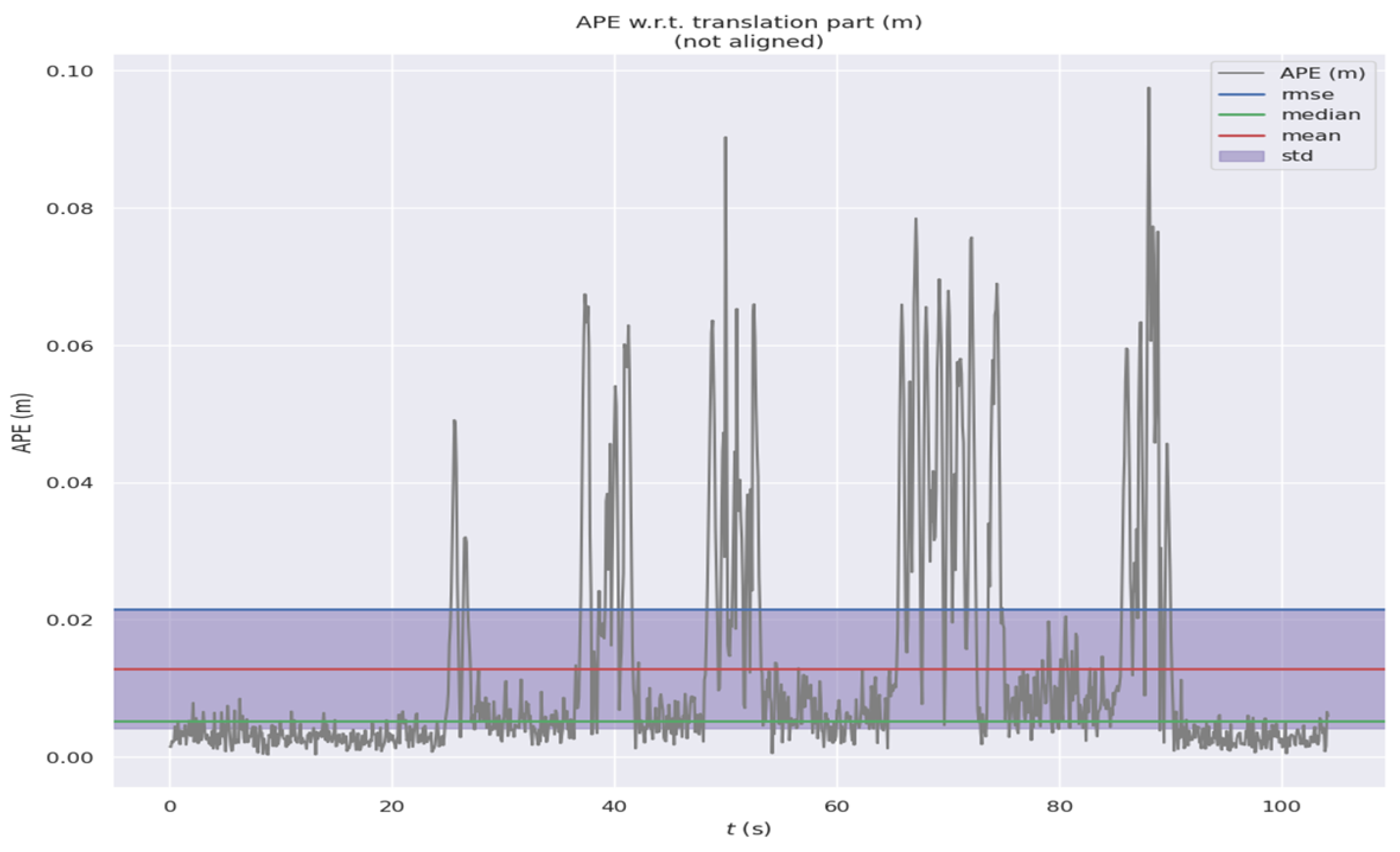
- Quantitative Analysis of Positioning Error
- (4)
- Quantitative Comparison of Simulation Results
3.3. Outdoor Scenario Experimental Validation
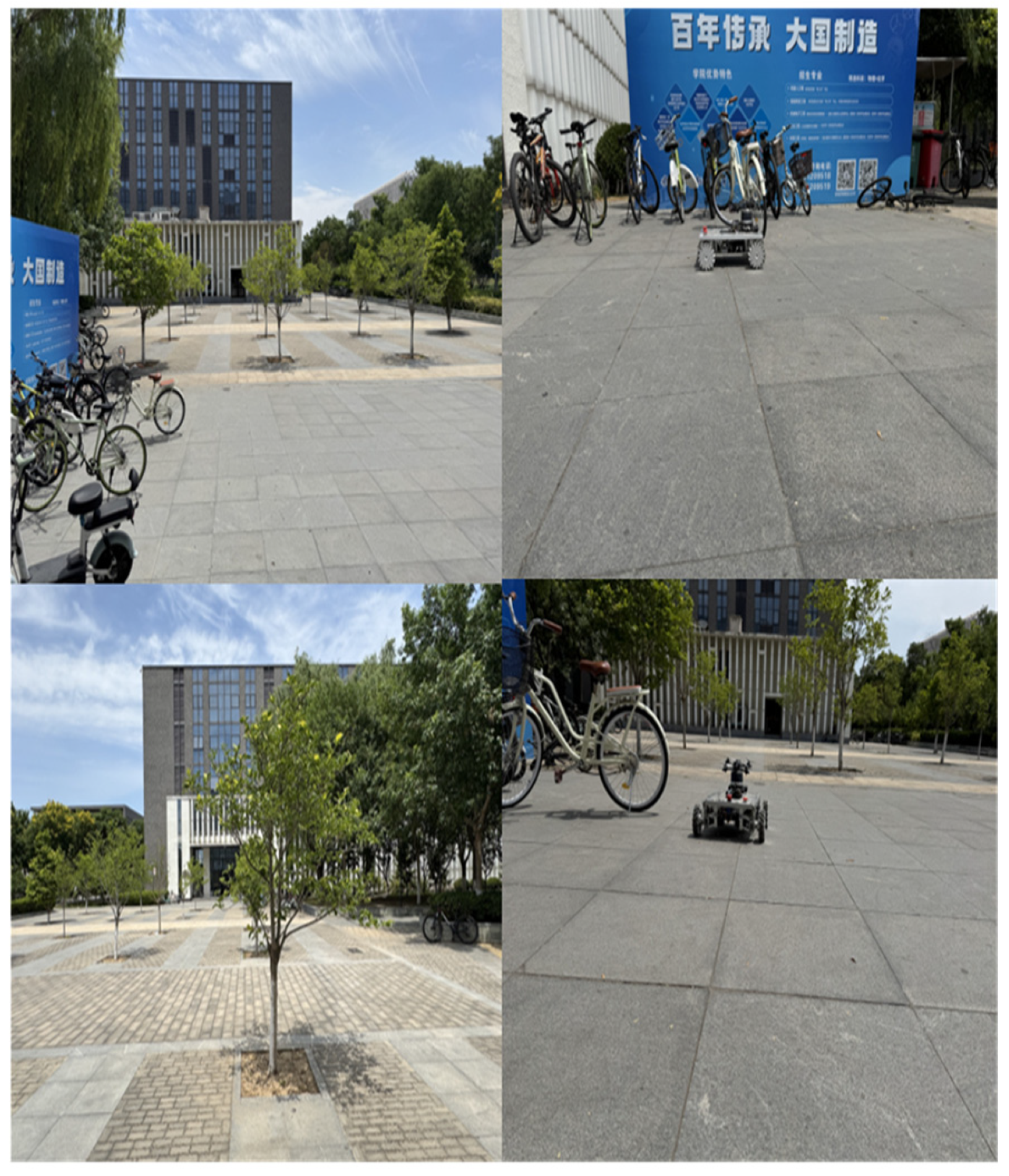
3.3.1. Outdoor Experimental Environment Design
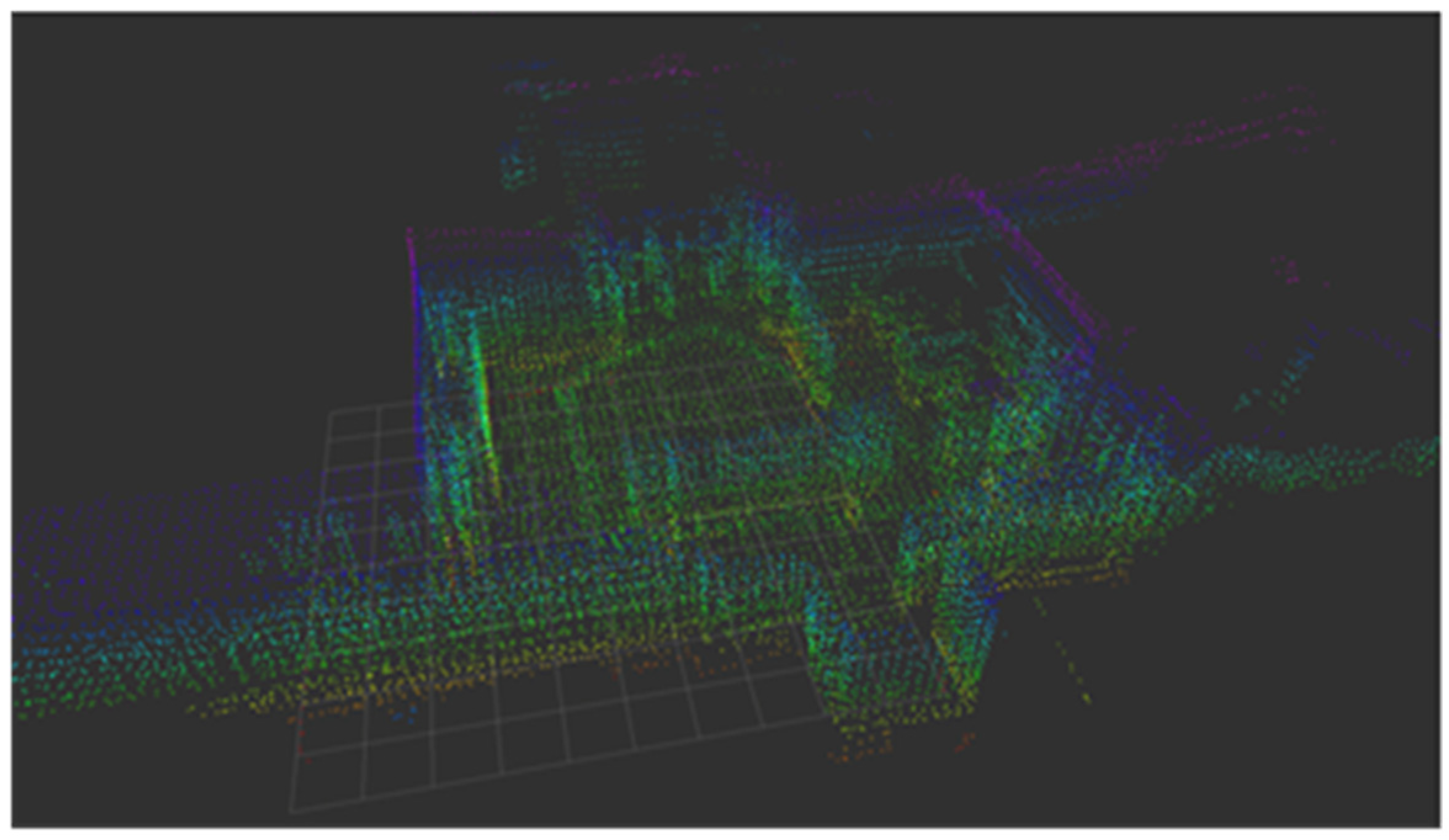
3.3.2. Outdoor Scene Point Cloud Mapping Performance
3.3.3. Outdoor Scene Trajectory Estimation and Positioning Error Analysis
- (1)
- Attitude Angle Tracking Performance
- (2)
- Evolutionary Characteristics of Movement Speed
- (3)
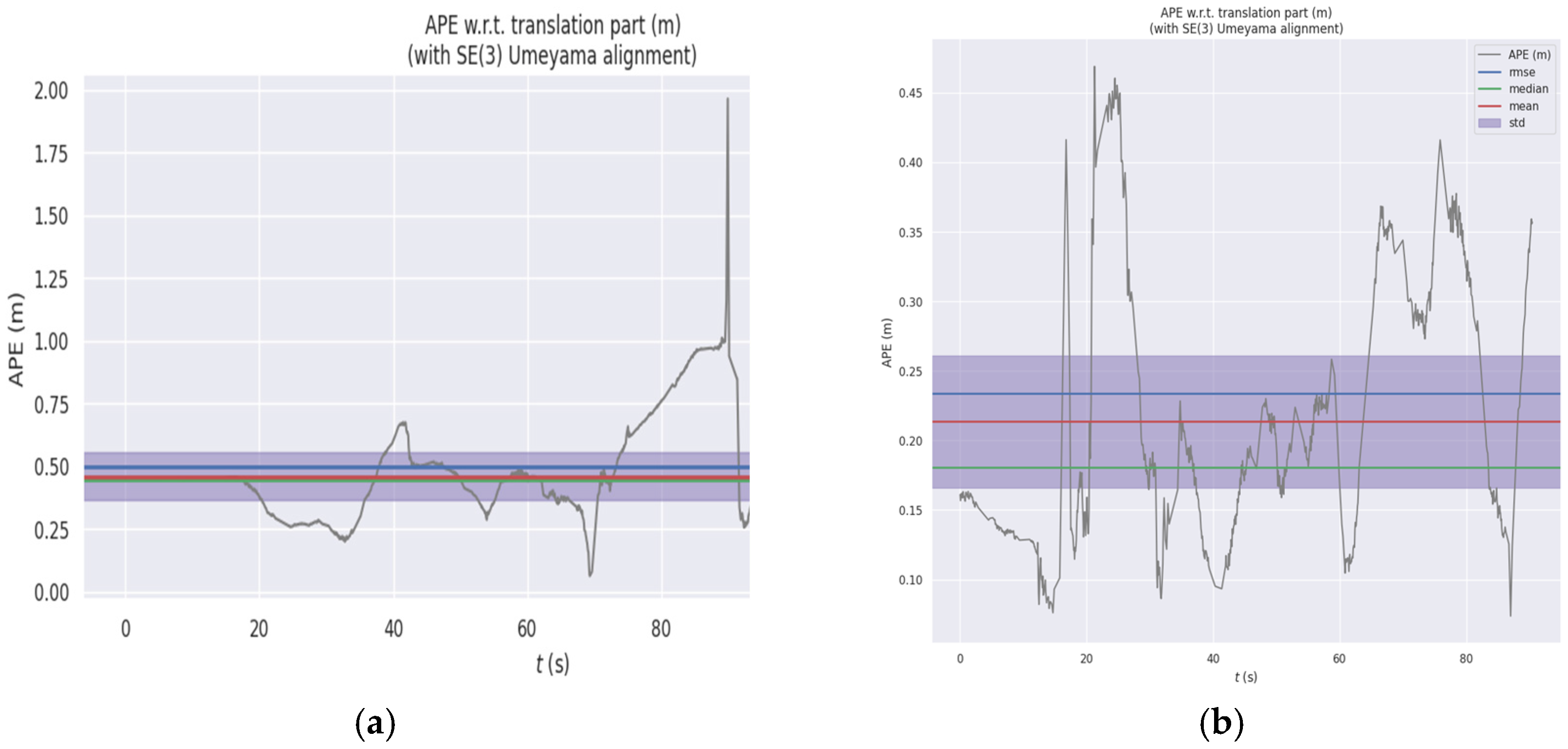
- Quantitative Analysis of Positioning Error
- (4)
- Quantitative Comparison of Simulation Results
3.4. Generalization Capability and Engineering Application Potential of the Improved Algorithm
- The operation of AHU and building facilities influence the static environmental layout through equipment startup and shutdown, maintenance door opening and closing, and temporary placing of maintenance items, which will reduce the stability of inter-frame registration.
- The motion control logic of the robot, which accelerates and decelerates frequently during fixed-route patrols and makes sharp turns in confined spaces, exacerbates the distortion problem of single-frame point clouds, which puts forward higher requirements on the algorithm’s real-time processing capacity;
- The point cloud density and the capture of other geometric features of AHU and its surrounding environment depend on the configuration parameters of the LiDAR sensor (number of channels, scanning frequency, ranging accuracy, and mounting position).
- Activities performed by humans inside buildings, such as heavy pedestrian traffic in office and hospital lobbies as well as movement of medical equipment, produce a large number of dynamic outliers, which complicate the process of outlier removal and cause registration mismatch.
4. Discussion
5. Conclusions
Author Contributions
Funding
Institutional Review Board Statement
Informed Consent Statement
Data Availability Statement
Conflicts of Interest
References
- Chen, S.-N.; Chen, Z.-M.; Pan, H.-F. Autonomous navigation method for laser SLAM. Xinyang Norm. Univ. J. Nat. Sci. 2026, in press. Available online: https://link.cnki.net/urlid/41.1476.N.20260128.1940.004 (accessed on 19 March 2026).
- Han, M.-Y.; Liu, Z.-A.; Wu, Q. Research on UAV intelligent inspection system based on ROS platform and multimodal data fusion. Internet Things Technol. 2026, 16, 80–83. [Google Scholar] [CrossRef]
- Zhang, J.; Xu, Z.; Liu, H.; Li, J.; Wang, Y.; Zhang, L. An improved hybrid ant colony optimization and genetic algorithm for multi-map path planning of rescuing robots in mine disaster scenario. Machines 2025, 13, 474. [Google Scholar] [CrossRef]
- Liu, S.; Luo, J. Goal-driven autonomous exploration of mobile robots based on “vision-radar” perception and adaptive skill-switching in dynamic crowded environments. Meas. Sci. Technol. 2026, 37, 025105. [Google Scholar] [CrossRef]
- Mailka, H.; Abouzahir, M.; Ramzi, M. GPU-accelerated embedded EKF-SLAM based on LiDAR–IMU–GNSS fusion for autonomous ground vehicles. Eng. Res. Express 2026, 8, 015221. [Google Scholar] [CrossRef]
- Chen, J.; Zhang, W.; Wei, D. Optimized visual inertial SLAM for complex indoor dynamic scenes using RGB-D camera. Measurement 2025, 245, 116615. [Google Scholar] [CrossRef]
- Wang, Q.; Wang, N.; Du, X. Real-time lidar-visual feature co-optimization for complex indoor environments: An adaptive fusion framework with illumination-robust enhancement. J. King Saud Univ. Comput. Inf. Sci. 2025, 38, 26. [Google Scholar] [CrossRef]
- Nan, Z.; Zhu, G.; Zhang, X. Development of a high-precision lidar system and improvement of key steps for railway obstacle detection algorithm. Remote Sens. 2024, 16, 1761. [Google Scholar] [CrossRef]
- Zhao, Y.; Xiu, S.; Hong, Y. Study on automated guided vehicle navigation method with external computer vision. Proc. Inst. Mech. Eng. 2025, 239, 635–647. [Google Scholar] [CrossRef]
- Luo, D.; Huang, Y.; Huang, X. W-VSLAM: A visual mapping algorithm for indoor inspection robots. Sensors 2024, 24, 5662. [Google Scholar] [CrossRef]
- Zou, R.; Xu, Z.; Wang, C.; Zhang, S. An enlarged polygon method without binary variables for obstacle avoidance trajectory optimization. Chin. J. Aeronaut. 2023, 36, 284–297. [Google Scholar] [CrossRef]
- Gumarov, K.-E.; Gaganova, N.-I.; Kuchev, N.-D.; Khamidullin, R.R.; Zinnurov, I.I. Developing a mobile robotic facility for diagnosing tank equipment. J. Mach. Manuf. Reliab. 2025, 54, 900–909. [Google Scholar] [CrossRef]
- Kumar, S.; Thottungal, R.; Pasupathy, S.-A. Spatial aware feature extraction for RADAR SLAM. Measurement 2026, 264, 120192. [Google Scholar] [CrossRef]
- Gao, R.; Han, Q.; Li, G. Visual SLAM based on line feature extraction and dynamic object removal in dynamic environments. Arab. J. Sci. Eng. 2026, in press. [Google Scholar] [CrossRef]
- Zhang, J.; Yuan, L.; Ran, T. Less is more: An effective method to extract object features for visual dynamic SLAM. Displays 2026, 91, 103224. [Google Scholar] [CrossRef]
- Zhang, Y.; Wang, X.; Lyu, X. Segment-based SLAM registration optimization algorithm combining NDT and PL-ICP. Sensors 2025, 25, 7175. [Google Scholar] [CrossRef] [PubMed]
- Yang, H.; Jiang, F.; Kumar, A. NDF-SLAM: LiDAR SLAM based on neural distance field for registration and loop closure detection. Measurement 2025, 255, 117904. [Google Scholar] [CrossRef]
- Liao, J.; Li, G.; Yanagisawa, K. Physics-informed neural networks for three-dimensional cerebrovascular hemodynamic prediction: A point cloud preprocessing strategy based on limited data. Eng. Appl. Artif. Intell. 2025, 160, 112034. [Google Scholar] [CrossRef]
- Zhou, T.-F. Stochastic characteristic analysis of laser point cloud based on synthetic variance-covariance matrix. Laser Optoelectron. Prog. 2026, in press. [Google Scholar] [CrossRef]
- Chen, J.; Zhang, Z.; Liu, G. Research on three dimensional reconstruction method based on noise loop detection and visual complementary fusion. Meas. Sci. Technol. 2025, 36, 125403. [Google Scholar] [CrossRef]
- Xu, H.; Zhou, D.; Wang, S. Improved LeGO-LOAM method based on adaptive feature extraction and optimized ground segmentation. Eng. Res. Express 2025, 7, 0452g4. [Google Scholar] [CrossRef]
- Shen, B.; Xie, W.; Peng, X. LIO-SAM++: A lidar-inertial semantic SLAM with association optimization and keyframe selection. Sensors 2024, 24, 7546. [Google Scholar] [CrossRef] [PubMed]
- Yang, J.-J.; Wang, C.; Li, W.-J.; Cheng, J.; Ma, H. Research on point cloud registering method of tunneling roadway based on 3D NDT-ICP algorithm. Sensors 2021, 21, 4448. [Google Scholar] [CrossRef] [PubMed]
- Albabo, A.; Wen, G.; Cheng, S.; Li, G.; Elsheikh, A.H. A deviation correction technique based on particle filtering combined with a dung beetle optimizer with the improved model predictive control for vertical drilling. Appl. Sci. 2025, 15, 10773. [Google Scholar] [CrossRef]
- Zhao, P.; Xie, H.; Chen, Q.; Li, W.; Li, D. A dual-path feature fusion model for tailings dam saturation line prediction driven by multi-source sensing data. Measurement 2026, 267, 120469. [Google Scholar] [CrossRef]
- Xu, H.; Wang, M.; Liu, C.; Li, S.; Wang, L. Tunnel crack assessment using simultaneous localization and mapping (SLAM) and deep learning segmentation. Autom. Constr. 2025, 171, 105977. [Google Scholar] [CrossRef]
- Wang, J.; Li, D.; Du, X.; Liu, H.; Zhang, W. Knowledge-based visual question classification using quaternion hypergraph consistent network. Inf. Process. Manag. 2026, 63, 104591. [Google Scholar] [CrossRef]
- Mou, Y.-B.; Yin, H.; Peng, Z.-R. Structural load identification and response reconstruction based on improved multiplicative regularization. J. Mech. Strength 2026, 48, 72–79. [Google Scholar] [CrossRef]
- Lin, J.; Niu, W.-K.; Zhang, J.-Y.; Ma, S.-G. Lightweight object detection network model suitable for indoor mobile robots. J. Mech. Sci. Technol. 2022, 36, 907–920. [Google Scholar] [CrossRef]
- Yang, F.; Zhang, J.; Zhang, J.; Wang, K. A new and efficient fixed point method for mean curvature denoising model. Int. J. Comput. Math. 2025, 102, 1865–1879. [Google Scholar] [CrossRef]
- Yu, P.; Tan, N. On the learning-based control of continuum robots with provable robustness, efficiency, and generalizability. Int. J. Robot. Res. 2026, 45, 308–327. [Google Scholar] [CrossRef]
- Tiboni, M.; Legnani, G.; Bussola, R.; Tosi, D. Full pose measurement system for industrial robots kinematic calibration based on a sensorized spatial linkage mechanism. Mech. Mach. Theory 2024, 197, 105652. [Google Scholar] [CrossRef]
- Zhu, D.; Wang, W.; Xue, X.; Ma, L.; Jin, X. Structure-preserving image smoothing via contrastive learning. Vis. Comput. 2023, 40, 5139–5153. [Google Scholar] [CrossRef]
- Hong, S.; Xiong, Y.; Gou, Y.; Li, L. Accurate monocular structure pose estimation and 3D trajectory measurement with single square marker. Measurement 2026, 269, 120685. [Google Scholar] [CrossRef]
- Wang, S. Real operational labeled data of air handling units from office, auditorium, and hospital buildings. Sci. Data 2025, 12, 1481. [Google Scholar] [CrossRef]
- Wang, S. Class-aware temporal and contextual contrastive framework for semi-supervised automated fault detection and diagnosis in air handling units. Energy Build. 2026, 358, 117233. [Google Scholar] [CrossRef]
- Cetinkaya, G.; Genc, Y. An optimization-based method for relative pose estimation for collaborating UAVs using observed predefined trajectories. Drones 2026, 10, 135. [Google Scholar] [CrossRef]












| Evaluation Indicators | Max | Mean | Median | Min | RMSE | Std |
|---|---|---|---|---|---|---|
| Method | ||||||
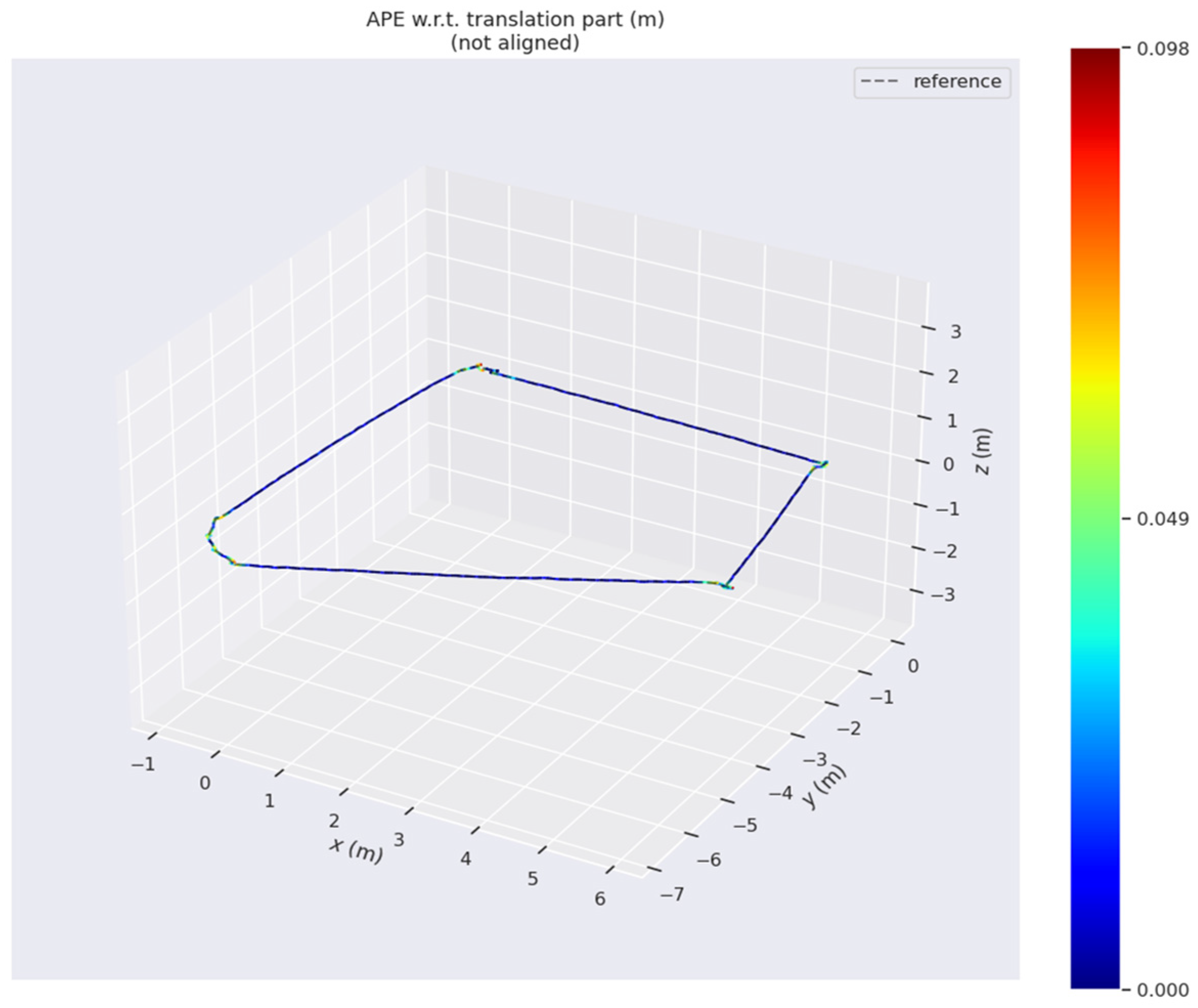
| Improved FLOAM | 0.097523 | 0.012841 | 0.005290 | 0.000326 | 0.021535 | 0.017288 |
| Evaluation Indicators | Max | Mean | Median | Min | RMSE | Std |
|---|---|---|---|---|---|---|
| Method | ||||||
| Improved FLOAM | 0.235755 | 0.022917 | 0.011156 | 0.000618 | 0.036912 | 0.028937 |
| Evaluation Indicators | Max | Mean | Median | Min | RMSE | Std |
|---|---|---|---|---|---|---|
| Method | ||||||
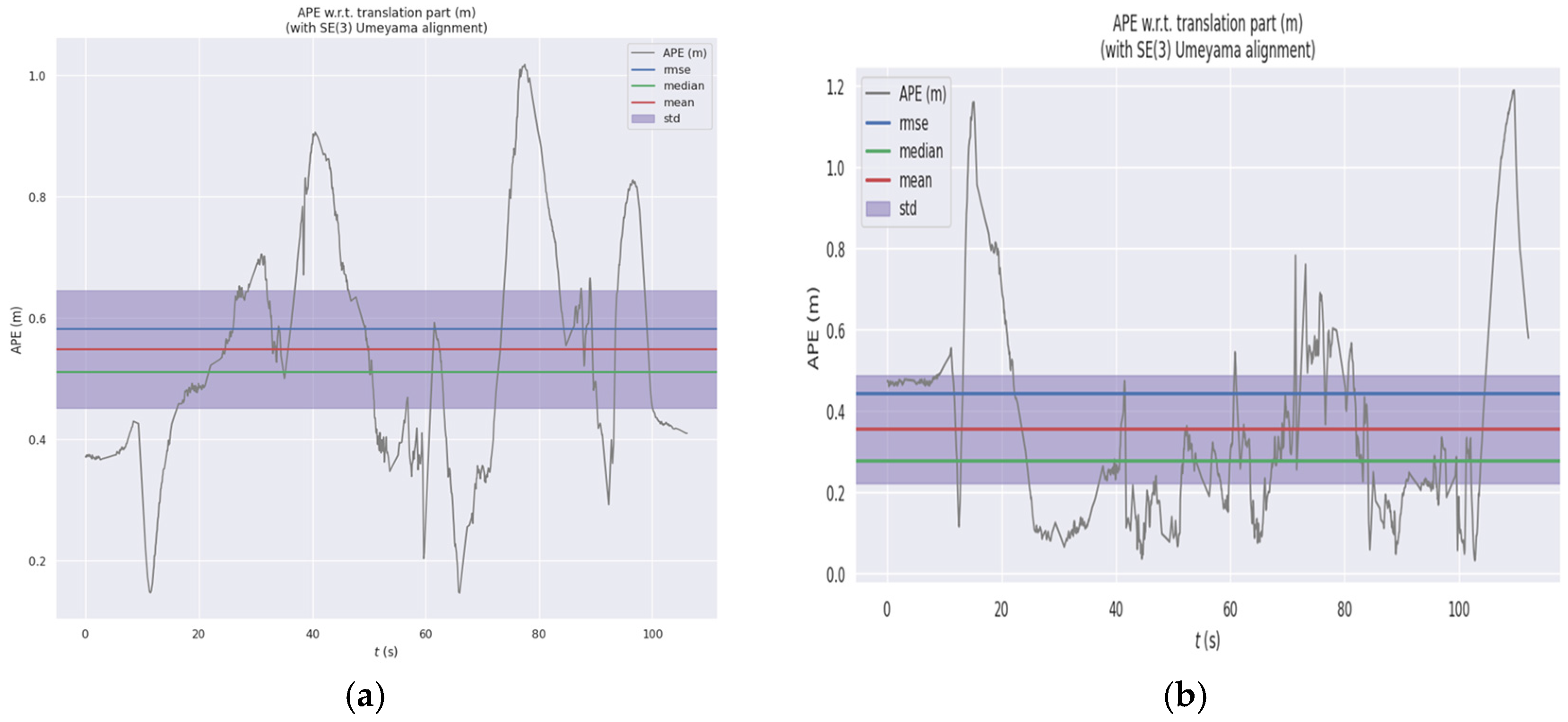
| Improved FLOAM | 1.200 | 0.320 | 0.270 | 0.150 | 0.350 | 0.220 |
| Traditional FLOAM | 1.000 | 0.600 | 0.600 | 0.150 | 0.600 | 0.230 |
| LeGO-LOAM (pure laser mode) | 1.100 | 0.550 | 0.520 | 0.140 | 0.580 | 0.210 |
| LIO-SAM (pure laser mode, IMU disabled) | 1.050 | 0.520 | 0.500 | 0.150 | 0.550 | 0.200 |
| Percentage improvement in accuracy of the improved algorithm compared to traditional FLOAM% | — | 46.67 | 55.00 | — | 41.67 | — |
| Percentage improvement in accuracy of the improved algorithm compared to LeGO-LOAM% | — | 41.82 | 48.08 | — | 39.66 | — |
| Evaluation Indicators | Max | Mean | Median | Min | RMSE | Std |
|---|---|---|---|---|---|---|
| Method | ||||||
| Improved FLOAM | 0.450 | 0.270 | 0.250 | 0.130 | 0.300 | 0.140 |
| Traditional FLOAM | 1.500 | 0.500 | 0.500 | 0.050 | 0.500 | 0.130 |
| LeGO-LOAM (pure laser mode) | 1.350 | 0.480 | 0.450 | 0.080 | 0.490 | 0.130 |
| LIO-SAM (pure laser mode, IMU disabled) | 1.200 | 0.450 | 0.420 | 0.070 | 0.470 | 0.120 |
| Percentage improvement in accuracy of the improved algorithm compared to traditional FLOAM% | 70.00 | 46.00 | 50.00 | — | 40.00 | — |
| Percentage improvement in accuracy of the improved algorithm compared to LeGO-LOAM% | 66.67 | 43.75 | 44.44 | — | 38.78 | — |
Disclaimer/Publisher’s Note: The statements, opinions and data contained in all publications are solely those of the individual author(s) and contributor(s) and not of MDPI and/or the editor(s). MDPI and/or the editor(s) disclaim responsibility for any injury to people or property resulting from any ideas, methods, instructions or products referred to in the content. |
© 2026 by the authors. Licensee MDPI, Basel, Switzerland. This article is an open access article distributed under the terms and conditions of the Creative Commons Attribution (CC BY) license.
Share and Cite
Fu, S.; Zhao, T.; Zhang, J.; Guo, G.; Zheng, W. Improvements to the FLOAM Algorithm: GICP Registration and SOR Filtering in Mobile Robots with Pure Laser Configuration and Enhanced SLAM Performance. Appl. Sci. 2026, 16, 3141. https://doi.org/10.3390/app16073141
Fu S, Zhao T, Zhang J, Guo G, Zheng W. Improvements to the FLOAM Algorithm: GICP Registration and SOR Filtering in Mobile Robots with Pure Laser Configuration and Enhanced SLAM Performance. Applied Sciences. 2026; 16(7):3141. https://doi.org/10.3390/app16073141
Chicago/Turabian StyleFu, Shichen, Tianbao Zhao, Junkai Zhang, Guangming Guo, and Weixiong Zheng. 2026. "Improvements to the FLOAM Algorithm: GICP Registration and SOR Filtering in Mobile Robots with Pure Laser Configuration and Enhanced SLAM Performance" Applied Sciences 16, no. 7: 3141. https://doi.org/10.3390/app16073141
APA StyleFu, S., Zhao, T., Zhang, J., Guo, G., & Zheng, W. (2026). Improvements to the FLOAM Algorithm: GICP Registration and SOR Filtering in Mobile Robots with Pure Laser Configuration and Enhanced SLAM Performance. Applied Sciences, 16(7), 3141. https://doi.org/10.3390/app16073141