Article

Study of Seismic Behavior of an Urban Underpass Tunnel in Soft Soil Through 3D Numerical Modeling


College of Civil Engineering, Guizhou University, Guiyang 550025, China
*
Author to whom correspondence should be addressed.
Appl. Sci. 2026, 16(6), 3025; https://doi.org/10.3390/app16063025
Submission received: 18 January 2026 / Revised: 18 March 2026 / Accepted: 19 March 2026 / Published: 20 March 2026

Abstract

More and more urban underpass tunnels are being constructed to alleviate traffic congestion; however, for this type of underground structure, the soil–structure interaction mechanisms under earthquake loading remain unclear, and dedicated advice and guidance for their seismic design are still lacking. This paper endeavors to investigate the dynamic interaction mechanisms of an underpass tunnel and surrounding soft ground using the finite element (FE) method. Firstly, the accuracy of the FE model in reproducing seismic responses of the layered half-space is validated by comparison with results of equivalent linear one-dimensional site response. Then, the dynamic response characteristics of 3D boat-shaped excavation are analyzed to determine the influence of potential local site amplification on the underpass tunnel. Finally, seismic behaviors of open and buried sections of the underpass tunnel are investigated in detail. The results show that under high-intensity rare earthquakes, severe damage occurs at the ceiling slab near the longitudinal beam and at the base of the side wall of the tunnel’s buried section; seismic underpass–site interactions might be influenced the most by the local topography effect of the 3D boat-shaped excavation, as well as a sudden stiffness change between the open and buried sections.

1. Introduction

Rapid urbanization in recent decades has intensified the utilization of underground spaces, especially in many fast-growing developing countries. This rapid increase in urban population coexists with an increase in road vehicles, which means that there is an increasing trend that ordinary urban roads cannot meet the transportation demands of many large cities. One way to handle this type of situation is the adoption of urban underpass tunnels, which have gained increasing prominence due to their efficient land use and relatively minor effects on the aesthetics of urban space. It is generally acknowledged that underground structures are less susceptible to earthquake damage compared to above-ground buildings. Nevertheless, several seismic events, such as the 1995 Kobe earthquake in Japan [1,2], the 2022 Luding earthquake in China [3], and the 2023 Kahramanmaras earthquakes in Turkey, led to severe damage or even the collapse of some underground structures [4,5]. It is noteworthy that advances in physical experiments, numerical simulations, and analytical solutions have substantially improved our understanding of seismic responses in underground structures [6,7,8], including subway stations [9,10,11], mountain tunnels [12,13], immersed tunnels [14,15,16], underground pipe trench structures [17,18], and supermarkets [19,20]. However, not much attention has been devoted to an investigation of the seismic performance of urban underpass tunnels.
In terms of the underpass tunnel, two open sections at two ends of the tunnel serve as the entrances and exits, accompanied by one buried section in the middle of the tunnel traversing across the road. The open and buried sections usually adopt a U-shaped retaining wall and underground frame-box structure, respectively; both are segment structures, where settlement joints are located between adjacent segments. Unlike regular underground structures that are usually accompanied by uniform structural cross-sections and soil layers along the longitudinal direction (e.g., tunnels and subway stations), urban underpass tunnels feature varying structural and ground conditions. On one hand, the entire underpass tunnel is situated in regions with a 3D boat-shaped topography and the effect of the interaction between the topography and earthquake waves on ground motion amplification remains unknown; on the other hand, the U-shaped retaining wall and underground frame-box structure tend to behave differently during earthquakes because of differences in both the cross-sectional shape [21] and patterns of lateral deformation. Therefore, it is necessary to conduct corresponding analyses to handle these issues. This study complements and expands upon our current knowledge of the potential combined effects of 3D excavation geometry and stiffness discontinuity between open and buried sections.
In this paper, finite element models of the 3D free field, boat-shaped excavations, and soil–underpass tunnel systems are first introduced. The numerical model is validated by comparison with the corresponding results of the equivalent linear site response program. Next, horizontal acceleration and displacement responses of the 3D boat-shaped excavations are investigated, where three different excavation widths are considered to examine their potential influence. Then, various seismic responses of an urban underpass tunnel are presented, with emphasis on the seismic behaviors of the open and buried sections, as well as their junction. Finally, a discussion concerning the main findings is presented.

2. Problem Statement

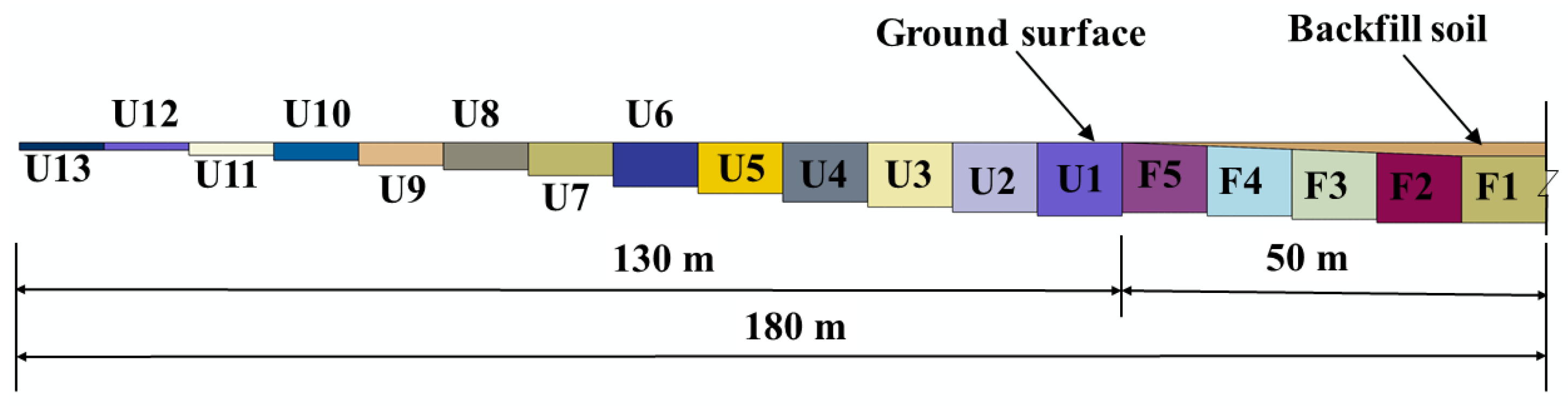
In this paper, seismic responses of an urban underpass tunnel are analyzed using an FE model. Additionally, the seismic behavior of a three-dimensional (3D) boat-shaped excavation in which the tunnel is situated is also examined. The prototype tunnel, situated in Shanghai, China, is constructed with reinforced concrete and comprises two open sections and one buried section. As shown in Figure 1 (illustrating half of the entire structure), each open section is 130 m long and consists of thirteen U-shaped retaining walls, while the buried section consists of nine underground frame-box structures and is 100 m long. For the sake of conciseness, the segments are denoted as Ui and Fj throughout this paper, where U represents the U-shaped retaining wall, F represents the frame-box structure, and i and j are the numbers of each segment. In addition, the entire structure is not continuous, featuring settlement joints measuring 2 cm between adjacent segments. The width of each segment measures 27.4 m. Apart from F1, which measures 19.98 m in length, all other segments have a length of 9.98 m.
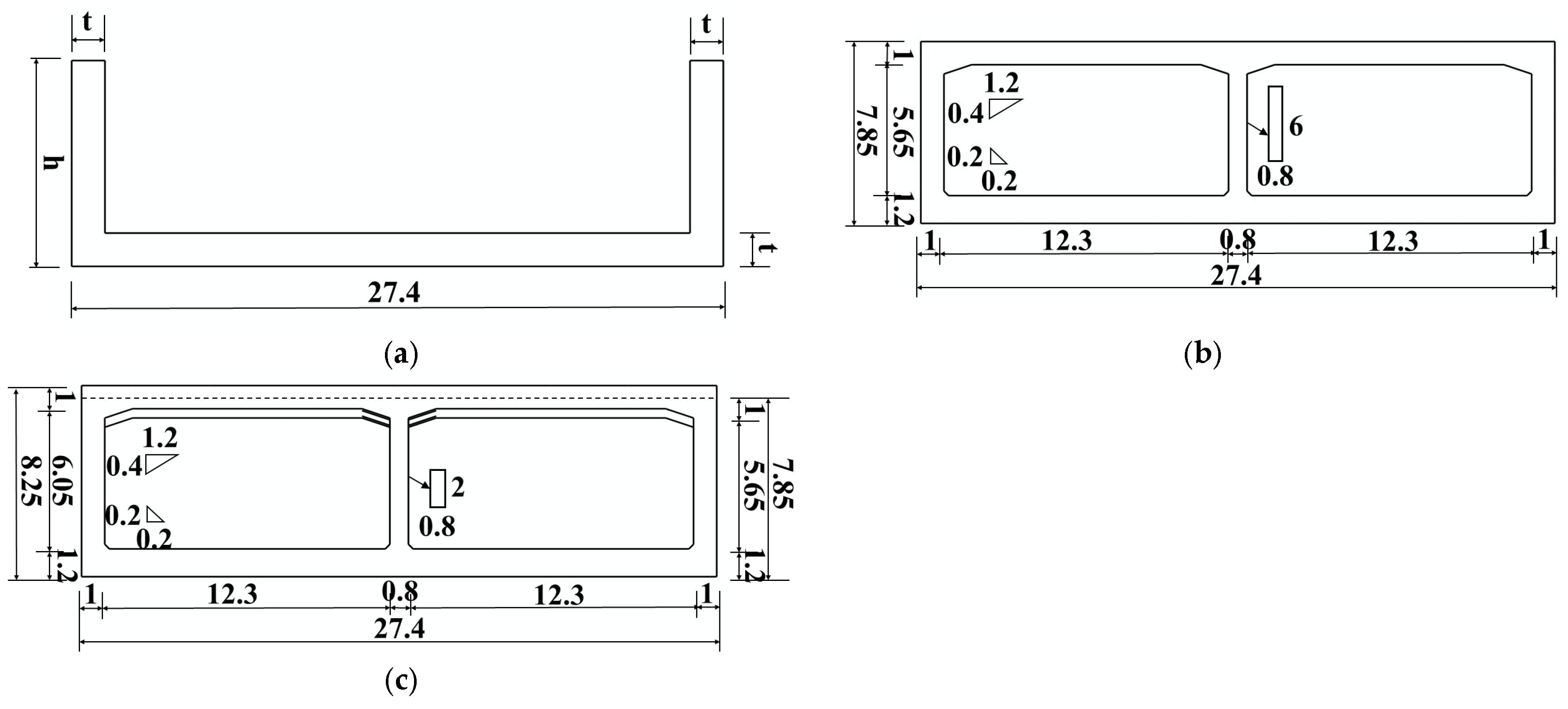
Figure 2 presents cross-sectional details of the underpass tunnel studied. From U1 to U13, the heights of the U-shaped retaining walls progressively decrease, with exact dimensions detailed in Figure 2 and Table 1. The frame-box structures adopt two structural forms: one with a flat ceiling slab (for F1 in Figure 1 and Figure 2) and the other with a sloping ceiling slab (for F2–F5 in Figure 1 and Figure 2). The side walls and top slabs of both structural forms have a thickness of 1 m, while the bottom slabs measure 1.2 m in thickness. For segment F1, the side walls stand at a height of 7.85 m, while the central columns measure 0.8 m in width and 6 m in length, respectively. For segments F2–F5, the side wall heights range from 7.85 m to 8.25 m, with the central columns being 0.8 m wide and 2 m long.
The Young’s modulus of the concrete is 32.53 GPa, and its density is 2500 kg/m3. The steel reinforcement exhibits a density of 7850 kg/m3, an elastic modulus of 200 GPa, and a yield stress of 400 MPa. According to the standard for the seismic design of subway structures issued by Shanghai, the considered depth of the surrounding soil is determined to be 70 m, and some details concerning the soil layers are shown in Table 2.
The cross-sectional geometries of the underpass tunnel vary along the longitudinal axis, especially between the open section and the buried section (e.g., a sudden stiffness change at the junction of the two sections). Particularly, because of the road curve with a “down-flat-up” shape, the underpass tunnel site features a three-dimensional boat-shaped excavation topography. As already indicated in the literature on canyon topographic conditions, depressed sites, represented by V-shaped, arc-shaped, and U-shaped canyons, frequently exhibit significant acceleration amplification effects [22,23,24]. Based on the above, the dynamic behavior and interaction mechanism of the underpass tunnel and the surrounding boat-shaped excavation might be complicated. Hence, the main objectives of this study are to numerically investigate the dynamic interaction mechanisms of the underpass tunnel and its surrounding soil.
This paper is organized as follows. Firstly, a series of numerical models, including a free-field model (a horizontally layered half-space), a 3D boat-shaped excavation model (the underpass tunnel is not included), and a soil–structure model, are developed. Secondly, numerical results of the free-field model, including time histories and peak amplitudes of soil acceleration, are compared with those of equivalent linear analysis results as a validation of the adopted numerical model. Thirdly, seismic responses of the 3D boat-shaped excavations are analyzed, considering three different excavation widths. Lastly, the seismic response characteristics of the soil–structure system are investigated, especially the displacement/deformation, dynamic soil pressure, stress/strain, and damage responses of the underpass tunnel.

3. Numerical Modeling

In this study, the 3D FE models are established and analyzed using ABAQUS 2021. The one-dimensional seismic response of the free field is evaluated utilizing the Equivalent-Linear Earthquake Site Response Analysis program SHAKE2000. It is important to note that factors such as anti-floating structure and waterstops are neglected in this paper; future studies will explain how these factors influence the results of the present study.

3.1. Soil Domain Model

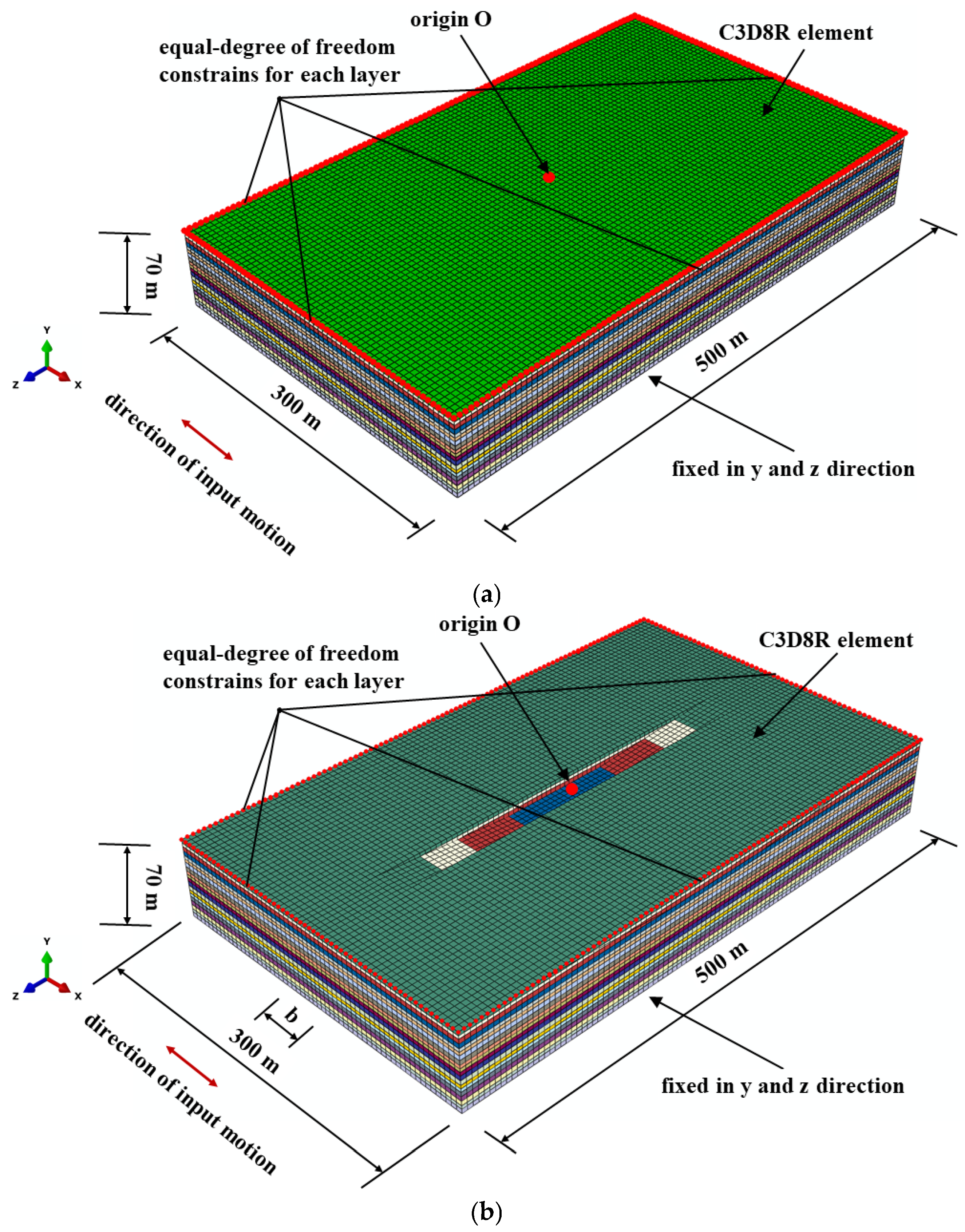
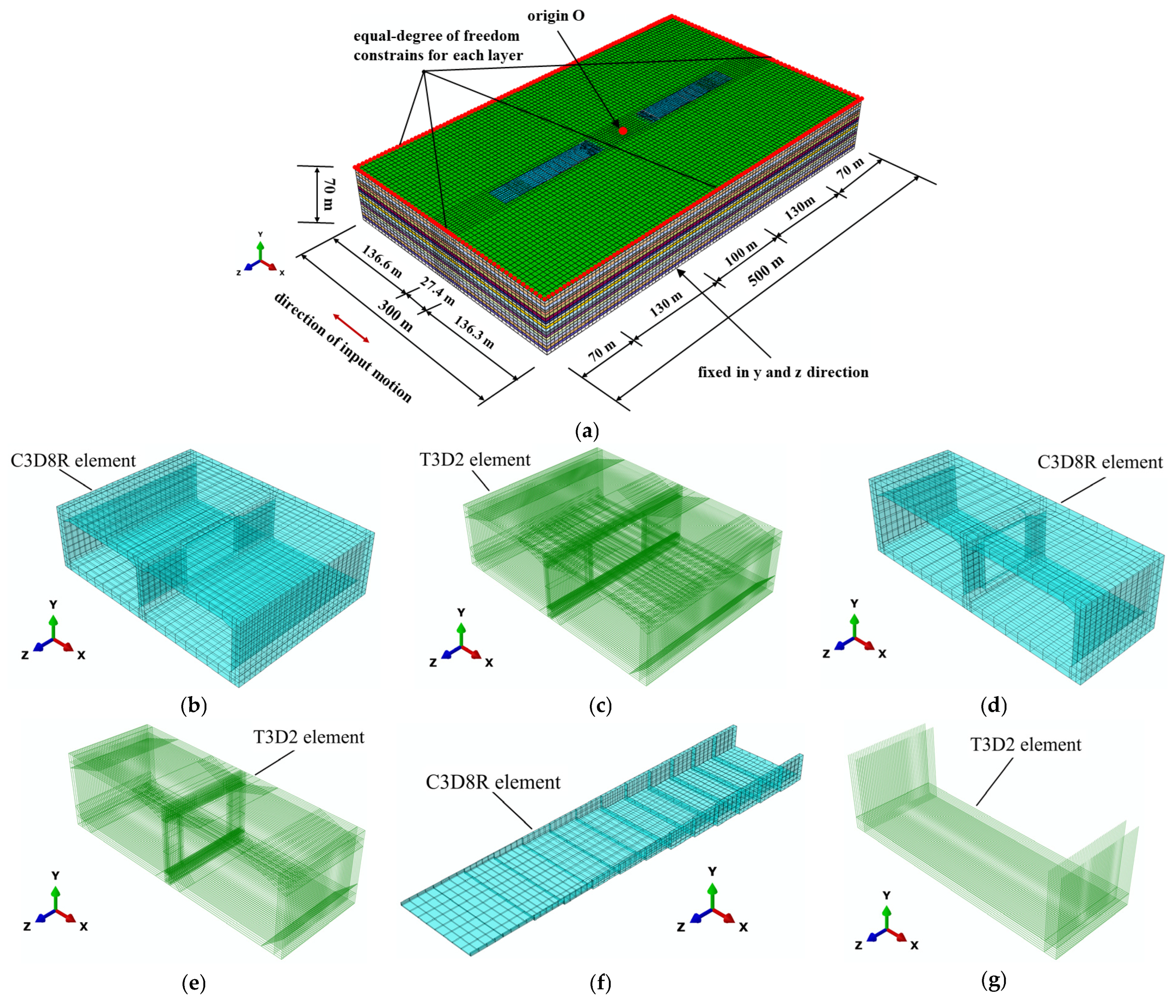
Note that before investigating the seismic responses of the 3D boat-shaped excavation model in Figure 3b, a corresponding 3D free-field (FF) model in Figure 3a is first built, and its dynamic responses are analyzed, aiming to validate the adopted numerical simulation method.
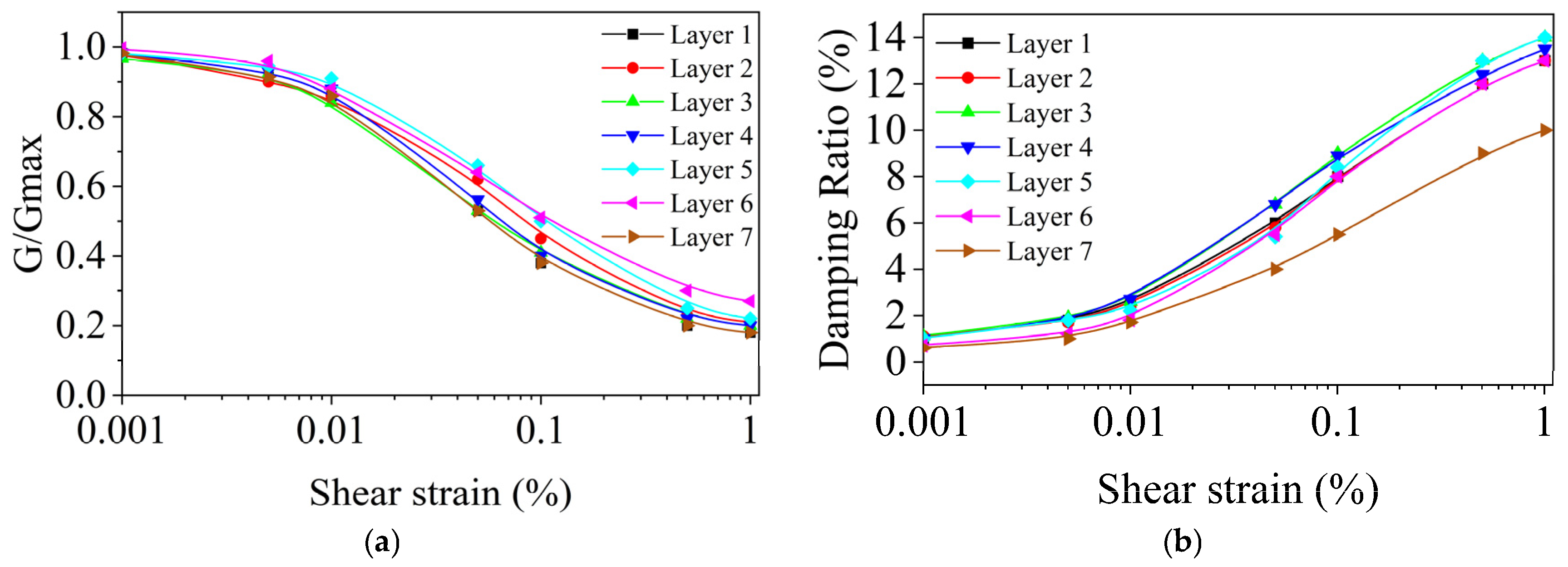
To minimize the effects of side boundaries as much as possible, an approximate model size is determined to be 500 × 300 × 70 m (length × width × height). C3D8R elements are used to mesh the soil. The side boundaries with equal degrees of freedom (see ‘MPC-Pin’ in ABAQUS) are selected in the dynamic analysis [25] due to their operational simplicity and practice effectiveness [26]. An equivalent linearization method is adopted to capture the soil nonlinear responses under earthquake loading, where the curves of the dynamic shear modulus and damping ratio of different soil layers used in the iterative process are shown in Figure 4. The implementation process is as follows [27]: First, equivalent shear moduli and equivalent damping ratios are obtained for the soil layers with different depths using the SHAKE program. Second, updated equivalent shear moduli and vibration modes are adopted, and natural frequencies of the one-dimensional soil column are determined using ABAQUS. Third, based on updated equivalent damping ratios, as well as the first and third natural frequencies, Rayleigh damping coefficients are calculated for different soil layers. Lastly, adopting updated equivalent shear moduli and damping coefficients, dynamic time-history analyses are conducted on the 3D FE models of both the free field and boat-shaped excavation, and their results can be further analyzed and compared.
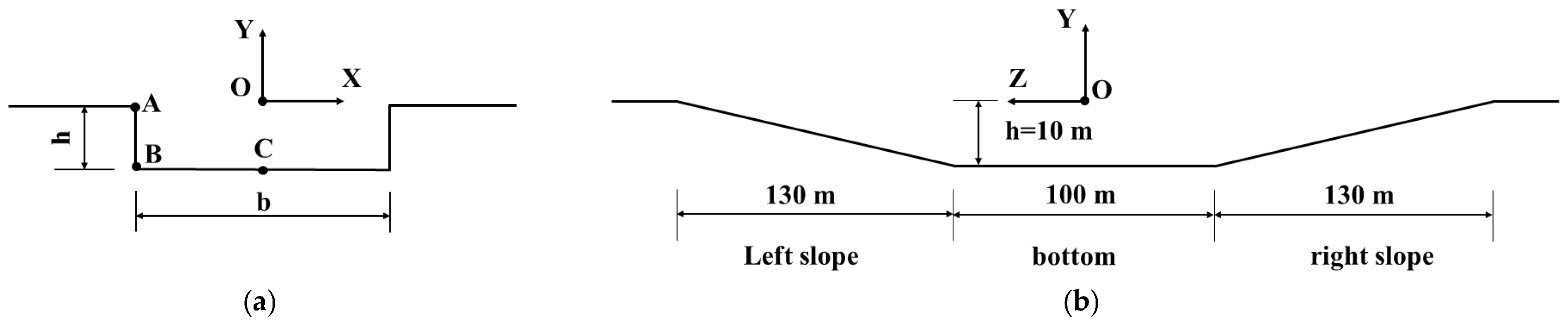
The width of an urban tunnel depends on many factors in engineering practice, such as different vehicle lanes, specific tunnel designs, and the city in which it is located. To shed light on its effect, the widths of the boat-shaped excavations are designated as 20 m (E20), 28 m (E28), and 36 m (E36). As shown in Figure 5, the longitudinal dimensions of the three considered excavations are the same, with a total length of 360 m. The horizontal projection lengths of the left and right slopes are both 130 m, while the bottom of the excavation spans 100 m. In addition, all excavations have a maximum depth of 10 m, as shown in Figure 5b.

3.2. Numerical Model of the Soil–Structure System

Figure 6 shows the 3D FE model of the underpass tunnel and surrounding soil, where the dimensions of the soil profile are consistent with those of the abovementioned soil domain models. The overall length and width of the tunnel structure are 360 m and 27.4 m, respectively. The distance between the structural side wall and the side boundary of the surrounding soil is approximately five times the width of the structure, thus meeting the minimum requirements of the relevant seismic design standard [28]. The C3D8R elements (about 140,000 elements) are utilized for the meshing of soil and structural concrete, while T3D4 elements (about 170,000 elements) are employed for the discretization of the steel reinforcement. The plastic damage constitutive model (see Table 3) is utilized for concrete, and an idealized elastoplastic constitutive model is employed for the steel reinforcement. The potential separation or sliding between the structure and the surrounding soil is also modeled, where hard contact is adopted for the normal contact behavior, and tangential contact is modeled using the Coulomb friction model with a friction coefficient of 0.4 [29].

3.3. Input Motions

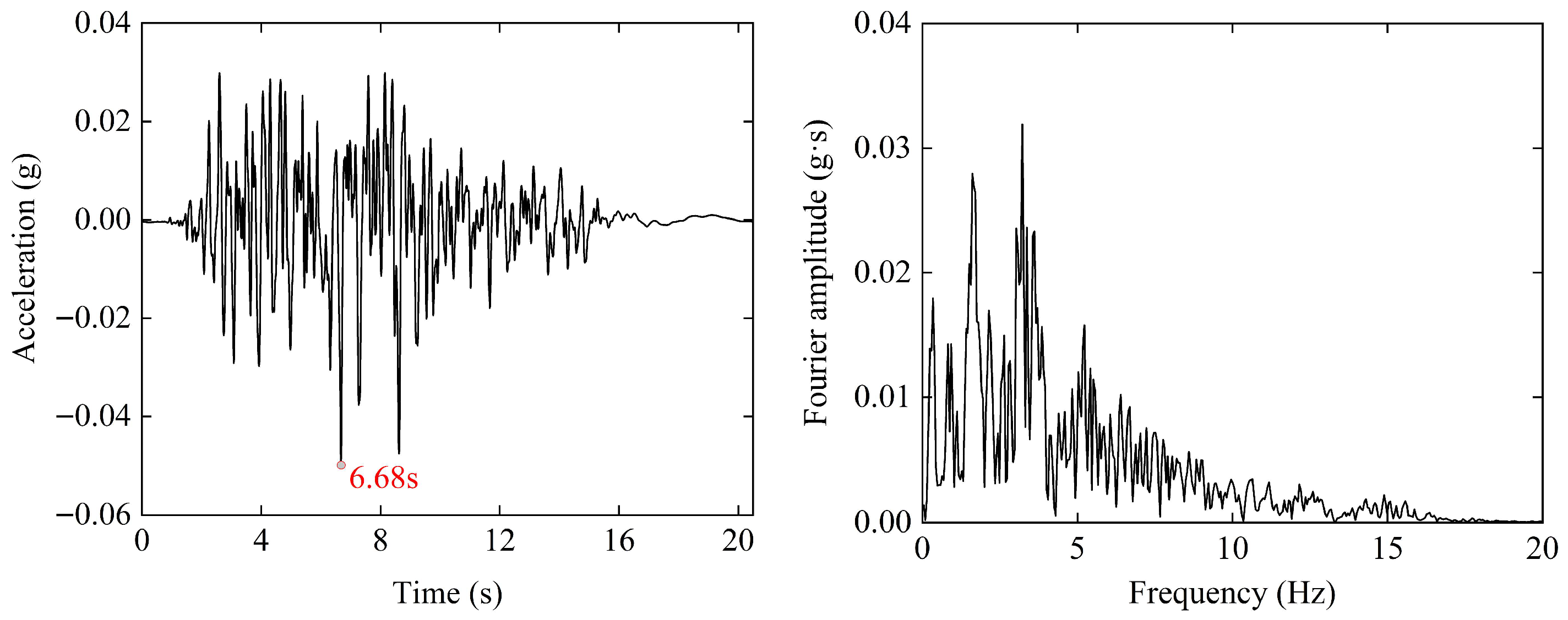
The analysis is divided into two steps: static analysis and dynamic analysis. In static analysis, the gravity load is applied to the entire model, and an initial geo-stress balance test is conducted. The results from the static analysis are then utilized as the initial conditions for subsequent dynamic analysis. The Shanghai Artificial (SHA) wave, with a duration of 20.47 s, is selected as the input motion given that the project site is situated in Shanghai, China. The input motions are imposed at the base and in the x-direction of the soil model, as shown in Figure 6a. The input motions are adjusted to peak base acceleration (PBA) levels of 0.05 g, 0.14 g, and 0.215 g, which correspond to basic, rare, and very rare earthquakes, respectively, according to the China standard for the seismic design of underground structures (2018). As an example, Figure 7 shows the acceleration time histories and corresponding Fourier spectra of the SHA wave with a PBA of 0.05 g.

4. Validation of Numerical Model Against Equivalent Linear Analysis Results

To validate the adopted numerical simulation method, numerical results of the 3D free-field model are compared with those obtained from the equivalent linear site response program SHAKE [30]. The SHAKE program can meet the basic requirements for ground motion analysis at conventional engineering sites, and its results can serve as a benchmark for evaluating the reliability of numerical simulation results [31,32]. Although a 3D FE model is built for multi-layered soft grounds, the seismic free-field response problems discussed herein are essentially one-dimensional; hence, the results of the 3D free-field FE model and the SHAKE analysis are indeed comparable. It should be noted that, as pointed out by Du et al., when the equivalent linearization method is used for dynamic time-history analysis, it unavoidably has some limitations, especially for strong earthquake motions; nevertheless, these errors are deemed acceptable for the engineering seismic design of underground structures [27].
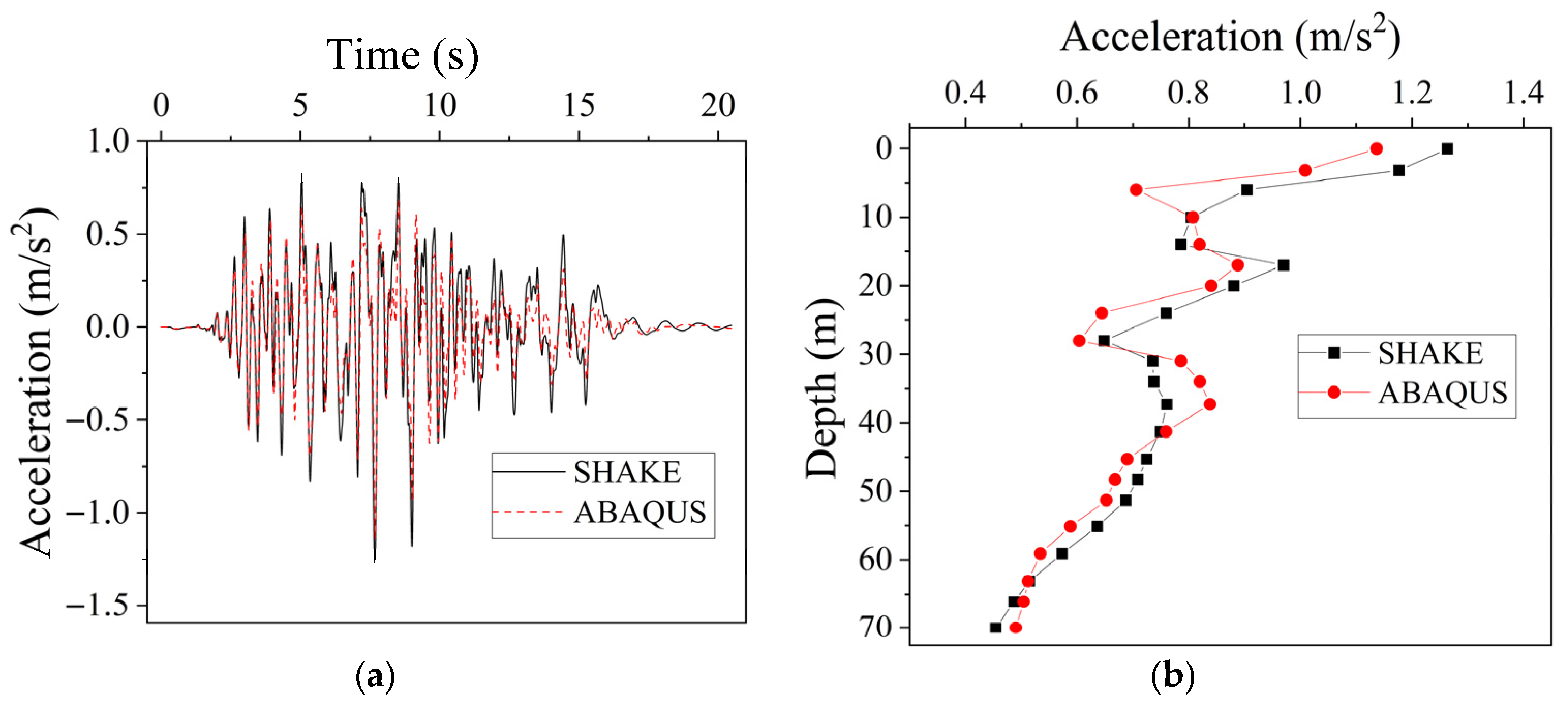
Figure 8 compares the acceleration responses obtained from the SHAKE program and FE simulation (only the case with a PBA of 0.05 g is shown to save space). As shown in Figure 8a, the ground acceleration time histories exhibit good consistency between the FE simulation and the SHAKE program. To further assess the deviation between the two methods, the peak accelerations along the soil depth are also compared, as shown in Figure 8b, showing only small differences between the two methods. These comparisons demonstrate that the accuracy of the adopted 3D FE model is adequate, which can be applied for further investigation of seismic responses of the underpass tunnel and surrounding soil.

5. Results and Analysis

5.1. Seismic Responses of the 3D Boat-Shaped Excavations

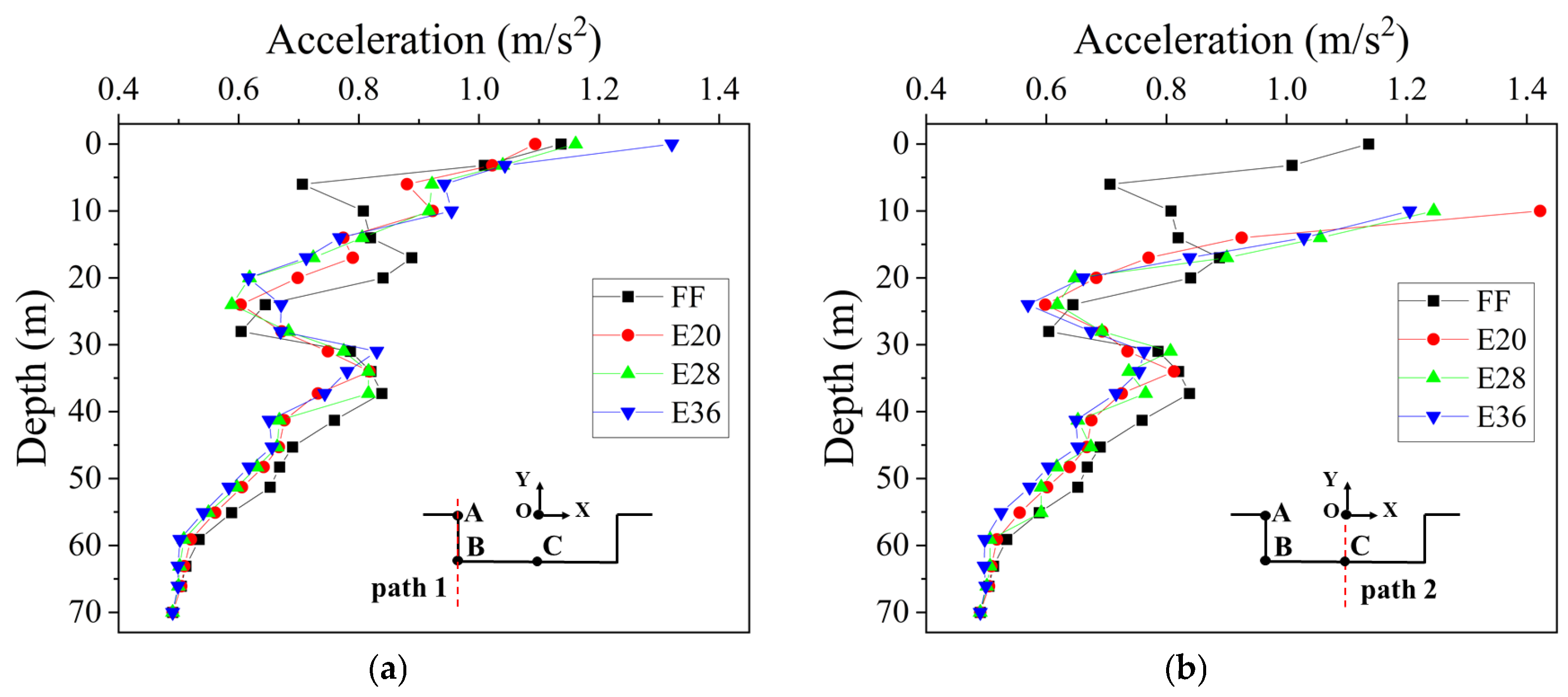
Considering that the seismic responses of underground structures are usually controlled by the deformations and strains of the surrounding ground [33], this section focuses on analyzing the seismic response characteristics of the site where the underpass tunnel is situated. Furthermore, the impact of excavation width on the seismic responses of the site is examined. Note that, to save space, only the numerical results with a PBA of 0.05 g are presented and discussed in this section. Figure 9 shows the peak horizontal acceleration curves at different depths along two paths of the excavations, where path 1 and path 2 extend from the top of the excavation (point A) and the center of the excavation bottom (point C) to the base of soil media, respectively. It is worth noting that the depth value of the y-coordinate in Figure 9 is based on a reference point of the coordinate origin (the same level of ground surface); for example, in path 2, point C has a depth of 10 m. From Figure 9, it can be observed that (1) both the excavation and FF models show significant acceleration amplification along the considered soil depths, especially the soil acceleration near the ground surface. This is a consequence not only of the shear wave amplification through the soft soil layers but also of the seismic intensity being very low, of the order of 0.05 g [34], which is also in agreement with the existing numerical and experimental studies that are related to soft soil [35,36,37]. (2) When comparing the soil accelerations between the 3D boat-shaped excavation and the FF models, whether for path 1 or path 2, the peak acceleration at the bottom of the excavation (e.g., depth of 10 m) is greater than that of the FF model; in particular, the peak acceleration at the center of the excavation bottom (e.g., point C in Figure 5) is significantly greater than that at the FF ground surface, indicating a remarkable acceleration amplification effect at this point. In addition, when the depth exceeds 15 m, the peak acceleration of the excavation models is slightly smaller than that of the FF model. (3) When comparing the results of three excavation models, overall, the peak soil accelerations exhibit low sensitivity to the excavation width, with few exceptions, such as large variations in peak acceleration at both the top and bottom of the excavation (e.g., points A and C in Figure 5).
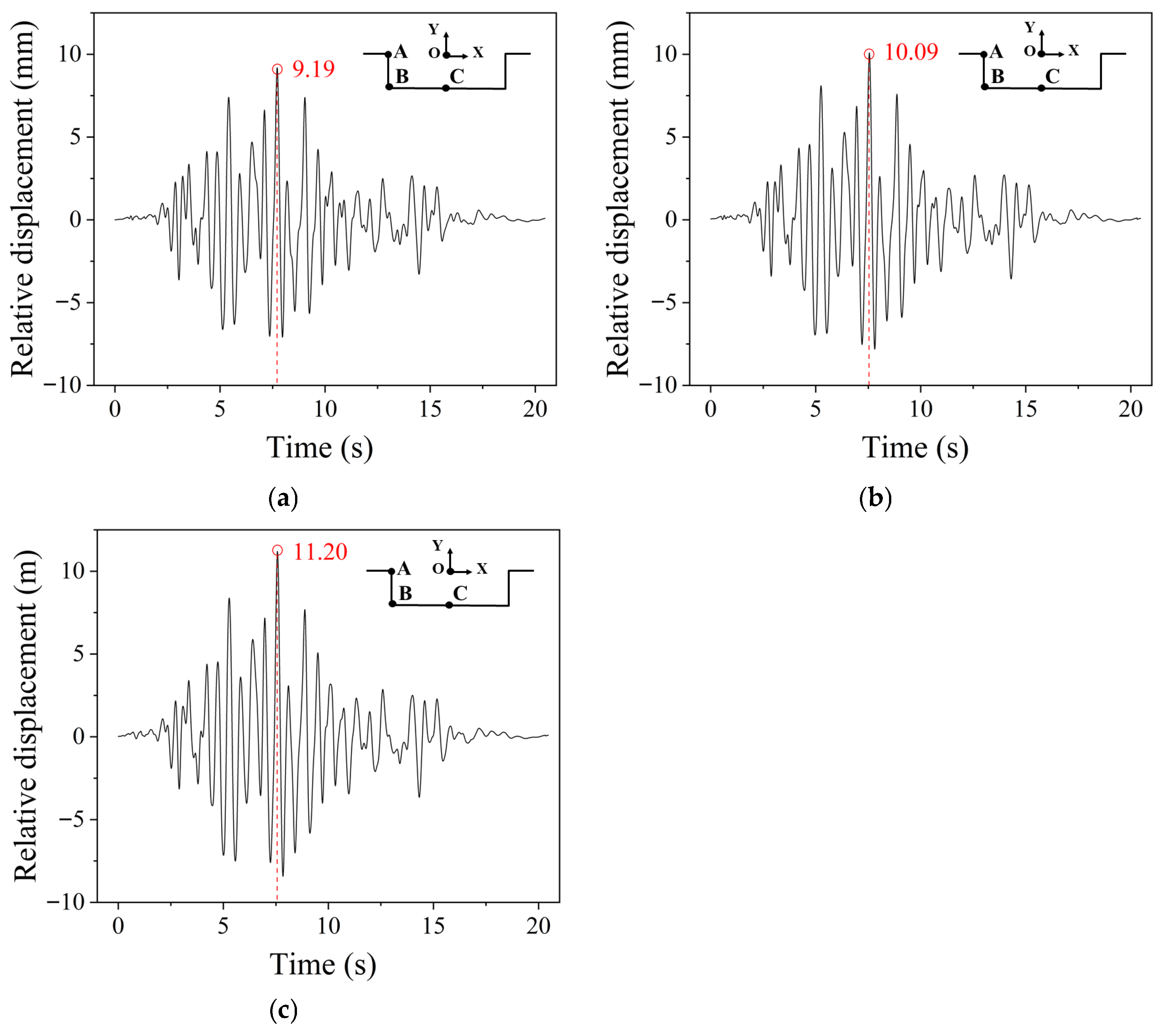
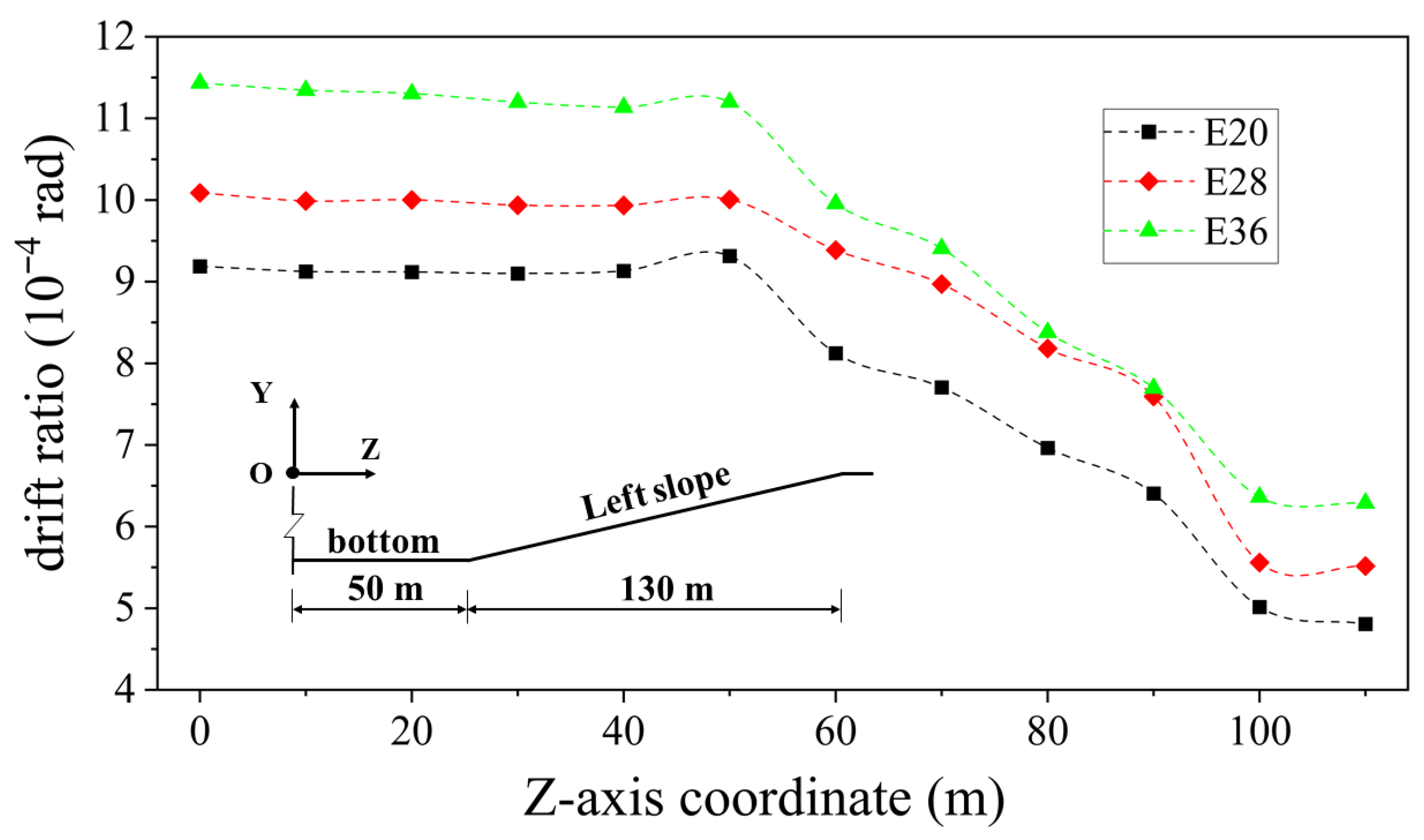
Figure 10 illustrates the relative horizontal displacement time histories between points A and B of the excavation. It was found that the excavation with a greater width experiences significant lateral soil deformations, indicating a positive correlation between them. Furthermore, the maximum drift ratios at different locations of the excavation are shown in Figure 11, where the drift ratio is defined as the relative horizontal displacement divided by the depth. There is minimal variation in drift ratios across the excavation bottom section, whereas the drift ratios of the slope sections decrease as the Z-axis coordinate increases. In summary, it can be concluded that the drift ratios increase with both the width and the depth of the 3D boat-shaped excavation.

5.2. Structural Displacement and Deformation

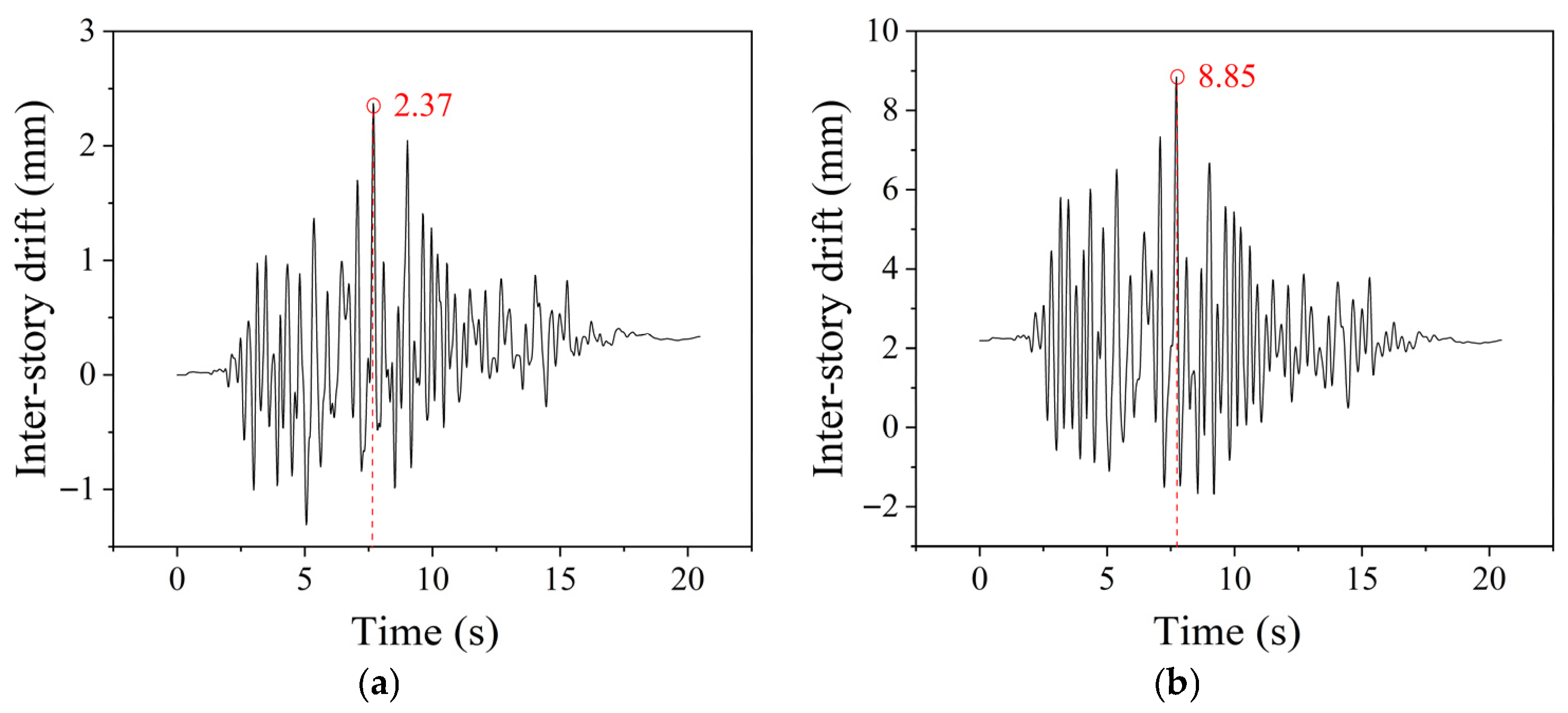
Seismic verification for inter-story drift is one of the main tasks in assessing the seismic performance of underground structures. The numerical results show that the maximum inter-story drifts of all segments occur simultaneously (at 7.68 s). As an example, Figure 12 shows the inter-story drift time histories of segments F1 and U1 under 0.05 g SHA excitation. Obviously, the inter-story drifts of U1 are significantly larger than those of F1. On the one hand, before the earthquake (at 0 s), the inter-story drift of segment F1 is 0, while that of segment U1 is about 2 mm, indicating that the side wall of segment U1 has experienced a significant deformation solely due to static lateral active soil pressure. On the other hand, after the earthquake, the inter-story drift of segment F1 does not return to 0 but remains near 0.5 mm, indicating residual deformation in the frame-box structure; conversely, the inter-story drift of segment U1 is almost the same before and after the earthquake, indicating that the U-shaped retaining wall remains elastic.
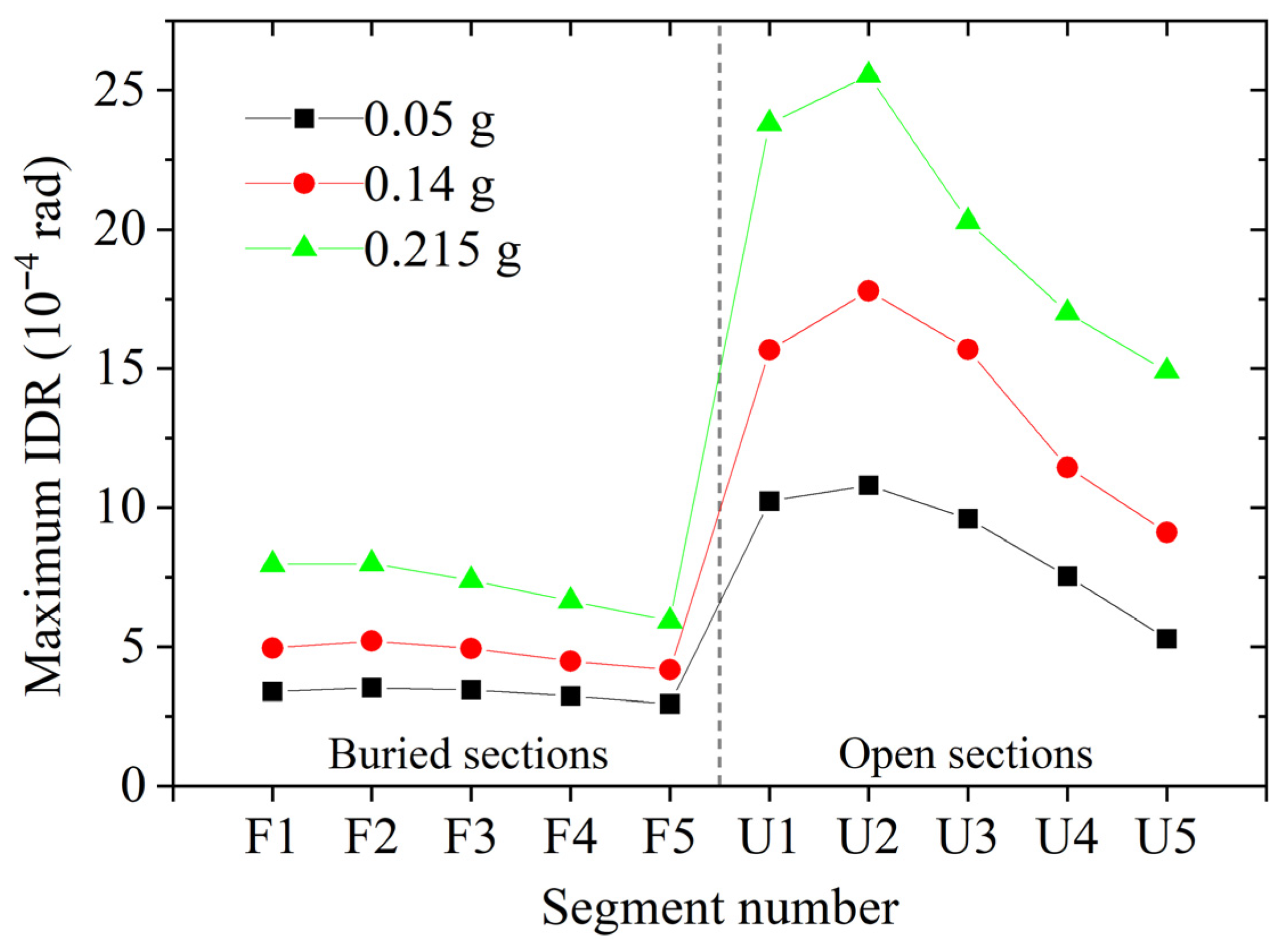
To provide a more complete picture of the seismic deformation mechanism, Figure 13 summarizes the maximum inter-story drift ratios (IDRs) for representative buried and open sections under seismic intensities of 0.05 g, 0.14 g, and 0.215 g. It can be found that (1) the maximum IDRs show similar trends along the tunnel longitudinal axis under different seismic intensities. Overall, the maximum IDRs of both buried and open sections increase with the increasing depth of the base slab (from F5 to F2; from U5 to U2), though the increasing amounts are quite different. For instance, for PBA values of 0.05 g, 0.14 g, and 0.215 g, the buried section shows a maximum increase of 20%, 25%, and 35% with an increase in depth, whereas they reach 104%, 95%, and 71% for the open section. For the open sections, the increasing height of the side walls generally leads to a reduction in lateral stiffness and thus an increase in lateral deflection. For buried sections, such an increase in the maximum IDRs may be attributed to the 0 to 1.6 m thickness range of the overlying soil (see Figure 1), which indicates no formation of soil arching above and around the structure; as a result, with an increase in the thickness of the overlying soil (from F5 to F2), the increasing vertical load on the central column results in a reduction in the column’s shear capacity [38]. Moreover, it is worth mentioning that the maximum IDR of segment U1 shows abnormal trends, such as a decrease. To a certain extent, this may be attributed to the fact that segment U1 lies at the junction between the open and buried sections, where there are large structural stiffness variations. (2) When the results under different seismic intensities are compared, the maximum IDRs of both buried and open sections increase sharply with increasing seismic intensities. For example, when the seismic intensity is 0.05 g, their maximum IDRs are about 1/2832 and 1/926, respectively; when the seismic intensity is 0.215 g, the maximum IDRs increase to about 1/1251 and 1/392, which increases by 126% and 136%, respectively. Moreover, it is also seen that the IDRs of the open section are significantly greater than those of the buried section when subjected to any of the three seismic intensities. This outcome is anticipated, given that the lateral stiffness of the U-shaped wall is obviously lower than that of the box-frame structure (see Figure 2 and Figure 6).
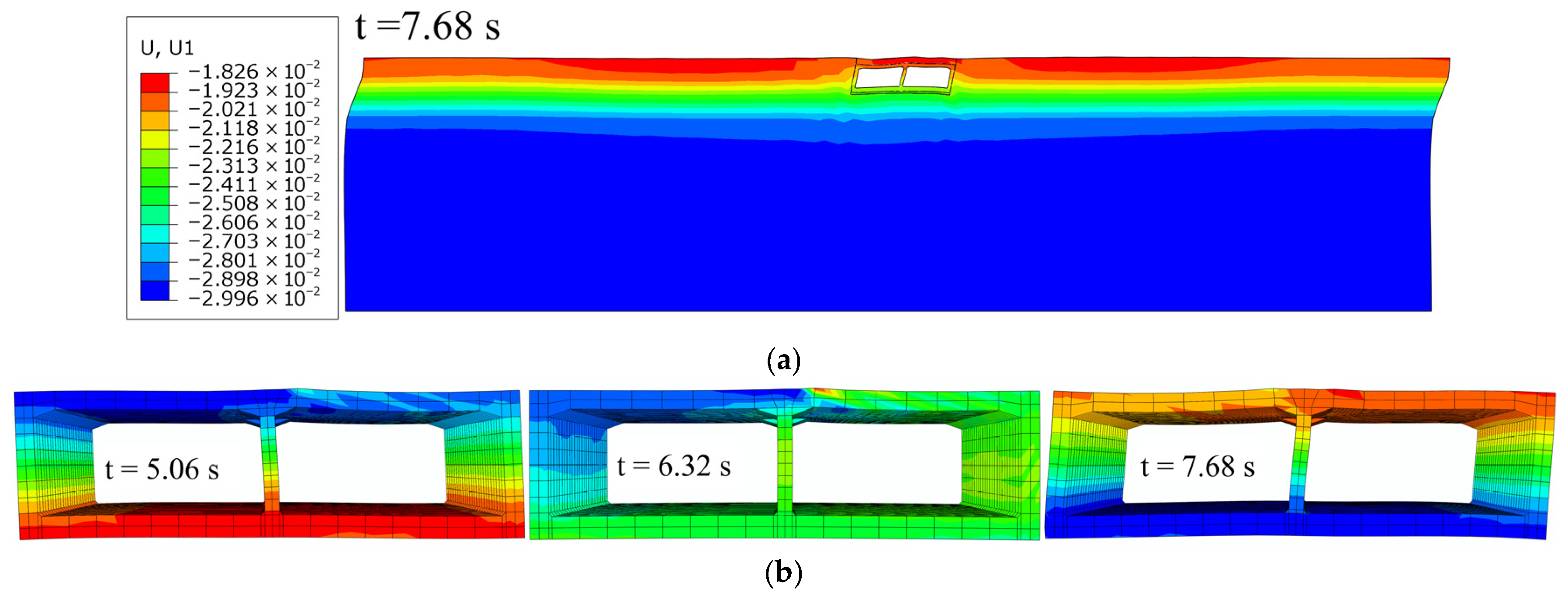
Furthermore, previous research suggests that earthquake-induced damage to underground structures primarily results from the displacement and movement of the surrounding soil [39]. In view of this, Figure 14 illustrates the horizontal displacement contours of segment F1 and its surrounding soil under a PBA of 0.05 g. From Figure 14a, it can be observed that the horizontal displacements in the soil below the tunnel structure exhibit a clear stratification. However, the presence of the tunnel structure significantly disturbs the horizontal displacements (e.g., stratification characteristics) in the soil on its left and right sides, which is due to the “shadowing” effect triggered by the existence of the buried frame-box structure. Similar findings are also drawn from numerical studies on circular tunnels [40,41,42]. Moreover, Figure 14b illustrates the horizontal displacement contours of segment F1 at three peak moments of structural inter-story drift (see Figure 12). As expected, the buried frame-box structure mainly exhibits typical racking deformation under earthquake excitation.

5.3. Dynamic Soil Pressure on the Structural Side Wall

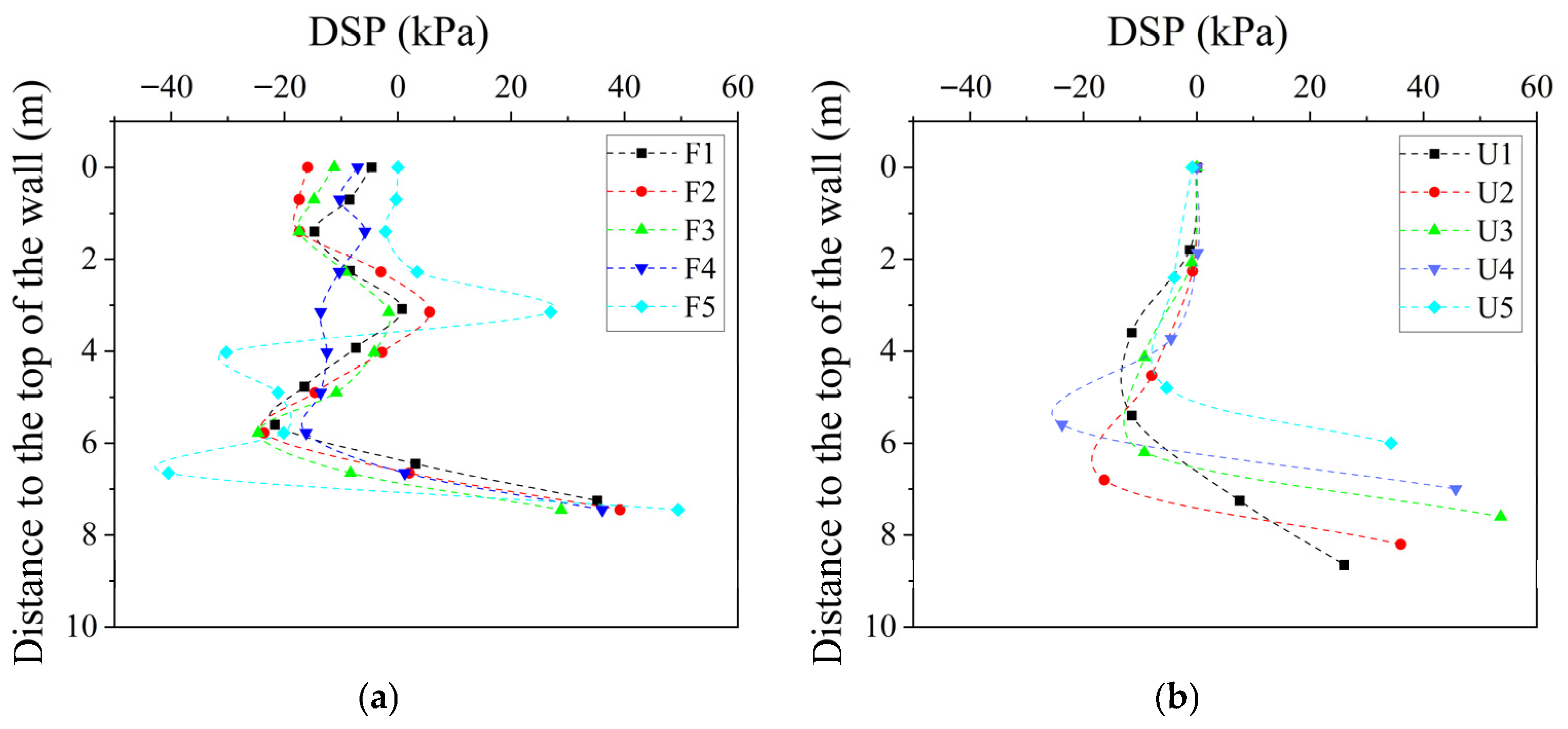
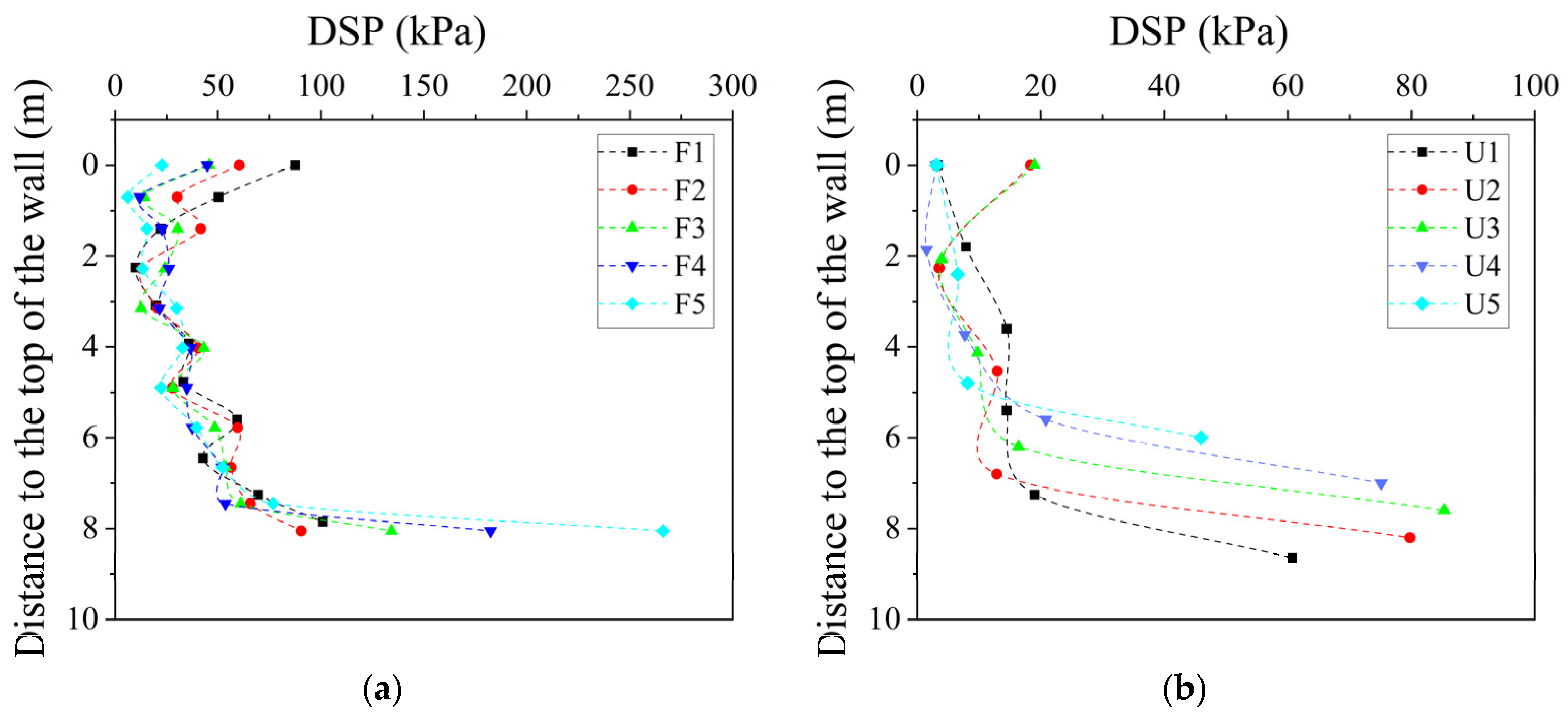
Dynamic soil pressure (DSP) is the difference between the total pressure during an earthquake and the initial static pressure before the earthquake, which is usually regarded as one of the major loads that result in severe damage or even collapse of underground structures under strong earthquakes. Figure 15 illustrates the instantaneous distribution of DSP on the structural left side wall when the inter-story drift reaches its maximum (see Figure 12). Regarding the amplitude, the instantaneous DSPs of the buried section are comparable to those of the open section overall, with significantly greater DSPs at the bottom of the side wall compared with those at other depths. Concerning the distribution curves, regardless of whether it is a buried section or an open section, different segments have a similar distribution shape with respect to the instantaneous DSPs. In addition, there exists a relatively large DSP deviation of segment F5 from other frame-box segments in Figure 15a. This might be attributed to the abrupt change in the lateral stiffness of the tunnel structure (see Figure 1 and Figure 2), as mentioned earlier. From Figure 16, a significantly large value of the peak DSP is found at both the top and bottom of the side wall, while at other depths, the peak DSPs almost increase linearly with the buried depth. For the former, this may be due to a significant stress concentration at the sharp corners (e.g., joints between the side wall and slab).

5.4. Structural Stress and Strain

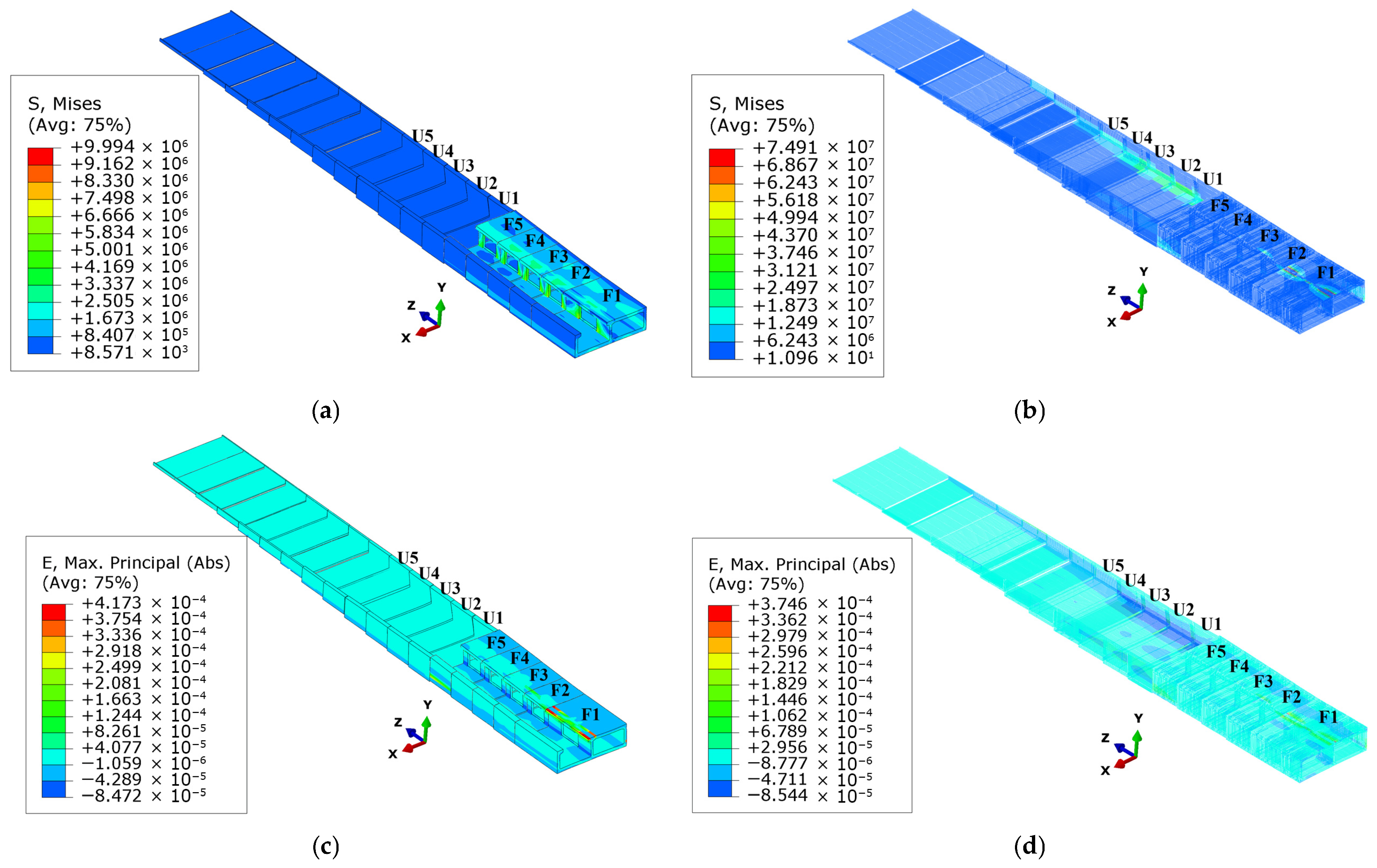
To elucidate the distributions of structural stress and strain, Figure 17 and Figure 18 illustrate their contours under a PBA of 0.05 g and the maximum stress under three different seismic intensities when the inter-story drift reaches its maximum. The following conclusions can be drawn from Figure 17: (1) The concrete stress of the buried section is obviously greater than that of the open section. Specifically, the concrete stress in critical areas, such as the central columns, the ceiling slab region adjacent to the longitudinal beam, and the side wall bottom, is notably greater compared to other locations. (2) Concerning the stress of the steel reinforcement, the maximum value is observed in the ceiling slab of segment F1, as shown in Figure 17b. Moreover, the bottom of the side wall of the underpass tunnel is also a critical area that warrants attention. (3) For structural strain, the ceiling slabs adjacent to the longitudinal beam, as well as the bottom of the side wall, are observed with a more pronounced amplitude for both concrete and steel reinforcements. Although the above stress–strain results are instantaneous, they provide a valuable indication of the relatively weak components of the underpass tunnel during an earthquake.
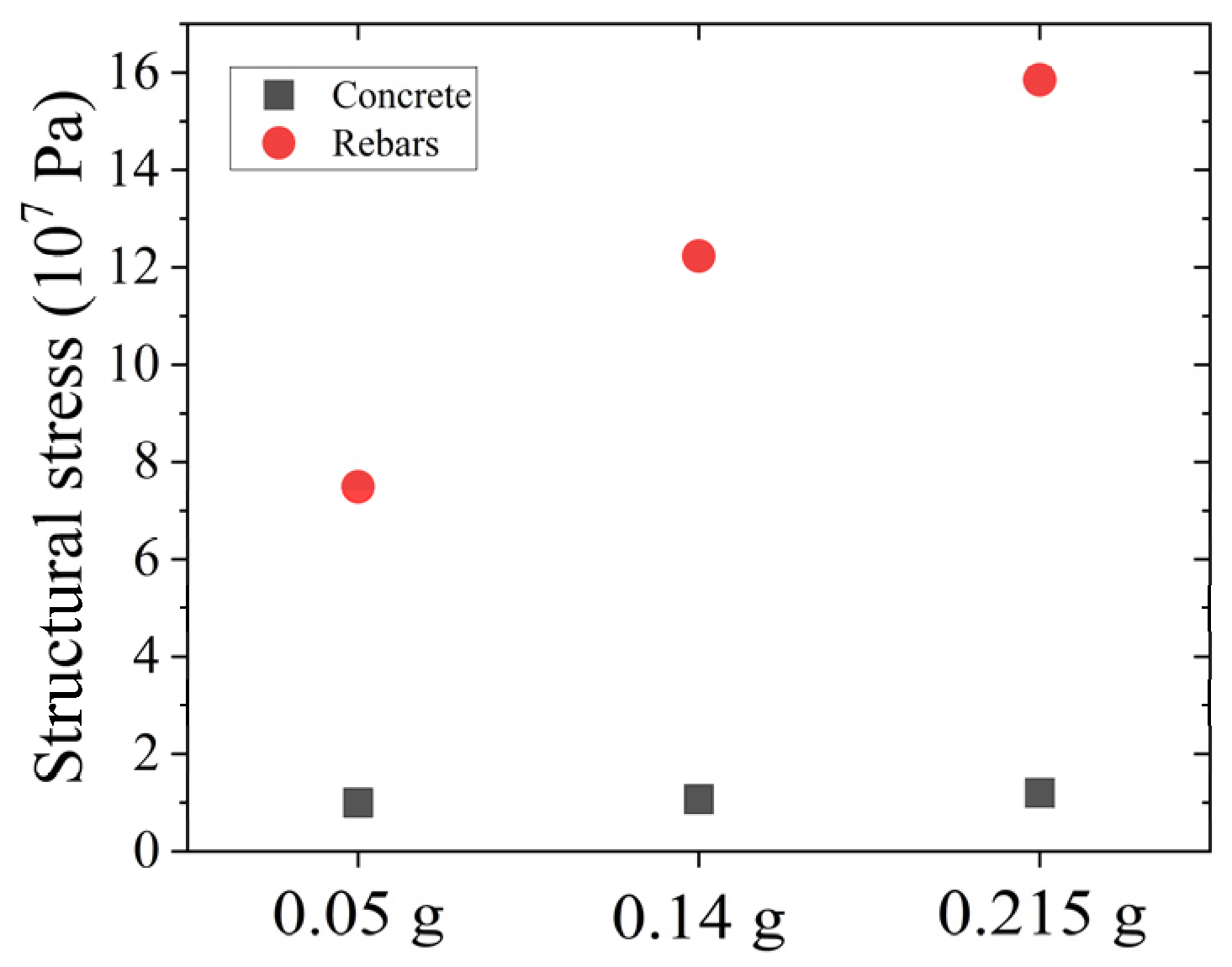
Furthermore, the results in Figure 18 indicate that when the PBA increases from 0.05 g to 0.215 g, the maximum stress of the steel reinforcement and concrete increases by 112% and 20%, respectively; meanwhile, the stress of the steel reinforcement is significantly greater than that of the latter. The results coincide with a common understanding of convergence: considering that the steel reinforcement and concrete work together under load, they exhibit similar strain values, while the former possesses a higher elastic modulus.

5.5. Seismic Damage of Underpass Tunnel

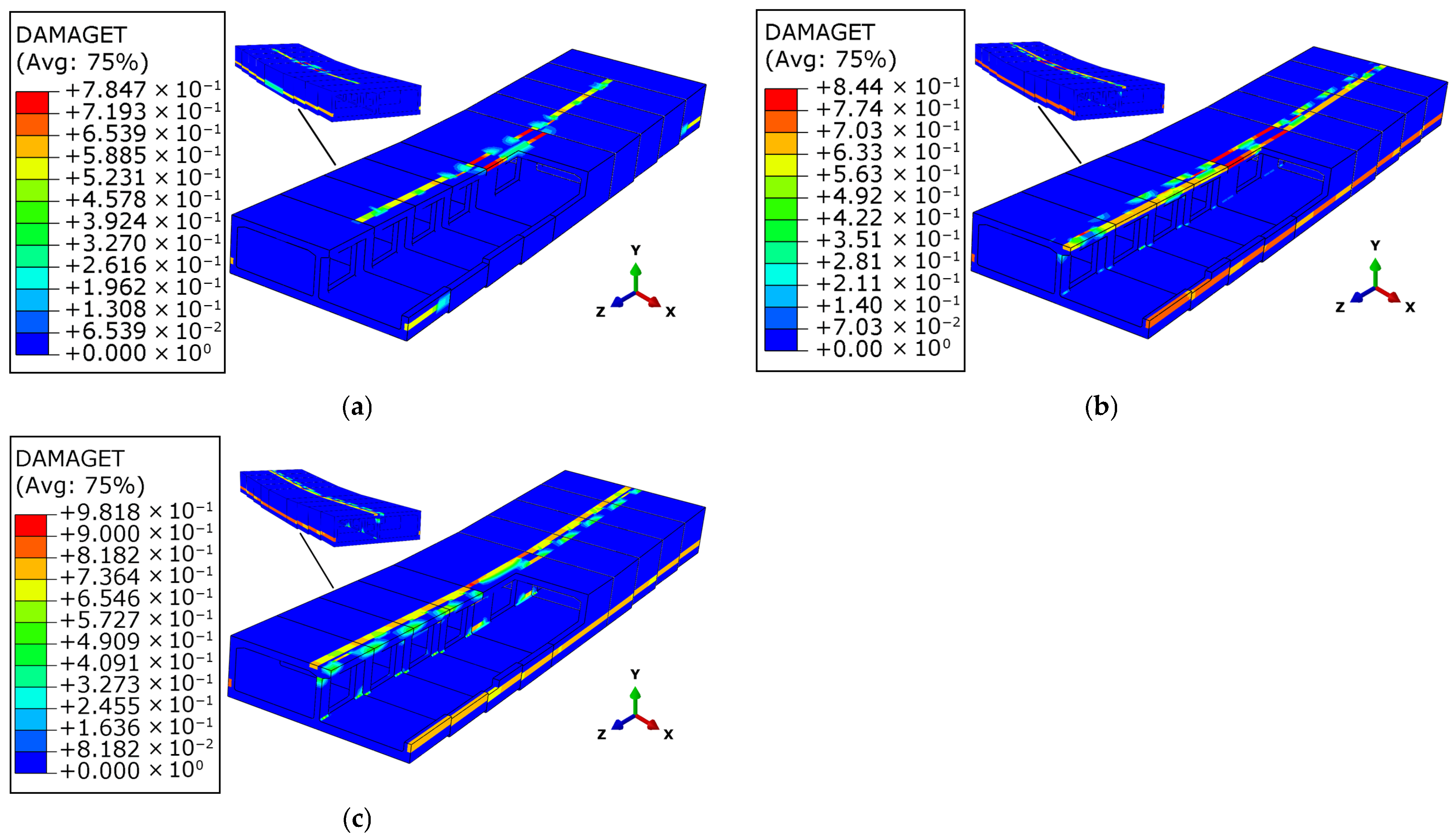
The analysis results show that the open section is not damaged, which is consistent with the abovementioned results that there is no residual deformation of the U-shaped retaining wall (see Figure 12). Figure 19 presents the concrete tensile damage of the buried section under seismic intensities of 0.05 g, 0.14 g, and 0.215 g. Several findings can be summarized as follows:
(1) At lower seismic intensities (e.g., 0.05 g), the concrete tensile damage mainly occurs at the ceiling slabs near the longitudinal beam and at the bottom of the left side wall, with the ceiling slab of segment F1 being the weakest, which is in accordance with the results of the maximum IDRs in Figure 13 and the stress–strain responses in Figure 17. It is also worth noting that all central columns of the buried section remain undamaged.
(2) With increasing seismic intensity, on the one hand, both the ceiling slabs and the side walls suffer greater damage and have larger damage regions. For instance, the damage factor of the ceiling slabs increases from 0.785 to 0.844 and 0.903, with an increase of 7.6% and 15% (compared to the phenomenon observed with a PBA of 0.05 g), respectively. On the other hand, the location of the maximum damage changes from the ceiling slab (e.g., under PBAs of 0.05 g and 0.14 g) to the bottom of the left side wall (e.g., a maximum damage factor of 0.982 under PBA of 0.215 g). Since the damage factor of 0.982 is very close to unity (1), as the earthquake-induced reciprocating motion continues, an overall collapse of the buried section might be triggered, especially considering side walls as critical vertical support members. More notably, when the seismic intensities are 0.14 g and 0.215 g, tensile damage appears at both the top and bottom of the central columns, as shown in Figure 19b,c, which could, in turn, further exacerbate the risk of overall collapse.
It is worth noting that, based on the contours in Figure 19, one can only carry out a qualitative evaluation of the tensile damage of the underpass tunnel; further quantitative evaluation is still necessary to provide a more complete view of its vulnerable seismic sections. To achieve this purpose, the degree of damage, D (0 ≤ D ≤ 1), which represents the isotropic damage and degradation of the elastic stiffness, is introduced as follows [28]:
D T = i V i i V i D T i , D C = i V i i V i D C i D = 1 ( 1 D T ) ( 1 D C )
where D T i , D C i , and V i represent the tensile and compressive damage factors and the volume of element i in the effective damage region, respectively; 0 ≤ D T ≤1 and 0 ≤ D C ≤1 represent the tensile and compressive degradation damage responses, respectively.
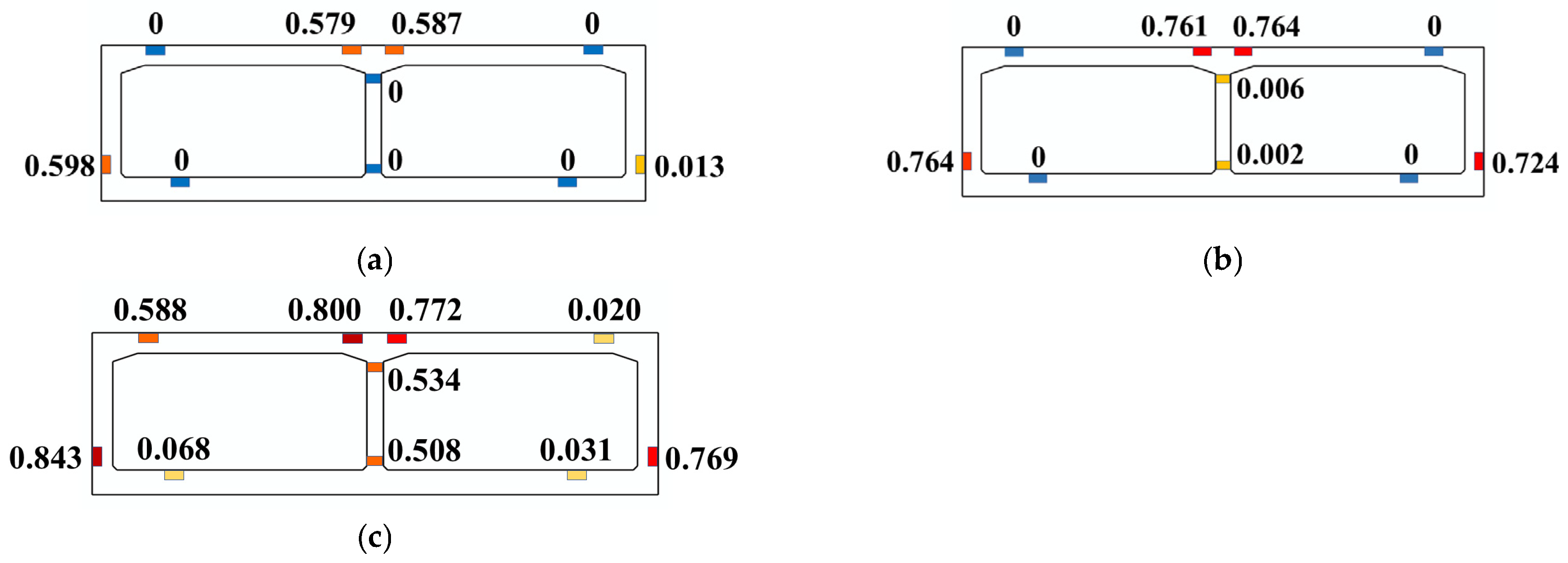
To save space, Figure 20 illustrates the degree of damage of segment F1 at the end of shaking, where it is calculated using an element length that is equal to the segment length: that is, 19.98 m. On the one hand, the degree of damage in the damaged areas increases with increasing seismic intensity. The bottom of the left side wall and the ceiling slab region adjacent to the longitudinal beam suffer the most serious damage; with increasing shaking intensity from 0.05 g to 0.14 g, their damage degree increases by 28% and 30% (from 0.598 and 0.587 to 0.764 and 0.764, respectively), respectively. On the other hand, segment F1 experiences a much greater range of damage with increasing seismic intensity. At lower seismic intensities (e.g., 0.05 g), there is no (or only slight) damage at the top and bottom ends of the central columns, as well as in the ceiling slab region adjacent to the side wall; in contrast, when the seismic intensity is 0.215 g, the maximum damage degree at the two sites increases to 0.534 and 0.588, respectively. As the earthquake-induced reciprocating motion continues, increasing areas of damage appear in different structural members, and an overall collapse of the underpass tunnel may occur, especially considering the high damage factors in Figure 19.

6. Discussion

This paper conducts a comprehensive non-linear dynamic time-history analysis with emphasis on the dynamic interaction mechanisms of the underpass tunnel and the surrounding soil and the seismic behaviors of the open section and buried section, as well as their junction. Three aspects concerning the underpass tunnel are investigated.
First, the boat-shaped excavation that the underpass tunnel lies in is a major concern. The numerical results obtained in this paper suggest that, on the one hand, for all excavation widths (e.g., 20 m, 28 m, and 36 m), acceleration at the bottom of the excavation is always greater than that at the ground surface of the FF model (a horizontally layered half-space). Taking the excavation bottom in Figure 9 as an example, when compared with the peak accelerations at corresponding depths of the FF model, the values of corner point B under the three excavation widths show an increase of 14%, 14%, and 18%, respectively; in particular, the values of center point C under the three excavation widths show an increase of 76%, 54%, and 49%, respectively. More importantly, the peak acceleration values of center point C are approximately 1.06–1.25 times those of the FF ground surface. It is worth mentioning that very few cases of anomalous acceleration amplification at the base of concave topography have been reported in the literature, as also pointed out by Gao and Zhang [43]. When they investigated the propagation and scattering of cylindrical SH waves around a symmetrical V-shaped canyon, it was found that the canyon’s bottom can serve as a new source that continuously generates scattered waves. This might help explain why there is significant acceleration amplification at the bottom of the boat-shaped excavation, as mentioned above. On the other hand, the numerical results also indicate that for different excavation widths, the top of the excavation shows relatively large acceleration differences; more precisely, peak acceleration at the top of the excavation increases with an increase in the width of the 3D boat-shaped excavation. Interestingly, Zhao and Valliappan [44] compared the acceleration at the top of the excavation between differently shaped (V-shaped, trapezoidal, and rectangular) canyons subjected to the vertical incidence of the SV wave. Their comparison indicated that the rectangular canyon resulted in the greatest acceleration among these three canyons, especially at the upper part of the canyon, which is compatible with the findings of this study to some extent. Furthermore, they concluded that among the three differently shaped canyons, the wave mode conversion effect was stronger for the rectangular canyon, which provides a possible explanation for the excavation width enhancements in this study. The above results also highlight the need to consider the potential amplification effect of characteristic surface topographies (e.g., 3D boat-shaped excavation) on ground motion, especially in constructing critical infrastructure (e.g., underpass tunnels in mega-cities) in seismically active regions.
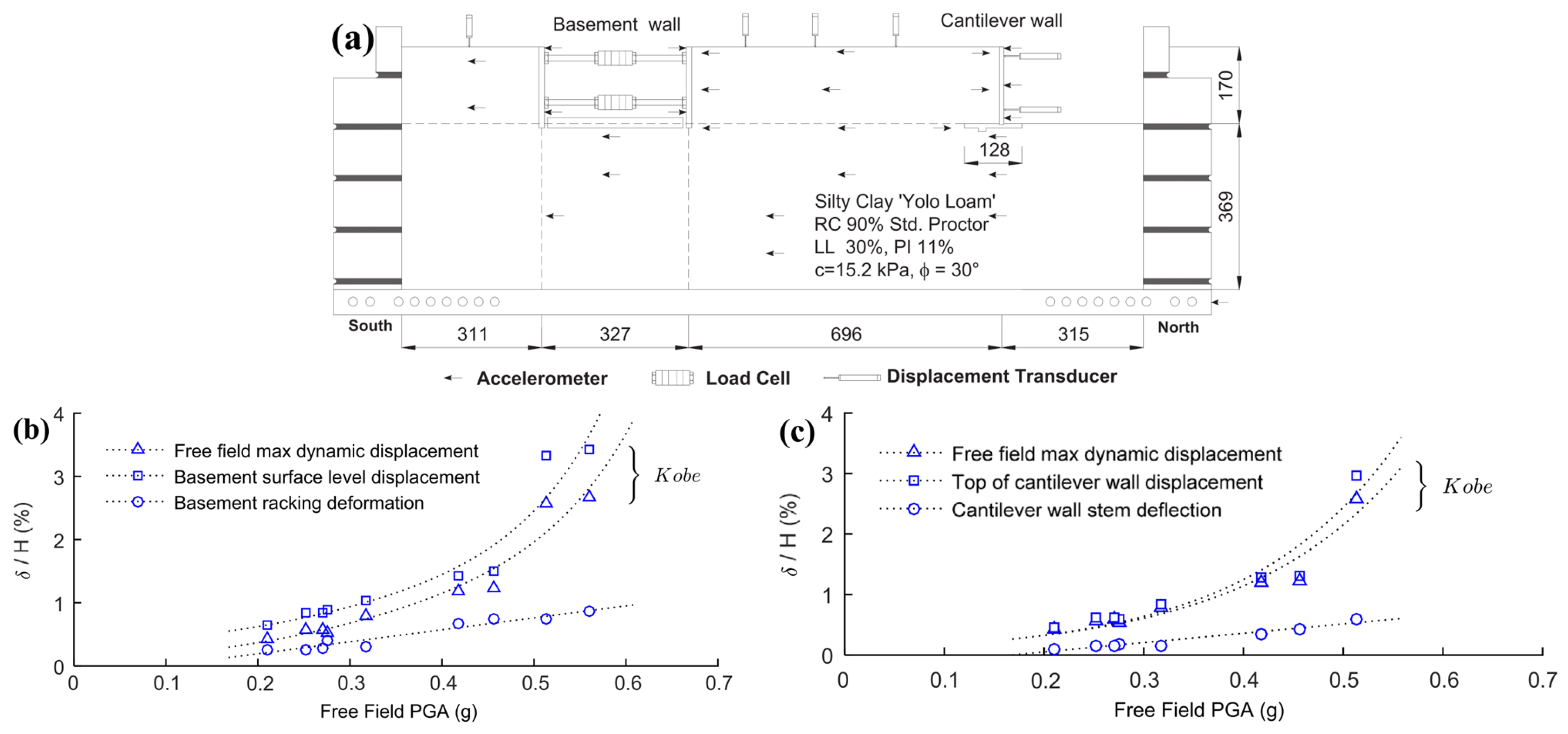
A second objective of this study is to elucidate the dynamic characteristics of the underpass tunnel structure. Numerical results show that, under any seismic intensity, the structural responses—lateral deformation, stress–strain, and damage factor—indicate that all U-shaped retaining walls comprising the open section remain elastic, while some areas of the buried section suffer from seismic damage, especially the ceiling slab near the longitudinal beam and the side wall’s bottom. Note, however, that the structural maximum IDRs of the buried section are much smaller than those of the open section, as shown in Figure 13. Although it is a general rule that the greater the IDR, the more severe the structural damage [45], unusual features are found in the open section of the urban underpass tunnel, where it maintains elastic deformations over a very large IDR range. It is worth mentioning that large lateral deformations of similar structures have previously been described in earlier publications. For example, Candia et al. [46] conducted centrifuge experiments on an embedded one-story basement wall and a free-standing cantilever wall; both the racking deformation of the basement wall and the stem deflection in the cantilever wall increase linearly with the free-field PGA and account for 30% of the absolute displacement (see Figure 21). It is important to note that in some current codes concerning the seismic design of underground structures, both the allowable elastic and elasto-plastic IDRs of U-shaped reinforced concrete structures are the same as those of buried frame-box structures. That is, for U-shaped reinforced concrete structures, the seismic design following these standards will be too conservative. Therefore, we tend to think that the IDR might not be a reasonable metric for assessing the seismic performance of certain types of underground structures (e.g., the open section of an urban underpass tunnel). These phenomena provide motivation for the further revision of seismic design codes corresponding to underground structures. More extensive quantitative research that focuses on the relation between dynamic deformation (e.g., IDR) and damage may be helpful in understanding the seismic performance of underground structures with large openings (e.g., U-shaped structures).
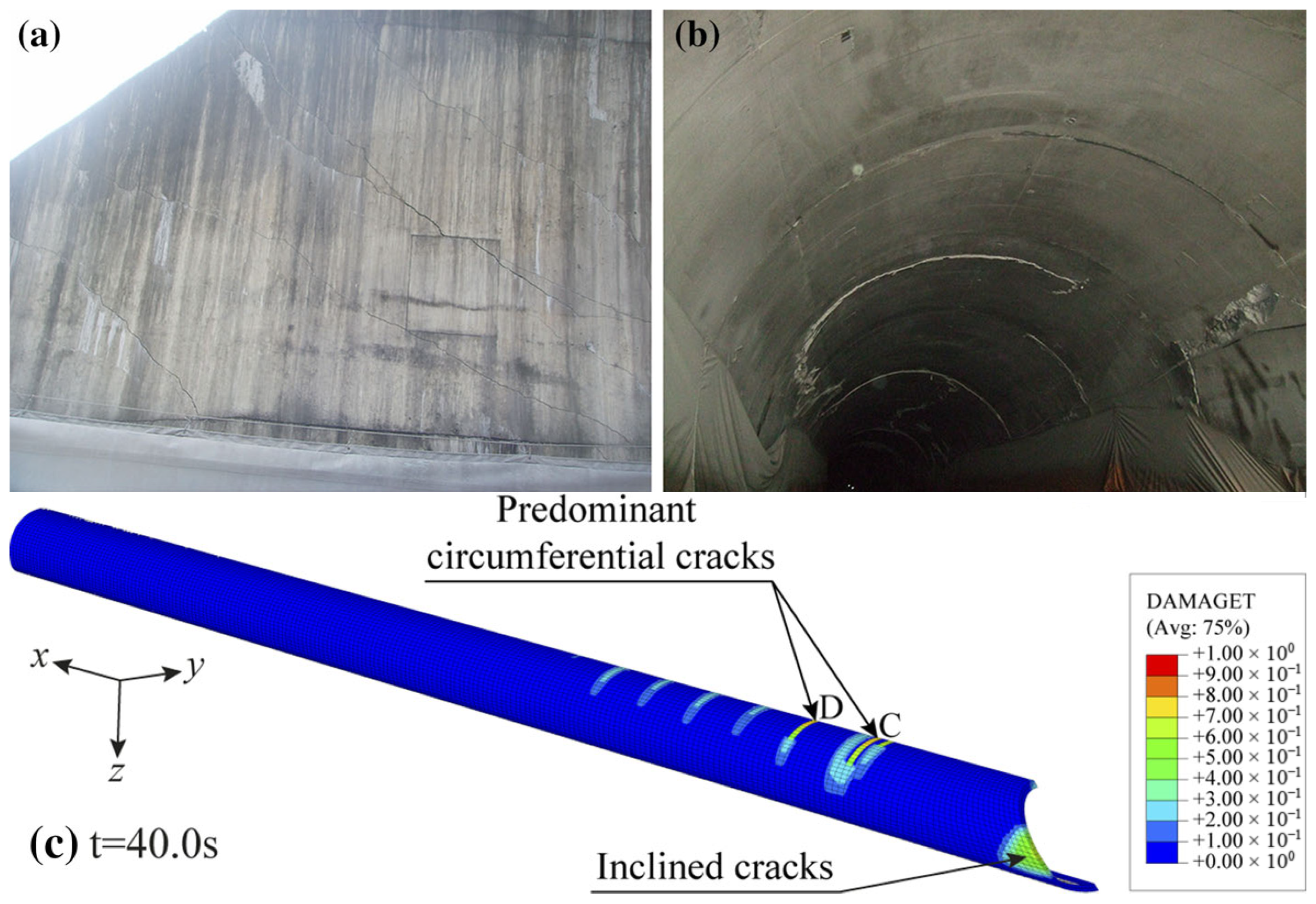
Lastly, an important aspect of this study is concerned with the potential influence of sudden stiffness change on the dynamic behaviors of the urban underpass tunnel. Under unidirectional horizontal seismic excitations, numerical analysis results show that a sudden stiffness change between the open and buried sections might cause some of the changes that occur near their junction. Typical changes involve trends in the maximum IDRs along the tunnel’s longitudinal direction, as well as in DSP amplitudes and concrete tensile damage of the buried-section side walls. Taking the IDR in Figure 13 as an example, the sudden stiffness change seems to exert no impact on the maximum IDRs of segment F5, while it has a clear influence on the results of segment U1, presenting a clear decreasing trend. This phenomenon can be explained as follows: The buried frame-box structures (e.g., segment F5) have greater structural stiffness than the U-shaped retaining walls. At the junction, the presence of segment F5 could exert an end wall effect on the U1 segment, resulting in a reduction in the latter’s dynamic responses, such as the IDRs. Similar conclusions are also drawn from studies on the end wall effect of both two-story and three-story underground frame structures [47,48]. Moreover, as shown in Figure 19a, the side walls of segment F5 suffer more serious concrete damage than other segments. Interestingly, Wu et al. [49] conducted a numerical simulation to predict the damage process of a tunnel portal subjected to Rayleigh waves, indicating circumferential cracks at the upper part of the tunnel lining and inclined cracks at the slanting–cutting form portal (see Figure 22). Their simulation results not only correspond well with field observations of the Longxi Tunnel during the 2008 China Wenchuan Earthquake but also provide a possible explanation for the results in Figure 19a, namely that segment F5 is located at the portal of the buried section. Note, however, that the findings about the influence of stiffness change are based on existing data from the present study, and due to the complexity of the studied problem, the influencing mechanisms warrant further research. The dynamic interaction of the underpass tunnel and the surrounding boat-shaped excavation is quite complex. This study may provide some insights for understanding their seismic behaviors; however, we note that the influence of the underpass tunnel’s geometric design, vertical and longitudinal ground motions, and the buried section’s overburden thickness, as well as the factors that affect the soil tunnel’s relative stiffness, may be important.

7. Conclusions

In this paper, 3D FE models are developed to investigate the seismic response of an urban underpass tunnel and its surrounding soil under horizontal ground motions with different intensities. The key conclusions are as follows:
(1)
The 3D boat-shaped excavations dominate the seismic responses of the underpass tunnel. The drift ratios between the top and bottom of the excavation increase with depth within the 3D boat-shaped excavation, resulting in an increase in the U-shaped retaining walls’ drift ratios with depth.
(2)
The buried section of the underpass tunnel is more vulnerable to earthquake hazards than the open section. For the former, the numerical results show that the most vulnerable components during earthquakes may be the base of the side walls, the ceiling slabs adjacent to the longitudinal beam, and the top and bottom of the central columns.
(3)
The seismic responses of the segments adjacent to the junction between the open and buried sections are obviously affected by the abrupt change in structural stiffness. On one hand, the buried frame of F5 could exert end wall effects on the adjacent retaining wall of U1, resulting in a decrease in the latter’s IDRs; on the other hand, the side walls of segment F5, located at the portal of the buried section, tend to suffer more serious earthquake damage.
Note that the findings given in this study are based on only a single ground motion, unidirectional horizontal inputs, and one soil profile. Considering the potential impact of earthquake frequency content and phase (e.g., pulse-like ground motions, spatial variation, and wave passage effect of ground motion), as well as complex geological conditions, further parametric analyses are still needed. Since numerical models of this study are only validated using free-field soil accelerations produced by SHAKE, laboratory benchmark tests are also required to verify the results of underpass tunnel responses.

Author Contributions

Z.Z.: Writing—review and editing, conceptualization, methodology, supervision, project administration, and funding acquisition. X.H.: Writing—original draft preparation, software, validation, formal analysis, and investigation. The authors confirm that this work has not been published before, and its publication has been approved by all co-authors. All authors have read and agreed to the published version of the manuscript.

Funding

This research was funded by the National Natural Science Foundation of China (grant number 52308396), the Guizhou Provincial Science and Technology Projects (grant number ZK [2022]150).

Institutional Review Board Statement

Not applicable.

Informed Consent Statement

Not applicable.

Data Availability Statement

The original contributions presented in the study are included in the article, further inquiries can be directed to the corresponding author.

Conflicts of Interest

The authors declare no conflicts of interest.

References

  1. Iida, H.; Hiroto, T.; Yoshida, N.; Iwafuji, M. Damage to Daikai subway station. Soils Found. 1996, 36, 283–300. [Google Scholar] [CrossRef]
  2. Iwatate, T.; Kobayashi, Y.; Kusu, H.; Rin, K. Investigation and shaking table tests of subway structures of the Hyogoken-Nanbu earthquake. In Proceedings of the 12th World Conference on Earthquake Engineering, Auckland, New Zealand, 30 January–4 February 2000. [Google Scholar]
  3. Yao, C.; He, C.; Wang, T.; Chen, C.; Geng, P.; Dong, W.; Yuan, F.; Xu, G. Damages of highway tunnels during 2022 Luding earthquake (Mw = 6.6). Soil Dyn. Earthq. Eng. 2024, 177, 108357. [Google Scholar] [CrossRef]
  4. Yan, K.; Miyajima, M.; Kumsar, H.; Aydan, Ö.; Ulusay, R.; Tao, Z.; Chen, Y.; Wang, F. Preliminary report of field reconnaissance on the 6 February 2023 Kahramanmaras Earthquakes in Türkiye. Geoenviron. Disast. 2024, 11, 11. [Google Scholar] [CrossRef]
  5. Xu, Z.; Du, X.; Xu, C.; Hao, H.; Bi, K.; Jiang, J. Numerical research on seismic response characteristics of shallow buried rectangular underground structure. Soil Dyn. Earthq. Eng. 2019, 116, 242–252. [Google Scholar] [CrossRef]
  6. Yu, H.; Chen, G. Pseudo-static simplified analytical solution for seismic response of deep tunnels with arbitrary cross-section shapes. Comput. Geotech. 2021, 137, 104306. [Google Scholar] [CrossRef]
  7. Zhao, M.; Duan, Y.; Huang, J.; Li, H.; Zhao, X.; Du, X. Analytical solutions for circular composite-lined tunnels under obliquely incident seismic SV and P waves. Comput. Geotech. 2022, 151, 104939. [Google Scholar] [CrossRef]
  8. Shi, C.; Tao, L.; Ding, P.; Wang, Z.; Jia, Z.; Shi, M. Analytical solution for deep non-circular tunnels considering slippage effects under far-field seismic SV waves. Tunn. Undergr. Space Technol. 2024, 144, 105552. [Google Scholar] [CrossRef]
  9. Ma, C.; Zhao, Y.; Dong, H.; Lu, D.; Du, X. Comparative study on the seismic performance of subway stations using reinforced concrete cast-in-place columns and truncated columns. Soil Dyn. Earthq. Eng. 2023, 169, 107862. [Google Scholar] [CrossRef]
  10. Chen, J.; Xu, C.; El Naggar, H.M.; Du, X. Seismic response analysis of rectangular prefabricated subway station structure. Tunn. Undergr. Space Technol. 2023, 131, 104795. [Google Scholar] [CrossRef]
  11. Chen, S.; Tang, B.; Zhao, K.; Li, X.; Zhuang, H. Seismic response of irregular underground structures under adverse soil conditions using shaking table tests. Tunn. Undergr. Space Technol. 2020, 95, 103145. [Google Scholar] [CrossRef]
  12. Wen, Y.; Xin, C.; Shen, Y.; Huang, Z.; Gao, B. The seismic response mechanisms of segmental lining structures applied in fault-crossing mountain tunnel: The numerical investigation and experimental validation. Soil Dyn. Earthq. Eng. 2021, 151, 107001. [Google Scholar] [CrossRef]
  13. Guan, Z.; Zhou, Y.; Gou, X.; Huang, H.; Wu, X. The seismic responses and seismic properties of large section mountain tunnel based on shaking table tests. Tunn. Undergr. Space Technol. 2019, 90, 383–393. [Google Scholar] [CrossRef]
  14. Wang, Z.; Jiang, L.; Gao, Y. Shaking table test of seismic response of immersed tunnels under effect of water. Soil Dyn. Earthq. Eng. 2019, 116, 436–445. [Google Scholar] [CrossRef]
  15. Zhang, S.; Yuan, Y.; Li, C.; Chen, H.; Chen, Z. Seismic responses of long segmental immersed tunnel under unfavorable loads combination. Transp. Geotech. 2021, 30, 100621. [Google Scholar] [CrossRef]
  16. Chen, W.; Lin, J.; Zheng, Y.; Liu, C.; Huang, L. Seismic response and damage analysis of immersed tunnel considering the seabed-seawater coupling effect. Soil Dyn. Earthq. Eng. 2024, 184, 108853. [Google Scholar] [CrossRef]
  17. Tao, L.; Ding, P.; Lin, H.; Wang, H.; Kou, W.; Shi, C.; Li, S.; Wu, S. Three-dimensional seismic performance analysis of large and complex underground pipe trench structure. Soil Dyn. Earthq. Eng. 2021, 150, 106904. [Google Scholar] [CrossRef]
  18. Ding, P.; Shi, C.; Tao, L.; Liu, Z.; Zhang, T. Research on seismic analysis methods of large and complex underground pipe structures in hard rock sites. Tunn. Undergr. Space Technol. 2023, 135, 105035. [Google Scholar] [CrossRef]
  19. Qiu, D.; Chen, J.; Xu, Q. Comparative numerical analysis on dynamic effects of underground large scale frame structures under seismic waves. Tunn. Undergr. Space Technol. 2019, 83, 35–50. [Google Scholar] [CrossRef]
  20. Qiu, D.; Chen, J.; Fu, H. Research on the comprehensive evaluating index of seismic performance of underground large-scale frame structures. Structures 2022, 37, 645–660. [Google Scholar] [CrossRef]
  21. Cavalagli, N.; Gusella, V.; Liberotti, R. The role of shape irregularities on the lateral loads bearing capacity of circular masonry arches. In Conference of the Italian Association of Theoretical and Applied Mechanics, Rome, Italy, 15–19 September 2019; Springer: Cham, Switzerland, 2020. [Google Scholar]
  22. Zhang, J.; Wei, K.; Gao, L.; Qin, S. Effect of V-shape canyon topography on seismic response of deep-water rigid-frame bridge based on simulated ground motions. Structures 2021, 33, 1077–1095. [Google Scholar] [CrossRef]
  23. Ding, Y.; Chen, S.; Li, X.; Wang, S.; Luan, S.; Sun, H. Self-adaptive physics-driven deep learning for seismic wave modeling in complex topography. Eng. Appl. Artif. Intel. 2023, 123, 106425. [Google Scholar] [CrossRef]
  24. Gao, Y.; Zhang, N.; Li, D.; Liu, H.; Cai, Y.; Wu, Y. Effects of topographic amplification induced by a U-shaped canyon on seismic waves. Bull. Seismol. Soc. Am. 2012, 102, 1748–1763. [Google Scholar] [CrossRef]
  25. Bao, X.; Xia, Z.; Ye, G.; Fu, Y.; Su, D. Numerical analysis on the seismic behavior of a large metro subway tunnel in liquefiable ground. Tunn. Undergr. Space Technol. 2017, 66, 91–106. [Google Scholar] [CrossRef]
  26. Li, Y.; Zhao, M.; Xu, C.; Du, X.; Li, Z. Earthquake input for finite element analysis of soil-structure interaction on rigid bedrock. Tunn. Undergr. Space Technol. 2018, 79, 250–262. [Google Scholar] [CrossRef]
  27. Du, X.; Xu, Z.; Xu, C.; Li, Y.; Jiang, J. Time-history analysis method for soil-underground structure system based on equivalent linear method. Chin. J. Geotech. Eng. 2018, 40, 2155–2163. [Google Scholar] [CrossRef]
  28. Li, W.; Chen, Q. Effect of vertical ground motions and overburden depth on the seismic responses of large underground structures. Eng. Struct. 2020, 205, 110073. [Google Scholar] [CrossRef]
  29. Zhuang, H.; Zhao, C.; Chen, S.; Fu, J.; Zhao, K.; Chen, G. Seismic performance of underground subway station with sliding between column and longitudinal beam. Tunn. Undergr. Space Technol. 2020, 102, 103439. [Google Scholar] [CrossRef]
  30. Ordonez, G.A. User’s Manual of SHAKE2000: A Computer Program for the 1-D Analysis of Geotechnical Earthquake Engineering Problems; University of California: Berkeley, CA, USA, 2000. [Google Scholar]
  31. Kaklamanos, J.; Baise, L.G.; Thompson, E.M.; Dorfmann, L. Comparison of 1D linear, equivalent-linear, and nonlinear site response models at six KiK-net validation sites. Soil Dyn. Earthq. Eng. 2015, 69, 207–219. [Google Scholar] [CrossRef]
  32. Kim, S.H.; Kim, K.J. Comparative studies between frequency domain analysis and time domain analysis on free-field one-dimensional shear wave propagation. Appl. Mech. 2024, 5, 141–161. [Google Scholar] [CrossRef]
  33. Hashash, Y.M.A.; Hook, J.J.; Schmidt, B.; Yao, J.I.C. Seismic design and analysis of underground structures. Tunn. Undergr. Space Technol. 2001, 16, 247–293. [Google Scholar] [CrossRef]
  34. Tezcan, S.S.; Kaya, E.; Engin Bal, İ.; Özdemir, Z. Seismic amplification at Avcılar, Istanbul. Eng. Struct. 2002, 24, 661–667. [Google Scholar] [CrossRef]
  35. Rayhani, M.H.; El Naggar, M.H. Numerical modeling of seismic response of rigid foundation on soft soil. Int. J. Geomech. 2008, 8, 336–346. [Google Scholar] [CrossRef]
  36. Firat, S.; Isik, N.S.; Arman, H.; Demir, M.; Vural, I. Investigation of the soil amplification factor in the Adapazari region. Bull. Eng. Geol. Environ. 2016, 75, 141–152. [Google Scholar] [CrossRef]
  37. Liu, X.; Congress, S.S.C.; Shen, J.; Cai, G.; Chen, G. A simple site amplification model originating from the NGA project for deep soft soil deposits in Suzhou, China. Nat. Hazards 2024, 120, 107–129. [Google Scholar] [CrossRef]
  38. Huo, H.; Bobet, A.; Fernández, G.; Ramírez, J. Load transfer mechanisms between underground structure and surrounding ground: Evaluation of the failure of the Daikai station. J. Geotech. Geoenviron. Eng. 2005, 131, 1522–1533. [Google Scholar] [CrossRef]
  39. Zhuang, H.; Wang, R.; Shi, P.; Chen, G. Seismic response and damage analysis of underground structures considering the effect of concrete diaphragm wall. Soil Dyn. Earthq. Eng. 2019, 116, 278–288. [Google Scholar] [CrossRef]
  40. Tsinidis, G.; Pitilakis, K.; Trikalioti, A.D. Numerical simulation of round robin numerical test on tunnels using a simplified kinematic hardening model. Acta Geotech. 2014, 116, 641–659. [Google Scholar] [CrossRef]
  41. Fabozzi, S.; Licata, V.; Autuori, S.; Bilotta, E.; Russo, G.; Silvestri, F. Prediction of the seismic behavior of an underground railway station and a tunnel in Napoli (Italy). Undergr. Space 2017, 2, 88–105. [Google Scholar] [CrossRef]
  42. Yiouta-Mitra, P.; Kouretzis, G.; Bouckovalas, G.; Sofianos, A. Effect of underground structures in earthquake resistant design of surface structures. Geotech. Spec. Publ. Dyn. Response Soil Prop. 2007, 1–10. [Google Scholar] [CrossRef]
  43. Gao, Y.; Zhang, N. Scattering of cylindrical SH waves induced by a symmetrical V-shaped canyon near-source topographic effects. Geophys. J. Int. 2013, 193, 874–885. [Google Scholar] [CrossRef]
  44. Zhao, C.; Valliappan, S. Seismic wave scattering effects under different canyon topographic and geological conditions. Soil Dyn. Earthq. Eng. 1993, 12, 129–143. [Google Scholar] [CrossRef]
  45. Jiang, J.; Xun, Z.; Bai, X.; Liu, D.; Zhao, K.; Du, X. Seismic damage mechanics and vulnerability analysis for the immersed tunnel subjected transverse earthquake records. Soil Dyn. Earthq. Eng. 2024, 182, 108703. [Google Scholar] [CrossRef]
  46. Candia, G.; Mikola, R.G.; Sitar, N. Seismic response of retaining walls with cohesive backfill: Centrifuge model studies. Soil Dyn. Earthq. Eng. 2016, 90, 411–419. [Google Scholar] [CrossRef]
  47. Mok, C.; Vallenas, J.; Zhang, M.; Wen, J. End wall effect for underground structures: Three-dimensional dynamic soil-structure interaction parametric study. In Proceedings of 100th Anniversary Earthquake Conference Commemorating the 1906 San Francisco Earthquake, San Francisco, CA, USA, 18–22 April 2006; Earthquake Engineering Research Institute: Oakland, CA, USA, 2006. [Google Scholar]
  48. Wang, G.; Hao, P.; Sun, F. Spatial influence scope of end wall of metro station structures. Chin. J. Geotech. Eng. 2020, 42, 1435–1445. [Google Scholar] [CrossRef]
  49. Wu, D.; Gao, B.; Shen, Y.; Zhou, J.; Chen, G. Damage evolution of tunnel portal during the longitudinal propagation of Rayleigh waves. Nat. Hazards 2015, 75, 2519–2543. [Google Scholar] [CrossRef]
Figure 1. The side view of the open and buried sections of the urban underpass tunnel (half of the entire structure).
Applsci 16 03025 g001
Figure 2. Dimensions of the underpass tunnel segments (unit: mm): (a) U-shaped retaining walls U1–U13; (b) frame-box structure F1; (c) frame-box structures F2–F5.
Applsci 16 03025 g002
Figure 3. Soil element types, shapes, meshes, and boundary conditions of 3D FE models: (a) free field; (b) boat-shaped excavation.
Applsci 16 03025 g003
Figure 4. Dynamic properties curves of different soil layers: (a) normalized dynamic shear moduli at different shear strains; (b) damping ratios at different shear strains.
Applsci 16 03025 g004
Figure 5. Geometric details of 3D boat-shaped excavations: (a) cross-section; (b) longitudinal section.
Applsci 16 03025 g005
Figure 6. Element types, shapes, and meshes of the 3D FE model: (a) soil-underpass tunnel system; (b) concrete and (c) rebars for segment F1; (d) concrete and (e) rebars for segments F2–F5; (f) concrete for open section; (g) rebars for segment U1.
Applsci 16 03025 g006
Figure 7. Acceleration time histories and Fourier amplitude spectra of the SHA wave, with a peak base acceleration (PBA) of 0.05 g.
Applsci 16 03025 g007
Figure 8. Comparison of acceleration responses of the free field model under 0.05 g SHA excitation between the FE simulation and SHAKE program: (a) ground acceleration time histories; (b) peak acceleration at different depths.
Applsci 16 03025 g008
Figure 9. Peak soil acceleration at different depths of the 3D boat-shaped excavations when Z = 0 and PBA = 0.05 g: (a) path 1; (b) path 2.
Applsci 16 03025 g009
Figure 10. The relative horizontal displacement between A and B when Z = 0 and PBA = 0.05 g for different excavation widths: (a) excavation widths of 20 m; (b) excavation widths of 28 m; (c) excavation widths of 36 m.
Applsci 16 03025 g010
Figure 11. The maximum drift ratio between A and B along the longitudinal direction of the excavation for the 0.05 g SHA wave under excavation widths of 20 m, 28 m, and 36 m.
Applsci 16 03025 g011
Figure 12. Structural inter-story drift time histories under 0.05 g SHA excitation: (a) segment F1; (b) segment U1.
Applsci 16 03025 g012
Figure 13. Structural maximum inter-story drift ratios (IDRs) for representative buried and open sections under SHA excitations with three different peak base accelerations.
Applsci 16 03025 g013
Figure 14. Horizontal displacement (magnified 200 times) under 0.05 g SHA excitation: (a) contours of the soil–structure system when the inter-story drift reaches its maximum; (b) contours of segment F1 at three peak moments of structural inter-story drift.
Applsci 16 03025 g014
Figure 15. Instantaneous dynamic soil pressure (DSP) on the left side wall at 7.68 s under 0.05 g SHA excitation: (a) segments F1–F5 in the buried section; (b) segments U1–U5 in the open section.
Applsci 16 03025 g015
Figure 16. Peak DSP on the left side wall under 0.05 g SHA excitation: (a) segments F1–F5 in the buried section; (b) segments U1–U5 in the open section.
Applsci 16 03025 g016
Figure 17. Contours under 0.05 g SHA excitation: stress of (a) concrete and (b) rebars; strain of (c) concrete and (d) rebars.
Applsci 16 03025 g017
Figure 18. Maximum structural stress when inter-story drift reaches its maximum with three different peak base accelerations.
Applsci 16 03025 g018
Figure 19. Tensile damage contours of the concrete in the buried section of the underpass tunnel at the end of shaking: (a) PBA = 0.05 g; (b) PBA = 0.14 g; (c) PBA = 0.215 g.
Applsci 16 03025 g019
Figure 20. Degree of damage of the underpass tunnel at the end of shaking with three different peak base accelerations: (a) PBA = 0.05 g; (b) PBA = 0.14 g; (c) PBA = 0.215 g.
Applsci 16 03025 g020
Figure 21. Centrifuge experiments: (a) test setup of flexible shear beam container, soil, and structures; (b) dynamic displacements of the free-field and basement wall; (c) dynamic displacements of the free-field and cantilever wall [46].
Applsci 16 03025 g021
Figure 22. Cracks in the lining structure of the Longxi Tunnel: (a) inclined cracks at the portal in the field observation; (b) circumferential cracks at the upper part of the lining in the field observation; (c) concrete tensile damage of the reinforced lining structure in numerical simulation [49].
Applsci 16 03025 g022
Table 1. Dimensions of U-shaped retaining walls (unit: m).
U1U2U3U4U5U6U7U8U9U10U11U12U13
Height (h in Figure 2)8.658.27.6765.243.22.72.11.50.90.9
Thickness (t in Figure 2)1.41.41.41.41.210.60.60.60.30.30.30.3
Table 2. Properties of the surrounding soils.
Soil LayerDepth (m)Unit Weight (kN/m3)Shear Wave Velocity
(m/s)
Poisson′s Ratio
10.0–3.217.81370.36
23.2–6.018.51400.33
36.0–17.017.41320.41
417.0–31.017.41810.41
531.0–48.317.62630.41
648.3–66.118.43600.33
766.1–70.019.23960.33
Table 3. Concrete damage plasticity parameters.
Dilation AngleEccentricityfb0/fc0KViscosity
30°0.11.160.66670.0005
Disclaimer/Publisher’s Note: The statements, opinions and data contained in all publications are solely those of the individual author(s) and contributor(s) and not of MDPI and/or the editor(s). MDPI and/or the editor(s) disclaim responsibility for any injury to people or property resulting from any ideas, methods, instructions or products referred to in the content.