Article

Research on Diagnostic Techniques for Embankment Hidden Hazards Based on Reflection-Wave Imaging


1
Engineering Research Center of Diagnosis Technology and Instruments of Hydro-Construction, Chongqing Jiaotong University, Chongqing 400074, China
2
Jiangxi Transportation Investment Maintenance Technology Group Co., Ltd., Nanchang 330200, China
3
School of Civil Engineering and Architecture, Chongqing University of Science and Technology, Chongqing 401331, China
*
Author to whom correspondence should be addressed.
Appl. Sci. 2026, 16(6), 2990; https://doi.org/10.3390/app16062990
Submission received: 3 February 2026 / Revised: 13 March 2026 / Accepted: 16 March 2026 / Published: 20 March 2026
(This article belongs to the Section Civil Engineering)

Abstract

Accurate identification and spatial localization of hidden hazards in embankments are essential for the reinforcement and safety management of defective structures. However, conventional drilling and single geophysical methods are often insufficient for fine-scale detection due to the strong heterogeneity of embankment materials, complex internal structures, and diverse forms of leakage-related defects. To address these challenges, this study establishes conceptual models for two representative embankment types, namely homogeneous embankments and core-wall embankments, based on reflection-wave imaging theory. The propagation characteristics and imaging responses of reflection waves in embankment media are systematically investigated. A forward-modeling approach based on the shortest-path ray tracing method is developed, and reflection-wave imaging is achieved through travel-time tomography inversion. The diagnostic results show that the proposed reflection-wave imaging method can effectively delineate the spatial distribution and geometric morphology of internal defects, demonstrating strong capability in identifying leakage channels and loose zones. The research provides a theoretical basis and technical support for nondestructive detection and comprehensive diagnosis of embankment hazards.

1. Introduction

Embankment engineering is a key infrastructure in flood control and water resource regulation systems [1,2]. Its long-term operational safety is directly related to downstream flood protection and social stability [3,4,5]. During long-term service, factors such as construction quality, material heterogeneity, and variations in the operating environment may gradually lead to the formation of hidden structures within the embankment body and foundation, including leakage channels and loose zones. These hidden defects are highly concealed and difficult to detect at early stages. Once they develop uncontrollably, engineering failures such as piping and embankment instability may occur. Therefore, conducting nondestructive detection and refined diagnosis of internal hazards in embankments is of great engineering significance [6,7].
Various testing techniques have been developed for the detection of hidden hazards in embankments, including drilling and sampling [8,9], grouting detection [10,11], and geophysical methods such as electrical [12,13], radar [14,15], and seismic techniques [16,17]. Among these methods, drilling has the advantage of providing direct information; however, it requires a large workload, offers poor spatial continuity, and may cause damage to the dam structure. Electrical methods mainly identify seepage channels and water-bearing anomalous zones by measuring differences in the electrical resistivity of the medium, and they have been applied in dam seepage detection. Ground-penetrating radar (GPR), on the other hand, utilizes the reflection characteristics of high-frequency electromagnetic waves at material interfaces and exhibits good resolution for shallow structural anomalies. However, the results obtained from these two methods are easily affected by variations in water content, medium heterogeneity, and the non-uniqueness of interpretation, making the interpretation more difficult under complex dam structural conditions.
Seismic methods possess potential advantages in detecting embankment hazards due to their sensitivity to elastic parameters and moderate detection depth [18,19]. Previous studies have shown that shallow seismic techniques can be used to identify low-velocity anomaly zones within embankment bodies and to delineate the interface between the embankment and its foundation. The refraction method is often employed for near-surface structure exploration, while the reflection method offers higher theoretical resolution in imaging complex structures. However, compared with applications in fields such as hydrocarbon exploration, the systematic application of reflection-wave imaging technology in embankment engineering remains limited. In particular, targeted numerical analyses and methodological validations focusing on imaging response characteristics of different embankment types and defect patterns are still lacking.
Based on the above background, this study takes homogeneous and core-wall embankments as research objects and constructs conceptual models of several typical hidden hazards. The propagation and imaging characteristics of reflection waves under different embankment structures and defect conditions are systematically investigated. Through numerical simulations of reflection-wave forward and inverse modeling, the influence of different defect types on travel-time and imaging results is analyzed, and the reliability of inversion results is evaluated based on travel-time errors. The results of this study provide theoretical and methodological support for the engineering application of reflection-wave imaging technology in the diagnosis of embankment hazards.

2. Reflection-Wave Imaging Method for Embankment Media

2.1. Fundamental Theory of Reflection-Wave Imaging

Reflection-wave imaging is based on the physical mechanism of elastic wave reflection at discontinuous interfaces within a medium. When an elastic wave encounters an interface where there is a sudden change in medium density or wave velocity, a discontinuity in acoustic impedance occurs, and part of the wave energy is reflected. In embankment engineering, features such as leakage channels, cavities, and locally weakened zones are usually associated with reductions in density and wave velocity. The boundaries of these regions form effective reflection interfaces relative to the surrounding normal medium, thereby producing identifiable reflection responses in seismic records [20,21,22].
In isotropic elastic media, the acoustic impedance of the medium can be expressed as follows:
Z = ρ v
where ρ is the medium density and ν is the elastic wave velocity. When an elastic wave is incident normally upon the interface between two media, the reflection coefficient can be approximated as follows:
R = Z 2 Z 1 Z 2 + Z 1
where Z1 and Z2 are the acoustic impedances of the upper and lower media, respectively. Since defect regions in embankments typically have lower density and wave velocity, their acoustic impedance is significantly smaller than that of the surrounding materials. As a result, strong reflection responses can be generated at the boundaries of such hidden defects.
T = Γ 1 v ( x ) d s
where T is the travel time of the reflected wave, Γ represents the ray path from the source to the reflection point and then to the receiver, and v ( x ) is the wave velocity at position x in the medium. In the framework of geometrical optics, the reflection point satisfies the law of reflection, in which the incident angle equals the reflection angle, and the ray path is determined jointly by the velocity structure and the geometry of the reflection interface. When small velocity perturbations exist within the medium, the reflection travel time will deviate from that of the reference model. Under the first-order approximation, the travel-time residual of the reflected wave can be expressed as follows:
δ T Γ δ v ( x ) v 2 ( x ) d s
where δ v ( x ) represents the velocity perturbation at position x. This relationship indicates that the travel time of reflected waves is integrally sensitive to velocity anomalies along the ray path. For embankment hazards, low-velocity anomaly zones result in delayed reflection travel times, providing a physical basis for subsequent inversion and imaging.

2.2. Forward Modeling of Reflection-Wave Travel Time Based on the Shortest Path Method

The internal structure of embankment media is highly complex, and the spatial distribution of wave velocity exhibits significant heterogeneity. Traditional forward-modeling methods based on analytical ray equations are often sensitive to initial ray parameters, especially when velocity discontinuities or complex interface conditions exist. To enhance the stability of reflection-wave travel-time computation in complex embankment structures, this study adopts a reflection-wave forward-modeling approach based on the shortest-path search method.
In heterogeneous media, the travel time of elastic wave propagation can be expressed as the integral of slowness along the ray path:
T ( x ) = Γ s ( x ) d l
where Γ represents the ray path, s ( x ) = 1 / v ( x ) is the slowness field of the medium, and v ( x ) is the corresponding wave velocity at position x. According to Fermat’s principle, the actual propagation path corresponds to the minimum travel time, expressed as follows:
δ T = δ Γ s ( x ) d l = 0
For numerical implementation, the computational domain is discretized into a regular grid, and each grid cell is assigned an equivalent velocity parameter. The continuous travel-time integration problem in the medium can thus be transformed into a discrete weighted shortest-path search problem between grid nodes. The propagation time between two adjacent nodes i and j can be expressed as follows:
Δ t i j = l i j v i j
where l i j is the distance between nodes i and j , and v i j is the equivalent wave velocity of the cell through which the path passes. By searching for the path with the minimum cumulative travel time within the computational domain, the shortest travel-time field from the source to each node can be obtained.
For a given reflection interface Σ , the total travel time of the reflection wave can be expressed as follows:
T r ( x s , x r ) = min x m Σ T ( x s , x m ) + T ( x m , x r )
where x s and x r denote the positions of the source and receiver, respectively, and x m is the reflection point on the interface. This expression implicitly satisfies the geometric condition of reflection-wave propagation through a global minimization of travel time, thereby avoiding explicit constraints on reflection angles and initial ray directions.

2.3. Reflection Imaging Method for Embankment Hazards Based on Travel-Time Tomography

The objective of reflection-wave imaging for embankment hazards is to reconstruct the spatial perturbations of wave velocity within the medium using the observed reflection-wave travel-time data, thereby achieving the imaging of hidden defect locations and their geometric features. Under the condition that the forward model is known, this problem can be formulated as a tomography inversion constrained by reflection-wave travel times.
In a continuous medium, the theoretical travel time of the k source–receiver pair can be expressed as follows:
T k = Γ k s ( x ) d l
where Γ k represents the propagation path of the corresponding reflected wave, and s ( x ) = 1 / v ( x ) denotes the slowness distribution function of the medium. The observed reflection-wave travel time is denoted as T k obs , and the travel-time residual can be defined as follows:
Δ T k = T k obs T k
To establish the inversion equation, the slowness field is expressed as the sum of an initial reference model s 0 ( x ) and a perturbation term δ s ( x ) :
s ( x ) = s 0 ( x ) + δ s ( x )
Assuming that the slowness perturbation is small, first-order linearization of Equation (9) yields the relationship between the travel-time residual and the slowness perturbation:
Δ T k Γ k δ s ( x ) d l
The study area is discretized into a number of grid cells, and the slowness perturbation within each cell is assumed to be constant. The equation can then be rewritten in discrete form as follows:
Δ T k = j = 1 N L k j δ s j
where N is the total number of grid cells, δ s j is the slowness perturbation in the j cell, and L k j represents the propagation length of the k ray within the j cell.
By assembling all reflection-wave travel-time data, a standard linear inversion system can be constructed:
d = G δ s
where d is the travel-time residual vector, δ s is the slowness perturbation vector to be inverted, and G is the path-length matrix, with its elements determined from the shortest-path forward-modeling results.
Since the number of reflection observations is limited and the ray coverage is often uneven, the above inversion problem is ill-posed. To improve inversion stability, a regularization constraint is introduced within a least-squares framework, and the objective function is expressed as follows:
Φ ( δ s ) = G δ s d 2 2 + λ 2 W δ s 2 2 ,
where the first term represents the data-fitting component, the second term is the regularization constraint, λ is the regularization parameter, and W is the constraint matrix used to control model smoothness or amplitude stability.
The inversion is performed iteratively using the Least Squares QR (LSQR) algorithm [23,24,25]. This method is well-suited for large-scale sparse linear systems and provides good numerical stability and convergence performance. It effectively meets the computational requirements of reflection-wave imaging, where the path matrix is large and high inversion efficiency is required.

2.4. Numerical Implementation and Parameter Settings

To ensure the reproducibility of the reflection-wave forward and inversion calculations, the acquisition geometry and main parameters used in the numerical simulations are described below. In the vertical model, the seismic source is placed at one end of the dam crest, and geophones are arranged along the crest surface at equal intervals of 1 m, with a total of 41 receiving points. In the sectional model, the seismic source is located at the center of the dam crest, and geophones are deployed along the outer surface of the dam body, with a total of 25 receiving points to improve the ray coverage within the dam.
The reflection-wave travel-time forward modeling adopts a shortest-path search method to calculate the minimum propagation travel time between the source, the reflection interface, and the receiver. The inversion is conducted within a travel-time tomography framework and solved iteratively using the Least Squares QR decomposition (LSQR) algorithm. To improve ray coverage, multi-source and multi-receiver observations are achieved by interchanging the positions of sources and receivers during the inversion process, and the number of iterations is set to 20.
To enhance the stability of the inversion results, a smoothing regularization constraint is introduced during the solution process. By limiting the slowness variation between adjacent grid cells, non-physical oscillations are suppressed, resulting in a spatially continuous velocity structure with engineering significance.

3. Conceptual Models of Embankment Hazards

The reflection response characteristics of embankment hazards are primarily controlled by the geometric morphology of the defects, the physical property contrast, and the surrounding structural environment. Considering the complexity of the actual embankment structure and medium conditions, two representative embankment types, namely homogeneous embankments and core-wall embankments, are selected in this study. Reasonable simplifications are made to the material parameters of the embankment body and the characteristics of the hidden hazards, and a unified conceptual model of embankment defects is constructed to analyze the fundamental imaging responses of reflection waves under different hazard conditions.

3.1. Conceptual Model of Hidden Hazards in Homogeneous Embankments

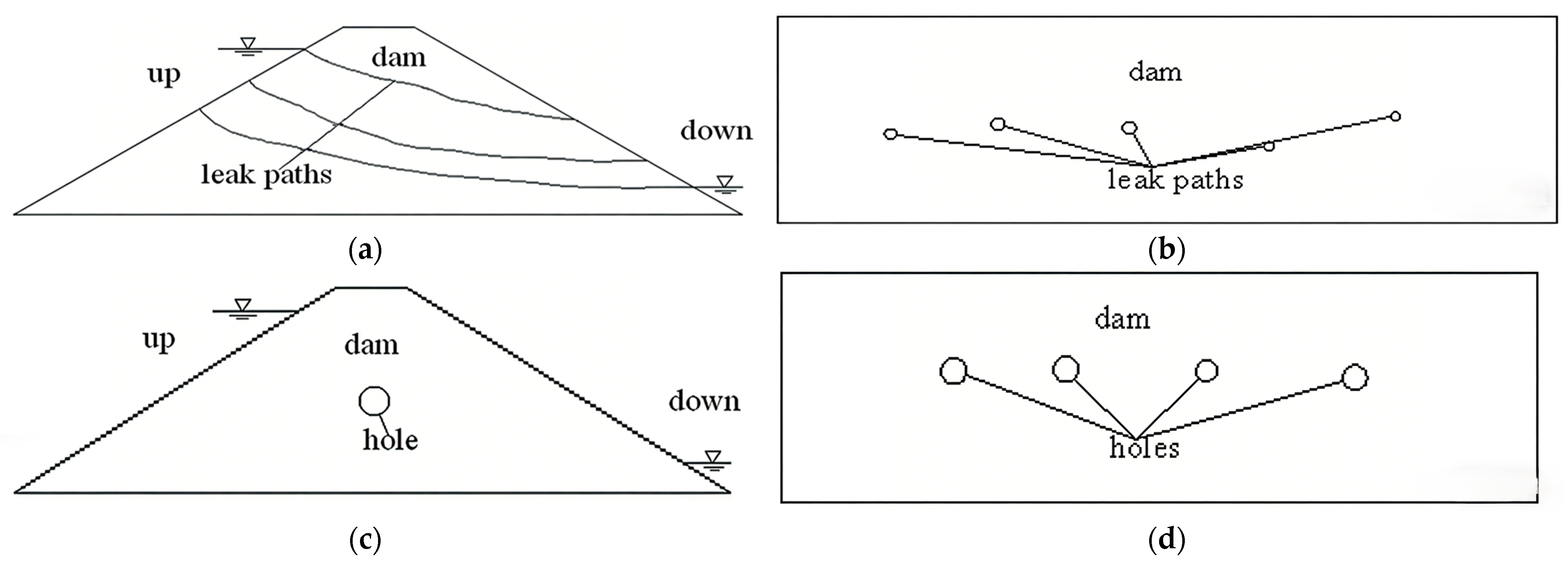
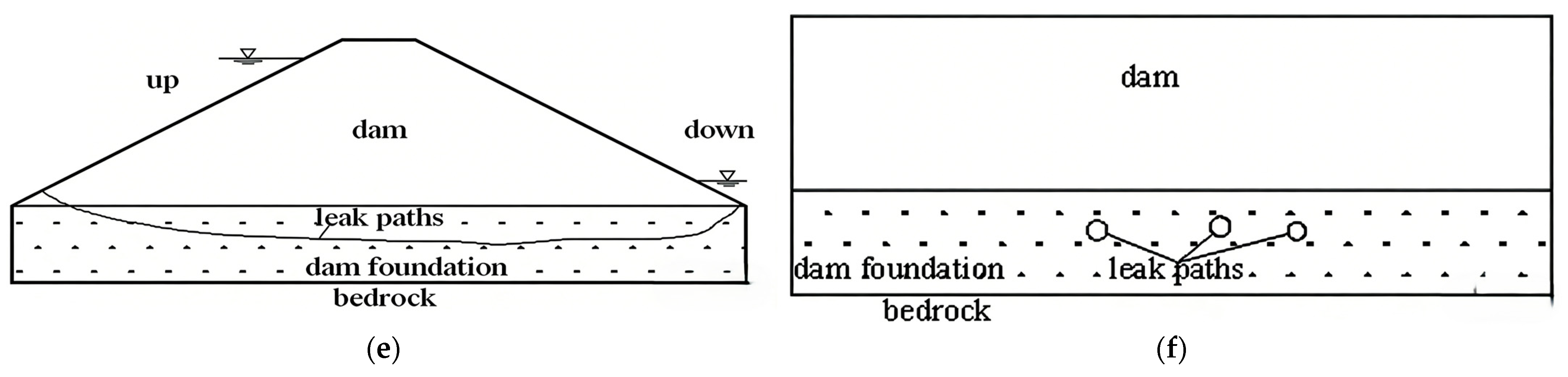
For homogeneous embankments, the embankment body and foundation can be approximately regarded as a continuous medium, and internal hazards are mainly manifested as local anomalies in elastic parameters. Based on engineering practice, three typical types of hazards are conceptualized in this study, including embankment leakage zones, cavities within the embankment body, and leakage in the foundation. All of these are represented as low-velocity anomaly bodies.
As illustrated in Figure 1a,b, seepage within the dam is modeled as a continuous low-velocity anomaly distributed along a specific direction inside the dam body, representing the loosening of the medium and the reduction in stiffness within seepage channels and their influence on reflection-wave propagation. In Figure 1c,d, cavities within the dam are simplified as isolated low-velocity anomalies. The reduction in elastic parameters reflects the weakening effect of cavities on wave impedance, while their size and burial depth are adjustable to investigate imaging responses under different cavity conditions. As shown in Figure 1e,f, foundation seepage is represented as a low-velocity anomalous zone located either at the dam–foundation interface or within the foundation itself, describing the influence of seepage channels on reflection-wave propagation paths and travel-time characteristics. These simplified models mainly focus on the steady-state imaging responses after hazard formation and provide a unified physical modeling basis for reflection-wave forward modeling and inversion analysis.

3.2. Conceptual Model of Hidden Hazards in Core-Wall Embankment

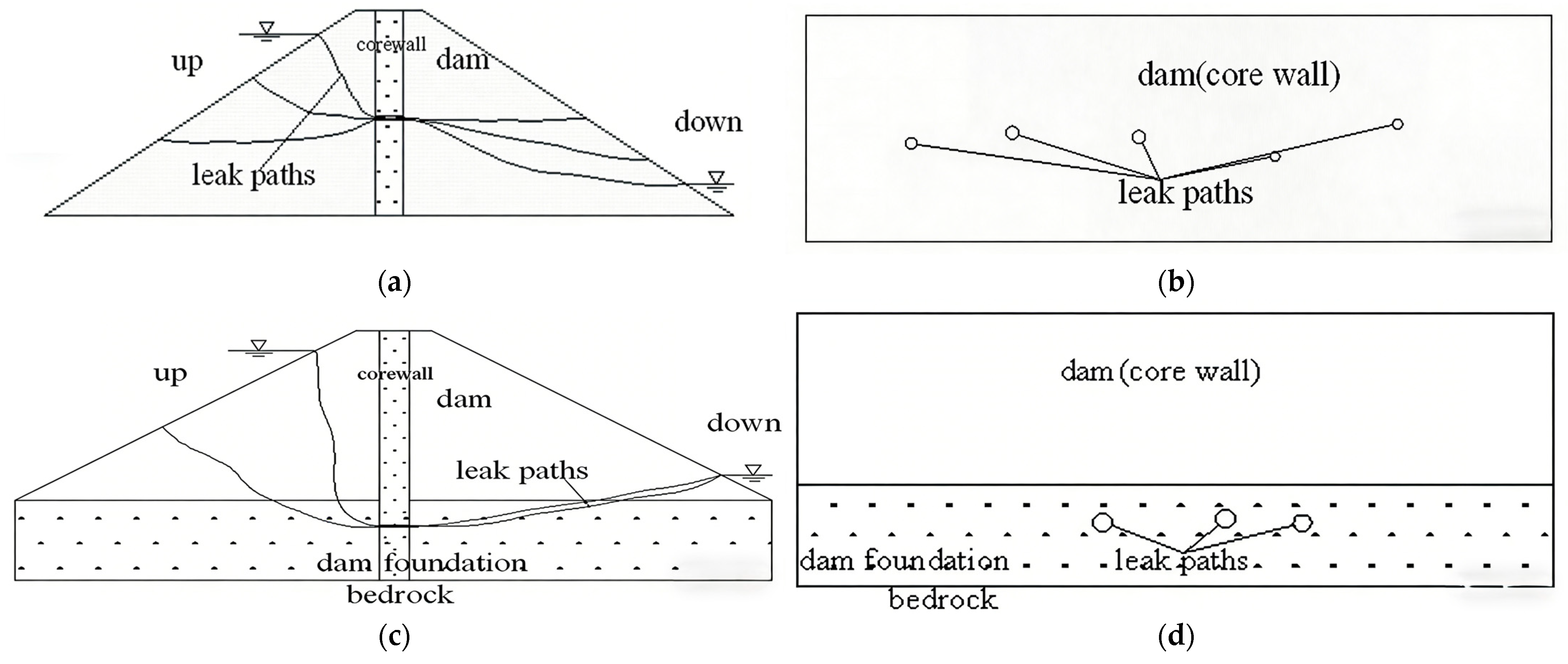
The impermeability of core-wall dams is primarily governed by the integrity of the core wall, and the characteristics of potential defects and their imaging responses differ markedly from those observed in homogeneous embankment dams. Considering the structural features of core-wall dams, this study establishes simplified models for two typical hazards: dam-body seepage and foundation seepage. As illustrated in Figure 2a,b, dam-body seepage is represented by a low-velocity anomaly penetrating the core wall, simulating the influence of cracks or weakened zones within the core wall on reflection-wave propagation. In Figure 2c,d, foundation seepage is simplified as a low-velocity anomalous zone within the foundation. Its spatial position may either connect with the core-wall defect or exist independently, allowing the investigation of variations in reflection-wave propagation paths and travel-time characteristics under different seepage channel scenarios. These models provide a unified physical framework for analyzing reflection-wave imaging responses in core-wall dams under different seepage conditions.

4. Reflection-Wave Imaging Diagnosis of Embankment Hazard

4.1. Reflection Imaging Results of Hidden Hazards in Homogeneous Embankment

To evaluate the applicability of the reflection-wave imaging method in identifying hidden hazards within homogeneous embankments, a representative numerical model was constructed. Three working conditions were simulated, including an intact embankment without defects, an embankment with a through-type leakage channel, and an embankment containing a locally loose zone. The longitudinal wave velocity of the background medium was uniformly set to Vp = 2000 m/s. Hidden hazard zones were represented by locally reduced velocities to characterize the weakened structural properties of the medium.

4.1.1. Forward Simulation of Reflection Waves in Intact Homogeneous Embankment

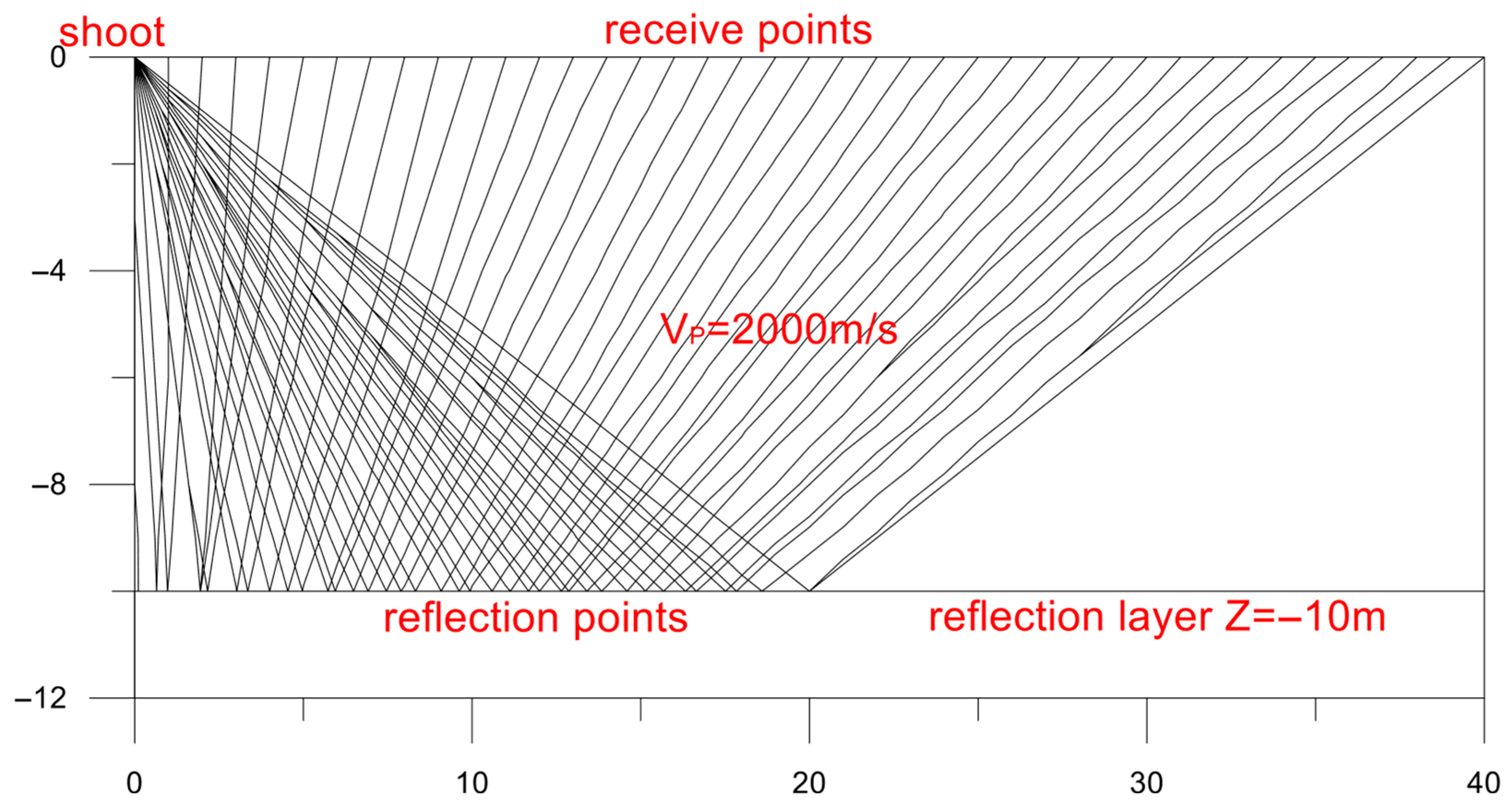
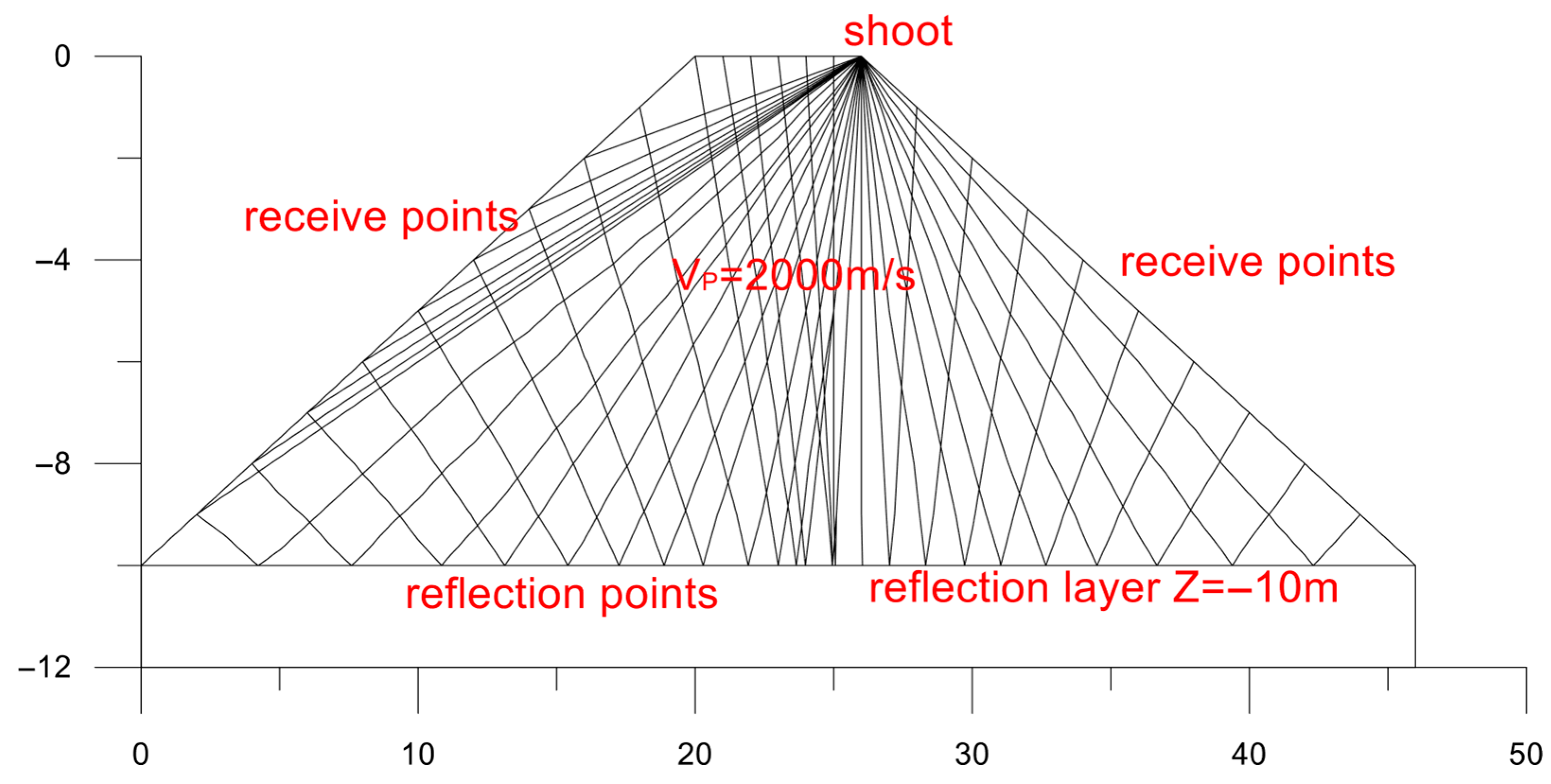
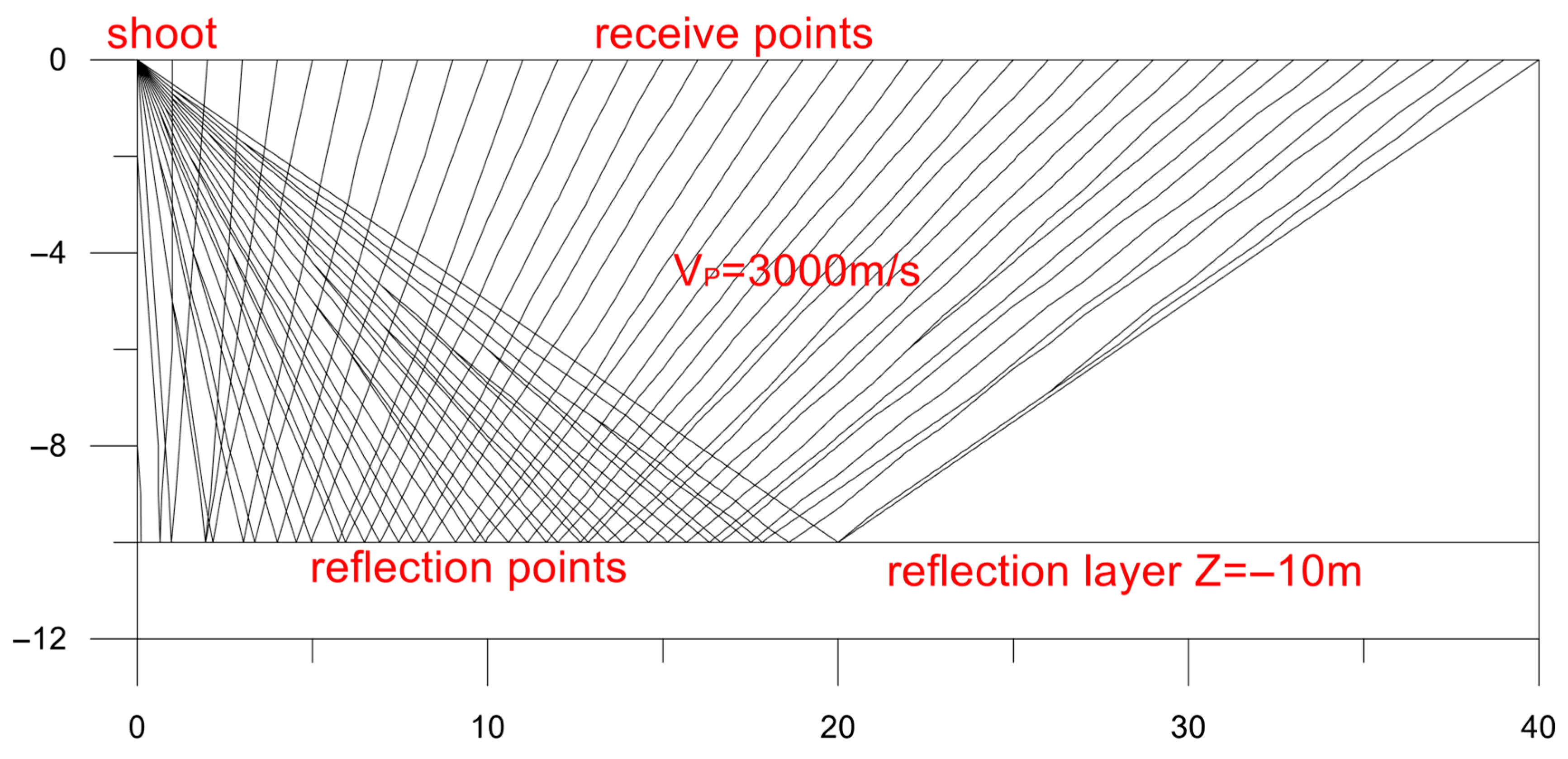
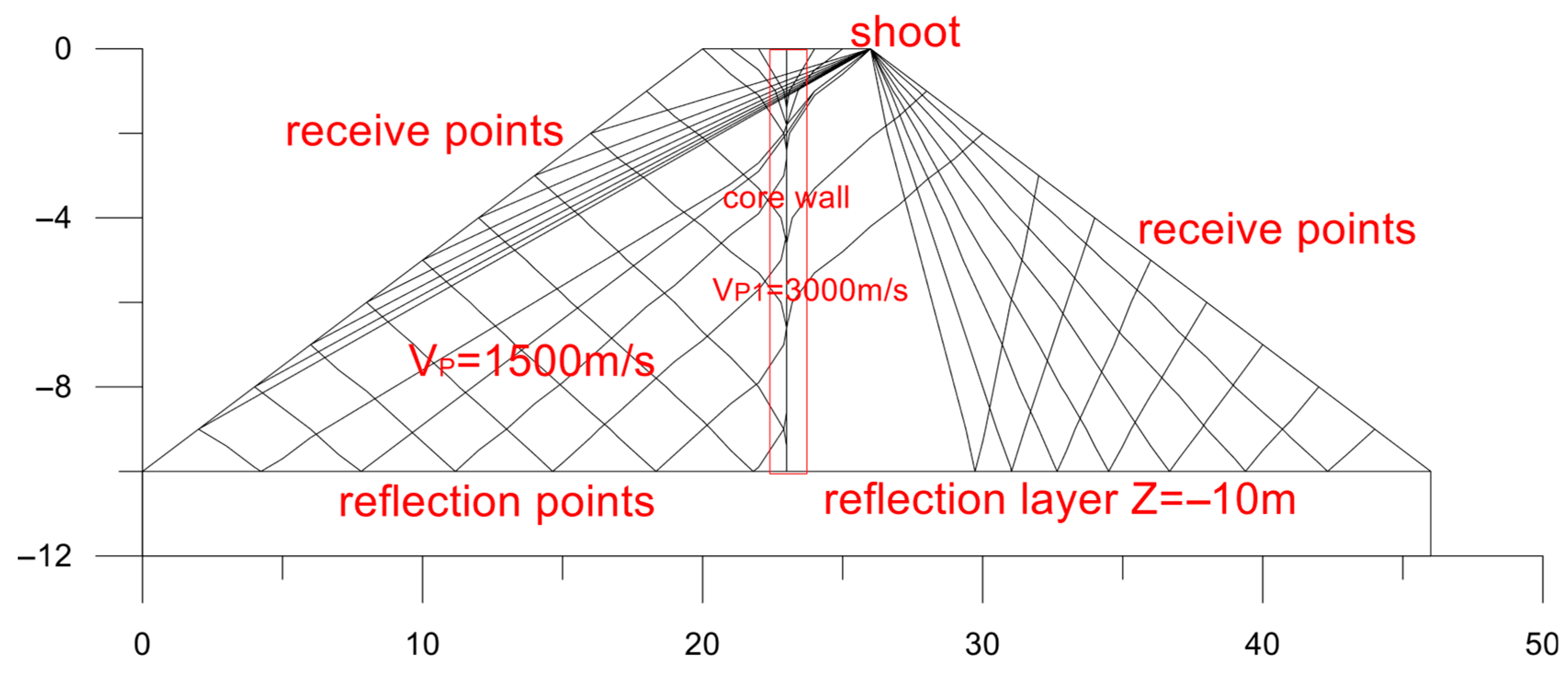
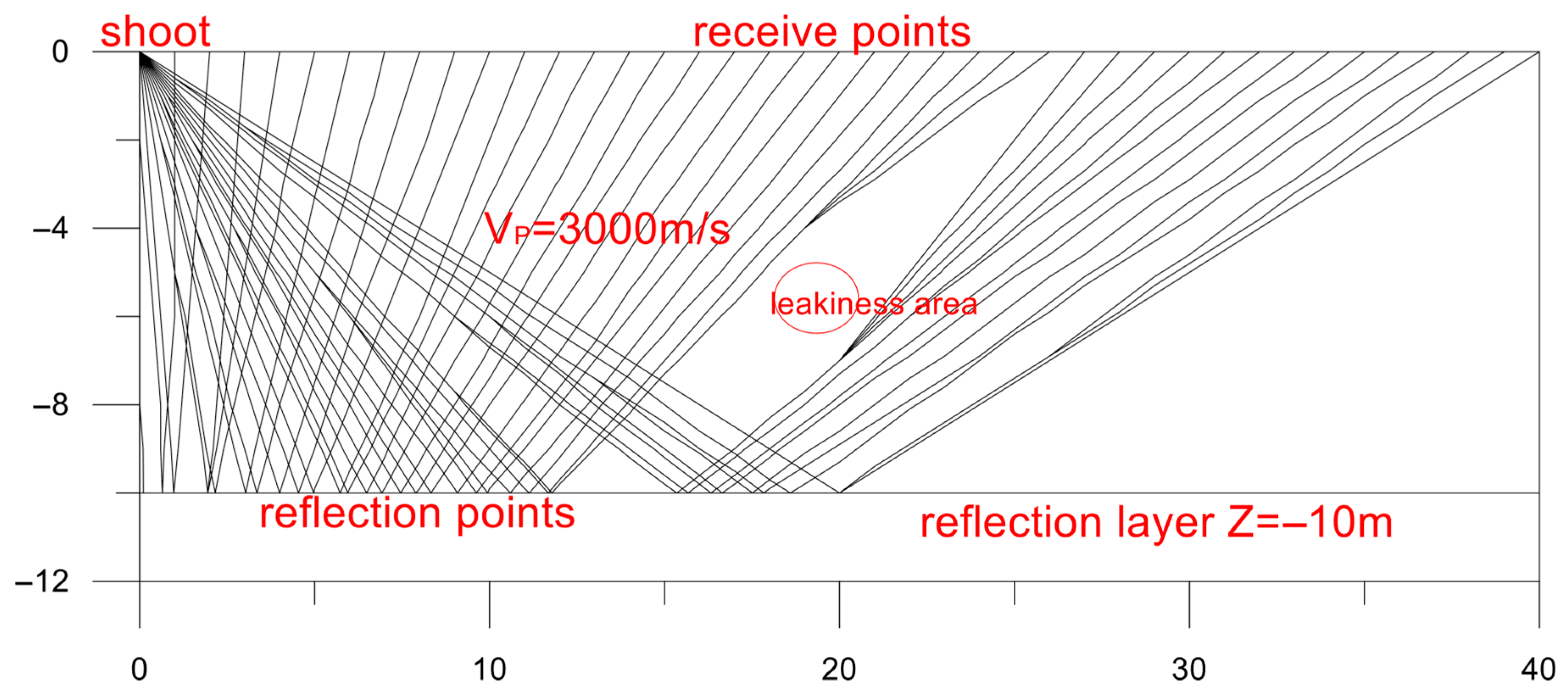
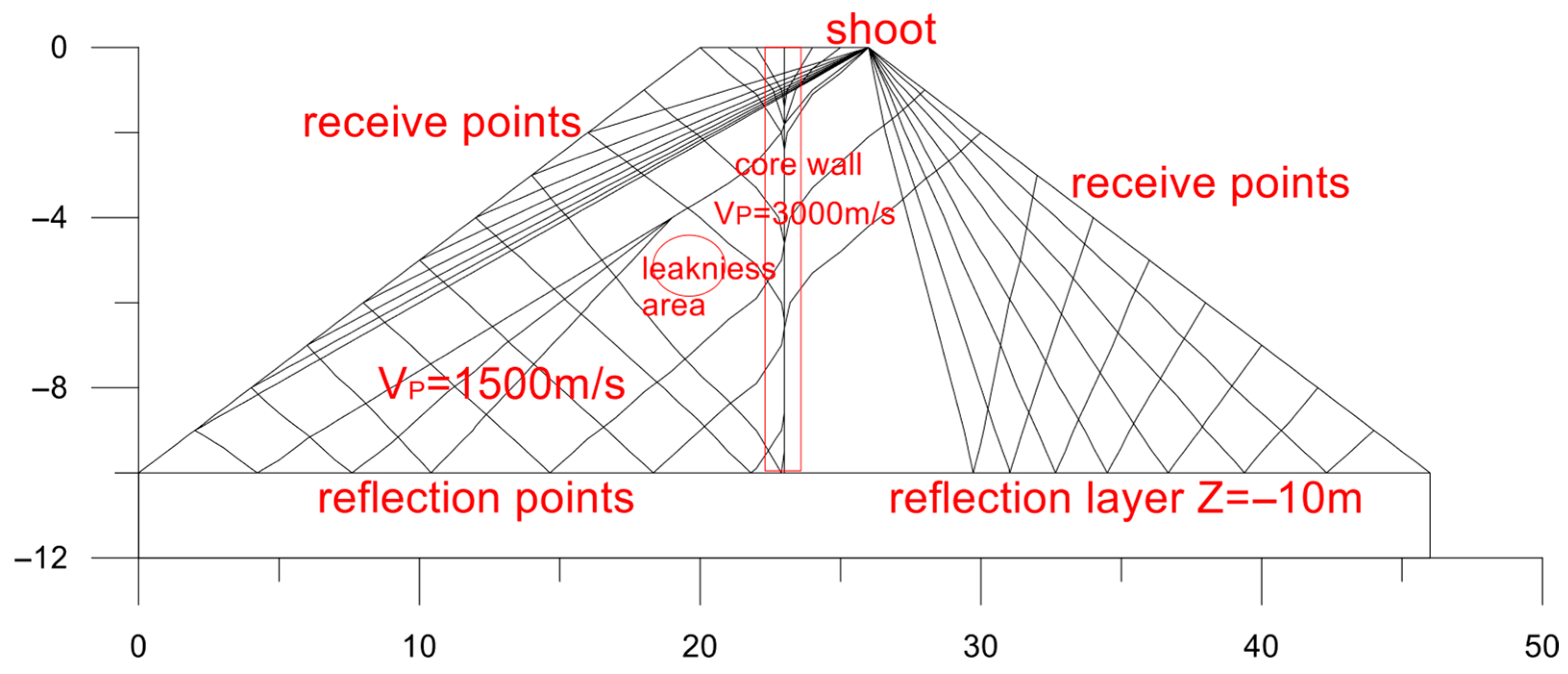
Under the condition without hidden hazards, forward modeling of reflection waves was performed for both the longitudinal and cross-sectional models of the embankment. The longitudinal model had dimensions of 40 m × 10 m. The seismic source was placed at one end of the dam crest, and geophones were evenly arranged along the surface of the dam crest. The cross-sectional model adopted a trapezoidal shape with a dam crest width of 6 m, a dam base width of 46 m, a height of 10 m, and a slope ratio of 1:2. The source was located at the center of the dam crest, and geophones were distributed along the outer surface of the embankment. The reflection interface was defined at the contact boundary between the embankment and the foundation (Z = −10 m), and the influence of downward extension of the foundation was also considered.
The results of forward ray tracing are shown in Figure 3 and Figure 4. Since the wave velocity within the embankment medium was uniformly distributed, the ray paths exhibited regular and symmetric patterns. The travel times varied smoothly and continuously with offset distance, without any anomalous distortion or clustering phenomena. The simulated travel times were highly consistent with those of the initial model; therefore, inversion computation was not performed for this case. These results demonstrate that the adopted reflection-wave forward-modeling method exhibits good numerical stability under homogeneous medium conditions.

4.1.2. Forward and Inverse Simulation of Reflection Waves in Homogeneous Embankment Containing Leakage Channel

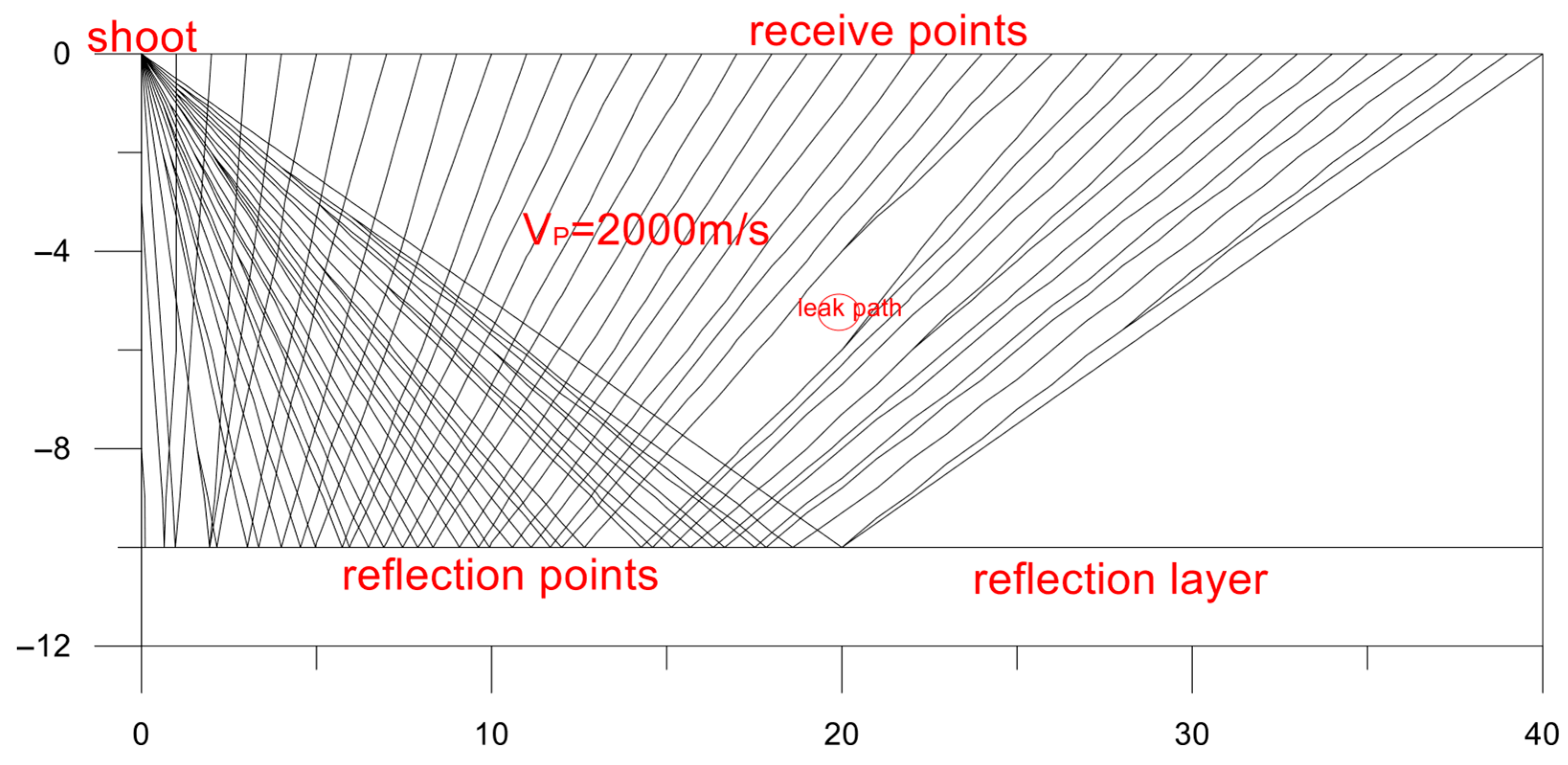
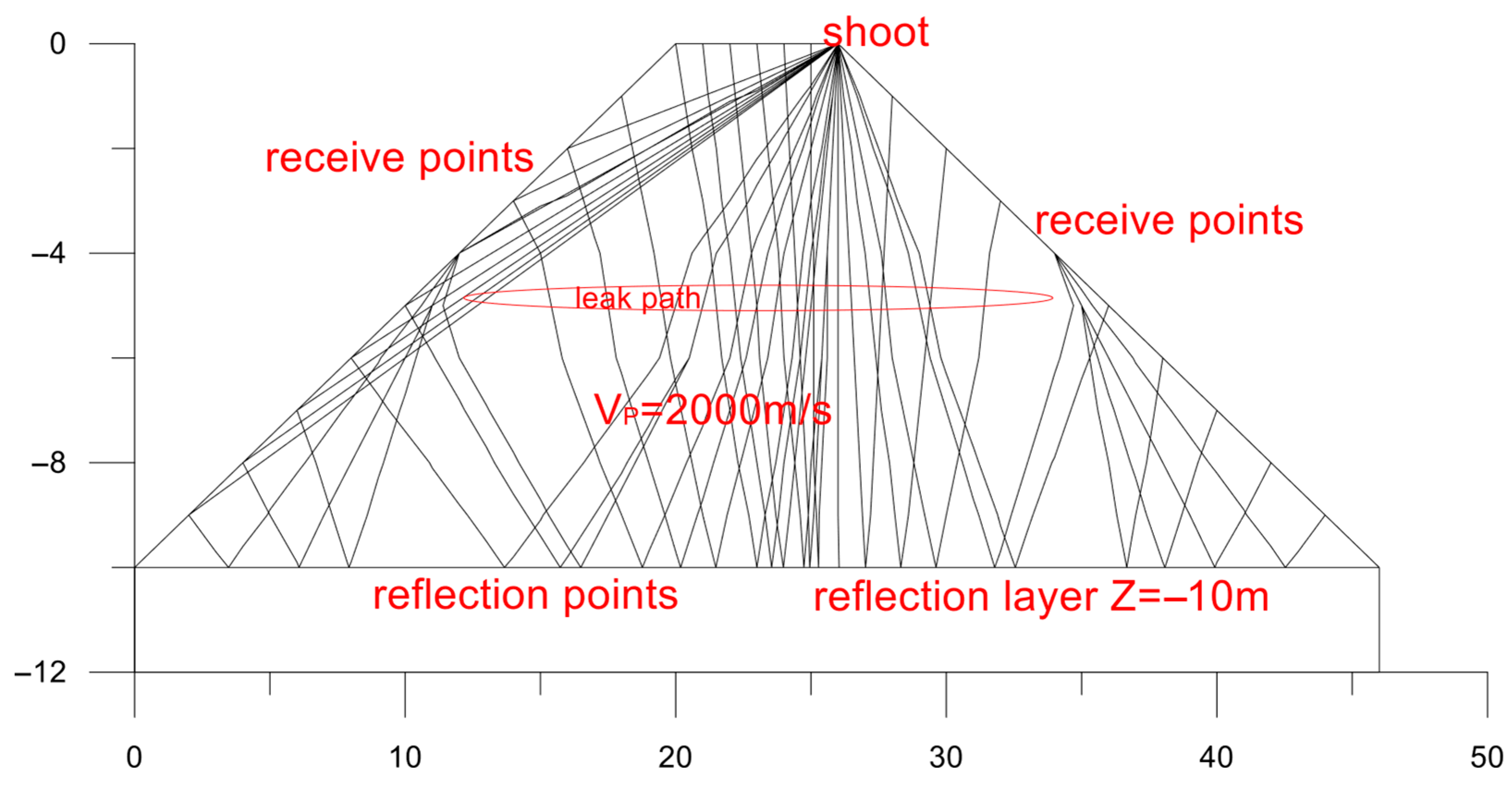
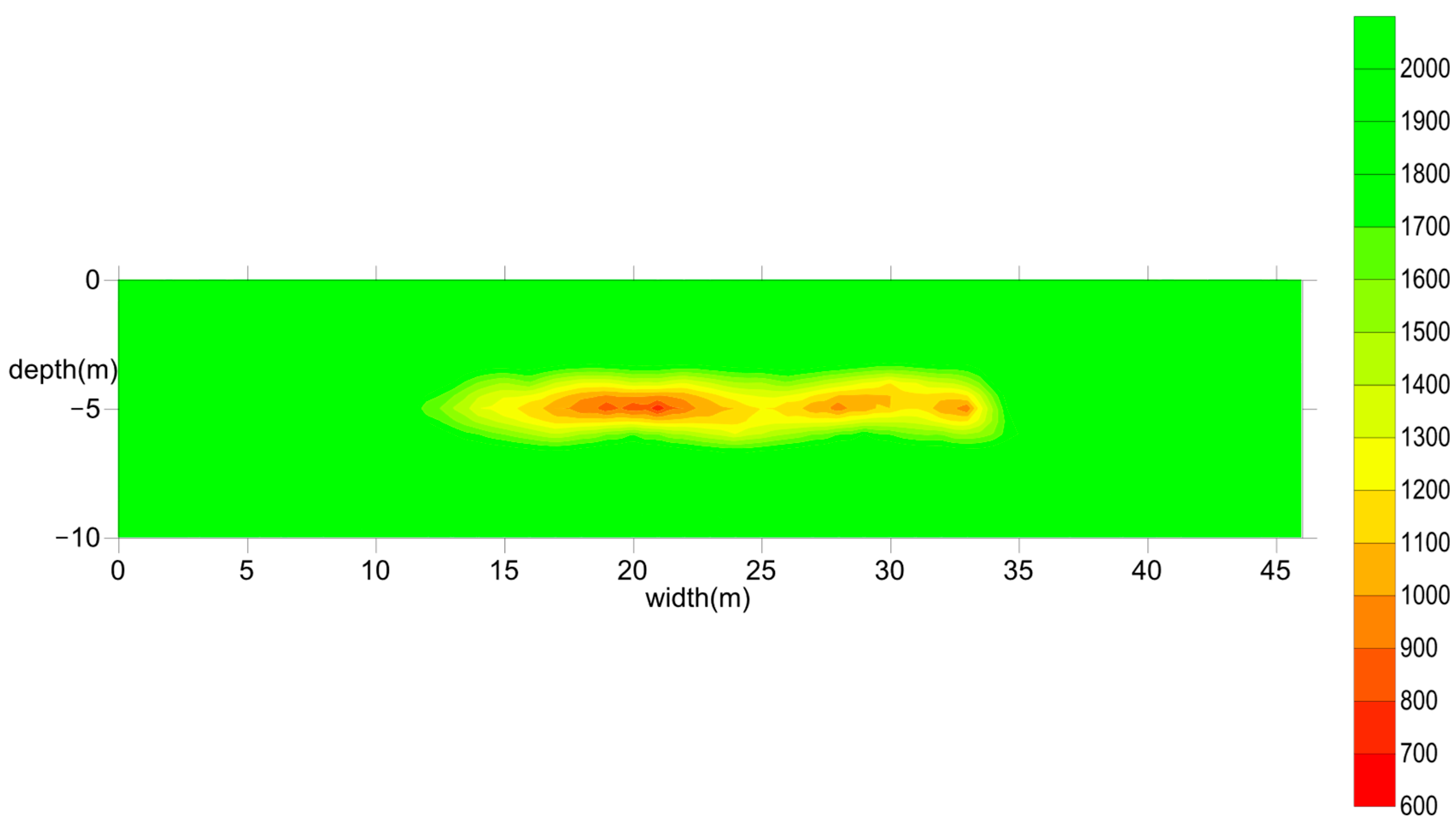
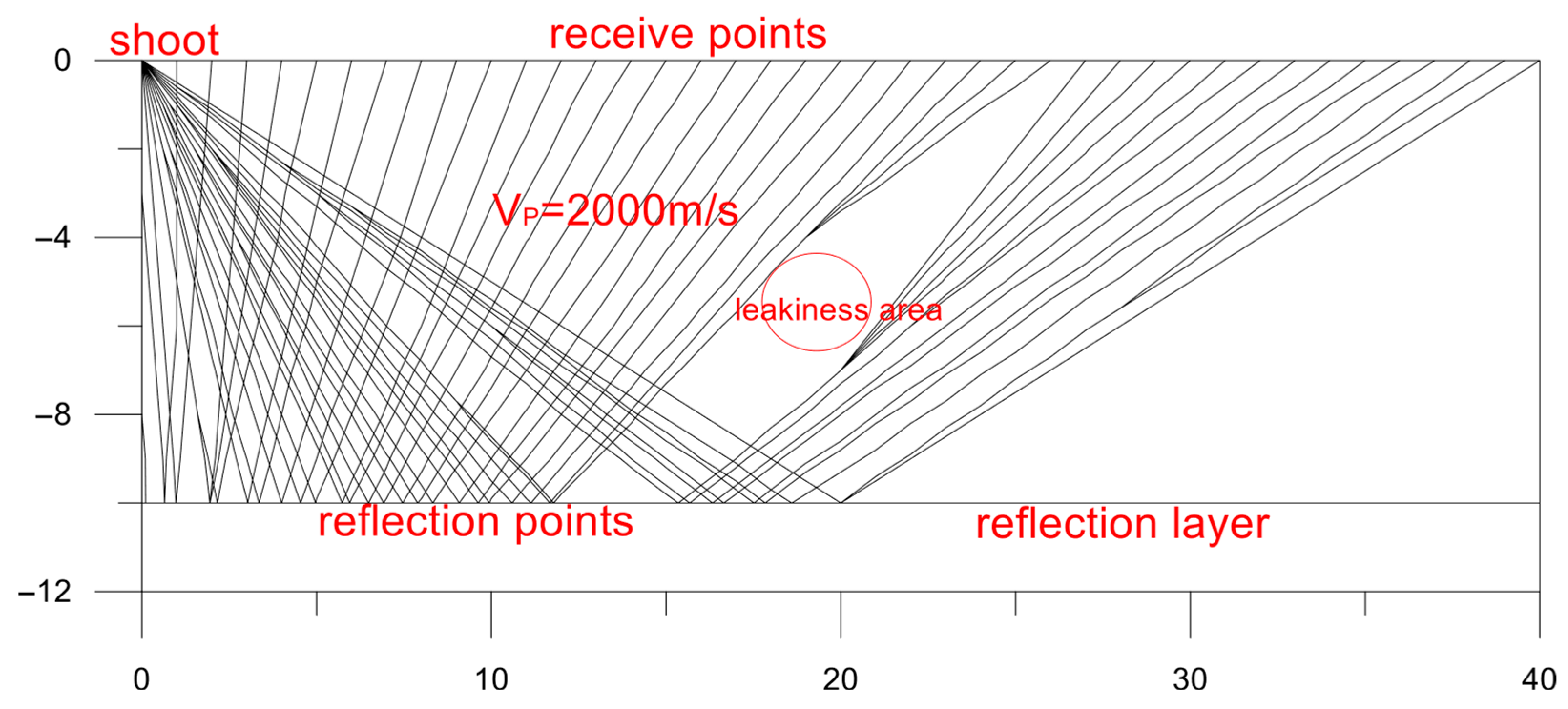
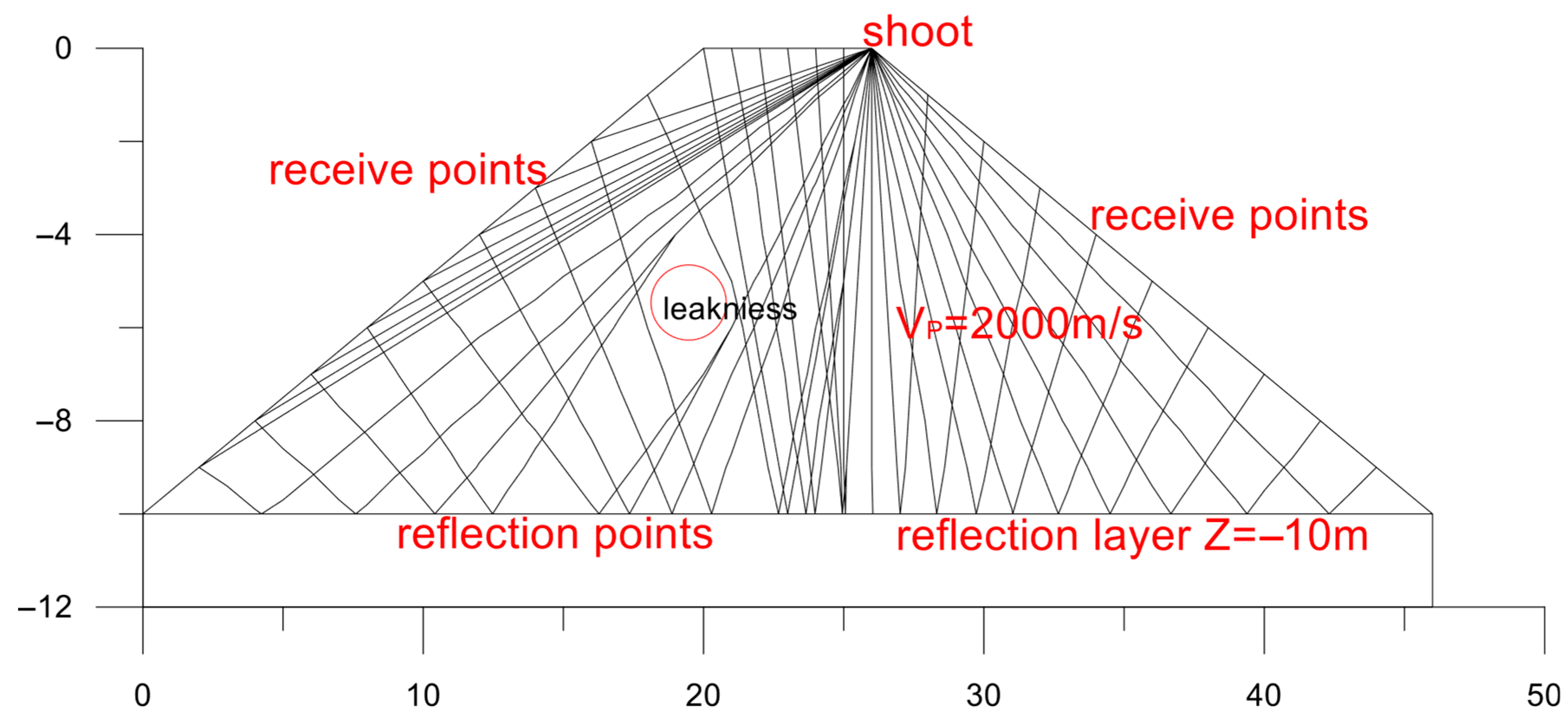
A through-type leakage channel was introduced into the homogeneous embankment model to simulate a typical leakage hazard within the embankment body. The leakage channel was located at the center of the embankment, with a longitudinal wave velocity of Vp = 500 m/s, while the rest of the embankment medium maintained Vp = 2000 m/s. Specifically, as shown in Figure 5 and Figure 6.
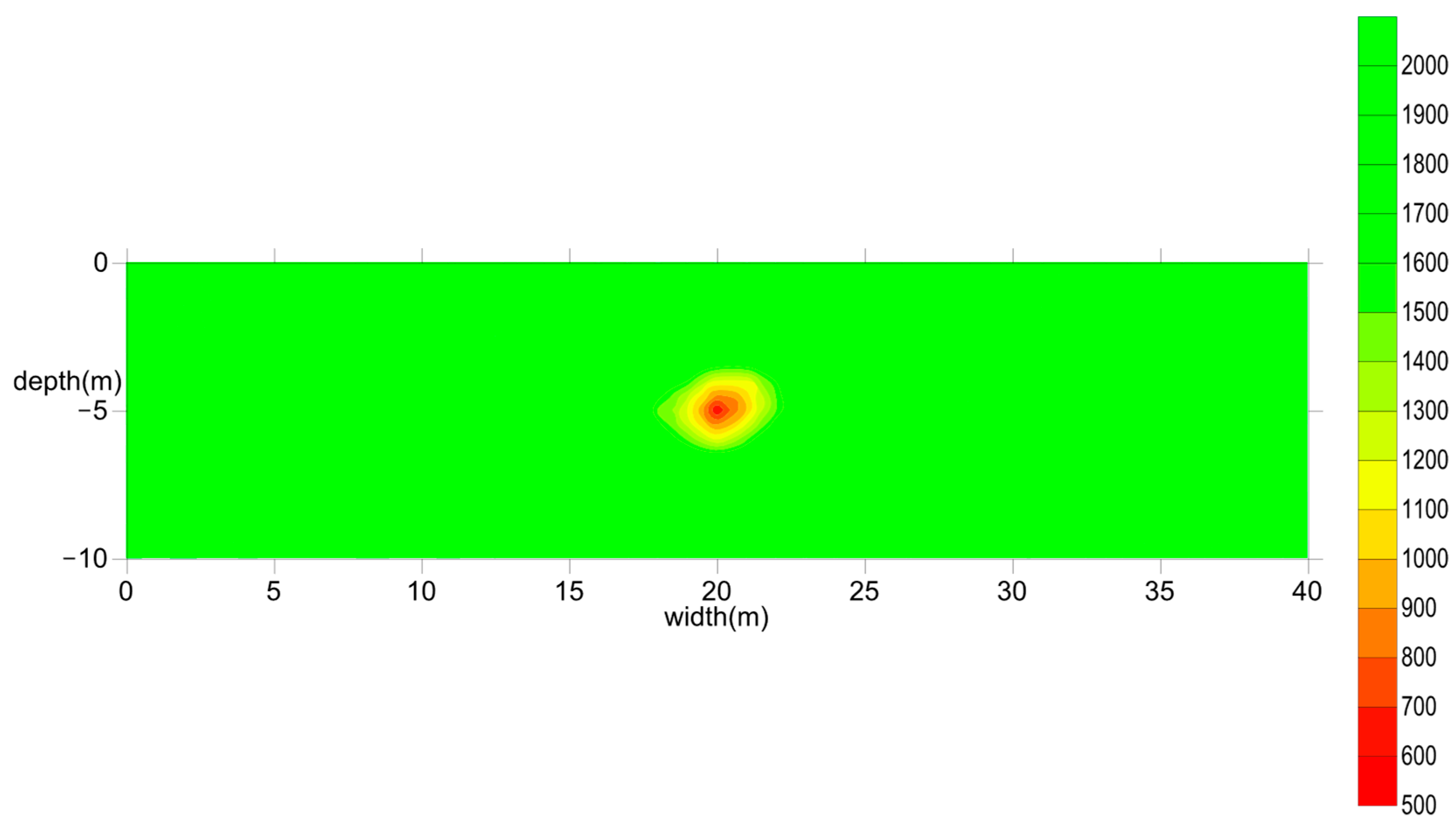
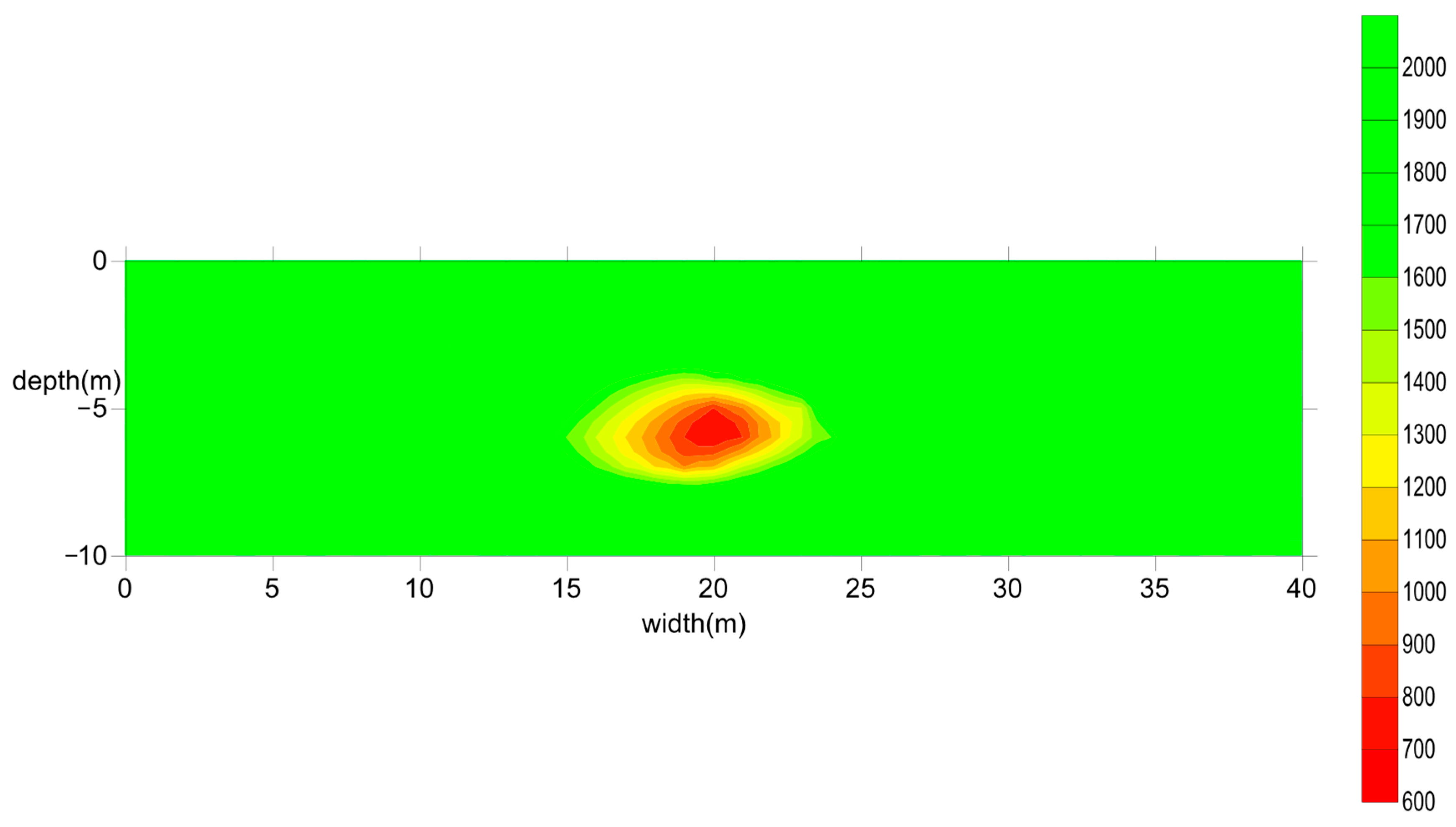
The forward-modeling results indicate that the reflection-wave ray paths exhibited distinct deflections near the leakage channel. Some rays propagated around the low-velocity zone, resulting in systematic travel-time delays for the corresponding reflections. Based on multi-source and multi-receiver reflection travel-time data, inversion imaging was performed using the Least Squares QR (LSQR) method. The coverage of ray paths was improved by interchanging the positions of the source and receiver, and the number of iterations was set to 20. The inversion imaging results are shown in Figure 7 and Figure 8, respectively.
The inversion results reveal a continuously distributed low-velocity anomaly zone within the embankment body, whose spatial position corresponds closely to the predefined leakage channel. The anomaly exhibits good longitudinal continuity, with only slight smoothing observed near the boundaries due to the effect of regularization constraints. Under cross-sectional conditions, the imaging results also clearly reflect the burial depth and geometric distribution of the leakage channel. Combining the longitudinal and cross-sectional results, it can be concluded that the reflection wave imaging method can stably identify through-type leakage hazards within homogeneous embankments.

4.1.3. Forward and Inverse Simulation of Reflection Waves in Homogeneous Embankment Containing Loose Zone

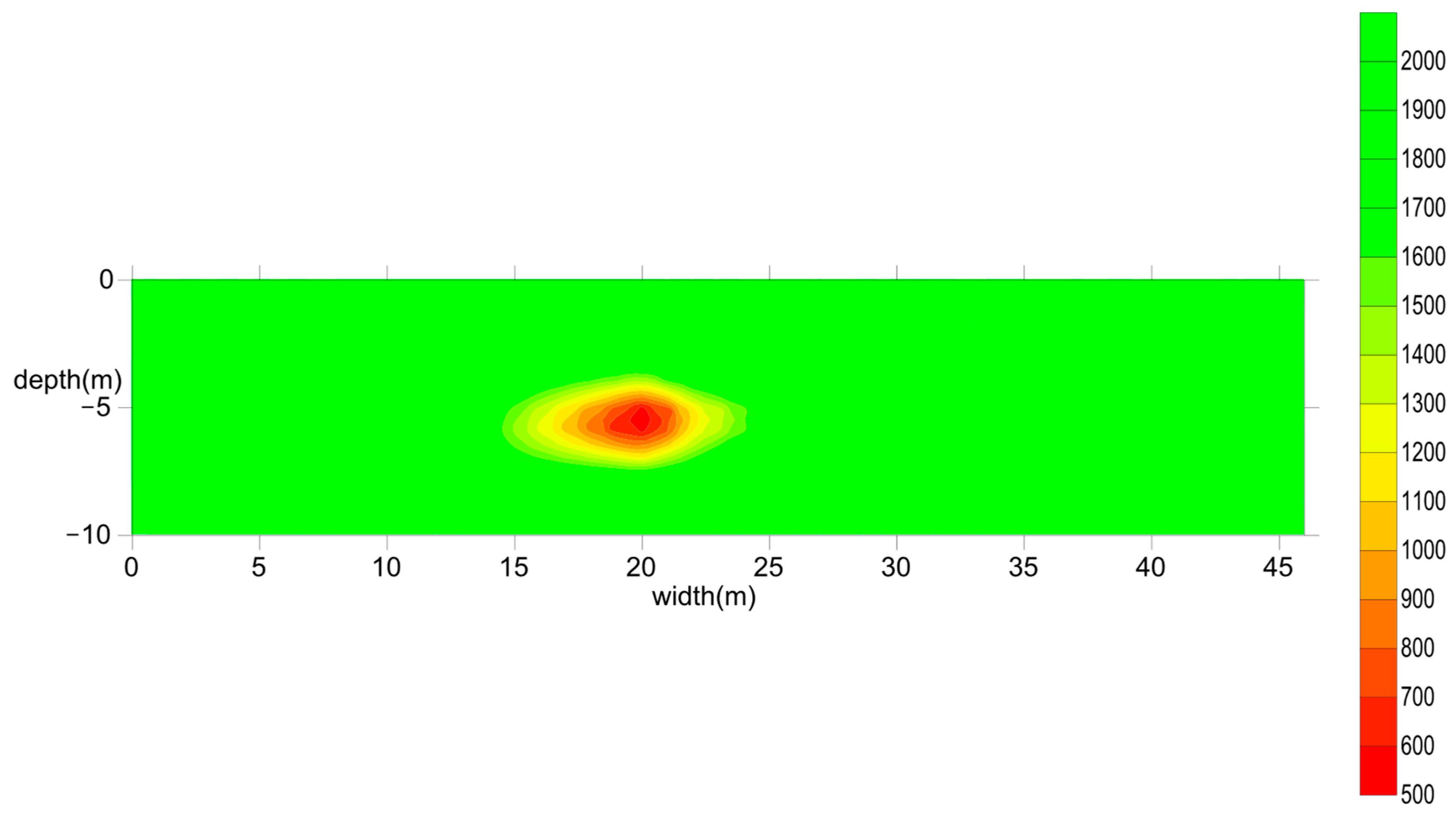
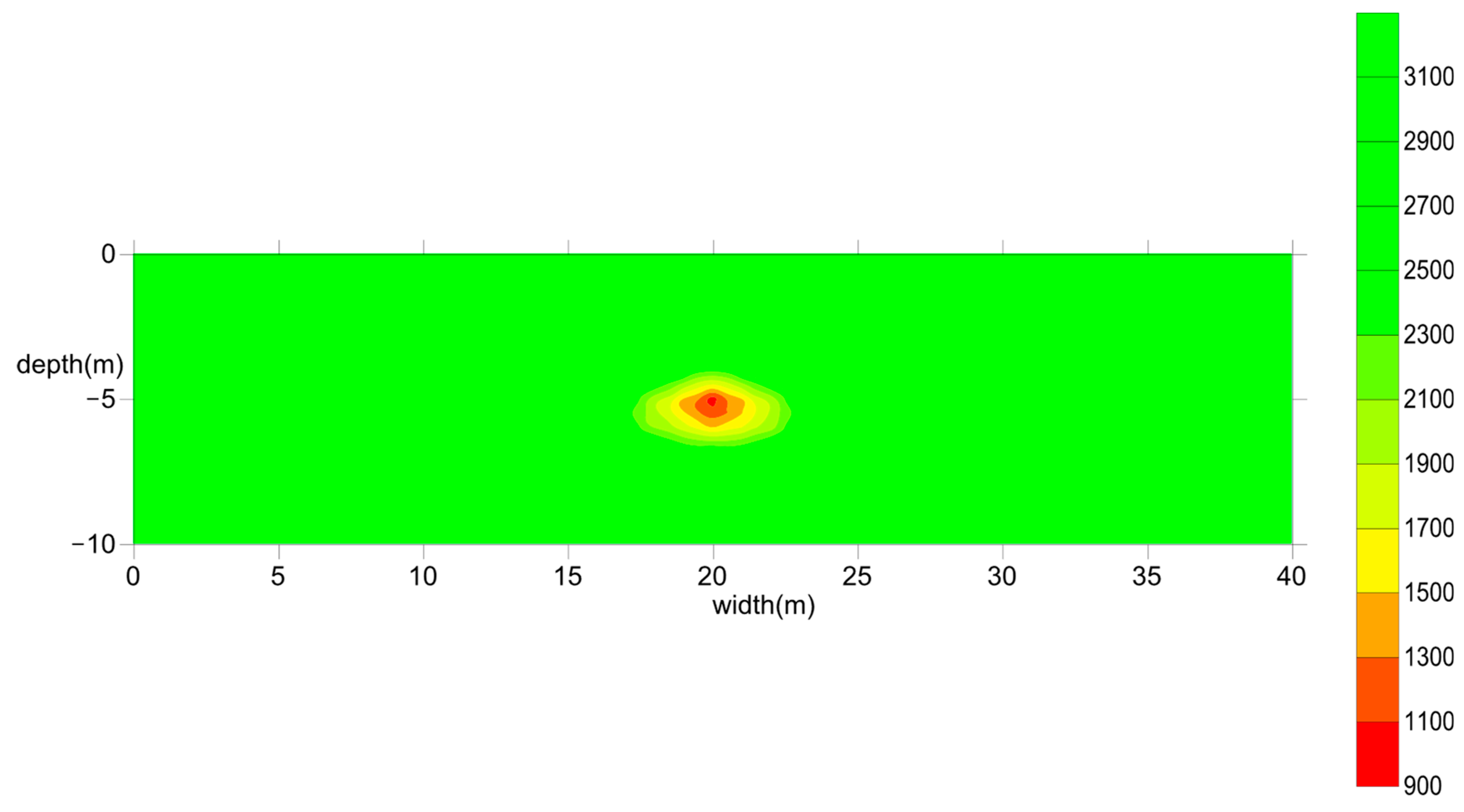
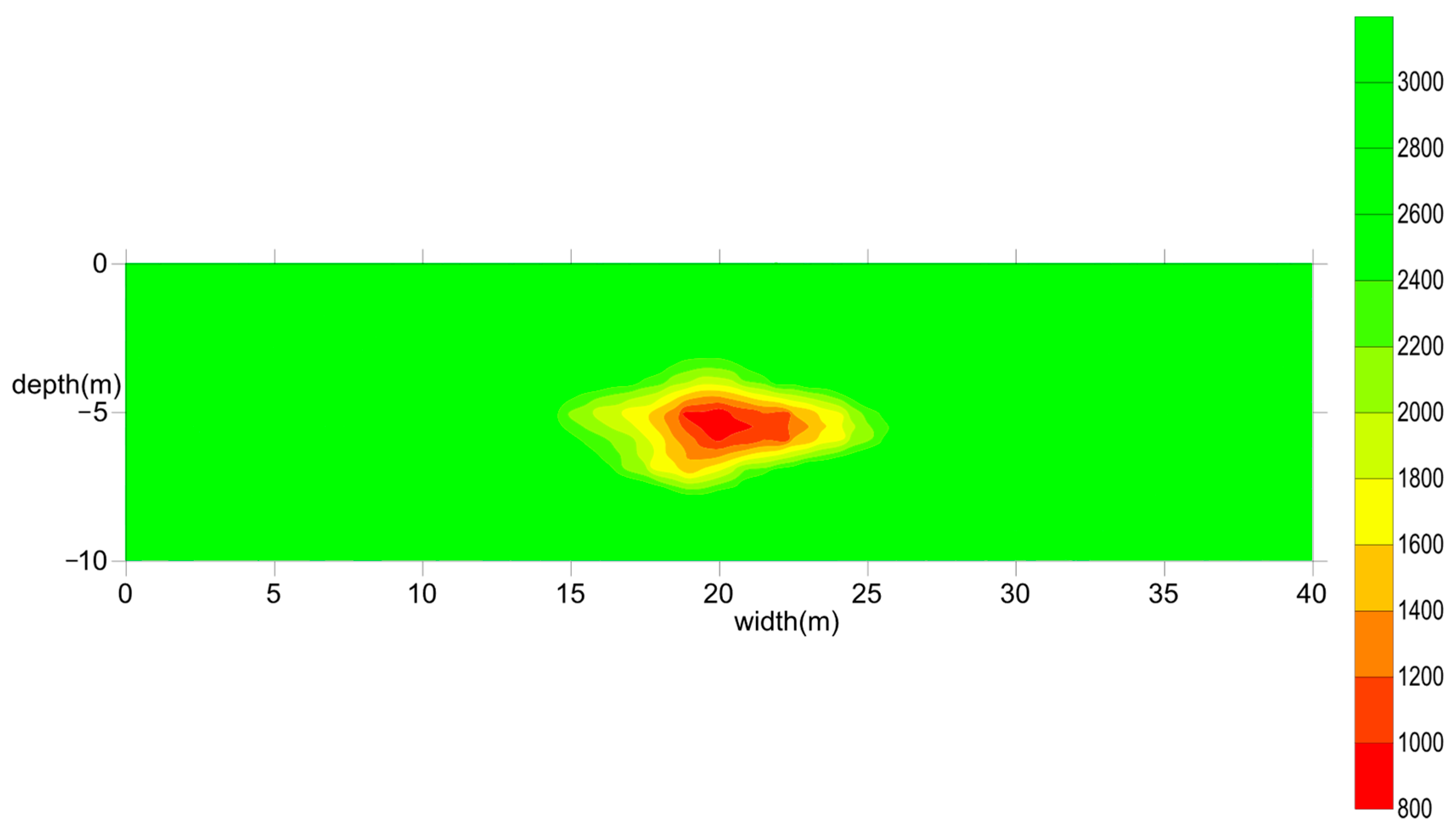
To simulate a locally loose defect caused by insufficient compaction, a finite-sized block-shaped low-velocity anomaly zone was introduced in the middle of the embankment. The longitudinal wave velocity inside the anomaly zone was set to Vp = 2000 m/s, while the background medium maintained Vp = 2000 m/s. The specific situation is shown in Figure 9 and Figure 10.
The forward ray tracing results show that reflection waves exhibit localized perturbations near the loose zone. The ray paths display a certain degree of deflection and scattering, but no significant bypassing phenomena were observed in the overall ray field. Using the same inversion strategy as described above, the imaging results were obtained as shown in Figure 11 and Figure 12.
In the inversion imaging results, the loose zone appears as a localized low-velocity anomaly, with its spatial position closely matching that of the theoretical model. However, the anomaly boundaries are relatively smooth, and the magnitude of the velocity reduction is slightly weakened, reflecting the combined influence of ray coverage and regularization constraints on the resolution of small-scale and isolated anomalies in reflection-wave imaging. The cross-sectional imaging results further indicate that the loose zone remains well identifiable under different observation conditions.
Comprehensive analysis indicates that, compared with the through-type leakage channel, the loose zone appears as a smaller-scale and less continuous low-velocity anomaly in the reflection imaging results. However, its spatial location remains clearly identifiable, demonstrating that the reflection-wave imaging method possesses a certain capability to distinguish different types of hidden hazards within homogeneous embankments.

4.2. Reflection Imaging Diagnosis of Hidden Hazards in Core-Wall Embankment

Compared with homogeneous embankments, core-wall embankments have more complex internal structures. The composition of the medium and the distribution of acoustic impedance exhibit significant heterogeneity. The propagation of reflection waves is jointly influenced by the core wall, the embankment fill, and the foundation materials. Conducting reflection-wave imaging simulations under such conditions helps to verify the applicability and stability of the method in complex engineering structures.

4.2.1. Forward and Inverse Simulation of Reflection Waves in an Intact Core-Wall Embankment

For comparative analysis, the overall geometric dimensions of the core-wall embankment model were kept consistent with those of the homogeneous embankment. The core wall was located at the center of the embankment with a width of 1 m, and its longitudinal wave velocity was set significantly higher than that of the surrounding embankment fill to represent the high compaction characteristics of the core wall material. No hidden hazard anomalies were introduced within the embankment or the foundation under this condition.
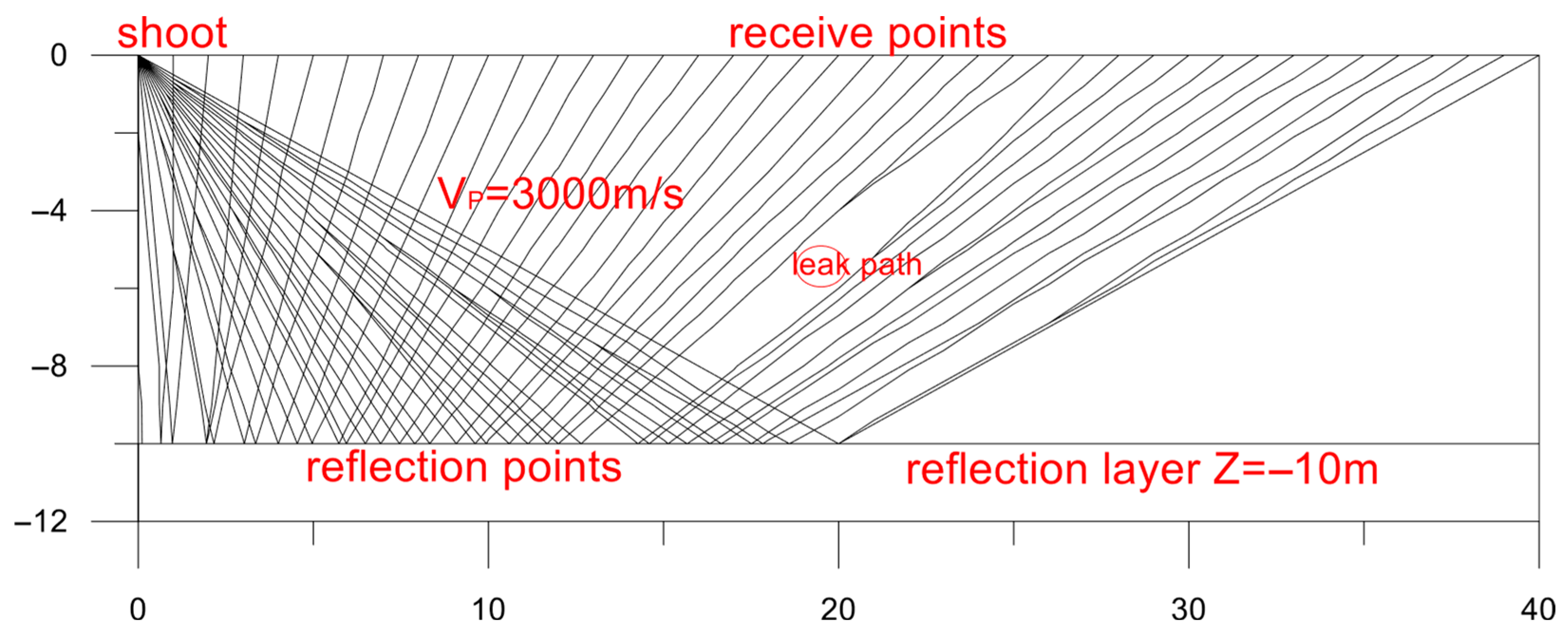
In the longitudinal view, the model dimensions were 40 m × 10 m, and the reflection interface was positioned at the contact boundary between the embankment and the foundation. The longitudinal wave velocity of the core wall was set to Vp = 3000 m/s, while the surrounding embankment fill was assigned Vp = 1500 m/s. Since the medium parameters within this view remained consistent along the section direction, the forward ray paths were uniformly distributed, and the travel-time variations were smooth. Therefore, no inversion imaging analysis was performed for this case. The specific situation is shown in Figure 13 and Figure 14.
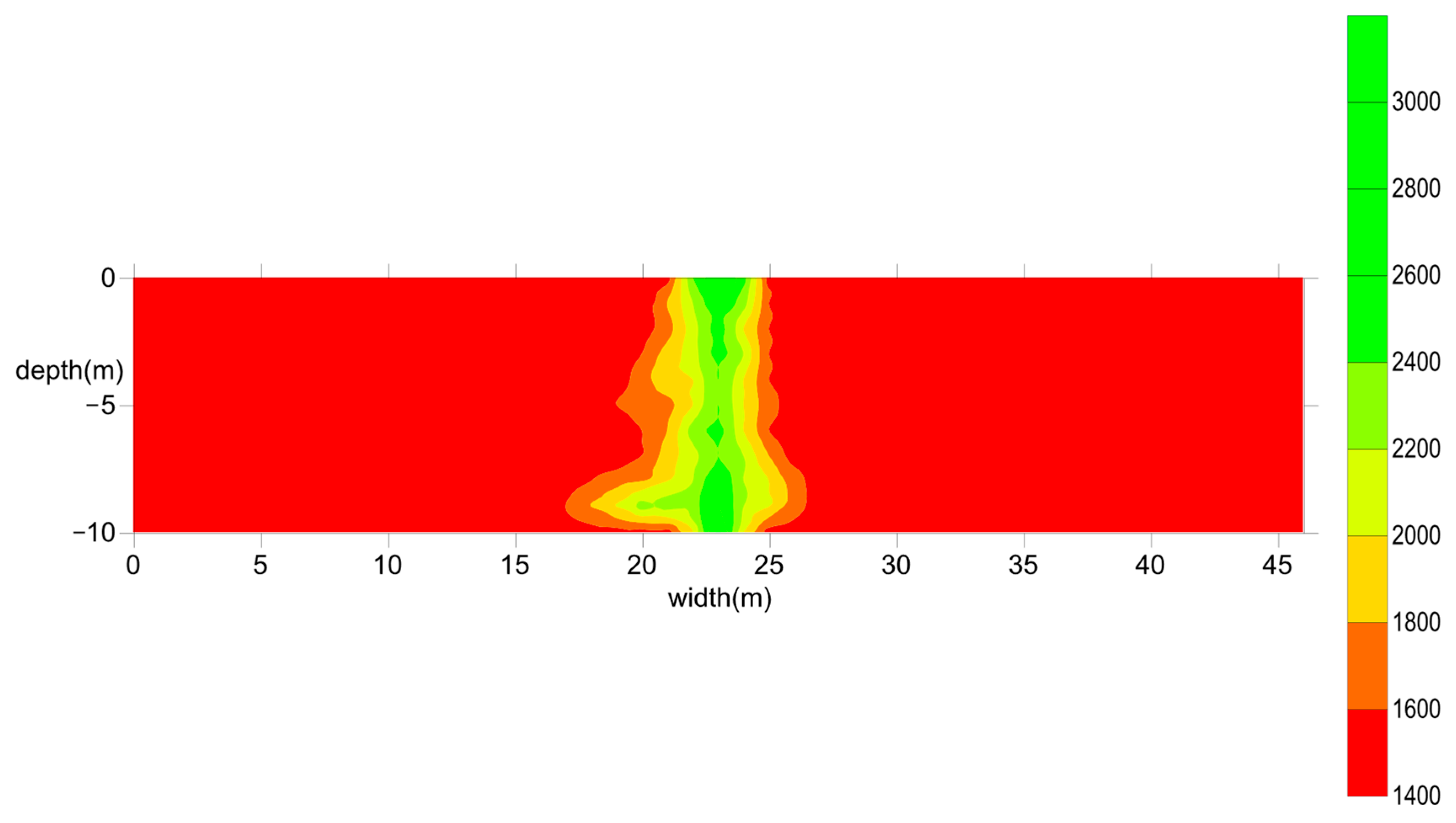
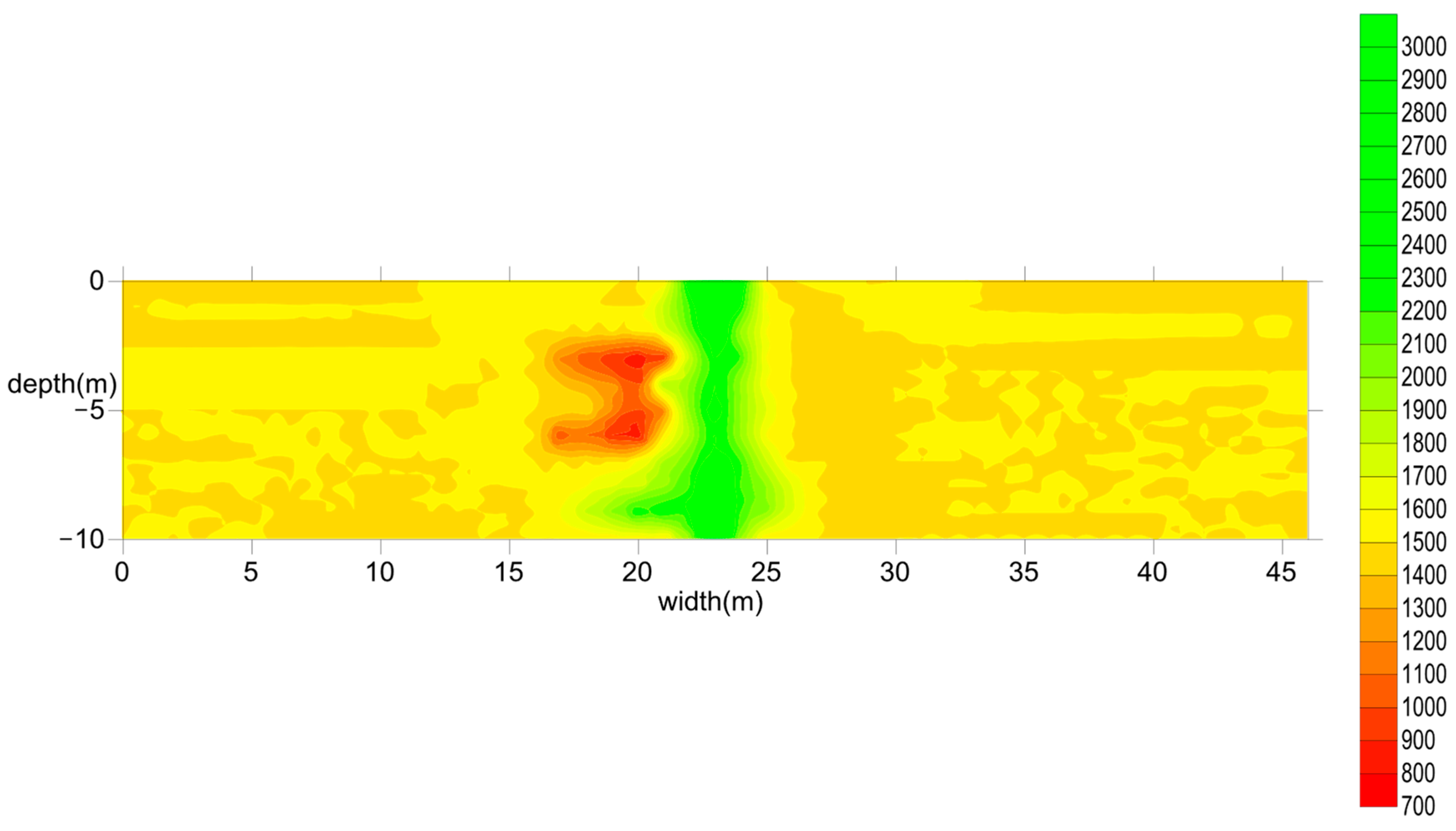
Under the cross-sectional condition, the forward ray tracing results show that reflection waves undergo a certain degree of deflection near the high-velocity core-wall structure, while the overall ray field remains continuous and stable. Based on multi-source and multi-receiver travel-time data, inversion imaging was performed using the LSQR method with 20 iterations. The resulting image is shown in Figure 15. The high-velocity core-wall structure is well reconstructed in the imaging section without any significant artificial anomalies, indicating that the reflection-wave imaging method exhibits good stability under intact conditions.

4.2.2. Forward and Inverse Simulation of Reflection Waves in Core-Wall Embankment Containing Leakage Channel

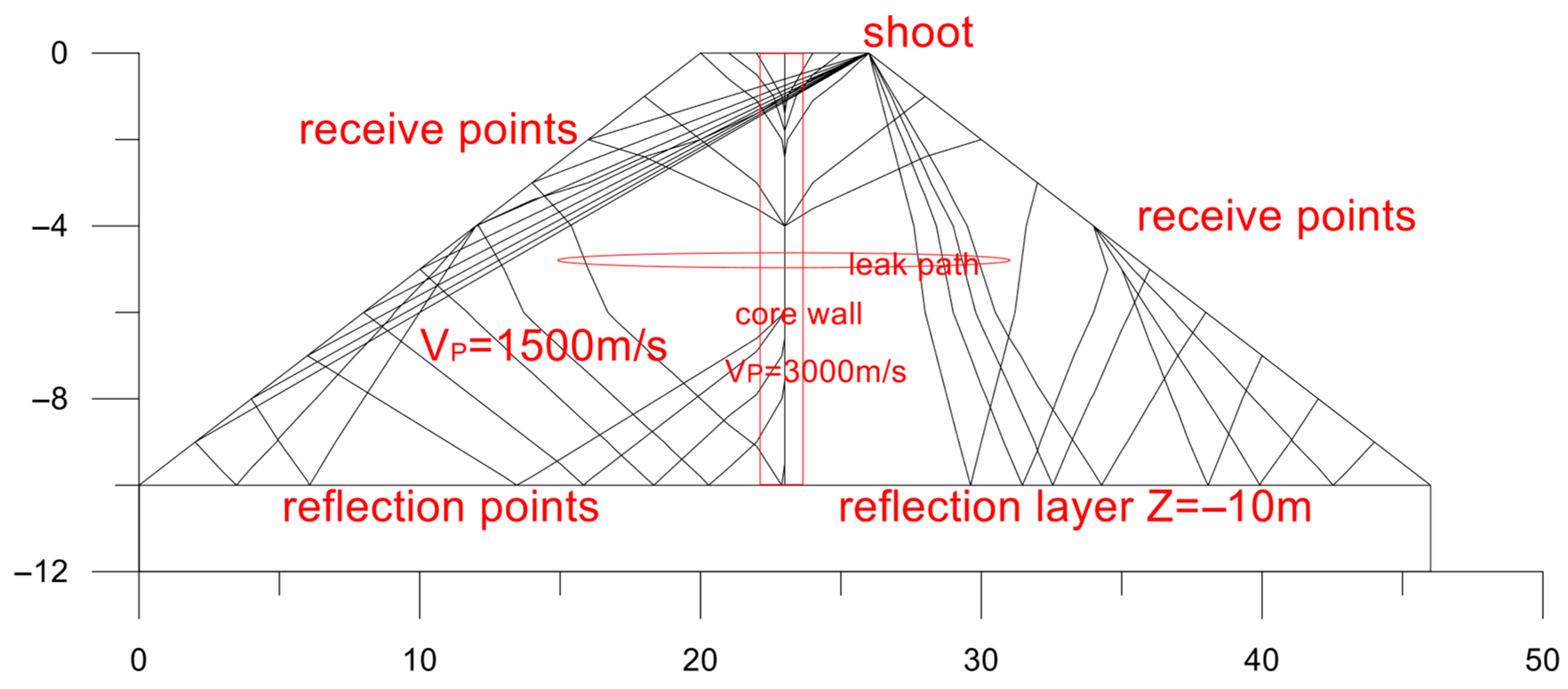
A through-type leakage channel was introduced into the core-wall embankment model to simulate leakage hazards caused by internal defects or cracks within the core wall. The leakage channel was located near the core wall, with a longitudinal wave velocity of Vp = 500 m/s, while the velocities of the core wall and the embankment fill were set to Vp = 3000 m/s and Vp = 1500 m/s, respectively.
The longitudinal forward-modeling results show that reflection waves exhibit significant deflection in the region of the core wall and the adjacent leakage channel. Some ray paths propagate around the low-velocity anomaly zone, resulting in systematic travel-time delays in the reflected waves (Figure 16). The inversion imaging results obtained using the LSQR method (Figure 17) reveal a continuously distributed low-velocity anomaly band near the core wall, with its spatial position closely matching that of the theoretical model. However, slight smoothing is observed along the lateral boundaries due to the influence of the high-velocity core wall.
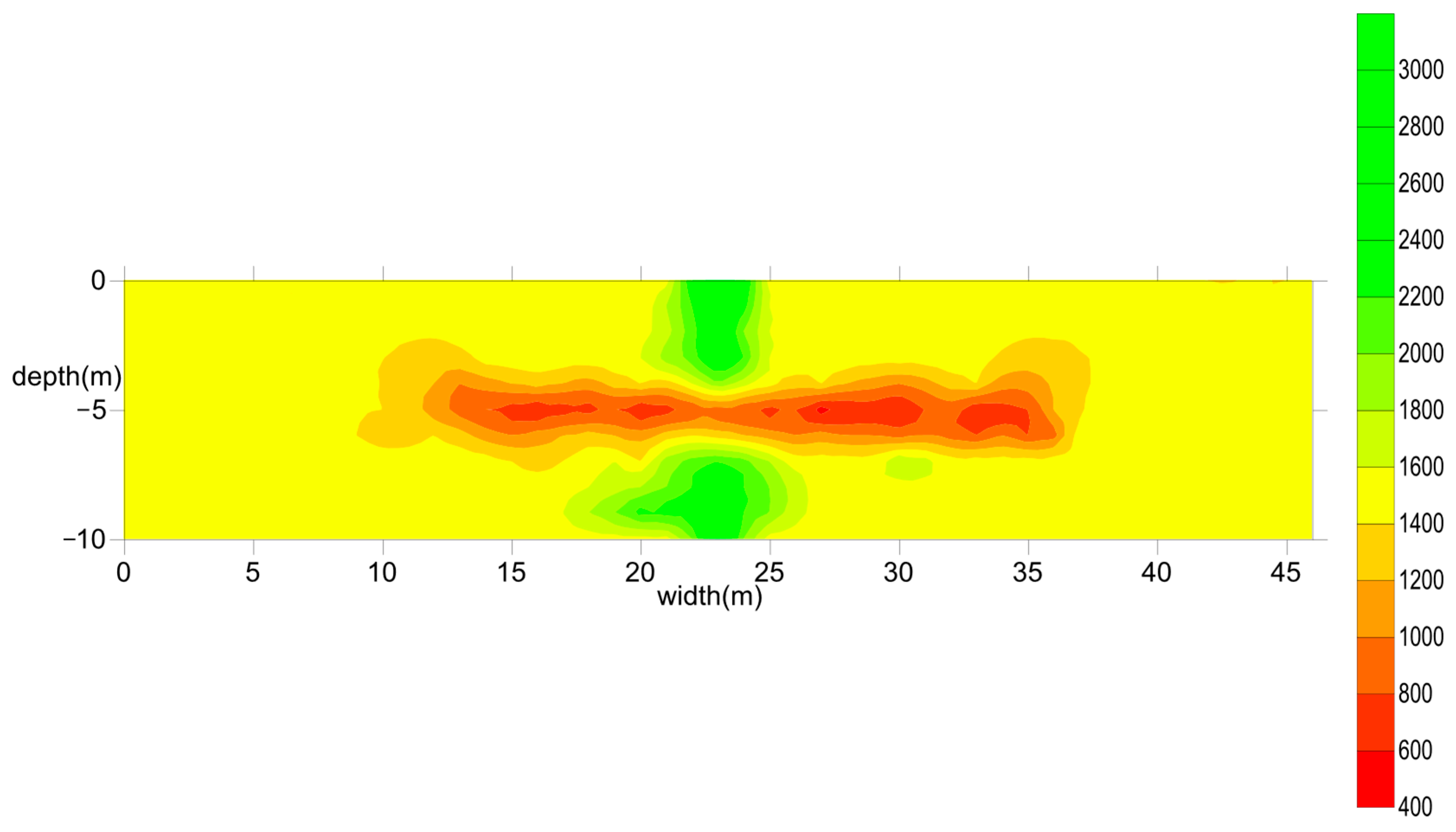
Under the cross-sectional condition, the propagation paths of reflection waves exhibit pronounced bending within the coupled region of the core wall and the leakage channel, resulting in an asymmetric distribution of ray coverage (Figure 18). The inversion imaging results (Figure 19) show that the leakage channel appears as a distinct low-velocity anomaly near the core wall, with its depth and spatial distribution closely matching those of the theoretical model. Overall, the results indicate that, even under the complex structural conditions of core-wall embankments, the reflection-wave imaging method can effectively identify the principal geometric characteristics of through-type leakage channels.

4.2.3. Forward and Inverse Simulation of Reflection Waves in Core-Wall Embankment Containing Loose Zone

To simulate a locally loose defect caused by insufficient compaction in a core-wall embankment, a finite-sized low-velocity anomaly body was introduced behind the core wall, with a longitudinal wave velocity of Vp = 500 m/s. This type of defect does not form a continuous leakage channel but weakens the local structural compactness.
The longitudinal forward-modeling results show that reflection waves exhibit localized perturbations near the loose zone. The ray paths display a certain degree of deflection and scattering, while the overall ray field remains continuous (Figure 20). The inversion imaging results (Figure 21) reveal a localized low-velocity anomaly behind the core wall, with its burial depth and position closely consistent with those of the theoretical model. However, the amplitude of the anomaly is weaker than that observed in the leakage channel condition.
The final cross-sectional ray diagram is shown in Figure 22. The cross-sectional imaging result (Figure 23) shows that the loose zone can still be identified as a localized low-velocity anomaly. However, its continuity and resolution are significantly reduced compared with the through-type leakage hazard, and it is more strongly affected by the high-velocity structure of the core wall.
Comprehensive analysis indicates that under the complex structural conditions of core-wall embankments, the reflection-wave imaging method exhibits differentiated response characteristics for different types of hidden hazards. Through-type leakage channels produce clear and continuous imaging results, whereas loose zones tend to appear as localized and weak-amplitude anomalies. This difference provides an important basis for identifying and distinguishing various types of hidden defects in engineering applications.

4.3. Analysis of Travel-Time Errors in Reflection-Wave Imaging

To evaluate the reliability and convergence characteristics of the reflection-wave inversion results, the relative travel-time error was introduced for quantitative assessment. This metric reflects the degree to which the inverted model fits the true medium structure by comparing the minimum travel time obtained at the end of the inversion process with the travel time calculated in the forward modeling.
Let the forward travel time of the i ray be t i 0 , and the corresponding minimum travel time after inversion be ti. The relative travel-time error of the i ray is defined as follows:
Δ t = t i t i 0 t i 0
where Δ t represents the relative deviation of the inversion result with respect to the forward model. A smaller relative travel-time error indicates that the inverted model provides a more accurate representation of the true medium.

4.3.1. Analysis of Travel-Time Errors in a Homogeneous Embankment Containing Leakage Channel

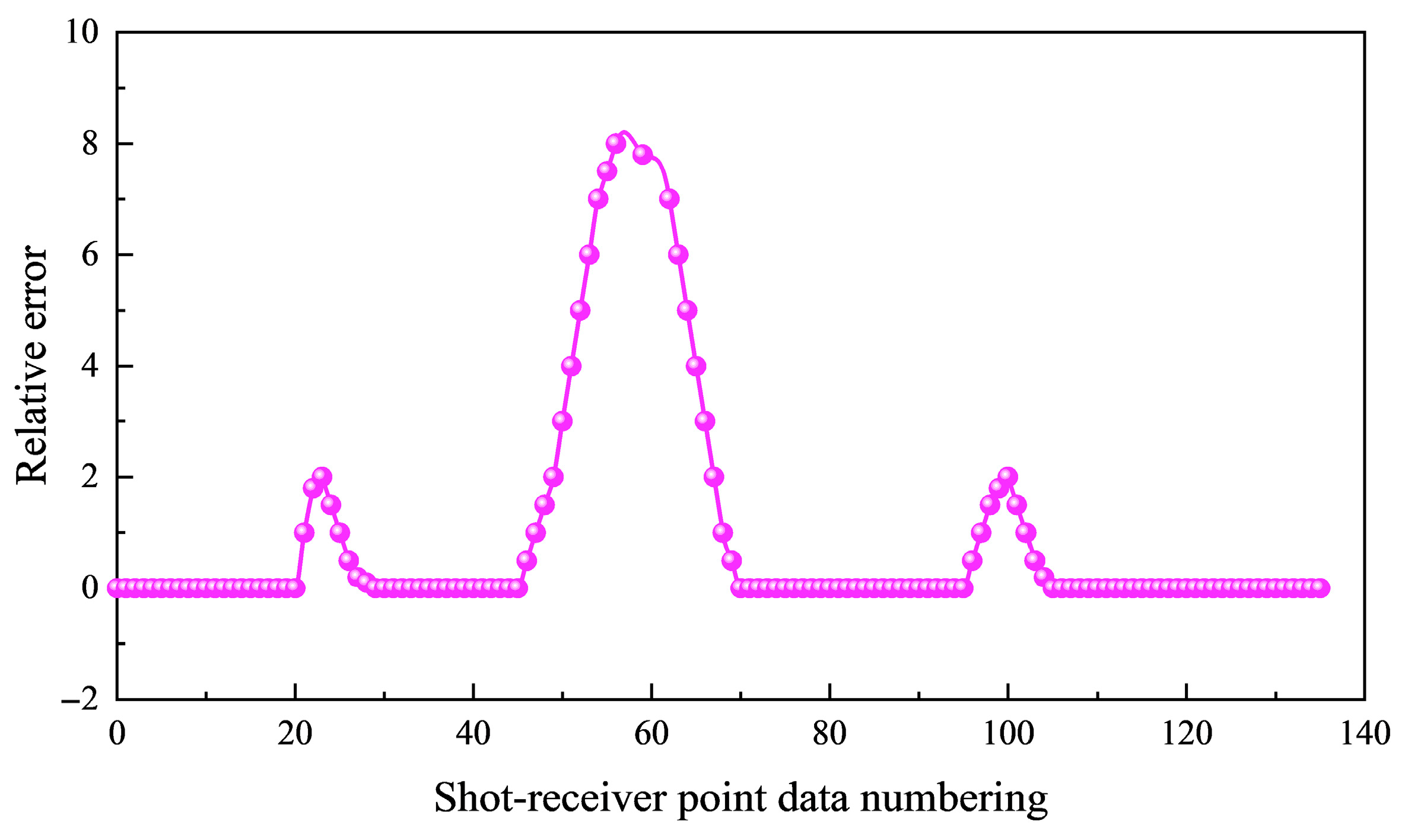
Figure 24 shows the distribution of relative travel-time errors under the longitudinal view condition. Most source–receiver pairs exhibit small and stable errors, with noticeable peaks only near the leakage channel, where the maximum error reaches approximately 8%, consistent with the spatial location of the channel. This indicates that reflection waves experience diffraction and delay when propagating through the low-velocity channel. The combined effects of ray coverage and regularization constraints lead to localized error concentration, while the errors in the homogeneous background region remain close to zero.
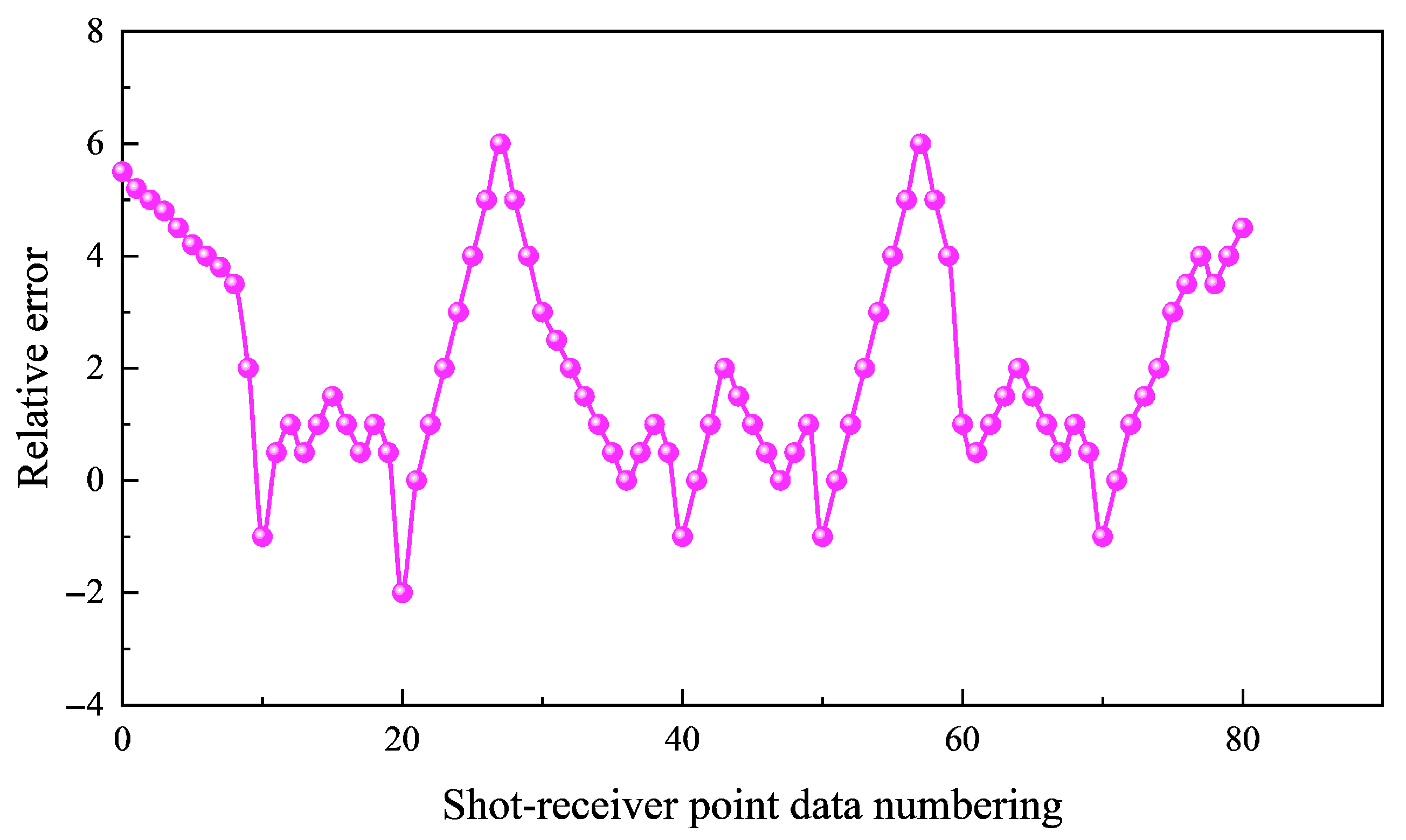
Figure 25 shows that the errors under the cross-sectional condition are slightly larger and exhibit a multi-peak distribution, still mainly concentrated within the influence range of the leakage channel. Some points display alternating positive and negative errors, which are related to the complex ray paths and their interactions with the anomaly body. However, the overall errors remain within a reasonable range.
In summary, the travel-time errors are mainly concentrated around the low-velocity anomaly, corresponding to the height of the leakage channel, while the errors in the background region remain low. This indicates that the reflection-wave imaging method provides stable and reliable identification of through-type leakage channels. The localized errors reflect the perturbation of ray paths caused by the anomaly rather than instability in the inversion process.

4.3.2. Analysis of Travel-Time Errors in Homogeneous Embankment Containing Loose Zone

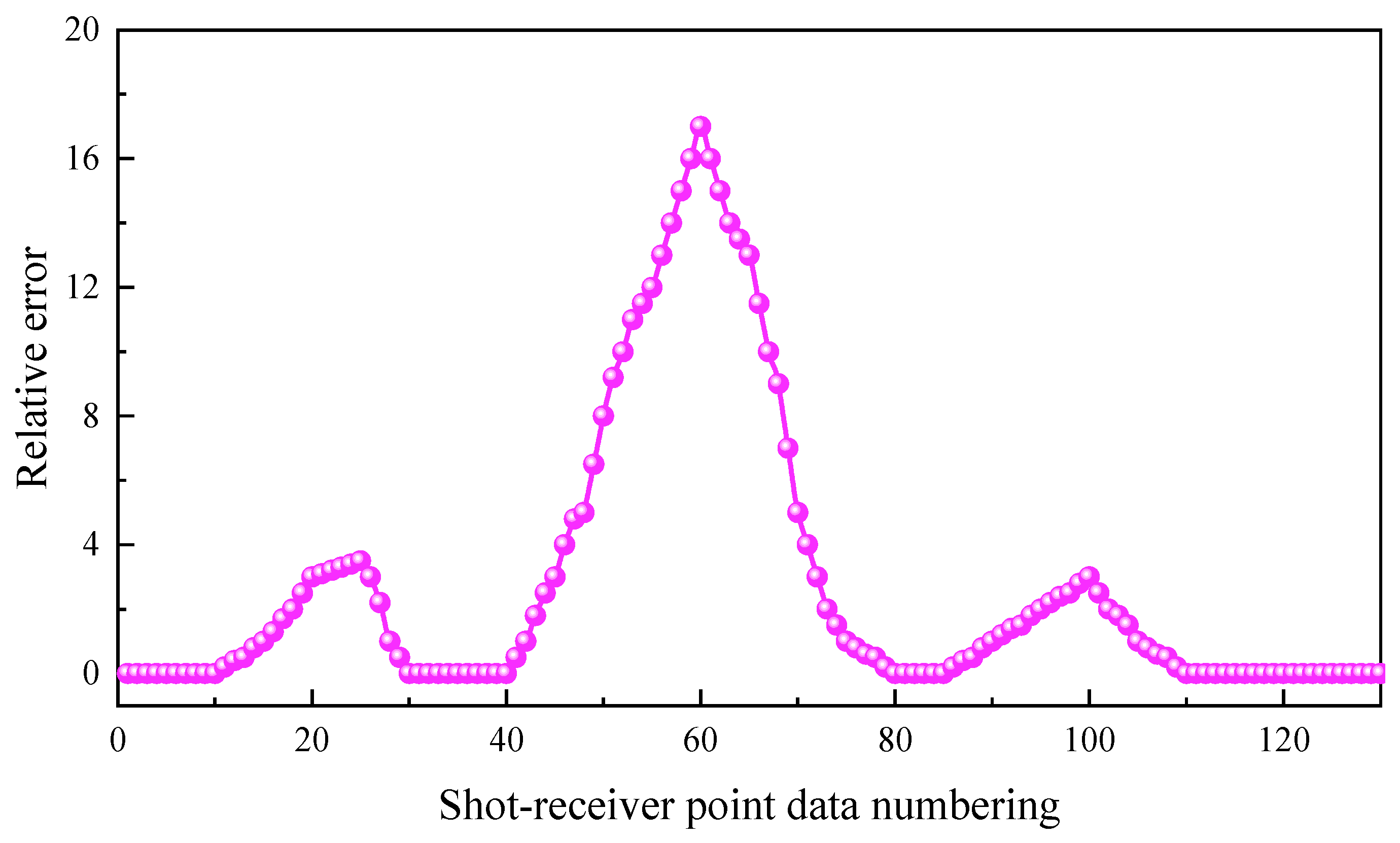
Figure 26 shows the relative travel-time errors under the longitudinal view condition. Most regions exhibit small errors, with local peaks appearing only near the loose zone. The maximum error reaches approximately 17% and shows a symmetrical upward trend. This indicates that diffraction and delay occur when the rays propagate through the low-velocity loose zone. The limited ray coverage and the effect of regularization constraints lead to localized fitting deviations, while the errors in the homogeneous background medium remain close to zero.
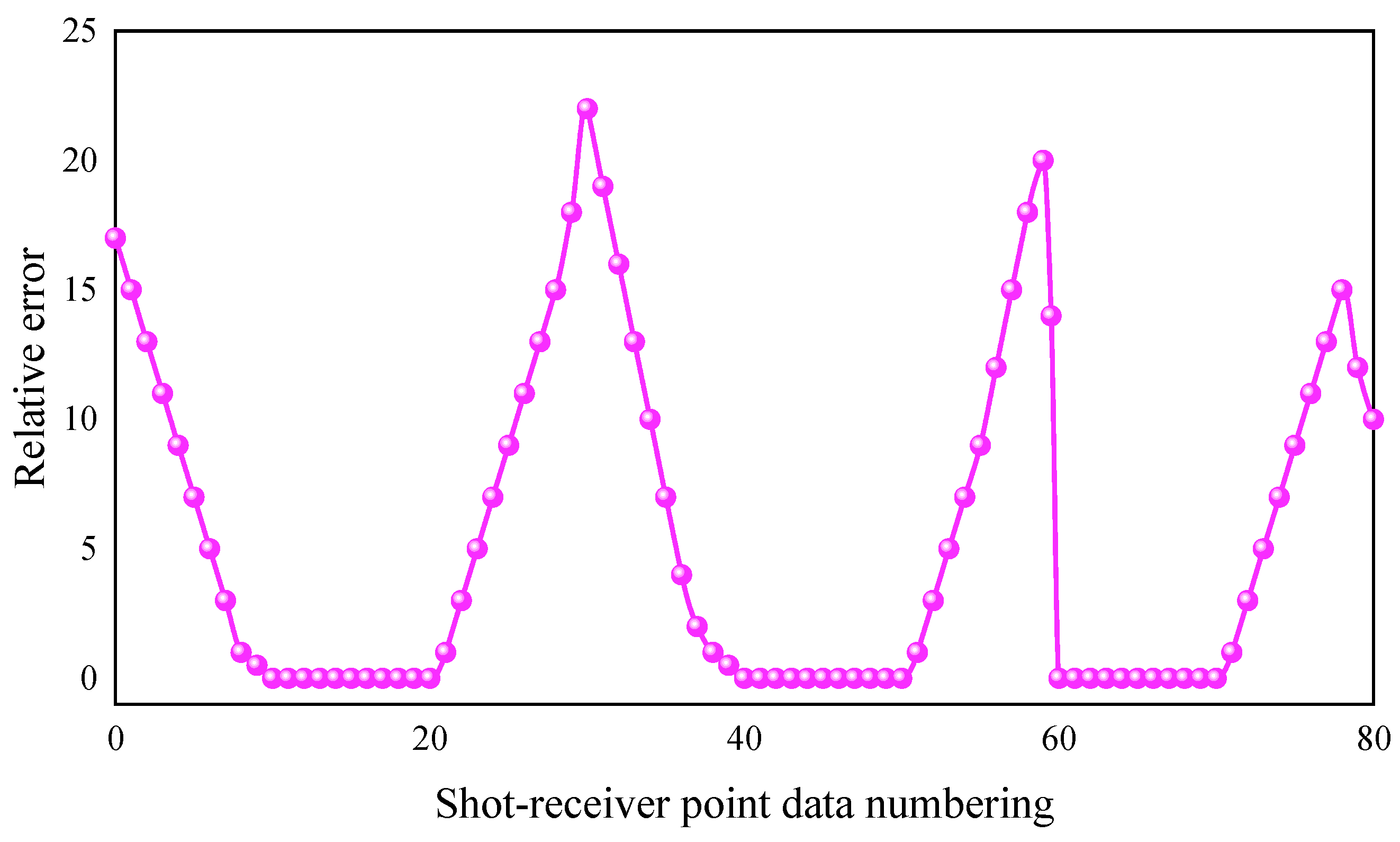
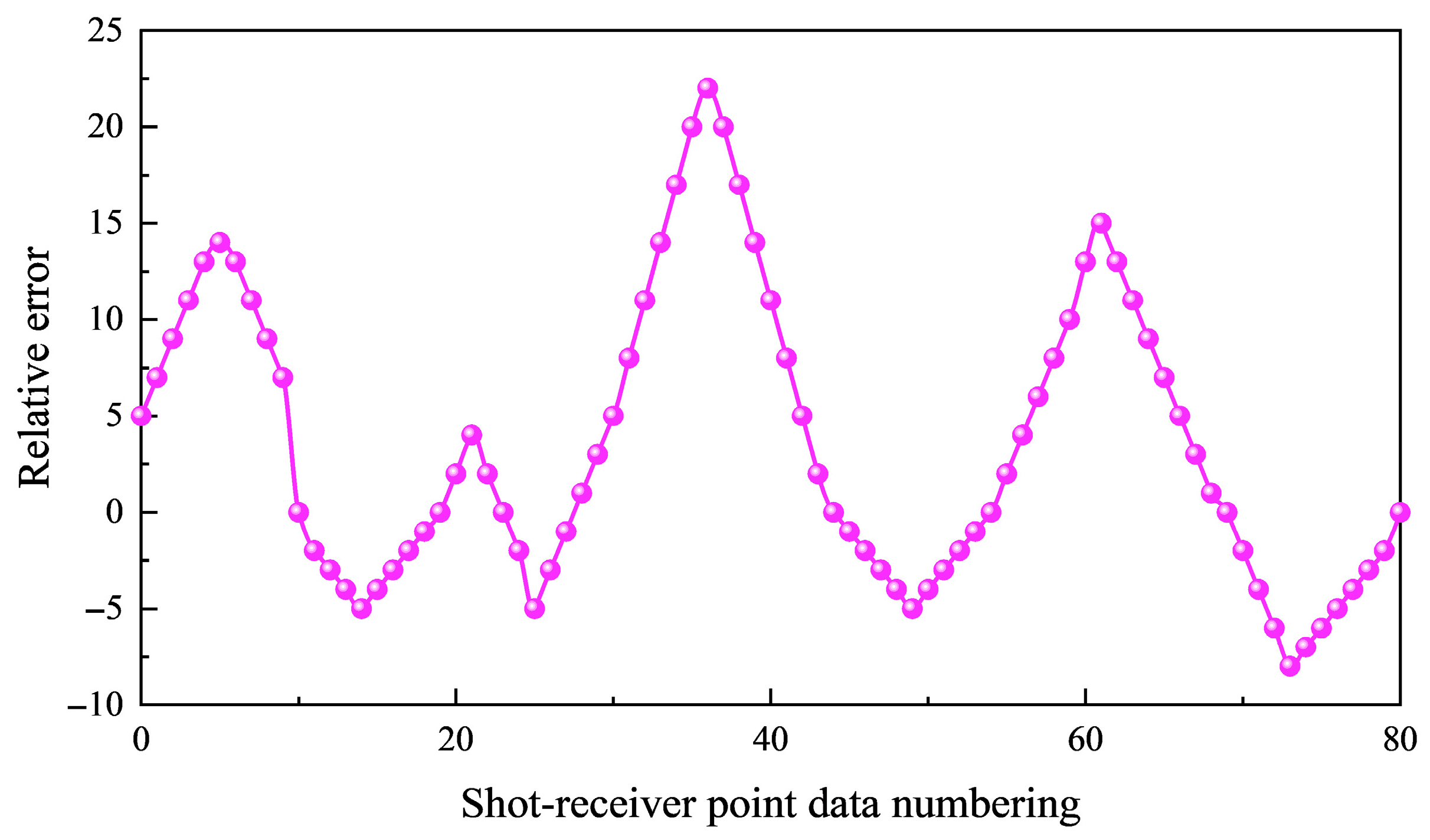
Figure 27 shows that the errors under the cross-sectional condition exhibit multi-peak fluctuations, with some points displaying alternating positive and negative deviations. The maximum error reaches approximately 22%, which is mainly influenced by the complex ray paths and their geometric interactions with the loose zone. Overall, the errors remain within an acceptable range.
In summary, the travel-time errors are mainly concentrated along the ray paths passing through the loose zone and correspond well with its spatial location, while the errors in the background region remain low. This indicates that the reflection-wave imaging method can accurately identify localized loose zones, and the localized errors primarily reflect the perturbation of ray paths caused by the anomaly body.

4.3.3. Analysis of Travel-Time Errors in Core-Wall Embankment Containing Leakage Channel

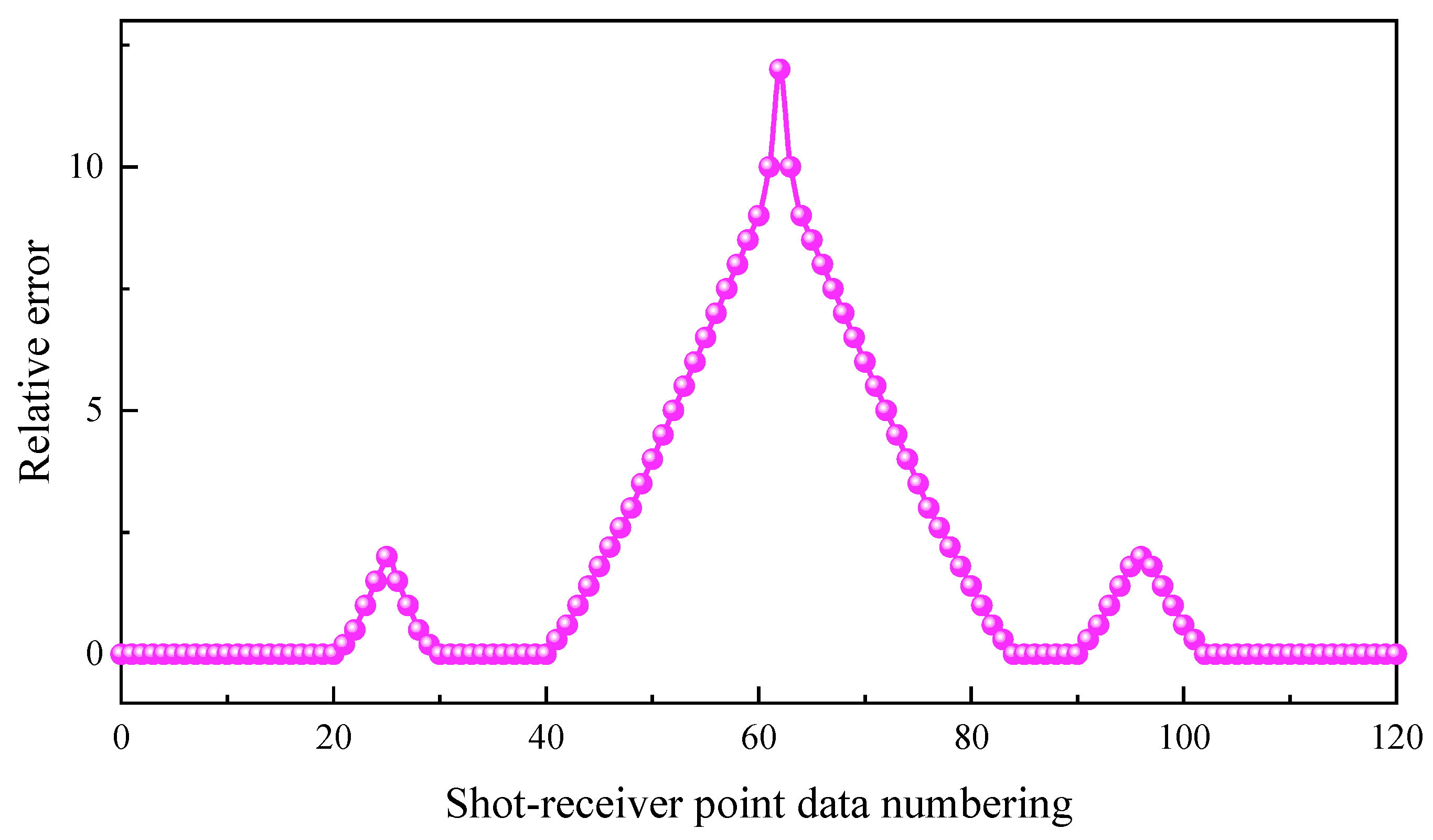
Figure 28 shows the relative travel-time errors under the longitudinal view condition. Distinct peaks appear near the leakage channel, with a maximum value of approximately 11% and a symmetrical distribution. This indicates that reflection waves experience diffraction and delay when propagating through the low-velocity channel. The local fitting performance is affected by ray coverage and regularization constraints.
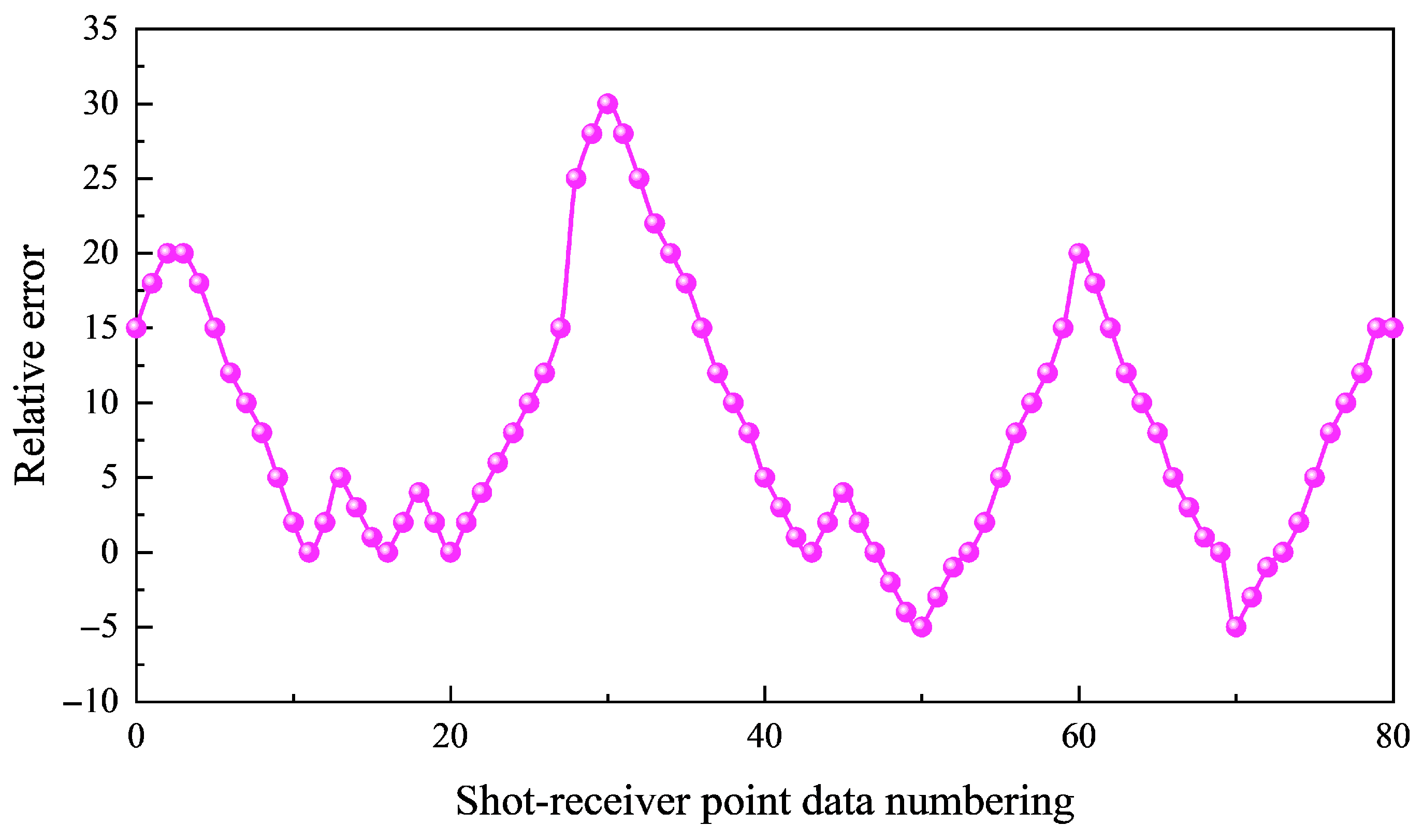
Figure 29 shows that the errors under the cross-sectional condition exhibit multi-peak fluctuations, with some points showing alternating positive and negative deviations. The maximum error reaches approximately 35%, mainly influenced by complex ray paths and geometric interactions with the leakage channel, such as oblique crossings and boundary reflections. Overall, the errors remain within an acceptable range.
In summary, the travel-time errors are mainly concentrated along the ray paths passing through the leakage channel and are consistent with the spatial position of the channel, while the errors in the background medium remain low. This indicates that the reflection-wave imaging method can accurately identify leakage channels in core-wall embankments, and the localized errors primarily reflect the perturbation of ray paths caused by the channel.

4.3.4. Analysis of Travel-Time Errors in Core-Wall Embankment Containing Loose Zone

Figure 30 shows the relative travel-time errors under the longitudinal view condition. A single concentrated peak appears near the loose zone, with a maximum error of approximately 30%, showing a symmetrical rise-and-fall trend. This indicates that diffraction and delay occur when rays propagate through the low-velocity loose zone, and the local fitting performance is affected by ray coverage and regularization constraints.
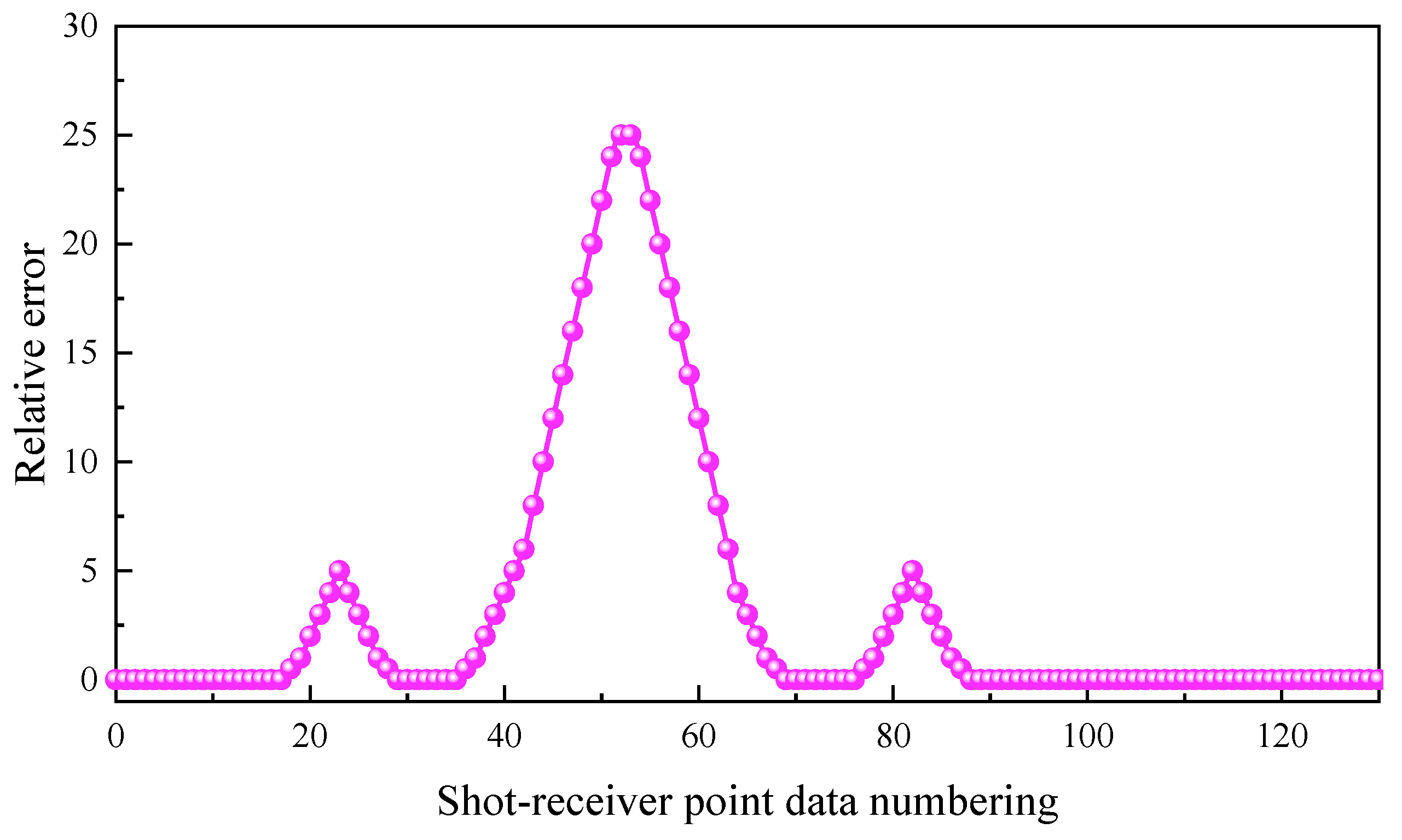
Figure 31 shows that the errors under the cross-sectional condition exhibit multi-peak fluctuations, with some points showing alternating positive and negative deviations. The maximum error reaches approximately 25%, mainly influenced by complex ray paths and geometric interactions with the loose zone, such as oblique crossings and boundary reflections. Overall, the errors remain within an acceptable range.
In summary, the travel-time errors are mainly concentrated along the ray paths passing through the loose zone and are consistent with its spatial distribution, while the errors in the background medium remain low. This indicates that the reflection-wave imaging method can accurately locate localized loose zones within core-wall embankments, and the localized errors primarily reflect the perturbation of ray paths caused by the anomaly body.

4.4. Model Test Verification

To further verify the effectiveness of the reflection-wave imaging method in identifying potential hazards in embankment dams, this study compares the imaging characteristics obtained from numerical simulations with the results of physical model tests of a dam. Artificial anomalies were embedded in a scaled dam model to simulate internal seepage channels and localized weakened zones within the dam body. Seismic wave detection methods were then employed to acquire seismic response data from the interior of the model, thereby validating the reflection-wave imaging results.

4.4.1. Model Construction and Wave Testing

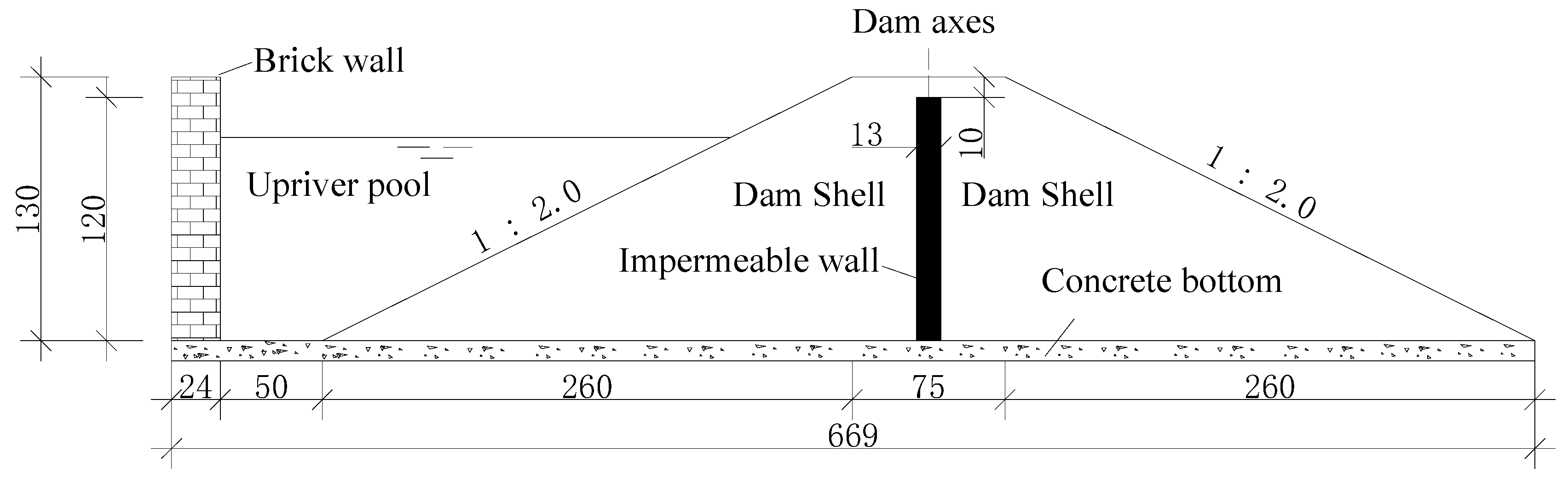
The model test was designed based on the structural characteristics of an actual core-wall earth-rock dam and followed the gravity similarity criterion to determine the geometric parameters of the model. The experimental dam type is a core-wall earth-rock dam, consisting of an impervious core wall and rockfill shells. The model dam has a width of 5 m, a height of 1.3 m, and a crest width of 0.75 m. The upstream and downstream slopes are both 1:2. The core wall has a height of 1.2 m and a width of 0.13 m. The dimensions of the model are shown in Figure 32.
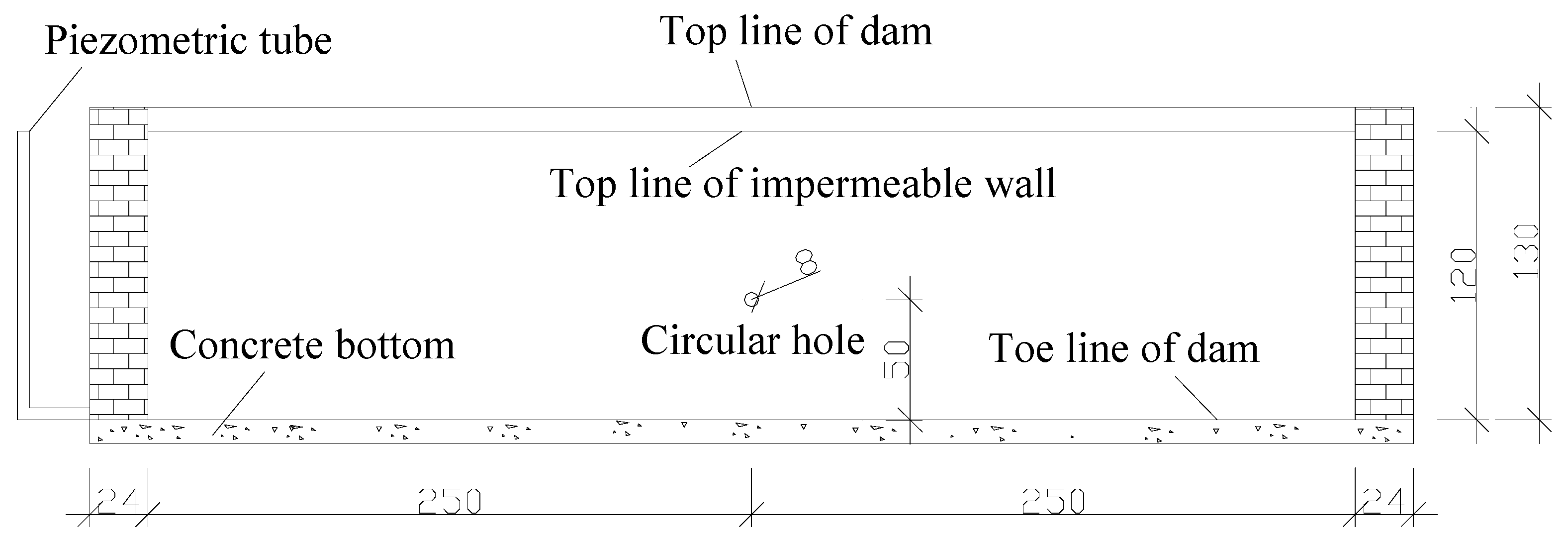
The dam body was constructed using homogeneous fill material, and artificial anomalies were embedded within the model to simulate typical engineering hazards such as seepage paths and locally weakened zones. The defect was designed as a circular cavity with a diameter of 8 cm and positioned at the center of the core wall. The detailed layout is illustrated in Figure 33, and the physical model of the earth-rock dam is shown in Figure 34.
During the wave testing process, seismic sources and geophones were arranged along the surface of the model. Seismic wave propagation data were obtained through a multi-source and multi-receiver acquisition scheme. The recorded seismic data were then processed using the same reflection-wave travel-time imaging method as applied in the numerical simulations to obtain the internal velocity structure distribution of the model. Based on this, the imaging response characteristics of the anomaly were analyzed.

4.4.2. Analysis of Experimental Results

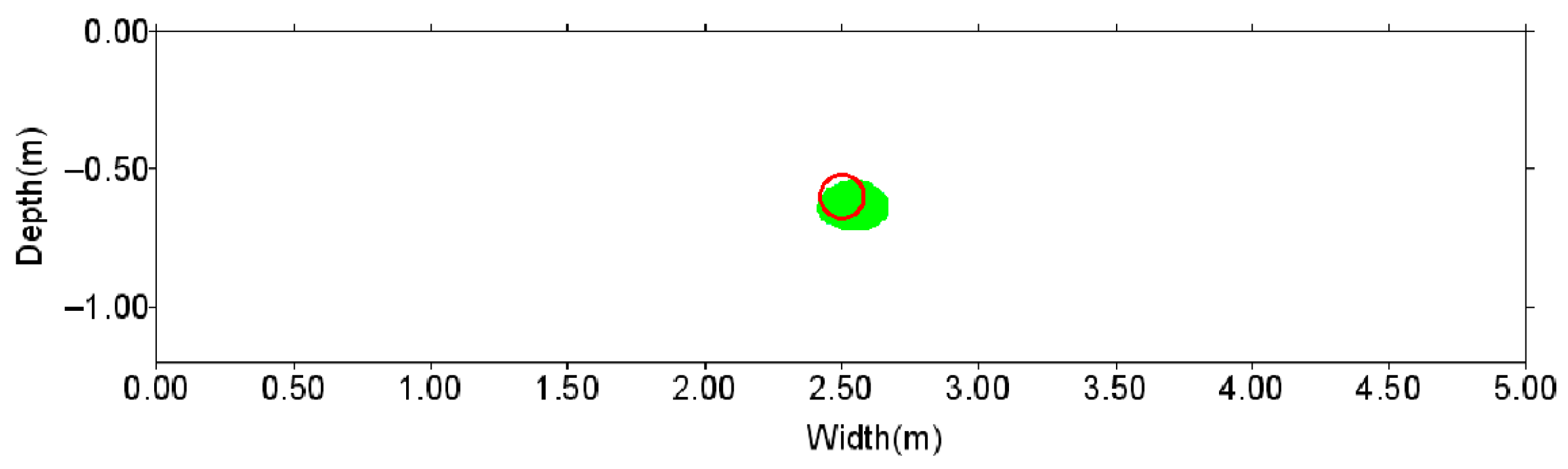
The model test mainly analyzes the imaging characteristics of the core wall section when a circular cavity exists inside the core wall. Figure 35 shows the velocity grayscale image of Section 1 obtained directly from the initial inversion results. Figure 36 presents the imaging result after applying a surrounding median filtering to the inversion results combined with cluster analysis. Figure 37 shows the imaging result after global median filtering and cluster analysis. To further highlight the seepage location, the regions with velocities higher than 2955 m/s in Figure 37 were set to white, resulting in Figure 38.
The red circle in the figure indicates the actual position and size of the circular cavity within the core wall of the model, while the green area represents the seepage anomaly zone identified by the imaging results. The comparison shows that the reflection-wave imaging results can effectively reflect the location of the anomaly. However, the identified anomalous region is slightly larger than the actual cavity size in the model, which is mainly related to the limited ray coverage and the smoothing constraints in the inversion process.
From the comprehensive analysis of the sectional imaging results, it can be seen that the reflection-wave imaging method can effectively identify the cavity within the core wall and the seepage anomaly zone caused by it. The spatial location of the anomaly is generally consistent with the preset anomaly in the model. Although the boundary of the anomaly shows a certain expansion due to factors such as model scale and inversion smoothing constraints, the overall imaging characteristics are in good agreement with the numerical simulation results. This experimentally verifies the feasibility of the reflection-wave imaging method for identifying potential hazards in embankment dams.

5. Conclusions

Based on reflection-wave imaging theory, this study conducted imaging analyses of multiple hidden hazard conditions in both homogeneous and core-wall embankments to address the problem of refined detection of internal defects. Through forward and inverse modeling calculations and travel-time error evaluations, the applicability and stability of the reflection-wave imaging method for embankment hazard diagnosis were verified. The main conclusions are as follows:
(1)
By constructing conceptual models of homogeneous and core-wall embankments and introducing typical hazard forms such as embankment leakage, loose zones, and foundation leakage, a reflection-wave imaging analysis framework suitable for embankment engineering was established. Different types of defects exhibited distinguishable travel-time and velocity anomaly characteristics during reflection-wave propagation.
(2)
Under homogeneous embankment conditions, the reflection-wave imaging method can accurately identify both through-type leakage channels and localized loose zones. The leakage channel, owing to its continuity and scale, produces the most distinct imaging response in the inversion results, whereas the loose zone, although smaller in scale, still forms a stable low-velocity response.
(3)
Under core-wall embankment conditions, despite the significant velocity contrast between the core wall and the embankment fill, the reflection-wave imaging method can effectively delineate defect regions near and behind the core wall. The numerical results indicate that complex structural conditions do not induce inversion instability, demonstrating good adaptability of the method to core-wall embankment structures.
(4)
The analysis of relative travel-time errors shows that the inversion results are overall stable and reliable across different hazard models. The through-type leakage channel exhibits concentrated errors with prominent peaks, while the loose zone presents more dispersed errors with moderate amplitudes within an acceptable range. These results provide quantitative evidence supporting the capability of reflection-wave imaging for identifying localized anomalies.
(5)
The effectiveness of the proposed method relies on the presence of relatively continuous reflective interfaces within the dam body or at the dam–foundation interface. When horizontal or sub-horizontal interfaces exist within the dam structure, reflection-wave travel times can provide stable constraints for the inversion process, allowing reliable imaging results to be obtained.
(6)
This study focuses on validation under typical embankment dam model conditions. Future work will further expand the testing scenarios and modeling conditions, including more complex dam structures and hazard types, in order to provide a more comprehensive evaluation of the method’s applicability in real engineering environments.

Author Contributions

Conceptualization, K.W.; methodology, P.Y.; software, P.Y.; validation, P.Y.; formal analysis, Y.C.; investigation, Y.C.; resources, M.Z.; data curation, P.Y.; writing—original draft preparation, Y.C.; writing—review and editing, Z.L.; visualization, P.Y.; supervision, K.W.; project administration, K.W.; funding acquisition, K.W. All authors have read and agreed to the published version of the manuscript.

Funding

This research was funded by the Chongqing Special Project for Technological Innovation and Application Development (Grant No. CSTB2024TIAD-GPX0008) and the Chongqing Water Conservancy Science and Technology Project (Grant No. CQSLK-2022013).

Institutional Review Board Statement

Not applicable.

Informed Consent Statement

Not applicable.

Data Availability Statement

The data presented in this study are available on request from the corresponding author.

Conflicts of Interest

Author Peng Yuan was employed by the company Jiangxi Transportation Investment Maintenance Technology Group Co., Ltd. The remaining authors declare that the research was conducted in the absence of any commercial or financial relationships that could be construed as a potential conflict of interest.

References

  1. Ma, H.; Chi, F. Major Technologies for Safe Construction of High Earth-Rockfill Dams. Engineering 2016, 2, 498–509. [Google Scholar] [CrossRef]
  2. Liu, Y.; Gan, Y.; Yang, Z.; Qiang, S. Intelligent construction technology for reservoir dams. Autom. Constr. 2025, 175, 106177. [Google Scholar] [CrossRef]
  3. Ghosh, K.; Munoz-Arriola, F. Hysteresis and streamflow-sediment relations across the pre-to-post dam construction continuum in a highly regulated transboundary Himalayan River basin. J. Hydrol. 2023, 624, 129885. [Google Scholar] [CrossRef]
  4. Kim, Y.-S.; Seo, M.-W.; Lee, C.-W.; Kang, G.-C. Deformation characteristics during construction and after impoundment of the CFRD-type Daegok Dam, Korea. Eng. Geol. 2014, 178, 1–14. [Google Scholar] [CrossRef]
  5. Gao, H.; Wang, M.; Hao, X. Check dams in the Yellow River basin: Sediment reduction efficiency and future development. Land Degrad. Dev. 2024, 35, 4042–4054. [Google Scholar] [CrossRef]
  6. Peirson, W.L.; Prapakaran, V.; Fell, R.; Douglas, K. On the hydraulics of flow in cracks in embankment dam cores. Eur. J. Environ. Civ. Eng. 2023, 27, 1367–1382. [Google Scholar] [CrossRef]
  7. Peirson, W.L.; Fell, R. Downstream filter control of flow in cracks in embankment dam cores. Eur. J. Environ. Civ. Eng. 2025, 30, 1–21. [Google Scholar] [CrossRef]
  8. Elson, M.S.; Widincamp, S.D. Sonic Drilling on Embankment Dams and Levees. Environ. Eng. Geosci. 2023, 29, 67–71. [Google Scholar] [CrossRef]
  9. Sari, M.; Seren, A.; Alemdag, S. Determination of geological structures by geophysical and geotechnical techniques in Kirklartepe Dam Site (Turkey). J. Appl. Geophys. 2020, 182, 104174. [Google Scholar] [CrossRef]
  10. Kolhe, P.; Pradakshine, S.; Karande-Jadhav, G.; Tapase, A. Strategy for Rehabilitation and Strengthening of Dam—A Case Study of Temghar Dam. In Innovative Solutions for Soil Structure Interaction; ElNaggar, H., ElZahaby, K., Shehata, H., Eds.; Springer International Publishing Ag: Cham, Switzerland, 2020; pp. 107–120. [Google Scholar] [CrossRef]
  11. Battaglia, D.; Birindelli, F.; Rinaldi, M.; Vettraino, E.; Bezzi, A. Fluorescent tracer tests for detection of dam leakages: The case of the Bumbuna dam—Sierra Leone. Eng. Geol. 2016, 205, 30–39. [Google Scholar] [CrossRef]
  12. Jian, J.; Lu, J.; Guo, Q.; Wang, J.; Sun, L.; Mao, D.; Wang, Y. Characterization and Quantification of Dam Seepage Based on Resistivity and Geological Information. Water 2024, 16, 2410. [Google Scholar] [CrossRef]
  13. Sanuade, O.; Ismail, A. Geophysical and Geochemical Pilot Study to Characterize the Dam Foundation Rock and Source of Seepage in Part of Pensacola Dam in Oklahoma. Water 2023, 15, 4036. [Google Scholar] [CrossRef]
  14. Liu, G.; Hu, J.; Liu, L.; Sun, Q.; Wu, W. Investigating Deformation Mechanism of Earth-Rock Dams with InSaR and Numerical Simulation: Application to Liuduzhai Reservoir Dam, China. Remote Sens. 2023, 15, 4110. [Google Scholar] [CrossRef]
  15. Alarifi, S.S.; Ibrahim, E.; Al-Kahtany, K. Ground-penetrating radar imaging of subsurface karst features controlling water leakage across Wadi Namar dam, south Riyadh, Saudi Arabia. Open Geosci. 2025, 17, 20250781. [Google Scholar] [CrossRef]
  16. Adetokunbo, P.; Ismail, A.; Mewafy, F.; Sanuade, O. Geophysical Characterization and Seepage Detection of the Chimney Rock Dam Embankment Near Salina, Oklahoma. Water 2024, 16, 1224. [Google Scholar] [CrossRef]
  17. Raji, W.O.; Aluko, K.O. Investigating the cause of excessive seepage in a dam foundation using seismic and electrical surveys-a case study of Asa Dam, West Africa. Bull. Eng. Geol. Environ. 2021, 80, 6445–6455. [Google Scholar] [CrossRef]
  18. Wang, F.; Tulamaiti, Y.; Fang, H.; Yu, X.; Zhou, C. Seismic response characteristics of polymer anti-seepage wall in earth dam based on earthquake wave motion input method. Structures 2023, 47, 358–373. [Google Scholar] [CrossRef]
  19. Deng, Z.; Gao, Q.; Huang, M.; Wan, N.; Zhang, J.; He, Z. From data processing to behavior monitoring: A comprehensive overview of dam health monitoring technology. Structures 2025, 71, 108094. [Google Scholar] [CrossRef]
  20. Han, J.; Lu, Q.; Zhang, Z.; Yang, S.; Wang, S. Application of Gaussian Beam Summation Migration in Reflected In-seam Wave Imaging. Acta Geol. Sin.-Engl. Ed. 2024, 98, 276–284. [Google Scholar] [CrossRef]
  21. Ding, C.; Ma, J. Converted wave reverse time migration and demigration based on forward expression of elastic reflected waves. Chin. J. Geophys.-Chin. Ed. 2024, 67, 3496–3509. [Google Scholar] [CrossRef]
  22. Lin, W.; Xu, J.; Hu, H. Algorithm for Extraction of Reflection Waves in Single-Well Imaging Based on MC-ConvTasNet. Appl. Sci. 2025, 15, 4189. [Google Scholar] [CrossRef]
  23. Abbaszadeh, M.; Khodadadian, A.; Parvizi, M.; Dehghan, M.; Xiao, D. A reduced-order least squares-support vector regression and isogeometric collocation method to simulate Cahn-Hilliard-Navier-Stokes equation. J. Comput. Phys. 2025, 523, 113650. [Google Scholar] [CrossRef]
  24. Wang, L.; Chu, M.T.; Yu, B. Orthogonal Low Rank Tensor Approximation: Alternating Least Squares Method and Its Global Convergence. Siam J. Matrix Anal. Appl. 2015, 36, 1–19. [Google Scholar] [CrossRef]
  25. Chi, H.; Wang, Y.; Ma, Y. Reduced-order with least square-finite difference method for neutron transport equation. Ann. Nucl. Energy 2023, 191, 109914. [Google Scholar] [CrossRef]
Figure 1. Conceptual model of hidden hazards in homogeneous embankment: (a) conceptual cross-sectional view of embankment leakage; (b) conceptual longitudinal view of embankment leakage; (c) conceptual cross-sectional view of embankment cavity; (d) conceptual longitudinal view of embankment cavity; (e) conceptual cross-sectional view of foundation leakage; (f) conceptual longitudinal view of foundation leakage.
Applsci 16 02990 g001aApplsci 16 02990 g001b
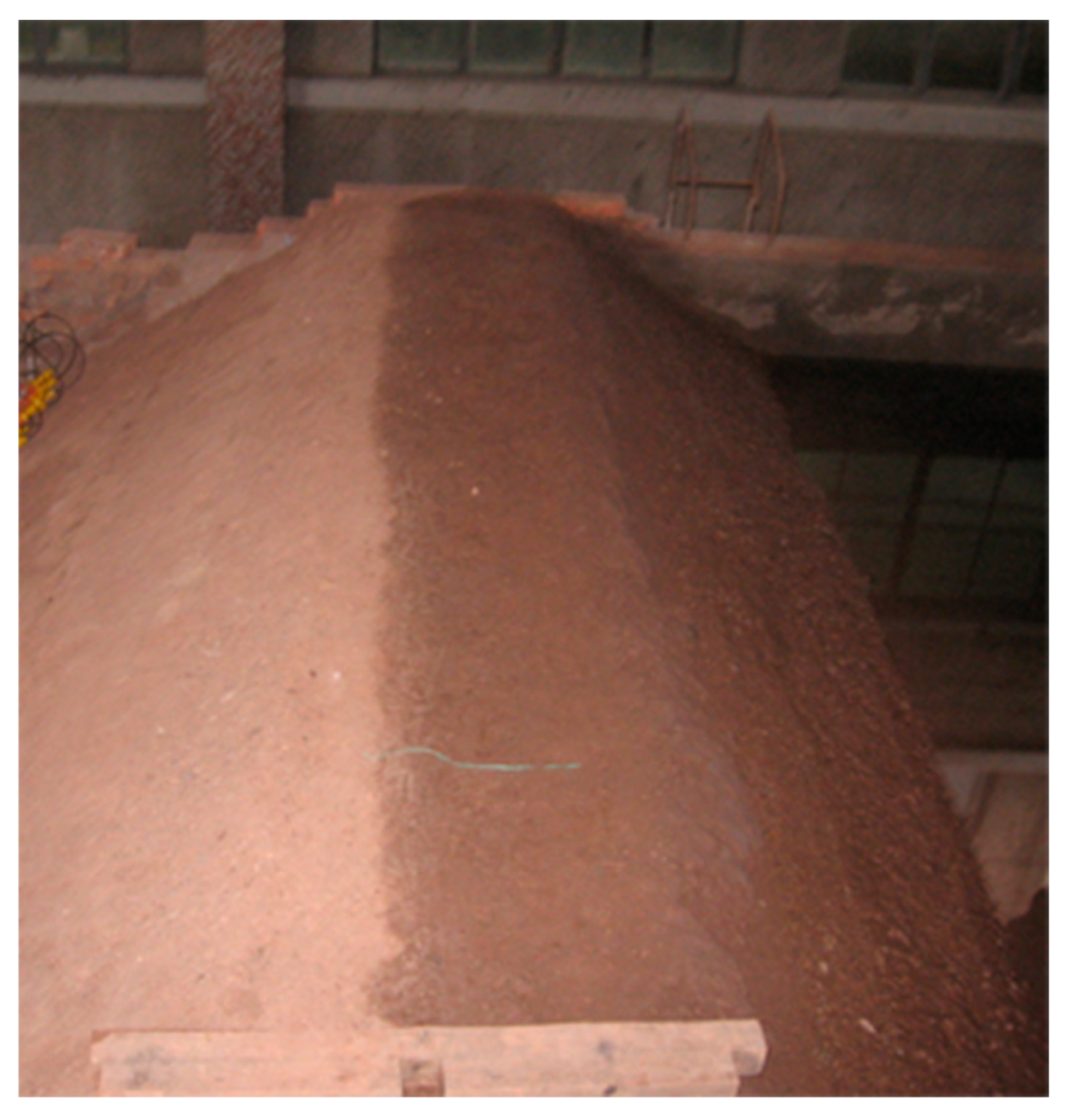
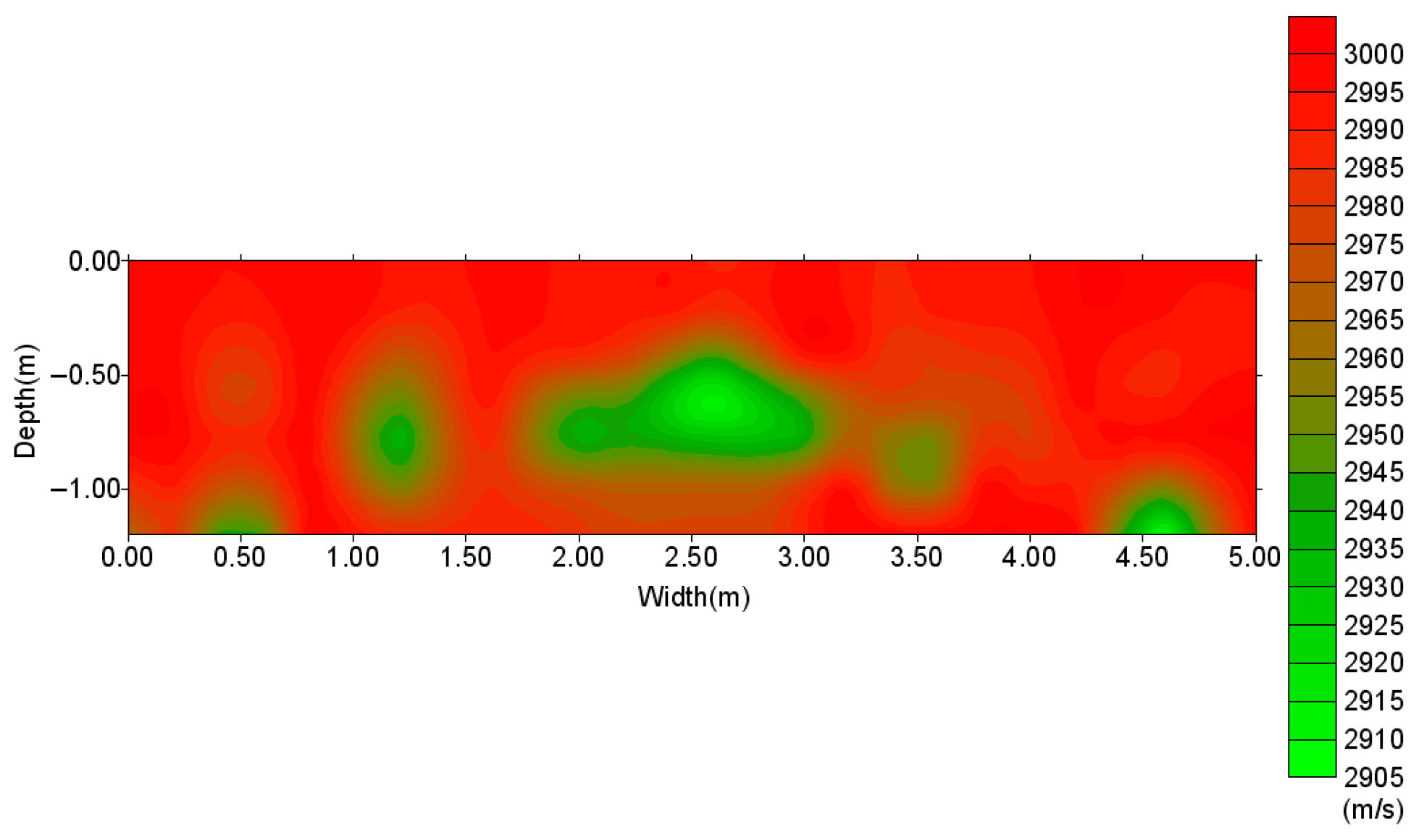
Figure 2. Conceptual model of hidden hazards in core-wall embankment: (a) conceptual cross-sectional view of embankment leakage; (b) conceptual longitudinal view of embankment leakage; (c) conceptual cross-sectional view of foundation leakage; (d) conceptual longitudinal view of foundation leakage.
Applsci 16 02990 g002
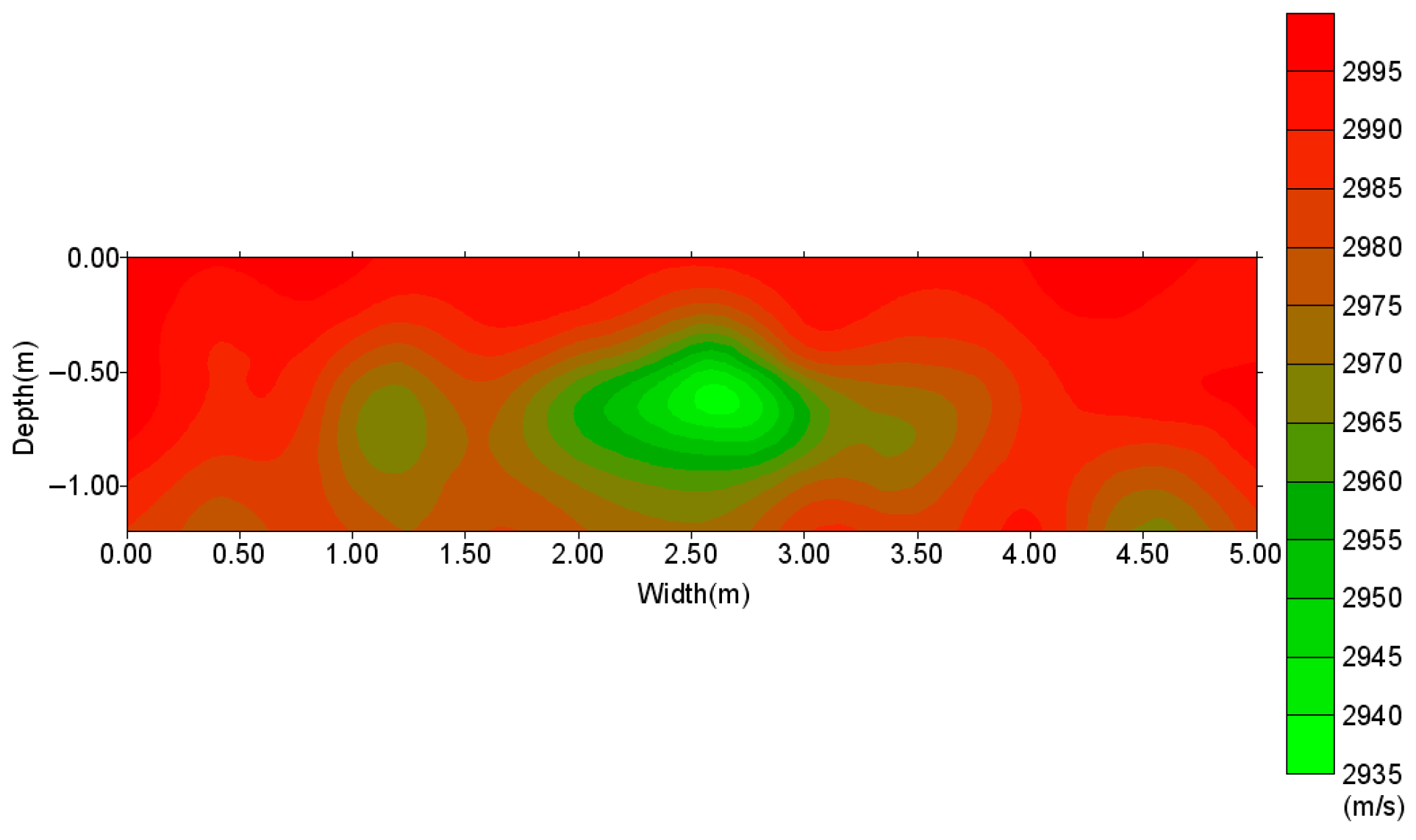
Figure 3. Ray tracing result of longitudinal view of homogeneous embankment (unit: m).
Applsci 16 02990 g003
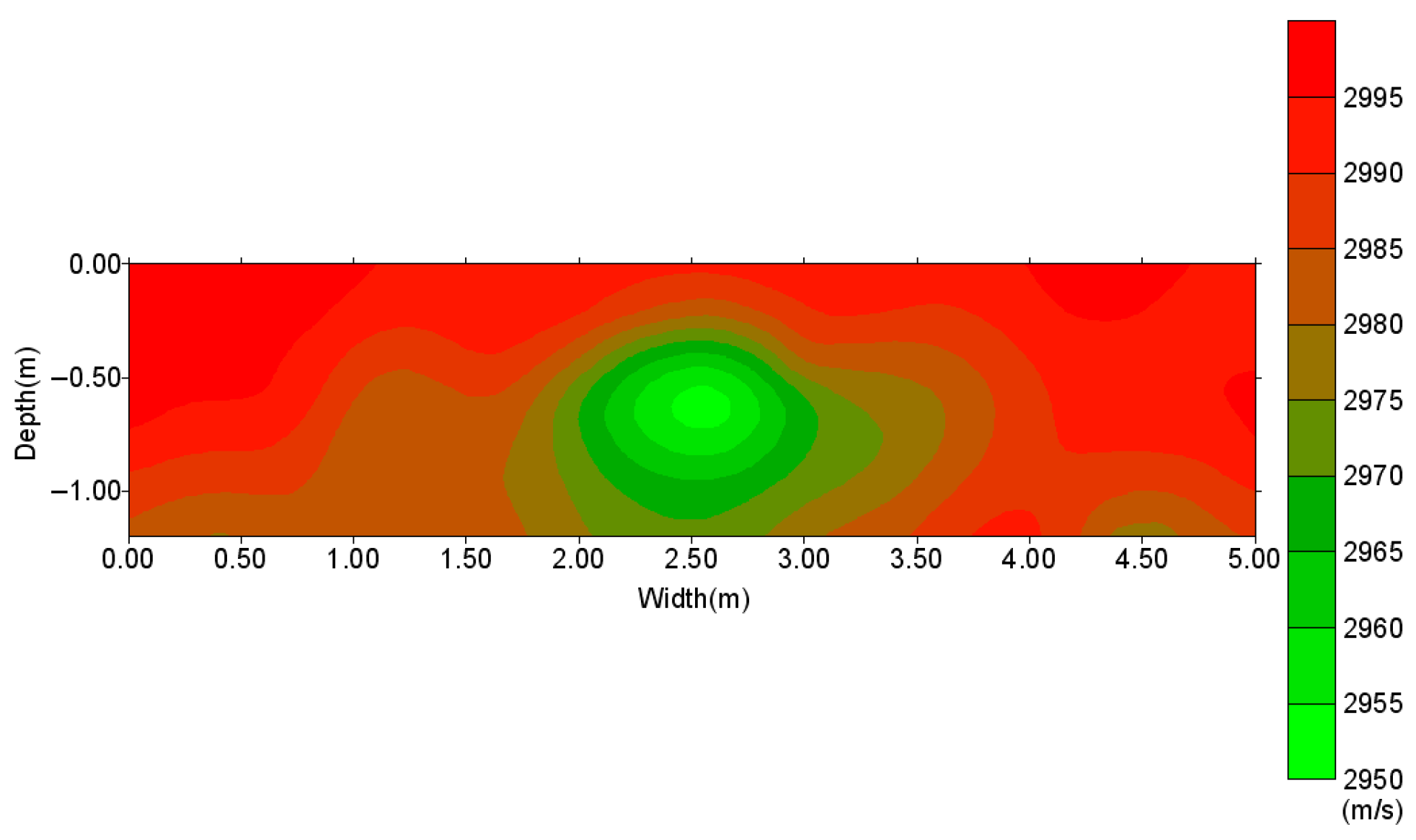
Figure 4. Ray tracing result of cross-sectional view of homogeneous embankment (unit: m).
Applsci 16 02990 g004
Figure 5. Ray tracing result of longitudinal view of homogeneous embankment containing leakage channel (unit: m).
Applsci 16 02990 g005
Figure 6. Ray tracing result of cross-sectional view of homogeneous embankment containing leakage channel (unit: m).
Applsci 16 02990 g006
Figure 7. Inversion imaging result of longitudinal view of homogeneous embankment containing leakage channel.
Applsci 16 02990 g007
Figure 8. Inversion imaging result of cross-sectional view of homogeneous embankment containing leakage channel.
Applsci 16 02990 g008
Figure 9. Ray tracing result of longitudinal view of homogeneous embankment containing loose zone (unit: m).
Applsci 16 02990 g009
Figure 10. Ray tracing result of cross-sectional view of homogeneous embankment containing loose zone (unit: m).
Applsci 16 02990 g010
Figure 11. Inversion imaging result of longitudinal view of homogeneous embankment containing loose zone.
Applsci 16 02990 g011
Figure 12. Inversion imaging result of cross-sectional view of homogeneous embankment containing loose zone.
Applsci 16 02990 g012
Figure 13. Ray tracing result of longitudinal view of core-wall embankment (unit: m).
Applsci 16 02990 g013
Figure 14. Ray tracing result of cross-sectional view of core-wall embankment (unit: m).
Applsci 16 02990 g014
Figure 15. Inversion imaging result of cross-sectional view of core-wall embankment.
Applsci 16 02990 g015
Figure 16. Ray tracing result of longitudinal view of core-wall embankment containing leakage channel (unit: m).
Applsci 16 02990 g016
Figure 17. Inversion imaging result of longitudinal view of core-wall embankment containing leakage channel.
Applsci 16 02990 g017
Figure 18. Ray tracing result of cross-sectional view of core-wall embankment containing leakage channel (unit: m).
Applsci 16 02990 g018
Figure 19. Inversion imaging result of cross-sectional view of core-wall embankment containing leakage channel.
Applsci 16 02990 g019
Figure 20. Ray tracing result of longitudinal view of core-wall embankment containing loose zone (unit: m).
Applsci 16 02990 g020
Figure 21. Inversion imaging result of longitudinal view of core-wall embankment containing loose zone.
Applsci 16 02990 g021
Figure 22. Ray tracing result of cross-sectional view of core-wall embankment containing loose zone (unit: m).
Applsci 16 02990 g022
Figure 23. Inversion imaging result of cross-sectional view of core-wall embankment containing loose zone.
Applsci 16 02990 g023
Figure 24. Relative travel-time error of longitudinal view of homogeneous embankment containing leakage channel.
Applsci 16 02990 g024
Figure 25. Relative travel-time error of cross-sectional view of homogeneous embankment containing leakage channel.
Applsci 16 02990 g025
Figure 26. Relative travel-time error of longitudinal view of homogeneous embankment containing loose zone.
Applsci 16 02990 g026
Figure 27. Relative travel-time error of cross-sectional view of homogeneous embankment containing loose zone.
Applsci 16 02990 g027
Figure 28. Relative travel-time error of longitudinal view of core-wall embankment containing leakage channel.
Applsci 16 02990 g028
Figure 29. Relative travel-time error of cross-sectional view of core-wall embankment containing leakage channel.
Applsci 16 02990 g029
Figure 30. Relative travel-time error of longitudinal view of core-wall embankment containing loose zone.
Applsci 16 02990 g030
Figure 31. Relative travel-time error of cross-sectional view of core-wall embankment containing loose zone.
Applsci 16 02990 g031
Figure 32. Cross-sectional view of the earth-rock dam model (unit: cm).
Applsci 16 02990 g032
Figure 33. Longitudinal cross-section of the core wall in Model 2 (units: cm).
Applsci 16 02990 g033
Figure 34. Physical model of the earth-rock dam.
Applsci 16 02990 g034
Figure 35. Velocity grayscale image of the model (without processing).
Applsci 16 02990 g035
Figure 36. Velocity grayscale image of the model (neighborhood filtering + cluster analysis).
Applsci 16 02990 g036
Figure 37. Velocity grayscale image of the model (global filtering + cluster analysis).
Applsci 16 02990 g037
Figure 38. Model anomaly identification map (global filtering + cluster analysis, velocity < 2955 m/s).
Applsci 16 02990 g038
Disclaimer/Publisher’s Note: The statements, opinions and data contained in all publications are solely those of the individual author(s) and contributor(s) and not of MDPI and/or the editor(s). MDPI and/or the editor(s) disclaim responsibility for any injury to people or property resulting from any ideas, methods, instructions or products referred to in the content.