Article

Mechanical Behavior of Prestressed Concrete Cylinder Pipe Joints Under Rotation Action

1
Henan Pingyuan Expressway Co., Ltd., Zhengzhou 450001, China
2
School of Water Conservancy and Transportation, Zhengzhou University, Zhengzhou 450001, China
3
Yellow River Laboratory (Henan), Zhengzhou 450001, China
*
Author to whom correspondence should be addressed.
Appl. Sci. 2026, 16(6), 2861; https://doi.org/10.3390/app16062861
Submission received: 17 January 2026 / Revised: 3 February 2026 / Accepted: 5 February 2026 / Published: 16 March 2026
(This article belongs to the Section Civil Engineering)

Abstract

To investigate the mechanical performance and failure modes of Prestressed Concrete Cylinder Pipe (PCCP) bell-and-spigot joints under conditions such as differential settlement, this study conducted a full-scale rotation test on a DN1400 PCCP joint and established a three-dimensional non-linear finite element model using ABAQUS. The experimental results indicate that when the relative rotation angle reaches approximately 1.92°, the primary failure mode is the slipping of the rubber gasket from the spigot groove, leading to sealing failure. Meanwhile, the strains in the concrete, mortar coating, and prestressing wires at the joint increase significantly with the rotation angle. The finite element simulation results align well with the experimental data, with an average error of 1.88%. Based on the validated model, a parametric analysis was performed on PCCP joints with diameters ranging from 1400 mm to 4000 mm. The study determined the ultimate relative rotation angle for different diameters based on the concrete visible crack criterion and revealed a significant size effect, characterized by a decrease in the ultimate rotation angle with increasing pipe diameter. These findings provide a theoretical basis for the design, construction, and safety assessment of PCCP pipelines.

1. Introduction

Prestressed Concrete Cylinder Pipe (PCCP), as a high-performance composite pipe material, synergistically combines the excellent compressive performance of concrete with the high tensile strength of steel [1,2]. Due to its significant advantages, such as high pressure-bearing capacity (up to 4.0 MPa), reliable sealing performance, and corrosion durability, PCCP has been widely adopted in long-distance water conveyance projects globally, supported by a comprehensive standard system (e.g., AWWA C301 and C304). However, compared to the robust pipe barrel, the bell-and-spigot joint remains the most vulnerable component in the pipeline system, necessitating rigorous mechanical investigation.
Despite its excellent performance in engineering applications, PCCP structural deterioration and failure accidents still occur occasionally in long-term complex service environments under the coupled influence of multiple factors such as design defects, manufacturing quality, construction damage, and corrosive environments [3,4]. Historical statistics indicate that in the United States alone, 399 pipe burst accidents of varying degrees were recorded between 1942 and 2006. Common failure modes include delamination of the mortar coating, hydrogen embrittlement fracture of the prestressing wires, corrosion perforation of the steel cylinder, and notably, leakage or structural failure at the bell-and-spigot joints. While the US data provides the most comprehensive historical record due to the early adoption of PCCP, similar challenges are currently being encountered globally. For instance, in China, with the massive implementation of PCCP in strategic projects like the South-to-North Water Diversion, joint safety under complex geological conditions has also emerged as a critical concern. Among various failure risks, the bell-and-spigot joint is widely recognized as the weakest link in the pipeline structure [5,6]. As a semi-rigid connection structure that relies on rubber gaskets for water sealing, the joint is highly sensitive to foundation deformation. When subjected to differential settlement of soft foundations, strata faulting, or seismic loads, relative rotation angles inevitably occur between adjacent pipe sections. Once this rotation angle exceeds the designed ultimate allowable value, the rubber gasket is prone to slipping out of the sealing groove due to insufficient resilience or loss of contact pressure, resulting in joint leakage [7,8]. More critically, the high-pressure leakage flow can scour the bedding layer at the pipe bottom, exacerbating differential settlement. This creates a vicious cycle of “settlement–leakage–scouring–further settlement,” which may ultimately trigger catastrophic pipe burst accidents [9,10,11].
Regarding the structural safety of PCCP, domestic and international scholars have conducted extensive and fruitful research from various dimensions. The pioneering work of Zarghamee et al. [12,13,14] identified radial tensile stress as the critical factor causing delamination of the mortar coating. Furthermore, based on non-linear finite element analysis (FEA), they revealed the load redistribution mechanism wherein the structural bearing capacity is shared by the concrete core and the steel cylinder following wire breakage, thereby establishing a four-level risk assessment standard for PCCP wire breaks. Cheng et al. [15,16] investigated the mechanical properties of PCCP under internal water pressure and external loads through full-scale tests, analyzing the strain evolution of the concrete, steel cylinder, and prestressing wires to reveal crack propagation characteristics and failure modes under different loading states. Zhang et al. [17] performed full-scale tests on Jacking PCCP (JPCCP) and buried PCCP, studying the structural response and mechanical properties under internal pressure, external loads, and combined actions, analyzing the strain evolution of components, and revealing cracking characteristics and ultimate failure mechanisms. Gomez et al. [9] attempted to establish 2D and 3D failure assessment criteria under simplified conditions (e.g., ignoring the mortar layer and applying prestress via equivalent loads). Given the complexity of PCCP structures, full-scale testing remains the most direct method to uncover true mechanical behavior. Hajali et al. [18,19,20] developed 3D non-linear finite element models considering joint interactions, deeply exploring the impact of the number and location of broken wires on structural performance, and revealing that wire breaks at joints significantly reduce the failure internal pressure of the pipeline. Hu et al. [21] combined full-scale tests and numerical simulations to study PCCP bearing capacity under varying wire breakage rates, monitoring strain responses to elucidate the influence of wire breaks on damage evolution and failure modes. Sun et al. [22] proposed an elastic stress calculation model for buried Bar-wrapped Cylinder Concrete Pressure Pipe (BCCP) under internal pressure, validated the model through full-scale field tests, and further analyzed the mechanical behavior and cracking resistance of BCCP under internal pressure.
In recent years, some scholars have begun to focus on the mechanical characteristics of the joints. Zhai et al. [23,24,25] constructed a three-dimensional fluid–structure interaction model incorporating joint details, finding that the location and magnitude of surface surcharge loads significantly affect the joint rotation angle. Feng et al. [26] established a three-dimensional non-linear finite element pipe-soil model using ABAQUS to investigate the mechanical response mechanism of the PCCP concrete core bell-and-spigot joint under internal and external loads by simulating two types of differential soil settlement. They discovered that while the strain in the pipe barrel changed little, the bell-and-spigot joint suffered damage and failure due to bending and compression. Current limitations are mainly reflected in the following aspects: numerical models often simplify the mechanical behavior of the rubber gasket when dealing with joints, ignoring its hyperelastic constitutive model or complex contact friction effects, which makes it difficult to accurately predict the critical state of sealing failure; meanwhile, although there are many theoretical analyses regarding the ultimate rotation angle of PCCP joints, there is a lack of direct support and validation from full-scale experimental data, leaving the accuracy of relevant theoretical models to be verified. Furthermore, existing studies have predominantly focused on the axial pull-out behavior of joints, while the specific mechanical performance under rotational loading induced by differential settlement remains under-explored. In particular, the ‘size effect’—how the rotational capacity evolves with increasing pipe diameters—has rarely been quantified in the previous literature.
To address the aforementioned research gaps, this study focuses on the mechanical response and failure mechanism of the PCCP bell-and-spigot joint under rotational loading. The primary contributions of this work are explicitly distinguished as follows. First, distinct from previous studies that primarily focused on axial pull-out behavior, a full-scale joint rotation test was conducted on a DN1400 PCCP, providing rare and valuable experimental data regarding the macroscopic sealing failure mode and microscopic strain response. Second, a three-dimensional non-linear finite element model incorporating a hyperelastic constitutive model for the rubber gasket was established, which overcomes the limitations of simplified gasket models in the previous literature and enables the accurate simulation of the critical state of sealing failure. Finally, based on the validated model, the “size effect” regarding joint rotation capacity was systematically investigated for pipe diameters ranging from DN1400 to DN4000, offering quantitative data for the design optimization and safety assessment of large-diameter pipeline projects.

2. Experimental Program

2.1. Specimens and Materials

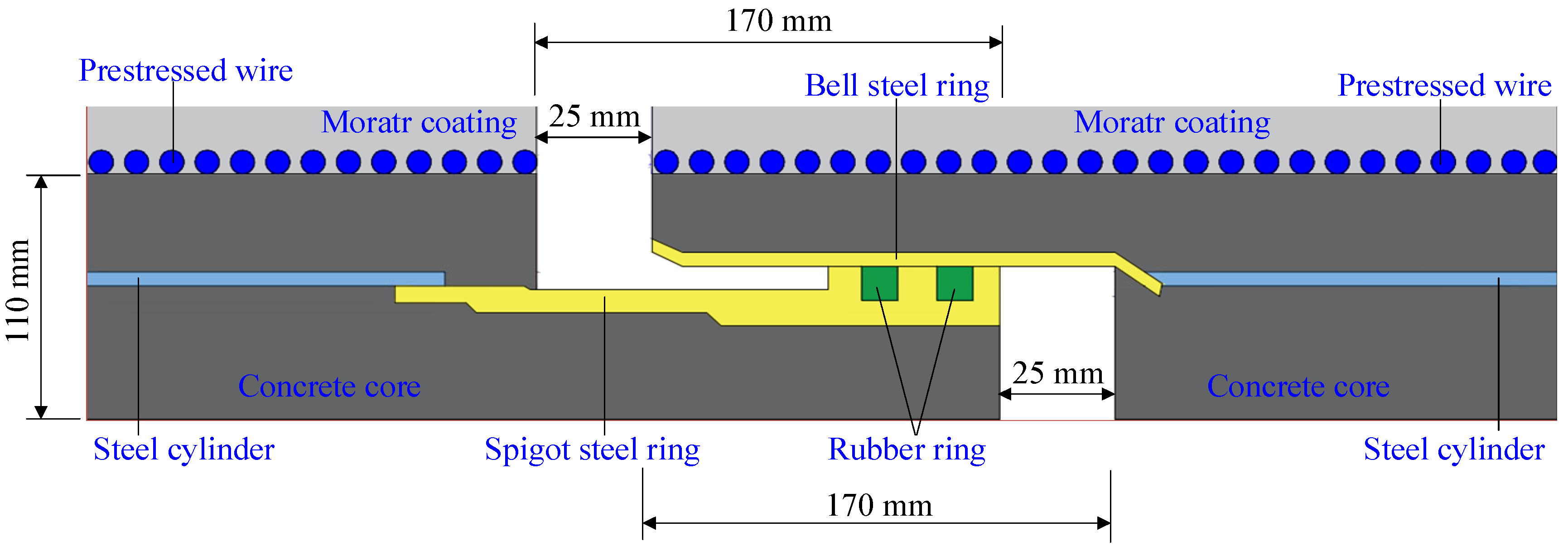
The Prestressed Concrete Cylinder Pipe (PCCP) used in this experiment was designed and manufactured in accordance with the GB/T 19685-2017 Prestressed Concrete Cylinder Pipe [27] standard. It is noted that the technical requirements of GB/T 19685-2017 are generally consistent with international standards such as AWWA C301 and AWWA C304. To ensure reproducibility for international readers, the key parameter equivalences are clarified as follows: The concrete core strength grade C50 corresponds to a compressive strength of approximately 50 MPa (7250 psi), which is comparable to the high-strength concrete requirements in AWWA C301. The prestressing wire, with a tensile strength of 1570 MPa, meets the specifications for ASTM A648 Class III [28] wire. Additionally, the performance requirements for the rubber gaskets are in accordance with ISO 4633 [29], ensuring sealing capabilities equivalent to international norms. The pipe possesses an inner diameter of 1400 mm and an effective length of 6 m. It is an embedded-cylinder-type pipe featuring a double rubber gasket bell-and-spigot joint structure, as illustrated in Figure 1. The steel cylinder is fabricated from 1.5 mm thick hot-rolled steel sheet with a yield strength of no less than 215 MPa. The prestressing wires are single-layer wrapped, with a diameter of 5 mm and a standard tensile strength of 1570 MPa, while the wrapping stress is maintained at 70% of the standard strength. The geometric dimensions of the pipe are listed in Table 1.
It should be noted that due to the high manufacturing costs and logistical complexity associated with full-scale testing of large-diameter PCCP, this investigation relied on a single experimental specimen. Consequently, a statistical analysis of repeatability and experimental uncertainty was not performed. The data presented herein should be interpreted as a detailed case study of the joint’s mechanical behavior under controlled laboratory conditions (specifically, rotation without internal water pressure or external soil overburden). The results serve primarily to reveal the failure mechanism and validate the subsequent numerical model, rather than to provide a statistical distribution of performance.

2.2. Data Acquisition and Sensor Layout

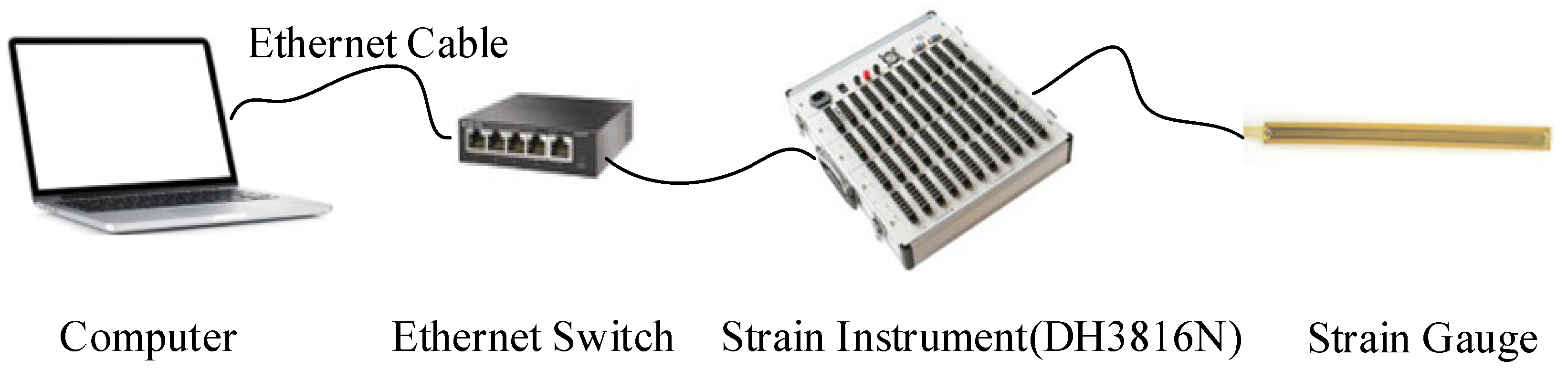
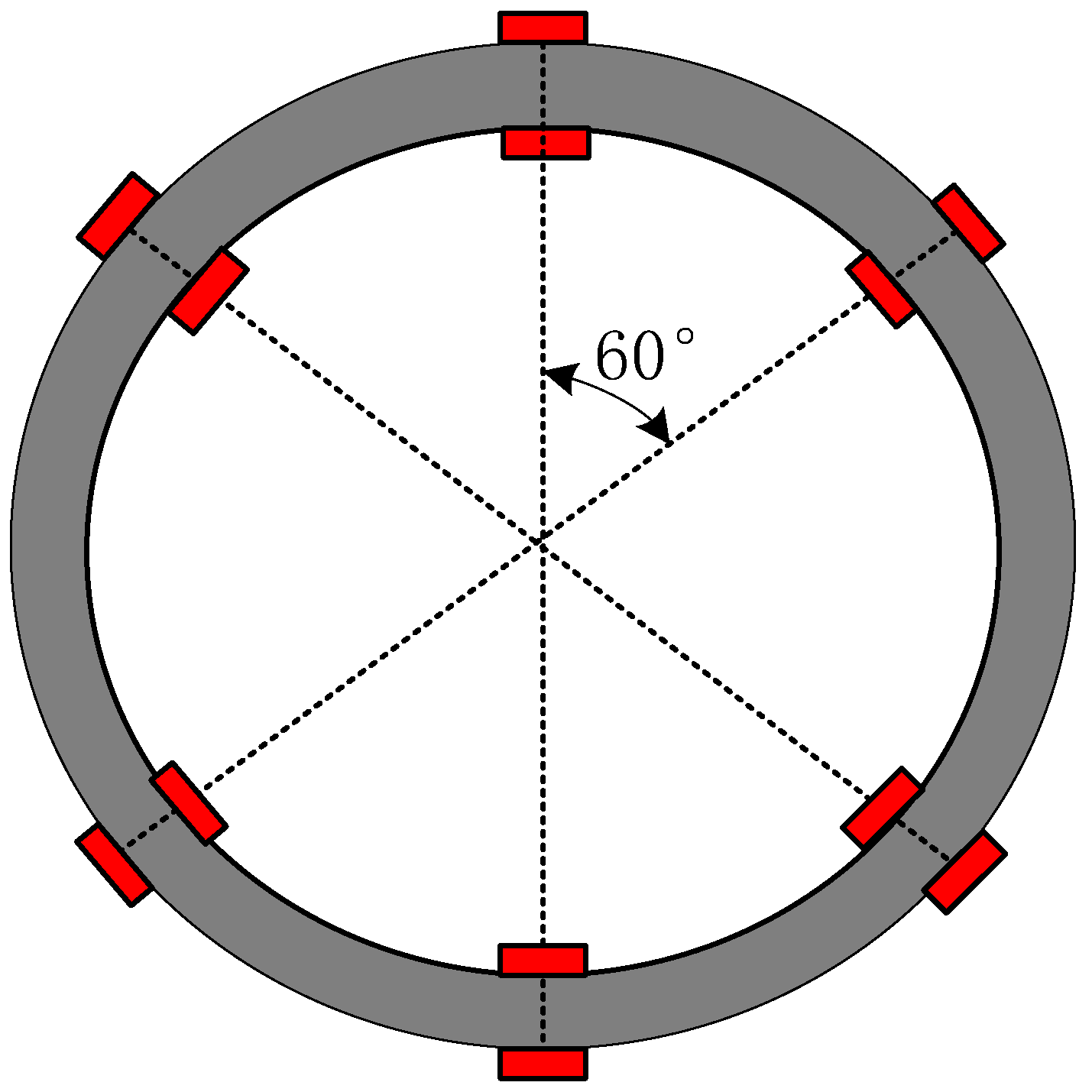
To comprehensively monitor the mechanical response of the joint during rotation, a data acquisition system consisting of a DH3816N static strain measurement system, resistance strain gauges, and YHD-type displacement sensors was established (see Figure 2). The DH3816N system (Donghua Testing Technology Co., Ltd., Jingjiang, China) served as the core data logger, featuring a high measurement accuracy of ≤0.05% FS and multi-channel parallel sampling capabilities. As illustrated in Figure 2, an Ethernet Switch was utilized to establish a high-speed local area network (LAN) connection between the strain measurement instrument and the host computer. This setup ensured stable, high-frequency digital signal transmission for real-time monitoring and storage using the accompanying DHDAS software (v.6.22). To capture stress changes in critical areas, measuring points were arranged in a circumferential pattern. Strain gauges were attached at the 0° (crown), 60°, 120°, 180° (invert), 240°, and 300° cross-sections on both the inner and outer sides of the bell-and-spigot joint. For the inner side of the concrete core, four paths (circumferential–axial–circumferential–axial) were sequentially arranged at the joint end. For the outer side of the pipe, circumferential and axial measuring points were arranged on the surfaces of the mortar coating and the prestressing wires, respectively. Specific models of resistance strain gauges were selected based on the material properties (e.g., Model BQ120-80AA for the mortar layer and Model BE120-2AA for the steel wires). Prior to installation, the attachment areas were polished, cleaned, and moisture-proofed to eliminate the influence of contact thermal resistance and the external environment on measurement accuracy. Furthermore, to monitor the pipe posture in real time and calculate the relative rotation angle, horizontal and vertical displacement meters were arranged at intervals of 1.5 m along the side and bottom of the pipe.
To capture stress variations in critical regions, the measuring points were arranged in a circumferential pattern. Strain gauges were attached at the 0° (crown), 60°, 120°, 180° (invert), 240°, and 300° cross-sections on both the inner and outer sides of the bell-and-spigot joint. For the inner side of the concrete core, four paths consisting of “circumferential-axial-circumferential-axial” were sequentially arranged at the joint ends. On the outer side of the pipe, circumferential and axial measuring points were placed on the surfaces of the mortar coating and prestressing wires, respectively. The specific layout of the measuring points is illustrated in Figure 3. Furthermore, to monitor the pipe posture in real time and calculate the relative rotation angle, horizontal and vertical displacement meters were installed at intervals of 1.5 m along the side and bottom of the pipe.

2.3. Test Setup and Loading Process

The experimental loading apparatus utilized a gantry crane combined with chain hoists to simulate the joint rotation induced by differential foundation settlement through a single-end lifting method. Prior to the commencement of the test, the pipes were installed in strict accordance with the Code for Construction and Acceptance of Water and Sewerage Pipeline Works (GB 50268-2008) [30]. During the installation process, the steel rings of the bell and spigot were meticulously cleaned and coated with vegetable oil to ensure that the double rubber gaskets were seated smoothly into the spigot grooves without any twisting. Subsequently, the two pipe sections were slowly docked using the internal pulling method, ensuring that the bell and spigot faces were parallel and the joint gap was uniform in the initial state.
The loading process employed a step-by-step control protocol. One pipe section remained fixed, while the chain hoist was operated to slowly lift the free end of the other pipe section. The lifting increment was set to 10 mm per step. After each loading step, the load was held constant for 5 min. Once the readings from the strain gauges and displacement meters stabilized, data from all channels and the macroscopic condition of the bell-and-spigot joint were recorded, continuing until joint failure occurred. During the experiment, the relative rotation angle of the joint was primarily calculated using the displacement method, which involves measuring the vertical displacement difference between the two ends of the pipe combined with the effective pipe length. This was supplemented by the joint gap method to cross-check the opening of the end faces, thereby ensuring the accuracy of the experimental data.

3. Experimental Results

3.1. Joint Failure Analysis

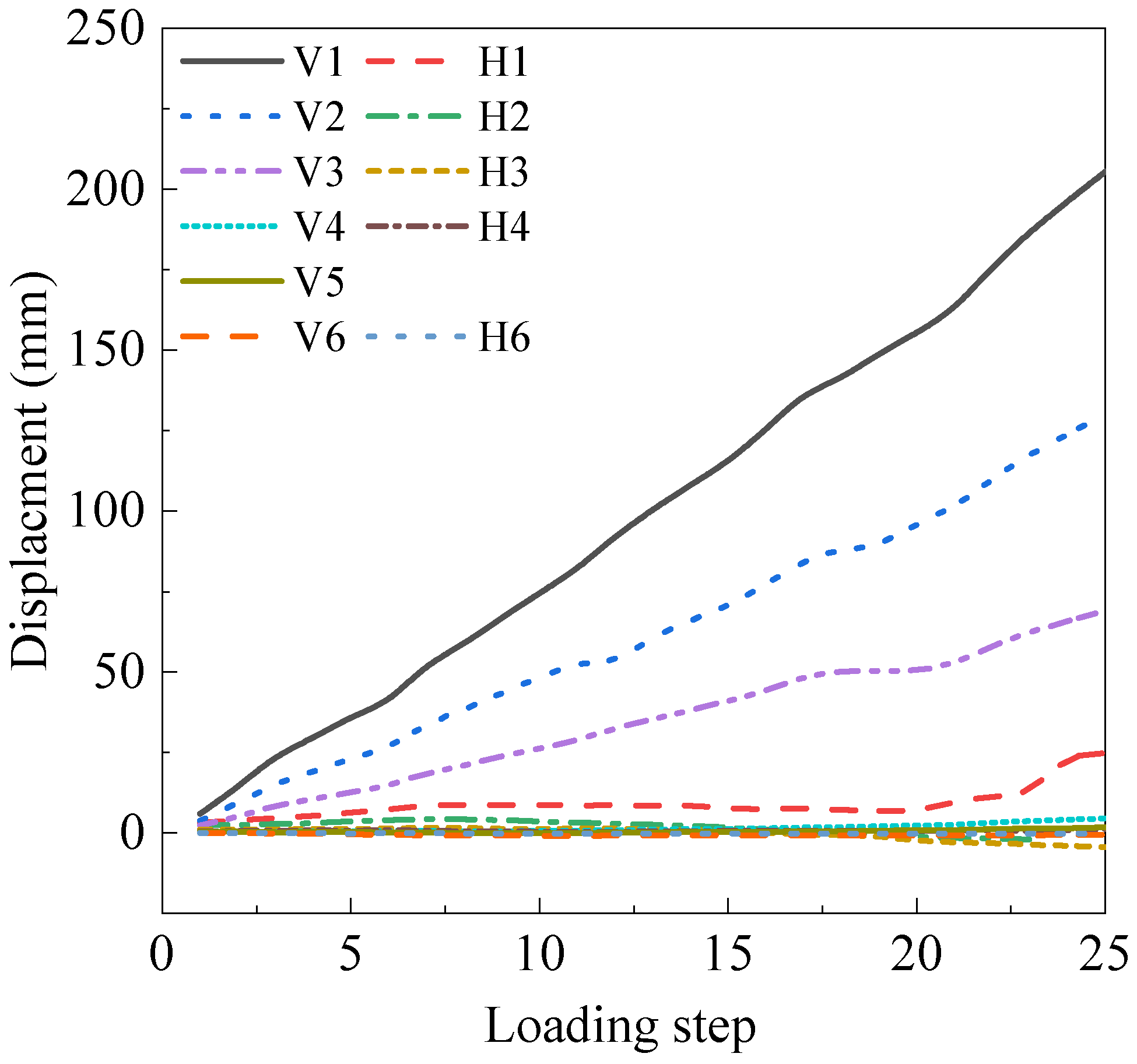
During the experiment, the pipe posture was monitored in real time using displacement meters arranged along the sides and bottom of the pipeline. The data indicated that as the loading steps progressed, the readings of the horizontal displacement meters (H1 to H6) remained stable near zero. This suggests that negligible lateral slip occurred during the lifting process, confirming that the experiment was primarily controlled by vertical displacement. In contrast, in the vertical direction, the readings of the vertical displacement meters (V1 to V3) gradually increased with the slow lifting of the free end of Pipe 1, while Pipe 2 remained stable. The evolution of the relative rotation angle of the joint was derived by calculating the vertical displacement difference between the two pipes and their effective lengths. The specific variations in the displacement meter readings are illustrated in Figure 4.
Using the data from V1 and V4, the vertical displacement difference (ΔH) between the two pipe sections was calculated. Subsequently, the relative rotation angle (θ) between the pipes was determined using the displacement method, as detailed in Table 2. As evident from the table, the relative rotation angle between the two pipes increased gradually. When the vertical displacement difference reached 201 mm, the relative rotation angle was 1.92°.
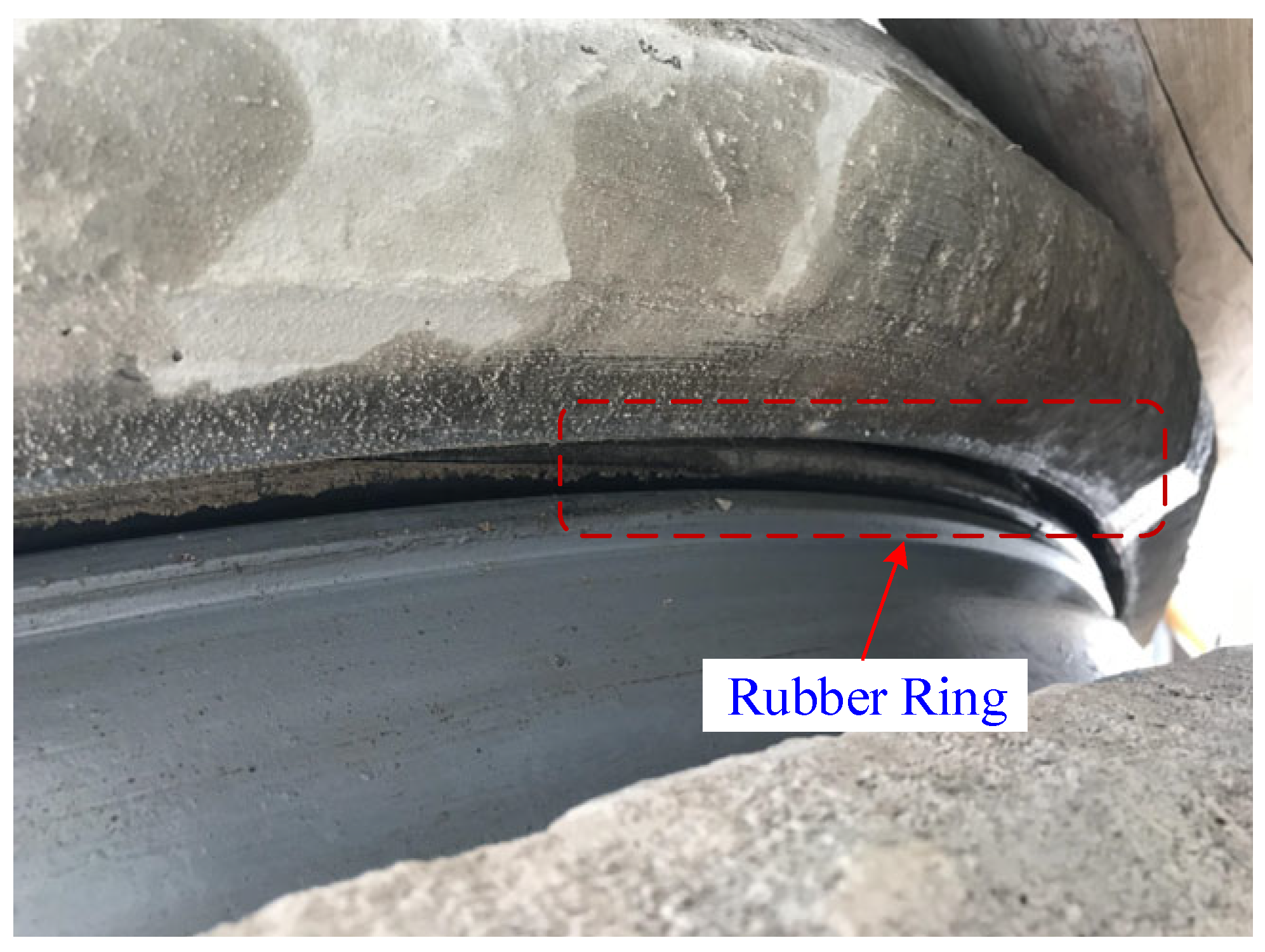
As the relative rotation angle of the bell-and-spigot joint continuously increased, the mating gap exhibited significant variations: the gap at the invert and its flanks widened notably, while the gap at the crown gradually narrowed, thereby degrading the sealing performance of the rubber gasket, as shown in Figure 5. When the vertical displacement difference between the two pipes reached 201 mm, the relative rotation angle calculated via the displacement method was approximately 1.92°. At this point, it was observed that the outermost rubber gasket on the spigot steel ring had clearly slipped out, completely detaching from the working face of the bell (as shown in Figure 6). Consequently, the joint lost its sealing capability and was determined to have failed. Simultaneously, the measured joint gap at the invert reached 69 mm. The relative rotation angle back-calculated using the joint gap method was 2.06°. The results obtained from both methods showed good consistency, validating the effectiveness of the displacement method for monitoring joint rotation.

3.2. Joint Strain Analysis

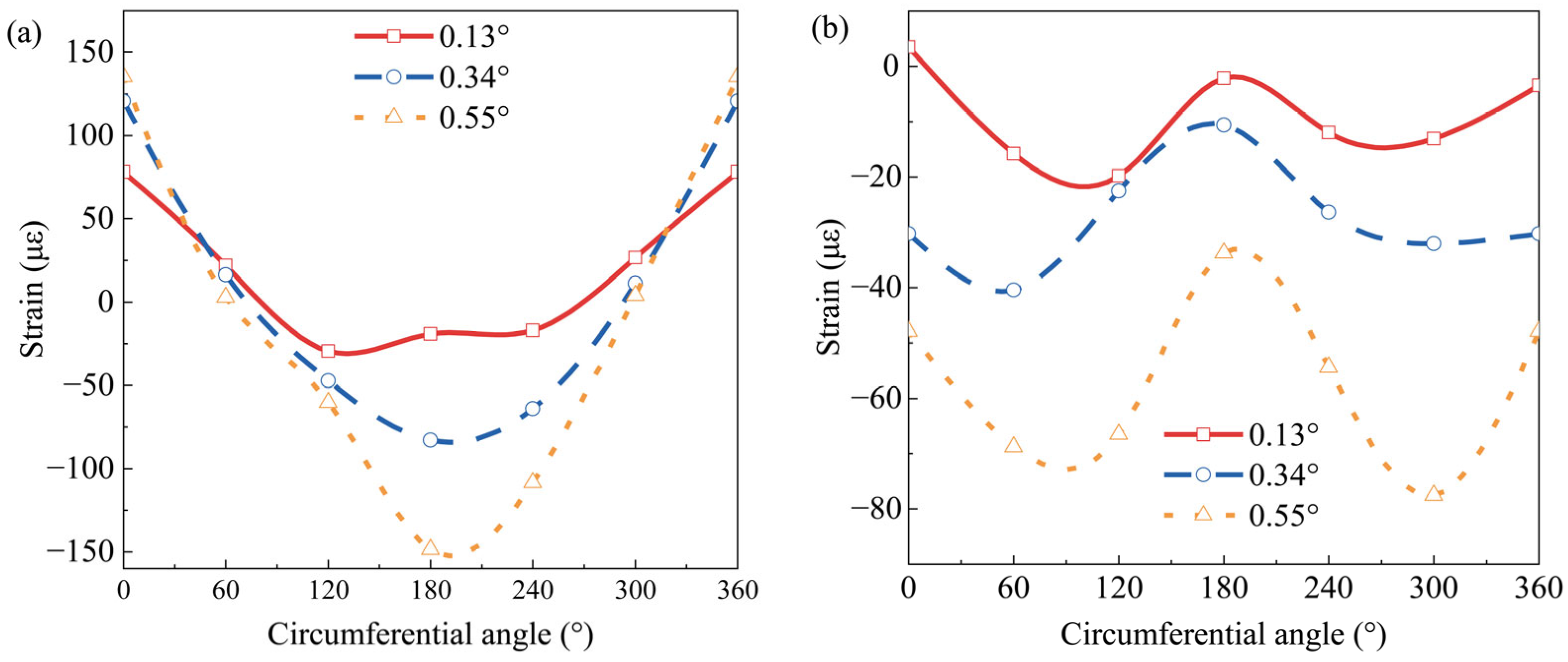
Analysis of the strain data from the measuring points on the inner side of the spigot concrete core reveals that, in the vicinity of the spigot end face, the circumferential regions from 0° to 60° (crown area) and 300° to 360° exhibit a tensile state, with the maximum tensile strain occurring at the crown. As the relative rotation angle increases, the tensile strain rises significantly. Specifically, when the rotation angles are 0.13°, 0.34°, and 0.55°, the tensile strains at the crown reach 78.2 με, 120.6 με, and 135.4 με, respectively. In contrast, other circumferential regions primarily exhibit a compressive state, with the maximum compressive strain located at the invert.
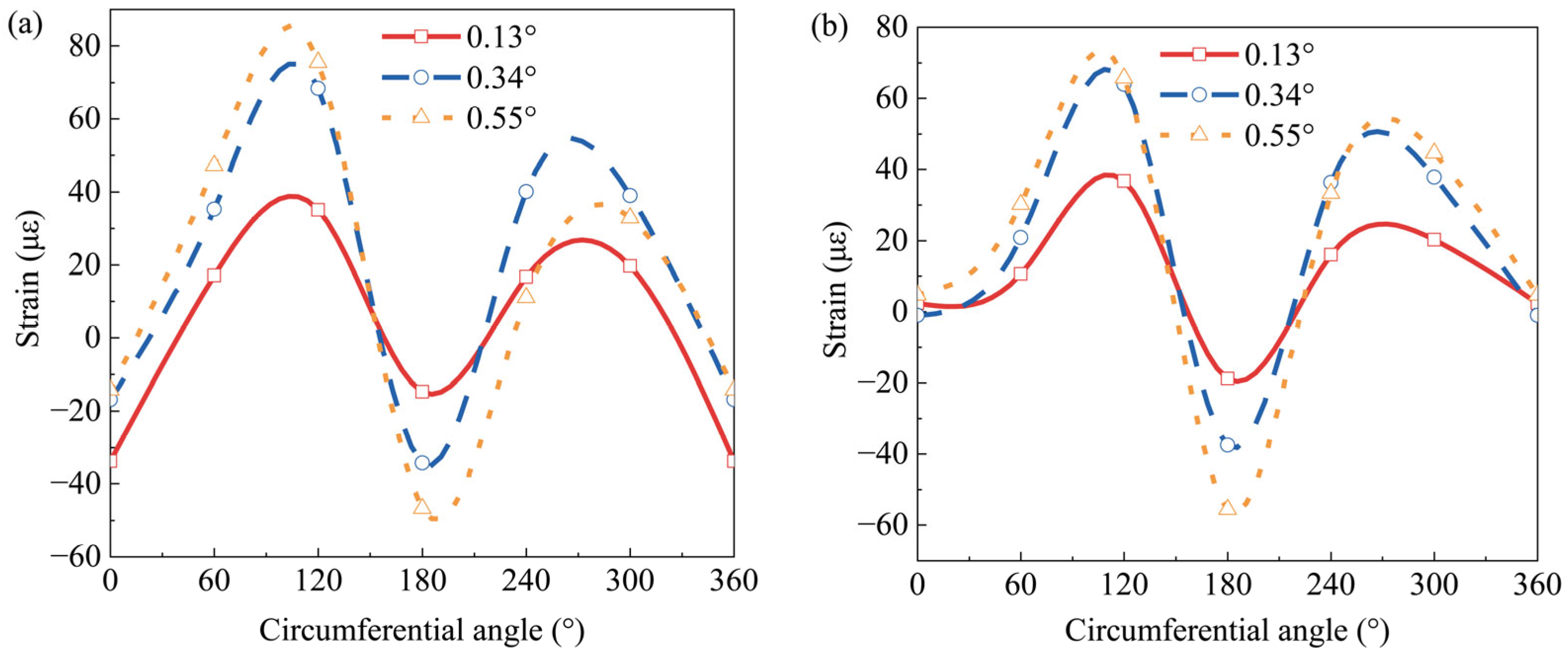
The strain distribution pattern on the inner side of the bell is similar to that of the spigot, but with distinct differences: both the crown and invert exhibit compressive strains, while the springlines experience tensile strains, resulting in an overall “M”-shaped distribution. The specific circumferential strain distributions on the inner sides of the spigot and bell are illustrated in Figure 6 and Figure 7, respectively.
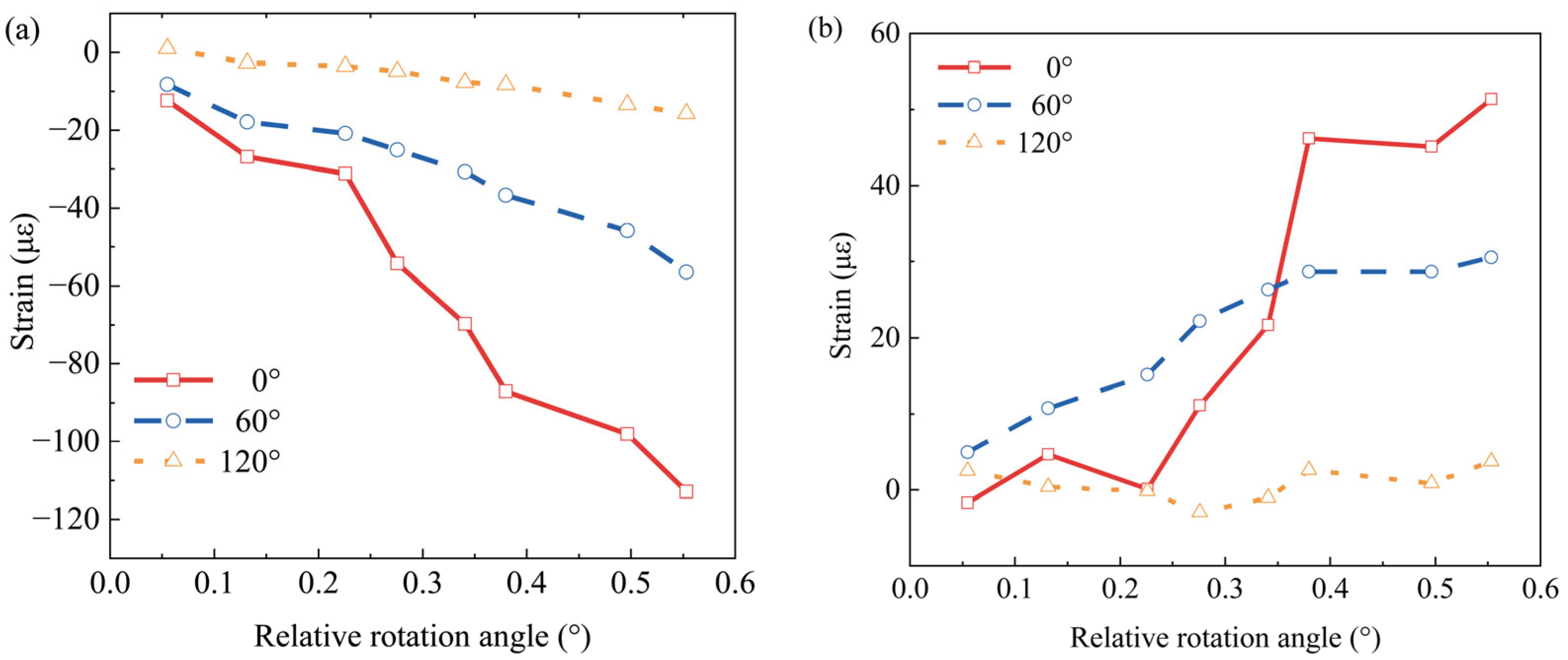
Regarding the outer side of the concrete core, the measuring points on the spigot primarily exhibited compressive strains, the magnitude of which increased with the rotation angle; conversely, the bell mainly exhibited tensile strains at the 0° and 60° positions. It is worth noting that during the initial stage of pipe lifting, the variation in strain on the outer concrete core of the joint was relatively minor. However, when the relative rotation angle fell within the range of 0.23° to 0.34°, a significant abrupt increase in strain was observed. This indicates that a qualitative change occurred in the internal contact state and load transfer mechanism of the bell-and-spigot joint at this stage (as shown in Figure 8).
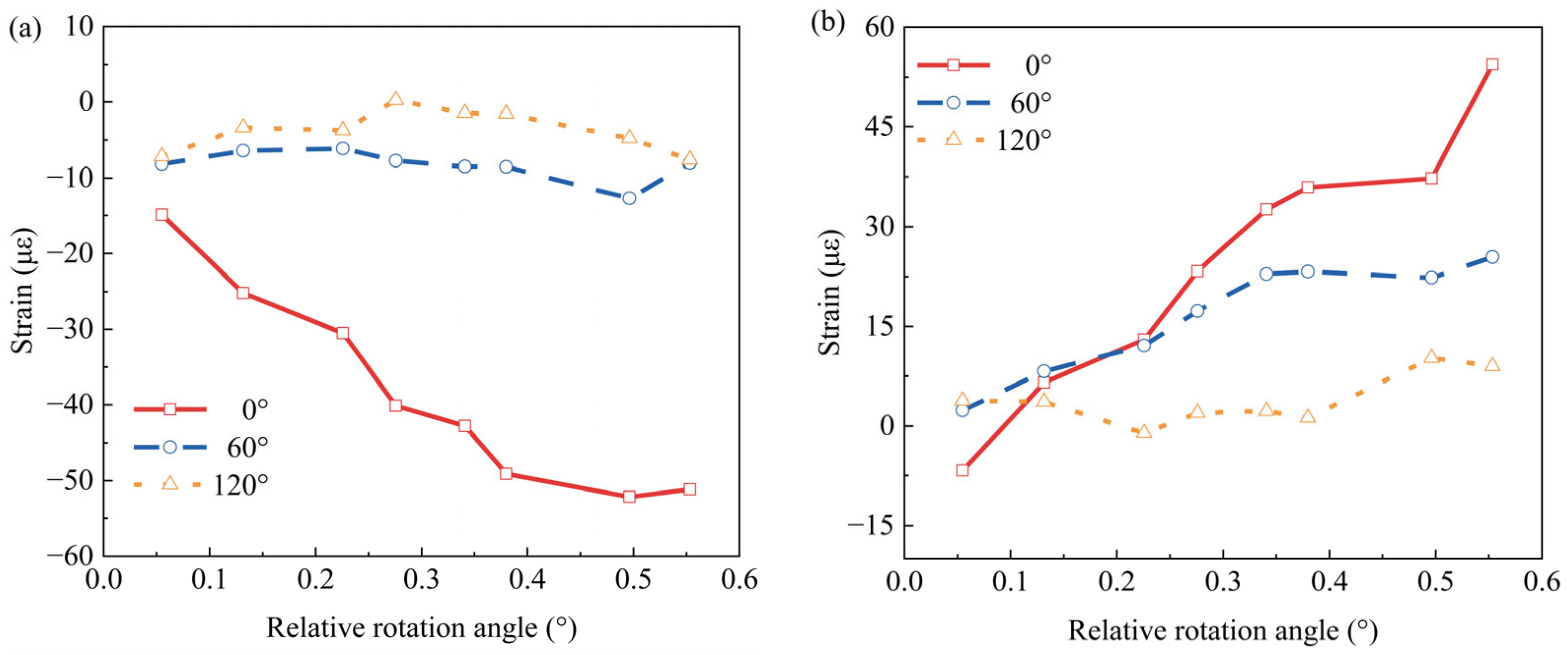
The strain behavior of the mortar coating is relatively complex. The strain in the spigot mortar coating exhibits a certain degree of instability as the rotation angle changes. For instance, the strain at the crown (0°) exhibits an inflection point at a rotation angle of 0.34°, shifting from an increasing trend in tensile strain to a decreasing one. This phenomenon may be attributed to internal structural relaxation or micro-cracking within the mortar coating under significant deformation. Conversely, the compressive strains in the mortar coating at the bell end, specifically at the crown and the 60° region, increase monotonically with the rotation angle. The specific strain variations are illustrated in Figure 9.
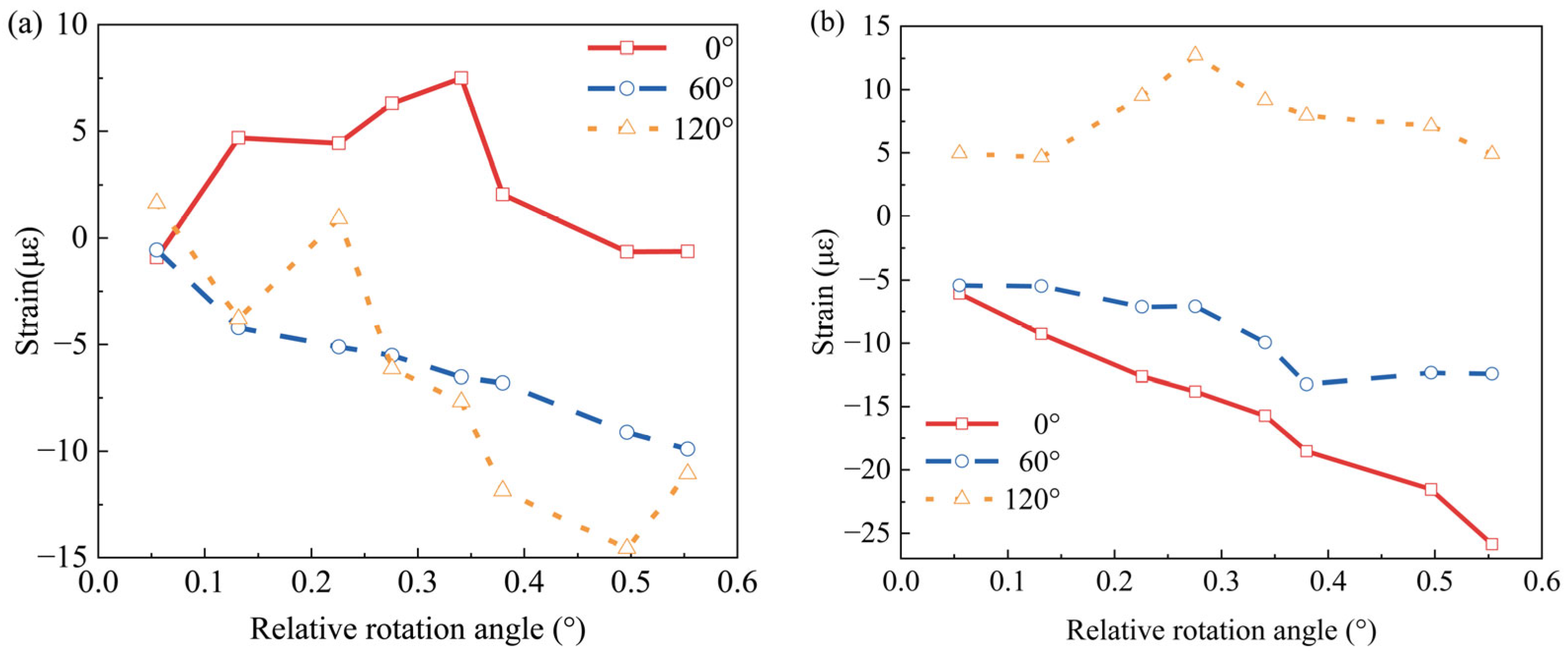
The strain response of the prestressing wires exhibits a clear regularity. The prestressing wires at the spigot generally exhibit a compressive strain state, with the compressive strain at the crown (0°) increasing significantly with the rotation angle. In contrast, the prestressing wires at the bell primarily experience tensile strain, with the most drastic increase occurring at the crown (as shown in Figure 10). This difference in stress states further reveals the mechanical mechanism wherein the spigot end is subjected to compression while the bell end undergoes expansion during the joint rotation process.

4. Finite Element Model Construction and Analysis

4.1. Model Construction

To deeply investigate the detailed meso-mechanical behavior of the PCCP joint during the rotation process, a 3D refined model of the DN1400-embedded PCCP with double rubber gaskets was established using ABAQUS (v.2020) non-linear finite element software. The geometric dimensions of the model were perfectly consistent with those of the full-scale test. The model primarily consists of the concrete core, mortar coating, thin-walled steel cylinder, bell and spigot steel rings, prestressing wires, and rubber gaskets. The lengths of both the bell and spigot are 170 mm, and the initial gap between the end faces is set to 25 mm.
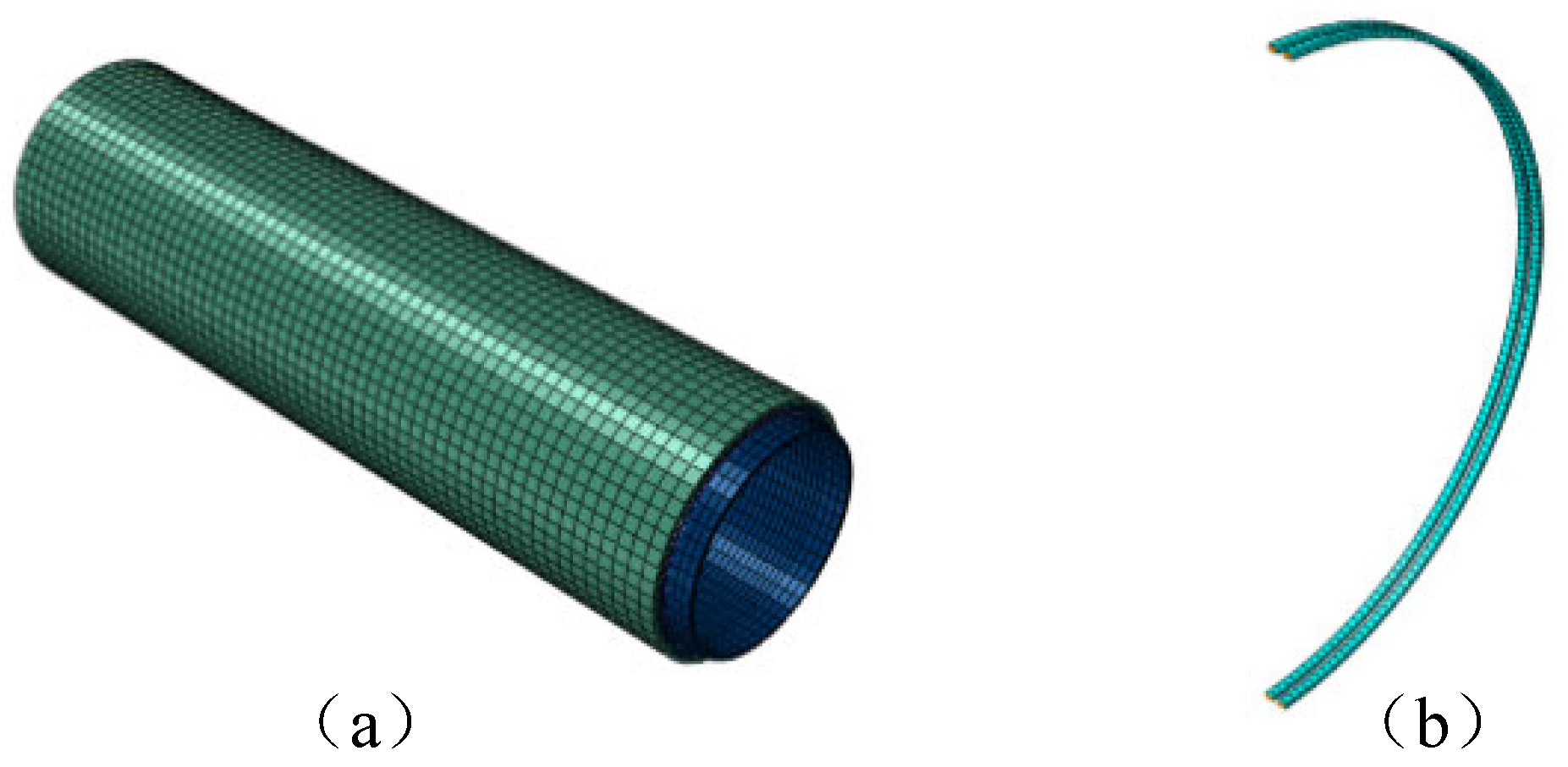
Regarding the meshing strategy, a partition-based discretization method was adopted to rigorously balance computational accuracy and convergence efficiency. Specifically, a global mesh size of approximately 50 mm was applied to the pipe barrel to ensure computational efficiency. However, in the critical contact regions (i.e., the bell-and-spigot joint and the rubber gasket interface), the mesh was locally refined to a size of 15 mm. This refinement ensures that the complex contact status and high stress gradients are captured accurately. Specific element types were selected for different components. For the concrete core, mortar coating, and bell/spigot steel rings, which possess regular geometries, the 8-node linear brick, reduced integration solid element (C3D8R) was adopted in conjunction with structured meshing techniques. For the steel cylinder, a thin-walled component with a thickness of only 1.5 mm, the 4-node reduced integration shell element (S4R) was selected to accurately simulate its membrane and bending effects. The prestressing wires were modeled using 3D 2-node truss elements (T3D2). Furthermore, for the rubber gaskets exhibiting hyperelastic characteristics, the 3D 8-node hybrid solid element (C3D8RH) was employed to prevent volumetric locking. Hourglass control was applied to all components to enhance model convergence [31,32]. The overall finite element mesh is illustrated in Figure 11.
Accurately defining material properties is critical for the success of the simulation. The Concrete Damage Plasticity (CDP) model was adopted for both the concrete core and the mortar coating. By introducing tensile and compressive damage factors to characterize stiffness degradation and non-linear behavior, this model effectively simulates the cracking and crushing failure of concrete under complex stress states [33].
To ensure the reproducibility of the numerical results, the key constitutive parameters were defined as follows: the dilation angle (ψ) was set to 30°, eccentricity (ε) to 0.1, the ratio of biaxial to uniaxial compressive yield stress (fb0/fc0) to 1.16, the parameter K to 0.666, and the viscosity parameter to 0.0005. The steel cylinder and the bell and spigot steel rings primarily operate within the elastic stage; however, they may enter the plastic region under extreme loads. Therefore, an elasto-plastic model was employed, assuming a slight hardening modulus after the yield strength is reached. As a high-strength cold-drawn material, the prestressing wire was also modeled using an elasto-plastic constitutive relation, with its tensile strength set to 1570 MPa. The simulation of the rubber gasket is particularly critical. The simulation of the rubber gasket is particularly critical. It was treated as an incompressible hyperelastic material [34], and the Mooney-Rivlin constitutive model was selected to describe its large deformation characteristics. The material parameters were adopted from the experimental study by Wu et al. [35], which performed uniaxial tensile tests on rubber gaskets with a Shore A hardness of 60 ± 5. The adopted parameters are C01 = 0.43, C10 = 0.07, D1 = 29.4, which have been verified to accurately represent the mechanical behavior of PCCP joint gaskets.
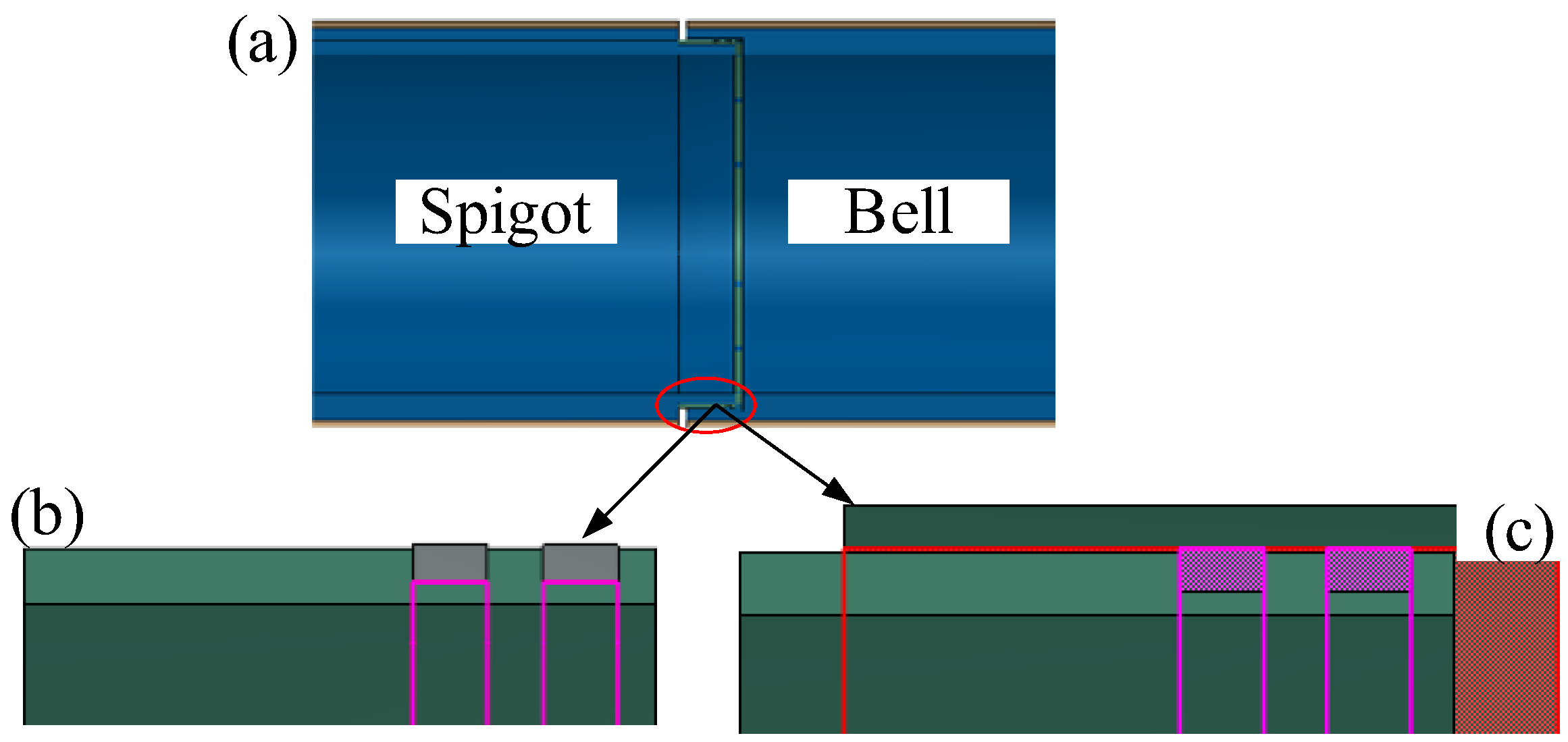
Given the composite nature of the PCCP structure, defining appropriate interaction assumptions is critical. To balance computational efficiency and physical reality, simplified ‘perfect bonding’ assumptions were adopted for the internal layers. The ‘Tie’ constraint was employed for the connections between the mortar coating, concrete core, and bell/spigot steel rings. Notably, to simulate the secure seating of the gasket, the inner surface of the rubber gasket was also tied to the spigot groove. To achieve deformation compatibility, the steel cylinder and prestressing wires were inserted into the concrete matrix using the ‘Embedded’ region constraint. While microscopic slip may occur in extreme failure scenarios, these perfect bonding assumptions are widely accepted for capturing the global composite stiffness of the structure.
The simulation of the contact at the bell-and-spigot joint represented a critical challenge of this model. The “Surface-to-Surface” contact algorithm was applied between the outer surface of the rubber gasket and the inner surface of the bell steel ring. In this interaction, the normal behavior was defined as “Hard” contact to facilitate pressure transmission, while the tangential behavior adopted the “Penalty” friction formulation with a friction coefficient set to 0.3 [36]. This value was selected to simulate the contact conditions between the rubber gasket and the steel ring under the lubrication of vegetable oil, which is consistent with typical engineering practices and previous studies. The specific contact model settings are illustrated in Figure 12.
To accurately reproduce the entire lifecycle of the PCCP from manufacturing and installation to failure, a total of five sequential analysis steps were defined in the simulation. First, the “cooling method” was employed to simulate the tensioning process of the prestressing wires. Utilizing the principle of thermal expansion and contraction, a specific temperature drop was applied to induce contraction in the wires, thereby establishing an initial compressive stress field within the concrete core. Subsequently, the radial compressive deformation of the rubber gasket following its installation into the spigot groove was simulated. Next, axial displacement was applied to simulate the pipe docking process, resolving the radial interference of the rubber gasket and establishing the sealing contact pressure. Finally, after releasing the axial constraints at the pipe ends, a vertical displacement load was applied to induce relative rotation between the pipes until the joint reached its ultimate failure state.

4.2. Model Validation and Effectiveness Assessment

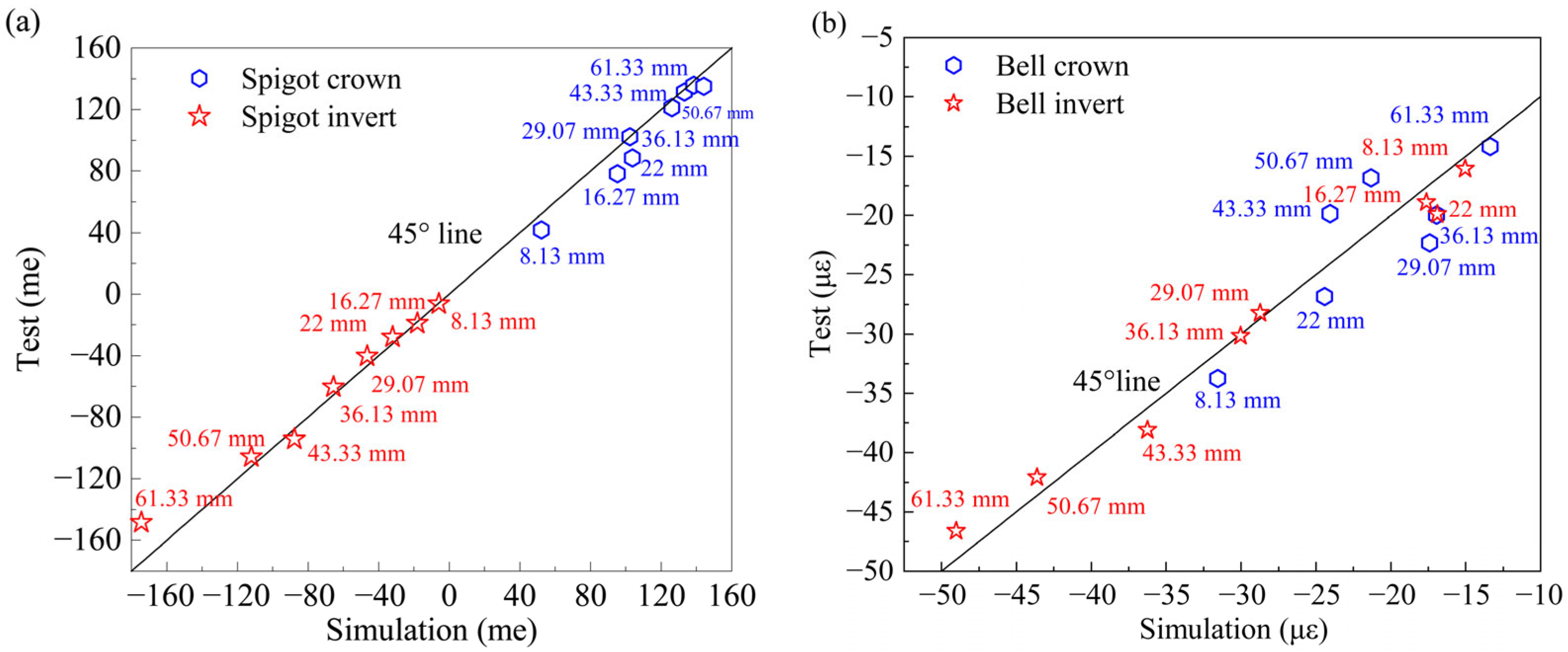
To validate the rationality and computational accuracy of the aforementioned 3D non-linear finite element model of the PCCP joint, a detailed comparison was conducted between the finite element simulation results and the full-scale experimental data described in Section 2. The circumferential strain on the inner side of the concrete core (Measuring Ring-1), which possessed the most complete monitoring data during the experiment, was selected as the validation metric. The study focused on examining the stress response at four critical locations: the spigot crown, spigot invert, bell crown, and bell invert across different loading stages. During the comparison process, the simulated strain values and the experimental measurements were extracted at pipe end vertical displacements of 8.13 mm, 16.27 mm, 22.00 mm, 29.07 mm, 36.13 mm, 43.33 mm, 50.67 mm, and 61.33 mm, respectively. A scatter plot comparing these two sets of data was then plotted (as shown in Figure 13).
The comparison results indicate that the simulated data and experimental data exhibit a high degree of consistency in the overall trend. The data points in the scatter plot are primarily clustered around the 45° diagonal, demonstrating that the model accurately captures the mechanical behavior of the bell-and-spigot joint during the rotation process. In particular, the simulation results align perfectly with the experimental observations regarding the tensile stress at the crown and compressive stress at the invert. To quantitatively assess the model’s predictive accuracy, the relative errors under various load levels were calculated (as listed in Table 3). The statistical analysis reveals that, despite minor fluctuations at individual measuring points during the initial loading stage due to unstable contact conditions, the average error between the overall simulation results and the experimental data is only 1.88%. It is worth noting that the discrepancies observed during the initial loading stage are primarily attributed to the ‘settling-in’ effect of the full-scale test setup. This process involves the elimination of microscopic gaps in the mechanical connections and the initial compaction of the support system. Such physical nonlinearities are inherent to large-scale testing and are difficult to fully replicate in the idealized finite element model. However, these initial deviations diminish rapidly as stable contact is established. Given the non-ideal boundary conditions and material parameter variability inherent in full-scale testing, this margin of error falls well within acceptable engineering accuracy limits. This confirms that the refined finite element model established in this study, which incorporates the rubber gasket and contact friction, is reliable. It effectively simulates the failure mechanism of the PCCP joint and serves as a valid basis for the subsequent parametric analysis of different pipe diameters and the prediction of ultimate rotation angles.

4.3. Parametric Analysis of Ultimate Rotation for Different Diameters

To investigate the influence of pipe diameter on the rotational performance and failure limits, numerical models for four sets of buried PCCP joints with inner diameters of 1400 mm, 2000 mm, 2600 mm, and 4000 mm were established based on the validated modeling approach.
To quantitatively determine the ultimate rotation angle, a consistent damage assessment criterion must be established. In the context of joint rotation, the spigot crown is subjected to significant bending-induced tension. Given the quasi-brittle nature of concrete, the ‘Maximum Principal Tensile Strain Criterion’ was adopted. Specifically, visible cracking is defined to initiate when the maximum principal tensile strain (εmax) of the concrete core exceeds its critical cracking strain (εcr).
It is important to clarify the relationship between the two failure modes observed: while the ultimate failure in the full-scale test was defined by gasket slippage (at approx. 1.92°), the numerical results indicated that visible cracking (εmaxεcr) initiates slightly earlier (at 1.83°). From an engineering safety perspective, ‘visible cracking’ represents the Serviceability Limit State, whereas ‘gasket slippage’ represents the Ultimate Functional Failure. Adopting the stricter cracking criterion for the parametric analysis ensures a higher safety margin, as it prevents corrosive media from penetrating the concrete core and damaging the prestressing wires before leakage occurs. Therefore, the parametric study focuses on this conservative threshold.
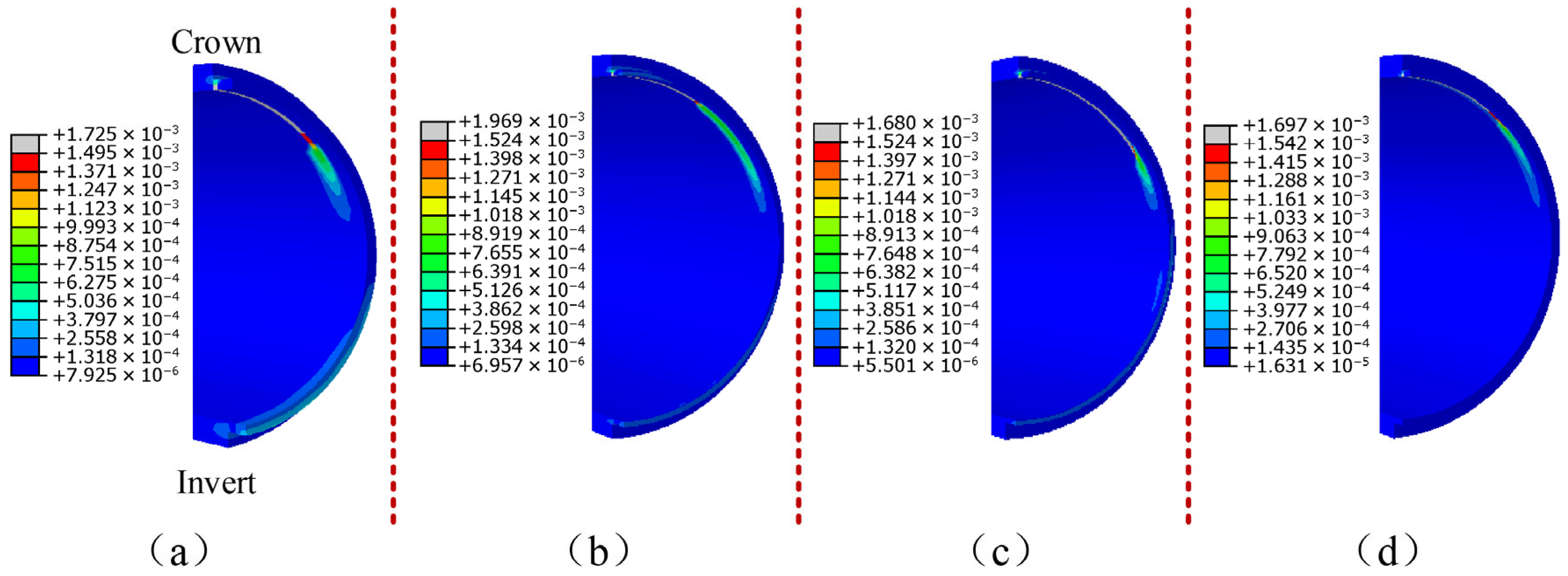
According to the relevant standards, the critical cracking strain is calculated as εcr = ft/Ec. Consequently, the cracking strain thresholds for the C50 and C55 concrete used in this study were determined to be 1495 με and 1524 με, respectively. Using these strain thresholds as control indicators, the crack propagation and mechanical response of pipelines with different diameters during joint rotation were simulated.
The simulation results indicate that the failure patterns of PCCP with various diameters exhibit a high degree of similarity during the joint rotation process. As the rotation angle increases, stress concentration becomes significant. Visible cracks initiate at the inner region of the spigot crown and gradually propagate towards the flanks. Subsequently, cracks also begin to emerge on the outer side of the invert and extend towards the springlines. This phenomenon is attributed to the complex squeezing and distortion interaction between the bell and spigot induced by joint rotation, which results in the ovalization deformation of the spigot end. The crack distribution contours for the models of different diameters at their ultimate failure limits are illustrated in Figure 14.
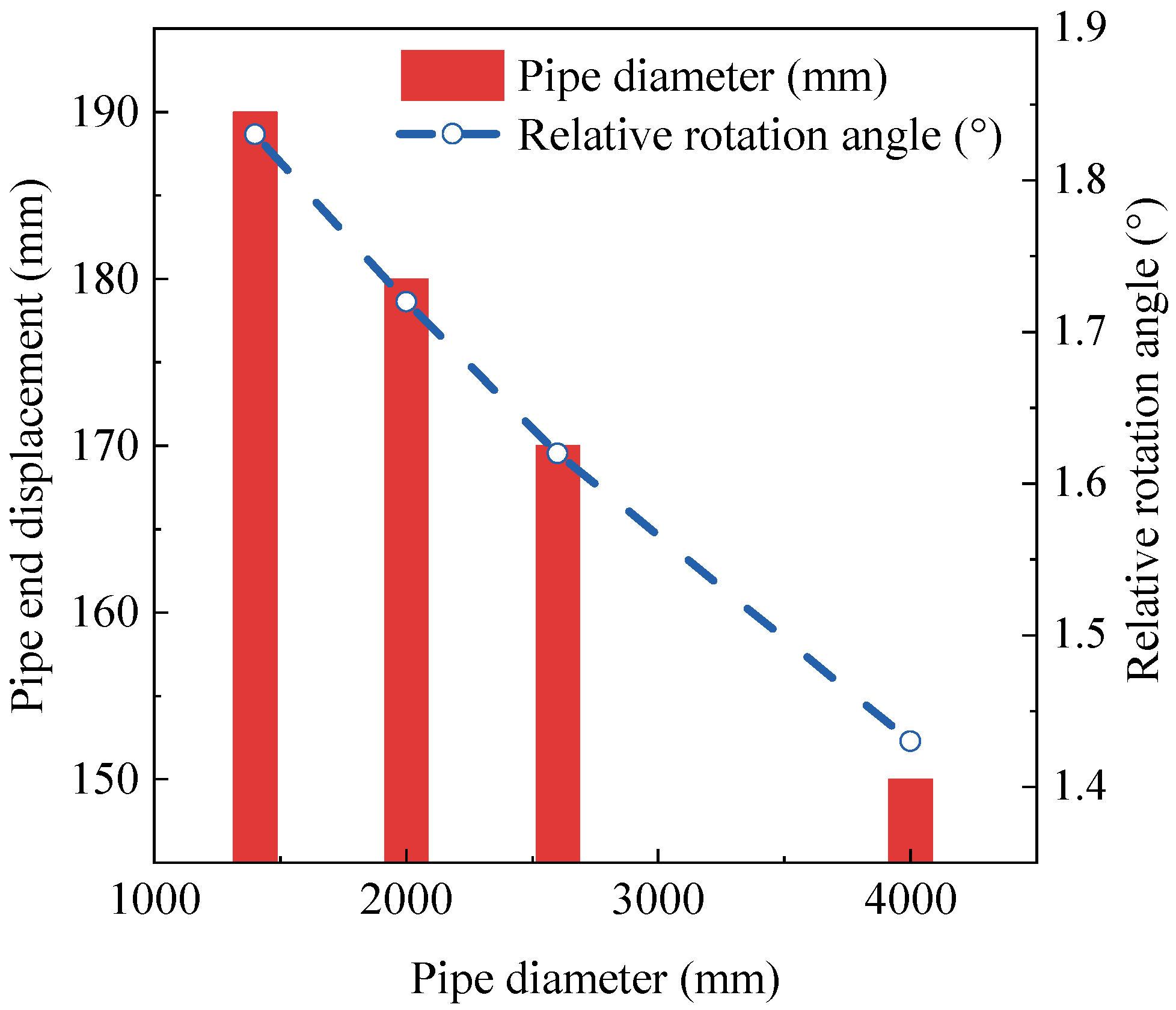
The ultimate relative rotation angles were back-calculated using the displacement method based on the pipe end displacements extracted when each model reached the point at which the visible cracking strain of the concrete emerged. The data indicate a significant size effect regarding the rotational capacity of PCCP joints. Specifically, for pipes with inner diameters of 1400 mm, 2000 mm, 2600 mm, and 4000 mm, the ultimate relative rotation angles of the joints are 1.83°, 1.72°, 1.62°, and 1.43°, respectively. The relationship between the failure displacement and the ultimate rotation angle corresponding to each pipe diameter is illustrated in Figure 15.
The analysis clearly reveals a trend wherein the ultimate relative rotation angle of the joint decreases monotonically as the pipe diameter increases. This phenomenon is mechanically attributed to the ‘geometric amplification effect’ governed by geometric similarity. For a given relative rotation angle θ, the gap opening displacement at the joint edge ( δ ) is proportional to the pipe diameter (D), which can be approximated as δ   D sin ( θ / 2 ) . Consequently, large-diameter pipes experience significantly larger joint gap openings and local stress concentrations than smaller pipes under the same rotation angle. This geometric factor, combined with the higher circumferential stiffness of large-diameter structures, leads to earlier concrete cracking or gasket loss, thereby reducing the ultimate rotational capacity.
Although the simulated ultimate rotation angles are higher than the allowable values (0.5–1.0°) specified in the GB/T 19685-2017 standard [27]—due to the exclusion of internal water pressure and external soil pressure—the observed size effect law holds significant guiding value for engineering practice. It implies that when installing large-diameter PCCP in soft soil foundations or high-intensity seismic zones, stricter foundation treatment measures must be implemented to limit differential settlement and prevent joint failure caused by excessive rotation and cracking.
Finally, it is important to discuss the potential influence of environmental factors in real-world applications, although this study focused on pure rotational behavior. First, high internal water pressure would generate an outward extrusion force on the rubber gasket, potentially reducing the critical rotation angle for sealing failure as the gasket might be ‘blown out’ more easily when the joint gap opens. Second, the confining pressure from the surrounding soil would restrict the free rotation of the joint, potentially increasing the rotational stiffness. However, this confinement could also exacerbate the local compressive stresses at the spigot invert, leading to earlier concrete crushing. Future research will aim to incorporate these coupled hydro-mechanical and soil-structure interaction effects.
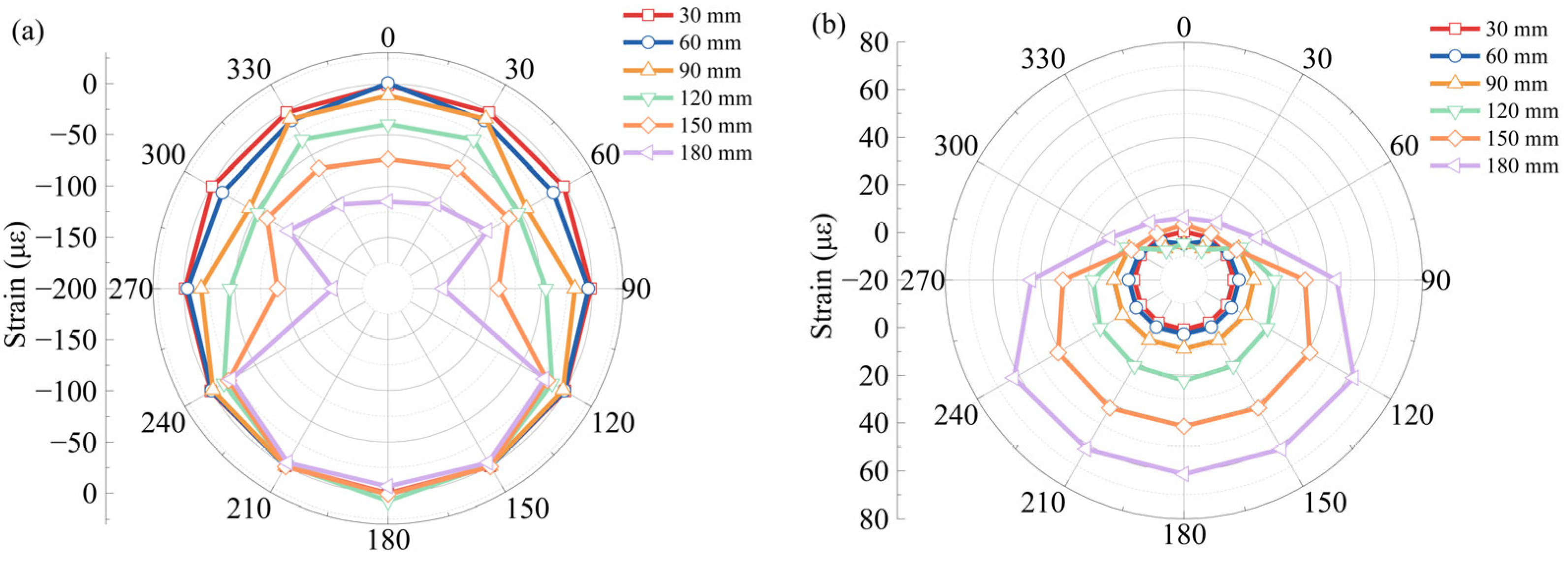
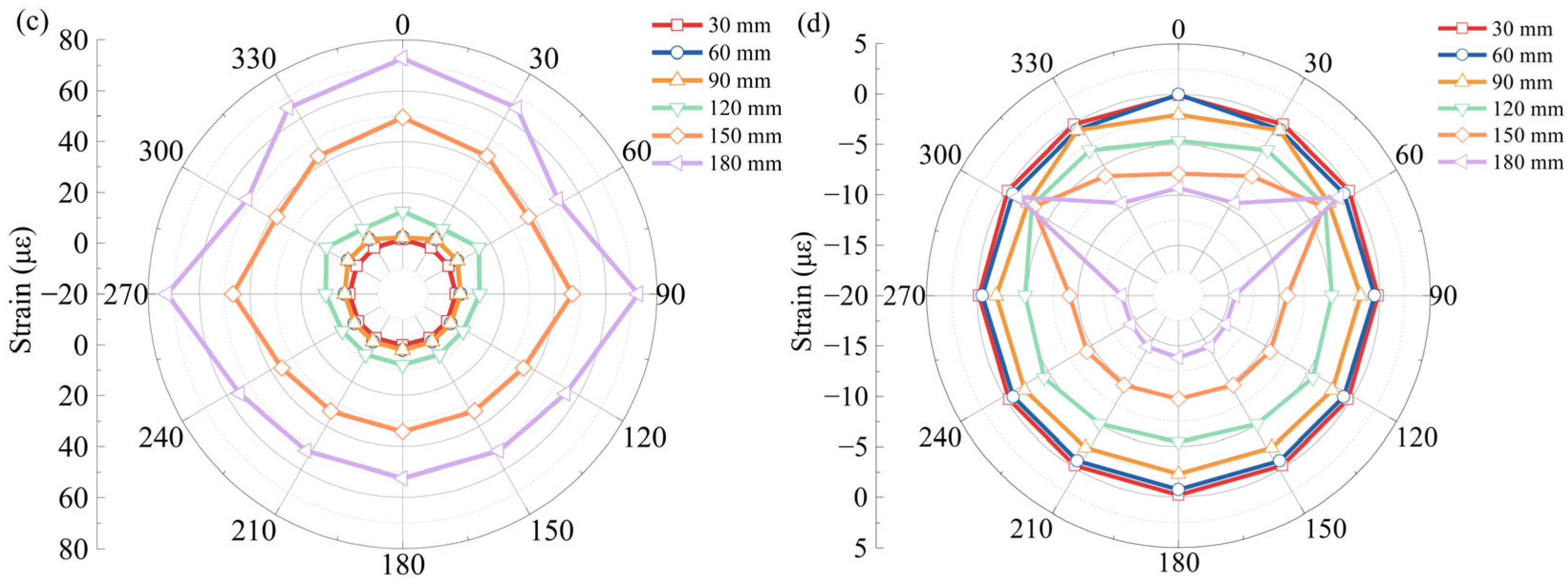
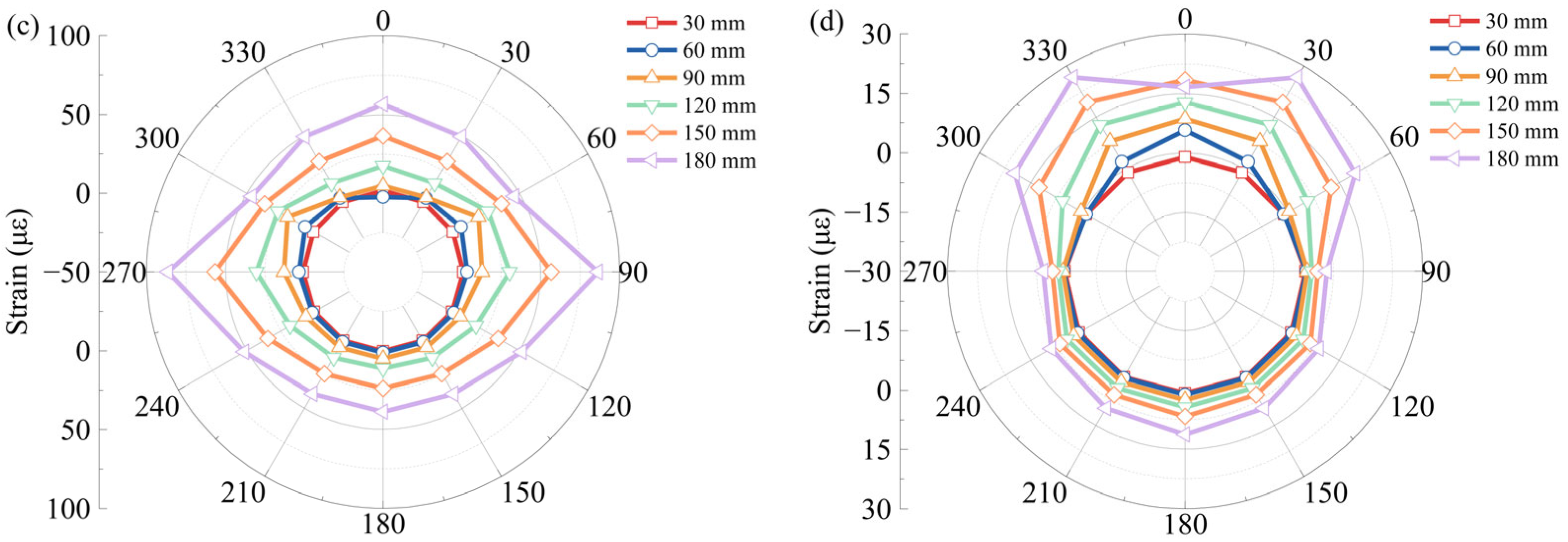
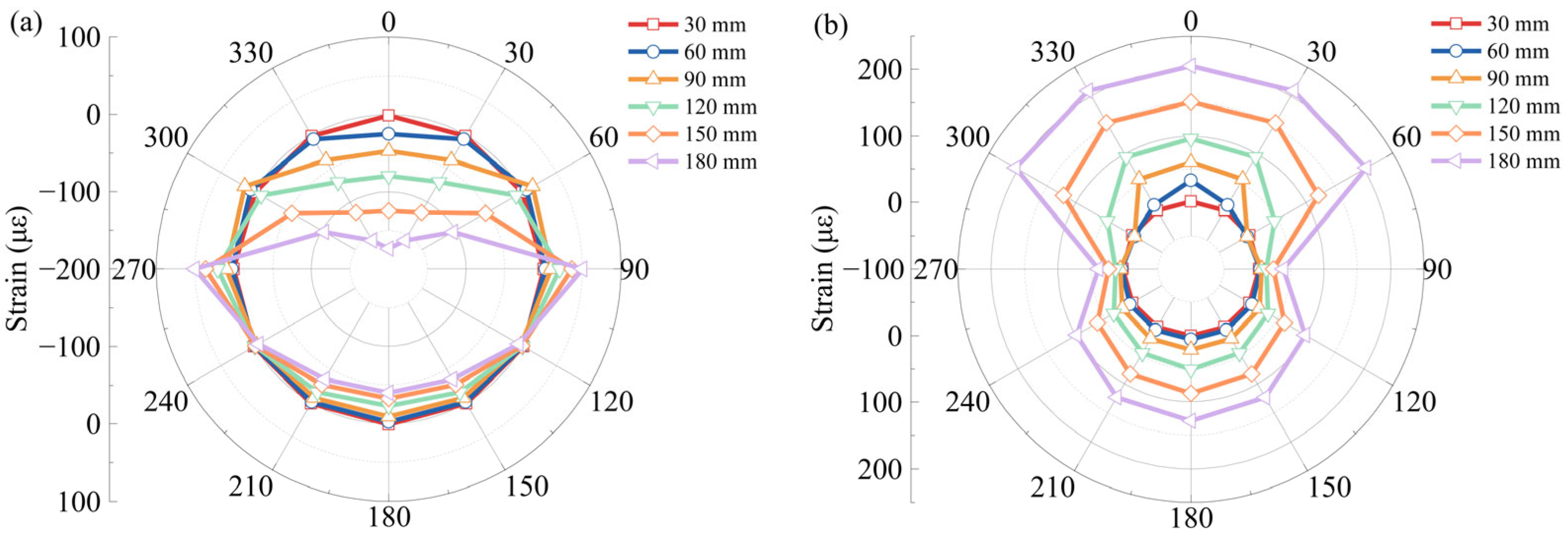
Taking the DN2000 pipe as a case study, the strain evolution patterns of the constituent materials at the bell-and-spigot joint were analyzed in depth as the pipe end displacement increased from 30 mm to 180 mm. The circumferential and axial strains at the roots of the concrete core’s bell and spigot were extracted (as shown in Figure 16). The analysis reveals that the root of the spigot is primarily subjected to compressive strain in the circumferential direction. Furthermore, the compressive strains at the crown (0°), shoulders (30–60°), and springlines (90°) increase significantly with the increase in pipe end displacement. Conversely, the root of the bell exhibits tensile strain in the circumferential direction, forming a corresponding relationship with the spigot. Regarding the axial direction, the spigot root exhibits tensile strain, with larger strain magnitudes observed in the 120–240° range (invert region). Overall, under the same displacement conditions, the strain response of the spigot significantly exceeds that of the bell, indicating that the spigot serves as the sensitive zone for deformation.
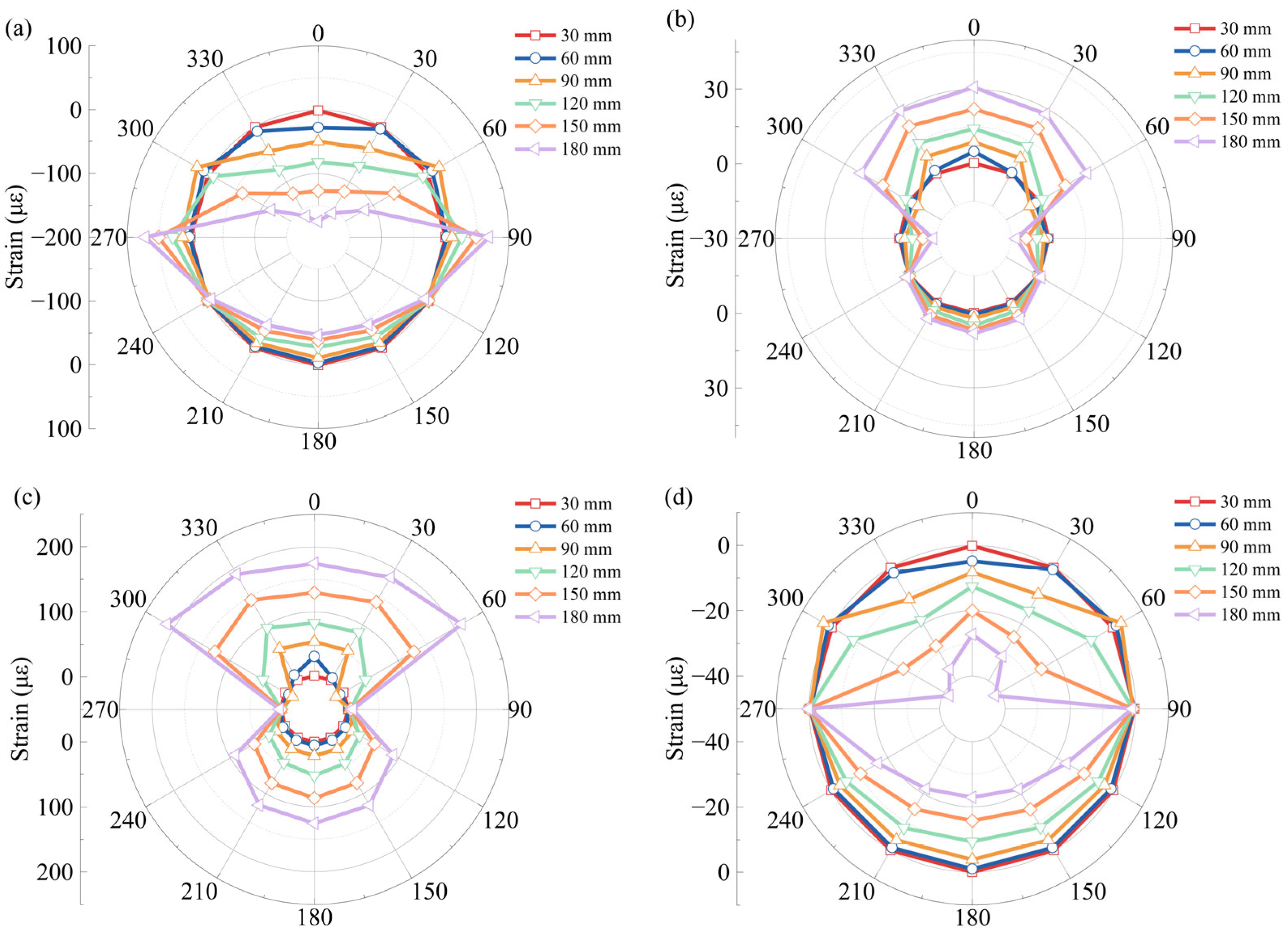
The strain distribution of the mortar coating is illustrated in Figure 17. At the spigot end, the circumferential compressive strains in the crown (0–60°) and invert (300–360°) regions increase sharply with the increase in rotation angle, while the springlines (90° and 270°) exhibit significant tensile strains (reaching a maximum of 71.4 με). The stress state at the bell end is opposite to that of the spigot. This indicates that joint rotation renders the mortar coating in the springline regions susceptible to longitudinal cracking due to tensile stress.
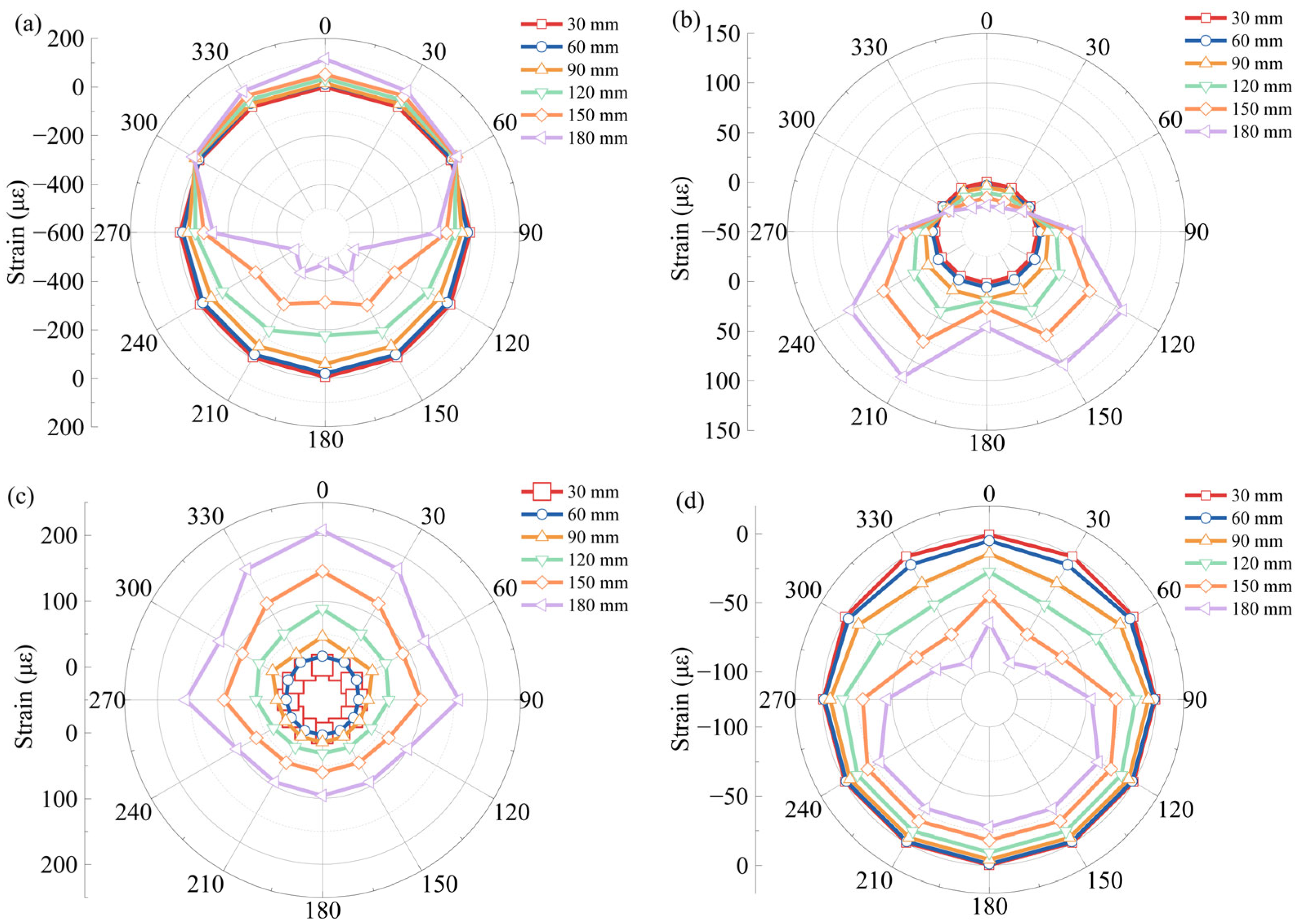
The strain variations in the bell and spigot steel rings and the steel cylinder are illustrated in Figure 18 and Figure 19, respectively. In the circumferential direction, the spigot steel ring exhibits tensile strain in the crown region (0–60°) and compressive strain in the remaining regions, with the magnitude of the compressive strain increasing as the displacement increases. As for the steel cylinder, the circumferential compressive strain within the range of 0° to 120° increases gradually. While the circumferential strain variations in the 120° to 240° region are insignificant, the axial tensile strain in this specific region exhibits significant changes.
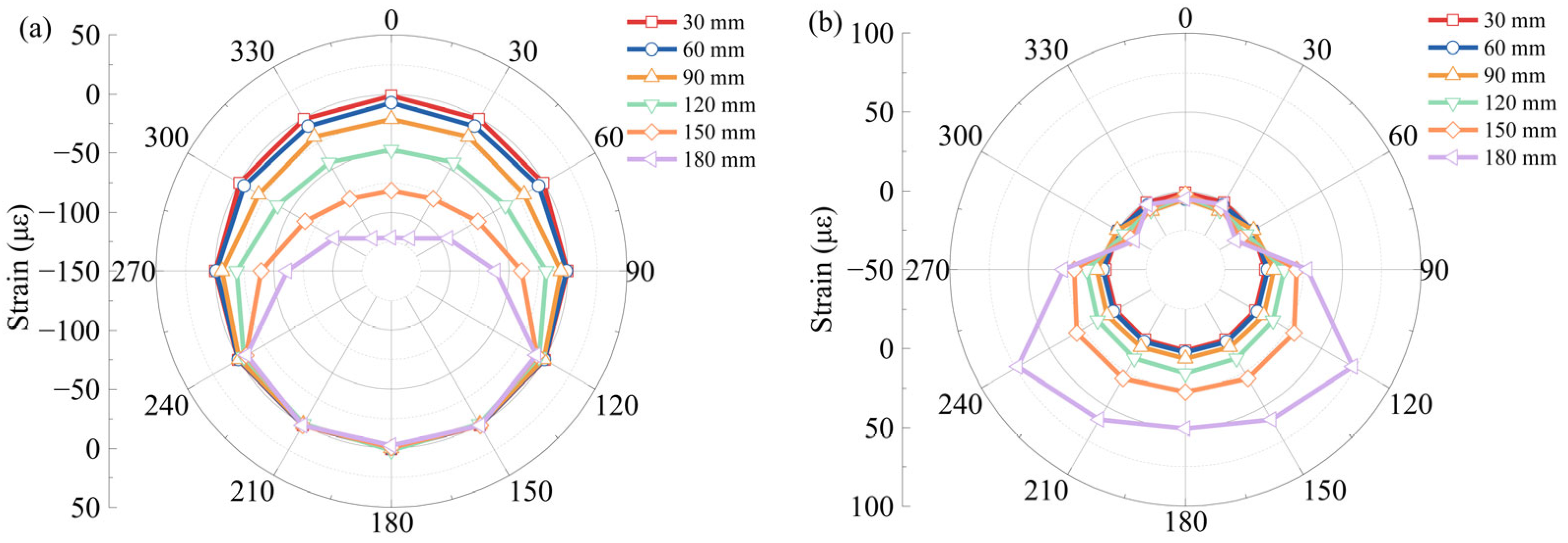
The strain distribution pattern of the prestressing wires (as shown in Figure 20) is highly consistent with that of the mortar coating. Furthermore, the strain values are slightly larger than those of the mortar layer, demonstrating good bonding between the two materials. At the spigot end, the compressive strains in the wires at the crown and invert increase gradually, while the springlines are subjected to tensile stress. In contrast, the wires at the bell end primarily experience tensile strain, which increases monotonically with the increase in rotation angle.

5. Conclusions

Focusing on the DN1400-embedded Prestressed Concrete Cylinder Pipe (PCCP), this paper investigates the mechanical response and failure mechanism of the bell-and-spigot joint under rotation conditions through a combination of full-scale joint rotation experiments and 3D non-linear finite element simulations. Furthermore, the influence of pipe diameter on the ultimate rotation angle of the joint is explored. The main conclusions are as follows:
(1)
Clear Joint Failure Mode: The macroscopic failure mode of the PCCP bell-and-spigot joint under rotation conditions is sealing failure. Experimental measurements indicate that when the relative rotation angle reaches approximately 1.92°, the rubber gasket on the spigot steel ring slips out of the working face of the bell, resulting in the loss of the joint’s sealing capability.
(2)
Distribution Laws of Strain Response: Joint rotation induces significant stress concentration. The inner region of the spigot crown is subjected to tension, while the invert region is subjected to compression, with strains increasing non-linearly with the rotation angle. The inner side of the spigot crown is identified as a potential hazard zone for concrete cracking, and its strain response is more sensitive than that of the bell.
(3)
Size Effect on Ultimate Rotation Angle: Analysis based on the concrete visible crack criterion demonstrates a significant size effect regarding the ultimate relative rotation angle of the joint. As the pipe inner diameter increases from 1400 mm to 4000 mm, the ultimate relative rotation angle decreases from 1.83° to 1.43°. This indicates that large-diameter pipelines possess a relatively weaker capacity to accommodate foundation deformation.
(4)
Deformation Mechanism of Bell and Spigot: Finite element simulations reveal the geometric deformation characteristics during joint rotation. When a relative rotation angle occurs, complex squeezing and torsional interactions exist between the bell and spigot, causing longitudinal ovalization deformation at the spigot end. This deformation mode serves as the primary geometric inducement for the concentration of tensile stress at the inner spigot crown, leading to cracking in this region prior to other areas.

Author Contributions

Y.M.: Methodology, Formal analysis, Validation, Writing—original draft. H.X.: Methodology, Software, Writing—original draft. G.C.: Formal analysis, Writing—review and editing, Conceptualization. D.H.: Formal analysis, Writing—review and editing, Conceptualization. B.L.: Formal analysis, Writing—review and editing. P.C.: Conceptualization, Resources Project administration. X.D.: Resources Project administration. H.W.: Methodology, Software, Writing—original draft. K.Z.: Methodology, Software, Formal analysis, Investigation, Data curation, Supervision, Funding acquisition, Writing—original draft. All authors have read and agreed to the published version of the manuscript.

Funding

This work was supported by the National Natural Science Foundation of China (52309174), the Natural Science Foundation of Henan (252300421308), the National Key R & D Program of China (2022YFC3801000), the Program for the Innovative Research Team (in Science and Technology) in the University of Henan Province (23IRTSTHN004), the Key Program of Science and Technology Research Plan Joint Foundation of Henan Province (235200810014), the Leading Talent Program for Central Plains Basic Research (22ZYLJ005), and the Natural Science Foundation of Henan (242300421001).

Institutional Review Board Statement

Not applicable.

Informed Consent Statement

Not applicable.

Data Availability Statement

Data will be made available on request.

Conflicts of Interest

Authors Yihu Ma, Haiyang Xie, Guanglei Chen were employed by the company Henan Pingyuan Expressway Co., Ltd. The remaining authors declare that the research was conducted in the absence of any commercial or financial relationships that could be construed as a potential conflict of interest.

References

  1. ANSI/AWWA C304-2014; Design of Prestressed Concrete Cylinder Pipe. American National Standards Institute, American Water Works Association: Washington, DC, USA, 2014.
  2. Lewis, R.A.; Wheatley, M. Prestressed Concrete Cylinder Pipeline Evaluation, A Toolbox Approach. In Proceedings of the Pipeline Engineering & Construction International Conference, Baltimore, MD, USA, 13–16 July 2003; pp. 276–285. [Google Scholar]
  3. Ge, S.; Sinha, S. Failure analysis, condition assessment technologies, and performance prediction of prestressed-concrete cylinder pipe: State-of-the-art literature review. J. Perform. Constr. Facil. 2014, 28, 618–628. [Google Scholar] [CrossRef]
  4. Zhai, K.; Moore, I.D. Stress analysis for a liner spanning a gap between sections of rigid pressure pipes. J. Pipeline Syst. Eng. Pract. 2026, 17, 04025105. [Google Scholar] [CrossRef]
  5. Wham, B.P.; O’Rourke, T.D. Jointed Pipeline Response to Large Ground Deformation. J. Pipeline Syst. Eng. Pract. 2016, 7, 04015009. [Google Scholar] [CrossRef]
  6. Chen, Q.; Ni, P. Three-dimensional modeling of joint kinematic of ductile iron pipelines subjected to normal faulting. Tunn. Undergr. Space Technol. 2023, 132, 104863. [Google Scholar] [CrossRef]
  7. Zhai, K.; Fang, H.; Wang, N.; Li, B.; Du, X.; Cui, P.; Yang, K. A simplified solution for buried continuous pipe rehabilitated by liner under the effect of surface load and soil void. Can. Geotech. J. 2025, 62, 1–15. [Google Scholar] [CrossRef]
  8. Zhai, K.; Moore, I.D. Mechanical study and equations for gravity flow pipe liners stretching across ring fractures or joints under shear action. Ocean Eng. 2024, 314, 119721. [Google Scholar] [CrossRef]
  9. Gomez, R.; Muñoz, D.; Vera, R.; Escobar, J.A. Structural model for stress evaluation of Prestressed concrete pipes of the Cutzamala system. In Pipeline Engineering and Construction: What’s on the Horizon? ASCE Library: Reston, VA, USA, 2004; pp. 1–9. [Google Scholar]
  10. Singhal, A.; Meng, C. Junction Stresses in Buried Jointed Pipelines. J. Transp. Eng.-ASCE 1983, 109, 450–461. [Google Scholar] [CrossRef]
  11. Hu, S.; Sun, Y.; Xue, X.; Huang, Y. Calculation model for bar-wrapping during prestressing of an embedded bar-wrapped cylinder concrete pressure pipe. Thin Walled Struct. 2019, 139, 39–45. [Google Scholar] [CrossRef]
  12. Zarghamee, M.S.; Ojdrovic, R.P.; Dana, W.R. Coating delamination by radial tension in prestressed concrete pipe. II: Analysis. J. Struct. Eng. 1993, 119, 2720–2732. [Google Scholar] [CrossRef]
  13. Zarghamee, M.S.; Eggers, D.W.; Ojdrovic, R.P. Finite-element modeling of failure of PCCP with broken wires subjected to combined loads. In Proceedings of the Pipelines 2002: Beneath Our Feet: Challenges and Solutions, Cleveland, OH, USA, 4–7 August 2002; pp. 1–17. [Google Scholar]
  14. Zarghamee, M.S. Hydrostatic pressure testing of prestressed concrete cylinder pipe with broken wires. In New Pipeline, Technologies, Security, and Safety; ASCE Library: Reston, VA, USA, 2003; pp. 294–303. [Google Scholar]
  15. Cheng, B.; Dou, T.; Xia, S.; Zhao, L.; Yang, J.; Zhang, Q. Mechanical properties and loading response of prestressed concrete cylinder pipes under internal water pressure. Eng. Struct. 2020, 216, 110674. [Google Scholar] [CrossRef]
  16. Cheng, B.; Dou, T.; Xia, S.; Zhao, L.; Yang, J.; Zhang, Q. Experimental study on mechanical properties of prestressed concrete cylinder pipes (PCCPs) under external load. Int. J. Press. Vessels Pip. 2021, 191, 104365. [Google Scholar] [CrossRef]
  17. Zhang, Y.; Yan, Z.; Zhu, H.; Ju, J.W. Experimental study on the structural behaviors of jacking prestressed concrete cylinder pipe. Tunn. Undergr. Space Technol. 2018, 73, 60–70. [Google Scholar] [CrossRef]
  18. Hajali, M.; Alavinasab, A.; Abi Shdid, C. Structural performance of buried prestressed concrete cylinder pipes with harnessed joints interaction using numerical modeling. Tunn. Undergr. Space Technol. 2016, 51, 11–19. [Google Scholar] [CrossRef]
  19. Hajali, M.; Alavinasab, A.; Shdid, C.A. Effect of the number of broken wire wraps on the structural performance of PCCP with full interaction at the gasket joint. J. Pipeline Syst. Eng. Pract. 2016, 7, 04015026. [Google Scholar] [CrossRef]
  20. Hajali, M.; Alavinasab, A.; Shdid, C.A. Effect of the location of broken wire wraps on the failure pressure of prestressed concrete cylinder pipes. Struct. Concr. 2015, 16, 297–303. [Google Scholar] [CrossRef]
  21. Hu, B.; Fang, H.; Wang, F.; Zhai, K. Full-scale test and numerical simulation study on load-carrying capacity of prestressed concrete cylinder pipe (PCCP) with broken wires under internal water pressure. Eng. Fail. Anal. 2019, 104, 513–530. [Google Scholar] [CrossRef]
  22. Sun, Y.; Hu, S.; Huang, Y.; Xue, X. Analytical stress model for embedded bar-wrapped cylinder concrete pressure pipe under internal load. Thin Walled Struct. 2020, 149, 106540. [Google Scholar] [CrossRef]
  23. Zhai, K.; Zhang, C.; Fang, H.; Ma, H.; Ni, P.; Wang, F.; Li, B.; He, H. Mechanical responses of bell-and-spigot joints in buried prestressed concrete cylinder pipe under coupled service and surcharge loads. Struct. Concr. 2021, 22, 827–844. [Google Scholar] [CrossRef]
  24. Zhai, K.; Fang, H.; Yang, M.; Sun, M.; Zhang, X.; Zhao, X.; Xue, B.; Lei, J.; Yao, X. The impacts of CFRP widths and thicknesses on the strengthening of PCCP. Structures 2023, 56, 104856. [Google Scholar] [CrossRef]
  25. Zhai, K.; Moore, I. Bending response and design equations for gravity-flow pipe liners passing across ring fractures or joints. J. Pipeline Syst. Eng. Pract. 2024, 15, 04024043. [Google Scholar] [CrossRef]
  26. Feng, X.; Li, H.; Chen, B.; Zhao, L.; Zhou, J. Numerical investigations into the failure mode of buried prestressed concrete cylinder pipes under differential settlement. Eng. Fail. Anal. 2020, 111, 104492. [Google Scholar] [CrossRef]
  27. GB/T 19685-2017; Prestressed Concrete Cylinder Pipe. Standards Press of China: Beijing, China, 2017.
  28. ASTM A648; Standard Specification for Steel Wire, Hard Drawn for Prestressing Concrete Pipe. ASTM International: West Conshohocken, PA, USA, 2018.
  29. ISO 4633; Rubber Seals—Joint Rings for Water Supply, Drainage and Sewerage Pipelines—Specification for Materials. International Organization for Standardization: Geneva, Switzerland, 2015.
  30. GB 50268-2008; Code for Construction and Acceptance of Water and Sewerage Pipeline Works. China Architecture & Building Press: Beijing, China, 2008.
  31. Zhai, K.; Moore, I. Axial stresses in pressure pipe liners spanning joints with initial gap, opening as a result of differential ground movements. Tunn. Undergr. Space Technol. 2023, 133, 104965. [Google Scholar] [CrossRef]
  32. Zhai, K.; Fang, H.; Wang, N.; Li, B.; Dong, J.; Xue, B. Mechanical response of concrete pipe rehabilitated by liner under external load: Analytical solution. Int. J. Numer. Anal. Methods Geomech. 2024, 48, 911–924. [Google Scholar] [CrossRef]
  33. Lee, J.; Fenves, G.L. Plastic-damage model for cyclic loading of concrete structures. J. Eng. Mech. 1998, 124, 892–900. [Google Scholar] [CrossRef]
  34. Wang, L.; Zhang, W.; Zhao, S.; Ning, C. Experiment and Numerical Simulation Study on Socket and Spigot Joint Damage of Ductile Iron Water Supply Pipeline under Vertical Loading. J. Disaster Prev. Mitig. Eng. 2023, 43, 232–239. [Google Scholar] [CrossRef]
  35. Wu, H.; Zhai, K.; Fang, H.; Wang, F.; Yu, X.; Li, B. Bell-and-spigot joints mechanical properties study of PCCP under the uneven settlement of foundation: Simulation and full-scale test. Structures 2022, 43, 1692–1703. [Google Scholar] [CrossRef]
  36. Zhang, H.; Peng, H. Finite element analysis on whole process of load-bearing response of PCCP. Water Resour. Hydropower Eng. 2014, 45, 60–64, 69. (In Chinese) [Google Scholar] [CrossRef]
Figure 1. Schematic diagram of the PCCP bell-and-spigot joint structure.
Applsci 16 02861 g001
Figure 2. Schematic diagram of the data acquisition system (DH3816N).
Applsci 16 02861 g002
Figure 3. Layout of the measuring points on the bell-and-spigot joint.
Applsci 16 02861 g003
Figure 4. Readings of displacement meters during the experiment.
Applsci 16 02861 g004
Figure 5. Failure mode of the bell-and-spigot joint.
Applsci 16 02861 g005
Figure 6. Circumferential strain distribution on the inner side of the spigot concrete core: (a) Ring-a; (b) Ring-b.
Applsci 16 02861 g006
Figure 7. Circumferential strain distribution on the inner side of the bell concrete core: (a) Ring-a; (b) Ring-b.
Applsci 16 02861 g007
Figure 8. Strain on the outer side of the concrete core at the joint: (a) Spigot; (b) Bell.
Applsci 16 02861 g008
Figure 9. Strain of the mortar coating at the joint: (a) Spigot; (b) Bell.
Applsci 16 02861 g009
Figure 10. Strain of the prestressing wires at the joint: (a) Spigot; (b) Bell.
Applsci 16 02861 g010
Figure 11. Finite element mesh of the PCCP model: (a) PCCP; (b) Rubber gasket.
Applsci 16 02861 g011
Figure 12. Contact model of the bell-and-spigot joint: (a) Bell-and-spigot joint; (b) Gasket and spigot; (c) Gasket and bell.
Applsci 16 02861 g012
Figure 13. Comparison of simulated and experimental strains at the crown and invert of the inner concrete core: (a) Spigot; (b) Bell.
Applsci 16 02861 g013
Figure 14. Visible crack contours of the PCCP concrete core with different diameters: (a) Inner diameter 1400 mm; (b) Inner diameter 2000 mm; (c) Inner diameter 2600 mm; (d) Inner diameter 4000 mm.
Applsci 16 02861 g014
Figure 15. Relationship between failure displacement and ultimate relative rotation angle for PCCP joints of different diameters.
Applsci 16 02861 g015
Figure 16. Strain distribution at the root of the bell-and-spigot joint in the 2000 mm concrete core: (a) Spigot circumferential; (b) Spigot axial; (c) Bell circumferential; (d) Bell axial.
Applsci 16 02861 g016aApplsci 16 02861 g016b
Figure 17. Strain distribution at the ends of the bell-and-spigot joint in the DN2000 mortar coating: (a) Spigot circumferential; (b) Spigot axial; (c) Bell circumferential; (d) Bell axial.
Applsci 16 02861 g017
Figure 18. Strain distribution at the ends of the DN2000 bell and spigot steel rings: (a) Spigot circumferential; (b) Spigot axial; (c) Bell circumferential; (d) Bell axial.
Applsci 16 02861 g018
Figure 19. Strain distribution at the ends of the DN2000 steel cylinder: (a) Spigot circumferential; (b) Spigot axial; (c) Bell circumferential; (d) Bell axial.
Applsci 16 02861 g019aApplsci 16 02861 g019b
Figure 20. Strain distribution of prestressing wires at the DN2000 joint: (a) Spigot; (b) Bell.
Applsci 16 02861 g020
Table 1. PCCP geometric dimensions.
Core Thickness
/mm
Cylinder Outer Diameter
/mm
Mortar Coating Thickness
/mm
Wire Diameter
/mm
Wire Spacing
/mm
Cylinder Thickness
/mm
1101503305251.5
Table 2. Relative rotation angles between pipes.
ΔH/mm5.75 13.79 23.66 28.89 35.70
θ/°0.05 0.13 0.23 0.28 0.34
ΔH/mm39.77 51.98 57.95 66.34 73.92
θ/°0.38 0.50 0.55 0.63 0.71
ΔH/mm81.18 91.42 99.46 106.86 113.99
θ/°0.780.870.951.021.09
ΔH/mm123.74 134.79 139.17 146.77 152.94
θ/°1.18 1.29 1.33 1.40 1.46
ΔH/mm160.07 172.61 182.96 192.33 201.04
θ/°1.53 1.65 1.75 1.84 1.92
Table 3. Error Analysis Between Simulation and Experiment.
LocationSpigot Crown (0°)Spigot Invert (180°)Bell Crown (0°)Bell Invert (180°)
Pipe End
Displacement
8.13 mm−25.310.6--
16.27 mm−21.95.16.5−14.8
22.00 mm−17.3−15.28.920.1
29.07 mm−0.1−15.1−20.67.7
36.13 mm−4.121.1−26.54.4
43.33 mm−1.56.921.913.2
50.67 mm−2.1−5.915.2−3.6
61.33 mm−6.8−17.45.8−5.1
Disclaimer/Publisher’s Note: The statements, opinions and data contained in all publications are solely those of the individual author(s) and contributor(s) and not of MDPI and/or the editor(s). MDPI and/or the editor(s) disclaim responsibility for any injury to people or property resulting from any ideas, methods, instructions or products referred to in the content.