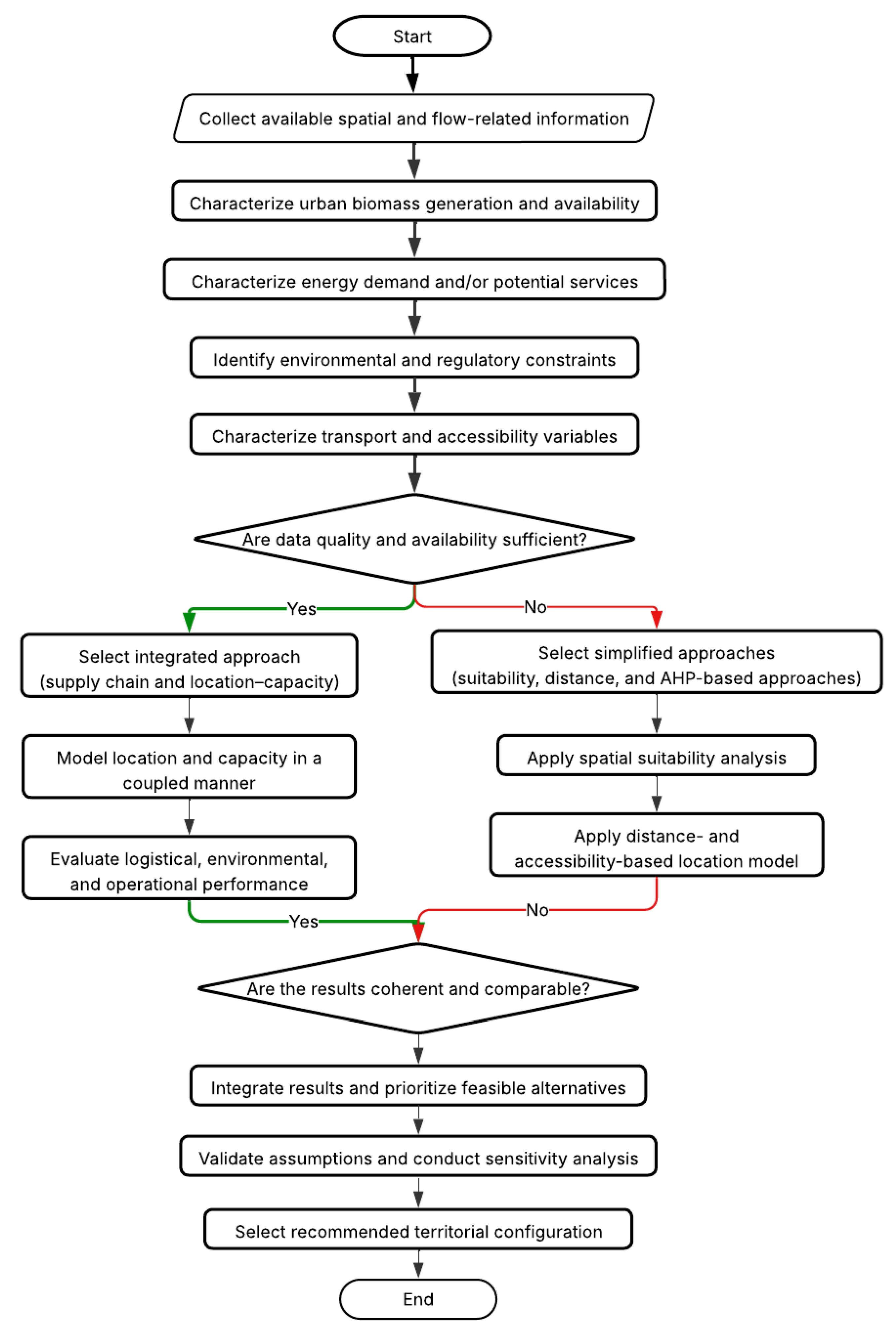
The proposed methodology develops a spatial analysis process oriented toward the territorial planning of urban bioenergy microinfrastructure based on residual biomass. The study focuses on the flow of urban pruning waste, including tree pruning and grass cutting, with the objective of identifying technically and territorially compatible locations for an anaerobic digestion micro-plant in the city of Bogotá. In methodological terms, this plant concept is interpreted as an early-stage urban implementation scenario for decentralized valorization, not as a detailed engineering design; accordingly, the siting analysis is framed against an approximate scale envelope defined by available biomass, order-of-magnitude energy output, and broad urban-compatibility requirements rather than by final process layout or detailed transport logistics.
The approach integrates official geospatial information with three main analytical components: a territorial sensitivity proxy associated with the school-age population, spatial accessibility indicators, and environmental and regulatory constraints. This integration responds to two central operational questions. The first refers to how to spatially represent the distribution of sensitive nodes with respect to location solutions. The second addresses how to prioritize implementable alternatives when there are constraints that cannot be captured solely through distance functions.
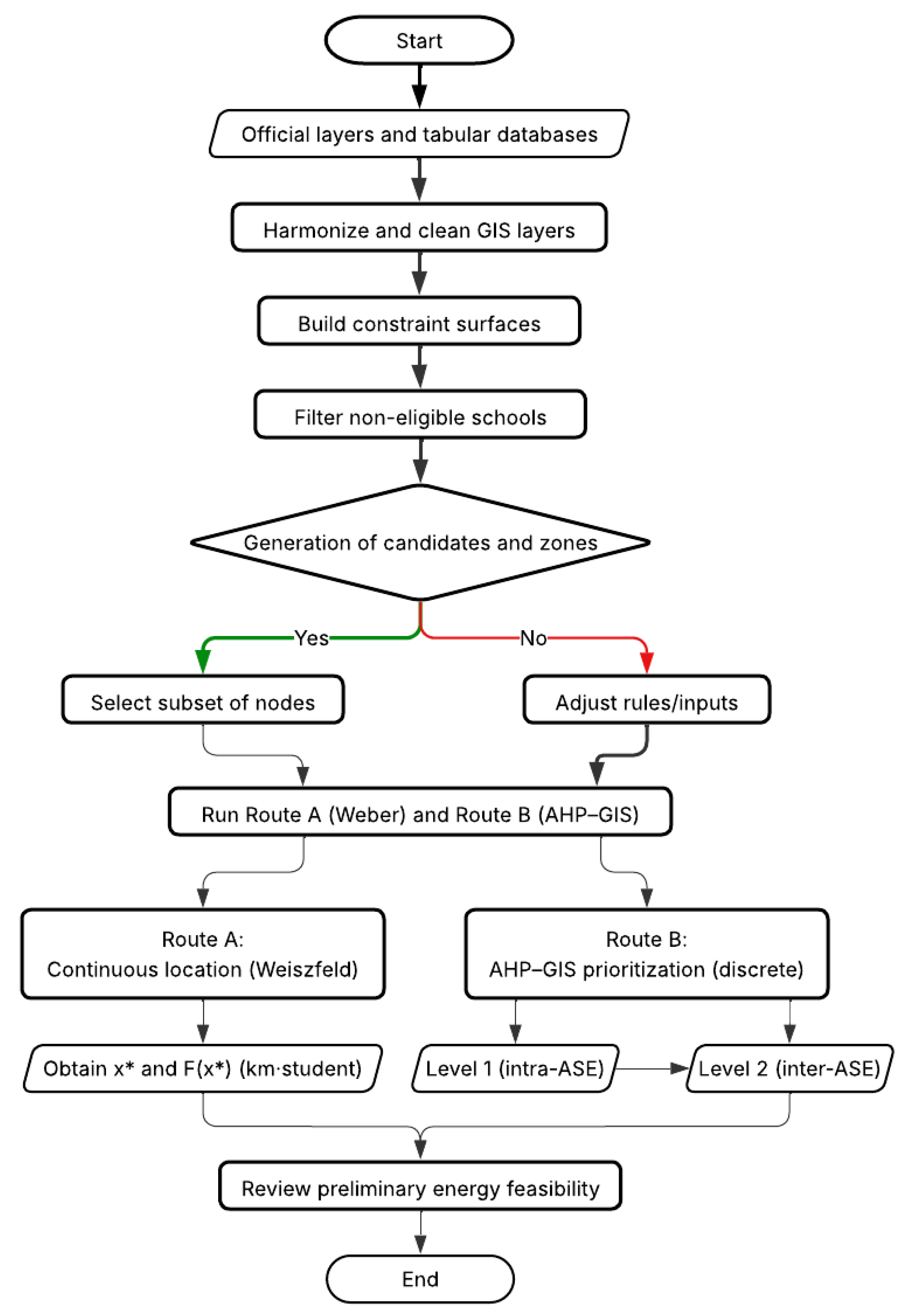
The methodological process is structured as a sequential, feedback-driven flow, in which spatial data are progressively transformed into decision inputs. After the collection and preprocessing of information in a common spatial reference system, key indicators related to biomass supply, weighted demand, accessibility, and environmental constraints are calculated. These indicators allow the generation of analysis zones and candidate alternatives, incorporating iterative adjustments when minimum eligibility criteria are not met.
3.1. Input Data and GIS Preprocessing
Official layers from the District (IDECA and Open Data portals) are used, including: administrative boundaries (localities), location of district schools, official enrollment by site (to weight demand), regulatory layers of territorial planning (urban treatment and activity area), and environmental and risk restriction layers (main ecological structure, hydrological system, hydraulic buffer zone, flood hazard, and mass movement hazard). Taken together, these layers allow the representation of both hard environmental constraints and regulatory conditions of land use and occupation that are relevant for the implementation of urban infrastructure.
All layers are harmonized to a common projected reference system (EPSG:3116) to ensure metric consistency in the calculation of distances and areas. Preprocessing includes cleaning incomplete records, topological verification, dissolving geometries when necessary, and standardizing key attributes for spatial overlays and key-based joins, ensuring geometric coherence and traceability in subsequent analyses.
District schools are used as demand nodes and weighted by official enrollment (). Enrollment is joined from SIMAT to the school point layer and coerced to numeric values in the common projected CRS. Records without a successful enrollment match are assigned zero weight and excluded from demand computations by applying the condition .
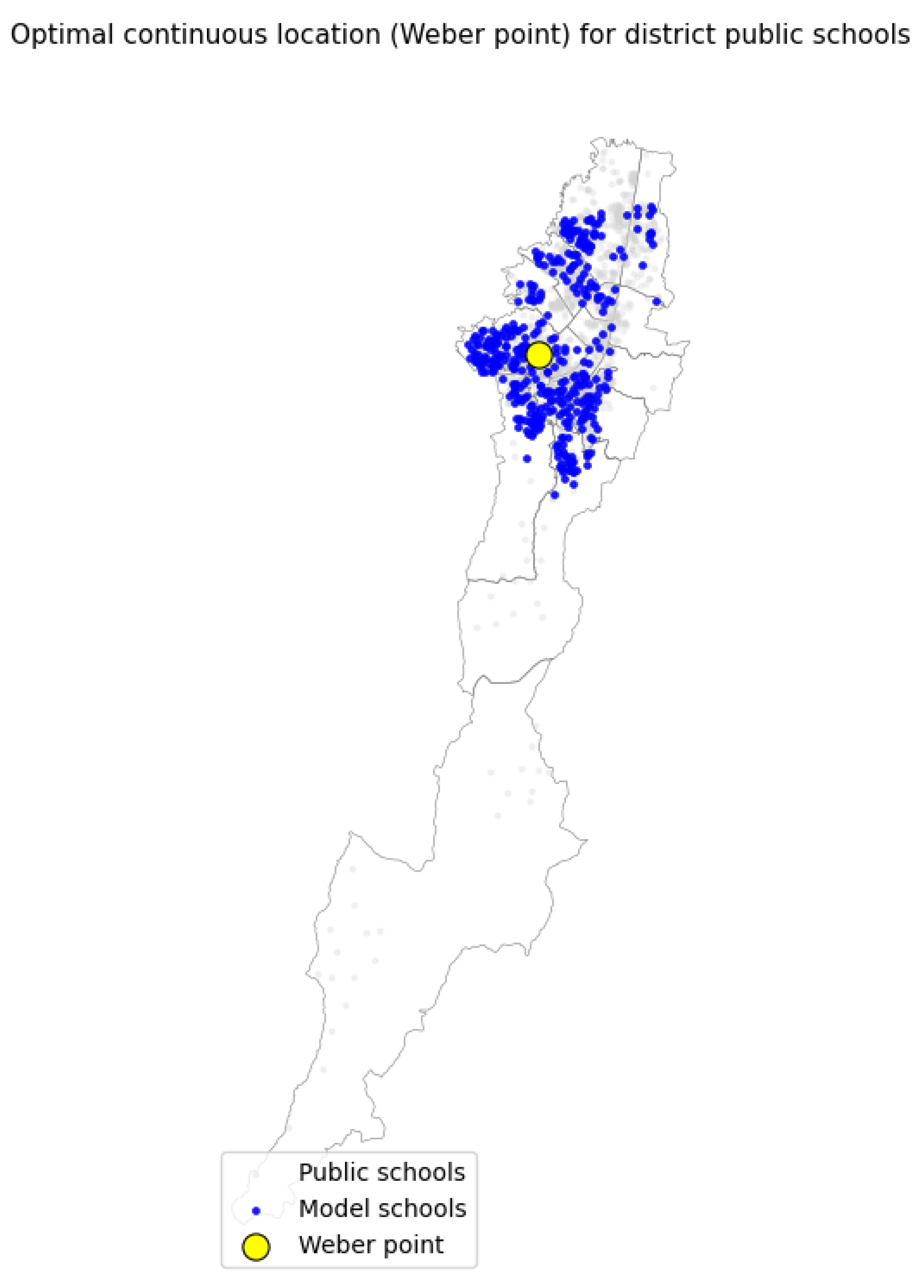
In the final implementation, the continuous Weber benchmark is solved on the full set of public schools with positive enrollment. No top-N truncation is applied to the Weber computation reported in this study. Likewise, environmental and planning exclusion layers are not used to remove demand nodes from the Weber model. Instead, these restrictions are incorporated later in the GIS–AHP stage as hard spatial exclusions on candidate facility locations through the composite geometry and its buffered version .
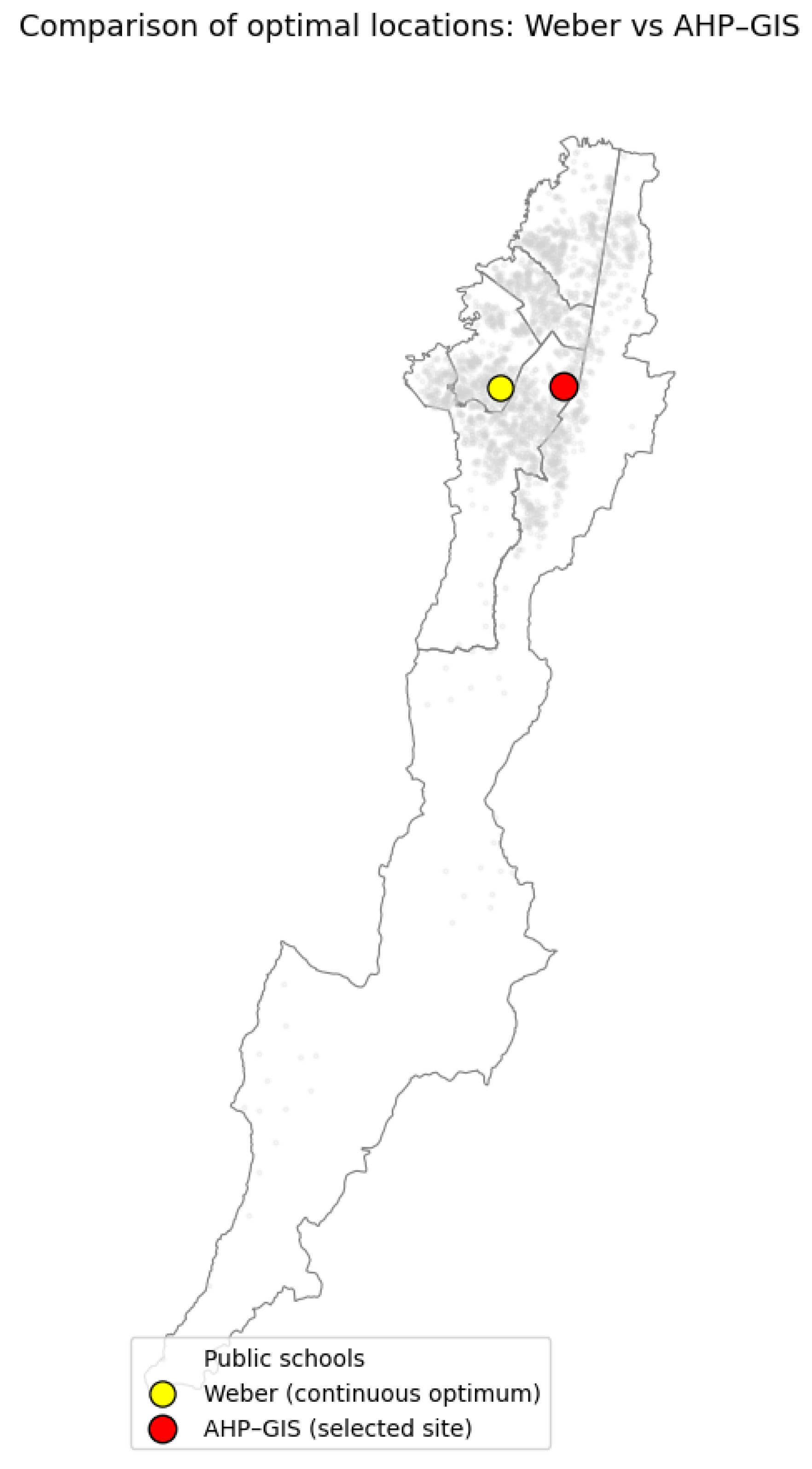
This distinction is important for interpretation. The Weber model is used only as an unconstrained geometric lower bound with respect to demand-weighted distance, whereas territorial feasibility is enforced afterwards through the GIS-based filtering and prioritization procedure. A capped subset of schools was used only in auxiliary exploratory/discrete routines for computational control and does not affect the Weber solution reported here.
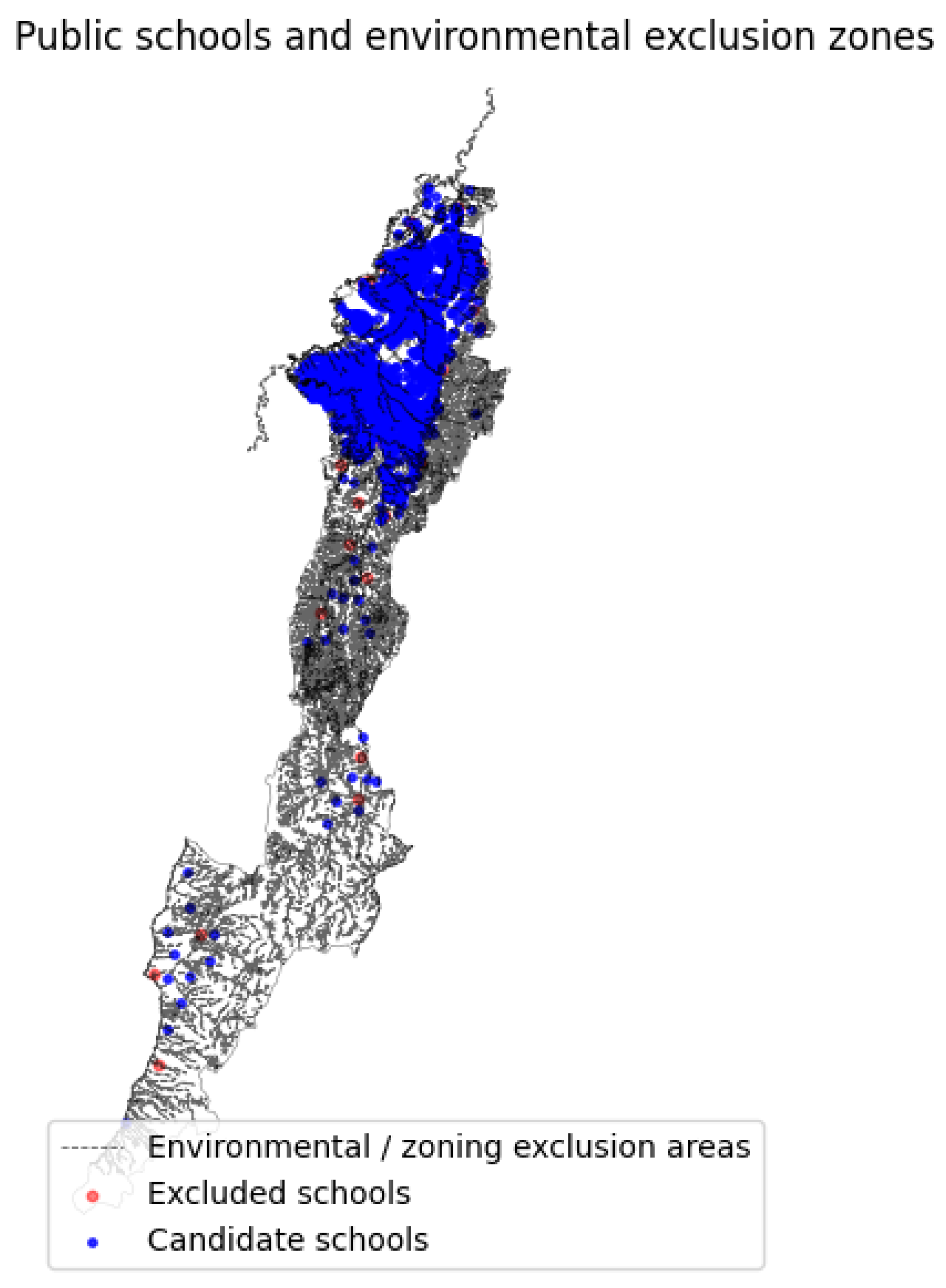
Environmental and planning constraints are implemented as hard spatial exclusions through a single composite geometry . Let denote the footprint of each exclusion layer j in the common projected CRS (EPSG:3116), including: flood hazard, mass-movement hazard, the POT hydrological system, the hydraulic buffer zone, the main ecological structure, and the subset of POT layers classified as non-compatible for implementation (derived from the activity-area and urban-treatment layers).
To remove internal boundaries and avoid ambiguity in overlaps,
is constructed as the dissolved spatial union of all exclusion layers:
implemented in practice as a unary union operation over all exclusion geometries, which yields a single (multi-part) exclusion surface.
For robust spatial filtering of candidate points, we apply a small geometric tolerance buffer in the projected CRS:
This 10 m buffer is used only to prevent borderline numerical/topological artifacts during point-in-polygon and intersection tests; distances used in scoring are computed with respect to the unbuffered exclusion geometry .
No additional thematic buffering was applied to individual layers (e.g., the hydraulic buffer zone is used as provided by the official dataset). Because exclusions are aggregated via a unary union, there is no priority among layers, and the superposition order does not affect .
To summarize the practical effect of the exclusion system,
Table 1 reports the territorial footprint of the dissolved exclusion geometry and its overlap with school demand nodes. The composite exclusion geometry
covers 1232.75 km
2, equivalent to 77.09% of the study area. After applying the 10 m geometric tolerance buffer, the excluded area increases to 1250.77 km
2 (78.21%), i.e., an additional 18.02 km
2. In terms of demand nodes, 80 out of 1979 district schools (4.04%) intersect the unbuffered exclusion geometry, while 112 schools (5.66%) intersect the buffered geometry. These figures show that the exclusion system has a strong territorial footprint, whereas its direct overlap with school demand nodes is comparatively limited. Because no additional thematic buffering was applied, the only supplementary threshold introduced by the workflow is the 10 m geometric tolerance, which is used exclusively to avoid borderline numerical/topological artifacts in spatial filtering rather than to impose an additional regulatory setback.
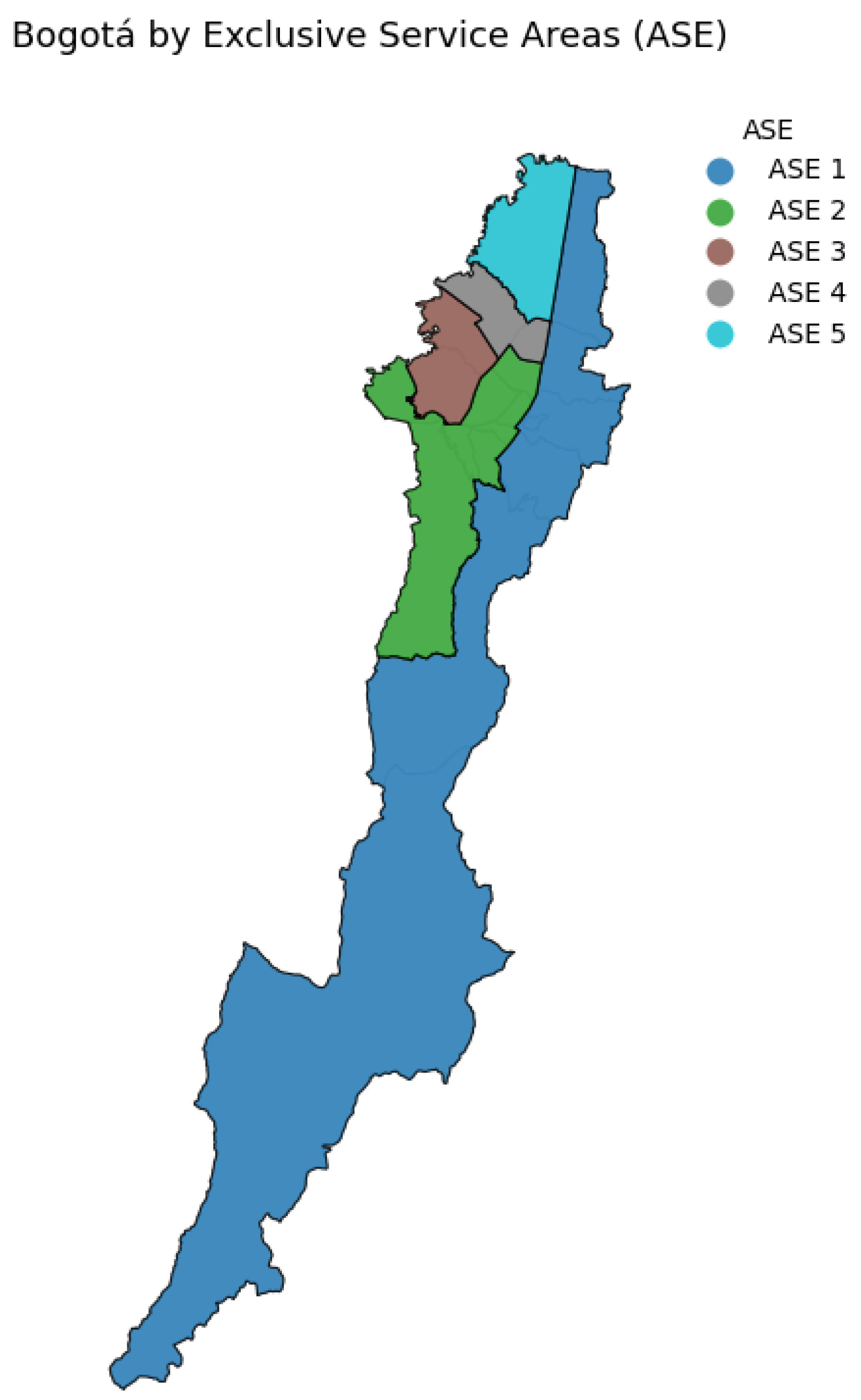
In the component applied to urban pruning, the provision of pruning and tree management services in public space in Bogotá is organized under the district’s solid waste management scheme. From an operational perspective, the city is divided into Exclusive Service Areas (Áreas de Servicio Exclusivo-ASE), each assigned to an operator and defined over a specific set of localities. This territorial organization serves as the basic reference unit for service management and the systematization of operational pruning records.
Figure 3 shows the territorial distribution of the ASE in Bogotá. This partition is used in the methodology as an operational reference to associate the biomass supply from urban pruning and to structure the spatial analysis by service area.
In the urban pruning case study, the methodology relies on a set of spatial layers and indicators that allow the characterization of biomass supply, logistical conditions, and territorial constraints.
Table 2 presents the considered variables, their methodological function, and the information sources used.
Demand is approximated through point nodes corresponding to schools, weighted by enrollment, which allows capturing spatial heterogeneity and the relative magnitude of educational demand. Records with zero or missing enrollment after the join are excluded from demand calculations by applying the condition . In the final implementation, environmental and planning restrictions are not imposed by filtering out demand nodes from the Weber benchmark; instead, they are enforced as hard exclusions on candidate facility locations through the composite geometry and its buffered version . This separation preserves the role of the Weber model as an unconstrained geometric lower bound and reserves territorial feasibility for the subsequent GIS–AHP stage.
3.2. Location and Prioritization Methods
Based on the literature on spatial infrastructure planning and classical location problems, four approaches were prototyped: (i) geometric centroid, (ii) discrete location–allocation of the p-median type, (iii) maximum coverage (MCLP), and (iv) continuous Weber-type location, together with an AHP multicriteria scheme for territorial prioritization.
Table 3 summarizes the principle of each method and the reason for its use or discard in the final approach. The Weber model is adopted as a continuous solution that minimizes the demand-weighted distance and provides an interpretable geometric optimum, while AHP allows the explicit incorporation of territorial constraints and criteria at the administrative scale, facilitating regulatory traceability and urban planning considerations. The p-median and MCLP are used only as diagnostic prototypes to analyze sensitivity to discrete candidates, coverage radii, and sample size, since their application as a final result requires additional assumptions that exceed the scope of this methodological phase.
3.2.1. Weber Model
The Weber problem corresponds to a classical continuous location model for a single facility, whose objective is to minimize the aggregated (weighted) distance between a location point
and a set of demand nodes
[
15]. In modern facility location formulations, this problem is interpreted as the determination of the weighted geometric median of a set of points in the plane [
18]. In this study, each node
represents a school within the district, and its weight
is defined as the official enrollment, used as a proxy for demand.
The objective function of the continuous location model is expressed in Equation (
3), which minimizes the total weighted distance between the facility location and the demand nodes.
In Equation (
3),
represents the Euclidean distance in a projected reference system (EPSG:3116), and
corresponds to the demand associated with node
i. The optimal solution
corresponds to the weighted geometric median and does not admit a closed-form analytical expression [
18].
The Euclidean metric is adopted here as a geometric benchmark because it provides a transparent and reproducible lower bound for demand-weighted spatial effort in the absence of harmonized citywide routing inputs. A network- or time-based formulation was not implemented at this stage because the study did not have access to a validated citywide road-network impedance dataset or a routing framework with comparable coverage and preprocessing across the whole city. Therefore, the Weber result should be interpreted as a geometric accessibility baseline rather than as a direct estimate of actual transport effort under urban traffic conditions.
The numerical solution of the problem is obtained through the iterative Weiszfeld algorithm, used for the computation of the weighted geometric median [
16]. Starting from an initial point
, the algorithm generates a sequence
defined by Equation (
4).
The sequence defined in Equation (
4) converges to the optimum
under general conditions of non-collinearity and non-negative weights [
17]. The iterative process is stopped when
or when a maximum number of iterations is reached. To avoid numerical instabilities associated with divisions by zero, if an iterate coincides with a demand node, that node is adopted as the optimal solution, in accordance with robust implementations reported in the literature [
17].
The Weber solution is used as a theoretical continuous benchmark (lower bound) under a single criterion of demand-weighted proximity. Territorial feasibility is enforced in the subsequent GIS–AHP stage through the exclusion geometry and the buffered filtering geometry .
In the final implementation, the Weber model is solved using all public schools with positive enrollment as weighted demand nodes. No top-N truncation is applied in the continuous benchmark reported in this study. A capped subset of schools was used only in auxiliary exploratory/discrete routines for computational control and does not affect the Weber solution reported here. This clarification removes arbitrariness in sample selection and ensures that smaller schools are not excluded from the continuous baseline.
The optimal value is reported as total weighted distance, expressed in km·students. This metric allows a direct interpretation of the logistical performance of the solution in terms of accessibility to demand.
3.2.2. Analytic Hierarchy Process (AHP)
The Analytic Hierarchy Process (AHP) is adopted as a discrete spatial prioritization scheme to integrate regulatory and territorial compatibility criteria in urban location problems. This method allows structuring and weighting heterogeneous criteria within a consistent hierarchy, which is especially appropriate when environmental and regulatory constraints are involved that cannot be represented by a single geometric or continuous cost function [
22,
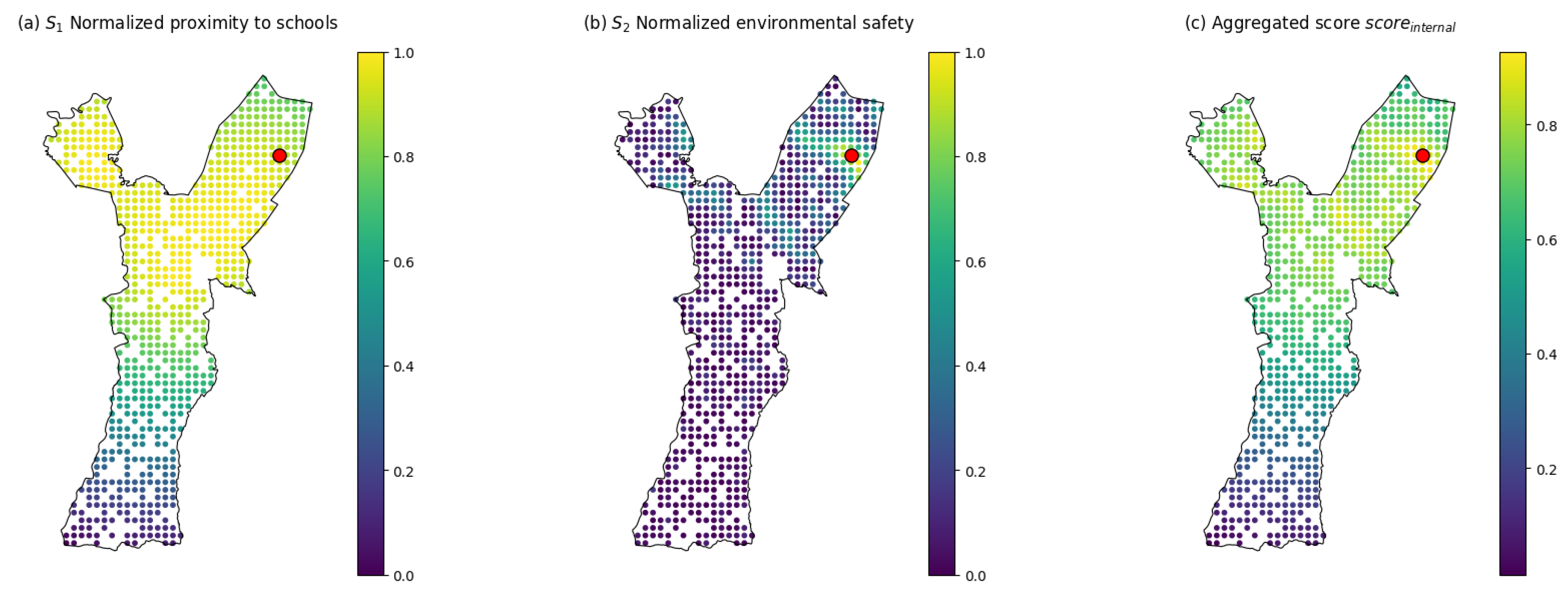
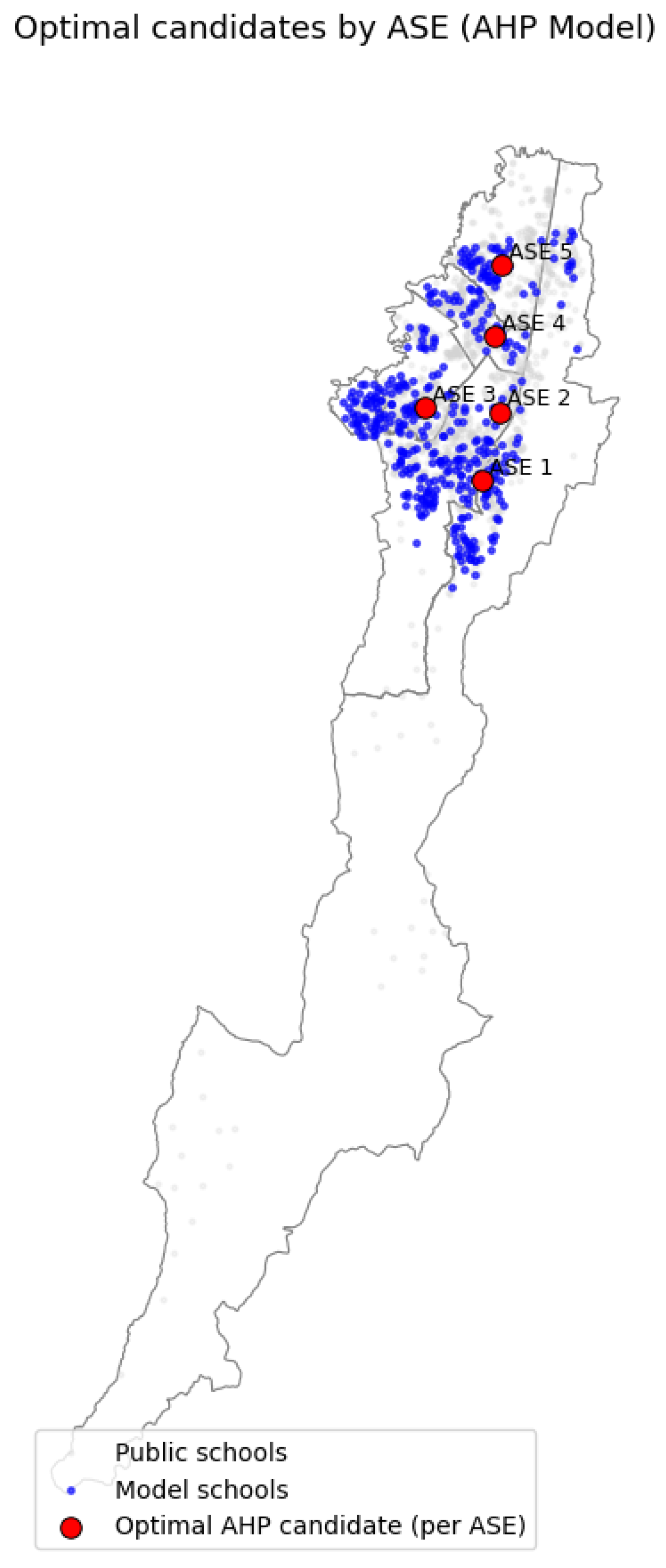
23]. In this study, AHP is implemented as a GIS-assisted territorial prioritization procedure structured in two hierarchical levels. The first level, referred to as intra-ASE, consists of the selection of a candidate point within each ASE through a multicriteria evaluation applied to a regular grid of spatial alternatives.
For each ASE polygon, candidate locations were generated as a regular lattice of points with spacing
m in the projected CRS (EPSG:3116). In practice, a grid was created over the ASE bounding box and then filtered to retain only points strictly inside the ASE polygon. Hard constraints were enforced by discarding any candidate point that intersects the buffered exclusion geometry
(Equation (
2)), where the buffer distance was set to 10 m to avoid borderline topological artifacts.
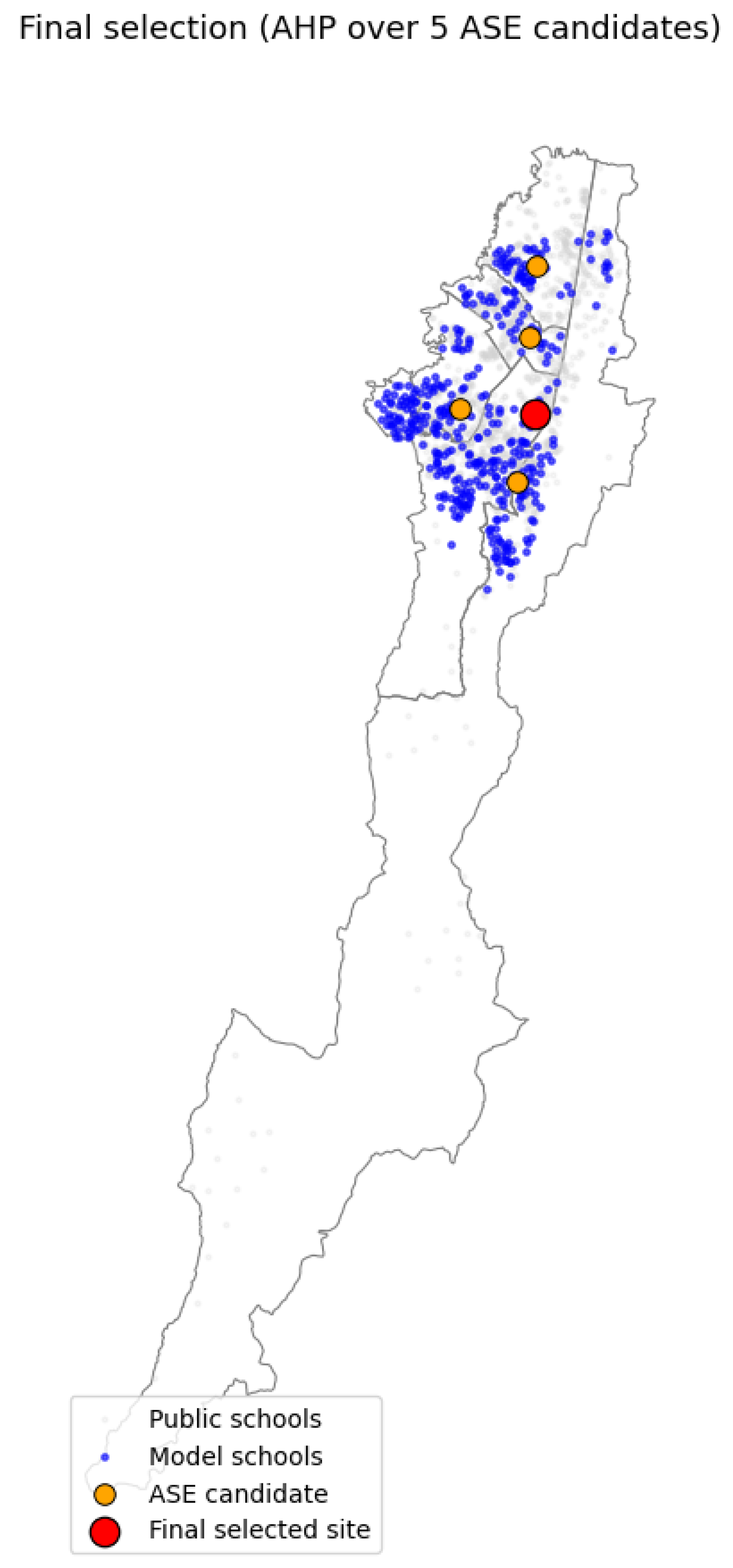
At the second level (inter-ASE), the five resulting alternatives, one per ASE, are compared through an aggregated score that incorporates the relative availability of biomass by operator as a prioritization criterion at the urban scale.
The intentionally reduced set of intra-ASE criteria reflects the role of this stage as a local spatial screening procedure based only on candidate-discriminating indicators that can be computed consistently from available GIS data at point level. In particular, demand-weighted proximity and environmental safety vary across candidate points within the same ASE and therefore provide discriminatory information for intra-zone ranking. By contrast, biomass availability is aggregated at the ASE level from operator records and does not vary among candidate points within a given ASE; for this reason, it is not included in the intra-ASE score and is incorporated only in the inter-ASE comparison.
Accordingly, the intra-ASE ranking should be interpreted as an initial spatial screening of territorially feasible alternatives within each service area, rather than as a final logistics-optimised siting decision. Final implementation would require a subsequent verification stage accounting for the internal distribution of biomass sources within each ASE, collection routes, travel distances, and other local operational constraints.
Other urban feasibility dimensions remain outside the intra-ASE ranking. These include parcel-level land availability and geometry, direct access conditions for collection vehicles, utility or grid-connection conditions, local nuisance perception and social acceptance, and detailed techno-economic considerations such as acquisition, CAPEX, and OPEX. These aspects were not incorporated because no harmonized and sufficiently reliable proxy dataset was available at the candidate-point scale, and their inclusion through weak proxies could introduce artificial precision into the ranking.
For each spatial alternative p evaluated within an ASE, two main criteria are constructed:
Proximity to sensitive nodes (cost criterion): demand-weighted mean Euclidean distance from p to the k nearest schools with positive enrollment assigned to the corresponding ASE, using enrollments as weights, with (computed via nearest-neighbor search).
Environmental safety (benefit criterion): Euclidean distance from
p to the exclusion geometry
(Equation (
1)), computed as the minimum distance between
p and
. Larger distances indicate greater separation from restricted areas. Candidate points intersecting
(Equation (
2)) are removed beforehand as hard exclusions.
Both criteria are normalized through a
min–max transformation to the interval [0, 1], inverting the cost criterion to ensure coherence in aggregation. The normalized scores are aggregated using a weighted linear sum, where the weights are derived from Analytic Hierarchy Process (AHP) pairwise comparisons following Saaty’s fundamental 1–9 scale [
22]. The pairwise comparisons were conducted by the research team (the first author and the two supervisors), combining expertise in GIS/spatial analysis and applied mathematics (Department of Mathematics) with energy systems and waste-to-energy planning (Department of Electrical and Electronic Engineering). Comparisons were discussed until a single consensus judgment matrix was obtained for each hierarchical level, and weights were computed as the normalized principal eigenvector of the corresponding matrix.
Judgment consistency was assessed using the consistency index (CI) and consistency ratio (CR) [
22], adopting
as the acceptance threshold. If the initial matrix exceeded this threshold, judgments were revised to improve consistency. The final comparison matrices, resulting weights, and CR values are reported in
Table 4.
For the two-criteria intra-ASE weighting, by construction under the standard random index table ( for ). For the inter-ASE three-criteria matrix, the computed consistency ratio was (computed value ), i.e., effectively zero.
Importantly, candidate-site scores are computed from GIS-derived indicators (distances and biomass) and normalization rules; expert judgment is used only to define the relative importance (weights) of the criteria, while alternative scoring is data-driven and reproducible.
The result of the intra-ASE level is an optimal candidate for each operational zone. Subsequently, in the inter-ASE prioritization, these candidates are compared by incorporating a third benefit criterion associated with the supply of valorizable biomass by ASE, maintaining explicit traceability of weights and partial and final scores.
3.3. Territorial Indicators of Biomass Supply and Proxy Demand by ASE
In addition to the global consolidation of urban pruning, aggregated territorial indicators at the ASE scale were constructed in order to avoid a homogeneous reading of supply and to contextualize the location decision within the real operational framework of the solid waste management service. This analysis does not represent a physical energy balance nor a direct allocation of flows, but rather a comparative diagnostic that integrates the relative availability of biomass with a territorial proxy of demand.
In particular, three variables aggregated by ASE were derived: (i) the total monthly supply of pruning M (t/month), (ii) the valorizable supply B (t/month), estimated under the biodegradable fraction scenario defined in the Methodology (with range as a sensitivity analysis), and (iii) a proxy demand D, defined as the total enrollment of district schools spatially assigned to each ASE. The variable D does not represent energy consumption, but rather an approximation of the relative magnitude of sensitive nodes and of the territorial intensity of educational demand.
From these magnitudes, a proxy supply–demand ratio indicator was defined, expressed through Equation (
5),
where
B corresponds to the monthly valorizable biomass (t/month) and
D to the proxy demand aggregated by ASE. The indicator
R, with units of t/month·student
−1, is used exclusively for comparative purposes in territorial prioritization.
To estimate D, schools were assigned to ASE polygons through a spatial join in the projected reference system . Subsequently, individual demands were aggregated based on the enrollment of each institution. In parallel, the variables M and B were associated with the ASE polygons from the monthly consolidation by operator for grass cutting and tree pruning. The valorizable supply was defined as , and the extreme values and were calculated with , used as a sensitivity range and not as a local measurement of the substrate.
With these inputs, thematic maps of total supply M, valorizable supply B, demand D, and the balance indicator R were constructed, which are analyzed below in a disaggregated manner.
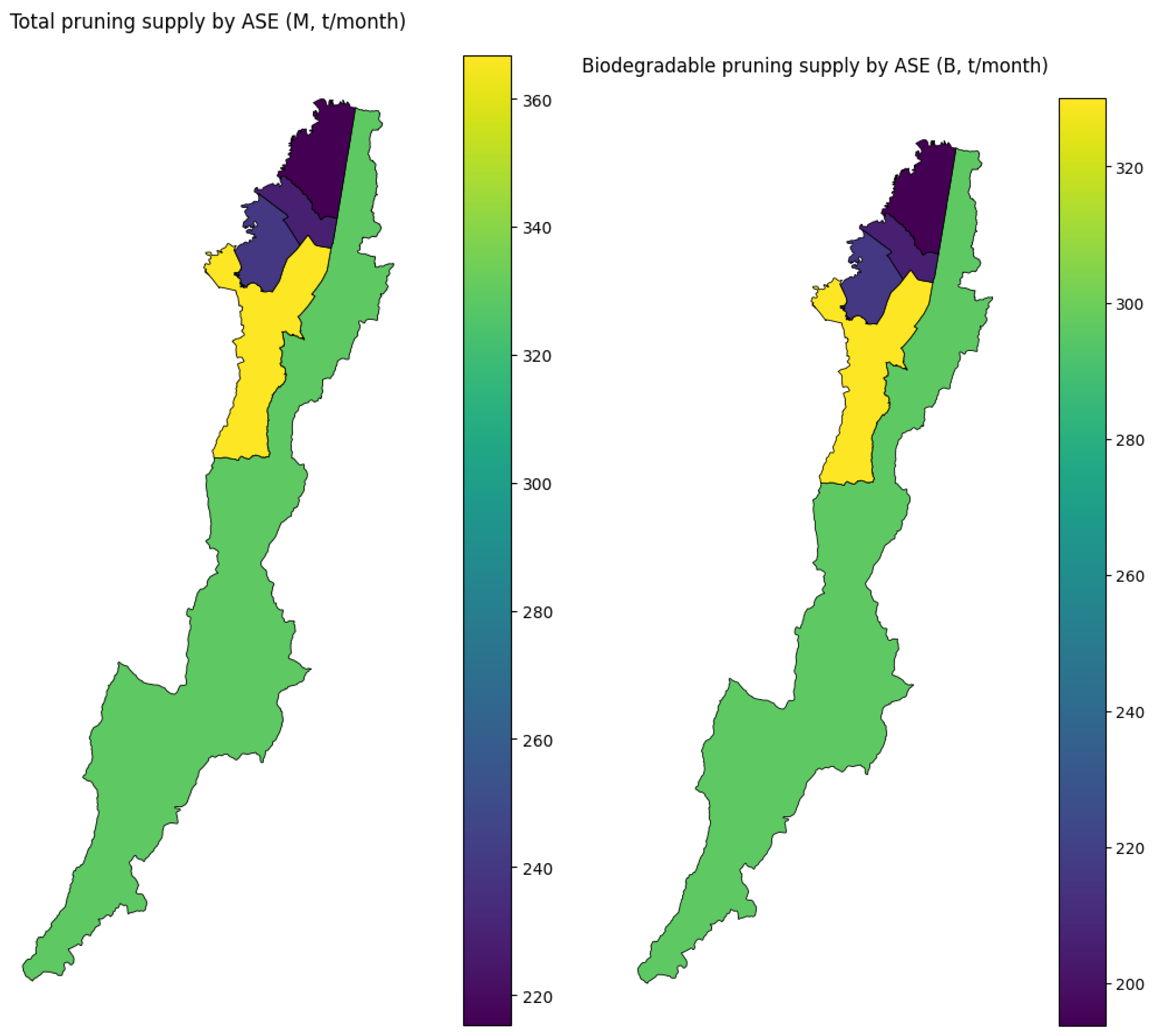
Figure 4 presents the spatial distribution of supply by ASE. The left panel shows the total supply
M, while the right panel represents the valorizable supply
B. Both indicators exhibit a non-uniform spatial hierarchy in the city, confirming that biomass availability depends on the operator’s service area and the territorial structure of the service.
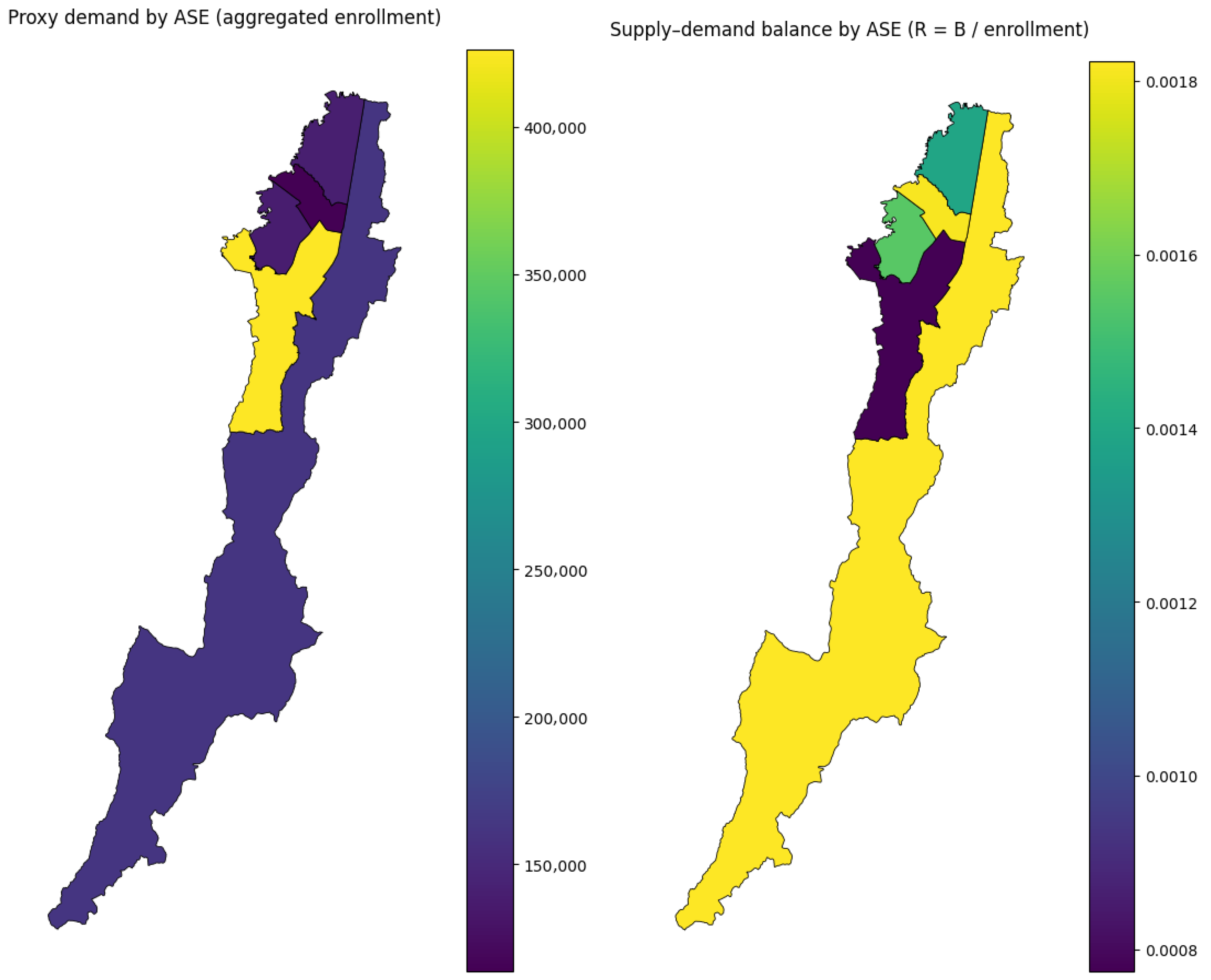
Figure 5 presents the aggregated proxy demand
D (left panel) and the proxy supply–demand ratio indicator
(right panel). The visual comparison shows that the spatial hierarchy of supply does not necessarily coincide with that of aggregated educational demand, which anticipates tensions between territorial accessibility to sensitive nodes and the operational coherence of biomass supply.
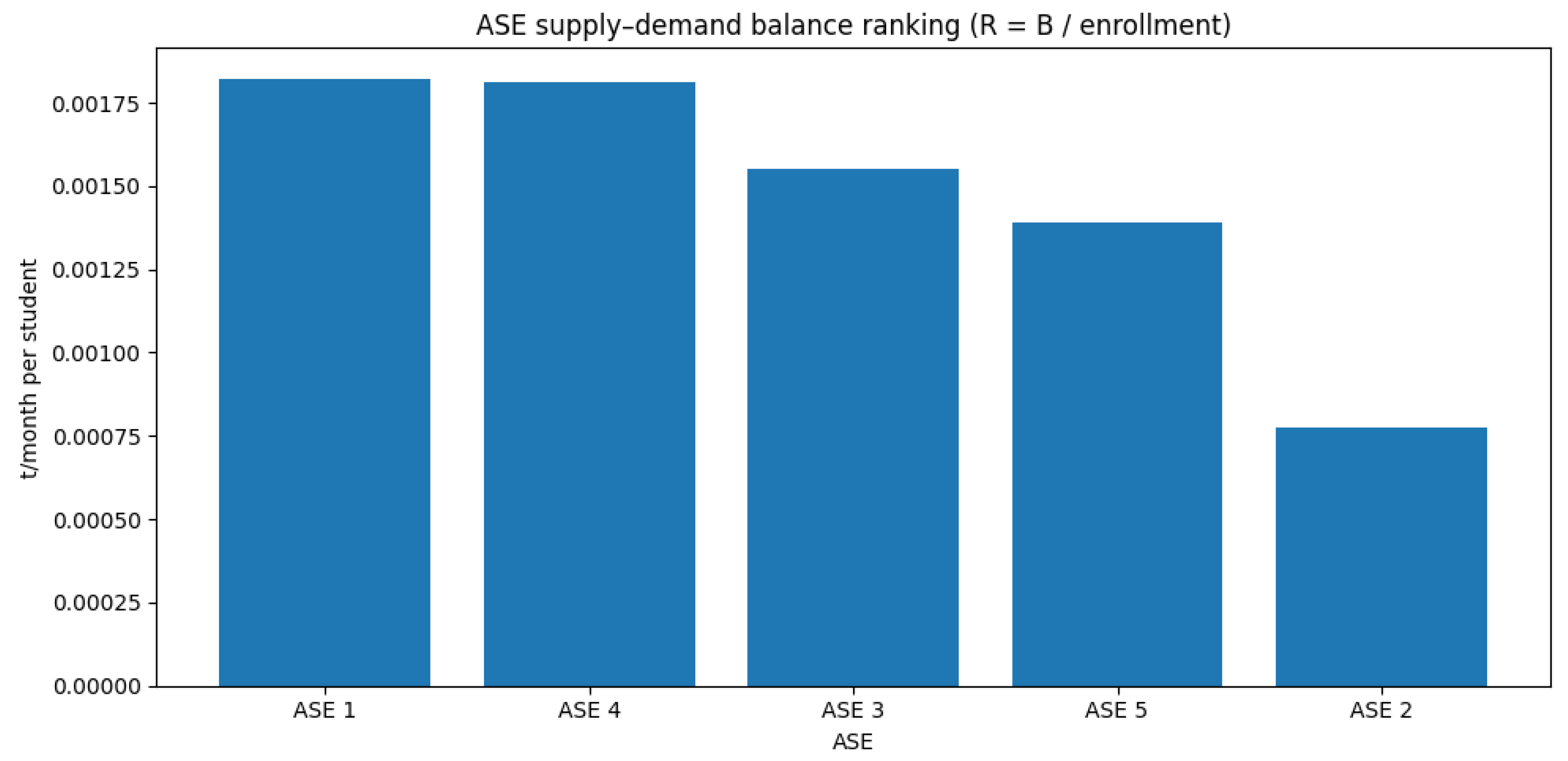
The ranking of the indicator
R is presented in
Figure 6 and synthesizes the territorial diagnostic of the proxy supply–demand relationship by ASE. The values allow ordering the ASE according to their relative availability of biomass with respect to aggregated educational demand. This indicator should be interpreted as a preliminary approximation, dependent on the spatial coverage of the considered demand nodes.
Table 5 presents the values of the total pruning supply
M, the valorizable supply
B, and its range
under the sensitivity analysis of the factor
, together with the proxy demand
D and the supply–demand ratio indicator
for each ASE. These results allow for comparing the relative availability of biomass with respect to the magnitude of aggregated educational demand in each operational zone.
It should be emphasized that D does not represent a direct energy demand, but rather a territorial proxy constructed from district schools with positive enrollment spatially assigned to each ASE. Consequently, the values of R should be interpreted as comparative indicators of territorial balance between proxy supply and demand, dependent on the adopted analytical framework and not as absolute metrics of energy sufficiency or deficit.
Overall, the indicators reveal relevant intra-urban heterogeneity, since the spatial hierarchy of pruning supply by ASE does not necessarily coincide with that of the aggregated educational proxy demand. This divergence is operationally significant because waste governance and its logistics are mediated by the ASE structure, such that proximity to demand does not guarantee coherence with the territorial availability of biomass.
Figure 5 and
Figure 6, together with
Table 5, constitute a preliminary territorial diagnostic that underpins the subsequent discussion on location and prioritization.
3.4. Pruning Supply and Preliminary Energy Verification
Biomass supply is estimated from tabular records consolidated by ASE for tree pruning and grass cutting in Bogotá [
7]. These records correspond to monthly operational information reported by solid waste service providers and constitute the only publicly available source with spatial disaggregation coherent with the operational structure of the system. The aggregated monthly mass of green waste is denoted as
M (t/month) and is adopted as input for an order-of-magnitude energy verification.
The absence of an open local characterization of the substrate limits the direct estimation of energy potential. No public information is available on total solids content, volatile solids fraction, presence of contaminants, or the specific methanogenic potential of the collected waste. For this reason, the valorizable fraction of the biomass is defined as a scenario parameter rather than as an empirical measurement. A central value of
is adopted, together with a variation range
. This interval represents plausible variations associated with contaminants and losses during conditioning, in accordance with values reported for separately collected organic streams in comparable urban contexts [
44,
45]. The monthly valorizable biomass is then defined as
.
In addition, the aggregated urban green-waste stream considered here may combine sub-streams such as tree pruning and grass cutting, which can differ in lignocellulosic composition, solids content, volatile-solids content, biodegradability, and anaerobic digestion behaviour. Therefore, uncertainty in the energy verification is driven not only by the assumed valorizable fraction , but also by possible variation in TS, VS/TS, and methane yield across these sub-streams.
Energy potential is estimated for illustrative purposes and for preliminary verification using conversion parameters commonly reported for anaerobic digestion of organic residues. Because reported properties for pruning residues can vary with conditioning and pre-treatment [
4], we adopt representative values for order-of-magnitude calculations. The assumptions used for solids content, organic fraction, gas yield, methane content, heating value, and cogeneration efficiencies are summarized in
Table 6 together with their literature sources. Chemical energy is computed from the estimated methane volume and its lower heating value, and electricity and useful heat are obtained by applying representative CHP conversion efficiencies [
46,
47].
This energy verification is not used for detailed plant sizing nor does it modify the location results obtained through the Weber model or the territorial prioritization based on AHP. Its function is to contextualize the energetic plausibility of the available biomass flow and to define the operational scale at which the siting results should be interpreted. In the present study, this corresponds to a decentralized urban facility supplied by biomass on the order of t/month and associated with useful outputs in the range of a few hundred kWe/kWt. At this stage, this scale definition remains approximate and does not yet specify final land requirements, plant layout, or transport-trip scheduling. The adopted assumptions remain explicit and revisable as more detailed local information becomes available.