1. Introduction
1.1. Research Background
In recent years, frequent large-scale construction and deep underground tunneling projects in urban areas have led to a rise in excavation activities adjacent to subway box structures. As a result, deformations of the surrounding ground and of the box structures have emerged as a significant engineering concern. These conditions have led not only to simple ground subsidence but also to complex damage patterns in which uplift and subsidence occur simultaneously. This study examines an in-service subway box structure segment that experienced substantial displacement during the construction of a new power tunnel beneath the structure. A large volume of groundwater was discharged through the tunnel face, causing a rapid reduction in the groundwater level. Consequently, displacement occurred in specific sections of the subway box structure founded on soft ground, accompanied by the formation of numerous cracks in the structural members, such as on walls and columns. In current practice, damage evaluation for in-service structures generally relies on assessing the risk associated with the observed cracking using sectional forces derived from the design conditions. However, for structures such as that examined in this study—where boundary conditions have changed and where both uplift and subsidence have occurred—the effect of this displacement behavior on the structural damage remains insufficiently analyzed. Visual condition assessments of subway box structures are typically conducted by section according to detailed guidelines, and structural analysis is usually limited to a few selected critical sections. As a result, maintenance activities tend to focus only on repairing and strengthening the members in which damage has already been confirmed through detailed safety inspections.
To address these limitations, analytical techniques are needed, which can evaluate the influence of boundary condition changes responsible for the observed damage, identify the engineering causes of cracking, and assess the behavior of the box structure as a longitudinally continuous system. Furthermore, a practical and effective analytical method is required not only to evaluate the existing damage but also to predict potential future damage.
In this study, a displacement function capable of representing the displacement at any location along the subway box structure was derived based on measured structural displacement data. The adequacy of the foundation reinforcement for the subway box structure exhibiting displacement behavior was then evaluated by applying the onsite leveling data as the load conditions in numerical analysis and calculating the analytical reinforcement volume. Finally, the analytical reinforcement volume was compared with the reinforcement applied in the field to assess the adequacy of the foundation reinforcement. However, the key research gap is that conventional sectional assessment treats the subway box as a set of isolated critical sections and therefore cannot quantify the longitudinal continuity of displacement-induced damage along the alignment. The present addresses study this gap by converting measured leveling data into a continuous displacement function, embedding the resulting support condition changes into a three-dimensional model, and linking the analytical displacement field to reinforcement demand estimation. The methodological novelty of this study lies in three aspects. First, discrete leveling measurements are transformed into a continuous displacement function along the alignment. Second, the support condition changes are retro-analyzed as location-dependent subgrade reaction moduli and embedded into a three-dimensional structural model. Third, the resulting nodal displacement field is converted into a constructible, location-specific grouting-demand estimate using a grid-based volumetric framework that can be directly compared with field implementation.
1.2. Literature Review
Previous studies on subway box displacement mainly focused on reproducing displacement behavior and identifying stress concentration or damage-prone zones. While these studies are useful for structural diagnosis, they generally stop at response evaluation and do not provide a direct framework for estimating reinforcement demand. By contrast, Winkler- or elastic foundation-based studies offer simplified support modeling and numerical integration strategies, but they are typically not configured to capture the longitudinally continuous behavior of a displaced in-service subway box structure under site-specific boundary changes. Therefore, the present study bridges these two lines of research by combining displacement-based retro analysis, three-dimensional structural modeling, and grid-based reinforcement volume estimation within a single field-applicable workflow. Previous studies on the displacement behavior of subway box structures include those of Yang and Choi et al., who evaluated the structural effects of displacement in subway box structures [
1]. These studies reproduced the displacement behavior analytically by using leveling data and examined the compressive, flexural, and shear stresses, as well as the locations vulnerable to damage [
1,
2]. Their study incorporated a ballasted track system into the numerical model to investigate the track irregularity induced by adjacent excavation with greater precision. Choi. qualitatively examined the dynamic behavior of ballasted tracks and analyzed the moment, shear force, and load response characteristics associated with changes in the subsidence [
3,
4]. They quantified the subsidence induced by the tunnel excavation in weak ground and evaluated its effect on existing utility tunnels and railway structures. The study found that vertical deformation tends to be greater than horizontal deformation when excavation is performed beneath existing structures. Choi, Cho, Choi et al., and Lee, examined the effects of adjacent excavation, including track distortion, structural behavior, and automated monitoring-based evaluation systems, on the deformation of operating railway tracks and underground structures [
5,
6]. These studies commonly employed analytical methods to evaluate the deformation behavior induced by adjacent excavation. Yoon, examined the deformation effects of adjacent excavation on the retaining walls and subway box structures [
7].
Song evaluated the numerical integration efficiency of the Winkler elastic foundation model by applying a beam-on-elastic foundation approach to a cantilever structural member [
8]. Chun et al. applied the elastic foundation beam model to examine the mechanical behavior of concrete slab tracks and subgrade under variations in the train axle load and speed [
9]. Chung et al. analyzed the major stress distributions on and displacement of excavation faces resulting from ground excavation and predicted the corresponding ground behavior, providing fundamental input data for selecting the appropriate analysis models under varying conditions [
10].
In this study, a displacement function was derived from optical leveling data, and a three-dimensional numerical analysis was performed by applying the subgrade elastic modulus as a boundary condition. The analysis produced estimates of uplift and subsidence at nodes along both the transverse and longitudinal directions of the structure. To calculate the required reinforcement volume (grouting quantity), the nodal reinforcement depths obtained from the analysis were incorporated into a grid-based volumetric calculation method. For this purpose, the nodal intervals were subdivided as finely as possible, rectangular grids of sufficient resolution were generated, and the analytical reinforcement volume was calculated accordingly.
2. Field Investigation
2.1. Field Investigation Introduction
Based on field investigation records, subsurface exploration results, and displacement measurements for the subway box structure examined in this study, soft ground layers and cavities were identified beneath portions of the foundation. A detailed safety inspection conducted in 2011 indicated that the structure did not exhibit any issues related to structural safety. Similarly, the 2016 inspection reported that most cracks were small and narrow, with no damage affecting the structural safety, indicating an overall satisfactory condition. However, the detailed safety inspection performed in 2021 revealed transverse cracks in the ceiling and wall, as well as diagonal cracks in the upper and lower portions of the wall. The site is located in soft ground, and rapid groundwater drawdown occurred during adjacent construction activities in 2018. This drop in groundwater level triggered long-term progressive ground subsidence. As a result, various forms of damage were observed in the 2021 inspection, which were determined to have originated from the displacement behavior (including uplift and subsidence) occurring in the foundation of the subway box structure.
2.2. Visual Inspection
The structure exhibited widespread transverse cracks, map cracking, and diagonal cracking. The ceiling showed predominant map cracking with widths generally ranging from 0.1 to 0.2 mm; no cracks exceeding 0.3 mm were identified. Diagonal and transverse cracks were mainly observed on the walls and columns, with widths of approximately 0.1–0.4 mm [
1]. To facilitate the inspection, the upper- and lower-track structures were designated as Cell 1 and Cell 2, respectively [
1]. The analysis of cracks exceeding 0.3 mm revealed that diagonal cracks were prevalent in the columns, whereas both diagonal and transverse cracks appeared in the walls. The ceiling primarily exhibited transverse cracking [
1]. Local stress interference owing to reinforcement or embedded elements causes tensile and shear stresses to be concentrated near the upper surface. If the structure lacks sufficient stiffness to resist these stresses, cracking will occur on the upper concrete surface. A comparison of new cracks between Cell 1 and Cell 2 indicated that Cell 2 exhibited a greater number of cracks as well as generally larger crack widths. The cracking patterns followed distinct spatial trends: transverse cracking in the upper wall between 20 and 45 m; diagonal cracking extending from the lower wall and columns between 45 and 55 m; and transverse cracking in the lower wall between 55 and 75 m. Similar patterns were also observed in Cell 1. In the upper wall between 20 and 75 m, transverse and map cracking were observed, and some locations exhibited water leakage and efflorescence. These cracks represent typical patterns associated with ground subsidence, with diagonal tension cracking (approximately 45°) near the lower portion of the box structure and tensile cracking in the upper portion.
Subsurface investigation results confirmed that the site has soft ground containing large-scale limestone cavities. Considering the subsidence observed at adjacent surface facilities, the groundwater level decline is interpreted as having contributed to the subsidence of the subway box structure. Minor subsidence may produce only slight cracking; however, a larger differential subsidence can cause unexpected and significant structural damage.
2.3. Measurement of Box Structure Displacement
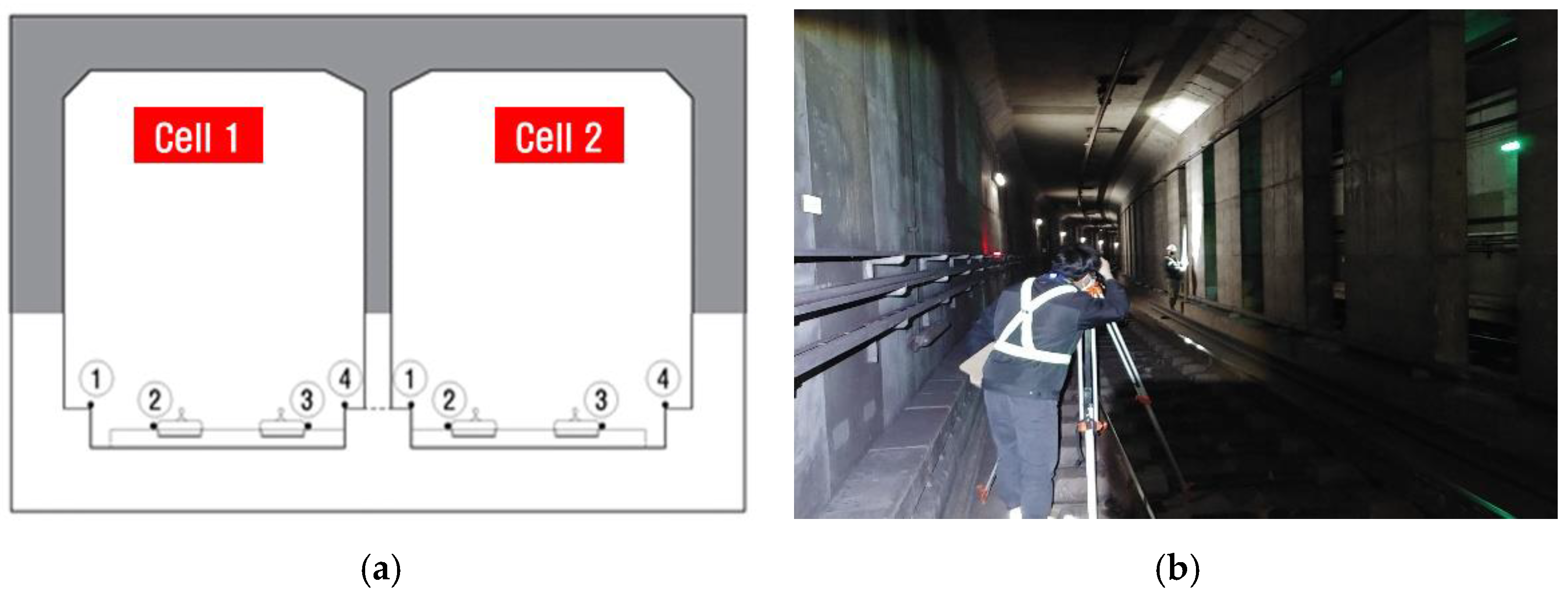
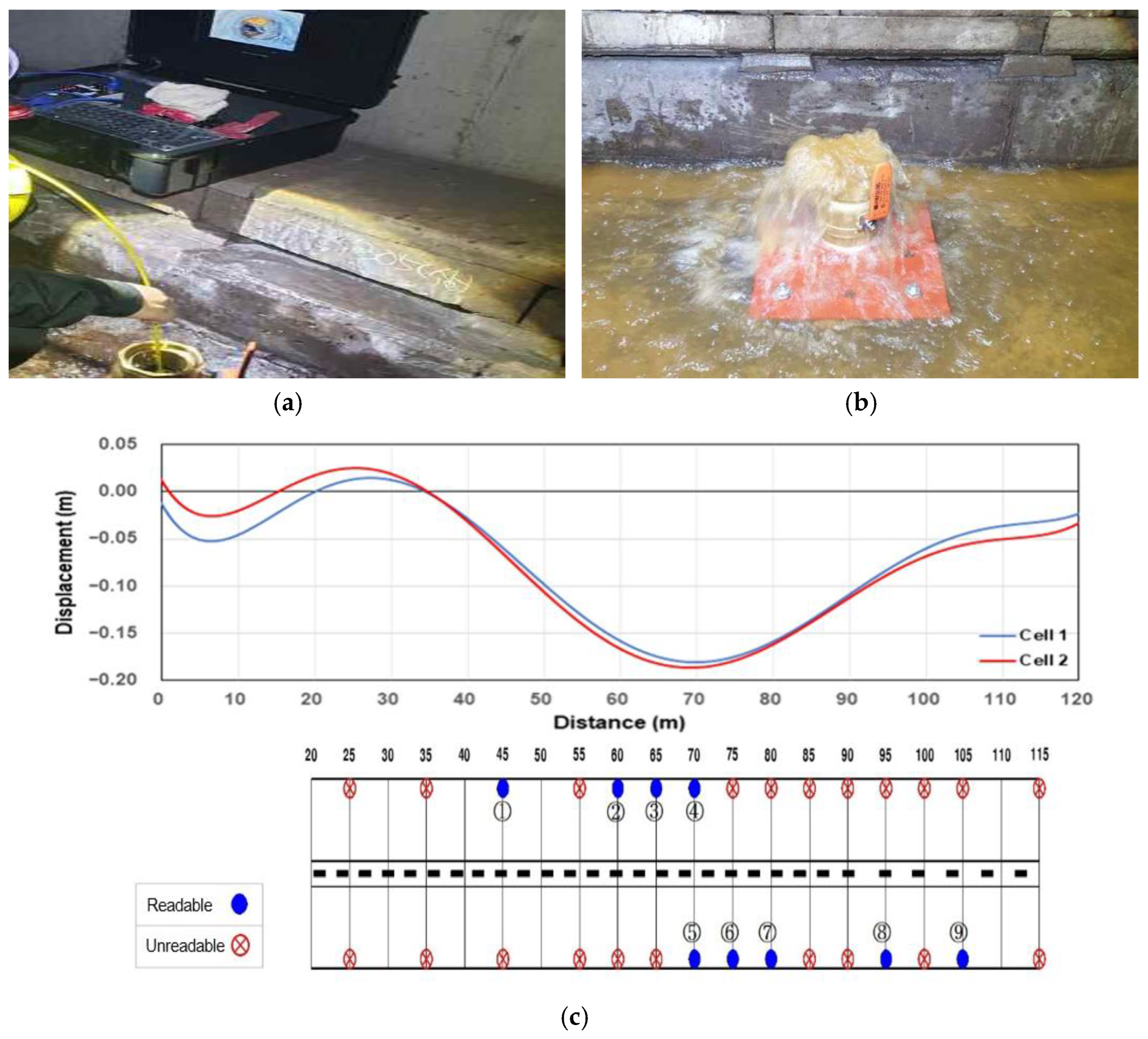
Displacement measurements were obtained by selecting four transverse points each for Cell 1 and Cell 2, along with longitudinal points at 10 m intervals, resulting in a total of 104 measurement points. Optical leveling was conducted using an optical level (CX-105; Sokkia, Tokyo, Japan) and a leveling staff (commercially available) to evaluate the relative subsidence and transverse displacement by comparing the newly collected data with the reference construction-level measurements. The field leveling procedure is illustrated in
Figure 1 [
1].
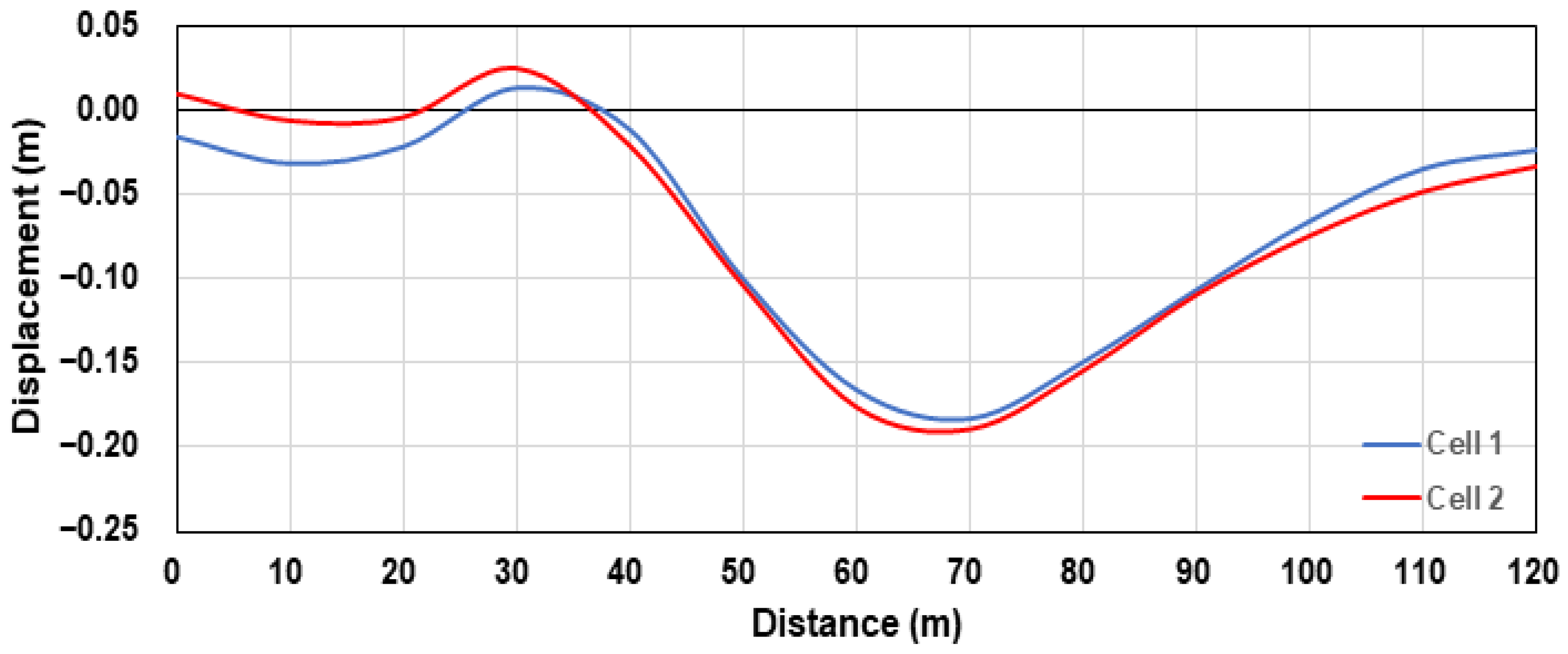
Because the construction reference measurements were based on the slab level of the subway box structure, the results were corrected by subtracting the haunch height of 0.55 m. The corrected values were then converted to displacement and distance values, as summarized in
Figure 2.
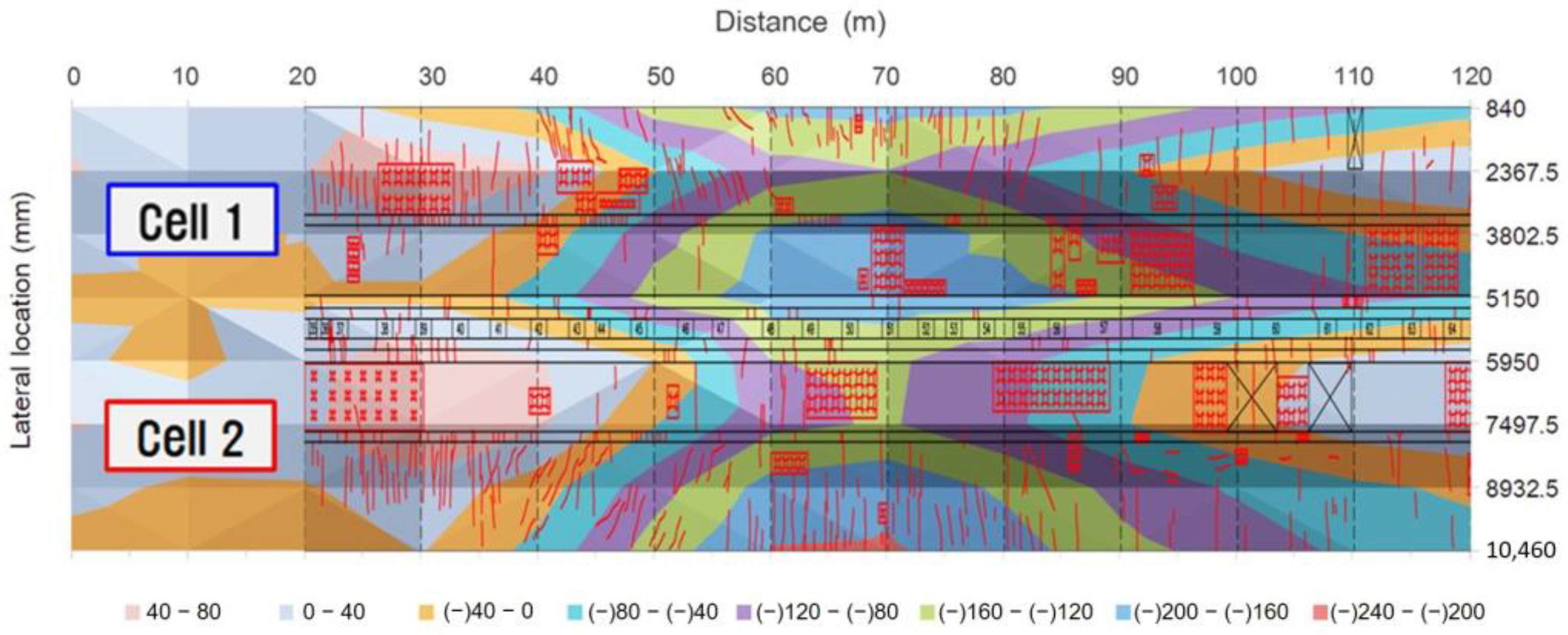
The field leveling results indicated that uplift occurred in the range of approximately 40–80 mm (
Figure 3). In this uplift zone, map cracking and transverse cracking were observed in the ceiling, and numerous transverse cracks were recorded along the upper wall. In contrast, the subsidence reached approximately −200 to −160 mm, and this subsidence zone corresponded to a concentration of transverse cracks along the lower portions of the wall.
2.4. Endoscopic Investigation
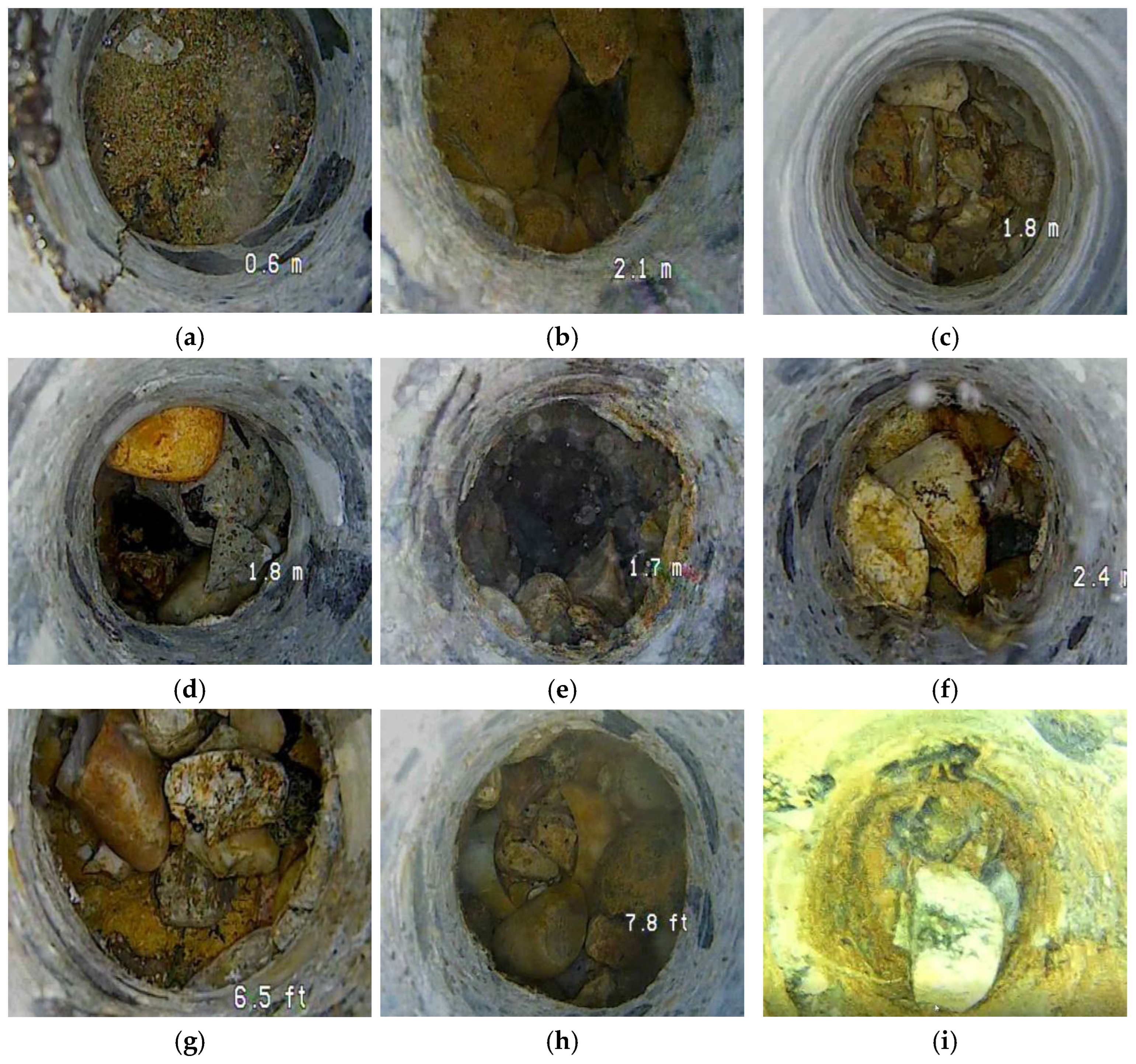
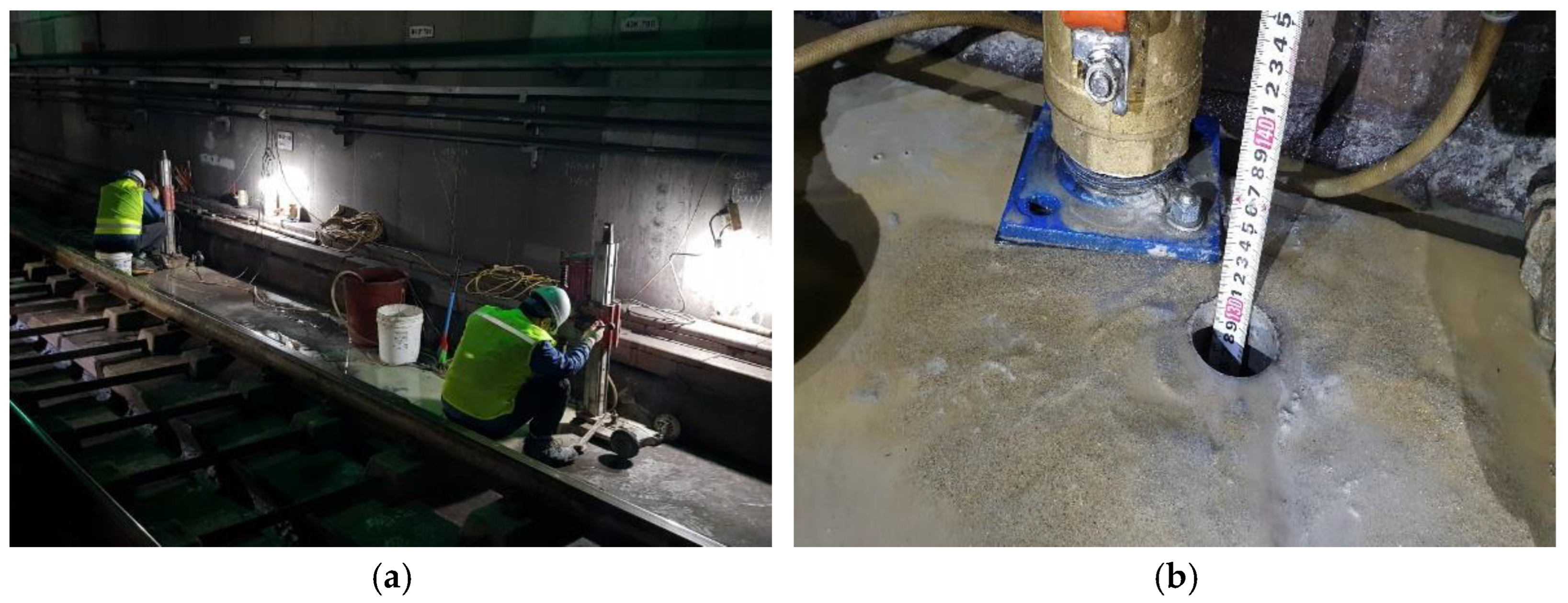
An endoscopic investigation was conducted using an industrial endoscope camera (HV-P100; Tekpia Co., Ltd., Seoul, Republic of Korea) through drilling holes prepared for grouting injection to determine whether voids existed beneath the structure. In locations where the groundwater outflow was significant and where substantial soil discharge occurred, as well as in sections containing floating debris within the drilled holes, visual observation was limited and interpretation was not possible. The detailed results are presented in
Figure 4.
As shown in
Figure 5, the subsurface layers beneath the 65 m section, where the weathered soil layer begins, were identified as sandy soil and gravel. In sections with continuous groundwater discharge, only gravel was observed owing to the migration and washout of finer soil particles.
A comprehensive assessment of the nine locations where interpretation was feasible indicated the formation of localized voids. These voids are attributed to the disturbance of the lower ground during core drilling and migration of soil particles due to groundwater discharge.
Figure 5a–i shows the results at the nine locations (①–⑨) marked in
Figure 4c.
2.5. Dynamic Cone Penetration Test
Dynamic cone penetration tests (DCPTs) were conducted using a dynamic cone penetrometer (DCPT; Pagani Geotechnical Equipment s.r.l., Calendasco, Italy) adjacent to the walls of Cell 1 and Cell 2 by drilling through the bottom slab of the subway box structure. In Cell 1, the test depths were approximately 1.58–6.8 m, whereas depths of approximately 1.7–8.0 m were reached in Cell 2. The results indicated that the underlying ground of Cell 2 was relatively weaker than that of Cell 1.
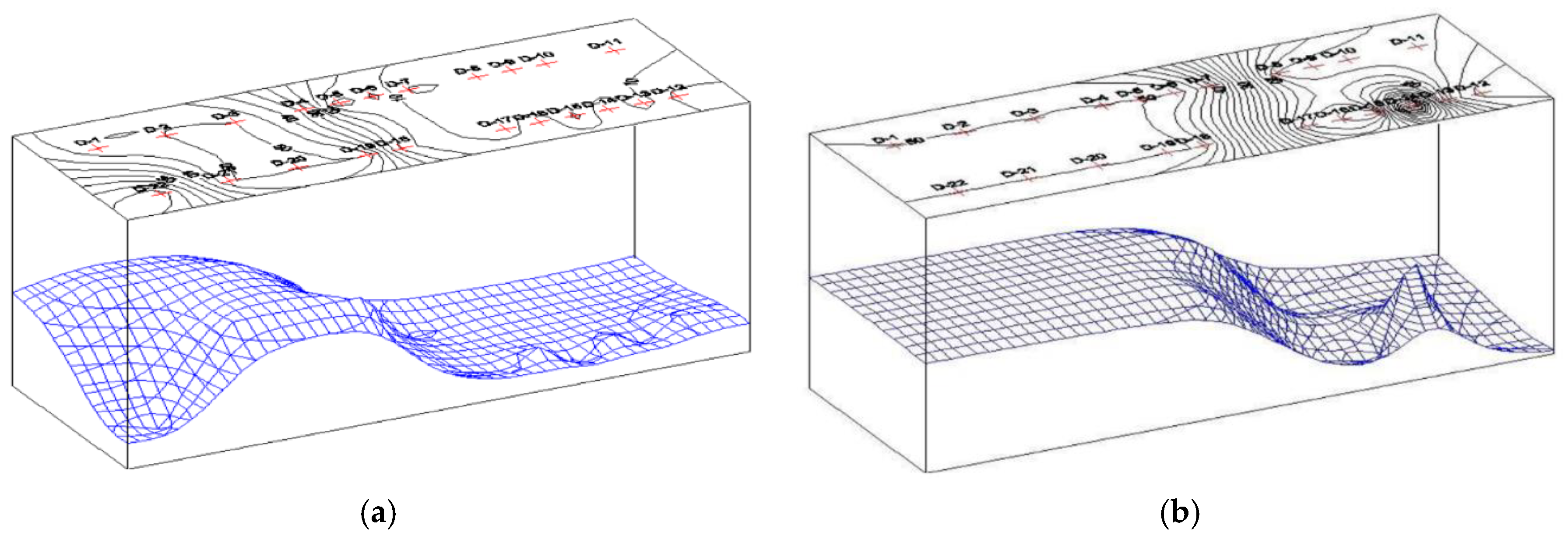
The DCPT results were converted to the corrected SPT
N-values (
Nspt) using the correlation equation
Ndcpt = 1.48 ×
Nspt (R
2 = 0.93). The contour plots of
Nspt at depths of −2.0 m and −5.0 m below the foundation level are presented in
Figure 6.
In Cell 1, the weathered soil layer was relatively thick, and the dynamic cone penetration index (Ndcpt) ranged from 4 to 60 blows, whereas the corrected Nspt ranged from 3 to 40, indicating very loose to dense relative densities of the soil. Similarly, the weathered soil layer in Cell 2 was relatively thick, with Ndcpt values of 6–60 and Nspt values of 4–40, again representing relative densities from very loose to dense. Within 10 m below the foundation level of the subway box structure, the corrected Nspt values were approximately 3–28, with an average value of approximately 13.
2.6. Electrical Resistivity Survey
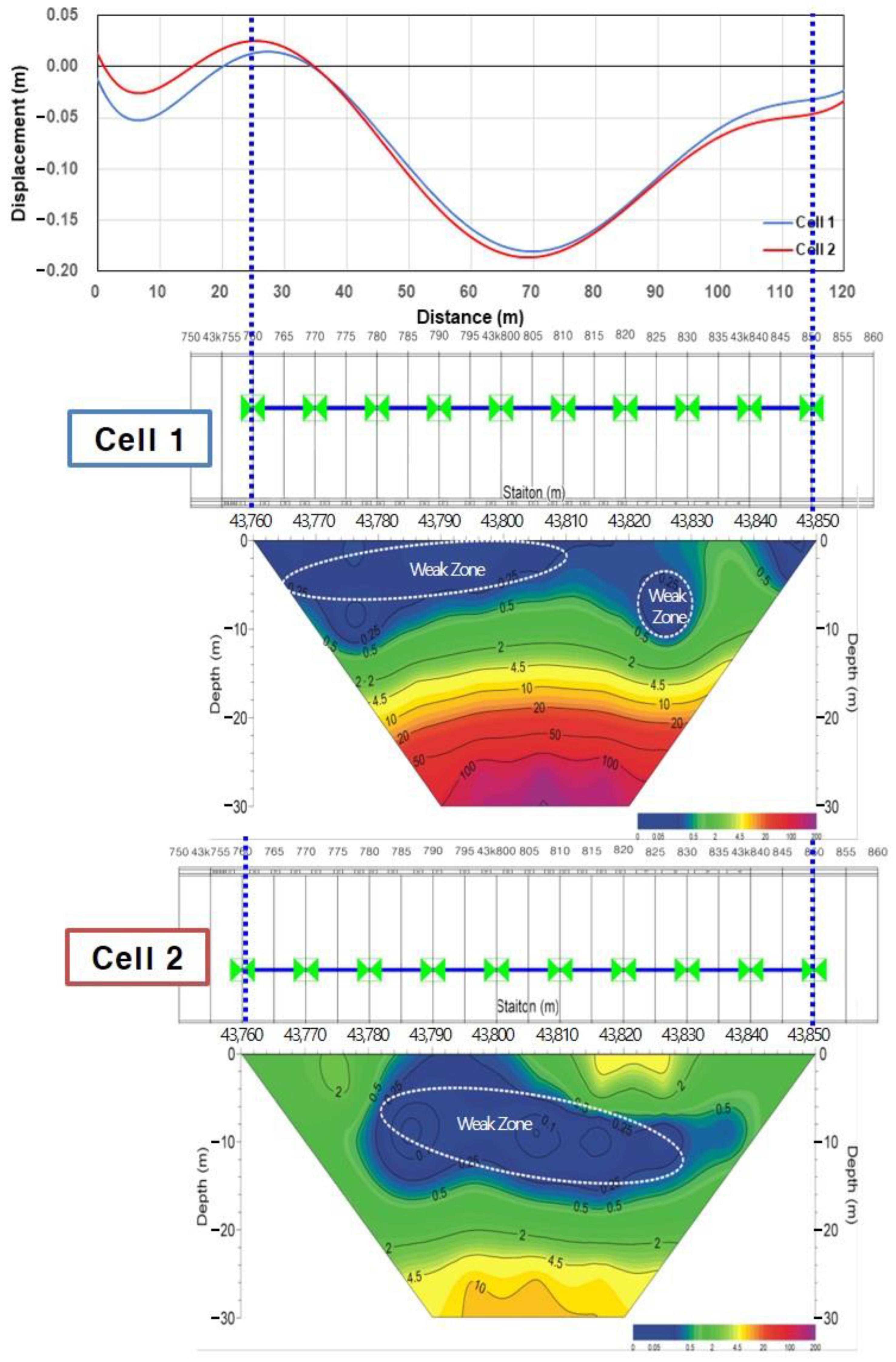
Electrical resistivity surveys were conducted using a resistivity meter/system (ABEM Terrameter LS 2; Guideline Geo AB, Solna, Stockholm, Sweden) to analyze the subsurface geological conditions by evaluating the spatial variations in resistivity across the study area. The resistivity results were compared with the leveling data, as shown in
Figure 7.
In Cell 1, the measured resistivity was 0.06–219 Ω·m. A low-resistivity zone—below approximately 4.5 Ω·m and interpreted as representing the weathered zone within the soil layer—extended from the foundation level to depths of approximately 15–20 m. Below this depth, the resistivity gradually increased. At locations approximately 25–75 m and 85–95 m along the structure, additional zones of relatively low resistivity were detected at depths of approximately 5–10 m below the foundation.
In Cell 2, the measured resistivity was 0.02–14.1 Ω·m. A low-resistivity zone (≤4.5 Ω·m), similarly interpreted as the influence of the weathered soil layer, extended from the foundation level to a depth of approximately 25 m.
Between approximately 45 and 95 m along the structure, a low-resistivity zone extended to approximately 15 m below the foundation, suggesting ground loosening similar to that observed in Cell 1.
In general, resistivity tends to be lower in saturated or weak soils and fractured rock, and higher under dry conditions and in competent soil or rock. Therefore, the resistivity results for both Cell 1 and Cell 2 indicate that the ground beneath the structure has a lower resistivity than that of typical soil and rock, suggesting that the entire foundation zone is either saturated or loosened. The lower resistivity observed beneath Cell 2 indicates that this ground is looser than that beneath Cell 1. When integrated with the DCPT results, the findings suggest that the weathered layer beneath Cell 2 is looser than that beneath Cell 1. Accordingly, additional foundation reinforcement is considered necessary for this section.
3. Foundation Reinforcement Method
3.1. Foundation Reinforcement Method Introduction
The cracks observed in the subway box structure were determined to be caused by the subsidence of the foundation ground; therefore, ground improvement was required to prevent further subsidence. In this study, the steel pipe reinforcement grouting method was adopted. In this method, a bit is installed at the end of the steel pipe, enabling the pipe to be inserted simultaneously with drilling, after which pressure grouting is performed. The final reinforcement consists of the steel pipe and injected grout.
Given the site constraints—limited workspace inside the tunnel, suspension of train operations during construction, and limited installation time for the reinforcement—a combined reinforcement and grouting method was selected. This method enables effective filling of voids and loose zones within the ground, facilitates insertion of reinforcement materials, and is suitable for use with small-scale construction equipment.
3.2. Foundation Reinforcement
Steel pipe drilling was performed along the longitudinal grid lines from Row 1 onward, with 18 holes drilled per row in both the upper and lower tracks and at the column locations. The drilling interval and grout diffusion radius were set as 5.0 m and 1.5 m, respectively. The reinforcement depths of the steel pipes were L = 6.0–9.0 m. Steel pipes were fabricated in 1.5 m segments and connected on site using threaded couplings to allow continuous installation. To prevent the injection grout from flowing into the drilling holes during boring, a minimum spacing of 5 m was maintained between the drilling and injection holes; the spacing was increased further when an inflow was detected. The injection hole spacing, location, and specifications were established at 500 mm ± 100 mm in four directions, with a hole diameter of ∅10 mm ± 1 mm. Following the drilling, injection nozzles were installed to prevent debris from entering the pipe and to ensure smooth grout injection.
Rapid-hardening cement was used as the plugging (calking) material, as it is capable of withstanding injection pressures exceeding 4 MPa. When groundwater discharge was encountered in the core-drilled holes prior to construction, packers were used to seal the flow. After insertion of the steel pipe, the gap between the pipe and foundation concrete was sealed using the rapid-hardening cement, and repair and reinforcement were performed.
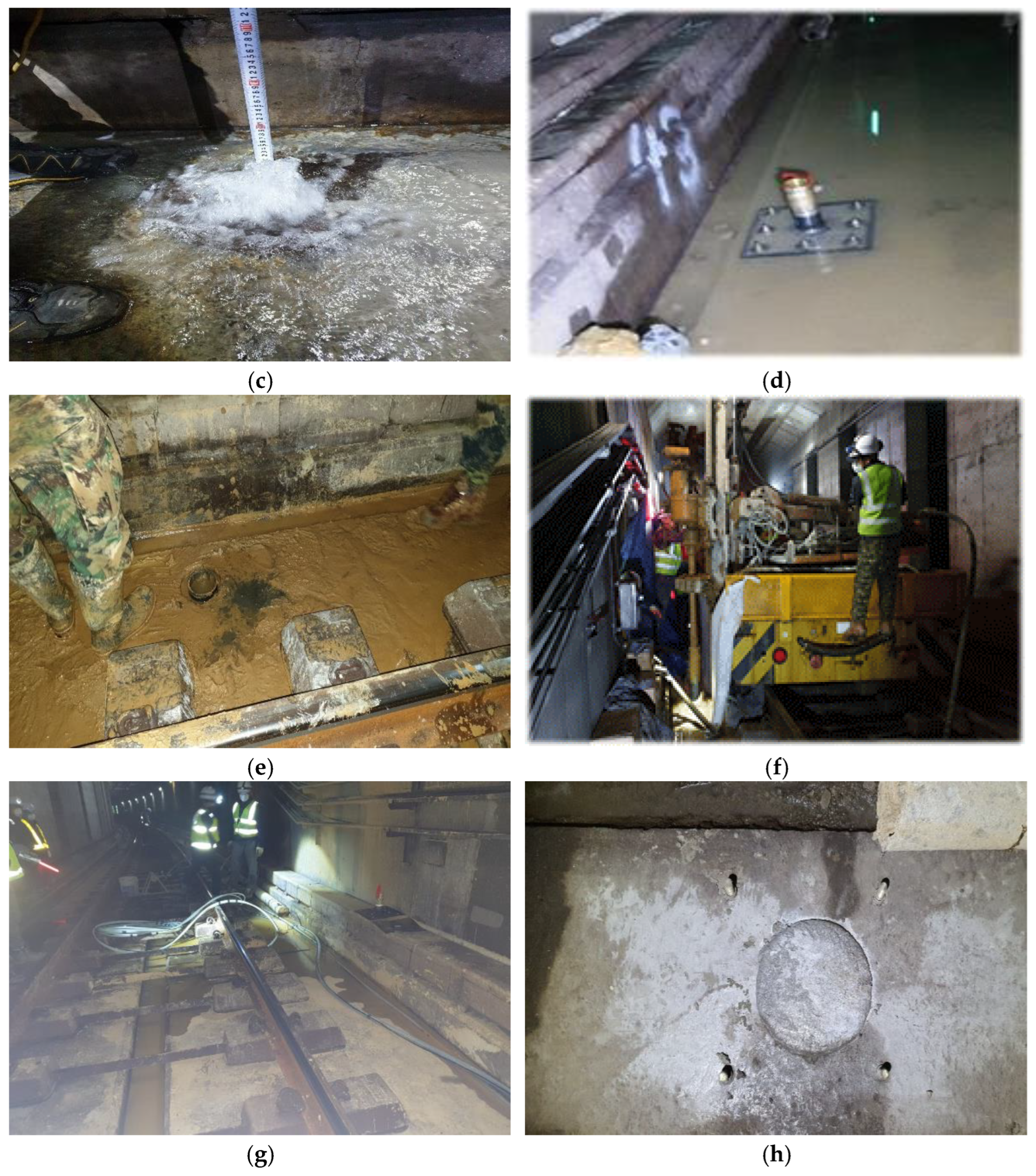
The construction sequence is presented in
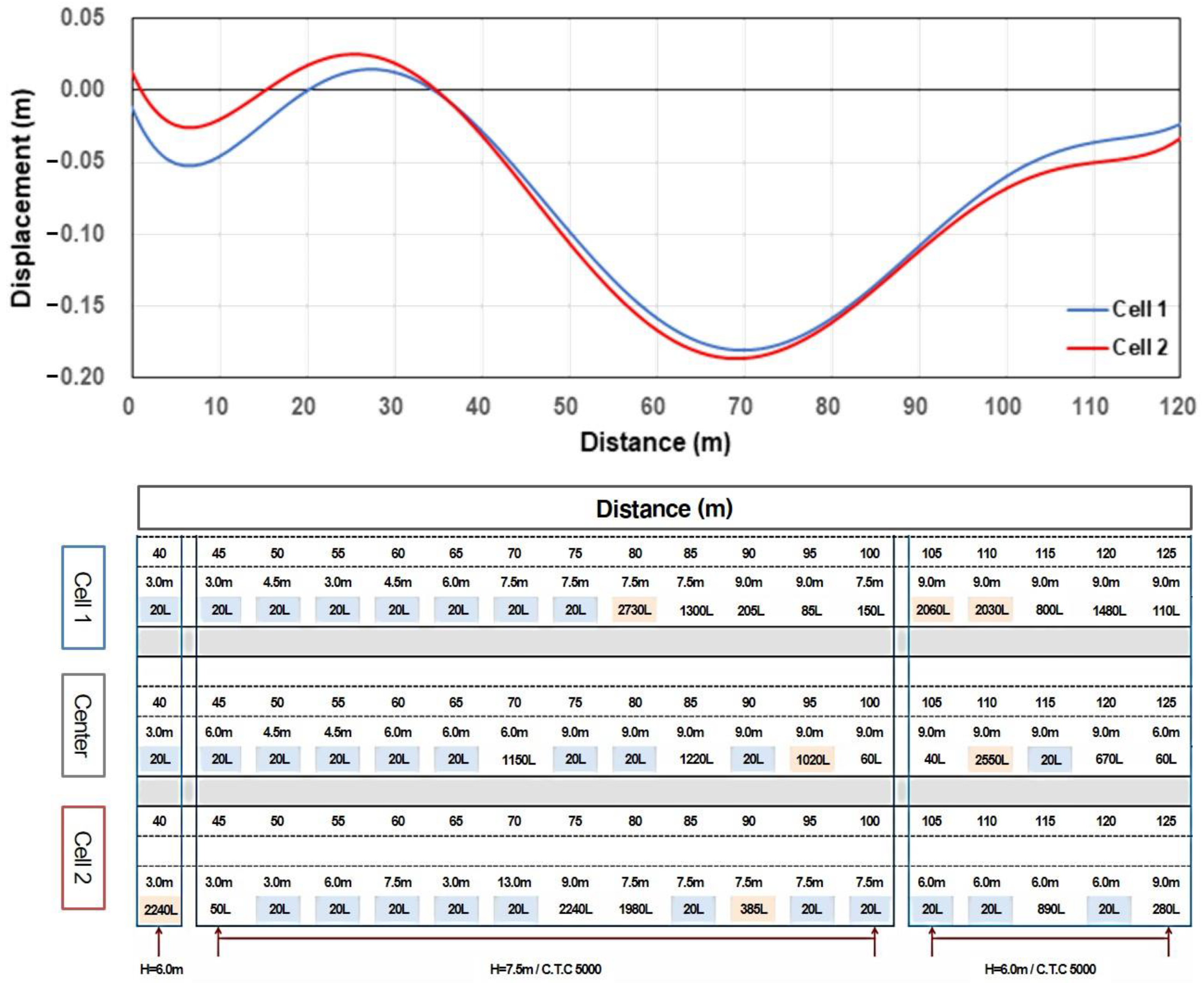
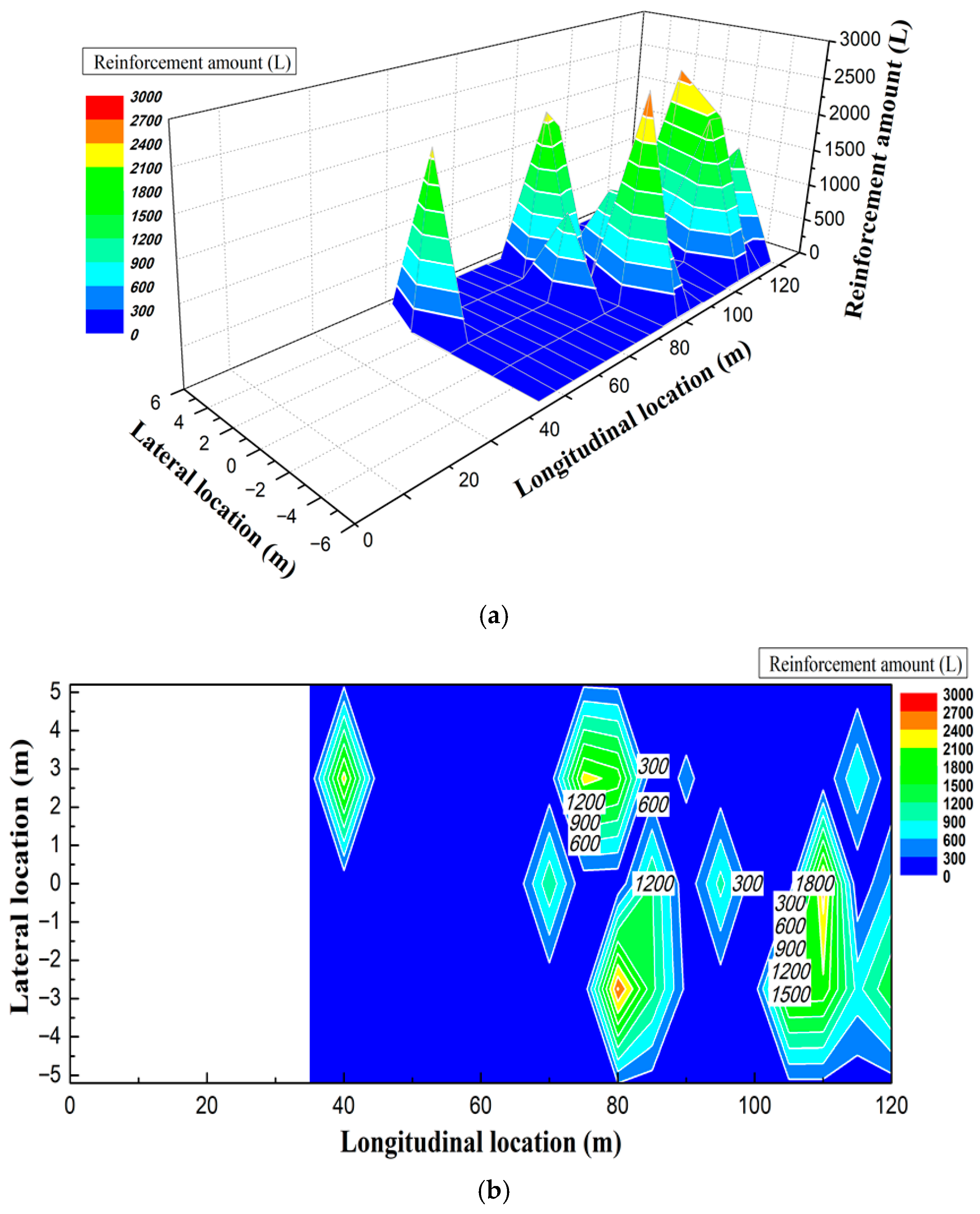
Figure 8. As shown in the figure, reinforcement was performed by inserting steel pipes and injecting grout beneath the subway box structure in the region exhibiting displacement behavior. Prior to injection, the connection between the grout pump and injection hose was checked to prevent leakage between the adjacent injection points. Injection was performed in repeated steps within the first 2.0 m to ensure effective penetration grouting. The quantity of grout injected at each location is shown in
Figure 9.
Based on the reinforcement results, the total length of the steel pipes installed in Cell 1 was 121.5 m, with a grouting volume of 11,100 L. In Cell 2, the total steel pipe length was 118.0 m, and the grouting volume was 8285 L. Reinforcement was also performed near the central column located between Cell 1 and Cell 2, where the total steel pipe length was 132.0 m and the grouting volume was 6970 L. Although the reinforcement plan initially targeted similar grouting quantities for Cell 1 and Cell 2, the injection could not be performed at numerous locations owing to the ground conditions, bedrock characteristics, and other site constraints. Therefore, the maximum feasible foundation reinforcement was conducted only at locations where injection was possible.
As shown in
Figure 9, the relatively small grout volumes in the 40–45 m section were attributed to the interface between the uplift and subsidence zones. During subsidence, over consolidation of the ground likely reduced the pore space, thereby inhibiting grout penetration into the soil.
4. Foundation Reinforcement Adequacy Analysis
This study evaluated the adequacy of the foundation reinforcement applied to the subway box structure exhibiting displacement behavior. Using the uplift and subsidence values obtained from the numerical analysis, the depths of the voids beneath the structure and the required reinforcement volume (e.g., grouting depth) were analytically estimated and compared with the actual construction results.
The required reinforcement volume was calculated using the grid-based volume estimation method commonly used in earthwork calculations. Subsidence values relative to the maximum uplift point were computed from the longitudinal displacement analysis for each cross-section. The linear grid volume method was adopted under the assumption that the subway box foundation has a rectangular plan and that transverse and longitudinal displacement values are computable. In this method, the target area is divided into rectangular grids, the hexahedral volume at each node is calculated from the elevation (or displacement) values, and the volumes are summed to obtain the total earthwork quantity. Because this method assumes linear connections between the grid points, it is computationally simple but may introduce errors in the case of irregular geometries. In this study, it was used to quantify the subsidence volume requiring reinforcement. The calculation formula is presented in Equation (1).
Here, if
becomes
, then
. When the grid spacing is
and
, the total volume
V can be calculated using Equation (2).
The matrix representation of
is given in Equation (3).
The selected grid spacing was not intended to represent the original field-measurement interval itself, but rather the numerical integration resolution used to convert the continuous displacement field into reinforcement volume. The transverse spacing of 0.55 m (11 m/20 intervals) was chosen to resolve local differential support behavior across Cell 1, the center column region, and Cell 2, whereas the longitudinal spacing of 1.2 m (120 m/100 intervals) provided sufficiently fine discretization to capture the gradual change in displacement along the box alignment while limiting integration error. Accordingly, the grid was refined until additional subdivision produced no meaningful change in the estimated reinforcement volume.
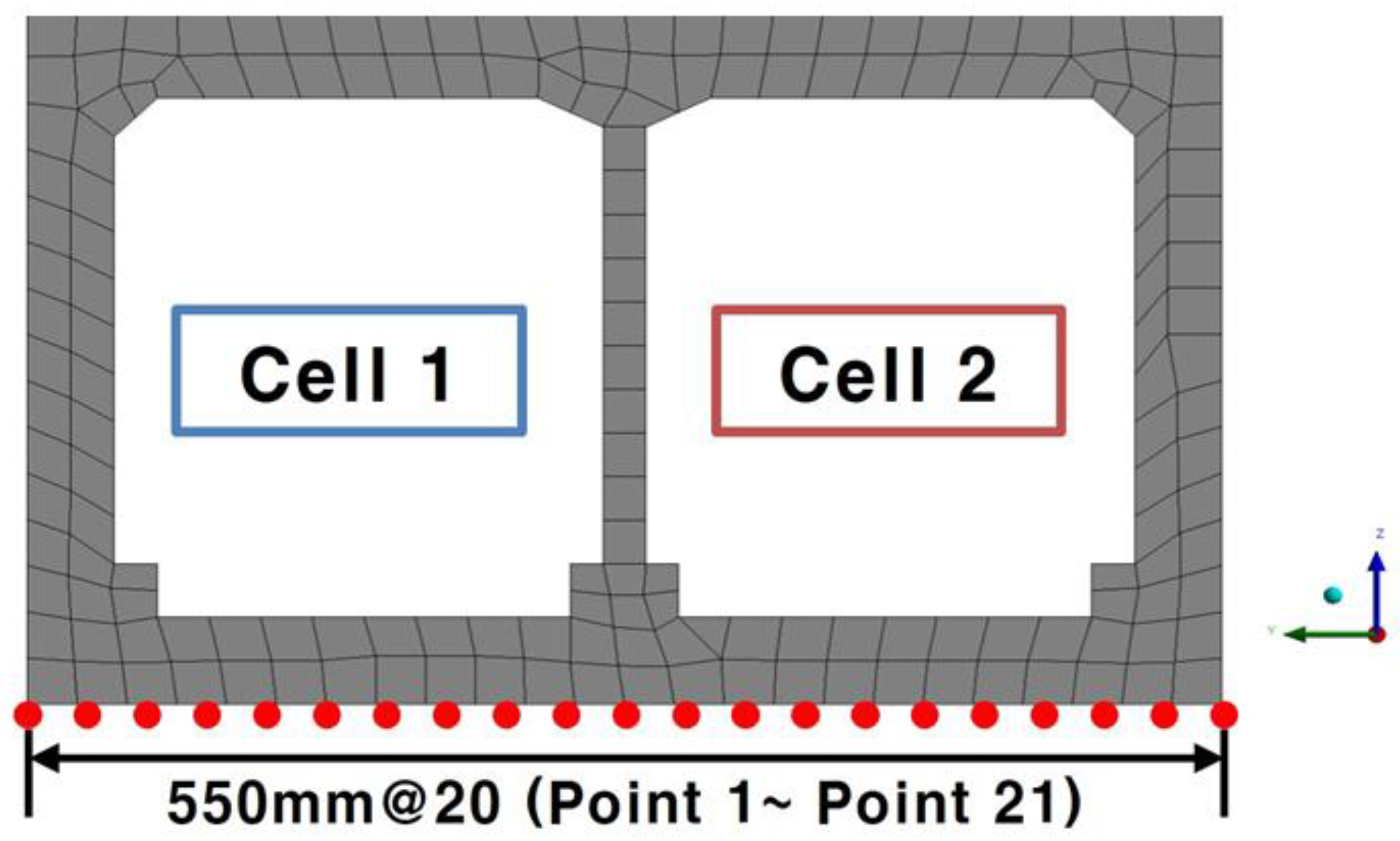
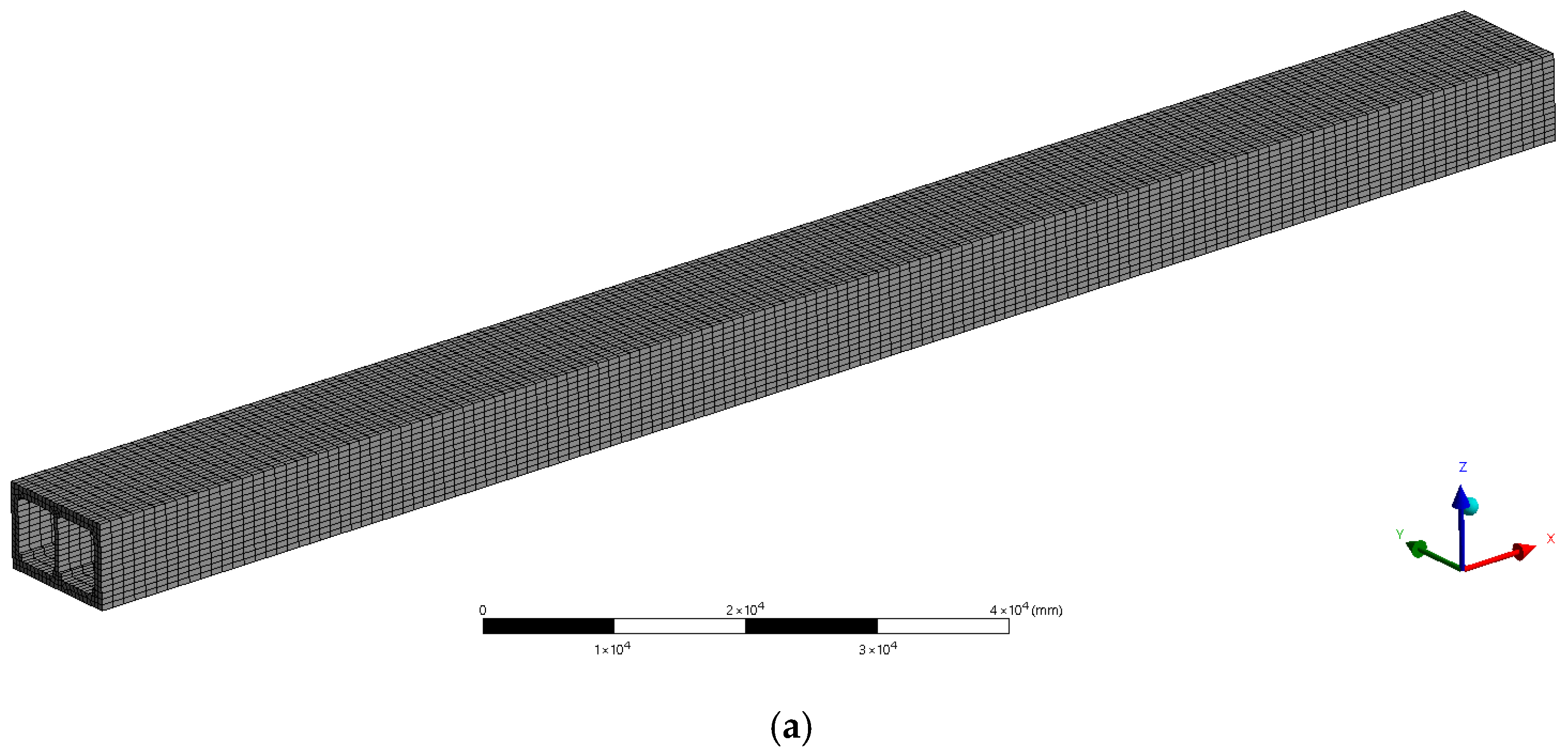
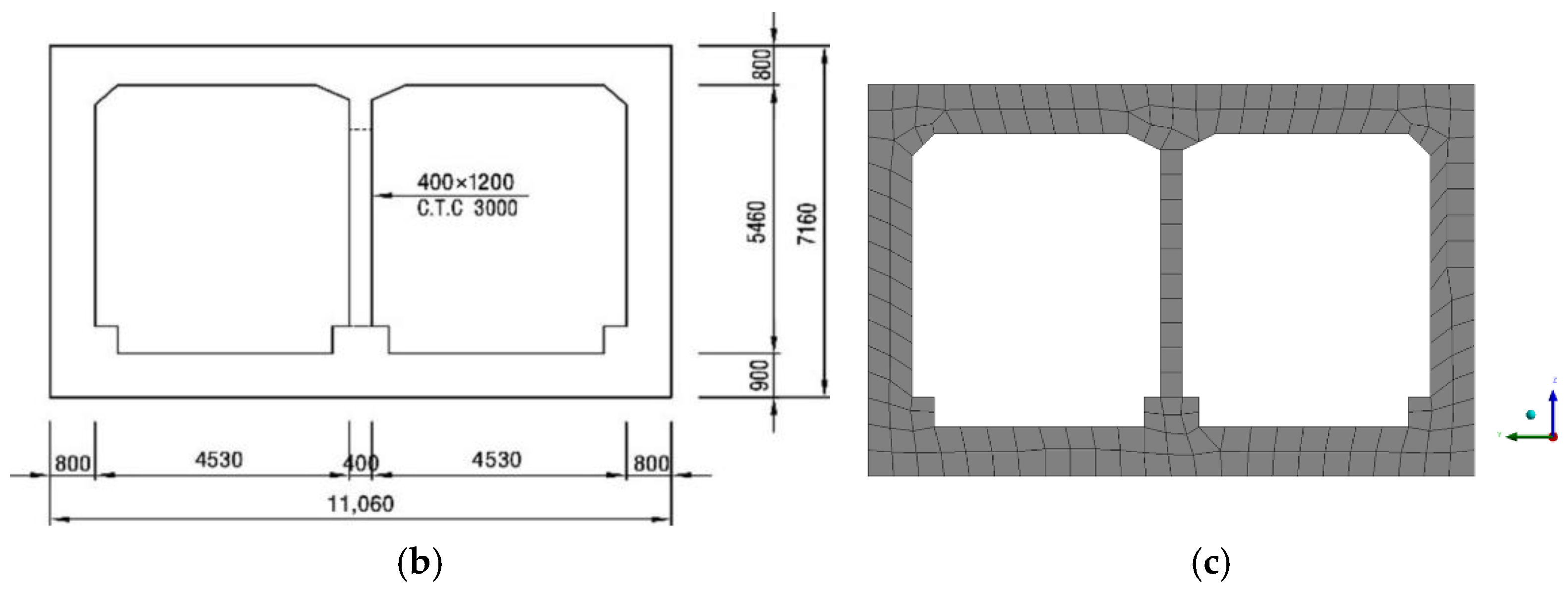
Field leveling data were collected over a distance of approximately 120 m. To minimize displacement distortion at the boundaries of the analytical domain, the total length of the numerical model was extended to 140 m. The cross-sectional configuration, three-dimensional model, and mesh used for the finite element (FE) analysis of the subway box structure are shown in
Figure 10 [
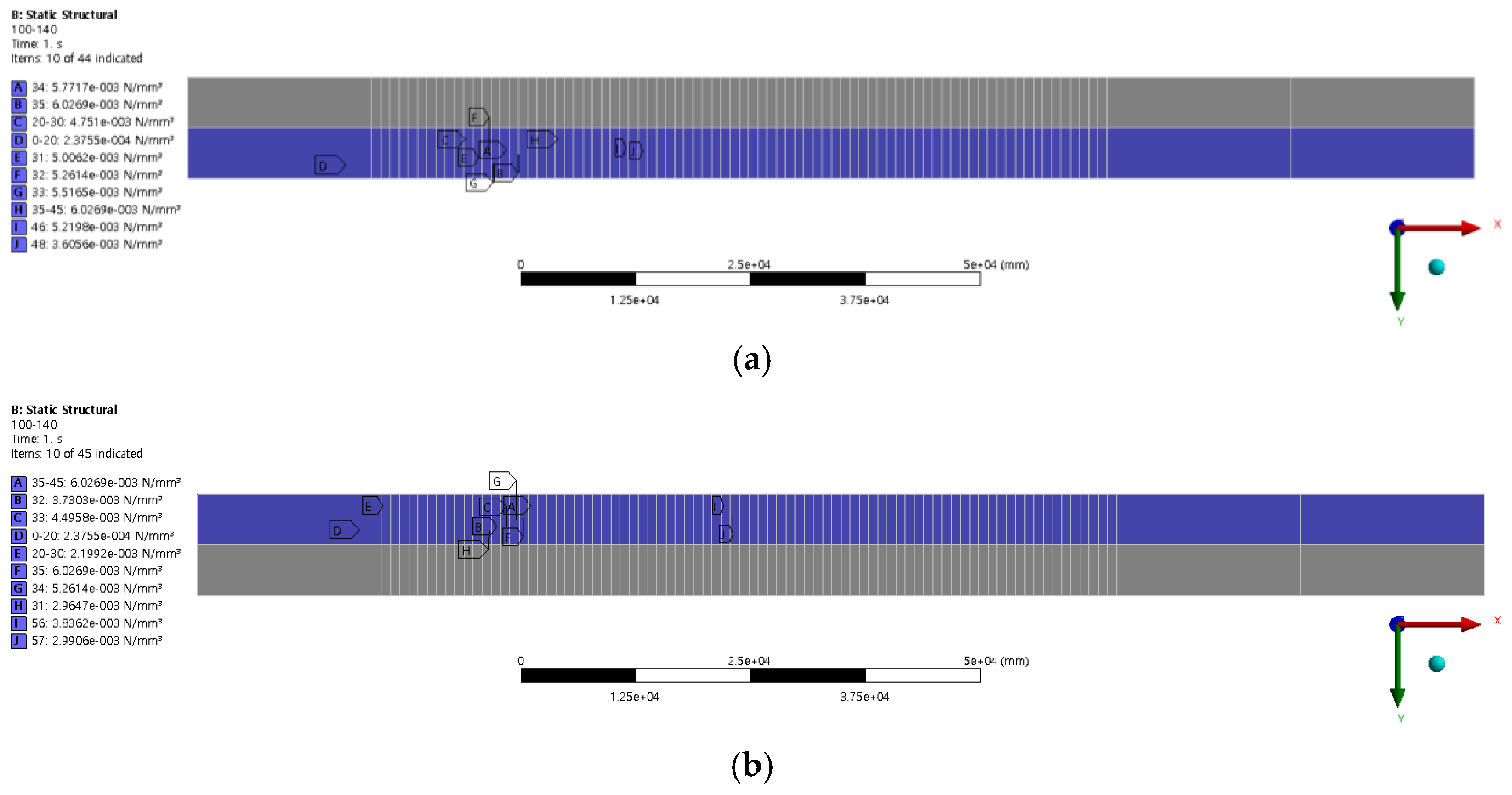
11]. The boundary condition settings are illustrated in
Figure 11.
The ground conditions beneath the subway box structure were represented using the subgrade reaction moduli derived from the field leveling data. These moduli were applied separately to the upper- and lower-track sections and incorporated into the FE model as boundary conditions.
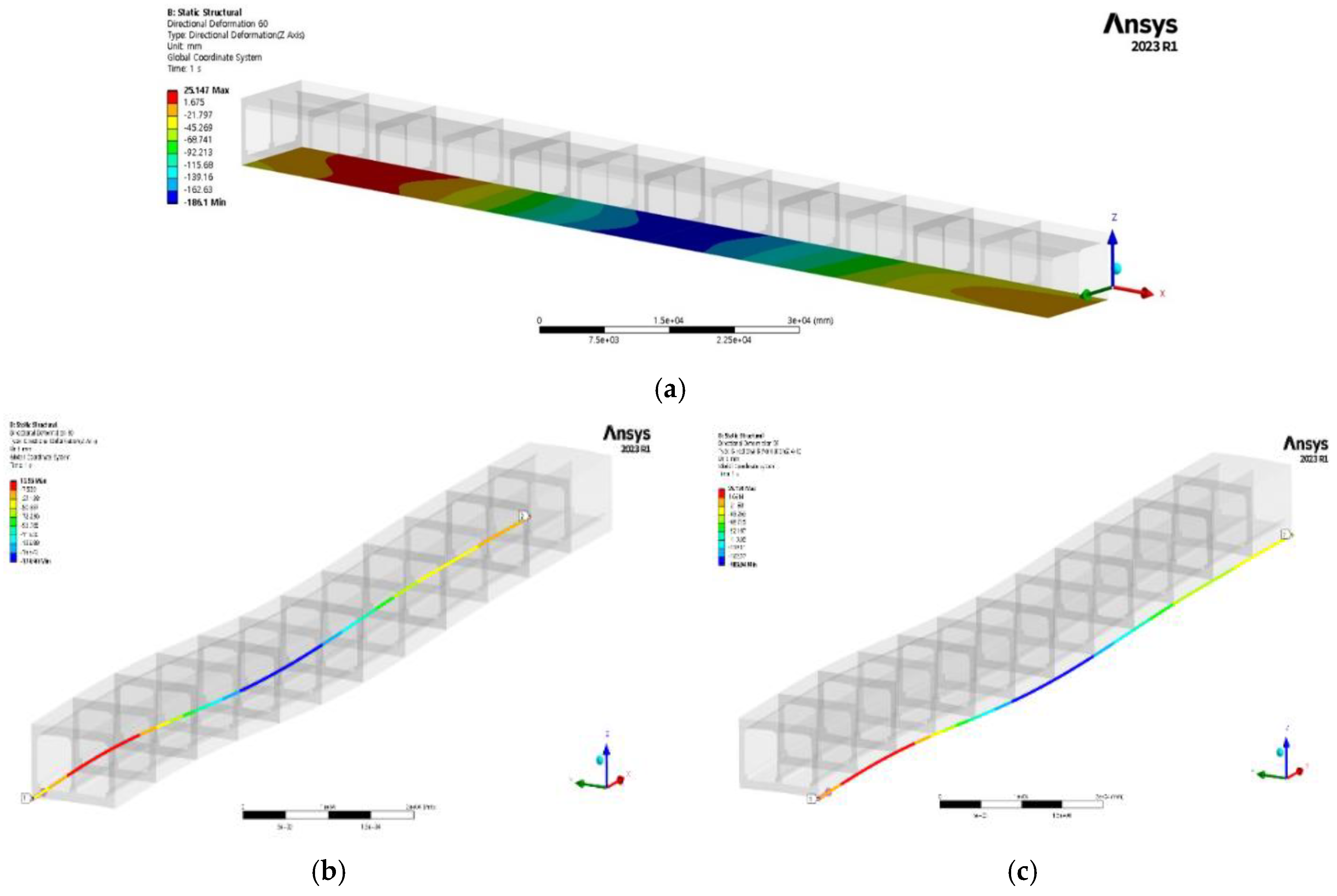
The displacement evaluation points are shown in
Figure 12. Using the three-dimensional numerical analysis results, uplift and subsidence values were calculated at each node in both the transverse and longitudinal directions. These values were converted into the required reinforcement depth at each location and applied in the grid-volume calculation. The grid resolution described above was adopted for the displacement-to-volume conversion, and rectangular grids were then generated to compute the analytical reinforcement volume. Potential approximation errors may arise from linear interpolation between nodes, the rectangular plan simplification, and the aggregation of local nodal demand into larger field construction units. An example of the vertical displacement results is shown in
Figure 13.
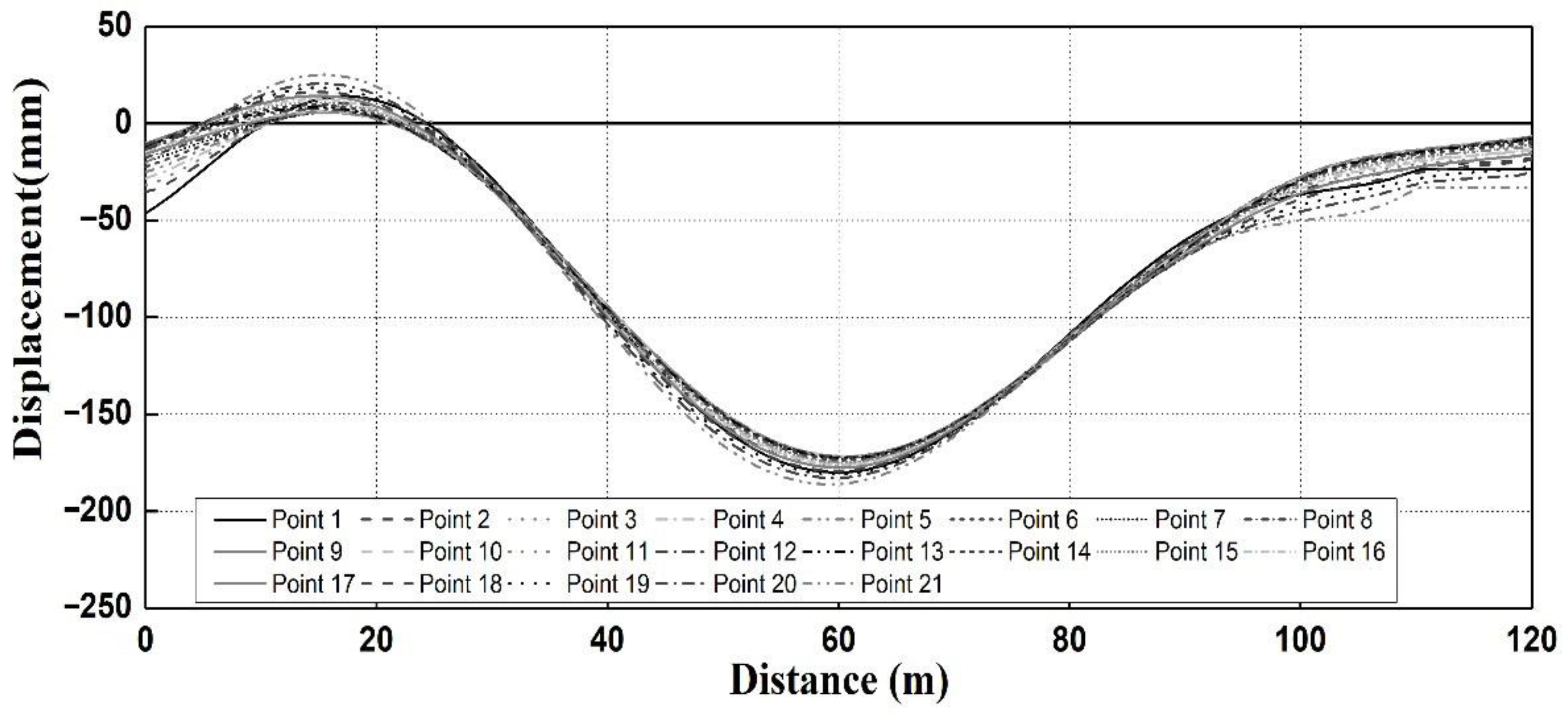
The bottom slab of the subway box structure was divided into 21 transverse points (Point 1 to Point 21), and the longitudinal displacement at each node was calculated analytically, as shown in
Figure 14.
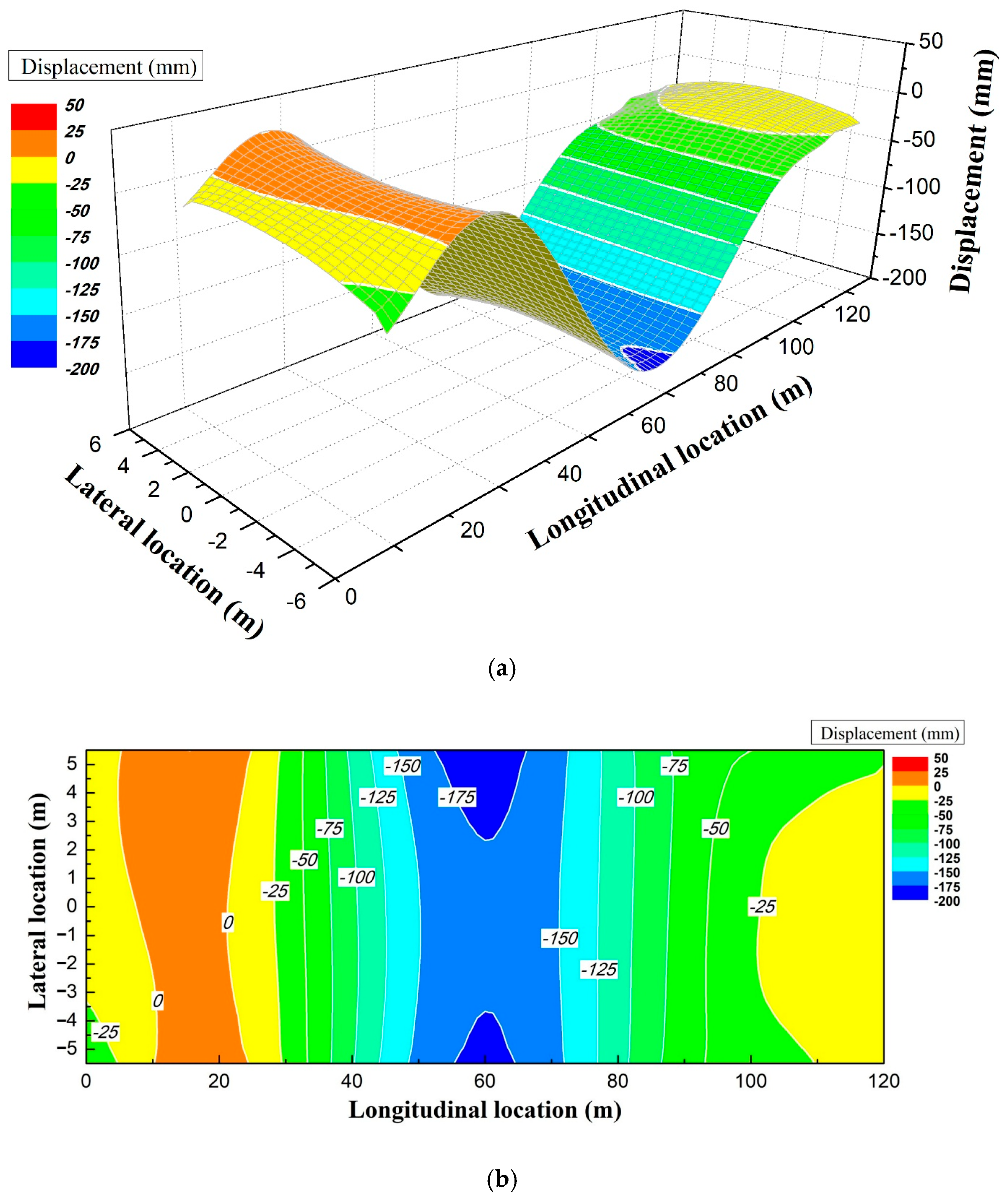
The analysis indicated that Point 21 experienced the maximum uplift of approximately 25 mm and maximum subsidence of approximately 186 mm. Examples of the two- and three-dimensional displacement analysis results are shown in
Figure 15.
For performing the displacement analysis, the central column between Cell 1 and Cell 2 was used as the transverse reference point (0). The range 0 to 5.5 m corresponds to Cell 1, and 0 to −5.5 m corresponds to Cell 2. Detailed analyses were conducted at grid intervals of 553 mm in the transverse direction and 1200 mm in the longitudinal direction.
Subsidence exceeding 175 mm occurred near the ends of both Cell 1 and Cell 2, with a wider subsidence range observed on the Cell 1 side. In addition, uplift greater than 25 mm extended over a larger area on the Cell 1 side.
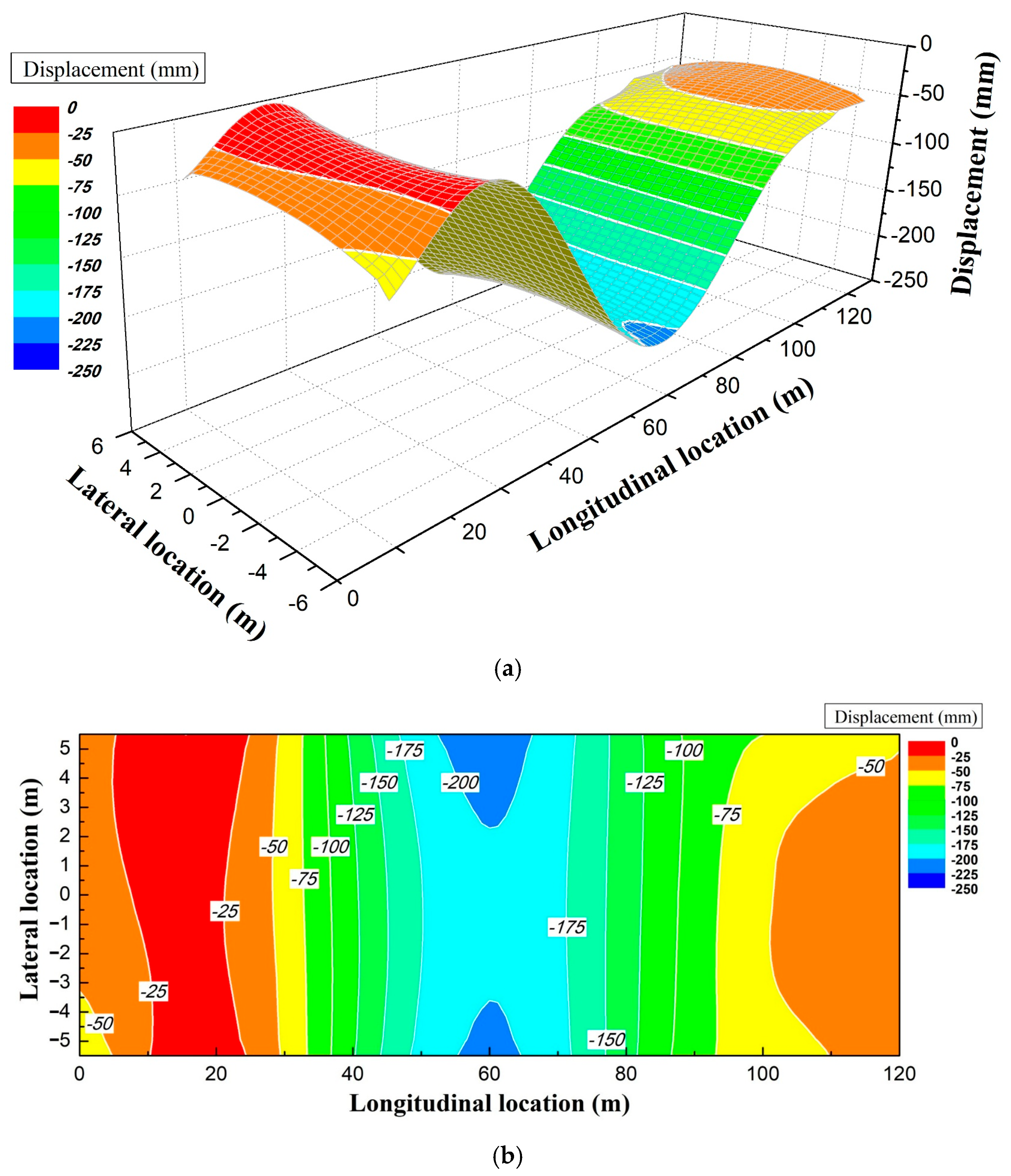
The required reinforcement depth at each location was calculated using the uplift and subsidence results. The reinforcement depth was defined relative to the maximum uplift point (set as zero). The analysis results are presented in
Figure 16.
The analytically determined reinforcement depths were compared with the actual grouting depths applied in the field to assess the adequacy of the reinforcement. As shown in
Figure 16, the relative depth in the maximum subsidence zone exceeded 200 mm with reference to the maximum uplift point.
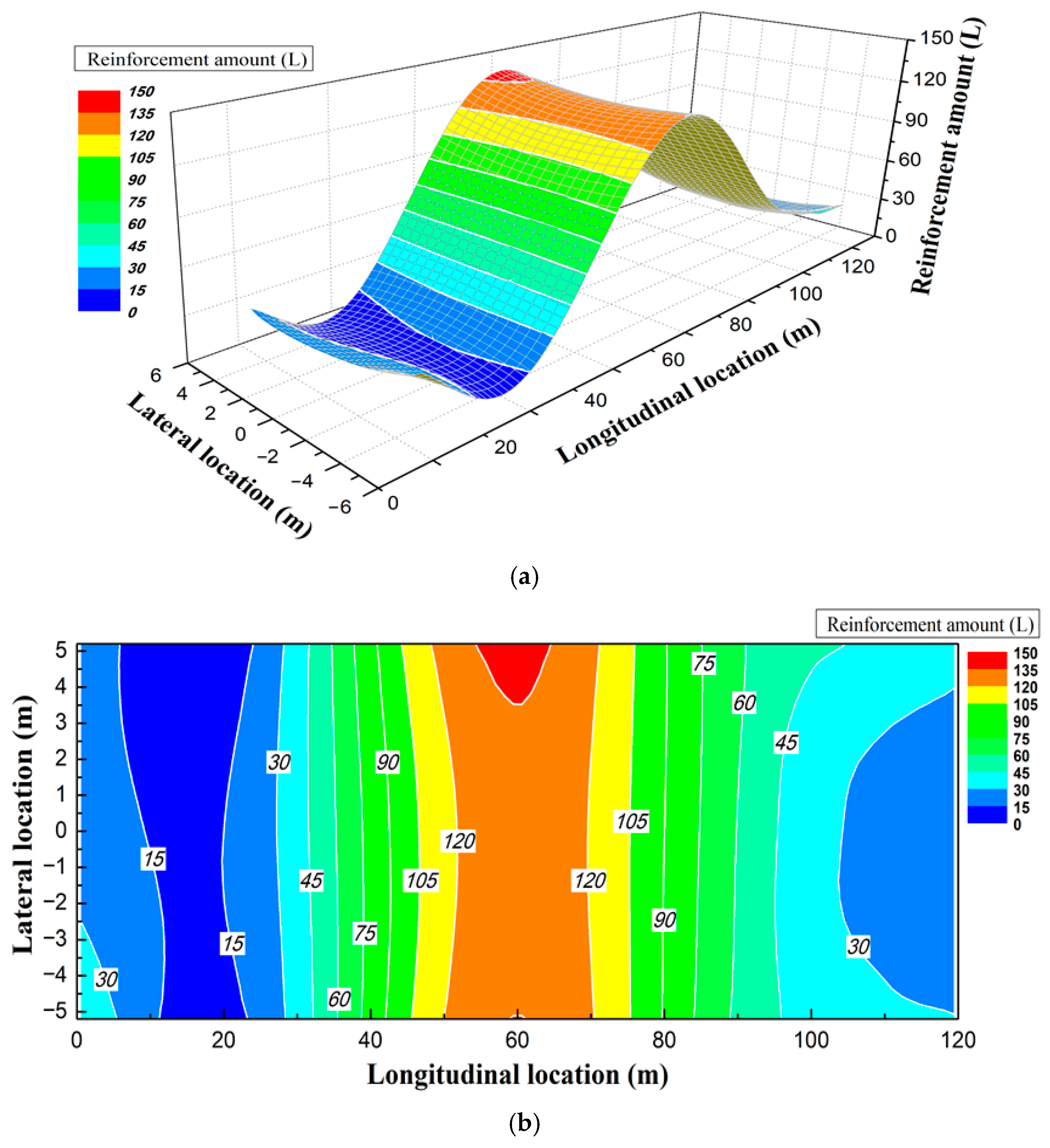
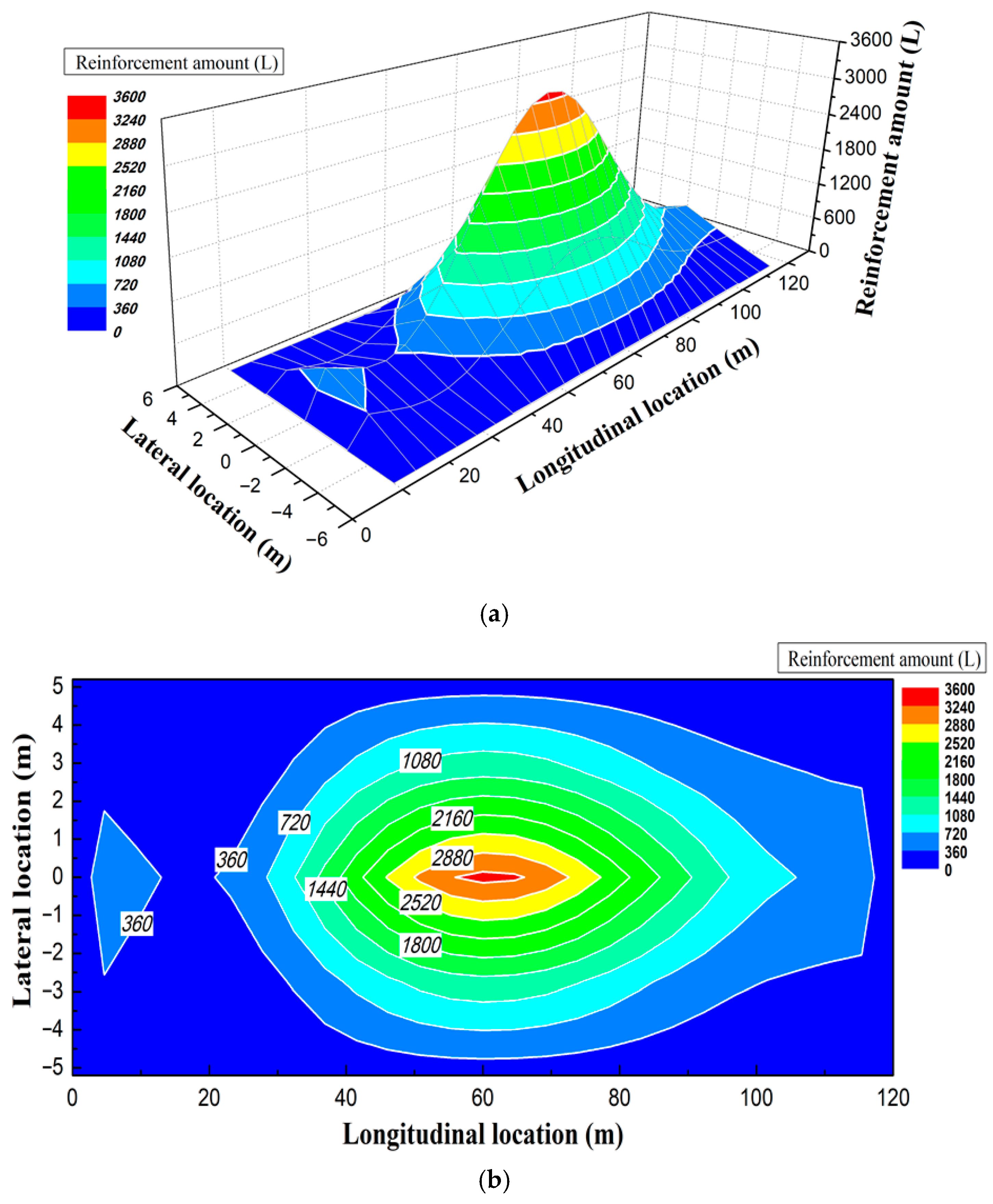
The displacement results for Points 1 through 21 were converted to a grid-based format, and the grid volume method was applied to compute the subsidence volume (required reinforcement quantity). The reinforcement volume (grouting volume) was then calculated using the required grouting depth at each node. The analytical grouting results are shown in
Figure 17.
Numerical analysis indicated that the maximum reinforcement requirement was approximately 150 L per 0.55 m × 1.2 m grid, equivalent to approximately 220 L/m
2. To compare the analytical results with the field implementation, actual grouting quantities and construction spacing were used to compute the reinforcement volume. In the field, steel pipes and grout were installed along the sides of Cell 1 and Cell 2 and around the center column. The side reinforcement area was 3 m × 5 m, and the column reinforcement area was 4 m × 5 m. The analytical reinforcement volume was calculated using the same area assumptions.
Figure 18 and
Figure 19 show the field-applied and analytically estimated grouting quantities, respectively, for comparison.
The difference in grouting quantity between uplift-prone and subsidence-prone zones should be interpreted in terms of both ground condition and constructability. In uplift-prone or transition zones, local loosening, void development, and groundwater-related soil loss may increase injectability. By contrast, in subsidence-dominant zones, progressive compression and consolidation can reduce the effective pore volume, thereby limiting grout penetration even where settlement is large. In addition, field implementation was constrained by groundwater inflow, bedrock interference, and inaccessible drilling locations, so the executed grouting quantity does not necessarily coincide with the analytically required volume at every location. Furthermore, the apparent difference between the local peak analytical demand (approximately 220 L/m
2) and the construction-comparable value (approximately 152 L/m
2) results from the difference in averaging scale: the former was obtained on the fine numerical grid, whereas the latter was converted to the larger field construction unit used for direct comparison. Although the present study relied on conventional leveling data and structural analysis, future monitoring frameworks may be enhanced by integrating computer vision-based inspection modules for automated displacement and crack assessment. In particular, recent image restoration methods, such as video deblurring and weather-degraded image enhancement, may improve the visual quality of field-acquired images under motion blur or adverse environmental conditions, thereby supporting more reliable feature extraction prior to crack detection or displacement tracking [
12,
13]. In addition, the structural assessment and interpretation in this study referenced Korean design standards for underground structures, concrete members, and foundation design [
14,
15,
16]. The safety inspection and detailed diagnosis procedures followed the relevant national guidelines [
17,
18]. Railway/earthwork standards and related code commentaries were also consulted to support the interpretation of ground–structure interaction and cracking behavior [
19,
20,
21,
22]. The 2021 condition record used in this study was based on the Gwangmyeong–Cheolsan detailed safety diagnosis report [
23]. The DCPT–SPT correlation and the FE analysis software are referenced accordingly [
24].
5. Conclusions
A key contribution of this study is the integration of field-measured leveling data, back-calculated and three-dimensional numerical analysis into a single reinforcement assessment framework. This multidisciplinary workflow enabled not only the interpretation of displacement-induced damage along the longitudinally continuous box structure, but also the estimation of location-specific reinforcement demand for comparison with field implementation. Previous research indicates that conventional sectional (cross-sectional) diagnostics do not sufficiently capture the longitudinal continuity of box structures. Although sectional forces at individual cross-sections can be computed, relative displacement along the alignment is not considered, which limits the quantitative assessment of actual damage. To address this limitation, measured vertical displacements were used to derive a displacement function, and the corresponding soil elastic coefficients were back-calculated and implemented as spring-type boundary conditions in a three-dimensional numerical model. Because the field-measured displacement profile was prescribed in the analysis, the displacement magnitude itself was not used as an independent validation target. Instead, the credibility of the analytical framework was assessed by examining whether the predicted structural response and reinforcement demand distribution were consistent with the observed crack pattern and field reinforcement implementation. The analysis provided node-based estimates of heave and subsidence in both the transverse and longitudinal directions. Based on the location-specific reinforcement depths obtained from the analysis, the required grouting volume was estimated using a refined grid-based method. A comparison between the analytical reinforcement demand and the executed grouting showed that the maximum required volume was approximately 152 L/m2, whereas field construction applied grouting at intervals of about 5 m in the longitudinal direction and 4 m in the transverse direction, with a maximum recorded volume of 180 L/m2. This discrepancy suggests that uncertainties in local ground conditions and site constraints prevented reinforcement from being applied optimally at the locations where it was most needed. Overall, the proposed framework is suitable for application in the pre-construction phase to determine reinforcement extent, location, and quantity in advance and to enhance the future stability of subway box structures under potential ground deterioration or groundwater-level changes. This study has several limitations. First, the proposed framework was validated using a single in-service subway box case, which limits the generalizability of the findings. Second, the analysis idealizes the foundation support using equivalent spring-type boundary conditions and therefore cannot fully represent local soil heterogeneity, anisotropy, or nonlinear ground response. Third, the grid-based volume estimation assumes linear interpolation between nodes and a simplified rectangular plan geometry, which may introduce approximation errors in irregular structural or ground conditions. Fourth, discrepancies between analytical demand and field implementation were influenced by site-specific constructability constraints, including groundwater inflow, bedrock interference, and inaccessible drilling locations.