Article

Development and Validation of a Stability-Indicating HPTLC Method for the Analysis of Gentamicin Sulphate in Pharmaceutical Ointments


by
K. M. Yasif Kayes Sikdar
1,
Md Khairul Islam
1,
Edith Kai Yan Tang
1,
Tomislav Sostaric
1,
Lee Yong Lim
1,2 and
Cornelia Locher
1,2,*
1
Department of Pharmacy and Centre for Optimisation of Medicines, School of Health and Clinical Sciences, University of Western Australia, Crawley, WA 6009, Australia
2
Institute for Paediatric Perioperative Excellence, University of Western Australia, Perth, WA 6009, Australia
*
Author to whom correspondence should be addressed.
Appl. Sci. 2026, 16(5), 2613; https://doi.org/10.3390/app16052613
Submission received: 19 February 2026 / Revised: 4 March 2026 / Accepted: 6 March 2026 / Published: 9 March 2026

Abstract

This study developed and validated a stability-indicating high-performance thin-layer chromatography (HPTLC) method for the identification and quantification of gentamicin sulphate in an ointment formulation using silica gel 60 F254 HPTLC plates as the stationary phase and methanol: chloroform: ammonia solution (25%) (1:1:1, v/v/v) as the mobile phase. An ideal solvent ratio, chloroform: methanol (9:1, v/v), was used to dissolve the ointment sample before analysis. According to the guidelines of the International Council for Harmonisation (ICH), the HPTLC method was validated, demonstrating specificity by separating all three bands of gentamicin sulphate without interference from ointment excipients and/or degradation products resulting from photolytic, photolytic and oxidative, oxidative, acidic, and alkaline stress conditions. The findings of the study also revealed that the method has high levels of linearity within the range of 50–300 ng/band (R2 ≥ 0.99), with detection and quantification limits of 7.10 ng, and 21.53 ng, respectively. Additionally, the method does not require any sample pre-treatment, such as extraction from the ointment base, making it simple and convenient for the quality control of gentamicin ointments.

1. Introduction

Aminoglycoside antibiotics are essential for treating serious bacterial infections [1]. Chemically they are characterised by the presence of amino sugars linked by glycosidic bonds to an aminocyclitol moiety [2]. They have broad-spectrum bactericidal activity, mostly against infections caused by Gram-negative and also some Gram-positive bacteria, but have a narrow therapeutic range due to their nephrotoxicity and ototoxicity [2,3]. Therefore, they are usually reserved for the treatment of serious infections where benefits outweigh risks. Careful monitoring of patients receiving aminoglycoside therapy is essential. Aminoglycosides like gentamicin, streptomycin, kanamycin, and tobramycin are obtained from natural sources, particularly from Streptomyces and Micromonospora species, whereas dibekacin, amikacin, netilmicin, and isepamicin have a semisynthetic origin [1,2].
Gentamicin, the focus of this study, is produced by fermentation using Micromonospora purpurea and employed to treat infections with Gram-negative bacteria, inhibiting protein synthesis by binding to the 30S ribosome of the bacterial cells [4,5,6]. Gentamicin consists of three major active components, referred to as Gentamicin C1, C2 and C1a (Figure 1), alongside some minor related substances [7].
Gentamicin sulphate, which is commonly used in pharmaceutical preparations, is highly soluble in water and lacks a chromophore, which makes an analysis that relies on spectroscopic detection difficult. According to the European and US Pharmacopoeia, gentamicin sulphate in pharmaceutical preparations is analysed using high-performance liquid chromatography coupled with pulsed amperometric detection (HPLC-PAD) [8,9] but the method has some limitations with respect to its reproducibility, separation capacity and robustness [10]. Another major drawback of HPLC analysis is the necessity of precolumn derivatisation when using fluorescence or UV spectrophotometric detection [11,12,13,14]. Other analysis methods like liquid chromatography with charged aerosol detection (LC-CAD), pulsed electrochemical detection (LC-PED), HPLC with evaporative light scattering detection, capillary electrophoresis (CE) with UV detection, liquid chromatography-mass spectrophotometer (LC-MS) and reversed-phase liquid chromatography-mass spectrophotometer (RP-LC–MS) using positive electrospray ionisation (ESI) can be used but they are either time consuming and/or costly [10,15,16,17,18,19]. In addition to the above methods, gentamicin sulphate can also be analysed by nuclear magnetic resonance (NMR) spectroscopy, gas chromatography–mass spectrophotometry (GC-MS), thin-layer chromatography (TLC) as well as radiochemical, radioimmunological, and immunoenzymatic methods but these methods are either costly, need several sample preparation steps or are only used for qualitative analysis [2,8,9,20,21,22,23]. Given the high polarity of gentamicin, previous studies have employed a hydrophilic interaction chromatography (HILIC) technique with LC–MS/MS for its determination in milk and animal muscle and the HILIC-ELSD method for analysing gentamicin C1 in tablet formulations; however, these approaches are associated with high costs [24,25].
Previous studies have shown that high-performance thin-layer chromatography (HPTLC) can be effectively used in the field of pharmaceutical analysis and quality control, allowing for high-throughput sample analysis, often without complex sample pre-treatment, which enhances both the reproducibility and efficiency of the methods [26,27,28,29]. These advantages make HPTLC a highly cost-effective technique for pharmaceutical quality control. Some HPTLC-based methods for the analysis of gentamicin sulphate in pharmaceutical formulations have already been published. However, these HPTLC methods are time consuming and tedious because they require sample pre-treatment steps similar to those required for alternative analytical approaches or involve double development of the HPTLC plates [1,3,30]. Table 1, which summarises previously developed TLC-based methods for gentamicin sulphate, illustrates that, to date, no stability-indicating HPTLC methods have been developed and that existing methodologies have limitations with respect to their LOD/LOQ and required sample pre-treatment and/or more than a single development step. Taking into account these limitations, this study aimed to develop and fully validate a stability-indicating HPTLC method for the analysis of gentamicin sulphate in ointment preparations using a single run without the need for any sample pre-treatment prior to analysis.

2. Materials and Methods

2.1. Materials and Reagents

In this study, analytical-graded reagents and solvents were used for all analyses. Gentamicin sulphate USP was purchased from PCCA (Houston, TX, USA). Ammonia solution (25%), chloroform, methanol and ethanol were sourced from Merck KGaA (Darmstadt, Germany), and glacial acetic acid from Chem Supply Pty Ltd. (Gillman, SA, Australia). Ninhydrin analytical reagent was purchased from ChemSupply Australia (Adelaid, Australia), and commercial gentamicin sulphate 0.1% ointment sample was purchased from a chemist shop in Dhaka, Bangladesh. Deionised water (RO System, PSI Water Filters Australia, Launceston, TAS, Australia) was used throughout the experiment.

2.2. Method Development

2.2.1. Mobile Phase Selection

Various mobile phases were tried to identify the best composition that could separate all three components of gentamicin sulphate in the presence of their degradation products and any ointment excipients. Toluene: acetonitrile: ethyl acetate: glacial acetic acid (6:2:2:0.1, v/v), chloroform: methanol: ammonium hydroxide (25%): water (1:4:2:1, v/v/v/v), methanol: ammonia solution (25%): chloroform (3:2:1, v/v/v) and methanol: chloroform: ammonia solution (25%) (1:1:1, v/v/v) were tested [1,23,28,30]. As gentamicin lacks a chromophore and carries an amino group, derivatisation with ninhydrin reagent and 4-chloro-7-nitrobenzofurazan were trailed in line with the approach taken in previous studies [23,30].

2.2.2. Solvent Selection

To adequately dissolve the drug and ointment base, different solvents, such as deionised water, methanol, chloroform, chloroform: acetone (9:1, v/v), chloroform: methanol (9:1, v/v), chloroform: methanol (8:2, v/v), chloroform: methanol (7:3, v/v) and chloroform: methanol (5:5, v/v), were tested with different quantities of the gentamicin sulphate ointment (0.20 g and 0.30 g). After 15 min of sonication (Ultrasonicator, Unisonics Pty. Ltd., Sydney, Australia) to enhance dissolution, the resulting solutions were inspected for potential cloudiness and undissolved particles.

2.2.3. Stock Solution, Reagent and Ointment Solution Preparation

Gentamicin sulphate is highly soluble in water, so deionised water was used to prepare gentamicin sulphate stock solution. For this, 10 mg of gentamicin sulphate was accurately weighed into a 100 mL volumetric flask, which was made up to volume to yield a stock solution concentration of 100 µg/mL.
For the preparation of the gentamicin sulphate ointment sample solutions, approximately 0.20 g of the ointment (drug content 0.1% w/w) was accurately weighed in a 10 mL volumetric flask. An appropriate volume of chloroform: methanol (9:1, v/v) was then added to yield a final drug concentration of 20 μg/mL. The resulting mixture was sonicated for 15 min before being stored at −20 °C prior to analysis.
The ninhydrin derivatisation reagent was prepared by dissolving 0.1 g of ninhydrin in 50 mL of 96% ethanol followed by the addition of 1.5 mL of glacial acetic acid.

2.2.4. Instrumentation and HPTLC Method Development

A calibration curve was prepared by applying increasing volumes of gentamicin sulphate stock solution ranging from 0.5 to 3 μL as 8 mm bands at 8 mm from the lower edge and 11.4 mm from the side edge of silica gel 60 F254 HPTLC plates (20 × 10 cm) at a rate of 30 nL/s using a semi-automated HPTLC application device (Linomat 5, CAMAG, Muttenz, Switzerland).
The chromatographic separation was conducted in an automated development chamber (ADC2, CAMAG), which was both saturated and activated at a relative humidity of 33%. The mobile phase used consisted of methanol, chloroform, and a 25% ammonia solution in a ratio of 1:1:1 (v/v/v). The plates underwent a saturation process for 20 min and were pre-conditioned for 5 min with the mobile phase before being automatically developed to a distance of 70 mm at room temperature. After development, the plates were dried for 5 min. Each plate was then treated with 4 mL of ninhydrin reagent (Nozzle-Blue, Level 3, CAMAG Derivatiser). Following the derivatisation, the plates were heated at 115 °C for 5 min (CAMAG TLC Plate Heater III) and were allowed to cool to room temperature before being analysed under white light using the HPTLC imaging device (TLC Visualizer 2, CAMAG). The entire range of derivatised bands was captured using a TLC scanner (TLC Scanner 4, CAMAG) and their absorbance maxima (λmax) determined. The chromatographic findings were evaluated using the instrument’s software (visionCATS, v3.2, CAMAG), which also managed the operation of the various instrumentation modules.

2.3. Method Validation

The developed analytical method was validated and used to quantify gentamicin sulphate in accordance with the International Council for Harmonisation (ICH) guidelines Q2 (R2) [31]. The method was assessed for its specificity, linearity sensitivity, precision, repeatability and robustness.

2.3.1. Specificity

The developed method’s specificity was assessed by analysing gentamicin sulphate in the presence of the sample matrix by comparing the RF value of the ointment analyte with the RF values obtained from drug standard at the same concentration level. The whole spectra of the three gentamicin sulphate bands in the ointment were also recorded and compared with the spectra of the respective bands in the gentamicin sulphate standard solution. Furthermore, specificity was also considered with respect to any degradation products formed under stress conditions (see Section 2.4).

2.3.2. Linearity

A six-point calibration curve was constructed ranging from 50 to 300 ng/band. The sum of the peak heights of the three gentamicin sulphate bands was plotted against corresponding standard concentrations. The relationship was assessed using the regression equation’s correlation coefficient (R2), slope (m), y-intercept (c), and the standard deviation (SD).

2.3.3. Sensitivity

Sensitivity of the developed method was assessed in terms of the limit of quantitation (LOQ) and limit of detection (LOD). The LOD and LOQ were calculated based on the standard deviation of the regression lines and slope of the calibration curves (n = 3) using the formula described in the ICH guidelines:
LOD = 3.3 × σ/S
LOQ = 10 × σ/S
where σ is the standard deviation of the regression line, and S is the slope of the calibration curve.

2.3.4. Accuracy

The accuracy of the method reflects how close the observed outcomes are to the actual values. In this study, accuracy was assessed in a triplicate recovery study, conducted at three different quantities of the drug, namely 100, 150 and 200 ng/band, and assessed for its accuracy based on the mean percent recovery of the applied standard solution. According to the ICH guidelines, the method can be considered accurate if recovery rates are within 95–105% [31].

2.3.5. Precision

The accuracy of the method is defined by the closeness of the results obtained from several analyses of samples under similar conditions but using different instruments or different analysts at different times. In this study, precision was assessed by analysing three different drug quantities (100, 150 and 200 ng/band) in triplicate for intra-day and inter-day variations. The results obtained have been expressed as percentage relative standard deviation, which should be less than 5% to indicate a precise method.

2.3.6. Repeatability

Repeatability was assessed by applying five repetitions of a specific quantity of the standard (150 ng/band) within a short time interval. Variance between repetitions was expressed as relative standard deviation (%RSD). The method was deemed to be repeatable when the variation was less than 5%.

2.3.7. Robustness

The robustness of an analytical method reflects its ability to maintain a consistent performance even when small, intended changes are made to the parameters of the method. To evaluate robustness in this study, the mobile phase composition was slightly changed, and the results were observed based on percent recovery and RF values. The mobile phase composition was modified from the original methanol: chloroform: ammonia solution (25%) (1:1:1, v/v/v) to ratios of 1:0.8:1, v/v/v and 1:1.2:1, v/v/v.

2.4. Forced Degradation Study

Force degradation studies were conducted using five different conditions (e.g., photolysis, photolysis and oxidation, oxidation, acid hydrolysis and alkaline hydrolysis) following a previously published HPTLC-based stability-indicating assay protocol with slight variations [28]. For the control, 5 mL of the 100 µg/mL aqueous gentamicin sulphate stock solution was made up to 15 mL with deionised water. To prepare the sample subject to photolysis, 5 mL of gentamicin sulphate stock solution was exposed to UV radiation for one hour and then made up to 15 mL with deionised water. For photolysis and oxidation treatment, 5 mL of 30% H2O2 was added to 5 mL of the gentamicin sulphate stock solution and the sample after exposure to UV radiation for an hour was made up to the volume of 15 mL with deionised water. For hydrogen peroxide treatment, 5 mL of gentamicin sulphate stock solution was added to 5 mL of 30% H2O2 and heated for an hour at 80 °C. Afterwards, the volume was adjusted with water to 15 mL. For acid treatment, gentamicin sulphate stock solution was treated with 0.01 M HCl (5 mL) for an hour with heating at 80 °C. After cooling, the solution was neutralised with NaOH (0.1 M) and made up to 15 mL with deionised water. For alkaline treatment, 5 mL of gentamicin sulphate stock solution was treated with 0.1 M NaOH (5 mL) for an hour with heating at 80 °C, then neutralised with HCl (0.1 M) and, after cooling, made up to 15 mL with deionised water. All treated samples were protected from light and kept at room temperature before analysis using the developed HPTLC assay and gentamicin sulphate solution as a control sample. Peak purity (assessed through full spectral analyses between degradation samples and standard) and the appearance of additional but well separated peaks were used to confirm the selectivity of the developed method.

3. Results and Discussion

3.1. Selection of Mobile Phase, Solvent and Absorption Maxima

Methanol: chloroform: ammonia solution (25%) (1:1:1, v/v/v) was found to be a suitable mobile phase resulting in three well-separated pink-coloured bands of RF1 = 0.096 ± 0.03, RF2 = 0.12 ± 0.02 and RF3 = 0.145 ± 0.03 at white light after derivatisation with freshly prepared ninhydrin reagent with heating at 115 °C. This mobile phase was previously used in a study to analyse bulk gentamicin drug, gentamicin cream and gentamicin in plasma samples, where 4-chloro-7-nitrobenzofurazan was used as a derivatising reagent and a second development of the plates was performed using methanol [30]. Ninhydrin reagent was chosen as the derivatising agent for analysing gentamicin sulphate in this study because it does not require a second development step, which is required when 4-chloro-7-nitrobenzofurazan is used. Quantitative analyses in this study were carried out at 500 nm, which was found to be the absorption maxima of the three individual gentamicin sulphate bands. As gentamicin sulphate consists of several closely related components (C1, C1a and C2), the developed HPTLC method quantified the total gentamicin sulphate content rather than resolving and measuring each component separately [30]. For quantitative analysis, initially, both the sum of the peak heights and areas of all three peaks versus their respective concentrations were plotted. It was found that the sum of peak heights produced more reliable and accurate results. For this reason, in the final developed and validated method, gentamicin sulphate was quantified as the sum of the peak heights of all three peaks. For dissolving the gentamicin sulphate ointment, chloroform: methanol (9:1, v/v) was found to be the most suitable solvent.

3.2. HPTLC Method Validation

3.2.1. Specificity

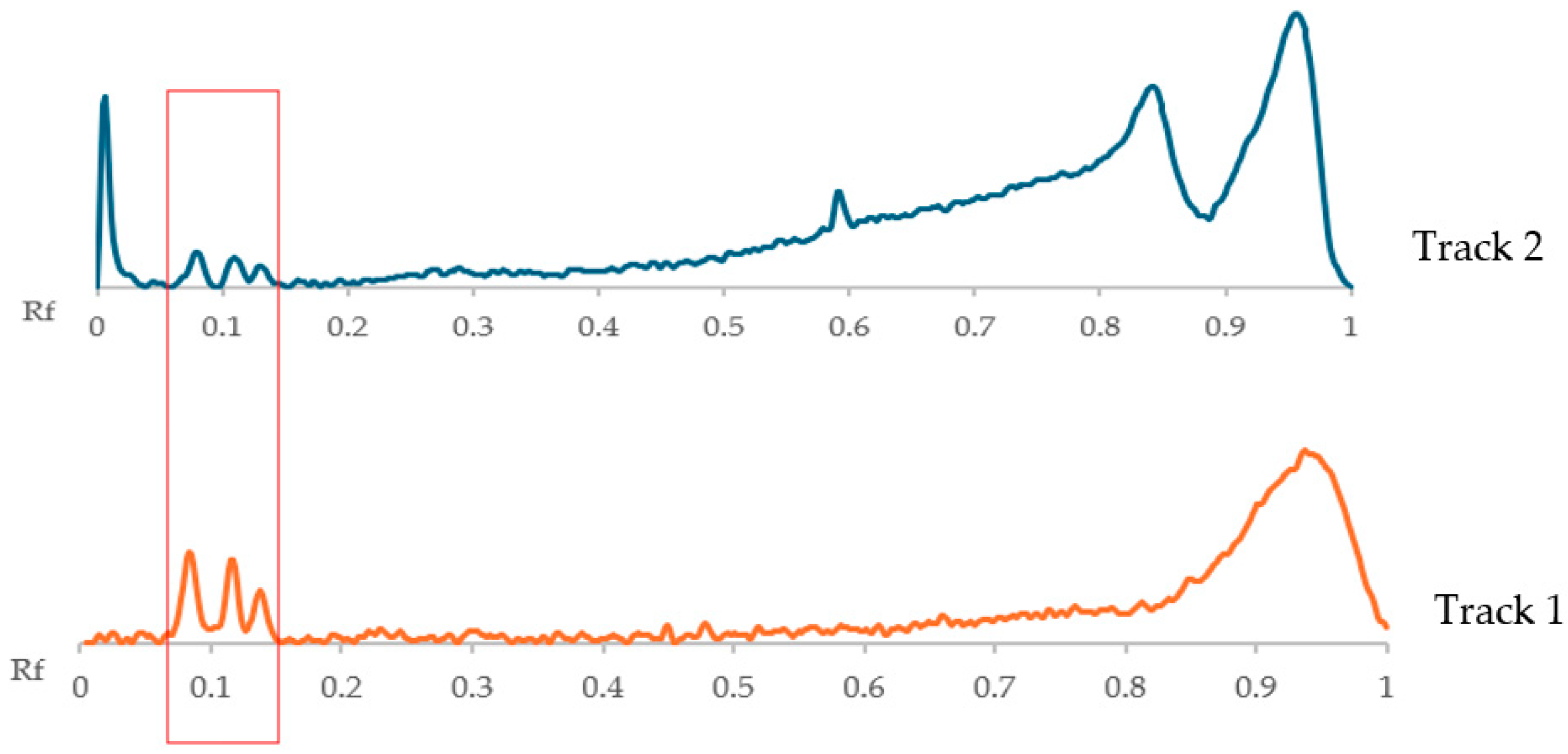
Specificity was assessed by investigating the HPTLC chromatograms and peak profiles of the gentamicin sulphate standard solution and the gentamicin sulphate ointment solution. No bands or peaks from any excipient could be detected around the three gentamicin bands at RF1 = 0.096 ± 0.03, RF2 = 0.12 ± 0.02, RF3 = 0.145 ± 0.03, which confirms the specificity of the method in the presence of the sample matrix (Figure 2 and Figure S1a).
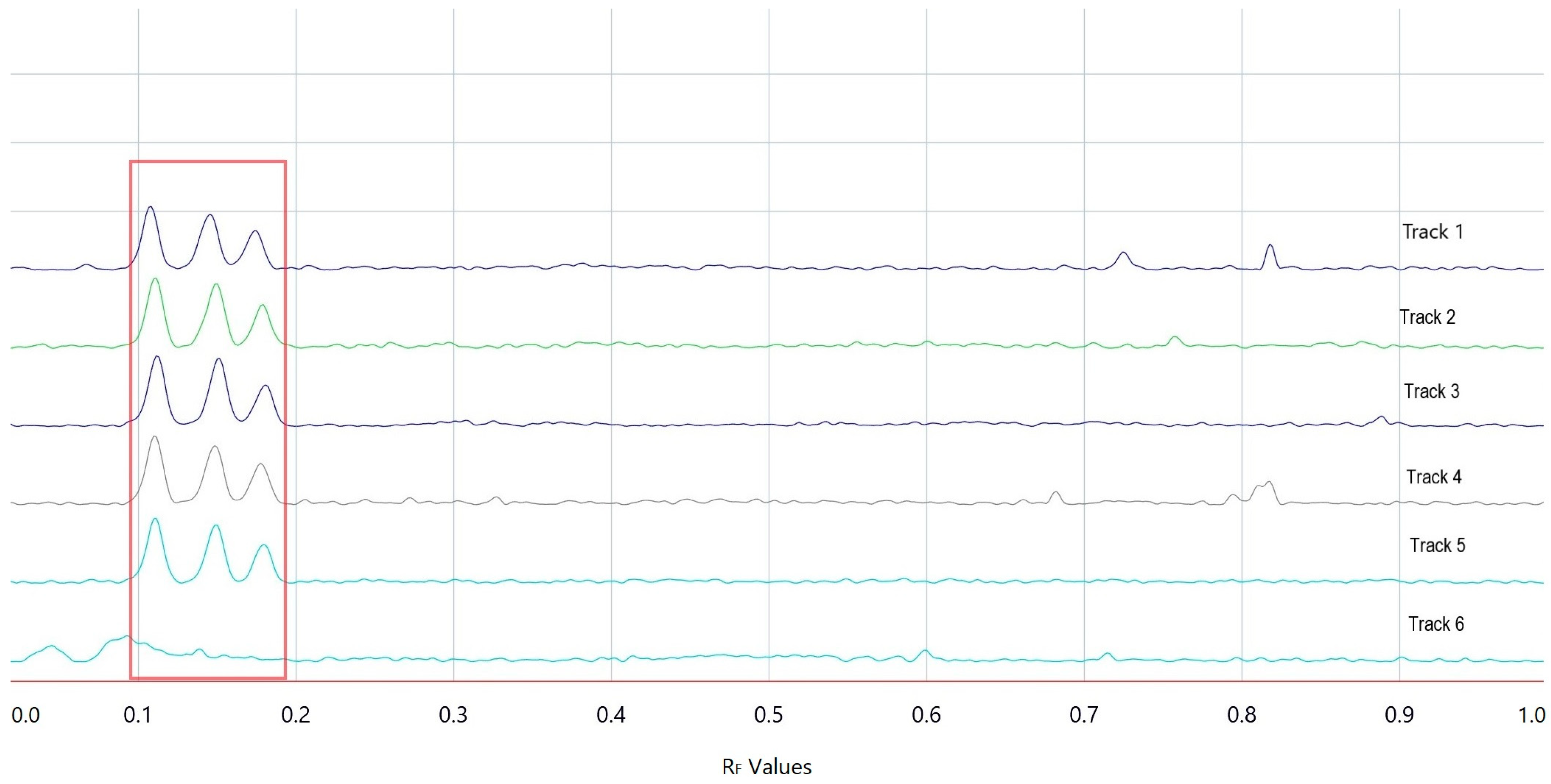
Moreover, the specificity of the method under stress conditions was also confirmed based on the findings of various degradation studies. The development of a stability-indicating assay is important to support the quality control of formulations and the determination of an appropriate shelf life. To investigate whether the developed assay is capable of accurately quantifying the drug in the presence of potential degradation products, this study adopted a slightly modified protocol previously reported by Sidkar et al. [28]. The forced degradation of gentamicin sulphate was investigated using five different conditions, namely photolysis, photolysis and oxidation, oxidation, acid hydrolysis (0.01 M HCl) and alkaline hydrolysis (0.1 M NaOH). When comparing findings to the control, no additional bands could be detected at 500 nm following photolysis, photolysis and oxidation as well as oxidation. The spectra of all three gentamicin sulphate bands following these degradation experiments were recorded and were found to be unchanged in comparison with the control, confirming peak purity. Gentamicin sulphate can therefore be considered stable under these conditions. However, following alkaline hydrolysis, no bands or peaks of gentamicin sulphate remained, confirming the complete degradation of the drug, which is in line with the findings of a previous study [20]. As gentamicin sulphate contains several glycosidic bonds that are liable under alkaline conditions, complete degradation is expected [32]. In contrast, oxidative degradation was only partial, likely due to selective oxidation of primary and secondary amine groups and hydroxyl functionalities without extensive cleavage of glycosidic bonds [33]. Treatment with 0.01 M HCl resulted in an unchanged total peak height compared to that of the control, but a small degradation peak close to the baseline could be observed. The HPTLC chromatograms of gentamicin sulphate following these forced degradation experiments are shown in Figure 3 and Figure S1b as well as are summarised in Table 2. Based on these findings, it can be concluded that the developed assay is specific even under stress conditions.

3.2.2. Linearity

The working range for determination of gentamicin sulphate, after post-chromatographic derivatisation with ninhydrin reagent, was assessed by plotting in triplicate added chromatographic peak heights from the three gentamicin sulphate bands versus the respective standard concentrations (ng/band). Linear ranges were determined using the least squares regression analysis in Microsoft Excel® for Microsoft 365 MSO (Version 2508), where data were generated from HPTLC visionCATS software (version 4.0) (Figure S2). Regression analysis results revealed that the coefficients of determination (R2) were greater than 0.99 for all three replicate runs, demonstrating acceptable linearity as defined by the ICH guidelines (Table 3) [31].

3.2.3. Sensitivity

After three replicate experiments, the sensitivity of the method was evaluated in terms of its LOD and LOQ by using the respective standard deviations of the regression lines and the slopes of the calibration curves. The LOD and LOQ were found to be 7.10 and 21.53 ng (Table 3). Compared with a previous study, the developed HPTLC method demonstrates comparable sensitivity; however, it does not require sample pre-treatment or double development steps, thereby offering a methodological advantage [30].

3.2.4. Accuracy

The accuracy of the developed HPTLC method was assessed by mean percent drug recovery. Three replicate analyses were performed at three levels (100, 150 and 200 ng/band) and the mean percent recoveries were found to be between 98.06% and 101.64%, which were all within the acceptable limit set out by the ICH guidelines, thereby confirming the accuracy of the method (Table 4) [31].

3.2.5. Precision

In this study, precision was evaluated on the basis of the closeness of replicate analyses for three different drug quantities, 100, 150 and 200 ng/band, when analysed on the same day (intra-day) or over three consecutive days (inter-day). In case of intra-day precision, the % RSD values were found to range from 0.41 to 1.71% (Table 5). The % RSD values for inter-day precision varied between 0.80 and 2.87% (Table 6). Both sets of results had a % RSD of less than 5%, which is the maximum variation acceptable within the ICH guidelines [31]. The developed method therefore demonstrates a high degree of precision.

3.2.6. System Precision (Repeatability)

The repeatability of the method was assessed by analysing the same volumes of the standard solution repeatedly. In this study, five replicates were carried out. The findings revealed that the average percent recovery was 101.56%, with a % RSD of 2.96% (Table 7), which confirms that the developed HPTLC assay is highly repeatable as defined by the ICH guidelines [31].

3.2.7. Robustness

The robustness of the developed HPTLC method was evaluated by deliberately changing the ratio of the mobile phase. There was no significant change in RF values, and the % recovery ranged between 97.93 and 104.40% when the theoretical quantities investigated were 100, 150 and 200 ng/band, which confirmed the robustness of the method (Table 8).

3.3. Application of the Developed HPTLC Method to Quantify Gentamicin Sulphate in Ointment

The developed HPTLC method was used to analyse commercial gentamicin sulphate 0.1% (w/w) ointment, which was compounded with excipients including light mineral oil and white petrolatum as the base and methylparaben and propylparaben as preservatives. The yield of gentamicin sulphate (n = 3) was reported as a percentage of the theoretical value (Table 9). The results revealed that the drug content in the investigated ointment was at acceptable levels, which confirmed the suitability of the developed HPTLC method for the quality control of pharmaceutical preparations. Given that this method does not require any sample treatment prior to analysis, as separation from lipophilic ointment excipients happens in situ during the chromatographic development in a single run, this method appears to be more convenient than other published analytical protocols [30].

4. Conclusions

This study describes a fully validated, stability-indicating HPTLC assay for gentamicin sulphate, which is suitable for the analysis of the drug in ointments without pre-analysis treatments such as extraction. Moreover, it demonstrates that the method is robust and offers excellent sensitivity levels (LOD: 7.10 ng and LOQ: 21.53 ng) comparable to other studies [1,3,30], as well as high levels of linearity, accuracy and precision and specificity in the presence of the ointment excipients. Additionally, forced degradation studies confirmed the suitability of the method for stability testing of gentamicin sulphate formulations. As HPTLC has advantages over other approaches, such as operational simplicity and a capacity to facilitate rapid, simultaneous analyses, the developed and validated method offers a promising stability-indicating assay for the quality control of gentamicin sulphate ointments.

Supplementary Materials

The following supporting information can be downloaded at https://www.mdpi.com/article/10.3390/app16052613/s1, Figure S1: (a) HPTLC fingerprints of gentamicin sulphate: Track 1. Standard gentamicin sulphate; Track 2. Gentamicin sulphate in 0.1% ointment, and (b) Degradation study of gentamicin sulphate: Track 1. Control; Track 2. Photolysis; Track 3. Photolysis and Oxidation; Track 4. Oxidation; Track 5: Acid hydrolysis (0.01 M HCl); and Track 6. Alkaline hydrolysis (0.1 M NaOH). All images were recorded under white light. Figure S2: Exemplary regression plots generated from HPTLC visionCATS software.

Author Contributions

Conceptualisation, K.M.Y.K.S., M.K.I., E.K.Y.T., T.S., L.Y.L. and C.L.; methodology, K.M.Y.K.S., M.K.I., E.K.Y.T., T.S. and C.L.; validation, K.M.Y.K.S., M.K.I., E.K.Y.T., T.S. and C.L.; formal analysis, K.M.Y.K.S.; writing—original draft preparation, K.M.Y.K.S.; writing—review and editing, M.K.I., T.S., L.Y.L. and C.L.; supervision, L.Y.L., M.K.I. and C.L. All authors have read and agreed to the published version of the manuscript.

Funding

This research received no external funding.

Data Availability Statement

The original contributions included in this study are presented within the article. Further inquiries can be sent to the corresponding author.

Acknowledgments

This research was conducted during the author’s receipt of an International Fee Scholarship and a University Postgraduate Award from the University of Western Australia.

Conflicts of Interest

The authors declare no conflicts of interest.

References

  1. Hubicka, U.; Krzek, J.; Woltynska, H.; Stachacz, B. Simultaneous identification and quantitative determination of selected aminoglycoside antibiotics by thin-layer chromatography and densitometry. J. AOAC Int. 2009, 92, 1068–1075. [Google Scholar] [CrossRef] [PubMed]
  2. Stead, D.A. Current methodologies for the analysis of aminoglycosides. J. Chromatogr. B Biomed. Sci. Appl. 2000, 747, 69–93. [Google Scholar] [CrossRef]
  3. Bhushan, R.; Arora, M. Separation of Aminoglycosides by Normal- and Reversed-Phase TLC. J. Planar Chromatogr. Mod. TLC 2001, 14, 435–438. [Google Scholar]
  4. Weinstein, M.J.; Luedemann, G.M.; Oden, E.M.; Wagman, G.H. Gentamicin, a New Broad-Spectrum Antibiotic Complex. Antimicrob. Agents Chemother. 1963, 161, 1–7. [Google Scholar]
  5. Edson, R.S.; Terrell, C.L. The aminoglycosides. Mayo Clin. Proc. 1999, 74, 519–528. [Google Scholar] [CrossRef]
  6. Yoshizawa, S.; Fourmy, D.; Puglisi, J.D. Structural origins of gentamicin antibiotic action. Embo J. 1998, 17, 6437–6448. [Google Scholar] [CrossRef]
  7. Wagman, G.H.; Marquez, J.A.; Balely, J.V.; Cooper, D.; Weinstein, J.; Tkach, R.; Daniels, P. Chromatographic separation of some minor components of the gentamicin complex. J. Chromatogr. A 1972, 70, 171–173. [Google Scholar] [CrossRef]
  8. European Directorate for the Quality of Medicines & HealthCare (EDQM). Gentamicin Sulphate. In European Pharmacopoeia, 11th ed.; EDQM: Strasbourg, France, 2023; p. 2880. [Google Scholar]
  9. United States Pharmacopeial Convention. Gentamicin Sulfate Ointment. In United States Pharmacopeia; National Formulary; United States Pharmacopeial Convention: Rockville, MD, USA, 2025; p. 2103. [Google Scholar]
  10. Stypulkowska, K.; Blazewicz, A.; Fijalek, Z.; Sarna, K. Determination of Gentamicin Sulphate Composition and Related Substances in Pharmaceutical Preparations by LC with Charged Aerosol Detection. Chromatographia 2010, 72, 1225–1229. [Google Scholar] [CrossRef] [PubMed]
  11. Lauser, G.; BergnerLang, B. Determination of aminoglycoside antibiotics by RP-HPLC based on an automated pre-column derivatization procedure with 9-fluorenyl-methylchloroformiate. Dtsch. Lebensm.-Rundsch. 1995, 91, 390–396. [Google Scholar]
  12. Gambardella, P.; Punziano, R.; Gionti, M.; Guadalupi, C.; Mancini, G.; Mangia, A. Quantitative determination and separation of analogues of aminoglycoside antiobiotcs by high-performance liquid chromatography. J. Chromatogr. A 1985, 348, 229–240. [Google Scholar] [CrossRef] [PubMed]
  13. Morovján, G.; Csokán, P.P.; Németh-Konda, L. HPLC determination of colistin and aminoglycoside antibiotics in feeds by post-column derivatization and fluorescence detection. Chromatographia 1998, 48, 32–36. [Google Scholar] [CrossRef]
  14. Fabre, H.; Sekkat, M.; Blanchin, M.D.; Mandrou, B. Determination of Aminoglycosides in Pharmaceutical Formulations-II. High-Performance Liquid-Chromatography. J. Pharm. Biomed. 1989, 7, 1711–1718. [Google Scholar] [CrossRef]
  15. Curiel, H.; Vanderaerden, W.; Velez, H.; Hoogmartens, J.; Van Schepdael, A. Analysis of underivatized gentamicin by capillary electrophoresis with UV detection. J. Pharm. Biomed. 2007, 44, 49–56. [Google Scholar] [CrossRef]
  16. Li, B.; Adams, E.; Van Schepdael, A.; Hoogmartens, J. Analysis of unknown compounds in gentamicin bulk samples with liquid chromatography coupled with ion trap mass spectrometry. Rapid Commun. Mass Spectrom. 2006, 20, 393–402. [Google Scholar] [CrossRef]
  17. Adams, E.; Roelants, W.; De Paepe, R.; Roets, E.; Hoogmartens, J. Analysis of gentamicin by liquid chromatography with pulsed electrochemical detection. J. Pharm. Biomed. 1998, 18, 689–698. [Google Scholar] [CrossRef] [PubMed]
  18. Clarot, I.; Chaimbault, P.; Hasdenteufel, F.; Netter, P.; Nicolas, A. Determination of gentamicin sulfate and related compounds by high-performance liquid chromatography with evaporative light scattering detection. J. Chromatogr. A 2004, 1031, 281–287. [Google Scholar] [CrossRef]
  19. Jammal, N.; Al-Mardini, M.A.; Abboud, H. Development and Validation of LC/MS Method for the Estimation of Gentamicin Sulfate and Its Impurities in Injections. Int. J. Pharm. Sci. Rev. Res. 2014, 27, 70–73. [Google Scholar]
  20. Naveed, S.; Waheed, N.; Nazeer, S.; Qamar, F. Degradation study of gentamicin by UV spectroscopy. Am. J. Appl. 2014, 1, 36–39. [Google Scholar]
  21. Kraisintu, K.; Parfitt, R.T.; Rowan, M.G. A high performance liqiud chromatographic method for the determination and control of the composition of gentamicin sulphate. Int. J. Pharm. 1982, 10, 67–75. [Google Scholar] [CrossRef]
  22. Rizk, M.; ElShabrawy, Y.; Zakhari, N.A.; Toubar, S.S.; Carreira, L.A. Fluorimetric determination of aminoglycoside antibiotics using lanthanide probe ion spectroscopy. Talanta 1995, 42, 1849–1856. [Google Scholar] [CrossRef]
  23. Claes, P.J.; Vanderhaeghe, H. Thin-Layer Chromatographic Identification of Aminoglycoside Antibiotics. J. Chromatogr. 1982, 248, 483–487. [Google Scholar] [CrossRef]
  24. Santhosh, K.; Sumithra, M. A Comparative Review of Hydrophilic Interaction Chromatography (HILIC) with Traditional Chromatography in the Analysis of Aminoglycoside Antibiotics. Crit. Rev. Anal. Chem. 2025, 1–11. [Google Scholar]
  25. Ianni, F.; Pucciarini, L.; Carotti, A.; Saluti, G.; Moretti, S.; Ferrone, V.; Natalini, B. Hydrophilic Interaction Liquid Chromatography of Aminoglycoside Antibiotics with a Diol-Type Stationary Phase. Anal. Chim. Acta 2018, 1044, 174–180. [Google Scholar] [CrossRef] [PubMed]
  26. Attimarad, M.; Ahmed, K.K.; Aldhubaib, B.E.; Harsha, S. High-performance thin layer chromatography: A powerful analytical technique in pharmaceutical drug discovery. Pharm. Methods 2011, 2, 71–75. [Google Scholar] [CrossRef]
  27. Islam, M.K.; Keay, J.; Hussenbocus, Y.; Svagelj, A.; Lam, D.; Sostaric, T.; Nguyen, M.; Lim, L.Y.; Skett, S.; Locher, C. Development and validation of a high-performance thin-layer chromatography assay for the analysis of tacrolimus ointments. JPC-J. Planar Chromatogr. 2021, 34, 189–195. [Google Scholar] [CrossRef]
  28. Sikdar, K.; Andrews, H.; Pacecca, K.; Petker, A.; Samie, S.; Sostaric, T.; Lim, L.Y.; Islam, M.K.; Locher, C. Development and Validation of a Stability-Indicating HPTLC-Based Assay for the Quantification of Nitrofurazone Ointment. Molecules 2025, 30, 3429. [Google Scholar] [CrossRef]
  29. Singh, S.; Sutar, M. Formulation, evaluation and HPTLC fingerprinting of topical ointments containing Cassia tora Linn. leaf extracts. Int. J. Pharm. Sci. Rev. 2014, 27, 7–10. [Google Scholar]
  30. Bhattacharjee, A.; Chakraborty, A.; Mondal, B.; Chaulya, N.C.; Mukhopadhyay, G.; Majumder, A. Development and Validation of High Performance Planar Chromatography for Estimation of Gentamicin by Fluorophore Generation. Biol. Forum—Int. J. 2023, 15, 1543–1549. [Google Scholar]
  31. International Council for Harmonisation (ICH). Validation of Analytical Procedures Q2(R2); ICH: Geneva, Switzerland, 2022; pp. 5–7. [Google Scholar]
  32. Isoherranen, N.; Soback, S. Determination of gentamicins C1, C1a, and C2 in plasma and urine by HPLC. Clin. Chem. 2000, 46, 837–842. [Google Scholar] [CrossRef]
  33. Hanessian, S.; Takamoto, T.; Masse, R. Aminoglycoside antibiotics: Oxidative degradations leading to novel biochemical probes and synthetic intermediates. J. Antibiot. 1975, 28, 835–837. [Google Scholar] [CrossRef][Green Version]
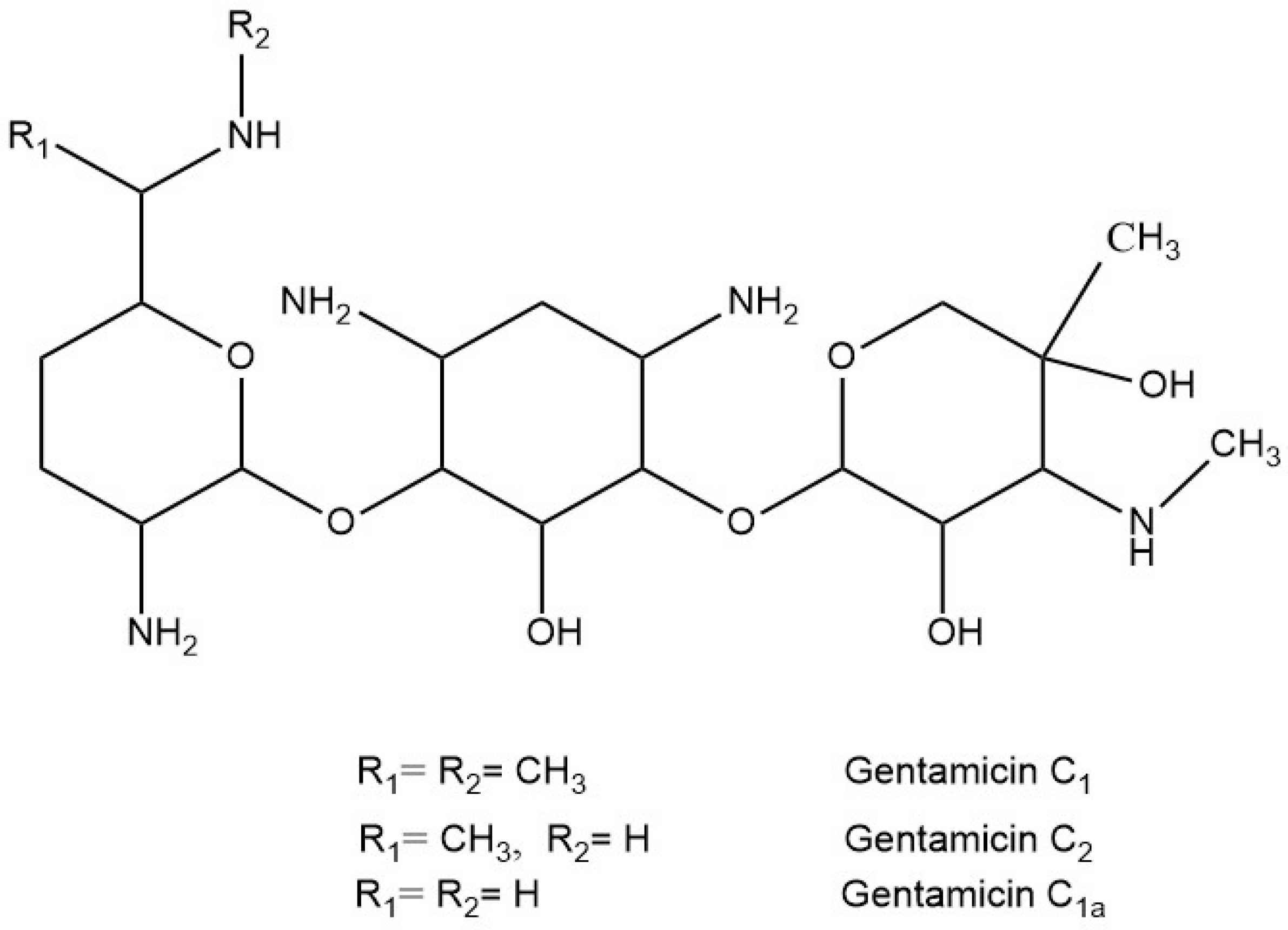
Figure 1. Chemical structure of gentamicin.
Applsci 16 02613 g001
Figure 2. HPTLC chromatograms of gentamicin sulphate after derivatisation with ninhydrin reagent at 500 nm. Track 1. Gentamicin sulphate standard; Track 2. Gentamicin sulphate 0.1% ointment. Red frame—gentamicin sulphate peaks.
Applsci 16 02613 g002
Figure 3. HPTLC chromatogram at 500 nm. Track 1. Control; Track 2. Photolysis; Track 3. Photolysis and Oxidation; Track 4. Oxidation; Track 5: Acid hydrolysis (0.01 M HCl); and Track 6. Alkaline hydrolysis (0.1 M NaOH). Red frame—gentamicin sulphate peaks.
Applsci 16 02613 g003
Table 1. Previously published TLC-based analyses of gentamicin sulphate.
InstrumentSample Pre-TreatmentDevelopment StepDetectionLOD (ng/Band)LOQ
(ng/Band)
Stability-IndicatingSample TypeReference
HPTLC-SingleDensitometry1000.001650.00-Eye drops[1]
NPTLC and RPTLC-Single-580.00--Standard[3]
HPTLCYesDoubleDensitometry3.7911.50-Bulk drug, cream and plasma [30]
Table 2. Forced degradation studies.
Degradation TypeRF Gentamicin Sulphate% Degradation
PhotolysisRF1 = 0.110
RF2 = 0.150
RF3 = 0.185
11.25
Photolysis and oxidation13.35
Oxidation16.05
Acid hydrolysis (0.01 M HCl)7.15
Alkaline hydrolysis (0.1 M NaOH)-100
Table 3. Linearity data of gentamicin sulphate standards.
RunRF (s)Linearity
Range (ng/Band)
Regression
Equation
Correlation
Coefficient (R2)
Slope (Average)y-Intercept (SD)LOD (ng)LOQ (ng)
1RF1 = 0.096 ± 0.03, RF2 = 0.12 ± 0.02, RF3 = 0.145 ± 0.0350–300y = 9 × 10⁻⁵ + 0.00140.99169.41 × 10−51.98 × 10−47.1021.53
250–300y = 1 × 10⁻⁴ + 0.00140.9900
350–300y = 8× 10⁻⁵ + 0.00170.9983
Table 4. Accuracy.
Table 4. Accuracy.
Theoretical Concentration (ng/Band)Run 1Run 2Run 3
Amount Recovered (ng/Band)%
Recovery
% Mean
Recovery
Amount Recovered (ng/Band)%
Recovery
% Mean
Recovery
Amount Recovered (ng/Band)%
Recovery
% Mean
Recovery
10098.0298.02 99.9499.94 104.80104.80
150148.9099.2799.20144.0096.0098.06146.5097.67101.64
200200.60100.30 196.5098.25 204.90102.45
Table 5. Intra-day precision.
Theoretical Amount (ng/Band)Measured Amount (ng/Band)Mean (ng/Band)SD% RSD
Run 1Run 2Run 3
10099.93100.6099.85100.130.410.41
150147.50148.13152.20149.282.551.71
200196.75201.15200.60199.502.401.20
Table 6. Inter-day precision.
Theoretical
Amount (ng/Band)
Measured Amount (ng/Band)Mean (ng/Band)SD% RSD
Day 1Day 2Day 3
100100.70103.8098.02100.842.892.87
150145.20146.32150.27147.262.661.81
200199.80202.90200.60201.101.610.80
Table 7. Repeatability (system precision).
Volume Applied (µL)Theoretical Amount (ng/Band)Measured Amount (ng/Band)Gentamicin Sulphate
Recovery (%)
1.50150.00155.70103.80
1.50150.00146.2197.47
1.50150.00155.35103.57
1.50150.00148.8199.21
1.50150.00155.63103.75
Average152.34101.56
SD4.51
%RSD2.96
Table 8. Robustness study.
Mobile Phase
Composition
Theoretical Amount (ng/Band)% RecoveryRFs (Mean ± SD)
Methanol–chloroform–ammonia solution (1:0.8:1, v/v)100.0099.69RF1 = 0.09 ± 0.02
RF2 = 0.12 ± 0.03
RF3 = 0.15 ± 0.04
150.0097.93
200.00104.05
Methanol–chloroform–ammonia solution (1:1.2:1, v/v)100.00103.96RF1 = 0.09 ± 0.001
RF2 = 0.12 ± 0.002
RF3 = 0.15 ± 0.005
150.00104.13
200.00102.40
Table 9. Gentamicin sulphate content in commercial ointments.
Theoretical Amount of
Gentamicin Sulphate in Ointment (ng/Band)
Recovered Amount
(ng/Band)
MeanSDGentamicin Sulphate
Yield (%)
Calculated
Concentration
of
Gentamicin
Sulphate (% w/w)
Run 1Run 2Run 3
150.00157.10142.05155.55151.578.28101.040.10
200.00195.40210.40201.20202.337.56101.170.10
Disclaimer/Publisher’s Note: The statements, opinions and data contained in all publications are solely those of the individual author(s) and contributor(s) and not of MDPI and/or the editor(s). MDPI and/or the editor(s) disclaim responsibility for any injury to people or property resulting from any ideas, methods, instructions or products referred to in the content.