Article

Integrating Long-Term Durability into Preventive Maintenance Decisions for Highway Bridges: An Example of Shanghai, China


1
Research Institute of Highway Ministry of Transport, Beijing 100088, China
2
Key Laboratory of Road and Traffic Engineering of the Ministry of Education, Tongji University, Shanghai 201804, China
*
Author to whom correspondence should be addressed.
Appl. Sci. 2026, 16(5), 2583; https://doi.org/10.3390/app16052583
Submission received: 9 January 2026 / Revised: 21 February 2026 / Accepted: 6 March 2026 / Published: 8 March 2026

Abstract

Moving beyond traditional reactive maintenance decisions, this study explores a preventive maintenance strategy for highway bridges by integrating long-term durability forecasting. This need is addressed by analyzing two decades of historical inspection data from China. Visual condition records were sourced from a management system covering 2854 bridges, while durability parameters were obtained through 31 field tests on 23 bridges. This research introduces an instantaneous carbonation coefficient, which quantifies the carbonation rate specific to each discrete condition rating. The analysis reveals a 700% surge in the carbonation rate for poor condition states relative to intact ones, significantly higher than the 300% increase projected by traditional averaged models. Under the premise that maintenance can restore a bridge’s condition by one rating grade, three maintenance strategies are evaluated. Results indicate that initiating preventive interventions at a qualified condition can reduce long-term maintenance frequency by about 20%, offering a practical, condition-informed framework for optimizing maintenance planning and resource allocation.

1. Introduction

The conventional bridge maintenance paradigm is predominantly reactive. This approach not only leads to inefficient budgetary allocation but also results in unnecessary consumption of construction materials and the generation of associated waste [1]. Furthermore, premature or excessive interventions exacerbate the environmental footprint of infrastructure management through increased embodied carbon and resource use. In contrast, a well-timed preventive maintenance strategy has proven to be more cost-effective and resource-efficient [2]. This approach entails calculating life-cycle costs and environmental impacts, assessing performance gains, and determining the optimal timing for interventions. Its effective implementation fundamentally depends on the accurate prediction of long-term bridge performance [3], which enables interventions that maximize structural durability while minimizing both economic cost and material-environmental impacts.
Existing models for long-term bridge performance prediction are broadly categorized into two paradigms: mechanism-based [4] and data-driven approaches [5]. Mechanism-based models establish quantitative links between time-dependent deterioration processes (e.g., concrete carbonation, steel corrosion, chloride ingress) [6] and key structural performance indicators [7], such as bearing capacity and stiffness [8], by modeling their underlying physical relationships [9]. However, accurately establishing such a mechanism-based model is challenging [10], as bridge deterioration involves numerous interacting factors that evolve complexly throughout the service life [11]. Data-driven models focus on the long-term performance characteristics derived from visual inspection or structural monitoring data [12]. These models can be further divided into deterministic, probabilistic, and artificial intelligence-based approaches [13]. Deterministic approaches typically employ regression models to predict bridge deterioration, operating on the assumption that the process follows a predefined trend, thereby enabling the establishment of an empirical relationship [14]. These models circumvent complex analyses of the relationship between bridge age and technical condition, with their accuracy largely dependent on data quality and regression formulation. In contrast, probabilistic approaches treat bridge deterioration as a stochastic process, which accounts for the inherent uncertainty and randomness in the degradation mechanism [15]. These methods are divided into two main types: time-based and state-based models. Time-based models treat the duration in each condition state as a random variable, often described using probability distributions such as the Weibull distribution. State-based models, on the other hand, focus on the probability of transitioning between discrete condition states over fixed time intervals, typically modeled using Markov chains [16]. Artificial intelligence-based approaches, including artificial neural networks and case-based reasoning, are capable of identifying complex, nonlinear relationships among variables [17]. However, a key limitation of such models lies in their interpretability [18], as understanding the influence of specific parameters on predictions remains a significant challenge [19]. Moreover, the emerging integration of machine learning and Digital Twin models presents a powerful paradigm for future bridge durability analysis and lifecycle management [20].
While China has made remarkable progress in bridge construction, these developments have introduced corresponding challenges in maintenance and management. In Shanghai, for example, the city’s approximately 3000 highway bridges are subject to the dual pressures of increasing traffic loads and continuous material aging. Maintenance, Repair, and Rehabilitation (MR&R) decisions for bridges are often based on subjective judgment due to a lack of reliable long-term deterioration data [21]. This combination is projected to lead to a sharp increase in maintenance funding requirements, thereby jeopardizing the long-term sustainability of these critical infrastructure assets.
In China, according to the Technical Condition Evaluation Standards for Highway Bridges (JTG TH21-2011) [22], the Bridge Condition Index (BCI) is commonly employed to assess the serviceability of small- and medium-span bridges as shown in Table 1. This index quantifies bridge condition through a weighted evaluation of surface damage across major structural components [23].

2. Data Acquisition

The BMS has been applied to the management of highway bridges in Shanghai since 2004, and most bridges across the city are inspected annually. In practice, the routine condition rating assessment of bridges remains heavily reliant on visual inspection and is therefore highly susceptible to the individual judgment of inspectors. Non-destructive testing (NDT) methods provide a more quantitative alternative, enabling the measurement of key durability parameters such as carbonation depth, concrete cover thickness, and compressive strength. A key limitation is that the durability data obtained through NDT are often limited in sample size, which contrasts with the extensive historical records of visual damage available from regular inspections.
The research sample in this paper comprises two primary historical data sources. The visual BCI condition data are derived from the annual routine inspection records of 2854 small and medium-sized highway bridges archived in the Shanghai Bridge Management System, with records dating back to 2004 [24]. The durability data are sourced from non-destructive testing campaigns, which include: (1) 24 regular structural tests conducted on 16 bridges within Shanghai’s Suzhou River Basin between 1998 and 2017; and (2) 7 regular structural tests on elevated bridges, including sections of the Inner and Middle Ring elevated roads. The service life of the inspected bridges in the combined sample varies significantly, ranging from 6 to 56 years.
The relationship between surface damage and the durability of reinforced concrete, particularly in terms of carbonation depth, has received limited attention in existing research [25]. Prevailing models for predicting carbonation depth—whether theoretical, experimental, or field-based—typically assume a constant carbonation coefficient throughout a bridge component’s service life [26]. In reality, however, the carbonation rate is not static but varies dynamically over time and tends to accelerate with the progression of surface damage. This long-term degradation of concrete durability, which often remains undetected during routine inspections, ultimately manifests as an increase in both the variety and severity of damage [27]. This study proposes a preventive maintenance strategy informed by the long-term prediction of bridge deterioration.

3. Methods

3.1. Relation Between Surface Damage and Durability Indicators

This study investigates the relationship between the extent of surface damage and key durability indicators in bridge components across various condition ratings, specifically carbonation depth, concrete cover thickness, and compressive strength. Table 2 demonstrates that a decline in the BCI score from rating A to E corresponds to a marked increase in the average crack width of the components. While concrete cover thickness shows little variation across ratings, carbonation depth and rate follow a trend of steady increase with worsening condition. Similarly, the estimated compressive strength declines gradually, reflecting a corresponding loss in structural durability.
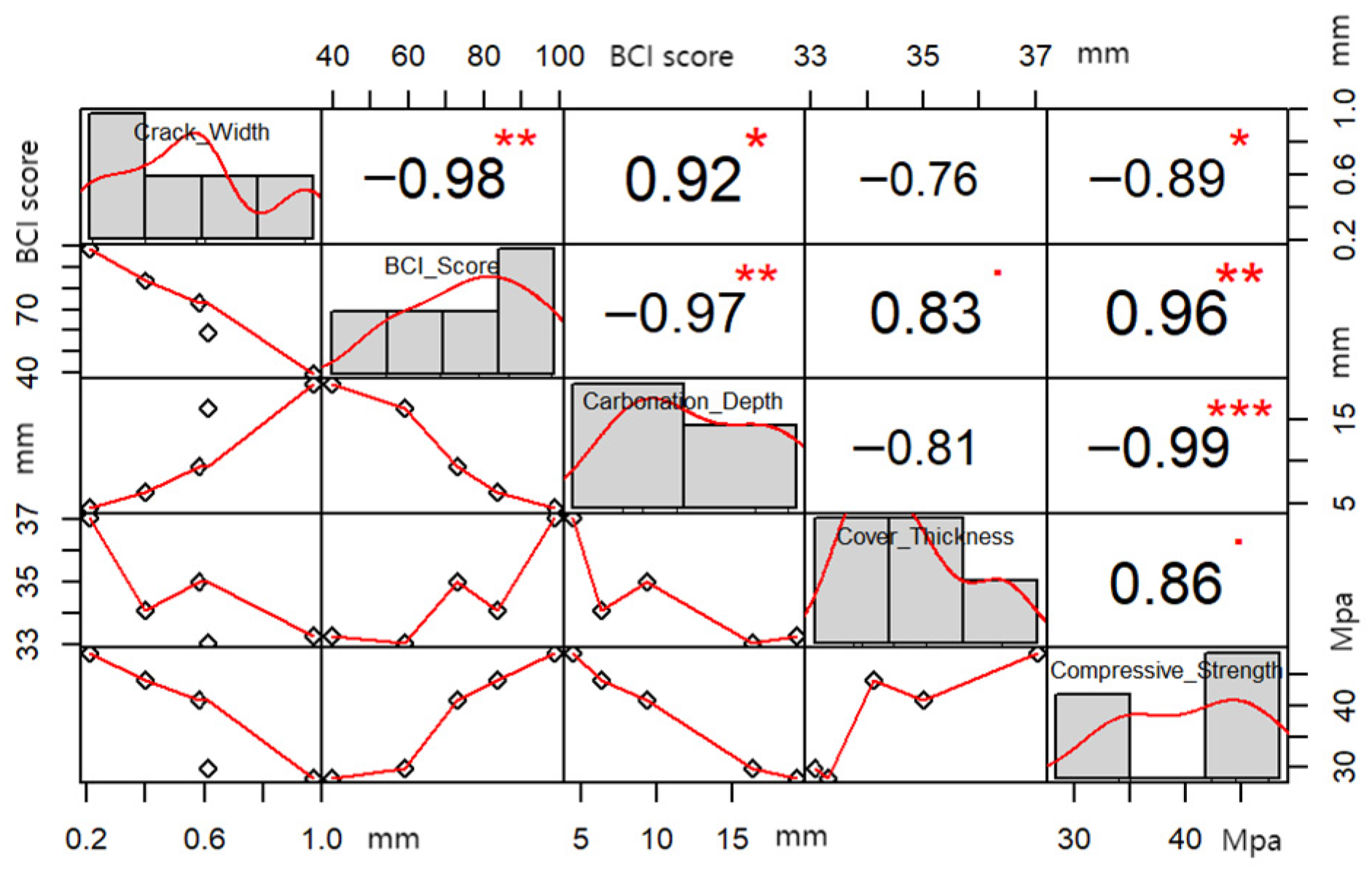
The relationships among these five variables were further analyzed using a multivariate correlation matrix. Pearson correlation coefficients were computed, and statistical significance was assessed via two-sided t-tests. The results are presented in Figure 1.
As illustrated in Figure 1, the histogram and density curve on the diagonal describe the distribution of each variable; The triangle in the lower left corner of the diagonal depicts a bivariate scatter plot and fitted lines; The triangle in the upper right corner of the diagonal provides the Pearson correlation coefficient and significance level between variables, representing the correlation coefficient between two variables numerically; The asterisk indicates its significance level: one asterisk represents p < 0.05, two asterisks represent p < 0.01, and three asterisks represents p < 0.0001.
The multivariate correlation analysis shows that carbonation depth is strongly correlated with crack width (r = 0.92, p < 0.05) and negatively correlated with BCI score (r = −0.97, p < 0.01), indicating that visible damage accelerates concrete carbonation [28]. The strong correlation between BCI score and compressive strength (r = 0.96, p < 0.01) confirms its reliability as an indicator of structural integrity for reinforced concrete components. In addition, the distinct negative correlation between BCI score and crack width (r = −0.98, p < 0.01) is expected, as the BCI rating system inherently penalizes visible surface damage, including crack formation.

3.2. Regression of Carbonation Coefficient Using Inspection Data

The carbonation coefficient serves as a quantitative measure of the carbonation rate, offering critical insight into the progression of concrete carbonation [29]. Higher coefficient values correspond to an increased carbonation rate, indicating reduced resistance of the bridge components to carbonation-induced deterioration [30]. In accordance with the recognized relationship that carbonation depth is proportional to the square root of time [31], Equation (1) is employed to calculate the regression carbonation coefficient based on field-measured carbonation depth data [32].
x c = k · t
where x c is the carbonation depth, mm,
k is the carbonation coefficient,
t is the carbonation time, years.
Table 3 summarizes the regression carbonation coefficients derived for bridges across different condition ratings. The results demonstrate that the carbonation rate increases as the structural condition deteriorates. This trend highlights the significant progression of carbonation depth over extended service periods, especially when surface damage is present.

3.3. Conversion of the Instantaneous Carbonation Coefficient

The conventional regression coefficient represents an average carbonation rate across all condition stages. To overcome this limitation, this study employs the instantaneous carbonation coefficient, defined as the carbonation rate pertinent to a specific condition rating. The key distinction lies in their derivation: the regression coefficient represents an average derived from data spanning multiple stages, whereas the instantaneous coefficient is a stage-specific rate refined by incorporating the average service duration at each rating. This refined approach enables a more accurate characterization of carbonation progression, thereby supporting more dependable durability evaluations and maintenance forecasts.
Based on the established approach [24], the semi-Markov prediction model utilizes inspection data with a Weibull distribution to model the service-life behavior of bridges within each condition rating (CR). The semi-Markov process is then employed to capture the transition probabilities between different CRs. This integrated framework enables the prediction of the expected service life for bridges. Given the heterogeneous nature of bridge components, this study adopts the estimated average service life of the entire bridge under each condition rating as a proxy for the service duration of its individual components. This approximation simplifies the calculation procedure. Specifically, the estimated average service duration for components in each rating is as follows: 13 years for rating A, 15 years for rating B, and 21 years for ratings C and D.
1.
Conversion of the Instantaneous Carbonation Coefficient for Rating A;
Since the bridge components maintained condition rating A until the time of inspection, with no degradation to lower ratings, the regression carbonation coefficient K A = K A = 1.3255 can be taken as the instantaneous carbonation coefficient corresponding to rating A.
2.
Conversion of the Instantaneous Carbonation Coefficient for Rating B;
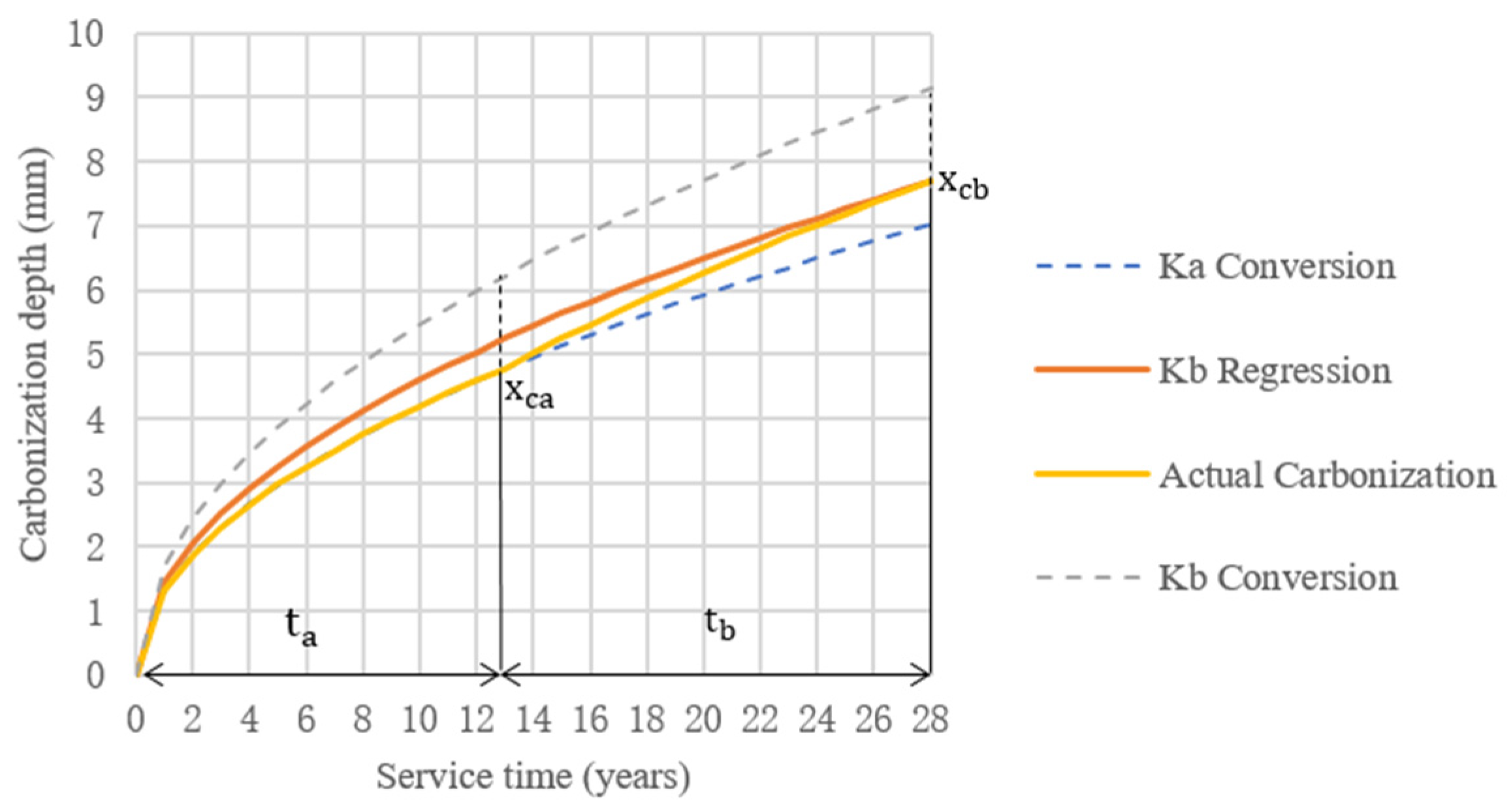
As shown in Figure 2, the carbonation depth curve for bridge components rated as B illustrates their deterioration characteristics.
These components initially possessed a condition rating of A before transitioning to rating B. Consequently, the regression carbonation coefficient for rating B represents an average value over the combined periods of ratings A and B. Accordingly, the instantaneous carbonation coefficient specific to rating B can be derived by incorporating the service duration of the components at both rating A and rating B.
The carbonation depth of bridge components at rating B can be calculated using the regression carbonation coefficient for rating B and the corresponding instantaneous carbonation coefficients for ratings A and B, as presented in Equation (2), which is derived in this study.
x c = K B t A + t B = K A t A + K B t A + t B K B t A
where x c is the carbonation depth,
K B is the regression carbonation coefficient for rating B,
t A and t B are the service duration for ratings A and B,
K A and K B are the instantaneous carbonation coefficient for ratings A and B.
The instantaneous carbonation coefficient for rating B can be derived as shown in Equation (3).
K B = K B t A + t B K A t A t A + t B t A
where K A and K B is the instantaneous carbonation coefficients at ratings A and B,
t A and t B are the service duration for ratings A and B,
K B is the regression carbonation coefficient for rating B.
Given that the instantaneous carbonation coefficient for rating A is 1.3255, the regression carbonation coefficient for rating B is 1.4537, and the service duration for bridges for ratings A and B are 13 and 15 years respectively, the instantaneous carbonation coefficient for rating B can be calculated as K B = 1.7279 .
3.
Conversion of the Instantaneous Carbonation Coefficient for Rating C.
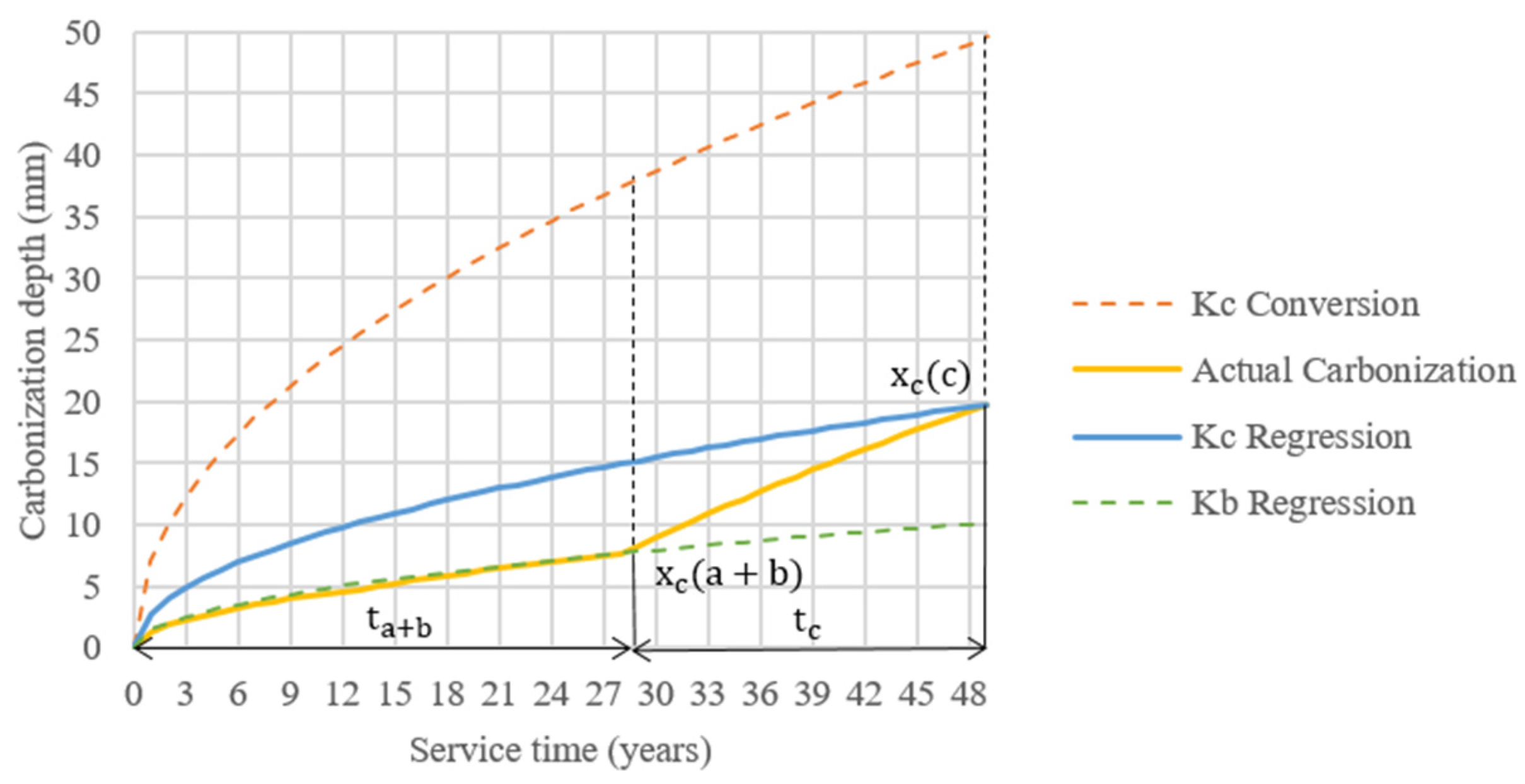
As shown in Figure 3, the carbonation depth curve for bridge components rated as C illustrates their deterioration characteristics.
The carbonation process initiates during the service periods corresponding to ratings A and B before progressing to rating C. Therefore, the regression carbonation coefficient for rating C represents the average value over the combined periods of ratings A, B, and C. The corresponding instantaneous carbonation coefficient for rating C can then be calculated based on the service duration of the components in each of these three rating stages.
The carbonation depth of bridge components rated as C can be calculated using the regression carbonation coefficient for rating C and the instantaneous carbonation coefficients for ratings A, B, and C, as given in Equation (4), which is derived in this study.
x c = K C t A + t B + t C   = K A t A + K B t A + t B K B t A + K C t A + t B + t C K C t A + t B
where x c is the carbonation depth,
K C is the regression carbonation coefficient for rating C,
t A , t B and t C are the service duration for ratings A, B and C,
K A , K B and K C are the instantaneous carbonation coefficient for ratings A, B and C.
By combining Equations (2) and (4), the conversion equation for the instantaneous carbonation coefficient at rating C can be derived, as given in Equation (5) below.
K C = K C t A + t B + t C K B t A + t B t A + t B + t C t A + t B
where K C is the instantaneous carbonation coefficients for rating C,
t A , t B and t C are the service duration for ratings A, B and C,
K B and K C is the regression carbonation coefficient for ratings B and C.
The regression carbonation coefficients for ratings B and C are 1.4537 and 2.8273, respectively. Given the service duration of bridge components at ratings A, B, and C—13, 15, and 21 years—the instantaneous carbonation coefficient for rating C can be calculated as K C = 7.0816 .
4.
Conversion of the Instantaneous Carbonation Coefficient for Rating D.
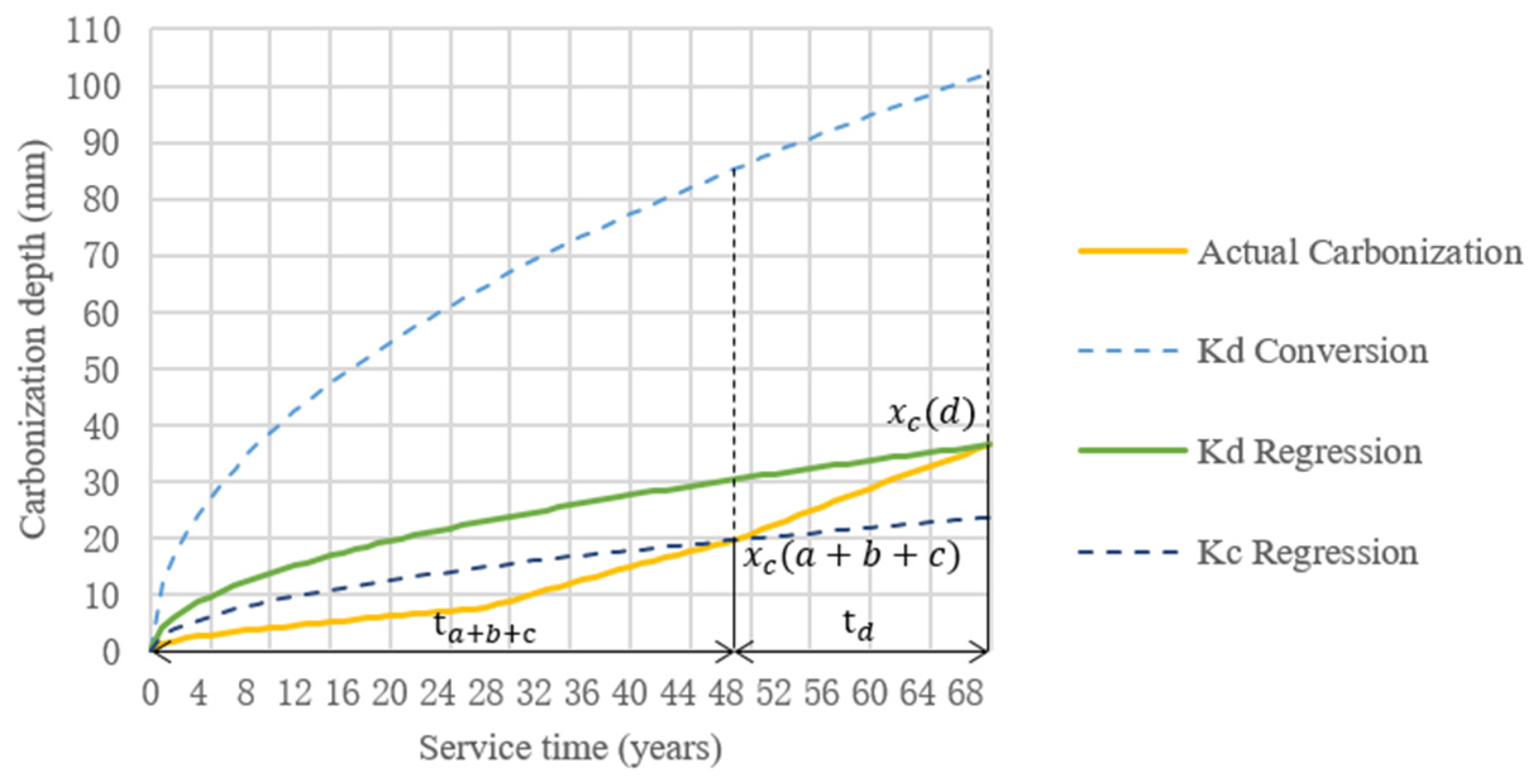
As shown in Figure 4, the carbonation depth curve for bridge components rated as D illustrates their deterioration characteristics.
The carbonation process progresses through the successive condition stages—from A to B, then to C, and finally to D. Therefore, the regression carbonation coefficient for rating D represents an average value across all four rating stages (A through D). The corresponding instantaneous carbonation coefficient for rating D can then be determined based on the service duration of the components at each of these stages.
The carbonation depth of bridge components rated as D can be calculated using the regression carbonation coefficient for rating D and the instantaneous carbonation coefficients for ratings A through D, as presented in Equation (6), which is derived in this study.
x c = K D t A + t B + t C + t D           = K A t A + K B t A + t B K B t A + K C t A + t B + t C K C t A + t B               + K D t A + t B + t C + t D K D t A + t B + t C
where x c is the carbonation depth,
K D is the regression carbonation coefficient for rating D,
t A , t B , t C , and t D are the service duration for ratings A through D,
K A , K B , K C and K D are the instantaneous carbonation coefficient for ratings A through D.
By combining Equations (4) and (6), the conversion equation for the instantaneous carbonation coefficient at rating D can be derived, as shown in Equation (7).
K D = K D t A + t B + t C + t D K C t A + t B + t C t A + t B + t C + t D t A + t B + t C
where K D is the instantaneous carbonation coefficients for rating D,
t A , t B , t C and t D are the service duration for ratings A, B, C and D,
K C and K D is the regression carbonation coefficient for ratings C and D.
The regression carbonation coefficients for ratings C and D are 2.8273 and 4.3625. The corresponding average service duration for bridge components in ratings A, B, C, and D are 13, 15, 21, and 21 years. Based on these values, the instantaneous carbonation coefficient for rating D can be calculated as K D = 12.2261 .
5.
Conversion of the Instantaneous Carbonation Coefficient for Rating E.
Bridge components rated as E have progressed through the successive condition stages A, B, C, and D, reaching the terminal service-life stage at rating E. The regression carbonation coefficients for ratings D and E are 4.3625 and 4.4392, respectively, indicating a markedly reduced acceleration in carbonation rate once the bridge condition deteriorates to rating D. Since bridges rated D are generally considered substandard in China and require major repair or rehabilitation, the instantaneous carbonation coefficient for rating D can be taken as representative of that for rating E; i.e., K E = K D = 12.2261 .
The instantaneous carbonation coefficients for bridge components at each condition rating, derived from the conversion calculations, are summarized in Table 4. While the coefficients for ratings A and B remain close to those obtained from regression analysis, the instantaneous coefficients for ratings C, D, and E are significantly higher than their corresponding regression values. This discrepancy suggests that the actual carbonation rate in components with more severe deterioration may deviate substantially from the trend captured by the regression model.

4. Results

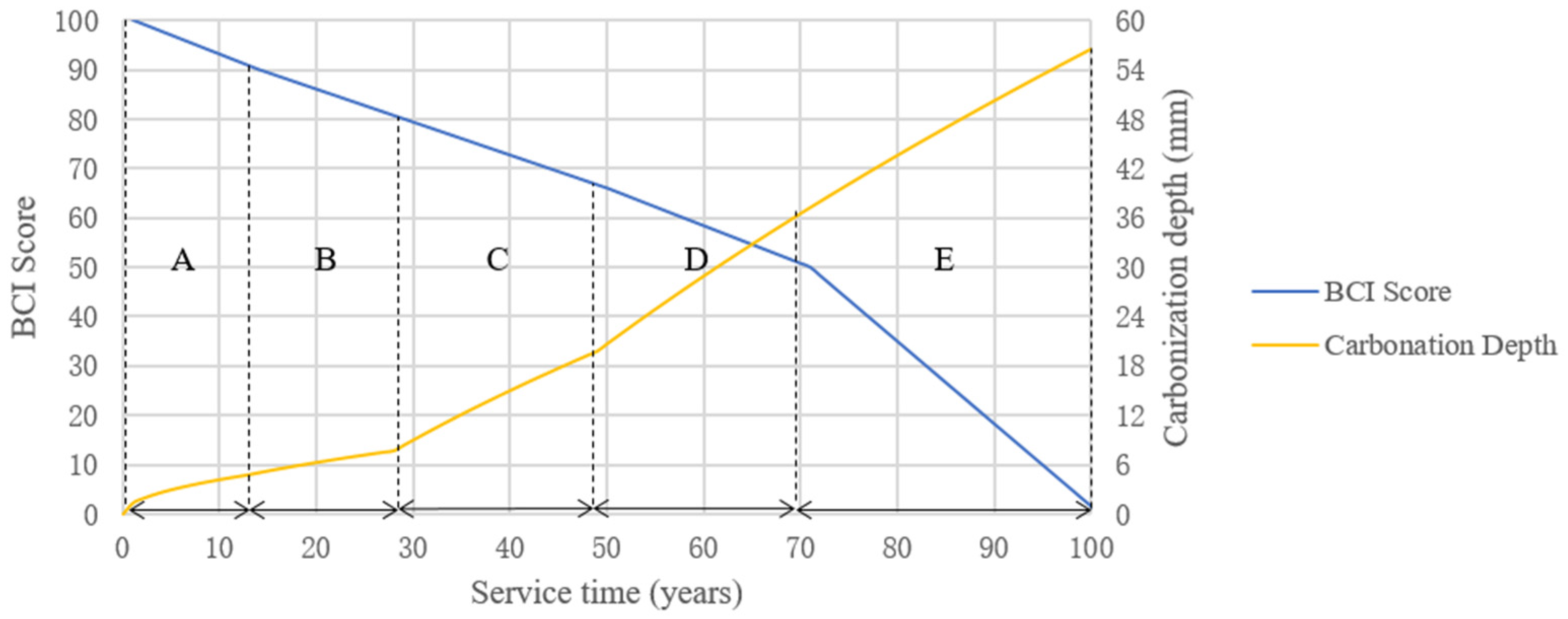
Figure 5 illustrates the concurrent deterioration of bridge performance and the increase in carbonation depth observed in highway bridges in Shanghai.
Once the service life exceeds 60 years, the bridge condition rating tends to decline to D or E, and the carbonation depth frequently surpasses the thickness of the concrete protective layer (30 mm). This renders the cover inadequate to protect the reinforcement, resulting in corrosion-induced expansion and cracking.

5. Discussion

The selection of intervention timing is critical to the success of maintenance efforts. This paper assumes that appropriate maintenance can improve the performance condition of a bridge structure by one condition rating. Following such intervention, the bridge’s deterioration and carbonation rates reset to those corresponding to the new rating, and this state persists until further degradation leads to the next lower rating. The maintenance efficiencies of three typical maintenance schemes are analyzed below.

5.1. Scheme 1: Maintenance upon Bridge Condition Decline to Rating B

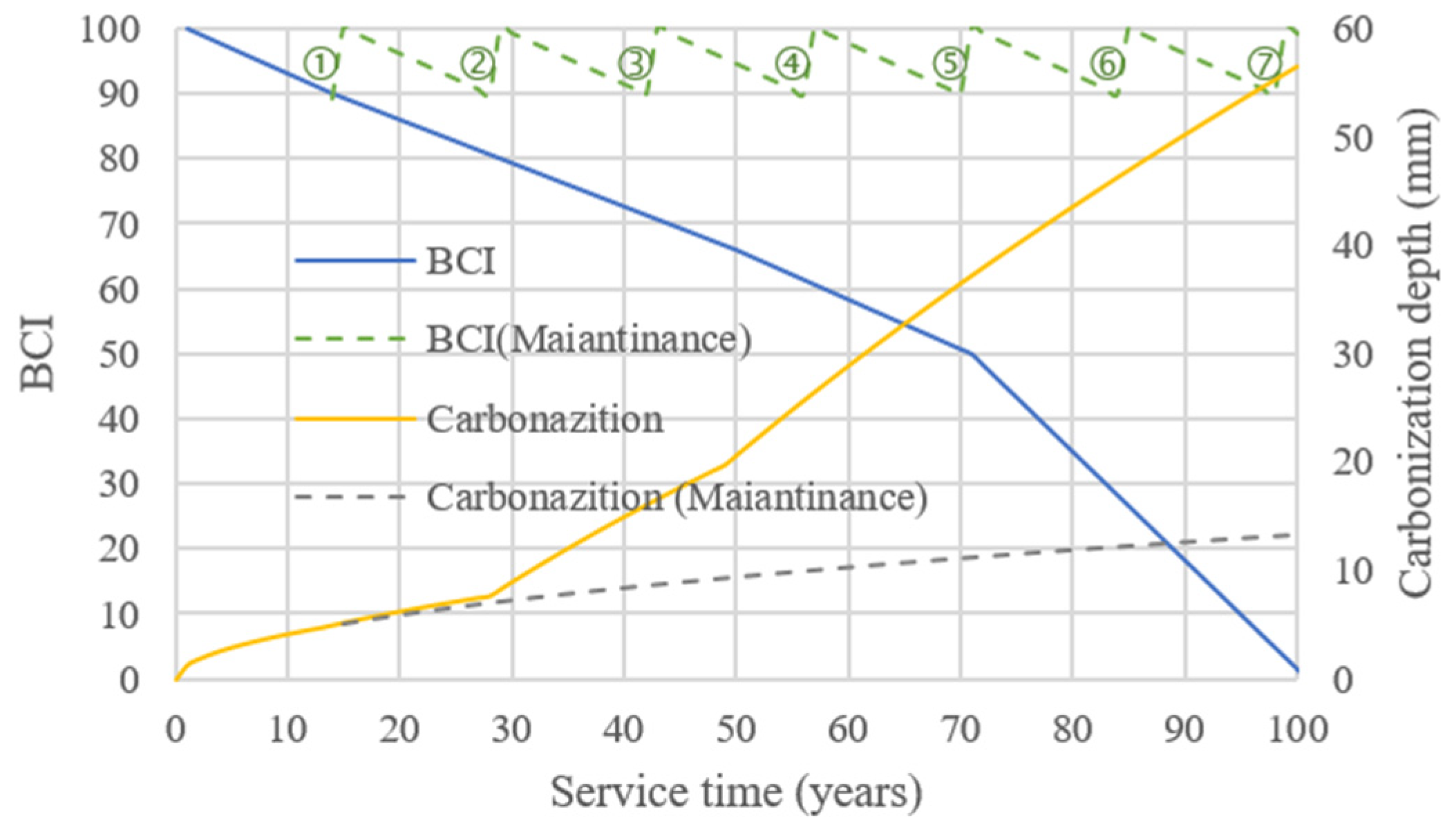
As shown in Figure 6, Scheme 1 involves implementing proactive maintenance as soon as the condition of a bridge begins to decline toward rating B.
This strategy aims to maintain the service performance of bridge components at rating A by addressing minor visible damage and potential weaknesses in a timely manner. To keep the BCI score around 95 throughout the service life, seven maintenance interventions are required. Additionally, the carbonation depth of the components is effectively controlled at only 13.26 mm, thereby ensuring continued durability and safety.

5.2. Scheme 2: Maintenance upon Bridge Condition Decline to Rating C

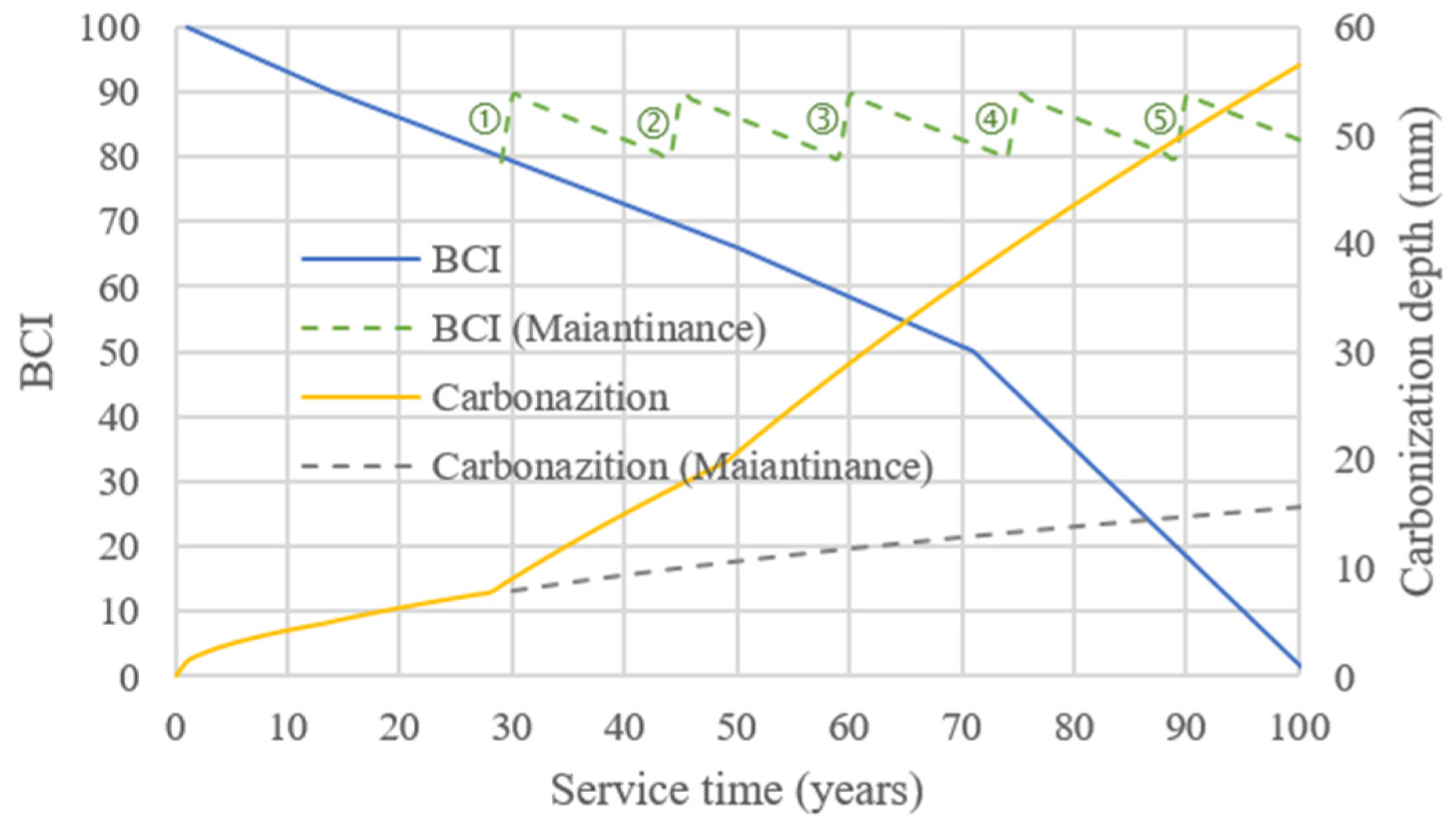
As shown in Figure 7, once the condition rating of a bridge declines to C, preventive maintenance is implemented under Scheme 2 to restore and maintain its performance at rating B.
Beginning in the 29th year, a total of five maintenance interventions are required. This strategy sustains a stable BCI score of approximately 85 and limits the carbonation depth of components to 15.83 mm. Consequently, the bridge maintains excellent durability throughout its service life, with no risk of concrete carbonation damaging the protective layer or inducing reinforcement corrosion.

5.3. Scheme 3: Maintenance upon Bridge Condition Decline to Rating D

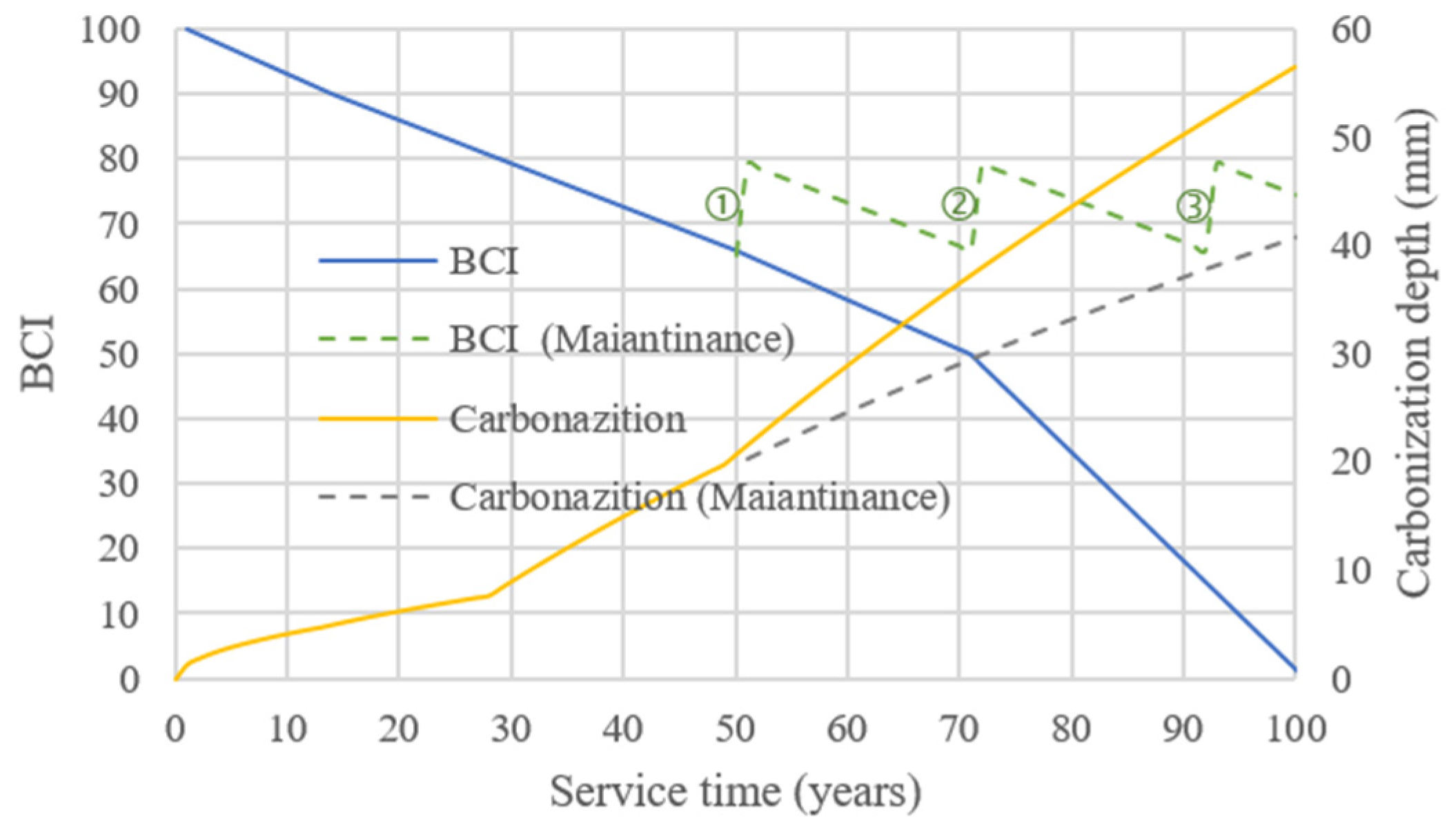
As shown in Figure 8, Scheme 3 postpones maintenance until the bridge reaches rating D, at which point medium to major repairs are undertaken to restore serviceability.
Three interventions are required, beginning in the 50th year, to maintain a BCI score around 73 throughout the service life. Although the carbonation depth is contained within 41.04 mm, this level is insufficient to provide reliable protection to the reinforcement, resulting in a marked reduction in the durability of the bridge components.

5.4. Effectiveness of Different Bridge Maintenance Schemes

Figure 6, Figure 7 and Figure 8 illustrate the characteristic saw-tooth pattern of performance deterioration and the corresponding progression of carbonation depth observed when maintenance is applied at different condition ratings. These results underscore the essential role of preventive maintenance in mitigating structural deterioration and effectively extending bridge service life. A comparison of the three maintenance schemes is summarized in Table 5.
In Scheme 2, preventive maintenance is applied to maintain the bridge condition above rating C. It requires only five interventions—30% fewer than Scheme 1. Furthermore, compared with Scheme 3, it achieves a BCI score that is 12 points higher and restricts the carbonation depth to 25.21 mm less. As a result, the carbonation depth remains consistently well below the thickness of the concrete cover throughout the service life, ensuring durable protection for the reinforcement.

6. Conclusions

This study bridges the gap between routine visual inspection and quantitative durability prognosis for highway bridges. By analyzing two decades of visual inspection records from 2854 bridges and field durability test data from 23 bridges, we developed a method to derive instantaneous carbonation coefficients specific to each condition rating. This approach overcomes the key limitation of traditional models that provide only averaged deterioration rates. The principal findings are:
(1)
Based on long-term historical data, this study explicitly quantifies the correlations among five key parameters—carbonation depth, crack width, BCI score, compressive strength, and concrete cover thickness. The resulting multivariate correlation matrix reveals the interconnected nature of these deterioration indicators, providing a foundation for condition-based durability assessment.
(2)
A detailed analysis shows that instantaneous carbonation coefficients vary significantly across ratings C–E, with a 700% surge in carbonation rate for poor condition states relative to intact ones—markedly higher than the 300% increase estimated by traditional averaged models, confirming the need for condition-specific assessment.
(3)
Comparative evaluation of three maintenance schemes demonstrates that initiating preventive interventions at condition rating C balances performance and cost, reducing long-term maintenance frequency by approximately 20% while preserving structural integrity—a finding with direct implications for inspection protocols and budget allocation.
Together, these findings establish a practical framework for transitioning from reactive to predictive bridge maintenance, with demonstrated potential to enhance durability and optimize resource allocation over the service life of highway bridges in China. While the current framework focuses on carbonation-induced deterioration, bridge degradation in practice involves multiple interacting mechanisms—including chloride ingress, freeze–thaw damage, fatigue, traffic loading, and environmental variability. Future research could extend this methodology to larger and more diverse bridge portfolios, integrate additional deterioration mechanisms, and couple condition-based predictions with life-cycle cost analysis to further support maintenance decision-making.

Author Contributions

Conceptualization, Y.F.; methodology, Y.F.; software, Y.F.; validation, Y.F.; formal analysis, Y.F.; investigation, Y.F.; resources, L.S.; data curation, Y.F.; writing—original draft preparation, Y.F.; writing—review and editing, Y.F.; visualization, Y.F.; supervision, L.S.; project administration, L.S.; funding acquisition, Y.F. All authors have read and agreed to the published version of the manuscript.

Funding

This research was funded by the Science & Technology Fundamental Resources Investigation Program (Grant No. 2022FY101400) and the Special Fund Project for Basic Scientific Research Business Expenses of Central Public Welfare Research Institutes (2023-9045).

Data Availability Statement

The original contributions presented in the study are included in the article, further inquiries can be directed to the corresponding author.

Conflicts of Interest

The authors declare no conflict of interest.

References

  1. Xu, G.; Azhari, F. Data-driven optimization of repair schemes and inspection intervals for highway bridges. Reliab. Eng. Syst. Saf. 2022, 228, 108779. [Google Scholar] [CrossRef]
  2. Guo, C.; Liang, Z. Semi-Markovian Maintenance Optimization for Reinforced Concrete Enabled by a Synthesized Deterioration Model. IEEE Trans. Reliab. 2022, 71, 1577–1589. [Google Scholar] [CrossRef]
  3. Alonso Medina, P.; León González, F.J.; Todisco, L. Data-driven prediction of long-term deterioration of RC bridges. Constr. Build. Mater. 2022, 317, 125790. [Google Scholar] [CrossRef]
  4. Younsi, A.; Turcry, P.; Rozière, E.; Aît-Mokhtar, A.; Loukili, A. Performance-based design and carbonation of concrete with high fly ash content. Cem. Concr. Compos. 2011, 33, 993–1000. [Google Scholar] [CrossRef]
  5. Morcous, G.; Lounis, Z.; Cho, Y. An integrated system for bridge management using probabilistic and mechanistic deterioration models: Application to bridge decks. KSCE J. Civ. Eng. 2010, 14, 527–537. [Google Scholar] [CrossRef]
  6. Wang, X.; Lee, H. A model for predicting the carbonation depth of concrete containing low-calcium fly ash. Constr. Build. Mater. 2009, 23, 725–733. [Google Scholar] [CrossRef]
  7. Turk, K.; Karatas, M.; Gonen, T. Effect of fly ash and silica fume on compressive strength, sorptivity and carbonation of SCC. KSCE J. Civ. Eng. 2013, 17, 202–209. [Google Scholar] [CrossRef]
  8. Rhee, J.; Kim, H.; Ock, C.; Choi, J. An investigation of the deterioration characteristics of concrete bridge decks with asphalt concrete in Korea. KSCE J. Civ. Eng. 2018, 22, 613–621. [Google Scholar] [CrossRef]
  9. Sun, T.; Vatn, J. A phase-type maintenance model considering condition-based inspections and maintenance delays. Reliab. Eng. Syst. Saf. 2024, 243, 109836. [Google Scholar] [CrossRef]
  10. Chang, C.; Chen, J. The experimental investigation of concrete carbonation depth. Cem. Concr. Res. 2006, 36, 1760–1767. [Google Scholar] [CrossRef]
  11. Liu, S.; Huang, H.; Risna Dyah Kumala, N. Two-Stage Optimization Model for Life Cycle Maintenance Scheduling of Bridge Infrastructure. Appl. Sci. 2020, 10, 8887. [Google Scholar] [CrossRef]
  12. Choi, Y.; Kong, J. Development of Data-based Hierarchical Learning Model for Predicting Condition Rating of Bridge Members over Time. KSCE J. Civ. Eng. 2023, 27, 4406–4426. [Google Scholar] [CrossRef]
  13. Chen, Q.; Ei-Gohary, N. Deep Learning-Based Sequence Labeling for Information Extraction from Multiple Types of Textual Bridge Reports. In Computing in Civil Engineering 2021; American Society of Civil Engineers (ASCE): Reston, Virginia, 2022; pp. 180–187. [Google Scholar]
  14. Madanat, S.M.; Karlaftis, M.G.; Mccarthy, P.S. Probabilistic Infrastructure Deterioration Models with Panel Data. J. Infrastruct. Syst. 1997, 3, 4–9. [Google Scholar] [CrossRef]
  15. Madanat, S.; Mishalani, R.; Ibrahim, W.H.W. Estimation of Infrastructure Transition Probabilities from Condition Rating Data. J. Infrastruct. Syst. 1995, 1, 120–125. [Google Scholar] [CrossRef]
  16. Zhang, Y.; Li, Q.; Zhang, H. A Probability-Based Likelihood Function for Bayesian Updating of a Bridge Condition Deterioration Model. J. Bridge Eng. 2024, 29, 4024054. [Google Scholar] [CrossRef]
  17. Mia, M.M.; Kameshwar, S. Machine learning approach for predicting bridge components’ condition ratings. Front. Built Environ. 2023, 9, 1254269. [Google Scholar] [CrossRef]
  18. Liu, Y.; Su, D.; Duan, Q.; Cao, Z. Recommendations for Refined Preventive Maintenance Management of Concrete Bridges in China Based on Environmental Risk Zoning. Transp. Res. Rec. 2022, 2676, 460–479. [Google Scholar] [CrossRef]
  19. Yosri, A.; Elleathy, Y.; Hassini, S.; El-Dakhakhni, W. Genetic Algorithm-Markovian Model for Predictive Bridge Asset Management. J. Bridge Eng. 2021, 26, 4021052. [Google Scholar] [CrossRef]
  20. Brighenti, F.; Caspani, V.F.; Costa, G.; Giordano, P.F.; Limongelli, M.P.; Zonta, D. Bridge management systems: A review on current practice in a digitizing world. Eng. Struct. 2024, 321, 118971. [Google Scholar] [CrossRef]
  21. Li, L.; Lu, Y.; Peng, M. Deterioration Model for Reinforced Concrete Bridge Girders Based on Survival Analysis. Mathematics 2022, 10, 4436. [Google Scholar] [CrossRef]
  22. JTG/T H21-2011; Technical Condition Evaluation Standards for Highway Bridges. China Communications Press: Beijing, China, 2011.
  23. Fang, Y.; Sun, L. Urban bridge performance decay model based on survival analysis. J. Jilin Univ. (Eng. Technol. Ed.) 2020, 50, 557–564. [Google Scholar]
  24. Fang, Y.; Sun, L. Developing A semi-markov process model for bridge deterioration prediction in Shanghai. Sustainability 2019, 11, 5524. [Google Scholar] [CrossRef]
  25. Ren, Y.; Huang, Q.; Liu, X.L.; Tong, Z.J. A model of concrete carbonation depth under the coupling effects of load and environment. Mater. Res. Innov. 2015, 19, S9–S224. [Google Scholar] [CrossRef]
  26. Saetta, A.V.; Vitaliani, R.V. Experimental investigation and numerical modeling of carbonation process in reinforced concrete structures: Part II. Practical applications. Cem. Concr. Res. 2005, 35, 958–967. [Google Scholar] [CrossRef]
  27. Talukdar, S.; Banthia, N.; Grace, J.R. Carbonation in concrete infrastructure in the context of global climate change–Part 1: Experimental results and model development. Cem. Concr. Compos. 2012, 34, 924–930. [Google Scholar] [CrossRef]
  28. Houst, Y.F.; Wittmann, F.H. Depth profiles of carbonates formed during natural carbonation. Cem. Concr. Res. 2002, 32, 1923–1930. [Google Scholar] [CrossRef]
  29. Shi, C.; He, T.; Zhang, G.; Wang, X.; Hu, Y. Effects of superplasticizers on carbonation resistance of concrete. Constr. Build. Mater. 2016, 108, 48–55. [Google Scholar] [CrossRef]
  30. Mcnally, C.; Sheils, E. Probability-based assessment of the durability characteristics of concretes manufactured using CEM II and GGBS binders. Constr. Build. Mater. 2012, 30, 22–29. [Google Scholar] [CrossRef]
  31. Claisse, P.A.; El-Sayad, H.; Shaaban, I.G. Permeability and pore volume of carbonated concrete. ACI Mater. J. 1999, 96, 378–381. [Google Scholar] [CrossRef]
  32. Papadakis, V.G.; Vayenas, C.G.; Fardis, M.N. Fundamental modeling and experimental investigation of concrete carbonation. Mater. J. 1991, 88, 363–373. [Google Scholar]
Figure 1. Multivariate Correlation Matrix Analysis (Asterisks indicate significance levels: ▪ p < 0.1, * p < 0.05, ** p < 0.01, *** p < 0.0001).
Applsci 16 02583 g001
Figure 2. Carbonation Curve of Bridge Components for Rating B.
Applsci 16 02583 g002
Figure 3. Carbonation Curve of Bridge Components for Rating C.
Applsci 16 02583 g003
Figure 4. Carbonation Curve of Bridge Components for Rating D.
Applsci 16 02583 g004
Figure 5. Relationship between the BCI Score and Carbonation Depth.
Applsci 16 02583 g005
Figure 6. Relationship between BCI Score and Carbonation Depth in Scheme 1.
Applsci 16 02583 g006
Figure 7. Relationship between BCI Score and Carbonation Depth in Scheme 2.
Applsci 16 02583 g007
Figure 8. Relationship between BCI Score and Carbonation Depth in Scheme 3.
Applsci 16 02583 g008
Table 1. Condition Ratings of Highway Bridges in China.
Condition RatingBCI ScoreConditionMR&R Strategy
A90–100IntactRoutine maintenance
B80–89GoodRoutine maintenance
C66–79QualifiedMinor repair
D50–65BadMajor or Medium Repair
E0–49DangerousReconstruction or Replacement
Table 2. Surface Damage and Durability Indicators of Different Ratings.
Condition RatingSurface DamageDurability IndicatorsCarbonation Rate
(mm/year)
Crack Width (mm)BCI ScoreCarbonation Depth
(mm)
Concrete Cover Thickness (mm)Compressive Strength (MPa)
A0.2198.764.4337.0448.431.07
B0.4083.596.2734.1144.061.32
C0.5872.829.3435.0140.932.33
D0.6159.0716.3333.0629.943.68
E0.9739.5819.2233.3028.344.73
Table 3. Regression Results of the Field carbonation Coefficient of Different Ratings.
Condition RatingCarbonation CoefficientNumber of SamplesR2 *
A1.32553140.7718
B1.4537520.9672
C2.8273350.7431
D4.3625160.7929
E4.4392130.9141
* R2: coefficient of determination for the linear regression model.
Table 4. The Instantaneous Carbonation Coefficient for Ratings A to E.
Condition RatingRegression
Carbonation Coefficient
Instantaneous
Carbonation Coefficient
A1.32551.3255
B1.45371.7279
C2.82737.0816
D4.362512.2261
E4.439212.2261
Table 5. Effectiveness Comparison of Different Bridge Maintenance Schemes.
Scheme NumberMaintenance PlanExpected PerformanceEffectiveness
Start RatingStart Age (Year)Total TimesAverage
BCI
Carbonation Depth (mm)
1B1479513.26Excessive
2C2958515.83Economical
3D5037341.04Poor
Disclaimer/Publisher’s Note: The statements, opinions and data contained in all publications are solely those of the individual author(s) and contributor(s) and not of MDPI and/or the editor(s). MDPI and/or the editor(s) disclaim responsibility for any injury to people or property resulting from any ideas, methods, instructions or products referred to in the content.