Article

Next Generation of Plant-Based Scrambled Eggs: From Decoding Precursor Gaps to Prototype Development


1
ILGI Institute of Food and Beverage Innovation, School of Life Sciences and Facility Management, ZHAW Zurich University of Applied Sciences, 8820 Wädenswil, Switzerland
2
Lovely Day Foods GmbH, Schönhauser Allee 176, 10119 Berlin, Germany
3
IBK Food & Beverage Consultancy Sàrl, Sentier de Courtaraye 2, 1073 Savigny, Switzerland
4
Institute of Food Technology and Food Chemistry, Department of Food Chemistry and Analysis, Technische Universität Berlin, Kaiserin-Augusta-Allee 14, 10553 Berlin, Germany
*
Author to whom correspondence should be addressed.
Appl. Sci. 2026, 16(5), 2484; https://doi.org/10.3390/app16052484
Submission received: 30 January 2026 / Revised: 21 February 2026 / Accepted: 26 February 2026 / Published: 4 March 2026
(This article belongs to the Special Issue Investigation of the Flavour Profiles of Plant-Based Foods)

Abstract

Plant-based egg analogs often fail to develop characteristic egg aroma, which limits their sensory acceptance. While the pronounced differences in key aroma compounds between chicken egg and vegan egg products have been identified, the precursor-driven mechanisms underlying these differences remain unclear. The HPLC-MS technique was used to measure the free amino acids of scrambled chicken eggs and a commercial plant-based egg product before and after cooking. This first comparative analysis revealed pronounced deficits in key free amino acids involved in egg aroma chemistry, particularly methionine, cysteine, glutamic acid, and aspartic acid, in the plant-based matrix. To address this gap, 23 plant-derived raw materials were analyzed for their free amino acid composition, generating a targeted comparative dataset that links naturally occurring free amino acids in plant ingredients to egg-relevant aroma precursors. Oyster mushroom, yeast extract, cucumber, and celery root were identified as the most effective contributors to the missing precursor pool. These findings were translated into three prototype formulations designed to restore precursor availability. Consumer test results (n = 58) reported that the prototype enriched with celery root and dried cucumber powder achieved improved overall liking, odor, and taste compared with the original product. This study introduces the first precursor-guided formulation strategy that enables in situ egg-like aroma generation in vegan eggs during cooking, hence providing a mechanistic basis for future flavor- and taste-focused research.

1. Introduction

The global demand for plant-based egg alternatives continues to grow rapidly driven by ethical, environmental, and health-related motivations [1]. Despite their growing popularity, sensory quality, particularly aroma, remains a major barrier to consumer acceptance [2]. It has been reported recently that when compared with chicken egg dishes, the flavor of plant-based egg alternatives was mainly disliked due to the presence of the beany, bitterness, and off-flavor attributes [3].
In a recent study, key aroma-active compounds responsible for the typical scrambled egg flavor were identified using a Sensomics approach [4]. The comparison between scrambled chicken eggs and a commercial plant-based counterpart revealed a distinct “aroma gap,” characterized by the absence or reduced intensity of several odorants, such as (E,Z)-2,6-nonadienal, methional, 2- and 3-methylbutanal, and 2,3-butanedione. These differences were hypothesized to arise from variations in precursor availability and the resulting formation of aroma compounds during cooking [5]. While the key odorants in scrambled eggs and plant-based egg products have been elucidated, the molecular precursors underlying their formation remain insufficiently understood. Although the amino acid compositions of raw eggs and various egg preparations have been reported [6], and the protein composition of ingredients in the egg analogs, such as pea protein [7,8] and rapeseed oil [9] are known, data on the precursor profile of complete plant-based egg formulations remain scarce. In particular, comparative studies linking the amino acid or precursor composition of both animal- and plant-based eggs with the formation of key odorants upon cooking are largely lacking. A systematic comparison of the precursor pools between scrambled chicken eggs and plant-based egg products is therefore needed to better understand the molecular origin of the aroma gap and to guide the targeted development of improved formulations.
In addition, consumer acceptance of plant-based products is further constrained by the extensive use of additives and artificial flavorings, which are used to compensate for missing natural flavor notes [10]. Diminishing this dependency requires the identification of natural ingredients that can inherently supply or generate the missing aroma precursors during cooking. Therefore, obtaining information about the precursor composition of natural plant-based ingredients is crucial to determine whether they can contribute the desired aroma compounds and improve the sensory profile of egg analogs. Previous studies demonstrated that individual plant-derived ingredients can contain amino acids, peptides, or lipid-derived compounds that are known to act as important flavor precursors or aroma-active molecules. Mushrooms contain high levels of glutamic and aspartic acids and 5′-nucleotides, both being primary contributors to the umami taste [11]. Cucumber is a natural source of (E,Z)-2,6-nonadienal [12], which is one of the key aroma compounds in scrambled chicken eggs [4]. Celery (Apium graveolens var. rapaceum) has been reported to contain high concentrations of glutamic acid and aspartic acid, as well as sulfur-containing precursors [13] that give rise to savory and bouillon-like flavor notes upon heating [3]. Yeast extracts are also well-known for containing several umami peptides, such as Glu-Asp, Ala-Asp-Ala and Val-Glu-His [14], next to its high amount of free glutamic acid [15]. These plant-based ingredients may supply flavor precursors that are released or transformed into desired aroma compounds during cooking, contributing to improved sensory quality in plant-based egg analogs. However, available evidence is restricted to a limited set of well-known ingredients, and the precursor pools of many other plant-based materials remain largely unexplored. Importantly, the practical relevance of these ingredients for aroma generation has mostly been inferred from their composition, while validation in cooked plant-based egg prototypes is not yet available.
To address this gap, the present study performs the first known comparison of the free amino acid profiles of scrambled chicken eggs and a commercial plant-based egg analog, both in the raw and cooked states. The aim was to elucidate differences in aroma precursor composition between the two matrices. These differences may explain the formation of desired odor-active compounds after cooking. Building on these insights, a range of plant-based raw materials were subsequently screened for their relevant precursor composition. These ingredients were selected for their potential to supply or enhance the formation of aroma-active compounds associated with authentic egg flavor. Importantly, the results then were directly translated into a formulation. Improved prototypes were created by selecting natural ingredients based on their precursor profiles, and their sensory properties were evaluated to assess improvements in egg-like aroma and overall acceptance. Overall, this study proposes a precursor-guided formulation workflow that links free amino acid profiling with targeted ingredient selection and prototyping, aiming to translate aroma precursor chemistry into sensory-relevant improvements in plant-based egg analogs.

2. Materials and Methods

2.1. Chemicals and Reagents

The following chemicals were used for sample preparation, extraction, and analysis: acetic acid, ethanol absolute, and n-hexane (VWR International GmbH, Dietikon, Switzerland); hydrochloric acid (0.1 M) and LC-MS grade water (Carl Roth GmbH & Co. KG, Karlsruhe, Germany); and trichloroacetic acid, and LC-MS grade methanol and formic acid (Sigma-Aldrich Chemie GmbH, Buchs, Switzerland).
For the identification and quantitation of free amino acids, the following substances were used: L-alanine, L-arginine, L-aspartic acid, L-cysteine, L-glutamic acid, L-glycine, L-histidine, L-isoleucine, L-leucine, L-lysine, L-methionine, L-phenylalanine, L-proline, L-serine, L-threonine, L-tyrosine, and L-valine (Amino Acids Mix Solution, TraceCERT, Sigma-Aldrich Chemie GmbH, Buchs, Switzerland), as well as L-tryptophan, L-asparagine, L-glutamine (Sigma-Aldrich Chemie GmbH, Buchs, Switzerland).

2.2. Preparation of Raw and Cooked Chicken Egg and Vegan Egg Samples

Free-range chicken eggs (Gallus gallus domesticus) were purchased from Migros (Wädenswil, Switzerland) and were processed five days after the recorded laying date indicated on the packaging. The plant-based egg product was supplied by Lovely Day Foods GmbH (Berlin, Germany). Chicken eggs were cracked into a bowl and beaten gently until the yolk and egg white were a more or less homogeneous emulsion. A part of mixed raw chicken eggs and uncooked plant-based products was freeze-dried and ground into a fine powder using a laboratory mill (A11 basic analytical mill, IKA Werke GmbH und Co. KG, Staufen, Germany) before analysis. Cooked samples of both animal-based and plant-based egg products were prepared according to a previously described procedure [4]. Cooked samples were freeze-dried and ground into fine powders for subsequent analysis.

2.3. Preparation of Plant-Based Materials

A total of 23 plant-based materials were selected for screening of their free amino acid content (Table S1). All materials were purchased from a local supermarket, except for natto powder, which was obtained from NaturKraftWerke Biofood AG (Aathal-Seegräben, Switzerland). Fresh tempeh, cucumber, king oyster mushroom, celery root, enoki mushroom, and oyster mushroom were freeze-dried and subsequently ground into fine powders using the same milling equipment as described above. The remaining materials were frozen in liquid nitrogen and ground into powders without a prior drying step. Different drying approaches were selected depending on the initial moisture content to preserve native free amino acid profiles while enabling a dry weight-based comparison. When fat content was higher than 5%, powdered samples were defatted with hexane prior to analysis in a same matter as described by previous study [16]. Detailed, sample-specific processing procedures are provided in the Supporting Information (Table S2).

2.4. Free Amino Acid Analysis

The free amino acids of chicken eggs, plant-based eggs (uncooked and cooked), and the 23 plant-based powders prepared were extracted in triplicate. To this end, 2.5 g of powder was extracted with 10 mL of trichloroacetic acid solution at 1% (w/v) and 2.5 mL of ethanol 70% (v/v) for 60 min at room temperature using an overhead shaker (Reax 2, Heidolph Instruments GmbH und Co. KG, Schwabach, Germany). Afterwards, the extracts were centrifuged for 15 min at 1792× g (Type 5810, Vaudaux-Eppendorf AG, Schönenbuch, Switzerland), and 1 mL of the supernatant was filtered through a 0.2 μm regenerated cellulose syringe filter (15 mm, Phenomenex, Aschaffenburg, Germany) directly into 2 mL amber glass HPLC vials. When needed, the extracts were diluted with the extraction solvent (trichloroacetic acid 1% (w/v): ethanol 70% (v/v) 5:1). The extracts were analyzed using a Thermo Vanquish™ Horizon chromatographic system coupled to an Altis Triple Quadrupole (TQ) mass spectrometer equipped with an electrospray ionization source (ESI) (Thermo Fisher Scientific AG, Reinach, Switzerland). Chromatographic separation was performed using an Agilent AdvanceBio AAA column (4.6 × 100 mm, 2.7 µm; Agilent Technologies (Schweiz) AG, Basel, Switzerland) equipped with an AdvanceBio Amino Acid Analysis guard column (4.6 × 5 mm). The flow rate was set at 0.8 mL/min, and the column temperature at 40 °C with an active column pre-heater set at the same temperature. The two elution mobile phases were made up of water (mobile phase A) and methanol (mobile phase B), both supplemented with 0.1% of formic acid. The isocratic elution of the amino acids was realized with 2% of mobile phase B in 6 min. Injection volume was 1 µL.
The mass spectrometric analyses were performed using Thermo Altis™ Triple Quadrupole instrument in both positive ionization mode (ESI+) and negative ionization mode (ESI−), operating in selected ion monitoring (SIM) mode with the following settings. Nitrogen served as the nebulizing gas and argon as collision gas. The spray voltage was set at 2500 V (ESI+) or 2000 V (ESI−), Sheath gas was set at 80 (Arb), Aux gas at 7.3 (Arb), Sweep gas at 2 (Arb), Ion transfer Tube temperature at 300 °C; Vaporizer temperature at 477 °C.

2.5. Consumer Test

The consumer test was conducted in the sensory laboratory at ZHAW Wädenswil, Switzerland, under standardized conditions including neutral lighting, controlled temperature, and individual booths to minimize distraction and bias. A total of 58 untrained consumers (aged 18–75, 39 females, 19 males) voluntarily participated in the evaluation. Participants were not selected based on any specific demographic or consumer profile and are therefore not representative of a defined target market. Each participant evaluated all formulations, including the original prototype (Table 1). Two commercial market samples were also included for benchmarking purposes. All samples were anonymized and labeled with randomized three-digit codes. The presentation order was randomized (Latin Square Williams design) to minimize order and carry-over effects.
Samples were served sequential monadic in uniform portions on neutral, odorless porcelain plates. Water and commercially available low-salt crackers were provided for palate cleansing between samples. Participants evaluated the samples using a structured hedonic questionnaire, rating the following sensory attributes, including overall liking, liking of appearance, liking of odor, liking of texture and liking of taste, on a nine-point hedonic scale. In addition, Just-About-Right (JAR, 5-point) scales were used to assess the perceived intensity of color and aroma. Additionally, texture-related as well as appearance-related and taste-related perceptions were captured using Check-All-That-Apply (CATA) questions. The questionnaire also included items on participants’ habitual consumption of eggs. Both the questionnaire and the confidentiality agreement template are provided in the Supplementary Files. Data collection was performed using Fizz Collect software (SARL Biosystèmes, Version 3.93.22, Couternon, France)

2.6. Statistical Analysis

Statistical analysis for quantitation data of free amino acids was performed with RStudio (version 4.3.3, Posit PBC, Boston, MA, USA). Consumer test results were analyzed using descriptive statistics (frequency distributions, means and standard deviations). CATA responses were evaluated using Cochran’s Q test followed by multiple pairwise comparison using the critical difference (Sheskin) procedure. Analyses were performed using Excel (Microsoft® Excel® for Microsoft 365 MSO, Version 2408) and XLStat (Addinsoft, Version 2024.2.2, Paris, France). All data visualizations were conducted by RStudio (version 4.3.3, Posit PBC, Boston, MA, USA).

3. Results and Discussion

3.1. Free Amino Acid Profiles Between Scrambled Chicken Eggs and Vegan Alternatives

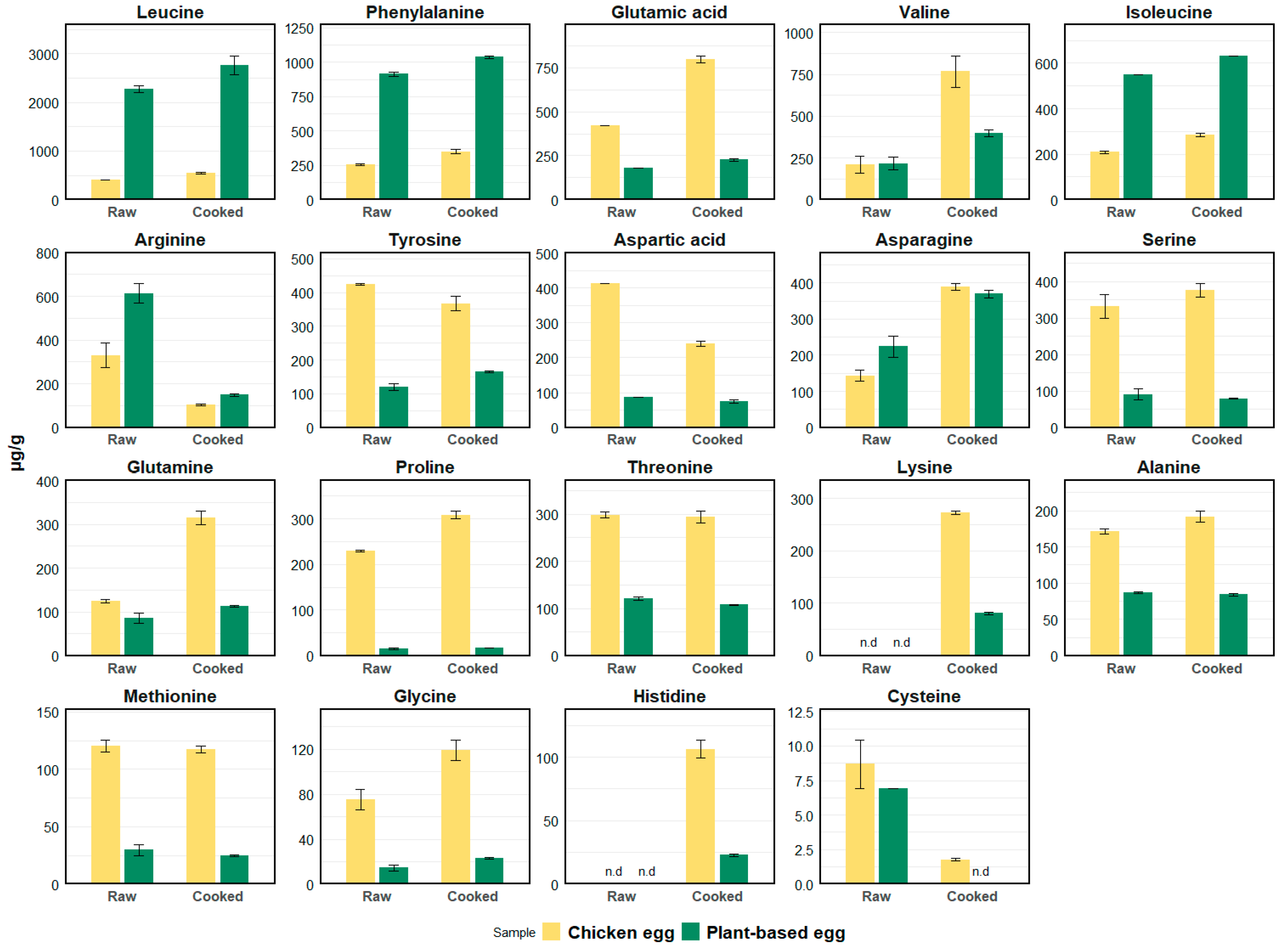
The free amino acid composition differed markedly between scrambled chicken eggs and the plant-based alternative egg product, both in raw and cooked samples (Figure 1). The average concentration of free amino acids in raw and cooked samples is detailed in the Supporting Information (Table S3).
In the raw samples, chicken eggs had a higher quantity of most amino acids than the vegan sample, except for arginine, isoleucine, leucine, phenylalanine, and asparagine. This pattern is consistent with the amino acid profile of pea protein, which constitutes 12% of the plant-based formulation and is known to be rich in branched-chain amino acids and arginine [17,18]. Minor contributions from other ingredients in the vegan sample (Table S4), such as soy lecithin and rapeseed oil, is unlikely due to their negligible protein and amino acid content [19]. Lysine and histidine were below the limit of quantitation in both raw chicken egg and plant-based samples.
After cooking, chicken eggs exhibited increased levels of free glutamic acid, lysine, and histidine, while most other amino acids changed only marginally. As all samples were freeze-dried prior to analysis, these differences reflect changes in the free amino acid pool. This increase can be attributed to thermal denaturation and unfolding of egg proteins, which exposes previously bound or peptide-linked residues, allowing a potential release of free amino acids [20]. High-temperature cooking methods such as frying have also been shown to induce more extensive protein structural modifications, including oxidation, loss of thiol groups, and amino acid side-chain alterations, compared with milder treatments such as boiling or steaming [21]. To date, studies on amino acids in chicken eggs have predominantly focused on total amino acid composition in relation to nutritional quality, while changes in free amino acids upon cooking remain less explored. In a comparative study evaluating different cooking methods, frying was reported to induce an increase in bounded amino acids, such as glutamic acid, leucine, methionine, valine, lysine, and histidine content, whereas steaming, baking, and microwaving resulted in only minor changes [6].
In contrast, after cooking, the plant-based product showed further increases in leucine and phenylalanine. In contrast, methionine decreased slightly, and cysteine was no longer detectable. Although leucine and isoleucine levels were elevated in the cooked plant-based product, the corresponding aldehydes (2- and 3-methylbutanal) [5] were not prominent contributors to the aroma profile of the cooked plant-based product [4]. This may reflect either limited formation or reduced stability within the matrix. Strecker aldehyde generation depends on the availability of reactive carbonyl intermediates formed during the Maillard reaction and is therefore highly sensitive to matrix composition and processing conditions [22].
In addition, cysteine was present at low concentrations in both raw samples, with higher levels in chicken egg. After cooking, cysteine decreased in chicken eggs and was no longer detected in the plant-based egg product. As cysteine readily participates in thermal reactions, its loss reflects its high reactivity during heating [23]. This observation agrees with the previous study, in which sulfur-related odorants, such as hydrogen sulfide and methional, were considerably lower in the plant-based scrambled egg product compared to chicken eggs [4]. The observed limitations of glutamic acid, aspartic acid, cysteine, and methionine therefore represent a key precursor gap that can contribute to the aroma gap between animal-based and plant-based samples. To assess whether targeted supplementation of the identified precursor gaps could enhance egg-like aroma perception, a range of plant-based raw materials reported to contribute relevant amino acids and related compounds were subsequently screened.

3.2. Free Amino Acid in Plant-Based Raw Materials

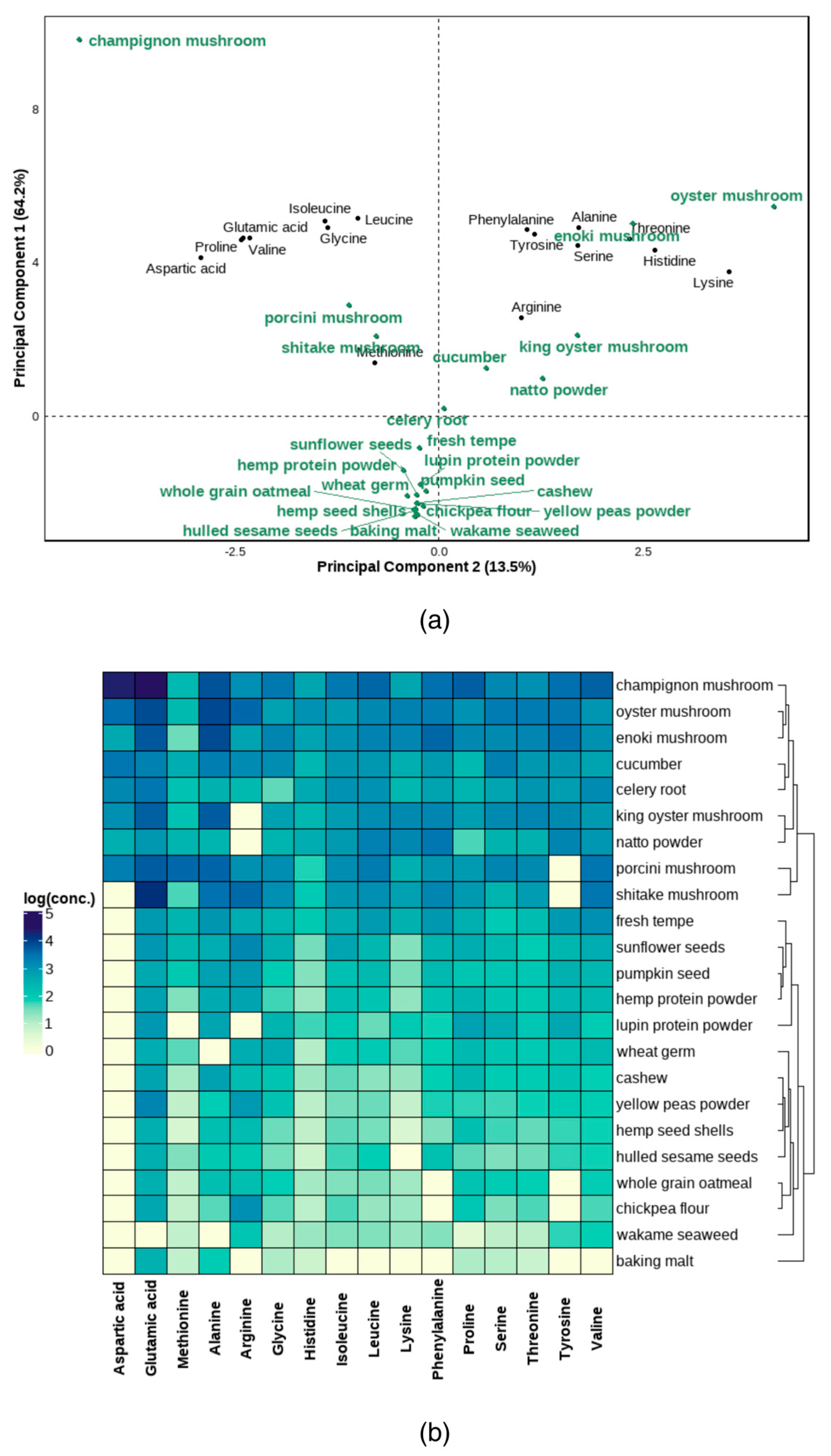
To identify natural sources capable of bridging the free amino acids gap of plant-based egg product, specifically for methionine, cysteine, and umami-related amino acids, a total of 23 selected plant-based raw materials were analyzed for their content of free amino acids using HPLC-MS. The results of the quantitation are provided in the Supplementary Information (Table S5). To facilitate the interpretation of the results, principal component analysis (PCA) and hierarchical clustering (heatmap) were conducted (Figure 2).
The PCA biplot revealed a distinct separation of the screened ingredients into two major clusters based on their amino acid composition (Figure 2a). The first two components accounted for 77.7% of the total variance, with PC1 explaining 64.2% and PC2 explaining 13.5%. At lower PC1 values, a cluster consists primarily of legumes, seeds, and protein powders (e.g., lupin protein, sunflower seeds, and chickpea flour), which are generally characterized by lower levels of free acidic amino acids. In contrast, ingredients exhibiting higher PC1 scores comprise fungal and vegetable-derived ingredients, forming a distinct “savory cluster” that is driven by high concentrations of acidic amino acids, particularly glutamic (Glu) and aspartic acid (Asp). These amino acids are largely absent in the current plant-based egg formulation, highlighting this group as a promising source of savory aroma precursors.
Within this savory cluster, mushrooms emerged as the most prominent contributors of targeted flavor-relevant amino acids (Figure 2b). Champignon (Agaricus bisporus L.) and oyster mushroom (Pleurotus ostreatus) exhibited the highest concentrations of Glu and Asp among all screened materials. The free amino acid content of oyster mushroom was consistent with previous reports, which quantified Glu at 4810–7840 µg/g and Asp at 2510–3550 µg/g [24]. In addition, a recent study analyzing the total amino acid profile of P. ostreatus fruiting bodies identified aspartic acid as the dominant non-essential amino acid (4920 µg/g) [25]. Meanwhile, porcini mushroom (Boletus edulis), although containing lower levels of Glu and Asp than champignon and oyster mushroom, showed the highest methionine concentration among all screened samples (3989.1 µg/g). The free amino acid profile of porcini mushrooms has been reported to vary substantially with geographical origin: Croatian samples were particularly rich in glutamic acid (39100 µg/g dry weight) [26], whereas Chinese porcini showed elevated methionine levels (2200 µg/g dry weight) [27]. Despite this favorable amino acid profile, the high market price of porcini mushrooms in the EU constrains their feasibility for large-scale industrial application.
Among the remaining mushroom species, shiitake (Lentinula edodes) contained high glutamic acid levels (15264 µg/g) but comparatively low aspartic acid concentrations, limiting its ability to deliver a balanced umami profile. Enoki (Flammulina velutipes) and king oyster (Pleurotus eryngii) mushrooms also exhibited elevated glutamic acid contents (5998 µg/g and 4890 µg/g, respectively). Both showed lower levels of aspartic acid and methionine. Although higher absolute concentrations of these amino acids have been reported elsewhere for enoki mushroom, the relative distribution among free amino acids appears consistent [26].
By contrast, materials located in the lower PCA quadrants exhibited very low concentrations of free amino acids. These materials are primarily legume-based protein powders and seed flours. This observation aligns with previous reports describing legumes as inherently limited sources of sulfur-containing amino acids, particularly methionine and cysteine, as well as tryptophan [17,28]. Despite their high total protein content, such ingredients therefore appear poorly suited to contribute meaningful aroma precursor pools under the short cooking conditions typical of scrambled egg analogs.
Interestingly, cucumber (Cucumis sativus L.) powder exhibited a relatively high methionine concentration (371 µg/g), ranking second only to porcini mushroom among all screened materials. Methionine was not detected in a previous study on an Ethiopian cucumber sample [29], whereas comparable concentrations of Glu and Asp were reported. These discrepancies may be attributed to differences in geographical origin, harvesting stage, or growing conditions. Although cucumber is primarily associated with green, fresh aroma notes driven by (E,Z)-2,6-nonadienal (cucumber-like) [30] and related aldehydes that form from linoleic and linolenic acids via lipoxygenase pathways [31], the present data show that cucumber can also serve as a relevant methionine source. Given that methionine is the precursor of methional, a key odorant in scrambled chicken eggs [4], its inclusion in the formulation is expected to support sulfur-related aroma formation in combination with other sulfur-rich ingredients.
Celery root (Apium graveolens L. Var. rapaceum) formed a distinct sub-cluster close to cucumber and mushrooms in the heatmap, reflecting a balanced, medium-intensity free amino acid profile. In the present dataset, Glu and Asp were the dominant amino acids in celery root, with aspartic acid concentrations exceeded only by oyster mushroom, porcini mushroom, and cucumber (Table S5). While its glutamic acid content was lower than that of mushroom samples, celery root contained comparatively high levels of several amino acids currently missing in plant-based egg products, including threonine (946.6 µg/g) and tyrosine (676.3 µg/g). Published data on the free amino acid composition of raw celeriac remain scarce, with existing studies focusing primarily on cooked forms [32] or celery puree [13], in which a comparable distribution of free amino acids was reported. To the authors’ knowledge, the present work provides the first report of free amino acids in raw celery root, highlighting its potential together with cucumber as a complementary plant-based source to narrow the compositional gap between vegan and animal-derived egg products.
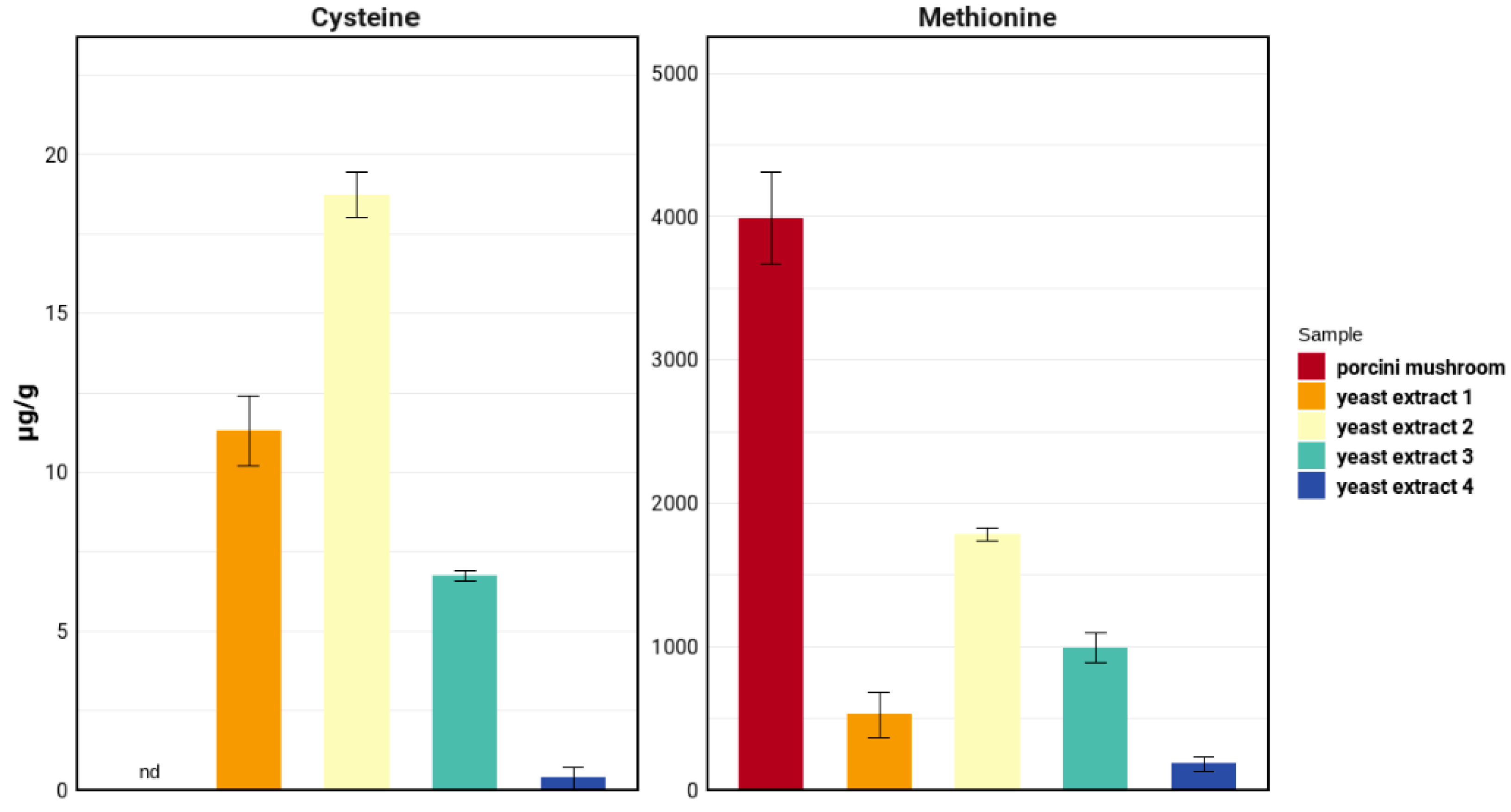
Notably, cysteine was not detected in any of the evaluated plant-based materials, highlighting a critical limitation in relying solely on unprocessed plant ingredients for sulfur precursor supply. Although cucumber and celery root were identified as relevant contributors of methionine, their concentrations were approximately one order of magnitude lower than those observed in porcini mushroom, indicating that additional sources are required to achieve sufficient sulfur amino acid availability. Given the limited availability and high cost of porcini mushroom, selected yeast extracts were therefore evaluated as complementary ingredients to reinforce both methionine and cysteine pools (Table S6, Figure 3).
Yeast extract, a water-soluble extract derived from disrupted yeast cells, is widely used in meat analog formulations owing to its high levels of flavor-enhancing amino acids and 5′-nucleotides [33], including glutamic acid, aspartic acid, and sulfur-containing amino acids such as methionine and cysteine [34]. In addition to its role in meat like flavor development, yeast extract was also identified to contain other odorants that are relevant to scrambled egg aroma, including 2,3-butanedione (butter-like), 2-acetyl-1-pyrroline (roasty, popcorn-like), and dimethyl disulfide (sulfuric, garlic-like), which arise from Maillard-type reactions and lipid oxidation [35,36]. Among the evaluated yeast extracts, yeast extract 2 (YE2) exhibited the highest concentrations of both cysteine (18.73 µg/g) and methionine (1783 µg/g), exceeding all screened plant-based materials except porcini mushroom. These findings indicate that YE2 represents a suitable candidate for compensating the cysteine deficit in plant-based egg products, while substantially enhancing methionine availability in combination with selected plant-derived ingredients such as cucumber and celery root.

3.3. Prototype Formulation

Based on the identified aroma precursor gaps and the screening of plant-based raw materials, three prototype formulations (P1–P3) were developed in addition to the original formulation (P0) and two commercial plant-based egg products (C1, C2) (Table 1 and Table S7). The prototypes were designed following a hypothesis-driven formulation strategy to evaluate whether targeted supplementation of selected natural ingredients could partially compensate for precursor deficiencies and positively influence aroma-related sensory attributes. To minimize confounding matrix effects, all prototypes were prepared using the same base formulation, while targeted ingredients were incorporated at low inclusion levels. Freeze-dried celery root powder was incorporated into all prototype formulations as a source of a broad free amino acid pool, with the aim of increasing the overall savory complexity in the plant-based egg matrix. Yeast extract was added to supply sulfur-containing amino acids, particularly methionine and cysteine, thereby compensating for the sulfur precursor deficiency identified in the commercial plant-based egg product. The inclusion level of yeast extract was selected within a technologically relevant range (less than 1%, w/w), as recommended in previous studies to enhance savory and sulfur-related flavor notes without introducing excessive yeast-derived off-flavors or dominating umami perception [15]. The contributions of cucumber powder and oyster mushroom were evaluated separately to assess their individual effects on sensory perception.
The prototype set was constructed to isolate the sensory impact of specific precursor classes within a consistent plant-based egg matrix. The formulation approach enables qualitative assessment of precursor-driven aroma effects under controlled matrix conditions. Detailed information on ingredient quantity can be found in the Supporting Information (Table S4).

3.4. Consumer Test

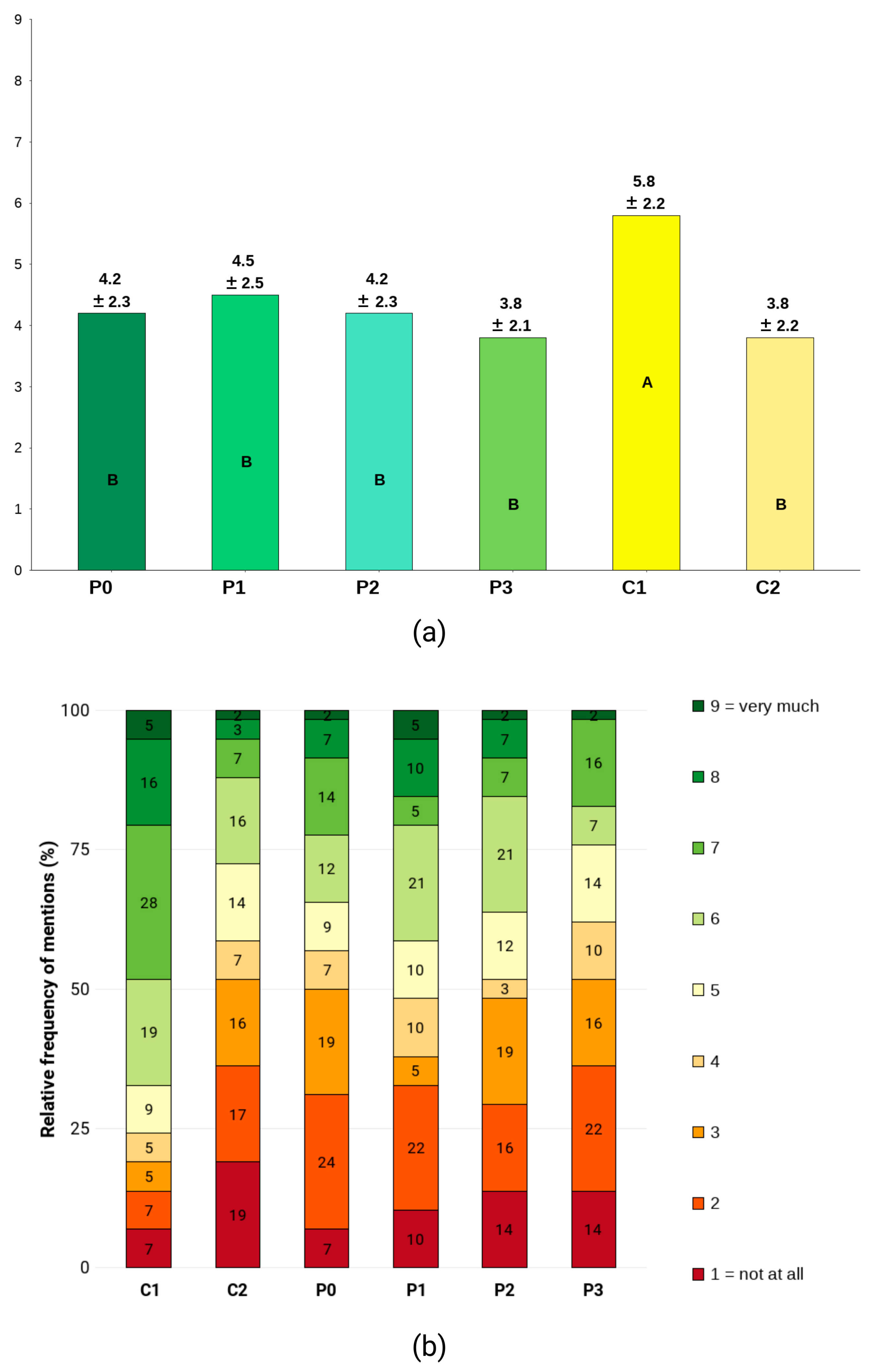
A consumer test was conducted to assess whether the precursor-guided formulation approach produced perceptible improvements in consumer acceptance. Table 2 and Figure 4 summarize the overall liking scores for the original sample (P0), the three prototype formulations (P1–P3), and the two commercial plant-based egg products (C1 and C2).
Mean overall liking scores for the prototype formulations ranged from 3.8 to 4.5 (Figure 4a). Prototypes P1 and P2 showed slightly higher mean liking scores compared to the original product (P0: 4.2 ± 2.3; P1: 4.5 ± 2.5; P2: 4.2 ± 2.3), whereas P3 yielded a lower score (3.8 ± 2.1). While these differences did not reach statistical significance, the consistent upward trend observed for P1 and P2 suggests that the precursor-based modifications had a measurable positive effect on consumer perception. Prototype 1 achieved the highest overall liking among the prototypes, indicating that the combination of celery root, yeast extract, and cucumber powder was the most promising formulation. Commercial product 1 (C1) received the highest score overall (5.8 ± 2.2), while commercial product 2 (C2, 3.8 ± 2.2) performed similarly to P3 and remained in the same statistical group as the prototypes.
Analysis of the distribution of consumer responses (Figure 4b) further supported these trends. Prototypes P1 and P2 showed a shift toward higher ratings (scores 6–9) compared to the original formulation, accompanied by a reduction in strongly negative responses. This indicates that the reformulated samples were more favorably perceived by a subset of consumers, despite similar mean scores across samples. The broad spread of ratings observed for all products reflects heterogeneous consumer expectations and preferences for plant-based egg alternatives.
In addition to overall liking, participants evaluated specific sensory attributes including odor, taste, texture, and appearance (Table 2). Consistent with the overall liking results, prototype P1 showed favorable tendencies across multiple sensory dimensions. For both odor and taste, P1 achieved the highest mean scores among the prototype formulations (odor: 4.2; taste: 4.5), representing a clear improvement relative to the original product (P0: odor 3.9; taste 4.0). Although C1 remained the most preferred sample overall, P1 shared the same significance group as C1 for taste, suggesting that the incorporation of cucumber powder positively influenced flavor perception. Texture ratings were improved across all prototype formulations (P1–P3), indicating that the formulation matrix provided a solid basis for desirable textural properties. Appearance scores were comparable across prototypes, suggesting that the added ingredients did not adversely affect visual characteristics.
Taken together, these results show that the precursor-driven formulation strategy led to directional improvements in certain prototypes, particularly P1, and moved the sensory profile in a more favorable direction relative to the original product. Although not all differences reached statistical significance, the consistent positive trends observed in liking scores, response distributions, and individual sensory suggest that targeted precursor supplementation can influence sensory perception. These findings support the relevance of a precursor-guided formulation approach, while acknowledging the variability and limited statistical power typical of exploratory prototype testing.

3.5. Consumer Insights of Plant-Based Scrambled Eggs

In addition to the acceptance of prototypes, participants were asked to rate the importance of various intrinsic and extrinsic attributes of plant-based scrambled egg alternatives as presented in Supporting Information (Figure S1). The results indicate a clear hierarchy of consumer priorities. Taste was identified as the most important attribute, with 98% of consumers rating it as “rather important” or “very important”, followed by odor (47% very important) and consistency (62% very important). These findings also aligned with a recent study, which reported that “taste”, “use”, and “price” were among the most frequently mentioned associations consumers spontaneously linked to plant-based eggs, with “taste” often evaluated negatively and identified as a critical barrier to acceptance [37]. Another study from the same group further showed that consumers rated sensory attributes, particularly flavor and versatility, less favorably than extrinsic benefits such as health or sustainability [38]. Moreover, in this context, the positive directional shifts observed for prototypes P1 and P2 are noteworthy. Although the improvements in overall liking did not reach statistical significance, both prototypes exhibited a higher proportion of mid-to-high liking scores for flavor (taste and odor) compared to the original formulation.
Besides taste, both appearance and consistency were rated as important by a considerable proportion of participants. While taste received the highest priority, these results suggests that visual and textural attributes remain relevant but secondary to flavor-related factors. Among extrinsic attributes, sustainability and list of ingredients were also important, with 50% and 33% of participants, respectively, rating them as very important. This reflects a broader consumer preference for products that are perceived as natural, minimally processed, or aligned with environmental values. Attributes such as packaging design, packaging type, and presentation form were generally rated as less important, indicating that functional and sensory aspects outweigh marketing or aesthetic considerations in this product category. Price also emerged as an influential factor, with 22% of respondents rating it as very important, highlighting the need for cost-competitiveness in addition to sensory performance. The prioritization of flavor-related attributes closely aligns with the prototype development strategy used in this study, which focused on precursor supplementation to enhance egg-like aroma.

4. Conclusions

In summary, this study presents a first application-oriented framework for improving the aroma of plant-based scrambled egg analogs using a precursor-guided formulation strategy that enables in situ flavor generation during cooking. Comparative analysis of scrambled chicken eggs and a commercial plant-based egg product revealed pronounced differences in free amino acid profiles, most notably in methionine, cysteine, glutamic acid, and aspartic acid, underscoring a fundamental limitation in the precursor availability of the plant-based matrix. Subsequent screening of 25 natural plant-derived materials identified cucumber and celery root as a relevant and moderate source of methionine and a broad pool of free amino acids, oyster mushroom as a rich source of glutamic acid and aspartic acid, and yeast extract as the only evaluated ingredient capable of supplying both methionine and cysteine at functionally relevant levels. These compositional insights were directly translated into three rationally designed prototype formulations. Among them, prototype 1, incorporating celery root, yeast extract, and cucumber powder, achieved the highest odor and taste scores among the prototypes and showed a clear positive shift in consumer response distributions relative to the original formulation. Taken together, the results demonstrate the practical value of a precursor-guided formulation approach for systematically improving plant-based egg analogs. While further optimization is required to achieve substantial gains in overall liking, this study establishes a mechanistic foundation for future development. Subsequent work should therefore focus on refining the relative proportions of sulfur-containing precursors and complementary components to strengthen egg-like aroma expression. This may include adjusting yeast extract levels to enhance methional formation, evaluating specific celery root fractions to balance savory and vegetal notes, and optimizing the inclusion levels of cucumber powder or oyster mushroom to minimize green or mushroom-specific volatiles that may interfere with the desired aroma profile. This precursor-driven approach using natural ingredients combined with appropriate thermal treatment conditions allows in situ flavor generation with the advantage of forming and releasing authentic flavor just before consumption.

Supplementary Materials

The following supporting information can be downloaded at: https://www.mdpi.com/article/10.3390/app16052484/s1, Figure S1: Key factors influence consumer acceptance of plant-based scrambled egg products; Table S1: Optimized ESI-MS parameters for the 20 amino acids; Table S2: List of plant-based materials analyzed for free amino acid content and their corresponded work-up procedure; Table S3: List of yeast extraction samples from different suppliers; Table S4: Quantitation of free amino acids in chicken eggs and plant-based egg product: in raw and cooked states; Table S5: Quantitation of free amino acids in different plant-based raw materials; Table S6: Composition of ingredients in original product (P0) and new prototypes (P1, P2, and P3); Table S7: Commercial plant-based egg products used in consumer tests.

Author Contributions

Conceptualization, I.C.; methodology, A.A., T.K.L.T. and M.-L.C.; validation, T.K.L.T., A.A. and M.-L.C.; formal analysis, T.K.L.T., A.A. and M.-L.C.; investigation, T.K.L.T., A.A. and M.-L.C.; data curation, T.K.L.T., A.A. and M.-L.C.; writing—original draft preparation, T.K.L.T.; writing—review and editing, T.K.L.T., I.C., A.A., M.-L.C., I.B. and S.R.; visualization, T.K.L.T.; supervision, I.C.; funding acquisition, I.C. All authors have read and agreed to the published version of the manuscript.

Funding

This research was funded by Adalbert Raps Stiftung, Kulmbach, Germany.

Institutional Review Board Statement

The study was conducted in accordance with the Declaration of Helsinki and approved by the Zurich University of Applied Sciences (No. EA-ZHAW 2024-041-N, 13 December 2024).

Informed Consent Statement

Informed consent was obtained from all subjects involved in the study.

Data Availability Statement

The data presented in this study are available on request from the corresponding author.

Acknowledgments

The authors also sincerely thank Lovely Day Food GmbH (Berlin, Germany) for their valuable collaboration and for providing the necessary materials as part of the joint research efforts on this topic. The authors would like to thank Sarah Bantle and Melanie Röthlisberger, as well as Sandra Fritsche and Katrin Jedrys, for their contributions to data acquisition and amino acid analyses. Special thanks are extended to Sandra Panarese and Silvia Flütsch for their support in the preparation and execution of the consumer study.

Conflicts of Interest

The author Imre Blank was employed by Lovely Day Foods GmbH and IBK Food & Beverage Consultancy Sàrl. The paper reflects the views of the scientists and not the company. The remaining authors declare that the research was conducted in the absence of any commercial or financial relationships that could be construed as a potential conflict of interest.

References

  1. Alae-Carew, C.; Green, R.; Stewart, C.; Cook, B.; Dangour, A.D.; Scheelbeek, P.F.D. The Role of Plant-Based Alternative Foods in Sustainable and Healthy Food Systems: Consumption Trends in the UK. Sci. Total Environ. 2022, 807, 151041. [Google Scholar] [CrossRef]
  2. Sogari, G.; Caputo, V.; Joshua Petterson, A.; Mora, C.; Boukid, F. A Sensory Study on Consumer Valuation for Plant-Based Meat Alternatives: What Is Liked and Disliked the Most? Food Res. Int. 2023, 169, 112813. [Google Scholar] [CrossRef]
  3. Baxter, L.; Dolan, E.; Frampton, K.; Richelle, E.; Stright, A.; Ritchie, C.; Moss, R.; McSweeney, M.B. Investigation into the Sensory Properties of Plant-Based Eggs, as Well as Acceptance, Emotional Response, and Use. Foods 2024, 13, 1454. [Google Scholar] [CrossRef]
  4. Tran, T.K.L.; Gillich, E.; André, A.; Cezanne, M.-L.; Gläser, P.; Blank, I.; Chetschik, I. Decoding the Aroma Gap: Sensomics-Based Characterization of Key Odorants in the Plant-Based Egg and Chicken Egg. J. Agric. Food Chem. 2025, 73, 13832–13842. [Google Scholar] [CrossRef]
  5. Berger, R.G. (Ed.) Flavours and Fragrances: Chemistry, Bioprocessing and Sustainability; Springer: Berlin/Heidelberg, Germany, 2007. [Google Scholar] [CrossRef]
  6. Tang, D.; Wang, R.; He, X.; Chen, X.; Huo, X.; Lü, X.; Shan, Y. Comparison of the Edible Quality of Liquid Egg with Different Cooking Methods and Their Antioxidant Activity after In Vitro Digestion. Food Res. Int. 2021, 140, 110013. [Google Scholar] [CrossRef]
  7. Plocina, L.; Beitane, I. Study of Amino Acid Profile and Solubility of Pea Protein Isolate for the Production of Beverages for Psychiatric Patients. Rural Sustain. Res. 2024, 51, 94–102. [Google Scholar] [CrossRef]
  8. Lu, Z.X.; He, J.F.; Zhang, Y.C.; Bing, D.J. Composition, Physicochemical Properties of Pea Protein and Its Application in Functional Foods. Crit. Rev. Food Sci. Nutr. 2020, 60, 2593–2605. [Google Scholar] [CrossRef]
  9. Gao, P.; Sun, B.; Chen, Z.; Yuan, Q.; Zhong, W.; Yin, J.; Hu, C.; He, D.; Wang, X. Effects of Different Amino Acid Enzymatic Preparations on the Quality and Flavor of Fragrant Rapeseed Oil. Food Chem. X 2024, 21, 101219. [Google Scholar] [CrossRef]
  10. Andreani, G.; Banovic, M.; Dagevos, H.; Sogari, G. Chapter 25—Consumer Perceptions and Market Analysis of Plant-Based Foods: A Global Perspective. In Handbook of Plant-Based Food and Drinks Design; Boukid, F., Rosell, C.M., Gasparre, N., Eds.; Academic Press: Cambridge, MA, USA, 2024; pp. 393–408. [Google Scholar] [CrossRef]
  11. Gao, J.; Fang, D.; Muinde Kimatu, B.; Chen, X.; Wu, X.; Du, J.; Yang, Q.; Chen, H.; Zheng, H.; An, X.; et al. Analysis of Umami Taste Substances of Morel Mushroom (Morchella sextelata) Hydrolysates Derived from Different Enzymatic Systems. Food Chem. 2021, 362, 130192. [Google Scholar] [CrossRef]
  12. Buescher, R.H.; Buescher, R.W. Production and Stability of (E,Z)-2, 6-Nonadienal, the Major Flavor Volatile of Cucumbers. J. Food Sci. 2001, 66, 357–361. [Google Scholar] [CrossRef]
  13. Li, Y.; He, W.; He, Y.; Liu, S.; Hu, X.; Bian, S.; Song, X.; Yin, J.; Nie, S.; Xie, M. Fermentation of Celery (Apium graveolens L.) with Lactobacillus Plantarum NCU116: Impact on Physicochemical Properties, Free Amino Acids, and Volatile Aroma Compounds. Food Biosci. 2025, 68, 106680. [Google Scholar] [CrossRef]
  14. Alim, A.; Song, H.; Zou, T. Analysis of Meaty Aroma and Umami Taste in Thermally Treated Yeast Extract by Means of Sensory-Guided Screening. Eur. Food Res. Technol. 2020, 246, 2119–2133. [Google Scholar] [CrossRef]
  15. Tomé, D. Yeast Extracts: Nutritional and Flavoring Food Ingredients. ACS Food Sci. Technol. 2021, 1, 487–494. [Google Scholar] [CrossRef]
  16. Schlüter, A.; André, A.; Hühn, T.; Rohn, S.; Chetschik, I. Influence of Aerobic and Anaerobic Moist Incubation on Selected Nonvolatile Constituents—Comparison to Traditionally Fermented Cocoa Beans. J. Agric. Food Chem. 2022, 70, 16335–16346. [Google Scholar] [CrossRef] [PubMed]
  17. Sá, A.G.A.; Moreno, Y.M.F.; Carciofi, B.A.M. Plant Proteins as High-Quality Nutritional Source for Human Diet. Trends Food Sci. Technol. 2020, 97, 170–184. [Google Scholar] [CrossRef]
  18. Jiménez-Munoz, L.M.; Tavares, G.M.; Corredig, M. Design Future Foods Using Plant Protein Blends for Best Nutritional and Technological Functionality. Trends Food Sci. Technol. 2021, 113, 139–150. [Google Scholar] [CrossRef]
  19. EFSA Panel on Food Additives and Flavourings (FAF); Younes, M.; Aquilina, G.; Castle, L.; Engel, K.; Fowler, P.; Frutos Fernandez, M.J.; Fürst, P.; Gürtler, R.; Husøy, T.; et al. Opinion on the Re-evaluation of Lecithins (E 322) as a Food Additive in Foods for Infants below 16 Weeks of Age and Follow-up of Its Re-evaluation as Food Additive for Uses in Foods for All Population Groups. EFSA J. 2020, 18, e06266. [Google Scholar] [CrossRef]
  20. Lassé, M.; Deb-Choudhury, S.; Haines, S.; Larsen, N.; Gerrard, J.A.; Dyer, J.M. The Impact of pH, Salt Concentration and Heat on Digestibility and Amino Acid Modification in Egg White Protein. J. Food Compos. Anal. 2015, 38, 42–48. [Google Scholar] [CrossRef]
  21. Hu, L.; Ren, S.; Shen, Q.; Chen, J.; Ye, X.; Ling, J. Proteomic Study of the Effect of Different Cooking Methods on Protein Oxidation in Fish Fillets. RSC Adv. 2017, 7, 27496–27505. [Google Scholar] [CrossRef]
  22. El Hosry, L.; Elias, V.; Chamoun, V.; Halawi, M.; Cayot, P.; Nehme, A.; Bou-Maroun, E. Maillard Reaction: Mechanism, Influencing Parameters, Advantages, Disadvantages, and Food Industrial Applications: A Review. Foods 2025, 14, 1881. [Google Scholar] [CrossRef]
  23. Ajomiwe, N.; Boland, M.; Phongthai, S.; Bagiyal, M.; Singh, J.; Kaur, L. Protein Nutrition: Understanding Structure, Digestibility, and Bioavailability for Optimal Health. Foods 2024, 13, 1771. [Google Scholar] [CrossRef] [PubMed]
  24. Tagkouli, D.; Kaliora, A.; Bekiaris, G.; Koutrotsios, G.; Christea, M.; Zervakis, G.I.; Kalogeropoulos, N. Free Amino Acids in Three Pleurotus Species Cultivated on Agricultural and Agro-Industrial By-Products. Molecules 2020, 25, 4015. [Google Scholar] [CrossRef] [PubMed]
  25. Effiong, M.E.; Umeokwochi, C.P.; Afolabi, I.S.; Chinedu, S.N. Assessing the Nutritional Quality of Pleurotus Ostreatus (Oyster mushroom). Front. Nutr. 2024, 10, 1279208. [Google Scholar] [CrossRef]
  26. Beluhan, S.; Ranogajec, A. Chemical Composition and Non-Volatile Components of Croatian Wild Edible Mushrooms. Food Chem. 2011, 124, 1076–1082. [Google Scholar] [CrossRef]
  27. Tan, Y.; Zeng, N.-K.; Xu, B. Chemical Profiles and Health-Promoting Effects of Porcini Mushroom (Boletus edulis): A Narrative Review. Food Chem. 2022, 390, 133199. [Google Scholar] [CrossRef]
  28. Zemnukhova, L.A.; Makarenko, N.V.; Tishchenko, L.Y.; Kovaleva, E.V. Studies of the Amino Acid Composition of Wastes of Production of Rice, Buckwheat, and Sunflower. Russ. J. Bioorganic Chem. 2010, 36, 941–943. [Google Scholar] [CrossRef]
  29. Kahsay, B.N.; Ziegler, J.; Imming, P.; Gebre-Mariam, T.; Neubert, R.H.H.; Moeller, L. Free Amino Acid Contents of Selected Ethiopian Plant and Fungi Species: A Search for Alternative Natural Free Amino Acid Sources for Cosmeceutical Applications. Amino Acids 2021, 53, 1105–1122. [Google Scholar] [CrossRef] [PubMed]
  30. Schieberle, P.; Ofner, S.; Grosch, W. Evaluation of Potent Odorants in Cucumbers (Cucumis sativus) and Muskmelons (Cucumis melo) by Aroma Extract Dilution Analysis. J. Food Sci. 1990, 55, 193–195. [Google Scholar] [CrossRef]
  31. Chen, S.; Zhang, R.; Hao, L.; Chen, W.; Cheng, S. Profiling of Volatile Compounds and Associated Gene Expression and Enzyme Activity during Fruit Development in Two Cucumber Cultivars. PLoS ONE 2015, 10, e0119444. [Google Scholar] [CrossRef]
  32. Boyle, F.; Lynch, G.; Reynolds, C.M.; Green, A.; Parr, G.; Howard, C.; Knerr, I.; Rice, J. Determination of the Protein and Amino Acid Content of Fruit, Vegetables and Starchy Roots for Use in Inherited Metabolic Disorders. Nutrients 2024, 16, 2812. [Google Scholar] [CrossRef] [PubMed]
  33. Jacob, F.F.; Striegel, L.; Rychlik, M.; Hutzler, M.; Methner, F.-J. Yeast Extract Production Using Spent Yeast from Beer Manufacture: Influence of Industrially Applicable Disruption Methods on Selected Substance Groups with Biotechnological Relevance. Eur. Food Res. Technol. 2019, 245, 1169–1182. [Google Scholar] [CrossRef]
  34. Tao, Z.; Yuan, H.; Liu, M.; Liu, Q.; Zhang, S.; Liu, H.; Jiang, Y.; Huang, D.; Wang, T. Yeast Extract: Characteristics, Production, Applications and Future Perspectives. J. Microbiol. Biotechnol. 2023, 33, 151–166. [Google Scholar] [CrossRef]
  35. Münch, P.; Hofmann, T.; Schieberle, P. Comparison of Key Odorants Generated by Thermal Treatment of Commercial and Self-Prepared Yeast Extracts: Influence of the Amino Acid Composition on Odorant Formation. J. Agric. Food Chem. 1997, 45, 1338–1344. [Google Scholar] [CrossRef]
  36. Lin, M.; Liu, X.; Xu, Q.; Song, H.; Li, P.; Yao, J. Aroma-active Components of Yeast Extract Pastes with a Basic and Characteristic Meaty Flavour. J. Sci. Food Agric. 2014, 94, 882–889. [Google Scholar] [CrossRef] [PubMed]
  37. Rondoni, A.; Grebitus, C.; Millan, E.; Asioli, D. Exploring Consumers’ Perceptions of Plant-Based Eggs Using Concept Mapping and Semantic Network Analysis. Food Qual. Prefer. 2021, 94, 104327. [Google Scholar] [CrossRef]
  38. Rondoni, A.; Millan, E.; Asioli, D. Consumers’ Preferences for Intrinsic and Extrinsic Product Attributes of Plant-Based Eggs: An Exploratory Study in the United Kingdom and Italy. Br. Food J. 2021, 123, 3704–3725. [Google Scholar] [CrossRef]
Figure 1. Comparison of free amino acid profiles (µg/g per dry weight) in chicken egg and plant-based egg samples before (raw) and after cooking (cooked).
Applsci 16 02484 g001
Figure 2. (a) Principal component analysis and (b) heatmap demonstrating the detected free amino acid content in different plant-based raw materials. Values in the heatmap are displayed on a base-10 logarithmic scale of concentrations (ug/g per dry weight) to improve visualization of concentration differences across materials. Darker blue colors indicate higher concentrations, while lighter colors represent lower concentrations.
Applsci 16 02484 g002
Figure 3. Methionine content and cysteine content (µg/g per dry weight) in different yeast extract products compared with porcini mushroom.
Applsci 16 02484 g003
Figure 4. Overall liking of different plant-based scrambled egg samples. (a) Mean liking scores and (b) distribution of consumer ratings evaluated on a 9-point scale (1 = not at all; 9 = very much) (p < 0.0001). Different letters (A, B) indicate significant differences between groups.
Applsci 16 02484 g004
Table 1. List of samples for sensory evaluation.
NoSample CodeSample NameShort Description
1P0Original recipeOriginal recipe
2P1Prototype 1New recipe with celery root powder, yeast extract, and cucumber powder
3P2Prototype 2New recipe with celery root powder and yeast extract
4P3Prototype 3New recipe with celery root powder, yeast extract, and oyster mushroom
5C1Commercial product 1Soyana
6C2Commercial product 2Fredag plant-based egg
Table 2. Mean sensory ratings for appearance, odor, consistency, and taste. Different letters within each attribute indicate significant differences at p < 0.0001. Attributes were evaluated on a 9-point hedonic scale (1 = not at all; 9 = very much).
PrototypesAppearanceOdorConsistencyTaste
p-Value < 0.0001p-Value < 0.0001p-Value < 0.0001p-Value < 0.0001
MeanSignificance GroupMeanSignificance GroupMeanSignificance GroupMeanSignificance Group
P04.3BC3.9C3.4B4.0BC
P14.2BC4.2BC5.3A4.5AB
P23.6C3.8C4.5AB3.9B
P33.7C3.7C4.4AB3.7BC
C15.8A5.3AB5.9A5.4A
C25.8A5.2AB4.6AB2.7C
Disclaimer/Publisher’s Note: The statements, opinions and data contained in all publications are solely those of the individual author(s) and contributor(s) and not of MDPI and/or the editor(s). MDPI and/or the editor(s) disclaim responsibility for any injury to people or property resulting from any ideas, methods, instructions or products referred to in the content.