1. Introduction
Transmission loss is closely linked to structural vibration. Among the various vibration-reduction strategies, acoustic black holes (ABHs) and particle dampers (Ps) are considered some of the most effective. Acoustic black holes are a relatively new passive vibration-control approach, capable of absorbing nearly all incoming wave energy in lightweight structures. Mironov [
1] first identified the potential of ABHs for vibration reduction. Krylov [
2,
3] further investigated their ability to absorb wave energy using one- and two-dimensional wedge structures, demonstrating the relationship between ABH geometry and the behavior of transverse waves. Masmoudi M. et al. [
4] at the Stevens Institute of Technology (Hoboken, NJ, USA) showed that as the thickness of an ABH profile gradually decreases, the vibration energy becomes increasingly concentrated within the ABH region.
The Discrete Element Method (DEM) is the primary theoretical tool used to analyze particle damping, enabling a detailed study of particle–wall interactions. DEM is therefore widely applied to understand particle-based energy dissipation mechanisms [
3,
4]. Using DEM, Mao et al. [
5] examined how particle dampers dissipate energy and confirmed that both energy transfer and dissipation are essential for reaching high damping performance. Wong et al. [
6] conducted preliminary work on DEM-based prediction models for particle damper behavior. In DEM, individual particles are represented as elements with mass and rotational inertia, while springs, dashpots, and friction interfaces model interactions between particles and container walls. Developing realistic contact models is critical for accurately predicting damper behavior, and achieving the right balance between computational cost and accuracy remains a key challenge.
Darabi et al. [
7] used DEM simulations and experiments to investigate the energy loss of viscoelastic particles under vertical periodic excitation. They found that excitation amplitude, excitation frequency, and friction coefficient significantly influence power dissipation. Paul Lieber et al. [
8] analyzed the mechanism of impact-based acceleration dampers, where a mass particle inside a container dissipates energy through impacts; the effectiveness depends strongly on the particle’s freedom to move relative to its enclosure. Saeki et al. [
9] experimentally examined how particle diameter, mass ratio, and material composition affect noise generation in particle dampers.
Because DEM simulations are computationally expensive, experimental validation is essential. Romdhane et al. [
10,
11] experimentally evaluated the loss factor of particle dampers using the complex power approach, which allows direct characterization of damping properties even when particle dampers are not installed on the vibrating structure. Zhiwei Xu et al. [
12] investigated plates and beams containing longitudinal cavities filled with particles, showing that multiple particle chambers with combined impact, friction, and shear mechanisms can provide superior damping compared with traditional transverse particle dampers.
Niklas Meyer et al. [
13] used complex power to evaluate energy dissipation across various damper designs over wide excitation ranges, showing that polydisperse particle configurations may produce more robust damping behavior. Chen Hui et al. [
14] demonstrated that ABHs are effective structural features for reducing noise and vibration by employing a power-law thickness profile that slows wave propagation and concentrates vibration energy where the thickness tapers.
S. S. Rao [
15] developed an MBD–DEM (multibody dynamics discrete element method) model for particle damping systems. He identified two major challenges: determining the system damping coefficient and estimating friction forces in the linear slide. He performed free-vibration tests without steel beads to estimate the intrinsic damping coefficient, applying the logarithmic decrement method to determine system parameters.
L. X. Zhao et al. [
16] conducted an experimental study on the energy-focusing capabilities of ABH-integrated structures. By tailoring wave-propagation properties, embedded ABHs create regions of extremely high localized energy. Experiments on tapered aluminum plates with multiple embedded ABHs confirmed vibration localization and the passive wavelength-sweeping behavior of ABH geometries.
Yao B. et al. [
17] introduced the tuned particle damper (TPD), a hybrid device combining the functions of a tuned mass damper and a particle damper. The TPD addresses the poor performance of conventional particle dampers under low-acceleration (<1 g) conditions by amplifying the particle acceleration through resonance, ensuring effective particle motion even when structural accelerations are low.
Zheng Lu et al. [
18] performed analytical, numerical, and experimental studies on multi-degree-of-freedom (MDOF) structures using buffered particle dampers. Shaking-table tests on a three-story steel frame demonstrated that buffered particle dampers significantly reduce structural responses under dynamic loads, particularly under random excitation, and effectively control the fundamental vibration mode.
In this research, both experimental and numerical investigations are used to examine how particle-based methods can control and reduce vibrations across different domains.
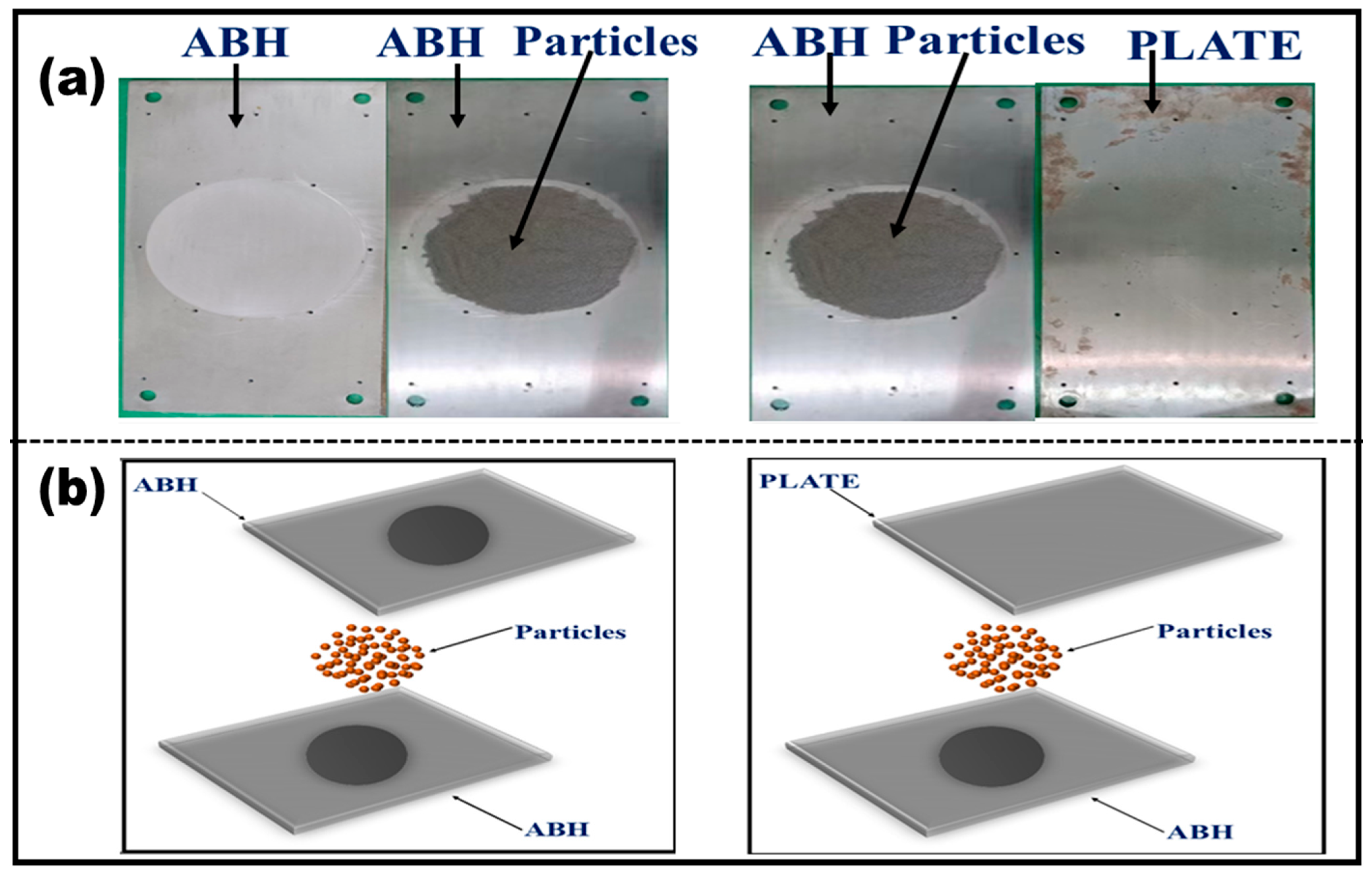
Figure 1 below illustrates the structure of the combined acoustic black hole and particle system (ABH + Ps).
Periodic ABH structures with particle-filled tips produce broadband bandgaps, excellent damping efficiency, and low-frequency suppression in ABH-enhanced tuned particle dampers (ABH-TPD) metamaterials (e.g., Zhu, Y et al., [
19] studies published in 2025). Detailed nonlinear models and experimental validation demonstrating wideband energy dissipation are validated. Research on ABH-PD configurations on plates or beams (Pelat et al., [
20] 2020) on energy dissipation, transmission loss, and fatigue assessment in the frequency domain, and investigates controlled vibration reduction by applying particle damping to ABH-terminated structures.
However, the present study serves as an important complement to existing particle-based damping investigations, as it allows the quantitative assessment of the damping contribution introduced by the particles. This assessment is crucial for accurately determining the associated loss factors and for improving the understanding of particle-induced energy dissipation mechanisms.
2. Experimental Setup and Measurement System
Acoustic Black Holes (ABHs) are recognized as highly effective mechanisms for vibration and noise reduction [
1,
2]. In this study, we investigate a system composed of two ABH plates incorporating particles, referred to as ABH + Particle plates (ABH–PS–ABH). The stainless-steel plate used in the experiments has dimensions of 600 mm × 300 mm × 10 mm, and its ABH profile is defined by
A restitution method was adopted because the particles are fixed within the hollow region of the ABH.
Two experimental configurations were examined:
1-ABH-ABH and ABH–PS–ABH;
2-ABH–plate and ABH–PS–plate.
The first configuration consists of two ABH plates without particles, while the second incorporates particles (PS) to evaluate their influence. The primary objective is to determine the contribution of particles to vibration control and attenuation.
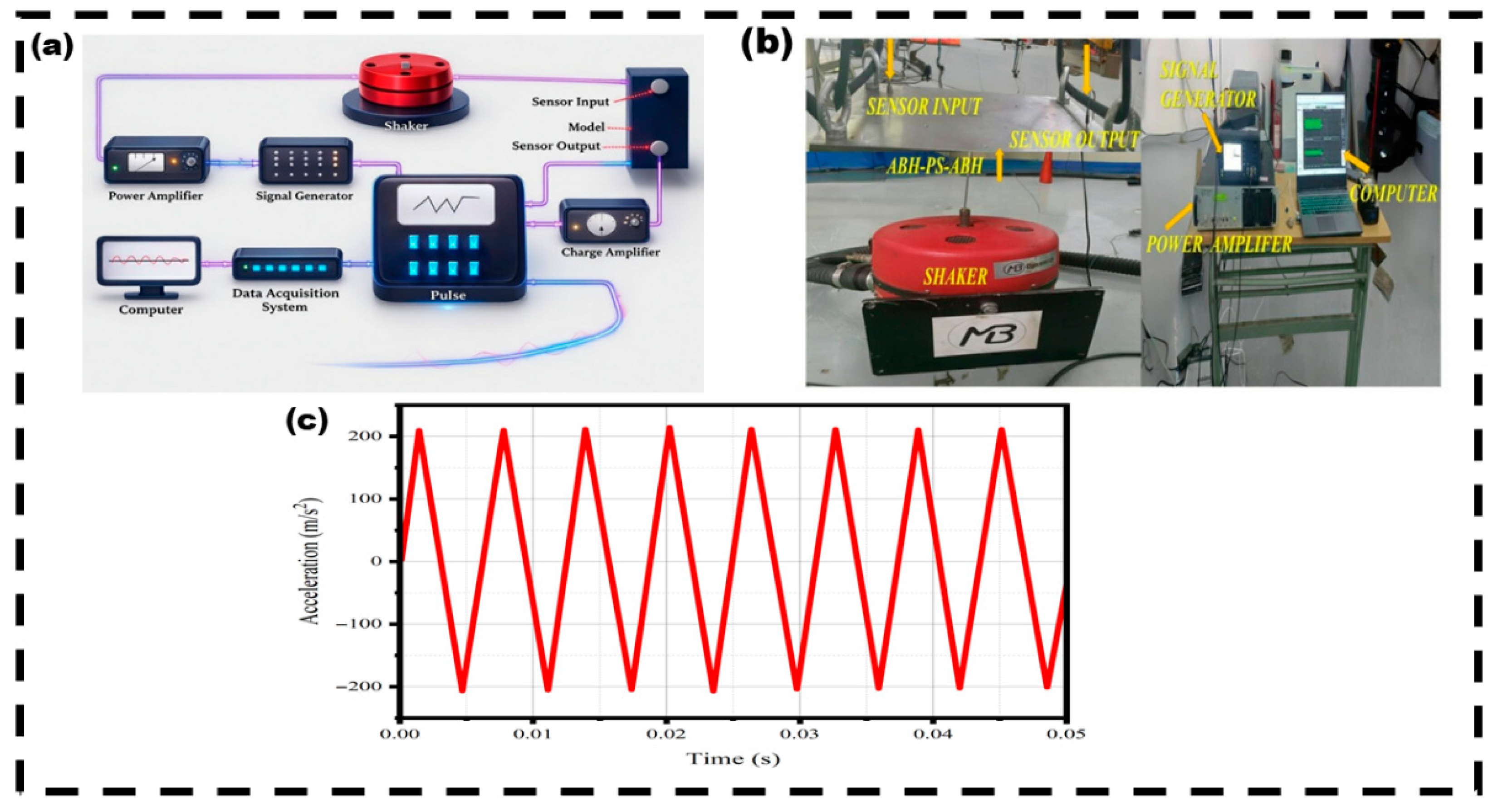
Figure 2a,b presents the experimental setup corresponding to both material configurations.
Figure 2a: Schematic of the experimental setup and working principle.
Figure 2a illustrates the block diagram of the vibration test system and the signal flow during operation. A signal generator produces the desired excitation signal (pulse or harmonic waveform), which is amplified by the power amplifier to a level sufficient to drive the electrodynamic shaker. The shaker converts the amplified electrical signal into mechanical vibration and applies it to the test model mounted on its table. Sensors (e.g., accelerometers) attached to the model measure the response of the structure. The sensor output signal is conditioned using a charge amplifier and then sent to the data acquisition system. Finally, the acquired data are transferred to the computer for real-time monitoring, storage, and post-processing. This closed-loop arrangement ensures controlled excitation and accurate measurement of the system response.
Figure 2b: Photograph of the actual experimental setup.
Figure 2b shows the physical realization of the setup depicted schematically in
Figure 2a. The shaker is placed on the laboratory floor and supports the test specimen (ABH–PS–ABH). The signal generator and power amplifier are connected to the shaker to provide controlled excitation. Sensors mounted on the specimen supply input and output signals, which are routed through the signal conditioning and data acquisition hardware. A computer is used to control the experiment, visualize signals, and record measurement data. This figure demonstrates the practical arrangement and interconnection of the components used during the vibration testing.
Figure 2c presents a representative time-history of the excitation signal applied during the experiment, shown in terms of acceleration versus time. The waveform is a periodic triangular signal with alternating positive and negative peaks, indicating cyclic loading of the structure. This controlled excitation is generated by the signal generator and transmitted through the power amplifier to the shaker. The purpose of this signal is to induce repeatable dynamic responses in the test model, allowing the vibration characteristics and performance of the structure to be evaluated under known loading conditions.
3. Experimental Results
In this study, four configurations were investigated under identical frequency and time conditions: ABH-ABH, ABH–Particle–ABH, ABH–PLATE, and ABH–Particle–PLATE. All configurations were tested at excitation frequencies of 1000 Hz and 2000 Hz with a total measurement duration of 5000 s, and were subjected to excitation amplitudes of 1 V, 2 V, and 3 V.
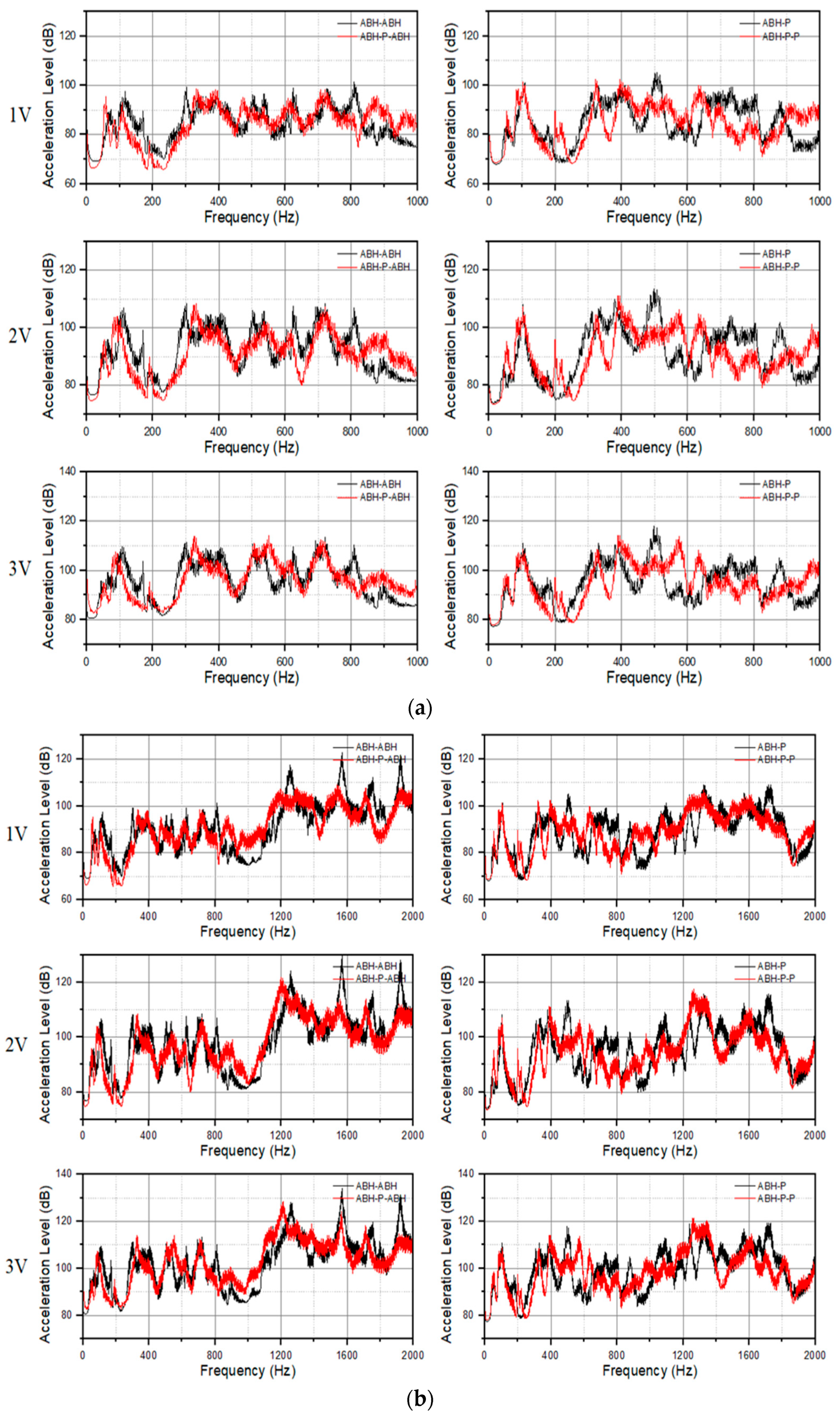
Figure 3a,b present the experimental results for the four configurations over the frequency ranges of (10, 10, 1000 Hz) and (10, 10, 2000 Hz) respectively, under the three excitation levels. The results indicate that the acceleration level (dB) of the acoustic black hole with particles (ABH–PS–ABH) is consistently lower than that of the particle-free ABH (ABH-ABH) throughout the entire experimental process. A similar trend is observed for the plate configurations (ABH–PLATE vs. ABH–PS–PLATE), where the presence of particles leads to a noticeable reduction in acceleration. Overall, the addition of particles contributes to a significant decrease in vibration levels.
This effect is reflected in the lower amplitude of the acceleration curves for the particle-filled acoustic black hole systems. Experimentally, it is observed that across most frequency ranges, the vibration response of particle-filled systems is significantly reduced. In other words, the presence of particles effectively suppresses vibrational amplitudes over a broad frequency spectrum.
4. Numerical Model
4.1. Simulation Processing
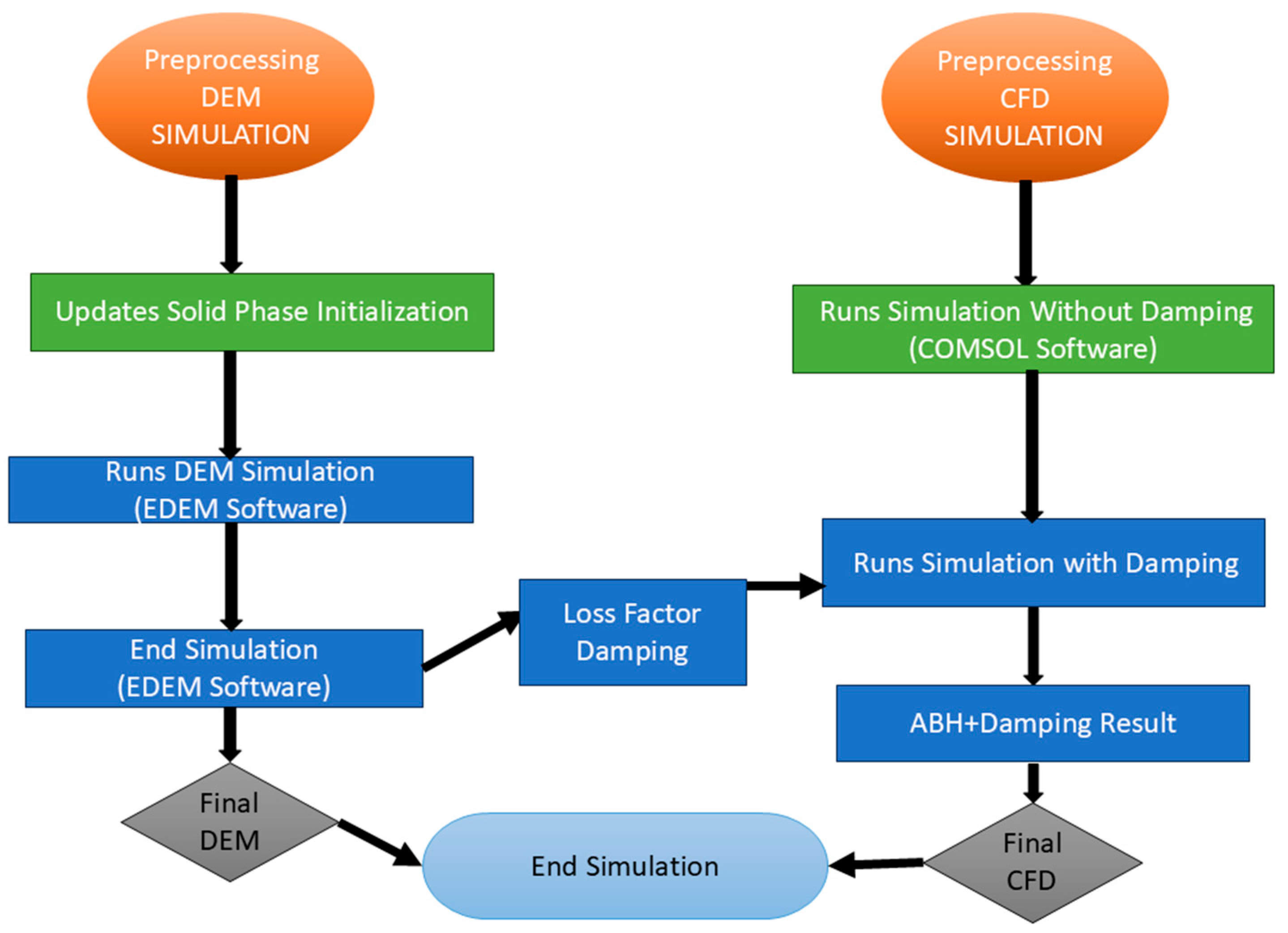
The simulations in this study were performed using a coupled DEM–CFD framework [
21], which combines the advantages of discrete and continuum modeling techniques. The coupling was implemented using two established software platforms: EDEM Software version 2021, which employs the discrete element method (DEM) to resolve the motion, collisions, and contact forces of individual particles, and COMSOL Multiphysics version 6, which provides the computational fluid dynamics (CFD) environment for modeling the surrounding fluid field. Within the DEM module, particle trajectories and interactions were calculated according to Newton’s laws of motion, enabling a detailed characterization of particle-scale kinematics and dynamics. Simultaneously, the fluid phase was simulated using the locally averaged Navier–Stokes equations together with the continuity equation, allowing accurate prediction of fluid velocity distributions, pressure fields, and their interactions with the particle phase.
The
Figure 4 shown integration of DEM and CFD allowed the simulations to capture key multiphase phenomena, including momentum exchange, particle fluid coupling, and energy dissipation, with high fidelity. This combined approach provided a comprehensive representation of the system’s physical behavior and is therefore well-suited for analyzing vibration responses, damping mechanisms, and the overall dynamic behavior under various operating conditions.
4.2. EDEM Boundary Solution
The EDEM-based simulation served as a fundamental component in determining the loss factor and evaluating the damping performance of the proposed system. Within this numerical framework, particular emphasis was placed on examining the complex interactions between the particles and the whole structure, as these interactions are primarily responsible for dissipating vibrational energy under dynamic loading conditions. By tracking particle trajectories, collisions, and contact forces throughout the simulation, it was possible to obtain a detailed understanding of how particle motion contributes to the overall damping mechanism.
To enhance the reliability and credibility of the numerical model, experimental acceleration data obtained from controlled laboratory tests were incorporated into the validation process. This step was crucial for ensuring that the simulated dynamic response accurately reflected real physical behavior. In particular, the experimentally measured acceleration response at an output frequency of 1000 Hz was selected as a reference signal for aligning the numerical curves and assessing the performance of the DEM model. The use of this specific frequency point was motivated by its relevance to the system’s resonance characteristics and its sensitivity to changes in damping behavior.
A direct comparison between the simulated and experimental acceleration levels enabled a comprehensive evaluation of the model’s predictive capability. Through this comparison, the accuracy of the DEM simulation in reproducing the damping characteristics of the system could be confirmed, thereby strengthening confidence in the numerical approach.
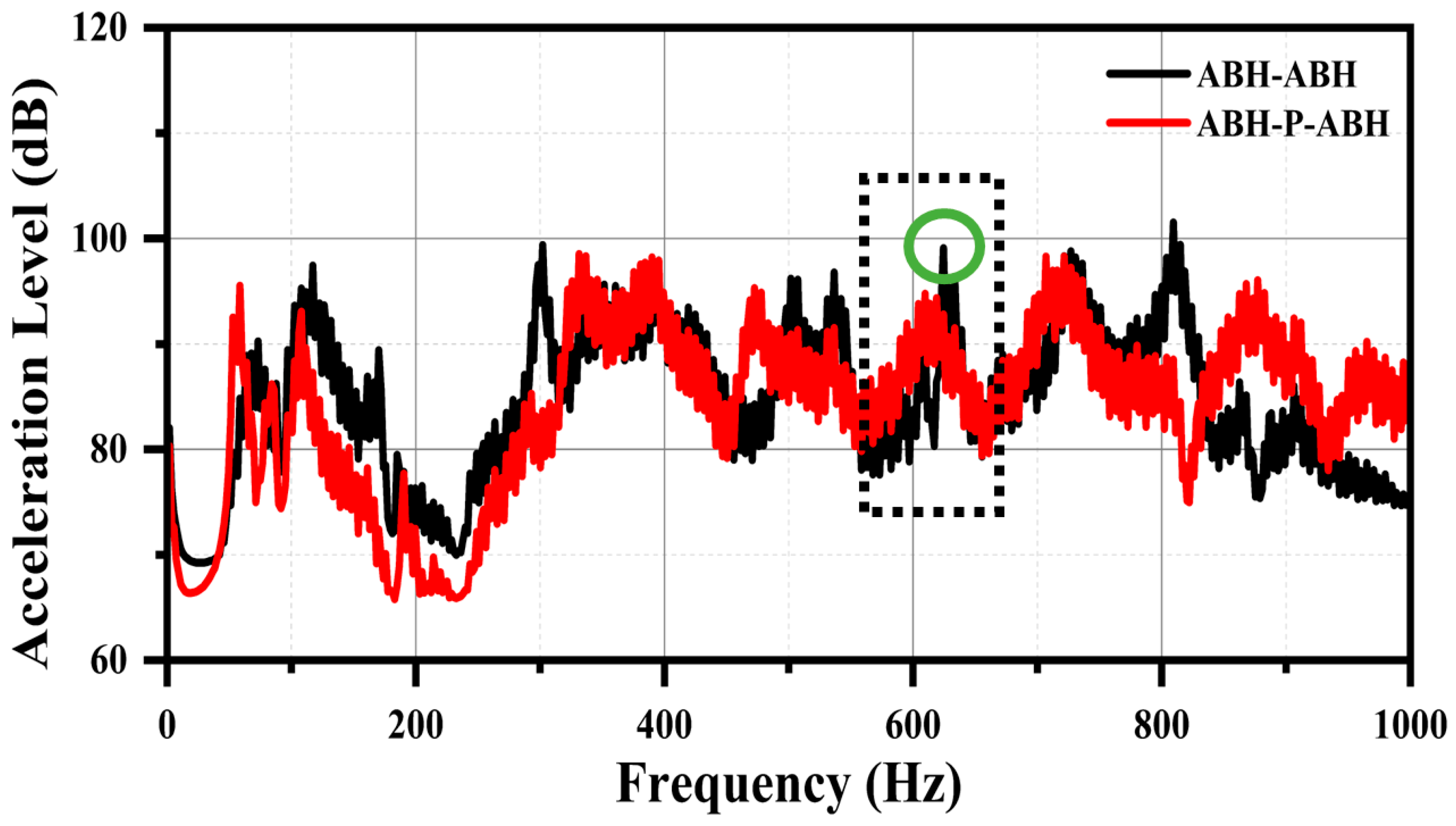
Figure 5 presents the experimentally recorded acceleration level at 1000 Hz, serving as an essential benchmark for validating the simulation results and demonstrating the consistency between the computational and experimental findings.
Consider
Figure 5, where we can see that the acceleration level (ABH-ABH and ABH–Ps–ABH) at 625 Hz:
From Equations (1)–(5), we can calculate the displacement magnitude:
The internal loss factor of particle damping, η, defined as the ratio of dissipated energy to the average stored energy per unit frequency, is evaluated in this study using the steady-state energy flow method. This method offers a robust and systematic framework for quantifying vibration damping performance by analyzing the equilibrium between the mechanical energy supplied to the system and the energy dissipated through particle motion and interactions. In applying the steady-state energy flow approach, particular emphasis is placed on accurately determining two key parameters: the power input delivered to the structure and the average kinetic energy measured at its surface. These quantities directly influence the computed value of the loss factor and therefore must be characterized with high precision to ensure the reliability of the damping assessment [
22].
The material properties of the particles integrated into the damping system play a decisive role in determining the efficiency of energy dissipation. Parameters such as density, elastic modulus, coefficient of restitution, friction coefficients, and particle size distribution strongly affect particle–wall and particle interactions, thereby governing the dynamic collision mechanisms within the enclosure. Zhang et al. [
23] (2022) from Jiangsu University of Science and Technology provide a well-established reference for these influential parameters. Accordingly, the
Table 1 presented below summarize the physical and mechanical properties of all particle materials considered in this study. These properties constitute essential inputs for both experimental investigations and numerical simulations, allowing a comprehensive assessment of how material selection influences particle damping performance and the overall dynamic response of the system.
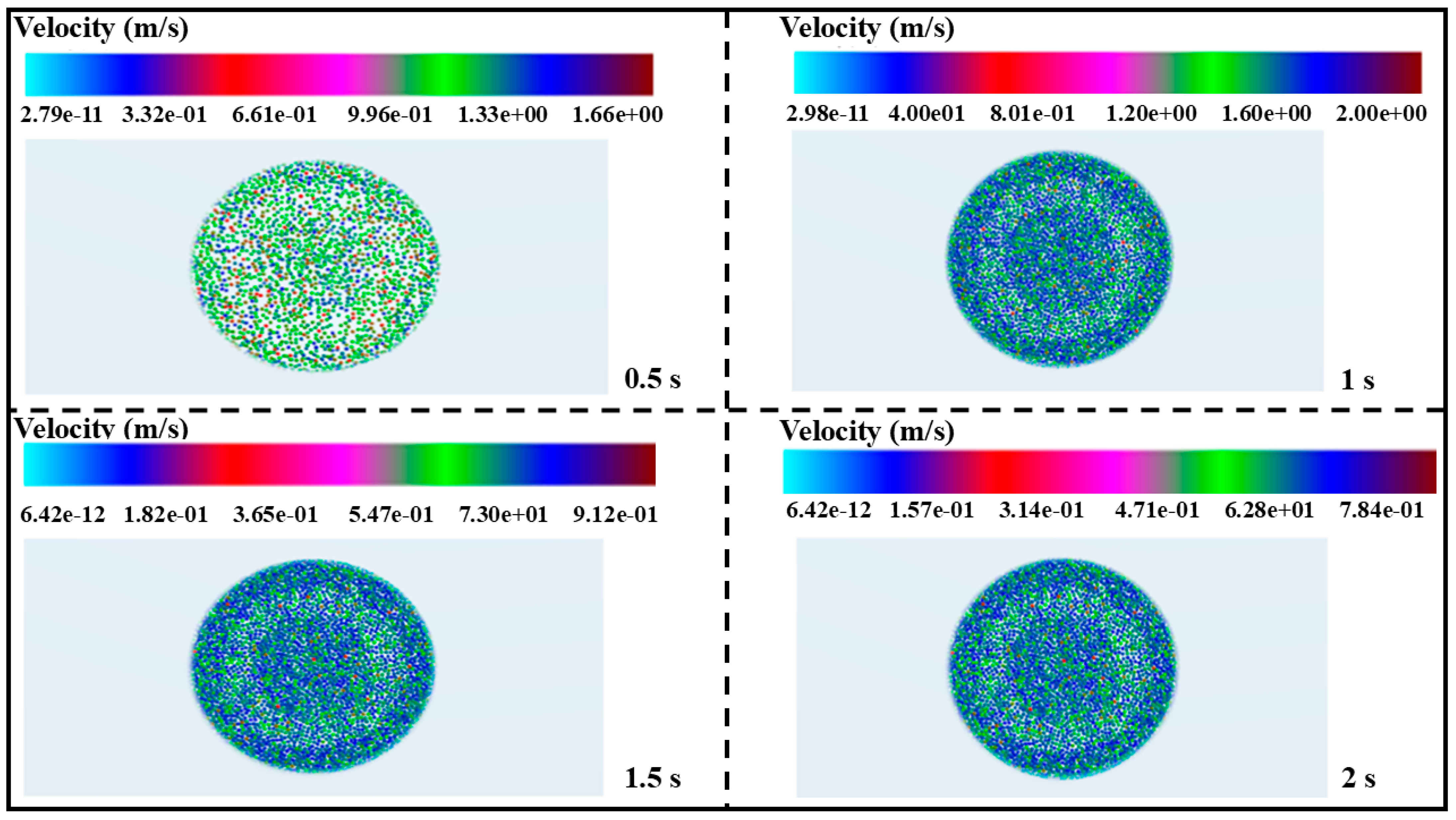
Figure 6 presents the results of the DEM simulation, illustrating the evolution of particle motion and the corresponding energy dissipation at several discrete time steps. The sequential snapshots highlight the characteristic features of the damping process, including particle rearrangement, collision frequency, impact intensity, and the progressive redistribution of kinetic energy throughout the particle bed. As the system undergoes vibration, particles experience repeated impacts with both the cavity walls and neighboring particles, generating localized zones of high energy dissipation.
The visualization clearly demonstrates how particle trajectories change over time as a result of varying excitation forces, leading to transient clustering, dispersion, and sliding behaviors. These dynamic processes play a critical role in absorbing and dissipating vibrational energy. Additionally, the temporal evolution shown in the figure reveals the transition between different modes of particle motion from loosely coordinated movement at lower excitation levels to more energetic, chaotic interactions as the vibration amplitude increases. Such variations directly influence the overall damping efficiency, emphasizing the importance of understanding time-dependent particle dynamics when evaluating the performance of particle-based damping systems.
By capturing these detailed motion patterns, the DEM simulation provides a comprehensive view of the underlying mechanisms responsible for energy dissipation. This type of visualization not only aids in interpreting the physical behavior of the particle-damping system but also serves as an essential tool for validating numerical models and optimizing particle configurations for improved vibration attenuation.
A parametric sensitivity analysis was performed to evaluate the influence of particle size and porosity on the simulation outcomes. A deliberately small particle size was selected to ensure effective and practical integration of the granular material into the geometrically constrained acoustic black hole (ABH) region, where the gradual taper and limited cavity volume impose stringent spatial requirements for particle placement and packing.
4.3. CFD Fluid Boundary Solution
From
Figure 4 presents a detailed schematic of the coupled Discrete Element Method (DEM) Computational Fluid Dynamics (CFD) simulation procedure employed in this investigation. The DEM simulations were meticulously conducted to quantify the damping loss factor, which was subsequently exported and integrated into the COMSOL Multiphysics version 6 platform for comprehensive Multiphysics analysis. In strict accordance with the experimental protocol, the simulations were performed across frequency ranges of 10–1000 Hz and 10–2000 Hz for two distinct sets of model configurations: ABH-ABH and ABH–PS–ABH, as well as ABH–PLATE and ABH–PS–PLATE.
Table 2 presents the material properties employed in the COMSOL Multiphysics version 6 simulations to compute the CFD (Computational Fluid Dynamics) aspects of the model. These properties serve as input for the coupled DEM–CFD (Discrete Element Method–Computational Fluid Dynamics) framework, where damping is incorporated via a boundary condition (likely a viscoelastic or lossy boundary condition applied to the structural/acoustic domain or particle–wall interactions) to generate realistic energy dissipation in the particle damping system, such as in hybrid acoustic black hole (ABH) configurations.
In typical DEM–CFD coupled simulations for particle damping (especially when modeling nonlinear dissipation from inter-particle collisions, friction, and particle–wall contacts in vibration/acoustic control applications), the key material properties usually include those listed in
Table 2.
From Equations (1)–(5), after the simulation with EDEM software, the loss factor can be obtained:
The particle-damping loss factor, denoted as , was computed from the DEM simulations and subsequently imported into COMSOL Multiphysics version 6 to perform the coupled CFD–structural analysis. Incorporating into the numerical model enables a more accurate representation of the energy dissipation characteristics within the system.
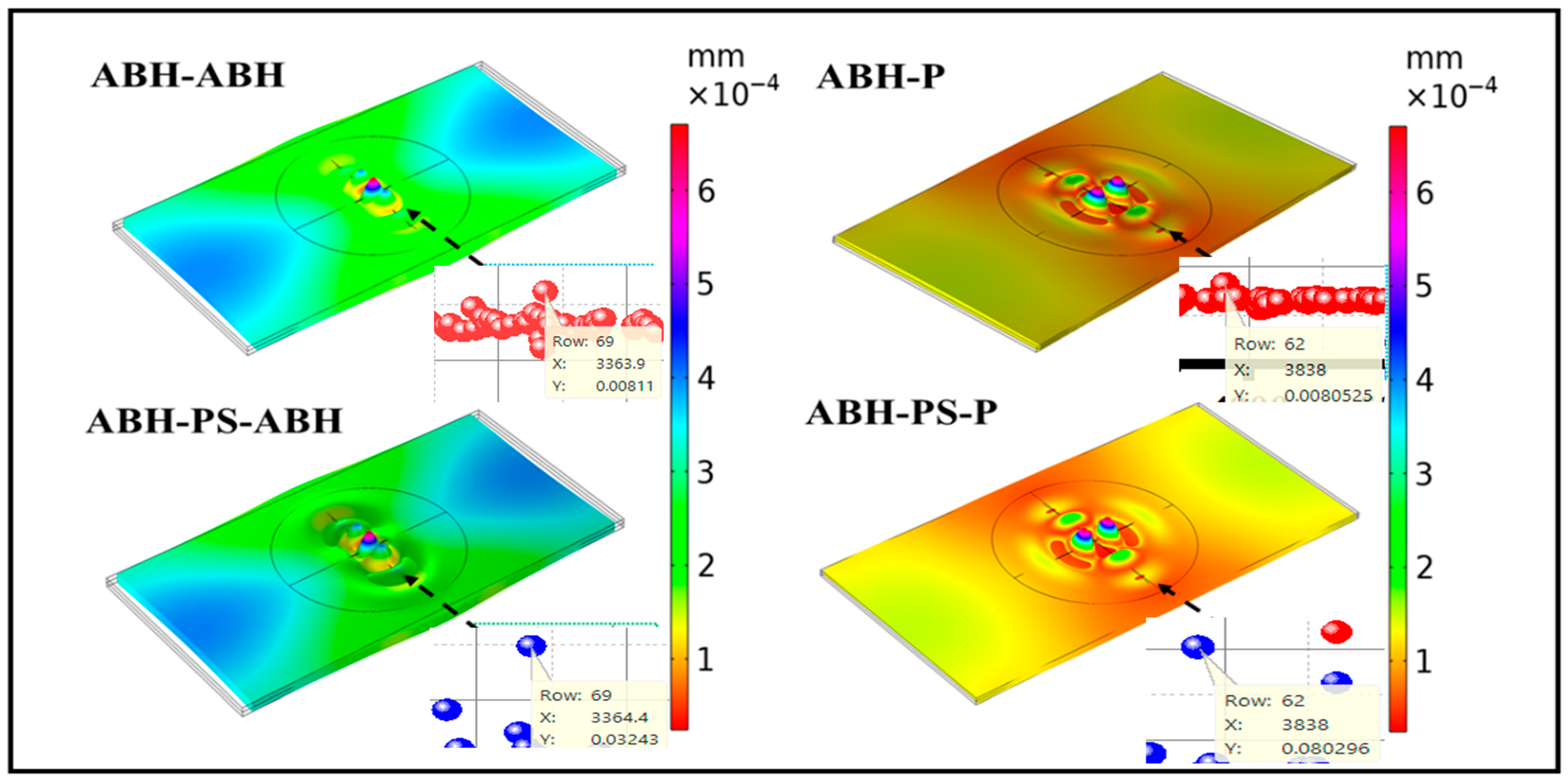
Figure 7 presents representative modal shapes in the frequency domain obtained from different simulation configurations. These modal results highlight the influence of the particle-induced damping on the system’s dynamic response and demonstrate how variations in model parameters alter the vibration attenuation performance.
Figure 7 presents the surface modal distributions for the four simulation configurations investigated in this study: ABH–ABH, ABH–PS–ABH, ABH–PLATE, and ABH–PS–PLATE. These modal contour plots provide a comprehensive visualization of the dynamic behavior of each structural configuration in the frequency domain, highlighting the spatial distribution of vibration amplitudes and modal shapes across the surface. The analysis focuses specifically on the four computational cells in which the loss factor demonstrated significant variation, as these regions offer the most meaningful insight into the damping behavior induced by both the acoustic black hole (ABH) geometry and the particle–structure (PS) interaction. By comparing the modal characteristics among these selected cells,
Figure 7 highlights the influence of particle damping and ABH design on the redistribution of vibrational energy, thereby illustrating the distinct dynamic response associated with each simulation model.
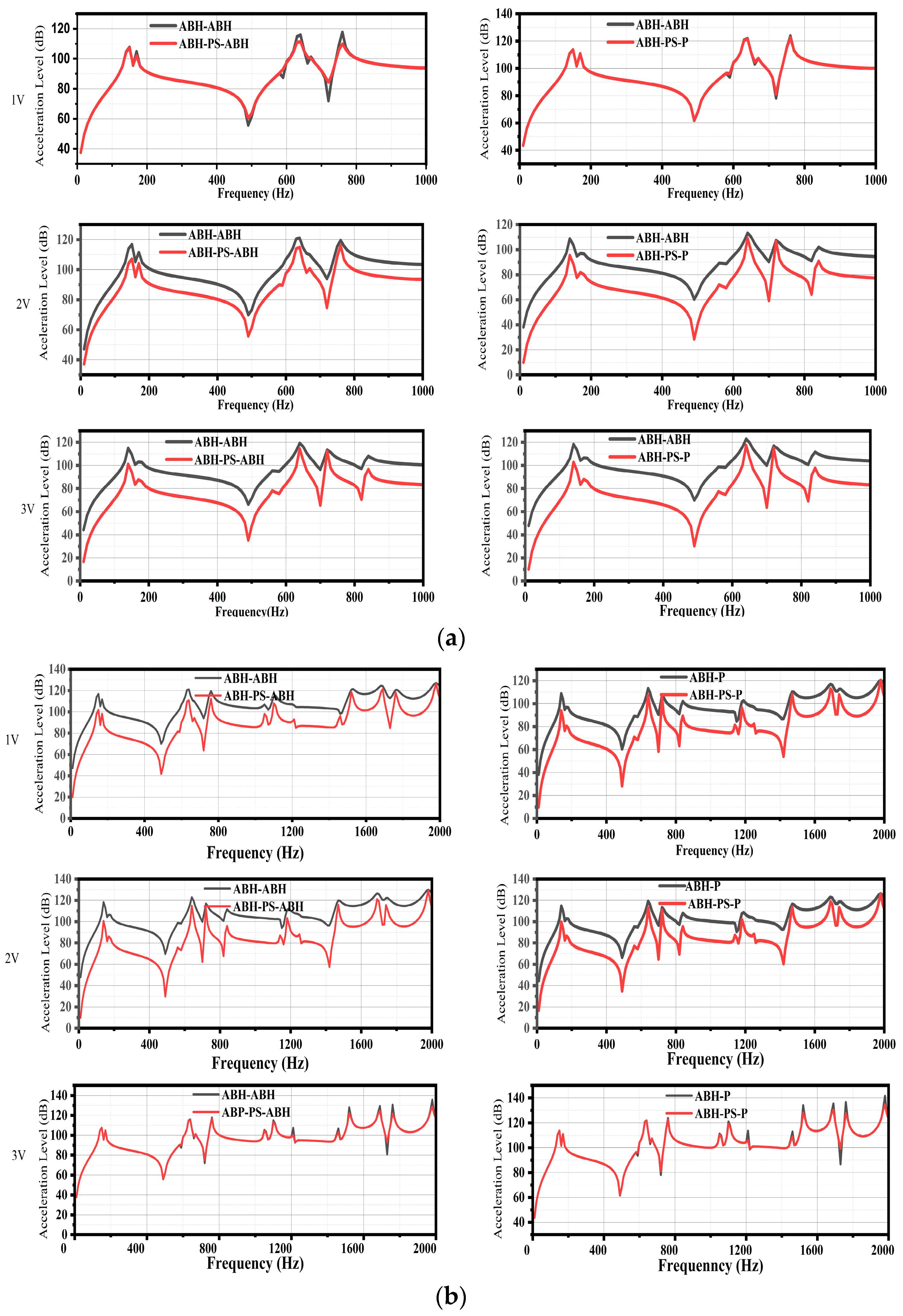
Figure 8a,b provide a comprehensive presentation of the COMSOL Multiphysics version 6 simulation results and the corresponding comparative analyses for the four structural configurations: ABH-ABH, ABH–PS–ABH, ABH-P, and ABH-PS-PLATE. The simulations were performed across two frequency conduction ranges, 10–1000 Hz and 10–2000 Hz, and under three excitation levels of 1 V, 2 V, and 3 V. These conditions were selected to ensure a broad assessment of the dynamic behavior and to capture the influence of particle damping across low- and mid-frequency regimes. As illustrated in
Figure 8a, the acoustic black hole configuration containing particles (ABH–PS–ABH) exhibits significantly lower acceleration levels (in dB) compared to the particle-free model (ABH-ABH). This reduction persists consistently throughout the full frequency range and across all excitation voltages, indicating that the presence of particles enhances the system’s ability to dissipate vibrational energy.
Similarly,
Figure 8b compares the acceleration responses of the plate-based models, ABH-P and ABH-PS-PLATE. The results show a parallel trend: the configuration incorporating particles displays noticeably reduced vibration amplitudes for all tested excitation levels. This finding further confirms the effectiveness of particle damping in suppressing structural vibrations, even when the ABH geometry is integrated into a flat plate. Collectively, the results from
Figure 8a,b demonstrate that the integration of particle damping into ABH structures consistently improves vibration attenuation performance. The observed trends reinforce the conclusion that particle–structure interaction plays a critical role in energy dissipation and offers a promising passive damping strategy for lightweight structural systems.
5. Analysis and Discussion
The simulation procedure is carried out within the general study framework of COMSOL Multiphysics versin 6, where a total of 160 target natural frequencies are specified in the Solid Mechanics (Solid) physics interface. This approach ensures that the modal characteristics of the structure are thoroughly captured across a broad spectral range.
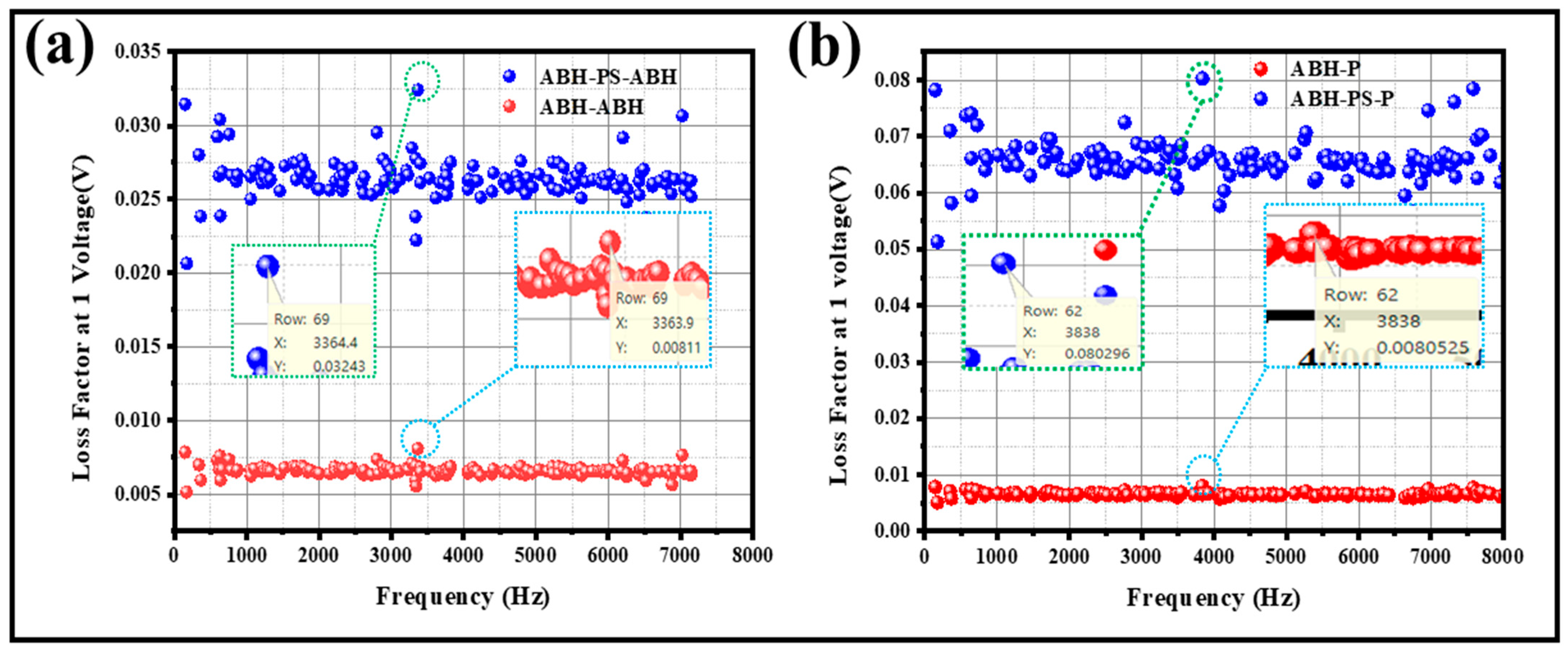
Figure 9a,b, shown on the right, illustrate the system’s response at 1000 Hz, a frequency at which both the natural frequency and the corresponding loss factor become particularly prominent. At this frequency, the damping effects are more noticeable, allowing a clearer interpretation of how the particle–structure interactions influence the vibrational behavior. For each computed loss factor, a representative surface plot of the displacement amplitude has been selected. These surfaces highlight the spatial distribution of vibrational energy and provide insight into the regions most affected by damping. Collectively, these visualizations contribute to a more comprehensive understanding of the dynamic response of the structure under varying damping conditions.
Figure 9a shows the comparison of the loss factor at 1000 Hz, highlighting the differences in the loss dissipation energy factor (LDEF) between the ABH configuration without particles and the ABH–PS–ABH configuration containing particles. The results clearly demonstrate that the LDEF of the particle-free ABH model is considerably lower, whereas the inclusion of particles significantly enhances the energy dissipation capacity of the structure.
Figure 9b, a similar pattern is observed where the plate-based models are compared. In this case, the ABH-PS-PLATE configuration exhibits a noticeably higher loss dissipation energy factor than the particle-free ABH-P model. These trends consistently confirm the effectiveness of particle damping in increasing the overall energy dissipation across different structural arrangements.
Table 3 below presents the corresponding numerical values of the loss dissipation factors, providing a quantitative summary of the improvements achieved through particle integration.
Based on the results presented in
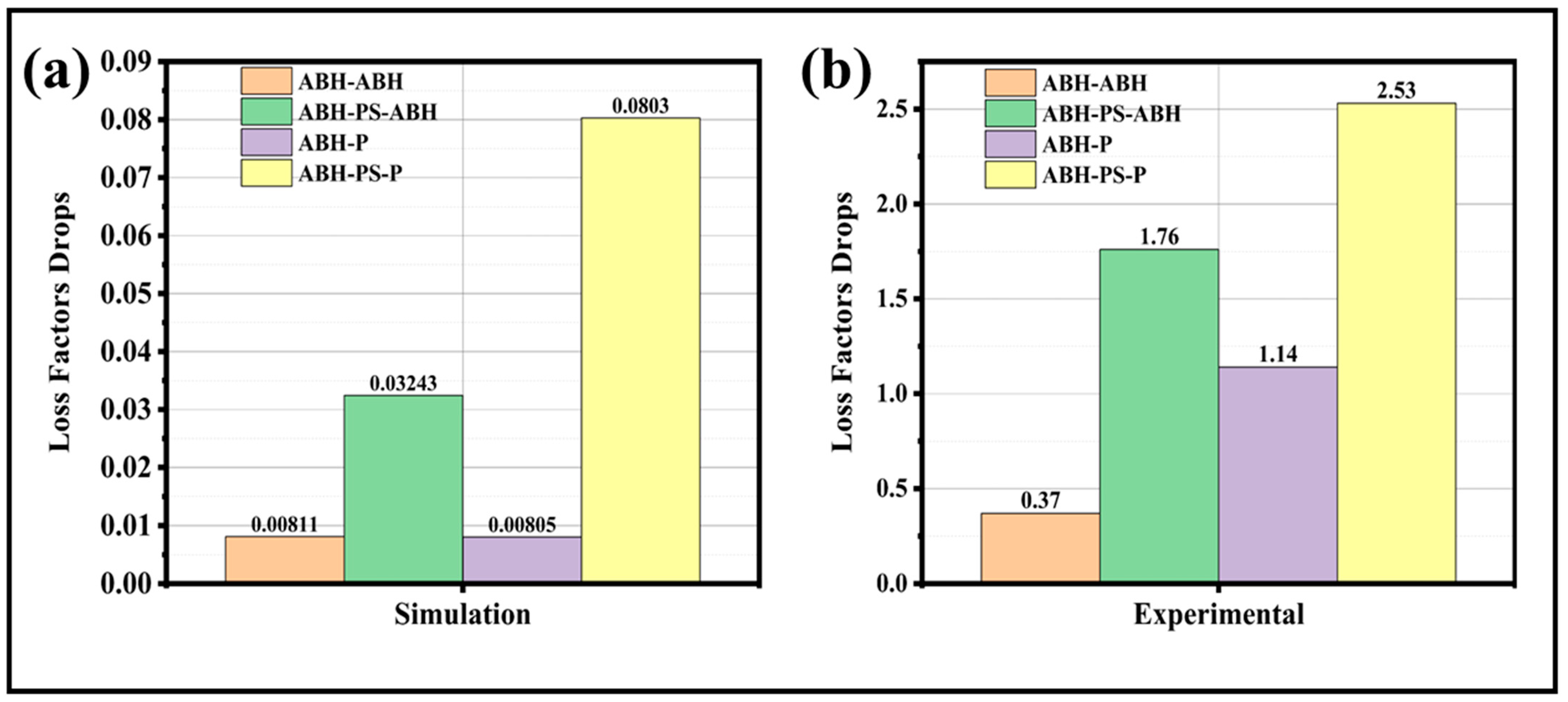
Figure 10, a detailed comparison between the numerical simulations and experimental measurements of the loss factors was conducted. Both datasets exhibit a consistent qualitative trend: configurations without particles (ABH-ABH and ABH–PLATE) show very low loss factors, whereas configurations incorporating particle damping (ABH–PS–ABH and ABH–PS–PLATE) demonstrate substantially higher energy dissipation. This enhancement is primarily attributed to the additional damping mechanisms introduced by the particles, including inter-particle friction, particle–surface friction, inelastic micro-collisions, and momentum exchange, which effectively convert vibrational energy into heat. Although the experimental loss factors are higher than the numerical predictions, the observed discrepancy can be explained by modeling idealizations and experimental conditions. In the numerical model, material properties, boundary conditions, and particle–structure interactions are idealized, and only the dominant damping mechanisms are considered. In contrast, the experimental measurements inherently include additional sources of energy dissipation, such as friction at supports and interfaces, imperfect bonding, air damping, and losses introduced by fixtures and sensors. These effects are difficult to fully account for in the numerical framework and therefore lead to higher experimentally measured loss factors.
Despite these quantitative differences, the numerical (
Figure 10a) and experimental (
Figure 10b) results show strong agreement in terms of overall trends and relative performance among configurations. In particular, a pronounced reduction in vibration transmission is consistently observed when particles are introduced either between two Acoustic Black Holes or between an Acoustic Black Hole and a plate. This trend agreement confirms the reliability of the numerical model and validates the theoretical assumptions used to characterize the particle damping mechanism. While the conventional Acoustic Black Hole mechanism is already recognized as an effective passive vibration control strategy by concentrating vibrational energy in regions of reduced stiffness, the incorporation of particles further amplifies energy dissipation through multiple complementary loss pathways. From an engineering perspective, this combined ABH–particle damping approach offers enhanced vibration attenuation, which can contribute to reduced energy losses, slower structural degradation, extended service life, and lower maintenance costs. Overall, these findings demonstrate that integrating particle damping with Acoustic Black Hole structures provides an effective, robust, and practical solution for advanced vibration control applications.
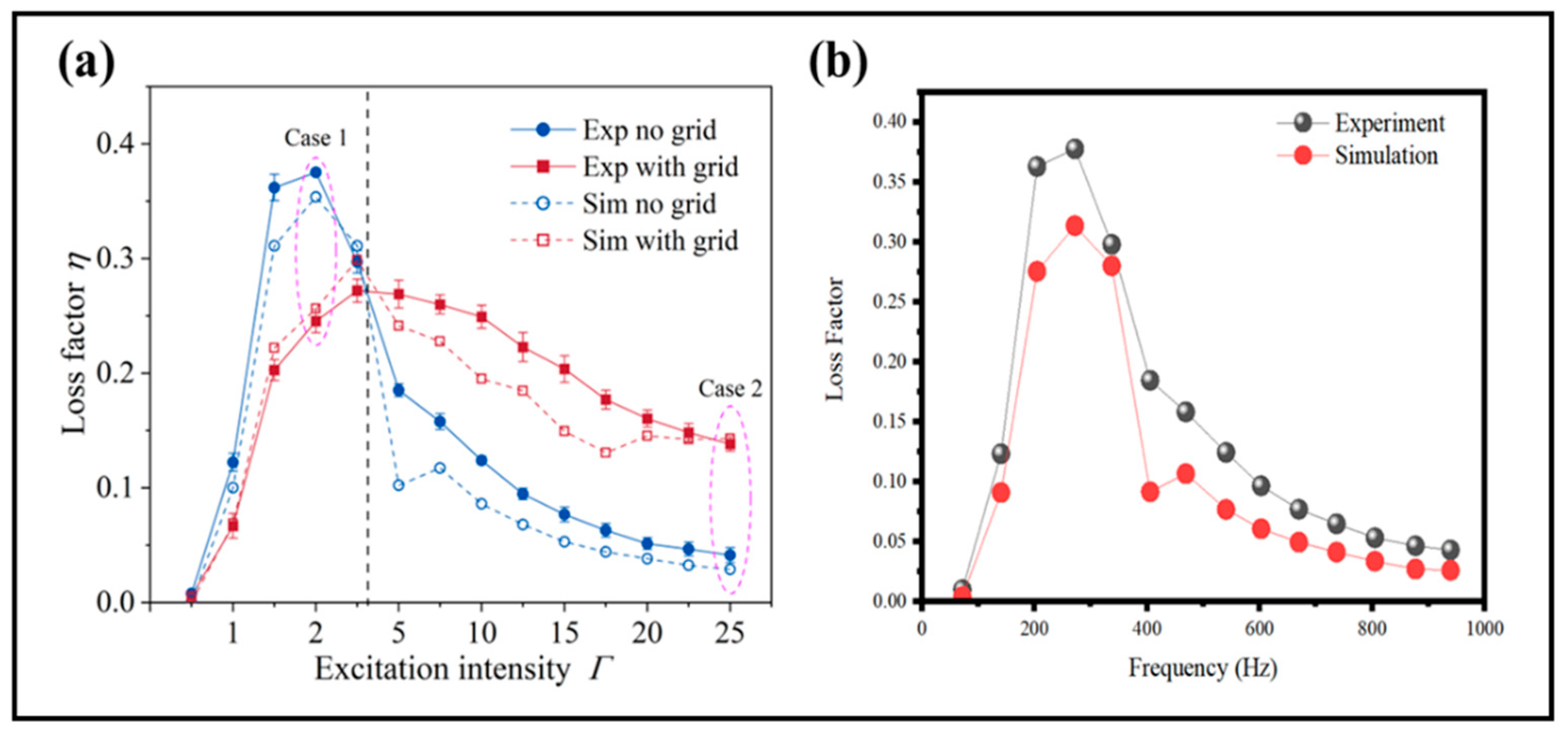
Hu et al. [
23] (
Figure 11a) conducted both experimental measurements and numerical simulations to investigate the loss factor of a particle-damping system in configurations without a grid. Their study focused on elucidating the particle damping mechanisms and quantifying the associated energy dissipation characteristics.
Figure 11b illustrates the variation in the loss factor as a function of excitation frequency for a filling ratio of 60% under an excitation intensity of Γ = 1. The results cover a frequency range from low frequencies up to 1000 Hz and include both experimental and simulated data. At low frequencies, the loss factor remains very small for both cases, indicating limited damping efficiency. As the excitation frequency increases, the loss factor rises sharply and reaches a pronounced maximum in the mid-frequency range, approximately between 200 and 300 Hz. Notably, the experimentally measured peak is higher than predicted by the numerical simulation, implying stronger energy dissipation in the physical system.
Beyond the peak region, the loss factor decreases gradually with increasing frequency. In the high-frequency range (above approximately 400 Hz), both experimental and numerical curves exhibit a monotonic decline and eventually stabilize at relatively low values. Throughout the entire frequency spectrum, the experimental loss factor consistently exceeds the simulated one, although both results display similar overall trends. This close qualitative agreement indicates that the numerical model successfully captures the dominant damping behavior of the system, while the quantitative discrepancies may be attributed to simplifying assumptions in the model, uncertainties in material properties, or unmodeled experimental effects.
The purpose of the numerical simulation in our research is to assess and compare the loss factors as well as the acceleration behavior under conditions with and without particle incorporation. The numerical simulation supports the experimental findings by consistently indicating a low loss factor in configurations without particles, in both simulated and experimental cases.
6. Conclusions
This research investigates the vibration control performance of Acoustic Black Hole (ABH) structures under two conditions: without particles and with passive particle damping. Four configurations were examined: ABH-ABH and ABH–PLATE (without particles), and ABH–PS–ABH and ABH–PS–PLATE (with particles). The purpose of the study was to evaluate the contribution of passive particles (Ps) to energy dissipation and to establish their effectiveness in reducing vibration levels when combined with ABH structures. The energy dissipation behavior of the particles was assessed through a combination of experimental measurements and numerical simulations carried out under low vibration acceleration. Introducing passive particles into the cavity between the ABH structures introduces additional damping mechanisms, such as inelastic collisions, friction, and momentum exchange, that are not present in the traditional ABH configuration. These mechanisms allow the particles to dissipate vibrational energy more efficiently, thereby enhancing the overall damping performance. Both the experimental and numerical results, expressed in terms of acceleration level (dB), show a clear and consistent trend: the configurations containing particles (ABH–PS–ABH and ABH–PS–PLATE) exhibit significantly lower vibration amplitudes than their particle-free counterparts (ABH-ABH and ABH–PLATE). This demonstrates that while the ABH concept alone is an effective passive vibration control strategy, the combination of ABH with particle damping substantially increases the overall energy dissipation capability of the system. The integrated ABH–particle approach therefore represents an improved passive solution for vibration mitigation, especially in applications where low-frequency vibration control is critical.
The study was conducted using a hybrid methodology. Experimentally, controlled low-acceleration vibration tests were performed to quantify the response of each configuration. Numerically, a coupled Discrete Element Method–Computational Fluid Dynamics (DEM–CFD) framework was implemented to simulate the dynamic behavior of the particles and their interaction with the surrounding structure. The DEM simulations were conducted using EDEM software, while the CFD and structural vibration analyses were performed in COMSOL Multiphysics. This coupled numerical approach allows for a comprehensive representation of particle motion, contact behavior, and energy dissipation processes, thereby strengthening the validation of the experimental results.
Overall, the expanded analysis confirms that combining ABH structures with passive particle damping results in a significant improvement in vibration reduction. This finding highlights the potential of particle-enhanced ABH systems as an efficient, low-cost, and scalable solution for advanced vibration control applications.