Literature Review: Air-Cooled Heat Sink Geometries Subjected to Forced Flow

Abstract
1. Introduction
1.1. Context and Importance of Heat Sinks
1.2. Purpose of the Review
- Which geometric features most effectively enhance heat transfer under forced convection?
- How can designers balance heat transfer enhancement with acceptable pressure drop?
- What computational and experimental methods are currently used to evaluate these designs?
- What are the emerging materials and manufacturing techniques, such as additive manufacturing, that enable novel geometries?
2. Fundamental Principles of Heat Transfer in Air-Cooled Heat Sinks
2.1. Basic Heat Transfer Mechanisms
2.2. Thermal Resistance of Heat Sinks
2.3. Effect of Forced Flow on Heat Transfer
3. Types of Heat Sink Geometries
3.1. Pin-Fin Heat Sinks
3.1.1. Geometric Variations and Their Effects on Performance
3.1.2. Comparison with Other Heat Sink Geometries
3.1.3. Key Parameters Pin Diameter, Height, Spacing, Orientation
3.2. Finned Heat Sinks
3.2.1. Different Fin Shapes
3.2.2. Influence of Fin Density and Thickness on Heat Dissipation
3.3. Flat Plate Heat Sinks
3.3.1. Applications and Limitations
3.3.2. Forced Flow Considerations in Flat Plate Designs
3.4. Novel Geometries and Hybrid Designs
Applications of Hybrid and Innovative Heat Sink Geometries (e.g., Folded Fins, Microchannels, Porous Media)
4. Fluid Dynamics and Flow Characteristics
4.1. Effect of Forced Airflow on Heat Sink Performance
4.1.1. Flow Characteristics: Laminar, Turbulent, and Transition Flow Regimes
4.1.2. Flow Alignment (Vertical, Horizontal) and Its Impact on Heat Transfer
4.2. Flow Distribution and Flow Blockage
4.2.1. Issues with Uneven Flow Distribution in Complex Geometries
4.2.2. Flow Blockage and Its Impact on Heat Sink Efficiency
4.3. Heat Sink–Fan Interaction
4.3.1. Influence of Fan Type, Speed, and Positioning
4.3.2. Optimization of Airflow for Maximum Heat Dissipation
5. Optimization and Performance Enhancement
5.1. Geometric Optimization
5.1.1. Design Parameters Affecting Heat Sink Performance
5.1.2. Computational Fluid Dynamics (CFD) for Optimization
5.2. Material Considerations
5.2.1. Selection of Materials for Heat Sinks
5.2.2. Impact of Thermal Conductivity on Heat Sink Efficiency
5.3. Advanced Techniques
5.3.1. Additive Manufacturing (3D Printing) for Custom Geometries
5.3.2. Surface Treatments (e.g., Micro-Fin Coating, Surface Roughness, Porous Coatings) to Enhance Heat Transfer
5.4. Multi-Objective Optimization
Balancing Heat Dissipation, Pressure Drop, Weight, and Cost in the Design Process
6. Experimental Studies and Benchmarks
6.1. Experimental Methods
6.2. Case Studies 1
6.3. Case Studies 2
6.4. Data Correlation and Empirical Models
6.5. Summary of Benchmarked Plate Pin-Fin Heat Sink (PPFHS) Thermal–Hydraulic Findings
6.5.1. Geometric Configuration
6.5.2. Pin-Diameter Configurations
6.5.3. Numerical Modeling Approach
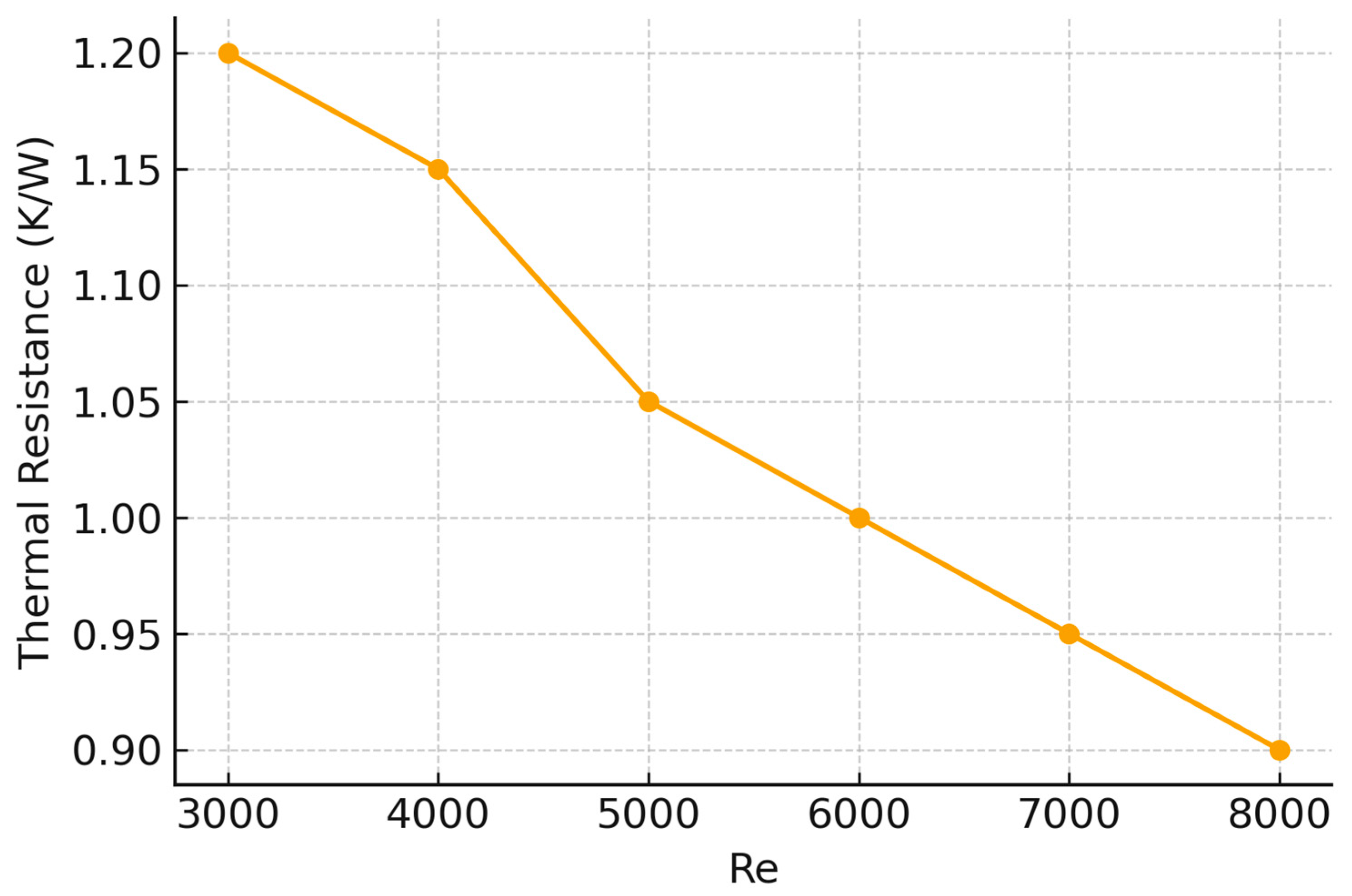
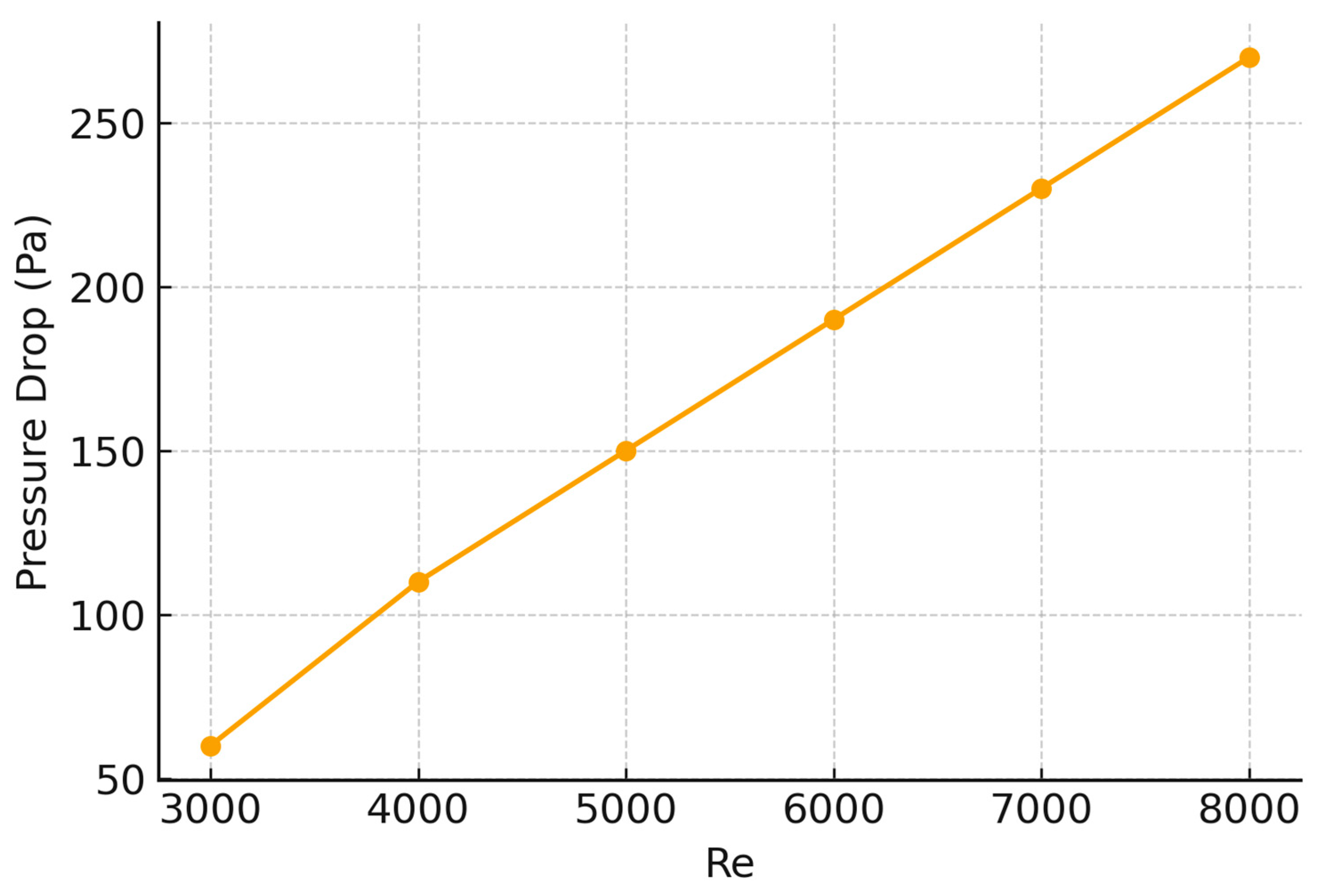
6.5.4. Thermal–Hydraulic Performance Comparison
6.5.5. Influence of Pin Spacing (NPFDCD)
6.5.6. Application to Desktop CPU Cooling
6.5.7. Summary
7. Challenges and Limitations
7.1. Trade-Offs in Design
7.2. Material and Manufacturing Constraints
7.3. Flow Distribution and Airflow Limitations
7.4. Experimental and Modeling Limitations
7.5. Application-Specific Constraints
8. Discussion
9. Conclusions
- Plate-fin heat sinks are recommended for applications with moderate heat fluxes where minimizing fan power consumption and pressure drop is the primary constraint.
- Pin-fin arrays should be selected for high-power-density components where strong vortex shedding and wake-induced mixing are required to break the thermal boundary layer, provided that higher acoustic noise and pressure drops are acceptable.
- Hybrid configurations (e.g., PPFHS) represent an optimal compromise for constrained spaces, effectively balancing enhanced localized convective mixing with manageable hydraulic resistance.
Funding
Data Availability Statement
Conflicts of Interest
References
- Mahajan, R.; Chiu, C.-p.; Chrysler, G. Cooling a microprocessor chip. Proc. IEEE 2006, 94, 1476–1486. [Google Scholar] [CrossRef]
- Shawal, R.A.; Adnan, R.; Azmi, W.H. Performance investigation of plate-fin air-cooled heat sinks under forced airflow conditions. J. Adv. Eng. Des. 2022, 2, 45–55. [Google Scholar]
- Beitelmal, M.H.; Saad, A.M. Recent developments in air-cooled heat sinks: Design, performance, and optimization trends. Appl. Therm. Eng. 2023, 230, 120818. [Google Scholar] [CrossRef]
- Yadav, H. Heat transfer in forced and natural convection. In Flow Dynamics and Heat Transfer; De Gruyter: Berlin, Germany, 2023; Chapter 4. [Google Scholar] [CrossRef]
- Abbas, A.A.M.; Razuqi, H. Performance of rectangular pin-fin heat sink subject to an impinging air flow. J. Therm. Eng. 2021, 7, 666–676. [Google Scholar] [CrossRef]
- Lee, J.J.; Kim, H.J.; Kim, D.-K. Experimental study on forced convection heat transfer from plate-fin heat sinks with partial heating. Processes 2019, 7, 772. [Google Scholar] [CrossRef]
- Celsia Inc. Heat Sink Design Fundamentals. 2024. Available online: https://celsiainc.com/heat-sink-blog/heat-sink-design/ (accessed on 12 October 2025).
- Silva, E.C.; Sampaio, Á.M.; Pontes, A.J. Evaluation of active heat sinks design under forced convection: Effect of geometric and boundary parameters. Materials 2021, 14, 2041. [Google Scholar] [CrossRef] [PubMed]
- Next Electronics. Heat Sink Design for Power Electronics—Thermal Resistance and Its Importance. 2024. Available online: https://next.gr/tutorials/power-and-energy/heat-sink-design-for-power-electronics-tutorial (accessed on 12 October 2025).
- Zahid, I.; Farooq, M.; Farhan, M.; Usman, M.; Qamar, A.; Imran, M.; Alqahtani, M.A.; Javaid, M.Y. Thermal performance analysis of various heat sinks based on alumina NePCM for passive cooling of electronic components: An experimental study. Energies 2022, 15, 8416. [Google Scholar] [CrossRef]
- Mechanical Department ANITS. Design and Analysis of a Heat Sink. Available online: https://mechanical.anits.edu.in/PROJECT17-21/A4.pdf (accessed on 12 October 2025).
- Kim, D.-H.; Viventi, J.; Amsden, J.J.; Xiao, J.; Vigeland, L.; Kim, Y.-S.; Blanco, J.A.; Panilaitis, B.; Frechette, E.S.; Contreras, D.; et al. Dissolvable films of silk fibroin for ultrathin conformal bio-integrated electronics. Nat. Mater 2010, 9, 511–517. [Google Scholar] [CrossRef]
- Belhadj, A. Numerical investigation of forced convection of nanofluid in microchannel heat sinks. J. Therm. Eng. 2018, 4, 2263–2273. [Google Scholar] [CrossRef]
- Wan, X. Numerical simulation of laminar forced convection of pin-fin heat-sink array in a channel by using porous approach. Appl. Sci. 2015, 5, 1846–1868. [Google Scholar] [CrossRef]
- Alem, K.; Sahel, D.; Boudaoud, W.; Benzeguir, R. Forced convection heat dissipation from pin-fin heat sinks modified by rings and circular perforation. Acta Mech. Autom. 2025, 19, 117–125. [Google Scholar] [CrossRef]
- Haddad, Z. Experimental investigation on thermal performance of staggered pin-fin heat sinks under forced convection. Case Stud. Therm. Eng. 2021, 27, 101337. [Google Scholar] [CrossRef]
- Zohir, A.E.; Badr, H.M.; Ahmed, M.E. Flow and heat transfer in inline and staggered fin arrays under forced convection. Exp. Therm. Fluid Sci. 2019, 107, 153–164. [Google Scholar] [CrossRef]
- Mejbil, H.A.; Jaffal, H.M. Thermal performance enhancement of a cooling tower heat sink radiator. Case Stud. Therm. Eng. 2021, 28, 101477. [Google Scholar] [CrossRef]
- Hudișteanu, S.-V.; Cherecheș, N.-C.; Țurcanu, F.-E.; Hudișteanu, I.; Verdeș, M.; Ancaș, A.-D. Experimental analysis of innovative perforated heat sinks for enhanced photovoltaic efficiency. Energy Convers. Manag. X 2025, 25, 100842. [Google Scholar] [CrossRef]
- Li, J.; Xu, Y.; Zhao, L. Optimization of plate-fin heat sink configurations for enhanced thermal performance and manufacturability. Case Stud. Therm. Eng. 2025, 73, 106529. [Google Scholar] [CrossRef]
- Yuan, D.; Li, B.; Zhou, P. Effect of fin spacing and flow direction on the thermal performance of air-cooled heat sinks. Appl. Therm. Eng. 2012, 180, 115780. [Google Scholar] [CrossRef]
- Incropera, F.P.; DeWitt, D.P. Fundamentals of Heat and Mass Transfer, 5th ed.; John Wiley & Sons: Hoboken, NJ, USA, 2002. [Google Scholar]
- Kumar, R.; Garg, H.; Dhiman, S.K.; Kumar, B. Micro-electronics cooling devices for heat extracting using nano Ferro fluid. In Proceedings of the 2019 International Conference on Vision Towards Emerging Trends in Communication and Networking (ViTECoN), Vellore, India, 30–31 March 2019. [Google Scholar] [CrossRef]
- Bejan, A. Convection Heat Transfer, 4th ed.; John Wiley & Sons: Hoboken, NJ, USA, 2013. [Google Scholar]
- Patankar, S.V. Numerical Heat Transfer and Fluid Flow; CRC Press: Boca Raton, FL, USA, 1995. [Google Scholar]
- Garimella, S.V.; Fleischer, A.S.; Murthy, J.Y.; Keshavarzi, A.; Prasher, R.; Patel, C. Thermal challenges in next-generation electronic systems. IEEE Trans. Compon. Packag. Technol. 2008, 31, 801–815. [Google Scholar] [CrossRef]
- Tuckerman, D.B.; Pease, R.F.W. High-performance heat sinking for VLSI. IEEE Electron Device Lett. 1981, 2, 126–129. [Google Scholar] [CrossRef]
- Kandlikar, S.G. Heat Transfer and Fluid Flow in Minichannels and Microchannels; Elsevier: Amsterdam, The Netherlands, 2005. [Google Scholar]
- Mahian, O.; Kianifar, A.; Wongwises, S. A review of the applications of porous media in heat transfer enhancement. Renew. Sustain. Energy Rev. 2015, 43, 1073–1091. [Google Scholar] [CrossRef]
- Frohn, J.; Nguyen, H.; Reiche, M. Additive manufacturing of complex heat sink geometries for enhanced thermal management. Appl. Therm. Eng. 2018, 129, 644–654. [Google Scholar] [CrossRef]
- Satheeshkumar, M.; Thansekhar, M.R.; Meenakshi, C.A. Numerical investigation of mass flow distribution in wavy microchannel heat sink. Appl. Mech. Mater. 2015, 787, 52–56. [Google Scholar] [CrossRef]
- Zhang, Z.; Mehendale, S.; Tian, J.; Li, Y. Fluid flow distribution and heat transfer in plate-fin heat exchangers. Heat Transf. Eng. 2015, 36, 806–819. [Google Scholar] [CrossRef]
- Vairavan, R.; Retnasamy, V.; Sauli, Z.; Kamarudin, H.; Isa, M.M.; Taniselass, S. Heat Sink Cooling Fan and Rotation Speed Effect Analysis on Heat Dissipation of High Power GaN LED Package. Adv. Mater. Res. 2022, 1082, 315–320. [Google Scholar] [CrossRef]
- Mohammed, A.A.; Razuqi, S.A. Effect of air fan position on heat transfer performance of elliptical pin fin heat sink subjected to impinging air flow. J. Therm. Eng. 2021, 7, 1406–1416. [Google Scholar] [CrossRef]
- Electronics Cooling. Quick and Easy Fan/Sink Characterization. August 2002. Available online: https://www.electronics-cooling.com/2002/08/quick-and-easy-fan-sink-characterization/ (accessed on 12 October 2025).
- International Journal of Engineering and Advanced Technology. Experimental investigation: Response surface methodology on fin spacing of heat sinks for natural convection. Int. J. Eng. Adv. Technol. 2023, 9. [Google Scholar]
- Kasza, K.; Malinowski, Ł.; Królikowski, I. Optimization of pin-fin heat sink by application of CFD simulations and DOE methodology with neural network approximation. Int. J. Appl. Mech. Eng. 2013, 18, 365–381. [Google Scholar] [CrossRef]
- Turgut, O.E. Multi-objective design optimization of plate fin heat sinks using improved differential search algorithm. Int. J. Intell. Syst. Appl. Eng. 2018, 1, 1–13. [Google Scholar] [CrossRef][Green Version]
- Xu, R. Multi-Objective optimization of the microchannel heat sink used for combustor of the gas turbine. Energies 2024, 17, 818. [Google Scholar] [CrossRef]
- Lim, X.Q.; Aziz, M.S.A.; Khor, C.Y.; Simanjuntak, J.P. Influence of heat sink material and surface coatings on passive cooling thermal performance. J. Electron. Mater. 2025, 55, 1522–1536. [Google Scholar] [CrossRef]
- Baig, M.M.A.; Hassan, S.F.; Saheb, N.; Patel, F. Metal matrix composite in heat sink application: Reinforcement, processing, and properties. Materials 2021, 14, 6257. [Google Scholar] [CrossRef]
- KingkaTech. Comparative Analysis of Heat Sink Materials: Aluminum, Copper, Graphite and Mixed Compositions. KingkaTech Blog. Available online: https://www.kingkatech.com/Comparative-Analysis-of-Heat-Sink-Materials-Aluminum-Copper-Graphite-And-Mixed-Compositions-id48670876.html (accessed on 12 October 2025).
- Leonard, W.; Teertstra, P.; Culham, J.R. Characterization of heat sink flow bypass in plate fin heat sinks. In Proceedings of the ASME International Mechanical Engineering Congress & Exposition, New Orleans, LA, USA, 17–22 November 2002; pp. 1–8. [Google Scholar]
- Smith, M.; Kim, S.; Lambert, A.; Walde, M.; Lindahl, J.; Mungale, K.; Arabi Hassen, A. Maximizing the performance of a 3D printed heat sink by accounting for anisotropic thermal conductivity during filament deposition. In 2019 18th IEEE Intersociety Conference on Thermal and Thermomechanical Phenomena in Electronic Systems (ITherm); IEEE: New York, NY, USA, 2024. [Google Scholar]
- IIETA. Thermal performance optimization of perforated fins for flat plate heat sinks using CFD approach. Int. J. Heat Technol. 2024, 41, 426. [Google Scholar]
- Zhang, C.; Chen, L.; Tong, Z. Multi-objective optimization of heat sink with multi-cross-ribbed-fins for a motor controller. J. Eng. Appl. Sci. 2022, 69, 34. [Google Scholar] [CrossRef]
- Gragnaniello, L.; Iasiello, M.; Mauro, G.M. Multi-Objective optimization of a heat sink for the thermal management of a Peltier-Cell-Based biomedical refrigerator. Energies 2022, 15, 7352. [Google Scholar] [CrossRef]
- Fakhar, A.; Zhang, X.; Riffat, S. Experimental investigation of heat sinks using thermocouple and infrared thermography measurements. Appl. Therm. Eng. 2017, 121, 320–330. [Google Scholar] [CrossRef]
- Choi, S.; Kim, J. Experimental characterization of forced convection over plate-fin heat sinks in wind tunnel. Int. J. Heat Mass Transf. 2015, 81, 125–133. [Google Scholar] [CrossRef]
- Xia, G.; Chen, Z.; Cheng, L.; Ma, D.; Zhai, Y.; Yang, Y. Micro-PIV visualization and numerical simulation of flow and heat transfer in three micro pin-fin heat sinks. Exp. Int. J. Therm. Sci. 2017, 119, 9–23. [Google Scholar] [CrossRef]
- Ranjan, R.; Prasad, B. Experimental validation of CFD simulations for staggered pin-fin heat sinks under forced convection. Appl. Therm. Eng. 2016, 101, 1052–1062. [Google Scholar] [CrossRef]
- Han, Z.; Chen, Y.; Li, W. Influence of experimental uncertainties on the benchmarking of heat sink performance. J. Therm. Sci. Eng. Appl. 2020, 12, 041001. [Google Scholar] [CrossRef]
- Cao, L.; Wang, S.; Zhang, H. Benchmark study of plate-fin heat sinks for electronics cooling. Int. J. Therm. Sci. 2018, 129, 237–249. [Google Scholar] [CrossRef]
- Tiwari, P.; Das, S. Heat transfer and pressure drop in pin-fin heat sinks: Experimental studies for staggered and inline configurations. Int. J. Therm. Sci. 2013, 69, 88–101. [Google Scholar] [CrossRef]
- Zhou, J.; Zhang, Y.; Li, H. Experimental analysis of hybrid and folded-fin heat sinks for high-performance electronics cooling. Appl. Therm. Eng. 2021, 182, 116061. [Google Scholar] [CrossRef]
- Shah, R.K.; Sekulic, D.P. Fundamentals of Heat Exchanger Design, 2nd ed.; John Wiley & Sons: Hoboken, NJ, USA, 2003. [Google Scholar]
- Viskanta, R. Heat transfer enhancement in plate-fin and pin-fin heat sinks: Empirical correlations and practical applications. Int. J. Heat Mass Transf. 2004, 47, 3791–3801. [Google Scholar] [CrossRef]
- Kandlikar, S.G.; Garimella, S.; Li, D.; Colin, S.; King, M.R. Heat Transfer and Fluid Flow in Minichannels and Microchannels, 2nd ed.; Elsevier: Amsterdam, The Netherlands, 2015. [Google Scholar]
- Verma, R.; Singh, P.; Kumar, A. Multi-objective optimization of pin-fin heat sinks: Design complexity and trade-offs. Appl. Therm. Eng. 2018, 135, 617–628. [Google Scholar] [CrossRef]
- Saha, P.; Das, S. Design optimization challenges of hybrid heat sinks in compact electronics. Int. J. Heat Mass Transf. 2017, 115, 935–946. [Google Scholar] [CrossRef]
- Iticha, W.; Strek, T. Computational Analysis of Thermal Performance of Heat Sinks with Foam Structures. Materials 2025, 18, 5280. [Google Scholar] [CrossRef]
- Rojas, E.; Li, H.; Zhou, X. Additive manufacturing of complex heat sink geometries: Limitations and challenges. Addit. Manuf. 2020, 36, 101452. [Google Scholar] [CrossRef]
- Wang, J.; Zhang, L.; Chen, G. Airflow distribution challenges in pin-fin and hybrid heat sinks. Exp. Therm. Fluid Sci. 2019, 105, 102–112. [Google Scholar] [CrossRef]
- Choi, S.; Kim, Y.; Lee, H. Limitations of experimental and CFD studies in complex heat sink designs. Int. J. Heat Mass Transf. 2016, 98, 437–448. [Google Scholar] [CrossRef]
- Kumar, R.; Patel, S.; Singh, D. Challenges in predictive modeling of unconventional heat sink geometries using CFD. Appl. Therm. Eng. 2021, 188, 116589. [Google Scholar] [CrossRef]
- Hassan, M.; Ahmed, F.; Rahman, M. Constraints of compact electronics on heat sink design. Microelectron. J. 2015, 46, 1024–1032. [Google Scholar] [CrossRef]
- Xia, G.; Ma, D.; Zhai, Y.; Li, Y.; Liu, R.; Du, M. Experimental and numerical study of fluid flow and heat transfer characteristics in microchannel heat sink with complex structure. Energy Convers. Manag. 2025, 105, 848–857. [Google Scholar] [CrossRef]
- Faghri, A. Heat Pipe Science and Technology, 2nd ed.; Taylor & Francis: Abingdon, UK, 2010. [Google Scholar]
- Kleinstreuer, C.; Li, J.; Kutscher, C. Thermal performance of pin-fin and hybrid heat sinks: CFD analysis. Int. J. Heat Mass Transf. 2011, 54, 4707–4717. [Google Scholar] [CrossRef]
- Gao, W.; Zhang, Y.; Ramanujan, D.; Ramani, K. The status, challenges, and future of additive manufacturing in thermal management applications. Int. J. Heat Mass Transf. 2015, 84, 893–897. [Google Scholar] [CrossRef]
- Kaviany, M. Principles of Heat Transfer in Porous Media, 2nd ed.; Springer: Berlin, Germany, 1995. [Google Scholar]
- Guo, X.; Li, Z.; Zhai, Y.; Wang, H. Flow maldistribution and its effect on the thermal performance of miniaturized devices: A perspective from thermal boundary condition. Energy Rev. 2024, 3, 100098. [Google Scholar] [CrossRef]
- Wang, L.; Xie, H.; Zhang, H. Experimental investigation of airflow and thermal performance in compact heat sinks. Appl. Therm. Eng. 2017, 112, 1210–1219. [Google Scholar] [CrossRef]
- Zhang, X.; Li, R.; Chen, J. Machine learning-assisted multi-objective optimization for air-cooled heat sinks. Appl. Therm. Eng. 2021, 194, 117072. [Google Scholar] [CrossRef]


| Parameter | Value |
|---|---|
| Fin length, L (mm) | 51 |
| Fin height, H (mm) | 10 |
| Fin thickness, t (mm) | 1.5 |
| Fin spacing, d (mm) | 5 |
| Number of fins, N | 9 |
| Pin height, H1 (mm) | 10 |
| Type | Pin-1 Diameter (mm) | Pin-2 Diameter (mm) | Pin-3 Diameter (mm) |
|---|---|---|---|
| Type-1 | 1 | 1 | 1 |
| Type-2 | 1 | 1 | 2 |
| Type-3 | 1 | 2 | 2 |
| Type-4 | 2 | 2 | 2 |
Disclaimer/Publisher’s Note: The statements, opinions and data contained in all publications are solely those of the individual author(s) and contributor(s) and not of MDPI and/or the editor(s). MDPI and/or the editor(s) disclaim responsibility for any injury to people or property resulting from any ideas, methods, instructions or products referred to in the content. |
© 2026 by the author. Licensee MDPI, Basel, Switzerland. This article is an open access article distributed under the terms and conditions of the Creative Commons Attribution (CC BY) license.
Share and Cite
Chang, Y.-C. Literature Review: Air-Cooled Heat Sink Geometries Subjected to Forced Flow. Appl. Sci. 2026, 16, 2404. https://doi.org/10.3390/app16052404
Chang Y-C. Literature Review: Air-Cooled Heat Sink Geometries Subjected to Forced Flow. Applied Sciences. 2026; 16(5):2404. https://doi.org/10.3390/app16052404
Chicago/Turabian StyleChang, Ya-Chu. 2026. "Literature Review: Air-Cooled Heat Sink Geometries Subjected to Forced Flow" Applied Sciences 16, no. 5: 2404. https://doi.org/10.3390/app16052404
APA StyleChang, Y.-C. (2026). Literature Review: Air-Cooled Heat Sink Geometries Subjected to Forced Flow. Applied Sciences, 16(5), 2404. https://doi.org/10.3390/app16052404