1. Introduction
Autism Spectrum Disorder (ASD) is one of the most common childhood neurological disorders [
1]. Recent data from the World Health Organization (WHO) reported an increase in the prevalence of ASD; [
2] approximately one in 100 children are diagnosed with ASD around the world.
ASD is not a single condition, but a spectrum of disorders that affect the brain’s ability to perceive and process information [
3]. It is a lifelong condition, and its causes are still unknown.
Individuals with ASD commonly experience social and communication difficulties, learning challenges, sensory sensitivities, and behavioral issues [
4,
5]. Despite advances in understanding ASD over the past decade, there remains a critical need to apply emerging technologies such as artificial intelligence and machine learning to investigate methods that can provide personalized support and improve developmental outcomes.
Individuals with autism have diverse needs in learning, social interaction, and daily living. As Robert Rozema, a Professor of English at Grand Valley State University [
6] wrote: “If you have met one child with autism, you have met one child with autism”, highlighting the spectrum’s variability and the challenge of designing universal tools. This underscores the necessity for research-driven, personalized approaches tailored to each child’s unique profile.
Levels of independence vary widely among people with ASD, but early access to appropriate resources has been shown to improve development and foster independence. Key challenges include developing communication and social skills, emotional recognition and expression, and anger management [
4,
5]. To address these challenges, this study investigates the design of interactive activities integrated within a personalized recommender system, aiming to provide developmentally appropriate and engaging experiences.
Recent studies have increasingly explored the use of artificial intelligence and machine learning to support children with Autism Spectrum Disorder, particularly in educational and therapeutic contexts. Recent ASD-focused research highlights the potential of adaptive learning systems, intelligent recommendation approaches, and interactive digital interventions to improve engagement, emotional regulation, and social skills. These studies emphasize the importance of personalization and context-aware adaptation to account for the heterogeneity of ASD profiles. However, most existing approaches focus either on diagnosis or on isolated intervention tools, and few offer a unified system that pairs mood-aware recommendations with interactive activities.
While machine learning (ML) has been widely applied in ASD diagnosis [
7], its use in intervention remains limited. This research seeks to explore the potential of ML-driven tools to support individualized educational and therapeutic interventions.
We propose a research-oriented ML-driven recommender system that delivers individualized educational content—including videos, social stories, and interactive activities—tailored to each child’s needs, preferences, and mood. The approach leverages mood-awareness to provide context-aware recommendations, aiming to enhance personalization and engagement while avoiding the filter bubble effect. Adaptive mini-games are incorporated to support the development of communication, emotional regulation, and social interaction skills.
This research aims to:
- -
Design a personalized recommendation system using a combination of information filtering techniques and machine learning models;
- -
Promote social and emotional development in children with ASD through interactive content;
- -
Support parents in managing emotional and behavioral challenges;
- -
Shift the focus of AI applications in ASD from diagnosis to daily intervention.
The paper is organized as follows.
Section 2 outlines the foundational concepts related to ASD, recommender systems, and machine learning techniques.
Section 3 discusses the relevant literature within the research domain.
Section 4 details the proposed methodology and system architecture, while
Section 5 elaborates on the implementation process, evaluation metrics, and experimental outcomes. The paper concludes by summarizing the principal findings and suggesting potential avenues for future investigation.
2. Background
The background of this study delves into the central themes that define its conceptual foundation namely ASD, recommender systems, and machine learning. It provides an overview of ASD and its associated challenges, examines how recommender systems can offer personalized support in this domain, and highlights the significant contribution of machine learning techniques in enhancing the accuracy, adaptability, and effectiveness of such systems.
2.1. Autism Spectrum Disorder
The prevalence of ASD has significantly increased in recent years. It is estimated to affect 1 in 100 children worldwide [
2]. Quinn defines ASD as: “Autism is a term that refers to a collection of developmental disorders that affect the brain. This brain disorder affects a person’s ability to communicate, form relationships with others, and respond appropriately to the external world. People with autism tend to have repetitive behaviors or interests and rigid patterns of thinking. The severity of autism varies greatly. Some people with autism can function at a relatively high level, with speech and intelligence intact. Others have serious cognitive impairments and language delays, some never speak” [
8].
The term ASD covers many types of autism: high-functional, low-functional, and atypical. This categorization has helped with how autism is perceived. It is no longer presumed that someone with ASD is non-verbal or has a co-occurring intellectual developmental disability. Individuals with ASD can now be recognized for their unique qualities and strengths, not just areas of concern. They often find the world challenging, a fact that is clearly reflected in their daily challenging behaviors. These include non-compliance, tantrums, and meltdowns caused by sensory issues or daily essential tasks (such as feeding, sleeping, toileting, etc.), as well as self-injury, aggression, obsession, and repetitive behavior [
9].
The need for resources and services, in addition to the integration of new technologies, is crucial to help these individuals and their families live better lives. Due to the varied nature of ASD, creating a universal tool that could be used by all children with ASD is challenging. Hence creating personalized tools and approaches is necessary. With the help of recommender systems and machine learning models, we aim to achieve a better personalization so that the application will reach a wider range of people. Thus, an overview about recommender systems and some of the filtering techniques will be discussed, followed by an overview of machine learning.
2.2. Recommender Systems
Recommender systems (RS) are advanced software tools and techniques designed to interact with vast and complex datasets, offering personalized suggestions and recommendations to users. These systems aim to assist users in making informed decisions by filtering and presenting items that align with their preferences, needs, or interests. Examples of such decisions include selecting a book to read, choosing a product to purchase, picking a movie to watch, or deciding on a service to use, among others [
10].
Recommender systems employ algorithms such as content-based filtering, collaborative filtering, and hybrid approaches to analyze user behavior, preferences, and historical data, enabling the prediction and presentation of relevant options. By personalizing content and streamlining decision-making, these systems mitigate the cognitive burden associated with navigating extensive information spaces. This is exemplified by their widespread adoption on platforms like Netflix, Amazon, and Spotify, thereby enhancing user engagement and overall experience.
- -
Content-based filtering: Content-based algorithms (CB) recommend items that are similar to those the user has previously liked. This similarity between items is based on the user’s preference and the features associated between items. The recommendations are tailored to each user; for instance, if a user highly rates a business book, the system learns to recommend more books in this genre. However, traditional content-based systems can suffer from the filter bubble effect, limiting the diversity of recommendations. By incorporating contextual factors such as the user’s mood, our approach provides more diverse, adaptive, and context-aware suggestions, enhancing personalization and engagement.
The point of strength of this technique lies in its independence from other users’ preferences, which means the system recommends to each user the items that interest them differently from others even if their interests are seldom rated or have very low ratings compared to the interests of other users, which can improve the reliability of the recommendation. On the other hand, the drawbacks of the CB method are that it uses the content description and particular keywords to provide recommendations. In other words, if the user has never used items with particular keywords, there is no chance for that item to be recommended. In addition, this model has limited ability to expand on the users’ existing interests [
11].
- -
Collaborative filtering: While content-based filtering relies exclusively on a user’s past ratings to recommend items with similar attributes, collaborative filtering (CF) leverages both the user’s ratings and those of other users, a concept often referred to as “people-to-people correlation” [
10]. Collaborative filtering is widely regarded as the most popular technique in recommender systems. A key advantage of CF is its ability to function effectively even when the content of an item is challenging to analyze, such as in the case of subjective opinions or unstructured data [
12]. Unlike content-based approaches, CF approaches can recommend items that a user has never rated before, helping users explore new interests beyond their current preferences. However, this model is not without its limitations. One significant challenge is the cold-start problem, which occurs when there is insufficient information about a new user or item to generate accurate recommendations. Additionally, CF can face scalability issues as the system grows, particularly when dealing with large datasets or a high volume of users and items [
12]. Despite these drawbacks, collaborative filtering remains a powerful and widely used method for delivering personalized recommendations.
- -
Hybrid recommendation approach: The hybrid recommender system (RS) approach combines two or more RS techniques to mitigate the limitations of individual methods and enhance the overall quality of recommendations, as noted by [
13]. By integrating the strengths of different systems, such as collaborative filtering and content-based filtering, this approach seeks to provide more accurate, diverse, and reliable recommendations. For example, it can address challenges like the cold-start problem or scalability issues by utilizing complementary techniques. Consequently, hybrid RS approaches tend to be more robust and effective, offering personalized suggestions that better align with user needs and preferences.
2.3. Machine Learning
Machine learning, a fundamental pillar of artificial intelligence, has transformed the way we tackle complex challenges and analyze data. At its essence, machine learning empowers computers to learn from data and make informed decisions without requiring explicit programming for every possible scenario.
Among the diverse methodologies within machine learning, supervised learning is one of the most widely adopted and practical approaches. It is a technique where an algorithm is trained on a labeled dataset, meaning each input data point is paired with its corresponding correct output. This method enables the model to discern the relationship between inputs and outputs, allowing it to make accurate predictions or classifications when presented with new, unseen data.
The lifecycle of a supervised learning project involves several key stages: it begins with data collection, where a representative dataset with input features and corresponding labels is gathered. Next, data preprocessing cleans and prepares the data by handling missing values, normalizing features, and encoding categorical variables. Feature selection/engineering identifies or creates relevant features to improve model performance. A suitable algorithm is then chosen during model selection, followed by training, where the model learns patterns from the data. Validation assesses the model’s performance on unseen data, while hyperparameter tuning optimizes its parameters for better accuracy. The model is then tested on a new dataset to evaluate real-world performance, deployed into production for making predictions, and finally, monitored and maintained to ensure it adapts to changing data patterns over time. This iterative process ensures the model remains accurate and effective.
In the context of ASD, machine learning has become an increasingly influential tool for enhancing both research and clinical practices. ML models have been employed to analyze behavioral, physiological, and neurological data to support early diagnosis and improve understanding of ASD traits. For instance, supervised learning algorithms can identify subtle behavioral patterns, speech features, or gaze dynamics that may elude human observation, thereby improving diagnostic accuracy and reducing reliance on subjective assessment.
Beyond diagnosis, ML also plays a pivotal role in developing adaptive learning and therapeutic systems tailored to the unique needs of individuals with ASD. Recommender systems powered by ML can personalize educational content, communication tools, or social skill-building activities based on continuous feedback and performance tracking. Moreover, unsupervised and reinforcement learning approaches are being explored to model social interaction dynamics, predict emotional responses, and optimize individualized intervention strategies.
These advancements underscore how machine learning, through its data-driven and adaptive capabilities, not only enhances our scientific understanding of ASD but also contributes to the creation of smarter, more responsive support systems that foster learning, communication, and emotional development.
3. Related Work
Children with ASD often require external support to initiate, maintain, or complete activities. Early works, such as [
14], developed task recommendation systems using case-based reasoning (CBR), relying on age-based inputs and manually set difficulty levels. While effective in structuring daily activities, these systems lack personalization and require continuous supervision by parents and therapists.
Other approaches have explored diet and therapy recommendations, as proposed by [
15], avatar-mediated social skill training developed by [
16], and safe navigation through personalized urban maps designed by [
17,
18]. Gamified environments, such as personalized gaming in Minecraft [
19], have been applied to improve social interaction, and hybrid machine learning models [
20,
21,
22], have enhanced adaptive recommendations through behavioral analysis and multi-criteria evaluation. Some inclusive systems, like the one proposed by [
23], addressed broader accessibility but were not specifically dedicated to children with ASD. More recent studies (2020–2025) have shifted toward AI-assisted and ML-driven intervention systems for children with ASD, emphasizing adaptive learning, behavioral modeling, and context-aware recommendation mechanisms rather than diagnosis alone. Despite recent progress in ML-based and adaptive intervention systems [
20,
21,
22], several limitations persist. Most studies focus on adults, leaving children underrepresented. Systems often lack personalization based on preferences, mood, or developmental needs.
Recent review studies further support this evolution. A systematic literature review on the use of artificial intelligence and assistive technologies in autism highlights the growing role of AI in treatment and education, with a strong focus on personalization and adaptive interventions. Similarly, a recent scoping review published in Frontiers examines the use of generative AI for ASD assessment and intervention, emphasizing both its potential for individualized support and the challenges related to data scarcity, bias, and clinical validation [
24,
25].
Many solutions remain theoretical or untested in real-world environments. Data scarcity and limited validation hinder the generalizability of results.
Our contribution addresses these gaps by integrating children’s mood, preferences, and developmental profiles into activity recommendations. It uses video-based and illustrated activities, reducing reliance on textual instructions and parental supervision. The system provides a personalized, adaptive, and engaging experience specifically designed for children with ASD.
Table 1 summarizes existing techniques and technologies, highlighting their key features. Building on prior research, our study proposes a system that extends personalization while improving autonomy, engagement, and feasibility for real-world use, offering practical support for early intervention and enhancing quality of life for children and families.
Building on these recent advances and addressing their remaining limitations, our proposed system integrates mood-awareness, adaptive learning, and context-sensitive recommendations to provide personalized, engaging, and developmentally appropriate activities specifically for children with ASD.
4. Proposed Recommendation-Based Intelligent System for ASD
This section introduces a novel intelligent system designed to support the learning journey and overall development of children with Autism Spectrum Disorder (ASD) through interactive and personalized activities. The system provides individualized recommendations, enhances cognitive and social abilities, and promotes greater autonomy—representing a significant advancement in this field.
4.1. System Overview
Children with ASD learn most effectively through interactive and hands-on experiences. Research indicates that recognizing and adapting to each child’s preferred learning style visual, auditory, or tactile can greatly enhance engagement and developmental outcomes.
The proposed system leverages recommender systems, information filtering, and machine learning techniques to create tailored and interactive learning environments, designed to address the diverse developmental needs of children with ASD.
It aims to improve children’s mental development, social competence, and emotional well-being through engaging, playful, and adaptive activities, based on evidence that personalized and interactive interventions are more effective than generic approaches.
4.2. Main Features
Each feature of the system has been selected to maximize developmental impact for children with ASD, ensuring that design choices are grounded in the educational and therapeutic goals of the study.
Personalization: The system takes into account the child’s preferences and emotional state, as these factors are critical for engagement and effective learning.
Interactive Learning: Activities are designed to be hands-on and engaging, leveraging interactive methods that have been shown to improve learning outcomes in children with ASD.
Holistic Approach: By addressing both educational and health-related domains, the system provides a comprehensive solution aimed at supporting overall developmental progress rather than isolated skills.
4.3. Key Domains
The focus on Education and Health domains ensures that each activity targets specific cognitive, emotional, and social needs, making the system evidence-informed and scientifically justified.
4.3.1. Education
- -
Cognitive Domain: Activities such as learning numbers, letters, shapes, and fruits are included because they are fundamental skills supporting intellectual development in children with ASD.
- -
Affective Domain: Emphasis on emotional management and rule-following is included to foster emotional regulation and behavioral adaptability, which are key developmental goals.
4.3.2. Health
The health component of the system addresses three critical aspects: social health, emotional health, and intellectual health:
- -
Social Health: Interactive activities simulate real-world social interactions to improve communication skills, relationship building, and appropriate social responses, addressing known challenges in ASD.
- -
Emotional Health: Exercises that help children recognize, express, and manage emotions are included to develop emotional intelligence and self-regulation.
- -
Intellectual Health: Encouraging exploration and adaptability promotes problem-solving, curiosity, and flexible thinking, which are essential for overall cognitive development.
4.4. System Construction
The system architecture integrates several core technologies to achieve personalization and adaptability
- -
Recommender Systems: Analyze the child’s preferences and learning history to suggest activities that are most likely to support their individual developmental goals.
- -
Information Filtering: Removes irrelevant or overwhelming content to ensure the child engages with tasks that are developmentally appropriate.
- -
Machine Learning: Algorithms adapt recommendations based on progress and feedback, supporting continuous personalization and effectiveness of interventions.
4.4.1. The Novel Recommender System for Children with ASD
Although individuals with ASD share some common characteristics, their interests and behavioral responses vary significantly. Each child has a unique profile that includes distinct preferences, challenges, and sensitivities.
Given this high degree of individuality, content-based filtering was selected as the most suitable approach for recommendation. Unlike collaborative filtering, which depends on similarities between users, content-based filtering focuses on the specific attributes of each activity and the unique profile of each child. However, traditional content-based systems often suffer from the filter bubble effect, limiting the diversity of recommendations. Our approach overcomes this limitation by incorporating the child’s emotional state (mood), providing more diverse and context-aware suggestions while maintaining personalization. This ensures that recommendations are personalized and contextually relevant to the child’s developmental needs.
4.4.2. Data Collection and Dataset Contribution
Due to the scarcity of publicly available datasets tailored to children with ASD, especially those covering educational and developmental activities, this research introduces a comprehensive and publicly accessible dataset.
The dataset includes a diverse set of activities designed to support children’s cognitive, social, and emotional development. Activities are presented in various formats, such as video modeling, animated videos, and social stories, covering domains like emotion management, education, and social interaction.
Each activity is annotated with the following attributes:
- -
ID: A unique identifier for the activity.
- -
Title: A concise name or title describing the activity.
- -
Description: A detailed explanation of the activity’s purpose, steps, and expected outcomes.
- -
Mood: The emotional state or context for which the activity is most suitable (e.g., calm, energetic, focused).
- -
Type: The category or format of the activity (e.g., video modeling, physical activity).
- -
Keywords: A collection of relevant terms used by the recommendation system to match activities with the child’s preferences and needs.
The current version of the dataset includes 184 curated activities, with plans for future expansion. These activities were carefully designed in close collaboration with autism intervention specialists, including a general practitioner, an ASD expert, psychologists, and teachers from private schools for children with autism in Algeria. The activities were pilot-tested with children aged 3 to 8 years within the target population to ensure their suitability and effectiveness. Recognizing the potential value of this dataset for researchers, educators, and families supporting children with autism, we have made it publicly available on Kaggl (
https://www.kaggle.com/datasets/zahratiri/activites-data-for-childern-with-autism?select=data_for_childern_with_asd.xlsx (accessed on 13 January 2026)) under a Creative Commons Attribution License. This contribution aims to promote further research in autism intervention by enabling the development of more personalized learning tools. Future work will focus on expanding the dataset with new activity types and integrating user feedback to enhance its practical impact.
4.4.3. General Architecture
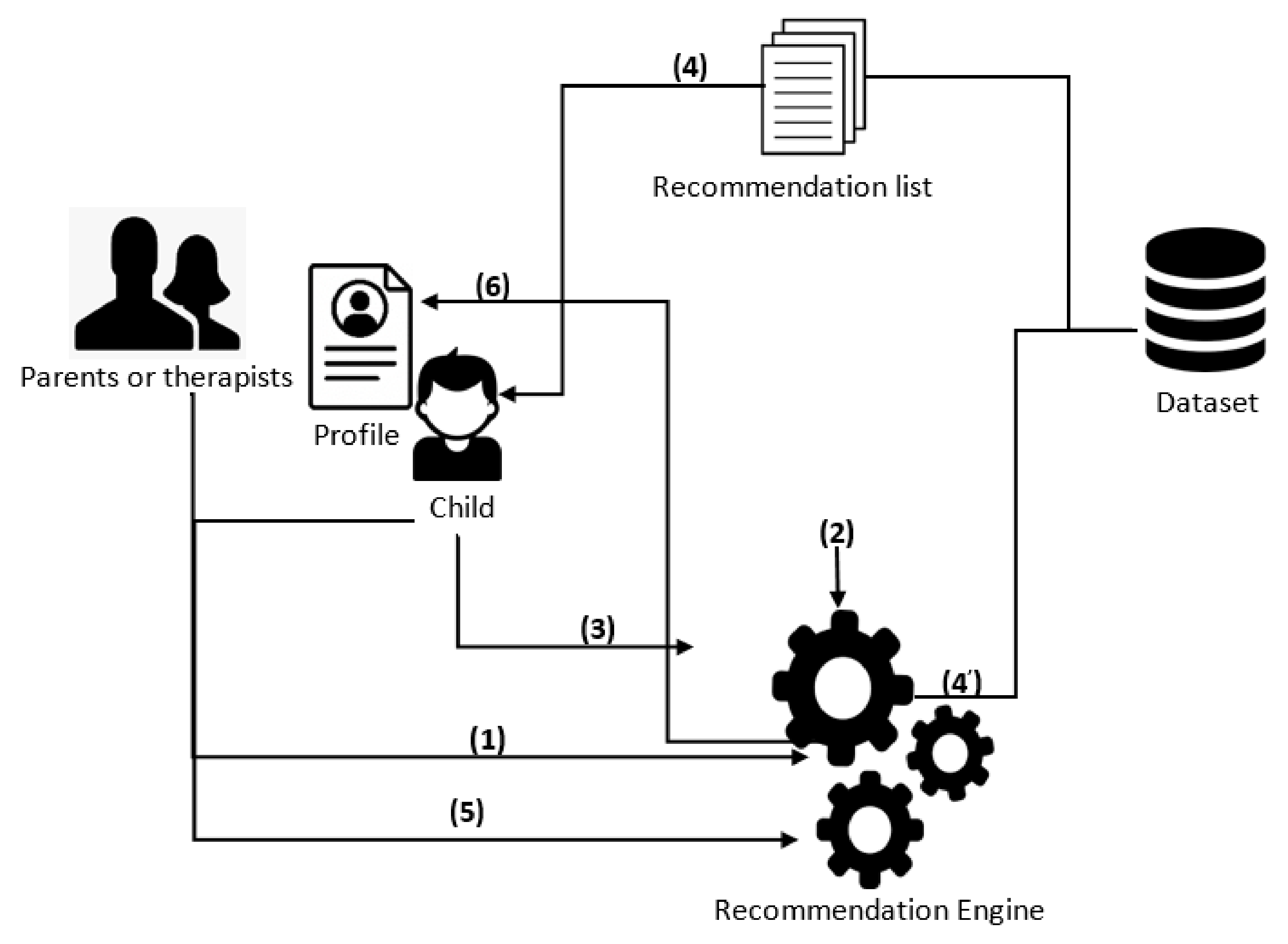
The recommender system suggests activities that match each child’s specific needs (see
Figure 1), challenges, and preferences, based on previous interactions and both explicit and implicit feedback. By “drawbacks,” we refer to developmental gaps such as not recognizing numbers, letters, or emotional cues. These are collected at the start through a structured questionnaire completed by parents, therapists—for example, questions like “Does your child know numbers?”, or “Can your child identify emotions?” The system uses these responses as a primary input to identify areas where support is needed.
The child’s emotional state is assessed at the start of each session using visual emotion cards (e.g., happy, angry, sad), which the child either selects independently or with adult support. Based on this input, the system filters activities to prioritize those that target the child’s current areas of difficulty. The activities recommended vary according to the child’s mood: when the child is happy or neutral, the system directs them toward educational activities, whereas feelings of anger or sadness prompt recommendations for activities designed to regulate emotions, such as music videos, drawing tasks, or visual support exercises.
The numbered steps correspond to the workflow of the system:
(1) initial information collection,
(2) needs and preferences analysis,
(3) mood detection,
(4’) means recommendation generation,
(5) evaluation, and
(6) profile update.
The Recommendation Engine suggests activities that can be either interactive exercises (such as drawing, writing, or drag-and-drop tasks) or selected from a custom dataset.
The dataset contains a curated collection of educational videos (e.g., learning numbers, letters, colors) and social stories focused on daily life skills (e.g., how to wash hands, brush teeth, get dressed). These resources are specifically designed to support children with Autism Spectrum Disorder (ASD) in developing cognitive, social, and self-care abilities.
The child then interacts with one of the recommended activities in order to see the effectiveness of the selected activity.
The evaluation of the activities is based on several factors:
- -
Explicit rating: Parental input about the child’s response, and a self-management section where the child answers yes or no questions about their feelings and experience while performing a certain activity.
- -
Implicit rating: The system’s analysis of the child’s engagement with the activity (for example the time spent on the activity). From these inputs, the system indirectly determines if the child liked the activity, and uses it as a rate for that activity.
Finally, the rating of the chosen activity is stored in the user’s profile in order to be used as a means for evolving the recommendation engine. Based on the updated information, the system re-recommends activities similar to those previously found beneficial to the user, using cosine similarity to enhance recommendation accuracy.
4.4.4. Recommendation Engine
To classify and recommend suitable activities based on each child’s specific weaknesses and preferences, a content-based filtering algorithm was implemented using a cosine similarity approach. This method identifies and recommends activities that share similar attributes (keywords) with those previously preferred by the user.
Each activity in the dataset is associated with a list of descriptive keywords (e.g., anger management, education, emotion regulation, feelings). These keywords characterize the nature and purpose of the activity. Consequently, if the system detects that a child tends to prefer video-based rather than hands-on activities, it prioritizes recommending other video-based activities of similar type and purpose.
To quantify the similarity between two activities, each activity is represented as an n-dimensional vector, where n corresponds to the total number of distinct keywords (in this study, n = 12). Each keyword acts as a binary feature:
Thus, each activity is mapped within a 12-dimensional space, and the similarity between any two activity vectors
x and
y is computed using the cosine similarity formula:
Here, the numerator measures the dot product between the two activity vectors, while the denominator normalizes their magnitudes. The resulting similarity value ranges from 0 to 1, where 1 indicates identical activities and 0 indicates no similarity.
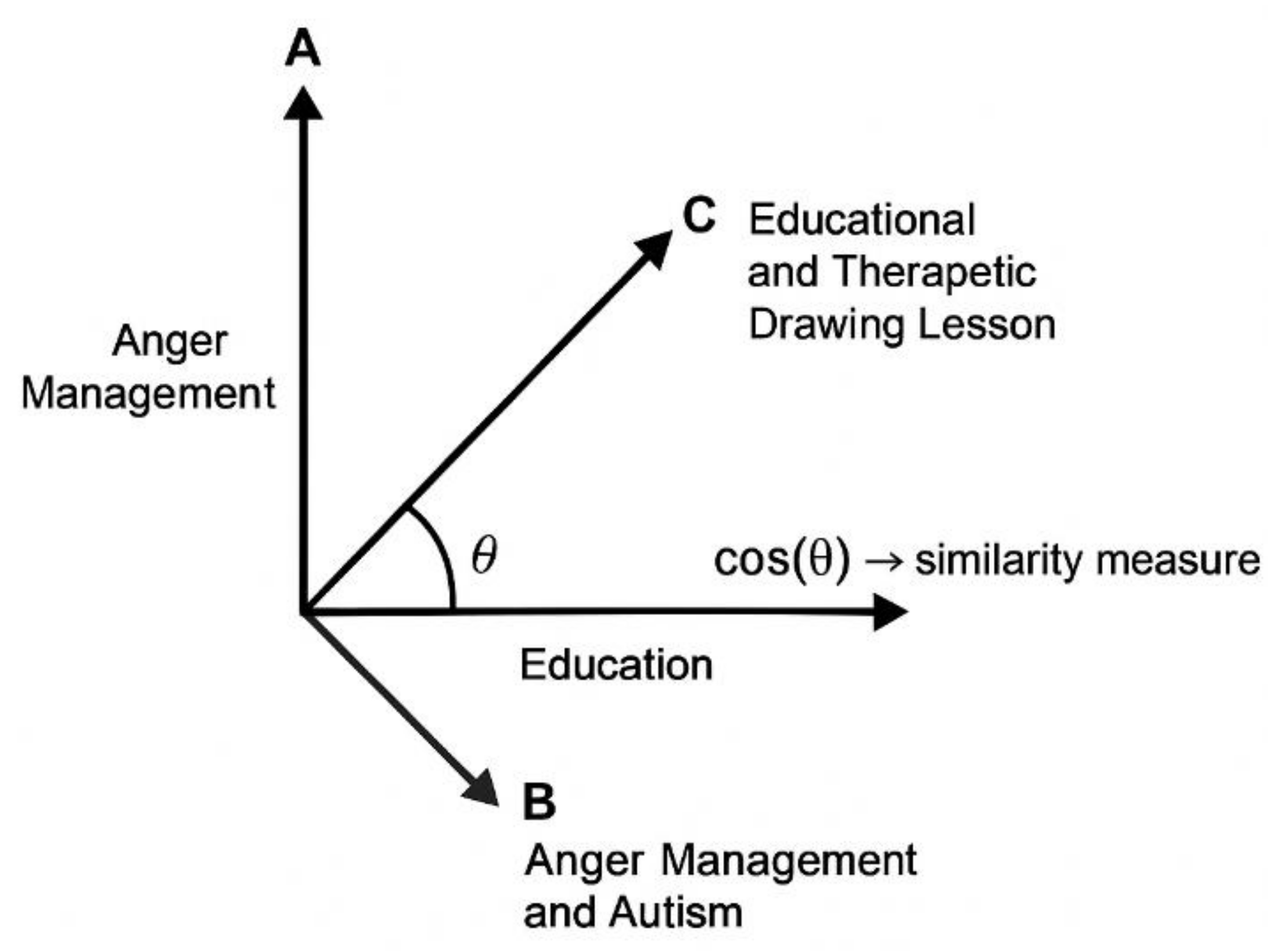
To illustrate this process, consider a simplified example in a two-dimensional space representing only two keywords: education and anger management.
The activity “When I Am Angry” (anger management only) is represented as (0, 1).
The activity “Learn Numbers” (educational only) is represented as (1, 0).
Another activity, “Educational and Therapeutic Drawing Lesson”, combines both aspects and is plotted between the two at (1, 1).
As shown in
Figure 2, each activity is treated as a vector in this multidimensional space. The angle θ between two vectors reflects their degree of similarity:
As θ approaches 0°, the cosine similarity approaches 1, indicating high similarity.
As θ approaches 90°, the similarity approaches 0, indicating little or no relation.
This approach provides a mathematically robust and interpretable mechanism for identifying related activities based on shared pedagogical and emotional characteristics, thereby enhancing the personalization and accuracy of the recommendation process.
The overall workflow of the proposed recommendation-based intelligent system for children with ASD is summarized in Algorithm 1. This algorithm illustrates how the system integrates the child’s profile, mood, preferences, and developmental needs to filter, rank, and recommend activities. Explicit and implicit feedback is then used to adapt future recommendations, ensuring a highly personalized and adaptive learning experience. Algorithm 1 serves as a concise representation of the system’s logic before detailing each type of interactive activity.
| Algorithm 1. Recommendation-Based Intelligent System for Children with ASD. |
Input:
ChildProfile = {Age, CognitiveLevel, EmotionalState, Preferences, DevelopmentalGaps}
ActivityDataset = {ActivityID, Title, Description, Mood, Type, Keywords}
Output:
RecommendedActivity
1: InitializeSystem()
2: Load ChildProfile
3: Load ActivityDataset
4: CaptureCurrentContext()
5: CurrentMood ← GetMoodFromVisualCards()
6: Weaknesses ← GetDevelopmentalGapsFromQuestionnaire()
7: FilterActivities()
8: CandidateActivities ← Filter (ActivityDataset, Weaknesses)
9: if CurrentMood in {happy, neutral} then
10: CandidateActivities ← SelectEducationalCognitive(CandidateActivities)
11: else if CurrentMood in {angry, sad} then
12: CandidateActivities ← SelectEmotionalRegulation(CandidateActivities)
13: ComputeSimilarity()
14: for each Activity in CandidateActivities do
15: SimilarityScore[Activity] ← CosineSimilarity(Activity.Keywords, LikedActivities.Keywords)
16: end for
17: RankActivities()
18: SortedActivities ← SortDescending(CandidateActivities, SimilarityScore)
19: RecommendActivity()
20: RecommendedActivity ← Top(SortedActivities)
21: PresentActivity(RecommendedActivity)
22: MonitorAndEvaluate()
23: ExplicitFeedback ← CollectParentChildFeedback(RecommendedActivity)
24: ImplicitFeedback ← MeasureEngagement(RecommendedActivity)
25: UpdateProfile()
26: Update ChildProfile with ExplicitFeedback and ImplicitFeedback
27: Adapt future recommendations based on updated profile
28: Repeat
29: Go to step 4 for next session
End Algorithm. |
4.5. Interactive Activity
Following Algorithm 1, the system presents recommended activities to the child, including drawing, video modeling, social stories, and handwriting tasks. Each activity is selected to address the child’s cognitive, emotional, and social needs, as determined by the recommendation engine. Additionally, educational mini-apps employing supervised machine learning were integrated; these models recognize the child’s handwritten characters and evaluate their accuracy.
The activities were inspired by studies on children with ASD in self-contained preschool classrooms [
26]. Beyond ML-based exercises, Drag-and-Drop activities were implemented, where children move items to corresponding target zones. These activities use images, text, and auditory feedback to reinforce correct responses and guide corrections. Overall, the activities aim to enhance understanding of colors, numbers, and basic concepts while improving concentration, memory, hand-eye coordination, and vocabulary.
Art therapy promotes calmness and skill development through non-verbal expression. Color-drawing activities have been shown to reduce behavioral disorders, encourage social interaction, and facilitate emotional expression, including anger management [
27].
Social stories teach social skills and manage challenging behaviors. The system integrates validated stories focusing on daily situations such as greetings, sharing, or routines, ensuring developmental appropriateness, cultural neutrality, and alignment with communication and behavioral goals [
28].
- c.
Video modeling and animation
Video modeling (VM) effectively develops assertive verbal and social communication skills [
29]. Animated videos were adopted as a cost-effective alternative, demonstrating rapid acquisition of joint attention and social engagement in children with ASD.
Images and pictograms assist comprehension, task completion, and speech production, even in non-verbal children [
28,
29]. The application provides tailored visual support to guide learning and reinforce understanding.
Strategies play an important role in enhancing engagement and supporting skill acquisition. When integrated into the intervention, self-management components can encourage children to initiate interactions and actively participate in activities. The application enables children to reflect on their feelings and evaluate their learning outcomes after each activity, thereby promoting autonomy and sustained involvement.
Handwriting skills may present challenges for some children with ASD, particularly in terms of legibility and letter formation. To address this aspect, the application includes an interactive handwriting task in which children draw letters or numbers directly on the screen. A supervised machine learning model analyzes the drawn character and provides personalized feedback to support skill development and progressive improvement.
5. Results and Discussion
The proposed system integrates several innovative components designed to support the learning, emotional regulation, and skill development of children with ASD. To evaluate its effectiveness, the system was implemented as a native mobile application and tested through a set of experiments assessing its performance, usability, and overall contribution to the learning experience.
5.1. Implementation
The mobile application, named YANA (You Are Not Alone), was developed to provide children with ASD access to interactive, personalized learning activities. It integrates recommender systems, machine learning models, and multimodal educational content to enhance cognitive, emotional, and social development. The system design is based on research evidence showing that personalized, adaptive interventions improve engagement and developmental outcomes in children with ASD.
The design required a deep understanding of ASD characteristics, including communication challenges, sensory sensitivities, and variability in learning preferences, ensuring that the application adapts to individual child profiles. Each design choice was made to maximize the developmental impact of the activities, aligning technological features with cognitive and emotional objectives identified in ASD research.
5.1.1. Motivation
A native mobile solution was selected rather than a web or desktop platform to maximize accessibility, performance, and engagement. Mobile devices provide several advantages for children with ASD:
Touchscreen interaction, which supports hands-on learning (e.g., drawing, dragging, tracing). This is justified because interactive, kinesthetic engagement is known to enhance learning outcomes in ASD.
Higher engagement and longer usage sessions, as shown in previous studies.
Offline availability, ensuring continuous access to activities regardless of internet connectivity.
Direct access to device capabilities, such as the camera, enabling features like face recognition. This allows the system to monitor engagement and emotional response, supporting adaptive recommendations.
Additionally, the color selection was carefully considered to create a visually comfortable interface. Pastel tones, particularly soft variations of pink and violet, were chosen to promote a calm and supportive environment. This design choice aims to reduce potential sensory overstimulation and facilitate attention and engagement during learning activities.
5.1.2. The Intelligent Mobile Application
The application runs natively on Android and iOS and delivers personalized content through a recommendation engine that adapts activities to each child’s preferences and emotional state. The adaptive recommendation strategy is designed to systematically evaluate the impact of personalization on engagement and learning outcomes, providing an evidence-based assessment of the system’s effectiveness.
The recommender system was implemented using Python version 2.1.0 and several standard machine learning libraries.
pandas was used for data cleaning, manipulation, and feature extraction.
Scikit-learn’s CountVectorizer transformed textual metadata and descriptions of activities into vector representations.
Cosine similarity served as the similarity metric to generate content-based recommendations.
difflib supported retrieving the closest matching items when the user input was imprecise.
The system’s performance was measured using precision score from Scikit-learn.
To integrate the recommender system into the Flutter mobile application, a Flask API was developed and deployed through ngrok, enabling seamless communication between the model and the mobile interface.
- b.
Machine learning models’ implementation
The handwriting recognition activity is powered by a neural network model built using TensorFlow and Keras. The system recognizes handwritten letters (A–Z) and digits (0–9) drawn directly on the screen.
Training data were obtained from the MNIST (digits) and EMNIST (characters) datasets, both derived from the NIST Special Database 19 and provided in a normalized 28 × 28 pixel format. The development pipeline included:
Data preprocessing: Loading, reshaping, normalizing, and splitting the datasets into training (80%) and testing (20%) sets.
Model design: A sequential neural network stacking multiple layers to progressively extract features from the input images.
Training: Model training over 20 epochs, using Keras optimization routines, with accuracy metrics recorded for later analysis.
Deployment: Converting the trained model into a TFLite format suitable for mobile execution and integrating it into the Flutter project.
5.1.3. Application Interfaces
Figure 3 summarizes the main interfaces of the mobile application:
Login/Sign-Up Interface: Supports authentication via email/password or third-party services (Google, Facebook).
Face Recognition Interface: Captures and stores the child’s face to ensure secure and personalized access.
Home Page: Displays a catalog of all interactive activities and provides access to the recommendation module.
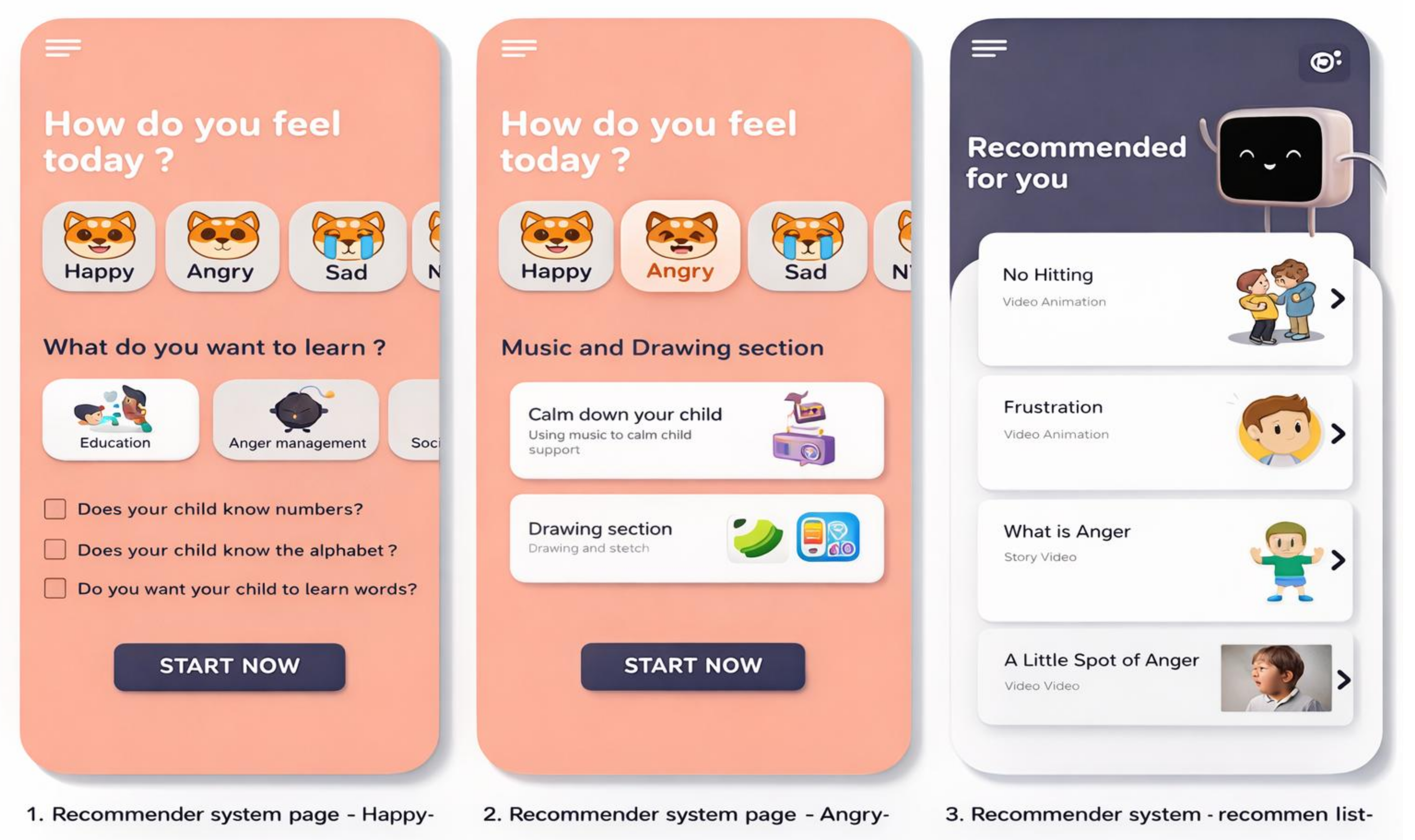
The Recommendation Interface presented in
Figure 4 consists of:
Emotional state input: The parent or child selects the current mood (e.g., happy, sad, stressed).
Drawbacks selection: Based on the emotional state, the system displays relevant areas of difficulty such as social skills, education, or anger management. Once selected, the system generates activity recommendations such as videos, illustrations, or social stories.
Two additional pathways are highlighted:
Calming content, consisting of music or visual stimuli designed to reduce agitation.
Drawing section, allowing children to express emotions through color and shape.
The Interactive Activities Interface includes:
Machine-learning-based handwriting activity: The system prompts a letter or number, the child draws it, and the model predicts the character.
Drag-and-drop educational activities: Four modules were developed (animals, numbers, colors, fruits). Children match images with their names, receiving +10 points for correct answers and −5 points for incorrect answers. A completion screen displays the final score along with positive reinforcement.
- c.
Experiments
- -
Recommender system evaluation
To evaluate the performance of the proposed recommender system for children with ASD, we employed standard evaluation metrics commonly used in information retrieval and classification tasks, namely: precision, recall, F1-score, and accuracy. These metrics provide a comprehensive assessment of the system’s ability to recommend relevant activities correctly while minimizing irrelevant suggestions.
The metrics are defined as follows:
where TP = True Positives, TN = True Negatives, FP = False Positives, FN = False Negatives.
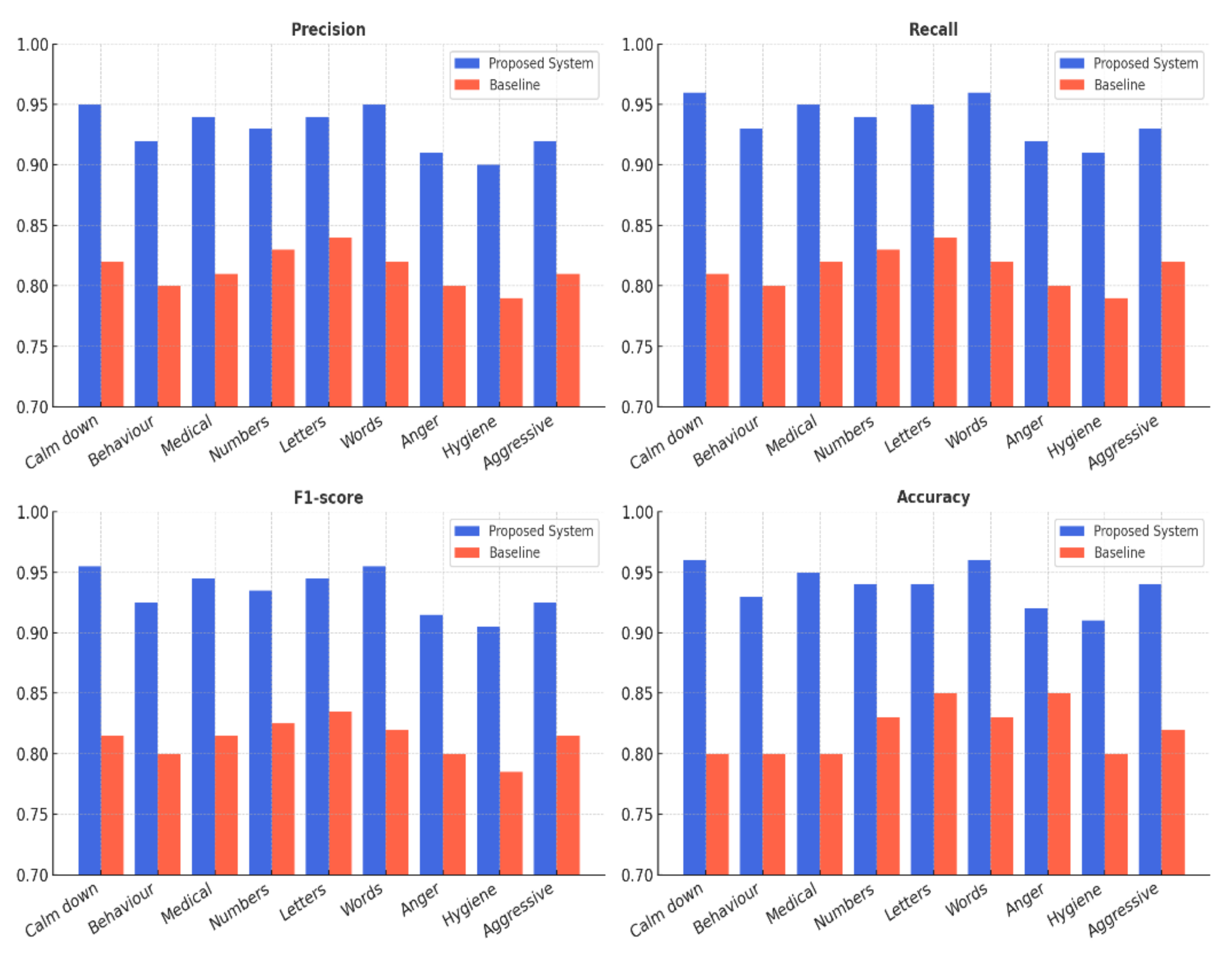
The experimental results, shown in
Figure 5, indicate a significant improvement of the proposed system over a classical content-based baseline model. The baseline, which relies solely on static item similarity, shows limited adaptability to the dynamic needs of children with ASD, as it does not consider contextual factors such as emotional state, behavioral changes, or therapeutic progress. These results demonstrate that incorporating contextual and behavioral parameters can meaningfully enhance the personalization of recommendations, supporting engagement and developmental outcomes in children with ASD.
In contrast, the proposed system incorporates contextual and behavioral parameters, enabling personalized and adaptive recommendations. By combining content-based filtering with machine learning, the system dynamically adjusts to each child’s profile. This approach allows a systematic evaluation of how adaptive recommendations impact learning and emotional engagement, providing evidence of the system’s research validity. Overall, the proposed model achieved an average precision of 0.93, recall of 0.94, F1-score of 0.93, and accuracy of 0.94 across all categories. The baseline model, by comparison, achieved precision between 0.79 and 0.84, recall between 0.80 and 0.83, F1-score between 0.785 and 0.835, and accuracy between 0.80 and 0.85. This corresponds to an overall improvement of approximately 11–12% across all metrics, indicating that evidence-based personalization can significantly outperform standard content-based approaches.
These results demonstrate that integrating contextual and behavioral information substantially enhances the system’s ability to recommend appropriate activities tailored to each child’s therapeutic goals. Higher recall indicates that the system successfully covers a wider range of developmentally relevant activities, while improved precision reflects a reduction in irrelevant or non-beneficial suggestions. Consequently, the system provides a more efficient, user-centered recommendation process, benefiting both therapists and children. These findings provide evidence that context-aware personalization can directly support therapeutic objectives and improve measurable learning and engagement outcomes in children with ASD.
- -
Machine learning models’ evaluation
In
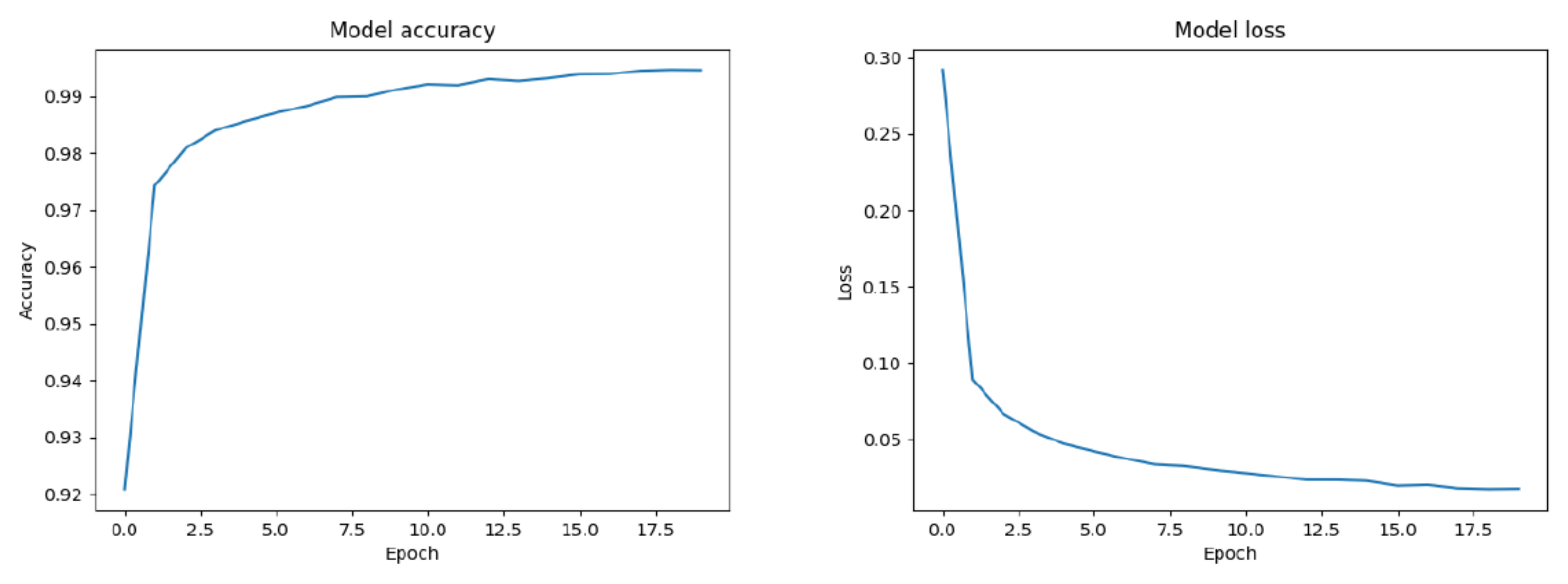
Figure 6, we can see the loss and accuracy of the alphabet recognition and number recognition models for each epoch. We achieved 91% accuracy for the alphabet recognition model and 99% accuracy for the number recognition model.
- -
Evaluation of the Application: Feedback from Experts and Parents
Due to constraints for real-world testing, the application was evaluated by a total of 30 participants, including children aged 3–8 years, parents, and experts (psychiatrists, psychologists, and a professor of sociology/psychology). This evaluation aimed to assess the system’s usability, effectiveness, and contribution to learning and emotional regulation.
Key Findings:
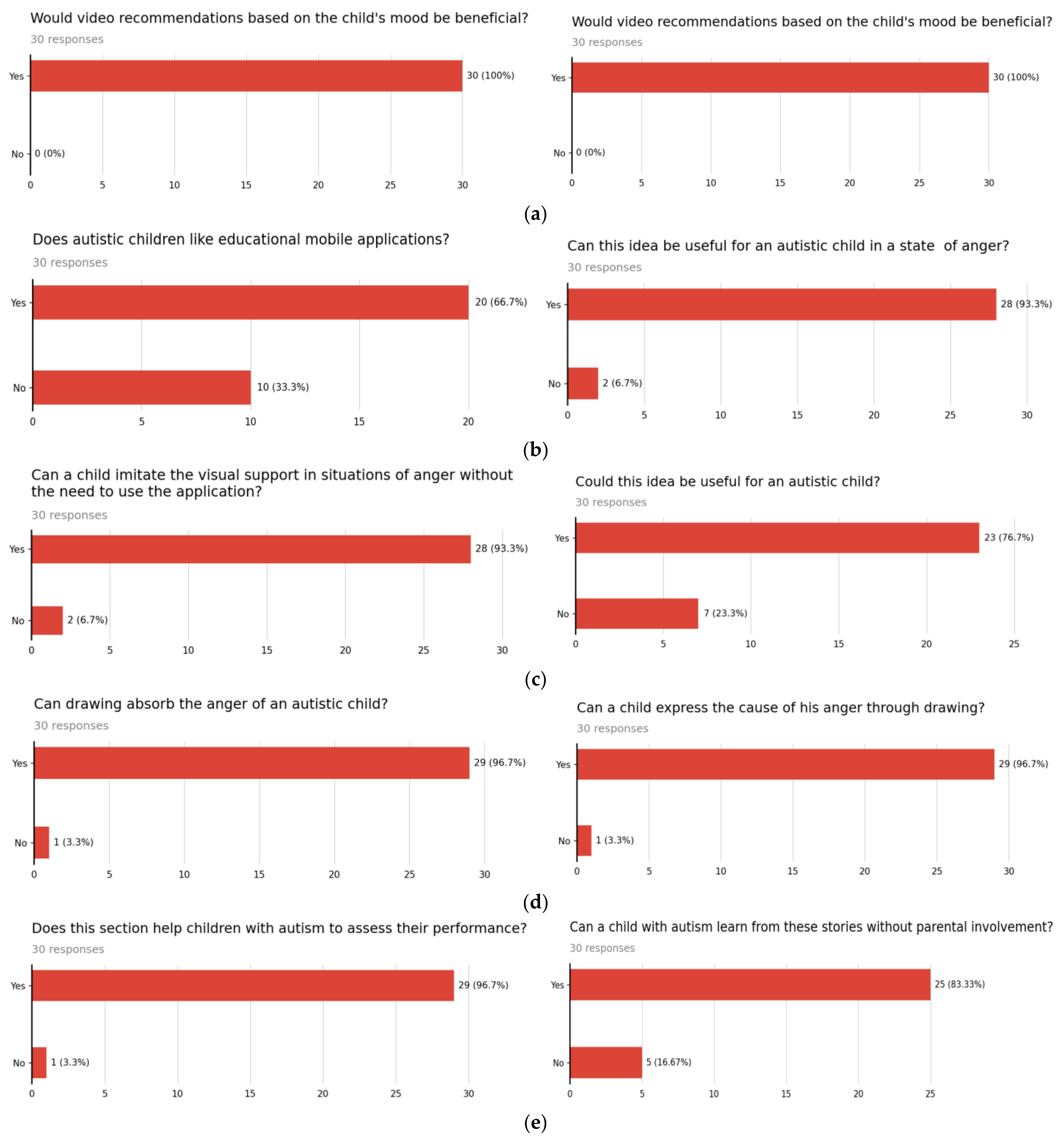
Mood-based recommendations: In total, 100% of participants found the personalized recommendations based on children’s emotional states helpful (
Figure 7a).
Educational videos: A total of 66.7% of participants reported that children enjoyed the videos, while 33.3% found them less engaging. Based on this feedback, interactive activities were added alongside videos to balance play and education (
Figure 7b,c).
Visual supports for anger management: Rated effective by 93.3% of specialists, enabling children to learn coping strategies and apply them independently. Video modeling and animations were effective for 76.7% but deemed complex by 23.3%; these elements were consequently moved to the “happy” content, while the “anger” section now emphasizes music and drawing activities (
Figure 7a,b,d).
Drawing activities: In total, 96.7% of experts confirmed their effectiveness in helping children express and manage anger, while 3.3% found them less useful (
Figure 7c,d).
Social stories: Evaluated as useful by 96.7% of experts, with 16.7% noting that parental involvement was necessary (
Figure 7e).
Overall, feedback demonstrates that the YANA application is an effective tool for children with ASD, supporting skill development, emotional regulation, and social integration. The results also indicate that personalized, context-aware interventions delivered via mobile applications can reduce caregiver burden and improve daily life experiences for children on the spectrum. The system was adapted iteratively based on expert and parent feedback, highlighting a continuous improvement process.
A summary of the evaluation results is presented in
Table 2.
6. Discussion
Children with Autism Spectrum Disorder (ASD) require dedicated care due to the complexity and uniqueness of their condition. Early intervention is critical in areas such as communication, education, and social skill development, motivating the development of innovative tools, including recommender systems and machine learning-based educational mini-games, to support growth while reducing caregiver burden.
The proposed system delivers personalized educational and interactive content tailored to each child’s needs, preferences, and emotional state. Preliminary evaluations indicate high effectiveness, with quantitative metrics (precision 0.93, recall 0.94, F1-score 0.93, accuracy 0.94) and positive feedback from experts and parents, demonstrating improvements in skill development, emotion regulation, and engagement.
A key contribution is the creation of a specialized ASD dataset, which not only supports the recommender system but also provides a resource for future research in intelligent learning systems for children on the spectrum. Feedback highlights the usefulness of visual supports, drawing activities, social stories, and interactive content in managing anger and fostering engagement.
While these preliminary results are promising, the system has limitations. ASD is highly heterogeneous, so effectiveness may vary across users. The lack of extensive, diverse datasets restricts predictive accuracy and generalizability, and long-term evaluations are needed to fully assess the impact on development.
7. Limitations and Potential Risks
While the proposed system demonstrates promising results, several limitations should be acknowledged.
- -
Dataset Size and Diversity: The current dataset, although specialized for ASD-specific educational content, may not fully capture the variability of developmental needs and learning preferences across the broader ASD population.
- -
Short-term Evaluation: The evaluation was conducted over a limited period, and long-term effects on learning outcomes, emotional regulation, and social skills remain to be investigated.
- -
Generalizability: The system was primarily tested with children who have mild to moderate ASD profiles, and its effectiveness for children with more severe conditions may differ.
- -
Contextual Factors: While the system incorporates mood and behavioral state, other contextual variables, such as family environment or therapist interventions, were not fully modeled.
- -
Platform Limitations: The current implementation is limited to mobile devices; future studies are needed to assess performance and usability across other platforms, including wearables, smart TVs, and social robots.
- -
Although the proposed system is designed to support children with ASD, potential risks related to digital interventions, such as over-stimulation, dependency on digital tools, and personalization bias, were not explicitly evaluated in this study. These aspects should be considered in future work to ensure balanced and responsible use of the system.
Acknowledging these limitations provides a foundation for future work to expand dataset diversity, extend evaluation periods, and enhance adaptability and personalization for a broader range of children with ASD.
8. Conclusions and Future Work
This study shows that a personalized, context-aware recommendation system can successfully assist children with ASD in both learning and emotional regulation, while also reducing the burden on parents. The system’s contributions are grounded in research evidence, including content-based filtering, adaptive mini-games, and a specialized dataset designed to address ASD-specific educational and developmental needs.
Unlike traditional content-based recommendation systems, which often suffer from the filter bubble effect, our mood-aware approach provides more diverse and contextually relevant educational activities. By systematically incorporating the child’s emotional state, the system enables measurable improvements in engagement and balanced learning experiences, demonstrating the effectiveness of context-aware personalization.
Future work will focus on expanding the variety of activities to address a broader spectrum of developmental needs and improving dataset diversity to enhance recommendation accuracy. Planned extensions, including integration with advanced AI agents and new platforms such as wearable devices, smart TVs, and social robots, are designed to evaluate the system’s adaptability and scalability in research-driven contexts.
Overall, experts and parents indicate that such applications hold substantial potential for improving skill acquisition, emotional management, and social integration for children with ASD. These findings provide evidence that scientifically informed, personalized interventions can positively impact learning and therapeutic outcomes, and support the continued investigation of AI-driven approaches for children on the autism spectrum.
Author Contributions
H.Z.: Conceptualization, Methodology, Writing—Original Draft, Supervision; F.B.: Data Curation, Software, Validation, Writing—Review and Editing; Z.T.: Data Curation, Software, Validation, Writing—Review and Editing; S.M.: Supervision, Writing—Review and Editing, Methodology, Funding acquisition; I.B.: Review and Editing. All authors have read and agreed to the published version of the manuscript.
Funding
This work is supported by Princess Nourah bint Abdulrahman University Researchers Supporting Project number (PNURSP2026R196), Princess Nourah bint Abdulrahman University, Riyadh, Saudi Arabia.
Institutional Review Board Statement
The study did not require ethical approval as it used anonymized and publicly available data, and did not involve direct experimentation on human subjects.
Informed Consent Statement
Informed consent was waived because the study used anonymized, non-identifiable data.
Data Availability Statement
Acknowledgments
The authors would like to express their sincere gratitude to all the specialists, including doctors, psychologists, and educators, as well as the parents of children with ASD, who participated in the evaluation of the application. Their valuable feedback and insights were essential for the design, improvement, and validation of the system. The authors also thank their colleagues and the staff of the LISIA Laboratory for their continuous support and encouragement throughout this research. The authors would like to acknowledge the support provided by Princess Nourah bint Abdulrahman University through the Researchers Supporting Project number (PNURSP2026R196), Princess Nourah bint Abdulrahman University, Riyadh, Saudi Arabia.
Conflicts of Interest
The authors declare no conflicts of interest.
References
- S’lungile, K.T. Teachers’ strategies of including learners with autism spectrum disorders in mainstream classrooms in Swaziland. Int. J. Humanit. Soc. Sci. Educ. 2018, 5, 78–85. [Google Scholar] [CrossRef]
- Zeidan, J.; Fombonne, E.; Scorah, J.; Ibrahim, A.; Durkin, M.S.; Saxena, S.; Yusuf, A.; Shih, A.; Elsabbagh, M. Global prevalence of autism: A systematic review update. Autism Res. 2022, 15, 778–790. [Google Scholar] [CrossRef] [PubMed]
- Timmons, V.; Breitenbach, M.; MacIsaac, M. Educating Children About Autism in an Inclusive Classroom—Online Publication. 2006. Available online: https://www.researchgate.net/publication/237833840 (accessed on 1 May 2022).
- Williams, C.; Wright, B.; Young, O. How to Live with Autism and Asperger Syndrome: Practical Strategies for Parents and Professionals; Jessica Kingsley Publishers: London, UK, 2004. [Google Scholar]
- Autism: Dealing with Social Communication Challenges—Otsimo. Available online: https://otsimo.com/en/social-communication-challenges-autistic-child/ (accessed on 15 January 2022).
- Rozema, R. The problem of autism in young adult fiction. Lang. Arts J. Mich. 2014, 30, 7. [Google Scholar] [CrossRef]
- Nogay, H.S.; Adeli, H. Machine learning (ML) for the diagnosis of autism spectrum disorder (ASD) using brain imaging. Rev. Neurosci. 2020, 31, 825–841. [Google Scholar] [CrossRef] [PubMed]
- Quinn, C.E. 100 Questions & Answers About Autism: Expert Advice from a Physician/Parent Caregiver; Jones & Bartlett Learning: Burlington, MA, USA, 2006; Available online: https://books.google.com/books?id=LtqUAChbC98C (accessed on 25 February 2022).
- Kanne, S.M.; Mazurek, M.O. Aggression in children and adolescents with autism spectrum disorders. Res. Autism Spectr. Disord. 2011, 5, 926–937. [Google Scholar] [CrossRef]
- Ricci, F.; Rokach, L.; Shapira, B. Introduction to Recommender Systems Handbook; Springer: Boston, MA, USA, 2011. [Google Scholar]
- Da’u, A.; Salim, N. Recommendation system based on deep learning methods: A systematic review and new directions. Artif. Intell. Rev. 2020, 53, 2709–2748. [Google Scholar] [CrossRef]
- Isinkaye, F.O.; Folajimi, Y.O.; Ojokoh, B.A. Recommendation systems: Principles, methods and evaluation. Egypt. Inform. J. 2015, 16, 261–273. [Google Scholar] [CrossRef]
- Adomavicius, G.; Tuzhilin, A. Toward the next generation of recommender systems: A survey of the state-of-the-art and possible extensions. IEEE Trans. Knowl. Data Eng. 2005, 17, 734–749. [Google Scholar] [CrossRef]
- Costa, M.; Costa, A.; Julián, V.; Novais, P. A task recommendation system for children and youth with autism spectrum disorder. In Ambient Intelligence—Software and Applications—8th International Symposium on Ambient Intelligence (ISAmI 2017); Springer: Cham, Switzerland, 2017; Volume 615, pp. 87–94. [Google Scholar]
- Premasundari, M.; Yamini, C. Food and therapy recommendation system for autistic syndrome using machine learning techniques. In Proceedings of the 2019 IEEE International Conference on Electrical, Computer and Communication Technologies (ICECCT), Coimbatore, India, 20–22 February 2019; pp. 1–6. Available online: https://ieeexplore.ieee.org/abstract/document/8868979 (accessed on 15 January 2025).
- Nojavanasghari, B.; Hughes, C.E.; Morency, L.-P. Exceptionally Social: Design of an avatar-mediated interactive system for promoting social skills in children with autism. In Proceedings of the 2017 CHI Conference Extended Abstracts on Human Factors in Computing Systems, Denver, CO, USA, 6–11 May 2017; pp. 1932–1939. [Google Scholar]
- Mauro, N.; Ardissono, L.; Cena, F. Supporting people with autism spectrum disorders in the exploration of PoIs: An inclusive recommender system. Commun. ACM 2022, 65, 101–109. [Google Scholar] [CrossRef]
- Cena, F.; Mauro, N.; Ardissono, L.; Mattutino, C.; Rapp, A.; Cocomazzi, S.; Brighenti, S.; Keller, R. Personalized tourist guide for people with autism. In Adjunct Publication of the 28th ACM Conference on User Modeling, Adaptation and Personalization; ACM: Genoa, Italy, 2020; pp. 347–351. [Google Scholar]
- Banskota, A.; Ng, Y.-K. Recommending video games to adults with autism spectrum disorder for social-skill enhancement. In Proceedings of the 28th ACM Conference on User Modeling, Adaptation and Personalization, Genoa, Italy, 12–18 July 2020; pp. 14–22. [Google Scholar]
- Shinde, A.V.; Patil, D.D. A multi-classifier-based recommender system for early autism spectrum disorder detection using machine learning. Healthc. Anal. 2023, 4, 100211. [Google Scholar] [CrossRef]
- Balaji, V.; Mohana, M.; Hema, M.; Senthilvel, P.G. Design of adaptive recommendation system for autism children using optimal feature selection-based adaptive dilated 1DCNN-LSTM with attention mechanism. Expert Syst. Appl. 2024, 262, 125399. [Google Scholar] [CrossRef]
- Scientific, L.L. Monolithic hybrid therapy recommender system for autistic children using machine learning. J. Theor. Appl. Inf. Technol. 2024, 102, 12. [Google Scholar]
- Hersh, M.; Leporini, B. Toward more inclusive recommender systems: Designing for blind, partially sighted, and autistic users. In Technology for Inclusion and Participation for All: Recent Achievements and Future Directions; Springer Nature: Cham, Switzerland, 2025; pp. 391–398. [Google Scholar]
- Puspitasari, M.; Kurniawan, M.S.; Nugroho, D.B. Utilization of Artificial Intelligence and Assistive Technology in Autism: Diagnosis, Treatment, and Education Applications: A Systematic Literature Review. Front. Psychol. 2022, 13, e2025350. [Google Scholar]
- Sarker, R.H.; Alam, S.; Rahman, A. Implementation of Generative AI for the Assessment and Treatment of Autism Spectrum Disorders: A Scoping Review. Front. Artif. Intell. 2023, 5, 1628216. [Google Scholar]
- Lerman, D.C.; Vorndran, C.; Addison, L.; Kuhn, S.A.C. A rapid assessment of skills in young children with autism. J. Appl. Behav. Anal. 2004, 37, 11–26. [Google Scholar] [CrossRef] [PubMed]
- Dhiaba, S.A.T. The impact of colour-drawing in reducing behavioural disorders for autistic children: An applied study on a sample of autistic children. Int. J. Innov. Creat. Chang. 2020, 11, 144–163. [Google Scholar]
- Charlop-Christy, M.H.; Le, L.; Freeman, K.A. A comparison of video modeling with in vivo modeling for teaching children with autism. J. Autism Dev. Disord. 2000, 30, 537–552. [Google Scholar] [CrossRef] [PubMed]
- Ho, T.Q.; Gadke, D.L.; Henington, C.; Evans-McCleon, T.N.; Justice, C.A. The effects of animated video modeling on joint attention and social engagement in children with autism spectrum disorder. Res. Autism Spectr. Disord. 2019, 58, 83–95. [Google Scholar] [CrossRef]
| Disclaimer/Publisher’s Note: The statements, opinions and data contained in all publications are solely those of the individual author(s) and contributor(s) and not of MDPI and/or the editor(s). MDPI and/or the editor(s) disclaim responsibility for any injury to people or property resulting from any ideas, methods, instructions or products referred to in the content. |