1. Introduction
One of the most frequently reported clinical symptoms among patients is back pain, typically localised in the lower section of the spine (low back pain, LBP) [
1]. Two primary categories can be distinguished: acute, or short-term back pain, which lasts from several days to a few weeks, and chronic back pain, defined as pain persisting for more than 12 weeks [
2]. Studies indicate that LBP has been classified among the leading Level 3 causes of years lived with disability (YLD) since 1990, with a 1-month prevalence of approximately 23% [
3,
4]. In Europe, LBP affects nearly 50% of the population, accompanied by a dynamic increase in annual prevalence from 1.4% to 15.6% over a span of twenty years [
5]. It is estimated that globally, LBP affects approximately 80% of people [
6].
Concurrently, the rising number of individuals suffering from LBP is accompanied by an expanding shortage of healthcare personnel. According to the World Health Organization (WHO), despite an almost 50% increase in employment within the medical sector between 2000 and 2014, the demand for the health workforce is projected to continue growing, particularly in high- and middle-income countries [
7,
8]. In a context where most developed nations face a steadily ageing population and a rapid escalation in the need for medical staff, one potential solution is the implementation of automated systems that enable fully or partially autonomous rehabilitation by patients. Sling therapy is one of the areas where such technologies can be introduced. Research demonstrates that this method, currently performed manually and requiring direct involvement of a physiotherapist, is effective in reducing pain and movement limitations, as well as in enhancing muscle activation in individuals suffering from chronic low back pain [
9,
10].
Currently available sling-therapy devices on the market exhibit largely comparable structural designs and can be classified into two principal categories. The first category comprises devices for classical sling exercise therapy (SET). The core component of such systems is a set of slings or harnesses that enable suspension of individual limbs or the entire body in a manner that minimises or even eliminates frictional forces during exercise performance (i.e., active exercises in unloading conditions). These slings are mounted to a rigid supporting frame [
11,
12,
13,
14,
15,
16]. In the early years of development, a Balkan frame affixed to a conventional hospital bed was used, on top of which a field-bed structure was placed, providing multiple potential suspension attachment points [
17]. By the mid-20th century, dedicated frames for sling therapy were introduced, allowing for adjustment of their dimensions to fit the patient’s bed [
15]. Such systems typically support partial unloading during exercise.
At present, dedicated frames are manufactured that allow smooth adjustment of sling attachment points and unobstructed access to the patient from all sides [
8]. When the available space is limited, intermediate solutions—auxiliary frames mounted to the ceiling or wall—are used [
14,
16]. In contrast to bed-mounted frames, these systems permit both partial and full suspension exercises. In addition to unloaded exercises, they also support active exercises against resistance, using external loads such as weights or elastic bands.
Another design variant employs a specialised cage-like structure in which one wall is open, allowing for easy placement of a treatment table inside. The remaining walls are grid-like, facilitating straightforward attachment of accessories required for exercise execution [
11].
Slings are attached to the frame using ropes which, together with a system of pulleys and weights, enable regulation of the load during exercises [
18]. Elastic bands and springs may also be employed [
16,
19]. Contemporary systems most commonly utilise multi-point configurations in which each sling has an individual attachment point on the frame. Although single-point convergence systems still exist, they are not recommended due to unfavourable patient mass distribution, reduced safety, and lower rehabilitation efficiency compared with multi-point attachment [
11]. Another solution enhancing the rehabilitation process is the use of biofeedback, i.e., real-time monitoring of selected biomechanical parameters and their immediate presentation to the exercising individual, enabling ongoing correction of movement patterns. Surface electromyography is typically used for this purpose, or the device may be equipped with a load-measuring beam that records the forces exerted by the patient on the sling [
14,
20].
The second category of sling-therapy devices incorporates the Neurac technique [
21,
22]. In these systems, the classical construction is augmented with neuromuscular stimulation capabilities. This is achieved by inducing vibrations in the ropes connecting the slings to the device frame, thereby requiring increased muscular engagement from the patient to maintain the prescribed body position during a given exercise [
23,
24]. The pioneer of this method was the Redcord company [
25].
All devices described above share several common features, including the use of a frame enabling attachment of slings and supplementary equipment, as well as the ability to adjust their positioning to the patient’s individual anthropometric characteristics. However, all these systems require the continuous presence of a physiotherapist actively conducting the exercises. Automated devices capable of driving patient movement—e.g., through the use of electric actuators—are largely absent. Such systems would enable patients to perform rehabilitation independently, with minimal or no therapist involvement. A step toward such an automated solution is the Spine MT Core system, an automated device designed for spinal therapy and rehabilitation [
26]. It consists of a platform onto which the patient is placed and secured using straps. This configuration enables fully automated execution of predefined movement sequences without active participation from either the patient or the therapist.
The analysis of human body movement is a complex process that requires consideration of both anatomical and biomechanical aspects. It is very important to precisely define kinematic parameters (e.g., ranges of motion) and dynamic parameters (e.g., moments of force), which allows for a thorough assessment of movement [
27,
28,
29]. One of the main challenges remains the so-called soft tissue artefact, i.e., the movement of the skin relative to bone structures, which can interfere with the accuracy of measurements [
29,
30]. An additional difficulty is posed by measurement techniques that may be subject to interference, e.g., light reflections in optical systems or electromagnetic interference in the case of inertial sensors [
31]. Depending on clinical and research needs, motion analysis can be performed in 2D or 3D, under static or dynamic conditions, allowing the method to be adapted to a specific application.
The results of tests obtained using various methods of motion analysis are crucial in the diagnosis of movement disorders, the assessment of progress in rehabilitation, and in the fields of sport and ergonomics (see references [
28,
32]). One of the most commonly used methods of motion analysis is three-dimensional motion analysis based on optoelectronic systems such as Vicon. Passive markers are placed on the skin and tracked by infrared emitters/detectors in order to facilitate the operation of these systems. The placement of markers may occur on the entire body or only on specific parts of the body, depending on the requirements of the particular study in question. The markers are arranged according to strictly defined patterns, or alternatively, designed for a specific study. Moreover, the placement of markers on other elements utilised during the study enables the tracking of the movements of rehabilitation devices or tools employed by the patient during the study [
27,
33]. This facilitates the investigation of the patient’s dynamic movements, including ambulation, running, various types of sports and rehabilitation treatments. As confirmed by a multitude of studies, marker systems (e.g., Vicon) exhibit high accuracy and usefulness in various motion analysis studies [
34,
35,
36,
37].
In addition to optical techniques, systems that employ inertial sensors, such as iSen and ViMove, are gaining popularity. Despite the fact that these solutions are frequently less accurate than optical systems such as Vicon, they boast the advantage of enhanced ease of use, rendering them well-suited for a wide range of studies [
37,
38,
39,
40,
41,
42]. This includes studies that undertake a comparative analysis between these solutions and marker-based systems [
42,
43]. Another advanced method of motion analysis is digital fluoroscopy, which, due to its capacity for continuous imaging in real time, enables precise tracking of movements, including changes within the spine. Notwithstanding its accuracy, the utilisation of this technology is occasionally constrained due to the associated radiation exposure. Although this technological apparatus facilitates the observation of internal structures, its field of view is somewhat restricted, and as such, it is primarily employed in surgical procedures as a navigational aid in confined bodily areas during operations [
44,
45,
46].
In alternative research on posture and proprioception, 3D stereophotogrammetry is employed as a static method that utilises cameras and retroreflective markers to create a three-dimensional map of the spine in space. This technique has been demonstrated to be of particular utility in the analysis of posture in both healthy individuals and patients with spinal defects, as has been confirmed by numerous studies which have focused on the impact of various factors on postural changes [
47,
48,
49,
50]. In certain instances, analogue measuring devices are utilised for the measurement of changes in inclination: for instance, in the cervical spine. Research employing such apparatus, as exemplified by [
51], wherein analogue measuring equipment was utilised to verify the accuracy of optoelectronic systems for measuring the range of neck movement, serves to substantiate the precision of electronic systems and to facilitate uncomplicated measurements that do not necessitate the use of sophisticated and costly measuring equipment. The palpation method constitutes an essential component that underpins various other techniques, including marker analysis. This approach entails the meticulous manual exploration of bone structures by means of tactile sensation through the integument, thereby enabling the precise determination of their spatial coordinates [
52].
Nevertheless, the literature has only reported a limited number of cases in which motion analysis has been employed in the context of research on suspension therapy. The sole method utilised for this purpose is the marker method, which facilitates the determination of the position of body segments during exercises based on the suspension of individual parts of the patient’s body [
53,
54]. In light of this fact, research on motion analysis during suspension rehabilitation is considered highly desirable within both medical and scientific communities, due to its significant potential to contribute to the development of patient rehabilitation techniques.
The objective of this study is to present the verification process of a prototype device for suspension therapy. To ensure high accuracy (±0.4 mm) in displacement measurements, it was determined that the Vicon motion tracking and analysis system, which is based on passive markers, would be utilised. A novel aspect of this study is the presentation of a measurement system that allows for calibration and measurements to be taken from below the patient, as well as a set of results showing the relationship between the movement of the hangers and the patient’s body segments.
2. Materials and Methods
The prototype rehabilitation device has been designed for the purpose of facilitating passive therapy in full suspension, thus rendering it an effective solution for the treatment of functional spinal disorders. Based on current clinical criteria and pathology analysis, it has been determined that four main groups of conditions are eligible for therapy with this device: rheumatoid diseases, degenerative changes in the spine, deforming diseases of the back, diseases of the intervertebral discs of the cervical and lumbar spine, and mechanical spinal pain syndromes. The aforementioned conditions are typified by reduced mobility, radiating pain and segmental stability disorders (core stability). These conditions can be treated with passive therapy administered in a weight-bearing position.
2.1. Prototype of a Suspension Therapy Device—Description of the Design
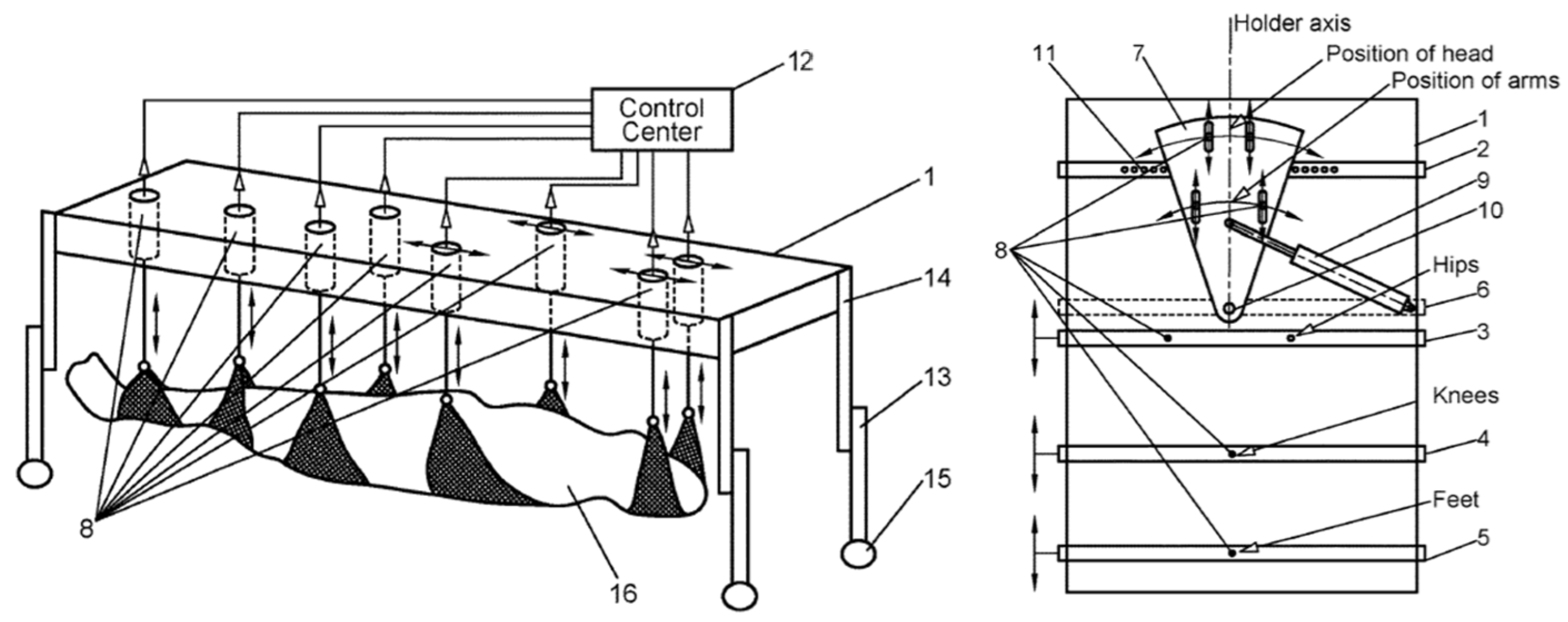
The prototype therapeutic device shown in
Figure 1 was constructed on the basis of a lightweight, modular support frame (1), enabling both stable operation and facile transport and assembly in clinical conditions. The frame incorporates a system of both fixed and movable crossbars: a fixed crossbar equipped with a handle (2), adjustable crossbars for the pelvis (3), knee joint (4) and feet (5), and an additional support crossbar (6). Each crossbar functions as a support and positioning element for the patient’s anatomical points.
The central stabilising element is the handle (7), to which pairs of linear actuators (8) are attached, enabling control of the position of the head, shoulder girdle and arms. The actuators operate in parallel and work with the crossbar adjustment mechanisms, allowing the individual parameters of the patient to be mapped. The handle (7) facilitates lateral movements, enabled by a linear actuator (9) located on the support crossbar (6). The mechanism permits both the translation of the handle in the transverse axis and its rotation around a defined pivot point (10). The movement is facilitated by rolling elements (11), which enable low-resistance movement and a repeatable trajectory.
Moreover, the apparatus is provisioned with a lifting mechanism (13) that enables vertical positioning of the entire frame of the apparatus, thereby facilitating access to the apparatus for persons transported on mobile beds, which can be situated beneath the rehabilitation apparatus. This arrangement permits direct attachment of the patient from the bed to the prototype apparatus. All linear actuators are integrated with a control system (12) that allows for the facile programming of therapy parameters, including the amplitude, frequency, and range of motion generated by the actuators. The system allows for both local operation by the patient or physiotherapist and remote operation via a network.
The design of the prototype suspension rehabilitation device incorporates lightweight profiles (Bosh type) and wheels (15), facilitating ease of movement. The lightweight and simple design enables the device to be assembled or disassembled in clinical conditions. The device’s dimensions have been designed to enable its passage through a standard doorway without the requirement of disassembly. The sling system has been adapted to align with anatomical support points, thus allowing for the precise reproduction of the biomechanical interactions that are necessary for spinal therapy.
2.2. Characteristics of Therapeutic Movements Implemented on the Device
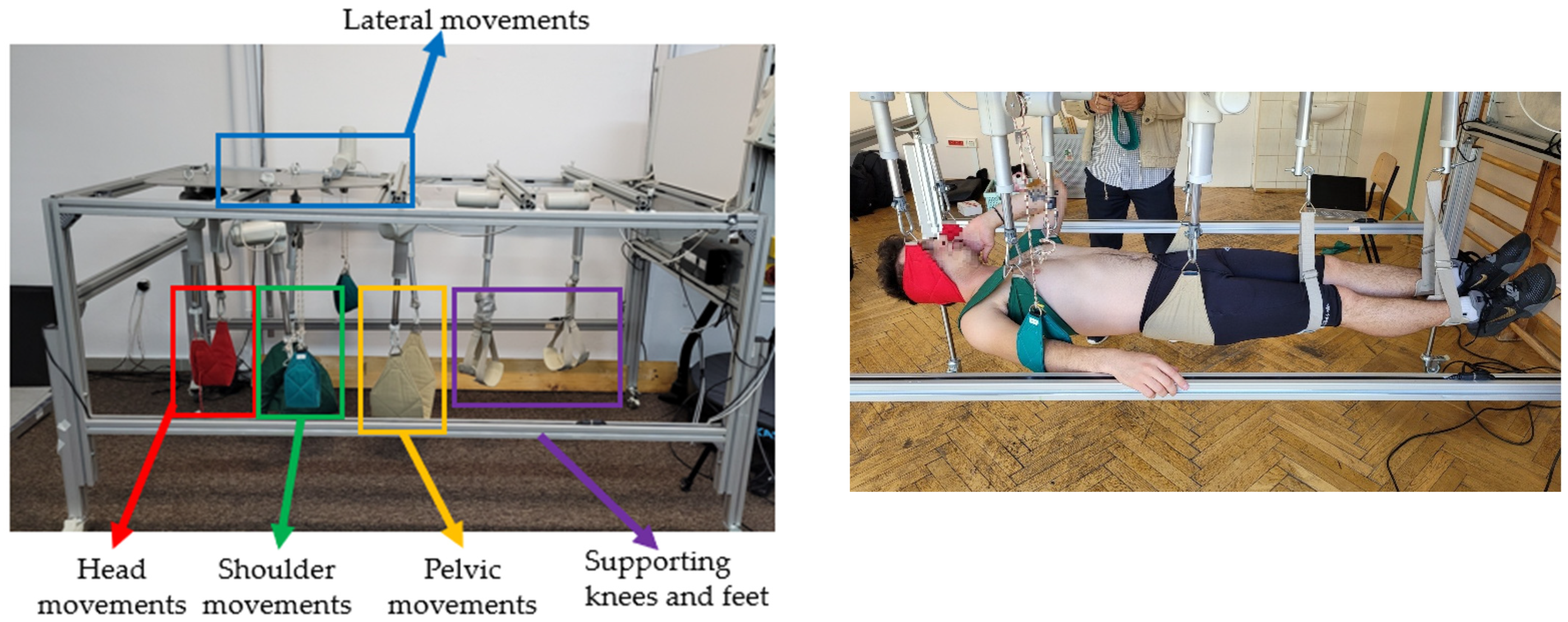
The therapeutic interventions employed on the prototype device encompass programmed passive movements of the cervical, thoracic, and lumbar regions of the spine, in addition to the hip and knee joints. The range of motions is achieved through the use of programmable electric actuators integrated into the device’s structural framework (
Figure 2). The specific range and amplitude of each movement are meticulously determined by the physiotherapist, guided by the patient’s pain thresholds:
Cervical section: The device facilitates the execution of controlled lateral bends and rotations of the head, thus enabling the assessment and treatment of disorders of the cervical discs, root syndromes, and the sequelae of inflammatory changes.
Thoracic section: Movements of flexion/extension, lateral bending and rotation are performed, thus enabling assessment of the patient’s range of motion and response in cases of overload and degenerative pathologies.
Lumbar section: The device is engineered to emulate the range of motion of the human spine, encompassing flexion/extension, lateral bends, and rotations, including alternating rotations involving the pelvis. These movements are designed to replicate the loads that are characteristic of lumbar discopathy, stenosis, and overload syndromes.
Complex movements: The device facilitates a range of movements, including wave (a progressive sequence of spinal flexion–extension) and alternating movement (simultaneous opposite rotation of the lumbar and thoracic spine).
The patient is securely fastened to the apparatus by means of specialised harnesses (connected to electric actuators) that provide comprehensive support for the body. These harnesses offer crucial support for the head, shoulders, pelvis, knees, feet and arms, thereby enabling unrestricted movement and comfort. The suspension system under consideration herein enables patients to assume a supine position with optimal muscle relaxation, thereby facilitating comprehensive bodily relaxation that is impervious to the external forces induced by the employed rehabilitation apparatus.
2.3. Measuring System
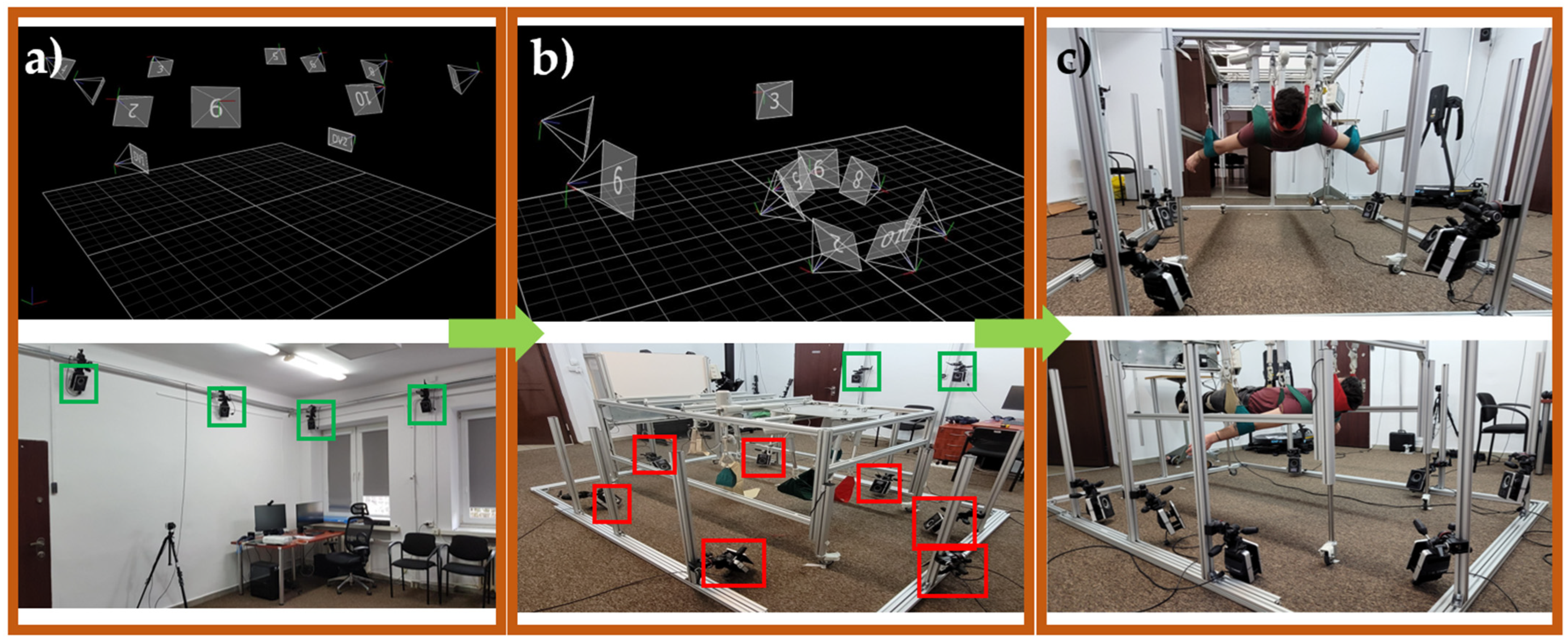
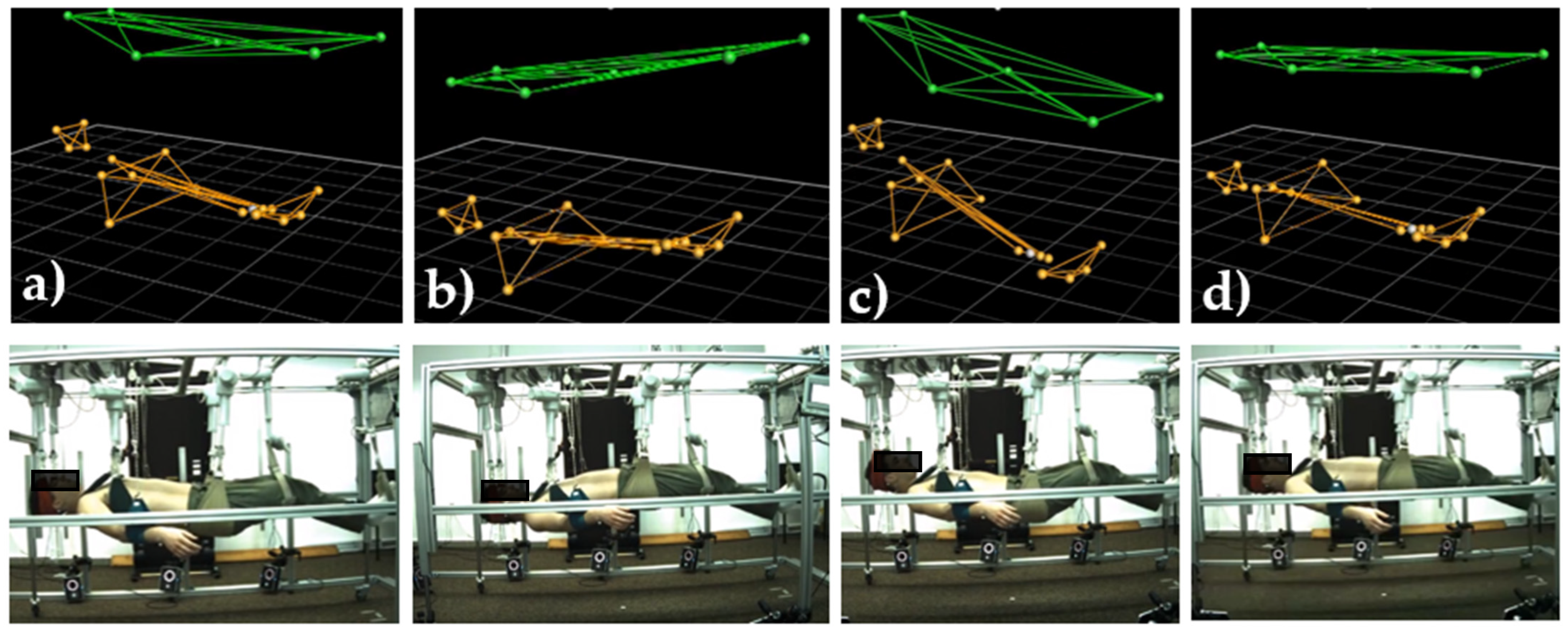
Considering the high degree of accuracy demanded for the measurements, an optoelectronic motion analysis system (Vicon Metrics Ltd., Oxford, UK) operating at a frequency of 30 Hz was employed. The system comprises 10 Vantage V5 cameras that record infrared light reflected from passive markers (
Figure 3a). To study spinal movement, the cameras were placed on a specialised frame around the suspension therapy device, upon which the patient was positioned (
Figure 3b). The system configuration was modified to enable the recording and analysis of spinal vertebrae movement in a patient in a supine position, with movement observed from an inferior perspective (from ground level) (
Figure 3c). The configuration of the measurement station was implemented as follows: seven cameras were positioned on a rack at a distance of approximately 1 m from the patient, with the cameras directed upwards to facilitate observation of the spine and individual body segments. The placement of the cameras beneath the test participant, directed upwards, facilitated a comprehensive measurement field and effective tracking of the movement of all sections of the spine (
Figure 3c). Additionally, three cameras were situated beneath the ceiling, directed downwards, enabling the calibration of the origin of the coordinate system (i.e., the laboratory floor).
2.4. Participants
In order to conduct preliminary verification of the correct operation of the device prototype, a series of measurements were taken on six healthy participants (volunteers: 2 female and 4 male, with average parameters of age 32 years (±8), weight 67 kg (±7) and height 178 cm (±7)), for whom the kinematic relationships between the actuators and individual body segments were analysed. As presented in
Table 1, the characteristic anthropometric parameters are accompanied by the mean values and standard deviations. Prior to participation, each participant received thorough instruction regarding the study’s protocol and the operational principles of the suspension therapy device. To ensure individualised accommodation, the device was meticulously adjusted to align with the unique anthropometric dimensions of each participant. The ethical principles governing the conduct of this study have been rigorously evaluated and approved by the institutional bioethics committee. The study was approved by the University Review Committee (no. SKE01-15/2023) and adhered to the ethical guidelines outlined in the Declaration of Helsinki.
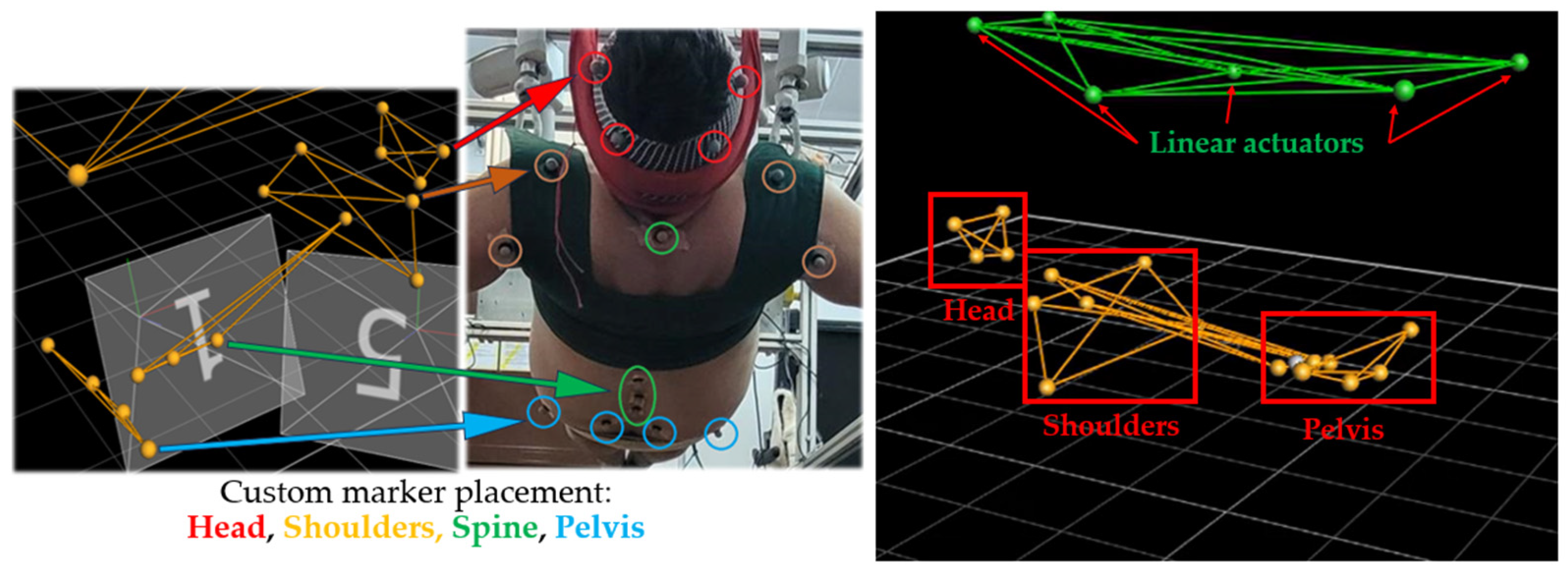
The objective of the present study was to record the participant’s body movements. To achieve this, passive markers reflecting infrared light were placed on selected characteristic anatomical points on each of the participants. This enabled the system to locate the markers in space. The placement of the markers on the participant’s body was determined by the necessity to map key body segments that were important for the kinematic analysis. The segments in question include the head, shoulders, spine and pelvis.
A three-dimensional model of the participant being examined is generated on the basis of the data recorded in the measurement system. This model enables a detailed analysis of the biomechanics of movement. The resulting human model is a so-called segmental model, composed of non-deformable parts representing individual body segments (cf.
Figure 4). This division allows for the accurate monitoring of the movements of individual body parts and the analysis of their interdependencies in relation to external forces in the form of actuators. The calculated rotations of individual body segments are translated directly into the rotations of the vertebrae of the spine. This relationship enables the determination of how the movements performed during suspension therapy will affect spinal movement.
2.5. Measurement Protocol
The development of a measurement procedure for each participant was imperative for the conduction of the research. The procedure consisted of the following steps:
Informing the person about the details of the examination and performing anthropometric measurements.
Calibrating the measuring station without the participant’s participation (working area and measurement accuracy).
Place the person on the suspension therapy device.
Adjust the control actuators and harness to the participant’s anthropometric measurements.
Place measurement markers on specific parts of the person’s body.
Placing measurement markers on electric actuators to record the trajectory of movements during the movement sequences.
Performing all movement sequences specified in the study and recording the person’s body movements. Each movement sequence was repeated six times for each participant. Statistical calculations were performed on the obtained measurements.
Disconnecting the person from the suspension therapy device and removing the markers from the participant’s body.
Interviewing the person about their feelings after the study.
The use of the developed procedure and the repeatability of the activities enabled the studies to be carried out appropriately.
2.6. Variables
The suspension therapy device offers predefined movement sequences, the parameters of which (e.g., range of motion and speed) are adaptable to align with the specific conditions and requirements of a given therapeutic intervention. Following a series of consultations and the development of guidelines by qualified physiotherapists, a series of body movements were identified. These movements will form the basis for the rehabilitation of patients suffering from neurological diseases. Utilising these identified movements, appropriate movement sequences were selected and subsequently programmed into the device. The device was designed to correspond to the rehabilitation of patients, and the following movement sequences were selected for all participants:
The sequences were meticulously programmed to ensure a maximum range of motion of 14 cm. During movement, the actuators methodically lower and then alternately adjust their position by the predetermined range, thereby inducing the rotation of individual components of the participants’ bodies.
2.7. Determination of Kinematic Parameters
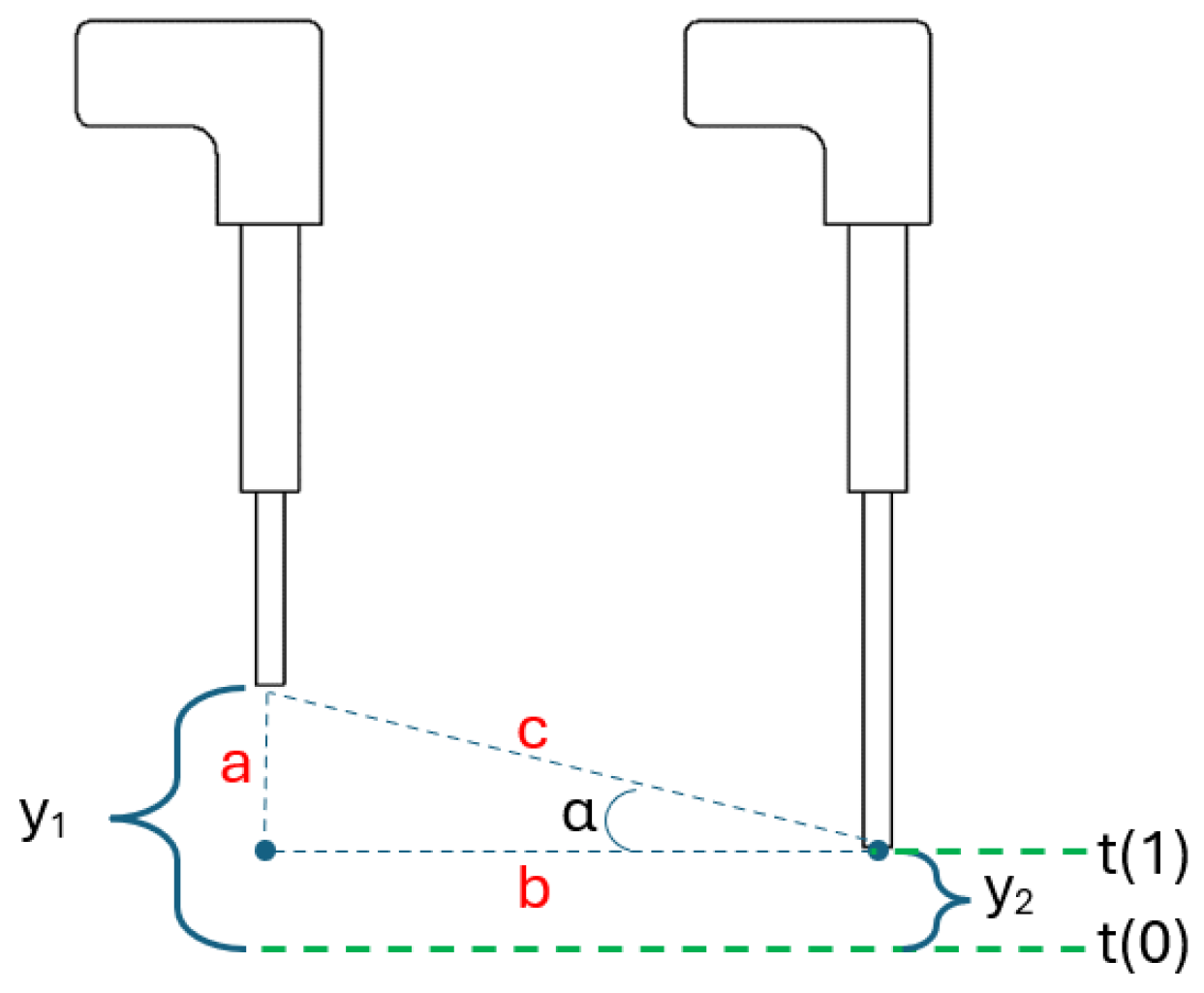
The rotation angles were calculated using mathematical functions based on the recorded trajectories of the actuators and individual body segments, as well as their position in the measurement space. As illustrated in
Figure 5, an example diagram of actuator movement is provided, with the parameters that were essential for calculating the desired rotation angles clearly indicated. During execution of movement sequences involving head, shoulder and pelvis rotation, the actuators exhibit alternating movement. That is to say, when one actuator undergoes a downward movement, the other actuator concomitantly changes its position through an upward movement.
The calculation of the angle of rotation of both the kinematic force (i.e., electric actuators) and the response to this force in the form of the angle of rotation of the body segment was conducted according to the following formula:
where
a—difference in actuator displacement calculated using the following formula:
b—distance between actuators—calculated based on the recorded trajectories of markers attached to electric actuators.
The results obtained from the series of tests revealed displacements characterised by three components, each corresponding to the X, Y and Z axes of the global laboratory coordinate system. The position of each marker was meticulously recorded at a measurement frequency of 30 Hz for each of the three axes, in accordance with the established protocol. The distances between the individual markers were then calculated mathematically, utilising the recorded trajectories as the basis for the computations. The distance in question was calculated using the following equation:
where
Point A (x1, y1, z1).
Point B (x2, y2, z2).
This method also enabled the calculation of the mean distance between markers, which was necessary to determine, for instance, the displacement of the centre of the shoulder girdle.
where
s—midpoint: the distance between the markers.
x, y, z—marker coordinates.
The analysis of biomechanical test data involved the calculation of mean values and standard deviation for the parameters under investigation, with each test participant’s data being derived from six recorded runs. The resulting findings were then collated using Excel (Office 365, Redmond, WA, USA).
4. Discussion
The obtained results demonstrated a varied response of body segments to kinematic constraints generated by the suspension therapy device. A significant discrepancy was revealed in the values for head, shoulder and pelvis rotation, which may be attributable to both the biomechanical characteristics of individual segments and the participant’s unique anatomical features. The analysis accounted for variability between participants and the specificity of the movement sequences employed, facilitating the identification of potential factors influencing the efficacy of the therapy. A summary of the research results is presented in
Table 9. It is evident from a review of the literature that there is a paucity of studies that analyse rotational body movements generated by devices operating in full suspension. Previous publications mainly concern the effects of traction, unloading or simple linear movements, while there are relatively few studies in the scope of the manuscript referring to the biomechanical assessment of the rotation of individual body segments in response to controlled kinematic forces. It is evident that the findings of this study do not possess a direct comparative equivalent in the existing scientific literature, thus hindering the ability to relate them to previous reports. This emphasises the original nature of the obtained data and underscores the necessity for further research in this domain.
The analysis revealed that the mean head rotation angle (46.4°) was 27.8% greater than the actuator angle (36.3°). The percentage change between the applied angle and the actual angle remained relatively stable, as evidenced by the low standard deviation (2.5%). The results obtained within the presented study group indicate that it may be possible for the device to produce comparable outcomes within the range of head movement, irrespective of individual participant variations. However, these findings are preliminary and require validation with a larger sample. It was also observed that the augmented range of head rotation might be attributable to its unrestricted rolling within the harness, which turned out to be a characteristic feature in the tested research group. The loose positioning of the head in the harness may enable a natural increase in rotation in response to constraints, a factor that should be duly considered during the planning stage of therapy. Additionally, the head rotation angle values in the head rotation sequence (46.4°) were found to be comparable to those obtained in the alternating head–shoulder rotation sequence (46.1°). These findings imply that the presence of additional constraints within the shoulders does not appear to exert a substantial influence on the range of head rotation. Furthermore, the analysis reveals a notable discrepancy between the actuator angle and the head angle, which averages approximately 10 degrees, yet this discrepancy remains consistent across all participants.
The mean shoulder rotation angle was measured at 23.8°, representing an increase of 10.7%, relative to the actuator angle of 21.5°. These disparities, albeit minor, exhibited greater variability among participants compared to the head. For instance, participant 4 exhibited a considerably higher percentage change (31%), whereas participants 2 and 3 demonstrated changes that were only a few percentage points. The observed variability in the data may be attributable to differences in muscle tension, tissue elasticity, or individual biomechanical characteristics within the shoulder girdle region. As was observed in the case of the head, the differences between the values obtained for shoulder rotation in the shoulder rotation (23.8°) and alternating head–shoulder rotation (24°) sequences were minimal. The presence of additional constraints associated with head movement did not result in a significant effect on shoulder biomechanics, thus providing preliminary confirmation of the effectiveness of the device in accurately mapping movements within this particular area.
Of all the segments analysed, it was the pelvic rotation that demonstrated the least discrepancy between the forced actuator angle (20°) and the actual angle (20.1°). The mean change was only 0.5%, thus demonstrating the high accuracy of the device in mapping pelvic movements. This result could be of interest in the field of rehabilitation for participants experiencing neurological dysfunction and spinal dysfunctions, in which precision of movement is paramount, though further clinical validation is required to confirm its therapeutic significance.
However, in the alternating shoulder–pelvis rotation sequence, the opposite trend was observed; the average pelvic angle was measured at 16.5°, which was 3° less than the actuator angle (19.6°). This outcome may be attributable to the anatomical constraints imposed by the pelvis, in comparison to more mobile segments such as the head and shoulders. Concurrently, substantial variability in percentage results was observed among participants (ranging from −30% to −2%), thereby underscoring the necessity for a more individualised approach to movement design in this sequence.
In alternating sequences, such as head–shoulder and shoulder–pelvis rotation, the results demonstrated significant variations in the movement mapping between segments. For instance, in the context of shoulder rotation within the head–shoulder sequence, the average change was recorded at 9.6%, whereas in the shoulder–pelvis sequence, this figure stood at 7.4%. In the case of the pelvis, a greater percentage difference (−15.8%) was observed in the shoulder–pelvis sequence. This finding may be attributable to the natural movement limitations of the pelvis and its more stable structure in comparison to the shoulders and head.
Although
Table 2,
Table 3,
Table 4,
Table 5,
Table 6,
Table 7 and
Table 8 primarily present quantitative kinematic data, their interpretation is essential for understanding the functional and medical relevance of the observed movement patterns. The differences between actuator-imposed rotations and the actual rotations of body segments reflect the biomechanical properties of individual segments, their anatomical constraints, and their response to passive suspension therapy. From a clinical perspective, these differences indicate how effectively a given movement sequence is transferred to the patient’s body and whether the resulting motion remains within a safe and therapeutically meaningful range. The consistently higher rotation angles observed for the head (
Table 2 and
Table 3) and, to a lesser extent, for the shoulders (
Table 4,
Table 5 and
Table 6), indicate a tendency toward over-rotation that is relative to the actuator settings. Medically, this finding suggests increased mobility and lower passive resistance of these segments, which may be advantageous for improving range of motion in patients with stiffness-related disorders. At the same time, excessive rotation—particularly in the cervical region—may increase the risk of discomfort or strain if not properly controlled, highlighting the importance of precise harness fitting and individualised adjustment of therapy parameters. In contrast, the near-agreement between actuator-imposed and measured pelvic rotation during isolated pelvic movements (
Table 7) demonstrates high kinematic fidelity and stability of motion transfer. From a therapeutic standpoint, this result is clinically relevant, as precise and repeatable pelvic motion is critical in the rehabilitation of lumbar spine disorders, core stability deficits, and neurological conditions requiring controlled passive mobilisation. The low variability observed across participants further suggests that this movement sequence may be safely standardised in clinical practice. The reduced pelvic rotation observed during the alternating shoulder–pelvis sequence (
Table 8) has important medical implications. The markedly lower-than-imposed rotation indicates biomechanical limitations of the pelvis when coupled with shoulder motion, likely resulting from increased segmental stabilisation and anatomical constraints. Clinically, this finding underscores the need for caution when prescribing complex, multi-segment movement patterns, as the intended therapeutic stimulus may not be fully transferred to less mobile segments, such as the pelvis. This supports the necessity for individualised therapy design and potential sequence-specific parameter optimisation. Overall, the results summarised in
Table 2,
Table 3,
Table 4,
Table 5,
Table 6,
Table 7 and
Table 8 provide clinically meaningful insight into segment-specific motion behaviour under suspension therapy. Rather than serving as isolated numerical outcomes, these data inform therapeutic decision-making by identifying movement sequences that promote controlled mobility, reveal potential risks of over- or under-rotation, and support the personalization of rehabilitation protocols.
The results suggest that individual biomechanical characteristics, such as body weight, tissue elasticity, and muscle tension, may influence the range of motion. While these factors were not quantitatively measured in this preliminary study, they provide a basis for future research. Subsequent studies on a larger and more representative group will focus on quantifying these parameters to confirm their specific impact on therapy outcomes. Participant 4 exhibited consistently greater variability in comparison to the other participants, which suggests the necessity for further research to investigate the impact of these factors on treatment outcomes. The inclusion of a more substantial number of participants in the study is required to facilitate the identification of trends and the formulation of more universally applicable treatment recommendations.
5. Conclusions
The studies conducted using the suspension therapy device yielded novel insights into the mechanics of movement of individual body segments in response to kinematic forces generated by actuators. The preliminary results suggest a high capability of the device in replicating most therapeutic movements, particularly in the case of the pelvis, where the differences between the forced angle and the actual angle were minimal. The results of this segment demonstrated high stability, indicating that it is less prone to the impact of individual anatomical variations among participants. In the case of more mobile segments, such as the head and shoulders, greater variations in results were observed, which could be attributed to the biomechanics of these areas and the design of the device.
This finding could have potential implications for enhancing participant mobility, although further clinical verification is needed. Simultaneously, it is imperative to regulate the excess rotation induced by this slack to circumvent undesirable consequences. The findings of this study underscore the necessity for enhanced precision in harness fitting, a measure that holds the potential to enhance movement compliance and curtail excessive deviations.
The efficacy of the device in synchronising the movements of adjacent body segments was preliminarily demonstrated by a series of experiments that employed alternating sequences, such as head–shoulder or shoulder–pelvis rotation. However, more complex movement patterns, such as ‘shoulders–pelvis,’ demonstrated greater disparities in movement dynamics between segments. This phenomenon may be attributable to the interaction between the more mobile shoulders and the more stable pelvis. These results imply the necessity for further optimisation of complex movement sequences to better align with participants’ capabilities.
It can be concluded that individualisation of therapy parameters is imperative, with consideration given to differences in body weight, muscle tone and tissue elasticity. As illustrated by the findings of various studies, certain individuals, typified by participant 4, exhibit deviations from the mean results, thereby indicating distinct therapeutic requirements. A meticulous adjustment of the range of motion and the dynamics of constraints, tailored to the unique characteristics of each participant, has been demonstrated to enhance the efficacy of therapeutic interventions.
From a pragmatic standpoint, the findings of this study suggest that the device under investigation demonstrates significant prospects for application in neurological rehabilitation, notably within the domains of pelvic and shoulder therapy. Optimisation of the movement parameters and harness design has the potential to enhance the efficacy of the device. However, it is essential to emphasise that this study is pilot in nature. Due to the relatively small sample size, these findings serve primarily as a promising proof of concept; consequently, they should not yet be generalised to the broader neurological patient population without further validation. Future research, conducted on a more representative and substantially larger cohort with diverse levels of impairment, is required to fully confirm the clinical validity and reproducibility of these findings. Such studies will allow for a more profound understanding of how individual biomechanical differences influence therapeutic outcomes, enabling the formulation of precise, universal clinical guidelines. These results provide a vital foundation for future certification processes and the full-scale integration of the device into routine clinical practice.




 ,
,