Article

Monitoring the Variability of Soil Infiltration Capacity in Irrigated Feed Crop Production

1
Faculty of Engineering, Institute of Agricultural Engineering, Transport and Bioenergetics, Slovak University of Agriculture in Nitra, Tr. A. Hlinku 2, 949 76 Nitra, Slovakia
2
National Research Centre for Climate and Regional Land Management, Hungarian University of Agriculture and Life Sciences, Kisújszállási 166, 5300 Karcag, Hungary
*
Author to whom correspondence should be addressed.
Appl. Sci. 2026, 16(5), 2253; https://doi.org/10.3390/app16052253
Submission received: 16 January 2026 / Revised: 21 February 2026 / Accepted: 24 February 2026 / Published: 26 February 2026
(This article belongs to the Section Agricultural Science and Technology)

Abstract

When cultivating a selected field crop (alfalfa), we aimed to examine its positive effects on the variability of soil infiltration capacity. A total of 21 monitoring points were proposed for investigating soil hydraulic conductivity on the targeted plot with a total area of 47.64 ha, divided between the irrigated and non-irrigated areas. The plot is located outside the village of Oponice (Slovak Republic) and is managed by VPP Kolíňany. The study of hydraulic conductivity has been ongoing on the selected plot for several years. The presented results come from a two-year experiment, during which work operations related to the cultivation of alfalfa were carried out on the plot. The unsaturated hydraulic conductivity of the soil was assessed several times a year using a Mini Disk Infiltrometer, while soil moisture at monitoring points and the dependence of the measurement date (work operations, weather conditions) were also monitored. The average soil moisture content in the pilot measurements reached 18.77% vol. (CV = 1.44%), in the secondary measurements 17.21% vol. (CV 20.49%), in tertiary measurements 15.27% vol. (CV = 10.38%), and in the last measurements 15.26% vol. (CV = 10%), which ultimately represents a positive result of soil moisture balance. To test the significance of the differences between measurements taken across the entire surveyed plot, a one-factor ANOVA analysis was used to compare the measurement dates. The results showed a statistically significant difference when examining the effect of the time period of soil infiltration capacity monitoring between all measurements (p = 0.004). The mutual combinations of individual measurement dates were mostly significant (p = 0.03 for IDM1, IDM2; p = 0.003 for IDM2, IDM3), except for one case without a significant difference (IDM3, IDM4; p = 0.52). The second hypothesis was confirmed only at some monitoring points, and it can be stated that the irrigated area had a more significant effect on the soil infiltration capacity. The results obtained by the Shapiro–Wilk test and Welch’s test in irrigated and non-irrigated areas at individual dates showed statistically insignificant differences in three cases (IDM1, p = 0.123; IDM3, p = 0.382; IDM4, p = 0.445) and statistically significant in one case (IDM2, p = 0.0175). Based on the hypotheses and the results obtained, it can be said that the work tasks performed have a decisive influence on the infiltration capacity of the soil. The phenomenon of “water resistance” did not manifest itself in our research on soil infiltration capacity. The results were also evaluated using ArcGIS software 10.0 to display the spatial variability of soil hydraulic conductivity. The last application used to evaluate the results was Orange software 3.40.0, using clustering maps and hierarchical clustering. The results also pointed to variability depending on the dates of monitoring.

1. Introduction

Global population growth is leading to increased demand for food, water, and land. The fact is that water resources available for agriculture are becoming limited worldwide. This is mainly due to climate change and, in some countries, inefficient water management. The goal is to increase the production of, for example, cereals despite the limited availability of land and water [1]. This goal gives rise to other sub-goals related to crop yield per unit (measured per unit of water consumption), increasing water use efficiency, and improving soil properties [2,3]. Proper soil cultivation at the right moisture level helps to achieve a suitable soil structure for optimal infiltration [4]. A fundamental parameter for efficient and integrated water management is soil infiltration capacity, as it governs how incoming water is partitioned between infiltration into the soil profile and surface runoff [5]. Infiltration refers to the process by which water penetrates the soil, predominantly through the soil surface. From a hydrological point of view, infiltration from precipitation is the most interesting. The intensity of infiltration determines the formation of surface runoff and the associated soil erosion. The aim of experts is to create conditions that allow as much precipitation as possible, which is necessary for plants, to soak into the soil [6]. Soil infiltration plays a key role in ensuring high water use efficiency, optimal fertilizer application, and effective irrigation planning [7,8]. The infiltration rate is expressed as the ratio of the amount of water absorbed per unit of area of land per unit of time. In addition to the typical pathways associated with precipitation, irrigation, and snowmelt, water may also infiltrate from standing surface water bodies, including puddles, lakes, and reservoirs. Basically, it is a measurement of the speed of water column displacement per unit of time [9]. After the soil profile reaches full saturation, the infiltration rate stabilizes to an approximately steady state and corresponds to the saturated hydraulic conductivity k. Together with evapotranspiration, infiltration represents a continuous pathway of precipitation losses and constitutes a key component of the water balance [5]. Saturated hydraulic conductivity is a fundamental parameter in the design and modeling of drainage systems as well as in the implementation of stormwater and rainwater management measures [10]. The application of infiltration models requires the specification of multiple soil infiltration parameters, which is a critical step in precipitation–runoff modeling because it strongly influences the partitioning of precipitation into losses and effective rainfall [11,12]. Among soil hydrological properties, hydraulic conductivity exhibits the highest statistical variability and is affected by numerous factors, including soil type, land use, site conditions, depth, and the applied measurement techniques and methodologies [13,14,15]. Consequently, this parameter varies both spatially and temporally, and its variability may also be altered by applied management practices, such as vegetation establishment [16]. Soil heterogeneity may arise even from minor changes in physical soil properties, particularly in low-permeability clay soils, where features such as cracks and preferential flow channels can develop [17]. Hydraulic properties have been the subject of intensive research in many disciplines for several years, and can be studied in the laboratory or in field conditions [18]. Based on practical experience, it is more appropriate to use an infiltrometer that does not require a large amount of water. It can be said that, in addition to minimal water consumption, this is also a more modern and faster method that uses smaller equipment (Mini Disk Infiltrometer (METER Group AG, Mettlacher Straße 8, 81379 München, Germany)—a practical and fast method, [19,20]). Minidisc is a miniaturized tension infiltrometer that allows simple and quick determination of the hydraulic conductivity of soil corresponding to fixed values of pressure height [21,22]. Other authors monitoring infiltration with an infiltrometer also report lower water consumption and measurement speed [23,24]. The Mini Disk infiltrometer can be used for both one-dimensional and three-dimensional infiltration experiments. In addition, it can be said that these infiltrometers are used without causing any disruptions in the soil during the experiment, unlike other infiltrometers, such as circular infiltrometers, and therefore their measurements can be considered more reliable [25]. The device is typically used in the field to determine the infiltration process under specified input conditions [26].
Considering the reviewed literature and the technical facilities available at our workplace, this study focused on assessing the spatial variability of soil infiltration capacity under forage crop cultivation using a straightforward field-based approach on selected agricultural plots. The objective was to monitor changes in unsaturated hydraulic conductivity over a two-year period of crop production. The results were subjected to statistical analysis. Based on the work operations performed and weather conditions, we established the following hypotheses:
-
Work operations on the land and the timing of sampling affect the infiltration capacity of the soil.
-
The variability of soil infiltration capacity did not demonstrate the significance of zones between individual measurements due to the influence of irrigation.
-
The phenomenon of “water resistance” occurs more frequently in autumn weather in our climatic conditions.

2. Materials and Methods

The research aimed primarily at analyzing the variability of soil infiltration capacity according to unsaturated hydraulic conductivity. The research was conducted in the field over a period of two years, with monitoring points selected on the chosen plot in irrigated and non-irrigated areas (initially 18, then 20, and finally 21). The increase in the number of monitoring points resulted from the need to apply irrigation and to determine the variability in the added points more accurately.

2.1. Characteristics of the Location

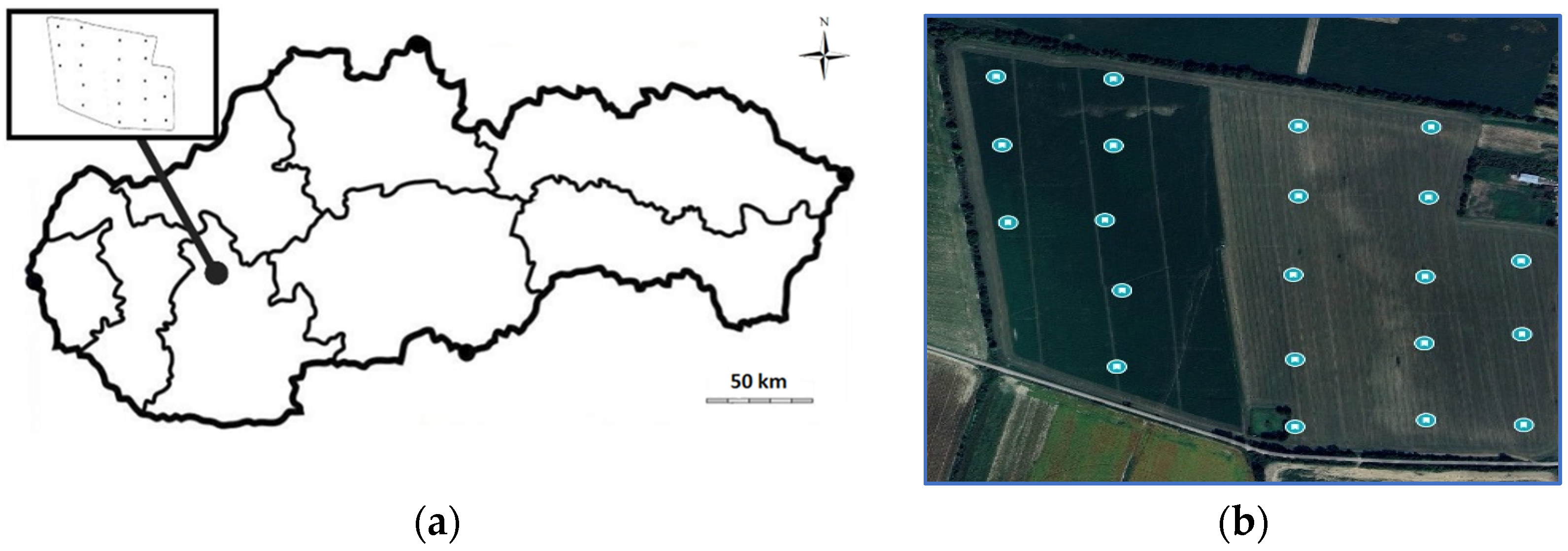
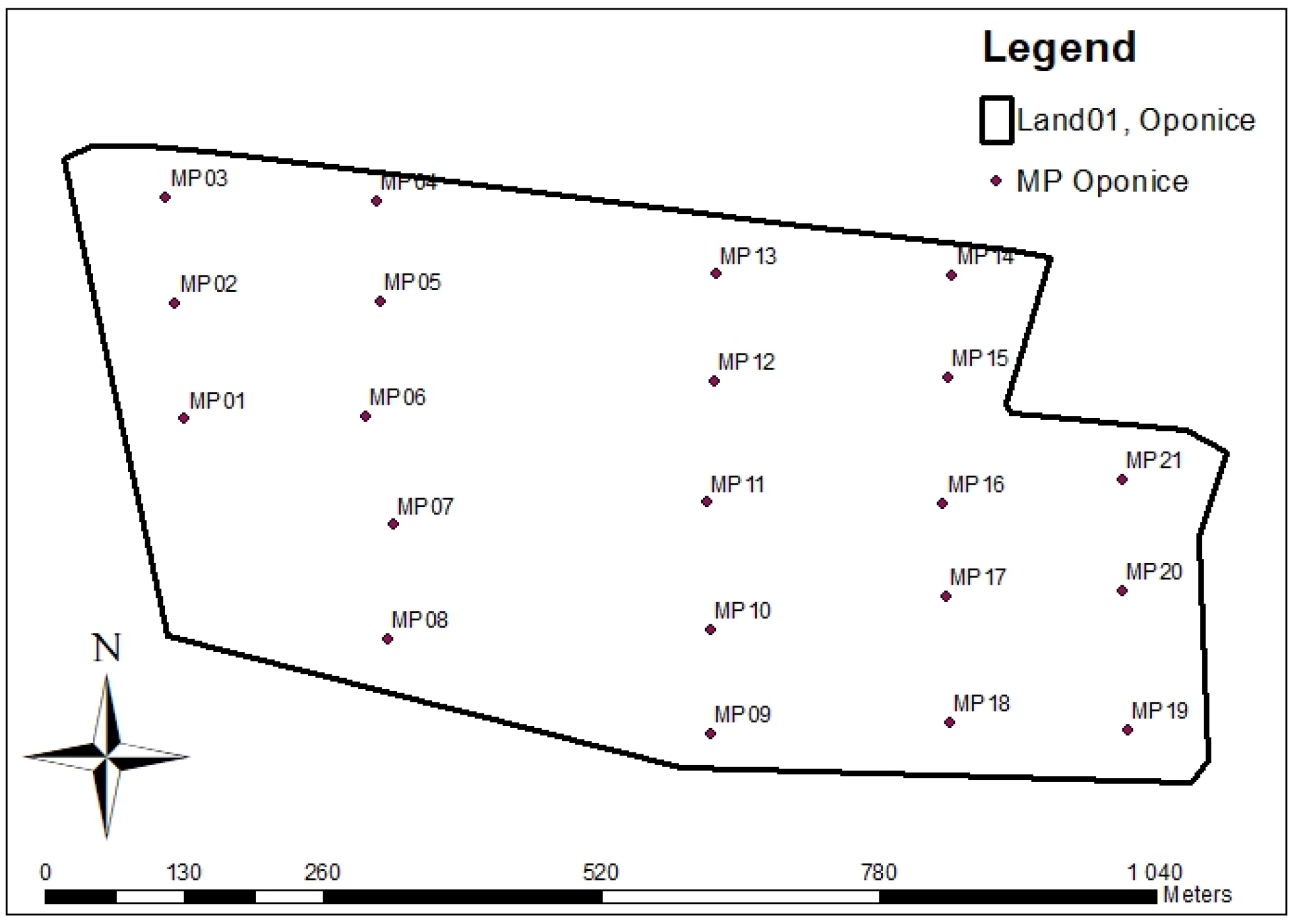
The examined land with a total area of 47.64 ha is located outside the built-up area of Oponice (48.464524 N, 18.137509 E, altitude from 149.3 to 160 m above sea level, Figure 1 and Figure 2) on agricultural land. In terms of crop production, VPP Kolíňany, s.r.o. (Hlavná 561, 951 78 Kolíňany, Slovakia) currently focuses on the cultivation of dense cereals, oilseed rape, and fodder crops. As for special crops, the farm plans to continue growing shelled oil pumpkin and, in terms of special plant production, maize for seed and soybeans for seed. As for dense grains, both soft and hard wheat are grown, and the company also focuses on seed production. In addition to classic mercantile, the company grows spring barley for its two long-standing important partners, and the conditions for its cultivation are excellent in the region of the Oponice farm. Currently, the company is able to irrigate an area of more than 350 ha in Oponice, which is very beneficial in terms of managing the risks of external factors. During various experiments, winter wheat (2023) was first grown on the plot, followed by peas and then alfalfa. After the pilot measurements, shear harrowing was applied (twice using the cross method). In March, sowing was carried out with a combined machine (seedbed compactor + seeding drill, Table 1). First, peas were sown, followed by alfalfa. To establish the crop, a cover crop of peas (Saxom c1 variety) was applied at a rate of 130 kg.ha−1, followed by alfalfa (Pálava variety, positioned at 10–15° to the direction of pea sowing) at a rate of 20 kg.ha−1. The last operation before the second group of measurements was rolling (Cambridge rollers). Agrotechnical terms, fertilization, and crop treatment (including applied treatment rates) were decided based on the decision of the company’s agronomist. The land is classified according to BPEJ 0127003 [27]. Soil ecological units [27] are a warm, very dry, lowland climatic region. The concept of agricultural soil classification essentially follows the traditional principles of classification in the Slovak Republic. Each parcel is characterized by parameters of soil-ecological properties expressed by so-called rated soil-ecological units. In terms of predominant grain size, the soils are classified as heavy and deep, without skeleton; in terms of soil type, they are classified as black soils [27]. The point value of the production potential is 87. Agricultural operations were carried out based on the actual needs of the crop and growing requirements. Irrigation was carried out using a Valley Pivot irrigator (Valley Pivot Irrigation, Valmont S.A.U., Spain, 28521 Rivas Vaciamadrid, Madrid, Spain). The average monthly precipitation in 2024 was 23.08 mm (the total annual precipitation for the whole year was 277 mm), and the average temperature was 13 °C, ranging from −11 °C in winter to 37 °C in summer (Table 2) [28,29].

2.2. Characteristics of the Measuring Devices

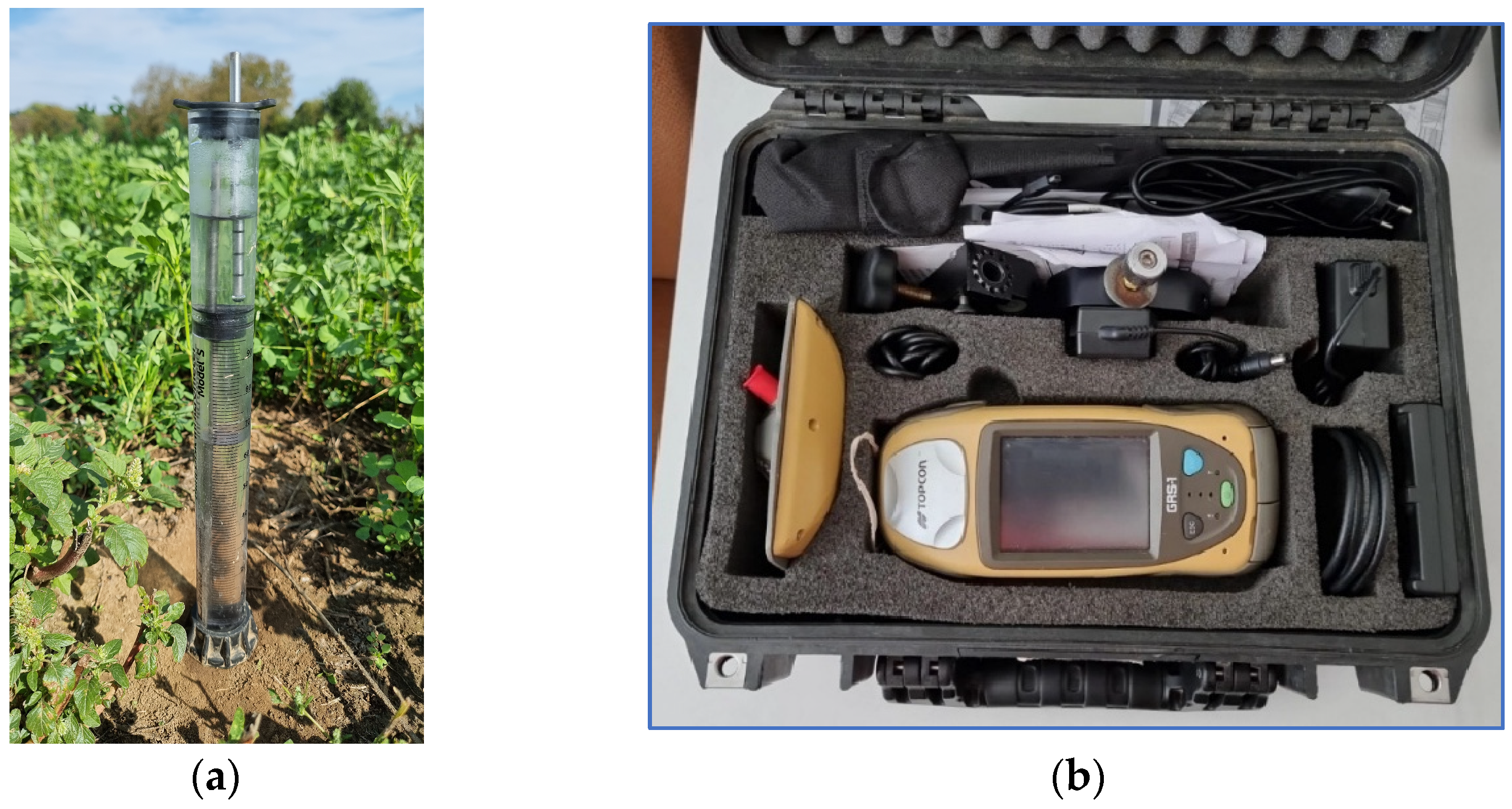
On the selected plot with a total area of 47.64 ha, 18 sampling points were established in the first year of measurement. For a more significant evaluation of the results, the number of monitoring points in the non-irrigated area was increased from the original 18 to 21. Unsaturated hydraulic conductivity measurements were performed using a Mini Disk Infiltrometer (Decagon Devices, Inc., 950 NE Nelson Court, P.O. Box 835, Pullman, WA 99163, USA, Figure 3), which, based on practical experience, is a simpler and faster way to monitor soil infiltration capacity. The measuring device requires one operator to read and record data, and is an interpretation of a tension infiltrometer for unsaturated hydraulic conductivity (k) monitoring. Its advantage is its application in areas with limited water access. Based on the material type, the tube is made of polycarbonate with dimensions of 327 mm (height) and 31 mm (diameter) with a volume of 135 mL [30]. The tube consists of two chambers, which must be filled with water according to the operating instructions. The essence of correct measurement is to set the air suction in the upper part of the cylinder (steel tube) in the range from 0.5 to 7 (set according to the instructions—soil type in this case 3.5). The selection of the suction speed depends on the type of soil (water infiltrates at different speeds). Measurement can often be difficult, so we first carried out control measurements and decided on a speed of 3.5. When measuring hydraulic conductivity, we followed the manual for the measuring device, which requires first filling the device with water, setting the suction, and recording the initial water level. At time zero, the infiltrometer was placed on the surface (in firm contact with the soil surface). The volume was read at regular time intervals. The time interval depended on the selected suction speed and the type of soil being measured. Based on the type of soil found, we set the recommended interval for loamy soil (30 s) according to the manual. The total number of readings was determined based on the requirements of the attached manual for the infiltrometer (15). A semi-permeable stainless-steel membrane (porous disk made of sintered stainless steel) is mounted on the lower part of the cylinder, through which water gradually infiltrates from the cylinder into the soil (lower part—scale in mm, the water level is read at specified intervals). The measured data must be processed in a specially prepared file, where the results are displayed in tabular and graphical form. The volumetric moisture content of the soil was determined at individual monitoring points using the gravimetric method. A Topcon GRS-1 handheld satellite navigation device (RTK accuracy, signal correction: SKPOS, Topcon, 7400 National Drive, Livermore, CA 94550 USA, Figure 3) [31] was used to define the land boundaries. The experimental plot was located approximately 15 m from the main road. Infiltration values were recorded every 30 s (15 values were recorded).
The principle of the infiltrometer is based on the definition of infiltration, focusing on monitoring water infiltration and subsequently determining the hydraulic conductivity of the soil. The method for calculating infiltration and soil hydraulic conductivity was developed by Zhang [32]. Measuring cumulative infiltration over time and determining the result according to a function (Equation (1)). The results of the measurements are shown on a graph following the x-axis (the square root of time) and the y-axis (cumulative infiltration). The data points are then adjusted by the function (e.g., the first two terms of the infiltration equation).
I = C 1 t + C 2 t 1 / 2
where
I—cumulative infiltration, m,
t—time, s,
C1—function parameter related to hydraulic conductivity, m.s−1,
C2—is a parameter of the function related to the sorption capacity of the soil, m = 0.667, m.s−1/2.
The hydraulic conductivity of soil k is calculated using the following function:
k = C 1 A
where:
k—hydraulic conductivity, m.s−1,
C1—rise in the cumulative infiltration curve, m.s−1,
A—dimensionless coefficient.
The calculation can also be performed using the following equation:
A = 11.65 n 0.1 1 e x p [ b n 1.9 α h 0 ] ( α r 0 ) 0.91 .       ( b = 2.92   i f   n 1.9 ; b = 7.5   i f   n < 1.9 )
where:
n, α—van Genuchten parameters,
r0—the disk radius, cm,
h0—the suction at the disk surface, -,
b—constant, -.
The Mini Disk infiltrometer applies water under suctions ranging from −0.5 to −6 cm and has an effective radius of 2.2 cm. The van Genuchten parameters corresponding to twelve soil texture classes were adopted from Carsel and Parrish [33].
For soils characterized by an n value lower than 1.35, recent methodological guidelines recommend substituting the original Equation [32] with a modified formulation [24] to improve the estimation accuracy of hydraulic conductivity (k). Saturated hydraulic conductivity (ks, cm·s−1) was subsequently derived from Mini Disk infiltrometer data using the approach proposed by Kutílek and Nielsen [34], based on the governing Equation (4):
I m k s t + C 2 t 1 / 2
where C2 (m.s−1/2) is a parameter of the function related to the sorption capacity of the soil, m = 0.667.

2.3. Statistical Evaluation of Results

Based on the methodologies used to determine the state of infiltration between individual terms, it is assumed that the results will indicate significant changes. Statistical analyses must be used to ensure a high-quality and sufficient evaluation of the results. To test the significance of differences between measurements taken between individual periods, a one-factor ANOVA analysis [35] was applied to evaluate and compare the results (Formula (5)). The number of monitoring points in the tests comparing the dependence of individual measurement terms was adjusted to meet the conditions for its application.
y i j = μ + M i + e i j ,     m m
yij—measurements parameter,
µ—overall mean,
Mi—effect of the monitoring deadline,
eij—Random error with mean 0 and variance σ2.
In addition to the above test, we added the Shapiro–Wilk test and Welch’s test to compare irrigated and non-irrigated areas (different number of values in the files). Graphical evaluation of the results will be performed using the software supplied with the infiltrometer [30] and spatial variability using ArcGIS software (interpolation set to Spline) [36].
Hierarchical cluster analysis was applied using Orange software [37] to identify similarities and dissimilarities among individual sampling locations, including the pilot measurement, subsequent measurements during the vegetation period, and Mini Disk Infiltrometer observations. The method produces a dendrogram that represents relationships among objects based on a distance matrix. Distances were computed using the Euclidean metric, defined as the standard straight-line distance between points in Euclidean space.
These distances, therefore, quantify differences in the measured variables across rows. The distance map method was subsequently employed to visualize the distance matrix by transforming numerical distance values into color gradients that illustrate the degree of similarity between objects.
In recent years, selected crops (i.e., before alfalfa) have been grown on the selected land, such as oilseed rape (2020), spring barley (2021), oilseed rape and soybeans (2022, in a 50/50 ratio), and winter wheat (2023). In other years, the cultivation of the mentioned fodder crop continues. In recent years, modern irrigation technology has been installed on the selected plot, which ensures irrigation of most of the plot. The addition of monitoring points was related to a more detailed and verifiable comparison of the results obtained. Pilot measurements were carried out at the end of 2023 and were used as a benchmark for comparison with other measurements.

3. Results and Discussion

The results of the research on the given land were focused on the evaluation of soil infiltration capacity represented by unsaturated hydraulic conductivity under various input conditions (irrigation and no irrigation, measurement period—spring, summer, autumn).
Before measuring infiltration, we first focused on assessing soil moisture at individual monitoring points and examination dates (Table 3). The average soil moisture value across the entire plot in the pilot measurement reached 18.77% vol. (coefficient of variation CV = 1.44%). In the second group of measurements, carried out in April, the average soil moisture content reached 17.21% with a coefficient of variation CV = 20.49%. The third group of measurements was not carried out until September, when there was a decrease in the average soil moisture content to 15.27% vol. (CV = 10.38%). The latest measurements showed that soil moisture was maintained at an average value of 15.26% vol. (CV = 10%).
As already mentioned, the initial measurements were carried out in the fall of 2023 at 18 monitoring points (MP). Of the total number of points, 11 MP fell under irrigation in the given proposal. The second group of points was outside the range of the planned irrigation (7 MP). The points were distributed to cover the entire area of the land. The measurement results were processed in the file supplied with Using the Mini Disk Infiltrometer, hydraulic conductivity (k, cms−1), standard deviation (cms−1), and the coefficient of variation (CV, %) were determined (Table 4). The land under investigation was predominantly clay-loam soil, with a parameter A value of 7.23 (clay-loam soil). During the first two years of research, no negative values of soil infiltration capacity were observed, which would result from alternating fluctuations in infiltration among individual time periods, characterized by transitions from higher to lower values and vice versa. These variations are influenced by the timing of measurements, soil compaction, soil moisture availability, and the occurrence of soil water repellency associated with dry soil conditions. The results of the pilot measurements are shown in Table 2, with the coefficient of variation reaching a high value of 51.07%. Hydraulic conductivity values ranged from 1.5 × 10⁻⁵ cms−1 to 17.81 × 10⁻⁵ cms−1. This could have been caused by the characteristics of the land, terrain conditions such as different soil types, uneven soil cultivation, altitude, soil structure, etc. In terms of altitude monitoring, our initial measurements did not show any significant impact on soil hydraulic conductivity. The maximum altitude was at monitoring point MP15 (160.0 a.s.l.), where hydraulic conductivity reached a value of 12.5 × 10⁻⁵ cms−1. At the lowest altitude (149.3 a.s.l.), hydraulic conductivity reached 11.61 × 10⁻⁵ cms−1.
Available scientific research in various soil conditions shows that various soil types have different water infiltration rates into the soil. Some soil types are found to have borderline, excessively high, or low infiltration rates (e.g. sandy soils or compact soils) [32]. As in our pilot measurement, measurements from available sources show significant spatial variability in hydraulic conductivity k, e.g., [10,38,39,40].
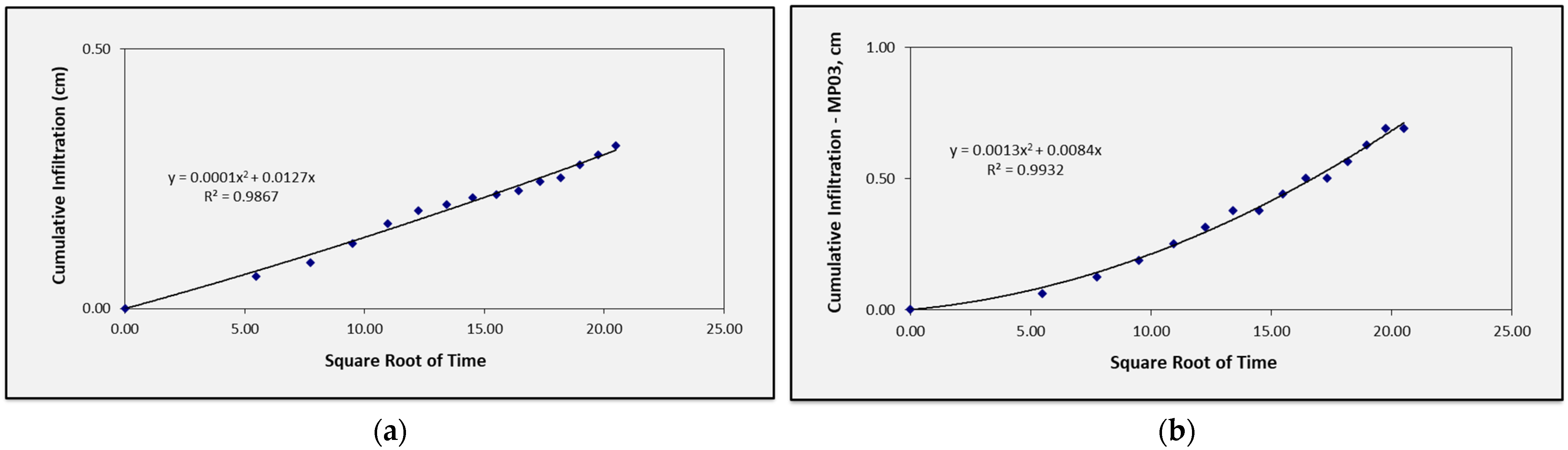
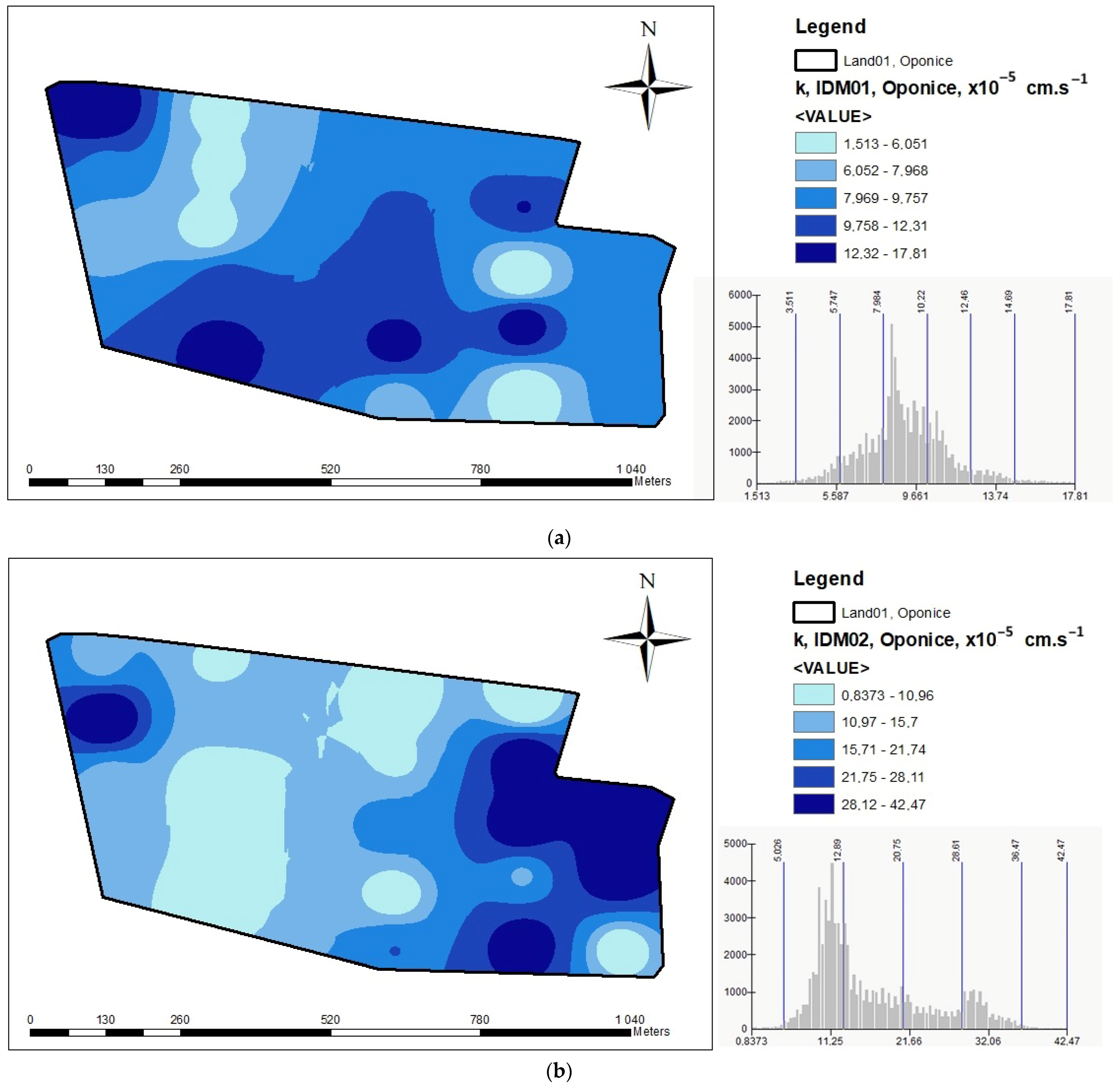
Examples of graphical representations of the results of selected monitoring points are shown in Figure 4 as dependencies of cumulative infiltration by the unit of time in a measurement period of 420 s (MP3, MP16). In the first case, the strongest influence of hydraulic conductivity, with a parameter value of R2 0.993, the change in cumulative infiltration was exponential (curve slope parameter 0.0013). In the second case (MP16), hydraulic conductivity was least evident in the pilot measurements, with a parameter value of R2 = 0.987 (k = 1.51 × 10⁻⁵ cms−1). None of the monitoring points showed a stable, unchanging trend (completely smooth infiltration of C1 = 0.0000). Time horizons of 420 s proved to be sufficient. When dividing the monitoring points based on the input conditions within irrigation or without irrigation, the values in the pilot measurements reached an average of 9.29 ×10⁻⁵ cms−1 (without irrigation, CV = 59.68%) and 9.01 × 10⁻⁵ cms−1 (with irrigation, CV = 47.61%). The spatial variability of soil infiltration capacity in pilot measurements is shown in Figure 5 (as IDM01). The highest percentage representation was found in the middle interval (8.03 ÷11.29) 10−5 cms−1. The graph shows the normal distribution of soil hydraulic conductivity results, with the graph of variability indicating that the mean interval extends across the central strip of the plot.
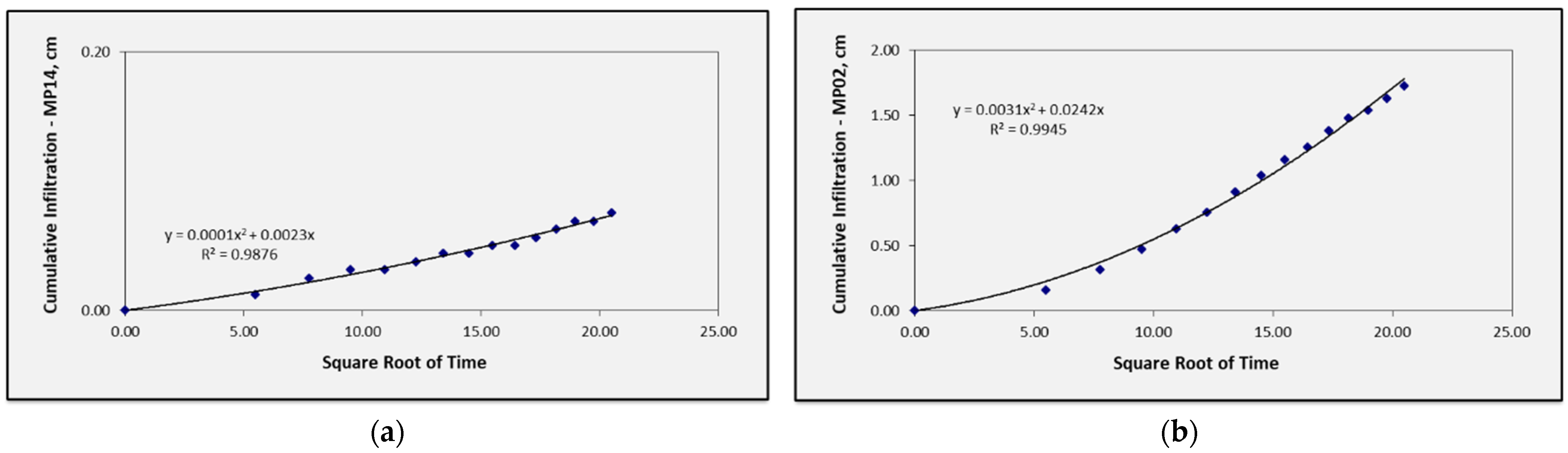
The second set of measurements was carried out in the spring of 2024 (Figure 6). The number of monitoring points was increased by two in the non-irrigated area, resulting in a total of 20 MP. An interesting fact was that the coefficient of variation increased to CV = 77.43% at the average value of infiltration capacity expressed by hydraulic conductivity (k = 17.07 × 10⁻⁵ cms−1). Another noteworthy fact was that the minimum value of hydraulic conductivity k = 0.83 × 10⁻⁵ cms−1 was at another location on the plot (MP14, outside the irrigation area). Since irrigation had not yet taken place, this phenomenon cannot be attributed to the application of irrigation. The maximum value of hydraulic conductivity was found at monitoring point MP2 (k = 42.48 × 10⁻⁵ cms−1). As practical examples, we again chose graphical representations of the results at points with minimum and maximum hydraulic conductivity (Figure 6). When dividing the monitoring points based on the input conditions, i.e., with or without irrigation, the values in the second group of measurements reached an average of 19.96 × 10⁻⁵ cms−1 (without irrigation, CV = 75.70%) and 14.71 × 10⁻⁵ cms−1 (with irrigation, CV = 79.21%). When comparing the dependence of the hydraulic conductivity results of the pilot and secondary measurements, we confirmed a significant result (the number of input monitoring points was 18, p = 0.03).
Water infiltration into soil is a complex phenomenon, which was also observed in our results. In our case, the graphical trend is also expressed by hydraulic conductivity, which was used for a clearer representation of variability. The spatial variability of soil infiltration capacity in the second group of measurements is shown in Figure 5 (as IDM02). The variability of the results was again divided into five intervals, where we confirmed an almost normal distribution. The highest representation of hydraulic conductivity in this case was in the interval 8.5 to 16.99 × 10⁻⁵ cms−1, which extended across almost the entire plot. At some points, the measured data showed indifference, which was mainly evident in the area near the main road (values higher than 34 × 10−5 cms−1). The addition of further monitoring points increased the maximum altitude value to 162.4 a.s.l. Even in the second group of measurements, we did not find a probable dependence of the altitude of the monitoring point on the monitoring of hydraulic conductivity. This time, the hydraulic conductivity at the minimum altitude was 9.82 × 10⁻⁵ cms−1, while at the maximum altitude it was 3.78 times higher.
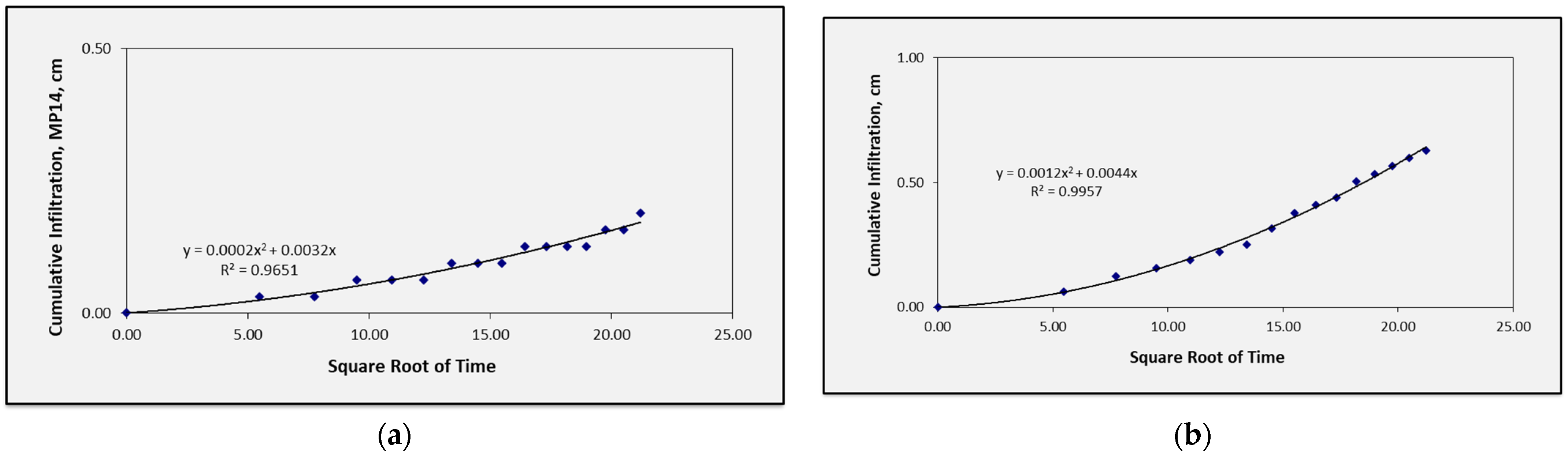
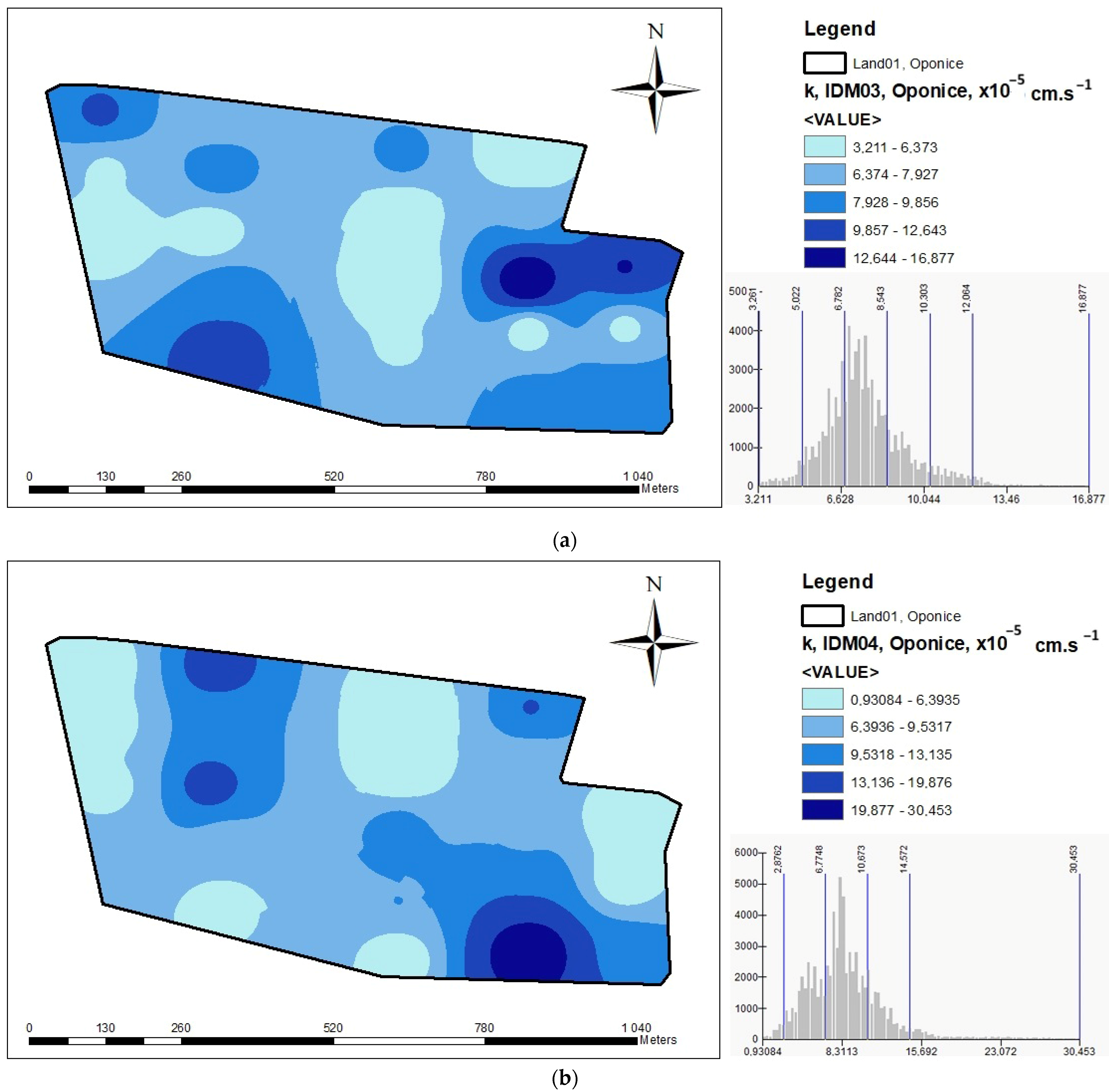
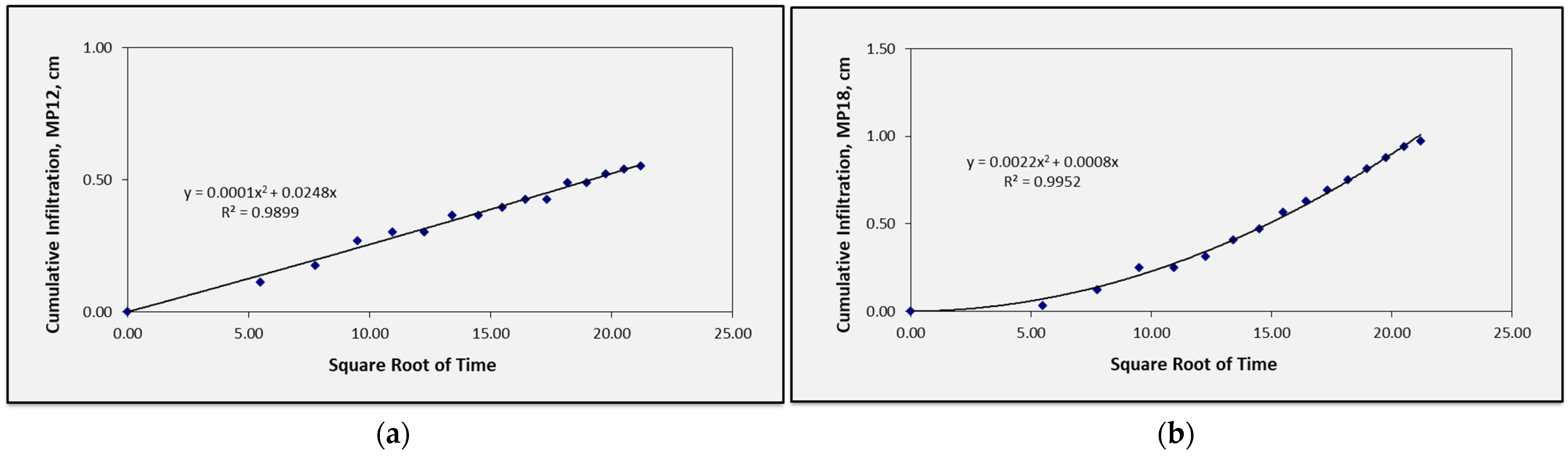
Further measurements were carried out after the irrigation season, in September 2024. The total number of monitoring points increased to 21 with the addition of MP21. In these measurements, the coefficient of variation fell below 50% (CV = 43.79%) with an average infiltration capacity expressed by hydraulic conductivity (k = 7.8 × 10⁻⁵ cms−1). The minimum hydraulic conductivity reached k = 3.21 × 10⁻⁵ cms−1 at the monitoring point outside the irrigation area (MP14) and a maximum of k = 16.88 × 10⁻⁵ cms−1 at the monitoring point MP16 (i.e., the point where the minimum hydraulic conductivity value was recorded a year earlier). A graphical representation of the measured results of the minimum and maximum values of hydraulic conductivity for the third group of measurements is shown in Figure 7. The results show that at MP14, the infiltration capacity of the soil was almost linear. At point MP16, however, the increase was exponential. We again focused on evaluating the points and zones according to whether they were subject to irrigation or not. An interesting finding was the average hydraulic conductivity value achieved (without irrigation k = 7.59 × 10⁻⁵ cms−1, with irrigation k = 7.99 × 10⁻⁵ cms−1), with a difference in only 0.4 × 10⁻⁵ cms−1 between them. The coefficient of variation decreased in both areas, reaching CV = 49.88% for the irrigated part of the plot and CV = 37.66% for the non-irrigated part. Overall, however, it can be said that there was a significant decrease in soil infiltration capacity over the six-month period (in some points there was a minimal increase with a maximum value of 4.55 × 10⁻⁵ cms−1). A comparison of the results of the third and second measurements again showed a significant dependence (the number of input monitoring points was 20, p = 0.003). The spatial variability of soil infiltration capacity in the pilot measurements is shown in Figure 8 (as IDM03). The spatial variability was distributed evenly across the plot in this measurement, similar to the second group of measurements, with several significant areas appearing in places. The second hydraulic conductivity interval k (5.94 × 10⁻⁵ cms−1 to 8.68 × 10⁻⁵ cms−1) had the highest representation. The addition of another monitoring point, MP21, did not change the maximum altitude value. The results did not indicate the predicted (positive, negative) dependence of the influence of altitude on soil hydraulic conductivity. The last group of measurements was carried out in autumn 2024 (November), with no change in the number of monitoring points. An interesting finding was that the coefficient of variation rose rapidly again (CV = 77.61%). The average value of hydraulic conductivity reached 8.89 × 10⁻⁵ cms−1 with a standard deviation of 7.1 × 10⁻⁵ cms−1. The minimum value of hydraulic conductivity reached k = 0.93 × 10⁻⁵ cms−1 (MP12) and the maximum was at monitoring point MP18 (k = 30.57 × 10⁻⁵ cms−1). A graphical representation of the measured results of the minimum and maximum values of hydraulic conductivity for the last group of measurements is shown in Figure 9. The graphical curves again show an almost linear course at the minimum value, with a value of R2 = 0.99. At the maximum value, there is an exponential increase in hydraulic conductivity. The average value of hydraulic conductivity at the monitoring points located under irrigation reached 7.71 × 10⁻⁵ cms−1 and 10.19 × 10⁻⁵ cms−1 in zones without irrigation. As a result, based on the average value of irrigated and non-irrigated land, it can be said that irrigation had an effect in reducing hydraulic conductivity. A mutual comparison of the last two groups of measurements did not show any dependence (number of monitoring points 21, p = 0.52). The coefficient of variation was above average in the non-irrigated area (CV = 83.9%). The results also showed that an increase in hydraulic conductivity was observed at 11 monitoring points and a decrease at the remaining points. The maximum change was observed at monitoring point MP18. The spatial variability of soil infiltration capacity in the pilot measurements is shown in Figure 8. The last group of measurements was predominantly represented in the first two intervals, with the highest hydraulic conductivity ranging from 6.86 to 12.79 × 10⁻⁵ cms−1. Only one value outside the majority representation of intervals (MP18) occurred within the plot. Given the altitude, even the last measurements did not show a typical dependence on hydraulic conductivity.
The results showed a statistically significant difference when examining the effect of the time period of soil infiltration capacity monitoring between all measurements (number of monitoring points 18, p = 0.004).
Statistical evaluation of the effect of irrigation on the monitored parameter showed a difference between the values obtained without irrigation (average 8.91) and with irrigation (average 16.89), indicating that the application of irrigation in this variant did not have a statistically significant effect on the monitored indicator. The Shapiro–Wilk test confirmed the normality of the data.
In the case of IDM2, Welch’s t-test revealed a statistically significant difference between treatment without irrigation (t = 2.75; p = 0.0175; n = 11) and irrigation (n = 9), with an average value of 24.38 for the variant without irrigation and 9.95 for the variant with irrigation, indicating a more pronounced response of the system to the presence of irrigation. The Shapiro–Wilk test showed that the data did not follow a normal probability distribution.
For IDM3, using Welch’s t-test (t = 0.89; p = 0.382; n = 11 for no irrigation, n = 10 for irrigation), there were no differences in sensitivity between the individual IDM variants. For IDM1, based on the paired t-test (t = −1.69; p = 0.123; n = 11 pairs of measurements), no statistically significant difference was found between the values without irrigation (average 8.27) and with irrigation (average 7.40). The Shapiro–Wilk test showed that the data did not follow a normal probability distribution.
Similarly, for IDM4, Welch’s t-test gave values of t = 0.79; p = 0.445 (n = 10 for no irrigation, n = 11 for irrigation), with average values of 10.33 for the no irrigation variant and 7.89 for the irrigation variant, so that in this variant the effect of irrigation can be considered insignificant in terms of the evaluated parameter. The Shapiro–Wilk test showed that the data did not follow a normal probability distribution.
The fresh alfalfa yields achieved on the research plot during 2024 reached an average fresh value of 618. 33 t/ha and 309.16 t/ha in wilted condition. On the entire research plot, the first harvest, including peas, reached 1175.8 t, the second harvest 703.2 t, and the third harvest 572.6 t. The fourth harvest, with a yield of only 21.7 t, was carried out due to restrictions and, in particular, the removal of vegetative plants so that no above-ground mass remained. Under ideal humidity conditions, this could cause disease and the development of rodents. After 50 days, the vegetation was already sparse at that time. The harvest was carried out in three stages, and the results are shown in Table 5.
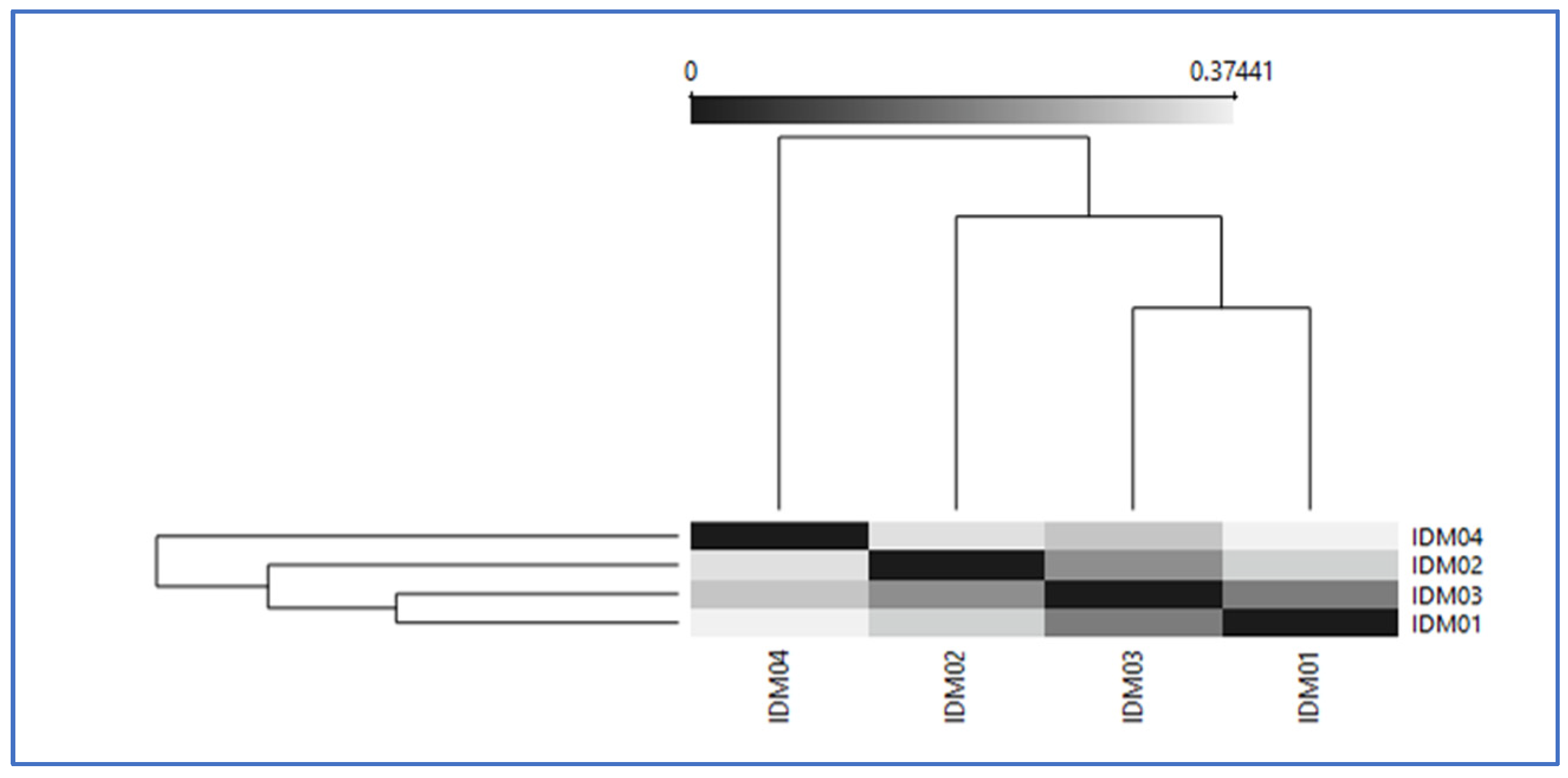
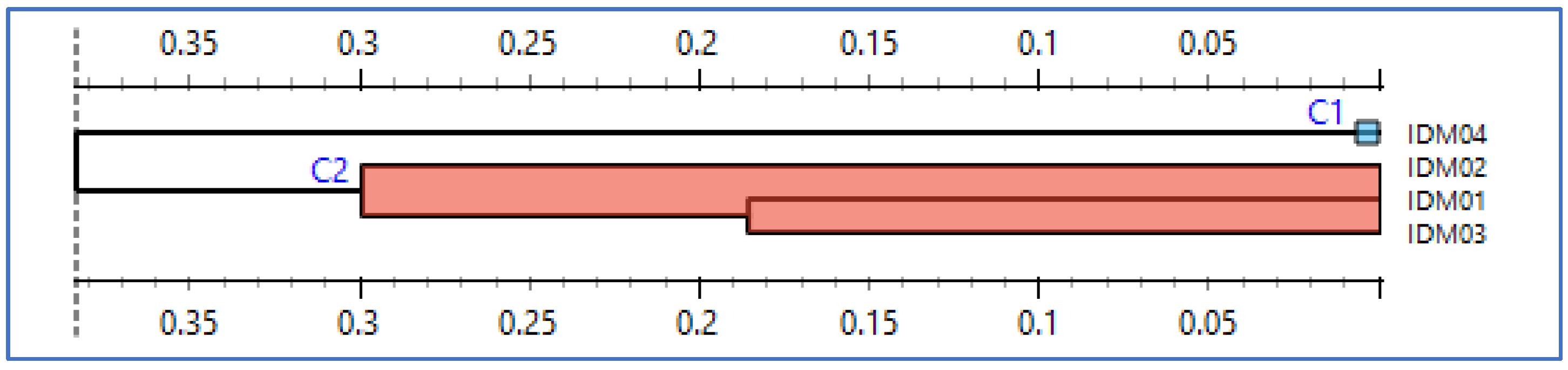
When evaluating the results using the Orange software, we first evaluated the results using cluster analysis (Distance map), selecting clustering with ordered leaves. The resulting map of hydraulic conductivity distances (Figure 10), obtained by measuring infiltration with a Mini Disk Infiltrometer, presents in color the largest (lightest) and smallest (darkest) distances between individual measurement dates of the examined variable (black at zero, same value). The results show the variability of hydraulic conductivity depending on the measurement date and location. The lowest value (similarity = 0.186) is between the first (IDM01) and third measurement dates (IDM03). The next highest value (similarity = 0.216) is between the measurements on the second and third dates (IDM02, IDM03). Statistically less related values are in the following evaluations between (IDM01 and IDM02; similarity = 0.324) and (IDM02 and IDM42; similarity = 0.349). The highest distance (similarity = 0.374) was found between measurements (IDM01 and IDM04). The results show that the smallest distances are related to each other, i.e., they are most similar (statistically most significant). However, the results are more clearly shown in the dendrogram (Figure 11). The Hierarchical Clustering node performs hierarchical clustering (Ward’s method). The results in Figure 11 show the same result as would be shown in the distance matrix. The most similar measurements are those taken in autumn 2023 (IDM01) and the third group of measurements in 2024 (IDM03). Subsequently, IDM02 and IDM03 measurements are similar, while the last measurements differ from the other three.
Soil erosion is the main ecological threat to the sustainability and production capacity of agriculture. In the last 40 years, almost one-third of the world’s agricultural land has been destroyed by soil erosion [41]. From our point of view, it is therefore essential to monitor soil properties related to water retention in the soil, such as infiltration. As we know, infiltration is an important part of the water cycle, related to the downward movement of water, i.e., into the soil profile [4]. It plays a key role in the design of irrigation and drainage systems, the assessment of groundwater recharge, and the design and modeling of hydrological systems [42,43].
Groundwater serves as an important source of water, not only for drinking but also for agricultural purposes [42]. The sustainability of this precious resource depends mainly on the quantity and quality of infiltrated water. Knowledge of the infiltration process and soil zone characteristics is essential for sustainable management [44].
Soil infiltration capacity can be measured in various ways, with three main methods being used in research practice. The first was the use of circular infiltrometers, with practical results achieved on land in Kolíňany. Given that this method is time-consuming, the Minidisk Infiltrometer method is more advantageous and, above all, faster. The difference between these methods can be seen in the measured results, which show saturated or unsaturated hydraulic conductivity. The illustrative case is the assessment of spatial variability in unsaturated hydraulic conductivity using a Mini Disk Infiltrometer, where values within a 21.7 ha study area differed by as much as a factor of 4.29 between the minimum and maximum measurements [45]. Another example involves field measurements conducted under supplemental irrigation using belt irrigators over an area of 6.23 ha, which demonstrated a pronounced effect on the observed results [40]. In general, maintaining a sufficiently high soil infiltration capacity can be regarded as a key anti-erosion measure. Not only do extremely high irrigation doses have an adverse effect on soil infiltration capacity, but also incorrectly used techniques (incorrect water spraying—degradation of the structure of the surface part of the soil profile (9)). Several studies have addressed unsaturated hydraulic conductivity, reporting, for example, the influence of different soil tillage practices, including no-tillage, conventional tillage, and minimum tillage systems. Their findings indicated that conventional plowing to a depth of 30 cm resulted in notable deviations compared with alternative cultivation methods, with unsaturated hydraulic conductivity being approximately 2.5 times lower [46]. Fodor et al. (2011) examined the dependence of hydraulic conductivity on measurement techniques and demonstrated that the resulting ratio (difference factor) varied with soil texture, reaching values of 1.1 for sandy soils and 0.6 for silt loam soils [14].
A primary motivation for integrating soil conservation technologies into agricultural management is the reduction in surface soil layer losses and associated runoff [47]. Water flow in unsaturated soils is inherently more complex than flow through fully saturated pore systems, as soil hydraulic conductivity is strongly controlled by pore geometry, soil water content, and gradients in matric potential [48,49]. Soil erosion represents the most prevalent form of soil degradation and encompasses the processes of particle detachment, structural breakdown, transport (redistribution), and subsequent sediment deposition [50].
The present study did not identify the occurrence of the so-called water repellency (water resistance) phenomenon at the monitored site, which may be attributed to the relatively drier conditions of the investigated plot. However, the mentioned phenomenon, this effect, was detected at another location included in the study. Our results indicate that this adverse effect can be reduced, as demonstrated by extended infiltration measurements (initially, the evaluation lasted only 300 s, but we extended it to 900 s), which also corresponded to an increased volume of applied water at the measurement point [4]. Similar observations have been reported in the literature, e.g., [10,51,52,53], where low soil moisture and elevated temperatures were identified as key factors inducing soil water repellency. These findings are further supported by other authors [10,54,55], who emphasize that this condition is not permanent and can be alleviated by water input that increases soil moisture content.
Overall, both the literature review and the results of this study confirm that infiltration is a fundamental process in hydrological modeling, particularly for runoff estimation and the design of rainwater management measures, including those applied in agricultural systems. Reliable estimation of hydraulic conductivity and the availability of rapid measurement techniques, therefore, represent valuable tools for supporting subsequent operational and management activities in agricultural production.

4. Conclusions

In this paper, we focused on evaluating the infiltration capacity of soil on a selected plot of land over a two-year period. The measured results were evaluated using graphical representations of soil infiltration capacity (maximum and minimum) at all examined dates. Statistical evaluations of the obtained data were subjected to three different statistical analyses. The variability of the individual measured data was expressed by maps of hydraulic conductivity variability at individual examination dates. The results were also subjected to cluster analysis (distance map), for which we chose clustering with ordered leaves. Based on the established hypotheses and the results obtained, the following conclusions can be drawn:
-
First, we defined the impact of work operations on the land and the timing of harvesting, with the results pointing to a significant change in the soil’s infiltration capacity.
-
The second hypothesis concerned the influence of the irrigation area, but in this case, the hypothesis was not confirmed. The variability of soil infiltration capacity did not show any significant zones between individual measurements due to the influence of irrigation (map spatial results of variability). The results are clearly influenced by the timing of sampling and measurements in relation to the timing of irrigation.
-
The phenomenon of “water resistance” was not demonstrated in our measurements on the selected plot during the two-year study period.

Author Contributions

Conceptualization, J.J. and A.T.; methodology, J.J.; software, A.T. and J.J.; validation, A.T., J.J., M.A. and J.Z.; formal analysis, J.J. and T.G.; investigation, A.T. and J.J.; resources, A.T., J.J. and T.G.; data curation, A.T., J.J., M.A., T.G. and J.Z., writing—original draft preparation, J.J., A.T., M.A., T.G. and J.Z.; writing—review and editing, J.J. and A.T.; visualization; supervision, J.J.; project administration, A.T.; funding acquisition, A.T. All authors have read and agreed to the published version of the manuscript.

Funding

This research was funded with the support of the Grant Agency of the Slovak University of Applied Sciences in Nitra (GA SPU) project No. 20-GA-SPU-2024 and with the support of the EU-funded NextGenerationEU through the Recovery and Resilience Plan of the Slovak Republic within the framework of project No. 09I03-03-V05-00018—Early stage grants to the Slovak University of Applied Sciences in Nitra.

Institutional Review Board Statement

Not applicable.

Informed Consent Statement

Not applicable.

Data Availability Statement

The original contributions presented in the study are included in the article, further inquiries can be directed to the corresponding author.

Acknowledgments

The authors are grateful to the staff of the University Farm in Kolíňany (Oponice), Slovakia, for their technical and operational support during this research.

Conflicts of Interest

The authors declare no conflicts of interest. The funders had no role in the design of the study; in the collection, analyses, or interpretation of data; in the writing of the manuscript; or in the decision to publish the results.

References

  1. WWAP. The United Nations World Water Development Report 2014: Water and Energy; Facts and Figures; United Nations Educational, Scientific and Cultural Organization (UNESCO): Paris, France, 2014; pp. 1–7.
  2. Howell, T.A. Enhancing water use efficiency in irrigated agriculture. Agron. J. 2001, 93, 281–289. [Google Scholar] [CrossRef]
  3. Bell, J.M.; Schwartz, R.; McInnes, K.J.; Howell, T.; Morgan, C.L. Deficit irrigation effects on yield and yield components of grain sorghum. Agric. Water Manag. 2018, 203, 289–296. [Google Scholar] [CrossRef]
  4. Jobbágy, J.; Krištof, K.; Angelovič, M.; Zsembeli, J. Evaluation of Soil Infiltration Variability in Compacted and Uncompacted Soil Using Two Devices. Water 2023, 15, 1918. [Google Scholar] [CrossRef]
  5. Butler, D.; James Digman, C.; Makropoulos, C.; Davies, J. Urban Drainage, 4th ed.; CRC Press: Boca Raton, FL, USA, 2018. [Google Scholar]
  6. Velebný, V.; Novák, V.; Skalová, J. Soil Water Regime, 1st ed.; Slovak Technical University: Bratislava, Slovakia, 2000; p. 208. (In Slovak) [Google Scholar]
  7. Hillel, D. Environmental Soil Physics; Academic Press: Cambridge, MA, USA, 1998; 771p. [Google Scholar]
  8. Pereira, L.S.; Oweis, T.; Zairi, A. Irrigation management under water scarcity. Agric. Water Manag. 2002, 57, 175–206. [Google Scholar] [CrossRef]
  9. Jobbágy, J.; Krištof, K.; Bárek, V. Melioration in Agriculture: Soil Properties, Drainage and Irrigation, 1st ed.; Slovak University of 551 Agriculture in Nitra: Nitra, Slovakia, 2017; p. 253. (In Slovak) [Google Scholar]
  10. Radinja, M.; Banovec, P.; Comas Matas, J.; Atanasova, N. Modelling and Evaluating Impacts of Distributed Retention and Infiltration Measures on Urban Runoff. Acta Hydrotech 2017, 30, 51–64. [Google Scholar]
  11. Šraj, M.; Dirnbek, L.; Brilly, M. The influence of effective rainfall on modelled runoff hydrograph. J. Hydrol. Hydromech 2010, 58, 3–14. [Google Scholar]
  12. Rossman, L. Storm Water Management Model User’s Manual Version 5.1; US EPA Office of Research and Development: Washington, DC, USA, 2015.
  13. Deb, S.K.; Shukla, M.K. Variability of hydraulic conductivity due to multiple factors. Am. J. Environ. Sci. 2012, 8, 489–502. [Google Scholar] [CrossRef]
  14. Fodor, N.; Sándor, R.; Orfanus, T.; Lichner, L.; Rajkai, K. Evaluation method dependency of measured saturated hydraulic conductivity. Geoderma 2011, 165, 60–68. [Google Scholar] [CrossRef]
  15. Kanso, T.; Tedoldi, D.; Gromaire, M.-C.; Ramier, D.; Saad, M.; Chebbo, G. Horizontal and Vertical Variability of Soil Hydraulic Properties in Roadside Sustainable Drainage Systems (SuDS)—Nature and Implications for Hydrological Performance Evaluation. Water 2018, 10, 987. [Google Scholar] [CrossRef]
  16. Gadi, V.K.; Tang, Y.-R.; Das, A.; Monga, C.; Garg, A.; Berretta, C.; Sahoo, L. Spatial and temporal variation of hydraulic conductivity and vegetation growth in green infrastructures using infiltrometer and visual technique. Catena 2017, 155, 20–29. [Google Scholar] [CrossRef]
  17. Bockhorn, B.; Klint, K.E.S.; Locatelli, L.; Park, Y.-J.; Binning, P.J.; Sudicky, E.; Bergen Jensen, M. Factors affecting the hydraulic performance of infiltration based SUDS in clay. Urban Water J. 2017, 14, 125–133. [Google Scholar]
  18. Kargas, G.; Londra, P.A. Effect of tillage practices on hydraulic properties of a loamy soil. Desalin. Water Treat. 2015, 54, 2138–2146. [Google Scholar]
  19. Robichaud, P.R.; Lewis, S.A.; Ashmun, L.E. New Procedure for Sampling Infiltration to Assess Post-Fire Soil Water Repellency. 2008. Available online: https://www.researchgate.net/publication/265199618 (accessed on 3 October 2025).
  20. Tkáč, A.; Jobbágy, J. Variability of infiltration capacity depending on input conditions (In Slovak: Variabilita infiltračnej schopnosti v závislosti od vstupných podmienok). In Trendy a Inovácie vo Výskume v Poľnohospodárskej, Lesníckej a Environmentálnej Technike; Technická Univerzita vo Zvolene: Zvolen, Slovakia, 2025; pp. 221–231. [Google Scholar]
  21. Alagna, V.; Bagarello, V.; Di Prima, S.; Giordano, G.; Iovino, M. A simple field method to measure the hydrodynamic properties of soil surface crust. J. Agric. Eng. 2013, 44, e14. [Google Scholar] [CrossRef]
  22. Autovino, D.; Bagarello, V.; Caltabellotta, G.; Varadi, F.K.; Zanna, F. One-dimensional infiltration in a layered soil measured in the laboratory with the mini-disk infiltrometer. J. Hydrol. Hydromech. 2024, 72, 149–157. [Google Scholar] [CrossRef]
  23. Kargas, G.; Koka, D.; Londra, P.A. Evaluation of Soil Hydraulic Parameters Calculation Methods Using a Tension Infiltrometer. Soil Syst. 2022, 6, 63. [Google Scholar] [CrossRef]
  24. Dohnal, M.; Dusek, J.; Vogel, T. Improving hydraulic conductivity estimates from minidisk infiltrometer measurements for soils with wide pore-size distributions. Soil Sci. Soc. Am. J. 2010, 74, 804–811. [Google Scholar] [CrossRef]
  25. Kargas, G.; Koka, D.; Londra, P.A. Determination of Soil Hydraulic Properties from Infiltration Data Using Various Methods. Land 2022, 11, 779. [Google Scholar] [CrossRef]
  26. Fusco, M.; Alagna, V.; Autovino, D.; Caltabellotta, G.; Iovino, M.; Vaccaro, G.; Bagarello, V. Comparing mini-disk infiltrometer, BEST method and soil core estimates of hydraulic conductivity of a sandy-loam soil. Soil Tillage Res. 2024, 244, 106263. [Google Scholar] [CrossRef]
  27. BPEJ. Bonified Soil-Ecological Units (In Slovak: Bonitované Pôdno-Ekologické Jednotky). 2024. Available online: http://www.podnemapy.sk/portal/verejnost/bpej/bpej.aspx (accessed on 31 December 2025).
  28. SHMU. Meteorological Data. 2024. Available online: https://www.shmu.sk/sk/?page=1 (accessed on 31 December 2025).
  29. Oponice. 2024. Available online: https://oponice.sk/ (accessed on 1 January 2025).
  30. METER Group Inc. Mini Disk Infiltrometer; METER Group Inc.: Pullman, WA, USA, 2018. [Google Scholar]
  31. Topcon GRS-1. Operator’s Manual. 2009. Available online: https://www.ecomexico.net/proyectos/soporte/TOPCON-SOKKIA/GPS/GRS-1/7010-0926-GRS-1_OM.pdf?srsltid=AfmBOorke0UuL7TOuNK4ZpsMsCvrnkW4eHkcBfUQevVUnCqeXwmBywyG (accessed on 15 June 2021).
  32. Zhang, R. Determination of Soil Sorptivity and Hydraulic Conductivity from the Disk Infiltrometer. Soil Sci. Soc. Am. J. 1997, 61, 1024–1103. Available online: https://acsess.onlinelibrary.wiley.com/doi/abs/10.2136/sssaj1997.03615995006100040005x (accessed on 1 January 2023). [CrossRef]
  33. Carsel, R.F.; Parrish, R.S. Developing joint probability distributions of soil water retention characteristics. Water Resour. Res. 1988, 24, 755–769. [Google Scholar] [CrossRef]
  34. Kutilek, M.; Nielsen, D.R. Soil Hydrology; Catena-Verlag: Cremlingen-Destedt, Germany, 1994. [Google Scholar]
  35. Statistica Software; TIBCO Software Inc.: Palo Alto, CA, USA, 2009.
  36. ARcGIS. Software ESRI; ArcGEO Information Systems s. r. o.: Bratislava, Slovakia, 2010. [Google Scholar]
  37. Orange Software. 2025. Available online: https://orangedatamining.com/ (accessed on 5 January 2026).
  38. Stolte, J.; Van Venrooij, B.; Zhang, G.; Trouwborst, K.O.; Liu, G.; Ritsema, C.J.; Hessel, R. Land-use induced spatial heterogeneity of soil hydraulic properties on the Loess Plateau in China. Catena 2003, 54, 59–76. [Google Scholar] [CrossRef]
  39. Lichner, L.; Orfánus, T.; Nováková, K.; Šír, M.; Tesař, M. The impact of vegetation on hydraulic conductivity of sandy soil. Soil Water Res. 2007, 2, 59–66. [Google Scholar] [CrossRef]
  40. Jobbágy, J.; Krištof, K.; Findura, P.; Angelovič, M.; Folkman, M. Evaluation of infiltration capacity of the soil during application of additional irrigation. Savrem. Poljopr. Teh. 2014, 40, 69–76. [Google Scholar] [CrossRef]
  41. Pimentel, D.; Harvey, C.; Resosudarmo, P.; Sinclair, K.; Kurz, D.; Mcnair, M.; Crist, S.; Shpritz, L.; Fitton, L.; Saffouri, R.; et al. Environmental and economic costs of soil erosion and conservation benefits. Science 1995, 267, 1117–1123. [Google Scholar] [CrossRef]
  42. Wyrwoll, P. India’s Groundwater Crisis; Global Water Forum: Canberra, Australia, 2012; Available online: https://www.globalwaterforum.org/2012/07/30/indias-groundwater-crisis (accessed on 11 November 2024).
  43. Mahapatra, S.; Jha, M.K.; Biswal, S.; Senapati, D. Assessing Variability of Infiltration Characteristics and Reliability of Infiltration Models in a Tropical Sub-humid Region of India. Sci. Rep. 2020, 10, 1515. [Google Scholar] [CrossRef] [PubMed]
  44. Rodell, M.; Velicogna, I.; Famiglietti, J.S. Satellite-based estimates of groundwater depletion in India. Nature 2009, 460, 999. [Google Scholar] [CrossRef]
  45. Kukan, P.; Jobbágy, J.; Buc, M.; Findura, P. Infiltration ability of soil as an indicator of its variability. In Proceedings of the X. International Conference of Young Scientists 2008 Conference, Prague, Czech Republic, 16–18 September 2008; Volume 10, pp. 130–135. [Google Scholar]
  46. Šindelář, R.; Kroulík, M.; Mašek, J.; Prochádzka, P.; Hula, J.; Kovaříček, P. Assessment of water infiltration into the soil. (In: Czech: Hodnocení infiltrace vody do půdy). In Proceedings of the IX. Medzinárodná Vedecká Konferencia Mladých 2007, Zborník z Medzinárodnej Vedeckej Konferencie, Nitra, Slovakia, 10–11 October 2007. [Google Scholar]
  47. Shipitalo, M.J.; Dick, W.A.; Edwards, W.M. Conservation tillage and macropore factors that affect water movement and the fate of chemicals. Soil Tillage Res. 2000, 53, 167–183. [Google Scholar] [CrossRef]
  48. Rose, C.W. Agricultural Physics; Permagon Pres. Ltd.: Oxford, UK, 1966. [Google Scholar]
  49. Brady, N.C.; Weil, R.R. The Nature and Properties of Soils; Prentice Hall: Upper Saddle River, NJ, USA, 1999. [Google Scholar]
  50. Lal, R. Soil erosion and the global carbon budget. Environ. Int. 2003, 29, 437–450. [Google Scholar] [CrossRef]
  51. Debano, L.F. Water Repellent Soils: A State-of-the-Art; General Technical Report PSW-GTR-46; U.S. Department of Agriculture, Forest Service, Pacific Southwest Forest and Range Experiment Station: Berkeley, CA, USA, 1981.
  52. Debano, L.F. Water repellency in soils: A historical overview. J. Hydrol. 2000, 231, 4–32. [Google Scholar] [CrossRef]
  53. Lucas-Borja, M.E.; Zema, D.A.; Plaza-Álvarez, P.A.; Zupanc, V.; Baartman, J.; Sagra, J.; González-Romero, J.; Moya, D.; de las Heras, J. Effects of Different Land Uses (Abandoned Farmland, Intensive Agriculture and Forest) on Soil Hydrological Properties in Southern Spain. Water 2019, 11, 503. [Google Scholar] [CrossRef]
  54. de Jonge, L.W.; Jacobsen, O.H.; Moldrup, P. SoilWater Repellency: E_ects ofWater Content, Temperature, and Particle Size. Soil Sci. Soc. Am. J. 1999, 63, 437. [Google Scholar] [CrossRef]
  55. Leelamanie, D.A.L.; Karube, J. E_ects of organic compounds, water content and clay on the water repellency of a model sandy soil. Soil Sci. Plant Nutr. 2007, 53, 711–719. [Google Scholar] [CrossRef]
Figure 1. Location of measurements, (a) Country region, (b) Orthophoto map with Monitoring Points (MP).
Applsci 16 02253 g001
Figure 2. Research plot in Oponice.
Applsci 16 02253 g002
Figure 3. Equipment used: (a) Minidisc infiltrometer (b) GPS device Topcon.
Applsci 16 02253 g003
Figure 4. Dependence of cumulative infiltration on the square root of time, IDM01, (a) at minimum value k (MP16), (b) at maximum value k (MP3).
Applsci 16 02253 g004
Figure 5. Spatial variation in hydraulic conductivity of the soil, (a) IDM1, (b) IDM2.
Applsci 16 02253 g005
Figure 6. Cumulative infiltration dependency on the square root of time, IDM2, (a) at minimum value k (MP14), (b) at maximum value k (MP2).
Applsci 16 02253 g006
Figure 7. Cumulative infiltration dependency on the square root of time, IDM3, (a) at minimum value k (MP14), (b) at maximum value k (MP16).
Applsci 16 02253 g007
Figure 8. Spatial variability of soil hydraulic conductivity, (a) IDM3, (b) IDM4.
Applsci 16 02253 g008
Figure 9. Cumulative infiltration dependency on the square root of time, IDM4 (a) at minimum value k (MP12), (b) at maximum value k (MP18).
Applsci 16 02253 g009
Figure 10. Distance map, clustering with ordered leaves of Mini Disk Infiltration measurement results.
Applsci 16 02253 g010
Figure 11. Distance map, Hierarchical clustering.
Applsci 16 02253 g011
Table 1. Applied agricultural technology. (1 Tractor John Deeree, Moline, IL 61265, USA, contractor: AGROSERVIS spol. s.r.o., Hadovská cesta 6, 945 01 Komárno, Slovakia; 2 Tractor Fendt, AGCO GmbH, Johann-Georg-Fendt-Straße 4, 87616 Marktoberdorf Deutschland, Germany, contractor: HRIADEĽ, spol. s.r.o., Cabajská cesta 28, 949 01 Nitra, Slovakia; 3 Tractor Newe Holland, 120 Brubaker Avenue, New Holland, PA 17557, USA, contractor: AGROTEC Slovensko s.r.o., Zlatomoravecká cesta 431, 951 02 Pohranice, Slovakia, 4 Valley, Valmont, NE, USA, contractor: B&B Team, Štúrovo, Slovakia, 5 Tractor, 700 State St, Racine, WI 53404, USA, contractor: Agri CS, Hybešova 14, 693 01 Hustopeče, Czech Republic, 6 Harvester, 700 State St, Racine, WI 53404, USA, contractor: Agrall, a.s., Hlavná 504, 946 54 Bajč, Slovakia, 7 Harvester-Kvewrneland, Plogfabrikkvegen 1, N-4353 Klepp Stasjon, Norway, 8 Seeder, Lemken, Weseler Straße 5, 46519 Alpen, Germany).
Work OperationDateEquipment Used
plowing29 November 2023JD 8100 1 with plow
shear-harrowing12 March 2024Fendt 936 Vario 2 with shear harrows
seedbed preparation13 March 2024JD 8100 with seedbed compactor
seeding14 March 2024NH T6070 3 with seeding drillSolitair 6 8
irrigation 01, 20 mm20 June 2024Valley Pivot 4
first mowing12 June 2024CASE PUMA 200 s 5 with TAARUP 7—mower
second mowing8 July 2024CASE PUMA 200 s TAARUP
irrigation 02, 20 mm20 July 2024Valley Pivot
third mowing5 September 2024CASE PUMA 200 s TAARUP
fourth mowing25 October 2024CASE PUMA 200 s TAARUP
alfalfa harvest for silageduring 2024CLAAS Jaguar 850 6
Table 2. Weather conditions.
MonthMin. Temp., °CMax. Temp., °CRelative Humidity, %Rainfall, mmCloudiness, %
January−5670–851060–80
February−31065–80855–75
March01560–751250–70
April52055–701545–70
May102555–652550–70
June122850–653545–65
July143245–601540–60
August143045–601045–65
September102655–7011055–80
October51860–751060–80
November01270–851570–90
December−3875–901270–90
Table 3. Soil moisture content in monitoring point.
MP
-
SMC01
%-vol.
SMC02
%-vol.
SMC03
%-vol.
SMC04
%-vol.
118.626.2918.7717.40
218.617.0815.8315.96
318.715.3714.8417.83
418.815.3915.5515.24
518.718.3214.8316.01
618.317.6815.0114.39
718.414.2915.1414.33
818.518.1615.0214.90
918.516.1214.4415.80
1018.915.6815.6316.52
1118.816.6417.7012.85
1218.718.7616.1917.79
1318.815.6512.4715.72
1418.915.4912.6114.48
151.918.9815.8014.92
1619.116.6714.3514.95
1719.216.2215.5514.25
1819.317.3416.0213.93
19 15.5014.4215.53
20 18.6515.7314.70
21 14.8113.01
MP—monitoring point, SMC—soil moisture content in %-vol.
Table 4. Results—hydraulic conductivity in monitoring points (MP), Mini Disk Infiltrometer.
MPALT, m.a.s.l.C1k, ×10−5 cms−1C1k, ×10−5 cms−1C1k, ×10−5 cms−1C1k, ×10−5 cms−1
- IDM1IDM2IDM3IDM4
1150.00.000456.290.0008511.830.000364.920.000395.39
2152.00.000659.050.0030742.410.000446.030.000314.28
3150.00.001317.810.0009413.060.0007510.420.000283.82
4153.60.000354.870.000689.350.000476.520.0012216.88
5153.30.000375.120.0009813.560.000679.310.0007610.57
6152.00.000294.050.000344.750.000354.790.0011616.08
7149.30.0008411.610.000719.770.000689.410.000588.02
8151.00.0010414.470.000598.150.0009112.540.000344.68
9153.00.000486.610.0015821.920.000577.910.000212.86
10152.10.00114.120.000395.440.000435.980.000699.55
11154.00.000811.060.0013819.110.000253.490.0008311.52
12156.80.0007310.120.000689.340.000354.790.000070.93
13156.90.00068.310.000466.410.000638.670.000131.86
14158.30.000628.570.000060.840.000233.210.0009713.36
15160.00.000912.50.0027337.810.000527.130.000577.83
16159.40.000111.510.0025935.840.0012216.880.000618.42
17158.30.001115.550.0010314.310.000364.990.0009413.07
18156.80.000182.560.0025735.440.000618.480.0022130.57
19162.3--0.000375.070.00079.670.0008711.99
20162.4--0.0026837.080.000425.790.000212.91
21161.9----0.0009312.830.000152.13
Aver155.40.000669.1211110.0012317.0730.0005647.7980950.000648.89143
St. dev.3.440.0003354.6580550.0009613.2190.00024013.4147280.000506.90084
CV,%2.21 51.07 77.43 43.79 77.61
MP—monitoring point; IDM—infiltration date measurements; CV—coefficient of variation, %; ALT—altitude.
Table 5. Alfalfa production for 2024.
CropTerms of HarvestingYield, t.ha−1, Crop—Status
freshwilted
Alfalfa + peas13.6.202412.3424.68
Alfalfa8.7.20247.38703.214.76
Alfalfa5.9.20246.01572.612.02
Alfalfa25.10.20240.2321.70.46
Disclaimer/Publisher’s Note: The statements, opinions and data contained in all publications are solely those of the individual author(s) and contributor(s) and not of MDPI and/or the editor(s). MDPI and/or the editor(s) disclaim responsibility for any injury to people or property resulting from any ideas, methods, instructions or products referred to in the content.