1. Introduction
In a BaO–SiO
2 system, various barium silicates (Ba
2SiO
4, BaSiO
3, BaSi
2O
5, Ba
3SiO
5, Ba
5Si
8O
4) are formed, which exhibit high chemical and thermal stability but differ in structural diversity [
1,
2,
3,
4,
5]. Barium silicates are widely used in the production of phosphors for light-emitting diodes, fluorescent lamps, photovoltaic cells, plasma screens, etc. [
6,
7,
8,
9,
10]. These materials are also utilized in the technology for producing barium glasses and barium cements [
6,
7,
11,
12,
13,
14]. The high-temperature glasses and ceramics obtained from them are used in various fields of modern technology, such as nuclear energy, rocket engineering, jet aviation, instrumentation, and more [
13,
14].
It should be noted that the methods for obtaining barium silicates are technologically complex and require significant energy expenditure [
9,
10,
15,
16,
17,
18,
19]. Barium silicates are primarily produced through solid-phase high-temperature synthesis (1100 °C and above), involving the interaction of barium carbonate (BaCO
3) or barium oxide (BaO) with silicon dioxide (SiO
2) [
1,
3,
5,
9,
15,
16,
17,
18]. They can also be obtained using hydrothermal
sol–gel methods based on the formation of a solid phase in a liquid medium by interaction of barium salts with silica-containing reagents (such as silica gel, tetraethoxysilane, or sodium silicate Na
2SiO
3·9H
2O), followed by prolonged calcination of the resulting substances [
19,
20,
21,
22,
23,
24].
Barium hydrosilicates are obtained through a hydrothermal method by interacting reagents in a SiO
2–NaOH–BaCl
2–H
2O system [
20,
21]; however, the latter undergoes some hydrolysis in hot water. To increase the yield of barium silicate, synthesis from BaCl
2 and Na
2SiO
3 was conducted at 20 °C in an alcohol–water medium [
20,
21,
22,
23,
24]. Thermal treatment was then performed to obtain the crystalline phase: at 800 °C, nano-sized crystals of barium silicates (Ba
2SiO
4 and BaSiO
3) had already formed. This enabled the authors [
20] to obtain crystalline barium metasilicate with a yield of up to 95%.
Disadvantages of solid-phase synthesis include high temperatures (1200–1400 °C) during processing, which result in low product homogeneity and contamination. The sol–gel method yields homogeneous nanomaterials, but it relies on expensive starting precursors (barium and silicon alkoxides). The technology is complex, requiring control of pH, hydrolysis rate, and temperature. It is also time-consuming and results in a very low yield. Hydrothermal synthesis is energy-efficient, but it requires high pressures (typically 10–100 MPa). Reproducing the morphology is difficult because the particle size and shape depend heavily on the conditions. Other phases may also form with even slight changes in temperature, pressure, or solution composition. The SHS (self-propagating high-temperature synthesis) method [
25,
26,
27] is also well known for silicate synthesis. It is fast and energy-saving, but difficult to control and produces inhomogeneous products.
One of the key challenges in modern chemistry and materials science is the development of new synthesis methods that reduce energy consumption and shorten process times [
28,
29]. In this context, microwave (MW)-assisted chemistry is a promising approach that opens up new opportunities in synthesis technology [
30,
31,
32,
33,
34,
35,
36,
37,
38,
39,
40,
41,
42]. Advantages of MW-assisted chemistry include high speed, uniform heating of the entire reaction medium volume, absence of contact between the heated body and the heating source, high energy-to-heat conversion efficiency, no gaseous emissions or environmental pollution, reduced energy consumption, and shorter target material production times.
In the case of silicates specifically, based on the literature and our previous work [
30,
31,
32,
42,
43,
44] describing microwave–hydrothermal preparation of sub-micrometric zeolite crystals and nano-sized zinc and zirconium silicates, and reporting that microwave heating produces relatively narrow crystal size distributions and requires much shorter heating times without significantly altering composition, crystallinity or surface chemistry compared to conventional hydrothermal methods, we expected to observe several advantages in this work. This work aimed to utilize the capabilities of microwave chemistry for the liquid-phase synthesis of barium silicates. We therefore anticipated reducing energy costs and improving their functional properties [
31,
32,
33,
34,
35,
36,
37,
38,
39,
40,
41,
42,
43]. Analysis of the scientific and technical literature, as well as our own research, shows that microwave synthesis can reveal new properties of known compounds, thereby expanding their scope of application.
This work aims to develop a microwave–hydrothermal (MH) method for synthesizing barium silicate by interactions between aqueous solutions of barium chloride and sodium silicate. To the best of our knowledge, there are no published reports on the hydrothermal–microwave synthesis of barium silicate. Therefore, we carefully characterized the powders obtained in this study using several techniques, including differential thermal analysis (DTA), spectroscopic methods, photocolorimetry, flame photometry, transmission electron microscopy (TEM), scanning electron microscopy (SEM) and X-ray diffraction for phase analysis.
2. Materials and Methods
Barium metasilicate, BaSiO3, was synthesized in Samsung CE1073AR and MS-6 microwave ovens (NPO VOLTA, St. Petersburg, Russia) operating at a frequency of 2.45 GHz with an output power of 600 W. This was achieved by interactions of aqueous solutions of sodium silicate and barium chloride in a stoichiometric ratio via the precipitation method. Low-temperature reactions (up to the boiling point of the aqueous solutions) were conducted in a microwave oven (Samsung Electronics & Co. Ltd, Suwon, Republic of Korea) using an open Pyrex® glass flask equipped with a reflux condenser and a stirrer. The flask was loaded with an initial solution of 300 mL of 0.5 M sodium silicate and the reaction temperature was raised to 95–100 °C. Barium chloride solution (0.5 M) was added until the pH reached 8–8.5, with a reaction time of 30 min. Microwave synthesis at higher temperatures (up to 240 °C) was conducted in a Teflon™ vessel in a commercial lab-dedicated MS-6 microwave oven (Milestone, Bergamo, Italy). The pressure and temperature were controlled via an automatic Peltier cell provided by the oven manufacturer and immersed in the reaction medium. The obtained solid phase (target product) was filtered and washed with cold distilled water (≤14 °C) to remove Na+ and Cl− ions. It was then dried at 150 °C.
The thermal treatment of the samples obtained at 100 °C and atmospheric pressure was carried out in an LHT 08/17 electric furnace (Nabertherm GmbH, Lilienthal, Germany).
The composition and characteristics of the final products were determined using physicochemical analysis methods. X-ray diffraction (XRD) analysis of the samples was performed using the powder method on a high-resolution X-ray diffractometer (SmartLab, Rigaku Holding Co. Ltd., Akishima-shi, Tokyo, Japan) setup with CuKα radiation. Differential thermal and thermogravimetric analyses were conducted using a simultaneous TGA/DSC apparatus (TGA/DSC 3+, Mettler Toledo, Columbus, OH, USA).
IR spectra of the samples in the range of 400–4000 cm−1 were obtained using a Fourier-transform IR spectrometer Cary 630 (USA). Scanning electron microscopy (SEM) analyses were conducted using a high vacuum microscope (Philips XL 40, Thermo Fisher Scientific, Waltham, MA, USA). Transmission electron microscopy (TEM) studies were carried out using a high-resolution scanning/transmission electron microscope (S/TEM) (Talos™ F200S, Thermo Fisher Scientific, Waltham, MA, USA), which was equipped with energy dispersive X-ray spectroscopy (EDS) and operated at an acceleration voltage of 200 kV. Powders were dispersed in distilled water (Milli-Q® IQ 7000, MilliporeSigma, Burlington, MA, USA) and suspensions were obtained by sonicating for 15 min. The specimens were prepared by immersing 200 mesh nickel microscope grids and dried by IR lamp before the analyses.
Diffuse reflection of the samples was determined using a Cary 60 UV–Vis Spectrophotometer (Agilent Technologies, Santa Clara, CA, USA). The specific surface area and pore volume of the samples were measured by nitrogen adsorption using the BET method on an “AccuSorb 2300E” analyzer (Micromeritics Instruments Corp, Norcross, GA, USA) and by the gravimetric method of benzene vapor adsorption. The UV radiation source for photocatalysis was a Navigator lamp with a power of 25 W and a maximum emission at λ = 253.7 nm. The reactor for studying photocatalysis was a quartz glass vessel with a volume of 300 mL and a diameter of 80 mm. The optical density of the dye solutions was measured using a Cary 630 FT-IR spectrometer (Agilent Technologies, Santa Clara, CA, USA).
3. Results
3.1. Mineralogical Composition
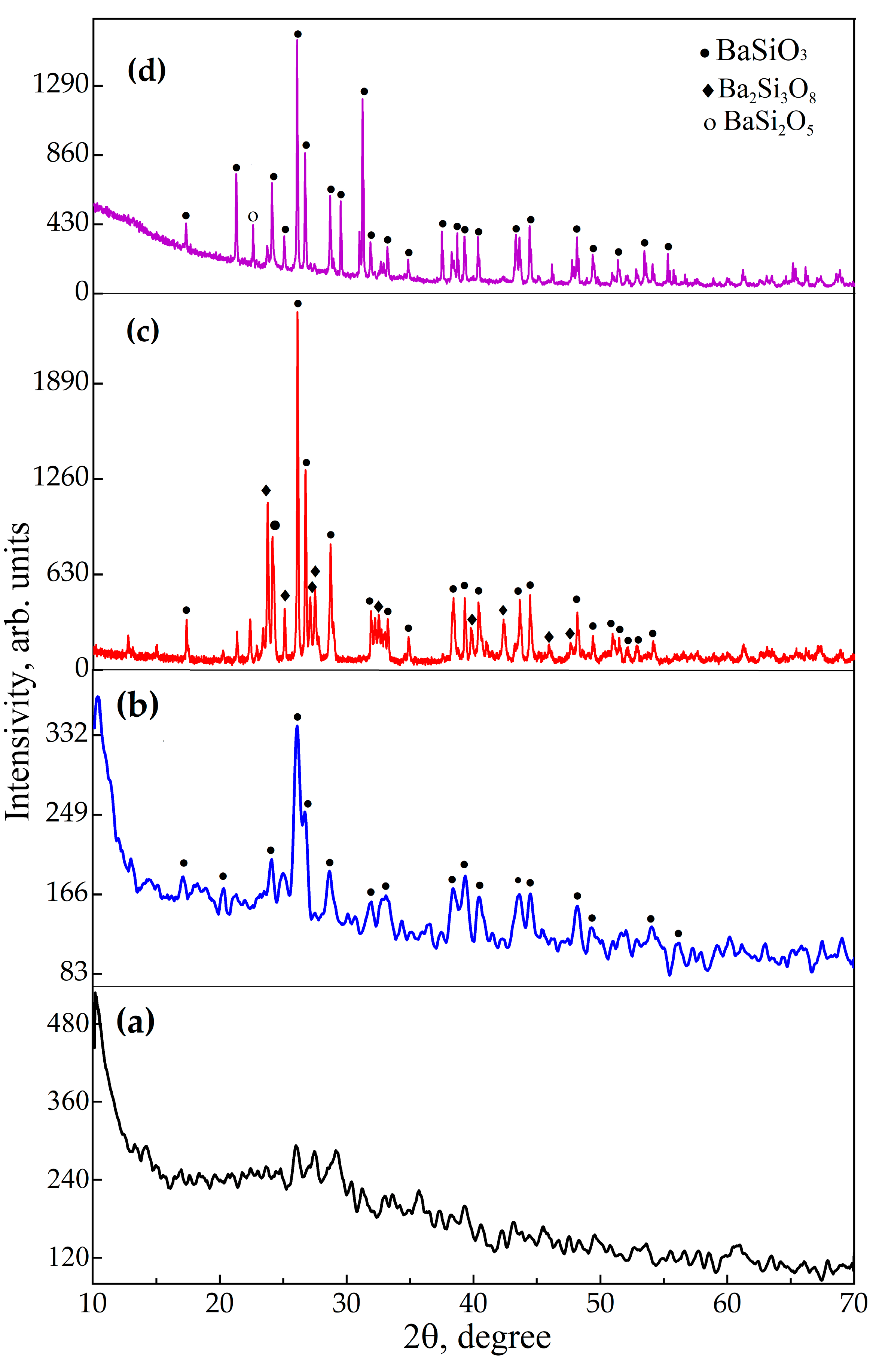
X-ray diffraction showed that the material obtained at 100 °C is amorphous (see
Figure 1a). On the other hand, the pattern of the sample obtained at 240 °C displayed sharper, more intense reflections that match those of BaSiO
3 (ICDD 26-1402), as observable in
Figure 1b. The broad background and relatively weak peaks suggest a nanocrystalline structure containing a significant amorphous phase. No additional peaks were observed, which confirms the absence of any secondary phases and the product’s single-phase composition.
After annealing at 800 °C, the product exhibited narrower peaks and consisted mainly of BaSiO
3, with SiO
2 and Ba
2SiO
4 present in smaller amounts (
Figure 1c). Following annealing at 1000 °C for 2 h, the material was predominantly crystalline BaSiO
3 with minor amounts of BaSi
2O
5 and Ba
2SiO
4 (
Figure 1d). This phase evolution is consistent with compositions approaching the limits of the BaO–SiO
2 system.
Slight deviations from perfect stoichiometry may occur during drying (e.g., the formation of BaCO
3 and SiO
2). Upon heating, BaCO
3 decomposes, which can result in the redistribution of components and the formation of phases with different Ba:Si ratios (e.g., BaSi
2O
5, Ba
2SiO
4), according to the following reaction:
This is consistent with the transformations observed by XRD upon calcination.
The distinctive feature of microwave synthesis is the formation of the crystalline phase of barium metasilicate at the relatively low temperature of 240 °C (30–33 atm) (see
Figure 1b). Using conventional methods, the crystalline phase of barium silicate is typically only achieved at temperatures above 400 °C [
1,
2,
3,
4,
5,
6,
24].
3.2. Thermogravimetric Analysis
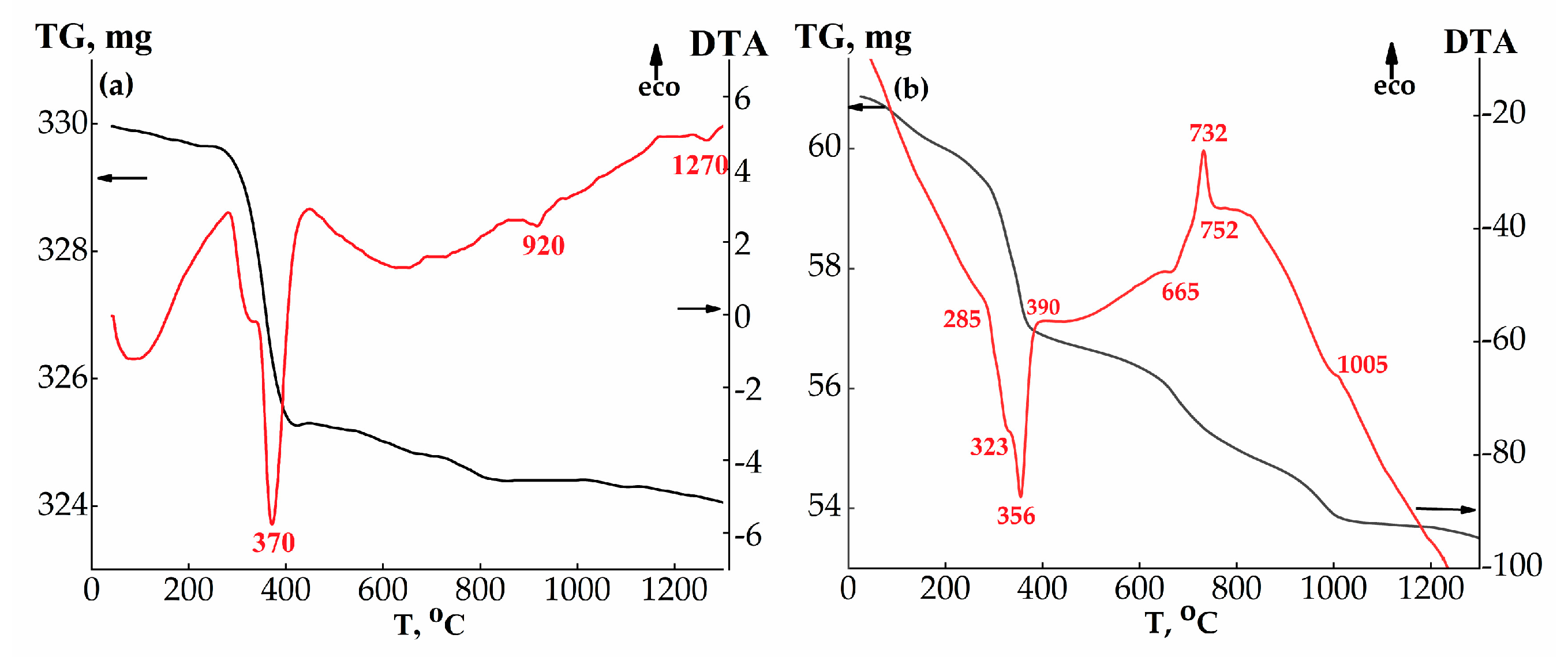
Figure 2 compares the thermograms of samples synthesized at 100 °C and 240 °C, both of which were dried at 150 °C. The sample obtained at 100 °C showed a gradual mass loss of 1.3% up to 200 °C (including 0.8% up to 150 °C), which is attributable to adsorbed water taken up during cooling (
Figure 2b). In contrast, the crystalline sample synthesized at 240 °C showed no mass change up to 200 °C, indicating the absence of adsorbed moisture (
Figure 2a).
At higher temperatures, the weight losses observed for both materials were due to the removal of bound/crystalline water from barium hydrosilicates. This stepwise dehydration is consistent with the formation of hydrates reported for the BaO–SiO2–H2O system (e.g., BaO·SiO2·6H2O, BaO·SiO2·3H2O, BaO·SiO2·1.5H2O, BaO·SiO2·H2O).
The endothermic signals at 325, 356, 370 and 665 °C arise from structural rearrangements associated with the progressive dehydration of these hydrates. The exothermic peak at 732 °C (visible for the sample prepared at 100 °C, see
Figure 2b) corresponds to the crystallization of BaSiO
3, as confirmed by X-ray diffraction. This event is absent in the sample synthesized at 240 °C, as it was already crystalline (see
Figure 2a).
An endothermic effect near 920 °C is consistent with crystallite growth/ordering or a possible polymorphic transformation of BaSiO3. A weak exotherm around 1005 °C, together with the accompanying mass loss, is attributed to the decomposition of BaCO3 and subsequent oxygen removal, leading to defect-rich BaSiO3.
A further weak exotherm near 1270 °C reflects the high-temperature microstructural evolution of barium silicate and may indicate incongruent melting [
2].
3.3. FT-IR Analysis
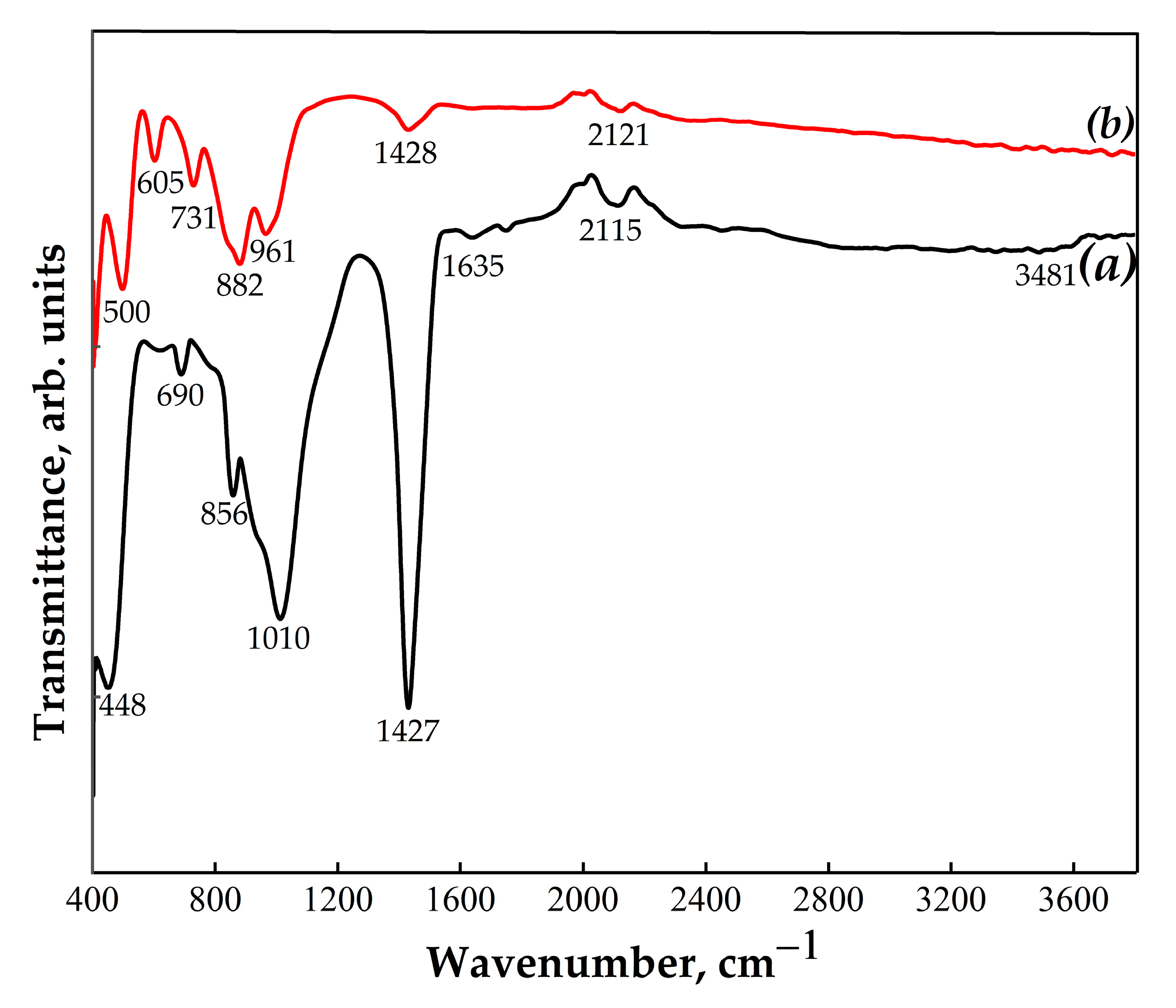
The FT-IR spectra of air-dried and thermally treated BaSiO
3 are shown in
Figure 3. They were interpreted in light of the literature [
21,
22,
45,
46]. For the crystalline sample, a complex set of bands appears between 600 and 1000 cm
−1, including features at ~960 cm
−1 and ~882 cm
−1 corresponding to (Si–O–Si) and (O–Si–O), respectively (see
Figure 3). An intense band near 500 cm
−1 (compared with ~448 cm
−1 in the amorphous sample) is attributable to deformation modes of the Si–O, Si–O–Ba and Ba–O bonds. Weak bands were also observed in the 600–700 cm
−1 region (symmetric Si–O–Si bridges), and maxima at ~731 and ~690 cm
−1 are consistent with a metasilicate-chain anion. In amorphous material, the Si–O vibration is centred near 1010 cm
−1, whereas in the crystalline sample, it splits and shifts to 961 and 882 cm
−1, consistent with SiO
4 tetrahedra (see
Figure 3).
The 1010 cm−1 maximum is lower than the 1100 cm−1 position typical of pure SiO2, indicating Si–O–Ba bonding. Bands at ~856 and ~882 cm−1 are assigned to Ba–O–Si deformations. The O–H stretching vibration (3000–3500 cm−1) and H2O bending vibration (~1635 cm−1) are absent after calcination at 1000 °C, consistent with dehydration. Signatures of carbonate at ~1428 and ~690 cm−1 are evident in dried powders, but these become weaker after thermal treatment, which is consistent with the formation of BaCO3 upon drying and its subsequent decomposition upon heating.
3.4. Morphological and Microstructural Observations
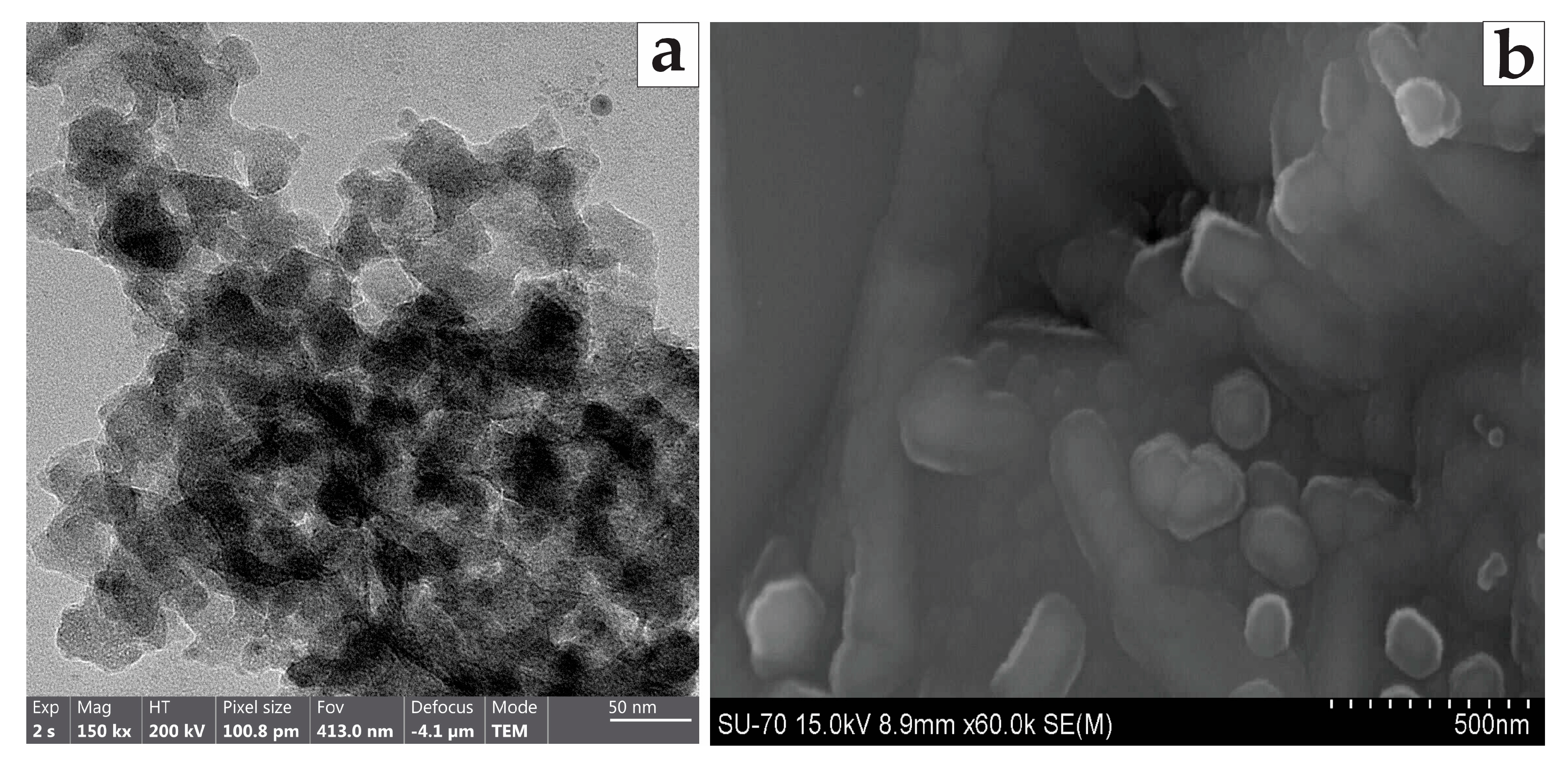
Electron microscopy confirms that microwave synthesis produces nano-sized BaSiO
3. TEM analysis of a sample produced at 100 °C reveals particles measuring ~10–20 nm (see
Figure 4a). Scanning electron microscopy (SEM) of the material synthesized at 100 °C and subsequently heat-treated at 1000 °C reveals a densified, sintered microstructure with characteristic particle sizes of around 50 nm (
Figure 4b).
Crystallite sizes estimated from XRD using the Scherrer equation are consistent with nanoscale dimensions: ~20–30 nm for the sample synthesized at 100 °C and dried; ~30–32 nm after heat treatment at 800 °C; and ~20–27 nm for the crystalline sample obtained directly at 240 °C. Calcination led to particle coarsening, accompanied by a reduction in specific surface area and pore volume (from ~202 to ~15.2 m2/g and from ~0.016 to ~0.0055 cm3 respectively), consistent with densification.
3.5. Photocatalytic Characterization
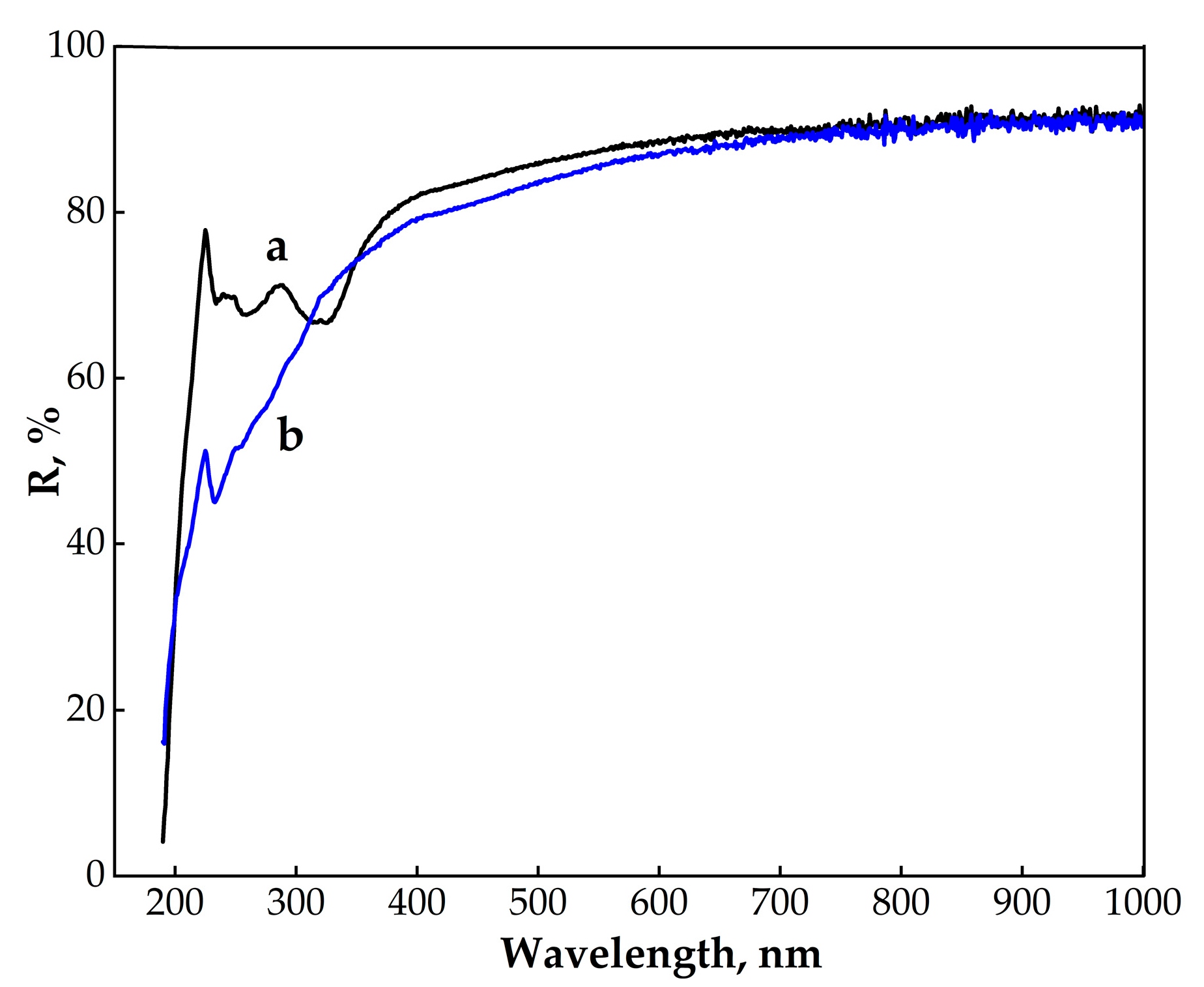
Diffuse-reflectance spectra (200–900 nm) show high reflectance (~90%) in the visible/near-IR for all BaSiO
3 powders (
Figure 5). The reflection coefficients of the synthesized barium silicate samples in the visible and near-infrared regions of the spectrum are approximately 90%. The amorphous sample exhibits slightly higher reflectance than the crystalline material obtained at 1000 °C, attributable to particle agglomeration during crystallization. Absorption bands (
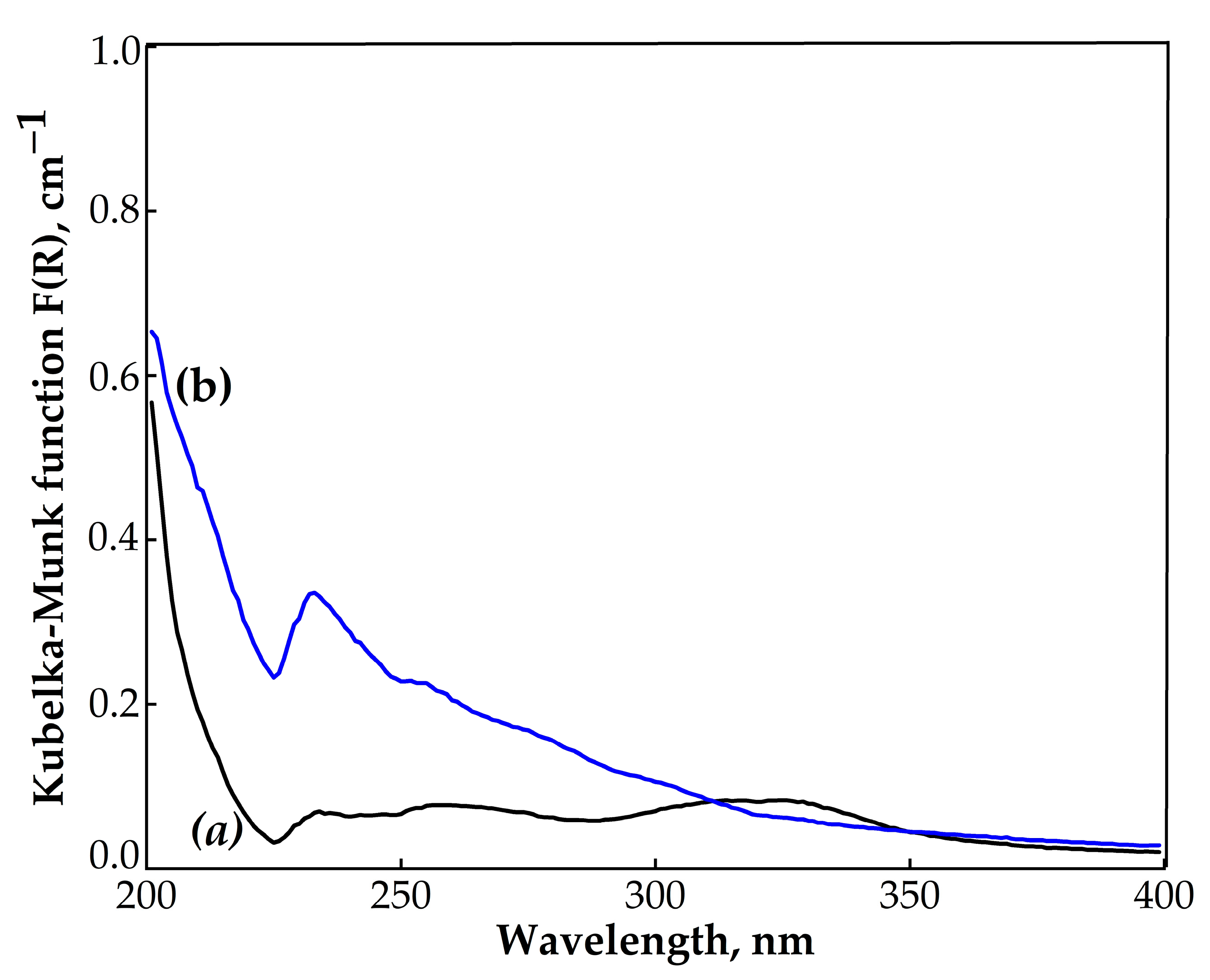
Figure 6) were observed in the UV region of the spectrum, possibly due to the presence of additional barium silicate phases, as suggested by XRD (
Figure 1).
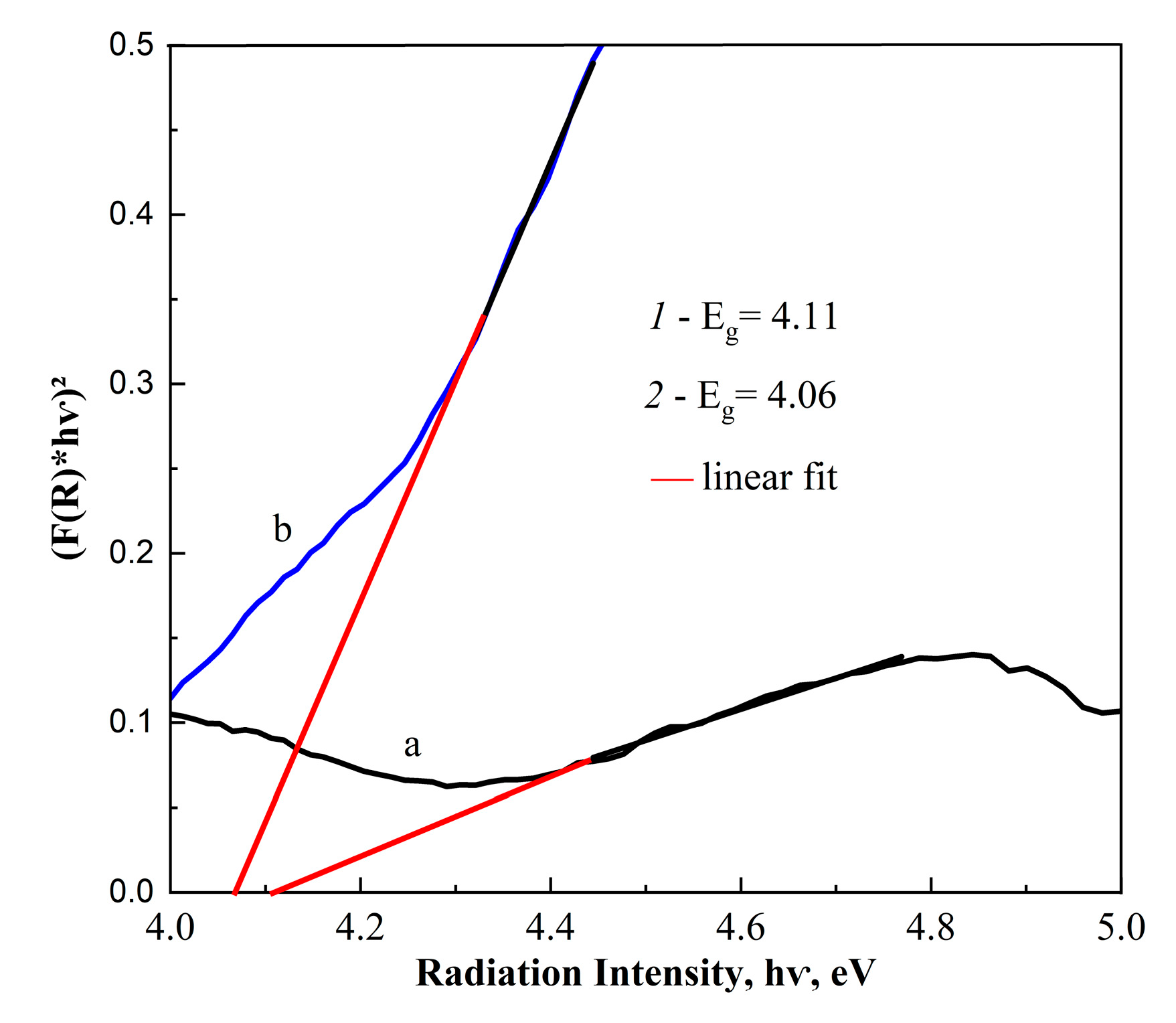
From the diffuse reflectance spectra, the absorption spectra were obtained by recalculating the Kubelka–Munk function F(R) (
Figure 7) using the formula:
where (R) is proportional to the absorption coefficient.
Thus, the diffuse reflectance coefficient R is converted into an equivalent absorption coefficient using the modified Kubelka–Munk function F(R). At the same time, the band gap of the material can be determined by extrapolating the linear portion of the (αh
v)
1/n dependence on hν with the energy axis h
v of the incident light:
where A is a proportionality constant related to the nature of the material,
h is Planck’s constant, and
n = 1/2 for direct allowed transitions.
Figure 7 presents the curves of the dependence of (F(R) * h
v)
2 on the light energy hν, obtained using diffuse reflectance spectra and calculations based on Formulas (1) and (2). The band gap energy Eg for the studied samples was determined by extrapolating the linear segments of these curves to their intersection with the h
v axis.
The presented data indicate that the samples have a similar band gap width, at 4.11 eV and 4.06 eV for samples dried at 150 °C and heat-treated at 1000 °C, respectively. Therefore, the average band gap value of the synthesized material (barium metasilicate) is Eg = 4.09 eV. According to the literature, barium metasilicate is a wide-band-gap dielectric with a band gap width of 3.46–4.3 eV [
19].
It is well known that nanoscale materials exhibit new functional properties. In particular, dielectric nanostructures demonstrate high photocatalytic activity across a wide spectrum and the ability to accumulate photo-generated charge carriers. In dielectrics, absorption of a photon leads to valence electrons transitioning to the conduction band, forming an electron-hole pair that can participate in the oxidation of organic compounds adsorbed on the dielectric surface. Catalytic activity depends on the number of photo-induced electrons that reach the dielectric surface. The degree of recombination of holes and electrons in the conduction band of nanoparticles is significantly reduced, thereby increasing their catalytic activity. The photocatalytic activity of the synthesized barium metasilicate was studied in the methylene blue (MB) degradation reaction under UV irradiation. The degree of decomposition of the MB was determined by measuring the optical density of the centrifuged solution (MB solution after centrifugation) before and after UV irradiation in the presence of the synthesized catalyst (BaSiO
3). Experimentally, it was established that the dependence of the solution’s optical density on the MB concentration is linear.
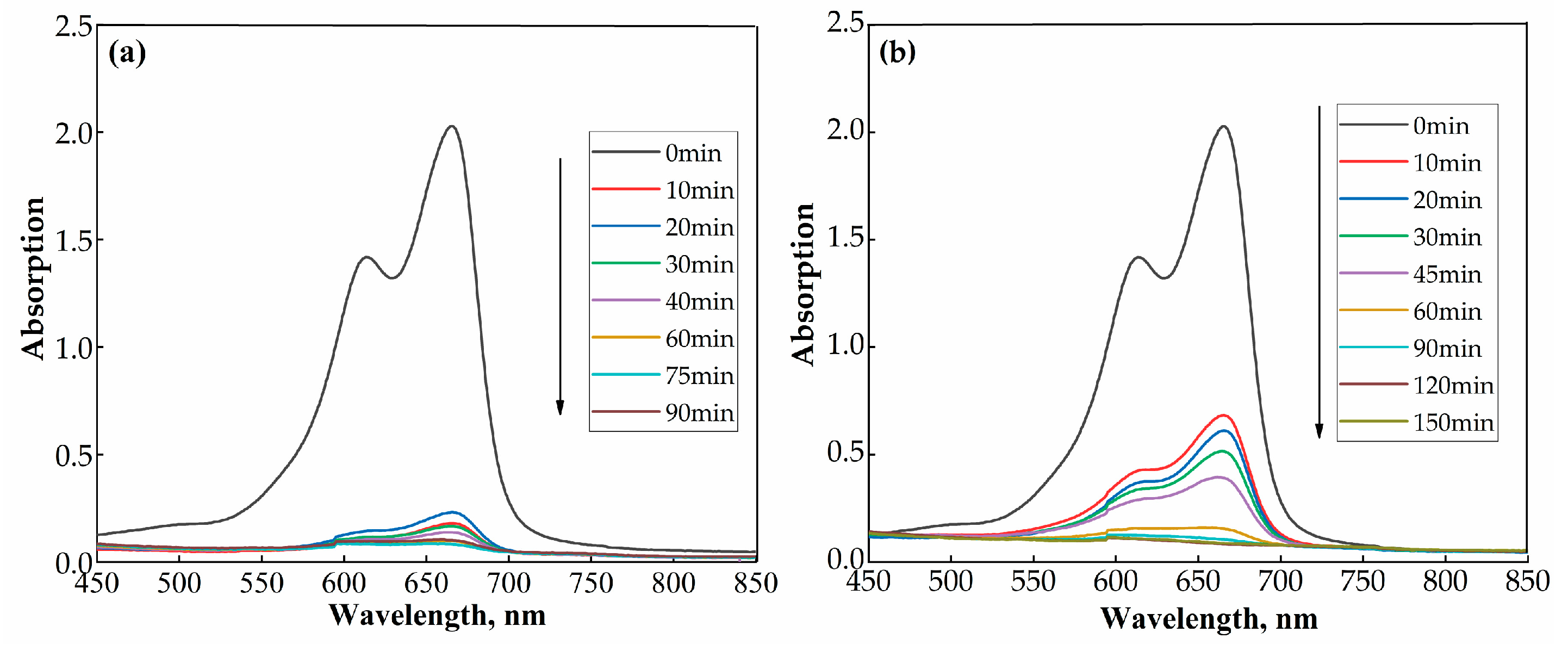
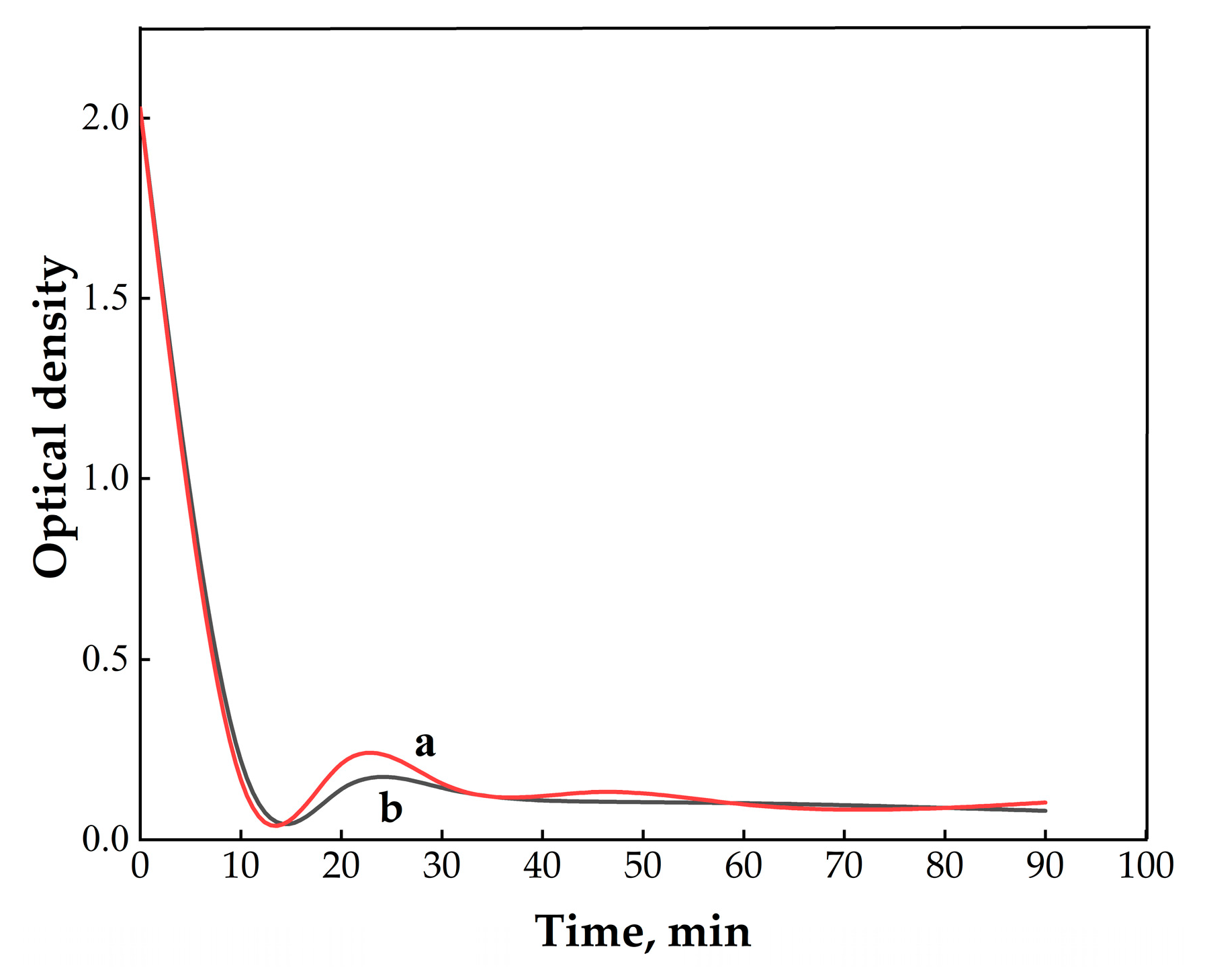
Figure 8 shows the optical densities of methylene blue solutions at various wavelengths before and after UV irradiation at different times (from 5 to 90 min), using amorphous and crystalline samples of BaSiO
3 as catalysts.
Based on this, the kinetics of the photocatalytic destruction of MB was determined from the optical density values of the solution at a wavelength of 664 nm, which corresponds to the maximum light absorption by the MB dye. Preliminary experiments were carried out to determine the photocatalytic properties of the synthesized barium silicate under the following conditions: 10 mg of BaSiO
3, a concentration of 10 mg/L of MB, a solution volume of 100 mL, a wavelength of 253.4 nm and a power of 25 W of UV radiation.
Figure 9 shows the curves of the degree of MB photodecomposition as a function of time. It can be seen that the photocatalytic activities of amorphous and crystalline barium metasilicate are almost the same. The degree of decomposition of methylene blue through 45 min with the amorphous catalyst and after 60 min with the crystalline catalyst is 90–92%.
4. Discussion
Microwave–hydrothermal synthesis was used to prepare nano-sized barium metasilicate from water-soluble precursors at a low temperature. The product is amorphous at 100 °C (the boiling point), whereas a crystalline BaSiO
3 phase forms at 240 °C. In both cases, the powders are nanodispersed (≈10–27 nm) (see
Figure 1a,b).
A mechanistic perspective on rapid crystallization and particle size control is presented. In a microwave field, rapid volumetric heating uniformly raises the temperature of the entire reaction medium, quickly achieving the required supersaturation for nucleation. This promotes a burst of near-simultaneous nucleation throughout the volume and limited subsequent growth, yielding smaller, more uniform particles with reduced aggregation compared to stepwise, wall-mediated heating. The rapid volumetric heating also increases the partial pressure of water vapour within the micropores of the forming solid. This generates autogenous pressure, which facilitates early crystallization at comparatively low external temperatures and pressures. Accordingly, a crystalline BaSiO
3 phase is observed at 240 °C (~30–32 atm) under MW-hydrothermal conditions. While the fast temperature increase under MW irradiation produces a rapid and uniform nucleation and growth rate with a peculiarly narrow particle size dispersion and morphology, as discussed in the literature [
47,
48], isolating the particles unambiguously is challenging. Here, however, the dominant effects can be explained by the fast and uniform heating and pressure build-up that are inherent to MW processing.
At higher temperatures, stepwise mass losses correspond to the dehydration of barium hydrosilicates. Endothermic events at ~325, 356, 370 and 665 °C reflect structural rearrangements during progressive dehydration. An exotherm at ~732 °C (for the 100 °C sample) marks the crystallization of BaSiO3, which is consistent with XRD. This event is not present in the 240 °C sample, which is already crystalline. An endotherm near 920 °C is consistent with crystallite growth/ordering or a possible polymorphic transformation. A weak exotherm near 1005 °C, together with mass loss, is attributed to the decomposition of BaCO3 and subsequent oxygen removal, leading to defect-rich BaSiO3. A further weak exotherm near 1270 °C reflects high-temperature microstructural evolution, which is potentially related to incongruent melting.
The FT-IR analysis support the formation of BaSiO
3: indeed, the spectra shown in
Figure 3 show the transition from hydrated/amorphous structures to a connected Ba–O–Si framework during heat treatment. This is accompanied by the disappearance of OH/H
2O features and attenuation of carbonate bands, which is consistent with dehydration and BaCO
3 decomposition.
To assess the functional properties, we focused on powders synthesized at 100 °C (at atmospheric pressure) and subsequently heat-treated at 1000 °C. The resulting BaSiO
3 had particle sizes of 10–20 nm and 12–40 nm, and pore sizes of 2.3 and 1.96 nm, respectively. The powders exhibited high diffuse reflectance in the visible and near-infrared (NIR) spectrum and absorbance in the ultraviolet (UV) spectrum, which is consistent with a wide band gap (Eg ≈ 4.06–4.10 eV). Both amorphous and crystalline materials promoted the UV-driven degradation of methylene blue with comparable kinetics, indicating that nanoscale effects, such as short diffusion lengths and abundant surface sites, play a dominant role over long-range order. The wide band gap and high diffuse reflectance (~90%) varied only slightly upon heat treatment. The main microstructural change was coalescence-driven particle growth, accompanied by a decrease in specific surface area. Under UV irradiation, both phases exhibited high photocatalytic activity towards methylene blue, with comparable kinetics for amorphous and crystalline powders. Some reports describe pristine BaSiO
3 as a weak standalone photocatalyst, typically serving as a host in doped or composite systems [
19,
46]. However, under our experimental conditions, the nano-sized, MW-prepared BaSiO
3 acted as an independent UV photocatalyst for MB degradation. We attribute this to its nanoscale features and associated charge-transport/surface-reaction advantages.
Overall, MW-hydrothermal processing reduces the temperature and time required to obtain nano-sized BaSiO3 and provides a clear structure–property relationship: rapid volumetric heating and pressure build-up enable early crystallization and narrow crystallite sizes; thermal treatment governs phase stabilization and densification.
The resulting nanoscale powders exhibit wide band gaps, high reflectance and efficient UV-driven dye degradation under the tested conditions. Therefore, photocatalytic activity is triggered by UV light rather than visible light. In practical terms, this restricts immediate use to UV-assisted settings (e.g., UV-LED or low-pressure Hg sources), whereas solar-driven operation would necessitate band-gap engineering (dopants/defects), photosensitization, or heterojunctions with visible-light semiconductors. It should be noted that reusability and long-term stability were not assessed here. Future work should evaluate multi-cycle MB degradation with intermediate washing, quantify retained activity and apparent rate constants, and perform post-test XRD, FT-IR, SEM and DRS to identify phase changes, carbonate accumulation, agglomeration or surface fouling, along with leaching assays (e.g., ICP-OES) to verify compositional stability.
Finally, to establish practical competitiveness, benchmarking against reference photocatalysts (e.g., TiO2, ZnO) under identical conditions, including visible-light trials when band-gap modification is implemented, will be necessary.
5. Conclusions
A microwave–hydrothermal process was developed for synthesizing nano-sized powders of BaSiO3 from aqueous precursors. Under these conditions, a crystalline BaSiO3 phase was obtained at 240 °C, with domain sizes preserved in the range of tens of nanometres (10–27 nm). The materials exhibited high diffuse reflectance in the visible/near-IR range (approximately 90%) and a wide band gap (Eg = 4.11 eV for the sample dried at 150 °C, Eg = 4.06 eV after calcination at 1000 °C, and an average Eg of approximately 4.09 eV). Under UV irradiation, both amorphous and crystalline powders catalyzed methylene blue (MB) decolourisation to 90–92% over fixed times (45 min for the amorphous powder and 60 min for the crystalline powder).
These outcomes are consistent with the processing–structure–property relationships identified in this study: rapid volumetric microwave heating and autogenous pressure promote early crystallization and smaller crystallite sizes at 240 °C. Subsequent thermal treatment then drives phase stabilization, coarsening and densification (BET decreases from 202 to 15.2 m2 g−1 and pore volume from 0.016 to 0.0055 cm3). In practice, the wide band gap implies UV-only activation under the present conditions. Future efforts will target visible-light operation (e.g., dopants/defects, photosensitisation, or heterojunctions), evaluate reusability and long-term stability through cycling and post-test characterization, and benchmark performance under identical conditions against reference photocatalysts (e.g., TiO2, ZnO).
Author Contributions
Conceptualization, C.L., C.M.; technological development, experimental research, V.V.B.; theoretical researches, T.S.A.; experimental researches, A.A.P., physico-chemical researches, computer data handling, A.A.G., T.V.G.; scientific leader, A.A.S., writing—original draft preparation, A.A.S., T.S.A., C.L.; writing—review and editing, A.A.S., C.L. and C.M. All authors have read and agreed to the published version of the manuscript.
Funding
This research received no external funding.
Institutional Review Board Statement
Not applicable.
Informed Consent Statement
Not applicable.
Data Availability Statement
The data that support the findings of this study are available from the corresponding author upon reasonable request.
Acknowledgments
Authors would like to heartily acknowledge the support given by Mauro Zapparoli and Massimo Tonelli at CIGS, University of Modena and Reggio Emilia, Italy.
Conflicts of Interest
The authors declare no conflicts of interest.
References
- Sridharan, S.; Tomozawa, M. Effect of various oxide additives on sintering of BaO-SiO2 system glass-ceramics. J. Mater. Sci. 1992, 27, 6747–6754. [Google Scholar] [CrossRef]
- Zhang, R.; Mao, H.; Taskinen, P. Thermodynamic descriptions of the BaO-CaO, BaO-SrO, BaO-SiO2 and SrO-SiO2 systems. Calphad 2016, 54, 107–116. [Google Scholar] [CrossRef]
- Ramsden, A.H.; James, P.F. The effects of amorphous phase separation on crystal nucleation kinetics in BaO-SiO2 glasses. Mater. Sci. 1984, 19, 1406–1419. [Google Scholar] [CrossRef]
- Boulay, E.; Nakano, J.; Turner, S.; Idrissi, H.; Schryvers, D.; Godet, S. Critical assessments and thermodynamic modeling of BaO–SiO2 and SiO2–TiO2 systems and their extensions into liquid immiscibility in the BaO–SiO2–TiO2 system. Calphad-Comput. Coupling Phase Diagr. Thermochem. 2014, 47, 68–82. [Google Scholar] [CrossRef]
- Zhang, R.; Mao, H.; Halli, P.; Taskinen, P. Experimental phase stability investigation of compounds and thermodynamic assessment of the BaO–SiO2 binary system and formation of barium silicates. J. Mater. Sci. 2016, 51, 4984–4995. [Google Scholar] [CrossRef]
- Trusova, E.; Vaitkevičius, A.; Tratsiak, Y.; Korjik, M.; Mengucci, P.; Rinaldi, D.; Montalto, L.; Marciulionyte, V.; Tamulaitis, G. Barium and lithium silicate glass ceramics doped with rare earth ions for white LEDs. Opt. Mater. 2018, 84, 459. [Google Scholar] [CrossRef]
- Asami, K.; Ueda, J.; Tanabe, S. Long persistent luminescence and blue photochromism in Eu2+-Dy3+ co-doped barium silicate glass ceramic phosphor. J. Lumin. 2019, 207, 246–250. [Google Scholar] [CrossRef]
- Gandhi, S.; Sakthivel, K.; Kwon, B.; Woo, H.; Lee, H.; Shin, D.; Jang, K. A novel efficient mesoporous silica assisted green emitting phosphors-an exotic remote phosphor with high quantum yield. RSC Adv. 2015, 5, 44192. [Google Scholar] [CrossRef]
- Cao, D.; Wang, H.; Wei, H.; Yang, W. Preparation, electronic structure, and photoluminescent properties of Eu2+ activated BaSi2O5 powder phosphors for solid-state lighting. J. Semicond. 2015, 36, 123008. [Google Scholar] [CrossRef]
- Nakamura, F.; Kantuptim, P.; Nakauchi, D.; Kato, T.; Kawaguchi, N.; Yanagida, T. Scintillation properties of BaSiO3: Ce crystals by the floating zone method. Mater. Res. Bull. 2020, 131, 110961. [Google Scholar] [CrossRef]
- Alsaif, N.; Al-Ghamdi, H.; Alfryyan, N.; Higazy, K.; Rammah, Y.; Kaky, K.; Kadhim, A.; Abouhaswa, A. Lutetium barium tellurite silicate glass samples doped with Fe2O3: Fabrication, physical, structure, and radiation attenuation capacity. Opt. Mater. 2024, 159, 116541. [Google Scholar] [CrossRef]
- Guéguen, Y.; Houizot, P.; Célarié, F.; Chen, M.; Hirata, A.; Tan, Y.; Allix, M.; Chenu, S.; Roux-Langlois, C.; Rouxel, T. Structure and viscosity of phase-separated BaO–SiO2 glasses. J. Am. Ceram. Soc. 2017, 100, 1982. [Google Scholar] [CrossRef]
- Reis, S.T.; Schwartz, M.; Zandi, M.; Narendar, Y. Sanbornite-Based Glass-Ceramic Seal for High-Temperature Applications. U.S. Patent Application No. US20140295313A1, 2 October 2014. [Google Scholar]
- Lisachuk, G.V.; Kryvobok, R.V.; Fedorenko, E.Y.; Zakharov, A.V. Ceramic radiotransparent materials on the basis of BaO-Al2O3-SiO2 and SrO-Al2O3-SiO2 systems. J. Silic. Based Compos. Mater. 2015, 67, 20–23. [Google Scholar] [CrossRef]
- Xu, J.; Zhao, Y.; Chen, J.; Mao, Z.; Yang, Y.; Wang, D. Insights into the discrepant luminescence for BaSiO3:Eu2+ phosphors prepared by solid-state reaction and precipitation reaction methods. Luminescence 2017, 32, 957–963. [Google Scholar] [CrossRef]
- Romero-Serrano, A.; Cruz-Ramirez, A.; Zeifert, B.; Hallen-Lopez, M.; Hernandez-Ramirez, A. Thermodynamic modeling of the BaO–SiO2 and SrO–SiO2 binary melts. Glass Phys. Chem. 2010, 36, 171–178. [Google Scholar] [CrossRef]
- Zhang, R.; Taskinen, P. Phase equilibria in the BaO-SiO2-Al2O3 ternary system at 1500 °C. Key Eng. Mater. 2016, 697, 565–571. [Google Scholar] [CrossRef]
- Yahia, I.S.; Zahran, H.Y.; Al-Ghamdi, A.A. Optical and structural properties of BaSiO3 thin films prepared by solid state route. Mater. Sci. Semicond. Process. 2015, 31, 354. [Google Scholar] [CrossRef]
- Taghrir, H.; Faghih, Z.; Ghashang, M.; Emami, L.; Dalili, S.; Khabnadideh, S. Barium silicate nanoparticles, an efficient catalyst for one-pot green synthesis of α-benzyl amino coumarin derivatives as potential chemotherapeutic agents. RSC Adν 2023, 13, 21127–21137. [Google Scholar] [CrossRef]
- Galstyan, V.D.; Oganesyan, E.B.; Grigoryan, S.A.; Saxnazaryan, F.S.; Zolumyan, N.O. Izuchenie vzaimodeistviya v sisteme BaC12—Na2SiO3—H2O pri 20 °C. Armyanskiy Ximicheskiy J. 1982, 35, 934–938. [Google Scholar]
- Manvelyan, M.G.; Sarkisyan, A.S.; Sagatelyan, G.M. Sintez metasilikata bariya. Izv. Arm.SSR Ximicheskie Nauk. 1961, 5, 425. [Google Scholar]
- Terzyan, A.M.; Melikyan, S.A.; Beglaryan, H.A.; Isahakyan, A.R.; Zulumyan, N.H. Barium silicates formation using silica hydrogel produced from serpentine minerals. Chem. J. Armen. 2018, 71, 517–523. [Google Scholar]
- Zahedi, M.; Hassanzadeh-Tabrizi, S.A.; Saffar-Teluri, A. Sol-gel synthesis and luminescence properties of Ba2SiO4:Sm3+ nanostructured phosphors. Ceram. Int. 2018, 44, 10169–10174. [Google Scholar] [CrossRef]
- Beglaryan, H.A.; Melikyan, S.A.; Zulumyan, N.H.; Terzyan, A.M.; Isahakyan, A.R. Influence of colloid synthesis techniques on barium silicates formation using silica hydrogel derived from serpentine minerals. J. Mol. Liq. 2019, 291, 111263. [Google Scholar] [CrossRef]
- Merzhanov, A.G.; Rogachev, A.S.; Sychev, A.E. Self-Propagating High-Temperature Synthesis: First Space Experiments. Dokl. Phys. Chem. 1998, 362, 299–303. [Google Scholar]
- Sherikar, B.N.; Sahoo, B.; Umarji, A.M. One-step synthesis of diopside (CaMgSi2O6) ceramic powder by solution combustion method. Adv. Powder Technol. 2020, 31, 2875. [Google Scholar] [CrossRef]
- Salehtash, F.; Jalaly, M.; Emrooz, H.B.M.; Gotor, F.J.; Sayagués, M.J. Mesoporous silica by solution-combustion synthesis followed by etching. Int. J. Self-Propagating High-Temp. Synth. 2018, 27, 221–227. [Google Scholar] [CrossRef]
- Coccia, F.; Mascitti, A.; Rastelli, G.; d’Alessandro, N.; Tonucci, L. Sustainable photocatalytic reduction of maleic acid: Enhancing CuxO/ZnO stability with polydopamine. Appl. Sci. 2025, 15, 1631. [Google Scholar] [CrossRef]
- Tsuzuki, T. Mechanochemical. Synthesis of metal oxide nanoparticles. Commun. Chem. 2021, 4, 143. [Google Scholar] [CrossRef]
- Leonelli, C.; Colombini, E.; Mortalò, C. Contribution of microwave irradiation in the synthesis of inorganic compounds: An Italian Approach. Inorganics 2025, 13, 410. [Google Scholar] [CrossRef]
- Riva, V.; Boccaccini, D.; Cannio, M.; Maioli, M.; Valle, M.; Romagnoli, M.; Mortalò, C.; Leonelli, C. Insight into t→m transition of MW treated 3Y-PSZ ceramics by grazing incidence X-Ray diffraction. J. Eur. Ceram. Soc. 2022, 42, 227–237. [Google Scholar] [CrossRef]
- Mortalò, C.; Rosa, R.; Veronesi, P.; Fasolin, S.; Zin, V.; Deambrosis, S.M.; Miorin, E.; Dimitrakis, G.; Fabrizio, M.; Leonelli, C. Microwave assisted sintering of Na-β″-Al2O3 in single mode cavities: Insights in the use of 2450 MHz frequency and preliminary experiments at 5800 MHz. Ceram. Int. 2020, 46, 28767–28777. [Google Scholar] [CrossRef]
- Kappe, C.O. My twenty years in microwave chemistry: From kitchen ovens to microwaves that aren’t Microwaves. Chem. Rec. 2019, 19, 15–39. [Google Scholar] [CrossRef] [PubMed]
- Varma, R.S. “Greener” chemical syntheses using mechanochemical mixing or microwave and ultrasound irradiation. Green Chem. Lett. Rev. 2007, 1, 37–45. [Google Scholar] [CrossRef]
- Bilecka, I.; Niederberger, M. Microwave chemistry for inorganic nanomaterials synthesis. Nanoscale 2010, 2, 1358. [Google Scholar] [CrossRef]
- Petrova, E.M.; Yusunova, L.M.; Bogacheva, T.M.; Axmedyanova, R.A.; Liakumovich, A.G. Effekt mikrovolnovogo izlucheniya v ximicheskix reakciyax. Sovrem. Nauk. Texnologii 2015, 18, 28–32. [Google Scholar]
- Jawor, A.; Jeong, B.H.; Hoek, E.M.V. Synthesis, characterization, and ion-exchange properties of colloidal zeolite nanocrystals. J. Nanopart. Res. 2009, 11, 1795. [Google Scholar] [CrossRef]
- Hu, M.Z.; Khatri, L.; Harris, M.T. Monodispersed ultrafine zeolite crystal particles by microwave hydrothermal synthesis. Ceram. Trans. 2009, 208, 91. [Google Scholar] [CrossRef]
- Tränkle, S.; Jahn, D.; Neumann, T.; Hüsing, N.; Volkmer, D. Conventional and microwave assisted hydrothermal syntheses of 11 Å tobermorite. J. Mater. Chem. A 2013, 1, 10318. [Google Scholar] [CrossRef]
- Thostenson, E.T.; Chou, T.W. Microwave processing: Fundamentals and application. Compos. Part A: Appl. Sci. Manuf. 1999, 30, 1055–1071. [Google Scholar] [CrossRef]
- Brittany, H. Microwave Synthesis; CEM Publishing: Matthews, NC, USA, 2002; Volume 296. [Google Scholar]
- Bagramyan, V.V.; Sargsyan, A.A.; Ponzoni, C.; Rosa, R.; Leonelli, C. Microwave-assisted preparation of sodium-silicate solutions from perlite. Theor. Found. Chem. Eng. 2015, 49, 731–735. [Google Scholar] [CrossRef]
- Aghamalyan, N.R.; Sargsyan, A.A.; Azatyan, T.S.; Grigoryan, T.V.; Kazaryan, A.A.; Petrosyan, A.A.; Gyulasaryan, H.T.; Kafadaryan, Y.A.; Nersisyan, M.N.; Knyazyan, N.B.; et al. Photocatalytic and radiation-optical properties of lead metasilicate obtained by the microwave method. J. Contemp. Phys. 2024, 59, 199–207. [Google Scholar] [CrossRef]
- Grishina, A.N.; Kozlova, E.V.; Satyukov, A.B. Issledovanie sostava nanorazmernix gidrosilikatov bariya s primeneniem IK-spektroskopii. Mejdunarodniy Nauchno-Issledovatelskiy J. 2013, 8, 19. [Google Scholar]
- Shen, K.; Zhang, R.; Jin, Y.; Li, Y.; Hu, Y. Inorganic metal oxide material BaSiO3:Eu2+ for convenient 3D X-ray imaging. J. Lumin. 2024, 269, 120536. [Google Scholar] [CrossRef]
- Hu, X.; Lu, P.; Fu, M.; Zhang, Y.; Cao, X.; Chen, J.; Lin, S.; Yao, J.; Zhang, Z. Activating the photocatalytic activity of insulator barium silicate: A liquid-phase alkalized tetracycline photosensitizer and its self-destruction. Chem. Eng. J. 2023, 454, 140281. [Google Scholar] [CrossRef]
- Paradisi, E.; Mortalò, C.; Zin, V.; Armetta, F.; Boiko, V.; Hreniak, D.; Zapparoli, M.; Deambrosis, S.M.; Miorin, E.; Leonelli, C.; et al. Eu-Doped YPO4 luminescent nanopowders for anticounterfeiting applications: Tuning morphology and optical properties by a rapid Microwave-Assisted Hydrothermal Method. ACS Appl. Nano Mater. 2024, 7, 6893–6905. [Google Scholar] [CrossRef]
- Paradisi, E.; Mortalò, C.; Zin, V.; Deambrosis, S.M.; Zapparoli, M.; Miorin, E.; Leonelli, C. Understanding the effect of temperature on the crystallization of Eu3+:YPO4 nanophosphors prepared by MW-Assisted Method. Ceram. Int. 2025, 51, 7075–7086. [Google Scholar] [CrossRef]
| Disclaimer/Publisher’s Note: The statements, opinions and data contained in all publications are solely those of the individual author(s) and contributor(s) and not of MDPI and/or the editor(s). MDPI and/or the editor(s) disclaim responsibility for any injury to people or property resulting from any ideas, methods, instructions or products referred to in the content. |





 ,
,