1. Introduction
Electrical energy represents an inseparable part of our lives. In the past, most electrical energy was generated by hydropower plants, fossil-fuel power plants, and nuclear power plants.
Hydropower plants are an environmentally benign method of generating electrical energy and are classified as renewable energy sources.
By contrast, fossil fuel–fired power plants emit significant quantities of greenhouse gases during operation, thereby contributing to global warming and releasing various hazardous chemical compounds.
Under normal operating conditions, nuclear power plants exhibit negligible direct adverse impacts on the environment. The principal challenge associated with nuclear power generation is the management and long-term storage of spent nuclear fuel, which, if inadequately handled, can cause severe environmental contamination. In contemporary practice, however, technologically advanced and secure methods for the storage and disposal of spent fuel are available, and the latest generation of nuclear power plants, in conjunction with stringent safety regulations, substantially reduces the probability of nuclear accidents.
Due to the aforementioned environmental and sustainability concerns associated with fossil-fuel power plants, interest has grown in energy-harvesting systems capable of converting otherwise wasted or naturally occurring energy into electrical energy. Representative examples of such systems include photovoltaic (solar) panels, which convert solar radiation into electrical energy via the photovoltaic effect, and hydropower dams and wind turbines, which convert kinetic energy into electrical energy.
Contemporary energy harvesting systems are employed across a broad spectrum of applications, ranging from everyday consumer devices and industrial machinery to large-scale power generation for the electrical grid. These systems increasingly supplement and, to a limited extent, replace conventional fossil fuel-based power plants. Typical large-scale implementations include hydroelectric dams and solar and wind farms, which occupy extensive geographical areas and are capable of producing substantial quantities of electrical energy.
Notwithstanding the ongoing transition toward low-carbon and renewable energy sources, fossil-fuel power plants continue to account for a significant proportion of global electricity production. Large-scale energy-harvesting installations are further complemented by an expanding range of specialized systems designed for deployment in specific operational contexts. Representative examples include tidal power plants, which convert the kinetic and potential energy of tidal motion into electrical energy, and systems that exploit thermal gradients using thermoelectric transducers to generate electricity.
A substantial proportion of contemporary electronic devices are no longer continuously connected to the electrical grid during operation; instead, these systems are predominantly powered by batteries, which serve as energy storage units. However, batteries have finite energy capacity, and once they are fully discharged, the corresponding electronic device ceases to operate until the batteries are recharged or replaced.
For electronic devices with convenient access to the electrical grid, such as mobile phones or electric vehicles, the recharging process is straightforward and readily available.
However, if the electronic device powered by batteries is located in an area without easy access to the electrical grid, for example, wireless sensor networks located in hard-to-reach areas, our goal is to prolong the operation time of the device. In the past, the operating time was extended by reducing device power consumption, optimizing software, and increasing battery capacity.
In contemporary applications, energy-harvesting systems that directly supply power to electronic devices and partially recharge their batteries are frequently employed to extend operational lifetimes.
In previous work, our department conducted a study to quantify traffic density using magnetometer-based sensing. The measurement units deployed in this study were battery-powered, and their operational lifetime can be prolonged by integrating an energy-harvesting subsystem based on photovoltaic panels. Photovoltaic technologies are already extensively utilised in the transportation sector to provide electrical power for stationary speed monitoring installations and related roadside infrastructure.
The present article was prepared as part of preliminary work to support future project development in this area. It provides an overview and comparative assessment of various energy-harvesting technologies suitable for transportation-related applications. Particular attention is devoted to thermoelectric transducers, which constitute a promising alternative to the conventionally used energy-harvesting systems. These devices can be deployed without introducing geometric or mechanical obstacles on road surfaces and can therefore be integrated unobtrusively, including in high-speed highway environments.
The main focus of the article is on the analysis of the working principle of the thermoelectric transducers, the classification of the thermoelectric transducers based on their manufacturing process and implementation areas, analysis of the implementation approaches for the incorporation of the thermoelectric transducers based energy harvesting systems into the Smart road components recharging process and the study of the disadvantages and advantages associated with the implementation of concentrated thermoelectric transducers based energy harvesting systems into the Smart road components recharging process.
The article presents a narrative review of the specified problem, with the primary objective of conducting an in-depth analysis of the available literature and data sources. In the future, a systematic research article is planned that focuses on a quantitative evaluation of the energy generation performance of the selected thermoelectric energy harvesting system.
The previous reviews focused on powering Smart Road components, primarily on piezoelectric, triboelectric, or photovoltaic transducers, or on a specific configuration of thermoelectric transducers.
This review paper presents a more detailed classification of vertical vs. horizontal thermoelectric transducers, a systematic comparison of energy harvesting technologies implemented in Smart Road applications, and a synthesis of recent prototypes of thermoelectric transducers for transportation.
Although the deployment of thermoelectric transducers is currently limited to prototype implementations undergoing field testing, these devices constitute a promising alternative to other transportation-oriented energy-harvesting systems. Their advantages include the absence of moving mechanical components, which reduces maintenance requirements and increases reliability; an extended operational lifetime; and subsurface installation beneath the pavement, thereby eliminating any physical obstruction or interference with vehicular traffic on the roadway.
Section 2 of the article provides a general description of renewable energy harvesting systems, enabling readers new to this research area to better understand the advances in the practical implementation of the energy harvesting systems described in the subsequent sections.
Section 3 of the article focuses on renewable energy sources in road transportation and on the different energy harvesters that convert the energy from these sources into electrical energy usable by smart road components.
Section 4 of the article provides an in-depth description of the working principles of thermoelectric transducers and the different thermoelectric transducer architectures, together with their recommended areas of implementation.
The
Section 5 of the article focuses on the different approaches to the practical implementation of thermoelectric energy harvesting systems into the road surface, together with the description of the advantages and disadvantages of different approaches. The final parts of the section compare the different approaches.
Section 6 of the article focuses on the examples of the practical implementation of the thermoelectric energy harvesting systems in transportation, together with the calculation of the required road length and surface based on the parameters of the energy harvesting system and load.
Section 7 of the article focuses on concentrated thermoelectric transducers, which can significantly increase the temperature of the road surface. The primary trade-off associated with their implementation is a decrease in the structural integrity of the road surface, which usually precludes their direct application on roads. However, they can be implemented on standalone thermoelectric energy harvesting systems based on the same principles as described in the
Section 7, located in areas with similar properties to the roads, such as parking lots or standalone thermoelectric energy harvesting power plants.
The
Section 8 of the article contains a quantitative comparison of different energy harvesting systems and evaluates them based on the typical power density, dependence on traffic, mechanical intrusion into the road surface, susceptibility to environmental conditions, typical lifetime and technology readiness level.
2. Renewable Energy Harvesting Systems
Most modern devices require electrical energy to operate. In the past, energy was generated by conventional (fossil-fuel and nuclear) power plants. However, these plants cause pollution and global warming, and nowadays they are being partially replaced with renewable energy harvesting systems [
1,
2,
3,
4,
5].
Each renewable energy harvesting system requires a renewable energy source to operate. Common examples include solar (photovoltaic) energy from sunlight and kinetic energy from wind and water motion.
However, beyond these common examples, a wide range of renewable energy sources is available across many areas of human life. Most renewable energy sources cannot be depleted because natural processes continually replenish them; therefore, they represent an ideal solution to the global sustainable electric energy generation problem.
The availability of the renewable energy source is primarily affected by three factors:
Geographical location—the applicability of each renewable energy source is constrained by specific geographical and environmental conditions. Wind turbines are unsuitable for regions characterized by persistently low wind speeds. Photovoltaic panels cannot be effectively deployed in areas subject to permanent or extensive shading. Tidal power plants can be installed only in coastal zones where tidal ranges and currents are sufficiently large to enable economically viable energy conversion. Hydrothermal power plants are limited to volcanically active regions and areas in proximity to tectonic plate boundaries, i.e., zones with high geothermal gradients and pronounced geothermal activity. Each renewable energy source has limitations that prevent its efficient use in certain geographical locations.
Climatic conditions—photovoltaic panels generate substantially less electrical energy on cloudy, rainy, or snowy days. Hydroelectric power plants are affected by droughts, which reduce water availability and therefore energy generation capabilities.
Economic situation—the most commonly used type of renewable energy harvesting system is the photovoltaic panel, whose price is slowly decreasing, and the amount of generated electrical energy is gradually increasing. However, the initial cost of their implementation can be high because photovoltaic renewable energy harvesting systems do not consist only of photovoltaic panels; they also include rechargeable batteries used to store excess electrical energy.
2.1. Block Diagram of EH Systems
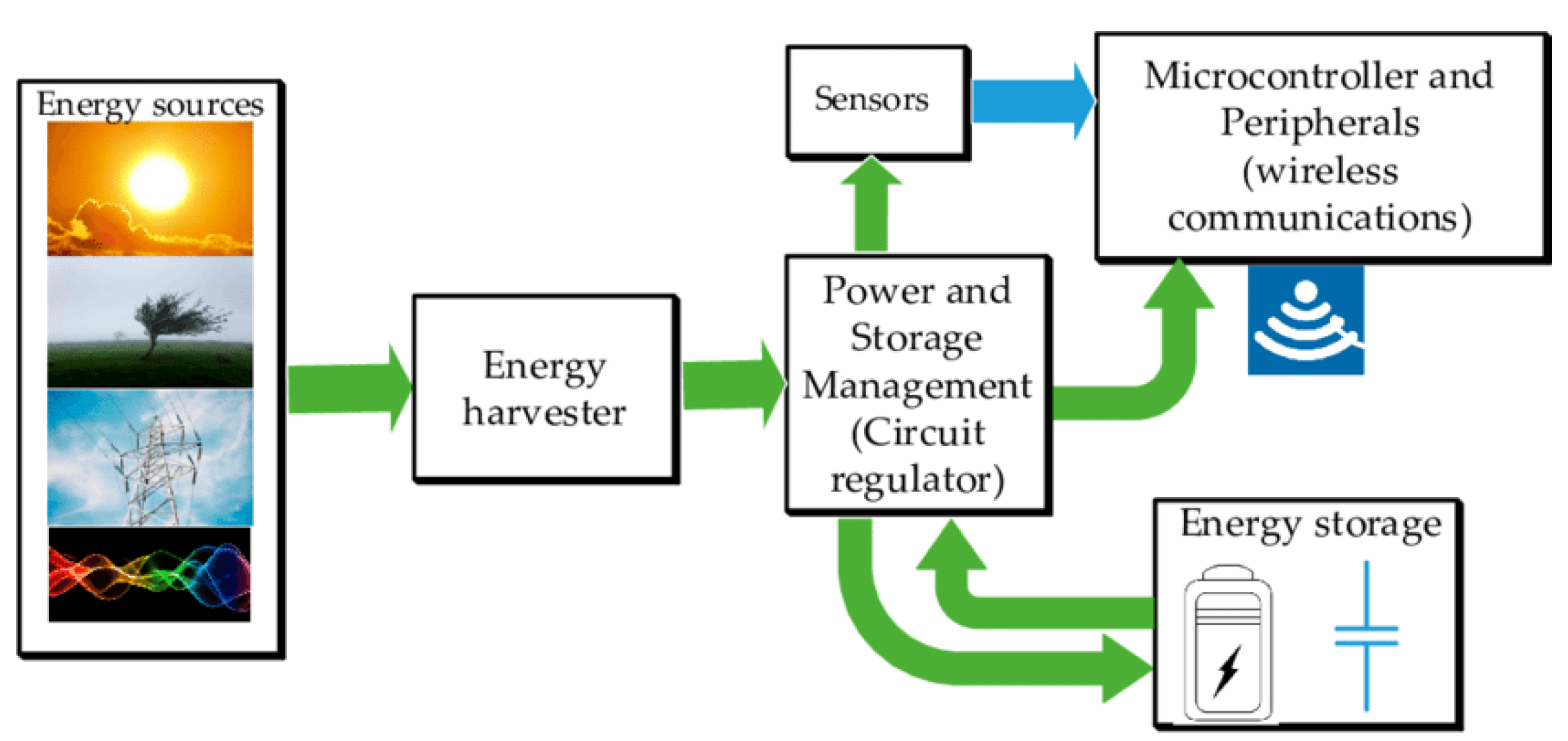
A block diagram of the energy harvesting system is shown in
Figure 1.
On the left side of the energy harvesting system block diagram, a renewable energy source is placed, such as solar radiation or mechanical (kinetic) energy. The energy harvester converts the energy from its primary form (e.g., photovoltaic, thermal, or kinetic) into electrical energy. Hybrid or combined energy harvesting systems employ multiple energy harvesters simultaneously, enabling the conversion of different primary energy forms available at the point of deployment and thereby increasing the total amount of generated electrical energy.
The power and energy storage management system is responsible for the following functions:
Regulation and control of the flow of electrical energy within the system.
Conversion of the output voltage of the energy harvester to the voltage level required for the reliable operation of the powered device and the electrical energy storage.
Monitoring the state of charge of the electrical energy storage and providing protection against deep discharge (undercharging).
Monitoring the load current and protecting the electrical energy storage from overload conditions (excessive current consumption).
Protecting downstream subsystems from overvoltage conditions induced by the energy harvesters and from damage caused by short circuits.
Enabling intelligent power and storage management through communication with a microcontroller (control unit).
Modern intelligent systems can also employ artificial intelligence or neural network methods to improve the prediction accuracy of the device’s energy consumption and the energy harvesting system’s power output. Based on the increased prediction accuracy, the power and storage management system is capable of more efficiently controlling the energy flow (using the energy to power the device or storing it in the energy storage system for later use) and an improved decision-making process, which determines whether the device operates in the full operation mode or partial operation mode, in order to prolong the operational time of the device [
6,
7].
If the energy transducer produces at its output a quantity of electrical energy exceeding the instantaneous consumption of the control unit and sensors, the power and storage management system will direct this surplus electrical energy into the electrical energy storage system, provided that the storage system is not fully charged and the surplus cannot be immediately utilized.
Conversely, when the energy transducer does not generate sufficient electrical energy to satisfy the power requirements of the control unit and sensors, the power and storage management system will initiate the discharge of the electrical energy storage system to compensate for the resulting power deficit, assuming that the state of charge of the storage system has not fallen below a predefined critical threshold. If this critical level is reached or exceeded during further discharge, the system will inhibit additional discharge of the energy storage system, at which point the powered device will cease operation.
The electrical energy storage system is used for the storage of the surplus electrical energy generated by the energy transducer. In the small devices (e.g., a calculator containing a photovoltaic panel or a measurement unit containing an energy harvesting system), the energy storage is implemented in the form of rechargeable batteries (long-term energy storage, high energy density, low power density) or supercapacitors (short-term energy storage, high power density, small energy density), depending on the application.
The powered device comprises a control unit implemented as a microcontroller that processes signals acquired from the sensors, actuates the corresponding output elements, and enables wired or wireless communication with the external environment.
2.2. Applications
Energy harvesting systems can be classified into the following categories:
Energy harvesting systems in the electrical grid generate large amounts of electrical energy, which are delivered to the grid.
User energy harvesting systems generate a moderate amount of electrical energy. This energy is either directly used by the devices that they power or, in some cases, also brought to the electrical grid.
Autonomous energy-harvesting systems generate a small amount of electrical energy, which is directly used by the devices they power.
Autonomous energy harvesting systems often employ environment-specific transducers that are usable only in the area of their implementation and generate only small amounts of electrical energy. They can harvest vibrational energy from industrial devices, kinetic energy from tidal motion, which is used to power the water buoys, or thermal energy from temperature gradients.
The autonomous energy-harvesting systems are not connected to the electrical grid, and all available energy is stored in the energy storage, which is continuously partially recharged by the energy harvester.
This article focuses on the analysis of energy harvesting systems capable of powering transportation applications, and one of these applications is the wireless sensor network (WSN) [
8,
9,
10,
11,
12,
13,
14].
The WSN consists of sensor nodes that, using low-power wireless or wired communication protocols, transmit the measured data from the sensors to the central node, which then transmits it via a low-power wireless protocol to the data server, where it is processed.
A simple WSN can consist of a single combined node (which acts as both a sensor and a central node) that directly transmits the measured data using a low-power wireless communication protocol to the data server.
For simplicity, let us assume we work with a simple WSN; however, the described concepts can be readily extended to WSNs with multiple sensor nodes (or to any application in general).
When the WSN is located in an area with easy access to the conventional power grid, for example, in a city, the power source does not represent a problem. The network voltage is supplied to the power and storage management system input. This type of WSN does not contain an energy harvester or energy storage.
When the WSN is deployed in an area without access to the conventional power grid, it can be powered by autonomous energy-harvesting systems.
The classic WSN uses energy storage in the form of batteries (primary or secondary) that supply power to the device. The problem with this approach is that the battery has limited capacity—it can store only a limited amount of electrical energy.
For example, we have a battery with a capacity of 720 mAh, and based on calculations or laboratory measurements, we determined that the average constant power consumption of the combined node is 1 mA. Based on this information, we can easily calculate that the battery can power the device for 720 h (30 days). After this time passes, the powered device becomes nonfunctional.
During this calculation, we did not account for the possibility that the combined node might consume higher current during wireless data transfer, or that a partially discharged battery might not supply sufficient current. We also omitted other battery parameters, which will need to be taken into account with real calculations.
Consequently, the technician must visit the combined node once per month to replace discharged batteries with charged ones.
However, if the combined node is located in a hard-to-reach area where it performs long-term measurements, regular battery replacement is challenging, and our goal is to prolong the device’s lifetime (the interval between battery replacements).
In classic WSNs, the device lifetime can be extended in two ways: increasing battery capacity and reducing the average current consumption of the powered device.
When using a WSN with an energy-harvesting system, we can extend device lifetime by partially recharging the battery with energy generated by the harvester.
The classic WSN already includes energy storage, power, and storage management systems, a control unit, and sensors.
To change the classic WSN into a WSN with an energy harvesting system, we need to identify the available energy sources in the location of implementation, choose the appropriate energy harvesters, and adapt the power and storage management system so that it will enable powering the device with the energy harvested by the energy harvester [
15].
Examples of other applications containing energy storage subsystems that can use energy harvesting technologies to prolong their operation are remotely controlled robots [
16,
17].
3. Renewable Energy Technologies in Road Transportation
Nowadays, the concept of a Smart City, in which the separate components of city infrastructure (e.g., transportation, energy, security, or civil services) are interconnected, is gaining popularity. The primary goals of this concept are quality of life improvements, effective use of the available resources, and sustainable operation of the city infrastructure [
18,
19,
20,
21,
22].
One key area of the Smart City concept is the Smart Road, a road equipped with various electronic systems. Based on the definition, the Smart Road integrates smart traffic systems that communicate with data centers and cooperate with the rest of the city ecosystems.
The following list provides several examples; however, the Smart City concept comprises a large number of systems whose primary function is to improve traffic flow and passenger comfort and reduce the rate of traffic incidents.
Monitoring the number of vehicles waiting at the intersection and real-time optimization of the traffic lights’ schedule with the goal of preventing traffic jams [
23].
Monitoring the speed of vehicles with the goal of detecting traffic jams on the specific road segment and automatically identifying violations and alerting authorities [
24].
Intelligent lighting, which monitors the levels of ambient light, traffic levels, and pedestrians with the goal of reducing power consumption.
Intelligent traffic signs and data transmission to vehicle navigation systems can, based on the current traffic situation on the road, propose detours to drivers that avoid traffic jams.
Wireless exchange of collected data between autonomous vehicles, which can automatically regulate their direction and speed with the goal of improving their knowledge about surroundings [
25,
26,
27].
Automatic recharging of electric vehicles during their journey with the use of induction charging. Although this technology is still in an experimental phase and its practical implementation has been tested only on a few road segments, it represents a very important technology that improves the integration of electric vehicles, since it addresses the problems associated with their charging [
28,
29,
30,
31].
Smart sensors for detecting the current levels of road-surface icing and ambient temperature. The control algorithms process the measured data from the sensors and automatically adjust the heating power of the heater to levels necessary for the defrosting of the road surface and reducing the probability of the vehicle skidding off the road [
32].
In general, a large portion of the systems that are part of the Smart Road concept are implemented as wireless sensor networks. The collected data are evaluated either locally or on the remote server, and based on the collected data, controlled action elements (e.g., traffic lights, traffic signs, or warning systems) are applied.
All systems on which the Smart Road concept is based require electrical energy for operation. If these systems are located in a city or other area with easy access to the electrical grid, their power supply is not a problem.
However, when we need to deploy these systems in areas without access to the electrical grid, autonomous energy-harvesting systems described in the previous section are required.
In this section, we focus on renewable energy sources in road transportation and on energy transducers that harvest energy from these sources.
Electrical energy can be harvested within vehicles, where it is used to power various electrical systems or to partially recharge batteries. Or outside of vehicles, where it is used to power different components of the Smart Road concept.
The focus of the article is on energy harvesting systems usable outside of vehicles [
33,
34].
Renewable energy sources accessible in road transportation can be divided based on their origin, whether natural or artificial.
The most well-known natural renewable energy sources, which are replenished by naturally occurring events, are as follows:
Mostly used artificial renewable energy sources, which are replenished by human activity, are as follows:
Mechanical pressure energy caused by the weight of vehicles to which is exposed the road surface.
Mechanical low-frequency vibration energy caused by vehicles.
Mechanical acoustic energy caused primarily by combustion engine vehicles.
Kinetic energy in air turbulence (low-speed winds) caused by vehicles.
Thermal energy caused by friction between vehicle tires and the road surface.
3.1. Mechanical Pressure Energy
The weight of vehicles subject the road surface to mechanical pressure energy that can be harvested with three different types of energy transducers: electromagnetic, piezoelectric, triboelectric [
35].
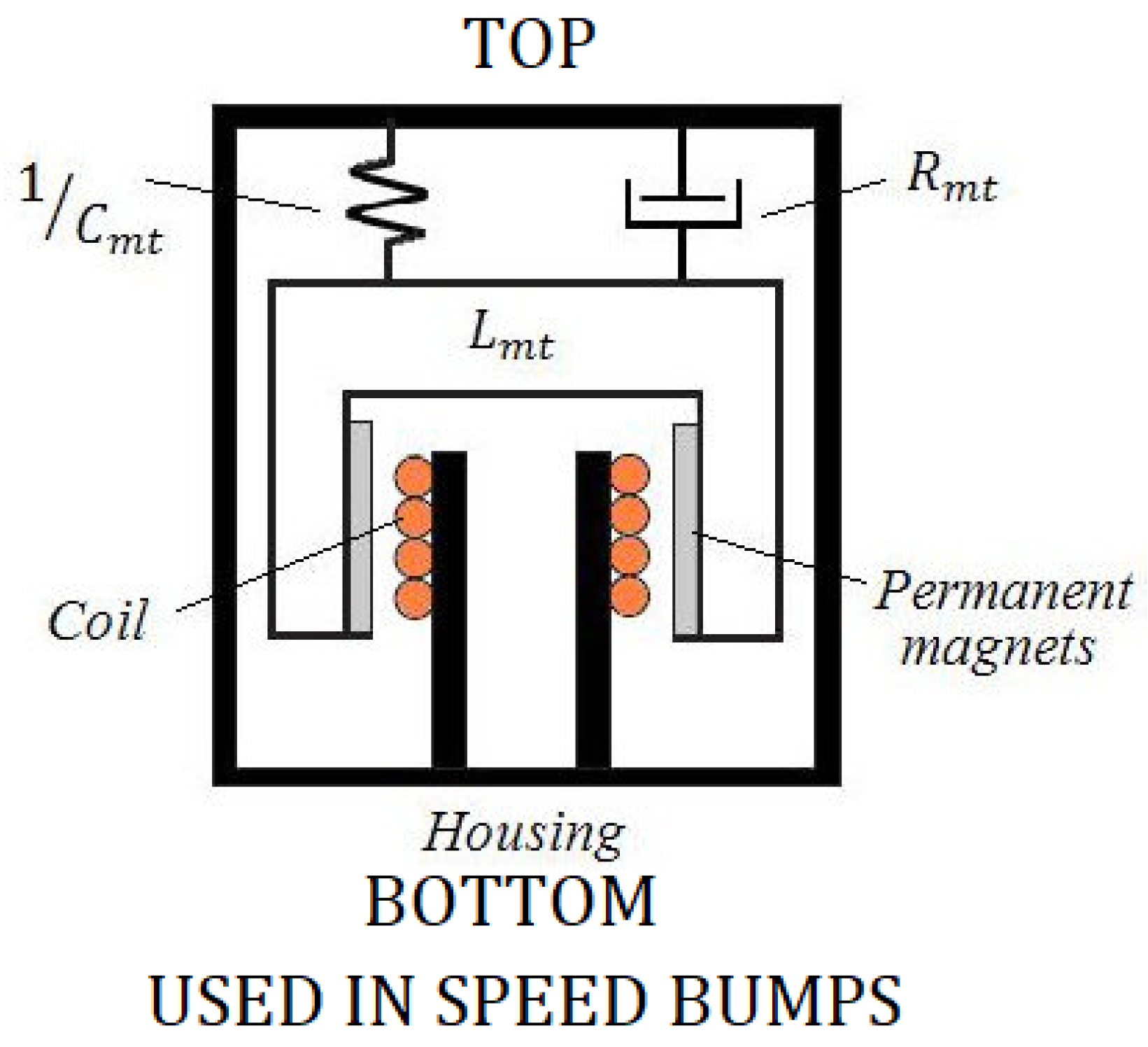
Firstly, there are electromagnetic transducers shown in
Figure 2, which consist of a fixed coil surrounded by a movable magnet connected to a spring. When the top of the transducer is exposed to mechanical pressure, the magnet is pushed down, and when mechanical pressure is relieved, the spring returns the magnet to its original position. Magnet movement relative to the fixed coil induces an alternating magnetic field, and, by Faraday’s law of electromagnetic induction, electrical energy is generated in the coil when it is exposed to this field.
Electromagnetic transducers are usually placed on speed bumps on the road, and the mechanical pressure from passing vehicles induces magnet motion and electrical energy generation [
37,
38,
39].
Electromagnetic transducers in speed bumps can be used on low-speed roads since speed bumps represent an obstacle on the road, which causes a decrease in the vehicle speed.
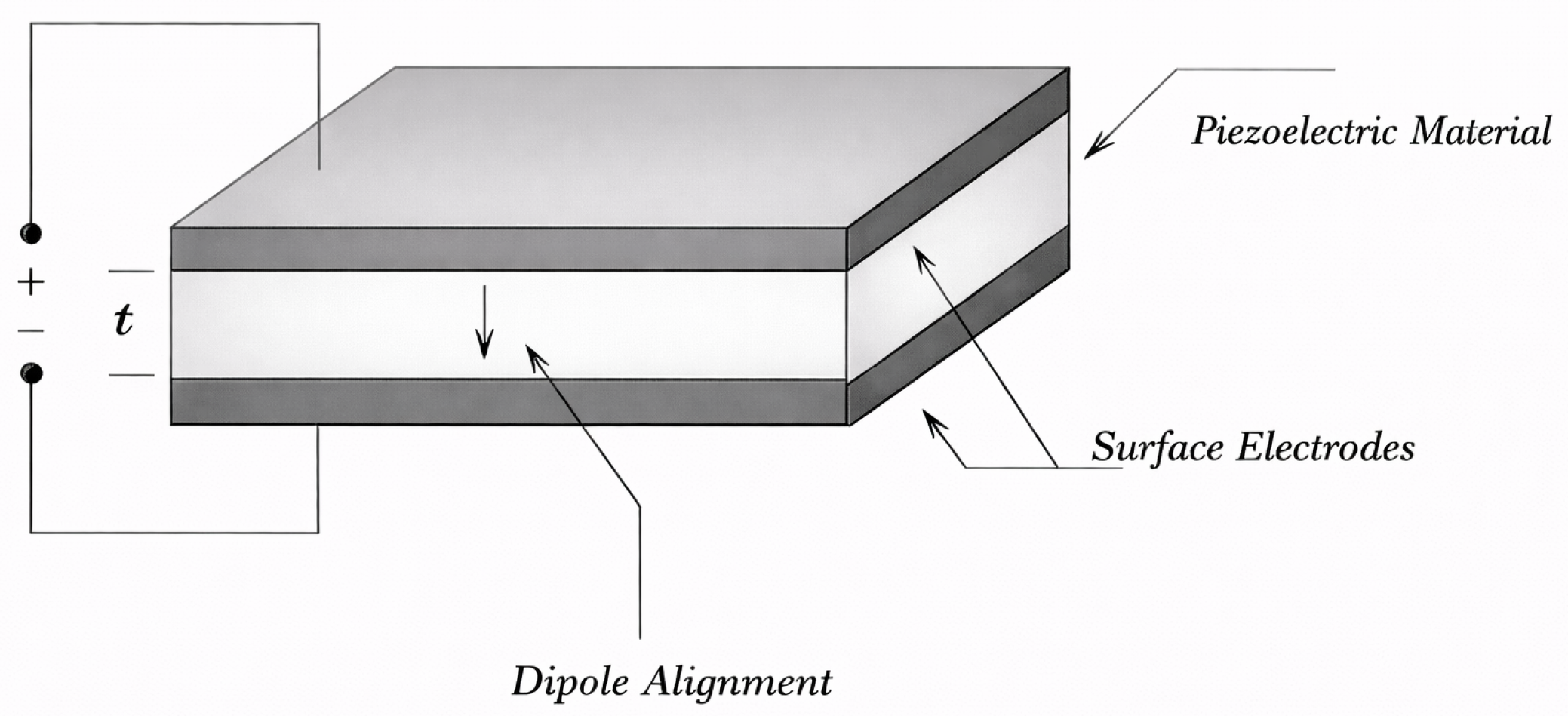
Secondly, there are piezoelectric transducers shown in
Figure 3, which operate based on the piezoelectric effect. When a piezoelectric material, such as quartz or ceramics, is subjected to mechanical pressure, opposite charges accumulate on its two sides. This generates the potential difference-voltage—between the two sides of the piezoelectric material [
40,
41].
Piezoelectric transducers consist of three layers; the middle layer is a piezoelectric material, and the outer two layers are surface electrodes that collect the generated potential difference.
One side of the piezoelectric material has a lower potential, which is brought to the first surface electrode, and the other side of the piezoelectric material has a higher potential, which is brought to the second surface electrode. This potential difference between surface electrodes represents voltage.
The main advantage of piezoelectric transducers is that they can be placed at the road surface level, and therefore, they do not represent an obstacle for vehicles and can also be used on high-speed roads.
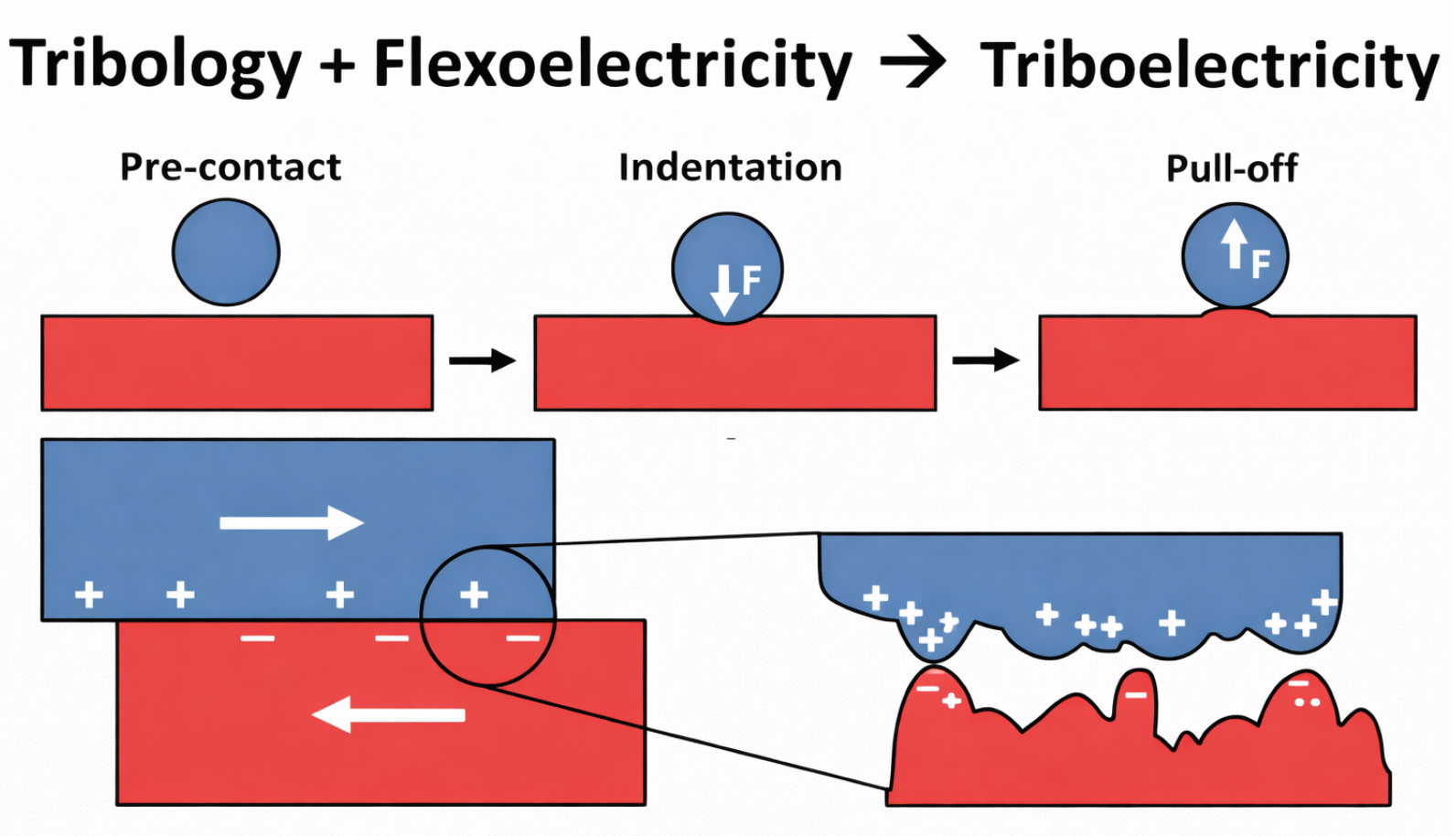
Thirdly, there are triboelectric transducers shown in
Figure 4, which operate based on the triboelectric effect, which states that sliding contact movement (friction movement) between two different triboelectric materials or contact and subsequent separation movement of two different triboelectric materials generates electrical energy caused by the charge transfer between the two different triboelectric materials [
43,
44,
45].
Triboelectric transducers are divided into two categories:
Triboelectric transducers have higher efficiency when triboelectric materials come into contact as a consequence of the large mechanical force applied to them.
In road transportation, they are used to harvest mechanical energy from vehicle weight.
Triboelectric transducers use conventional materials, have simple structures, and have lower prices.
Triboelectric nanogenerators (nanotransducers) have higher efficiency when triboelectric materials come into contact as a consequence of the small mechanical force applied to them.
They are used for mechanical energy harvesting in areas such as wearable electronics, biomedical sensors, and road transportation to harvest low-speed wind energy.
Triboelectric nanogenerators use nanostructured materials, such as nanowires, which improve efficiency, increase structural complexity, and increase cost.
The triboelectric materials used with the triboelectric transducers and triboelectric nanogenerators are usually in the form of polymers (PTFE, FEP, Kapton, PDMS, nylon, PVDF, etc.), metals (aluminium, copper, gold, silver, etc.), and inorganic materials (oxides, graphene and carbon nanotubes, nanostructured composites, etc.). To increase the amplitude of the charge transferred between the two materials during their contact, one of the materials needs to have high electronegativity (PTFE, FEP, Kapton, etc.) and the other needs to have high electropositivity (nylon, aluminium, copper, PDMS, etc.) [
47,
48].
The most commonly used high-electronegativity material is PTFE. FEP has properties similar to PTFE but is more durable and weather-resistant; however, it is more expensive than PTFE. Kapton remains stable at high temperatures; this property makes it widely used in industrial and outdoor applications. PDMS is flexible, enabling easier integration into applications involving irregularly shaped surfaces.
The most commonly used high-electropositivity material is aluminium, which is low-cost, has good electrical conductivity (it can be used as an electrode), and exhibits strong electropositivity. Copper can also be used as an electrode and a triboelectric layer; however, it is more expensive than aluminium. Nylon is used in triboelectric transducers, often paired with PTFE, a high-electronegativity material. The paper or cellulose-based composite represents an eco-friendly alternative for large-scale applications of the triboelectric transducers, such as roads.
Triboelectric transducers can be placed at the road surface level. One of the triboelectric materials is fixed at the bottom of the triboelectric transducer, and the second triboelectric material is placed on the road surface level and can move up and down. As a consequence of mechanical pressure exerted by vehicle movement, triboelectric materials come into contact when the pressure is applied and separate when it is relieved, thereby generating electrical energy.
3.2. Low-Frequency Vibration Energy
In road transportation, low-frequency vibrations are abundant inside the vehicle—mainly from the combustion engines or suspension systems—however, outside of the vehicle, they are harvested from the bridge oscillations [
49,
50].
Vibration energy harvesting can be done with electromagnetic, piezoelectric, or triboelectric transducers.
Transducers can be placed at bridge joints, where one part of the bridge structure is affected by low-frequency vibrations (it oscillates), and the other part is fixed.
With electromagnetic transducers, the magnets are attached to the moving part of the bridge structure, and the coil is attached to the fixed part of the bridge structure.
With piezoelectric transducers, the weight of the moving part of the bridge structure exerts mechanical pressure on the piezoelectric material on the fixed part of the bridge structure.
With the triboelectric transducers, one of the triboelectric materials is located at the moving part of the bridge structure, and the other triboelectric material is located at the fixed part of the bridge structure. The vibration induces contact and separation, or sliding contact, between two different triboelectric materials.
3.3. Mechanical Acoustic Energy
Combustion engine vehicles generate, during operation, acoustic energy that spreads from them in all directions in the form of sound waves [
51,
52,
53].
These sound waves can be harvested with electromagnetic, piezoelectric, and triboelectric transducers, just like mechanical pressure energy or mechanical low-frequency vibration energy.
With electromagnetic transducers, the coil is fixed, and the diaphragm, containing permanent magnets, vibrates relative to the coil in response to sound waves, thereby generating energy.
With piezoelectric transducers, sound waves induce vibrations in the fixed piezoelectric material, thereby exposing it to mechanical stress and enabling energy generation.
With triboelectric transducers, one of the triboelectric materials is fixed, and the other can freely move. Sound waves induce vibrations in movable triboelectric materials, which lead to contact and separation motion and subsequent energy generation.
This form of energy-harvesting system can achieve only a small output power because sound waves carry only a small amount of mechanical energy compared with other mechanical energy sources. Therefore, these acoustic energy harvesting systems can power only small devices in environments with high levels of acoustic energy, such as tunnels.
The main disadvantage is that highly sensitive materials and advanced design methods must be employed in transducer design to increase energy output and enable harvesting from low-intensity sound waves.
Furthermore, the energy contained in the sound waves dissipates into the environment as we move farther from the source. Consequently, these transducers must be placed close to the source of acoustic energy.
Acoustic energy harvesting systems are more efficient when used inside the vehicle—close to the source of acoustic waves, such as the combustion engine. However, they can still be used to harvest acoustic energy outside the vehicles, but the amount of energy harvested is significantly smaller.
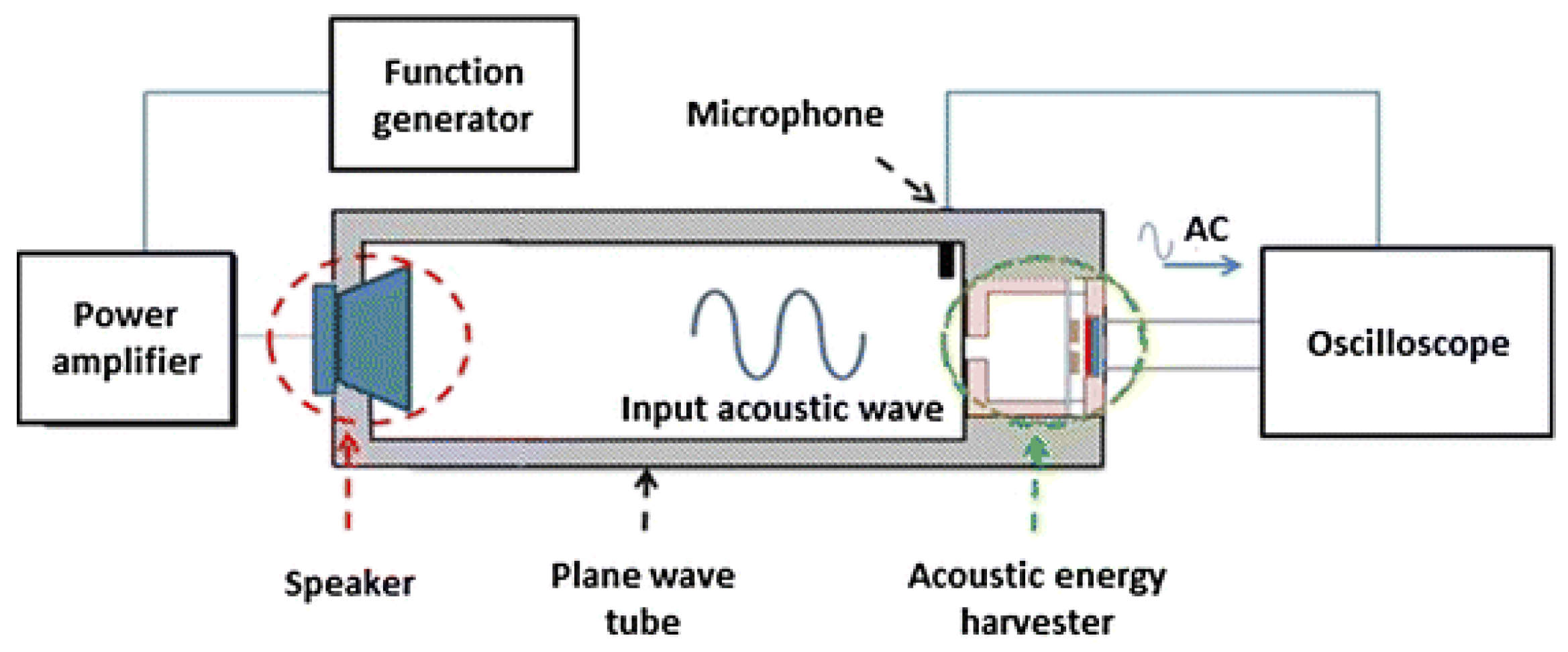
The experimental setup showing the working principle of mechanical acoustic energy harvesting systems is shown in
Figure 5.
3.4. Kinetic Energy in Air Turbulence
Travelling vehicles are exposed to air resistance. When the vehicle travels at high speed on a highway, its shape causes the air in front of it to split around the sides and top of the vehicle. This leads to the generation of air turbulence—low-speed winds.
Kinetic energy from high-speed winds is harvested with the horizontal-axis wind turbines. However, they are unsuitable for this application because of their large size and because the speed of generated wind is too low for their operation [
55,
56,
57,
58].
The kinetic energy in low-speed winds can be harvested with the use of vertical-axis small-scale wind turbines or triboelectric nanogenerators.
Small-scale wind turbines are placed along the road; they are typically vertical-axis wind turbines, consisting of two parts. The body of the vertical-axis wind turbine is fixed and contains a coil (a conductor). Wind turbine blades are connected to the outer portion of the vertical-axis wind turbine and rotate freely about the body and contain permanent magnets.
The kinetic energy of low-speed wind generated by vehicle movement causes the turbine blades (the outer part of the wind turbine) to rotate about the body (the inner part of the wind turbine). This rotation causes a changing magnetic field around the fixed coil, which leads to energy generation. It is the same principle as with electromagnetic transducers used in speed bumps; the main difference is in the mechanical execution of the transducer.
Triboelectric nanogenerators used to harvest kinetic energy from low-speed winds comprise three layers of triboelectric materials. The outside layers are made from one type of triboelectric material, and the inner layer is made from another type of triboelectric material [
59,
60].
Small-speed wind causes motion of the middle layer, leading to contact and separation with the outer layers and the generation of electrical energy [
61].
4. Thermoelectric Transducers
4.1. Seebeck and Peltier Effect
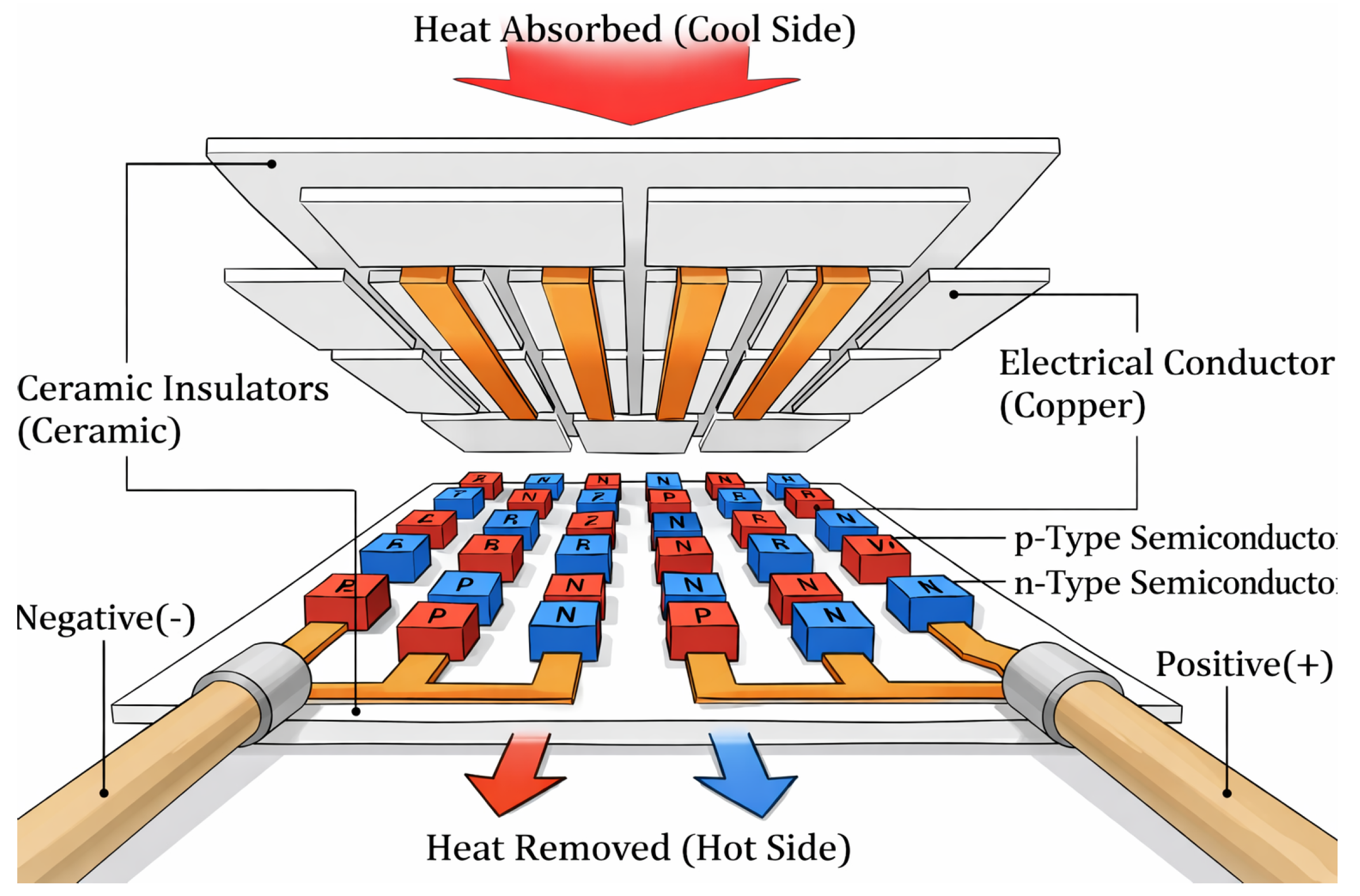
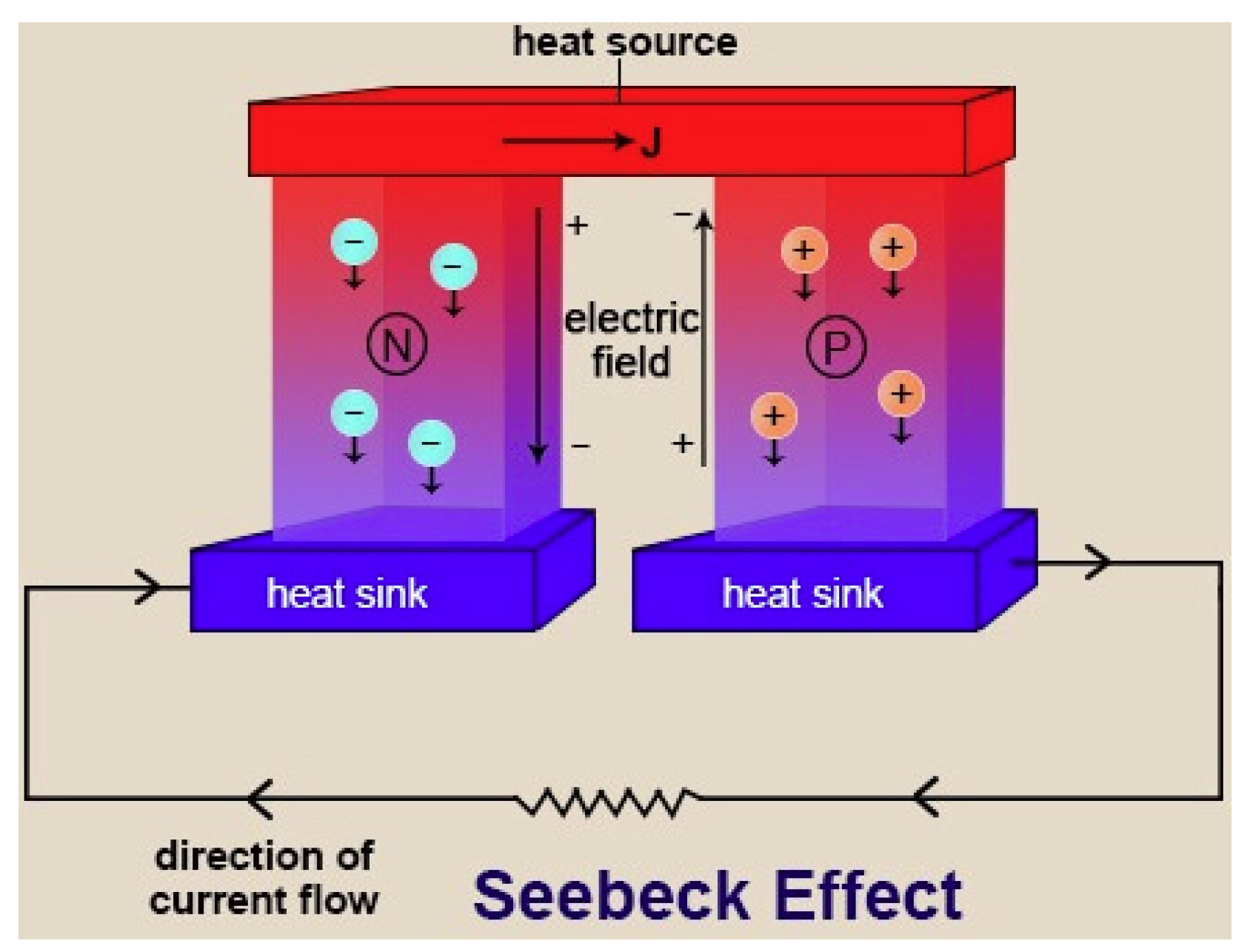
Thermoelectric transducers (concept on
Figure 6) are based on the Seebeck effect discovered by Thomas Johann Seebeck in 1821 [
62,
63].
The Seebeck effect states that when two different conductor or semiconductor materials are joined together at two junctions and exposed to a thermal gradient (a temperature difference between the two sides of the thermoelectric transducers), a potential difference (voltage) is generated across the materials. The polarity of the generated voltage depends on the orientation of the thermal gradient to which the thermoelectric transducer is exposed.
The Seebeck effect is used in temperature sensors (thermocouples) and in thermoelectric energy-harvesting systems (thermoelectric generators (TEGs)). The inverse of the Seebeck effect is the Peltier effect, discovered by Jean Charles Athanase Peltier in 1834.
The Peltier effect states that when electric current flows through two different conductors or semiconductor materials joined together at two junctions, localized heating (emission of thermal energy) and cooling (absorption of thermal energy) occur between the two junctions. The two junctions represent the two sides of the thermoelectric actuator.
This means that heat is absorbed at one junction and released at the other junction. The determination of which junction absorbs heat and which releases heat depends on the direction of current through the thermoelectric actuator—reversing the current reverses the heat flow.
The Peltier effect is employed in thermoelectric coolers (TECs) or Peltier modules for active cooling or heating of objects. One common application of the Peltier effect is in portable mini-fridges that use thermoelectric coolers. When powered by electrical energy, the thermoelectric cooler will start to absorb heat inside the mini-fridge and release it at the other side of the thermoelectric cooler, located outside the mini-fridge. This will help maintain a low temperature inside the mini-fridge.
However, because of the low efficiency of thermoelectric actuators—and also thermoelectric transducers—the thermoelectric coolers are used only in portable mini-fridges. In large-scale refrigeration units, vapor-compression refrigeration systems are used.
4.2. Thermoelectric Transducers—Overview
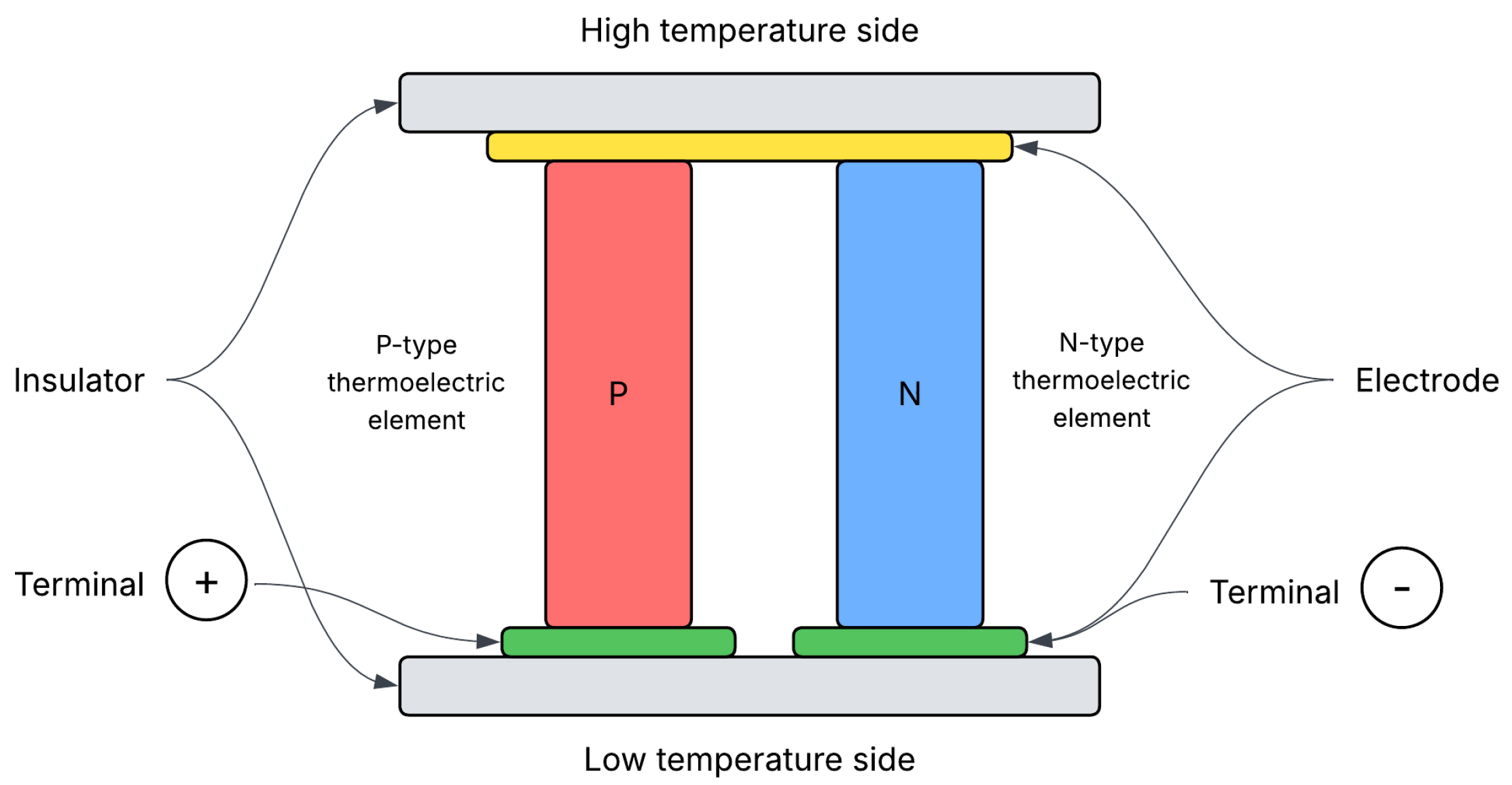
The working principle of the thermoelectric transducer, also called thermoelectric generators (TEG), is shown in
Figure 7 [
65,
66,
67].
The junctions exposed to the heat source are called the ’hot side’, and the junctions located near the heat sink are called the ‘cold side’.
The magnitude of the voltage generated
V by the thermoelectric transducer can be calculated based on the Formula (
1).
In this formula , also denoted as or , is the temperature at the hot side, , also denoted as or is the temperature at the cold side, the units of temperatures are degrees Kelvin (K). S in some literature also denoted as is the Seebeck coefficient whose value depends on the two materials—often denoted as thermoelectric material—from which the Seebeck transducer is made. The units of S are volts per kelvin ().
The total electrical power
P generated by the thermoelectric transducer can be calculated based on the Formula (
2).
In this formula, V is the magnitude of the generated voltage expressed in volts; is the resistance of the external circuit connected to the output of the thermoelectric transducer; is the internal resistance of the thermoelectric transducer modelled as a voltage source; resistor is connected in series with the output of the thermoelectric transducer; represents the overall resistance of the circuit. Units of resistance are Ohms ().
Formula (
2) implies that the output power of the thermoelectric transducer can be increased by the following:
Increasing the thermal gradient to which the thermoelectric transducer is exposed;
Increasing the Seebeck coefficient S, which depends on the material from which the thermoelectric transducer is manufactured;
Decreasing the overall resistance R.
However, decreasing the overall resistance
R causes problems with the voltage losses, which occur when the electric current flows through the resistor. The internal resistance of the thermoelectric transducer
is considered constant; therefore, the only way to decrease the overall resistance
R is by decreasing the external resistance
. The resistors
and
are connected in series, and they form a voltage divider. The higher the internal resistance
compared to the external circuit resistance
, the higher the voltage loss calculated based on the Formula (
3) will occur on the internal resistance.
This leads to a decrease in voltage efficiency
of the thermoelectric transducer, which can be calculated based on the Formula (
4).
The electrical power supplied to the external circuit can be calculated based on the Formula (
5).
Based on the maximum power transfer theorem, we can say that the thermoelectric transducer achieves maximal output power
, calculated based on the Formula (
6), when the resistance of the external circuit is equal to the internal resistance of the thermoelectric transducer (
).
The disadvantage of using equal resistors (
) is that the output voltage of the thermoelectric transducer will be equal to half of the open-circuit voltage of the thermoelectric transducer (this means that the voltage efficiency will be 50%), because the voltage divider with equal resistors has the output voltage equal to half of the input voltage. To achieve high output voltage (i.e., decrease the voltage loss on internal resistance), it is recommended that the external circuit resistance
be at least 100 times higher than the internal resistance
of the thermoelectric transducer (
). Even though this ratio of resistances increases the output voltage, at the same time, it decreases the output power of the thermoelectric transducer, because it deviates from the optimal ratio
. The next problem is that the Seebeck coefficient
S is in reality not constant; instead, it changes with the temperature
T of the thermoelectric material, whose properties, such as carrier concentration, band structure, or scattering mechanisms, are temperature-dependent. This is mathematically denoted as
. If the temperature gradient denoted as
is small, the approximation can be made, and the Seebeck coefficient is, during the calculations, considered constant. However, if the temperature gradient is large, the temperature dependence of the Seebeck coefficient must be accounted for; otherwise, the numerical error in the calculations will be too large. Therefore, the average Seebeck coefficient
across the temperature gradient range calculated in the Equation (
7) must be used during the subsequent voltage calculations.
The most commonly used thermoelectric material is bismuth telluride
. It is used in thermoelectric transducers based on the Seebeck effect and thermoelectric actuators based on the Peltier effect. However, the pure bismuth telluride
doesn’t have a high enough concentration of the charge carrier for its effective use in thermoelectric transducers. Because of this, its doped semiconductor form with enhanced thermoelectric properties is used in thermoelectric transducers. A semiconductor is a material whose electrical properties—mainly conductivity—are somewhere between those of a conductor and an insulator [
69]. The semiconductor can be created from the base material—in this case, bismuth telluride—by the process of doping, during which extra charge carriers—small amounts of other chemical elements—are incorporated into the base material.
There are two types of semiconductors:
n-type semiconductors—the base material is doped with chemical elements such as selenium or iodine, which introduces free electrons (negative charge carriers) into the semiconductor,
p-type semiconductors—the base material is doped with chemical elements such as calcium or sodium, which introduces holes (positive charge carriers) into the semiconductor.
The n-type and p-type semiconductors in the thermoelectric transducers are shown in
Figure 8.
Thanks to this connection of the p-type and n-type semiconductors of bismuth telluride, the thermoelectric transducer achieves the following:
High Seebeck coefficient—the thermoelectric transducer can generate a larger voltage even from a smaller thermal gradient.
Low thermal conductivity, denoted as —the heating of the cold side by the hot side is severely limited.
Good electrical conductivity, denoted as —the internal resistance of the thermoelectric transducer is low, which leads to higher currents and smaller voltage losses.
Common thermoelectric materials are as follows:
Bismuth telluride ()—used in ordinary thermoelectric transducers and actuators. It performs best in low-temperature applications in which it is operated in the temperature range of 0 °C to 250 °C.
Lead telluride ()—used in applications with high thermal gradients. It performs best in mid-temperature applications, in which it is operated in the temperature range of 400 °C to 600 °C.
Silicon-germanium alloys ()—used in aerospace applications (space missions). It performs best in high-temperature applications, in which it is operated in the temperature range of 700 °C to 1000 °C.
Skutterudites ( or ), clathrates, and half-Heusler compounds ( or )—currently in the research phase and not widely used in commercially produced thermoelectric transducers.
During the determination of the thermoelectric material’s conversion efficiency, the dimensionless figure of merit denoted as ZT is used. Its calculation is shown in Equation (
8).
The parameters in this formula are as follows:
S—Seebeck coefficient ();
—electrical conductivity ();
T—local absolute temperature (K);
—thermal conductivity ().
Thermoelectric materials with high conversion efficiency must exhibit low thermal conductivity, high Seebeck coefficient, and high electrical conductivity. However, the intrinsic relationship between the thermoelectric materials’ electrical and thermal conductivities makes it difficult to achieve high conversion efficiency in practice, because increasing electrical conductivity also increases thermal conductivity. If the thermoelectric material is operated outside of its operating temperature range, then its temperature-dependent properties—Seebeck coefficient, thermal conductivity, and electrical conductivity—will deviate from optimal values, and its figure of merit and conversion efficiency will decrease. The thermoelectric materials require a thermal gradient for their operation; therefore, the local absolute temperature
T will be different on the two sides of the thermoelectric material. During the evaluation of the thermoelectric material’s conversion efficiency under the expected thermal gradient, an approximation is made, and the average figure of merit is calculated as shown in Equation (
9).
The calculation of the average parameter values in the Equation (
9) is explained for
in the Equation (
10). The other average parameter values are calculated in the same way.
is the absolute temperature at the hot side of the thermoelectric material, and is the absolute temperature at the cold side of the thermoelectric material.
Thermoelectric materials with higher average figures of merit have higher conversion efficiencies. Pairs of n-type and p-type semiconductor materials—often called semiconductor legs, thermoelectric legs, or thermoelectric couples—are called thermocouples. The flat-plate thermoelectric module, which, in energy-harvesting systems, represents a thermoelectric transducer, is formed by a series electrical connection of multiple thermocouples. This increases the output voltage because each thermocouple acts as a voltage source. The separate thermocouples must also be thermally connected in parallel so that all thermocouples share the same temperature gradient. The thermocouples in the thermoelectric module are interconnected to a conductive metal—usually copper—and they form a zigzag path through the module. The thermocouples are in thermoelectric modules placed between two ceramic plates, which act as mechanical support and electrical insulation. The internal connection of the flat-plate thermoelectric module is shown in
Figure 6.
The conventional thermoelectric transducers have a conversion efficiency between
and
. This means that they can convert
to
of the heat energy flowing across the temperature gradient into electrical energy. However, there have been recent advancements, and under laboratory conditions, the new generation of thermoelectric transducers has achieved conversion efficiency reaching
[
71]. In commercially available thermoelectric transducers, the two semiconductor materials are soldered together at their junctions, which leads to thermal losses and decreased conversion efficiency.
The newly designed thermoelectric materials use different production methods, and the semiconductor materials are joined at the molecular level via techniques such as diffusion bonding or epitaxial growth, which reduces thermal losses and increases conversion efficiency. This new generation of thermoelectric transducers is not yet commercially available. However, their use in a thermoelectric energy-harvesting system could significantly increase the total energy output compared to that of commercially available thermoelectric transducers.
The disadvantage of the new generation of thermoelectric transducers is their increased cost, caused by a more complicated manufacturing process and just a to increase in conversion efficiency compared with the previous generation. As a consequence, their integration into the existing thermal energy harvesting systems is currently not economically viable.
4.3. Longitudinal and Transverse Thermoelectric Harvesters
Thermoelectric energy harvesters can be divided into two basic groups: longitudinal and transverse.
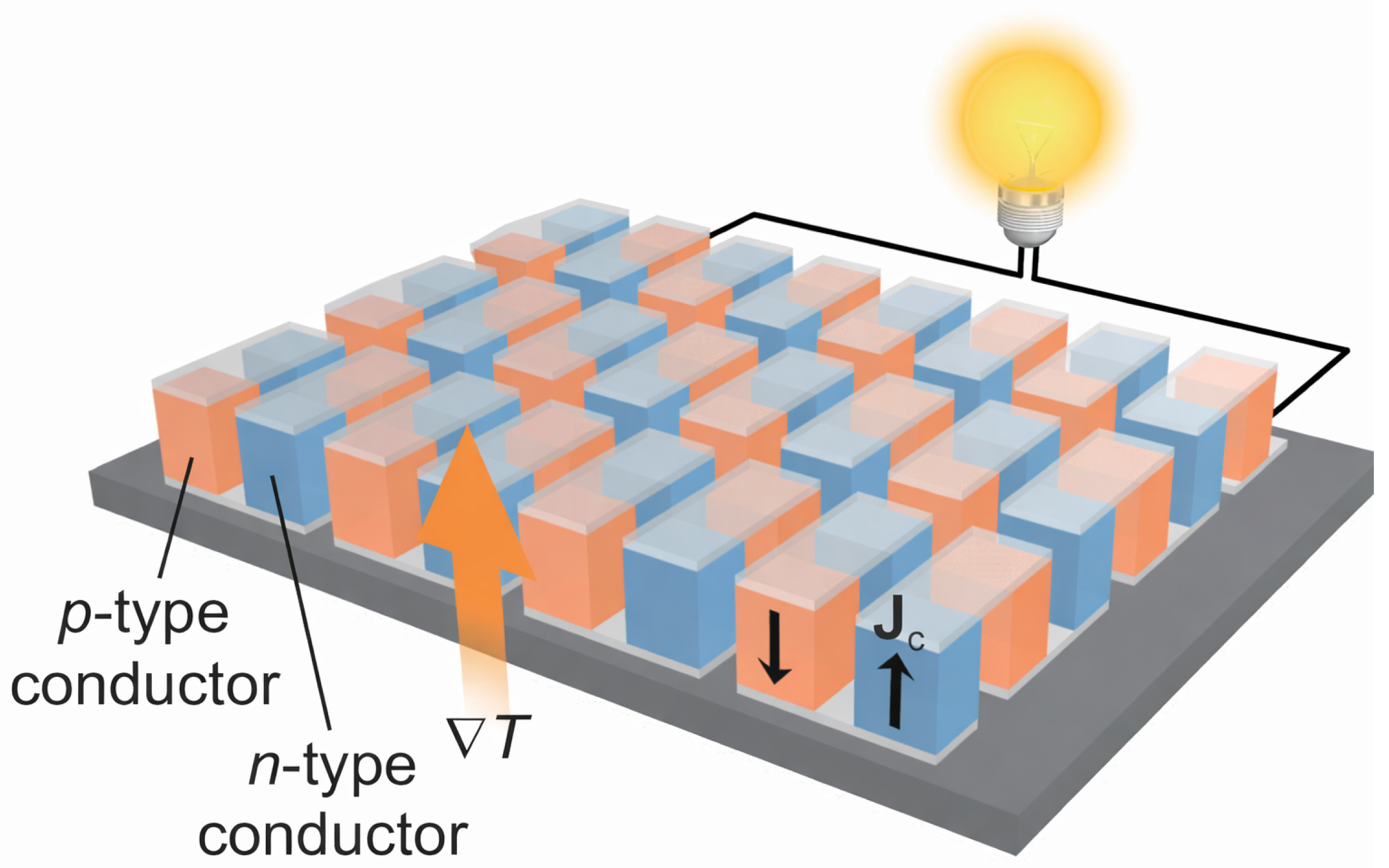
With the longitudinal geometry (whose example is the flat-plate thermoelectric module), the thermal flow (thermal gradient) denoted as
and the electric current denoted as
occur in the same direction as shown in
Figure 9.
In the previous section, we defined the term conversion efficiency of the thermoelectric material. Efficiency increases with the Seebeck coefficient and electrical conductivity, and decreases with thermal conductivity.
The conversion efficiency of commercially available thermoelectric transducers is between 5% and 10%.
Over the last decades, there has been extensive progress in the development of new thermoelectric materials, which under laboratory conditions achieve high conversion efficiency.
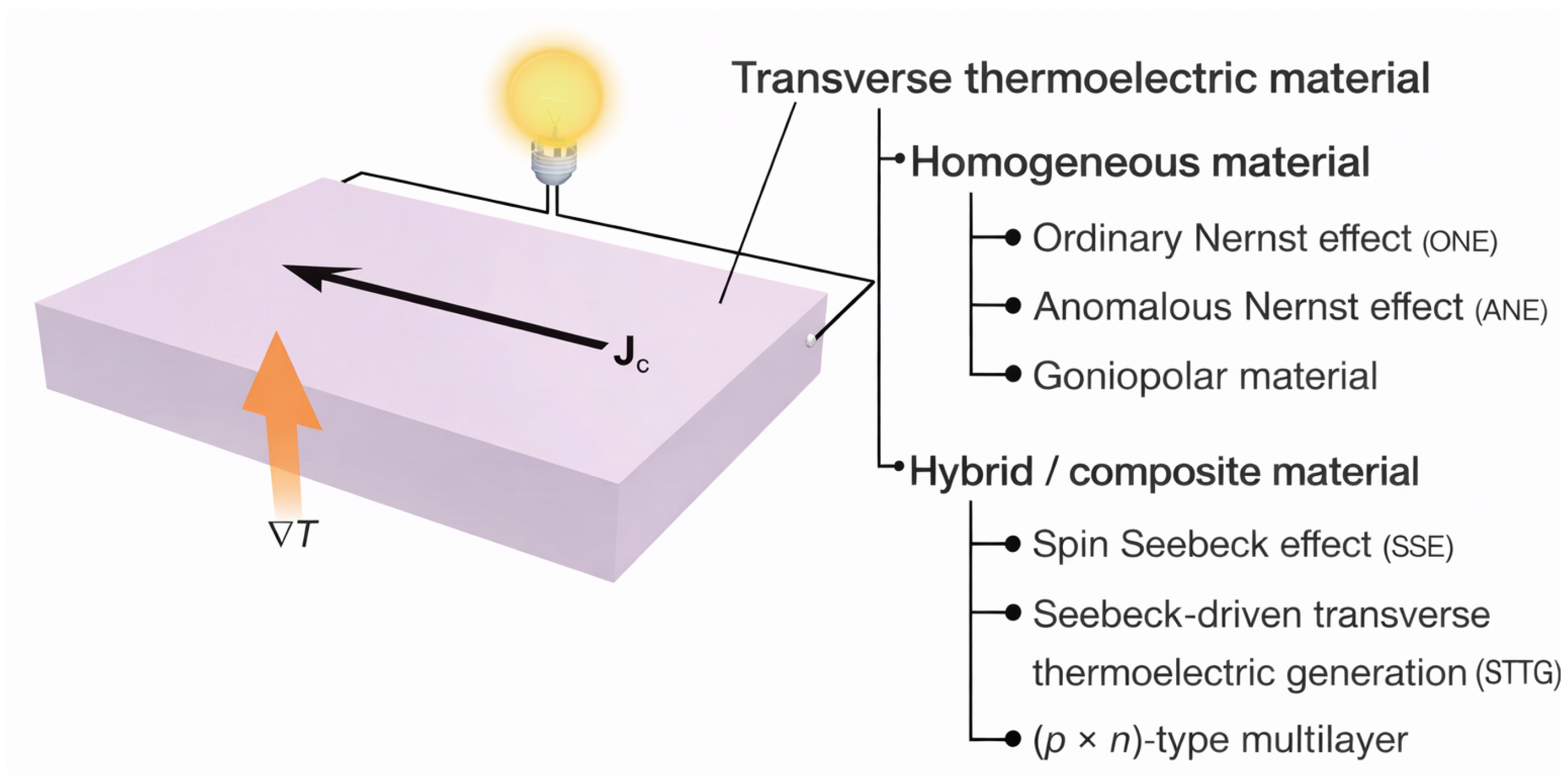
The problem with the low conversion efficiency of the longitudinal thermoelectric transducers is associated with their practical implementation. The separate thermocouples act as voltage sources with low output voltage (typically in the millivolt range) and high internal resistance, which limits the output current. The thermoelectric module consists of a series connection of multiple thermocouples (voltage sources with low output power), which increases the module’s output voltage. With the commercially available modules, the thermocouples are connected together with the soldering process. This connection process, however, causes thermal losses, thermal degradation of the contacts on the hot side of the transducer, and an increase in the thermal conductivity of connections. All of these factors cause a decrease in the overall conversion efficiency of the longitudinal thermoelectric transducers. The problems are therefore not the thermoelectric materials themselves but the interconnection technology used. Transversal thermoelectric transducers remove this problem with the connection of materials, because the electrical current, denoted as
, is generated perpendicularly (at 90 °) to the thermal flow (thermal gradient), denoted as
, as shown in
Figure 10 [
72,
73].
They usually operate on the principle of the transversal Seebeck effect or the anomalous Nernst effect.
The transversal thermoelectric transducers consist of transversal material, and the generated current (which affects the power) depends on the area of the transducer that is exposed to the thermal gradient. And the generated voltage depends on the properties and geometry of the transversal material. Since only a single transversal material is used instead of the interconnection of individual thermocouples, the conversion efficiency of the thermoelectric transducer is improved because the interconnection losses are no longer present. However, the transversal material limitations and low output voltage can still lead to a smaller overall conversion efficiency.
The transversal materials are usually in the form of strongly anisotropic materials (often in the form of metamaterials), such as organic semiconductors, magnetic semiconductors, Heusler alloys, or stacked oxides. The main problem associated with the commercial use of transversal thermoelectric transducers is the complicated manufacturing process, which requires special materials that significantly increase the price. As a consequence, the transversal thermoelectric transducers are primarily used in experimental applications (such as wearable electronics, spintronics, or flexible surfaces). Another disadvantage is the lower output voltage compared to that of the longitudinal thermoelectric transducers.
4.4. Thermoelectric Module Architectures
There are four basic architectures (flat-plate, cascade-stacked, thin-film, and ring) used in the thermoelectric module design. Furthermore, four advanced architectures (flexible and stretchable, 3D-printed, high-temperature, and hybrid) are used in thermoelectric module design. The basic architecture refers to the conventional design of the thermoelectric modules used in commercial applications. The advanced architecture refers to designs that incorporate advanced or novel manufacturing methods and geometries, or that combine different energy harvesting technologies.
The architectures differ in thermal and electrical performance, thermoelectric material choice, form factor, and the specific application for which they are best suited. When describing thermoelectric modules, the terms “geometry” and “shape” are used. The geometry of a thermoelectric module refers to the internal structural layout, i.e., the arrangement, number, proportion, and spatial relationship of the thermocouples (thermoelectric transducers) from which the thermoelectric module is composed. The shape of a thermoelectric module refers to the external form factor, i.e., the overall external shape of the thermoelectric module. It determines the applications in which thermoelectric modules can be easily used. Two different thermoelectric modules can have the same shape but different geometries (for example, the arrangement and number of thermocouples), which affect their properties.
4.4.1. Flat-Plate Thermoelectric Modules
Flat-plate thermoelectric modules were described in the previous subsection, which explained how the thermoelectric module is formed from thermoelectric transducers.
They have a rectangular or square shape. Based on their geometry, they are classified as longitudinal thermoelectric modules. The most commonly used thermoelectric material is bismuth telluride (). These modules are used in general-purpose cooling applications and power generation applications. Their advantages include a simple, robust construction and easy implementation on flat surfaces. Their disadvantage is their large size: commercially available flat-plate thermoelectric modules are 2 cm to 5 cm wide and 3 mm to 5 mm thick, making them unsuitable for miniaturized and flexible applications.
4.4.2. Cascade-Stacked Thermoelectric Modules
Cascade-stacked thermoelectric modules consist of multiple stages of thermoelectric flat-plate modules stacked vertically; each stage is optimized for a different temperature gradient and uses different thermoelectric materials [
74,
75]. They have a rectangular or square shape. They are similar in width to the flat-plate thermoelectric modules; however, their thickness is increased by the multiple stacked stages, ranging from 5 mm to 10 mm depending on the number of stages in the thermoelectric module. Based on their geometry, they are usually classified as longitudinal thermoelectric modules; however, a specialized version that functions as a transverse thermoelectric module also exists, though it is less common.
The cascade-stacked thermoelectric module stages can be divided into three categories:
The high-temperature stage represents the hot side of the thermoelectric module. The most commonly used thermoelectric materials are lead telluride (), silicon-germanium alloys (), and calcium manganese oxide (), which have an operating temperature range of 300 °C to 800 °C.
The mid-temperature stage bridges the temperature gap between the outside stages. The most commonly used thermoelectric materials are the skutterudites ( or ) and half-Heusler alloys ( or ), which have an operating temperature range of 200 °C to 500 °C.
The low-temperature stage represents the cold side of the thermoelectric module. The most commonly used thermoelectric material is bismuth telluride (), which has an operating temperature range of 0 °C to 250 °C.
Between these three stages are the ceramic insulators and thermal interface materials, which ensure efficient heat transfer between the stages and maintain the mechanical integrity of the thermoelectric module. These modules are used in high-performance cooling applications and power generation applications such as industrial heat recovery, spacecraft power systems, and precision cooling in optoelectronics. Their advantages are high conversion efficiency over a wide temperature gradient and the ability to use high hot-side temperatures and low cold-side temperatures, enabled by the combination of different thermoelectric materials, thereby reducing thermal-mismatch stress between the stages. Their disadvantages are increased thermal resistance between layers and a more complex design, both of which contribute to their higher price.
4.4.3. Thin-Film Thermoelectric Modules
Thin-film thermoelectric modules use ultra-thin thermoelectric layers with a thickness in the range of tens of micrometers to a few hundred micrometers deposited on flexible (polyimide or PET) or rigid (glass or silicon) substrate layers [
76,
77]. They have a flat and ultra-thin rectangular or strip-like shape, which allows them to be bent, wrapped, or curved around surfaces such as electronics, skin, or pipes. The geometry comprises a layered architecture that alternates between thin-film p-type and n-type thermoelectric materials. Based on the design, they can be divided into in-plane (heat and current flow parallel to the surface) and cross-plane (heat and current flow perpendicular to the surface) thin-film thermoelectric modules. Thermoelectric materials must allow flexibility in the thermoelectric module, and bismuth telluride (
), organic polymers, and nanocomposites are commonly used. In the high-temperature or rigid thin-film thermoelectric modules, the lead telluride (
) can also be used.
However, careful selection of thermoelectric materials is required to ensure thermal stability and mechanical compatibility between the ultra-thin thermoelectric layer and the substrate. Flexible designs are used in wearable electronics and biomedical devices, such as patches. Rigid designs are used in micro-electro-mechanical systems (MEMS), self-powered sensors, and on-chip cooling technologies. Their advantages include compatibility with curved or flexible surfaces and low weight. Their disadvantages are lower efficiency, which leads to reduced power output per unit area, and increased fabrication complexity (sputtering, thermal evaporation, or chemical vapor deposition followed by photolithographic patterning), which raises their cost.
4.4.4. Ring Thermoelectric Modules
Ring thermoelectric modules are used in radial heat flow applications in which flat-plate thermoelectric modules are difficult to integrate [
78]. They have a cylindrical or tubular shape that often resembles a stacked-ring assembly or a hollow cylinder. Based on their geometry, they are classified as longitudinal thermoelectric modules. However, there exist experimental ring designs that are capable of operating as transverse thermoelectric modules. They use thermoelectric materials that can withstand the required mechanical shaping, such as lead telluride (
), bismuth telluride (
), skutterudites (
or
), or half-Heusler alloys (
or
).
These modules are used to generate waste heat in applications with radial heat-flow sources, such as industrial pipes, automotive exhausts, or cylindrical batteries wrapped around them. Their advantages include ease of application to round surfaces and the ability to harvest waste heat from cylindrical or tubular-shaped surfaces. Their disadvantage is their higher cost, as they are primarily used in specialized applications where their dimensions are determined by the specific diameter and shape of the surface. As a consequence, they require custom fabrication processes such as mechanical shaping, sintering, or additive manufacturing, which conform to a specific cylindrical shape.
4.4.5. Flexible and Stretchable Thermoelectric Modules
Flexible and stretchable thermoelectric modules are manufactured using spray-coating, printing, or embedded patterning methods, in which a layer of thermoelectric material is deposited on the base material. These thermoelectric modules can mechanically adapt to irregular or dynamically changing surfaces such as skin, soft robotics, or textiles [
79]. They have a lightweight, thin, and conformal shape, which often resembles a rectangular, patch-like, or ribbon-like structure. The geometry consists of serpentine interconnections, island-bridge architecture, and origami/kirigami-inspired structures. They use thermoelectric materials that are naturally flexible or engineered flexible composites, such as organic semiconductors, bismuth telluride (
), nanocomposites, or 2D materials.
These modules are used in biomedical patches, self-powered wearable electronics, skin-mounted (wearable) health sensors, soft robotics, and body heat harvesting systems. Their advantages include a lightweight, breathable construction and the ability to adapt to curved or moving surfaces. Their disadvantages include lower power density and limited mechanical durability under repeated deformation or strain of the thermoelectric module.
4.4.6. Three-Dimensional-Printed Thermoelectric Modules
Three-dimensional-printed thermoelectric modules represent the cutting edge of thermoelectric energy harvesting systems. The use of 3D printers and technologies such as direct ink writing (DIW), aerosol jet printing, or fused deposition modeling (FDM) allows the manufacture of thermoelectric modules with complex geometries, such as hourglass design or porous architecture, which offer optimized performance and custom shapes based on the specific application in which the thermoelectric modules are used [
80]. They use conventional and emerging thermoelectric materials, usually in the form of paste or ink. The common thermoelectric materials are bismuth telluride (
), lead telluride (
), skutterudites (
or
), half-Heusler alloys (
or
), nanocomposites, and 2D inks.
The electrical interconnection between the separate thermocouples is achieved using specialized conductive inks or metal layers printed in separate production steps. These custom-fit modules are used in embedded systems with irregular surfaces, in rapid prototyping of devices that use thermoelectric energy harvesting systems, and in integrated cooling channels within electronic circuits. Their advantage is the ability to create thermoelectric modules of arbitrary shape, enabled by application-tailored thermal pathways. Their disadvantages include material compatibility issues and limited resolution due to the limits of 3D printing technology.
4.4.7. High-Temperature Thermoelectric Modules
High-temperature thermoelectric modules are capable of operation in environments with extremely high temperatures reaching up to 1000 °C [
81,
82]. They are usually manufactured as cuboid-shaped blocks. In specialized applications, they can be in the form of cylindrical or ring-shaped modules. To achieve stable operation in high-temperature environments, thermoelectric materials, such as lead telluride (
), silicon-germanium alloys (
), skutterudites (
or
), half-Heusler alloys (
or
), oxide ceramics, or zintl phases, must be used.
These modules are used in aerospace, industrial furnaces, and automotive exhaust systems for waste-heat recovery. Their advantage is a high operating temperature range of 400 °C to 1000 °C. Their disadvantage is lower efficiency outside of the operating temperature range, thermal expansion mismatch, problems with the toxicity of lead telluride (), and high cost.
4.4.8. Hybrid Modules
The hybrid modules can maximize the electrical energy generated by combining a thermoelectric transducer with other energy-harvesting systems. They are most commonly implemented as hybrid thermoelectric-photovoltaic modules (TE-PV), which combine a photovoltaic layer that harvests solar energy with a thermoelectric layer that recovers waste heat [
83,
84]. The hybrid thermoelectric-photovoltaic modules have a flat, layered structure with the photovoltaic layer on top and the thermoelectric layer beneath. The geometry allows the photovoltaic and thermoelectric layers to operate based on different physical principles; however, they thermally interact with each other.
The thermoelectric layer, which uses waste heat from the photovoltaic layer, can lower the operating temperature of the photovoltaic layer, thereby slightly increasing the overall efficiency of the hybrid module. They use thermoelectric materials such as bismuth telluride (), skutterudites ( or ), or half-Heusler alloys ( or ). Hybrid thermoelectric-photovoltaic modules based on organic semiconductors are low-cost and flexible and are currently in development. The disadvantage of hybrid TE-PV modules is lower efficiency than that of conventional silicon photovoltaic panels, which range from to .
In the hybrid module, the efficiency of the photovoltaic layer is
to
, and the efficiency of the thermoelectric layer (efficiency of the waste heat conversion) is
to
. The overall efficiency of the hybrid TE-PV module is
to
. The low efficiency of the thermoelectric layer is caused by the low efficiency of thermal energy transfer between the layers, which depends on the quality of the layer’s contact and its thermal resistance. Hybrid modules can also take the form of thermoelectric-thermionic (TE-TI) modules, which use a thermionic layer to harvest high-temperature thermal energy and a thermoelectric layer to recover waste heat [
85].
The thermionic transducers are based on the principle of thermionic emission. When the thermionic transducer is exposed to high temperatures, typically above 1000 °C, the electrons in the thermionic material gain enough thermal energy to overcome the forces that hold them inside the material and are emitted into the vacuum or low-pressure gaps, where they can be collected by the cooler electrode. This leads to the generation of current. Thermionic transducers have higher efficiency than thermoelectric transducers based on the Seebeck effect; however, they require high operating temperatures for effective operation and are more difficult to manufacture and operate due to the vacuum requirements. In the hybrid thermoelectric-thermionic modules, the thermionic layer is located at the top and is interconnected through the thermoelectric legs to the thermoelectric layer beneath it. They use thermoelectric materials such as lead telluride (), silicon-germanium alloys (), oxide ceramics, or 2D materials. These hybrid modules are often used on spacecraft or in concentrated photovoltaic energy-harvesting systems that use mirrors to focus sunlight onto the module, thereby increasing its temperature. The advantage of hybrid transducers is their ability to harvest energy from multiple sources simultaneously, thereby increasing the total power output of the energy harvesting system. Their disadvantages include a complex manufacturing process, material compatibility issues, thermal expansion mismatch, and the need for advanced thermal management, typically implemented as heat sinks, thermal interface materials, phase change materials, or active cooling systems.
4.5. Thermoelectric Transducer Applications
Thermoelectric transducers are currently used during the collection of waste heat from different industrial processes [
86]. One example is fossil fuel and nuclear power plants. When the heated steam leaves the steam turbine, it must be cooled and returned to the liquid state. This process occurs in the condenser, which acts as a heat exchanger. In the condenser, the thermal energy of the steam leaving the steam turbine is transferred to the cooling fluid (cold water) from the cooling tower. During thermal energy transfer, the cold water heats up, and the steam cools and condenses back into a liquid. The hot water is then brought back to the cooling tower.
In the past, the thermal energy of the heated steam was lost during heat transfer in the condenser. But nowadays, thanks to the thermoelectric transducers placed between the cold surface of the heat sink and the hot surface of the pipes through which the hot steam from the steam turbine and hot water from the condenser flow, power plants can generate a small amount of additional electricity (usually one to tens of watts per single thermoelectric module) from the waste heat. Other applications of thermoelectric transducers in energy harvesting systems include industrial furnaces and space missions.
4.6. Maintaining Constant Thermal Gradient
Thermoelectric transducers require a constant thermal gradient for their operation. The problem is that the hot side of the thermoelectric transducer will start to heat up the cold side. This will lead to a decrease in the thermal gradient and overall energy generation. As a result, active or passive heat sinks—cooling systems—can be used on the cold side of the thermoelectric transducer to maintain a constant thermal gradient. Passive heat sinks are objects that dissipate heat transferred from the hot side to the cold side into the surrounding environment. Passive heat sinks must be constructed from thermally conductive materials, typically water or metals such as copper or aluminum.
Active heat sinks require electrical energy for their operation. They may take the following forms:
Air cooling—electrical fans create airflow, which cools down the cold side.
Water cooling—a heat exchanger placed on the cold side of thermoelectric transducers contains a pump that, in a closed system, circulates the cooling fluid, which cools down the cold side.
The need for electrical energy to operate active heat sinks reduces the efficiency of thermoelectric transducers in energy harvesting systems. The active heat sink consumes electrical energy in order to cool down the cold side of the thermoelectric transducer, whose primary function is to generate electrical energy. To increase the efficiency of the thermoelectric transducer—the amount of generated usable electrical energy—passive coolers are preferred.
However, passive cooling may not be sufficient in high-thermal-gradient applications, where active cooling needs to be utilized. In these situations, it is necessary to perform a complex analysis of the thermal system to determine whether the increased electrical energy generation (i.e., increased generated power) achieved by increasing the thermal gradient can meet the active heat sink’s power consumption.
5. Thermoelectric Transducers in Road Transportation
In road transportation, thermoelectric transducers can be used to harvest electrical energy both inside and outside of the vehicle. Vehicle components such as brakes, engines, and exhaust systems generate heat during operation and can be used to heat the hot side of the thermoelectric transducer. However, the problem with cooling the cold side remains, and a passive heat sink is required.
The thermoelectric energy harvesting system can also be installed outside of the vehicle and they can be divided based on the orientations of the heat transfer and the installation layout into vertical and horizontal systems [
87,
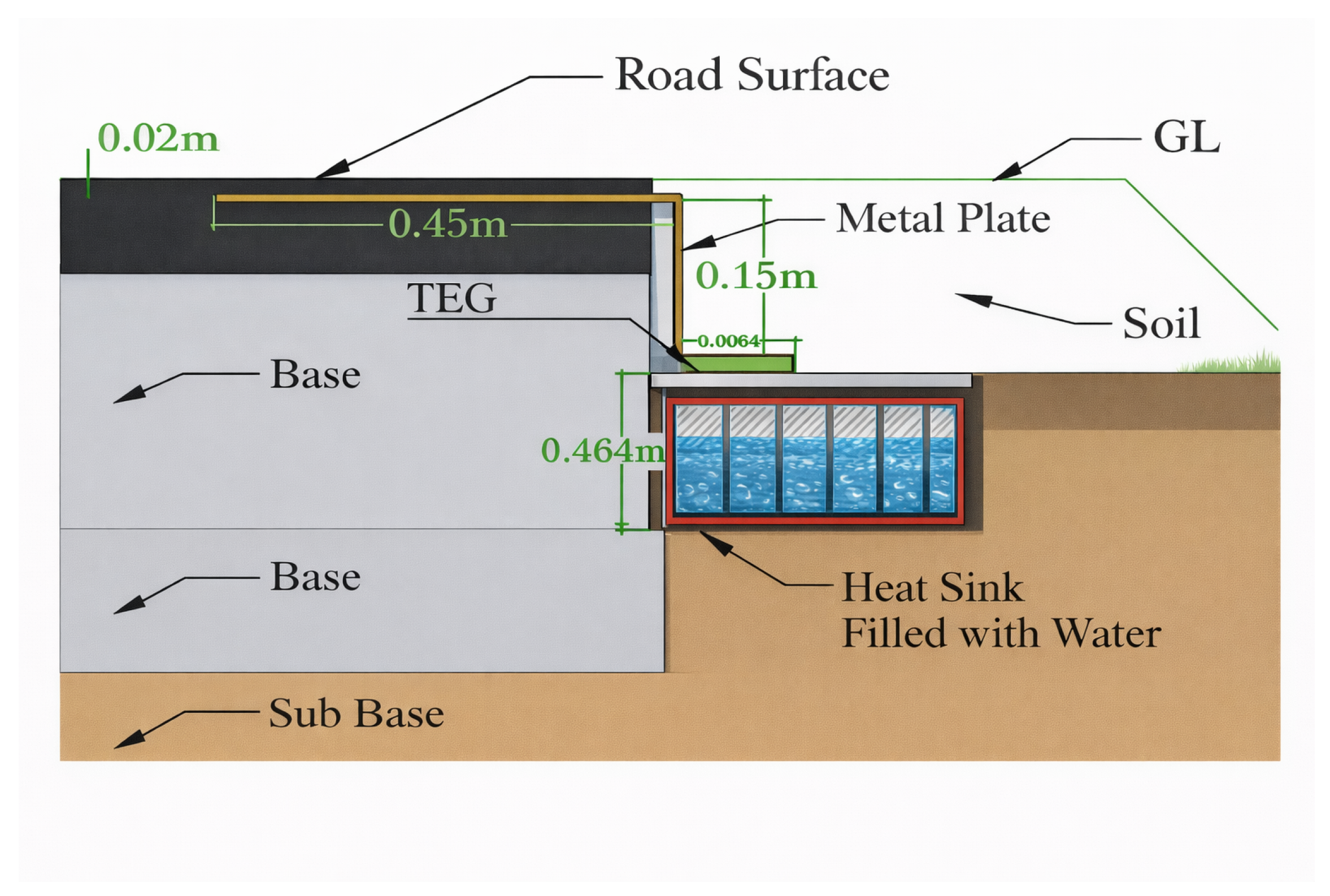
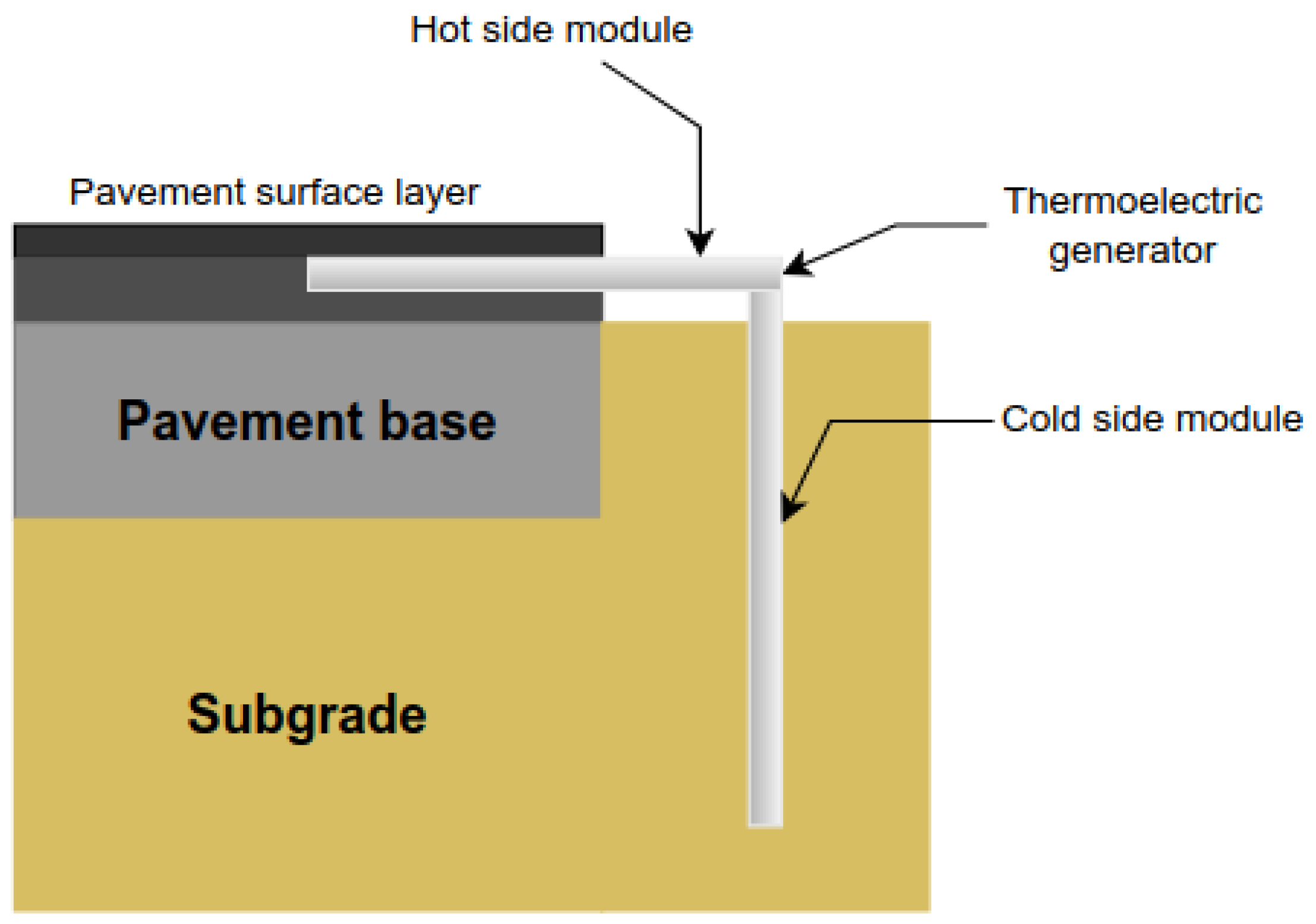
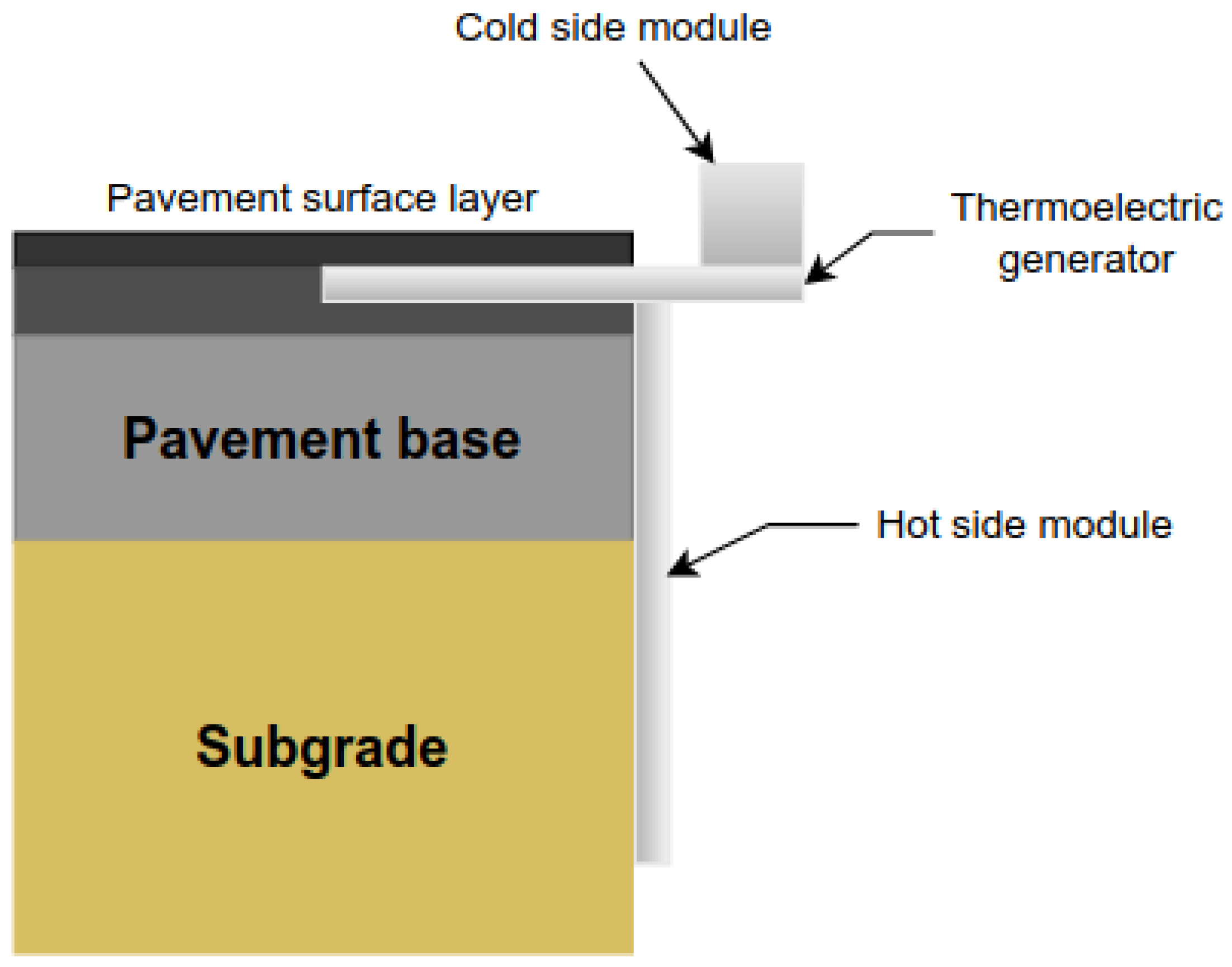
88,
89,
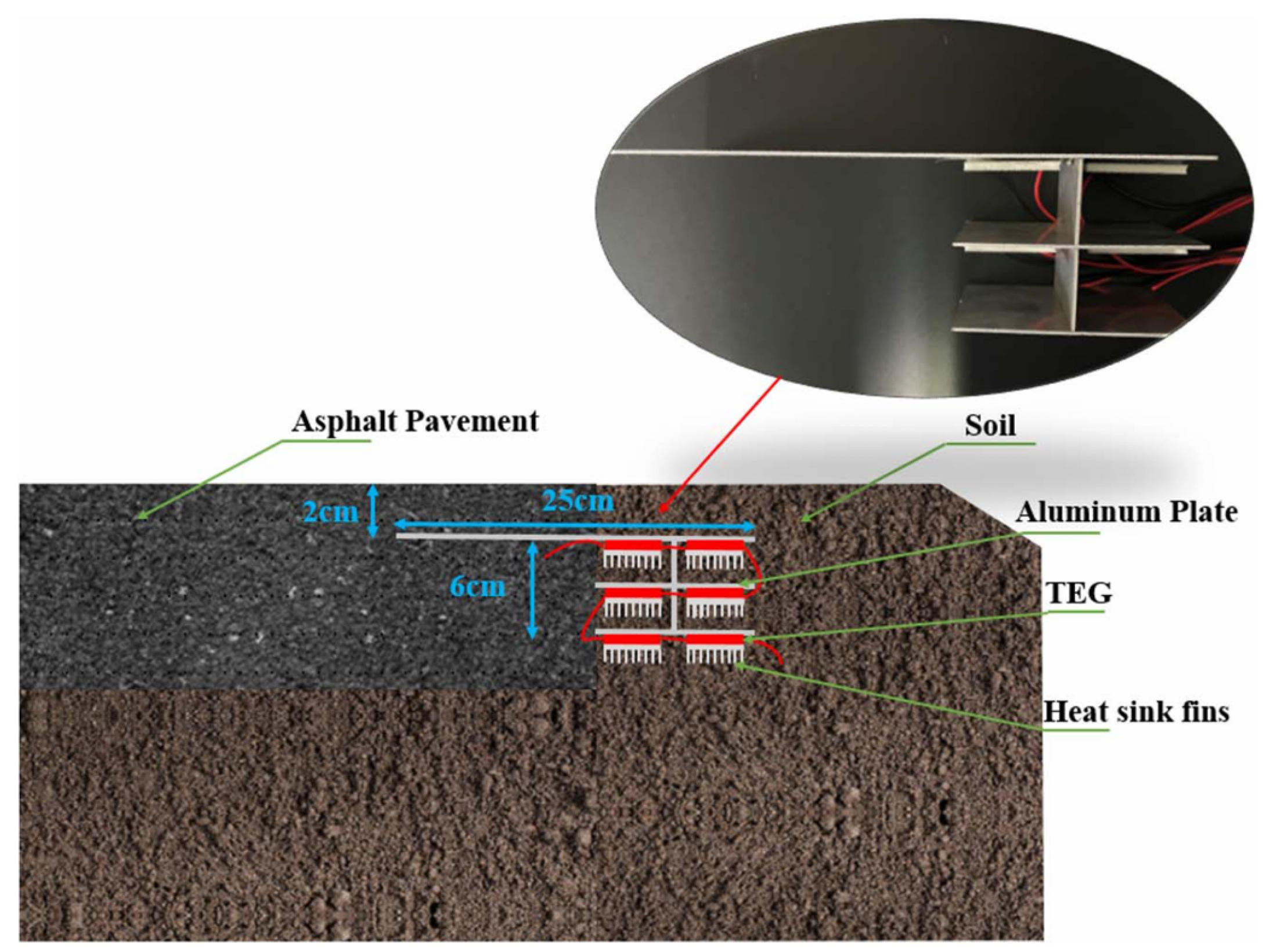
90]. The vertical thermoelectric transducer systems exploit the natural thermal gradient between the road surface and the soil at a given depth.
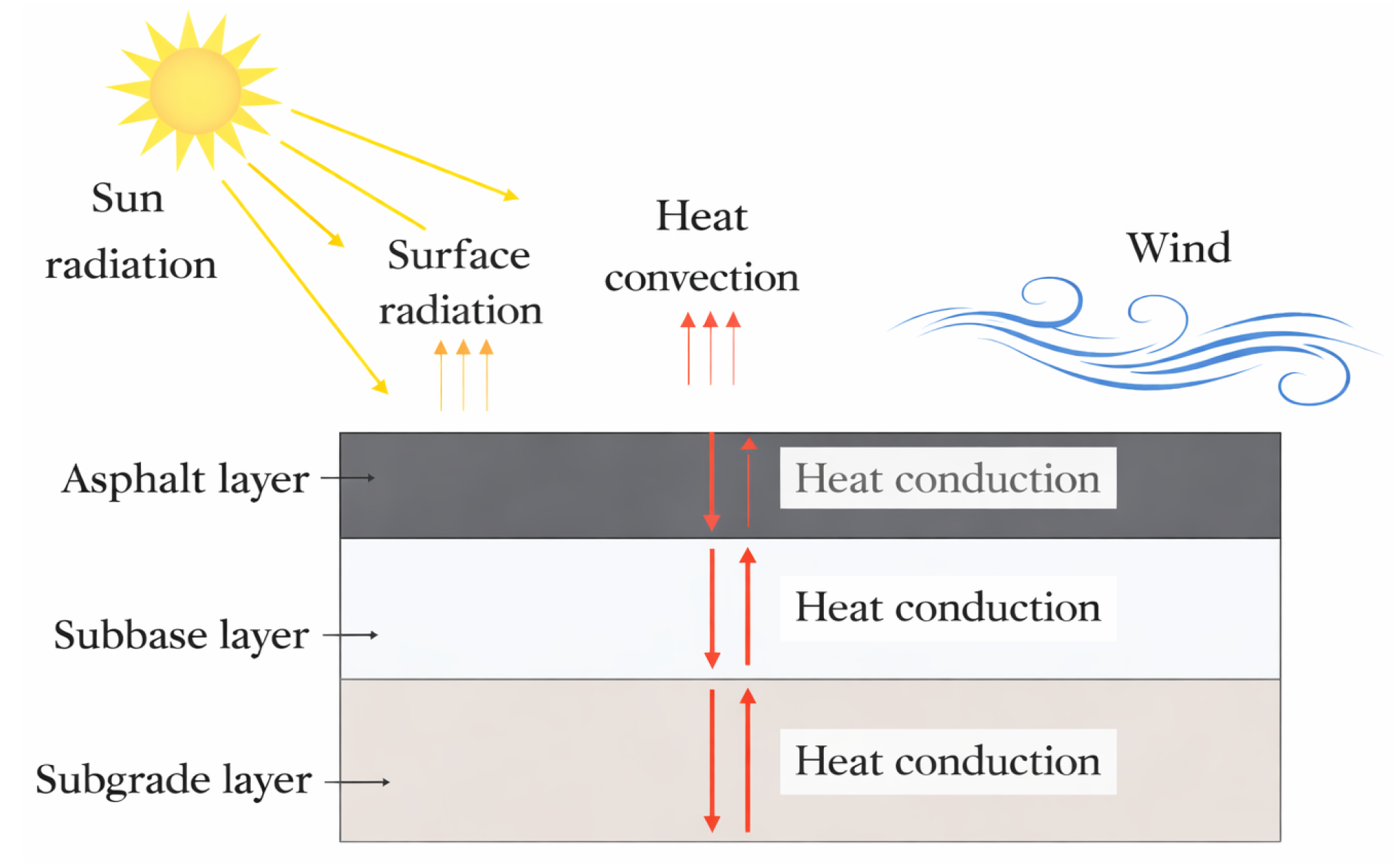
During the summer, the road surface heats up due to solar radiation, and this heat is transferred to the hot side of the thermoelectric transducer. The soil at a certain depth acts as a passive heat sink and is used to cool down the cold side of the thermoelectric transducer. The thermoelectric transducer operates in the summer mode.
During winter, the roles reverse—the cold road surface acts as a passive heat sink, cooling the cold side of the thermoelectric transducers, while the soil at a certain depth acts as a heat source, heating the hot side of the thermoelectric transducers. The thermoelectric transducer operates in the winter mode.
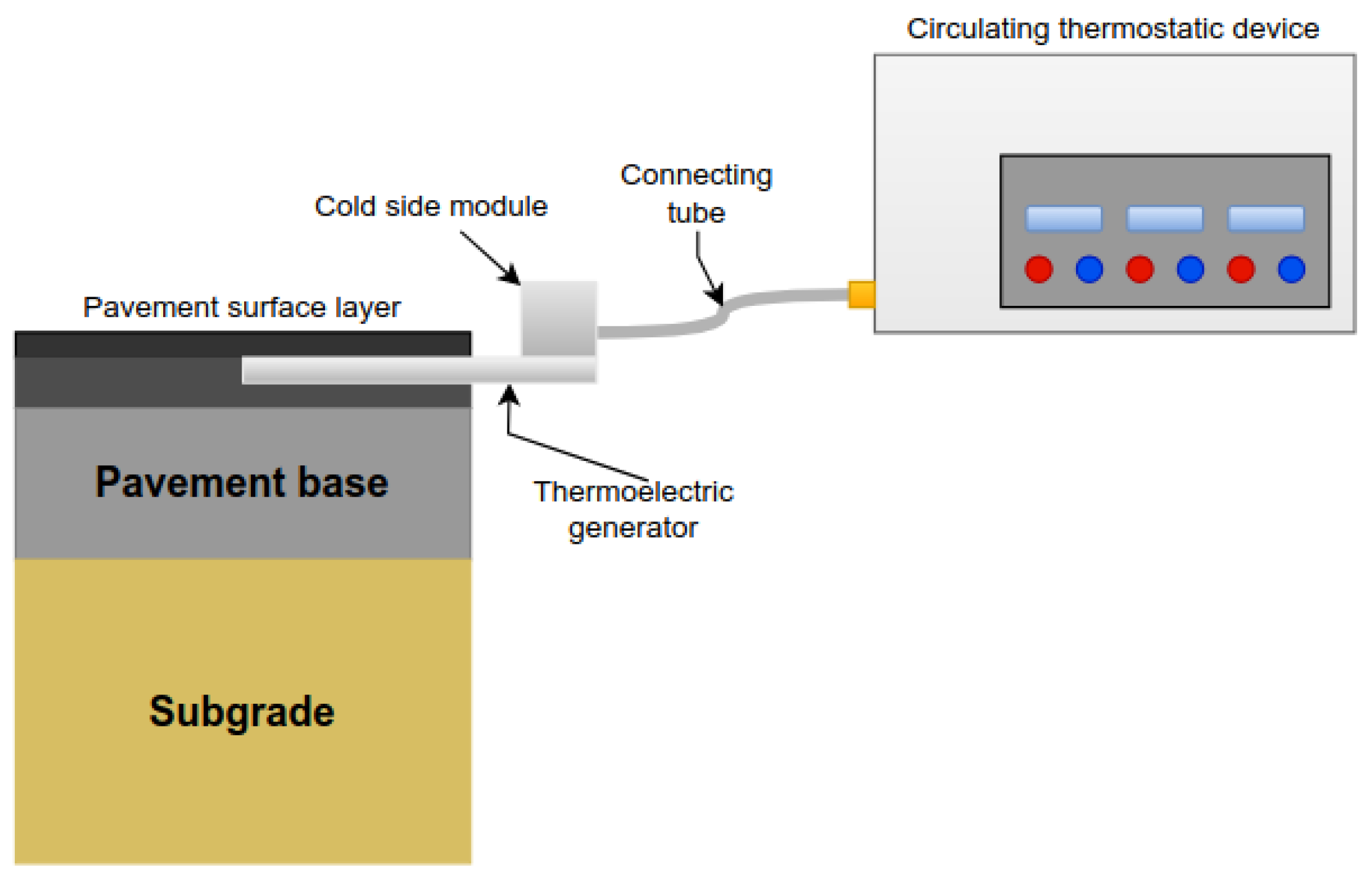
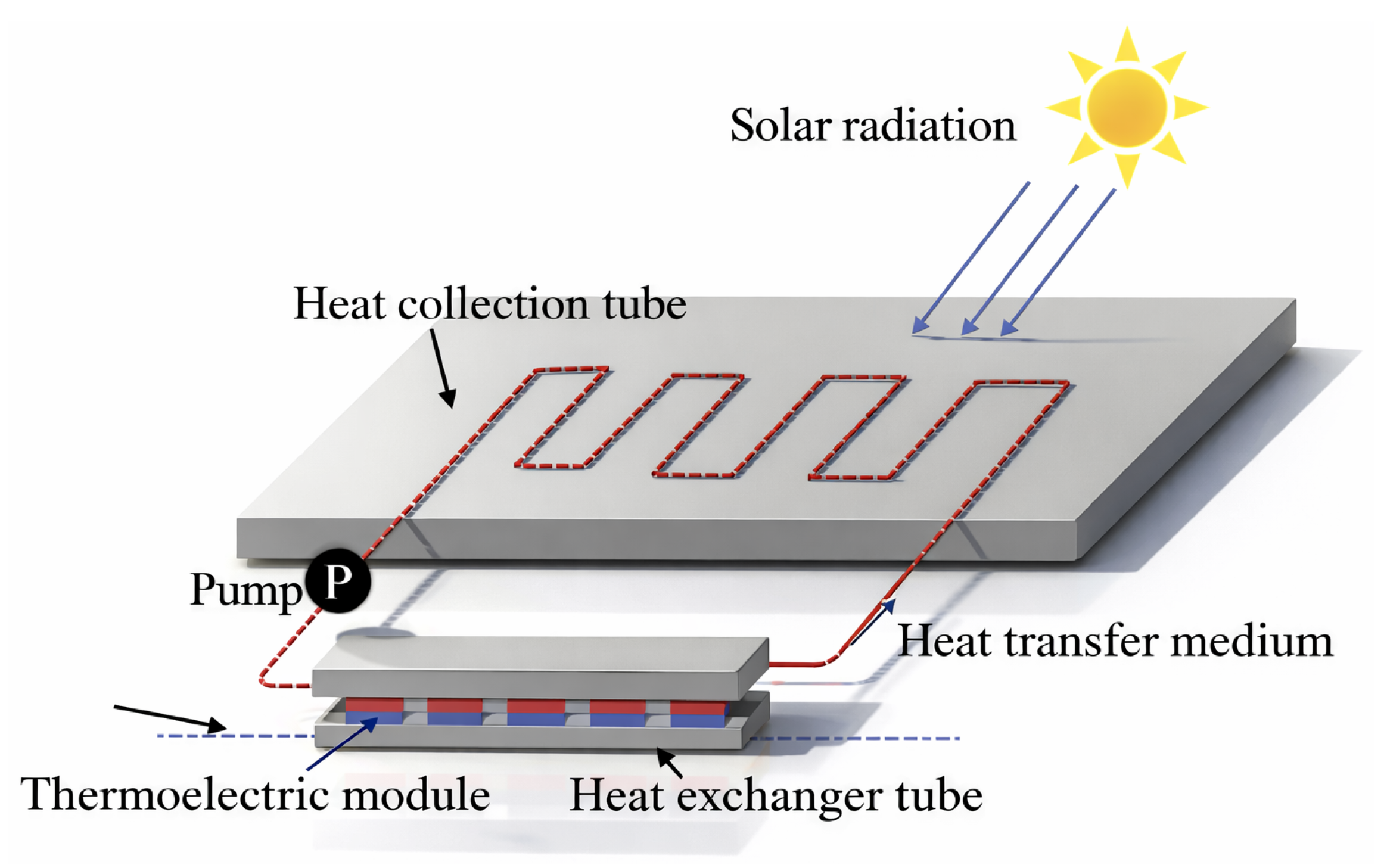
Certain horizontal thermoelectric transducer systems consume electrical energy to operate pumps that circulate the thermally conductive fluid, which can be used to heat the hot side or cool the cold side of the thermoelectric transducer. This reduces the overall thermoelectric system’s efficiency because part of the generated energy—or additional external energy—must be used to power the active heat sink.
During the summer, the road surface heats up because of solar radiation. The road surface layer contains pipes filled with a thermally conductive liquid (water). In some cases, the thermally conductive liquid can be replaced by solid metal rods (for example, steel rods), and thermal energy transfer occurs passively without an active electric pump.
The water in the pipes is pumped through the thermal exchanger next to the hot side of the thermoelectric transducer, located next to the road. The cold side of the thermoelectric transducer can be cooled with passive heat sinks located at the surface or through water cooling, which can be in two forms:
Passive water cooling uses naturally occurring water sources, such as rivers, at the installation site.
Active water cooling uses an electric pump, thermally conductive fluid, and a thermal exchanger.
During winter, the thermally conductive liquid can freeze, leading to the pipes (through which it is transferred in the system) rupturing. Furthermore, the thermal gradient to which the thermoelectric transducer will be exposed is very small (and in some cases even zero), which can lead to a decrease in the generated electrical energy and, in some cases, even to complete cessation of energy generation. This is because both the passive heat sink and the road surface layer are exposed to the same ambient temperature, and the reduced solar radiation is insufficient to heat the road surface layer to a sufficiently high temperature. As a consequence, horizontal thermoelectric transducer systems are more suitable for locations near the equator with mild winters and access to natural water sources that serve as passive heat sinks.
The road thermoelectric generator systems (RTEGS) are the single term used to refer to vertical and horizontal thermoelectric transducer systems. Compared with other types of energy-harvesting systems used outside vehicles, the RTEGS have one important advantage. RTEGS can achieve stable and continuous voltage output. With electromagnetic, piezoelectric, or triboelectric energy harvesting systems, the power output depends on traffic levels because they convert vehicle-induced kinetic energy (mechanical pressure, vibrations, sound waves, or low-speed winds) into electrical energy. On the other hand, the RTEGS generate electrical energy from the thermal gradient to which the thermoelectric transducer is exposed. As long as the thermal gradient can be kept in the operating range of the thermoelectric transducer, electrical energy generation is achieved. Therefore, the RTEGS can be used on any road, independent of traffic level, and in general on any surface with properties similar to those of a road. The amount of electrical energy generated by the RTEGS depends on the thermal gradient to which the thermoelectric transducer is exposed, which changes throughout the year.
The three main factors that affect the thermal gradients—road surface material, geographical locations and the depth at which the soil achieves stable temperature.
Road surface materials are typically asphalt or concrete. These two materials have different thermal properties. Asphalt can absorb and retain thermal energy for longer periods; it has a higher capacity for absorbing and retaining solar radiation than concrete. This is caused by its dark black color and low reflectivity. Concrete absorbs and retains less thermal energy and tends to cool down faster; it has lower solar radiation absorption and retention capacity than asphalt. This is caused by its lighter color and higher reflectivity. Therefore, asphalt can retain the thermal energy absorbed throughout the day for longer periods and extend the operational window in which the thermal gradient is high enough for the thermoelectric transducer to operate properly.
Geographical locations affect the ambient temperature and amount of solar radiation, which heat the road surface. In geographical areas around the equator, such as Brazil, Congo, or Indonesia, the road surface is exposed to high levels of solar radiation throughout the whole year—the solar radiation hits the road surface at high angle, which sometimes reaches even an 90 ° angle—and the ambient temperature is high. In these geographical areas, the thermoelectric transducers operate year-round in summer mode. In geographical areas between the equator and the polar circles, such as the United States, Europe, and China, the seasons change—there are four distinct seasons: spring, summer, autumn, and winter. During different seasons the levels of solar radiation to which the road surface is exposed—the angle with which the solar radiation hits the road surface—and also the ambient temperature change. In these geographical areas, the thermoelectric transducers operate in the summer or winter mode based on the current season. In geographical areas around the polar circles, such as Antarctica, Greenland, Russia, or Northern Canada, the road surface is exposed to low levels of solar radiation throughout the year—the solar radiation strikes the road surface at a low angle—and the ambient temperature is low. In these geographical areas, the thermoelectric transducers operate year-round in the winter mode. During the polar nights in regions near the polar caps, the road surface is not exposed to solar radiation for entire months. Polar nights are followed by polar days, during which the road surface is exposed to a continuous small amount of solar radiation for whole months. In the geographic areas between the equator and the polar circles, the depth at which the soil has a constant temperature throughout the year is approximately 1 to 3 m. However, in geographical areas near the equator and the polar circles, the depth at which the soil reaches a constant temperature can vary significantly.
The depth at which the soil attains a constant temperature throughout the year also depends on soil type and moisture, which affect its thermal properties, primarily thermal conductivity.
The soil can be divided into three basic categories based on its type.
Sandy soil—high thermal conductivity when it is moist; the thermal energy transfers quickly into the deeper layers. Sandy soils tend to cool and heat rapidly. Therefore, it is not a suitable option for thermal energy harvesting systems.
Clay soil—low thermal conductivity when it is dry, but when exposed to moisture, the thermal conductivity tends to increase significantly. However, clay soil can retain water very well, which can stabilize the temperature at greater depths.
Loamy soil—a balanced mix of clay, silt, and sand. It has moderate and stable thermal conductivity, making it the best choice for thermal energy harvesting systems.
The soil can also be divided based on its moisture into three categories:
Dry soil—low thermal conductivity because of the air pockets formed in the soil.
Moist soil—medium thermal conductivity since the water fills the air pockets formed in the soil.
Saturated soil—high thermal conductivity, which can lead to thermal short-circuiting, during which the ambient temperature affects the soil at greater depths.
Thermal energy harvesting systems require a stable, predictable thermal gradient for efficient operation, which can be readily achieved in vertical systems using moist loamy soil in the subgrade layer, which has an almost constant temperature at shallow depths throughout the year. The choice of the wrong soil in the subgrade layer will reduce the efficiency of the thermal energy harvesting system, necessitate improved insulation of the thermal energy transducer, and require greater depths for the soil to reach a constant temperature throughout the year.
Both the heating of the road surface in summer and its cooling in winter are natural processes. Therefore, the amount of electrical energy generated by the thermoelectric energy harvesting system is independent of traffic levels at the site of practical implementation.
However, during the summer months, friction between vehicle tires and the road surface can slightly increase the road surface temperature, approximately on the order of 1 °C to 3 °C, which leads to an increase in the thermal gradient to which the thermoelectric transducer is exposed.
Therefore, the placement of this type of thermoelectric energy-harvesting system on roads with high traffic, such as highways, can slightly increase the amount of electrical energy generated. However, this is only a secondary source of thermal energy that heats the road surface, and the primary source remains solar radiation.
5.1. Vertical Thermoelectric Transducer Systems
The vertical thermoelectric transducer systems can also be found in the literature under the name embedded-type RTEGS. The principle of the vertical thermal energy transfer between the road layers and the surrounding environment is shown in
Figure 11.
The road and the soil below it can be divided into five layers:
The asphalt (road surface) layer is in direct contact with vehicles and is exposed to solar radiation and ambient weather conditions. The asphalt layer is designed for durability, smoothness, and resistance to tire and weather-induced wear. The thickness of the asphalt layer is 5 cm to 10 cm on residential streets, 10 cm to 20 cm in urban areas, and 20 cm to 30 cm on highways and in industrial areas.
The base layer is sometimes located between the asphalt layer and subbase layer; in other instances, the subbase layer is not used, and only the base layer is present. The base layer consists of crushed aggregates or stones, and it offers additional weight distribution and enhanced structural strength. However, the base layer is not always present. The thickness of the base layer is 10 cm to 30 cm.
The subbase layer is located beneath the asphalt layer or base layer. It distributes the weight of the vehicle and provides structural support for the road. It is made from crushed stones, gravel, or recycled materials. It also serves as a drainage layer, preventing water-related damage such as erosion and freeze-thaw damage to the asphalt layer. The thickness of the subbase layer ranges from 15 cm to 60 cm based on the expected load and the properties of the subgrade layer.
The filter layer, in the form of geotextiles, sand, or gravel, is located between the base/subbase layer and the subgrade layer. It prevents the water-induced mixing of the materials in the subbase layer and the soil in the subgrade layer.
The subgrade layer is located beneath the filter layer. It usually consists of the natural soil at the road site. In thermal energy harvesting systems, the choice of a suitable soil—moist loamy soil—in the subgrade layer is critical, as it affects the thermal stability of the soil and the depth at which a stable, near-constant soil temperature can be achieved.
The thicknesses of the asphalt, base, subbase, and filter layers depend strongly on expected traffic levels and road location, as regulations in different countries affect the minimum required thicknesses of these layers.
Solar radiation increases the temperature of the asphalt layer above the ambient air temperature. Through heat conduction, the thermal energy from the asphalt layer heats the layers below it.
Asphalt has lower thermal conductivity than concrete and can also be used at the road surface. As a consequence, the use of asphalt slows the heating and cooling rates of the road surface layer and the layers below it, which is beneficial for thermal energy harvesting systems.
Furthermore, asphalt has a higher heat capacity than concrete; this allows it to absorb and store more thermal energy during the day than concrete.
As a consequence of the higher heat capacity and lower thermal conductivity, the asphalt exhibits thermal lag. The change in asphalt temperature does not correlate with changes in ambient temperature or solar radiation; instead, it is delayed.
This plays a crucial role in the diurnal temperature cycle, during which the asphalt reaches its temperature peak later in the afternoon and retains the stored thermal energy into the evening hours. Therefore, it prolongs the time window in which thermoelectric energy generation is possible.
The thermal energy absorbed by the asphalt layer is also released into the surrounding environment through four processes.
Surface (thermal) radiation—when solar radiation exposure is minimal or no longer present during the night or on cloudy days—the asphalt emits longwave infrared radiation back to the atmosphere. This leads to the release of the stored thermal energy.
Heat convection—the thermal energy stored in the asphalt is naturally transferred to the cooler atmosphere above the asphalt surface, even when solar radiation is present. The rate of heat convection depends on wind speed at the location, which affects the cooling of the air above the asphalt. On still days, heat convection occurs at a slow rate. However, high-speed winds result in increased rates of heat convection.
Evaporation—during the evaporation of water from the wet asphalt surface, the stored thermal energy is used to change the state of the water from liquid to steam. This absorption of latent heat from the asphalt during vaporization cools the asphalt surface.
Rain—the rainfall further decreases the asphalt temperature through direct contact with the heated asphalt and subsequent heat transfer from the hot asphalt to the cooler rainwater. During the summer months, rapid cooling of the asphalt occurs during the heavy summer rainfalls.
All of these processes occur because of the second law of thermodynamics, which states that an object with a higher temperature—in this case, the heated asphalt—will give its thermal energy to the object with a lower temperature—the surrounding environment—until the temperature difference between the two objects is equal to zero; the asphalt and ambient temperature are equal.
Because of the second law of thermodynamics, the asphalt also behaves as a heat sink through the winter. Since the small amount of thermal energy gained from solar radiation is released into the surrounding environment, which has a much lower temperature, this leads to the asphalt cooling to a stable, nearly constant temperature.
The soil, which has, after a certain depth—1 m to 3 m based on location—almost constant temperature through the whole year, represents a very good passive heat sink whose temperature cannot be easily affected by the temperature of the road surface—the other side of the thermoelectric transducer.
If, due to technological or other limitations, it is not possible to reach the depth at which the soil temperature is constant, then additional heat sinks located at shallower depths can be used. These additional heat sinks need to be made from materials that have good thermal conductivity and are low-priced. A common example in these applications is the use of concrete pads, which have a low price, high durability, and mediocre thermal conductivity.
However, these additional heat sinks are exposed to greater temperature fluctuations caused by the daily and seasonal thermal cycle. These temperature fluctuations reduce the stability of the cold side temperature and the overall thermal gradient required by the thermoelectric transducer.
The thermoelectric transducer is placed between the asphalt layer and the subbase/base layer, or within the cavity within the asphalt layer.
The temperature of the hot side of the thermoelectric transducer located at least 2 to 3 cm below the part of the road surface layer exposed to the external environment is, thanks to the asphalt’s high thermal capacity, less affected by fast changes in the solar radiation exposure, ambient temperature, or rainfall, which can in a short time decrease the temperature of the part of the road surface layer exposed directly to the external environment.
The correct placement of the thermoelectric transducers in the road surface layer helps maintain a more stable thermal gradient.
The heat sink can be either in the form of soil at a certain depth where the temperature is almost constant throughout the whole year, or in the form of an additional heat sink located at a smaller depth.
The heat sink is connected to the other side of the thermoelectric transducer through the rod made from a material with very good thermal conductivity and low thermal resistance, such as copper or aluminium. The rod serves as a passive thermal energy conductor, sometimes also called a thermal bridge.
The rod needs to be thermally isolated from its surroundings using materials with good thermal insulation properties—low thermal conductivity and high thermal resistance—such as aerogels, polyurethane foam, vacuum-insulated sleeves, or rubber.
This thermal isolating material reduces heat transfer from the rod to its surroundings, as it reaches the thermoelectric transducer at a smaller depth, where the surrounding temperature is higher.
Without the isolating material, the rod will not be able to effectively transfer the lower temperature from the heat sink to the thermoelectric transducer located under the asphalt surface, as it will be heated by the surrounding materials at higher temperatures. This will lead to a smaller thermal gradient and smaller energy generation.
The heating of the rod is again caused by the second law of thermodynamics, the materials with higher temperature in the base, subbase, and subgrade layers will be transferring their thermal energy to the material with lower temperature—the rod—which is being used as a thermal energy conductor.
The other important parameter that affects the efficiency of the thermal energy transfer is the thermal contact resistance between the rod and the thermoelectric transducer located below the asphalt and the road, and the heat sink located in the soil.
The rod should be bonded to the thermoelectric transducer and heat sink using thermal interface materials, such as thermal paste or bonded metal joints, applied to both the rod and the thermoelectric transducer and heat sink surfaces.
Improved bonding reduces thermal contact resistance, thereby improving heat transfer between the heat sink and the cold side of the thermoelectric transducer.
Simply stated, the amount of electrical energy generated depends on the thermal gradient between the heated road surface and the subsurface heat sink (soil at a certain depth), where a stable temperature can be maintained throughout the year. The thermal gradient changes through the year (different seasons) and also through the day and night cycle. Furthermore, the amount of generated electrical energy depends on the thermal loss—or better said, heating—of the rod used for the transfer of thermal energy between the heat sink and the thermoelectric transducer located under the road surface.
Since the whole thermoelectric energy harvesting system is placed under the road level—it does not represent an obstacle on the road—it can also be used on high-speed roads.
The thermoelectric energy-harvesting system requires minimal maintenance under normal operating conditions. Therefore, it can be easily placed in urban or rural areas for long periods.
The long-term maintenance consists of the following:
Thermal insulation around the rod degrades over time and must be replaced; otherwise, the rod’s heating will reduce the thermal gradient.
In extreme cases, the soil shift could cause the movement of the rod into smaller depths where the temperature is not constant throughout the whole year, which will lead to a decreased thermal gradient.
Water-induced corrosion of the rod will, after a long time, decrease the thermal conductivity and increase the thermal resistance of the rod.
Based on the general measurements, the average soil temperature is as follows:
18 °C to 25 °C in the geographical areas around the equator.
10 °C to 16 °C in the geographical areas between the equator and the polar circles.
0 °C to 8 °C in the geographical areas around the polar circles.
The average asphalt temperature during sunny days can reach 60 °C to 70 °C, assuming ambient air temperature between 30 °C to 35 °C. However, in hotter climates or during heatwaves, the asphalt temperature can exceed 80 °C.
From these soil and asphalt temperatures, the thermal gradient can be easily calculated, and it is equal to approximately 40 °C. This is sufficient for the operation of the commercially available thermoelectric transducer.
5.2. Horizontal Thermoelectric Transducer Systems
Horizontal thermoelectric transducer systems are also known in the literature as derived-type RTEGS.
5.2.1. Pavement Subgrade RTEGS
The previously described vertical thermoelectric transducer system, also known as pavement subgrade RTEGS, uses the thermal gradient between the road surface layer and the subgrade layer. This system can be easily implemented during the road construction works. However, implementing this system on existing road surface infrastructure requires vertical drilling into the road surface, subbase, and subgrade layers, which may reduce the structural stability of the road. Furthermore, the installation of additional heat sinks in the form of concrete blocks is even more problematic since it requires extensive digging into the road surface, subbase, and subgrade layer, which will further decrease the structural stability of the road.
To prevent this problem, the road surface layer is drilled horizontally instead of vertically, as shown in
Figure 12.
Into the horizontally drilled hole in the road surface layer is placed thermally conductive material, such as a metal rod that is connected to the hot side of the thermoelectric transducer located next to the road surface layer (on the roadside). The cold side of the thermoelectric transducer is connected to the subgrade layer via a thermally conductive rod, which serves as a passive heat sink. Thanks to this approach, the structural stability of the subbase and subgrade layers is not affected because drilling is performed only at the road surface level. The construction of the horizontal thermoelectric transducer systems also allows the use of different heat sinks than the subgrade layer.
5.2.2. Pavement Ambient RTEGS
In the pavement ambient RTEGS shown in the
Figure 13, the thermal gradient is created between the road surface layer heated up by the solar radiation, which is connected with thermally conductive material to the hot side of the thermoelectric transducer.
The cold side of the thermoelectric transducer is connected to the external passive heat sink, usually in the form of metal fins, radiative panels, other metal objects or water tanks. The external heat sink is shielded from the solar radiation by the artificial shadows and simultaneously naturally cooled down by the ambient air temperature and naturally occurring winds. The active heat sink uses external electrical fans to further decrease the temperature of the heat sink.
5.2.3. Pavement Flowing-Water RTEGS
In the pavement flowing-water RTEGS shown in
Figure 14, the hot side is implemented in the same way as with the pavement ambient RTEGS.
The cold side of the thermoelectric transducer is cooled using water. Water cooling can be passive, and nearby water sources, such as rivers, can be used. Or active, which uses an electric pump that circulates the water located in the thermostatic device (water reservoir whose content can be cooled down or heated up) through the cold side module in a closed system.
The use of a circulating thermostatic device can increase the thermal gradient to which the thermoelectric transducer is exposed, thereby enhancing its energy generation capabilities.
However, the thermostatic device and pump require electrical energy for operation, thereby reducing the overall energy output of the thermoelectric transducer. In improperly designed systems or during periods of lower solar radiation, the electrical energy generated by the thermoelectric transducer may be less than the electrical energy consumed by the circulating thermostatic device and pump, resulting in energy loss rather than generation. Therefore, the use of active heat sinks is beneficial only in locations with high solar radiation and thermoelectric transducers capable of high conversion efficiency, such as the new generation of thermoelectric transducers described in the previous section.
5.2.4. Pipe Pavement RTEGS
The horizontal thermoelectric transducer systems can also be in the form of pipe pavement thermoelectric transducer systems, whose basic working principle is shown in
Figure 15.
The road surface layer, typically asphalt, has heat-collection tubes (pipes) built into it during construction that contain the heat-transfer medium (water).
The electric pumps circulate the water in the pipes in a closed system. Heated water from the pipes within the asphalt is delivered to the thermoelectric module located next to the road surface layer (on the roadside), where it heats the hot side of the thermoelectric transducers.
The cold side of the thermoelectric transducer can be cooled using any of the previously described methods, including the subgrade layer acting as a passive heat sink, an external passive/active heat sink, and passive/active water cooling.
However, the electrical pump (and thermostatic device and other pumps used with active water cooling) consumes electrical energy during its operation. As a consequence, the total energy output and efficiency of the thermoelectric energy harvesting system, which uses heat collection tubes (pipes), could be further reduced, particularly under low thermal gradients, compared with alternatives that use passive thermally conductive rods instead of active heat collection tubes.
5.3. Comparison of Vertical and Horizontal RTEGS
Horizontal thermoelectric transducer systems represent an interesting alternative to vertical systems because they avoid vertical drilling into the subbase and subgrade layers and replace it with built-in pipes or rods placed in the asphalt during construction or later via horizontal drilling.
This construction method mitigates the thermal losses (heating) associated with the heat transfer rod used in vertical thermoelectric transducer systems, which connect the thermoelectric transducer located below the road surface layer to the heat sink represented by soil at a given depth.
Horizontal systems help reduce the length of the thermal paths (rods) that interconnect the cold side of the thermoelectric transducer to the heat sink. This results in a lower temperature on the cold side of the thermoelectric transducer. They also mitigate the weakening of structural stability in the subbase and subgrade layers caused by vertical drilling, which can be eliminated with horizontal drilling.
The primary disadvantage of horizontal thermoelectric transducer systems is limited operation during sub-zero temperatures. If water-cooling or heat-collection tubes (pipes) containing a heat-transfer medium in liquid form are used, the liquid can freeze and rupture the pipes or connecting tubes used with thermostatic devices.
Furthermore, if both the road surface layer and the external heat sink are exposed to the same ambient temperature, the thermal gradient over the winter will, in most applications, be insufficient for thermoelectric transducer operation. Alternatively, if operational, the amount of generated electrical energy will be small.
As a consequence, the winter shutdown procedures, which involve draining the heat-collection tubes and switching the system to standby mode, must be implemented. The other alternative is to use an antifreeze fluid instead of water to prevent damage to heat-collection or connecting tubes caused by freezing of the heat-transfer liquid.
5.4. Urban Heat Islands
The described thermoelectric energy harvesting system can also be used on any sun-exposed asphalt surfaces, such as outdoor parking lots or sidewalks.
However, a higher thermal gradient can be achieved when the thermoelectric transducers are located in urban heat islands (UHIs), areas whose temperatures are substantially higher than those of the surrounding areas. Urban heat islands are primarily found in roads, pavements, rooftops, and other surfaces with high heat-retention capacity.
This article focuses solely on energy generation in transportation; however, the implementation of different RTEGS at UHI locations can decrease the temperature at these locations, which leads to a prolonged service life of the surfaces.
6. Current State of the Thermoelectric Energy Harvesting Systems in Transportation
Thermoelectric energy harvesting systems are not yet used commercially to power Smart Road components in transportation. However, there are multiple projects at various stages, including functional prototypes and early experimental systems.
The article [
94] describes the implementation of the prototype of the thermoelectric energy harvesting system used to power a node in the WSN, measuring the temperature, atmospheric pressure, humidity, and other physical parameters. The node used the supercapacitor with a capacity of 22
F as an energy storage subsystem. The prototype was based on the pavement subgrade thermoelectric transducers design, in which the asphalt is heated by the solar radiation, and the soil in the subgrade layer acts as a passive heat sink. The hot and cold sides were interconnected with the heat pipes. The maximal measured thermal gradient to which the thermoelectric transducer was exposed was 4.00 °C, and the generated energy during 24 h was 286.24 J. The calculated maximal power density of the thermoelectric energy harvesting system was
mW/cm
.
The experimental setup used to obtain the described results consisted of a black-painted aluminum plate located above the surface. The plate acting as a heat source was connected to the hot side of the module containing the thermoelectric transducers. The cold side of the module was connected to aluminum plates containing heat pipes, which connected the thermoelectric transducer to the passive heat sink, an aluminum fin located in the subgrade layer. The overall length of the heat pipes under the surface layer was 26.4 cm, and the heat pipes were placed into the soil at a 26 ° angle as shown in
Figure 16.
The article also describes five other experimental setups; however, their achieved thermal gradients were lower.
The experimental thermoelectric energy-harvesting system was capable of generating sufficient electrical energy to meet the energy demand of the WSN node during measurements and wireless data transmission, with an appropriately chosen sampling period (energy consumption was 0.625 J to transmit a 40-byte message via the LoRaWAN communication protocol).
The article [
95] describes the application of the multi-layer thermoelectric energy harvesting system (a system containing multiple thermoelectric transducers placed on top of each other). The prototype whose diagram is shown in
Figure 17 was based on the pavement subgrade thermoelectric transducer design.
The road surface was horizontally drilled along its side, and a heat pipe was placed in the drilled hole to connect the road surface to six thermoelectric transducers embedded in the soil adjacent to the road surface layer at three depths. Each thermoelectric transducer includes its own aluminum fin heat sink to maintain a stable cold-side temperature throughout operation.
The experimentally verified system was, during the practical outdoor tests, capable of generating a maximal voltage of 0.3 V, and the maximal temperature of the hot side of the first layer of thermoelectric transducers was 67.46 °C, of the second layer was 58.22 °C, and of the third layer was 54.38 °C. The maximal road surface temperature was 76.22 °C. The experimentally determined maximal power density of the thermoelectric energy harvesting system was approximately mW/cm.
Based on the calculation published in the article, 16.94 kW of electrical power can be effectively harvested from the pavement with a length of 1 km and a width of 10 m within a 6 h window per day, during which the energy generation is possible.
The calculations are based on the measurements performed in the city of Xi’an in China, on 6th and 7th May from 10:00 to 18:00.
The article [
96] describes the application of the experimental thermoelectric transducer system in the geographical area of South Texas. Based on the analysis of the datasets, the asphalt pavement reaches temperatures between 40 °C and 58 °C during summer months, and the soil located at a shallow depth (15 cm to 20 cm) below the asphalt pavement reaches temperatures between 18 °C and 34 °C. Based on the datasets, the maximal thermal gradient between the asphalt and soil is between 21 °C and 37 °C. Throughout the autumn, winter, and spring, the thermal gradient decreases to 20 °C to 22 °C.
Based on the conducted experiments, the prototype of the thermoelectric energy harvesting system consisted of a thermoelectric transducer located below the asphalt pavement layer, i.e., in the soil at a depth of 15 cm. To the thermoelectric transducer was connected an additional heat sink in the form of an aluminum heat sink filled with water, which helped sustain the low temperature of the cold side of the thermoelectric transducer, and the thermoelectric transducer was interconnected with the asphalt pavement through the heat pipe. The prototype was based on the pavement subgrade thermoelectric transducer design with the use of horizontal drilling into the asphalt pavement, as shown in
Figure 18.
The experimental validation of the thermoelectric transducer system was conducted on the University of Texas at San Antonio campus and lasted from April 2016 to July 2016. Because of the thermal loss occurring on the heat pipes and the slightly different temperatures of the soil and asphalt pavement, the thermal gradient to which the thermoelectric transducer was exposed was 6.5 °C to 7.5 °C.
During the practical experiments, two types of thermoelectric modules were used; the first one had dimensions of 64 mm × 64 mm, and it consisted of two thermoelectric transducers connected in series. The second thermoelectric module had dimensions of 45 mm × 45 mm, and it consisted of four thermoelectric transducers in series.
The thermoelectric energy-harvesting system prototype generated electrical power continuously for 8 h during the summer months.
The first thermoelectric module achieved an output voltage of 520 mV to 650 mV, an output current of 10 mA to 18 mA, and an output power of 5 mW to 16 mW. The estimated annual power output was 170 kWh.
The second thermoelectric module had achieved output voltage in the range of 320 mV to 410 mV, output current in the range of 11 mA to 16 mA, and output power in the range of 4 mW to 6.5 mW. The estimated annual power output was 80 kWh.
The article [
97] focused on improving the thermal properties of asphalt (heat retention and heat storage capacity), which will lead to increased energy output of the thermoelectric energy harvesting systems.
Experiments concluded that including 1% graphite powder by total mass of the asphalt mix yielded the greatest improvements in heat retention properties. By including 2% of the steel fibers relative to the total mass weight of the asphalt mix, the best improvement in the heat storage capacity was achieved.
7. Commercially Available Thermoelectric Transducers
There are currently multiple manufacturers of thermoelectric transducers; however, a large portion of the commercially available thermoelectric transducers are intended for high-thermal-gradient applications, and they can generate electrical energy only when the thermal gradient exceeds 30 °C to 60 °C. As a consequence, the number of commercially available thermoelectric transducers usable in Smart Road applications with thermal gradients below 30 °C is still limited.
7.1. SP1848 27145 SA
The SP1848 27145 SA is a common thermoelectric transducer capable of generating electrical energy even under low thermal gradients. It is produced by multiple manufacturers such as HiLetGo, Bewinner, and Yunir.
The typical dimensions of the SP1848 27145 SA are 40 mm × 40 mm × 3.4 mm, the average cost is 3.5 dollars, the maximal temperature gradient is 100 °C, and the maximal hot side temperature is 150 °C.
In [
98], the measurement of the output voltage and current from the SP1848 27145 SA was performed under different temperature gradients.
The results of the study, important for the low-power application of the thermoelectric transducers with small thermal gradients, are shown in
Figure 19,
Figure 20 and
Figure 21.
The Carnot efficiency
was calculated as in the equation:
where
Based on the results of the article, the thermoelectric transducer SP1848 27145 SA is capable of generating electrical energy even with thermal gradients below 30 °C.
In [
99], experimental evaluation of the SP1848 27145 SA thermoelectric transducer was performed under three scenarios. In the first scenario, the thermoelectric module consisted of a single thermoelectric transducer. In the second scenario, the thermoelectric module consisted of seven thermoelectric transducers connected in series. In the third scenario, the thermoelectric module consisted of seven thermoelectric transducers connected in parallel. The results of the measurements performed in the study are in the
Table 1,
Table 2,
Table 3 and
Table 4.
Based on the measured data, the standalone thermoelectric transducer SP1848 27145 SA is capable of generating electrical energy even with thermal gradients below 30 °C.
With the series and parallel interconnection of seven thermoelectric transducers, SP1848 27145 SA increased the output voltage, current, and power even at lower thermal gradients to which the thermoelectric transducers were exposed. The change, however, does not follow a linear dependence, i.e., the change in output power is not linearly dependent on the number of thermoelectric transducers used.
Based on the measured data, the increase in output voltage, current, and power was greater for the series interconnection of thermoelectric transducers than for the parallel interconnection. As a consequence, if the powered Smart Road component requires more electrical power for operation, multiple thermoelectric transducers can be connected in series.
However, the series interconnection of thermoelectric transducers also increases the internal resistance of the thermoelectric module, which limits the maximal output current, and we also need to take into account the subsequent energy conversion circuits.
7.2. Ecogen
Company Ecogen produces multiple low-temperature generating modules capable of energy generation from small thermal gradients in the range of units of Celsius.
The whole assortment of thermoelectric modules, together with a tool to set the required dimensions and output current, voltage, and power, can be found on the webpage
https://ecogenthermoelectric.com/low-temperature-generating-modules-up-to-200-c.html, accessed on 10 October 2025. The datasheet for each thermoelectric transducer includes graphs of the matched load resistance, matched load output power, matched load output voltage, matched load output current, and open-circuit voltage under different thermal gradients.
7.3. TEGmart
TEGmart produces multiple thermoelectric transducers that differ in physical dimensions, output voltage and power, and the temperature ranges over which they can generate energy.
Most thermoelectric transducers are designed for applications involving high-temperature heat sources. The only usable thermoelectric transducer capable of generating electrical energy from the thermal gradients expected in Smart Road applications can deliver a maximal output voltage of 2 V and a maximal output power of 1 W. The dimensions of the module are 40 mm × 40 mm. The information about the thermoelectric transducer can be found at the webpage
https://www.tegmart.com/thermoelectric-modules/1w-2v-40m-teg-module, accessed on 11 October 2025 At the time of the article writing, the datasheet for the module was not yet available.
7.4. Operational Design Calculation
Two basic units in electronics are voltage (V), expressed in volts (V), and current (I), expressed in amps (A). The product of the voltage and current is instantaneous electrical power P expressed in watts (W).
Energy (E) describes the total power consumed or produced by the device during its operation, expressed in watt-hours (Wh).
In the formulas,
a is the number of hours during which the device was active. The energy can also be expressed in joules (J); the conversion between watt-hours and joules is:
Energy storage subsystems, such as rechargeable batteries, typically report capacity in ampere-hours (Ah) rather than energy.
Energy can be calculated from the charge capacity as follows:
Assuming that voltage
V is constant. The duty cycle of a device is the fraction of time it is operational. It is expressed as a number in the range 0 to 1 or in percents as 0% to 100%. If the duty cycle is equal to 5% and the operational time of the device is 60 min, then the device is active for 3 min (not necessarily three consecutive minutes). The calculation of total energy consumed or produced, taking into account the duty cycle, alters the formula as follows:
The duty cycle can be used to express the total operational time of the device during which it is active (in the case of a WSN node measuring and sending data), with power consumption
, and total low-power time of the device during which it is non-active (in the case of a WSN node in sleep mode), with power consumption
If the device operates in
b modes and each mode has its own power consumption and duty cycle (the sum of all duty cycles must be 1.0), then the energy can be calculated as follows:
This same approach can be used when calculating the power supplied by the thermoelectric energy harvester through the whole day, taking into account the changes in thermal gradient to which the transducer is exposed and which determines the power output of the transducer, i.e., we are performing discretizations of the steady-state output power characteristic by parts in order to simplify the calculation.
If we want to calculate the energy in the continuous domain, we can use an integral as follows:
A single thermoelectric transducer is capable of generating
x watt hours of energy per day (24 h). The power consumption of the powered device is
y watt-hours of energy per day. The number
n of thermoelectric transducers required to fully power the device, which contains the energy storage subsystem, rounded up to the nearest whole number, can be calculated as follows:
The current calculation accounts for the operating window during which the thermoelectric transducer can generate electrical energy, since in the formulas we use, the energy per day rather than the instantaneous power.
The current calculation, however, does not account for conversion losses, which occur primarily in the power and storage management subsystem (DC-DC converter) and the energy storage subsystem (rechargeable battery or supercapacitor). To reduce these calculation errors caused by conversion losses, the energy supplied per day by the thermoelectric transducer should be measured at the output of the DC-DC converter, not at the transducer itself. Additionally, the energy consumption of the powered device should be increased by 10% to 20% to cover other conversion losses and simultaneously introduce a safety margin to achieve full operation of the device even when the generated energy x will be slightly smaller in real applications.
After the calculation of the number n of thermoelectric transducers required to fully power the device, we can also calculate the overall length and area of the road. The area required by a single thermoelectric transducer with width c and length d is e m; the width of the road is f meters.
If we assume that the thermoelectric transducers are placed over the whole width of the road, then the overall length and area of the road required can be calculated as follows:
where
g is the number of thermoelectric transducers placed over the width of the road, rounded down to the nearest whole number.
h is the number of rows of thermoelectric transducers placed over the length of the road, necessary to achieve the required energy output, rounded up to the nearest whole number.
i is the overall length of the road required to power the device.
j is the overall area of the road required to power the device.
If we assume that the thermoelectric transducers are placed just on the sides of the road, then g = 2. The calculations of the required length and area of the road are written in the programming language Python 3.12 in the Listing 1.
Based on [
99], a single thermoelectric transducer SP1848 27145 SA produces at a thermal gradient of 12 °C a voltage of 0.5 V and a current of 0.03 A, equal to a power of 0.015 W; at a thermal gradient of 21 °C, a voltage of 1.1 V and a current of 0.04 A, equal to a power of 0.044 W; and at a thermal gradient of 35 °C, a voltage of 1.9 V and a current of 0.04 A, equal to a power of 0.076 W.
The thermoelectric transducer is, on average, capable of generating electrical power for 7 h per day; therefore, the duty cycle is 0.29.
A WSN node containing a magnetometer used to measure the intensity of the traffic has a typical power consumption between 0.01 W and 0.1 W. During the calculations, the WSN node will be consuming 0.1 W continuously; therefore, the duty cycle will be 1. In all of the following calculations, the energy consumption of the device per day was 2.4 Wh.
| Listing 1. Calculation of the road length and area [own creation]. |
 |
The width and length of the transducer SP1848 27145 SA are 4 cm × 4 cm; however, in order to achieve a stable temperature of the hot side, the thermoelectric transducers should not be placed directly next to each other. Therefore, the width and length will be artificially increased to 10 cm. The width of the road is 7 m, and in a single row, occupying an area of 0.7 m, 70 thermoelectric transducers can be placed.
With a thermal gradient of 12 °C and supplied power of 0.015 W, the energy production of the transducer per day was 0.1044 Wh. To power the WSN magnetometer node, we need 23 thermoelectric transducers. If we place the transducers just on the sides of the road, then we need 12 rows, and the overall length of the used road is 1.2 m. If we place the transducers on the whole width of the road, then we need just 1 row; the overall length of the used road is 0.1 m, and the overall area of the used road is 0.23 m.
With a thermal gradient of 21 °C and supplied power of 0.044 W, the energy production of the transducer per day was 0.306 Wh. To power the WSN magnetometer node, we need eight thermoelectric transducers. If we place the transducers just on the sides of the road, then we need four rows, and the overall length of the used road is 0.4 m. If we place the transducers across the entire width of the road, we need only 1 row; the total length of the used road is 0.1 m, and the total area is 0.08 m.
With a thermal gradient of 35 °C and a supplied power of 0.076 W, the transducer produced 0.529 Wh per day. To power the WSN magnetometer node, we need five thermoelectric transducers. If we place the transducers just on the sides of the road, then we need three rows, and the overall length of the used road is 0.3 m. If we place the transducers across the entire width of the road, we need only one row; the total length of the used road is 0.1 m, and the total area is 0.05 m.
8. Concentrated Thermoelectric Transducers
They operate on a solar radiation concentration principle analogous to that employed in concentrated photovoltaic cells [
100,
101]. However, in contrast to the present system, concentrated photovoltaic cells rely on a distinct physical mechanism for energy conversion, whereby incident solar radiation is directly transformed into electrical energy [
102,
103].
The concentrated thermoelectric transducers are a combination of solar concentration technologies and thermoelectric transducers. They use solar concentration technologies to focus the solar radiation (sunlight) at a small, concentrated focal area where the thermoelectric transducer is located. As a consequence, the small, concentrated focal area is exposed to increased levels of solar radiation, which leads to increased heating of the hot side of the thermoelectric transducer and increased energy generation.
Furthermore, sun-tracking technology can be used to automatically position the solar concentrator to capture as much solar radiation as possible throughout the day. This will lead to a higher temperature on the hot side of the thermoelectric transducer (small, concentrated focal area) for a longer time, thereby prolonging the operating time window and increasing the amount of energy generated per day.
Solar concentration technologies are also often used with the hybrid modules (thermoelectric-photovoltaic modules (TE-PV) or thermoelectric-thermionic modules (TE-TI)). The use of solar concentration technologies will significantly increase the temperature of the road surface and, therefore, the thermal gradient to which the thermoelectric transducer is exposed; this will, in turn, increase the generated electrical energy. The disadvantage is that focusing solar radiation in a concentrated area leads to overheating of the road surface, which, as a consequence of high temperatures, alters its skid resistance.
The asphalt employed in most road-based thermal energy harvesting systems begins to soften at temperatures exceeding approximately 60 °C to 70 °C. Such surface temperatures can be reached by the pavement layer on sunny days, even in the absence of solar concentration technologies. This thermally induced softening of the asphalt may compromise pavement integrity and, consequently, pose a safety risk to vehicles traversing the heated road section.
Further increases in asphalt temperature caused by the use of solar concentration technologies would worsen the skid resistance of the road surface layer. This will lead to a lowering of the friction between the vehicle tires and the road surface layer, which could lead to an increased number of road accidents, as lower friction means decreased control over the vehicle. Furthermore, fast changes in asphalt temperature caused by the use of solar concentration technologies would reduce asphalt lifetime due to exposure to high temperatures throughout the day and subsequent cooling at night.
Because of these concerns, solar concentration technologies are not placed directly on the roads used by vehicles. They are used primarily on off-road installations that serve only for thermal energy harvesting, where changes in the road surface, primarily asphalt properties (skid resistance), are not a problem. In these applications, the asphalt acts as a thermal buffer located between the source of concentrated solar radiation and the hot side of the thermoelectric transducer.
The thermal buffer, also referred to as thermal storage, is a material that undergoes a substantial increase in temperature upon absorbing and retaining significant quantities of thermal energy upon exposure to concentrated solar radiation. In addition, the thermal buffer material must have a high heat capacity to store large amounts of thermal energy. Consequently, a thermal buffer can attenuate temperature fluctuations on the hot side of a thermoelectric transducer arising from variations in the intensity of concentrated solar radiation due to cloud cover or other natural phenomena.
Additionally, the thermal buffer material must have high thermal conductivity, which determines how quickly thermal energy is transferred from the material surface exposed to concentrated solar radiation to the thermoelectric transducer located below or within the thermal buffer material.
Furthermore, the use of thermal buffers can extend the operating window during which the thermoelectric transducer can operate, as the heated thermal buffer material will maintain its high temperature even after the peak hours (11:00 to 15:00) and into the evening.
As a thermal buffer, any material with high thermal capacity and thermal conductivity, such as water tanks or metal objects, can be used. However, the material must be coated with a black layer to increase its heating when exposed to concentrated solar radiation. The black coating reduces the albedo, a material property that describes how much solar radiation is reflected into the surrounding environment by the material surface. Lower albedo means faster heating and higher peak temperature of the thermal buffer material.
Additionally, the thermal buffer material must withstand thermal cycling, which involves repeated heating of the material during the day and subsequent cooling at night. It must resist the naturally occurring environmental degradation at the location of installation.
8.1. Solar Concentration Technologies
The vast majority of solar concentration technologies are founded on one or more of the following fundamental principles:
Reflection, which uses the optical concentrators containing mirrors to reflect the solar radiation into a single, small, concentrated focal area. This principle is used in parabolic mirrors, Fresnel reflectors, solar dishes, heliostats, and a few other solar concentration technologies.
Refraction, which uses lenses to bend the solar radiation to which they are exposed into a single, small, concentrated focal area. This principle is used in the Fresnel lenses, convex lenses, and other optical elements used in solar concentration technologies.
Advanced or hybrid solar concentration systems can also use other technologies such as thermal storage technologies (thermal buffer), absorptive coating, or light-guiding materials that improve their efficiency. Examples of these systems include light pipes and compound parabolic concentrators (CPCs).
In this article, we provide a concise exposition of the law of reflection as applied to parabolic mirrors and the law of refraction as it governs the operation of Fresnel lenses.
8.1.1. Parabolic Mirrors
The parabolic mirrors are designed to focus the solar radiation, which is exposed to the primary concentrator in the form of a parabolic mirror with a large area, into the secondary mirror, which focuses all of the received solar radiation to a single, small, concentrated focal area. The secondary mirror is not always present, and the thermoelectric transducer can replace it. However, this can cause problems with cooling the cold side of the thermoelectric transducer; therefore, the construction with a secondary mirror is often preferred in concentrated thermoelectric transducer systems [
104].
The optical concentrators are also used with the solar thermal power plants in which the concentrated solar radiation is used to significantly increase the temperature of the working fluid (usually the synthetic oil or molten salts), which then transfers the gained thermal energy to the water in the heat exchanger, where the water changes its state and turns to steam, which is then brought to the steam turbine, which generates electrical energy.
They are also employed in conjunction with solar furnaces utilized in a variety of industrial processes—such as metal smelting and high-temperature chemical reactions—in which concentrated solar radiation is harnessed to generate extremely high temperatures within a small, highly localized focal region.
8.1.2. Fresnel Lenses
Fresnel lenses, whose operating principle is illustrated in
Figure 22, were originally employed in lighthouses, where they serve to efficiently collimate and distribute the radiation emitted by a high-intensity light source.
When used in the reverse direction (with the light source on their external side), the Fresnel lenses can concentrate the solar radiation they receive into a single, small, concentrated focal area (as shown in the original lighthouse application, marked as the light source).
The Fresnel lens represents a type of compact (lightweight and thin) lens that uses a series of concentric grooves to achieve concentration of the solar radiation (light in general) onto a single point in space.
Because of their lightweight, thin construction, Fresnel lenses are cheaper and easier to produce than conventional lenses that achieve the same solar radiation concentration effect but are heavier and thicker.
The Fresnel lenses are used with the solar cooker, which uses the focused solar radiation to generate the heat needed for cooking meals, and sometimes with the solar thermal power plants described in the previous subsection. However, they are primarily used in small-scale or experimental applications.
8.2. Expected Increase in Temperature
The increase in the temperature of the hot side of the thermoelectric transducer depends on the size and type of the solar concentration technology, the implementation of sun-tracking systems, and ambient environmental conditions, such as cloud cover.
The concentration ratio of the solar concentration technology quantifies the amount of solar radiation focused onto a single, small, concentrated focal area. It is often expressed in multiples of the solar radiation affecting a small area without the use of solar concentration technology. Solar concentration technologies with higher concentration ratios can achieve a greater increase in the hot-side temperature.
In certain sources, the concentration ratio is expressed in terms of the number of “suns” incident on a single, small, concentrated focal area. However, the number of suns and the corresponding multiples of the solar irradiance impinging on the same area in the absence of any solar concentration system describe the same physical quantity. By convention, .
The Fresnel lenses are commonly used with small-scale or portable concentrated thermoelectric transducer systems. They can increase the temperature of the hot side of the thermoelectric transducer to temperatures between 200 °C and 500 °C. Parabolic mirrors and dishes are commonly used with thermoelectric materials that operate at medium to high temperatures. They can increase the temperature of the hot side of the thermoelectric transducer to temperatures between 300 °C and 700 °C. The linear Fresnel reflectors, or troughs, are commonly used in hybrid systems that employ a thermal buffer (thermal storage). They can increase the temperature of the hot side of the thermoelectric transducer to temperatures between 200 °C and 400 °C. Heliostats and solar furnaces are commonly used in experimental setups such as space missions. They can increase the temperature of the hot side of the thermoelectric transducer to temperatures around 1000 °C. From these temperatures, it is apparent that the use of bismuth telluride () as a thermoelectric material is often not possible since it can operate only in the temperature range of 0 °C to 250 °C.
As a consequence, high-temperature thermoelectric materials such as lead telluride () capable of operating in the temperature range of 400 °C to 600 °C or silicon-germanium alloys () capable of operating in the temperature range of 700 °C to 1000 °C need to be used. Additionally, at these high temperatures, the thermoelectric material can undergo oxidation, sublimation, or mechanical degradation due to thermal cycling. To prevent these problems and achieve long-term stability, the protective coating or other forms of encapsulation of the thermoelectric material need to be used.
In most concentrated thermoelectric transducer systems, either cascade-stacked thermoelectric modules or high-temperature thermoelectric modules are used. The high temperature of the hot side of the thermoelectric transducer causes problems with the heating of the cold side, which needs to have a heat sink capable of absorbing and dissipating large amounts of thermal energy (sufficiently cooling down the cold side of the thermoelectric transducer). Heat sinks often need to be active because passive cooling is insufficient at the high temperatures achieved in concentrated thermoelectric transducer systems.
9. Quantitative Comparison of Different Energy Harvesting Systems
The previous sections described the different types of energy-harvesting systems suitable for the Smart Road concept, with a primary focus on thermoelectric transducers. This section presents a quantitative comparison of these technologies.
9.1. Photovoltaic Energy Harvesting Systems
Typical power density: 10 to 50 mW/cm based on the sunlight levels and photovoltaic panel architecture.
Conversion efficiency: 10% to 25%.
Dependence on traffic: Complete independence from the traffic levels.
Mechanical intrusion into the road surface: Does not require direct mechanical intrusion since the photovoltaic panels are located next to the road surface or mounted on the road infrastructure, such as signs.
Susceptibility to environmental conditions: They are strongly affected by the shadows, dust, snow, or bad weather.
Typical lifetime: 15 to 25 years based on the photovoltaic panel architecture.
Technology readiness level: Commercially available energy harvesting technology.
9.2. Electromagnetic Energy Harvesting Systems
Typical power density: 10 W to 1 mW/cm based on the coil and magnet design.
Conversion efficiency: Efficiency varies greatly between different designs of the electromagnetic energy harvesting system, and it ranges between 10% to 70%.
Dependence on traffic: Complete dependence on the traffic levels, as the electromagnetic transducers require for their operation kinetic energy in the vehicle motion or induced vehicle vibrations.
Mechanical intrusion into the road surface: Can be implemented as speed bumps, which act as road-surface obstacles and require vehicles to slow down, or at the road-surface level using embedded electromagnetic transducers beneath the road surface.
Susceptibility to environmental conditions: Sensitive to moisture, corrosion, and mechanical wear over time.
Typical lifetime: 5 to 10 years based on the mechanical construction.
Technology readiness level: pilot stage of the energy harvesting technology systems.
9.3. Piezoelectric Energy Harvesting Systems
Typical power density: 1 mW to 100 mW/cm based on the used piezoelectric materials and traffic load.
Conversion efficiency: Typically below 10%.
Dependence on traffic: Complete dependence on the traffic levels, as the piezoelectric transducers require kinetic energy from the vehicle motion or vehicle-induced vibrations for operation.
Mechanical intrusion into the road surface: Implemented into the road surface level with the use of embedded piezoelectric patches in the road surface.
Susceptibility to environmental conditions: Sensitive to fatigue and cracking over long-time exposure to recommenced mechanical load or short-term exposure to extensive mechanical load.
Typical lifetime: 3 to 7 years.
Technology readiness level: field tests energy harvesting technology.
9.4. Triboelectric Energy Harvesting Systems
Typical power density: 1 mW to 100 mW/cm based on the used triboelectric materials.
Conversion efficiency: Usually below 5%.
Dependence on traffic: Complete dependence on the traffic levels, as the triboelectric transducers require for their operation kinetic energy in the vehicle motion or vehicle-induced vibrations.
Mechanical intrusion into the road surface: Implemented into the road surface level with the use of embedded triboelectric patches in the road surface.
Susceptibility to environmental conditions: Sensitivity to humidity, dust, and wear.
Typical lifetime: 1 to 3 years.
Technology readiness level: early stages of prototype energy harvesting technology.
9.5. Thermoelectric Energy Harvesting Systems
Typical power density: 10 W to 1 mW/cm based on the architecture and thermal gradient to which the thermoelectric transducer is exposed.
Conversion efficiency: With sufficient thermal gradient, they can achieve efficiency between 5 and 8%.
Dependence on traffic: Independence from the traffic levels, even though the road surface temperature can be increased by a few degrees due to the friction between vehicles’ tires and the road surface on high-intensity roads.
Mechanical intrusion into the road surface: Can be implemented at the road surface level using vertical or diagonal drilling, depending on the chosen mechanical implementation technology.
Susceptibility to environmental conditions: Sensitive to ambient temperature fluctuations and extensive thermal cycling of the road surface in short time periods.
Typical lifetime: 10 to 15 years.
Technology readiness level: Pilot stage energy harvesting technology.
9.6. Summary
Even though the thermoelectric energy harvesting systems implemented in the road surface are capable of generating just tens of W/cm because of the low thermal gradients, their primary advantage when compared to other technologies (except for photovoltaic panels) is that they can be used equally well in locations with small levels of traffic and locations with high levels of traffic, i.e., they are almost independent of the traffic levels. Thermoelectric transducers have a longer lifetime than other energy-harvesting technologies (except photovoltaic panels) and can be easily integrated into newly built road infrastructure without creating any physical obstacle for drivers, as they are located and implemented below the road surface.
10. Conclusions
Thermoelectric transducers represent a promising energy-harvesting technology for Smart Road applications, particularly in locations where access to the electrical grid is limited or economically impractical. Unlike photovoltaic systems, thermoelectric converters can operate continuously and independently of solar irradiation, exploiting naturally occurring temperature gradients within road infrastructure. Their solid-state nature, lack of moving parts, and minimal maintenance requirements make them technically attractive for long-term deployment in harsh outdoor environments. However, their practical implementation is constrained by relatively low conversion efficiency and limited power density, especially under moderate thermal gradients typically present on road surfaces.
From an economic perspective, the feasibility of thermoelectric energy harvesting is strongly dependent on the application scale and deployment strategy. While the initial cost of thermoelectric modules and associated thermal management components remains higher than that of conventional photovoltaic systems, the absence of mechanical wear, reduced maintenance costs, and long operational lifetime can partially offset this disadvantage in long-term installations. Concentrated thermoelectric transducers offer higher power densities but introduce additional challenges related to structural integrity, thermal stress, and installation costs, which currently limit their widespread use directly within road surfaces. As a result, near-term economically viable implementations are more likely in auxiliary road-related locations, such as parking areas, roadside installations, or standalone harvesting units exposed to similar thermal conditions.
A significant opportunity to improve both the technical performance and economic efficiency of thermoelectric energy harvesting systems lies in integrating intelligent control and management strategies. Artificial intelligence and machine learning techniques can be employed to optimize system operation by predicting thermal gradients, traffic-induced thermal variations, and energy demand of Smart Road components. Data-driven models can enable adaptive power management, optimal load matching, and intelligent scheduling of sensing and communication tasks, thereby maximizing the utilization of harvested energy. Furthermore, machine learning algorithms can support predictive maintenance by detecting degradation in thermoelectric modules or thermal interfaces, reducing downtime and maintenance costs.
In conclusion, while thermoelectric converters are unlikely to replace established energy harvesting technologies in the short term, they constitute a valuable complementary solution for Smart Road systems, particularly in environments where photovoltaic performance is limited. Continued advancements in thermoelectric materials, module architectures, cost reduction, and intelligent energy management—supported by artificial intelligence and machine learning—are expected to significantly enhance their viability. Future research should therefore focus not only on improving material efficiency but also on system-level optimization and intelligent control to fully exploit the potential of thermoelectric energy harvesting in road transportation infrastructure.