Article

Hot-Wire Gas Tungsten Arc Welding Cladding of Super Austenitic Stainless Steel on Low Carbon Steel


by
Eli J. da Cruz, Junior
1,*,
Francisco M. F. A. Varasquim
1,
Fábio O. Carvalho
1,
Luiz F. F. Santiago
1,
Bruno F. Gianelli
1,
Vicente A. Ventrella
2,
Mirko Pigato
3 and
Irene Calliari
3
1
Department of Industy, São Paulo Federal Institute of Education, Science and Technology, Campus Itapetininga, Av. João Olímpio de Oliveira 1561, Itapetininga 18202-000, SP, Brazil
2
Department of Mechanical Engineering, Sao Paulo State University, Avenue Brasil 56, Ilha Solteira 15385-000, SP, Brazil
3
Department of Industrial Engineering, University of Padua, Via Gradenigo, 6/a, 35131 Padova, Italy
*
Author to whom correspondence should be addressed.
Appl. Sci. 2026, 16(3), 1527; https://doi.org/10.3390/app16031527
Submission received: 9 January 2026 / Revised: 27 January 2026 / Accepted: 1 February 2026 / Published: 3 February 2026
(This article belongs to the Special Issue Advanced Welding Technology and Its Applications)

Abstract

Arc welding techniques for applying austenitic stainless steel cladding to low-carbon steels are common. Cladding enhances surface properties, increases corrosion resistance, improves product performance, extends service life, and reduces maintenance costs associated with surface corrosion. The hot-wire gas tungsten arc welding (HW-GTAW) method offers several benefits, making it appealing for cladding applications. This research investigates the use of HW-GTAW to clad low-carbon steels with super-austenitic stainless steel, examining macro and microstructures, mechanical strength, corrosion resistance, and wear performance. Two conditions were tested: one without a hot-wire, called CW-GTAW (cold-wire), and one with a hot-wire, called HW-GTAW. The HW-GTAW process reduced the dilution rate, thereby benefiting cladding. Microstructural analysis showed that both conditions exhibited elongated columnar dendrites in the heat-affected zone and a shallow region of equiaxed dendrites near the surface. The HW-CL condition displayed slight improvements in corrosion and wear resistance, but both samples outperformed the uncoated base material. These findings support the expanded application of super austenitic stainless steels and HW-GTAW in cladding processes.

1. Introduction

Industries like petrochemical, pulp and paper, and offshore operations operate in highly corrosive environments, requiring materials with excellent corrosion resistance [1]. Among stainless steels, super austenitic grades are notable for their superior corrosion resistance [2]. However, these super austenitic stainless steels usually have high nickel content, which typically increases their cost.
For applications such as pressure vessels operating at high temperatures and pressures, and under corrosive conditions, constructing the entire structure from austenitic stainless steel is impractical [3]. Instead, it is typical to build the structure using low-carbon steel and add a layer of austenitic stainless steel on the surface. This technique, called cladding, not only improves surface properties but also enhances overall product performance, extends service life, and lowers maintenance costs caused by surface material loss and corrosion [4,5,6].
Recent studies indicate that arc welding is frequently used for stainless steel cladding because of its cost-effective equipment [7,8]. Di Schino and Testani [9] employed submerged-arc welding (SAW) to clad low-carbon steel with austenitic stainless steel AISI 316. Hou et al. [3] examined stainless steel cladding using twin-electrode gas tungsten arc welding (GTAW). Kumar, Singh, and Uppal [10] applied GTAW to clad AISI 316L stainless steel onto a low-carbon steel base. Jayavelu et al. [11] explored depositing austenitic 316L stainless steel onto carbon steel with constant current gas metal arc welding (GMAW). Peng et al. [12] investigated cladding austenitic 308 stainless steel on low-carbon steel via GMAW with ultrasonic vibration. Da Cruz et al. [13] researched cladding super austenitic stainless steel onto low-carbon steel using a specific process, GTAW.
Among arc welding methods, GTAW (Gas Tungsten Arc Welding) is notable for producing high-quality, defect-free welds [14]. A variant of GTAW involves preheating the filler wire, called hot-wire gas tungsten arc welding (HW-GTAW). This heating is achieved by applying an electrical potential between the wire feed and the workpiece. When the wire contacts the molten weld pool, the circuit closes, and resistance heating rapidly raises the wire’s temperature. Although common, this approach can cause arc deflection, which may weaken the weld integrity bead [15].
Another approach to preheat the filler wire in GTAW involves an indirect heating system, which does not electrically connect to the workpiece. In this method, the wire is preheated using a resistive or inductive system linked to the wire feeder, with heating occurring just prior to contact with the molten pool. Since the heating system is not connected to the workpiece, this indirect technique avoids arc deflection [15].
HW-GTAW provides several benefits over traditional GTAW, including lower porosity and fewer welding defects, along with a higher deposition rate that boosts productivity and results in better-quality weld beads. Additionally, a significant advantage, especially important in cladding processes, is HW-GTAW’s ability to achieve lower dilution rates [16,17,18].
Dilution describes the change in the cladding alloy composition caused by mixing with the molten matrix. Excessive dilution can modify the clad’s composition, diminishing its mechanical and corrosion resistance. Conversely, too little dilution results in weak fusion between the substrate and the clad. Therefore, managing dilution levels is essential for producing high-quality weld cladding [19,20].
A new class of austenitic stainless steels, called super austenitic stainless steels, has become an important part of high-performance steel development. They have a more advanced chemical composition than traditional austenitic steels, featuring higher amounts of chromium, nickel, and molybdenum, which enhances their corrosion resistance. In environments with highly aggressive corrosive conditions, super austenitic stainless steels are increasingly replacing conventional austenitic steel grades [21].
Although GTAW is well established for cladding austenitic stainless steels onto low-carbon steels, supported by numerous studies highlighting its effectiveness and advantages, and HW-GTAW has documented benefits over traditional GTAW, its application for cladding super austenitic stainless steels remains unclear.
This study focuses on applying HW-GTAW to clad low-carbon steels with super austenitic stainless steels. It includes macro- and microstructural analysis of the coatings, along with assessments of their mechanical strength, corrosion resistance, and wear properties. The research also aims to broaden the use of super austenitic stainless steels and the HW-GTAW process in cladding applications technology.

2. Materials and Methods

The base metal was ASTM A516 Gr. 70 (TENAX, Rio de Janeiro, Brazil), commonly used for pressure vessels [22,23], in plates measuring 150 mm by 150 mm and 12.7 mm (1/2 inch) thick. For the cladding, AWS ER385 (AISI 904L—MJV Soldas, São Paulo, Brazil) filler metal was used. A low-carbon filler was chosen to prevent sensitization in the cladding. The compositions of both the base and filler metals are detailed in Table 1, as provided by the supplier.
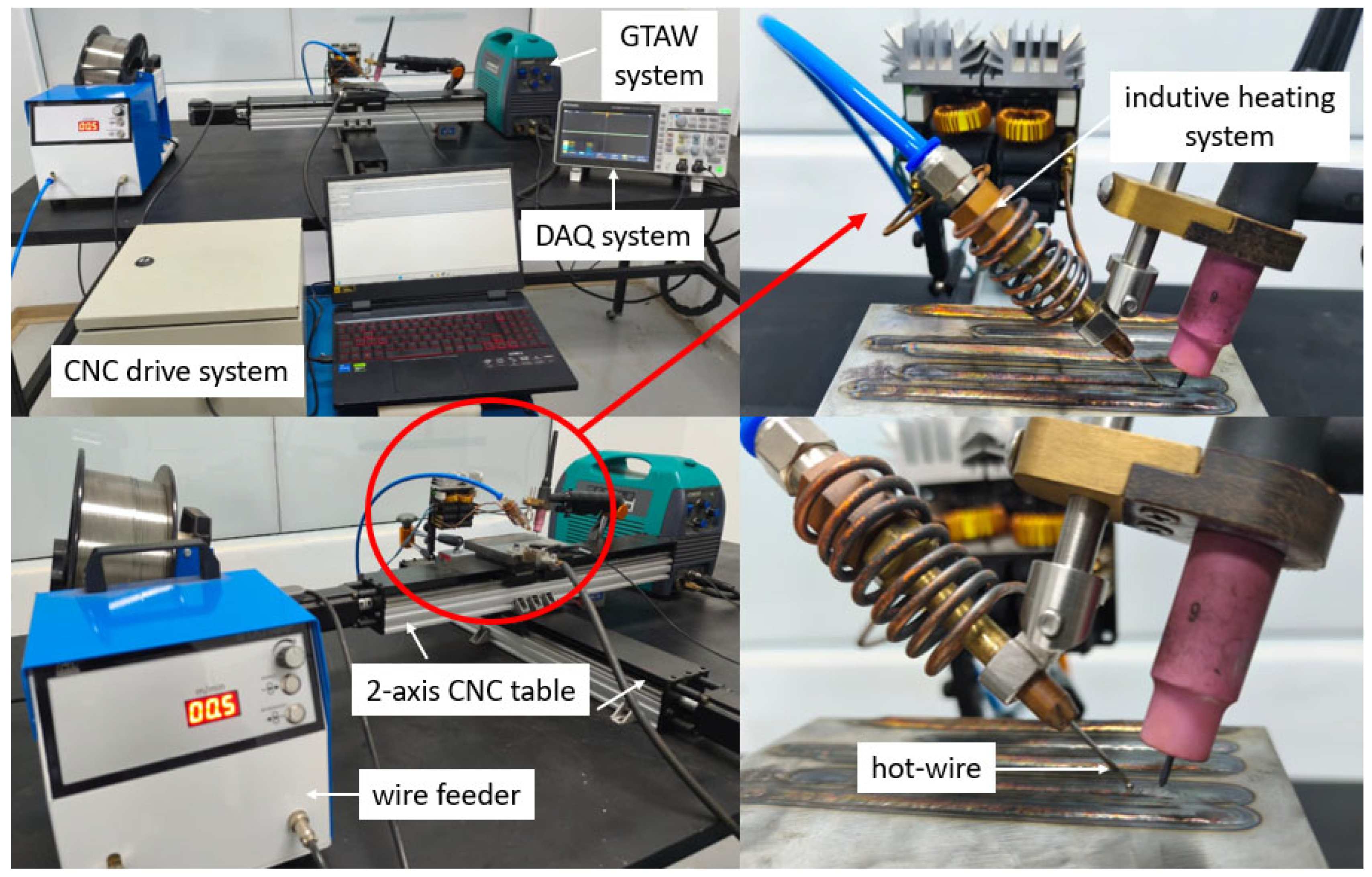
The cladding system consisted of a 2-axis CNC table, a CNC drive system, a GTAW welding machine, a wire feeder, and a hot-wire system. The welding trajectory, travel speed, welding current, and wire feed rate were controlled by a computer. A Data Acquisition System (DAQ), comprising a measuring shunt and an oscilloscope, was used to monitor the welding current.
An inductive hot-wire system was used, in which a coil preheats the filler wire, raising its temperature via inductive heating shortly before immersion in the weld pool. The wire outlet temperature was controlled by the power applied to the inductive heating system. A power source set to 24 V and 30 A (720 W) was used. The experimental setup is shown in Figure 1.
A thoriated tungsten electrode, labeled AWS EW7H2, with a 1.6 mm diameter and a 75° angle to the surface, was employed. It was placed 1.5 mm from the plate. Shielding was provided by argon gas at a flow rate of 15 L per minute.
Several preliminary tests without the hot-wire system were conducted to determine suitable welding parameters, mainly focusing on heat input, and to evaluate cladding quality by analyzing dilution levels and welding defects. The best parameters resulted in a cladding layer with minimal dilution and no visible defects. After setting these parameters, two conditions were tested: one without the hot-wire system (cold-wire cladding, CW-CL) and another with it (hot-wire cladding, HW-CL). For each condition, four test specimens measuring 150 × 150 mm were prepared.
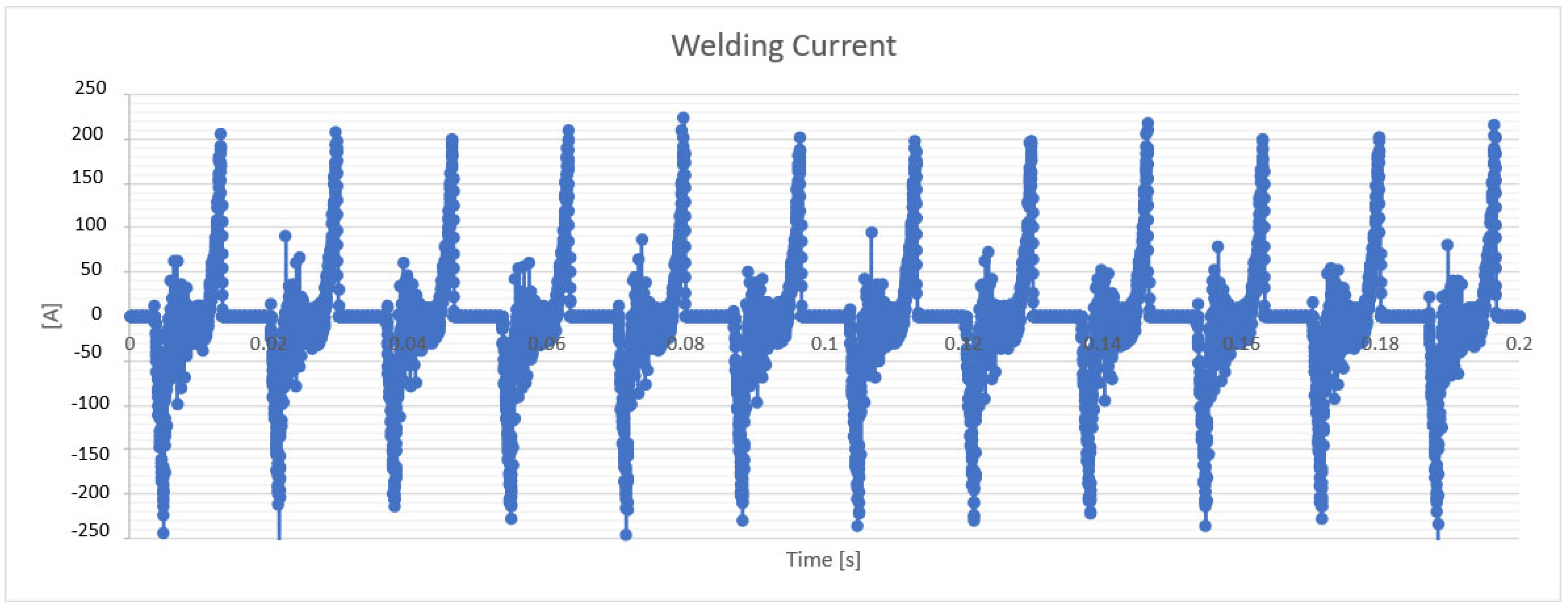
For both conditions, a welding voltage of 30 V, a current of 180 A, a travel speed of 300 mm/min, and a wire feed rate of 0.5 mm/min were applied. The machine was set for high-frequency welding. A 40% overlap rate was used between beads in the cladding layers. Figure 2 shows the current signal obtained with the DAQ system.
The waveform of the electric current generated by the welding machine shows oscillations caused by the machine’s control system. Even though the machine was set to 180 V, the measured welding current was approximately 220 V.
After cladding tests, the samples were cut transversely and embedded in Bakelite for further analysis. The samples were sanded manually, alternating their position by 90° for each change. The sandpaper grits used followed the sequence: 220, 320, 400, 600, 1000, and 1200. For polishing, alumina particles measuring 1.0 and 0.3 µm were employed. For macro and microstructural evaluation, aqua regia served as the reagent, with an average etching time of 15 s per sample. Structural analysis was carried out with optical microscopy, using a Zeiss AxioLab.A1 microscope (Jena, Germany) and a ZEISS Axiocam ERc 5s digital camera (Jena, Germany), connected to an AxioVision Rel. 4.8 image analysis system. Additionally, a ZEISS Stemi DV4 stereo microscope was used to enhance the examination.
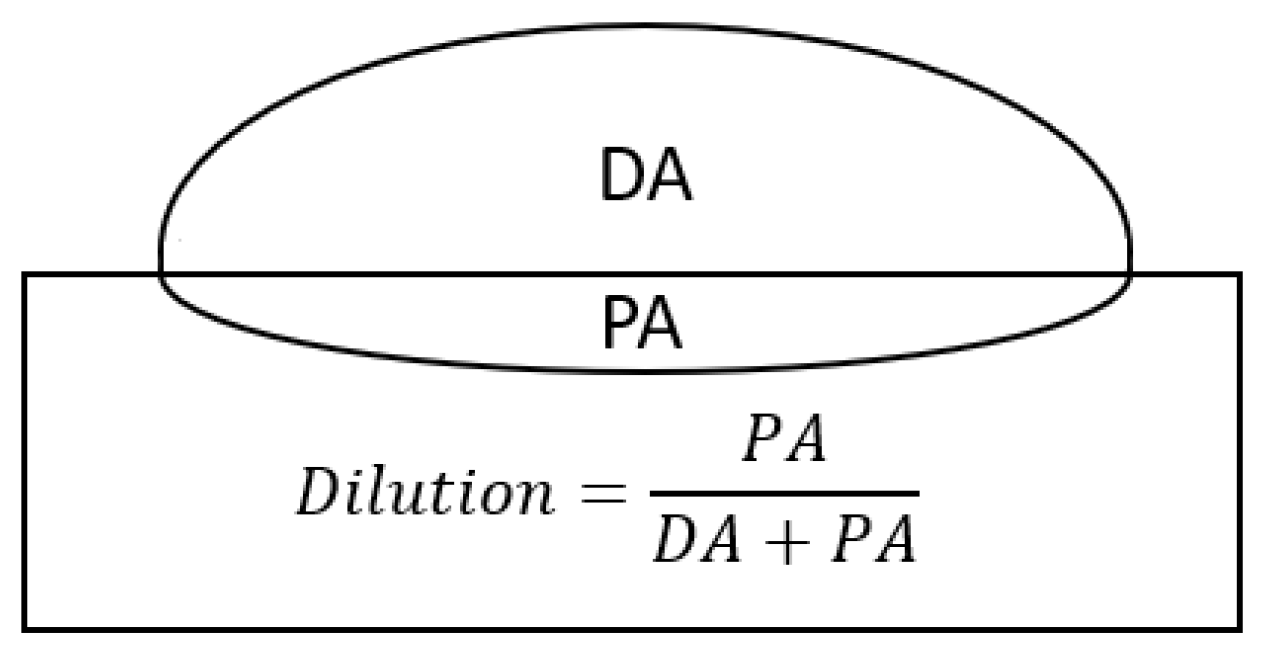
The dilution ratio of the cladding materials was determined from the captured macrographs. Dilution is the ratio of the cross-sectional area of the melted base material to the total cross-sectional area of the fusion zone, as shown in Figure 3. It is expressed as the percentage of base material in the final clad-layer deposit.
Vickers microhardness testing was carried out using an EMCO TEST Duravision device with a 1 kgf load. Measurements were taken across five distinct areas of the cladding: the base metal, the Heat-Affected Zone (HAZ), the boundary between the HAZ and the Fusion Zone (FZ), the FZ featuring a columnar microstructure, and the FZ with an equiaxed microstructure. In each region, 15 depth measurements were recorded, ensuring that the minimum spacing between indentations was at least three times the indentation value diagonal.
The coefficient of friction of the coating layer was measured using fatigue reciprocating friction tests (Anton Paar TRB3). The coating surface was polished. The test utilized reciprocating dry friction as the mode of friction. The applied load was 100 N, with a slide distance of 6 mm, a friction duration of 50 min, and a linear speed of 5 × 10⁻² m/s. A steel (100Cr6) grinding ball with a diameter of 6 mm was used for the test. Temperature and humidity were maintained at 27.8 ± 1.3 °C and 55 ± 4%, respectively.
Bending tests followed ASME IX QW-160 standards [24]. The specimens were bent to 180°, and both the surface and tension side were examined.
The corrosion resistance was evaluated for CW-CL, HW-CL conditions, and the base metal. Additionally, a rolled AISI 904L plate was tested to compare the coatings’ resistance against a reference material. The tests complied with ASTM G1 standards [25]. A surface area of 1 cm2 was immersed in a 3.5% NaCl electrolyte solution under corrosive conditions. For electrochemical measurements, a silver/silver chloride (Ag/AgCl) reference electrode with 3 M KCl and a platinum (Pt) auxiliary electrode served as the counter electrode. These electrochemical tests were conducted at room temperature using an AMETEK VersaSTAT 4 potentiostat (Princeton Applied Research, Oak Ridge, TN, USA), with a scanning rate of 1 mV/s across all samples. The results were analyzed with Origin software 2025 for comprehensive interpretation.

3. Results and Discussions

3.1. Macrostructure

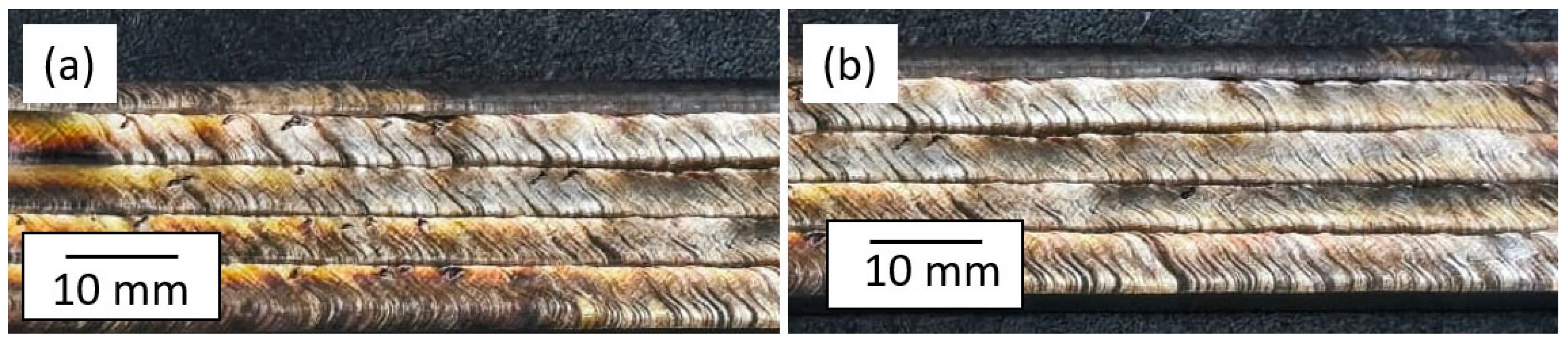
Figure 4 shows the coating surface for the CW-CL (a) and HW-CL (b) conditions. Visual inspection revealed good coat continuity, with no apparent weld defects. No significant changes were observed in the bead surfaces between the conditions.
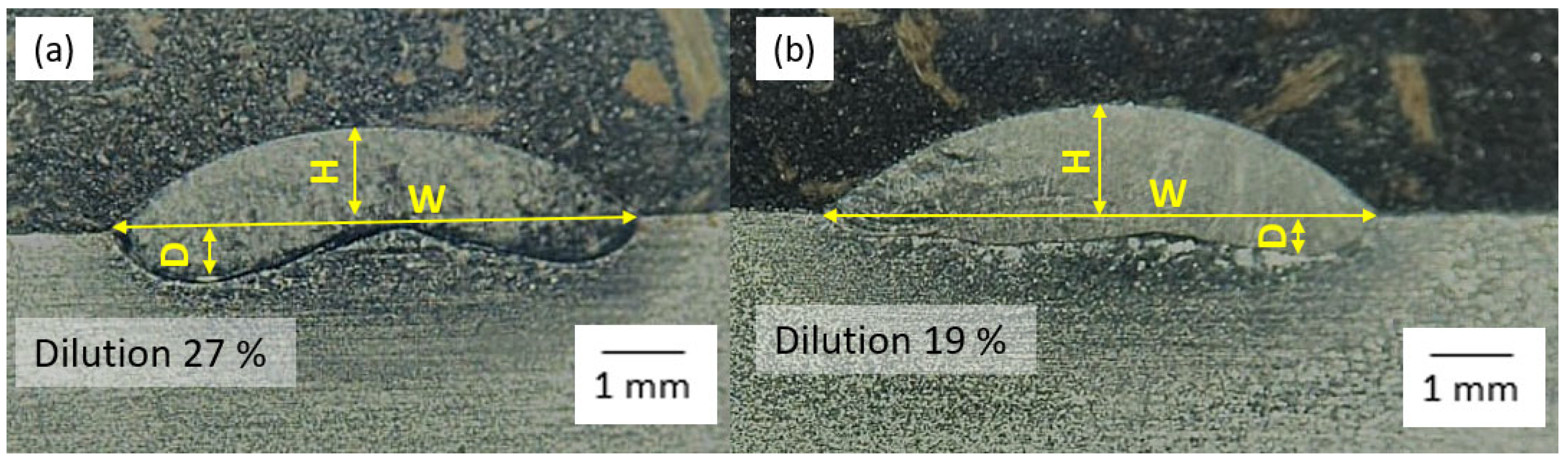
Figure 5 shows the cross-sectional macrostructures of single beads produced under CW-CL (a) and HW-CL (b) conditions. The HW-CL process significantly altered the bead geometry, making a wider bead (W—6.1 mm vs. 5.8 mm) and a greater reinforcement height (H—1.2 mm vs. 1.0 mm). Consequently, the average penetration depth decreased (D—0.3 mm vs. 0.5 mm). This geometric shift was accompanied by a notable reduction in the dilution rate, from 26.7% (CW-CL) to 19.8% (HW-CL).
The deposited weld bead consists of both the base metal and the wire metal. During cladding welding, the welding pool comprises droplets of molten metal from the welding wire and melted base metal. The weld forms through the ongoing process of pool formation and solidification. Dilution refers to the change in the cladding alloy composition resulting from mixing the molten matrix [26]. It is a key process-control parameter for producing high-quality cladding. Maintaining a low dilution is essential because it improves reinforcement quality and increases clad width, thereby providing greater substrate coverage. Additionally, low dilution helps retain the essential elements within the clad layers [19].
The hot-wire technique reduces the dilution rate by preheating the filler wire. This preheating reduces the energy required by the main arc, thereby minimizing melting of the base metal. Since indirect heating was used, preheating could be separated from the GTAW process [15,16]. This allowed the penetration and reinforcement height to be determined independently of the GTAW arc. With welding parameters such as travel speed, wire feed rate, and welding current kept constant in both cases, the additional heat from wire preheating mainly melted the filler wire. This resulted in a higher reinforcement-to-penetration ratio and produced a dilution level better suited to cladding applications.

3.2. Microstructure

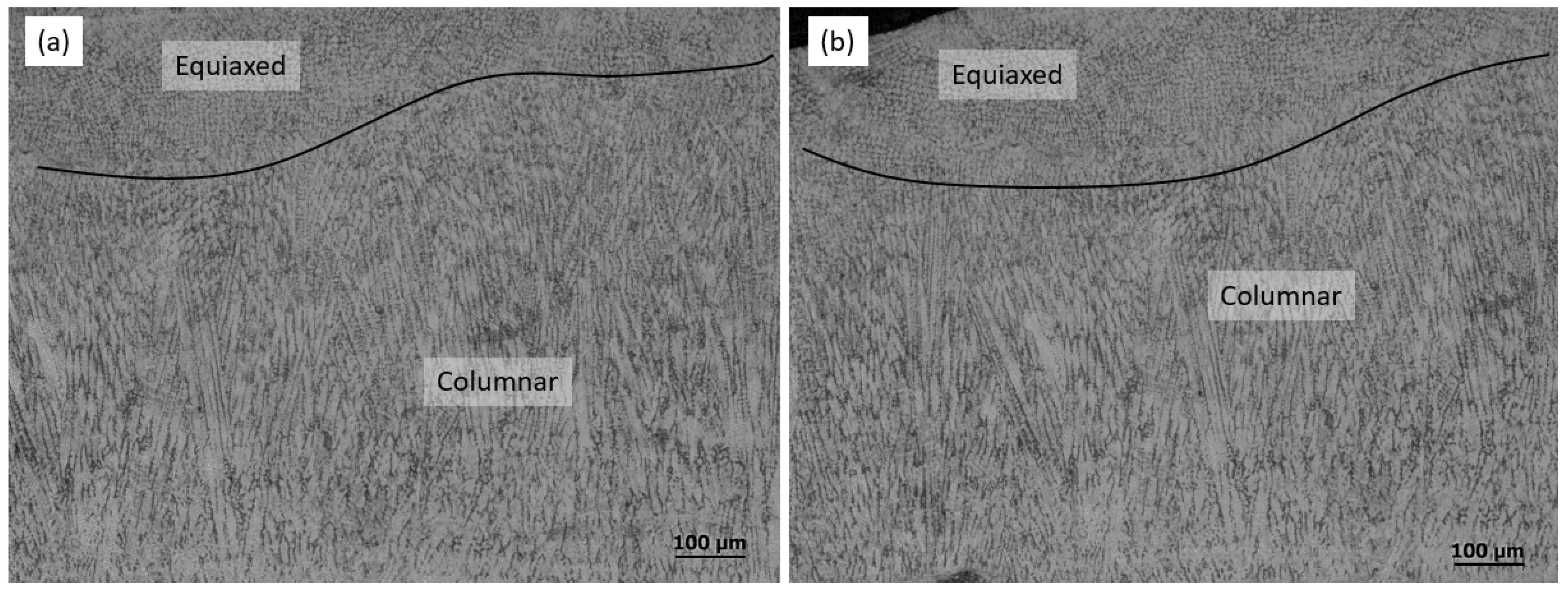
Figure 6 presents the microstructure for the CW-CL (a) and HW-CL (b) conditions. No significant differences were observed between the two conditions. The microstructure resembles that of wire-arc additive manufacturing (WAAM), characterized by elongated columnar dendrite grains extending from the heat-affected zone and a shallow zone of equiaxed dendrite grains near the bead surface [27,28,29].
The thermal cycles during cladding influence the bead’s microstructure development. Factors such as temperature distribution during welding, heating rate, and cooling rate shape the resulting microstructure. These thermal cycles and cooling rates cause variations in grain shape and phase distribution. Near the Heat-Affected Zone (HAZ), heat is conducted away from the molten pool to the base metal. Near the coating surface, heat transfer occurs via convection and radiation [30]. Cooling rates are higher near the HAZ and decrease toward the coating surface. The slower cooling near the surface allows equiaxed austenite grains to grow. At the boundary between the HAZ and the coating, where cooling is fastest, grains tend to grow in the direction of the greatest temperature difference, resulting in columnar dendrites [27].
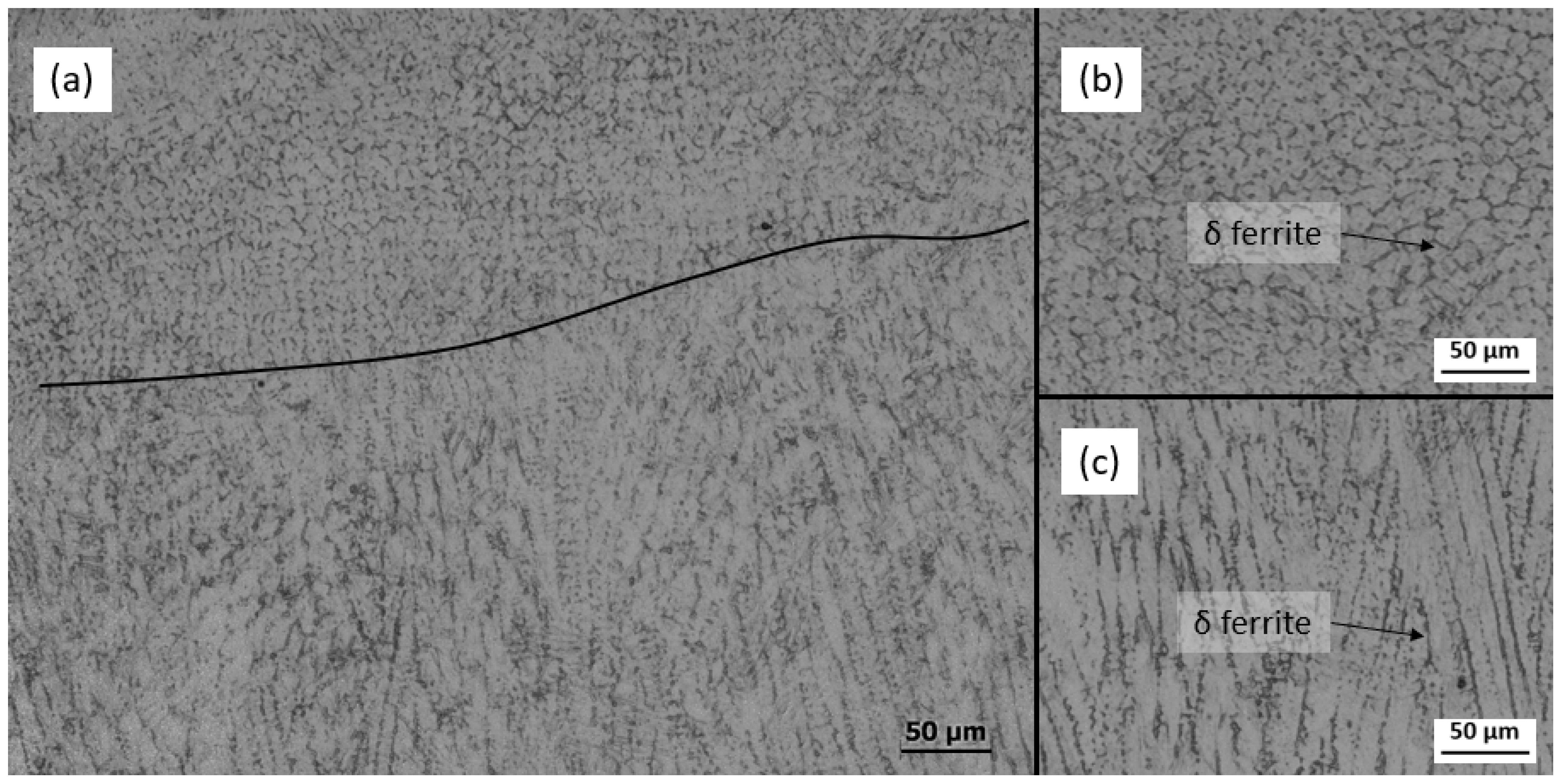
Since the microstructures for both conditions were similar, Figure 7 presents the microstructure for the HW-CL condition (a), with details of the equiaxial (b) and columnar (c) regions. The equiaxial region exhibited a microstructure predominantly of γ-austenite in combination with δ-ferrite on the grain boundaries. The columnar region also showed a microstructure predominantly of γ-austenite with acicular ferrite mode.
During cooling, δ-ferrite dissolves into the austenitic matrix via a solid-state reaction, leading to a predicted fully austenitic microstructure. However, a high cooling rate can inhibit this phase transformation, preventing complete diffusion solid-state dissolution of δ-ferrite. As a result, some δ-ferrite remains stable within the microstructure. It tends to form at grain boundaries and resists transforming into austenite during cooling because it is already enriched with ferrite-promoting elements due to segregation during solidification [31]. The δ-ferrite volume fraction can reach up to 8%, depending on the conditions [28].
The presence of δ-ferrite in the austenitic matrix of stainless steel welds is essential to lower the risk of hot cracking during solidification. Fully austenitic stainless steel weld deposits tend to develop microfissures upon cooling after solidification. A minimum amount of δ-ferrite helps to dissolve harmful phase elements [10].
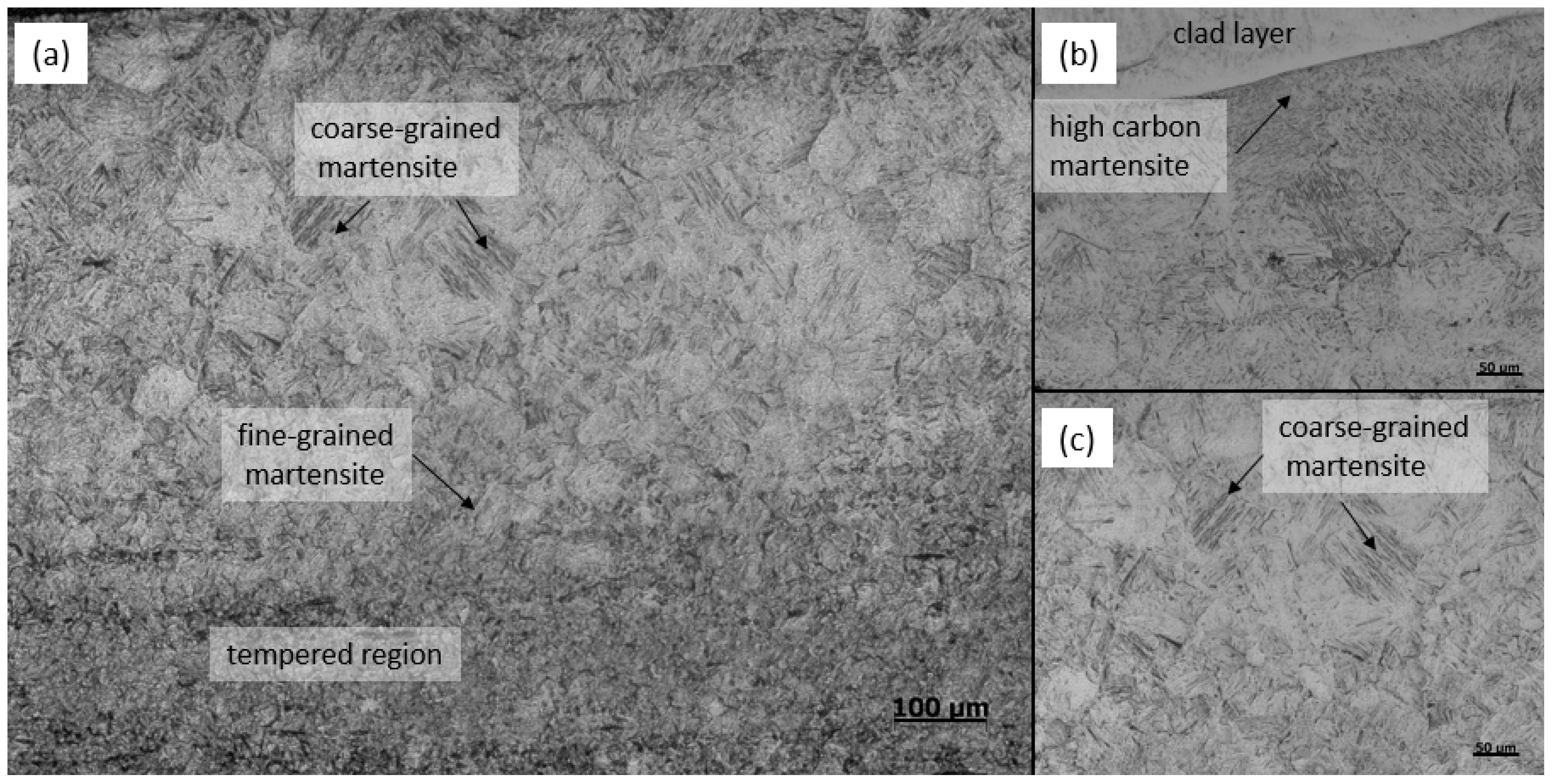
Similar to the microstructure of the clad layer, which showed no significant differences between the CW-CL and HW-CL conditions, the HAZ microstructures were also similar. Figure 8 presents the microstructure of the HAZ (a), the area near the HAZ/fusion zone (FZ) transition (b), and the interior of the HAZ at a higher magnification (c) for the HW-CL condition. The HAZ microstructure exhibits a gradient of hardened phases, likely due to varying cooling rates across the depth profile. Near the fusion boundary, high-carbon martensite forms due to carbon migration from the steel into the dilute stainless melt pool during welding, thereby influencing its hardness and crack susceptibility. As the distance from the interface increases, the HAZ shows zones of coarse-grained martensite, fine-grained martensite, and a tempered region (ferrite and cementite), eventually transitioning into the unaffected ferrite-pearlite base metal. The presence of ferrite and cementite near the unaffected base material can be attributed to lower cooling rates and higher peak temperatures, whereas martensite forms near the fusion boundary due to accelerated cooling rates [3,13,21].

3.3. Microhardness

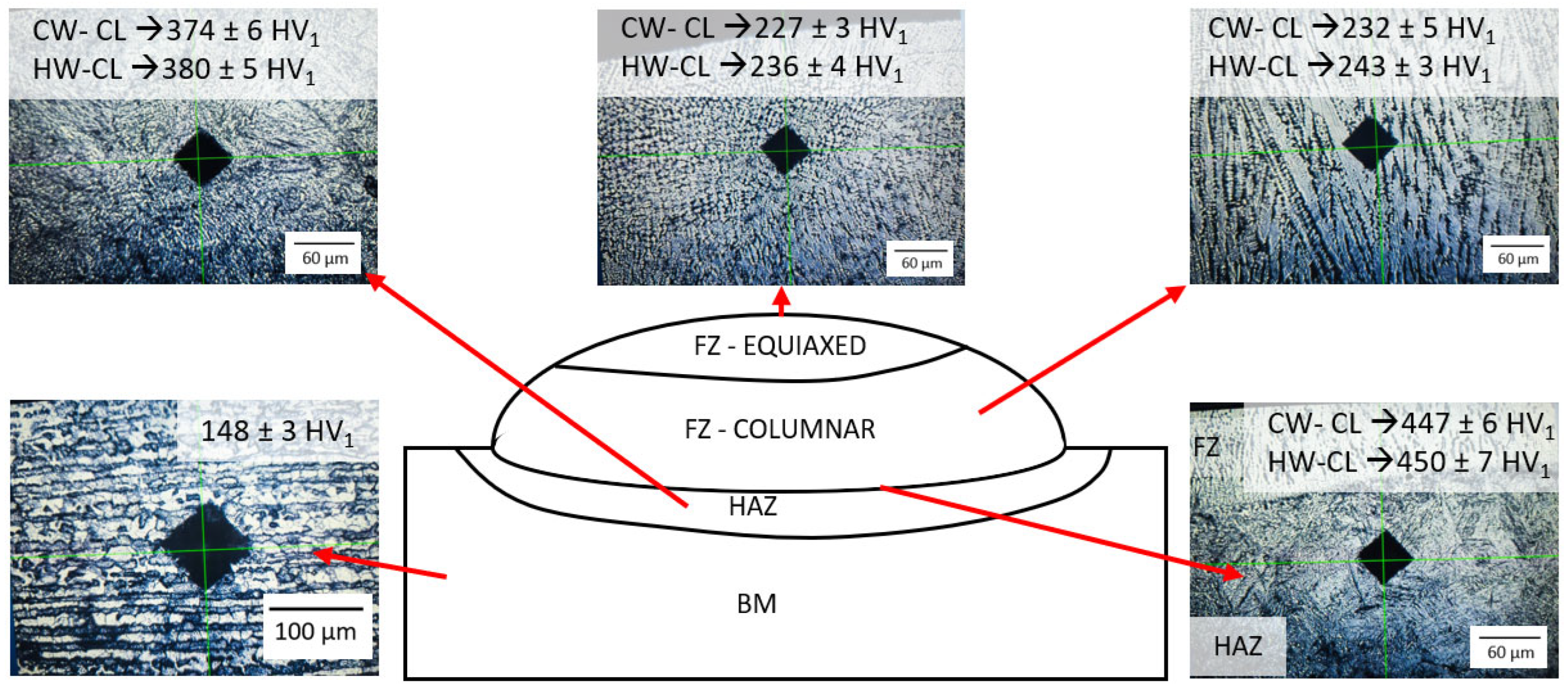
Figure 9 illustrates a schematic of the regions where microhardness measurements were taken, along with the microhardness values for the CW-CL and HW-CL conditions. In both cases, a hardness variation is evident in the HAZ, with the peak hardness near the boundary between the HAZ and the FZ. The microstructures in the HAZ Figure 8 exhibit a gradient of hardened phases, with high-carbon austenite forming near the HAZ/FZ interface, resulting in higher hardness in that region than in the remainder of the HAZ.
Regarding microhardness, in both conditions, a pattern is observed in which regions with a columnar dendritic austenitic microstructure generally exhibit slightly higher hardness than regions with an equiaxed dendritic austenitic microstructure. As noted by Chamim et al. [31] in their study on the influence of welding thermal cycles on δ-ferrite evolution in austenitic stainless steel produced by WAAM-GTAW, the presence of coarse acicular ferrite in the columnar region contributes to increased hardness compared to the equiaxed region. Additionally, Xu et al. [32] report that the columnar dendritic austenitic structure typically exhibits slightly higher as-built hardness than the equiaxed dendritic structure, primarily due to greater internal strain and distinct segregation patterns.
Compared with the CW-CL condition, hardness was higher in the HW-CL condition. In the HAZ, differences were more subtle, with intervals in which values were within the standard deviation, indicating minimal influence of the hot-wire in this region. Conversely, in the fusion zone, differences were more noticeable, showing a tendency toward higher hardness in the HW-CL condition. As previously noted, the additional heat from wire preheating primarily melted the filler wire, resulting in slightly higher cooling rates in the HW-CL fusion zone. While this did not alter the microstructural morphology, it likely caused a slightly higher internal strain than in the CW-CL condition.

3.4. Coefficient of Friction

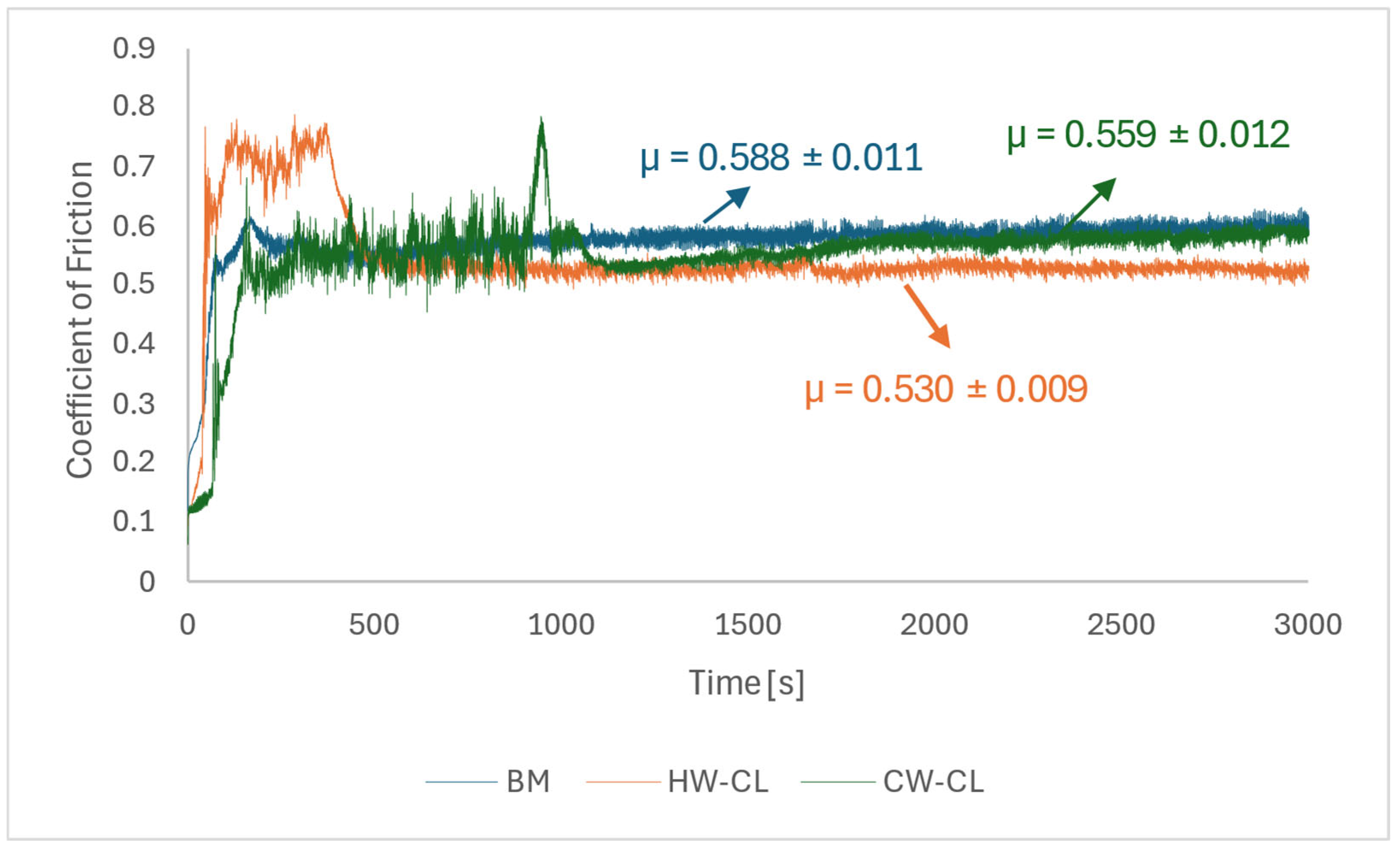
Figure 10 shows the coefficient of friction (COF) results for the base metal, CW-CL, and HW-CL. During the early wear stage, contact between the sample surface and the contact surface creates an unstable condition. As wear progresses, contact between the sample surface and the grinding balls stabilizes and remains steady for the remainder of the test. The base metal had the highest coefficient of friction. The HW-CL condition showed the lowest coefficient, about 5% lower than CW-CL. Because a higher COF indicates greater wear potential, both CW-CL and HW-CL conditions exhibited greater wear resistance than the base metal, with HW-CL showing the greatest wear resistance. The wear resistance followed the same pattern as the microhardness, particularly in the fusion zone. Its higher hardness improves resistance to plastic deformation, thereby enhancing wear resistance [33].

3.5. Bending Tests

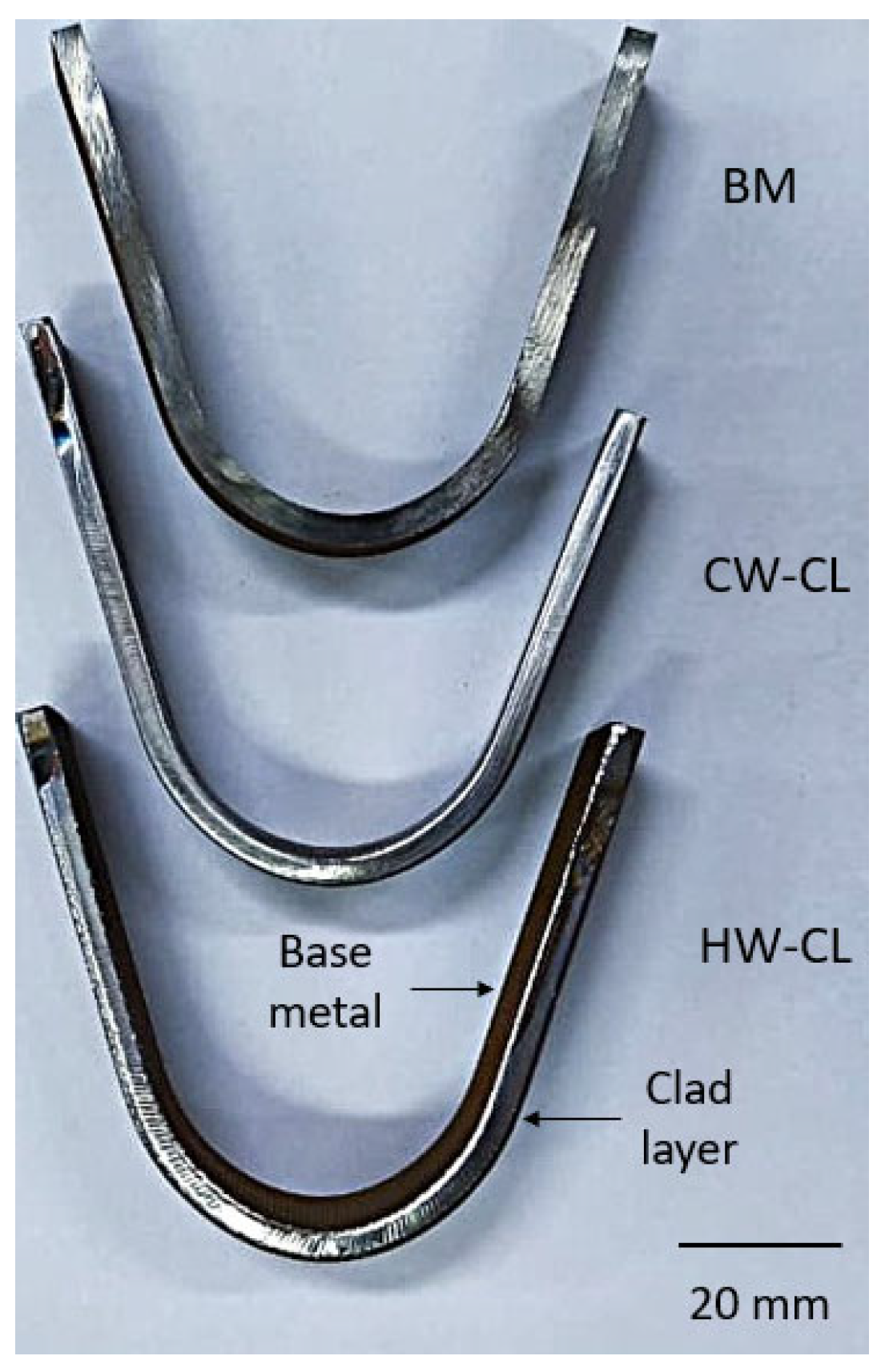
Figure 11 shows the samples after the bending tests. The bending tests revealed no visible cracks in either the CW-CL or HW-CL conditions, including at the interface with the substrate. All tests were approved; no cracking was observed, and a strong metallurgical bond was indicated. Additionally, the cladding layer did not peel from the base metal, and the lack of cracks and fusion defects showcases the excellent toughness of the clad layers [34].

3.6. Corrosion Resistance

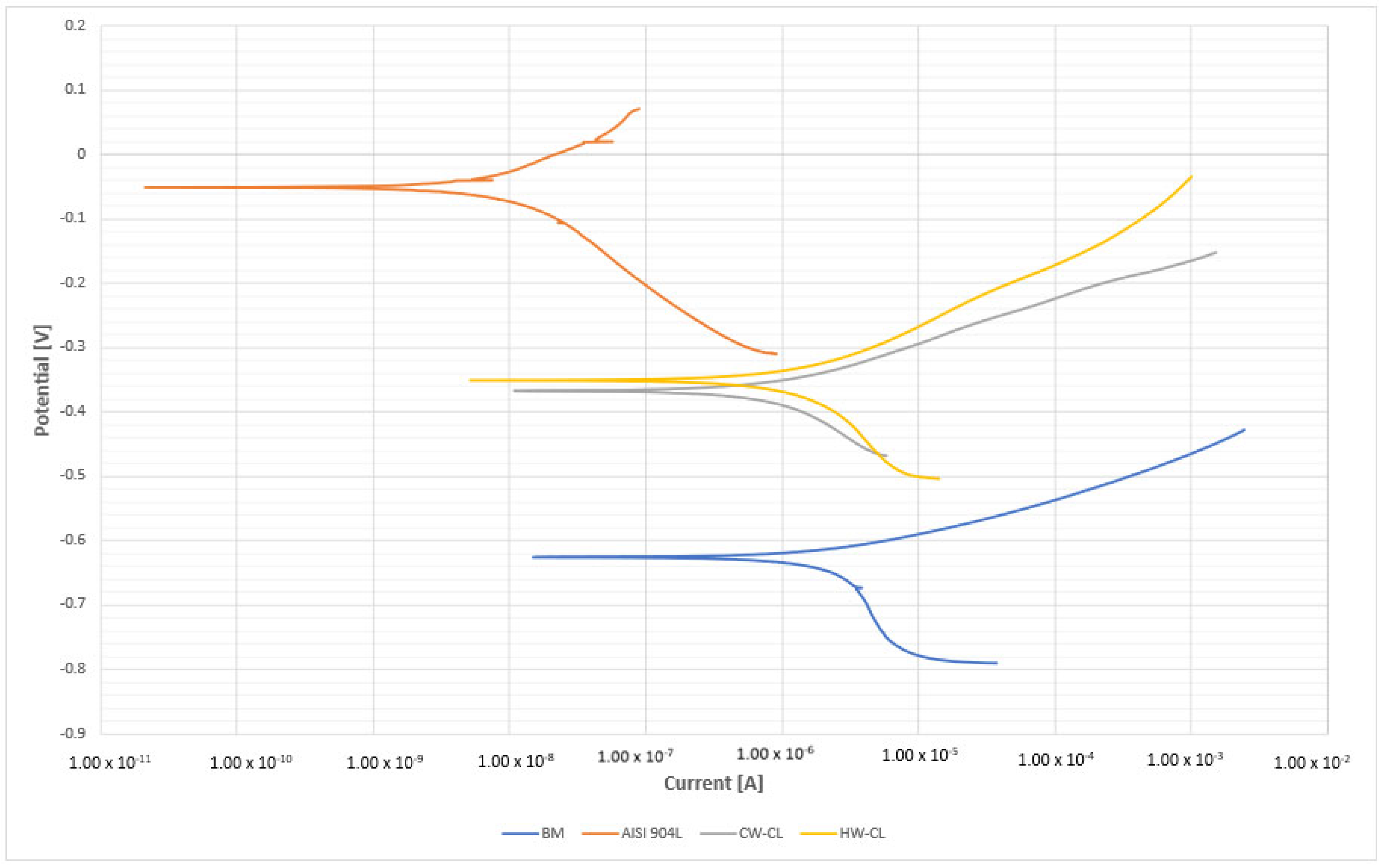
Figure 12 displays the Tafel polarization results for CW-CL, HW-CL, base metal, and a rolled plate of AISI 904L stainless steel (Realum, São Paulo, Brazil). The key parameters, corrosion potential (Ecorr) and corrosion current (Icorr), are derived from potentiodynamic polarization curves and relate to the thermodynamics and kinetics of corrosion, respectively. Ecorr indicates the open-circuit potential at equilibrium, reflecting the material’s tendency to oxidize: more positive (higher) Ecorr values imply greater nobility and reduced corrosion likelihood. Conversely, Icorr measures the true rate of oxidation; lower Icorr values denote slower corrosion rates and thus, improved material performance in the given environment [35,36].
The results show a clear enhancement in corrosion resistance for both CW-CL and HW-CL conditions compared to the base metal. The base metal’s Ecorr was −625 mV with an Icorr of 5.7 μA. In contrast, CW-CL and HW-CL displayed Ecorr values of −365 mV and −351 mV, and Icorr values of 1.1 μA and 1.9 μA, respectively. Both conditions resulted in higher Ecorr and lower Icorr, signifying improved corrosion resistance.
Among the conditions, HW-CL exhibited a slight enhancement in corrosion resistance compared to CW-CL. This minor improvement is associated with the lower dilution rate in HW-CL, which affects the cladding alloy composition by reducing the mixing of the molten matrix. A lower dilution rate helps maintain the original chemical composition of the 904L alloy, thereby enhancing its corrosion resistance [37].
Although they did not match the corrosion resistance of the wrought AISI 904L plate (used as a reference), both conditions showed a significant improvement over the base metal, achieving the goal of super austenitic stainless steel cladding on low-carbon steel.

4. Conclusions

  • Hot-wire GTAW is a method suitable for cladding super austenitic stainless steels onto low-carbon steels. It creates weld beads with excellent surface adhesion, defect-free quality, and mechanical and corrosion resistance appropriate for corrosive environments.
  • Hot-wire GTAW decreased dilution from 27% to 19% compared to the traditional CW-GTAW method, enhancing its suitability for cladding applications.
  • In both conditions, the microstructure of the clad layer featured elongated columnar dendrite grains that extend from the heat-affected zone, along with a shallow region of equiaxed dendrite grains near the bead surface, similar to what is observed in wire-arc additive manufacturing.
  • In both conditions, the HAZ microstructure shows a gradient of hardened phases, featuring higher hardness near the HAZ/FZ interface because of high-carbon martensite, which diminishes towards the unaffected base metal.
  • Hot-wire GTAW showed slightly better wear resistance than CW-GTAW, mainly because of its higher hardness across the entire clad layer. Additionally, hot-wire GTAW also exhibited better corrosion resistance compared to CW-GTAW, which is linked to its lower dilution. For both conditions, the corrosion resistance exceeded that of the base metal.
  • Both conditions successfully passed the bending test, showing no cracks and maintaining a strong metallurgical bond.

Author Contributions

Conceptualization, E.J.d.C.J., F.M.F.A.V. and L.F.F.S.; methodology, E.J.d.C.J., F.M.F.A.V. and F.O.C.; validation, I.C. and V.A.V.; formal analysis, B.F.G. and M.P.; writing—original draft preparation, E.J.d.C.J., F.M.F.A.V., L.F.F.S., F.O.C., B.F.G., V.A.V., I.C. and M.P.; writing—review and editing, I.C. and V.A.V.; supervision, E.J.d.C.J.; project administration, E.J.d.C.J.; funding acquisition, E.J.d.C.J. and F.M.F.A.V. All authors have read and agreed to the published version of the manuscript.

Funding

This research was funded by FAPESP—São Paulo Research Foundation, Brazil (Grant: 2023/16993-0) and São Paulo Federal Institute of Education, Science and Technology (Grant: 60/2024).

Institutional Review Board Statement

Not applicable.

Informed Consent Statement

Not applicable.

Data Availability Statement

The original contributions presented in this study are included in the article. Further inquiries can be directed to the corresponding author.

Acknowledgments

To São Paulo Research Foundation (FAPESP) and São Paulo Federal Institute of Education, Science and Technology, Brazil, for the financial support for the development of the research. To Anton Parr Brazil for supporting the tribological tests. To the Center for Research and Innovation in Materials and Structures (CEPIMATE) for the technical support.

Conflicts of Interest

The authors declare no conflicts of interest.

References

  1. Saravanan, S.; Raghukandan, K.; Sivagurumanikandan, N. Pulsed Nd: YAG laser welding and subsequent post-weld heat treatment on super duplex stainless steel. J. Manuf. Process. 2017, 25, 284–289. [Google Scholar] [CrossRef]
  2. Huang, Z.; Zhang, J.; Ma, Z.; Yuan, S.; Yang, H. Research Progress on the Relationship Between Microstructure and Properties of AISI 321 Stainless Steel. Appl. Sci. 2024, 14, 10196. [Google Scholar] [CrossRef]
  3. Hou, Z.; Fu, K.; Fang, D.; Wang, J. Microstructure and Mechanical Performances of Stainless Steel Cladding by Twin-Electrode GTAW. Mater. Trans. 2021, 62, 995–1000. [Google Scholar] [CrossRef]
  4. de Paula, H.O.; de Castro, L.A.S.; Cavalcante, D.R.; Pinheiro, C.M.; Carneiro, J.R.G. Study on HW-GTAW cladding of super austenitic stainless steel on low-carbon steel: Microstructure and mechanical properties. Mater. Res. 2025; advance online publication. [Google Scholar] [CrossRef]
  5. Murkute, P.; Pasebani, S.; Isgor, O.B. Production of corrosion-resistant 316L stainless steel clads on carbon steel using powder bed fusion-selective laser melting. J. Mater. Process. Technol. 2019, 273, 116243. [Google Scholar] [CrossRef]
  6. Aslam, M.; Sahoo, C.K. Numerical and experimental investigation for the cladding of AISI 304 stainless steel on mild steel substrate using Gas Metal Arc Welding. CIRP J. Manuf. Sci. Technol. 2022, 37, 378–387. [Google Scholar] [CrossRef]
  7. Li, C.; Qin, G.; Tang, Y.; Zhang, B. Microstructures and mechanical properties of stainless steel clad plate joint with diverse filler metals. J. Mater. Res. Technol. 2020, 9, 2522–2534. [Google Scholar] [CrossRef]
  8. Prakash Pasupulla, A.; Agisho, H.A.; Seetharaman, S.; Vijayakumar, S. Characterization and analysis of TIG welded stainless steel 304 alloy plates using radiography and destructive testing techniques. Mater. Today Proc. 2022, 51, 935–938. [Google Scholar] [CrossRef]
  9. Di Schino, A.; Testani, C. Corrosion Behavior and Mechanical Properties of AISI 316 Stainless Steel Clad Q235 Plate. Metals 2020, 10, 552. [Google Scholar] [CrossRef]
  10. Kumar, M.; Singh, J.; Uppal, A.S. Improvement in corrosion resistance of AISI 316L stainless steel weld cladding using GTA remelting technique. Mater. Today Proc. 2022, 65, 3224–3228. [Google Scholar] [CrossRef]
  11. Jayavelu, M.; Kasi, S.; Visvalingam, B.; Bellamkonda, P.N.; Dara, S. Wear properties and microstructural characteristics of mild steel cladded with AISI 316L stainless steel using constant current gas metal arc welding process. Mater. Today Proc. 2023; in press. [Google Scholar] [CrossRef]
  12. Peng, C.; Gao, T.; Fu, P.; Zhu, R.; Xuan, H.; Duan, L.; Zhao, K.; Yuan, B.; Zhang, L.; Xie, Z. Ultrasonic vibration-assisted gas metal arc welding for 308 stainless steel cladding layers: Microstructure, mechanical properties, and corrosion resistance. Mater. Today Commun. 2025, 49, 114106. [Google Scholar] [CrossRef]
  13. da Cruz Junior, E.J.; Varasquim, F.M.F.A.; De Mendonça, V.R.; Ventrella, V.A.; Gonçalves, A.C.; Fagundes Junior, J.G.; Zambon, A.; Calliari, I. Impact of Heat Input on the Cladding of Super Austenitic Stainless Steel Through the Gas Tungsten Arc Welding Process on ASTM A516 Grade 70 Steel. Coatings 2024, 14, 1356. [Google Scholar] [CrossRef]
  14. Hedaiat, F.; Dehmolaei, R.; Khorasanian, M.; Lotfi, B. Long-term oxidation behaviour and thermal stability of heat-resistant stainless steel claddings deposited on AISI 316 stainless steel by the GTAW process. Surf. Coat. Technol. 2021, 424, 127605. [Google Scholar] [CrossRef]
  15. Ungethüm, T.; Spaniol, E.; Hertel, M.; Füssel, U. Analysis of metal transfer and weld geometry in hot-wire GTAW with indirect resistive heating. Weld. World 2020, 64, 2109–2117. [Google Scholar] [CrossRef]
  16. Zhang, Z.; Kong, F.; Kovacevic, R. Laser hot-wire cladding of Co-Cr-W metal cored wire. Opt. Laser Eng. 2020, 128, 105998. [Google Scholar] [CrossRef]
  17. Chen, Y.; Zhang, X.; Cheng, T.; Yang, C. Effect of hot-wire method on microstructure and mechanical properties of wire arc additive repaired superalloy. Mater. Sci. Eng. A 2024, 916, 147359. [Google Scholar] [CrossRef]
  18. Hassel, T.A.; Sørby, K.; Brøtan, V. Effect of preheat in DED-LB/wire of Ni-base, Cu-base and Fe-base alloys. Procedia CIRP 2024, 126, 674–679. [Google Scholar] [CrossRef]
  19. Majid, M.; Goel, L.; Saxena, A.; Srivastava, A.K.; Singh, G.K.; Verma, R.; Bhutto, J.K.; Hussein, H.S. Firefly Algorithm and Neural Network Employment for Dilution Analysis of Super Duplex Stainless Steel Clads over AISI 1020 Steel Using Gas Tungsten Arc Process. Coatings 2023, 13, 841. [Google Scholar] [CrossRef]
  20. Gao, S.; Fu, Q.; Li, M.; Huang, L.; Liu, N.; Cui, C.; Yang, B.; Zhang, G. Optimization of Laser Cladding Parameters for High-Entropy Alloy-Reinforced 316L Stainless-Steel via Grey Relational Analysis. Coatings 2024, 14, 1103. [Google Scholar] [CrossRef]
  21. Matias, J.V.S.; Lourenço, M.J.C.; Jorge, J.C.F.; de Souza, L.F.G.; Farneze, H.N.; Mendes, M.C.; da Silva, C.L.A.; Araújo, L.S. Behavior of a superaustenitic stainless steel weld cladding deposited by the gas metal arc welding process. Mater. Today Commun. 2023, 34, 104978. [Google Scholar] [CrossRef]
  22. Coêlho, G.d.C.; Silva, A.A.; dos Santos, M.A.; Machado, J.J.M.; Tavares, J.M.R.S. Ductile Fracture Behavior of ASTM A516 Gr.70 Pressure Vessel Steel by ASTM and ISO Fracture Toughness Standards. Metals 2023, 13, 867. [Google Scholar] [CrossRef]
  23. Lee, S.-H.; Choi, B.-J. Mechanical Properties of ASTM A572 Grades 50 and 60 Steels at High Temperatures. Appl. Sci. 2021, 11, 11833. [Google Scholar] [CrossRef]
  24. ASME IX QW-160. Available online: https://www.scribd.com/document/645452520/02-ASME-IX-QW-160-2010-pdf (accessed on 31 January 2026).
  25. ASTM G1; Standard Practice for Preparing, Cleaning, and Evaluating Corrosion Test Specimens. ASTM: West Conshohocken, PA, USA, 2025.
  26. Bazychowska, S.; Panasiuk, K.; Starosta, R. The Influence of Variable Plasma Welding Parameters on Weld Geometry, Dilution Factor, and Microhardness. Appl. Sci. 2024, 14, 7248. [Google Scholar] [CrossRef]
  27. Rahimi, A.; Yazdizadeh, M.; Ara, M.V.; Pouranvari, M. CMT wire-arc additive manufacturing of 310 austenitic stainless steel: Microstructure-properties relationships. J. Mater. Res. Technol. 2025, 35, 881–891. [Google Scholar] [CrossRef]
  28. Kondratev, N.; Podsedertsev, A.; Bezverkhy, D.; Sharifullina, E.; Olshanskaya, T.; Trushnikov, D. Multilevel Prediction of Mechanical Properties of Samples Additively Manufactured from Steel 308LSi. Metals 2026, 16, 8. [Google Scholar] [CrossRef]
  29. Jin, W.; Zhang, C.; Jin, S.; Tian, Y.; Wellmann, D.; Liu, W. Wire Arc Additive Manufacturing of Stainless Steels: A Review. Appl. Sci. 2020, 10, 1563. [Google Scholar] [CrossRef]
  30. Lu, L.; Cai, Z.; Yang, J.; Liang, Z.; Sun, Q.; Pan, J. Study on Key Parameters of Dilution Ratio of the Bead Deposited by GTAW Method for Nuclear Components. Metals 2022, 12, 1506. [Google Scholar] [CrossRef]
  31. Chamim, M.; Darmadi, D.B.; Purnowidodo, A.; Widodo, T.D.; Ismail, Z. Influence of the welding thermal cycle on δ-ferrite evolution in the first layer of austenitic stainless steel (ASS) 308L produced by WAAM-GTAW. Case Stud. Therm. Eng. 2024, 64, 105489. [Google Scholar] [CrossRef]
  32. Xu, X.; Ganguly, S.; Ding, J.; Guo, S.; Williams, S.; Martina, F. Microstructural evolution and mechanical properties of maraging steel produced by wire+arc additive manufacture process. Mater. Charact. 2018, 143, 152–162. [Google Scholar] [CrossRef]
  33. Zhang, D.; Li, H.; Liu, Y.; Jiang, J.; Gao, Y. An Investigation of the Microstructure and Wear Resistance of Laser Clad 316 Stainless Steel/TiC Coatings Containing Different LaB6 Contents. Ceramics 2025, 8, 121. [Google Scholar] [CrossRef]
  34. Yoon, J.-H.; Kim, J.H.; Shin, G.; Kim, C. Characterization of nickel cladding on type 316H stainless steel for enhanced corrosion resistance in molten chloride salts. Nucl. Eng. Technol. 2025, 57, 103276. [Google Scholar] [CrossRef]
  35. Amiri, E.; Ostovan, F.; Toozandehjani, M.; Shafiei, E.; Mohamed, I.F. Study and selection of most appropriate filler rod for GTAW of S32750 super duplex steel joints: A comprehensive study on microstructural, mechanical and corrosion properties. Mater. Chem. Phys. 2021, 270, 124839. [Google Scholar] [CrossRef]
  36. Wang, Q.; Gu, G.; Jia, C.; Li, K.; Wu, C. Investigation of microstructure evolution, mechanical and corrosion properties of SAF 2507 super duplex stainless steel joints by keyhole plasma arc welding. J. Mater. Res. Technol. 2023, 22, 355–374. [Google Scholar] [CrossRef]
  37. Cunha, A.B.; Vatavuk, J.; Lima, C.R.C. Investigating the Effects of Iron Dilution on the Corrosion Resistance of Inconel 625 Welding Overlay on Carbon Steel. Materials 2025, 18, 5574. [Google Scholar] [CrossRef] [PubMed]
Figure 1. Experimental setup of the HW-GTAW cladding system.
Applsci 16 01527 g001
Figure 2. Welding current signal.
Applsci 16 01527 g002
Figure 3. Dilution calculation.
Applsci 16 01527 g003
Figure 4. Coating surface for (a) CW-CL and (b) HW-CL.
Applsci 16 01527 g004
Figure 5. Macrostructure of (a) CW-CL and (b) HW-CL.
Applsci 16 01527 g005
Figure 6. Microstructure of (a) CW-CL and (b) HW-CL.
Applsci 16 01527 g006
Figure 7. Microstructure of (a) HW-CL (b) columnar region and (c) equiaxed region.
Applsci 16 01527 g007
Figure 8. (a) Microstructure of HAZ for HW-CL (b) HAZ-FZ transition (c) HAZ with high magnification.
Applsci 16 01527 g008
Figure 9. Schematic of the microhardness measurements.
Applsci 16 01527 g009
Figure 10. Coefficient of friction results.
Applsci 16 01527 g010
Figure 11. Bending test samples.
Applsci 16 01527 g011
Figure 12. Tafel polarization curves.
Applsci 16 01527 g012
Table 1. Chemical composition of the base and filler metals.
CSiMnNiCrMoCuN
ASTM 516 Gr. 70≤0.280.15–0.400.85–1.2-----
AWS ER385≤0.020.74.725.4206.21.50.23
Disclaimer/Publisher’s Note: The statements, opinions and data contained in all publications are solely those of the individual author(s) and contributor(s) and not of MDPI and/or the editor(s). MDPI and/or the editor(s) disclaim responsibility for any injury to people or property resulting from any ideas, methods, instructions or products referred to in the content.