
Standardized Description of the Generation Principle and Process of the Surface of Archimedes Spiral Wind Blade
 ,
,
Featured Application
Abstract
1. Introduction
- (1)
- Although an ASWT belongs to horizontal-axis wind turbines, it has a self-yawing capability and does not need to be equipped with an additional yaw system.
- (2)
- An ASWT belongs to a drag-type wind turbine.
- (3)
- Although the tip-speed ratio of traditional drag-type turbines is typically less than 1, the tip-speed ratio of an ASWT, being a drag-type turbine, can be greater than 1, resulting in a higher power coefficient of ASWT compared with traditional drag-type turbines.
- (4)
- In addition to conventional evaluation criteria, the ASWT offers other advantages compared to traditional wind turbines: (a) low noise during operation; (b) environmentally friendly, posing no harm to birds; (c) capable of operating in urban areas or building complexes; not picky about the working environment.
- (1)
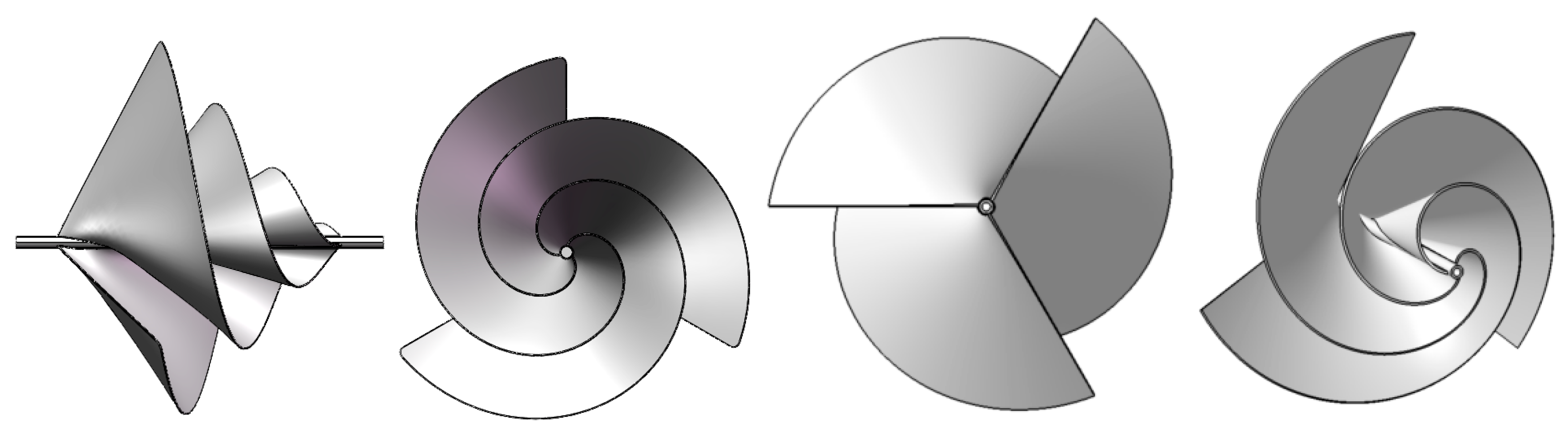
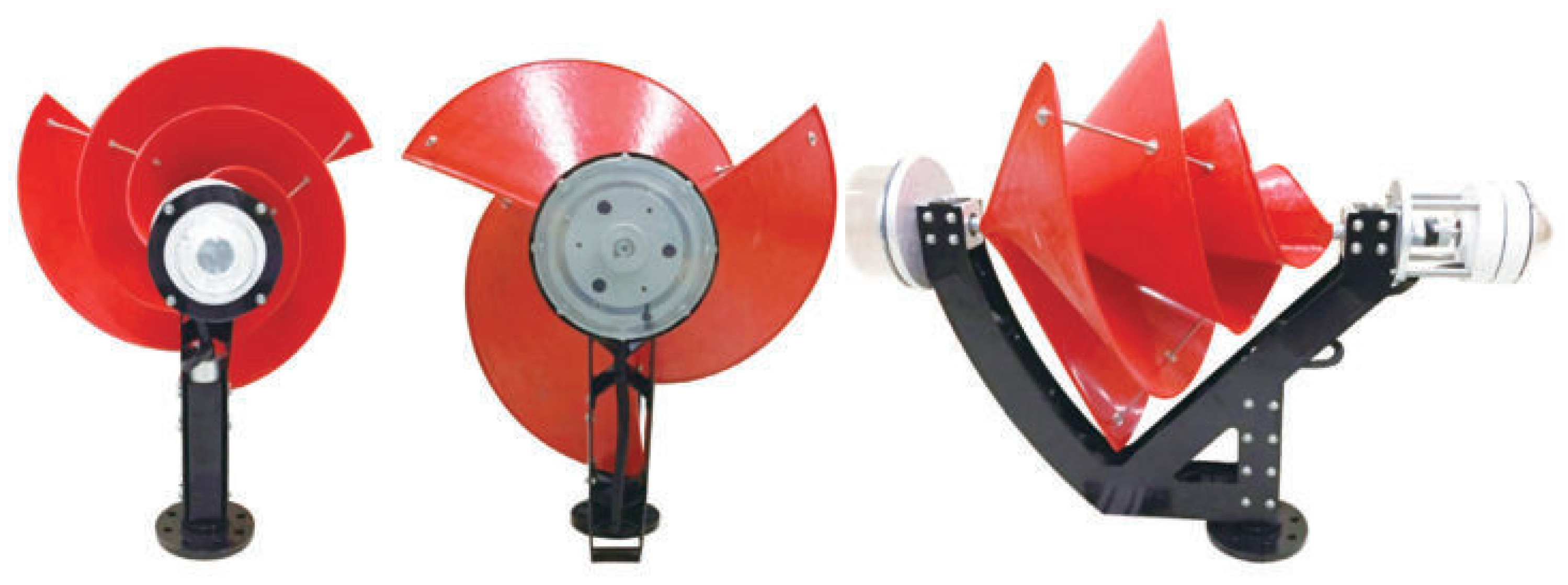
- Section 1 introduces the development history and basic characteristics of the ASWB, and differences between ASWBs and traditional wind blades.
- (2)
- In Section 2, the descriptions of the generation principle and process of the ASWB surface in the existing published literature are summarized. In fact, in the published literature, only the inventor of the ASWB has given a brief and qualitative description of the generation principle of the ASWB surface, which is the most original and only description available. Therefore, Section 2 quotes the original description of the generation principle of the ASWB given by the inventor and then discusses it.
- (3)
- In Section 3, the original description is improved and rewritten. Rigorous mathematical tools and geometric models are used, including a planar polar coordinate system, a planar and spatial Cartesian coordinate system, the curve equation of the Archimedes spiral, the derivation of differential equations and their numerical solutions, etc., to provide a standardized, academic, and scientific description of the generation basis, i.e., an irregular closed plane figure, of the ASWB surface.
- (4)
- (5)
- In Section 5, the factors that affect the shape of the ASWB surface and the characteristics of the ASWB surface are revealed; the existing modeling process for ASWBs is introduced; and a conjecture on describing the ASWB surface with equations is proposed.
- (6)
- In Section 6, the work of this paper is concluded and outlooks for further research are presented.
2. Related Work
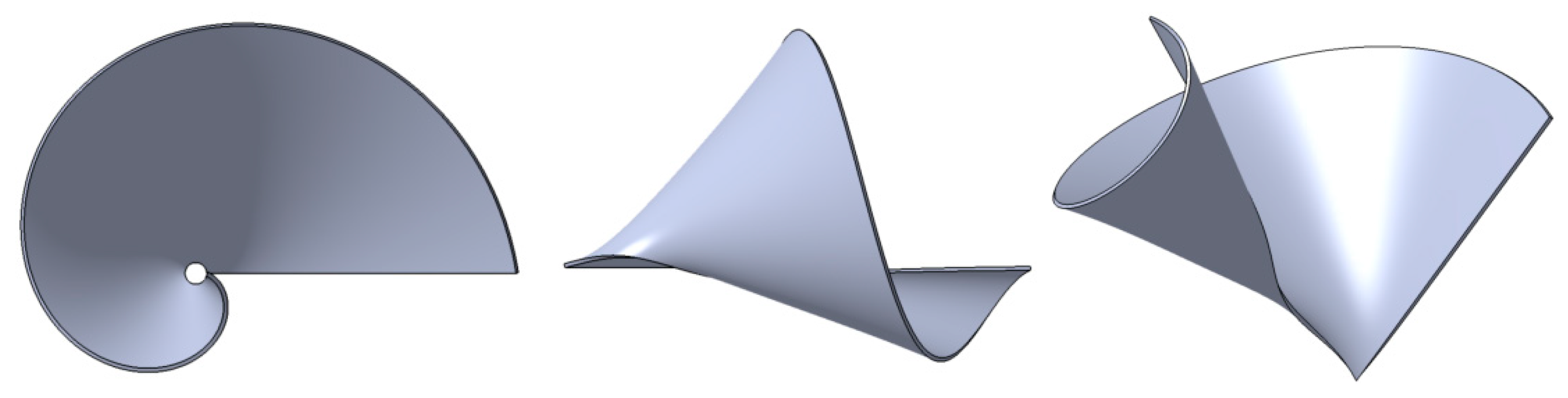
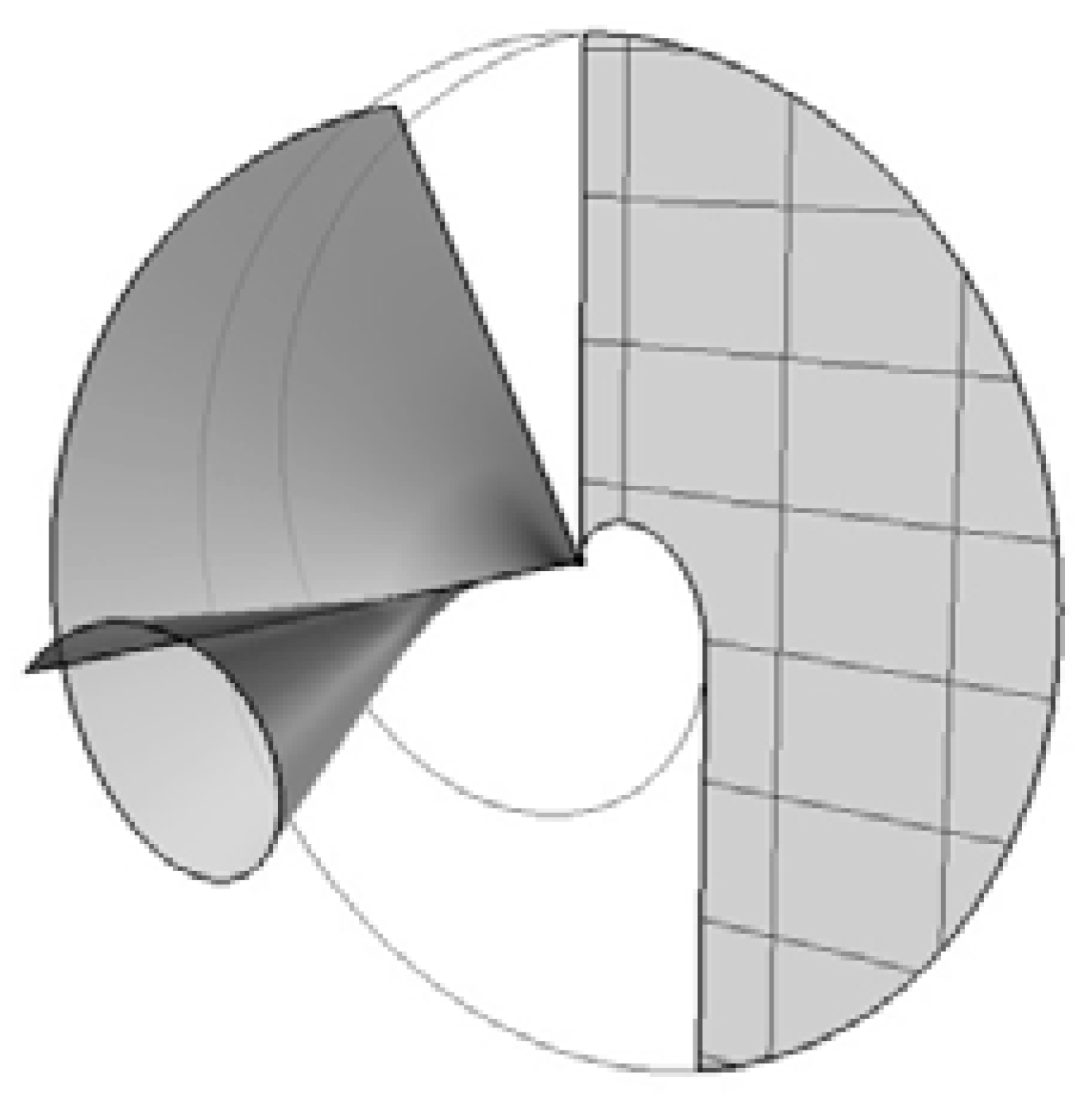
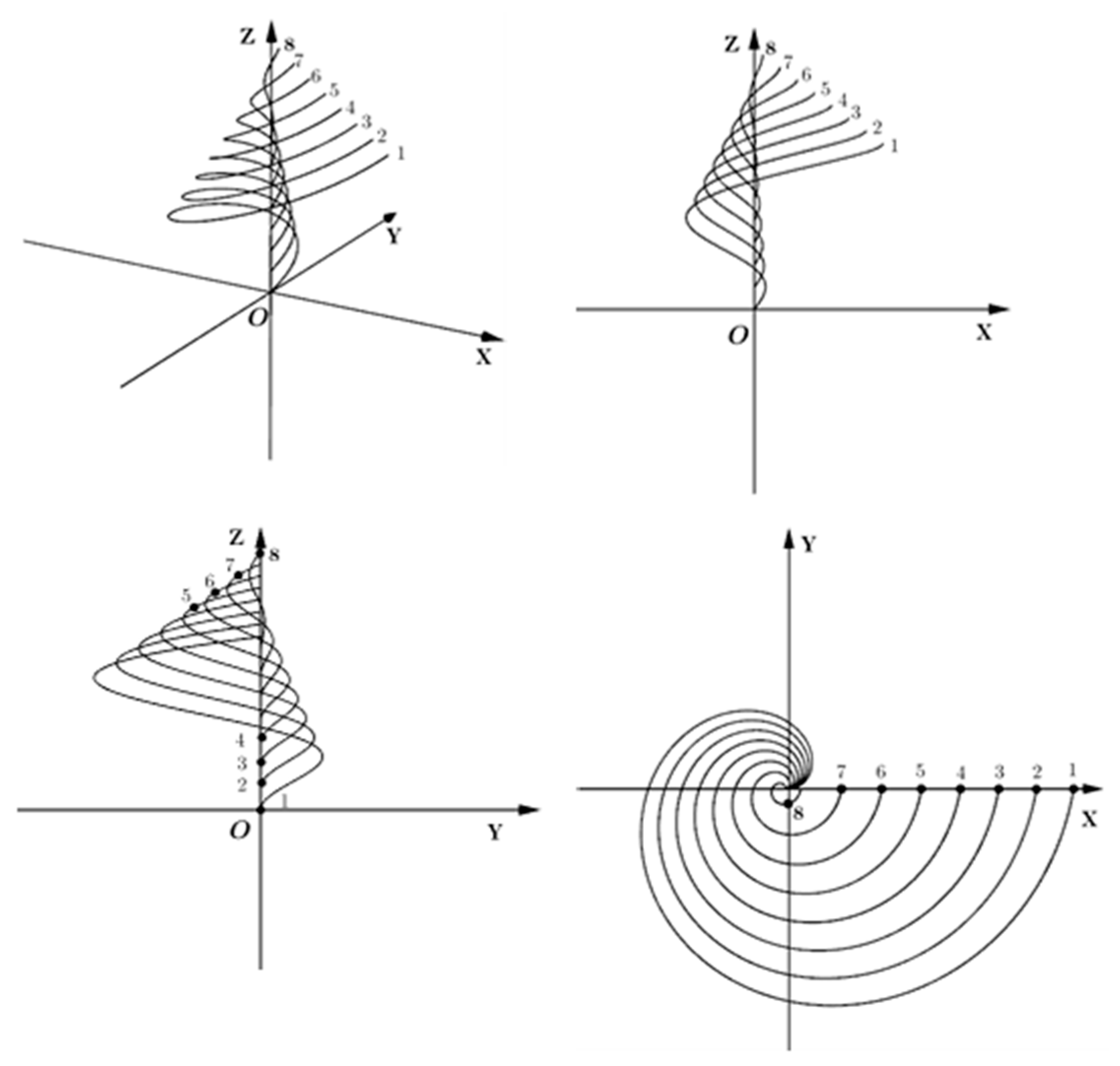
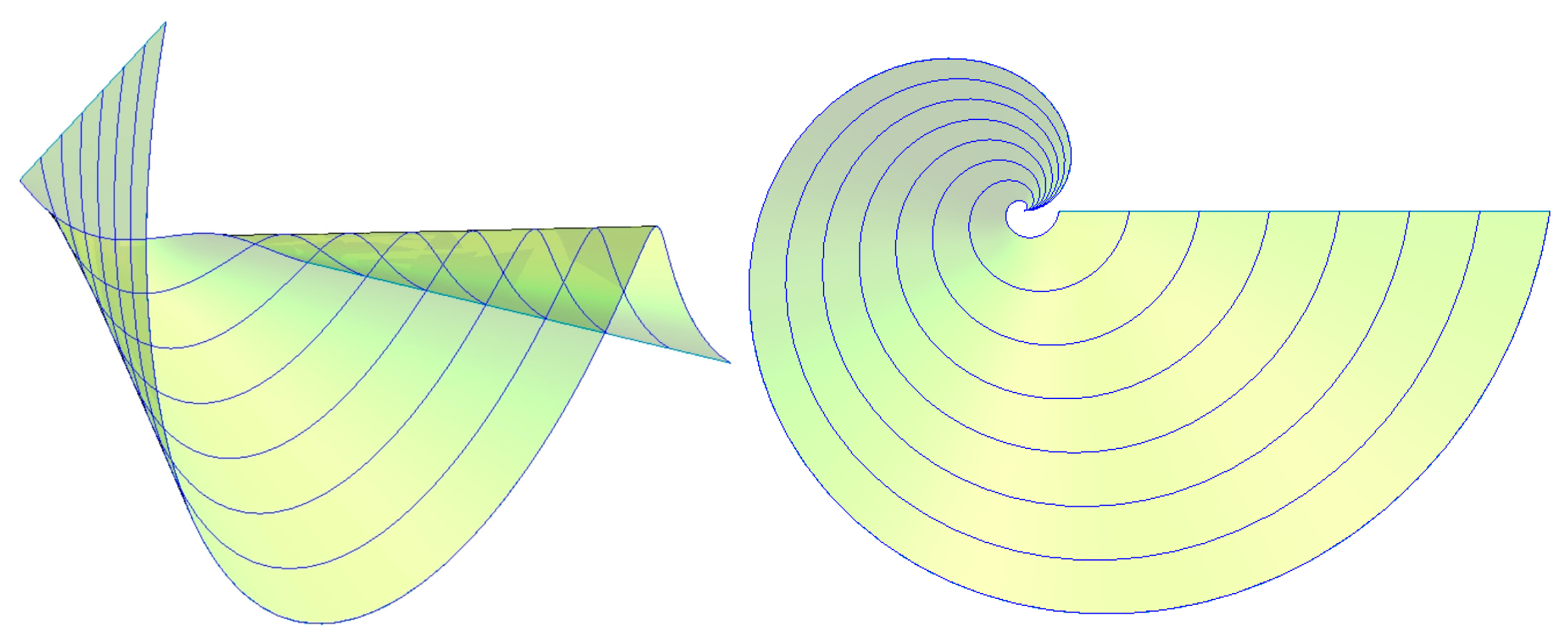
“The Archimedes rotor blade is a flat surface elongated to give it depth and, therefore it’s shape perceived to have volume. From a sheet of paper one can obtain the spatial form of an Archimedes rotor blade by turning and simultaneously stretching out a cutout of the plane between a circle with radius R and a flat spiral”.[28]
3. Description of Basis for Generating the ASWB Surface
- (1)
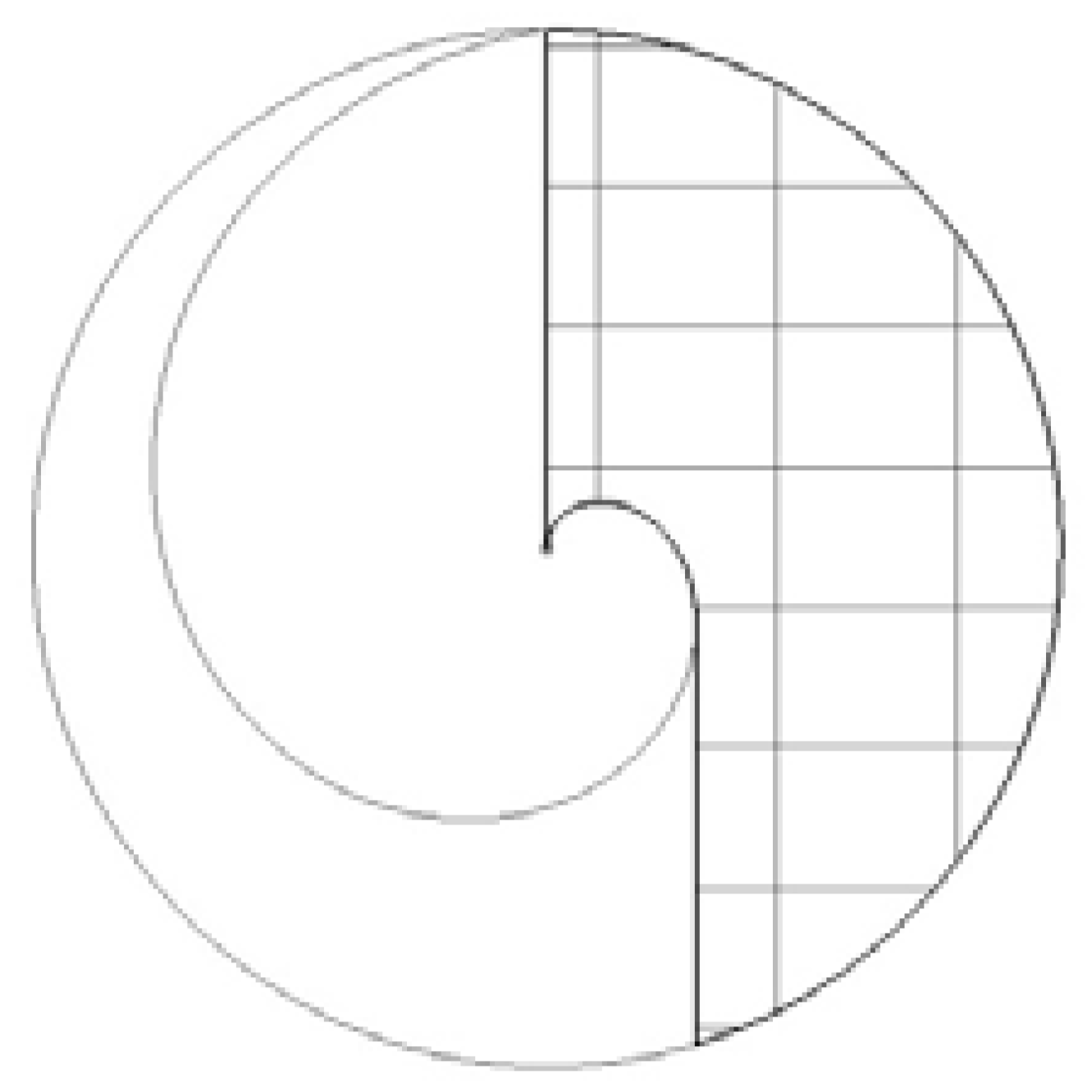
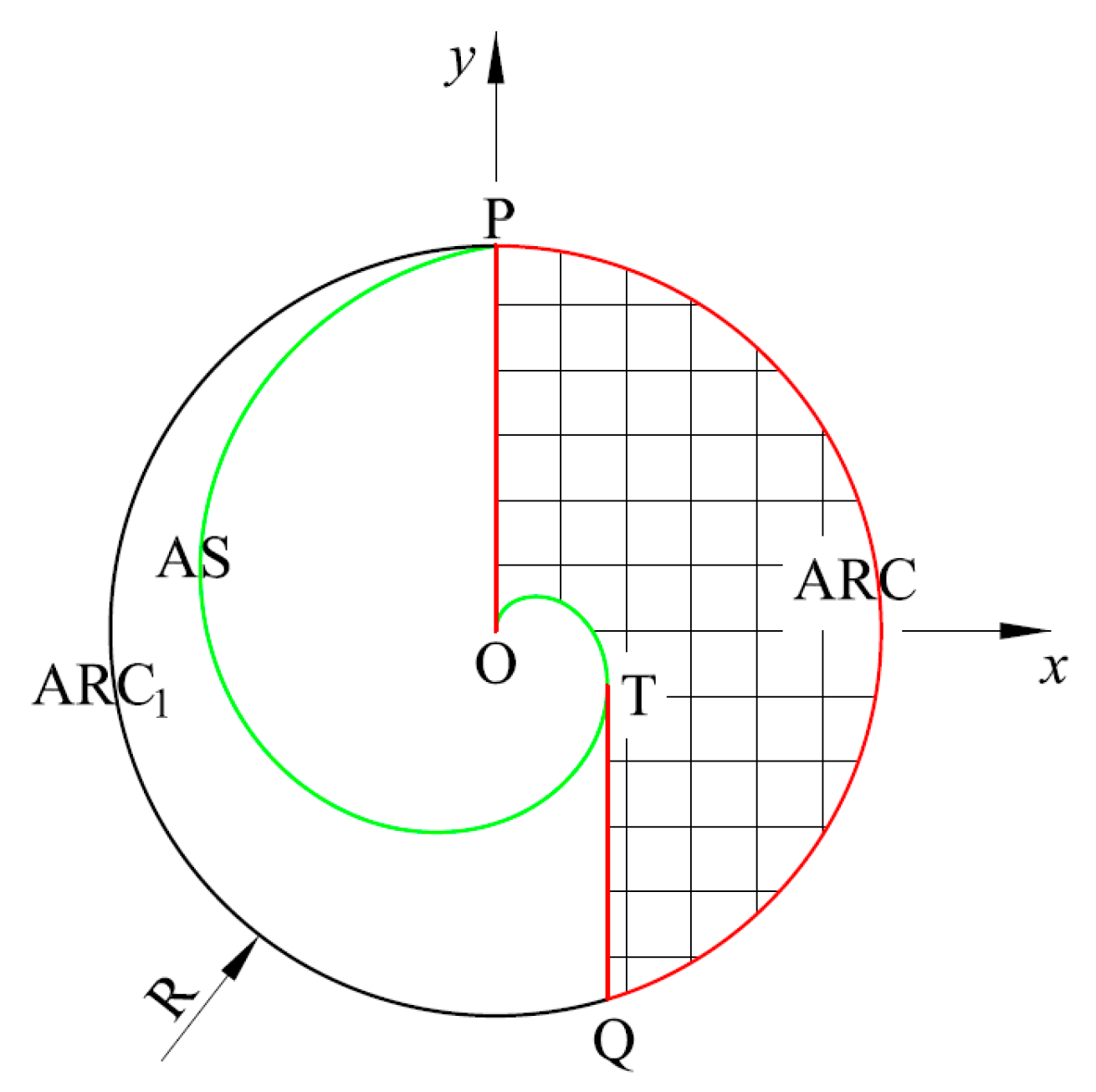
- Using symbols, coordinate systems, and formulas to standardize the definition of all geometric elements on the shaded closed irregular plane figure, which is the planar basis for generating the ASWB surface, shown in Figure 4, including points, straight lines, and curves.
- (2)
- Finding curve equations for all curves that constitute the boundary of the irregular plane figure in Figure 4.
- (3)
- Determination of the coordinates of each intersection and tangent point on the boundary of the irregular plane figure in Figure 4.
- (4)
- Finding all line equations for all straight lines that constitute the boundary of the irregular plane figure in Figure 4.
3.1. Standardized Definition of Geometric Elements of the Irregular Plane Figure
- (1)
- Point O is the origin of the plane Cartesian coordinate system xOy, the horizontal axis is the x-axis, and the vertical axis is the y-axis.
- (2)
- Draw a complete circle, with O as the center and R the radius, denoted as circle O.
- (3)
- Draw a straight-line segment from center O that coincides with the y-axis, in the positive y-direction, intersecting circle O at point P, denoted as OP, with the color red. The length of OP equals the radius R.
- (4)
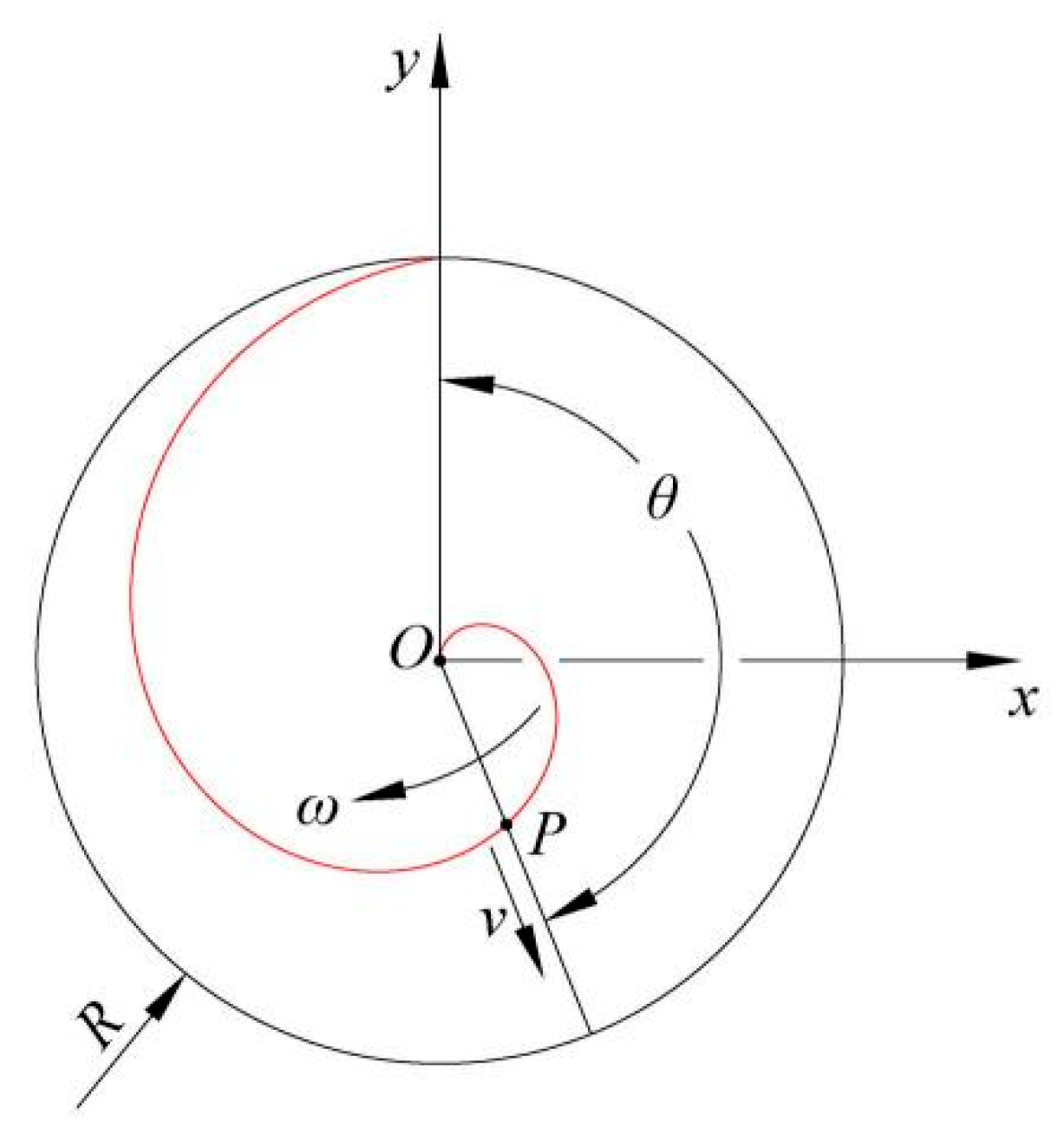
- In the plane xOy, draw an in-plane Archimedes spiral that starts at O and ends at P, denoted by AS (Archimedes spiral), which is colored green.
- (5)
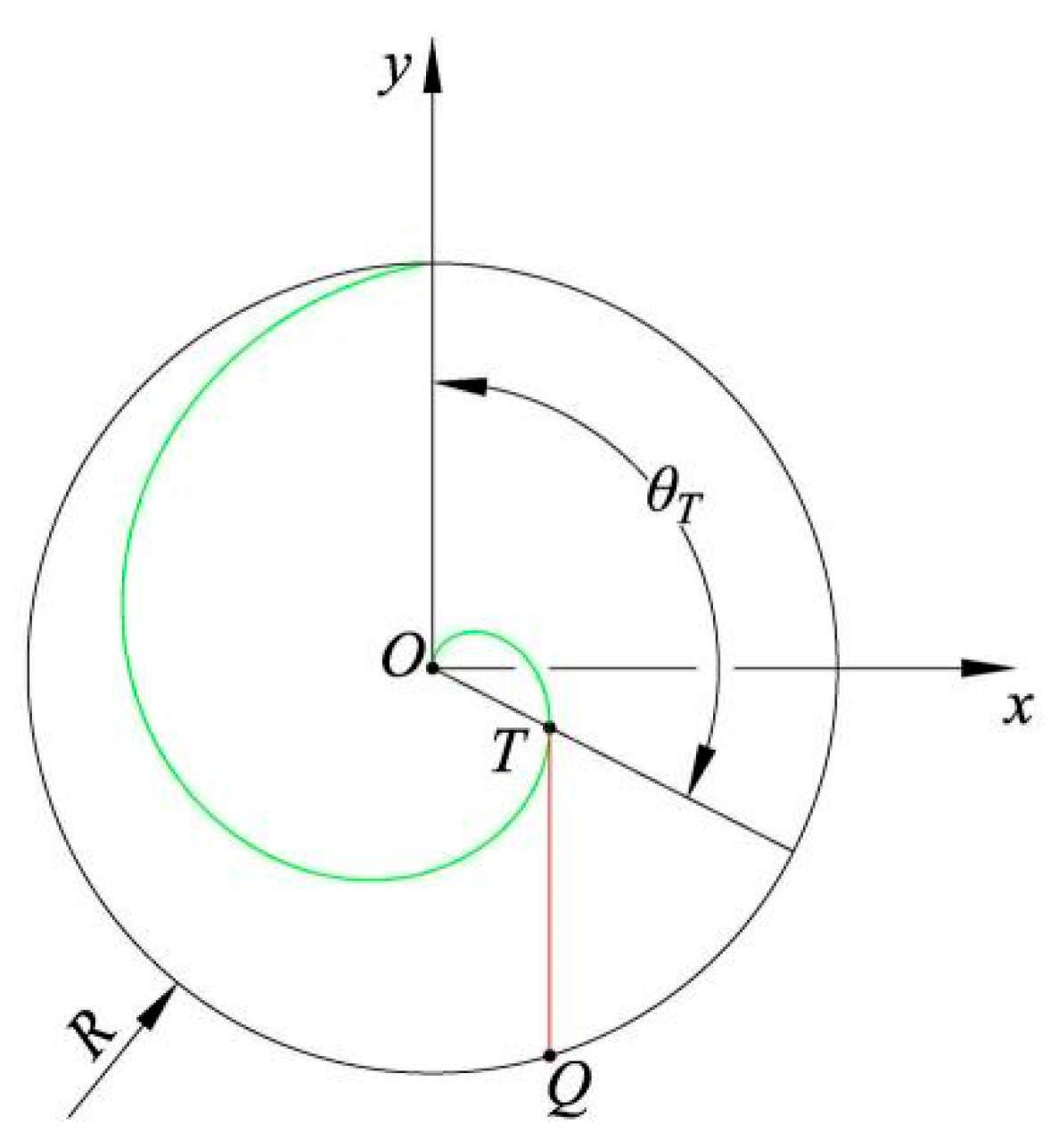
- Draw a straight-line segment parallel to the y-axis, tangent to the spiral AS at point T, and intersecting the circle O at point Q. Define this straight-line segment as QT, colored red.
- (6)
- Points P and Q divide the complete circle O into two arcs: the red arc on the right, denoted by ARC, and the black arc on the left, denoted by ARC1.
- (7)
- The tangent point T divides the green curve AS into two parts: the first part is denoted as TO, and the second part is denoted as TP.
- (8)
3.2. Equations of the Boundary Curves of Plane Figure OPQTO
3.2.1. Equation of Curve TO (Archimedes Spiral AS)
3.2.2. Equation of Curve ARC (Circle O)
3.3. Solving the Coordinates of Key Points on the Boundary of Plane Figure OPQTO
3.3.1. Finding Coordinates of Point T by Establishing Differential Equations
3.3.2. Finding Coordinates of Point Q
3.4. Determination of the Equations of All Straight Lines
- (1)
- (2)
- Given that the coordinates of point Q are Q(0.2896R, −0.9571R), the coordinates of point T are T(0.2896R, −0.1428R), and the straight line QT is parallel to y-axis, the equation of the straight line QT is as follows: x = 0.2896R, −0.9571R ≤ y ≤ −0.1428R.
3.5. Summary of the Standardized Description of Plane Figure OPQTO
- (1)
- (2)
- The boundary of the irregular plane figure OPQTO in Figure 6 is formed by connecting the straight-line OP, the curve ARC (a circular arc of radius R), the straight-line QT, and the curve TO (a part of the Archimedes spiral) in a clockwise direction.
- (3)
- The coordinates of point O are O(0, 0).
- (4)
- The coordinates of point P are P(0, R).
- (5)
- The equation of the straight-line OP is as follows: x = 0, 0 ≤ y ≤ R.
- (6)
- The arc ARC is represented by the equation of circle O, i.e., Equation (7).
- (7)
- The coordinates of point Q are Q(0.2896R, −0.9571R).
- (8)
- The coordinates of point T are T(0.2896R, −0.1428R).
- (9)
- The equation of the straight-line QT is as follows: x = 0.2896R, −0.9571R ≤ y ≤ −0.1428R.
- (10)
- The curve TO is represented by the equation of Archimedes spiral AS, i.e., Equation (6).
4. Standardized Generation Principle and Process of the ASWB Surface
4.1. Stage 1: Establishing 3D Cartesian Coordinate System
4.2. Stage 2: Entire Rotation of the Plane Figure OPQTO
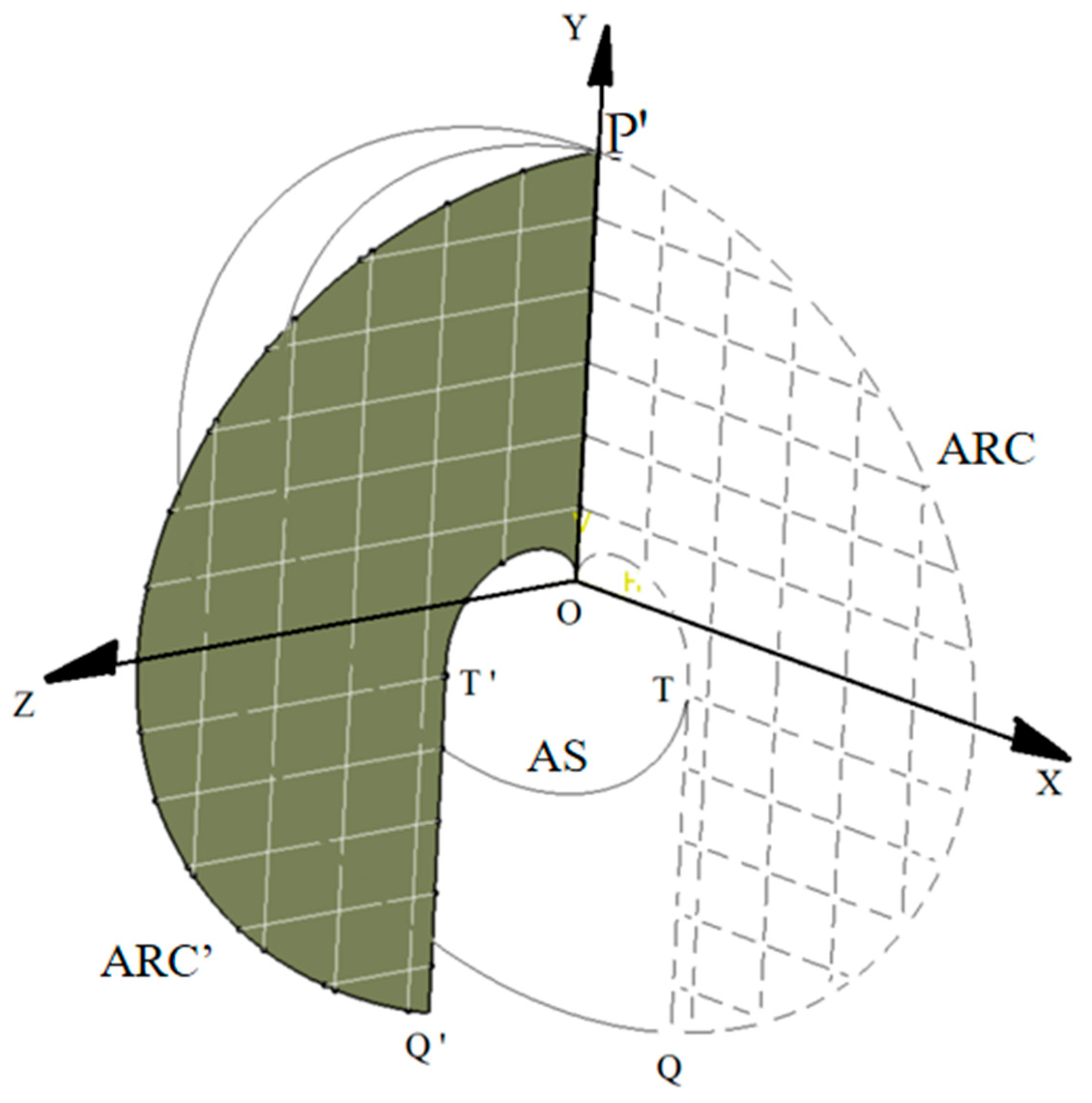
4.3. Stage 3: Deformation of the Plane Figure OP’Q’T’O
5. Discussion
5.1. Uncertain Factors Influencing ASWB Surface Shape
- (1)
- (2)
- (3)
- (4)
- Since the coordinates of the above points are uncertain, the number of shapes of the ASWB surface is infinite.
5.2. Deterministic Factors Influencing the ASWB Surface Shape
- (1)
- Point O does not move before and after the deformation of the plane figure OP’Q’T’O.
- (2)
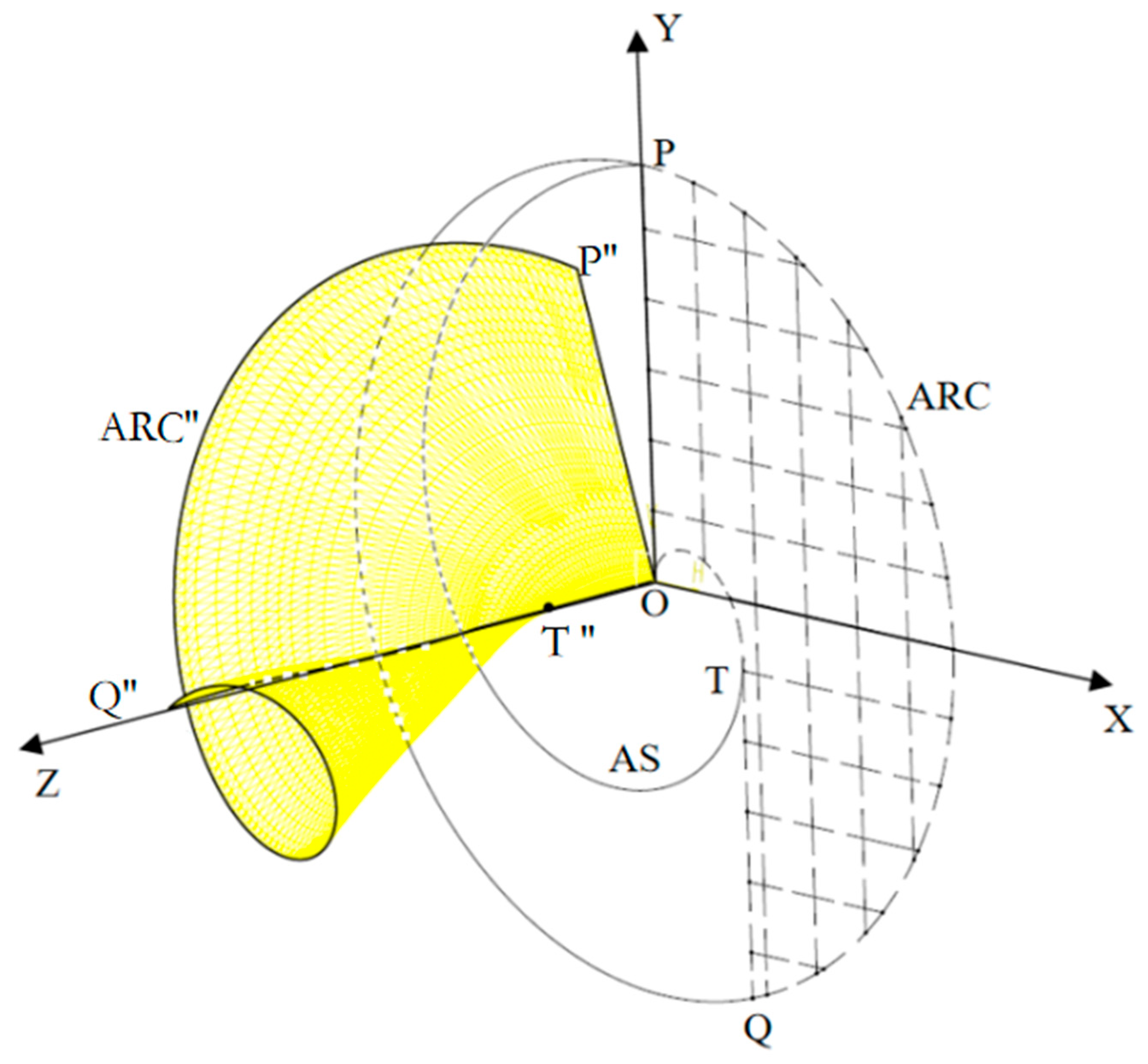
- After the deformation, the plane arc ARC’ in Figure 9 becomes the 3D curve ARC″ in Figure 10, and the projection of ARC″ on the XOY plane is exactly the Archimedes spiral AS on the original xOy plane in Figure 6. This projection relationship (see Figure 10) is believed to be the consensus of all relevant researchers, including the inventor of the ASWB, but this consensus has not been formally stated to date.
- (3)
5.3. Characteristics of the ASWB Surface
- (1)
- During the entire process of transforming the plane figure OPQTO into the ASWB surface, there are some uncertainties, thus the final shape of the generated ASWB surface is uncertain. Therefore, the first feature of the ASWB surface is the following: the ASWB surface is a general term for a class of surfaces composed of an infinite number of similar surfaces.
- (2)
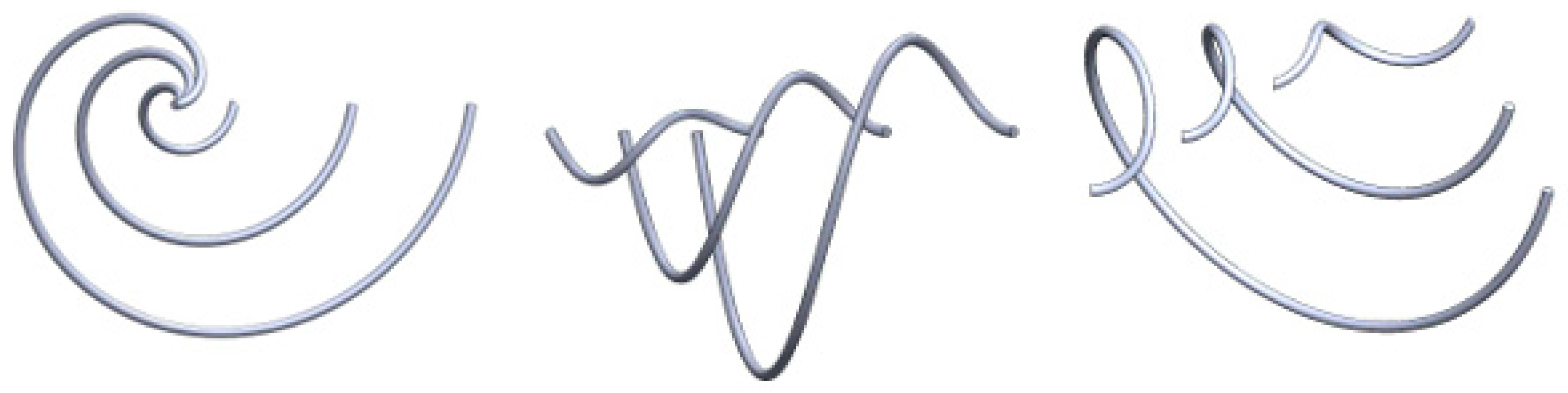
- The second feature of the ASWB surface is the following: the boundary of the ASWB surface consists of one straight line and three 3D curves.
- (3)
- The curve ARC″ (see Figure 10) is a 3D Archimedes spiral, and ARC″ is also a boundary curve of the ASWB surface. Therefore, the third important feature of the ASWB surface is the following: among the curves that constitute the boundary of the ASWB surface, one of them must be a 3D Archimedes spiral.
5.4. Current Modeling Approaches for ASWBs
5.5. Conjectures on the Equation of the ASWB Surface
5.6. On the Definition of ASWB
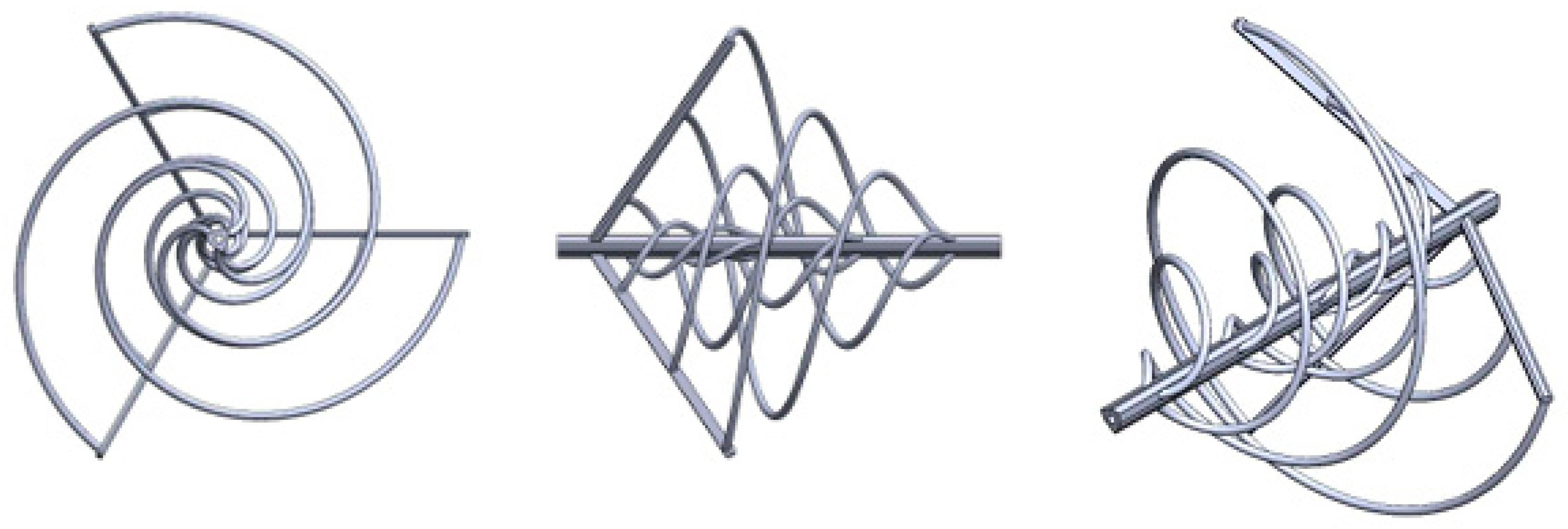
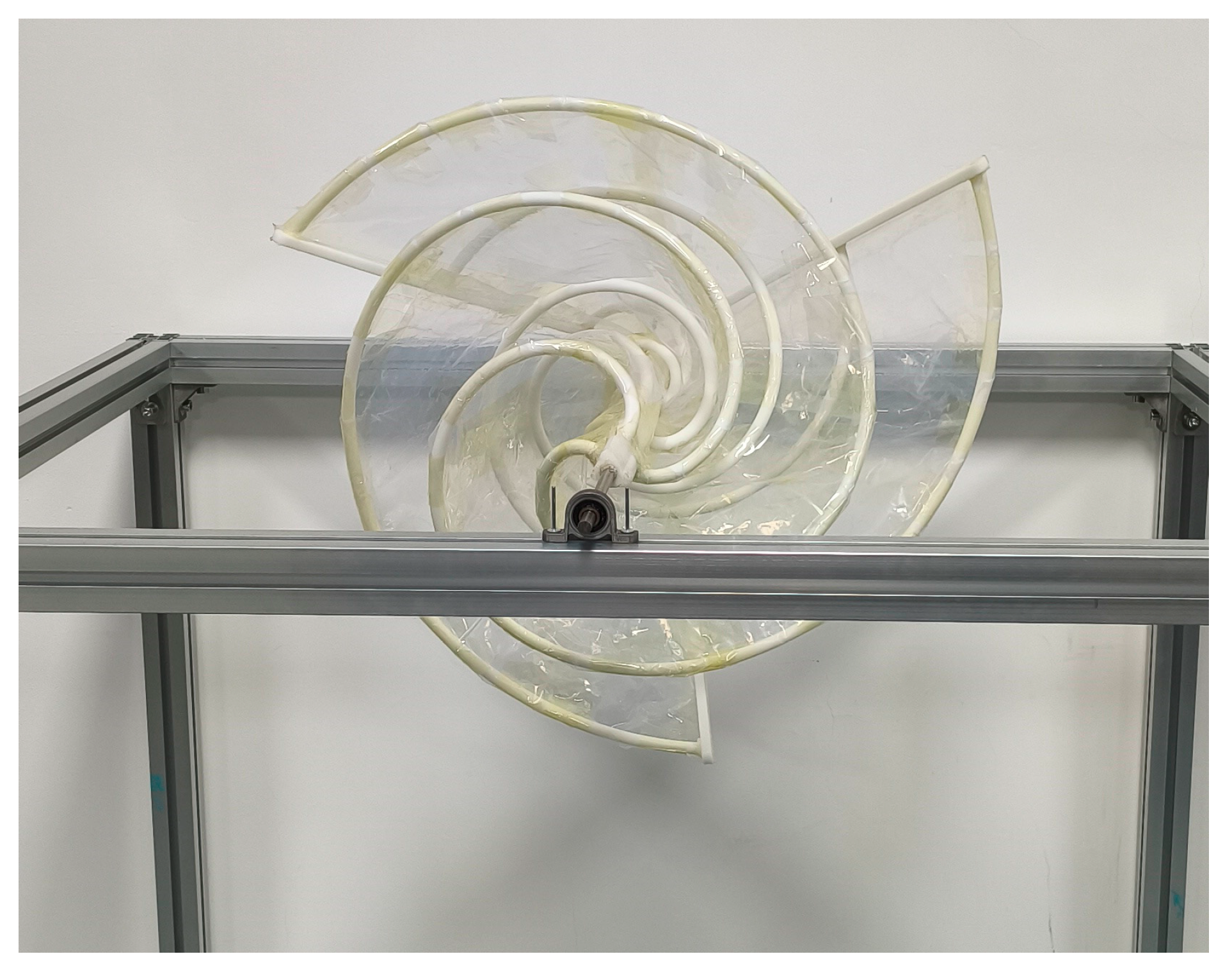
5.7. Demonstration of an Alternative Manufacturing Method for ASWB Based on Parametric Equations
- (1)
- The fabrication of the spiral-shaped skeleton still relies on 3D printing technology, and the size of the skeleton is constrained by the dimensions of the 3D printer. Therefore, producing a large-scale ASWR is currently not feasible;
- (2)
- The cost of fabricating a spiral-shaped skeleton using 3D printing technology remains high;
- (3)
- The shape of the ASWB based on the spiral-shaped skeletons is an approximation of the genuine ASWB shape, resulting in non-optimal aerodynamic performance.
- (1)
- The difficulties associated with fabricating complex curved thin-walled blades are bypassed by redirecting the key manufacturing focus to the production of spiral-shaped skeletons;
- (2)
- Alternative technologies beyond 3D printing, such as 3D freeform tube bending technology, can offer low-cost and high-efficiency manufacturing of large-scale spiral-shaped skeletons, thereby making low-cost and high-efficiency production of large-sized ASWBs or ASWRs feasible;
- (3)
- By further selecting or developing materials for both the skeleton and the covering skin, the realization of lightweight, high-strength ASWBs becomes practical.
6. Conclusions
- (1)
- The existing description of the generation principle of the ASWB surface is qualitative;
- (2)
- In the published literature, no mathematical equations were found that attempt to fully describe the surface of the ASWB;
- (3)
- A clear and exact definition of the ASWB appears to be absent from the published literature.
Author Contributions
Funding
Institutional Review Board Statement
Informed Consent Statement
Data Availability Statement
Conflicts of Interest
References
- Tong, W. Fundamentals of Wind Energy; WIT Press: Southampton, UK, 2010. [Google Scholar]
- Liu, J.; Lin, H.; Zhang, J. Review on the technical perspectives and commercial viability of vertical axis wind turbines. Ocean Eng. 2019, 182, 608–626. [Google Scholar] [CrossRef]
- Schubel, P.J.; Crossley, R.J. Wind turbine blade design. Energies 2012, 5, 3425–3449. [Google Scholar] [CrossRef]
- Hansen, M.O.L. Aerodynamics of Wind Turbines, 2nd ed.; Earthscan: London, UK, 2008. [Google Scholar]
- Manwell, J.F.; McGowan, J.G.; Rogers, A.L. Wind Energy Explained: Theory, Design and Application; Wiley: Chichester, UK, 2009. [Google Scholar]
- Hemami, A. Wind Turbine Technology; Cengage Learning: Boston, MA, USA, 2012. [Google Scholar]
- Nelson, V. Innovative Wind Turbines: An Illustrated Guidebook; CRC Press: Boca Raton, FL, USA, 2019. [Google Scholar]
- Adeyeye, K.A.; Ijumba, N.; Colton, J. The effect of the number of blades on the efficiency of a wind turbine. IOP Conf. Ser. Earth Environ. Sci. 2021, 801, 012020. [Google Scholar] [CrossRef]
- Spera, D.A. Wind Turbine Technology: Fundamental Concepts of Wind Turbine Engineering; ASME Press: New York, NY, USA, 1994. [Google Scholar]
- Wang, H.; Xiong, B.; Zhang, Z.; Zhang, H.; Azam, A. Small wind turbines and their potential for internet of things applications. iScience 2023, 26, 107674. [Google Scholar] [CrossRef]
- Hara, Y.; Jodai, Y. Vertical-Axis Wind Turbine; MDPI: Basel, Switzerland, 2024. [Google Scholar]
- Kumar, R.; Raahemifar, K.; Fung, A.S. A critical review of vertical axis wind turbines for urban applications. Renew. Sustain. Energy Rev. 2018, 89, 281–291. [Google Scholar] [CrossRef]
- Abraham, J.P.; Plourde, B.D.; Mowry, G.S.; Minkowycz, W.J.; Sparrow, E.M. Summary of Savonius wind turbine development and future applications for small-scale power generation. J. Renew. Sustain. Energy 2012, 4, 042703. [Google Scholar] [CrossRef]
- Tayebi, A.; Torabi, F. Flow control techniques to improve the aerodynamic performance of Darrieus vertical axis wind turbines: A critical review. J. Wind Eng. Ind. Aerodyn. 2024, 252, 105820. [Google Scholar] [CrossRef]
- Rudrapal, D.; Acharya, S. Characterization of a novel lift-drag-driven air-activated hybrid vertical axis wind turbine. Sustain. Energy Technol. Assess. 2023, 59, 103415. [Google Scholar] [CrossRef]
- Kim, K.C.; Ji, H.S.; Kim, Y.K.; Lu, Q.; Baek, J.H.; Mieremet, R. Experimental and numerical study of the aerodynamic characteristics of an Archimedes spiral wind turbine blade. Energies 2014, 7, 7893–7914. [Google Scholar] [CrossRef]
- Safdari, A.; Kim, K.C. Aerodynamic and structural evaluation of horizontal Archimedes spiral wind turbine. J. Clean Energy Technol. 2015, 3, 34–38. [Google Scholar] [CrossRef]
- Jang, H.; Kim, D.; Hwang, Y.; Paek, I.; Kim, S.; Baek, J. Analysis of Archimedes spiral wind turbine performance by simulation and field test. Energies 2019, 12, 4624. [Google Scholar] [CrossRef]
- Zemamou, M.; Aggour, M.; Toumi, A. Review of Savonius wind turbine design and performance. Energy Procedia 2017, 141, 383–388. [Google Scholar] [CrossRef]
- Kim, K.C.; Kim, Y.K.; Ji, H.S.; Beak, J.H.; Mieremet, R. Aerodynamic characteristics of horizontal axis wind turbine with Archimedes spiral blade. In Proceedings of the ASME International Mechanical Engineering Congress and Exposition, San Diego, CA, USA, 15–21 November 2013; Volume 56321, p. V07BT08A070. [Google Scholar]
- Lu, Q.; Li, Q.; Kim, Y.K.; Kim, K.C. A study on design and aerodynamic characteristics of a spiral-type wind turbine blade. J. Korean Soc. Vis. 2012, 10, 27–33. [Google Scholar] [CrossRef]
- Ebrahimi, S.; Ghassemi, M.A. Numerical aerodynamics analysis of the Archimedes screw wind turbine. Int. J. Multidiscip. Sci. Eng. 2018, 9, 12–15. [Google Scholar]
- Hamid, H.; Abd El Maksoud, R.M. A comparative examination of the aerodynamic performance of various seashell-shaped wind turbines. Heliyon 2023, 9, e17036. [Google Scholar] [CrossRef]
- Ji, H.S.; Baek, J.H.; Mieremet, R.; Kim, K.C. The aerodynamic performance study on small wind turbine with 500 W class through wind tunnel experiments. Int. J. Renew. Energy Sources 2016, 1, 7–12. [Google Scholar]
- Chaudhary, S.; Jaiswal, S.; Nanda, R.; Patel, S.; Kumar, P.; Dhar, V.; Dixit, R. Comparison of torque characteristics of Archimedes wind turbine evaluated by analytical and experimental study. Int. J. Mech. Prod. Eng. 2016, 4, 75–78. [Google Scholar]
- Kamal, A.M.; Nawar, M.A.; Attai, Y.A.; Mohamed, M.H. Archimedes spiral wind turbine performance study using different aerofoiled blade profiles: Experimental and numerical analyses. Energy 2023, 262, 125567. [Google Scholar] [CrossRef]
- Ozeh, M.; Mishra, A.; Wang, X. Mini wind turbine for small-scale power generation and storage (Archimedes wind turbine model). In Proceedings of the ASME International Mechanical Engineering Congress and Exposition, Pittsburgh, PA, USA, 9–15 November 2018; Volume 520. [Google Scholar]
- Ji, H.S.; Kim, K.C.; Baek, J.H.; Ruijtenbeek, R.R. The aerodynamic method of the Archimedes wind turbine. J. Power Solut. 2014, 1–9. [Google Scholar]
- Timmer, W.A.; Toet, S. Verslag van de Metingen aan de Archimedes in de Lage-Snelheids Windtunnel van DNW; TU Delft: Delft, The Netherlands, 2009. [Google Scholar]
- Kim, K.C.; Lu, Q. A Multi-Prong Study on Aerodynamic Characteristics of Archimedes Spiral-Type Wind Turbine Blade. The Archimedes. Available online: https://thearchimedes.com/images/pdf/Multiprong%20study%20KC%20Kim.pdf (accessed on 25 January 2026).
- Refaie, A.G.; Hameed, H.A.; Nawar, M.A.; Attai, Y.A.; Mohamed, M.H. Qualitative and quantitative assessments of an Archimedes spiral wind turbine performance augmented by a concentrator. Energy 2021, 231, 121128. [Google Scholar] [CrossRef]
- Faisal, A.E.; Lim, C.W.; Al-Quraishi, B.A.J.; Milano, J.; Hong, T.C.; Chen, C.P. Aerodynamic performance enhancement of Archimedes spiral wind turbine blades through surface modifications: A numerical and experimental study. Sci. Rep. 2025, 15, 41112. [Google Scholar] [CrossRef] [PubMed]


Disclaimer/Publisher’s Note: The statements, opinions and data contained in all publications are solely those of the individual author(s) and contributor(s) and not of MDPI and/or the editor(s). MDPI and/or the editor(s) disclaim responsibility for any injury to people or property resulting from any ideas, methods, instructions or products referred to in the content. |
© 2026 by the authors. Licensee MDPI, Basel, Switzerland. This article is an open access article distributed under the terms and conditions of the Creative Commons Attribution (CC BY) license.
Share and Cite
Kan, Y.; Chen, Y.; Miao, D.; Hu, Y.; Chang, Q.; Fan, J.; Wang, J.; Li, Q. Standardized Description of the Generation Principle and Process of the Surface of Archimedes Spiral Wind Blade. Appl. Sci. 2026, 16, 1469. https://doi.org/10.3390/app16031469
Kan Y, Chen Y, Miao D, Hu Y, Chang Q, Fan J, Wang J, Li Q. Standardized Description of the Generation Principle and Process of the Surface of Archimedes Spiral Wind Blade. Applied Sciences. 2026; 16(3):1469. https://doi.org/10.3390/app16031469
Chicago/Turabian StyleKan, Yingnan, Yonghui Chen, Dongjing Miao, Ye Hu, Qizhi Chang, Jiuchen Fan, Jianqiang Wang, and Qinghua Li. 2026. "Standardized Description of the Generation Principle and Process of the Surface of Archimedes Spiral Wind Blade" Applied Sciences 16, no. 3: 1469. https://doi.org/10.3390/app16031469
APA StyleKan, Y., Chen, Y., Miao, D., Hu, Y., Chang, Q., Fan, J., Wang, J., & Li, Q. (2026). Standardized Description of the Generation Principle and Process of the Surface of Archimedes Spiral Wind Blade. Applied Sciences, 16(3), 1469. https://doi.org/10.3390/app16031469