3.1. Longitudinal Tensile Stiffness and Strength
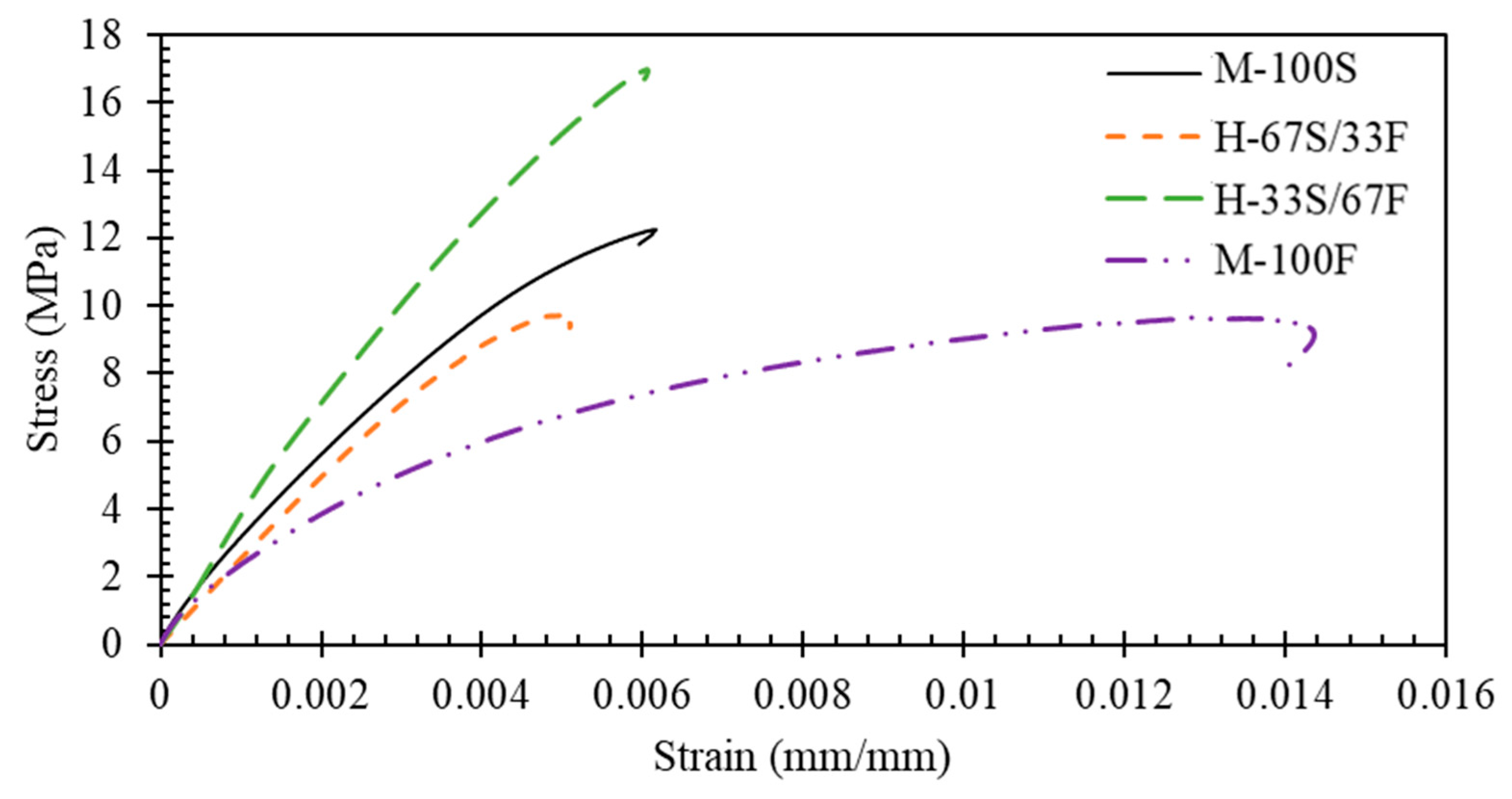
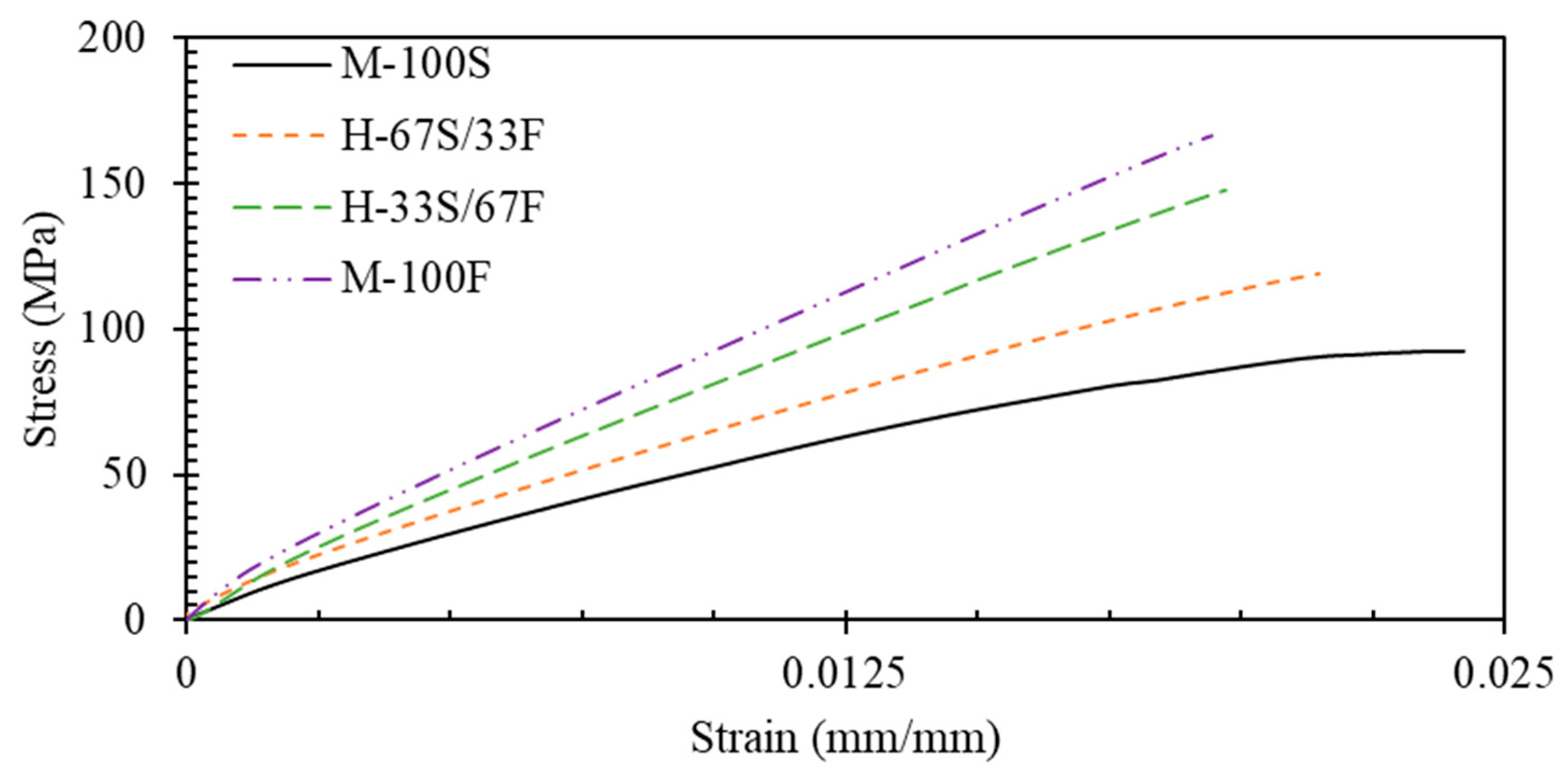
Tensile data values were obtained from the load-strain measurements. Representative stress–strain curve for the different samples is shown in
Figure 3. The experimental and predicted analytical results for tensile strength (
XT), Young’s modulus (
Ε1T) and Poisson’s ratio (
ν12) are presented in
Table 7,
Table 8 and
Table 9.
The calculated analytical results based on the actual fibre volume fractions exhibited moderate to good agreement with experimental values, with deviations ranging from −12.6% to −3.1% for Young’s modulus, −21.8% to 27.4% for tensile strength and −17% to 8.2% for Poisson’s ratio. Predictions for Young’s modulus exhibited minimal deviation from experimental values (mean absolute percentage error < 6.4%), confirming the model’s reliability. Again, similar to the experimental Young’s modulus test results, an increase in flax content correlated to increased stiffness.
The intraply fibres exhibit a quasi-linear increase in tensile strength (XT) and Young’s modulus (Ε1T), with an increase in flax content. The overall best tensile strength was observed in the M-100F sample, regardless of the fibre volume fraction. The M-100S, H-67S/33F and H-33S/67F samples exhibited a decrease of 41.9%, 23.6%, 16.5% in tensile strength, and a decrease of 41.7%, 19.6%, 9.6% in Young’s modulus, compared to mono-fibre M-100F flax composites. The reduction in strength and stiffness properties is primarily attributed to the intrinsic tensile strength of flax fibres, that also has higher fibre wettability when compared to sisal fibres. From a cost perspective, the mono-fibre M-100F flax specimens still provide an added cost-advantage over the hybrid and sisal-based composites when the fibre ratio is kept at 30% or below. However, the hybrid composites H-67S/33F and H-33F/67F, with a plausible cost reduction of 18.5% and 9%, prove to be in strong contention. Upon increasing the fibre volume fraction, the hybrid specimens become more cost-effective in terms of both strength and stiffness properties.
The apparent increase in tensile properties for the H-33S/67F when compared to the H-67S/33F is attributed to the increase in flax content that enhances the load-bearing capacity of the hybrid lamina in a quasi-linear manner. In addition, flax fibres generally provide better fibre–matrix adhesion and more efficient stress transfer due to their more uniform microstructure and controlled processing, whereas sisal fibres exhibit higher variability and surface irregularities.
In principle, the analytical models underestimate the strength properties, bar for the calculated strength of the mono-fibre sisal-based composite. Zuccarello et al. [
21] have shown that the simple rule-of-mixture (ROM) model does not consider fibre interfacial interaction, twisting and other defects. A correction factor of 0.85 was applied to the maximum tensile strength of the sisal fibre (
), and a better fit to the empirical tests was achieved. Applying the same 0.85 correction value for this study, the predicted tensile strength for M-100S was 109.6 MPa, reducing the error to 18.4%. The variation can be explained by other forces such as crimp factor, fibre twist and improper fibre wettability. The latter is more evident for the relatively thicker sisal yarns.
The incorporation of flax fibres appears to improve fibre–matrix interaction by filling inter-fibre voids, resulting in a more compact architecture with fewer resin-rich areas. However, a review of the analytical data reveals an unexpected underestimation of the composite properties for the flax-based composites, with a deviation of −18.4% for the tensile strength of the mono-fibre flax composite. The observed underestimation is contrary to expectation, as analytical models, which do not account for inherent fibre and composite defects, should theoretically overestimate the values [
15,
48]. The discrepancy is primarily attributed to the use of tensile properties from the flax fibre yarns rather than single fibres within the model, a methodology employed in other works. As noted by Aldroubi et al. [
49], the tensile properties of flax fibres are highly scale-dependent, exhibiting a reverse relationship between properties and material scale. A reduction of approximately 55% was observed when comparing the tensile strength of a single fibre (1067 MPa) to that of a yarn (479 MPa). These findings are further corroborated by other authors [
50,
51], with Zhu et al. finding that the mechanical properties of technical fibres were only 57% of the elementary fibres.
Consequently, when the rule-of-mixtures (ROM) model is applied without modification using the mechanical properties of flax yarn, the model will inherently under predict the composite’s performance. When the ROM is corrected by applying a factor of 1.55 to the flax fibre properties within Equations (18) and (19), the error is reduced, changing to −7.73%, 13.6% and 12.8% for the H-67S/33F (112.3 MPa), H-33S/67F (151.1 MPa) and M-100F (179.6 MPa) composites, respectively.
The tensile strength values obtained for the M-100S in the present study were consistent with the range typically reported in the literature. Jayashri et al. reference [
22], as seen in
Table 10. The higher values reported by Zuccarello et al. [
21] may be ascribed to the type of sisal reinforcement employed in the study, consisting of unidirectional fibres as opposed to the yarn fibres used in this study. Unidirectional fibres comprising straight, long bundles promote more efficient load transfer, as the fibres are predominantly aligned with the loading direction. However, this configuration is constrained by the maximum extractable fibre length. By contrast, the utilisation of fibre yarns and cordage provides broader applicability and facilitates industrial-scale implementation.
The M-100F composite exhibited a similar trend to the M-100S, with tensile strength values positioned at the lower end of those reported in the current literature. The reduced tensile strength observed in the present study is primarily attributed to the fibre volume fraction. Furthermore, Mahjoub and Harzallah [
52] demonstrated that the fibre tex exerts a significant influence on composite tensile performance, with lower tex values yielding superior properties. This improvement has been associated with enhanced fibre packing density and improved alignment within finer yarns.
The hybrid composites (H-67S/33F and H-33S/67F) exhibited substantially higher tensile strength than values reported in the literature that uses either sisal or flax combined with other fibres. An increase of 40% and 297% relative to the Queiroz et al. [
35] and Sumesh et al. [
27], respectively, is evident. This enhancement can be attributed to the predominance of unidirectional yarns in the present study. For instance, Sumesh et al. [
27] reinforced their composites with short fibres, which promoted a more uniform, near-isotropic load distribution but resulted in lower ultimate tensile strength. The study by de Queiroz et al. [
35] employed intraply reinforcements and is therefore more comparable. The present work presented superior mechanical performance, primarily due to the higher intrinsic properties of flax and sisal when compared to jute. When compared to interply composites, the tensile strength reported by Benkhelladi et al. [
53] presented 48% lower mechanical properties than those found H-33S/67F. The reduction is mainly due to the 80/20—jute/flax proportion, where the reinforcement is predominantly made from jute. Finally, Hadlahalli et al. [
28] stated a tensile strength that was 32% higher than that observed for H-33S/67F, largely as a result of the inclusion of glass fibres as reinforcement. The authors presented values for the glass fibre composites of approximately 214.54 MPa, while the sisal composite presented values of 35.43 MPa.
Table 10.
Comparison of tensile strength and modulus with other studies.
Table 10.
Comparison of tensile strength and modulus with other studies.
| Type | Fibre Type | Fibre/Matrix | XT [MPa] | Ε1T, [GPa] | Reference |
|---|
| Mono-fibre | Sisal | 28/72 by vol% | 92.57 | 4.63 | Current |
| Sisal | 30/70 by wt% | 107.80 | 8.50 | [22] |
| Sisal | 40/60 by vol% | 290.00 | 15.00 | [21] |
| Flax | 29/71 by vol% | 159.22 | 7.94 | Current |
| Flax | 43/57 by wt% | 204.90 | 17.10 | [22] |
| Flax | - | 181.40 | 17.70 | [16] |
| Flax | 41/59 by vol% | 298.00 | 30.00 | [17] |
| Hybrid | H-67S/33F | 30/70 by vol% | 121.71 | 6.38 | Current |
| H-33S/67F | 31/69 by vol% | 132.98 | 7.18 | Current |
| Short fibres—Ramie/Flax | 30/50 by wt% | 33.46 | 3.82 | [27] |
| Interply—Sisal/Stinging nettle | 40/60 by vol% | 67.53 | - | [30] |
| Intraply—Jute/Sisal | 57.5/42.5 by vol% | 95.00 | 10.00 | [35] |
| Interply—Jute/Flax | 80/20 by wt% | 69.30 | 2.13 | [53] |
| Interply—Sisal/GF/Eggshell Powder | 44.74/55.26 wt% | 195.23 | - | [28] |
3.2. Transverse Tensile Stiffness and Strength
Representative stress–strain curve can be seen in
Figure 4 with the corresponding transverse modulus and strength presented in
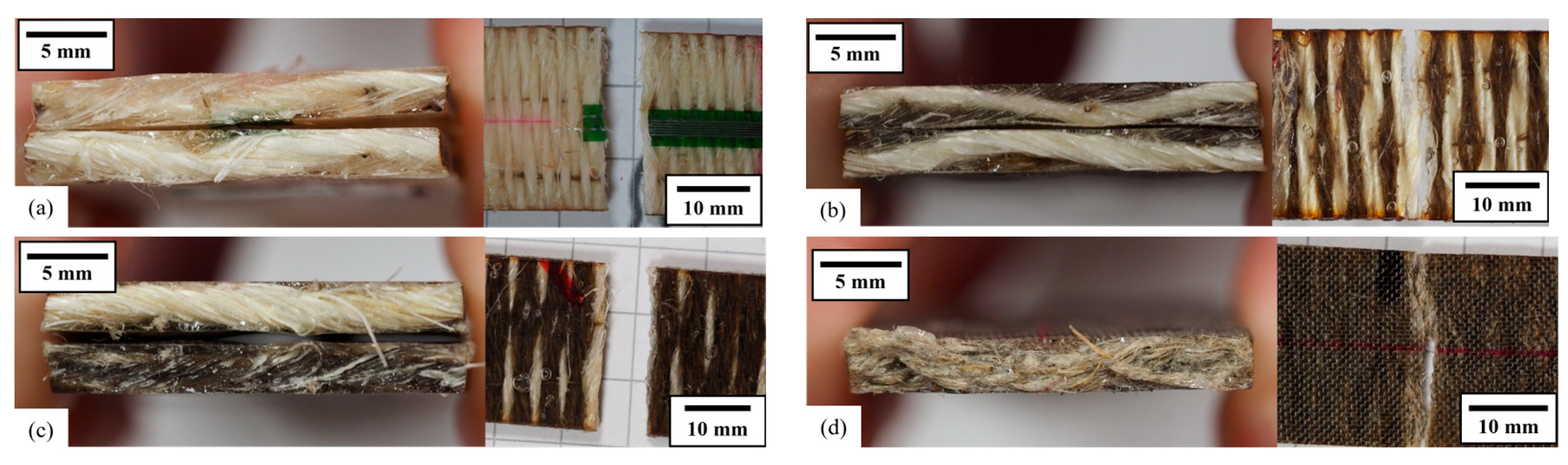
Table 11. As opposed to the longitudinal samples, the results indicate that the tensile transverse strength data does not present any linear behaviour compared to flax content. The H-33S/67F sample demonstrated the best overall result for tensile strength (
YT) and stiffness (
Ε2T), compared to the other samples. The stiffness (
Ε2T) shows a quasilinear increase from samples containing less sisal fibres. For these samples the addition of flax in the hybrid composites has beneficial effects.
The increasing trend in both stiffness and strength is disrupted by the M-100F sample, which shows a sharp decline in both strength and stiffness values. These results are consistent with other tests, where M-100F exhibited high tensile strength (
XT) along the fibre direction but lower mechanical properties in the transverse direction (
YT), shear (
S12), and compression (
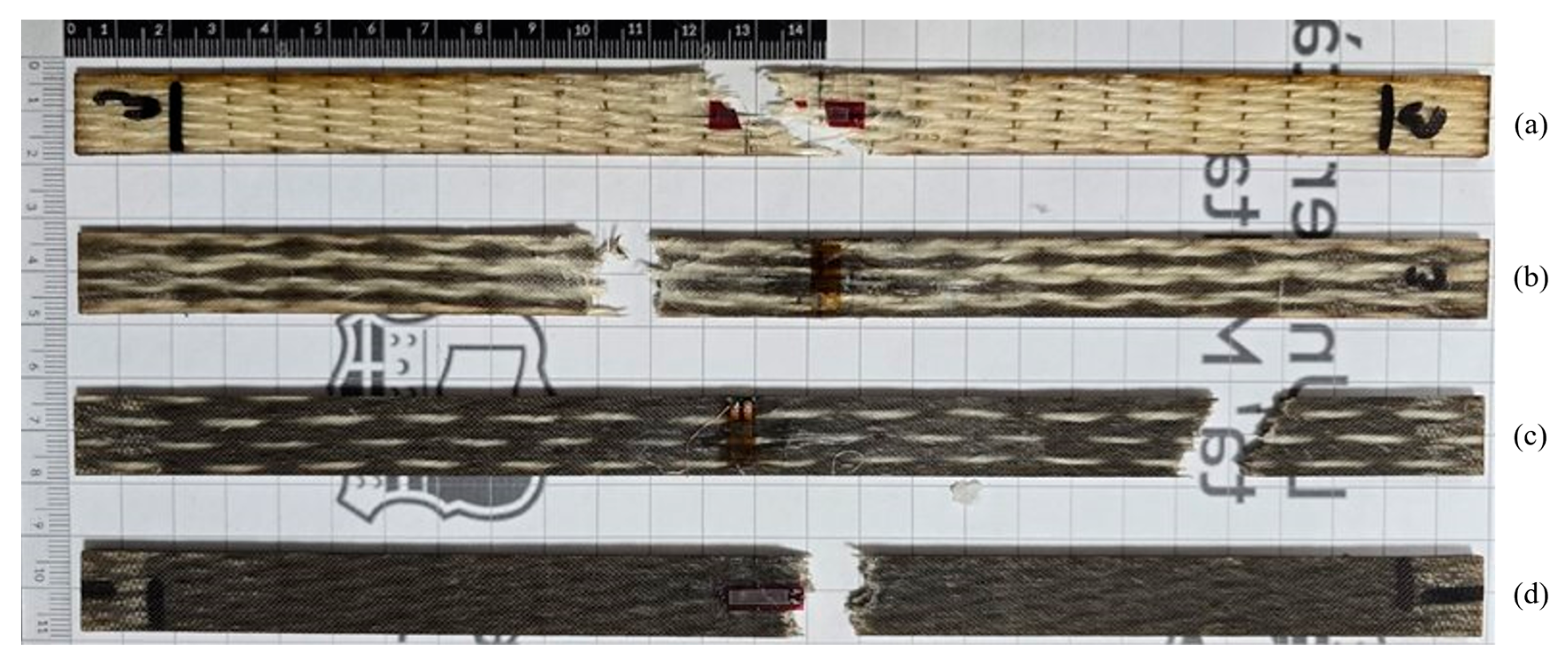
Xc) as shown further on. The behaviour can be better understood by the failure modes described in
Section 4.
Table 11 also compares the experimental transverse stiffness and strength to the analytical solutions. In the case of the transverse stiffness, the best correlation was found when
was assumed in Equation (12). The
value ranging between 0 and
dictates the influence of the matrix’s transverse stiffness on the composite. Small values indicate that the fibres are not effective in enhancing the transverse properties [
46]. The differences between the analytical and experimental results are significantly high, particularly for the M-100F composite samples even when the interaction of the matrix transverse stiffness is assumed to be negligible. Using the experimental
Ε2T and the actual
the closest correlation was achieved when the representative volume element was square, typically found in these test samples, if one considered the individual sisal and flax acting individually. Again, the analytical solutions fail to accurately predict the experimental results, albeit the authors are confident with the experimental test results attained where the predicted minor Poisson’s ratio was relatively similar to the experimental test results for composite consisting mainly of sisal fibres. In the case of flax-dominant samples H-33S/67F and M-100F, the minor Poisson’s ratio was not accurately predicted, suggesting that other mechanisms are developing, possibly pointing towards anisotropic behaviour.
3.3. In-Plane Modulus of Rigidity and Shear Strength
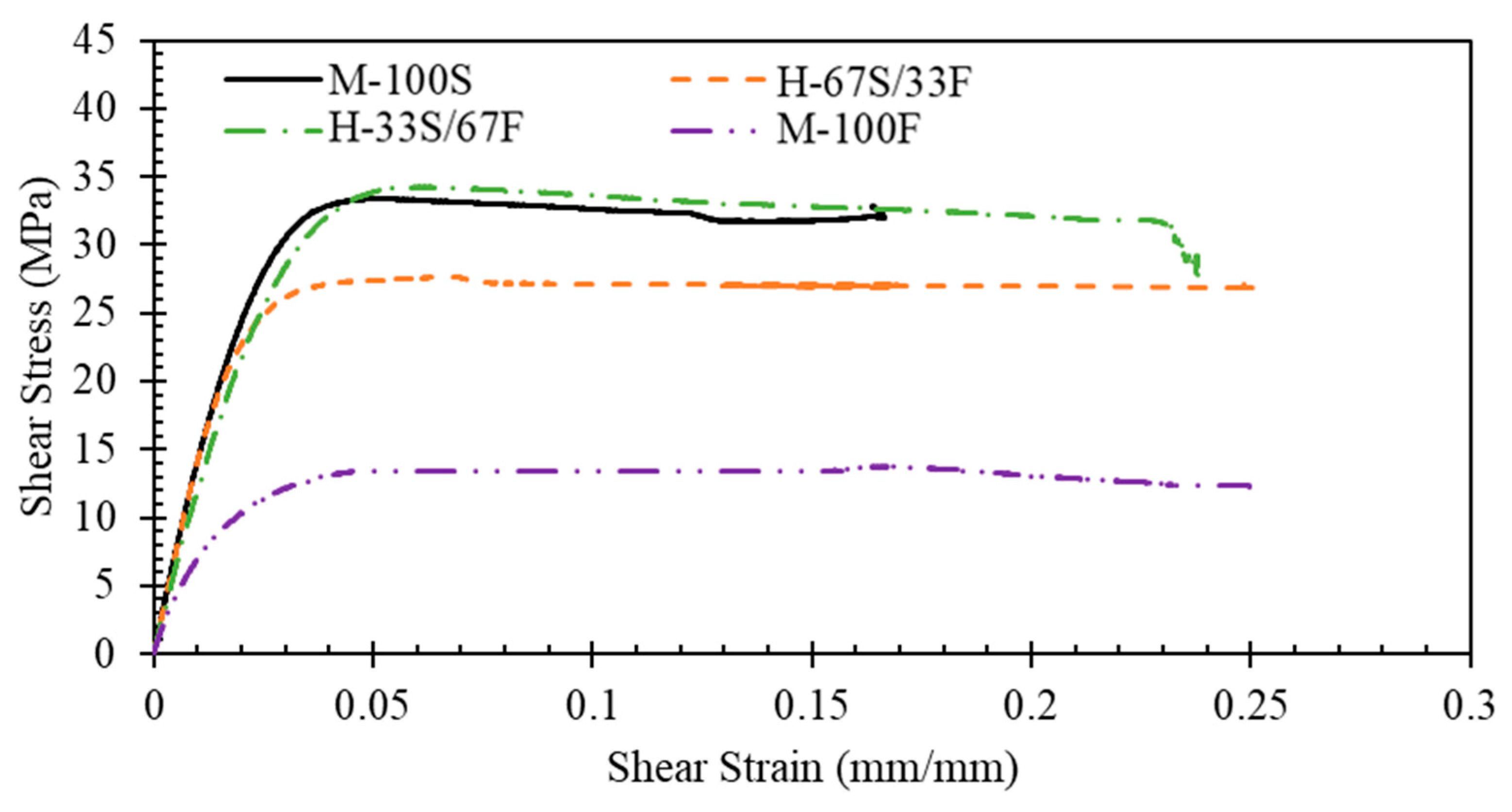
The load and strain were closely monitored, yielding representative stress–strain curves as seen in
Figure 5. The curves show that apart from the M-100F specimens a similar stiffness stress–strain behaviour is observed. The equivalent modulus of rigidity and shear strength for the different samples can be seen in
Table 12.
The hybrid samples presented the best results in shear strength, with H-33S/67F yielding 11.5%, 25.5% and 71.7% higher shear strength than M-100S, H-67S/33F and M-100F, respectively. As for stiffness, little variation was seen between M-100S, H-67S/33F and H-33S/67F samples, with no statistical difference (
F (3) = 1.33,
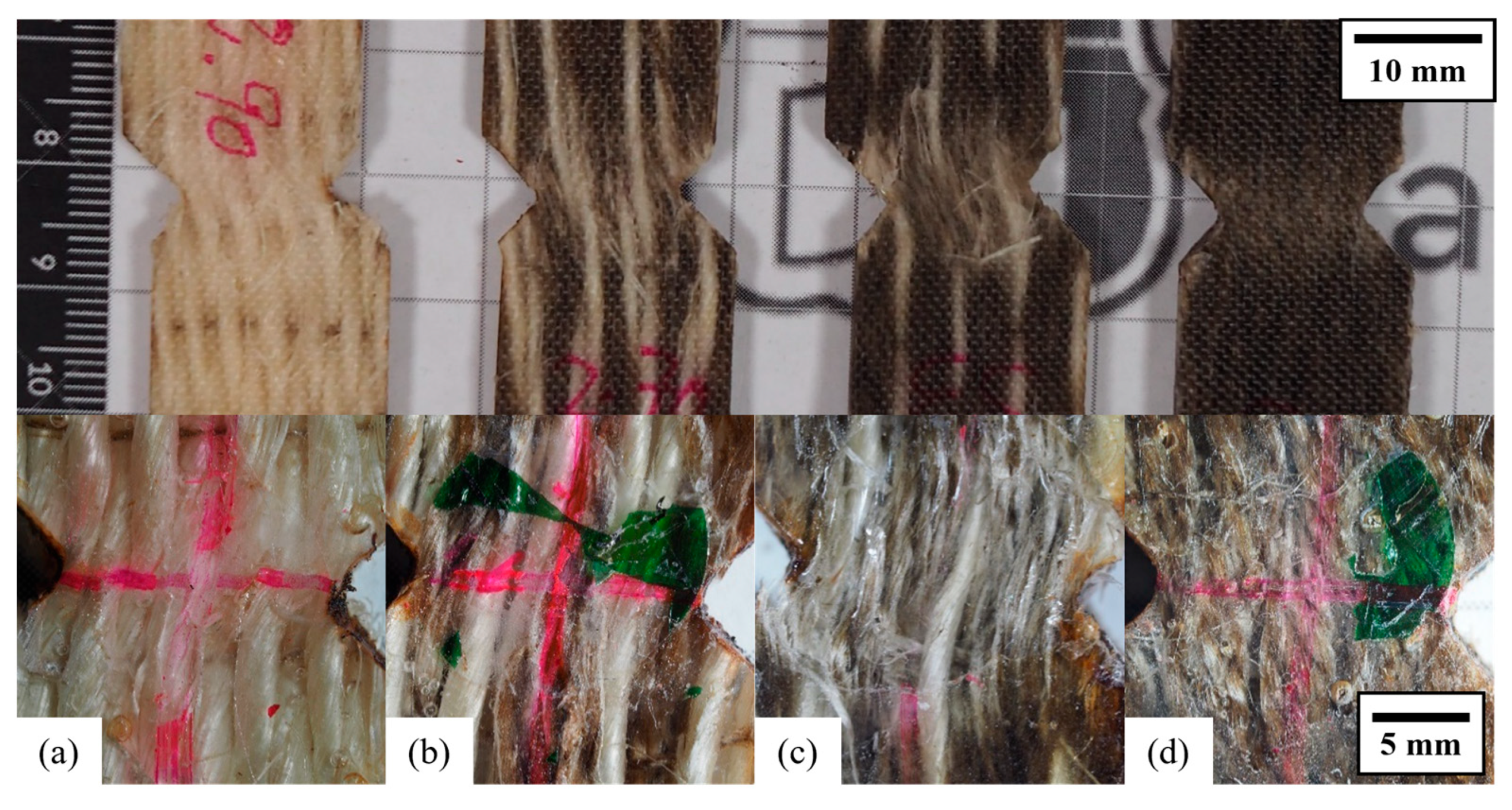
p = 0.29). However, the M-100F composites presented the lowest divergent values for both strength and stiffness. This is a similar trend as observed for the transverse tensile stiffness and strength. Shear in composites is highly dependent on fibre characteristics and interfacial adhesion. Furthermore, the failure and crack propagation are a determining factor in shear strength. The failure mode determines if the breakage occurs within the fibre or in the fibre–matrix interface [
54], which will eventually influence the material properties. Further details on the failure modes recorded during testing can be found in
Section 4. From a cost perspective, the hybrid composites are the most favourable even if off the shelf bio-based epoxy resin is used.
The Halpin–Tsai [
47] micromechanics analytical solution provides a good prediction of the modulus of rigidity for the all the samples bar the M-100F samples. The best fit was found when
was set to zero, suggesting minimal shear enhancement from the fibres. The calculated shear strength was relatively close to the experimental values, particularly when the experimentally determined modulus of rigidity was applied.
3.4. Compressive Loading Along the Fibre (Longitudinal) Direction
The tests were performed in accordance with ASTM D3410 [
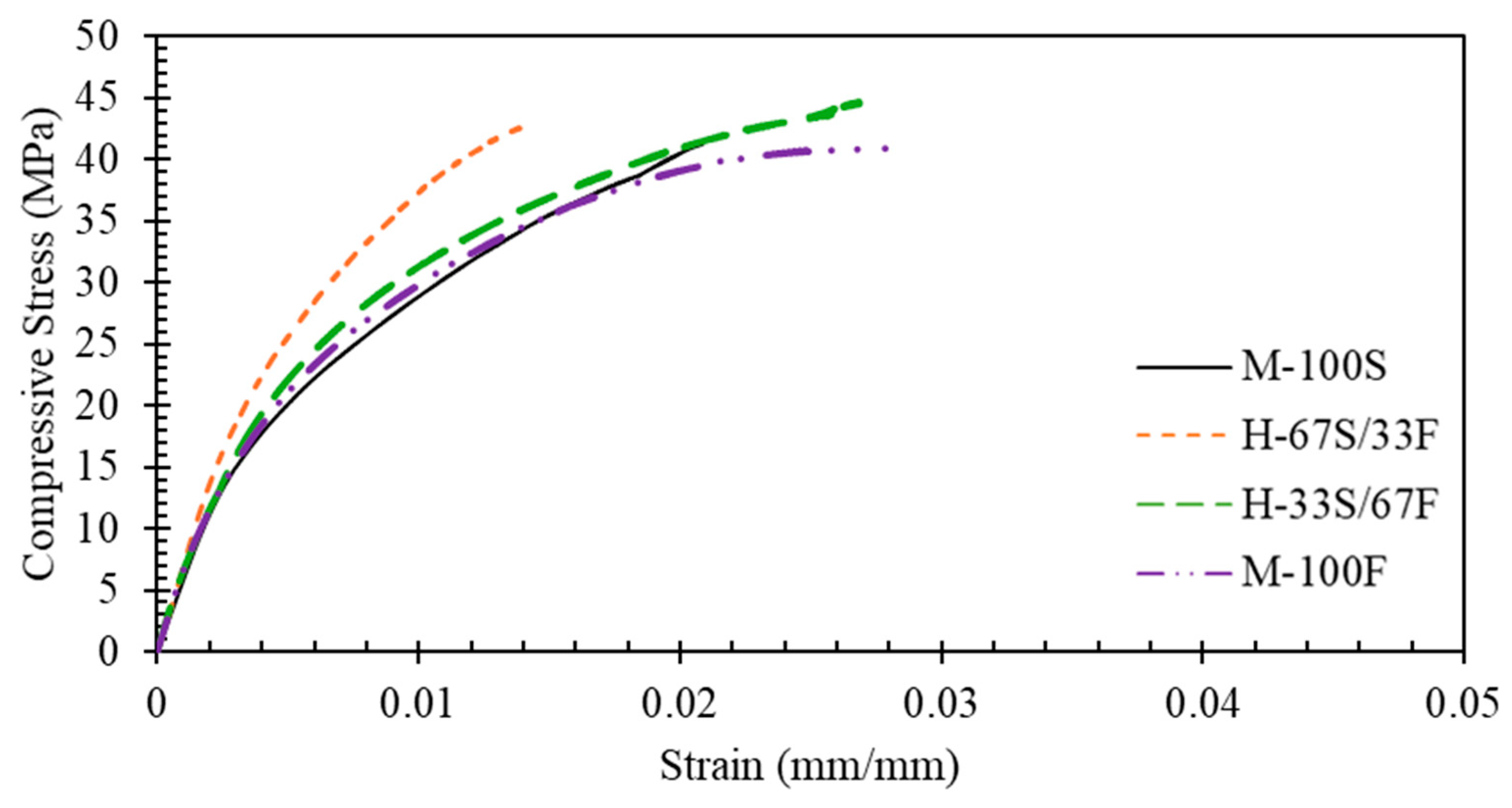
44] using the IITRO compression fixture and test method. Compressive properties were derived from load–strain gauge measurements. The resulting stress–strain behaviour is illustrated in
Figure 6. A comparative analysis of compressive strength and modulus is presented in
Table 13.
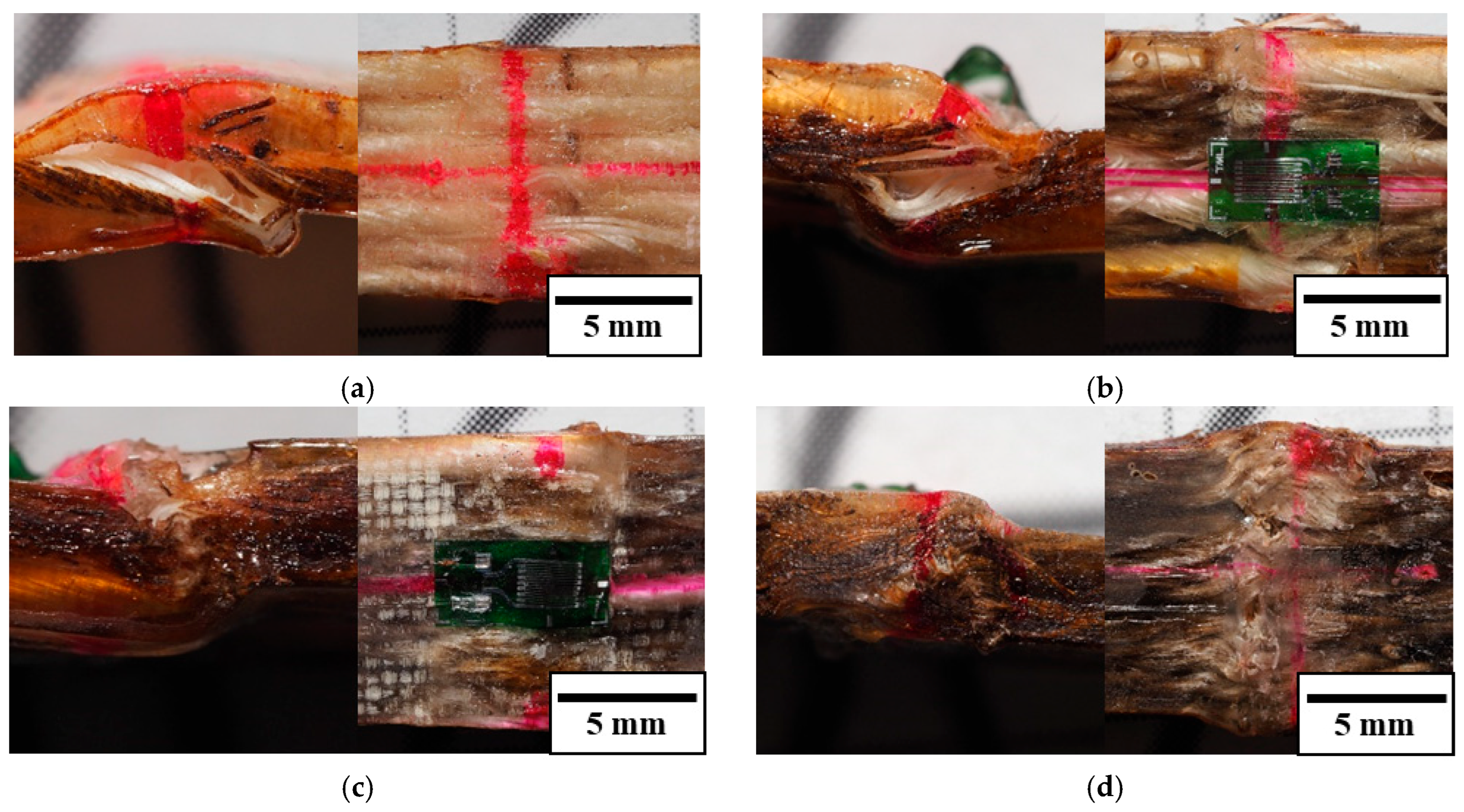
The data shows no clear improvement in compressive strength with respect to sisal or flax content. The highest compressive strengths were attained for H-67S/33F and M-100F, with very similar values. A slight reduction in strength of no more than 5.4% was attained for the M-100S samples. In contrast, the stiffness values exhibited more pronounced variation. A distinct two-stage response was observed, wherein sisal-fibre-dominated composites (M-100S, H-67S/33F) demonstrated higher stiffness than the flax-dominated composites (H-33S/67F, M-100F). Within each group—sisal- and flax-dominated—no statistically significant increase in stiffness was identified with increasing flax fibre volume. For the sisal-dominated group, an increase of 5% was observed between H-67S/33F and H-33S/67F, which is considered negligible. Overall, the best performing composite for compression loading was found to be the H-33S/67F hybrid composite. Given the small variations in properties between the H-33S/67F and M-100S, depending on the cost of the resin, both configurations can be considered as the most cost-effective. The improved strength observed in sisal-based samples can be attributed to the yarn structure and fibre stiffness. Sisal yarns are composed of longer fibres than flax yarns, which influences compressive behaviour. Longer fibres tend to fail through buckling, whereas the shorter flax fibres are more prone to shear-induced failure. A detailed discussion is provided in the failure mode analysis.
Assuming equal tensile and compressive fibre stiffness and a predefined resin compressive stiffness, the composite compressive stiffness was predicted using a rule-of-mixtures micromechanical model. The model predicts increased stiffness with flax addition but diverges from experimental results for flax-based composites, while closely matching sisal-based composites. Predicted compressive strengths are significantly higher than experimental values, except for M-100F. Among the considered failure mechanisms, shear failure provided the closest agreement, although the experimental shear strength used was already divergent for M-100F.





 ,
,