Article

Combining Different Yarrowia divulgata Yeast-Based Fermentations into an Integrated Bioprocess for Manufacturing Pigment, Sweetener, Bioemulsifier, and Skin Moisturiser
Department of Applied Biotechnology and Food Science, Faculty of Chemical Technology and Biotechnology, Budapest University of Technology and Economics, Műegyetem rkp. 3., 1111 Budapest, Hungary
*
Author to whom correspondence should be addressed.
Appl. Sci. 2026, 16(3), 1445; https://doi.org/10.3390/app16031445 (registering DOI)
Submission received: 31 December 2025 / Revised: 28 January 2026 / Accepted: 28 January 2026 / Published: 31 January 2026

Abstract

In this study, we examined the enhancement of erythritol production by the Yarrowia divulgata strain 1485. Although erythritol fermentation has been thoroughly investigated in earlier studies, the influence of inoculum ratio has not been comprehensively addressed. Therefore, this parameter was selected as the focus of the present work. Since industrial-scale erythritol production is typically carried out using more efficient fungal strains, further improvements in economic viability are primarily expected through integration with other biotechnological processes, allowing the simultaneous generation of multiple valuable products. To this end, the erythritol fermentation was coupled with microbial pigment production, and the potential recovery of additional compounds—such as biodetergents and cosmetic ingredients—were also explored. Based on the results, the fermentation with a 15% inoculation rate appears to be the most effective, producing 67.9 ± 6.0 g/L of erythritol, and 61.81 ± 0.02 mg/L of pigment was successfully extracted at the end of the pigment fermentation. The cells seem capable of increasing the skin’s moisturizing effect according to our preliminary tests when glass bead cell disruption is used, and the emulsifier has also proven to be effective, maintaining an emulsification index (EI) above 50% even after 24 h. When performing a kinetic model, we found that the measured data matched the model predictions and confirmed optimal inoculation size (15%), providing a solid basis for subsequent techno-economic analysis. The integration of the two basic fermentations (erythritol and pigment) is therefore considered successful, and the Yarrowia divulgata strain appears to have great biotechnological potential.

1. Introduction

Yarrowia species represent some of the most prominent microbial workhorses in modern biotechnology, owing to their capacity to synthesize a broad array of industrially relevant bioproducts through fermentation. In this study, a newly examined strain was assessed for its ability to produce four distinct classes of metabolites with applications in food, cosmetic, and bioprocess industries: erythritol, cell lysates for cosmetic formulations, a bioemulsifier, and a pigment suitable for cosmetic use. The overarching aim of this work is to determine how these four fermentations can be strategically integrated into a single, streamlined bioprocess, thereby enhancing process feasibility and competitiveness relative to genetically engineered production strains.
The strain selected for this investigation, Yarrowia divulgata, remains only sparsely characterized in the scientific literature. It has been isolated from various animal-derived substrates, including marine fish and terrestrial meat sources. The specific isolate used here, Y. divulgata NCAIM 1485, was originally recovered from chicken liver in 1999 and described as phenotypically indistinguishable from Y. lipolytica and Y. deformans, the latter being its closest known genetic relative [1]. According to Nagy et al., this strain does not ferment sugars to alcohol but is capable of utilizing hexadecane as a carbon source, underscoring its metabolic resemblance to Y. lipolytica.
Given the close phylogenetic and physiological relationship between Y. divulgata and Y. lipolytica, the introduction also incorporates relevant knowledge from Y. lipolytica, a well-established platform organism for the production of erythritol, lipid-derived emulsifiers, pigments, and cell-based cosmetic ingredients. These insights provide an essential contextual framework for evaluating the biotechnological potential of Y. divulgata across the four targeted fermentations.
Erythritol: People are increasingly demanding low-calorie foods [2]. According to the WHO, worldwide, adult obesity has more than doubled since 1990 and adolescent obesity has quadrupled. (https://www.who.int/en/news-room/fact-sheets/detail/obesity-and-overweight, accessed on 8 December 2025). A diet high in added sugars, including those found in baked goods, sweets, sugary drinks, and sugary cereals, contributes to obesity and fitness problems [3]. There are many types of sugar substitutes, known as sweeteners, on the market today. Compounds that replace sugar but contain very few or no calories are called low-calorie or non-nutritive sweeteners [4]. They are often sweeter than traditionally used sucrose, so very small amounts can be sufficient. Examples of such natural compounds are steviosides from Stevia plants, or artificial compounds like aspartame, saccharin, sucralose, neotame, and acesulfame potassium. However, saccharin, aspartame, and sucralose can affect the composition of the gut flora, which can have negative consequences for the whole body. Another large group of natural sugar substitutes are polyols such as xylitol, sorbitol, erythritol, maltitol, and lactitol. In 2003, the European Union’s Scientific Committee on Food (SCF) concluded that erythritol is safe for use in food and gave it the code E986. In 2006, erythritol was considered safe for consumption in the EU (Commission Directive 2006/52/EC). However, the EU approval did not cover the use of erythritol in beverages because its laxative effect was controversial. This changed in 2015 and erythritol levels of up to 1.6% are allowed in non-alcoholic drinks [4,5]. Thus, erythritol can be a good alternative to sucrose in many different types of foods and drinks [1]. Erythritol is a naturally occurring sugar alcohol (or polyol) found in many fruits. Erythritol is about 70% as sweet as sucrose and has a mild cooling effect on the mouth without an aftertaste [5]. It has a very low caloric value (0.2 kcal/g), has no effect on human blood sugar levels and does not cause tooth decay [6]. The market is valued at approximately USD 833.4 million in 2022 and is forecasted to reach USD 2748 million by 2028 [7]. Erythritol can be produced by a variety of microorganisms, including yeasts (Moniliella pollinis, Candida magnolia, Yarrowia lipolytica), and lactic-acid-producing bacteria (Lactobacillus, Oenococcus) [8]. Yeast fermentation is used for the industrial production of erythritol, as chemical production is not cost-effective [4]. The most commonly used substrate for industrial production is glucose [8]. However, there is extensive research into the use of alternative, environmentally friendly substrates such as glycerol [7,9,10]. Yarrowia lipolytica is a good candidate, since it is used widely in biotechnology [11]. It can produce and secrete a range of metabolites used in various industries. Y. lipolytica has attracted interest because of its ability to produce metabolites of high commercial value, such as organic acids (e.g., citric acid, isocitric acid, α-ketoglutaric acid, succinic acid), single-cell oil and aromatic compounds (e.g., lactones and esters), or enzymes (e.g., protease, phosphatase, lipase, esterase), and heterologous proteins (e.g., laccase, epoxide hydrolase) [12]. Also, several literatures have shown that Yarrowia lipolytica is a yeast that can produce erythritol, as well as mannitol and citric acid by fermentation [13,14,15]. Mustafa et al. carried out a techno-economic simulation of glycerol-based erythritol fermentation, where production is carried out using the Y. lipolytica strain. The plant was able to produce about 10.5 tons of erythritol per year, which resulted in a payback period of 6.5 years [7]. Biorefineries are sustainable processing of different (mainly plant-based) biomass into a spectrum of marketable products and energy [16]. Daza-Serna and co-workers proposed a circular economy of erythritol in their study. They emphasized the selection of suitable substrate and the potential for utilization of by-products during/after fermentation, including utilization of yeast cell biomass as animal feed, a protein source, thus ensuring waste minimization [17].
Pigments are also important microbial products with high potential. These are present in many living materials and enrich our world with different colors by absorbing and refracting light at different wavelengths [18]. Synthetic pigments currently dominate the pigment market but are gradually becoming an environmental and health barrier. For this reason, consumers have started to look towards the use of natural pigments. The advantage is that the production of natural pigments by microbial fermentation is not affected by climatic and geographical conditions, unlike the extraction of pigments from plants and animals [19]. Y. lipolytica can produce a brown pigment which is called pyomelanin forming subgroup of melanins derived from tyrosine, which is a preferred pigment for use in various sunscreens due to its antioxidant activity and UV protection capability [20]. Pyomelanin was reported in 1972 by Yabuuchi and Ohyama, after its isolation from Pseudomonas aeruginosa [21]. Pyomelanin is a water-soluble polymer produced by the polymerization of homogentisic acid [22]. Urbaniak and colleagues, however, conducted an experiment in which they produced both water-soluble and water-insoluble pyomelanin by Pseudomonas aeruginosa. Both types of pyomelanin have been investigated by thermogravimetry and it was found that water-soluble pyomelanin has a higher thermal stability than water-insoluble pyomelanin, suggesting that the polymer chains of the water-soluble pigment contain a higher proportion of aromatic groups or other conjugated unsaturated bonds [23]. Pyomelanin is smaller than other pigments, about 10–14 kDa, and is identified at 400 nm [24,25]. Yeast pigment fermentation is facilitated by the addition of a pyomelanin precursor to the fermentation medium [26]. Y. lipolytica has already been shown to have no cell damaging effects and even antibacterial and anti-inflammatory activity, making it an excellent pharmacological adjunct in cosmetics and skin care creams to help treat skin problems [27]. Most pigment-producing strains are genetically modified to achieve higher yields. Pigment producing strains are summarized in Table 1. The global market value of food colorants is expected to reach 3.5 billion USD by 2027 [28]. The global market value of melanin was 13.7 million USD in 2022, and it is estimated to reach 18 million USD by 2028 [29].
Pyomelanin fermentative production by Y. lipolytica is already reported by Carreira et al. [22], but the capability of Y. divulgata has not been yet.
Melanins can also be used in the cosmetic industry for their sunscreen properties and their high pigmentation [33]. According to the CosIng database, melanins have a skin-protective function and silane triol melanilate (the product of the reaction of melanin and silane triol) has a skin-conditioning effect. The latter component is also found in hair conditioning and hair moisturizing products. Melanins are also involved in the formation of human hair color: a mixture of black-brown eumelanin and red-yellow pheomelanin. Commercial hair dyes contain a number of carcinogens, so researchers are trying to find skin-friendly alternatives. One such alternative is the melanin-like polydopamine nanoparticles, which in combination with iron ions (Fe2+), have been able to permanently color grey hair in about 1 h [34,35].
Bioemulsifiers are also important fermentation products. They are such bio-originated compounds that have surfactant properties similar to those of well-known synthetic surfactants [36]. The interest in these molecules is constantly growing, for products commonly used in our daily activities, such as pharmaceuticals, personal care, cosmetics, and food products, requiring surfactant effects. Although interest in biosurfactants is growing, these compounds are not economically competitive with synthetic surfactants [37]. Liposan is a glycoprotein produced by C. lipolytica ATCC 8662 (recently renamed to Y. lipolytica) in a nutrient medium supplemented with hexadecane [38,39]. Yansan is another emulsifier produced by Yarrowia, which is a lipid hydrocarbon protein that showed a high emulsification index [40]. Food waste can also be used to produce bioemulsifiers with Yarrowia. The ability of butter whey to produce bioemulsifier with high emulsification index has been investigated [37].
The cell lysate for cosmetic application of Yarrowia lipolytica can be found in the European Cosmetic Ingredient Database (CosIng) database as a skin conditioning ingredient. This led us to wonder whether Y. divulgata cell lysate could also have a skin conditioning effect on human skin. Previous research has already shown that cell lysate made from fermented cells at an oxygen level of 20% increased skin hydration by 12.58 ± 0.58% [41].
To summarize the main focus, we aimed to develop an integrated bioprocess carried out by Y. divulgata (a close relative to Y. lipolytica), during which both the fermentation broth as well as the cell-biomass are processed and converted into four major bioproduct classes—erythritol, pyomelanin, cell lysate, and a bioemulsifier. The significance of this work lies in characterizing the biotechnological potential of a newly examined strain that exhibits capabilities comparable to its well-established relative Y. lipolytica, and in developing an integrated bioprocess framework enabling the coordinated production of these metabolites.
Our suggested and developed bioprocess we also recently patented (P2500359).

2. Materials and Methods

2.1. Fermentation

For this research we used Yarrowia divulgata (NCAIM 1485), which was obtained from the National Collection of Agricultural and Industrial Microorganisms (Budapest, Hungary).
The following media (same as in our previous report [41]) were used in this experiment:
Malt extract agar medium contains: malt extract (Biolab, Budapest, Hungary) 30 g/L; peptone (VWR, Leuven, Belgium) 5 g/L; bacteriological agar (Reanal, Budapest, Hungary) 15 g/L.
Inoculum medium described in [41] adapted from [42]: glycerol (Carl Roth Gmbh + Co, Karlsruhe, Germany) 50 g/L; yeast extract (Acros Scientific, Geel, Belgium) 3 g/L; malt extract (Biolab, Hungary) 3 g/L; peptone (VWR, Belgium) 5 g/L. Inoculum for erythritol fermentation was prepared by cultivating the cells in 500 mL Erlenmeyer flasks containing 50 mL of inoculation medium, incubated at 25 °C and agitated at 200 rpm on a rotary shaker for 48 h (New Brunswick Scientific Innova 40, Eppendorf AG, Hamburg, Germany).
Fermentation medium for erythritol production described in [41] adapted from [42]: glycerol (Carl Roth Gmbh + Co, Germany) 100–150 g/L; ammonium chloride (Reanal, Hungary) 4.56 g/L; MgSO4 × 7 H2O (Dunauchem, Budapest, Hungary) 1 g/L; yeast extract (Acros Scientific, Belgium) 1 g/L; CuSO4 0.7 × 10⁻³ (Reanal, Hungary) g/L; MnSO4 × H2O 32.6 × 10⁻³ (Reanal, Hungary) g/L; KH2PO4 (Reanal, Hungary) 97.8 g/L. Baffled flasks (Laborxing.com) were used for the erythritol fermentation.
Fermentation medium for pigment production according to the only report for wild-type Yarrowia pigment production [43]: L-Tyrosine 1.5 g/L (Reanal, Budapest, Hungary); glycine 2 g/L (Reanal, Budapest, Hungary); MgSO4 × 7 H2O 2.5 g/L (Donauchem, Budapest, Hungary); MnSO4 × H2O 74.2 × 10⁻³ g/L (Reanal, Budapest, Hungary); KH2PO4 4 g/L (Reanal, Budapest, Hungary). Normal Erlenmeyer’s flasks were used for the pigment production.
The following fermentation methods were applied:
Since erythritol fermentation requires a higher oxygen supply [41], we employed cultivation conditions that ensured enhanced aeration. We used baffled flask in triplicate for erythritol fermentations: 750 mL with 75 mL working volume, varying the inoculation rate to the industrially relevant range 5%, 10%, 15%, 20%, 25% v/v inoculum. The fermentation was running with the same settings (rpm, C°) as the inoculum but stopped only after the glycerol was exhausted from the culture media (ca 8–10 days). If necessary, 1 mL/L polypropylene glycol (PPG) antifoaming agent was used to decrease the foam. When the glycerol was fully consumed from the culture media, the fermented broth was centrifuged (Janetzki MLW K23D, Leipzig, Germany) in a 50 mL Falcon tube at 4000 rpm for 10 min at 4 °C aseptically, and the supernatant stored in fridge (6–8 °C) while the cells were utilized for the second fermentation step via resuspending them in pigment fermentation media (two-stage fermentation).
For this pigment fermentations, normal Erlenmeyer’s flasks were used in triplicates: 500 mL with 150 mL working volume for every inoculation rate.
Fermentation progress was monitored through periodic sampling, and biomass, substrate, and product concentrations were quantified using standard analytical methods described below.

Analytical Methods

During the erythritol fermentation samples (1 mL) were taken from baffled flasks cultures, then were centrifuged for 5 min at 7500 rpm (Heraeus BIOFUGE pico, ICN2, Barcelona, Spain), and four parameters were determined from erythritol fermentation’s samples: optical density, pH, osmolarity, and components concentrations by HPLC. From the consecutive pigment fermentation samples (4 mL), only optical density (600 nm) and pigment production (400 nm) were measured.
For erythritol samples, optical density (M501 Single Beam UV/Vis Spectrophotometer, Camspec, Crawley, UK) at a wavelength of 600 nm was determined in triplicate at a dilution suitable for cell growth studies, with absorbance not higher than 1 (usually 5–30x). The pH was monitored with Universal-Indikatorpaper (Macherey-Nagel + Co, Düren, Germany) pH = 1–11 to ensure that it did not decrease below 3. At the end of the fermentation, from the fermentation broth, 1 mL was centrifuged for 5 min at 7500 rpm (Heraeus BIOFUGE pico); after that, the cells were resuspended in 1 mL of water, then biomass was also determined gravimetrically (Sartorius MA35) after drying at 105 °C and expressed as grams of cell dry weight (CDW, g/L) per liter. Concentrations of glycerol, erythritol, and mannitol were measured from supernatant by HPLC using BioRadAminexHPX87H (Hercules, CA, USA) column at 65 °C and refractive index (Waters 2410 RI) detector at 40 °C, and Waters 1515 Isocratic pump with inline degasser. The column was eluted with 5 mM sulfuric acid with flow rate of 0.5 mL/min, and samples were diluted 30fold; furthermore, 10 microL were injected by autosampler (Waters, 717 Plus Autosampler, LabX, Midland, ON, Canada). Erythritol, mannitol, and glycerol standard were used in range of 1–10 g/L.
For osmolarity measurement (Gonotec Osmomat 3000), 60 µL sample of the supernatant of the fermented media was used.
For pigment fermentation, optical density was also measured in triplicate at 600 nm wavelength against distilled water as blank to examine cell growth and the supernatant at 400 nm to analyze pigment production [30]. Final sample’s pigment content was also gravimetrically determined after product isolation via precipitation (See Section 2.3). Absorbance values were calculated using Beer–Lambert’s law of concentration [27] (Equation (1)),
A = Ɛ c l
where A is absorbance, Ɛ is extinction coefficient (7500 L/mol/cm), c is concentration (mmol/L), and l is cuvette length (cm).

2.2. Erythritol Extraction and Crystallization Test

To assess the ease of erythritol recovery from the broth with the highest product concentration, cells were first removed from the 20% inoculated fermentation medium by centrifugation (HERMLE Z 200 A, Wehingen, Germany) at 4000 rpm for 10 min. Erythritol was subsequently isolated from the resulting supernatant. It was concentrated in a rotary evaporator (Heidolf Hei-VAP Precision, Merck, Budapest, Hungary) at 45 °C, 87 rpm, and vacuum of 130 mbar until no more water came off under these conditions, furthermore the samples’ consistency and appearance became honey-like. To induce crystallization, one crystal of erythritol (Sigma-Aldrich, Budapest, Hungary) was added to each concentrated product, and the samples were refrigerated for 48 h. Crystals were separated by centrifuge at 6000 rpm, 10 min (Hermle Z 200A, Wehingen, Germany), then washed twice with absolute ethanol (≥99.5%) (first with 3 mL and then 7 mL), vortexed, then centrifuged (HERMLE Z 200 A, Wehingen, Germany) at 6000 rpm for 5 min. The resultant crystals were dried on top of a filter, and their dried weights were measured. The purity was measured by HPLC using the same method as in Section Analytical Methods.

2.3. Pigment Extraction

To assess the ease of product recovery, the fermentation broth was centrifuged at 4000 rpm for 10 min to separate the cells from the supernatant. The pH of the supernatant was very high at the end of fermentation (pH > 9); 6 M HCl was used to lower the pH to 2 (Mettler-Toledo pH-easy 5, Seoul, Republic of Korea), and the mixture was left at room temperature for 48 h for precipitation. Afterwards, the samples were centrifuged again, and the supernatant was kept in the fridge for further measurements. The brown pigment was purified by first washing it with 5 mL of chloroform (only for samples with an inoculation ratio of 20%) and then with 5 mL of methanol, centrifuging in both cases at 4000 rpm for 10 min. The supernatant was then decanted and dissolved in 5 mL of distilled water for measurements. The pigment solution in distilled water was dried at 105 °C (Sartorius MA35 Moisture Analyser, Göttingen, Germany) and weighed [30].

2.4. Preparation of Cell Lysates for Skin Application Tests

Cells were separated at the end of fermentations (both of erythritol as well as of two-stage fermentation).
For skin moisturizing tests, various methods of cell disruption (i.e., mechanical lysis) were employed, including glass beads disruption, the freeze–thaw cycle method, ultrasonic disruption.
In the glass beads disruption method, 5 mL of fermented broth was used for cell separation. After centrifugation, the supernatant was poured off and the cells were resuspended in 5 mL of distilled water. The IKA ULTRA TURRAX Tube Drive cell disruption device was used at 9000 rpm for 1 min to disrupt cells using glass beads (10 pcs, diameter 0.6 cm.
For the freeze–thaw method, 3 mL of fermented broth was used for cell separation, centrifuged then the supernatant was poured off and the cells were resuspended in 3 mL of distilled water. The samples were kept in freezer for 24 h at −18 °C before thawing and measuring.
In the ultrasound sonication method, 1 mL of fermented broth was used for cell separation, centrifuged for 5 min at 7500 rpm (Heraeus BIOFUGE pico) the supernatant was poured off, and the cells were resuspended in 1 mL of distilled water. The samples were sonicated with Hielscher UP400St (300 W) at 75% amplitude, for 59 s with 50% cycles. Since only the tip of the sensor was immersed in the sample, the actual power uptake was below 50 W.

2.5. Skin Moisturizing Measurement

Preliminary short-term skin moisturizing preliminary measurements were performed after treatment of 1 × 1 cm2 of European human female skin with the samples. Determination of skin moisture was carried out with Multi Dermascope MDS 800 (Couraghe + Khazaka Electronic Gmbh, Köln, Germany) as reported earlier by Tóth et al. [44] using the corneometer of the equipment with triplicate tests. After skin-treatments with cell lysates, skin moisture content jumped up, then decreased due to the loss of excess humidity and finally stabilized. From these final stabilized values, the untreated (initial) skin moisture values were subtracted, and the differences were compared across different origins of cell lysates.
The methods were carried out on cell lysates produced from a fraction of cells separated at the end of erythritol fermentation, while the other half of the cells were used for pigment fermentation. The tests were also carried out on cell lysates produced from cells of two-stage fermentation.

2.6. Emulsifying Activity Measurement

Since the Yarrowia fermentations frequently foamed, we examined the presence of a bioemulsifier using the method described by Czinkóczky et al. [45]. For the measurement, the cell-free supernatant of fermented broth was used; 2 mL was added to 2 mL of sunflower oil in a test tube and vortexed for 2 min. The following Equation (2) was used for the evaluation:
E I t = H e / H t × 100
where EIt is the emulsification index at t time, He and Ht are the height of emulsion and total height of the liquid in the tube, respectively. The tubes were incubated at 25 °C for 1 day. The emulsification index (EI24%) was determined after 24 h (EI24%).

2.7. Statistical Analysis

To detect significance between different experimental setups, we used Excel to evaluate results and to average the paired samples, and TIBCO Statistica 14.0.0.15 to detect significant differences with Tukey HSD tests. To determine the optimal inoculation rate, bell-shaped curves were fitted using Sigmaplot 7.0. For kinetic modelling of fermentations, Berkeley Madonna 8.01 software was used.

2.8. Kinetic Model Analysis

To determine kinetic parameters of the recent Y. divulgata strain and being able to compare with the published Y. lipolytica the kinetic models for erythritol batch fermentation including variables of biomass (X, CDW, g/L), substrate (S, glycerol, g/L), and product (P, erythritol, g/L) (Equations (3)–(5)) were considered based on the model of Yang and colleagues [46]. They observed that the initial glycerol concentration has a substrate inhibitory effect on the specific growth rate, so they modified the logistic equation using the Andrews model to describe this phenomenon (3).
Microbial growth model
  d X d t = μ m 1 X X m 1 1 + S / K i X
where μm represents the maximum specific growth rate, 1/h; Xm stands for the maximum biomass concentration, g/L; and Ki is the inhibition constant of substrate, g/L.
Substrate consumption was described connected to Monod cell growth and Luedeking–Piret product formation through the corresponding yields (Equation (4)).
Glycerol uptake model
d S d t = 1 Y x S d X d t + 1 Y p S d P d t + m X
where YX/S, YP/S represent the biomass and product yield for substrate, respectively, g/g; and m represents the specific maintenance coefficient, 1/h.
To describe erythritol formation, the Luedeking–Piret model was used, supplemented by the Bajpai model (non-competitive inhibition model), which describes the inhibitory effect of the hyperosmotic substrate on the rate of erythritol formation. Thus, the following Equation (5) was obtained:
Erythritol formation model
  d P d t = α d X d t + β S S + K s p 1 1 + S / K i p X
where α and β are empirical constants that may vary with fermentation conditions, the larger the α value, the more the product synthesis is growth-associated with cell growth; Ksp Michaelis–Menten constant and Kip represent the inhibition constants of hyperosmotic substrate, g/L [46]. Based on their results, the kinetics of erythritol fermentation were divided into three stages. In stage I, a high specific growth rate was observed, with the formation of small amounts of erythritol. In stage II, after the exponential phase of biomass, a decreasing specific growth rate was observed, followed by erythritol production until glycerol exhaustion, which was in stage III. The model is based on the logistic equation, which was extended to account for substrate inhibition.

3. Results

3.1. Fermentation

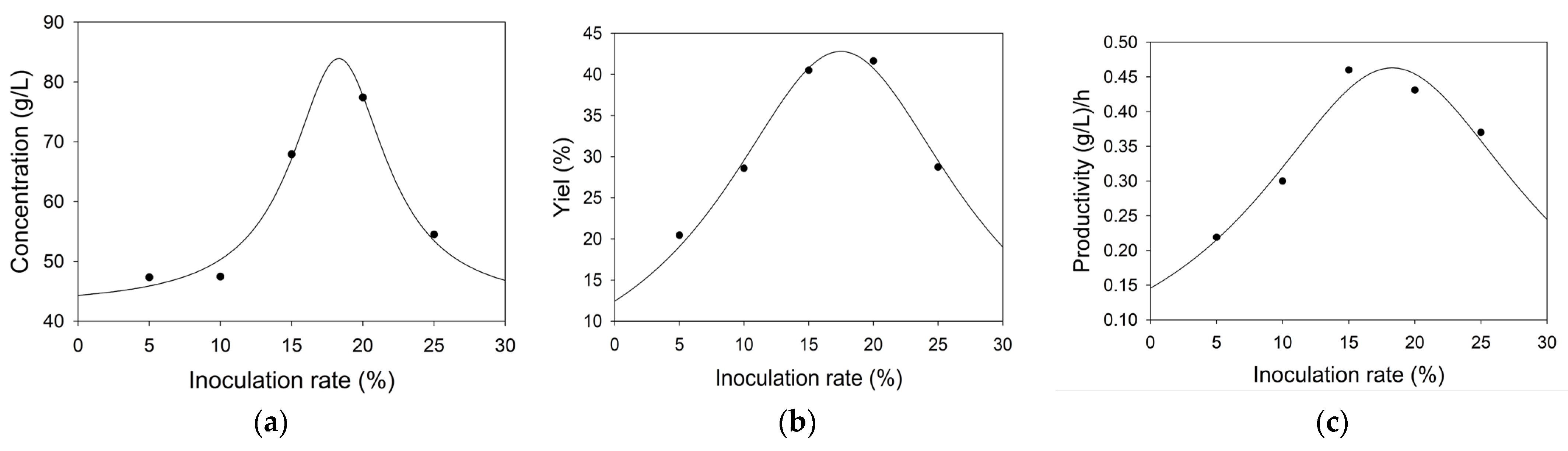
The results of the fermentations are summarized in Table 2. There is no difference regarding erythritol concentration between the 5% and 10% inoculation rates. The higher product yield for the 10% inoculation may be due to more glycerol remaining in the broth. For the 15% inoculation, we measured a very high cell mass at the end of the fermentation (67.33 g/L) and the highest erythritol productivity was also observed here (0.46 g/L/h), presumably the high cell mass initiated such high efficiency. The highest erythritol concentration was achieved at an inoculation rate of 20%, with a productivity of (0.43 (g/L)/h). The most common by-product of erythritol production is mannitol, the amount of which increased with inoculation ratio along a bell-curve. Its highest amount was observed at a 20% inoculation rate. The initial high osmolarity is important for inducing erythritol production; in most cases, it was above 4000 mOsmol/kg initially, and the highest osmolarity was observed at the 20% inoculation rate. The results suggest that inoculation and cell mass are key factors in erythritol fermentation. When increasing from 5% to 20%, the erythritol concentration increased by 61% and also its yield and productivity doubled. To more accurately characterize the different inoculum ratios used, we determined cell numbers and summarized the results in Supplementary Table S1.
In order to find the optimal inoculation rate, the different outcomes of erythritol fermentations were plotted versus inoculation ratio (Figure 1), which shows erythritol concentration at Figure 1a (4-parameter Lorentzian fitting R2 = 0.983), yield at Figure 1b (3-parameter Lorentzian fitting R2 = 0.986), and productivity at Figure 1c (3-parameter Lorentzian fitting R2 = 0.952) (Figure 1). The results clearly show that, for all three figures, the maximum value falls within a range of 15% to 20% inoculation rate. Based on the graphs, the inoculation rate of 17–18% can be considered optimal.

3.2. Kinetics Model Analysis

Kinetic modelling of the fermentations was performed using the equations (Equations (6)–(12)). Equation of the erythritol fermentation model first described by Yang et al. [46]. The fits were performed for each inoculation rate. The results are summarized in Table 3.
Equations used in Stage I and Stage II: The inhibitory effect of the initial glycerol (S) concentration contributed to the low biomass concentration. The Equation (6) describes the cell growth.
d X d t = i f   t i m e > s t a g e   t h e n   r x 2   e l s e   r x 1
Furthermore, there is no erythritol production in Stage I, which is described by the following Equation (7). Equation (8) was used for substrate consumption including biomass and erythritol formation as well as maintenance. Equations (9) and (10) describe the used rate equations for the two stages.
d P d t = i f   t i m e > s t a g e   t h e n   r p   e l s e   0
d S d t = i f   t i m e > s t a g e   t h e n r x 2 Y 2 r p Y p 2 m 2 x   e l s e r x 1 Y 1 m 1 x
r x 1 = μ m , 1 1 1 + S K i 1 x
r x 2 = μ m , 2 1 x x m 2 x
In Stage I, the following equation was used:
r p = 0
In Stage II, the following equation was used:
r p = α 2 r x 2 + β 2 S S + K s p 2 1 1 + S K i p 2 x
In Stage III, the following equations were used:
At this stage, the substrate was reduced to zero, and the erythritol was consumed by yeast.
d X d t = 0
d P d t = 0
d S d t = 0
The original authors of the erythritol fermentation kinetic model, Yang and colleagues, divided erythritol fermentation into three phases: the first (0–18 h), where µm1 is lower as no product is being produced yet, only cell growth is observed; the second (18–108 h), which lasts until glycerol is completely consumed. The third (108–120 h), where the glycerol was exhausted, and the erythritol was consumed by yeast [46]. Based on our simulation results (i.e., determined kinetic parameters from model fitting, see Table 3), the product yields (YX/P2) confirm the previous finding that the optimal inoculation rate is between 15% and 20%, resulting in the highest yield. Using model fitting, we were also able to determine the specific growth rates for each setting. Based on our simulation results, two working phases were also observed, since the third phase was neither for Yang nor for us and it occurred after the substrate exhaustion. In the 20% inoculation case, the first phase was very short, so only one working phase was confirmed. Similar to the results of Yang and colleagues, in the second phase we obtained specific growth rates of similar magnitudes, except for the 15% inoculation, where the specific growth rate was maximal. The alpha2 and beta2 parameters allow us to determine the type of product formation. For the 5% (Supplementary Figure S1) and 10% (Figure S2) inoculation rates, growth-linked product formation was observed; for the 15% (Figure S3) inoculation, a mixed product formation; and for the 20% (Figure S4) and 25% (Figure S5) inoculations, growth-independent product formation is assumed. The biomass yield was higher in the second phase (YX/S2) in all cases, likely due to the inhibitory effect of the initially high glycerol concentration in phase I, which resulted in lower biomass yield there (YX/S1). Based on modelling, the best setting was fermentation with 15% inoculation. The µm2 value is almost three times higher than the result of Yang and colleagues (0.194 1/h). Another difference in the results is that we observed a shift toward mixed product formation at inoculation ratios of 15% or higher. In the case of 10% (Figure S2) it can be said that the model closely follows the experimental values. It can be concluded that the measured values correspond to the model predicted values, despite the fact that the model was created for another strain, namely for Yarrowia lipolytica, but seemed to also apply for Yarrowia divulgata. In all cases, the figures show that we obtained a good fit, and based on these, the model can be used to describe erythritol fermentation with Y. divulgata. Based on the curve-fitting results, the root means square (RMS value) was consistently very low relative to its initial value, indicating the fit’s accuracy. The RMS values are summarized in Table S2.

3.3. Erythritol Extraction

After erythritol fermentation started with 20% inoculation, we performed a simplified erythritol crystallization from 50 mL cell-free fermentation broth to verify that this product can be isolated even from a raw fermentation broth of Y. divulgata. To overconcentrate the broth, a rotary evaporator was used until any water could be removed from it, resulting in a honey-like broth (10 mL). Crystallization was induced using a seed crystal, and the broth was placed in the refrigerator for 48 h. The formed erythritol crystals were separated by centrifugation, washed with ethanol and dried. A mass of 9.77 ± 1.5 g erythritol crystals from 50 mL broth were obtained, i.e., 195 ± 30.4 g/L could be isolated. We also checked the purity of the observed crystals using HPLC, and a purity of 35.75 ± 1.8% was determined, which roughly corresponds to the erythritol concentration measured at the end of fermentation (77.39 ± 3.83 g/L). Since the crystallization process was not preceded by a purification step, the HPLC measurement of the resolved crystals still showed peaks for mannitol, glycerol, and citric acid, which explains why the erythritol crystallized had such a low purity. Several recrystallizations can enhance purity, but also increase erythritol loss.

3.4. Emulsification Index

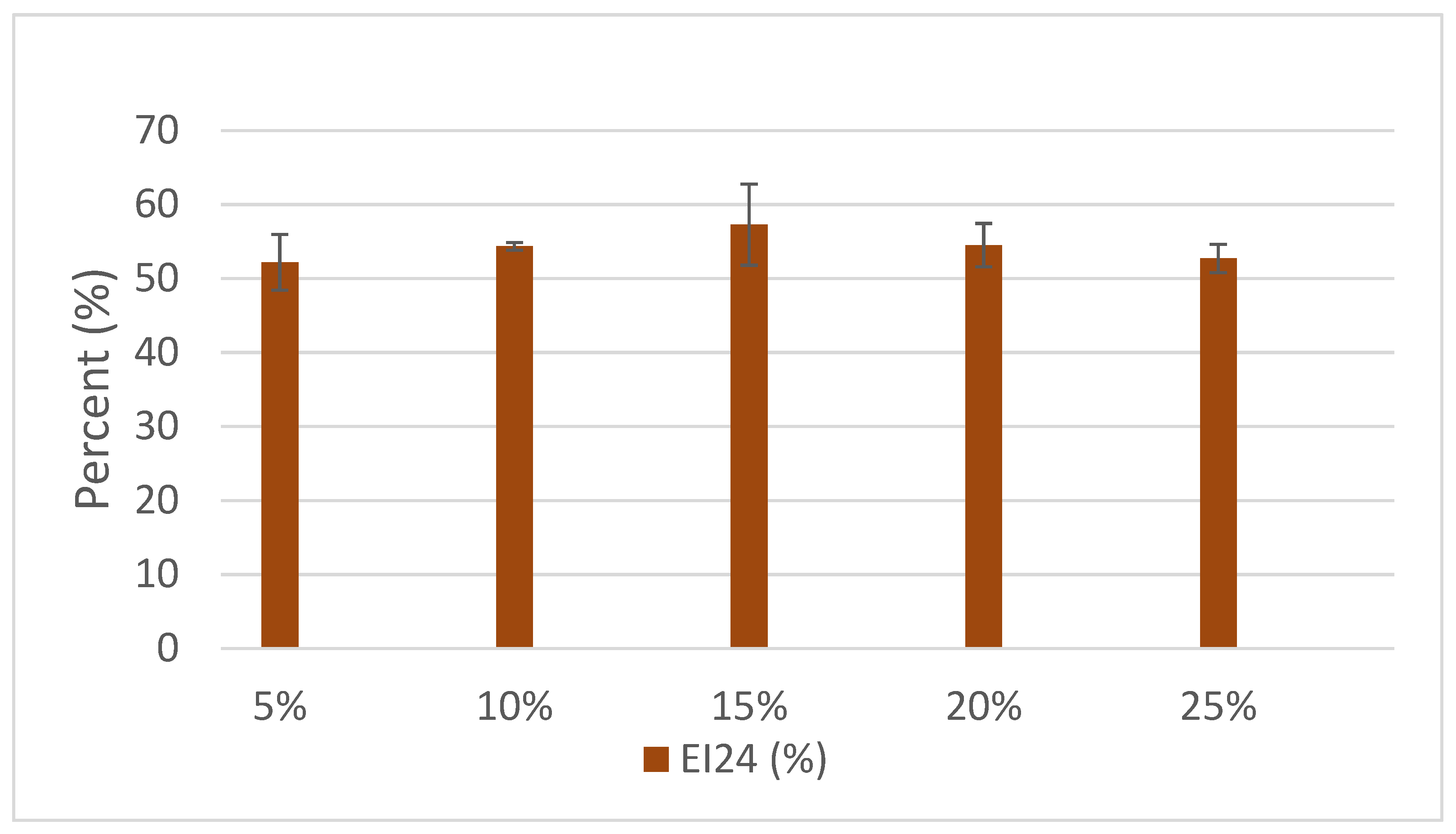
From the supernatant of erythritol fermentation, we performed the emulsification index measurement for each inoculation set up from the supernatant, where the results showed that even after 24 h the produced bioemulsifier had an emulsifying effect over 50%. The results are summarized in Figure 2. While the tendency showed bell-shape, the inoculation rate has no significant effect on the emulsification index.

3.5. Skin Moisturizing

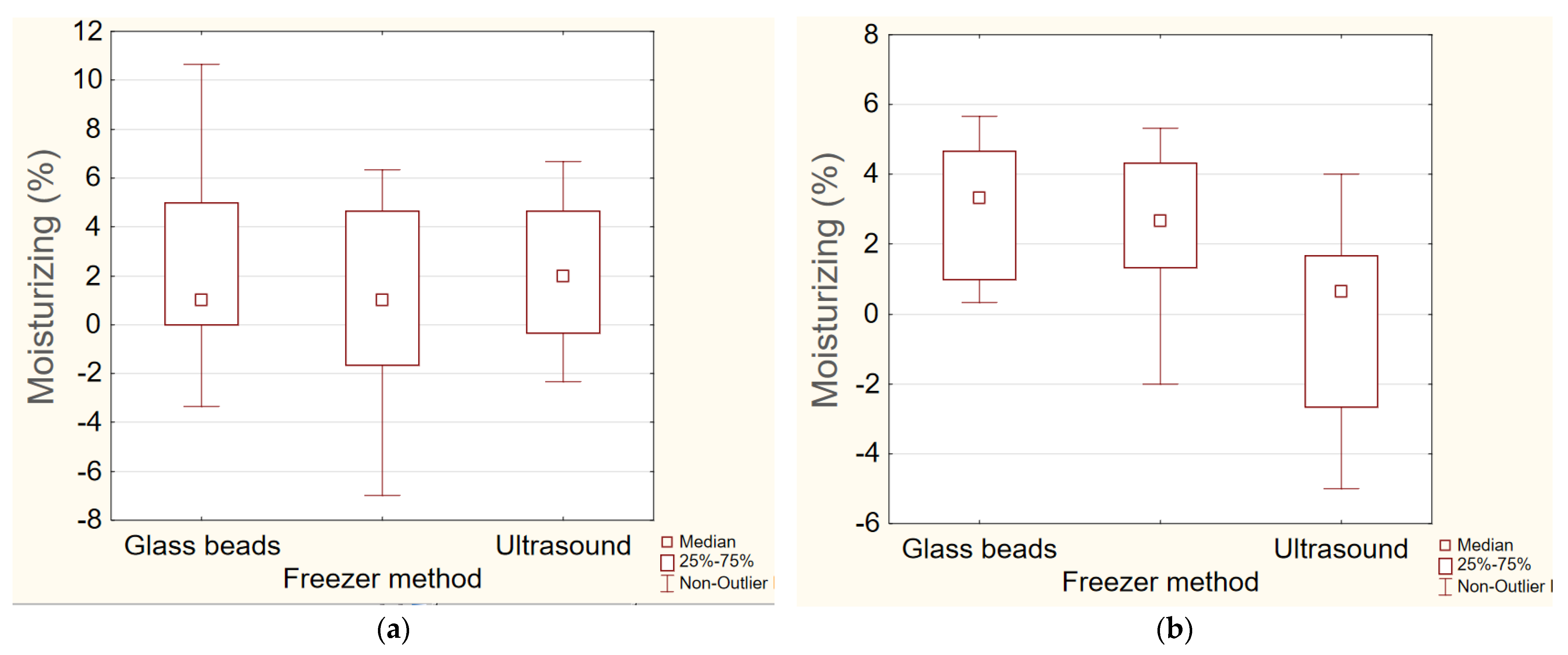
At the end of the erythritol fermentation, half of the cells were transferred to pigment fermentation, and the other half were used for skin hydration measurements. At the end of the two-stage fermentation, we also separated the cells and measured their moisturizing effect. Three cell disruption methods were compared before hydration measurements: glass bead, ultrasonic, and freeze–thaw cell disruption.
Figure 3 shows a box plot diagram indicating the results of the different cell exposure methods. Figure 3a presents median values close to 0% moisturizing enhancement, and distributions are also relatively symmetric around the zero line; therefore, the only conclusion we can withdraw is that probably because of too high cell concentration, neither of the tested cell-disruption methods seemed to be effective and did not result in any skin-moisturizing effect. In the case of cells that also underwent pigment fermentation (Figure 3b), glass bead cell disruption achieved the highest median value with the narrowest variance furthermore, all skin moisturizing effects showed a positive increment; therefore, only this cell-disruption was applied for cells with different inoculation origins. To determine whether any significant difference exists between differently inoculated cells after the two-stage erythritol + pigment fermentation, we used the Tukey test (Table 4).
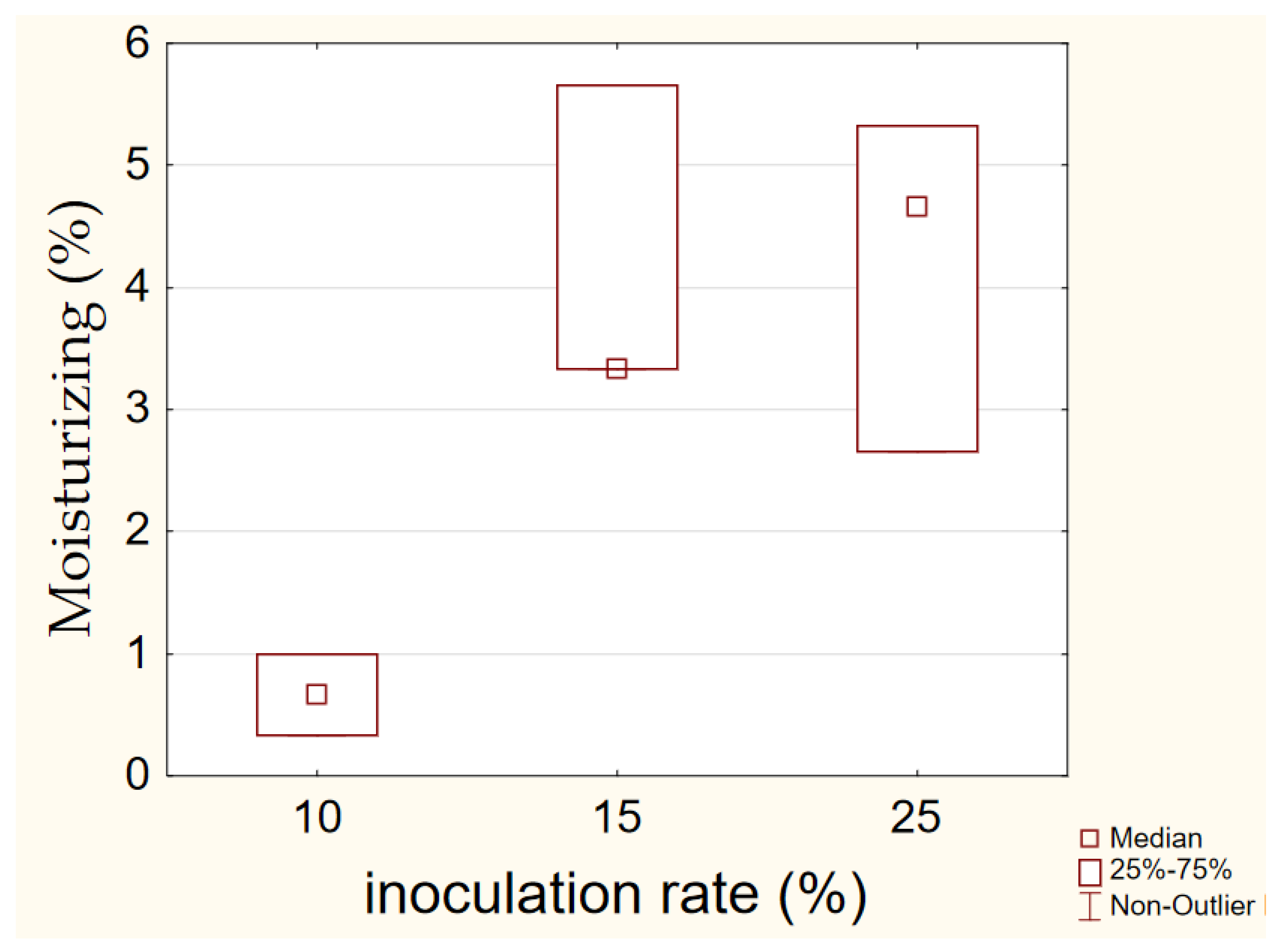
Based on the results of the Tukey test, it can be observed that both 15% and 25% inoculation were significantly different from 10% inoculation, whereas 15 and 25% were not significantly different. To visualize the direction of the significant effects, box plots were generated again (Figure 4). Based on the median values and the Tukey test we concluded that increasing the inoculation ratio before the erythritol fermentation increased the moisturizing effect of the cell lysates even after pigment fermentation. Since higher inoculation generates more yeast cell biomass in erythritol fermentation, at the same time during the second pigment fermentation step no significant cell growth occurred. The final cell concentration also increases with inoculation size in the first stage. This higher final cell concentration is responsible for higher moisturizing effect.
However, consideration should be given to transferring the entire cell volume to pigment fermentation after erythritol fermentation, because the pigment bioprocess should be more appropriately called bioconversion, since almost no cell growth occurs; thus, more cells can better enhance tyrosine-to-pyomelanin bioconversion.

3.6. Pigment Fermentation

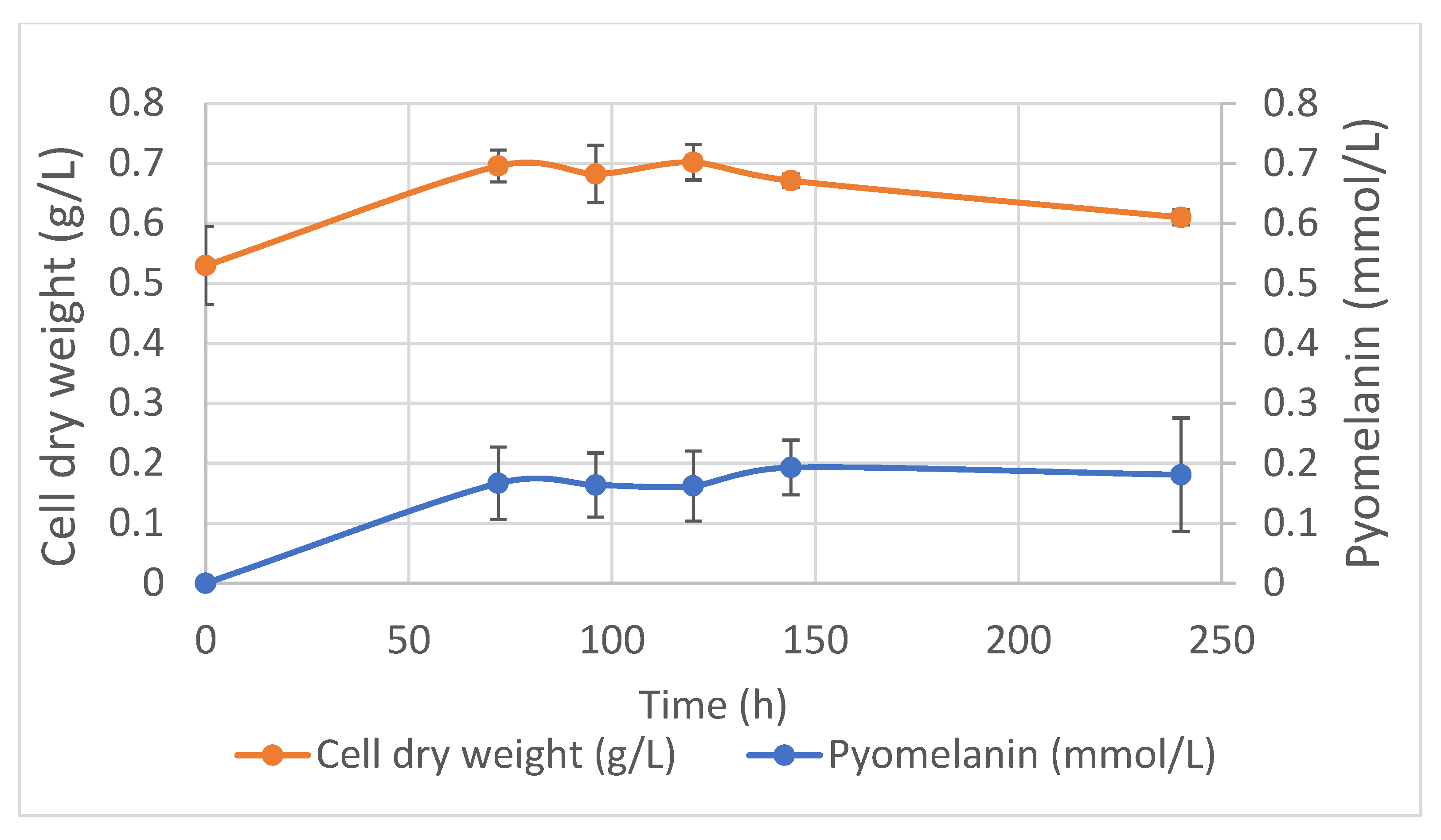
Among the pigment fermentations, the best-performing fermentation is introduced in Figure 5. This was carried out with the cells transferred from erythritol fermentation with a 15% inoculation ratio, where 61.81 ± 0.02 mg/L of pigment was observed at the end of the two—stage erythritol + pigment fermentation. Pigment concentrations were calculated using Beer–Lambert’s law. Based on the presented time curves, one can observe that it does not make much sense to run the pigment fermentation stage for as long as suggested by Sipiczki et al. [43], because during the last 3 days neither cell nor pigment formation was detected. Thus, the pigment fermentation with cells from an erythritol fermentation is more rapid or more productive.
The final cell concentration reached is independent of the inoculation rate. Furthermore, the final pigment concentration is independent of the final cell concentration, and A400 only roughly estimates the product amount (Table 5).
Additionally, we can conclude that the pigment production measured at 400 nm does not predict the amount of extractable pigments; instead, the depth of the pigment’s color increases the absorbance value.

4. Discussion

In summary the results indicate that fermentation with a 15% inoculation rate was the best. Although the highest erythritol concentration was not achieved in this case, 67.9 ± 6 g/L was still obtained, which is one of the highest among other wild-type yeast based erythritol fermentations [47,48,49]. Based on the successfully adapted kinetic model, increasing the inoculation rate reduced the lag phase allowing a greater amount of primary metabolite to be produced, which may have been aided by the higher oxygen supply provided by the baffled flask. The different fermentation time curves depending on inoculation rate could be confirmed by a kinetic model successfully adapted from a wild type Y. lipolytica to the presented novel non-conventional yeast called Y. divulgata, which also confirms the close kinship and highlights the great potential of Yarrowia divulgata.
We already reported the importance of oxygen level to erythritol productivity and yield [41]; thus, the use of baffled flasks may confirm this, and, together with the optimized inoculation ratio (15%), contribute to the higher erythritol level achieved compared to other wild type erythritol fermentations. However, an upper limit to the inoculation size appears to exist, as a decline in performance was observed at a 25% inoculation rate, where oxygen limitation may have contributed to a reduced metabolic activity [41].
The erythritol concentration, yield, and productivity values as a function of the inoculation rate showed that the optimal inoculation rate is between 15 and 20%, around 17–18%.
Furthermore, the effective bioemulsifier production is demonstrated by the fact that the emulsification index of the supernatant was above 50% even after 24 h, independently from inoculation rate, but also suggesting 15% inoculation as the most beneficial case.
At the end of the two-stage erythritol–pigment fermentation, we compared the hydration efficacy of cell lysates obtained using three different disruption methods. The highest moisturizing effect was achieved with the glass bead–assisted disruption method (Tukey test, p = 0.038), whereas ultrasound sonication may require further optimization—particularly with respect to treatment duration—to achieve comparable or potentially superior efficiency. For instance, in Aspergillus fumigatus, optimal ultrasonic parameters were reported as 11 s sonication cycles with a total operating time of 3.5 min, and similar conditions were found to be most effective for R. gracilis yeast [50].
In our study, when glass beads were used for cell disruption, the two-stage erythritol–pigment fermentation initiated with a 15% inoculation ratio produced one of the highest skin-moisturizing effects, significantly exceeding that obtained with a 10% inoculation (Tukey test, p = 0.014). Notably, biomass concentration was lowest at the 15% inoculation level (Table 5, OD600), indicating that the moisturizing efficacy is not associated with biomass quantity but may instead correlate with pyomelanin content.
The highest amount of pigment was reached at the end of the combined two-stage bioprocess with the erythritol fermentation cells, which started with 15% inoculum. It was observed that the absorbance values measured at 400 nm (often cited as pigment detecting wavelength) during the fermentation process were not correlated with the weight of isolated pigments. Pyomelanin is commonly used in various sunscreens due to its antioxidant properties and UV protection [20]. However, our results suggest that the pigment-containing cell’s lysate may also have a hydrating effect on the skin. Pyomelanin can form a protective layer on the skin surface as an extracellular secondary metabolite, thereby reducing the entry of harmful substances, and can also reduce the loss of water and protein components from the intracellular space, thus preventing the cells from losing their moisture content (like occlusives). The combination of the erythritol and pigment fermentations proves that it is possible to produce four high-value-added products.

5. Conclusions

Our results revealed that erythritol and pigment fermentations can be combined in order to enhance economic feasibility without significant loss of either product’s yield or total amount. Furthermore, pyomelanin (pigment) fermentation becomes also more productive (with shorter time) if erythritol fermentation is preceded by the pigment production. At the same time, two additional useful products were detected, described, and qualified: bioemulsifier and skin-moisturizer, of which isolation can enhance the economics of Y. divulgata based biorefineries. The results achieved by Y. divulgata were successfully integrated into the model developed for Y. lipolytica.

6. Patents

The combination of the two bioprocesses (erythritol fermentation and tyrosine bioconversion to pyomelanin) has been submitted to the Hungarian Patent office under application number of P2500359.

Supplementary Materials

The following supporting information can be downloaded at: https://www.mdpi.com/article/10.3390/app16031445/s1.

Author Contributions

Conceptualization, E.E. and Á.N.; methodology, Á.N.; investigation, E.E.; resources, Á.N.; data curation, E.E.; writing—original draft preparation, E.E.; writing—review and editing, Á.N.; visualization, E.E.; supervision, Á.N. All authors have read and agreed to the published version of the manuscript.

Funding

This research received no external funding.

Institutional Review Board Statement

The reported experimental materials in this study were tested solely by the authors in a preliminary, exploratory context. As such, no formal ethics committee approval was required, in accordance with the Declaration of Helsinki. The authors further confirm that Informed Consent for Participation was obtained.

Informed Consent Statement

Informed consent was obtained from all subjects involved in the skin-hydration study.

Data Availability Statement

The authors confirm that all data supporting the findings of this study are included in the manuscript. Additional data are available upon request from the corresponding author.

Acknowledgments

Authors are very grateful to MÉL Biotech K + F Kft (AFo Biotech R&D Ltd.) for providing Ultra Turax Tube and MDS800 Multidermascope equipments. The authors are very grateful to Éva Pusztai for her assistance in performing the statistical analyses. The project supported by the Doctoral Excellence Fellowship Programme (DCEP) is funded by the National Research Development and Innovation Fund of the Ministry of Culture and Innovation and the Budapest University of Technology and Economics, under a grant agreement with the National Research, Development and Innovation Office.

Conflicts of Interest

The authors declare no conflicts of interest.

References

  1. Nagy, E.; Niss, M.; Dlauchy, D.; Arneborg, N.; Nielsen, D.S.; Péter, G. Yarrowia divulgata fa, sp. nov., a yeast species from animal-related and marine sources. Int. J. Syst. Evol. Microbiol. 2013, 63, 4818–4823. [Google Scholar] [CrossRef]
  2. Ruan, Y. The advantages of erythritol compared with the common natural sweeteners in the market and current uses in the food and food industries. In Second International Conference on Biological Engineering and Medical Science; SPIE: Bellingham, WA, USA, 2022; Volume 12611, pp. 441–453. [Google Scholar] [CrossRef]
  3. Khatape, A.B.; Dastager, S.G.; Rangaswamy, V. An overview of erythritol production by yeast strains. FEMS Microbiol. Lett. 2022, 369, fnac107. [Google Scholar] [CrossRef]
  4. Rzechonek, D.A.; Dobrowolski, A.; Rymowicz, W.; Mirończuk, A.M. Recent advances in biological production of erythritol. Crit. Rev. Biotechnol. 2018, 38, 620–633. [Google Scholar] [CrossRef]
  5. Mazi, T.A.; Stanhope, K.L. Erythritol: An in-depth discussion of its potential to be a beneficial dietary component. Nutrients 2023, 15, 204. [Google Scholar] [CrossRef]
  6. Awuchi, C.G. Sugar alcohols: Chemistry, production, health concerns and nutritional importance of mannitol, sorbitol, xylitol, and erythritol. Int. J. Adv. Acad. Res. 2017, 3, 31–66. [Google Scholar]
  7. Mustafa, A.; Misailidis, N.; da Gama Ferreira, R.; Petrides, D. Erythritol Production via Fermentation Using Glycerol as Carbon Source Process Modeling and Cost Analysis Using SuperPro Designer®; INTELLIGEN, INC.: Scotch Plains, NJ, USA, 2024. [Google Scholar]
  8. Rice, T.; Zannini, E.; Arendt, E.K.; Coffey, A. A review of polyols–biotechnological production, food applications, regulation, labeling and health effects. Crit. Rev. Food Sci. Nutr. 2020, 60, 2034–2051. [Google Scholar] [CrossRef]
  9. Tomaszewska-Hetman, L.; Rymowicz, W.; Rywińska, A. Waste conversion into a sweetener—Development of an innovative strategy for erythritol production by Yarrowia lipolytica. Sustainability 2020, 12, 7122. [Google Scholar] [CrossRef]
  10. Juszczyk, P.; Rywińska, A.; Kosicka, J.; Tomaszewska-Hetman, L.; Rymowicz, W. Sugar Alcohol Sweetener Production by Yarrowia lipolytica Grown in Media Containing Glycerol. Molecules 2023, 28, 6594. [Google Scholar] [CrossRef]
  11. Gonçalves, F.A.G.; Colen, G.; Takahashi, J.A. Yarrowia lipolytica and its multiple applications in the biotechnological industry. Sci. World J. 2014, 2014, 476207. [Google Scholar] [CrossRef]
  12. Timoumi, A.; Guillouet, S.E.; Molina-Jouve, C.; Fillaudeau, L.; Gorret, N. Impacts of environmental conditions on product formation and morphology of Yarrowia lipolytica. Appl. Microbiol. Biotechnol. 2018, 102, 3831–3848. [Google Scholar] [CrossRef]
  13. Tomaszewska, L.; Rakicka, M.; Rymowicz, W.; Rywińska, A. A comparative study on glycerol metabolism to erythritol and citric acid in Yarrowia lipolytica yeast cells. FEMS Yeast Res. 2014, 14, 966–976. [Google Scholar] [CrossRef] [PubMed]
  14. Yang, L.-B.; Dai, X.-M.; Zheng, Z.-Y.; Zhu, L.; Zhan, X.-B.; Lin, C.-C. Proteomic analysis of erythritol-producing Yarrowia lipolytica from glycerol in response to osmotic pressure. J. Microbiol. Biotechnol. 2015, 5, 1056–1069. [Google Scholar] [CrossRef] [PubMed]
  15. Rymowicz, W.; Rywińska, A.; Marcinkiewicz, M. High-yield production of erythritol from raw glycerol in fed-batch cultures of Yarrowia lipolytica. Biotechnol. Lett. 2009, 31, 377–380. [Google Scholar] [CrossRef] [PubMed]
  16. Sonnenberg, A.; Baars, J.; Hendrickx, P. IEA Bioenergy Task 42 Biorefinery; Avantium, Biomass Research and Wageningen University and Research Centre: Wageningen, The Netherlands, 2007. [Google Scholar]
  17. Daza-Serna, L.; Serna-Loaiza, S.; Masi, A.; Mach, R.L.; Mach-Aigner, A.R.; Friedl, A. From the culture broth to the erythritol crystals: An opportunity for circular economy. Appl. Microbiol. Biotechnol. 2021, 105, 4467–4486. [Google Scholar] [CrossRef]
  18. Cordero, R.J.; Casadevall, A. Functions of fungal melanin beyond virulence. Fungal Biol. Rev. 2017, 31, 99–112. [Google Scholar] [CrossRef]
  19. Qin, Z.; Wang, X.; Gao, S.; Li, D.; Zhou, J. Production of Natural Pigments Using Microorganisms. J. Agric. Food Chem. 2023, 72, 9187–9572. [Google Scholar] [CrossRef]
  20. Larroude, M.; Onésime, D.; Rué, O.; Nicaud, J.-M.; Rossignol, T. A Yarrowia lipolytica Strain Engineered for Pyomelanin Production. Microorganisms 2021, 9, 838. [Google Scholar] [CrossRef]
  21. Yabuuchi, E.; Ohyama, A. Characterization of “Pyomelanin”-Producing Strains of Pseudomonas aeruginosa. Int. J. Syst. Bacteriol. 1972, 22, 53–64. [Google Scholar] [CrossRef]
  22. Carreira, A.; Ferreira, L.M.; Loureiro, V. Brown Pigments Produced by Yarrowia lipolytica Result from Extracellular Accumulation of Homogentisic Acid. Appl. Environ. Microbiol. 2001, 67, 3463–3468. [Google Scholar] [CrossRef]
  23. Urbaniak, M.M.; Gazińska, M.; Rudnicka, K.; Płociński, P.; Nowak, M.; Chmiela, M. In Vitro and In Vivo Biocompatibility of Natural and Synthetic Pseudomonas aeruginosa Pyomelanin for Potential Biomedical Applications. Int. J. Mol. Sci. 2023, 24, 7846. [Google Scholar] [CrossRef]
  24. Turick, C.; Knox, A.S.; Becnel, J.; Ekechukwu, A. Properties and Function of Pyomelanin. In Biopolymers; IntechOpen: London, UK, 2010. [Google Scholar]
  25. Zeng, Z.; Guo, X.-P.; Cai, X.; Wang, P.; Li, B.; Yang, J.-L.; Wang, X. Pyomelanin from Pseudoalteromonas lipolytica reduces biofouling. Microb. Biotechnol. 2017, 10, 1718–1731. [Google Scholar] [CrossRef]
  26. Martínez, L.M.; Martinez, A.; Gosset, G. Production of Melanins With Recombinant Microorganisms. Front. Bioeng. Biotechnol. 2019, 7, 285. [Google Scholar] [CrossRef]
  27. Lorquin, F.; Piccerel, P.; Orneto, C.; Robin, M.; Lorquin, J. New insights and advances on pyomelanin production: From microbial synthesis to applications. J. Ind. Microbiol. Biotechnol. 2022, 49, kuac013. [Google Scholar] [CrossRef]
  28. Sharma, N.; Shekhar, P.; Kumar, V.; Kaur, H.; Jayasena, V. Microbial pigments: Sources, current status, future challenges in cosmetics and therapeutic applications. J. Basic Microbiol. 2024, 64, 4–21. [Google Scholar] [CrossRef]
  29. Tsouko, E.; Tolia, E.; Sarris, D. Microbial melanin: Renewable feedstock and emerging applications in food-related systems. Sustainability 2023, 15, 7516. [Google Scholar] [CrossRef]
  30. Ben Tahar, I.; Kus-Liśkiewicz, M.; Lara, Y.; Javaux, E.; Fickers, P. Characterization of a nontoxic pyomelanin pigment produced by the yeast Yarrowia lipolytica. Biotechnol. Prog. 2020, 36, e2912. [Google Scholar] [CrossRef] [PubMed]
  31. Madhusudhan, D.N.; Mazhari, B.B.Z.; Dastager, S.G.; Agsar, D. Production and cytotoxicity of extracellular insoluble and droplets of soluble melanin by Streptomyces lusitanus DMZ-3. BioMed Res. Int. 2014, 2014, 306895. [Google Scholar] [CrossRef] [PubMed]
  32. Lagunas-Muñoz, V.H.; Cabrera-Valladares, N.; Bolívar, F.; Gosset, G.; Martínez, A. Optimum melanin production using recombinant Escherichia coli. J. Appl. Microbiol. 2006, 101, 1002–1008. [Google Scholar] [CrossRef]
  33. Tran-Ly, A.N.; Reyes, C.; Schwarze, F.W.; Ribera, J. Microbial production of melanin and its various applications. World J. Microbiol. Biotechnol. 2020, 36, 170. [Google Scholar] [CrossRef]
  34. Gao, Z.F.; Wang, X.Y.; Gao, J.B.; Xia, F. Rapid preparation of polydopamine coating as a multifunctional hair dye. RSC Adv. 2019, 9, 20492–20496. [Google Scholar] [CrossRef]
  35. Mavridi-Printezi, A.; Guernelli, M.; Menichetti, A.; Montalti, M. Bio-applications of multifunctional melanin nanoparticles: From nanomedicine to nanocosmetics. Nanomaterials 2020, 10, 2276. [Google Scholar] [CrossRef]
  36. Trindade, J.R.; Freire, M.G.; Amaral, P.F.; Coelho, M.A.Z.; Coutinho, J.A.; Marrucho, I.M. Aging mechanisms of oil-in-water emulsions based on a bioemulsifier produced by Yarrowia lipolytica. Colloids Surf. A Physicochem. Eng. Asp. 2008, 324, 149–154. [Google Scholar] [CrossRef]
  37. dos Santos, F.F.; de Freitas, K.M.L.; Pereira, A.d.S.; Fontes-Sant’ana, G.C.; da Rocha-Leão, M.H.M.; Amaral, P.F.F. Butter whey and corn steep liquor as sole raw materials to obtain a bioemulsifier from Yarrowia lipolytica for food oil-in-water emulsions. Ciênc. Rural 2021, 51, e20200323. [Google Scholar] [CrossRef]
  38. Cirigliano, M.C.; Carman, G.M. Isolation of a bioemulsifier from Candida lipolytica. Appl. Environ. Microbiol. 1984, 48, 747–750. [Google Scholar] [CrossRef] [PubMed]
  39. Cirigliano, M.C.; Carman, G.M. Purification and characterization of liposan, a bioemulsifier from Candida lipolytica. Appl. Environ. Microbiol. 1985, 50, 846–850. [Google Scholar] [CrossRef]
  40. Amaral, P.F.F.; Da Silva, J.M.; Lehocky, B.M.; Barros-Timmons, A.M.V.; Coelho, M.A.Z.; Marrucho, I.M.; Coutinho, J.A.P. Production and characterization of a bioemulsifier from Yarrowia lipolytica. Process Biochem. 2006, 41, 1894–1898. [Google Scholar] [CrossRef]
  41. Eszterbauer, E.; Németh, Á. Investigations for a Yarrowia-Based Biorefinery: In Vitro Proof-of-Concept for Manufacturing Sweetener, Cosmetic Ingredient, and Bioemulsifier. Fermentation 2023, 9, 793. [Google Scholar] [CrossRef]
  42. Rakicka, M.; Rukowicz, B.; Rywińska, A.; Lazar, Z.; Rymowicz, W. Technology of efficient continuous erythritol production from glycerol. J. Clean. Prod. 2016, 139, 905–913. [Google Scholar] [CrossRef]
  43. Sipiczki, G.; Eszterbauer, E.; Nagy, E.S.; Kiss, Z.; Bujna, E. Yarrowia törzsek pigmenttermelésének vizsgálata. Elelm. Tud. Technol. 2022, 72, 68–71. [Google Scholar]
  44. Tóth, P.; Németh, Á. Investigation and Characterisation of New Eco-Friendly Cosmetic Ingredients Based on Probiotic Bacteria Ferment Filtrates in Combination with Alginite Mineral. Processes 2022, 10, 2672. [Google Scholar] [CrossRef]
  45. Czinkóczky, R.; Németh, Á. The effect of pH on biosurfactant production by Bacillus subtilis DSM10. Hung. J. Ind. Chem. 2020, 48, 37–43. [Google Scholar] [CrossRef]
  46. Yang, L.B.; Zhan, X.B.; Zhu, L.; Gao, M.J.; Lin, C.C. Optimization of a low-cost hyperosmotic medium and establishing the fermentation kinetics of erythritol production by Yarrowia lipolytica from crude glycerol. Prep. Biochem. Biotechnol. 2016, 46, 376–383. [Google Scholar] [CrossRef]
  47. Tomaszewska-Hetman, L.; Rywińska, A. Erythritol biosynthesis from glycerol by Yarrowia lipolytica yeast: Effect of osmotic pressure. Chem. Pap. 2016, 70, 272–283. [Google Scholar] [CrossRef]
  48. Ribeiro, A.M.M. Erythritol Production from Crude Glycerol by Yarrowia Species: Strains Comparison and Oxygen Influence. Master’s Thesis, Universidade do Minho, Braga, Portugal, 2021. Available online: https://hdl.handle.net/1822/71303 (accessed on 31 July 2023).
  49. Machado, A.R.A. Production of the Sweetener Erythritol by Yarrowia lipolytica Strains. Master’s Thesis, Universidade do Minho, Braga, Portugal, 2018. Available online: https://hdl.handle.net/1822/59234 (accessed on 31 July 2023).
  50. Klimek-Ochab, M.; Brzezińska-Rodak, M.; Żymańczyk-Duda, E.; Lejczak, B.; Kafarski, P. Comparative study of fungal cell disruption—Scope and limitations of the methods. Folia Microbiol. 2011, 56, 469–475. [Google Scholar] [CrossRef]
Figure 1. Evolution of erythritol concentration (a), yield (b), and productivity (c) as a function of inoculation rate (%).
Applsci 16 01445 g001
Figure 2. Emulsification index depending on inoculation ratio (%).
Applsci 16 01445 g002
Figure 3. Box plot diagram. (a) Skin hydrating effect of cell lysates after erythritol (b) Skin hydrating effect of cell lysates after two-stage erythritol and pigment fermentation.
Applsci 16 01445 g003
Figure 4. Box pot diagram representing the reached moisturizing increment (%) versus inoculation rate (%) (p = 0.0137); thus, inoculation rate has significant impact on moisturizing effect.
Applsci 16 01445 g004
Figure 5. Pigment fermentation results with cells transferred after erythritol fermentation with a 15% inoculation rate. Cell dry weight (g/L) refers to biomass, pyomelanin (mmol/L) refers to pigments.
Applsci 16 01445 g005
Table 1. Pyomelanin pigment production by wild type and mutant strains.
Wild-Type StrainsTiterReferences
Y. lipolytica W290.5 mg/mL[30]
Streptomyces lusitanus DMZ-30.264 g/L soluble
5.29 g/L insoluble
[31]
Pseudomonas aeruginosa1.79 g/L soluble
1.22 g/L insoluble
[23]
Halomonas titanicae0.55 g/L[27]
Mutant StrainsTiterReferences
Y. lipolytica4.5 g/L[20]
E.coli W31106 g/L[32]
Pseudomonas putida F6-HDO0.35 g/L[26]
Table 2. Final values of fermentation, YEry—erythritol yield.
Inoculation Rate (%)Final Erythritol (g/L)Final Mannitol (g/L)Residual Glycerol (g/L)Initial Osmolarity (mOsmol/kg)Final Biomass (g/L)YEry (%)Productivity (g/L)/h
547.33 ± 0.682.27 ± 0.054.91 ± 0.194300 ± 3133.5 ± 3.5420.46 b ± 0.440.219 b ± 0.003
1047.45 ± 1.422.61 ± 0.4314.33 ± 0.434376 ± 29831.88 ± 1.9528.59 c ± 1.280.30 c ± 0.038
1567.9 ± 6.03.2 ± 1.14.76 ± 5.23896 ± 14067.33 ± 440.49 a ± 3.480.46 a ± 0.023
2077.39 ± 3.834.34 ± 0.1812.39 ± 0.494565 ± 24551 ± 7.0741.64 a ± 5.610.431 a ± 0.019
2554.49 ± 6.113.44 ± 0.452.48 ± 0.684457 ± 15045.11 ± 2.1428.74 d ± 2.090.37 d ± 0.042
a, b, c, and d represent the results of significancy test via Tukey HSD test.
Table 3. Descriptive parameters of the multi-step kinetic models versus our different inoculation rates.
Parameters5%10%15%20%25%
StageStage (h)23.1114.666.080.2910.51
I.µm1 (1/h)000.0400.528.28 × 10−5
Ki1 (g/L)474,440.1511.124.91314.13
YX/S1 (g/g)0.5910.0010.250.0540.001
m1 (1/h)0.7060.4990.1500.096
II.µm2 (1/h)0.050.0380.0540.0290.039
xm2 (g/L)32.9421.7968.1352.5533.72
alpha20.4491.0320.34800
beta20.0390.0580.1070.0690.039
Ksp2 (g/L)0.03294.6433.024156.3732.46
Kip2 (g/L)23.31279.0496.88303.25184.21
YX/S2 (g/g)0.6230.2630.950.9970.364
YP/S2 (g/g)0.3150.5520.971.1150.481
m2 (1/h)0.0063000.0170.0022
x (g/L)0.71.457.54.394.36
S (g/L)236180.46160205191
P (g/L)00.180.1800
Table 4. Results of Tukey test for different inoculation ratio after two-stage erythritol + pigment fermentation.
Cell No.Inoculation Rate (%){1}
0.6633
{2}
4.1067
{3}
4.2167
110 0.0230490.020134
2150.023049 0.992337
3250.0201340.992337
Table 5. Pigment fermentation results.
Inoculation Rate (%)Optical Density (600 nm)Pigment (400 nm)Pigment (mg/L)
512.43 ± 0.72.77 ± 0.1818.12 ± 1.68
1012.18 ± 0.435.46 ± 2.1130.96 ± 0.009
1511.53 ± 1.31.35 ± 0.761.81 ± 0.02
2011.61 ± 0.871.86 ± 0.00411.52 ± 3.4
2514.52 ± 1.091.65 ± 0.655.48 ± 0.07
Disclaimer/Publisher’s Note: The statements, opinions and data contained in all publications are solely those of the individual author(s) and contributor(s) and not of MDPI and/or the editor(s). MDPI and/or the editor(s) disclaim responsibility for any injury to people or property resulting from any ideas, methods, instructions or products referred to in the content.