Combining Machine Learning and MCR Model to Construct Urban Ventilation Corridors

 , ,
, ,
Abstract
1. Introduction
- (1)
- Whether natural green spaces and built environments exert positive or negative effects on urban ventilation.
- (2)
- How to leverage the ventilation impacts of natural green spaces and built environments to construct and optimise ventilation corridors.
- (1)
- Using explainable machine learning to reveal the positive and negative impacts of the built environment and natural green space characteristics on ventilation conditions.
- (2)
- Integrating machine learning with MCR model to establish a framework for identifying ventilation corridors and optimising their pathways.
- (3)
- Providing quantitative methodologies and decision-making frameworks for thermal environment regulation and ventilation planning in high-density urban settings.
2. Materials and Methods
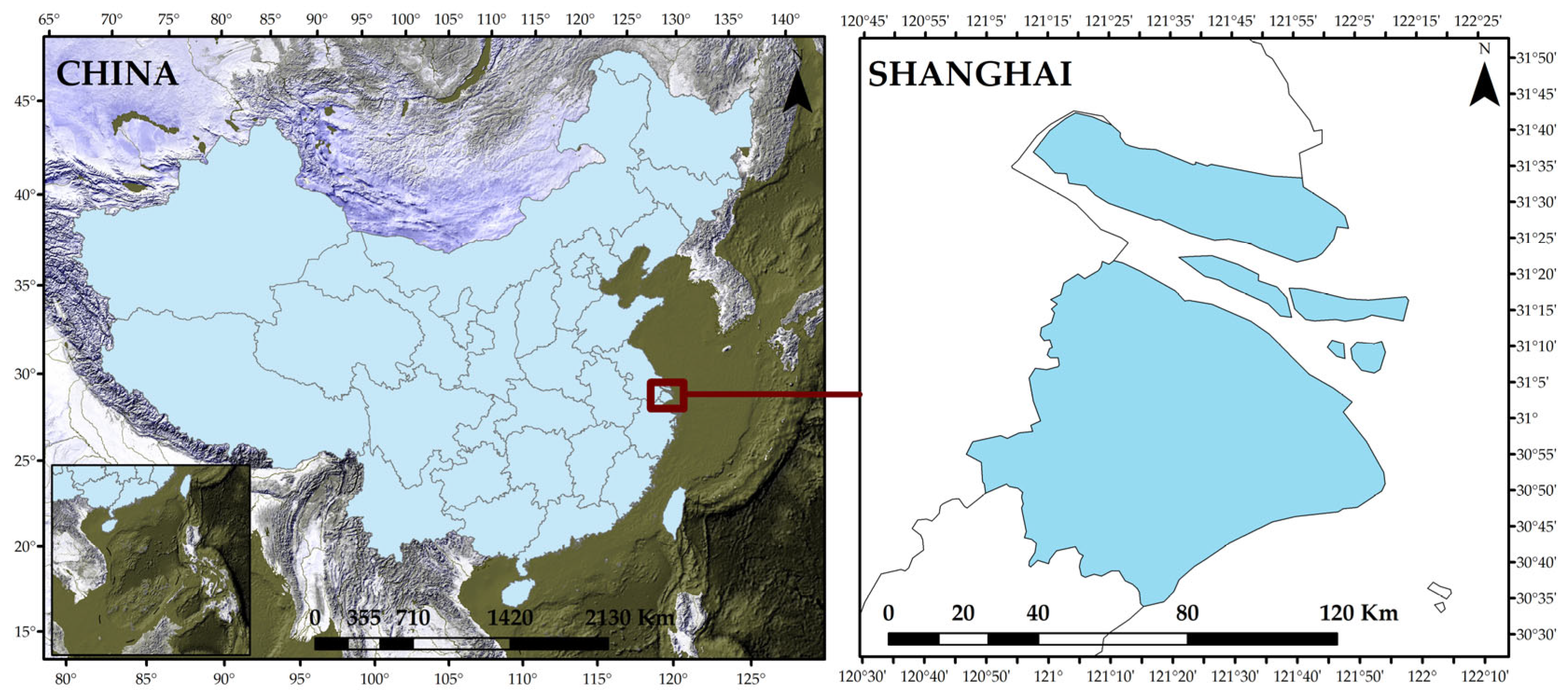
2.1. Study Area
2.2. Research Data
2.3. Variable Construction
2.3.1. Natural Green Spaces
2.3.2. Built Environment
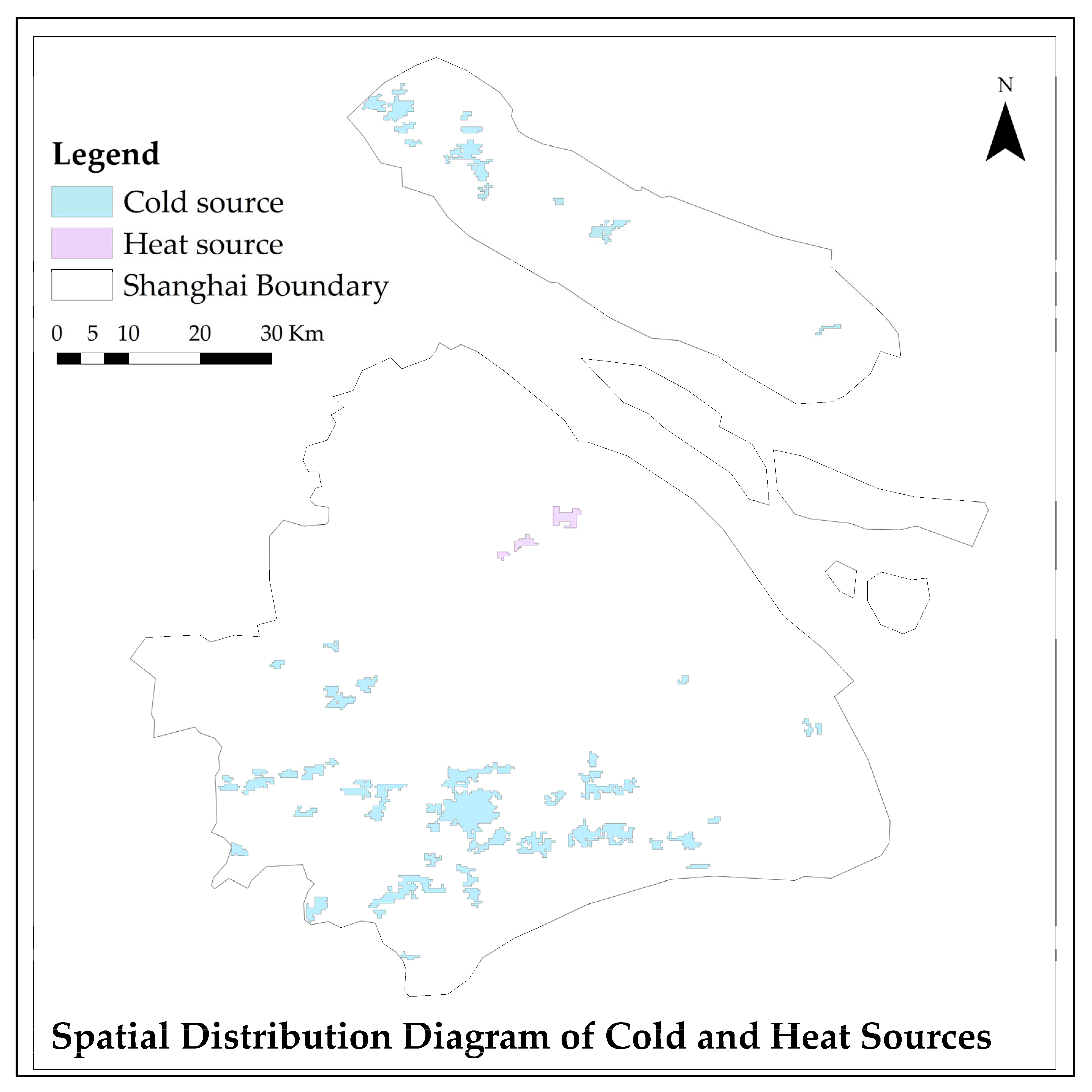
2.3.3. Determination of Hot and Cold Source Points
2.3.4. Descriptive Statistics of Variables
2.4. Research Methodology
2.4.1. Variable Testing (VIF, MLR)
2.4.2. Machine Learning
2.4.3. Model Tuning
2.4.4. SHAP
2.4.5. MCR Model
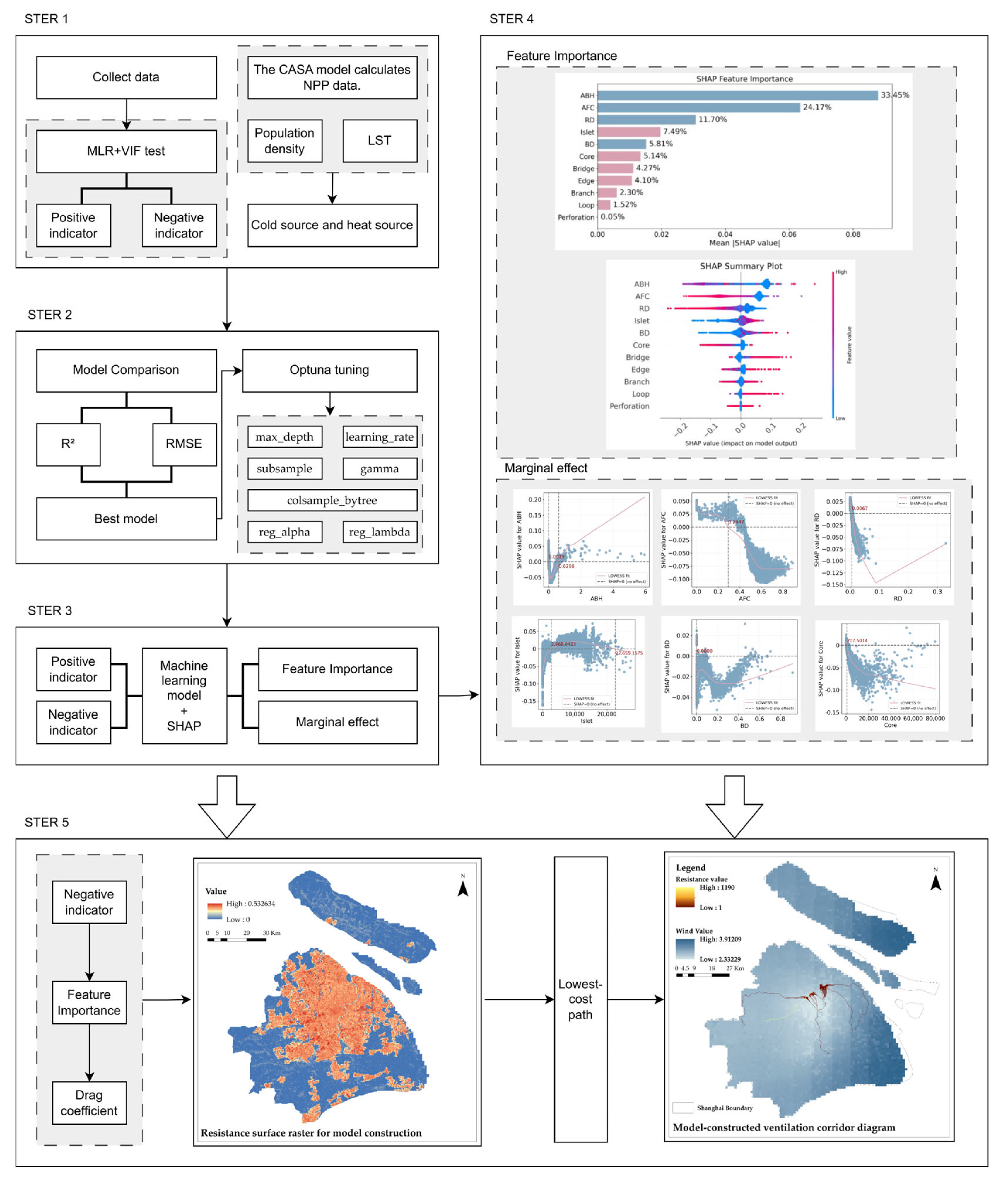
2.5. Technical Route
3. Results
3.1. Data Testing and Model Tuning
3.1.1. MLR and VIF Results
3.1.2. Model Validation and Tuning
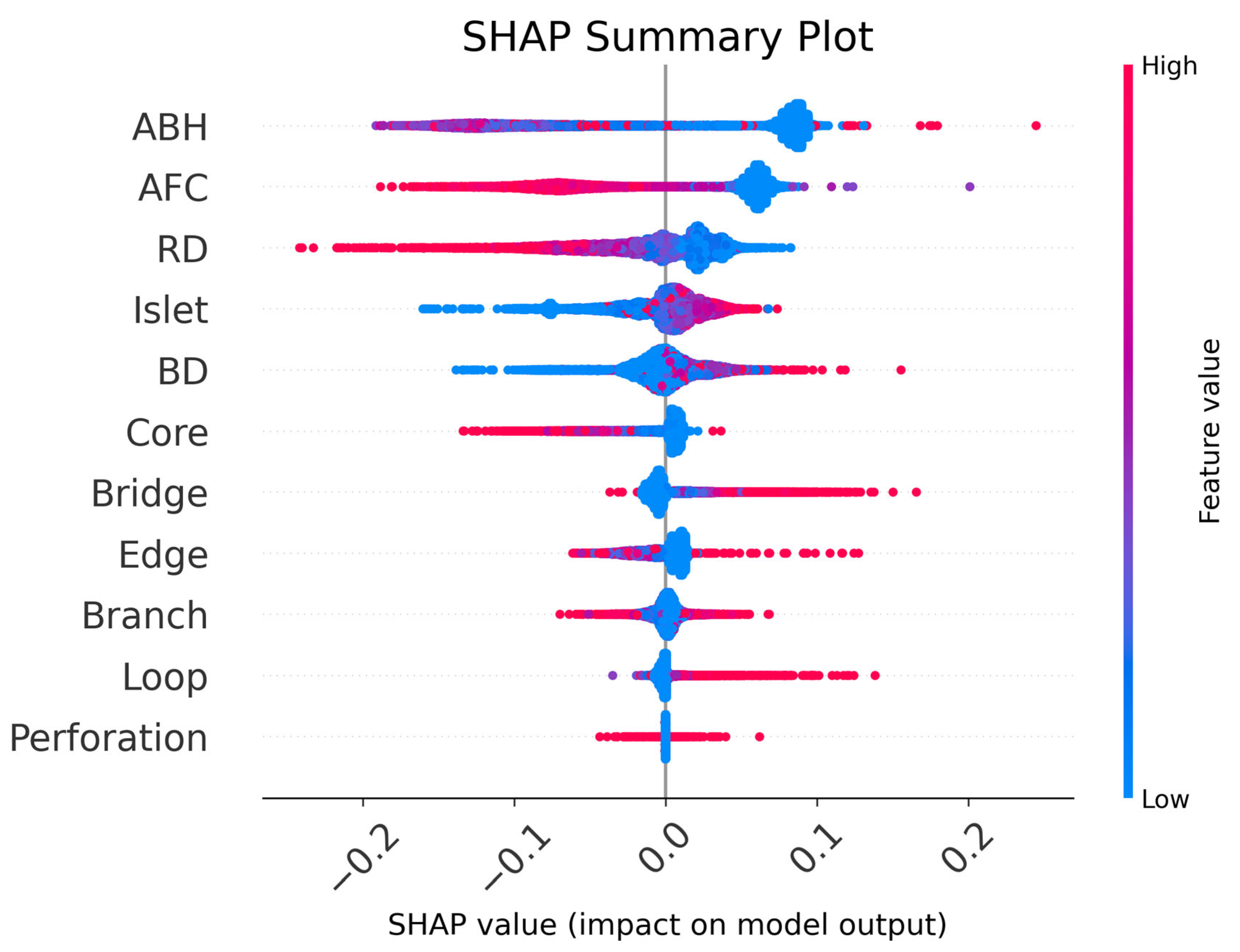
3.2. Linear and Nonlinear Features
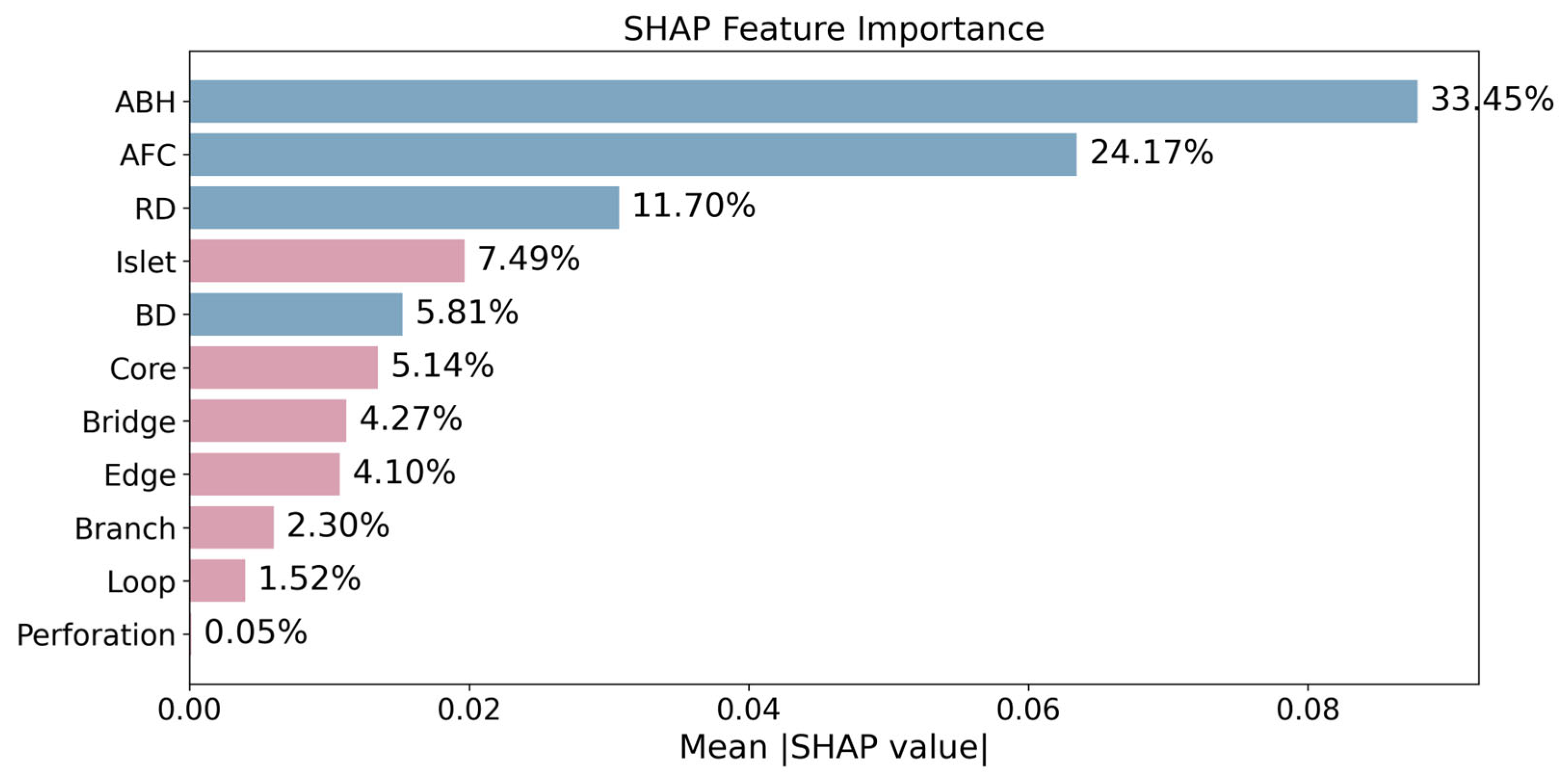
3.2.1. Feature Importance
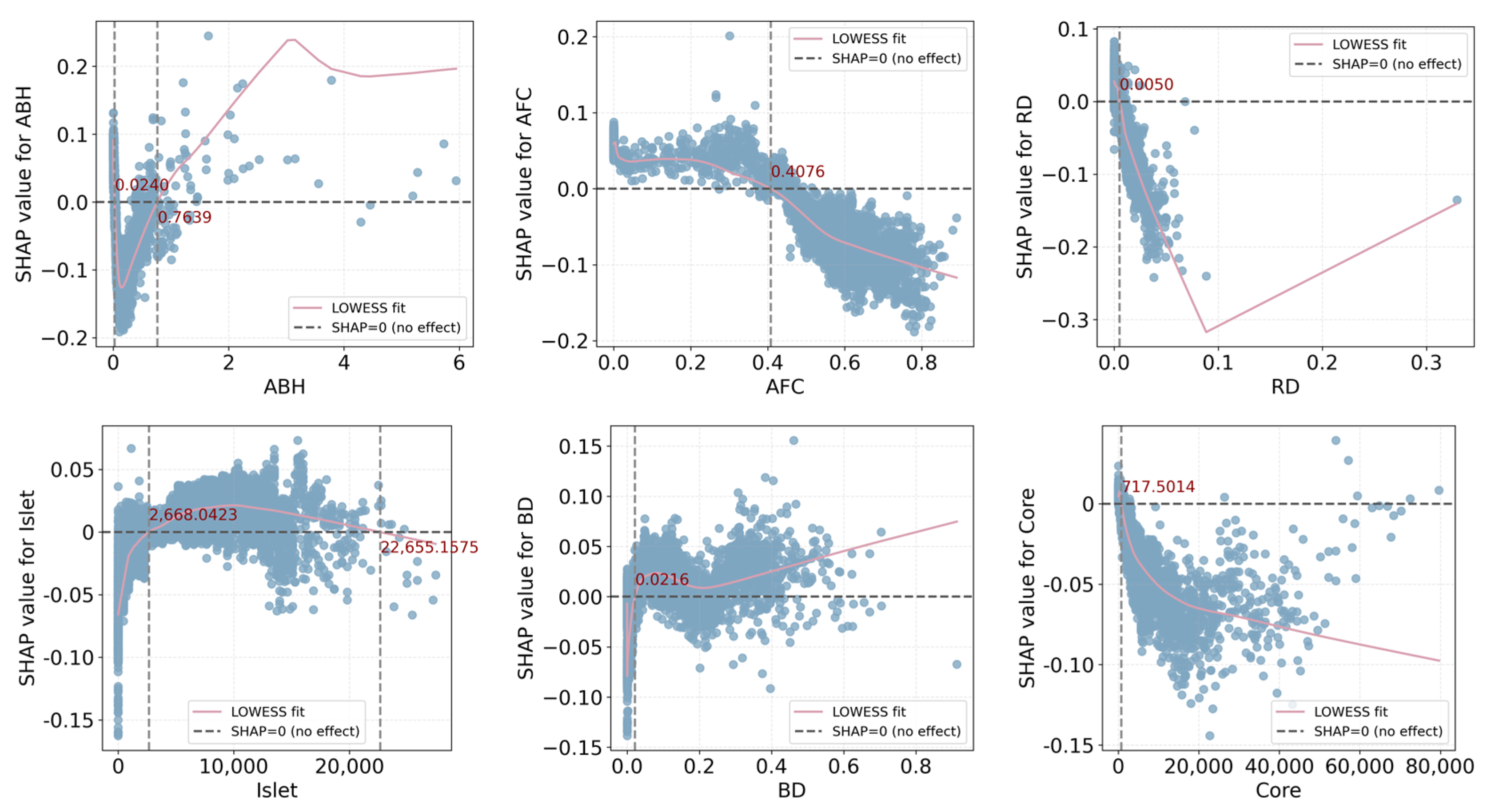
3.2.2. Marginal Effects
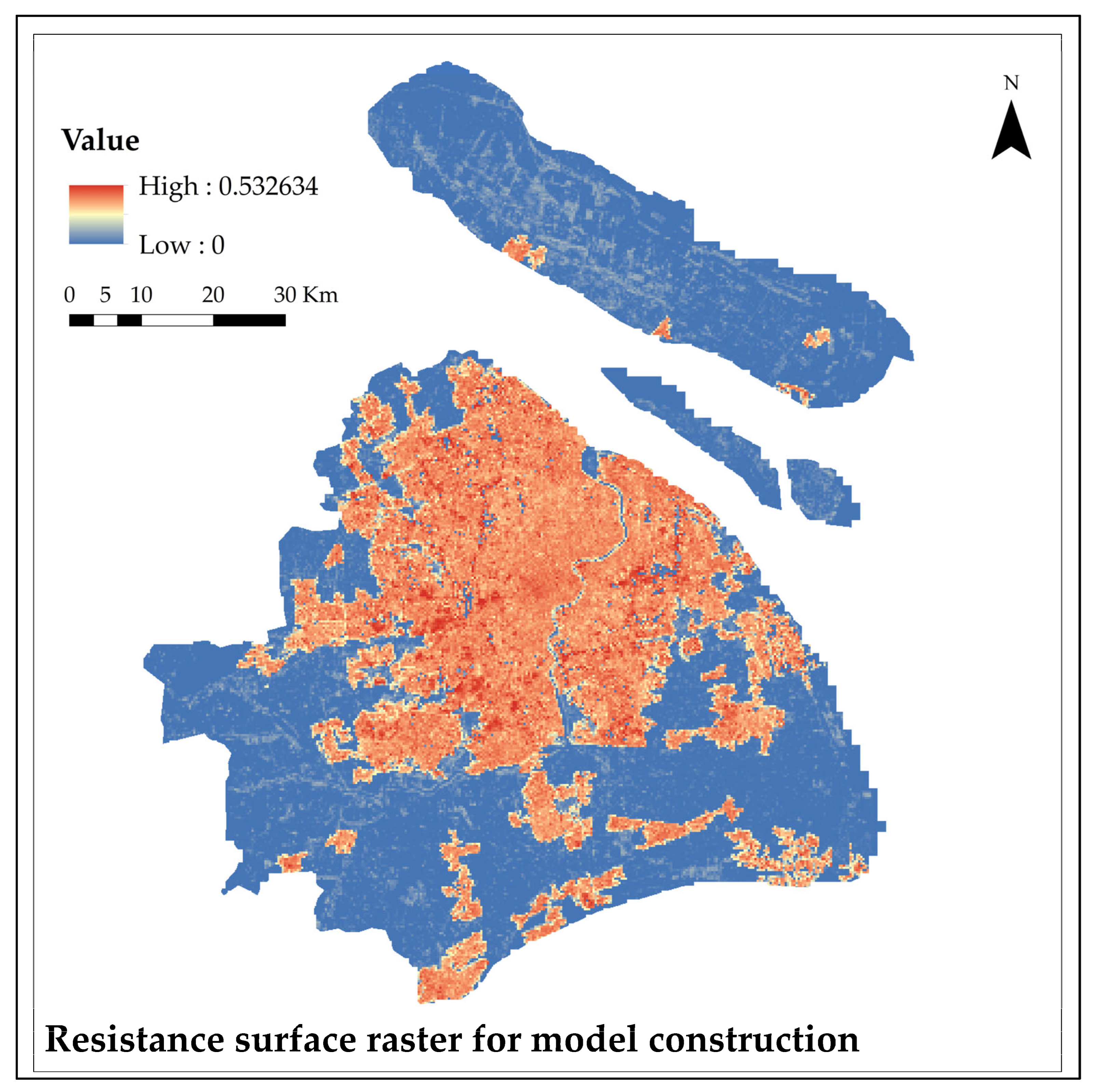
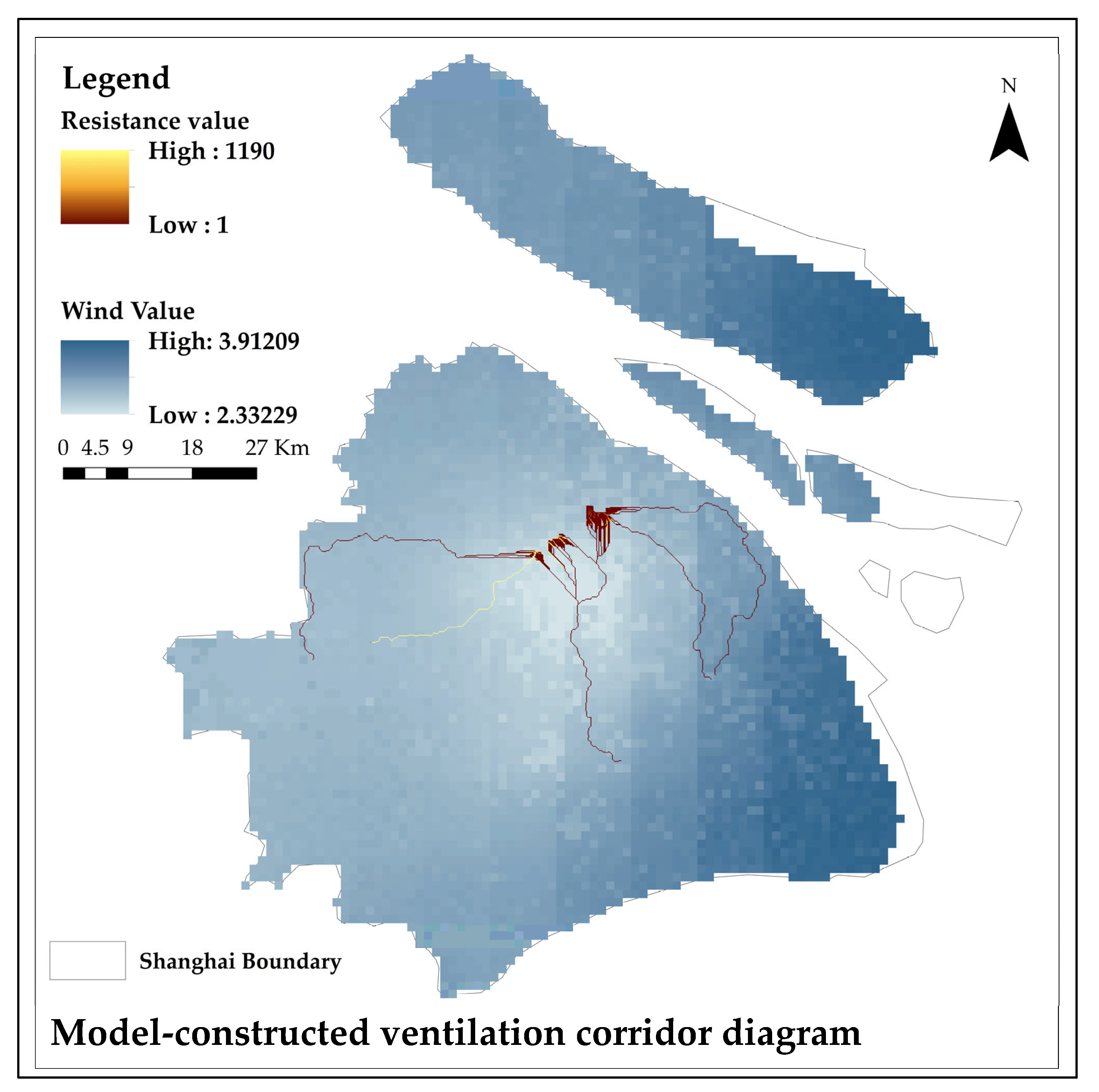
3.3. Ventilation Corridor Construction
4. Discussion
4.1. Discussion of the Positive and Negative Effects of Factors
4.2. Machine Learning–Based Identification and Construction of Urban Ventilation Corridors
4.3. Limitations
5. Conclusions
- (1)
- Positive and negative factors affecting urban ventilation
- (2)
- Ventilation corridor construction
Author Contributions
Funding
Institutional Review Board Statement
Informed Consent Statement
Data Availability Statement
Acknowledgments
Conflicts of Interest
References
- Guastella, G.; Pareglio, S. Urban spatial structure and land use fragmentation: The case of Milan FUA. Aestimum 2016, 69, 153–164. [Google Scholar] [CrossRef]
- Chen, W.X.; Zeng, J.; Li, N. Change in land-use structure due to urbanisation in China. J. Clean. Prod. 2021, 321, 128986. [Google Scholar] [CrossRef]
- Zhang, P.; Kohli, D.; Sun, Q.Q.; Zhang, Y.X.; Liu, S.X.; Sun, D.F. Remote sensing modeling of urban density dynamics across 36 major cities in China: Fresh insights from hierarchical urbanized space. Landsc. Urban Plan. 2020, 203, 103896. [Google Scholar] [CrossRef]
- Ramírez-Aguilar, E.A.; Souza, L.C.L. Urban form and population density: Influences on Urban Heat Island intensities in Bogota, Colombia. Urban Clim. 2019, 29, 100497. [Google Scholar] [CrossRef]
- Anderson, G.B.; Bell, M.L. Heat Waves in the United States: Mortality Risk during Heat Waves and Effect Modification by Heat Wave Characteristics in 43 U.S. Communities. Environ. Health Perspect. 2011, 119, 210–218. [Google Scholar] [CrossRef]
- Di Napoli, C.; Pappenberger, F.; Cloke, H.L. Assessing heat-related health risk in Europe via the Universal Thermal Climate Index (UTCI). Int. J. Biometeorol. 2018, 62, 1155–1165. [Google Scholar] [CrossRef] [PubMed]
- Susca, T.; Pomponi, F. Heat island effects in urban life cycle assessment: Novel insights to include the effects of the urban heat island and UHI-mitigation measures in LCA for effective policy making. J. Ind. Ecol. 2020, 24, 410–423. [Google Scholar] [CrossRef]
- Li, Y.Y.; Wang, S.M.; Zhang, S.J.; Wei, M.; Chen, Y.S.; Huang, X.Y.; Zhou, R. The creation of multi-level urban ecological cooling network to alleviate the urban heat island effect. Sustain. Cities Soc. 2024, 114, 105786. [Google Scholar] [CrossRef]
- Xu, S.; Ren, Y.H.; Ke, Q.H.; Zong, S.S. Effect and driving mechanisms of urban renewal on urban heat island mitigation in Beijing. J. Environ. Manag. 2025, 393, 126911. [Google Scholar] [CrossRef]
- Guindon, S.M.; Nirupama, N. Reducting risk from urban heat island effects in cities. Nat. Hazards 2015, 77, 823–831. [Google Scholar] [CrossRef]
- Ma, X.; Zhang, L.; Guo, M.; Zhao, J.Y. The effect of various urban design parameter in alleviating urban heat island and improving thermal health-a case study in a built pedestrianized block of China. Environ. Sci. Pollut. Res. 2021, 28, 38406–38425. [Google Scholar] [CrossRef]
- Kaloustian, N.; Diab, Y. Effects of urbanization on the urban heat island in Beirut. Urban Clim. 2015, 14, 154–165. [Google Scholar] [CrossRef]
- Du, W.P.; Zhu, R.; Fang, X.Y. Construction of Ventilation Corridors and Smog Control in Beijing. Chin. J. Urban Environ. Stud. 2017, 5, 1750016. [Google Scholar] [CrossRef]
- Guo, A.D.; Yue, W.Z.; Yang, J.; Li, M.M.; Xie, P.; He, T.T.; Zhang, M.X.; Yu, H.S. Quantifying the impact of urban ventilation corridors on thermal environment in Chinese megacities. Ecol. Indic. 2023, 156, 111072. [Google Scholar] [CrossRef]
- Ekanayaka, N.; Kankanamge, N.; Kangana, N.; Goonetilleke, A. The Impact of Urban Ventilation Corridors on Land Surface Temperature: A Temporal Multisource Spatial Analysis of Colombo, Sri Lanka. Environ. Urban. Asia 2025, 16, 41–69. [Google Scholar] [CrossRef]
- Hongkong. 2006. Available online: https://www.pland.gov.hk/pland_en/tech_doc/hkpsg/index.html (accessed on 10 October 2025).
- Ng, E. Policies and technical guidelines for urban planning of high-density cities—Air ventilation assessment (AVA) of Hong Kong. Build. Environ. 2009, 44, 1478–1488. [Google Scholar] [CrossRef] [PubMed]
- Wang, W.W.; Wang, D.; Chen, H.; Wang, B.Y.; Chen, X. Identifying urban ventilation corridors through quantitative analysis of ventilation potential and wind characteristics. Build. Environ. 2022, 214, 108943. [Google Scholar] [CrossRef]
- Li, X.S.; Lin, K.; Cheng, D.; Zou, H.; Shu, Y.L.; Jin, Z.G.; Zhu, J.B. Meteorological effects of ventilation corridor in central urban areas: A case study of Wuhan. Sustain. Cities Soc. 2024, 114, 105752. [Google Scholar] [CrossRef]
- Gu, K.K.; Fang, Y.H.; Qian, Z.; Sun, Z.; Wang, A. Spatial planning for urban ventilation corridors by urban climatology. Ecosyst. Health Sustain. 2020, 6, 1747946. [Google Scholar] [CrossRef]
- Liu, W.L.; Zhang, G.; Jiang, Y.H.; Wang, J.Y. Effective Range and Driving Factors of the Urban Ventilation Corridor Effect on Urban Thermal Comfort at Unified Scale with Multisource Data. Remote Sens. 2021, 13, 1783. [Google Scholar] [CrossRef]
- Tecle, A.; Bitsuamlak, G.T.; Jiru, T.E. Wind-driven natural ventilation in a low-rise building: A Boundary Layer Wind Tunnel study. Build. Environ. 2013, 59, 275–289. [Google Scholar] [CrossRef]
- Ayad, S.S. Computational study of natural ventilation. J. Wind Eng. Ind. Aerodyn. 1999, 82, 49–68. [Google Scholar] [CrossRef]
- Ginger, J.D.; Holmes, J.D.; Kopp, G.A. Effect of building volume and opening size on fluctuating internal pressures. Wind Struct. 2008, 11, 361–376. [Google Scholar] [CrossRef]
- Zhang, W.J.; Qi, J.; Li, X. District Air Environment Evaluation by CFD Simulation. In Proceedings of the 2009 International Conference on Energy and Environment Technology, Guilin, China, 16–18 October 2009; IEEE: Piscataway, NJ, USA, 2009; Proceedings 2009; Volume 3, pp. 36–39. [Google Scholar] [CrossRef]
- Antoniou, N.; Montazeri, H.; Wigo, H.; Neophytou, M.K.A.; Blocken, B.; Sandberg, M. CFD and wind-tunnel analysis of outdoor ventilation in a real compact heterogeneous urban area: Evaluation using “air delay”. Build. Environ. 2017, 126, 355–372. [Google Scholar] [CrossRef]
- Liu, R.; Wang, Y.X.; Zhang, Y.; Peng, Z.X.; Chen, H.K.; Li, X.; Li, H.; Li, W.Y. Analysis of the city-scale wind environment and detection of ventilation corridors in high-density metropolitan areas based on CFD method. Urban Clim. 2025, 59, 102274. [Google Scholar] [CrossRef]
- Osinska-Skotak, K.; Zawalich, J. Analysis of land use changes of urban ventilation corridors in warsaw in 1992–2015. Geogr. Pol. 2016, 89, 345–358. [Google Scholar] [CrossRef]
- Chang, S.Z.; Jiang, Q.G.; Zhao, Y. Integrating CFD and GIS into the Development of Urban Ventilation Corridors: A Case Study in Changchun City, China. Sustainability 2018, 10, 1814. [Google Scholar] [CrossRef]
- Wu, K.L.; Shan, L. Make Way for the Wind-Promoting Urban Wind Corridor Planning by Integrating RS, GIS, and CFD in Urban Planning and Design to Mitigate the Heat Island Effect. Atmosphere 2024, 15, 257. [Google Scholar] [CrossRef]
- Yu, B.; Xie, P. A Machine Learning Framework for Urban Ventilation Corridor Identification Using LBM and Morphological Indices. ISPRS Int. J. Geo-Inf. 2025, 14, 244. [Google Scholar] [CrossRef]
- Xie, P.; Yang, J.; Wang, H.Y.; Liu, Y.F.; Liu, Y.L. A New method of simulating urban ventilation corridors using circuit theory. Sustain. Cities Soc. 2020, 59, 102162. [Google Scholar] [CrossRef]
- Guo, F.; Zhang, H.C.; Fan, Y.; Zhu, P.S.; Wang, S.Y.; Lu, X.D.; Jin, Y. Detection and evaluation of a ventilation path in a mountainous city for a sea breeze: The case of Dalian. Build. Environ. 2018, 145, 177–195. [Google Scholar] [CrossRef]
- Fang, Y.H.; Gu, K.K.; Qian, Z.; Sun, Z.; Wang, Y.Z.; Wang, A.J. Performance evaluation on multi-scenario urban ventilation corridors based on least cost path. Urban Manag. 2021, 10, 3–15. [Google Scholar] [CrossRef]
- Fang, Y.H.; Zhao, L.Y.; Dou, B.Y.; Li, Y.; Wang, S.X. Circuit VRC: A circuit theory-based ventilation corridor model for mitigating the urban heat islands. Build. Environ. 2023, 244, 110786. [Google Scholar] [CrossRef]
- Bekisoglu, H.U.; Keyis, N. Association of urban green spaces with urban ecological zones. J. Infrastruct. Policy Dev. 2023, 7, 2800. [Google Scholar] [CrossRef]
- Verdú-Vázquez, A.; Fernández-Pablos, E.; Lozano-Diez, R.V.; López-Zaldívar, O. Green space networks as natural infrastructures in PERI-URBAN areas. Urban Ecosyst. 2020, 24, 187–204. [Google Scholar] [CrossRef]
- Zolobanicová, T.; Stepánková, R.; Tóth, A. Unlocking the Potential of Forgotten Spaces: Integrating Lost Green Spaces and Urban Wetlands into Sustainable Urban Development. Urban Sci. 2025, 9, 349. [Google Scholar] [CrossRef]
- Anguluri, R.; Narayanan, P. Role of green space in urban planning: Outlook towards smart cities. Urban For. Urban Green. 2017, 25, 58–65. [Google Scholar] [CrossRef]
- Lin, H.Q.; Li, X. The Role of Urban Green Spaces in Mitigating the Urban Heat Island Effect: A Systematic Review from the Perspective of Types and Mechanisms. Sustainability 2025, 17, 6132. [Google Scholar] [CrossRef]
- Afshari, A. A new model of urban cooling demand and heat island application to vertical greenery systems (VGS). Energy Build. 2017, 157, 204–217. [Google Scholar] [CrossRef]
- Daemei, A.B.; Azmoodeh, M.; Zamani, Z.; Khotbehsara, E.M. Experimental and simulation studies on the thermal behavior of vertical greenery system for temperature mitigation in urban spaces. J. Build. Eng. 2018, 20, 277–284. [Google Scholar] [CrossRef]
- An, L.; Hang, J.; Zhao, Y.J.; Zeng, L.Y.; Dong, H.Y.; Zhao, Y.G.; Zhao, N. Cooling effects of tree transpiration: A CFD simulation study on heterogeneous tree canopy configurations (TCCs). Sustain. Cities Soc. 2025, 126, 106374. [Google Scholar] [CrossRef]
- Amani-Beni, M.; Zhang, B.; Xie, G.D.; Xu, J. Impact of urban park’s tree, grass and waterbody on microclimate in hot summer days: A case study of Olympic Park in Beijing, China. Urban For. Urban Green. 2018, 32, 1–6. [Google Scholar] [CrossRef]
- Zeng, F.H.; Simeja, D.; Ren, X.Y.; Chen, Z.G.; Zhao, H.Y. Influence of Urban Road Green Belts on Pedestrian-Level Wind in Height-Asymmetric Street Canyons. Atmosphere 2022, 13, 1285. [Google Scholar] [CrossRef]
- Guo, X.; Gao, Z.; Buccolieri, R.; Zhang, M.J.; Shen, J.L. Effect of greening on pollutant dispersion and ventilation at urban street intersections. Build. Environ. 2021, 203, 108075. [Google Scholar] [CrossRef]
- Badach, J.; Szczepanski, J.; Bonenberg, W.; Gebicki, J.; Nyka, L. Developing the Urban Blue-Green Infrastructure as a Tool for Urban Air Quality Management. Sustainability 2022, 14, 9688. [Google Scholar] [CrossRef]
- Karimimoshaver, M.; Khalvandi, R.; Khalvandi, M. The effect of urban morphology on heat accumulation in urban street canyons and mitigation approach. Sustain. Cities Soc. 2021, 73, 103127. [Google Scholar] [CrossRef]
- Shui, T.T.; Cao, L.L.; Xiao, T.Q.; Zhang, S.J. Influence of Building-Height Variability on Urban Ventilation and Pollutant Dispersion Characteristics. Atmosphere 2025, 16, 614. [Google Scholar] [CrossRef]
- Meena, R.K.; Raj, R.; Anbukumar, S.; Khan, M.I.; Khatib, J.M. Fluid Dynamic Assessment of Tall Buildings with a Variety of Complicated Geometries. Buildings 2024, 14, 4081. [Google Scholar] [CrossRef]
- Peng, Y.L.; Gao, Z.; Buccolieri, R.; Ding, W.W. An Investigation of the Quantitative Correlation between Urban Morphology Parameters and Outdoor Ventilation Efficiency Indices. Atmosphere 2019, 10, 33. [Google Scholar] [CrossRef]
- Azad, M.; Karimimoshaver, M. The impact of building geometry on airflow and thermal comfort in urban open spaces: A case study of kashan in a hot and dry climate. Results Eng. 2025, 27, 106948. [Google Scholar] [CrossRef]
- Bian, H.N.; Li, M.R.; Deng, Y.L.; Zhang, Y.; Liu, Y.L.; Wang, Q.; Xie, S.R.; Wang, S.X.; Zhang, Z.Y.; Wang, N.T. Identification of ecological restoration areas based on the ecological safety security assessment of wetland-hydrological ecological corridors: A case study of the Han River Basin in China. Ecol. Indic. 2024, 160, 111780. [Google Scholar] [CrossRef]
- Qiao, Z.; Xu, X.L.; Wu, F.; Luo, W.; Wang, F.; Liu, L.; Sun, Z.Y. Urban ventilation network model: A case study of the core zone of capital function in Beijing metropolitan area. J. Clean. Prod. 2017, 168, 526–535. [Google Scholar] [CrossRef]
- Avon, C.; Bergès, L. Prioritization of habitat patches for landscape connectivity conservation differs between least-cost and resistance distances. Landsc. Ecol. 2016, 31, 1551–1565. [Google Scholar] [CrossRef]
- Huang, G.; Hu, W.J.; Du, J.G.; Jia, Y.F.; Zhou, Z.; Lei, G.C.; Saintilan, N.; Wen, L.; Wang, Y.Y. Identification and scenario-based optimization of ecological corridor networks for waterbirds in typical coastal wetlands. Ecol. Indic. 2025, 171, 113147. [Google Scholar] [CrossRef]
- Koc, M.; Acar, A. Investigation of urban climates and built environment relations by using Machine Learning. Urban Clim. 2021, 37, 100820. [Google Scholar] [CrossRef]
- Milojevic-Dupont, N.; Creutzig, F. Machine Learning for geographically differentiated climate change mitigation in urban areas. Sustain. Cities Soc. 2021, 64, 102526. [Google Scholar] [CrossRef]
- Baitureyeva, A.; Yang, T.; Wang, H.S. Development of Machine Learning-Aided Rapid CFD Prediction for Optimal Urban Wind Environment Design. Sustain. Cities Soc. 2025, 121, 106208. [Google Scholar] [CrossRef]
- Zuo, C.; Liang, C.C.; Chen, J.; Xi, R.; Zhang, J.F. Machine Learning-Based Urban Renovation Design for Improving Wind Environment: A Case Study in Xi’an, China. Land 2023, 12, 739. [Google Scholar] [CrossRef]
- Rocha, A.; Papa, J.P.; Meira, L.A.A. How far do we get using machine learning black-boxes? Int. J. Pattern Recognit. Artif. Intell. 2012, 26, 1261001. [Google Scholar] [CrossRef]
- Fabra-Boluda, R.; Ferri, C.; Hernández-Orallo, J.; Ramírez-Quintana, M.J.; Martínez-Plumed, F. Cracking black-box models: Revealing hidden machine learning techniques behind their predictions. Intell. DATA Anal. 2025, 29, 29–44. [Google Scholar] [CrossRef]
- Nohara, Y.; Matsumoto, K.; Soejima, H.; Nakashima, N. Explanation of Machine Learning Models Using Improved Shapley Additive Explanation. In Proceedings of the ACM-BCB’19: Proceedings of the 10th ACM International Conference on Bioinformatics, Computational Biology and Health Informatics, Niagara Falls, NY, USA, 7–10 September 2019; p. 546. [Google Scholar] [CrossRef]
- Liu, K.J.; Zhou, D.; Qi, Y.T.; Zhang, M.Z.; Ren, Y.L.; Wei, Y.P.; Wang, J.H. Exploring the Complex Effects and Their Spatial Associations of the Built Environment on the Vitality of Community Life Circles Using an eXtreme Gradient Boosting-SHapley Additive exPlanations Approach: A Case Study of Xi’an. Buildings 2025, 15, 1372. [Google Scholar] [CrossRef]
- Wang, Y.Z.; Shibusawa, H.; Leman, E.; Higano, Y.; Mao, G.P. A study of Shanghai’s development strategy to 2020. Reg. Sci. Policy Pract. 2013, 5, 183–200. [Google Scholar] [CrossRef]
- Zhao, S.X.B. Information Exchange, Headquarters Economy and Financial Centers Development: Shanghai, Beijing and Hong Kong. J. Contemp. China 2013, 22, 1006–1027. [Google Scholar] [CrossRef]
- Li, J.H.; Fang, W.; Wang, T.; Qureshi, S.; Alatalo, J.M.; Bai, Y. Correlations between Socioeconomic Drivers and Indicators of Urban Expansion: Evidence from the Heavily Urbanised Shanghai Metropolitan Area, China. Sustainability 2017, 9, 1199. [Google Scholar] [CrossRef]
- Zhang, Y.C.; Zhao, H.M.; Long, Y. CMAB: A Multi-Attribute Building Dataset of China. Sci. Data 2025, 12, 430. [Google Scholar] [CrossRef]
- Li, Z.H.; He, W.; Cheng, M.F.; Hu, J.X.; Yang, G.G.; Zhang, H.Y. SinoLC-1: The first 1 m resolution national-scale land-cover map of China created with a deep learning framework and open-access data. Earth Syst. Sci. Data 2023, 15, 4749–4780. [Google Scholar] [CrossRef]
- Zhang, X.; Liu, Y.N.; Chen, Y.M.; Liu, J.Z. Identification and integration of ventilation corridors in Shijiazhuang City, China. Sustain. Cities Soc. 2024, 112, 105543. [Google Scholar] [CrossRef]
- Wicht, M.; Osinska-Skotak, K. Temporal analysis of urban changes and development in Warsaw’s ventilation corridors. Misc. Geogr. 2016, 20, 11–21. [Google Scholar] [CrossRef]
- Lundberg, S.M.; Lee, S.I. A unified approach to interpreting model predictions. Adv. Neural Inf. Process. Syst. 2017, 30, 4765–4774. [Google Scholar] [CrossRef]
- Sun, D.; Wu, X.; Wen, H.; Ma, X.; Zhang, F.; Ji, Q.; Zhang, J. Ecological security pattern based on XGBoost–MCR model: A case study of the Three Gorges Reservoir Region. J. Clean. Prod. 2024, 470, 143252. [Google Scholar] [CrossRef]
- Liu, X.Q.; Huang, B.; Li, R.R.; Zhang, J.H.; Gou, Q.; Zhou, T.; Huang, Z.H. Wind environment assessment and planning of urban natural ventilation corridors using GIS: Shenzhen as a case study. Urban Clim. 2022, 42, 101091. [Google Scholar] [CrossRef]
- Xie, P.; Yang, J.; Sun, W.; Xiao, X.M.; Xia, J.C. Urban scale ventilation analysis based on neighborhood normalized current model. Sustain. Cities Soc. 2022, 80, 103746. [Google Scholar] [CrossRef]
- Lyu, R.; Zhou, L.; Guo, Z.C.; Sun, Q.K.; Gao, H.; Wang, X. Optimization of urban cooling network informed by actual flow of cooling service provided by urban green space from a 3D perspective. Urban For. Urban Green. 2025, 113, 129109. [Google Scholar] [CrossRef]
- Akiba, T.; Sano, S.; Yanase, T.; Ohta, T.; Koyama, M. Optuna: A Next-generation Hyperparameter Optimization Framework. In Proceedings of the 25th ACM SIGKDD International Conference on Knowledge Discovery & Data Mining (KDD ‘19), Anchorage, AK, USA, 4–8 August 2019; Association for Computing Machinery: New York, NY, USA, 2019; pp. 2623–2631. [Google Scholar] [CrossRef]
- Li, J.Y.; You, W.; Peng, Y.L.; Ding, W.W. Exploring the potential of the aspect ratio to predict flow patterns in actual urban spaces for ventilation design by comparing the idealized and actual canyons. Sustain. Cities Soc. 2024, 102, 105214. [Google Scholar] [CrossRef]
- Llaguno-Munitxa, M.; Bou-Zeid, E.; Hultmark, M. The influence of building geometry on street canyon air flow: Validation of large eddy simulations against wind tunnel experiments. J. Wind. Eng. Ind. Aerodyn. 2017, 165, 115–130. [Google Scholar] [CrossRef]
- Kuo, C.Y.; Wang, R.J.; Lin, Y.P.; Lai, C.M. Urban Design with the Wind: Pedestrian-Level Wind Field in the Street Canyons Downstream of Parallel High-Rise Buildings. Energies 2020, 13, 2827. [Google Scholar] [CrossRef]
- Juan, Y.H.; Wen, C.Y.; Li, Z.T.; Yang, A.S. Impacts of urban morphology on improving urban wind energy potential for generic high-rise building arrays. Appl. Energy 2021, 299, 117304. [Google Scholar] [CrossRef]
- Li, B.; Jiang, C.Y.; Wang, L.; Cai, W.H.; Liu, J. A parametric study of the effect of building layout on wind flow over an urban area. Build. Environ. 2019, 160, 106160. [Google Scholar] [CrossRef]
- Niu, J.M.; Mei, S.J.; Sun, T. Efficient city-scale wind mapping from building morphology: A CFD-based parameterization scheme. Sustain. Cities Soc. 2025, 131, 106688. [Google Scholar] [CrossRef]
- Jiang, L.; Tang, M.F. Thermal analysis of extensive green roofs combined with night ventilation for space cooling. Energy Build. 2017, 156, 238–249. [Google Scholar] [CrossRef]
- Zhang, D.Y.; Yang, L.; Feng, L.Y.; Liu, J.; Hong, X.C. Optimizing Green Spaces Significantly Improves Wind Environment and Accessibility in County Towns. Land 2025, 14, 730. [Google Scholar] [CrossRef]
- Chu, C.R.; Chiang, B.F. Wind-driven cross ventilation in long buildings. Build. Environ. 2014, 80, 150–158. [Google Scholar] [CrossRef]
- Gan, W.; Guo, H.; Zhang, H.L.; Zhao, F.Y.; Li, J.Y.; Peng, S.Q.; He, Y. Wind-Driven Dynamics Around Building Clusters: Impact of Convex and Concave Curvilinear Morphologies and Central Angles. Atmosphere 2024, 15, 1454. [Google Scholar] [CrossRef]
- Iqbal, Q.M.Z.; Chan, A.L.S. Pedestrian level wind environment assessment around group of high-rise cross-shaped buildings: Effect of building shape, separation and orientation. Build. Environ. 2016, 101, 45–63. [Google Scholar] [CrossRef]
- Qin, Y.W.; Wang, B. Coordinated Optimization of Building Morphological Parameters Under Urban Wind Energy Targets: A Review. Energies 2025, 18, 5002. [Google Scholar] [CrossRef]
- Usui, H. Optimisation of building and road network densities in terms of variation in plot sizes and shapes. Environ. Plan. B-Urban Anal. City Sci. 2021, 48, 1263–1278. [Google Scholar] [CrossRef]
- Li, Z.X.; Han, B.J.; Chu, Y.Q.; Shi, Y.; Huang, N.; Shi, T.M. Evaluating the Impact of Road Layout Patterns on Pedestrian-Level Ventilation Using Computational Fluid Dynamics (CFD). Atmosphere 2025, 16, 123. [Google Scholar] [CrossRef]
- Yin, J.; Zhan, Q.M.; Tayyab, M.; Zahra, A. The Ventilation Efficiency of Urban Built Intensity and Ventilation Path Identification: A Case Study of Wuhan. Int. J. Environ. Res. Public Health 2021, 18, 11684. [Google Scholar] [CrossRef]
- Yuan, C.; Ng, E. Building porosity for better urban ventilation in high-density cities—A computational parametric study. Build. Environ. 2012, 50, 176–189. [Google Scholar] [CrossRef] [PubMed]
- Palusci, O.; Monti, P.; Cecere, C.; Montazeri, H.; Blocken, B. Impact of morphological parameters on urban ventilation in compact cities: The case of the Tuscolano-Don Bosco district in Rome. Sci. Total Environ. 2022, 807, 150490. [Google Scholar] [CrossRef]
- Park, J.; Kim, J.H.; Lee, D.K.; Park, C.Y.; Jeong, S.G. The influence of small green space type and structure at the street level on urban heat island mitigation. Urban For. Urban Green. 2017, 21, 203–212. [Google Scholar] [CrossRef]
- Zhang, Y.; Hu, X.J.; Liu, Z.; Zhou, C.L.; Liang, H. A Greening Strategy of Mitigation of the Thermal Environment for Coastal Sloping Urban Space. Sustainability 2023, 15, 295. [Google Scholar] [CrossRef]
- Hsieh, C.M.; Jan, F.C.; Zhang, L. A simplified assessment of how tree allocation, wind environment, and shading affect human comfort. Urban For. Urban Green. 2016, 18, 126–137. [Google Scholar] [CrossRef]
- Rui, L.Y.; Buccolieri, R.; Gao, Z.; Ding, W.W.; Shen, J.L. The Impact of Green Space Layouts on Microclimate and Air Quality in Residential Districts of Nanjing, China. Forests 2018, 9, 224. [Google Scholar] [CrossRef]
- Gong, D.M.; Dai, X.Y.; Zhou, L.G. Satellite-Based Optimization and Planning of Urban Ventilation Corridors for a Healthy Microclimate Environment. Sustainability 2023, 15, 15653. [Google Scholar] [CrossRef]



| Morphological Indicators | Definition |
|---|---|
| Core | Large habitat patches with high connectivity in the foreground pixels |
| Islet | Small, isolated habitat patches in the foreground pixels |
| Perforation | Non-green space voids within core patches |
| Edge | Boundary areas between foreground and background pixels |
| Loop | Foreground pixel corridors form ring-shaped or closed paths within core areas |
| Bridge | Foreground pixel corridors connecting at least two core patches |
| Branch | Small branch-like foreground pixels extending from Core, Islet, or Bridge, serving as secondary structures of corridors |
| Form | Norm | Abb. | Max. | Min. | Average |
|---|---|---|---|---|---|
| Built Environment | Building Density | BD | 0.912972 | 0 | 0.055916 |
| Road Density | RD | 0.329343 | 0 | 0.006042 | |
| Average Building Height | ABH | 21.0203 | 0 | 0.060223 | |
| Architectural Form Complexity | AFC | 0.8902 | 0 | 0.227191 | |
| Natural Green Space | Core | / | 85,050 | 0 | 1678.205 |
| Islet | / | 36,900 | 0 | 4646.09 | |
| Perforation | / | 18,450 | 0 | 27.24076 | |
| Edge | / | 26,325 | 0 | 1864.836 | |
| Loop | / | 18,675 | 0 | 383.9192 | |
| Bridge | / | 37,350 | 0 | 960.5923 | |
| Branch | / | 26,775 | 0 | 1567.565 | |
| / | Wind Speed | WS | 3.912086 | 2.332289 | 3.090609 |
| Name | Abb. | Description |
|---|---|---|
| Categorical Boosting | Catboost | An efficient algorithm based on gradient boosted decision trees (GBDT) that automatically handles categorical features, avoids overfitting, and offers rapid computation. |
| Random Forest | RF | By integrating multiple decision trees and employing a random sampling mechanism, it enhances the model’s generalisation capability and stability. |
| Light Gradient Boosting Machine | LightGBM | An efficient algorithm based on the gradient boosting framework, employing histogram optimisation and leaf node growth strategies, suitable for large-scale data. |
| eXtreme Gradient Boosting | XGBoost | An improved gradient boosting algorithm incorporating regularisation terms and parallel computation, offering high predictive accuracy and generalisation capability. |
| Gradient Boosting Machine | GBM | An ensemble learning method based on additive models and forward stepwise algorithms, enhancing predictive performance through iterative loss function optimisation. |
| Decision Tree | DT | A fundamental model employing tree structures for feature partitioning and classification/regression, offering excellent interpretability. |
| Support Vector Regression | SVR | A regression algorithm based on Support Vector Machine (SVM) principles, utilising kernel functions to achieve nonlinear mappings, suitable for small-sample regression problems. |
| Coef. | Std.Err. | p > |t| | VIF-Value | |
|---|---|---|---|---|
| const | 3.245394 | 0.002344 | 0.000000 | 4.395524 |
| Core | −0.000002 | 0.000000 | 0.000020 | 3.999821 |
| Islet | 0.000002 | 0.000000 | 0.000000 | 1.069637 |
| Perforation | 0.000011 | 0.000004 | 0.004336 | 1.521479 |
| Edge | −0.000005 | 0.000001 | 0.000000 | 4.546167 |
| Loop | 0.000004 | 0.000001 | 0.000368 | 1.325003 |
| Bridge | 0.000004 | 0.000001 | 0.000000 | 1.794439 |
| Branch | −0.000003 | 0.000001 | 0.000000 | 1.941596 |
| BD | −0.344901 | 0.018575 | 0.000000 | 2.645707 |
| ABH | 0.080003 | 0.006165 | 0.000000 | 1.396558 |
| RD | −6.091983 | 0.174896 | 0.000000 | 1.098538 |
| AFC | −0.452500 | 0.005728 | 0.000000 | 2.192976 |
| Model | R2 | RMSE |
|---|---|---|
| XGBoost | 0.2616 | 0.2995 |
| Gradient Boosting | 0.2605 | 0.2997 |
| LightGBM | 0.2604 | 0.2997 |
| CatBoost | 0.2537 | 0.3011 |
| Random Forest | 0.2533 | 0.3012 |
| Decision Tree | 0.2356 | 0.3047 |
| SVR | −0.0241 | 0.3527 |
| R2 | RMSE | |
|---|---|---|
| training set | 0.4978 | 0.1799 |
| validation set | 0.4115 | 0.1944 |
| Best parameters | ||
| max_depth | 6 | |
| learning_rate | 0.025812266596644526 | |
| subsample | 0.9759777620980529 | |
| colsample_bytree | 0.7605489885725104 | |
| gamma | 0.0035866924011716157 | |
| reg_alpha | 0.7217569026364342 | |
| reg_lambda | 0.7928381668409263 | |
Disclaimer/Publisher’s Note: The statements, opinions and data contained in all publications are solely those of the individual author(s) and contributor(s) and not of MDPI and/or the editor(s). MDPI and/or the editor(s) disclaim responsibility for any injury to people or property resulting from any ideas, methods, instructions or products referred to in the content. |
© 2026 by the authors. Licensee MDPI, Basel, Switzerland. This article is an open access article distributed under the terms and conditions of the Creative Commons Attribution (CC BY) license.
Share and Cite
Chen, Z.; Chen, R.; Chen, Z.; Lu, Z.; Wu, W.; Chen, S. Combining Machine Learning and MCR Model to Construct Urban Ventilation Corridors. Appl. Sci. 2026, 16, 1428. https://doi.org/10.3390/app16031428
Chen Z, Chen R, Chen Z, Lu Z, Wu W, Chen S. Combining Machine Learning and MCR Model to Construct Urban Ventilation Corridors. Applied Sciences. 2026; 16(3):1428. https://doi.org/10.3390/app16031428
Chicago/Turabian StyleChen, Zhiyuan, Rongxiang Chen, Zixi Chen, Zekun Lu, Wenjuan Wu, and Shunhe Chen. 2026. "Combining Machine Learning and MCR Model to Construct Urban Ventilation Corridors" Applied Sciences 16, no. 3: 1428. https://doi.org/10.3390/app16031428
APA StyleChen, Z., Chen, R., Chen, Z., Lu, Z., Wu, W., & Chen, S. (2026). Combining Machine Learning and MCR Model to Construct Urban Ventilation Corridors. Applied Sciences, 16(3), 1428. https://doi.org/10.3390/app16031428