Article

Enhancing Visibility and Aesthetics of Warning Clothing for Non-Professional Use via Active and Passive Lighting


by
Agnieszka Greszta
*,
Katarzyna Majchrzycka
,
Anna Dąbrowska
and
Joanna Szkudlarek
Department of Personal Protective Equipment, Central Institute for Labour Protection—National Research Institute, Wierzbowa 48, 90-133 Łódź, Poland
*
Author to whom correspondence should be addressed.
Appl. Sci. 2026, 16(3), 1334; https://doi.org/10.3390/app16031334
Submission received: 2 December 2025 / Revised: 16 January 2026 / Accepted: 20 January 2026 / Published: 28 January 2026
(This article belongs to the Section Materials Science and Engineering)

Abstract

Numerous road accidents involving vulnerable road users result from their insufficient visibility to drivers. To increase the appeal of warning clothing and motivate consumers to use it, particularly in non-professional settings, an innovative high-visibility vest with an active lighting system (ALS) and phosphorescent elements was developed. The effectiveness of the vest’s visibility-enhancing elements was assessed by examining two factors: the intensity of the light emitted by the phosphorescent tapes and the luminance of the optical fibers in the ALS. Studies have shown that thermal-transfer phosphorescent tapes are approximately 42% more effective in terms of luminescence than sewn-on tapes. The ALS demonstrated high durability, withstanding up to 15 washing cycles at 40 °C in a mild process. The luminance of optical fibers decreases significantly with increasing distance from the light source (LED). The difference between the luminance at the light source and at the end of the 1 m optical fiber was about 6 cd/m2, representing approximately 68% of the maximum luminance value. This finding can assist in designing luminous clothing. Tests in real-world conditions in a tunnel have shown that the ALS allows the visibility of vest user to be increased to over 430 m, which is a 67% increase compared to retroreflective tapes. Laboratory performance testing confirmed the high acceptability of the vest model, including its aesthetics, by potential users.

1. Introduction

Every year, many people suffer accidents due to being hit by vehicles, machinery, or other moving objects. These accidents occur both in the workplace and in non-occupational settings. This non-occupational group includes pedestrians, cyclists, runners, and, more recently, people using electric scooters, mini-scooters, and personal transport devices such as Segways, electric skateboards, hoverboards, electric unicycles, and others. These accidents are often caused by drivers not being able to see them clearly. In environments where there is a risk of being struck, their safety can be improved by equipping them with personal protective equipment (PPE) that enhances visibility, particularly high-visibility clothing. This clothing visually signals the user’s presence by using components that emit direct or reflected visible radiation with appropriate luminous intensity and appropriate colorimetric and photometric properties. High-visibility PPE is unfortunately still underused, especially in the non-professional sphere. Encouraging the use of this type of PPE could be achieved by enhancing its aesthetic appeal, for example, through innovative phosphorescent elements or active lighting sources, interesting designs, and modernized materials and construction, while also considering protective, functional, and ergonomic aspects.
Currently, the high-visibility clothing is primarily used for professional purposes in industries such as railways, aviation, construction, road construction, and transportation, where workers must be visible in all lighting conditions. In the non-professional sphere, this clothing is primarily worn by pedestrians and cyclists. The requirements for the protective and performance parameters of this type of clothing are specified in the EN ISO 20471:2013 standard [1]. This standard assumes that a high-visibility product fulfills its function when it is made of two types of materials: a background material with fluorescent properties, ensuring daytime visibility, and a retroreflective material, ensuring nighttime visibility; or combined performance materials, meaning they function as both background and reflective materials. The background material must constitute at least 50% of the front of the garment. The requirements for fluorescent material assume that it can be in three colors: yellow, orange-red, or red, and the retroreflective material should have an appropriate coefficient of retroreflection [2].
Standard high-visibility clothing is used in moderately risky conditions. It ensures visibility in daylight and in the dark when illuminated by headlights. However, the protective effect depends on the degree of wear of the reflective materials, which can degrade over time, thereby reducing user safety [3,4].
Over the years, numerous studies have examined the distance at which people can be seen, depending on the color of their clothing and the use of PPE that enhances visibility. The studies were conducted in darkness, with a car accelerating to 50 km/h with its headlights on. Researchers found that people wearing dark clothing were seen at distances of 20–46 m, while those wearing light clothing were seen at distances of 60–61.5 m. When wearing a vest that did not meet the standard requirements (i.e., lack of CE marking), people were observed at a distance of 110.4–125 m, whereas those wearing a CE-marked vest were observed at a distance of 156.2 m [5,6]. Other visibility studies assessed the color of the enhanced-visibility PPE used. It has been shown that red-orange elements provide the best visibility, and people can be seen from a distance of 300 m [7].
The development of active lighting technologies, including LEDs, has helped address new challenges in improving the visibility of high-visibility clothing. Active lighting ensures the wearer’s visibility regardless of ambient light. It is becoming an alternative and complement to traditional retroreflective materials. It has been shown that users wearing high-visibility clothing equipped with LED elements are more visible in darkness, twilight, or fog [2]. Lee et al. [8] have compared the effectiveness of LEDs of different colors: red, yellow, green, blue, and white. Red and white LEDs were found to be the most effective in attracting attention, especially at night.
Webber et al. [9] evaluated the effectiveness of four different methods for increasing the visibility of wheelchair users in daytime and nighttime conditions. Participants were shown videos from the driver’s perspective, showing a wheelchair user waiting to cross the street. The reaction times of the participants indicated that the LED lighting system and a warning vest were the most visible at night. The remaining two options, an orange flag and black clothing, did not provide sufficient stopping distance when the car was traveling at 32 km/h.
Chun and Lee [10] developed the SEIL (Smart Enjoy Interact Light) backpack bag with an LED display controlled by a smartphone app. The bag displays information or images relevant to other road users (e.g., stop, left turn).
Cheng et al. [11] proposed two clothing solutions with active lighting that enable communication with other road users. One solution is a high-visibility vest with built-in LEDs. It uses a system of three adjustable LEDs powered by a rechargeable battery. Another solution is a T-shirt with built-in fiber optics and RGB LEDs, which allows for the display of various patterns and messages in multiple colors.
The German Fraunhofer Institute for Organic Electronics, Electron Beam and Plasma Technology (FEP) conducted research on using OLEDs in high-visibility clothing and accessories to enhance the wearer’s visibility. According to the researchers, incorporating luminous elements into such products can bring tangible benefits–illuminated logos or applications are more noticeable, significantly increasing the safety and visibility of road users. To facilitate the integration of OLED elements into fabrics, the scientists developed a special, functional button. This so-called “O button” connects a thin, flexible OLED diode to a microcontroller mounted on a standard printed circuit board. This board takes the form of a button, which is attached to the textile using a conductive thread, and then powers and controls it electrically. The OLED diode itself can be smoothly dimmed. The institute is currently continuing research into further integration of OLED elements into fabrics and the possibility of washing and recycling clothing equipped with such solutions.
Research on side-illuminating optical fibers (SEPOF) has demonstrated their ability to emit light from surfaces, illuminating people and objects without an external light source [12]. The intensity of the emitted light varies exponentially with distance from the source, requiring precise selection of materials (e.g., textile covers) to improve their efficiency and durability [12].
Studzińska et al. [13] developed transformable high-visibility clothing for children equipped with active luminescent elements, which combine SMD LEDs with side-illuminating optical fibers (SEPOF). The developed set consisted of a jacket and dungarees. Research conducted by the researchers showed that the luminescent elements increased the visibility of the clothing’s wearers by approximately 200 m compared to clothing with reflective stripes alone.
Lee et al. [14] developed innovative protective motorcycle clothing equipped with LEDs and retroreflective elements. A simulated riding environment with a 75-inch screen and electric bicycles, as well as an eye tracker to determine the recognition distance, were used to evaluate the clothing. The developed clothing with LEDs ensured a minimum recognition distance of 198.8 m, significantly exceeding the required braking distance. Moreover, as subjective evaluations by study participants showed, the use of LEDs increased visibility and improved overall satisfaction with the developed garment.
Basar and Razik [15] demonstrated that a smart safety vest for motorcycle riders with light-emitting diodes (LEDs) and radio frequency (RF) circuits significantly improves the visibility of motorcyclists at night, which reduces the number of accidents in Malaysia.
Rajendran et al. [16] created a smart warning vest equipped with a metal detector that warns workers when there is a risk of being hit by a vehicle or a metal object. The vest operates by emitting an audible signal when a metal hazard occurs near the worker. The developed vest was evaluated by 121 students. Respondents rated the product above a 3 (on a 5-point scale) for its simple design, ease of use, and light weight, but also suggested that the product should be improved by extending the metal detection range. Implementing such a vest could contribute to increased worker safety on construction sites and reduce the number of accidents, especially at night, when visibility is significantly limited.
Han et al. [17] studied the acceptability of patrol vests equipped with LEDs used by police officers in South Korea. 125 police officers participated in the study. The obtained user acceptance rates for this vest indicate low vest utilization and low satisfaction with the vest despite its improved safety features. Officers’ dissatisfaction increased after prolonged use. Complaints included tactile discomfort, visual disturbances due to LED glare, frequent LED failures, the impossibility of repairing damaged LED units, inconvenient battery replacement, and unattractive appearance. The authors emphasized the importance of considering user needs when designing high-visibility vests, as this will increase the level of acceptance of these products by the intended users.
Oh et al. [18] conducted research to identify user needs regarding smart clothing equipped with active luminous elements. To ensure this clothing was well-received by future users, the authors adopted the product design process developed by Jordan, one of the leading authorities in the field of cognitive ergonomics [19]. The goal was to create intelligent clothing that would be functional, useful, and aesthetically pleasing. Preliminary interviews and surveys were conducted to identify issues with the clothing used. Over 83% of study participants expressed satisfaction with the clothing model in terms of functionality and aesthetics. The protective properties, the correct placement of LEDs in the clothing, and their brightness (no glare) were also highly rated.
The effectiveness of clothing with active lighting depends on several factors, such as the quality of the materials used, the durability of the diodes, comfort of wear, and ease of use [17]. Technologies such as LEDs, optical fibers, and electroluminescent systems, while offering new possibilities for increasing visibility, also present new challenges. They require precise adjustment to working conditions and to the needs of users who expect protective clothing to be not only highly functional but also comfortable, aesthetically pleasing, and easy to use [17,20].
Work on improving high-visibility PPE has also focused on passive lighting materials, such as phosphorescent tapes. Currently, phosphorescent lighting is used as an additional element in PPE. The effectiveness of this solution can be assessed using the German standard DIN 67510-1:2020-05 [21]. Material samples are exposed to a Xenon lamp, and then the luminance is measured for at least 120 min. The phosphorescence decay time is also measured after reaching a luminance of 0.3 mcd/m2, which is 100 times below the human eye’s sensitivity limit [22].
Santos et al. [23] developed a collection of innovative high-visibility clothing incorporating photosensitive materials, designed for outdoor sports in low-visibility conditions. New functional fluorescent and phosphorescent finishes were applied to polyamide yarn knits using knife coating technology. The garments made from these finishes met the requirements of the EN 17353 [24] standard for Type AB.
When designing high-visibility clothing, it is crucial to understand both technical aspects, such as photometric properties, and subjective user perceptions, as these can significantly impact product acceptance. Research on clothing with active light sources has shown that users expect protective clothing not only to improve safety but also to fit their individual needs better. These studies were conducted in workplaces, but the findings also apply to the non-professional sphere. For example, worn-out clothing has been reported to increase the risk of accidents [4]. Numerous cases of clothing not fitting women’s needs have also been reported. Poorly fitting clothing not only makes work more difficult but can also pose a health and safety risk [25]. Therefore, it was essential to conduct research to further refine the design of high-visibility clothing, with a particular focus on enhancing its appeal to non-professional users. To this end, innovative passive and active lighting elements and aesthetically enhanced design were used.
The research presented in this article aimed to develop and evaluate a vest model that improves visibility in moderate- to high-risk situations, while ensuring functionality, ergonomics, and aesthetic appeal to enhance user motivation. This goal was achieved by using innovative phosphorescent elements, active light sources, and an engaging design based on novel materials and construction.
The innovative design of the vest combines three solutions to increase the wearer’s visibility in various dark situations: retroreflective tapes (increasing visibility when illuminated by vehicle headlights), an active lighting system (increasing the wearer’s visibility in the absence of external lighting), and phosphorescent tapes (increasing visibility in emergency situations when the aforementioned solutions fail, for example, when the active lighting system is discharged). The new feature is a comprehensive approach to evaluating clothing with a lighting system. The scope of testing included laboratory evaluation of the luminous elements in terms of their luminous efficiency in new condition and after washing cycles, testing the vest’s visibility in real-world conditions, and testing the vest’s ergonomics, functionality, and attractiveness.

2. Materials and Methods

2.1. Tested Object

A vest model was developed to enhance visibility in moderate- and/or high-risk situations by using retroreflective and phosphorescent tapes and active lighting systems (ALS). The vest’s base material is a fluorescent knitted fabric, visually appealing and providing physiological comfort thanks to its breathable openwork structure. Characteristics of the knitted fabric are presented in Table 1; the retroreflective tapes in Table 2; the phosphorescent tapes in Table 3; and the active lighting system in Table 4.
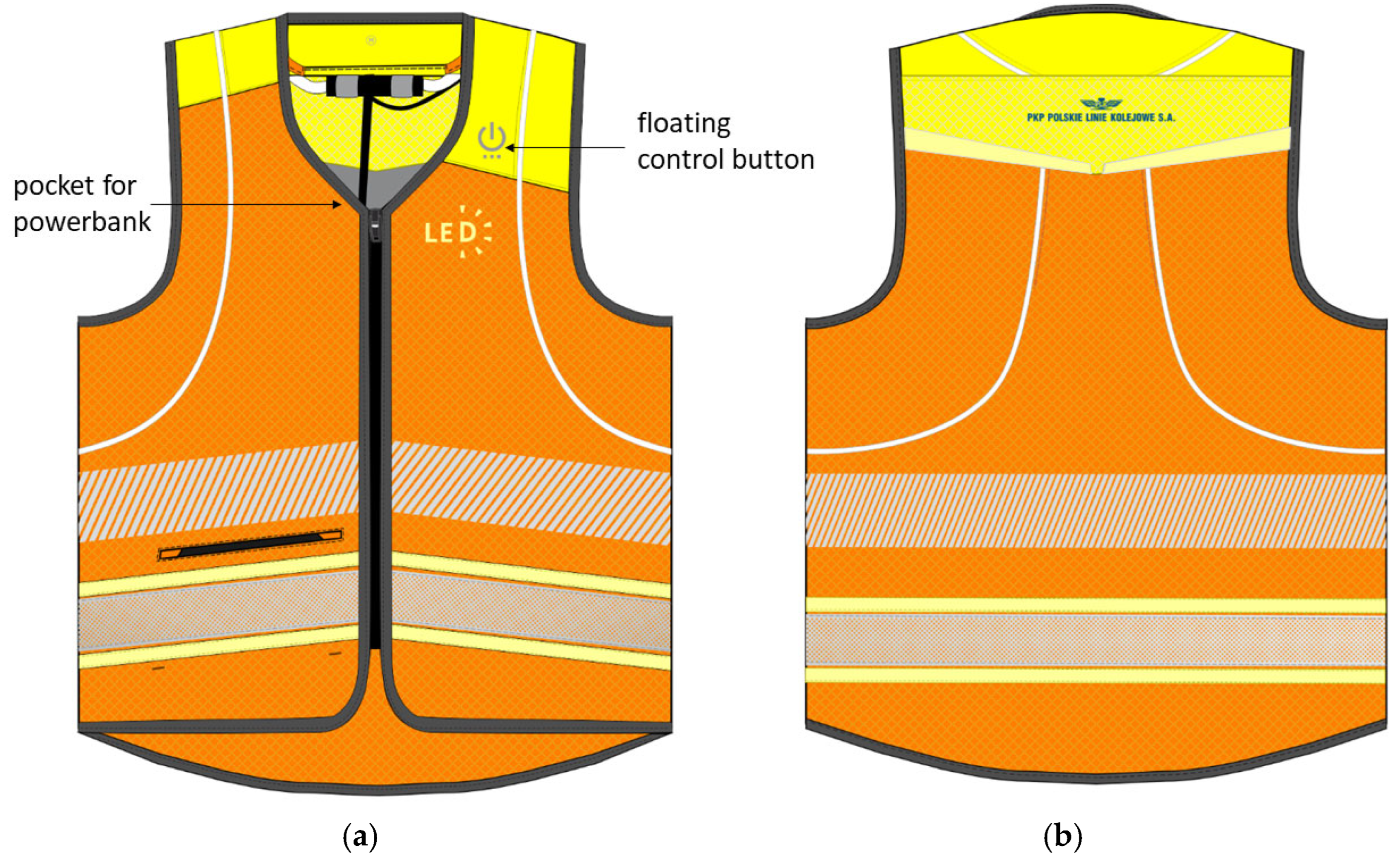
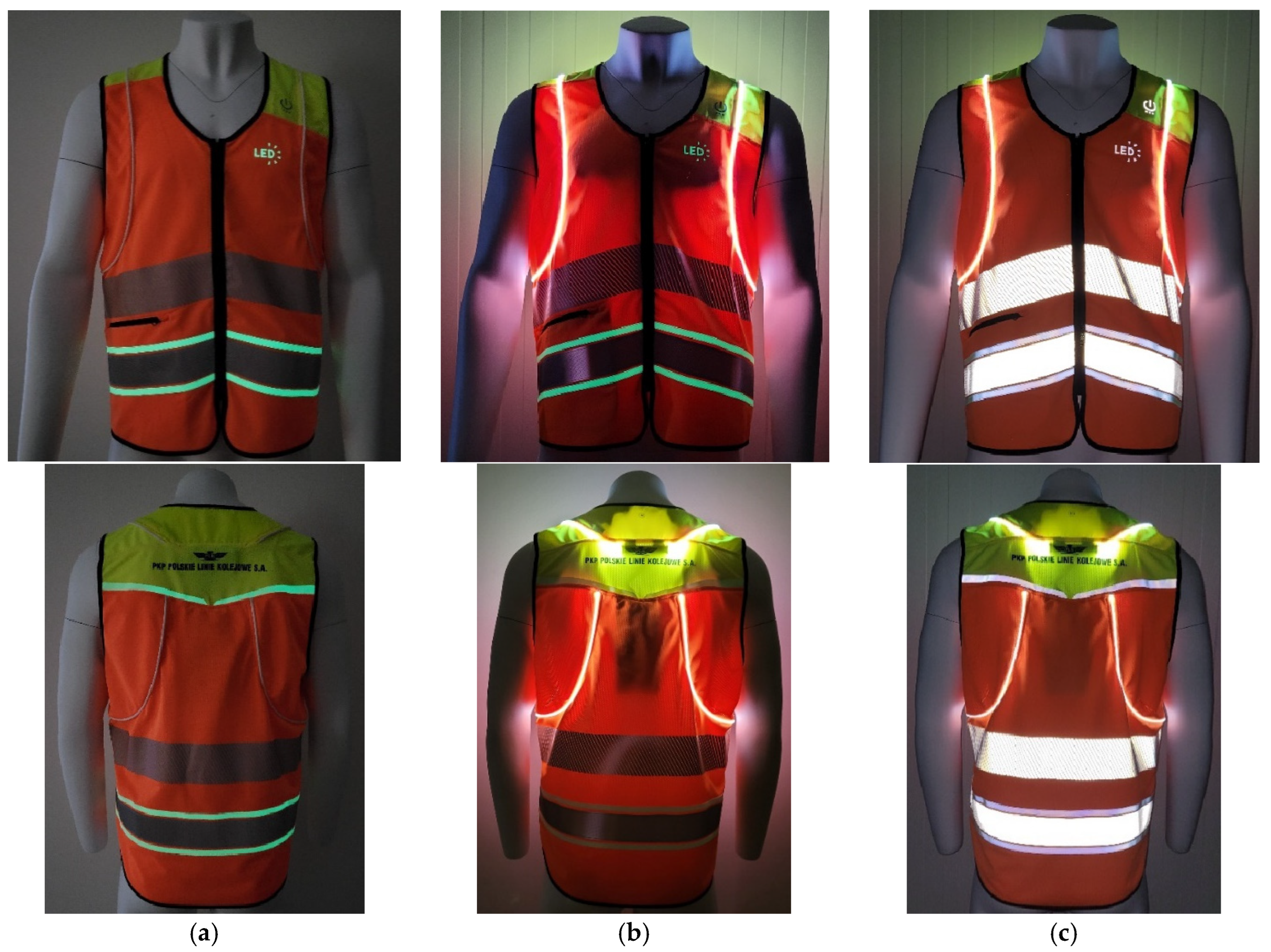
The design of the vest is shown in Figure 1, while Figure 2 presents photographs of the developed model.
The vest is made of fluorescent orange-red polyester knitted fabric, which constitutes the main material (Table 1). To enhance the product’s attractiveness, two additional fluorescent yellow materials were used in the yoke area, meeting the requirements of the EN ISO 20471:2013 standard [1]: a woven fabric (50% cotton/50% PES) and a polyester knitted fabric, differing only in color from the main knitted fabric. The use of fabric on the back of the yoke resulted from the location of the luminescent system emitter in this area and the need to reinforce this area. The vest is fastened at the front with a black zipper, which contrasts with the vest’s background material.
The vest uses a double-sided SUNFIBRE® lighting system with fiber-optics, housed in a white textile cover, and a floating control button (Table 4). To ensure 360-degree visibility, each of the two optical fibers is sewn in such a way that it runs from the back of the vest below the nape, then vertically across the shoulder, chest, and below the armpit at the front, before continuing to the back, reaching the lower edge of the yoke. The emitter containing the light source (i.e., two LEDs), which simultaneously connects the optical fibers, is located on the back of the vest below the nape, while the power source (powerbank) is located in a special pocket on the back between the shoulder blades. The active lighting system is controlled by a floating control button located on the front left yoke in a small internal pocket, as indicated by a graphic symbol made of retroreflective thermal transfer foil.
The vest features two strips of reflective tape around the torso, spaced 65 mm apart (Table 2). Above and below the lower retroreflective tape are sewn-in phosphorescent tapes (Table 3), marked SL-N. Decorative details cut from phosphorescent thermal transfer tape, marked SL-T, enhance the product’s appeal. An LED graphic on the left front indicates that this is a luminous vest, as do two elongated elements on the yoke’s back. To enhance the vest’s functionality, a zippered pocket is located on the right front. The vest’s edges are finished with black piping.
The vest’s design meets the requirements of EN ISO 20471:2013 [1] (for high-visibility clothing) and EN 17353:2020 [24] (for enhanced-visibility equipment).

2.2. Testing Methodology

2.2.1. Light Intensity of Phosphorescent Tapes

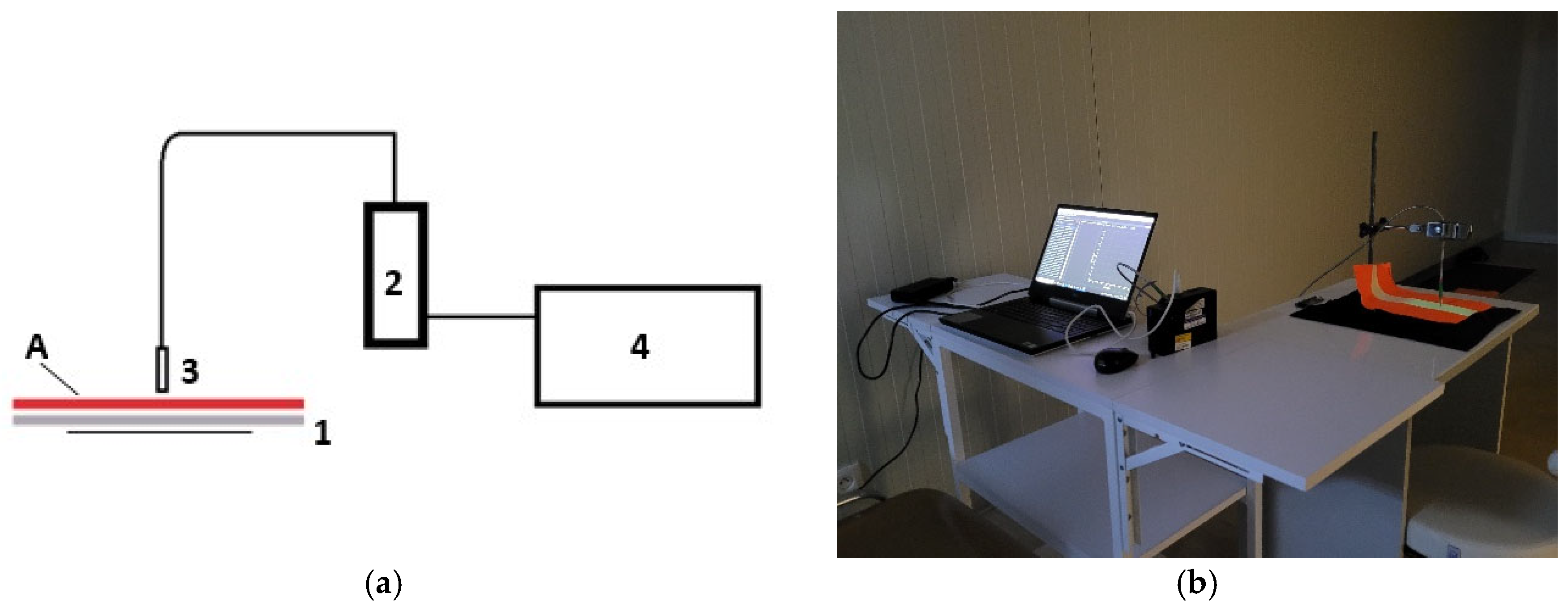
The aim of the study was to evaluate the luminous efficiency of the phosphorescent tapes used in the vest. Depending on the variant, the phosphorescent tapes were sewn or ironed onto the main fabric. The tapes were assessed for emitted light intensity after exposure to artificial light. The test stand shown in Figure 3 was used. The measurement system consisted of a Table (1) on which the sample (A) was placed. The main element of the stand was an HR 2000+ spectrometer (Ocean Optics, Orlando, FL, USA) (2) equipped with an optical fiber with a diffuser (3). The optical fiber was mounted on a tripod arm, maintaining a constant 2 mm distance above the sample surface. To record the measurement, the spectrometer was connected to a computer (4) running SpectraSuite software (version 2008) via a USB port.
Before testing, the samples were kept in a dark room for at least 24 h. Immediately before each measurement, the sample was exposed to artificial light (an 11 W fluorescent lamp) for 5 min at an intensity of approximately 1000 lx. The distance between the sample and the light source was 36 cm. The light intensity emitted by the phosphorescent tapes was measured in a darkened room, 1 and 10 min after the end of the exposure.
To assess the durability of the phosphorescent tapes, similar tests were performed on samples after 20 washing cycles. Washing processes were carried out in accordance with the EN ISO 6330:2021 standard [26] in a laboratory centrifugal washer using the 4M washing procedure (temp. 40 °C, mild process). Drying of samples was performed in accordance with procedure A (rope drying) as specified in EN ISO 6330:2021 [26].

2.2.2. Luminance of the Active Lighting System

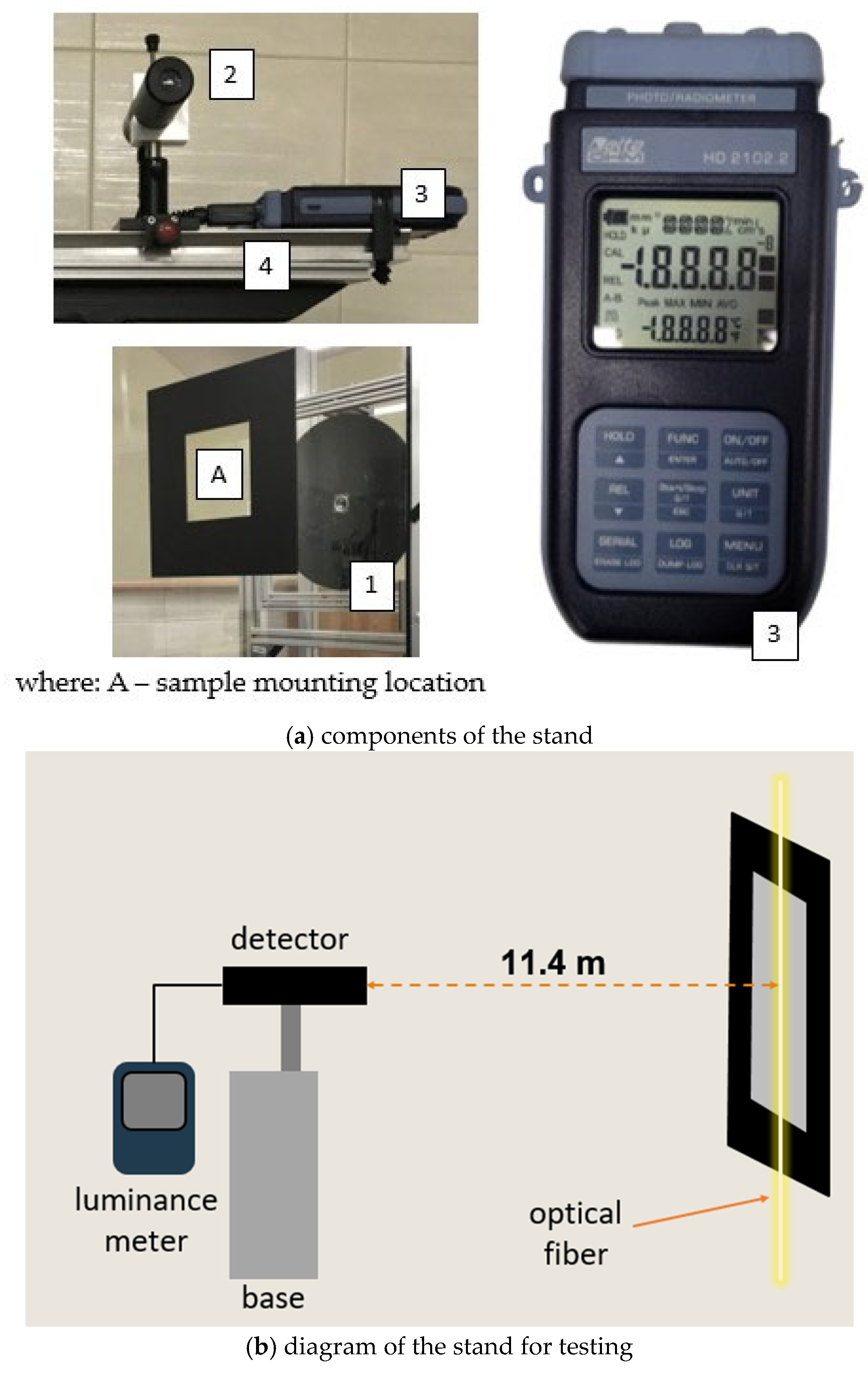
The luminance measurement setup shown in Figure 4 was used to measure the luminance of an active lighting system. The setup included:
(1)
A goniometer enabling proper positioning of the detector head;
(2)
A type LP 471 LUM 2 measuring probe detector (Senseca Germany GmbH, Remscheid, Germany) enabling luminance measurement at a detector viewing angle of 2°;
(3)
A luminance meter (Delta OHM HD2102.1 photoradiometer—Senseca Germany GmbH, Remscheid, Germany) enabling luminance readings;
(4)
A base enabling mounting and adjustment of the detector head position for luminance measurement.
Before starting the measurements, the power banks powering the lighting systems were fully charged. The active lighting systems and power sources were acclimatized for 24 h in a darkened room under constant air temperature conditions of (20.0 ± 3.0) °C, relative humidity of (50.0 ± 5.0)%, and light intensity of approximately 0.5 lux.
The goniometer was positioned 11.4 m from the detector’s measuring field, so that the field was at the height of the goniometer’s central point and its plane was parallel to the goniometer’s cross-sectional plane.
After the acclimatization period, the optical fiber was attached to the station, and the luminance value was measured with the lights off (background). The power bank was then connected to the lighting system and left on continuously at maximum power for 3 min to stabilize light emission. After this time, the luminance detector was turned on, and the luminance value of the lighting system was measured. Luminance measurements were taken along the entire length of the optical fiber, i.e., at 0 m (near the light source), 0.1, 0.2, 0.3, 0.4, 0.5, 0.6, 0.7, 0.8, 0.9, and 1.0 m (at the end of the optical fiber). Three measurements were taken for each measuring point along the optical fiber. Luminance tests were conducted on new samples and after 10 washing cycles at 40 °C (4M procedure, gentle process) and drying flat (procedure C) according to EN ISO 6330:2021 [26].

2.2.3. Visibility Test

The vest’s visibility tests were conducted in a railway tunnel in Łódź (Poland). Five male employees of PKP Polish Railway Lines S.A. (Łódź, Poland), aged 33 ± 13, participated in the study as evaluators (observers), and one employee as the vest wearer. The study group was chosen because people in the railway industry are familiar with high-visibility clothing and find it easier to determine when the visibility of high-visibility clothing is insufficient and to detect any design flaws. The following devices were used for the study:
Professional GLM 50 C laser rangefinder (Robert Bosch Power Tools GmbH, Leinfelden-Echterdingen, Germany)—with a measuring range from 0.05 m to 50 m and a measurement accuracy of ±1.5 mm—to determine the distance of the study participants (observers) from a person wearing the developed warning vest model.
L-20A class L luxmeter (SONOPAN Sp. z o.o., Białystok, Poland), with a measuring range from 0 to 199,900 lx and a resolution of 0.1 lx—to measure the illuminance at the observation site.
NEO TOOLS 99-121 5000 lm rechargeable lamp on a tripod (GTX Poland, Warsaw, Poland), (light source: SMD LED) with a max. A luminous flux of 5000 lm, a light temperature of 6500 K, and a power of 50 W were used to illuminate the phosphorescent elements in the developed PPE models (before testing) and to illuminate the PPE wearer during the visibility test.
At the designated testing location, the observation line for the test participant (observer) and the direction of observation were marked, and distances along the measurement path from the observation line were determined every 100 m up to 600 m to facilitate further measurements. Illumination intensity was measured along the observation line with the battery-powered lamp turned on and off. The average illuminance along the observation line with the lamp turned off was approximately 15 lux, and with the lamp turned off, approximately 27 lux.
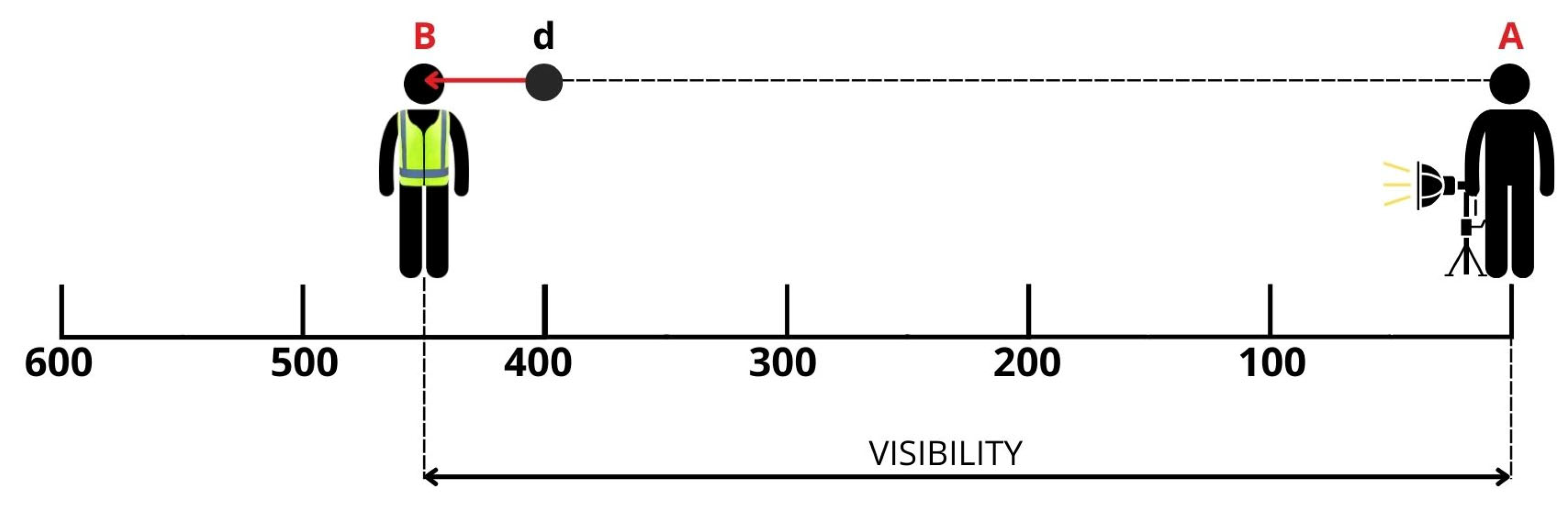
The test involved the assessor (observer) standing on the observation line, and the vest wearer moving away from it until the observer declared they could no longer see it. The distance at which the vest wearer was still visible to the observer was taken as the result. Measurements were taken using a rangefinder. A diagram of the measurement station is shown in Figure 5.
The tests were conducted for 5 variants:
-
oz—ALS (active lighting system) off; the vest wearer is illuminated by a lamp,
-
LED—system ALS on;
-
LUMI—phosphorescent elements exposed;
-
LED + LUMI—system ALS on and phosphorescent elements exposed;
-
LED + oz—system ALS on; the wearer is additionally illuminated by a lamp.

2.2.4. Testing the Functionality, Ergonomics, and Attractiveness of the Vest

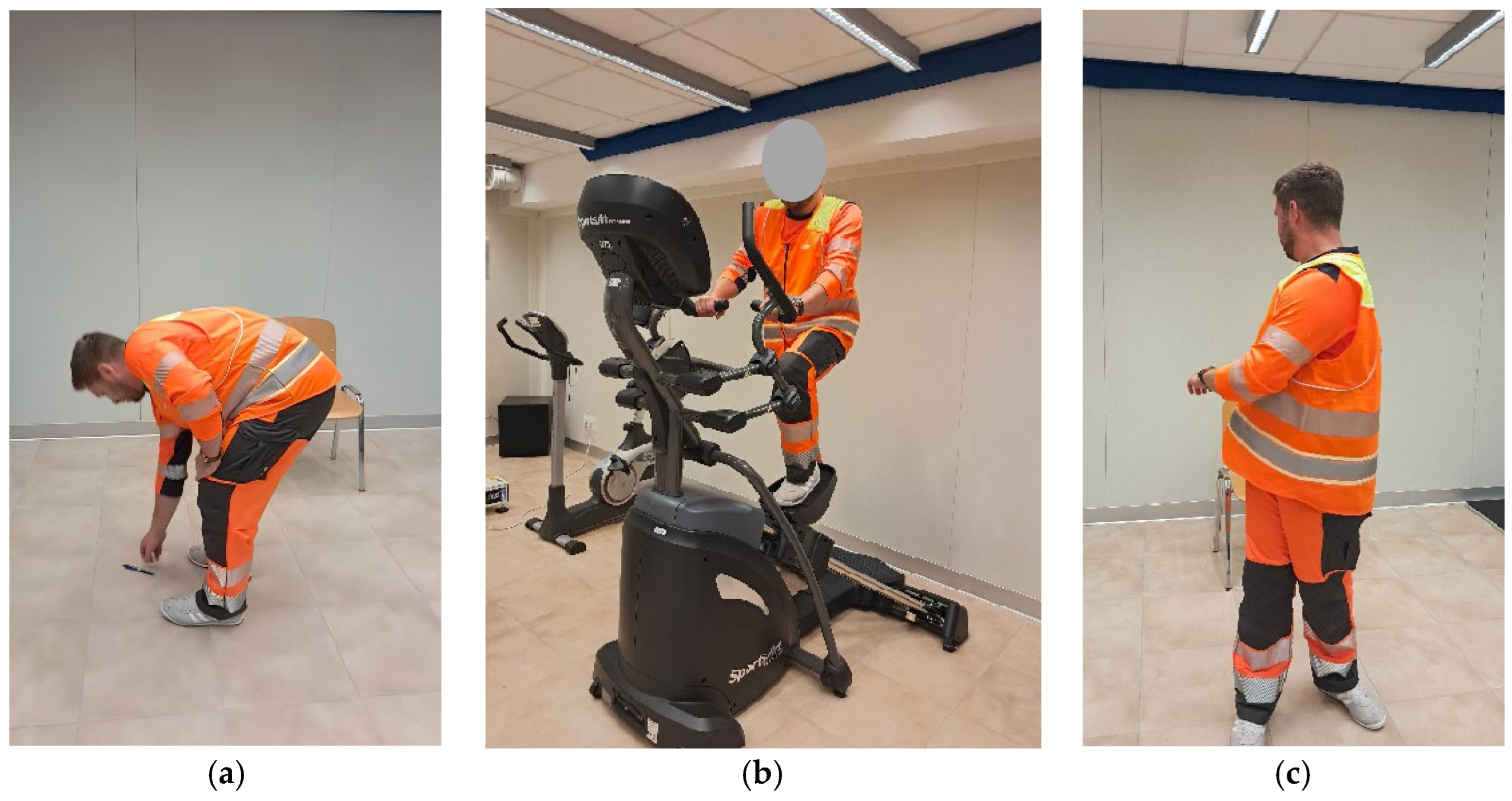
The aim of this study was to evaluate the vest’s design, ergonomics, and functionality, taking into account its intended use scenarios. The study was conducted in laboratory conditions with five male volunteers at the SMART PPE TESTLAB Research and Demonstration Laboratory at a temperature of 20 °C, 65% relative humidity, and 20 lx illuminance. The same people who participated in the vest visibility tests took part in the study. A developed questionnaire was used to evaluate the vest model. Participants wore high-visibility protective clothing (i.e., long-sleeved T-shirt + dungarees) and the developed high-visibility vest model. The initial phase of the study involved performing basic movements specified in the EN ISO 13688:2013 [27] “Protective Clothing–General Requirements”, including: sitting down and standing up from a chair, raising both arms from the front and from the side, climbing stairs-simulated using a climbing trainer, bending down and picking up a small object from the floor, trunk twists, squats.
The participants then performed exercises simulating typical activities performed by people near motor vehicles, including walking on a treadmill at 5 km/h for 5 min. Photographs from the ergonomic tests are shown in Figure 6.

2.2.5. Statistical Analysis

The obtained results of the light intensity of the phosphorescent tapes, the luminance of the active lighting systems before and after the maintenance cycles, and the visibility of the vest were subjected to statistical analysis to determine the statistical significance of the differences. First, the normality of the distribution of variables was checked using the Shapiro–Wilk test. If the normality criterion was met, Student’s t-test (when comparing two groups) or the parametric one-way analysis of variance (ANOVA) and Tukey’s post hoc test (when comparing multiple groups) were used. If the normality criterion was not met, the nonparametric Wilcoxon test (for two groups) or the Kruskal–Wallis test (for multiple groups) were performed. Statistical analysis was performed using the Python programming language, version 3.11.5. The scipy.stats module from the SciPy library was used to perform the appropriate statistical tests. A significance level of 0.05 was adopted.

3. Results and Discussion

3.1. Light Intensity of Phosphorescent Tapes

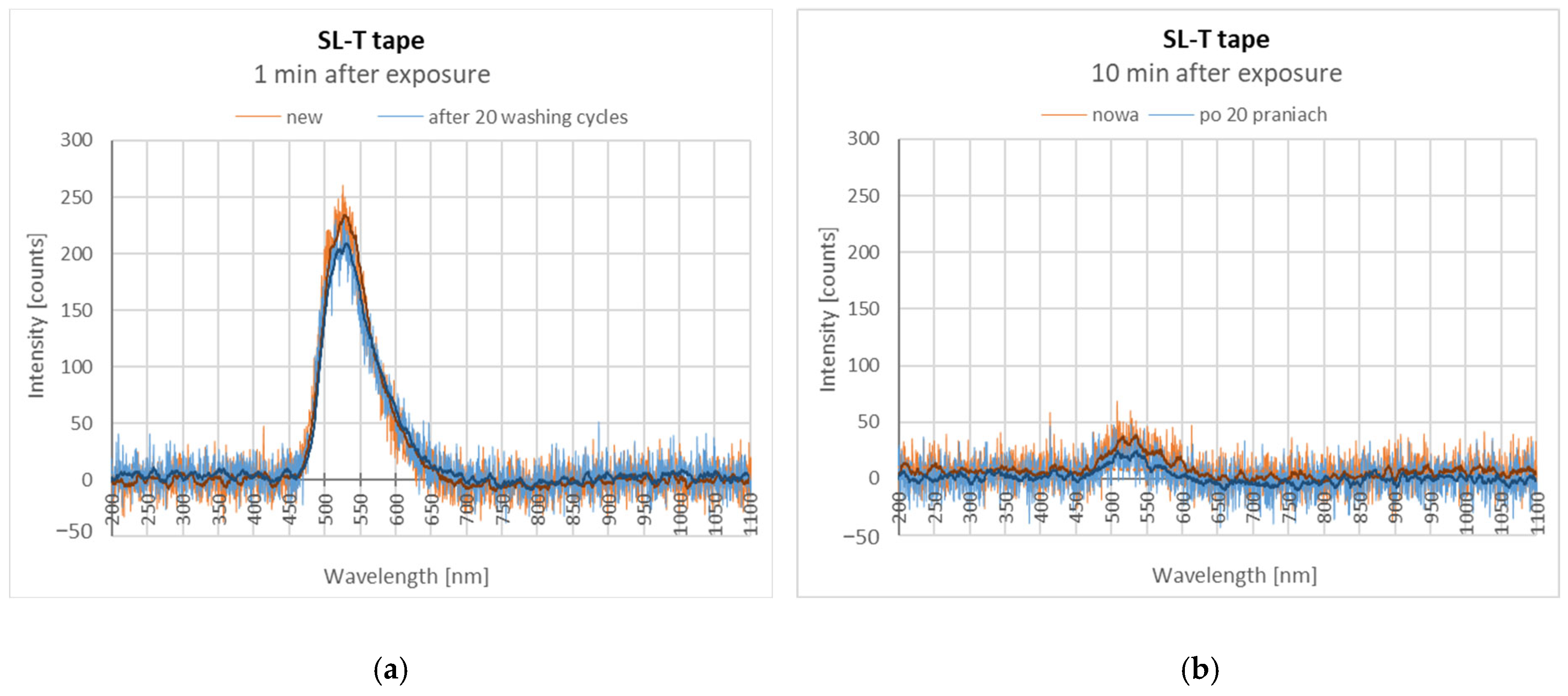
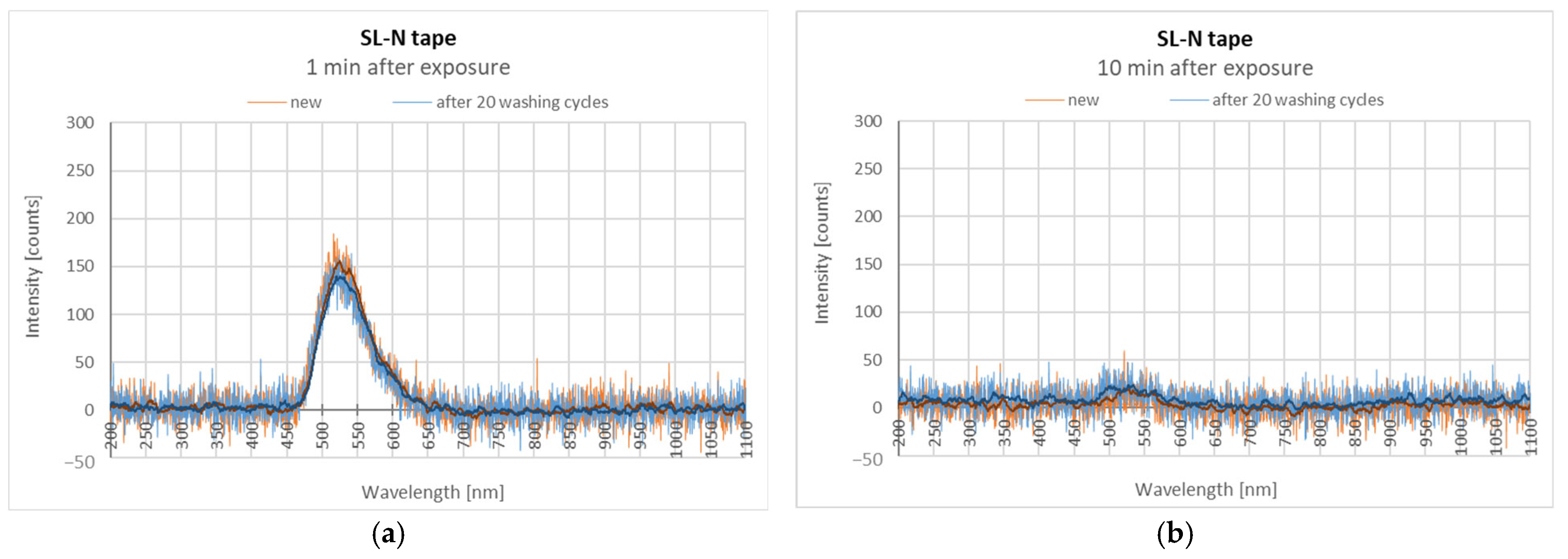
The results for the light intensity of the phosphorescent tapes used in the vest model, using the thermal transfer and sewing technique, are presented in Figure 7 and Figure 8.
The presented test results indicate that thermal transfer SL-T tapes are more efficient in terms of luminance, as they are characterized by a significantly higher intensity of emitted light than the sewn-on SL-N tapes. The difference in the maximum intensity of light emitted by the SL-T tape and the SL-N tape is 76.9 [counts], which means that the SL-T tape is approximately 42% more effective in terms of luminescence than sewn-on tape.
In the case of the SL-T tape, 1 min after exposure, the maximum light intensity was 261 [counts] at a wavelength of 525.3 nm, corresponding to green. After 10 min after exposure, the maximum intensity dropped by approximately 74% (i.e., to 68.4), but the wavelength suggests that the emitted light was still green. After 20 washing cycles, the intensity of visible radiation decreased by approximately 11% after 1 min exposure and by approximately 29% after 10 min exposure. The wavelengths at which peaks were observed after washing indicate that the tape continued to emit green light.
A similar light intensity result (of the order of 270 [counts]) to SL-T tape was obtained earlier by Abdelrahman et al. [28] for luminous cotton fabric immobilized with SrAl2O4:Eu2+, Dy3+ nanoparticles after 100 s of UV irradiation. The emission peak for this fabric was detected at 518 nm, which indicates a yellow-green color of light.
The SL-N tape exhibited a weaker luminosity. One minute after the end of exposure, the maximum radiation intensity was 184.1 [counts] at a wavelength of 517 nm (in the new state) and 163.2 [counts] at a wavelength of 541.8 nm (after 20 wash cycles). This wavelength indicates that the color of the tape during the luminescence phase was green for the new tape and green-yellow after 20 wash cycles. The luminescence effect 10 min after the end of exposure was negligible, as evidenced by the lack of a clear peak in the graph. Although the obtained results indicate that the sewn-on tape is less effective in terms of luminescence, this method was used in the vest model. This was due to the fact that sewn-on tapes are generally more durable than thermal transfer tapes. This is particularly important for physical work, where clothing is exposed to mechanical damage.
Statistical analysis revealed no significant differences between the results obtained in the new state and after 20 washing cycles for both SL-T and SL-N tapes (Figure 7 and Figure 8). These results confirm the durability of the phosphorescent tapes after washing cycles.

3.2. Luminance of an Active Lighting System (ALS)

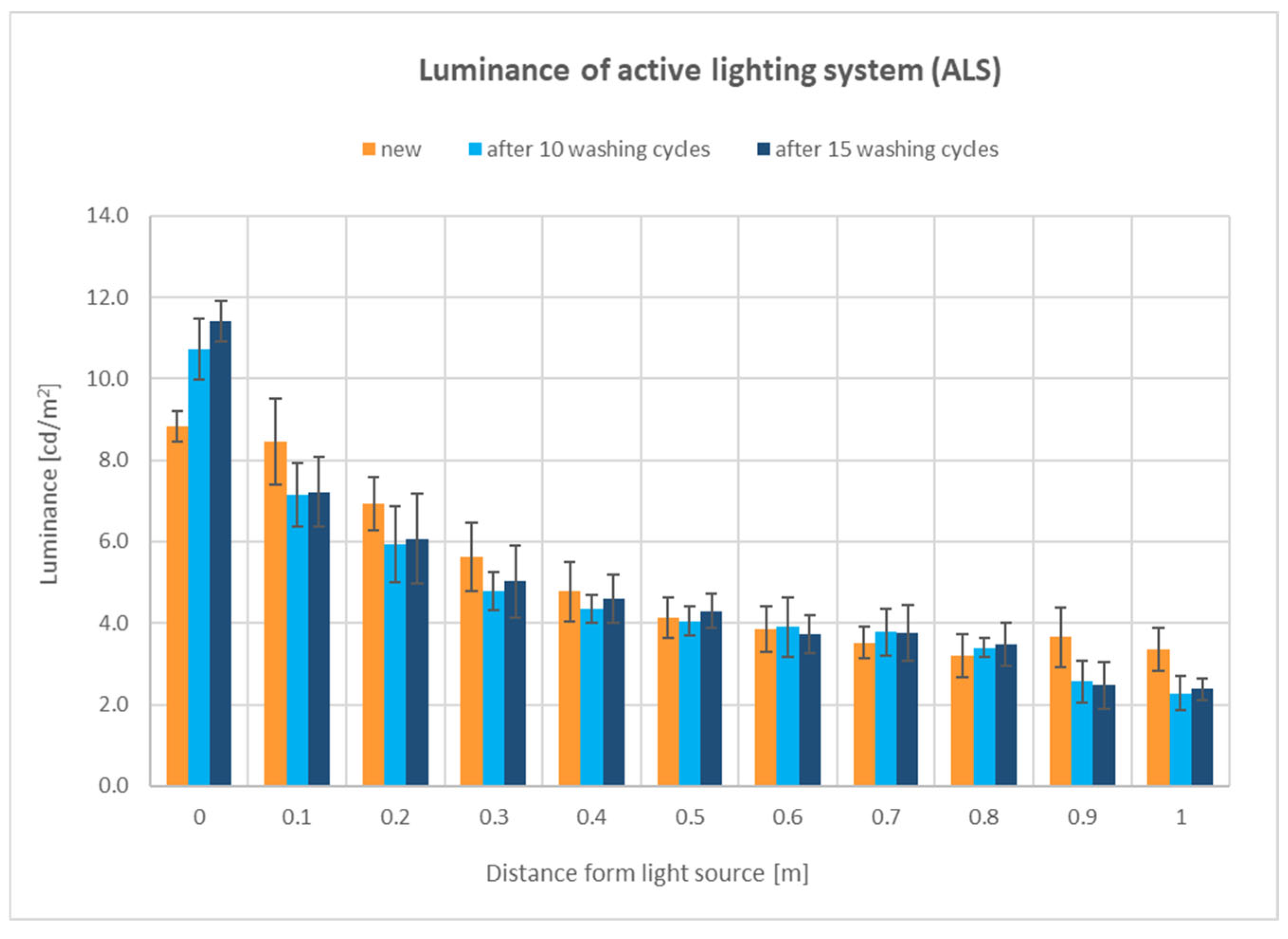
The results of the luminance tests of the active lighting system are shown in Figure 9.
The luminance test results of the active lighting systems (ALS) with fiber optic cables in a white textile casing indicate that the luminance value of the fiber optic cables decreased with increasing length. A similar tendency was noticed earlier by Kremenakova et al. [14] by measuring the illuminance. The highest luminance value occurred at the first measurement point, i.e., 0 m (just behind the light source). The luminance at the zero point averaged approximately 9 cd/m2. From 0.7 m to 1 m, the luminance value did not exceed 3.7 cd/m2.
After 10 washing cycles, a significant increase in the luminance of the fiber optic cables at the “zero” point was observed—an increase of 22%. At the same time, luminance decreased at most of the other measurement points. It can be assumed that the textile sheath structure may have loosened during washing or microbends may have formed in the optical fiber near the light source, which increased light emission at the initial point while simultaneously reducing it further along the optical fiber. After 15 washing cycles, a further increase in luminance was observed at point “0,” while at other points, the luminance value remained similar or increased slightly. The results of the tests confirmed that the glowing effect of the white optical fibers was clearly visible, and the white color of the sheath complemented the orange background material of the vest. Statistically significant differences were noted only at the 0 m point (just behind the light source) and at the end of the optical fiber between the new system and the one after 10 washing cycles and the new system and the one after 15 washing cycles.
Łężak conducted similar studies, but on finished garments with applied optical fibers [29]. Optical fibers in a white textile sheath exhibited significantly higher luminance than those in a yellow sheath. The luminance value of the white optical fibers on the garment was approx. 9 cd/m2, which is very similar to the results obtained in this study.

3.3. Evaluation of Visibility of Warning Clothing

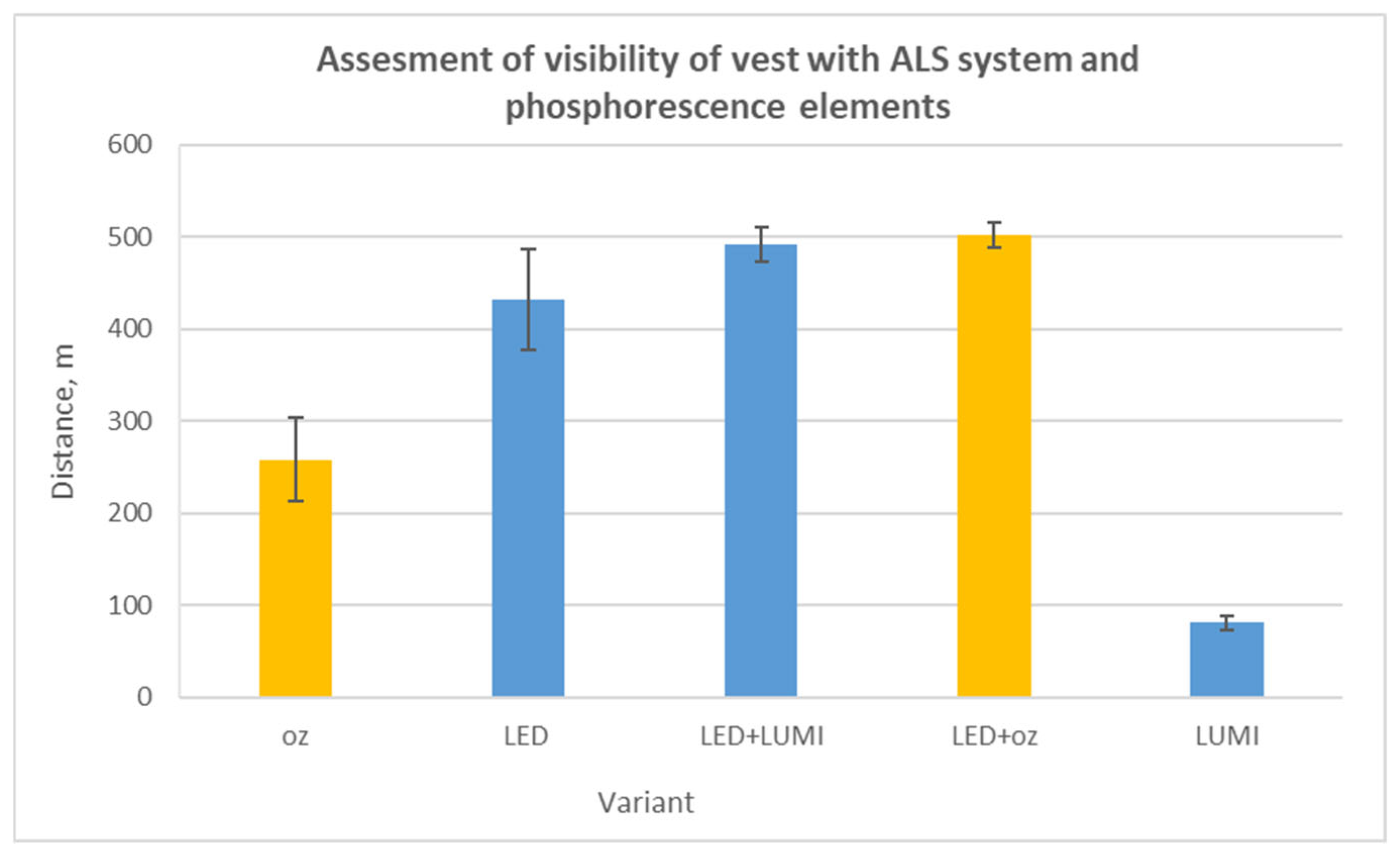
The results of the visibility measurements of the warning vest in various variants are shown in Figure 10.
Research has shown that a high-visibility vest with the ALS (off) and phosphorescent elements, illuminated by a reflector (oz variant), provides the wearer with visibility at an average distance of 259 m. Activating the ALS in the vest (with the lamp off) increased visibility by as much as 67% (i.e., 174 m). The use of additionally illuminated phosphorescent tapes (LED + LUMI variant) increased visibility by 59 m (14%) compared to the LED variant. However, the results of statistical analysis do not indicate significant differences between these variants. Similarly, no significant differences were noted between the LED + LUMI and LED + oz variants. The highest visibility, at a distance of 503 m, was achieved with the vest with the ALS activated and simultaneously illuminated by a reflector (LED + oz variant). Compared to the variant with the ALS disabled (oz variant), visibility improved by as much as 94% (i.e., 244 m). The use of only exposed phosphorescent tapes (LUMI variant) gave the weakest effect, as the vest was visible from a distance of only 81 m, which is more than 5 times smaller than the LED variant.

3.4. Ergonomics Test Results

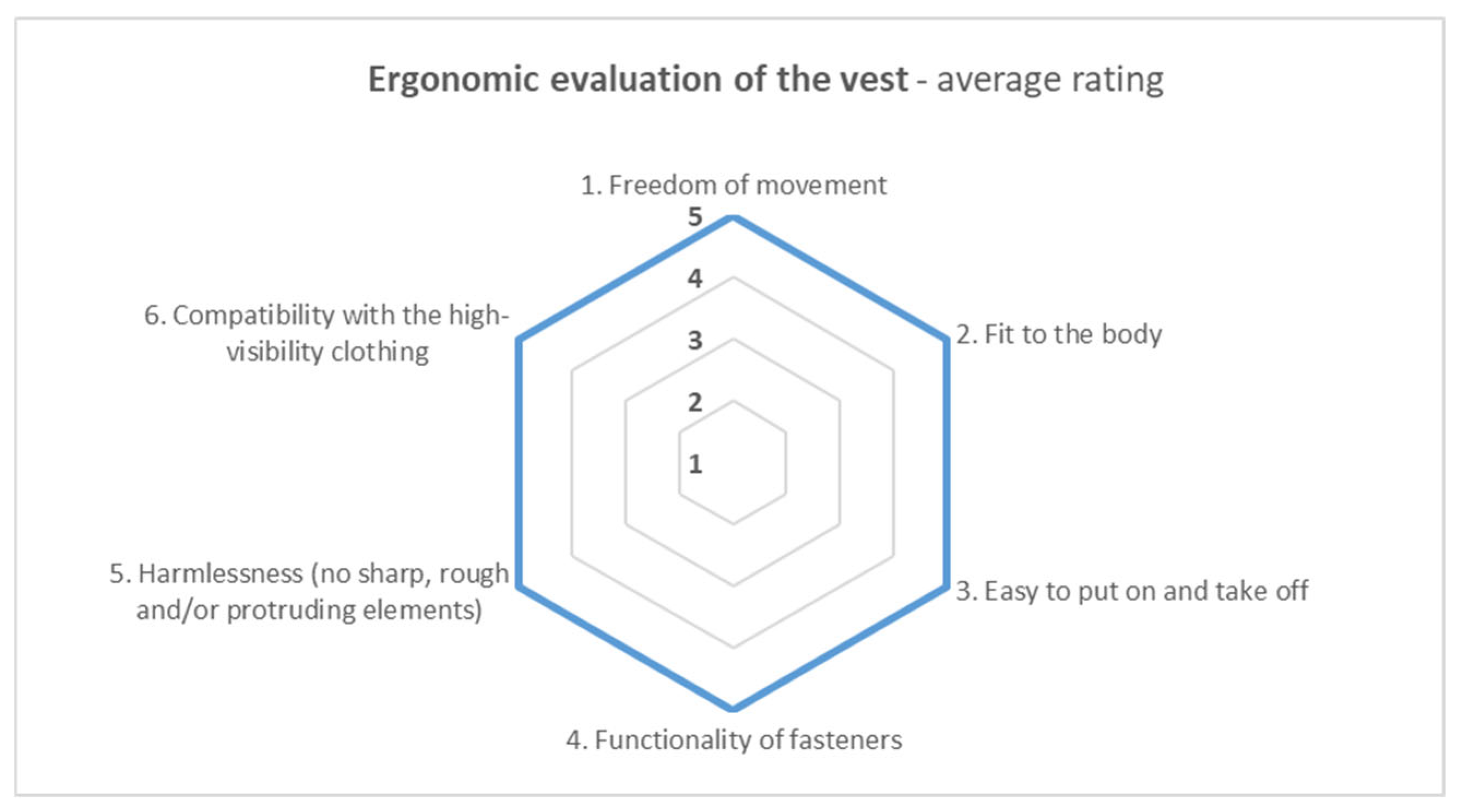
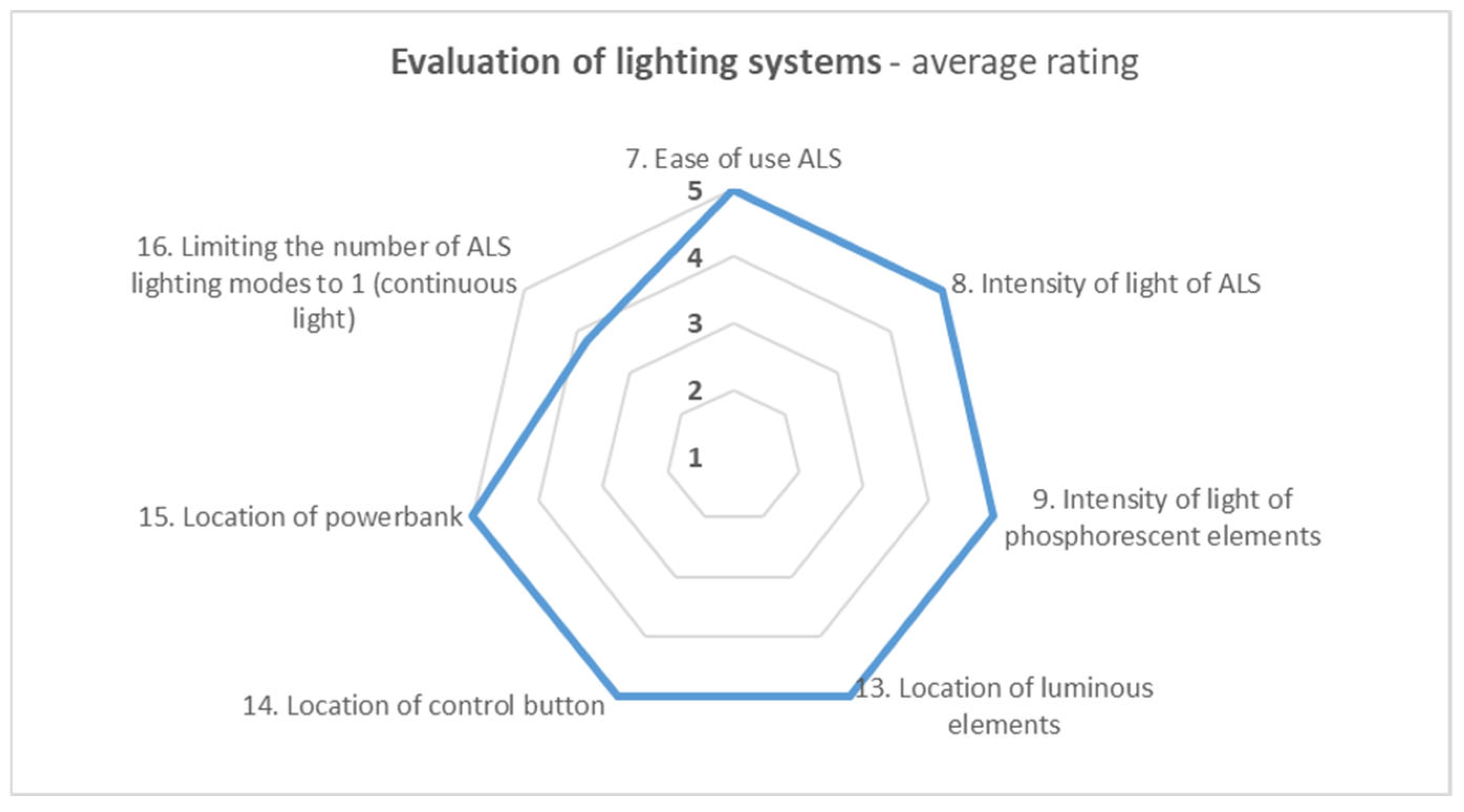
The results of the survey regarding the ergonomics, functionality, and attractiveness of the developed vest are presented in Figure 11, Figure 12 and Figure 13.
Ergonomic testing demonstrated that the high-visibility vest with an active lighting system and phosphorescent elements provided freedom of movement, as evidenced by the highest ratings (i.e., a 5) awarded by all participants in survey item 1 (Figure 11). All participants also unanimously agreed that the vest fit their body correctly. Regarding the ease of putting on and taking off the vest, all participants gave a positive rating of 5 (“strongly agree”). No difficulties were reported. The functionality of the vest’s fasteners was also rated 5. None of the participants noted that the vest contained any sharp, rough, or protruding elements that could cause discomfort, irritation, scratching, or other skin damage. All participants also positively assessed the compatibility of the vest with the tested set of high-visibility clothing (long-sleeved T-shirt + dungarees), awarding it a score of 5.
Tests of the lighting systems’ functionality showed that all participants found the active luminous system (ALS) easy to use, as evidenced by the high average rating (i.e., 5.0) (Figure 12). According to the participants, the luminous intensity of both the ALS and the phosphorescent elements is adequate; all rated them 5. Their arrangement in the vest also received positive ratings (i.e., 5.0), as did the location of the ALS control button, and the location of the power bank used to power the ALS. Of the 5 participants, 3 stated that one lighting mode (i.e., continuous light) was sufficient. One participant strongly disagreed with this statement (rating 1), believing that whether a single lighting mode would be sufficient depends on the situation and surroundings. Another participant rated it 3, meaning they had no opinion on the matter.
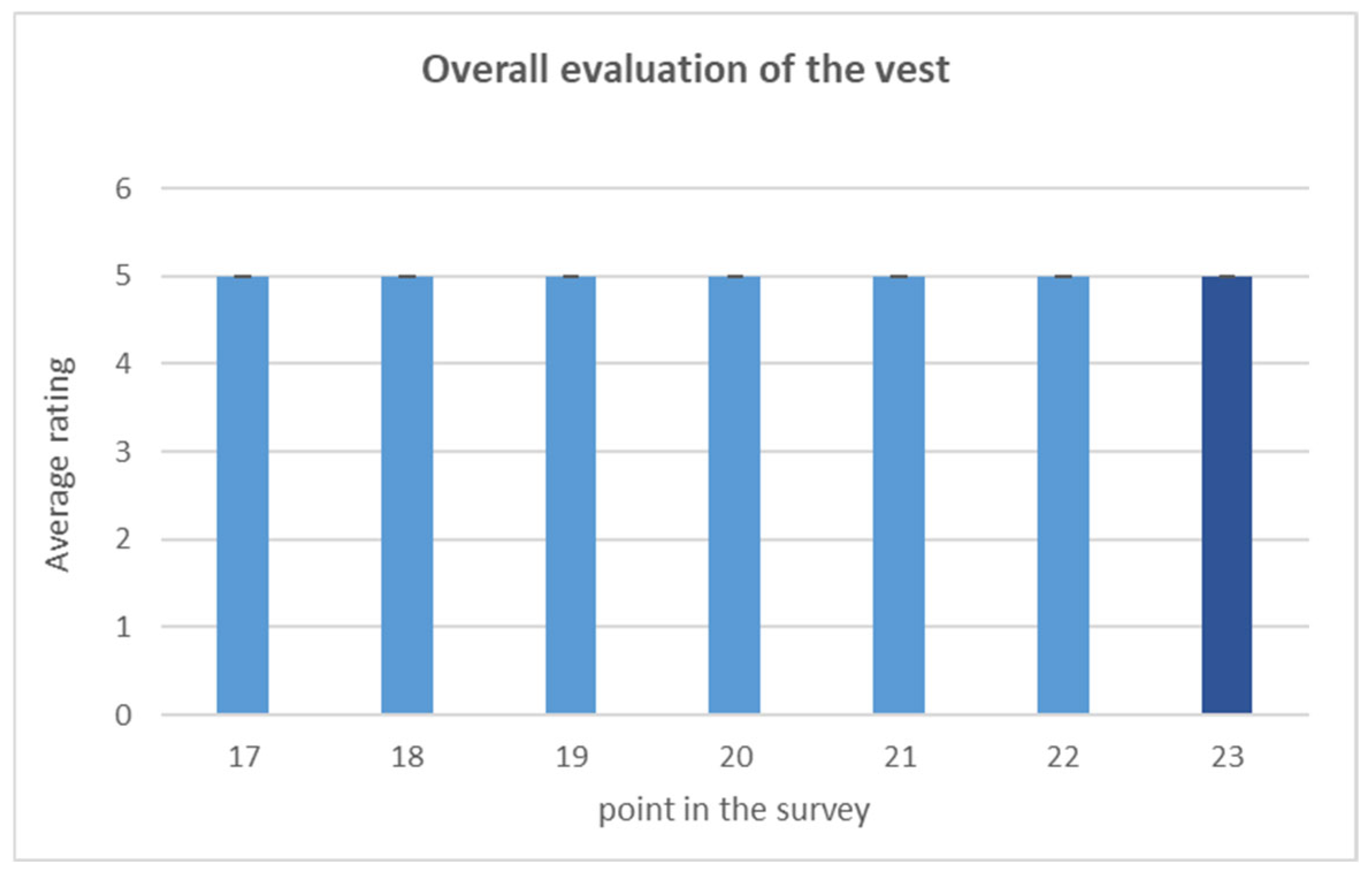
In the survey, participants assessed the appearance and quality of the vest (Figure 13). All participants agreed that the vest was well-designed and well-made, awarding it the highest score of 5. Participants also rated the vest highly for its original design and aesthetic appeal (p. 18 and 19, respectively—average rating of 5). All participants unanimously stated that they would definitely use this vest and recommend wearing it to others (p. 20 and 21, respectively), even beyond their workdays. All participants also strongly agreed that wearing this vest while working would increase their sense of safety (p. 22). The overall assessment of the vest (p. 23) was very good, as all participants gave it the best rating, i.e., 5. None of the participants expressed any comments or additional preferences regarding the vest.

4. Conclusions

The developed vest model, which improves visibility in medium- to high-risk situations, can be used in both professional and non-professional activities. The vest’s design incorporates modern components such as active lighting systems and phosphorescent elements. The vest’s innovation lies in its combination of three features that enhance the wearer’s visibility in the dark: reflective tapes (increasing visibility when illuminated by vehicle headlights), an active lighting system (increasing the wearer’s visibility in the dark, especially in the absence of external lighting), and phosphorescent tapes (particularly useful when the aforementioned solutions fail, for example, when the active lighting system is discharged). The combination of reflective tapes, phosphorescent tapes, and fiber optics of ALS ensures that the vest remains visible in all lighting conditions, and the individual tapes/fiber optics complement each other, ensuring the wearer’s continued protection.
A major challenge was designing a way to arrange the luminous elements so that they not only ensured good visibility for the wearer in the dark but also ensured the vest’s comfort. This was achieved successfully, as evidenced by the high subjective ratings given by the test participants.
Analysis of the results of tests on the intensity of light emitted by phosphorescent tapes showed that thermal transfer tapes are approximately 33% more effective in terms of luminescence than sewn-on tapes; therefore, they are primarily recommended for use in this type of protective product. However, the results of tests on sewn-on phosphorescent tapes confirmed that they can be used in clothing parts particularly vulnerable to mechanical damage. The results of the luminance test on active lighting systems showed that the luminous efficiency of optical fibers gradually decreases with increasing length, and the difference between the value at the source (0 m) and at the end of optical fiber (1 m) is approx. 6 cd/m2, which is approx. 68% of the maximum luminance of the tested optical fibers. Luminance tests conducted on active luminous systems showed that these systems are resistant to at least 15 washing cycles at 40 °C (mild process) and can be used in visibility-enhancing clothing in moderate and/or high-risk situations.
Real-world tunnel testing showed that the use of an active lighting system (ALS) in the vest increased its visibility to an average of over 430 m, which is 67% (174 m) greater than that of reflective tape. The phosphorescent elements, when exposed to light, were visible from only about 80 m away, so they should be considered supplementary elements for emergency situations rather than the primary means of increasing visibility.
The vest model received very good ratings for functionality, ergonomics, and attractive design. High average ratings (5/5) awarded by participants in the ergonomic study confirmed that the developed vest provides freedom of movement and is comfortable to wear. Participants positively assessed the lighting systems in terms of ease of use, lighting intensity, and the location of the lighting elements, control button, and power source (power bank). All participants awarded the highest rating of 5 for the originality of the design and the aesthetic value of the vest. Visual evaluation of the vest with the ALS and phosphorescent elements showed that the developed vest is an attractive solution that encourages use (100% of study participants would definitely use it and recommend it to others). Participants strongly agreed that wearing this vest while working would increase their sense of safety, which was the goal of the research undertaken and presented.

Author Contributions

Conceptualization, A.G. and A.D.; methodology, A.G. and J.S.; validation, K.M.; formal analysis, A.G. and J.S.; investigation, A.D.; resources, A.G., J.S. and K.M.; data curation, K.M.; writing—original draft preparation, K.M.; writing—review and editing, A.G. and A.D.; visualization, J.S. and A.G.; supervision, A.D.; project administration, A.G. All authors have read and agreed to the published version of the manuscript.

Funding

This task was completed on the basis of the results of research carried out within the scope of the 6th stage of the National Programme “Governmental Programme for Improvement of Safety and Working Conditions”, funded by state services of the Ministry of Family, Labour and Social Policy. Task no. no. 7.ZS.12, entitled “Using of creative technologies in educational tools and enhanced visibility personal protective equipment to increase motivation to use this type of PPE”. The Central Institute for Labour Protection—National Research Institute (CIOP-PIB) is the Programme’s main coordinator.

Institutional Review Board Statement

Not applicable.

Informed Consent Statement

Not applicable.

Data Availability Statement

The data presented in this study are available on request from the corresponding author.

Acknowledgments

We would like to thank Agata Kmiecik for her contribution to the preparation of the description of the vest visibility research methodology and her assistance in conducting the research, data presentation and conducting the statistical analysis.

Conflicts of Interest

The authors declare no conflicts of interest.

Abbreviations

The following abbreviation is used in this manuscript:
ALSActive lighting system

References

  1. EN ISO 20471; High Visibility Clothing—Test Methods and Requirements. European Committee for Standardization: Brussels, Belgium, 2013.
  2. Łężak, K. Nowe wymagania wobec odzieży ostrzegawczej wprowadzone normą PN EN ISO 20471:2013. Bezp. Pracy. Nauka Prakt. 2015, 6, 20–24. [Google Scholar]
  3. Wandachowicz, K.; Zalesińska, M. Badanie Materiałów Fosforescencyjnych Stosowanych do Oznaczania Dróg Ewakuacyjnych. XXX Krajowa Konferencja Oświetleniowa i 2; Forum Technologii Oświetleniowych: Warsaw, Poland, 2022. [Google Scholar]
  4. Głowacki, P. Lepiej widzialni, widocznie lepsi—Wpływ parametrów materiału odblaskowego na bezpieczeństwo użytkownika odzieży. Bezp. Pracy. Nauka Prakt. 2014, 10, 10–13. [Google Scholar]
  5. Cederfeldt, L. Visibility—to be seen or not being seen—That is the difference. In Proceedings of the 16th International Conference Road Safety on Four Continents, Beijing, China, 15–17 May 2013. [Google Scholar]
  6. Kang, I.; Choe, B.; Oh, C.; Youk, J.H. A Proposal for Workers to Mandatorily Wear High visibility Safety Clothing in Korea through the Analysis of the Current Status and Evaluation of Its Visibility. Fash. Text. Res. J. 2022, 24, 471–478. [Google Scholar] [CrossRef]
  7. Kwan, I.; Mapstone, J. Visibility aids for pedestrians and cyclists: A systematic review of randomised controlled trials. Accid. Anal. Prev. 2004, 36, 305–312. [Google Scholar] [CrossRef] [PubMed]
  8. Lee, H.-Y. Evaluation of the Functionality and Visibility of Commercial High-Visibility Clothing for Nighttime Usage. Korean J. Hum. Ecol. 2010, 19, 1053–1062. [Google Scholar] [CrossRef]
  9. Webber, J.; Wuschke, J.; Bonita, S.B.; Mortenson, W.B. Evaluating common approaches to improve visibility of wheelchair users. J. Assist. Technol. 2021, 33, 201–205. [Google Scholar] [CrossRef] [PubMed]
  10. Chun, J.; Lee, M. Developing a SEIL (Smart Enjoy Interact Light) bag utilizing LED display. Int. J. Cloth. Sci. Technol. 2016, 28, 233–253. [Google Scholar] [CrossRef]
  11. Cheng, K.W.; Kwok, K.W.; Kwok, Y.; Chan, K.W.; Cheung, N.C.; Ho, Y.K.; Kwok, K.F. LED lighting development for intelligent clothing. In Proceedings of the 2009 3rd International Conference on Power Electronics Systems and Applications (PESA), Hong Kong, China, 20–22 May 2009; pp. 1–4. [Google Scholar]
  12. Křemenáková, D.; Militký, J.; Meryová, B.; Lédl, V. Characterization of side emitting plastic optical fibers light intensity loss. World J. Eng. 2013, 10, 223–228. [Google Scholar] [CrossRef]
  13. Studzińska, A.; Frydrych, I.; Łężak, K. Transformable warning clothing for children with active light sources. AUTEX Res. J. 2022, 22, 234–242. [Google Scholar] [CrossRef]
  14. Lee, G.; Kim, T.; Yun, J.; Lim, D.Y.; Lim, S.; Lee, W.; Jang, S.; Lee, J.; Kim, H. Visibility and Usability of Protective Motorcycle Clothing from the Perspective of Car Drivers. Appl. Sci. 2025, 15, 12375. [Google Scholar] [CrossRef]
  15. Basar, M.F.; Razik, N.H.A. Increase Visibility for Motorcyclist Detection at Night for the Purpose of Avoiding Accidents Using a Simple RF Circuit. Int. J. Appl. Phys. Math. 2013, 3, 217. [Google Scholar] [CrossRef]
  16. Rajendran, S.D.; Wahab, S.N.; Yeap, S.P. Design of a Smart Safety Vest Incorporated with Metal Detector Kits for Enhanced Personal Protection. Saf. Health Work. 2020, 11, 537–542. [Google Scholar] [CrossRef] [PubMed]
  17. Han, H.; Jeon, E. An analysis of demands for the improvement of versatile safety vest for traffic police officers. Fash. Text. Res. J. 2012, 14, 100–108. [Google Scholar] [CrossRef]
  18. Oh, Y.; Jekal, M.; Lee, Y. Enhancing Visibility of Street Cleaners’ Smart Clothing Uniform for Their Safety and Sustainable Usability. In Proceedings of the International Textile and Apparel Association Annual Conference Proceedings, Denver, CO, USA, 26–29 October 2022. [Google Scholar]
  19. Jordan, P.W. Human factors for pleasure in product use. Appl. Ergon. 1998, 29, 25–33. [Google Scholar] [CrossRef] [PubMed]
  20. Kim, M.; Song, C.S. Understanding Police Officers’ Usage of High-Visibility Safety Apparel: The Role of Safety Ethics and Professional Appearance. Safety 2021, 7, 15. [Google Scholar] [CrossRef]
  21. DIN 67510-1; Phosphorescent Pigments and Products—Part 1: Measurement and Marking at the Producer. Deutsches Institut fur Normung (DIN): Berlin, Germany, 2020.
  22. Bünzli, J.-C.; Pecharsky, V.K. (Eds.) Handbook on the Physics and Chemistry of Rare Earths; Elsevier: San Diego, CA, USA, 2015; Volume 48, p. 20. [Google Scholar]
  23. Santos, G.; Marques, R.; Silva, S.; Oliveira, J.; Castro, P.; Pereira, C.; Pinheiro, M. Innovative High-Visibility Protective Clothing Development. Textiles 2021, 1, 405–418. [Google Scholar] [CrossRef]
  24. EN 17353; Protective Clothing—Enhanced Visibility Equipment for Medium Risk Situations—Test Methods and Requirements. European Committee for Standardization: Brussels, Belgium, 2020.
  25. Onyebeke, L.C.; Papazaharias, D.M.; Freund, A.; Dropkin, J.; McCann, M.; Sanchez, S.H.; Hashim, D.; Meyer, J.D.; Lucchini, R.G.; Zuckerman, N.C. Access to properly fitting personal protective equipment for female construction workers. Am. J. Ind. Med. 2016, 59, 1032–1040. [Google Scholar] [CrossRef] [PubMed]
  26. EN ISO 6330; Textiles—Domestic Washing and Drying Procedures for Textile Testing. European Committee for Standardization: Brussels, Belgium, 2021.
  27. EN ISO 13688; Protective Clothing—General Requirements. European Committee for Standardization: Brussels, Belgium, 2013.
  28. Abdelrahman, M.S.; Elhadad, S.S.M.; El-Naggar, M.E.; Gaffer, H.E.; Khattab, T.A. Ultraviolet-Sensitive Photoluminescent Spray-Coated Textile. Coatings 2022, 12, 1686. [Google Scholar] [CrossRef]
  29. Łężak, K. Klasyfikacja modelowych rozwiązań odzieży ostrzegawczej doposażonych w źródła światła bezpośredniego. Bezp. Pracy. Nauka Prakt. 2020, 2, 12–17. [Google Scholar]
Figure 1. Design project of a warning vest with an active lighting system (ALS) and phosphorescent elements (EF): (a) front; (b) back.
Applsci 16 01334 g001
Figure 2. Photographs of a warning vest model with an active lighting system (ALS) and phosphorescent elements (EF) (view in the dark): (a) with excited EF elements, i.e., after exposure, (b) with excited EF elements and the ALS turned on, (c) with the effect of light reflection from the reflective tapes (photo taken with a flash).
Applsci 16 01334 g002
Figure 3. The stand for testing the intensity of light emitted by phosphorescent tapes: (a) scheme of stand: 1—table (in gray), A—sample (in red), 2—spectrometer, 3—optical fiber with a diffuser, 4—computer, (b) photograph.
Applsci 16 01334 g003
Figure 4. The stand for testing the luminance of active lighting systems: 1—goniometer, 2—measuring probe detector, 3—luminance meter, 4—base enabling mounting and adjustment of the detector head position for luminance measurement.
Applsci 16 01334 g004
Figure 5. Schematic diagram of the user visibility measurement station (where d—rangefinder, A—observer, B—vest wearer, red arrow—distance measured with a rangefinder).
Applsci 16 01334 g005
Figure 6. Photographs from the ergonomic tests: (a) bending down and picking up a small object from the floor; (b) climbing stairs-simulated using a climbing trainer; (c) trunk twists.
Applsci 16 01334 g006
Figure 7. Spectral characteristics of new thermal-transfer phosphorescent tapes and after 20 washing cycles: (a) 1 min after the end of exposure; (b) 10 min after the end of exposure.
Applsci 16 01334 g007
Figure 8. Spectral characteristics of sewn-on phosphorescent tapes, new and after 20 washing cycles: (a) 1 min after exposure; (b) 10 min after exposure.
Applsci 16 01334 g008
Figure 9. Test results of luminace of the active lighting system (before and after washing).
Applsci 16 01334 g009
Figure 10. Visibility assessment result of a warning vest with an active lighting system (ALS) and phosphorescent elements.
Applsci 16 01334 g010
Figure 11. The results of the ergonomic evaluation of the high-visibility vest (where: 1—the worst rating, 5—the best rating).
Applsci 16 01334 g011
Figure 12. The evaluation of lighting systems used in the high-visibility vest (where: 1—the worst rating, 5—the best rating).
Applsci 16 01334 g012
Figure 13. Overall evaluation of the high-visibility vest (where: points no. 17–22 in the survey—partial grades, point no. 23—summative assessment).
Applsci 16 01334 g013
Table 1. Characteristics of the knitted fabric used in the vest.
StructureCompositionSurface Mass Thickness Thermal
Resistance
Water Vapor
Resistance
Luminance Factor
Knitted fabric 100% PES144 g/m20.66 mm0.013 m2K/W1.82 m2Pa/W0.44
Table 2. Characteristics of the retroreflective tapes used in the vest.
DesignationKind of TapeRaw Material
Composition
WidthThicknessCoefficient of Retroreflection
Upper Tapesegmented thermal-transferthermally activated polyester70 mm0.25 ± 0.01 mm>330 cd/lx/m2
Lower Tapeperforated sewn-on100% PES50 mm0.37 ± 0.02 mm-
Table 3. Characteristics of the phosphorescent tapes used in the vest.
DesignationKind of TapeRaw Material CompositionWidthCoefficient of RetroreflectionExposure Time
SL-TThermal transferPolymer material (PE/PET) with a layer of photoluminescent strontium nitrate pigments and transparent microscopic glass beads50 mmapprox. 100 cd/lx/m2approx. 5 min
SL-NSewn-onFabric coated with a layer of photoluminescent strontium nitrate pigments and transparent microscopic glass beads10 mmapprox. 100 cd/lx/m2approx. 5 min
Table 4. Characteristics of the active lighting system (ALS) used in the vest.
Kind of SystemLED ColorColor of the Textile CoverLighting ModePower Source
2-sidedwhitewhite2 lighting modes:
continuous light
flashing light
Lithium-polymer power bank:
- Capacity: 2500 mAh
- Dimensions: 101.5 × 62 × 9.6 cm (L × W × T)
- Weight: 69 ± 10 g
- Input: micro USB 5 V/1 A
- Output: USB 5 V/1 A (max.)
Disclaimer/Publisher’s Note: The statements, opinions and data contained in all publications are solely those of the individual author(s) and contributor(s) and not of MDPI and/or the editor(s). MDPI and/or the editor(s) disclaim responsibility for any injury to people or property resulting from any ideas, methods, instructions or products referred to in the content.