1. Introduction
Energy consumption in the automotive sector is increasing due to the growing use of onboard electronic systems, advanced driver-assistance features, and electrically powered auxiliary components in modern vehicles. This surge in energy consumption has led to an increase in the electricity generation capacity of the alternator employed in vehicles. According to
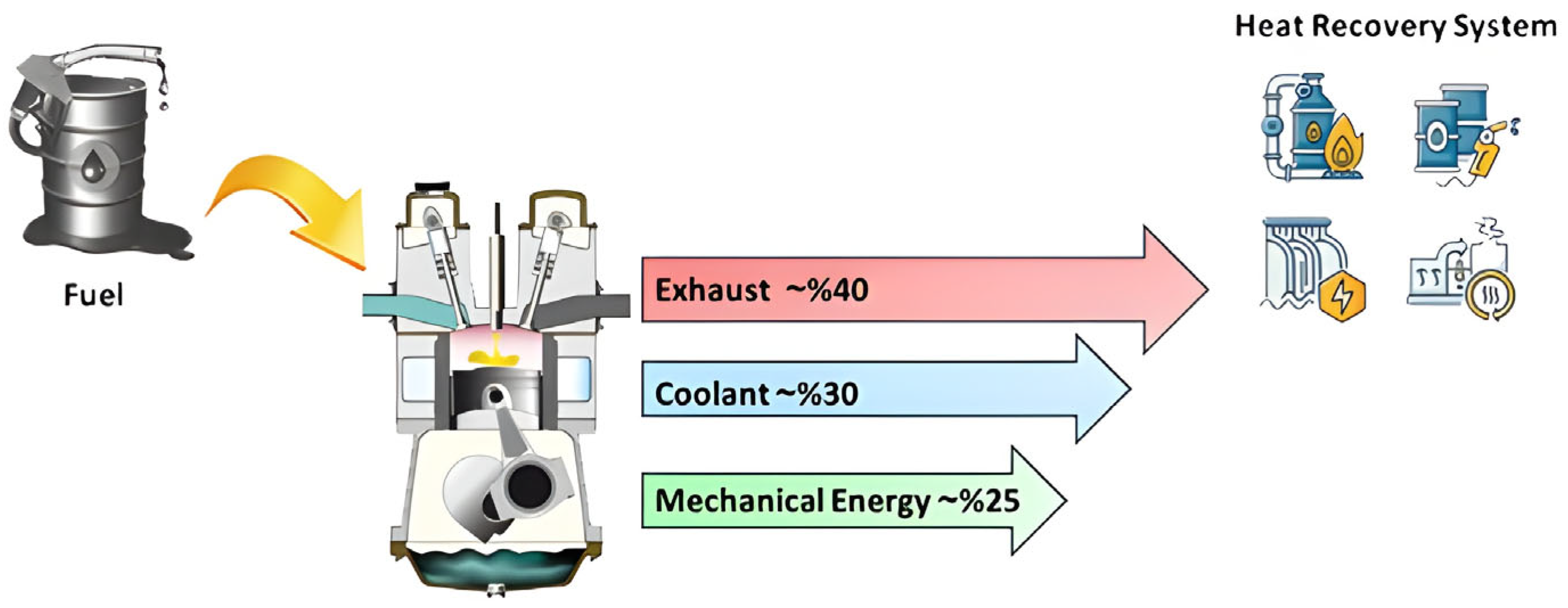
Figure 1, approximately 40% of the fuel energy in internal combustion engines (ICEs) is allocated to exhaust gas, 30% to engine coolant, 5% to radiation and friction, and 25% to vehicle mobility and accessories. This indicates that a substantial portion of the fuel energy, approximately 65% to 70%, is dissipated without being directly utilized. Heat recovery systems are classified into external utilization, serving auxiliary consumers such as heating and air conditioning, and internal recycling, aimed at enhancing engine power, environmental performance, and economic efficiency [
1]. The conversion of exhaust heat into electrical energy holds considerable potential in reducing fuel consumption. Consequently, the development of waste heat recovery systems is imperative to address escalating energy demands and to recover otherwise unutilized energy. Among the available heat recovery systems, thermoelectric systems are distinguished by their reliability, silent operation, lack of moving parts, long operational life, and minimal maintenance requirements.
Saqr et al. in their study examine the thermal design of exhaust-based thermoelectric generators (ETEGs) used to recover waste heat in automobiles. The authors state that the main challenge in the literature is to increase the efficiency of the heat exchanger while maintaining a large temperature difference across the thermoelectric modules. According to the study, the thermal efficiency of any ETEG system is mainly controlled by four factors: the geometry of the heat exchanger, the materials of the heat exchanger, the installation site of the ETEG, and the coolant system of the ETEG [
2].
Kalinichenko et al. [
1] demonstrated that waste heat utilization technologies can significantly enhance the efficiency of internal combustion engines used in agricultural machinery. Their analysis showed that turbo compounding systems are economically feasible in the European Union for high-power agricultural engines, particularly for tractors and combine harvesters above a certain rated power threshold. The study also highlighted steam injection into the turbocharger turbine as a cost-effective method to recover exhaust gas energy while reducing system complexity. Additionally, the use of recycling refrigeration systems was found to be effective in high-temperature operating conditions, especially for combine harvesters. Overall, the proposed approaches enable increases in engine power of up to 20% and reductions in fuel consumption of up to 14%.
Gürcan and Gülay [
3] reported that optimizing heat sink designs on the cold side of thermoelectric generator modules installed in a turbocharged tractor significantly enhances heat transfer and overall TEG performance. Their numerical analysis showed that advanced geometries, such as slotted fins and aluminum foam heat sinks, increase electrical power output and thermal efficiency while also contributing to a reduction in intercooler inlet air temperature, thereby improving engine efficiency.
In one study, the authors implemented a TEG system using 40 Bi
2Te
3-based thermoelectric modules connected in series and installed between the exhaust manifold and the muffler. The system produced a maximum power output of 156.70 W at 3500 RPM and 100 Nm, and the reported heat recovery efficiency under these conditions was 4.30% [
4].
In another study, 24 Bi
2Te
3-based thermoelectric modules (TEMs) were arranged circumferentially around a rectangular heat exchanger in a 1.2 L twin-charged direct injection 4-cylinder gasoline engine and a 1.3 L small 4-cylinder diesel engine. The efficiency of the TEMs in this study ranged from 0.14% to 1.60%. The heat recovery efficiency with the application of TEG did not exceed 0.29% for gasoline engines and 0.27% for diesel engines [
5].
In a further study, a TEG composed of eight Bi
2Te
3 TEMs arranged in parallel within the exhaust system was utilized. The study’s findings demonstrated that a total of 1541 W of waste thermal energy was recovered, exhibiting an efficiency of 2.46% [
6].
In a separate study, the generation of electrical energy from an exhaust pipe coated with perovskite TEMs was investigated. The findings revealed that a maximum temperature difference between the surfaces of the TEG system resulted in 139.30 W of electrical power. The study also demonstrated that TEG efficiency ranged from 0.14% to 0.61% [
7].
In another study, electrical energy was obtained with a TEG system consisting of 20 Bi
2Te
3 TEMs placed in the exhaust gas recycling valve (EGR) line. The system, designed by dynamic modeling, was experimentally tested in a heavy commercial vehicle engine. Two different simulation scenarios are established in their study. The average power output in the second scenario is 224 W, which is 25.8% higher than that of the first scenario (178 W) [
8].
In a related study, a TEG system composed of 12 Bi
2Te
3-based TEMs was mounted on the exhaust muffler. The results demonstrated a maximum electrical power of 118 W, and the TEG efficiency was calculated to be 2.10% [
9].
In another investigation, 40 Bi
2Te
3 TEMs were placed in the exhaust pipe of the engine. As a result, a maximum electrical power of 214 W was obtained at 3750 RPM at an exhaust gas temperature (EGT) of 340 °C. The efficiency of the TEG system was calculated as 4.63% [
10].
Niu et al. utilized 10 Bi
2Te
3-based TEMs and employed three-dimensional mathematical modeling of the TEG system in a simulation program. According to the study, the electrical power varies between 13.10 and 23.90 W in the 6-cylinder turbocharged ICE. It is calculated the heat recovery efficiency of the TEG system to be 1%, and the efficiency of the TEG modules to be 4% [
11].
Ramírez et al. used a TEG system containing 20 Bi
2Te
3 TEMs on the thermal surfaces of the heat exchanger. A single-cylinder four-stroke diesel engine was operated with B0, B5, and B10 fuels at 3000, 3400, and 3800 RPM under loads of 3, 4.5, and 6 Nm. The results showed that the heat recovery efficiency ranged from 2.38% to 3.00% [
12].
Meng et al. used some Bi
2Te
3-based TEMs in 6, 8, 10, 12, 16, and 20 pieces and different TEG models. In the study, it was observed that the heat recovery efficiency of parallel and counterflow numerical TEG cooling models varied between approximately 5.13–8.14% [
13].
In another study, researchers concluded that challenges need to be overcome in the development of highly efficient thermoelectric materials, ensuring proper heat transfer on the hot side of the TEM, robustness of the TEM and light weight of the design [
14].
Dzulkfli et al. analyzed four distinct TEM sizes (25 × 25 mm, 30 × 30 mm, 40 × 40 mm, and 50 × 50 mm), three different TEM numbers (5, 10, and 15), and two thermoelectric materials (BiTe and PbTe). The model’s maximum power generation at 5200 RPM is 1015 W, and the maximum heat recovery efficiency of the system is calculated to be approximately 8%. For the 15-module system, the ratio of the total energy produced by the TEG to the total heat released from the engine exhaust was calculated at different engine speeds. The system’s efficiency reached up to 8.1% at maximum speed. The TEG application on the hybrid electric vehicle model revealed that the TEG heat recovery efficiency at 2000 RPM was 6% [
15].
In another study, the performance of a thermoelectric generator system applied in automobile waste heat recovery is modeled at different vehicle speeds and the results are compared with the experimental study. At a vehicle speed of 120 km/h, the output power and energy conversion efficiency of the TEG system were 38.07 W and 1.53%, respectively [
16].
In a final study, a TEG system composed of 40 Bi
2Te
3-based TEMs was mounted on the rectangular exhaust gas channel. The results demonstrated a maximum electrical power of 119 W, and conversion efficiencies in the range 0.9–2.8% were obtained using the ratio of the TEG power output and the thermal energy change of the exhaust gas flow [
17].
Most of the studies in the literature have addressed the system design, cooling system, TEM material, and fuel type. In terms of system design, cooling method, and TEM material, Demir and Dinçer used high-temperature-resistant perovskite-type oxide materials and passive air cooling (front grille air), while this study uses Bismuth Telluride (Bi
2Te
3)-based modules and an active water-cooled radiator system [
7]. Although Dzulkfli et al. employed a similar cooling approach, they preferred ceramic materials in their simulation studies [
15]. Gürcan and Yakar focused on system design and used an octagonal pipe geometry; however, they recovered heat from pressurized air at the compressor outlet [
3]. In this study, the TEG unit is clamped directly onto the exhaust pipe, whereas in the work of Lan et al., the TEG unit is placed on the EGR line [
8]. Mohamed carried out experiments with a 30-module system based on Bi
2Te
3 materials, but their work differs from this study by using a wind-tunnel-type cooling system [
10]. Orr et al. used heat pipes on both the hot and cold sides to improve heat transfer, while in this study the modules are mounted directly on a copper plate attached to the exhaust pipe [
6].
In terms of fuel types, the studies of Orr et al., Demir and Dinçer, Kim et al., and Dzulkfli et al. focus only on gasoline engines or simulation-based approaches [
6,
7,
9,
15]. Temizer et al., Ramirez et al., and Burnete et al. and investigated diesel and biodiesel blends (B5, B10), similar to this study [
4,
12,
14]. However, unlike most studies in the literature, this study tests a wide fuel range up to B100 (pure biodiesel).
In terms of motor operating parameters, similar to this study, Temizer et al. and Kim et al. used a constant engine speed of 1500 RPM as a common test point [
4,
9]. Ziolkowski et al., Kim et al., Mohamed, and Luo et al. preferred dynamic driving cycles instead of steady operating conditions. In this study, the experiments focus on steady-state opera-tion [
5,
9,
10,
16].
Unlike most previous studies, which focus primarily on hardware-based modifica-tions, the present study investigates the effect of injection timing (−2, STD, and +2 °CA) on thermoelectric efficiency. In addition, the use of high biodiesel blends up to B100 distin-guishes this work from studies such as Ramirez et al. [
12], where fuel blends are limited to B10. Fuel type is another factor discussed in the literature, as biodiesel blends modify the lower heating value and combustion behavior of diesel fuel, thereby affecting exhaust temperature and recovery potential. However, most existing studies consider fuel type or design optimization under fixed engine settings. In particular, the influence of parameters that directly control the combustion process, such as injection timing, on thermoelectric heat recovery efficiency in biodiesel-fueled engines remains an important gap.
A key reason for focusing on injection timing is changes in injection timing strongly affect combustion and emissions in diesel engines. Advancing injection timing increases exhaust temperature and ignition delay, allowing better fuel evaporation and air–fuel mixing. Retarding injection timing shortens reaction time and leads to incomplete combustion, increasing CO emissions, while advanced timing raises end-of-combustion temperature and reduces CO. HC emissions increase with retarded injection timing due to poorer combustion. Advancing injection timing improves combustion and lowers HC emissions, and higher biodiesel ratios also reduce HC formation. However, advanced injection timing raises combustion chamber temperature, which increases NOx emissions. In direct-injection diesel engines, earlier injection increases ignition delay and temperature, leading to higher NOx. It also raises cylinder temperature and reaction rates, resulting in increased CO2 emissions.
The collective findings in the literature indicate that variations in the combustion process modify exhaust gas characteristics and, consequently, influence thermoelectric conversion efficiency. This study addresses this gap by experimentally analyzing the effects of different biodiesel blend ratios (B0–B100) and injection timing variations (−2, STD, and +2 °CA) on exhaust waste heat recovery in a single-cylinder diesel engine. By demonstrating how exhaust enthalpy can be managed through combustion timing optimization, this work shows that the efficiency of thermoelectric systems can be improved not only by hardware design, but also by operational control strategies.
2. Materials and Methods
This section presents in detail the technical structure of the experimental setup used in the study, the physicochemical characterization of the test fuels in Gebze, Kocaeli, the basic equations defining waste heat recovery, and the systematic research procedures applied to determine system performance.
2.1. Experimental Design
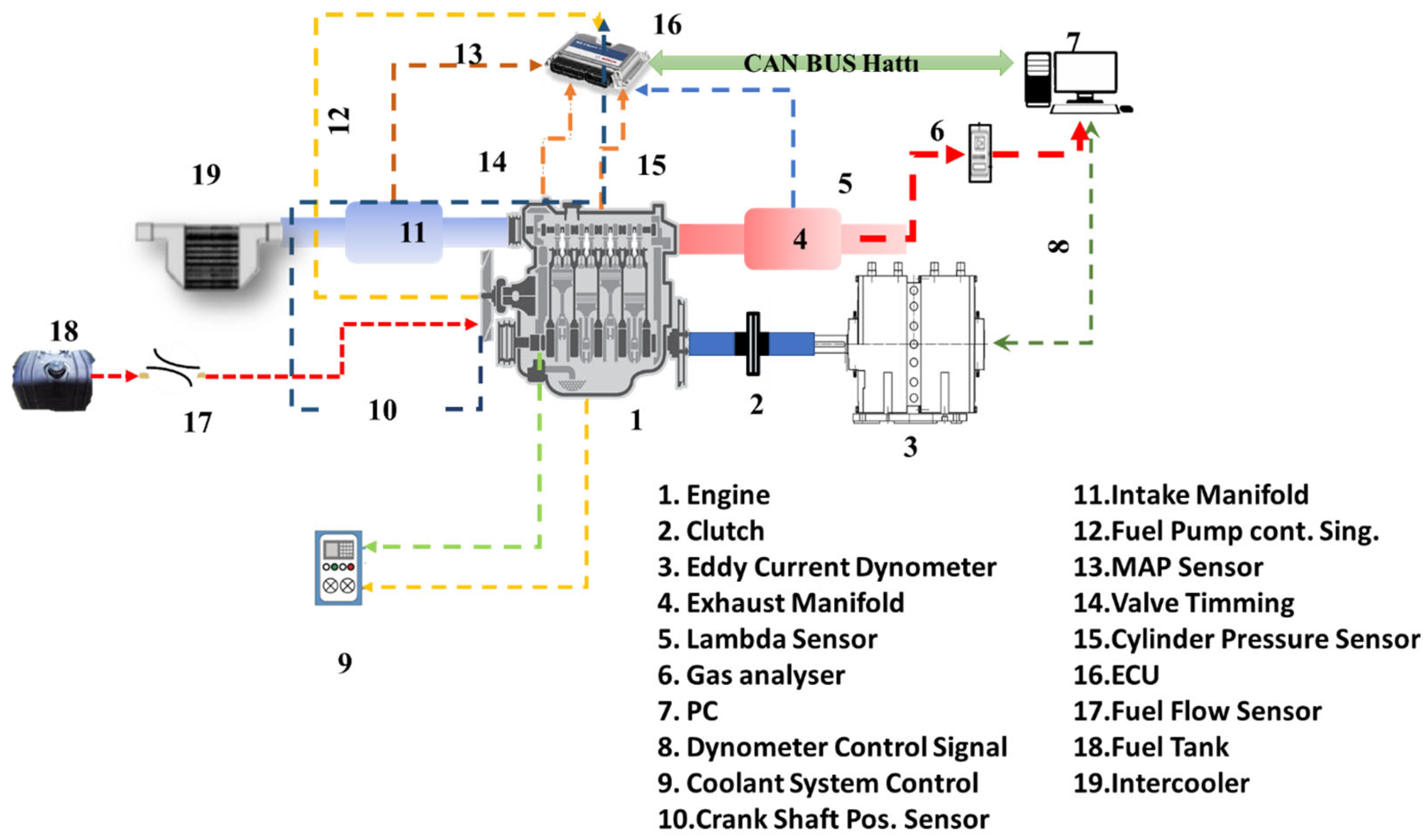
The experiments were carried out in the Engine Excellence laboratories in Gebze, Kocaeli at the Scientific and Technical Research Council of Türkiye—Institute of Rail Transportation Technologies (TÜBİTAK-RUTE). A schematic view of the test setup, in which the experiments were conducted and different operating parameters were measured, is presented in
Figure 2.
The test rig consists of an alternator to measure the power output of the engine and an integrated single cylinder diesel engine manufactured by AVL and a data acquisition system to measure the TEG parameters. A cooling system was used on the TEG surface to control the surface temperature. The electrical parameters were measured, and the amount of heat generated by the TEG system was calculated using the obtained data.
Table 1 shows the technical specifications and sensitivities of the experimental measurement devices.
In the experimental engine, whose technical specifications are given in
Table 2, injection pressure, injection timing, dynamometer load, turbo pressure can be changed electronically. The engine does not start before reaching operating conditions.
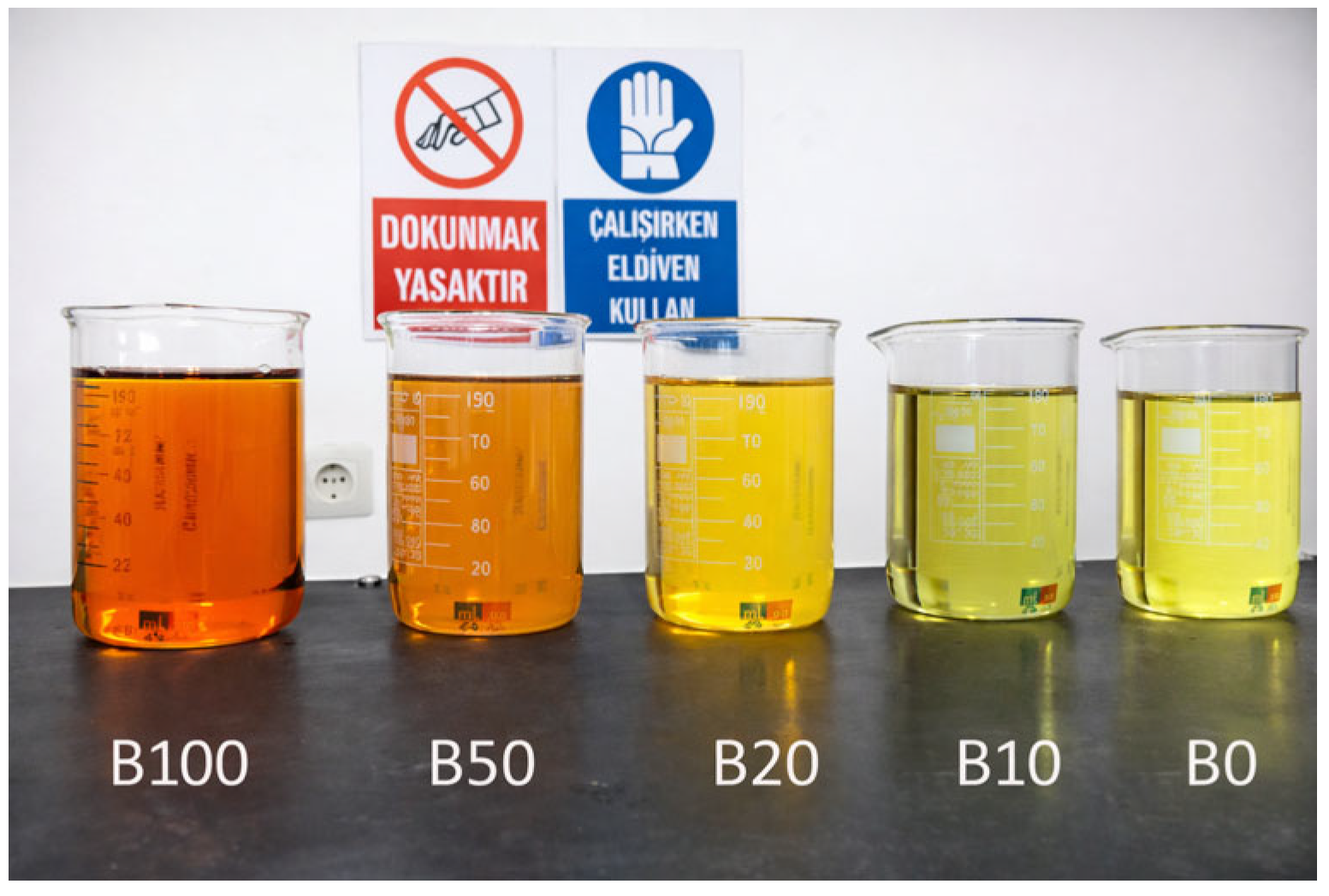
For the fuel mixtures used in the experimental study, plant-based biodiesel was purchased from the market. Biodiesel was mixed with diesel fuel at 0%, 10%, 20%, 50% and 100% by volume. Five types of fuel were used in the experiments: B0 (diesel), B10, B20, B50, and B100 (biodiesel).
Figure 3 shows the prepared fuel samples.
The physical and chemical properties of experimental fuels are given in
Table 3.
In the study, each measurement was repeated three times, and the obtained values were averaged. Furthermore, the experiments were labeled as B0A0, where B is the biodiesel content in the blend (0%, 10%, 20%, 50%, and 100%), and A is the injection timing (−2, STD, and +2 °CA). The engine is run at 1500 RPM engine speed and at 100% engine load.
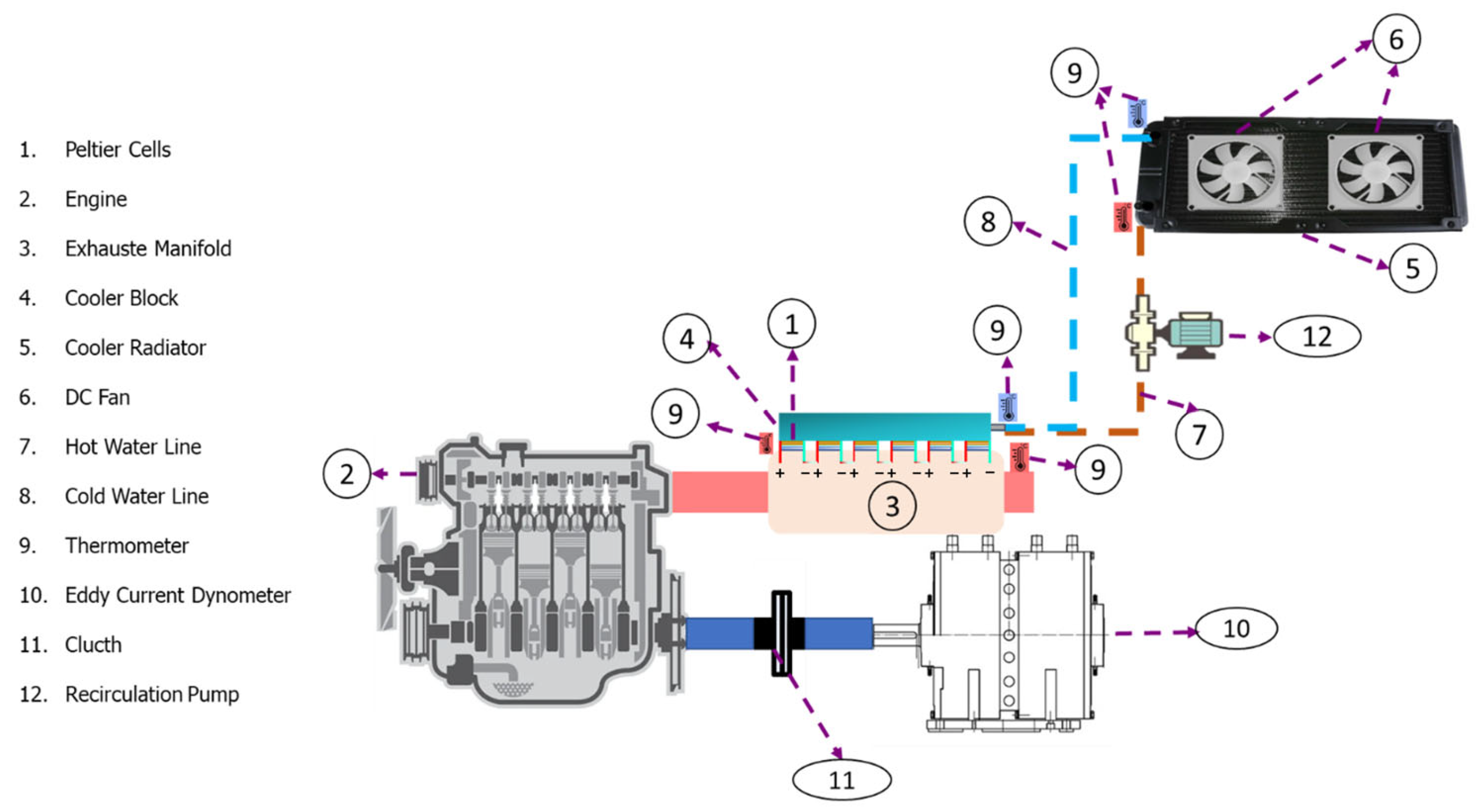
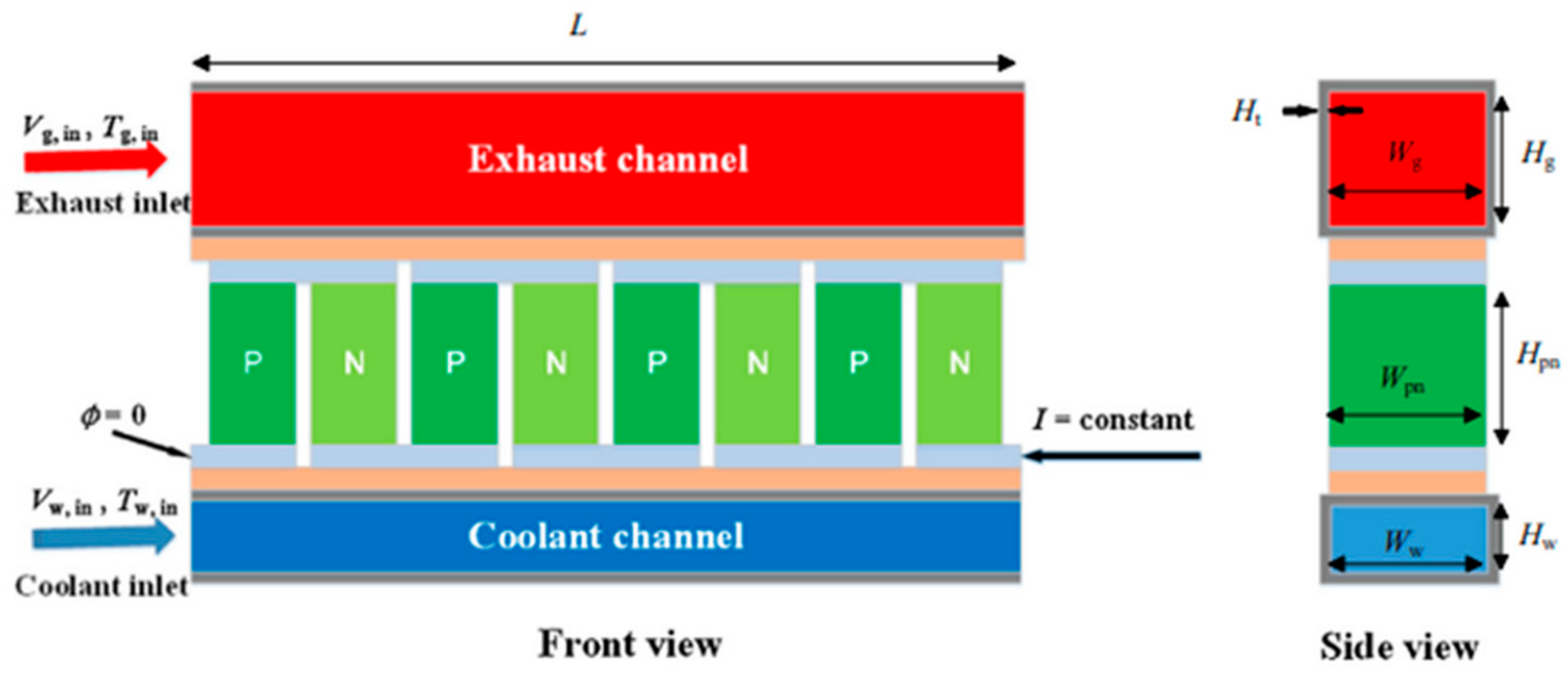
The configuration of the TEG system, as depicted in
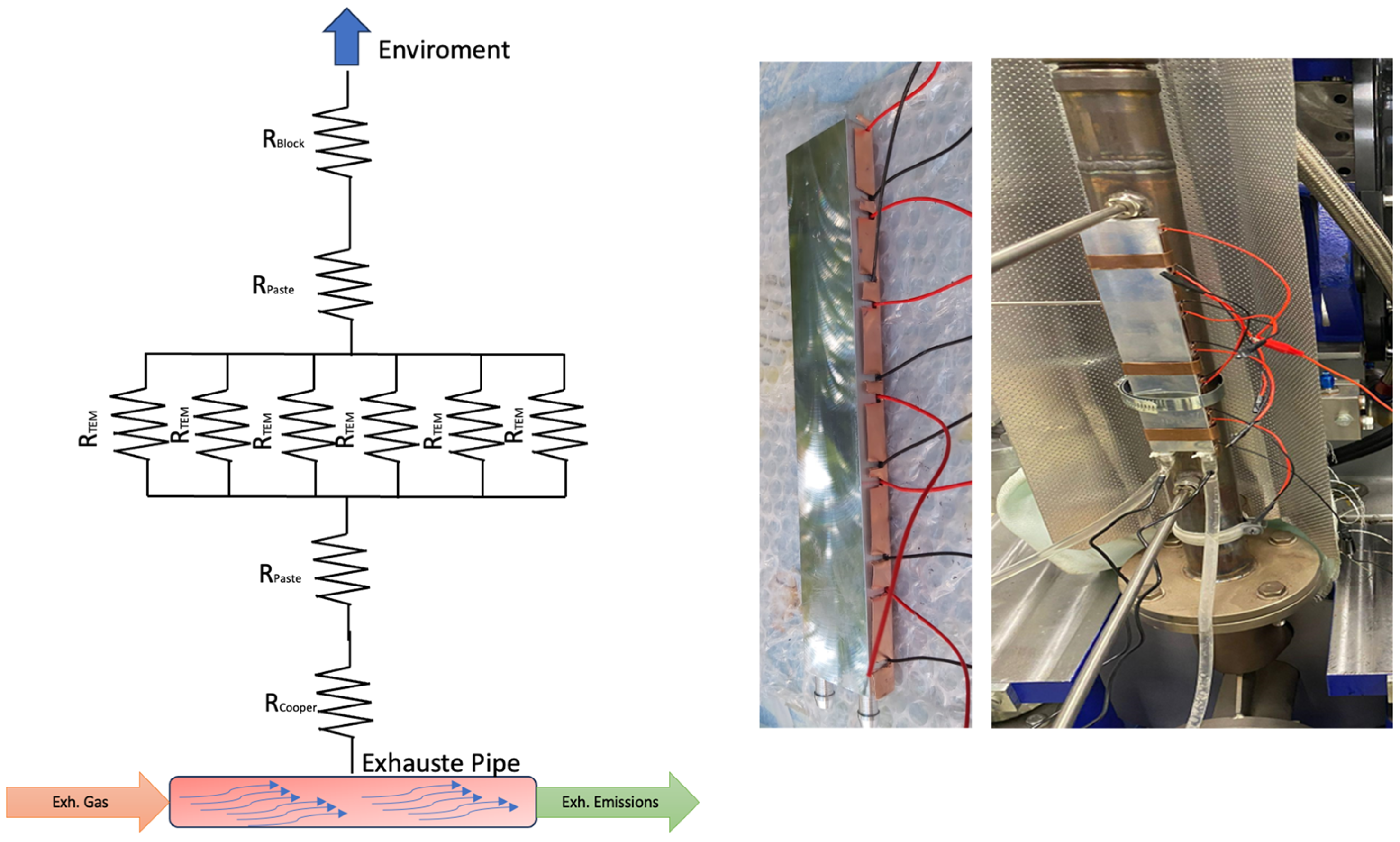
Figure 4, comprises an exhaust pipe, six thermoelectric modules (TEMs), and a cooling system that facilitates the modulation of surface temperature. The TEGs within the system were arranged symmetrically in order to obtain a balanced electrical output. The TEG system is encased within a copper plate, a measure implemented to mitigate potential damage. Aluminum heatsink blocks and an aluminum radiator core are employed to ensure effective cooling of the system. Two fans, connected in parallel, are positioned on the cooling radiator. The aluminum radiator core is employed within the cooling circuit as the cooling radiator. Two fans, each requiring 3V DC and 0.15 A current, are positioned on the cooling radiator depicted in
Figure 4. The total current drawn by the fans is 0.30 A. The electrical energy consumed by the fans used for cooling is 0.9 W. The function of the fans is to remove the heat load from the cooling fluid that is heated by passing over the TEG through forced air convection. Both fans are connected in parallel and powered by a single AC-DC voltage step-down adapter. The electric motor employed in the cooling system functions with a 3 V DC voltage and draws 0.12 A of current. The total energy consumed by the fan and pump for cooling the TEG system is 1.26 W.
The thermoelectric modules (TEMs) are arranged in series with each other and positioned on the thermal surfaces of the exhaust pipe. The thermoelectric generator (TEG) system was enclosed in a copper plate to mitigate potential damage. The temperature, current, and voltage values obtained from the TEG system were measured and electrical power calculated. The electrical energy generated by the TEGs was stored using a battery connected to the system output.
As the high temperature exhaust flows in the duct, the hot side of the TEG module will absorb the heat from the exhaust, while the cold side of the TEG module will dissipate the heat. Thus, there will be a temperature difference between the cold and hot sides of the TEG module that will generate electricity under the Seebeck effect.
Figure 5 shows a detailed schematic view of the automobile exhaust TEG system.
2.2. Heat Loss
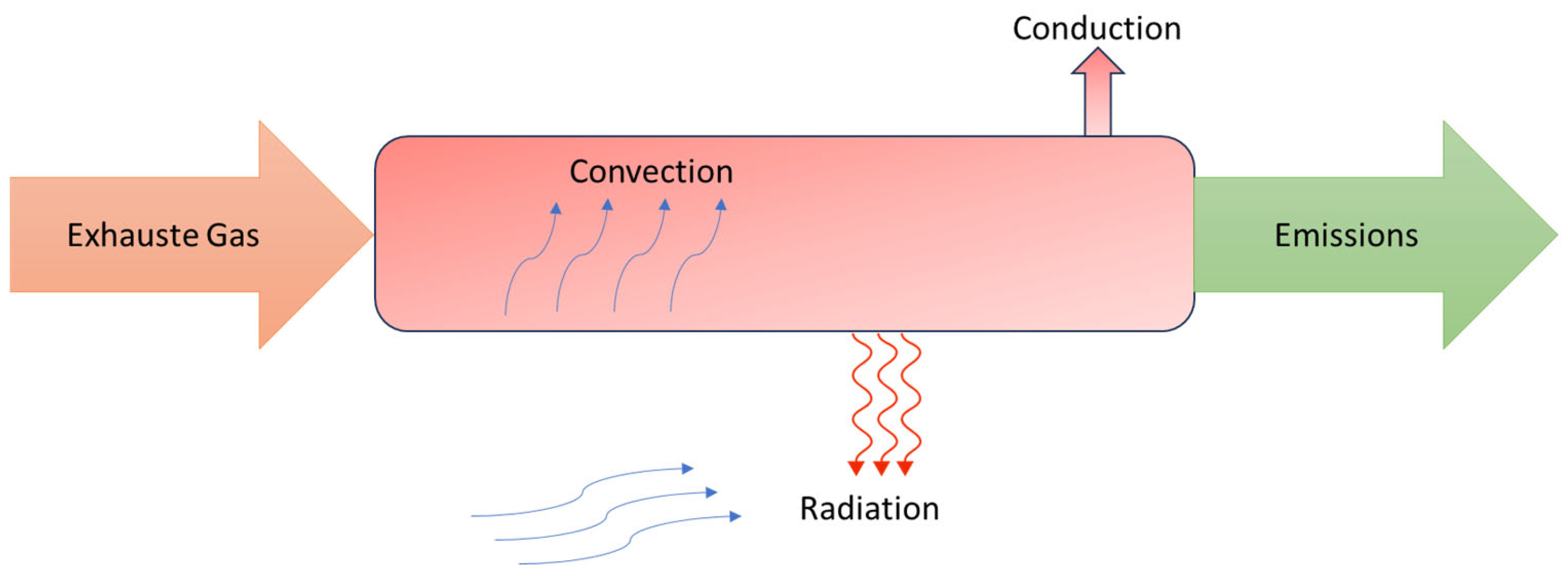
Heat transfer in the exhaust system plays a pivotal role in the TEG system. Following the combustion of the fuel utilized in ICEs, the end combustion gases are expelled through the exhaust system under the influence of high temperatures and pressures. During the exhaust of the exhaust gas, heat transfer occurs from both the environment and the exhaust system. The mechanism of heat transfer in the exhaust system is illustrated in
Figure 6.
As shown in
Figure 6, heat transfer is the energy transport that occurs when quantities of matter that have different temperatures are placed in thermal contact and can occur in 3 different modes: conduction, convection and radiation.
Conduction is the process by which heat is transferred from exhaust gases to metal components due to direct contact with the manifold and pipes. The efficiency of this process is influenced by the material composition, thickness, and thermal conductivity of the exhaust pipes.
Convection, on the other hand, is defined as the transfer of heat due to the movement of gas along the inner surfaces of the pipes. The velocity and temperature of the gas affect the efficiency of this transfer. It has two main components: forced convection and natural convection.
Finally, radiation constitutes a third mechanism through which heat is transferred. Exhaust gases, due to their high temperature, emit electromagnetic waves that result in the transmission of heat energy to their surroundings. This is considered to be a primary source of the heat typically experienced on the outer surface of the exhaust system.
In this study, the heat transfer mechanism is discussed based on the physical characteristics of the exhaust flow and the operating conditions of the system. Since the exhaust gases are driven by the engine and typically flow through the exhaust line at relatively high velocities, convective heat transfer is expected to play a significant role.
The experimental engine, with a cylinder volume of 1120 cm
3, is discharged through an exhaust pipe with an outer diameter of 70 mm, an inner diameter of 65 mm, and a length of 120 mm. Due to the absence of a silencer structure, the TEG system was clamped onto the existing exhaust pipe. The TEMs are mounted on a copper plate, and cooling water, aluminum blocks, and an aluminum radiator core are used to cool the system. Two fans, connected in parallel, are positioned on the cooling radiator. The purpose of the fans is to remove the heat load from the coolant coming from the TEG by forced air convection (see
Figure 7). On the interfaces between channel and solid wall, the velocity, temperature, and heat flux are continuous. All the materials properties used in this TEG system are listed in
Table 4.
The type of fuel influences the composition of the combustion products and the thermal properties of the exhaust gas (density, viscosity, thermal conductivity, etc.). The working fluid is assumed to be exhaust gas for the exhaust channel and water for the coolant channel. The thermal properties of the exhaust gas supplied to the system when B0, B10, B20, B50, and B100 fuels are used are presented in
Table 5. The thermal properties of water supplied to the coolant system and ambient air are listed in
Table 6. These tables provide a fundamental reference point for understanding the variation in properties according to fuel type.
The density (ρ) partially increases with the increasing proportion of biodiesel in the mixture. The combustion of biodiesel thickens the gas mixture as it produces more CO2 and water vapor than diesel fuel.
Dynamic viscosity (μ) increases relatively with increasing proportion of biodiesel in the mixture. This increase is not caused only by additional combustion products, but also by changes in exhaust gas temperature, molecular composition, and transport properties resulting from the different combustion chemistry of biodiesel–diesel blends.
Thermal conductivity (k) depends on the gas mixture and the properties of the combustion products. The higher the biodiesel content, the higher the thermal conductivity.
Specific heat capacity (cp) determines the level of heat required to change the temperature of the substance by a predetermined amount. The use of biodiesel increases the specific heat capacity.
First of all, the mass flow rate of the air included in the exhaust system and the mass flow rate of the fuel must be calculated. For these calculations, the volume of the engine, the speed of the engine, the volumetric efficiency of the engine, the density of the air and the air fuel ratio (AFR) must be known. The mass flow rate of the air is calculated in Equation (1), and the mass flow rate of the exhaust gas is calculated in Equation (2).
where
: mass flow rate of the air (kg/s),
: mass flow rate of the fuel (kg/s),
: mass flow rate of the exhaust gas (kg/s),
: total volume of the engine (m
3),
: engine speed (RPM),
: volumetric efficiency of the engine,
: density of air (kg/m
3), AFR is the air fuel ratio, and its value is taken as a constant of 18.
As can be seen in Equation (3), the mass flow rate of the exhaust gas is the sum of the mass flow rates of air and fuel.
The heat transfer surface area of the exhaust gas was obtained with the equation given in Equation (4).
Then, the density of the exhaust gas is calculated with the equation in Equation (5), taking into account the pressure of the exhaust gas (
), the temperature of the exhaust gas (
) and the gas constant of the exhaust gas (
).
The calculation of exhaust gas velocity, which is necessary for the subsequent calculation of Reynolds number, is outlined in Equation (6).
where
: velocity of the exhaust gas (m/s),
: mass flow rate of the exhaust gas (kg/s),
: density of the exhaust gas (kg/m
3),
: heat transfer surface area (m
2).
The convective heat transfer coefficient is contingent upon the type of gas, flow rate, the diameter of the pipe, and temperature differences. Exhaust gases can reach high temperatures depending on the combustion chemistry. As the temperature increases, the gas density decreases. A low-density and high-energy gas must move at a higher velocity to transport the same mass flow rate, which increases the flow speed in the exhaust line. In addition, at high engine speeds, exhaust gas pulses occur very frequently, producing an almost continuous and high-rate flow in the exhaust system. As the mass flow rate increases while the pipe cross-section remains constant, the flow velocity also increases. To calculate the heat transfer coefficient of the heat source in the exhaust system, constants such as Reynolds, Prandtl, and Nusselt numbers are required. The Reynolds number, as calculated using Equation (7), serves as a measure of fluid turbulence, while the Prandtl number, as determined by Equation (8), quantifies the relationship between viscosity and thermal conductivity. The Nusselt number, denoted by Equation (9), is a parameter that quantifies the efficiency of heat transfer.
where
: density of gas (kg/m
3),
: velocity of gas (m/s),
: pipe diameter (m),
: dynamic viscosity of gas (kg/m.s),
: specific heat of gas (J/kg.K),
: thermal conductivity of gas (W/m.K).
The convection heat transfer coefficient is given in Equation (10).
Here : Nusselt number, : heat conduction coefficient (W/m.K), : pipe inner diameter (m).
The inner tube heat transfer surface area for heat loss is given in Equation (11).
The outer tube heat transfer surface area for heat loss is given in Equation (12).
where
: pipe outer diameter (m),
: pipe inner diameter (m),
: exhaust pipe length (m).
The thermal resistance of the system is calculated with the equation in Equation (13).
where
: Thermal resistance of the system (K/W),
: convection heat transfer coefficient of weather (W/m
2K),
: heat conduction coefficient (W/m.K),
: outer pipe radius,
: inner pipe radius.
The amount of heat loss can be calculated using Equation (14).
where
: heat loss (W),
: exhaust gas temperature (K),
: pipe temperature (K),
: temperature difference between exhaust temperature and pipe surface temperature (K).
2.3. Electricity Production
Under the operating conditions of the ICE, the power generation values measured from the TEG system are also among the parameters analyzed. In the study, the voltage value was measured from the output of the TEG system, and the current value was measured between the TEG and the DC/DC inverter, which plays an active role in feeding the battery. The power generated in the TEG electrical circuit is obtained by Equation (15).
where
is the current in Amper,
is the voltage in Volt and
is the electrical power generated in W.
2.4. Heat Recovery Efficiency
The thermal recovery efficiency is defined as the ratio of the electrical power generated by the TEG system to the amount of heat transferred from the exhaust gases to the exhaust pipe and is given in Equation (16).
where
is the electrical power generated in W and
is the amount of heat transferred from the exhaust gases to the exhaust pipe in W.
3. Results
As engine speed and load increase, airflow intensifies, leading to improved combustion dynamics and enhanced combustion efficiency. It can be posited that as the speed and temperature differences in the exhaust gases increase, so does the amount of heat given to the system.
The performance of TEMs, which convert waste heat energy into usable energy, is subject to variation due to a multitude of factors. The temperature differences that arise on the TEM surfaces due to the heat energy of the exhaust gases serve to augment the electrical power generated by the TEMs. The combustion performance of the fuel is affected by a number of factors, including variation in the injection timing.
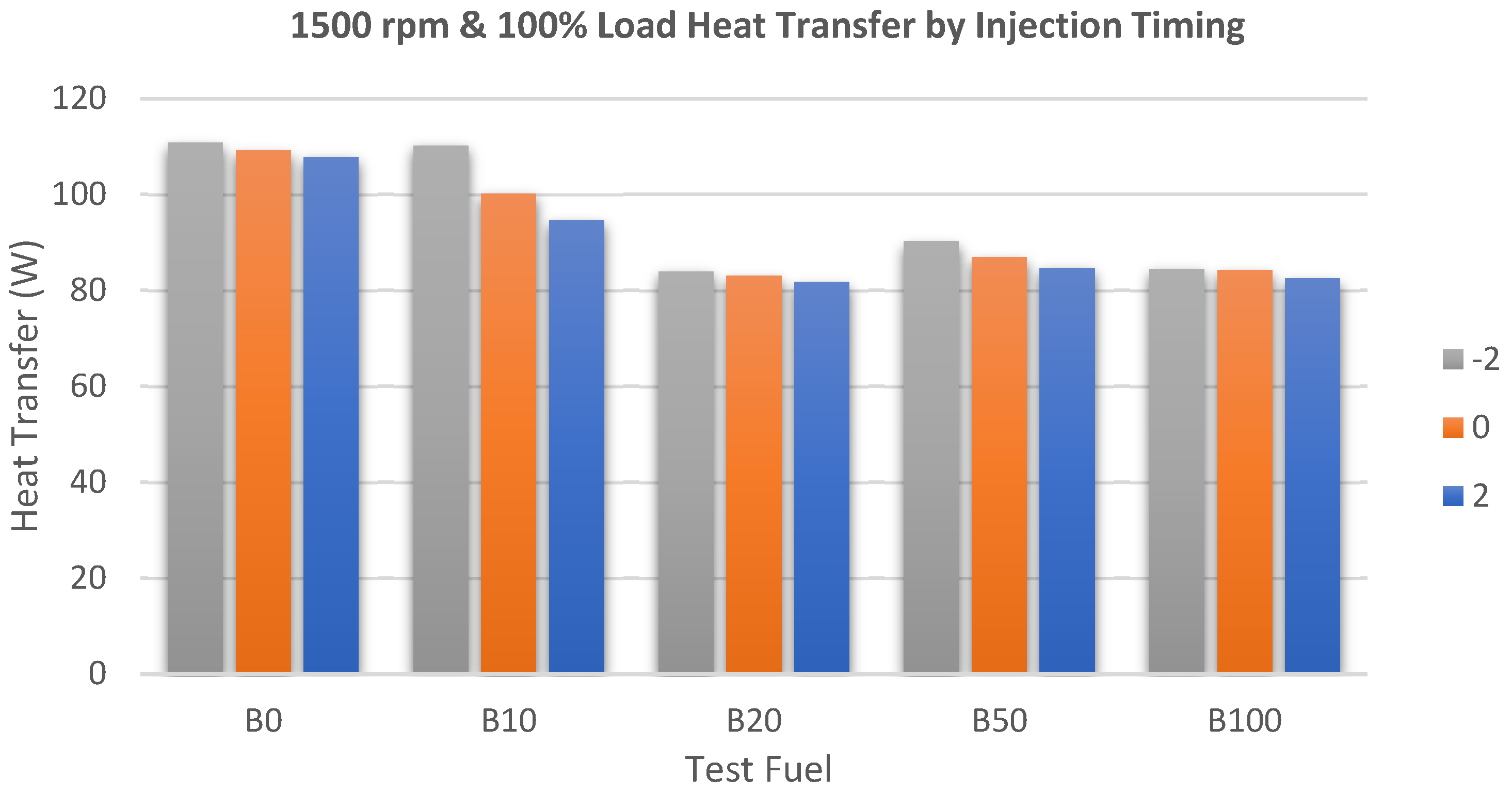
Figure 8 shows the heat transfer amount of the test fuels depending on the injection timing at 1500 RPM and 100% engine load. Analysis of the graph indicates that the amount of heat transfer decreases with an increase in the biodiesel ratio in the fuel mixtures.
This behavior can be attributed to the lower calorific value of biodiesel, which progressively decreases as the biodiesel fraction in the fuel blend increases. In addition, advancing the injection timing, that is, initiating fuel injection earlier, was found to increase the amount of heat transferred for all tested fuels. For instance, for B0 fuel, the heat transfer rates were measured as 110.84 W at −2 °CA, 109.23 W at 0 °CA, and 107.76 W at +2 °CA. For B10 fuel, the corresponding values were 110.19 W, 100.12 W, and 94.68 W, respectively. Similarly, for B20 fuel, heat transfer rates of 83.91 W, 83.07 W, and 81.77 W were obtained, while for B50 fuel, the values were 90.21 W, 86.92 W, and 84.60 W, respectively.
For B100 fuel, the measured heat transfer rates were 84.37 W, 84.18 W, and 82.46 W, respectively. The data clearly indicate that advancing the injection timing, namely shifting the injection timing to an earlier crank angle before top dead center (TDC), leads to an increase in the amount of recoverable waste heat. This behavior arises because combustion does not occur instantaneously after fuel injection but develops over a finite duration. Advancing the injection timing allows more time for fuel–air mixing and combustion development, thereby promoting a more complete combustion process and resulting in higher exhaust gas temperatures.
As demonstrated in
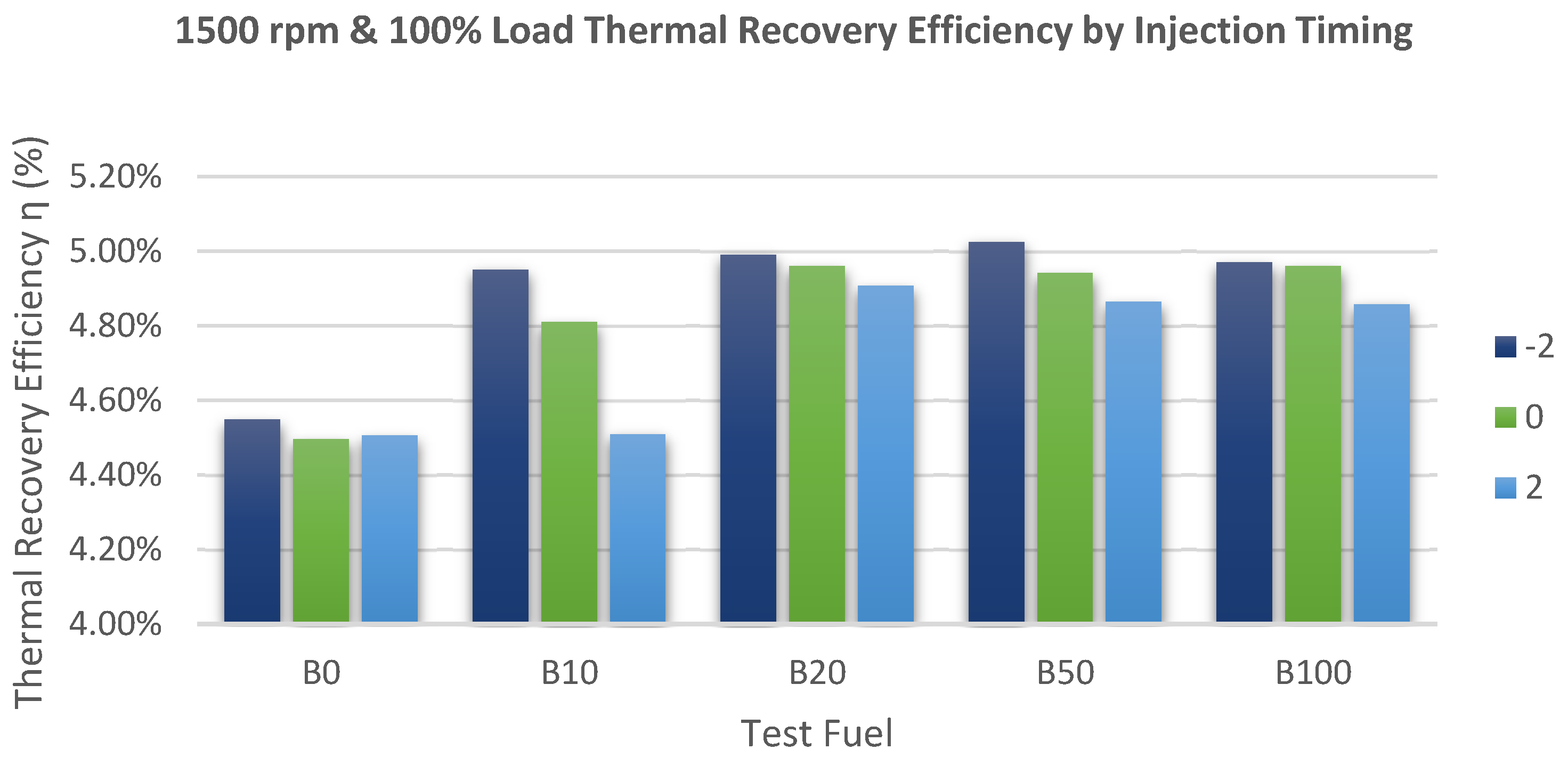
Figure 9, the thermoelectric generator system was utilized to assess the waste heat recovery efficiencies of various test fuels, with analysis conducted at 1500 RPM and 100% engine load. The graph reveals a parallel trend with the data presented in
Figure 8. Increasing injection timing, that is, injecting the fuel earlier (−2 °CA), generally leads to higher heat recovery efficiency values for all test fuels. For instance, for B0 fuel, the heat recovery efficiencies were measured as 4.55% at −2 °CA, 4.50% at 0 °CA, and 4.51% at +2 °CA. A similar trend was observed for B50 fuel, with the injection timing values yielding 5.02%, 4.94%, and 4.87%, respectively.
The main reason for this behavior is that earlier injections improve the combustion process. When the fuel is injected earlier, the ignition delay is reduced and the fuel–air mixture becomes more uniform. This allows the fuel to burn more completely inside the cylinder. A more complete combustion increases the in-cylinder temperature and, as a result, raises the exhaust gas temperature.
The increase in exhaust gas temperature increases the temperature difference between the hot and cold surfaces of the thermoelectric modules. According to the Seebeck effect, a higher temperature difference produces more electrical power. Therefore, advancing the injection timing creates a higher thermal gradient on the modules and leads to an increase in heat recovery efficiency.
Table 7 presents the hot and cold surface temperatures of the TEG at 1500 RPM for different fuels and injection timings. For all fuel blends, advancing the injection timing (−2 °CA) results in the highest surface temperatures, while retarding the timing (+2 °CA) produces the lowest values. For example, for B0 fuel, the hot surface temperature decreases from 260 °C at −2 °CA to 235 °C at STD and to 210 °C at +2 °CA. A similar trend is observed for all biodiesel blends.
As the biodiesel ratio increases, the hot surface temperature generally decreases at the same injection timing. At −2 °CA, the hot surface temperature changes from 260 °C for B0 to 239 °C for B100. This behavior reflects the lower heating value of biodiesel compared to diesel fuel.
In addition, the temperature difference between the hot and cold surfaces is largest at −2 °CA for all fuels. This indicates that early injections create a higher thermal gradient across the thermoelectric modules. Therefore, the table confirms that advancing injection timing increases exhaust-side temperature and temperature difference, while higher biodiesel content reduces overall temperature levels. These trends are consistent with the observed variations in heat transfer and heat recovery efficiency.
These results show that advancing the injection timing improves the combustion process and increases the exhaust gas temperature, thereby raising the amount of heat transferred to the system. In contrast, increasing the biodiesel ratio reduces the total exhaust heat; however, this negative effect can be partly compensated by using an appropriate injection timing.
4. Discussion
Injection timing was found to be a key factor in determining both the amount of recoverable exhaust heat and the electrical power produced by the thermoelectric generator (TEG). Advancing the injection timing increased exhaust gas temperature and improved combustion completeness, which enhanced the thermal gradient across the thermoelectric modules. Similar effects of combustion phasing on exhaust enthalpy and waste heat potential are reported in this study and in earlier studies on exhaust-based TEG systems. These studies show that changes in combustion directly modify exhaust gas characteristics and, therefore, the effectiveness of heat recovery. The present results extend this understanding by showing that injection timing optimization remains effective even when biodiesel blends with lower calorific values are used.
The lower heating value of biodiesel is lower than that of conventional diesel fuel. For this reason, increasing the biodiesel ratio in the fuel blend reduces the total amount of heat available in the exhaust gas. This trend is consistent with the fuel property data reported in this study. Despite this reduction, the highest heat recovery efficiency in this study, 5.02%, was obtained with B50 fuel at an injection timing of −2 °CA. The main reason for this result is the advanced injection timing. Early injections compensate for ignition delay and allow more complete combustion, which increases the exhaust gas temperature. As a result, even though the total heat energy decreases with higher biodiesel content, the temperature difference across the thermoelectric modules increases. According to the Seebeck effect, this larger temperature difference produces more electrical power and leads to higher heat recovery efficiency.
The influence of biodiesel content on heat recovery performance is therefore significant. Increasing the biodiesel ratio reduces exhaust gas temperature and heat transfer rates because biodiesel has a lower heating value and higher specific heat capacity than diesel fuel. However, the TEG system in this study maintained meaningful recovery efficiencies for all tested blends, from B0 to B100. This indicates that thermoelectric waste heat recovery remains feasible in biodiesel-fueled engines, provided that operating parameters such as injection timing and cooling conditions are properly optimized.
The maximum efficiency obtained in this study (5.02%) is consistent with the upper range reported in this study and in recent experimental and numerical studies. Many studies using Bi
2Te
3-based modules report system-level efficiencies between approximately 2% and 8%, depending on operating conditions, heat exchanger design, and cooling effectiveness. For example, Temizer et al. [
4] and Mohamed [
10] reported efficiencies between about 2% and 4%, while Meng et al. [
13] and Dzulkfli et al. [
15] achieved values above 5% in optimized configurations. The results of the present study therefore fall within the expected range and confirm that exhaust-based TEG systems are a viable waste heat recovery technology for engines operating with biodiesel blends.
When compared with other exhaust energy recovery technologies, such as turbo compounding or steam-assisted systems, TEG-based solutions show lower absolute recovery efficiency. However, they offer important advantages in terms of simplicity, reliability, and integration flexibility. As discussed in this study, turbo compounding systems are generally suitable only for high-power engines and require complex mechanical integration. In contrast, TEG systems can be applied to small- and medium-scale engines with minimal structural modification. This feature is especially beneficial for agricultural machinery and stationary engines that operate under variable loads and in harsh environments.
Exhaust-based TEG systems can be applied to many internal combustion engines, particularly diesel engines used in heavy-duty, agricultural, and stationary applications. However, their use is limited by factors such as the temperature resistance of thermoelectric modules, exhaust back pressure, and unstable operating conditions in vehicles. For this reason, these systems are more suitable for engines that operate for long periods under stable conditions. This observation is consistent with the operating conditions selected in this study, where the engine was run at steady-state conditions (1500 RPM and full load).
The results also support recent literature emphasizing that TEG performance is strongly constrained by heat transfer limitations on both the hot and cold sides of the modules. Increasing the number of thermoelectric modules can raise electrical output, but economic and packaging constraints require an optimized balance between module count, heat exchanger effectiveness, and cooling capacity. In this study, the selected configuration represents a reasonable compromise between performance and system complexity.
Thermoelectric systems offer several advantages over other heat recovery technologies, including quiet operation, no moving parts, long service life, and low maintenance requirements. They also do not produce any pollutants during electricity generation. System performance can be improved by reducing heat losses on the hot side, enhancing cooling on the cold side, and optimizing the number of thermoelectric modules. However, using a large number of modules may not be economically attractive. Therefore, determining the optimum number of modules is an important cost–benefit issue. Based on these considerations, the dominance of TEG systems in waste heat recovery applications is expected to increase in the coming years.
Finally, the findings indicate several directions for future research. The development of thermoelectric materials with higher figure-of-merit (ZT), improved exhaust-side heat exchanger geometries, and adaptive cooling strategies could significantly increase system-level efficiency. In addition, integrating TEG systems with other waste heat utilization technologies, such as exhaust gas recirculation cooling or hybrid energy storage systems, may further enhance overall engine efficiency. These results show that thermoelectric waste heat recovery can be improved not only by hardware design, but also by operational control strategies, such as injection timing optimization.
5. Conclusions
In this study, the waste heat recovery performance of an exhaust-based thermoelectric generator integrated into a diesel engine operating with biodiesel blends was experimentally investigated. The experiments were carried out at 1500 RPM and full engine load using different biodiesel ratios (B0–B100) and three injection timings (−2, STD, and +2 °CA).
The results show that injection timing has a strong effect on exhaust heat availability and thermoelectric performance. Advancing the injection timing increased exhaust gas temperature and improved combustion quality, which led to higher heat transfer and higher heat recovery efficiency. The highest efficiency, 5.02%, was obtained with B50 fuel at −2 °CA injection timing.
Increasing the biodiesel ratio reduced the total exhaust heat because biodiesel has a lower heating value than diesel fuel. However, the TEG system maintained effective operation for all fuel blends, including B100. This demonstrates that thermoelectric waste heat recovery is feasible in biodiesel-fueled engines when operating parameters are properly optimized.
Compared with many studies in the literature, this study is different because it focuses on combustion control, especially injection timing, instead of only system design or material optimization. Most previous studies investigate TEG performance under fixed engine settings or with low biodiesel ratios. The present study fills an important gap by showing that operational control strategies can significantly influence thermoelectric efficiency, even with high biodiesel content.
For future work, several directions can be considered. Advanced thermoelectric materials with higher figure-of-merit (ZT) values can be tested to increase conversion efficiency. Improved exhaust-side heat exchanger designs and adaptive cooling systems can further enhance the temperature difference across the modules. In addition, experiments under dynamic engine conditions and different load levels can provide more realistic performance data.
Overall, this study shows that thermoelectric waste heat recovery can be improved not only by hardware design, but also by optimizing engine operating parameters. Injection timing control offers a simple and effective way to increase the efficiency of TEG systems in biodiesel-fueled engines.