The Effect of Drill Rotational Speed on Drilling Resistance in Non-Destructive Testing of Concrete
 ,
,  and
and 
Abstract
1. Introduction
2. Materials and Methods
2.1. Concrete Characterisations
2.2. Drilling Test Device Setup
2.2.1. Drilling Test Device
2.2.2. Drilling Parameters
3. Results
3.1. Drilling Patterns
3.2. Rotational Speed
3.3. Drilling Force Measurements
3.4. Power Consumption
4. Discussion
4.1. Drilling Patterns
4.2. Rotational Speed Response to Different Concrete
4.3. Drilling Force Measurements
4.4. Power Consumption
4.5. Combined Drilling Analysis
4.6. Comparison with Previous Drilling Resistance Studies
5. Conclusions
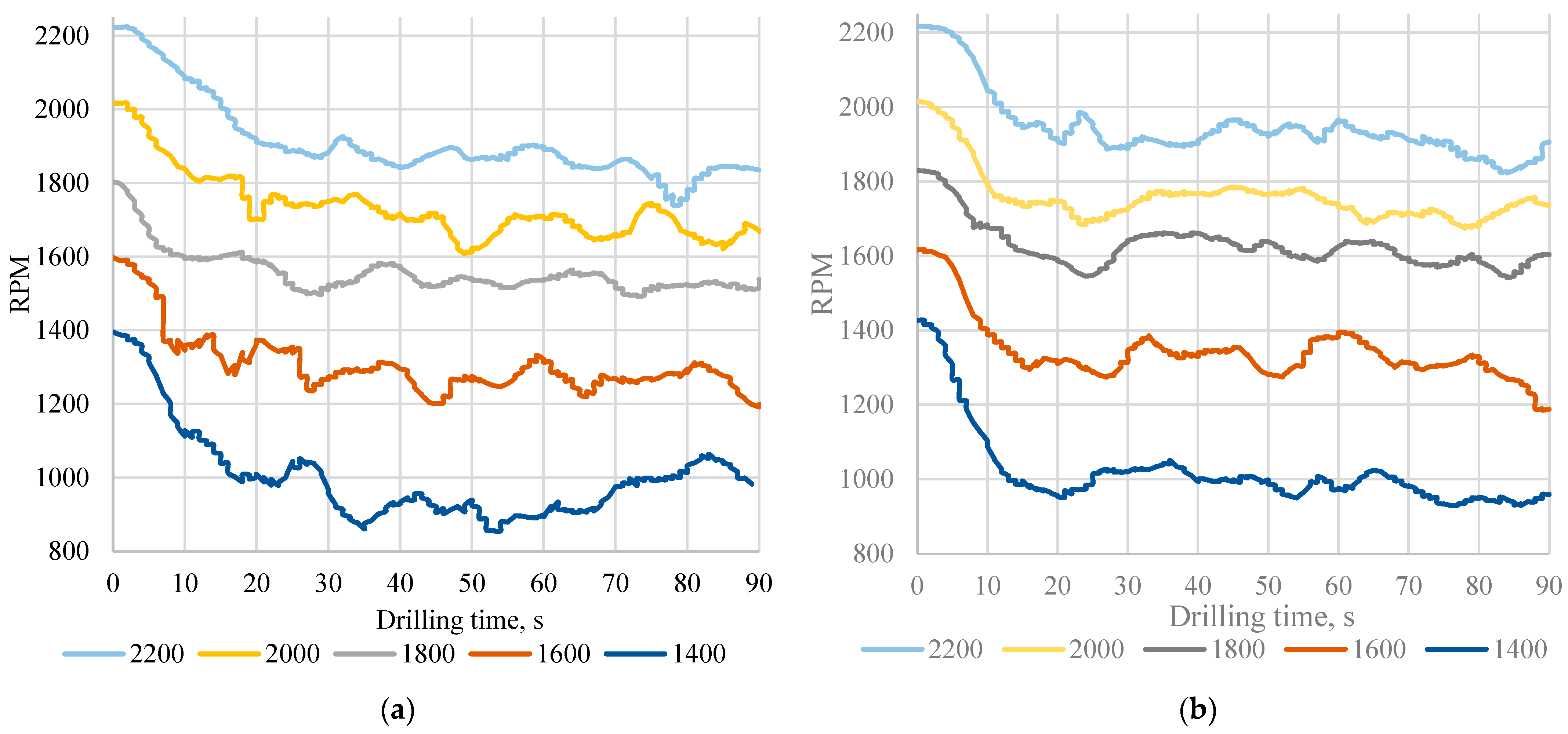
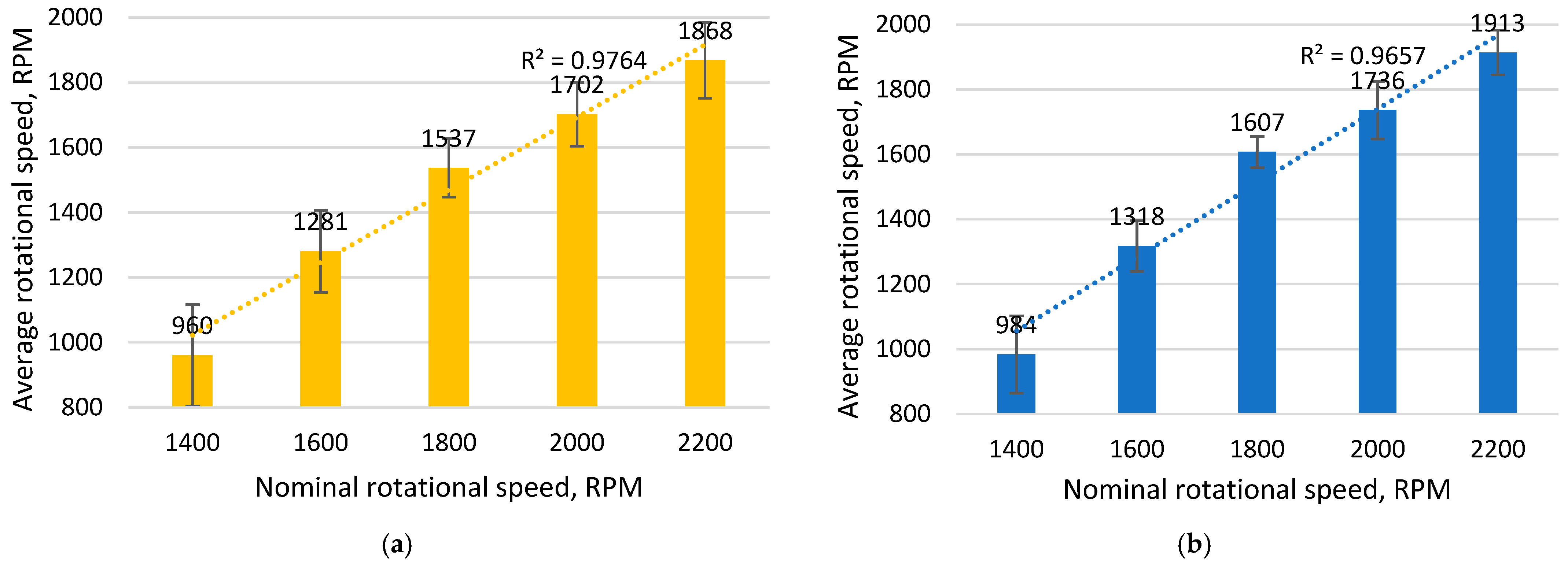
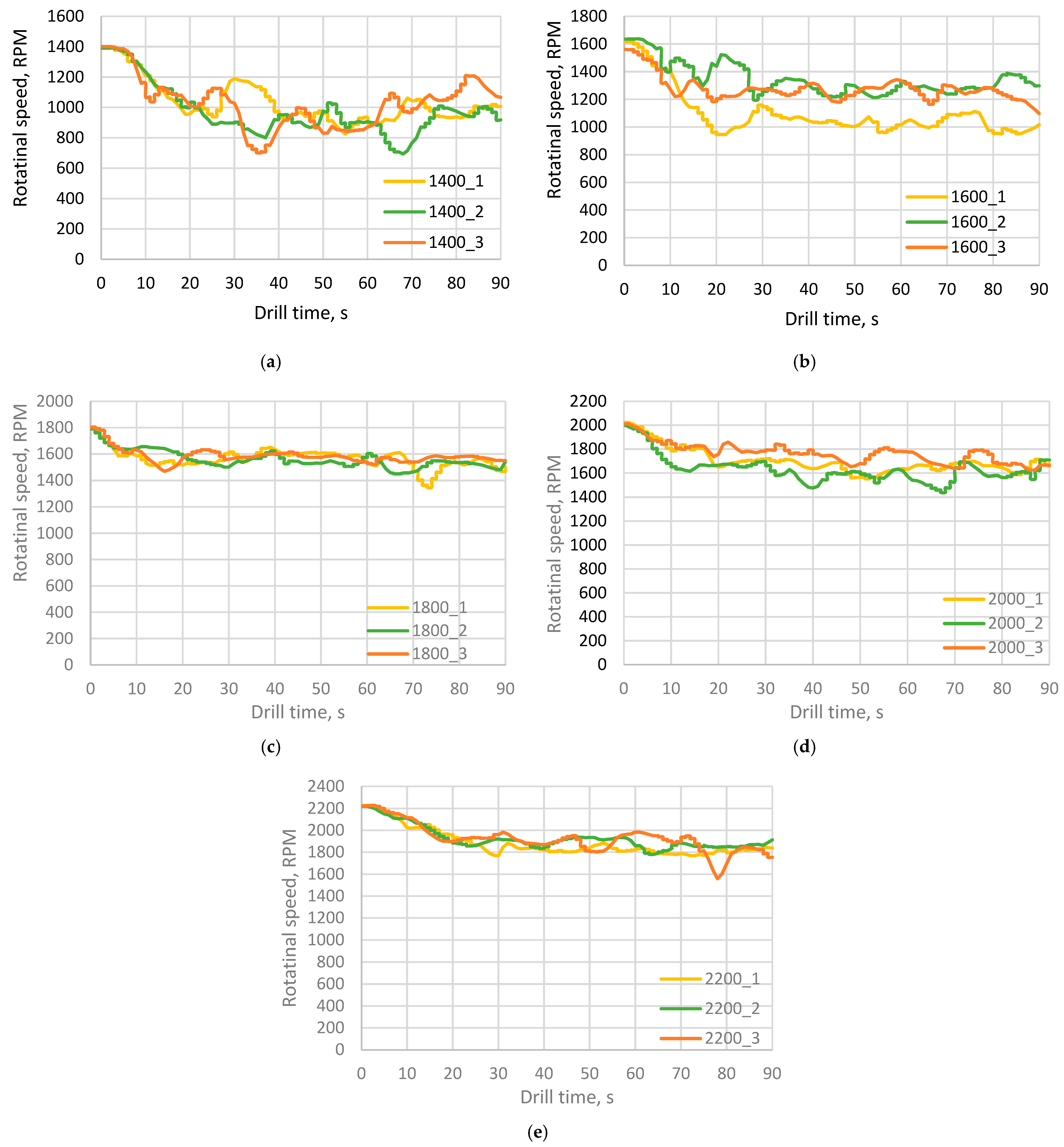
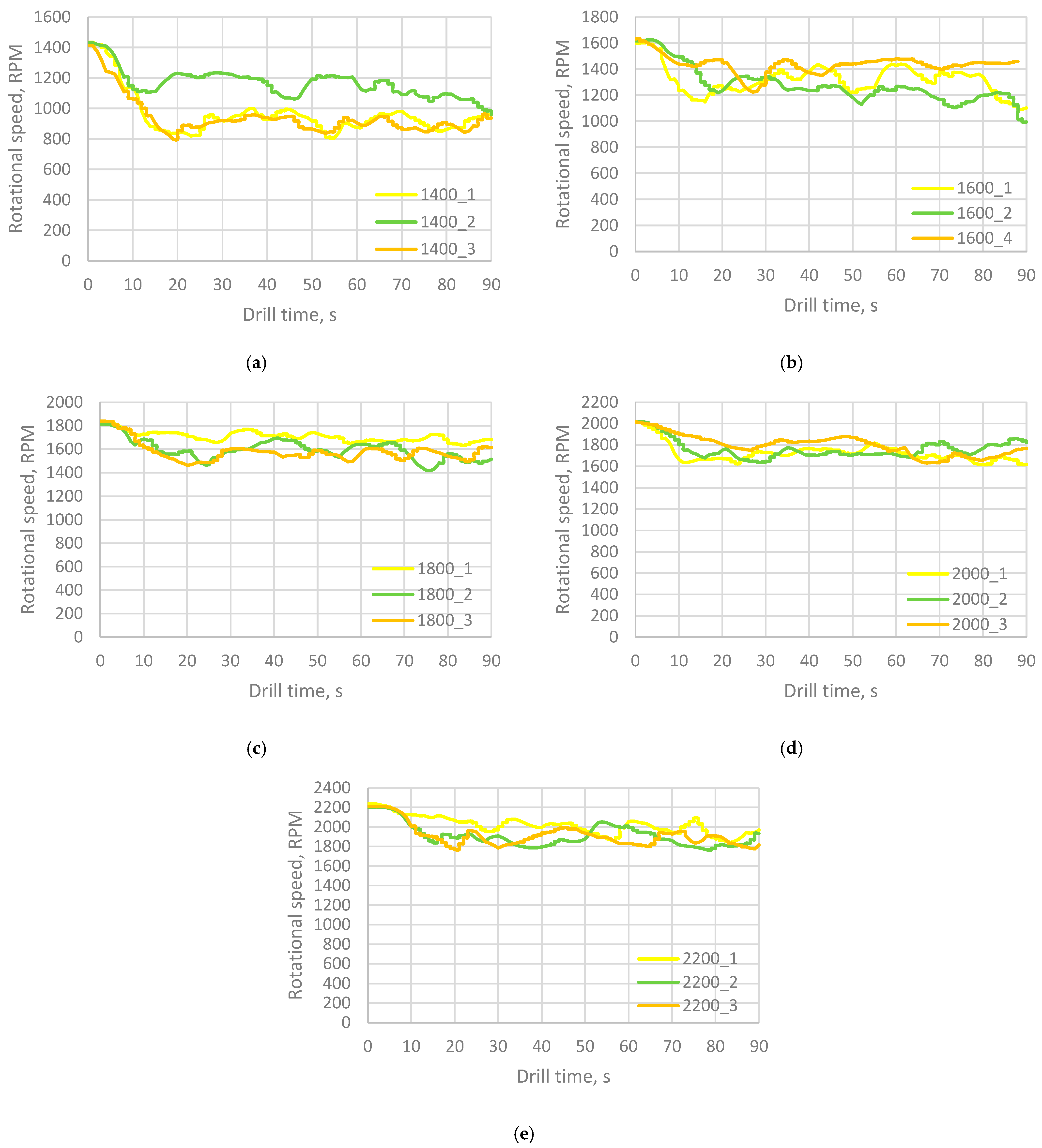
- The rotational speed response was found to be strongly influenced by the nominal drilling speed and material characteristics. All tests exhibited an initial RPM reduction upon engagement with the concrete surface, followed by a stabilized drilling regime. Across all nominal speeds, C50 concrete maintained consistently higher in-depth rotational speeds than C30, indicating more stable torque transfer and more efficient material removal in the stronger, denser material. Conversely, C30 exhibited greater RPM reduction, reflecting the increased frictional losses, vibration, and energy dissipation associated with micro-crushing and material heterogeneity.
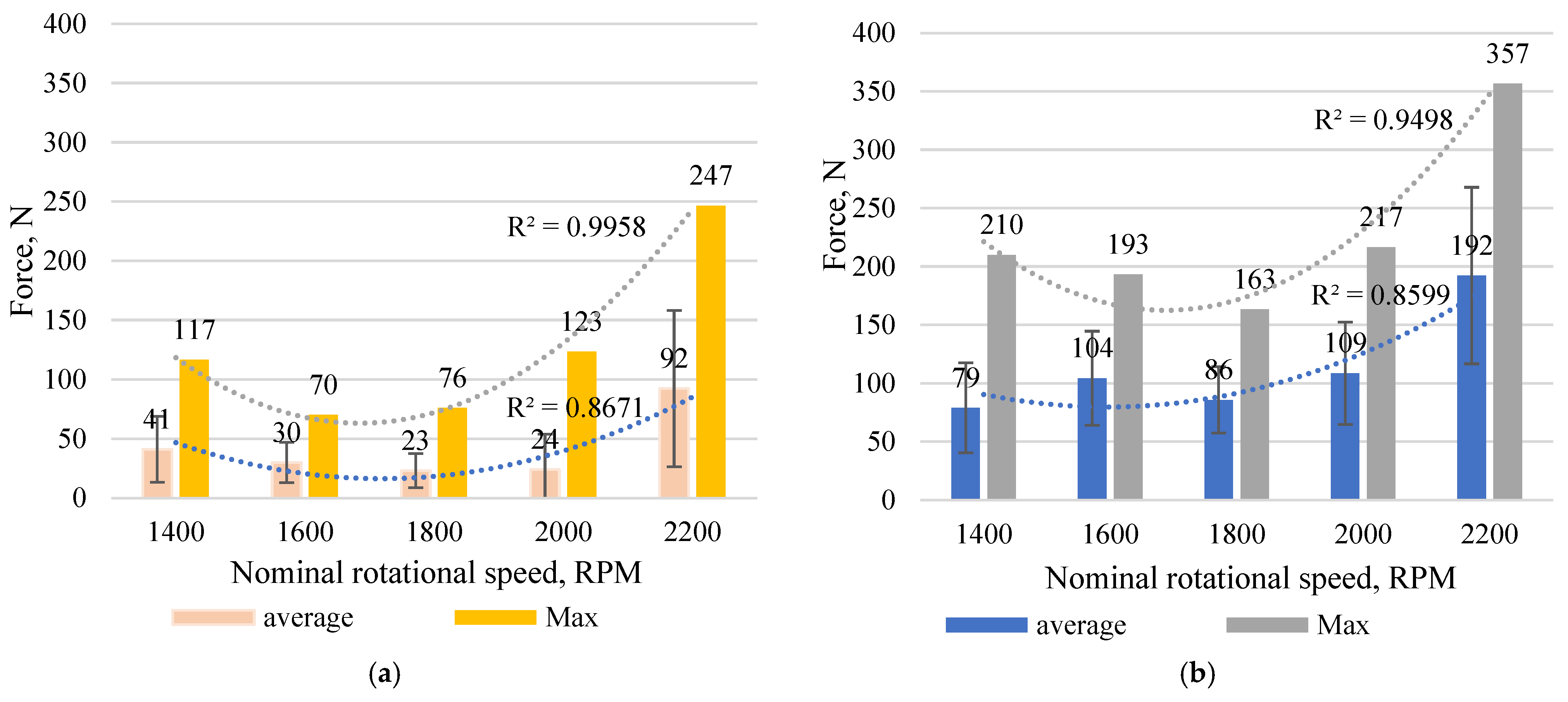
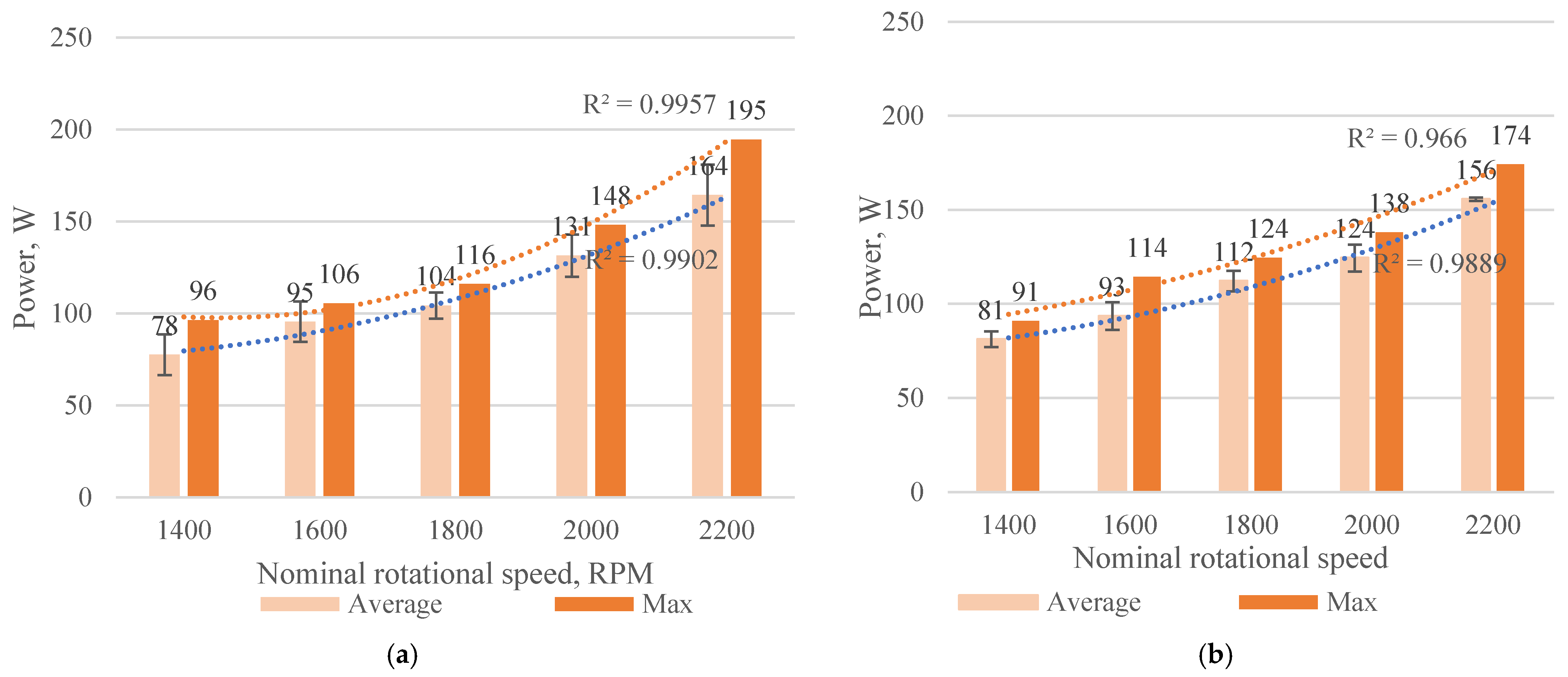
- Drilling force proved to be the most sensitive parameter for distinguishing between concrete strength classes. C50 systematically exhibited higher average and peak drilling forces than C30, reflecting its higher compressive strength, denser microstructure, and stronger aggregate–paste bonding. Power consumption complemented the force measurements by capturing the energetic efficiency: although the drilling forces in C30 were lower, the power demand remained comparable to C50 due to the stronger RPM reduction and higher torque instability. Both the average and maximum power displayed strong correlations with the nominal rotational speed (R2 > 0.91).
- In contrast to many previous DR studies that focus on a single response parameter or rely primarily on empirical strength correlations, this work provides a systematic and integrated evaluation of rotational speed, drilling force, and power consumption across multiple drilling speeds and concrete strength classes. A key novel finding is that weaker concretes may exhibit greater rotational speed reduction despite lower drilling forces, due to inefficient material removal and increased energy dissipation. This observation clarifies the mechanical origin of drilling-induced RPM reduction and extends the current DR interpretations beyond strength-based explanations alone.
- Future research should expand the experimental scope to include a wider range of concrete classes, drill bit diameters and geometries, moisture conditions, and automated drilling systems, enabling statistical hypothesis testing and the development of predictive models linking DR parameters to concrete compressive strength with improved reliability.
Author Contributions
Funding
Institutional Review Board Statement
Informed Consent Statement
Data Availability Statement
Acknowledgments
Conflicts of Interest
Abbreviations
| DR | Drilling Resistance |
| NDT | Non-Destructive Testing |
| ReH | Rebound Hammer |
| SDT | Semi-Destructive Testing |
| UPV | Ultrasonic Pulse Velocity |
Appendix A


References
- Lencis, U.; Ūdris, A.; Korjakins, A. Application of the ultrasonic and sclerometric measurement data for determining the compressive strength of the construction concrete. In Modern Building Materials, Structures and Techniques; Springer: Berlin/Heidelberg, Germany, 2010. [Google Scholar]
- Chandak, N.R.; Kumavat, H.R. SonReb Method for Evaluation of Compressive Strength of Concrete. IOP Conf. Ser. Mater. Sci. Eng. 2020, 810, 012071. [Google Scholar] [CrossRef]
- Demir, T.; Ulucan, M.; Alyamaç, K.E. Development of Combined Methods Using Non-Destructive Test Methods to Determine the In-Place Strength of High-Strength Concretes. Processes 2023, 11, 673. [Google Scholar] [CrossRef]
- Silva, A.; Nogueira, R.; Silva, A. Classification model of low-strength mortars from drilling data. Constr. Build. Mater. 2020, 246, 118484. [Google Scholar] [CrossRef]
- Nogueira, R.; Silva, A.; Silva, A. Prediction of strength and heterogeneity of low-strength mortars from drilling data. Constr. Build. Mater. 2021, 305, 124738. [Google Scholar] [CrossRef]
- Ren, X.; Miao, H.; Peng, Z. A review of cemented carbides for rock drilling: An old but still tough challenge in geo-engineering. Int. J. Refract. Met. Hard Mater. 2013, 39, 61–77. [Google Scholar] [CrossRef]
- Lencis, U.; Klaucans, R.; Udris, A.; Korjakins, A.; Zhou, X.; Bumanis, G. The Moisture Effect on Ultrasonic, Rebound Hardness and Drilling Resistance Data in Non-Destructive Testing of Concrete. Appl. Sci. 2025, 15, 11973. [Google Scholar] [CrossRef]
- Pamplona, M.; Kocher, M.; Snethlage, R.; Barros, L.A. Drilling resistance: Overview and outlook. Z. Dtsch. Ges. Geowiss. 2007, 158, 665–679. [Google Scholar] [CrossRef]
- Nogueira, R.; Pinto, A.P.F.; Gomes, A. Assessing mechanical behavior and heterogeneity of low-strength mortars by the drilling resistance method. Constr. Build. Mater. 2014, 68, 757–768. [Google Scholar] [CrossRef]
- Felicetti, R. The drilling resistance test for the assessment of fire damaged concrete. Cem. Concr. Compos. 2006, 28, 321–329. [Google Scholar] [CrossRef]
- Stavropoulou, M. Modeling of small-diameter rotary drilling tests on marbles. Int. J. Rock Mech. Min. Sci. Géoméch. Abstr. 2006, 43, 1034–1051. [Google Scholar] [CrossRef]
- Gunes, B.; Karatosun, S.; Gunes, O. Drilling resistance testing combined with SonReb methods for nondestructive estimation of concrete strength. Constr. Build. Mater. 2023, 362, 129700. [Google Scholar] [CrossRef]
- Karatosun, S.; Asan, M.; Gunes, O. Estimation of In-situ concrete strength using drilling resistance. MATEC Web Conf. 2019, 289, 06001. [Google Scholar] [CrossRef]
- Felicetti, R. Assessment of Deteriorated Concrete Cover by Combined While-Drilling Techniques. J. Infrastruct. Syst. 2012, 18, 25–33. [Google Scholar] [CrossRef]
- DRMS Cordless Device for the Drilling Resistance Measurement. Available online: www.sintechnology.com (accessed on 18 September 2025).
- Alyamac, K.E.; Olek, J. The Use of Drilling Tests to Assess the Strength of Building Materials: Review of Existing Methods and a Proposed New Technique. In Proceedings of the 2017 4th Conference on Smart Monitoring, Assessment and Rehabilitation of Civil Structures, Zurich, Switzerland, 13–15 September 2017. [Google Scholar]
- Giovanangeli, N.; Piyathilaka, L.; Kodagoda, S.; Thiyagarajan, K.; Barclay, S.; Vitanage, D. Design and development of drill-resistance sensor technology for accurately measuring microbiologically corroded concrete depths. In Proceedings of the 36th International Symposium on Automation and Robotics in Construction, ISARC, Banff, AB, Canada, 21–24 May 2019; International Association for Automation and Robotics in Construction I.A.A.R.C: Oulu, Finland, 2019; pp. 735–742. [Google Scholar] [CrossRef]
- Dumitrescu, T.F.; Pesce, G.L.A.; Ball, R.J. Optimization of drilling resistance measurement (DRM) user-controlled variables. Mater. Struct. 2017, 50, 243. [Google Scholar] [CrossRef]
- Theodoridou, M.; Török, Á. In situ investigation of stone heritage sites for conservation purposes: A case study of the Székesfehérvár Ruin Garden in Hungary. Prog. Earth Planet. Sci. 2019, 6, 15. [Google Scholar] [CrossRef]
- LABORATORY: CNR ISPC Stone, LAB Name of the Instrument: Drilling Resistance Measuring System (DRMS Cordless Sint Technology). Available online: https://www.e-rihs.it/en/drilling-resistance-measuring-system-drms-cordless-sint-technology/ (accessed on 25 September 2025).
- da Fonseca, B.S.; Pinto, A.F.; Rodrigues, A.; Piçarra, S.; Fonseca, D.; Montemor, M. On the estimation of marbles weathering by thermal action using drilling resistance. J. Build. Eng. 2021, 42, 102494. [Google Scholar] [CrossRef]
- Valentini, E.; Benincasa, A.; Tiano, P.; Fratini, F.; Rescic, S. On Site Drilling Resistance Profiles of Natural Stones. Available online: https://www.drms-cordless.com/wp-content/uploads/2018/10/604-On-Site-Drilling.pdf (accessed on 30 September 2025).
- Otero, J.; Charola, A.E.; Starinieri, V. Sticky rice–nanolime as a consolidation treatment for lime mortars. J. Mater. Sci. 2019, 54, 10217–10234. [Google Scholar] [CrossRef]
- Sharapov, E.; Wang, X.; Smirnova, E.; Wacker, J.P. Wear behavior of drill bits in wood drilling resistance measurements. Wood Fiber Sci. 2018, 50, 154–166. [Google Scholar] [CrossRef]
- Centre of Excellence in Measurement Technology. Available online: https://www.sintechnology.com/wp-content/uploads/2024/04/2024_05_ENG_SINT-Technology.pdf (accessed on 30 September 2025).
- Zhang, Q.; Zhang, Z.; Wang, F.; Yue, Z. Comprehensive consideration of user-control variables for drilling resistance measurement system and estimation of uniaxial compressive strength of sandstone and clay brick. Case Stud. Constr. Mater. 2024, 20, e03321. [Google Scholar] [CrossRef]
- Al-Naddaf, M.; Alhassan, Y.A. Micro-Drilling Resistance Measurement: A New Technique to Estimate the Porosity of a Building Stone. 2013. Available online: https://www.researchgate.net/publication/258226221 (accessed on 6 October 2025).
- Bilim, N.; Dündar, S.; Kekeç, B.; Dursun, A.E. Investigation of the Effect of Drill Bit Rotation Speed on Sustainable Drilling. Geo-Resources Environ. Eng. 2017, 2, 25–28. [Google Scholar] [CrossRef]
- Teale, R. The concept of specific energy in rock drilling. Int. J. Rock Mech. Min. Sci. Géoméch. Abstr. 1965, 2, 57–73. [Google Scholar] [CrossRef]
- He, M.; Li, N.; Zhang, Z.; Yao, X.; Chen, Y.; Zhu, C. An empirical method for determining the mechanical properties of jointed rock mass using drilling energy. Int. J. Rock Mech. Min. Sci. Géoméch. Abstr. 2019, 116, 64–74. [Google Scholar] [CrossRef]
- Schuller, M.P.; Schuller, M. Nondestructive Testing and Damage Assessment of Masonry Structures. Available online: www.ana-usa.com (accessed on 6 October 2025).
- Botti, L.; Martin, B.; Barr, A.; Kapellusch, J.; Mora, C.; Rempel, D. R2: Drilling into concrete: Effect of feed force on handle vibration and productivity. Int. J. Ind. Ergon. 2020, 80, 103049. [Google Scholar] [CrossRef]



| Parameter | Description | Ref |
|---|---|---|
| Rotational Speed (RPM) | 200–1500 RPM, influences cutting efficiency and heat generation. | [15,16,17,18] |
| Penetration Rate (mm/min or mm/s) | Axial feed rate; must remain constant for accurate resistance profiling (1–80 mm/min; 3–10 mm/min at 600 rpm for building stones). | [19,20,21,22,23] |
| Force/Depth Curve | Real-time graph; identifies voids, cracks, or heterogeneity (1–100 N). | [16] |
| Drilling Resistance (J/mm or s/cm) | Main output indicating material density/hardness. | [16] |
| Drilling Depth (mm) | Depth measurement provides consistent and interpretable data. | [15,16] |
| Nominal RPM | C30/C50 Difference (%) | RPM Drop (%) | Force Ratio | Cutting Eff. (RPM/N) | Power Eff. (W/N) | |||||
|---|---|---|---|---|---|---|---|---|---|---|
| RPM | Force | Power | C30 | C50 | C30 | C50 | C30 | C50 | ||
| 1400 | 2.5% | 93% | 4% | 31.4% | 29.7% | 1.9 | 23.4 | 12.5 | 1.9 | 1.0 |
| 1600 | 2.9% | 247% | –2% | 19.9% | 17.9% | 3.5 | 42.7 | 12.7 | 3.2 | 0.9 |
| 1800 | 4.6% | 274% | 8% | 14.6% | 10.8% | 3.7 | 66.8 | 18.7 | 4.5 | 1.3 |
| 2000 | 2.0% | 354% | –5% | 14.9% | 13.2% | 4.5 | 70.9 | 15.9 | 5.5 | 1.1 |
| 2200 | 2.4% | 109% | –5% | 15.1% | 13.1% | 2.1 | 20.3 | 10.0 | 1.8 | 0.8 |
| Study | Concrete Strength (MPa) | Drill Bit Ø (mm) | Control Mode | Nominal RPM | Feed Rate | DR Response Metric | Reported DR Response | Reference |
|---|---|---|---|---|---|---|---|---|
| Karatosun et al. | 4–39 | n/d | Constant | n/d | n/d | Time-based (s/cm) | 0.8–1.8 s/cm | [13] |
| Gunes et al. | 4–40 (Dmax 5–22 mm) | 8–12 | Constant force | 1100 | n/d | Time-based (s/cm) | 1.0–1.7 s/cm | [12] |
| Felicetti | 50–60 (Dmax 16 mm) | 6–14 | Constant force | 1040 | n/d | Energy-based (J/cm) | 1.0–1.5 J/cm | [10] |
| Lencis et al. | 37–53 (Dmax 11.2 mm) | 6 | Variable | 1800 | 20 mm/min | Speed-based (%) | 20.2–31.6% RPM drop | [7] |
| This work | 37–53 (Dmax 11.2 mm) | 5 | Variable | 1400–2200 | 20 mm/min | Speed-based (%) | 10.8–31.4% RPM drop |
Disclaimer/Publisher’s Note: The statements, opinions and data contained in all publications are solely those of the individual author(s) and contributor(s) and not of MDPI and/or the editor(s). MDPI and/or the editor(s) disclaim responsibility for any injury to people or property resulting from any ideas, methods, instructions or products referred to in the content. |
© 2026 by the authors. Licensee MDPI, Basel, Switzerland. This article is an open access article distributed under the terms and conditions of the Creative Commons Attribution (CC BY) license.
Share and Cite
Klaucans, R.; Vaidasevics, E.; Lencis, U.; Udris, A.; Korjakins, A.; Bumanis, G. The Effect of Drill Rotational Speed on Drilling Resistance in Non-Destructive Testing of Concrete. Appl. Sci. 2026, 16, 1157. https://doi.org/10.3390/app16031157
Klaucans R, Vaidasevics E, Lencis U, Udris A, Korjakins A, Bumanis G. The Effect of Drill Rotational Speed on Drilling Resistance in Non-Destructive Testing of Concrete. Applied Sciences. 2026; 16(3):1157. https://doi.org/10.3390/app16031157
Chicago/Turabian StyleKlaucans, Rauls, Eduards Vaidasevics, Uldis Lencis, Aigars Udris, Aleksandrs Korjakins, and Girts Bumanis. 2026. "The Effect of Drill Rotational Speed on Drilling Resistance in Non-Destructive Testing of Concrete" Applied Sciences 16, no. 3: 1157. https://doi.org/10.3390/app16031157
APA StyleKlaucans, R., Vaidasevics, E., Lencis, U., Udris, A., Korjakins, A., & Bumanis, G. (2026). The Effect of Drill Rotational Speed on Drilling Resistance in Non-Destructive Testing of Concrete. Applied Sciences, 16(3), 1157. https://doi.org/10.3390/app16031157