
Review

Diet, Metabolic Dysregulation and Asthma Control in Children: Integrating the Gut–Lung Axis into Clinical Practice


by
Dafni Moriki
1,
Michalis Kalogiannis
1,
Maria Tsouprou
1,2,
Vasilis Grammeniatis
3,
Barbara Boutopoulou
4,
Konstantinos Douros
1,* and
Despoina Koumpagioti
5
1
Pediatric Allergy and Respiratory Unit, 3rd Department of Pediatrics, School of Medicine, National and Kapodistrian University of Athens, “Attikon” University Hospital, 12462 Athens, Greece
2
2nd Pediatric Department, “P. & A. Kyriakou” Children’s Hospital, 11527 Athens, Greece
3
Pediatric Department, General Hospital of Ioannina G. Hatzikosta, 45445 Ioannina, Greece
4
Clinical Trial Department, “Andreas Syggros” Hospital of Cutaneous and Venereal Diseases, 16121 Athens, Greece
5
Department of Nursing, University of West Attica, 12243 Athens, Greece
*
Author to whom correspondence should be addressed.
Appl. Sci. 2026, 16(20), 9972; https://doi.org/10.3390/app16209972 (registering DOI)
Submission received: 12 September 2026 / Revised: 2 October 2026 / Accepted: 7 October 2026 / Published: 9 October 2026
(This article belongs to the Special Issue Nutrition and Metabolism: Latest Advances and Prospects)

Abstract

Pediatric asthma is a heterogeneous disease characterized by complex interactions among airway inflammation, nutritional status, metabolic health, environmental exposures, and immune regulation. This narrative review summarizes current evidence linking dietary patterns, adiposity, metabolic dysfunction, systemic inflammation, and microbiome-related mechanisms with pediatric asthma outcomes while distinguishing evidence on asthma development from that concerning control of the established disease. Healthier dietary patterns have generally been associated with lower asthma or wheezing prevalence, but pediatric dietary intervention trials in established asthma remain few and have produced heterogeneous results across asthma control, exacerbations, lung function, inflammatory markers, and medication use. Obesity and metabolic dysfunction are more directly associated with morbidity and treatment response in children with established asthma. The gut–lung axis provides a biologically plausible framework connecting diet, microbial metabolites, epithelial barrier function, and immune regulation. However, early-life microbiome findings primarily inform asthma susceptibility and immune development rather than disease control. Therefore, current care should remain focused on guideline-based asthma management, complemented by an appropriate assessment of diet, obesity, physical activity, and metabolic health. Further pediatric intervention studies are needed to determine whether targeted nutritional, metabolic, or microbiome-based strategies can reproducibly improve asthma control.

1. Introduction

Asthma is one of the most common chronic diseases of childhood and is associated with substantial morbidity, healthcare utilization, school absenteeism, and impaired quality of life [1]. It is a heterogeneous disease characterized by variable respiratory symptoms, airflow limitation, airway hyperresponsiveness, and diverse inflammatory and clinical phenotypes [2]. Despite major advances in inhaled corticosteroid therapy and the introduction of phenotype-directed treatments, inadequate asthma control and recurrent exacerbations remain important challenges in pediatric asthma [2]. International epidemiological studies have demonstrated marked geographical variation in the prevalence and severity of childhood asthma symptoms [3], supporting an important contribution of environmental and lifestyle factors to disease expression. Consequently, attention has increasingly focused on potentially modifiable determinants of asthma control that extend beyond conventional airway-focused mechanisms.
Diet is one such potentially modifiable factor. Many contemporary childhood dietary patterns are characterized by high intakes of energy-dense and ultra-processed foods, refined carbohydrates, saturated fats, and added sugars, together with a relatively low consumption of fruits, vegetables, whole grains, legumes, and dietary fiber [4]. Epidemiological studies have linked dietary exposures and overall diet quality to asthma and allergic outcomes [5]. The proposed mechanisms are multifactorial. Among those under consideration are oxidative and inflammatory pathways [6,7], along with metabolic and microbiome-related mechanisms. The Mediterranean diet is one of several healthy dietary patterns investigated in children and has been associated with a lower prevalence of asthma, wheezing, or allergic outcomes in some observational studies and systematic reviews [8,9,10,11]. However, findings remain heterogeneous and do not establish causality.
The relationship between asthma and obesity further demonstrates the importance of systemic factors in respiratory disease. Childhood obesity is associated with an increased risk of asthma, and among children with established disease, may be associated with greater symptom burden, altered respiratory mechanics, and reduced response to inhaled corticosteroids [12,13,14,15]. However, body mass index (BMI) alone may not adequately characterize the biological processes involved. Insulin resistance, altered lipid metabolism, adipokine imbalance, and low-grade systemic inflammation may contribute to asthma morbidity independently of, or in interaction with, excess adiposity [16,17]. In particular, higher circulating interleukin-6 (IL-6) concentrations have been associated with metabolic dysfunction and greater asthma morbidity, supporting the concept of a metabolically dysregulated asthma phenotype [18,19].
An important mechanistic framework linking diet, metabolism, and respiratory immunity is the gut–lung axis. This concept describes bidirectional communication between the gastrointestinal and respiratory systems through microbial communities, microbial metabolites, epithelial barrier function, immune cell trafficking, and circulating inflammatory mediators [20]. Experimental studies have shown that the microbial fermentation of dietary fiber produces short-chain fatty acids (SCFAs), including acetate, propionate, and butyrate, which can modulate immune and hematopoietic pathways relevant to allergic airway inflammation [21]. Human cohort studies have further shown that early-life alterations in gut microbial composition and metabolic function are associated with subsequent asthma risk. In particular, a reduced abundance of specific bacterial taxa and alterations in microbial metabolites during early infancy have been associated with childhood asthma [22]. Similarly, impaired maturation of the gut microbiota has been linked to subsequent asthma development [23], while enhanced microbiota maturation and the production of potentially protective metabolites may partly contribute to the lower asthma risk observed in traditional farming environments [24]. Higher concentrations of fecal butyrate and propionate during early life have also been associated with a reduced risk of atopy and asthma, further supporting a metabolite-mediated link between the gut microbiota and immune development [25].
Despite the rapidly growing body of evidence, significant uncertainties remain. Much of the literature examining diet, metabolic dysfunction, and the microbiome is observational, and differences in age, geography, dietary assessment, asthma phenotyping, microbiome methodology, and treatment exposure complicate interpretation. Therefore, this narrative review examines the interrelated roles of diet quality, obesity, metabolic dysfunction, and the gut–lung axis in pediatric asthma, with particular emphasis on asthma control and clinical implementation. We propose that integrating nutritional and metabolic assessment into pediatric asthma care may improve phenotyping and risk stratification, while interventions targeting diet and the microbiome require rigorous clinical evaluation before routine implementation.

2. Materials and Methods

This narrative review was based on a literature search conducted in PubMed/MEDLINE and Scopus from database inception to 31 August 2026. The search focused on studies addressing the relationships among pediatric asthma, asthma control, diet and dietary patterns, obesity, metabolic dysfunction, systemic inflammation, the gut microbiota, and the gut–lung axis. Search terms included combinations of “childhood asthma”, “pediatric asthma”, “asthma control”, “diet”, “dietary patterns”, “Mediterranean diet”, “ultra-processed foods”, “obesity”, “insulin resistance”, “metabolic dysfunction”, “systemic inflammation”, “gut microbiota”, “microbiome”, “gut–lung axis”, and “short-chain fatty acids”. Reference lists of relevant reviews and key original articles were also examined to identify additional pertinent studies. Following completion of the main search, a targeted update of the literature was performed before manuscript submission to identify newly published studies of direct relevance to the topics covered in this review.
Search results were screened for relevance to the predefined thematic domains, and potentially relevant articles were assessed in greater detail. Studies were selected when they directly informed one or more of the review topics, including pediatric asthma outcomes, dietary exposures or interventions, obesity and metabolic dysfunction, systemic inflammation, the gut microbiome, or gut–lung interactions. Priority was given to pediatric clinical studies, systematic reviews and meta-analyses, international guidelines, longitudinal cohorts, and intervention studies. Adult studies were considered when pediatric evidence was limited and when they provided important mechanistic or conceptual information. Experimental studies were included when they contributed important mechanistic or biological context. Because this was a narrative review, study selection was guided by relevance to the review questions and contribution to the interpretation of the available evidence rather than by a formal systematic-review eligibility framework.
Given the narrative nature of the review, no formal systematic-review protocol, risk-of-bias assessment, or meta-analysis was performed. Evidence was instead appraised narratively according to study design, pediatric applicability, sample size, consistency across studies, temporality, directness to asthma control, and major sources of confounding or methodological heterogeneity. Greater interpretive weight was given to evidence that was more directly applicable to children and to clinically relevant asthma outcomes, particularly systematic reviews and meta-analyses, longitudinal cohorts, and intervention studies. Cross-sectional studies were interpreted primarily as evidence of association, whereas mechanistic and experimental studies were used principally to support biological plausibility.
Generative artificial intelligence (ChatGPT-5.5, OpenAI) was used only to support language and grammar editing and to assist with the preparation of the manuscript figures. It was not used for study selection, data extraction, evidence appraisal, data analysis, or the development of scientific conclusions.

3. Asthma Control in Children: Clinical Relevance and Unmet Needs

The goals of pediatric asthma management are to achieve and maintain good symptom control, preserve normal activity and lung function, and minimize the risk of exacerbations, treatment-related adverse effects, and the long-term impairment of respiratory health [2]. Contemporary asthma management distinguishes current symptom control from future risk, as these domains do not necessarily coincide. A child with few daily symptoms may still be at increased risk of severe exacerbations because of previous attacks, impaired lung function, poor adherence to controller therapy, incorrect inhaler technique, environmental exposures, or relevant comorbidities [2]. Assessment should therefore extend beyond daytime symptoms to include nocturnal symptoms, activity limitation, reliever use, exacerbation history, lung function where feasible, adherence, inhaler technique, environmental exposures, and comorbidities.
Asthma control in children is multidimensional and may be difficult to characterize on clinical impression alone. Age-appropriate validated instruments, including the Childhood Asthma Control Test (C-ACT) for children aged 4–11 years and the Asthma Control Test (ACT) for older children and adolescents, provide standardized measures of symptom control and functional impact and can complement clinical assessment [26,27,28]. However, questionnaire scores should not be interpreted in isolation, because perceived symptom burden may not fully reflect airflow limitation, airway inflammation, or future exacerbation risk [2]. Assessment in younger children is further complicated by developmental limitations in symptom reporting and by the difficulty of obtaining reliable objective measurements of pulmonary function. Repeated longitudinal assessment integrating child- and caregiver-reported outcomes with clinical history and objective measures therefore remains important [2,26].
Poor asthma control should not automatically be interpreted as evidence of severe asthma. Before intensifying treatment, potentially modifiable contributing factors should be identified and systematically addressed, including suboptimal adherence to inhaled corticosteroid-containing therapy, incorrect inhalation technique, inappropriate device selection, persistent environmental exposures, and untreated comorbidities [2,29,30]. Psychosocial and socioeconomic factors may also negatively impact disease management through limited access to medication or specialized care, treatment costs, fragmented follow-up, family stress, and difficulties in implementing treatment plans at home or in the school environment [31]. This evaluation is essential for distinguishing difficult-to-treat asthma, in which poor control may reflect modifiable factors or comorbidities, from severe asthma, which remains uncontrolled despite optimized therapy and the appropriate management of contributory factors [29,30].
A further challenge is the identification of clinically relevant factors not fully captured by symptom-based assessment. Children with similar symptom profiles and comparable treatment may differ substantially in exacerbation risk, inflammatory phenotype, treatment response, and long-term trajectory. Therefore, asthma is increasingly recognized as a heterogeneous disease comprising multiple clinical and biological phenotypes [2,30]. Although biomarker-guided approaches and biologic therapies have expanded treatment options for selected children with severe type 2 (T2) inflammatory asthma [32,33], persistent symptoms in some patients may also reflect systemic or extrapulmonary influences.
Obesity and associated metabolic abnormalities are among the most relevant of these influences. Excess adiposity may affect asthma through both respiratory mechanics and systemic metabolic and inflammatory pathways, while exertional dyspnea, physical deconditioning, and dysfunctional breathing may complicate the interpretation of symptoms [14,15]. In at least a subset of children, obesity-related asthma may therefore represent a distinct clinical and biological phenotype rather than simply greater symptom perception or mechanical limitation [14,15]. These observations support a broader assessment of asthma control that considers body composition, physical activity, and metabolic health alongside conventional respiratory evaluation.
This broader perspective is particularly relevant as nutritional and metabolic factors are not routinely incorporated into standard asthma assessment, despite evidence that diet quality, excess adiposity, insulin resistance, and low-grade systemic inflammation may influence respiratory outcomes [14,15,18,34]. These factors may also interact with intestinal microbial function and thereby contribute to systemic immune pathways relevant to asthma [20,21,35]. Together, these observations provide the rationale for examining diet quality, metabolic dysregulation, and the gut–lung axis as interconnected contributors to pediatric asthma control.

4. Diet Quality and Pediatric Asthma Outcomes

Diet may influence pediatric asthma through several overlapping pathways, including oxidative stress, systemic and airway inflammation, lipid mediator signaling, metabolic regulation, and modulation of the intestinal microbiota [6,21,34]. However, dietary exposures rarely occur in isolation. Individual nutrients are consumed within complex food matrices and broader dietary patterns, while diet quality is closely related to adiposity, physical activity, socioeconomic conditions, and other environmental determinants of asthma morbidity. Consequently, current evidence may be more informative when diet is considered in terms of overall dietary patterns and food quality rather than the isolated effects of individual nutrients [5,34].
Observational studies have generally associated healthier dietary patterns, including diets rich in fruits, vegetables, whole grains, legumes, nuts, and fish, as well as greater adherence to anti-inflammatory dietary patterns, with more favorable respiratory and atopic outcomes in children and adolescents [8,9,10,36]. Conversely, frequent consumption of fast food and other energy-dense, nutrient-poor foods has been associated with a higher prevalence or greater severity of asthma symptoms [37,38]. However, the strength and consistency of these associations vary across populations, and most available studies do not permit causal inference. Differences in dietary assessment methods, definitions of asthma and asthma control, age distributions, cultural dietary patterns, and adjustment for obesity and socioeconomic factors further complicate interpretation. These limitations are particularly relevant in pediatric studies, in which dietary habits change with age and exposure assessment often relies partly on parental reporting.

4.1. Healthy Dietary Patterns Including the Mediterranean Diet

Among several healthy dietary patterns, researchers have frequently studied the Mediterranean diet in relation to pediatric asthma, as it combines multiple food groups and nutrients with potentially complementary biological effects. It is typically characterized by the frequent consumption of vegetables, fruits, legumes, whole grains, nuts, and olive oil; moderate consumption of fish and other sources of unsaturated fatty acids; and relatively limited consumption of highly processed foods and foods rich in saturated fats and added sugars. Several pediatric observational studies and systematic reviews have reported inverse associations between greater adherence to Mediterranean-type dietary patterns and asthma or wheezing outcomes, although the findings are heterogeneous [8,9,10,11].
The potential biological effects of this dietary pattern are likely to reflect the combined activity of multiple constituents rather than a single protective nutrient. Fruits, vegetables, nuts, legumes, and extra-virgin olive oil provide antioxidant micronutrients and polyphenols, including vitamins C and E, β-carotene, lycopene, lutein, hydroxytyrosol, oleuropein, oleocanthal, quercetin, and catechins [5,7,34,39,40]. These compounds may help maintain redox balance by scavenging reactive oxygen species (ROS) and supporting endogenous antioxidant defenses, including nuclear factor erythroid 2-related factor 2 (Nrf2)-regulated pathways, glutathione metabolism, and antioxidant-enzyme systems [6,7,39,40]. Polyphenols may also modulate redox-sensitive inflammatory signaling, including nuclear factor kappa B (NF-κB) and activator protein-1 (AP-1), thereby influencing the expression of pro-inflammatory mediators relevant to airway inflammation [6,7,39,40]. These mechanisms are biologically relevant to asthma because excessive oxidative stress can contribute to airway epithelial injury and the amplification of inflammatory responses. However, this evidence is predominantly mechanistic and does not demonstrate that supplementation with individual antioxidants or polyphenols improves asthma control in children.
Other components of the Mediterranean diet may contribute through complementary pathways. Olive oil, nuts, and fish provide unsaturated fatty acids that can influence inflammatory mediator synthesis, whereas legumes and whole grains provide fermentable substrates for intestinal microbial metabolism [21,41]. Therefore, any potential benefit is more likely to reflect the combined effects of nutrient density, fatty-acid composition, dietary fiber, food structure, and the replacement of less favorable foods than the action of any single constituent.
Pediatric epidemiological studies nevertheless illustrate the complexity of these relationships. In the International Study of Asthma and Allergies in Childhood (ISAAC) Phase Two, associations between individual dietary factors, asthma, and allergic sensitization varied across food groups and populations [9]. Systematic reviews have also reported possible inverse associations between adherence to the Mediterranean diet and pediatric asthma or allergic outcomes, while emphasizing the significant heterogeneity and predominance of observational data [10]. It is important to note that most of these studies assessed the prevalence of asthma or wheezing rather than longitudinal measurements of symptom control, exacerbations, corticosteroid use, or lung function [10,11,34]. Consequently, these associations provide information primarily regarding the prevalence of or susceptibility to asthma and should not be interpreted as evidence of therapeutic benefit in children with diagnosed asthma.

4.2. Western Dietary Patterns, Fast Food and Ultra-Processed Foods

Westernized dietary patterns are generally characterized by the frequent consumption of refined grains, added sugars, saturated fats, processed meats, and convenience foods, with a relatively low intake of fruits, vegetables, legumes, whole grains, and dietary fiber. Such patterns may affect respiratory health through oxidative and inflammatory signaling, altered fatty-acid metabolism, metabolic dysfunction, and gut microbial pathways [14,21,34,38]. These mechanisms may be particularly important in the context of obesity-associated asthma, as discussed in Section 5.
Large international studies have reported associations between frequent fast-food consumption and greater asthma symptom burden. In the ISAAC Phase Three analysis, frequent fast-food consumption was associated with severe symptoms of asthma, rhinoconjunctivitis, and eczema in children and adolescents, whereas fruit consumption showed inverse associations with some outcomes [37]. However, the cross-sectional design does not establish causality, and dietary behavior may also reflect broader lifestyle and socioeconomic exposures.
Ultra-processed foods represent a related but distinct dietary construct and comprise heterogeneous industrial formulations rather than a biologically uniform exposure. A 2024 umbrella review of epidemiological meta-analyses reported associations between greater ultra-processed-food exposure and several adverse health outcomes. However, asthma-specific evidence was limited and of very low certainty, while evidence for wheezing was of low quality [42]. A high consumption of ultra-processed foods commonly occurs within an overall poor-quality dietary pattern, making it difficult to separate the effects of processing from those of overall nutrient composition and associated lifestyle factors. Direct pediatric intervention evidence remains limited, and foods should therefore be interpreted according to both their nutritional composition and their contribution to the overall dietary pattern.

4.3. Fruits, Vegetables, Antioxidants and Fatty Acids

Fruits and vegetables provide a complex mixture of antioxidant vitamins, carotenoids, flavonoids, polyphenols, minerals, dietary fiber, and other bioactive compounds that may influence respiratory health through multiple pathways. Importantly, the evidence concerning antioxidant-rich whole foods should be distinguished from that concerning isolated antioxidant supplementation. Observational studies of fruit- and vegetable-rich dietary patterns assess the combined effects of multiple nutrients and bioactive compounds within the food matrix, together with dietary substitution and fiber-related metabolic effects. In contrast, randomized trials of isolated antioxidant supplements have generally not demonstrated consistent improvements in asthma outcomes, and current evidence does not support routine supplementation with individual antioxidant vitamins specifically for asthma control [43,44]. Accordingly, associations observed with fruit- and vegetable-rich dietary patterns should not be interpreted as evidence that supplementation with individual antioxidants will reproduce the same effects [5,34].
Dietary fat quality may also be relevant. Fish-rich dietary patterns provide the long-chain omega-3 fatty acids eicosapentaenoic acid (EPA) and docosahexaenoic acid (DHA), which can modulate inflammatory signaling through several complementary mechanisms. EPA and DHA are incorporated into cell-membrane phospholipids, where they can partially displace arachidonic acid and alter the substrate available for cyclooxygenase- and lipoxygenase-dependent mediator synthesis. This can modify the balance of arachidonic-acid-derived prostaglandins and leukotrienes and reduce the production of selected pro-inflammatory cytokines and chemokines. EPA also gives rise to eicosanoids that are generally less biologically potent than their arachidonic-acid-derived counterparts [41,45].
EPA and DHA also serve as precursors for specialized pro-resolving mediators. EPA is converted to E-series resolvins, whereas DHA gives rise to D-series resolvins, protectins, and maresins. These mediators do not simply suppress inflammation. They actively promote its resolution by limiting further neutrophil recruitment, reducing inflammatory cytokine and chemokine production, enhancing macrophage clearance of apoptotic cells, and facilitating the restoration of tissue homeostasis [46,47]. In airway models, these pathways have also been linked to the modulation of eosinophilic and T2 inflammatory responses [48,49].
At the intracellular level, EPA and DHA can additionally influence inflammatory gene expression through inhibition of NF-κB signaling and activation of anti-inflammatory pathways such as peroxisome proliferator-activated receptor gamma (PPAR-γ), further contributing to reduced inflammatory mediator production [41,45].
However, pediatric evidence remains heterogeneous, and differences in baseline nutritional status, dose, duration of exposure, background diet, and asthma phenotype may contribute to inconsistent findings [34,41]. Therefore, these mechanistic effects provide biological plausibility but should not be interpreted as evidence that EPA or DHA supplementation consistently improves asthma control in children.

4.4. Pediatric Dietary Intervention Studies

Although most evidence linking diet with pediatric asthma is observational, a small number of randomized dietary intervention trials have directly evaluated outcomes in children with established disease. Papamichael et al. conducted a 6-month randomized controlled trial in children aged 5–12 years with mild asthma, comparing a Mediterranean dietary pattern supplemented with two weekly servings of fatty fish with the usual diet. Among the 64 children who completed the study, the intervention was associated with a reduction in fractional exhaled nitric oxide (FeNO) after adjustment for age, sex, BMI, and physical activity, suggesting a possible anti-inflammatory effect. However, no significant improvements were observed in spirometry, asthma–control scores, or quality of life [50].
Berthon et al. randomized 67 children aged 3–11 years with asthma and a history of exacerbations to either a high fruit-and-vegetable diet or their usual diet for 6 months. Although the intervention increased fruit and vegetable intake and circulating carotenoid concentrations, it did not significantly prolong the time to first exacerbation or reduce the exacerbation rate. Per-protocol analyses suggested some improvements in airway reactance and changes in fecal microbiota, but no clear between-group differences were demonstrated in systemic inflammatory markers [51].
More recently, Songnuy et al. evaluated an 8-week antioxidant-rich dietary intervention based on tomato and mixed fruit juices in children aged 4–15 years with mild-to-moderate persistent asthma receiving usual care. The intervention was associated with improvements in ACT and pediatric asthma quality-of-life scores, but did not significantly affect inhaled corticosteroid use or pulmonary function [52]. The relatively small sample size, short intervention period, and retrospective trial registration limit the strength and generalizability of these findings.
Taken together, these trials indicate that pediatric dietary intervention evidence is available but remains sparse and heterogeneous with respect to intervention type, duration, study population, and outcome selection. Findings are also inconsistent across clinically relevant endpoints: improvements in selected inflammatory markers, symptom-control scores, or quality of life have not been consistently accompanied by reductions in exacerbations, improvements in lung function, or lower medication requirements. Accordingly, no specific dietary intervention can currently be considered an established asthma-directed therapy in children.

4.5. Dietary Fiber as a Link Between Diet Quality and the Gut–Lung Axis

Dietary fiber provides an important conceptual link between diet quality and the gut–lung axis. Fiber-rich foods, including fruits, vegetables, legumes, and whole grains, provide substrates for intestinal microbial fermentation. Major fermentable substrates include inulin-type fructans and fructo-oligosaccharides, resistant starch, pectins, β-glucans, and arabinoxylans, although their fermentability and metabolic products differ according to fiber structure and host microbiota composition [53]. Microbial fermentation generates SCFAs, particularly acetate, propionate, and butyrate, which may influence epithelial barrier function, hematopoiesis, and immune regulation locally and at distant sites [20,21].
The production of SCFAs reflects the activity of microbial communities rather than a strict “one metabolite–one species” relationship, while cross-feeding between bacterial groups plays a significant role. Acetate is produced by a broad range of intestinal bacteria, including Bifidobacterium and Bacteroides species, whereas members of Bacteroides and Prevotella are important contributors to propionate production, particularly through the succinate pathway. Butyrate production is associated mainly with anaerobic Firmicutes, including Faecalibacterium prausnitzii, Roseburia spp., Eubacterium rectale, and related taxa. Cross-feeding allows metabolites such as acetate and lactate generated by one bacterial group to be used by other organisms for butyrate production [54,55].
SCFAs can influence intestinal barrier integrity through both metabolic and signaling mechanisms. Butyrate is a major energy source for colonocytes and supports epithelial homeostasis, while acetate, propionate, and butyrate can enhance tight-junction integrity and mucosal barrier function. Their effects are mediated partly through G-protein-coupled receptors (GPCRs), including GPR41/free fatty acid receptor 3 (FFAR3), GPR43/FFAR2, and GPR109A, and through the inhibition of histone deacetylases, particularly by butyrate and propionate [56,57]. These pathways can influence epithelial differentiation, mucin and antimicrobial-peptide production, and the expression of proteins involved in tight-junction integrity.
SCFAs also regulate innate and adaptive immune responses. Through GPCR signaling and epigenetic effects, they can modulate dendritic-cell and macrophage function, reduce the production of selected pro-inflammatory mediators, and promote regulatory T-cell differentiation and IL-10-associated immune tolerance. Butyrate has particularly prominent effects on regulatory T cells and intestinal epithelial homeostasis, whereas propionate has systemic immunomodulatory actions that include effects on hematopoiesis. These effects are context-dependent and vary according to SCFA concentration, cell type, and inflammatory environment [56,57].
Experimental studies provide mechanistic support for this pathway. Trompette et al. demonstrated that microbial metabolism of dietary fiber altered circulating SCFA concentrations and influenced immune and hematopoietic responses relevant to allergic airway inflammation [21]. In their experimental model, propionate altered bone-marrow hematopoiesis by enhancing the generation of macrophage and dendritic-cell precursors. The resulting lung dendritic cells exhibited high phagocytic capacity but a reduced ability to promote T-helper type 2 (Th2) effector responses, thereby attenuating allergic airway inflammation. The protective effect of propionate was dependent on GPR41/FFAR3, providing a mechanistic link between microbial fiber fermentation, systemic SCFA signaling, hematopoiesis, and pulmonary allergic inflammation.
Human cohort studies provide complementary epidemiological evidence, with higher fecal concentrations of butyrate and propionate during early life associated with a lower subsequent risk of atopy and asthma [25]. Together with the experimental findings, these observations support a biologically plausible link between dietary fiber, microbial metabolism, and respiratory immune development. However, these data relate primarily to biological mechanisms and early-life susceptibility rather than the treatment of established asthma. Furthermore, mechanistic studies do not establish a therapeutic dose for dietary fiber. Different types of fiber vary in terms of microbial fermentability, and individual responses may depend on baseline microbiome composition and metabolic function [22,23,24,25]. Therefore, increasing the consumption of naturally fiber-rich foods remains consistent with general pediatric nutritional recommendations, whereas microbiome-targeted fiber interventions for pediatric asthma remain investigational.

4.6. Overall Appraisal of Dietary Evidence

Overall, the evidence linking diet with pediatric asthma differs considerably according to study design and clinical outcome. Observational studies and systematic reviews generally associate healthier dietary patterns with more favorable respiratory outcomes and frequent fast-food consumption with greater symptom burden [9,10,11,37], but much of this evidence concerns asthma prevalence or wheezing rather than the control of established disease. Randomized dietary trials in children with asthma provide more direct evidence but remain few, small, and heterogeneous, with inconsistent effects across asthma control, exacerbations, lung function, inflammatory markers, and medication use [50,51,52]. Evidence concerning ultra-processed foods is less direct still, and mechanistic studies of dietary fiber and microbial metabolites primarily inform biological plausibility and asthma susceptibility rather than therapeutic efficacy [21,22,23,24,25,42]. Taken together, current evidence supports overall diet quality as relevant to pediatric health and potentially to respiratory outcomes, but does not establish any specific dietary pattern as an asthma-directed treatment. Dietary advice should therefore primarily support general health, nutritional adequacy, and metabolic well-being, while larger, well-designed intervention trials determine whether specific dietary strategies provide reproducible benefits for asthma control. The principal dietary exposures, mechanisms, and clinical interpretations are summarized in Table 1.

5. Metabolic Dysregulation in Childhood Asthma

The relationship between childhood obesity and asthma extends beyond the mechanical consequences of excess body weight. Although altered respiratory mechanics and physical deconditioning can contribute to symptom burden, metabolic dysfunction and systemic inflammation may also influence asthma expression and morbidity. Children with similar BMI values can differ substantially in insulin sensitivity, adipose-tissue distribution, lipid metabolism, and inflammatory activity, suggesting that BMI alone does not fully capture the biological heterogeneity of obesity-related asthma [14,15,16]. Metabolic dysregulation may therefore represent an important component of this phenotype, integrating the effects of adiposity, diet, sedentary behavior, and systemic inflammation.
Insulin resistance is one potential feature of this metabolic phenotype. Compensatory hyperinsulinemia may influence respiratory physiology through direct effects on airway smooth muscle and neural control of bronchomotor tone. Experimental studies have shown that insulin can promote airway smooth-muscle proliferation, collagen deposition, and PI3K/Akt–β-catenin signaling, processes potentially relevant to airway remodeling [58,59]. Insulin can also enhance agonist-induced intracellular calcium responses and airway smooth-muscle contraction, thereby increasing airway responsiveness [59,60]. In experimental models, hyperinsulinemia has additionally impaired inhibitory M2 muscarinic receptor function on parasympathetic nerves, increasing acetylcholine release and vagally mediated bronchoconstriction [61]. From an inflammatory perspective, insulin resistance in pediatric obesity-related asthma has been associated with systemic T-helper type 1 (Th1) polarization and metabolic inflammation, suggesting that impaired glucose metabolism may contribute to asthma morbidity through both inflammatory and non-inflammatory pathways [16,17,19]. However, most available clinical evidence remains observational, and these mechanistic findings do not establish a causal role for insulin resistance or hyperinsulinemia in poor asthma control in children.
Among the circulating inflammatory mediators, IL-6 has received particular attention. Peters et al. identified an IL-6-high asthma phenotype characterized by metabolic dysfunction and greater disease severity [18]. Permaul et al. reported similar associations in children and adolescents aged 6–18 years with moderate-to-severe asthma [19]. These findings support an association between systemic metabolic inflammation and asthma morbidity, but the predominantly cross-sectional design of these studies limits causal inference and does not establish IL-6 as a clinically useful biomarker.
Adipose tissue may further influence asthma through endocrine and immune signaling. Leptin and adiponectin have partly opposed biological profiles. Circulating leptin generally increases with adiposity and has predominantly pro-inflammatory actions, including the activation of macrophages and other innate immune cells and the promotion of cytokines such as IL-6, tumor necrosis factor-α (TNF-α), and interferon-γ (IFN-γ). Leptin has also been associated with Th1-skewed inflammation, and in experimental models, with enhanced airway hyperresponsiveness [62,63,64]. In contrast, adiponectin concentrations generally decrease with increasing adiposity, and adiponectin is predominantly regarded as insulin-sensitizing and anti-inflammatory. Experimental evidence suggests that adiponectin can suppress selected pro-inflammatory cytokine pathways and attenuate allergen-induced eosinophilic inflammation, Th2 cytokine responses, and airway hyperresponsiveness [63,65]. However, the biological actions of adiponectin are context-dependent, and human studies have not consistently demonstrated a protective relationship with asthma. Pediatric studies have reported associations between adipokine concentrations, adiposity, asthma symptoms, and selected measures of lung function [62,66], but findings remain heterogeneous. Accordingly, leptin and adiponectin remain research markers rather than validated biomarkers for routine asthma phenotyping.
The relationship between asthma and metabolic dysfunction may also be bidirectional. Poorly controlled asthma can limit participation in physical activity due to symptoms, exercise avoidance, or parental concern, thereby reducing energy expenditure and potentially contributing to weight gain [67,68]. A systematic review and meta-analysis of longitudinal pediatric studies likewise showed that asthma was associated with a higher subsequent risk of obesity, supporting the possibility of reverse causation [69]. Recurrent exacerbations may further increase cumulative exposure to systemic corticosteroids. Prolonged oral corticosteroid use in children has been associated with weight gain [70], while short-course systemic corticosteroids are associated with an increased risk of hyperglycemia [71]. Consequently, obesity and metabolic abnormalities observed in cross-sectional asthma cohorts may be both contributing factors and consequences of the increased disease burden, a fact that complicates causal interpretation.
Recognition of these interactions has practical implications for the assessment of children with obesity and persistent respiratory symptoms. Poor control should not automatically be attributed to ongoing airway inflammation or prompt immediate pharmacological escalation. Clinical assessment should also consider obesity-related respiratory mechanics, physical deconditioning, dysfunctional breathing, and sleep-disordered breathing [14,15]. Anthropometric evaluation should be interpreted longitudinally, and where clinically appropriate, considered alongside growth trajectory, pubertal development, body-fat distribution, physical activity, and features suggestive of metabolic comorbidity. Laboratory testing for insulin resistance, adipokines, IL-6, or other metabolic biomarkers should remain guided by established pediatric indications rather than used routinely for asthma phenotyping. The main metabolic factors potentially relevant to obesity-related pediatric asthma are summarized in Table 2.
Furthermore, interventions aimed at improving metabolic health should complement, rather than replace, asthma treatment in accordance with the guidelines. Weight-management interventions in children and adolescents with obesity and asthma have shown potential benefits for lung function, asthma control, and asthma-specific quality of life, although individual studies differ in terms of intervention intensity, duration, baseline adiposity, and outcome definitions [72]. Regular physical activity should also be encouraged as part of comprehensive asthma care, while recent evidence-based recommendations support personalized exercise, which can offer benefits in terms of asthma control, lung function, physical fitness, and quality of life [73].
Overall, the evidence is strongest for excess adiposity as a clinically relevant modifier of pediatric asthma, supported by consistent observational data linking obesity with asthma risk, morbidity, altered respiratory mechanics, and reduced corticosteroid response [12,13,14,15,16]. Evidence for individual metabolic biomarkers is less mature and derives largely from observational or cross-sectional studies [18,19,62,66]. Such designs cannot determine whether metabolic abnormalities precede poor asthma control or arise partly from greater disease burden, reduced activity, and treatment exposure. In contrast, weight-management studies provide emerging interventional evidence that improving metabolic health may benefit selected asthma outcomes [72], although heterogeneity across interventions and outcome measures limits the generalizability of pooled estimates. Therefore, obesity and metabolic health require attention during clinical evaluation, while IL-6, adipokines, and insulin-related markers have not yet been sufficiently validated for routine phenotypic analysis of asthma.

6. The Gut–Lung Axis: Mechanisms Linking Nutrition, Metabolism and Asthma

The gut–lung axis refers to bidirectional communication between the gastrointestinal and respiratory systems through microbial communities, microbial metabolites, epithelial barriers, immune-cell development and trafficking, and circulating inflammatory and metabolic signals. These interconnected pathways may influence susceptibility to airway inflammation and asthma [74,75].
Pediatric studies have reported differences in intestinal microbial composition in children with asthma or increased subsequent asthma risk, although no consistent disease-specific signature has emerged. At the phylum level, alterations in Firmicutes and Proteobacteria have been described, but findings vary across cohorts. More specific early-life associations have been reported at the genus level. In the Canadian Healthy Infant Longitudinal Development (CHILD) cohort, infants at increased risk of asthma showed a reduced relative abundance of Lachnospira, Veillonella, Faecalibacterium, and Rothia during the first 100 days of life, together with lower fecal acetate concentrations [22]. Other pediatric studies have reported associations involving Bifidobacterium, Faecalibacterium, and Clostridium, although the direction and magnitude of these differences depend on age, geography, diet, antibiotic exposure, and analytical methodology [76,77,78].
Microbial metabolites represent an important mechanistic link between the gut and lung. As discussed in Section 4.5, the SCFAs acetate, propionate, and butyrate can influence epithelial integrity and immune regulation through receptor-mediated and epigenetic pathways [21,56]. Within the gut–lung axis, their relevance lies particularly in their capacity to shape dendritic-cell and macrophage function, promote regulatory immune responses, and modulate the balance of effector T-cell and innate immune pathways. These effects provide a plausible mechanism through which intestinal microbial metabolism may influence pulmonary immune responses, although their magnitude and direction depend on metabolite concentration, tissue context, and cell type.
Other microbiota-derived metabolites may also contribute to immune regulation. Tryptophan metabolism generates indole derivatives such as indole-3-aldehyde, indole-3-lactic acid, indole-3-acetic acid, and indole-3-propionic acid. Several act through the aryl hydrocarbon receptor (AhR), with experimental evidence showing that microbial indoles can enhance IL-22 production, epithelial defense, and mucosal immune homeostasis [79]. Gut bacteria also convert primary bile acids into secondary bile acids, including deoxycholic acid (DCA) and lithocholic acid (LCA). Microbiota-derived LCA metabolites such as 3-oxoLCA and isoalloLCA can influence adaptive immunity. Experimentally, 3-oxoLCA suppresses T-helper 17 (Th17) cell differentiation, whereas isoalloLCA promotes forkhead box P3 (FOXP3) expression and regulatory T (Treg) cell differentiation [80]. Bile acids also signal through receptors including farnesoid X receptor (FXR) and Takeda G protein-coupled receptor 5 (TGR5). However, direct evidence for these pathways in pediatric asthma remains limited.
Microbiota-dependent lipid metabolism provides another potential link with allergic inflammation. A particularly relevant example is 12,13-dihydroxy-9Z-octadecenoic acid (12,13-diHOME), a bacterial linoleic-acid metabolite. Higher fecal 12,13-diHOME concentrations and greater abundance of bacterial epoxide-hydrolase genes were observed in neonates who subsequently developed atopy or asthma. Ιn the same study, experimental analyses showed that 12,13-diHOME reduced IL-10 production and Treg-associated immune tolerance and enhanced pulmonary inflammation [81]. Other lipid mediators relevant to inflammatory regulation include prostaglandins, leukotrienes, and specialized pro-resolving mediators such as resolvins, protectins, and maresins, although their specific contribution to microbiota-mediated pediatric gut–lung communication is less well-established [41,74].
The intestinal epithelial barrier is another important component of this network. Tight-junction complexes containing occludin, claudins, and zonula occludens-1 (ZO-1) regulate paracellular permeability. Dysbiosis, reduced concentrations of barrier-supporting microbial metabolites, and inflammatory cytokines such as TNF-α, IFN-γ, and interleukin-1β (IL-1β) can disrupt tight-junction organization through pathways involving myosin light-chain kinase and cytoskeletal remodeling [82]. In contrast, butyrate can support colonocyte metabolism and epithelial homeostasis [82,83]. Increased intestinal permeability may increase systemic exposure to microbial products, particularly lipopolysaccharide (LPS), as well as other microbe-associated molecular patterns such as peptidoglycan fragments, flagellin, and bacterial DNA [83,84]. These signals can activate pattern-recognition receptors, including Toll-like receptors and nucleotide-binding oligomerization domain (NOD)-like receptors, and thereby influence systemic inflammatory responses [84].
Multiple immune-cell populations participate in gut–lung communication, including dendritic cells, macrophages, Treg, Th2 and Th17 cells, type 2 innate lymphoid cells (ILC2s), B cells, and neutrophils. Microbial metabolites can alter their differentiation, activation, and trafficking, thereby modifying systemic immune tone and pulmonary inflammatory responses. The experimental findings of Trompette et al. provide a particularly clear example: propionate altered bone-marrow hematopoiesis, generating dendritic-cell precursors that subsequently produced pulmonary dendritic cells with a reduced capacity to promote Th2 responses, thereby attenuating allergic airway inflammation [21].
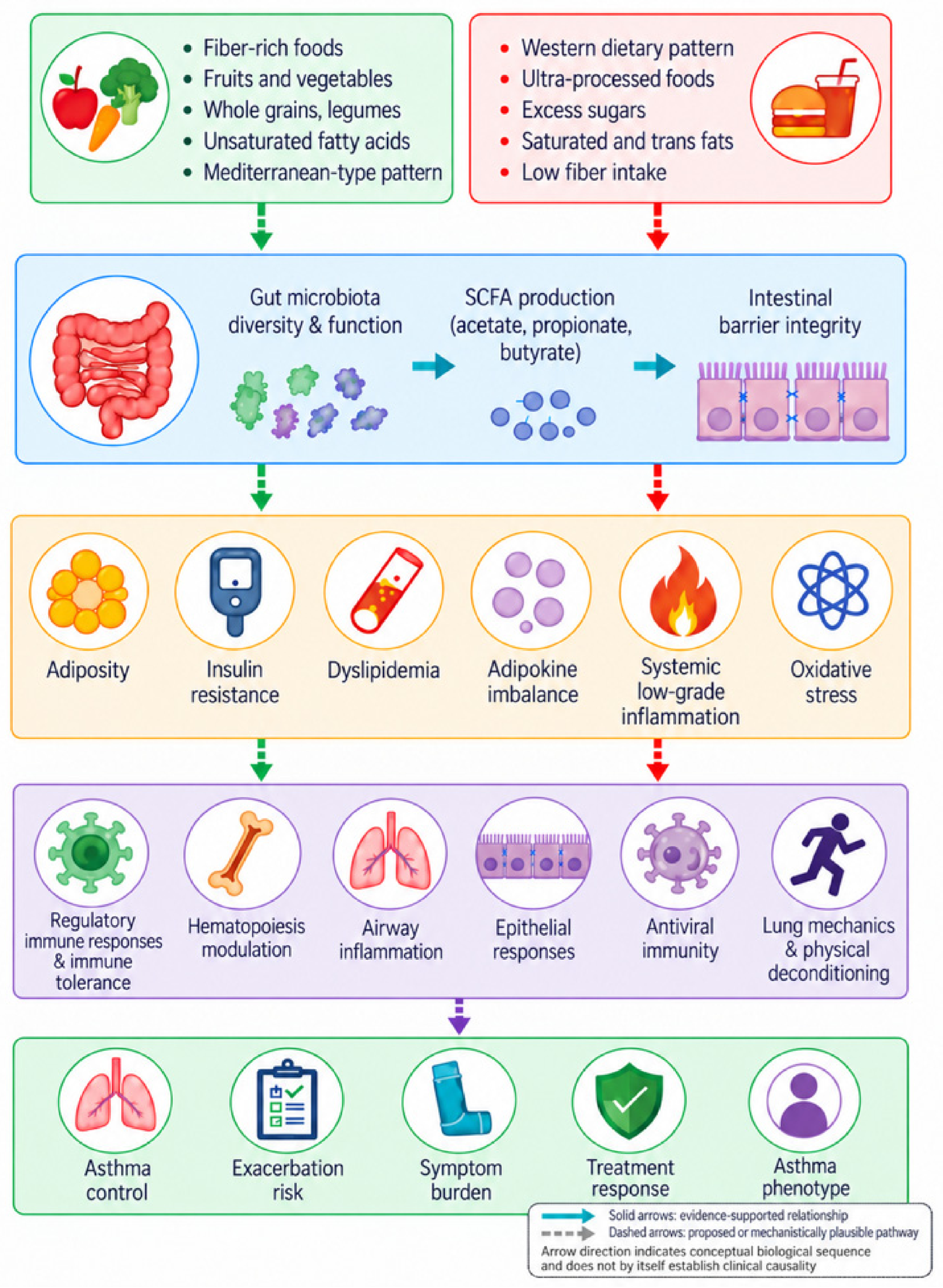
These mechanisms can be integrated into a framework that encompasses diet, microbiota, metabolites, the barrier, and the lungs. Dietary substrates influence microbial composition and metabolic activity; the resulting SCFAs, tryptophan metabolites, bile-acid derivatives, and other bioactive molecules can modify epithelial-barrier function and systemic immune programming. These effects may, in turn, influence inflammatory responses in the lung. Conversely, poor diet quality, metabolic inflammation, infections, antibiotics, and other treatment exposures can alter the microbial ecology and barrier function. The gut–lung axis should therefore be considered a dynamic and bidirectional network rather than a single linear pathway. These interconnected pathways are summarized conceptually in Figure 1.
The gut–lung axis may be particularly relevant during early life, when microbial colonization and immune maturation occur simultaneously. Prospective pediatric cohort studies have shown that alterations in microbial composition, maturation, and metabolite production during infancy can precede later asthma or atopy [22,23,24,25]. These findings strengthen temporality but primarily inform asthma susceptibility and development rather than the control of established disease.
Clinical associations with chronic immune-mediated intestinal disorders provide additional evidence of shared mucosal and systemic pathways. Asthma has been reported to co-occur with inflammatory bowel disease (IBD), including Crohn’s disease and ulcerative colitis [85,86], and with celiac disease in children [87]. These associations do not establish causality and may reflect shared genetic, environmental, microbial, and immune susceptibility.
Metabolic health may further modify gut–lung communication. Obesity and insulin resistance are associated with alterations in intestinal microbial function, barrier integrity, inflammatory signaling, and metabolite production [35,74]. Metabolic dysregulation may therefore interact with microbiome-related pathways rather than acting independently, providing a potential link between the metabolic phenotype described in Section 5 and respiratory immune responses [14,35,74].
The respiratory microbiome adds further complexity. Pediatric studies have associated early airway colonization by Streptococcus, Haemophilus, and Moraxella with later wheezing or asthma risk [77,83,88]. Other studies have reported differences involving Veillonella, Prevotella, Staphylococcus, Neisseria, Corynebacterium, and Dolosigranulum, particularly during severe exacerbations [84]. However, these patterns vary according to age, anatomical sampling site, infection status, disease stage, and treatment exposure, and no reproducible respiratory microbial signature has been established.
Treatment exposure is therefore an important source of both biological effect and confounding. Antibiotics can reduce pediatric gut microbial richness and diversity, decrease taxa such as Bifidobacterium and Lactobacillus, and increase some Proteobacteria, with potential effects on microbial metabolic function and SCFA production [89]. Early-life antibiotic exposure has also been associated with later asthma, although confounding by indication remains important. Corticosteroids may alter respiratory microbial composition and diversity, but available evidence is heterogeneous and does not demonstrate a consistent direction of effect [90]. Direct evidence for corticosteroid-induced intestinal microbiome changes in children with asthma remains limited.
Overall, the strength of evidence varies substantially across these mechanisms. Experimental studies provide mechanistic evidence for SCFA signaling, immune-cell modulation, epithelial-barrier effects, bile-acid signaling, and allergic airway responses [21,56,79,80,81,82]. Human translational studies support the biological relevance of selected metabolites, while prospective pediatric cohorts provide stronger temporal evidence that early-life microbial and metabolic differences can precede asthma or atopy [22,23,24,25]. In contrast, cross-sectional microbiome studies are more susceptible to reverse causation, treatment effects, and methodological heterogeneity [74,75,76,77]. Representative dietary and microbiome studies, categorized according to asthma outcome and stage of disease, are summarized in Table 3. Thus, the current evidence more strongly supports a role for the microbiome in asthma susceptibility and immune development than in determining the control of established pediatric asthma.

7. Integrating the Gut–Lung Axis into Clinical Practice

The clinical application of the gut–lung axis requires a clear distinction between established components of pediatric asthma care, additional evaluations indicated for selected patients, and approaches that remain investigational.

7.1. Routine Pediatric Assessment

Routine management should focus on established asthma care, including an assessment of symptom control, exacerbation risk, treatment adherence, inhaler technique, relevant comorbidities, environmental exposures, and inflammatory phenotype where appropriate [2]. Microbiome-related approaches should complement rather than replace these established elements of care.
Growth trajectory and BMI should be assessed longitudinally as part of routine pediatric evaluation. A brief assessment of diet quality and physical activity may also provide clinically useful information without requiring complex dietary scoring systems. Nutritional assessment can consider overall dietary quality; intake of fruits, vegetables, legumes, whole grains, and other fiber-rich foods; frequent consumption of energy-dense or ultra-processed foods and sugar-sweetened beverages; meal patterns; and relevant family eating habits. The objective is not to identify an asthma-specific diet, but to recognize dietary patterns relevant to general health, growth, and metabolic well-being and to identify realistic opportunities for improvement [10,34,42].
For most children with asthma, dietary advice should therefore remain consistent with general pediatric nutritional recommendations and be adapted to age, cultural background, food availability, and family circumstances. A dietary pattern rich in fruits, vegetables, legumes, whole grains, and other minimally processed, nutrient-dense foods supports general health and may also favor metabolic and microbial pathways relevant to asthma [10,11,34]. However, as discussed in Section 4, the available pediatric dietary intervention trials are few and heterogeneous, and no specific dietary intervention can currently be considered an established asthma-directed therapy.
Exposure to medications should also be assessed as part of standard asthma care. Antibiotics can alter the intestinal and respiratory microbial communities, underscoring the importance of appropriate antimicrobial stewardship while recognizing that they remain necessary when clinically indicated [76,93]. Asthma therapies may also influence microbial ecology, but concerns about potential microbiome effects should not lead to discontinuation or reduction in treatments with proven clinical benefit.

7.2. Additional Assessment in Selected Patients

More detailed nutritional, metabolic, or gastrointestinal evaluation should be guided by the individual clinical phenotype rather than applied routinely to all children with asthma. In children with overweight or obesity, BMI should be interpreted in the context of growth trajectory, pubertal development, body-fat distribution, physical activity, and relevant metabolic comorbidities. When obesity coexists with persistent respiratory symptoms, clinicians should also consider whether exertional breathlessness reflects uncontrolled airway disease, physical deconditioning, obesity-related respiratory mechanics, dysfunctional breathing, sleep-disordered breathing, or a combination of these factors [14,15,16].
Metabolic investigations should similarly be driven by established pediatric indications. Measurements relevant to glucose metabolism, lipid status, or other metabolic abnormalities may be appropriate in children with obesity or additional clinical risk factors, but should not be undertaken solely for asthma phenotyping. Where obesity or metabolic dysfunction is clinically significant, multidisciplinary management involving pediatricians, pulmonologists or allergists, dietitians, and other healthcare professionals may help address asthma treatment, nutrition, physical activity, sleep, and metabolic health together. Weight management and individualized physical-activity interventions may improve selected asthma-related outcomes in children with obesity, but should remain integrated within comprehensive asthma care [72,73].
Gastrointestinal evaluation should also be selective. Celiac disease and IBD may coexist with asthma [85,86,87], but the available evidence is epidemiological and does not establish a causal relationship. These associations therefore do not justify routine screening in all children with asthma. Investigation should instead be guided by persistent gastrointestinal symptoms, clinical history, impaired growth, nutritional concerns, or other established pediatric indications.
Food-allergy assessment and elimination diets also require a clear clinical indication. Food allergy and asthma may coexist, and poorly controlled asthma can increase the risk associated with food-induced allergic reactions [94]. Dietary restriction should therefore be based on confirmed food allergy or another established indication rather than on asthma symptoms alone, presumed dysbiosis, or unvalidated food or microbiome tests [74,76]. Unnecessary elimination may compromise nutritional adequacy and increase the burden of care, particularly during childhood and adolescence. When avoidance is required, it should be individualized, and especially when multiple foods are excluded, undertaken with appropriate nutritional supervision [95].

7.3. Investigational Biomarkers and Microbiome-Directed Approaches

Several metabolic, inflammatory, and microbiome-related measures remain of research interest but are not sufficiently validated for routine asthma phenotyping. Biomarkers such as IL-6 and adipokines have been associated with selected asthma phenotypes and metabolic abnormalities, but their clinical utility for diagnosis, treatment selection, or monitoring has not been established. Such biomarkers should therefore not be measured specifically for asthma phenotyping outside research settings, although individual metabolic tests may be appropriate when independently indicated by the child’s clinical status.
Commercial microbiome testing is similarly not ready for routine clinical use. Although stool and airway microbial profiling are valuable research tools, no sufficiently validated microbial signature or clinically established threshold currently permits the reliable classification of pediatric asthma phenotypes, prediction of treatment response, or selection of individualized therapy [74,76,77]. Differences in sample collection, sequencing methods, bioinformatic pipelines, reference databases, and temporal variability further limit interpretation at the level of the individual patient. Routine commercial microbiome testing therefore has no established role in guiding pediatric asthma management.
Microbiome-directed interventions should also be interpreted according to the certainty and consistency of the available evidence. Families may ask about probiotics, prebiotics, synbiotics, fermented foods, and related approaches. Although recent systematic reviews have reported potential benefits of some of these interventions in children with asthma, their conclusions are not consistent. A 2026 systematic review and meta-analysis by Hu et al. rated the available evidence as very low certainty and did not support routine probiotic use as adjunctive therapy for pediatric asthma [91], whereas other reviews have reported more favorable pooled effects [92,96]. These differences likely reflect substantial heterogeneity in probiotic strains and formulations, dose, treatment duration, baseline asthma severity, concomitant therapy, study size, and outcome definitions. Accordingly, statistically favorable pooled estimates should not be interpreted as evidence of an established clinical benefit, and probiotics, prebiotics, and synbiotics cannot currently be recommended as standard therapies for pediatric asthma.
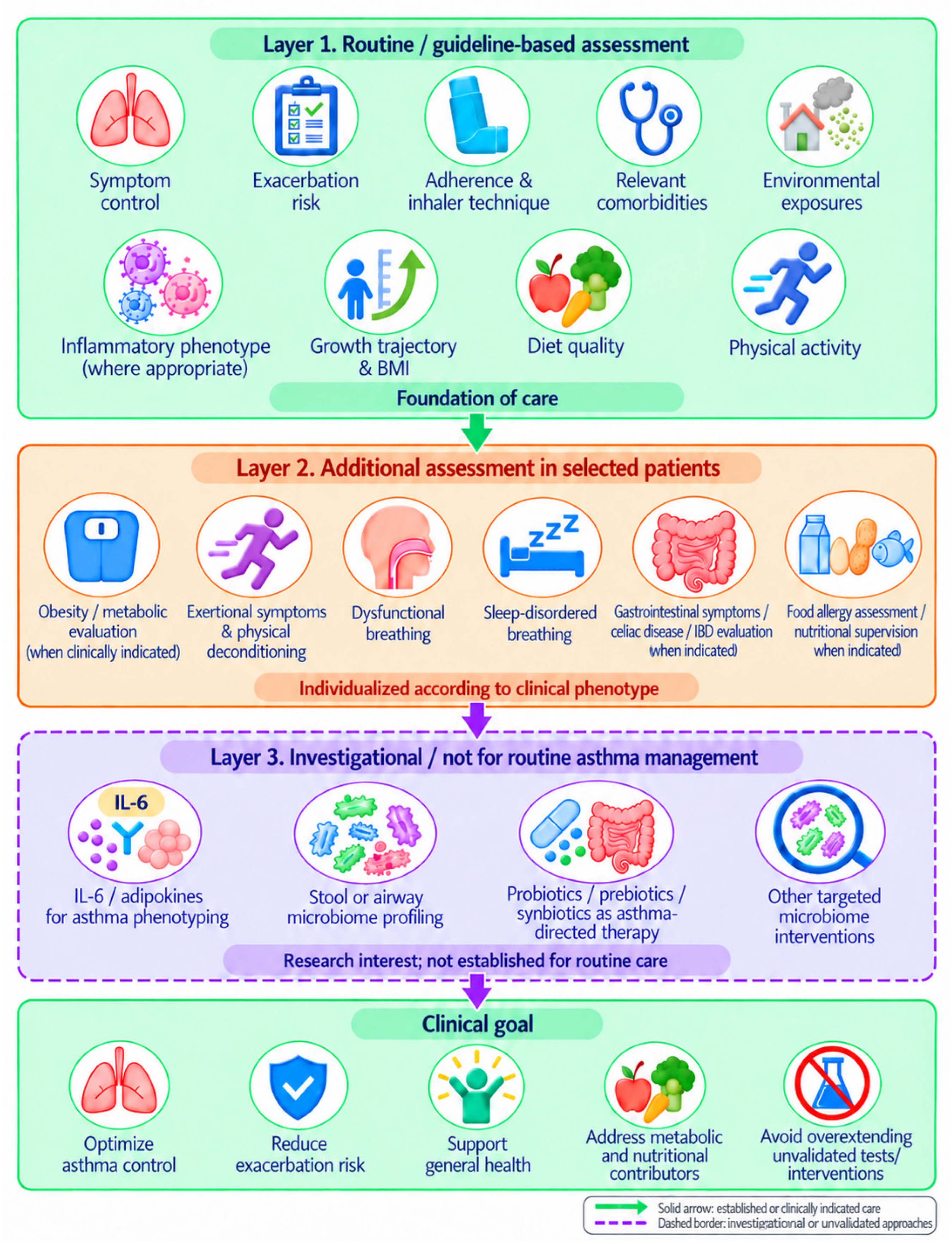
Overall, the clinical integration of the gut–lung axis should remain part of standard care for childhood asthma, while the performance of additional tests related to diet, metabolism, the gastrointestinal system, or food allergies should be guided by specific clinical indications. The proposed clinical algorithm is summarized in Figure 2.

8. Future Prospects

Future studies should establish temporality, causality, and clinical utility through longitudinal pediatric cohorts with repeated assessment of diet, growth, metabolic status, microbiome development, medication exposure, and respiratory outcomes. They should also distinguish between factors associated with asthma development and those that influence asthma control once disease is established. Trials in children with existing asthma should use clinically meaningful outcomes, including validated control scores, exacerbations, systemic corticosteroid exposure, lung function, healthcare utilization, and quality of life.
Improved phenotyping will also be essential, as nutritional and microbiome-directed interventions are unlikely to have uniform effects across the heterogeneous spectrum of pediatric asthma. Obesity, metabolic dysfunction, T2 inflammatory status, age, pubertal stage, medication exposure, baseline diet, and microbiome characteristics should therefore be considered when evaluating treatment response.
Greater methodological standardization is also needed. Differences in dietary assessment, sample collection, microbiome sequencing, metabolomic platforms, bioinformatic methods, and clinical outcome definitions currently limit comparability across studies. Multi-omics approaches integrating microbial function with metabolomics, transcriptomics, proteomics, immune profiling, and metabolic markers may provide more informative biological signatures, although external validation will be required before clinical application.
Intervention studies should prioritize realistic and scalable strategies. Whole-diet approaches may be more clinically relevant than isolated nutrient supplementation, while future trials should incorporate family-based support, culturally appropriate dietary models, and objective measures of adherence. Microbiome-targeted interventions should also be evaluated separately, as the effects of probiotics, prebiotics, synbiotics, and postbiotics may depend on strain, dose, timing, duration, baseline microbial ecology, diet, age, and host phenotype.
The identification of clinically useful biomarkers remains another priority. Microbiome-derived metabolites and integrated metabolic signatures are promising, but variability across age, diet, geography, and analytical platforms currently limits clinical translation. Digital dietary assessment, wearable activity monitoring, and remote symptom tracking may further improve longitudinal phenotyping, provided that issues of data quality, accessibility, privacy, and clinical integration are addressed.
Finally, future research should consider health equity, as diet quality, obesity risk, environmental exposure, and access to asthma care are strongly influenced by socioeconomic and structural factors. The long-term goal is to determine whether nutritional, metabolic, and microbial information adds clinically meaningful value to risk prediction, phenotyping, prevention, and treatment selection across diverse pediatric populations.

9. Conclusions

Pediatric asthma is a heterogeneous disease influenced by interactions among airway inflammation, environmental exposures, nutritional status, adiposity, metabolic health, and systemic immune regulation. The clinical relevance of these factors differs according to both study design and disease stage. Evidence relating diet and the early-life microbiome to pediatric asthma predominantly informs asthma prevalence, susceptibility, and development, whereas evidence directly addressing the control of established disease is more limited. In contrast, excess adiposity and metabolic dysfunction are more consistently associated with morbidity and treatment-related outcomes in children with established asthma, although causality is not fully established.
Current clinical care should remain centered on guideline-based asthma management, complemented by appropriate assessment of diet, growth, adiposity, physical activity, metabolic health, and relevant comorbidities. Pediatric dietary intervention trials have yielded heterogeneous findings, and evidence that microbiome-directed strategies improve asthma control remains insufficient. Further well-designed trials in children with established asthma are needed to determine whether nutritional, metabolic, or microbiome-related interventions provide reproducible benefits for asthma control and other clinically meaningful outcomes.

Author Contributions

Conceptualization, D.M., D.K. and K.D.; methodology, D.M., D.K. and K.D.; investigation and literature review, D.M., M.K., M.T., V.G., B.B. and D.K.; writing—original draft preparation, D.M. and D.K.; writing—review and editing, M.K., M.T., V.G., B.B. and K.D.; visualization, D.M. and D.K.; supervision, K.D.; project administration, D.M., D.K. and K.D. All authors have read and agreed to the published version of the manuscript.

Funding

This research received no external funding.

Institutional Review Board Statement

Not applicable.

Informed Consent Statement

Not applicable.

Data Availability Statement

No new data were created or analyzed in this study. Data sharing is not applicable to this article.

Acknowledgments

During the preparation of this manuscript, the authors used ChatGPT (GPT-5.5; OpenAI) to assist with figure development and language and structural editing. The authors reviewed and edited all AI-assisted output and take full responsibility for the content of the publication.

Conflicts of Interest

The authors declare no conflicts of interest.

Abbreviations

The following abbreviations are used in this manuscript:
12,13-diHOME12,13-Dihydroxy-9Z-octadecenoic acid
ACTAsthma Control Test
AhRAryl hydrocarbon receptor
AktProtein kinase B
AP-1Activator protein-1
BMIBody mass index
C-ACTChildhood Asthma Control Test
CHILDCanadian Healthy Infant Longitudinal Development
COPSA C2010Copenhagen Prospective Studies on Asthma in Childhood 2010
DCADeoxycholic acid
DHADocosahexaenoic acid
EPAEicosapentaenoic acid
FeNOFractional exhaled nitric oxide
FEV1Forced expiratory volume in 1 s
FFAR2Free fatty acid receptor 2
FFAR3Free fatty acid receptor 3
FOXP3Forkhead box P3
FVCForced vital capacity
FXRFarnesoid X receptor
GPCRG-protein-coupled receptor
GPR41G-protein-coupled receptor 41
GPR43G-protein-coupled receptor 43
GPR109AG-protein-coupled receptor 109A
IBDInflammatory bowel disease
ICSInhaled corticosteroids
INF-γInterferon gamma
IL-1βInterleukin-1 beta
IL-6Interleukin-6
IL-10Interleukin-10
IL-22Interleukin-22
ILC2Type 2 innate lymphoid cell
ISAACInternational Study of Asthma and Allergies in Childhood
LCALithocholic acid
LPSLipopolysaccharide
NF-κBNuclear factor kappa B
Nrf2Nuclear factor erythroid 2-related factor 2
PAQLQPediatric Asthma Quality of Life Questionnaire
PASTUREProtection Against Allergy: Study in Rural Environments
PEFPeak expiratory flow
PI3KPhosphoinositide 3-kinase
PPAR-γPeroxisome proliferator-activated receptor gamma
RCTRandomized controlled trial
ROSReactive oxygen species
SCFAShort-chain fatty acid
T2 Type 2
TGR5Takeda G-protein-coupled receptor 5
Th1T helper type 1
Th2T helper type 2
Th17T helper type 17
TNF-αTumor necrosis factor alpha
TregRegulatory T cell
ZO-1Zonula occludens-1

References

  1. Naja, A.S.; Permaul, P.; Phipatanakul, W. Taming Asthma in School-Aged Children: A Comprehensive Review. J. Allergy Clin. Immunol. Pract. 2018, 6, 726–735. [Google Scholar] [CrossRef] [Scilit] [PubMed]
  2. Global Initiative for Asthma. Global Strategy for Asthma Management and Prevention; Global Initiative for Asthma: Fontana, WI, USA, 2026. [Google Scholar]
  3. Asher, M.I.; Montefort, S.; Björkstén, B.; Lai, C.K.; Strachan, D.P.; Weiland, S.K.; Williams, H.; The ISAAC Phase Three Study Group. Worldwide time trends in the prevalence of symptoms of asthma, allergic rhinoconjunctivitis, and eczema in childhood: ISAAC Phases One and Three repeat multicountry cross-sectional surveys. Lancet 2006, 368, 733–743. [Google Scholar] [CrossRef] [Scilit] [PubMed]
  4. Mescoloto, S.B.; Pongiluppi, G.; Domene, S. Ultra-processed food consumption and children and adolescents’ health. J. Pediatr. (Rio J.) 2024, 100, S18–S30. [Google Scholar] [CrossRef] [Scilit] [PubMed]
  5. Nurmatov, U.; Devereux, G.; Sheikh, A. Nutrients and foods for the primary prevention of asthma and allergy: Systematic review and meta-analysis. J. Allergy Clin. Immunol. 2011, 127, 724–733.e30. [Google Scholar] [CrossRef] [Scilit] [PubMed]
  6. Koumpagioti, D.; Dimitroglou, M.; Mpoutopoulou, B.; Moriki, D.; Douros, K. The Role of Oxidative Stress in the Pathogenesis of Childhood Asthma: A Comprehensive Review. Children 2025, 12, 1110. [Google Scholar] [CrossRef] [Scilit] [PubMed]
  7. Comhair, S.A.; Erzurum, S.C. Redox control of asthma: Molecular mechanisms and therapeutic opportunities. Antioxid. Redox Signal 2010, 12, 93–124. [Google Scholar] [CrossRef] [Scilit] [PubMed]
  8. Garcia-Marcos, L.; Canflanca, I.M.; Garrido, J.B.; Varela, A.L.; Garcia-Hernandez, G.; Guillen Grima, F.; Gonzalez-Diaz, C.; Carvajal-Urueña, I.; Arnedo-Pena, A.; Busquets-Monge, R.M.; et al. Relationship of asthma and rhinoconjunctivitis with obesity, exercise and Mediterranean diet in Spanish schoolchildren. Thorax 2007, 62, 503–508. [Google Scholar] [CrossRef] [Scilit] [PubMed]
  9. Nagel, G.; Weinmayr, G.; Kleiner, A.; Garcia-Marcos, L.; Strachan, D.P.; The ISAAC Phase Two Study Group. Effect of diet on asthma and allergic sensitisation in the International Study on Allergies and Asthma in Childhood (ISAAC) Phase Two. Thorax 2010, 65, 516–522. [Google Scholar] [CrossRef] [Scilit] [PubMed]
  10. Koumpagioti, D.; Boutopoulou, B.; Moriki, D.; Priftis, K.N.; Douros, K. Does Adherence to the Mediterranean Diet Have a Protective Effect against Asthma and Allergies in Children? A Systematic Review. Nutrients 2022, 14, 1618. [Google Scholar] [CrossRef] [Scilit] [PubMed]
  11. Garcia-Marcos, L.; Castro-Rodriguez, J.A.; Weinmayr, G.; Panagiotakos, D.B.; Priftis, K.N.; Nagel, G. Influence of Mediterranean diet on asthma in children: A systematic review and meta-analysis. Pediatr. Allergy Immunol. 2013, 24, 330–338. [Google Scholar] [CrossRef] [Scilit] [PubMed]
  12. Forno, E.; Lescher, R.; Strunk, R.; Weiss, S.; Fuhlbrigge, A.; Celedón, J.C. Decreased response to inhaled steroids in overweight and obese asthmatic children. J. Allergy Clin. Immunol. 2011, 127, 741–749. [Google Scholar] [CrossRef] [Scilit] [PubMed]
  13. Gilliland, F.D.; Berhane, K.; Islam, T.; McConnell, R.; Gauderman, W.J.; Gilliland, S.S.; Avol, E.; Peters, J.M. Obesity and the risk of newly diagnosed asthma in school-age children. Am. J. Epidemiol. 2003, 158, 406–415. [Google Scholar] [CrossRef] [Scilit] [PubMed]
  14. Peters, U.; Dixon, A.E.; Forno, E. Obesity and asthma. J. Allergy Clin. Immunol. 2018, 141, 1169–1179. [Google Scholar] [CrossRef] [Scilit] [PubMed]
  15. Lang, J. Obesity and childhood asthma. Curr. Opin. Pulm. Med. 2019, 25, 34–43. [Google Scholar] [CrossRef] [Scilit] [PubMed]
  16. Vijayakanthi, N.; Greally, J.M.; Rastogi, D. Pediatric Obesity-Related Asthma: The Role of Metabolic Dysregulation. Pediatrics 2016, 137, e20150812. [Google Scholar] [CrossRef] [Scilit] [PubMed]
  17. Rastogi, D.; Holguin, F. Metabolic Dysregulation, Systemic Inflammation, and Pediatric Obesity-related Asthma. Ann. Am. Thorac. Soc. 2017, 14, S363–S367. [Google Scholar] [CrossRef] [Scilit] [PubMed]
  18. Peters, M.C.; McGrath, K.W.; Hawkins, G.A.; Hastie, A.T.; Levy, B.D.; Israel, E.; Phillips, B.R.; Mauger, D.T.; Comhair, S.A.; Erzurum, S.C.; et al. Plasma interleukin-6 concentrations, metabolic dysfunction, and asthma severity: A cross-sectional analysis of two cohorts. Lancet Respir. Med. 2016, 4, 574–584. [Google Scholar] [CrossRef] [Scilit] [PubMed]
  19. Permaul, P.; Peters, M.C.; Petty, C.R.; Cardet, J.C.; Ly, N.P.; Ramratnam, S.K.; Ross, K.; Fitzpatrick, A.; Israel, E.; Bacharier, L.B.; et al. The association of plasma IL-6 with measures of asthma morbidity in a moderate-severe pediatric cohort aged 6-18 years. J. Allergy Clin. Immunol. Pract. 2021, 9, 2916–2919.e2. [Google Scholar] [CrossRef] [Scilit] [PubMed]
  20. Budden, K.F.; Gellatly, S.L.; Wood, D.L.; Cooper, M.A.; Morrison, M.; Hugenholtz, P.; Hansbro, P.M. Emerging pathogenic links between microbiota and the gut-lung axis. Nat. Rev. Microbiol. 2017, 15, 55–63. [Google Scholar] [CrossRef] [Scilit] [PubMed]
  21. Trompette, A.; Gollwitzer, E.S.; Yadava, K.; Sichelstiel, A.K.; Sprenger, N.; Ngom-Bru, C.; Blanchard, C.; Junt, T.; Nicod, L.P.; Harris, N.L.; et al. Gut microbiota metabolism of dietary fiber influences allergic airway disease and hematopoiesis. Nat. Med. 2014, 20, 159–166. [Google Scholar] [CrossRef] [Scilit] [PubMed]
  22. Arrieta, M.C.; Stiemsma, L.T.; Dimitriu, P.A.; Thorson, L.; Russell, S.; Yurist-Doutsch, S.; Kuzeljevic, B.; Gold, M.J.; Britton, H.M.; Lefebvre, D.L.; et al. Early infancy microbial and metabolic alterations affect risk of childhood asthma. Sci. Transl. Med. 2015, 7, 307ra152. [Google Scholar] [CrossRef] [Scilit] [PubMed]
  23. Stokholm, J.; Blaser, M.J.; Thorsen, J.; Rasmussen, M.A.; Waage, J.; Vinding, R.K.; Schoos, A.M.; Kunøe, A.; Fink, N.R.; Chawes, B.L.; et al. Maturation of the gut microbiome and risk of asthma in childhood. Nat. Commun. 2018, 9, 141. [Google Scholar] [CrossRef] [Scilit] [PubMed]
  24. Depner, M.; Taft, D.H.; Kirjavainen, P.V.; Kalanetra, K.M.; Karvonen, A.M.; Peschel, S.; Schmausser-Hechfellner, E.; Roduit, C.; Frei, R.; Lauener, R.; et al. Maturation of the gut microbiome during the first year of life contributes to the protective farm effect on childhood asthma. Nat. Med. 2020, 26, 1766–1775. [Google Scholar] [CrossRef] [Scilit] [PubMed]
  25. Roduit, C.; Frei, R.; Ferstl, R.; Loeliger, S.; Westermann, P.; Rhyner, C.; Schiavi, E.; Barcik, W.; Rodriguez-Perez, N.; Wawrzyniak, M.; et al. High levels of butyrate and propionate in early life are associated with protection against atopy. Allergy 2019, 74, 799–809. [Google Scholar] [CrossRef] [Scilit] [PubMed]
  26. Liu, A.H.; Zeiger, R.; Sorkness, C.; Mahr, T.; Ostrom, N.; Burgess, S.; Rosenzweig, J.C.; Manjunath, R. Development and cross-sectional validation of the Childhood Asthma Control Test. J. Allergy Clin. Immunol. 2007, 119, 817–825. [Google Scholar] [CrossRef] [Scilit] [PubMed]
  27. Nathan, R.A.; Sorkness, C.A.; Kosinski, M.; Schatz, M.; Li, J.T.; Marcus, P.; Murray, J.J.; Pendergraft, T.B. Development of the asthma control test: A survey for assessing asthma control. J. Allergy Clin. Immunol. 2004, 113, 59–65. [Google Scholar] [CrossRef] [Scilit] [PubMed]
  28. Schatz, M.; Sorkness, C.A.; Li, J.T.; Marcus, P.; Murray, J.J.; Nathan, R.A.; Kosinski, M.; Pendergraft, T.B.; Jhingran, P. Asthma Control Test: Reliability, validity, and responsiveness in patients not previously followed by asthma specialists. J. Allergy Clin. Immunol. 2006, 117, 549–556. [Google Scholar] [CrossRef] [Scilit] [PubMed]
  29. Bush, A.; Hedlin, G.; Carlsen, K.H.; de Benedictis, F.; Lodrup-Carlsen, K.; Wilson, N. Severe childhood asthma: A common international approach? Lancet 2008, 372, 1019–1021. [Google Scholar] [CrossRef] [Scilit] [PubMed]
  30. Chung, K.F.; Wenzel, S.E.; Brozek, J.L.; Bush, A.; Castro, M.; Sterk, P.J.; Adcock, I.M.; Bateman, E.D.; Bel, E.H.; Bleecker, E.R.; et al. International ERS/ATS guidelines on definition, evaluation and treatment of severe asthma. Eur. Respir. J. 2014, 43, 343–373. [Google Scholar] [CrossRef] [Scilit] [PubMed]
  31. Pinot de Moira, A.; Custovic, A. Social inequalities in childhood asthma. World Allergy Organ. J. 2024, 17, 101010. [Google Scholar] [CrossRef] [Scilit] [PubMed]
  32. Bacharier, L.B.; Jackson, D.J. Biologics in the treatment of asthma in children and adolescents. J. Allergy Clin. Immunol. 2023, 151, 581–589. [Google Scholar] [CrossRef] [Scilit] [PubMed]
  33. Moriki, D.; Kalogiannis, M.; Tsouprou, M.; Grammeniatis, V.; Douros, K.; Koumpagioti, D. Biologic Therapies for Severe Pediatric Asthma: Current Evidence, Clinical Indications, and Future Directions. Allergies 2026, 6, 33. [Google Scholar] [CrossRef] [Scilit]
  34. Garcia-Larsen, V.; Del Giacco, S.R.; Moreira, A.; Bonini, M.; Charles, D.; Reeves, T.; Carlsen, K.H.; Haahtela, T.; Bonini, S.; Fonseca, J.; et al. Asthma and dietary intake: An overview of systematic reviews. Allergy 2016, 71, 433–442. [Google Scholar] [CrossRef] [Scilit] [PubMed]
  35. Zhang, M.; Qin, Z.; Huang, C.; Liang, B.; Zhang, X.; Sun, W. The gut microbiota modulates airway inflammation in allergic asthma through the gut-lung axis related immune modulation: A review. Biomol. Biomed. 2025, 25, 727–738. [Google Scholar] [CrossRef] [Scilit] [PubMed]
  36. Moriki, D.; Antonogeorgos, G.; Koumpagioti, D.; Chaloutsi, D.; Ellwood, P.; García-Marcos, L.; Priftis, K.N.; Douros, K.; Panagiotakos, D. Adherence to an Anti-Inflammatory Diet and Atopic Diseases’ Prevalence in Adolescence: The Greek Global Asthma Network Study. Nutrients 2023, 15, 3191. [Google Scholar] [CrossRef] [Scilit] [PubMed]
  37. Ellwood, P.; Asher, M.I.; García-Marcos, L.; Williams, H.; Keil, U.; Robertson, C.; Nagel, G.; The ISAAC Phase III Study Group. Do fast foods cause asthma, rhinoconjunctivitis and eczema? Global findings from the International Study of Asthma and Allergies in Childhood (ISAAC) phase three. Thorax 2013, 68, 351–360. [Google Scholar] [CrossRef] [Scilit] [PubMed]
  38. Lv, N.; Xiao, L.; Ma, J. Dietary pattern and asthma: A systematic review and meta-analysis. J. Asthma Allergy 2014, 7, 105–121. [Google Scholar] [CrossRef] [Scilit] [PubMed]
  39. Nani, A.; Murtaza, B.; Sayed Khan, A.; Khan, N.A.; Hichami, A. Antioxidant and Anti-Inflammatory Potential of Polyphenols Contained in Mediterranean Diet in Obesity: Molecular Mechanisms. Molecules 2021, 26, 985. [Google Scholar] [CrossRef] [Scilit] [PubMed]
  40. Serreli, G.; Deiana, M. Extra Virgin Olive Oil Polyphenols: Modulation of Cellular Pathways Related to Oxidant Species and Inflammation in Aging. Cells 2020, 9, 478. [Google Scholar] [CrossRef] [Scilit] [PubMed]
  41. Calder, P.C. Omega-3 fatty acids and inflammatory processes: From molecules to man. Biochem. Soc. Trans. 2017, 45, 1105–1115. [Google Scholar] [CrossRef] [Scilit] [PubMed]
  42. Lane, M.M.; Gamage, E.; Du, S.; Ashtree, D.N.; McGuinness, A.J.; Gauci, S.; Baker, P.; Lawrence, M.; Rebholz, C.M.; Srour, B.; et al. Ultra-processed food exposure and adverse health outcomes: Umbrella review of epidemiological meta-analyses. BMJ 2024, 384, e077310. [Google Scholar] [CrossRef] [Scilit] [PubMed]
  43. Milan, S.J.; Hart, A.; Wilkinson, M. Vitamin C for asthma and exercise-induced bronchoconstriction. Cochrane Database Syst. Rev. 2013, 2013, CD010391. [Google Scholar] [CrossRef] [Scilit] [PubMed]
  44. Wilkinson, M.; Hart, A.; Milan, S.J.; Sugumar, K. Vitamins C and E for asthma and exercise-induced bronchoconstriction. Cochrane Database Syst. Rev. 2014, 2014, Cd010749. [Google Scholar] [CrossRef] [Scilit] [PubMed]
  45. Calder, P.C. Marine omega-3 fatty acids and inflammatory processes: Effects, mechanisms and clinical relevance. Biochim. Biophys. Acta 2015, 1851, 469–484. [Google Scholar] [CrossRef] [Scilit] [PubMed]
  46. Duvall, M.G.; Levy, B.D. DHA- and EPA-derived resolvins, protectins, and maresins in airway inflammation. Eur. J. Pharmacol. 2016, 785, 144–155. [Google Scholar] [CrossRef] [Scilit] [PubMed]
  47. Serhan, C.N.; Chiang, N.; Dalli, J.; Levy, B.D. Lipid mediators in the resolution of inflammation. Cold Spring Harb. Perspect. Biol. 2015, 7, a016311. [Google Scholar] [CrossRef] [Scilit] [PubMed]
  48. Aoki, H.; Hisada, T.; Ishizuka, T.; Utsugi, M.; Kawata, T.; Shimizu, Y.; Okajima, F.; Dobashi, K.; Mori, M. Resolvin E1 dampens airway inflammation and hyperresponsiveness in a murine model of asthma. Biochem. Biophys. Res. Commun. 2008, 367, 509–515. [Google Scholar] [CrossRef] [Scilit] [PubMed]
  49. Rogerio, A.P.; Haworth, O.; Croze, R.; Oh, S.F.; Uddin, M.; Carlo, T.; Pfeffer, M.A.; Priluck, R.; Serhan, C.N.; Levy, B.D. Resolvin D1 and aspirin-triggered resolvin D1 promote resolution of allergic airways responses. J. Immunol. 2012, 189, 1983–1991. [Google Scholar] [CrossRef] [Scilit] [PubMed]
  50. Papamichael, M.M.; Katsardis, C.; Lambert, K.; Tsoukalas, D.; Koutsilieris, M.; Erbas, B.; Itsiopoulos, C. Efficacy of a Mediterranean diet supplemented with fatty fish in ameliorating inflammation in paediatric asthma: A randomised controlled trial. J. Hum. Nutr. Diet. 2019, 32, 185–197. [Google Scholar] [CrossRef] [Scilit] [PubMed]
  51. Berthon, B.S.; McLoughlin, R.F.; Jensen, M.E.; Hosseini, B.; Williams, E.J.; Baines, K.J.; Taylor, S.L.; Rogers, G.B.; Ivey, K.L.; Morten, M.; et al. The effects of increasing fruit and vegetable intake in children with asthma: A randomized controlled trial. Clin. Exp. Allergy 2021, 51, 1144–1156. [Google Scholar] [CrossRef] [Scilit] [PubMed]
  52. Songnuy, T.; Ninla-Aesong, P.; Thairach, P.; Thok-Ngaen, J. Effectiveness of an antioxidant-rich diet on childhood asthma outcomes: A randomized controlled trial. BMC Nutr. 2025, 11, 89. [Google Scholar] [CrossRef] [Scilit] [PubMed]
  53. Makki, K.; Deehan, E.C.; Walter, J.; Bäckhed, F. The Impact of Dietary Fiber on Gut Microbiota in Host Health and Disease. Cell Host Microbe 2018, 23, 705–715. [Google Scholar] [CrossRef] [Scilit] [PubMed]
  54. Louis, P.; Flint, H.J. Formation of propionate and butyrate by the human colonic microbiota. Environ. Microbiol. 2017, 19, 29–41. [Google Scholar] [CrossRef] [Scilit] [PubMed]
  55. Rivière, A.; Selak, M.; Lantin, D.; Leroy, F.; De Vuyst, L. Bifidobacteria and Butyrate-Producing Colon Bacteria: Importance and Strategies for Their Stimulation in the Human Gut. Front. Microbiol. 2016, 7, 979. [Google Scholar] [CrossRef] [Scilit] [PubMed]
  56. Mann, E.R.; Lam, Y.K.; Uhlig, H.H. Short-chain fatty acids: Linking diet, the microbiome and immunity. Nat. Rev. Immunol. 2024, 24, 577–595. [Google Scholar] [CrossRef] [Scilit] [PubMed]
  57. Parada Venegas, D.; De la Fuente, M.K.; Landskron, G.; González, M.J.; Quera, R.; Dijkstra, G.; Harmsen, H.J.M.; Faber, K.N.; Hermoso, M.A. Short Chain Fatty Acids (SCFAs)-Mediated Gut Epithelial and Immune Regulation and Its Relevance for Inflammatory Bowel Diseases. Front. Immunol. 2019, 10, 277. [Google Scholar] [CrossRef] [Scilit] [PubMed]
  58. Wu, T.D. Diabetes, insulin resistance, and asthma: A review of potential links. Curr. Opin. Pulm. Med. 2021, 27, 29–36. [Google Scholar] [CrossRef] [Scilit] [PubMed]
  59. Singh, S.; Bodas, M.; Bhatraju, N.K.; Pattnaik, B.; Gheware, A.; Parameswaran, P.K.; Thompson, M.; Freeman, M.; Mabalirajan, U.; Gosens, R.; et al. Hyperinsulinemia adversely affects lung structure and function. Am. J. Physiol. Lung Cell Mol. Physiol. 2016, 310, L837–L845. [Google Scholar] [CrossRef] [Scilit] [PubMed]
  60. Proskocil, B.J.; Calco, G.N.; Nie, Z. Insulin acutely increases agonist-induced airway smooth muscle contraction in humans and rats. Am. J. Physiol. Lung Cell Mol. Physiol. 2021, 320, L545–L556. [Google Scholar] [CrossRef] [Scilit] [PubMed]
  61. Nie, Z.; Jacoby, D.B.; Fryer, A.D. Hyperinsulinemia potentiates airway responsiveness to parasympathetic nerve stimulation in obese rats. Am. J. Respir. Cell Mol. Biol. 2014, 51, 251–261. [Google Scholar] [CrossRef] [Scilit] [PubMed]
  62. Yuksel, H.; Sogut, A.; Yilmaz, O.; Onur, E.; Dinc, G. Role of adipokines and hormones of obesity in childhood asthma. Allergy Asthma Immunol. Res. 2012, 4, 98–103. [Google Scholar] [CrossRef] [Scilit] [PubMed]
  63. Sood, A.; Shore, S.A. Adiponectin, Leptin, and Resistin in Asthma: Basic Mechanisms through Population Studies. J. Allergy 2013, 2013, 785835. [Google Scholar] [CrossRef] [Scilit] [PubMed]
  64. Wang, Y.; Hu, C. Leptin and Asthma: What Are the Interactive Correlations? Biomolecules 2022, 12, 1780. [Google Scholar] [CrossRef] [Scilit] [PubMed]
  65. Otelea, M.R.; Arghir, O.C.; Zugravu, C.; Rascu, A. Adiponectin and Asthma: Knowns, Unknowns and Controversies. Int. J. Mol. Sci. 2021, 22, 8971. [Google Scholar] [CrossRef] [Scilit] [PubMed]
  66. Machado, M.E.; Porto, L.C.; Nogueira, J.S.; Sant Anna, C.C.; Lapa, E.S.J.R. Genetic polymorphisms (FTO rs9939609 and TMEM18 rs6548238), adipokines (leptin and adiponectin) and adiposity in children and adolescents with asthma. J. Pediatr. (Rio J.) 2025, 101, 89–95. [Google Scholar] [CrossRef] [Scilit] [PubMed]
  67. Lu, K.D.; Manoukian, K.; Radom-Aizik, S.; Cooper, D.M.; Galant, S.P. Obesity, Asthma, and Exercise in Child and Adolescent Health. Pediatr. Exerc. Sci. 2016, 28, 264–274. [Google Scholar] [CrossRef] [Scilit] [PubMed]
  68. Leinaar, E.; Alamian, A.; Wang, L. A systematic review of the relationship between asthma, overweight, and the effects of physical activity in youth. Ann. Epidemiol. 2016, 26, 504–510.e6. [Google Scholar] [CrossRef] [Scilit] [PubMed]
  69. Shan, L.-S.; Zhou, Q.-L.; Shang, Y.-X. Bidirectional Association Between Asthma and Obesity During Childhood and Adolescence: A Systematic Review and Meta-Analysis. Front. Pediatr. 2020, 8, 576858. [Google Scholar] [CrossRef] [Scilit] [PubMed]
  70. Aljebab, F.; Choonara, I.; Conroy, S. Systematic Review of the Toxicity of Long-Course Oral Corticosteroids in Children. PLoS ONE 2017, 12, e0170259. [Google Scholar] [CrossRef] [Scilit] [PubMed]
  71. Lima, J.P.; Chowdhury, S.R.; Tangamornsuksan, W.; Zhai, C.; Chu, X.; Matos Silva, J.; Kabir, H.; Chowdhury, M.R.; Couban, R.; Walsh, M.; et al. Adverse Events Following Short-Course Systemic Corticosteroids Among Children and Adolescents: A Systematic Review and Meta-Analysis. JAMA Netw. Open 2025, 8, e2534953. [Google Scholar] [CrossRef] [Scilit] [PubMed]
  72. Deng, Y.; Zhao, J.; Tian, R.; Liu, L.; Ping, Z. Impact of weight loss on obese children and adolescents with asthma: A systematic review and meta-analysis. J. Asthma 2026, 63, 813–825. [Google Scholar] [CrossRef] [Scilit] [PubMed]
  73. Xu, H.Z.; Lin, N.; Bai, G.N.; Liu, Y.L.; Jia, X.H.; Huang, C.; Hu, L.; Shao, H.Q.; Shang, Q.Y.; Zhang, L.F.; et al. Comprehensive exercise recommendations for pediatric asthma: An evidence synthesis. World J. Pediatr. 2026, 22, 174–193. [Google Scholar] [CrossRef] [Scilit] [PubMed]
  74. Song, X.L.; Liang, J.; Lin, S.Z.; Xie, Y.W.; Ke, C.H.; Ao, D.; Lu, J.; Chen, X.M.; He, Y.Z.; Liu, X.H.; et al. Gut-lung axis and asthma: A historical review on mechanism and future perspective. Clin. Transl. Allergy 2024, 14, e12356. [Google Scholar] [CrossRef] [Scilit] [PubMed]
  75. Kahhaleh, F.G.; Barrientos, G.; Conrad, M.L. The gut-lung axis and asthma susceptibility in early life. Acta Physiol. 2024, 240, e14092. [Google Scholar] [CrossRef] [Scilit] [PubMed]
  76. Liu, L.; Zhao, W.; Zhang, H.; Shang, Y.; Huang, W.; Cheng, Q. Relationship between pediatric asthma and respiratory microbiota, intestinal microbiota: A narrative review. Front. Microbiol. 2025, 16, 1550783. [Google Scholar] [CrossRef] [Scilit] [PubMed]
  77. Aldriwesh, M.G.; Al-Mutairi, A.M.; Alharbi, A.S.; Aljohani, H.Y.; Alzahrani, N.A.; Ajina, R.; Alanazi, A.M. Paediatric Asthma and the Microbiome: A Systematic Review. Microorganisms 2023, 11, 939. [Google Scholar] [CrossRef] [Scilit] [PubMed]
  78. Pattaroni, C.; Marsland, B.J.; Harris, N.L. Early-Life Host-Microbial Interactions and Asthma Development: A Lifelong Impact? Immunol. Rev. 2025, 330, e70019. [Google Scholar] [CrossRef] [Scilit] [PubMed]
  79. Zelante, T.; Iannitti, R.G.; Cunha, C.; De Luca, A.; Giovannini, G.; Pieraccini, G.; Zecchi, R.; D’Angelo, C.; Massi-Benedetti, C.; Fallarino, F.; et al. Tryptophan catabolites from microbiota engage aryl hydrocarbon receptor and balance mucosal reactivity via interleukin-22. Immunity 2013, 39, 372–385. [Google Scholar] [CrossRef] [Scilit] [PubMed]
  80. Hang, S.; Paik, D.; Yao, L.; Kim, E.; Trinath, J.; Lu, J.; Ha, S.; Nelson, B.N.; Kelly, S.P.; Wu, L.; et al. Bile acid metabolites control TH17 and Treg cell differentiation. Nature 2019, 576, 143–148. [Google Scholar] [CrossRef] [Scilit] [PubMed]
  81. Levan, S.R.; Stamnes, K.A.; Lin, D.L.; Panzer, A.R.; Fukui, E.; McCauley, K.; Fujimura, K.E.; McKean, M.; Ownby, D.R.; Zoratti, E.M.; et al. Elevated faecal 12,13-diHOME concentration in neonates at high risk for asthma is produced by gut bacteria and impedes immune tolerance. Nat. Microbiol. 2019, 4, 1851–1861. [Google Scholar] [CrossRef] [Scilit] [PubMed]
  82. Meyer, F.; Wendling, D.; Demougeot, C.; Prati, C.; Verhoeven, F. Cytokines and intestinal epithelial permeability: A systematic review. Autoimmun. Rev. 2023, 22, 103331. [Google Scholar] [CrossRef] [Scilit] [PubMed]
  83. Følsgaard, N.V.; Schjørring, S.; Chawes, B.L.; Rasmussen, M.A.; Krogfelt, K.A.; Brix, S.; Bisgaard, H. Pathogenic bacteria colonizing the airways in asymptomatic neonates stimulates topical inflammatory mediator release. Am. J. Respir. Crit. Care Med. 2013, 187, 589–595. [Google Scholar] [CrossRef] [Scilit] [PubMed]
  84. van Beveren, G.J.; de Steenhuijsen Piters, W.A.A.; Boeschoten, S.A.; Louman, S.; Chu, M.L.; Arp, K.; Fraaij, P.L.; de Hoog, M.; Buysse, C.; van Houten, M.A.; et al. Nasopharyngeal microbiota in children is associated with severe asthma exacerbations. J. Allergy Clin. Immunol. 2024, 153, 1574–1585.e14. [Google Scholar] [CrossRef] [Scilit] [PubMed]
  85. Kuenzig, M.E.; Bishay, K.; Leigh, R.; Kaplan, G.G.; Benchimol, E.I. Co-occurrence of Asthma and the Inflammatory Bowel Diseases: A Systematic Review and Meta-analysis. Clin. Transl. Gastroenterol. 2018, 9, 188. [Google Scholar] [CrossRef] [Scilit] [PubMed]
  86. Barbiellini Amidei, C.; Zingone, F.; Zanier, L.; Canova, C. Risk of Prevalent Asthma among Children Affected by Inflammatory Bowel Disease: A Population-Based Birth Cohort Study. Int. J. Environ. Res. Public Health 2020, 17, 4255. [Google Scholar] [CrossRef] [Scilit] [PubMed]
  87. Canova, C.; Pitter, G.; Ludvigsson, J.F.; Romor, P.; Zanier, L.; Zanotti, R.; Simonato, L. Coeliac disease and asthma association in children: The role of antibiotic consumption. Eur. Respir. J. 2015, 46, 115–122. [Google Scholar] [CrossRef] [Scilit] [PubMed]
  88. Kloepfer, K.M.; Kennedy, J.L. Childhood respiratory viral infections and the microbiome. J. Allergy Clin. Immunol. 2023, 152, 827–834. [Google Scholar] [CrossRef] [Scilit] [PubMed]
  89. McDonnell, L.; Gilkes, A.; Ashworth, M.; Rowland, V.; Harries, T.H.; Armstrong, D.; White, P. Association between antibiotics and gut microbiome dysbiosis in children: Systematic review and meta-analysis. Gut Microbes 2021, 13, 1870402. [Google Scholar] [CrossRef] [Scilit] [PubMed]
  90. Hartmann, J.E.; Albrich, W.C.; Dmitrijeva, M.; Kahlert, C.R. The Effects of Corticosteroids on the Respiratory Microbiome: A Systematic Review. Front. Med. 2021, 8, 588584. [Google Scholar] [CrossRef] [Scilit] [PubMed]
  91. Hu, G.; Liao, K.; Yu, Y.; Yang, X.; Li, F.; Wang, M. Efficacy and safety of probiotics in the treatment of pediatric asthma: A systematic review and meta-analysis. Front. Med. 2026, 12, 1730100. [Google Scholar] [CrossRef] [Scilit] [PubMed]
  92. Liu, Y.; Zhang, Y.; Li, Y.; Zhang, X.; Xie, L.; Liu, H. Probiotics for children with asthma: A systematic review and meta-analysis. Front. Pediatr. 2025, 13, 1577152. [Google Scholar] [CrossRef] [Scilit] [PubMed]
  93. Redel, A.L.; Feleszko, W.; Atanaskovic-Markovic, M.; Arcolaci, A.; Beigelman, A.; Boccabella, C.; Bonini, M.; Braunstahl, G.J.; Cefaloni, F.; Karavelia, A.; et al. Antibiotics for Acute Wheezing and Asthma Exacerbations: An EAACI Position Paper and Systematic Review. Allergy 2025, 80, 3237–3250. [Google Scholar] [CrossRef] [Scilit] [PubMed]
  94. Mack, D.P. How to manage asthma in a food-allergic patient: A practical approach. J. Food Allergy 2025, 7, 21–26. [Google Scholar] [CrossRef] [Scilit] [PubMed]
  95. Santos, A.F.; Riggioni, C.; Agache, I.; Akdis, C.A.; Akdis, M.; Alvarez-Perea, A.; Alvaro-Lozano, M.; Ballmer-Weber, B.; Barni, S.; Beyer, K.; et al. EAACI guidelines on the management of IgE-mediated food allergy. Allergy 2025, 80, 14–36. [Google Scholar] [CrossRef] [Scilit] [PubMed]
  96. Fan, D.; Hu, J.; Lin, N. Effects of probiotics, prebiotics, synbiotics and postbiotics on pediatric asthma: A systematic review. Front. Nutr. 2025, 12, 1586129. [Google Scholar] [CrossRef] [Scilit] [PubMed]
Figure 1. Integrated pathways linking diet, metabolic dysregulation, the gut–lung axis, and pediatric asthma outcomes. Green arrows indicate favorable influences, red arrows indicate adverse influences, teal arrows indicate microbiota/SCFA-related interactions, and purple arrows converge on respiratory outcomes. Solid arrows indicate relationships supported by more direct experimental or human evidence, whereas dashed arrows denote proposed or mechanistically plausible pathways. Arrow direction represents a conceptual biological sequence and does not imply causality. SCFA, short-chain fatty acid.
Applsci 16 09972 g001
Figure 2. The authors’ proposed layered approach integrates nutritional, metabolic, and gut–lung considerations into pediatric asthma care. Solid borders indicate established or clinically indicated care, whereas dashed purple borders indicate investigational or unvalidated approaches. The framework distinguishes routine guideline-based assessment, additional evaluation for selected patients, and investigational approaches and is not a validated clinical algorithm. BMI, body mass index; IBD, inflammatory bowel disease; IL-6, interleukin-6.
Applsci 16 09972 g002
Table 1. Dietary factors and their potential relevance to pediatric asthma.
Dietary FactorEvidence TypeMain FindingProposed MechanismClinical Interpretation
Mediterranean-type dietObservational studies and systematic reviewsAssociated with lower asthma/wheezing prevalence in some pediatric studiesAntioxidant, anti-inflammatory, fiber- and lipid-mediated effectsSupports healthy eating; does not establish therapeutic benefit in established asthma
Western/fast-food patternObservational, predominantly cross-sectional evidenceAssociated with greater asthma symptom burdenOxidative stress, inflammation, adiposity, metabolic dysfunctionAssociation does not establish causality
Ultra-processed foodsEpidemiological evidence; asthma-specific certainty lowPediatric asthma evidence remains limitedLow fiber, high energy density, metabolic and microbiome-related effectsNo established asthma-specific benefit from reducing exposure
Fruits and vegetablesObservational and systematic-review evidenceGenerally associated with favorable respiratory outcomesAntioxidant and anti-inflammatory effectsWhole-food intake is appropriate for general health; asthma-specific therapeutic benefit is unproven
Fish/unsaturated fatsObservational and mechanistic evidencePossible benefit, but findings are inconsistentModulation of inflammatory mediatorsConsider within the overall dietary pattern
Dietary fiberExperimental mechanistic and prospective early-life cohort evidenceFiber-derived SCFAs are linked with immune regulation and lower subsequent asthma/atopy riskSCFA production, barrier function, hematopoiesis, immune modulationPrimarily informs biological plausibility and susceptibility; no asthma-specific therapeutic dose established
Abbreviation: SCFA, short-chain fatty acid.
Table 2. Metabolic factors potentially relevant to obesity-related pediatric asthma.
Metabolic FactorEvidence TypePotential Relevance to AsthmaCurrent Clinical Interpretation
Insulin resistancePredominantly observational/cross-sectional evidenceMay reflect systemic metabolic dysfunction beyond BMINot a routine asthma biomarker; causality remains uncertain
IL-6/systemic inflammationObservational/cross-sectional evidence Associated with metabolic abnormalities and asthma morbidityPotential research phenotype marker; not validated for routine use
Leptin/adiponectinObservational pediatric evidence May link adiposity with immune and inflammatory signalingResearch biomarkers
Central adiposity/body compositionObservational/phenotypic evidence May characterize metabolic risk more fully than BMI aloneConsider in broader clinical assessment when relevant
Reduced physical fitnessObservational and clinical evidence May worsen exertional symptoms and metabolic healthEncourage individualized physical activity
Weight managementPediatric interventional evidence; systematic review and meta-analysis May improve selected measures of asthma control, lung function, quality of life, and metabolic healthUseful within multidisciplinary care; not a replacement for asthma therapy
Abbreviations: BMI, body mass index; IL-6, interleukin-6.
Table 3. Representative dietary and microbiome studies according to asthma outcome and stage of disease.
AuthorPopulationStudy DesignMeasured Asthma Outcome Evidence Domain
Garcia-Marcos et al. [8]20,106 children aged 6–7 years from eight Spanish citiesCross-sectional ISAAC Phase III dietary analysisQuestionnaire-defined current occasional asthma and current severe asthma; population-level symptom/prevalence outcomesPrevalence/symptom burden
Nagel et al. [9]50,004 randomly selected children aged 8–12 years from 29 centers in 20 countriesMulticenter cross-sectional ISAAC Phase II studyCurrent wheeze and asthma ever in relation to dietary exposuresPrevalence/association
Garcia-Marcos et al. [11]General pediatric populations represented in eight epidemiological studiesSystematic review and meta-analysis of Mediterranean-diet adherenceCurrent wheeze, current severe wheeze, and asthma everPrevalence/symptom occurrence
Ellwood et al. [37]319,196 adolescents aged 13–14 years (107 centers, 51 countries) and 181,631 children aged 6–7 years (64 centers, 31 countries)International multicenter cross-sectional ISAAC Phase III dietary analysisCurrent wheeze and severe asthma symptoms in relation to food-frequency exposure; symptom prevalence rather than treatment responsePrevalence/symptom burden
Arrieta et al. [22]319 infants from the CHILD cohortProspective birth-cohort microbiome/metabolite sub study with mechanistic mouse experimentsAtopy-plus-wheeze phenotype at age 1 year and Asthma Predictive Index at age 3 years, used to characterize risk of later asthmaDevelopment/susceptibility
Stokholm et al. [23]690 children from the COPSAC2010 birth cohortProspective birth-cohort study with gut microbiome assessment during the first year of lifeAsthma at age 5 years in relation to first-year microbiome maturationDevelopment/susceptibility
Depner et al. [24]PASTURE birth cohort: 720 infants with 12-month microbiome data; 618 with paired 2- and 12-month samplesProspective birth-cohort microbiome study; nested case–control analysis (n = 138) for butyrate-related featuresAsthma at school age in relation to first-year microbiome maturation and butyrate-related featuresDevelopment/susceptibility
Roduit et al. [25]301 one-year-old children from a prospective birth cohortProspective cohort study of fecal SCFAs with complementary mouse experimentsAtopic sensitization and asthma between ages 3 and 6 years in relation to fecal butyrate and propionate at age 1 yearDevelopment/susceptibility
Hu et al. [91]731 pediatric patients with diagnosed asthma across six randomized controlled trialsSystematic review and meta-analysis of RCTs with trial sequential analysisDaytime/nighttime asthma symptom scores, FEV1, FVC, PEF, and inflammatory biomarkers after probiotic treatment; no significant improvement in symptom scores or lung-function outcomes; certainty very lowEstablished asthma: treatment/control
Liu et al. [92]902 children with asthma across eight randomized controlled trialsSystematic review and meta-analysis of probiotic RCTsAsthma exacerbation rates and pulmonary-function outcomes; pooled estimates favored fewer acute episodes and higher FEV1/FVC, but not FEV1Established asthma: treatment/control
Papamichael et al. [50]Children aged 5–12 years with mild asthma; 64 completed the trial6-month parallel RCT; Mediterranean diet + two fatty-fish meals/week vs. usual dietFeNO, spirometry, asthma control, and quality of life. FeNO decreased after adjustment; no significant improvement in asthma control, spirometry, or quality of lifeEstablished asthma: dietary intervention
Berthon et al. [51]67 children aged 3–11 years with asthma, previous exacerbations, and low baseline fruit/vegetable intake6-month parallel RCT; high fruit-and-vegetable diet vs. usual dietTime to first exacerbation, exacerbation rate, lung function, inflammatory and microbiome outcomes. No significant reduction in primary exacerbation outcomesEstablished asthma: dietary intervention
Songnuy et al. [52] 81 randomized children aged 4–15 years with mild-to-moderate persistent asthma; 80 completed follow-up8-week randomized controlled trial; tomato + mixed fruit juice with usual care vs. usual careACT, PAQLQ, ICS use, and pulmonary function. ACT and PAQLQ improved; no significant difference in ICS use or pulmonary functionEstablished asthma: dietary intervention
Levan et al. [81]41 Neonates from two U.S. birth cohortsProspective microbiome/metabolite study with mechanistic experimentsLater atopy/asthma in relation to fecal 12,13-diHOME and bacterial epoxide-hydrolase genesDevelopment/susceptibility
van Beveren et al. [84]Children aged 2–18 years with severe asthma exacerbations and controlsCross-sectional nasopharyngeal microbiome studySevere exacerbation and respiratory microbial compositionEstablished asthma/exacerbation
Abbreviations: ACT, Asthma Control Test; CHILD, Canadian Healthy Infant Longitudinal Development; COPSAC2010, Copenhagen Prospective Studies on Asthma in Childhood 2010; FeNO, fractional exhaled nitric oxide; FEV1, forced expiratory volume in 1 s; FVC, forced vital capacity; ICS, inhaled corticosteroid; ISAAC, International Study of Asthma and Allergies in Childhood; PAQLQ, Pediatric Asthma Quality of Life Questionnaire; PASTURE, Protection Against Allergy: Study in Rural Environments; PEF, peak expiratory flow; RCT, randomized controlled trial; SCFA, short-chain fatty acid.
Disclaimer/Publisher’s Note: The statements, opinions and data contained in all publications are solely those of the individual author(s) and contributor(s) and not of MDPI and/or the editor(s). MDPI and/or the editor(s) disclaim responsibility for any injury to people or property resulting from any ideas, methods, instructions or products referred to in the content.