1. Introduction
Solid fossil fuels used to be the primary source of energy for many countries [
1]. However, due to their harmful impact on the environment, which is confirmed by numerous studies [
2,
3,
4], a gradual abandonment of them has been observed in recent years. Moreover, there have also been attempts to replace them with more ecological alternatives. Over the last 30 years, the use of these fuels in the European Union has been reduced from approx. 188 million tonnes in 1990 to approx. 30 million tonnes, which translates into an 84% reduction. In the same period, the use of solid fossil fuels for purposes other than energy ranged from 3.00 to 1.25 million tonnes. A similar trend of reducing the use of fossil fuels has also been observed in Poland, where 39.7 million tonnes were used for energy purposes in 1996, with 12.6 million tonnes (a 68% reduction) being used in 2022 [
5]. Despite the gradual move away from solid fossil fuels in Europe, we are seeing an increase in the use of coal as a global energy source. This is due to the increased demand for energy in developing countries, especially in China and India, where a significant part of energy comes from coal. For example, in China, the energy coming from coal in 2000 was 28 PWh, and in 2024, it was 45 PWh [
6]. As a result of the combustion process, various by-products are obtained, of which many have a negative impact on our environment. It is recognized that anthropogenic combustion processes are the most important source of pollutants emitted into the air, and they have a significant impact on our environment. All substances present in exhaust gases, except water vapor, oxygen, and nitrogen, are classified as pollutants [
7,
8,
9]. As a result of pollutant emissions, the environment in which we live is changing. Considering that planet Earth is a closed system (except for radiative energy exchange), no substances that we introduce into it can escape, but instead they react with other substances. It should be assumed that each of our actions has some impact on the environment. The impact of anthropogenic pollutants emitted by the energy sector has been studied in numerous works [
4,
10,
11,
12,
13]. It is possible to propose a division of the effects into local ones and global ones. The most dangerous impacts of human activity include the greenhouse effect, acid rain, and the hole in the ozone layer [
8]. Solutions are being sought to optimize the process of burning coal fuel by improving the dynamics of the process itself and by reducing emitted pollutants [
14]. One possible solution is the use of a catalyst, which results in a reduction in emitted pollutants, a reduction in the corrosiveness of the fuel itself, and a reduction in the costs of maintaining a boiler. Moreover, it is possible to extend the period of operation of a device. Two types of benefits resulting from the use of a catalyst can be distinguished: ecological benefits (a reduction in pollutants) and economic benefits (related to the modification of the conditions of conducting the process) [
15].
In recent years, several studies have highlighted the importance of rheological control in combustion modifiers and their environmental impact. Biopolymer-based carriers such as sodium carboxymethyl cellulose (Na-CMC) or hydroxyethyl cellulose (HEC) offer stable shear-thinning behavior while minimizing toxic emissions and operational hazards associated with acrylic polymers [
16,
17,
18]. This work contributes to the development of safer and sustainable alternatives by experimentally validating Na-CMC as a replacement for acrylic-based combustion modifiers.
The above benefits can be achieved because catalysts change the possible fuel oxidation reaction paths. This effect is the result of the catalytic additive, which enables the synthesis of other reaction intermediates. The reactions of their formation require lower activation energy. Reduced activation energy lowers the ignition and combustion temperature of fuel, which in turn allows for the combustion of lower-quality coal in a more efficient and cleaner manner [
19]. Emissions of nitrogen oxides can be reduced by using catalysts based on platinum, palladium, rhodium, and cerium. The reduction of nitrogen oxides can occur as a result of chemical and physical reactions, depending on the type of catalyst. Methods of reducing these oxides are still being developed. Currently, SCR catalysts are becoming increasingly popular, and effectively reduce NOX emissions [
20,
21,
22].
Many materials that are used to reduce nitrogen oxide emissions can be used to lower the emission of sulfur oxides. One method is the additional oxidation of SO
2 to SO
3, and then the reaction of SO
3 to other substances, e.g., by adsorption in water [
23,
24,
25]. Another group worth considering are perovskite catalysts. These are substances with the general formula ABO
3 (where A is a rare earth metal cation and B is a transition metal cation) that exhibit high activity and thermal resistance. These compounds catalyze the oxidation reactions of organic compounds, thus increasing the energy efficiency of the process, and even enabling the complete conversion of carbon monoxide (CO) and methane to carbon (IV) oxide [
26,
27,
28]. In article [
29], the authors analyze the possibilities of a more ecological use of coal for energy purposes. They describe the advantages of the process of converting coal to liquid and gas, and indicate that catalysts based on iron, molybdenum, and nickel were used for the conversion. The conversion efficiency can also be improved by using catalyst supports made of perovskite compounds. The authors claim that activated carbon fibers can be good adsorbents in removing SO
3 and NO
x from the exhaust gases that are generated during coal combustion. In paper [
30], the four catalysts CaTiO
3, ZnO-Zn, Fe(C
5H
5)
2, and KMnO
4 were combined. Their use contributed to reduced emissions and improved combustion efficiency. At a 0.5% CaTiO
3 content, the combustion heat was increased by 5%, and the ignition temperature was reduced by 70 °C. The emission of particulate matter was also reduced by 9.36%. The catalysts can also be used for the co-combustion of coal dust with sewage sludge. The authors of paper [
31] analyzed the effect of using CaO, CeO
2, MnO
2, and Fe
2O
3. Their observations showed that the used catalysts increased the intensity of the release of volatile matter and accelerated the combustion rate, which in turn resulted in a lower ignition and combustion temperature. CeO
2 had the best properties; however, due to the high costs of catalysts based on rare earth metals, it was considered that the best alternative is Fe
2O
3, which did not differ significantly with regard to the results, and is much cheaper.
Paper [
32] presents the analysis of the kinetics of the combustion reaction of coal containing sodium ions (NaCl, NaCO
3, NaAlSi
3O
8), calcium (CaCl
2, CaCO
3, CaSO
4), and iron (Fe
2O
3, Fe
3O
4, FeS
2). The authors, in their research, added one of the above-mentioned substances to synthetic coal, and examined how its properties changed. Their observations show that most of the used substances slightly lowered the ignition temperature (by less than 10 °C), and at the same time lowered the firing temperature (5–25 °C). This in turn resulted in a narrowing of the main temperature range, which may cause the formation of slag and its deposition on boiler walls in the form of carbon deposits. This phenomenon may also occur in the case of biomass combustion, which is one of the main difficulties in using this fuel [
33]. The catalyst analyzed in the further part of the paper is Raney Nickel, which is a nickel-aluminum alloy (usually in a 50/50 ratio). This substance represents skeleton catalysts and enables the hydrogenation reaction of many organic substances, including benzene [
34,
35]. The difficulty in using this catalyst lies in its high flammability and the possibility of spontaneous combustion upon contact with air [
36].
Very often, a serious problem is delivering the catalyst to the target location in the desired form [
37]. One of the used methods is the injection of a modifier into the dust duct. Such a modifier contains a catalyst (in the form of a solid) in the carrier liquid [
38]. For the transport to be effective, the modifier must be dosed as droplets of a given size [
39]. One of the main factors determining the size of the sprayed droplets is the viscosity of the liquid and the type of fluid [
40]. The morphology of the catalyst in powder form is also a very important aspect that affects its ability to spread, and thus the uniformity of the layers and the properties of the final product [
41].
The scope of the conducted research included determining the properties of a commercially used coal fuel combustion modifier, developing an alternative solution, and confirming the solution’s application possibilities. For this purpose, the particle diameters of the target catalyst were measured, and the rheological properties of the liquid used to produce the modifier were determined. Afterwards, a new composition of the modifier was proposed, which differed in its carrier part—the used liquid. The rheological properties of the recommended aqueous polymer solution were determined in the given shear rate range of 50–150 1/s. A methodology for producing an alternative modifier was proposed and sedimentation tests were carried out. The stability of the systems was compared.
2. Materials and Methods
For the purpose of the study, reference samples were prepared based on a recipe that is used in the coal dust combustion industry. For this reason, a 1% aqueous solution of acrylic polymer (registered name) was used as the catalyst carrier liquid. The viscosity of this polymer is regulated by the addition of sodium hydroxide. To obtain the desired viscosity, a 49.93 wt.% aqueous solution of NaOH was prepared in the first step. Then, the compositions of 5 samples were proposed. They differed in the concentration of the polymer and the amount of the added NaOH solution. A solution of sodium carboxymethylcellulose was prepared by dissolving a weighed quantity of the compound in distilled water, followed by stirring for 1 h using a Stainberg-type SBS-LAB-112 magnetic stirrer.
The polymer solutions were prepared by dissolving the polymer and NaOH separately in water. Sodium hydroxide is used solely for viscosity regulation of the commercial carrier, not for catalyst activation, and its presence introduces avoidable safety risks. The two solutions were then combined and thoroughly mixed for 20 min using the same magnetic stirrer. The pH of the mixtures was determined using a multifunctional Multimeter EZ-9901. The composition of the samples is presented in
Table 1.
When analyzing the rheological properties of sample 1, an alternative carrier for the modifier, with similar behavior in the shear range of 50–150 1/s, was proposed. For this purpose, it was decided to use the sodium salt of carboxymethylcellulose (hereinafter referred to as Na-CMC), which has an average molecular weight MW = 90,000 g/mol, and is commonly used as a thickener in the food industry. This substance was chosen due to its non-toxicity, common use, and low price. Several solutions with different Na-CMC contents were tested, and a content of 5.8 wt.% was chosen (the mass ratio of Na-CMC to water was 1:16.32).
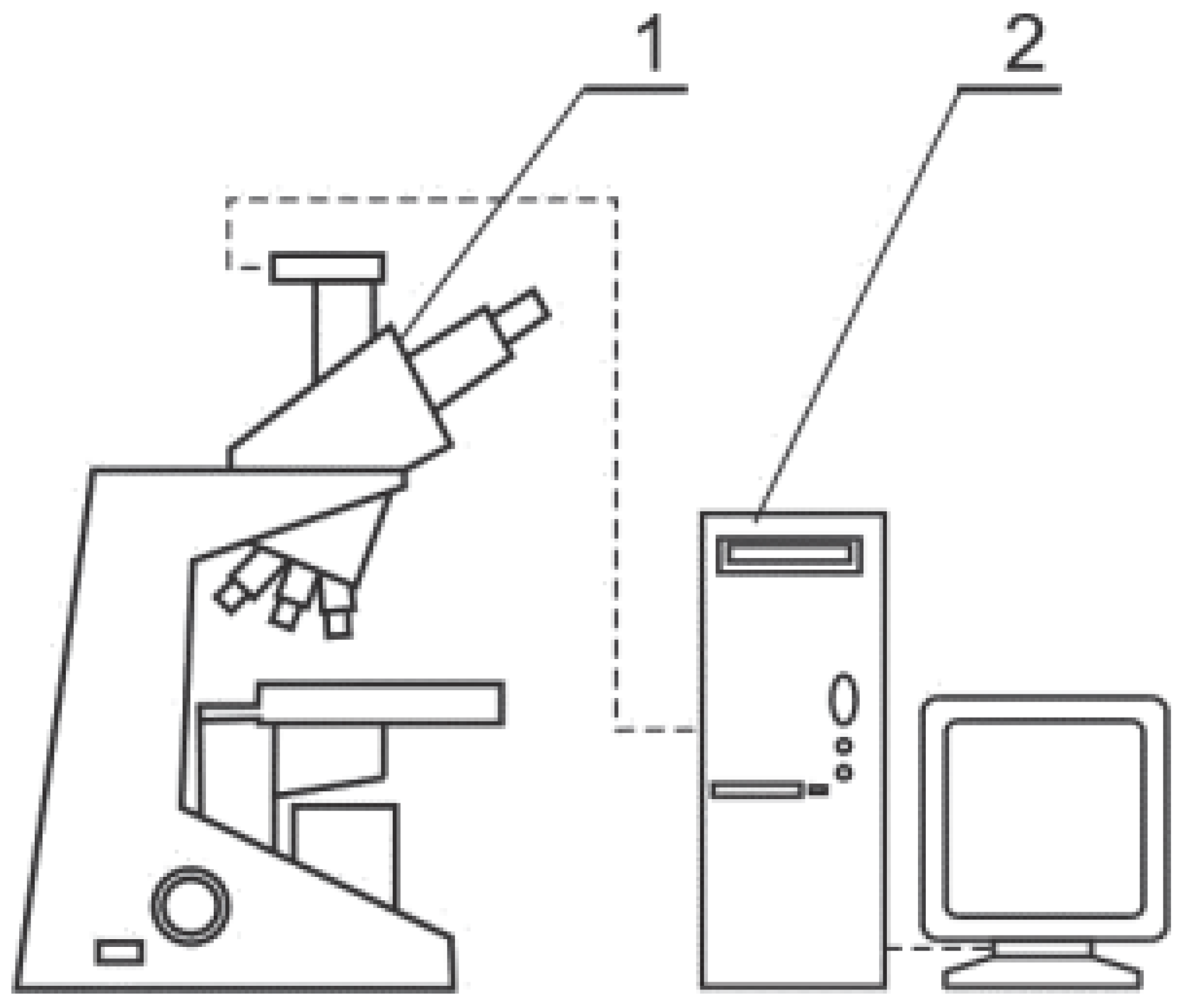
In order to determine the average particle diameter and the diameter distribution of the used catalyst, as well as the model materials (used in the further part of the study—quartz sand), a microscopic analysis was performed. A Nikon Eclipse 50i microscope (Nikon Corporation, Tokyo, Japan) equipped with an OPTA-TECH MI6 camera, 3 lenses (Plan 10x/0.25, Plan 40x/0.6 and Plan 100x/1.25), and the appropriate Capture 2.4 software was used. The diagram of the measurement system is shown in
Figure 1.
The rheological characterization included a detailed uncertainty analysis. Measurement errors were estimated as follows: viscosity ± 2%, particle diameter ± 0.5 µm, and pH ± 0.02. The Na-CMC solutions were prepared from industrial-grade material (>99% purity, MW = 90,000 g/mol) dissolved at 25 °C with continuous stirring for 60 min. Stability tests were complemented with sedimentation monitoring and visual inspection after one week. Spectrophotometric analysis is proposed for future work to quantify concentration gradients along the sample height.
Rheological properties were studied using a Physica MCR 501 rheometer from Anton Paar Company (Graz, Austria), which had a coaxial cylinder system. The measuring system was thermostated at a temperature of 25 ± 0.01 °C. The dependence of dynamic viscosity on shear rate was measured using the rheometer within the range of 0.1–1000 1/s for polymer samples, and within the range of 50–150 1/s for tests on samples performed after one month. It was decided to narrow the shear rates due to the importance of this range with regard to flow in pipelines in industrial installations that are involved in the combustion of solid fuels. Each measuring point was studied for 5 s.
The authors decided to use the Image-Pro Plus software 6.1 (Media Cybernetics Inc., Rockville, MD, USA) for the analysis of the sedimentation process of suspensions, following the methodology described in [
42], as sedimentation is a time-consuming process and this approach was chosen instead of the spectrophotometric method. The sedimentation process was analyzed using the Image-Pro Plus 6.1 software. Its key features include: extraction of objects in monochromatic and color images, counting and measurement of object parameters, a wide range of operations for performing arithmetic manipulations on images, geometric distortion correction, calibration, advanced modes for acquiring images from a vision camera, handling image sequences, and easy export of measurement results to Excel or other programs. The software allows automation of routine, time-consuming analysis procedures. It is efficient, user-friendly, and includes a Report Generator for routine studies. It also supports data exchange (images, macros, results) via the Internet directly from the program. The results obtained are reproducible and reliable, and the software can accelerate certain labor-intensive investigations.
3. Results
3.1. Rheological Studies
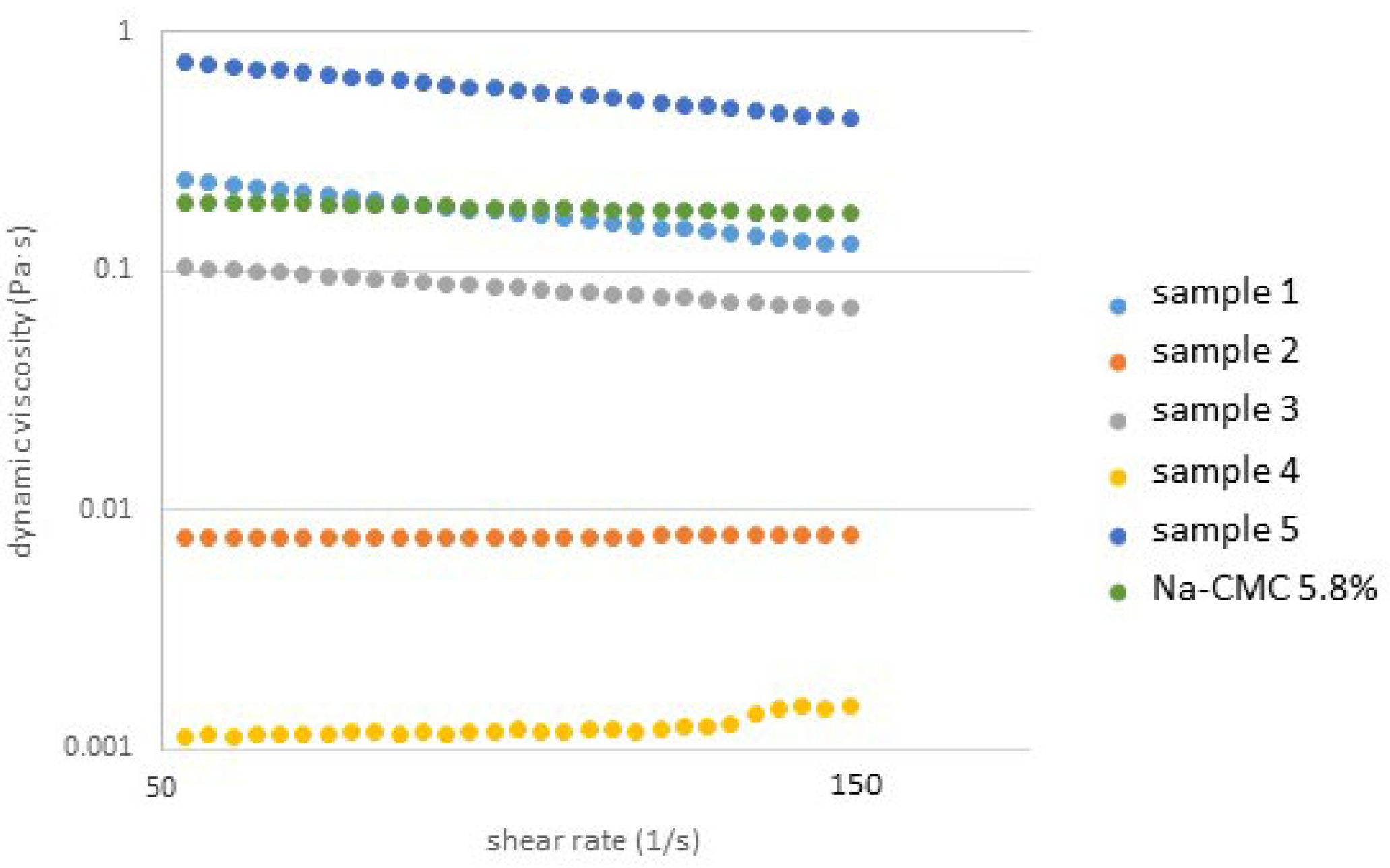
Figure 2 shows the viscosity curves for the tested samples in a given shear rate range.
The conducted studies show that the commercially used substance (sample 1) exhibits non-Newtonian properties and is shear-thinning. It is characterized by high viscosity, especially at low shear rates. The addition of the NaOH solution to the base polymer solution is responsible for its non-Newtonian shear-thinning liquid characteristic (samples 1, 3, 5). The same effect was observed for the proposed substitute without the need to add the NaOH solution. This is beneficial during the storage of the modifier, as it helps to maintain the homogeneity of the mixture. The slow movement of particles suspended in the medium, which results from a low shear rate and an increased viscosity, minimizes the risk of component separation. Shear-thinning fluids are fluids with cross-linked chains, the entanglement of which causes the high viscosity of the fluid. At low shear rates, the orienting nature of mixing is negligible and the Brownian motion dominates, which in turn causes the chaotic arrangement of molecules and the entanglement of polymer chains. In such conditions, internal friction is constant and maximum. With shearing of the fluid, their disentanglement occurs, which translates into lower viscosity. The shearing of such fluids by stirrers or spindles is also accompanied by the effect of the liquid climbing up the rotating cylinder. This occurs because the chains stretch and normal stresses occur with shearing. The fluid is then also pushed outward due to centrifugal forces, but in these places, there are already lower shear stresses, and the chains start to shrink again. This shrinkage is, however, insufficient for them to return to the original axis in which they were previously arranged, and they then pile up. The above observations suggest that these samples have a structure of cross-linked chains. The lack of such observations for polymer samples without the addition of NaOH means that the formation of such cross-linking is necessary. The observation of a positive effect of NaOH addition on the viscosity of the mixtures suggests that the ions that create it cross-link the polymer particles with each other. Considering that in the composition of the used polymer, two substances can be distinguished, e.g., 2-Methyl-4-isothiazolin-3-one and 5-Chloro-2-methyl-4-isothiazol-3-one, it can be concluded that the formation of bonds between the polymer compounds (containing electronegative groups) and Na+ ions is responsible for the cross-linking. This hypothesis is based on the electronegative nature of the exposed Cl or O atoms. We are therefore dealing with the salt effect. According to this theory, a similar effect would be produced by the addition of NaCl or another well-dissociating salt.
3.2. Particle Diameters
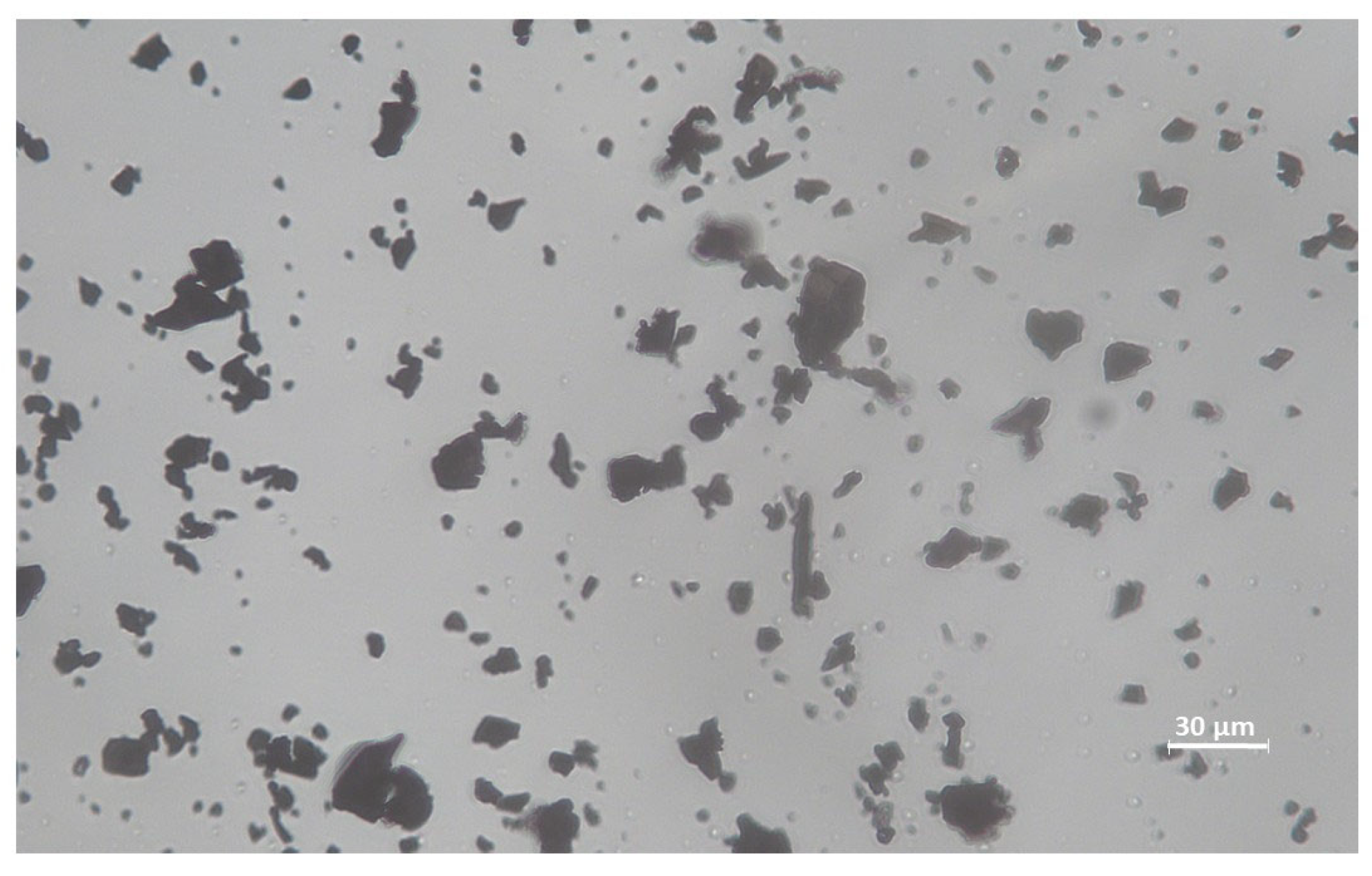
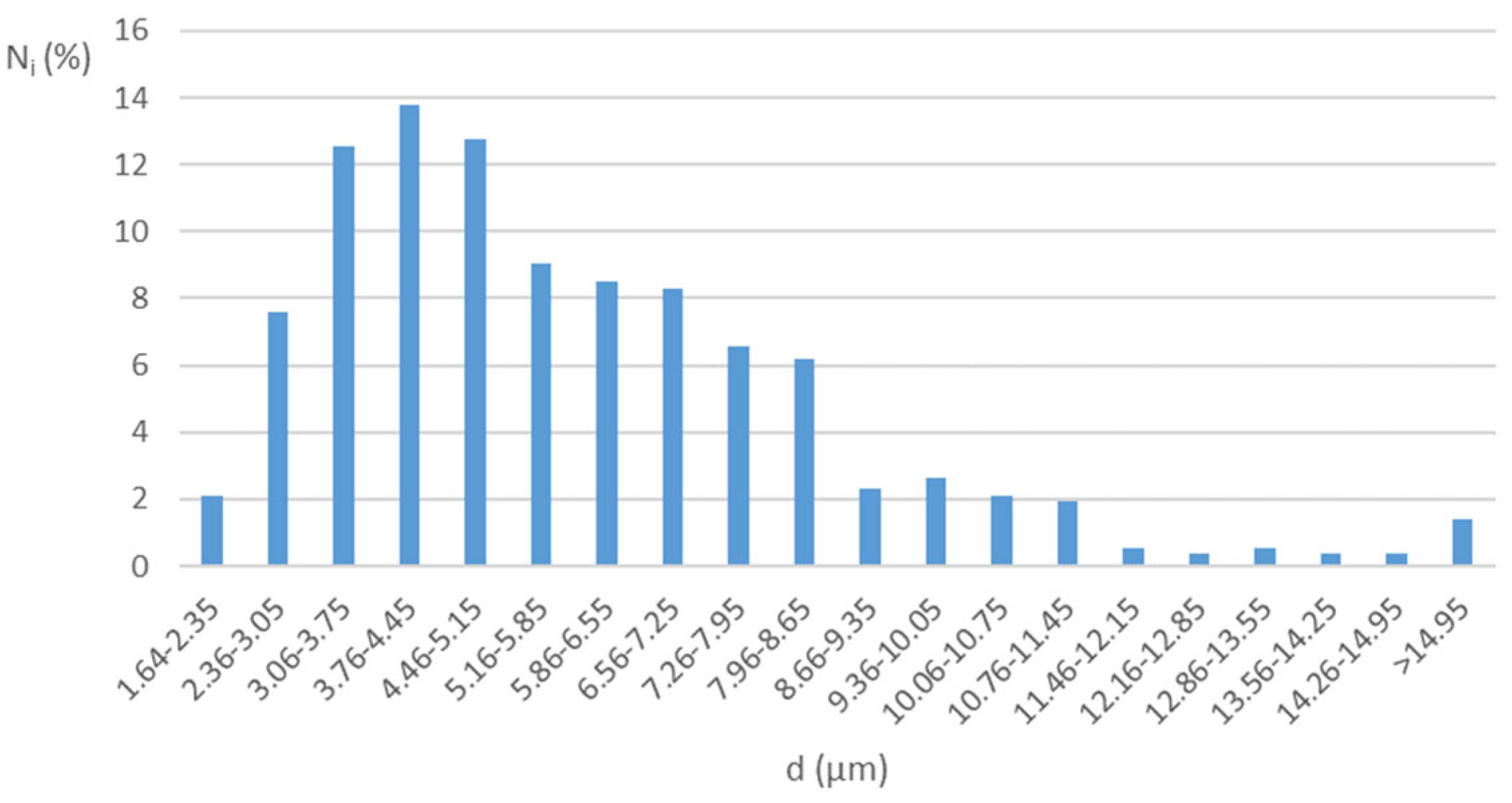
Figure 3 presents an exemplary photo of the particle. The arithmetic mean of the catalyst’s particle diameters, which was measured under a microscope, was determined to be d = 6.04 μm, whereas the standard deviation of the population was 2.90 μm.
Figure 4 shows the obtained particle diameter distribution.
The small size of individual particles is equivalent to their large total surface area, which translates into good catalytic properties. Catalysis involves surface reactions.
3.3. Sedimentation Tests
The settling of catalyst particles in a liquid is one of the main technological problems. For this purpose, 6 test tubes were prepared. Each was filled with solutions to a height of 12 cm, and then the same amount of catalyst was poured into each of them, and the contents were thoroughly mixed. The samples prepared in this way were set aside until the solid particles settled on the bottom. A series of photographs were taken that illustrated the changes that took place. It was observed that this process for the polymer sample without the addition of sodium hydroxide occurred within 2 min, while for the remaining samples, it took much longer. The samples were observed for the following days. During this time, it was noticed that gas began to be produced in the samples containing the sodium hydroxide. Observations were carried out for a whole week, but even after this time, the sedimentation process did not end, although it was observed that for the Na-CMC sample, it occurred the fastest (excluding the sample without NaOH). It can be suspected that the released gas is hydrogen, which comes from the catalyst’s activation reaction due to NaOH—according to the following reaction [
43]:
The sedimentation tests for sample 1 and the Na-CMC solution were carried out for a week. After this time, no delamination was observed for the NaOH-densified polymer samples. For the Na-CMC sample, a densification of the substance was observed in the lower part of the sample. However, it can be stated that this process is very slow, and that only a small part of the sample underwent delamination. Therefore, the substitute substance can be used for a long period of time—even after being stored for about a week. Sodium carboxymethylcellulose (Na-CMC) is a more environmentally friendly and sustainable choice when compared to the commercial product that is currently used in combustion processes. Na-CMC is non-toxic, biodegradable, and derived from natural cellulose (such as wood or cotton). This means that its impact on the environment is minimized. It does not require the hazardous activators (such as NaOH) that are needed for commercial products, which in turn results in a lack of the potential fire hazards related to the release of hydrogen gas. The absence of gas emissions, such as hydrogen, makes Na-CMC a more ecological option during storage and use. Additionally, Na-CMC is cost-effective and widely available, making it a practical option for industrial applications. While the commercial product may offer better stability during long-term storage, its production relies on energy-intensive petrochemical processes, which in turn contributes to it having a greater environmental impact and higher operational costs. Therefore, Na-CMC stands out as a safer and more eco-friendly alternative for improving combustion efficiency. From a broader perspective, the environmental benefits associated with safer and more sustainable modifier formulations should ultimately be evaluated under real operating conditions. Recent developments in real-time air quality monitoring systems [
44], including mobile and on-road measurement networks, enable continuous assessment of pollutant emissions directly at the point of fuel utilization. Such monitoring approaches provide valuable feedback on the effectiveness of combustion process optimization and catalyst-assisted fuel modification strategies, allowing laboratory-scale improvements in modifier formulation to be correlated with field-scale environmental performance. Integrating advanced monitoring tools with improved carrier systems may therefore support more informed decision making and contribute to the long-term reduction in environmental impacts associated with coal combustion.
Preliminary life-cycle assessment (LCA) indicates that Na-CMC has approximately 75% lower cradle-to-gate CO
2 emissions compared with acrylic polymers, mainly due to renewable cellulose sourcing and lower processing energy [
45,
46]. Economic analysis also shows that Na-CMC (2.5 EUR/kg) can reduce operational costs by about 40% compared with acrylic systems (4.2 EUR/kg).
The sodium salt of carboxymethylcellulose, which was tested during the studies, is a product with a molecular weight of 90,000 g/mol. In order to obtain the desired rheological properties of the solution, it was necessary to achieve a concentration of 5.8%. The cost of obtaining a 5.8% solution of Na-CMC is relatively high, and similar to the cost of producing the current commercial carrier. However, when using Na-CMC with a molecular weight of 725,000 g/mol, the required concentration that is needed to achieve the same properties as the commercial product drops significantly to about 0.8% [
41,
47]. This reduction in concentration directly reduces the total cost of the solution, which in turn means that the proposed solution is economical.
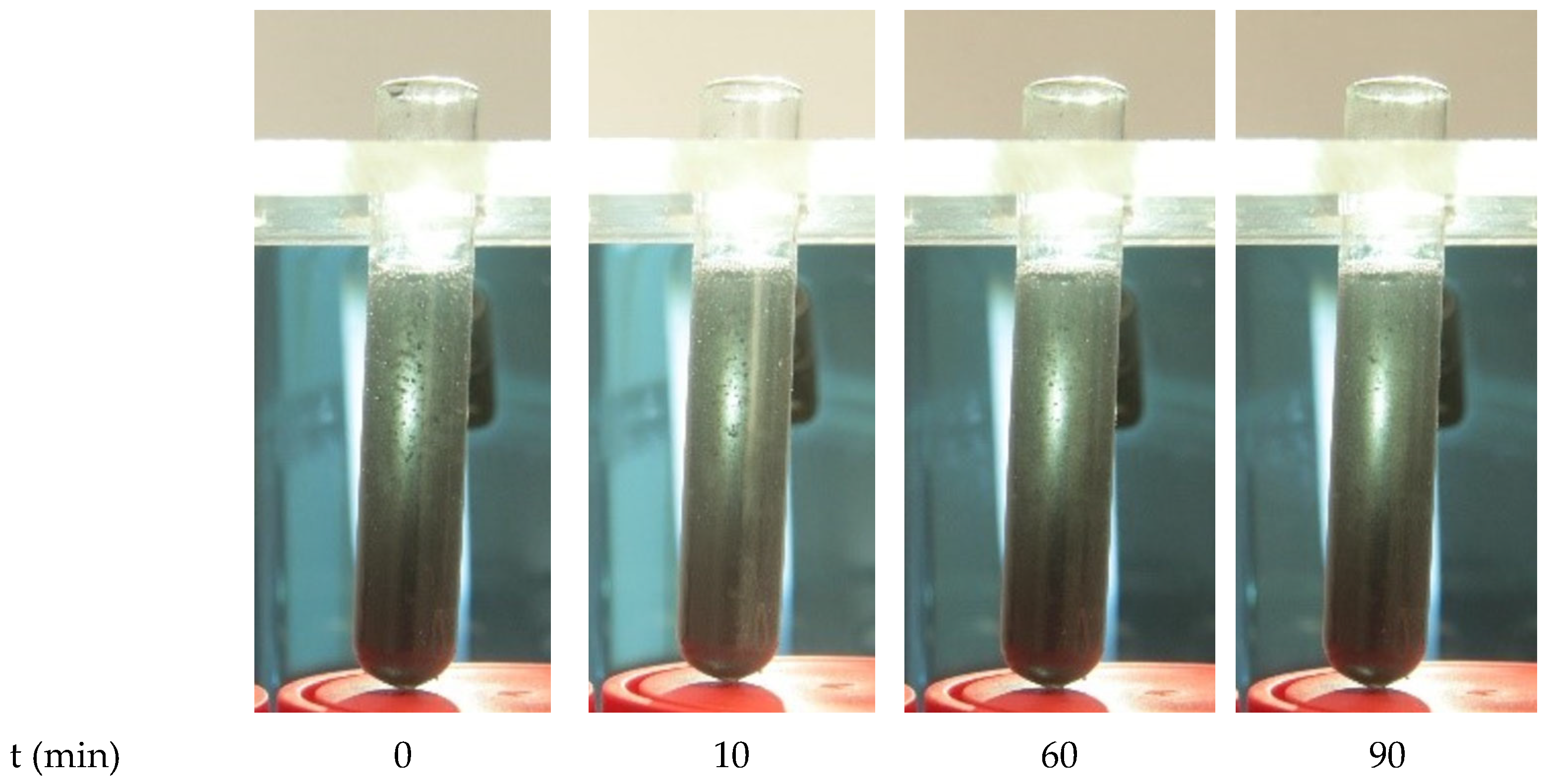
Due to the very slow sedimentation process in the case of the polymer sample, it was decided to repeat the test for sample 1, but this time with the back of the sample being illuminated. The course of this settling is shown in
Figure 5.
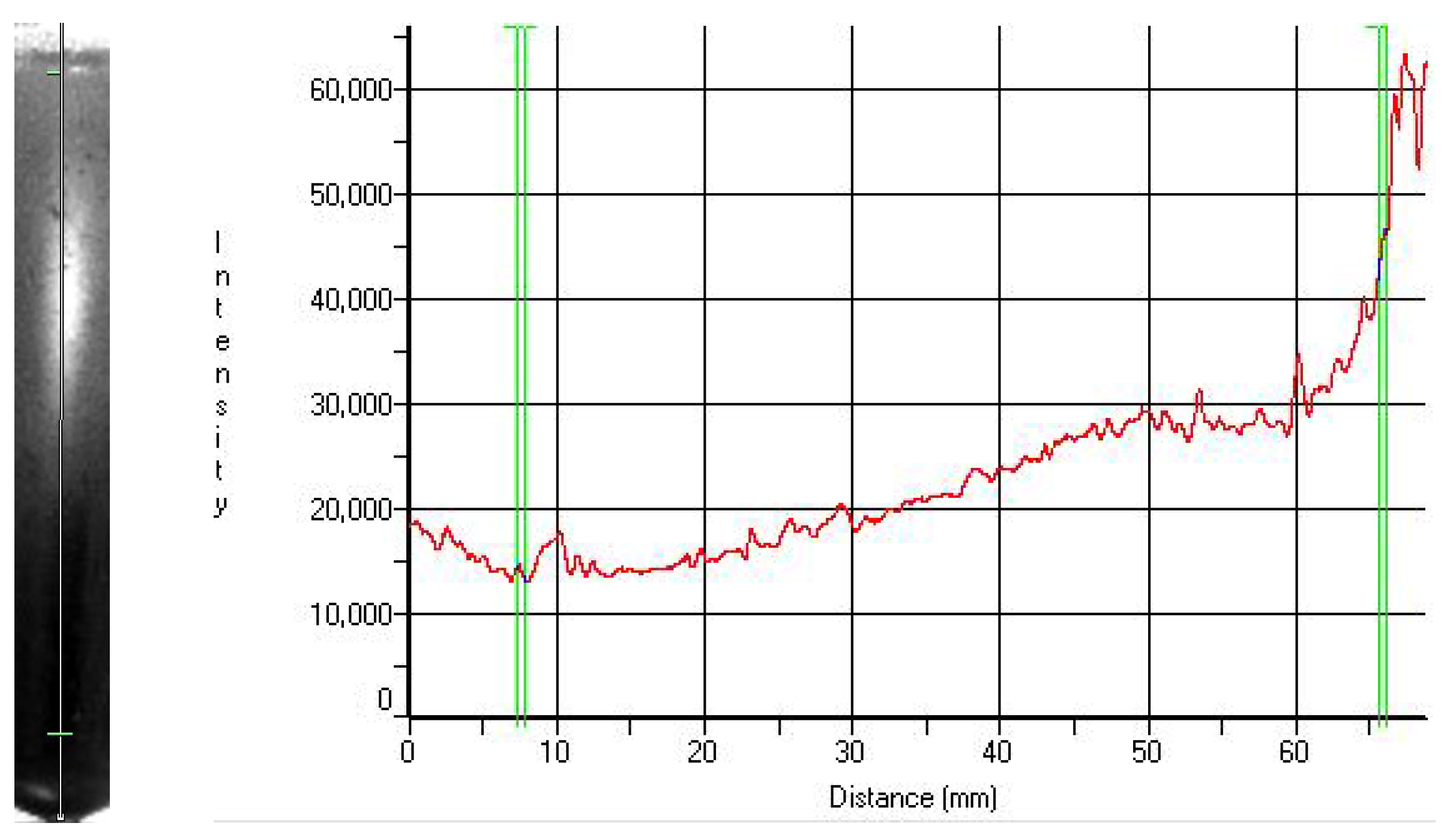
Image processing enabled visualization of the distribution of suspension layers during the sedimentation process (
Figure 6). In the first stage, a small number of particles settle at the bottom. Their distribution in the remaining layers is uniform, with intensity similar to that observed in the bottom layer. Next, a zone of variable concentration forms above the sediment, slightly differing from the concentration in the developing sediment. The densification of the growing sediment increases over time. A difference in particle concentration is visible between the sediment layer and the forming clear liquid layer, while the height of the sediment layer continues to increase. The final stage, in which the suspension separates completely into sediment and clear liquid, was not observed, indicating a high stability of the system and its suitability as a modifier for the combustion process. The graph (
Figure 6) shows a region of foam with high brightness (approximately 66 mm from the bottom of the test tube) and a region corresponding to the suspension (extending down to the bottom of the test tube). Uniform brightness corresponds to a uniform distribution/concentration of particles in the suspension. A low degree of sedimentation was observed in the examined sample.
During the analysis of the photos, it was observed how slowly the process of air bubbles, and probably the hydrogen moving upwards, is. It was found that an individual gas bubble covered a distance of 10 mm in 1 h. This speed shows how much resistance the liquid puts on moving bodies. It is also worth noting that the density of air (approx. 1.2 kg/m
3) is approx. 1000 times smaller than the density of the liquid based on water (1000 kg/m
3). Additionally, the bubbles, unlike the catalyst particles, have a size that is visible to the naked eye. Therefore, remembering that the speed of a single particle falling is directly proportional to the diameter of the particle and the difference in density, the process of gas escape should occur much faster than the speed of the catalyst falling. This process, however, is very slow. Based on the formula describing the free fall speed of a single particle,
Taking into consideration the fact that, in this case, we are dealing with a stratified movement, we can assume that the hydraulic resistance coefficient is equal to
Considering that the movement of gas bubbles is an analogous phenomenon, but with the opposite direction of movement (due to the dominant force of the buoyancy of the gas over the force of gravity of the gas and friction forces), the above equation can be transformed into the following form:
The formula shows that the dependence of the velocity of the rising or falling of a particle is a function of the diameter of this particle. Assuming that the size of the gas bubble is 100 μm and the diameter of the catalyst particle is about 5 μm, this means that the catalyst particle is 20 times smaller. This difference in size induces a velocity 400 times slower for the catalyst than for the gas. Additionally, the fact that there is a greater difference in density between the gas and the liquid than between the liquid and the catalyst also has an effect.
3.4. The Falling of a Single Particle
The next stage of the research included a test to check how quickly a single catalyst particle would fall to the bottom. No free falling phenomenon was observed for sample 1 (carrier liquid prepared according to an industrial recipe) and the proposed alternative substance. This was probably due to the too high surface tension and high viscosity of the liquid, which meant that the resistance of the liquid exceeded the force of gravity acting on the particle. An attempt was made to accelerate the fall of the particle (applied in the form of an agglomerate—“lump”) by applying external pressure. It should be noted that in both analyzed cases, the agglomerates that fell had a total diameter much larger than the diameter of a single catalyst particle. For comparative purposes, it was decided to measure the fall rate of these smaller agglomerates. Therefore, a series of photos was taken at an interval of 1 s using an automatic trigger. The photos were then processed in a graphics program. The error of measuring height was 1 px, which translates to 0.06 mm.
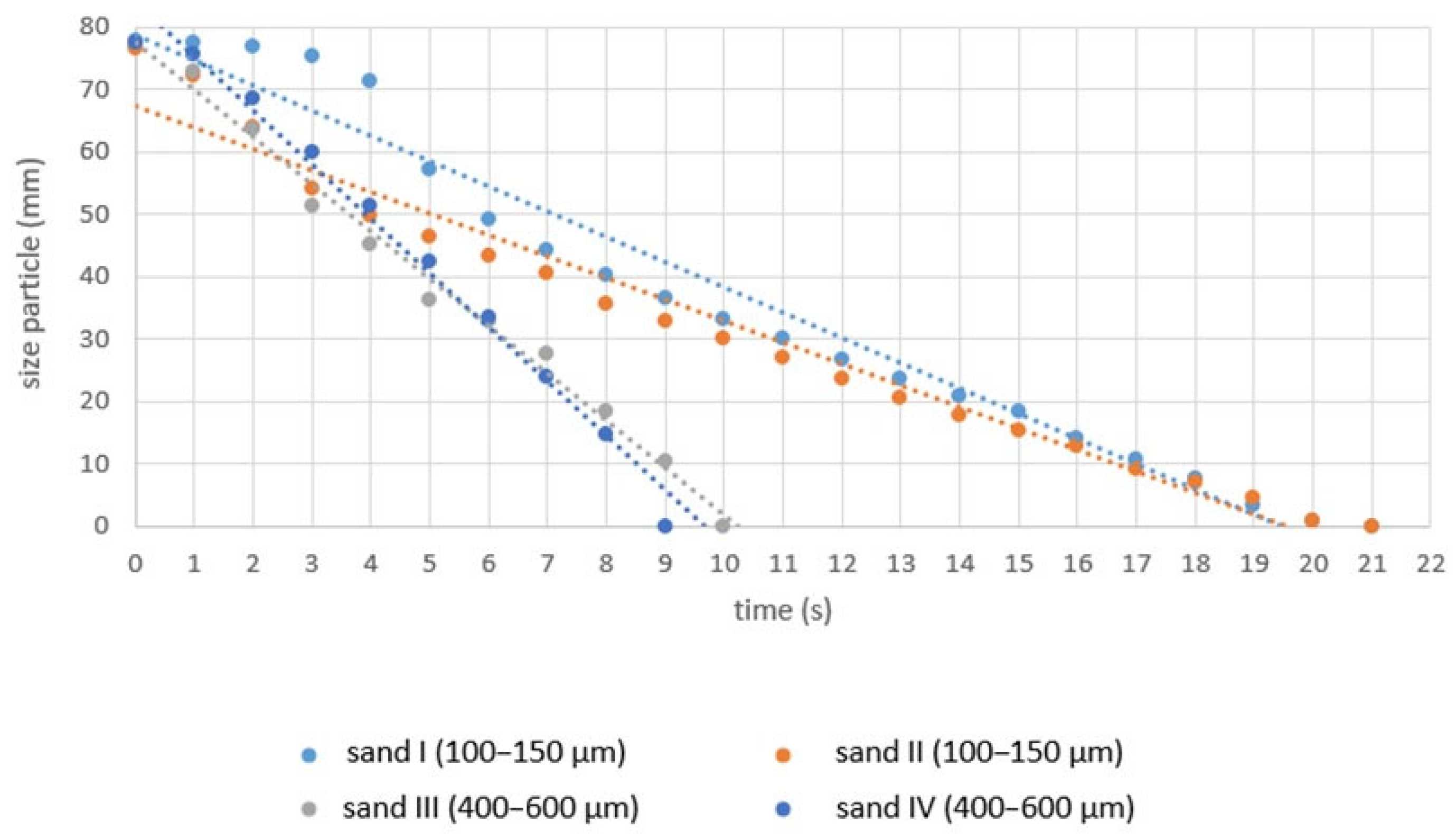
In the last planned part of the research, free fall tests of sand particles of known granulation were carried out. The change in the height of a particle over time—along with trend lines—are shown in
Figure 7. Measurement uncertainties are the same as in the case of the analysis of the catalyst fall rate in the Na-CMC solution.
The use of larger sand particles was not intended as a direct quantitative model of catalyst particle sedimentation, but rather as a qualitative and comparative visualization tool to confirm the extremely high hydraulic resistance of the carrier fluid. The catalyst particles (~6 μm) remain in the Stokes regime and exhibit negligible free settling under the tested conditions. This made direct observation and velocity determination experimentally impractical. Therefore, larger particles were intentionally selected to force observable motion to demonstrate that even particles orders of magnitude larger than the catalyst exhibit very slow settling. The measuring of the settling velocity was conducted in the case of selected particles. Their settling was only slightly disturbed by the settling of larger groups of particles (which carried other particles with them). Despite such a choice, this effect can be seen in the initial phase of settling, even for the selected particles. The settling velocity values were averaged for samples of the same granulation. For particles with a diameter of 100–150 μm, the average velocity was 3.746 mm/s, and for 400–600 μm, the average velocity was 8.138 mm/s. It should be emphasized that this is the sedimentation velocity of larger agglomerates, the size of which is many times larger than the average diameter of single catalyst particles (which was approx. 6 μm).
4. Conclusions
In this work, a commercially used modifier for coal dust combustion was investigated with a focus on the physicochemical properties of its liquid carrier. The average diameter of catalyst particles was determined, and the rheological behavior and stability of the reference polymer-based system were analyzed. Based on these results, an alternative carrier formulation using an aqueous sodium carboxymethyl cellulose (Na-CMC) solution was proposed.
The Na-CMC-based carrier exhibits shear-thinning behavior and viscosity levels comparable to those of the commercial acrylic polymer, within the shear-rate range relevant to industrial transport and injection systems. A key advantage of the proposed formulation is that it does not require the addition of sodium hydroxide, which in the commercial system is used solely for viscosity control and leads to undesired gas evolution during storage. The absence of alkali additives improves operational safety without affecting the chemical activity of the catalyst.
Sedimentation observations indicate that the Na-CMC solution provides sufficient suspension stability for short-term storage and handling of catalyst-containing modifiers. Owing to its non-toxicity, availability, and potential cost benefits, the proposed carrier can be considered a viable alternative to currently used commercial formulations for injection-based delivery systems. However, detailed spray atomization studies and direct combustion performance measurements are required for full validation.
Future work will include quantitative sedimentation analysis under variable-temperature and -humidity conditions, injector-scale atomization modeling, and comparative studies with other cellulose-based polymers (e.g., HEC, HPMC) to identify optimal carrier systems for industrial-scale applications.



 ,
,