Article

Possible Merits of the Orchestra Pit Covering for Speech Activities in Baroque Theatres

1
Department of Engineering and Architecture, European University of Tirana (UET), 1000 Tirana, Albania
2
Department of Energy, Politecnico di Milano, 20156 Milan, Italy
3
Department of Architecture and Industrial Design, University of Campania “Luigi Vanvitelli”, 81031 Aversa, Italy
*
Author to whom correspondence should be addressed.
Appl. Sci. 2026, 16(2), 819; https://doi.org/10.3390/app16020819
Submission received: 9 October 2025 / Revised: 22 December 2025 / Accepted: 26 December 2025 / Published: 13 January 2026
(This article belongs to the Special Issue Acoustics Analysis and Noise Control for Buildings)

Abstract

Acoustically, Baroque theatres have prove remarkably appropriate for opera, and, in the past, little distinction was drawn in design between drama and opera use, except for the inclusion of an orchestra pit, because both music and words were audible and balanced, reverberation times being shorter than in concert halls but longer than in speech auditoria. In a drama configuration, scenery is set in the fly tower on stage, while for opera pieces, in most cases, the orchestra pit platform raises to the main floor level of the stalls to set additional seats rows. Considering the characteristics of the Opera di Roma (IT), the case study, the main physical parameters that contribute to the sound quality are evaluated and compared in relation to the pit position level, in order to understand the possible merits of the covering seats on the pit surface for drama representations and, more generally, for speech activities. Eight different configurations are compared and, to evaluate the acoustic parameters’ sensitivity, the JND (just noticeable difference) is analyzed. The parameters’ trend is described.

1. Introduction

The birth of Baroque theatre [1] can be traced back to the 16th century with the birth of melodrama, the so-called ‘recitativo’. It represented a new melodic language, born from the study of ancient music and the search for the right tuning, in which the music had the task of enhancing the meaning of the words. From Florence, melodrama soon spread to Rome, Venice, and Naples. The theatre form was fast consolidated from Venice throughout Italy and Europe.
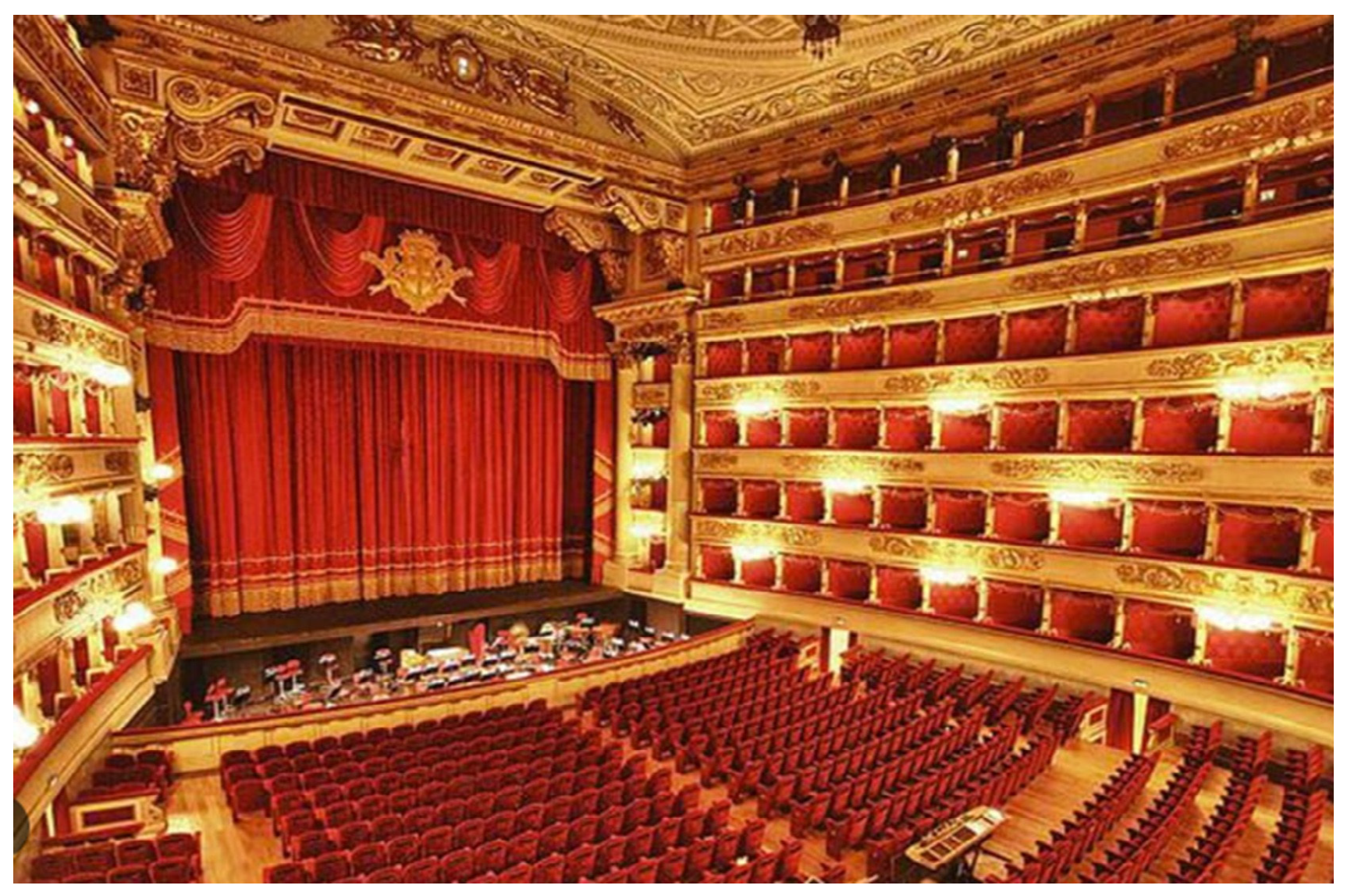
The new shape of the Baroque theatre was based on the horseshoe plan and dominated theatre design for 200 years until the 20th century [2,3,4] (Figure 1). Its success as a horseshoe form had as much to do with social reasons than with theatrical virtues: people seeing and being seen were a primary concern in these halls, even if the sightlines on stage did not work properly. This could explain why so little was done to implement simple remedies to what is considered the greatest defect of Baroque theatre today, that of the poor view from the side boxes to the stage [5]. Acoustically, the Baroque theatre and its descendants proved remarkably suitable for opera, and little distinction was made in the design between different theatrical activities and operatic use [6,7], except for the inclusion of an orchestra pit, to make audible and balanced both the music and the words from the stage [8].
Orchestra pit acoustic behaviour is documented, and large collection of studies are found [9,10,11,12], including studies on the fixed cover versus the open part of the orchestra pit [13] and risks of the musician exposure inside [14,15]. A comparison between a closed and an open pit configuration, aimed at evaluating possible significant differences in the acoustic field, is still missing.
In Baroque theatres and in opera houses in general, reverberation time is usually shorter than in concert halls, between 1.2 s and 1.6 s, and other parameters must be considered to ensure that the audience is enveloped or surrounded by the sound. To preserve this specific heritage, a standardized procedure for acoustic measurements in the main hall was defined by specialists over several years [16,17,18], while acoustic standards and regulations for buildings were identified [19,20,21,22].
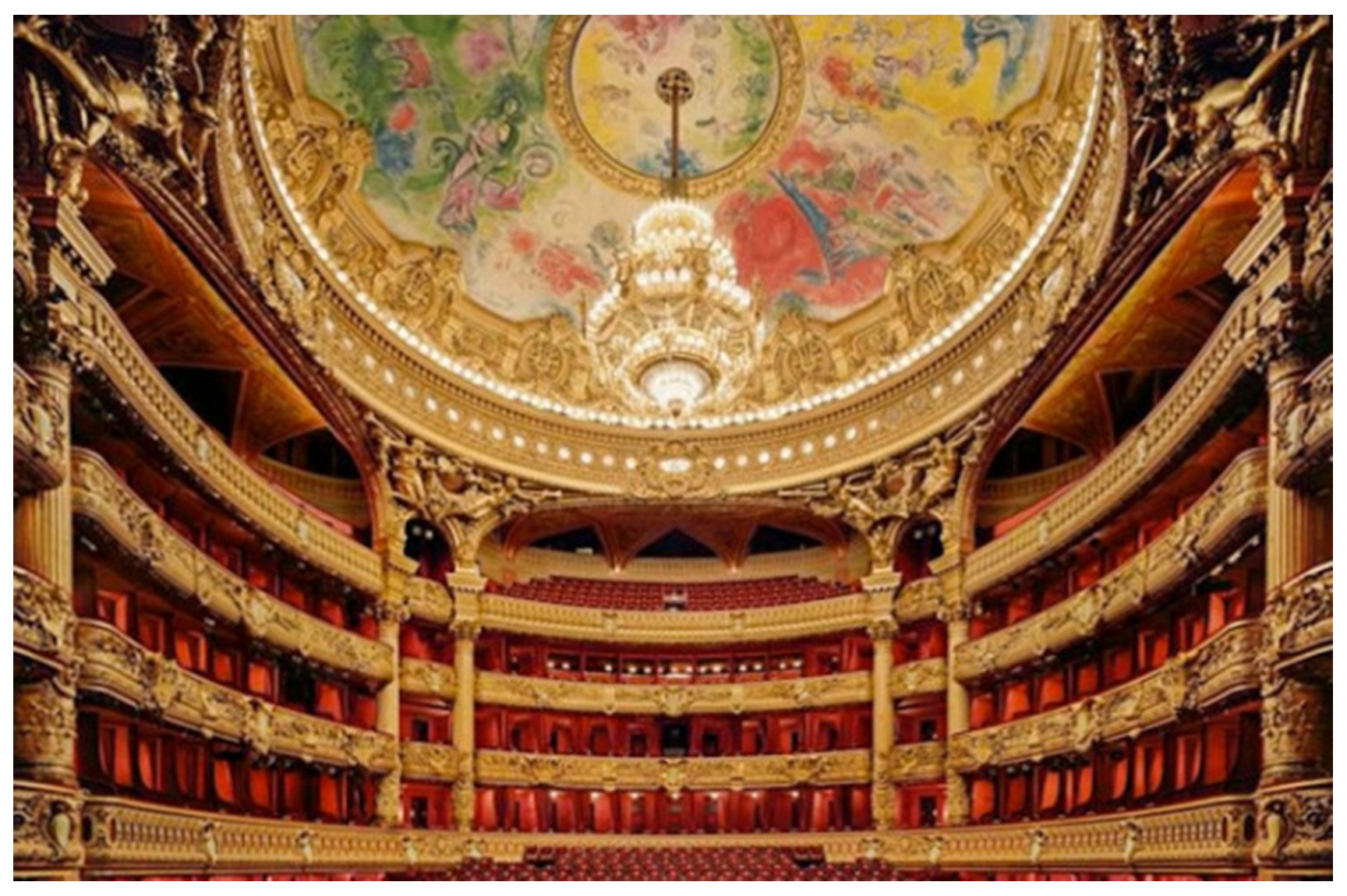
The Baroque theatre style, also called ‘teatro all’italiana’, was firmly established in previous centuries throughout Europe [23,24] (Figure 2), constituting an architectural heritage of enormous importance, a symbol of civilization [25], as well as serving as a reference for new opera projects over time [26]. Only in some countries, especially in England, were some of them built specifically for drama representations.
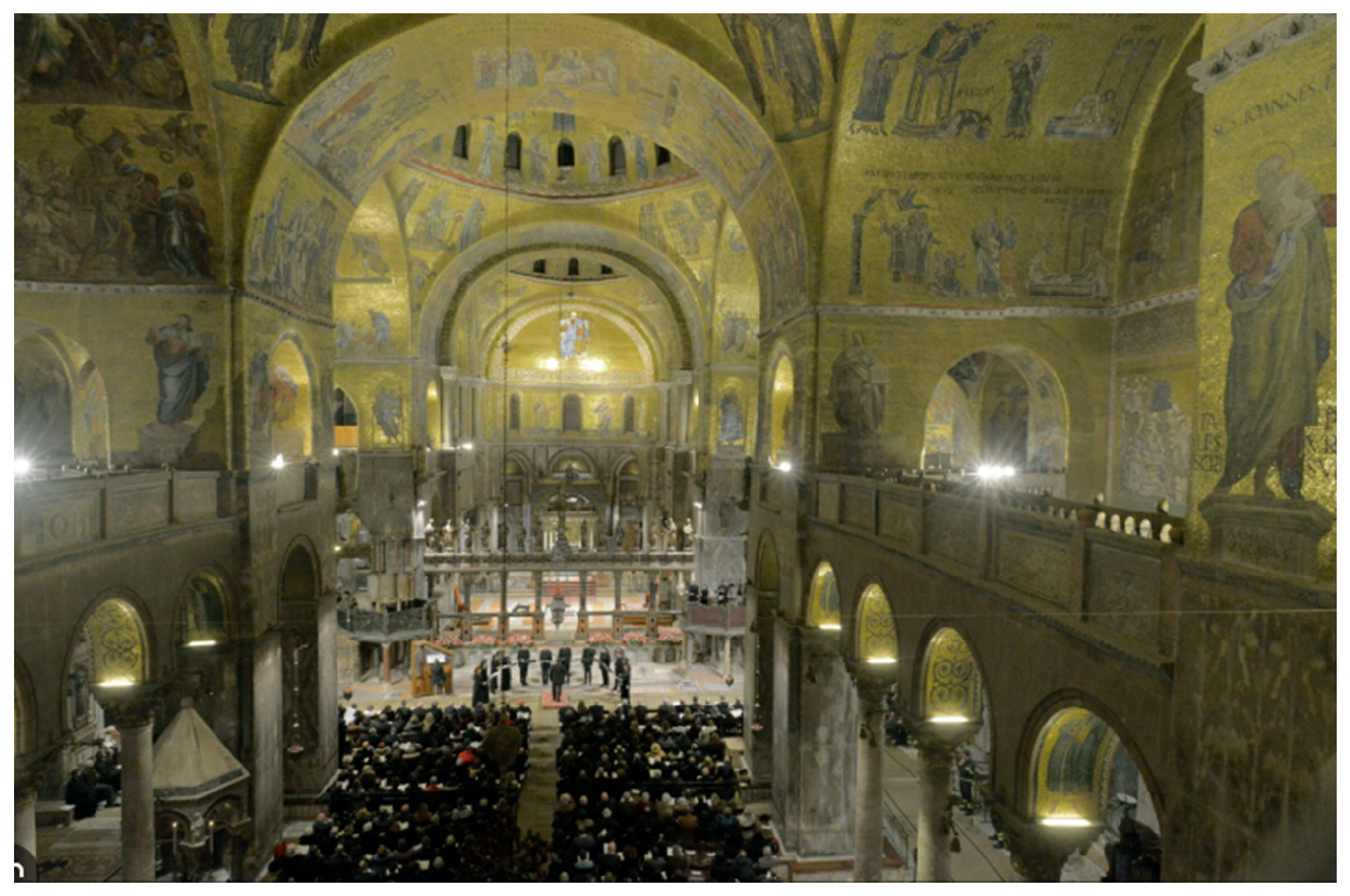
On the Italian peninsula, the heterogeneous composition of the audience at that time explains the variety of entertainments staged throughout the 19th century, for which an open orchestra pit was not always requested. Over the course of about three centuries, more than a thousand theatres were built in Italy [27,28], with a horseshoe-shape equipped by an orchestra pit. Most theatres in medium-sized towns hosted a variety of prose, musical, dance performances, concerts, declarations, festivals, pedagogical events, and magic and acrobatic shows throughout the 19th century: “only the larger theatres specialized exclusively in opera. Most of the other theatres staged a variety of shows, not only opera (serious or comic) but also prose, occasional ‘academies’ (concerts) thanks to visiting instrumentalists, equestrian or acrobatic performances, even monkey shows” [29]. At Medicina (near Bologna), for instance, one finds evidence of rope dancers, acrobats, and exotic animal shows, as also occurs in the Ristori Theatre (Verona) [30,31]. On the contrary, some provincial theatres explicitly excluded these forms of performance in their regulations (e.g., the Teatro Accademico in Castelfranco Veneto). This trend has continued over time and is still present today. Especially in Italy, most Baroque theatres are publicly owned and generally require large sums of money to be restored and returned to operation. Nevertheless, in the most recent cases of renovation, the tendency after the restoration to use the theatre as a multipurpose space is confirmed, requiring an automatized orchestra pit to raise the platform for prose activities, because spaces dedicated to just a single use are often too expensive to maintain. The same trend is found in auditoria, circuses, churches [32,33,34,35] (Figure 3), and generally in public buildings, which need to be used not only for their main purpose, but also for many different entertainment activities.
In using Baroque theatres for different activities, for which the pit was not necessary, technologies were soon developed to cover it—first by installing machinery for more complex and dynamic staging, and later to raise the pit platform to the stalls’ level and install removable or retractable seats, increasing the hall layout flexibility.
Especially after a renovation process, the modern tendency is to add elements in the hall able to significantly impact the sound field, the so-called “variable acoustic elements”, which optimize the acoustic field according to the running activity, i.e., the multifunctional use of theatre space has become necessary in modern society [32]. At the same time, a significant debate has arisen regarding the appropriateness and effectiveness of stage tower extensions (La Scala in Milan [36]), the restoration of ‘Italian-style’ theatres destroyed by fire (La Fenice in Venice [37], the Petruzzelli in Bari [38], and the San Carlo Theatre [39]), and, generally, the possibility of better targeting the restoration work or design processes to increase flexible and variable acoustic elements both in the hall [40] and in rehearsal rooms [41,42] of the “Teatro all’italiana”, comparing the theatre space with other multipurpose spaces [43], which are characterized by many configurations with different acoustic field optimization according to the referred activity.
As the hall volume decreases when the pit is closed and the seating covering adds both the seat capacity and the quantity of high-absorption surfaces in the hall, this paper aims to find out whether the orchestra pit covering with seats significantly impacts the sound field, i.e., whether it can be considered a variable acoustic element affecting the sound quality of a theatre in supporting speech activities or drama representations. Fly tower configurations according to these activities are studied, combined with both an open and a closed orchestra pit, according to the main used layout suggested by different theatre directors.
This article is part of broader research on how the correct use of a Baroque theatre can be organized nowadays, preserving the building heritage and the acoustic field, according to the different possible requests of new theatrical activities, while studying whether a dynamic pit platform—rising up and down and covered by seats at stalls level—can act significantly on the acoustic field of the hall.
Firstly, in Section 2, the stall seat distribution and their acoustic properties are considered; Baroque theatres’ main acoustic goals, if used for drama representations and speech activities, are specified. In Section 3, the case study “Opera di Roma” is presented. Four configurations for speech activities are identified according to theatre managers’ suggestions, both with an open and a closed pit (covered by seats) and analyzed in detail. Conclusions follow.

2. Baroque Theatre Stalls for Opera and Drama

In a horseshoe-shaped theatre, the stalls are surrounded by many levels of boxes, the so-called “palchetti”, in which, in most cases, the highest level is replaced by a continuous balcony.
The audience is distributed both in the stalls, in the “palchetti”, and in the upper gallery; the ratio between the seat number in the stalls and the theatre seat capacity varies for every single building, while the ratio between the global seat capacity and the volume usually varies from 7 to 9.
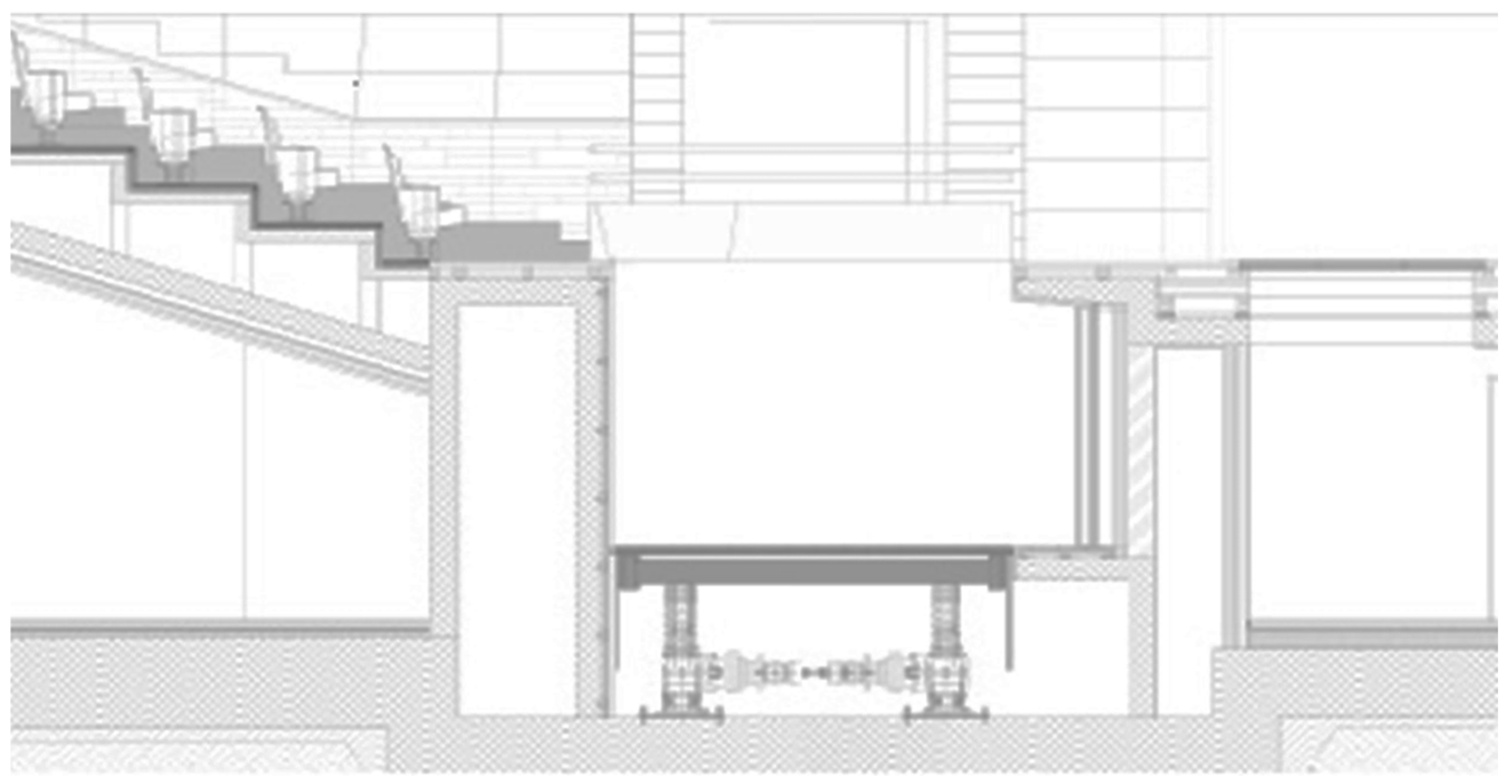
While most boxes are characterized by poor view and low direct sound [5], the stalls seats are set with a frontal view on stage and are characterized by the direct sound from stage. The stall floor was usually tilted at a low slope, while the stage was tilted in the opposite direction to optimize the scene perspective effects. In modern opera houses, on the other hand, the stalls are more inclined due to new stage machinery, which requires a horizontal stage; therefore, in this last case, more inclined stalls are mandatory to adjust the sight lines. New stage machines are also installed to move the orchestra pit up and down, and to place additional rows of seats, if necessary (Figure 4).

2.1. Seats Distribution and Properties

The seat distribution in the stalls depends on the original seat design and the current safety standards that vary from country to country, and in most opera houses, for drama configurations, the orchestra platform is raised to set additional seats at stalls level.
In Baroque theatres, as in auditoriums and concert halls, the seating area represents the most important absorption surface of the hall [44,45,46], so the qualification of their absorption coefficient, both in the presence and absence of people, becomes one of the main data for the acoustic analysis.
A possible criterion to estimate the seat absorption coefficient is to carry out the measurement in a reverberation chamber [47,48,49], characterizing it in the presence and absence of people. This process allows the identification of the sound field differences from the occupied room to that of the empty space. The sound absorption caused by the audience, in fact, is mainly due to people’s clothing. Since the clothing is generally not very thick, this absorption is considerable in the mid- and high-frequency range, peaking at around 2000 Hz, then decreasing, while in the low-frequency range it remains low.
It also depends on the type of seat, on the seating arrangement, on the density of occupancy, on the material of the sides of the seating areas, and on the interruption of seating blocks by aisles, stairs, etc.
Because in Baroque theatres people are seated very close to each other, it is correct to relate the absorption of the audience and the areas covered with seats [50,51] not to the number of seats involved, but to the area of their exposed surface.
Armchairs can be distinguished mainly by the percentage of upholstery. Generally, in the literature, there is a wide range of audience absorption coefficients, and seats are divided into three macro categories: ‘lightly upholstered’ (LU), ‘medium upholstered’ (MU), ‘heavily upholstered’ (HU). The second one is usually referred to old seats, while the third one is mostly referred to modern armchairs, for which differences between an occupied and an empty condition are minimized. The following table (Table 1) shows the absorption values published by Beranek and Hidaka in 1998 [52].
The difference between the unoccupied seat absorption values and those with people increases with increasing frequency for medium and heavily upholstered seats. In the case of heavily upholstered armchairs, the difference is approx. 10%. This difference grows to approx. 25% if seats are less upholstered. To evaluate the additional seat absorption area on the pit platform at stage level, the pit surface must be defined first.

2.2. The Pit Platform

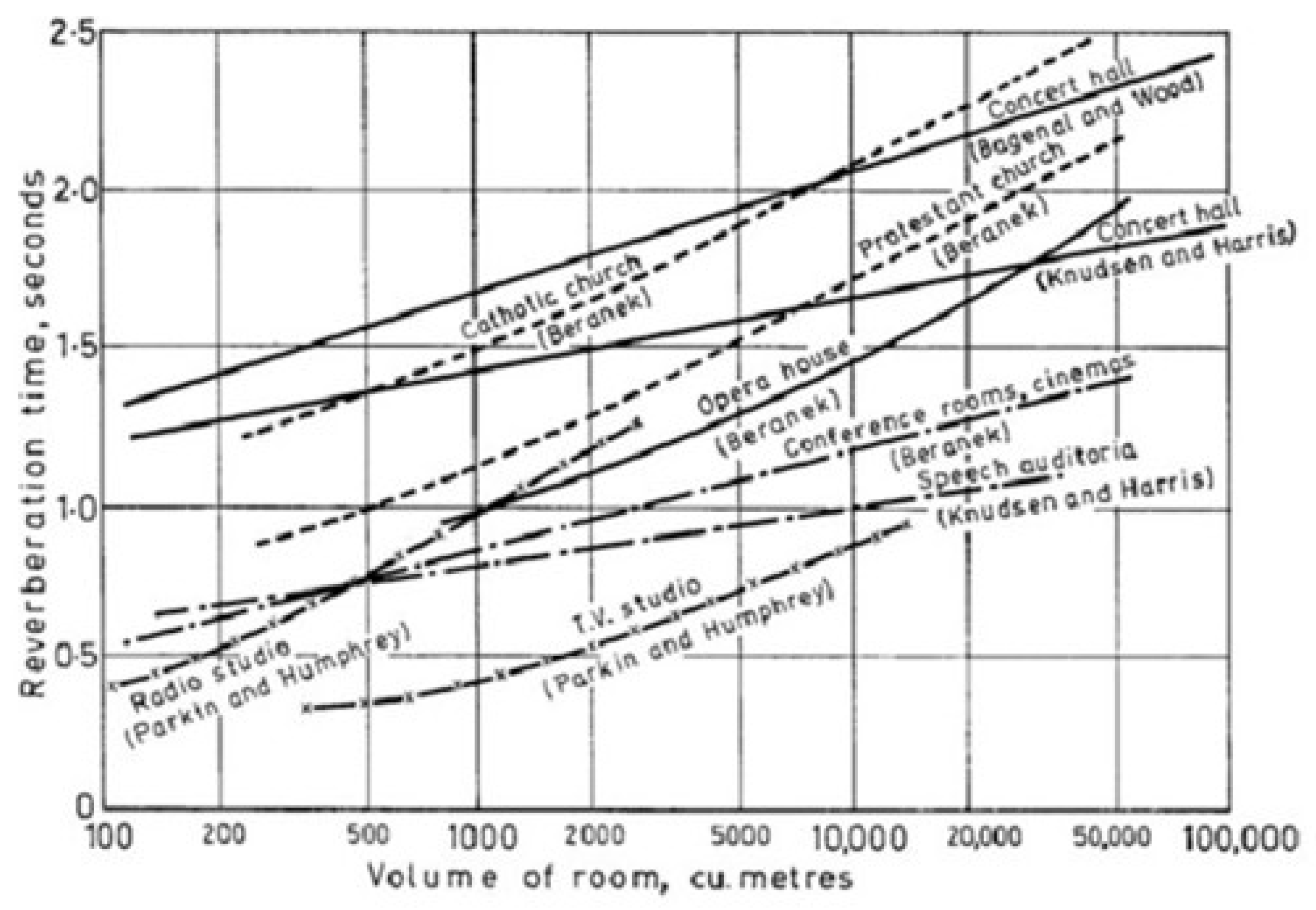
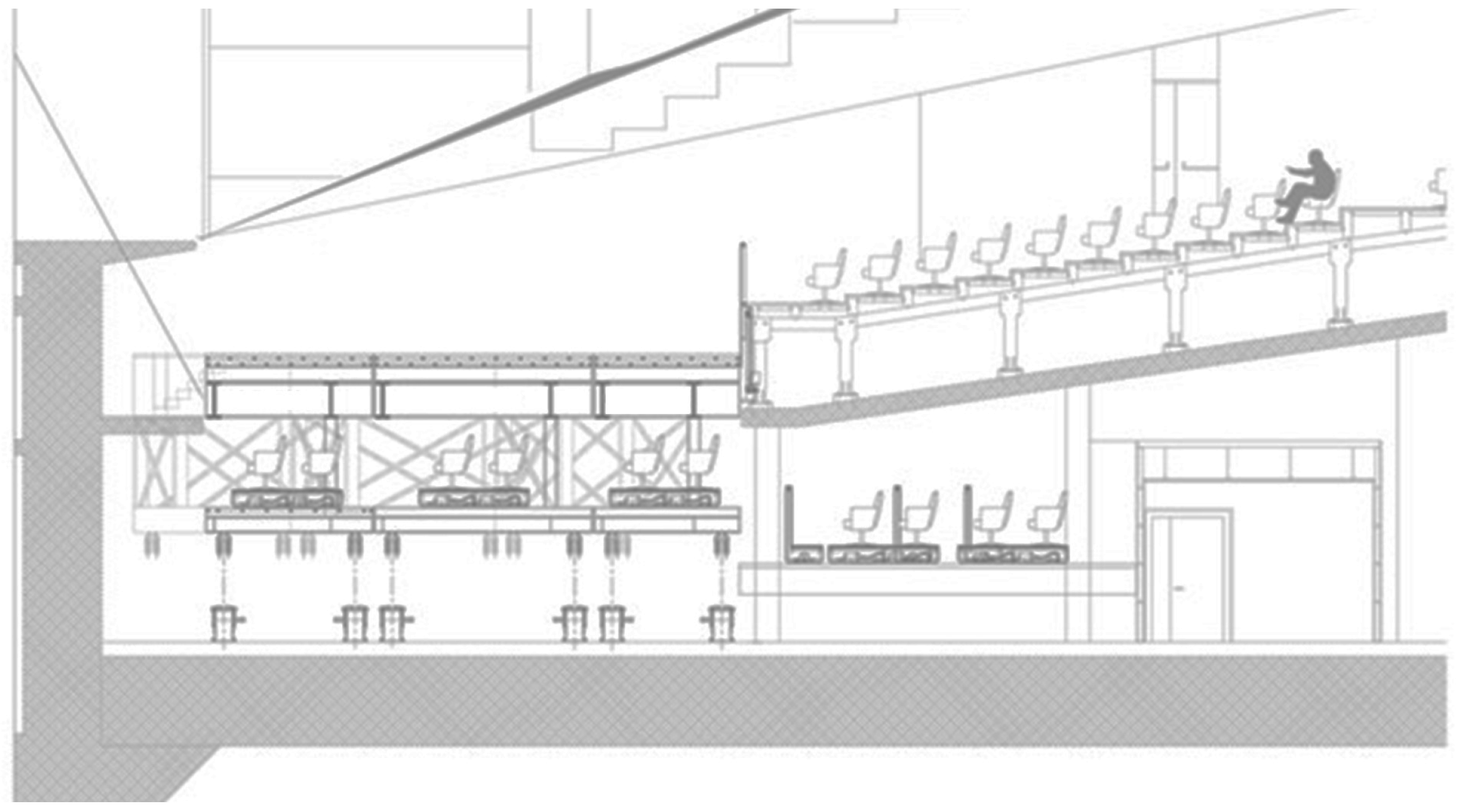
Usually, the orchestra pit dimensions increase with an increase in the theatre seat capacity, i.e., with the volume’s increase. In fact, an optimal range is fixed for the ratio between the theatre volume and the total seating capacity, characterizing the acoustic field according to the possible activities (Figure 5) inside the space. In small theatres, the orchestra pit is usually made of a single platform, while in bigger theatres, the orchestra pit is built with two or three platforms (Figure 6), the configuration of which depends on the theatre programme.
The platform surface refers only to the stall opening and must not be confused with the total pit surface, which may extend significantly below the stage. Examples of platform dimensions follow (Table 2).
Generally, three main orchestra pit sizes are identified, while the average pit height remains fixed at ca. 1.6 m [55]:
  • A small orchestra pit, which accommodates approximately 15–25 musicians depending on instrumentation;
  • A medium orchestra pit, which accommodates approximately 30–60 musicians depending on instrumentation;
  • A full-large orchestra, a symphony orchestra, with 80–100 musicians or more.
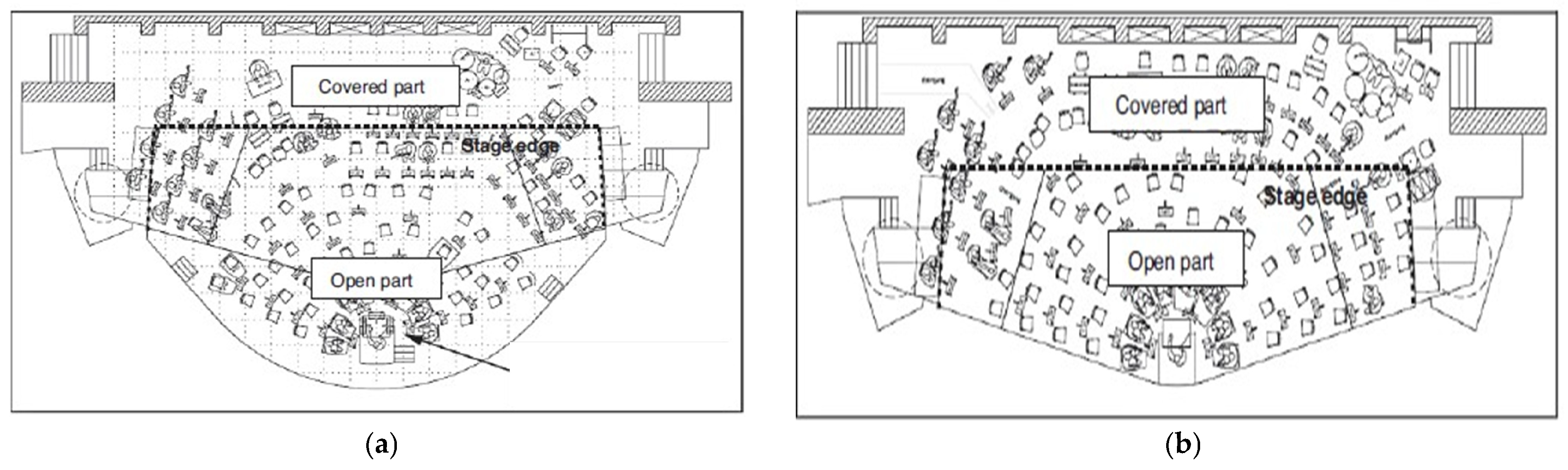
Considering the space requirements, according to the different instruments of the orchestra, their layout in the pit (Figure 7), and the wished acoustic effects [56,57], the literature [58] associates an average pit surface with the theatre’s seat capacity (Table 3).
A possible layout of the seat rows on the pit platform depends on the spacing, the number of aisles (as requested by the standards), and the viewing angles. With the increase in the pit surface, lateral and back aisles usually become necessary.
To evaluate the effects of the seats’ increasing quantity in the stalls, i.e., the effects on the audience abortion area, a preliminary evaluation follows (Table 4), in which a single seat width equal to 60 cm, a row spacing of ca. 1.1 m, and aisles (with the increasing of the pit surface) are considered.
If the pit is closed, the increase in seats usually does not exceed 10% of the hall capacity, while the volume decreases between 1% and 2%. Because seat absorption and volume are two important factors influencing reverberation time and other acoustic parameters, an acoustic analysis to assess the acoustic field differences between an open and a closed pit covered by seats becomes necessary.

2.3. Main Acoustic Parameter Optimal Range for Drama and Speech Activities

The main acoustic parameter optimal range, referred to the main activities in opera houses, is found in the literature [8,19], for which both the singer’s voice and the musical instruments must be appreciated.
In Europe, short reverberation times became common in theatres predominantly designed for drama, where a reverberation time of ca. 1.0 s was suggested; in the course of time, in fact, unlike in Italy, different buildings were built for prose and for opera. The value of 1.0 s is certainly shorter than ideal for opera and classical music; however, the conflicting acoustic requirements for speech intelligibility and music performance for opera required a compromise, even in Baroque theatres, resulting in reverberation times between 1.3 s and 1.8 s, depending on the volume and seat capacity. The appropriate frequency characteristics for the reverberation time in opera houses are intermediate between the requirements for speech and music, and the appropriate value should be determined principally based on the programme. If a single quantity is quoted for the reverberation time, it generally refers to the mid-frequency value, averaged between 500 and 1000 Hz.
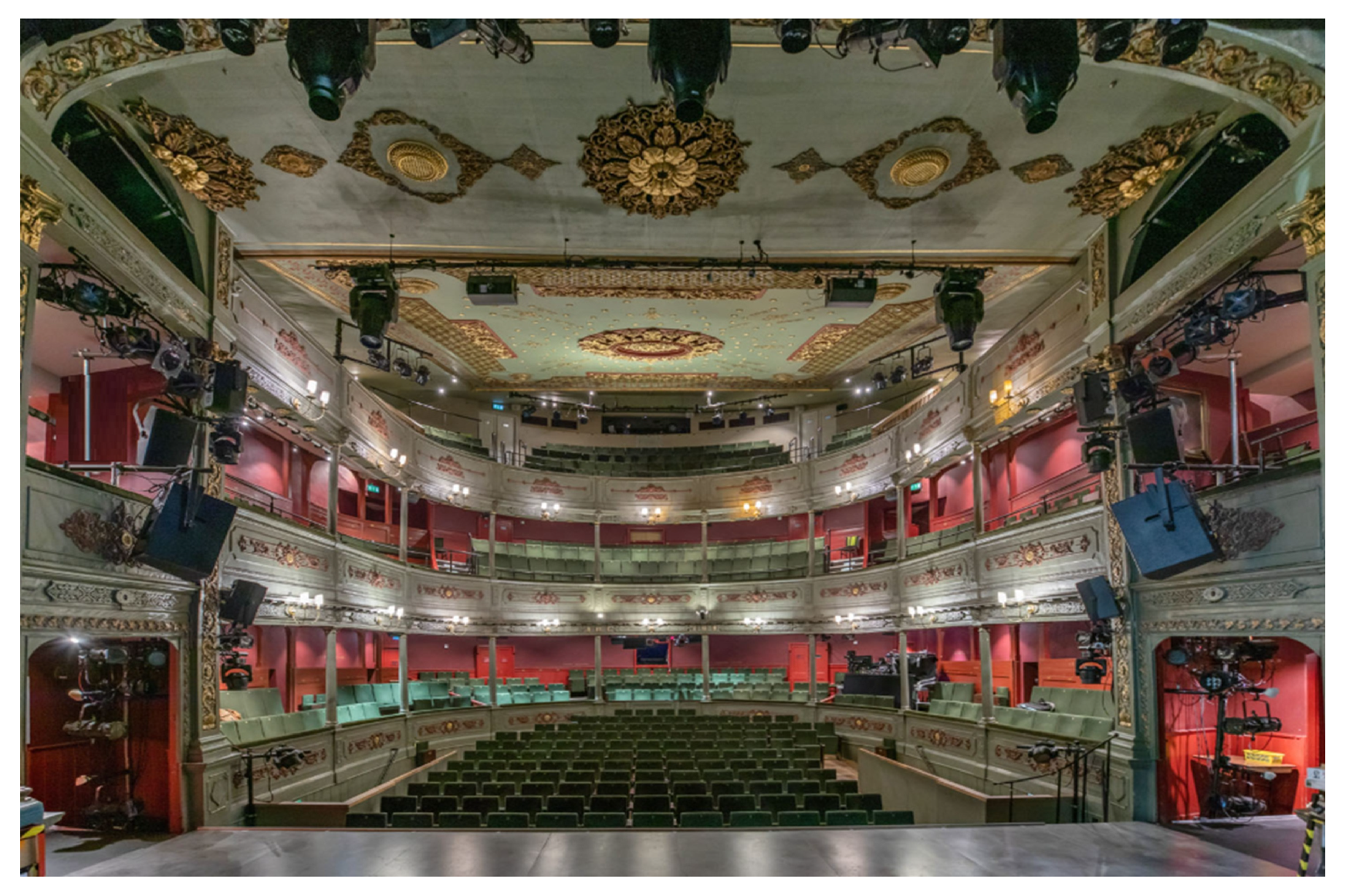
For a long reverberation time, a large volume per seat is recommended. This concept of volume/seat can provide a valuable rule of thumb. If, for opera, a ratio of 7–9 m3/seat is suggested, this value can decrease to 4 m3/seat in theatres built only for prose (Figure 8) [1], and in congress halls for speech activities.
According to the characteristics of the room space, a cited optimal range in the literature for the reverberation time follows [60] (Table 5):
Because speech elements are of much shorter duration than real reverberation times, finer acoustic quantities were also analyzed in the paper. As suggested by the literature for many English historical and modern drama theatres, such as the Theatre Royal in Bristol, Wyndham’s Theatre in London, and Lyttleton Theatre in London [1] (Table 6), the simplest quantities, based on the ratio between early and late sound energy received by the listener have been chosen for consideration.
For this reason, most of the discussion has revolved around one of the oldest suggested acoustic parameters: the early energy fraction or Deutlichkeit D (Definition) evaluated from the simulated impulse response of the room. A similar evaluation was used for clarity C and strength G.
For the average values of these other acoustic parameters, their main optimal ranges are as follows (Table 7):
To evaluate the acoustic parameters’ sensitivity, it was decided to consider the JND (just noticeable difference) for the main acoustic quantities cited in the standards [4] (Table 8), without including other spatial parameters in detail.
In the paper, to evaluate the possible positive influences of the orchestra pit covering on the trend of increasing the word understanding, a shorter reverberation time and higher G and D50 were checked in speech layouts, considering the suggested limits in Table 7.
Pit merits were defined as significative if, at least, 1 JND was achieved, as suggested by the standard.
To complete the analysis, Sound Transmission Index STI average values were also plotted.

3. The Case Study

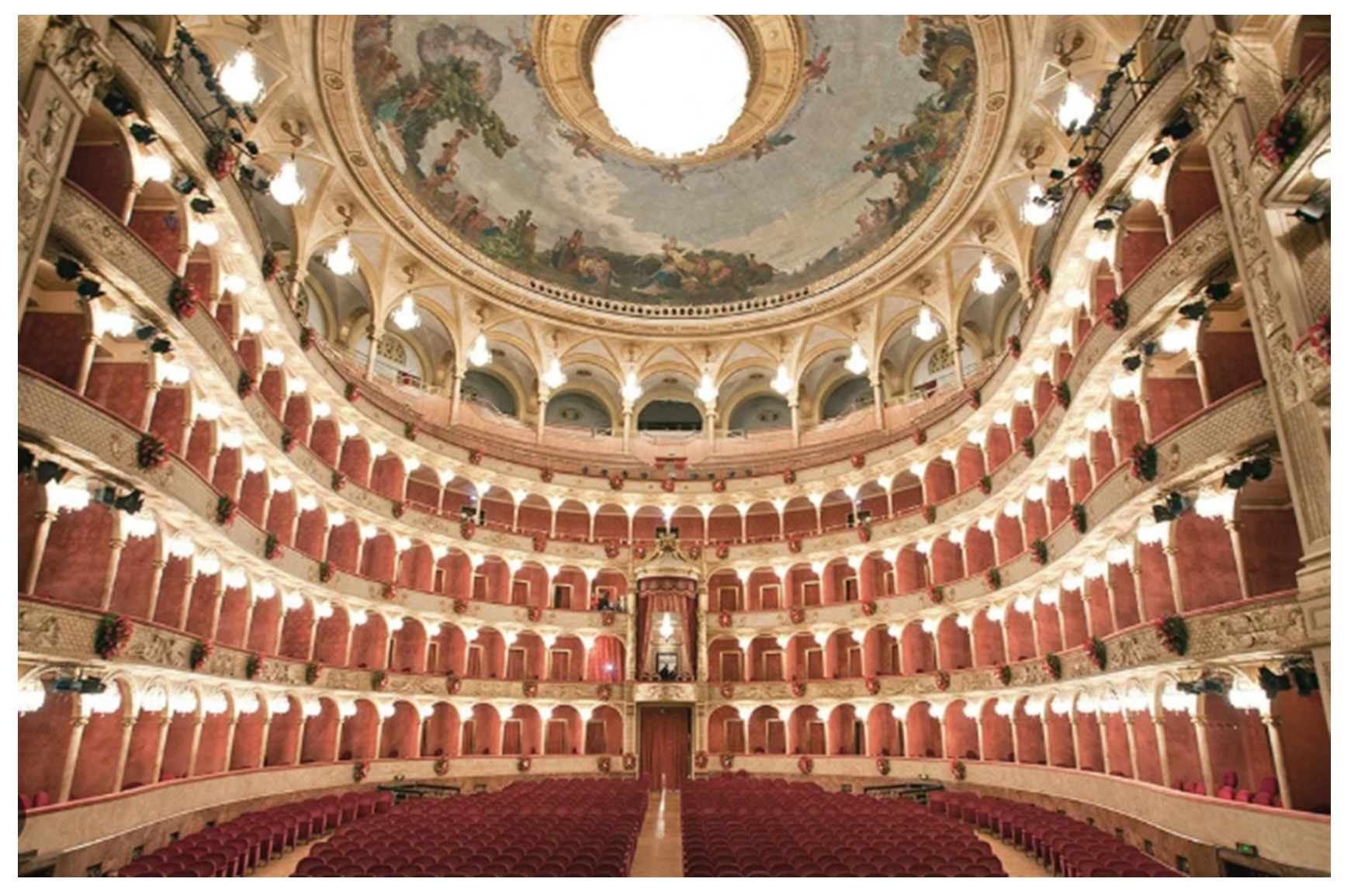
The theatre is characterized by three tiers of boxes, an open floor, and a seating gallery, with a capacity of up to 1635 spectators (Table 9 and Figure 9).
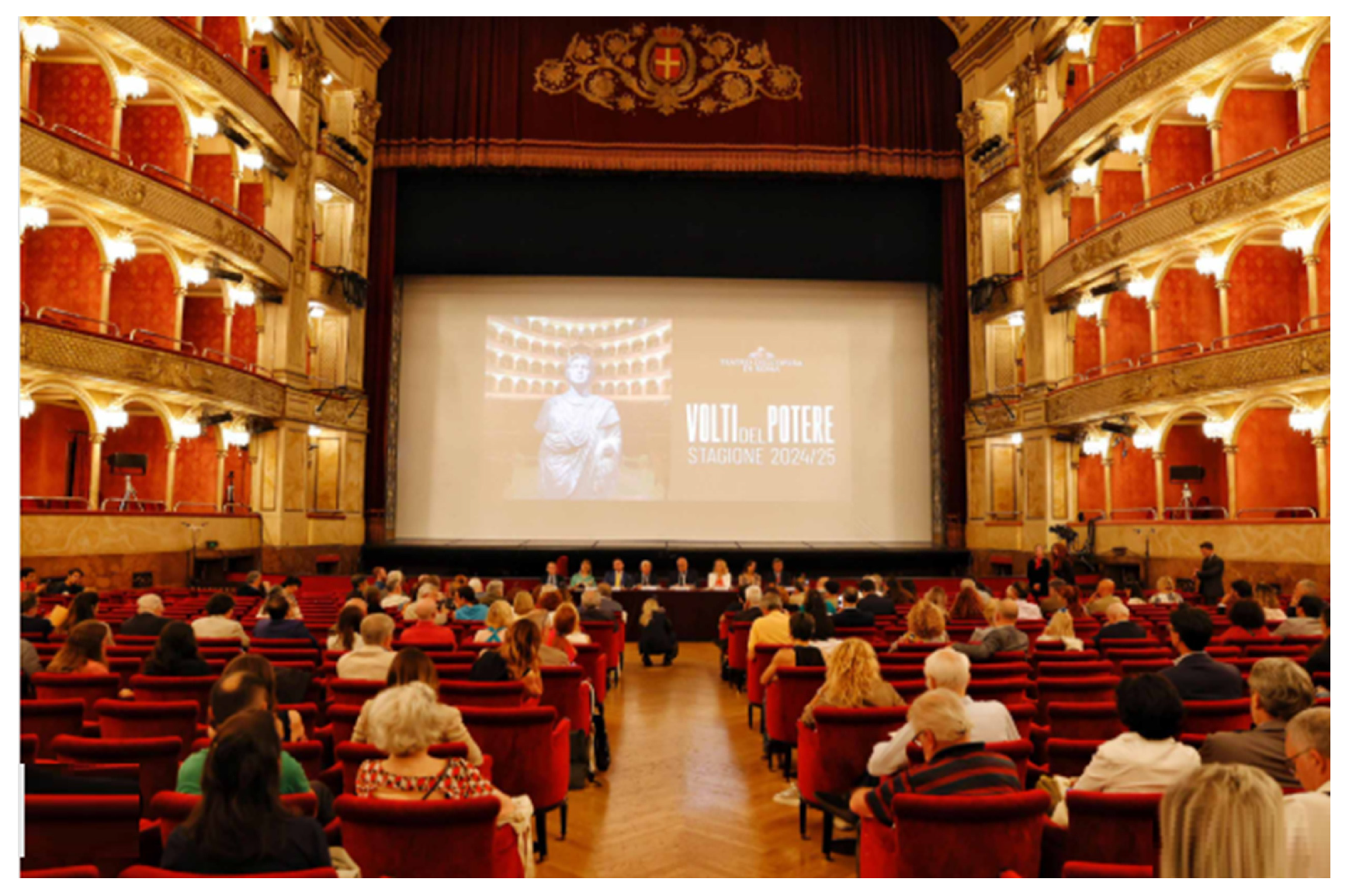
In using the opera house for activities that require good speech comprehension, it is challenging to naturally achieve a change in the reverberation time to adapt the opera house for this scope (Figure 10).

3.1. The Analyzed Configurations

Four different configurations are analyzed in detail through acoustic simulations with software Odeon (ver. 14). Firstly, the model was calibrated using RT and C80 measurements on-site.
For each of the four presented configurations, both the layouts with an open orchestra pit set with upholstered chairs and a closed pit covered by seats are studied.
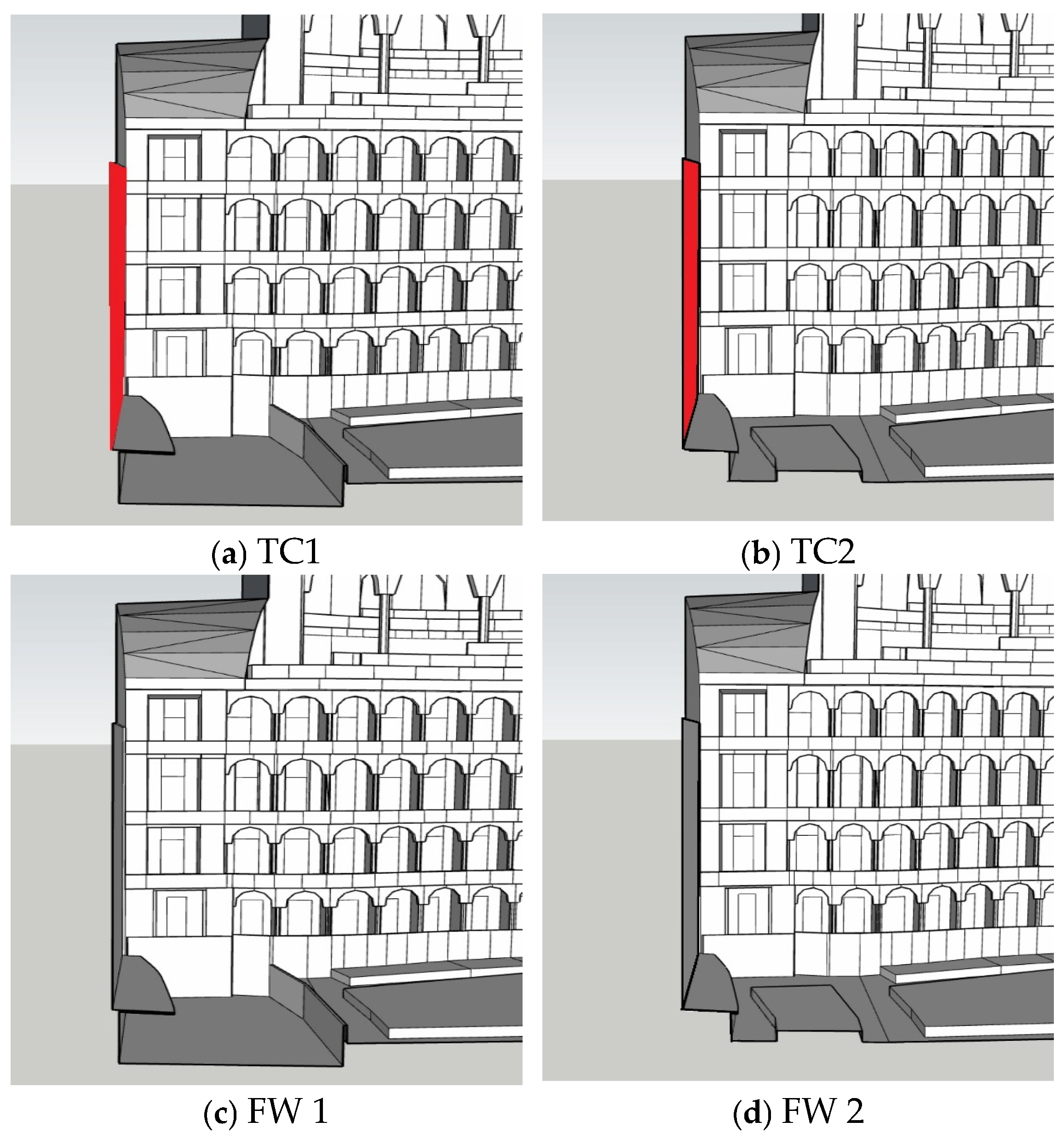
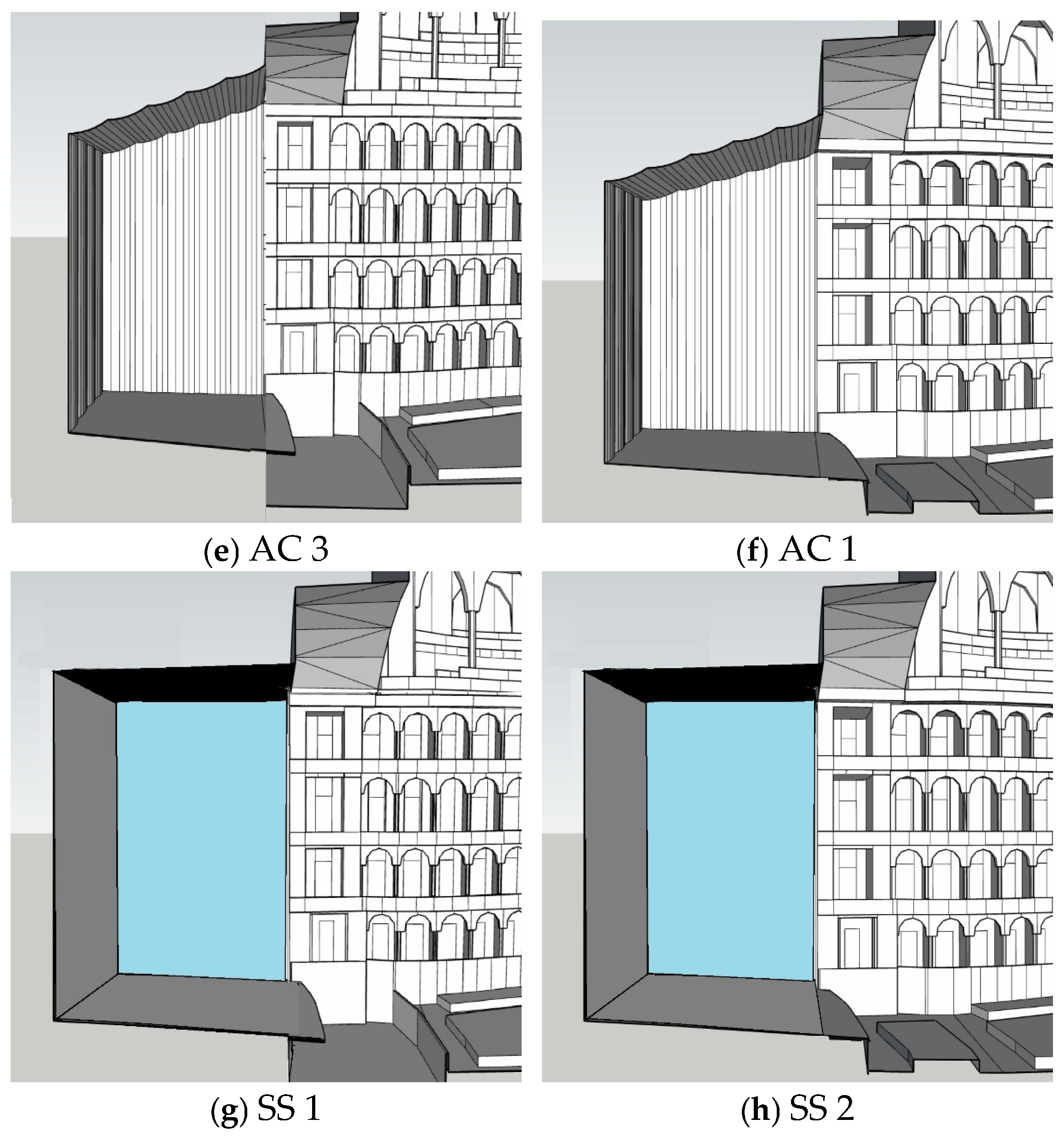
The first configuration refers to the traditional curtain being closed (TC), while the second one refers to the fire wall being closed (FW), used as screen for projections. The third configuration is that of an acoustic shell on stage (AC), where recitative events alternate with musical pieces, and finally, an empty stage for dramas is considered (SS) (Figure 11).
The first two simulated configurations are linked to congress activities layouts. One is referred to the house curtain being closed, allowing the theatre operators to set a desk for congresses on the stage proscenium; the other is referred to the fire wall being closed, with finishes suitable for projections, which operators increasingly use to support conference activities. The third configuration is that of an acoustic shell on stage, when recitative events alternate with musical pieces, for which a big stage proscenium is not necessary, i.e., the pit can stay both open and closed; the last configuration is that for dramas.

3.2. The Acoustic Model

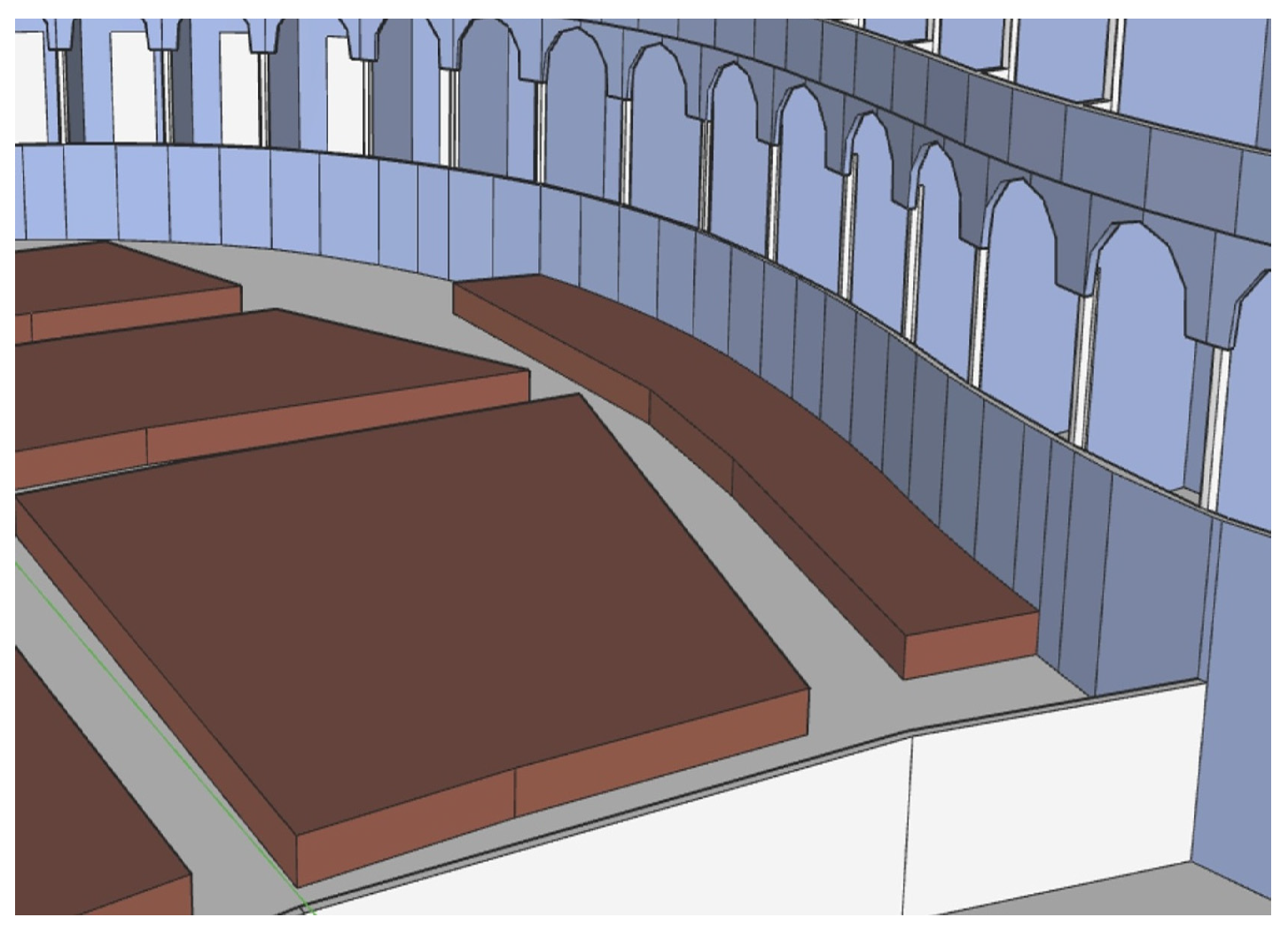
The SketchUp v.18, a 3D modelling software was used to create a virtual acoustic model able to satisfy the requirements imposed by the acoustic simulation software (Odeon v. 14) and the necessary geometrical simplifications (Figure 12).
Considering the past Literature [61,62,63] and newer papers [64,65], it was decided to model the seats on the platform as the fixed ones in the stalls, representing them as a parallelepiped, whose back and lateral flanks are made of wood.
The 3D model construction is a very time-consuming process because a continuous closed surface volume must be created to satisfy both the requirements imposed by the acoustic simulation software and the geometrical simplifications. This is a complex topic in room acoustics, which requires a separate work on its own [65].
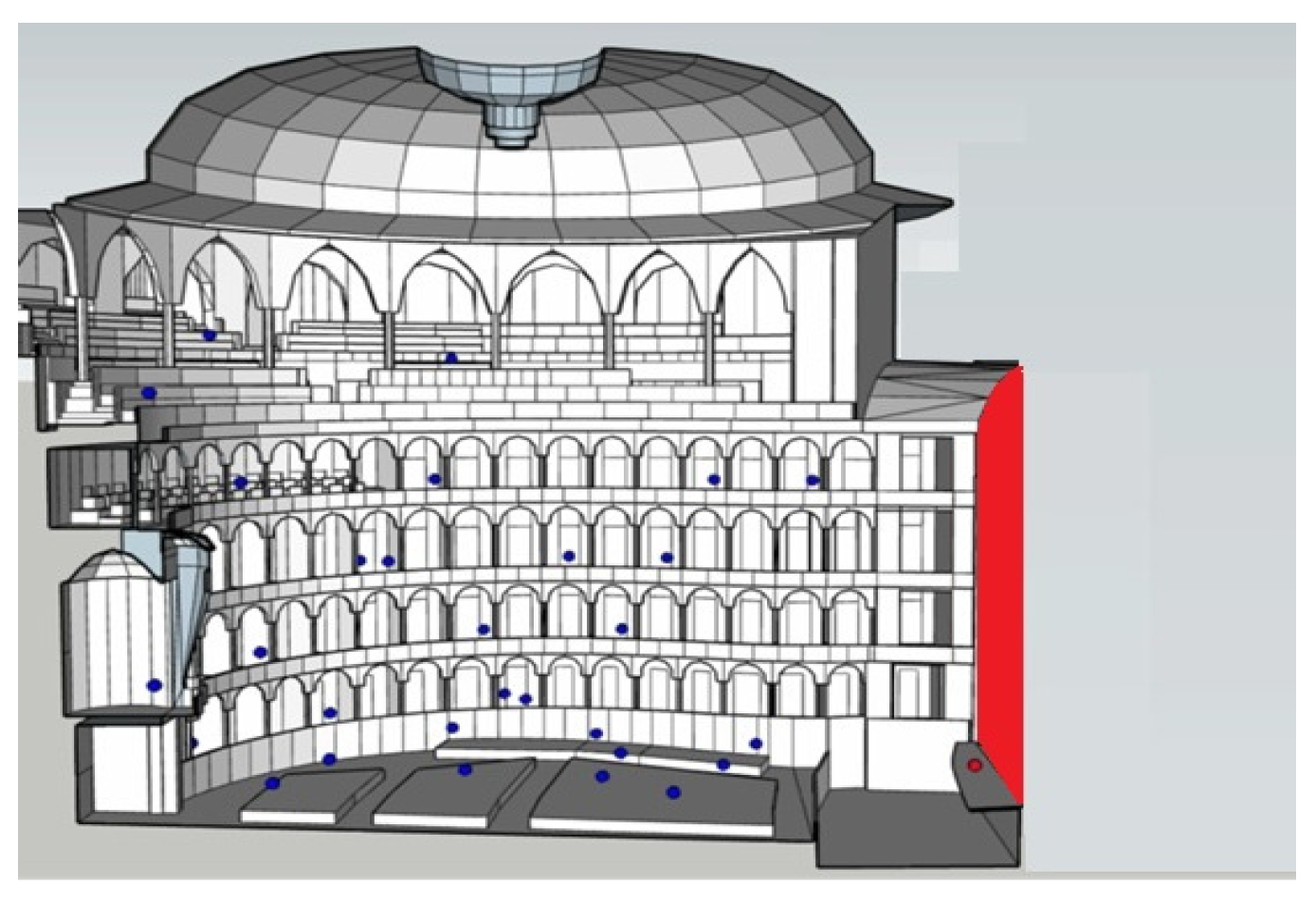
The model was exported to Odeon, to carry out the acoustic assessment; absorption coefficients, source and receivers’ positions were specified (Figure 13).
The length of the room’s impulse was set manually, starting from 2800 ms ca., based on measured data used to calibrate the model. The absorption coefficients of all materials were defined first, according to the reference values from the literature and considering the audience as the main absorption surface. The scattering values were defined based on recommendations given in the literature [66,67] and the Odeon manual [68].
The calibration process was started under unoccupied conditions, using the “residual absorption coefficients”, i.e., the total absorption of all walls, the ceiling, and the balcony fronts, as proposed by Beranek and Hidaka [69].
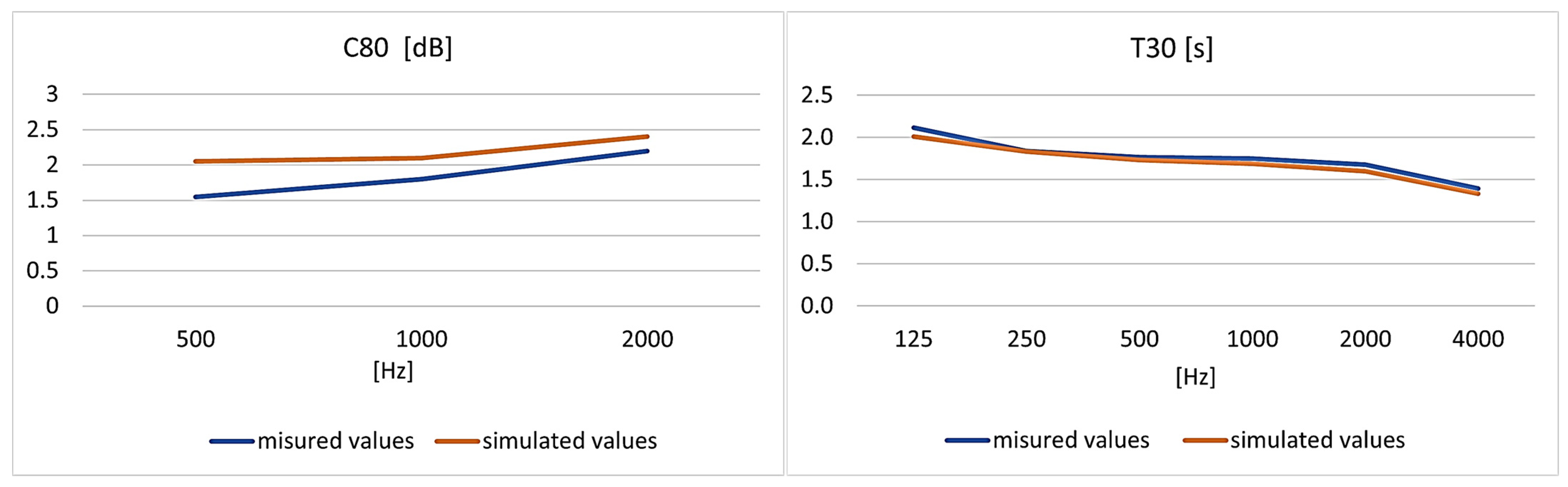
The reference RT and C80 values for the calibration were measured in the theatre under acoustic conditions with closed proscenium by fire curtain, aiming to check the two acoustic parameters, which are considered sufficient for the calibration process [70]. The measurement survey was in accordance with ISO 3382-1 [16]. The sound came from an omnidirectional source: a dodecahedron speaker with a sine sweep signal. Free-field microphones in class 1 were used. The source was placed 15 cm from the stage front, at a 1 m distance from the longitudinal axis of the hall. The microphones, at the receivers’ position, were wire-connected to an Integrating Sound Level Metre and Real Time 4 channel analyzer (Soundbook), and they were placed facing up, in every chosen receiver position to capture the diffuse sound field. The signal analysis was developed using Samurai software (2017). Measurements were repeated twice in every receiver position.
The hall was unoccupied, and the temperature and relative humidity parameters were equal to those in the simulations.
The calibration stopped when the difference between the simulated and the measured values were equal or less than 1 JND (Figure 14).
The main absorption coefficients’ inputs for the different configurations of the fly tower and proscenium are plotted in the following table (Table 10):

3.3. Acoustic Simulation Results and Comparisons

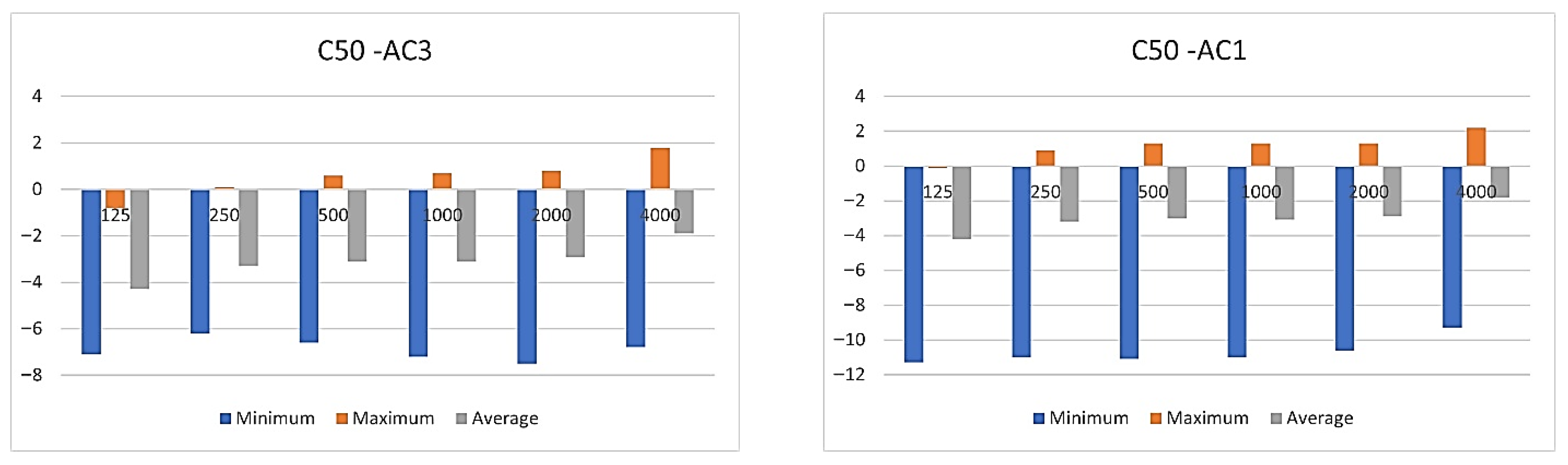
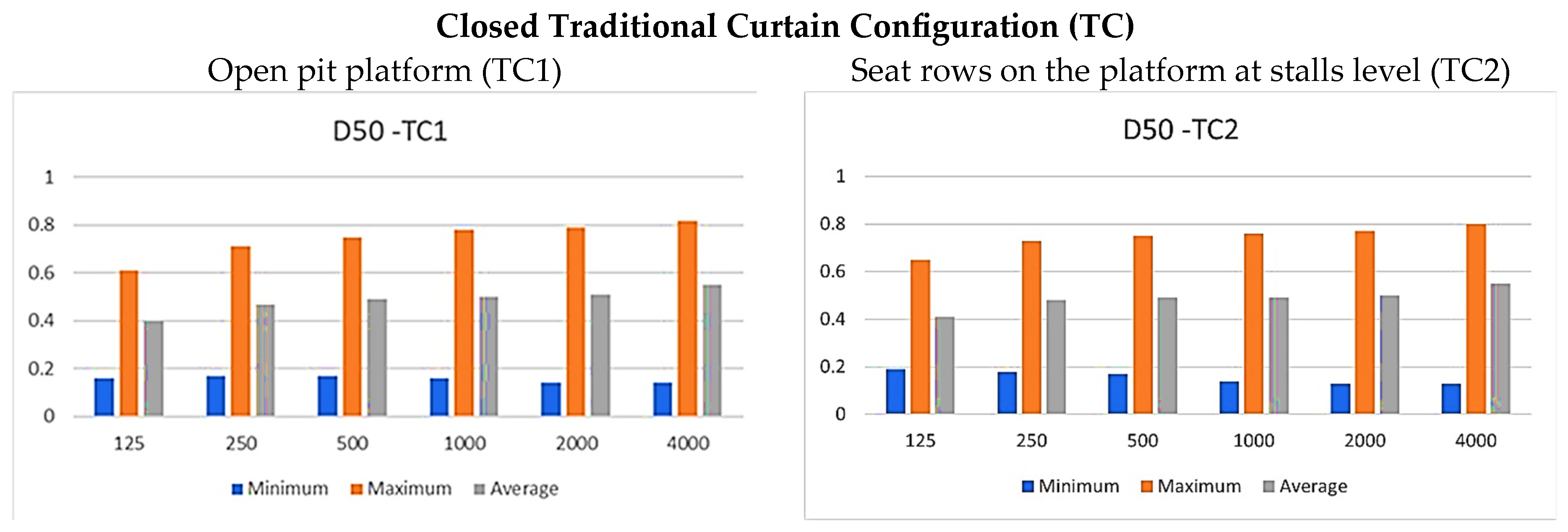
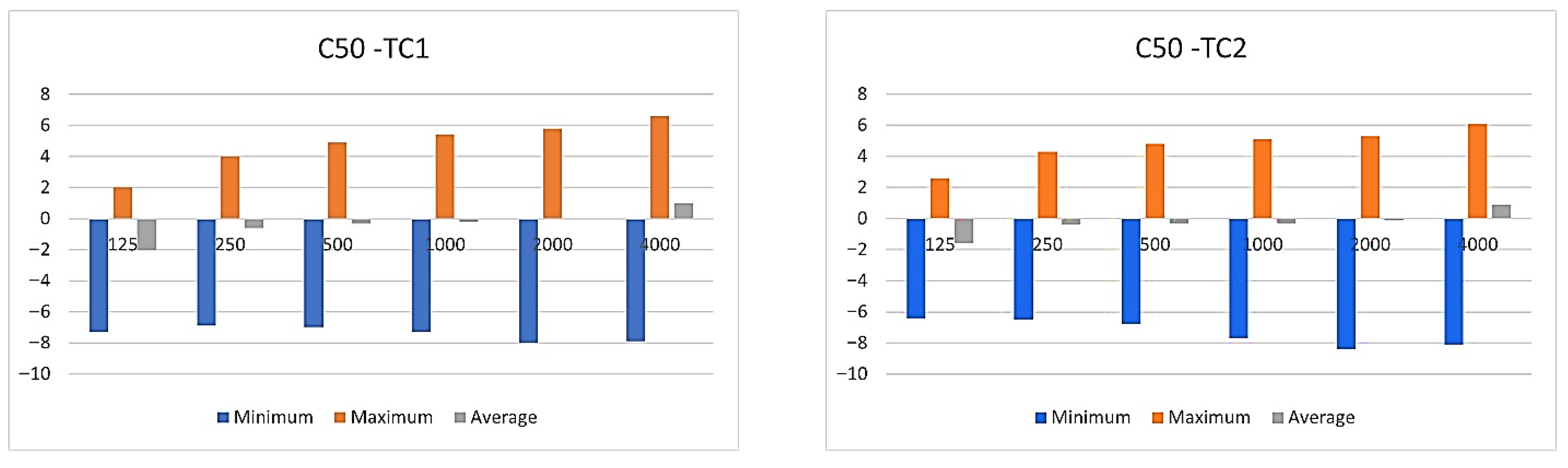
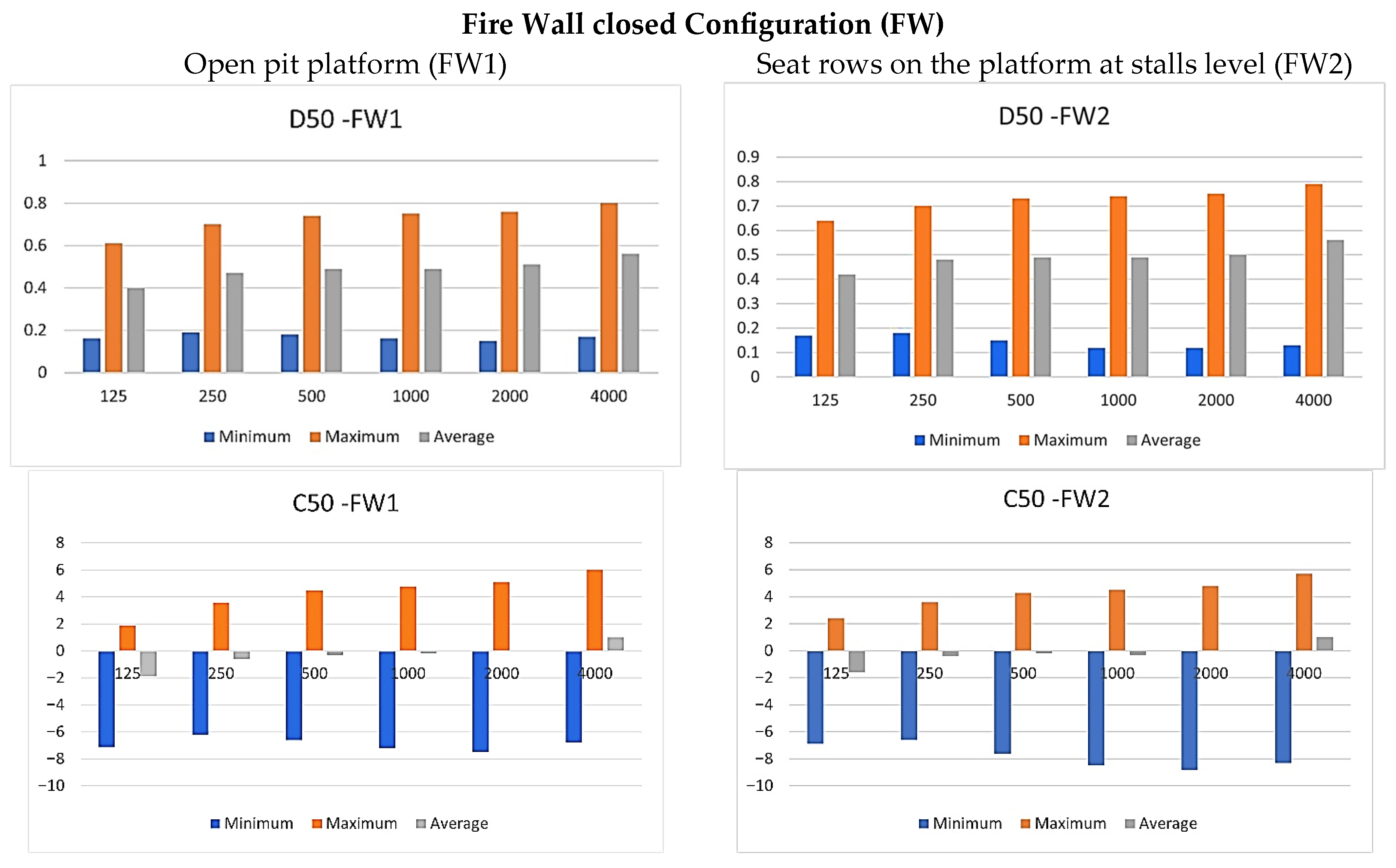
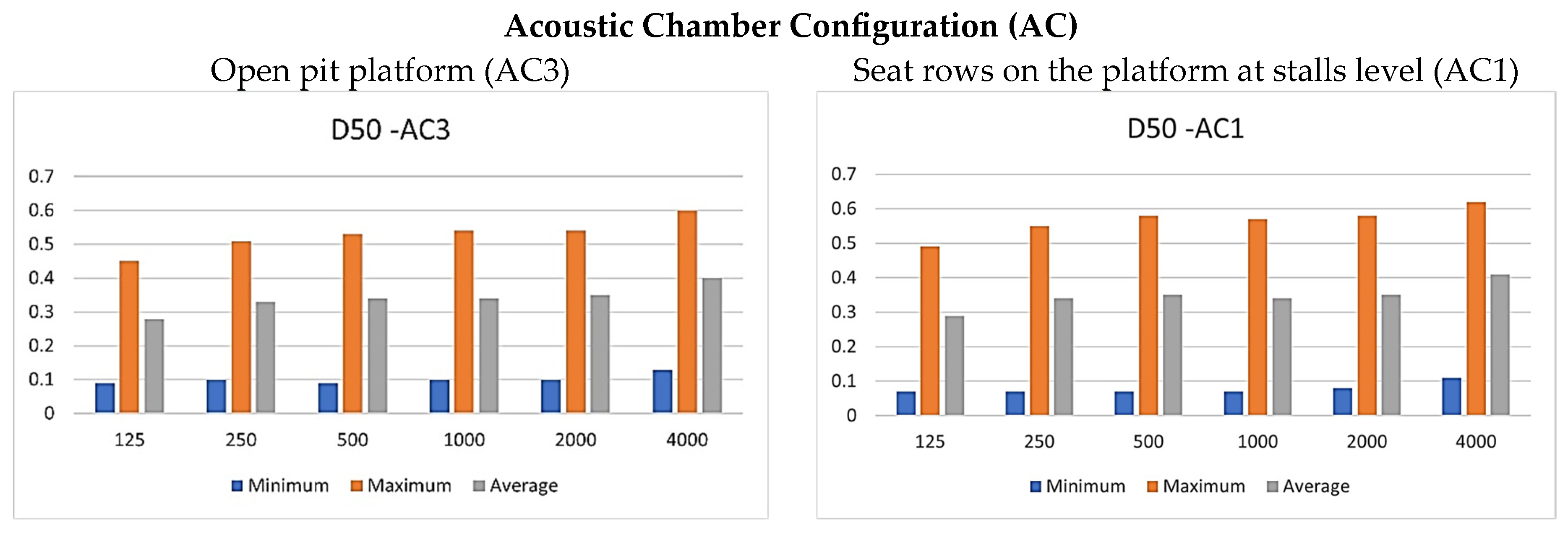
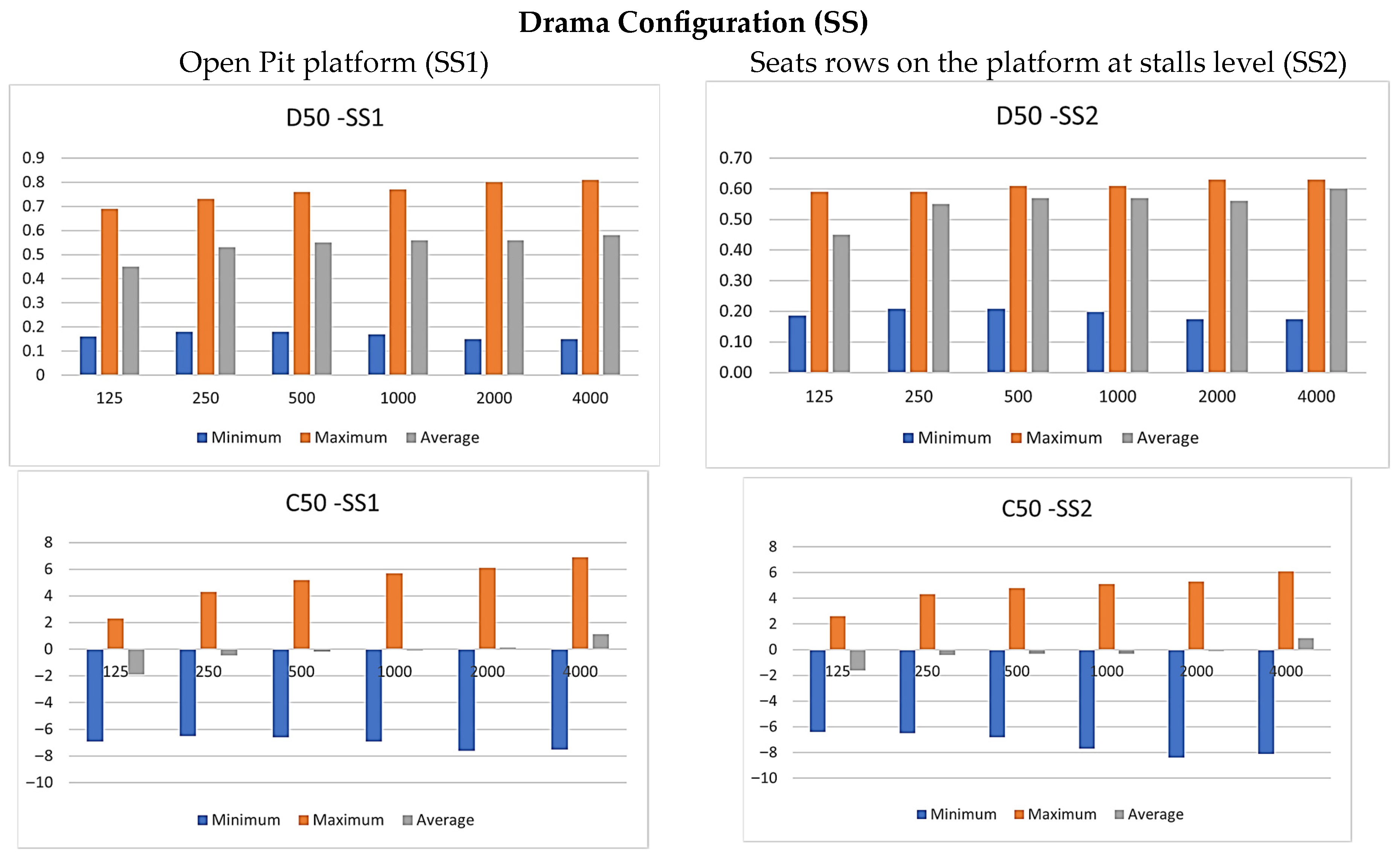
The previously cited four configurations and eight layouts (Figure 9) are analyzed in detail and compared. Minimum, maximum, and average values of C50 and D50, in octave bands from 125 Hz to 4000 Hz, for every single layout are shown in (Figure 15, Figure 16, Figure 17 and Figure 18), together with the D50 and C50 standard deviation (Table 11 and Table 12).
In every single configuration, the different position of the pit platform does not act significantly on the D50 and C50 distribution in the hall. Generally, the parameters’ uniform distribution increases if the fly tower active volume is included (AC and SS).
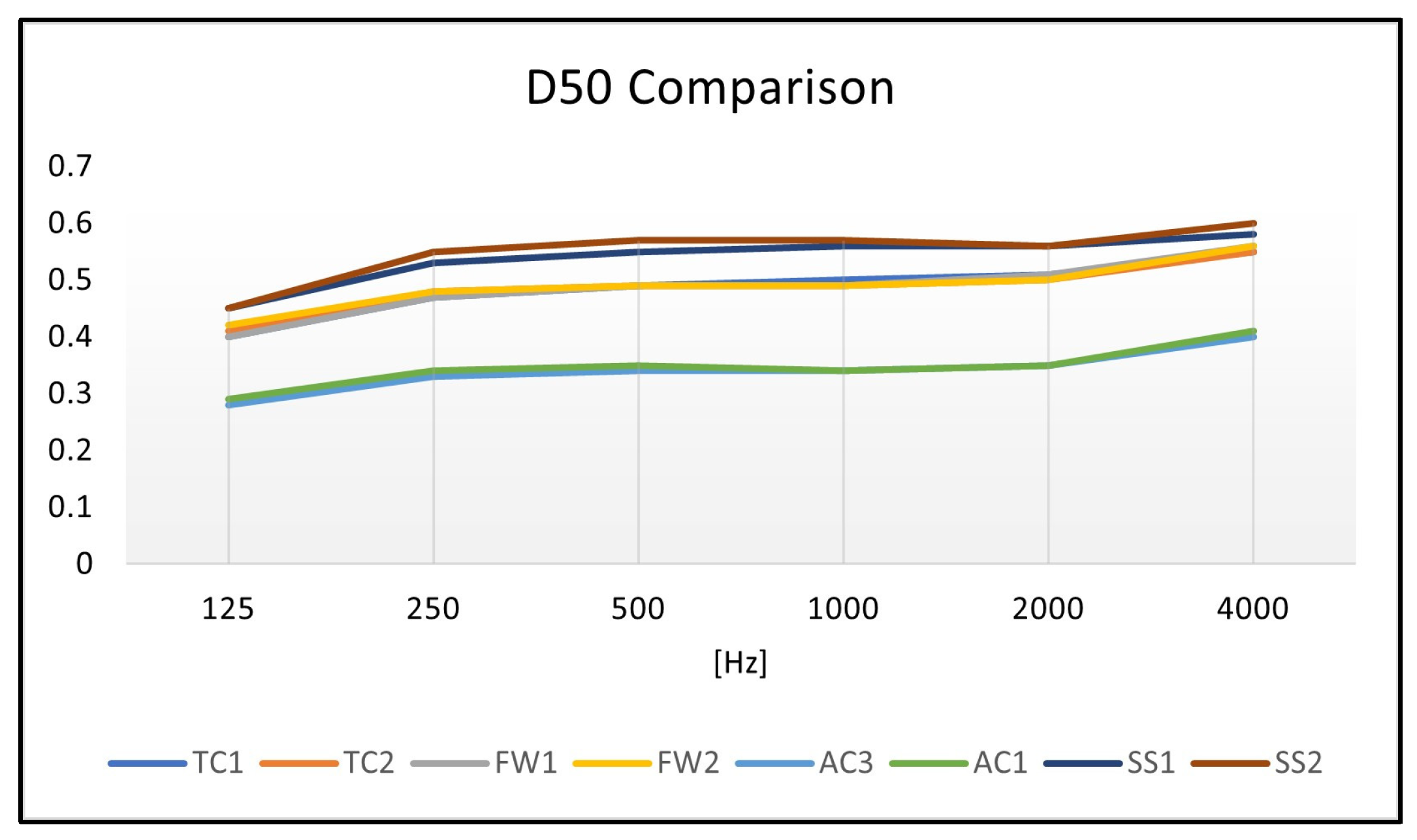
For every single configuration, the comparison between the average D50 and C50 values between the two different orchestra pit layouts (open pit and pit covered by seats at stage level) leads to deductions that not significant effects on the acoustic field are present (not achieving the difference of 1 JND). Furthermore, only in the drama configurations, the average values of D50, from 500 Hz and up, achieve the optimal range suggested by the literature. In the closed house curtain configuration, in fact, they can be approximated to the lower optimal range limit, and they result under the same limit in the other considered layout (Figure 19). The same trend is suggested by the average STI values (Table 13).
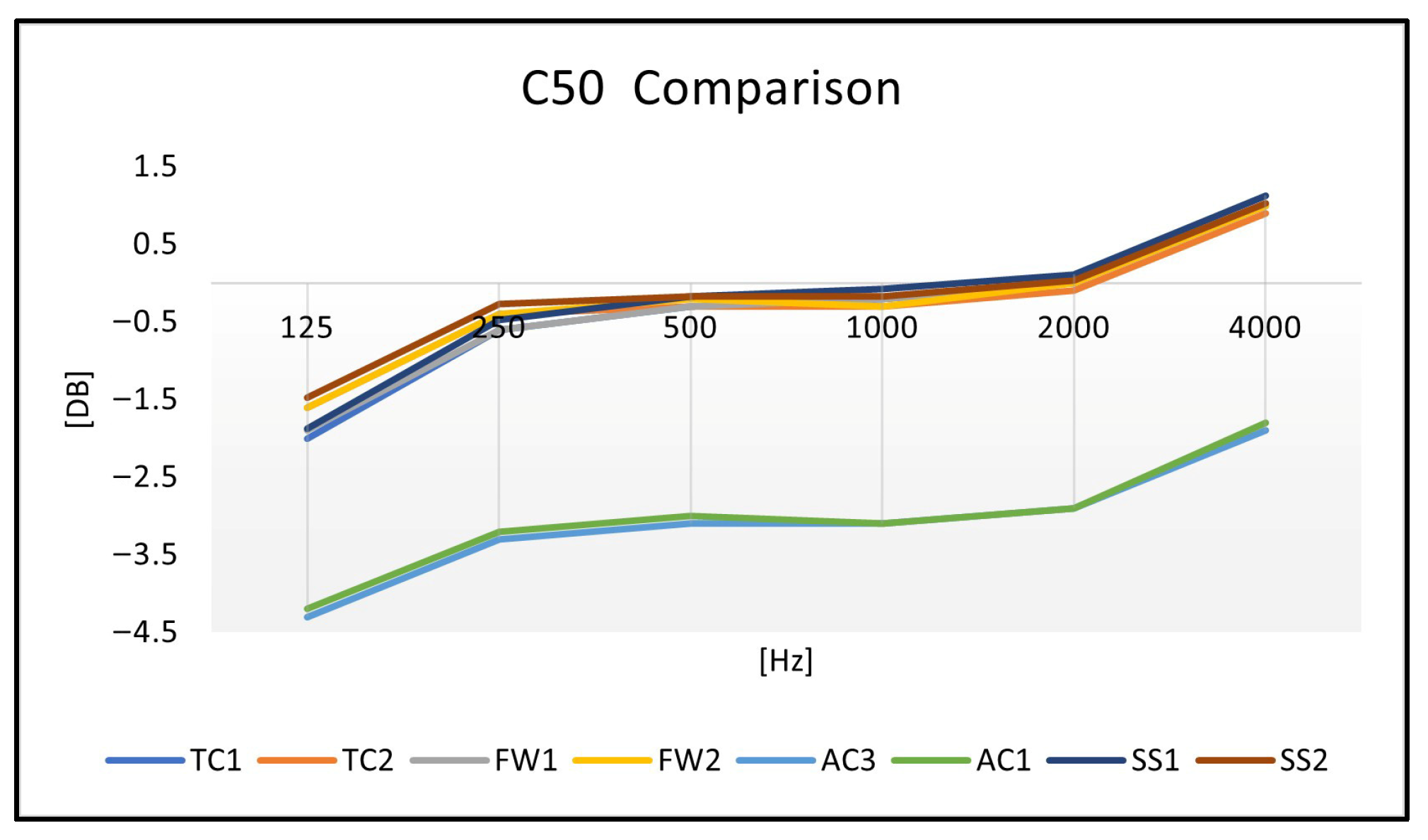
The C50 parameter results are less sensitive, with values at 500, 1000, and 2000 Hz ranging between −0.5 and 0.5 dB, except for the acoustic shell configuration (Figure 20).
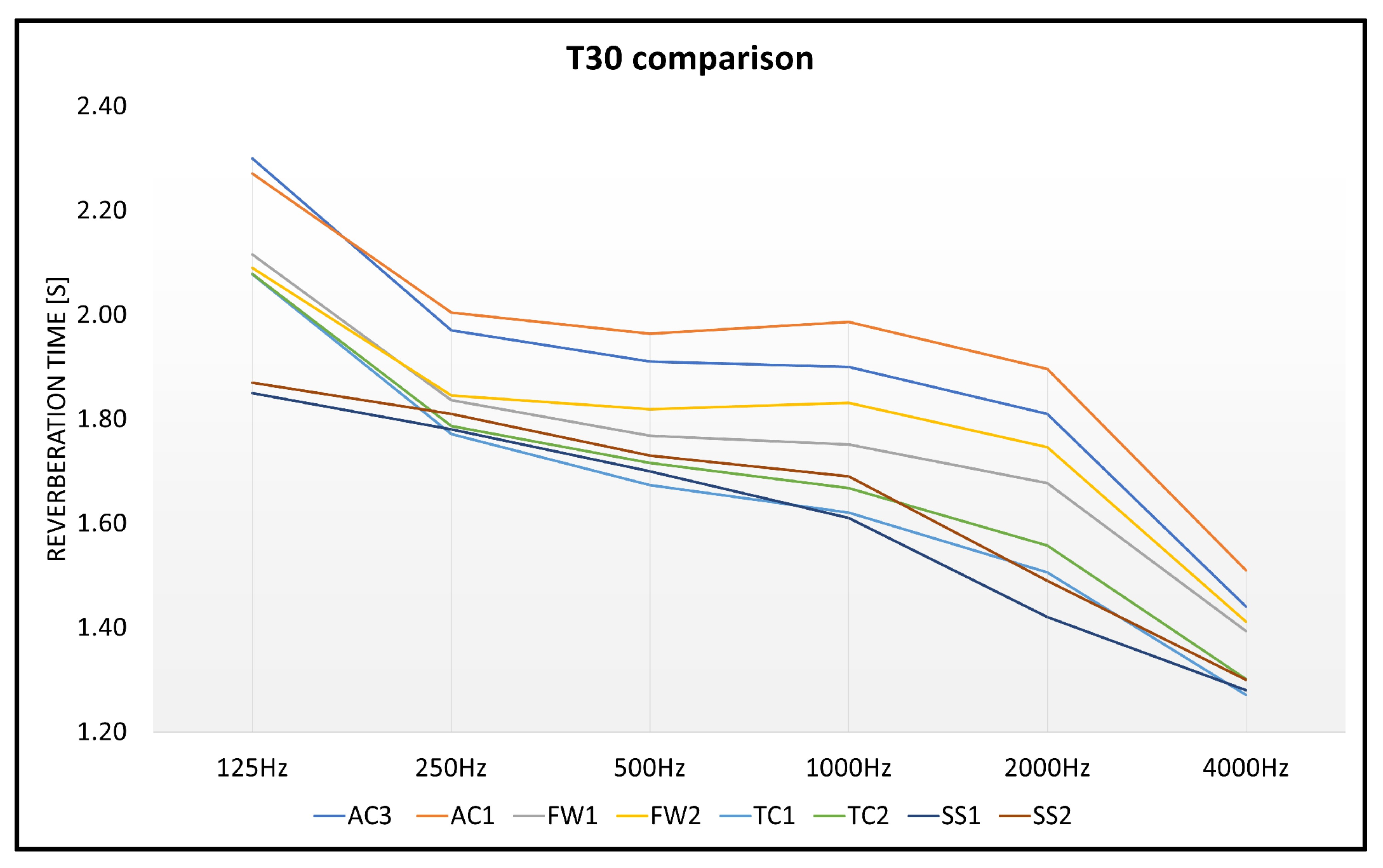
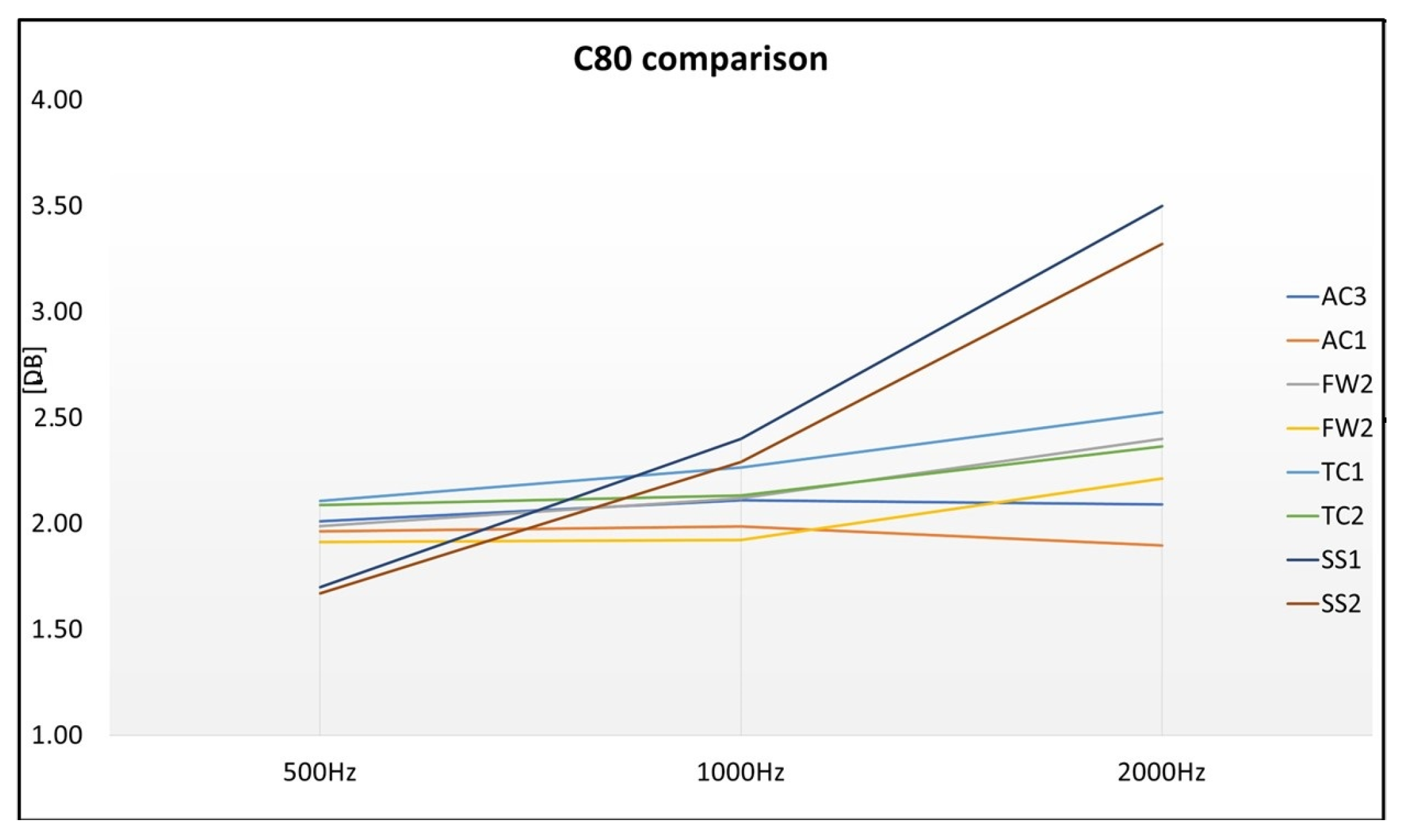
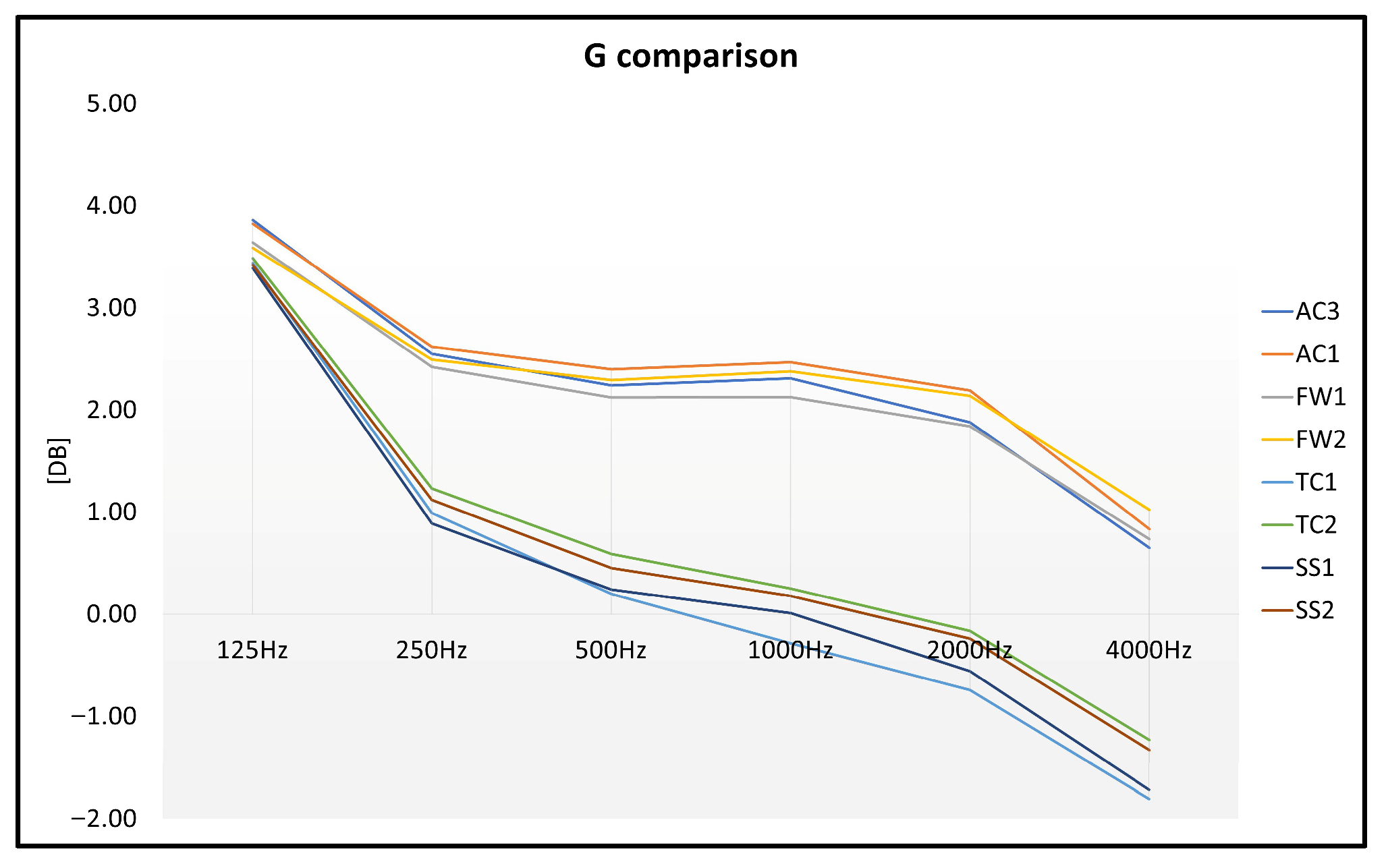
The comparison trends for the other parameters, T30, C80, and G, follow (Figure 21, Figure 22 and Figure 23).
For every single analyzed configuration, the only parameter that presents significant differences, with the seats’ increasing in the stalls (changing the pit layout), is the RT at central frequencies. This trend becomes more evident with the increase in reflective surfaces on the stage (acoustic shell configuration). The reverberation time has exceeded the desired upper limit for speech comprehension, especially because of reflections from the closed pit floor not covered by seats, as already observed in the literature, with most reflected rays coming from the ceiling, the stage, and the proscenium arch [71]. For this reason, it is observed that the reverberation time increases instead of decreasing with an increase in the seats’ quantity, i.e., of the absorption equivalent area, and the decrease in the volume, as the RT Sabine equation [1] would suggest.
The value of C80 decreases with the increase in the seats in the stalls, but as for G, these differences struggle to reach significant values. For all the eight configurations, the average values of T30, C80, and G do not achieve the optimal range for speech but satisfy the optimal target for opera.
Even if, from the comparison results, the lowered pit layout guarantees a better sound field to support speech activities, it is not able, alone, to reduce the reverberation time so much to achieve the optimal range suggested by the literature for speech activities; a set of temporary variable acoustic elements could be necessary. Nevertheless, even in the layout with the closed pit, the increasing reverberation time, out of the optimal range, is generally more appreciated by actors, spectators, and theatre technical directors because it reduces the distance between the proscenium and the audience and increases the hall’s seating capacity. Acoustic condition differences are considered secondary by them.
For these reasons, to find out possible merits of the pit covering, the open pit configuration, set with musicians’ seats, was found sufficient for the main goals of the paper.
As this article is part of broader research on how the correct use of a Baroque theatre can be organized nowadays to preserve the building heritage and the acoustic field, after evaluating the pit covering, possible realistic open pit variants (e.g., simple absorbent borders; pit covers with absorptive treatment) for each of the four proposed configurations, together with an in-deep orchestra pit analysis (as in the previous cited papers [9,10,11,12,13,14,15]) are suggested for further research. They could be, in fact, useful in optimizing all the variable acoustic elements that can be installed in an opera house used as a drama theatre, increasing possible layouts which achieve optimal acoustic conditions while satisfying different theatre directors’ preferences.

4. Conclusions

The conditions required to ensure acoustic quality in spoken drama differ from those for opera. In the same theatre space, in fact, shorter reverberation times and higher values of the parameter definition D50 and strength G are preferred for drama representations and speech activities in general.
In the past, however, prose activities have found a sufficiently suitable environment in Baroque theatres. With the passage of time, while abroad different buildings were dedicated to the two genres of opera and prose, in Italy the two types of performances continued to be included in the programmes of horseshoe theatres, especially in the provincial ones.
This trend led to the development of different theatre configurations for multifunctional use and the installation of stage technologies within it, also to create variable effects to support speech activities. In particular, the use of automated stagecraft systems for raising and lowering the orchestra pit has made it possible to close the pit itself and increase the number of spectators in the hall by adding seats above the orchestra platform, positioned at stalls level. In general, it was estimated that the theatre’s seating capacity increases by approximately 10%, while the hall volume decreases between 1 and 2%; both of these quantities can affect the sound filed.
In the analyzed case study, the drama configuration was found to be a little sensitive to the variation in the orchestra pit, from open to closed position covered by seats. Even though the main absorbent surface of the theatre, the audience, was increased, D50 and C50 parameters did not significantly change. Nevertheless, their average values justified the use of the Baroque theatre for drama, being inside the optimal range suggested by the literature. The same was not found for the reverberation time, which exceeded the desired upper limit, especially because of reflections from the closed pit floor not covered by seats. The reverberation time, in fact, increases instead of decreasing with the increase in the seat’s quantity, i.e., of the absorption equivalent area, and the decreasing of the volume, as the Sabine equation would have suggested.
The values of C50 and D50 obtained for the other conference configurations were more critical, as was the case for the acoustic shell, which fell below the optimal range. The effects of the orchestra pit layout on the sound field were significant for some other parameters. From the analysis, a trend was observed in which, regardless of the setup of the fly tower (closed with a velvet curtain, a fire curtain, empty, or with an acoustic shell), the values of C80 decrease with the increase in the seat capacity in the stalls, but these differences struggle to reach significant values, at least equal to 1 JND. For every single analyzed configuration, the only parameter that presented significant differences with the increase in stalls seats (changing the pit layout), was the RT at central frequencies. This trend became more evident with the increase in acoustic shell reflective surfaces on the stage.
The acoustic quality of drama representations in Baroque theatres can be acceptable still nowadays, as the acoustic parameters D50 and C50 achieve the optimal range suggested by the literature for drama representations, suggesting setting heavy absorption surfaces on the stage in the fly tower or in the hall to reduce the reverberation time inside the suitable range. The STI confirms this trend, with the average value approximating the lower limit for a good quality.
Furthermore, in every single configuration, the different position of the pit platform does not act significantly on the D50 and C50 distribution in the hall. Generally, the parameters’ uniform distribution increases when the curtains are open and the fly tower active volume is added in the simulation (AC and SS).
In every configuration studied, the pit layout, which contributes to a better sound field to support speech activities, is the lowered pit (equipped with sound-absorbing seats of the musicians). It significantly reduces the RT at central frequencies of 500 and 1000 Hz, achieving a difference of 1 JND with that of closed pit covered by seats. Nevertheless, this last configuration is usually chosen by the theatre operators because they prefer to increase the seat capacity rather than improving the acoustic quality for dramas.
Furthermore, the traditional house curtain configuration contributes more significantly to reducing the reverberation time than the fire curtains used for slide projections because in this last case, RT values are higher than the optimal range limit suggested by the literature, while the average values for D50, C50, and STI are lower than those of the drama set, failing to achieve the suggested optimal range.
For these reasons, in speech activities that require closing the stage space with the reflecting fire curtain, an electroacoustic system and/or temporary slotted absorbing materials are recommended to support speech comprehension, while drama activities can be played in natural acoustic conditions. The electroacoustic system is also recommended if a lecture takes place inside the acoustic shell configuration.
The lowered pit layout guarantees a better sound field to support speech activities, but it is not able, alone, to reduce the reverberation time in the theatre for achieving the optimal range suggested by the literature for speech activities. Instead, the layout with the closed pit has the advantage of reducing the distance between the proscenium and the audience and increasing the hall’s seat capacity. To put the orchestra pit at stalls level to be covered by seats, a mechanical system must be installed under the platform. This solution allows us to consider an automatized orchestra pit as a variable acoustic element, with merits to act significantly on the acoustic field at the central frequencies of 500 and 1000 Hz, with effects that must be evaluated from time to time based on the used layout.
As this article is part of broader research on how the correct use of a Baroque theatre can be organized nowadays to preserve the building heritage and the acoustic field, possible realistic open pit variants are suggested as further research, which could be useful to optimize all the variable acoustic elements that can be install in an opera house to be used as drama theatre, increasing possible layouts capable of achieving optimal acoustic conditions while considering theatre directors’ preferences.

Author Contributions

Conceptualization, G.I.; methodology, G.I.; software, U.D.; validation, S.S., G.I. and U.D.; formal analysis, S.S., G.I. and U.D.; investigation, G.I.; resources, G.I.; data curation, U.D.; writing—original draft preparation, G.I. and U.D.; writing—review and editing, G.I.; visualization, U.D.; supervision, G.I. and U.D.; project administration, S.S. and G.I.; funding acquisition, G.I. All authors have read and agreed to the published version of the manuscript.

Funding

This research received no external funding.

Institutional Review Board Statement

Not applicable.

Informed Consent Statement

Not applicable.

Data Availability Statement

Data is unavailable due to privacy.

Conflicts of Interest

The authors declare no conflicts of interest.

References

  1. Barron, M. Auditorium Acoustics and Architectural Design, 2nd ed.; Spon Press: London, UK, 2009. [Google Scholar]
  2. Carini Motta, F. Trattato Sopra la Struttura de’ Teatri e Scene; 1676—Guastalla; Riedizione del Polifilo: Milano, Italy, 1970. [Google Scholar]
  3. Bondoni, S.M. Teatri Storici in Emilia-Romagna; Catalogo; Istituto per i Beni Culturali Della Regione Emilia-Romagna: Bologna, Italy, 1982. [Google Scholar]
  4. Tamburini, E. Il Luogo Teatrale Nella Trattatistica Italiana Dell’800: Dall’utopia Giacobina Alla Prassi Borghese; Bulzoni, Ed.; Bulzoni: Rome, Italy, 1984. [Google Scholar]
  5. Mazzarella, L.; Cairoli, M. Petrarca Theatre: A case study to identify the acoustic parameters trends and their sensitivity in a horseshoe shape opera house. Appl. Acoust. 2018, 136, 61–75. [Google Scholar] [CrossRef]
  6. Degl’Innocenti, P. Sviluppo Storico-Tipologico Delle Architetture per lo Spettacolo; Dipartimento di Progettazione: Firenze, Italy, 1995. [Google Scholar]
  7. Farina, A. Acoustic quality of Theares. Appl. Acoust. 2001, 62, 889–916. [Google Scholar] [CrossRef]
  8. Long, M. Architectural Acoustics, 2nd ed.; Academic Press: Cambridge, MA, USA, 2014. [Google Scholar]
  9. Vercammen, M.; Lautenbach, M. Stage and pit acoustics in opera houses. In Proceedings of the ISRA’16, 2016, Eilat, Israel, 26–28 October 2016. [Google Scholar]
  10. Kimmich, J.M.; Frank, S.; Schlesinger, A.; Ochmann Mund Tschaikner, M. Berechnung des Schallfeldes in der Deutschen Oper Berlin mit Raytracing und der Finiten Elemente Methode. In Proceedings of the Tagungsband der DAGA 2018, München, Germany, 9–22 March 2018. [Google Scholar]
  11. Schlesinger, A.; Kimmich, J.M.; Ochmann, M.; Frank, S. Messtechnische Untersuchung der Raumakustik der Deutschen Oper Berlin. In Fortschritte der Akustik—DAGA 2018; Fraunhofer: München, Deutschland, 2018. [Google Scholar]
  12. Sato, S.; Mori, Y.; Ando, Y. On the subjective evaluation of source locations on the stage by listeners. On the subjective evaluation of source locations on the stage by listeners. In Music and Concert Hall Acoustics; Ando, Y., Ed.; Academic Press: Cambridge, MA, USA, 1997. [Google Scholar]
  13. Tronchin, L.; Merli, F.; Manfren, M. On the acoustics of the Teatro 1763 in Bologna. Appl. Acoust. 2021, 172, 107598. [Google Scholar] [CrossRef]
  14. Behar, A.; Wong, W.; Kunov, H. Risk of hearing loss in orchestra musicians: Review of the Literature. Med. Probl. Perform. Artist. 2006, 21, 164–168. [Google Scholar] [CrossRef]
  15. MacDonald, E.N.; Behar, A.; Wong, W.; Kunov, H. Noise exposure of opera musicians. Can. Acoust. 2008, 36, 11–16. [Google Scholar]
  16. ISO 3382-1: (2009); Acoustics. Measurement of Room Acoustic Parameters. Part 1: Performance Spaces. International Organization for Standardization: Geneva, Switzerland, 2009.
  17. Pompoli, R. L’acustica dei teatri storici: Un bene culturale. In Proceedings of the Congress Proceedings, Ferrara, Italy, 4 November 1998. [Google Scholar]
  18. Fausti, P.; Pompoli, R.; Prodi, N. Acoustics of opera houses: A cultural heritage. J. Acoust. Soc. Am. 1999, 105, 929. [Google Scholar] [CrossRef]
  19. Prodi, N.; Pompoli, R. Guidelines for acoustical measurements inside historical opera houses: Procedures and validation. J. Sound Vib. 2000, 232, 281–301. [Google Scholar] [CrossRef]
  20. Determinazione dei Requisiti Acustici Passivi Degli Edifici; Decreto del Presidente del Consiglio dei Ministri 5 Dicembre 1997, (D.P.C.M. 05.12.1997) Gazzetta Ufficiale; Ministero della Giustizia, Istituto Poligrafico e Zecca dello Stato (IPZS) Publisher: Roma, Italy, 1997.
  21. EN ISO 12354; Estimation of Acoustic Performance of Buildings from the Performance of Elements. ISO: Geneva, Switzerland, 2017.
  22. EN ISO 16283; Acoustics—Field Measurement of Sound Insulation in Buildings and of Building Elements. ISO: Geneva, Switzerland, 2018.
  23. Gao, J.; Tang, S.K.; Zhao, Y.; Cai, Y.; Pan, L. On the performance of existing acoustic energy models when applied to multi-purpose performance halls. Appl. Acoust. 2020, 167, 107401. [Google Scholar] [CrossRef]
  24. Surgers, A. Scénographies du Théâtre Occidental; Armand Colin: Paris, France, 2011; pp. 84–85. [Google Scholar]
  25. Biggi, M.I. Architettura teatrale e spazio scenico nell’Europa del Settecento. In Theatre Spaces for Music in 18th-Century Europe; Yordanova, I., Raggi, G., Biggi, M.I., Eds.; Wien 2020 (Cadernos de Queluz, vol. 3); Hollitzer Verlag: Vienna, Austria, 2020; pp. 1–19. [Google Scholar]
  26. Barbieri, P. The acoustics of Italian opera houses and auditoriums (ca. 1450–1900). Recercare 1998, 10, 263–328. [Google Scholar]
  27. Cairoli, M. Acoustical design of the Opera and Ballet Theatre in Astana, Kazakhstan. Appl. Acoust. 2023, 211, 109556. [Google Scholar] [CrossRef]
  28. Barbieri, P.; Tronchin, L. L’acustica teatrale nel neoclassicismo italiano. Con una ricostruzione virtuale del teatro ideale di Francesco Milizia (1773). In Proceedings of the 22nd International Congress on Sound and Vibration ICSV22, Florence, Italy, 12–16 July 2015. [Google Scholar]
  29. Ianniello, C. An acoustic catalogue of historical Italian theatres for opera. In Proceedings of the Forum Acusticum, Budapest, Hungary, 29 August–2 September 2005. [Google Scholar]
  30. Bevilacqua, A.; Amadasi, G.; Iannace, G.; Trematerra, A. Acoustic Simulations Applied to the Garden of Rufolo’s Villa in Ravello: Comparison between Different Scenarios. Appl. Sci. 2024, 14, 1223. [Google Scholar] [CrossRef]
  31. Samoggia, L. Il teatro di Medicina. Dal Seicento al Novecento. Vicende, personaggi, attività. Medicina 1983. Il Carrobbio Riv. Studi Bolognesi 1978, 4, 395–410. [Google Scholar]
  32. Cairoli, M.; Iannace, G. A Single Acoustic Quantity Index as Part of an Early-Stage Digitalized Procedure for the Restoration of Baroque Theatres to Be Used as Multipurpose Spaces. Heritage 2024, 7, 6749–6771. [Google Scholar] [CrossRef]
  33. Archivio Storico Comunale di Castelfranco, Fondo Teatro Accademico; Serie 3 Delibere, Statuto e Regolamenti 1778-1966, Regolamento del Teatro Accademico; Città di Castelfranco Veneto: Treviso, Italy, 1977.
  34. Cairoli, M. The architectural acoustic design for a multipurpose auditorium: Le Serre Hall in the Villa Erba Convention Center. Appl. Acoust. 2020, 173, 107695. [Google Scholar] [CrossRef]
  35. Cairoli, M. The architectural acoustic design for a circus: The case study of Rigas Cirks. Appl. Acoust. 2021, 173, 107726. [Google Scholar] [CrossRef]
  36. Cairoli, M. Identification of a new acoustic sound field trend in modern catholic churches. Appl. Acoust. 2020, 168, 107426. [Google Scholar] [CrossRef]
  37. Arau, H. Renovating Teatro alla Scala Milano for the 21st century, Part II. J. Acoust. Soc. Am. 2005, 117, 2522. [Google Scholar] [CrossRef]
  38. Tronchin, L.; Farina, A. Acoustics of the Former Teatro-La Fenice-in Venice. J. Audio Eng. Soc. 1997, 45, 1051–1062. [Google Scholar]
  39. Facondini, M.; Ponteggia, D. Acoustics of the restored Petruzzelli Theater, Paper 8024. In Proceedings of the 128th AES Convention, London, UK, 22–25 May 2010. [Google Scholar]
  40. Reinhold, J. Teatro di San Carlo, Naples—Conservation of the excellent acousticsin the oldest active opera house in Europe during restoration and extension. In Proceedings of the 20th ICA Congress, Sydney, Australia, 23–27 August 2010. [Google Scholar]
  41. Cairoli, M.; Agostinelli, S. Concert Halls as Nearly Adaptive Spaces. Appl. Sci. 2024, 14, 3250. [Google Scholar] [CrossRef]
  42. ISO 23591:2021; Acoustics—Acoustic Quality Criteria for Music Rehearsal Rooms and Spaces. International Standardization Organization: Geneva, Switzerland, 2021.
  43. Cairoli, M. Wooden Rehearsal Rooms from the Construction Process to the Musical Performance. Acoustics 2024, 6, 114–133. [Google Scholar] [CrossRef]
  44. Cairoli, M.; Tagliabue, L.C. Digital Twin for Acoustics and Stage Craft Facility Management in a Multipurpose Hall. Acoustics 2023, 5, 909–927. [Google Scholar] [CrossRef]
  45. Davies, W.J.; Orlowski, R.J.; Lam, Y.W. Measuring auditorium seat absorption. J. Acoust. Soc. Am. 1994, 96, 879–888. [Google Scholar] [CrossRef]
  46. Bradley, J.S. The sound absorption of occupied auditorium seating. J. Acoust. Soc. Am. 1996, 99, 990–995. [Google Scholar] [CrossRef]
  47. Barron, M.; Coleman, S. Measurements of the absorption by auditori-um seating a model study. J. Sound Vib. 2001, 239, 573–587. [Google Scholar] [CrossRef]
  48. UNI EN ISO 354:2003; Acustica: Misura in Camera Riverberante. ISO: Geneva, Switzerland, 2003.
  49. Bevilacqua, A.; Sukaj, S.; Ciaburro, G.; Iannace, G.; Lombardi, I.; Trematerra, A. How a quartet of theatres plays under an acoustic perspective: A comparison between horseshoe shaped plans in Campania. Build. Acoust. 2022, 29, 317–329. [Google Scholar] [CrossRef]
  50. Beranek, L.L. Audience and seat absorption in large halls. J. Acoust. Soc. Am. 1960, 32, 661. [Google Scholar] [CrossRef]
  51. David, E.M. Architectural Acoustics; J. Ross Publishing: Plantation, FL, USA, 2014. [Google Scholar]
  52. Beranek, L.L.; Hidaka, T. Sound absorption in concert halls by seats, occupied and unoccupied, and by the hall’s interior surfaces. J. Acoust. Soc. Am. 1998, 104, 3169. [Google Scholar] [CrossRef]
  53. Harris, C.M. Handbook of Noise Control; McGraw Hill: Columbus, OH, USA, 1997. [Google Scholar]
  54. Beraneck, L. Concert Hall and Opera Houses; Springer: Berlin/Heidelberg, Germany, 1996. [Google Scholar]
  55. Izenour George, C. Theater Technology; Yale University Press: New Haven, CT, USA, 1997. [Google Scholar]
  56. Wenmaekers, R.H.C.; Hak, C.C.J.M.; van Luxemburg, L.C.J. On measurements of stage acoustic parameters—Time interval limits and various source-receiver distances. Acta Acust. United Acust. 2012, 98, 776–789. [Google Scholar] [CrossRef]
  57. van der Heide, A.H.M.; van Luxemburg, L.C.J.; Hak, C.C.J.M.; Wenmaekers, R.H.C. The Acoustics of Orchestra Pits, a Case Study: Het Muziektheater Amsterdam. Master’s Thesis, Unit BPS, Eindhoven University of Technology, Eindhoven, The Netherlands, 2011. [Google Scholar]
  58. Ogawa, T. Theatre Engineering and Stage Machinery; Entertainment Technology Press: London, UK, 2001. [Google Scholar]
  59. Wenmaekers, R.H.C.; Hak, C.C.J.M. Early and Late Support Measured over Various Distances: The Covered versus Open Part of the Orchestra Pit. Build. Acoust. 2013, 20, 313–322. [Google Scholar] [CrossRef]
  60. Cremer, L.; Muller, H. Principles and Applications of Room Acoustics; Peninsula Pub.: Newport Beach, CA, USA, 2016. [Google Scholar]
  61. Sessler, G.; West, J. Sound transmission over theatre seats. J. Acoust. Soc. Am. 1964, 36, 1725–1732. [Google Scholar] [CrossRef]
  62. Schultz, T.; Watters, B. Propagation of sound across audience seating. J. Acoust. Soc. Am. 1964, 36, 885–896. [Google Scholar] [CrossRef]
  63. Bradley, J. Some further investigations of the seat dip effect. J. Acoust. Soc. Am. 1991, 90, 24–333. [Google Scholar] [CrossRef]
  64. Tahvanainen, H.; Pätynen, J.; Lokki, T. Analysis of the Seat-Dip Effect in Twelve European Concert Halls. Acta Acust. 2015, 4, 101. [Google Scholar] [CrossRef]
  65. Siltanen, S.; Lokki, T.; Savioja, L. Geometry Reduction in Room Acoustics Modeling. Acta Acust. 2008, 94, 410–418. [Google Scholar] [CrossRef]
  66. Sukaj, S.; Ciaburro, G.; Iannace, G.; Lombardi, I.; Trematerra, A. The Acoustics of the Benevento Roman Theatre. Buildings 2021, 11, 212. [Google Scholar] [CrossRef]
  67. Cairoli, M. Ancient shapes for modern architectural and acoustic design: Large interiors formed by curved surfaces. Appl. Acoust. 2020, 170, 107497. [Google Scholar] [CrossRef]
  68. Christensen, C.L.; Koutsouris, G.; Gil, J. ODEON Room Acoustics Software, User’s Manual; Odeon A/S: Lyngby, Denmark, 2016. [Google Scholar]
  69. Hidaka, T.; Nishihara, N.; Beranek, L.L. Relation of acoustical parameters with and without audiences in concert halls and a simple method for simulating the occupied state. J. Acoust. Soc. Am. 2001, 104, 3169. [Google Scholar] [CrossRef]
  70. Postma, B.N.J.; Katz, B.F.G. Creation and calibration method of acoustical models for historic virtual reality auralizations. J. Virtual Real. Soc. 2015, 19, 161–180. [Google Scholar] [CrossRef]
  71. Bevilacqua, A.; Iannace, G. From discoveries of 1990s measurements to acoustic simulations of three sceneries carried out inside the San Carlo Theatre of Naples. J. Acoust. Soc. Am. 2023, 154, 66–80. [Google Scholar] [CrossRef]
Figure 1. Teatro alla Scala, Milan (Italy).
Applsci 16 00819 g001
Figure 2. Opéra Palais Garnier, Paris.
Applsci 16 00819 g002
Figure 3. San Marco basilica, Venice (Italy).
Applsci 16 00819 g003
Figure 4. An orchestra pit with a movable platform (section).
Applsci 16 00819 g004
Figure 5. Optimum RT with volume according to the main use of space and the volume [53].
Applsci 16 00819 g005
Figure 6. Example of orchestra pit set with three platforms.
Applsci 16 00819 g006
Figure 7. Orchestra layout according to the pit dimensions. A smaller one (a) and a bigger one (b) [59].
Applsci 16 00819 g007
Figure 8. Theatre Royal, Bristol.
Applsci 16 00819 g008
Figure 9. Opera di Roma.
Applsci 16 00819 g009
Figure 10. Opera di Roma. A possible speech configuration.
Applsci 16 00819 g010
Figure 11. The four analyzed configurations.
Applsci 16 00819 g011aApplsci 16 00819 g011b
Figure 12. The simulation model.
Applsci 16 00819 g012
Figure 13. Source (red point) and receiver (blue points) positions.
Applsci 16 00819 g013
Figure 14. Simulated and measured C80 and T30 values.
Applsci 16 00819 g014
Figure 15. Traditional curtain D50 and C50, with open pit (TC1) and pit at stalls with seats (TC2).
Applsci 16 00819 g015aApplsci 16 00819 g015b
Figure 16. Fire wall closed D50 and C50, with open pit (FW1) and pit at stalls with seats (FW2).
Applsci 16 00819 g016
Figure 17. Aco. chamber D50 and C50: open pit (AC3) and pit at stalls with seats (AC1).
Applsci 16 00819 g017aApplsci 16 00819 g017b
Figure 18. Drama (SS) D50 and C50: open pit (SS1) and pit at stalls level covered by seats (SS2).
Applsci 16 00819 g018
Figure 19. D50 comparison.
Applsci 16 00819 g019
Figure 20. C50 comparison.
Applsci 16 00819 g020
Figure 21. T30 comparison.
Applsci 16 00819 g021
Figure 22. C80 comparison.
Applsci 16 00819 g022
Figure 23. G comparison.
Applsci 16 00819 g023
Table 1. Seat absorption coefficients [52].
Seat ConfigurationSeats Absorption Coefficients
Frequency, Hz125250500100020004000
HUSeats only0.700.760.810.840.840.81
With people0.720.800.860.890.900.90
MUSeats only0.540.620.680.700.680.66
With people0.620.720.800.830.840.85
LUSeats only0.360.470.570.620.620.60
With people0.510.640.750.80.820.83
Table 2. Pit platform surface and seat capacity in 13 theatres [54].
TheatrePit Platform Surface
[m2]
Theatre Volume
[m3]
Seats Capacity
Metropolitan Opera House, New York13224,7243900
Academy of music,
Philadelphia
6015,1002827
Teatro Colon Buenos Aires6320,5702487
Staatsoper, Vienna10710,6001709
Grand theatre, shanghai8513,0001676
Glyndebourne Opera House, Sussex10977901243
Opéra Bastille, Paris 18621,0002700
Festsipelhouse, Baden Baden10919,6002300
Semperoper, Dresden12012,5001300
Magyar Allami Operahaz,
Budapest
5889001277
Teatro Alla Sala, Milan11111,2502280
Teatro San Carlo, Naples10813,7001414
New National Theatre, Tokyo10214,5001810
Table 3. Average pit platform surface according to the theatre dimensions.
Seats Hall Volume Range [m3]
and Average
Ave. Movable
Pit [m2]
Ave. Pit Covered
Volume [m3]
500–800
(small theatre)
3500–4500
4000
4572
800–1000
(medium theatre)
5600–7200
6400
6096
1000–1200
(large theatre)
7000–9000
8000
70112
1200–1500
(large theatre)
8400–10,800
9600
80128
1500–1800
(Grand opera)
10,500–13,500
12,000
95152
1800–3000
(Grand opera)
12,600–16,200
14,400
110176
Table 4. Added seats in the stalls on the closed pit platform.
Hall Fixed Seats Opera HousePit
Platform [m2]
Seats
Estimation
Hall Ave. Volume
Reduction
[%]
500–800small theatre40601.8
800–1000medium theatre55801.5
1000–1200large theatre65951.4
1200–1500large theatre751051.3
1500–1800Grand opera851101.2
1800–3000Grand opera1001301.2
Table 5. Reverberation time optimal range suggested by the literature.
ConfigurationsT30 [s] Optimal Range
Classical music1.8 < T30 < 2.2
Opera1.3 < T30 < 1.8
Chamber music1.4 < T30 < 1.7
Drama theatre and speeches0.7 < T30 < 1.0
Table 6. Main characteristics of drama theatres.
TheatreSeatsVolume
[m3]
RT [s]Vol./SeatsD
Theatre Royal, Bristol63821700.83.40.75
Wyndham’s Theatre, London72424900.73.40.72
Royal Shakespeare, Stratford145963101.04.30.71
Arts Theatre, Cambridge65515760.72.40.75
Lyttleton Theatre, London89042921.14.80.7
Towngate Theatre, Poole58424330.94.20.78
Table 7. Optimal range for average values of the other main acoustic parameters.
ConfigurationsOptimal Range
C80 [dB]D50G [dB]C50 [dB]
Congress and Drama-0.50 < D50 < 0.95≥5≥0
Opera−2 < C80 < +4-≥−4-
Table 8. Just noticeable difference (JND) according to the ISO 3382.1 [16].
QuantityOptimal Range
Subjective
Listener Aspect
Acoustic QuantitySingle Number
Frequency Averaging [Hz]
Just Noticeable
Difference (JND)
Subjective level of
sound
Strength G [dB] 500 to 10001.0 dB
Perceived
reverberance
Early decay time EDT [s]500 to 1000Rel. 5%
Perceived clarity of
sound
Clarity, C80 [dB]500 to 10001.0 dB
Definition, D50500 to 10000.05
Centre time, TS [ms]500 to 100010 ms
Table 9. “Opera di Roma” data.
Volume V18,200 m3
Number of seats in hall 1635
Average room height26 m
Distance from the stage to the most remote listener measured on the centre line32 m
Open pit dimensions107 m2
Table 10. Absorption coefficients.
Absorption Coefficients
Frequency, Hz125250500100020004000
Stage floor0.150.110.090.070.050.04
Fly tower back wall0.200.140.120.100.080.04
Fly tower lateral walls and ceiling0.250.620.680.750.850.95
Acoustic shell wood panels0.210.150.090.070.050.05
House curtains0.230.610.670.750.850.95
Table 11. Standard deviation D50.
Standard Deviation D50
Configuration/Frequency125250500100020004000
TC10.130.150.170.190.20.2
TC20.120.150.170.180.190.19
FW10.130.150.160.170.170.17
FW20.130.150.160.170.170.17
AC30.090.10.110.110.110.12
AC10.090.10.110.110.110.12
SS10.090.10.130.150.170.18
SS20.10.10.120.130.150.15
Table 12. Standard deviation C50.
Standard Deviation C50
Configuration/Frequency, Hz50010002000
TC13.43.73.9
TC23.33.63.8
FW133.23.2
FW23.13.23.3
AC32.42.42.5
AC12.52.52.5
SS13.13.53.6
SS23.13.53.6
Table 13. STI average values and standard deviation.
ConfigurationSTISt. Dev.
TC10.590.07
TC20.580.05
FW10.550.06
FW20.550.06
AC30.510.05
AC10.510.05
SS10.570.05
SS20.570.04
Disclaimer/Publisher’s Note: The statements, opinions and data contained in all publications are solely those of the individual author(s) and contributor(s) and not of MDPI and/or the editor(s). MDPI and/or the editor(s) disclaim responsibility for any injury to people or property resulting from any ideas, methods, instructions or products referred to in the content.