1. Introduction
Droplet microarrays and other open-surface microfluidic platforms have emerged as powerful tools for miniaturized biological and chemical assays, enabling thousands of spatially separated reaction sites to be organized on a single substrate [
1,
2]. Arrays of microliter- to nanoliter-scale droplets have been used for high-throughput screening of live cells, enzymatic reactions, and antibiotic susceptibility [
3,
4].
A widely adopted strategy is to pattern substrates with hydrophilic spots surrounded by a more hydrophobic background. Aqueous droplets then spontaneously localize within the hydrophilic regions, while the surrounding hydrophobic barriers help prevent spreading and droplet coalescence. Such superhydrophobic–superhydrophilic and hydrophobic–hydrophilic patterns have enabled cell-based high-throughput screening, single-cell analysis, and combinatorial chemistry with greatly reduced reagent consumption [
5,
6,
7].
In our approach, the perforated mask spatially confines the ultrasonic aerosol, so the hydrophilic coating is deposited primarily in the exposed regions (future hydrophilic spots), whereas the masked background receives little to no deposition and thus retains its native hydrophobicity. Accordingly, the wettability contrast is driven mainly by local changes in surface chemistry and surface energy introduced by the deposited film, rather than by bulk substrate modification. The lateral geometry and spacing of the hydrophilic spots are dictated by the mask aperture size and pattern, which define the footprint of local deposition.
However, fabricating these wettability patterns often requires complex processes, such as photolithography, UV-initiated polymer grafting, or multi-step plasma and chemical treatments. These approaches commonly depend on custom masks and cleanroom infrastructure, which increases cost and limits accessibility for smaller laboratories. In addition, many established surface chemistries are optimized for glass or silicon, so extending them to common plastic labware—such as polypropylene (PP) and polystyrene (PS)—often requires additional activation or adhesion steps and can reduce robustness or reproducibility [
8,
9].
In addition to classical superhydrophobic–superhydrophilic patterning on glass and silicon via photolithography and surface grafting [
1,
2,
3,
6,
8,
9,
10]; a variety of lower-cost approaches have been reported to generate wettability patterns or droplet microarrays, including stencil-/mask-assisted plasma activation on polymers [
7,
11,
12]; surface-tension-confined open microfluidics [
13]; and additive deposition/printing of hydrophilic agents using inkjet, aerosol-jet, or 3D-printing strategies [
14]. These methods offer different trade-offs: lithography-based routes can provide high resolution and excellent uniformity but typically require cleanroom infrastructure and substrate-specific chemistries; plasma-based methods can be rapid and mask-defined but often rely on vacuum/plasma hardware and are susceptible to hydrophobic recovery; printing-based deposition is flexible and scalable but depends on specialized printers, tailored inks, and careful process optimization. Our masked ultrasonic atomization approach aims to occupy a complementary niche by combining mask-defined patterning with off-the-shelf hardware and direct compatibility with common plastic substrates (PP/PS), while retaining the ability to encode 1D/2D gradients through simple moving mask motion [
15,
16,
17].
Stencil- or mask-assisted plasma treatments offer a more direct route to hydrophilic–hydrophobic patterns, for example, by selectively oxidizing fluorinated films through a metal or polymer stencil [
12]. While these methods reduce process complexity, they still typically require custom-cut stencils and vacuum equipment. Aerosol-jet or inkjet printing can also pattern wettability and coatings on planar substrates, but relies on specialized printers and tailored inks [
13,
18].
From the application side, there remain several recurring challenges for open droplet arrays:
Droplet uniformity. Variations in droplet volume or composition directly translate into errors in concentration and reaction kinetics. Additionally, state-of-the-art droplet microarrays can achieve good uniformity, which often depends on tight process control and specific substrate chemistries.
Evaporation. Open droplets are prone to evaporation, leading to volume loss, solute concentration, and even droplet coalescence. Under-oil open microfluidic systems and mineral oil overlays can mitigate this, but add experimental complexity [
19].
Substrate compatibility. Many hydrophilic patterning approaches are tailored to glass or PDMS; extending them to low-cost plastics used for Petri dishes and flasks can require additional adhesion or activation steps.
Gradient generation. Numerous biological assays—e.g., antibiotic susceptibility testing, chemotaxis, or dose–response screening—benefit from spatial concentration gradients. Existing droplet microarrays typically produce uniform droplets, while gradients are generated via serial dilutions, microfluidic gradient generators, or multiple deposition steps, which increases complexity [
14,
20].
Ultrasonic atomization is driven by high-frequency vibration of a piezoelectric transducer, which excites capillary waves on a thin liquid film or free surface; once the wave amplitude exceeds a critical threshold, the surface becomes unstable and emits a fine aerosol of microdroplets. In our platform, this atomized plume serves as a controllable delivery mechanism, and a perforated mask spatially gates the deposition so that hydrophilic modifiers are deposited only within the mask openings.
Ultrasonic atomization provides a simple, low-cost method to generate fine mists of liquid with micrometer-scale droplet sizes and controllable flow rates. Ultrasonic spray systems have been used to coat microfluidic chips with hydrophilic or hydrophobic treatments and to deposit thin functional films. Because the spray is inherently distributed and can be shaped by masks, it is a promising candidate for patterning wettability without resorting to lithography or printing.
The objectives of this work are to quantitatively characterize the wettability contrast, spot geometry, droplet size distributions, and droplet stability on patterned PP and PS substrates. We also aim to generate and quantify moving mask-guided one-dimensional gradients using model dyes, and to relate the resulting gradient profiles to the moving mask motion parameters. Finally, we seek to validate biological applicability by performing resazurin-based E. coli assays and extracting a dose–response curve from a single droplet array produced using a moving mask-generated antibiotic gradient.
2. Materials and Methods
2.1. System Overview
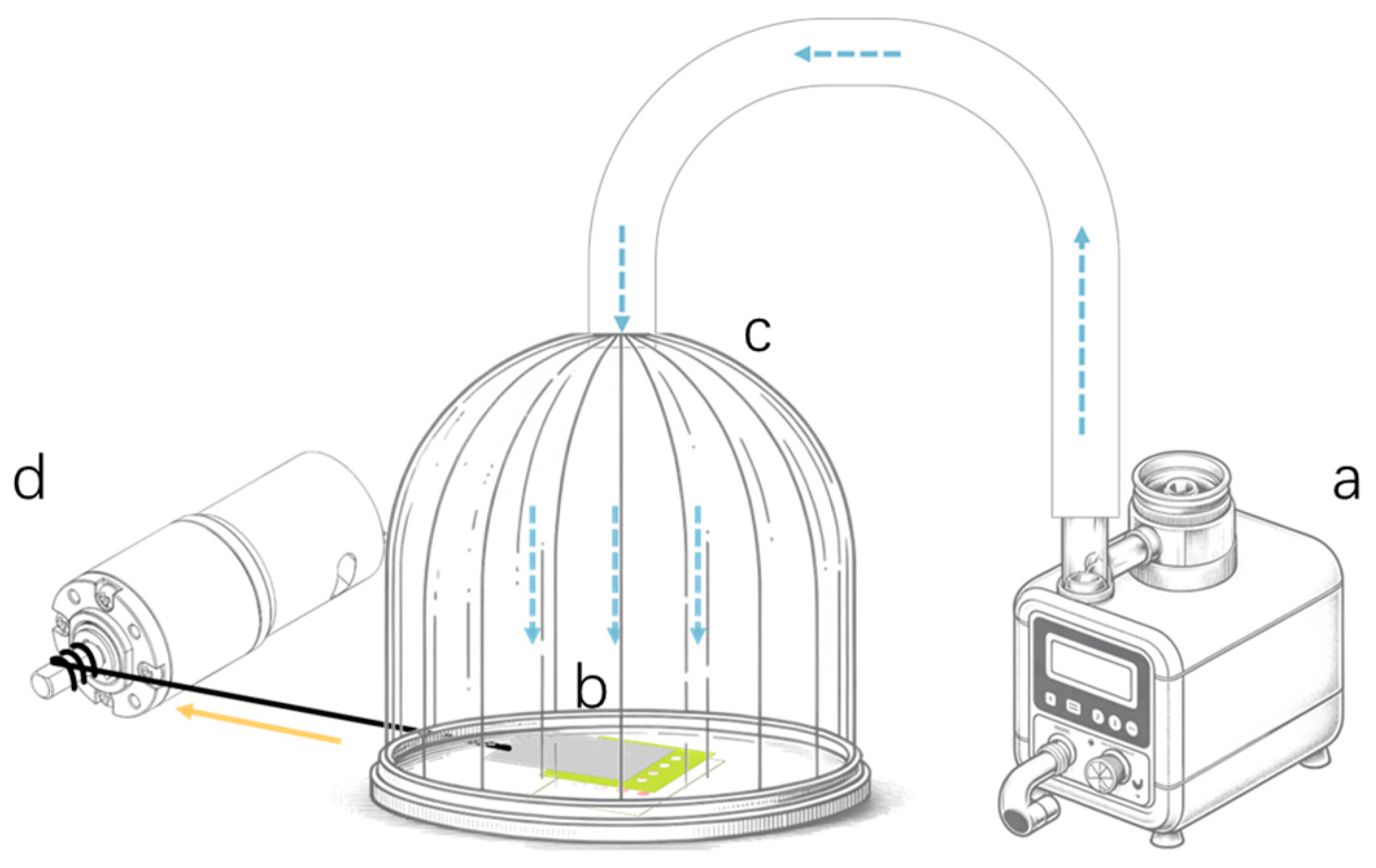
The experimental setup for hydrophilic array generation is schematically shown in
Figure 1. The system comprises: An ultrasonic atomizer (model: PN100, manufacturer: Shenzhen Kangbei Technology Co., Ltd., Shenzhen, China) operating at a frequency of 113 kHz and a power of 1.2 W, producing droplets with a nominal mean diameter of 1 µm (
Figure 1a). Off-the-shelf perforated masks (diamond sieve masks) were placed in conformal contact with the substrate surface, ensuring minimal gap between the mask and the substrate during deposition. Hydrophobic substrates (
Figure 1b): PP sheets (thickness 0.2 mm, supplier: Xinglong Plastics Processing Plant, Xinglong, China); PS sheets (diameter 80 mm, supplier: Xingmeile Insulation Plastics Co., Ltd., Shenzhen, China); PTFE sheets (diameter 80 mm, supplier: Xingmeile Insulation Plastics Co., Ltd., Shenzhen, China); Glass sheets (diameter 80 mm, supplier: Xingmeile Insulation Plastics Co., Ltd., Shenzhen, China). A sealed deposition chamber of dimensions 100 × 100 × 100 mm
3 with inlet and outlet ports, designed to reduce air currents and dust contamination (
Figure 1c). A motor (model: CNXCI, drive voltage 12 V, rotational speed 2 rpm) to translate the moving mask in one or two directions during atomization (
Figure 1d). A custom holder to maintain mask–substrate parallelism and fixed spacing.
2.2. Materials
Hydrophilic agent: Poly(vinyl alcohol) (PVA, degree of hydrolysis 98%, Mₙ~79 kDa) was dissolved in deionized water at a concentration of 0.8 wt%.
Substrates: PP sheets cut into rectangles of 80 × 80 mm2. Standard PS sheets (diameter 80 mm). Standard PTFE sheets (diameter 80 mm). Standard Glass sheets (diameter 80 mm).
Diamond sieves with close-packed circular holes of nominal diameters 1.2, 1.5, and 2.0 mm, thickness 150 µm, pitch 5 mm. The close-packed circular holes were chosen primarily for off-the-shelf availability, uniform pitch/coverage, and mechanical robustness that helps maintain conformal contact during deposition; in principle, other perforation geometries (e.g., circular or square apertures) with comparable aperture size and pitch should enable similar mask-confined deposition and droplet localization.
Bacterial culture: E. coli strain ATCC25922 grown in LB medium (tryptone 10 g L−1, yeast extract 5 g L−1, NaCl 10 g L−1).
Indicator dye: Resazurin sodium salt dissolved to a stock concentration of 50 mM and added to LB at a final concentration of 1000 µM [
21].
Antibiotic: Streptomycin sulfate prepared as a 10 mg mL−1 stock solution in deionized water and diluted to working concentrations between 0 and 10 µg mL−1.
Oil overlay: Electronic Fluorinated Fluid (Novec HFE-7500, supplier: Shanghai Tengyan Chemicals Trading Co., Ltd., Shanghai, China) used to cover droplets during incubation.
2.3. Masked Ultrasonic Deposition
2.3.1. PVA Solution Atomization
PVA solutions were loaded into the ultrasonic atomizer reservoir (volume 20 mL). The chamber temperature and relative humidity were monitored and maintained at 25 °C. During atomization, the masks and substrate were mounted horizontally, with the mask resting directly on the substrate surface. Atomization was performed for a fixed time tₑₓₚ = 60 s at a manufacturer-specified nebulization rate of 0.5 mL min
−1, with no mask motion for uniform arrays (
Section 3.2).
2.3.2. Moving Mask Motion for Gradients
To generate gradients, only a moving mask was translated laterally at a constant speed of 1.3 mm s−1 while the substrate remained fixed. The moving mask was mounted directly above the stationary substrate, with its lower face positioned in close proximity to the substrate surface. The ultrasonic atomizer and its plume were held stationary throughout the deposition, so the plume direction and its position relative to the substrate did not change. In short, during gradient deposition only the additional moving mask moved; neither the substrate nor the atomizer changed position or orientation. For 1D gradients, the moving mask was swept from right to left across the substrate (total travel distance 80 mm) while atomization proceeded continuously for a time t = 60 s. For 2D gradients, two successive deposition passes can be performed with the moving mask moved along orthogonal directions (x then y), using different reagents (e.g., reagent A in pass 1, reagent B in pass 2). Each pass lasted 60 s with speed v = 1.3 mm s−1.
2.4. Post-Deposition Treatment and Droplet Formation
After PVA deposition, the substrates were dried at room temperature for 30 min (or alternatively at 50 °C for 10 min in an oven) to remove residual solvent. Droplet arrays were then formed by immersing the patterned substrates in an aqueous solution for 30 s, followed by withdrawal at a controlled speed of 1 mm s−1 . In contrast to conventional point-by-point pipetting (dosing), droplets in this work are generated via an immersion–withdrawal process. Accordingly, the key operational parameters governing droplet formation are the immersion time, withdrawal speed, and liquid properties (e.g., viscosity and surface tension), rather than a single-droplet dosing rate. The resulting droplet volume is not defined by a pipetted aliquot but is primarily determined by the hydrophilic spot geometry (mask aperture and deposition footprint), the wettability contrast between the spots and the surrounding background, and the withdrawal conditions. The selected spot size and withdrawal-speed window were chosen to produce stable, well-confined droplets that remain bounded by the hydrophobic background without coalescing, while retaining sufficient volume for subsequent bacterial culture and minimizing rapid evaporation associated with overly small droplets.
After forming the droplet array on the patterned substrate, the substrate was placed into an 80 mm Petri dish. A layer of electronic fluorinated fluid (≈50 mL) was then gently pipetted into the dish so as to fully cover all droplets. During this step the substrate remained stationary and care was taken to add the oil slowly at the dish wall to avoid disturbing or displacing the droplets; the oil overlay thereby suppressed evaporation during subsequent incubation. The samples were then incubated at 25 °C for up to 24 h in a humidified chamber.
2.5. Bacterial Culture and Antibiotic Gradient Assay
For biological validation, E. coli was grown overnight in LB medium at 37 °C with shaking at 85 rpm and then diluted to an optical density of OD600 = 0.7 for droplet seeding. The aqueous phase used for droplet formation consisted of LB medium supplemented with resazurin and bacteria at OD600 = 0.7, with or without streptomycin depending on the experiment. For uniform antibiotic assays, the entire substrate was exposed to a single streptomycin concentration, whereas for gradient assays, a streptomycin solution (10 µg mL−1) was atomized through a moving mask to generate a lateral antibiotic gradient on the PVA-patterned surface, followed by droplet formation as described above. The resulting droplets were incubated at 25 °C for 24 h, and color changes due to resazurin reduction were imaged at defined time point (t = 0, 4, 8, 24 h).
2.6. Imaging and Image Analysis
Static water contact angles were measured using a contact angle goniometer (model: Attension Theta, Biolin Scientific Inc., Shanghai, China) by depositing sessile droplets of volume 4 µL on treated and untreated regions (n = 10 per condition). Droplet diameters were extracted from images using Python 3.14. An intensity threshold was applied to segment droplets, and equivalent circle diameters were calculated. For each condition, at least n = 100 droplets were measured. For dye gradients, grayscale (or fluorescence) intensity was measured within each droplet region of interest (ROI). Intensities were background-subtracted and normalized to the maximum value (I/Iₘₐₓ). For resazurin assays, the color was quantified either from RGB channels. Normalized viability metrics (e.g., I/I0) were computed by referencing untreated control droplets.
2.7. Data Analysis and Statistics
Data was analyzed using Python. To extract droplet-level viability from color images and to fit dose–response curves we used the image-analysis and fitting pipeline implemented in Python. Images were read as BGR and converted to RGB and HSV. Colored droplets were segmented using an HSV saturation threshold. The per-pixel color metric mapping color → viability was defined as metric = R/R + B where R and B are the red and blue channel values in the RGB image. This metric increases for pink/red droplets and decreases for blue droplets. Droplet ROIs and the gradient profile were extracted from the gradient image by column-wise binning across the image width. The image width was divided into 21 equal bins; for each bin the masked pixels were collected and the median of the color metric among those masked pixels was taken as that bin’s representative value. Normalization from the raw color metric to a 0–100% viability scale is performed using the extremes of the gradient image itself. Fitting was performed by nonlinear least-squares using scipy. Note that the reported CI is therefore the parametric approximation derived from the fit.
3. Results
3.1. Wettability Contrast and Pattern Fidelity
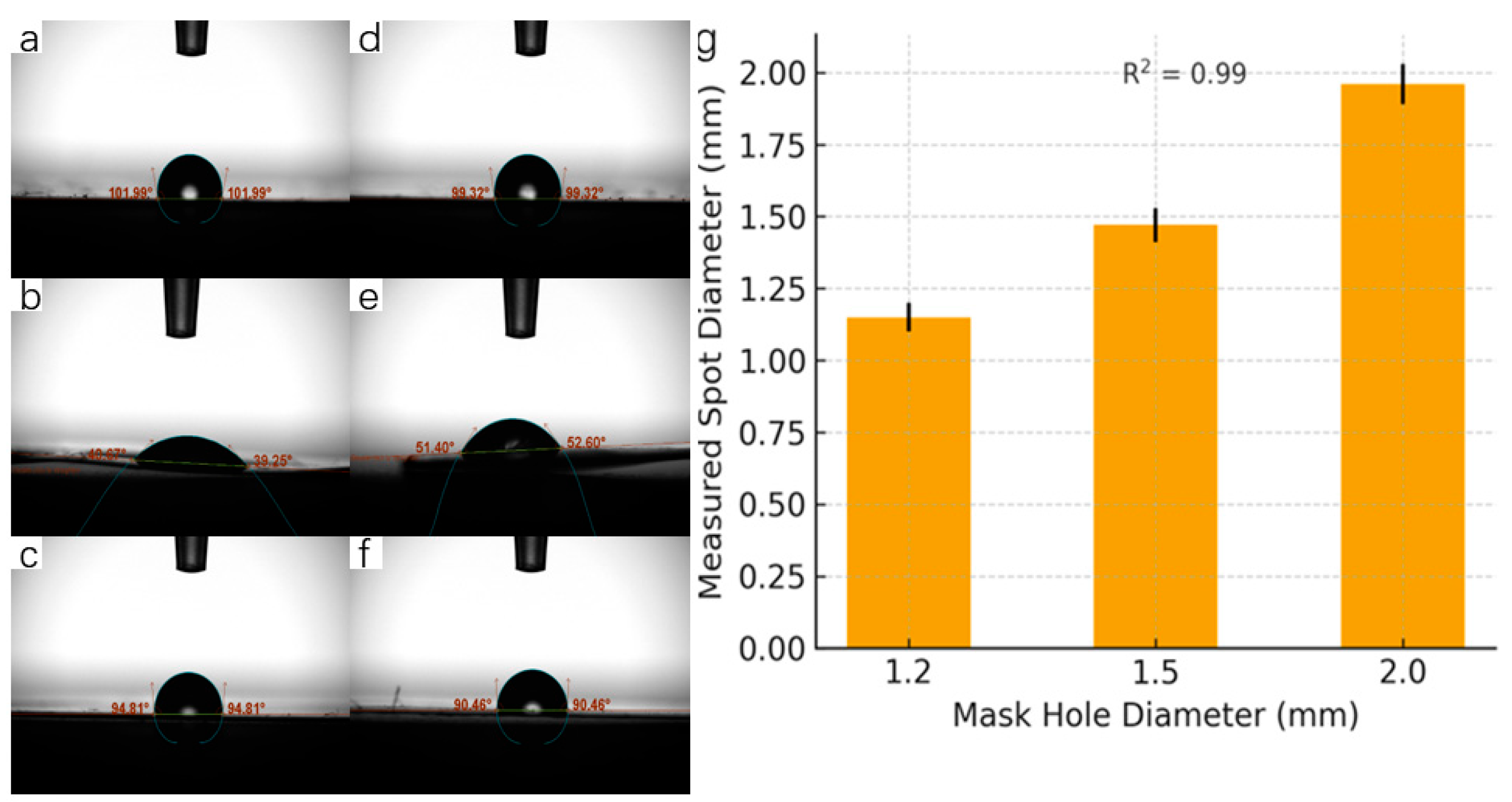
Static contact angle measurements confirmed that masked ultrasonic atomization of PVA generates strong local wettability contrast on both PP and PS substrates (
Figure 2,
Table 1). On untreated PP, water droplets exhibited a high contact angle of 100.85 ± 0.91° (
Figure 2a), consistent with its hydrophobic character. After PVA deposition, the hydrophilic spots showed a reduced contact angle of 39.96 ± 0.71° (
Figure 2b), while the surrounding regions maintained a contact angle of 94.77 ± 3.70° (
Figure 2c). Similar behavior was observed on PS, where native surfaces had contact angles of 95.68 ± 3.61° (
Figure 2d), and PVA-treated spots decreased to 52.00 ± 0.85° (
Figure 2e), while the surrounding regions maintained a contact angle of 92.93 ± 4.21° (
Figure 2f).
Mechanistically, the wettability contrast is primarily driven by localized surface chemistry/energy modification in the exposed regions: ultrasonic atomization deposits a thin hydrophilic coating (e.g., PVA) through the mask apertures, increasing the effective polar component of surface energy and thus lowering the water contact angle. In contrast, the surrounding masked background retains the native polymer surface (low-surface energy) and remains hydrophobic. The lateral spot geometry is therefore defined mainly by the aperture size and mask–substrate spacing, while any micro/nano-texture introduced during deposition may act as a secondary factor by amplifying the apparent contact angle via wetting-state effects.
The lateral dimensions of the patterned spots closely followed the mask geometry. For diamond sieve masks with nominal hole diameters of 1.2, 1.5, and 2.0 mm, the measured spot diameters were 1.15 ± 0.05 mm, 1.47 ± 0.06 mm, and 1.96 ± 0.07 mm, respectively (
n = 25 spots per condition), with a near-linear scaling (R
2 = 0.99;
Figure 2g). No significant spreading or merging of neighboring spots was observed over areas of at least 25 × 25 mm
2, indicating good pattern fidelity.
3.2. Droplet Size, Uniformity, and Dependence on Mask Geometry
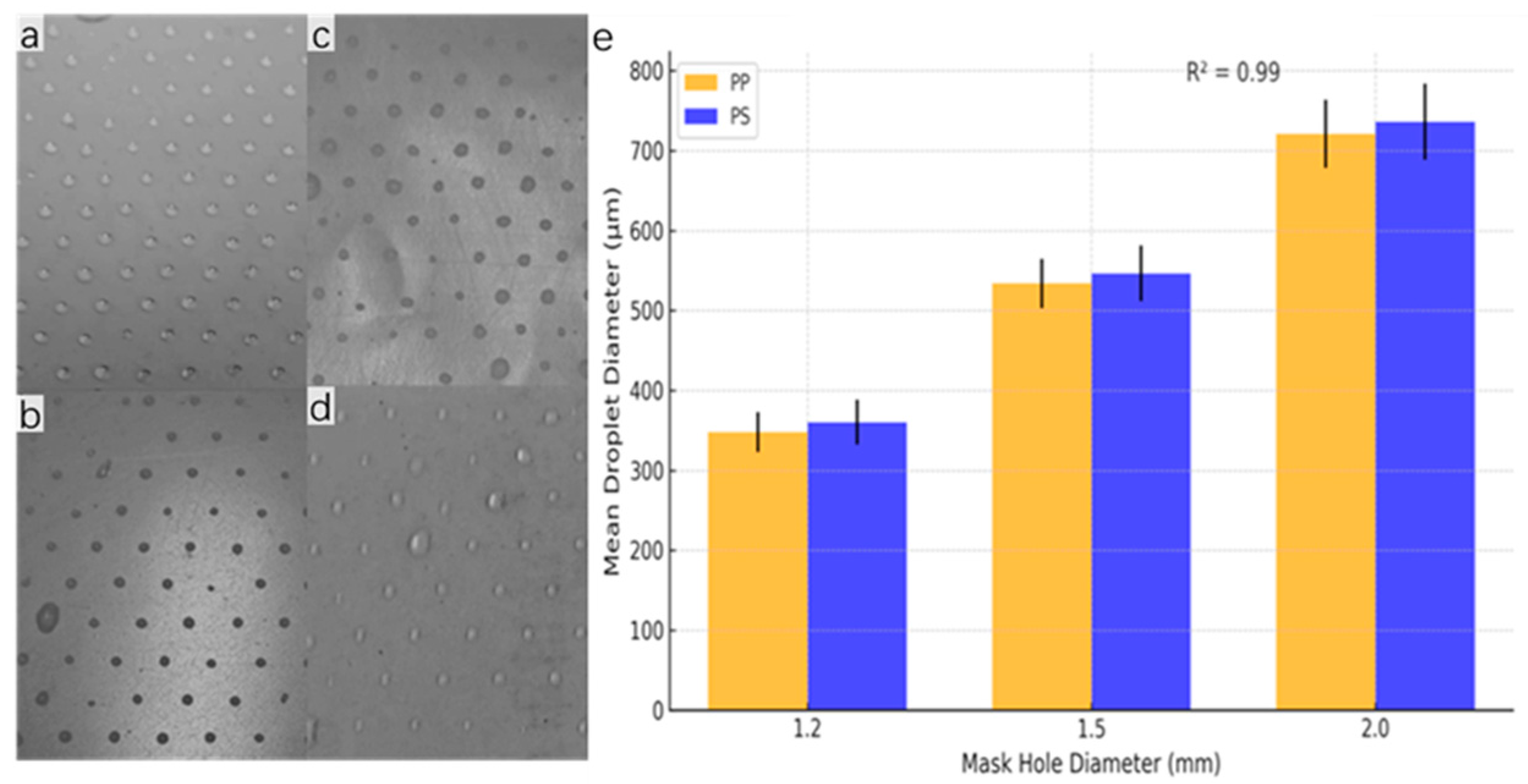
Immersing the patterned substrates into aqueous solutions generated regular arrays of droplets on all tested materials, including PP (
Figure 3a), PS (
Figure 3b), PTFE (
Figure 3c), and glass (
Figure 3d). On each substrate, droplets were largely confined to the predefined hydrophilic spots, with limited spreading onto the surrounding hydrophobic background. Among these substrates, the droplet arrays formed on PP exhibited the most uniform droplet size and spacing, whereas PS, PTFE, and glass showed slightly increased variability in droplet morphology and positioning. This trend is expected because larger apertures (and longer local exposure) deliver more deposited hydrophilic material and define larger hydrophilic footprints, increasing the liquid-holding capacity of each spot and enabling larger droplets after immersion.
Quantitative analysis showed that the mean droplet diameter increased with mask hole diameter (
Figure 3e;
Table 2). For example, with diamond sieve masks and a deposition time of 60 s, the results were as follows: 1.2 mm holes yielded droplets of diameter 347.7 ± 25 µm (CV = 7.2%,
n = 120) on PP and 360.1 ± 28 µm (CV = 7.8%) on PS.1.5 mm holes produced droplets of 533.8 ± 31 µm (CV = 5.8%) on PP and 546.4 ± 35 µm (CV = 6.4%) on PS.2.0 mm holes produced droplets of 720.9 ± 42 µm (CV = 5.9%) on PP and 736.2 ± 48 µm (CV = 6.5%) on PS.
Droplet size distributions were approximately log-normal with narrow widths; in most cases, CVs remained below 10%, which is suitable for many quantitative assays.
3.3. Long-Term Droplet Stability Under Oil
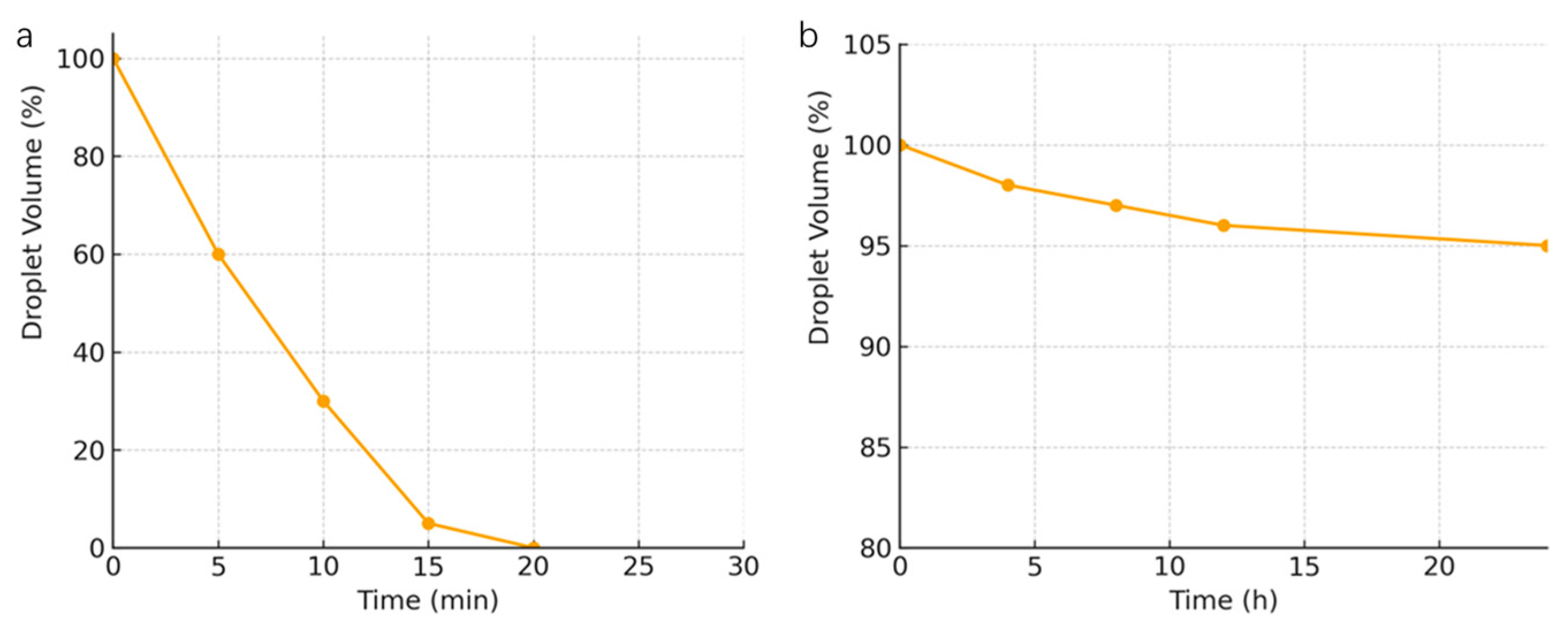
We next evaluated droplet stability with and without HFE oil overlay. Droplet behavior was monitored at 25 °C. Without oil protection, droplets on both PP and PS substrates evaporated rapidly and disappeared completely within tens of minutes, making long-term observation impossible (
Figure 4a). In contrast, droplets covered with an oil layer remained highly stable, retaining approximately 95 % of their initial volume after 24 h of incubation (
Figure 4b), with no visible coalescence or crystallization. To improve readability across the minute-to-hour time range,
Figure 4 is presented with clearly separated short-term (min) and long-term (h) time axes.
These results confirm that a simple oil overlay is sufficient to maintain droplet integrity over typical incubation times used in microbiological and biochemical assays, consistent with prior reports in open and under-oil microfluidics.
3.4. Quantitative Characterization of Mask-Guided Reagent Gradients
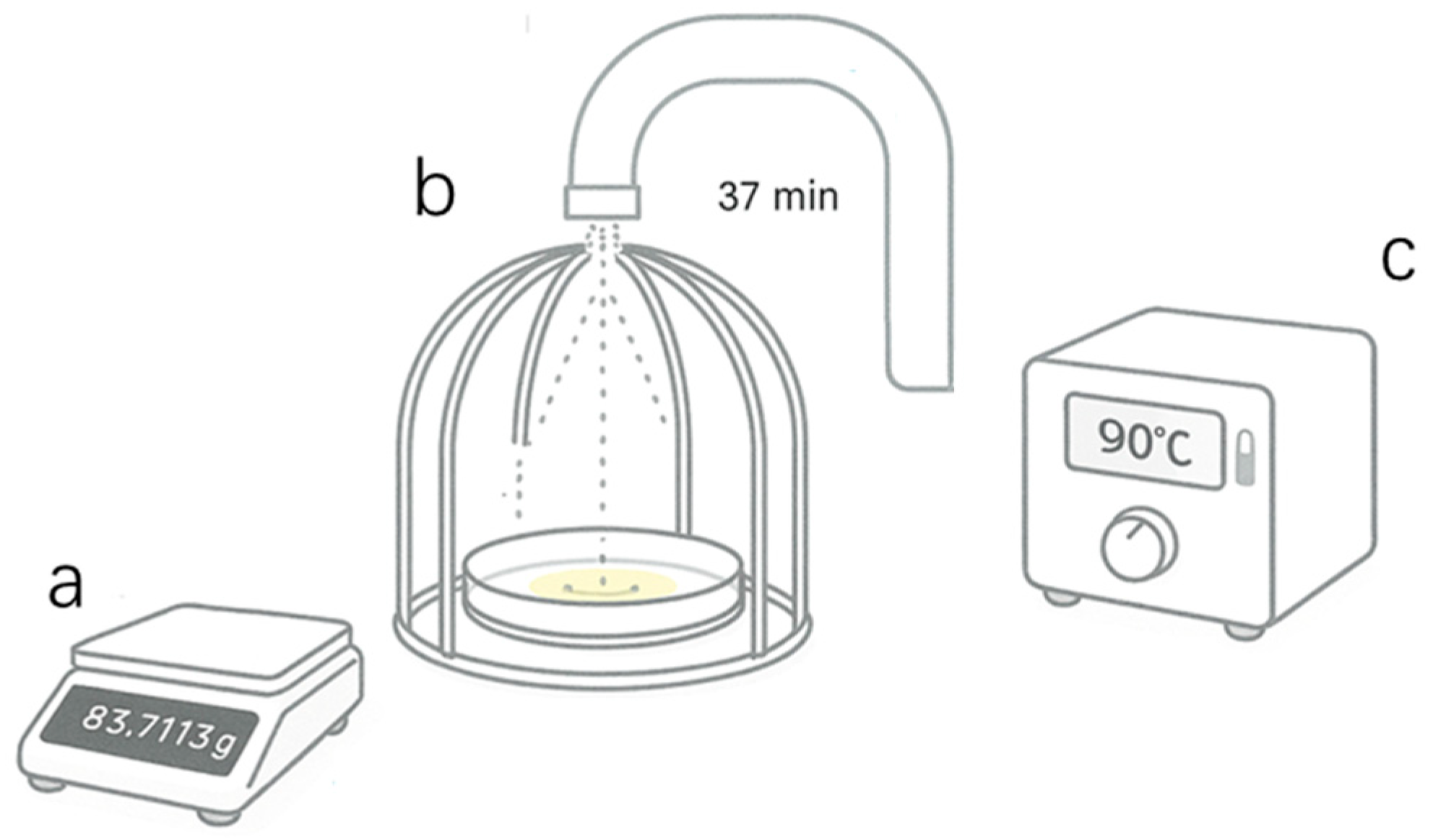
To obtain an accurate deposition rate of hydrophilic solution per unit area per unit time, we performed a calibration of the deposited reagent amount (
Figure 5). We prepared a glass Petri dish with a diameter of 120 mm and measured its weight using an electronic balance, which was found to be 83.7113 g (
Figure 5a). In a closed environment, a 0.8% PVA solution was sprayed onto the center of the Petri dish using an ultrasonic atomizer. To minimize errors as much as possible, the atomizer’s spraying frequency and speed were kept constant, and the spraying time was controlled for 37 min (
Figure 5b). After spraying, the bottom and outer walls of the Petri dish were wiped clean, and the dish was placed in an oven at 90 °C for 30 min to ensure the complete evaporation of moisture (
Figure 5c). The Petri dish was then weighed again on the electronic balance, yielding a weight of 83.7402 g. The difference between the two measurements, 0.0289 g, represents the amount of reagent deposited during the spraying process. After a series of calculations, the deposition rate was found to be approximately 1.16 ng per second per square millimeter, which closely matches our expectation.
Physically, increasing moving mask translation speed shortens the residence time of the spray plume over each location, reducing local deposited mass and producing a shallower concentration gradient. Moving mask speed can vary from 0.5 to 2.5 mm s−1 modulated the gradient steepness: slower speeds produced steeper profiles (larger |dI/dx|) while faster speeds yielded shallower gradients. This tunability indicates that the gradient shape can be simply controlled by adjusting the mechanical motion parameters.
3.5. Two-Dimensional Reagent Distributions via Orthogonal Moving Mask Passes
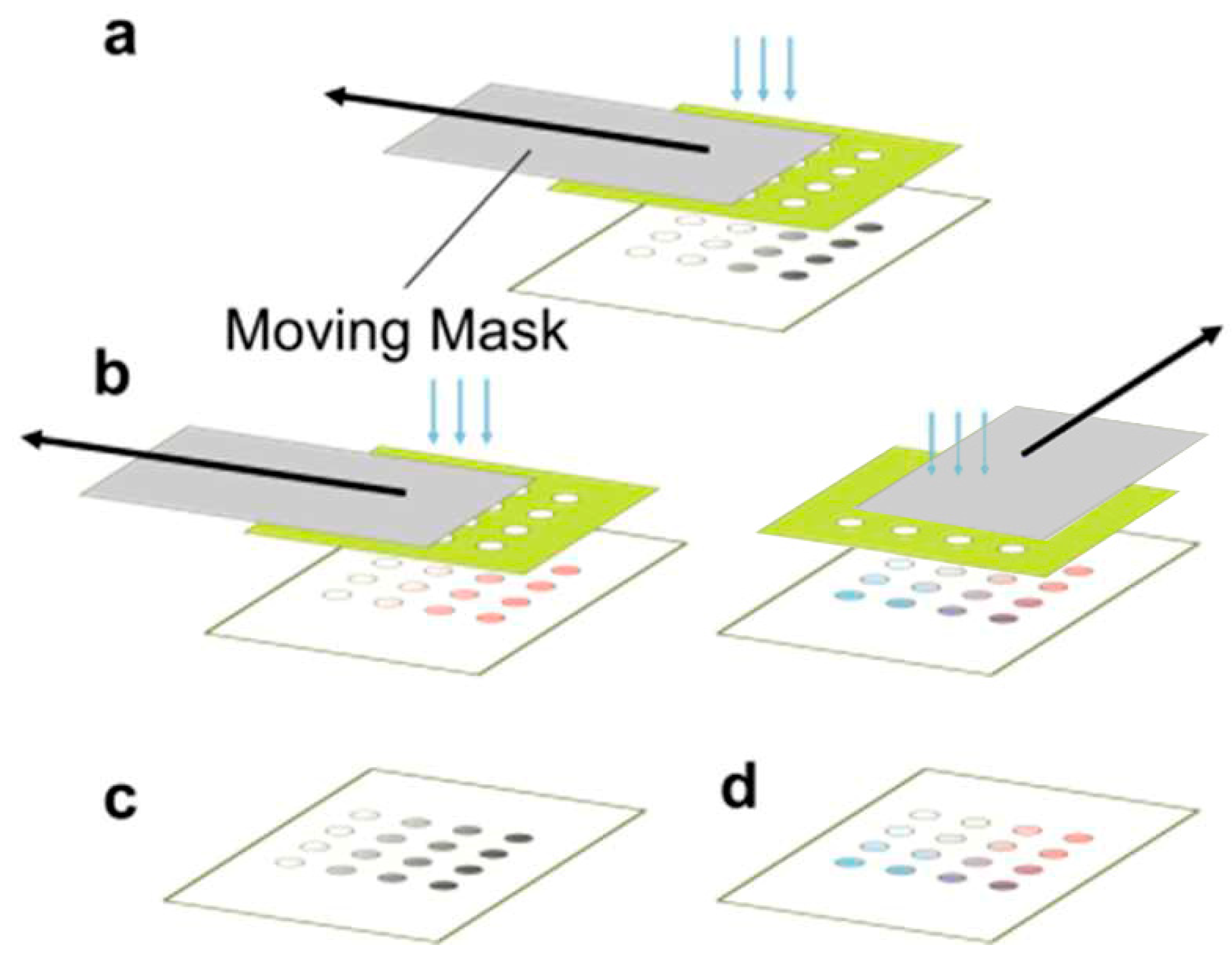
By performing two orthogonal deposition passes with different reagents, we generated simple two-dimensional distributions on the same substrate (
Figure 6). In a representative experiment, the procedure was as follows:
Reagent A was deposited while moving the mask along
x at speed
vx = 1.3 mm s
−1. After drying, the moving mask was rotated by 90°, and Reagent B was deposited while moving along
y at speed
vy = 1.3 mm s
−1. The resulting droplet arrays displayed a “checkerboard” of concentrations, where each droplet experienced a unique combination of A and B levels determined by its (
x,
y) position (
Figure 6a–c). Intensity maps for each channel revealed smoothly varying gradients along both axes with minimal crosstalk between reagents (
Figure 6d). This simple procedure enables small combinatorial libraries without complex fluidic routing.
3.6. Bacterial Growth and Antibiotic Susceptibility on Droplet Arrays
We then tested the platform with
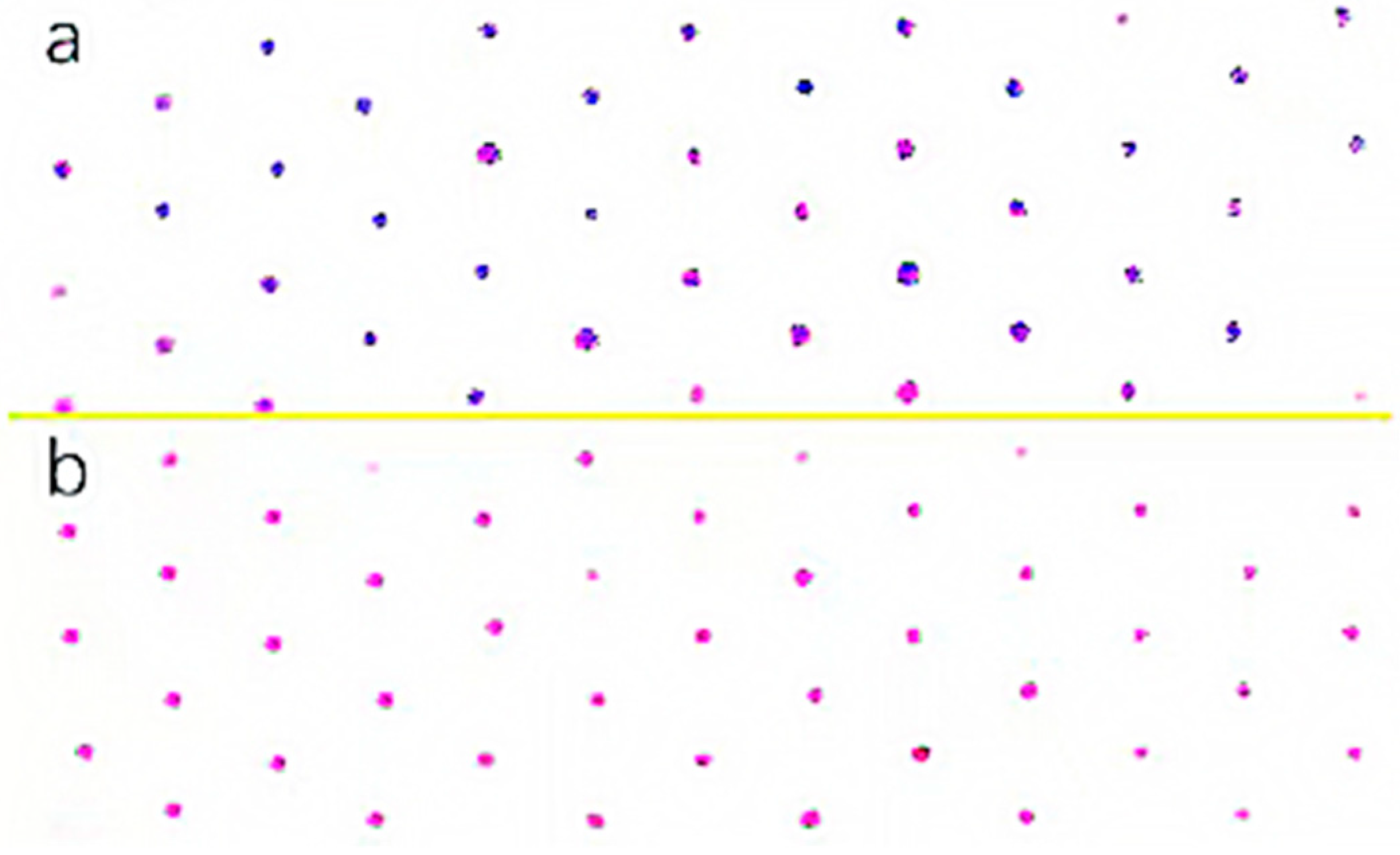
E. coli cultured in LB droplets containing resazurin as a metabolic indicator. In uniform antibiotic assays (no gradient), droplets containing high streptomycin concentrations (10 µg·mL
−1) remained blue throughout incubation, indicating inhibited bacterial growth (
Figure 7a). In contrast, droplets without streptomycin turned from blue to pink/colorless over 8 h, reflecting resazurin reduction and active metabolism (
Figure 7b). These observations agree with prior uses of resazurin for rapid assessment of bacterial viability and antibiotic susceptibility.
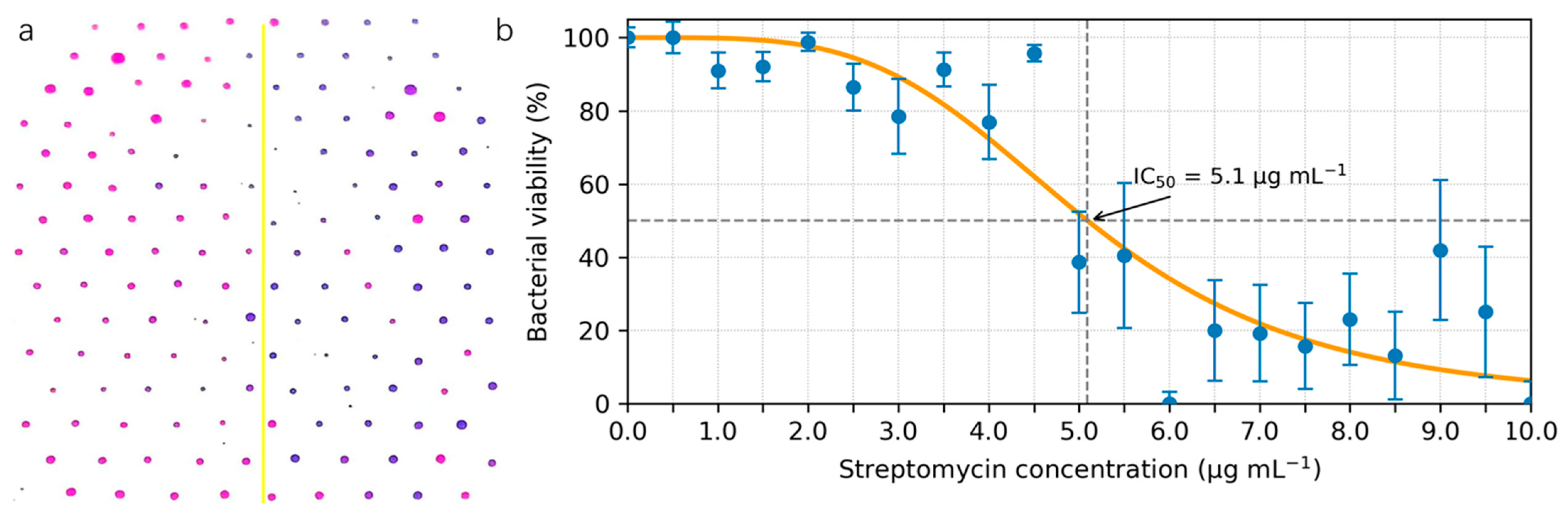
For gradient experiments, streptomycin was first deposited by moving the moving mask from right to left during atomization. Subsequent droplet formation with
E. coli + resazurin resulted in a lateral antibiotic gradient across the array. After 24 h incubation at 25 °C, a distinct color pattern emerges (
Figure 8a); droplets on the right (highest antibiotic exposure) remained blue; droplets on the left (lowest antibiotic) were colorless; and intermediate droplets showed purple hues.
Quantitative analysis of normalized signal vs. droplet position revealed a sigmoidal relationship between local antibiotic “dose” (estimated from the position-mapped assuming linear gradient) and bacterial viability (
Figure 8b). Fitting with a Hill function yielded an IC
50 of 5.1 µg mL
−1 (95% CI: 4.5–5.6 µg·mL
−1), in reasonable agreement with the literature susceptibility values for
E. coli under similar conditions. Notably, the entire dose–response curve was obtained from a single droplet array with minimal reagent consumption and no serial dilutions. Although droplet uniformity was reduced in LB medium, we mitigated this by computing per-column mean viability after removing outlier droplets (outliers defined as values beyond 1.5× the interquartile range from the column median); columns with fewer than two valid droplets after outlier removal were omitted from fitting.
3.7. Effect of LB Medium on Droplet Uniformity
An observed challenge was droplet size variation when using LB medium instead of simple aqueous buffers. Droplets formed from LB showed more irregular shapes and a wider diameter distribution (CV up to 80%) compared with droplets from dye or buffer solutions (CV 10%). We attribute this to surface-active substances (proteins, peptides, surfactant-like components) present in LB, which can modify surface tension and wetting behavior. This effect has been noted in other droplet-based assays using complex media.
Ongoing work is focusing on: Optimizing LB formulations or adding defined surfactants to stabilize droplet shape. Exploring direct atomization of the LB medium through the mask, rather than relying solely on post-patterning immersion, to improve uniformity. Introducing a mild pre-treatment (e.g., brief plasma exposure) to tune spot wettability and reduce sensitivity to media composition.
5. Conclusions
We have demonstrated a straightforward, scalable method for fabricating hydrophilic arrays on hydrophobic plastic substrates using masked ultrasonic atomization and off-the-shelf perforated masks. The platform combines strong local wettability contrast on PP and PS, highly uniform droplet arrays with tunable size, simple generation of one-dimensional reagent gradients via moving mask motion, and compatibility with resazurin-based bacterial growth and antibiotic susceptibility assays.
By eliminating the need for custom mask fabrication and cleanroom processes, this method lowers the barrier to implementing droplet microarrays in ordinary laboratories. Its inherent ability to generate gradients and combinatorial conditions on a single substrate further enhances its utility for high-throughput screening and assay development. We anticipate that with further optimization and automation, masked ultrasonic atomization will become a valuable addition to the toolbox of open microfluidic and droplet-based technologies.
This platform offers a low-cost route to droplet-array cultivation and phenotypic screening—such as microbial culture, antibiotic susceptibility testing, and enzyme or colorimetric assays—and is well suited for parallel multi-condition or gradient experiments. At the same time, the method is intentionally simple and serves as an accessible front-end for surface-patterned microreaction arrays without requiring complex microfabrication. Important limitations remain: wettability contrast and spot uniformity are sensitive to mask geometry, deposition parameters and the substrate surface state; the current workflow depends on external imaging and some manual handling; and achieving systematic control of surface chemistry, micro–/nano-texture characterization, or substantially higher array densities will require finer masks or customized templates. These constraints point to clear avenues for future work, including optimization of mask design and deposition protocols, deeper surface characterization, and automation of imaging and handling steps.