Next Article in Journal
Finite Element Modelling of Variable Bitumen Content in Asphalt Mixtures
Previous Article in Journal
KT-NAS: Knowledge Transfer for Efficient Neural Architecture Search
error_outline You can access the new MDPI.com website here. Explore and share your feedback with us.
 
 
Article

Testing a Farm Animal Model for Experimental Kidney Graft Transplantation: Gut Microbiota, Mycobiome and Metabolic Profiles as Indicators of Model Stability and Suitability


1
Department of Microbiology and Immunology, University of Veterinary Medicine and Pharmacy in Kosice, 041 81 Kosice, Slovakia
2
Department of Animal Physiology, Institute of Biology and Ecology, Faculty of Science, Pavol Jozef Safarik University, 040 01 Kosice, Slovakia
3
Clinic of Swine, University Veterinary Hospital, University of Veterinary Medicine and Pharmacy in Kosice, 041 81 Kosice, Slovakia
4
Department of Surgery, Medical Faculty, Pavol Jozef Safarik University, 040 11 Kosice, Slovakia
5
L. Pasteur University Hospital, 040 11 Kosice, Slovakia
6
Department of Morphological Disciplines, University of Veterinary Medicine and Pharmacy in Kosice, 041 81 Kosice, Slovakia
7
Department of Transplantation, L. Pasteur University Hospital, 040 11 Kosice, Slovakia
*
Author to whom correspondence should be addressed.
Appl. Sci. 2026, 16(2), 625; https://doi.org/10.3390/app16020625
Submission received: 17 November 2025 / Revised: 16 December 2025 / Accepted: 23 December 2025 / Published: 7 January 2026

Abstract

The aim of this pilot study was to comprehensively evaluate the gut microbiota, mycobiome, and metabolomic profile of six 4-month-old crossbred pigs (A–F) originating from the same litter and from a specific breeding facility intended for preclinical transplantation experiments, in order to assess their physiological uniformity and identify potential health-related risks prior to inclusion in a kidney transplantation study. The results demonstrated an overall high degree of microbial and metabolic uniformity among the animals, confirming the stability and suitability of the selected breeding source for experimental purposes. At the same time, several individual differences of potential clinical relevance were observed. Animals A, E, and F exhibited signs of microbial and metabolic imbalance, including reduced diversity, increased oxidative activity, and the presence of potentially pathogenic taxa (Porphyromonadaceae bacterium DJF B175, Aspergillus). In contrast, animals B, C, and D showed a balanced metabolic and microbial profile without pathological deviations. The obtained results highlight the importance of preoperative assessment of the gut bacteriome, mycobiome, and metabolome when selecting animals for transplantation experiments. Such a selective screening approach may contribute to the early identification of physiological deviations, reduction of interindividual variability, and increased reliability and translational potential of preclinical studies.

1. Introduction

The intestinal microbiota represents the most extensive and diverse microbial community within the human organism. Its symbiotic relationship with the host is modulated by a complex network of interactions involving metabolic, immune, and neuroendocrine mechanisms that ensure the homeostasis of this microecosystem [1].
The gut microbiome is not composed solely of microorganisms; it also encompasses a broad spectrum of microbial products such as signaling molecules, toxins, organic and inorganic compounds, as well as structural components of microbial cells, including proteins, lipids, polysaccharides, and nucleic acids. It is a dynamic and highly interactive system whose composition changes over time, and its integration into the host’s physiological context is crucial for the proper functioning of the immune system, including mechanisms of graft tolerance after kidney transplantation [2]. Increasing diversity of the intestinal microbial community enhances the host’s ability to cope with environmental stressors. However, the microbiota is highly sensitive to external factors such as nutritional imbalance, psychological stress, antibiotic exposure, or infectious diseases [3]. Disruption of this fragile balance between the microbiota and the host may lead to dysregulation of the immune response. The condition referred to as dysbiosis, characterized by quantitative and qualitative alterations in the composition of the intestinal microbiota, is associated with various pathological processes [4]. Although many aspects of microbiota–host interactions remain unclear, extensive evidence demonstrates that disturbances within the gut microbiome can influence multiple physiological systems and contribute to the development or progression of various diseases. In kidney transplant recipients, significant changes in the composition of the intestinal microbiome occur as a consequence of immunosuppressive and prophylactic antibiotic therapy. These interventions have the most significant impact during the first month after transplantation, reducing microbial diversity and stability, and may result in several complications, including Clostridioides difficile-associated diarrhea [5], development of renal interstitial fibrosis [6], acute graft rejection [7,8], altered metabolism of immunosuppressive drugs [7,9], as well as infections affecting other organ systems [6,7]. Under dysbiotic conditions, certain intestinal microorganisms produce metabolites with deleterious effects on the cardiovascular and renal systems. For instance, trimethylamine N-oxide (TMAO), formed by the metabolism of choline, is linked to the progression of renal interstitial fibrosis. Another harmful metabolite is indoxyl sulfate, synthesized by pathogenic strains of Escherichia coli. This compound induces proliferation and remodeling of vascular smooth muscle cells and promotes procoagulant processes [10]. Dysbiosis is further accompanied by increased concentrations of uremic toxins, thereby elevating the risk of renal parenchymal damage [11].
Given the crucial role of the gut microbiome in modulating the host’s immune response and its direct impact on kidney graft outcomes, the selection of an appropriate animal model for transplantation research must consider not only scientific, technical, and ethical factors, but also the current microbial status of the animals. This requirement becomes particularly important when using conventional farm animals that do not originate from standardized laboratory breeds and therefore exhibit greater biological variability. The large animal models, especially pigs, play a central role in transplantation research, enabling the evaluation of innovative surgical and immunosuppressive strategies under clinically relevant conditions. The pig has become an established model due to its anatomy, size, vascularization, and kidney function, which closely resemble those of humans [12]. The feasibility of performing surgical techniques analogous to those in humans (e.g., vascular anastomosis, ureteral anastomosis) and the availability of immunosuppressive protocols make this model a suitable tool for studying both acute and chronic graft rejection. Compared with primates, pigs are associated with fewer ethical constraints and greater availability.
In transplantation research, specific laboratory minipig lines such as Göttingen, Yucatan, Hanford, or Sinclair minipigs are often preferred due to their standardized genetics and controlled microbiological background [13,14]. Besides minipigs, commercially available hybrid breeds (e.g., Large White × Landrace) are also used in surgical and immunosuppressive studies, particularly in cases where a larger organ volume or a more robust organism is required.
The objective of the present study was to perform a comprehensive pre-evaluation of the health status of pigs originating from a specific breeding facility, with particular emphasis on the uniformity and similarity of their gut bacteriome, mycobiome and metabolic profiles. The results will form the foundation for the targeted selection of individuals suitable for preclinical kidney transplantation models, with the aim of generating high-quality experimental data and improving the translational relevance of future studies.

2. Materials and Methods

2.1. Animals and Feed

The study included six 4-month-old pigs from a single litter, crossbred pigs [(Landrace × Large White) × Pietrain], with an average body weight of 40 kg. The animals, of 110 both sexes, originated from the herd of the Clinic of Swine, University Veterinary Hospital, University of Veterinary Medicine and Pharmacy in Kosice, Slovakia (farm register no. 112 AUMK6). Animals that had received antibiotics or anti-inflammatory drugs during the previous three months or had undergone anesthesia or sedation within the last 30 days, were excluded from the study. The pigs were fed a standard complete feed mixture for grower pigs (Univerzál výkrm, Schaumann Agri, s.r.o., Bratislava, Slovakia) at a daily ration of 2.0–2.5 kg per animal. The composition of the feed mixture was as follows: barley 57%, wheat 17%, maize (grain) 10.5%, extracted soybean meal 12.5%, and mineral supplement NATUPIG M 100 (Schaumann Agri, s.r.o., Bratislava, Slovakia) 3%. From a nutritional perspective, the feed mixture contained: dry matter 88.3%, crude protein 15.69%, fat 2.24%, fiber 4.28%, ash 4.80%, and metabolizable energy (ME) for pigs 12.85 MJ/kg. The rooms for animals as well as experimental procedures were maintained under optimal microclimatic conditions for grower pigs: temperature 18–22 °C, relative humidity 60–75%, and air exchange rate 10–20 times per hour, depending on seasonal conditions.

2.2. Analysis of Fecal Microbiota and Mycobiota Composition Using Next-Generation Sequencing (NGS)

Fecal samples were collected as part of a routine procedure. For each sample, three subsamples were taken from different parts of the fecal matter to generate triplicates. All six animals were sampled on the same day and at the same time during their standard morning handling. Although six pigs were included in the experiment, sequencing analyses were performed on samples from five animals that provided DNA of sufficient quality for library preparation. Total DNA was extracted from approximately 200 mg of each fecal sample using the Quick-DNATM Fecal/Soil Microbe Miniprep Kit (Zymo Research, Irvine, CA, USA) according to the manufacturer’s protocol. The quality and concentration of the isolated DNA were assessed spectrophotometrically using a NanoDropTM OneC UV-Vis (Thermo Fisher Scientific, Waltham, MA, USA), and integrity was verified by agarose gel electrophoresis.
For bacterial community profiling, the V3–V4 hypervariable regions of the 16S rRNA gene were amplified using the universal primers 341F (5′-CCTAYGGGRBGCASCAG-3′) and 806R (5′-GGACTACNNGGGTATCTAAT-3′) and sequenced on the Illumina MiSeq platform (2 × 300 bp paired-end reads). For fungal community profiling, the ITS1 region of the fungal ribosomal DNA was amplified using the primers ITS5-1737F (5′-GGAAGTAAAAGTCGTAACAAGG-3′) and ITS2-2043R (5′-GCTGCGTTCTTCATCGATGC-3′) and sequenced using the same platform. Library construction and sequencing were performed by Novogene Co., Ltd. (Munich, Germany).

2.3. Metabolomic Profiling of Fecal Samples

Fecal samples were collected from each of the six pigs in triplicate, resulting in a total of eighteen samples analyzed for metabolomic profiling. The analysis was performed by Biomarker Technologies (BMKGENE, Münster, Germany) using a non-targeted LC–MS metabolomics approach. Approximately 100 mg of each fecal sample was thawed on ice and subjected to bead-assisted homogenization and sonication in cold organic solvent to precipitate proteins and extract metabolites. The homogenates were centrifuged at 12,000× g for 10 min at 4 °C, and the resulting supernatants were collected, vacuum-dried, and reconstituted prior to LC–MS analysis, following the standardized BMKGENE protocol for non-targeted fecal metabolomics.
Chromatographic separation was achieved using a Waters Acquity UPLC HSS T3 column and Waters ACQUITY I-Class PLUS UHPLC system coupled to a Waters Xevo G2-XS QTOF high-resolution mass spectrometer (Waters Corporation, Milford, MA, USA). Data were acquired in both positive and negative electrospray ionization (ESI) modes using MassLynx v4.2 software (Waters Corporation). Peak detection, alignment, and normalization were performed in Progenesis QI version 2.4.6911 (Nonlinear Dynamics, Waters). Metabolite identification was based on accurate mass, retention time, and MS/MS fragmentation spectra matched against multiple databases, including HMDB [15], KEGG [16], LIPID MAPS [17], METLIN [18], and the BMKGENE in-house library. Quantification was performed on a relative (peak area-based) basis.
Quality control (QC) samples were prepared by pooling equal aliquots from all study samples and analyzed periodically throughout the run to monitor system stability and reproducibility. Differential metabolites were defined as those with variable importance in projection (VIP) > 1.0 and p < 0.05. Functional and pathway enrichment analyses were conducted using the KEGG database to explore the biological relevance of the differential metabolites.

2.4. Bioinformatic and Statistical Analysis

Statistical analysis of the microbiome and mycobiome data was performed by Novogene Co., Ltd. (Munich, Germany), while the analysis of metabolome data was performed by Biomarker Technologies (BMKGENE, Münster, Germany).
Raw paired-end reads of the microbiome and mycobiome sequences were demultiplexed, and barcode and primer sequences were removed using cutadapt (v3.3) [19]. Forward and reverse reads were merged using FLASH (v1.2.11) [20] with a minimum overlap of 10 bp. Quality filtering was performed with fastp (v0.23.1) [21], and chimeric sequences were identified and removed using vsearch (v2.16.0) [22] to obtain high-quality effective reads (for summary see Supplementary Table S1). Denoising and inference of amplicon sequence variants (ASVs) were carried out using the DADA2 algorithm [23] implemented in QIIME2 (version 2022.2) [24]. Taxonomic assignments were conducted using the SILVA 138 (bacteria) [25] and UNITE 10.0 (fungi) [26] databases. For the summary of ASVs and the assigned taxons, see Supplementary Tables S2 and S3. Species abundance tables were generated at multiple taxonomic levels based on the annotated ASVs. Abundance information was normalized using a standard of sequence number corresponding to the sample with the least sequences. Subsequent analyses were all performed based on this output normalized data. To identify statistically significant differences between experimental groups at different taxonomic levels, t-tests were performed (p < 0.05), and the results were visualized using R (v 2.15.3) [27]. In addition, differential taxa were identified using the LEfSe algorithm (Linear Discriminant Analysis Effect Size) as described by Segata et al. [28].
Metabolomics data preprocessing was performed in Progenesis QI software (version 2.4.6911) for peak extraction, alignment, and metabolite annotation prior to statistical analysis. After total peak-area normalization, downstream analyses were conducted in R. Hierarchical clustering heatmaps were generated using the pheatmap (v1.0.2) package [29] with uv scaling, enabling visualization of global similarity patterns among samples and metabolites. Differential metabolites between groups were assessed using a combination of univariate and multivariate analyses. Univariate significance was evaluated using fold change (FC) and t-tests (p < 0.05), while multivariate analysis was performed using Orthogonal Partial Least Squares Discriminant Analysis (OPLS-DA) (Variable Importance of Projection (VIP) > 1) using ropls software (1.6.2) [30] with model reliability confirmed by 200-permutation tests. Differential metabolites were identified based on the combined criteria of (|FC| > 1, p < 0.05, and VIP > 1, and subsequently subjected to KEGG [31] pathway enrichment analysis using the hypergeometric test. Results were visualized as volcano plots in R. To investigate coordinated expression dynamics, k-means clustering was performed using the base R kmeans function with the optimal number of clusters determined by NbClust (v3.0) [32], also using uv scaling.
p-Values of statistical tests were adjusted for multiple testing using the Benjamini–Hochberg false-discovery rate (FDR), with significance defined as FDR-adjusted p < 0.05. Analyses and visualizations were performed using R (v4.2.2) with the phyloseq [33], vegan [34], microbiome [35], and ggplot2 [36] packages.

3. Results and Discussion

3.1. Gut Microbiota Composition, Balance, and Risk Profile of Kidney Graft Donors

Kidney transplantation research using animal models requires extremely careful planning, especially the goal is to translate findings to human medicine. In recent years, the gut bacteriome and mycobiome represent has been recognized as important variables that can fundamentally influence the immunological balance, inflammatory responses, and the metabolism of immunosuppressive drugs [37,38]. Therefore, the selection of animals with a stable and physiologically relevant gut microbiota is crucial for ensuring the interpretability and reproducibility of experimental results. Pigs are becoming the model organism of first choice in transplantation research due to their anatomical, physiological, and immunological similarity to humans. An equally important, but often underestimated, aspect is their microbiological similarity—especially in the composition of the gut bacteriome [39,40,41] and mycobiome [42,43,44], which in-creases the translational relevance of porcine data for human applications.
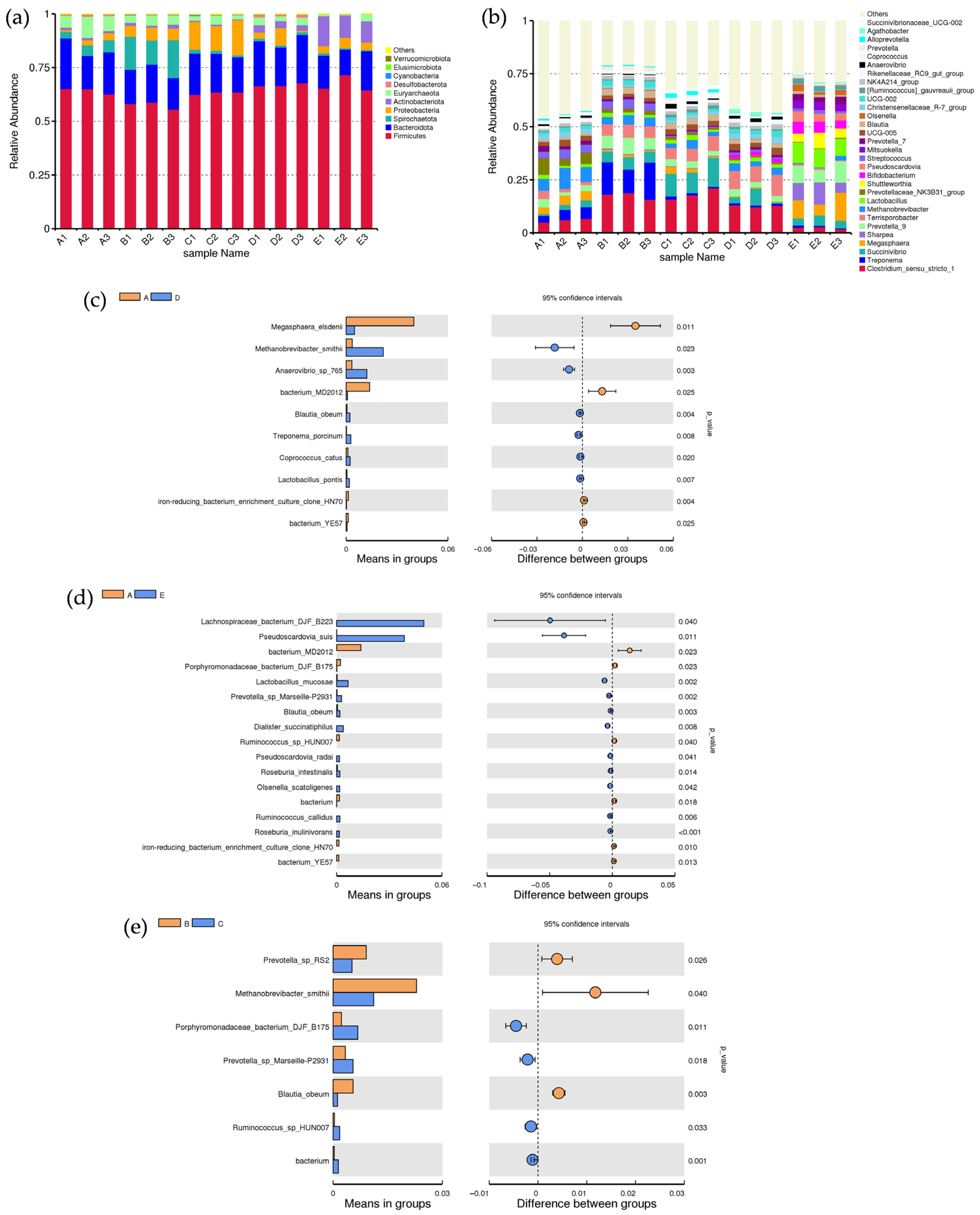
The gut bacterial profiles of the six pigs (A–F) revealed a consistent community structure across individuals. At the phylum level (Figure 1a), Firmicutes and Bacteroidota dominated in all samples, with Firmicutes accounting for approximately 60–70% and Bacteroidota for 15–25% of the relative abundance. Other phyla, including Spirochaetota, Proteobacteria, Actinobacteriota, and Euryarchaeota, were present in lower proportions. This configuration corresponds to the typical post-weaning gut bacteriome, a developmental stage in pigs characterized by increasing microbial stabilization [45,46,47].
At the genus level (Figure 1b), the most abundant genera included Clostridium_sensu_stricto_1, Treponema, Prevotella_9, Lactobacillus, Succinivibrio, Megasphaera, Sharpea, and Blautia—all known for their involvement in fiber fermentation and short-chain fatty acids (SCFAs) production, which contribute to the maintenance of gut health. These results align with the meta-analysis by Holman et al. [48], who identified a conserved “core” porcine microbiota across sixteen studies, comprising genera such as Clostridium, lactobacilli, Prevotella, and Treponema, all confirmed in our samples. As reported by several authors [40,48,49,50,51] the post-weaning period (2–4 month of age), is characterized by increasing microbial stability and a shift toward an adult-like microbial profile, fully consistent with our observations. Guevarra et al. [50] described the early-life development of the pig gut microbiota, confirming the post-weaning shift toward anaerobic fermentative taxa, including Prevotella spp., Succinivibrio, Megasphaera, and Lactobacilli. The more pronounced representation of these genera, particularly in animals D and E, suggests ongoing polysaccharide fermentation and metabolic activity associated with a well-stabilized gastrointestinal tract. Regarding replicate consistency, high stability of microbial composition was observed, especially in animals A, B, and E. Slight deviations were recorded in some samples from groups C and D, specifically in samples C3 and D2, which showed an increased abundance of the less represented phylum Proteobacteria. However, these differences did not exceed the limits of normal biological variability. The high similarity observed among technical replicates indicates robust methodological reproducibility, while the similarity among individual animals reflects the consistency of their environment, diet, and genetic background.
At the bacterial ASV-based putative species level, a t-test was performed to compare the gut microbiota between animals A and D (Figure 1c), A and E (Figure 1d), and B and C (Figure 1e), with the aim of identifying ASVs assigned to putative species with potential effects on host gut health. This analysis was conducted in the context of an upcoming kidney graft transplantation experiment, where maintaining gut microbiome integrity is essential for reducing complications associated with immunosuppression [6,7,8,9,37,38]. In terms of microbial balance and evenness of taxonomic representation, animals D and E exhibited the most favorable profiles (Figure 1c,d). These individuals showed high microbial diversity, a uniform distribution of fermentatively active genera, and a significant presence of beneficial species such as ASVs assigned to Blautia obeum, Coprococcus catus, Limosilactobacillus pontis, and Roseburia intestinalis. These bacteria are known for their ability to produce SCFA, particularly butyrate, and for their anti-inflammatory properties, which are essential for maintaining an intact intestinal barrier and suppressing immune activation [52,53,54,55]. The balanced bacteriome composition in animals D and E is therefore considered very favorable in the context of the planned kidney graft transplantation. Animals B and C (Figure 1e) showed slightly higher interindividual variability. In animal C, the occurrence of ASV assigned to Ruminococcus sp. HUN007 was evaluated positively, as this species belongs to the main butyrate-producing bacteria; however, on the other hand, the sample also revealed the presence of ASV assigned to Porphyromonadaceae bacterium DJF B175, a member of the Porphyromonadaceae family that includes species with opportunistic or potentially pathogenic traits. Although the specific role of this strain remains unclear, representatives of this family are known to become clinically relevant under conditions of impaired intestinal barrier integrity and immunosuppression, where they may contribute to systemic inflammation or bacterial translocation [56,57]. The greatest deviations were recorded in animal A, which in several comparisons showed low microbial balance, a high dominance of individual ASVs, and a recurrent occurrence of poorly characterized or environmentally suspect taxa, such as ASV assigned to bacterium_MD2012 or ASV assigned to iron-reducing bacterium enrichment culture clone HN70. In addition, this animal repeatedly exhibited a higher abundance of ASV assigned to Porphyromonadaceae bacterium DJF B175, which markedly increases its risk profile. Although ASV assigned to Porphyromonadaceae bacterium DJF B175 has not been officially identified as a pathogen, its affiliation with a family that includes known facultative pathogenic bacteria requires contextual interpretation—the presence of such a potentially pathogenic microorganism, combined with low gut microbial diversity, may in an immunosuppressed donor create conditions conducive to inflammatory responses, representing a potential risk for transplant success.

3.2. Gut Mycobiome Composition, Balance, and Risk Profile of Kidney Graft Donors

Alongside the bacterial component of microbiota, increasing attention has been directed toward the gut mycobiome—the community of intestinal fungi whose interactions with the host and with bacteria remain relatively less explored. It is assumed, however, that the mycobiome influences the balance of the immune response, and its dysbiosis may be associated with pro-inflammatory states as well as increased intestinal permeability. Certain fungal species, such as Candida spp., may also represent a direct pathogenic risk factor in immunosuppressed individuals (e.g., after transplantation) [58,59]. According to the authors [60,61,62], infections caused by Candida spp. are among the most frequent invasive fungal infections in recipients of liver, kidney, heart, and other organ transplants. These infections account for more than half of all invasive mycoses in transplant recipients. The frequency of invasive candidiasis in transplant recipients is approximately 1.9% within 12 months post-transplantation, with the most common sites of infection being the bloodstream, urinary tract, and intra-abdominal regions [61,62,63,64]. Therefore, we proceeded with the analysis of the gut mycobiome in the donor animals.
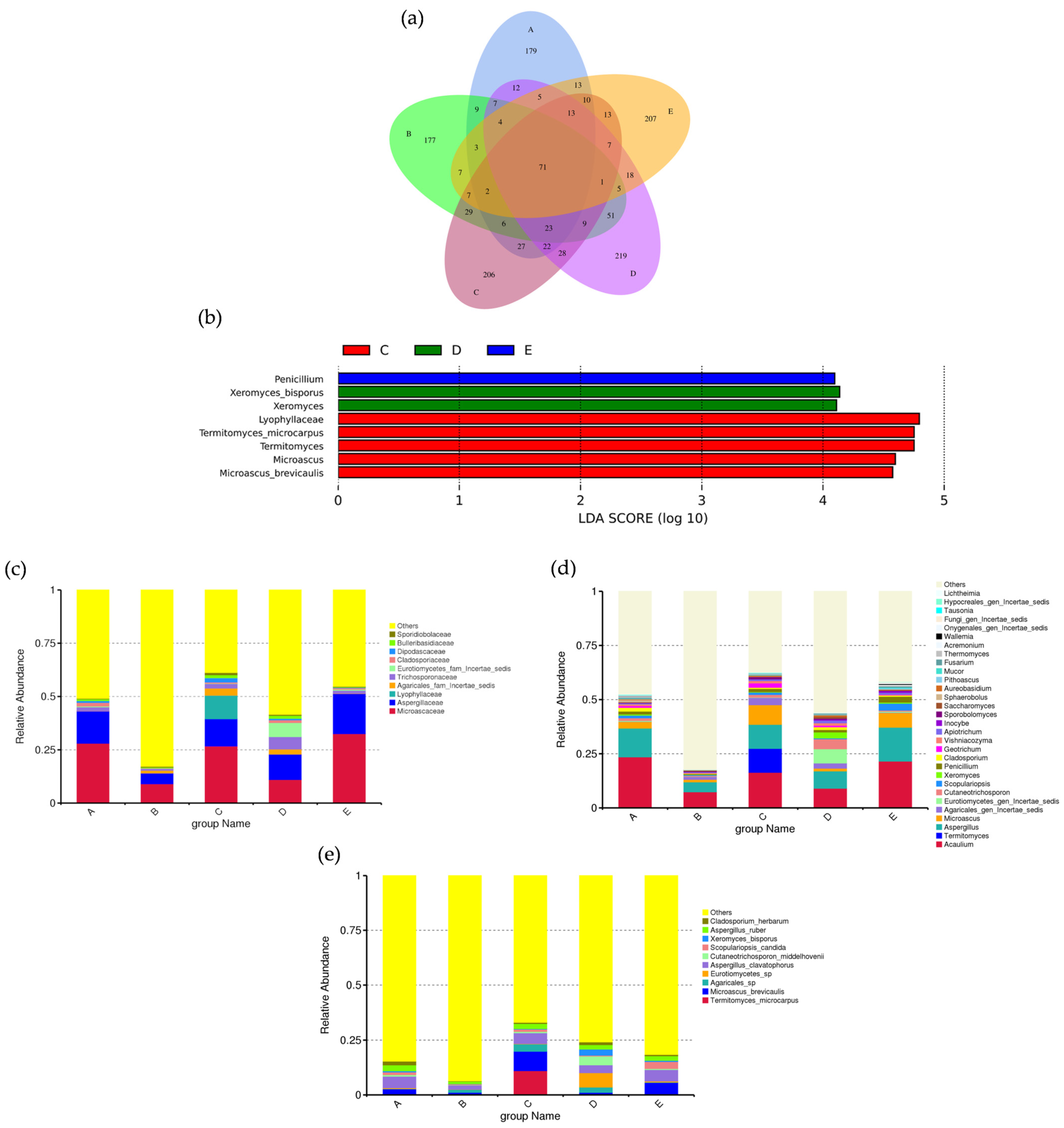
The Venn diagram (Figure 2a) illustrates the shared and unique fungal operational taxonomic units (OTUs) among pigs (A–E). All animals collectively share 71 OTUs, representing a stable core of the gut mycobiome typical for this age and physiological state. In addition, each animal exhibited a high number of unique OTUs—ranging from 177 in animal B to 219 in animal D—indicating considerable individual variability in mycobiome composition, likely reflecting transient or less abundant species that may be associated with individual microenvironmental conditions, immune status, or technical differences in analysis.
To further explore these inter-individual differences, the histogram of linear discriminant analysis (LDA) scores (Figure 2b) presents the results of the taxonomic comparison among animals C (red), D (green), and E (blue) that met the significance threshold of LDA (log10) > 2. In pig C, the dominant species included Microascus brevicaulis, Microascus, Termitomyces, Termitomyces microcarpus, and a representative of the family Lyophyllaceae. These taxa exhibited the highest LDA scores, indicating their marked abundance within the mycobiome of this animal. Animals A and B did not show any significantly enriched mycobiome taxa compared with the remaining individuals. Their mycobiome profiles were likely balanced and non-specific, without fungal marker species reaching statistical significance in the LDA analysis. In contrast, animals D and E displayed distinct marker taxa characterized by high LDA values. In individual D, the dominant taxa were Xeromyces bisporus and Xeromyces, whereas in animal E, the genus Penicillium was significantly enriched. These differences indicate individual variations in the mycobiome composition, where certain animals exhibit an increased presence of specific fungal taxa that may reflect differences in microenvironmental conditions, metabolic settings, or external influences.
The relative abundance of gut mycobiome taxa at the family level (Figure 2c) showed a relatively balanced structure among pigs (A–E), with three main taxonomic groups dominating the community: Microascaceae (11–32.5%), Aspergillaceae (11.9–18.8%), and Lyophyllaceae (<11%). These families were markedly represented across individual samples, with Microascaceae being the most consistently present among all animals. In contrast to previous studies focusing on post-weaning piglets [42,43,65], in which the family Saccharomycetaceae, and particularly the genus Kazachstania, was reported as dominant, this taxon did not appear at a notable abundance in the analyzed group of animals. The absence of this family in our dataset, together with the dominance of the aforementioned taxa, suggests a gradual reorganization of the gut mycobiome during pig growth shifting toward a more diverse and less predictable community structure. This developmental transition may be influenced by changes in diet composition, maturation of the gastrointestinal tract, adaptation of the immune system, or environmental factors.
Analysis of the gut mycobiome at the genus level (Figure 2d,e) revealed high diversity, with the most represented genera including Acaulium (7–23.5%), Termitomyces (animal C, 11%), Aspergillus (4.5–15.6%), Microascus (1.1–9%), Cutaneotrichosporon (0.4–4.5%), Scopulariopsis (0.3–3.1%), Penicillium (0.3–2.6%), Xeromyces (0.1–2.7%), Cladosporium (0.1–1.7%), Geotrichum (0.05–2%), Vishniacozyma (0.1–1.1%), Saccharomyces (0.1–0.8%), and Sporobolomyces (<1.1%). A substantial portion of the community was also composed of unclassified taxa belonging to Eurotiomycetes_gen_Incertae_sedis (0.08–6.5%), Fungi_gen_Incertae_sedis (0.04–0.3%), and Hypocreales_gen_Incertae_sedis (<0.01%). The genus Acaulium occurred in all samples with consistently high relative abundance, whereas the remaining genera exhibited inter-individual variations. In comparison with previous studies [42,66], in which genera such as Kazachstania, Debaryomyces, and Wallemia were dominant, the mycobiome of 4-month-old pigs in our study differed markedly. In our dataset, the genus Saccharomyces was only marginally represented, suggesting a developmental shift in mycobiome structure during animal growth, accompanied by diversification toward more environmental or transient fungal communities. From the perspective of potential clinical risks, some of the identified genera are known as facultative pathogens in immunosuppressed hosts. The presence of the genera Aspergillus [67], Microascus/Scopulariopsis [68], and Trichosporon/Cutaneotrichosporon [69] in fecal samples of the analyzed animals indicates the presence of taxa with a documented opportunistic or facultative pathogenic potential, which is particularly relevant for patients after kidney transplantation. In healthy piglets, their presence likely reflects environmental colonization or hygienic contamination. However, in a clinical context—particularly under conditions of impaired immunity or compromised intestinal barrier—colonization by such fungi may indicate an increased risk of invasive infections. The genus Aspergillus, particularly A. fumigatus, is a well-documented causative agent of invasive aspergillosis in transplant recipients, including kidney transplant patients [70,71], where it is associated with high morbidity and mortality [67,72]. The remaining genera e.g., Penicillium (animal E), Cladosporium, Geotrichum, Saccharomyces, Vishniacozyma, Termitomyces (animals A, B, C) have no strong clinical association with systemic infections in humans and generally represent a very low to negligible risk for immunosuppressed patients.

3.3. Metabolomic Profiling in Relation to the Metabolic Balance and Risk Profile of Kidney Graft Donors

Over the last two decades, numerous studies have confirmed that the gut microbiota provides the host with a wide range of functions relevant to both human and animal physiology, particularly in maintaining metabolic and immune homeostasis [73]. For this reason, the intestine and its symbiotic microorganisms can be regarded as a superorganism. Almost all these beneficial functions are mediated through the production of bioactive compounds derived from the gut microbiota, including microbial metabolites generated by the fermentation of undigested dietary components. These metabolites are readily accessible to host cells and act locally within the intestine, where they can be absorbed and influence the overall biochemistry of the individual, thereby exerting systemic effects [74,75,76,77]. In this way, they contribute to the host’s metabolic phenotype and may influence disease risk. According to their origin, metabolites can be classified into three main groups: (1) metabolites derived directly from dietary components, (2) host-produced metabolites that are subsequently modified by the gut microbiota, and (3) metabolites autonomously synthesized by the gut microbiota [78]. The identification of these specific metabolites and their metabolic pathways is essential for understanding the molecular mechanisms that respond to various stimulus, such as diseases or pharmacological interventions.
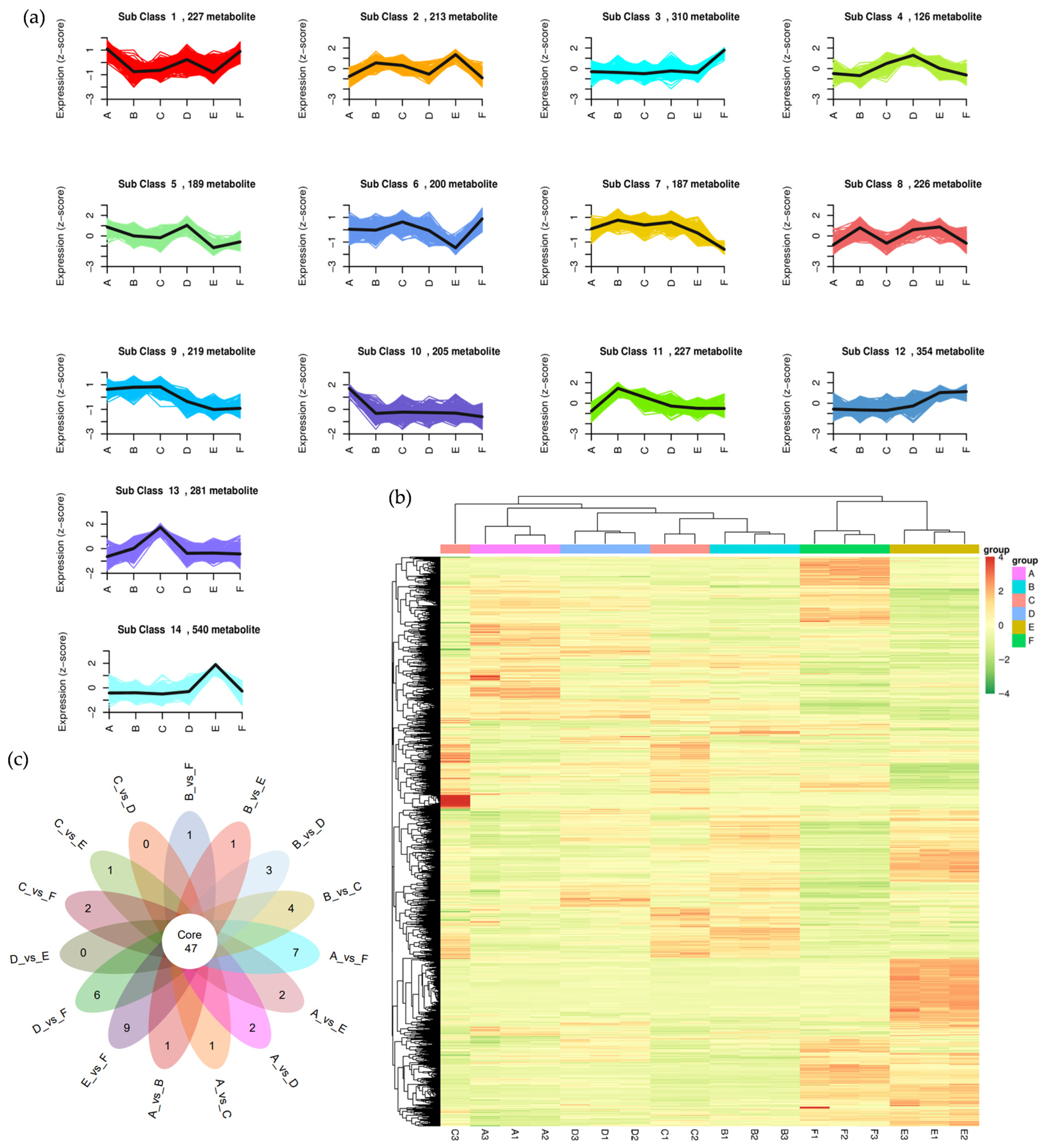
The results of the k-means cluster analysis of metabolites identified in fecal samples from farm pigs (Figure 3a) show that in most clusters (Sub Class 2, 3, 4, 5, 12), the expression profiles of metabolites among individual animals are relatively balanced and stable, with z-scores oscillating around zero. This indicates a high degree of metabolic similarity, which is expected given their common genetic background and uniform age and nutritional conditions. The mentioned clusters are dominated by metabolites involved in fundamental physiological and energetic processes, particularly lipid, amino acid, and nucleotide metabolism, as well as redox-energetic pathways. Their stable expression across animals reflects preserved metabolic homeostasis and overall balance in key cellular functions related to membrane integrity, energy turnover, and equilibrium between synthetic and degradative processes.
In some clusters, minor deviations among individual animals were observed. For example, in Sub Class 1 and 6, animals A and E showed slightly different values compared to the others. In Sub Class 7 and 9, small variations in metabolite profiles were detected as well, but these remained within the range of normal biological variability. However, none of the clusters exhibited any major outliers that would indicate a pronounced deviation of a particular animal from the group mean. The dispersion of z-score values within each cluster was consistent and remained within an acceptable range. The number of metabolites within individual clusters (ranging, for example, from 126 to 540) indicates a robust and biologically meaningful distribution. Larger clusters (such as Sub Class 14) include dominant metabolic pathways shared among all individuals, particularly the central energetic and biosynthetic routes such as glycolysis, the tricarboxylic acid (TCA) cycle, amino acid metabolism, and nucleotide synthesis.
These findings are consistent with the heatmap results (Figure 3b), which display standardized metabolite expression values (z-scores) across samples from individual animals (A–F), each represented by three biological replicates (e.g., A1–A3). The metabolomic profiles show overall good consistency within individual animals, with replicates from animals B, D, and F exhibiting a high degree of cluster similarity, indicating strong within-group homogeneity. Replicates from animals A and C showed slight deviations, particularly sample C3, which displayed a higher representation of certain metabolites; however, these differences remain within the range of acceptable biological variability. Between group analysis revealed that animals B and D share the most similar metabolomic profiles, clustering closely together and suggesting a physiologically stable composition of gut metabolites. In contrast, animals A, C, E, and F formed distinct clusters, with animal E showing a consistent yet clearly different profile compared to the rest of the litter. These differences may reflect individual variations in microbial composition or divergent patterns of fermentation activity.
The results of the Venn diagram (Figure 3c), illustrating pairwise comparisons of metabolites between animals, further support the previous findings of a high degree of metabolic consistency. A total of 47 shared metabolites were identified across all animals, which can be considered as core metabolites, likely representing fundamental and stable biochemical pathways associated with the animals’ common genetic background and living conditions. Most of the pairwise comparisons (e.g., A vs. B, A vs. C, B vs. E, B vs. F, D vs. E, C vs. D, and C vs. E) showed a very low number of differential metabolites (0–1), further demonstrating the strong metabolic similarity among animals from the same litter. Slightly higher differences were observed in the following pairwise comparisons: E vs. F—9 differential metabolites, A vs. F—7 differences, and D vs. F—6 differences, representing the highest level of variability within the dataset. However, even these deviations remain relatively minor and most likely reflect subtle individual variations that may be associated with differences in physiology, gut microbiome composition, or metabolic activity.
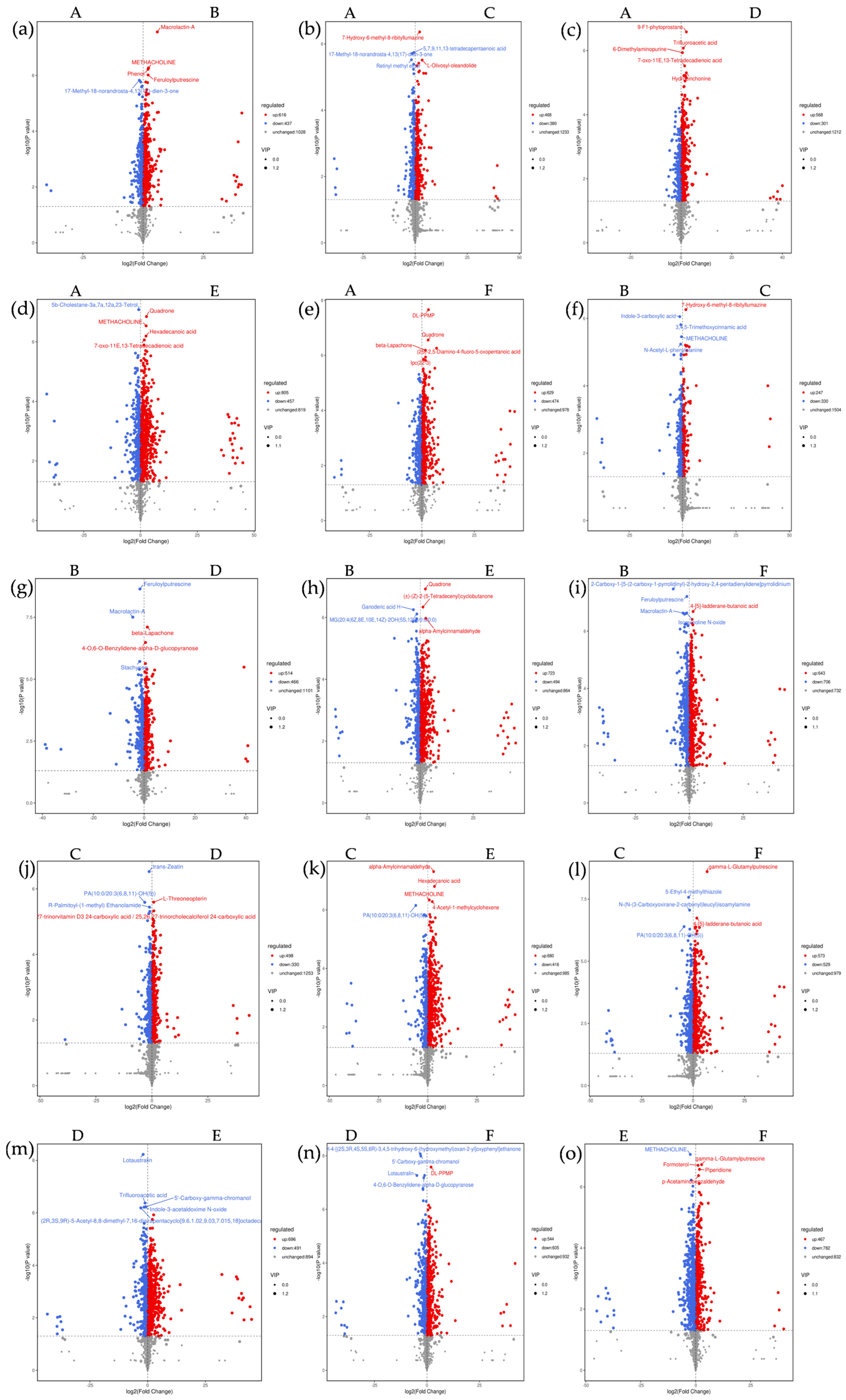
Following the metabolomic analyses, differences between pairs of animals were subsequently visualized using volcano plots (Figure 4a–o) to provide a more detailed insight into the variations in their metabolic profiles. This visualization and statistical approach enabled the simultaneous evaluation of the magnitude of change (log2 fold change) and its statistical significance (–log10 p-value), allowing clear identification of metabolites exhibiting significant deviations between the compared individuals. The results revealed the presence of distinct interindividual differences, which may originate from physiological variability; however, some of these alterations also indicate potential metabolic imbalance or health-related deviations. In most pairwise comparisons, up-regulated metabolites predominated, indicating enhanced metabolic activity in several animals.
The most pronounced alterations were observed in comparisons involving animals E (Figure 4d,m) and F (Figure 4e,n), which consistently appeared as the most distinct from the rest of the group. In animals A, B, C, and D, there was a clear tendency toward an increase in metabolites associated with lipid, cholinergic, and redox metabolism, reflecting the activation of processes related to cellular energy balance, redox homeostasis, and stress response. Among the most frequently elevated metabolites were Methacholine, Hexadecanoic acid, Quadrone, β-Lapachone, DL-PPMP, α-Amylcinnamaldehyde, and γ-L-Glutamylputrescine. These compounds are commonly linked to enhanced oxidative activity, lipid turnover, and signaling pathways influencing the nervous and immune systems. Their consistent presence across several comparisons suggests increased redox and energy metabolism, which may represent a physiological adaptation but, in some cases, also a response to metabolic stress.
In contrast, several comparisons indicated a decrease in metabolites with antioxidant or anti-inflammatory functions, such as Feruloylputrescine, Macrolactin-A, Lotustralin, Ganoderic acid H, and trans-Zeatin. Their reduced levels may reflect a weakened antioxidant defense and increased utilization of these compounds in response to oxidative stress. In cases where down-regulated metabolites predominated, particularly in animal E (Figure 4d,h,k,m), a decline in compounds such as Methacholine and other amino derivatives was also observed, suggesting reduced cholinergic signaling and an overall suppression of metabolic activity. Elevated concentrations of γ-L-Glutamylputrescine, Formoterol, and Piperidione in these instances may represent a compensatory response to metabolic or oxidative stress. A comparable but less pronounced pattern was observed in animal F, which exhibited activation of redox-related pathways together with a partial decrease in antioxidant metabolites. This imbalance indicates an early stage of metabolic strain and a limited compensatory capacity, suggesting that both E and F represent metabolically less stable phenotypes prone to oxidative stress during transplantation.
Overall, these results demonstrate that significant metabolic differences exist among the animals, which cannot be attributed solely to normal individual variability. Profiles characterized by disturbed redox balance, increased oxidative activity, and weakened antioxidant defense may represent a potential risk in kidney transplantation, as ischemia–reperfusion injury and the overproduction of reactive oxygen species (ROS) are directly associated with graft damage and impaired functional recovery [79]. Within our dataset, such a risk-associated metabolic phenotype was observed predominantly in animals E (and partially F), which exhibited a predominance of down-regulated pathways, including reduced cholinergic signaling and metabolites linked to antioxidant protection, accompanied by an increase in markers of compensatory stress response.
From the perspective of transplantation safety, these metabolomic profiles may represent a higher-risk phenotype compared with animals A–D, which displayed a more adaptive, energetically active, and redox-balanced metabolism. Similar associations have been confirmed by several experimental and clinical studies. Mrakic-Sposta et al. [79] demonstrated that increased oxidative activity and metabolite alterations during the peri-transplantation period are associated with graft injury and impaired kidney function. Gemma et al. [80] identified the oxidative stress index (OXY-SCORE) as a significant marker of metabolic burden in kidney transplant recipients, correlating with the occurrence of cardiovascular complications after transplantation. Evidence from study [81] indicates that metabolomic profiling enables the early identification of rejection, graft injury, and renal tissue regeneration processes based on biochemical markers, including changes in redox and lipid pathways. Additional studies [81,82] further support that reduced antioxidant capacity and a shift in redox status are closely linked to the development of ischemia–reperfusion injury, resulting in decreased perfusion and reduced graft viability.
Based on these findings, it can be assumed that the metabolic profiles of animals E and F, characterized by a decrease in antioxidant compounds and a predominance of oxidative stress, correspond to a higher risk of metabolic burden and reduced functional capacity of the kidney graft, whereas the profiles of animals A–D reflect physiologically adaptive mechanisms with a potentially more favorable prognosis in kidney transplantation.

3.4. Critical Evaluation of the Methodological Approach and Selection of Model Animals in a Pilot Study

In the presented study, we focused on three key aspects that we consider essential for assessing the methodology and overall approach to the experimental design and implementation.
Firstly, we used a minimal number of experimental animals (5–6 individuals), which represents the lower limit of the statistically acceptable range for studies of this type. This number was chosen deliberately, with an emphasis on maintaining uniformity and comparability among individuals, particularly regarding their health status and genetic relatedness, as all animals originated from the same litter. We consider this approach methodologically justified in view of the long-term research goal—conducting kidney graft transplantation experiments, in which one animal from the litter will serve as the donor and two others as recipients. At this stage of the study, we therefore focused primarily on the analysis of the intestinal microbiome and metabolic activity, as the selection of genetically related animals reduces interindividual variability and increases the comparability of the obtained results. Second, in this pilot study we selected a farm-type model animal representing a hybrid of three breeds. We decided not to use animals with specific-pathogen-free (SPF) microbiological status or minipigs, as these models are not only economically demanding but also associated with several practical challenges. These include the need for long-distance transport from other countries, potential changes in the epizootiological situation during transport, and the necessity of adaptation to a new environmental condition, diet, and personnel. Such factors may negatively affect the health status, behavior, and overall stability of the experimental model. For these reasons, we preferred animals originating directly from the university farm, which allowed us to minimize risks related to transport and adaptation while maintaining a higher level of control over their housing conditions, environment, and health status. This model meets the basic requirement of uniformity, which we consider a key prerequisite for the initial phase of the research. Third, when selecting methodological procedures, we did not apply the full range of standard criteria commonly used in transplantation studies, which usually include comprehensive clinical, laboratory, and immunological examinations aimed at evaluating the overall health status, kidney function, and internal homeostasis of the organism. In the first stage, we intentionally focused on methods that could more reliably reflect the level of uniformity among animals and identify potential health risks at an early experimental stage. For this reason, we chose intestinal microbiome analysis as a key indicator of the overall metabolic and immunological status of the organism. The microbiome enables the detection of subtle changes in homeostasis that traditional clinical or immunological methods might reveal only indirectly. In subsequent phases of the study, we plan to expand the methodological framework to include detailed clinical, laboratory, and immunological assessments, allowing for a more comprehensive interpretation of the observed relationships.
Based on the above findings, it can be concluded that the chosen methodological approach corresponds to the objectives of the pilot phase of the research and provides a solid foundation for the implementation of subsequent transplantation experiments. Despite certain limitations, mainly related to the small number of animals and the narrow focus of the initial stage, we consider the selected model and methodological procedures to be appropriate and scientifically justified. These results represent an important initial step for further development of the study, including the incorporation of detailed immunological and clinical–laboratory examinations and more comprehensive statistical analyses.

4. Conclusions

A comprehensive assessment of the gut bacteriome, mycobiome, and metabolomic profiles of pigs from the same litter revealed a high degree of physiological and microbial uniformity, supporting their suitability for a kidney transplantation model. Despite this overall homogeneity, several individual risk indicators were identified. Animal A showed reduced microbial diversity and the presence of potentially undesirable taxa, while animals E and F exhibited metabolomic signatures consistent with oxidative stress and impaired redox balance. These characteristics may increase susceptibility to inflammatory responses, ischemia–reperfusion injury, or impaired graft recovery—factors that are particularly relevant in the context of kidney transplantation. In contrast, animals B, C, and D demonstrated stable microbial communities and balanced metabolic activity, indicating favorable physiological status for use in transplantation experiments.
These findings suggest that microbiome–metabolome profiling can serve as a practical preoperative screening tool to identify individuals with a lower risk profile, thereby improving the reliability, safety, and standardization of preclinical kidney transplantation studies.

Supplementary Materials

The following supporting information can be downloaded at: https://www.mdpi.com/article/10.3390/app16020625/s1, Table S1: Sequencing read counts for microbiome and mycobiome datasets; Table S2: Amplicon sequence variant (ASV) counts per sample for microbiome (16S rRNA) data; Table S3: Amplicon sequence variant (ASV) counts per sample for mycobiome (ITS1) data.

Author Contributions

Conceptualization, S.G. and V.D.; methodology, S.G., V.D. and E.P.; validation, S.G., V.D., E.P. and D.A.; formal analysis, S.G., P.G., S.L., V.H., M.R., V.D., S.H., R.K., I.G., J.N., G.C.S. and J.B.; investigation, V.D., M.R., P.G. and V.H.; writing—original draft preparation, S.G., V.D. and E.P.; writing—review and editing, S.G. and V.D.; visualization, S.L.; supervision, S.G. and D.A.; project administration, E.P., J.K., D.A. and S.G.; funding acquisition, D.A., J.K., E.P., J.B. and S.G. All authors have read and agreed to the published version of the manuscript.

Funding

This research was funded by the Slovak Research and Development Agency under the contract No. APVV-23-0594 and Internal Scientific Grant System (VVGS) of Pavol Jozef Safarik University in Kosice, under the “Early-Stage Grants for Beginning Researchers (ESGV)” program, grant No. VVGS ESGV (vvgs-2023-2976).

Institutional Review Board Statement

The present study involving animal models and their subsequent use for scientific purposes was conducted in accordance with the instructions specified in the approved protocol (code EKVP/2023-12, dated 17 May 2023), authorized by the Ethics Committee for the Performance of Animal Procedures at the University of Veterinary Medicine and Pharmacy in Kosice.

Informed Consent Statement

Not applicable.

Data Availability Statement

The original contributions presented in the study are included in the article, further inquiries can be directed to the corresponding author. The 16S rRNA gene and ITS1 sequencing data have been deposited in the NCBI Sequence Read Archive (SRA) under BioProject accession numbers PRJNA1387191 and PRJNA1387203, respectively.

Conflicts of Interest

The authors declare no conflicts of interest.

References

  1. Ramos, G.P.; Papadakis, K.A. Mechanisms of disease: Inflammatory bowel diseases. Mayo Clin. Proc. 2019, 94, 155–165. [Google Scholar] [CrossRef] [PubMed]
  2. Kleinová, P.; Beliančinová, M.; Vnučák, M.; Graňák, K.; Dedinská, I. Črevný mikrobióm a transplantácia obličky. Vnitřní Lékařství 2023, 69, 41–46. [Google Scholar] [CrossRef] [PubMed]
  3. Yu, L.C. Microbiota dysbiosis and barrier dysfunction in inflammatory bowel disease and colorectal cancers: Exploring a common ground hypothesis. J. Biomed. Sci. 2018, 25, 79. [Google Scholar] [CrossRef]
  4. Khan, I.; Ullah, N.; Zha, L.; Bai, Y.; Khan, A.; Zhao, T.; Che, T.; Zhang, C. Alteration of gut microbiota in inflammatory bowel disease (IBD): Cause or consequence? IBD treatment targeting the gut microbiome. Pathogens 2019, 8, 126. [Google Scholar] [CrossRef]
  5. Ding, U.; Ooi, L.; Wu, H.H.L.; Chinnadurai, R. Clostridioides difficile infection in kidney transplant recipients. Pathogens 2024, 13, 140. [Google Scholar] [CrossRef] [PubMed]
  6. Salvadori, M.; Tsalouchos, A. Microbiota, renal disease and renal transplantation. World J. Transplant. 2021, 11, 16–36. [Google Scholar] [CrossRef]
  7. García-Martínez, Y.; Borriello, M.; Capolongo, G.; Ingrosso, D.; Perna, A.F. The gut microbiota in kidney transplantation: A target for personalized therapy? Biology 2023, 12, 163. [Google Scholar] [CrossRef]
  8. Visconti, V.; Wirtz, S.; Schiffer, M.; Müller-Deile, J. Distinct changes in gut microbiota of patients with kidney graft rejection. Transplant. Direct. 2024, 10, 1582. [Google Scholar] [CrossRef]
  9. Salvadori, M.; Rosso, G. Update on the reciprocal interference between immunosuppressive therapy and gut microbiota after kidney transplantation. World J. Transplant. 2024, 14, 90194. [Google Scholar] [CrossRef]
  10. Tang, W.H.; Wang, Z.; Kennedy, D.J.; Wu, Y.; Buffa, J.A.; Agatisa-Boyle, B.; Li, X.S.; Levison, B.S.; Hazen, S.L. Gut microbiota-dependent trimethylamine N-oxide (TMAO) pathway contributes to both development of renal insufficiency and mortality risk in chronic kidney disease. Circ. Res. 2015, 116, 448–455. [Google Scholar] [CrossRef]
  11. Satoh, M.; Hayashi, H.; Watanabe, M.; Ueda, K.; Yamato, H.; Yoshioka, T.; Motojima, M. Uremic toxins overload accelerates renal damage in a rat model of chronic renal failure. Nephron Exp. Nephrol. 2003, 95, 111–118. [Google Scholar] [CrossRef] [PubMed]
  12. Malý, Š.; Janoušek, L.; Šimůnková, Z.; Mrázová, I.; Novotný, R.; Froněk, J. Renal transplantation in a unique porcine model: Step-by-step. Int. J. Organ. Transplant. Med. 2022, 13, 11. Available online: https://www.ijotm.com/ojs/index.php/IJOTM/article/view/1017 (accessed on 1 October 2025).
  13. Forster, R.; Ancian, P.; Fredholm, M.; Simianer, H.; Whitelaw, B.; Steering Group of the RETHINK Project. The minipig as a platform for new technologies in toxicology. J. Pharmacol. Toxicol. Methods 2010, 62, 227–235. [Google Scholar] [CrossRef] [PubMed]
  14. Soltys, K.A.; Setoyama, K.; Tafaleng, E.N.; Soto Gutiérrez, A.; Fong, J.; Fukumitsu, K.; Nishikawa, T.; Nagaya, M.; Sada, R.; Haberman, K.; et al. Host conditioning and rejection monitoring in hepatocyte transplantation in humans. J. Hepatol. 2017, 66, 987–1000. [Google Scholar] [CrossRef]
  15. Wishart, D.S.; Tzur, D.; Knox, C.; Eisner, R.; Guo, A.C.; Young, N.; Cheng, D.; Jewell, K.; Arndt, D.; Sawhney, S.; et al. HMDB: The Human Metabolome Database. Nucleic Acids Res. 2007, 35, D521–D526. [Google Scholar] [CrossRef]
  16. Kanehisa, M.; Goto, S. KEGG: Kyoto encyclopedia of genes and genomes. Nucleic Acids Res. 2000, 28, 27–30. [Google Scholar] [CrossRef]
  17. Conroy, M.J.; Andrews, R.M.; Andrews, S.; Cockayne, L.; Dennis, E.A.; Fahy, E.; Gaud, C.; Griffiths, W.J.; Jukes, G.; Kolchin, M.; et al. LIPID MAPS: Update to databases and tools for the lipidomics community. Nucleic Acids Res. 2024, 52, 1677–1682. [Google Scholar] [CrossRef]
  18. Smith, C.A.; O’Maille, G.; Want, E.J.; Qin, C.; Trauger, S.A.; Brandon, T.R.; Custodio, D.E.; Abagyan, R.; Siuzdak, G. METLIN: A metabolite mass spectral database. Ther. Drug. Monit. 2005, 6, 747–751. [Google Scholar] [CrossRef]
  19. Martin, M. Cutadapt removes adapter sequences from high-throughput sequencing reads. EMBnet. J. 2011, 17, 10–12. [Google Scholar] [CrossRef]
  20. Magoč, T.; Salzberg, S.L. FLASH: Fast length adjustment of short reads to improve genome assemblies. Bioinformatics 2011, 27, 2957–2963. [Google Scholar] [CrossRef]
  21. Chen, S.; Zhou, Y.; Chen, Y.; Gu, J. fastp: An ultra-fast all-in-one FASTQ preprocessor. Bioinformatics 2018, 34, i884–i890. [Google Scholar] [CrossRef]
  22. Rognes, T.; Flouri, T.; Nichols, B.; Quince, C.; Mahé, F. VSEARCH: A versatile open-source tool for metagenomics. PeerJ 2016, 4, e2584. [Google Scholar] [CrossRef] [PubMed]
  23. Callahan, B.J.; McMurdie, P.J.; Rosen, M.J.; Han, A.W.; Johnson, A.J.; Holmes, S.P. DADA2: High-resolution sample inference from Illumina amplicon data. Nat. Methods 2016, 13, 7581–7583. [Google Scholar] [CrossRef] [PubMed]
  24. Bolyen, E.; Rideout, J.R.; Dillon, M.R.; Bokulich, N.A.; Abnet, C.C.; Al-Ghalith, G.A.; Alexander, H.; Alm, E.J.; Arumugam, M.; Asnicar, F.; et al. Author Correction: Reproducible, interactive, scalable and extensible microbiome data science using QIIME 2. Nat. Biotechnol. 2019, 37, 1091. [Google Scholar] [CrossRef]
  25. Quast, C.; Pruesse, E.; Yilmaz, P.; Gerken, J.; Schweer, T.; Yarza, P.; Peplies, J.; Glöckner, F.O. The SILVA ribosomal RNA gene database project: Improved data processing and web-based tools. Nucleic Acids Res. 2013, 41, D590–D596. [Google Scholar] [CrossRef]
  26. Abarenkov, K.; Nilsson, R.H.; Larsson, K.H.; Taylor, A.F.S.; May, T.W.; Frøslev, T.G.; Pawlowska, J.; Lindahl, B.; Põldmaa, K.; Truong, C.; et al. The UNITE database for molecular identification and taxonomic communication of fungi and other eukaryotes: Sequences, taxa and classifications reconsidered. Nucleic Acids Res. 2024, 52, D791–D797. [Google Scholar] [CrossRef] [PubMed]
  27. R Core Team. R: A Language and Environment for Statistical Computing. R Foundation for Statistical Computing: Vienna, Austria. Available online: https://www.R-project.org/ (accessed on 31 October 2025).
  28. Huttenhower, C. Metagenomic biomarker discovery and explanation. Genome Biol. 2011, 12, R60. [Google Scholar] [CrossRef]
  29. Kolde, R. Pheatmap: Pretty Heatmaps. R Package Version 1.0.13. 2025. Available online: https://github.com/raivokolde/pheatmap (accessed on 5 June 2025).
  30. Thévenot, E.A.; Roux, A.; Xu, Y.; Ezan, E.; Junot, C. Analysis of the human adult urinary metabolome variations with age, body mass index, and gender by implementing a comprehensive workflow for univariate and OPLS statistical snalyses. J. Proteome Res. 2015, 14, 3322–3335. [Google Scholar] [CrossRef]
  31. Kanehisa, M.; Furumichi, M.; Sato, Y.; Ishiguro-Watanabe, M.; Tanabe, M. KEGG: Integrating viruses and cellular organisms. Nucleic Acids Res. 2021, 49, D545–D551. [Google Scholar] [CrossRef]
  32. Charrad, M.; Ghazzali, N.; Boiteau, V.; Niknafs, A. NbClust: An R package for determining the relevant number of clusters in a data set. J. Stat. Softw. 2014, 61, 1–36. Available online: https://www.jstatsoft.org/v61/i06/ (accessed on 1 October 2025). [CrossRef]
  33. McMurdie, P.J.; Holmes, S. phyloseq: An R package for reproducible interactive analysis and graphics of microbiome census data. PLoS ONE 2013, 8, e61217. [Google Scholar] [CrossRef]
  34. Oksanen, J.; Simpson, G.; Blanchet, F.; Kindt, R.; Legendre, P.; Minchin, P.; O’Hara, R.; Solymos, P.; Stevens, M.; Szoecs, E.; et al. Vegan: Community Ecology Package. R Package Version 2.8-0. 2025. Available online: https://vegandevs.github.io/vegan/ (accessed on 1 October 2025).
  35. Lahti, L.; Shetty, S. Microbiome R Package; Bioconductor: Boston, MA, USA, 2017. [Google Scholar] [CrossRef]
  36. Wickham, H. Ggplot2: Elegant Graphics for Data Analysis; Springer: New York, NY, USA, 2016; ISBN 978-3-319-24277-4. Available online: https://ggplot2.tidyverse.org (accessed on 1 October 2025).
  37. Gabarre, P.; Loens, C.; Tamzali, Y.; Barrou, B.; Jaisser, F.; Tourret, J. Immunosuppressive therapy after solid organ transplantation and the gut microbiota: Bidirectional interactions with clinical consequences. Am. J. Transplant. 2022, 22, 1014–1030. [Google Scholar] [CrossRef]
  38. Manes, A.; Di Renzo, T.; Dodani, L.; Reale, A.; Gautiero, C.; Di Lauro, M.; Nasti, G.; Manco, F.; Muscariello, E.; Guida, B.; et al. Pharmacomicrobiomics of classical immunosuppressant drugs: A systematic review. Biomedicines 2023, 11, 2562. [Google Scholar] [CrossRef] [PubMed]
  39. Rose, E.C.; Blikslager, A.T.; Ziegler, A.L. Porcine models of the intestinal microbiota: The translational key to understanding how gut commensals contribute to gastrointestinal disease. Front. Vet. Sci. 2022, 9, 834598. [Google Scholar] [CrossRef]
  40. Van de Vliet, M.; Joossens, M. The resemblance between bacterial gut colonization in pigs and humans. Microorganisms 2022, 10, 1831. [Google Scholar] [CrossRef] [PubMed]
  41. Tang, Q.; Yin, X.; Wen, G.; Luo, Z.; Zhang, L.; Tan, S. Unraveling the composition and function of pig gut microbiome from metagenomics. Anim. Microbiome 2025, 7, 60. [Google Scholar] [CrossRef] [PubMed]
  42. Arfken, A.M.; Frey, J.F.; Summers, K.L. Temporal dynamics of the gut bacteriome and mycobiome in the weanling pig. Microorganisms 2020, 8, 868. [Google Scholar] [CrossRef]
  43. Ramayo-Caldas, Y.; Prenafeta-Boldú, F.; Zingaretti, L.M.; Gonzalez-Rodriguez, O.; Dalmau, A.; Quintanilla, R.; Ballester, M. Gut eukaryotic communities in pigs: Diversity, composition and host genetics contribution. Anim. Microbiome 2020, 2, 18. [Google Scholar] [CrossRef] [PubMed]
  44. Prisnee, T.L.; Rahman, R.; Fouhse, J.M.; Van Kessel, A.G.; Brook, R.K.; Willing, B.P. Tracking the fecal mycobiome through the lifespan of production pigs and a comparison to the feral pig. Appl. Environ. Microbiol. 2023, 89, e00977-23. [Google Scholar] [CrossRef]
  45. Chen, L.; Xu, Y.; Chen, X.; Fang, C.; Zhao, L.; Chen, F. The maturing development of gut microbiota in commercial piglets during the weaning transition. Front. Microbiol. 2017, 8, 1688. [Google Scholar] [CrossRef]
  46. Saladrigas-García, M.; Durán, M.; D’Angelo, M.; Coma, J.; Pérez, J.F.; Martín-Orúe, S.M. An insight into the commercial piglet’s microbial gut colonization: From birth towards weaning. Anim. Microbiome 2022, 4, 68. [Google Scholar] [CrossRef]
  47. Cremonesi, P.; Biscarini, F.; Castiglioni, B.; Sgoifo, C.A.; Compiani, R.; Moroni, P. Correction: Gut microbiome modifications over time when removing in-feed antibiotics from the prophylaxis of post-weaning diarrhea in piglets. PLoS ONE 2024, 17, e0316120. [Google Scholar] [CrossRef]
  48. Holman, D.B.; Brunelle, B.W.; Trachsel, J.; Allen, H.K. Meta-analysis to define a core microbiota in the swine gut. mSystems 2017, 2, e00004-17. [Google Scholar] [CrossRef] [PubMed]
  49. Holman, D.B.; Gzyl, K.E.; Mou, K.T.; Allen, H.K. Weaning age and its effect on the development of the swine gut microbiome and resistome. mSystems 2021, 6, e0068221. [Google Scholar] [CrossRef] [PubMed]
  50. Guevarra, R.B.; Lee, J.H.; Lee, S.H.; Seok, M.J.; Kim, D.W.; Kang, B.N.; Johnson, T.J.; Isaacson, R.E.; Kim, H.B. Piglet gut microbial shifts early in life: Causes and effects. J. Anim. Sci. Biotechnol. 2019, 10, 1. [Google Scholar] [CrossRef] [PubMed]
  51. Arsenault, M.; Lillie, B.; Nadeem, K.; Khafipour, E.; Farzan, A. Progression of swine fecal microbiota during early stages of life and its association with performance: A longitudinal study. BMC Microbiol. 2024, 24, 182. [Google Scholar] [CrossRef]
  52. Liu, X.; Mao, B.; Gu, J.; Wu, J.; Cui, S.; Wang, G.; Zhao, J.; Zhang, H.; Chen, W. Blautia-a new functional genus with potential probiotic properties? Gut Microbes 2021, 13, 1875796. [Google Scholar] [CrossRef]
  53. Peng, K.; Xia, S.; Xiao, S.; Yu, Q. Short-chain fatty acids affect the development of inflammatory bowel disease through intestinal barrier, immunology, and microbiota: A promising therapy? J. Gastroenterol. Hepatol. 2022, 37, 1710–1718. [Google Scholar] [CrossRef]
  54. Notting, F.; Pirovano, W.; Sybesma, W.; Kort, R. The butyrate-producing and spore-forming bacterial genus Coprococcus as a potential biomarker for neurological disorders. Gut Microbiome 2023, 4, e16. [Google Scholar] [CrossRef]
  55. Zhang, D.; Jian, Y.P.; Zhang, Y.N.; Li, Y.; Gu, L.T.; Sun, H.H.; Liu, M.D.; Zhou, H.L.; Wang, Y.S.; Xu, Z.X. Short-chain fatty acids in diseases. Cell Commun. Signal. 2023, 21, 212. [Google Scholar] [CrossRef]
  56. Shah, T.; Baloch, Z.; Shah, Z.; Cui, X.; Xia, X. The intestinal microbiota: Impacts of antibiotics therapy, colonization resistance, and diseases. Int. J. Mol. Sci. 2021, 22, 6597. [Google Scholar] [CrossRef]
  57. Hares, M.F.; Griffiths, B.E.; Barningham, L.; Vamos, E.E.; Gregory, R.; Duncan, J.S.; Oikonomou, G.; Stewart, C.J.; Coombes, J.L. Progression of the faecal microbiome in preweaning dairy calves that develop cryptosporidiosis. Anim. Microbiome 2025, 7, 3. [Google Scholar] [CrossRef]
  58. Lockhart, S.R.; Wagner, D.; Iqbal, N.; Pappas, P.G.; Andes, D.R.; Kauffman, C.A.; Brumble, L.M.; Hadley, S.; Walker, R.; Ito, J.I.; et al. Comparison of in vitro susceptibility characteristics of Candida species from cases of invasive candidiasis in solid organ and stem cell transplant recipients: Transplant-associated infections surveillance network (TRANSNET), 2001 to 2006. J. Clin. Microbiol. 2011, 49, 2404–2410. [Google Scholar] [CrossRef]
  59. Tirlangi, P.K.; Pothumarthy Venkata Swathi, K.; Prabhu, R.A.; Singh, G.; Barac, A.; Grobusch, M.P.; Gupta, N. Graft arteritis due to Candida spp. after kidney transplant: A systematic review of individual cases. Open Forum Infect. Dis. 2025, 12, 554. [Google Scholar] [CrossRef]
  60. Pennington, K.M.; Martin, M.J.; Murad, M.H.; Sanborn, D.; Saddoughi, S.A.; Gerberi, D.; Peters, S.G.; Razonable, R.R.; Kennedy, C.C. Risk factors for early fungal disease in solid organ transplant recipients: A systematic review and meta-analysis. Transplantation 2024, 108, 970–984. [Google Scholar] [CrossRef] [PubMed]
  61. Shafiekhani, M.; Yazdanpanah, S.; Zomorodian, K.; Nikoupour, H. P.057: Epidemiology of Candida infection and colonization in solid organ transplant recipients: An observational study. Transplantation 2024, 108, 9. [Google Scholar] [CrossRef]
  62. Meyer, L.; Frossard, J.; Schreiber, P.W.; Manuel, O.; Lamoth, F.; Khanna, N.; Boggian, K.; Walti, L.; Garzoni, C.; van Delden, C.; et al. Swiss transplant cohort study. Invasive Candida infections in solid organ transplant recipients between 2008 and 2020. Am. J. Transplant. 2025, 25, 2634–2645. [Google Scholar] [CrossRef] [PubMed]
  63. Albano, L.; Bretagne, S.; Mamzer-Bruneel, M.F.; Kacso, I.; Desnos-Ollivier, M.; Guerrini, P.; Le Luong, T.; Cassuto, E.; Dromer, F.; Lortholary, O.; et al. Evidence that graft-site candidiasis after kidney transplantation is acquired during organ recovery: A multicenter study in France. Clin. Infect. Dis. 2009, 48, 194–202. [Google Scholar] [CrossRef]
  64. Breitkopf, R.; Treml, B.; Simmet, K.; Bukumirić, Z.; Fodor, M.; Senoner, T.; Rajsic, S. Incidence of invasive fungal infections in liver transplant recipients under targeted echinocandin prophylaxis. J. Clin. Med. 2023, 12, 1520. [Google Scholar] [CrossRef]
  65. Summers, K.L.; Frey, J.F.; Ramsay, T.G.; Arfken, A.M. The piglet mycobiome during the weaning transition: A pilot study1. J. Anim. Sci. 2019, 97, 2889–2900. [Google Scholar] [CrossRef]
  66. Wei, G. Insights into gut fungi in pigs: A comprehensive review. J. Anim. Physiol. Anim. Nutr. 2025, 109, 96–112. [Google Scholar] [CrossRef] [PubMed]
  67. Sigera, L.S.M.; Denning, D.W. Invasive aspergillosis after renal transplantation. J. Fungi 2023, 9, 255. [Google Scholar] [CrossRef]
  68. Huang, L.; Chen, W.; Guo, L.; Zhao, L.; Cao, B.; Liu, Y.; Lu, B.; Li, B.; Chen, J.; Wang, C. Scopulariopsis/Microascus isolation in lung transplant recipients: A report of three cases and a review of the literature. Mycoses 2019, 62, 883–892. [Google Scholar] [CrossRef] [PubMed]
  69. Almeida Júnior, J.N.; Song, A.T.; Campos, S.V.; Strabelli, T.M.; Del Negro, G.M.; Figueiredo, D.S.; Motta, A.L.; Rossi, F.; Guitard, J.; Benard, G.; et al. Invasive Trichosporon infection in solid organ transplant patients: A report of two cases identified using IGS1 ribosomal DNA sequencing and a review of the literature. Transpl. Infect. Dis. 2014, 16, 135–140. [Google Scholar] [CrossRef]
  70. Pérez-Sáez, M.J.; Mir, M.; Montero, M.M.; Crespo, M.; Montero, N.; Gómez, J.; Horcajada, J.P.; Pascual, J. Invasive aspergillosis in kidney transplant recipients: A cohort study. Exp. Clin. Transplant. 2014, 12, 101–105. [Google Scholar] [CrossRef] [PubMed]
  71. Neofytos, D.; Garcia-Vidal, C.; Lamoth, F.; Lichtenstern, C.; Perrella, A.; Vehreschild, J.J. Invasive aspergillosis in solid organ transplant patients: Diagnosis, prophylaxis, treatment, and assessment of response. BMC Infect. Dis. 2021, 21, 296. [Google Scholar] [CrossRef]
  72. López-Medrano, F.; Silva, J.T.; Fernández-Ruiz, M.; Carver, P.L.; van Delden, C.; Merino, E.; Pérez-Saez, M.J.; Montero, M.; Coussement, J.; de Abreu Mazzolin, M.; et al. Spanish network for research in infectious diseases (REIPI); the group for the study of infection in transplant recipients (GESITRA) of the Spanish society of clinical microbiology and infectious diseases (SEIMC); the study group for infections in compromised hosts (ESGICH) of the European society of clinical microbiology and infectious diseases (ESCMID); and the Swiss transplant cohort study (STCS). Risk factors associated with early invasive pulmonary aspergillosis in kidney transplant recipients: Results from a multinational matched case-control study. Am. J. Transplant. 2016, 16, 2148–2157. [Google Scholar] [CrossRef]
  73. Hold, G.L. Gastrointestinal microbiota and colon cancer. Dig. Dis. 2016, 34, 244–250. [Google Scholar] [CrossRef]
  74. Turroni, S.; Brigidi, P.; Cavalli, A.; Candela, M. Microbiota-host transgenomic metabolism, bioactive molecules from the inside. J. Med. Chem. 2018, 61, 47–61. [Google Scholar] [CrossRef]
  75. Spivak, I.; Fluhr, L.; Elinav, E. Local and systemic effects of microbiome-derived metabolites. EMBO Rep. 2022, 23, e55664. [Google Scholar] [CrossRef]
  76. Wang, J.; Zhu, N.; Su, X.; Gao, Y.; Yang, R. Gut-microbiota-derived metabolites maintain gut and systemic immune homeostasis. Cells 2023, 12, 793. [Google Scholar] [CrossRef]
  77. Olalekan, S.O.; Bakare, O.O.; Osonuga, I.O.; Faponle, A.S.; Adegbesan, B.O.; Ezima, E.N. Gut microbiota-derived metabolites: Implications for metabolic syndrome and therapeutic interventions. Egypt J. Intern. Med. 2024, 36, 72. [Google Scholar] [CrossRef]
  78. Yang, W.; Cong, Y. Gut microbiota-derived metabolites in the regulation of host immune responses and immune-related inflammatory diseases. Cell Mol. Immunol. 2021, 18, 866–877. [Google Scholar] [CrossRef] [PubMed]
  79. Mrakic-Sposta, S.; Vezzoli, A.; Cova, E.; Ticcozzelli, E.; Montorsi, M.; Greco, F.; Sepe, V.; Benzoni, I.; Meloni, F.; Arbustini, E.; et al. Evaluation of oxidative stress and metabolic profile in a preclinical kidney transplantation model according to different preservation modalities. Int. J. Mol. Sci. 2023, 24, 1029. [Google Scholar] [CrossRef] [PubMed]
  80. Gemma, V.A.; Caro, P.J.; Rodríguez-San Pedro, M.d.M.; Yuste, C.; Ortiz-Diaz, M.G.; Ramírez, R.; Alique, M.; Guerra-Pérez, N.; Carracedo, J.; Morales, E. Oxidative stress score as an indicator of pathophysiological mechanisms underlying cardiovascular disease in kidney transplant recipients. Oxygen 2025, 5, 20. [Google Scholar] [CrossRef]
  81. Băluţă, C.V.; Voroneanu, L.; Nistor, I.; Siriteanu, L.; Covic, A.S.; Irimie-Băluţă, R.E.; Kanbay, M.; Miron, A.V.; Covic, A.C. Exploring the role of metabolomics in kidney transplantation: A systematic review of the literature. Front. Immunol. 2025, 16, 1534875. [Google Scholar] [CrossRef] [PubMed]
  82. Viejo-Boyano, I.; Roca-Marugán, M.I.; Peris-Fernández, M.; Amengual, J.L.; Balaguer-Timor, Á.; Moreno-Espinosa, M.; Felipe-Barrera, M.; González-Calero, P.; Espí-Reig, J.; Ventura-Galiano, A.; et al. Early metabolomic profiling as a pedictor of renal function six months after kidney transplantation. Biomedicines 2024, 12, 2424. [Google Scholar] [CrossRef]
Figure 1. Relative abundance of the bacterial community composition across animals. (a) Relative abundance of the top 10 bacterial phyla; (b) Relative abundance of the most abundant genera. Data represent animals (n = 5, labeled A–E), each with three biological replicates (A1–A3, B1–B3, etc.). Panels (ce) show t-test comparisons of relative bacterial abundance at the putative species level based on ASV assignments between selected animal pairs: (c) A vs. D; (d) A vs. E; and (e) B vs. C. Statistically significant differences are indicated as follows: p < 0.05, p < 0.01, p < 0.001.
Applsci 16 00625 g001
Figure 2. Venn diagram (a) illustrating shared and unique fungal operational taxonomic units (OTUs) of the gut mycobiome among tested animals (n = 5, labeled A–E); (b) Histogram of linear discriminant analysis (LDA) scores showing taxa that significantly discriminate between animals C (red), D (green), and E (blue), meeting the LDA significance threshold of log10 > 2. (c) Relative abundance of the top 10 fungal families; (d) Relative abundance of the top 30 fungal genera; (e) Relative abundance of the top 10 fungal species.
Applsci 16 00625 g002
Figure 3. Classification of metabolites based on temporal z-score expression patterns (a). Fourteen distinct sub-clusters (Sub-Class 1–14) were identified according to their expression trends across individual animals (n = 6; labeled A–F). Each cluster represents metabolites sharing a common metabolic or physiological context: 1—amino acid and peptide metabolism; 2—phospholipid and membrane lipid turnover; 3—anabolic and energy-related pathways (glycolysis, nucleotides); 4—purine and pyrimidine metabolism, reduced biosynthetic activity; 5—lipid remodeling and oxidative adaptation; 6—redox-energetic activation (TCA intermediates, antioxidants); 7—basal homeostatic metabolism of amino acids and carbohydrates; 8—downregulation of glycolytic and energetic processes; 9—amino acid catabolism and transamination; 10—fatty acid oxidation and mitochondrial activation; 11—membrane lipid turnover and long-term metabolic adaptation; 12—broad lipidic response to energetic and oxidative stress; 13—progressive lipid remodeling and cellular adaptation; 14—core amino acid–carbohydrate metabolism with reduced activity. (b) Heatmap showing standardized metabolite expression values (z-scores) across samples from animals A–F, each represented by three biological replicates (A1–A3). Colors range from dark green (lowest metabolite expression, −4) to dark red (highest metabolite expression, 4), indicating low to high relative expression levels; (c) Venn diagram illustrating shared and unique metabolites across animals A–F.
Applsci 16 00625 g003
Figure 4. Volcano plots illustrating interindividual differences in metabolic profiles among animals (n = 6, labeled A–F). The X-axis represents the log2 (fold change), indicating the relative change in metabolite concentration, while the Y-axis shows the −log10 (p-value) as a measure of statistical significance. Red dots indicate significantly increased (up-regulated) metabolites, blue dots represent significantly decreased (down-regulated) metabolites, and grey dots correspond to non-significant changes. Metabolites were considered significantly altered at p < 0.05 [indicated by the horizontal dashed line corresponding to −log10 (0.05)] and log2 (fold change) ≥ 1. Positive log2 (fold change) values indicate metabolites up-regulated in the first animal of each comparison, whereas negative values indicate metabolites up-regulated in the second animal. Pairwise comparisons between animals are labeled with lowercase letters as follows: (a) A vs. B; (b) A vs. C; (c) A vs. D; (d) A vs. E; (e) A vs. F; (f) B vs. C; (g) B vs. D; (h) B vs. E; (i) B vs. F; (j) C vs. D; (k) C vs. E; (l) C vs. F; (m) D vs. E; (n) D vs. F; (o) E vs. F.
Applsci 16 00625 g004
Disclaimer/Publisher’s Note: The statements, opinions and data contained in all publications are solely those of the individual author(s) and contributor(s) and not of MDPI and/or the editor(s). MDPI and/or the editor(s) disclaim responsibility for any injury to people or property resulting from any ideas, methods, instructions or products referred to in the content.