Development and Application of Building Circularity Assessment Tool Based on Building Information Modeling


Abstract
1. Motivation and Purpose
2. Literature Review
2.1. Development of Circularity Indicators
2.2. System Boundaries and Life Cycle Assessment Context
2.3. The Role of Facility Management (FM) in Circularity
2.4. Hierarchical Assessment and Design for Disassembly (DfD)
2.5. Research Gaps and Synthesis
3. Theory and Methods
3.1. Calculation of Circularity in the Life Cycle Phases of Building Materials: Construction, Use, and Demolition
- I.
- Construction Phase Circularity Index
- II.
- Circularity Index for the Use Phase
- III.
- Demolition Phase Circularity Index
3.2. Calculation of the Circularity of Each Building Unit: Materials, Elements, Systems, Buildings
3.3. Whole Building Circularity Index
- CI: Circularity index (unit %).
- LFI: Linear flow index (unit %).
- F(X): Utility factor (unit %).
3.4. Computing Architecture—Four Levels and Six Systems
4. Implementation
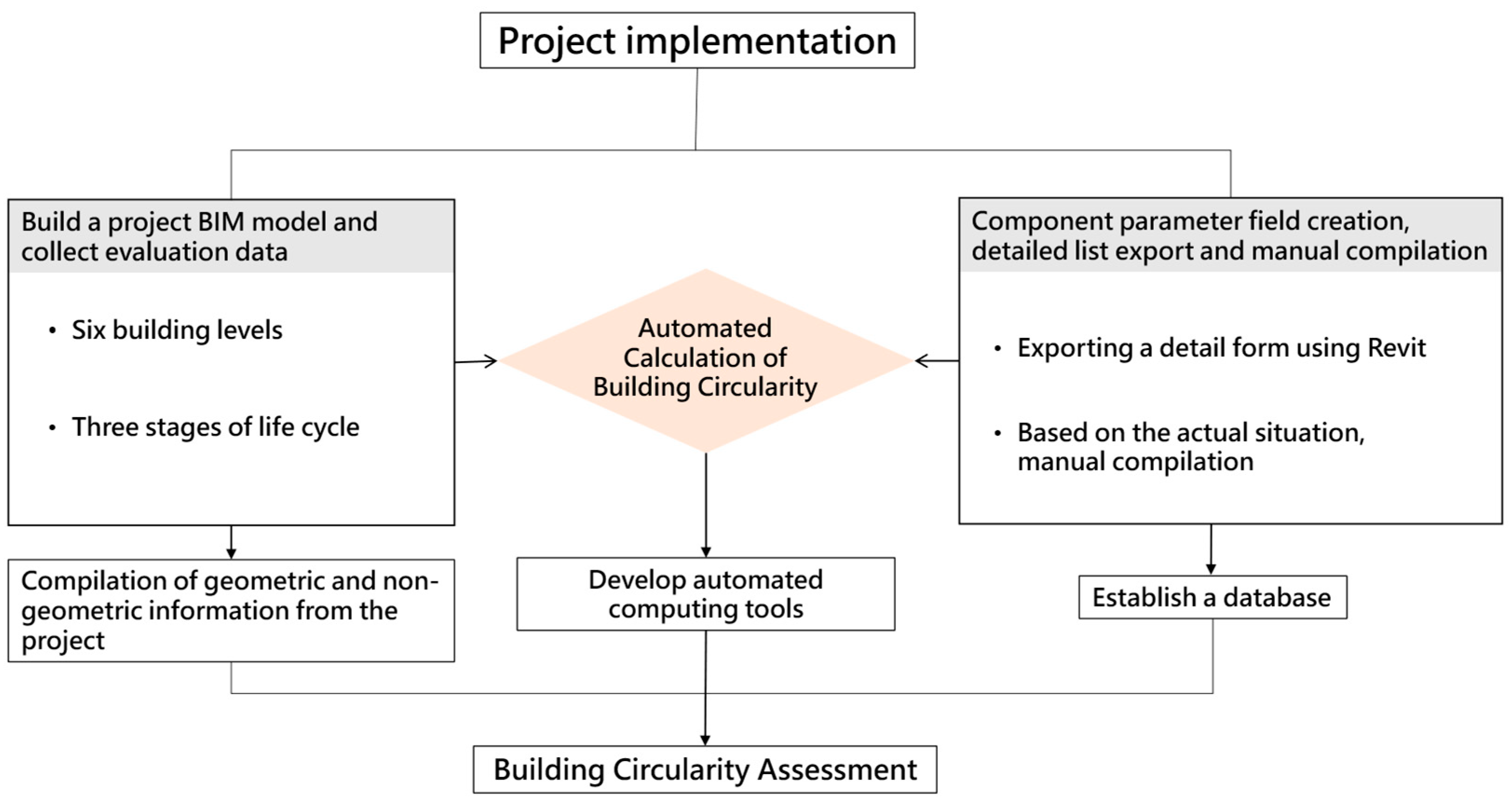
4.1. Implementation Process
4.2. Material Circularity Data Collection
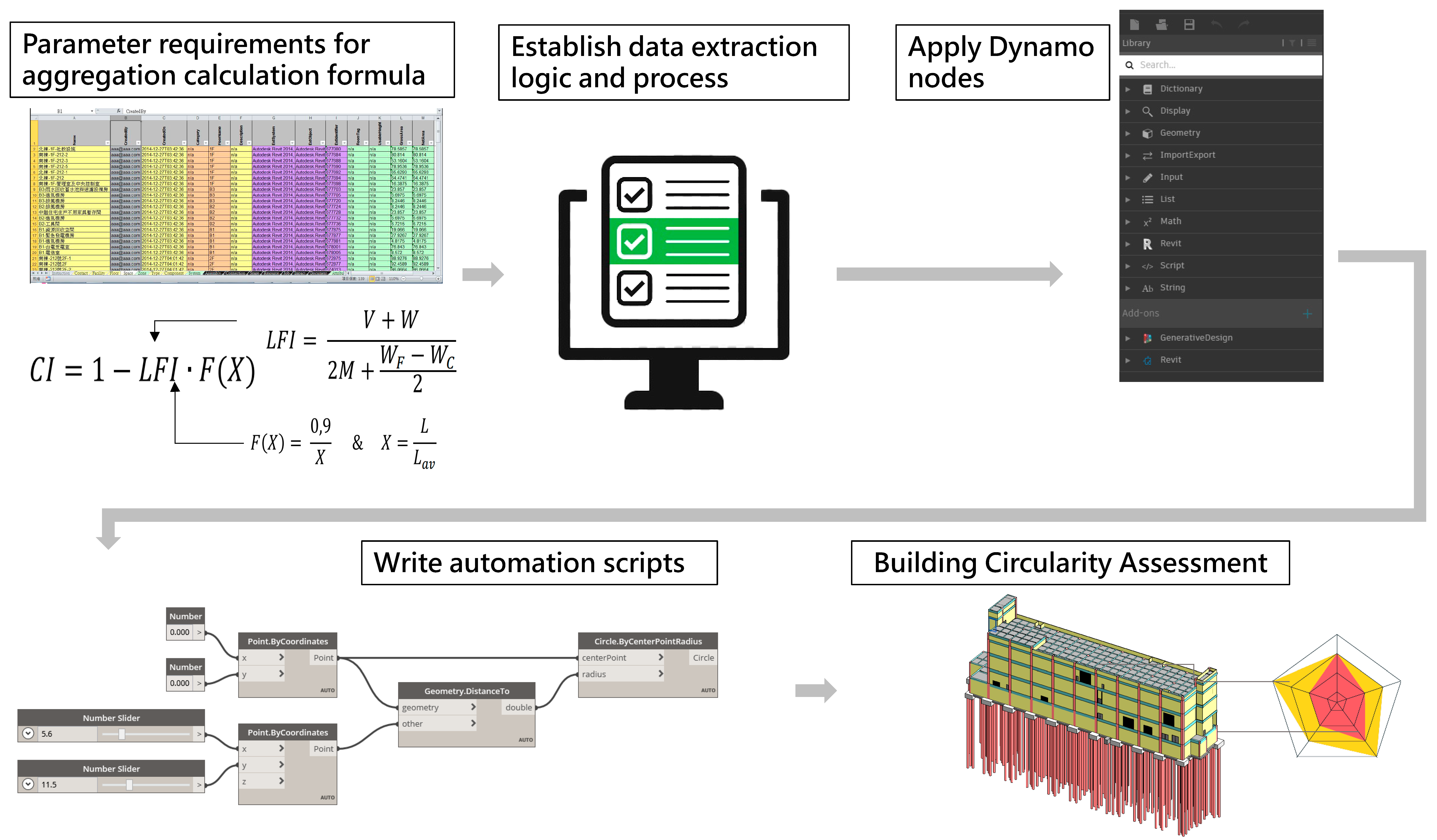
4.3. BIM-Based Automated Calculation
- Modeling;
- Addition of component fields and input of corresponding parameters;
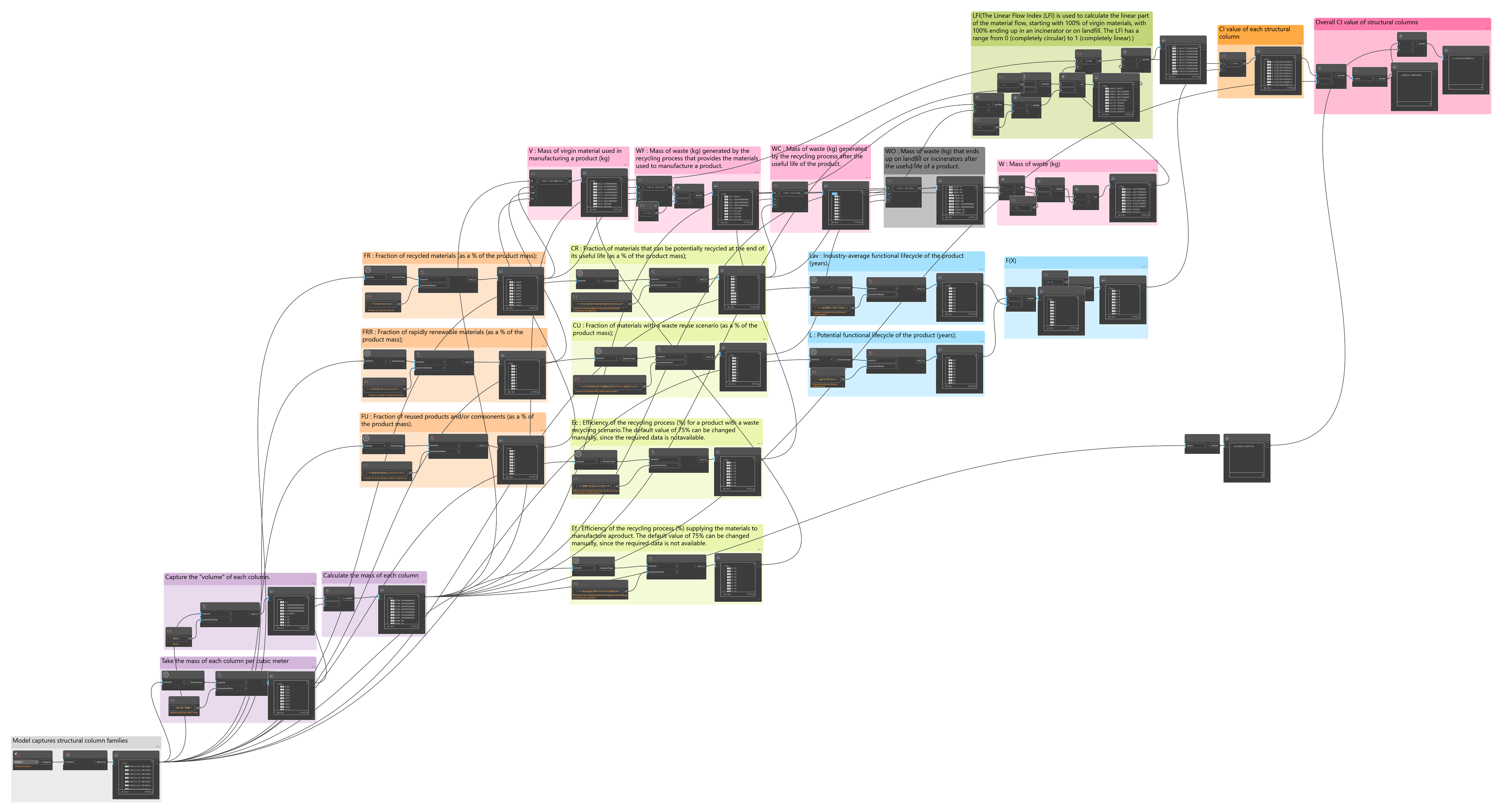
- Parameter extraction from components via Dynamo nodes;
- Automated calculation using scripts.
4.4. Calculation Results of the Circularity of Each Item at the “Structural System” Level of the Project
- Baseline Scenario: Using the actual materials specified in the construction contract (e.g., standard RC with low recycled content).
- Improved Scenario: A hypothetical simulation where structural columns and beams are replaced with certified Green Building Materials (hydraulic concrete).
5. Conclusions
5.1. Key Findings and Academic Contributions
- Standardization of Assessment: The BIM framework provides a robust scientific foundation for the future standardization of building circularity assessment in Taiwan. This is instrumental in driving the application of recycled and durable materials, and in encouraging the systemic adoption of Design for Disassembly (DfD) principles and digital workflows.
- Integration of Novel Materials: The research forwards the prospect of integrating low-carbon, recyclable, and reusable novel cementitious, low-thermal-conductivity materials (e.g., those developed from industrial by-products like ultra-fine and co-fired fly ash). These materials, applicable in non-structural elements, thermal insulation layers, or 3D-printed components, offer a promising pathway to substantially reducing the building’s operational energy consumption and embodied carbon footprint [29].
- Applicability to Broader Building Typologies: Although this study validated the framework using an industrial case study (Wafer Works Erlin Plant), the proposed model is fully applicable to other building types, including residential towers. The assessment logic relies on intrinsic material properties (mass and flow) rather than building function. Furthermore, the automated BIM tool is scalable; as long as the material parameters are defined, the script can process the repetitive structural elements typical of high-rise residential projects without modification. This universality addresses the industry-wide need for a standardized assessment tool.
- Research Limitations: While this study establishes a robust BIM-based framework, certain limitations should be noted to contextualize the findings. First, the case study validation was primarily focused on structural systems (RC and SRC); other subsystems, such as the building envelope and interior finishes, were excluded due to the unavailability of verifiable raw material source data. Second, the accuracy of the circularity index relies heavily on the quality of input data. In the absence of specific manufacturer data (e.g., material passports), this study relied on general industry assumptions for parameters such as product lifespans (e.g., 60 years), which may not fully reflect specific product performance. Additionally, although the calculation process is automated via Dynamo, the workflow currently still requires a stage of manual verification to ensure data completeness. Future research should aim to expand the localized database for non-structural elements and further streamline the automation process to minimize manual intervention. Furthermore, this study did not perform a direct quantitative benchmarking against external tools (e.g., Madaster, WBCI) or extensive sensitivity analysis. Such comparisons are currently constrained by two factors: (1) Inconsistent Baselines: Significant differences exist between international models and Taiwan’s local practices regarding data collection methods and building characteristics. (2) Lack of Standardization: Taiwan currently lacks a unified assessment standard to define boundary conditions. Without these, direct numerical comparison with international benchmarks could yield misleading discrepancies.
5.2. Summary and Future Outlook
- Acquisition of Non-Structural Data: The industry must adopt Material Passports to provide the missing raw material data for doors, windows, and finishes, enabling whole-building assessment.
- Unification of Assessment Standards: Establishing a standardized local assessment system is essential to align baselines with international tools, allowing for valid differential analysis and sensitivity testing.
Author Contributions
Funding
Institutional Review Board Statement
Informed Consent Statement
Data Availability Statement
Acknowledgments
Conflicts of Interest
References
- Gomis, K.; Kahandawa, R.; Jayasinghe, R.S. Scientometric analysis of the global scientific literature on circularity indicators in the construction and built environment sector. Sustainability 2023, 15, 728. [Google Scholar] [CrossRef] [Scilit]
- Saidani, M.; Yannou, B.; Leroy, Y.; Cluzel, F.; Kendall, A. A taxonomy of circular economy indicators. J. Clean. Prod. 2019, 207, 542–559. [Google Scholar] [CrossRef] [Scilit]
- McDonough, W.; Braungart, M. Cradle to Cradle: Remaking the Way We Make Things; North Point Press: New York, NY, USA, 2002. [Google Scholar]
- Ellen MacArthur Foundation (EMF). Towards the Circular Economy: Economic and Business Rationale for an Accelerated Transition; Ellen MacArthur Foundation: Cowes, UK, 2013; Available online: https://content.ellenmacarthurfoundation.org/m/4384c08da576329c/original/Towards-a-circular-economy-Business-rationale-for-an-accelerated-transition.pdf (accessed on 20 August 2025).
- Rahla, K.; Bragança, L.; Mateus, R. Obstacles and barriers for measuring building’s circularity. IOP Conf. Ser. Earth Environ. Sci. 2019, 225, 012058. [Google Scholar] [CrossRef] [Scilit]
- Cottafava, D.; Michiel, M.R. Circularity indicator for residential buildings: Addressing the gap between embodied impacts and design aspects. Resour. Conserv. Recycl. 2021, 164, 105120. [Google Scholar] [CrossRef] [Scilit]
- Zhang, N.; Han, Q.; de Vries, B. Building circularity assessment in the architecture, engineering, and construction industry: A new framework. Sustainability 2021, 13, 12466. [Google Scholar] [CrossRef] [Scilit]
- Wang, W.Z.; Huang, R.Y. A Study on the Integration of Circular Economy Development Concepts Into Architectural Planning and Design; Research Report; Architecture and Building Research Institute, Ministry of the Interior: Taipei, Taiwan, 2021. Available online: https://www.abri.gov.tw/News_Content_Table.aspx?n=807&s=261466 (accessed on 20 August 2025).
- Yao, C.T.; Hsu, C.S. A Study on the Promotion Strategies of Circular Green Building Materials at Home and Abroad; Research Report; Architecture and Building Research Institute, Ministry of the Interior: Taipei, Taiwan, 2019. Available online: https://www.abri.gov.tw/News_Content_Table.aspx?n=807&s=140224 (accessed on 20 August 2025).
- Xie, S.X.; Huang, L.L.; Zhan, Y.J. A Study on a Digital Governance Decision Support Platform for Sustainable Cities in Response to Climate Change: Simulation of Building Clusters’ Circularity and Carbon Emissions Combining BIM and GIS Information; Research Project Report; National Science and Technology Council: Taipei, Taiwan, 2021. Available online: https://sites.google.com/ntubim.net/sdg-city/main-topics-outcomes/03-%E9%83%BD%E5%B8%82%E5%BB%BA%E7%AF%89%E7%BE%A4%E9%AB%94%E6%A8%A1%E6%93%AC/03-y2 (accessed on 20 August 2025).
- Tserng, H.P.; Chou, C.-M.; Chang, Y.-T. The key strategies to implement circular economy in building projects—A case study of Taiwan. Sustainability 2021, 13, 754. [Google Scholar] [CrossRef] [Scilit]
- Zhang, Y.C.; Xie, Z.Q.; Huang, Z.H. Preliminary discussion on establishing an evaluation and certification system for circular buildings and construction in Taiwan (Part I). Constr. News J. 2021, 463, 33–42. Available online: http://www.tcri.org.tw/cnrfiles/download/463/4.%E5%BB%BA%E6%A7%8B%E8%87%BA%E7%81%A3%E5%BE%AA%E7%92%B0%E5%BB%BA%E7%AF%89%E8%88%87%E7%87%9F%E5%BB%BA%E4%B9%8B%E8%A9%95%E4%BC%B0%E8%AA%8D%E8%AD%89%E7%B3%BB%E7%B5%B1%E8%8A%BB%E8%AD%B0%EF%BC%88%E4%B8%8A%EF%BC%89.pdf (accessed on 20 August 2025).
- Wang, W.Z.; Huang, R.Y. A Study on the Material Circularity Evaluation of Components for Circular Building Design; Research Report; Architecture and Building Research Institute, Ministry of the Interior: Taipei, Taiwan, 2022. Available online: https://www.abri.gov.tw/News_Content_Table.aspx?n=807&s=279384 (accessed on 20 August 2025).
- Anastasiades, K.; Blom, J.; Audenaert, A. Circular construction indicator: Assessing circularity in the design, construction, and end-of-life phase. Recycling 2023, 8, 29. [Google Scholar] [CrossRef] [Scilit]
- Khadim, N.; Rosa, A.; Muhammad, J.T.; Luigi, L.M. Whole building circularity indicator: A circular economy assessment framework for promoting circularity and sustainability in buildings and construction. Build. Environ. 2023, 241, 110498. [Google Scholar] [CrossRef] [Scilit]
- Incelli, F.; Cardellicchio, L.; Rossetti, M. Circularity indicators as a design tool for design and construction strategies in architecture. Buildings 2023, 13, 1706. [Google Scholar] [CrossRef] [Scilit]
- EN 15978:2011; Sustainability of Construction Works—Assessment of Environmental Performance of Buildings—Calculation Method. CEN: Brussels, Belgium, 2011.
- Baniya, B. Circularity in Facility Management: Conceptualisation and Potential Areas for Circularity-Oriented Actions. Sustainability 2023, 15, 8460. [Google Scholar] [CrossRef] [Scilit]
- Wang, W.Z.; Huang, R.Y. A Study on Reversible Building Design and Its Application; Research Report; Architecture and Building Research Institute, Ministry of the Interior: Taipei, Taiwan, 2022. Available online: https://ws.moi.gov.tw/001/Upload/404/relfile/9489/315658/87dfecff-42bc-4fe2-9c3c-bce0935d0a86.pdf (accessed on 20 August 2025).
- Durmisevic, E. Transformable Building Structures: Design for Disassembly as a Way to Introduce Sustainable Engineering to Building Design & Construction; TU Delft Library: Delft, The Netherlands, 2006; Available online: https://resolver.tudelft.nl/uuid:9d2406e5-0cce-4788-8ee0-c19cbf38ea9a (accessed on 20 August 2025).
- BAMB. Circular Economy in Construction Design. BAMB—Buildings as Material Banks. 2019. Available online: https://www.bamb2020.eu/wp-content/uploads/2019/05/Reversible-Building-Design-Strateges.pdf (accessed on 20 August 2025).
- Zhang, Y.C.; Xie, Z.Q.; Huang, Z.H.; Lu, L.Z. Preliminary discussion on establishing an evaluation and certification system for circular buildings and construction in Taiwan (Part II). Constr. News J. 2022, 470, 27–36. Available online: http://www.tcri.org.tw/cnrfiles/download/470/3.%E5%BB%BA%E6%A7%8B%E8%87%BA%E7%81%A3%E5%BE%AA%E7%92%B0%E5%BB%BA%E7%AF%89%E8%88%87%E7%87%9F%E5%BB%BA%E4%B9%8B%E8%A9%95%E4%BC%B0%E8%AA%8D%E8%AD%89%E7%B3%BB%E7%B5%B1%E8%8A%BB%E8%AD%B0%EF%BC%88%E4%B8%8B%EF%BC%89.pdf (accessed on 20 August 2025).
- Ellen MacArthur Foundation (EMF). Circularity Indicators—An Approach to Measuring Circularity; Ellen MacArthur Foundation: Isle of Wight, UK, 2019; Available online: https://content.ellenmacarthurfoundation.org/m/5df196c8314ff61f/original/Circularity-Indicators-Project-Overview.pdf (accessed on 20 August 2025).
- Madaster. Madaster Circularity Indicator Explained; Madaster: Utrecht, The Netherlands, 2018; Available online: https://docs.madaster.com/files/en/Madaster%20-%20Circularity%20Indicator%20explained.pdf (accessed on 20 August 2025).
- Liming Construction Co., Ltd. Taichung, Taiwan. Available online: https://www.best-giving.com/news/225598881/1757994272650 (accessed on 20 August 2025).
- Wafer Works Corporation. Taoyuan, Taiwan. Available online: https://www.waferworks.com/tw/ (accessed on 20 August 2025).
- China Steel Corporation. Product Manual. Available online: https://www.csc.com.tw/csc/pd/doc/spec_2025.pdf (accessed on 20 August 2025).
- World Steel Association. Green Manufacturing Process. Available online: https://worldsteel.org/wp-content/uploads/Fact-sheet-raw-materials-2023-1.pdf (accessed on 20 August 2025).
- Lin, W.T.; Mierzwiński, D.; Hebda, M.; Sprince, A.; Mucsi, G. Feasibility of 3D printing on environmentally friendly cementless materials with low thermal conductivity. Int. J. Eng. Technol. Innov. 2025, 15, 182–194. [Google Scholar] [CrossRef] [Scilit]




| Author | Title | Abstract | Keywords |
|---|---|---|---|
| Rahla, K M. et al. 2019 [5] | Obstacles and barriers for measuring building’s circularity | The development of circular economy (CE) assessment tools for buildings encounters several major obstacles: (1) the proliferation of CE definitions, which creates inconsistencies in interpretation and application; (2) the inherent complexity of buildings, encompassing diverse materials, components, and life-cycle stages; (3) the prevalence of irrelevant, outdated, or arbitrarily defined indicators that undermine reliability; (4) the absence of adequate tools and databases for systematic data collection and management; (5) the neglect of social dimensions, resulting in incomplete assessments; and (6) ambiguities in weighting and scoring methods, which limit comparability and transparency. Overcoming these challenges is essential for establishing robust, comprehensive, and widely applicable CE assessment methodologies in the built environment. | Circular economy, Assessment tool |
| Cottafava, D. et al. 2021 [6] | Circularity indicator for residential buildings: Addressing the gap between embodied impacts and design aspects | This study proposes enhanced assessment methods for evaluating circularity in buildings, with a particular focus on sustainability challenges in the European Union (EU) built environment, especially regarding resource consumption and waste generation. Conventional circularity indicators primarily address raw material use, waste output, and product life span; however, they lack an integrated perspective that simultaneously considers material impacts at the macro level, supply chain processes at the meso level, and design strategies at the micro level. To address this gap, two novel indicators are introduced: (1) the Building Circularity Index (BCI) and (2) the Predicted Building Circularity Index (PBCI). Both indicators integrate material circularity, embodied energy, embodied carbon, and design for disassembly criteria, thereby providing a more comprehensive framework for assessing circular performance in the built environment. | Circular economy; Circularity indicator; Design for disassembly; Embodied carbon |
| Zhang, N. et al. 2021 [7] | Building Circularity Assessment in the Architecture, Engineering, and Construction Industry: A New Framework | This study introduces a new framework for assessing building circularity that integrates three key dimensions: (1) a material flow model, (2) a material passport, and (3) a building circularity calculation method. Within this framework, five indicators are proposed to capture critical aspects of circularity: (1) origin of input materials, (2) origin of materials in output, (3) efficiency of recycling processes, (4) realization of functional units, and (5) lifespan. By combining these dimensions and indicators, the framework provides a comprehensive foundation for advancing the implementation of circular economy principles in the architecture, engineering, and construction industry. | Building circularity assessment; material flow model; Material passport; |
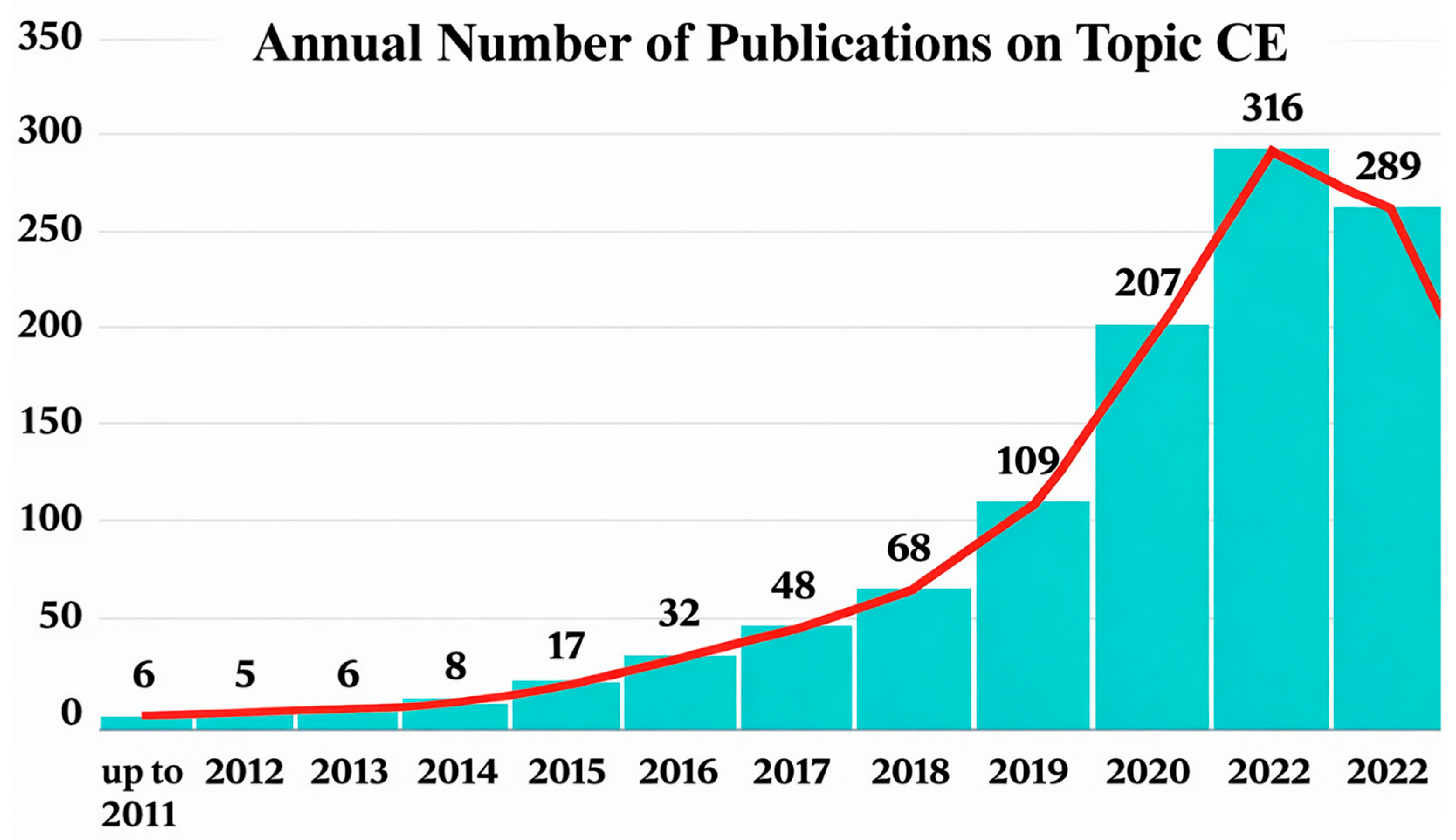
| Gomis, K. et al. 2023 [1] | Scientometric Analysis of the Global Scientific Literature on Circularity Indicators in the Construction and Built Environment Sector | This study employs scientometric analysis to examine the academic literature on the circular economy (CE) and related indicators. Data were collected from the Web of Science database, covering the period from 1970 to the third quarter of 2022, resulting in a sample of 1117 articles. The analysis was conducted using VOSviewer software (version 1.6.17). The findings reveal a substantial increase in publications since 2018, largely driven by the United Nations Sustainable Development Goals (SDGs) and policy initiatives. Moreover, research themes have evolved over time, shifting from a predominant focus on technological and model-oriented approaches toward strategy development and the identification of barriers to CE implementation. | Circularity indicators; sustainable cities and communities; Built environment; VOSviewer |
| Anastasiades, K., et al. 2023 [14] | Circular Construction Indicator: Assessing Circularity in the Design, Construction, and End-of-Life Phase | This study proposes a Circular Construction Indicator (CCI) framework that encompasses three major stages of the construction process: (1) the design phase, (2) the construction phase, and (3) the end-of-life (EoL) phase. The framework evaluates the four principles of the circular economy (4R: reduce, reuse, recycle, and recovery). During the design phase, material scarcity is explicitly considered, and a structural assessment of material efficiency is conducted. A multi-level indicator system is introduced, covering the element, component, system, and construction levels. At the EoL stage, a time–quality degradation function is incorporated to predict material reusability. Collectively, this framework provides a comprehensive approach for integrating circular economy principles into the construction sector. | Circular economy; Circularity indicator; Construction phases; 4 Rs |
| Khadim, N. et al. 2023 [15] | Whole building circularity indicator: A circular economy assessment framework for promoting circularity and sustainability in buildings and construction | The Whole Building Circularity Index (WBCI) is developed by integrating the strengths of existing methodologies, including the VERBERNE Building Circularity Index (VBCI), the Material Circularity Index (MCI), and Flex 4.0, among others. Designed from a building life cycle perspective, the WBCI accounts for material flows from their point of origin through disposal or waste treatment. This comprehensive framework incorporates a broad range of key performance indicators and operates across multiple levels—material, element, system, and whole building. In this way, the WBCI enables the identification of best-performing circular economy strategies, thereby supporting more effective evaluation and implementation of circularity in the built environment. | Building circularity indicators, Circular economy, Circularity assessment, Sustainable buildings, |
| Incelli, F. et al. 2023 [16] | Circularity Indicators as a Design Tool for Design and Construction Strategies in Architecture | The fragmentation of circular design knowledge and the absence of a unified methodology remain major barriers to the adoption of circular practices in the built environment. This study underscores the importance of integrating structural connectivity and circularity strategies during the conceptual design phase and advocates for embedding circularity at all scales beyond the material microscale. In particular, it highlights the need for the early adoption of a cyclical scoring system for Design for Disassembly (DfD). Such a system should enable the evaluation of three fundamental DfD principles: (1) structural adaptability, (2) component modularity, and (3) physical interchangeability of parts. By addressing these aspects, the study provides a pathway for advancing systematic and scalable approaches to circular design. | design for disassembly; Building circularity indicator |
| Xie, S.X. et al. 2021 [10] | Combining BIM and GIS information to simulate the circularity and carbon emissions of building complexes | The purpose of this study is to enhance the assessment of urban sustainability by integrating building-level and city-scale data. To achieve this, architectural and urban information are combined through Building Information Modeling (BIM) and Geographic Information Systems (GIS). Based on this integration, an assessment tool is developed to simulate energy consumption, material circulation, and carbon emissions of building clusters within cities. The proposed approach provides a systematic method for evaluating the environmental impacts of the built environment and offers decision-makers a valuable tool to support the planning and implementation of circular economy and low-carbon urban strategies. | BIM, GIS, material circularity, low-carbon cities, circularity index, urban building energy simulation |
| H.-Ping Tserng, et al. 2021 [11] | The Key Strategies to Implement Circular Economy in Building Projects—A Case Study of Taiwan | The building industry exerts a substantial impact on global resource consumption and waste generation, underscoring the importance of adopting circular economy (CE) principles. This study compares Dutch and Taiwanese CE pilot projects through case studies and semi-structured interviews with Taiwanese stakeholders. Thirty key CE practices were identified and categorized according to the 5R principles—Rethink, Reduce, Reuse, Repair, and Recycle—as well as project phases. The results indicate that Dutch projects apply comprehensive strategies, such as design for disassembly and modular construction, whereas Taiwanese initiatives remain limited in scope and implementation. Based on these findings, recommendations are proposed to align CE practices with local project phases, thereby providing stakeholders with practical guidance to advance sustainable transformation in Taiwan’s building sector. | circular economy in construction, strategic implementation, 5R principles |
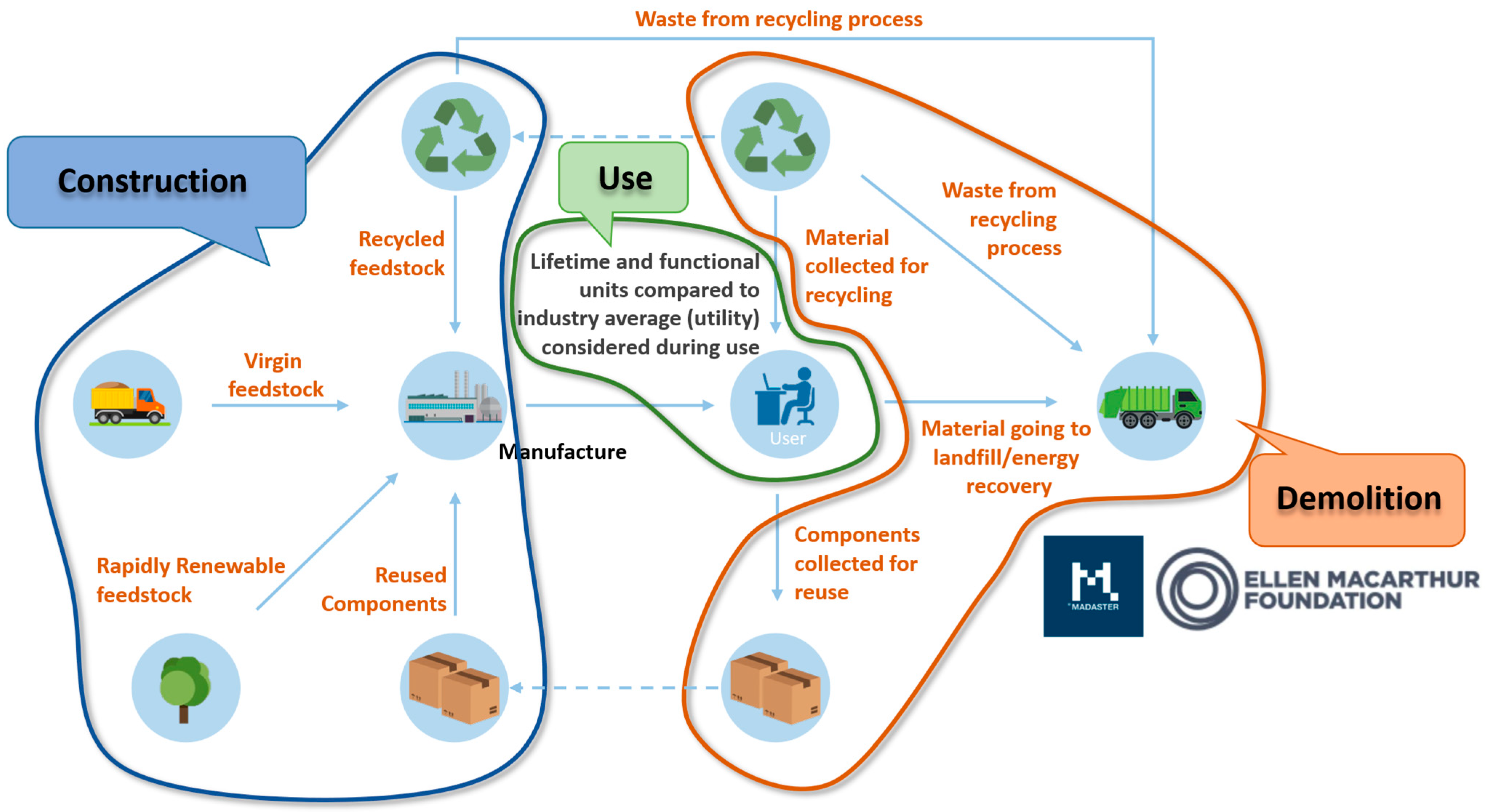
| Zhang, Y.C. et al. 2021 [12] | A preliminary discussion on establishing an assessment and certification system for circular architecture and construction in Taiwan (Part I) | Building on the Material Circularity Index proposed by the Ellen MacArthur Foundation and considering the specific characteristics and needs of Taiwan’s architecture and construction industry, this study develops an assessment and certification system for circular buildings in Taiwan. The framework emphasizes the establishment of differentiated circular strategies and objectives across the three main stages of the building life cycle: construction, use, and demolition. This approach provides a structured pathway to guide the implementation of circular economy principles in the Taiwanese built environment. | Material circularity index, circular building assessment system |
| Wang and Huang 2022 [13] | A study on the material circularity evaluation of components for circular building design | This study addresses the specific context of the domestic construction industry and establishes a streamlined formula to evaluate the circularity of building design components. The proposed method not only considers the Fraction of recycled materials incorporated into building products but also integrates domestic certification systems, including green building material labels (recycled and ecological), environmental labels, and resource recycling green product certifications. Building materials already certified as recycled in the domestic market are used as reference points. In practice, the framework enables designers to assess material selection by focusing on three major categories—structure, decoration, and landscape—where recycled materials are frequently applied. The fraction of recycled materials within these categories serves as the primary metric for evaluating the circularity of building component materials. | Building materials recycling rate, building materials bank, recycling rate |
| RC | SC | ||||
|---|---|---|---|---|---|
| The Engineering Strength 140 kg/cm2 Concrete | The Engineering Strength 280 kg/cm2 Concrete | The Engineering Strength 280 kg/cm2 Concrete (the Green Building Material Standard) | The Engineering Strength 350 kg/cm2 Concrete | A572 GR50 Steel | |
| M: Product mass (kg) | 2305 kg/M3 | 2324 kg/M3 | 2324 kg/M3 | 2324 kg/M3 | 7.85/M3 |
| V: The mass of the source material used to make the product (kg) | 2305 kg/M3 | 2324 kg/M3 | 2324 kg/M3 | 2324 kg/M3 | 2735 kg/M3 |
| FR: Proportion of recycled materials | 4.16% | 6.54% | 10.46% | 7.74% | 11% |
| FRR: Proportion of rapidly renewable materials | 0% | 0% | 0% | 0% | 0% |
| FU: Proportion of products and/or components that are reused | 0% | 0% | 0% | 0% | 0% |
| L: Potential life of the product | 60 years | 60 years | 60 years | 60 years | 60 years |
| Lav: Industry average lifespan of building layers | 60 years | 60 years | 60 years | 60 years | 60 years |
| CR: Proportion of material that can potentially be recycled at the end of its useful life | 0% | 0% | 0% | 0% | 85% |
| EC: Efficiency of the recycling process during the dismantling and scrapping phase | 75% | 75% | 75% | 75% | 75% |
| CU: Proportion of components and products that can be reused at the end of their useful life | 0% | 0% | 0% | 0% | 0% |
| EF: Efficiency of the material recycling process (%) | 75% | 75% | 75% | 75% | 75% |
| CUB Building | CUB Building (Recycled Green Building Materials) | Chemical Warehouse Building | ||||
|---|---|---|---|---|---|---|
| Element Circularity | Element Total Mass | Element Circularity | Element Total Mass | Element Circularity | Element Total Mass | |
| Column | 0.1293 | 12,225,813.26 | 0.1467 | 12,225,813.26 | 0.1293 | 864,547.98 |
| Beam | 0.1293 | 6,467,018.84 | 0.1467 | 6,467,018.84 | 0.1622 | 505,686.72 |
| Floor | 0.1187 | 5,542,725.57 | 0.1187 | 5,542,725.57 | 0.3202 | 1,309,553.15 |
| Wall | 0.1187 | 1,288,724.42 | 0.1187 | 1,288,724.42 | 0.1187 | 464,764.06 |
| System Circularity | 0.1264 = 12.64% | 0.1392 = 13.92% | 0.2125 = 21.25% | |||
Disclaimer/Publisher’s Note: The statements, opinions and data contained in all publications are solely those of the individual author(s) and contributor(s) and not of MDPI and/or the editor(s). MDPI and/or the editor(s) disclaim responsibility for any injury to people or property resulting from any ideas, methods, instructions or products referred to in the content. |
© 2026 by the authors. Licensee MDPI, Basel, Switzerland. This article is an open access article distributed under the terms and conditions of the Creative Commons Attribution (CC BY) license.
Share and Cite
Chen, S.-Y.; Cheng, K.-H. Development and Application of Building Circularity Assessment Tool Based on Building Information Modeling. Appl. Sci. 2026, 16, 1121. https://doi.org/10.3390/app16021121
Chen S-Y, Cheng K-H. Development and Application of Building Circularity Assessment Tool Based on Building Information Modeling. Applied Sciences. 2026; 16(2):1121. https://doi.org/10.3390/app16021121
Chicago/Turabian StyleChen, Shang-Yuan, and Kuo-Hsun Cheng. 2026. "Development and Application of Building Circularity Assessment Tool Based on Building Information Modeling" Applied Sciences 16, no. 2: 1121. https://doi.org/10.3390/app16021121
APA StyleChen, S.-Y., & Cheng, K.-H. (2026). Development and Application of Building Circularity Assessment Tool Based on Building Information Modeling. Applied Sciences, 16(2), 1121. https://doi.org/10.3390/app16021121