Article

Quantitative Decoupling of Dominant Hydrochemical Processes in Coastal Geothermal Systems: Insights into Fluoride Enrichment via Stable Isotopic Tracers and PMF Model


1
Shenzhen Investigation & Research Institute Co., Ltd., Shenzhen 518026, China
2
The Sixth Geological Survey Institute of Jilin Province, Yanji 133000, China
3
Shandong Surveying and Design Institute of Water Resources Co., Ltd., Jinan 250013, China
4
Chinese Academy of Geological Sciences, Beijing 100037, China
*
Author to whom correspondence should be addressed.
Appl. Sci. 2026, 16(18), 9120; https://doi.org/10.3390/app16189120
Submission received: 3 August 2026 / Revised: 2 September 2026 / Accepted: 8 September 2026 / Published: 14 September 2026
(This article belongs to the Section Environmental Sciences)

Abstract

Geothermal energy is a critical low-carbon resource in the global carbon neutrality transition, but expanding exploitation has raised growing concerns over geothermal fluid quality degradation and fluoride-related public health risks in the tectonically active coastal region of Guangdong, South China. However, the hydrochemical mechanisms governing fluoride enrichment remain poorly constrained, and conventional qualitative analytical approaches cannot quantitatively disentangle the superimposed effects of multiple subsurface geochemical processes. Based on 20 geothermal groundwater samples, this study integrates hydrochemical characterization, stable hydrogen and oxygen isotope tracing, and positive matrix factorization (PMF) modeling to quantitatively identify dominant hydrochemical processes and decipher the genetic mechanism of fluoride enrichment. The results demonstrate that the geothermal groundwaters belong to Cl–Na hydrochemical facies, with temperatures ranging from 60 °C to 96 °C and total dissolved solids (TDSs) varying from 560 mg/L to 9862 mg/L. Water–rock interaction dominates hydrochemical evolution: congruent dissolution of halite and other evaporite minerals serves as the primary source of bulk salinity, while bidirectional cation exchange on clay mineral surfaces substantially modifies the ionic assemblage. Stable isotope compositions (δD: −47.2‰ to −39.0‰; δ18O: −7.3‰ to −5.2‰) confirm a dominant meteoric recharge origin, with notable positive 18O shifts in multiple samples reflecting prolonged deep water–rock interaction with silicate host rocks. Recharge elevations are estimated at 239~682 m, delineating the northwestern medium–low mountain zone as the primary recharge area. Fluoride concentrations (2~13 mg/L) universally exceed the drinking water standard, and their enrichment is governed by a coupled geochemical feedback mechanism: hydrolytic weathering of fluor-bearing silicates releases structural fluoride, while widespread calcite precipitation scavenges aqueous Ca2+, weakens the common-ion effect, and promotes fluorite dissolution. The PMF model quantitatively resolves three geochemically meaningful controlling factors with clear process implications. These findings advance the mechanistic understanding of fluoride geochemistry in coastal granitic geothermal systems within the western Pacific tectonic belt, and provide a robust scientific basis for sustainable geothermal resource development and public health risk management.

1. Introduction

Against the backdrop of the global low-carbon transition in energy structure, geothermal energy has garnered increasing attention worldwide as a promising sustainable alternative to fossil fuels, owing to its advantages of wide distribution, low carbon emission intensity, and stable energy supply [1,2,3]. With the continuous expansion of geothermal resource exploitation, a series of geo-environmental issues, including groundwater level decline [4], land subsidence [5], and groundwater quality deterioration [6], have gradually emerged, posing potential threats to the long-term evolution of geothermal systems and regional ecological security [7]. Accordingly, systematically elucidating the hydrogeochemical characteristics and genetic evolution mechanisms of geothermal fluids constitutes a core scientific foundation for the efficient and sustainable exploitation and utilization of geothermal resources.
The coastal area of Guangdong in southeastern China is situated at the margin of the Circum-Pacific geothermal belt, characterized by active tectonic activities and favorable endowment of geothermal resources. Previous studies of coastal geothermal systems have largely prioritized the modulating influence of seawater intrusion on subsurface fluid circulation dynamics, whereas the enrichment patterns and underlying formative hydrogeochemical mechanisms of fluoride remain poorly constrained [8,9,10]. As a ubiquitous chemical component in geothermal reservoirs, fluoride migration and accumulation processes are tightly coupled to a spectrum of hydrogeochemical processes, including water–rock interaction, mineral dissolution–precipitation equilibria, cation exchange, and multi-source fluid mixing [11,12,13]. Furthermore, chronic excessive fluoride exposure is causally linked to endemic fluorotic impairments, notably dental and skeletal fluorosis [14,15], and unregulated discharge and improper utilization of geothermal effluents may amplify regional population exposure risks [16,17,18]. Accordingly, systematic elucidation of the mechanisms driving fluoride enrichment in Guangdong’s coastal geothermal waters constitutes a key scientific challenge that underpins the safe development of regional geothermal resources and the mitigation of associated public health hazards.
Conventional hydrochemical investigations mostly employ ion concentrations, diagnostic ion ratios, and classification diagrams to qualitatively identify processes such as water–rock interaction, mineral evolution, and fluid mixing, which provides fundamental methodological support for the genetic analysis of geothermal systems [19,20,21]. Nevertheless, such approaches face difficulties in quantitatively disentangling the superimposed effects of multiple hydrogeochemical processes and fail to quantify the relative contributions of distinct sources and processes to hydrochemical compositions [22,23], thereby restricting in-depth elucidation of the genetic mechanisms of complex geothermal systems. As natural hydrological tracers, stable hydrogen and oxygen isotopes (δ2H and δ18O) can provide critical constraints on the recharge sources, circulation pathways, and infiltration elevations of geothermal fluids. Coupled with cation geothermometers, they enable quantitative estimation of temperatures under various reservoir conditions and serve as a core technical tool for deciphering deep circulation processes of geothermal fluids [24,25,26,27]. However, relying solely on traditional hydrochemical and isotopic methods remains inadequate to quantitatively distinguish the contribution of individual hydrogeochemical processes to the enrichment of characteristic components such as fluoride.
Positive matrix factorization (PMF), a multivariate statistical source apportionment model subject to non-negative constraints, eliminates the need for pre-defined source profiles. By excavating the inherent statistical regularities embedded in complex hydrochemical datasets, it can objectively identify source factors corresponding to dominant hydrogeochemical processes and quantitatively estimate the contribution proportion of each factor to different chemical components, effectively compensating for the limitations of traditional qualitative analytical methods [28,29,30]. To date, PMF has been extensively applied in fields such as hydrochemical genesis analysis of watershed groundwater and pollutant source tracking. The integration of the PMF model with hydrochemical analysis and isotopic tracing techniques enables a methodological upgrade from qualitative description to quantitative dissection of geothermal water chemical genesis, offering a novel research avenue for revealing the formation mechanism of high-fluoride geothermal water.
This study focuses on representative geothermal systems along the Guangdong coastal zone and develops an integrated analytical framework that couples hydrochemical characterization, stable hydrogen–oxygen isotope tracing, and positive matrix factorization (PMF) quantitative source apportionment. Four core scientific objectives are addressed systematically: (1) characterizing the hydrochemical composition and spatial heterogeneity of geothermal groundwaters and identifying the dominant hydrogeochemical processes driving their evolutionary trajectories; (2) constraining the recharge sources of geothermal fluids based on δD-δ18O isotopic fingerprints and quantitatively estimating recharge elevations and geothermal reservoir temperatures; (3) deciphering the fluoride enrichment mechanisms and key controlling factors in high-fluoride geothermal waters through mineral saturation equilibrium calculations and process-oriented hydrogeochemical analysis; and (4) applying the PMF approach to quantitatively partition the contributions of distinct hydrogeochemical processes to the genesis of high-fluoride geothermal fluids. The findings of this work provide a robust scientific foundation for optimizing regional geothermal resource development schemes, preserving ecological integrity, and implementing targeted public health risk prevention and control measures.

2. Geological and Hydrogeological Setting

The study area is located in the coastal zone of southeastern China, tectonically situated in the convergent transition zone among the Eurasian Plate, the Pacific Plate, and the Philippine Sea Plate [31,32]. The regional geomorphic pattern and hydrogeological conditions are jointly shaped by neotectonic movements and Quaternary transgression–regression cycles. Spatially, the landforms exhibit a distinct stepped transition sequence from mountains, hills, basins, and plains to tidal flats, with diverse geomorphic assemblages and clear spatial differentiation patterns. The area is characterized by a subtropical maritime monsoon climate, with a long-term average annual temperature of 22.8 °C. According to the Köppen–Geiger climate classification system, the study area belongs to the Cfa category. Precipitation is regulated by the East Asian monsoon circulation, showing pronounced seasonal variability. The mean annual precipitation reaches 2390 mm, approximately 80% of which falls during the flood season from April to September [33]. Abundant meteoric precipitation provides a stable recharge source for regional groundwater circulation.
A complete stratigraphic succession is developed in the study area. The exposed strata, from oldest to youngest, comprise the Meso–Neoproterozoic, Sinian, Cambrian, Cretaceous, and Quaternary systems, and their lithologies can be categorized into three groups: metamorphic rocks, sedimentary rocks, and magmatic rocks [34,35]. Among them, metamorphic rocks such as gneisses and schists constitute the regional crystalline basement. Sedimentary rocks, dominated by clastic rocks and marine turbidites, mostly occur as banded bodies in tectonic depression zones and form the main body of the sedimentary cover [36]. Quaternary unconsolidated deposits, consisting of gravel, sand, silt, and clay, extensively overlie the bedrock surface and form the shallow porous aquifer system. Intense magmatic activity prevails in the study area, with granite-dominated intrusive rocks outcropping over 40% of the total bedrock area [37,38]. Previous studies have confirmed that radiogenic heat from the decay of radioactive elements in granites acts as the core heat source for the formation of local geothermal resources, providing a sustained energy supply for the long-term evolution of the geothermal system.
Modified by the superposition of multiple phases of orogenic movements and magmatic intrusion events, a complex fault system has developed in the study area, forming a regional tectonic framework with NNE–NE-trending and NNW–NW-trending faults as the structural backbone (Figure 1). The region underwent multi-episodic tectonic movements and magmatic activities during the Caledonian, Indosinian, and Yanshanian–Himalayan episodes, leading to the widespread development of deep-seated faults and associated secondary faults. These fault structures represent the core geological factors controlling the development and spatial distribution of the geothermal system [25]. Faults not only provide preferential flow pathways for the deep circulation of geothermal fluids but also determine the favorable locations for geothermal resource accumulation. Most of the identified geothermal anomalies in the study area are concentrated at the intersections of multiple fault sets. In terms of heat-controlling mechanisms, the two fault systems show distinct functional differentiation: NNE–NE-trending faults serve as the major regional heat-controlling structures, with a large lateral extent and great cutting depth, and dominate the spatial distribution pattern of deep heat sources. NW-trending faults are mostly multi-stage reactivated shear tectonic zones that significantly enhance the permeability and hydraulic connectivity of surrounding rocks; they mainly function as heat and water conduits, driving the upward conduction of deep thermal energy and lateral migration of thermal fluids [22]. The spatial coupling and functional synergy of these two fault systems provide critical structural–hydrogeological conditions for the deep circulation recharge, deep heating, and enrichment accumulation of geothermal fluids.

3. Materials and Methods

3.1. Sample Collection and Hydrochemical Analysis

To systematically elucidate the hydrochemical genetic mechanism of fluoride-enriched geothermal groundwaters along the coast of Guangdong, an integrated research framework combining hydrochemical analysis, stable hydrogen and oxygen isotope tracing, and multivariate statistical source apportionment is employed. Systematic geothermal water sampling is conducted across the study area in 2025, yielding a total of 20 geothermal groundwater samples that provide reliable fundamental data for subsequent analyses of hydrogeochemical processes, identification of recharge sources, and investigation of fluoride enrichment mechanisms.
Prior to sampling, all high-density polyethylene (HDPE) sample bottles are repeatedly rinsed with in situ ambient water at least three times to eliminate sample contamination caused by residual contaminants in the containers. Immediately after collection, water samples are filtered in situ through 0.45 μm cellulose acetate membranes to remove suspended particulate matter, thereby minimizing their interference with ion concentration measurements. Samples reserved for cation determination are acidified on site to pH < 2 using guaranteed reagent-grade nitric acid to suppress the hydrolysis and precipitation of metal ions. All sealed samples are transported and stored under refrigeration at 4 °C in darkness throughout the entire process to ensure the stability of physicochemical properties prior to laboratory analysis.
In situ physicochemical parameters, including water temperature (T, °C), pH, and total dissolved solids (TDSs, mg/L), are measured synchronously using a HANNA portable multi-parameter water quality analyzer in the field. For laboratory analysis, major cations (K+, Ca2+, Na+, and Mg2+) are quantitatively detected via inductively coupled plasma optical emission spectrometry (ICP-OES). The HCO3 content is determined by titration with 0.025 mol/L standard hydrochloric acid solution. Anions such as SO42− and Cl are analyzed using ion chromatography. Stable hydrogen and oxygen isotope compositions (δD and δ18O) are measured with an LGR-DLT-100 water isotope analyzer; all results are normalized against the Vienna Standard Mean Ocean Water (VSMOW), with analytical precisions better than ±0.5‰ for δD and ±0.1‰ for δ18O.
A systematic quality check of the hydrochemical dataset is performed using the charge balance error (CBE) (Equation (1)) [15]. In accordance with prevailing technical specifications in hydrogeochemistry, an absolute CBE value of ≤10% is adopted as the threshold for data reliability. Values exceeding this threshold indicate cation–anion charge imbalance and substantial systematic error, rendering the data unsuitable for subsequent analysis, whereas values within the threshold range demonstrate credible analytical results. Calculations confirm that the absolute CBE values of all water samples are below 5%, verifying that the analytical accuracy meets the technical requirements of hydrogeochemical research. The dataset is therefore of reliable quality and can support subsequent characterization of geothermal water chemistry and quantitative investigation of its genetic mechanisms.
C B E ( % ) = c a t i o n s a n i o n s c a t i o n s + a n i o n s   ×   100 %

3.2. Positive Matrix Factorization (PMF) Model

This study employs positive matrix factorization (PMF) for quantitative source apportionment of hydrochemical constituents and disentangling their respective origins in the near-lake groundwater system of Baiyangdian Wetland. As an established receptor-based technique widely applied in environmental geochemical research, PMF outperforms conventional multivariate methods by obviating the need for a priori source profile inputs. The method robustly accommodates analytical uncertainties and missing data entries while yielding stable, physically interpretable factorization results. PMF bilinearly decomposes the original hydrochemical data matrix into two non-negative submatrices: a factor contribution matrix quantifying each resolved factor’s intensity at individual sampling sites and a factor profile matrix capturing the distinct chemical fingerprint of each identified source or geochemical process. This framework enables systematic inference of dominant geochemical processes governing groundwater hydrochemical patterns. The core mathematical formulation of the PMF model is defined as follows [20]:
x i j = k = 1 p g i k f k j + e i j
where Xij refers to the measured concentration of the j-th hydrochemical constituent in the i-th groundwater sample, and p is the total number of constituents incorporated in the factorization. gik quantifies the contribution magnitude of the k-th source to sample i. fkj denotes the concentration of component j in the k-th source, and eij represents the residual term corresponding to both sample i and component j. In matrix notation, this relationship can be simplified to X = GF + E, where G is the source contribution matrix, F is the source composition matrix (i.e., the factor matrix), and E is the residual matrix.
A core distinction of positive matrix factorization (PMF), widely used in environmental geochemistry, from conventional multivariate statistical approaches lies in its enforcement of strict non-negativity constraints on both the source contribution matrix G and the factor composition matrix F. This restriction conforms to fundamental physical and geochemical principles governing natural groundwater systems, as neither source contribution magnitudes nor solute concentrations can assume negative values. Such physically consistent constraints therefore ensure that model-generated solutions are physically plausible and geochemically interpretable. The PMF algorithm minimizes an objective function Q that explicitly integrates analytical measurement uncertainties for each hydrochemical variable under investigation. This framework markedly enhances factorization robustness by mitigating inherent random noise and systematic biases in routine groundwater hydrochemical analyses. The mathematical formulation of this objective function is presented as follows [20]:
Q = i = 1 n j = 1 m [ x i j k = 1 p g i k f k j u i j ] 2
where uij represents the uncertainty associated with component j in sample i. The model’s iterative factorization routine converges to an optimal solution as the objective function Q attains its global minimum. The uncertainty associated with the derived factor outputs can be computed via Equations (4) and (5), as formulated below [20]:
u n c = 5 6 × M D L C M D L
u n c = ( E F × C ) 2 + ( 0.5 × M D L ) 2 C M D L
where C denotes the experimentally measured concentration, MDL corresponds to the analytical method detection limit, and EF refers to the relative error fraction used to constrain measurement uncertainty.

4. Results

4.1. Hydrochemical Characteristics of Geothermal Groundwater

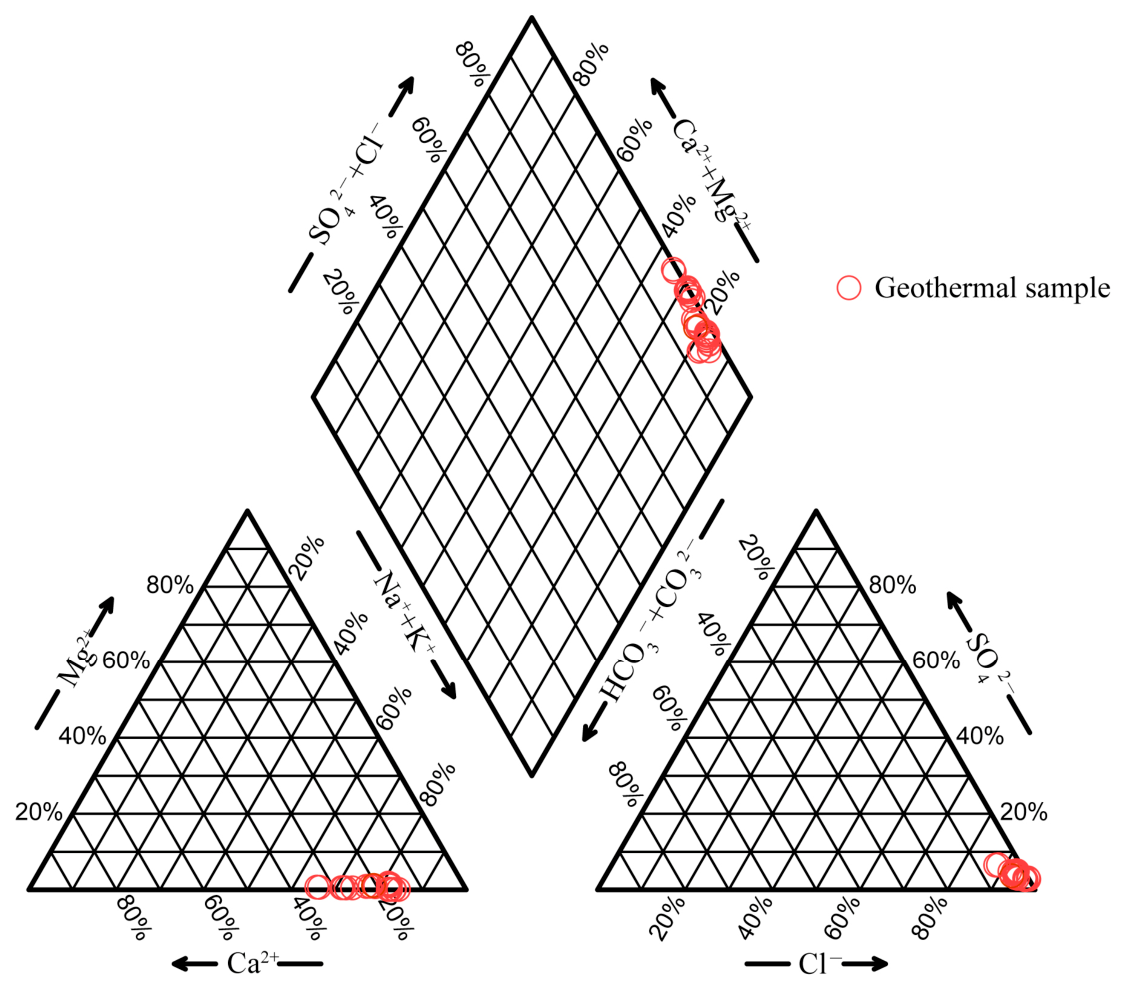
Geothermal groundwater in the study area records temperatures of 60~96 °C, with a mean of 81 °C, characteristic of typical moderate-to-high-temperature geothermal fluids. The TDS varies from 560 mg/L to 9862 mg/L, averaging at 4435 mg/L and exhibiting pronounced spatial heterogeneity in salinity. The pH values of the water samples fall within 7.10~8.30, indicating an overall neutral to weakly alkaline hydrochemical regime. Major cations rank in descending concentration order as Na+ > Ca2+ > K+ > Mg2+, whereas major anions follow the sequence of Cl > SO42− > HCO3. As shown in Figure 2, all samples cluster toward the Na+ + K+ endmember in the cation triangle and the Cl endmember in the anion triangle, further corroborating that the geothermal groundwater belongs to the Cl-Na hydrochemical facies. The summary statistics in Table 1 reveal distinct disparities in the coefficients of variation (CVs) across hydrochemical constituents. Ca2+, K+, and Mg2+ all yield CV values above 75%, with Ca2+ reaching up to 98%, reflecting strong spatial heterogeneity in water–rock interaction intensity and fluid mixing processes. Both Cl and TDS have a CV of 70%, indicative of remarkable regional differences in solute enrichment. By contrast, HCO3 and SO42− exhibit relatively lower CV values (46~48%), suggesting comparatively stable formation and evolutionary processes. Collectively, these variability patterns underscore the multiplicity and complexity of hydrogeochemical processes governing the geothermal hydrochemical field. Additionally, fluoride (F) concentrations range from 2 mg/L to 13 mg/L, with a mean of 4.9 mg/L. Since all samples exceed the 1.0 mg/L fluoride threshold, the geothermal groundwater can be classified as fluoride-enriched.

4.2. Stable Isotopic Compositions of Geothermal Groundwater

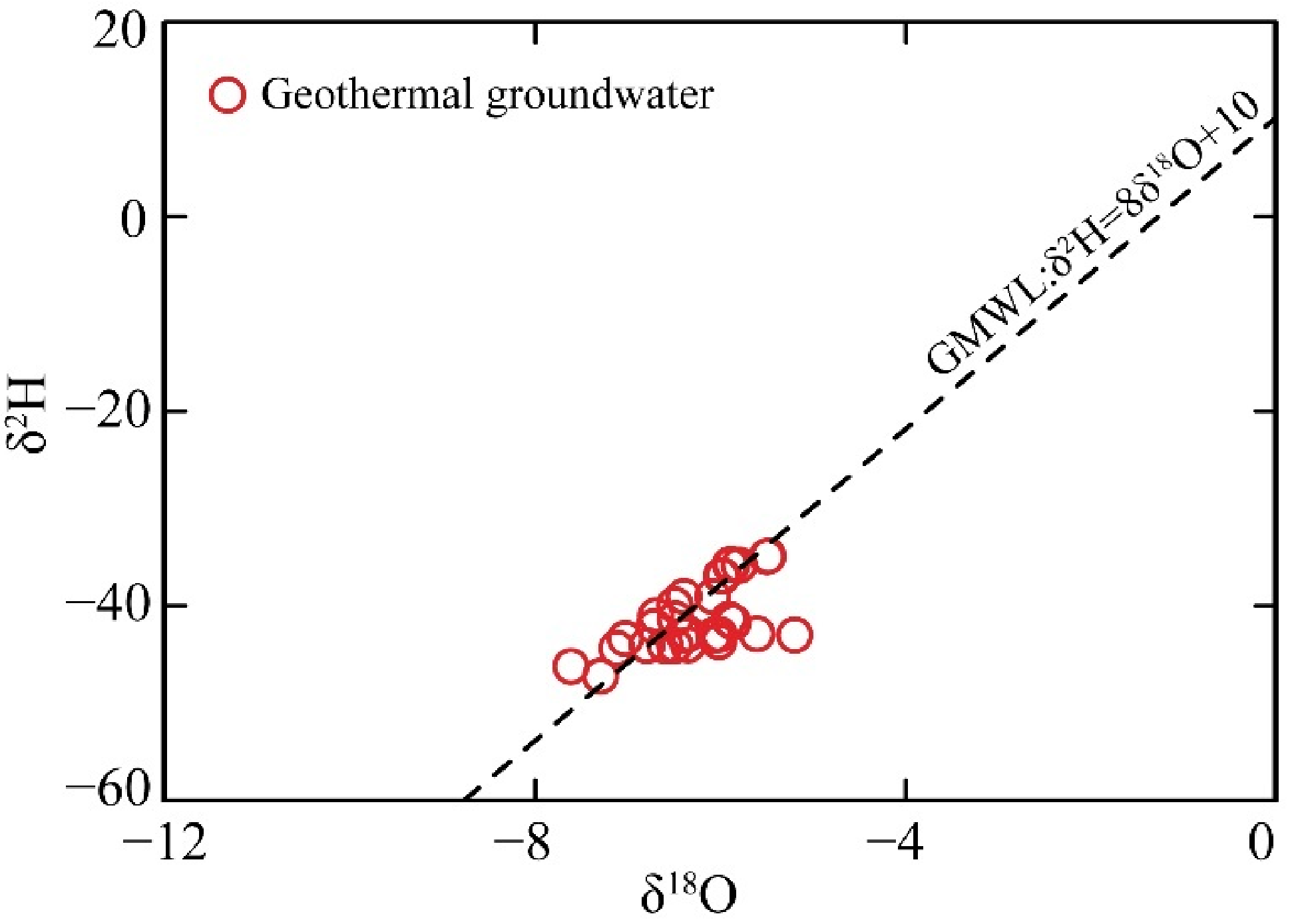
Stable hydrogen and oxygen isotopes represent a well-established tracer approach for deciphering groundwater recharge sources, circulation pathways, and hydrogeochemical evolutionary processes. As summarized in Table 1, the isotopic compositions of geothermal groundwater in the study area show pronounced spatial heterogeneity. The δD values range from −47.2‰ to −39.0‰, with a mean of −42.0‰, whereas the δ18O values vary between −7.3‰ and −5.2‰, averaging at −6.6‰. The overall isotopic depletion feature provides critical tracer evidence for identifying recharge origins and reconstructing water circulation regimes.
As illustrated in Figure 3, all water samples generally plot along the Global Meteoric Water Line (GMWL: δD = 8δ18O + 10), confirming that meteoric water serves as the dominant initial recharge source of the geothermal groundwater. Meanwhile, a subset of geothermal samples exhibits a remarkable positive δ18O shift, with data points deviating downward and rightward relative to the GMWL. This pattern reflects variable extents of oxygen isotope exchange between deep-circulating geothermal fluids and host rocks, which is a diagnostic isotopic signature of protracted water–rock interaction.

5. Discussion

5.1. Recharge Sources of Geothermal Fluids

Stable hydrogen and oxygen isotopes (δD and δ18O) represent a core geochemical tool in hydrogeological research, enabling the tracing of groundwater recharge sources and quantitative inversion of recharge zone elevations [15]. The isotopic altitude effect arises from Rayleigh fractionation during the ascent of meteoric air masses: as air masses are lifted by topographic relief, progressive condensation and isotopic fractionation occur, with heavy isotopologues preferentially removed via precipitation [18]. This process leads to systematic isotopic depletion in precipitation with increasing altitude. Groundwater inherits the isotopic signature of ambient precipitation at the time of recharge such that δD and δ18O values maintain a robust negative relationship with recharge elevation, which forms a reliable theoretical foundation for quantitative recharge elevation estimation [26]. As depicted in Figure 3, the isotopic data points of the geothermal water samples from the study area generally plot along the regional meteoric water line, confirming that meteoric precipitation serves as the dominant recharge source of geothermal groundwater in the area. Water–rock interaction during deep subsurface circulation only induces a limited positive 18O shift, without altering the fundamental meteoric origin of the geothermal fluids. To reduce the estimation uncertainty associated with a single method and place tighter constraints on the recharge elevation of geothermal groundwater, this study adopts two independent approaches to perform a joint quantitative estimation [18]:
H = −50(δD + 27)
δ18O = −0.0031H − 6.2
where h represents the sampling elevation (m), while H denotes the recharge elevation (m). The δD value of local precipitation (δP) and the isotopic altitudinal gradient (K) are determined as −37.3‰ and −2‰/100 m, respectively. The recharge area temperature is estimated by the following equation [29]:
δD = 3T − 92
δ18O = 0.695T − 13.6
where T (°C) is the temperature of the recharge area.
The results of the recharge elevation and recharge area temperature derived from the joint multi-method calculation are summarized in Table 2. By integrating the constraints from multiple independent methods, the recharge elevation of geothermal groundwater in the study area is constrained to the range of 239~682 m. Converted according to the atmospheric temperature lapse rate, the corresponding mean annual air temperature in the recharge area is approximately 13~14 °C. Based on a comprehensive evaluation combining regional geomorphic patterns and fault-controlled groundwater flow characteristics, the medium–low mountain and hilly zone in the northwestern part of the study area is delineated as the dominant recharge area for geothermal fluids with an altitude of 500~1200 m. The measured mean annual air temperature in this altitudinal zone is approximately 15 °C, which shows strong consistency with the temperature interval of the recharge area obtained from isotope inversion. This agreement further verifies the reliability of recharge source identification and recharge area delineation from the perspective of temperature field constraints.

5.2. Genetic Mechanisms of Fluoride Enrichment in Geothermal Groundwater

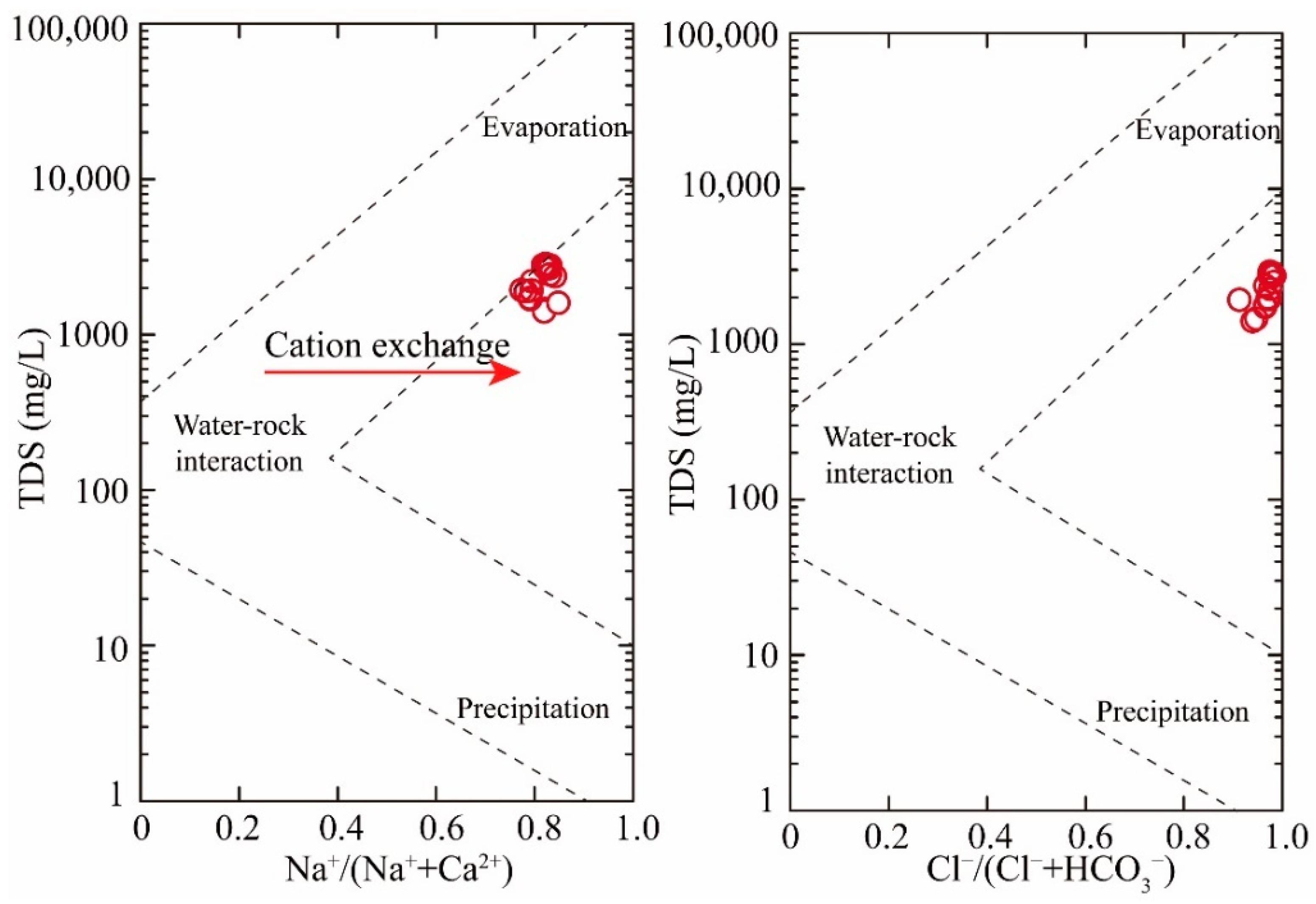
The molar ratios of diagnostic ions serve as key geochemical tracers for deciphering hydrogeochemical evolution processes and identifying provenance contributions in geothermal groundwater systems [9]. The Gibbs diagram method, by establishing the coupled relationship between the total dissolved solids (TDSs) and relative abundances of diagnostic ions, can effectively distinguish three genetic mechanisms of groundwater chemistry: meteoric precipitation input, water–rock interaction, and evaporative concentration [17]. As shown in Figure 4, all geothermal water samples in the study area fall within the water–rock interaction-dominated domain of the Gibbs diagram, indicating that water–rock interaction is the primary driving process controlling the formation and evolution of geothermal water chemical compositions. Along the increasing TDS gradient, sample data points exhibit a gradual shift toward the cation exchange endmember, with overall high Na+/(Na+ + Ca2+) ratios. This pattern signals that intense cation exchange has occurred during deep geothermal fluid circulation, whereby aqueous Na+ exchanges with Ca2+ in the crystal lattices of calcium-bearing minerals, driving the progressive evolution of hydrochemical facies toward a sodic type. The distribution pattern of Cl/(Cl + HCO3) ratios further demonstrates that the hydrochemical composition of geothermal water is neither directly governed by meteoric precipitation nor has reached the stage of extreme evaporative concentration; instead, it follows an evolutionary pathway dominated by water–rock interaction accompanied by a certain degree of solute enrichment.
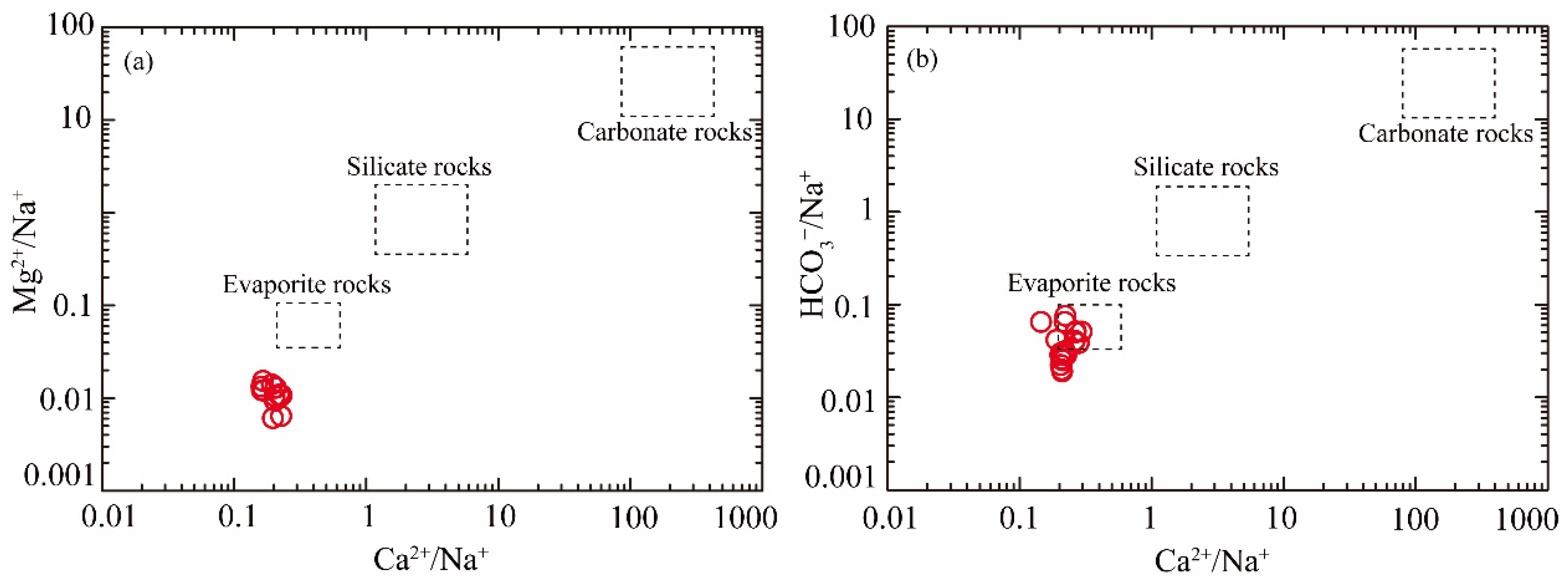
To further constrain the mineral sources of water–rock interaction and the relative contribution of each provenance in geothermal waters, this study constructs bivariate endmember discrimination diagrams of Ca2+/Na+ versus Mg2+/Na+ and Ca2+/Na+ versus HCO3/Na+ to differentiate three genetic endmembers: silicate weathering, carbonate dissolution, and evaporite dissolution [32]. As illustrated in Figure 5, geothermal water samples from the study area are clustered near the evaporite endmember domain and deviate markedly from the silicate and carbonate endmembers, indicating that the dissolution of evaporite minerals constitutes the dominant provenance of major ionic components in geothermal waters. The scattered distribution of sample points also reflects that the hydrochemical composition of geothermal waters, built upon evaporite dissolution, is superimposed by subsequent modification via water–rock interaction. These two processes collectively shape the hydrogeochemical evolution characteristics of geothermal waters in the study area.
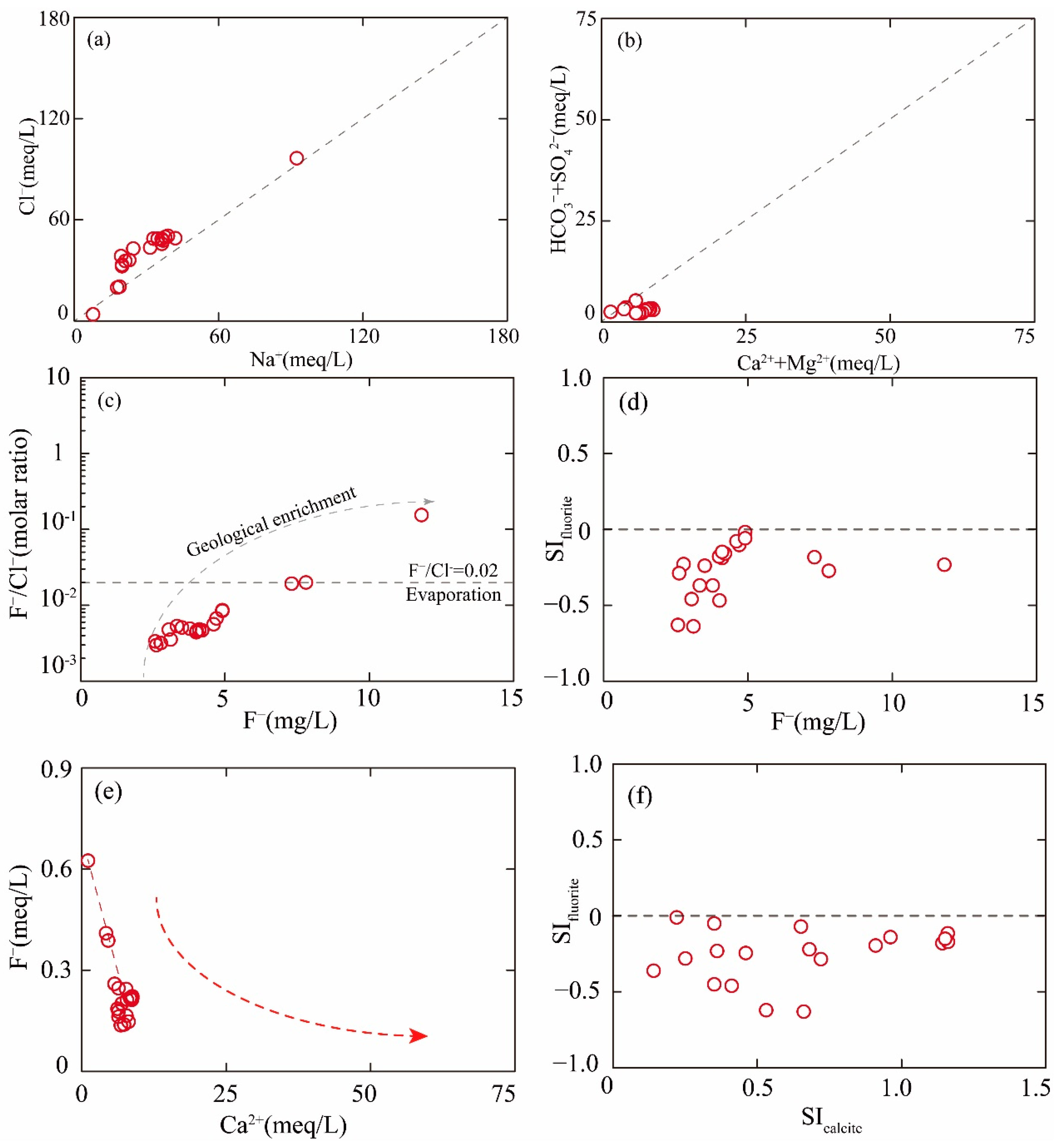
To precisely constrain the provenance of major dissolved components and the hydrogeochemical evolution processes of geothermal waters, this study performs endmember tracing analysis based on the stoichiometric relationships of diagnostic ion molar ratios. Two core indicators, namely, Na+/Cl and (Ca2+ + Mg2+)/(HCO3 + SO42−), are selected to identify the contributions of distinct mineral weathering and dissolution processes to hydrochemical compositions from the perspective of ion balance [26]. As shown in Figure 6a, the molar concentration ratios of Na+ to Cl in the study area generally align along the 1:1 stoichiometric line, which is highly consistent with the stoichiometric signature of the congruent dissolution of halide evaporites such as halite [11]. This indicates that Cl and the majority of alkali metal ions in geothermal waters are primarily derived from the dissolution of halide evaporite minerals. The (Ca2+ + Mg2+)/(HCO3 + SO42−) molar ratio can effectively distinguish the relative contributions of carbonate mineral weathering and sulfate mineral dissolution. When solutes in geothermal waters originate exclusively from the carbonation-induced dissolution of carbonate minerals such as calcite and dolomite, this ratio has a theoretical value of 1:2. With the additional dissolution of sulfate minerals such as gypsum, Ca2+ and SO42− enter the aqueous phase in equimolar proportions, shifting the ratio toward 1:1. As evident from Figure 6b, the geothermal water samples collectively exhibit geochemical characteristics of Na+/Cl deviating from the 1:1 stoichiometric line and (Ca2+ + Mg2+)/(HCO3 + SO42−) values significantly higher than the theoretical values for pure mineral dissolution. This demonstrates that the hydrochemical composition of geothermal waters is not solely governed by mineral dissolution processes. Instead, the superimposed modification by multiple hydrogeochemical processes, including cation exchange and silicate weathering, disrupts the ion equilibrium established by single-mineral dissolution and collectively drives the evolutionary differentiation of hydrochemical components. For the genetic interpretation of fluoride enrichment, a typical associated component in geothermal waters, the F/Cl molar ratio is employed for genetic discrimination. This indicator can effectively distinguish between two enrichment mechanisms: evaporative concentration and lithology-controlled fluoride enrichment. If fluoride enrichment is dominated by evaporative concentration, F and Cl would enrich proportionally with water evaporation, resulting in a relatively stable F/Cl ratio. Conversely, if fluoride originates mainly from the dissolution of fluoride-bearing minerals in the aquifer, increasing F concentrations would be accompanied by a synchronous rise in the F/Cl ratio. As depicted in Figure 6c, the mass concentration of F and the F/Cl molar ratio in geothermal waters in the study area show an overall significant positive correlation, which is inconsistent with the geochemical response pattern of evaporative concentration. Accordingly, evaporative concentration can be ruled out as the dominant controlling mechanism for fluoride enrichment.
The above ionic stoichiometric relationships collectively indicate that the major ion composition of geothermal waters in the study area is fundamentally sourced from evaporite dissolution and further modified by superimposed processes such as cation exchange and silicate weathering. Fluoride enrichment is primarily regulated by aquifer lithology and the intensity of water–rock interaction, resulting from the progressive dissolution of fluoride-bearing silicate minerals (e.g., biotite and hornblende) and fluorite during long-term deep circulation. This reflects the critical control exerted by water–rock interaction on the geochemical behavior of trace elements in geothermal waters.
The saturation index (SI) is a core parameter characterizing the thermodynamic state of dissolution–precipitation between aqueous solution and mineral phases, and provides critical diagnostic insights into the reaction direction of water–rock interaction and the genetic mechanisms of trace element enrichment in geothermal systems [20]. Thermodynamic calculations reveal that the saturation indices of fluorite in all geothermal water samples are below zero, indicating that fluorite is thermodynamically undersaturated in the current geothermal fluids and retains sustained reaction potential for dissolution. This provides both a material basis and a thermodynamic prerequisite for the progressive enrichment of F in geothermal waters. A significant negative correlation is observed between F and Ca2+ concentrations in geothermal waters, which is highly consistent with the common-ion effect governing fluorite dissolution: elevated Ca2+ activity in the aqueous solution shifts the dissolution–precipitation equilibrium of fluorite toward the solid phase, inhibiting further fluorite dissolution and thereby restricting the sustained release of F into the liquid phase. In addition, the calcite saturation indices of geothermal waters in the study area are generally above zero, indicating that calcite is in a saturated or even supersaturated state and can undergo spontaneous precipitation under the prevailing hydrochemical conditions. Calcite precipitation continuously consumes Ca2+ from the fluid, reducing aqueous Ca2+ activity and thereby disrupting the dissolution equilibrium of fluorite and driving it toward further dissolution.
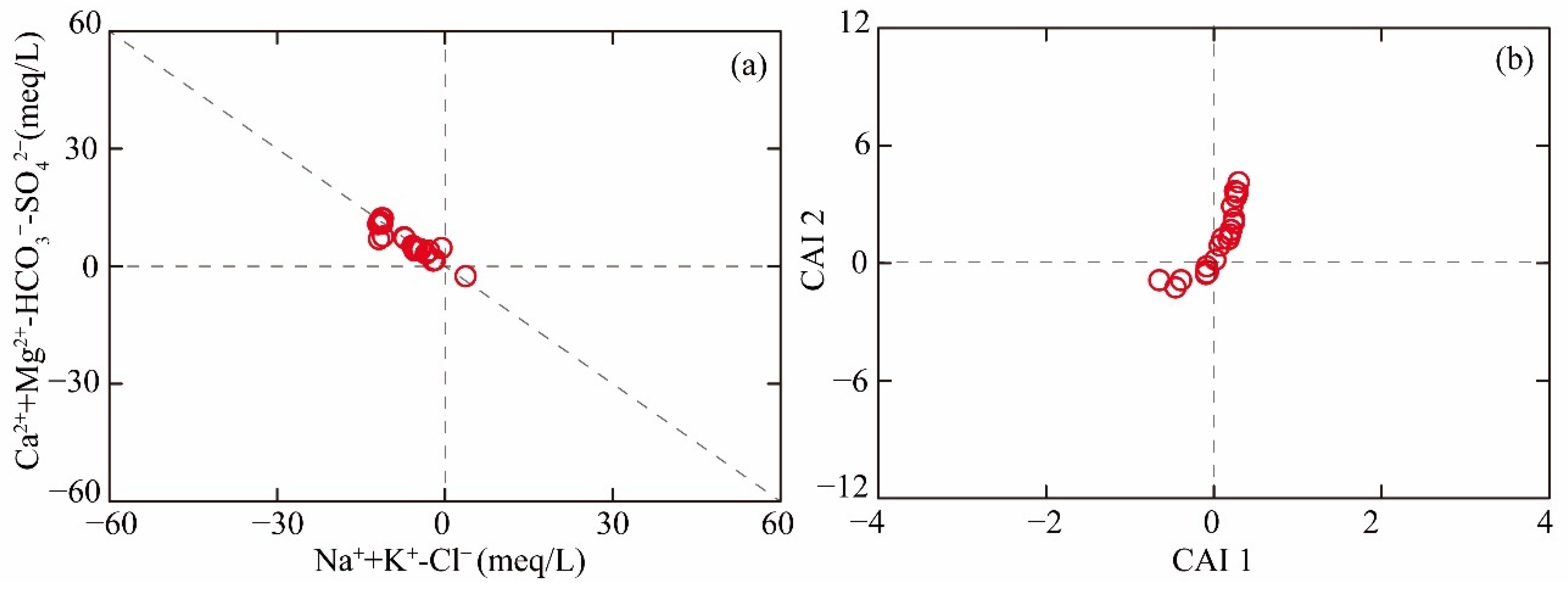
Cation exchange is a pervasive hydrogeochemical process in geothermal groundwater systems that regulates the redistribution of ionic components and modifies hydrochemical compositions. In current hydrogeochemical research, the molar stoichiometric relationship between (Na+ + K+ − Cl) and (Ca2+ + Mg2+ − HCO3 − SO42−), in conjunction with the chloro-alkaline indices (CAIs), is widely adopted to jointly identify the direction and intensity of cation exchange [25]. From the perspective of reaction stoichiometry, if strictly equivalent cation exchange occurs in the groundwater system—i.e., adsorbed monovalent cations (Na+ and K+) on clay mineral surfaces exchange with divalent cations (Ca2+ and Mg2+) in the aqueous phase—the slope of the linear fit between the two sets of ionic differences should approach −1. This characteristic serves as a key geochemical criterion for verifying the occurrence of cation exchange. As depicted in Figure 7a, all geothermal water samples align along a linear trend characterized by a slope approaching −1, providing robust geochemical evidence for the pervasive involvement of cation exchange processes in the hydrogeochemical evolution of these geothermal fluids. To further quantify the direction and intensity of cation exchange reactions, we employ the chloro-alkaline indices (CAI-1 and CAI-2) for granular process diagnosis; their mathematical formulations are given below [33]:
Ca 2 +   +   2 NaX = 2 Na +   +   CaX 2
CAI   1 = Cl Na +   +   K + Cl
CAI   2 = Cl Na + + K + HCO 3 + SO 4 2 + CO 3 2 + NO 3
The spatial patterns of the computed chloro-alkaline indices (Figure 7b) reveal a pronounced positive–negative bifurcation across sampling sites, indicative of strong spatial heterogeneity in the prevailing direction of cation exchange. Samples exhibiting positive CAI values record hydrogeochemical trajectories dominated by reverse cation exchange: aqueous Na+ and K+ undergo stoichiometric exchange with adsorbed Ca2+ and Mg2+ on aquifer mineral surfaces, resulting in depletion of alkali metals and concomitant enrichment of alkaline earth metals in the dissolved phase. The resulting increase in aqueous Ca2+ activity shifts the fluorite dissolution–precipitation equilibrium toward the solid phase through the common-ion effect, suppressing further fluorite dissolution and constraining the magnitude of aqueous F enrichment. As such, reverse cation exchange exerts an overall negative regulatory control on fluoride accumulation in geothermal waters. Conversely, samples with negative CAI-1 and CAI-2 signatures are dominated by forward cation exchange: dissolved Ca2+ exchanges with exchangeable Na+ adsorbed on clay mineral surfaces, leading to progressive removal of aqueous Ca2+ via adsorption and a corresponding rise in Na+ concentrations. The attendant reduction in Ca2+ activity destabilizes the fluorite dissolution–precipitation equilibrium, promotes fluorite dissolution, and enhances the release and accumulation of F in the aqueous phase. This process represents a primary hydrogeochemical driver of fluoride enrichment in the study area’s geothermal systems.

5.3. Quantitative Source Apportionment of Hydrochemical Constituents via PMF

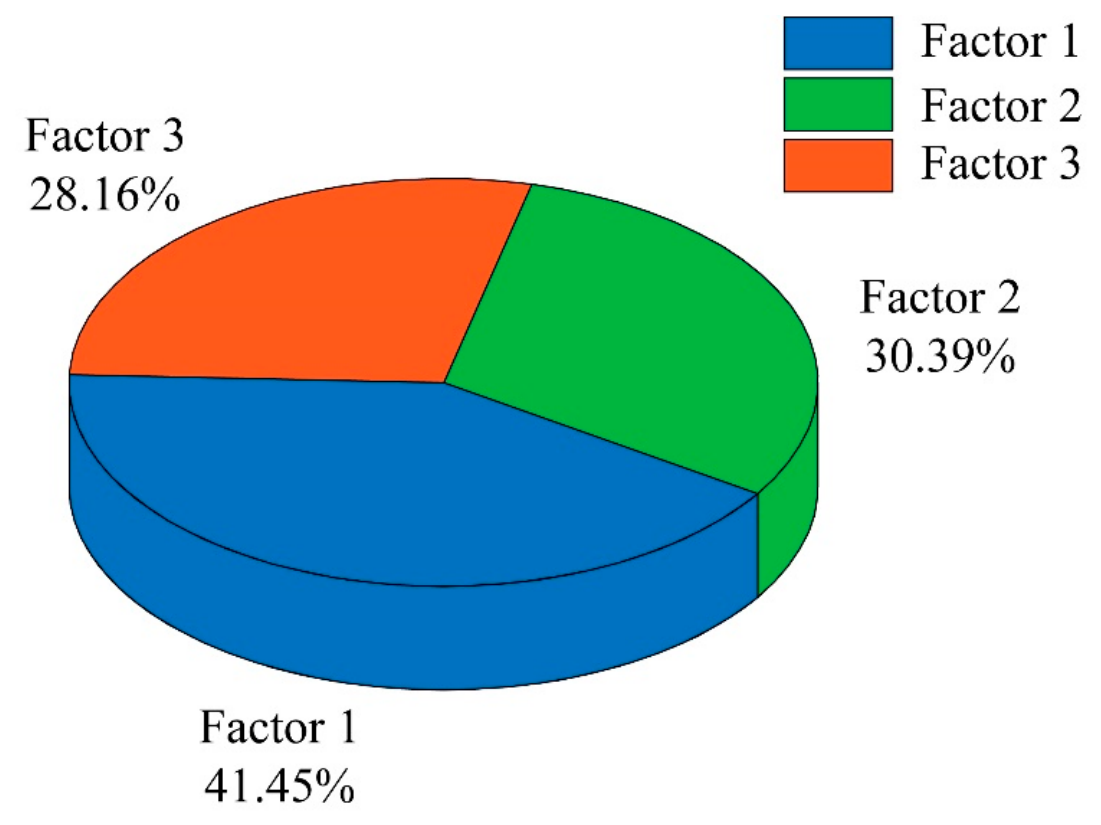
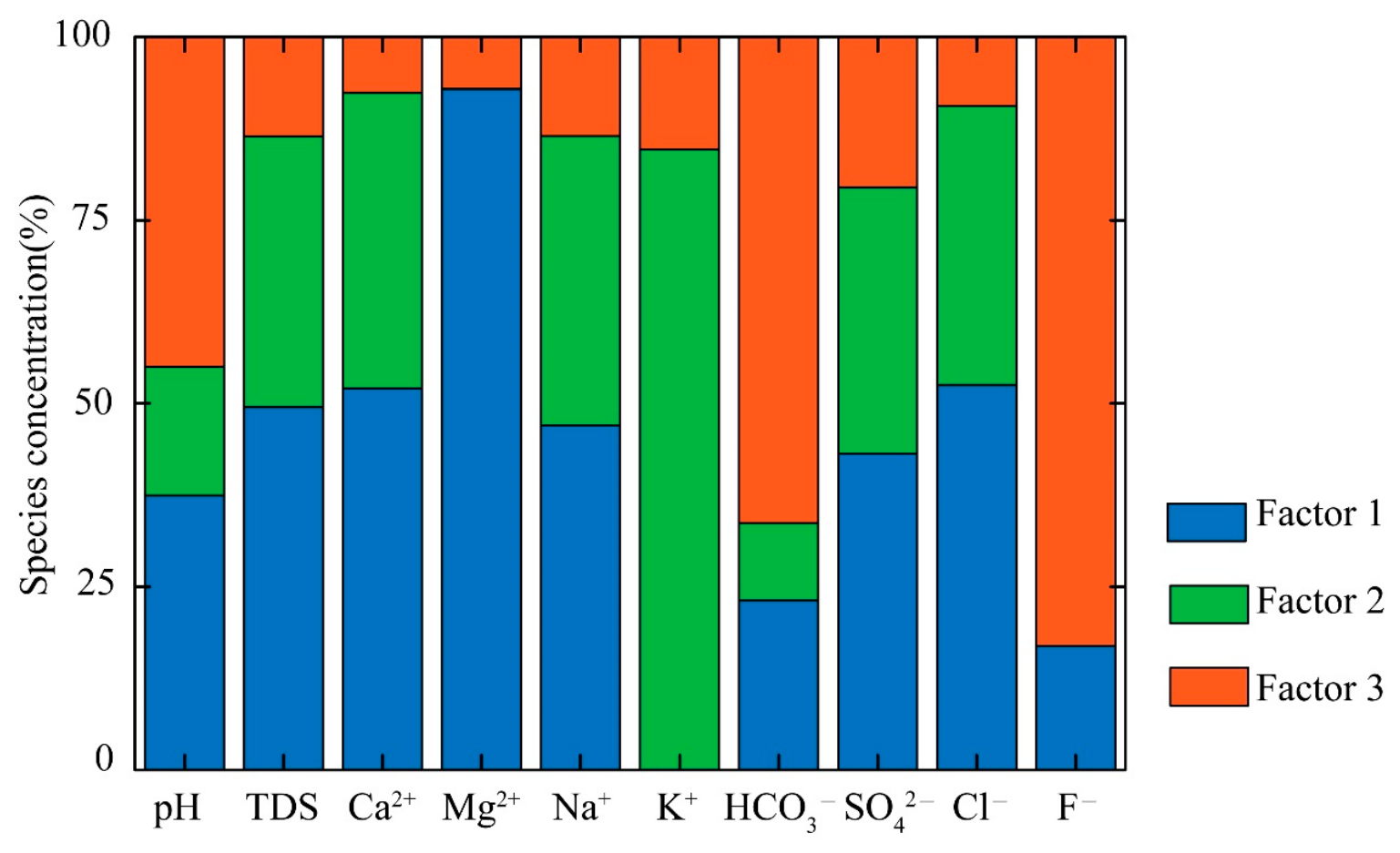
Quantitative source apportionment is conducted on the hydrochemical dataset of 20 geothermal groundwater samples from the study area using the PMF model. Based on the patterns of factor loadings and factor scores under non-negativity constraints, three dominant factors with well-defined hydrogeochemical implications are resolved (Figure 8 and Figure 9): Factor 1 (41.45%) represents the evaporite dissolution–reverse cation exchange factor, Factor 2 (30.39%) corresponds to the coupled fluorine-bearing silicate weathering–carbonate precipitation factor, and Factor 3 (28.16%) denotes the water–rock dissolution factor of potassium-rich minerals in granites. These three factors are associated with hydrogeochemical processes at different scales and quantitatively elucidate the genetic mechanisms of chemical compositions in Cl-Na-type high-fluoride geothermal waters, as well as the relative contributions of each dominant process from three perspectives: material sources, reaction pathways, and deep process indicators.
Factor 1 is dominated by high loadings of TDS, Ca2+, Mg2+, and Cl, and acts as the core factor controlling the bulk salinity level and alkaline earth metal ion composition of geothermal waters. As a chemically stable conservative constituent in groundwater systems, Cl concentration is primarily governed by mineral dissolution and fluid mixing, with negligible modification by adsorption, redox reactions, or precipitation, making it a reliable tracer for the source of saline materials. The overall Na+/Cl molar ratio of geothermal waters in the study area approaches the 1:1 stoichiometric line, which, combined with the clustering of samples toward the evaporite endmember in the Ca2+/Na+ vs. Mg2+/Na+ endmember diagrams, confirms that congruent dissolution of halide evaporites such as halite is the primary source of salinity accumulation in geothermal waters. The absence of high Na+ loading in this factor is attributed to the extensive hydrogeochemical modification of Na+ released from halite dissolution: during deep circulation of geothermal fluids, Na+ enriched in the aqueous phase undergoes equivalent exchange with adsorbed Ca2+ and Mg2+ on the surfaces of clay minerals in the aquifer (i.e., reverse cation exchange), resulting in elevated concentrations of alkaline earth metals and a relative decrease in alkali metal ions in the liquid phase [30]. This interpretation is fully consistent with the distribution pattern of samples with positive CAIs. In terms of its regulatory effect on fluoride enrichment, the Ca2+ concentration fluctuations dominated by Factor 1 directly affect the dissolution–precipitation equilibrium of fluorite via the common-ion effect: when reverse cation exchange intensifies, the increased aqueous Ca2+ activity shifts the fluorite dissolution equilibrium toward the solid phase, inhibits further fluorite dissolution, and restricts the sustained release of F into the aqueous phase. Therefore, this process exerts an overall negative regulatory effect on the formation of high-fluoride geothermal waters and represents a key controlling factor for the spatial heterogeneity of fluoride concentrations among sampling sites.
Factor 2 is characterized by diagnostic loadings of HCO3 and F, with a loading distribution independent of the bulk salinity factor. It represents the geochemical process coupling hydrolytic weathering of fluorine-bearing silicate minerals and carbonate mineral precipitation, and acts as the core dominant factor driving anomalous fluoride enrichment in geothermal waters. HCO3 is a characteristic product of carbonation-induced hydrolysis of silicate rocks: during infiltration, meteoric water dissolves CO2 from soils and surrounding rocks to form carbonic acid, which undergoes hydrolysis with aluminosilicate minerals such as biotite and hornblende during deep circulation. This process progressively releases cations from mineral lattices into the fluid while generating HCO3; the concurrent breakdown of fluorine-bearing silicate mineral lattices continuously releases structural fluoride into the geothermal fluids, constituting the primary material source of aqueous F [28]. Calculations of mineral saturation indices show that calcite is generally in a saturated to supersaturated state in the study area’s geothermal waters, whereas fluorite remains thermodynamically undersaturated across all samples. This discrepancy in thermodynamic states drives spontaneous calcite precipitation, which continuously consumes Ca2+ from the fluid, disrupts the dissolution–precipitation equilibrium of fluorite, and drives fluorite toward further dissolution, thereby elevating aqueous fluoride concentrations. Additionally, the synchronous increase in the F/Cl molar ratio with rising F concentration confirms that fluoride enrichment is not a result of evaporative concentration but is governed by the intensity of water–rock interaction and mineral dissolution–precipitation equilibrium processes. The independent extraction of this factor indicates that fluoride enrichment in geothermal waters follows a relatively independent geochemical pathway, with no significant coupling to the bulk salinity accumulation process. Its enrichment intensity is primarily determined by reservoir lithology, fluid circulation time, and hydrochemical environmental conditions.
Factor 3 features K+ as its sole high-loading component, indicating the water–rock dissolution process of potassium-rich aluminosilicate minerals in granitic plutons, and reflects the intensity of long-term interaction between geothermal fluids and the deep crystalline basement. Previous studies have confirmed that radiogenic heat from the decay of radioactive elements such as uranium, thorium, and potassium in granites serves as the core heat source for the geothermal system in this region. Potassium-bearing rock-forming minerals such as K-feldspar and muscovite undergo incongruent dissolution under the long-term action of high-temperature geothermal fluids, and K+ in the mineral lattices is gradually released into the aqueous phase, constituting the main material source of this factor [6]. Since K+ concentrations in geothermal waters are far lower than those of Na+, and cation exchange reactions primarily involve the exchange of Na+ with alkaline earth metal ions, K+ concentrations are less modified by secondary hydrogeochemical processes. As a result, K+ can independently reflect the primary geochemical signal of source rock mineral dissolution and can serve as a potential indicator for the intensity of deep water–rock interaction in geothermal systems. The contribution intensity of this factor is intrinsically linked to reservoir temperature and fluid circulation depth: in deep high-temperature reservoir environments, mineral dissolution proceeds at faster rates with higher K+ release. Therefore, this factor indirectly reflects the deep circulation process of geothermal fluids and the evolutionary degree of the geothermal reservoir.
Overall, the three dominant factors collectively construct the genetic framework of Cl-Na-type high-fluoride geothermal waters in the study area from three aspects: the source and modification of salinity, the driving mechanism of fluoride enrichment, and the indicator of deep water–rock interaction. Specifically, Factor 1 establishes the material basis for geothermal water salinity and modulates the background Ca2+ concentration via reverse cation exchange, thereby indirectly constraining the upper limit of fluoride enrichment. Factor 2 dominates the genetic process of fluoride enrichment and drives the evolution of geothermal waters toward high fluoride levels through the coupled process of fluoride supply via silicate weathering and fluorite dissolution promotion via carbonate precipitation. Factor 3 indicates the intensity of deep water–rock interaction in the granitic basement and indirectly reflects the evolutionary degree of the geothermal reservoir. The superposition and coupling of these three processes fully depict the complete evolutionary pathway of geothermal fluids: from meteoric water infiltration, deep circulation, and heating along faults to salinity accumulation via evaporite leaching, release of characteristic components through water–rock interaction with surrounding rocks, and final modification of ionic compositions by secondary processes.

6. Conclusions

This study systematically characterizes the hydrogeochemical features and fluoride enrichment mechanisms of moderate-to-high-temperature geothermal systems in coastal Guangdong, China, via an integrated framework of hydrochemical analysis, stable H-O isotope tracers, and PMF modeling.
The geothermal groundwaters exhibit a Cl–Na hydrochemical facies, with temperatures of 60~96 °C and TDS of 560~9862 mg/L. Water–rock interaction dominates hydrochemical evolution: congruent dissolution of halite and evaporites is the primary salinity source (with Na+/Cl molar ratios near unity), while bidirectional Ca2+–Na+ cation exchange on clay surfaces substantially modifies ionic assemblages. Stable isotope compositions (δD: −47.2‰ to −39.0‰; δ18O: −7.3‰ to −5.2‰) plot along the global meteoric water line, confirming a dominant meteoric recharge origin. Pronounced positive 18O shifts record prolonged deep water–rock interaction with silicate host rocks. Recharge elevations are constrained to 239~682 m, with the northwestern medium–low mountain zone delineated as the primary recharge area. Fluoride concentrations (2~13 mg/L) universally exceed drinking water standards. Enrichment is governed by a coupled feedback mechanism: hydrolytic weathering of fluorine-bearing silicates releases structural fluoride, while pervasive calcite precipitation scavenges aqueous Ca2+, weakens the common-ion effect, and promotes fluorite dissolution. Forward cation exchange enhances fluoride mobilization, whereas reverse cation exchange exerts negative regulation.
The PMF model quantitatively identifies three geochemically meaningful factors that disentangle superimposed hydrogeochemical processes, complementing traditional qualitative methods. These findings advance the mechanistic understanding of fluoride geochemistry in coastal granitic geothermal systems and provide a robust scientific basis for sustainable geothermal resource development and public health risk management.

Author Contributions

Conceptualization, F.J. and Q.L.; Methodology, F.J., Q.L., Y.W., S.Z. (Shouchuan Zhang) and Q.Z.; Software, F.J., Q.L., S.Z. (Shuhui Zheng), Y.W., S.Z. (Shouchuan Zhang), Y.Z., Q.Z., X.S. and X.Y.; Validation, F.J., Q.L., S.Z. (Shuhui Zheng), Y.W., S.Z. (Shouchuan Zhang), Y.Z., Q.Z., X.S. and X.Y.; Formal analysis, S.Z. (Shuhui Zheng) and Y.W.; Investigation, F.J., S.Z. (Shuhui Zheng), Y.W., S.Z. (Shouchuan Zhang), Y.Z. and X.Y.; Resources, F.J., Q.L., S.Z. (Shuhui Zheng), Y.W., S.Z. (Shouchuan Zhang), Y.Z., Q.Z. and X.S.; Data curation, F.J., S.Z. (Shuhui Zheng), Y.W., S.Z. (Shouchuan Zhang), Y.Z. and Q.Z.; Writing—original draft, F.J.; Writing—review & editing, Q.L., S.Z. (Shouchuan Zhang) and Y.Z.; Visualization, F.J., Q.L., S.Z. (Shuhui Zheng), Y.W., S.Z. (Shouchuan Zhang), Y.Z., Q.Z., X.S. and X.Y.; Project administration, F.J. All authors have read and agreed to the published version of the manuscript.

Funding

This research is supported by the Shenzhen Urban Geological Survey—Hydrogeological, Engineering Geological and Environmental Geological Survey Project (No. SZCG2021199695), Chinese Academy of Geological Sciences Basal Research Fund (No. JKY202511, No. JKY202406, and No. JKYZD202401), and Risk Assessment of Karst Collapse and Ground Subsidence Induced by Engineering Construction and Underground Space Development (No. HX2025-14).

Institutional Review Board Statement

Not applicable.

Informed Consent Statement

Not applicable.

Data Availability Statement

The original contributions presented in this study are included in the article. Further inquiries can be directed to the corresponding author.

Acknowledgments

We are grateful to the editorial team for their guidance throughout the review process. We deeply appreciate the anonymous reviewers for their insightful comments and valuable feedback, which significantly improved the quality of this work.

Conflicts of Interest

Fangyuan Jiang, Yan Wang, Qijing Zhang, Xiaojie Shao, and Xiaodong Yin are employed by Shenzhen Investigation & Research Institute Co., Ltd. Shuhui Zheng is employed by Shandong Surveying and Design Institute of Water Resources Co., Ltd. The remaining authors declare that the research was conducted in the absence of any commercial or financial relationships that could be construed as a potential conflict of interest.

References

  1. Soltani, M.; Moradi Kashkooli, F.; Souri, M.; Rafiei, B.; Jabarifar, M.; Gharali, K.; Nathwani, J.S. Environmental, economic, and social impacts of geothermal energy systems. Renew. Sustain. Energy Rev. 2021, 140, 110750. [Google Scholar] [CrossRef] [Scilit]
  2. Zhao, X.-g.; Wan, G. Current situation and prospect of China׳s geothermal resources. Renew. Sustain. Energy Rev. 2014, 32, 651–661. [Google Scholar] [CrossRef] [Scilit]
  3. Sun, X.; Tan, H.; Shi, Z.; Yang, J.; Zhu, H. Geochemical evolution and therapeutic properties of the Kangbu geothermal springs, Southern Tibet, China. Appl. Geochem. 2026, 204, 106834. [Google Scholar] [CrossRef] [Scilit]
  4. Webb, J.A.; Fensham, R.J.; Laffineur, B. Surface-temperature silica springs of the eastern Great Artesian Basin–Hydrogeology and hydrochemistry. J. Hydrol. 2025, 659, 133311. [Google Scholar] [CrossRef] [Scilit]
  5. Zhou, J.; Li, B.; Jiao, J.; He, M.; Tang, Z.; Cheng, Y.; Li, Z.; Luo, J.; Rao, H.; Wen, J.; et al. Sources and transport of potassium in a typical carbonate-type lake (Bangor Co) on the Qinghai-Tibet Plateau: Constraints from potassium isotopes. J. Hydrol. 2026, 677, 135963. [Google Scholar] [CrossRef] [Scilit]
  6. Zhu, J.; Hu, K.; Lu, X.; Huang, X.; Liu, K.; Wu, X. A review of geothermal energy resources, development, and applications in China: Current status and prospects. Energy 2015, 93, 466–483. [Google Scholar] [CrossRef] [Scilit]
  7. Boluk, H.; Afsin, M.; Kavurmaci, M.M.; Akn, M. Geothermal fluid–rock interaction and its impact on physicomechanical behavior: Evidence from in-situ sinkhole exposure experiments. Carbonates Evaporites 2026, 41, 79. [Google Scholar] [CrossRef] [Scilit]
  8. Wang, H.; Mao, X.; Li, C.; Dong, Y.; Ye, J. An additional source for the hydrochemical formation of geothermal waters in granites. Geothermics 2023, 114, 102793. [Google Scholar] [CrossRef] [Scilit]
  9. Hu, Y.; Cheng, H.; Tao, S. Opportunity and challenges in large-scale geothermal energy exploitation in China. Crit. Rev. Environ. Sci. Technol. 2022, 52, 3813–3834. [Google Scholar] [CrossRef] [Scilit]
  10. Zhang, B.; Gao, B.; Ma, W.; Xuan, K.; Huang, D.; Liu, Y.; Xie, S.; Fang, Z.; Ding, Y.; Zhang, L. Hydrogeochemical features and formation mechanisms of geothermal circulation water in Lushan, Jiangxi, China. Ore Geol. Rev. 2026, 192, 107230. [Google Scholar] [CrossRef] [Scilit]
  11. Djaafri, I.; Seghir, K.; Castillo, T.A.; Carrillo-Rivera, J.J. Hydrogeochemical characterization of regional groundwater flow systems in northeastern Algeria: The cases of the Guelma, Souk Ahras, Tebessa and Khenchela regions. Hydrogeol. J. 2026, 34, 1265–1287. [Google Scholar] [CrossRef] [Scilit]
  12. Hu, Y.; Cheng, H.; Tao, S. Environmental and human health impacts of geothermal exploitation in China and mitigation strategies. Crit. Rev. Environ. Sci. Technol. 2023, 53, 1173–1196. [Google Scholar] [CrossRef] [Scilit]
  13. Wang, J.; Liu, C.; Chen, Z.; Zhang, Z.; Zhang, F.; Zhang, S. Geochemical characterization and implications of soil gas and geothermal fluids in the fault zone of Xiongan new area. Appl. Geochem. 2024, 161, 105886. [Google Scholar] [CrossRef] [Scilit]
  14. Li, L.; Chernitsyna, S.; Cai, M.; Kong, S.; Huang, L.; Wu, G.; Ivanovna, T.; Nikolaevna, O.; Jiang, H. Tectonic Difference Leads to Distinct Microbial Communities in Hot Springs. J. Earth Sci. 2026. [Google Scholar] [CrossRef] [Scilit]
  15. Xu, L.; Cheng, Y.; Zhang, J.; Liu, Y.; Zhao, X.; Sun, Y. Geochemical characteristics of lithium in geothermal waters and its impact on riverine Li in the southeastern Tibetan Plateau. Chem. Geol. 2026, 710, 123378. [Google Scholar] [CrossRef] [Scilit]
  16. Helena, B.A.; Vega, M.; Barrado, E.; Pardo, R.; Fernández, L. A Case of Hydrochemical Characterization of an Alluvial Aquifer Influenced by Human Activities. Water Air Soil Pollut. 1999, 112, 365–387. [Google Scholar] [CrossRef] [Scilit]
  17. Zhuang, S.; Wang, G.; Zhou, X.; Shi, Z.; Yuan, D.; Tian, J.; He, M.; Li, J.; Dong, J.; Yan, Y. Tectonic controls on geochemical heterogeneity of hydrothermal fluids across the Eastern Tibetan Plateau fault system: Constraints from hydrochemistry and He-C isotopes. Chem. Geol. 2026, 708, 123337. [Google Scholar] [CrossRef] [Scilit]
  18. Chen, S.; Zhang, Q.; Andrews-Speed, P.; McLellan, B. Quantitative assessment of the environmental risks of geothermal energy: A review. J. Environ. Manag. 2020, 276, 111287. [Google Scholar] [CrossRef] [Scilit] [PubMed]
  19. Huang, X.; Yuan, X.; Wu, X.; Wang, Y.; Yang, S.; Zhao, S.; Wang, Y.; Zhang, Y. Hydrochemical appraisal, formation mechanism, and sustainable development of fold-type geothermal waters: Insights from hydrochemistry and isotopes. Geothermics 2026, 134, 103518. [Google Scholar] [CrossRef] [Scilit]
  20. Zhao, Y.; Fan, C.; Yang, Y.; Ye, F.; Liu, S.; Zhang, S. Shallow Groundwater Hydrochemical Facies, Nitrate Sources and Potential Health Risks in Southern Baoding of North China Using Hydrochemistry and Positive Matrix Factorization. Sustainability 2025, 17, 10834. [Google Scholar] [CrossRef] [Scilit]
  21. Jin, J.; Zhang, S.; Wang, H.; Wang, R.; He, J.; Yu, K. Deciphering hydrochemistry characteristic, evolution process, and human health risks of fluoride-enriched geothermal resources in the southern part of North China Plain. Environ. Geochem. Health 2025, 47, 327. [Google Scholar] [CrossRef] [Scilit] [PubMed]
  22. Kara, H.; Demir Yetis, A.; Kalkan, S. The impact of geothermal fluid discharge on drainage water and groundwater quality in terms of toxic contaminants in the agricultural Harran Plain, Turkey. Geothermics 2022, 105, 102502. [Google Scholar] [CrossRef] [Scilit]
  23. Dutta, A.; Mishra, P.; Chatterjee, S.; Srivastava, A.; Thapliyal, A.P. Geochemistry and resource assessment of low-enthalpy thermal fluids in the Munger–Saharsa ridge fault zone, Eastern India. Phys. Chem. Earth Parts A/B/C 2026, 144, 104452. [Google Scholar] [CrossRef] [Scilit]
  24. Liu, K.; Zhang, Y.; He, Q.; Zhang, S.; Jia, W.; He, X.; Zhang, H.; Wang, L.; Wang, S. Characteristics of thermophysical parameters in the Wugongshan area of South China and their insights for geothermal genesis. Front. Environ. Sci. 2023, 11, 1112143. [Google Scholar] [CrossRef] [Scilit]
  25. Sun, J.; Liu, K.; Zhang, S.; He, Q.; Jia, W.; Wang, L.; Yu, T. The genetic mechanism of Hongjiang geothermal system in Jiangxi, Southeast China: Insight from the evidence of hydrochemistry, multiple isotopes, and inverse geochemical models. Environ. Earth Sci. 2025, 84, 293. [Google Scholar] [CrossRef] [Scilit]
  26. Lu, R.; Xie, W.; Liu, B.; Zhang, S.; Zhu, J.; Lin, W. Geothermal fluid chemistry and isotope for interpreting the formation of complex geothermal system in the Gonghe Basin, northeastern Tibetan Plateau. J. Hydrol. 2024, 633, 130813. [Google Scholar] [CrossRef] [Scilit]
  27. Kumari, W.G.P.; Ranjith, P.G. Sustainable development of enhanced geothermal systems based on geotechnical research—A review. Earth-Sci. Rev. 2019, 199, 102955. [Google Scholar] [CrossRef] [Scilit]
  28. Li, J.; Wu, Z.; Tian, G.; Ruan, C.; Sagoe, G.; Wang, X. Processes controlling the hydrochemical composition of geothermal fluids in the sandstone and dolostone reservoirs beneath the sedimentary basin in north China. Appl. Geochem. 2022, 138, 105211. [Google Scholar] [CrossRef] [Scilit]
  29. Hou, J.; Cao, M.; Liu, P. Development and utilization of geothermal energy in China: Current practices and future strategies. Renew. Energy 2018, 125, 401–412. [Google Scholar] [CrossRef] [Scilit]
  30. Liu, M.; Kong, Y.; Guo, Q. Sources and enrichment mechanisms of lithium, rubidium, and cesium in waters of magmatic-hydrothermal systems. Earth-Sci. Rev. 2025, 270, 105241. [Google Scholar] [CrossRef] [Scilit]
  31. Okoroafor, E.R.; Smith, C.M.; Ochie, K.I.; Nwosu, C.J.; Gudmundsdottir, H.; Aljubran, M. Machine learning in subsurface geothermal energy: Two decades in review. Geothermics 2022, 102, 102401. [Google Scholar] [CrossRef] [Scilit]
  32. Sayed, E.T.; Wilberforce, T.; Elsaid, K.; Rabaia, M.K.H.; Abdelkareem, M.A.; Chae, K.-J.; Olabi, A.G. A critical review on environmental impacts of renewable energy systems and mitigation strategies: Wind, hydro, biomass and geothermal. Sci. Total Environ. 2021, 766, 144505. [Google Scholar] [CrossRef] [Scilit] [PubMed]
  33. Zhang, Y.; Xiao, Y.; Yang, H.; Wang, S.; Wang, L.; Qi, Z.; Han, J.; Hao, Q.; Hu, W.; Wang, J. Hydrogeochemical and isotopic insights into the genesis and mixing behaviors of geothermal water in a faults-controlled geothermal field on Tibetan Plateau. J. Clean. Prod. 2024, 442, 140980. [Google Scholar] [CrossRef] [Scilit]
  34. Huang, X.; Han, Y.; Xiao, Z.; Wang, S.; Wang, S.; Zhang, M.; Zeng, T.; Tang, L.; Li, H.; Qi, S. Fluoride occurrence in geothermal water of fault zone area, Southeast China. Chemosphere 2023, 328, 138468. [Google Scholar] [CrossRef] [Scilit] [PubMed]
  35. Adimalla, N. Groundwater Quality for Drinking and Irrigation Purposes and Potential Health Risks Assessment: A Case Study from Semi-Arid Region of South India. Expo. Health 2019, 11, 109–123. [Google Scholar] [CrossRef] [Scilit]
  36. Liu, M.; Guo, Q.; Shi, H.; Cao, Y.; Shang, J.; Zhang, M. Chlorine geochemistry of various geothermal waters in China: Implications for geothermal system geneses. J. Hydrol. 2023, 616, 128783. [Google Scholar] [CrossRef] [Scilit]
  37. Wang, Z.; Zhang, Z.; Adimalla, N.; Guo, H.; Pei, J.; Liu, H. Spatial distribution and enrichment mechanisms of high fluoride groundwater in geotherm-affected Pliocene aquifers of the Guide basin, China. J. Geochem. Explor. 2024, 256, 107356. [Google Scholar] [CrossRef] [Scilit]
  38. Afşin, M.; Bayarı, C.S.; Dağ, T.; Davraz, A.; Aksever, F.; Karakaş, Z.; Hınıs, M.A. Conceptual hydrogeological model of the Hüdai Geothermal Field (Afyonkarahisar, Turkey) based on hydrochemical and environmental isotopic data. Hydrogeol. J. 2025, 33, 755–779. [Google Scholar] [CrossRef] [Scilit]
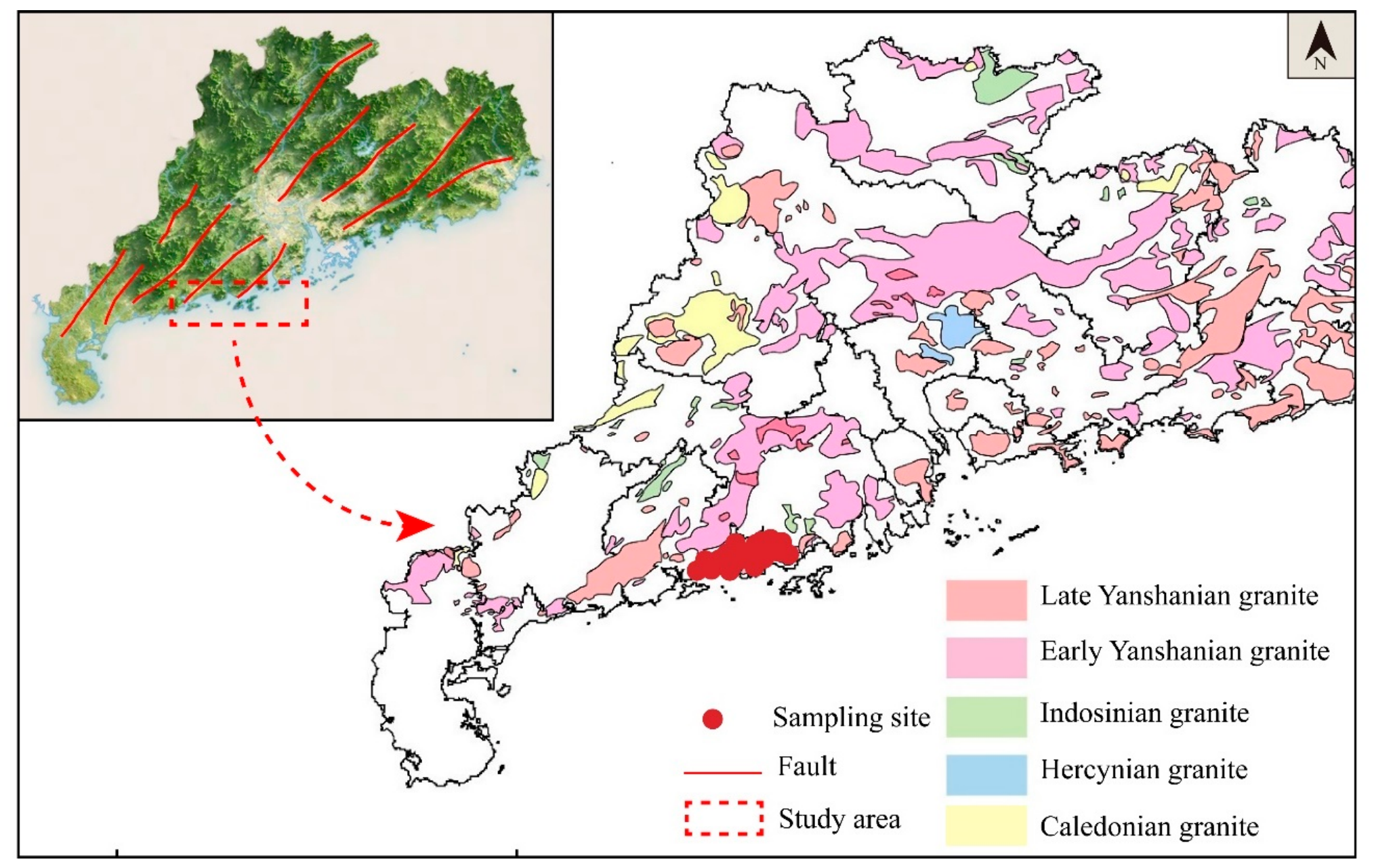
Figure 1. Geological setting and spatial distribution of sampling sites in the study area.
Applsci 16 09120 g001
Figure 2. Piper diagram illustrating hydrochemical facies of collected samples.
Applsci 16 09120 g002
Figure 3. The δ2H-δ18O relationship of geothermal and shallow groundwater in the study area.
Applsci 16 09120 g003
Figure 4. Gibbs diagram depicting controlling mechanisms of groundwater hydrochemical evolution.
Applsci 16 09120 g004
Figure 5. The bivariate plots of molar ratios. (a) Ca2+/Na+ vs. Mg2+/Na+ and (b) Ca2+/Na+ vs. HCO3/Na+.
Applsci 16 09120 g005
Figure 6. The ionic ratio of (a) Na+ vs. Cl, (b) Ca2+ + Mg2+ vs. HCO3 + SO42−, (c) F vs. F/Cl, (d) Ca2+ vs. F, (e) F vs. SIfluorite, (f) SIcalcite vs. SIfluorite.
Applsci 16 09120 g006
Figure 7. The ionic ratio of (a) Na+ + K+ − Cl vs. Ca2+ + Mg2+ − HCO3 − SO42− and (b) CAI 1 vs. CAI 2.
Applsci 16 09120 g007
Figure 8. Fan chart of PMF results.
Applsci 16 09120 g008
Figure 9. Quantitative analysis results of PMF.
Applsci 16 09120 g009
Table 1. Summary statistics of hydrochemical and isotopic compositions of groundwater samples.
TpHTDSK+Ca2+Na+Mg2+HCO3SO42−ClFδDδ18O
°C mg/L
Geothermal groundwaterMax968.3098621291166259015142212561613−39.0−5.2
Min607.105601816900401422−47.2−7.3
Ave817.20443553.0386.21280.25.260.0125.82548.64.9−42.0−6.6
SD110.33314051.6375.2874.04.029.661.21838.61.624.100.60
CV (%) *1457092986678484670362110
*: coefficient of variation.
Table 2. Estimated recharge elevations of geothermal groundwater.
No.Average Recharge Elevation (m)Average Temperature of Recharge Area (°C)
G155813
G249213
G340514
G449213
G544013
G646113
G743213
G843113
G928714
G1052213
G1168212
G1233214
G1349013
G1447313
G1523914
G1656713
G1737114
G1862912
G1954613
G2060013
Note: The average recharge elevation is determined via Equations (6) and (7), while the average temperature of recharge is estimated by Equations (8) and (9).
Disclaimer/Publisher’s Note: The statements, opinions and data contained in all publications are solely those of the individual author(s) and contributor(s) and not of MDPI and/or the editor(s). MDPI and/or the editor(s) disclaim responsibility for any injury to people or property resulting from any ideas, methods, instructions or products referred to in the content.