Article

Can Plants Grow on the Moon and Mars? Enhancing Seed Germination with Electrodeposited Magnesium Oxide-Coated Halloysite Nanotubes Optimized Using Response Surface Methodology for Lunar and Martian Regolith

by
Zeinab Jabbari Velisdeh
1 and
David K. Mills
2,*
1
Molecular Science and Nanotechnology, Louisiana Tech University, Ruston, LA 71272, USA
2
OrganicNANO, Monroe, LA 71201, USA
*
Author to whom correspondence should be addressed.
Appl. Sci. 2026, 16(18), 8914; https://doi.org/10.3390/app16188914
Submission received: 16 July 2026 / Revised: 1 September 2026 / Accepted: 2 September 2026 / Published: 8 September 2026
(This article belongs to the Section Applied Biosciences and Bioengineering)

Abstract

Though many food systems on Earth offer benefits to space travelers, their ability to meet the demands of spaceflight remains unestablished. This study examines the application of magnesium oxide-coated halloysite nanotubes (MgO-HNTs), synthesized via electrodeposition, to enhance seed germination and early plant development under Earth, lunar, and Martian soil conditions. Successful surface modification was confirmed by scanning electron microscopy. Growth experiments with Heirloom Cherry Tomato and Golden Tomato seeds were conducted under hydroponic and soil-based conditions and subsequently extended to lunar and Martian regolith simulants. A Response Surface Methodology approach, based on a Box-Behnken Design, evaluated the effects of temperature, MgO-HNT concentration, and light duration on multiple growth responses, identifying seedling length and the root length stress tolerance index (RLSI) as the most responsive indicators of treatment. Optimal conditions (25 °C, 12 h photoperiod, 100 mg/mL MgO-HNTs) produced the greatest increases in root and shoot length in Earth soil. In lunar regolith, optimal root development occurred at 100 mg/mL (root length: 17.7 mm, shoot length: 5.08 mm, RLSI: 141.1%, germination: 80%), whereas Martian regolith peaked at 10 mg/mL (root length: 12.3 mm, shoot length: 4.28 mm, RLSI: 167.9%, germination: 100%), which may be associated with differences in the physicochemical properties of the two substrates. These findings offer preliminary evidence that MgO-HNTs can enhance early plant development across terrestrial and extraterrestrial substrates. As this study was limited to a single crop species under short-term, controlled laboratory conditions without direct physiological or biochemical biomarker measurements, further validation will be required to support broader agricultural or in-situ resource utilization (ISRU) applications.

1. Introduction

Global agricultural systems face increasing pressure to support the demands of a growing population while simultaneously addressing climate change, soil degradation, and resource scarcity [1,2]. Conventional practices reliant on synthetic fertilizers, monoculture, and intensive land use have contributed to nutrient depletion, loss of arable land, and environmental contamination [3]. These challenges have accelerated the transition toward sustainable agriculture, which emphasizes long-term productivity, ecological stability, and efficient resource use [4]. Recent developments in sustainable agriculture increasingly incorporate emerging technologies—such as nanomaterials and precision farming—to improve nutrient delivery, soil structure, and plant tolerance to abiotic stress [5,6,7]. These benefits extend beyond terrestrial systems, with nanomaterials proposed for plant cultivation in controlled-environment and extraterrestrial agriculture where such benefits are especially critical [8]. Recent flight testing aboard the International Space Station has demonstrated the feasibility of on-orbit leafy green crop production for crew consumption, underscoring both the technical readiness and the growing operational demand for fresh food systems as mission duration and distance from Earth increase [9]. Growing private and public interest and investment in extraterrestrial colonization have highlighted the need for closed-loop agricultural systems capable of supporting plant growth under extreme conditions, including nutrient-poor substrates and limited water availability.
Existing strategies to improve regolith fertility for plant cultivation include amendment with organic compost and inoculation with arbuscular mycorrhizal fungi (AMF). However, compost-based amendments typically require substantial compost-to-regolith ratios, up to 70% compost by volume, to support meaningful plant growth [10], representing a significant payload mass burden for missions where every kilogram of cargo carries substantial launch cost. Similarly, AMF-based bioremediation, while promising, depends on living biological inoculants that face unresolved challenges related to biosafety, strain selection, and viability under spaceflight and radiation exposure [11]. These constraints highlight a core bottleneck of space agriculture: the need for lightweight, chemically stable, and readily deployable soil amendments capable of improving regolith fertility without the mass, logistical, or biological burdens associated with organic or microbial approaches.
Plant nanobiotechnology is a flourishing field that uses nanomaterials to study and engineer plant function. Nanomaterials, defined as materials with at least one dimension between 1 and 100 nm, exhibit physicochemical properties such as high surface reactivity and enhanced stability that are not observed in bulk materials [12]. In agriculture, these features enable improved nutrient-use efficiency, soil conditioning, and enhanced plant resilience. Engineered nanomaterials have been shown to promote seed germination, stimulate early root and shoot development, and increase nutrient uptake. For example, zinc oxide and titanium dioxide nanoparticles can increase metabolic activity and support early growth in several plant species [13,14]. Nanomaterials are also used as nanofertilizers and nanocarriers, providing controlled nutrient release and reducing losses associated with conventional fertilizers [15]. Additional studies report increased tolerance to abiotic stresses—including drought and nutrient deficiency—through mechanisms related to enhanced antioxidant activity and nutrient availability [16,17].
Halloysite nanotubes (HNTs) are naturally occurring aluminosilicate nanomaterials composed of alternating SiO2 and Al2O3 layers rolled into hollow tubular structures [18]. Their widespread natural availability in several countries makes them a low-cost and accessible alternative to synthetic nanotubes [18]. Typical HNTs measure 500–1500 nm in length, with external diameters of 40–70 nm and lumen diameters of 10–30 nm [19]. This tubular morphology provides high surface area and internal cavity volume suitable for loading and controlled release of active compounds. A defining feature of HNTs is their dual surface chemistry: negatively charged siloxane groups on the outer surface and positively charged aluminol groups within the lumen [20,21]. This bipolar structure enables selective functionalization and dual loading of oppositely charged molecules. HNTs offer several advantages for agricultural applications, including biocompatibility, low toxicity, environmental safety, and substantially lower cost than carbon nanotubes, which often require additional modification to reduce cytotoxicity [22,23,24]. Their chemical stability and ability to form stable aqueous dispersions further support their use in soil amendments, nanofertilizers, and micronutrient carriers [25]. Based on these properties, HNTs were selected as the nanocarrier for this study.
Metal and metal oxide coatings enhance the functional performance of HNTs, improving their chemical reactivity, antimicrobial activity, and environmental stability [26,27,28]. Coatings with magnesium, iron, zinc, copper, or silver have been investigated for agricultural applications, enabling HNTs to act as carriers for essential micronutrients and stress-mitigating agents. Magnesium-coated HNTs are of particular interest given magnesium’s essential physiological roles in plants, discussed below [27]. Zinc- and iron-coated HNTs have also been reported to improve germination, nutrient uptake, and root development [29], while silver and copper coatings provide antimicrobial effects that may help reduce soilborne pathogens [30]. Several coating techniques are available, including sol–gel processing, wet impregnation, chemical precipitation, thermal treatment, and electrodeposition [31]. Sol–gel and wet impregnation methods typically require multiple processing steps, organic solvents, and extended reaction or drying times, increasing both cost and environmental burden. Electrodeposition, by contrast, offers a low-cost, single-step, aqueous-phase route for weight-controlled deposition of positively charged metal ions onto negatively charged HNTs, avoiding toxic solvents and reducing processing time. While Zn- and Fe-modified HNTs have previously been evaluated for agricultural applications [29], these studies have not employed electrodeposition as a synthesis route, nor have they assessed performance across both terrestrial and extraterrestrial substrates, leaving the reproducibility and cost-effectiveness advantages of this approach unexplored in the context of space-relevant agriculture. This metallization process can be modulated by varying voltage, solvent, time, and other electrolyte parameters, offering a comparatively accessible route to tunable coating deposition.
Magnesium is an essential macronutrient involved in photosynthesis, enzyme activation, energy metabolism, and nutrient transport. As the central atom of the chlorophyll molecule, it enables efficient light absorption and energy conversion [32]. Magnesium deficiency, common in acidic or sandy soils and in intensively fertilized systems, leads to chlorosis, reduced root growth, and lower crop productivity [33]. Elemental magnesium is highly reactive and therefore unsuitable for direct agricultural use due to rapid oxidation and instability under ambient conditions [34]. Magnesium oxide (MgO), a stable and water-insoluble compound, is consequently preferred as a practical source of magnesium. MgO is valued for its thermal stability, low toxicity, and basic pH, which can help neutralize acidic soils and improve nutrient availability [35]. At the nanoscale, MgO exhibits increased surface area and reactivity, improving dispersion and interaction with soil particles, which further supports the nutrient release behavior described above. Nano-MgO has been reported to enhance seed germination, root elongation, biomass accumulation, and plant tolerance to nutrient deficiency and abiotic stress [36,37]. MgO nanoparticles also demonstrate mild antimicrobial activity, which may contribute to improved rhizosphere conditions [38]. A key agronomic function of MgO is its ability to buffer soil acidity: acting as a liming agent, it reduces hydrogen ion concentration in the root zone and increases the availability of phosphorus, calcium, and other nutrients [39]. Its combined role as a magnesium source and soil conditioner supports its integration into precision agriculture platforms. The MgO coating mechanism exploits the surface chemistry of HNTs. Negatively charged siloxane (Si–O–Si) groups on the outer wall promote electrostatic attachment of MgO particles or precursor ions, whereas positively charged aluminol (Al–OH) groups inside the lumen may support partial internal loading. This configuration enables both rapid and sustained nutrient release. MgO-functionalized nanocarriers—such as silica-, biochar-, and carbon-based systems, have been investigated for improving nutrient retention and use efficiency in degraded soils [39].
The resulting MgO-HNT system is particularly relevant for low-input or resource-limited agricultural environments, where fertilizer loss, soil acidity, and moisture limitations restrict crop productivity. The multifunctionality of MgO-HNTs also aligns with the needs of extraterrestrial agriculture. In lunar or Martian regolith, where nutrient content, water availability, and soil structure present substantial constraints, controlled nutrient release and moisture retention are critical. MgO-HNTs are compatible with in-situ resource utilization (ISRU) strategies due to their low mass, stability, and adaptability, making them strong candidates for plant cultivation in closed-loop systems. While the individual benefits of HNTs, MgO, and metal-coated nanocarriers are well established, the germination and early growth response of plants to electrodeposited MgO-HNTs has not been directly evaluated, particularly across both nutrient-poor terrestrial substrates and extraterrestrial regolith simulants. We hypothesized that combining the structural loading capacity of HNTs with the nutrient-delivery and pH-buffering functions of MgO would enhance seed germination and early seedling development under these nutrient-limited conditions. To test this hypothesis, MgO-HNTs were synthesized via electrodeposition, characterized by SEM and EDS to confirm successful coating, optimized in Earth soil using Response Surface Methodology across temperature, dosage, and photoperiod, and subsequently validated for germination and early growth performance in lunar and Martian regolith simulants.

2. Materials and Methods

2.1. Chemicals and Reagents

Magnesium oxide (MgO, CAS: 1309-48-4), zinc powder (Zn), and halloysite nanoclay (LOT: 685445-500G, CAS: 1332-58-7) were all obtained from Sigma-Aldrich, St. Louis, MO, USA. Ethanol (≥99.9%, CAS: 64-17-5; Sigma-Aldrich, St. Louis, MO, USA) was used for surface cleaning and sample preparation steps. Deionized (DI) water, supplied through the university’s central deionized water system, was further purified using a water distiller (Fomos Aqua, Fomos Medical Instrument Ltd., Ningbo, China) prior to use in all experimental procedures. For plant growth experiments, Heirloom Cherry Tomato and Golden Tomato seeds and sterilized Earth soil were obtained from the AeroGarden Pod Kit (AeroGarden, Chicago, IL, USA). This material, referred to as ‘Earth soil’ throughout the manuscript, served as the terrestrial growth substrate for all Earth-based experiments; the term ‘soil plug’ is used specifically to refer to its pre-formed physical geometry, not as an alternate name for the substrate itself. Two additional extraterrestrial soil simulants were also used. Martian regolith simulant (MMS-1 Fine Grade and MMS-1 Unsorted Grade) was sourced from The Martian Garden (Austin, TX, USA) and designed to replicate the mineral composition and texture of the Martian surface. The lunar regolith simulant (LHS-1D Dust Lunar Highlands) was obtained from Exolith Lab (University of Central Florida, Orlando, FL, USA) and formulated to simulate the lunar highlands’ dusty soil environment. Due to the scarcity of actual lunar regolith on Earth, there is a need for space agencies and private companies to test their strategies in simulated lunar regolith. Lunar simulants achieve this by mixing the same minerals found on the Moon but sourced from the Earth. These substrates were used to mimic nutrient-deficient and harsh extraterrestrial conditions for seed germination and early plant development studies. According to the manufacturer’s data sheet, MMS-1 is an alkaline substrate (pH ≥ 8.6) composed primarily of SiO2, Al2O3, and Fe2O3, with minor CaO, K2O, MgO, MnO, Na2O, and P2O5 levels. LHS-1D shares its base mineralogy with LHS-1, reported as strongly alkaline (pH~9.9) with a fine particle size distribution (<30 µm). Porosity and redox potential were not independently measured for either simulant in this study.

2.2. Synthesis of MgO-HNTs

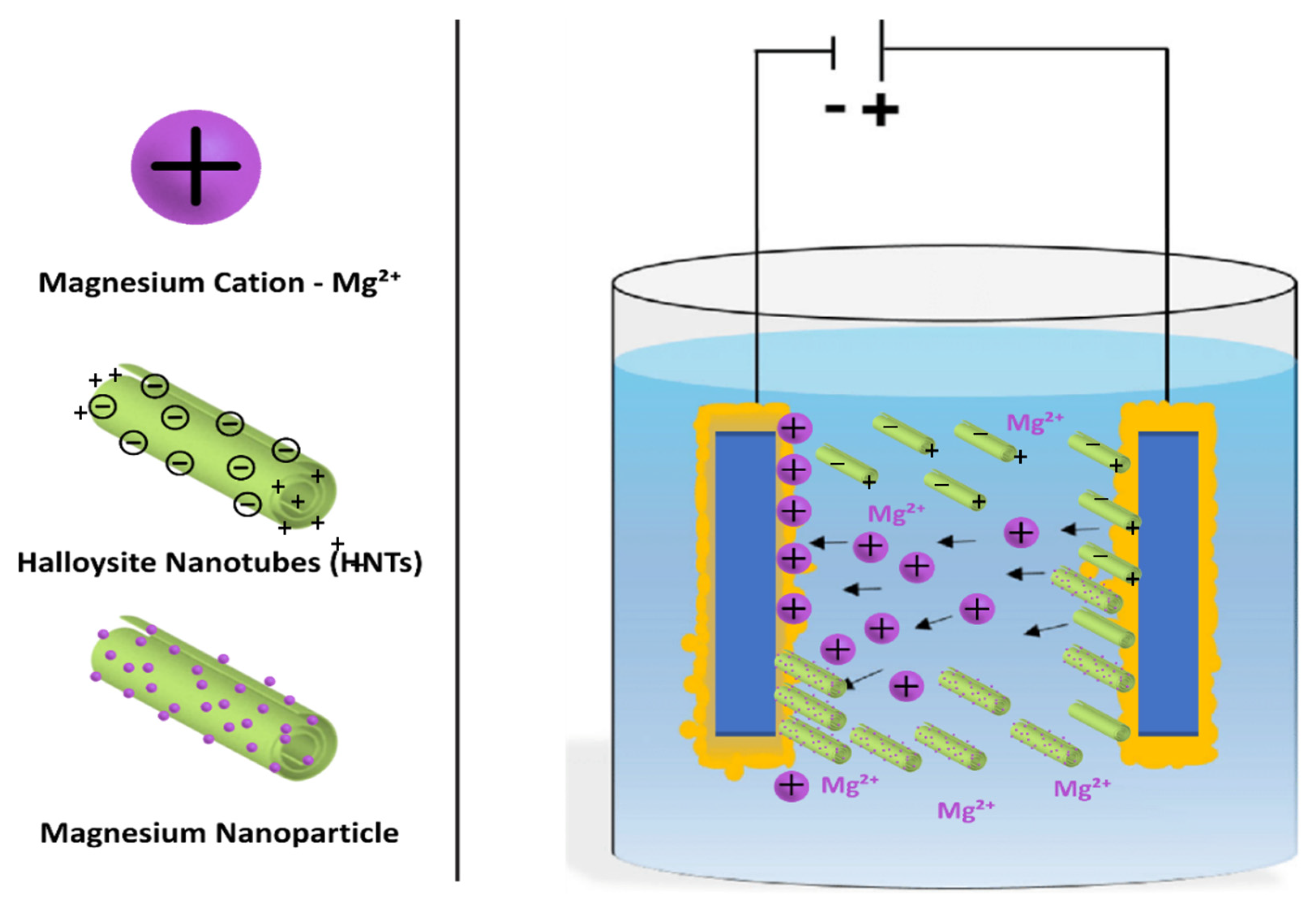
Metal-coated HNTs were synthesized using an electrodeposition method to functionalize HNTs with magnesium oxide (MgO), as shown in Figure 1. The coating process was performed in a 1000 mL glass electrolysis vessel containing 700 mL of deionized water, maintained at 85 °C. Halloysite nanoclay (350 mg) and magnesium oxide powder (141.07 mg, equivalent to approximately 3.5 mmol MgO; Fisher Chemical, Fisher Scientific, Fair Lawn, NJ, USA; particle size 99.5% < 20 microns) were pre-mixed for 5 min using a mortar and pestle to promote initial homogeneity. The resulting powder mixture was then added to the heated deionized water and continuously stirred at 500 rpm using a magnetic stir bar throughout the electrodeposition process. As MgO is insoluble in water, the suspension remained a uniformly dispersed, milky-white mixture of solid particles rather than a true solution, consistent with electrophoretic-type deposition of charged particles onto the HNT surface under the applied electric field. The electrolysis setup included two platinum-coated titanium mesh electrodes (approximately 3 × 4 cm) placed approximately 5 cm apart. This electrophoretic deposition protocol employed applied voltage (20 V, constant-voltage mode; Kiprim DC310S power supply, Shenzhen, China) as the primary controlled parameter, consistent with established synthesis protocols for HNT surface functionalization [31]. Current was not recorded in this study. Reported synthesis parameters therefore support reproduction of the voltage- and geometry-controlled conditions used here; current density characterization was outside the present scope; the absence of current measurements is acknowledged as a methodological limitation of this study. Prior to use, the electrodes were polished with silicon carbide abrasive paper and ultrasonicated in distilled water for 10 min to remove surface contaminants. To prevent localized buildup of materials and promote uniform deposition, the polarity of the electrodes was manually reversed by physically switching the lead connections every 5 min over a 30-min deposition period (six cycles total). After electrodeposition, the suspension was allowed to rest for 5 min, after which the supernatant was decanted. Each coated formulation was then washed three times with deionized water (approximately 10× pellet volume per wash, with 3 min of gentle mixing per cycle) and centrifuged at 2000 rpm (approximately 600× g; Eppendorf Centrifuge 5702 R with A-4-38 rotor, radius 134 mm; Hamburg, Germany) for 5 min to separate unreacted particles. The final pellet was dried at 37 °C for approximately 24 h until mass was constant, then stored in a desiccator for further experimental use.

2.3. Material Characterization

The synthesized MgO-HNTs were characterized to verify successful coating and assess structural and elemental properties. Surface morphology was examined using a Hitachi S-4800 Field Emission Scanning Electron Microscope (FE-SEM; Hitachi High-Tech Corporation, Tokyo, Japan) operated at an accelerating voltage of 3.0 kV and a working distance of 3.7–4.0 mm and the upper secondary electron detector (SE (U)). Images were acquired at magnifications ranging from 35,000× to 150,000×. Elemental composition was analyzed using an integrated Bruker Energy Dispersive X-ray Spectroscopy (EDS) system (Bruker Corporation, Billerica, MA, USA) at accelerating voltages of 5.0–10.0 kV and a working distance of 15.0 mm, with elemental mapping performed at magnifications of 35,000×–60,000×. SEM provided microstructural imaging of the coated nanotubes, while EDS confirmed magnesium incorporation on the HNT surfaces. Based on manufacturer specifications for the halloysite nanoclay used in this study (Sigma-Aldrich, Cat. No. 685445), the material has a reported average outer diameter of 50 nm, inner lumen diameter of 15 nm, specific surface area of 65 m2/g, and specific gravity of 2.53 g/cm3, consistent with previously reported HNT dimensions of 500–1500 nm in length, 40–70 nm outer diameter, and 10–20 nm inner lumen. Quantitative image analysis of pristine HNT SEM micrographs (n = 21 individual tubes) yielded a mean outer diameter of 39.1 ± 12.0 nm (range: 10.0–61.5 nm), consistent with manufacturer specifications. Wall thickness could not be reliably determined from surface secondary-electron imaging, which does not resolve the internal lumen structure. Dynamic light scattering (DLS) characterization of the HNT suspension was not performed in this study and is recommended for future work to further characterize particle size distribution in the aqueous phase. Zeta potential, coating thickness, and Mg2+ release kinetics were not directly measured for the MgO-HNTs synthesized in this study. Characterizing these parameters would further clarify the relationship between the material’s physicochemical properties and its observed biological effects and is recommended as a priority for future work.

2.4. Soil and Regolith Preparation

This study involved a two-phase soil preparation and testing approach to evaluate the performance of MgO-HNTs in enhancing seed germination and root development. The Earth soil (sourced as described in Section 2.1) was air-dried, passed through a 2 mm mesh sieve to remove large particles and debris, and stored in clean containers at room temperature. This low-nutrient Earth soil served as the baseline substrate to test the effects of MgO-HNT concentration, light intensity, and temperature on early-stage plant development. Following optimization in Earth soil, the best-performing conditions were applied to lunar and Martian regolith simulants to evaluate plant performance in extraterrestrial environments. Regolith simulants were used as received to preserve their mineral integrity. Before use, simulants were manually homogenized and air-dried under ambient laboratory conditions. Substrate pH was measured before and after MgO-HNT treatment using a pH meter. Baseline pH across AeroGarden soil plugs ranged from 5.8–6.3, while post-treatment pH ranged from 6.4–6.9, reflecting a modest increase consistent with the known alkaline character of MgO.

2.5. Seed Germination and Growth Conditions

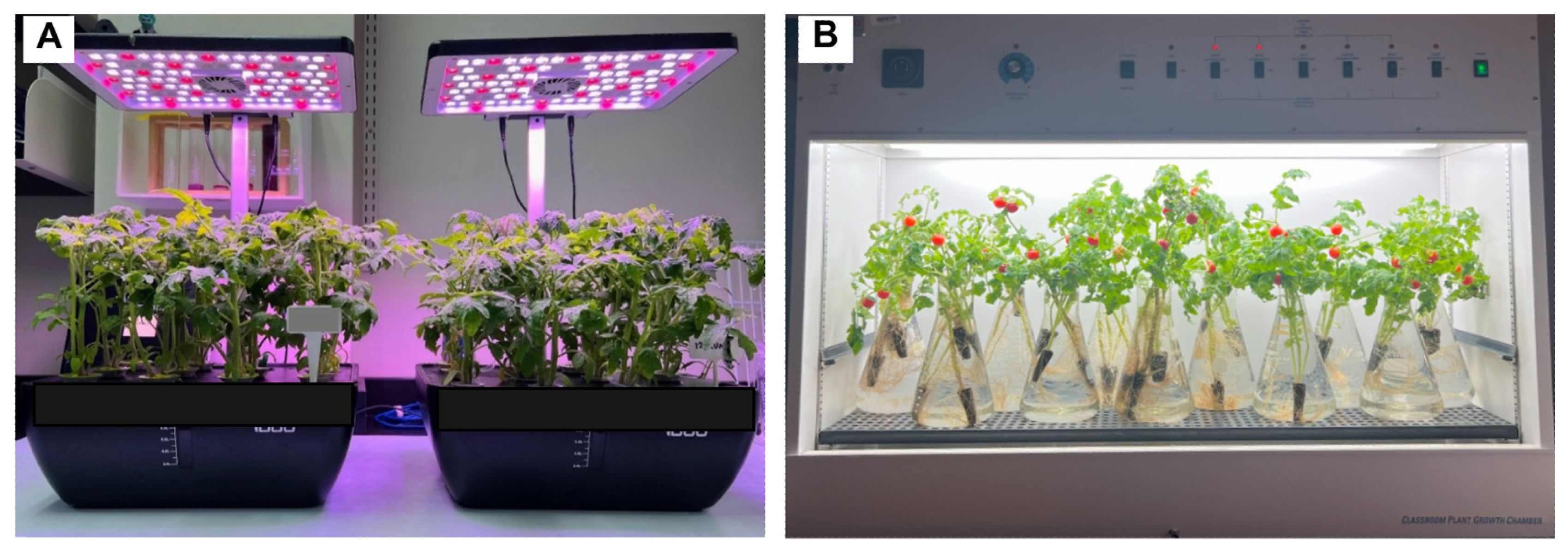
Prior to planting, seeds were surface disinfected using a 10% bleach solution with a drop of detergent for 20 min, followed by five to seven rinses with sterile water. Seeds were then soaked in sterile water for 1 h to allow full imbibition prior to sowing. A seed was considered germinated upon visible emergence of the radicle through the seed coat. Seed germination and plant growth experiments were conducted using a semi-hydroponic system, in which seeds embedded in a soil plug (AeroGarden Pod Kit) were suspended above a water reservoir within individual glass flasks or test tubes, allowing continuous water uptake through wicking. Each experimental unit consisted of a single 50 mL flask containing three seeds sown per soil plug. Three flasks (n = 3) were prepared as biological replicates per treatment condition, with treatment applied at the flask level. After germination, all seedlings present within each flask were measured for root length and shoot length; the mean value across all seedlings within a flask was calculated and treated as a single observation representing that experimental unit. The number of seedlings included in each analysis therefore depended on germination success within each flask. No technical replicates were used, as each physiological measurement was recorded once per seedling and averaged at the flask level. For the RSM optimization, this design resulted in 51 flasks (17 runs × 3 replicates) in total, while the same replication structure (n = 3 flasks per treatment) was used for the dose-response treatments described in Section 2.6. Two tomato varieties, Heirloom Cherry Tomato and Golden Tomato, were used throughout the study. Each flask received an individually assigned MgO-HNT concentration to enable dose-specific treatment. Seeds were initially germinated within a 12-pod hydroponic support rack (iDOO Hydroponics System, iDOO, Eastvale, CA, USA) equipped with an integrated 22–24 W full-spectrum LED grow light emitting red, blue, and white wavelengths (Figure 2A), which provided consistent illumination during early sprouting under sterile conditions. The LED grow light was positioned approximately 20 cm above the seedlings within the hydroponic support rack. Photosynthetic photon flux density (PPFD) was not directly measured in this study, and its absence is acknowledged as a limitation, given the importance of light intensity as an environmental variable in plant-growth experiments; future work will incorporate in situ PPFD measurements to further standardize light exposure across experimental units. Seedlings were monitored daily to ensure uniform development and transferred to progressively larger flasks as growth progressed. As plants matured, they were transferred to a controlled growth chamber (Figure 2B), where temperature was maintained at a fixed 30 °C with an 8-h photoperiod during the initial pre-culture and dose-response treatment phase (Section 2.6), ensuring standardized starting conditions across all seedlings. For the RSM optimization trials (Section 2.7 and Section 2.8), temperature was subsequently varied between 25–45 °C as one of the three independent factors to identify optimal growth conditions, while light source (iDOO LED system) and relative humidity remained consistent with the pre-culture phase. Relative humidity was not independently controlled by the growth chamber but remained at approximately 70% RH following each foliar misting/spray application.

2.6. Treatment Methods

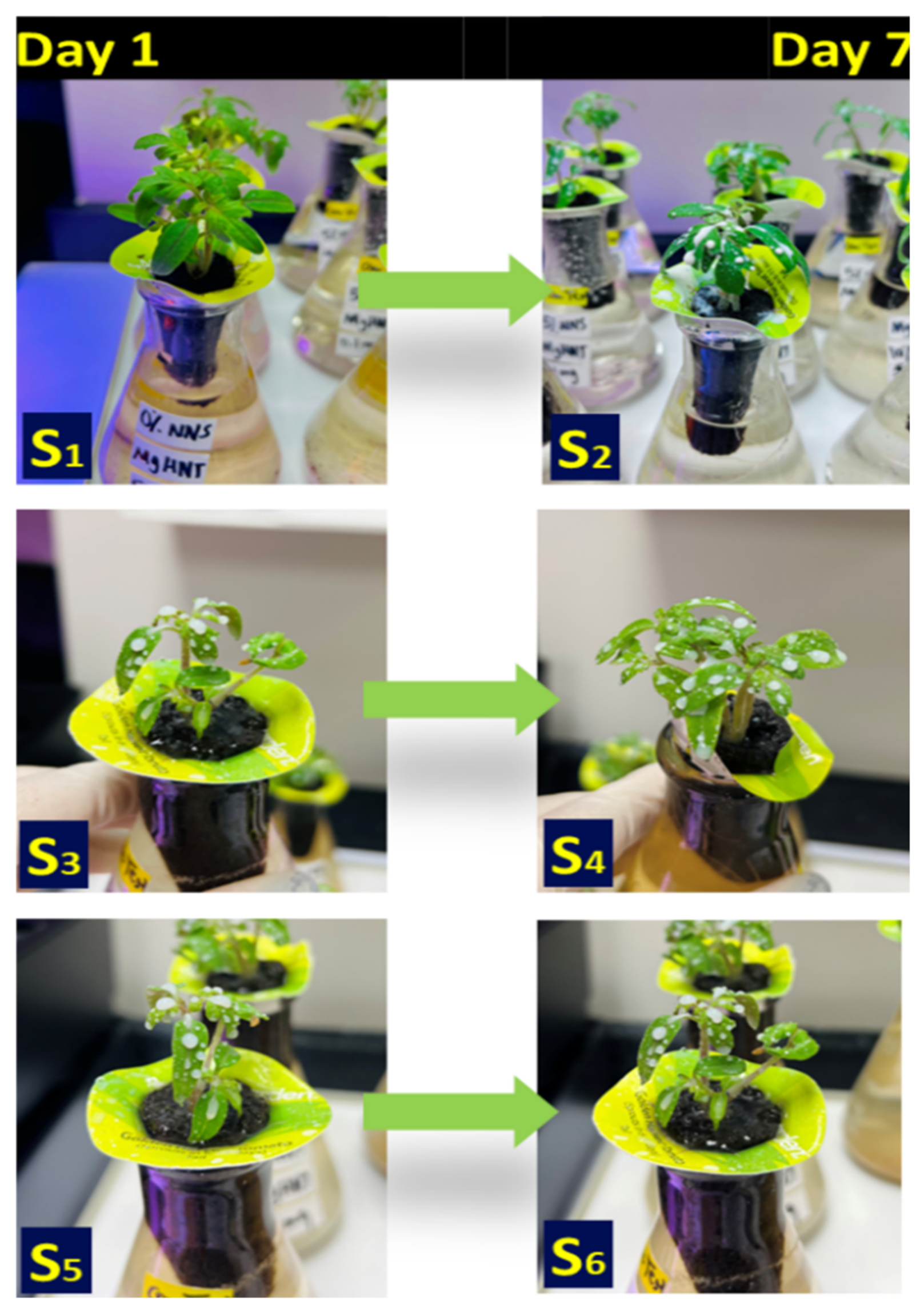
To evaluate the effects of MgO-HNTs on early plant development, two application methods, foliar spraying and soil injection, were employed. For foliar application, aqueous suspensions of MgO-HNTs were prepared in deionized water at nominal concentrations of 0%, 1%, 3%, 5%, and 10% (w/v), corresponding to a delivered dose of 0, 10, 30, 50, and 100 mg MgO-HNT per plant per application, respectively. Treatments were administered twice daily at 12-h intervals. During early seedling stages, the full dose was delivered in a 1 mL application volume per plant. As plants matured under growth chamber conditions, the same total dose was delivered in an increased application volume of 5 mL per plant to accommodate greater leaf area and improve spray coverage, with the suspension diluted accordingly to maintain a constant total mg dose per application across growth stages. For soil injection, MgO-HNT suspensions were prepared at concentrations of 0.1, 1, 10, 50, and 100 mg/mL and delivered to the root zone via a fixed volume of 1 mL per flask using sterile syringes, corresponding to a total delivered dose of 0.1, 1, 10, 50, and 100 mg MgO-HNT per flask, respectively; parallel treatments using pure MgO and uncoated pure HNTs, each at identical concentrations, were included for comparison to isolate the specific contribution of the MgO coating from that of the HNT carrier structure itself. A combined soil-foliar treatment was also conducted to assess the potential synergistic effect of dual nutrient delivery pathways. In this approach, plants received soil injections of MgO-HNTs together with foliar sprays at corresponding concentrations of 0%, 1%, 3%, 5%, and 10%. Four treatment groups were therefore established: soil injection with pure, uncoated HNTs (serving as the carrier-only control), soil injection with pure MgO, soil injection with MgO-HNTs, and combined soil and foliar application of MgO-HNTs. All plants were maintained under identical growth conditions. Images were collected on Day 1 and Day 7 to document treatment effects, and both qualitative and quantitative growth outcomes are presented in Section 3.

2.7. Measurement of Physiological Growth Indices

Response Surface Methodology (RSM) was employed to optimize seed germination and early seedling development by modeling the combined effects of three independent variables: temperature, MgO-HNT concentration, and light intensity. A total of 17 experimental runs were generated using a Box-Behnken Design (BBD) in Design Expert Software (Version 7; Stat-Ease Inc., Minneapolis, MN, USA; commercially licensed), with all experiments conducted in triplicate. A quadratic polynomial model was fitted to evaluate linear, quadratic, and interaction effects among the factors. Seedlings were evaluated on Day 7, and root and shoot lengths were measured using digital calipers and calibrated images analyzed in ImageJ (2024–2025 release; open-source; National Institutes of Health, Bethesda, MD, USA). Eight physiological response variables (Y1–Y8) were quantified to assess germination performance, growth vigor, and stress tolerance: germination percentage (Y1), root length (Y2), shoot length (Y3), total seedling length (Y4), root-to-shoot ratio (Y5), seedling vigor index (SVI; Y6), shoot length stress tolerance index (SLSI; Y7), and root length stress tolerance index (RLSI; Y8) [40].
Germination percentage (GP) was calculated as
GP   ( % ) = ( n N ) × 100
where n is the number of germinated seeds and N is the total number of seeds sown.
Total seedling length was obtained as
Seedling   Length   ( cm ) = Average   Root   Length + Average   Shoot   Length
The root-to-shoot ratio was calculated as
Root / Shoot   Ratio = Average   Root   Length Average   Shoot   Length
Seedling vigor index (SVI) was computed using
SVI = ( Average   Root   Length + Average   Shoot   Length ) × Germination   Percentage
Stress tolerance indices were calculated relative to untreated controls:
SLSI   ( % ) = ( Average   Shoot   Length Treated Average   Shoot   Length Control ) × 100
RLSI   ( % ) = ( Average   Root   Length Treated Average   Root   Length Control ) × 100
Although eight physiological indices were calculated, seedling length (Y4) and RLSI (Y8) were selected for detailed RSM modeling as they represent the two primary, non-redundant axes of plant responses: Y4 serves as a composite measure of overall vegetative growth (combining root and shoot length), while Y8 specifically captures root-level stress tolerance relative to the untreated control, which is particularly relevant given the nutrient-limited and abiotic-stress conditions central to this study. Because several of the remaining indices (Y2, Y3, Y5, Y6, Y7) are mathematically derived from the same underlying root and shoot length measurements, modeling all eight variables independently would introduce statistical redundancy rather than additional biological insight.

2.8. Statistical Analysis

Response Surface Methodology (RSM) was used to analyze the combined effects of temperature, MgO-HNT concentration, and light exposure on seed germination and early seedling growth. A Box-Behnken Design (BBD) with 17 experimental runs (each in triplicate) was generated in Design Expert Software (Version 7). The three independent variables were temperature (X1), MgO-HNT concentration (X2), and light exposure duration (X3). Among the physiological responses measured, seedling length (Y4) and the root length stress tolerance index (RLSI, Y8) were selected for detailed modeling because they provided sensitive indicators of plant vigor and stress resilience. Factor levels were evaluated at three coded values (−1, 0, +1), and the corresponding actual values are listed in Table 1. Quadratic polynomial models were fitted, and model adequacy was assessed using analysis of variance (ANOVA) and diagnostic residual analysis.

2.9. Experimental Design

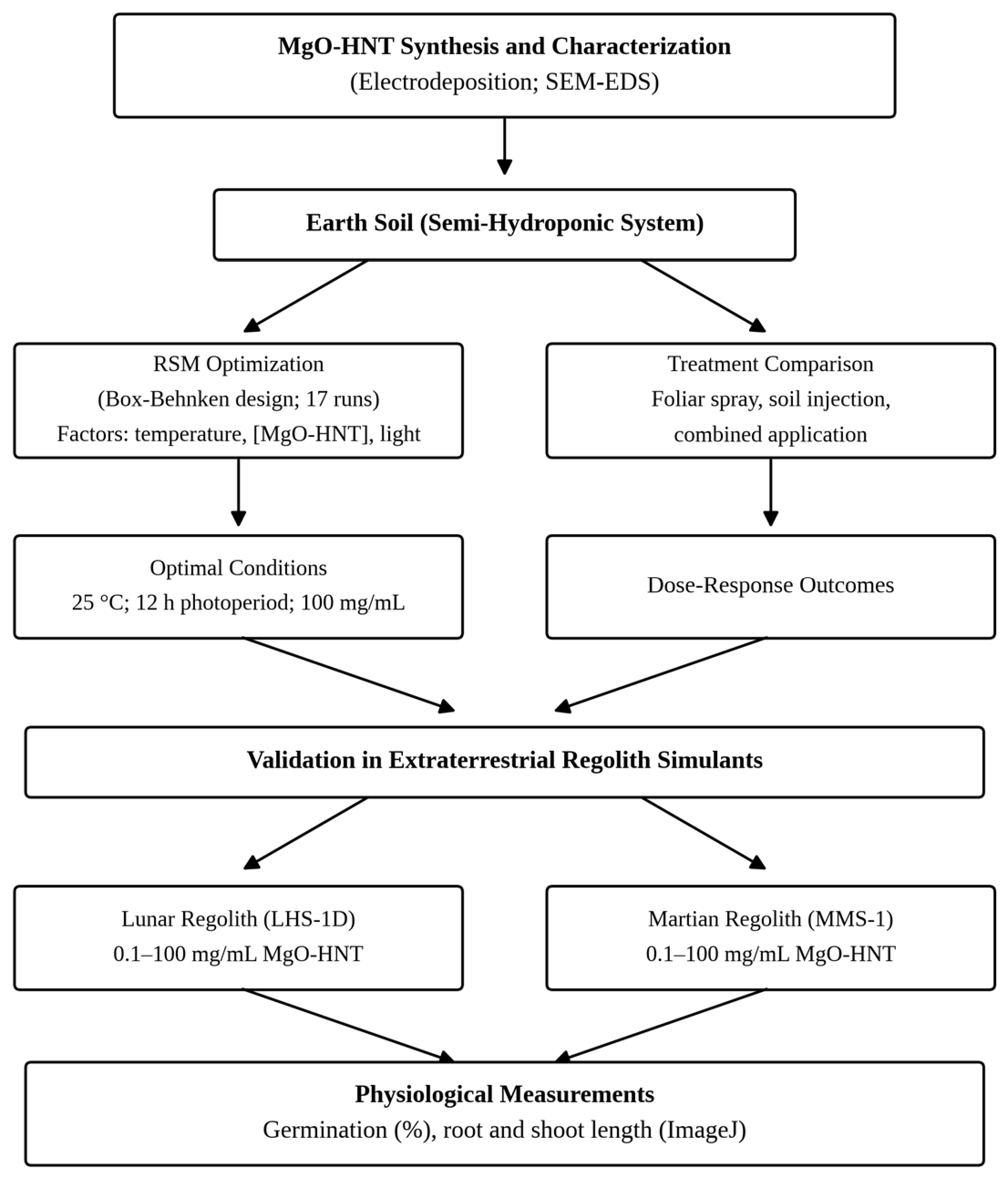
Figure 3 provides an overview of the overall experimental workflow, from MgO-HNT synthesis to Earth soil optimization and extraterrestrial regolith validation.
A three-factor experimental design was implemented to evaluate the effects of temperature (X1), MgO-HNT concentration (X2), and light exposure duration (X3) on seed germination and early seedling development. Seventeen experimental runs were conducted using different combinations of the three factors, as summarized in Table 2. Eight physiological responses were measured for each run: germination percentage (%), root length (cm), shoot length (cm), total seedling length (cm), root-to-shoot ratio, seedling vigor index (SVI), shoot length stress tolerance index (SLSI), and root length stress tolerance index (RLSI). These response variables provided the dataset for subsequent ANOVA and Response Surface Methodology (RSM) modeling to determine the statistical significance of each factor and identify optimal germination and growth conditions.

3. Results

3.1. Scanning Electron Microscopy (SEM) Analysis

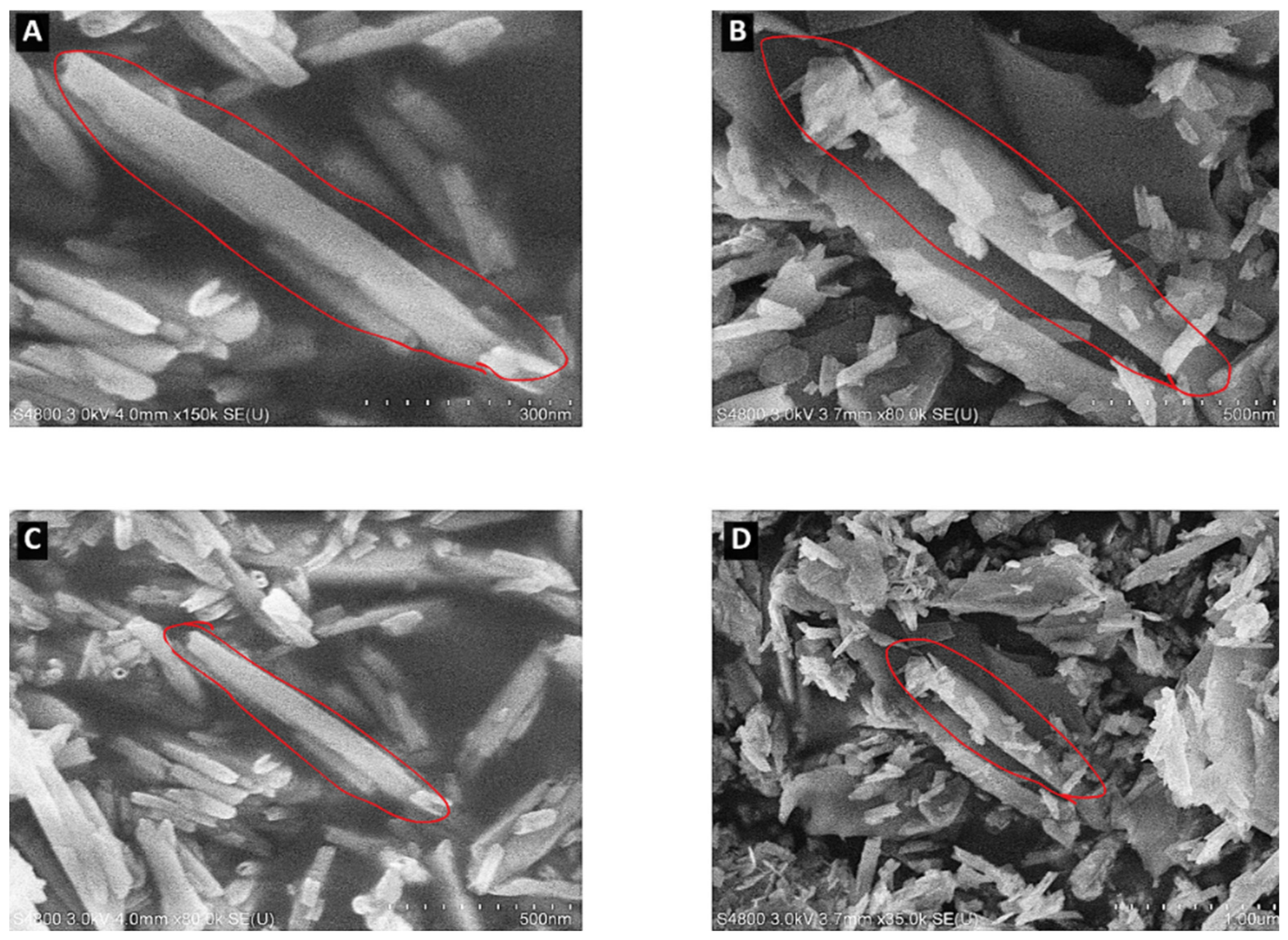
Based on previously reported MgO chemistry, magnesium oxide is expected to partially hydrolyze in aqueous suspensions, generating Mg2+ ions that may exhibit electrostatic affinity for the negatively charged siloxane groups on the outer HNT surface [11,41]. While this mechanism was not directly measured in the present study, it offers a plausible explanation for the surface modification observed; any loosely bound MgO particulates were expected to be removed during washing, consistent with standard rinsing protocols for particle-coated substrates, though this was not directly verified in the present study. To verify successful deposition, Scanning Electron Microscopy (SEM) and Energy Dispersive Spectroscopy (EDS) analyses were performed. Pristine HNTs (Figure 4A,C) displayed smooth, uniform tubular structures with well-defined morphology. Following MgO deposition, the nanotubes exhibited a noticeably rougher and thicker outer surface (Figure 4B,D), consistent with the formation of a magnesium-containing layer. Mild agglomeration was also observed, likely resulting from interparticle interactions mediated by surface-bound Mg species, consistent with similar observations in metal-oxide-functionalized nanoclays [11,41]. Importantly, the coating remained intact after rinsing under acidic conditions (pH ~ 4), consistent with strong and stable Mg2+-HNT interactions. Similar acid-resistant binding behavior has been reported for metal-oxide functionalization of halloysite, where divalent cations form durable electrostatic or coordination bonds with the siloxane exterior [11,41]. If confirmed through further durability testing, this stability would support the intended application of MgO-HNTs in soil environments, where pH fluctuations are common and coating durability is important for nutrient delivery.

3.2. EDS Elemental Analysis

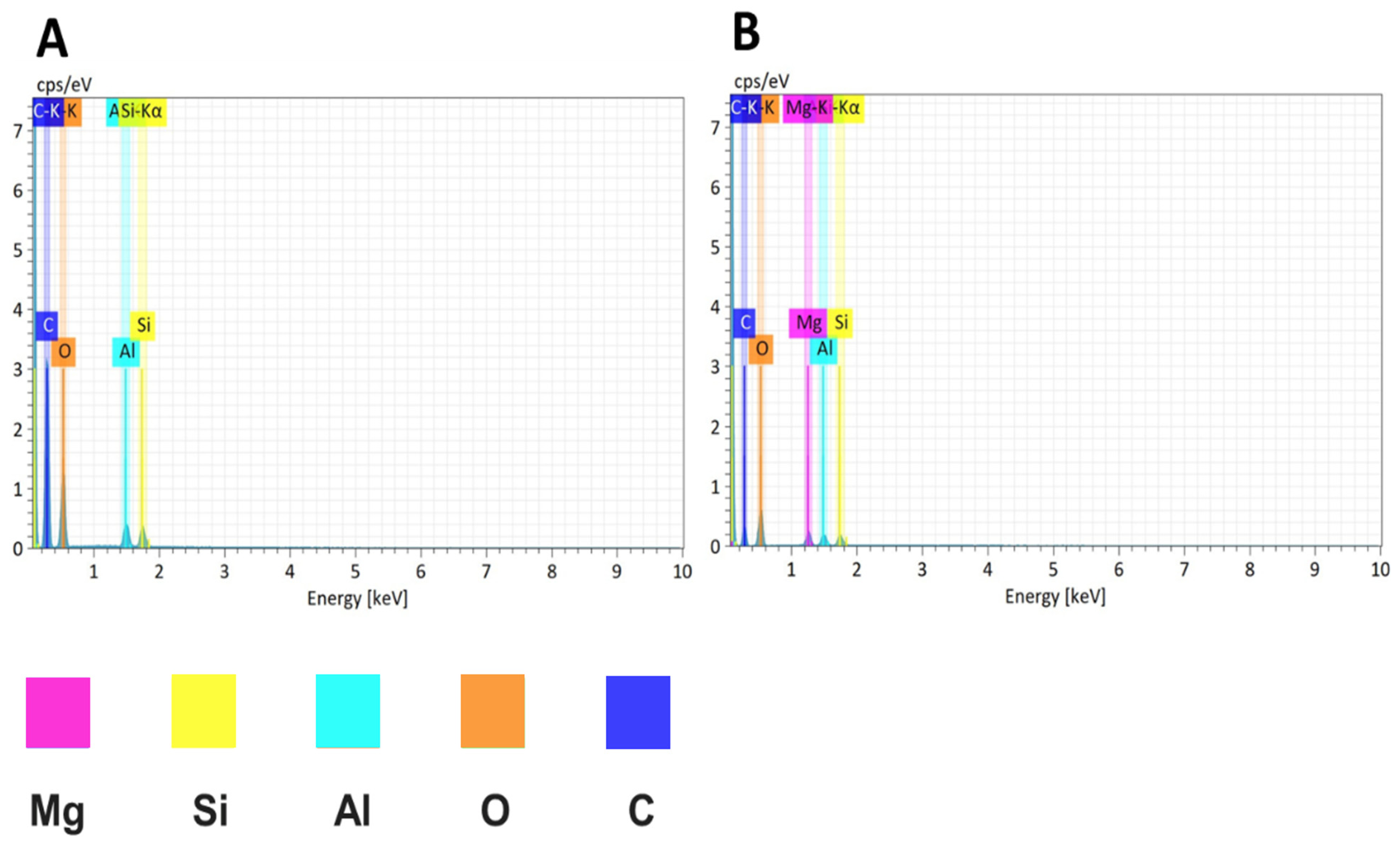
Energy-dispersive X-ray spectroscopy (EDS) was used to compare the elemental composition of pristine HNTs and MgO-coated HNTs (Figure 5). The pristine sample (Figure 5A) exhibited the characteristic peaks of halloysite—aluminum (Al), silicon (Si), and oxygen (O)—along with a minor carbon (C) signal attributed to surface contamination. As expected, no magnesium peak was detected. In contrast, the MgO-HNT sample (Figure 5B) displayed a distinct Mg peak at ~1.25 keV, confirming successful deposition of magnesium oxide onto the nanotube surface. The retention of Al, Si, and O peaks indicates preservation of the underlying HNT framework. These results provide direct elemental evidence of Mg incorporation and validate the effectiveness of the coating process. The observed increase in surface roughness and Mg signals in the EDS spectra is consistent with previous reports showing strong electrostatic binding of Mg2+ to the negatively charged siloxane surface of HNTs. The resulting MgO-HNT architecture is expected to enhance water retention and provide localized nutrient release, mechanisms known from the literature to support early seedling vigor in soil-limited environments, although these were not directly measured in this study. Similar coating behavior and improved plant responses have been documented for metal-oxide-modified nanoclays used in agriculture [11,41].
Quantitative EDS analysis confirmed the successful incorporation of magnesium onto the HNTs surface (Table 3 and Table 4). Pristine HNTs displayed the expected aluminosilicate signature, oxygen, aluminum, and silicon, consistent with the known composition of HNTs [1]. No magnesium was detected in the unmodified sample. In contrast, MgO-HNTs exhibited a clear magnesium peak (6.03 atom %), verifying effective MgO deposition. Minor shifts in oxygen and carbon content reflect surface chemical changes associated with the coating process. The continued presence of aluminum and silicon indicates preservation of the underlying halloysite structure [41]. These findings are consistent with previous reports of electrostatic interactions between Mg2+ ions and the negatively charged siloxane groups on the HNT surface, a mechanism proposed to support metal-oxide attachment [11]; direct stability testing was not performed in this study. The successful integration confirmed by EDS supports the use of MgO-HNTs as a functional nanomaterial for improving nutrient retention and early seedling performance.

3.3. Seed Germination Performance Under Different Treatments

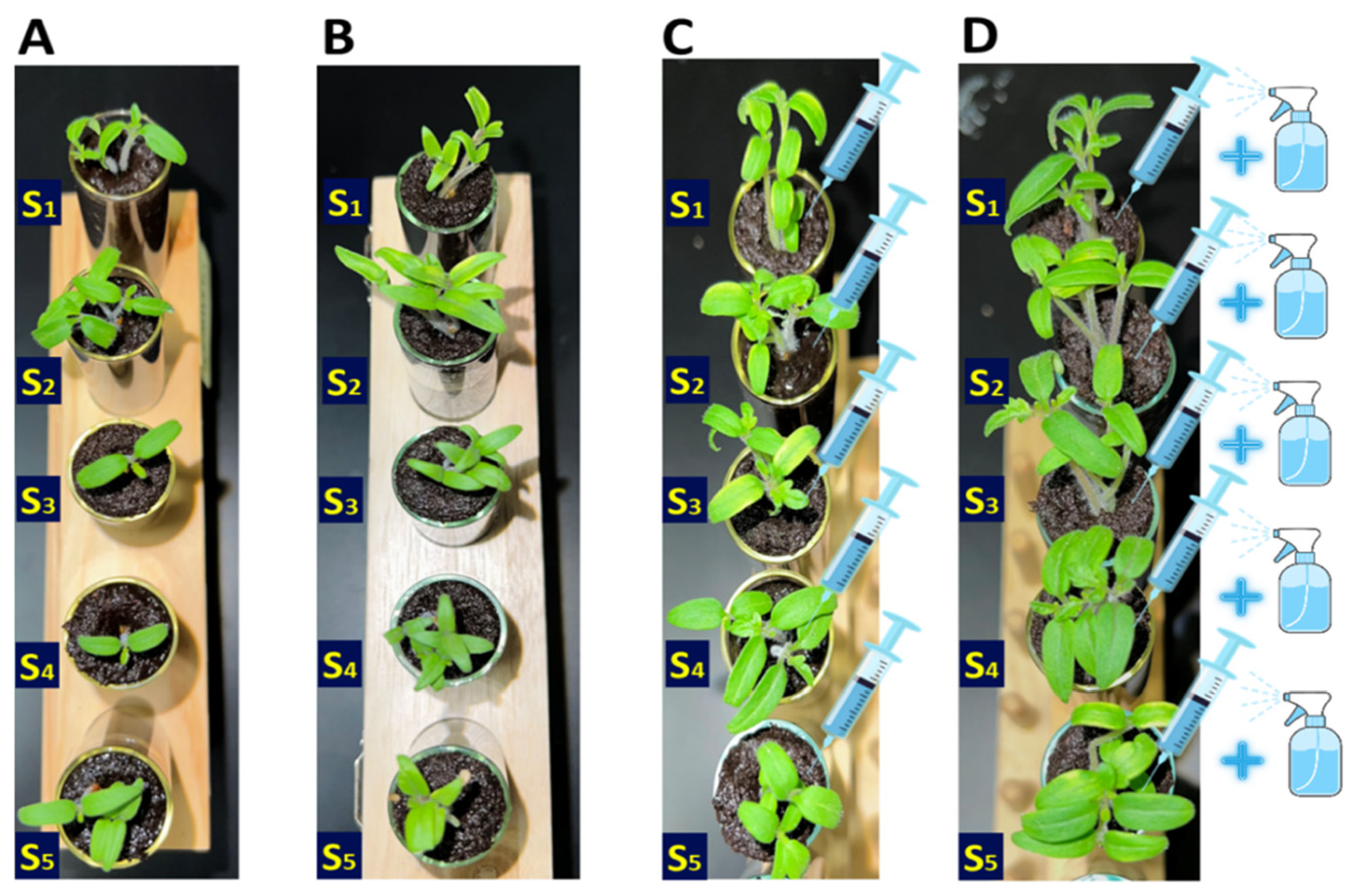
Figure 6 illustrates the progression of tomato seedlings subjected to foliar spraying with MgO-HNTs compared with untreated controls. Over the 7-day period, the control plants (S1 and S2) exhibited only modest increases in leaf size and height, indicating limited natural growth under baseline conditions. In contrast, seedlings receiving foliar MgO-HNT treatments (S4–S6) showed visibly enhanced vigor. Before treatment, seedlings in S3 and S5 appeared less robust, but following foliar application, the corresponding samples (S4 and S6) demonstrated marked improvements in leaf expansion, stem rigidity, and overall plant vitality. These improvements align with reports showing that foliar-applied Mg-based nanomaterials enhance stomatal penetration and chlorophyll biosynthesis by improving magnesium bioavailability [22,32].
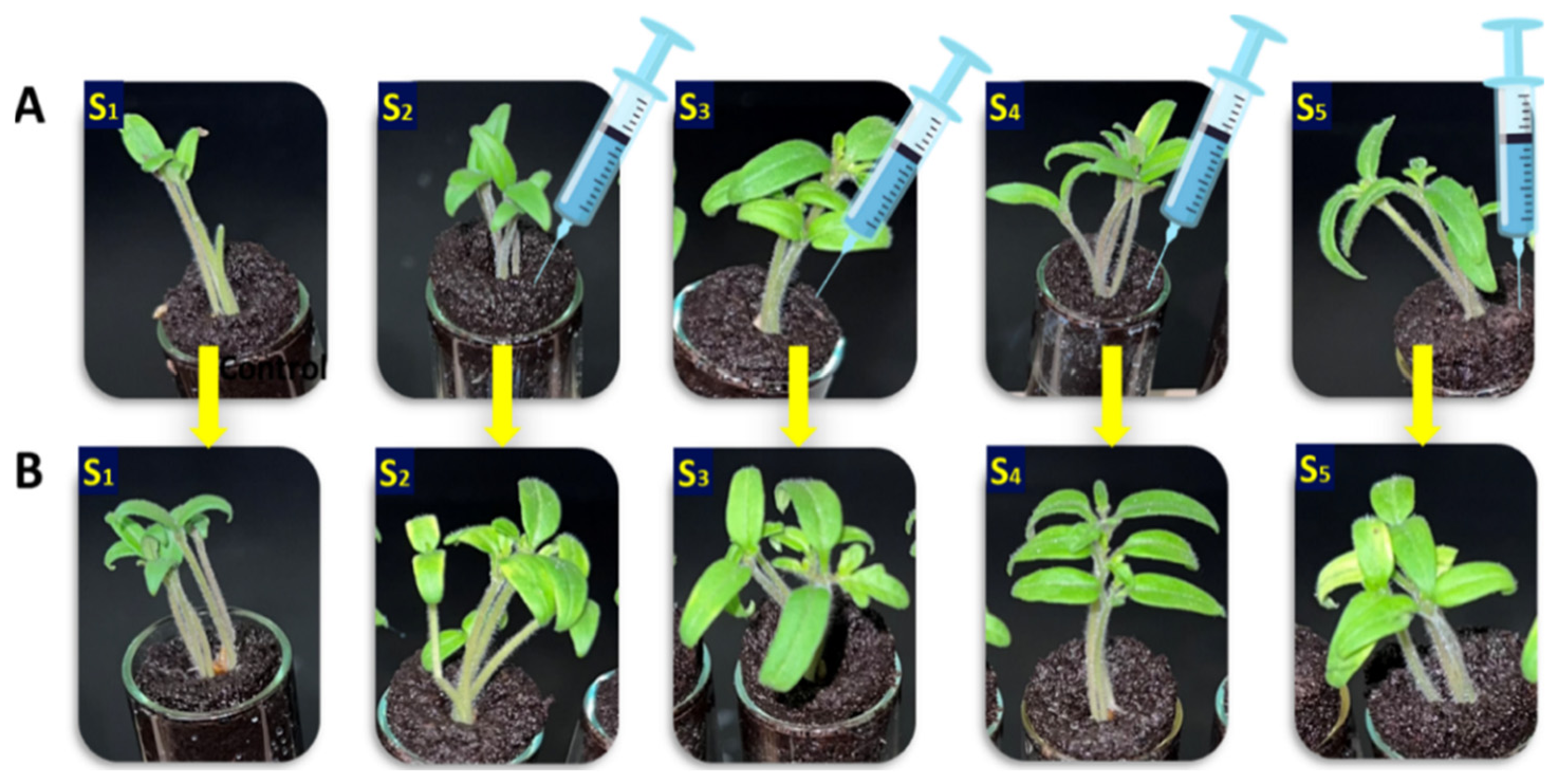
The independent evaluation of soil-based nutrient delivery is shown in Figure 7. Seedlings receiving higher MgO-HNT dosages exhibited more rapid leaf expansion and stronger early biomass accumulation. This dose-responsive improvement is consistent with HNTs’ ability to retain moisture and provide slow, sustained nutrient release within the rhizosphere, thereby supporting early root establishment [42,43].
Figure 8 presents the final phase of experimentation, in which soil injections and foliar sprays were combined. Across all groups, MgO-HNT-treated seedlings outperformed both pure-MgO treatments and controls, with the combined soil-foliar application producing the strongest responses. Similar synergistic effects have been observed when nanocarrier-delivered nutrients are supplied through both foliar and root pathways, resulting in enhanced uptake efficiency and reduced early nutrient stress [44].
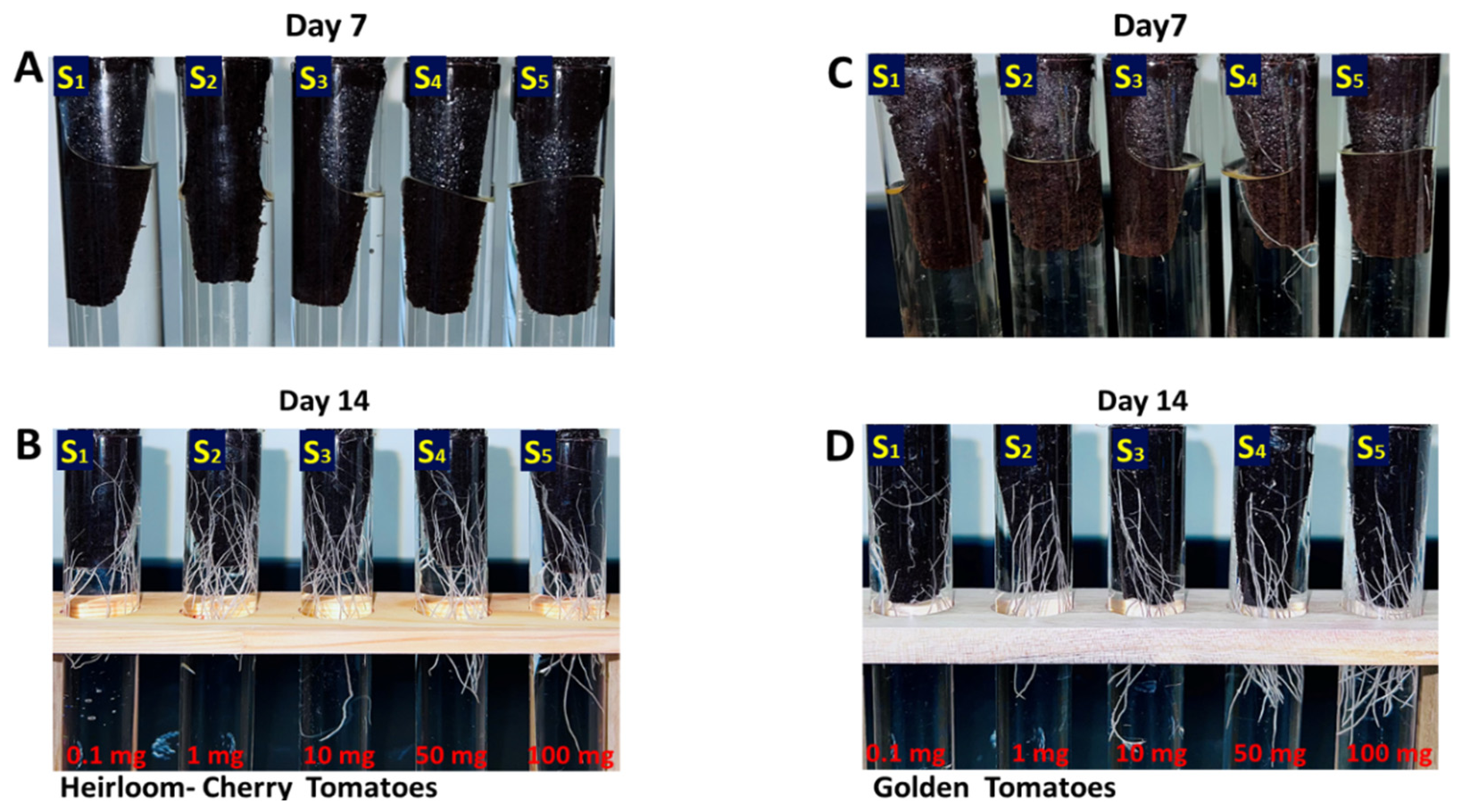
Root development responses are shown in Figure 9 for both heirloom cherry and golden tomato varieties. Control seedlings displayed limited root elongation at Day 7. By Day 14, seedlings exposed to intermediate and high MgO-HNT concentrations, especially 10 mg/mL and 100 mg/mL, exhibited substantially greater root length and branching. This enhanced root development is consistent with previous findings showing that nanoclay carriers improve water retention, moderate oxidative stress, and maintain nutrient microzones around developing roots, promoting deeper and more extensive root systems [34,42]. Quantitative root length measurements were performed specifically for the Heirloom Cherry Tomato cultivar, which was selected based on its more pronounced treatment response relative to Golden Tomato; Figure 9 therefore provides qualitative, cultivar-specific photographic documentation for both varieties at Day 7 and Day 14, while quantitative statistical analysis reflects the Heirloom cultivar specifically. Time-resolved quantitative measurements at additional intermediate timepoints were not collected in this study and are recommended for future work to characterize the temporal dynamics of root growth.

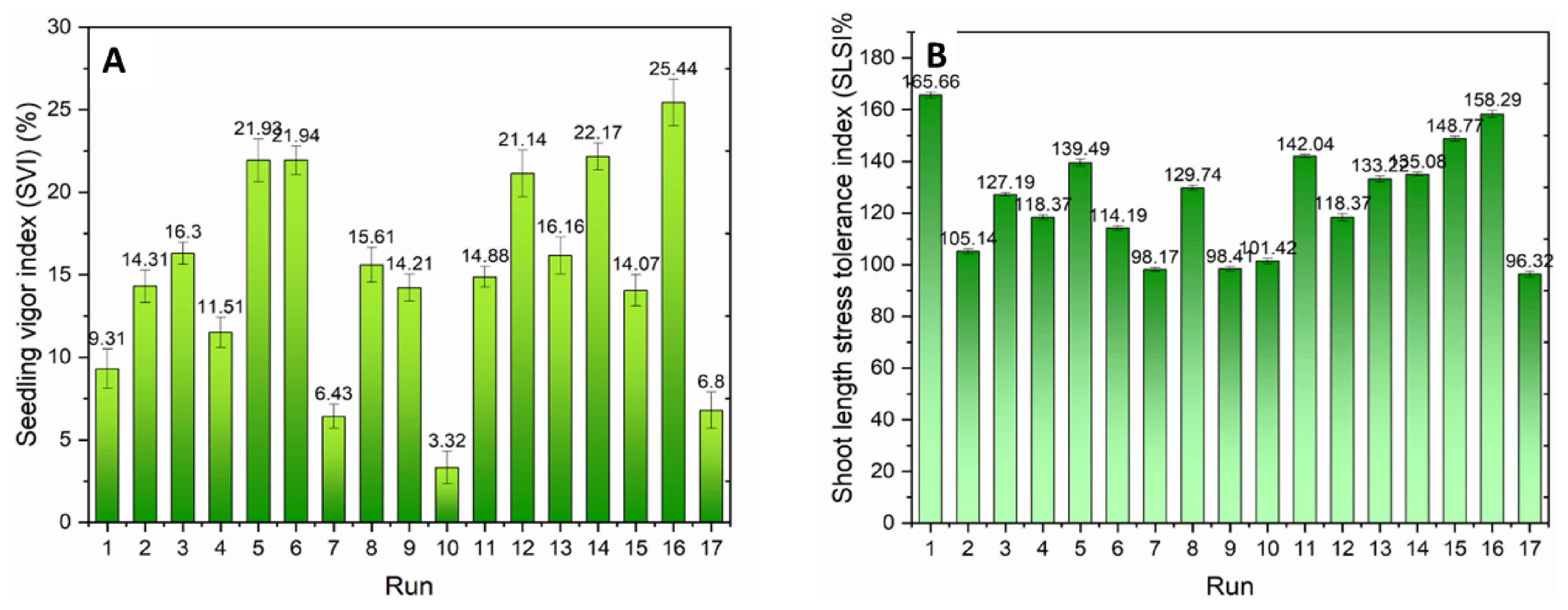
3.4. Seedling Vigor and Shoot Length Stress Tolerance Under Different Treatments

The effects of temperature, MgO-HNT concentration, and light exposure on seedling vigor and shoot length stress tolerance were evaluated across 17 experimental runs. The Seedling Vigor Index (SVI, %) for each run is shown in Figure 10A, where values ranged from 3.32% to 25.44%. The highest vigor was observed in Run 16 (25.44%), corresponding to moderate temperature, high MgO-HNT concentration, and a 12-h photoperiod. The lowest SVI occurred in Run 10 (3.32%), indicating unfavorable environmental and treatment conditions for promoting early seedling growth. The Shoot Length Stress Index (SLSI, %) is presented in Figure 10B, with values ranging from 96.32% to 165.66%. Run 1 exhibited the highest SLSI (165.66%), associated with elevated temperature and moderate MgO-HNT supplementation under extended light exposure. In contrast, Run 17 produced the lowest SLSI (96.32%), reflecting reduced shoot growth adaptability under that combination of factors. These trends suggest that MgO-HNT supplementation may enhance metabolic activity and stress buffering when combined with optimal temperature and light exposure, consistent with magnesium’s known physiological roles and the properties of nanoclay carriers reported in the literature [22,42]. Magnesium is known to improve chlorophyll synthesis and early growth vigor, while nanoclay carriers improve water retention and nutrient accessibility, supporting greater resilience under fluctuating light or temperature stress [22,42]. Accordingly, the SVI and SLSI provide reliable indicators for subsequent RSM optimization of early plant performance.

3.5. ANOVA and Model Results

Preliminary response trends indicated that Seedling Length (Y4) and the Root Length Stress Tolerance Index (RLSI, Y8) were the most biologically sensitive to treatment conditions; therefore, these indices were selected for detailed statistical modeling. ANOVA was conducted to evaluate the significance of temperature (X1), MgO-HNT concentration (X2), and light exposure (X3) on these responses and to assess the reliability of the fitted models. The full ANOVA results for Y4 and Y8 are shown in Table 5 and Table 6, summarizing the sum of squares, degrees of freedom, mean square, F-values, and p-values for each factor and interaction. For seedling length (Table 5), the model was highly significant (p < 0.0001), confirming strong predictive capability. X2 (MgO-HNT concentration) and X3 (light exposure) both had highly significant effects (p < 0.0001), and the quadratic term X32 was also significant (p < 0.0001), indicating a nonlinear light response. X1 (temperature), X12, and X22 were not significant within the tested range, though the interaction between temperature and MgO-HNT concentration (X1X2) was significant (p = 0.0186). The lack-of-fit was non-significant (p = 0.1735), confirming an adequate model fit. The model exhibited a high coefficient of determination (R2 = 0.983) and adjusted R2 of 0.960, indicating strong agreement between predicted and observed values. The relatively low coefficient of variation (C.V. = 3.76%) reflects good precision and reliability of the experiments, while the adequate precision ratio of 23.73 (well above the desirable threshold of 4) confirms an adequate signal-to-noise ratio for navigating the design space. The Shapiro–Wilk test confirmed that model residuals were normally distributed (W = 0.942, p = 0.345), satisfying the underlying assumptions of the RSM analysis.
These results show that seedling elongation is primarily controlled by MgO-HNT dosage and photoperiod, whereas temperature contributes minimally under the tested conditions. For RLSI (Table 6), the model was again highly significant (F = 56.2, p < 0.0001). X2 (MgO-HNT concentration) and X3 (light) significantly affected root stress tolerance (p = 0.0003 and p = 0.0001, respectively), with X32 showing a strong nonlinear effect (p < 0.0001). Temperature (X1) approached significance (p = 0.0838) but was not statistically meaningful, and neither X12, X22, nor any interaction term (X1X2, X1X3, X2X3) showed significant contributions. The lack-of-fit test was non-significant (p = 0.1735), confirming good model adequacy. The model demonstrated excellent predictive capability, with R2 = 0.988 and adjusted R2 = 0.973, indicating that the model explained the vast majority of variability in RLSI. The low coefficient of variation (C.V. = 3.73%) further supports the reliability of the experimental measurements, and the adequate precision value of 26.13 confirms a strong signal-to-noise ratio. Residual normality was confirmed by the Shapiro–Wilk test (W = 0.961, p = 0.658), validating the statistical assumptions underlying the model. These findings indicate that MgO-HNT concentration and controlled light exposure are key drivers of root stress resilience in early seedlings.
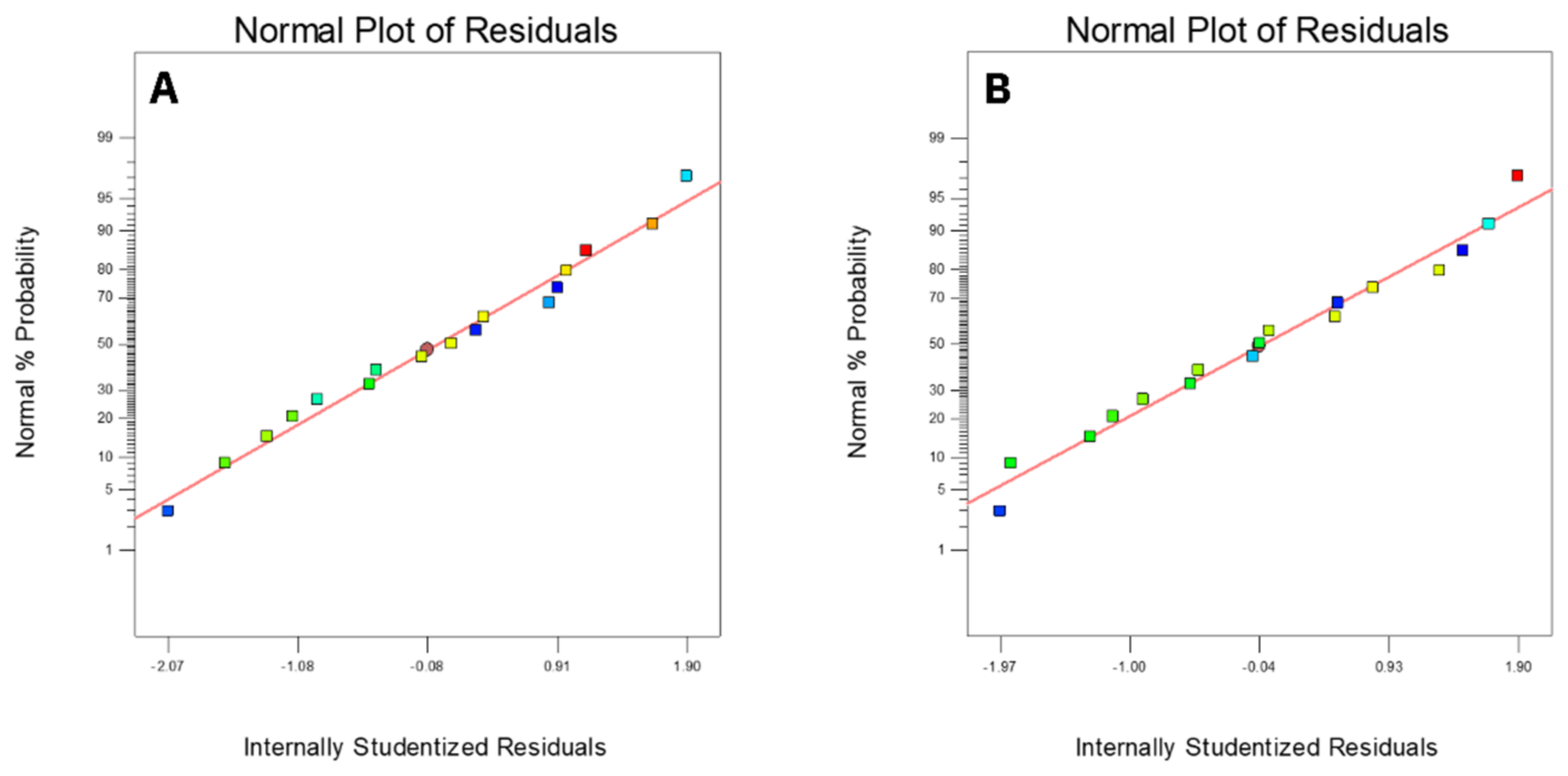
A fundamental assumption in Response Surface Methodology (RSM) is that the residuals of the model are normally distributed [35,36]. To evaluate this, normal probability plots were generated for both response variables: Seedling Length (Y4) and Root Length Stress Tolerance Index (Y8). These plots visually represent the distribution of residuals compared to a theoretical normal distribution. As illustrated in Figure 11, the residuals for both models show a strong linear alignment along the red reference line. This pattern suggests that the residuals are symmetrically distributed and closely approximate a normal distribution. The absence of significant deviations or curvature in the plots indicates that the models meet the assumption of residual normality, thereby supporting the statistical reliability and validity of the RSM-based predictions. The normality of residuals is particularly important in regression modeling because it ensures the validity of hypothesis testing and confidence intervals derived from the models. The observed linear trends confirm that the experimental data are well-suited for RSM analysis and that the models can be used for accurate prediction and optimization. The close alignment of data points with the reference line indicates approximate normality of residuals, validating the assumptions underlying the RSM analysis.

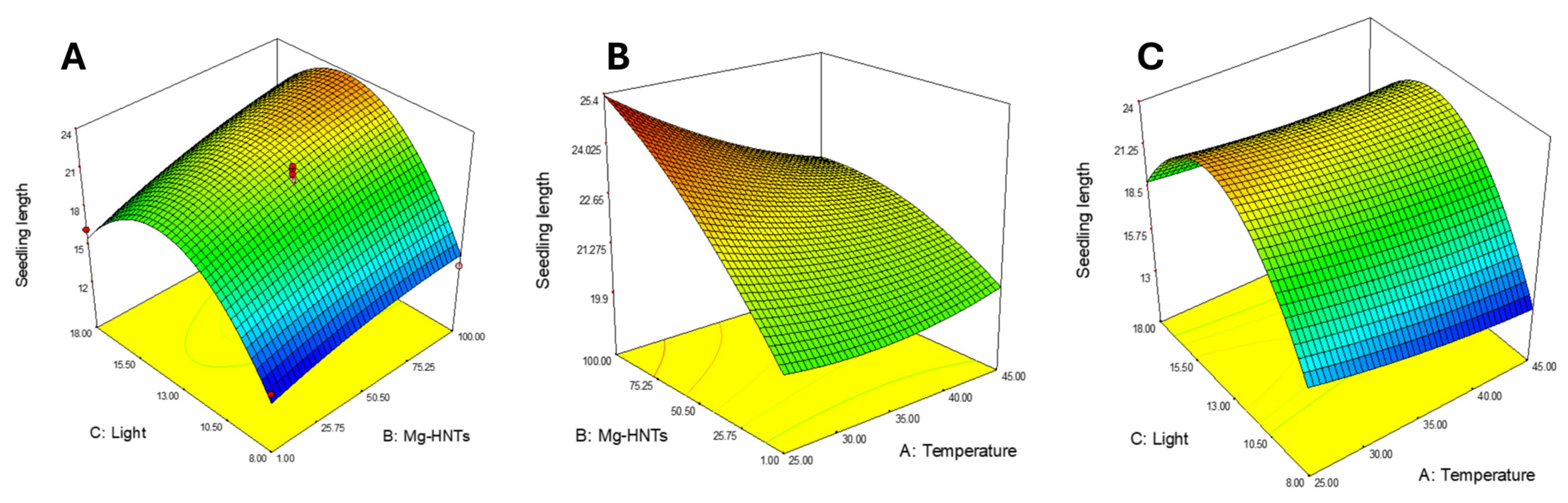
3.6. Response Surface Analysis of Seedling Length (Y4)

The 3D response surfaces illustrate how temperature (X1), MgO-HNT concentration (X2), and light exposure (X3) interact to regulate early tomato seedling elongation. Each surface represents a pairwise interaction while the third factor is held at its midpoint. Temperature and light exposure jointly influence elongation in Figure 12C, where maximum seedling length occurs under low temperature and high, but not extreme light levels. The curvature along the light axis may reflect a photosynthetic gain limited by the plant’s stress threshold, consistent with established models of early seedling growth physiology [33], though photosynthetic activity was not directly measured in this study. This balance between reduced metabolic demand at cooler temperatures and increased carbon assimilation under adequate light aligns with established models of early seedling growth physiology [33]. The interaction between MgO-HNT concentration and temperature (Figure 12B) shows that the longest seedlings occurred at higher MgO-HNT levels combined with lower temperatures. Cooler temperatures are expected to decrease respiratory losses and slow water evaporation, potentially allowing plants to more efficiently use the nutrient-rich microenvironment created by MgO-HNTs, consistent with reported temperature–nanomaterial synergies [45]. Similar temperature–nanomaterial synergies have been observed in studies where metal-oxide nanostructures mitigate early-stage abiotic stress by stabilizing the rhizosphere [45].
Seedling length responds nonlinearly to the interaction between MgO-HNT concentration and light (Figure 12A). Increasing MgO-HNT levels enhances elongation under moderate light, likely due to improved nutrient availability and moisture retention around the root zone. However, at high light intensities, growth plateaus, consistent with reduced photosynthetic efficiency under excessive irradiance (photoinhibition) [46]. This trend underscores that MgO-HNT benefits are maximized only when photoperiod is regulated to avoid light-induced stress.

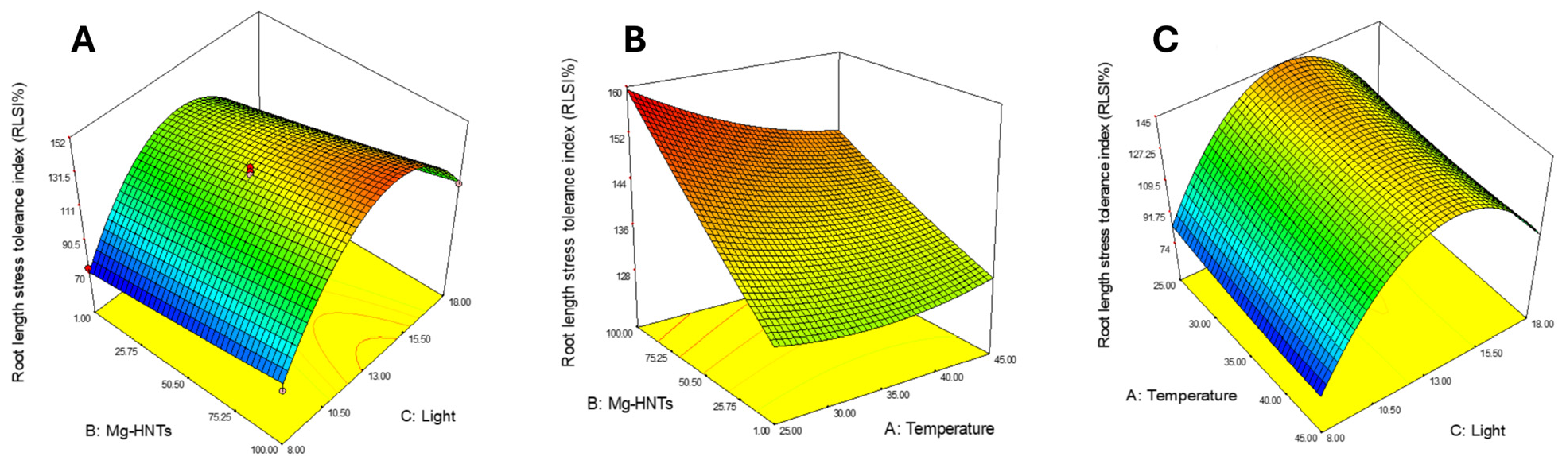
3.7. Response Surface Analysis of Root Length Stress Tolerance (RLSI, Y8)

Response surface methodology was applied to evaluate how temperature (X1), MgO-HNT concentration (X2), and light exposure (X3) jointly influence the Root Length Stress Tolerance Index (RLSI, Y8). The three-dimensional plots in Figure 13 illustrate these interaction effects. The interaction between MgO-HNT concentration and light (Figure 13A) exhibits a curved response, where RLSI increases at higher MgO-HNT levels under low to moderate light. This pattern suggests that nanomaterial-enhanced nutrient and moisture availability improves root tolerance. At high light intensities, however, the benefit plateaus, consistent with reduced photosynthetic efficiency or light-induced metabolic stress under excessive irradiance (photoinhibition) [46]. The MgO-HNT concentration–temperature interaction (Figure 13B) shows that RLSI decreases sharply as the temperature approaches 45 °C, even at high nanomaterial levels. This decline aligns with known thermal limits in tomato seedlings, where temperatures above ~35 °C impair membrane stability, water uptake, and root metabolic activity [47]. Optimal RLSI occurs at moderate temperatures (25–30 °C) combined with elevated MgO-HNT concentrations.
The temperature–light interaction (Figure 13C) indicates that RLSI is maximized under moderate temperatures with increased light exposure. Cooler conditions are expected to reduce stress respiration, while adequate light likely supports energy production for root recovery and elongation, consistent with established plant stress physiology [46,47]. The curvature of the surface suggests that both factors must be balanced, as extremes in either variable diminish overall stress tolerance.

3.8. Comparative Root Development in Lunar and Martian Soil Simulants

After determining the optimal RSM growth conditions (25 °C and a 12 h photoperiod), these parameters were applied to extraterrestrial soil simulants to evaluate seedling performance under resource-limited environments. Five concentrations of MgO-HNTs (0.1, 1, 10, 50, and 100 mg/mL) were incorporated into both lunar and Martian regolith simulants (Figure 14). Heirloom Cherry Tomato seeds were used to maintain consistency with previous assays, and quantitative measurements of root length, shoot length, and germination percentage were obtained using ImageJ. In the lunar regolith simulant, root development increased progressively with MgO-HNT concentration. The strongest enhancement occurred at 100 mg/mL, where root length reached 17.704 mm (RLSI 141.1%), shoot length reached 5.08 mm, and germination reached 80%. These improvements are consistent with the reported ability of HNTs to compensate for poor water-holding capacity and limited nutrient availability in regolith substrates [48]. The hollow tubular structure of HNTs can act as a microscale reservoir that retains moisture and provides slow ion release, thereby reducing abiotic stress and supporting sustained root expansion [48].
In contrast, the Martian regolith simulant exhibited a different dose-response pattern. Maximum root length (12.284 mm; RLSI 167.9%) occurred at the lower dose of 10 mg/mL MgO-HNTs. Although shoot length and germination continued to rise at higher concentrations—reaching 4.276 mm and 100% at 100 mg/mL, root elongation declined slightly beyond the optimum. This divergence may be associated with interactions between elevated nanoparticle concentrations and the regolith’s reported iron-rich, oxidizing chemistry, although this was not directly assessed in the present study. Martian soil analogs are known to impose oxidative stress, disrupt root membrane stability, and alter rhizosphere pH, which can collectively inhibit elongation at higher amendment levels, consistent with reported physiological stress responses, including reactive oxygen species generation, in plants grown on Martian regolith simulants [49]. These results demonstrate that optimal MgO-HNT dosing is strongly soil-type dependent. Lunar simulants respond favorably to higher MgO-HNT concentrations due to their extreme nutrient and moisture limitations, whereas Martian simulants achieve maximum root performance at substantially lower doses. This distinction has direct relevance for in-situ resource utilization (ISRU) and extraterrestrial agriculture, where minimizing amendment quantities while maintaining robust early seedling establishment is essential for long-term sustainability.
To assess the early morphological responses of tomato seedlings to MgO-HNT treatments in extraterrestrial soil simulants, plants grown in lunar and Martian regolith were photographed after 14 days (Figure 15). Seedlings were exposed to six MgO-HNT concentrations (0, 0.1, 1, 10, 50, and 100 mg/mL), corresponding to treatments S1–S6. Panels (A) and (B) show seedlings grown in lunar and Martian regolith, respectively, with red dashed lines serving as reference markers for comparing shoot height and root extension. Root lengths were quantified using ImageJ. Across both soil types, seedlings exhibited improved shoot and root development at intermediate MgO-HNT concentrations, consistent with the nanomaterial enhancing early growth through improved moisture retention and localized nutrient availability in nutrient-poor regolith substrates, as reported in the literature [48]. The slightly different responses between lunar and Martian soils may be associated with differences in their physicochemical properties, consistent with the reported oxidizing, iron-rich nature of Martian regolith, which has been suggested to influence root physiology and stress responses [50], although this was not directly assessed in the present study.
The effects of MgO-HNT concentration on root development in extraterrestrial soil simulants are shown in Figure 16. Root lengths were quantified using ImageJ to provide objective assessment of morphological responses. Panel (A) presents root growth in the lunar regolith simulant under a 12-h photoperiod, while panel (B) shows corresponding measurements for seedlings grown in the Martian regolith simulant under the same conditions. Root elongation varied with both soil type and MgO-HNT concentration: seedlings in the lunar simulant exhibited greater overall root length compared to those in the Martian simulant. These results highlight how soil composition, light exposure, and MgO-HNT supplementation jointly influence early root development in simulated space-agriculture environments.

4. Discussion

The types and durations of future lunar and Mars missions will continue to evolve as new technological advancements and scientific insights emerge. Space agencies around the world are now focused on long-duration lunar missions. During extended human missions, food availability becomes crucial for crew safety and mission success. Future space crews must have access to safe, nutritious food while in planetary orbit or residing in surface habitats. This constraint is due to challenges related to food acceptability and safety, as well as resource constraints linked to long-term exploration, such as living in a lunar habitat or embarking on a mission to Mars [51].
ISS astronauts receive a small supply of fresh foods and limited-shelf-life foods on each resupply mission. Astronaut nutrition is aided with varied food sources, but additional fresh food options remain a priority [51]. There is currently no solution to the nutrition roadblock for Mars missions; in fact, there is no system designed to provide astronauts with the nutrition needed for long-duration spaceflight. Furthermore, the need for a space-based food system goes beyond nutrition [52]. Food and social interaction are fundamentally linked; communal eating together builds trust, strengthens community, fosters social communication, and promotes emotional well-being [53]. Sharing meals triggers neurological and sociopsychological responses that boost happiness, reduce loneliness, lead to better mental health, physical and emotional resilience, and community solidarity [54,55].
ISS astronauts have conducted experimental “farming” and successfully grown a few food plants, including lettuce, kale, and cabbage, using Lunar regolith simulants [56]. Moon and Mars missions can take advantage of the soils on those planets. The Moon’s outer layer, the crust, is covered with lunar soil. This unconsolidated debris is known as lunar regolith, a blanket of fine rock particles that varies in depth (around 10–65 feet deep). Regolith is loosely compacted rock and dust that sits atop a bedrock layer. Geological resources from regolith include iron, aluminum, magnesium, calcium, and titanium.
Previous plant studies using lunar materials from the Apollo 11 and 12 missions demonstrated that regolith has the potential to supply mineral nutrients necessary for seed germination and plant growth [57]. Plant growth experiments were carried out using JSC-1A, a lunar regolith simulant, and waste compost and microbe-inoculated waste compost mixtures to identify optimal growth conditions. While the plants grown from these samples germinated quickly, they exhibited stunted growth, ionic stress, and increased oxidative stress. The availability of these minerals for plant uptake was found to be low. These studies demonstrate that the Lunar and Martian regoliths lack critical plant-essential nutrients and exhibit substantially reduced water-holding capacity relative to terrestrial soils. Recently, Krejčí et al. (2026) conducted a study on the germination and early growth of broccoli (Brassica oleracea) in a Murashige-Skoog liquid medium that was supplemented with leachate from a lunar regolith simulant [41]. Atkin et al. (2026) [11] used chickpeas grown in mixtures of lunar regolith simulant and Vermicompost, with or without Arbuscular mycorrhizal fungi, under climate-controlled conditions. From their results, they concluded that although growth rates were reduced compared to the untreated control group, properly diluted water and acidic leachates from lunar regolith simulants may be a suitable approach, but further studies are needed.
Plant nanobiotechnology is a flourishing field that uses nanomaterials to study and engineer plant function [22]. Applications of nanotechnology in plants have great potential as tools for improving crop yield, tolerance to disease and environmental stress, agrochemical delivery of pesticides and fertilizers, and genetic modification and transformation of crop plants [11]. Previous studies have used nanomaterials functionalized with chemicals, including biocompatible polymers with charged, neutral, or hydrophobic functional groups, to improve nanomaterial uptake and localization in plant cells [22,32]. Nanotechnology-based approaches have been reported to improve germination and root development through mechanisms such as enhanced water retention, soil pH moderation, and direct nutrient delivery to the root zone [35], mechanisms consistent with the growth improvements observed in the present study, though not independently measured here. Nanomaterials interact closely with seed surfaces and root tips, promoting cellular activity and increasing tolerance to environmental stressors [42].
Seed germination and early root development are critical phases that determine crop establishment, resilience, and yield potential. These stages require adequate water, oxygen, nutrients, and favorable physicochemical conditions; when any of these factors are limited, germination is delayed and root growth restricted, reducing overall plant performance [43]. Nutrient deficiency is a major constraint during germination, particularly in degraded, sandy, or acidic soils [44]. Magnesium deficiency, in particular, impairs chlorophyll formation and enzymatic activity during early development [34,35]. Furthermore, abiotic stresses—including drought, salinity, temperature extremes, and low pH—further hinder root elongation and cellular activity essential for seedling establishment [33,36].
Conventional fertilization often provides limited benefit during early growth because nutrients may not be available at the precise time or location needed by emerging seedlings [45]. Losses through leaching or volatilization, especially in porous or poorly structured soils, further reduce fertilizer efficiency [46]. These limitations highlight the need for targeted nutrient delivery systems capable of supporting early root-soil interactions.
The objective of this study was to develop a plant growth technology that requires minimal input, yields safe, nutritious plant crops for long-duration NASA space missions, Lunar and Mars habitats, and is dual-use, with major benefits for people on Earth. Early-stage plant performance was evaluated using several physiological indicators, including seedling length, germination percentage, root-to-shoot ratio, seedling vigor index (SVI), and stress tolerance indices. These metrics provided a comprehensive assessment of germination success and seedling resilience under nutrient-limited conditions. Response Surface Methodology (RSM) was employed to evaluate the combined effects of multiple experimental variables and to identify optimal conditions for early plant development. Unlike one-factor-at-a-time approaches, RSM accounts for interactions among variables and efficiently models nonlinear response behavior [47]. A Box-Behnken Design (BBD) was selected over a Central Composite Design (CCD) for two main reasons. First, the BBD requires fewer experimental runs for three-factor optimization (15 runs versus 20 for a comparable CCD), improving efficiency given the biological replication already required. Second, the BBD does not test combinations where all factors are simultaneously at their extreme values, unlike the CCD’s corner and axial points; this was particularly advantageous in this study, as combining extreme temperatures, MgO-HNT concentrations, and light exposure simultaneously could risk seedling mortality rather than yield biologically interpretable data. The design generated a quadratic polynomial model capable of estimating main effects, interaction effects, and second-order terms [48]. Model adequacy was assessed using analysis of variance (ANOVA), lack-of-fit tests, and the coefficient of determination (R2). Response surfaces and contour plots were generated to visualize factor interactions and determine optimal conditions.
Recently, the uptake of iron oxide (Fe2O3) nanoparticles by spinach grown hydroponically and their effects on growth rate and plant productivity have been studied [49]. Plant growth (stem and root length) and Fe uptake increased. Iron is an important micronutrient essential for life, as it is part of significant proteins and enzymes, such as hemoglobin and myoglobin. Metal oxide-modified HNTs (mHNTs) are promising materials due to their small size, large surface area, and high reactivity [50]. Metal/metal oxide nanoparticles are also potent agents for inhibiting pathogens, used as bactericides/fungicides and as nanofertilizers to enhance plant health [58]. We used mHNTs to enhance seed germination and early tomato seedling development. Results showed that magnesium MgO-HNTs supported seed germination, root development, and overall seedling vigor under nutrient-limited and high-stress conditions using extraterrestrial regolith. These promoting effects likely operate through three complementary pathways: sustained release of Mg2+ from the MgO coating supporting chlorophyll biosynthesis and photosynthetic capacity; the tubular HNT structure enhancing rhizosphere water retention while its aluminosilicate surface chemistry buffers local pH; and alleviation of oxidative abiotic stress through mechanisms consistent with broader nanomaterial-mediated antioxidant regulation, including modulation of reactive oxygen species and enzymatic antioxidant activity (e.g., SOD, CAT, APX), as documented across diverse nanoparticle systems [58]. These pathways remain literature-supported hypotheses in the present study, as direct biochemical validation was not performed. Compared to existing regolith amendment strategies, MgO-HNTs offer distinct practical advantages. Compost-based amendments, while effective, typically require high compost-to-regolith ratios (up to 70% by volume) to support meaningful plant growth [10], representing a substantial payload mass burden. Arbuscular mycorrhizal fungi (AMF)-based bioremediation avoids this mass penalty but depends on living biological inoculants, introducing challenges related to biosafety, viability, and strain stability under spaceflight conditions [11]. Bare nano-MgO, while chemically active, lacks a structural carrier and may be prone to rapid dispersion or leaching from the substrate, limiting sustained nutrient availability. By contrast, MgO-HNTs combine a lightweight, chemically stable, non-biological carrier with the pH-buffering and nutrient-delivery functions of MgO, offering a potentially more mass-efficient and logistically simpler amendment strategy for ISRU applications, though direct comparative testing against these alternatives was not performed in this study. From an ISRU perspective, this mass efficiency is particularly relevant given that transportation costs to the lunar surface are estimated at approximately $1 million per kilogram using current and near-term launch systems, with Mars-bound costs substantially higher [59]. A lightweight nanomaterial amendment applied at low mg/mL concentrations, as demonstrated in this study, would require substantially less launch mass than bulk organic amendments such as compost. Additionally, the one-step, aqueous-phase electrodeposition synthesis used here is comparatively simple and could plausibly be adapted for in-situ fabrication using regolith-sourced or recycled feedstock materials, though this was not investigated in the present study. Integration with closed-loop ecological life-support systems would further require demonstrating compatibility with nutrient cycling, recycled water systems, and repeated-use substrates, representing an important direction for future ISRU-focused research. In lunar regolith, optimal root development occurred at 100 mg/mL, whereas in Martian regolith, optimal growth occurred at 10 mg/mL. These differences are consistent with previously reported differences in the mineralogical and physicochemical characteristics of the two regolith types [49,50], although mineral composition and oxidative potential were not directly assessed in the present study. These findings provide preliminary evidence supporting further investigation of MgO-HNT-based amendments for controlled-environment agriculture and future ISRU-oriented cultivation systems. Given that this study was limited to short-term seedling development in a single plant species under controlled laboratory conditions, broader claims regarding sustainable agricultural practice or field-scale ISRU application should await validation across multiple species, longer growth periods, and more representative environmental conditions.
This study was limited to a single crop species (tomato) evaluated under short-term, controlled laboratory conditions, without assessment under simulated microgravity, without evaluation of long-term nanomaterial toxicity, without direct chlorophyll or antioxidant enzyme biomarker measurements, and without characterization of potential environmental accumulation of MgO-HNTs within regolith over repeated growth cycles. Building on these findings, several directions follow naturally for future work. Direct physiological and biochemical measurements, such as chlorophyll content, photosynthetic rate, antioxidant enzyme activity, and substrate electrical conductivity, would allow the mechanistic hypotheses proposed here to be tested more rigorously. Testing with authentic lunar and Martian regolith, where accessible, would help confirm these findings beyond simulant-based systems. Comparing MgO coatings against alternative metal oxides, such as zinc or iron oxide, may help identify the most effective formulation for ISRU-oriented nutrient delivery. Extending this work to additional crop species, particularly staple and nutrient-dense candidates suited to long-duration missions, would help establish how broadly these results apply. Finally, evaluating MgO-HNT performance under simulated microgravity, using a random positioning machine or clinostat, would bring these findings closer to spaceflight-relevant conditions. Taken together, these directions point to MgO-HNTs as a promising platform for nutrient delivery in both resource-limited terrestrial agriculture and future extraterrestrial cultivation systems.


5. Conclusions

This study successfully synthesized magnesium oxide-coated halloysite nanotubes (MgO-HNTs) via a low-cost, one-step electrodeposition process. SEM and EDS analyses confirmed successful surface coating while preserving the underlying tubular HNT structure, with quantitative characterization further supporting the coating’s structural integrity.
Response Surface Methodology, using a 17-run Box-Behnken design, identified MgO-HNT concentration and light exposure as the dominant factors governing seedling length and the root length stress tolerance index in Earth soil, with temperature playing a comparatively minor role. Optimal performance was achieved at 25 °C, a 12-h photoperiod, and 100 mg/mL MgO-HNTs, maximizing seedling vigor and stress resilience.
Validation in lunar and Martian regolith simulants revealed clear substrate-dependent dosage requirements: optimal root development occurred at 100 mg/mL in lunar regolith and at the substantially lower concentration of 10 mg/mL in Martian regolith, consistent with previously reported differences in the physicochemical properties of the two extraterrestrial analogs.
Building on these findings and the limitations identified above, future work should prioritize validation across multiple crop species to establish generalizability; cultivation trials under simulated microgravity to better approximate spaceflight-relevant conditions; physiological and molecular investigation of the proposed magnesium-release, water-retention, and antioxidant mechanisms; long-term nanotoxicity assessment of MgO-HNTs within regolith substrates; and development of low-cost, in-situ fabrication protocols for MgO-HNT synthesis using lunar- or Martian-sourced feedstock materials.

Author Contributions

Conceptualization, Z.J.V. and D.K.M.; Methodology, Z.J.V.; Software, Z.J.V.; Validation, Z.J.V. and D.K.M.; Formal Analysis, Z.J.V.; Investigation, Z.J.V.; Writing, Original Draft Preparation, Z.J.V.; Writing—Review and Editing, D.K.M.; Visualization, Z.J.V.; Project Administration, D.K.M.; Funding Acquisition, D.K.M. All authors have read and agreed to the published version of the manuscript.

Funding

This research was supported by the Louisiana Space Grant Consortium through the NASA EPSCoR Rapid Response Research (R3) Program, Award No. 22-2022-R30015.

Institutional Review Board Statement

Not applicable.

Informed Consent Statement

Not applicable.

Data Availability Statement

The original contributions presented in this study are included in the article. Further inquiries can be directed to the corresponding author.

Conflicts of Interest

Author David K. Mills was employed by the company OrganicNANO. The remaining author declares that the research was conducted in the absence of any commercial or financial relationships that could be construed as a potential conflict of interest.

References

  1. Ma, C.; Yang, Z.; Xia, R.; Song, J.; Liu, C.; Mao, R.; Li, M.; Qin, X.; Hao, C.; Jia, R. Rising water pressure from global crop production—A 26-yr multiscale analysis. Resour. Conserv. Recycl. 2021, 172, 105665. [Google Scholar] [CrossRef] [Scilit]
  2. Hemathilake, D.M.; Gunathilake, D.M. Agricultural productivity and food supply to meet increased demands. In Future Foods; Academic Press: Cambridge, MA, USA, 2022; pp. 539–553. [Google Scholar] [CrossRef] [Scilit]
  3. Prăvălie, R.; Patriche, C.; Borrelli, P.; Panagos, P.; Roșca, B.; Dumitraşcu, M.; Nita, I.A.; Săvulescu, I.; Birsan, M.V.; Bandoc, G. Arable lands under the pressure of multiple land degradation processes. A global perspective. Environ. Res. 2021, 194, 110697. [Google Scholar] [CrossRef] [Scilit]
  4. Al-Mamun, M.R.; Hasan, M.R.; Ahommed, M.S.; Bacchu, M.S.; Ali, M.R.; Khan, M.Z. Nanofertilizers towards sustainable agriculture and environment. Environ. Technol. Innov. 2021, 23, 101658. [Google Scholar] [CrossRef] [Scilit]
  5. Devaux, A.; Goffart, J.P.; Kromann, P.; Andrade-Piedra, J.; Polar, V.; Hareau, G. The potato of the future: Opportunities and challenges in sustainable agri-food systems. Potato Res. 2021, 64, 681–720. [Google Scholar] [CrossRef] [Scilit]
  6. Sarkar, M.R.; Rashid, M.H.; Rahman, A.; Kafi, M.A.; Hosen, M.I.; Rahman, M.S.; Khan, M.N. Recent advances in nanomaterials based sustainable agriculture: An overview. Environ. Nanotechnol. Monit. Manag. 2022, 18, 100687. [Google Scholar] [CrossRef] [Scilit]
  7. Garg, S.; Rumjit, N.P.; Roy, S. Smart agriculture and nanotechnology: Technology, challenges, and new perspective. Adv. Agrochem 2024, 3, 115–125. [Google Scholar] [CrossRef] [Scilit]
  8. Mortimer, J.C.; Gilliham, M. SpaceHort: Redesigning plants to support space exploration and on-earth sustainability. Curr. Opin. Biotechnol. 2022, 73, 246–252. [Google Scholar] [CrossRef] [Scilit]
  9. Bunchek, J.M.; Hummerick, M.E.; Spencer, L.E.; Romeyn, M.W.; Young, M.; Morrow, R.C.; Mitchell, C.A.; Douglas, G.L.; Wheeler, R.M.; Massa, G.D. Pick-and-eat space crop production flight testing on the International Space Station. J. Plant Interact. 2024, 19, 2292220. [Google Scholar] [CrossRef] [Scilit]
  10. Duri, L.G.; El-Nakhel, C.; Caporale, A.G.; Ciriello, M.; Graziani, G.; Pannico, A.; Palladino, M.; Ritieni, A.; De Pascale, S.; Vingiani, S.; et al. Mars regolith simulant ameliorated by compost as in situ cultivation substrate improves lettuce growth and nutritional aspects. Plants 2020, 9, 628. [Google Scholar] [CrossRef] [Scilit]
  11. Atkin, J.; Pierson, E.; Gentry, T.; Oliveira Santos, S. Bioremediation of lunar regolith simulant through mycorrhizal fungi and plant symbioses enables chickpea to seed. Sci. Rep. 2026, 16, 7498. [Google Scholar] [CrossRef] [Scilit]
  12. Soliemanzadeh, A.; Fekri, M. Effects of green iron nanoparticles on iron changes and phytoavailability in a calcareous soil. Pedosphere 2021, 31, 761–770. [Google Scholar] [CrossRef] [Scilit]
  13. Rajput, V.D.; Minkina, T.M.; Behal, A.; Sushkova, S.N.; Mandzhieva, S.; Singh, R.; Gorovtsov, A.; Tsitsuashvili, V.S.; Purvis, W.O.; Ghazaryan, K.A.; et al. Effects of zinc-oxide nanoparticles on soil, plants, animals and soil organisms: A review. Environ. Nanotechnol. Monit. Manag. 2018, 9, 76–84. [Google Scholar] [CrossRef] [Scilit]
  14. Gohari, G.; Mohammadi, A.; Akbari, A.; Panahirad, S.; Dadpour, M.R.; Fotopoulos, V.; Kimura, S. Titanium dioxide nanoparticles (TiO2 NPs) promote growth and ameliorate salinity stress effects on essential oil profile and biochemical attributes of Dracocephalum moldavica. Sci. Rep. 2020, 10, 912. [Google Scholar] [CrossRef] [Scilit]
  15. Fatima, F.; Hashim, A.; Anees, S. Efficacy of nanoparticles as nanofertilizer production: A review. Environ. Sci. Pollut. Res. 2021, 28, 1292–1303. [Google Scholar] [CrossRef] [Scilit]
  16. Pan, M.; Yau, P.C.; Lee, K.C.; Man, H.Y. Effects of different fertilizers on the germination of tomato and cucumber seeds. Water Air Soil Pollut. 2022, 233, 25. [Google Scholar] [CrossRef] [Scilit]
  17. Szőllősi, R.; Molnár, Á.; Kondak, S.; Kolbert, Z. Dual effect of nanomaterials on germination and seedling growth: Stimulation vs. phytotoxicity. Plants 2020, 9, 1745. [Google Scholar] [CrossRef] [Scilit]
  18. Yuan, P.; Tan, D.; Annabi-Bergaya, F. Properties and applications of halloysite nanotubes: Recent research advances and future prospects. Appl. Clay Sci. 2015, 112–113, 75–93. [Google Scholar] [CrossRef] [Scilit]
  19. Wu, X.; Liu, C.; Qi, H.; Zhang, X.; Dai, J.; Zhang, Q.; Zhang, L.; Wu, Y.; Peng, X. Synthesis and adsorption properties of halloysite/carbon nanocomposites and halloysite-derived carbon nanotubes. Appl. Clay Sci. 2016, 119, 284–293. [Google Scholar] [CrossRef] [Scilit]
  20. Mobaraki, M.; Karnik, S.; Li, Y.; Mills, D.K. Therapeutic applications of halloysite. Appl. Sci. 2022, 12, 87. [Google Scholar] [CrossRef] [Scilit]
  21. Humayun, A.; Luo, Y.Y.; Elumalai, A.; Mills, D.K. Differential antimicrobial and cellular response of electrolytically metalized halloysite nanotubes having different amounts of surface metallization. Mater. Adv. 2020, 1, 1705–1715. [Google Scholar] [CrossRef] [Scilit]
  22. Chen, L.; Guo, Z.; Lao, B.; Li, C.; Zhu, J.; Yu, R.; Liu, M. Phytotoxicity of halloysite nanotubes using wheat as a model: Seed germination and growth. Environ. Sci. Nano 2021, 8, 3015–3027. [Google Scholar] [CrossRef] [Scilit]
  23. Rozhina, E.; Batasheva, S.; Miftakhova, R.; Yan, X.; Vikulina, A.; Volodkin, D.; Fakhrullin, R. Comparative cytotoxicity of kaolinite, halloysite, multiwalled carbon nanotubes and graphene oxide. Appl. Clay Sci. 2021, 205, 106041. [Google Scholar] [CrossRef] [Scilit]
  24. Francis, A.P.; Devasena, T. Toxicity of carbon nanotubes: A review. Toxicol. Ind. Health 2018, 34, 200–210. [Google Scholar] [CrossRef] [Scilit]
  25. Biddeci, G.; Spinelli, G.; Colomba, P.; Di Blasi, F. Nanomaterials: A review about halloysite nanotubes, properties, and application in the biological field. Int. J. Mol. Sci. 2022, 23, 11518. [Google Scholar] [CrossRef] [Scilit]
  26. Shineh, G.; Mobaraki, M.; Afzali, E.; Alakija, F.; Velisdeh, Z.J.; Mills, D.K. Antimicrobial Metal and Metal Oxide nanoparticles in bone tissue repair. Biomed. Mater. Devices 2024, 2, 918–941. [Google Scholar] [CrossRef] [Scilit]
  27. Perves Bappy, M.J.; Monistere, A.; Sapeno Polo, G.; Mills, D.K. Electrospinning of silver and zinc-coated halloysite nanotube polylactic acid scaffold. Biomed. Mater. Devices 2023, 2, 510–520. [Google Scholar] [CrossRef] [Scilit]
  28. Masoud, A.R.; Velisdeh, Z.J.; Bappy, M.J.; Pandey, G.; Saberian, E.; Mills, D.K. Cellulose-based nanofibers in wound dressing. Biomimetics 2025, 10, 344. [Google Scholar] [CrossRef] [Scilit]
  29. Şahin, C.B.; İşler, N. The impact of foliar applied zinc and iron on quality of soybean. J. Plant Nutr. 2023, 46, 2977–2989. [Google Scholar] [CrossRef] [Scilit]
  30. Yruela, I. Copper in plants. Braz. J. Plant Physiol. 2005, 17, 145–156. [Google Scholar] [CrossRef] [Scilit]
  31. Zahidah, K.A.; Kakooei, S.; Ismail, M.C.; Raja, P.B. Halloysite nanotubes as nanocontainer for smart coating application: A review. Prog. Org. Coat. 2017, 111, 175–185. [Google Scholar] [CrossRef] [Scilit]
  32. Huber, D.M.; Jones, J.B. The role of magnesium in plant disease. Plant Soil 2013, 368, 73–85. [Google Scholar] [CrossRef] [Scilit]
  33. Senbayram, M.; Gransee, A.; Wahle, V.; Thiel, H. Role of magnesium fertilizers in agriculture: Plant–soil continuum. Crop Pasture Sci. 2015, 66, 1219–1229. [Google Scholar] [CrossRef] [Scilit]
  34. Mordike, B.L.; Ebert, T.J. Magnesium: Properties—Applications—Potential. Mater. Sci. Eng. A 2001, 302, 37–45. [Google Scholar] [CrossRef] [Scilit]
  35. Oka, R.; Uwai, K.; Toyoguchi, T.; Shiraishi, T.; Nakagawa, Y.; Takeshita, M. Stability of magnesium oxide products in single-dose packages. Iryo Yakugaku (Jpn. J. Pharm. Health Care Sci.) 2007, 33, 1013–1019. [Google Scholar] [CrossRef] [Scilit]
  36. Suliman, A.A.; El-Dewiny, C.Y.; Soliman, M.K.; Salem, S.S. Investigation of the Effects of Applying Bio-Magnesium Oxide Nanoparticle Fertilizer to Moringa Oleifera Plants on the Chemical and Vegetative Properties of the Plants’ leaves. Biotechnol. J. 2025, 20, e202400536. [Google Scholar] [CrossRef] [Scilit]
  37. Kanjana, D. Foliar application of magnesium oxide nanoparticles on nutrient element concentrations, growth, physiological, and yield parameters of cotton. J. Plant Nutr. 2020, 43, 3035–3049. [Google Scholar] [CrossRef] [Scilit]
  38. Machin, J.; Navas, A. Soil pH changes induced by contamination by magnesium oxides dust. Land Degrad. Dev. 2000, 11, 37–50. [Google Scholar] [CrossRef] [Scilit]
  39. Ibrahim, M.M.; Lin, H.; Chang, Z.; Li, Z.; Riaz, A.; Hou, E. Magnesium-doped biochars increase soil phosphorus availability by regulating phosphorus retention, microbial solubilization and mineralization. Biochar 2024, 6, 68. [Google Scholar] [CrossRef] [Scilit]
  40. Abdul-Baki, A.A.; Anderson, J.D. Vigor determination in soybean seed by multiple criteria. Crop Sci. 1973, 13, 630–633. [Google Scholar] [CrossRef] [Scilit]
  41. Krejčí, Š.; Stavrakakis, H.-A.; Coufalík, P.; Sekerák, J.; Hájek, J.; Argyrou, D.; Barták, M. Lunar regolith simulant for cultivation of plants: Seed germination and early growth study of plant vitality. Int. J. Astrobiol. 2026, 25, e5. [Google Scholar] [CrossRef] [Scilit]
  42. Zaman, W.; Ayaz, A.; Park, S. Nanomaterials in agriculture: A pathway to enhanced plant growth and abiotic stress resistance. Plants 2025, 14, 716. [Google Scholar] [CrossRef] [Scilit]
  43. Zhao, L.; Lu, L.; Wang, A.; Zhang, H.; Huang, M.; Wu, H.; Xing, B.; Wang, Z.; Ji, R. Nano-biotechnology in agriculture: Use of nanomaterials to promote plant growth and stress tolerance. J. Agric. Food Chem. 2020, 68, 1935–1947. [Google Scholar] [CrossRef] [Scilit]
  44. Fu, Y.; Ma, L.; Li, J.; Hou, D.; Zeng, B.; Zhang, L.; Liu, C.; Bi, Q.; Tan, J.; Yu, X.; et al. Factors influencing seed dormancy and germination and advances in seed priming technology. Plants 2024, 13, 1319. [Google Scholar] [CrossRef] [Scilit]
  45. Asadu, C.O.; Ezema, C.A.; Ekwueme, B.N.; Onu, C.E.; Onoh, I.M.; Adejoh, T.; Ezeorba, T.P.C.; Ogbonna, C.C.; Otuh, P.I.; Okoye, J.O.; et al. Enhanced efficiency fertilizers: Overview of production methods, materials used, nutrients release mechanisms, benefits and considerations. Environ. Pollut. Manag. 2024, 1, 32–48. [Google Scholar] [CrossRef] [Scilit]
  46. Kleijnen, J.P. Response surface methodology. In Handbook of Simulation Optimization; Springer: New York, NY, USA, 2014; pp. 81–104. [Google Scholar] [CrossRef] [Scilit]
  47. Ferreira, S.C.; Bruns, R.E.; Ferreira, H.S.; Matos, G.D.; David, J.M.; Brandão, G.C.; da Silva, E.P.; Portugal, L.A.; Dos Reis, P.S.; Souza, A.S.; et al. Box-Behnken design: An alternative for the optimization of analytical methods. Anal. Chim. Acta 2007, 597, 179–186. [Google Scholar] [CrossRef] [Scilit]
  48. Jeyasubramanian, K.; Gopalakrishnan Thoppey, U.; Hikku, G.S.; Selvakumar, N.; Subramania, A.; Krishnamoorthy, K. Enhancement in growth rate and productivity of spinach grown in hydroponics with iron oxide nanoparticles. RSC Adv. 2016, 6, 15451–15459. [Google Scholar] [CrossRef] [Scilit]
  49. Servetto, G.P.; Botta, P.; Rossi, G.; Bernasconi, A.; Caldo, F.; Vigliaturo, R.; Maffei, M.E. Maize (Zea mays L.) survival on Mars depends on regolith’s chemical composition rather than reduced gravity or lack of magnetic field. Sci. Rep. 2026, 16, 19504. [Google Scholar] [CrossRef] [Scilit]
  50. Wassie, K.B.; Yemata, G. Metal oxide nanoparticles as promising agents for triggering defense mechanisms in plants against bacterial diseases. Discov. Nano 2025, 20, 127. [Google Scholar] [CrossRef] [Scilit] [PubMed] [PubMed Central]
  51. Zwart, S.R.; Mulavara, A.P.; Williams, T.J.; George, K.; Smith, S.M. The role of nutrition in space exploration: Implications for sensorimotor, cognition, behavior and the cerebral changes due to the exposure to radiation, altered gravity, and isolation/confinement hazards of spaceflight. Neurosci. Biobehav. Rev. 2021, 127, 307–331. [Google Scholar] [CrossRef] [Scilit]
  52. Pittia, P.; Blanc, S.; Heer, M. Unraveling the intricate connection between dietary factors and the success in long-term space missions. npj Microgravity 2023, 9, 89. [Google Scholar] [CrossRef] [Scilit]
  53. Zhao, M. Food systems for long-term spaceflight: Understanding the role of non-nutrient polyphenols in astronauts’ health. Heliyon 2024, 10, e37452. [Google Scholar] [CrossRef] [Scilit]
  54. Van der Heijden, A.; Wiggins, S. Interaction as the foundation for eating practices in shared mealtimes. Appetite 2025, 205, 107585. [Google Scholar] [CrossRef] [Scilit]
  55. Zhang, X.; Ravichandran, S.; Gee, G.C.; Dong, T.S.; Beltrán-Sánchez, H.; Wang, M.C.; Kilpatrick, L.A.; Labus, J.S.; Vaughan, A.; Gupta, A. Social isolation, brain food cue processing, eating behaviors, and mental health symptoms. JAMA Netw. Open 2024, 7, e244855. [Google Scholar] [CrossRef] [Scilit]
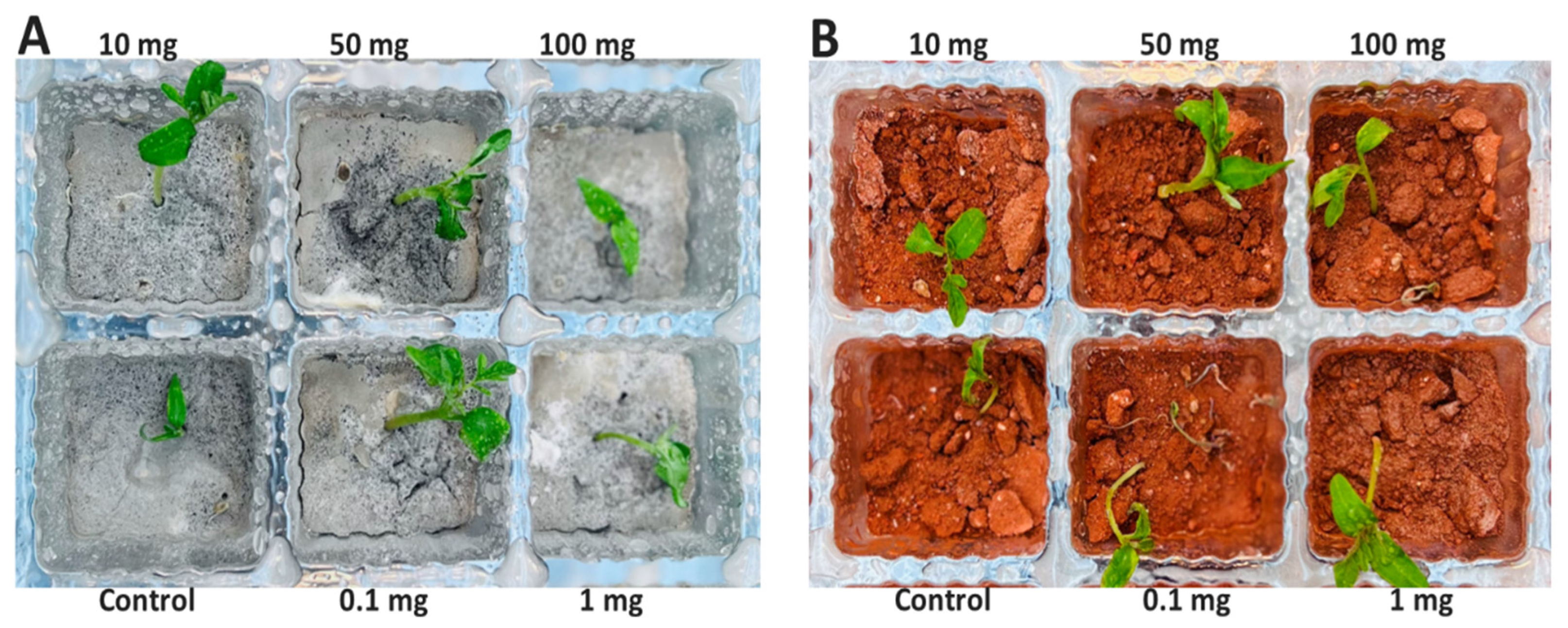
  56. Handy, D.; Loeffler, A.; Knudson, M.; Campbell, S.; Jaiswal, P.; Anderson, C.J.; Goyer, A. Growth and molecular responses of potato to lunar regolith simulants. bioRxiv 2026. bioRxiv:2026.02.23.707481. [Google Scholar] [CrossRef] [Scilit]
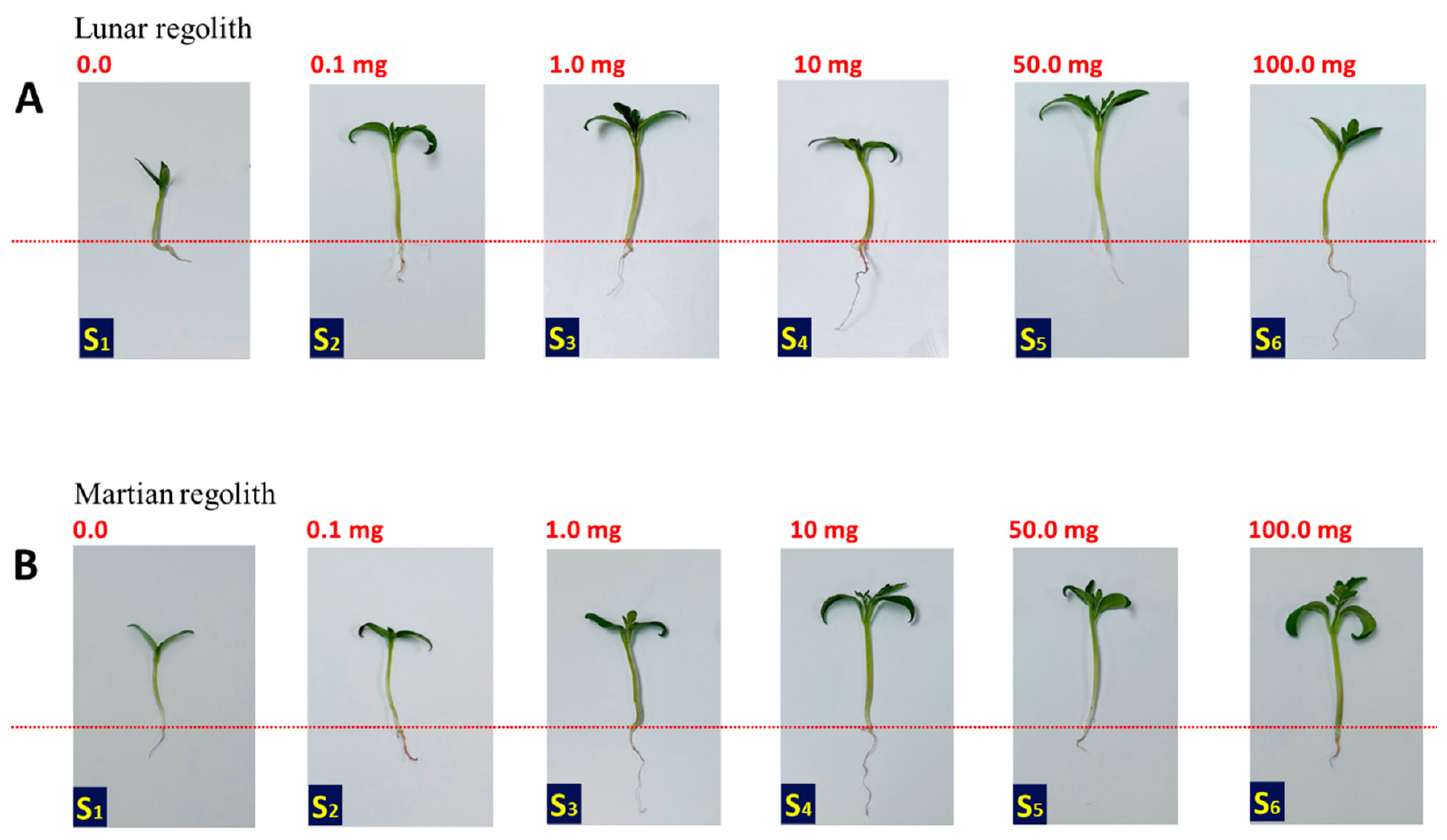
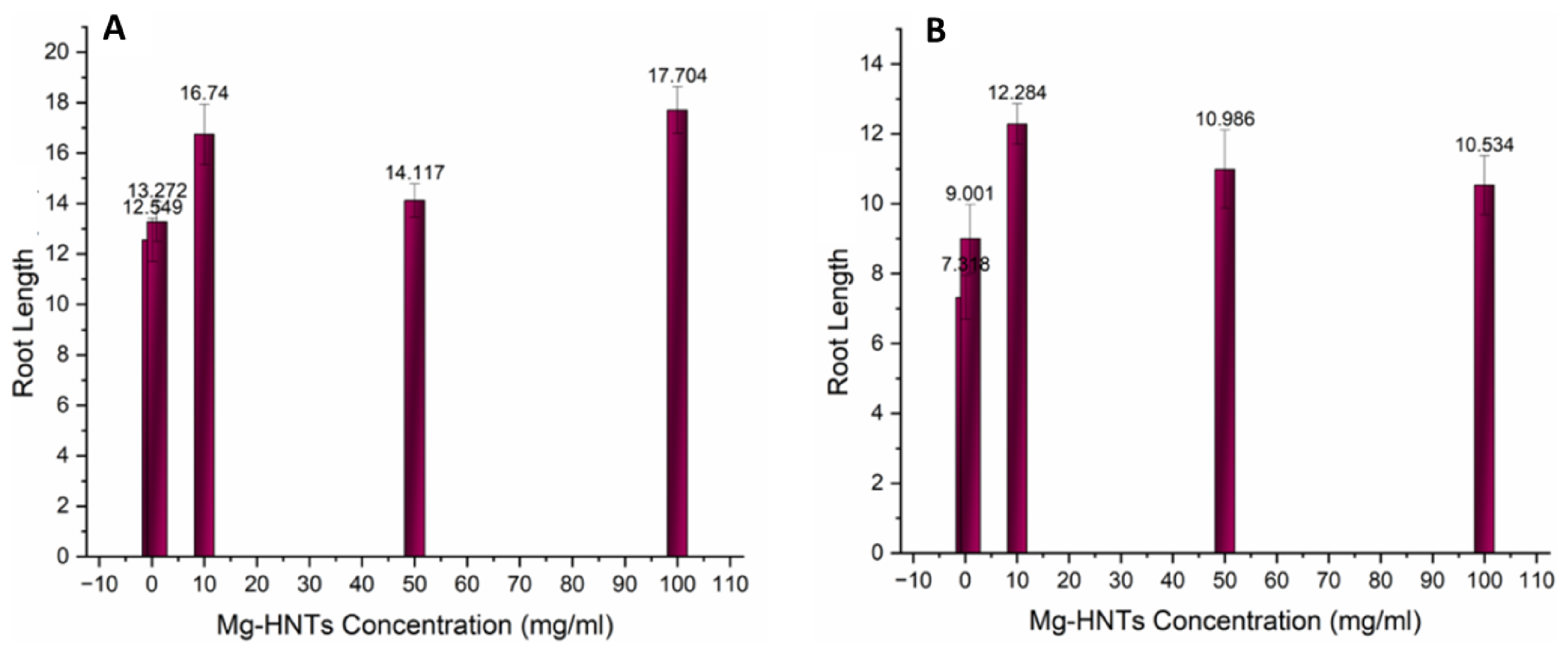
  57. Paul, A.L.; Elardo, S.M.; Ferl, R. Plants grown in Apollo lunar regolith present stress-associated transcriptomes that inform prospects for lunar exploration. Commun. Biol. 2022, 5, 382. [Google Scholar] [CrossRef] [Scilit]
  58. Khalid, M.F.; Khan, R.I.; Jawaid, M.Z.; Shafqat, W.; Hussain, S.; Ahmed, T.; Rizwan, M.; Ercisli, S.; Pop, O.L.; Alina Marc, R. Nanoparticles: The plant saviour under abiotic stresses. Nanomaterials 2022, 12, 3915. [Google Scholar] [CrossRef] [Scilit]
  59. Metzger, P.T.; Autry, G.W. The cost of lunar landing pads with a trade study of construction methods. arXiv 2022, arXiv:2205.00378. [Google Scholar] [CrossRef] [Scilit]
Figure 1. Schematic diagram of the electrodeposition process used to coat HNTs with metal oxides (MgO-Mg2+). The “−” and “+” symbols on the HNT structure indicate the negatively charged outer siloxane surface and positively charged inner aluminol lumen, respectively; black arrows indicate the direction of Mg2+; cation migration under the applied electric field. (Created by the author using Canva Premium; reproduction permitted under Canva’s content license).
Applsci 16 08914 g001
Figure 2. Seed germination and growth systems used in this study. (A) Hydroponic 12-pod system with integrated LED lighting for initial seed sprouting. (B) Controlled-environment growth chamber used for subsequent seedling development under regulated temperature, humidity, and light conditions.
Applsci 16 08914 g002
Figure 3. Overview of the experimental design. MgO-HNTs were synthesized and characterized, then evaluated in Earth soil through RSM optimization and treatment comparison. Optimal conditions identified from RSM (25 °C, 12 h photoperiod, 100 mg/mL MgO-HNT) were subsequently applied to lunar (LHS-1D) and Martian (MMS-1) regolith simulants for validation, with physiological growth measurements collected across all experiments.
Applsci 16 08914 g003
Figure 4. SEM micrographs showing morphology and surface structure (AD). Red outlines indicate representative individual HNTs used for outer diameter measurement. (A) Pristine HNT (300 nm), (B) MgO-coated HNT (500 nm), (C) Pristine HNT (500 nm), and (D) MgO-coated HNT (1.00 µm).
Applsci 16 08914 g004
Figure 5. EDS spectra of (A) pristine HNTs showing no Mg signal and (B) MgO-HNTs exhibiting a clear Mg peak, confirming surface modification. Characteristic HNT elements (Al, Si, O) and trace carbon (C) are present in both samples.
Applsci 16 08914 g005
Figure 6. Growth Progression of Tomato Seedlings Before and After MgO-HNTs Foliar Application Compared to Control. S1–S2: Untreated control group. S4–S6: Treated groups, seedlings before (S3, S5) and after (S4, S6) MgO-HNTs foliar application.
Applsci 16 08914 g006
Figure 7. Soil injection effects of MgO-HNTs on tomato seedling growth. Tomato seedlings were treated with five MgO-HNT concentrations (S1: 0.1 mg/mL, S2: 1 mg/mL, S3: 10 mg/mL, S4: 50 mg/mL, S5: 100 mg/mL). Panels show seedling growth at Day 1 (A) and Day 7 (B), demonstrating a dose-dependent improvement in early development.
Applsci 16 08914 g007
Figure 8. Effects of MgO and MgO-HNT soil and soil-foliar treatments on tomato seedling growth. (A) Pure HNT (uncoated) control; (B) soil injection with pure MgO; (C) soil injection with MgO-HNTs; (D) combined MgO-HNT soil injection with foliar sprays (0–10%). Treatments correspond to five MgO-HNT concentrations: S1 = 0.1 mg/mL, S2 = 1 mg/mL, S3 = 10 mg/mL, S4 = 50 mg/mL, and S5 = 100 mg/mL.
Applsci 16 08914 g008
Figure 9. (AD) Root development of heirloom cherry and golden tomato seedlings treated with MgO-HNTs at five concentrations (S1 = 0.1 mg/mL, S2 = 1 mg/mL, S3 = 10 mg/mL, S4 = 50 mg/mL, S5 = 100 mg/mL) at Day 7 and Day 14.
Applsci 16 08914 g009
Figure 10. Effects of Different Treatments on Seedling Vigor and Shoot Length Stress Tolerance. (A) Seedling Vigor Index (SVI, %) across 17 experimental runs. (B) Shoot Length Stress Index (SLSI, %) across 17 experimental runs.
Applsci 16 08914 g010
Figure 11. Normal probability plots of residuals for RSM model diagnostics. (A) Root Length Stress Tolerance Index (Y8); (B) Seedling Length (Y4).
Applsci 16 08914 g011
Figure 12. Response surface plots illustrating interaction effects on Seedling Length (Y4) among temperature (X1), MgO-HNT concentration (X2), and light (X3). (A) MgO-HNT concentration and light; (B) MgO-HNT concentration and temperature; (C) Temperature and light.
Applsci 16 08914 g012
Figure 13. Response surface plots illustrating interaction effects on Root Length Stress Tolerance Index (RLSI%, Y8) among temperature (X1), MgO-HNT concentration (X2), and light (X3). (A) MgO-HNT concentration and light; (B) MgO-HNT concentration and temperature; (C) temperature and light.
Applsci 16 08914 g013
Figure 14. Root development in extraterrestrial soil simulants. (A) Lunar regolith showing maximal root length at 100 mg/mL MgO-HNTs. (B) Martian regolith showing peak root length at 10 mg/mL MgO-HNTs.
Applsci 16 08914 g014
Figure 15. Tomato seedling morphology after 14 days in extraterrestrial soil simulants. (A) Lunar regolith. (B) Martian regolith. Seedlings were treated with MgO-HNTs at 0, 0.1, 1.0, 10, 50, and 100 mg/mL. Red dashed lines indicate reference heights for shoot and root comparison. Root measurements obtained via ImageJ.
Applsci 16 08914 g015
Figure 16. Effect of MgO-HNT concentration on root length in extraterrestrial soil simulants. (A) Lunar regolith. (B) Martian regolith. Error bars represent standard deviation. MgO-HNT concentrations: 0–100 mg/mL. Root lengths quantified using ImageJ.
Applsci 16 08914 g016
Table 1. Coded and Actual Levels of Independent Variables Used in RSM.
VariablesCodesUnits−10+1
TemperatureX1°C253545
MgO-HNT ConcentrationX2mg/mL150100
LightX3h81218
Table 2. Experimental Runs and Measured Responses for Seed Germination and Seedling Growth. Temperature (X1), MgO-HNT concentration (X2), and light exposure (X3) applied in each run, along with the corresponding responses: Y1 (germination percentage yield, %), Y2 (root length, cm), Y3 (shoot length, cm), Y4 (seedling length, cm), Y5 (root/shoot ratio), Y6 (seed vigor index, SVI, %), Y7 (shoot length stress index, SLSI, %), and Y8 (root length stress index, RLSI, %).
RunX1X2X3Y1Y2Y3Y4Y5Y6Y7Y8
14550185011.876.7518.62 ± 0.51.81 ± 0.99.31 ± 0.6165.66 ± 0.5100.3 ± 0.9
2251127514.564.5319.09 ± 0.93.18 ± 0.514.31 ± 0.8105.14 ± 0.9123.03 ± 1.0
33511810010.825.4816.3 ± 0.42.03 ± 0.016.3 ± 0.9127.19 ± 0.491.42 ± 0.9
4255087510.255.115.35 ± 0.12.09 ± 0.611.51 ± 0.3118.37 ± 0.586.61 ± 0.5
535501210015.926.0121.93 ± 0.32.64 ± 0.921.93 ± 0.0139.49 ± 1.0134.52 ± 0.3
6451001210017.024.921.92 ± 0.93.49 ± 0.121.94 ± 0.7114.19 ± 0.8143.81 ± 0.0
73518508.634.2312.86 ± 0.52.06 ± 0.36.43 ± 0.998.17 ± 0.272.92 ± 0.9
83550127515.235.5920.82 ± 0.12.75 ± 0.815.61 ± 0.3129.74 ± 0.2128.69 ± 0.1
9451127514.714.2418.95 ± 0.73.52 ± 0.214.21 ± 1.098.41 ± 0.5124.29 ± 0.0
1045508258.914.3713.28 ± 0.02.06 ± 0.03.32 ± 0.3101.42 ± 1.075.28 ± 0.9
1135100187513.736.1219.85 ± 0.92.26 ± 0.314.88 ± 0.9142.04 ± 0.6116.01 ± 0.3
1235501210016.045.121.14 ± 0.33.22 ± 0.821.14 ± 0.6118.37 ± 0.9135.53 ± 0.4
133550127515.815.7421.55 ± 0.12.78 ± 0.016.16 ± 1.0133.22 ± 0.7133.59 ± 0.9
1435501210016.355.822.15 ± 0.02.85 ± 0.322.17 ± 0.9135.08 ± 0.3138.15 ± 0.8
152550187512.366.4118.77 ± 0.81.94 ± 0.914.07 ± 0.3148.77 ± 0.1104.44 ± 0.2
16251001210018.626.8325.45 ± 0.12.71 ± 0.725.44 ± 0.8158.29 ± 0.9157.33 ± 0.0
17351008509.464.1513.61 ± 0.02.31 ± 0.36.8 ± 0.296.32 ± 1.079.93 ± 0.1
Table 3. EDS Elemental Analysis of Pristine HNTs.
ElementAt. No.NettoMass [%]Mass Norm. [%]Atom [%]SD (±)Rel. Error [%] (1 Sigma)
Carbon634,17652.2050.9363.156.3712.21
Oxygen815,10627.3026.6424.803.6413.35
Aluminium1357347.237.053.890.405.50
Silicon14558015.7715.388.160.825.19
Table 4. EDS Elemental Analysis of MgO-HNTs.
ElementAt. No.NettoMass [%]Mass Norm. [%]Atom [%]SD (±)Rel. Error [%] (1 Sigma)
Carbon6338821.0430.1140.353.5816.99
Oxygen8714830.0443.0043.254.4514.81
Magnesium1231656.369.116.030.396.12
Aluminium1326785.337.624.550.305.72
Silicon1428307.0910.155.820.375.16
Table 5. ANOVA table for Seedling Length Yield (Y4). The model was statistically significant (p < 0.05), with MgO-HNT concentration (X2), light exposure (X3), and the quadratic effect of light (X32) showing significant impacts. The non-significant lack-of-fit confirms the model’s good fit with the observed data.
SourceSum of SquaresdfMean SquareF Valuep-Value Prob > FSignificance
Model198.67922.0729.37< 0.0001significant
X1-Temperature3.7413.744.970.061not significant
X2-MgO-HNTs24.31124.3132.350.0007significant
X3-Light42.61142.6156.690.0001significant
X1X24.714.79.30.0186significant
X1X30.810.81.570.25not significant
X2X31.511.52.960.129not significant
X120.4910.490.660.4438not significant
X221.1611.161.540.254not significant
X32139.51139.5185.62<0.0001significant
Residual5.2670.75
Lack of Fit4.0631.354.510.0898not significant
Pure Error1.240.3
Cor Total203.9416
Table 6. ANOVA table for Root Length Stress Tolerance Index Yield (Y8). Significant effects were observed for MgO-HNT concentration (X2), light (X3), and its quadratic term (X32), indicating strong influence on root stress resilience. The model passed the lack-of-fit test, supporting its predictive reliability.
SourceSum of SquaresdfMean SquareF Valuep-Value Prob > FSignificance
Model10,759.1991195.4756.2<0.0001significant
X1-Temperature86.32186.324.060.0838not significant
X2-MgO-HNTs958.961958.9645.080.0003significant
X3-Light1190.2411190.2455.960.0001significant
X1X273.6173.64.050.0842not significant
X1X38.7218.720.480.5111not significant
X2X363.3163.33.480.1044not significant
X1222.41122.411.050.3388not significant
X221.5611.560.0730.7946not significant
X329178.2119178.21431.49<0.0001significant
Residual148.9721.27
Lack of Fit100.74333.582.790.1735not significant
Pure Error48.15412.04
Cor Total10,908.0916
Disclaimer/Publisher’s Note: The statements, opinions and data contained in all publications are solely those of the individual author(s) and contributor(s) and not of MDPI and/or the editor(s). MDPI and/or the editor(s) disclaim responsibility for any injury to people or property resulting from any ideas, methods, instructions or products referred to in the content.