A Human–AI Collaborative Design Methodology for an Adolescent Smartphone Addiction Management Device: Integrating LLM-AHP, SD-LLM, and Manual Refinement


Abstract
1. Introduction
2. The Design Method and Process for Anti-Addiction Products
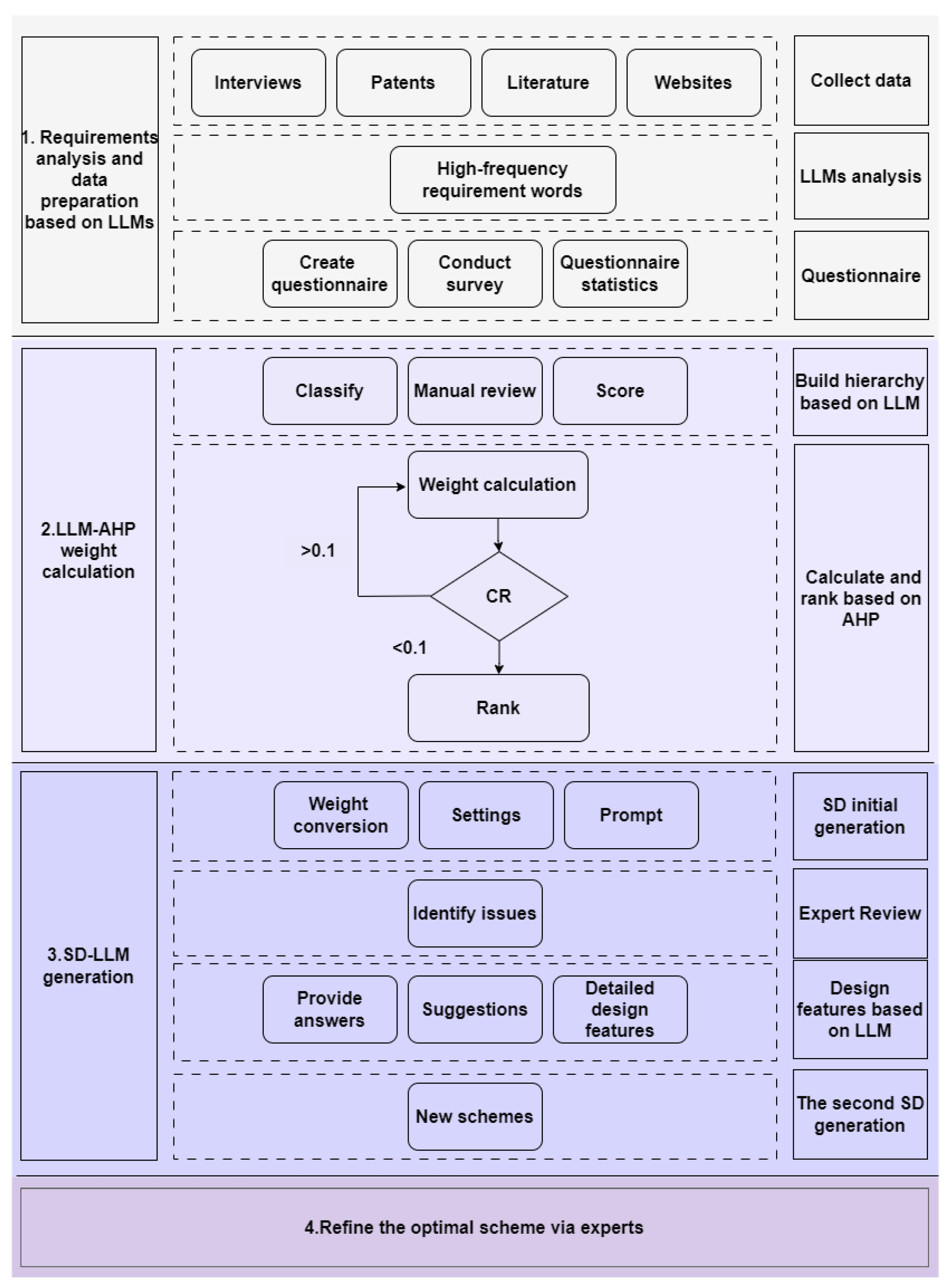
2.1. Research Framework and Process
2.2. Requirements Analysis and Data Preparation Based on LLMs
2.2.1. Data Collection
Interviews at a Primary School Entrance
Searching Literature Using X-MOL
Searching Patent Abstracts Using the Database of European Patent Office
Conducting Web Search Using Microsoft Bing
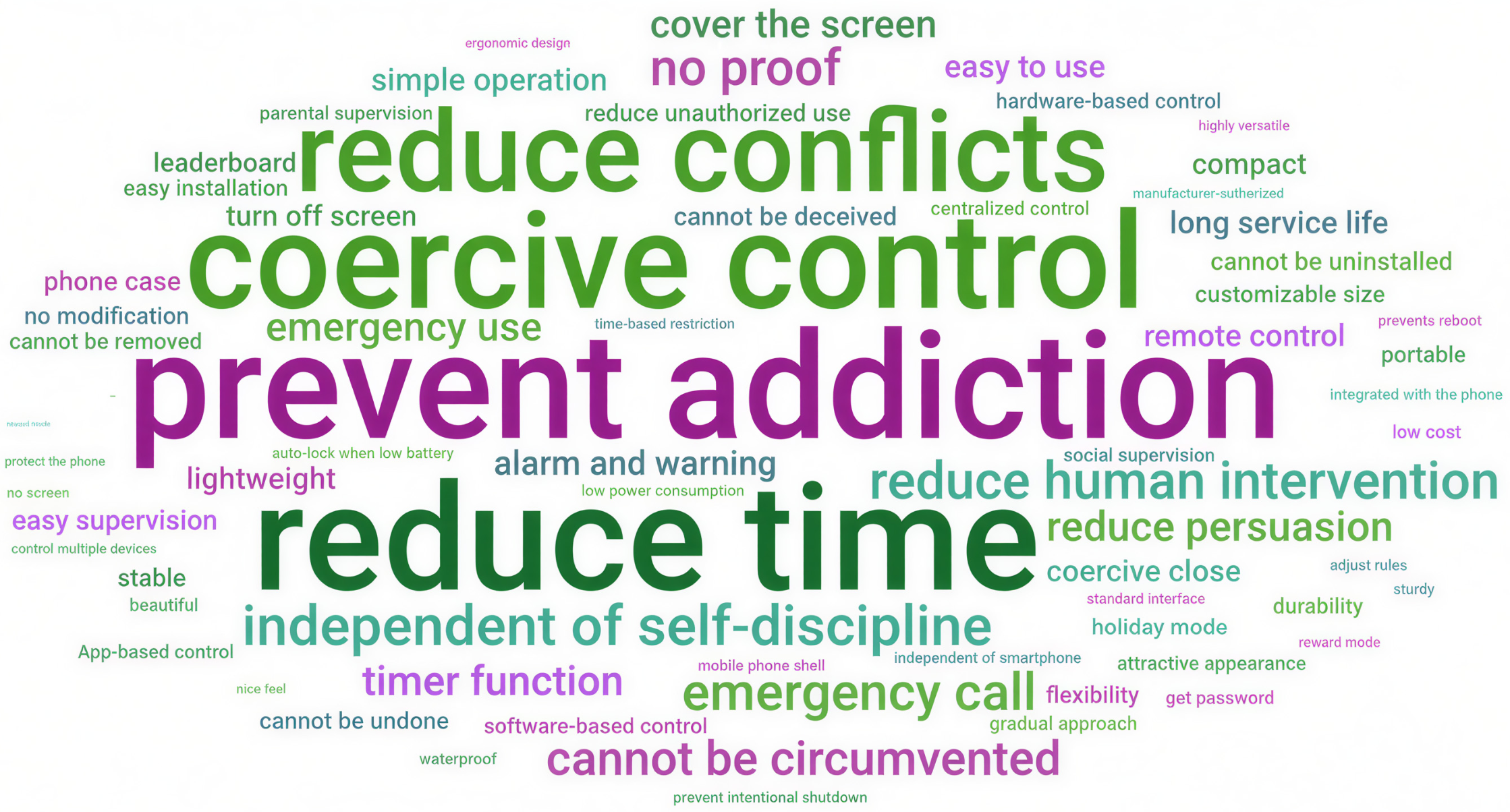
2.2.2. Data Analysis and Requirement Keyword Statistics Based on LLMs
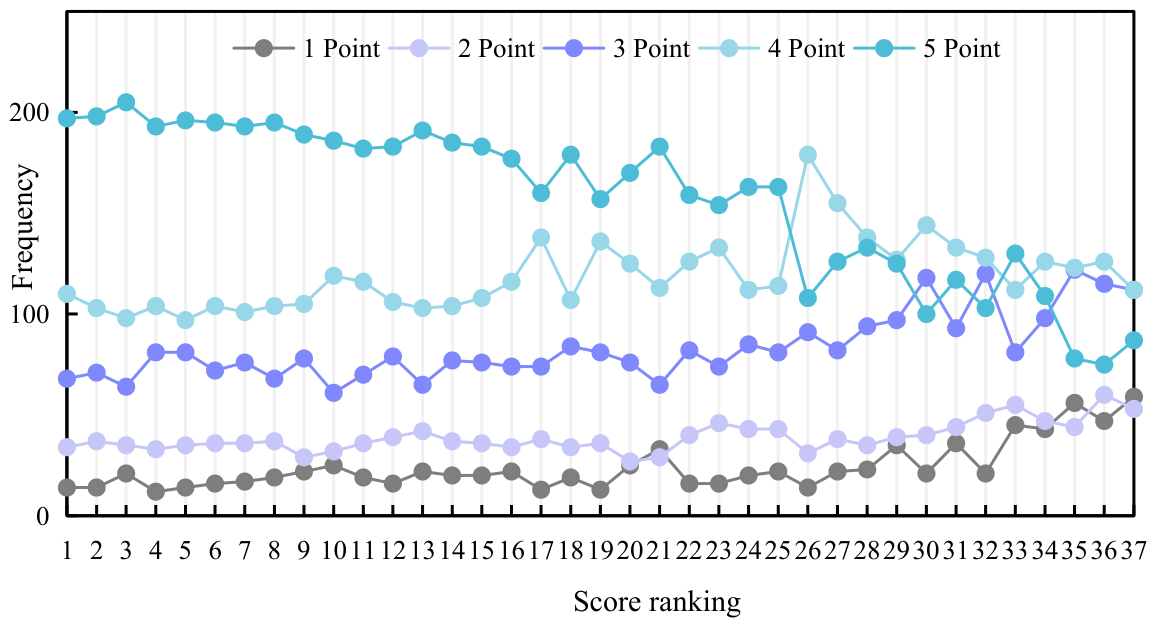
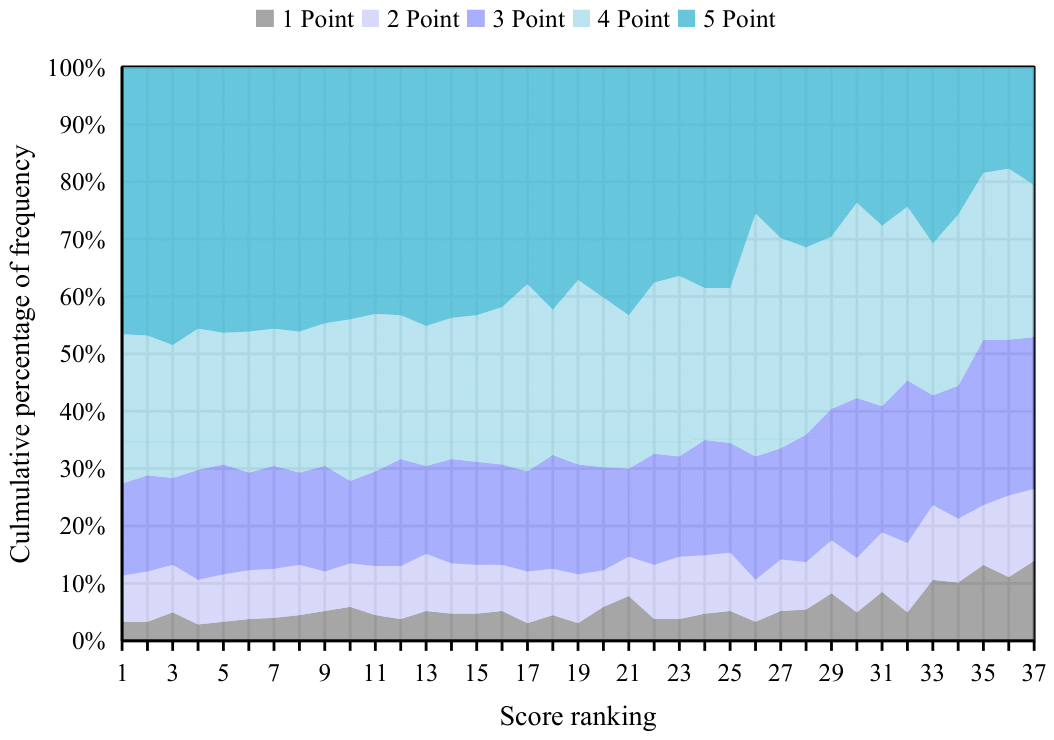
2.2.3. Questionnaire Design and Survey Implementation
2.3. LLM-AHP Weight Analysis
2.3.1. AHP Classification Based on the LLM
2.3.2. AHP Calculations and Analysis
2.4. Scheme Generation
2.5. Refinement of the Optimal Scheme
3. Design Practice and Results
3.1. Results of Requirements Analysis and Data Preparation Based on LLMs
3.2. Results of LLM-AHP Weight Calculation
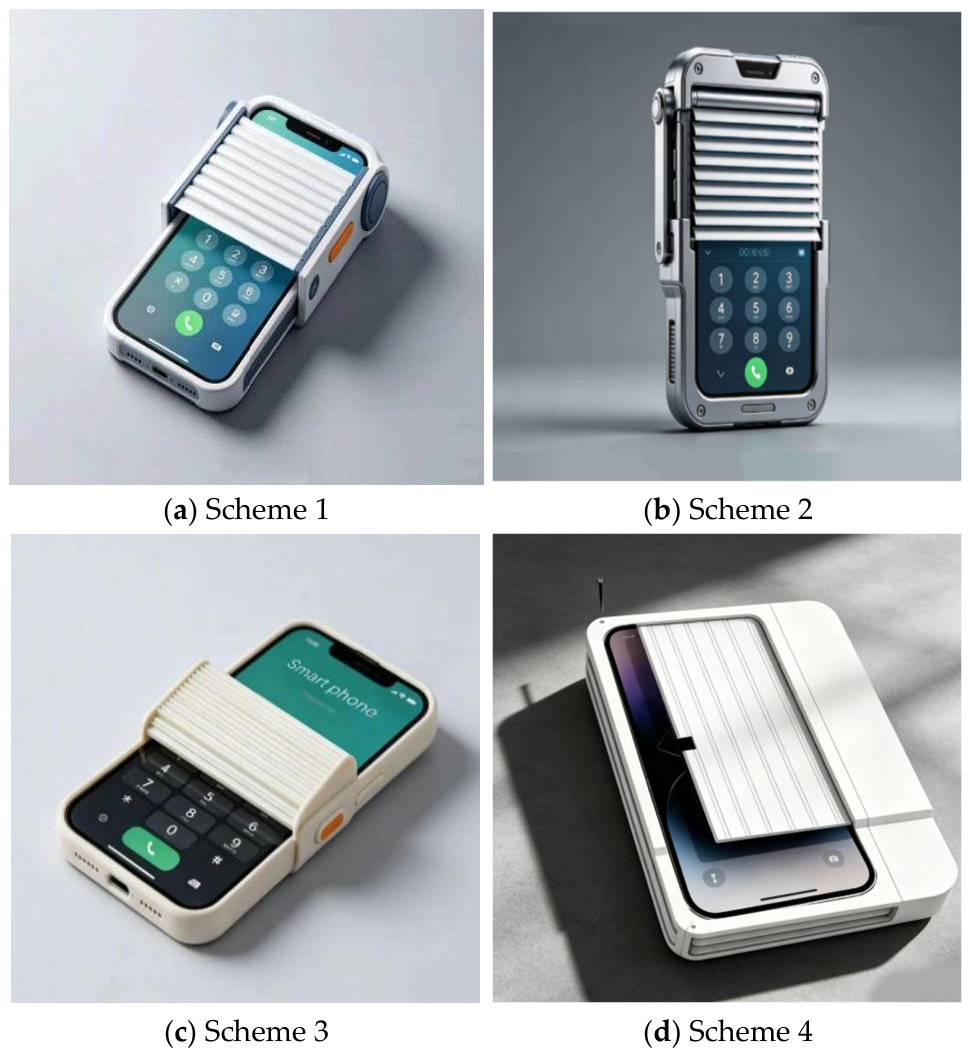
3.3. Results of the Scheme Generation
3.4. Detailed Results for the Core Components of the Optimal Scheme
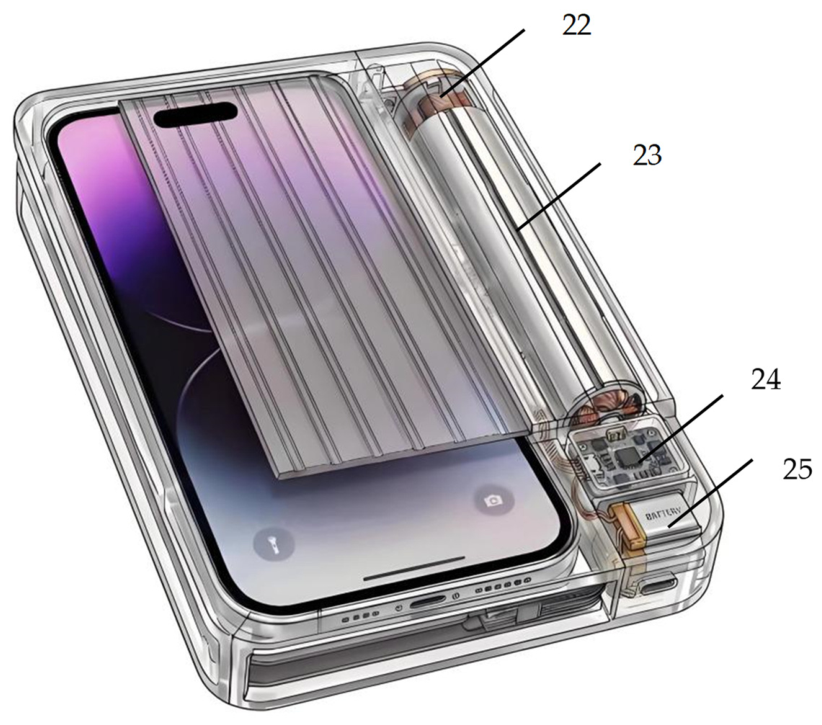
3.4.1. Detailed Results for the Device Case
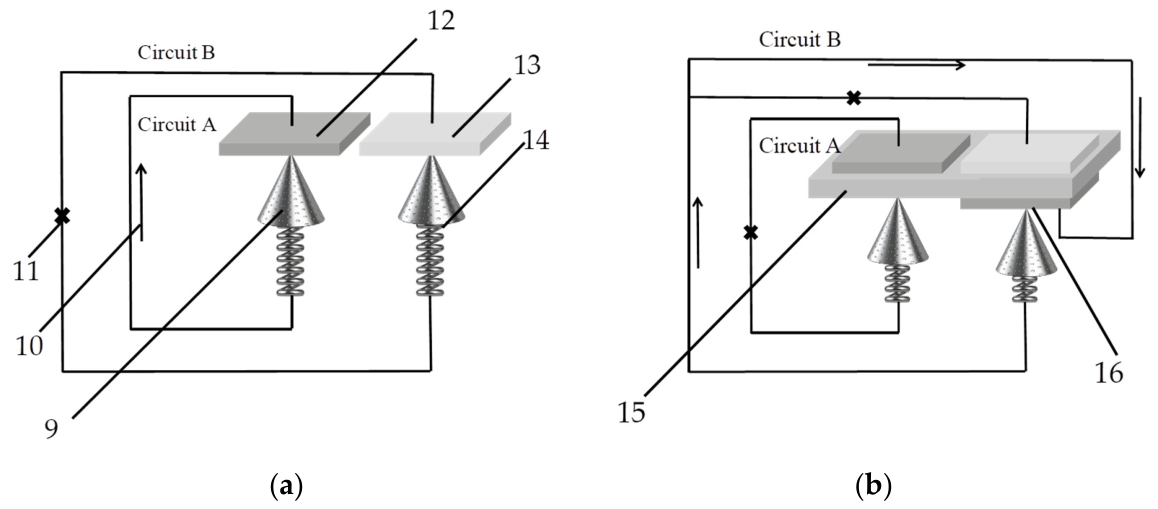
3.4.2. The Contact Detection Device of Roller Shutter Head
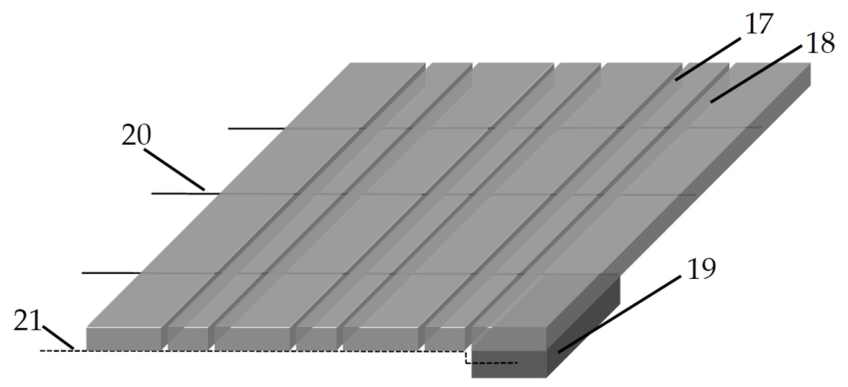
3.4.3. The Roller Shutter and Drive Unit
3.4.4. Battery Module
3.4.5. Control Module
4. Discussion
4.1. Comparative Analysis with Previous Studies
4.1.1. Rationale for Moderate Coercive Management
4.1.2. Methodological Transfer: Extending LLM-AHP to Hardware Product Design
4.1.3. Methodological Innovation: Shifting from “LLM-SD” to “SD-LLM” for Generation Iteration
4.2. Novel Findings and Implications
4.2.1. Discrepancy Between Questionnaire and Weight Ranking
4.2.2. The Critical Importance of Minimizing Human Intervention
4.3. Limitations of the Study
4.3.1. Absence of Long-Term Efficacy Validation
4.3.2. Questionnaire Reliability and Sample Scope
4.3.3. Limitations of SD as a Generation Tool
4.3.4. Limitations of the Construction of the Judgment Matrices
4.4. Future Prospects
4.4.1. Conducting New Surveys
4.4.2. Developing Practical Products
4.4.3. Generalizability and Formalization of the Methodology
5. Conclusions
- (1)
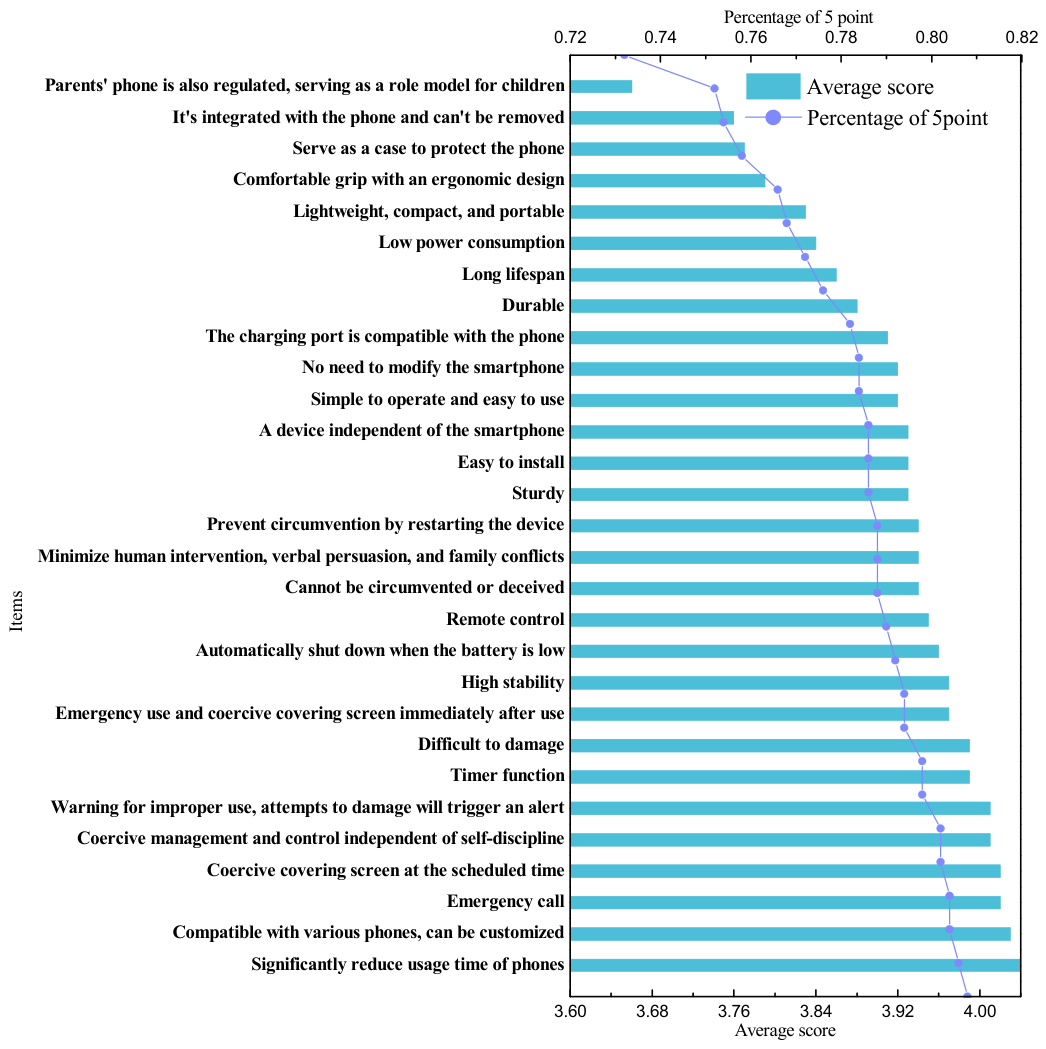
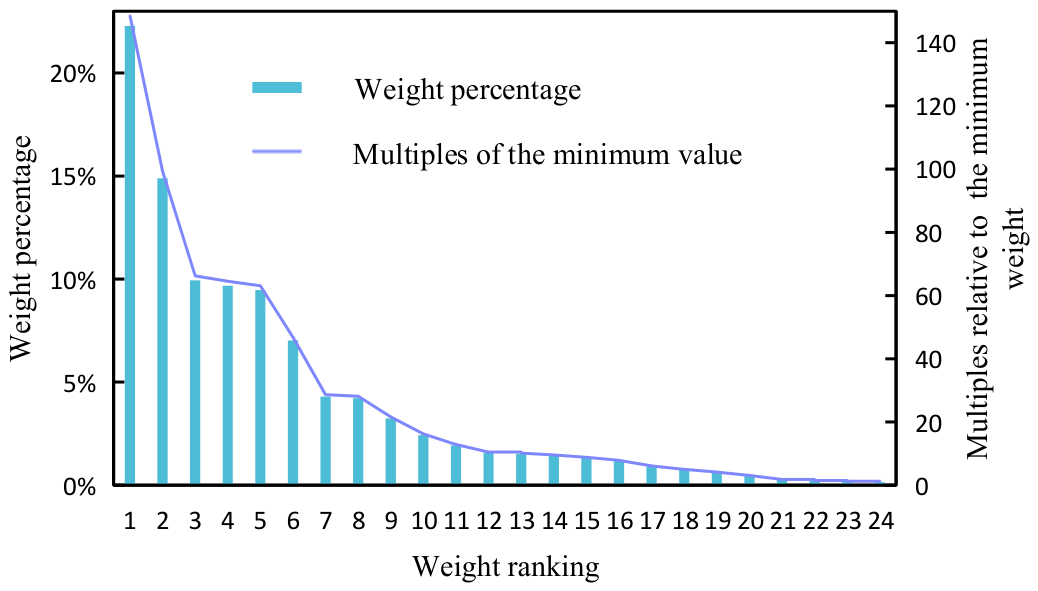
- The LLM-AHP method addressed the issues of ambiguous requirements and significant subjective bias. It quantified these requirements and ranked them based on their weights. There were a total of 24 requirements, but their weight values varied significantly. The weights were generally divided into five intervals: 1–2 (very strong weight), 3–6 (strong weight), 7–11 (moderate weight), 12–16 (weak weight), and 17–24 (very weak weight). The top two requirements were as follows: “Coercive management and control for smartphone independent of self-discipline” (22.28%), and “Minimize human intervention, verbal persuasion, and family conflicts” (14.89%). The next four items were as follows: “Emergency use and coercive covering screen immediately after use” (9.94%), “Cannot be circumvented or deceived” (9.68%), “Emergency call” (9.47%), and “Coercive covering screen at the scheduled time” (7.02%). From the 7th rank, the value decreased to less than 5%, and from the 17th rank, it dropped to under 1%. This indicated that the key requirements concentrated in the top six items.
- (2)
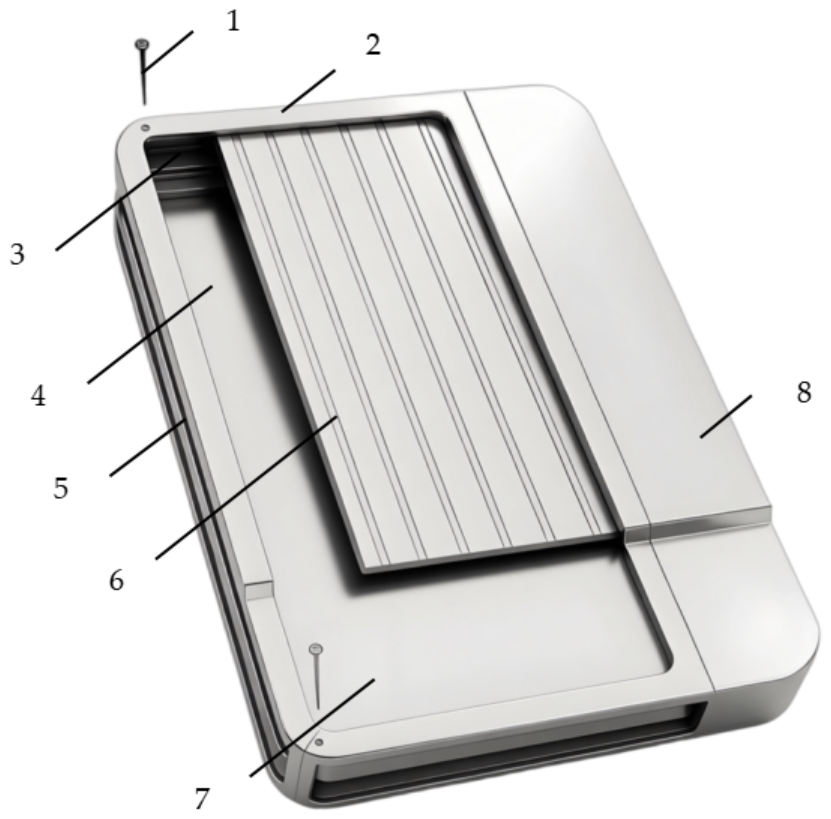
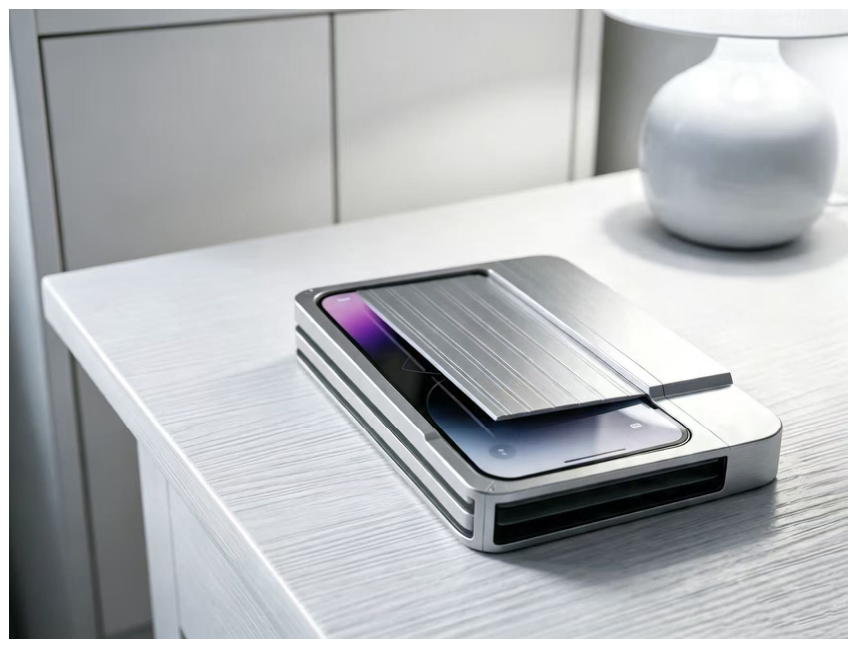
- The SD-LLM method inspired the generation of novel schemes and resolved the issues identified by designers. The key design features such as the non-removable case, the non-standard internal triangular screws for anti-circumvention, the emergency call area, and the roller shutter to cover the screen were all derived from SD-LLM. However, traditional manual design remained indispensable for the creativity and design of complex components. The mechanism of the triple-verified contact detection device was quite complicated; it was designed by human designers.
- (3)
- The entire design process that included multi-source data collection, quantitative analysis, scheme iteration, and detailed manual refinement. It was reproducible and could be applied to the design of other smart products for children.
- (4)
- Limitations and future directions: The questionnaire sample size needs to be increased; the study should consider incorporating experts from diverse fields; future research would include user testing and reliability studies.
Author Contributions
Funding
Institutional Review Board Statement
Informed Consent Statement
Data Availability Statement
Acknowledgments
Conflicts of Interest
Abbreviations
| LLM | Large Language Model |
| SD | Stable Diffusion |
| AHP | Analytic Hierarchy Process |
| LLMs | Large Language Models |
References
- Zemni, I.; Bennasrallah, C.; Kacem, M.; Garrach, B.; Dhouib, W.; Ben Fredj, M.; Abroug, H.; Zayene, O.; Bouanene, I.; Sriha, A. Smartphone addiction among medical students in the University of Monastir, Tunisia. Eur. J. Public Health 2024, 34, ckae144.2266. [Google Scholar] [CrossRef]
- Ramakrishna, S.K.; Vranda, M.N.; Sharma, M.K.; Majhi, G.; Gunasekaren, D.; Cicil, R.V. A retrospective study of life skills promotes healthy Internet use among adolescents. J. Fam. Med. Prim. Care 2023, 12, 2307–2312. [Google Scholar] [CrossRef] [PubMed]
- Henderson, L.; Sullivan, E. Commentary: Safeguarding youth in the smartphone era: Rethinking evidence for action—A commentary on Lai et al. (2025). Child Adolesc. Ment. Health 2025, 30, 281–284. [Google Scholar] [CrossRef] [PubMed]
- Kaewpradit, K.; Ngamchaliew, P.; Buathong, N. Digital screen time usage, prevalence of excessive digital screen time, and its association with mental health, sleep quality, and academic performance among Southern University students. Front. Psychiatry 2025, 16, 1535631. [Google Scholar] [CrossRef] [PubMed]
- Li, J. The association between smartphone use and myopia progression in children: A prospective cohort study. BMC Pediatr. 2025, 25, 378. [Google Scholar] [CrossRef] [PubMed]
- Araújo Bacil, E.D.; da Silva, M.P.; Martins, R.V.; da Costa, C.G.; de Campos, W. Exposure to smartphones and tablets, physical activity and sleep in children from 5 to 10 years old: A systematic review and meta-analysis. Am. J. Health Promot. 2024, 38, 1033–1047. [Google Scholar] [CrossRef] [PubMed]
- Jin, Y.; Zhou, W.; Zhang, Y.; Yang, Z.; Hussain, Z. Smartphone distraction and academic anxiety: The mediating role of academic procrastination and the moderating role of time management disposition. Behav. Sci. 2024, 14, 820. [Google Scholar] [CrossRef] [PubMed]
- Yang, H.; Chen, Y.; Yuan, R.; Yan, J.; Zhang, N.; Zhou, H. A network analysis of alexithymia and smartphone addiction in children and adults. Curr. Psychol. 2024, 43, 21857–21870. [Google Scholar] [CrossRef]
- Brailovskaia, J.; Delveaux, J.; John, J.; Wicker, V.; Noveski, A.; Kim, S.; Schillack, H.; Margraf, J. Finding the “sweet spot” of smartphone use: Reduction or abstinence to increase well-being and healthy lifestyle?! An experimental intervention study. J. Exp. Psychol. Appl. 2023, 29, 149–161. [Google Scholar] [CrossRef] [PubMed]
- Su, D.; Zhang, J.; Ma, Y.; Geng, Z. Self-control, academic anxiety, and mobile phone addiction: The moderating role of being an only child. Front. Psychol. 2025, 16, 1587279. [Google Scholar] [CrossRef] [PubMed]
- Lin, H.; Fan, H.; Fu, Q.; Li, S.; Liu, Q. The mediating role of self-control between physical activity and mobile phone addiction in adolescents: A meta-analytic structural equation modeling approach. Front. Psychiatry 2025, 16, 1446872. [Google Scholar] [CrossRef] [PubMed]
- Bibi, A.; Mushtaq, A.; Aurangzeb, W.; Ahmed, S.Z.; Ahmad, M. Role of self-regulation in controlling cyber loafing and smartphone addiction: Reducing health risk at the university level. J. Educ. Health Promot. 2025, 14, 125. [Google Scholar] [CrossRef] [PubMed]
- Wang, Y.; Wang, X.; Wu, S.; Zhang, W.; Li, J.; Liu, B. Physical exercise and bedtime procrastination among college students: Mediating roles of self-control and mobile phone addiction. Front. Psychol. 2025, 16, 1630326. [Google Scholar] [CrossRef] [PubMed]
- Li, Y.; Zhang, J.; Luo, Z.; Tao, D.; Wen, L. The impact of different sports on reducing mobile phone addiction: A systematic review and network meta-analysis. Addict. Biol. 2025, 30, e70087. [Google Scholar] [CrossRef] [PubMed]
- Li, J.; Wang, D.; Bai, S.; Yang, W. The effect of mindfulness-based Tai Chi Chuan on mobile phone addiction among male college students is associated with executive functions. PLoS ONE 2025, 20, e0314211. [Google Scholar] [CrossRef] [PubMed]
- Li, Y.; Zhang, Z.; Zhang, J.; Zhang, Q.; Luo, Z.; Tao, D. The influence of different intervention measures on improving mobile phone addiction among teenagers or young adults: A systematic review and network meta-analysis. Front. Psychiatry 2025, 16, 1629251. [Google Scholar] [CrossRef] [PubMed]
- Du, G.; Wang, X. Fighting mobile phone addiction with forgiveness following interpersonal transgressions: A psychological compensation perspective. Behav. Sci. 2025, 15, 1209. [Google Scholar] [CrossRef] [PubMed]
- Wang, H.; Ji, M.; Tu, H.; Qi, Y.; Wu, S.; Wang, X. College students’ loneliness and mobile phone addiction: Mediating role of mobile phone anthropomorphism and moderating role of interpersonal relationship quality. Front. Psychiatry 2025, 16, 1581421. [Google Scholar] [CrossRef] [PubMed]
- Luo, J.; Cai, G.; Zu, X.; Huang, Q.; Cao, Q. Mobile phone addiction and negative emotions: An empirical study among adolescents in Jiangxi Province. Front. Psychiatry 2025, 16, 1541605. [Google Scholar] [CrossRef] [PubMed]
- León Méndez, M.; Padrón, I.; Fumero, A.; Marrero, R.J. Effects of internet and smartphone addiction on cognitive control in adolescents and young adults: A systematic review of fMRI studies. Neurosci. Biobehav. Rev. 2024, 159, 105572. [Google Scholar] [CrossRef] [PubMed]
- Christin Brockmeier, L.; Keller, J.; Dingler, T.; Paduszynska, N.; Luszczynska, A.; Radtke, T. Planning a digital detox: Findings from a randomized controlled trial to reduce smartphone usage time. Comput. Hum. Behav. 2025, 168, 108624. [Google Scholar] [CrossRef]
- Boode, K. Ban on mobile phones in the classroom: First (positive) effects. Eur. J. Public Health 2024, 34, ckae144.451. [Google Scholar] [CrossRef]
- Lee, J.; Lee, S.; Shin, Y. Lack of parental control is longitudinally associated with higher smartphone addiction tendency in young children: A population-based cohort study. J. Korean Med. Sci. 2024, 39, e254. [Google Scholar] [CrossRef] [PubMed]
- Vasiliu, O. Current challenges and future directions of research in cell phone addiction. Eur. Psychiatry 2024, 67, S295. [Google Scholar] [CrossRef]
- Jeong, K. Mobile Phone Addiction Prevention System Using Mobile Application and Beacon. KR Patent Application No. KR20210037481A, 6 April 2021. Available online: https://worldwide.espacenet.com/patent/search/family/075473013/publication/KR20210037481A?q=num%20any%20%22KR20210037481A%22 (accessed on 5 November 2025).
- Wang, C. Anti-Addiction Answering System for Mobile Phone. China Patent Application No. CN211981944U, 20 November 2020. Available online: https://worldwide.espacenet.com/patent/search/family/073384123/publication/CN211981944U?q=num%20any%20%22CN211981944U%22 (accessed on 5 November 2025).
- Park, J.; Jeong, J.-E.; Park, S.Y.; Rho, M.J. Development of the smartphone addiction risk rating score for a smartphone addiction management application. Front. Public Health 2020, 8, 485. [Google Scholar] [CrossRef] [PubMed]
- Beck, A.K.; Kelly, P.J.; Deane, F.P.; Baker, A.L.; Hides, L.; Manning, V.; Shakeshaft, A.; Neale, J.; Kelly, J.F.; Gray, R.M.; et al. Developing a mhealth routine outcome monitoring and feedback app (“SMART Track”) to support self-management of addictive behaviours. Front. Psychiatry 2021, 12, 677637. [Google Scholar] [CrossRef] [PubMed]
- Lee, S.J.; Choi, M.J.; Yu, S.H.; Kim, H.; Park, S.J.; Choi, I.Y. Development and evaluation of smartphone usage management system for preventing problematic smartphone use. Digit. Health 2022, 8, 1–12. [Google Scholar] [CrossRef] [PubMed]
- Datta, A.; Soni, S.; Singh, K.; Singh, A. Impact of continuing medical education (CME)-based sensitization on problematic smartphone use (PSU) among medical students: A Longitudinal Study. Cureus 2025, 17, e83695. [Google Scholar] [CrossRef] [PubMed]
- Zeng, Z.; Zhu, C. Simple Device for Preventing Mobile Phone Network Addiction of Student. China Patent Application No. CN216534472U, 17 May 2022. Available online: https://worldwide.espacenet.com/patent/search/family/081577185/publication/CN216534472U?q=pn%3DCN216534472U (accessed on 5 November 2025).
- Cai, C.; Cai, S.; Zheng, A. Smart Phone Forced Control Method Based on Health Linkage. China Patent Application No. CN120343133A, 18 July 2025. Available online: https://worldwide.espacenet.com/patent/search/family/096354621/publication/CN120343133A?q=num%20any%20%22CN120343133A%22 (accessed on 5 November 2025).
- Lin, X. Anti-Addiction Electronic Mobile Equipment Shell. China Patent Application No. CN120321326A, 15 July 2025. Available online: https://worldwide.espacenet.com/patent/search/family/096333928/publication/CN120321326A?q=num%20any%20%22CN120321326A%22 (accessed on 5 November 2025).
- Liang, X.; Wang, Z.; Liu, J. A survey of large language model-augmented knowledge graphs for advanced complex product design. J. Manuf. Syst. 2025, 80, 883–901. [Google Scholar] [CrossRef]
- Dortheimer, J.; Martelaro, N.; Sprecher, A.; Schubert, G. Evaluating large-language-model chatbots to engage communities in large-scale design projects. Artif. Intell. Eng. Des. Anal. Manuf. 2024, 38, e4. [Google Scholar] [CrossRef]
- Pan, X.; Zhuang, W.; Wen, S.; Yu, W.; Bao, J.; Li, X. A context-aware KG-LLM collaborated conceptual design approach for personalized products: A case in lower limbs rehabilitation assistive devices. Adv. Eng. Inform. 2025, 66, 103422. [Google Scholar] [CrossRef]
- Karasan, A.; Ilbahar, E.; Cebi, S.; Kahraman, C. Customer-oriented product design using an integrated neutrosophic AHP & DEMATEL & QFD methodology. Appl. Soft Comput. 2022, 118, 108445. [Google Scholar] [CrossRef]
- Sivalingam, C.; Subramaniam, S.K. Cobot selection using hybrid AHP-TOPSIS based multi-criteria decision making technique for fuel filter assembly process. Heliyon 2024, 10, e26374. [Google Scholar] [CrossRef] [PubMed]
- Liu, Z.; Liang, X.; Chen, X.; Wen, X. Design of a sweeping robot based on fuzzy QFD and ARIZ algorithms. Heliyon 2024, 10, e38319. [Google Scholar] [CrossRef] [PubMed]
- Park, H.; Oh, H.; Gao, F.; Kwon, O. Enhancing analytic hierarchy process modelling under uncertainty with fine-tuning LLM. Expert Syst. 2025, 42, e7005. [Google Scholar] [CrossRef]
- Memduhoğlu, A.; Fulman, N.; Polat, N.; Ataş, T. Large language models as virtual experts? Evaluating AHP-based criteria weighting performance for solar power plant site selection. Expert Syst. Appl. 2026, 299, 30171. [Google Scholar] [CrossRef]
- Chen, G.; Lan, X.; Liu, K.; Cheng, C. Research on fusion generation algorithm of visual communication and product design based on AIGC technology. Syst. Soft Comput. 2025, 7, 200237. [Google Scholar] [CrossRef]
- Lin, H.; Jiang, X.; Deng, X.; Bian, Z.; Fang, C.; Zhu, Y. Comparing AIGC and traditional idea generation methods: Evaluating their impact on creativity in the product design ideation phase. Think. Ski. Creat. 2024, 54, 101649. [Google Scholar] [CrossRef]
- Barrientos-Espillco, F.; Pajares, G.; López-Orozco, J.A.; Besada-Portas, E. Customization of the text-to-image diffusion model by fine-tuning for the generation of synthetic images of cyanobacterial blooms in lentic water bodies. Expert Syst. Appl. 2025, 287, 128169. [Google Scholar] [CrossRef]
- Liu, Y.; Wu, P.; Li, X.; Mo, W. Application and renovation evaluation of Dalian’s industrial architectural heritage based on AHP and AIGC. PLoS ONE 2024, 19, e0312282. [Google Scholar] [CrossRef] [PubMed]
- Li, Y.; Wang, L.; Tang, C.; Zhang, J.; Lin, Y. Design of smart public transportation facilities aided by AIGC technology. Packag. Eng. 2024, 45, 479–488. [Google Scholar] [CrossRef]
- Li, X.; Li, Z.; Wang, H. A feature-tag-driven semantic control framework for AIGC-Based furniture design using LoRA fine-tuning. Appl. Sci. 2026, 16, 5917. [Google Scholar] [CrossRef]
- Fang, Y.; Zhang, Y.; Tu, H.; Yang, W.; Wu, B.; Zhu, W.; Li, S. Application of Dunhuang caisson patterns in cultural and creative product design based on artificial intelligence generated content technology. Eng. Appl. Artif. Intell. 2026, 177, 114816. [Google Scholar] [CrossRef]
- Qiu, Y.; Luo, J.; Yang, W.; Gao, L. An AI-driven framework for furniture design integrating NLP and multi-criteria decision making based on online user reviews. Expert Syst. Appl. 2026, 320, 132164. [Google Scholar] [CrossRef]
- Song, S.; Yue, J.; Yang, X. Kansei design optimization of torque tool inspection cabinets using XGBoost prediction models. Appl. Sci. 2026, 16, 3884. [Google Scholar] [CrossRef]





| Requirement Items | Scale | ||||
|---|---|---|---|---|---|
| Significantly reduce smartphone usage time | 1 | 2 | 3 | 4 | 5 |
| Easy to install | 1 | 2 | 3 | 4 | 5 |
| Simple operation | 1 | 2 | 3 | 4 | 5 |
| Coercive control without self-discipline or human Intervention | 1 | 2 | 3 | 4 | 5 |
| …… | 1 | 2 | 3 | 4 | 5 |
| Emergency use | 1 | 2 | 3 | 4 | 5 |
| Emergency call | 1 | 2 | 3 | 4 | 5 |
| No need to modify the smartphone | 1 | 2 | 3 | 4 | 5 |
| Items | B1 | B2 | B3 | B4 | Feature Vectors | Weight |
|---|---|---|---|---|---|---|
| B1 | 1 | 5.7 | 6.9 | 7.7 | 4.2132 | 0.6512 |
| B2 | 0.1754 | 1 | 3 | 4.9 | 1.2541 | 0.1941 |
| B3 | 0.1449 | 0.3333 | 1 | 2.9 | 0.6522 | 0.1009 |
| B4 | 0.1299 | 0.2041 | 0.3448 | 1 | 0.3511 | 0.0538 |
| Items | C1 | C2 | C3 | C4 | C5 | C6 | C7 | C8 | C9 | C10 | Feature Vectors | Weight |
|---|---|---|---|---|---|---|---|---|---|---|---|---|
| C1 | 1 | 3.1 | 3.7 | 5.2 | 5.2 | 8.7 | 9 | 8.9 | 8.7 | 9 | 5.211 | 0.3421 |
| C2 | 0.323 | 1 | 3.1 | 3.7 | 4.7 | 7.7 | 7.7 | 7.8 | 7.8 | 8.1 | 3.482 | 0.2286 |
| C3 | 0.27 | 0.323 | 1 | 2.9 | 4.1 | 6.2 | 6.5 | 6.3 | 6.2 | 6.7 | 2.265 | 0.1487 |
| C4 | 0.192 | 0.27 | 0.345 | 1 | 3.6 | 5 | 5.1 | 5 | 5.1 | 5.8 | 1.642 | 0.1078 |
| C5 | 0.192 | 0.213 | 0.244 | 0.278 | 1 | 3.4 | 3.9 | 3.9 | 3.9 | 4.2 | 0.987 | 0.0648 |
| C6 | 0.115 | 0.13 | 0.161 | 0.2 | 0.294 | 1 | 1.8 | 2.2 | 2.3 | 2.7 | 0.452 | 0.0297 |
| C7 | 0.111 | 0.13 | 0.154 | 0.196 | 0.256 | 0.556 | 1 | 1.6 | 2 | 2.4 | 0.368 | 0.0242 |
| C8 | 0.112 | 0.128 | 0.159 | 0.2 | 0.256 | 0.455 | 0.625 | 1 | 1.6 | 2.2 | 0.335 | 0.022 |
| C9 | 0.115 | 0.128 | 0.161 | 0.196 | 0.256 | 0.435 | 0.5 | 0.625 | 1 | 1.7 | 0.276 | 0.0181 |
| C10 | 0.111 | 0.123 | 0.149 | 0.172 | 0.238 | 0.37 | 0.417 | 0.455 | 0.588 | 1 | 0.214 | 0.0140 |
| Items | C11 | C12 | Feature Vectors | Weight |
|---|---|---|---|---|
| C11 | 1 | 1.1 | 1.0488 | 0.5119 |
| C12 | 0.909 | 1 | 0.9535 | 0.4881 |
| Items | C13 | C14 | C15 | C16 | C17 | C18 | C19 | C20 | C21 | Feature Vectors | Weight |
|---|---|---|---|---|---|---|---|---|---|---|---|
| C13 | 1 | 4 | 6 | 8.2 | 8.8 | 9 | 9 | 9 | 9 | 5.682 | 0.4263 |
| C14 | 0.25 | 1 | 3.2 | 5.4 | 6.6 | 7.6 | 7.8 | 7.6 | 7.8 | 3.215 | 0.2412 |
| C15 | 0.167 | 0.313 | 1 | 3.2 | 4.4 | 5.2 | 5.2 | 5.2 | 5.6 | 1.742 | 0.1307 |
| C16 | 0.122 | 0.185 | 0.313 | 1 | 3.2 | 4.2 | 4.4 | 4.4 | 4.6 | 0.985 | 0.0739 |
| C17 | 0.114 | 0.152 | 0.227 | 0.313 | 1 | 3.2 | 3.4 | 3.4 | 3.8 | 0.614 | 0.0461 |
| C18 | 0.111 | 0.132 | 0.192 | 0.238 | 0.313 | 1 | 1.8 | 2.4 | 2.6 | 0.358 | 0.0269 |
| C19 | 0.111 | 0.128 | 0.192 | 0.227 | 0.294 | 0.556 | 1 | 1.6 | 2.2 | 0.285 | 0.0214 |
| C20 | 0.111 | 0.132 | 0.192 | 0.227 | 0.294 | 0.417 | 0.625 | 1 | 1.8 | 0.246 | 0.0185 |
| C21 | 0.111 | 0.128 | 0.179 | 0.217 | 0.263 | 0.385 | 0.455 | 0.556 | 1 | 0.201 | 0.0151 |
| Items | C22 | C23 | C24 | Feature Vectors | Weight |
|---|---|---|---|---|---|
| C22 | 1 | 2 | 7.2 | 2.433 | 0.6021 |
| C23 | 0.5 | 1 | 3 | 1.145 | 0.2832 |
| C24 | 0.139 | 0.333 | 1 | 0.461 | 0.1147 |
| Items | Requirements | Comprehensive Weights | Ranking |
|---|---|---|---|
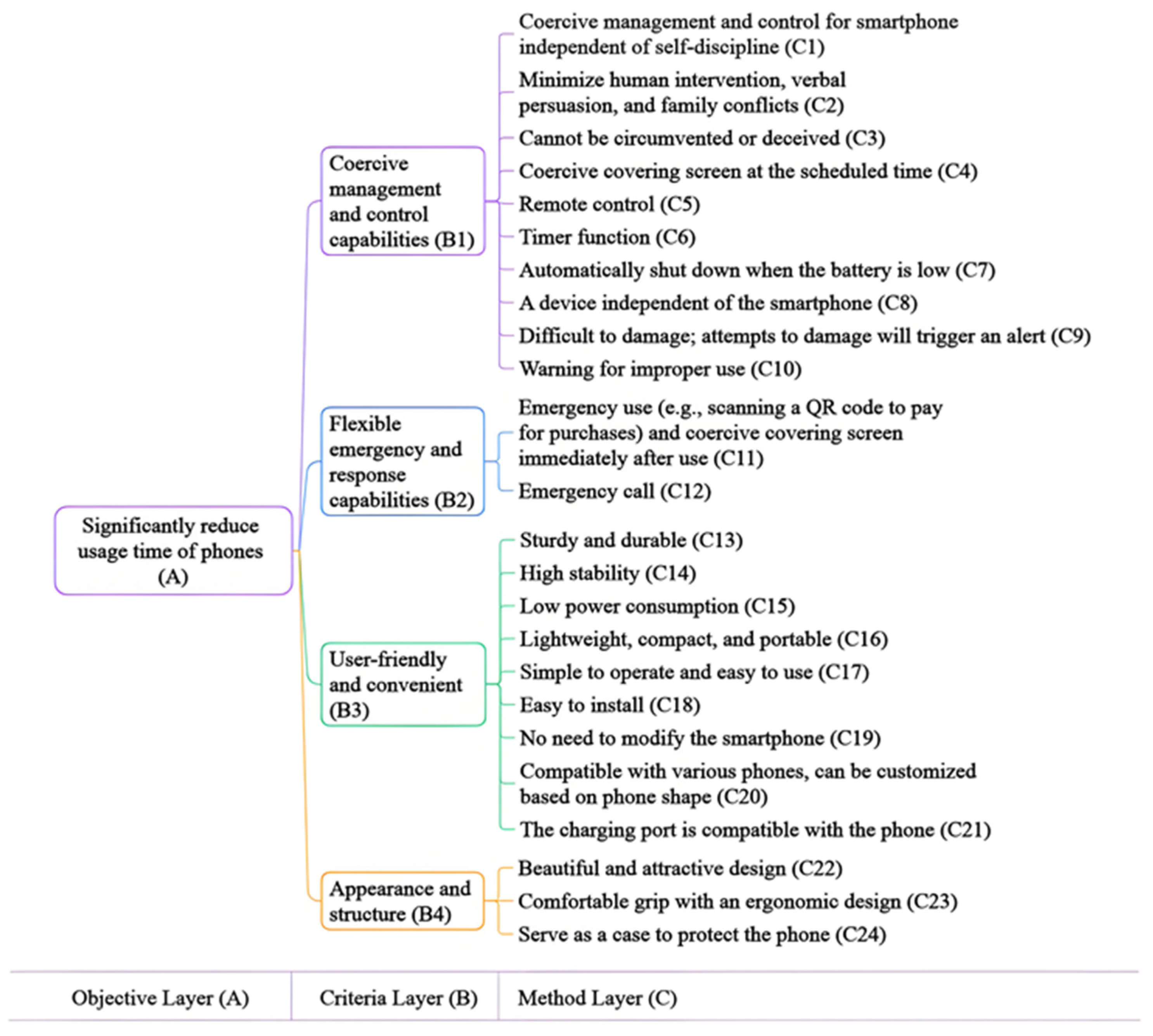
| C1 | Coercive management and control for smartphone independent of self-discipline (C1) | 0.2228 | 1 |
| C2 | Minimize human intervention, verbal persuasion, and family conflicts (C2) | 0.1489 | 2 |
| C11 | Emergency use (e.g., scanning a QR (Quick Response) code to pay for purchases) and coercive covering screen immediately after use (C11) | 0.0994 | 3 |
| C3 | Cannot be circumvented or deceived (C3) | 0.0968 | 4 |
| C12 | Emergency call (C12) | 0.0947 | 5 |
| C4 | Coercive covering screen at the scheduled time (C4) | 0.0702 | 6 |
| C13 | Sturdy and durable (C13) | 0.043 | 7 |
| C5 | Remote control (C5) | 0.0422 | 8 |
| C22 | Beautiful and attractive design (C22) | 0.0324 | 9 |
| C14 | High stability (C14) | 0.0243 | 10 |
| C6 | Timer function (C6) | 0.0193 | 11 |
| C7 | Automatically shut down when the battery is low (C7) | 0.0157 | 12 |
| C23 | Comfortable grip with an ergonomic design (C23) | 0.0152 | 13 |
| C8 | A device independent of the smartphone (C8) | 0.0143 | 14 |
| C15 | Low power consumption (C15) | 0.0132 | 15 |
| C9 | Difficult to damage; attempts to damage will trigger an alert (C9) | 0.0118 | 16 |
| C10 | Warning for improper use (C10) | 0.0091 | 17 |
| C16 | Lightweight, compact, and portable (C16) | 0.0075 | 18 |
| C24 | Serve as a case to protect the phone (C24) | 0.0062 | 19 |
| C17 | Simple to operate and easy to use (C17) | 0.0046 | 20 |
| C18 | Easy to install (C18) | 0.0027 | 21 |
| C19 | No need to modify the smartphone (C19) | 0.0022 | 22 |
| C20 | Compatible with various phones, can be customized based on phone shape (C20) | 0.0019 | 23 |
| C21 | The charging port is compatible with the phone (C21) | 0.0015 | 24 |
| Positive Prompts Used for the Initial Generation of SD | Negative Prompts Used for the Initial Generation of SD |
|---|---|
| (((Smartphone anti-addiction device))), (((Coercive management and control for smartphone independent of self-discipline))), ((Minimize human intervention, verbal persuasion, and family conflicts)), {{{Emergency use, scanning a QR code to pay for purchases, coercive covering screen immediately after use}}}, {{Cannot be circumvented or deceived}}, (Emergency call), {Coercive covering screen at the scheduled time}, Sturdy and durable, Remote control, Beautiful and attractive design, High stability, Timer function, [Automatically shut down when the battery is low], [Comfortable grip with an ergonomic design], [[A device independent of the smartphone]], [[Low power consumption]], [[Difficult to damage, attempts to damage will trigger an alert]], [[[Warning for improper use]]], [[[Lightweight, compact, and portable]]], [[[Serve as a case to protect the phone]]], [[[Simple to operate and easy to use]]], [[[Easy to install]]], [[[No need to modify the smartphone]]], [[[Compatible with various phones, can be customized based on phone shape]]], [[[The charging port is compatible with the phone]]] | Ugly, deformed, blurry, low resolution, messy lines, extra parts, broken screen, text, watermark, cartoon, anime, illustration, unrealistic, plastic feel, too bright, too dark, disorganized, open box, password lock, ordinary phone case, ordinary phone management and control |
| Items | Issues Identified By The Design Students In The Initial Generation of SD | Use LLM to Provide Suggestions and Design Features for The Initial Generation of SD |
|---|---|---|
| C1 | The phone is stored in a box and must be returned to it; if it is not returned automatically, the device cannot control the phone | Coercive covering screen with a roller shutter at the scheduled time |
| C2 | Lack details | The device is integrated with the phone and cannot be removed; the action cannot be undone |
| C11 | Cannot be opened until the scheduled time | In an emergency the device can be opened for two minutes, it can only be used for emergency purposes five times per 24 h period |
| C3 | The device uses a password system; the password may be stolen or obtained | Using two non-standard internal triangular screws to fix the phone case |
| C12 | The box must be opened to make a call | Reserve a section at the bottom of the device that does not cover the screen, allowing for phone calls |
| C4 | The device uses a door-opening mechanism; the door takes up space when opening and closing | Covering screen with a roller shutter |
| C13 | The design uses plastic and is fully enclosed | Aluminum alloy construction with a hollowed frame design for easy access to ports and components |
| C5 | No communication module was designed | Equipped with an independent 5G module |
| C22 | The color and shape are unattractive. | Beautiful color and attractive design |
| C14 | Lack details | Extremely reliable roller shutter mechanisms and control systems |
| C6 | Uses a timer-based switch | Set the time using the software instead of the switch |
| C7 | Lack details | The device will automatically shut down to prevent circumventing when the device is low on power |
| C23 | Lack details | Referencing the ergonomics of mobile phones |
| C8 | The device is separate from the phone | The device is fixed to the outside of the phone as a whole and is non-removable |
| C15 | Includes a display screen, which consumes power | The device has no display screen |
| C9 | Lack details | The device can only be disassembled from the two screw points |
| C10 | Designs an external alarm light | If anyone attempts to prevent the roller shutter from closing, it will sound an alarm and vibrate, distracting those watching the screen |
| C16 | The device is very large. | Miniaturization of components such as batteries and motors |
| C24 | Simply designed as a traditional phone case. | Serve as an aluminum alloy case to protect the phone |
| C17 | Lack details | The device has no buttons |
| C18 | Lack details | Tightening two screws is the only step in the installation process |
| C19 | Lack details | No need to modify the buttons or circuit |
| C20 | Lack details | Compatible with various phones, can be customized based on phone shape |
| C21 | Lack details | The charging port is compatible with the phone |
| Positive Prompts Used for the Second Generation of SD | Negative Prompts Used for the Second Generation of SD |
|---|---|
| (((Smartphone anti-addiction device))), (((Coercive covering screen with a roller shutter at the scheduled time))), ((The device is integrated with the phone and cannot be removed; the action cannot be undone)), {{{In an emergency the device can be opened for two minutes, it can only be used for emergency purposes five times per 24-h period}}}, {{Using two non-standard internal triangular screws to fix the phone case}}, (Reserve a section at the bottom of the device that does not cover the screen, allowing for phone calls), {Covering screen with a roller shutter}, Aluminum alloy construction with a hollowed-out frame design for easy access to ports and components, Equipped with an independent 5G module, Beautiful color and attractive design, Extremely reliable roller shutter mechanisms and control systems, Set the time using the software instead of the switch, [The device will automatically shut down to prevent circumventing when the device is low on power], [Referencing the ergonomics of mobile phones], [[The device is fixed to the outside of the phone as a whole and is non-removable]], [[The device has no display screen]], [[The device can only be disassembled from the two screw points]], [[[If anyone attempts to prevent the roller shutter from closing, it will sound an alarm and vibrate, distracting those watching the screen]]], [[[Miniaturization of components such as batteries and motors]]], [[[Serve as a aluminum alloy case to protect the phone]]], [[[The device has no buttons]]], [[[Tightening two screws is the only step in the installation process]]], [[[No need to modify the buttons or circuit]]], [[[Compatible with various phones, can be customized based on phone shape]]], [[[The charging port is compatible with the phone]]] | Ugly, deformed, blurry, low resolution, messy lines, extra parts, broken screen, text, watermark, cartoon, anime, illustration, unrealistic, plastic feel, too bright, too dark, disorganized, open box, password lock, ordinary phone case, ordinary phone management and control |
| No. | Dimensions | Existing Studies Approaches | Proposed Methodology | Unique Features and Benefits |
|---|---|---|---|---|
| 1 | Management Strategy and Effectiveness | Software-based solutions: Vulnerable to being rooted, bypassed, or password-cracked. | Physical coercive control based on a roller-shutter mechanism: Combines coercive control with non-destructive hardware design. | Independence from self-discipline: Physically covers the screen, overcoming the vulnerabilities of software and the self-discipline reliance of existing hardware. |
| Hardware integrity: Requires no internal circuit modification, avoiding infringement risks. | ||||
| Existing hardware devices (e.g., timer boxes, circuit cut-offs): Either still rely on user self-discipline or require modification of the smartphone’s circuitry, posing integrity and infringement risks. | Conflict reduction: Automated operation minimizes family conflicts caused by repeated verbal persuasion. | |||
| 2 | Requirements Analysis | Manual AHP methods: Rely on experts’ subjective stratification and are inefficient in processing massive datasets. | LLM-AHP quantitative analysis framework: Utilizes LLM for semantic understanding, redundancy filtering, and hierarchical structuring, combined with AHP for quantitative calculation. | High objectivity: LLM assistance ensures comprehensive and mutually exclusive categorization with high logical consistency. |
| High reliability: Achieves a Cronbach’s α of 0.951. | ||||
| Current LLM applications: Mostly used for simple conversation-to-requirement conversion or in other fields (e.g., agriculture, site selection). | Domain expansion: First application of LLM-AHP to hardware product requirement quantification, filling a gap in anti-addiction device design methodologies. | |||
| 3 | Design Workflow | LLM-SD: Uses LLM to optimize prompts before SD generation. SD lacks mechanical logic, often resulting in visually appealing but structurally unfeasible designs. | SD-LLM workflow: Generates initial visual prototypes via SD, then employs LLM as a post-processing refinement agent for structural optimization and detail correction. | Enhanced structural logic: Leverages LLM’s reasoning capabilities to compensate for SD’s shortcomings in mechanical structure design. |
| Pure manual design: Low efficiency and long iteration cycles. | Iteration efficiency: Enables a rapid closed-loop transition from “visual concepts” to “engineering details,” accelerating the hardware product development process. |
| Acceptance | Parents | Students | Feasibility | Product Manufacturing Workers |
|---|---|---|---|---|
| Appearance | 8.4 | 7.8 | Material | 9.8 |
| Structural | 8.4 | 8.4 | Structure | 8.6 |
| Functional | 8 | 8.4 | Function | 8.4 |
| Willingness to Use | 9.8 | 8.4 | Circuit | 9.6 |
| Items | Table 2 | Table 3 | Table 4 | Table 5 | Table 6 | Table 7 |
|---|---|---|---|---|---|---|
| Child psychologist 1 | B+ | B- | B- | B- | B- | C+ |
| Child psychologist 2 | B | B- | B- | C+ | B- | B |
| Child psychologist 3 | B | C+ | B | C+ | B+ | B |
| Pediatrician 1 | B- | B | B+ | B | B | B- |
| Pediatrician 2 | C+ | B- | B | B+ | C+ | B- |
| Educator 1 (Primary school teacher) | B+ | C+ | B- | B | B- | C+ |
| Educator 2 (Primary school teacher) | B | B+ | B | B- | B | B- |
Disclaimer/Publisher’s Note: The statements, opinions and data contained in all publications are solely those of the individual author(s) and contributor(s) and not of MDPI and/or the editor(s). MDPI and/or the editor(s) disclaim responsibility for any injury to people or property resulting from any ideas, methods, instructions or products referred to in the content. |
© 2026 by the authors. Licensee MDPI, Basel, Switzerland. This article is an open access article distributed under the terms and conditions of the Creative Commons Attribution (CC BY) license.
Share and Cite
Wang, L.; Wu, J. A Human–AI Collaborative Design Methodology for an Adolescent Smartphone Addiction Management Device: Integrating LLM-AHP, SD-LLM, and Manual Refinement. Appl. Sci. 2026, 16, 7280. https://doi.org/10.3390/app16147280
Wang L, Wu J. A Human–AI Collaborative Design Methodology for an Adolescent Smartphone Addiction Management Device: Integrating LLM-AHP, SD-LLM, and Manual Refinement. Applied Sciences. 2026; 16(14):7280. https://doi.org/10.3390/app16147280
Chicago/Turabian StyleWang, Liying, and Jianbin Wu. 2026. "A Human–AI Collaborative Design Methodology for an Adolescent Smartphone Addiction Management Device: Integrating LLM-AHP, SD-LLM, and Manual Refinement" Applied Sciences 16, no. 14: 7280. https://doi.org/10.3390/app16147280
APA StyleWang, L., & Wu, J. (2026). A Human–AI Collaborative Design Methodology for an Adolescent Smartphone Addiction Management Device: Integrating LLM-AHP, SD-LLM, and Manual Refinement. Applied Sciences, 16(14), 7280. https://doi.org/10.3390/app16147280