Sustainable Production of Natural Pigments from Microalgae: A Review Study


Abstract
1. Introduction
2. Pigment Classification
3. Pigments Production
3.1. Key Factors
3.2. Pigment Diversity Among Different Microalgal Taxa
4. Microalgae Cultivation
4.1. Cultivation Techniques
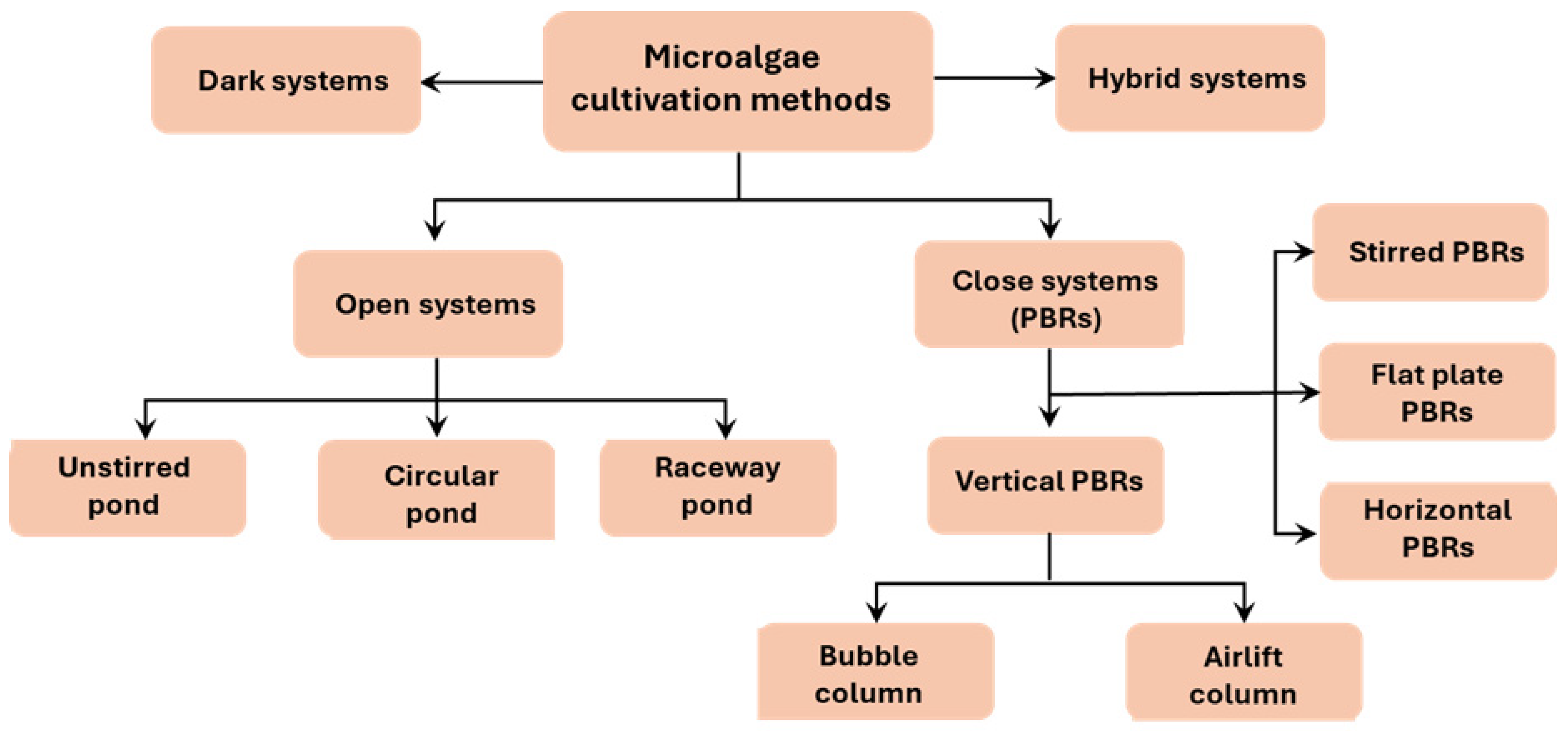
4.2. Cultivation Systems
5. Pigment Extraction from Microalgae
5.1. Cell Harvesting
5.2. Cell Disruption
5.3. Extraction and Purification
6. Challenges and Future Directions
- Research on screening and selecting high-pigment-producing microalgal strains and employing advanced technologies like genetic engineering, mutagenesis, and metabolic engineering to enhance pigment accumulation is crucial [3]. This includes exploring the potential of both photoautotrophic and heterotrophic/mixotrophic cultivation strategies for specific pigments [3].
- Developing more efficient and cost-effective cultivation systems, including optimising growth conditions (light, temperature, nutrients, pH, salinity) and exploring novel trophic modes (e.g., mixotrophy), can significantly improve biomass and pigment yields [66]. Implementing two-stage cultivation processes, where biomass is first maximised followed by stress induction for pigment accumulation, shows promise for certain pigments [10].
- Focusing on the development of low-cost, energy-efficient, and environmentally friendly extraction and purification methods is essential [3]. This includes optimising existing techniques like supercritical fluid extraction (SFE), pressurised liquid extraction (PLE), pulsed electric field (PEF), microwave-assisted extraction (MAE), and ultrasound-assisted extraction (UAE), as well as exploring novel solvent systems like natural deep eutectic solvents (NADES) [135]. Process intensification strategies that combine extraction and purification steps can also reduce costs and processing time [135].
- Adopting a biorefinery concept where multiple valuable products, including pigments, lipids, proteins, and carbohydrates, are extracted from the same algal biomass can improve the overall economic viability and sustainability of the process [3].
- Metabolic Engineering and Synthetic Biology: Further advancements in understanding and manipulating the metabolic pathways involved in pigment biosynthesis will enable the development of microalgae with enhanced pigment production capabilities [9].
- Research on stabilising pigments during and after extraction through techniques like encapsulation, use of antioxidants, and optimised processing conditions is crucial for maintaining their quality and bioactivity [2].
- Addressing the challenges associated with scaling up production from laboratory to industrial levels through improved bioreactor design and process control is vital for commercial success [3].
- Exploration of Novel Pigments and Sources: Continued exploration of the vast biodiversity of microalgae may lead to the discovery of novel pigments with unique properties and applications [5].
- Evaluating the environmental impact of microalgae-based pigment production using life cycle assessment and focusing on sustainable practices, such as utilising wastewater and flue gas as nutrient sources, is important [8].
- Raising awareness about the benefits of natural microalgal pigments and ensuring their safety and efficacy through comprehensive studies will drive consumer demand and market growth [3].
7. Conclusions
Author Contributions
Funding
Data Availability Statement
Conflicts of Interest
References
- Srivastava, A.; Kalwani, M.; Chakdar, H.; Pabbi, S.; Shukla, P. Biosynthesis and biotechnological interventions for commercial production of microalgal pigments: A review. Bioresour. Technol. 2022, 352, 127071. [Google Scholar] [CrossRef] [Scilit] [PubMed]
- Sun, H.; Wang, Y.; He, Y.; Liu, B.; Mou, H.; Chen, F.; Yang, S. Microalgae-derived pigments for the food industry. Mar. Drugs 2023, 21, 82. [Google Scholar] [CrossRef] [Scilit] [PubMed]
- Patel, A.K.; Albarico, F.P.J.B.; Perumal, P.K.; Vadrale, A.P.; Nian, C.T.; Chau, H.T.B.; Anwar, C.; ud din Wani, H.M.; Pal, A.; Saini, R. Algae as an emerging source of bioactive pigments. Bioresour. Technol. 2022, 351, 126910. [Google Scholar] [CrossRef] [Scilit] [PubMed]
- D’Alessandro, E.B.; Antoniosi Filho, N.R. Concepts and studies on lipid and pigments of microalgae: A review. Renew. Sustain. Energy Rev. 2016, 58, 832–841. [Google Scholar] [CrossRef] [Scilit]
- Hu, C.-W.; Chuang, L.-T.; Yu, P.-C.; Chen, C.-N.N. Pigment production by a new thermotolerant microalga Coelastrella sp. F50. Food Chem. 2013, 138, 2071–2078. [Google Scholar] [CrossRef] [Scilit] [PubMed]
- Hu, J.; Nagarajan, D.; Zhang, Q.; Chang, J.-S.; Lee, D.-J. Heterotrophic cultivation of microalgae for pigment production: A review. Biotechnol. Adv. 2018, 36, 54–67. [Google Scholar] [CrossRef] [Scilit] [PubMed]
- Gong, M.; Bassi, A. Carotenoids from microalgae: A review of recent developments. Biotechnol. Adv. 2016, 34, 1396–1412. [Google Scholar] [CrossRef] [Scilit] [PubMed]
- Razzak, S. Comprehensive overview of microalgae-derived carotenoids and their applications in diverse industries. Algal Res. 2024, 78, 103422. [Google Scholar] [CrossRef] [Scilit]
- Mulders, K.J.; Lamers, P.P.; Martens, D.E.; Wijffels, R.H. Phototrophic pigment production with microalgae: Biological constraints and opportunities. J. Phycol. 2014, 50, 229–242. [Google Scholar] [CrossRef] [Scilit] [PubMed]
- Scarsini, M.; Marchand, J.; Schoefs, B. Carotenoid overproduction in microalgae: Biochemical and genetic engineering. In Pigments from Microalgae Handbook; Springer: Cham, Switzerland, 2020; pp. 81–126. [Google Scholar]
- Jeevanandam, J.; Choudhary, V.; Selvam, J.D.; Danquah, M.K. The bioeconomy of production of microalgal pigments. In Pigments from Microalgae Handbook; Springer: Cham, Switzerland, 2020; pp. 325–362. [Google Scholar]
- Microalgae Market Size, Share & Industry Analysis, by Species (Spirulina, Chlorella, Nannochloropsis, Haematococcus, Isochrysis, Chlamydomonas, and Others), by Application (Food and Feed), and Regional Forecast, 2025–2032. Available online: https://www.fortunebusinessinsights.com/microalgae-market-110314 (accessed on 1 June 2026).
- Chettri, S.; Altemimi, A.B.; Das, P.; Singh, R.; Pandharinath, S.P.; Nath, P.C.; Pandey, V.K.; Rustagi, S. Recent Advances in Microalgal Pigments as a Source of Natural Colors and Application in Next-Generation Functional Foods. Sustain. Food Technol. 2025, 4, 1350–1371. [Google Scholar] [CrossRef] [Scilit]
- Reimão, M.; Almeida, L.; Ramos, C.; Eusébio, N.; Martins, R.; da Silva, M.V.; Vasconcelos, V.; Freitas, M. Colouring applications of microalgae and cyanobacteria photosynthetic pigments: Challenges for industrial and market acceptance. J. Clean. Prod. 2025, 520, 146071. [Google Scholar] [CrossRef] [Scilit]
- Baskar, G.; Muthulakshmi, M.; Pravin, R.; Patel, A.K. Expanding horizons: Harnessing Dunaliella microalgae for sustainable organic pigment production. Biomass Convers. Biorefin. 2025, 15, 13055–13078. [Google Scholar]
- Pirkharati, Z.; Pirsa, S.; Mohebinia, R. Microorganism-Based Techniques for Extracting Food Pigments: Insights and Applications. Food Humanit. 2025, 5, 100820. [Google Scholar] [CrossRef] [Scilit]
- do Nascimento, T.C.; Pinheiro, P.N.; Deprá, M.C.; Sartori, R.B.; Roca, M.; Jacob-Lopes, E.; Zepka, L.Q. Photoperiod strategies to increase microalgae-pigment content: A new level-up to natural food colorants production. Algal Res. 2025, 90, 104185. [Google Scholar] [CrossRef] [Scilit]
- Tizzani, R. Cultivation Strategies to Enhance Pigment Production from Commercially Valuable Microalgae. Ph.D. Thesis, Università di Padova, Padova, Italy, 2025. [Google Scholar]
- Sandybayeva, S.K.; Sadvakasova, A.K.; Nazymbetova, G.S.; Kossalbayev, B.D.; Bauenova, M.O.; Zaletova, D.E.; Aknur, A.; Allakhverdiev, S.I. Engineering strategies to enhance microalgal pigment production: From stress physiology to industrial application. Funct. Plant Biol. 2026, 53, FP26058. [Google Scholar]
- Mutaf-Kılıc, T.; Inam, A.; Filizfidanoglu, A.; Deniz, I. Scaling up the Production of Microalgal Pigments for Commercial Applications. In Pigments from Microalgae Handbook–Volume II: Bioprocess Engineering, Smart Extraction Technologies, Omics Tools, and Sustainability-Driven Innovations; Springer: Cham, Switzerland, 2026; pp. 21–45. [Google Scholar]
- Palanivel, P.; Thajuddin, F.; Rajendran, P.J.; Elumalai, A.; Muralitharan, G. Exploring the phylogeny, molecular and genomic adaptations of thermophilic microalgae and cyanobacteria. Planta 2026, 263, 139. [Google Scholar] [CrossRef] [Scilit] [PubMed]
- Aswini, V.; Ramachandran, S.; Atchuthan, P.; Gothandam, K.M. Overproduction of Microalgae Pigments: Biochemistry, Genetics, and Molecular Biology Approaches. In Pigments from Microalgae Handbook–Volume I: Biological Foundations, Environmental Influences and Analytical Methods; Springer: Cham, Switzerland, 2026; pp. 213–260. [Google Scholar]
- Tambat, V.S.; Singhania, R.R.; Raj, T.; Dong, C.-D.; Patel, A.K. Innovative bioprocess design to circumvent growth limitations and enhance astaxanthin production from slow-growing Haematococcus lacustris. Bioresour. Technol. Rep. 2026, 33, 102492. [Google Scholar] [CrossRef] [Scilit]
- Liu, P.; Xiao, X.; Zhou, Y.; Guo, X.; Zhou, D.; Chen, B.; Show, P.-L.; He, Y. A newly isolated Scenedesmus bijugus PY6 for high-valued astaxanthin production via two-stage heterotrophic cultivation. Food Biosci. 2026, 82, 109277. [Google Scholar] [CrossRef] [Scilit]
- Vadrale, A.P.; Tambat, V.S.; Sumathi, Y.; Saratale, G.D.; Singhania, R.R.; Patel, A.K. Maximizing microalgal lutein through light patterning and nutrient shifts in photobioreactors. J. Sci. Food Agric. 2026, 106, 3760–3772. [Google Scholar] [CrossRef] [Scilit] [PubMed]
- Udaypal; Goswami, R.K.; Verma, P. Production of lutein from various microalgae species using different cultivation methods: Structural characterization and assessment of functional integrity. J. Appl. Phycol. 2025, 37, 3417–3432. [Google Scholar] [CrossRef] [Scilit]
- Thurakit, T.; Pan-utai, W.; Poonpanit, R.; Limsangouan, N. Comparative evaluation of Desmodesmus strains for lutein production under different cultivation conditions and carbon sources. Biocatal. Agric. Biotechnol. 2026, 75, 104126. [Google Scholar] [CrossRef] [Scilit]
- Fatima, I.; Munir, M.; Qureshi, R.; Hanif, U.; Gulzar, N.; Sheikh, A.A. Advanced methods of algal pigments extraction: A review. Crit. Rev. Food Sci. Nutr. 2024, 64, 9771–9788. [Google Scholar] [CrossRef] [Scilit] [PubMed]
- Pagels, F.; Pereira, R.N.; Vicente, A.A.; Guedes, A.C. Extraction of pigments from microalgae and cyanobacteria—A review on current methodologies. Appl. Sci. 2021, 11, 5187. [Google Scholar] [CrossRef] [Scilit]
- Corrêa, P.S.; Morais Junior, W.G.; Martins, A.A.; Caetano, N.S.; Mata, T.M. Microalgae biomolecules: Extraction, separation and purification methods. Processes 2020, 9, 10. [Google Scholar] [CrossRef] [Scilit]
- Aizpuru, A.; González-Sánchez, A. Traditional and new trend strategies to enhance pigment contents in microalgae. World J. Microbiol. Biotechnol. 2024, 40, 272. [Google Scholar] [CrossRef] [Scilit] [PubMed]
- Chini Zittelli, G.; Lauceri, R.; Faraloni, C.; Silva Benavides, A.M.; Torzillo, G. Valuable pigments from microalgae: Phycobiliproteins, primary carotenoids, and fucoxanthin. Photochem. Photobiol. Sci. 2023, 22, 1733–1789. [Google Scholar] [CrossRef] [Scilit] [PubMed]
- Cezare-Gomes, E.A.; Mejia-da-Silva, L.d.C.; Pérez-Mora, L.S.; Matsudo, M.C.; Ferreira-Camargo, L.S.; Singh, A.K.; de Carvalho, J.C.M. Potential of Microalgae Carotenoids for Industrial Application. Appl. Biochem. Biotechnol. 2019, 188, 602–634. [Google Scholar] [CrossRef] [Scilit] [PubMed]
- Muhammad, G.; Butler, T.O.; Chen, B.; Lv, Y.; Xiong, W.; Zhao, X.; Solovchenko, A.E.; Zhao, A.; Mofijur, M.; Xu, J.; et al. Sustainable production of lutein—An underexplored commercially relevant pigment from microalgae. Biomass Convers. Biorefin. 2024, 14, 7255–7276. [Google Scholar] [CrossRef] [Scilit]
- Mutaf-Kılıc, T.; Demir, A.; Elibol, M.; Oncel, S.S. Microalgae pigments as a sustainable approach to textile dyeing: A critical review. Algal Res. 2023, 76, 103291. [Google Scholar] [CrossRef] [Scilit]
- Khanra, S.; Mondal, M.; Halder, G.; Tiwari, O.N.; Gayen, K.; Bhowmick, T.K. Downstream processing of microalgae for pigments, protein and carbohydrate in industrial application: A review. Food Bioprod. Process. 2018, 110, 60–84. [Google Scholar] [CrossRef] [Scilit]
- Pérez-Legaspi, I.A.; Valadez-Rocha, V.; Ortega-Clemente, L.A.; Jiménez-García, M.I. Microalgal pigment induction and transfer in aquaculture. Rev. Aquac. 2020, 12, 1323–1343. [Google Scholar] [CrossRef] [Scilit]
- da Silva, J.C.; Lombardi, A.T. Chlorophylls in microalgae: Occurrence, distribution, and biosynthesis. In Pigments from Microalgae Handbook; Springer: Cham, Switzerland, 2020; pp. 1–18. [Google Scholar]
- Takaichi, S. Carotenoids in phototrophic microalgae: Distributions and biosynthesis. In Pigments from Microalgae Handbook; Springer: Cham, Switzerland, 2020; pp. 19–41. [Google Scholar]
- Kannaujiya, V.K.; Singh, P.R.; Kumar, D.; Sinha, R.P. Phycobiliproteins in microalgae: Occurrence, distribution, and biosynthesis. In Pigments from Microalgae Handbook; Springer: Cham, Switzerland, 2020; pp. 43–68. [Google Scholar]
- Levasseur, W.; Perré, P.; Pozzobon, V. A review of high value-added molecules production by microalgae in light of the classification. Biotechnol. Adv. 2020, 41, 107545. [Google Scholar] [CrossRef] [Scilit] [PubMed]
- Singh, S.P.; Singh, P. Effect of temperature and light on the growth of algae species: A review. Renew. Sustain. Energy Rev. 2015, 50, 431–444. [Google Scholar] [CrossRef] [Scilit]
- Metsoviti, M.N.; Papapolymerou, G.; Karapanagiotidis, I.T.; Katsoulas, N. Effect of Light Intensity and Quality on Growth Rate and Composition of Chlorella vulgaris. Plants 2020, 9, 31. [Google Scholar]
- Madhyastha, H.K.; Vatsala, T.M. Pigment production in Spirulina fussiformis in different photophysical conditions. Biomol. Eng. 2007, 24, 301–305. [Google Scholar] [CrossRef] [Scilit] [PubMed]
- Patel, A.K.; Joun, J.M.; Hong, M.E.; Sim, S.J. Effect of light conditions on mixotrophic cultivation of green microalgae. Bioresour. Technol. 2019, 282, 245–253. [Google Scholar] [CrossRef] [Scilit] [PubMed]
- Pagels, F.; Lopes, G.; Vasconcelos, V.; Guedes, A.C. White and red LEDs as two-phase batch for cyanobacterial pigments production. Bioresour. Technol. 2020, 307, 123105. [Google Scholar] [CrossRef] [Scilit] [PubMed]
- Josephine, A.; Kumar, T.S.; Surendran, B.; Rajakumar, S.; Kirubagaran, R.; Dharani, G. Evaluating the effect of various environmental factors on the growth of the marine microalgae, Chlorella vulgaris. Front. Mar. Sci. 2022, 9, 954622. [Google Scholar] [CrossRef] [Scilit]
- Hong, M.E.; Chang, W.S.; Patel, A.K.; Oh, M.S.; Lee, J.J.; Sim, S.J. Microalgal-Based Carbon Sequestration by Converting LNG-Fired Waste CO2 into Red Gold Astaxanthin: The Potential Applicability. Energies 2019, 12, 1718. [Google Scholar] [CrossRef] [Scilit]
- Khoo, K.S.; Chew, K.W.; Ooi, C.W.; Ong, H.C.; Ling, T.C.; Show, P.L. Extraction of natural astaxanthin from Haematococcus pluvialis using liquid biphasic flotation system. Bioresour. Technol. 2019, 290, 121794. [Google Scholar] [CrossRef] [Scilit] [PubMed]
- Musa, M.; Ayoko, G.A.; Ward, A.; Rösch, C.; Brown, R.J.; Rainey, T.J. Factors Affecting Microalgae Production for Biofuels and the Potentials of Chemometric Methods in Assessing and Optimizing Productivity. Cells 2019, 8, 851. [Google Scholar] [CrossRef] [Scilit] [PubMed]
- Jahns, P.; Holzwarth, A.R. The role of the xanthophyll cycle and of lutein in photoprotection of photosystem II. Biochim. Biophys. Acta (BBA) Bioenerg. 2012, 1817, 182–193. [Google Scholar] [CrossRef] [Scilit] [PubMed]
- Borowitzka, M.A. High-value products from microalgae—Their development and commercialisation. J. Appl. Phycol. 2013, 25, 743–756. [Google Scholar] [CrossRef] [Scilit]
- Khan, M.I.; Shin, J.H.; Kim, J.D. The promising future of microalgae: Current status, challenges, and optimization of a sustainable and renewable industry for biofuels, feed, and other products. Microb. Cell Fact. 2018, 17, 36. [Google Scholar] [CrossRef] [Scilit] [PubMed]
- Cichoński, J.; Chrzanowski, G. Microalgae as a source of valuable phenolic compounds and carotenoids. Molecules 2022, 27, 8852. [Google Scholar] [CrossRef] [Scilit] [PubMed]
- Salinas-García, M.; Villaró-Cos, S.; Cáceres-Ferroni, F.; Lafarga, T. Recent advances in the production and use of the edible microalga Chlorella sorokiniana. J. Appl. Phycol. 2026, 1–15. [Google Scholar] [CrossRef] [Scilit]
- Panis, G.; Carreon, J.R. Commercial astaxanthin production derived by green alga Haematococcus pluvialis: A microalgae process model and a techno-economic assessment all through production line. Algal Res. 2016, 18, 175–190. [Google Scholar] [CrossRef] [Scilit]
- Shah, M.M.R.; Liang, Y.; Cheng, J.J.; Daroch, M. Astaxanthin-producing green microalga Haematococcus pluvialis: From single cell to high value commercial products. Front. Plant Sci. 2016, 7, 531. [Google Scholar] [CrossRef] [Scilit] [PubMed]
- Pagels, F.; Guedes, A.C.; Amaro, H.M.; Kijjoa, A.; Vasconcelos, V. Phycobiliproteins from cyanobacteria: Chemistry and biotechnological applications. Biotechnol. Adv. 2019, 37, 422–443. [Google Scholar] [CrossRef] [Scilit] [PubMed]
- Soni, R.A.; Sudhakar, K.; Rana, R. Spirulina–From growth to nutritional product: A review. Trends Food Sci. Technol. 2017, 69, 157–171. [Google Scholar] [CrossRef] [Scilit]
- Yang, R.; Wei, D.; Xie, J. Diatoms as cell factories for high-value products: Chrysolaminarin, eicosapentaenoic acid, and fucoxanthin. Crit. Rev. Biotechnol. 2020, 40, 993–1009. [Google Scholar] [CrossRef] [Scilit] [PubMed]
- Pajot, A.; Hao Huynh, G.; Picot, L.; Marchal, L.; Nicolau, E. Fucoxanthin from algae to human, an extraordinary bioresource: Insights and advances in up and downstream processes. Mar. Drugs 2022, 20, 222. [Google Scholar] [CrossRef] [Scilit] [PubMed]
- de Oliveira-Júnior, R.G.; Grougnet, R.; Bodet, P.-E.; Bonnet, A.; Nicolau, E.; Jebali, A.; Rumin, J.; Picot, L. Updated pigment composition of Tisochrysis lutea and purification of fucoxanthin using centrifugal partition chromatography coupled to flash chromatography for the chemosensitization of melanoma cells. Algal Res. 2020, 51, 102035. [Google Scholar] [CrossRef] [Scilit]
- Yao, R.; Fu, W.; Du, M.; Chen, Z.-X.; Lei, A.-P.; Wang, J.-X. Carotenoids biosynthesis, accumulation, and applications of a model microalga Euglena gracilis. Mar. Drugs 2022, 20, 496. [Google Scholar] [CrossRef] [Scilit] [PubMed]
- Bayu, A.; Noerdjito, D.R.; Rahmawati, S.I.; Putra, M.Y.; Karnjanakom, S. Biological and technical aspects on valorization of red microalgae genera Porphyridium. Biomass Convers. Biorefin. 2023, 13, 12395–12411. [Google Scholar]
- Tsvetanova, F.; Yankov, D. Bioactive compounds from red microalgae with therapeutic and nutritional value. Microorganisms 2022, 10, 2290. [Google Scholar] [CrossRef] [Scilit] [PubMed]
- Zohir, W.F.; Makhlof, M.E.; Abdallah, A.M.; El-Sheekh, M.M. Algae Cultivation Systems. In Value-Added Products from Algae: Phycochemical Production and Applications; Springer: Cham, Switzerland, 2023; pp. 11–41. [Google Scholar]
- Paul, S.; Bera, S.; Dasgupta, R.; Mondal, S.; Roy, S. Review on the recent structural advances in open and closed systems for carbon capture through algae. Energy Nexus 2021, 4, 100032. [Google Scholar] [CrossRef] [Scilit]
- Cheah, W.Y.; Show, P.L.; Chang, J.-S.; Ling, T.C.; Juan, J.C. Biosequestration of atmospheric CO2 and flue gas-containing CO2 by microalgae. Bioresour. Technol. 2015, 184, 190–201. [Google Scholar] [CrossRef] [Scilit] [PubMed]
- Loures, C.C.A.; Amaral, M.S.S.; Prata, A.M.R.; Silva, M.B.; Naves, F.L.; Samanamud, G.L. Microalgae Cultivation in Photobioreactors Aiming at Biodiesel Production. In Biotechnological Applications of Biomass; Peixoto Basso, T., Basso, T.O., Basso, L.C., Eds.; IntechOpen: Rijeka, Croatia, 2020. [Google Scholar]
- Benner, P.; Meier, L.; Pfeffer, A.; Krüger, K.; Oropeza Vargas, J.E.; Weuster-Botz, D. Lab-scale photobioreactor systems: Principles, applications, and scalability. Bioprocess Biosyst. Eng. 2022, 45, 791–813. [Google Scholar] [CrossRef] [Scilit] [PubMed]
- Singh, R.; Sharma, S. Development of suitable photobioreactor for algae production–A review. Renew. Sustain. Energy Rev. 2012, 16, 2347–2353. [Google Scholar] [CrossRef] [Scilit]
- Kong, W.; Shen, B.; Lyu, H.; Kong, J.; Ma, J.; Wang, Z.; Feng, S. Review on carbon dioxide fixation coupled with nutrients removal from wastewater by microalgae. J. Clean. Prod. 2021, 292, 125975. [Google Scholar] [CrossRef] [Scilit]
- Tan, C.H.; Chen, C.-Y.; Show, P.L.; Ling, T.C.; Lam, H.L.; Lee, D.-J.; Chang, J.-S. Strategies for enhancing lipid production from indigenous microalgae isolates. J. Taiwan Inst. Chem. Eng. 2016, 63, 189–194. [Google Scholar] [CrossRef] [Scilit]
- Ting, H.; Haifeng, L.; Shanshan, M.; Zhang, Y.; Zhidan, L.; Na, D. Progress in microalgae cultivation photobioreactors and applications in wastewater treatment: A review. Int. J. Agric. Biol. Eng. 2017, 10, 1–29. [Google Scholar] [CrossRef]
- Narala, R.R.; Garg, S.; Sharma, K.K.; Thomas-Hall, S.R.; Deme, M.; Li, Y.; Schenk, P.M. Comparison of microalgae cultivation in photobioreactor, open raceway pond, and a two-stage hybrid system. Front. Energy Res. 2016, 4, 29. [Google Scholar] [CrossRef] [Scilit]
- Faruque, M.O.; Hossain, M.M.; Razzak, S.A. Photoautotrophic cultivation, lipid enhancement, and dry biomass characterization of microalgae Scenedesmus dimorphus for bioenergy application. Arab. J. Sci. Eng. 2023, 48, 16263–16280. [Google Scholar] [CrossRef] [Scilit]
- Mary Leema, J.T.; Persia Jothy, T.; Dharani, G. Rapid green microwave assisted extraction of lutein from Chlorella sorokiniana (NIOT-2)—Process optimization. Food Chem. 2022, 372, 131151. [Google Scholar] [CrossRef] [Scilit] [PubMed]
- Le-Feuvre, R.; Moraga-Suazo, P.; González-Durán, J.; Martin, S.S.; Valdevenito, A.; Henríquez, V.; Rojas, V.; Agurto, A.; Agurto-Muñoz, C. Chemical induction of polyploidy increases astaxanthin accumulation capacity in the microalgae Haematococcus lacustris (Gir.-Chantr.) Rostaf. Algal Res. 2021, 59, 102465. [Google Scholar] [CrossRef] [Scilit]
- Bourdon, L.; Jensen, A.A.; Kavanagh, J.M.; McClure, D.D. Microalgal production of zeaxanthin. Algal Res. 2021, 55, 102266. [Google Scholar] [CrossRef] [Scilit]
- Correia, N.; Pereira, H.; Silva, J.T.; Santos, T.; Soares, M.; Sousa, C.B.; Schüler, L.M.; Costa, M.; Varela, J.; Pereira, L.; et al. Isolation, Identification and Biotechnological Applications of a Novel, Robust, Free-living Chlorococcum (Oophila) amblystomatis Strain Isolated from a Local Pond. Appl. Sci. 2020, 10, 3040. [Google Scholar] [CrossRef] [Scilit]
- Ahmed, F.; Fanning, K.; Netzel, M.; Turner, W.; Li, Y.; Schenk, P.M. Profiling of carotenoids and antioxidant capacity of microalgae from subtropical coastal and brackish waters. Food Chem. 2014, 165, 300–306. [Google Scholar] [CrossRef] [Scilit] [PubMed]
- Di Lena, G.; Casini, I.; Lucarini, M.; Lombardi-Boccia, G. Carotenoid profiling of five microalgae species from large-scale production. Food Res. Int. 2019, 120, 810–818. [Google Scholar] [CrossRef] [Scilit] [PubMed]
- Premaratne, M.; Liyanaarachchi, V.C.; Nimarshana, P.H.V.; Ariyadasa, T.U.; Malik, A.; Attalage, R.A. Co-production of fucoxanthin, docosahexaenoic acid (DHA) and bioethanol from the marine microalga Tisochrysis lutea. Biochem. Eng. J. 2021, 176, 108160. [Google Scholar] [CrossRef] [Scilit]
- Sultana, N.; Hossain, S.Z.; Abusaad, M.; Alanbar, N.; Senan, Y.; Razzak, S. Prediction of biodiesel production from microalgal oil using Bayesian optimization algorithm-based machine learning approaches. Fuel 2022, 309, 122184. [Google Scholar] [CrossRef] [Scilit]
- Perez-Garcia, O.; Escalante, F.M.E.; de-Bashan, L.E.; Bashan, Y. Heterotrophic cultures of microalgae: Metabolism and potential products. Water Res. 2011, 45, 11–36. [Google Scholar] [CrossRef] [Scilit] [PubMed]
- Chen, C.-Y.; Yeh, K.-L.; Aisyah, R.; Lee, D.-J.; Chang, J.-S. Cultivation, photobioreactor design and harvesting of microalgae for biodiesel production: A critical review. Bioresour. Technol. 2011, 102, 71–81. [Google Scholar] [CrossRef] [Scilit] [PubMed]
- Shi, X.-M.; Zhang, X.-W.; Chen, F. Heterotrophic production of biomass and lutein by Chlorella protothecoides on various nitrogen sources. Enzym. Microb. Technol. 2000, 27, 312–318. [Google Scholar] [CrossRef] [Scilit] [PubMed]
- Ip, P.-F.; Chen, F. Production of astaxanthin by the green microalga Chlorella zofingiensis in the dark. Process Biochem. 2005, 40, 733–738. [Google Scholar] [CrossRef] [Scilit]
- Theriault, R.J. Heterotrophic Growth and Production of Xanthophylls by Chlorella pyrenoidosa. Appl. Microbiol. 1965, 13, 402–416. [Google Scholar] [CrossRef] [Scilit]
- Wu, Z.Y.; Qu, C.B.; Shi, X.M. Biochemical system analysis of lutein production by Heterotrophic Chlorella pyrenoidosa in a Fermentor. Food Technol. Biotechnol. 2009, 47, 450–455. [Google Scholar]
- Kobayashi, M.; Kurimura, Y.; Tsuji, Y. Light-independent, astaxanthin production by the green microalga Haematococcus pluvialis under salt stress. Biotechnol. Lett. 1997, 19, 507–509. [Google Scholar] [CrossRef] [Scilit]
- Ma, R.Y.-N.; Chen, F. Enhanced production of free trans-astaxanthin by oxidative stress in the cultures of the green microalga Chlorococcum sp. Process Biochem. 2001, 36, 1175–1179. [Google Scholar] [CrossRef] [Scilit]
- Schmidt, R.A.; Wiebe, M.G.; Eriksen, N.T. Heterotrophic high cell-density fed-batch cultures of the phycocyanin-producing red alga Galdieria sulphuraria. Biotechnol. Bioeng. 2005, 90, 77–84. [Google Scholar] [CrossRef] [Scilit] [PubMed]
- Sloth, J.K.; Wiebe, M.G.; Eriksen, N.T. Accumulation of phycocyanin in heterotrophic and mixotrophic cultures of the acidophilic red alga Galdieria sulphuraria. Enzym. Microb. Technol. 2006, 38, 168–175. [Google Scholar] [CrossRef] [Scilit]
- Sørensen, L.; Hantke, A.; Eriksen, N.T. Purification of the photosynthetic pigment C-phycocyanin from heterotrophic Galdieria sulphuraria. J. Sci. Food Agric. 2013, 93, 2933–2938. [Google Scholar] [CrossRef] [Scilit] [PubMed]
- Faruque, M.O.; Hossain, M.M.; Farooq, W.; Razzak, S.A. Phototrophic bioremediation of municipal tertiary wastewater coupling with lipid biosynthesis using Scenedesmus dimorphus: Effect of nitrogen to phosphorous ratio with/without CO2 supplementation. Sustainability 2023, 15, 1409. [Google Scholar] [CrossRef] [Scilit]
- Cordero, B.F.; Obraztsova, I.; Couso, I.; Leon, R.; Vargas, M.A.; Rodriguez, H. Enhancement of Lutein Production in Chlorella sorokiniana (Chorophyta) by Improvement of Culture Conditions and Random Mutagenesis. Mar. Drugs 2011, 9, 1607–1624. [Google Scholar] [CrossRef] [Scilit] [PubMed]
- Chen, J.-H.; Chen, C.-Y.; Chang, J.-S. Lutein production with wild-type and mutant strains of Chlorella sorokiniana MB-1 under mixotrophic growth. J. Taiwan Inst. Chem. Eng. 2017, 79, 66–73. [Google Scholar] [CrossRef] [Scilit]
- Shi, X.M.; Chen, F. Production and rapid extraction of lutein and the other lipid-soluble pigments from Chlorella protothecoides grown under heterotrophic and mixotrophic conditions. Nahr. Food 1999, 43, 109–113. [Google Scholar] [CrossRef] [Scilit]
- Casal, C.; Cuaresma, M.; Vega, J.M.; Vilchez, C. Enhanced productivity of a lutein-enriched novel acidophile microalga grown on urea. Mar. Drugs 2011, 9, 29–42. [Google Scholar] [CrossRef] [Scilit] [PubMed]
- Ip, P.-F.; Wong, K.-H.; Chen, F. Enhanced production of astaxanthin by the green microalga Chlorella zofingiensis in mixotrophic culture. Process Biochem. 2004, 39, 1761–1766. [Google Scholar] [CrossRef] [Scilit]
- Chen, F.; Zhang, Y.; Guo, S. Growth and phycocyanin formation of Spirulina platensis in photoheterotrophic culture. Biotechnol. Lett. 1996, 18, 603–608. [Google Scholar] [CrossRef] [Scilit]
- Halim, R. Industrial extraction of microalgal pigments. In Pigments from Microalgae Handbook; Springer: Cham, Switzerland, 2020; pp. 265–308. [Google Scholar]
- Georgianna, D.R.; Mayfield, S.P. Exploiting diversity and synthetic biology for the production of algal biofuels. Nature 2012, 488, 329–335. [Google Scholar] [CrossRef] [Scilit] [PubMed]
- Uduman, N.; Qi, Y.; Danquah, M.K.; Forde, G.M.; Hoadley, A. Dewatering of microalgal cultures: A major bottleneck to algae-based fuels. J. Renew. Sustain. Energy 2010, 2, 012701. [Google Scholar] [CrossRef] [Scilit]
- Taucher, J.; Baer, S.; Schwerna, P.; Hofmann, D.; Hümmer, M.; Buchholz, R.; Becker, A. Cell disruption and pressurized liquid extraction of carotenoids from microalgae. J. Thermodyn. Catal. 2016, 7, 158. [Google Scholar]
- Halim, R.; Danquah, M.K.; Webley, P.A. Extraction of oil from microalgae for biodiesel production: A review. Biotechnol. Adv. 2012, 30, 709–732. [Google Scholar] [CrossRef] [Scilit] [PubMed]
- Hu, Y.-R.; Wang, F.; Wang, S.-K.; Liu, C.-Z.; Guo, C. Efficient harvesting of marine microalgae Nannochloropsis maritima using magnetic nanoparticles. Bioresour. Technol. 2013, 138, 387–390. [Google Scholar] [CrossRef] [Scilit] [PubMed]
- Utomo, R.P.; Chang, Y.-R.; Lee, D.-J.; Chang, J.-S. Lutein recovery from Chlorella sp. ESP-6 with coagulants. Bioresour. Technol. 2013, 139, 176–180. [Google Scholar] [CrossRef] [Scilit] [PubMed]
- Dong, T.; Knoshaug, E.P.; Pienkos, P.T.; Laurens, L.M. Lipid recovery from wet oleaginous microbial biomass for biofuel production: A critical review. Appl. Energy 2016, 177, 879–895. [Google Scholar] [CrossRef] [Scilit]
- Kadam, S.U.; Tiwari, B.K.; O’Donnell, C.P. Application of Novel Extraction Technologies for Bioactives from Marine Algae. J. Agric. Food. Chem. 2013, 61, 4667–4675. [Google Scholar] [CrossRef] [Scilit] [PubMed]
- Zheng, H.; Yin, J.; Gao, Z.; Huang, H.; Ji, X.; Dou, C. Disruption of Chlorella vulgaris Cells for the Release of Biodiesel-Producing Lipids: A Comparison of Grinding, Ultrasonication, Bead Milling, Enzymatic Lysis, and Microwaves. Appl. Biochem. Biotechnol. 2011, 164, 1215–1224. [Google Scholar] [CrossRef] [Scilit] [PubMed]
- Luengo, E.; Condón-Abanto, S.; Álvarez, I.; Raso, J. Effect of Pulsed Electric Field Treatments on Permeabilization and Extraction of Pigments from Chlorella vulgaris. J. Membr. Biol. 2014, 247, 1269–1277. [Google Scholar] [CrossRef] [Scilit] [PubMed]
- Cuellar-Bermudez, S.P.; Aguilar-Hernandez, I.; Cardenas-Chavez, D.L.; Ornelas-Soto, N.; Romero-Ogawa, M.A.; Parra-Saldivar, R. Extraction and purification of high-value metabolites from microalgae: Essential lipids, astaxanthin and phycobiliproteins. Microb. Biotechnol. 2015, 8, 190–209. [Google Scholar] [CrossRef] [Scilit] [PubMed]
- McMillan, J.R.; Watson, I.A.; Ali, M.; Jaafar, W. Evaluation and comparison of algal cell disruption methods: Microwave, waterbath, blender, ultrasonic and laser treatment. Appl. Energy 2013, 103, 128–134. [Google Scholar] [CrossRef] [Scilit]
- Günerken, E.; D’Hondt, E.; Eppink, M.; Garcia-Gonzalez, L.; Elst, K.; Wijffels, R.H. Cell disruption for microalgae biorefineries. Biotechnol. Adv. 2015, 33, 243–260. [Google Scholar] [CrossRef] [Scilit] [PubMed]
- Kanda, H.; Kamo, Y.; Machmudah, S.; Wahyudiono; Goto, M. Extraction of fucoxanthin from raw macroalgae excluding drying and cell wall disruption by liquefied dimethyl ether. Mar. Drugs 2014, 12, 2383–2396. [Google Scholar] [CrossRef] [Scilit] [PubMed]
- Gong, M.; Li, X.; Bassi, A. Investigation of simultaneous lutein and lipid extraction from wet microalgae using Nile Red as solvatochromic shift probe. J. Appl. Phycol. 2018, 30, 1617–1627. [Google Scholar] [CrossRef] [Scilit]
- Kim, S.M.; Kang, S.-W.; Kwon, O.N.; Chung, D.; Pan, C.-H. Fucoxanthin as a major carotenoid in Isochrysis aff. galbana: Characterization of extraction for commercial application. J. Korean Soc. Appl. Biol. Chem. 2012, 55, 477–483. [Google Scholar] [CrossRef] [Scilit]
- Zou, T.-B.; Jia, Q.; Li, H.-W.; Wang, C.-X.; Wu, H.-F. Response Surface Methodology for Ultrasound-Assisted Extraction of Astaxanthin from Haematococcus pluvialis. Mar. Drugs 2013, 11, 1644–1655. [Google Scholar] [CrossRef] [Scilit] [PubMed]
- Ruen-ngam, D.; Artiwan, S.; Pavasant, P. Comparison of Extraction Methods for Recovery of Astaxanthin from Haematococcus pluvialis. Sep. Sci. Technol. 2010, 46, 64–70. [Google Scholar] [CrossRef] [Scilit]
- Krichnavaruk, S.; Shotipruk, A.; Goto, M.; Pavasant, P. Supercritical carbon dioxide extraction of astaxanthin from Haematococcus pluvialis with vegetable oils as co-solvent. Bioresour. Technol. 2008, 99, 5556–5560. [Google Scholar] [CrossRef] [Scilit] [PubMed]
- Roh, M.-K.; Uddin, M.S.; Chun, B.-S. Extraction of fucoxanthin and polyphenol from Undaria pinnatifida using supercritical carbon dioxide with co-solvent. Biotechnol. Bioprocess Eng. 2008, 13, 724–729. [Google Scholar] [CrossRef] [Scilit]
- Herrero, M.; Jaime, L.; Martín-Álvarez, P.J.; Cifuentes, A.; Ibáñez, E. Optimization of the Extraction of Antioxidants from Dunaliella salina Microalga by Pressurized Liquids. J. Agric. Food. Chem. 2006, 54, 5597–5603. [Google Scholar] [CrossRef] [Scilit] [PubMed]
- Derwenskus, F.; Metz, F.; Gille, A.; Schmid-Staiger, U.; Briviba, K.; Schließmann, U.; Hirth, T. Pressurized extraction of unsaturated fatty acids and carotenoids from wet Chlorella vulgaris and Phaeodactylum tricornutum biomass using subcritical liquids. GCB Bioenergy 2019, 11, 335–344. [Google Scholar] [CrossRef] [Scilit]
- Pangestuti, R.; Suryaningtyas, I.T.; Siahaan, E.A.; Kim, S.-K. Cosmetics and cosmeceutical applications of microalgae pigments. In Pigments from Microalgae Handbook; Springer: Cham, Switzerland, 2020; pp. 611–633. [Google Scholar]
- Pérez-Gálvez, A.; Fontecha, J. Analytical protocols in carotenoid analysis. In Pigments from Microalgae Handbook; Springer: Cham, Switzerland, 2020; pp. 151–178. [Google Scholar]
- Guaratini, T.; Cardozo, K.H.; Pinto, E.; Colepicolo, P. Comparison of diode array and electrochemical detection in the C30 reverse phase HPLC analysis of algae carotenoids. J. Braz. Chem. Soc. 2009, 20, 1609–1616. [Google Scholar] [CrossRef] [Scilit]
- Goswami, R.K.; Agrawal, K.; Verma, P. Microalgae dunaliella as biofuel feedstock and β-carotene production: An influential step towards environmental sustainability. Energy Convers. Manag. X 2022, 13, 100154. [Google Scholar] [CrossRef] [Scilit]
- Silva, L.A.; Kuhn, K.R.; Moraes, C.C.; Burkert, C.A.V.; Kalil, S.J. Experimental design as a tool for optimization of C-phycocyanin purification by precipitation from Spirulina platensis. J. Braz. Chem. Soc. 2009, 20, 5–12. [Google Scholar] [CrossRef] [Scilit]
- Cerón, M.C.; Campos, I.; Sánchez, J.F.; Acién, F.G.; Molina, E.; Fernández-Sevilla, J.M. Recovery of Lutein from Microalgae Biomass: Development of a Process for Scenedesmus almeriensis Biomass. J. Agric. Food. Chem. 2008, 56, 11761–11766. [Google Scholar] [CrossRef] [Scilit] [PubMed]
- Li, Y.; Zhao, Y.; Zhang, H.; Ding, Z.; Han, J. The application of natural carotenoids in multiple fields and their encapsulation technology: A review. Molecules 2024, 29, 967. [Google Scholar] [CrossRef] [Scilit] [PubMed]
- Vieira, M.V.; Pastrana, L.M.; Fuciños, P. Microalgae encapsulation systems for food, pharmaceutical and cosmetics applications. Mar. Drugs 2020, 18, 644. [Google Scholar] [CrossRef] [Scilit] [PubMed]
- Maroneze, M.M.; Dias, R.R.; Severo, I.A.; Queiroz, M.I. Microalgae-based processes for pigments production. In Pigments from Microalgae Handbook; Springer: Cham, Switzerland, 2020; pp. 241–264. [Google Scholar]
- Gogate, P.R.; Joshi, S.M. Process intensification aspects of extraction of pigments from microalgae. In Pigments from Microalgae Handbook; Springer: Cham, Switzerland, 2020; pp. 309–324. [Google Scholar]


| Reference | Classification | Factors | Cultivation | Extraction | Purification |
|---|---|---|---|---|---|
| [28] | √ | ||||
| [3] | √ | √ | |||
| [1] | √ | √ | √ | ||
| [7] | Carotenoids | √ | √ | √ | |
| [8] | Carotenoids | √ | √ | ||
| [4] | √ | √ | |||
| [29] | √ | ||||
| [6] | √ | √ | |||
| [9] | √ | ||||
| [30] | √ | √ | |||
| [2] | √ | √ | √ | ||
| [31] | √ | √ | |||
| [32] | √ | √ | √ | ||
| [33] | √ | √ | |||
| [34] | Lutein | √ | √ | √ | |
| [35] | √ | ||||
| [36] | √ | √ | √ | ||
| [37] | √ | √ | |||
| This study | √ | √ | √ | √ | √ |
| Pigment Group | Name | Colour | Mechanism | Common Source | Reference |
|---|---|---|---|---|---|
| Chlorophylls | Chlorophyll a | Green | Primary pigment for photosynthesis | All photosynthetic microalgae | [31,38] |
| Chlorophyll b | Green | Expands light absorption | Green algae (Chlorophyta) | ||
| Chlorophyll c | Green | Accessory pigment in non-green algae | Diatoms, dinoflagellates, brown algae | ||
| Carotenoids | β-Carotene | Orange | Light harvesting, antioxidant (425–480 nm) | Dunaliella salina, green algae | [31,32,39] |
| Lutein | Yellow | Antioxidant, supports vision health (421–474 nm) | Green algae (Chlorophyta) | ||
| Astaxanthin | Red | Strong antioxidant, protects cells from stress (478 nm) | Haematococcus lacustris | ||
| Zeaxanthin | Orange-yellow | Photoprotection, antioxidant (424–480 nm) | Cyanobacteriophyta, green algae | ||
| Fucoxanthin | Brown | Enhances light absorption, antioxidant | Diatoms, brown algae | ||
| Phycobiliproteins | Phycocyanin | Blue | Light harvesting in low light conditions (610–620 nm) | Cyanobacteriophyta (Spirulina) | [31,40,41] |
| Phycoerythrin | Red | Improves light absorption efficiency (540–570 nm) | Red algae (Rhodophyta) | ||
| Allophycocyanin | Blue green | Accessory pigment in phycobilisomes (650–655 nm) | Cyanobacteria, red algae | ||
| Polyphenols | Flavonoids | Various | Antioxidant, anti-inflammatory properties | Spirulina, Chlorella | [31,41] |
| Phenolic acids | Various | UV protection, antioxidant | Cyanobacteria, diatoms | ||
| Tannins | Brown | Antimicrobial, stress response | Some microalgae and cyanobacteria |
| Factor | Description | Effect on Pigment Production | Typical/Optimal Range | Reference |
|---|---|---|---|---|
| Microalgae Strain | Species selection determines pigment profile and productivity | Dictates the type and concentration of pigments produced (e.g., chlorophylls, carotenoids, phycobilins) | Strain-dependent; selected based on target pigment | [52] |
| Light Intensity and Quality | Affects pigment biosynthesis through photosynthetic and photoprotective pathways | Increased intensity and specific wavelengths (blue/red) enhance carotenoid and chlorophyll synthesis | 50–300 µmol photons m−2 s−1; blue/red light preferred | [43,44,46] |
| Photoperiod | Controls the photosynthetic rhythm and metabolic activity | Optimised light/dark cycles improve pigment accumulation; prolonged dark periods may reduce yield | 12:12 or 16:8 h (light/dark) | [46] |
| Temperature | Influences enzymatic activity and stress-induced pigment synthesis | Moderate heat can induce pigment formation (e.g., astaxanthin); excessive heat inhibits growth | 20–30 °C (some up to 35 °C) | [2,42] |
| Nutrient Availability | Macronutrient limitation (e.g., nitrogen) can stimulate secondary pigment production | Nitrogen depletion enhances the synthesis of carotenoids and phycobiliproteins | Nitrogen: 0–150 mg L−1 depending on strategy | [3] |
| Salinity | Osmotic stress can act as a trigger for secondary metabolite production | Salt stress induces β-carotene accumulation and other protective pigments | 0.5–3 M NaCl (species-dependent) | [47] |
| pH Level | Affects cell viability and pigment stability | Extreme pH levels may degrade pigments; optimal pH supports pigment biosynthesis | pH 7–9 (up to 10.5 for Spirulina) | [45] |
| Cultivation System | Determines light exposure, contamination risk, and growth control | Photobioreactors provide better control, sterility, and productivity than open systems | Open raceways or closed photobioreactors | [2,8] |
| Mixing and Aeration | Ensures uniform light exposure, nutrient distribution, and CO2 supply | Improves pigment yield by preventing settling, enhancing gas exchange, and reducing gradients | Moderate mixing to avoid shear stress | [3] |
| Stress Induction | Environmental stress (e.g., light, nutrients) enhances secondary pigment biosynthesis | Stress triggers accumulation of astaxanthin, β-carotene, and other valuable pigments | Induced at late growth phase | [6,50] |
| Taxonomic Group | Representative Species (Strain/Culture Collection | Major Pigments | Advantages | Limitations | Main Applications | Reference |
|---|---|---|---|---|---|---|
| Chlorophyta | Chlorella sorokiniana (UTEX 1230), Dunaliella salina (CCAP 19/18), Haematococcus lacustris | Chlorophylls, lutein, β-carotene, zeaxanthin, astaxanthin | Fast growth, high biomass productivity, established cultivation | Stress often required for high pigment accumulation | Food colourants, nutraceuticals, cosmetics | [7,54] |
| Cyanobacteria | Arthrospira platensis (PCC 8005), Synechocystis sp. PCC 6803 | Phycocyanin, phycoerythrin, chlorophyll a | High phycobiliprotein content, simple cultivation | Pigments sensitive to heat, light and pH | Food colourants, pharmaceuticals, cosmetics | [58,59] |
| Bacillariophyta | Phaeodactylum tricornutum (CCAP 1055/1), Odontella aurita | Fucoxanthin, chlorophyll c, β-carotene | High fucoxanthin productivity, efficient photosynthesis | Require silica; sensitive cultivation | Functional foods, nutraceuticals | [60,61] |
| Ochrophyta | Tisochrysis lutea (CCAP 927/14) | Fucoxanthin, chlorophyll c | High-value fucoxanthin | Slower growth | Functional foods, cosmetics | [62] |
| Euglenophyta | Euglena gracilis (CCAP 1224/5Z) | Chlorophylls, lutein, β-carotene, zeaxanthin | Flexible cultivation modes | Organic carbon needed for heterotrophy | Nutraceuticals | [63] |
| Rhodophyta | Porphyridium purpureum (CCALA 415) | Phycoerythrin, phycocyanin | High-value pigments | Slow growth | Food colourants, diagnostics | [64,65] |
| Microalga | Pigment | Pigment Content (mg/g) | Application | Reference |
|---|---|---|---|---|
| Chlorella sorokiniana | Lutein | 20.7 | Pharmaceutical, and cosmetics | [77] |
| Haematococcus lacustris | Astaxanthin | 2.6 | Pharmaceutical | [78] |
| Synechocystis sp. | Zeaxanthin | 1.6 | Pharmaceuticals, vitamins, and antioxidant production | [79] |
| Rhodosorus sp. | Zeaxanthin | 2.16 | Pharmaceuticals, vitamins, and antioxidant production | [79] |
| Chlorococcum amblystomatis | Neoxanthin | 0.63 | Nutraceuticals | [80] |
| Tetraselmis suecica | α-Carotene | 0.202 | Nutraceutical and pharmaceutical industries | [81] |
| Tetraselmis suecica | β-Carotene | 1 | Food processing, animal feeds, pharmaceutical, and cosmetics industries | [82] |
| Tisochrysis lutea | Fucoxanthin | 8.8 mg/L | [83] | |
| Cosmetic and antioxidant |
| Microalga | Carbon Source | Pigment | Pigment Content | Reference |
|---|---|---|---|---|
| Auxenochlorella pyrenoidosa | Glucose 30 g/L | Lutein | 218 mg/L | [89] |
| Auxenochlorella pyrenoidosa | Glucose 40 g/L | Lutein | 2.5 mg/g | [90] |
| Auxenochlorella protothecoides | Glucose 9 g/L | Lutein | 16 mg/L | [87] |
| Haematococcus lacustris | 45 mM Acetate | Astaxanthin | 9 mg/L | [91] |
| Chromochloris zofingiensis ATCC30412 | 50 g/L glucose | Astaxanthin | 10.3 mg/L | [88] |
| Chlorococcum sp. | 44 g/L Glucose, 0.1 mM H2O2 | Astaxanthin | 1.8 mg/g | [92] |
| G. sulphuraria | Glucose 50 g/L | Phycocyanin | 3.6 mg/g | [93] |
| G. sulphuraria | Glucose, fructose, glycerol 5 g/L | Phycocyanin | 2–4 mg/g | [94] |
| G. sulphuraria | Glucose 5 g/L | Phycocyanin | 25–30 mg/g | [95] |
| Microalga | Carbon Source | Pigment | Pigment Content | Reference |
|---|---|---|---|---|
| Chlorella sorokiniana | 100 mM glucose 40 mM acetate | Lutein | 33 mg/L | [97] |
| Chlorella sorokiniana | acetate 6 g/L | Lutein | 5.86 mg/g | [98] |
| Auxenochlorella protothecoides | glucose 40 g/L nitrate 10 g/L | Lutein | 6.48 mg/g | [99] |
| Coccomyxa acidophila | urea 0.67 g/L | Lutein | 3.55 mg/g | [100] |
| Chromochloris zofingiensis ATCC30412 | 30 g/L glucose | Astaxanthin | 12.5 mg/L | [101] |
| Chlorococcum sp. | 44 g/L glucose | Astaxanthin | 7.08 mg/g | [92] |
| Limnospira platensis UTEX | glucose 2.5 g/L | Phycocyanin | 322 mg/L | [102] |
| Method | Technique | Advantages | Disadvantages | Reference |
|---|---|---|---|---|
| Mechanical | Bead Milling | High efficiency, scalable, suitable for wet biomass | Generates heat; may degrade sensitive pigments | [7,106] |
| High-Pressure Homogenisation | Effective cell rupture, fast, easy scale up | High energy input, cooling may be required | [7,103,107] | |
| Ultrasonication | Simple setup, efficient for small volumes | Can cause pigment degradation; limited scalability, high energy requirement | [103] | |
| Grinding | Cost-effective; suitable for wet biomass | Time-consuming, not suitable for scale up | [108,109] | |
| Chemical | Solvent extraction | Cheap and easy to scale up, simultaneous disruption and extraction | Solvent toxicity, requires downstream purification | [7,107] |
| Acid/Alkali Hydrolysis | Breaks rigid cell walls quickly, requires low energy | May degrade pigments; environmental disposal issues | [107,110] | |
| Thermal | Freeze-Thaw Cycles | Gentle on pigments; low cost, high purity | Time-consuming; not scalable, consumes a lot of energy | [29] |
| Autoclaving/Boiling | Simple and effective | Can degrade heat-sensitive pigments | ||
| Enzymatic | Enzyme Treatment | Mild and specific; preserves pigment structure | Expensive; slower process | [111,112] |
| Emerging | Pulsed Electric Field (PEF) | Low energy, scalable, preserves pigments | Generally, does not result in cell rupture, useful for small molecules, and requires organic solvent | [103,113] |
| Microwave-Assisted Extraction | Rapid and efficient; enhances yield | Heat-sensitive pigments may degrade | [7,111] | |
| Supercritical CO2 Extraction | Selective; solvent-free; eco-friendly | High cost; needs high-pressure equipment | [107,114] |
| Method | Principle | Advantages | Limitations | Reference |
|---|---|---|---|---|
| Liquid–Liquid Extraction (LLE) | Pigment partition between two immiscible liquids based on solubility. | Simple, scalable. | Low selectivity, multiple steps needed. | [28,95] |
| Aqueous Two-Phase Extraction (ATPE) | Uses two water-based phases to separate pigments by polarity and solubility. | Gentle, good for protein pigments like phycobiliproteins. | Needs optimisation for each pigment system. | [30,103] |
| Column Chromatography | Separates pigments based on polarity or size using a stationary phase. | Good separation, low-cost for lab-scale use. | Labour-intensive, slow, not scalable. | [8,30] |
| High-Performance Liquid Chromatography (HPLC) | Separates and quantifies pigments based on retention time. | High precision and resolution, ideal for analytical applications. | Expensive, requires expertise, has limited scalability. | [30,127] |
| Membrane Filtration (Ultrafiltration) | Uses pressure and membranes to separate by molecular size. | Energy-efficient, good for water-soluble pigments. | Membrane fouling, not suitable for all pigment types. | [30,95] |
| Precipitation (e.g., Ammonium Sulphate) | Changes solubility to precipitate pigments or associated proteins. | Simple, good for protein-based pigments. | Co-precipitation of impurities, further steps often needed. | [30,103,130] |
Disclaimer/Publisher’s Note: The statements, opinions and data contained in all publications are solely those of the individual author(s) and contributor(s) and not of MDPI and/or the editor(s). MDPI and/or the editor(s) disclaim responsibility for any injury to people or property resulting from any ideas, methods, instructions or products referred to in the content. |
© 2026 by the authors. Licensee MDPI, Basel, Switzerland. This article is an open access article distributed under the terms and conditions of the Creative Commons Attribution (CC BY) license.
Share and Cite
Mokhtarani, B.; Zanganeh, J.; Moghtaderi, B. Sustainable Production of Natural Pigments from Microalgae: A Review Study. Appl. Sci. 2026, 16, 7081. https://doi.org/10.3390/app16147081
Mokhtarani B, Zanganeh J, Moghtaderi B. Sustainable Production of Natural Pigments from Microalgae: A Review Study. Applied Sciences. 2026; 16(14):7081. https://doi.org/10.3390/app16147081
Chicago/Turabian StyleMokhtarani, Babak, Jafar Zanganeh, and Behdad Moghtaderi. 2026. "Sustainable Production of Natural Pigments from Microalgae: A Review Study" Applied Sciences 16, no. 14: 7081. https://doi.org/10.3390/app16147081
APA StyleMokhtarani, B., Zanganeh, J., & Moghtaderi, B. (2026). Sustainable Production of Natural Pigments from Microalgae: A Review Study. Applied Sciences, 16(14), 7081. https://doi.org/10.3390/app16147081