Article

Comparison of Microbial Diversity, Metabolic Pathways and Methane Production During Anaerobic Digestion Using Untreated and Thermally Hydrolyzed Sludge and Nano Zero-Valent Iron


by
Eglė Marčiulaitienė
1,
Vaidotas Danila
2,
Luiza Usevičiūtė
2,
Mantas Pranskevičius
1,
Alvydas Zagorskis
1,
Aušra Mažeikienė
2,
Tomas Januševičius
2,
Jaunius Urbonavičius
3,
Dovilė Vasiliauskienė
3 and
Saloua Biyada
3,4,*
1
Department of Environmental Protection and Water Engineering, Vilnius Gediminas Technical University, Saulėtekio Ave. 11, LT-10223 Vilnius, Lithuania
2
Research Institute of Environmental Protection, Vilnius Gediminas Technical University, Saulėtekio Ave. 11, LT-10223 Vilnius, Lithuania
3
Department of Chemistry and Bioengineering, Vilnius Gediminas Technical University, Saulėtekio Ave. 11, LT-10223 Vilnius, Lithuania
4
Civil Engineering Research Centre, Vilnius Gediminas Technical University, Saulėtekio Ave. 11, LT-10223 Vilnius, Lithuania
*
Author to whom correspondence should be addressed.
Appl. Sci. 2026, 16(14), 6995; https://doi.org/10.3390/app16146995
Submission received: 25 May 2026 / Revised: 3 July 2026 / Accepted: 9 July 2026 / Published: 12 July 2026

Abstract

In this study, thermally hydrolyzed sludge and nanoscale zero-valent iron (nZVI) nanoparticles are combined to assess their impact on enhancing methane production compared with conventional anaerobic digestion without pre-treated sludge and/or nZVI. To this end, 12 digesters were set up for a period of 27 days and divided into four groups, with or without pre-treated sludge and nZVI. To determine the changes in microbiota diversity and metabolic pathways that occurred, DNA shotgun sequencing was carried out. As a results, in the digester containing thermally hydrolyzed sludge and nZVI, methane production was slower but prolonged than with untreated sludge without added nZVI, where it was significantly higher but of shorter duration. Additionally, nZVI addition shortened the lag phase in both sludge types compared to the control digesters. Regarding microbial adaptation, results showed that it was slower in thermally hydrolyzed sewage sludge than in untreated sludge. In terms of microbial diversity, several methanogenic microorganisms have been identified, alongside roughly 75 metabolic pathways directly or indirectly linked to methane production confirming the results achieved related to methane production. the addition of nZVI to thermally hydrolyzed sludge promoted microbial diversity (such as Methanoculleus, Methanobacterium, Methanospirillum, Methanofastidiosum) along with the methane synthesis pathway; these results have been statistically confirmed. Ultimately, the proposed combination proves effective for methane production by improving the availability of nutrients to microorganisms, thereby stimulating the metabolism involved in methanogenesis.

1. Introduction

Anaerobic digestion (AD) is considered to be among the most cost-effective technologies, as it achieves high rates of energy recovery from sewage sludge through the production of methane [1]. The methane produced can serve as a sustainable and clean energy source capable of replacing oil, thereby helping to mitigate its harmful effects on the environment and human health [2]. Methane production through anaerobic digestion involves the following stages: (I) hydrolysis, (II) acidogenesis, (III) acetogenesis, and (IV) methanogenesis, occurring through the interaction between different anaerobic microorganisms within the sludge used [3]. However, co-digestion efficiency, particularly CH4 yield, falls short of predicted levels, as it is affect-ed by a wide range of factors (such as substrate composition, reaction conditions, reactor design, and additives) [4]. In fact, the first step, hydrolysis of organic solid waste, is the bottleneck of anaerobic digestion. This is mainly attributed to recalcitrant molecules in the sludge hindering the hydrolysis process driven by microorganisms. Therefore, it is extremely important to investigate effective approaches to improve the efficiency of digestion.
For this reason, several studies have been conducted on the use of pre-treatment of sludge prior to anaerobic digestion to accelerate the hydrolysis phase and, thereby, overcome the limitations on methane production associated with slow hydrolysis [5,6]. In this regard, several pre-treatment methods have been tested, notably chemical, thermal, mechanical, and biological methods [1,3]. However, studies have proven that the most effective method is thermal hydrolysis pretreatment (THP) [3,5,6]. According to several studies, the use of THP enables recalcitrant molecules to be hydrolyzed into small, biodegradable molecules that are readily assimilated by microorganisms, thereby enhancing methane production [3,6].
Another alternative to enhance methane production is the addition of nano zero-valent iron (nZVI). In this regard, several studies indicate that zero-valent iron (ZVI) is a cost-effective material exhibiting significant reduction potential, with the ability to promote process efficiency and methane production during anaerobic digestion by promoting microbial growth [1,7]. Furthermore, Ding et al. [1] reported that ZVI strengthens microbial electron branching and pro-motes direct intermediate electron transfer among syntrophic partners, thereby enabling a higher efficiency pathway for electron flow within the microbial community. Niu et al. [8] reported that nZVI considerably increased methane production through anaerobic digestion of sludge with a high solids content, a phenomenon explained by the rapid emission of hydrogen derived from nZVI corrosion, which reduced its partial pressure and facilitated the conversion of propionic acid.
Although these methods can improve methane production through different mechanisms, methane yield remains low. To remedy this, a combined approach (THP and the addition of nZVI) can increase methane yield. For this reason, this study aims to evaluate the effect of adding nZVI and thermal hydrolysis pre-treatment of sludge on methane production during anaerobic digestion, highlighting the novelty of this study. To achieve this, several digesters were used: some containing 1.5% nZVI and THP-treated sludge, and others without nZVI or THP sludge (conventional digester); methane production was then evaluated to investigate the effect of these treatments on methane production. Delving deeper into the process, the impact of nZVI and THP on microbiota (archaea and bacteria) diversity and functional pathways is also investigated using shotgun sequencing for further mechanistic insight. Ultimately, this study demonstrated that the use of 1.5% nZVI accelerates methane production during anaerobic digestion, while the use of THP sludge slows it down, a result that had a direct impact on microbial diversity by enriching the microbial community and improving the assimilation of organic matter by microorganisms, thereby providing a new insight into sustainable approaches to optimizing methane production through the synergistic effects of thermally hydrolyzed sludge and nano zero-valent iron (nZVI) under anaerobic digestion conditions.

2. Materials and Methods

2.1. Experimental Analysis

2.1.1. Sludge Pretreatment

The thermal hydrolysis process (THP) is performed based on the following conditions: 180 °C and 6 bar. The thermal hydrolysis cycle lasts 90 min: loading of sludge (15 min), steam injection (15 min), holding (30 min), steam venting (15 min), and unloading of sludge (15 min). The THP was applied at a municipal wastewater treatment plant under real industrial operating conditions using an operational full-scale system.

2.1.2. Digester Set-Up and Operation and Sludge Characteristics

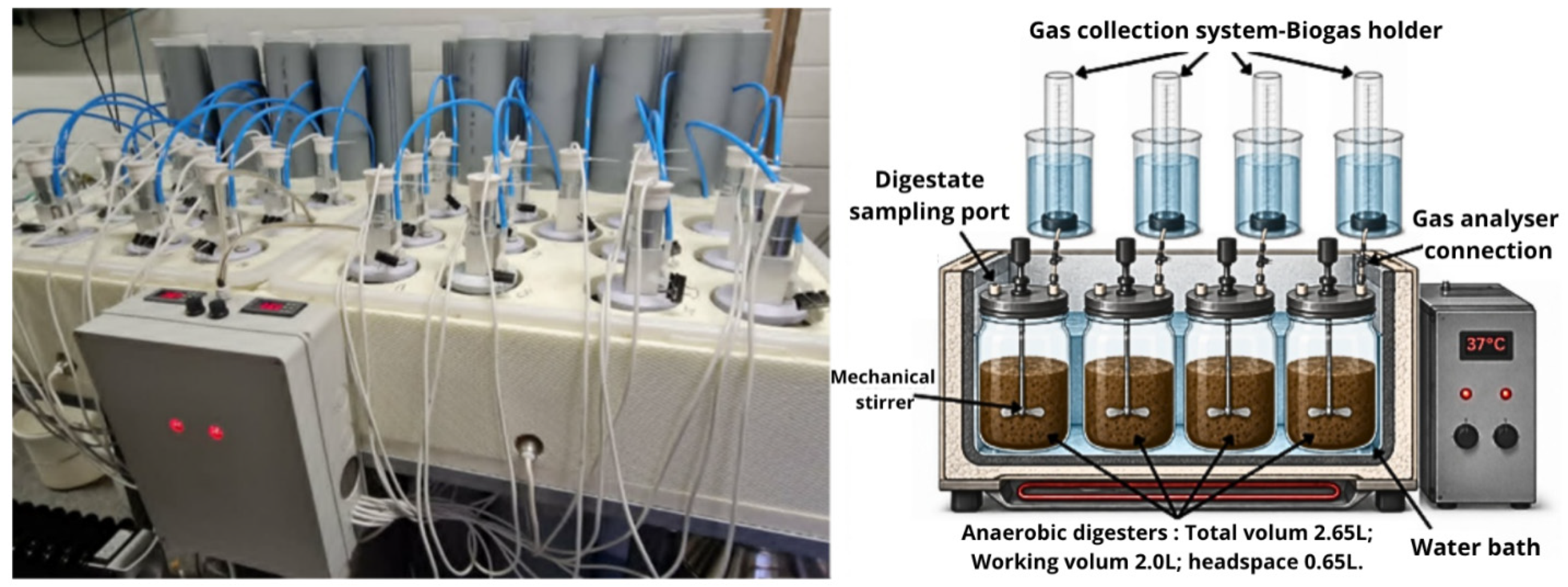
Anaerobic digestion trials were conducted in batch mode using 12 glass reactors. Reactor capacity was 2.65 L, with a working volume of 2 L and 0.65 L headspace (Figure 1) [8].
The reactors were divided into four groups: a control group with no additives and untreated sewage sludge; an additive-free control group with thermally hydrolyzed sewage sludge; an untreated sewage sludge group with 1.5% nZVI (15 mg/g-TS); and a thermally hydrolyzed sewage sludge group with 1.5% nZVI (15 mg/g-TM). The 1.5% nZVI dose was selected based on previous studies identifying it as an optimal concentration for enhancing anaerobic digestion efficiency, leading to increased methane yield and improved process performance [9]. Commercially available air-stable nZVI particles were obtained from Nano Iron s.r.o. (Židlochovice, Czech Republic). Fe0 content in powder was 77.8% and iron oxide content was 22.2%. According to the data of manufacturer, the average size of nanoparticles was 59.8 nm and a specific surface area was 19.4 m2/g. Before use, the particles were activated by dispersing them in deionized water. Three replicates were included in each group. The reactors were maintained at a temperature of 37.0 ± 1.0 °C using a temperature-controlled water bath throughout the 27-day process. They were continuously agitated at 120 rpm [9]. The biogas collection system consisted of measuring cylinders placed upside down in containers filled with water. The methane concentration of the biogas was analyzed using a calibrated portable gas analyzer (GFM 406, Gas Data Ltd., Coventry, United Kingdom). The volume of biogas and the CH4 concentration were recorded daily. Total solids (TS) were measured using a standard method [9], and the samples were oven-dried at 103–105 °C to constant weight. To determine the VS content, the dried samples were calcined in a muffle furnace at 550 °C for 3 h. The pH was measured using a digital pH meter (SevenMultiTM, Mettler Toledo GmbH, Schwerzenbach, Switzerland).
Sludge samples (inoculum, THP sludge, untreated sludge) used in this study were collected from the municipal wastewater treatment plant in Vilnius, Lithuania. A substrate-to-inoculum ratio of 1:1 (v/v) was used. The composition of the different sludges and inoculum used in this experiment is outlined in Table 1. The initial organic loading was 37.95 gVS/L for the THP sludge mixture and 36.15 gVS/L for the untreated sludge mixture (substrate-to-inoculum ratio 1:1, v/v), calculated based on the volatile solids content of both substrate and inoculum.

2.1.3. Sample Collection and DNA Extraction and Sequencing

Ten samples were collected from different digesters based on the type of sludge (treated or untreated), nZVI addition and the duration of treatment (0, 11 and 25 days) (Table 2). It should be noted that two additional samples were taken from the untreated and treated samples with nZVI1.5 (U0nZvI1.5, T0nZvI1.5); however, since there were no differences between them and the control without nZVI, these samples were excluded.
Genomic DNA was extracted using the ZymoBIOMICS®-96 MagBead DNA Kit (D4302, Zymo Research, Irvine, CA, USA) using an automated platform at the Zymo laboratory. To prepare the libraries, genomic DNA samples were profiled using shotgun metagenomic sequencing; the libraries were then created with the Illumina DNA Prep Kit (Illumina, San Diego, CA, USA) based on the manufacturer’s instructions, while using unique 10 bp dual adapters. The libraries were then quantified using Qubit (Thermo Fisher Scientific) and sorted according to their relative abundance. The final sample pool was then quantified by qPCR and sequencing using Illumina NextSeq® 2000.

2.1.4. Bioinformatics Analysis

Trimmomatic-0.33 was used to remove poor-quality segments and adapters from the raw sequences: removal was carried out using a shifting window with a window size of 6 bp and a quality threshold of 20; sequences shorter than 70 bp were removed (Table 3) [10].
Subsequently, host-derived sequences were filtered out using Kraken2 by comparing them to several common eukaryotic host genomes [11]. Sequences with low diversity were identified and discarded using sdust (https://github.com/lh3/sdust (accessed on 8 July 2026)). Preserved sequences were further subjected to taxonomic and functional analyses, as follows: microbial composition was analyzed using the Sourmash software v.1.0 [12]. The GTDB (RS207) database of representative species was used to determine the identification of bacteria and archaea. The sequences were aligned to the genomes previously identified by Sourmash using Minimap2, and microbial abundance was quantified based on the alignment results. Data obtained on taxonomy and abundance were then analyzed: (1) to determine alpha diversity; (2) and to create bar graphs illustrating microbial composition using QIIME [13]. Functional profiling was carried out using Humann3 [14], which notably allowed UniRef gene families and MetaCyc metabolic pathways to be identified.

2.1.5. Statistical Analysis

Functional pathway enrichment analysis and network analysis were performed using Shiny GO 0.85.1 software and KEGG databases. Sankey MATIC was used to produce a Sankey diagram. Furthermore, a standardized two-way analysis of variance ANOVA was used to assess the impact of the treatment and the addition of nZVI on microbial diversity (relative abundance), and one-way ANOVA to assess the impact of combined treatment on methane production.

3. Results

3.1. Effect of nZVI and Thermally Hydrolyzed Sludge on Methane Production

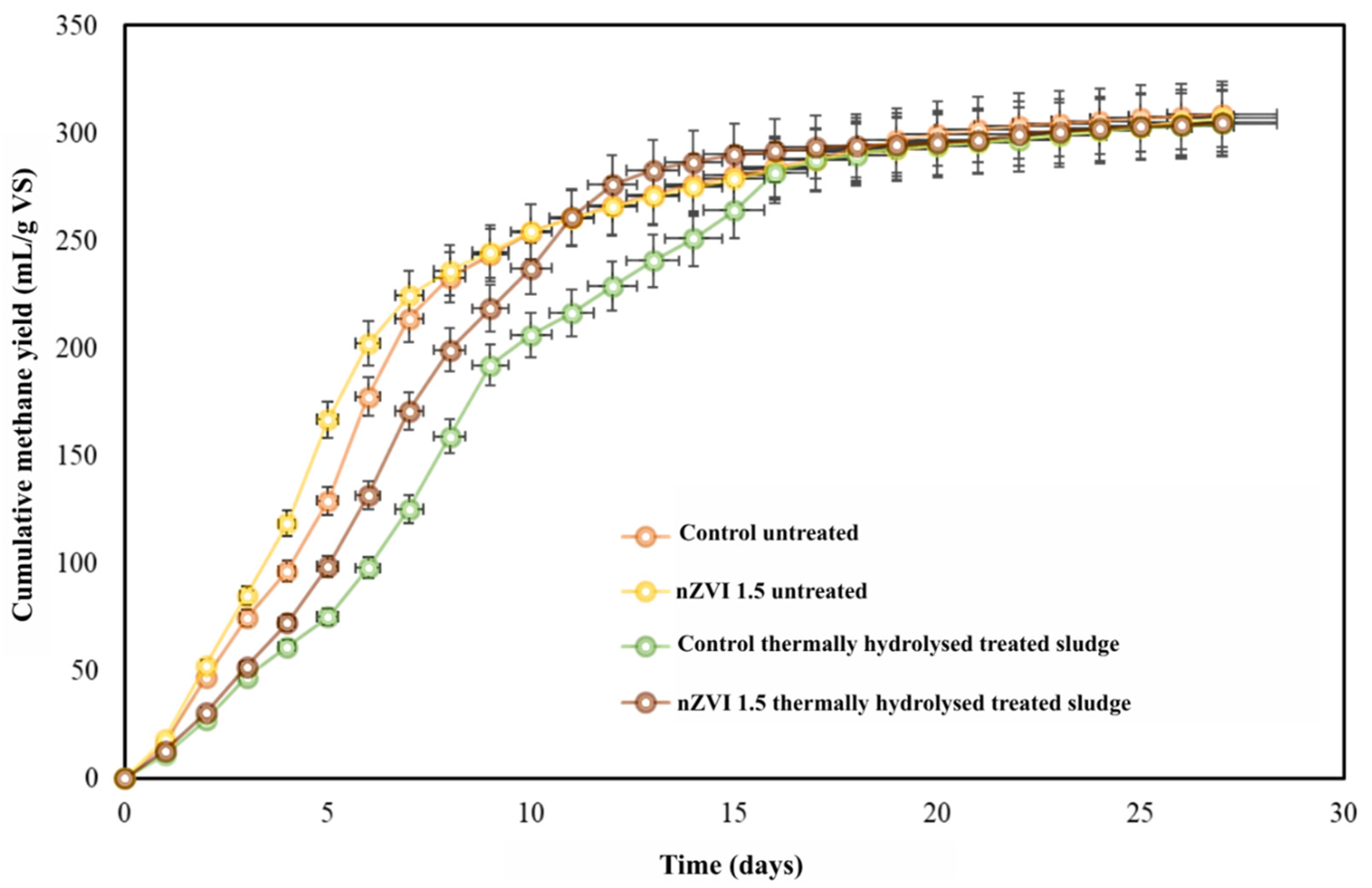
The dynamics of methane generation observed during the experiment in four different digesters (control untreated sludge, untreated sludge with 1.5% nZVI, thermally hydrolyzed sludge and thermally hydrolyzed sludge with 1.5% nZVI) showed clear differences in the intensity and stability of the process (Figure 2). In the initial days, an increasing dCH4/dt indicator was recorded in all reactors, especially untreated sludge with nZVI, where the peak of methane formation was the highest and the maximum rate was reached most quickly, compared to the control variant untreated sludge. In thermally hydrolyzed sludge reactors and thermally hydrolyzed sludge reactors with nZVI, methane production was slower in the first days, but with a longer active production period. The highest methane production rate was reached earliest in the untreated sludge with nZVI variant (day 5), indicating the fastest activation of microbial activity. In the control untreated sludge, the peak was reached on day 6, and in the thermally hydrolyzed sludge at the latest (day 8), indicating a delay in the onset of the process caused by THP. The addition of nZVI to THP sludge reduced this delay (peak reached on day 7); however, maximum methane production was still achieved later than in the untreated sludge. Despite these differences in CH4 production dynamics, no statistically significant differences in cumulative CH4 production were observed among the treatment groups.

3.2. Change in Microbial Profiles Depending on the Treatment

The initial inoculum for the digester, consisting of anaerobic sludge (both untreated (U0nZVI0) and thermally hydrolyzed (T0nZVI0)) from a municipal wastewater treatment plant, was tested for biogas production. The composition of the microbiota was determined prior to anaerobic digestion (0 day), after 11 days, and at the end of the 25-day treatment period.
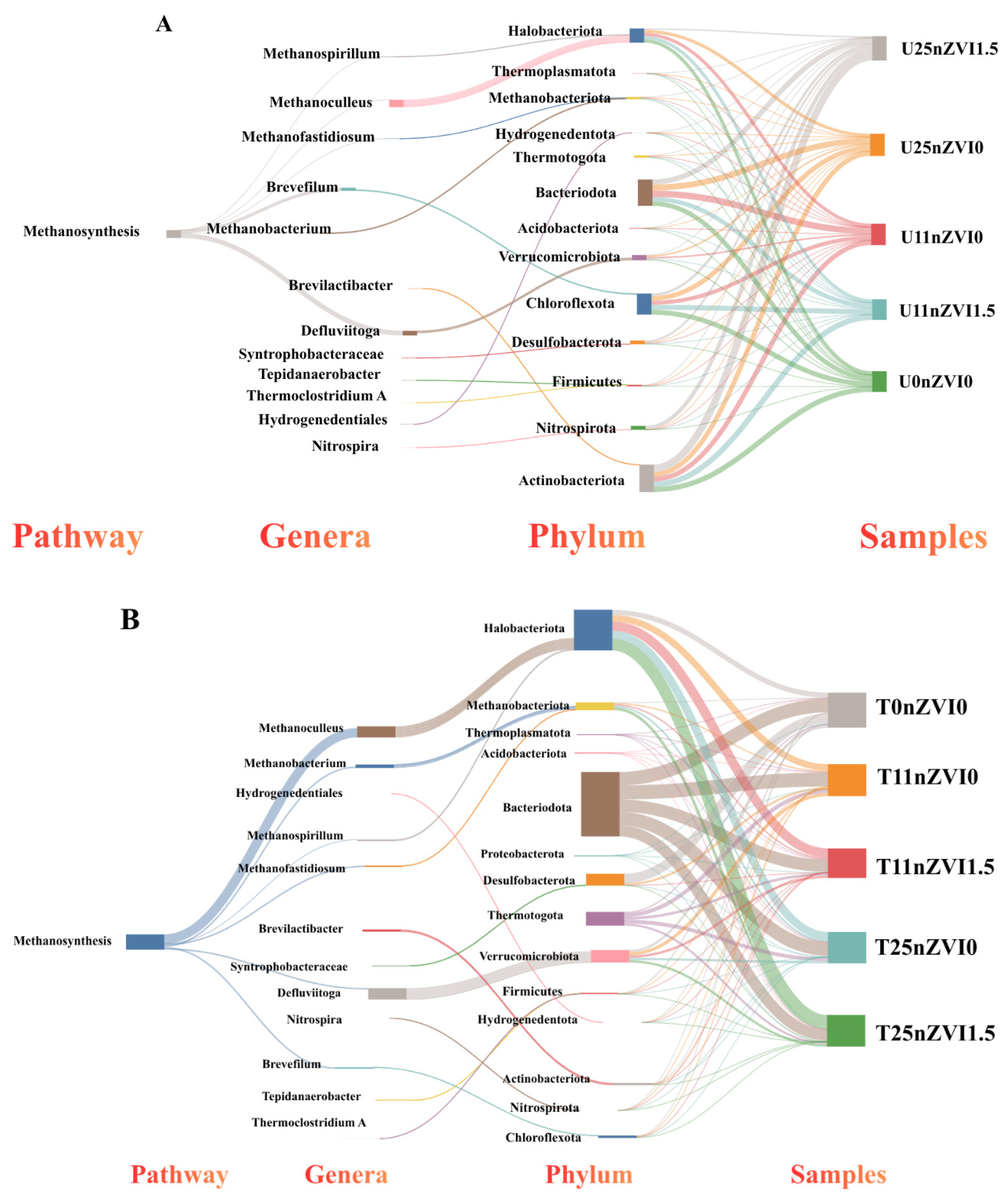
Figure 3A,B depict microbial diversity at the phylum and genus levels for untreated and treated samples, with or without nZVI over a 25-day treatment period. In both treatments, archaea from the phyla Halobacteriota, Methanobacteriota, Thermoplasmatota, along with bacteria from the phyla Acidobacteriota, Proteobacteria, Desulfobacterota, Hydrogenedentota, Chloroflexota, Thermotogota, and Verrucomicrobiota were identified as the dominant phyla throughout the anaerobic digestion process and were directly or indirectly involved in methane production. In fact, the distribution of exposure among phyla and genera to a concentration of 1.5% of nZVI and thermal hydrolysis sludge revealed a relatively significant difference (p < 0.05) compared to the control group (U0nZVI0 and T0nZVI0).
Figure 3A depicts the relative abundance in untreated digesters. In this regard, it was noticed that the Halobacteriota archaeal phylum increased by 4.5% and 4.7% in the digester without nZVI (U11nZVI0) and with 1.5 nZVI (U11nZVI1.5) after 11 days of treatment respectively, whereas it increased by 8.0% and 8.5%, respectively, in the digester without nanoparticles (U25nZVI0) and that with 1.5 nZVI (U25nZVI1.5) after 25 days of treatment. Methanobacteriota increased by 1.1% in the digester without nZVI (U11nZVI0) and with 1.5 nZVI (U25nZVI0) after 11 days of treatment, whereas it increased by 1.6% and 1.7%, respectively, in the digester without nZVI (U25nZVI0) and in the one containing 1.5 nZVI (U25nZVI1.5) after 25 days of treatment. Regarding bacteria phylum, Chloroflexota showed an increase from 6.2% (U11nZVI0) to 12.1% (U11nZVI1.5) after 11 days, and after 25 days were 12.7% (U25nZVI1.5). Verrucomicrobiota depicted an increase from 1.6% to 3.8% after 11 days, in the digester without nanoparticles (U11nZVI0) and in the one containing 1.5 nZVI (U11nZVI1.5), followed by a decrease from 2%, 2.4 respectively, in the digester without nanoparticles (U25nZVI0) and in the one containing 1.5 nZVI (U25nZVI1.5) after 25 days of treatment. The Desulfobacterota exhibited a remarkable decline, dropping from 5.3% (U0nZVI0) to 1.5% (U11nZVI0) after 11 days of treatment without nZVI, and falling from 1.2% (U25nZVI0) to 1.0% (U25nZVI1.5) after 25 days with the addition of 1.5% nZVI. Hydrogenedentota phylum were detected only after 25 days of treatment.
Regarding the thermal hydrolysis samples, their relative abundance in different digesters is shown in Figure 3B. Regarding the archaea phyla, namely Halobacteriota and Methanobacteriota, a considerable increase was noticed, especially when nZVI was added, with respective increases of 16.1% and 3.8% after 25 days of treatment (T25nZVI1.5). For bacterial phyla, after 25 days of treatment (T25nZVI1.5), the Chloroflexota and Thermotogota showed a considerable increase of 14.1% and 3.1%, respectively, upon the addition of nZVI, while a significant decrease (p < 0.05) was observed in the Acidobacteriota and Desulfobacterota, of 0.3% and 1.5%, respectively, after the addition of nZVI. It is noteworthy that the relative abundance of the phyla, especially Halobacteriota, Methanobacteriota, Chloroflexota, and Thermotogota, is significantly higher (p < 0.05) in samples treated by thermal hydrolysis and with nZVI compared to those treated and without nZVI, untreated and the inoculum. These results are consistent with those obtained by He et al. [7] which worked with a nZVI concentration of 30 mM, and reached a similar conclusion. At the genus level, species belonging to the genera Methanoculleus, Methanobacterium, Methanospirillum, Methanofastidiosum, Brevilactibacter, Brevefilum, Tepidanaerobacter, Thermoclostridium A, Hydrogenedentiales, Nitrospira, and Defluviitoga were found to be the most abundant in both treatments with a different in relative abundance depending on the treatment and nZVI presence or absence; these genera are directly or indirectly related to methane production (Figure 3A,B). A similar conclusion applies to genera diversity: adding 1.5% nZVI increased the diversity, notably those directly or indirectly involved in methane production.

3.3. Alpha Diversity

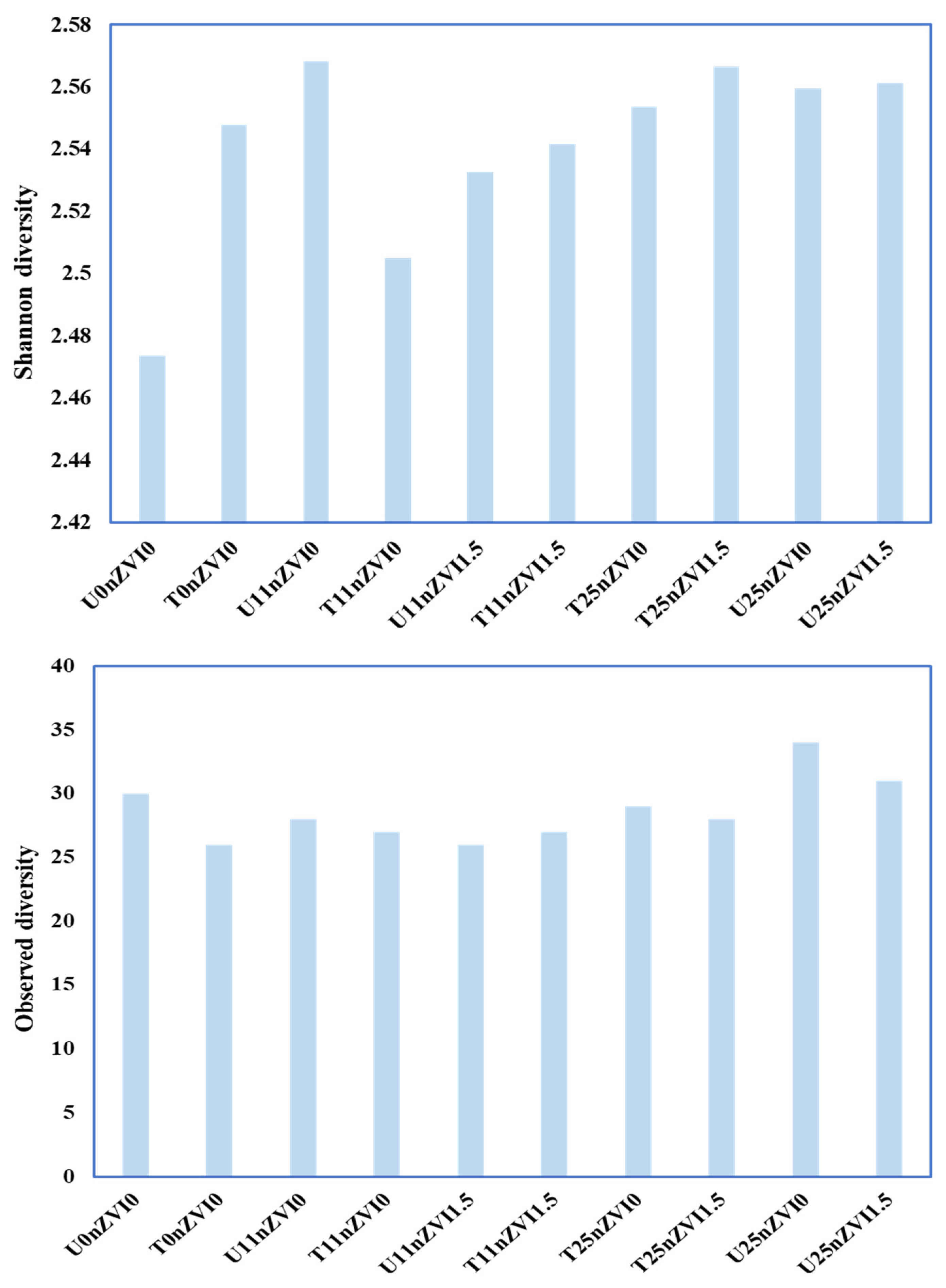
The alpha diversity analysis highlighted a significant difference prior to anaerobic digestion. Figure 4 illustrates the alpha diversity of microbial phylum based on the presence or absence of nZVI and whether the sludge was treated or untreated.
In the case of the microbiota derived from untreated sludge without the addition of nZVI, its abundance first decreased and then increased after the addition of nZVI. The Shannon index, which measures diversity, confirmed that diversity had increased after the addition of 1.5% of nZVI, thereby demonstrating that nZVI enhances the diversity of the microbial community and improves the stability of the system [1]. A similar conclusion was reached when using sludge from thermal hydrolysis, but the diversity was significantly greater than that of untreated sludge, demonstrating the fact that thermal hydrolysis treatment strengthens diversity as well.

3.4. Functional Pathways of Methane Production

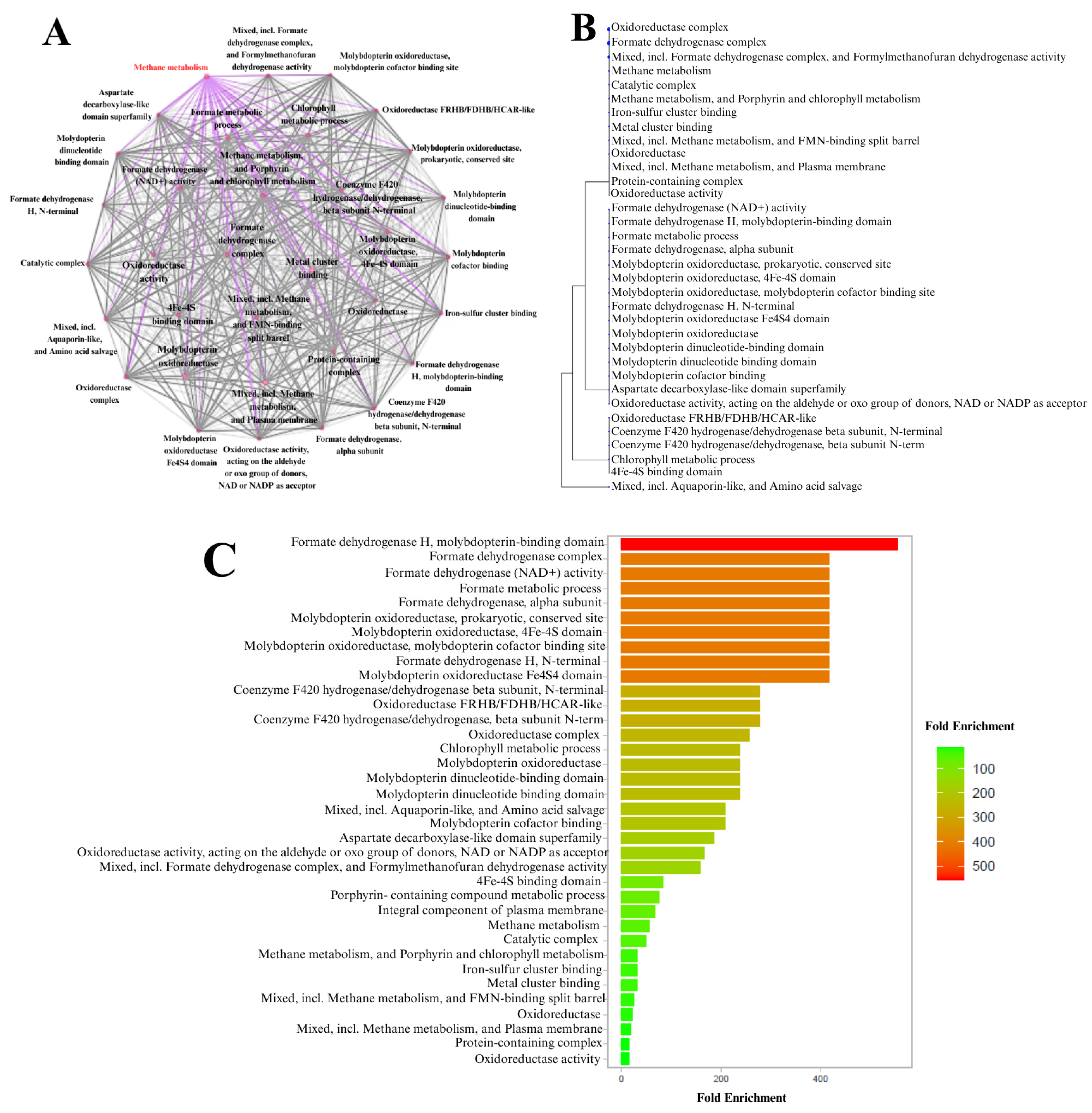
To investigate the pathways of methane production during anaerobic digestion using different combinations, a comprehensive identification of the pathways involved was performed using shotgun sequencing. The results were analyzed using the KEGG (Kyoto Encyclopedia of Genes and Genomes) metabolic pathway database. In addition, the Shiny GO 0.82.1 software was used to examine the direct and indirect relationships between the various pathways, as well as the correlations among them. Enrichment analysis results are presented in Figure 5A–C. Through KEGG, key genes involved in methane metabolism were identified from their database of associated metabolic pathways, enabling the biological functions of the genes to be highlighted (Figure 5A–C). It is clear that methane biosynthesis is linked to several metabolic pathways (Figure 5A); coenzyme F420, oxidoreductase, formate dehydrogenase (FDH) (plays a vital role in methane production by methanogenic archaea), etc., are involved, either directly or indirectly, at different stages of methanogenesis. Furthermore, the enrichment analysis highlighted a statistically significant difference within all metabolic pathways detected by KEGG, with a p-value < 0.05 (Figure 5A–C).

4. Discussion

In this study, 1.5% nZVI was added with thermally hydrolyzed sludge into a digester inoculum to compare their combined effects on microbial diversity, metabolic pathways, and methane production, compared to conventional digestion without nZVI or pretreated sludge. Several studies indicate that the additions of nZVI promote methane production by stimulating the growth of methanogenic microorganisms, mainly due to the hydrogen (H2) generated by the degradation of nZVI, which prompts the metabolic shift in the microorganisms toward the hydrogenotrophic pathway, thereby boosting methane production [1,5,8]. Furthermore, pretreating sludge through thermal hydrolysis improves anaerobic digestion by breaking down slowly biodegradable organic matter such as macromolecular substances present in sewage sludge, notably soluble microbial by-products (SMP) and extracellular polymeric substances (EPS) into low-molecular-weight substances and readily biodegradable organic matter, without generating recalcitrant compounds (such as melanoidins, humic substances, etc.) [15,16]. However, THP can also sharply increase soluble nitrogen and organic matter content, which can temporarily disrupt the system, heighten sensitivity to feedstock loads, and demand a longer adaptation period [17]. This phenomenon explains the slow initial rate of methane production observed at the outset of this study.
Crucially, the combined treatment used in this study mitigated this initial lag, enabling significant higher methane production by using specifically nZVI compared to the conventional digestion, mainly related to the improvement of microbial adaptation within anaerobic methanogenic systems by adding nZVI under high organic loading rates (OLR) [9]. This synergistic effect directly influenced the observed shifts in microbial diversity (particularly among archaea and bacteria).
Methanogenesis in anaerobic digesters is a highly complex process that requires the coordination of metabolic activities involving several methanogenic microbial communities, even non-methanogenic microorganisms (bacteria) [18]. To understand this process, it is important to consider the significant interactions that occur between bacterial and archaeal populations during methanogenesis. It is noteworthy that methanogenesis is considered the final stage in the anaerobic degradation of organic carbon; the metabolic pathways carried out by methanogens involved in the transformation of acetate into CO2 and CH4 and the oxidation of H2 to H2O were identified during this study.
Microbial community analysis in this study revealed that the relative abundances of hydrogenotrophic methanogens within the class Methanomicrobia (specifically the genera: Methanoculleus, Methanobacterium, Methanospirillum, and Methanofastidiosum) were significantly higher in the nZVI-THP digester than in the conventional control consistent with previous findings [18,19]. Furthermore, the dominance of hydrogenotrophic methanogens efficiently degraded accumulated volatile fatty acids (VFAs) by converting excess acetate to methane through syntrophic acetate oxidation [4]. Therefore, these results indicated that, due to the predominance of hydrogenotrophic methanogens in digester with specifically 1.5% nZVI, the methane yield rate was higher than those of digester without nZVI.
To elucidate the underlying biochemical mechanisms, metabolic pathway analyses involved in methane production were conducted. A total of 75 metabolic pathways were identified; most of them are directly and/or indirectly linked to methane biosynthesis.
As mentioned above, the first step in methane production is hydrolysis, which is a rate-limiting step of anaerobic digestion; the use of THP sludge bypassed this constraint by supplying highly accessible organic matter used directly by major hydrolytic phyla namely Firmicutes, Actinobacteria and Bacteroidota, as they encompass many prominent bacterial genera capable of decomposing glucose, maltose, and sucrose; producing large amounts of acid from carbohydrates; and hydrolyzing proteins to generate organic acids and alcohols through different pathways [20,21,22]. All of these pathways were identified in this study. During the subsequent acidogenesis and acetogenesis phases, syntrophic species within Proteobacteria (with a wide range of metabolic pathways and include anaerobes, facultative anaerobes, phototrophs, chemolithotrophs, and heterotrophs), Bacteroidota, and Firmicutes metabolized these intermediates into acetic acid, CO2, and H2, either via the homoacetogenesis pathway or through the catabolism of long-chain volatile fatty acids (VFAs) such as butyrate and its analogs [21,22]. Rather than functioning as a passive population shift, the subsequent expansion of archaeal phyla (Halobacteriota and Methanobacteriota) is mechanically linked to the enzymatic modulation induced by nZVI, which significantly up-regulates critical intracellular enzymes involved in glucose metabolism, pyruvate/butyric acid bioconversion, and final methanogenesis [7,8,23]. This enzymatic acceleration is further supported by a profound metabolic shift toward the hydrogenotrophic methanogens pathway; where the targeted archaea notably Methanoculleus, Methanobacterium, Methanospirillum, and Methanofastidiosum are the predominant microorganisms identified and strongly implies a functional contribution driven by the continuous supply of cathodic hydrogen (H2) from nZVI degradation [24].
Methanogenesis occurs through three pathways that require coenzyme M (CoM) and methyl-coenzyme M reductase (MCR), a crucial enzyme in methanogenesis; these pathways were identified during this study, and include (i) methylotrophic methanogenesis; (ii) acetoclastic methanogenesis; and (iii) hydrogenotrophic methanogenesis via CO2 reduction [15]. In fact, the identified microorganisms consume the excess H2 through the coenzyme M (CoM) and methyl-coenzyme M reductase (MCR)-dependent pathways [15], these hydrogenotrophic methanogens maintain a low hydrogen partial pressure, which is thermodynamically essential to allow their syntrophic bacterial partners to continuously oxidize acetate, stabilize VFAs, and directly support the observed increases in methane yield and chemical oxygen demand (COD) removal efficiency.

5. Conclusions

This study revealed that the combined approach involving especially the addition of 1.5% nZVI and thermally hydrolyzed sludge significantly contributed to the enhancement of the microbial community during anaerobic digestion and, consequently, to methane production; although methane production with thermally hydrolyzed sludge was slow, it proved to be longer and greater than that of the control group. Nanoparticles contribute to (i) improving the accessibility of organic matter; (ii) stimulating methanogenic pathways by creating complex syntrophic associations among microbial communities; (iii) and stimulating their metabolic pathways related to methane production. This approach represents a sustainable method to improving methane production through anaerobic digestion.

Author Contributions

Methodology, D.V., L.U. and V.D.; Software, S.B., D.V.; Validation, A.M., A.Z.; Formal analysis, A.M. and A.Z.; Investigation, E.M., V.D.; Resources, M.P.; Data curation, V.D.; Writing—original draft preparation, S.B., E.M.; writing—review and editing, S.B., E.M., J.U.; project administration, T.J.; funding acquisition, T.J. All authors have read and agreed to the published version of the manuscript.

Funding

This research received no external funding.

Institutional Review Board Statement

Not applicable.

Informed Consent Statement

Not applicable.

Data Availability Statement

The data presented in this study are available on request from the corresponding author.

Conflicts of Interest

The authors declare no conflicts of interest.

References

  1. Ding, W.; Liu, R.; Zhou, X. Thermophilic Anaerobic Fermentation of Sludge: Effect of Zero-Valent Iron (ZVI) in Methane Production. Water 2026, 18, 654. [Google Scholar] [CrossRef] [Scilit]
  2. Zhang, J.; Liu, H.; Wu, J.; Chen, C.; Ding, Y.; Liu, H.; Zhou, Y. Rethinking the Biochar Impact on the Anaerobic Digestion of Food Waste in Bench-Scale Digester: Spatial Distribution and Biogas Production. Bioresour. Technol. 2025, 420, 132115. [Google Scholar] [CrossRef] [Scilit] [PubMed]
  3. Choi, J.M.; Han, S.K.; Lee, C.Y. Enhancement of Methane Production in Anaerobic Digestion of Sewage Sludge by Thermal Hydrolysis Pretreatment. Bioresour. Technol. 2018, 259, 207–213. [Google Scholar] [CrossRef] [Scilit] [PubMed]
  4. Chen, S.; Tao, Z.; Yao, F.; Wu, B.; He, L.; Hou, K.; Pi, Z.; Fu, J.; Yin, H.; Huang, Q.; et al. Enhanced Anaerobic Co-Digestion of Waste Activated Sludge and Food Waste by Sulfidated Microscale Zerovalent Iron: Insights in Direct Interspecies Electron Transfer Mechanism. Bioresour. Technol. 2020, 316, 123901. [Google Scholar] [CrossRef] [Scilit] [PubMed]
  5. Chen, X.; Xiang, X.; Dai, R.; Wang, Y.; Ma, P. Effect of Low Temperature of Thermal Pretreatment on Anaerobic Digestion of Textile Dyeing Sludge. Bioresour. Technol. 2017, 243, 426–432. [Google Scholar] [CrossRef] [Scilit] [PubMed]
  6. Neumann, P.; González, Z.; Vidal, G. Sequential Ultrasound and Low-Temperature Thermal Pretreatment: Process Optimization and Influence on Sewage Sludge Solubilization, Enzyme Activity and Anaerobic Digestion. Bioresour. Technol. 2017, 234, 178–187. [Google Scholar] [CrossRef] [Scilit] [PubMed]
  7. He, C.S.; He, P.P.; Yang, H.Y.; Li, L.L.; Lin, Y.; Mu, Y.; Yu, H.Q. Impact of Zero-Valent Iron Nanoparticles on the Activity of Anaerobic Granular Sludge: From Macroscopic to Microcosmic Investigation. Water Res. 2017, 127, 32–40. [Google Scholar] [CrossRef] [Scilit] [PubMed]
  8. Niu, J.; Kong, X.; Li, Q.; Zhang, Y.; Yuan, J.; Liu, J.; Zhang, Y. Deciphering Different Effects of ZVI and NaOH on Metabolic Characteristics in the Process of Methanogenesis Recovery from VFA Suppression. J. Environ. Manag. 2023, 336, 117686. [Google Scholar] [CrossRef] [Scilit] [PubMed]
  9. Usevičiūtė, L.; Januševičius, T.; Danila, V.; Pranskevičius, M. Effects of Graphene-Based Nanomaterials on Anaerobic Digestion of Thermally Hydrolyzed Municipal Sewage Sludge. Materials 2025, 18, 3561. [Google Scholar] [CrossRef] [Scilit] [PubMed]
  10. Bolger, A.M.; Lohse, M.; Usadel, B. Trimmomatic: A Flexible Trimmer for Illumina Sequence Data. Bioinformatics 2014, 30, 2114–2120. [Google Scholar] [CrossRef] [Scilit] [PubMed]
  11. Wood, D.E.; Lu, J.; Langmead, B. Improved Metagenomic Analysis with Kraken 2. Genome Biol. 2019, 20, 257. [Google Scholar] [CrossRef] [Scilit] [PubMed]
  12. Titus Brown, C.; Irber, L. Sourmash: A Library for MinHash Sketching of DNA. J. Open Source Softw. 2016, 1, 27. [Google Scholar] [CrossRef] [Scilit]
  13. Caporaso, J.G.; Kuczynski, J.; Stombaugh, J.; Bittinger, K.; Bushman, F.D.; Costello, E.K.; Fierer, N.; Peña, A.G.; Goodrich, J.K.; Gordon, J.I.; et al. QIIME Allows Analysis of High-Throughput Community Sequencing Data. Nat. Methods 2010, 7, 335–336. [Google Scholar] [CrossRef] [Scilit] [PubMed]
  14. Beghini, F.; McIver, L.J.; Blanco-Míguez, A.; Dubois, L.; Asnicar, F.; Maharjan, S.; Mailyan, A.; Manghi, P.; Scholz, M.; Thomas, A.M.; et al. Integrating Taxonomic, Functional, and Strain-Level Profiling of Diverse Microbial Communities with Biobakery 3. eLife 2021, 10, e65088. [Google Scholar] [CrossRef] [Scilit] [PubMed]
  15. Harirchi, S.; Wainaina, S.; Sar, T.; Nojoumi, S.A.; Parchami, M.; Parchami, M.; Varjani, S.; Khanal, S.K.; Wong, J.; Awasthi, M.K.; et al. Microbiological Insights into Anaerobic Digestion for Biogas, Hydrogen or Volatile Fatty Acids (VFAs): A Review. Bioengineered 2022, 13, 6521–6557. [Google Scholar] [CrossRef] [Scilit] [PubMed]
  16. Charalambous, P.; Constantinou, D.; Samanides, C.G.; Vyrides, I. Enhancing Biogas Production from Cheese Whey Using Zero-Valent Iron: A Comparative Analysis of Batch and Semi-Continuous Operation Modes. J. Environ. Chem. Eng. 2023, 11, 111278. [Google Scholar] [CrossRef] [Scilit]
  17. Sun, L.; Liu, T.; Müller, B.; Schnürer, A. The Microbial Community Structure in Industrial Biogas Plants Influences the Degradation Rate of Straw and Cellulose in Batch Tests. Biotechnol. Biofuels 2016, 9, 128. [Google Scholar] [CrossRef] [Scilit] [PubMed]
  18. Chen, J.; Sun, Y.; Chen, H. Enhancing Methane Production in Anaerobic Digestion of Waste Activated Sludge by Combined Thermal Hydrolysis and Photocatalysis Pretreatment. Bioresour. Technol. 2024, 411, 131353. [Google Scholar] [CrossRef] [Scilit] [PubMed]
  19. Lim, J.W.; Park, T.; Tong, Y.W.; Yu, Z. The Microbiome Driving Anaerobic Digestion and Microbial Analysis. In Advances in Bioenergy; Elsevier Inc.: Amsterdam, The Netherlands, 2020; Volume 5, pp. 1–61. [Google Scholar]
  20. Loughrin, J.H.; Parekh, R.R.; Agga, G.E.; Silva, P.J.; Sistani, K.R. Microbiome Diversity of Anaerobic Digesters Is Enhanced by Microaeration and Low Frequency Sound. Microorganisms 2023, 11, 2349. [Google Scholar] [CrossRef] [Scilit] [PubMed]
  21. Pan, X.; Lv, N.; Li, C.; Ning, J.; Wang, T.; Wang, R.; Zhou, M.; Zhu, G. Impact of Nano Zero Valent Iron on Tetracycline Degradation and Microbial Community Succession during Anaerobic Digestion. Chem. Eng. J. 2019, 359, 662–671. [Google Scholar] [CrossRef] [Scilit]
  22. Lee, E.; Min, K.J.; Park, K.Y. Changes in Anaerobic Digestion Performance and Microbial Community by Increasing SRT through Sludge Recycling in Food Waste Leachate Treatment. Sci. Rep. 2025, 15, 19845. [Google Scholar] [CrossRef] [Scilit] [PubMed]
  23. Yan, W.; Xu, H.; Lu, D.; Zhou, Y. Effects of Sludge Thermal Hydrolysis Pretreatment on Anaerobic Digestion and Downstream Processes: Mechanism, Chal-Lenges and Solutions. Bioresour. Technol. 2022, 344, 126248. [Google Scholar] [CrossRef] [Scilit] [PubMed]
  24. Guo, B.; Zeng, J.; Hao, Y.; Hu, J.; Li, Z. Enhanced Methane Production from Waste Activated Sludge by Potassium Ferrate Combined with Thermal Hydrolysis Pretreatment. Environ. Sci. Pollut. Res. 2024, 31, 45862–45874. [Google Scholar] [CrossRef] [Scilit] [PubMed]
Figure 1. Bench-scale anaerobic digester system.
Applsci 16 06995 g001
Figure 2. Cumulative methane yield during anaerobic digestion using different treatments.
Applsci 16 06995 g002
Figure 3. Sankey diagram showing the distribution of microbial communities (relative abundance of archaea and bacteria classified by phyla and genera) and the involvement of the identify microorganisms in methane pathway production ((A): untreated samples; (B): thermal hydrolyzed treated samples).
Applsci 16 06995 g003
Figure 4. Diversity of microorganism phylum; without treatment and nZVI (U0nZVI0, U11nZVI0 and U25nZVI0), without treatment and with nZVI (U11nZVI1.5 and U25nZVI1.5), with treatment and without nZVI (T0nZVI0, T11nZVI0 and T25nZVI0), with treatment and with nZVI (T11nZVI1.5 and T25nZVI1.5), alpha diversity analysis based on observed phylum diversity and Shannon diversity.
Applsci 16 06995 g004
Figure 5. Methane pathway enrichment analysis performed with Shiny GO 0.85.1 software and Kyoto encyclopedia of Genes and Genomes (KEGG) pathway databases. (A) Network analysis (NA) this interactive plot shows the relationship between enriched pathways. (B,C) the enrichment plot and hierarchical clustering tree summarize the correlation between significant pathways recorded in the enrichment tab. Pathways with many genes in common are grouped together. The size of the node was proportional to the genera abundance, thicker bars indicate more significant p-values.
Applsci 16 06995 g005
Table 1. Characteristics of inoculum, THP-treated sludge, untreated sludge and mixtures (mean ± SD), n = 3.
ParametersInoculumTHP-Treated SludgeMixed THP-Treated Sludge and Inoculum Untreated SludgeMixed Untreated Sludge and Inoculum
Total solids (TS, %)4.35 ± 0.026.33 ± 0.015.35 ± 0.035.80 ± 0.045.10 ± 0.10
Volatile solids (VS, %)2.71 ± 0.024.88 ± 0.013.75 ± 0.034.52 ± 0.023.56 ± 0.10
pH7.645.727.356.046.93
Electrical conductivity, mS/cm9.702.354.772.152.45
Carbon (%)33.42 ± 0.1337.79 ± 0.1836.037.98 ± 0.2136.04
Nitrogen (%)4.49 ± 0.025.08 ± 0.014.834.70 ± 0.044.61
C/N7.447.447.458.087.82
Table 2. Different samples using during this study.
Untreated SludgeSampling Time (Days)nZVI (%)Thermally Hydrolyzed Treated SludgeSampling Time (Days)nZVI (%)
U0nZvI00 0T0nZVI000
U11nZVI0110T11nZVI0110
U11nZVI1.5111.5nZVIT11nZVI1.5111.5nZVI
U25nZVI0250T25nZVI0250
U25nZVI1.5251.5nZVIT25nZVI1.5251.5nZVI
Table 3. Read counts before and after trimming.
Untreated SludgeRaw Reads (bp)Reads_After_Trimming (%)Thermally Hydrolyzed Treated SludgeRaw Reads (bp)Reads_After_Trimming (%)
U0nZvI023,029,706 73.02T0nZVI035,853,45066.32
U11nZVI022,558,89571.80T11nZVI021,064,06565.29
U11nZVI1.530,632,19766.5T11nZVI1.519,406,98462.87
U25nZVI019,189,49367.58T25nZVI017,819,28363.56
U25nZVI1.521,360,86267.75T25nZVI1.518,052,58859.62
Disclaimer/Publisher’s Note: The statements, opinions and data contained in all publications are solely those of the individual author(s) and contributor(s) and not of MDPI and/or the editor(s). MDPI and/or the editor(s) disclaim responsibility for any injury to people or property resulting from any ideas, methods, instructions or products referred to in the content.