Research on Multiscale Simulation Methods for Thermal Response of Cemented Sand–Gravel Dams


Abstract
1. Introduction
2. Computational Method and Model Setup
2.1. Thermo-Mechanical Coupling Theory
2.2. Adaptive Macro–Meso Finite Element Method
2.3. Submodel Method
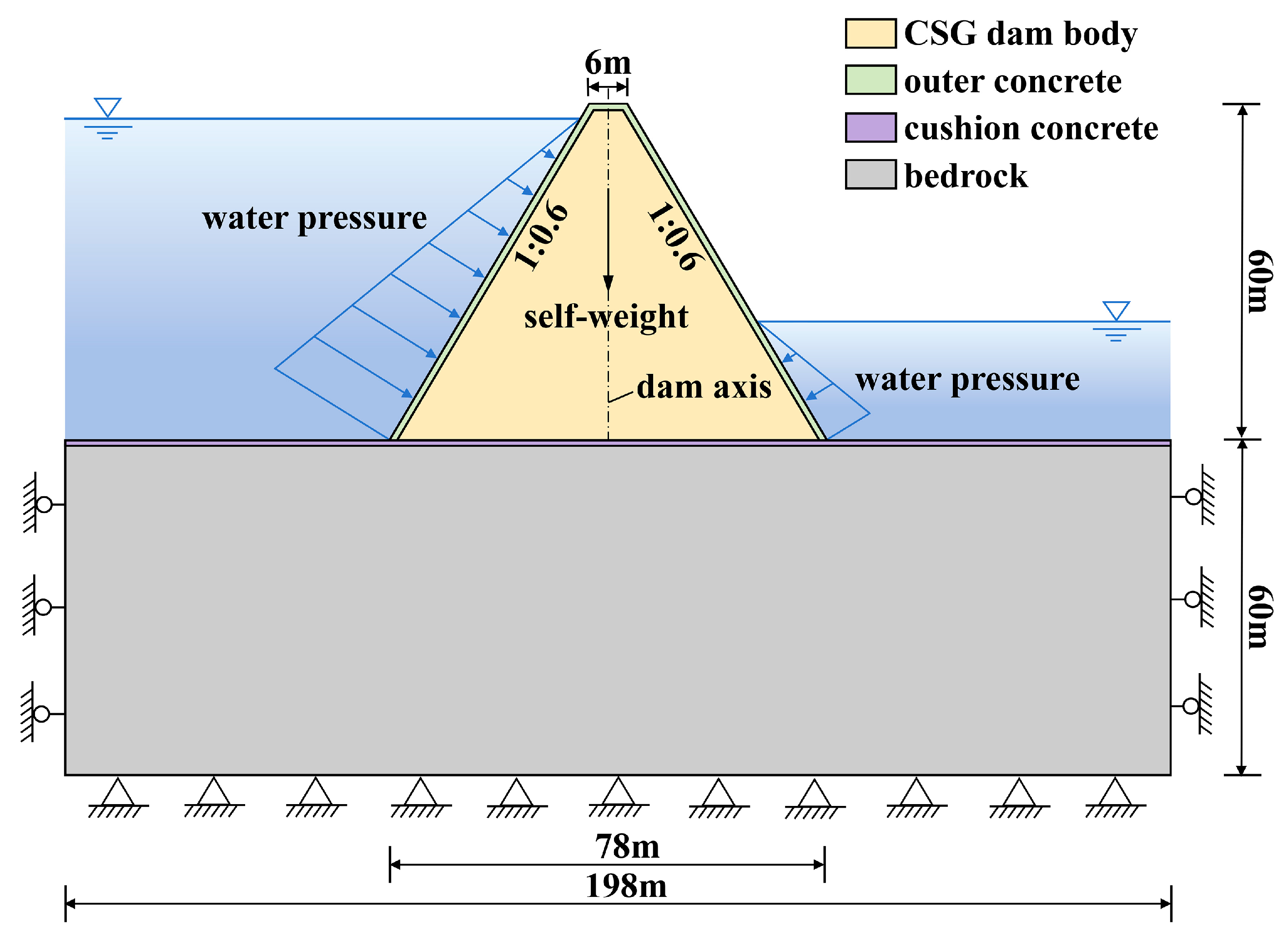
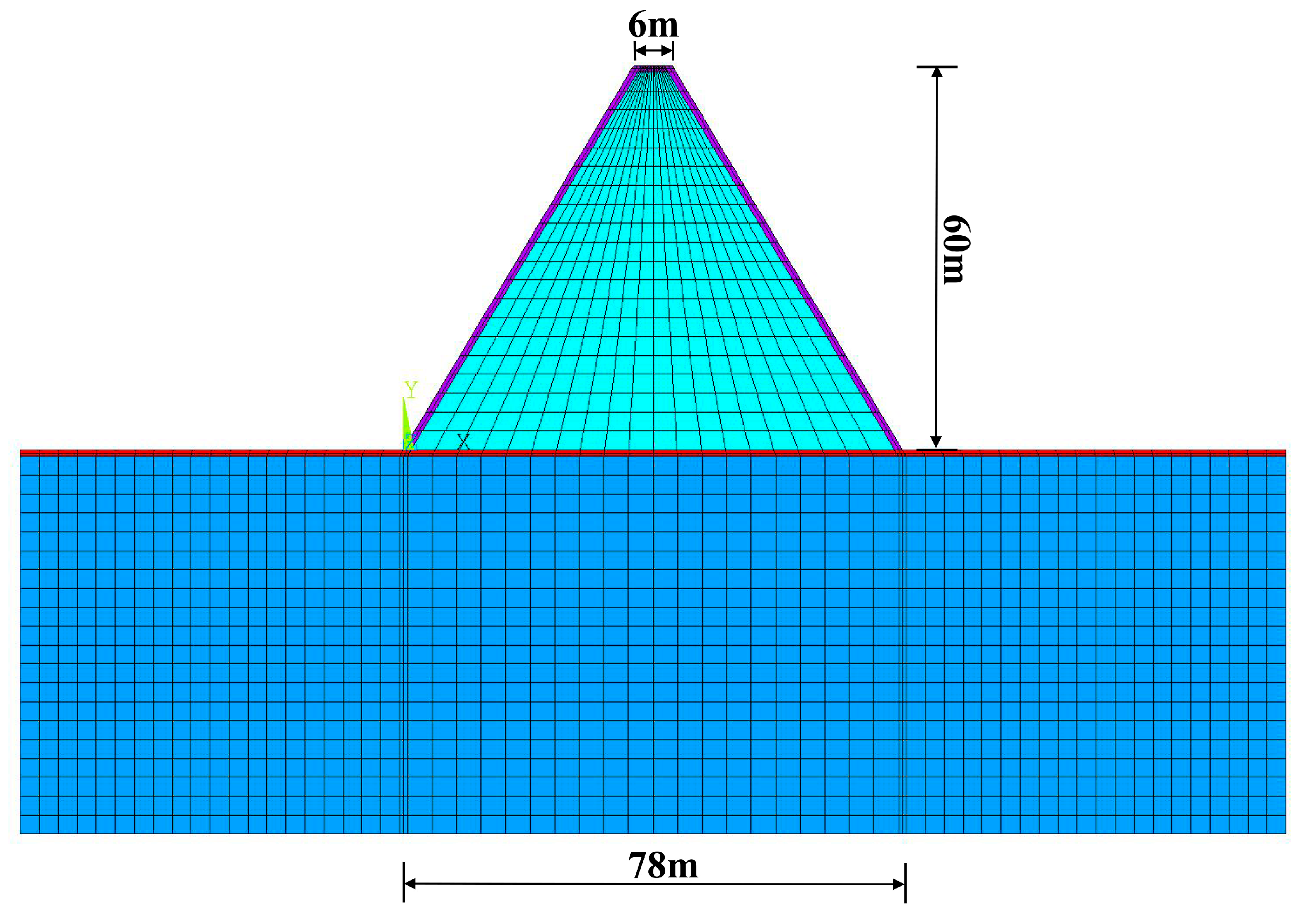
2.4. Finite Element Model, Material Parameters, and Boundary Conditions
3. Macroscopic Temperature Response Analysis of CSG Dam
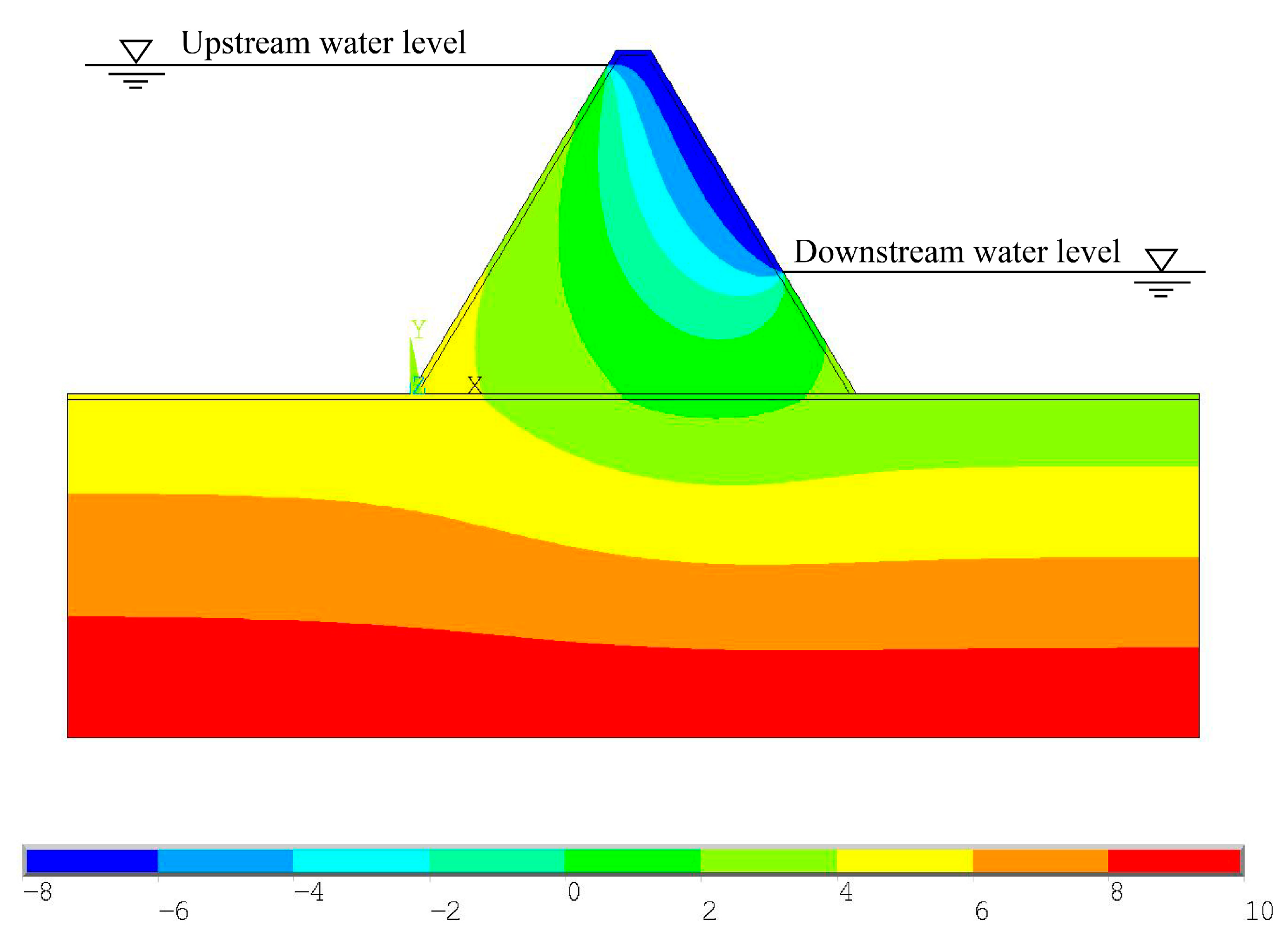
3.1. Temperature Field Distribution During Winter Operation
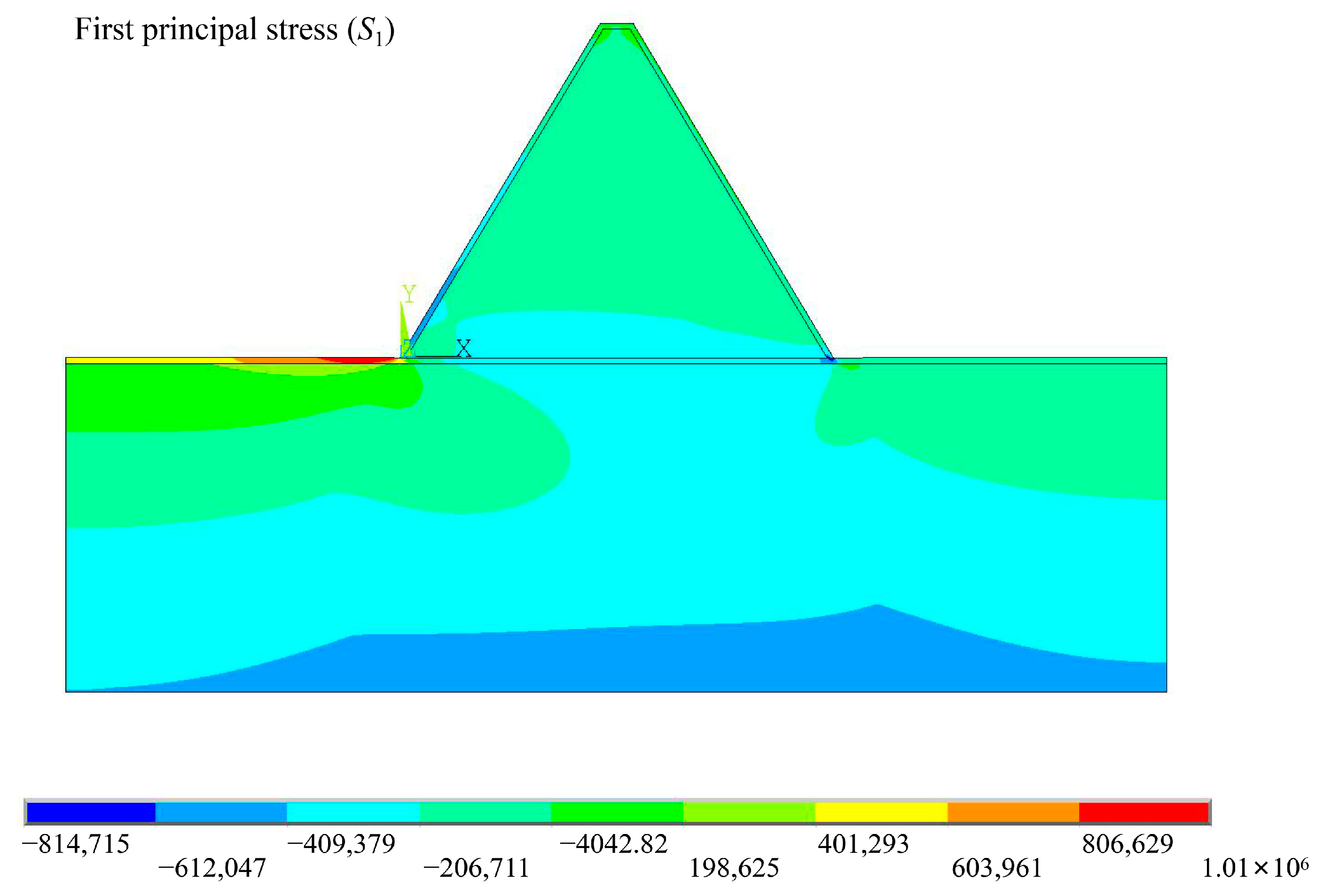
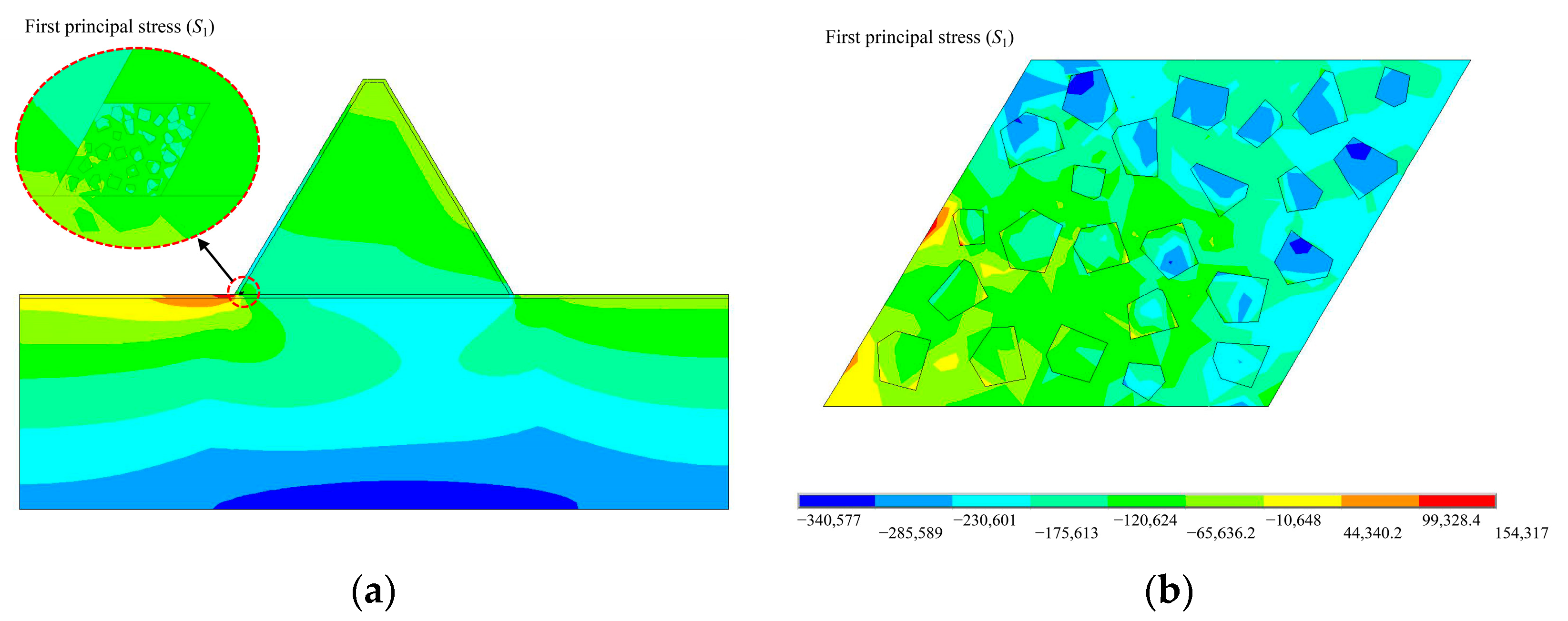
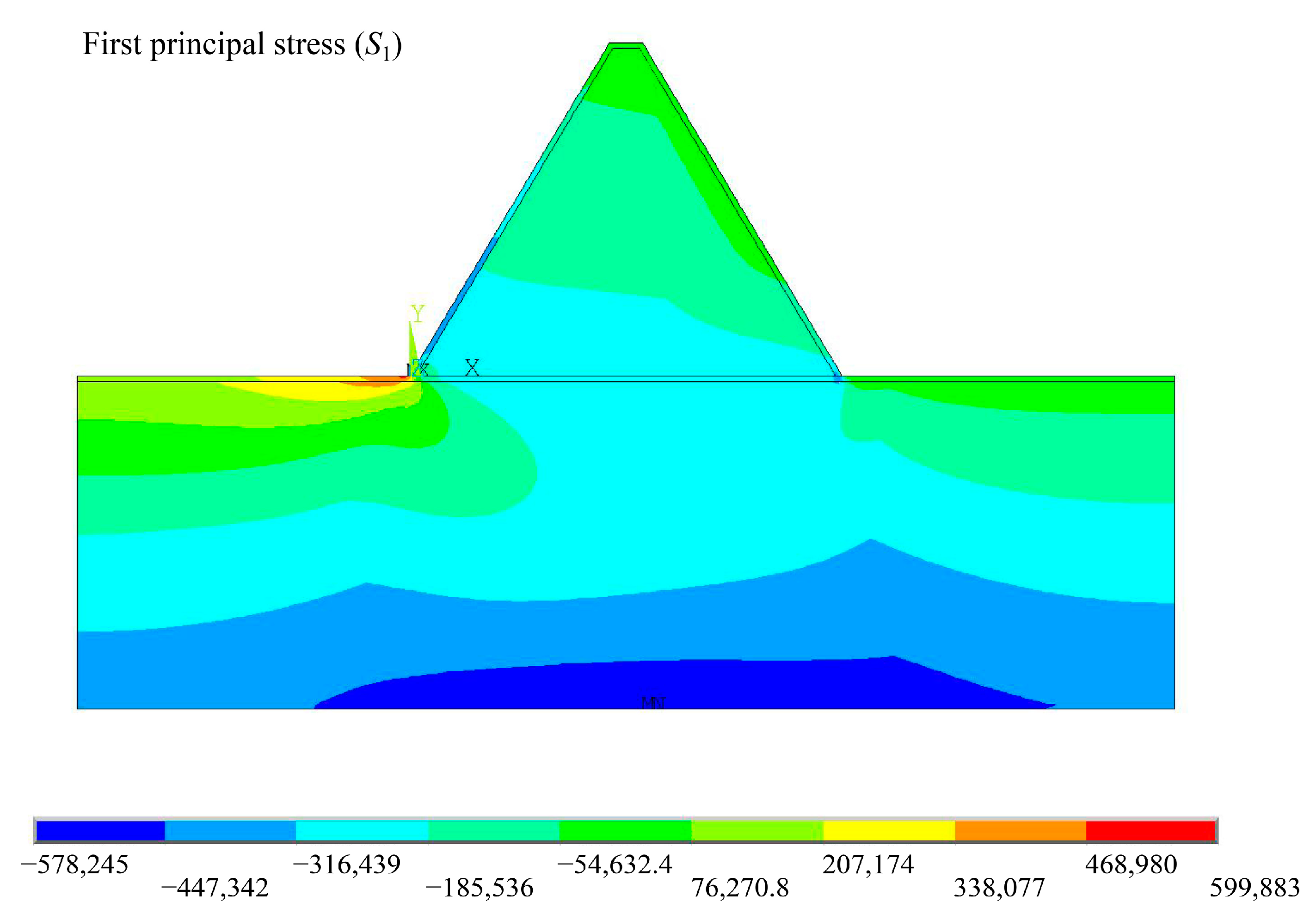
3.2. Thermal Stress Distribution During Winter Operation
4. Temperature Response Analysis of Two Local Analysis Methods
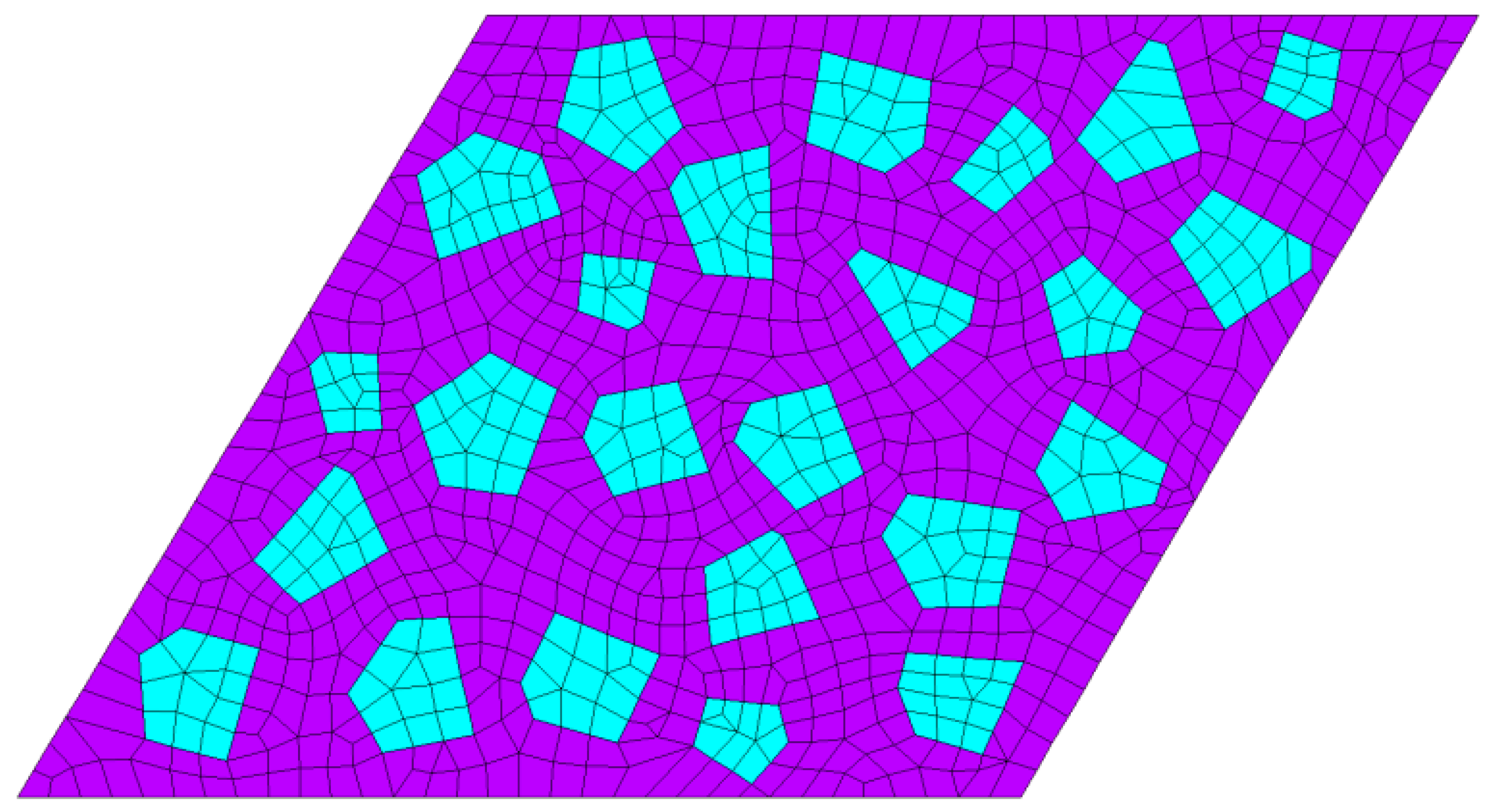
4.1. Local Meso-Scale Response Based on Adaptive Macro–Meso FEM
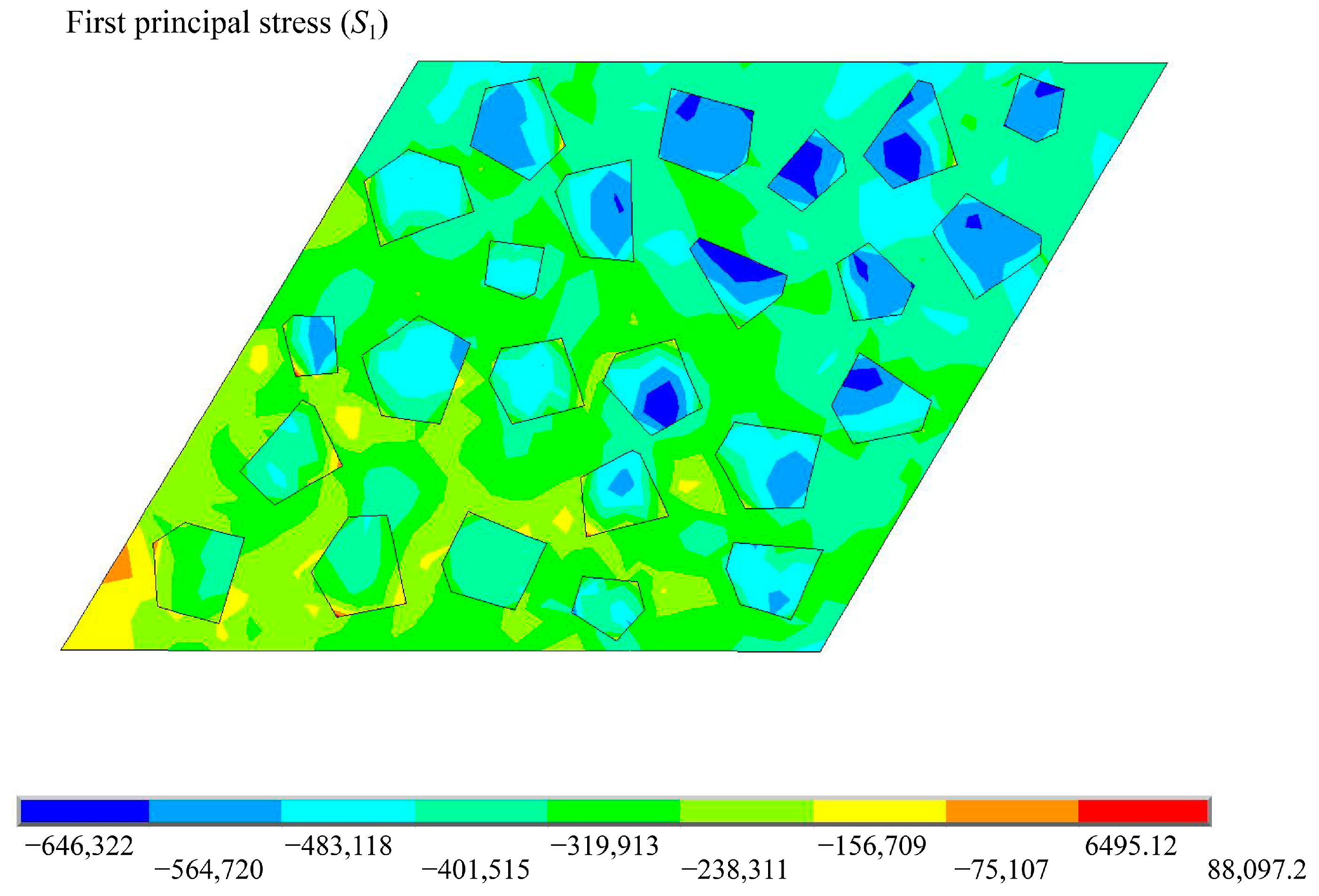
4.2. Local Meso-Scale Response Based on Submodeling Method
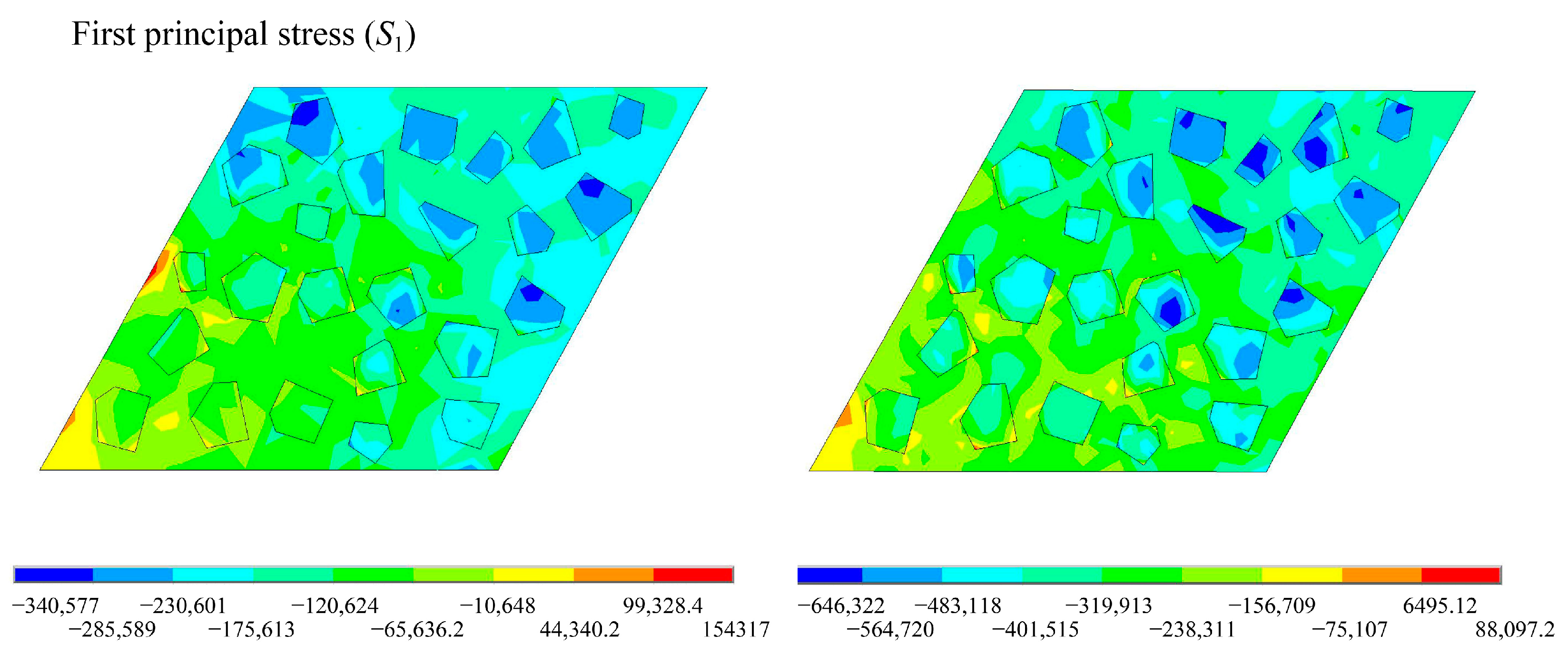
4.3. Method Comparison and Mechanism Discussion
5. Conclusions
Author Contributions
Funding
Institutional Review Board Statement
Informed Consent Statement
Data Availability Statement
Conflicts of Interest
References
- Jia, J.; Lino, M.; Jin, F.; Zheng, C. The Cemented Material Dam: A New, Environmentally Friendly Type of Dam. Engineering 2016, 2, 490–497. [Google Scholar] [CrossRef]
- Cai, X.; Zhang, Y.; Guo, X.; Zhang, X.; Li, F.; Zhang, T. Review on research progress of cemented sand and gravel dam. Sci. Eng. Compos. Mater. 2022, 29, 438–451. [Google Scholar] [CrossRef]
- Jia, J.; Ding, L.; Wu, Y.; Zhao, C.; Zhao, L. Research and application of key technologies for the construction of cemented material dam with soft rock. Appl. Sci. 2023, 13, 4626. [Google Scholar] [CrossRef]
- Jiang, M.; Cai, X.; Guo, X.; Liu, Q.; Zhang, T. Adiabatic temperature rise test of cemented sand and gravel (CSG) and its application to temperature stress prediction of CSG dam. Adv. Mater. Sci. Eng. 2020, 2020, 3898391. [Google Scholar] [CrossRef]
- Mirković, U.; Kuzmanović, V.; Todorović, G. Long-term thermal stress analysis and optimization of contraction joint distance of concrete gravity dams. Appl. Sci. 2022, 12, 8163. [Google Scholar] [CrossRef]
- Rodrigues, E.A.; Manzoli, O.L.; Bitencourt, L.A.G.; Bittencourt, T.N.; Sánchez, M. An adaptive concurrent multiscale model for concrete based on coupling finite elements. Comput. Methods Appl. Mech. Eng. 2018, 328, 26–46. [Google Scholar] [CrossRef]
- Sun, B.; Li, Z. Adaptive mesh refinement FEM for seismic damage evolution in concrete-based structures. Eng. Struct. 2016, 115, 155–164. [Google Scholar] [CrossRef]
- Sun, B.; Li, Z. Adaptive concurrent three-level multiscale simulation for trans-scale process from material mesodamage to structural failure of concrete structures. Int. J. Damage Mech. 2016, 25, 750–769. [Google Scholar] [CrossRef]
- Xu, L.; Jiang, L.; Shen, L.; Gan, L.; Dong, Y.; Su, C. Adaptive hierarchical multiscale modeling for concrete trans-scale damage evolution. Int. J. Mech. Sci. 2023, 241, 107955. [Google Scholar] [CrossRef]
- Xu, L.; Jiang, L.; Wang, S.; Ren, Q. An adaptive macro-meso progressive analysis method for cross-scale damage and cracking of concrete. J. Southeast Univ. Nat. Sci. Ed. 2022, 52, 1052–1062. [Google Scholar]
- Unger, F.J.; Eckardt, S. Multiscale Modeling of Concrete: From Mesoscale to Macroscale. Arch. Comput. Methods Eng. 2011, 18, 341–393. [Google Scholar] [CrossRef]
- Rezakhani, R.; Zhou, X.; Cusatis, G. Adaptive multiscale homogenization of the lattice discrete particle model for the analysis of damage and fracture in concrete. Int. J. Solids Struct. 2017, 125, 50–67. [Google Scholar] [CrossRef]
- Barbhuiya, S.; Jivkov, A.; Das, B.B. A review of multi-scale modelling of concrete deterioration: Fundamentals, techniques and perspectives. Constr. Build. Mater. 2023, 406, 133472. [Google Scholar] [CrossRef]
- Zhu, B. Temperature Stress and Temperature Control of Mass Concrete; China Water & Power Press: Beijing, China, 2012. [Google Scholar]
- Guo, L.; Luo, G.; Zhong, L.; Chen, S. Simulation of freeze-thaw damage of hydraulic concrete structures during construction. Trans. Chin. Soc. Agric. Eng. 2012, 28, 82–87. [Google Scholar] [CrossRef]
- Li, Z.; Liang, X.; Liu, C.; Liang, M.; van Breugel, K.; Ye, G. Thermal deformation and stress of alkali-activated slag concrete under semi-adiabatic condition: Experiments and simulations. Cem. Concr. Res. 2022, 159, 106887. [Google Scholar] [CrossRef]
- Zhang, J.; Zhou, D.; He, X.; Hu, X.; Qiang, S. Comparative analysis of temperature and stress simulations in mass concrete for sluice gate structures based on Chinese and American standards. Materials 2025, 18, 100. [Google Scholar] [CrossRef] [PubMed]
- Zhang, Y.; Pan, J.; Sun, X.; Feng, J.; Sheng, D.; Wang, H.; Zhou, X.; He, Y.; Diao, M.; Zhan, Q. Simulation of thermal stress and control measures for rock-filled concrete dam in high-altitude and cold regions. Eng. Struct. 2021, 230, 111721. [Google Scholar] [CrossRef]
- Yang, S.; Yuan, S. Comparative analysis of several adaptive finite element methods. Eng. Mech. 2025, 42, 1–8. [Google Scholar] [CrossRef]
- Gierden, C.; Kochmann, J.; Waimann, J.; Svendsen, B.; Reese, S. A review of FE-FFT-based two-scale methods for computational modeling of microstructure evolution and macroscopic material behavior. Arch. Comput. Methods Eng. 2022, 29, 4115–4135. [Google Scholar] [CrossRef]
- Mori, T.; Tanaka, K. Average stress in matrix and average elastic energy of materials with misfitting inclusions. Acta Metall. 1973, 21, 571–574. [Google Scholar] [CrossRef]
- Guo, L.; Zhong, L.; Zheng, C.; Guo, L.; Wang, L. Damage and failure study of recycled concrete containing bricks based on improved random aggregate model. J. Basic Sci. Eng. 2019, 27, 1390–1398. [Google Scholar] [CrossRef]
- Zhuo, J.; Zhang, Y.; Ma, M.; Zhang, Y.; Zheng, Y. Uniaxial compression failure and size effect of recycled aggregate concrete based on meso-simulation analysis. Materials 2022, 15, 5710. [Google Scholar] [CrossRef] [PubMed]
- Li, H.; Fu, S.; Li, G.; Hu, G. FEA of effects induced by diurnal temperature variation on downstream surface of Xiaowan Arch Dam. Adv. Civ. Eng. 2021, 2021, 6300387. [Google Scholar] [CrossRef]
- Freitas, M.; Ben Ftima, M.; Léger, P.; Bouaanani, N. Three-dimensional failure envelope of concrete dam shear keys. Eng. Struct. 2022, 269, 114766. [Google Scholar] [CrossRef]
- Song, L.; Wu, M.; Wang, J.; Xu, Y. Seismic damage analysis of the outlet piers of arch dams using the finite element sub-model method. Earthq. Eng. Eng. Vib. 2016, 15, 617–626. [Google Scholar] [CrossRef]
- Yin, Y.; Ren, Q. Macro-meso damage and failure analysis of concrete gravity dams under seismic action based on submodel method. Eng. Mech. 2024, 41, 15–22, 82. [Google Scholar] [CrossRef]
- Fu, Y. Seepage Characteristics and Temperature-Control Simulation of Cemented Sand and Gravel Dams. Master’s Thesis, North China University of Water Resources and Electric Power, Zhengzhou, China, 2021. [Google Scholar] [CrossRef]
- Cai, X.; Jiang, M.; Guo, X.; Chen, J.; Zhao, Q. Experimental study on the creep behaviour of cemented sand and gravel (CSG) and temperature stress prediction of CSG dam under seasonal temperature change. Adv. Civ. Eng. 2020, 2020, 8289520. [Google Scholar] [CrossRef]
- Zhu, B. Prediction of Water Temperature in Deep Reservoirs. Dam Eng. 1997, 8, 13–25. [Google Scholar]
- Liang, W.; Leng, L.; Tian, H.; Tian, X.; Zhang, C. Cause Investigation of Fractures in the Anti-Arc Portion of the Gravity Dam’s Overflow and the Top of the Substation Tunnel. Buildings 2023, 13, 1531. [Google Scholar] [CrossRef]
- Wang, R.; Gong, A.; Shao, S.; Qu, B.; Xu, J.; Wang, F.; Liu, F. Microscopic analysis of cementitious sand and gravel damming materials. Fluid Dyn. Mater. Process. 2024, 20, 749–769. [Google Scholar] [CrossRef]
- SL 319-2018; Design Code for Concrete Gravity Dams. China Water & Power Press: Beijing, China, 2018.
- Jiao, Y.; Cheng, L.; Wang, N.; Wang, S.; Ma, L. Calculation and analysis of temperature damage of Shimantan concrete gravity dam based on macro–meso model. Materials 2022, 15, 7138. [Google Scholar] [CrossRef] [PubMed]
- Guo, L.; Liang, T.; Zhong, L. Early age temperature effect of cemented sand and gravel based on random aggregate model. Sci. Eng. Compos. Mater. 2025, 32, 20250059. [Google Scholar] [CrossRef]





| Mesh Type | Long-Edge Divisions | Short-Edge Divisions | Number of Elements | Number of Nodes | Maximum Principal Tensile Stress (MPa) |
|---|---|---|---|---|---|
| Coarse mesh | 40 | 2 | 7056 | 7265 | 0.52 |
| Adopted mesh | 80 | 2 | 26,896 | 27,305 | 0.60 |
| Fine mesh | 120 | 2 | 62,010 | 62,617 | 0.64 |
| Model | Material | Elastic Modulus (GPa) | Poisson’s Ratio | Thermal Conductivity (W/(m·K)) | Specific Heat Capacity (J/(kg·°C)) | Coefficient of Linear Thermal Expansion (10−6/°C) |
|---|---|---|---|---|---|---|
| Macroscopic model | Outer concrete layer | 27 | 0.20 | 2.31 | 1100 | 6.80 |
| CSG (dam body) | 10 | 0.20 | 2.15 | 990 | 5.60 | |
| Cushion concrete | 20 | 0.20 | 2.72 | 1090 | 6.92 | |
| Bedrock | 25 | 0.25 | 2.50 | 880 | 5.00 | |
| Mesoscopic model | Mortar | 8 | 0.22 | 1.50 | 950 | 10.00 |
| Aggregate | 50 | 0.25 | 2.80 | 850 | 5.00 |
| Loading Condition | ||||
|---|---|---|---|---|
| Without thermal loading | 1.001 | −0.051 | −0.096 | 1.010 |
| With thermal loading | 0.519 | −0.019 | −0.021 | 0.520 |
| Principal Tensile Stress Threshold (MPa) | Number of Candidate Elements | Location of Candidate Elements | Upstream Dam Heel Identified |
|---|---|---|---|
| 0.10 | 18 | Surface region and near dam heel | No |
| 0.15 | 6 | Near upstream dam heel | Yes |
| 0.20 | 2 | Near upstream dam heel | Yes |
| Number of Random Realizations N | Mean of the Maximum First Principal Tensile Stress E(X)/(MPa) | Standard Deviation S (MPa) | Coefficient of Variation C = S/E(X) |
|---|---|---|---|
| 10 | 0.1525 | 0.0043 | 0.0279 |
Disclaimer/Publisher’s Note: The statements, opinions and data contained in all publications are solely those of the individual author(s) and contributor(s) and not of MDPI and/or the editor(s). MDPI and/or the editor(s) disclaim responsibility for any injury to people or property resulting from any ideas, methods, instructions or products referred to in the content. |
© 2026 by the authors. Licensee MDPI, Basel, Switzerland. This article is an open access article distributed under the terms and conditions of the Creative Commons Attribution (CC BY) license.
Share and Cite
Zhong, L.; Zhang, Y.; Guo, L.; Zhang, J. Research on Multiscale Simulation Methods for Thermal Response of Cemented Sand–Gravel Dams. Appl. Sci. 2026, 16, 6723. https://doi.org/10.3390/app16136723
Zhong L, Zhang Y, Guo L, Zhang J. Research on Multiscale Simulation Methods for Thermal Response of Cemented Sand–Gravel Dams. Applied Sciences. 2026; 16(13):6723. https://doi.org/10.3390/app16136723
Chicago/Turabian StyleZhong, Ling, Ying Zhang, Lixia Guo, and Jianwei Zhang. 2026. "Research on Multiscale Simulation Methods for Thermal Response of Cemented Sand–Gravel Dams" Applied Sciences 16, no. 13: 6723. https://doi.org/10.3390/app16136723
APA StyleZhong, L., Zhang, Y., Guo, L., & Zhang, J. (2026). Research on Multiscale Simulation Methods for Thermal Response of Cemented Sand–Gravel Dams. Applied Sciences, 16(13), 6723. https://doi.org/10.3390/app16136723