1. Introduction
To address the increasing challenges of energy supply and environmental pollution, actively promoting renewable and clean energy sources (such as solar, wind, and hydrogen) has become an effective strategy to mitigate these issues. Hydrogen, due to its high calorific value, zero emissions, and pollution-free nature, is regarded as a primary energy carrier for the future [
1], but its storage and transportation costs remains high. Methanol, as an ideal hydrogen carrier and source, effectively overcomes the difficulties of hydrogen storage and transportation due to its high hydrogen-to-carbon ratio, liquid state at ambient temperature and pressure, and ease of storage and transport. Methanol steam reforming, with its extensive industrial application experience and relatively low reaction temperature, is considered one of the most promising hydrogen production methods. To achieve the green and sustainable development of methanol steam reforming-based hydrogen production, researchers have actively explored the use of various clean energies as heat sources to drive the methanol steam reforming reaction. Depending on the nature of the heat source, the heating methods for methanol steam reforming can be categorized into waste heat recovery (engine waste heat [
2,
3], industrial waste heat [
4,
5], and heat carried by solid particles [
6,
7], etc.), electric heating [
8,
9], exothermic chemical reactions [
10,
11,
12,
13], and solar energy [
1,
14,
15,
16,
17,
18,
19,
20,
21,
22,
23].
Liao et al. [
2] conducted methanol reforming for hydrogen production experiments using engine exhaust waste heat recovery strategies to verify that exhaust waste heat can replace external heat sources. Tang et al. [
3] established a waste heat recovery reformer model for online reforming in methanol–diesel dual-injection engines, analyzing methods to enhance reforming efficiency through flow rate and temperature optimization. Poran A et al. [
4] developed a high-pressure thermally regenerative direct-injection internal combustion engine integrated with methanol reforming, comparing power output and emission characteristics with and without the reforming system, demonstrating that waste heat reforming reduces pollutants and improves thermal efficiency. Yao et al. [
5] built a compact waste heat recovery reformer to intensify internal transport processes and increase hydrogen production rates. Zheng et al. [
6] investigated the impact of catalyst particle size on reforming performance in waste heat-heated reactors, optimizing heat transfer and reaction matching within the bed. Gao et al. [
7] analyzed the effect of porosity in the heat exchange wall structure of particulate steam generators on heat transfer in packed beds and overall energy efficiency of the reforming hydrogen generation system. Lian et al. [
8] employed insulated plasma catalysis to enhance methanol reforming, enabling efficient hydrogen production under low-temperature waste heat conditions. Guan et al. [
9] designed an electromagnetic induction heating tubular catalytic coated reactor, utilizing dual heat sources—electromagnetic heating and waste heat—to improve reforming conversion rates. Andisheh Tadbir M et al. [
10] developed a three-dimensional simulation of a coated microreactor, coupling methanol reforming with exothermic oxidation self-heating. Chein R et al. [
11] integrated a miniaturized hydrogen generation unit combining fuel vaporization, reforming, and CO removal, completing prototype testing. Wang et al. [
12] constructed a self-thermal micro-reformer using SiC honeycomb ceramic carriers, achieving autonomous thermal operation via reaction exothermicity and waste heat. Li J M et al. [
13] systematically conducted flow and heat transfer experiments on pin-fin self-heating reforming reactors, quantifying the relationship between hydrogen production performance and fin structure and operating conditions. Hong H et al. [
14] provided the earliest proposal of a coupled methanol decomposition and low-temperature solar thermal power cycle and laid the foundation for the idea of solar methanol thermochemical energy storage. The proposal of a low-grade solar heat collection system matched with a methanol reforming hydrogen production system, and the thermodynamic modeling was also completed [
15]. In reference to [
16], the test platform was built to verify the feasibility of direct solar heating driving reforming hydrogen production at medium temperatures, and it was proven that solar energy could meet the heat demand of the reaction. The works from the same team [
1,
19,
20] established a three-dimensional numerical model of medium-temperature solar energy reception/reactor, optimized the cavity flow path and heat absorption structure, and proposed a completely new integrated heat collection–reaction composite structure. Zheng et al. [
18] carried out the numerical optimization of catalyst filling arrangements for the non-uniform heat flow density of parabolic trough receivers to alleviate local overheating/insufficient reaction. Zhao et al. [
22] carried out the systematic study of parabolic solar reforming reactors, and comprehensive analyses of heat flow, catalytic layer, and working fluid flow coupling effects. Kumar R et al. [
23] investigated the effects of particle size, concentration ratio, and particle shape on the improvement of the system’s energy storage efficiency. This material can be used for solar heat storage and then provide heat for methanol reforming to produce hydrogen. Real D et al. [
17] researched pure renewable solar energy-driven methanol reforming, comparing the energy efficiency of photovoltaic electrolysis and photothermal reforming routes. Zhao et al. [
21] completed multiple groups of tests of solar thermal driving hydrogen production at medium temperatures, carried out thermodynamic and exergy analyses of the entire system, and identified the key links of system energy loss.
Thermal energy storage is a promising and sustainable solution in the field of long-term energy storage. However, the low thermal conductivity inherent in the storage materials limits their wider application. It has been reported that introducing nanoparticles and mixing enhancement techniques can lead to significant progress in thermal performance [
24]. On the other hand, the heat-absorbing methanol reforming reaction can be utilized to enhance the storage and release processes, thereby expanding its application scope and improving its efficiency. When utilizing the low energy density of solar energy, solar concentrating technology can also effectively address this issue by focusing solar radiation into a small area with the help of concentrators, thereby increasing its energy density.
Jin’s team [
14,
15,
25] constructed a medium-temperature solar receiver/reactor based on a single-axis parabolic trough concentrator, utilizing solar heat at approximately 473–573 K to drive the methanol steam reforming reaction. Through experimental and numerical studies, they investigated a 5 kW mid-to-low-temperature solar thermal hydrogen production system and later expanded it to 15 kW [
1,
24,
26]. This demonstrated the feasibility of combining solar heat with alternative fuels for hydrogen production at around 473–573 K, broadening the thermal applications of medium-temperature solar energy. However, compared to conventional methanol steam reforming reactions under uniform heat flux or temperature conditions, the circumferential solar flux density distribution in parabolic trough solar receivers/reactors is non-uniform [
27,
28]. This can lead to localized hot spots, high temperatures, and significant circumferential temperature gradients [
29], resulting in issues such as the degradation of selective absorption coatings [
30,
31], sintering of catalyst particles [
25], and thermal deformation of the receiver [
32]. Additionally, the axial light flux distribution in line focusing systems exhibits uniform characteristics, which inherently conflict with the reaction kinetics requirements of methanol steam reforming—high-density heat flux is needed initially to overcome the activation energy barrier, while only heat supply to maintain the reaction temperature is required in later stages. This mismatch between heat supply and endothermic reaction demand limits system energy efficiency. Beyond parabolic trough concentrators integrated with hydrogen production systems, Men et al. [
33] developed a linear Fresnel solar absorber/reactor model for photothermal–chemical reactions. By optimizing heat flux distribution, the system’s chemical reaction performance approached ideal conditions, reducing the risk of catalyst overheating and sintering-induced deactivation. Yu et al. [
34] developed a system using a Fresnel lens as the concentrator to study methanol-to-hydrogen conversion under combined photothermal and photocatalytic effects outdoors. They prepared a CuO/ZnO/ZrO
2 nanocatalyst with 91.4% full-spectrum solar absorption, achieving a solar-to-chemical energy conversion efficiency of 10.7% at a low temperature of 422 K under 700 W/m
2 solar irradiance intensity. Zhang et al. [
35] employed a Fresnel lens as the concentrator and constructed a hybrid catalyst bed methanol steam reforming reactor, where Pt/CuO facilitated photothermal catalysis and Cu/ZnO/Al
2O
3 enabled thermal catalysis, achieving a maximum solar-to-chemical energy conversion efficiency of 24.1%. Zeng et al. [
36] utilized a Fresnel lens to concentrate sunlight onto nanoparticles for solar-driven methanol decomposition, demonstrating that the nanoparticle-based reaction bed exhibited superior solar capture performance with a low concentration ratio of 17.5 and a high energy conversion efficiency of 35.5%. Zhao et al. [
37] used a linear Fresnel concentrator with a reflector and secondary homogenizing mirror to drive a vacuum tube-based hydrogen production reactor, comprehensively analyzing the effects of reactor surface heat flux and key operational parameters while highlighting the feasibility and effectiveness of response surface methodology in studying methanol steam reforming performance. Gu et al. [
38] pioneered the integration of a compound parabolic concentrator (CPC) with vacuum encapsulation, employing a double-sided TiNOx-coated copper receiver (absorption rate up to 0.94) for methanol steam reforming hydrogen production, offering a viable portable solution for methanol reforming.
Response surface methodology (RSM) is a widely used experimental design and analysis method [
39]. Constructing response surface plots helps users intuitively understand how factors in an experimental design interact and influence response variables. Chen et al. [
39] investigated the methanol steam reforming process for hydrogen production using a commercial Cu-Zn catalyst, combining Box–Behnken Design (BBD) and Artificial Neural Network (ANN). They systematically studied the effects of the steam-to-methanol ratio (S/C, 1.5–2.5), reaction temperature (180–280 °C), and gas hourly space velocity (GHSV, 15,000–30,000 h
−1) on methanol conversion and hydrogen yield. The results indicated that temperature and S/C ratio significantly influenced the target responses (temperature > S/C > GHSV), while GHSV had a limited effect. The optimal operating conditions were identified as high temperature (280 °C) and low S/C (1.5), achieving high methanol conversion (98.56%) and hydrogen yield (2.98 mol/mol). Monyanon et al. [
40] employed a 2
4 full factorial design with four center points to systematically examine the effects of operating temperature, steam-to-methanol ratio liquid feed rate, and catalyst weight-to-helium flow ratio (W/F) on the catalytic performance of methanol steam reforming, aiming to maximize methanol conversion while minimizing carbon monoxide (CO) selectivity. The results showed that the liquid feed rate had a much stronger influence on the response than other factors, overshadowing their significance. Further optimization using Central Composite Rotatable Design (CCRD) under RSM minimized CO selectivity while maintaining high methanol conversion. The optimal conditions were found at 295–307 °C and S/C = 1.82–2.00, achieving nearly a 100% methanol conversion with CO selectivity of around 1.5%. Sarafraz et al. [
41] conducted methanol steam reforming in a microreactor and optimized operating parameters using Box–Behnken Design. Under conditions of 773 K, 1.0 g catalyst loading, and a flow rate of 24,000 mL/(g·h), methanol conversion was enhanced to about 100%.
Imtiaz Hussain and Lee [
42] conducted a comparative study between point-focus and linear-focus Fresnel lenses, analyzing two collectors with identical areas. They found that the point-focus collector exhibited an average efficiency 7% higher than its linear-focus counterpart. Unlike dish concentrators, Fresnel lenses eliminate the need to account for shadowing effects caused by cavity absorbers on reflective mirrors [
43]. Cavity-type solar absorbers, as the core component of point-focus solar concentrating systems, demonstrate significant technical advantages and application potential in medium-to-high-temperature solar energy conversion. These absorbers employ a unique black cavity design, allowing incident light to undergo multiple reflections and absorption processes on the inner walls, thereby minimizing optical spillage losses and effectively suppressing convective and radiative heat losses. Additionally, the cavity absorber, positioned behind the focal plane, uniformly distributes high-density solar radiation across its inner surface and facilitates stable heat transfer through a thermal conduction medium [
44]. Moreover, compared to conventional vacuum tube collectors, cavity absorbers adopt a non-vacuum design, eliminating the need for complex sealing processes and significantly reducing production costs and maintenance difficulties. Xie [
45] designed and analyzed the optical performance of eight cavity structures, finding that a conical cavity absorber (with a vertex angle of 60°) paired with a point-focus Fresnel lens achieved the highest optical efficiency (89.95%) and the most uniform internal energy distribution. Yuan et al. [
46] addressed the dead-zone issue in traditional cavity receivers by designing a concave-bottom cavity absorber system using a Fresnel lens as the concentrator. Experimental results showed that the convex-bottom cavity receiver exhibited a 6.02% higher optical efficiency than conventional designs. Asrori et al. [
47] applied a Fresnel lens-based absorber for sensible heat studies, experimentally comparing the thermal efficiency of two conical cavity receivers of different sizes. The results indicated that the smaller receiver, due to its higher concentration capability and lighter thermal load, achieved superior steam generation efficiency and faster response times. During testing, the average focal temperature for the larger receiver was 285.3 °C, while the smaller one reached 478.94 °C. Kaddoura et al. [
48] integrated a point-focus Fresnel lens with a sensible heat storage system to investigate monthly thermal energy storage profiles in Lebanon. Their study demonstrated that a lab-scale Fresnel lens could elevate the heat transfer fluid temperature by 200 °C, with projected thermal efficiencies ranging from 93.6% to 97.2%.
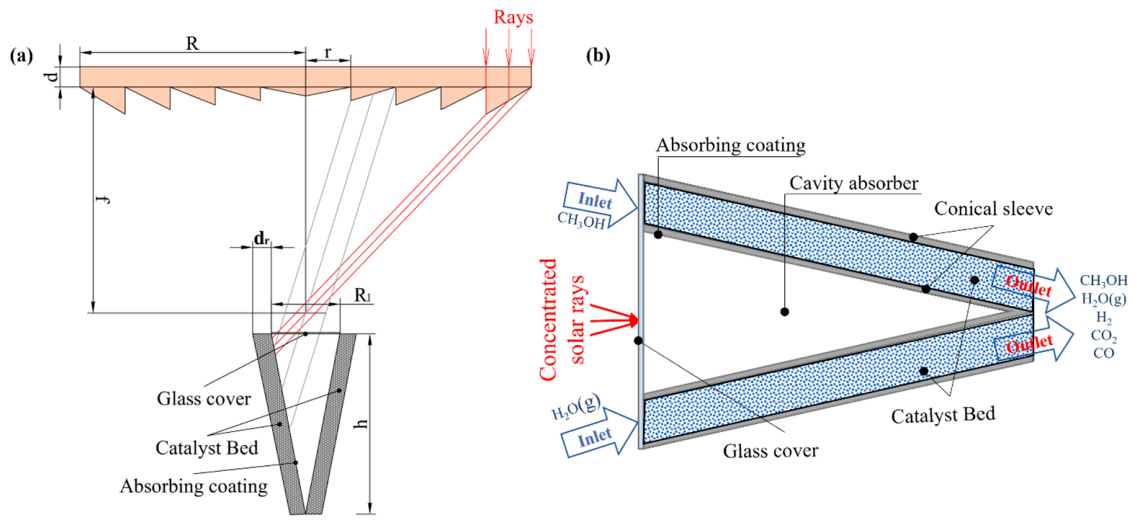
Therefore, in this study, a novel methanol steam reforming hydrogen production reactor based on a Fresnel lens cavity absorber was designed, considering the characteristics of the methanol steam reforming reaction in solar energy-driven hydrogen production. This design not only utilizes solar thermal collection for heating but also improves the temperature distribution within the reactor through optimized design, thereby enhancing the reactor performance.
5. Multi-Objective Optimization Process Based on Response Surface Analysis
This section focuses on the optimization of a conical cavity-driven methanol steam reforming reactor for hydrogen production. During the methanol steam reforming process, operating parameters such as the
S/C, reactant inlet temperature, and inlet flow rate exhibit complex interrelationships and mutual influences on hydrogen production performance [
63,
64]. The response surface methodology (RSM) is an empirical modeling approach used to predict the relationships between system variables and response values with relatively high accuracy. The Box–Behnken Design (BBD) within RSM was employed to analyze the interactions among these operating parameters, facilitating further optimization of the reaction process.
5.1. Design of Methanol Steam Reforming Process
This study considers three key operating parameters that directly influence the chemical reaction, the
S/C, reactant inlet temperature
Tin, and inlet flow rate
uin. Using the Box–Behnken Design (BBD) in Design-Expert 13 software, an optimization scheme was developed for the conical cavity methanol steam reforming hydrogen production reactor. The design comprised 15 runs, with all three factors set within consistent ranges, as shown in
Table 4.
The upper and lower bounds of each factor are referred to as the high and low levels, respectively. The midpoint between these levels is termed the zero level. The average distance from the high or low level to the zero level, calculated as (high level—low level)/2, is defined as the standard deviation. After standardization (subtracting the mean and dividing by the standard deviation), the high, zero, and low levels correspond to coded values of +1, 0, and −1, respectively [
65].
5.2. Results Analysis
A three-factor, three-level Box–Behnken design was implemented using Design-Expert 13 software to generate numerical combinations of the three operating parameters listed in
Table 4. This experimental design yielded 15 sets of independent variable combinations.
Table 5 presents the corresponding methanol conversion rate, hydrogen yield, and carbon monoxide selectivity for each set of independent variables, as calculated via COMSOL 6.0 simulations.
Based on the analysis results, three candidate models were evaluated, the Linear model, the Two-Factor Interaction (2FI) model, and the Quadratic model [
63]. As demonstrated by the ANOVA results presented in
Table 6, the Quadratic model exhibited superior performance for the response variables
XCH3OH and
YH2 in terms of model significance, goodness-of-fit, and predictive capability, making it the most suitable model for the conical cavity hydrogen production reactor.
However, for the response variable SCO, although the Quadratic model was recommended, its predictive R2 value of only 0.42 indicated insufficient predictive accuracy. To enhance model precision, cubic terms were subsequently incorporated for further optimization, as detailed in later sections.
Table 7 presents the analysis of variance (ANOVA) results for the reduced quadratic model with methanol conversion rate as the response variable, where non-significant terms (BC, A
2, B
2) have been eliminated. The model demonstrates a sum of squares of 10,359.29 with six degrees of freedom, yielding a mean square of 1726.55. The exceptionally high F-value of 441.01 (
p < 0.0001) provides strong evidence for the model’s statistical significance, indicating only a 0.01% probability that such a large F-value could result from noise. Furthermore, the lack-of-fit term shows an F-value of 11.35 with
p > 0.05, confirming its non-significance and suggesting minimal influence from unknown experimental factors. The model exhibits excellent predictive capability, as evidenced by an R
2 and an adjusted R
2 of 0.9947, indicating that 99.47% of the variation in methanol conversion can be explained by the model, with only 0.53% remaining unexplained. The adequate precision ratio of 63.86 (substantially >4) further confirms the model’s robustness in characterizing spatial variations within the response surface design. The model demonstrates exceptional explanatory power, with an R
2 value of 0.9970 and an adjusted R
2 of 0.9947. This indicates that the model accounts for 99.47% of the observed variation in methanol conversion rate, leaving only 0.53% of the variation unexplained. Furthermore, the signal-to-noise ratio of 63.86 (significantly exceeding the threshold value of 4) provides robust evidence that the model effectively captures the spatial variability inherent in the response surface design.
For the optimization of operating parameters in methanol steam reforming, a quadratic model was established through least squares regression analysis to quantify the effects of three operational parameters on
XCH3OH.
where A represents the
S/
C; B denotes the inlet temperature; C signifies the inlet flow rate. Positive coefficients indicate a positive correlation between the factor and methanol conversion rate, while negative coefficients represent negative correlations. The absolute magnitude of each coefficient reflects its relative influence on the conversion rate. The equation reveals that inlet flow rate (C) exerts the most significant (negative) effect on methanol conversion, inlet temperature (B) shows the second-strongest influence, and
S/
C (A) demonstrates the weakest effect among the three parameters.
Table 8 presents the variance analysis results of three operational parameters affecting hydrogen yield. The model’s F-value is 286.10, with
p < 0.0001, indicating that this regression model is highly significant and has high credibility. The
p-value for the lack-of-fit term is greater than 0.05, which is insignificant, suggesting that the model error is small. Additionally, the
p-values for A, B, C, and C2 are all less than 0.01, indicating that these factors significantly influence
YH2, with the order of their impact being inlet speed, inlet temperature, and
S/
C.
The model’s variance (R2) is 0.9954 and the adjusted R2 is 0.9919, indicating that only 0.35% of the response variable falls outside the prediction range. The difference between the adjusted R2 and the predicted R2 is less than 0.2; the precision is greater than 4, confirming the correctness of the model’s response.
The multiple regression fitting equation for hydrogen yield and the three operational parameters is
Hydrogen yield is positively correlated with the steam–methanol ratio and inlet temperature, but negatively correlated with inlet velocity, with inlet temperature having the greatest impact.
As previously mentioned, the accuracy of the carbon monoxide selectivity’s second-order prediction model was insufficient. By adding the cubic term A
2B and removing insignificant terms, the accuracy of the prediction model was improved, with R
2 increasing from 0.4187 to 0.9780, as shown in
Table 9. The total sum of squares for the model is 788.20, with degrees of freedom at 10, mean square at 78.82, and an F-value reaching 549.12, with a
p-value less than 0.0001 indicating that the model has high significance, with only a 0.01% probability of such a large F-value being due to noise. Among the factors, the
p-values for A, B, C, BC, B
2, C
2, and A
2B are all less than 0.05, making them significant terms in the model. In terms of lack-of-fit testing, the lack-of-fit F-value is 2.06, with a
p-value of 0.3585, indicating that the lack-of-fit is not significant relative to pure error, with a 35.85% probability of such a lack-of-fit F-value being due to noise. The non-significant lack-of-fit result is ideal, suggesting that the model fits well. An R
2 value of 0.9988 means the model can explain 99.88% of the variation in the response variable, demonstrating excellent fit quality. The adjusted R
2 is 0.9977, close to R
2, indicating that the model maintains good fit even after considering the number of independent variables. The difference between the predicted R
2 and the adjusted R
2 is less than 0.2, further proving that the model’s predictive ability aligns highly with its fitting capability, showing good generalization performance. Additionally, the model’s precision is 99.3052, which measures the signal-to-noise ratio; ideally, this ratio should exceed 4. This model’s ample precision far surpasses 4, indicating a strong signal strength capable of effectively distinguishing different response levels. In summary, these statistical indicators show that the model has excellent fitting effect, predictive ability, and stability, suitable for guiding the exploration of design space.
The multivariate regression equation for the correlation between carbon monoxide selectivity and three operational parameters is
The equation above shows that the S/C and the reactants inlet velocity are negatively correlated with carbon monoxide selectivity, while the feedstock inlet temperature is positively correlated with carbon monoxide selectivity.
5.3. Optimized Results
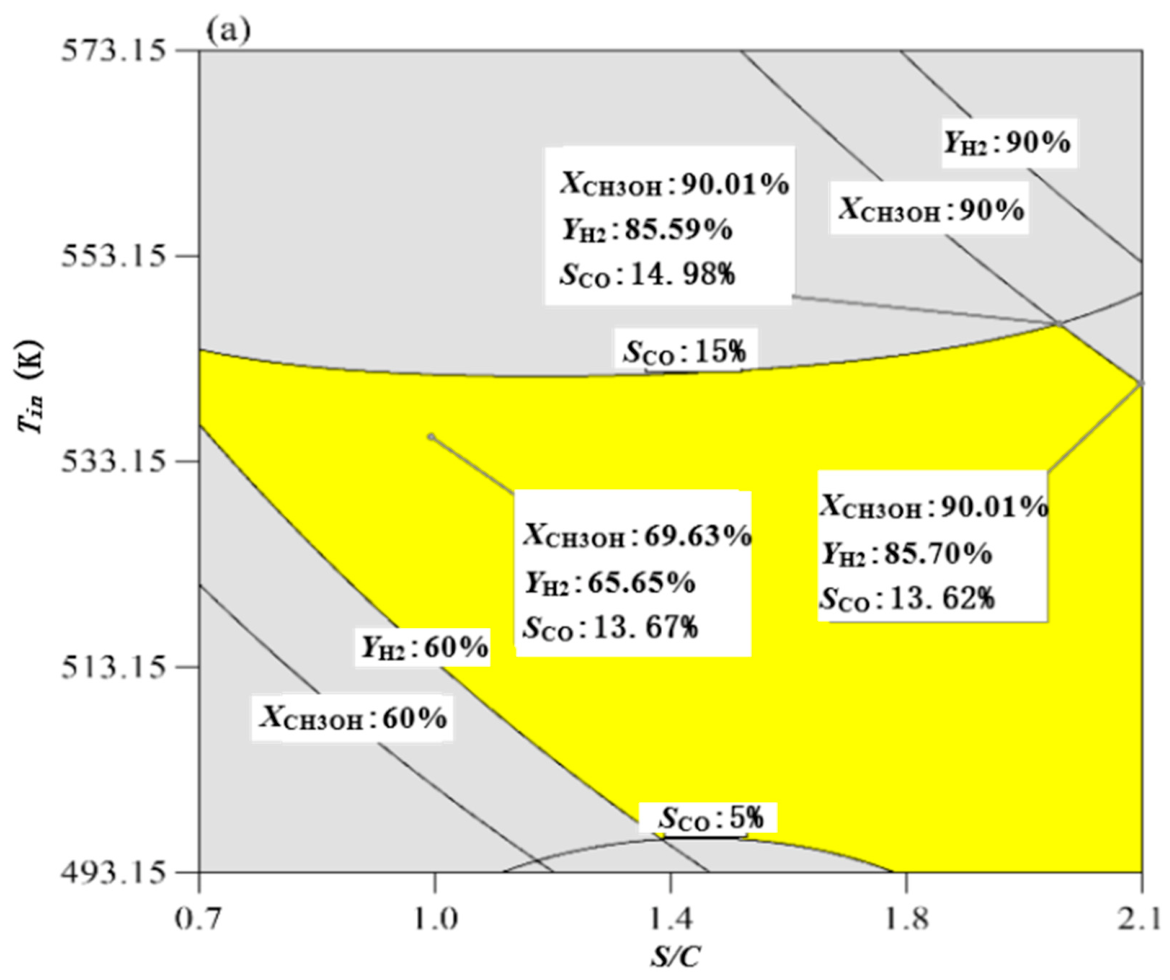
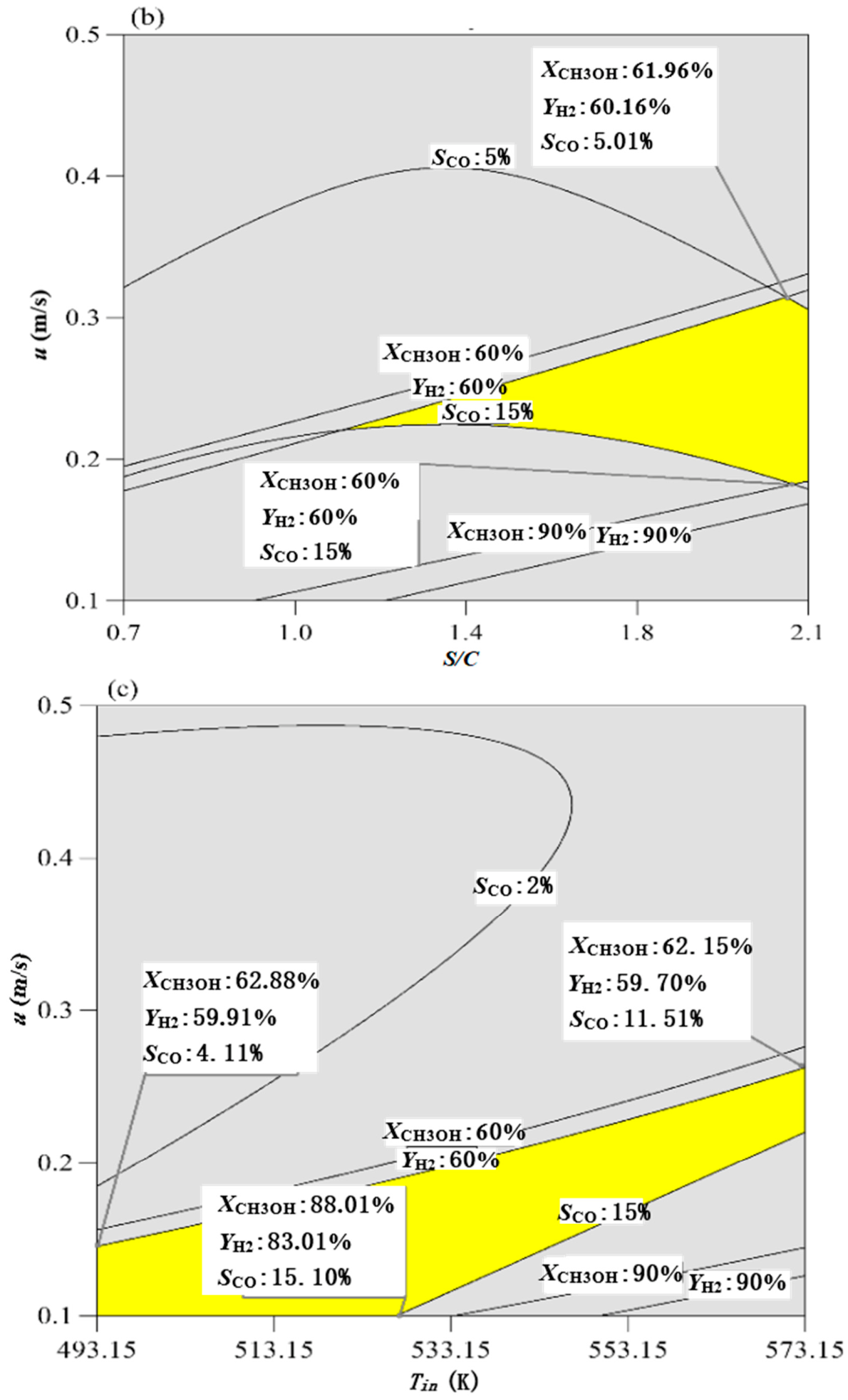
The multi-objective optimization results for hydrogen production via methanol steam reforming driven by solar energy are illustrated in
Figure 15. This study aims to maximize methanol conversion and hydrogen yield while minimizing carbon monoxide selectivity, presenting the interaction effects of three key operational parameters,
S/C,
Tin, and
uin, on system performance through a two-dimensional contour plot. The yellow areas in the figure indicate the recommended operating range for multi-objective optimization.
From
Figure 15a, it is evident that when the
S/C > 1.5 and
Tin > 550 K are high, hydrogen yield significantly increases. This is due to the higher steam-to-methanol ratio enhancing the concentration of steam molecules, promoting complete methanol conversion (CH
3OH + H
2O → CO
2 + 3H
2), and the elevated temperature accelerating the kinetics of endothermic reactions. However, high temperatures also intensify the MDR reaction (CH
3OH → CO + 2H
2), leading to increased CO selectivity, which must be mitigated through gas purification processes such as PSA to reduce CO content. When the
S/
C is between 1.2 and 1.8 and the inlet temperature is below 500 K, CO selectivity drops significantly (
SCO < 0.05). Lower temperatures inhibit methanol decomposition reactions, while an intermediate
S/
C optimizes the main reaction pathway by balancing reactant concentrations. However, it should be noted that under low-temperature conditions, hydrogen yield decreases by more than 30% compared to hydrogen-rich conditions, necessitating a trade-off between hydrogen purity and yield based on downstream application requirements.
Figure 15b shows that when the
S/
C > 1.2 is high and the inlet velocity (
uin < 0.2 m/s) is low, hydrogen yield exceeds 90%. The lower inlet velocity prolongs the residence time of reactants within the catalyst bed, facilitating deep methanol conversion; the high
S/C enhances hydrogen yield by suppressing the reverse water–gas shift reaction. At a
S/C of 1.4 and an inlet velocity of 0.4 m/s, there is a significant turning point in CO selectivity. This phenomenon is attributed to the high flow rate shortening the residence time, inhibiting CO formation; additionally, increased flow rate improves mass transfer efficiency, encouraging CO’s further participation in the water–gas shift reaction, thereby reducing its final concentration.
As shown in
Figure 15c, when the inlet temperature (
Tin > 550 K) is high and the inlet velocity (
uin < 0.2 m/s) is low, the hydrogen yield exceeds 90%. High temperatures significantly enhance the reaction rate constant (
k∝
e−Ea/RT), while low flow rates ensure adequate contact between reactants and the catalyst. It is important to note that under these conditions, the CO selectivity (
SCO > 15%) is relatively high, necessitating subsequent purification processes. In contrast, at lower temperatures (
Tin < 500 K) combined with higher inlet velocities (
uin > 0.4 m/s), CO selectivity can be reduced to below 3%. Lower temperatures inhibit the activation energy requirements for CO formation pathways, while higher flow rates reduce the likelihood of side reactions by diluting reactant concentrations. This mode is suitable for scenarios requiring stringent hydrogen purity (such as hydrogen supply for fuel cells), though it results in a lower hydrogen yield.
When
SCO is less than 15%,
Table 10 shows that the CO concentration in the dry reforming gas is less than 1%. High-temperature fuel cells can tolerate CO levels in methanol reformate (less than 1%) and accept a performance decline because, at low current densities, the presence of CH
3OH and CO in the fuel gas is beneficial for fuel cell performance [
66].
Response surface analysis revealed that under conditions where methanol conversion exceeds 80% and carbon monoxide selectivity is less than 10%, the optimal operating parameter combination within the range of analysis is S/C = 1.9, Tin = 494 K, uin = 0.1 m/s. The corresponding predicted values are XCH3OH at 82.203%, YH2 at 77.8495%, and SCO at 9.0895%. To verify the reliability of the predictive model, repeated simulations based on these optimal conditions were conducted, yielding XCH3OH at 84.3%, YH2 at 82.12%, and SCO at 8.65%, with errors of 2.49%, 5.19%, and 5.07%, respectively, from the predicted results, indicating the reliability of the predictive model.
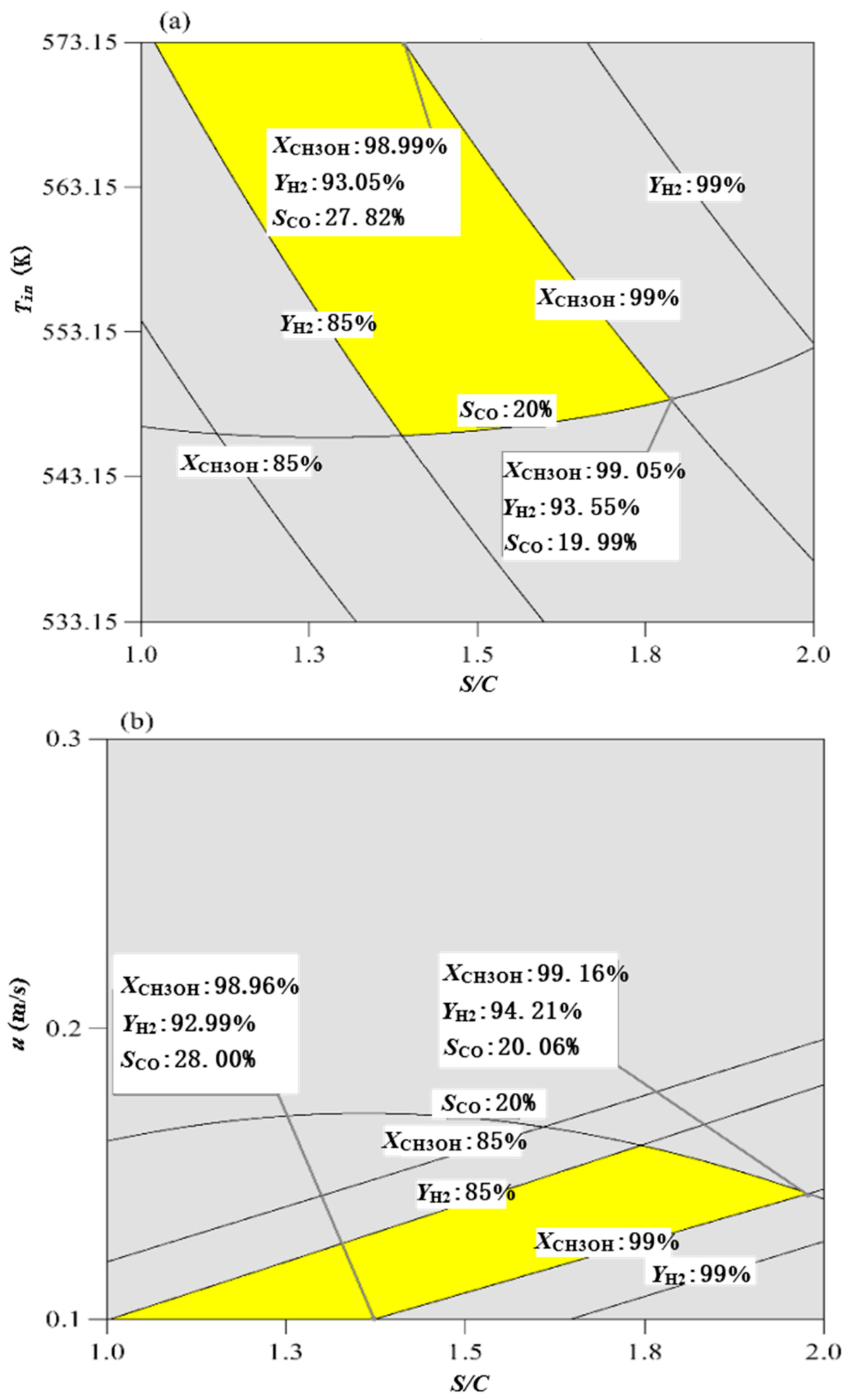
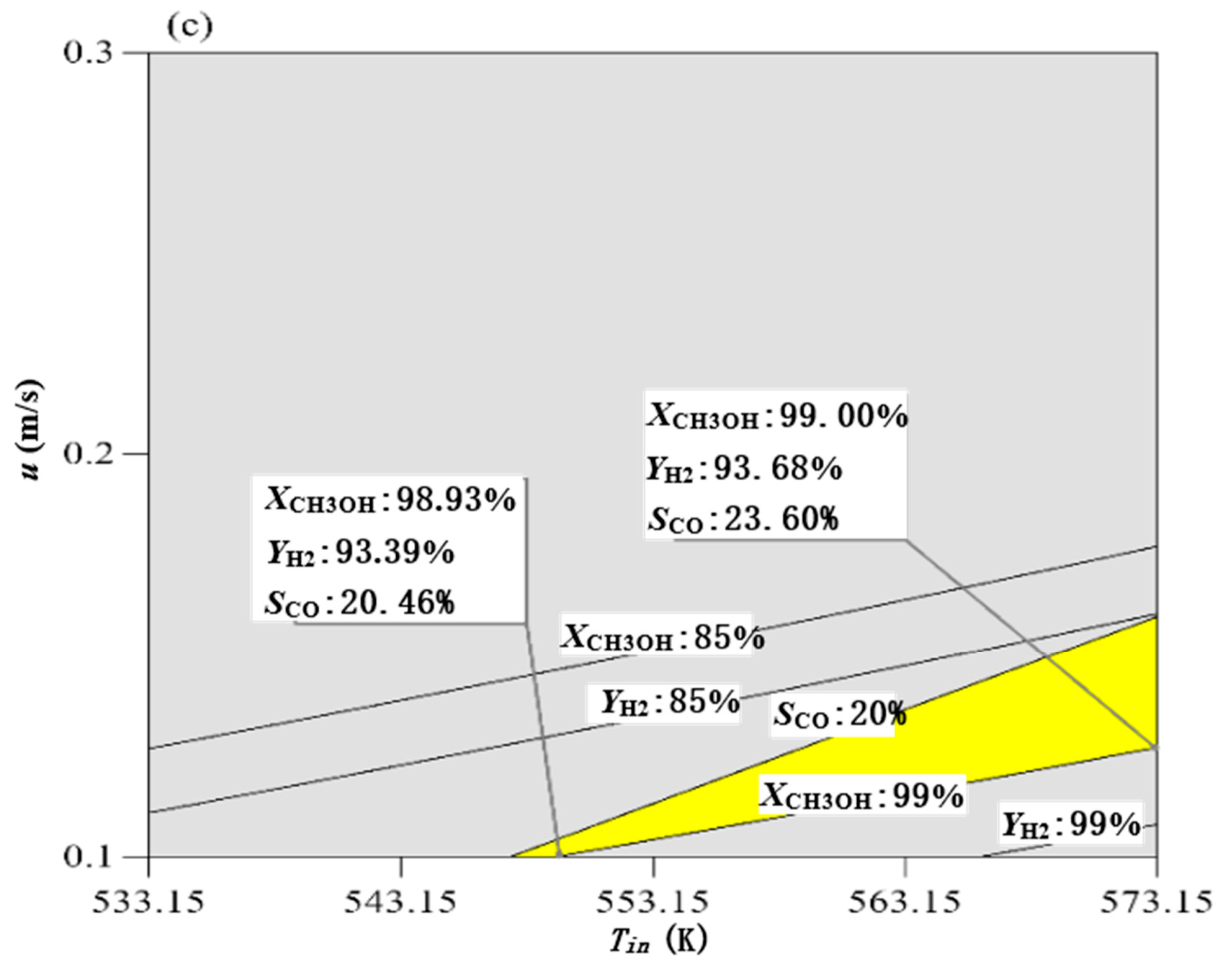
For applications aiming for high hydrogen yield, corresponding recommended ranges are also provided, as shown in the yellow area of
Figure 16. Under high
S/C, higher inlet temperatures, and lower flow rates, the system can simultaneously achieve near-limit methanol conversion and high hydrogen yield (above 94%), as high temperatures accelerate endothermic reaction kinetics, low flow rates extend the residence time of reactants, and high
S/
C inhibit side reactions. However, this region is accompanied by higher CO selectivity. In practical applications, Chen et al. [
67] injected the reformate obtained from methanol steam reforming into an engine without further purification, directly performing hydrogen-enhanced combustion, and demonstrated that reformed hydrogen provides performance equivalent to high-purity hydrogen from compressed gas cylinders or a mixture of 75% H
2 and 25% CO
2.
In scenarios with high hydrogen yield, the optimal operating parameter combination is S/C = 2, uin = 0.128 m/s, Tin = 565.6 K, predicting XCH3OH = 100%, YH2 = 96.185%, SCO = 19.93%. Repeated simulations based on these optimal conditions yielded XCH3OH = 100%, YH2 = 94.44%, SCO = 18.48%, indicating that the prediction model has an error of 1.814% for hydrogen yield and 7.275% for carbon monoxide selectivity, thus demonstrating the reliability of the predictive model.
6. Conclusions
Based on the endothermic nature of methanol steam reforming for hydrogen production process, a novel reactor was developed, which uses a Fresnel lens cavity for heat collection to drive the MSR reaction. Through numerical analysis, the effects of reactant inlet velocity, temperature, S/C, catalyst bed thickness, two types of heat flux density, and irradiance on the reactor performance were discussed. By using response surface methodology, the synergistic impact of three key factors directly influencing MSR reaction on hydrogen production performance was explored, and optimization goals were set to determine the optimal operating parameter range.
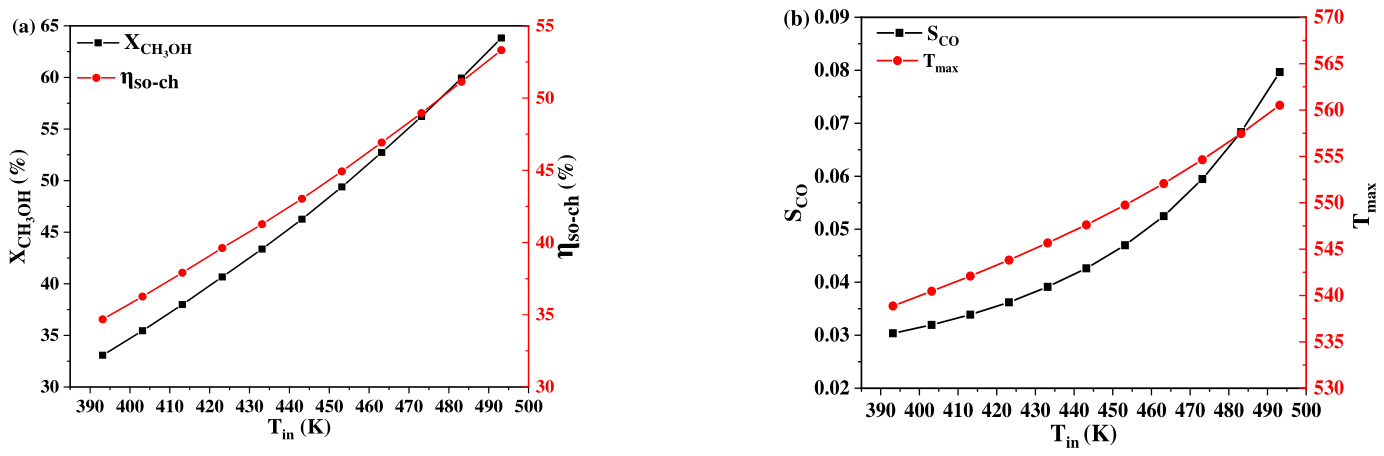
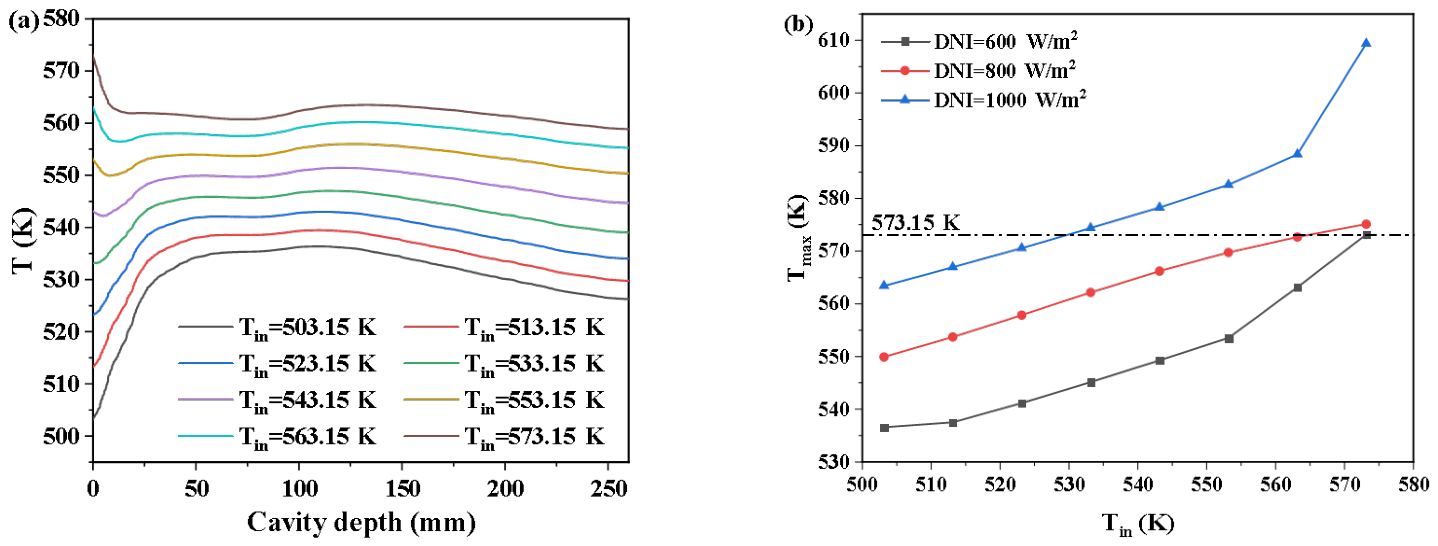
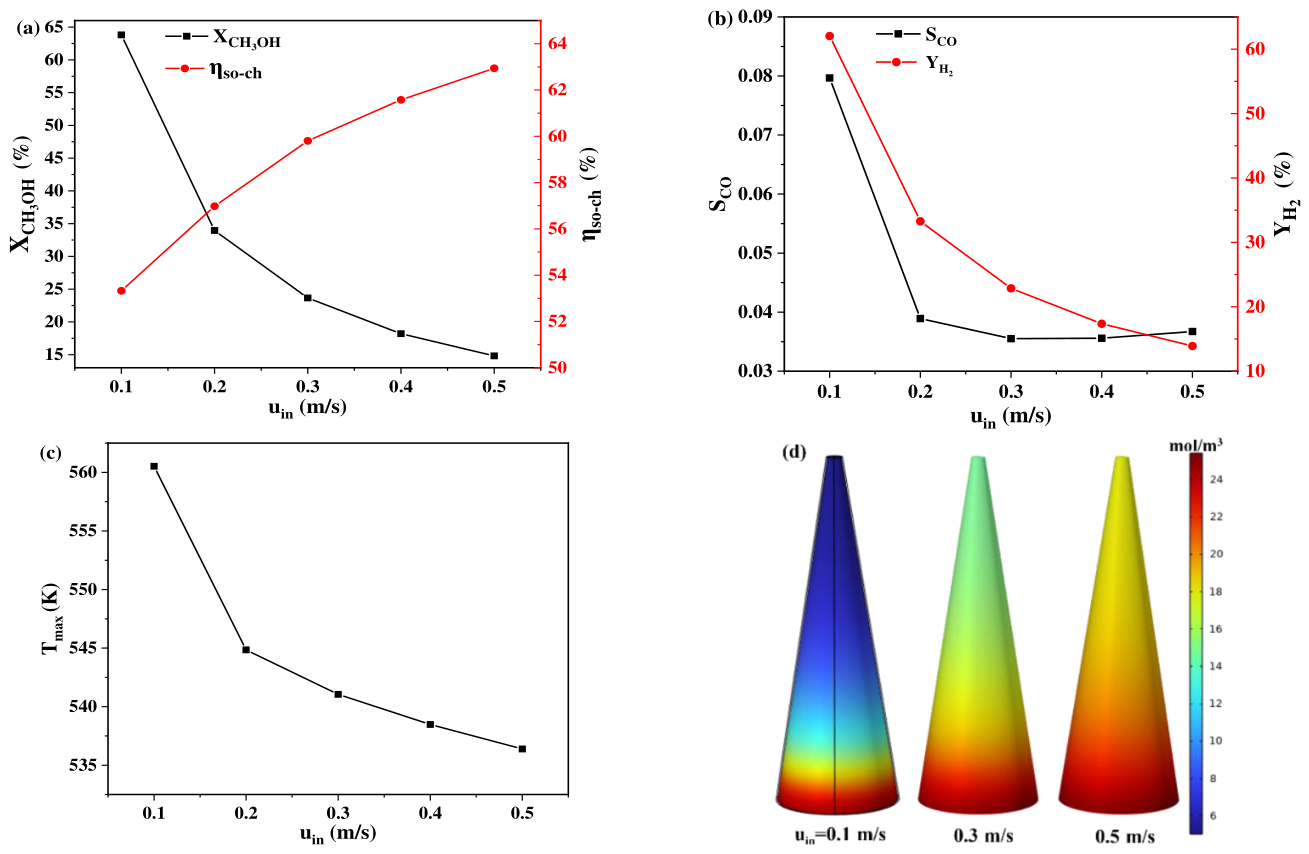
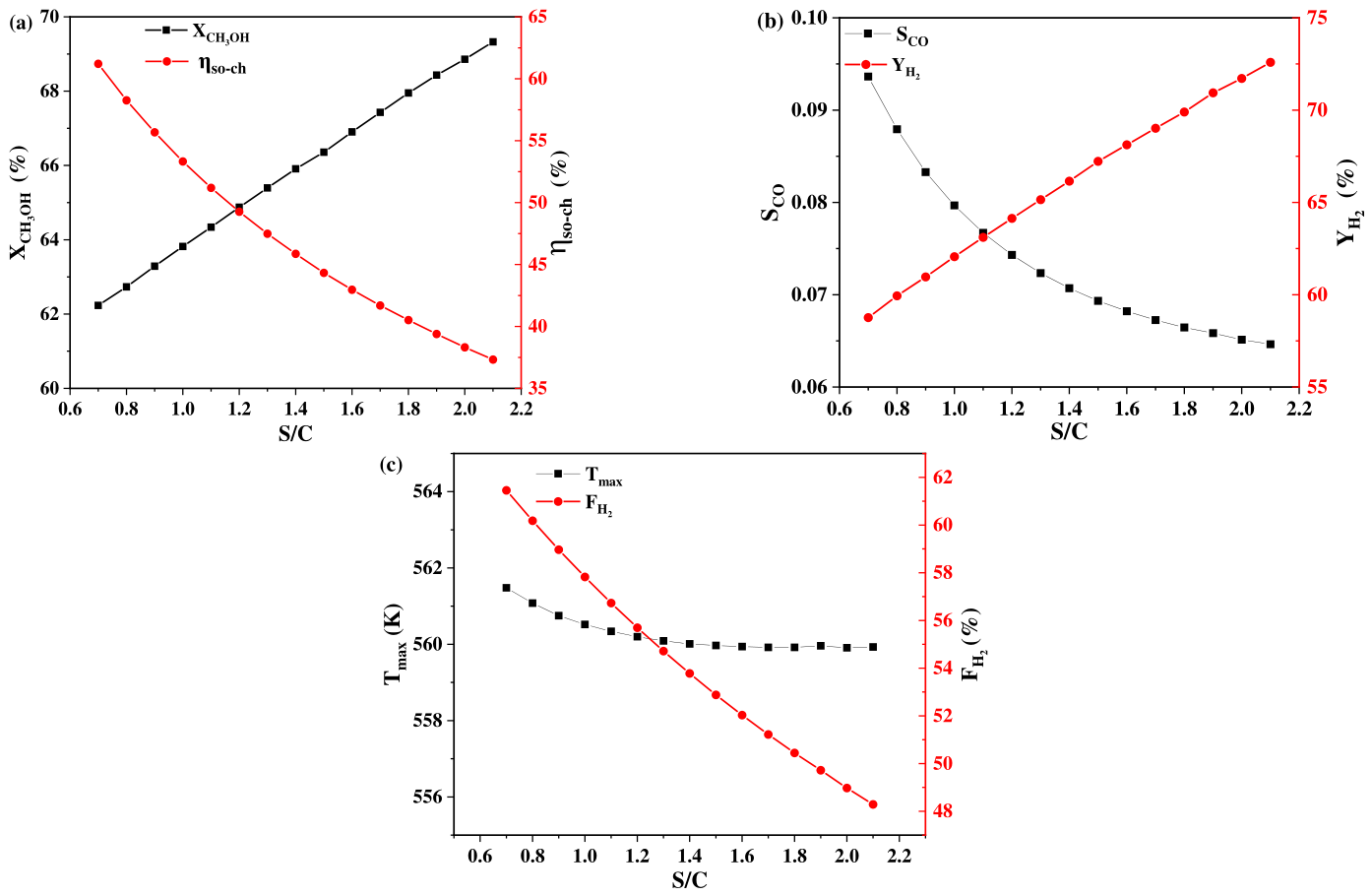
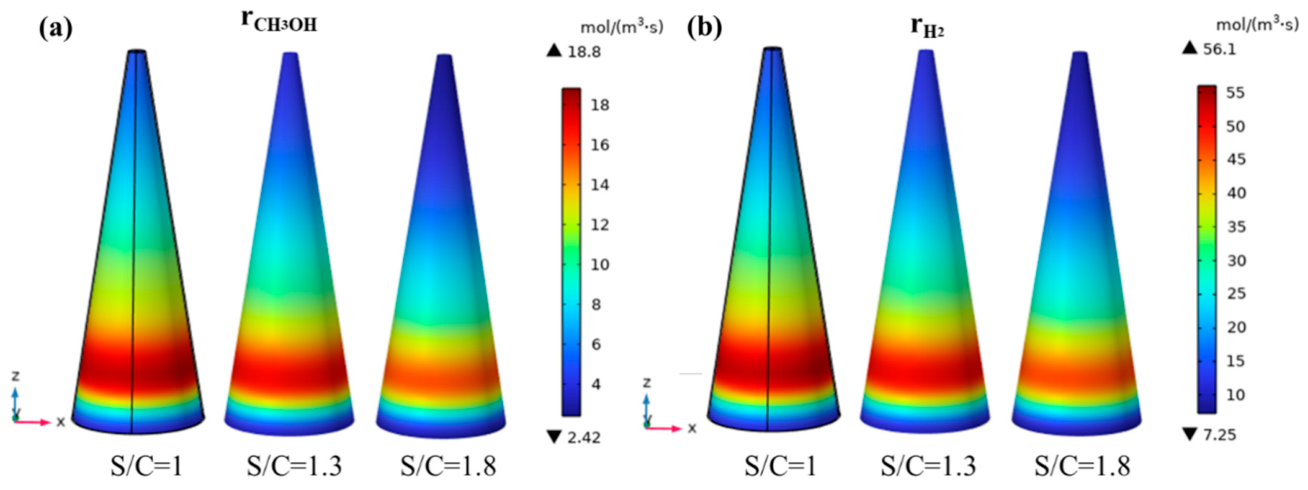
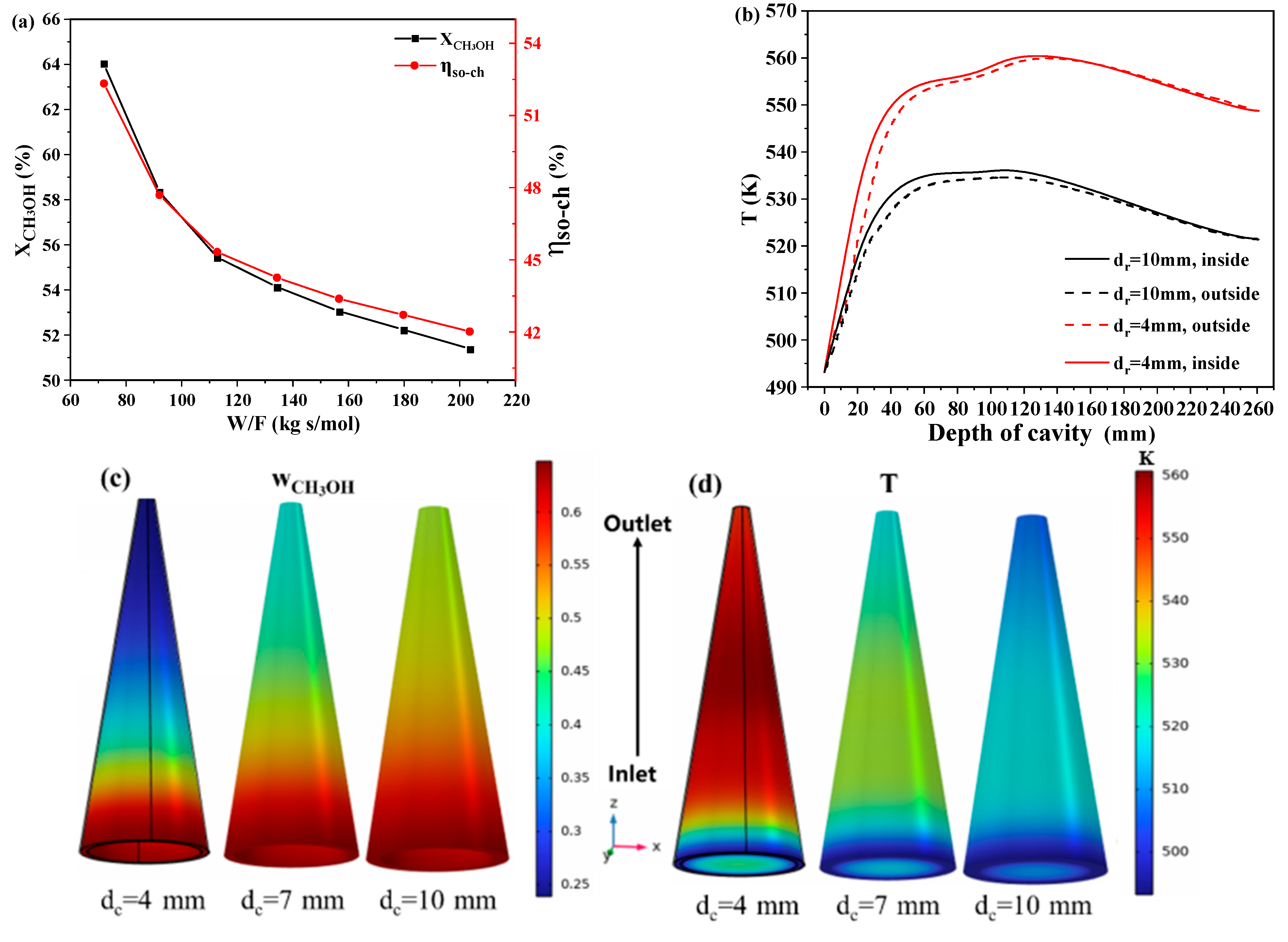
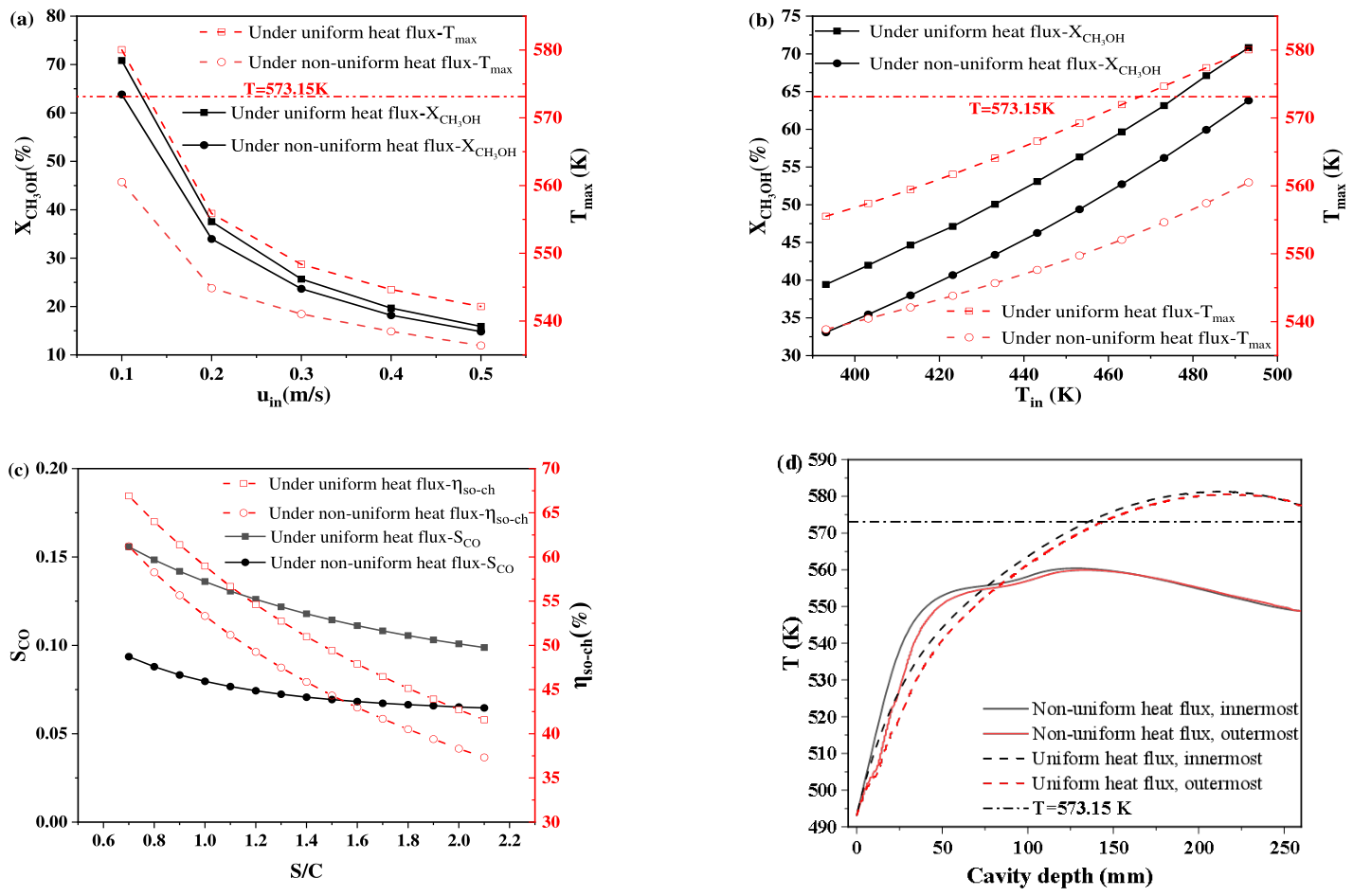
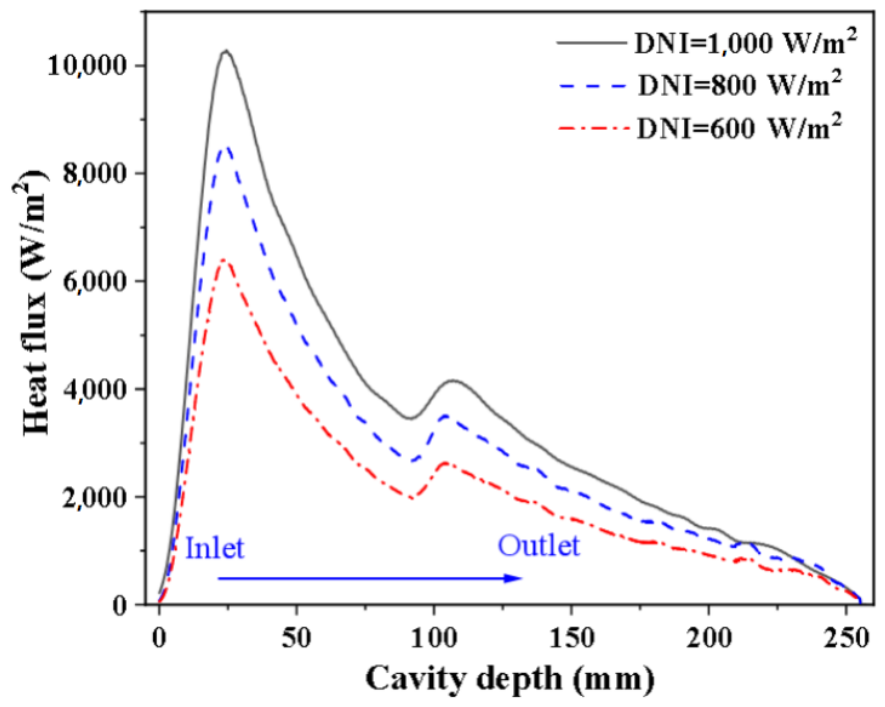
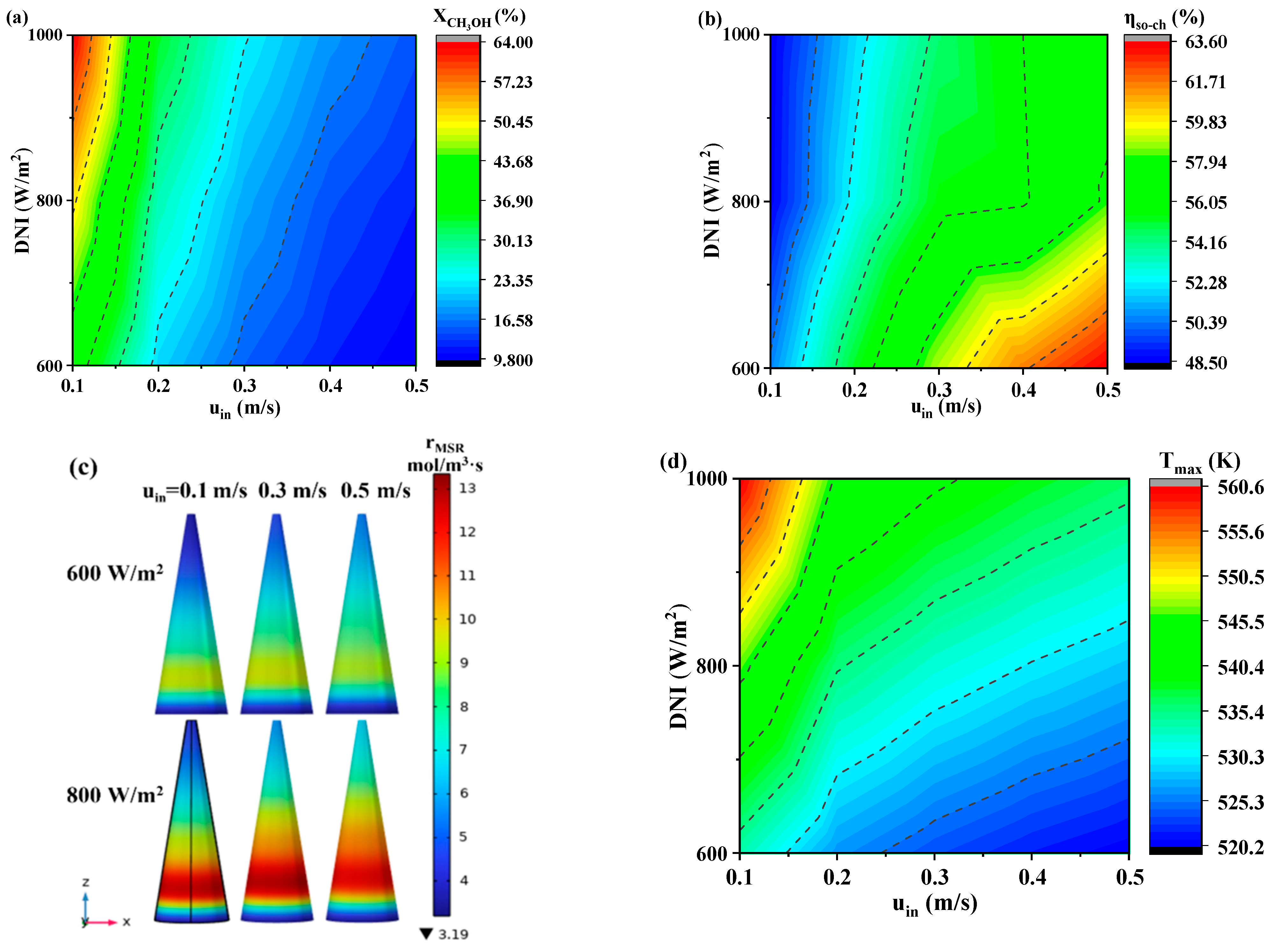
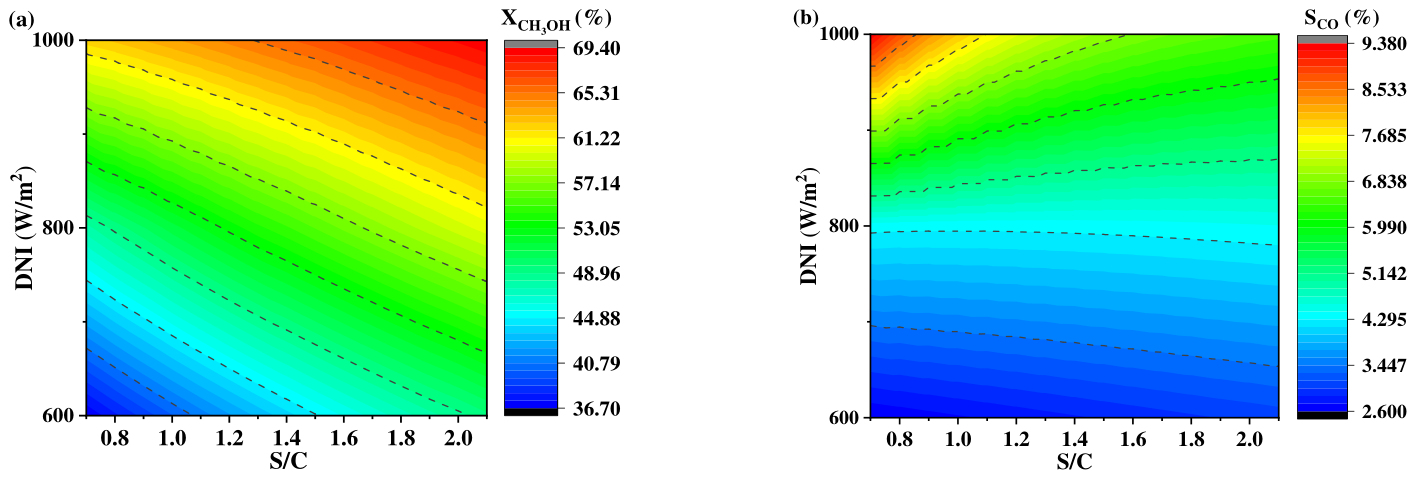
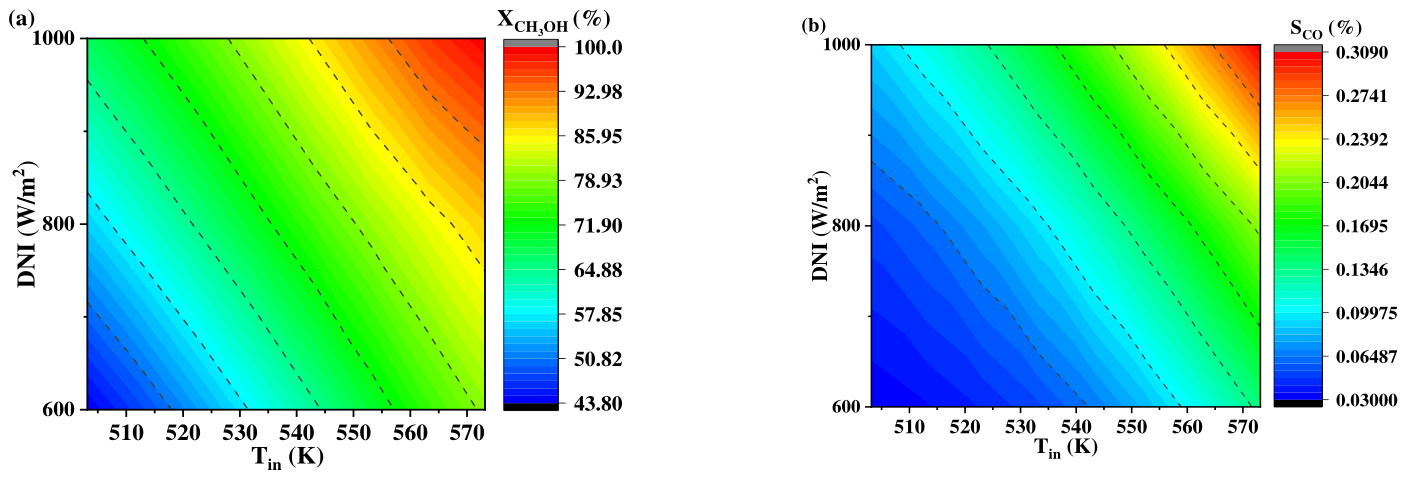
The results showed that increasing reactant inlet velocity shortens the residence time of reactants within the reaction zone, leading to a decrease in methanol conversion rate, although the thermal chemical conversion efficiency improves due to an increased total amount of methanol conversion. Higher inlet temperature increases both methanol conversion rate and thermal chemical efficiency, but high temperatures promote reverse WGSR and MDR reactions, resulting in higher CO production. As the S/C increases from 0.7 to 2.1, hydrogen yield rises from 58.76% to 72.6%, although the mole fraction of hydrogen decreases due to dilution by steam. Increasing the thickness of the catalytic layer weakens mass, and heat transfer resulted in methanol conversion rate and thermal chemical conversion efficiency decrement, with the maximum radial temperature difference being only 3.554 K. Under other identical operating conditions, non-uniform heat flux density conditions can more effectively control the temperature distribution within the reaction zone compared to uniform heat flux density. Although methanol conversion rate is slightly lower under non-uniform heat flux density condition, under uniform heat flux density, when the inlet temperature of the reaction zone exceeds 473.15 K, localized temperatures within the reaction zone surpass the sintering temperature of copper-based catalysts, and this may significantly reduce catalyst lifespan. When irradiance conditions interact with other operational parameters, the highest methanol conversion rate occurs at lower inlet flow rates and higher irradiance condition, while the trend for thermal chemical conversion efficiency is opposite. Methanol conversion rate increases and carbon monoxide selectivity decreases as irradiance and S/C rise.
Through a multi-objective optimization study, the optimal conditions for achieving a CO selectivity less than 10% and a methanol conversion rate greater than 80% were determined to be S/C = 1.9, Tin = 494 K, uin = 0.1 m/s, with a maximum prediction error of 5.19% compared to simulation validation results. This reformed gas can be applied in high-temperature proton exchange membrane fuel cells. Additionally, the optimal conditions for achieving a methanol conversion rate greater than 95% were found to be S/C = 2, Tin = 565.6 K and uin = 0.128 m/s, with a maximum prediction error of 7.275% compared to simulation validation results.