
Article

Dynamic Failure Pressure Prediction and Risk-Based Early Warning for Oil and Gas Pipelines Using a Long Short-Term Memory–DNV-RP-F101 Coupled Model


1
PLA Rocket Force Engineering University, Xi’an 710025, China
2
College of Mechanical and Transportation Engineering, China University of Petroleum, Beijing 102249, China
3
School of Petroleum and Natural Gas Engineering, Changzhou University, Changzhou 213164, China
4
Jiangsu Key Laboratory of Oil-Gas & New-Energy and Transportation Technology, Changzhou University, Changzhou 213164, China
*
Author to whom correspondence should be addressed.
Appl. Sci. 2026, 16(13), 6626; https://doi.org/10.3390/app16136626
Submission received: 21 April 2026 / Revised: 26 May 2026 / Accepted: 29 May 2026 / Published: 2 July 2026

Abstract

Accurate assessment of pipeline defect integrity and proactive risk warning are essential for the safe, reliable, and economical transportation of oil and gas. Existing approaches are largely based on static assessment models, such as the Det Norske Veritas Recommended Practice for corroded pipelines (DNV-RP-F101), and often produce conservative failure-pressure predictions because time-dependent defect evolution and operational pressure fluctuations are not considered. To address this limitation, this study develops a dynamic defect-growth–failure-pressure coupling model that integrates a long short-term memory (LSTM) network with an enhanced DNV-RP-F101 framework. Time-varying axial and circumferential correction coefficients are introduced to update the bulging factor dynamically, thereby supporting defect-growth prediction and time-variant failure-pressure calculation. The model is validated against four established standards using public pipeline datasets. For single defects, the proposed model achieves the lowest mean square error (MSE) of 0.81 MPa and an average error of 1.18 MPa among the compared methods. For defect clusters, the prediction error remains within 8.64%. A five-level dynamic risk-warning system is further established by integrating Monte Carlo simulation with API 579 standards, enabling quantification of failure probability and prediction of remaining service life. Engineering case studies show that the proposed method can identify the time points at which pipelines enter hazardous failure-probability stages. This capability supports more precise early warning and provides a technical basis for intelligent pipeline integrity management and predictive maintenance.

1. Introduction

Safe operation of oil and gas pipelines is essential for global energy security, economic stability, and environmental protection [1]. Pipeline defects, including corrosion cracks [2], dents [3], and defect clusters, are major contributors to catastrophic failures. Several major accidents have demonstrated the severe consequences of inadequate defect assessment and risk management. The Ufa train accident, which was caused by a crack in a natural gas pipeline, led to more than 500 deaths. The Deepwater Horizon accident, which was triggered by cementing defects and blowout preventer failures, resulted in the largest offshore oil spill in history. These events underscore the need for more accurate and predictive integrity-assessment tools [4]. Current integrity-management research mainly focuses on defect-growth prediction, failure-pressure assessment, reliability analysis, and risk classification, but important limitations remain in each area [5].
Traditional methods for predicting defect growth typically rely on empirical corrosion rates, which cannot fully capture nonlinear evolution under fluctuating pressure and corrosive environments. Data-driven models, such as long short-term memory (LSTM) networks, can improve prediction accuracy but are rarely coupled with mechanical failure analysis. Failure-pressure assessment is commonly based on semi-empirical or fracture-mechanics models [6,7]. Standards such as ASME B31G [8,9], DNV-RP-F101 [10], and PCORRC [11] have been widely used for defect evaluation. These models provide a foundational safety framework, but their static assumptions treat defects as time-invariant and neglect the coupling among defect growth, material degradation, and fluctuating operational loads [12]. As a result, reliability estimates and risk classifications based on empirical thresholds can be inaccurate. Recent studies have addressed probabilistic frameworks [13] and maintenance optimization [14], yet a dynamic predictive model that integrates real-time defect evolution with mechanical failure criteria is still needed.
To address this gap, this study proposes a dynamic data–physics integrated approach. The main contributions are threefold. First, a defect-growth and failure-pressure coupling model is developed by optimizing an LSTM network to predict defect depth with an adaptive weight-adjustment mechanism. The model also accounts for pressure fluctuations and time-dependent changes in pipeline fluid conditions, thereby making the failure-pressure calculation more representative of in-service conditions. Second, an equivalence treatment for axial, circumferential, and composite defect clusters is developed and validated against finite element simulations of crude-oil pipeline bursts. Third, Monte Carlo simulations are integrated with API 579 standards [15] to establish a dynamic early-warning system for petroleum pipeline operations, with failure probabilities predicted at 95% confidence intervals. The proposed approach reduces the conservatism of existing models and provides actionable information for maintenance prioritization, leakage-risk mitigation, and inspection-cycle optimization.

2. Enhanced Pipeline Failure-Pressure Safety Risk-Warning Method

2.1. Static Model Enhancement Based on DNV-RP-F101

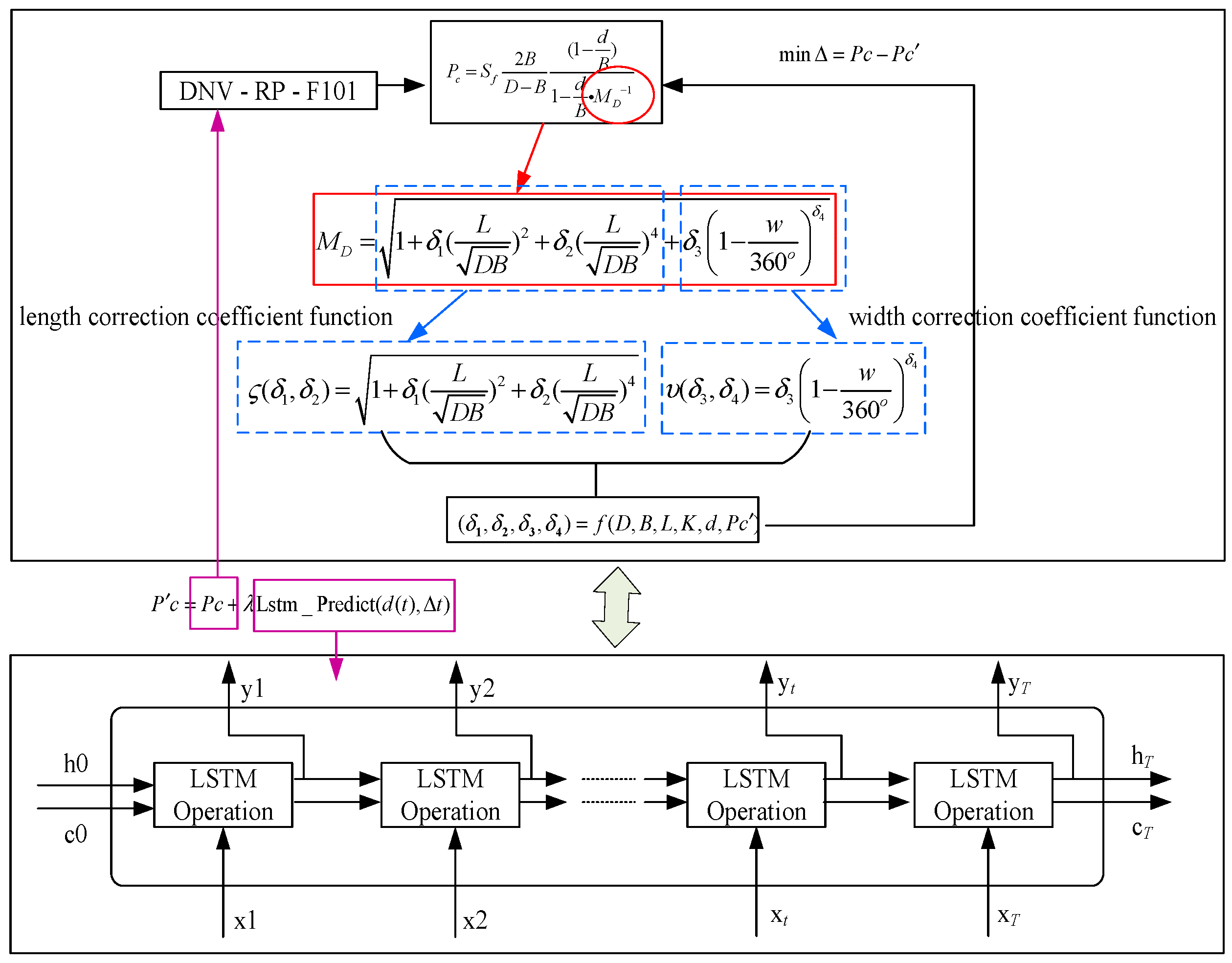
Figure 1 illustrates the limitations of static DNV-RP-F101 failure-pressure assessment and the proposed dynamic improvement [16]. The red box and annotations highlight the inherent limitations of static methods.
The input parameters, including the pipeline outer diameter D, inner diameter d, wall thickness B, and defect length L, are used to calculate the failure pressure Pc according to the standard equation as follows:
P c = S f 2 B D B 1 d B 1 d B M D 1
where Sf is the yield stress of the pipeline during operation and is taken as the yield strength. MD is the expansion factor in the DNV-RP-F101 method [17], and its value is closely related to the axial defect length, wall thickness, and pipeline diameter. The DNV-RP-F101 method provides a baseline safety assessment, but the method assumes time-invariant defect states and therefore neglects defect growth and operating-pressure fluctuations.
To overcome this limitation, the axial correction coefficient ς(β1, β2) and circumferential correction coefficient υ(β3, β4) are introduced to dynamically improve the expansion factor MD. The coefficient ς(β1, β2) represents the weakening effect of axial defect growth on structural strength, whereas υ(β3, β4) characterizes the effect of circumferential defect distribution on failure pressure. Both coefficients are derived from the mechanical properties of the pipeline and the defect-evolution law, leading to the modified failure-pressure equation as follows:
P c = S f 2 B D B 1 d B 1 d B 1 + δ 1 L D B 2 + δ 2 L D B 4 + δ 3 1 w 360 δ 4 1
where ς(β1, β2) and υ(β3, β4) are defined as follows:
ς ( β 1 , β 2 ) = 1 + β 1 ( L D B ) 2 + β 2 ( L D B ) 4
υ ( β 3 , β 4 ) = β 3 ( 1 w 360 0 ) β 4
The four parameter coefficients (β1, β2, β3, β4) are mechanically constrained fitting parameters. Their ranges are restricted by pipe-shell theory and burst-test data. Multi-objective parameter optimization was performed using the Pipeline and Hazardous Materials Safety Administration (PHMSA) pipeline dataset [18]. The objectives were to minimize the MSE and the maximum relative error between predicted and experimental burst pressures. The resulting optimal values were β1 = 0.3996, β2 = 0.0176, β3 = 0.0721, and β4 = 6.3521, with a system error below 10−5. The defect-evolution law describes how pipeline defects grow over time. This growth mechanism differs substantially between corrosion defects and fatigue cracks. Corrosion defects develop slowly through electrochemical reactions and generally follow a power-law growth model, with a typical growth rate of 0.1–0.5 mm per year. Fatigue cracks propagate more rapidly under cyclic internal pressure and are governed by the Paris–Erdogan equation, with growth rates up to 0.5–2.0 mm per year. The LSTM model is trained using different types of defect data to capture both slow corrosion growth and rapid fatigue-crack propagation. Physical constraints are embedded in the loss function so that the predictions remain consistent with the physical laws of defect development.

2.2. LSTM Module for Dynamic Prediction of Defect Depth

This section develops the LSTM-based module for dynamic defect-depth prediction. Unlike conventional static assessments based solely on DNV-RP-F101, this module captures the time-dependent evolution of defect depth through the LSTM network. The module predicts defect-development paths under in-service conditions and provides the data foundation for proactive risk warning and remaining-life prediction.

2.2.1. Input and Output Structure Design

The core function of the LSTM module [19] is to predict future defect-evolution trends from historical defect-depth data. The input is the normalized defect-depth time series d(t), which is obtained through magnetic flux leakage (MFL) inspection with a sampling interval of Δt = 1 year. During pipeline MFL inspection, the Hall sensor moves over the defect region. Because leakage flux increases above defects, the Hall sensor records stronger MFL signals in defective regions and weaker signals in defect-free regions. Defect parameters can therefore be inferred from the measured MFL signals. The output yt is the LSTM prediction at the t-th step and represents the estimated defect-depth increment at that time step. This increment is subsequently used to update the failure-pressure calculation dynamically.

2.2.2. Network Architecture and Hyperparameter Settings

The LSTM model is deterministic during forward propagation, so a fixed input sequence produces a unique output. To represent random fluctuations during pipeline operation, operational variability is embedded in the training dataset. The LSTM can infer the conditional distribution of subsequent defect depth from historical time-series data and learn fluctuation features directly from observation records. As shown in Figure 2, the network consists of an input layer, a single LSTM layer, a fully connected layer, and a regression layer. The input layer receives normalized one-dimensional defect-depth time-series data with a sequence length of 5. The LSTM layer contains 50 neurons and outputs only the hidden state ht of the final time step. The fully connected layer contains one neuron that maps the LSTM output to a single defect-depth increment. The regression layer then produces the final prediction yt.
The hyperparameters and training settings were as follows: the batch size was 16, the number of training epochs was 200, and each epoch contained 600 iterations. The initial learning rate of the Adam optimizer was 0.001, and the decay factor was 0.95 every 50 training cycles. If the validation loss did not improve for 30 training cycles, early stopping was applied. A fixed random seed was used to ensure reproducibility. The dataset was divided into training and validation sets at a 7:3 ratio.

2.2.3. Training Strategies and Optimization Process

During training, the network parameters are optimized by minimizing the mean square error (MSE). The core mathematical formulation of the LSTM is expressed as follows:
i t = σ ( W x i x i + W h i h i 1 + b i )
C ˜ t = tanh ( W x c x i + W h i h i 1 + b c )
f t = σ ( W x f x f + W h f h i 1 + b f )
C t = f t C i 1 + i t C ˜ t
o t = σ ( W x o x i + W h o h i 1 + b o )
h i = o t tanh ( C t )
where it denotes the input gate, which applies the sigmoid activation function σ to control how much information is retained from the input sequence. The candidate cell state C ˜ t is generated using the tanh activation function and combined with it to update the cell state. Wxi and Wxc are the weight matrices for the input gate and candidate-state calculation, respectively, and bi and bc are the corresponding biases. ft denotes the forget gate, which applies σ to determine how much of the previous cell state should be retained or discarded. Wxf and bf are the corresponding weight matrix and bias, respectively. The updated cell state Ct is then obtained by combining the retained previous state with the newly generated candidate information. Ot denotes the output gate, which controls the information passed to the hidden state ht. In the final step, tanh(Ct) is weighted by Ot to generate the hidden-state output. Wxo and Who are the output-gate weight matrices, and bo is the output-gate bias.

2.3. Dynamic Coupling Mechanism of Time-Variant Failure Pressure

2.3.1. Fusion of LSTM Output and Static Model

As shown in Figure 2, dynamic failure-pressure correction is achieved by linearly superimposing the LSTM-predicted defect-depth increment on the static failure pressure through the scalar coefficient λ. The dynamic failure pressure Pc′(t) is defined as follows:
P ( t ) c = P c + λ L s t m _ Pr e d i c t ( d ( t ) , Δ t ) + Δ P FEM
where Pc′(t) denotes the dynamic failure pressure at time t, which couples static mechanical properties with time-dependent defect growth. The coefficient λ represents the failure-pressure correction per unit increase in defect depth. Because greater defect depth reduces failure pressure, λ is therefore negative. LSTM-Predict(d(t), Δt) denotes the defect-depth increment estimated by the LSTM module over the time interval Δt using the historical defect-depth series d(t), and ΔPFEM is the FEM-derived correction term for nonlinear stress redistribution. This hybrid formulation therefore captures the instantaneous mechanical response and long-term degradation, thereby accounting for the temporal variability of defects, which is often neglected in previous studies [13,14].

2.3.2. Coupling Coefficient

The value of λ was determined through statistical analysis of the PHMSA datasets and theoretical derivation based on pipeline mechanics, with a final value of 0.023 MPa/mm. This value was validated through multiple experimental studies [20,21], supporting its applicability across different defect types and operating conditions.

2.3.3. Model Dynamic Update Process

The dynamic model is updated through four steps: (1) current defect-depth data are obtained through MFL inspection and added to the time series; (2) the LSTM module predicts the defect-depth increment for the next time step from the updated sequence; (3) the updated value is substituted into the dynamic failure-pressure formula to calculate the latest failure pressure; and (4) operational pressure data are incorporated to assess the risk level, enabling cyclic model updates.

2.4. Equivalence Assessment Method for Defect Clusters

A unified equivalence rule is proposed for complex defect clusters commonly found in pipelines, including axial, circumferential, and composite distributions. Mechanics-based equivalence rules combined with finite element validation enable accurate prediction of the failure pressure of defect clusters. This strategy addresses a limitation of existing standards for complex defect-cluster assessment and reduces prediction deviations.

2.4.1. Equivalence Rules for Axial, Circumferential, and Composite Defect Clusters

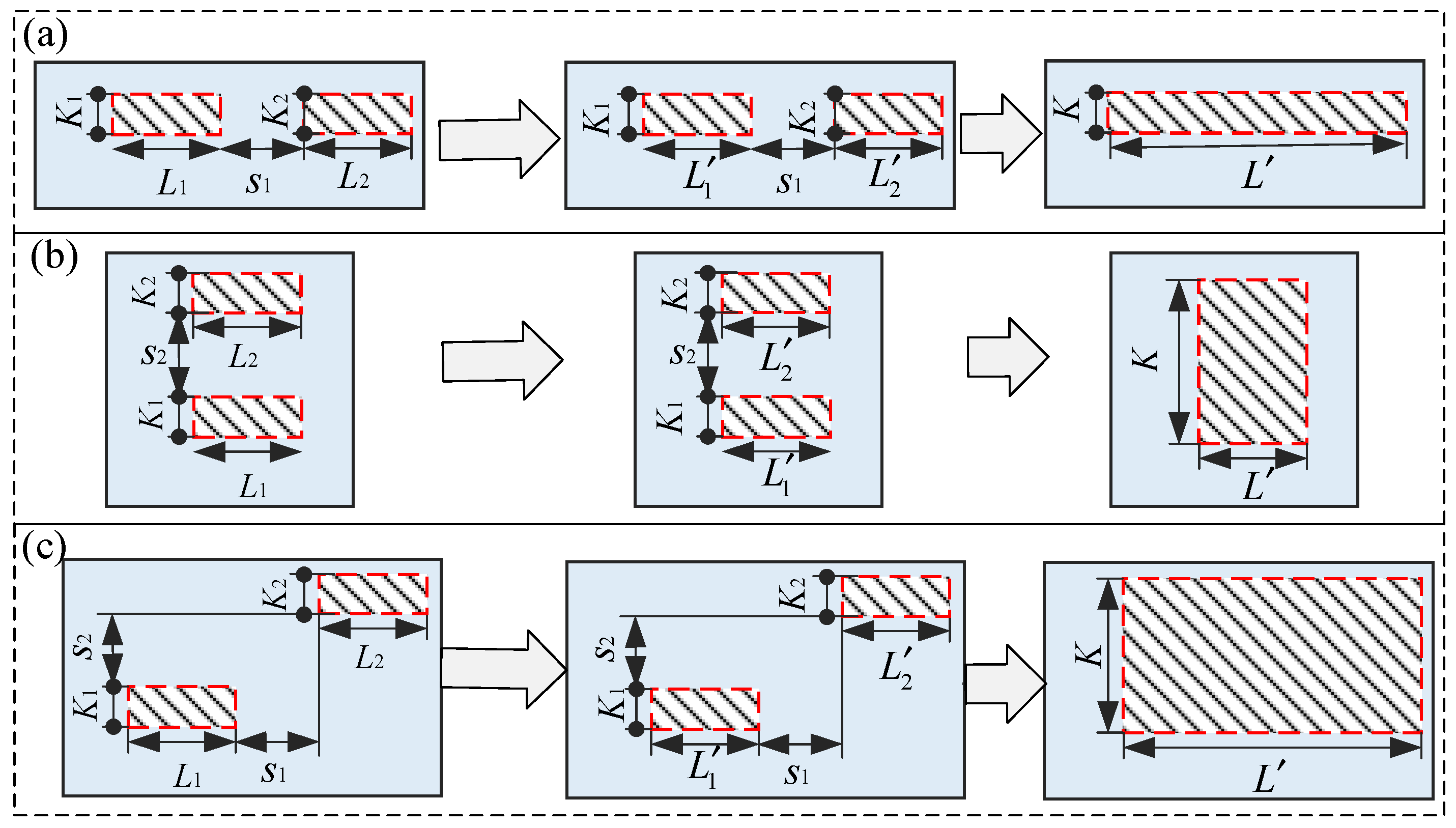
For the three typical defect-cluster distribution patterns [22,23] shown in Figure 3, a unified equivalence rule is proposed:
(1)
For the axial gap-distributed defects in Figure 3a, the equivalent length is defined as
L′ = L1′ + L2′ + s1, width K = max(K1, K2), depth d = L 1 d 1 L 1 + L 2 + s 1 + L 2 d 2 L 1 + L 2 + s 1 .
(2)
For circumferential gap-distributed defects in Figure 3b, the equivalent width is K = K1 + K2 + s2, the equivalent length is L = max(L1, L2), and the equivalent depth is d = K 1 d 1 K + K 2 d 2 K .
(3)
For the combined axial and circumferential defect distribution in Figure 3c, the equivalent length is L = L1 + L2 + s1,
width is K = K1 + K2 + s2, and depth d = max ( L 1 d 1 L + L 2 d 2 L , K 1 d 1 K + K 2 d 2 K ) .

2.4.2. Calculation of Equivalent Geometric Parameters

The core principle of equivalent-parameter calculation is to retain the maximum weakening effect of defect clusters on pipeline strength. Finite element simulation is used to verify whether the equivalent geometric parameters can accurately represent the actual failure mechanism of clustered defects.

2.4.3. Formula for Calculating Cluster Failure Pressure

The equivalent geometric parameters are substituted into the modified failure-pressure equation to obtain the failure-pressure calculation formula for the defect cluster as follows:
P c = S f 2 B D B 1 d B 1 d B ς ( β 1 , β 2 ) + υ ( β 3 , β 4 ) + λ L s t m _ Pr e d i c t ( d ( t ) , Δ t )
Equation (12) is used to process pipeline engineering test results and provides theoretical and technical support for the engineering application of the proposed formula.

3. Model Validation and Comparative Analysis

3.1. Experimental Setup and Data Sources

3.1.1. Dataset Description

The PHMSA and CEPA public pipeline datasets were used in this study. The PHMSA dataset contains 35 defect cases, including 26 single defects and 9 defect clusters, and covers typical onshore transmission pipelines with API 5L steel grades X42, X52, X60, X65, X70, and X80. The outer diameters range from 114.3 to 914.4 mm, and the wall thicknesses range from 4.5 to 25.4 mm. The dataset includes three main defect types: corrosion defects, fatigue cracks, and composite defects. The corresponding geometric forms include single defects, axial clusters, circumferential clusters, and composite clusters. Key variables include D, d, B, L, d0, w, yield strength Sf, ultimate tensile strength, and measured burst pressure. The burst-pressure tests cited in this study were not newly conducted experiments but historical burst-test data extracted from the public PHMSA and CEPA databases. These public data were therefore used to evaluate the accuracy of the proposed model. Each case contained 100 training samples, yielding 3500 training samples for the LSTM. The PHMSA dataset provides detailed geometric parameters, material properties, and operational pressure data, whereas the CEPA dataset [24] supplements the burst-test data for defect clusters.

3.1.2. Evaluation Metrics

The evaluation metrics were mean square error (MSE), root mean square error (RMSE), mean absolute error (MAE), and mean absolute percentage error (MAPE). Their definitions are given as follows:
R M S E = 1 N i = 1 N ( y i y i ) 2
M A E = 1 N i = 1 N y i y i
M A P E = 1 N i = 1 N y i y i y i × 100 %
M S E = 1 N i = 1 N ( y i y i ) 2
The four parameters were determined through multi-objective genetic algorithm optimization in MATLAB R2020B by minimizing both MSE and maximum relative error under mechanics-derived constraints.

3.2. Numerical Solution of Parameters

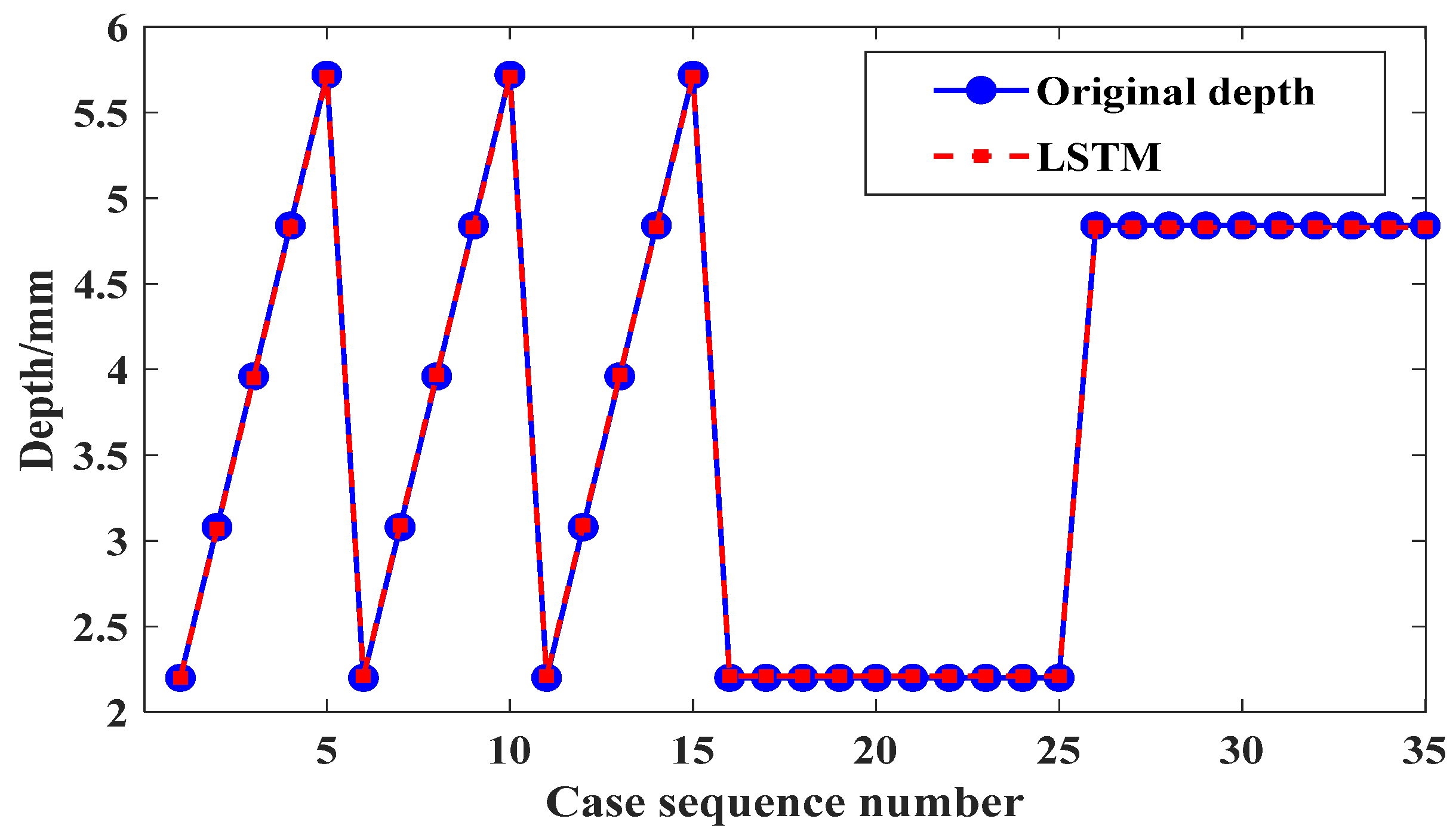
The model was implemented in MATLAB 2020B. After network training, the training loss was 0.14, the training RMSE was 0.52, the validation loss was 0.55, and the validation RMSE was 1.05. The network output is shown in Figure 4, where the curve represents different cases.
As shown in Figure 4, the RMSE of the defect-depth prediction by the LSTM was 0.0099 mm, the average absolute error was 0.0097 mm, and the average absolute percentage error was 0.3%. The training dataset in Figure 4 did not include noise because part of the data was generated by a COMSOL Multiphysics 6.0 simulation model; therefore, the prediction accuracy is high.
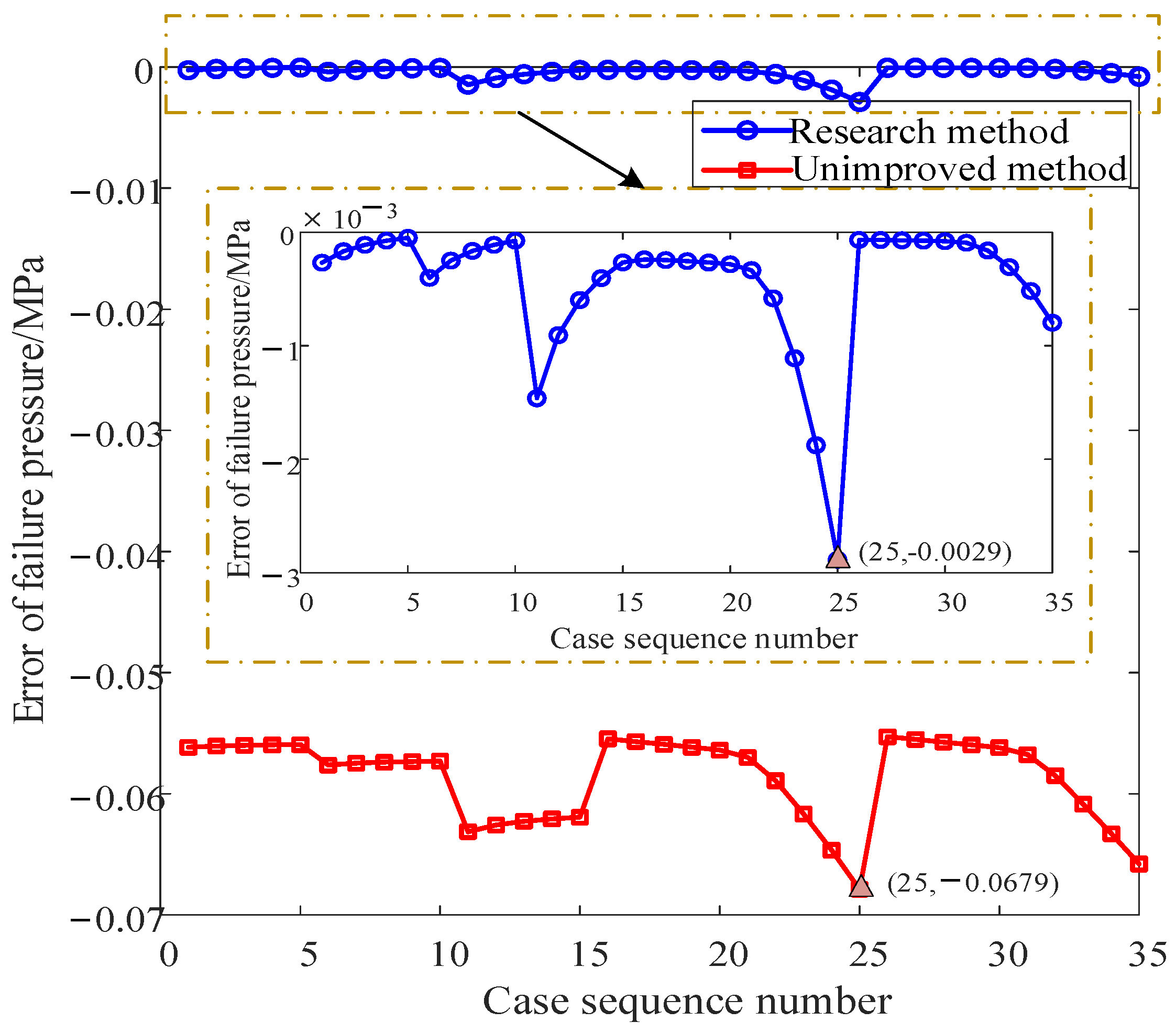
To validate the accuracy of the proposed dynamic failure-pressure calculation method, the predicted results were compared with those of the unmodified static model and the original DNV-RP-F101 method, as shown in Figure 5. The error was defined as the difference between the calculated failure pressure and the measured burst pressure, thereby representing the deviation between the predicted and actual values.
The comparison in Figure 5 shows that the proposed method produces smaller prediction errors. The fitting residual of the proposed model has an average error of 0.00045 MPa and a maximum error of 0.0029 MPa. By contrast, the unmodified static model has an average error of 0.05865 MPa and a maximum error of 0.0679 MPa. The average error is therefore reduced by approximately 99.2% relative to the static model. This improvement is attributed to the dynamic coupling mechanism introduced in the proposed method, which considers time-varying defect growth and pressure fluctuations that are neglected in traditional static assessments.

3.3. Accuracy Comparison of Single Defect Failure Pressure Prediction

Four widely used methods, ASME B31G [25], DNV-RP-F101 [26], PCORRC [27], and RSTRENG [28], were selected as benchmarks for comparison. The experimental results are presented in Table 1, and the selected cases represent common conditions encountered in pipeline operation.
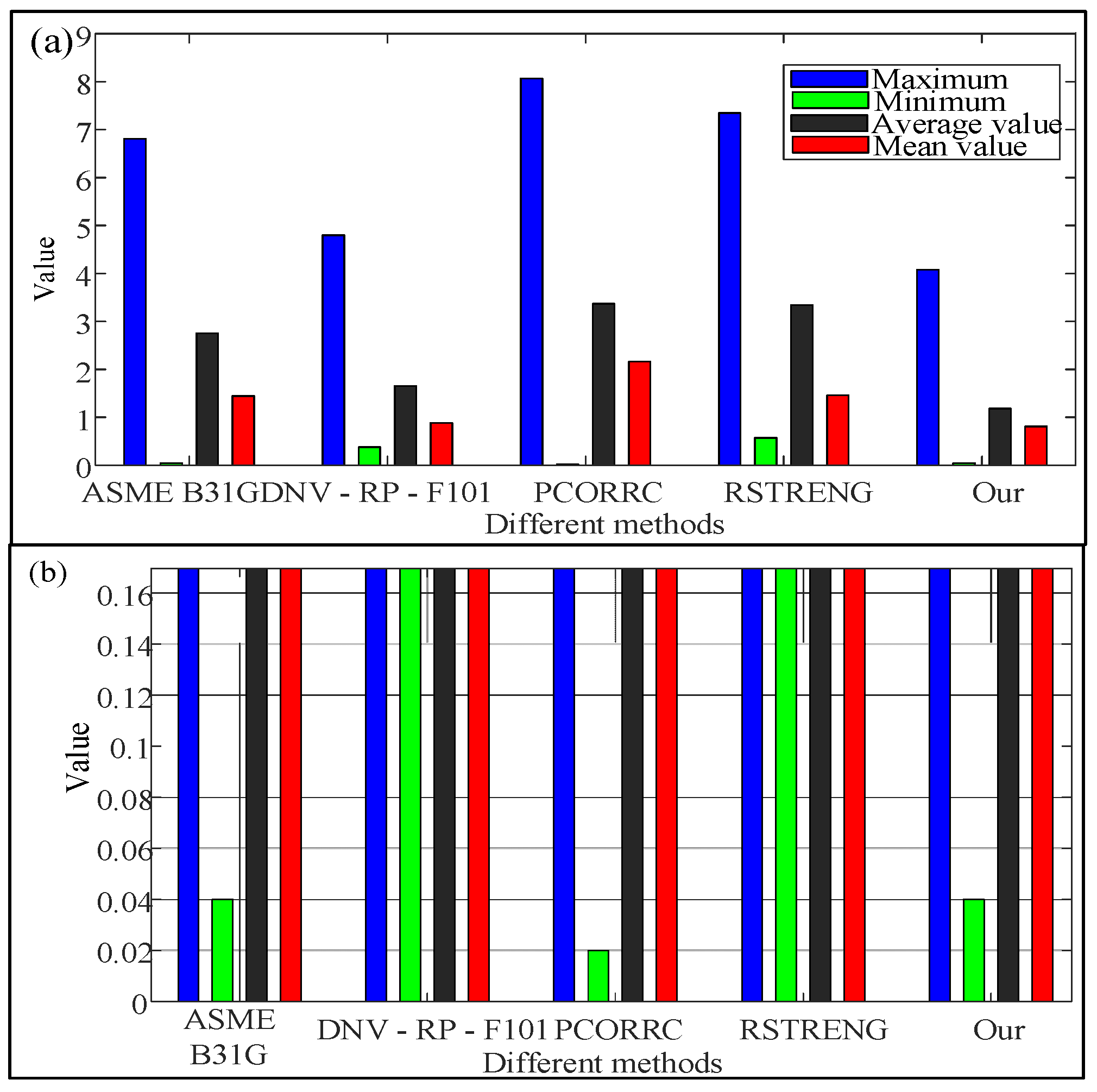
Based on the original data and the detailed calculation results in Table 1, the maximum, minimum, average, and MSE values of the failure-pressure calculation results obtained by each method were statistically analyzed. The statistical results are shown in Figure 6, which provides an intuitive comparison of the overall performance of different methods.
The bar-chart color coding in Figure 6b is consistent with that in Figure 6a: blue represents the maximum value, green represents the minimum value, black represents the average value, and red represents the mean value. The numerical magnitudes differ because the two subfigures represent different statistical indicators. Among the five methods in Figure 6b, the main differences occur in the minimum values, and PCORRC gives the smallest green-bar value. The comparison of hydraulic burst-test failure pressures calculated by ASME B31G, DNV-RP-F101, PCORRC, RSTRENG, and the proposed method shows that the proposed method achieves the smallest values of MSE, maximum error, and average error, with values of 0.81 MPa, 4.08 MPa, and 1.18 MPa, respectively. DNV-RP-F101 provides the second-best overall performance, whereas PCORRC shows the largest deviation.

3.4. Validation of Defect Cluster Prediction Performance

Finite element (FE) simulations were performed using COMSOL Multiphysics 6.0 to validate the defect-cluster equivalence rules. A three-dimensional solid-mechanics model was constructed for a straight pipe segment with a length of 3D to eliminate end effects. The pipe geometry followed the dataset parameters. The material was modeled as elastic–plastic with a von Mises yield criterion, using true stress–strain curves for API 5L steel grades. Internal pressure was monotonically increased until it burst, and failure was defined as the equivalent plastic strain reaching the ultimate tensile strain. The FE simulations were used to verify the validity of the defect-cluster equivalence rules, and a typical composite defect-cluster case was selected; the calculated burst pressure is reported in Table 2. The average error between the predicted failure pressure and the FE-calculated value was 0.31%, and the maximum error of the proposed method was 1.44%. By contrast, the DNV-RP-F101 method showed an average error of 1.69% and a maximum error of 14.77%. The defect-cluster prediction error was less than 1.44%, satisfying the accuracy requirement for engineering applications.

3.5. Ablation Study

To evaluate the contribution of each module, three ablation experiments were designed: (1) the modified DNV-RP-F101 static model alone; (2) the LSTM dynamic prediction module combined with an empirical failure-pressure formula; and (3) the fully coupled model. The experimental results are shown in Table 3.
Table 3 shows that the DNV model achieves RMSE and MAE values of 3.179 and 3.179 MPa, respectively. The partial coupling model shows a slight decrease in prediction accuracy, with an MAE of 3.181 MPa. The full coupling model yields the lowest MAE of 3.176 MPa and reduces the training loss to 0.00348, corresponding to a 50% reduction relative to the partial coupling model. Although the improvements in MAE, MAPE, and loss are numerically small, small changes in defect size can substantially affect pipeline strength. Therefore, these changes may have practical significance. Overall, the integrated coupling model performs better than the single-module approaches across the selected performance metrics, indicating the benefit of combining static mechanical-model enhancement with LSTM-based dynamic prediction. The coupling strategy integrates the reliability of engineering mechanics with the dynamic fitting capability of data-driven models and provides technical support for the safety assessment of pipeline structures under complex operating conditions.

4. Construction and Application of Intelligent Risk-Warning System

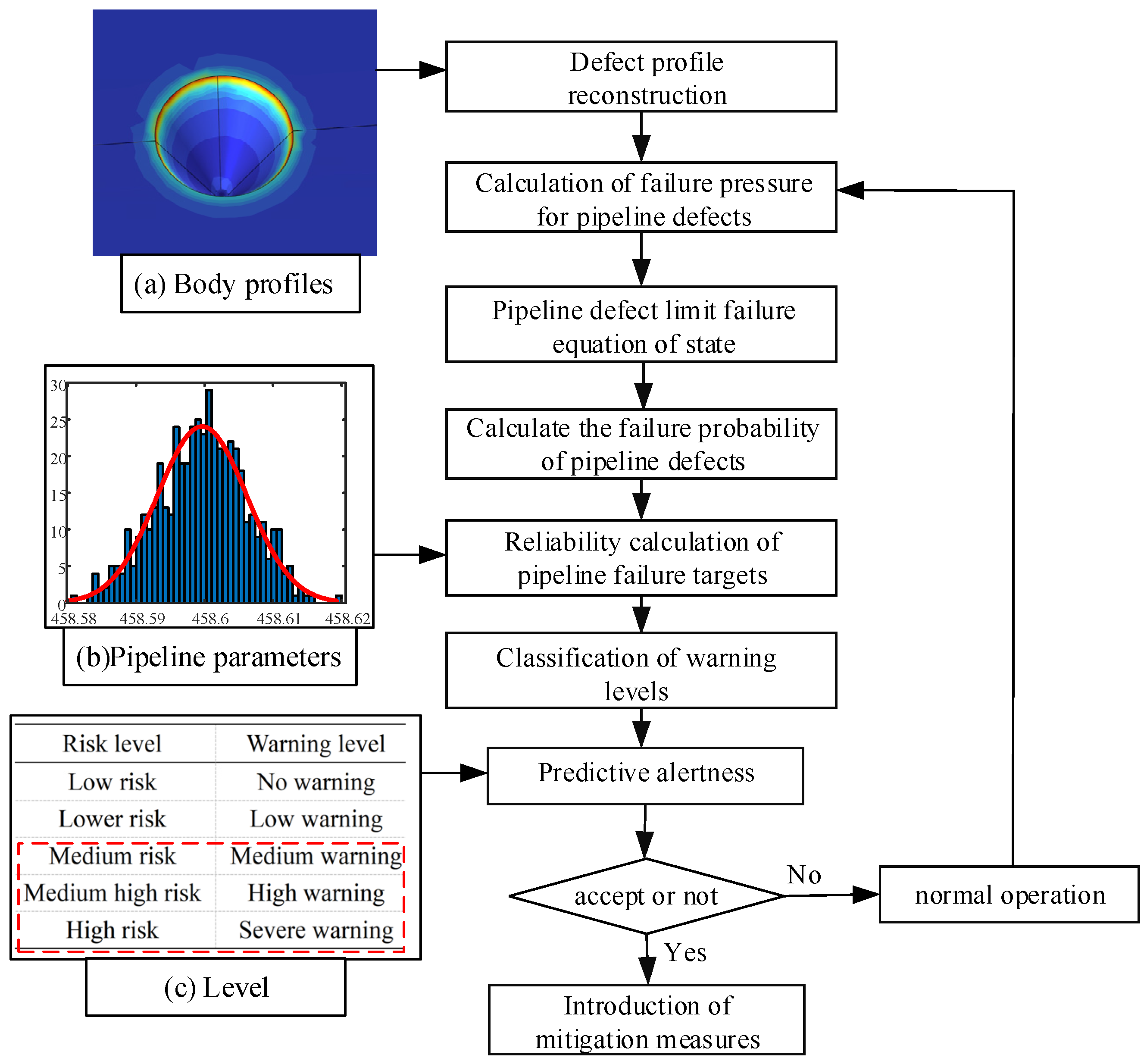
Based on the dynamic failure-pressure prediction model proposed in Section 2 and Section 3, an intelligent risk-warning system for pipeline integrity management was developed. As shown in Figure 7, the system begins with defect-profile reconstruction using the visual deep transfer learning (VDTL) method [23], which provides accurate geometric inputs for failure-pressure assessment. In the VDTL method, the MFL signal curves are transformed into two-dimensional images and then input into a transfer-learning neural network to improve prediction accuracy. Subsequently, the time-variant failure pressure at defect locations is calculated using the proposed LSTM-DNV coupled model, which incorporates defect-growth dynamics and operational pressure fluctuations. This capability represents an important improvement over static standards. Guided by limit-state theory, as shown in Figure 7b, the probability distributions of key influencing factors are analyzed, and Monte Carlo simulation is used to quantify failure probability and reliability. The improved accuracy of the proposed model supports more reliable failure-probability estimates and enables five-level risk classification based on API 579 standards. Finally, Figure 7c presents the prediction of remaining useful life for preventive pipeline maintenance, supporting proactive maintenance decisions. The effectiveness of this system is further demonstrated through the engineering case study in Section 4.3.

4.1. Monte Carlo Simulation-Based Failure Probability Assessment

4.1.1. Random Variable Definition and Distribution Settings

The key parameters affecting pipeline failure were selected as random variables X = (D, B, L0, d0, SMYS, UTS, Vr, Va, P0), and each variable was assumed to follow a normal distribution. The distribution parameters are listed in Table 4.

4.1.2. Construction of Limit State Function

Because several parameters affecting pipeline failure are random variables, the Monte Carlo method was adopted for the simulation. This method can directly solve problems with statistical characteristics, and its error is independent of problem dimensionality. The number of failures was obtained using Monte Carlo statistics, and the failure probability Pf was calculated [29] according to Equation (17) as follows:
g i = P c P 0 = i = 1 N ( g i 0 ) p f = Γ
Here, gi represents the pipeline failure state, is the failure probability of a pipeline defect exceeding the failure number of pipeline operating pressure, and Γ is the total number of simulations.

4.1.3. Simulation Process and Convergence Analysis

The simulation procedure was as follows: (1) random sampling based on parameter distributions; (2) calculation of dynamic failure pressure; (3) determination of the failure state; and (4) counting of failures and failure probabilities. The number of simulations was set to 105, as shown in Figure 8.
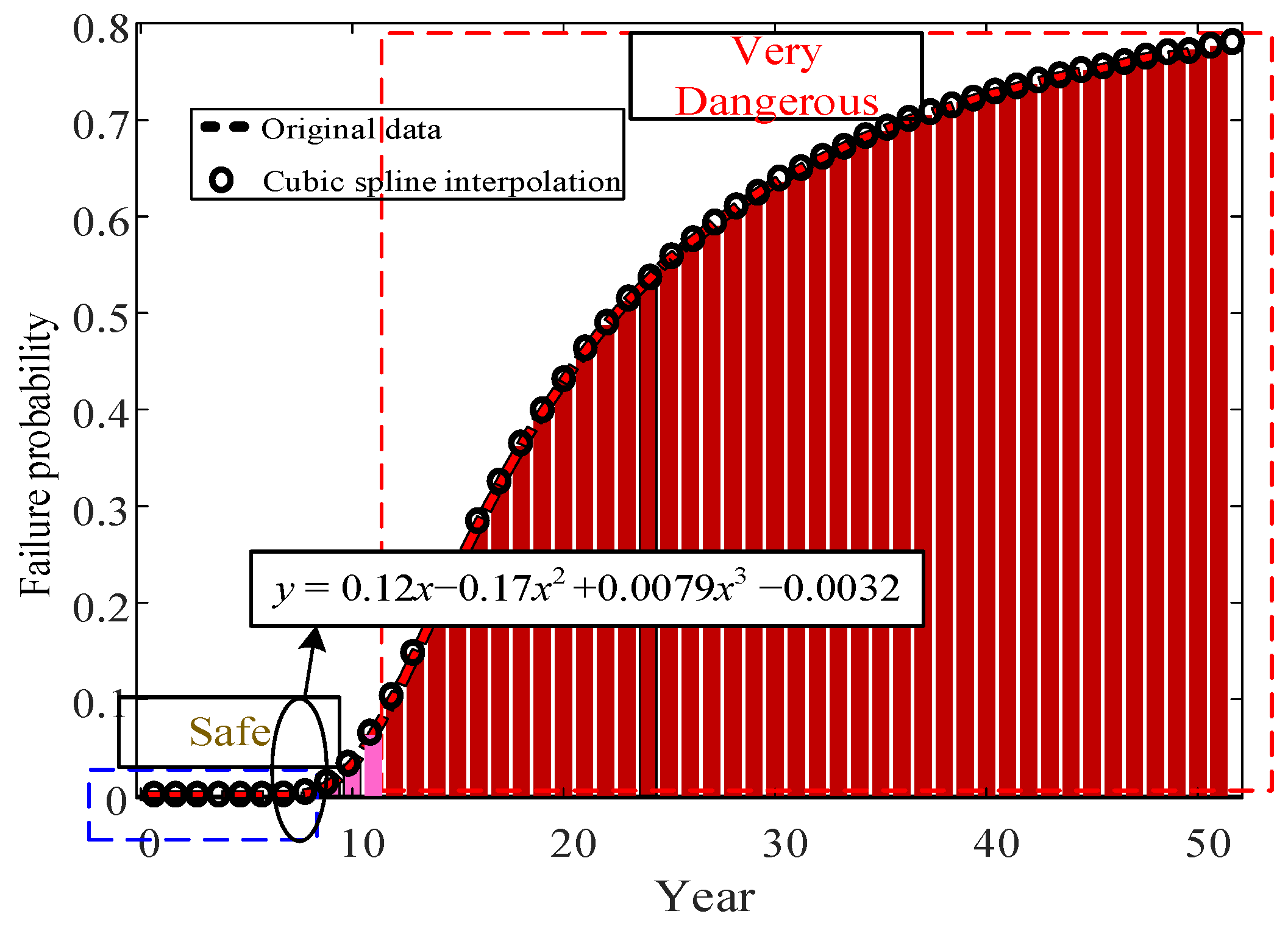
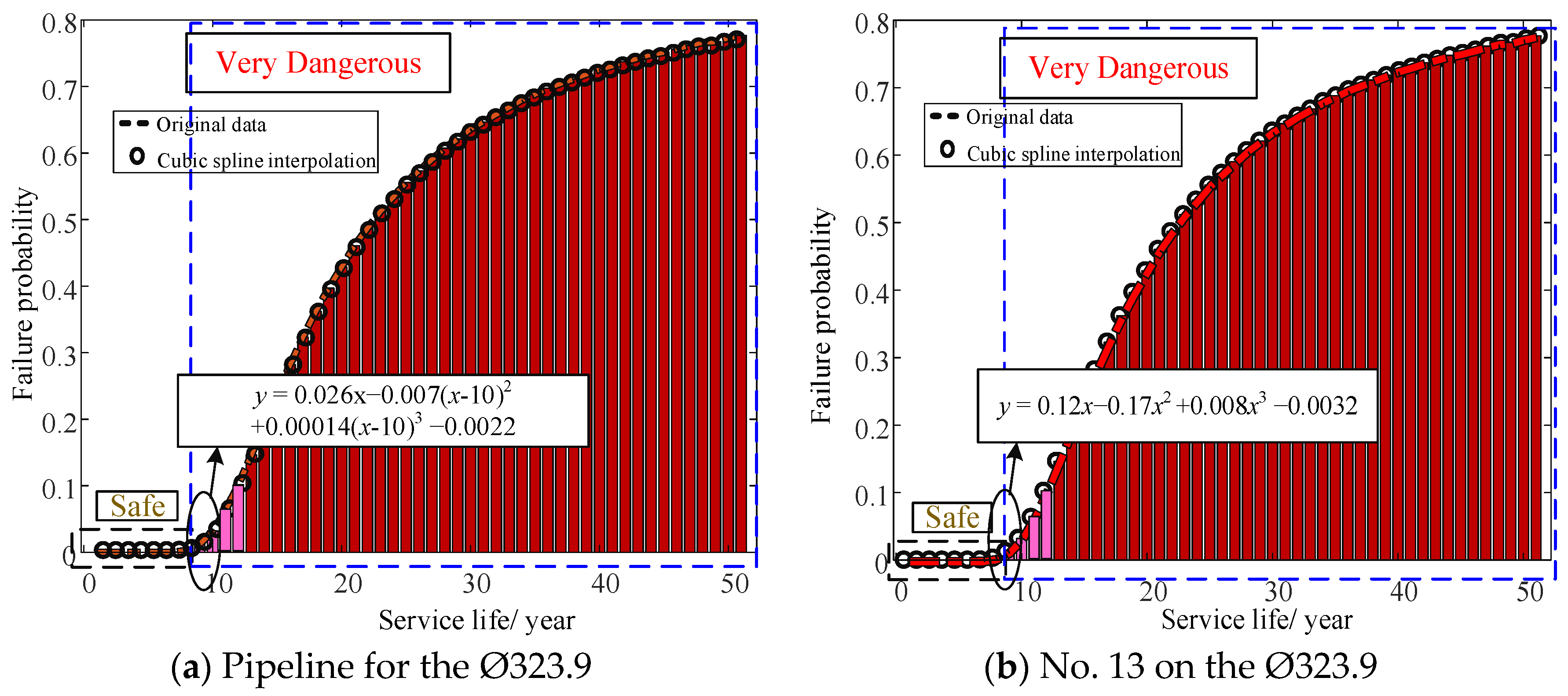
The results show that the failure probability increases with pipeline service life. After six years of service, the cumulative number of failures increases annually. According to the API standard in Table 4, the failure risk remains below the medium-risk level for eight years, and an orange alert is sufficient. After 13 years of service, corrosion depth increases further and leads to leakage and failure. The management and operation teams should then replace the operating pipelines and issue a red warning. In this study, cubic spline interpolation was used to fit the failure probability curve in Figure 8. The fitting formula is expressed as follows:
y = 0.12 x 0.17 x 2 + 0.0079 x 3 0.0032
Therefore, these early-warning thresholds provide actionable guidance for pipeline maintenance. When the failure probability reaches different thresholds, appropriate measures can be taken to maintain pipeline safety, such as adjusting the inspection frequency, reducing operating pressure, or replacing the pipeline. This comprehensive early-warning system supports effective pipeline management and can reduce failure risk and associated costs.

4.2. Dynamic Risk Classification and Warning Thresholds

Based on API 579-1/ASME FFS-1 [16,30] and API 579-3 [31], a five-tier risk early-warning system was established. The failure-probability thresholds (10−5, 10−4, 10−3, 10−2, and 10−1) were selected to align with API 579 target reliability levels for onshore transmission pipelines while balancing safety and operational economy. Failure probability and target reliability were combined to classify risk levels, and the corresponding warning color codes and action guidelines are listed in Table 5.

4.3. Engineering Case Study

4.3.1. Case Pipeline and Defect Description

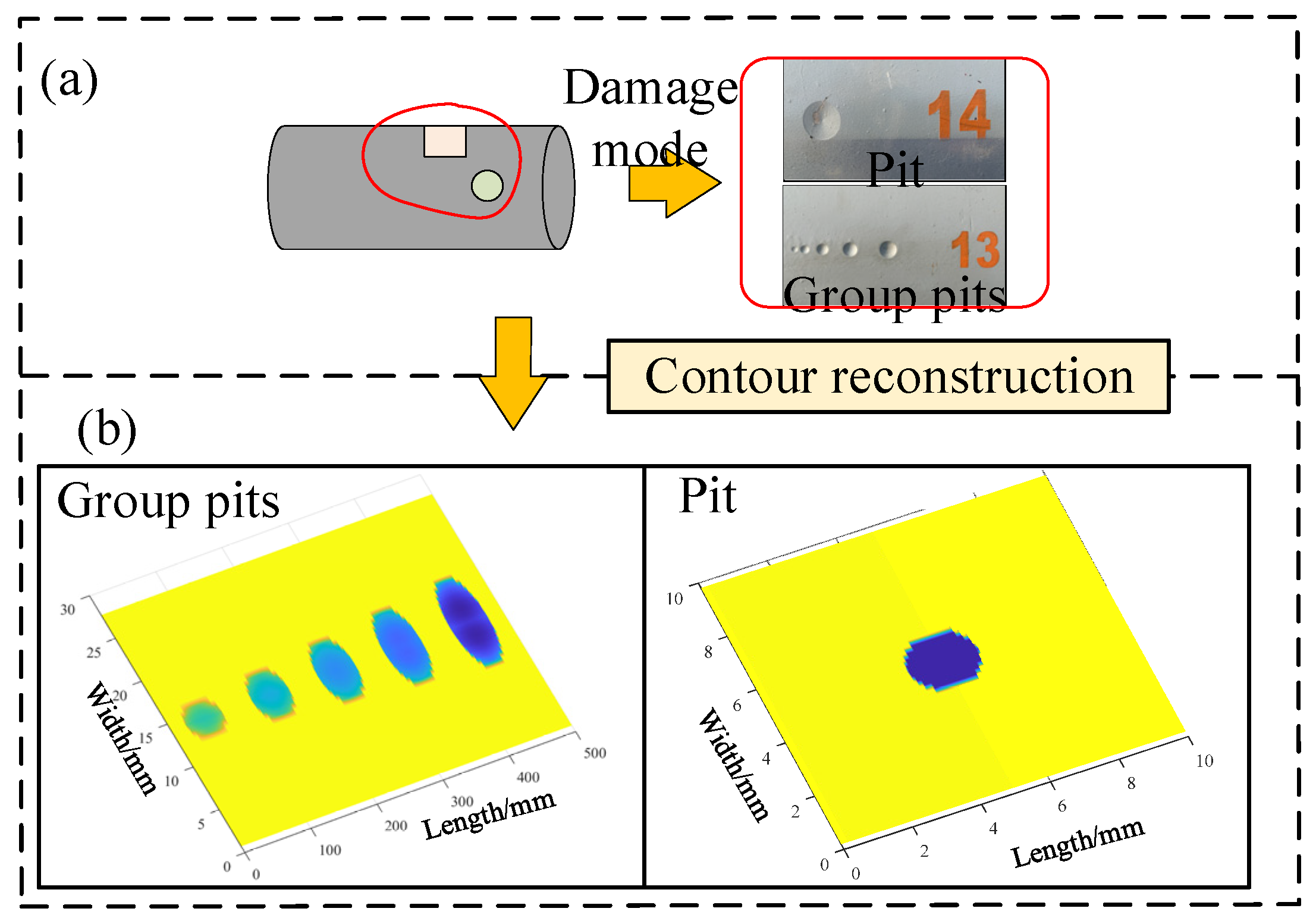
A 10-year-old pipeline with a diameter of 323.9 mm, wall thickness of 7 mm, and yield strength of 578.3 MPa was selected as the study object. The pipeline surface contained both isolated defects (Nos. 9–10) and a defect cluster (No. 13). Defect data were collected using a 32-channel circumferentially distributed MFL inspection system, as shown in Figure 9. Three-dimensional contour reconstruction was performed using the VDTL method, with maximum reconstruction errors of 1.81% for length, 0.98% for depth, and 0.75% for composite dimensions. The average error was consistently below 1.1%.

4.3.2. Failure Pressure Calculation and Error Analysis

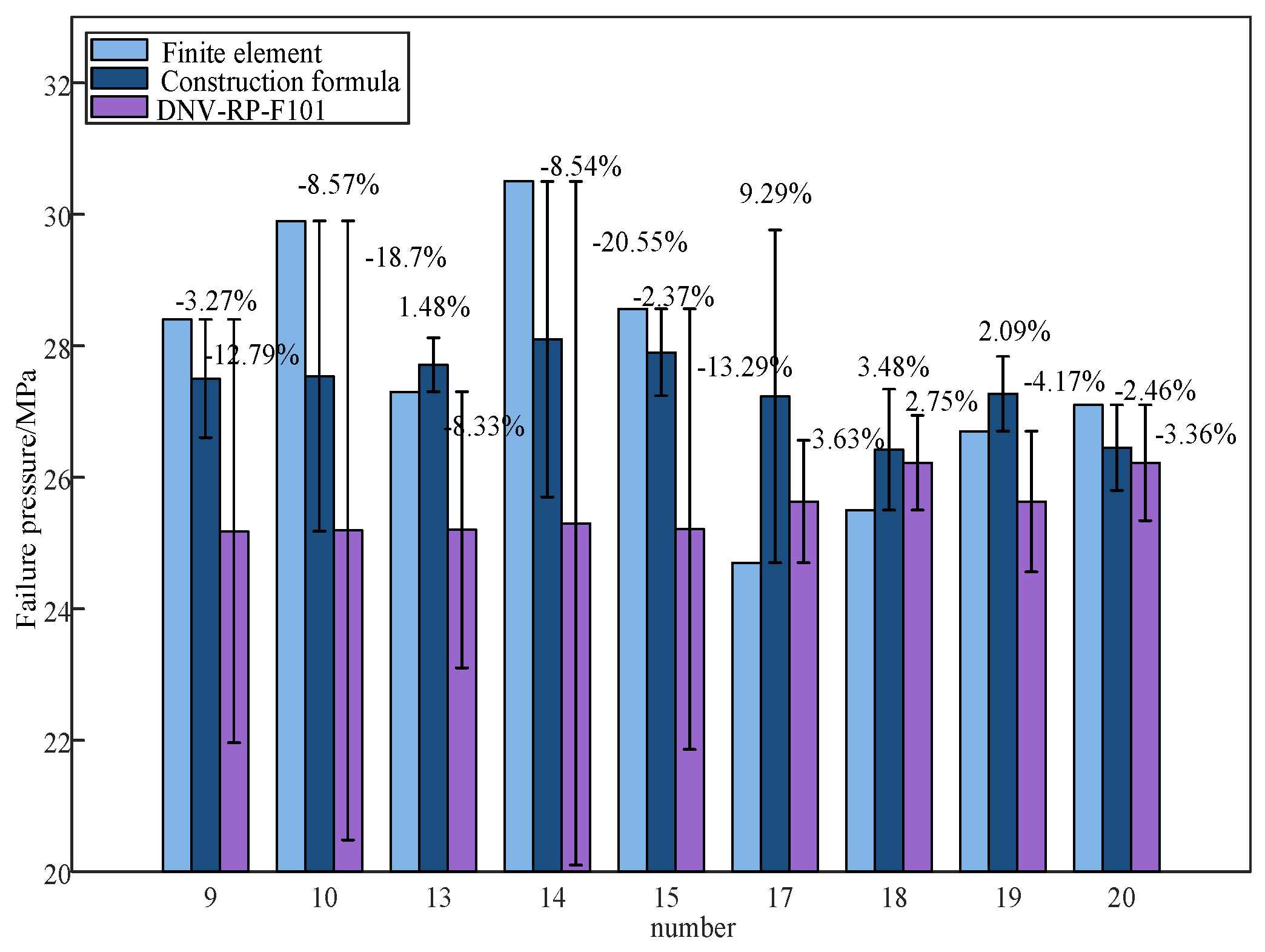
The pressure calculation results for the defective locations are shown in Figure 10. The proposed method achieves an average error of only 0.98% relative to finite element analysis, which is substantially lower than the 8.31% error of the DNV-RP-F101 method. This result supports the applicability of the proposed model to engineering practice.

4.3.3. Failure Probability Evolution Curve and Early Warning Trigger Analysis

The pipeline has an initial design life of 20 years, and Figure 11 shows the projected evolution of failure probability over a 50-year service period.
The results show that the failure probability during early service remains below the medium-risk threshold, so only an orange warning is required. After 13 years, corrosion depth increases and the failure probability exceeds 0.1, triggering a red warning. The No. 13 defect cluster in Figure 11b exhibits accelerated risk escalation and reaches the high-warning level after only 8.3 years, requiring immediate attention. Based on the failure-probability analysis, unified warning rules for all defects were established, as shown in Table 6.
In the low-risk (blue) state, the failure probability satisfies Pf < 1 × 10⁻⁴ and the service life is less than 6.6 years. In the medium-high-risk (orange) state, 1 × 10⁻³ < Pf < 1 × 10⁻² and the service life is greater than 10 years. In the critical-risk (red) state, Pf > 0.1 and the service life exceeds 12 years. Defect depth strongly affects failure pressure. A 20% increase in defect depth can reduce failure pressure by 15%. Defects with longer axial lengths trigger earlier warnings. Compared with No. 9, No. 20 has a longer axial length, a lower failure pressure, and an earlier warning trigger. Defect clusters have a 30% higher failure probability than single defects.

5. Conclusions and Future Prospects

This study addresses a critical challenge in pipeline integrity management: the transition from static, conservative failure-pressure assessment to a dynamic, predictive, and accurate risk-warning paradigm. The proposed Dynamic Defect Growth Failure Pressure-Coupling Model (DGFP-CM) advances this goal by combining the temporal prediction capability of LSTM networks with the mechanical rigor of an enhanced DNV-RP-F101 standard. The LSTM network captures nonlinear and time-dependent growth of corrosion and fatigue defects and performs better than static models. The proposed model improves calculation accuracy for both single defects and defect clusters while reducing conservatism relative to traditional static models.
The main contributions of this study are summarized as follows. First, time-varying corrosion growth and pressure fluctuations are incorporated into dynamic modeling, resulting in an RMSE of 0.81 MPa for single-defect prediction. Second, finite element validation of equivalence rules for axial, circumferential, and composite defect clusters shows that the error for grouped defects is no higher than 8.64%. Third, a five-level risk-warning system combining Monte Carlo simulation with API 579 standards enables prediction of failure time. By investigating failure mechanisms, quantifying root causes, and proposing optimized inspection cycles, the proposed approach connects theoretical modeling with engineering practice. Validation using ASME B31G, DNV-RP-F101, and case studies indicates that the method can reduce inspection costs and accident rates. The hybrid AI physics framework, real-time monitoring capability, and quantified risk thresholds overcome the temporal limitations of static methods and empirical safety-factor approaches. These advances extend AI-driven corrosion monitoring and address gaps in defect-cluster analysis. However, the model still has a potential overfitting risk, which can be mitigated through dropout, early stopping, and dataset partitioning.
Future work will integrate the Internet of Things for real-time monitoring and explore adaptive learning to optimize defect-growth prediction under variable environments. The applicability of the model to multi-material pipelines and complex geological environments should also be further expanded. In addition, failure characteristics of weak regions, such as pipeline welded joints, should be investigated to improve the generality and engineering value of the model.

Author Contributions

M.Z.: writing and revision, X.Y.: supervision, W.L.: data analysis, Y.G.: data interpretation, Y.W.: data acquisition, H.L.: experimentation, S.X.: data acquisition. All authors have read and agreed to the published version of the manuscript.

Funding

This work was supported by Grants No. 2024QN-B022, No. WG2022HJJ006, and No. WG2023HJJ009 from the PLA Rocket Force University of Engineering Foundation.

Institutional Review Board Statement

This study does not involve human or animal subjects.

Informed Consent Statement

This study does not involve human subjects, and therefore no informed consent was required.

Data Availability Statement

The data that support the findings of this study are available from the corresponding author upon reasonable request. The data are not publicly available due to commercial confidentiality restrictions.

Conflicts of Interest

The authors declare no conflicts of interest.

References

  1. Liu, S.; Zhang, Y.; Liu, H.; Liu, X.; Wang, J.; Meng, Q. Bibliometric Analysis of Oil and Gas Pipeline Safety. In Computational and Experimental Simulations in Engineering; Springer Nature: Cham, Switzerland, 2024; Volume 146, pp. 1163–1177. [Google Scholar]
  2. He, J.-Y.; Xie, F.; Wang, D.; Liu, G.-X.; Wu, M.; Qin, Y. Stress corrosion cracking behavior of buried oil and gas pipeline steel under the coexistence of magnetic field and sulfate-reducing bacteria. Pet. Sci. 2024, 21, 1320–1332. [Google Scholar] [CrossRef]
  3. Wang, L.; Tian, X.; Yang, H. Load-Bearing Capacity of X80 Dented Pipelines under Typical Loads. J. Fail. Anal. Prev. 2024, 24, 190–201. [Google Scholar] [CrossRef]
  4. Putkiranta, P.; Kurkela, M.; Ingman, M.; Keitaanniemi, A.; El Issaoui, A.; Kaartinen, H.; Honkavaara, E.; Hyyppä, H.; Hyyppä, J.; Vaaja, M.T. Performance Assessment of Reference Modelling Methods for Defect Evaluation in Asphalt Concrete. Sensors 2021, 21, 8190. [Google Scholar] [CrossRef] [PubMed]
  5. Wei, L.; Wang, L.; Zhou, Q.; Gao, Y. Prediction of oil pipeline process operating parameters based on mechanism and data mining. J. Energy Resour. Technol. 2024, 146, 113001. [Google Scholar] [CrossRef]
  6. Sun, M.; Fang, H.; Wang, N.; Du, X.; Zhao, H.; Zhai, K. Limit state equation and failure pressure prediction model of pipeline with complex loading. Nat. Commun. 2024, 15, 4473. [Google Scholar] [CrossRef]
  7. Chen, Z.; Li, X.; Wang, W.; Li, Y.; Sho, L.; Li, Y. Residual strength prediction of corroded pipelines using multilayer perceptron and modified feedforward neural network. Reliab. Eng. Syst. Saf. 2022, 231, 108980. [Google Scholar] [CrossRef]
  8. ASME B31G-2023; Manual for Determining the Remaining Strength of Corroded Pipelines. American Society of Mechanical Engineers: New York, NY, USA, 2023.
  9. Holloway, J.; Madyira, D.; Asumani, O. Numerical Modelling of Crack-Like Defect Behaviour in Pipes Considering ASME B31G. In Proceedings of the 2022 IEEE 13th International Conference on Mechanical and Intelligent Manufacturing Technologies (ICMIMT), Cape Town, South Africa, 25–27 May 2022; pp. 141–145. [Google Scholar]
  10. Lo, M.; Karuppanan, S.; Ovinis, M. Failure Pressure Prediction of a Corroded Pipeline with Longitudinally Interacting Corrosion Defects Subjected to Combined Loadings Using FEM and ANN. J. Mar. Sci. Eng. 2021, 9, 281. [Google Scholar] [CrossRef]
  11. Cuervo, B.; McQueen, M. A Novel and Practical Methodology for Gas Operators to Apply API Std 1163, In-Line Inspection (ILI) Systems Qualification Standard; NACE International: Houston, TX, USA, 2021. [Google Scholar]
  12. Kere, K.; Huang, Q. Development of probabilistic failure pressure models for pipelines with single corrosion defect. Int. J. Press. Vessels Pip. 2022, 197, 104656. [Google Scholar] [CrossRef]
  13. Wang, Y.; Su, C.; Xie, M. Optimal inspection and maintenance plans for corroded pipelines. In 2021 Global Reliability and Prognostics and Health Management (PHM-Nanjing); IEEE: Nanjing, China, 2021; pp. 1–6. [Google Scholar]
  14. Kenedy, K.; Sousa, P.; Álamo, D.; D’Aguiar, S.C.M.; Sousa, P.; Silva, S. Optimal maintenance planning for corroded pipelines—A parametric study. In Proceedings of the Rio Pipeline Conference and Exhibition, Rio de Janeiro, Brazil, 8–10 August 2023; p. 267454300. [Google Scholar]
  15. API 579-1/ASME FFS-1:2021; Fitness-For-Service. American Petroleum Institute: Washington, DC, USA, 2021.
  16. Basso, A.; Filho, J.; Shang, H. Assessment Of DNV-RP-F101 Method in Estimating the Failure Pressure in Corroded Pipelines. In Proceedings of the 23rd ABCM International Congress of Mechanical Engineering, Rio de Janeiro, Brazil, 6–11 December 2015; p. 111933775. [Google Scholar]
  17. Liu, W.; Chen, Z.; Hu, Y. Failure Pressure Prediction of Defective Pipeline Using Finite Element Method and Machine Learning Models. SPE-Society of Petroleum Engineer. In Proceedings of the SPE Annual Technical Conference and Exhibition 2022, Houston, TX, USA, 22 May 2022. [Google Scholar]
  18. Xiao, R.; Xiong, C. Predictive modeling for gas transmission pipeline failure cause and consequence analysis. Process Saf. Environ. Prot. 2025, 195, 106812. [Google Scholar] [CrossRef]
  19. Lindemann, B.; Maschler, B.; Sahlab, N.; Weyrich, M. A survey on anomaly detection for technical systems using LSTM networks. Comput. Ind. 2021, 131, 103498. [Google Scholar] [CrossRef]
  20. Zhao, H.; Liang, X.; Yang, Z.; He, P.; Zhao, B. Experimental and numerical analysis of the impact of corrosion on the failure pressure of API 5L X65 pipeline. J. Mar. Sci. Eng. 2024, 12, 1810. [Google Scholar] [CrossRef]
  21. Wang, Z.; Li, D.; Duan, W.; Wang, A.; Li, X.; Zhang, Z. Finite Element Analysis of Failure Pressure of X100 Oil and Gas Pipeline with Double Defects. Recent Innov. Chem. Eng. 2025, 18, 61–84. [Google Scholar] [CrossRef]
  22. Shen, Q.; Wang, J.; Wang, F.; Li, G.; Hu, Z. Axial loading mechanism analyses and evaluation methods of CCFT short columns with gap defects. Structures 2022, 46, 1422–1432. [Google Scholar] [CrossRef]
  23. Zhang, M.; Guo, Y.; Xie, Q.; Zhang, Y.; Wang, D.; Chen, J. Estimation of defect size and cross-sectional profile for the oil and gas pipeline using visual deep transfer learning neural network. IEEE Trans. Instrum. Meas. 2022, 72, 2501613. [Google Scholar] [CrossRef]
  24. Dupuis, B.R. The Canadian energy pipeline association stress corrosion cracking database. In Proceedings of the International Pipeline Conference, Calgary, AB, Canada, 7–11 June 1998; Volume 40221, pp. 589–594. [Google Scholar]
  25. Mousavi, S.S.; Moghaddam, A.S. Failure pressure estimation error for corroded pipeline using various revisions of ASME B31G. Eng. Fail. Anal. 2020, 109, 104284. [Google Scholar] [CrossRef]
  26. Marchesani, F.; Leporini, M.; Torselletti, E.; Orselli, B.; Scarsciafratte, D.; Mercuri, A.; Aloigi, E.; Di Biagio, M.; Fonzo, A. A Case Study for Repurposing Existing Sealines to CO2 Transport Offshore. In Proceedings of the OMC Med Energy Conference and Exhibition, Ravenna, Italy, 24–26 October 2023. [Google Scholar]
  27. Bao, J.; Zhou, W. Influence of the corrosion anomaly class on predictive accuracy of burst capacity models for corroded pipelines. Int. J. Geosynth. Ground Eng. 2020, 6, 45. [Google Scholar] [CrossRef]
  28. Yan, J.; Lu, D.; Khou, I.; Zhang, S. Faster RSTRENG: A More Efficient Effective Area Method Algorithm for Corrosion Assessment. J. Press. Vessel Technol. 2023, 145, 031502. [Google Scholar] [CrossRef]
  29. Cassetti, G.; Bellina, M.C.; Colombo, E. Correlating Quantitative Risk Assessment and Exergy Analysis for Accounting Inefficiency in Process Hazards: A Case Study. J. Energy Resour. Technol. 2018, 140, 082001. [Google Scholar] [CrossRef]
  30. Karimihaghighi, R.; Naghizadeh, M.; Javadpour, S. FFS master software for fitness-for-service assessment of hydrogen induced cracking equipment based on API 579-1/ASME FFS-1. Frat. Integrità Strutt. 2022, 60, 187–212. [Google Scholar] [CrossRef]
  31. Nunez, J.; Hay, C.; Bedoya, J. Development of Code-Specific RSFa for Use in API 579-1/ASME FFS-1 Assessments. In Proceedings of the Pressure Vessels and Piping Conference, Atlanta, GA, USA, 16–21 July 2023; p. V002T03A048. [Google Scholar]
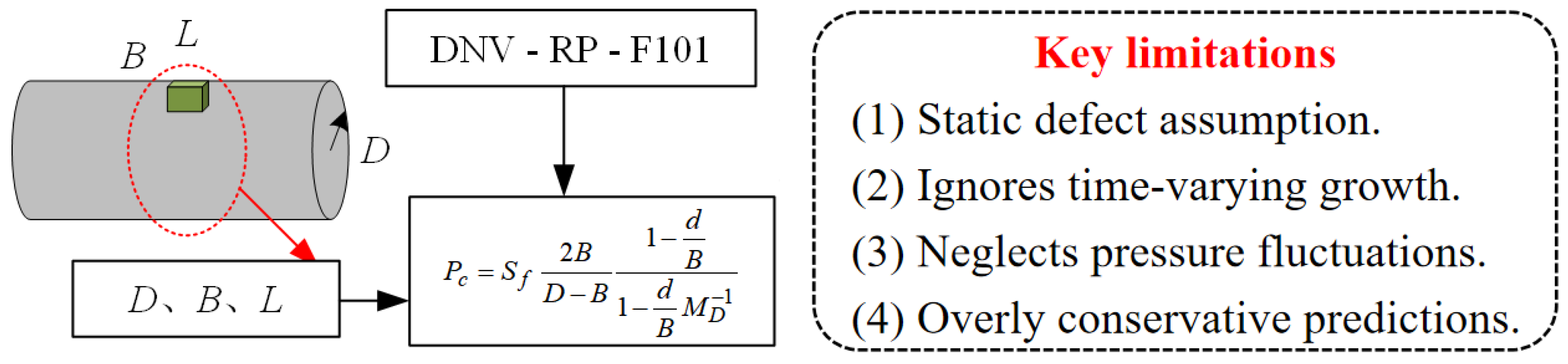
Figure 1. Limitations of static DNV-RP-F101 failure-pressure assessment and proposed dynamic improvement.
Applsci 16 06626 g001
Figure 2. Enhanced pipeline failure-pressure safety risk-warning method.
Applsci 16 06626 g002
Figure 3. Defect-cluster failure models. (a) A defect cluster distributed axially. (b) Defect clusters distributed radially along the circumference; (c) A combined group of defects that exist in both cases.
Applsci 16 06626 g003
Figure 4. LSTM-predicted defect-depth results.
Applsci 16 06626 g004
Figure 5. Analysis of failure-pressure error.
Applsci 16 06626 g005
Figure 6. Statistical analysis and local magnification. (a) Statistical values of failure pressure. (b) Enlarged view of (a).
Applsci 16 06626 g006
Figure 7. Early-warning process for pipeline defect safety and failure assessment.
Applsci 16 06626 g007
Figure 8. Failure-probability distribution for the Ø 458.6 mm pipeline.
Applsci 16 06626 g008
Figure 9. Radial MFL test system and inversion contour. (a) Illustration of the damage defect of the 323.9 mm pipeline; (b) Reconstruction contour diagrams of group pits and pit.
Applsci 16 06626 g009
Figure 10. Error analysis of failure-pressure calculation results for pipeline defects.
Applsci 16 06626 g010
Figure 11. Pipeline failure-probability calculation results.
Applsci 16 06626 g011
Table 1. Comparison of the proposed formula with existing methods.
Serial NumberFailure Pressure (MPa)ASME B31G (MPa)DNV-RP-F101 (MPa)PCORRC (MPa)RSTRENG (MPa)Proposed Method (MPa)
119.2519.4021.4320.0418.6821.03
217.3017.3417.8217.3216.7018.18
315.6012.8114.2911.9812.3415.64
424.3023.1123.0916.2322.2624.65
524.3221.3622.1818.2420.5724.75
624.5420.5525.9419.0519.7925.33
724.5219.4025.4320.0418.6825.78
817.6015.1418.0916.3614.5819.19
916.3513.7115.4314.4213.2117.61
1016.2012.2112.9112.5011.7616.29
1121.4014.5916.6014.0814.0517.20
1217.7017.2619.2018.0416.6220.43
1315.3013.0415.6814.1412.5615.59
1416.1012.4514.1113.1111.9914.70
Table 2. Summary of calculated failure pressures for pipeline defects.
Serial NumberFE-Calculated Pressure (MPa)Proposed Formula Pressure (MPa)DNV-RP-F101 (MPa)Error of Proposed Formula (%)Error of DNV-RP-F101 (%)
Axial multi-cluster defect20.3120.2023.750.5414.48
Circumferential multi-cluster defect21.1420.8418.421.4414.77
Composite multi-cluster defect20.8721.0918.831.0410.83
Maximum value 1.4414.77
Minimum value 0.5410.83
Average error 0.311.69
Mean error 1.0113.36
Table 3. Ablation study.
Model ConfigurationRMSE (MPa)MAE (MPa)MAPE (%)
DNV-RP-F1013.1793.1793.863
LSTM + empirical formula only3.1793.1813.865
Complete coupling model3.1793.1763.861
Table 4. Main factors affecting pipeline failure and parameter distributions.
Parameter TypeRandom VariableProbability DistributionMean ValueStandard Deviation
Geometric parametersOuter diameter D (mm)Normal distributionØ 458.60.0065
Wall thickness B (mm)Normal distribution8.80.0342
Initial defect length L0 (mm)Normal distribution3810.05
Initial defect depth d0 (mm)Normal distribution2.20.1
Material parametersYield strength SMYS (MPa)Normal distribution718.20.06
Ultimate tensile strength UTS (MPa)Normal distribution6320.0308
Radial corrosion rate Vr (mm/a)Normal distribution0.20.15
Axial corrosion rate Va (mm/a)Normal distribution1.50.2
Load parameterPipe pressure P0 (MPa)Normal distribution9.00.1
Table 5. Pipeline reliability risk-grade classification.
Failure ProbabilityTarget ReliabilityRisk LevelWarning LevelAlarm ColorAction
1.00 × 10−50.99999Lower riskNo warningGreenMonitor
1.00 × 10−40.9999Low riskLow warningBlue
1.00 × 10−30.999Medium riskMedium warningOrangeInspect
1.00 × 10−20.99Medium-high riskHigh warningPink
1.00 × 10−10.9High riskSevere warningRedReplace
Table 6. Pipeline failure-warning levels and alarms.
Service Life (Years)Failure ProbabilityRisk LevelAlarm ColorAction
<6.6<1 × 10⁻⁴LowBlueMonitor
7.4–8.71 × 10⁻³–1 × 10⁻²Medium-highOrangeInspect
>12>0.1HighRedReplace
Disclaimer/Publisher’s Note: The statements, opinions and data contained in all publications are solely those of the individual author(s) and contributor(s) and not of MDPI and/or the editor(s). MDPI and/or the editor(s) disclaim responsibility for any injury to people or property resulting from any ideas, methods, instructions or products referred to in the content.