Article

Experimental Validation of a Small-Scale Metafoundation Using Shaking Table Tests
1
Department of Ocean Engineering, Pukyong National University, Busan 48513, Republic of Korea
2
Department of Structural Engineering Research, Korea Institute of Civil Engineering and Building Technology, Goyang 10223, Republic of Korea
3
Seismic Research and Test Center, Pusan National University, Yangsan 50612, Republic of Korea
*
Author to whom correspondence should be addressed.
These authors contributed equally to this work.
Appl. Sci. 2026, 16(13), 6513; https://doi.org/10.3390/app16136513
Submission received: 27 May 2026 / Revised: 18 June 2026 / Accepted: 24 June 2026 / Published: 30 June 2026

Abstract

Buried mass-resonator systems, including metafoundations, have attracted increasing attention as an effective approach for mitigating vibrations induced by seismic waves in structural systems. In this study, a series of shaking table tests are conducted on a small-scale metafoundation to experimentally evaluate its vibration reduction performance under seismic excitation. The metafoundation model was fabricated using acrylic plastic and ethylene propylene diene monomer (EPDM) rubber foam, and its dynamic characteristics were examined through white noise and sine sweep tests. The attenuation zones identified from the experiments were validated through comparison with the frequency band gaps (FBGs) of the metamaterial obtained from numerical simulations. A simple small-scale structure was subsequently installed on the metafoundation, and the dynamic behavior of the combined system was investigated using white noise and sine sweep signals. The effectiveness of the metafoundation in reducing the seismic response of the structural system was further evaluated using earthquake ground motions. The experimental results demonstrate that the metafoundation significantly reduces the seismic response of the structural system at frequencies corresponding to the attenuation zone of the structural system with metamaterial.

1. Introduction

Recently, metamaterials have been developed to control electromagnetic, acoustic, and elastic waves in a wide range of media [1,2]. Metamaterials are artificially engineered materials that can exhibit properties not found in nature by periodically arranging unit cells that are smaller than the wavelength of interest in one or more directions. Following their initial development for electromagnetic waves, the concept of metamaterials has been extended to acoustic and elastic waves. In particular, elastic metamaterials have been introduced to control seismic waves, which are a form of elastic wave, with the aim of reducing vibration effects induced by natural hazards (such as earthquakes, volcanic eruptions, and large landslides) and human activities (including traffic, machinery, and accidental explosions) on buildings and civil infrastructure [3].
Seismic metamaterials can be broadly classified into seismic soil metamaterials, auxetic materials, above-surface resonators, and buried mass-resonator systems [3]. Seismic soil metamaterials are conventional geotechnical systems consisting of periodically arranged cylindrical cavities or piles embedded in the ground to mitigate ground-borne vibrations. Auxetic metamaterials, which exhibit a negative Poisson’s ratio, can be designed to inhibit the propagation of elastic waves within specific frequency band gaps (FBGs) [4]. Above-surface resonators, also known as meta-forests or meta-wedges, consist of spatially graded vertical resonators installed on a half-space. These systems have been shown to convert incident Rayleigh surface waves into bulk elastic waves or to reflect Rayleigh waves, thereby reducing surface wave energy [5,6].
Among these approaches, buried mass-resonator systems consist of a mass-spring-damper mechanism embedded in the ground and operate in a manner analogous to tuned mass dampers commonly used in high-rise buildings [3]. Numerous studies have examined the effectiveness of buried mass-resonator systems as metabarriers designed to surround structures and mitigate incoming seismic waves. Krödel et al. proposed arrays of resonant structures composed of cylindrical tubes with suspended resonators supported by soft bearings and evaluated their performance through numerical analyses and scaled experiments [7]. Dertimanis et al. introduced a unit cell comprising a dense core suspended within a lightweight shell using distributed elastomeric tendons and demonstrated its potential for attenuating strong ground motions [8]. A periodic composite rubber-concrete barrier with prefabricated assembly characteristics was evaluated by Li et al. through a laboratory test in order to validate underground hammering excitations [9]. Achaoui et al. investigated the stopband characteristics of a theoretical cubic array of iron spheres connected to a concrete mass using iron or rubber bands, representing an early step toward the development of seismic shields for large civil infrastructure [10]. Similarly, Palermo et al. developed resonant metabarriers consisting of cylindrical masses suspended by elastomeric springs within concrete shells and showed, through scaled experiments, that surface ground motion could be effectively reduced at frequencies below 10 Hz, which are critical for the protection of buildings and infrastructure [11]. This single-mass metabarrier concept was later extended to multi-mass configurations to improve performance while maintaining compact designs [12]. Muhammad et al. proposed metabarriers composed of cylindrical steel masses enclosed in hollow concrete structures supported by low-stiffness rubber bearings and demonstrated effective attenuation of Rayleigh waves over multiple frequency bands [13].
Buried mass-resonator systems have also been investigated as metafoundations that both support superstructures and attenuate seismic waves. Shi and Huang introduced a seismic isolation foundation, referred to as a periodic foundation, consisting of a high-density core, a soft coating, and a concrete matrix, and confirmed its effectiveness using three-dimensional soil-foundation finite-element analyses [14]. This metafoundation concept has subsequently been applied to reduce dynamic responses in liquid storage tanks [15,16]. Colombi et al. examined both metafoundations and metabarriers capable of mitigating the effects of seismic waves on buildings and structural components, demonstrating that metamaterial-based designs can attenuate low-frequency seismic waves and ground-borne vibrations [17]. Zheng et al. numerically evaluated the performance of metafoundations under earthquakes or moving train excitations [18]. Collectively, these studies demonstrate the effectiveness and versatility of buried mass-resonator systems in mitigating the effects of seismic waves on a variety of structures.
Several experimental studies have demonstrated the effectiveness of seismic metamaterials for mitigating ground vibrations, particularly in the form of isolation barriers. Huang et al. conducted a series of field experiments on periodic barriers composed of alternating concrete and polyurethane layers, revealing that the vibration attenuation performance is strongly influenced by the infill material properties, barrier length, and the number of barrier units [19]. Hsieh et al. experimentally investigated a hybrid configuration combining auxetic structures with conventional pile-type seismic metamaterials, demonstrating the feasibility of tailoring low-frequency band gaps for civil engineering applications [20]. Wang et al. proposed an innovative above-ground resonator system and validated its wave attenuation capability through laboratory-scale tests using clay media and three-dimensional-printed resonators subjected to earthquake excitations [21]. Despite these significant advances, experimental research has predominantly focused on seismic metabarriers, whereas metafoundations have received considerably less attention. Existing studies on metafoundations are limited to a small number of configurations. For example, Witarto et al. examined the seismic isolation performance of a small reactor structure supported by a one-dimensional periodic foundation system [22] and Huang et al. investigated a two-dimensional metafoundation and demonstrated its potential for reducing structural seismic responses [23]. Nevertheless, there is still a lack of available experimental evidence, particularly with regard to three-dimensional metafoundation systems and their impact on superstructures.
In this study, a series of shaking table tests are performed to experimentally validate a three-dimensional small-scale metafoundation. The metafoundation configuration is based on a previously reported concept by Colombi et al. [17]. The study examined the reduction in vibrations provided by metafoundations by comparing the dynamic behavior of structures on metafoundations with that of structures on hollow concrete cells without resonant cores. It was observed that the metamaterial solutions can reduce the spectral amplification of the superstructure by approximately 15 to 70% depending on parameters such as the size of the metastructure and the properties of the soil. The present work therefore focuses on the physical realization and experimental verification of metafoundations under shaking table excitation, and the experimental results are not compared with those from a structural system on a hollow concrete cells without resonant cores. A small-scale metafoundation model fabricated from acrylic plastic is constructed, and its transfer functions under horizontal and vertical excitations are identified through white noise and sine sweep tests. The attenuation zones observed in the experiments are compared with the FBGs of the corresponding metamaterial obtained from numerical simulations. Subsequently, a simple small-scale structure is installed on the metafoundation, and the dynamic characteristics of the coupled system are examined using white noise and sine sweep input motions. Finally, the seismic responses of the structural system are evaluated under earthquake ground motions to assess the vibration reduction performance provided by the metafoundation.
The remainder of this paper is organized as follows. Section 2 describes the fabrication of the small-scale metafoundation system. Section 3 presents the experimental program and instrumentation. Section 4.1 discusses the test results for the metafoundation without a superstructure, while Section 4.2 presents the results for the metafoundation with an installed structure. Finally, Section 5 summarizes the main conclusions of the study.

2. Small-Scale Model of a Metafoundation

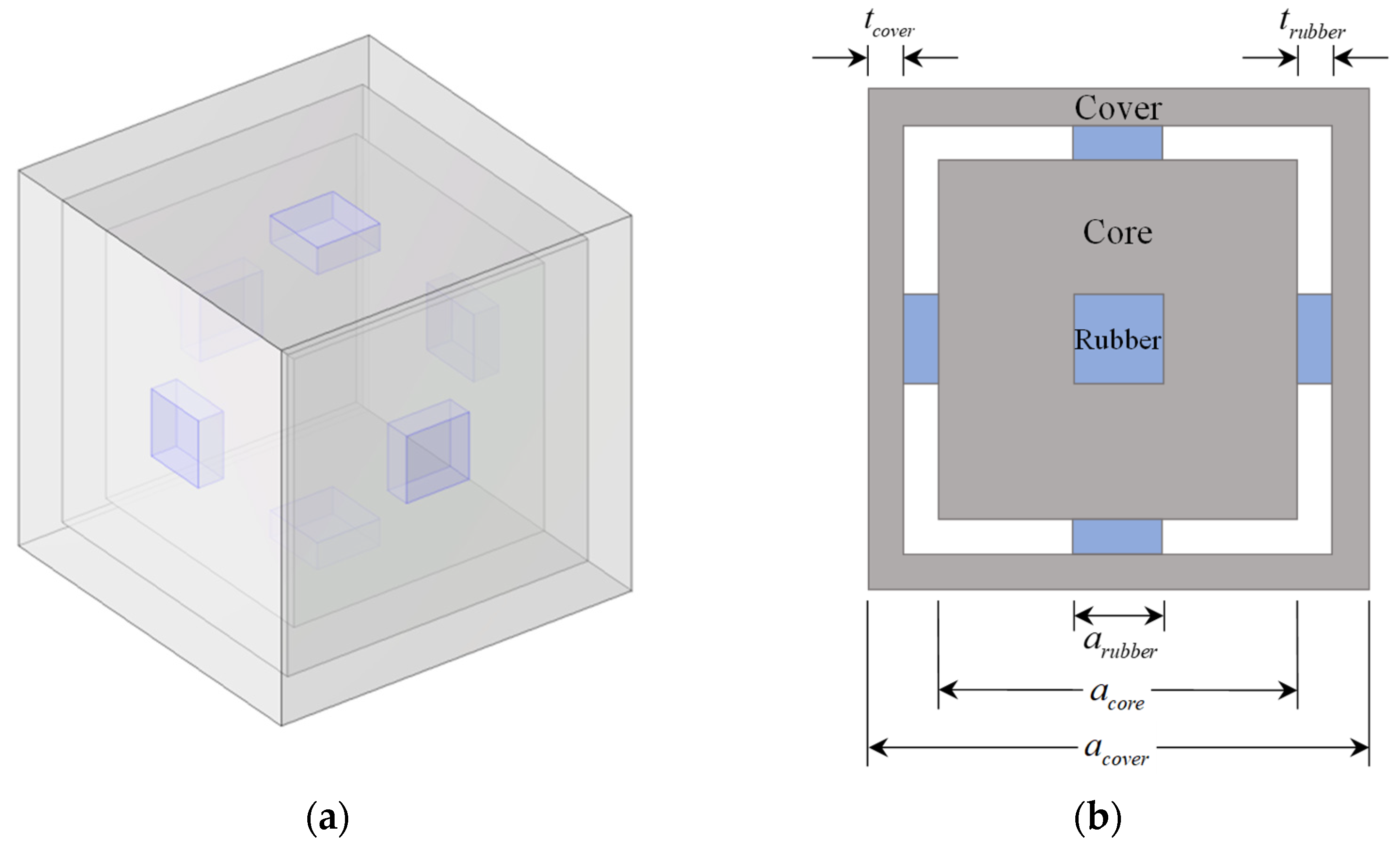
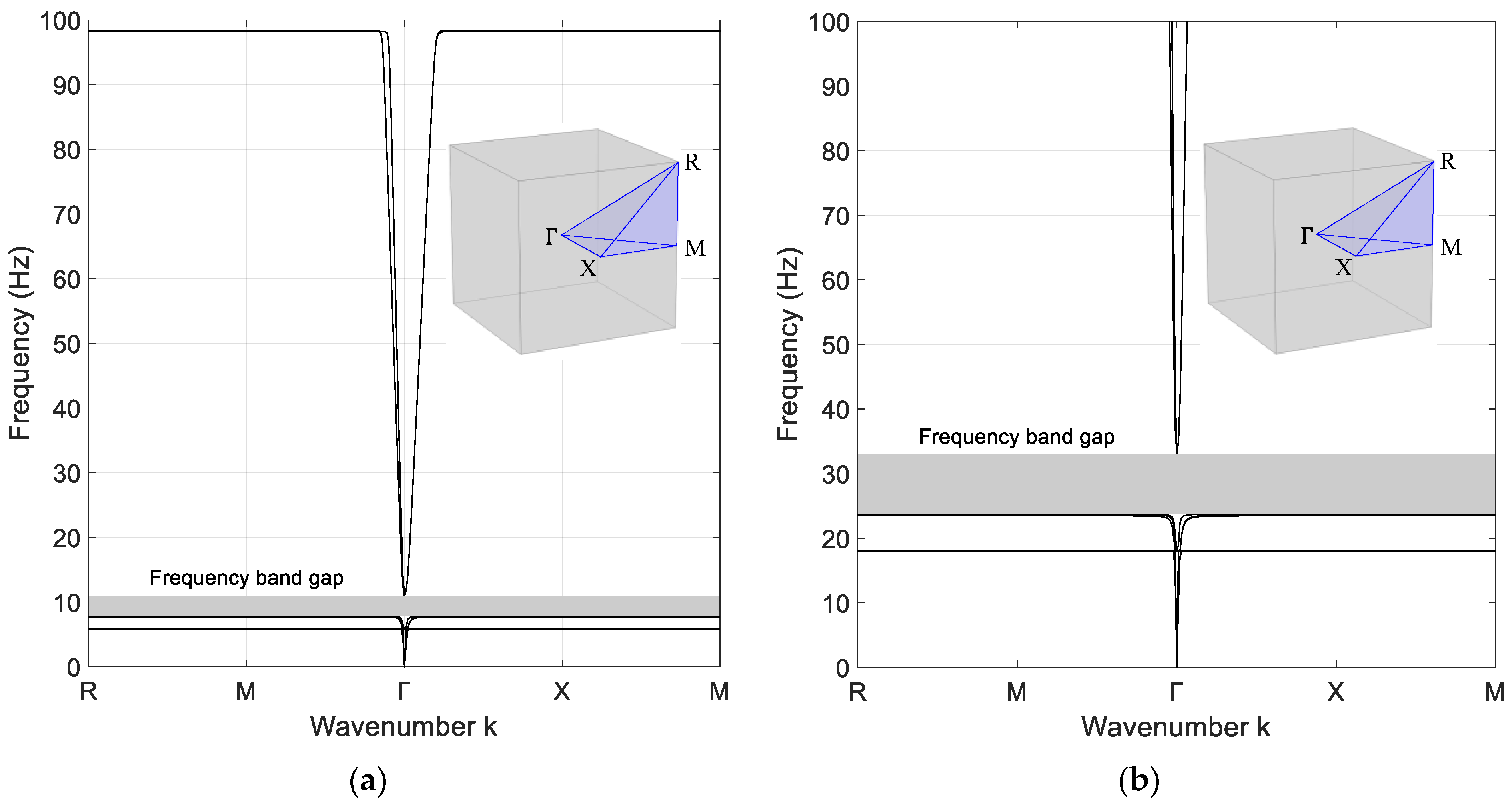
The unit cell of the metafoundation considered in this study is shown in Figure 1. The unit cell consists of a cubic concrete core, a cubic concrete cover box, and six square rubber pads. The material properties of the concrete and rubber used in the prototype unit cell are summarized in Table 1. Four different values of the core density were considered: 1845 kg/m3 (lightweight), 2030 kg/m3, 2200 kg/m3, and 2400 kg/m3. These values correspond to density ratios of 1.0, 1.1, 1.2, and 1.3 relative to the lightweight concrete, respectively. The dimensions of the prototype unit cell were determined as listed in Table 2 by modifying those used in a previous study [17]. Finite element analyses incorporating Floquet–Bloch theory were performed using COMSOL Multiphysics (version 6.3) to obtain the dispersion curves of the metafoundation, from which the FBGs are extracted [24]. A representative dispersion curve for the prototype unit cell with the core type M1 is shown in Figure 2a, where the Greek letters on the k-axis indicate the high-symmetry points in the Brillouin zone, as shown in the inset figure. The FBGs corresponding to all unit cell configurations are summarized in Table 3. Figure 2 shows the flat branches and the corresponding FBG produced by local resonance [17]. The properties and dimensions of the unit cell are not optimally determined in this study, and an optimization process would be required in future work to achieve a target FBG at minimum cost.
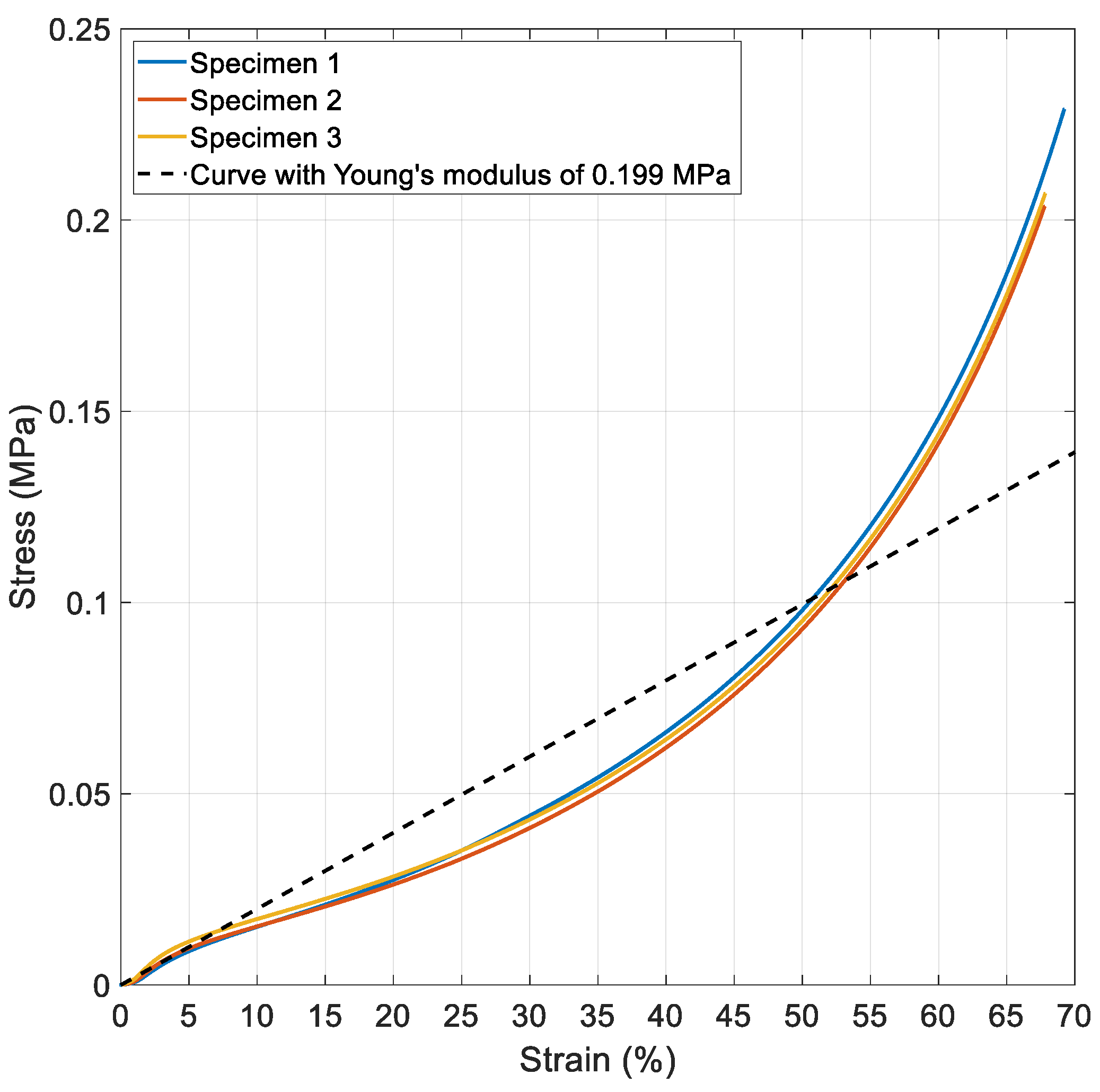
A small-scale metafoundation model was fabricated using acrylic plastic and ethylene propylene diene monomer (EPDM) rubber foam. The acrylic material had a Young’s modulus of 2.94 GPa and a density of 1180 kg/m3, resulting in scaling factors of S E = 2.94 / 30 = 0.098 and S ρ = 1180 / 2400 = 0.492 for Young’s modulus and density, respectively. The Young’s modulus of the rubber was 2 MPa, and its corresponding scaling factor S E was 0.098. Accordingly, the Young’s modulus of the rubber in the small-scale model was determined to be 0.199 MPa. The stress–strain curves of the EPDM rubber foam are shown in Figure 3, from which it can be observed that the secant modulus at 5% strain is approximately 0.199 MPa. The remaining material properties of the small-scale model are listed in Table 1. In this study, the frequency scaling factor is assumed to be S f = 3 . The aim of the experiment was to validate the attenuation behavior of the metafoundation system rather than to reproduce the dynamic responses of the prototype system, and so achieving complete similitude based on parameters such as Froude or Cauchy numbers is not the primary objective of this study. Therefore, the value of S f was selected based on the number of implementable unit cells, the performance of the shaking table, and the total cost of the test model. When S f is 1 or 2, the total number of unit cells in a layer is 3 × 3 or 6 × 6, respectively. In this case, the number of unit cells is insufficient to represent an ideal infinite periodic metamaterial. If S f is equal to or greater than 5, the frequency content of the input ground motions cannot be properly input to the shaking table with an operating frequency range of 0.1 to 60 Hz, as described in Section 3. For this study, S f = 3 was chosen, as it requires a smaller total cost for the test model than S f = 4 . Based on dimensional analysis, the corresponding length scaling factor S L = S E / S ρ S f 2 = 0.144 was obtained, and the length a c o v e r of the small-scale model was determined to be 1.4   m × 0.144 0.2   m . The remaining geometric dimensions of the small-scale unit cell are listed in Table 2. The dispersion curve for the small-scale unit cell with core type M1, calculated using COMSOL Multiphysics [24], is shown in Figure 2b, and the corresponding FBGs for all configurations are summarized in Table 3.
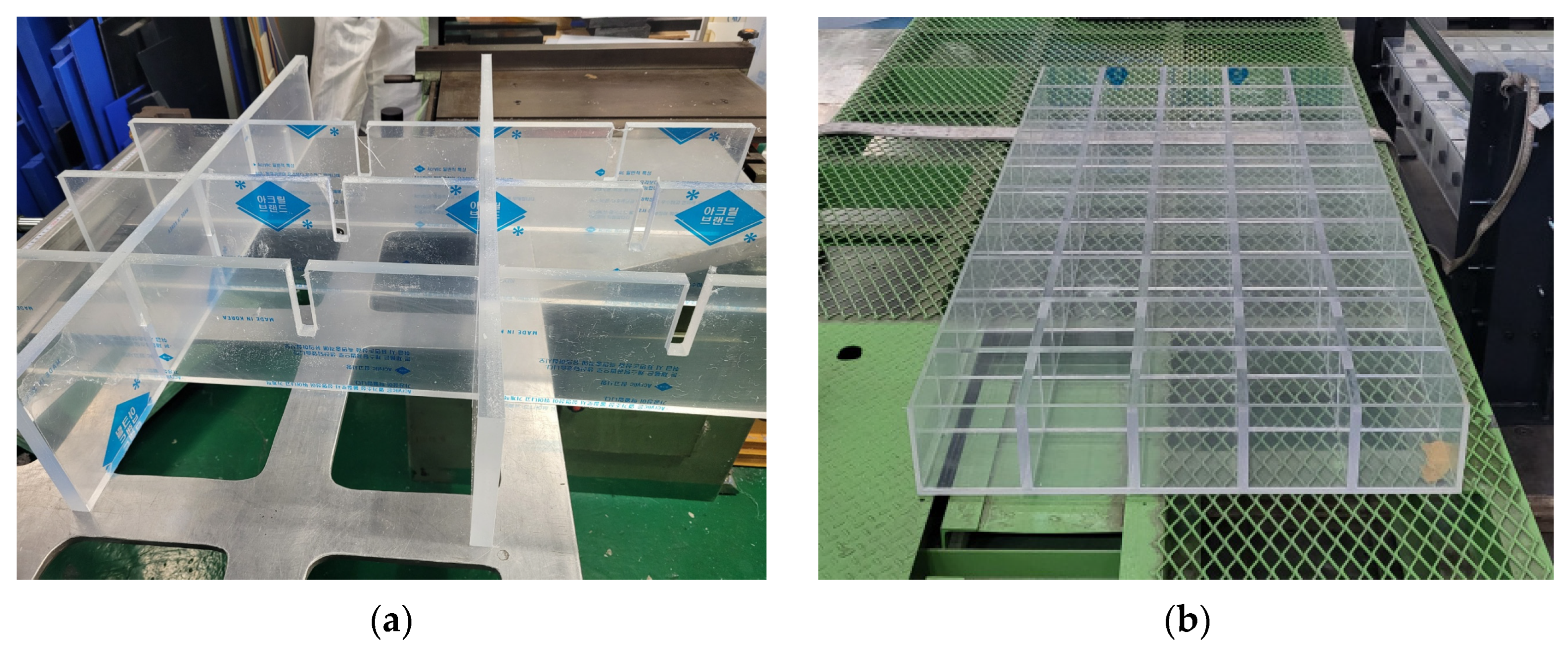
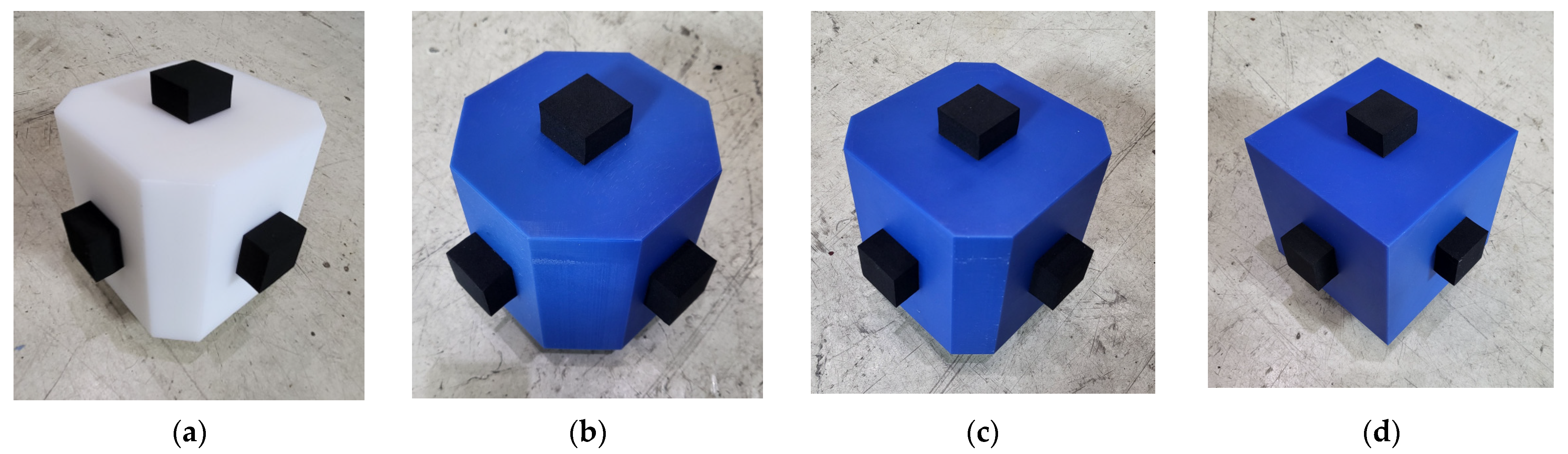
A small-scale metafoundation was constructed using the material properties and dimensions provided in Table 1 and Table 2. The model consists of two layers of 10 × 10 unit cells, as illustrated in Figure 4. Due to limitations in the available acrylic sheet dimensions, each layer was assembled from two groups of 10 × 5 unit cells. The top and bottom surfaces of each group were fabricated using 2   m × 1   m × 0.01   m panels, while the four outer sides were formed using sheets with a width of 0.18 m and a thickness of 0.021 m. Internal partition walls dividing the bulkhead into individual unit cells are fabricated from acrylic panels with a width of 0.18 m and a thickness of 0.02 m, as shown in Figure 5. The first and second layers are subsequently bonded together such that the seams in each layer are oriented orthogonally. Each layer of the metafoundation contains all four core types (M1-M4), arranged as shown in Figure 4. It is not easy to find materials that simultaneously satisfy the density and stiffness requirements listed in Table 1 for the small-scale core models. In this study, the mass of the core is considered to be the dominant parameter governing the dynamic behavior of the unit cell, rather than its density or Young’s modulus. Therefore, the four core types are realized using polyethylene and monomer cast nylon blocks, as shown in Figure 6, to achieve masses of 2.49 kg, 2.70 kg, 2.94 kg, and 3.24 kg for cores M1 through M4, respectively. These masses were obtained by multiplying the target densities by the core volume of 0.143 m3.
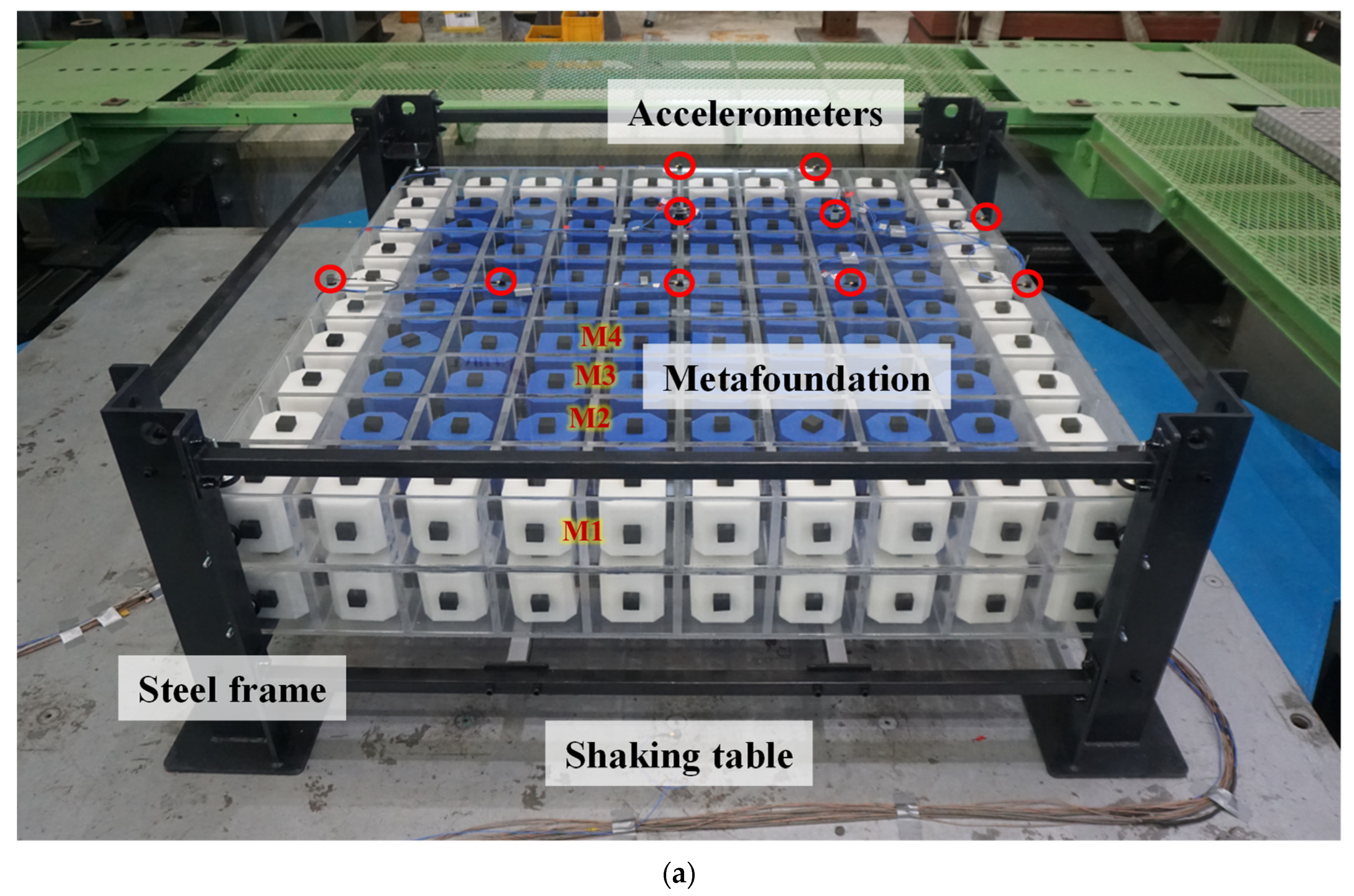
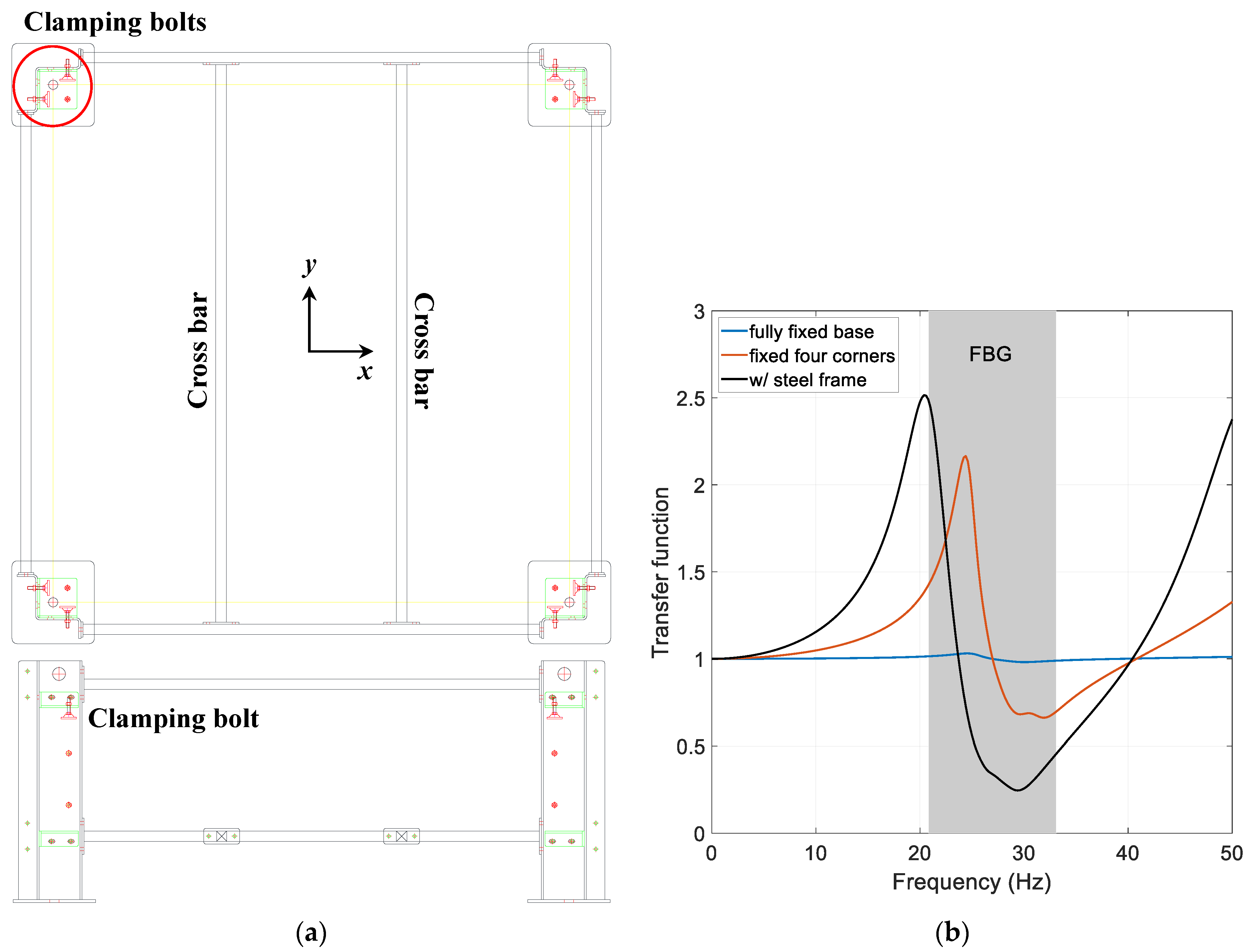
The fabricated metafoundation system comprises two layers of stacked unit cells. When mounted directly on a shaking table, a fully fixed boundary condition at the base restricts the excitation of flexible deformation modes, particularly given the small number of layers in the small-scale model. Figure 7b shows the transfer function of the metafoundation when its base is fully fixed. The metafoundation had a negligible effect on the system’s dynamic behavior in this case. It is difficult to identify an attenuation zone where the transfer function is lower than unity. The dispersion curves and FBGs presented in Figure 2 and Table 3 are derived under the assumption of an infinite periodic medium. To better approximate these conditions, only the four corner points of the metafoundation are constrained, thereby avoiding a fully fixed-base boundary condition. As can be seen in Figure 7b, an attenuation zone can be observed in the transfer function when the four corners are fixed. Since the metafoundation can undergo flexible deformation similar to that of a plate under this boundary condition, attenuation behavior can be realized. Note that the attenuation zone differs from the FBG in Table 3 since only two layers of unit cells are used for the metafoundation. Figure 7a shows a steel frame designed to impose these corner constraints even when a shaking table is excited in the vertical direction. The frame includes two cross-bars to prevent the metafoundation from collapsing during assembly of the partitioned unit cells. The metafoundation is secured to the steel frame using clamping bolts. Figure 7b shows the transfer function of the metafoundation when installed on the corner-constrained steel frame. The resulting transfer function is influenced by the flexibility of the steel frame, resulting in the broadened attenuation zone. This comparison demonstrates that a metafoundation comprising a limited number of unit cells can attenuate structural vibration at certain frequencies, provided the system is capable of vertical deformation. This study uses the steel frame in Figure 7a for the vertical deformation.
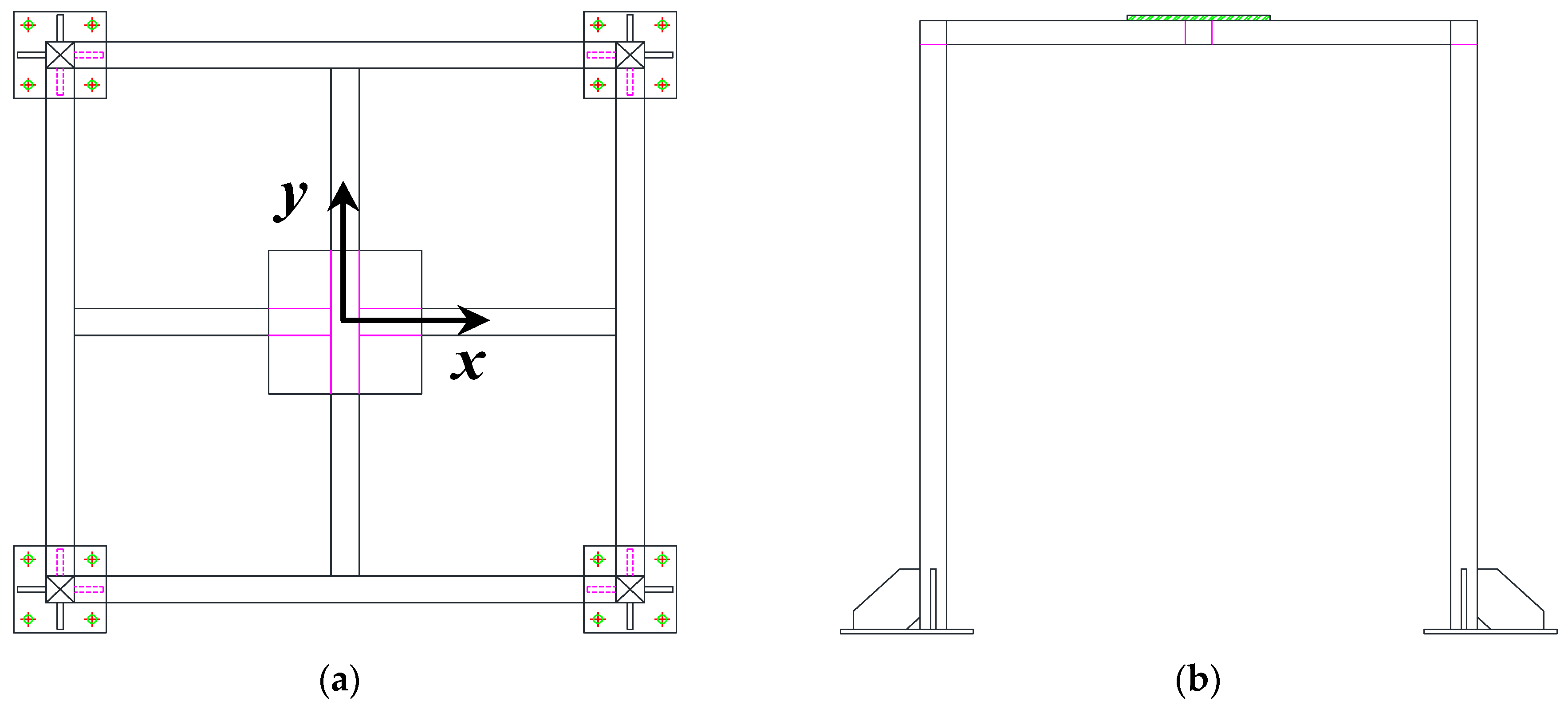
A simple single-story steel frame structure, shown in Figure 8, is considered as a superstructure installed on the metafoundation. The structure has a height of 1.0 m and a width of 0.8 m, and its fixed-base natural frequency is calculated to be 26.29 Hz.
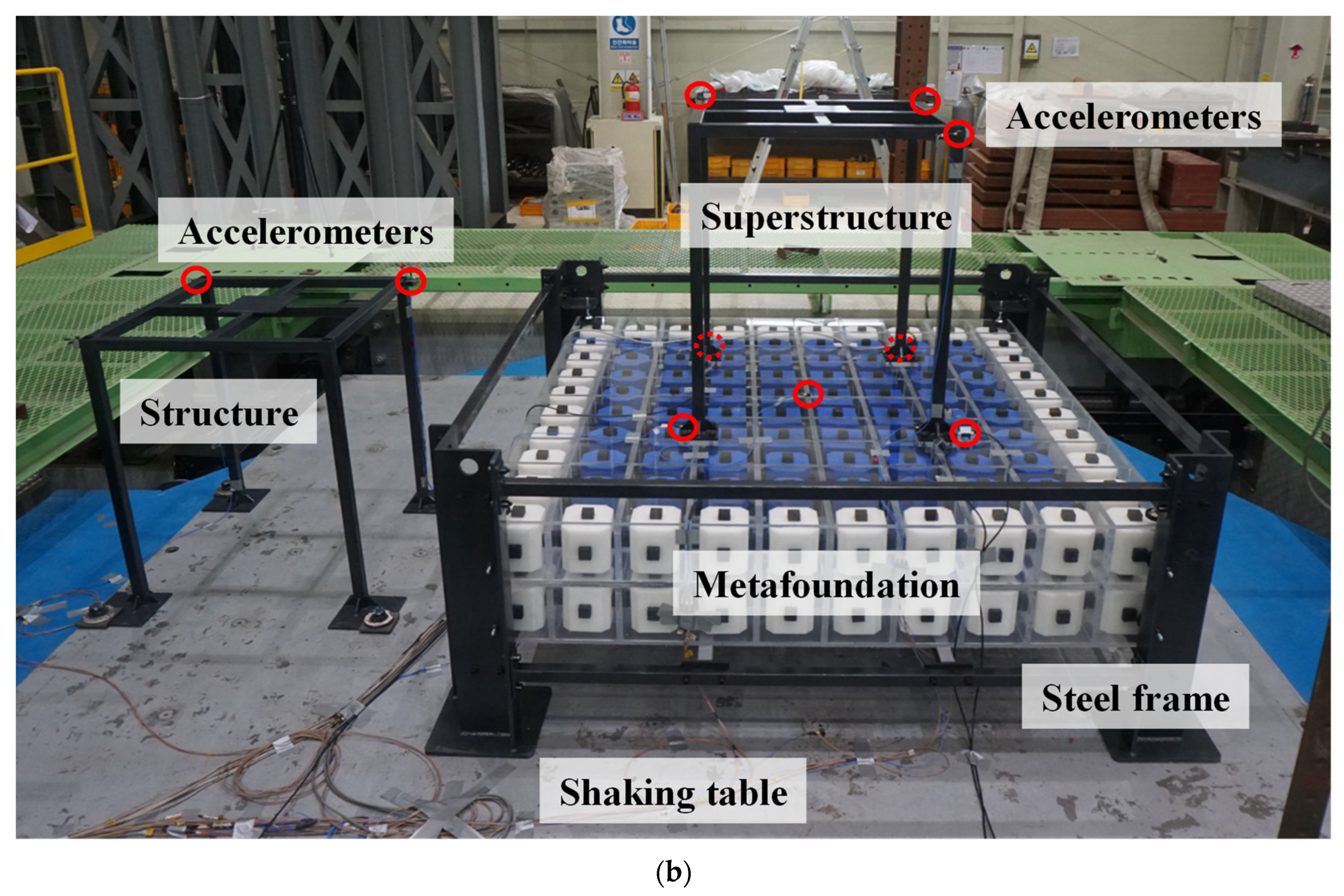
Figure 9a,b show the assembled small-scale metafoundation system without and with the superstructure, respectively. For comparison purposes, an identical structure was also mounted directly on the shaking table, as shown in Figure 9, in order to evaluate the vibration reduction provided by the metafoundation.

3. Test Plan and Instrumentation

A series of shaking table tests was conducted at the Seismic Research and Test Center of Pusan National University, Busan, Korea. The shaking table is capable of six degrees of freedom. Its table size and maximum payload capacity are 4   m × 4   m and 300 kN, respectively. The maximum achievable accelerations at the full payload are 1.2 g in the horizontal direction and 0.8 g in the vertical direction. The operating frequency range of the shaking table is 0.1 to 60 Hz.
The complete list of test cases is summarized in Table 4, and the abbreviations are provided in parentheses. First, tests were conducted on the metafoundation without a superstructure (denoted as the ‘MF’ case) to identify the attenuation characteristics of the metafoundation. White noise (WN) and sine sweep (SS) signals were applied independently in the horizontal x-, horizontal y-, and vertical directions, with peak accelerations of 0.05 g, 0.075 g, and 0.1 g, respectively. The white noise signals contained frequency components up to 50 Hz, while the sine sweep signals covered frequencies from 1 to 50 Hz at a sweep rate of two octaves per minute.
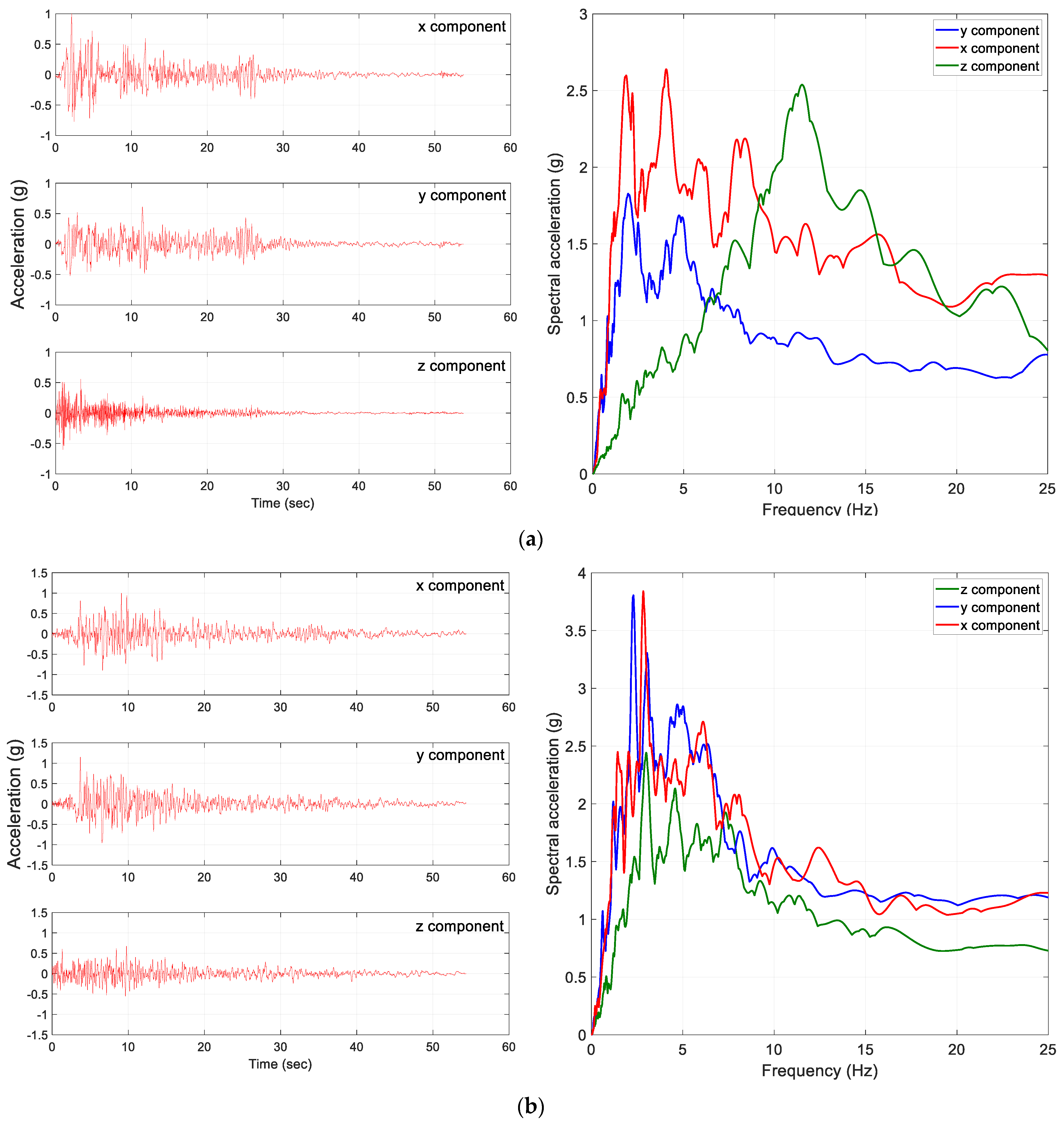
Next, tests were performed on the metafoundation with a superstructure (denoted as the ‘SF’ case) to investigate the effectiveness of the metafoundation in reducing structural vibrations. In addition to the white noise and sine sweep signals, two recorded earthquake ground motions, the El Centro (EC) earthquake and the Taft (TF) earthquake shown in Figure 10, were used as input motions to the shaking table. The figure shows the acceleration time histories and response spectra when the peak accelerations of the x components are 1 g. The applied directions and peak accelerations for these input motions are also summarized in Table 4. Although the original time step of the earthquake records was 0.02 s, this was reduced to 0.01 s and 0.005 s so that the frequency contents in Figure 10 shifted to doubled and quadrupled frequencies, respectively. This modification ensures sufficient high-frequency contents relevant to the small-scale model. When the bi-directional and tri-directional motions are used, the time histories were scaled to achieve the desired peak accelerations for the x components in the experiments with the other components modified proportionally.
The naming convention for the test cases follows the order of the metafoundation configuration, the input signal and its time interval, the applied direction or components, and the peak acceleration. For example, the test name “SF_EC.005_XY_0.2” indicates that the horizontal x- and y-components of the El Centro earthquake ground motion with a time interval of 0.005 s and a peak ground acceleration (PGA) of 0.2 g were applied to the metafoundation with a superstructure.
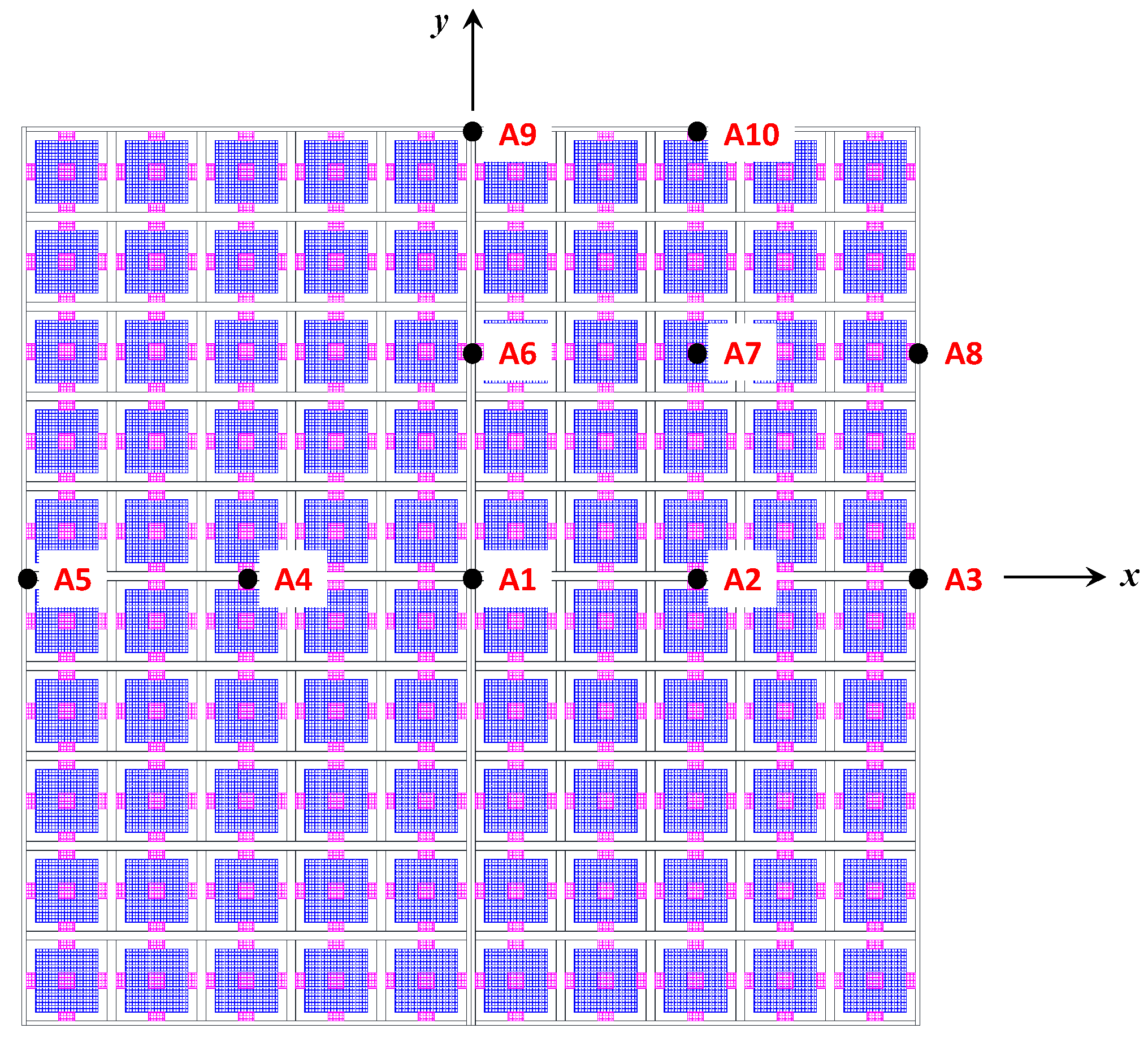
The instrumentation layout for the MF case is shown in Figure 11. Triaxial accelerometers, labeled A1 through A10, were installed to measure acceleration responses in three orthogonal directions at various locations on the metafoundation. The data acquisition system was operated at a sampling rate of 512 Hz. Triaxial accelerometers were also installed at the base and on the first floor of the superstructure in order to measure tri-directional acceleration responses. Figure 9 shows the locations of the accelerometers installed on the physical models, marked with red circles.

4. Test Results

4.1. Metafoundation Only System

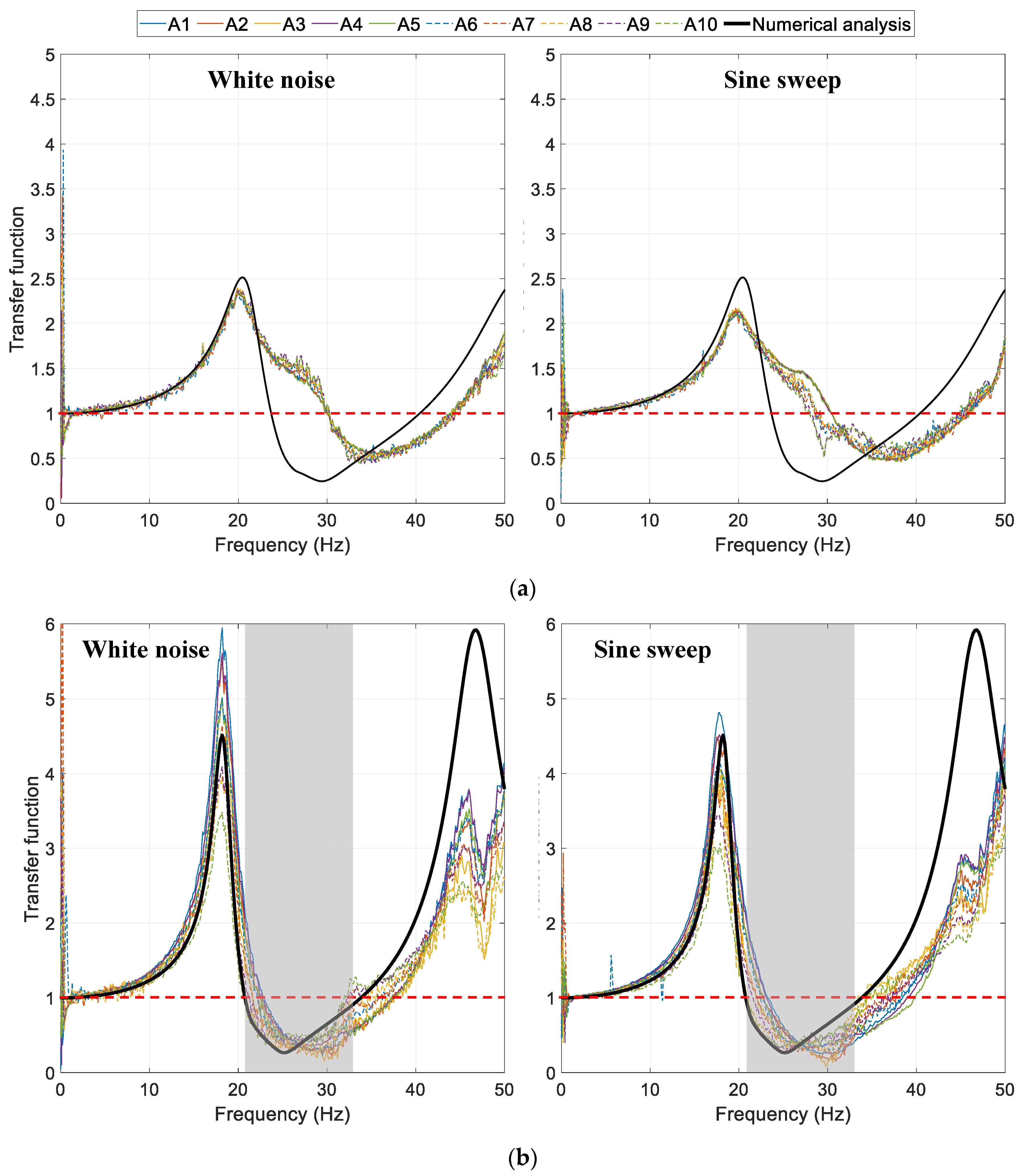
The dynamic characteristics of the small-scale metafoundation system without a superstructure are examined first. Figure 12 presents the transfer functions of the acceleration responses obtained from the white noise and sine sweep tests with a peak acceleration of 0.05 g. For comparison, the transfer functions calculated from finite-element analyses using COMSOL Multiphysics [24] are also shown. In the numerical model, the entire metafoundation system mounted on the steel frame is represented using finite elements, with the material properties listed in Table 1. The contacts between the metafoundation and the clamping bolts of the steel frame, which are covered with rubber, are modeled using elastic layers with a Young’s modulus of 2 MPa, a damping ratio of 50%, and a thickness of 5.4 mm. In addition, the contacts between the bottom of the metafoundation and the steel frame at the four corners are approximated using elastic layers with a Young’s modulus of 0.1 MPa, a damping ratio of 50%, and a thickness of 0.1 mm. They were calibrated to match the transfer functions from the numerical simulation with those from the shaking table tests as closely as possible.
As shown in Figure 12b, the experimental transfer functions for vertical excitations exhibit very good agreement with the numerical results. In contrast, for horizontal excitations (Figure 12a), discrepancies are observed between the experimental and numerical transfer functions, particularly in the attenuation zones where the transfer function magnitude is less than unity. These differences are attributed primarily to imperfect contact conditions between the metafoundation and the steel frame in the horizontal directions. Nevertheless, the overall trends of the experimental and numerical results remain consistent.
The FBG of the small-scale metamaterial, which ranges from 20.82 to 33.01 Hz as listed in Table 3, is indicated by the shaded regions in Figure 12b. The experimentally observed attenuation zone, spanning approximately 23 to 33 Hz, closely corresponds to the predicted FBG. For vertical excitations, the steel frame can be assumed to behave rigidly up to 50 Hz and the metafoundation can be considered a plate-like structure. Consequently, dominant bending behavior is induced, enabling the FBG of the metamaterial to be clearly realized in small-scale experiments. In contrast, the attenuation zones observed for horizontal excitations, extending from approximately 30 to 44 Hz (Figure 12a), are influenced by the flexibility of the steel frame and the limited number of layers in the vertical direction. While FBGs are dynamic properties of an idealized infinite periodic model of a single unit cell, attenuation zones are properties of a structural system incorporating a metamaterial. Therefore, attenuation zones may differ from ideal FBGs, as can be seen in Figure 12a, which shows the attenuation zones from dynamic tests. Similar discrepancies can also be seen in Figure 7b, which shows the attenuation zones from numerical models. Consequently, attenuation zones identified from dynamic tests or numerical models are more suitable for evaluating the dynamic performance of a structural system incorporating a metamaterial.
The transfer functions for horizontal responses show nearly uniform amplitudes at different measurement locations for each frequency. In addition, cross-directional responses, such as x-directional responses to y-directional excitations and vertical responses to horizontal excitations, are negligible and are therefore not presented. These observations indicate that, for horizontal excitations, the dynamic behavior of the metafoundation system with few layers resembles that of a tuned mass damper.
It is also noted that amplification occurs at frequencies below the attenuation zones, as shown in Figure 12. Such amplification is a well-known characteristic of structural systems equipped with tuned mass dampers or base isolation systems and does not necessarily indicate degraded overall performance [25].
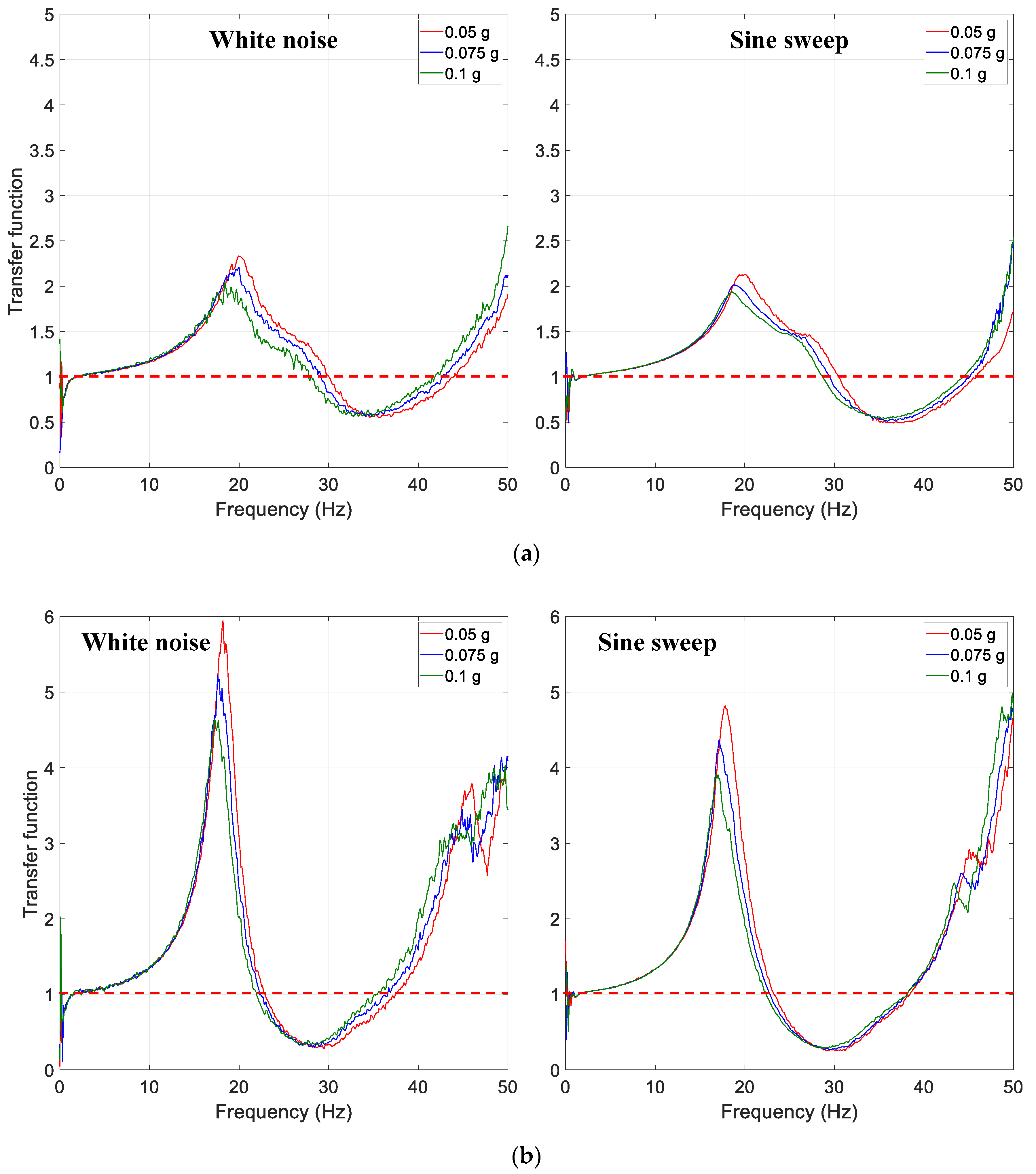
Figure 13 presents the experimental transfer functions obtained from accelerometer A1 for peak accelerations of 0.05 g, 0.075 g, and 0.1 g. The results indicate that the transfer functions exhibit a dependence on the input amplitude. As shown in Figure 3, the EPDM rubber foam exhibits nonlinear stress–strain behavior, with the effective elastic modulus decreasing as the strain level increases. Consequently, as the peak acceleration increases, the resonance frequencies shift slightly toward lower values. Despite this nonlinearity, the attenuation zones, defined as frequency ranges in which the transfer function magnitude is less than unity, remain largely unaffected.
Overall, the shaking table tests conducted on the metafoundation-only system demonstrate that the small-scale metafoundation can effectively reduce vibration responses within specific frequency ranges governed by the dynamic properties of the system. In particular, for vertical excitations, the attenuation zones observed in the experiments coincide well with the FBGs predicted for the metamaterial. For horizontal excitations, the attenuation characteristics can be modified through changes in the structural configuration of the metafoundation system. The attenuation mechanism observed in the present experimental study should be interpreted in terms of both the idealized unit cell behavior and the experimental assembly with a finite size. At the unit cell level, the predicted band gaps are associated with local-resonance-induced band gaps in the dispersion curves. In the small-scale fabricated system, the vertical attenuation zone agrees well with the predicted band gap; however, the horizontal attenuation behavior is affected by the flexibility of the supporting frame, contact conditions, and the limited number of layers. Therefore, it can be concluded from the experimental observations that the metafoundation can perform as a vibration isolation system, the attenuation characteristics of which are influenced by both metamaterial band gap behavior and structural interaction effects.

4.2. System of the Metafoundation with a Structure

The dynamic behavior of the metafoundation system with an installed superstructure was investigated using horizontal white noise and sine sweep input motions. For comparison, identical tests were also conducted on the structure mounted directly on the shaking table. Owing to minor fabrication imperfections, the structural model is not perfectly symmetric in the x- and y-directions. As a result, unidirectional horizontal input motions induce coupled translational and torsional responses. Accordingly, the measured acceleration responses at the first floor were decomposed into translational and torsional components for analysis. The translational component is presented below since the torsional component is much smaller than the translational one.
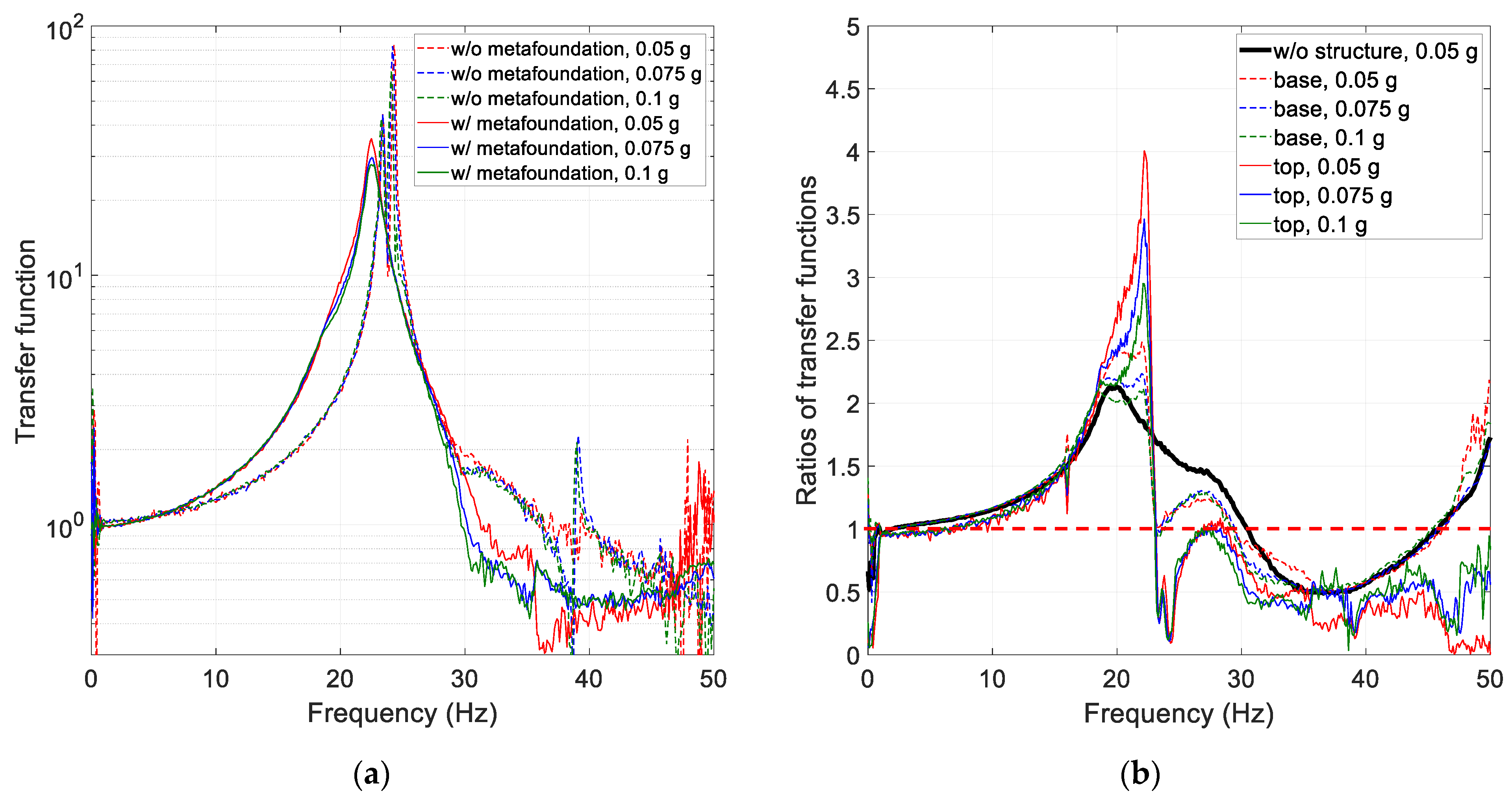
Figure 14a compares the transfer functions of the translational responses at the first floor of the structure with and without the metafoundation subjected to x-directional sine sweep inputs. For the structure mounted directly on the shaking table, two dominant peaks can be observed at approximately 24.5 Hz and 23.5 Hz, corresponding to the fundamental translational modes in the x- and y-directions, respectively. An additional peak at approximately 39.2 Hz is associated with a torsional mode. When the structure was installed on the metafoundation, the dominant peaks shifted to lower frequencies—approximately 22.3 Hz for x-directional excitation and 20.8 Hz for y-directional excitation—reflecting the influence of the flexible foundation on the coupled system. A clear reduction in the structural response can be observed in the frequency range of 30 to 44 Hz when the structure is supported by the metafoundation. This frequency range corresponds closely to the attenuation zone identified for horizontal excitations in the metafoundation-only tests (Figure 12a).
To quantify the vibration reduction effect, the ratios of the dynamic responses of the structure with the metafoundation to those of the structure without the metafoundation are shown in Figure 14b. The ratios of the translational motions at the base and first floor are considered in the figure. Figure 14b also shows the transfer functions of the bare metafoundation without the structure in Figure 12a. The ratios of the base motions coincide with the transfer functions of the bare metafoundation for most frequencies, except near the coupled natural frequencies of the structural system, where the effects of the interactions between the flexible foundation and the structure become significant. The response amplification at the top may occur at frequencies below the attenuation zone due to resonance in the coupled system. For instance, the amplification for the 0.05 g case can be seen at 22.2 Hz in Figure 14b. At this frequency, the transfer functions in Figure 14a have values of 30.64 and 7.59 for the cases with and without metafoundation, respectively. This results in a ratio of 4.04. However, it should be noted that this amplification ratio only indicates an increase in motion at the specific frequency, and the peak values in the transfer functions are observed to be reduced in Figure 14b. For the 0.05 g case, the transfer functions have peak values of 35.27 and 83.04 at 22.5 and 24.2 Hz, respectively, for the cases with and without metafoundation. This results in a reduction in the peak value of 83.04/35.27 = 2.35. In addition, the ratios of the translational responses at the first floor closely follow the transfer functions of the metafoundation within the attenuation zone from 30 to 44 Hz in spite of the amplifications in the ratios of transfer functions. These results demonstrate that the metafoundation effectively reduces structural vibrations induced by horizontal excitations, especially within the attenuation frequency range. As is shown in Table 5, combining the structural vibrations at all frequencies results in a reduction in the system’s dynamic responses in the time domain, despite the amplifications shown in Figure 14b.
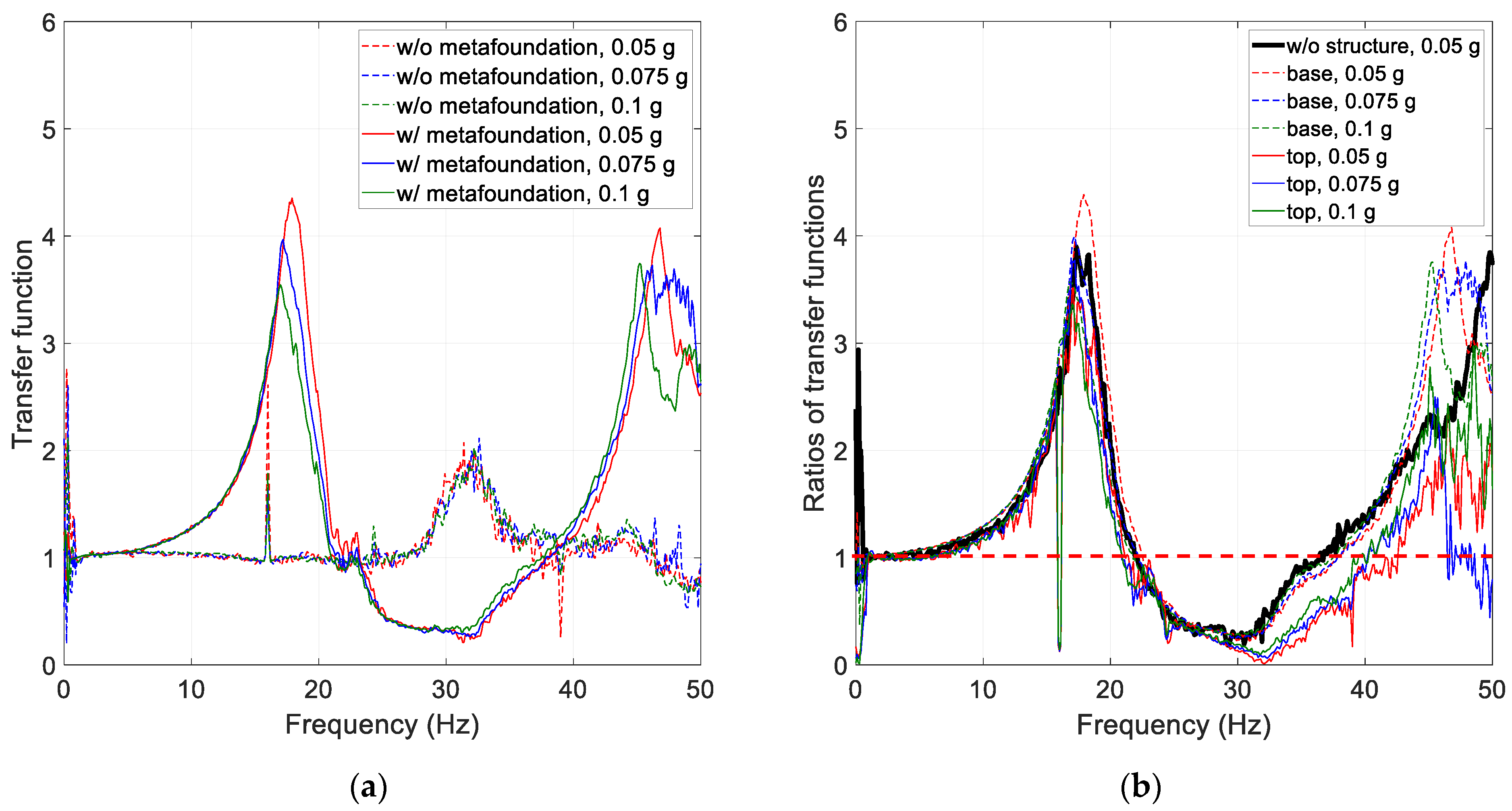
The vertical dynamic characteristics of the structural system were examined using vertical sine sweep input motions. Figure 15a shows the corresponding transfer functions of the vertical responses at the first floor. Because the superstructure behaves nearly rigidly in the vertical direction, the transfer functions closely resemble those obtained for the metafoundation-only system (Figure 12b). A clear reduction in vertical response is observed within the attenuation zone of 23 to 33 Hz. The ratios of the vertical responses at the base and first floor are also shown in Figure 15b; they are nearly identical to the transfer functions of the bare metafoundation across the entire frequency range, confirming the effectiveness of the metafoundation in mitigating vertical vibration responses.
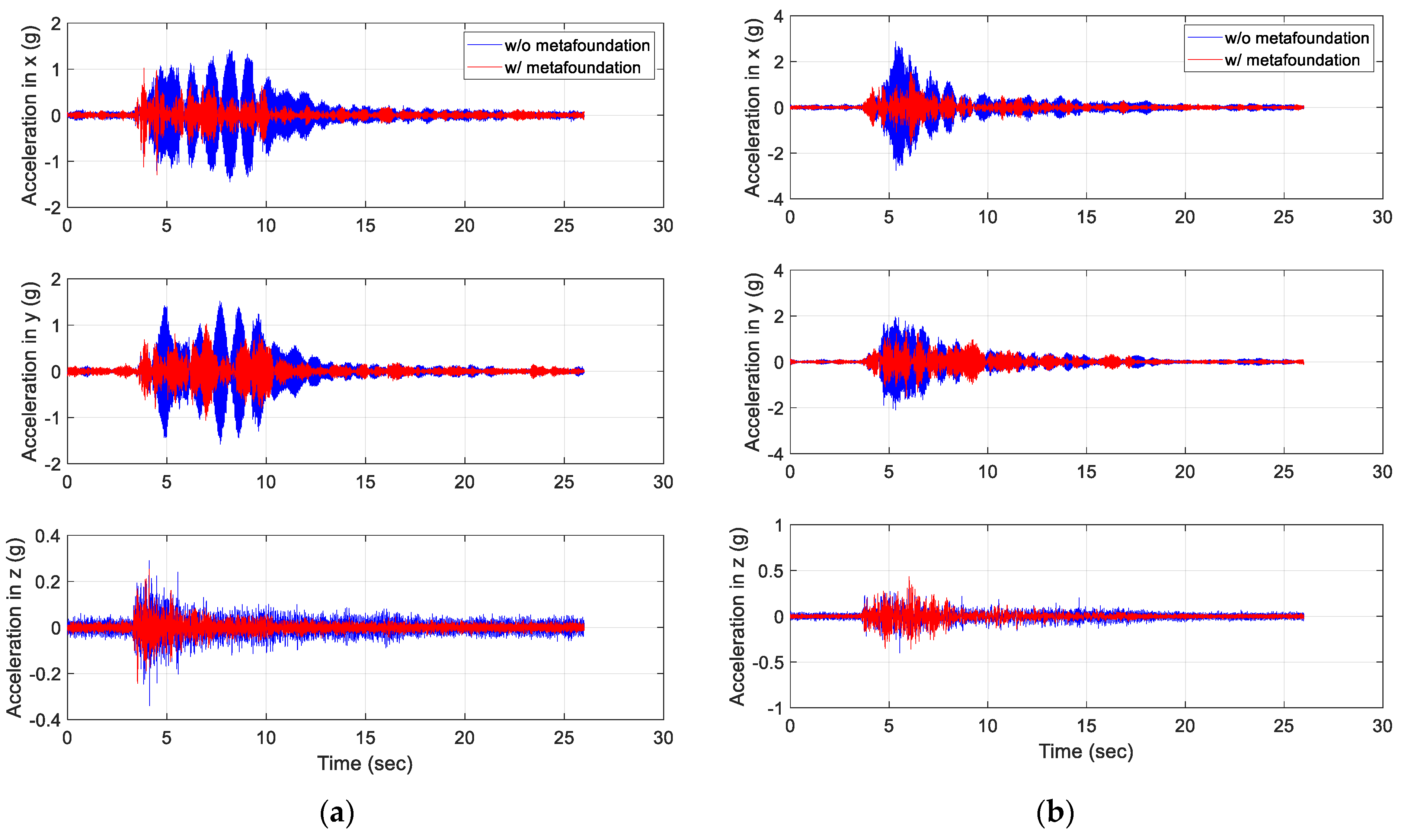
The performance of the metafoundation under seismic excitation was further evaluated using the El Centro and Taft earthquake ground motions. Figure 16 presents representative acceleration time histories at the first floor for the SF_EC.005_XYZ_0.3 and SF_TF.005_XYZ_0.3 test cases. The percentage changes in root-mean-square (RMS) and peak acceleration responses for all test cases are summarized in Table 5. In general, the installation of the metafoundation leads to substantial reductions in both RMS and peak responses. For example, in the SF_EC.005_XYZ_0.3 case, the RMS acceleration responses in the x-, y-, and z-directions are reduced by 54.3%, 42.2%, and 33.7%, respectively, while the corresponding peak responses are reduced by 10.7%, 32.6%, and 25.6%. Averaged over all test cases, the RMS responses are reduced by 33.5%, 24.4%, and 31.1% in the x-, y-, and z-directions, respectively, and the peak responses are reduced by 20.7%, 18.3%, and 6.6%. Although the peak responses were amplified in several tests, it should be noted that the RMS responses are reduced even in these cases. These observations reflect the fact that the metafoundation system can effectively reduce the overall level of vibration even though there can be instant amplification of vibration over a short period of time.
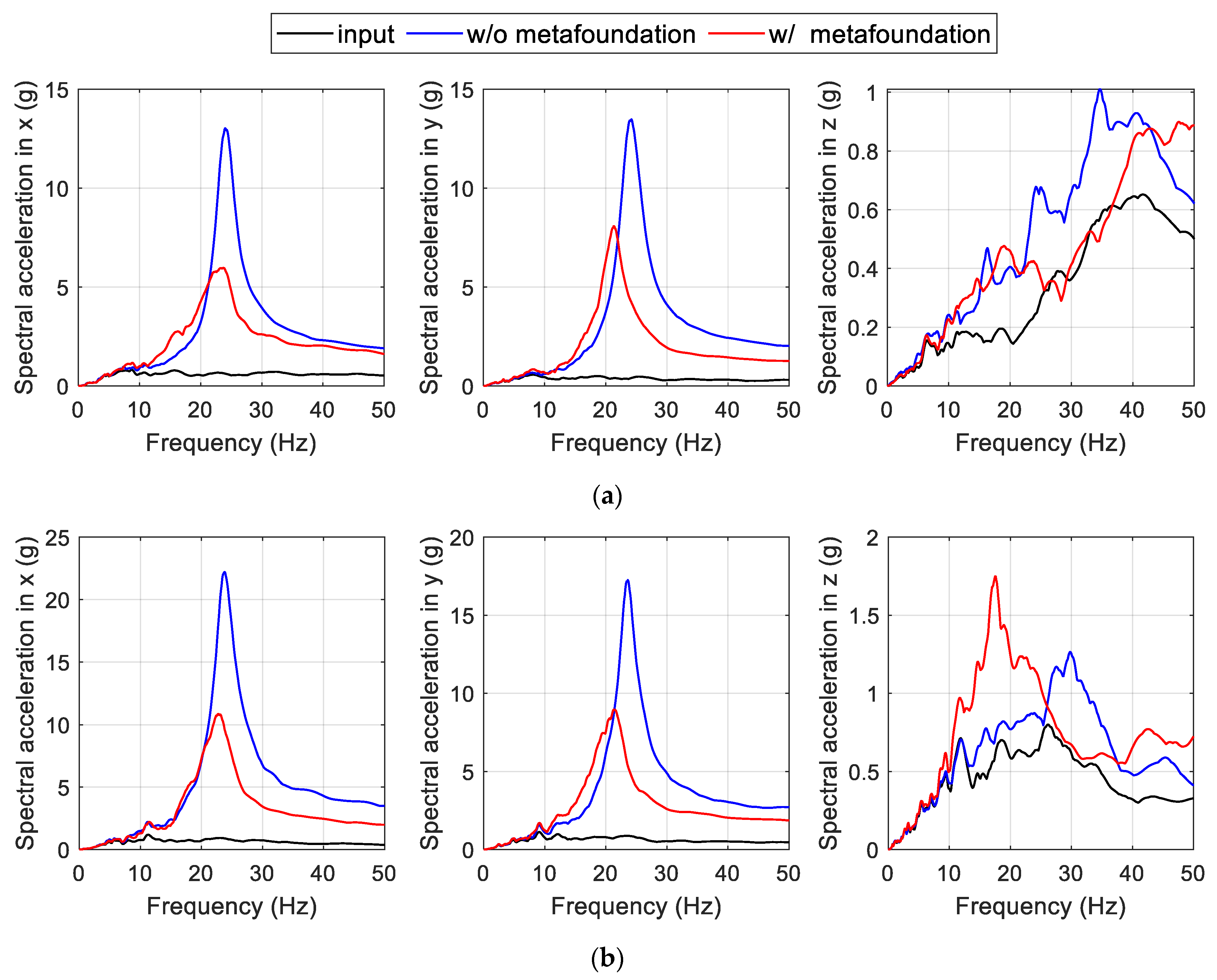
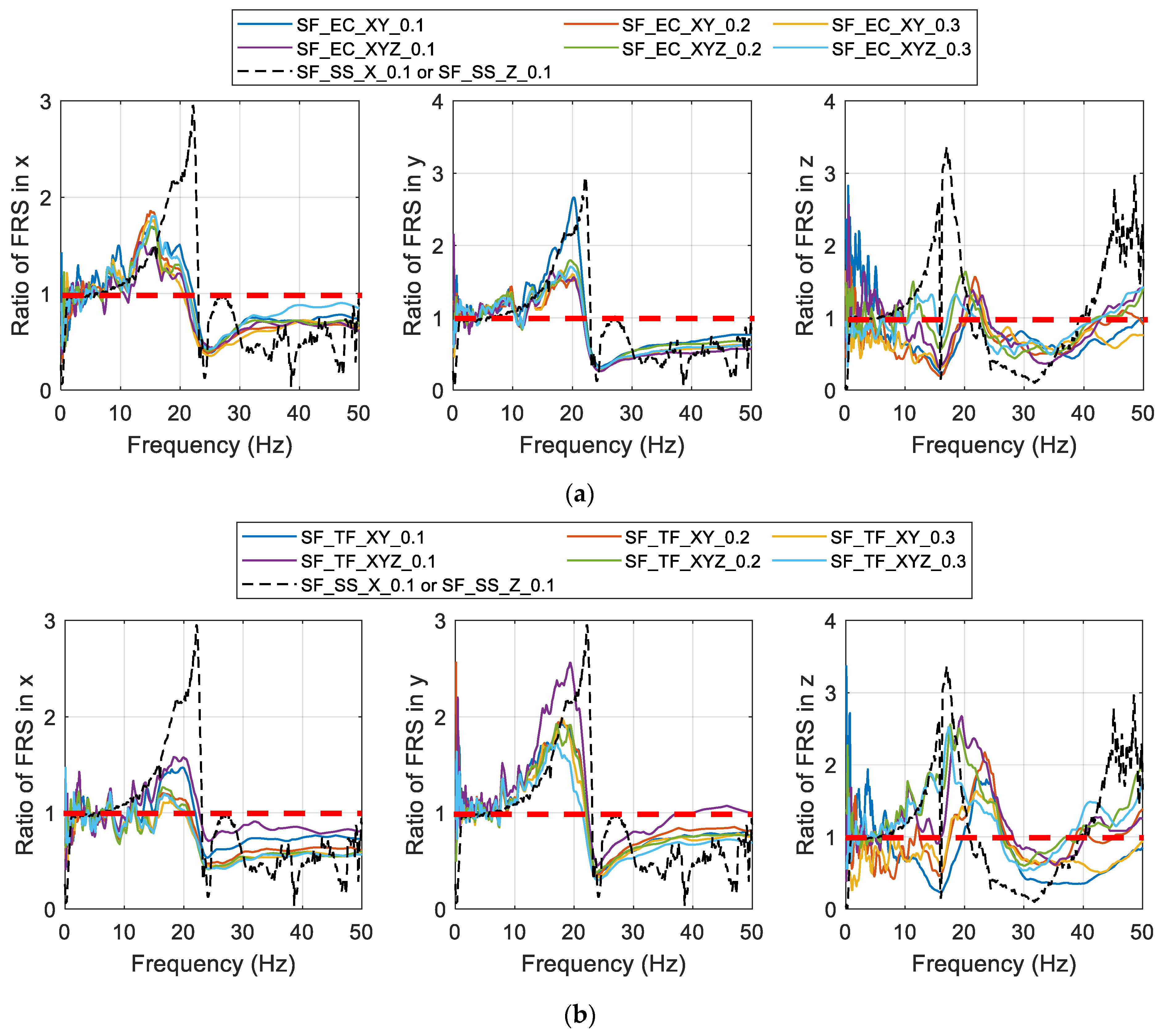
To further assess the vibration reduction performance, floor response spectra (FRS) are computed using the measured floor accelerations as input motions. The FRS are calculated as spectral acceleration responses of single-degree-of-freedom systems with varying natural frequencies and a damping ratio of 5%. Figure 17 compares the FRS of the structures with and without the metafoundation for the SF_EC.005_XYZ_0.3 and SF_TF.005_XYZ_0.3 test cases, along with the response spectra of the input ground motions. The presence of the metafoundation significantly alters the FRS, leading to noticeable reductions in spectral accelerations within the attenuation zones identified in the transfer function analyses. The percentage changes in the peak values of the FRS in the horizontal directions are summarized in Table 6. For most test cases, the peak spectral accelerations are reduced, with average reductions of 35.8% and 29.3% in the x- and y-directions, respectively. Figure 18 presents the ratios of the FRS obtained by dividing the spectra of the system with the metafoundation by those of the system without the metafoundation. The ratios of the transfer functions in Figure 14b and Figure 15b are shown together. The FRS ratios exhibit trends similar to those observed in the transfer function ratios in Figure 14b and Figure 15b, with pronounced reductions within the attenuation zones. Although the FRS ratios may exceed unity at frequencies below the attenuation zones, these amplifications are associated with resonance of the coupled system. The amplifications do not indicate an increase in the overall structural response, as evidenced by the reduced RMS and peak accelerations, but rather an increase in motion at a specific frequency. As discussed above, the metafoundation can obviously reduce not only FRS but also the structural responses in the time domain.

5. Conclusions

Recent studies have demonstrated the versatility and effectiveness of buried mass-resonator systems, including metafoundations, in mitigating vibrations induced by seismic waves in a variety of structural systems. In this study, a series of shaking table tests was performed on a small-scale metafoundation system to experimentally evaluate its ability to reduce vibrations in a structural system subjected to seismic excitation. The small-scale metafoundation was fabricated using acrylic plastic and EPDM rubber foam, and its dynamic behavior was investigated through white noise and sine sweep tests. The attenuation zones identified from the experiments were validated through comparison with the FBGs of the metamaterial obtained from numerical simulations. Subsequently, a simple small-scale structure was installed on the metafoundation, and its dynamic characteristics were examined. The results showed that a metafoundation can effectively reduce the earthquake response of a supported structure at the desired frequencies within the attenuation zones of the considered structural system.
In this study, we investigated the ability of a metafoundation system with its four corners constrained by a steel frame to reduce the structural vibrations induced by seismic waves. The results indicate that this configuration effectively promotes flexible deformation of the plate-like metafoundation system and enable the realization of attenuation behavior associated with the metamaterial. The proposed concept can be extended to other structural applications. For example, the metafoundation may be adapted to form a metafloor system to provide vibration isolation for sensitive equipment in nuclear facilities. By partially replacing conventional floors with metablocks designed to achieve a target FBG, seismic vibrations transmitted to equipment can be reduced as shown in Figure 17 and Figure 18, thereby improving the seismic safety of such facilities. In addition, the metafloor concept is expected to mitigate impact-induced vibrations and inter-story noise in residential buildings.
This study focuses on the dynamic feasibility and experimental validation of the metafoundation concept. The following issues should be considered in future studies:
  • As discussed in Section 2, the properties and dimensions of the unit cell considered in this study were not optimally selected. Further studies are therefore required to determine optimal design parameters through multi-objective optimization that simultaneously considers the desired FBG and construction cost. Such optimization is expected to lead to more efficient and economical metamaterial-based foundation systems.
  • In the present experiments, a simple superstructure with a single dominant natural frequency was installed on the metafoundation. The results presented in Section 4.2 indicate that the vibration reduction achieved by the metafoundation depends on the dynamic interaction between the structure and the flexible foundation. Accordingly, future studies should consider structures with varying natural frequencies and mass properties. In particular, it is important to investigate cases in which the fixed-base natural frequency of the structure lies within the attenuation zone of the metafoundation, in order to more clearly elucidate the vibration reduction mechanisms.
  • Although the metafoundation system considered in this study was constrained at its four corners using a steel frame to avoid a fully fixed base condition and to promote flexible deformation, real structures are typically founded on deformable soil. Previous studies have shown that soil flexibility can significantly influence the effectiveness of vibration mitigation provided by metamaterial-based foundations [17]. Therefore, future experimental investigations should incorporate soil-structure interaction effects, for example, by employing a soil box, to more realistically assess the performance of metafoundations under seismic loading.
  • Several devices can be used to restrict large displacement responses in a structural system. Fluid viscous and viscoelastic dampers, metallic yielding dampers, and friction dampers are typical examples of such devices [25], and can be used alongside the proposed metafoundation. Therefore, future studies should examine the combined application of these two systems.
  • In the meta-block discussed in this study, rubber is employed as a connector between the cover and core of the unit cell. It should be noted that rubber’s long-term behavior can differ significantly from that assumed at the design stage. To apply the proposed meta-block to a real structural system, the long-term performance of the rubber must be evaluated.
  • This study considered a small-scale model with a length scaling factor of S L = 0.144. Scale effects are inevitable if inelastic behavior and long-term performance in materials are considered. To prevent scale effects in dynamic tests, a full-scale structural model should be considered.
  • Issues relating to static load-carrying performance and serviceability, such as bearing capacity and settlement, are beyond the scope of the present work and should be addressed in future studies.

Author Contributions

Conceptualization, J.H.L.; methodology, J.H.L., A.M.N.N., D.-U.P. and B.-G.J.; software, J.H.L. and A.M.N.N.; validation, J.H.L. and A.M.N.N.; formal analysis, J.H.L. and A.M.N.N.; investigation J.H.L. and A.M.N.N.; resources, J.H.L., D.-U.P. and B.-G.J.; data curation, J.H.L.; writing—original draft preparation, J.H.L.; writing—review and editing, A.M.N.N., J.-R.C., S.L., H.Y., D.-U.P. and B.-G.J.; visualization, J.H.L. and A.M.N.N.; supervision, J.-R.C.; project administration, J.-R.C., S.L. and H.Y.; funding acquisition, J.-R.C. All authors have read and agreed to the published version of the manuscript.

Funding

Research for this paper was conducted under the KICT Strategic Research Program (SRP)(project no. 20260227, Development of Construction Technologies for Safe and Convenient Underground Roads (K-SCOUR)) funded by the Ministry of Science and ICT.

Institutional Review Board Statement

Not applicable.

Informed Consent Statement

Not applicable.

Data Availability Statement

The original contributions presented in the study are included in the article, further inquiries can be directed to the corresponding author.

Conflicts of Interest

The authors declare no conflicts of interest.

Abbreviations

The following abbreviations are used in this manuscript:
ECEl Centro earthquake
EPDMEthylene propylene diene monomer
FBGFrequency band gap
FRSFloor response spectra
MFMetafoundation without a superstructure
RMSRoot-mean-square
SFMetafoundation with a superstructure
SSSine sweep
TFTaft earthquake
WNWhite noise

References

  1. Kadic, M.; Milton, G.W.; Van Hecke, M.; Wegener, M. 3D metamaterials. Nat. Rev. Phys. 2019, 1, 198–210. [Google Scholar] [CrossRef]
  2. Kadic, M.; Bückmann, T.; Schittny, R.; Wegener, M. Metamaterials beyond electromagnetism. Rep. Prog. Phys. 2013, 76, 126501. [Google Scholar] [CrossRef] [PubMed]
  3. Brûlé, S.; Enoch, S.; Guenneau, S. Emergence of seismic metamaterials: Current state and future perspectives. Phys. Lett. A 2020, 384, 126034. [Google Scholar] [CrossRef]
  4. Ungureanu, B.; Achaoui, Y.; Enoch, S.; Brûlé, S.; Guenneau, S. Auxetic-like metamaterials as novel earthquake protections. EPJ Appl. Metamater. 2015, 2, 17. [Google Scholar] [CrossRef]
  5. Colombi, A.; Colquitt, D.; Roux, P.; Guenneau, S.; Craster, R.V. A seismic metamaterial: The resonant metawedge. Sci. Rep. 2016, 6, 27717. [Google Scholar] [CrossRef] [PubMed]
  6. Nguyen, D.-T.; Lee, J.H. Dynamic Analysis of a Periodic Soil-Structure Interaction System to Reduce Ground Vibration. Earthq. Eng. Struct. Dyn. 2025, 54, 1270–1288. [Google Scholar] [CrossRef]
  7. Krödel, S.; Thomé, N.; Daraio, C. Wide band-gap seismic metastructures. Extrem. Mech. Lett. 2015, 4, 111–117. [Google Scholar] [CrossRef]
  8. Dertimanis, V.K.; Antoniadis, I.A.; Chatzi, E.N. Feasibility Analysis on the Attenuation of Strong Ground Motions Using Finite Periodic Lattices of Mass-in-Mass Barriers. J. Eng. Mech. 2016, 142, 04016060. [Google Scholar] [CrossRef]
  9. Li, Z.; Ma, M.; Liu, K.; Jiang, B. Performance of rubber-concrete composite periodic barriers applied in attenuating ground vibrations induced by metro trains. Eng. Struct. 2023, 285, 116027. [Google Scholar] [CrossRef]
  10. Achaoui, Y.; Ungureanu, B.; Enoch, S.; Brûlé, S.; Guenneau, S. Seismic waves damping with arrays of inertial resonators. Extrem. Mech. Lett. 2016, 8, 30–37. [Google Scholar] [CrossRef]
  11. Palermo, A.; Krödel, S.; Marzani, A.; Daraio, C. Engineered metabarrier as shield from seismic surface waves. Sci. Rep. 2016, 6, 39356. [Google Scholar] [CrossRef] [PubMed]
  12. Palermo, A.; Vitali, M.; Marzani, A. Metabarriers with multi-mass locally resonating units for broad band Rayleigh waves attenuation. Soil Dyn. Earthq. Eng. 2018, 113, 265–277. [Google Scholar] [CrossRef]
  13. Muhammad; Lim, C.W.; Żur, K.K. Wide Rayleigh waves bandgap engineered metabarriers for ground born vibration attenuation. Eng. Struct. 2021, 246, 113019. [Google Scholar] [CrossRef]
  14. Shi, Z.; Huang, J. Feasibility of reducing three-dimensional wave energy by introducing periodic foundations. Soil Dyn. Earthq. Eng. 2013, 50, 204–212. [Google Scholar] [CrossRef]
  15. La Salandra, V.; Wenzel, M.; Bursi, O.S.; Carta, G.; Movchan, A.B. Conception of a 3D Metamaterial-Based Foundation for Static and Seismic Protection of Fuel Storage Tanks. Front. Mater. 2017, 4, 30. [Google Scholar] [CrossRef]
  16. Basone, F.; Wenzel, M.; Bursi, O.S.; Fossetti, M. Finite locally resonant Metafoundations for the seismic protection of fuel storage tanks. Earthq. Eng. Struct. Dyn. 2019, 48, 232–252. [Google Scholar] [CrossRef]
  17. Colombi, A.; Zaccherini, R.; Aguzzi, G.; Palermo, A.; Chatzi, E. Mitigation of seismic waves: Metabarriers and metafoundations bench tested. J. Sound Vib. 2020, 485, 115537. [Google Scholar] [CrossRef]
  18. Zheng, H.; Miao, L.; Xiao, P.; Lei, K.; Wang, Q. Novel metamaterial foundation with multi low-frequency bandgaps for isolating earthquakes and train vibrations. Structures 2024, 61, 106070. [Google Scholar] [CrossRef]
  19. Huang, H.W.; Zhang, B.; Wang, J.; Menq, F.-Y.; Nakshatrala, K.B.; Mo, Y.; Stokoe, K. Experimental study on wave isolation performance of periodic barriers. Soil Dyn. Earthq. Eng. 2021, 144, 106602. [Google Scholar] [CrossRef]
  20. Hsieh, H.H.; Yang, C.F.; Wu, T.Y.; Wang, S.J.; Chang, K.C. Experimental Study on a Subwavelength Auxetic Pile-Type Metamaterial for Seismic Wave Attenuation. Earthq. Eng. Struct. Dyn. 2025, 54, 2586–2600. [Google Scholar] [CrossRef]
  21. Wang, G.; Wang, C.; Liang, C.; Chen, Z.; Lim, C.; Shi, Z. Subwavelength partial-embedded seismic metamaterial with wide working frequency: Numerical simulation and experiment. Eng. Struct. 2025, 332, 120093. [Google Scholar] [CrossRef]
  22. Witarto, W.; Wang, S.; Yang, C.; Nie, X.; Mo, Y.; Chang, K.; Tang, Y.; Kassawara, R. Seismic isolation of small modular reactors using metamaterials. AIP Adv. 2018, 8, 045307. [Google Scholar] [CrossRef]
  23. Huang, J.-K.; Chen, R.; Zhang, Z.-W.; Liu, G.-C.; Borjigin, S.; Scarpa, F. Seismic metamaterials as foundations for buildings subjected to incident plane and bending waves: Simulation and experiment. Eng. Struct. 2025, 343, 121187. [Google Scholar] [CrossRef]
  24. COMSOL Multiphysics® Reference Manual, version 6.3; COMSOL AB: Stockholm, Sweden, 2024.
  25. Chopra, A.K. Dynamics of structures: Theory and Applications to Earthquake Engineering, 5th ed.; Pearson: Boston, MA, USA, 2017. [Google Scholar]
Figure 1. Unit cell of the metafoundation: (a) schematic view; (b) sectional view.
Applsci 16 06513 g001
Figure 2. Dispersion curves for the prototype and the small-scale model of the unit cell with the core M1: (a) prototype; (b) small-scale model.
Applsci 16 06513 g002
Figure 3. Stress–strain curves for the EPDM rubber foam.
Applsci 16 06513 g003
Figure 4. Layout of the cores in the small-scale metafoundation with 10 × 10 unit cells.
Applsci 16 06513 g004
Figure 5. Bulkheads and matrix for the small-scale unit cells: (a) bulkheads; (b) matrix.
Applsci 16 06513 g005
Figure 6. Four types of cores with rubber pads for the small-scale unit cell: (a) core M1; (b) core M2; (c) core M3; (d) core M4.
Applsci 16 06513 g006
Figure 7. Steel frame to constrain the four corners of the small-scale metafoundation: (a) top and front views; (b) transfer functions of the metafoundation with various conditions.
Applsci 16 06513 g007
Figure 8. Superstructure: (a) top view; (b) front view.
Applsci 16 06513 g008
Figure 9. Small-scale model of the metafoundation: (a) metafoundation only; (b) metafoundation with a superstructure.
Applsci 16 06513 g009aApplsci 16 06513 g009b
Figure 10. Time histories and response spectra of input signals with a peak acceleration of 1 g: (a) El Centro earthquake ground motion; (b) Taft earthquake ground motion.
Applsci 16 06513 g010
Figure 11. Instrumentation on the metafoundation.
Applsci 16 06513 g011
Figure 12. Transfer functions of the MF cases to the WN and SS input motions: (a) ‘MF_WN_X_0.05’ and ‘MF_SS_X_0.05’ tests; (b) MF_WN_Z_0.05’ and ‘MF_SS_Z_0.05’ tests.
Applsci 16 06513 g012
Figure 13. Transfer functions of the acceleration responses of the accelerometer A1 in the MF cases to the WN and SS input motions: (a) transfer functions to the horizontal inputs in the x direction; (b) transfer functions to the vertical inputs.
Applsci 16 06513 g013
Figure 14. Transfer functions and their ratios of the SF cases to the x-directional SS input motions: (a) transfer functions; (b) corresponding ratios.
Applsci 16 06513 g014
Figure 15. Transfer functions and their ratios of the SF cases to the vertical sine sweep input motions: (a) transfer functions; (b) corresponding ratios.
Applsci 16 06513 g015
Figure 16. Dynamic responses to the El Centro and Taft earthquake ground motions: (a) ‘SF_EC.005_XYZ_0.3’ test; (b) ‘SF_TF.005_XYZ_0.3’ test.
Applsci 16 06513 g016
Figure 17. Floor response spectra by the El Centro and Taft earthquake ground motions: (a) ‘SF_EC.005_XYZ_0.3’ test; (b) ‘SF_TF.005_XYZ_0.3’ test.
Applsci 16 06513 g017
Figure 18. Ratios of the floor response spectra by the El Centro and Taft earthquake ground motions: (a) ‘SF_EC.005_XYZ_0.3’ test; (b) ‘SF_TF.005_XYZ_0.3’ test.
Applsci 16 06513 g018
Table 1. Material properties of the prototype and small-scale model of the unit cell.
Material PropertyPrototypeSmall-Scale Model
Concrete (prototype) or
acrylic plastic (model)
Young’s modulus30 GPa2.94 GPa
Poisson’s ratio0.250.37
DensityCover2400 kg/m31180 kg/m3
CoreM1: 1845 kg/m3M1: 908 kg/m3
M2: 2030 kg/m3M2: 983 kg/m3
M3: 2200 kg/m3M3: 1073 kg/m3
M4: 2400 kg/m3M4: 1180 kg/m3
RubberYoung’s modulus2 MPa0.199 MPa
Poisson’s ratio0.490.49
Density1000 kg/m3130 kg/m3
Table 2. Dimensions of the prototype and small-scale model of the unit cell.
DimensionPrototypeSmall-Scale Model
a c o v e r 1.4 m0.2 m
t c o v e r 0.07 m0.01 m
a c o r e 1 m0.14 m
a r u b b e r 0.25 m0.035 m
t r u b b e r 0.13 m0.02 m
Table 3. Frequency band gaps of the prototype and the small-scale model of the unit cell.
Core TypePrototypeSmall-Scale Model
M17.77–11.02 Hz23.73–33.01 Hz
M27.41–10.77 Hz22.81–32.37 Hz
M37.12–10.58 Hz21.83–31.70 Hz
M46.82–10.38 Hz20.82–31.03 Hz
Table 4. List of tests.
CaseInput Signal and Time IntervalDirection or ComponentPeak Acceleration
Metafoundation only (MF)White noise (WN)Horizontal X0.05 g
Horizontal Y0.075 g
Vertical0.1 g
Sine sweep (SS)Horizontal X0.05 g
Horizontal Y0.075 g
Vertical0.1 g
Metafoundation with a superstructure (SF)White noise (WN)Horizontal X0.05 g
Horizontal Y0.075 g
Vertical0.1 g
Sine sweep (SS)Horizontal X0.05 g
Horizontal Y0.075 g
Vertical0.1 g
El Centro earthquake ground motionBi-directional X and Y
Tri-directional X, Y, and Z
0.1 g
0.2 g
0.3 g
0.02 s (EC.02)
0.01 s (EC.01)
0.005 s (EC.005)
Taft earthquake ground motionBi-directional X and Y
Tri-directional X, Y, and Z
0.1 g
0.2 g
0.3 g
0.02 s (TF.02)
0.01 s (TF.01)
0.005 s (TF.005)
Table 5. Rates of change in the dynamic responses due to the earthquake ground motions (unit: %).
Test NameRoot-Mean-Square ValuePeak Value
x
Direction
y
Direction
z
Direction
x
Direction
y
Direction
z
Direction
SF_EC.02_XY_0.1−23.5−33.8-−20.8−40.2-
SF_EC.02_XY_0.2−31.6−39.7-−20.9−43.9-
SF_EC.02_XY_0.3−29.5−29.7-−17.3−21.2-
SF_EC.02_XYZ_0.1−23.9−8.2−39.15.03.4−27.9
SF_EC.02_XYZ_0.2−32.6−33.8−34.7−25.2−52.9−6.5
SF_EC.01_XY_0.1−10.8−10.1-24.521.0-
SF_EC.01_XY_0.2−2.8−7.9-16.930.1-
SF_EC.01_XY_0.3−20.5−22.3-−6.1−7.0-
SF_EC.01_XYZ_0.1−3.53.7−40.717.38.6−36.2
SF_EC.01_XYZ_0.2−13.1−1.12−22.5−6.522.424.6
SF_EC.01_XYZ_0.3−18.1−19.3−11.319.6−1.815.1
SF_EC.005_XY_0.1−38.9−22.4-−24.7−16.0-
SF_EC.005_XY_0.2−53.4−37.9-−24.9−34.6-
SF_EC.005_XY_0.3−60.8−43.8-−28.2−34.1-
SF_EC.005_XYZ_0.1−48.2−37.9−46−25.6−38.5−28.3
SF_EC.005_XYZ_0.2−53.8−39.9−40.8−24.7−28.3−20.0
SF_EC.005_XYZ_0.3−54.3−42.2−33.7−10.7−32.6−25.6
SF_TF.02_XY_0.1−31−41-−31.1−36.8-
SF_TF.02_XY_0.2−23.4−24.4-−34.7−41.1-
SF_TF.02_XY_0.3−38.5−33.1-−46.4−28.5-
SF_TF.02_XYZ_0.1−22.8−21.5−44.77.2−19.2−33.5
SF_TF.02_XYZ_0.2−33.4−30.3−39.9−32.6−36.0−48.1
SF_TF.02_XYZ_0.3−36.8−5.9−37.1−37.8−25.0−38.7
SF_TF.01_XY_0.1−30.7−16.6-−21.5−17.3-
SF_TF.01_XY_0.2−39.3−27.5-−36.6−28.0-
SF_TF.01_XY_0.3−37.6−15.9-−44.5−23.4-
SF_TF.01_XYZ_0.1−35.2−29.6−35.8−43.0−23.4−15.8
SF_TF.01_XYZ_0.2−32.8−27.5−21.4−32.1−25.9−17.7
SF_TF.01_XYZ_0.3−35.3−19.6−13.3−40.9−15.7−4.2
SF_TF.005_XY_0.1−33.6−16.3-−15.5−11.9-
SF_TF.005_XY_0.2−49.8−27-−34.1−6.2-
SF_TF.005_XY_0.3−48.7−28.8-−38.0−15.2-
SF_TF.005_XYZ_0.1−25.7−2.5−34.3−7.514.037.8
SF_TF.005_XYZ_0.2−47.2−25.4−41.3−41.1−7.7103.0
SF_TF.005_XYZ_0.3−50−33.17.3−43.1−26.29.1
Mean−33.5−24.4−31.1−20.7−18.3−6.6
Table 6. Rates of change in the peaks of floor response spectra due to the earthquake ground motions (unit: %).
Test Namex Directiony Direction
SF_EC.02_XY_0.1−17.7 −43.3
SF_EC.02_XY_0.2−37.4 −50.1
SF_EC.02_XY_0.3−43.9 −23.1
SF_EC.02_XYZ_0.1−32.0 −7.5
SF_EC.02_XYZ_0.2−45.4 −53.3
SF_EC.01_XY_0.149.4 15.0
SF_EC.01_XY_0.223.6 9.6
SF_EC.01_XY_0.3−10.7 −18.8
SF_EC.01_XYZ_0.1−3.0 9.0
SF_EC.01_XYZ_0.2−18.1 7.7
SF_EC.01_XYZ_0.36.9 −19.7
SF_EC.005_XY_0.1−46.6 −22.9
SF_EC.005_XY_0.2−56.5 −42.1
SF_EC.005_XY_0.3−61.7 −42.0
SF_EC.005_XYZ_0.1−51.7 −46.2
SF_EC.005_XYZ_0.2−52.0 −38.3
SF_EC.005_XYZ_0.3−54.2 −40.1
SF_TF.02_XY_0.1−46.9 −59.0
SF_TF.02_XY_0.2−17.3 −19.2
SF_TF.02_XY_0.3−41.6 −38.2
SF_TF.02_XYZ_0.1−7.6 −26.5
SF_TF.02_XYZ_0.2−46.3 −37.8
SF_TF.02_XYZ_0.3−51.3 −27.0
SF_TF.01_XY_0.1−36.4 −24.3
SF_TF.01_XY_0.2−53.8 −42.2
SF_TF.01_XY_0.3−57.3 −39.1
SF_TF.01_XYZ_0.1−58.6 −41.4
SF_TF.01_XYZ_0.2−59.2 −43.7
SF_TF.01_XYZ_0.3−63.2 −40.1
SF_TF.005_XY_0.1−37.3 −26.9
SF_TF.005_XY_0.2−49.4 −29.5
SF_TF.005_XY_0.3−50.0 −36.6
SF_TF.005_XYZ_0.1−20.3 −11.7
SF_TF.005_XYZ_0.2−53.0 −29.6
SF_TF.005_XYZ_0.3−51.3 −48.1
Mean−35.8 −29.3
Disclaimer/Publisher’s Note: The statements, opinions and data contained in all publications are solely those of the individual author(s) and contributor(s) and not of MDPI and/or the editor(s). MDPI and/or the editor(s) disclaim responsibility for any injury to people or property resulting from any ideas, methods, instructions or products referred to in the content.