Article

Hydrochemical Controls, Source Apportionment, and Health Risks of Groundwater Nitrate in Rural Areas of the Huaibei Plain, China


1
China Coal Technology and Engineering Group Xi’an Research Institute (Group) Co., Ltd., Xi’an 710077, China
2
School of Resources and Civil Engineering, Suzhou University, Suzhou 234000, China
*
Author to whom correspondence should be addressed.
Appl. Sci. 2026, 16(13), 6421; https://doi.org/10.3390/app16136421
Submission received: 27 May 2026 / Revised: 24 June 2026 / Accepted: 24 June 2026 / Published: 27 June 2026

Abstract

Groundwater quality remains insufficiently characterized in the rural agriculture–residential interface of the Huaibei Plain, particularly with respect to nitrate (NO3) occurrence, hydrochemical controls, source contributions, and population-specific health risks. In this study, multivariate statistical analysis, source apportionment models, and health risk assessment models were applied to investigate the hydrochemical characteristics of groundwater and related non-carcinogenic risks to different populations. NO3 content exceeded the World Health Organization (WHO) guidelines for drinking water in 60.0% and 62.5% of wet- and dry-season groundwater, respectively. Groundwater NO3 was mainly influenced by agricultural non-point inputs and domestic sewage, whereas major-ion composition was primarily governed by water–rock interactions. Our deterministic health risk assessment model reveals that the hazard index (HI) exceeded the acceptable threshold of 1.0 in 76.25%, 65.00%, 66.25%, and 56.25% of groundwater samples for infants, children, adult females, and adult males, respectively. These results indicate that continuous monitoring, improved sewage collection, and more controlled nitrogen management are required in the rural agricultural–residential interface of the Huaibei Plain with regard to shallow domestic groundwater.

1. Introduction

In regions where precipitation recharge is limited, groundwater represents the largest accessible freshwater reservoir and is essential for regional socioeconomic development and ecosystem sustainability, particularly in densely populated rural communities [1,2,3]. Globally, approximately 1.5 billion people depend on groundwater as a primary daily freshwater source [4].
According to China’s 2024 Water Resources Bulletin, shallow groundwater accounts for 97.7% of groundwater supply sources, whereas deep groundwater constitutes 2.3% [5]. In the Huaibei Plain, groundwater is widely used in drinking water supplies [4], agricultural irrigation [6,7], and industrial production [8]. This reliance is especially pronounced in mixed village–farmland areas, where shallow aquifers are easily accessible [9]; groundwater has accordingly long been regarded as an indispensable natural resource [10]. However, despite this importance, pollution has increasingly caused the quality of groundwater to deteriorate. The major ions it contains mainly originate from mineral weathering and aquifer geochemical processes under natural conditions [11], meaning that water–rock reactions are a major natural mechanism affecting the distributions of its key hydrochemical components [12]; however, groundwater hydrochemistry is also reflective of human-derived inputs [13]. These characteristics provide valuable information for identifying recharge sources, interpreting water–rock interaction mechanisms, and evaluating disturbances associated with human activities [14].
Intensive anthropogenic activities have increasingly degraded the once pristine groundwater systems, and once contamination occurs, it is often difficult to restore groundwater to its initial condition [1]. For example, in rural areas, conventional crop cultivation, livestock and poultry breeding, and intensive vegetable production may substantially elevate the concentrations of harmful substances in groundwater [7,15]. In particular, excessive fertilizer application, inappropriate irrigation practices, and inadequate domestic sewage collection systems have contributed to elevated nitrate levels in groundwater across many plain regions [7,10,16], with nitrate contamination documented in agricultural areas worldwide, including the Guanzhong Plain of China [3], Telangana State in India [17], Mexico [18], Phetchaburi Province in Thailand [19], and The Netherlands [20].
Groundwater nitrate pollution is of particular concern in rural communities, where residents often have limited capacity to evaluate drinking water quality. The long-term consumption of nitrate-contaminated groundwater may pose persistent and irreversible health risks, and is linked to conditions including methemoglobinemia, diabetes, cancer, and thyroid disorders [21,22]. Moreover, nitrate is highly soluble in water [23], meaning that the discharge of nitrate-enriched groundwater into rivers may further contribute to riverine eutrophication [24]. Health risk assessment models are therefore urgently needed to quantify the non-carcinogenic risks associated with nitrate exposure from shallow groundwater in rural areas [10].
The study area lies in northern Anhui Province and spans about 37,400 km2, with plains occupying 95.3% of the region, supporting its role as a major commercial grain-production base [7]. As a typical alluvial plain, the region contains abundant pore groundwater in Quaternary unconsolidated sediments, which constitutes an important water supply source [1]. Previous studies have reported exceedance in pore groundwater from unconsolidated sediments in urban areas [25], coal mining districts [8], and intensive vegetable cultivation zones of the Huaibei Plain [7]. However, these studies have generally been limited to groundwater samples collected during a single season, while the hydrochemical evolution of groundwater, nitrate occurrence, and associated health risks in rural areas relatively distant from urban centers remain insufficiently investigated. The framework proposed in this study combines seasonal groundwater sampling, evidence on hydrochemical characteristics and stable isotopes, Principal Component (PCA) and correlation analysis, Positive Matrix Factorization (PMF)-based quantitative source apportionment, a deterministic health risk assessment, and a Monte Carlo-based probabilistic risk assessment. By integrating these methods, we connect the hydrochemical evolution of groundwater, nitrate source contributions, and population-specific health risks, thereby providing a more comprehensive basis for groundwater pollution control and rural drinking water safety management. In doing so, we aim to (1) clarify the seasonal hydrochemical characteristics of groundwater and water–rock interaction mechanisms; (2) identify potential sources of contamination using multivariate statistical analysis and PMF; and (3) evaluate the nitrate-related health risks associated with shallow groundwater exposure.

2. Materials and Methods

2.1. Study Area

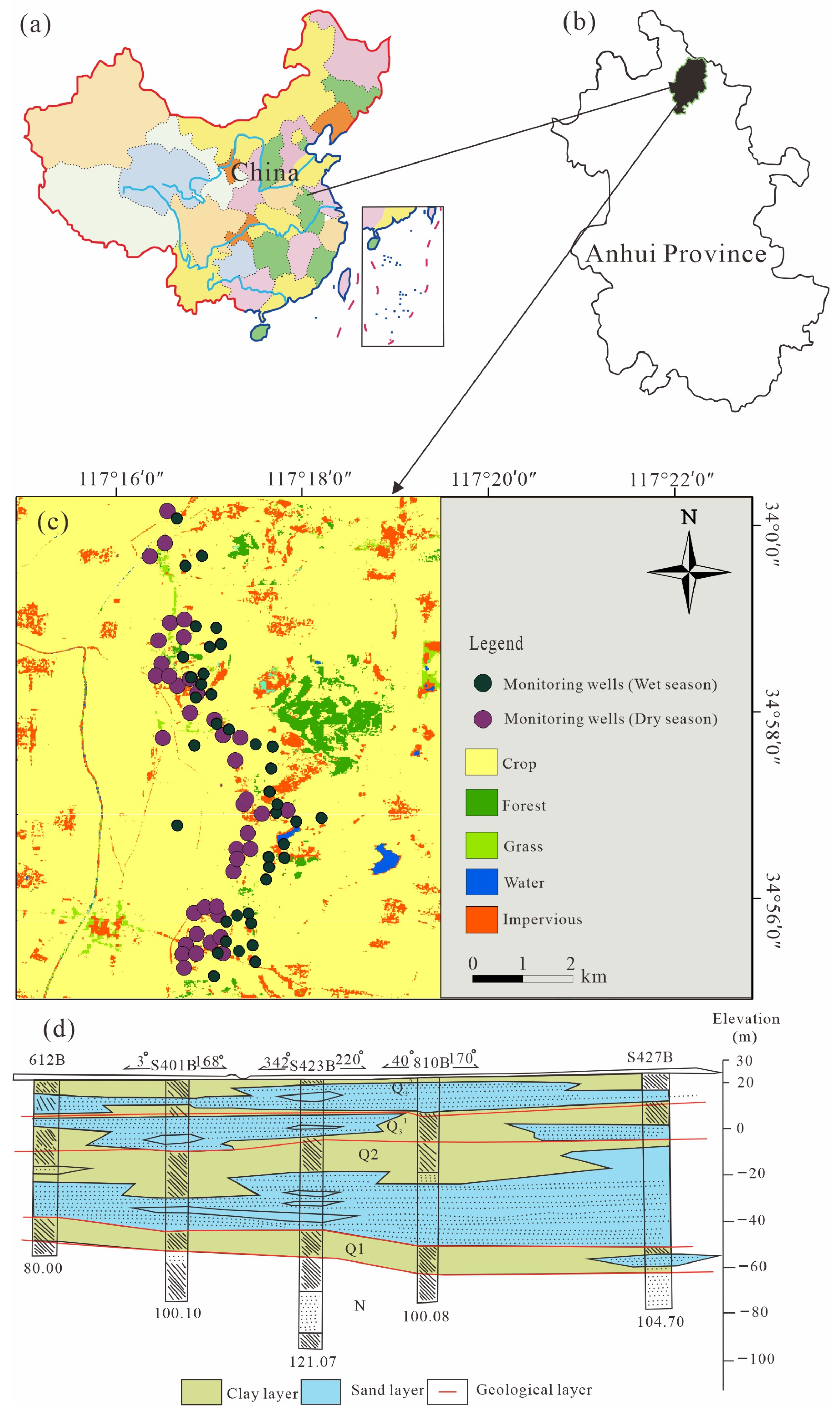
Located in northern Anhui Province, China, the Huaibei Plain is recognized as a key area for both grain production and livestock farming [1]. The study area is located in a mix of agricultural and rural land approximately 50 km north of the urban center of Suzhou City, Anhui Province, China (Figure 1). It covers an area of about 137 km2 and is characterized by traditional field agriculture, with primary crops including wheat, maize, and soybean. The area has a warm-temperate sub-humid monsoon climate, with a mean annual temperature of 14.5 °C and strongly seasonal rainfall. Only 6.8% of annual precipitation occurs from December to February, whereas 54.5% falls during the hot, rainy period from June to August [7].

2.2. Sample Collection and Testing

Shallow groundwater samples were collected from a typical interlaced agricultural–rural area far away from urban land in northern Anhui Province, China. A total of 80 groundwater samples were collected, comprising 40 samples during the wet season and 40 during the dry season (Figure 1c). Samples were obtained from privately owned domestic wells with depths of approximately 25–30 m, representing shallow groundwater in the study area (Figure 1d). The area’s aquifer system developed within Quaternary unconsolidated deposits, about 200–250 m thick and mainly consisting of sand, sandy clay, and clay layers (Figure 1d). Before sample collection, each well was pumped for about 10 min to remove stagnant water and ensure that fresh groundwater was collected. The samples were then stored in pre-cleaned 2.5 L high-density polyethylene (HDPE) bottles. The geographic coordinates of all sampling locations were recorded using a Global Positioning System (GPS) device (Figure 1). Field parameters, including total dissolved solids (TDS), pH, and electrical conductivity (EC), were determined in situ with a portable water quality meter (WTW Multi 3630 IDS, Bavaria, Germany). To ensure measurement reliability, all sensors were calibrated with standard solutions in the laboratory before field analysis.
After transportation to the laboratory, the groundwater samples were filtered immediately through 0.45 μm cellulose membranes to remove suspended matter. The filtered samples were preserved at 4 °C until major cation and anion determination was performed. Stable water isotopes (δ18O-H2O and δ2H-H2O) were measured using a liquid water isotope analyzer (LGR-35-EP, Los Gatos Research, Mountain View, CA, USA), with analytical precisions of 0.2‰ for δ18O-H2O and 0.6‰ for δ2H-H2O. Major cations (Ca2+, Mg2+, Na+, K+) and anions (Cl, NO3, SO42−, F) were quantified using ion chromatography (ICS-600/900, Thermo Fisher Scientific, Sunnyvale, CA, USA); the detection limits were 0.03, 0.03, 0.05, 0.01, 0.02, 0.10, 0.10, and 0.20 mg/L, respectively, and the relative standard deviations were below 2%. HCO3 and CO32− concentrations were determined within 24 h after sampling using dilute-HCl titration with a dual-indicator method, with an RSD of 1.8%. Analytical accuracy was checked using the charge balance error (CBE); all values were within ±5% [8], indicating that the dataset was reliable for subsequent analysis [7].

2.3. Statistical Analysis and Health Risk Assessment

Differences in ion concentrations between the dry and wet seasons were tested using SPSS 22.0 (IBM Corporation, Armonk, NY, USA). ArcGIS 10.2 was used to generate the sampling site distribution maps and land-use maps. Principal Component Analysis (PCA) and correlation analysis were performed with different packages in R 4.4.3, and the corresponding diagrams were plotted accordingly. EPA PMF 5.0 software was used for the PMF modeling, with details provided in a prior publication [1]. The equations used in the health risk assessment model and the selected parameter values are provided in Text S1 and Table S1, respectively. Monte Carlo simulations were conducted in Microsoft Excel using the Oracle Crystal Ball 11.1.5072.0 (Oracle Corporation, Austin, TX, USA).

3. Results

3.1. Hydrochemical Characteristics and Ion Content

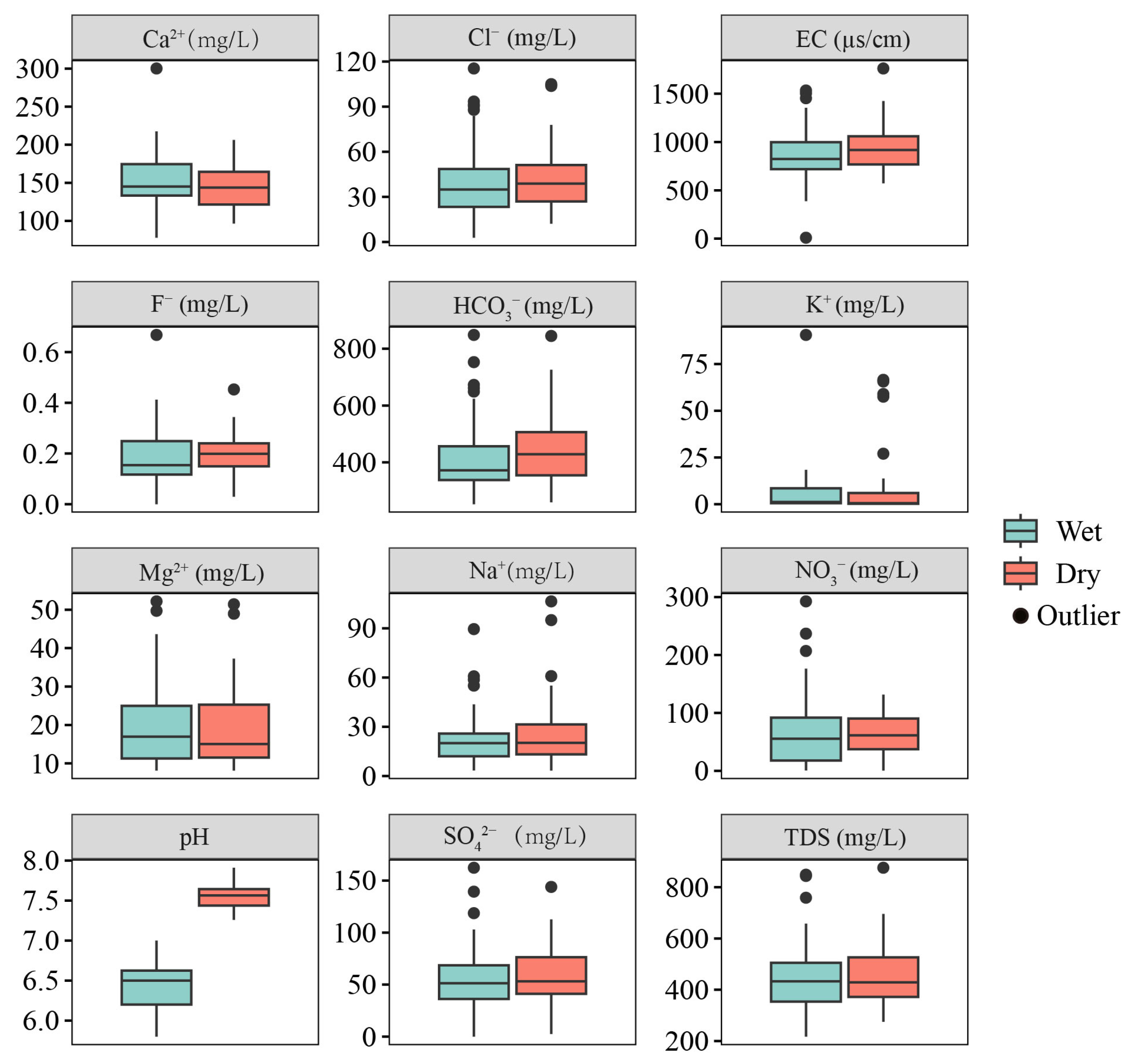
Table 1 summarizes the hydrochemical characteristics of the groundwater samples collected during the wet and dry seasons. The concentrations of major ions in shallow groundwater showed no statistically significant seasonal variation (p > 0.05). In contrast, groundwater pH differed significantly between the two seasons (p < 0.05; Figure 2). Wet-season groundwater was slightly acidic, with an average pH of 6.47 ± 0.29, whereas dry-season groundwater was weakly alkaline, with an average pH of 7.55 ± 0.41. TDS values ranged from 217 to 849 mg/L in the wet season and from 275 to 876 mg/L in the dry season, with mean values of 454.78 and 454.23 mg/L, respectively. Since all TDS concentrations were below 1000 mg/L, the groundwater can be categorized as freshwater [26]. The average EC was 860.44 μS/cm in the wet season and 951.2 μS/cm in the dry season. Compared with the dry season, the wet season showed a higher mean NO3 concentration (Table 1). Moreover, NO3 content exceeded the WHO drinking water guidelines of 50 mg/L in 60.0% and 62.5% of wet- and dry-season groundwater samples, respectively.
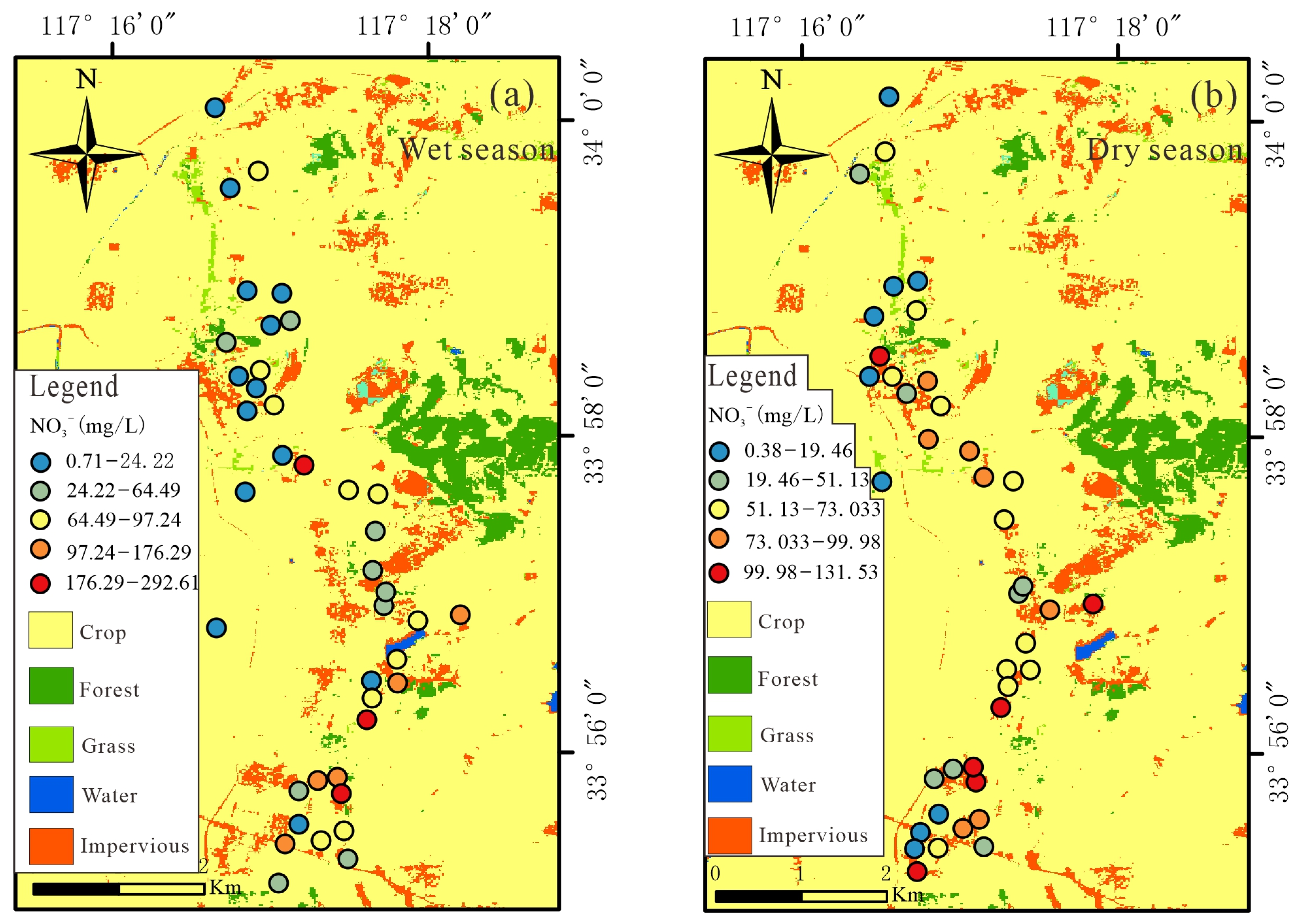
HCO3 was the predominant anion in both seasons, with average concentrations of 451.26 mg/L in the dry season and 423.95 mg/L in the wet season. NO3 showed wider variation in the wet season, ranging from 0.71 to 292.61 mg/L with a mean of 71.46 mg/L, compared with a range of 0.38–131.53 mg/L and a mean of 59.07 mg/L in the dry season. In both seasons, concentrations of groundwater cations were, in descending order, Ca2+, Na+, Mg2+ and K+. The anion concentration sequence exhibited seasonal variations: in the wet season, the order was HCO3 > NO3 > SO42− > Cl > F, while in the dry season, it was HCO3 > SO42− > NO3 > Cl > F. As the most dominant cation, Ca2+ levels ranged from 77.99 to 300.12 mg/L with a mean value of 153.45 mg/L in the wet season, and from 96.55 to 206.19 mg/L with a mean value of 145.33 mg/L in the dry season. Furthermore, the spatial distributions of NO3 show that the groundwater nitrate hotspots in the study area exhibited broadly similar patterns during the dry and wet seasons (Figure 3). Several sampling sites located at the boundaries between impervious road surfaces and agricultural land maintained relatively high nitrate concentrations in both seasons (Figure 3).
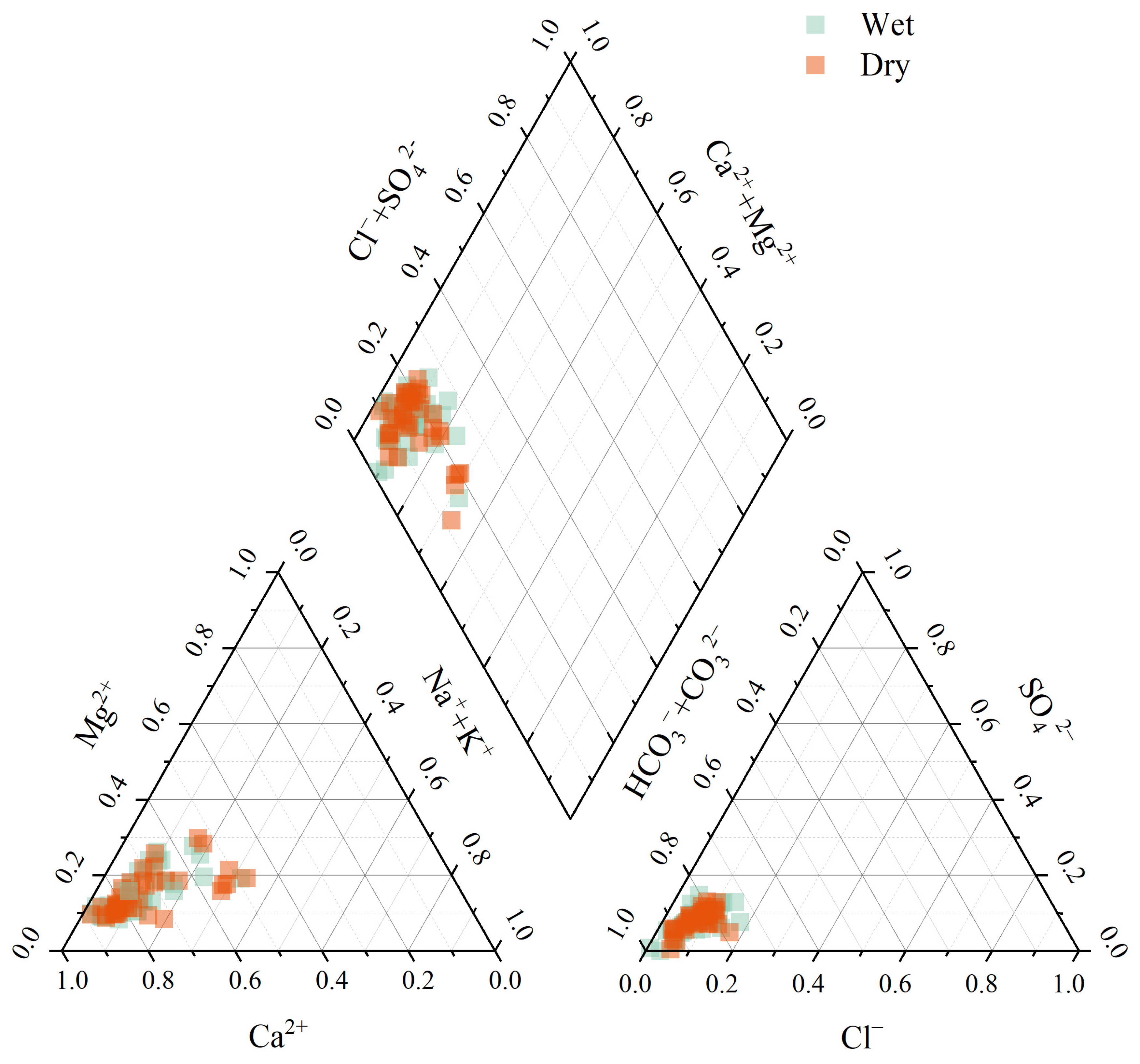
Piper diagrams are commonly used to classify groundwater hydrochemical facies [27]; as illustrated in Figure 4, groundwater in both the wet and dry seasons was dominated by the HCO3–Ca type, implying a strong influence of carbonate mineral dissolution on groundwater chemistry [28]. The facies similarity between seasons indicates that shallow groundwater in the study area did not show clear spatial hydrochemical zonation [29]. This pattern further suggests that the main hydrogeochemical processes were relatively uniform across the area, with no marked seasonal shift in dominant controlling mechanisms.

3.2. Groundwater Sources and Recharge

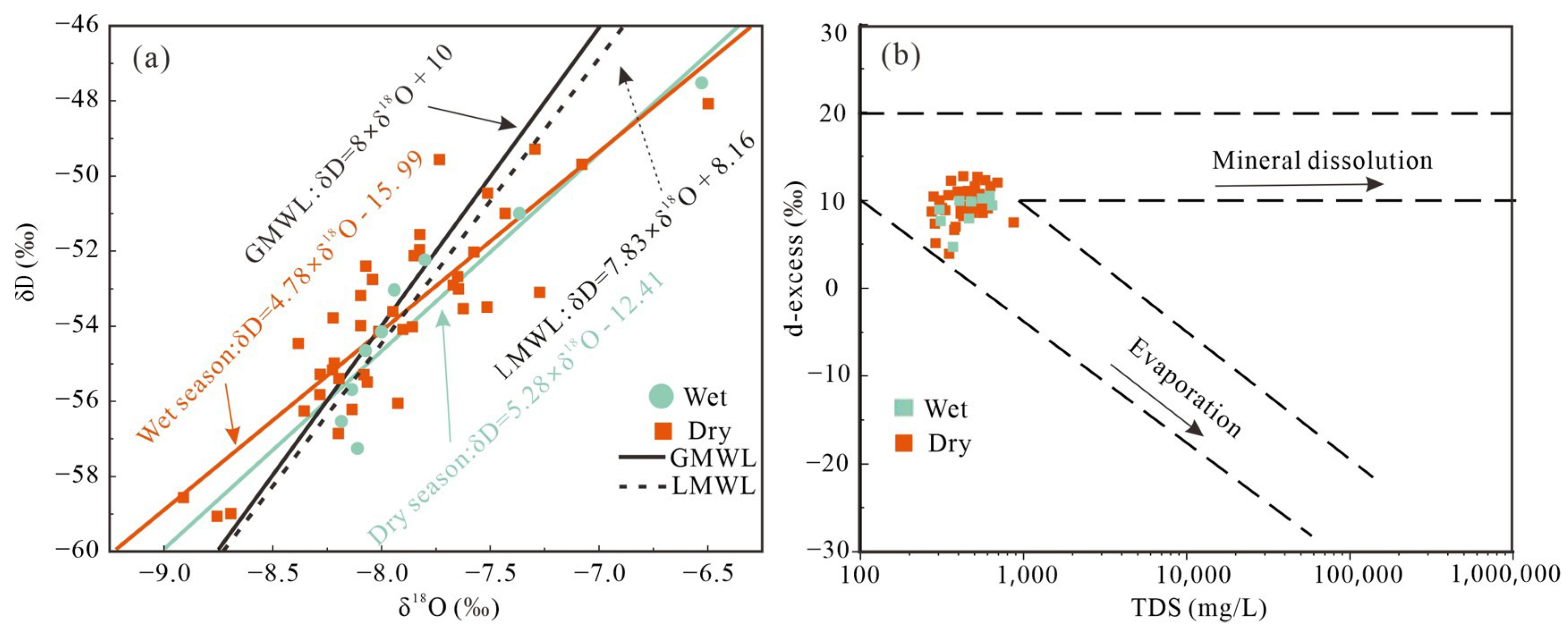
Stable water isotopes (δD and δ18O) are ideal indicators for tracing groundwater recharge sources [30]. As shown in Figure 5a, groundwater samples from both seasons were located close to the Global Meteoric Water Line (GMWL) and Local Meteoric Water Line (LMWL) [31], suggesting that precipitation is the dominant source of recharge. In addition, the δD-δ18O distributions show no clear separation between wet- and dry-season samples.
The isotopic regression slopes for groundwater in both seasons were lower than that of the GMWL, suggesting that recharge water experienced notable evaporation before entering the aquifer [32]. A slope above 5 generally reflects isotopic characteristics typical of arid to semi-arid environments. In the wet season, the groundwater isotope slope was 5.28, implying that the observed isotopic pattern may be related to interactions between evaporated soil water, return-flow irrigation water, and infiltrating rainfall [33]. The deuterium excess values of most groundwater samples ranged from 3‰ to 10‰ in both seasons (Figure 5b), further indicating post-condensation evaporation of recharge water and enrichment of δD and δ18O [34]. As shown in Figure 5b, samples from both seasons were located near the fields associated with evaporation and mineral dissolution. Therefore, although evaporation contributed to the enrichment of δD and δ18O, it was likely not the dominant factor responsible for elevated TDS concentrations [35].

4. Discussion

4.1. Multivariate Statistical Analysis and PMF

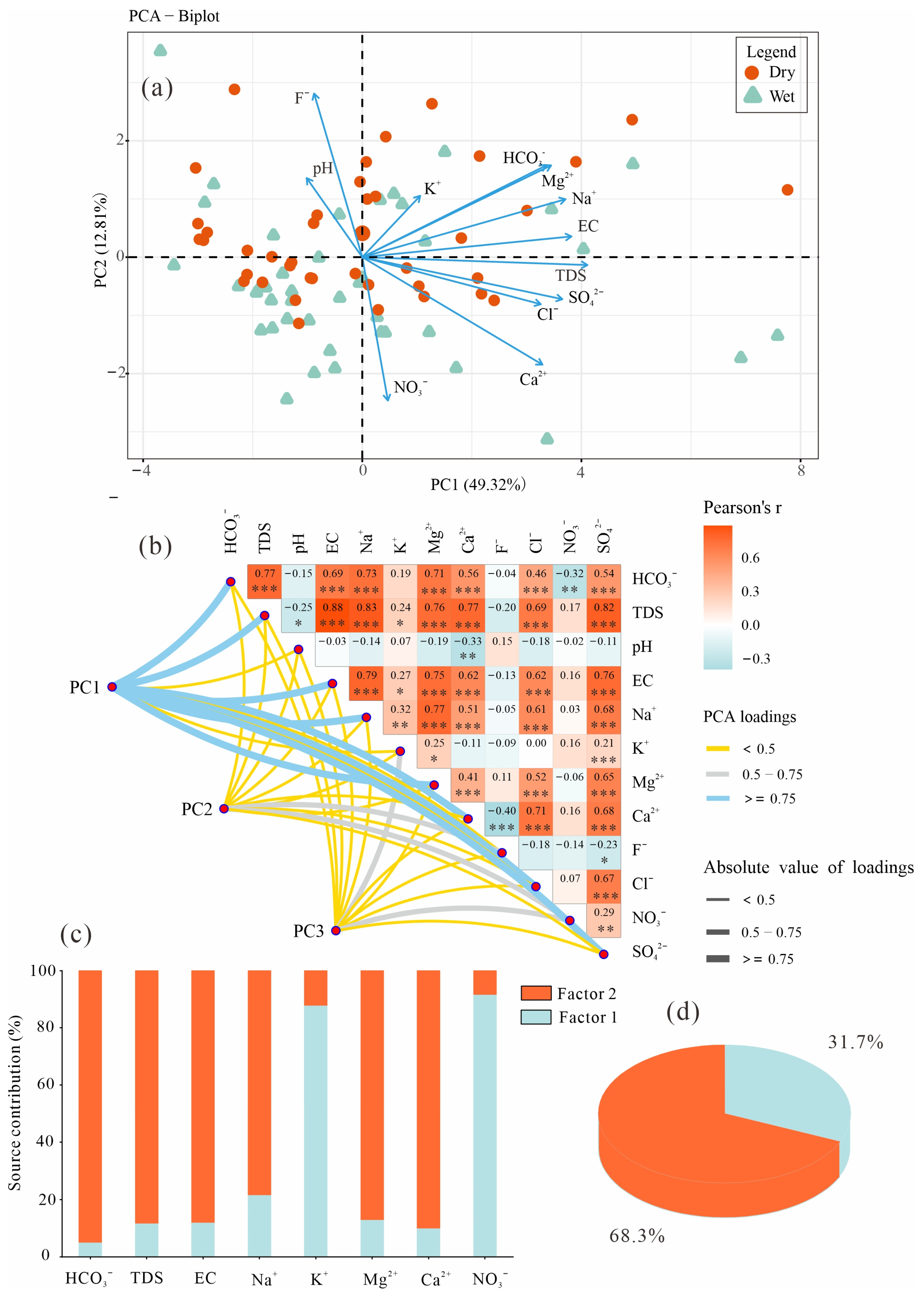
PCA was performed on 12 water quality parameters to evaluate the main factors controlling groundwater hydrochemical composition [36]. The Kaiser–Meyer–Olkin (KMO) value was 0.78, and Bartlett’s test of sphericity was significant (p = 0.00), indicating that the dataset was suitable for PCA [37]. Three principal components with eigenvalues greater than 1 were extracted, accounting for 73.24% of the total variance (Figure 6 and Table 2). Principal Component 1 (PC1) explained 49.32% of the variance and showed high positive loadings (>0.75) for TDS, HCO3, EC, Na+, Mg2+, Ca2+, Cl, and SO42−. These parameters were also significantly correlated with each other (p < 0.05; Figure 6b), suggesting a close geochemical relationship between major ions. Therefore, PC1 can be interpreted as representing water–rock interaction processes [36]. PC2 contributed 12.81% of the total variance. F showed a moderate positive loading of 0.66 on PC2, whereas NO3 had a moderate negative loading of −0.58. However, the generally low F concentrations in groundwater suggest that this component had a limited influence on overall groundwater chemistry.
These results suggest that PC2 primarily reflects the dissolution of fluoride-bearing minerals, indicating a geogenic origin. In contrast, PC3 explained 11.11% of the total variance and was characterized by moderate positive loadings for K+ and NO3, with loading values of 0.71 and 0.64, respectively. Liu Ruinan et al. also observed moderate positive loadings of K+ and NO3 on the principal components when using PCA to identify nitrate sources in the groundwater of Hainan Island, China [22]. K+ and NO3 can be used as indicators of the impacts of potassium and nitrate fertilizers on groundwater from agricultural non-point source pollution [27], and therefore may be represented in this study by PC3. The PMF model enables heavy metals [1], pesticides [38], and conventional water ions to be quantitatively apportioned [39], thereby addressing the limitation of multivariate statistical analysis in providing quantitative source resolution [39]. When the number of identified factors is set to 2, the ratio of Qrobust to Qexpected is 0.93, R2 values between observed and predicted values range from 0.73 to 0.87, and the model residuals fall within the range of −3 to 3, indicating that the PMF result is reliable [40]. The PMF analysis results are presented in Figure 6c,d. For Factor 1, NO3 and K+ exhibited the highest loadings, with values of 87.9% and 91.7%, respectively. Moreover, Factor 1 closely resembled PC3 in the PCA and was therefore attributed to agricultural non-point source pollution. For Factor 2, HCO3, Ca2+, TDS, EC, Mg2+, and Na+ exhibited the highest loadings (>80%). The dissolution of silicate minerals in aquifers releases K+, Na+, Mg2+, and HCO3 into groundwater [39]. These findings indicate that Factor 2 is mainly controlled by water–rock interaction and reflects the geogenic contribution to major-ion composition. Figure 6d shows that natural sources dominated the overall contribution, with an average proportion of 68.3%, while agricultural non-point source pollution contributed 31.7%.

4.2. Hydrochemical Processes Determining Major Ions

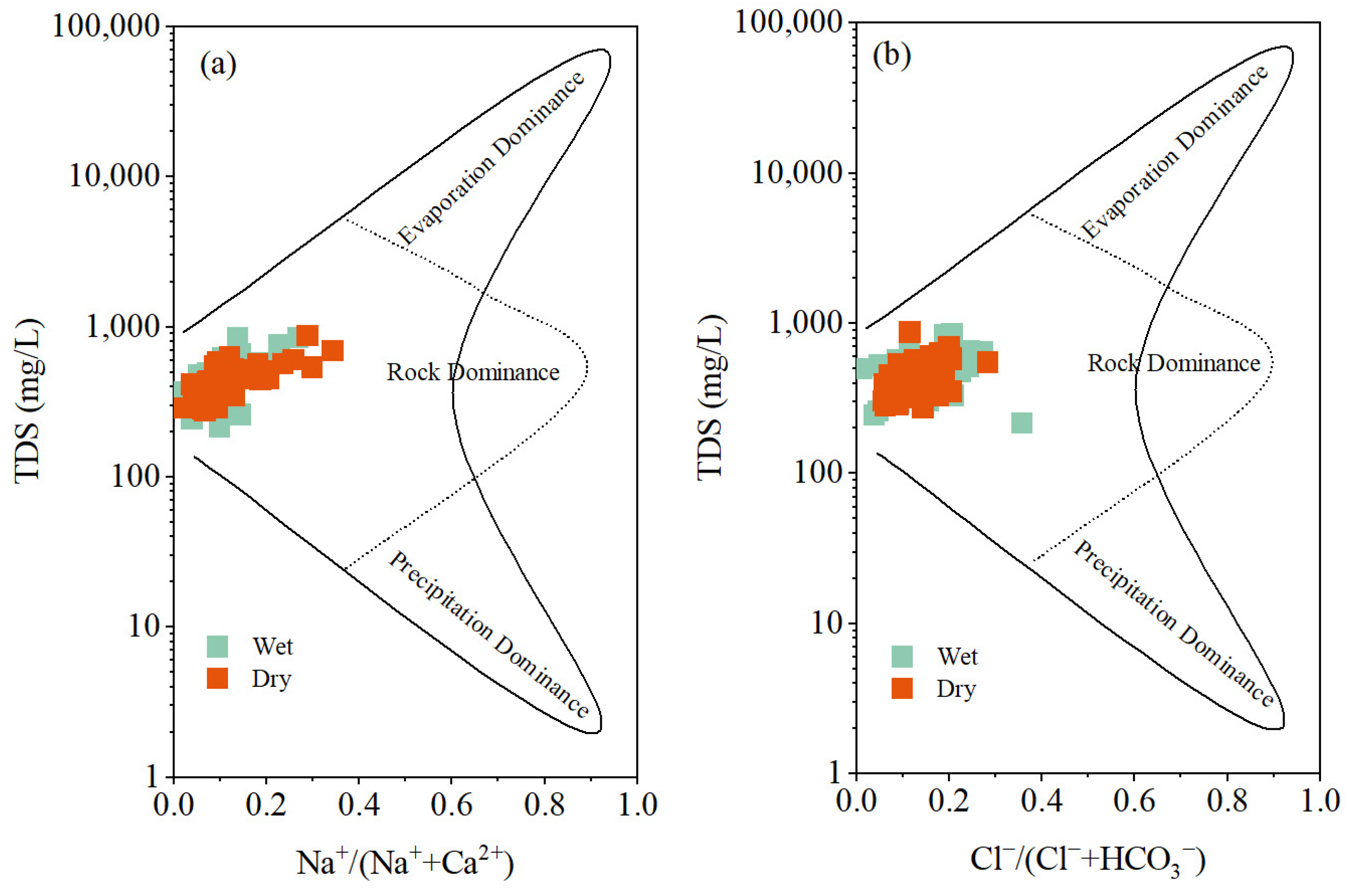
Gibbs plots provide a useful framework for evaluating whether groundwater or surface water chemistry is mainly governed by evaporation, rock weathering, or precipitation inputs [41,42]. Figure 7 shows that the anion ratio of Cl/Cl+HCO3 ranges from 0.0069 to 0.24, the cation ratio of Na+/Na++Ca2+ ranges from 0.022 to 0.37, and the TDS content varies from 217 to 876 mg/L.
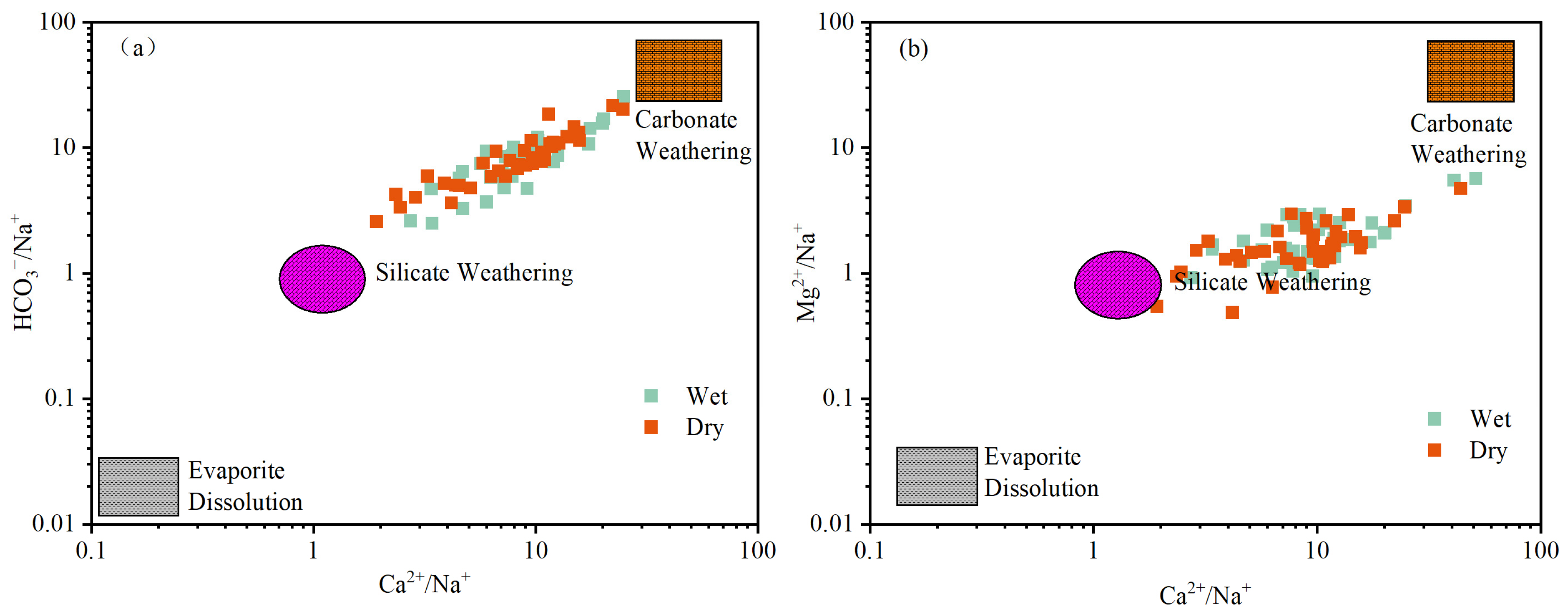
Consequently, water–rock interaction is the dominant natural mechanism controlling the ion sources of shallow groundwater in the study area in both the wet and dry seasons. A Gaillardet diagram was used to identify the dominant rock-weathering processes involved in water–rock interaction by differentiating among carbonate, silicate, and evaporite weathering sources [43]. Figure 8 shows that the wet- and dry-season groundwater samples mostly fall between the silicate and carbonate end-members, indicating that silicate and carbonate weathering jointly control the hydrochemical evolution of groundwater in the study area [44]. Moreover, TDS showed strong positive relationships with SO42−, Cl, Ca2+, Mg2+, Na+, and HCO3, which supports the interpretation that groundwater solutes mainly originate from mineral dissolution [45] (Figure 6b). This interpretation is also consistent with the PCA and PMF outputs, both of which identified water–rock interaction as the principal contributor to major-ion enrichment.
Anthropogenic activities are the primary non-natural factors influencing the major ionic composition of groundwater [2], with a threshold of 20 mg/L typically observed for NO3 in unpolluted groundwater under natural conditions [46]. Major anthropogenic contributors to groundwater NO3 include agricultural fertilizer and manure usage, domestic sewage effluent, and atmospheric deposition [47]. The inherent high water-solubility and mobility of NO3 facilitate its sustained accumulation in groundwater as pollution persists [48]. Consequently, researchers have suggested that groundwater NO3 enrichment can serve as a robust tool for evaluating anthropogenic pressures [46].
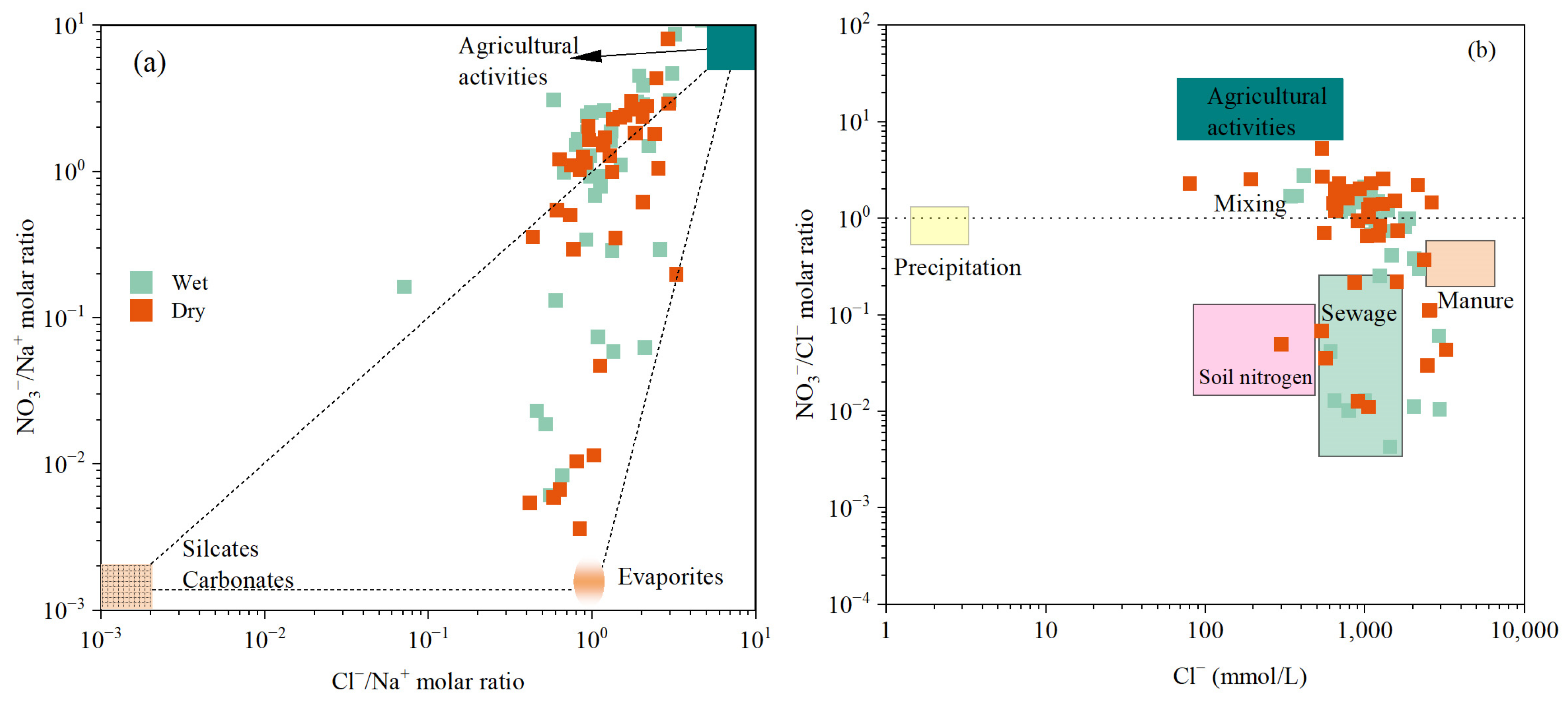
Molar ratios of Cl/Na+ versus NO3 provide a robust framework for fingerprinting nitrate origins in groundwater [46,49]. The proximity of most wet- and dry-season samples to the agricultural activity zone in Figure 9a suggests that agricultural practices, including fertilizer and manure usage, are the major contributors to NO3 enrichment in the study area [2]. Cl is a reliable tracer in groundwater, and its origins are primarily associated with hydrochemical processes and anthropogenic disturbances [50]. Therefore, the molar relationship between NO3/Cl and Cl can serve as a diagnostic tool for NO3 source identification (Figure 9b). Elevated NO3/Cl ratios paired with low Cl suggest a predominant contribution from chemical fertilizers, while manure and wastewater are characterized by lower NO3/Cl [50]. As shown in Figure 9b, the majority of groundwater samples during both the wet and dry seasons were distributed between areas containing agricultural activities, manure, and sewage input, indicating that NO3 in the study area results from the mixed contributions of these sources. In the Huaibei Plain, village areas often lack centralized sewage piping systems and are characterized by highly intensified agricultural activities [1]. Furthermore, field surveys have indicated that domestic wastewater from villages within the sampling area is discharged without centralized collection or treatment; corroborating this, Liu Ruinan et al. investigated sources of nitrate in the dominant agricultural areas of Hainan, China, and concluded that the lack of sewage outlets in residential areas was one of the significant factors contributing to the increase in groundwater nitrate [22].
Figure 5b shows a significant positive relationship between NO3 and SO42− (r = 0.29, p < 0.01), implying that nitrogen fertilizer use may contribute to nitrate accumulation in groundwater [51]. However, the weak associations between NO3 and other major ions indicate that nitrate enrichment is not primarily controlled by the same hydrogeochemical processes as the dominant dissolved ions [52,53]. In a previous investigation of shallow groundwater in the Huaibei Coalfield, Qiu Huili et al. integrated δ15N–NO3 and δ18O–NO3 isotope evidence with the SIAR Bayesian mixing model and found that manure/sewage and synthetic fertilizers contributed 39.54% and 34.93% of nitrate, respectively [8]. Consistent with these findings, the PMF analysis in this study identified agricultural non-point source pollution as the dominant contributor to groundwater NO3 (Figure 6c). These results suggest that nitrate contamination is mainly linked to intensive fertilizer application and inadequate rural sewage management. Because groundwater in the Huaibei Plain serves as an important source for irrigation and domestic water supplies, nitrate enrichment may threaten both crop production and public health [7]. Strengthening eco-friendly agricultural management and upgrading rural sewage treatment infrastructure are, therefore, essential for nitrate pollution control in this region.

4.3. Health Risk Assessment of NO3 Contamination

4.3.1. Deterministic Model

Nitrate contamination in groundwater is recognized as a global environmental concern with significant implications for human health [51]. Prolonged consumption or exposure to nitrate-contaminated groundwater may result in serious health risks [54]. In this study, the U.S. EPA health risk assessment (HRA) model was applied to estimate non-carcinogenic risks associated with nitrate exposure via ingestion and dermal pathways across different population groups: infants, children, adult females, and adult males. The results are summarized in Table S2. During the dry season, the proportions of samples with HQing > 1 were 80% for infants, 70% for children, 67.5% for adult females, and 62.5% for adult males, indicating unacceptable health risks from ingestion exposure. In the wet season, the corresponding exceedance rates were 72.5%, 62.5%, 65%, and 50%, respectively.
Although a greater number of groundwater samples in the dry season exceeded the safety threshold for HQing compared to those in the wet season, the presence of three wet-season samples with nitrate concentrations above 200 mg/L (Figure 2) resulted in a higher mean HQing value during the wet season (Table S2). Dermal contact with groundwater posed no significant non-carcinogenic risk to any age group, as HQderm values were consistently below 1 in both the dry and wet seasons, indicating that the study area’s groundwater is safe with regard to this pathway.
Compared with adult females and males, infants and children exhibited higher values and probabilities of non-carcinogenic risk. As shown in Table S1, although infants and children have a lower absolute nitrate intake, their nitrate exposure per unit body weight substantially exceeds that of adults, which explains the higher non-carcinogenic risk observed in this population [23]. Overall, the non-carcinogenic risks posed by groundwater nitrate in the typical rural–agricultural interface of the Huaibei Plain cannot be overlooked; residents in rural areas also tend to underestimate the health hazards of consuming contaminated groundwater until clinical symptoms manifest. Consequently, it is imperative to expand municipal water supplies to remote villages and implement regular quality monitoring in areas without tap water infrastructure, thereby mitigating the adverse impacts of unsafe groundwater consumption.

4.3.2. Probabilistic Health Risk Model

To overcome the limitations of our deterministic assessment, a Monte Carlo simulation was applied to characterize the probabilistic non-carcinogenic risks associated with nitrate exposure through drinking water ingestion and dermal contact among the different population groups [55].
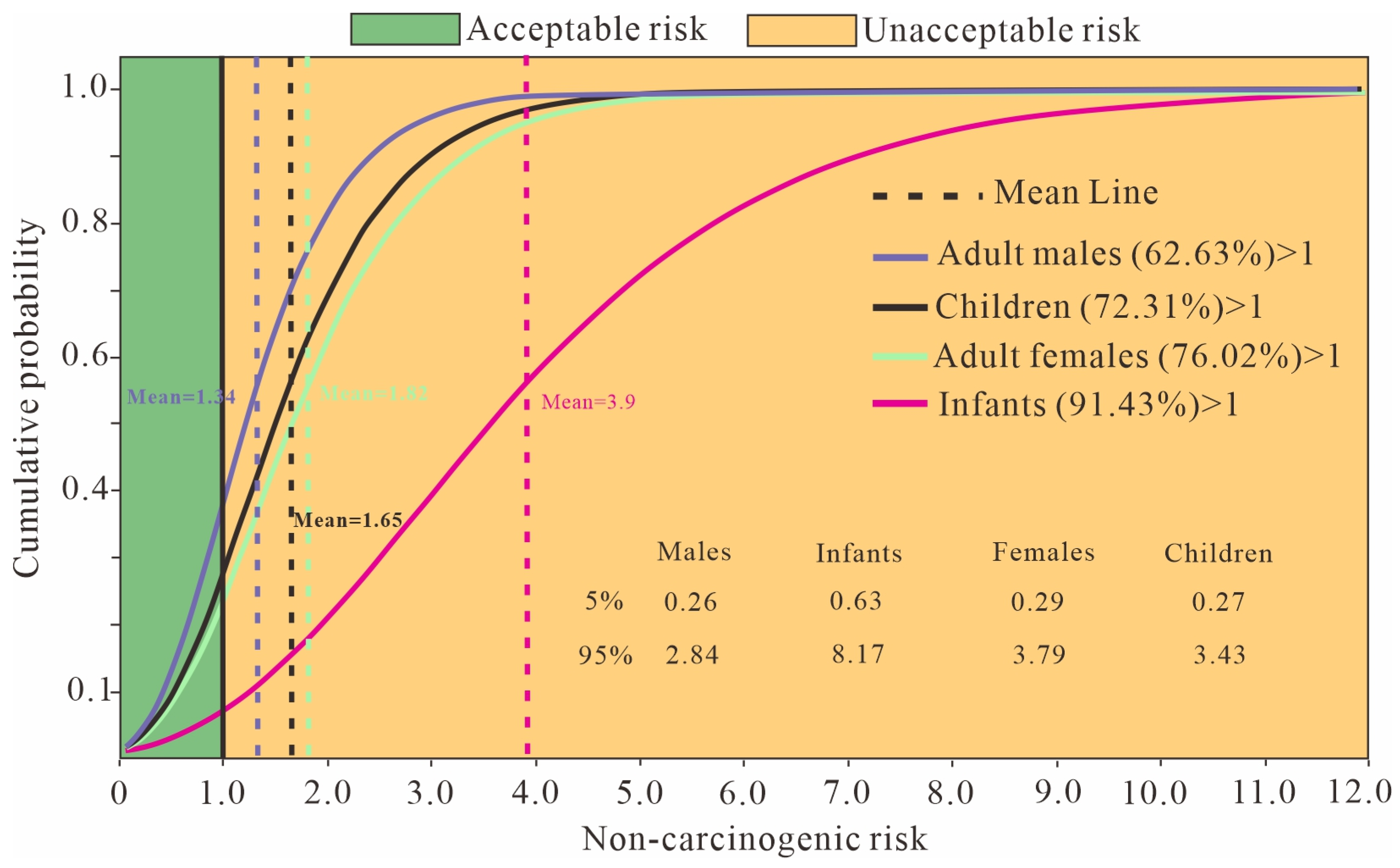
To reduce the effect of seasonal variability on our probabilistic health risk assessment, nitrate concentrations from the dry and wet seasons were combined and fitted to probability distributions to determine the regional probability distribution function of groundwater nitrate in the study area. As illustrated in Figure 10, the probabilities of non-carcinogenic risk exceeding the safety threshold (HQ > 1) were 62.63%, 72.31%, 76.02%, and 91.43% for adult males, children, adult females, and infants, respectively, while the 95th-percentile cumulative probabilistic risk values for the same populations were 2.84, 8.17, 3.79, and 3.43, respectively, all exceeding the acceptable safety threshold for non-carcinogenic risk (HQ > 1). These results suggest that the non-carcinogenic risks associated with groundwater nitrate exposure via the ingestion and dermal contact pathways should not be overlooked, regardless of population.

5. Conclusions

In this study, we characterized groundwater hydrochemistry, identified the sources of major ions, and assessed nitrate-related health risks in a representative rural–agricultural mosaic area of the Northern Anhui Plain, China. Our primary findings are summarized as follows: The major ion concentrations in groundwater exhibited no significant seasonal variations between the dry and wet seasons. Compared with groundwater quality standards, NO3 pollution was found to be severe, with 60% and 62.5% of groundwater samples exceeding the drinking water limits in the wet and dry seasons, respectively. The predominant hydrochemical facies for both seasons was HCO3-Ca. The stable hydrogen and oxygen isotope compositions of all groundwater samples were plotted near the GMWL and LMWL, indicating that groundwater is primarily recharged by atmospheric precipitation, while water–rock interaction is the decisive factor in major-ion composition. Our deterministic and probabilistic health risk assessments indicate that nitrate contamination in groundwater poses substantial non-carcinogenic risks to adult males and females, children, and infants in the study area, and therefore constitutes an adverse factor that should not be overlooked.

6. Limitations and Future Perspectives

Although we combined hydrochemical analysis, multivariate statistics, PMF modeling, and health risk assessments to characterize groundwater nitrate contamination, several limitations of this study should be acknowledged. First, the absence of stable nitrogen and oxygen isotope data (δ15N–NO3 and δ18O–NO3) combined with our Bayesian mixing-model analysis limited our ability to quantitatively discriminate the contributions of nitrate from synthetic fertilizers, manure and sewage, soil nitrogen, and atmospheric deposition. Second, future field investigations should incorporate questionnaires on fertilizer application, manure management, irrigation practices, and domestic sewage discharge to better identify local anthropogenic nitrate inputs.
From a management perspective, the high nitrate exceedance rate and elevated non-carcinogenic risks indicate that shallow groundwater in rural village–farmland areas should not be consumed directly as drinking water without regular quality assessments and appropriate treatment. Expanding centralized water supply systems, upgrading rural sewage collection and treatment infrastructure, and implementing routine monitoring programs for shallow domestic wells should be prioritized, especially in villages dependent on private wells. In agricultural areas, optimized application of nitrogen fertilizers, improved irrigation practices, and effective manure management should be promoted to minimize nitrate leaching into shallow aquifers. Infants warrant particular attention, as they exhibited higher health risks owing to greater nitrate exposure per unit body weight. Collectively, these measures would contribute to reducing nitrate inputs, safeguarding rural drinking water security, and promoting sustainable groundwater management in the Huaibei Plain.

Supplementary Materials

The following supporting information can be downloaded at: https://www.mdpi.com/article/10.3390/app16136421/s1, Text S1 (Health risk assessment) [2,8,56,57]; Table S1 (value of each parameter for human health risk assessment); Table S2 (Health risk assessment for different populations).

Author Contributions

Conceptualization, L.H. and J.M.; methodology, L.H.; software, L.H.; validation, J.M. and L.H.; writing—original draft preparation, L.H. and J.M.; writing—review and editing, L.H. and J.M.; visualization, L.H. and J.M.; supervision, L.H. and J.M.; project administration, L.H. and J.M.; funding acquisition, L.H. and J.M. All authors have read and agreed to the published version of the manuscript.

Funding

This research was funded by the National Innovation and Entrepreneurship Training Program for College Students (202510379057); the University-Enterprise Collaborative Research Project of Suzhou University (2025xhx091); and the Key Scientific Research Project of Suzhou University (2025yzd09).

Institutional Review Board Statement

Not applicable.

Informed Consent Statement

Not applicable.

Data Availability Statement

The original contributions presented in this study are included in the article. Further inquiries can be directed to the corresponding author.

Conflicts of Interest

Author Lei Han was employed by the company CCTEG Xi’an Research Institute (Group) Co., Ltd. The remaining authors declare that the research was conducted in the absence of any commercial or financial relationships that could be construed as a potential conflict of interest.

References

  1. Feng, S.; Yu, H. Source Apportionment and Health Risk Assessment of Heavy Metals in Groundwater of Rural Area: A Case Study in Huaibei Plain, China. Hum. Ecol. Risk Assess. 2024, 30, 220–236. [Google Scholar] [CrossRef] [Scilit]
  2. Sheng, D.; Meng, X.; Wen, X.; Wu, J.; Yu, H.; Wu, M.; Zhou, T. Hydrochemical Characteristics, Quality and Health Risk Assessment of Nitrate Enriched Coastal Groundwater in Northern China. J. Clean. Prod. 2023, 403, 136872. [Google Scholar] [CrossRef] [Scilit]
  3. Xu, D.; Li, P.; Chen, X.; Yang, S.; Zhang, P.; Guo, F. Major Ion Hydrogeochemistry and Health Risk of Groundwater Nitrate in Selected Rural Areas of the Guanzhong Basin, China. Hum. Ecol. Risk Assess. Int. J. 2023, 29, 701–727. [Google Scholar] [CrossRef] [Scilit]
  4. Qiu, H.; Gui, H.; Xu, H.; Cui, L.; Yu, H. Occurrence, Controlling Factors and Noncarcinogenic Risk Assessment Based on Monte Carlo Simulation of Fluoride in Mid-Layer Groundwater of Huaibei Mining Area, North China. Sci. Total Environ. 2023, 856, 159112. [Google Scholar] [CrossRef] [Scilit] [PubMed]
  5. Ministry of Water Resources of China. China Water Resources Bulletin 2024 and over the Calendar Year; Ministry of Water Resources of China: Beijing, China, 2024. [Google Scholar]
  6. Sun, L.; Dai, S.; Tian, L.; Ni, Z.; Lu, S.; Yao, Y. Optimal Water Allocation Considering Water Diversion Projects in an Agricultural Irrigation District. Agriculture 2025, 15, 949. [Google Scholar] [CrossRef] [Scilit]
  7. Yu, H.; Feng, S.; Li, Q. Insight into Nitrate-Contaminated Shallow Groundwater Using Nitrate Isotopes and Microbial Community: A Case Study of Vegetable Cultivation Area in the Huaibei Plain, China. J. Environ. Chem. Eng. 2025, 13, 117780. [Google Scholar] [CrossRef] [Scilit]
  8. Qiu, H.; Gui, H.; Xu, H.; Cui, L.; Li, Z.; Yu, H. Quantifying Nitrate Pollution Sources of Shallow Groundwater and Related Health Risks Based on Deterministic and Monte Carlo Models: A Study in Huaibei Mining Area, Huaibei Coalfield, China. Ecotoxicol. Environ. Saf. 2023, 249, 114434. [Google Scholar] [CrossRef] [Scilit] [PubMed]
  9. Qin, X.; Wang, H.; Gong, J.; Ye, Y.; Zhou, K.; Xu, N.; Li, L.; Li, J. Multivariate Statistics and Hydrochemistry Combined to Reveal the Factors Affecting Shallow Groundwater Evolution in a Typical Area of the Huaibei Plain, China. Water 2025, 17, 962. [Google Scholar] [CrossRef] [Scilit]
  10. Yan, Y.; Zhang, Y.; Sun, Z.; Xie, Z.; Yao, R.; Chen, S.; Uddin, M.G.; Pu, Y.; Yang, C.; Wang, Y.; et al. Using Unsupervised Machine Learning and Positive Matrix Factorization Models to Drive Groundwater Chemistry and Associated Health Risks in a Coal—Mining Rural Region. J. Hydrol. 2025, 661, 133691. [Google Scholar] [CrossRef] [Scilit]
  11. Chen, J.; Wu, X.; Zhao, J.; Liu, S.; Zhang, Y.; Liu, J.; Gao, Z. Hydrochemical Characteristics, Controlling Factors and Strontium Enrichment Sources of Groundwater in the Northwest Plain of Shandong Province, China. Water 2024, 16, 550. [Google Scholar] [CrossRef] [Scilit]
  12. Gao, Z.; Li, Q.; Liu, J.; Su, Q.; Tan, M.; Wang, Y. Assessment of Groundwater Hydrogeochemistry, Controlling Factors, Water Quality, and Nitrate-Related Health Risks in the Longkou Bay, North China. Water Air Soil Pollut. 2024, 235, 392. [Google Scholar] [CrossRef] [Scilit]
  13. Liu, J.; Gao, Z.; Feng, J.; Wang, M. Identification of the Hydrochemical Features, Genesis, Water Quality and Potential Health Hazards of Groundwater in Dawen River Basin, North China. Ecol. Indic. 2023, 149, 110175. [Google Scholar] [CrossRef] [Scilit]
  14. Yang, N.; Zhou, P.; Wang, G.; Zhang, B.; Shi, Z.; Liao, F.; Li, B.; Chen, X.; Guo, L.; Dang, X.; et al. Hydrochemical and Isotopic Interpretation of Interactions between Surface Water and Groundwater in Delingha, Northwest China. J. Hydrol. 2021, 598, 126243. [Google Scholar] [CrossRef] [Scilit]
  15. Chen, J.; Gui, H.; Li, C.; Wang, C.; Chen, C.; Jiang, Y. Hydrochemical Characteristics and Quality Assessment of Shallow Groundwater in Poultry Farming Sites in Suzhou City, China. Pol. J. Environ. Stud. 2022, 31, 4071–4084. [Google Scholar] [CrossRef] [Scilit] [PubMed]
  16. Dong, Y.; Zhu, S.; Li, J.; Liu, W.; Li, Z.; Sun, Z.; Liu, C. Hydrochemical Characteristics and Source Identification of Nitrate in Surface Water and Shallow Groundwater in the Poyang Lake Basin, China. Environ. Earth Sci. 2025, 84, 271. [Google Scholar] [CrossRef] [Scilit]
  17. Adimalla, N.; Li, P. Occurrence, Health Risks, and Geochemical Mechanisms of Fluoride and Nitrate in Groundwater of the Rock-Dominant Semi-Arid Region, Telangana State, India. Hum. Ecol. Risk Assess. Int. J. 2019, 25, 81–103. [Google Scholar] [CrossRef] [Scilit]
  18. Pastén-Zapata, E.; Ledesma-Ruiz, R.; Harter, T.; Ramírez, A.I.; Mahlknecht, J. Assessment of Sources and Fate of Nitrate in Shallow Groundwater of an Agricultural Area by Using a Multi-Tracer Approach. Sci. Total Environ. 2014, 470–471, 855–864. [Google Scholar] [CrossRef] [Scilit] [PubMed]
  19. Chotpantarat, S.; Parkchai, T.; Wisitthammasri, W. Multivariate Statistical Analysis of Hydrochemical Data and Stable Isotopes of Groundwater Contaminated with Nitrate at Huay Sai Royal Development Study Center and Adjacent Areas in Phetchaburi Province, Thailand. Water 2020, 12, 1127. [Google Scholar] [CrossRef] [Scilit]
  20. Mendizabal, I.; Stuyfzand, P.J.; Wiersma, A.P. Hydrochemical System Analysis of Public Supply Well Fields, to Reveal Water-Quality Patterns and Define Groundwater Bodies: The Netherlands. Hydrogeol. J. 2011, 19, 83–100. [Google Scholar]
  21. Dong, Z.; Zhang, L.; Wang, C.; Zou, Y. Hydrochemical Evolution and Nitrate Contamination Sources in Laiwu Groundwater: Insights from Hydrochemistry and Dual-Isotope Analysis. Phys. Chem. Earth Parts A/B/C 2025, 141, 104083. [Google Scholar] [CrossRef] [Scilit]
  22. Liu, R.; Xie, X.; Hou, Q.; Han, D.; Song, J.; Huang, G. Spatial Distribution, Sources, and Human Health Risk Assessment of Elevated Nitrate Levels in Groundwater of an Agriculture-Dominant Coastal Area in Hainan Island, China. J. Hydrol. 2024, 634, 131088. [Google Scholar] [CrossRef] [Scilit]
  23. Chen, J.; Wu, H.; Qian, H.; Gao, Y. Assessing Nitrate and Fluoride Contaminants in Drinking Water and Their Health Risk of Rural Residents Living in a Semiarid Region of Northwest China. Expo. Health 2017, 9, 183–195. [Google Scholar] [CrossRef] [Scilit]
  24. Li, Y.; Li, J.; Qiao, J.; Peng, K.; Yang, Y.; Jiang, Y. Nitrate Pollution Source Apportionment and Uncertainty Analysis in Typical Water Diversion Source Area Based on Nitrogen and Oxygen Isotopes and the Mixsiar Modeling. Stoch. Environ. Res. Risk Assess. 2025, 39, 6203–6218. [Google Scholar] [CrossRef] [Scilit]
  25. Zhang, Q.; Sun, J.; Liu, J.; Huang, G.; Lu, C.; Zhang, Y. Driving Mechanism and Sources of Groundwater Nitrate Contamination in the Rapidly Urbanized Region of South China. J. Contam. Hydrol. 2015, 182, 221–230. [Google Scholar] [CrossRef] [Scilit] [PubMed]
  26. Ma, M.; Yu, Y.; Yan, B.; Tuo, Y.; Gai, J. Hydrochemical Evolution and Formation Mechanism of Groundwater Affected by Human Activities in Zhangxuan Basin, Northwest of Yanshan Mountains, China. PLoS ONE 2025, 20, e0318995. [Google Scholar] [CrossRef] [Scilit] [PubMed]
  27. Yao, R.; Xu, J.; Zhou, Y.; Li, S.; Su, J.; Yan, Y.; Gan, Y.; Luo, M.; Zhang, Y. Hydrochemical Evolution and Assessment of Groundwater Quality in an Intensively Agricultural Area: Case Study of Chengdu Plain, Southwestern China. Environ. Earth Sci. 2025, 84, 211. [Google Scholar] [CrossRef] [Scilit]
  28. Liu, J.; Wang, M.; Gao, Z.; Chen, Q.; Wu, G.; Li, F. Hydrochemical Characteristics and Water Quality Assessment of Groundwater in the Yishu River Basin. Acta Geophys. 2020, 68, 877–889. [Google Scholar] [CrossRef] [Scilit]
  29. Mu, W.; Wu, X.; Wu, C.; Hao, Q.; Deng, R.; Qian, C. Hydrochemical and Environmental Isotope Characteristics of Groundwater in the Hongjiannao Lake Basin, Northwestern China. Environ. Earth Sci. 2021, 80, 51. [Google Scholar] [CrossRef] [Scilit]
  30. Alam, S.M.K.; Li, P.; Wang, D.; Fida, M.; Elumalai, V. Sources and Transformations of Shallow Groundwater Nitrate in Intensively Irrigated Agricultural Lands of the Yinchuan Plain, Northwest China. J. Environ. Sci. 2026, 160, 670–681. [Google Scholar] [CrossRef] [Scilit] [PubMed]
  31. Qiu, H.; Gui, H.; Cui, L.; Pan, Z. Hydrogeochemical Processes and Quality Assessment of Groundwater in Sulin Mining Area, Northern Anhui Province, China. Water Resour. 2021, 48, 991–1000. [Google Scholar] [CrossRef] [Scilit]
  32. Cao, Z.; Qian, H.; Gao, Y.; Li, K.; Shi, X.; Li, S.; Tian, P.; Liu, Y.; Zhang, J.; Shi, Z.; et al. Hydrochemical Evolution and Surface Water-Groundwater Interactions in a Typical Mountainous Basin: Insights from Multiple Isotopes, Chemical Tracers, and Multiple Models. J. Environ. Chem. Eng. 2026, 14, 120611. [Google Scholar] [CrossRef] [Scilit]
  33. Torres-Martínez, J.A.; Mora, A.; Mahlknecht, J.; Daesslé, L.W.; Cervantes-Avilés, P.A.; Ledesma-Ruiz, R. Estimation of Nitrate Pollution Sources and Transformations in Groundwater of an Intensive Livestock-Agricultural Area (Comarca Lagunera), Combining Major Ions, Stable Isotopes and MixSIAR Model. Environ. Pollut. 2021, 269, 115445. [Google Scholar] [CrossRef] [Scilit] [PubMed]
  34. Zhu, S.; Zhang, F.; Zhang, Z.; Kung, H.; Yushanjiang, A.; Zhu, S.; Zhang, F.; Zhang, Z.; Kung, H.; Yushanjiang, A. Hydrogen and Oxygen Isotope Composition and Water Quality Evaluation for Different Water Bodies in the Ebinur Lake Watershed, Northwestern China. Water 2019, 11, 2067. [Google Scholar] [CrossRef] [Scilit]
  35. Jia, Y.; Guo, H.; Xi, B.; Jiang, Y.; Zhang, Z.; Yuan, R.; Yi, W.; Xue, X. Sources of Groundwater Salinity and Potential Impact on Arsenic Mobility in the Western Hetao Basin, Inner Mongolia. Sci. Total Environ. 2017, 601–602, 691–702. [Google Scholar] [CrossRef] [Scilit] [PubMed]
  36. Yang, N.; Song, X.; Hou, E.; Wang, G.; Guo, L. Unraveling Hydrochemical Formation and Evolution Mechanism of River Water and Groundwater in an Arid Inland River Basin (Northwest China): A Multi-Technique Approach. J. Hydrol. Reg. Stud. 2025, 62, 102843. [Google Scholar] [CrossRef] [Scilit]
  37. Jiang, Y.; Gui, H.; Li, J.; Yu, H. Identification of Pollution Sources of Urban Rivers by Fluorescence Spectroscopy and APCS-MLR and PMF Receptor Modelling in the Huaibei Plain, China. J. Environ. Chem. Eng. 2025, 13, 119790. [Google Scholar] [CrossRef] [Scilit]
  38. Jiang, Y.; Zhang, S.; Jiang, S.; Dawolo, E.H.; Zhang, T.; Wanyan, J. Occurrence and Environmental Risk of Pesticides in a Hill-to-Plain Transitional River: Impacts of Land Use, Seasonal Dynamics, and Sediment Bacterial Community. J. Hazard. Mater. 2026, 503, 141073. [Google Scholar] [CrossRef] [Scilit] [PubMed]
  39. Chen, K.; Liu, Q.; Yang, T.; Ju, Q.; Hou, X.; Gao, W.; Jiang, S. Groundwater Pollution Source Identification and Health Risk Assessment in the North Anhui Plain, Eastern China: Insights from Positive Matrix Factorization and Monte Carlo Simulation. Sci. Total Environ. 2023, 895, 165186. [Google Scholar] [CrossRef] [Scilit] [PubMed]
  40. Chen, L.; Meng, X.; Zhou, X.; Wang, J.; Fu, Y.; Wang, S.; Ma, Y.; Shen, Z. New Insights into the Distribution and Risk of Antibiotics: From Point to Non-Point Source in a Rapidly Urbanizing Watershed—A Case Study of the Wenyu River, Beijing. J. Clean. Prod. 2025, 534, 147085. [Google Scholar] [CrossRef] [Scilit]
  41. Gibbs, R.J. Mechanisms Controlling World Water Chemistry. Science 1970, 170, 1088–1090. [Google Scholar] [CrossRef] [Scilit] [PubMed]
  42. Yu, X.; Liu, H.; Wang, Q.; Kou, X.; Cao, X.; Xu, Z.; Wen, L.; Zhuo, Y.; Wang, L. Hydrochemical and Stable Isotope Characteristics of Surface Water and Groundwater in Xiliugou and Wulagai River Basin, North China. Ecohydrol. Hydrobiol. 2024, 24, 62–72. [Google Scholar] [CrossRef] [Scilit]
  43. Gaillardet, J.; Dupré, B.; Louvat, P.; Allègre, C.J. Global Silicate Weathering and CO2 Consumption Rates Deduced from the Chemistry of Large Rivers. Chem. Geol. 1999, 159, 3–30. [Google Scholar] [CrossRef] [Scilit]
  44. Liu, R.; Qiu, J.; Wang, S.; Fu, R.; Qi, X.; Jian, C.; Hu, Q.; Zeng, J.; Liu, N. Hydrochemical and Microbial Community Characteristics and the Sources of Inorganic Nitrogen in Groundwater from Different Aquifers in Zhanjiang, Guangdong Province, China. Environ. Res. 2024, 252, 119022. [Google Scholar] [CrossRef] [Scilit] [PubMed]
  45. Liu, C.; Hu, C.; Wu, X.; Li, C.; Wu, X.; Li, C.; Sun, B.; Qi, H.; Xu, Q. Integrated Study of Hydrochemistry, Quality and Risk to Human Health of Groundwater in the Upper Reaches of the Wulong River Basin. PLoS ONE 2024, 19, e0312000. [Google Scholar] [CrossRef] [Scilit] [PubMed]
  46. Bouselsal, B.; Satouh, A.; Egbueri, J.C. Evaluating Water Quality, Mineralization Mechanisms, and Potential Health Risks of Nitrate Contamination in the Continental Intercalaire Aquifer of Reggane, Algeria. Environ. Earth Sci. 2024, 83, 539. [Google Scholar] [CrossRef] [Scilit]
  47. Zhang, Q.; Wei, A.; Ren, J.; Qian, H.; Hou, K. Multi-Isotope Tracer for Identifying Nitrate Sources in Shallow Groundwater in a Large Irrigation Area, China. J. Environ. Manag. 2025, 376, 124424. [Google Scholar] [CrossRef] [Scilit] [PubMed]
  48. Zhang, Q.; Qian, H.; Xu, P.; Li, W.; Feng, W.; Liu, R. Effect of Hydrogeological Conditions on Groundwater Nitrate Pollution and Human Health Risk Assessment of Nitrate in Jiaokou Irrigation District. J. Clean. Prod. 2021, 298, 126783. [Google Scholar] [CrossRef] [Scilit]
  49. Yang, Q.; Li, F.; Zhang, X.; Chen, K.; Ding, A. Decadal Hydrochemical Monitoring Reveals Characteristics, Genetic Mechanisms and Health Risks of High-Nitrate Groundwater. Appl. Sci. 2026, 16, 4524. [Google Scholar] [CrossRef] [Scilit]
  50. Xie, L.; Li, P.; Fida, M.; Elumalai, V. Characteristics and Potential Health Risk of Inorganic Nitrogen in Phreatic Water in the Central and Southern Parts of Yinchuan Plain (Northwest China). Expo. Health 2025, 17, 581–598. [Google Scholar] [CrossRef] [Scilit]
  51. Sun, Q.; Guo, L.; Hu, C.; Liu, T.; Sun, J.; Zhou, L. Health Risk Assessment of Drinking Groundwater in Rural Areas of Ru Village and Surrounding Areas in Wutai County, China. J. Water Health 2024, 22, 183–196. [Google Scholar] [CrossRef] [Scilit] [PubMed]
  52. Fan, W.; Zhou, J.; Zheng, J.; Guo, Y.; Hu, L.; Shan, R. Hydrochemical Characteristics, Control Factors and Health Risk Assessment of Groundwater in Typical Arid Region Hotan Area, Chinese Xinjiang. Environ. Pollut. 2024, 363, 125301. [Google Scholar] [CrossRef] [Scilit] [PubMed]
  53. Wang, H.; Lu, K.; Shen, C.; Song, X.; Hu, B.; Liu, G. Human Health Risk Assessment of Groundwater Nitrate at a Two Geomorphic Units Transition Zone in Northern China. J. Environ. Sci. 2021, 110, 38–47. [Google Scholar] [CrossRef] [Scilit] [PubMed]
  54. Zhai, Y.; Zhao, X.; Teng, Y.; Li, X.; Zhang, J.; Wu, J.; Zuo, R. Groundwater Nitrate Pollution and Human Health Risk Assessment by Using HHRA Model in an Agricultural Area, NE China. Ecotoxicol. Environ. Saf. 2017, 137, 130–142. [Google Scholar] [CrossRef] [Scilit] [PubMed]
  55. Shi, G.; Dong, J.; Dong, H.; Li, Y.; Zhang, Y.; Liu, Y.; Li, Y. Identification of Driving Factors and Water Quality Evaluation of Groundwater in Quanzhou City, a Typical Coastal Area in Southeast China. Sci. Rep. 2025, 15, 39888. [Google Scholar] [CrossRef] [Scilit] [PubMed]
  56. Shi, H.; Du, Y.; Xiong, Y.; Deng, Y.; Li, Q. Source-Oriented Health Risk Assessment of Groundwater Nitrate by Using EMMTE Coupled with HHRA Model. Sci. Total Environ. 2024, 934, 173283. [Google Scholar] [CrossRef] [Scilit] [PubMed]
  57. Zhang, Y.; Xie, Z.; Liu, W.; Huang, J.; Chen, S.; Zhang, X.; Yang, C.; Li, J.; Kang, W.; Wang, Y. Source Identification and Health Risk Assessment of Urban Groundwater Nitrate Contamination in Chongqing, Southwestern China. J. Hydrol. Reg. Stud. 2025, 62, 102792. [Google Scholar] [CrossRef] [Scilit]
Figure 1. Land-use types within the study area and the locations of sampling sites. (a): China; (b): the study region; (c): the locations of sampling sites and corresponding land uses; (d): hydrogeological profile.
Applsci 16 06421 g001
Figure 2. Box plots showing hydrochemical parameters for groundwater during wet and dry seasons.
Applsci 16 06421 g002
Figure 3. Seasonal patterns of groundwater nitrate across the study area: (a) wet season and (b) dry season.
Applsci 16 06421 g003
Figure 4. Piper diagram of groundwater samples from the wet and dry seasons.
Applsci 16 06421 g004
Figure 5. (a) Scatter plots comparing δD versus δ18O of H2O and (b) d-excess versus TDS concentration in groundwater at the agricultural–residential interface.
Applsci 16 06421 g005
Figure 6. (a): Principal Component Analysis and combined graph; (b): Pearson correlation coefficient; (c): contributions of different sources; (d): average source contributions by PMF. PC: principal component; *: p < 0.05; **: p < 0.01; ***: p < 0.001.
Applsci 16 06421 g006
Figure 7. Gibbs diagram of TDS versus Na+/Na++Ca2+ (a) and TDS versus Cl/Cl+HCO3 (b) showing the natural factors controlling shallow groundwater in the study area.
Applsci 16 06421 g007
Figure 8. Relationship between HCO3/Na+ versus Ca2+/Na+ (a) and Mg2+/Na+ versus Ca2+/Na+ (b).
Applsci 16 06421 g008
Figure 9. A scatter plot showing the relationships between Cl/Na+ and NO3 (a) and Cl and NO3/Cl (b).
Applsci 16 06421 g009
Figure 10. Predicted cumulative probability curves for non-carcinogenic risks associated with groundwater nitrate nitrogen exposure among different population groups in the study area.
Applsci 16 06421 g010
Table 1. Summary of groundwater hydrochemical parameters.
SeasonSummarypHTDSECCa2+Mg2+Na+K+NO3HCO3SO42−ClF
Unit-mg/LuS·cm−1mg/Lmg/Lmg/Lmg/Lmg/Lmg/Lmg/Lmg/Lmg/L
Wet seasonMin5.82179.4877.998.123.380.260.71252.6102.840
Max78491533300.1252.1789.590.62292.61848.75162.32115.390.67
Mean6.47454.78860.44153.4520.1623.336.4571.46423.9555.4941.490.19
SD0.29148.57302.939.3911.4617.5914.6167.92141.1433.7326.640.12
Dry seasonMin7.2627557296.558.123.2900.38259.322.5212.190.03
Max7.918761761206.1951.41106.3966.56131.53845.09143.91104.970.45
Mean7.55454.23951.2145.3319.3926.138.6259.07451.2659.3642.540.2
SD0.14124.82257.9128.9710.7521.9618.8238.13133.9428.9221.840.08
WHO 6.5–8.51000---200-50-2502501.5
“-”: no unit. TDS: total dissolved solids. EC: electrical conductivity. WHO: World Health Organization drinking water quality standards.
Table 2. Component loadings for shallow groundwater during wet and dry seasons.
VariablePC1PC2PC3
HCO30.7930.372−0.240
TDS0.969−0.03190.0260
pH−0.2390.3210.452
EC0.9010.0840.165
Na+0.8750.2340.0888
K+0.2490.2480.710
Mg2+0.8130.372−0.009
Ca2+0.775−0.435−0.276
F−0.2070.663−0.021
Cl0.768−0.191−0.165
NO30.110−0.5810.636
SO42−0.861−0.1710.170
Eigenvalue5.9181.5371.333
Explained variance (%)49.3212.8111.11
Cumulative variance (%)49.3262.1373.24
Disclaimer/Publisher’s Note: The statements, opinions and data contained in all publications are solely those of the individual author(s) and contributor(s) and not of MDPI and/or the editor(s). MDPI and/or the editor(s) disclaim responsibility for any injury to people or property resulting from any ideas, methods, instructions or products referred to in the content.