Article

Impact of Vegetation Fire on the Mechanical and Electrical Performance of FXBW4-35/70 Composite Insulator


1
Guangdong Electric Power Equipment Reliability Enterprise Key Laboratory, Electric Power Research Institute of Guangdong Power Grid Co., Ltd., Guangzhou 510080, China
2
School of Electrical Engineering and Automation, Wuhan University, Wuhan 430072, China
*
Author to whom correspondence should be addressed.
Appl. Sci. 2026, 16(13), 6369; https://doi.org/10.3390/app16136369 (registering DOI)
Submission received: 18 May 2026 / Revised: 20 June 2026 / Accepted: 22 June 2026 / Published: 25 June 2026
(This article belongs to the Section Electrical, Electronics and Communications Engineering)

Abstract

In wildfire environments, high temperatures generated by wildfires may cause thermal aging, deformation, and even burning damage to the silicone rubber sheds of composite insulators, thereby deteriorating their surface hydrophobicity and insulation characteristics. Meanwhile, ash and carbonaceous particles produced by vegetation combustion tend to accumulate on insulator surfaces, forming conductive contamination layers that reduce surface resistance, intensify leakage current activity, and increase the risk of flashover. To investigate these effects, FXBW4-35/70 composite insulators were selected as the research object. A simulated burning test platform was established to evaluate variations in the mechanical properties of insulator sheds under wildfire conditions. In addition, the feasibility of using simulated ash was assessed. AC flashover tests were conducted on contaminated insulators to quantify the influence of ash deposition on flashover performance. Beyond confirming the thermal aging behavior of silicone rubber under wildfire exposure, this study establishes a quantitative relationship between wildfire ash deposition, equivalent contamination severity, and flashover performance. A correction model for post-fire pollution withstand voltage is further proposed, providing a practical basis for condition assessment and maintenance of transmission line insulators after wildfire events.

1. Introduction

Against the backdrop of global warming, wildfire disasters occur frequently [1,2]. Composite insulators are widely used in modern power transmission systems because of their excellent pollution flashover performance and lightweight characteristics. However, compared with porcelain insulators, they are more vulnerable to wildfire-induced thermal damage, which can deteriorate their mechanical properties and weaken their structural stability and mechanical strength. In addition to thermal effects, wildfires release large amounts of combustion products that are dispersed by thermal convection and atmospheric circulation. These ash particles can subsequently deposit on insulator surfaces, thereby altering their contamination characteristics and electrical performance [3,4]. Existing studies have demonstrated that different types of contaminants exert distinct influences on the insulation performance of insulators [5].
Different service environments lead to significant differences in the surface contamination characteristics of insulators. Insulators in wind-sand flows distort the electric field along their surfaces due to the wind-sand electric field, threatening the safe operation of transmission lines [6]. The space-charge field generated by charged sand particles in the vicinity of transmission lines can attain magnitudes of several thousand volts per meter, causing significant distortion to the electric field distribution surrounding insulators and consequently lowering their flashover voltage [7,8]. The extent of electric field distortion is influenced by a range of parameters, including sand particle size, concentration, and charge-to-mass ratio. The smoke emitted by metallurgical and chemical plants contains a large number of acidic particles. These components not only enhance the surface conductivity of insulators, but also cause corrosion of the metal fittings at the insulator ends and aging of the porcelain parts [9]. In industrial zones with heavy metal emissions, insulator surfaces tend to accumulate contaminants dominated by metal dust. Studies have shown that unevenly distributed metal particles smaller than 28 μm and with a total loading exceeding 40 mg can severely distort and intensify the local electric field, thereby raising the probability of flashover [10,11]. Meanwhile, investigations on insulator flashover characteristics under volcanic ash contamination indicate that flashover voltage will not drop noticeably if more than 40% of the creepage distance remains clean and dry, and the thickness of the volcanic ash deposit is maintained below 3 mm [12].
The high-temperature environment of wildfires also affects the mechanical properties of insulators. At temperatures of 300 °C, the mechanical tensile strength of composite insulators can decrease to 30–40% of its rated value within 30 min [13]. Reference [14] measured the hydrophobicity of composite insulator sheds after exposure to high-temperature environments. It was found that elevated temperatures and temperature cycling accelerate the degradation of silicone rubber, leading to thermo-oxidative aging, weakened hydrophobicity transfer capability, and varying degrees of hydrophobicity loss [15,16].
Existing studies have demonstrated that wildfire-induced high temperatures can accelerate the aging of silicone rubber materials, while combustion residues may increase the risk of pollution flashover. However, these investigations have generally considered thermal degradation and contamination effects separately, and the coupled influence of wildfire thermal exposure and post-fire ash deposition on the service performance of composite insulators has not been sufficiently quantified. In practical wildfire events, insulators are subjected not only to direct thermal damage but also to long-term contamination caused by ash accumulation. The FXBW4-35/70 composite insulator is selected herein due to its wide application in power engineering. This study aims to establish an integrated evaluation framework for the mechanical degradation and electrical insulation deterioration of composite insulators under wildfire conditions, and further explore the associated material degradation mechanisms. Particular attention is paid to the quantitative relationship between ash deposition characteristics and flashover performance, providing a basis for post-fire condition assessment and maintenance decision-making.

2. Effect of Wildfire on the Mechanical Performance of Composite Insulators

2.1. Construction of Insulator Burning Damage Test Platform

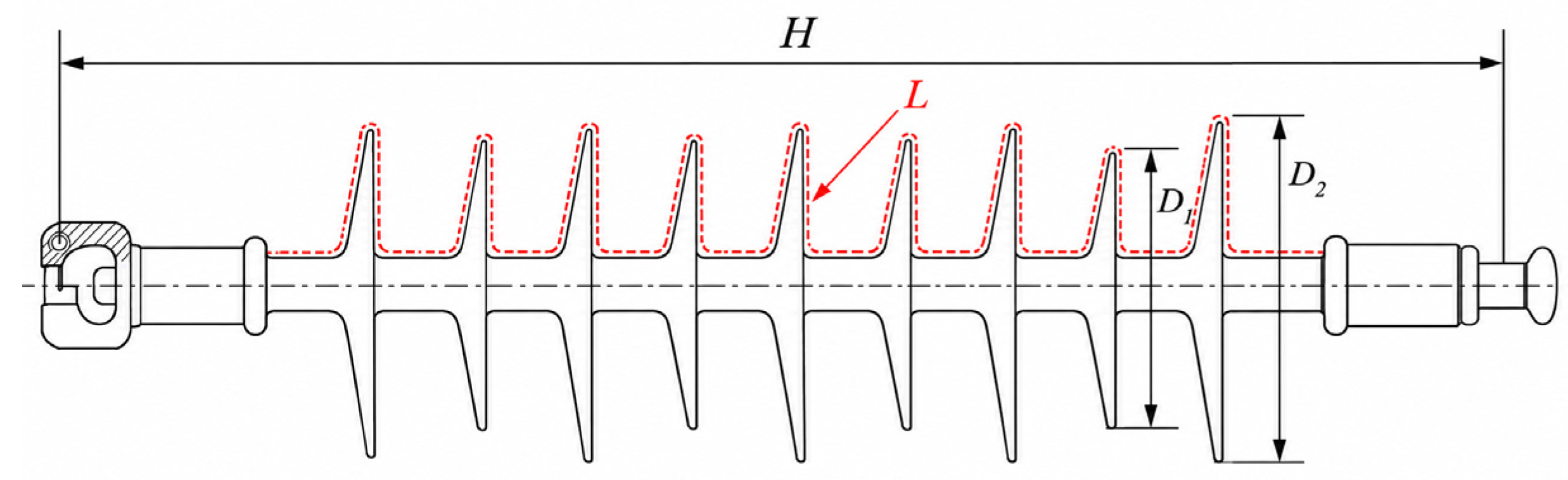
During wildfire events, carbonaceous particles generated by vegetation combustion can remain suspended within the air gaps between insulator sheds and subsequently deposit on insulator surfaces, forming contamination layers that deteriorate their external insulation performance. Investigating the influence of such contamination requires a stable and reproducible source of combustion products. However, collecting sufficient quantities of authentic wildfire ash under controlled conditions is challenging, making it difficult to satisfy the requirements of laboratory contamination tests. Therefore, a representative vegetation-derived ash surrogate is needed. Cellulose, lignin, and moisture are the primary precursors responsible for the formation of carbonaceous combustion products during biomass combustion [17]. Chinese fir, which is widely distributed in wildfire-prone transmission corridors in southwestern China, contains relatively high proportions of these constituents. Its combustion generates abundant soot and ash particles with characteristics similar to those produced during wildfires. Therefore, Chinese fir was selected as the representative vegetation fuel for the composite insulator burning tests conducted in this study. The fundamental structural parameters of the insulators are presented in Figure 1 and Table 1.
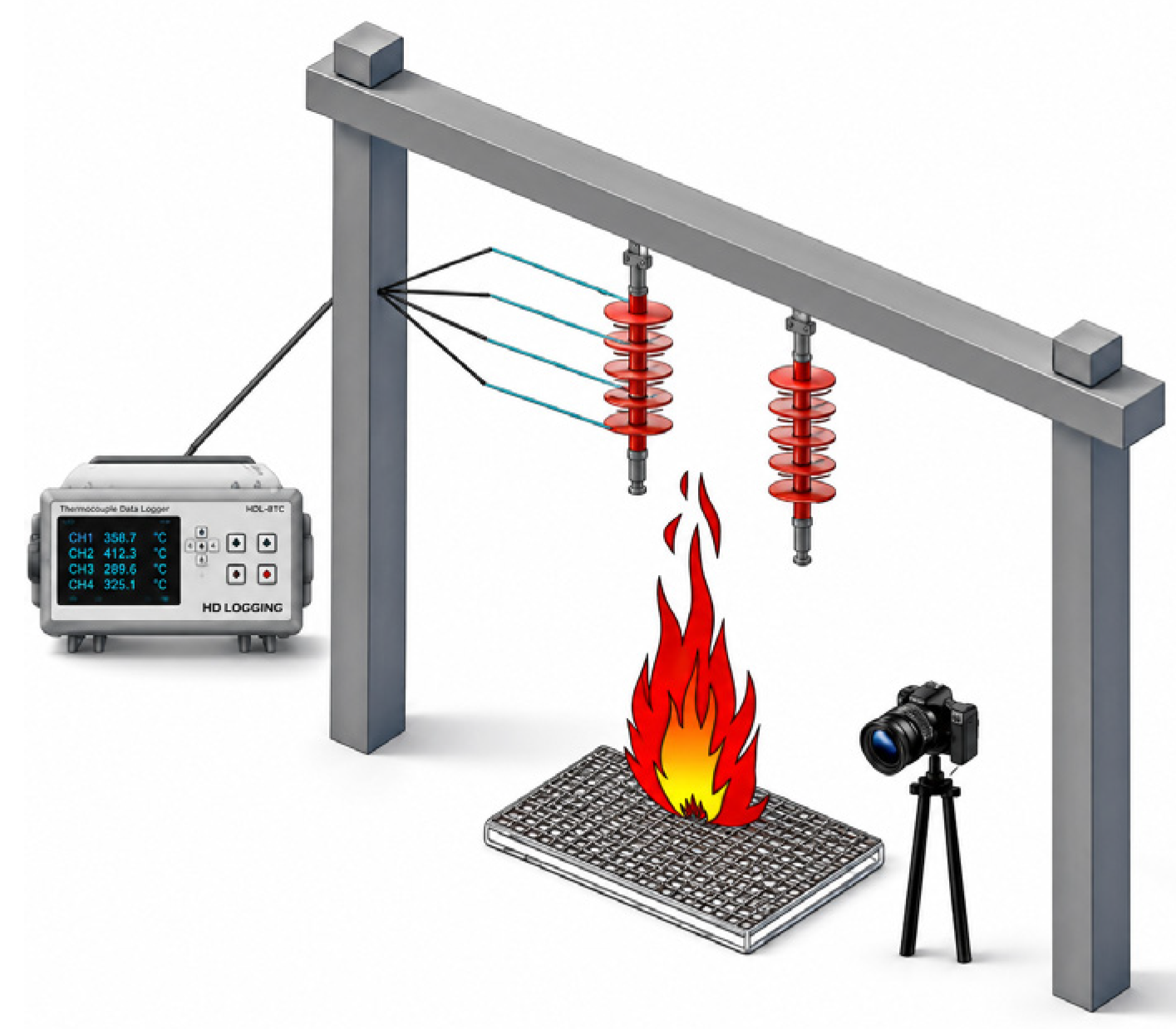
The test setup is illustrated in Figure 2. The insulator was suspended at a height of 1.5 m. Three vegetation cribs with dimensions of 1 m × 1 m × 0.36 m, 1 m × 1 m × 0.54 m and 1 m × 1 m × 0.72 m were built to simulate wildfires of varying intensities. Thermocouples were arranged at different positions to collect temperature data of the insulator sheds during combustion. The thermal exposure temperature of the sheds was defined as the maximum temperature measured under each fire condition, which was extracted from the temperature intervals corresponding to a sustained heating duration of more than 15 min throughout the burning tests.
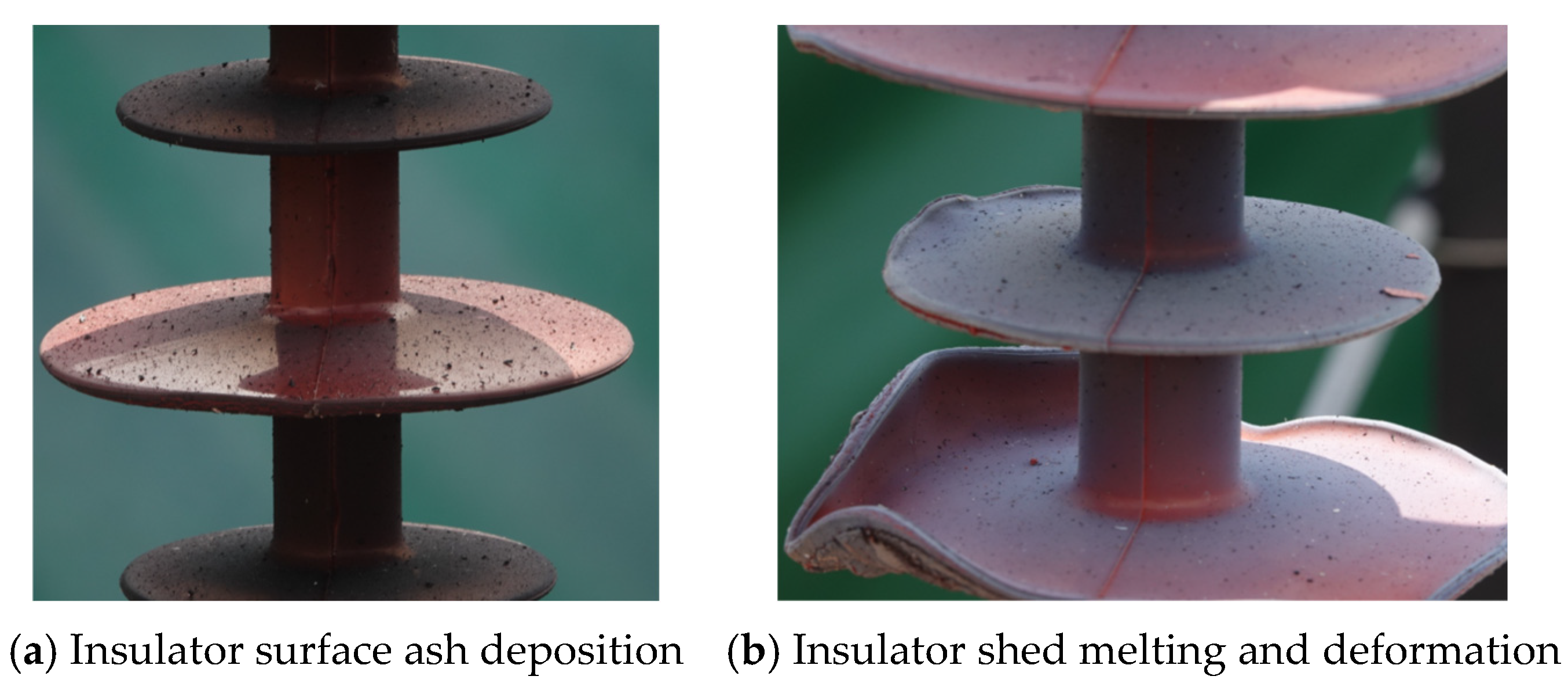
The morphology of the insulators after fire exposure is shown in Figure 3. When the thermal exposure temperature of the insulator sheds remained below 300 °C, no significant structural deformation of the insulators is observed. After wildfire exposure, combustion-generated ash particles accumulate on the insulator surface, and the resulting ash deposition density is positively correlated with wildfire intensity. When the ambient temperature exceeds 300 °C, the shed material of composite insulators fails to withstand the high temperature of wildfires and is prone to ignition and combustion. In accordance with relevant power engineering operation and maintenance specifications, insulators in such condition satisfy the technical criteria for replacement.

2.2. The Influence of Vegetation Fire on the Tensile Strength of Insulator Sheds

Under wildfire conditions, the sheds of composite insulators undergo thermo-oxidative aging. The mechanical performance of insulator sheds is highly correlated with their insulation characteristics. To accurately evaluate the durability and reliability of shed materials after fire exposure, tensile strength tests were carried out on thermally damaged sheds.
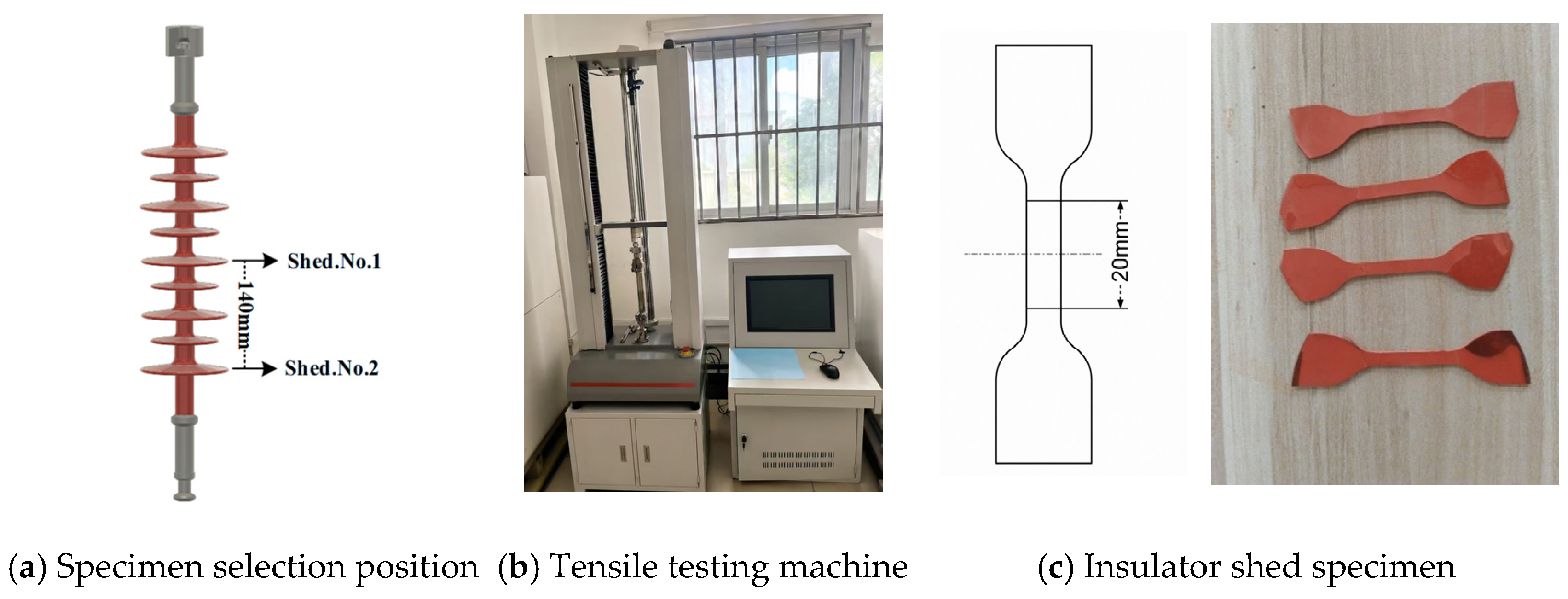
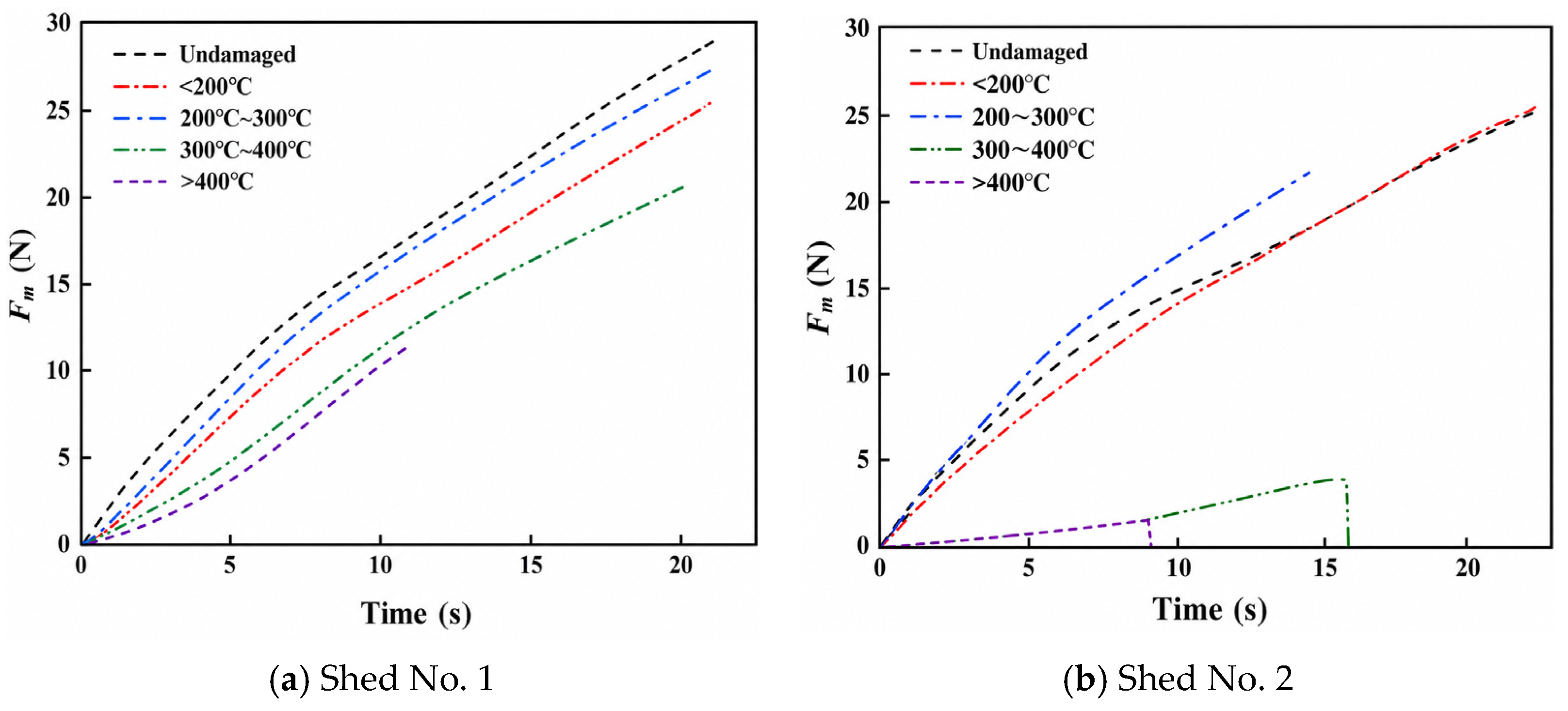
In the burning tests, heat was concentrated on the middle and lower sheds of composite insulators, which consequently suffered obvious deformation and severe thermal damage. Accordingly, the middle and lower sheds of two insulators exposed under the same fire intensity were selected as research samples. A shed sample measuring 20 mm in length and 1.5 mm in thickness was prepared (Figure 4) following the specifications of ISO 37:2024 [18] for tensile test specimens, and tensile tests were implemented at a speed of 500 mm/min via a WDW-10 electronic universal tensile testing machine (Jinan Shijin Group Co., Ltd., Jinan, China). The thermal exposure temperature of the sheds was determined as the maximum temperature of the insulator under each fire condition, which was extracted from the temperature range with a continuous heating time longer than 15 min during the burning process. For every temperature condition, two parallel specimens were tested. The tensile strength and elongation presented in this work are the average values of the two replicates. Test data and performance trends are shown in Figure 5 and Table 2.
As shown in Figure 5, the tensile properties of the paired specimens exhibit only limited variation under temperatures below 300 °C, indicating that the influence of moderate thermal exposure on mechanical strength is relatively weak. The differences observed among the measured values are attributed to the inherent material dispersion and local variations in thermal exposure during the burning process. However, when the insulator string is exposed to a flame environment with a temperature higher than 300 °C for more than 15 min, the tensile strength of the sheds decreases rapidly. Among them, the strength reduction in the lower sheds is significantly greater than that of the middle sheds. Previous studies have demonstrated that prolonged thermal exposure can induce thermo-oxidative aging of silicone rubber, resulting in polymer-chain scission, oxidation reactions, hydrophobicity deterioration, and reductions in mechanical strength [14,15,16].
Furthermore, through burn-through testing, it was discovered that when exposed to flame temperatures exceeding 300 °C for an extended period, the silicone rubber shed exhibits ignition phenomena induced by thermal-oxidative aging, characterized by surface carbonization and localized melting.

2.3. Study on Hydrophobicity Test of Insulator Sheds After Wildfire Exposure

The hydrophobicity of silicone rubber is one of the key factors determining the pollution flashover performance of composite insulators, as it governs the formation of conductive water films and the evolution of surface leakage currents. Exposure to wildfire-induced high temperatures may modify the migration characteristics of low-molecular-weight siloxanes, leading to hydrophobicity degradation and a consequent reduction in insulation performance. Therefore, evaluating the residual hydrophobicity of composite insulators after wildfire exposure is necessary not only for assessing their post-fire service condition, but also for distinguishing the respective contributions of thermal aging and ash contamination to insulation deterioration.
For composite insulators subjected to high temperatures above 300 °C for 5~15 min, the lower shed exhibits significant irreversible aging deformation, including shrinkage, bending, and cracking. According to power engineering operation and maintenance standards, such insulators meet the technical requirements for replacement. Therefore, the hydrophobicity test was only conducted on specimens exposed to temperatures below 300 °C. The hydrophobicity of the composite insulator shed before and after exposure was measured using the spray water grading method specified in IEC-62073 [19].
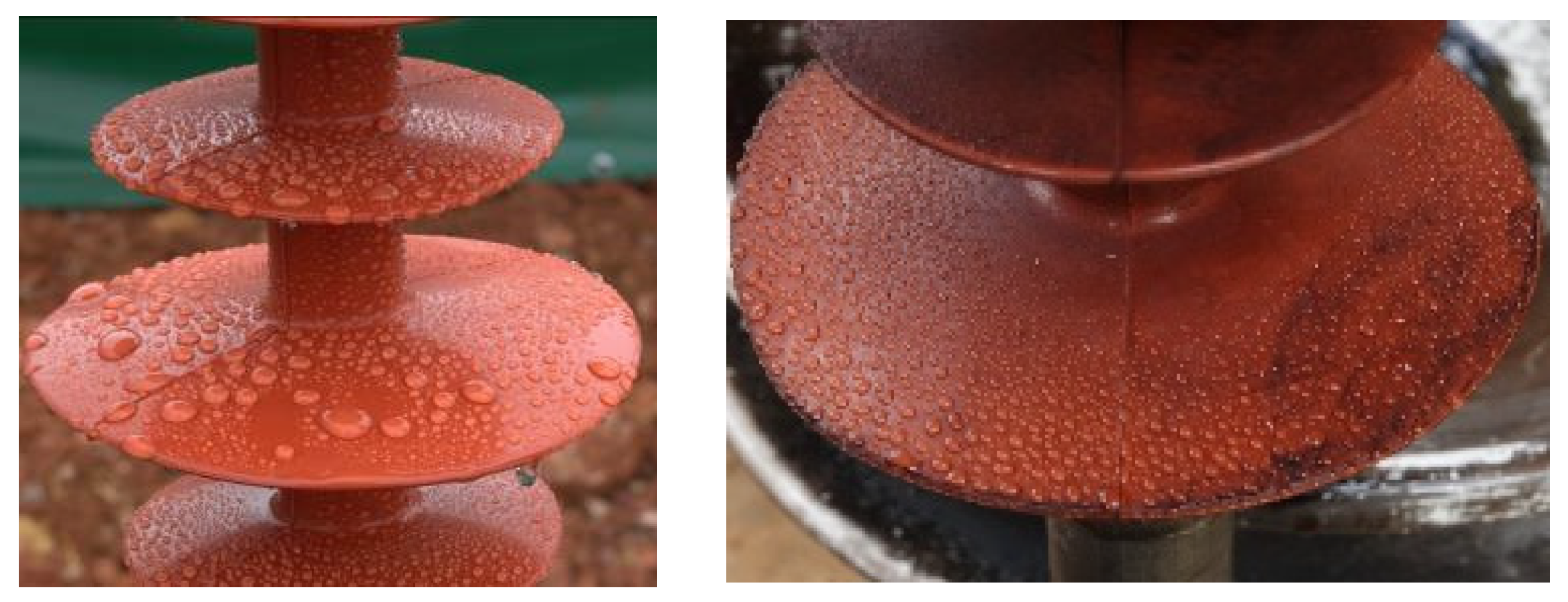
By comparing the hydrophobicity before and after exposure as shown in Figure 6, it was observed that the lower shed exhibited slight bending deformation. High-temperature exposure accelerates the aging of silicone rubber material and leads to varying degrees of hydrophobicity degradation. Although the sheds still retain partial hydrophobicity, this performance decay will change the surface state of insulators, accelerate ash deposition and continuous water film formation, and further affect leakage current distribution and flashover characteristics. To guarantee single variable control in the follow-up pollution flashover tests, all insulator specimens were pre-processed to eliminate surface hydrophobicity uniformly before ash deposition.

3. Physicochemical Characteristics Analysis of Vegetation Combustion Ash

Under extreme wildfire conditions, combustion-generated carbonaceous particles may remain suspended within the air gaps between insulator sheds and subsequently accumulate on insulator surfaces, leading to the formation of heterogeneous contamination layers. Although the direct thermal exposure associated with wildfire is transient, the deposited ash remains on the insulator surface and continues to affect its external insulation condition. Under post-fire humid environments, the soluble salts and conductive carbonaceous components contained in the ash can significantly enhance surface conductivity and facilitate leakage current development, thereby increasing the probability of pollution flashover. Therefore, investigating the insulation performance of ash-contaminated insulators after wildfire exposure is an essential component of post-wildfire insulation assessment [20,21]. However, due to the complex nature of wildfire environments, real-time collection of pristine ash samples is challenging. Furthermore, traditional manual contamination testing requires substantial quantities of ash, making the acquisition of sufficient samples logistically and operationally difficult.
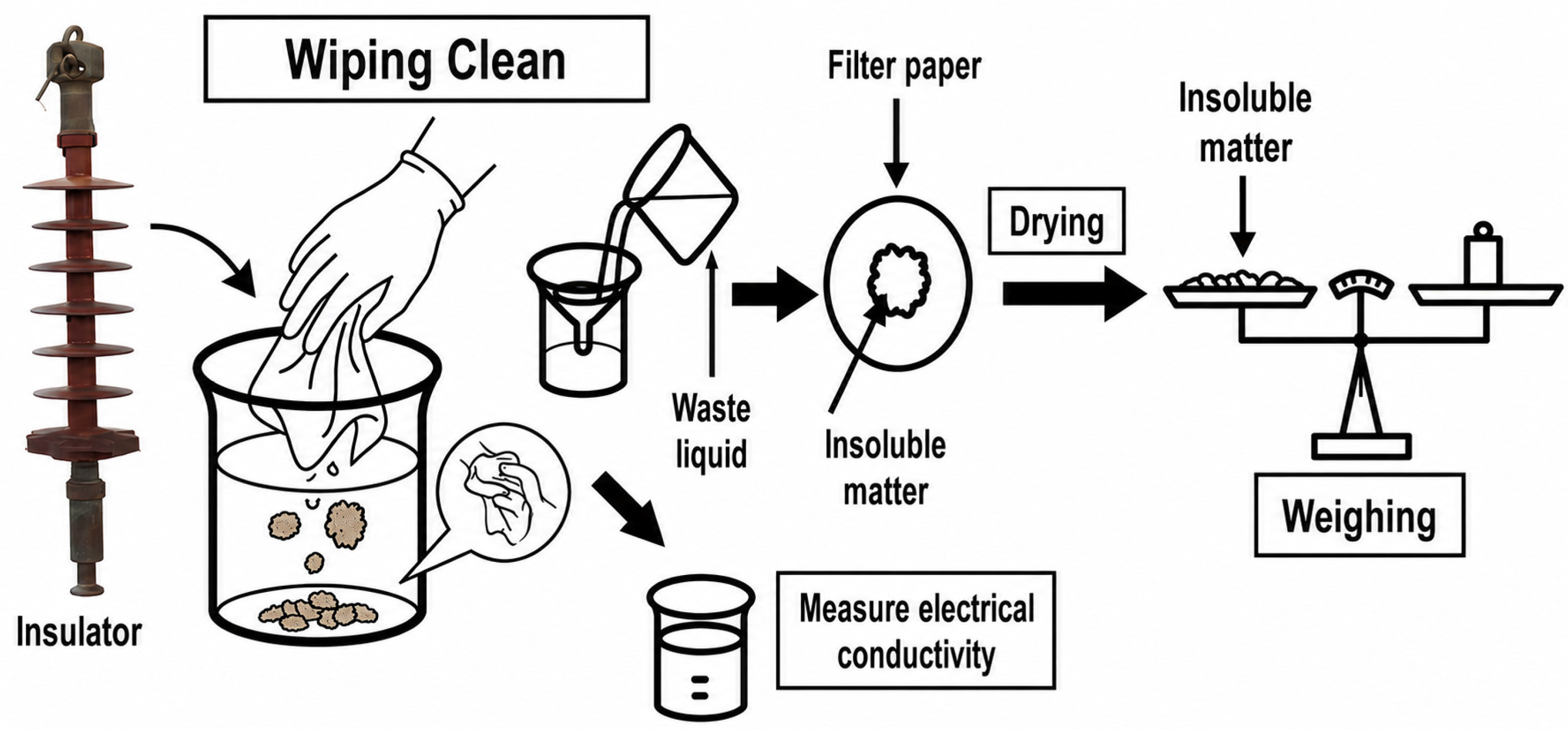
To support subsequent contamination component characterization, both the ash deposits formed on the insulator surface and the vegetation combustion ash particles were collected after the fire exposure tests. In this study, vegetation-derived ash particles with a nominal size of 30 μm were selected to investigate their elemental composition, electrical conductivity, and other physicochemical properties. The fire-induced ash deposits on the insulator surface and the vegetation combustion ash were extracted and tested following the conductivity and ash density measurement procedures specified in IEC 60507 [22], with the detailed test procedure illustrated in Figure 7. The concentration of ash adhering to the shed surface was quantified, and X-ray Photoelectron Spectroscopy (XPS, Thermo Scientific K-Alpha+, Thermo Fisher Scientific, Waltham, MA, USA) was utilized to determine the elemental composition of both ash categories. Comparative conductivity analyses were further conducted to differentiate the characteristic behaviors of the two ash particle types. The obtained results validate the feasibility of employing vegetation combustion ash as a simulant for insulator surface contamination, thereby providing robust data support and technical references for subsequent artificial contamination tests and the performance evaluation of insulator wildfire resistance.

3.1. Analysis of Elemental Composition in Ash

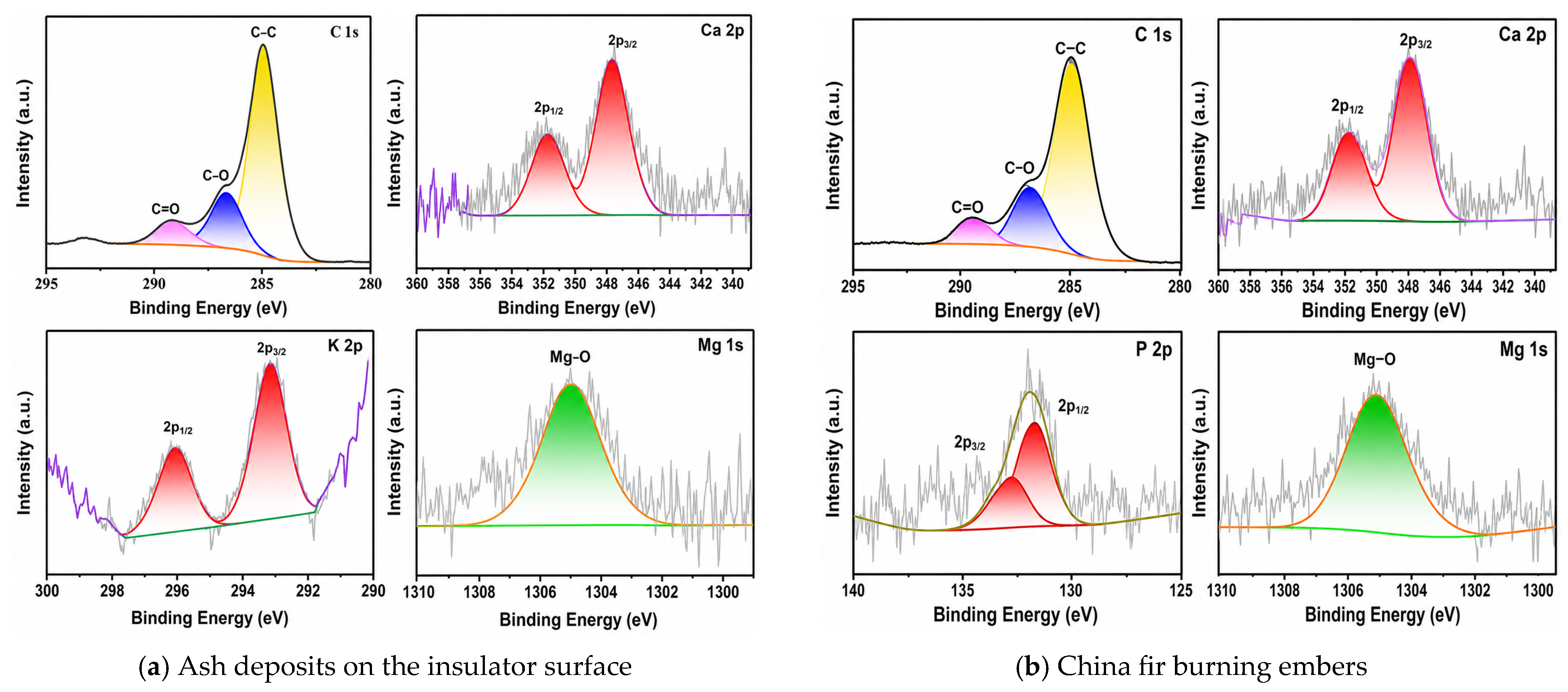
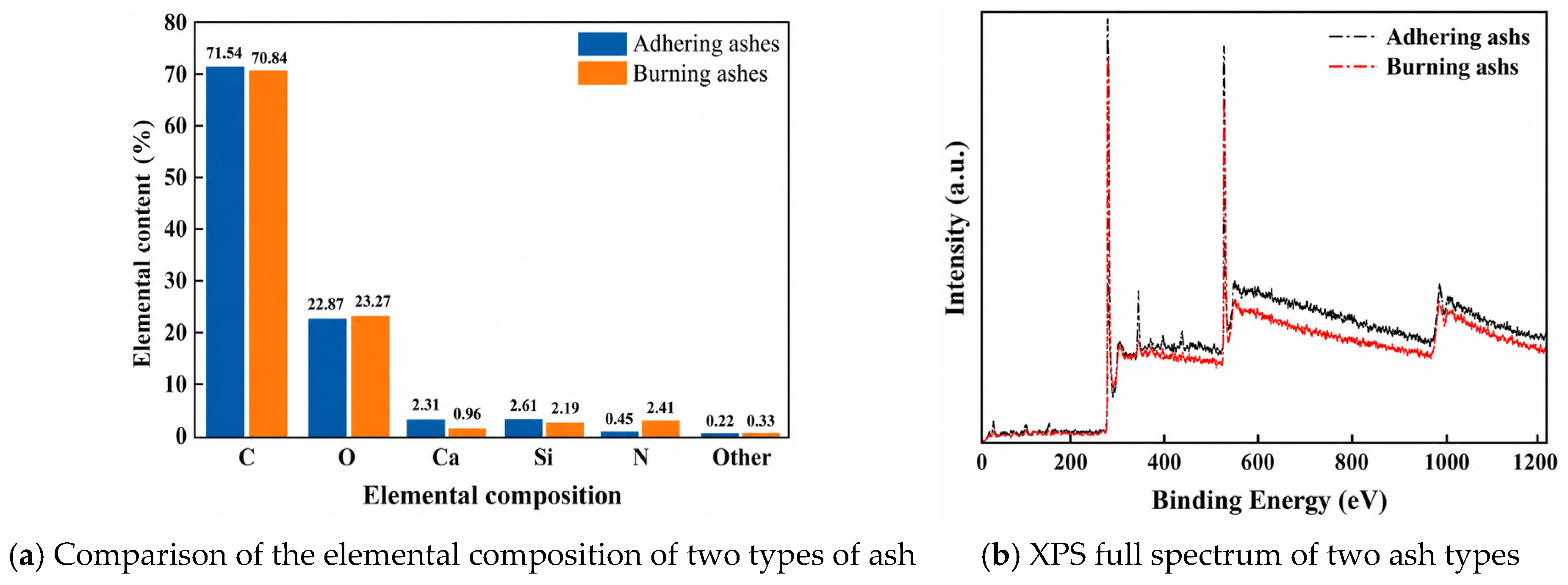
The amount of ash accumulated on the insulator surface changes with the intensity of vegetation fires. The analysis of ash samples collected from the insulator surface shows that the ash deposition density varies from 0.023 mg/cm2 to 0.69 mg/cm2 and exhibits a positive correlation with wildfire intensity. Analysis of the elemental composition of both ash types using XPS yielded results shown in Figure 8 and Figure 9.
Comparing the peak intensities of the full XPS spectra for the two ash particles reveals significantly higher characteristic peak intensities for C1s and O1s compared to other elements, indicating that C and O dominate the ash composition. Furthermore, the full spectra of both ashes showed high consistency in characteristic peak positions, peak profiles, and relative intensities, with no discernible differences in peak patterns. Quantitative elemental composition results were obtained by integrating the characteristic peaks of each element. The adhered ash and combustion ash contained 94.41% and 94.11% of C and O in total, respectively, while Ca and Si accounted for 96.1% and 94.4% of the trace elements, respectively. Therefore, the ash produced by vegetation combustion mainly consists of carbonaceous components, water-soluble ions, and trace water-soluble inorganic elements [17]. In a humid environment, these water-soluble substances will change the conductivity of the pollution layer on the insulator surface.

3.2. Analysis of Ash Conductivity

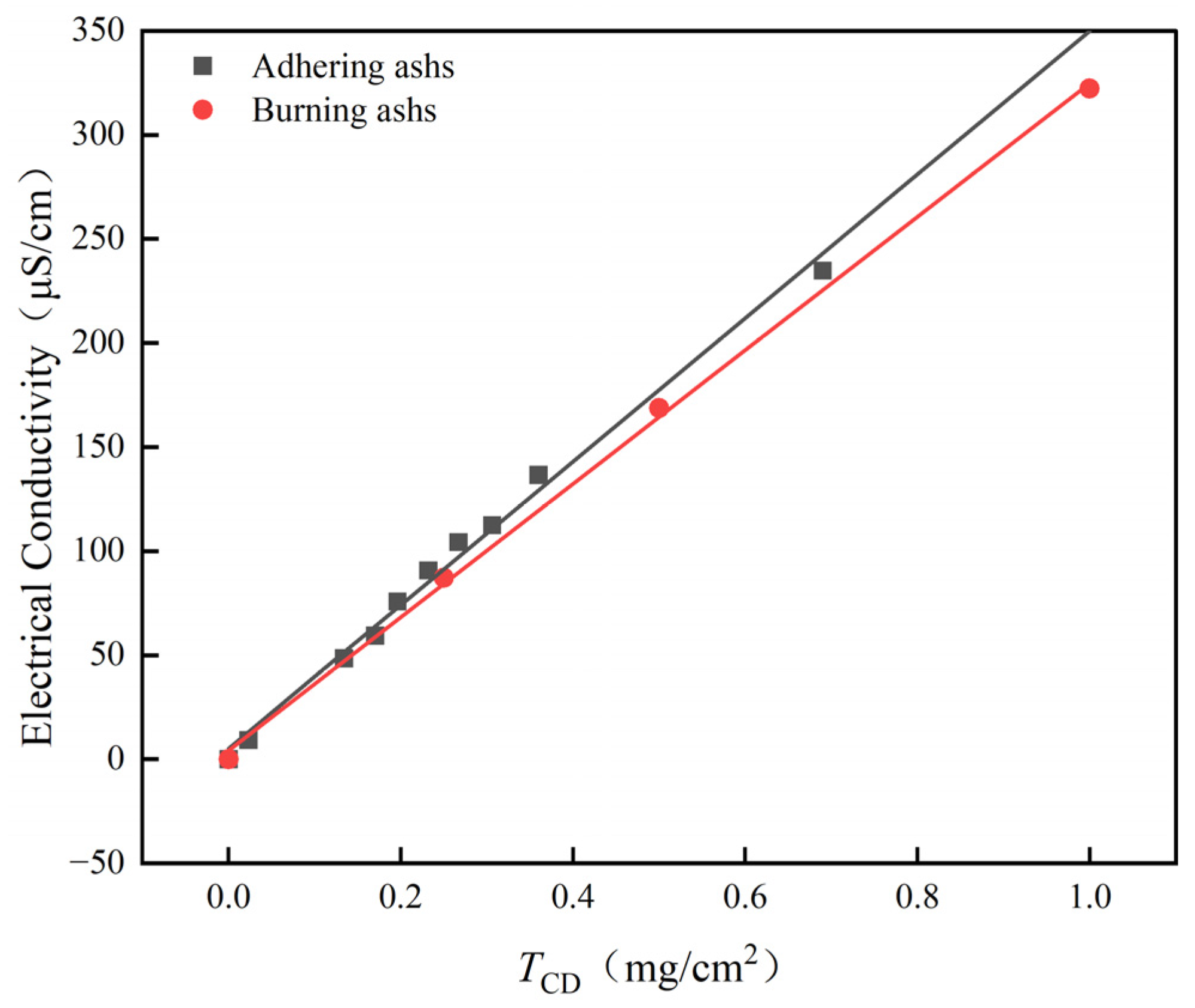
The electrical conductivity of two ash samples was measured using the conductivity measurement method specified in IEC 60507. Figure 10 illustrates the relationship between solution volumetric conductivity and ash concentration (TCD). It can be observed that the solution’s volumetric conductivity rises in an approximately linear manner with increasing TCD. The slope of the conductivity curve for ash adhering to insulator surfaces is 1.075 times that of vegetation-burned ash. Both types of ash exert nearly identical effects on the conductivity of the fouling layer. Therefore, it is reasonable to use vegetation-burned ash to simulate the adhesion of ash particles on insulator surfaces after fire exposure.

4. Effect of Vegetation Ash Deposition on the Insulation Properties of Insulators

High-temperature airflow generated by wildfires, carbon black particles in various states produced by vegetation combustion, and airborne burning fluff tend to accumulate on insulator surfaces, thereby degrading their insulating properties. To investigate changes in insulator performance following wildfire exposure, simulated testing of the insulating properties of insulators after wildfire exposure was conducted.

4.1. Test Arrangement and Test Methods

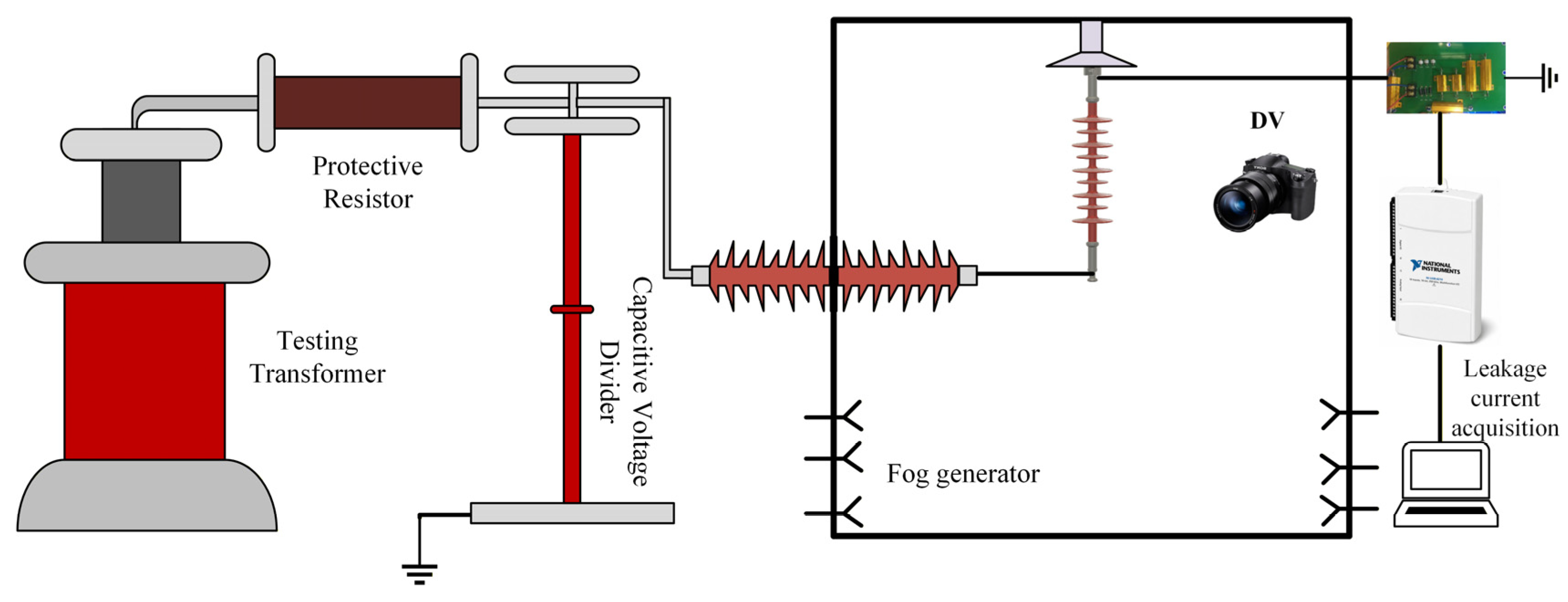
Flashover tests were performed in a small artificial fog chamber 3 m × 3 m × 3 m, with the specific test layout depicted in Figure 11.
The voltage regulator used was a TYDZ-900/10.5 column-type regulator(Jiangsu Shenghua Electric Co., Ltd., Yangzhou, China), and the transformer was a YDTW-900/150 test transformer(Jiangsu Shenghua Electric Co., Ltd., Yangzhou, China). The parameters of the test power supply are shown in Table 3. This configuration meets the requirements for AC pollution flashover test power supplies specified in IEC 60507.
Contamination Method: The artificial contamination simulated in this study primarily consists of a mixture of cedar ash, salt (NaCl), and diatomaceous earth. Diatomaceous earth was used to simulate the initial insoluble contamination accumulated on the insulator surface before the wildfire, while NaCl was used to simulate the initial soluble salts existing before the wildfire event. The initial contamination degree is denoted as ISD, with an initial salt-to-ash ratio of 1:5. Cedar wood ash was introduced to simulate the additional ash particles deposited on the insulator surface after wildfire exposure, with ash particle concentration indicated as TCD. Contamination of insulator specimens was performed using the solid contamination layer method. To account for the influence of composite insulator hydrophobicity, a layer of diatomaceous earth was uniformly applied to the shed surface of composite insulators using a soft-bristle brush prior to contamination, thereby eliminating their surface hydrophobicity.
Pressurization Method: This paper employs the uniform voltage-rise method recommended in IEC 60507 [22] for conducting flashover tests. The calculation formulas of the insulator flashover voltage Uf and the relative standard deviation σ obtained by the uniform voltage rise method are as follows:
U f = i = 1 N U i N
σ = i = 1 N ( U i U f ) 2 N 1
where Uf denotes the mean flashover voltage of the insulator derived via the uniform voltage rise technique (kV); Ui represents the flashover voltage obtained from the i-th experimental trial (kV); N signifies the total number of valid tests conducted; σ stands for the standard deviation of the experimental outcomes.

4.2. Effect of TCD Variation on Flashover Voltage of FXBW4-35/70 Composite Insulators

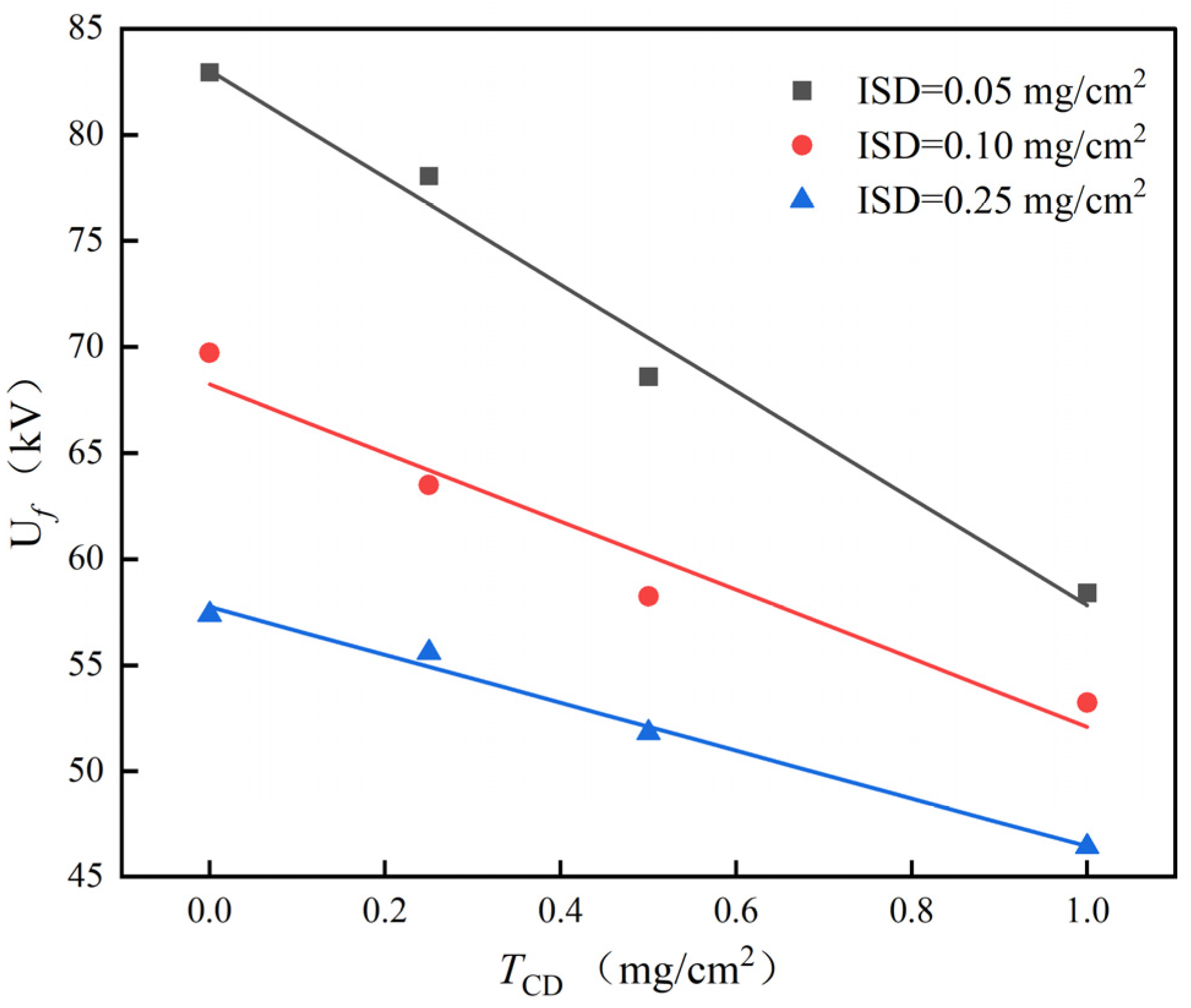
AC pollution flashover tests were conducted on FXBW4-35/70 composite insulators in an artificial fog chamber. At an initial salt-ash ratio of 1:5, with the initial salt density (ISD) controlled at 0.05 mg/cm2, 0.10 mg/cm2, and 0.25 mg/cm2 respectively, the relationship between insulator flashover voltage and TCD was derived by varying the TCD level, as shown in Figure 12 and Formula (3).
ISD = 0.05   mg / cm 2 , U f = 83.02 25.19 T C D ISD = 0.10   mg / cm 2 , U f = 68.23 16.13 T C D ISD = 0.25   mg / cm 2 , U f = 57.75 11.30 T C D
where Uf denotes the flashover voltage (kV); TCD denotes the ash particle concentration (mg/cm2).
The flashover voltage of composite insulators declines roughly linearly as TCD rises. A higher TCD corresponds to a lower flashover voltage and degraded insulation performance of the insulator. The primary reasons are as follows: ash contains trace soluble salts. In humid environments, these soluble salts dissolve into ionic forms, reducing the resistance of the insulator’s surface contamination layer. Simultaneously, the insoluble carbon particles in ash exhibit good conductivity and increase the saturated water content of the contamination layer, which further accelerates the dissociation of soluble salts and exacerbates the rise in conductivity of the contaminated layer. Accordingly, the synergistic interaction between carbon particles and soluble salts within the ash results in a decrease in the insulator’s flashover voltage and a deterioration of its insulating performance.
With the increase in ISD, the flashover voltage of polluted insulators decreases gradually, while the decreasing rate tends to slow down as TCD rises. For example, when ISD increases from 0.05 mg/cm2 to 0.25 mg/cm2 and TCD rises from 0 mg/cm2 to 1.0 mg/cm2, the flashover voltage of composite insulators decreases by 29.1%, 24.9%, 24.4%, and 20.5% in turn.
The primary cause is that a higher ISD raises the concentration of conductive ions in the contamination layer, enhancing its conductivity and consequently lowering the insulator’s flashover voltage. When the contamination layer conductivity increases to a certain level, it gradually approaches saturation. At low ISD values, even a small amount of ash particle adhesion can cause a significant reduction in insulation performance. As ISD gradually increases, soluble salts in the initial contamination become the dominant conductive component, and the effect of ash particle adhesion on the contamination layer conductivity gradually weakens.

4.3. Effect of Initial Contamination Degree (ISD) on Flashover Voltage of Composite Insulators

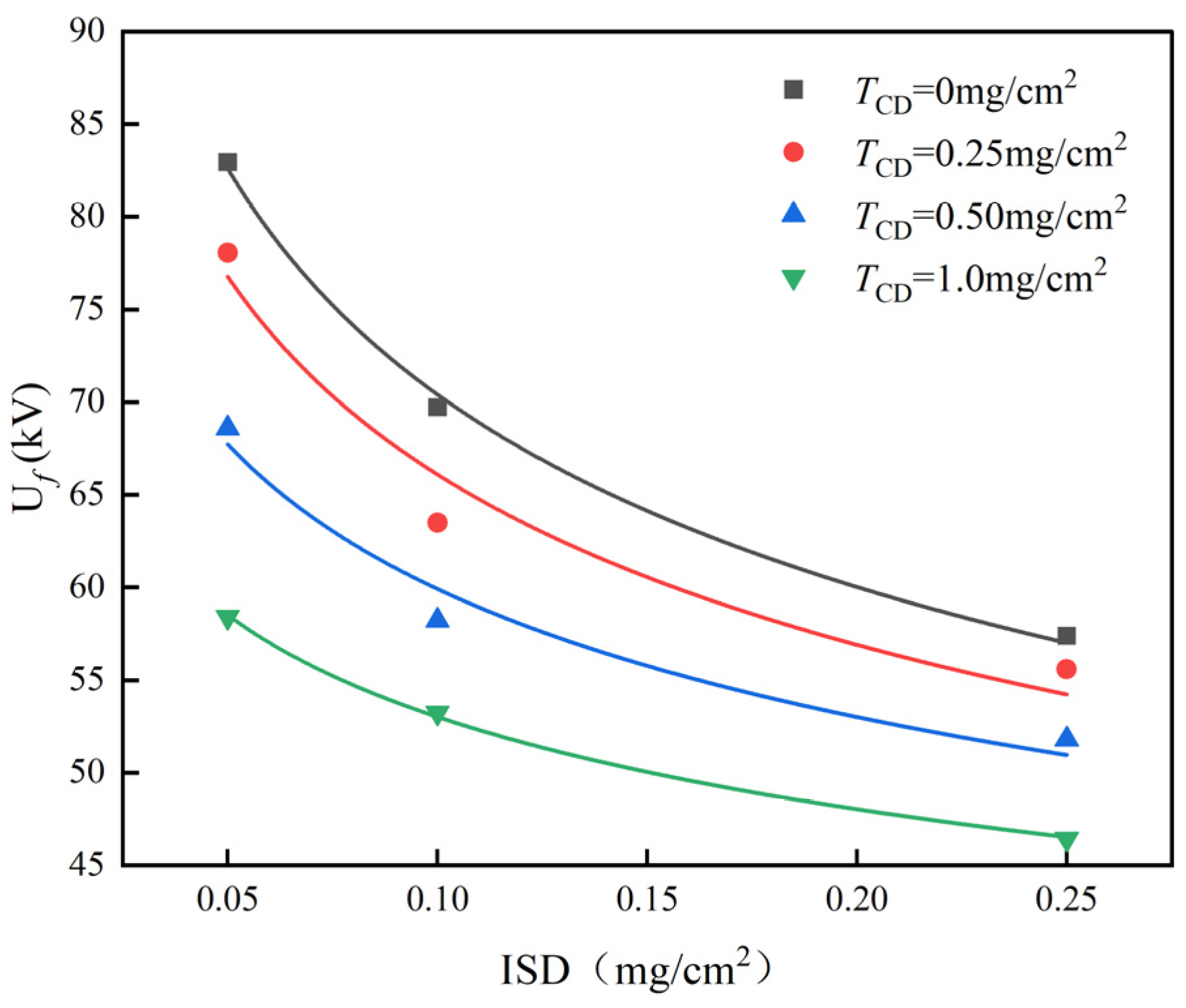
To investigate the effect of varying ISD on the flashover characteristics of composite insulators, tests were conducted at fixed TCD levels of 0.25 mg/cm2, 0.5 mg/cm2, and 1.0 mg/cm2, while ISD was adjusted to 0.05 mg/cm2, 0.10 mg/cm2, and 0.25 mg/cm2. The variation trend of flashover voltage with different ISD was obtained, and the corresponding results are presented in Figure 13.
Research findings indicate that the flashover voltage of contaminated insulators exhibits a strong correlation with initial surface deposit density (ISD). Specifically, a higher concentration of ISD within the contamination layer gives rise to enhanced surface conductivity, which in turn causes a significant rise in leakage current density and consequently increases Joule heating. The thermal energy generated by Joule heating accelerates the dehydration and evaporation of moisture within the contamination layer, facilitating the formation and expansion of dry bands across the insulator surface. Once the electric field intensity concentrated near these dry bands exceeds the critical breakdown field strength of air, local partial discharge is readily initiated. With continuous development and connection of these discharge channels, a sustained through-arc path is eventually formed, ultimately triggering complete flashover of the insulator. The quantitative relationship between the flashover voltage (Uf) of polluted insulators and ISD can be mathematically expressed by Equation (4) [23,24]:
U f = K   ρ I S D a
where K represents a coefficient associated with the insulator’s shed diameter and profile; ρISD denotes the equivalent salt deposit density (mg/cm2); a stands for the characteristic exponent reflecting the impact of ρISD on the flashover voltage.
The experimental results were fitted by Formula (4), and the flashover voltage coefficient K, characteristic index a and fitting correlation coefficient R2 of composite insulators under TCD of 0 mg/cm2, 0.25 mg/cm2, 0.5 mg/cm2, and 1.0 mg/cm2 were obtained, as shown in Table 4.
The variation in ISD significantly affects the flashover voltage of insulators. Under various TCD deposition levels, the changing trend of insulator flashover voltage is nearly consistent, as ISD increases, flashover voltage decreases according to a negative power function. At lower ISD values, flashover voltage decreases rapidly with increasing ISD. As ISD further increases, the rate of decrease in flashover voltage slows down.
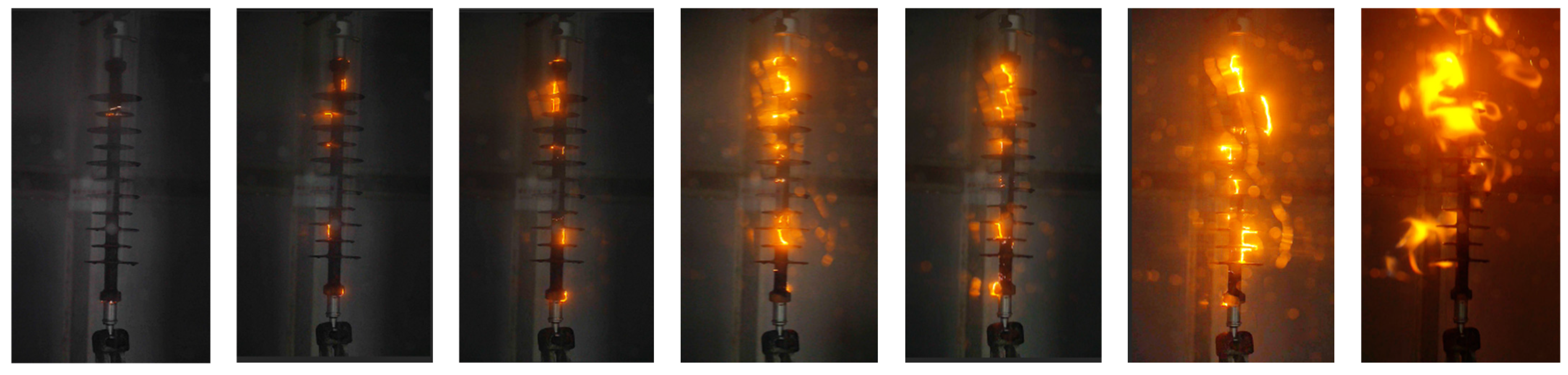
With the increase in TCD, the flashover voltage of polluted insulators decreases continuously, while the influence of ISD change on flashover voltage becomes less obvious. This is primarily manifested by the characteristic index a of Uf affected by ISD gradually decreasing with increasing TCD. Meanwhile, as shown in Figure 14, the flashover develops along the contaminated and wetted surface of the insulator. The increase in contamination severity facilitates the formation of conductive paths and promotes arc propagation, thereby reducing the flashover voltage.
The primary reason is that contaminants contain soluble salts, which exist as conductive ions under wet conditions. As salt concentration increases, the conductivity of the contamination layer rises significantly. At low salt densities, salt distribution is sparse and the conductive network is not fully formed; even a small increase in salt content can markedly reduce insulation performance. As ISD increases, the conductive network approaches saturation, and the contribution of ISD to the conductivity of the contamination layer gradually weakens, thereby reducing the rate of decline in Uf.

4.4. Correction of Pollution Withstand Voltage Considering Ash Deposition

Accurate assessment of the external insulation condition of insulators after high-temperature exposure is crucial for formulating maintenance strategies. By establishing a functional relationship between the equivalent salt density (ρESDD) and TCD/ISD through fitting, a quantifiable basis for correction is provided for insulator flashover risk classification and differentiated operation and maintenance.
First, based on the flashover voltage fitting Formula (4) for ash-free conditions and the flashover voltage under ash-contaminated conditions, the equivalent contamination degree after ash particle adhesion at different ISD levels is obtained, as shown in Table 5. The calculation formula for the equivalent contamination degree is as follows:
ρ E S D D = ( U f K ) 1 a
where ρESDD is the equivalent salt density, mg/cm2.
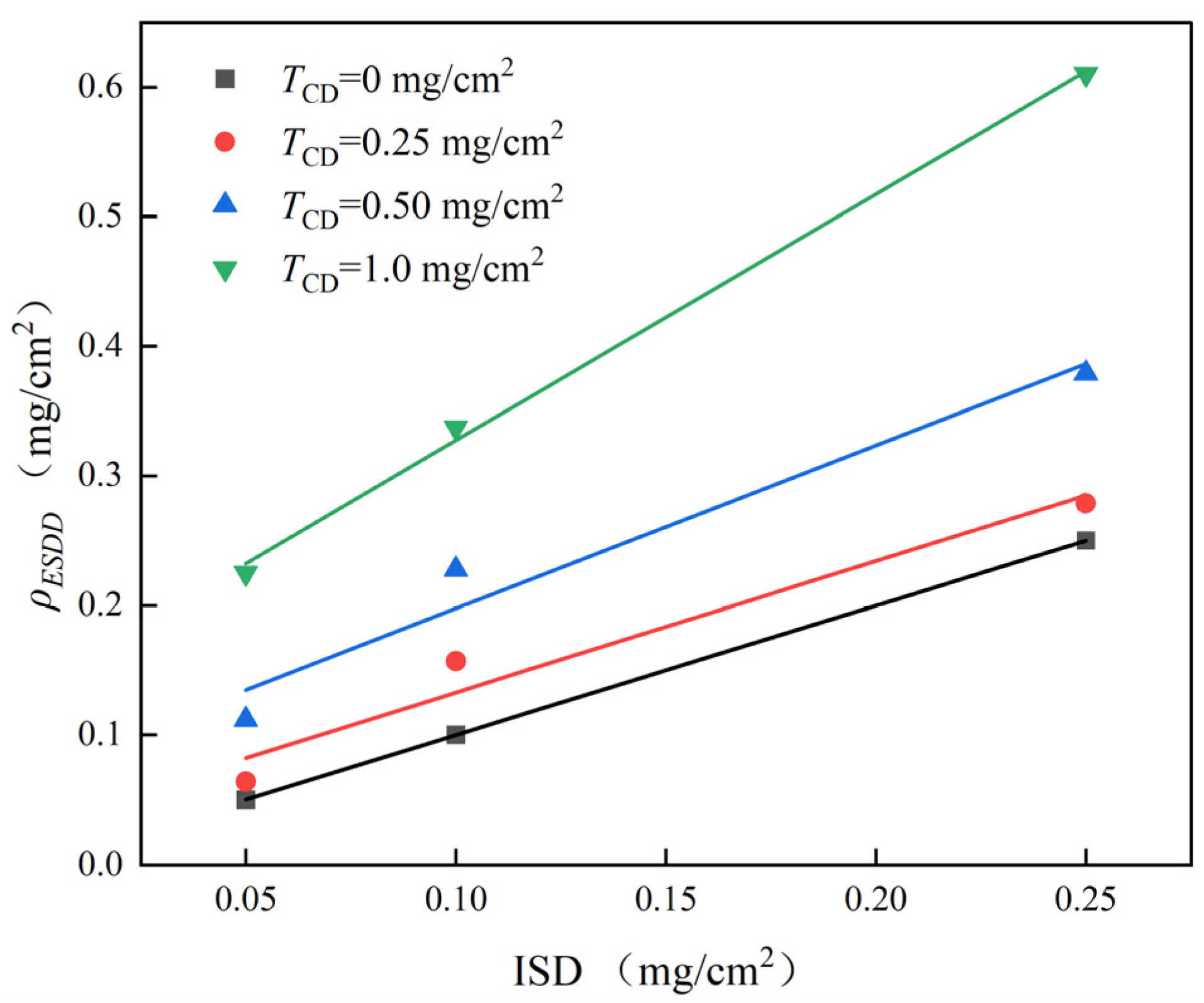
A fitting relationship between ISD, TCD, and the equivalent contamination degree after fire exposure (ρESDD) was established using tabulated data. This fitting relationship is illustrated in Figure 15 and expressed by Formula (6).
T C D = 0 mg / cm 2 ρ E S D D = I S D T C D = 0.25 mg / cm 2 ρ E S D D = 1.018 I S D + 0.03138 T C D = 0.50 mg / cm 2 ρ E S D D = 1.259 I S D + 0.07177 T C D = 1.0 mg / cm 2 ρ E S D D = 1.900 I S D + 0.13723
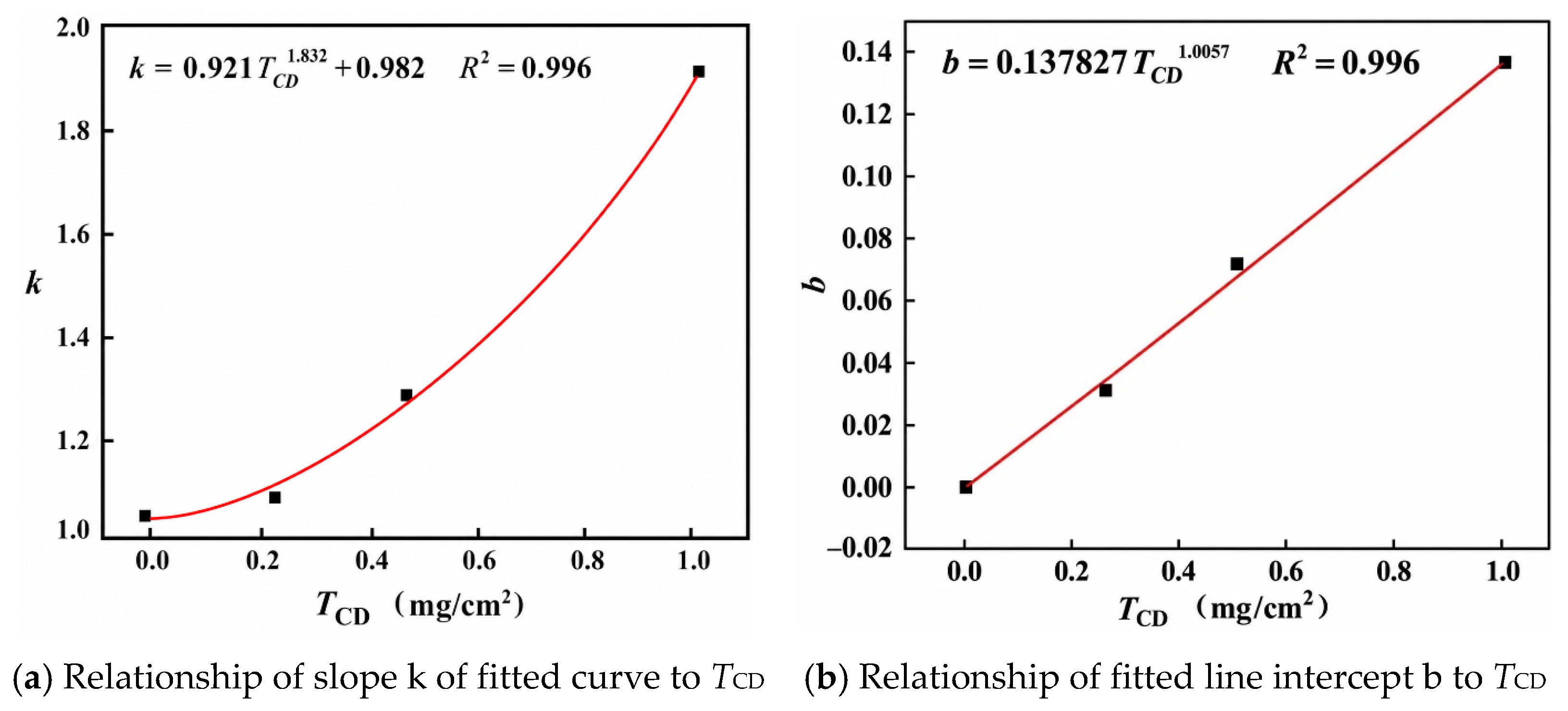
As shown in Figure 15, the initial contamination level exhibits an approximate linear relationship with the equivalent contamination degree after fire exposure. As the pre-coating contamination level increases, the equivalent contamination level also increases. With the increase in TCD, both the slope and intercept of the fitting equation increase. Therefore, the relationship between the slope and intercept of the fitting curve and TCD is established, as shown in Figure 16.
By comprehensively considering various factors, the relationship between the equivalent contamination degree (ρESDD) and TCD as well as ISD can be derived as shown in Formula (7). According to IEC/TS 60815-1 [25], the risk level of insulator flashover can be classified based on the equivalent contamination degree after fire exposure, and corresponding maintenance strategies can be implemented.
ρ E S D D = k × I S D + b
where k denotes the slope of the fitting line, which is associated with ash particle concentration; b represents the intercept of the fitting line, and it is also affected by the concentration of ash particles; ISD is the initial soiling degree, mg/cm2; ρESDD is the equivalent soiling degree after fire exposure, mg/cm2.

5. Conclusions

This study takes the FXBW4-35/70 composite insulator as the research object and systematically investigates the effects of wildfire-induced high-temperature environments on the mechanical properties of composite insulator sheds, as well as the variation in insulation performance under ash contamination conditions. The results demonstrate that wildfire flames and combustion ash can significantly deteriorate both the mechanical and insulation performance of composite insulators. The following conclusions can be drawn:
(1)
Under wildfire conditions, the concentration of ash particles deposited on the surface of insulator sheds ranges from 0.023 mg/cm2 to 0.69 mg/cm2, which shows a significant positive correlation with flame height and combustion duration. When the temperature exceeds 300 °C, the composite insulator sheds are prone to thermal-oxidative aging, ignition and irreversible deformation, and such insulators need to be replaced in a timely manner; in a high-temperature environment below 300 °C, the hydrophobicity of the insulator sheds is reduced to a certain extent, but the basic hydrophobic performance is still maintained.
(2)
Conductive carbon particles within ash particles interact with dissociated inorganic salt ions to reduce the resistance of the contamination layer, thereby affecting the insulating properties of insulators. Specifically, TCD and ISD influence insulation performance by altering the concentration of conductive ions within the contamination layer.
(3)
According to the fitting analysis, the flashover voltage of polluted insulators exhibits a linear reduction with increasing TCD, and the slope of the fitting curve declines gradually as TCD rises. This demonstrates that the effect of ash accumulation on the insulation performance of insulators weakens progressively. Relative to the condition without ash deposition, the flashover voltage is reduced by 19.1~29.6% after ash accumulation.

Author Contributions

Conceptualization, D.H.; methodology, E.Z.; validation, E.Z., L.W., X.Q., S.L., C.C., H.X. and T.P.; writing—original draft preparation, X.Q.; writing—review and editing, D.H. All authors have read and agreed to the published version of the manuscript.

Funding

This research was funded by the technology project of China Southern Power Grid Co., Ltd., grant number GDKJXM20231430.

Institutional Review Board Statement

Not applicable.

Informed Consent Statement

Not applicable.

Data Availability Statement

All relevant data are contained within the paper.

Conflicts of Interest

The authors declare that this study received funding from China Southern Power Grid Co., Ltd. The funder was not involved in the study design, collection, analysis, interpretation of data, the writing of this article or the decision to submit it for publication. Authors Enze Zhou, Lei Wang, Shiyan Lin and Chao Chen were employed by the company Electric Power Research Institute of Guangdong Power Grid Co., Ltd.. The remaining authors declare that the research was conducted in the absence of any commercial or financial relationships that could be construed as a potential conflict of interest.

References

  1. Zhou, F.; Geng, H.; Wen, G.; Ma, Y.; Ma, Y.; Wang, G.; Cao, J.; Xu, J.; Mei, H. Influence of Mountain Wildfires on the Insulation Properties of Air Gaps in Power Grids. Energies 2025, 18, 225. [Google Scholar] [CrossRef]
  2. Nazemi, M.; Dehghanian, P.; Darestani, Y.; Su, J. Parameterized Wildfire Fragility Functions for Overhead Power Line Conductors. IEEE Trans. Power Syst. 2024, 39, 2517–2527. [Google Scholar]
  3. Vahedi, S.; Zhao, J.; Pierre, B.; Lei, F.; Anagnostou, E.; He, K.; Jones, C.; Wang, B. Wildfire and power grid nexus in a changing climate. Nat. Rev. Electr. Eng. 2025, 2, 225–243. [Google Scholar] [CrossRef]
  4. Khatoon, S.; Khan, A.A.; Tariq, M.; Alamri, B.; Mihet-Popa, L. Flashover Voltage Prediction Models under Agricultural and Biological Contaminant Conditions on Insulators. Energies 2022, 15, 1297. [Google Scholar] [CrossRef]
  5. Yang, Z.; Jiang, X.; Han, X.; Zhang, Z.; Hu, J. Influence of Pollution Chemical Components on AC Flashover Performance of Various Types of Insulators. High Volt. 2019, 4, 105–112. [Google Scholar] [CrossRef]
  6. Huang, L.; Yin, J.; Zhao, Y. Investigation of the Impact of Wind-Sand Flows on the Electric Field Along Composite Insulator Surface via Multi-Physical Field Coupling. Energies 2026, 19, 1183. [Google Scholar]
  7. Zhang, X.; Shi, C.; Kang, Y.; Yin, X.; Gao, G.; Wu, G. Flashover Characteristics of Cylindrical Insulator in High-Speed Sand Environment. IEEE Trans. Dielectr. Electr. Insul. 2017, 24, 455–461. [Google Scholar] [CrossRef]
  8. Sun, C.; Zhang, Z.; Fan, C.; Kang, Y.; Zhang, X.; Guo, Y. Study on flashover characteristics and mechanism of insulator in wind-sand environment. High Volt. Appar. 2021, 57, 182–188. [Google Scholar]
  9. Velásquez, R.M.A. Insulation failure caused by special pollution around industrial environments. Eng. Fail. Anal. 2019, 102, 123–135. [Google Scholar] [CrossRef]
  10. Liu, Y.; Xia, B.; Du, B.; Farzaneh, M. Influence of Fine Metal Particles on Surface Discharge Characteristics of Outdoor Insulators. Energies 2016, 9, 87. [Google Scholar] [CrossRef]
  11. Zhang, Z.; Dong, Z.; Wang, B.; Jiang, X.; Hu, J.; Hu, Q. Influence of Metal Iron Dust Deposit on the AC Pollution Flashover Characteristics of Insulator. IEEE Trans. Dielectr. Electr. Insul. 2026, 33, 586–594. [Google Scholar] [CrossRef]
  12. Wardman, J.; Wilson, T.; Hardie, S.; Bodger, P. Influence of volcanic ash contamination on the flashover voltage of HVAC outdoor suspension insulators. IEEE Trans. Dielectr. Electr. Insul. 2014, 21, 1189–1197. [Google Scholar] [CrossRef]
  13. Cui, L.; Goru, R.S.; Chipman, D. Evaluating flashover performance of insulators under fire fighting conditions. IEEE Trans. Dielectr. Electr. Insul. 2017, 24, 1051–1056. [Google Scholar] [CrossRef]
  14. Akbari, M.; Shayegani-Akmal, A.A. Experimental Investigation on the Accelerated Aging of Silicone Rubber Insulators Based on Thermal Stress. Int. J. Electr. Power Energy Syst. 2023, 149, 109049. [Google Scholar] [CrossRef]
  15. Wen, X.; Yuan, X.; Lan, L.; Hao, L.; Wang, Y.; Li, S.; Lu, H.; Bao, Z. RTV Silicone Rubber Degradation Induced by Temperature Cycling. Energies 2017, 10, 1054. [Google Scholar] [CrossRef]
  16. Mahesh, S.; Mishra, P.; El Hag, A.; Sonawane, S.H.; Mondal, M.; Sarathi, R. Flame Retardancy and Thermal Performance of Rare Earth Oxide Doped Silicone Rubber Nanocomposites. IEEE Trans. Dielectr. Electr. Insul. 2025; early access.
  17. Ju, Y.H.; Ma, X.Q.; Guo, L.F.; Ma, Y.F.; Cai, Q.J.; Guo, F.T. Characteristics of pollutants released by combustion of Chinese fir litterfall and PM2.5 composition analysis. Sci. Silvae Sin. 2019, 55, 187–196. [Google Scholar]
  18. ISO 37:2024; Rubber, Vulcanized or Thermoplastic—Determination of Tensile Stress-Strain Properties. International Organization for Standardization: Geneva, Switzerland, 2024.
  19. IEC IEC/TR 62073; Guidance on the Measurement of Hydrophobicity of Insulator Surfaces. IEC: Geneva, Switzerland, 2016.
  20. El-Zohri, E.H.; Abdel-Salam, M.; Shafey, H.M.; Ahmed, A. Mathematical modeling of flashover mechanism due to deposition of fire-produced soot particles on suspension insulators of a HVTL. Electr. Power Syst. Res. 2013, 95, 232–246. [Google Scholar] [CrossRef]
  21. Guo, Y.; Ma, H.; Zhang, X.; Zhang, X.; Kang, Y.; Wu, G. Discharge Characteristics of Short Air Gap and Insulation Surface Under Flame Conditions. IEEE Access 2018, 6, 61843–61850. [Google Scholar] [CrossRef]
  22. IEC 60507; Artificial Pollution Tests on High-Voltage Ceramic and Glass Insulators to be Used on A.C. Systems. IEC: Geneva, Switzerland, 2013.
  23. Salem, A.A.; Yau, K.W.; Rahman, W.; Abdul-Malek, Z.; Al-Galani, S.A.; Mohammed, N. Pollution Flashover Voltage of Transmission Line Insulators: Systematic Review of Experimental Works. IEEE Access 2022, 10, 10416–10444. [Google Scholar] [CrossRef]
  24. Zhang, W.; Pan, S.; Zhong, L.; Chen, L.; Ma, Y. Study on the DC Discharge Model of Insulators Polluted by Typical Components Based on Effective Salt Deposit Density. Energies 2026, 19, 1531. [Google Scholar] [CrossRef]
  25. IEC/TS 60815-1; Selection and Dimensioning of High-Voltage Insulators Intended for Use in Polluted Conditions—Part 1: Definitions, Information and General Principles. IEC: Geneva, Switzerland, 2025.
Figure 1. Structure of composite insulators.
Applsci 16 06369 g001
Figure 2. Test arrangement for insulator burning damage.
Applsci 16 06369 g002
Figure 3. Burn damage morphology of composite insulators after fire exposure.
Applsci 16 06369 g003
Figure 4. Tear resistance test of insulator sheds after fire exposure.
Applsci 16 06369 g004
Figure 5. Tensile strength of the insulator shed over time.
Applsci 16 06369 g005
Figure 6. Hydrophobicity of the bottom sheds of composite insulators.
Applsci 16 06369 g006
Figure 7. Extraction of ash deposits on insulator surfaces.
Applsci 16 06369 g007
Figure 8. Comparison of elemental XPS spectra in two types of ash samples.
Applsci 16 06369 g008
Figure 9. Elemental composition of ash particles.
Applsci 16 06369 g009
Figure 10. Comparison of electrical conductivity between adhering ash and combustion ash.
Applsci 16 06369 g010
Figure 11. Layout diagram for artificial contamination test.
Applsci 16 06369 g011
Figure 12. Influence of TCD variation on flashover voltage of composite insulators.
Applsci 16 06369 g012
Figure 13. Influence of ISD variation on flashover voltage of composite Insulators.
Applsci 16 06369 g013
Figure 14. Contaminated insulator flashover path.
Applsci 16 06369 g014
Figure 15. Relationship between ρESDD and ISD under simulated pollution accumulation conditions.
Applsci 16 06369 g015
Figure 16. Relationship between fitted line parameters and TCD.
Applsci 16 06369 g016
Table 1. Structural parameters of composite insulator.
D1/D2 (mm)H (mm)L (mm)S (cm2)
115.9/86.967013152280
Note: D1/D2: Diameters of the large/small sheds; H: Structural height; L: Creepage distance; S: Total surface area of the sheds.
Table 2. Performance testing of composite insulator shed after high-temperature exposure.
Shed
Position
Temperature
(°C)
Tensile Breaking Force
(N)
Tensile Strength
(MPa)
Elongation at Break
(%)
Shed No. 1Undamaged by fire29.501.64423.03
<200 °C25.692.85446.04
200~300 °C27.463.05415.38
300~400 °C21.272.36391.74
>400 °C12.481.39199.49
Shed No. 2Undamaged by fire25.911.44447.22
<200 °C25.672.85409.84
200~300 °C21.032.34267.76
300~400 °C4.030.45351.33
>400 °C1.670.19244.07
Table 3. Test power supply parameters.
TYDZ-900/10.5 Column-Type Voltage Regulator
Rated CapacityNumber of PhasesFrequencyRated Input VoltageRated Input CurrentOutput Voltage Range
900 kVA150 Hz10 kV90 A0~10.5 kV
YDTW-900/150 Power-Frequency Test Transformer
Rated CapacityRated VoltageRated CurrentRated FrequencyShort-Circuit CurrentImpedance VoltageTurns Ratio
900 kVA10/150 kV90/6 A50 Hz>15 A<10%1000/1
Table 4. Fitting parameters of composite insulators under different TCD.
TCD (mg/cm2)KaR2
041.440.23030.998
0.2540.200.21600.960
0.539.880.17680.970
1.038.200.142340.999
Table 5. ρESDD Calculation Results.
TCD (mg/cm2)ISD (mg/cm2)ρESDD (mg/cm2)
0.250.050.064
0.100.157
0.250.279
0.50.050.112
0.100.228
0.250.379
1.00.050.225
0.100.337
0.250.610
Disclaimer/Publisher’s Note: The statements, opinions and data contained in all publications are solely those of the individual author(s) and contributor(s) and not of MDPI and/or the editor(s). MDPI and/or the editor(s) disclaim responsibility for any injury to people or property resulting from any ideas, methods, instructions or products referred to in the content.